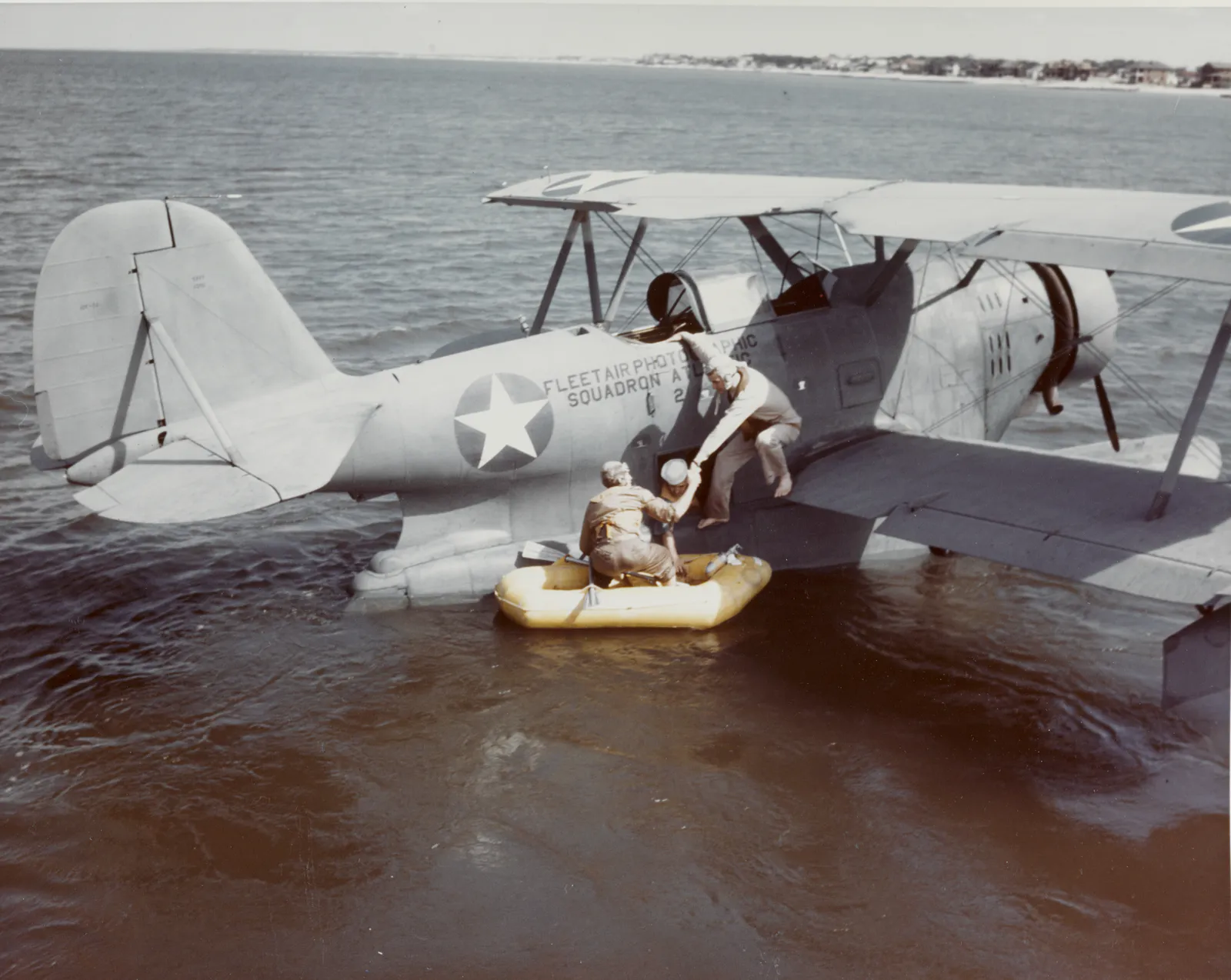
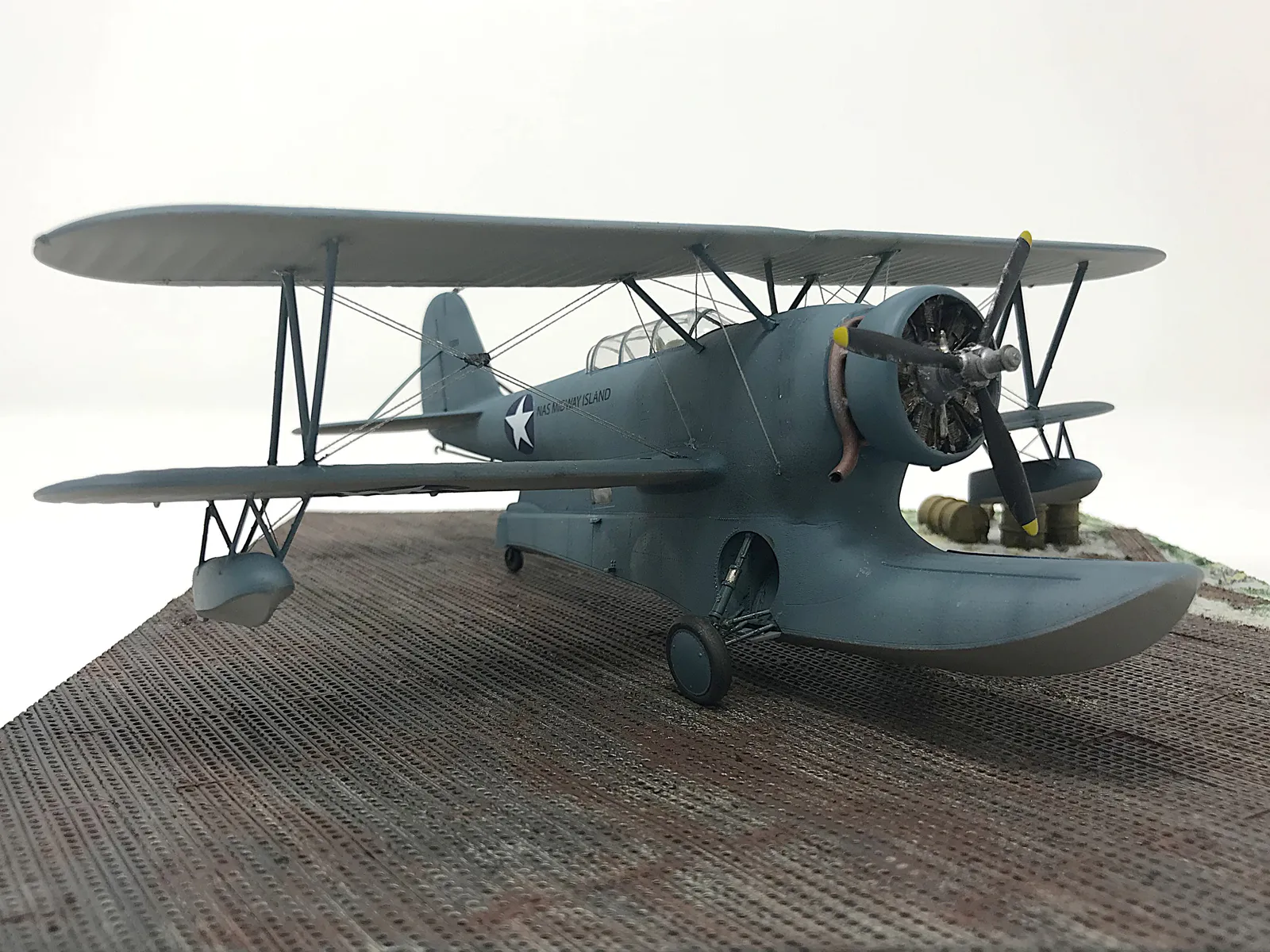
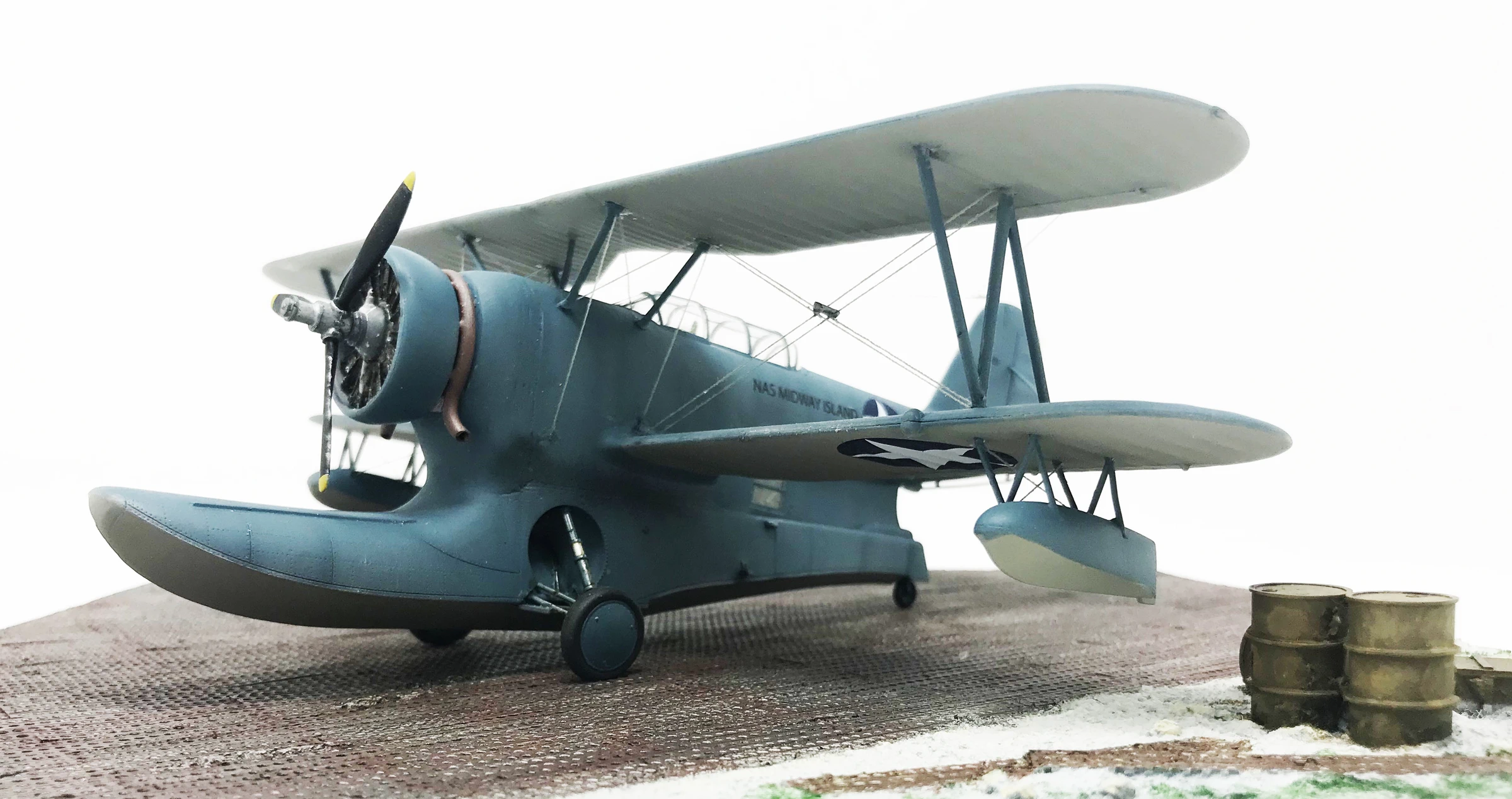
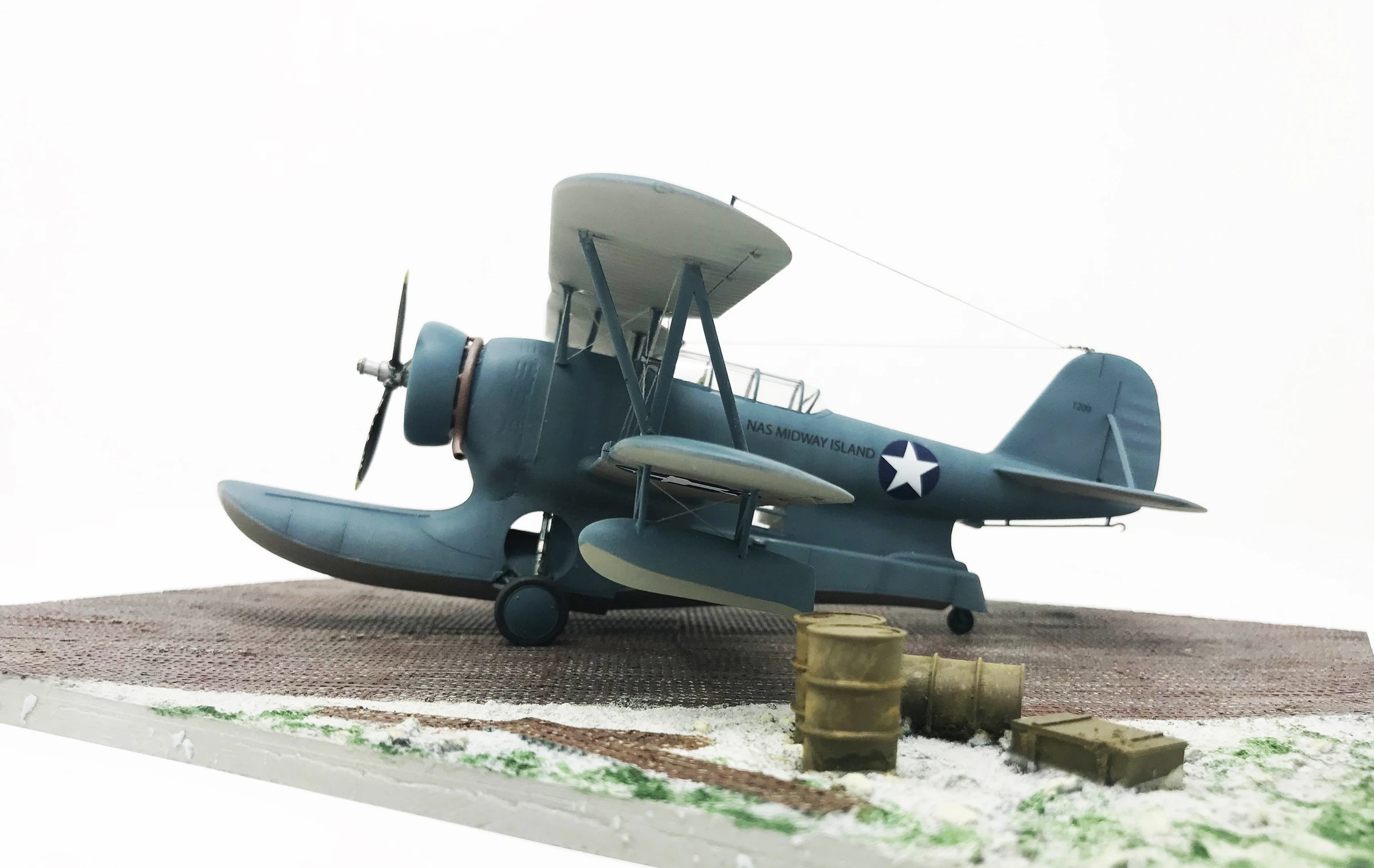
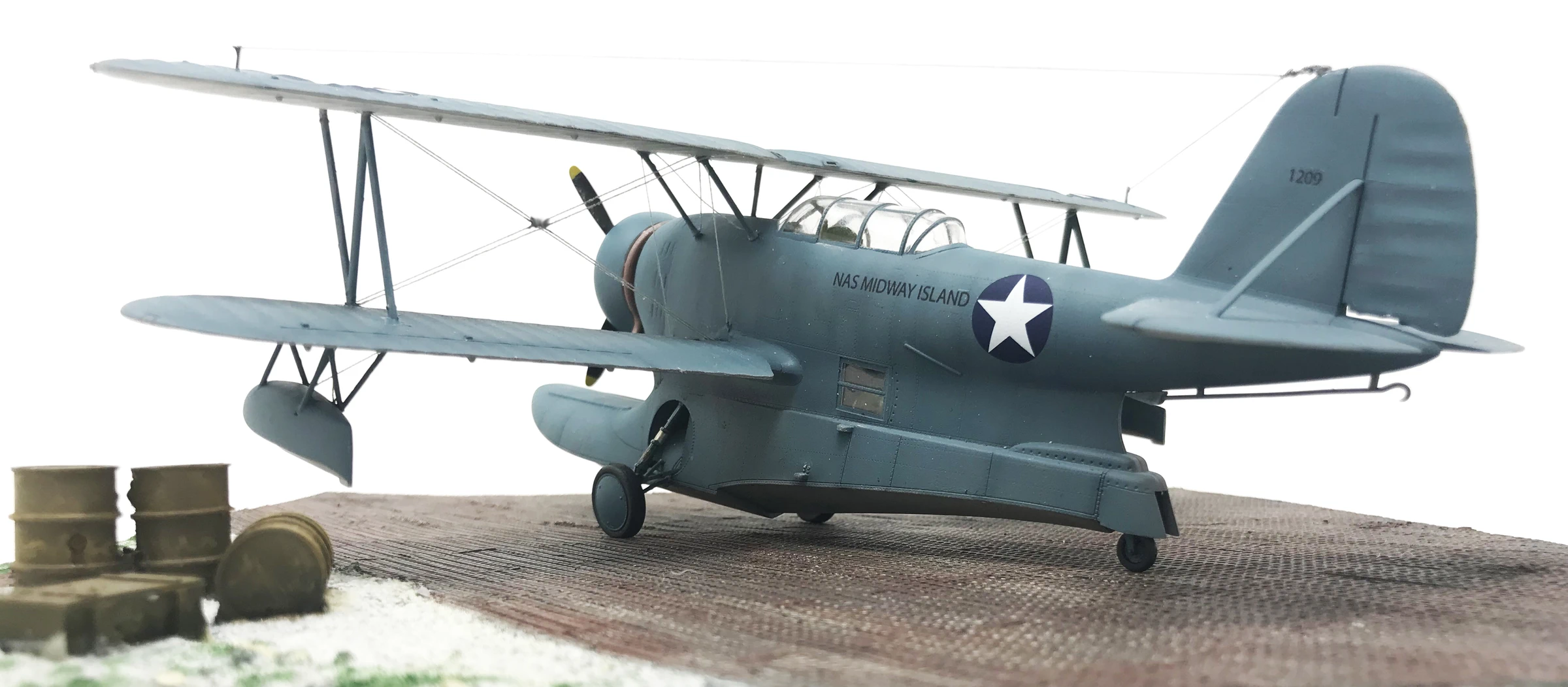
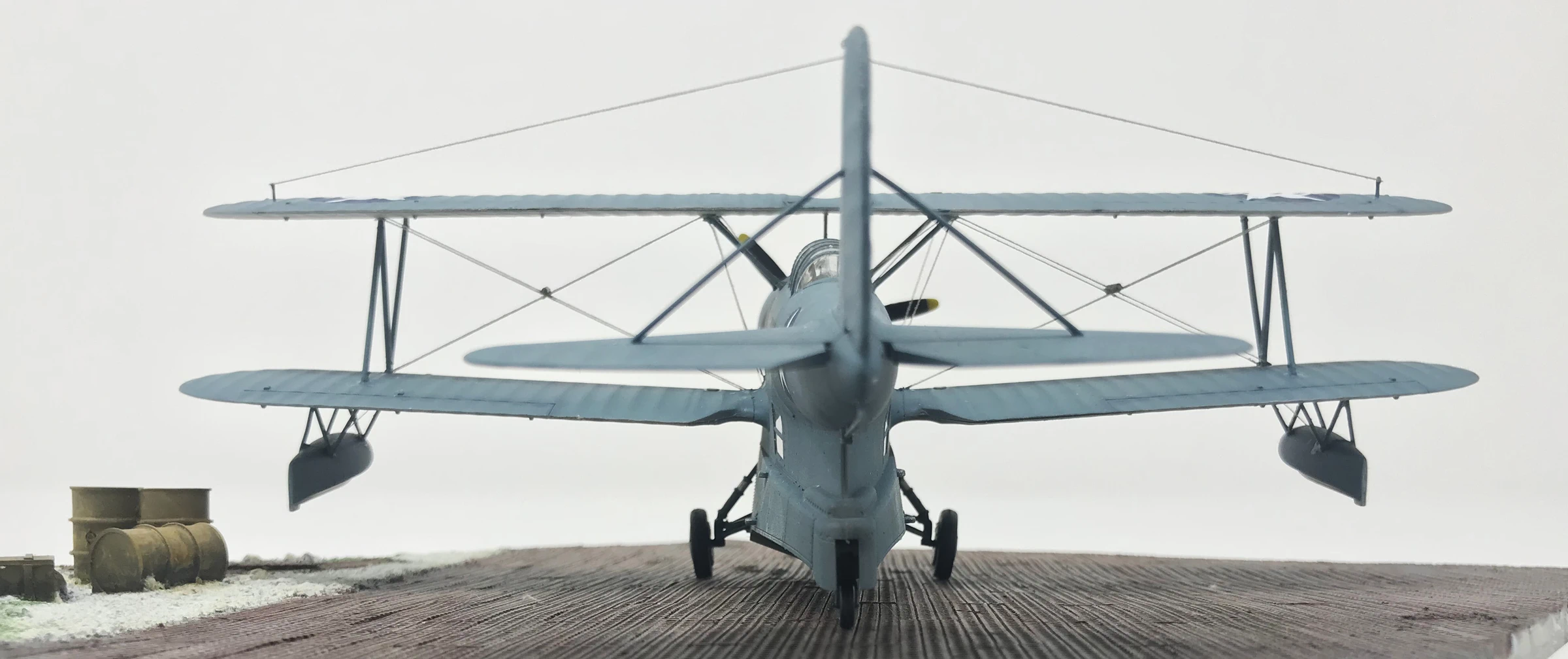
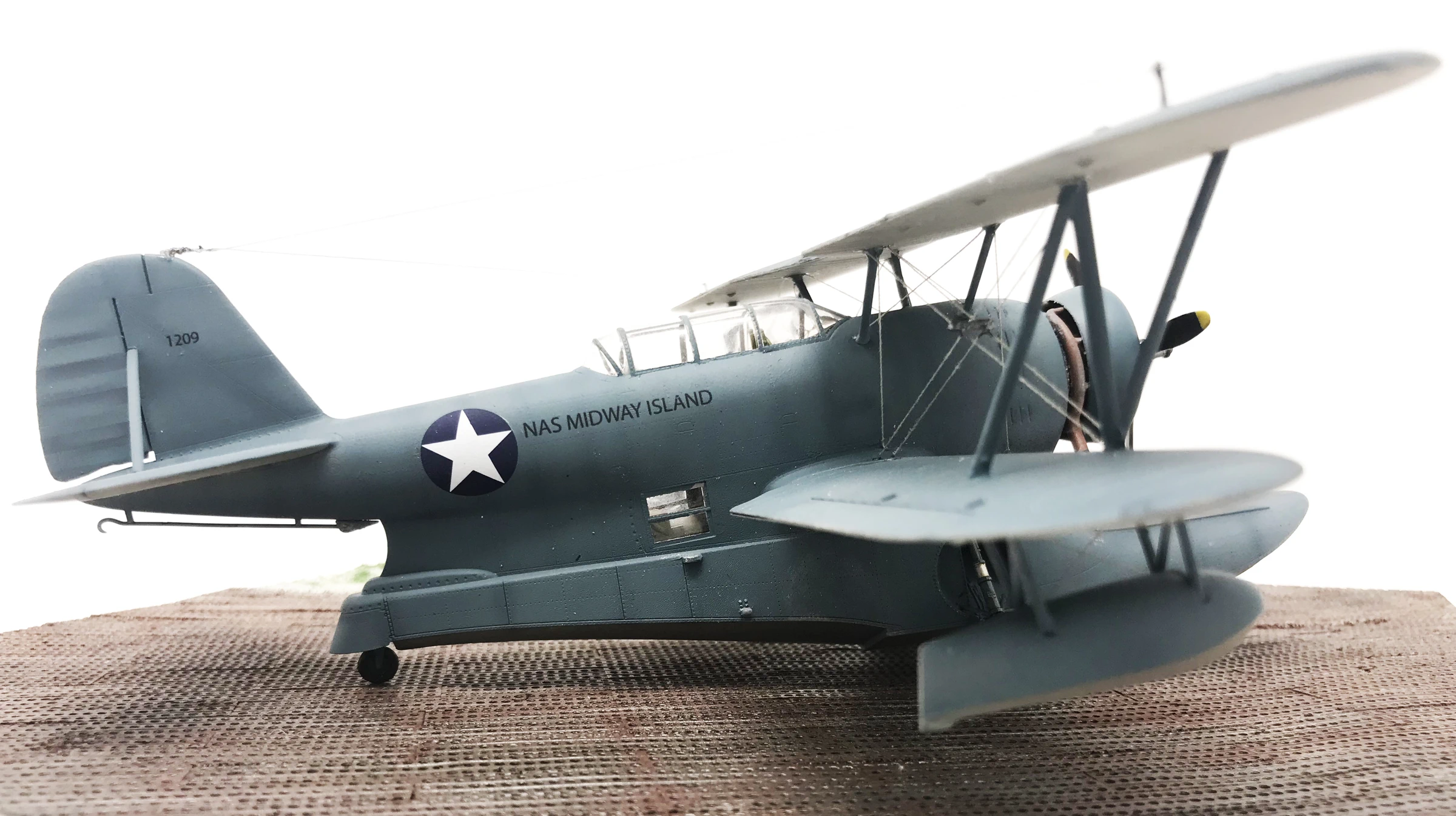
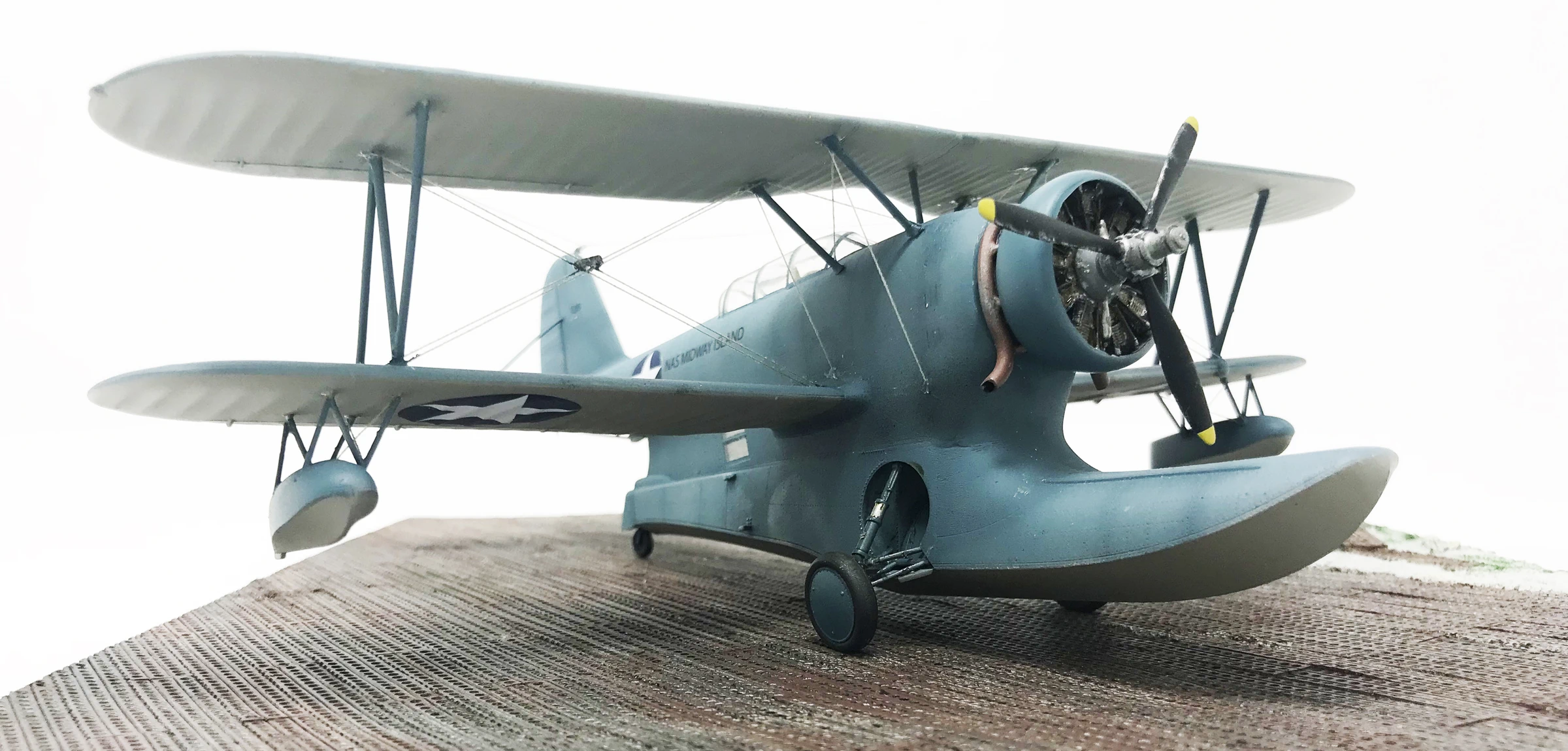
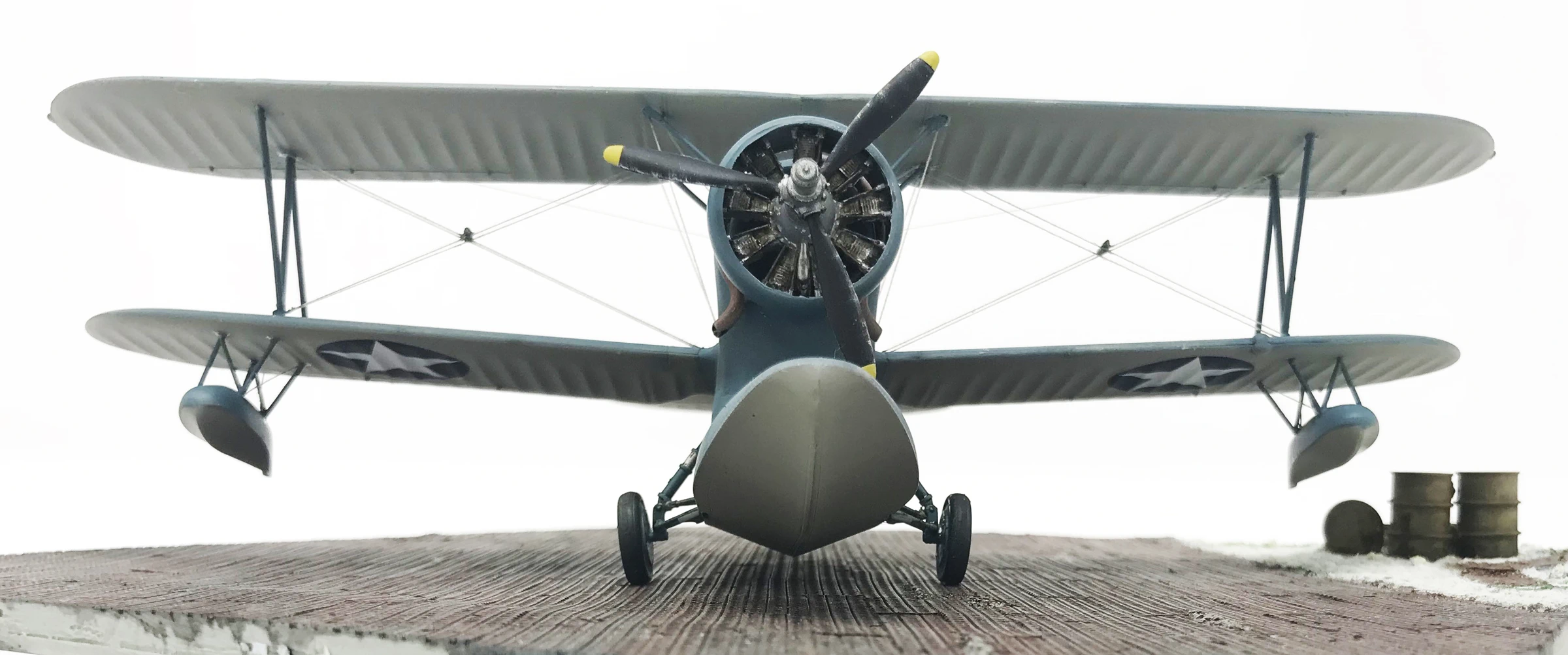
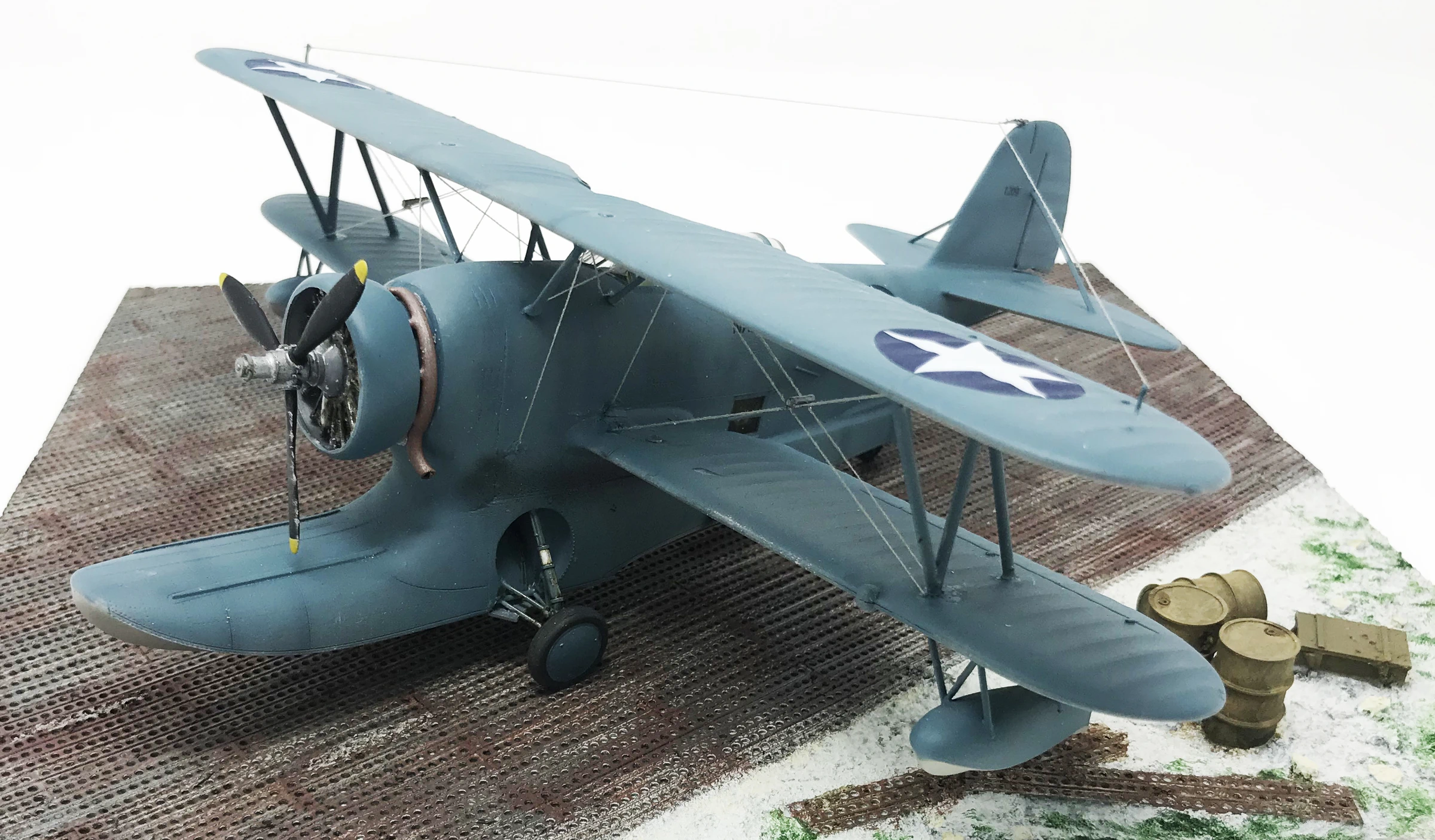
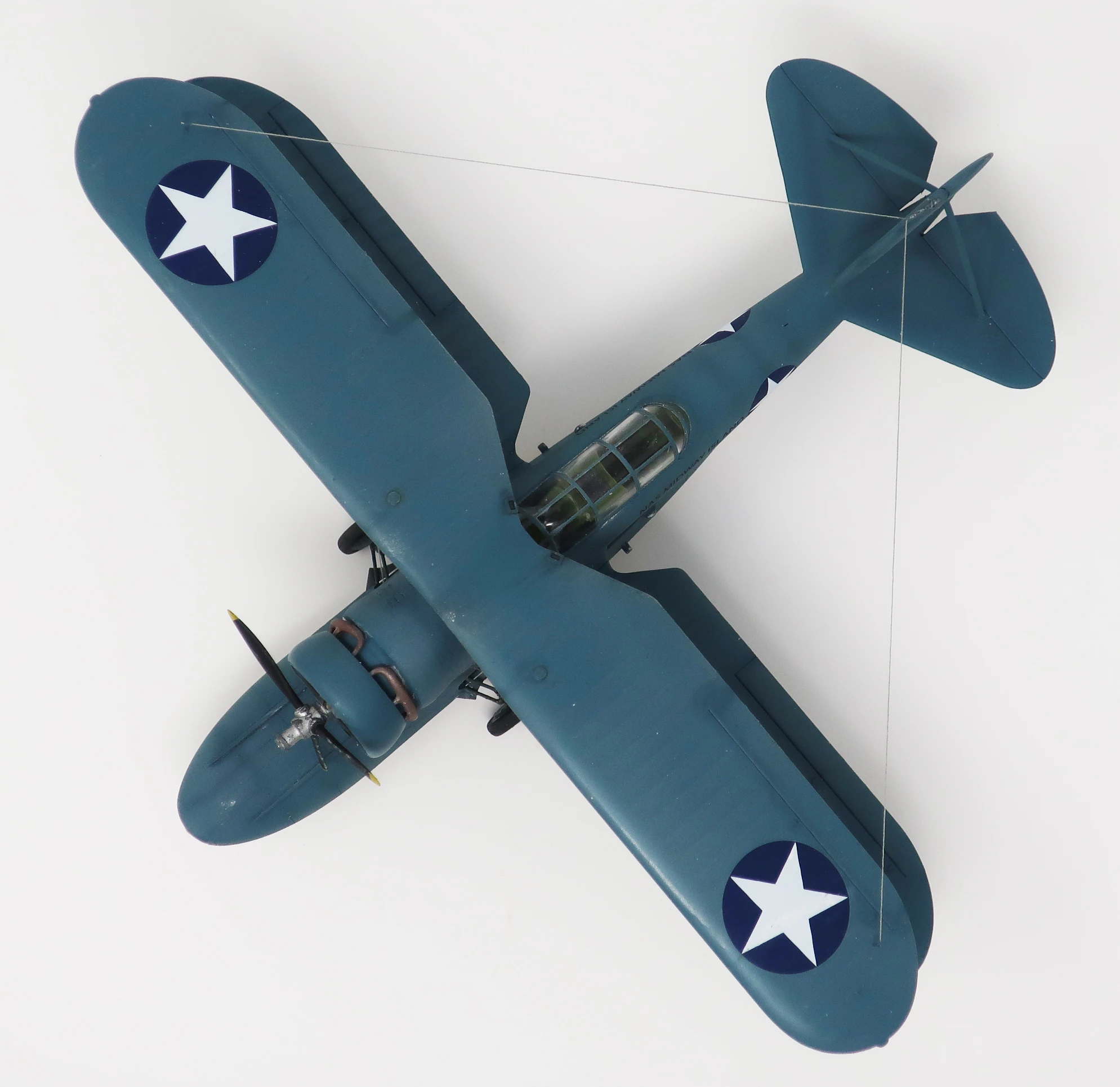
In the morning of June 4 the island awoke early, prepared for the oncoming Japanese attack. As soon as reports came in that the enemy was approaching, all available pilots took to the air — either to attack the Japanese fleet or to defend the island. However one damaged B-17, ten SBD-2 Dauntless and one J2F-2 Duck were left behind due to pilot shortages or engine problems. The J2F-2 Duck with Bu. No. 1209 was assigned directly to the station as a liaison and rescue aircraft. Issued to the Navy in 1938, it was now in the middle of the Pacific doing service as a general utility plane.
The Japanese started to bomb and strafe the base at 6:20 as described in the previous chapter. The Catalina hangars were struck and the oil depot on Sand Island was set on fire, sending up a thick pillar of smoke. Miraculously only two of the ten SBD-2 planes were damaged and not beyond repair. The B-17 also escaped serious damage beyond its already burned out engine, and was later flown back to Hawaii for repairs. On the airfield the Americans had constructed a mock-up plane from scraps and leftovers — it received a direct hit from a bomb.
The Duck was not so lucky. During their strafing runs the Japanese attacked and set it on fire. It burned out completely, beyond saving. It was thus the only aircraft on the ground that the Japanese managed to destroy. One has to admit that to the Japanese it must have been like shooting at a sitting duck.
The kit is from Merit International, with the engine and forward fuselage sourced from a Classic Airframes kit — necessary to accurately represent the J2F-2 variant, which differed from later marks in its engine installation and cowling shape.