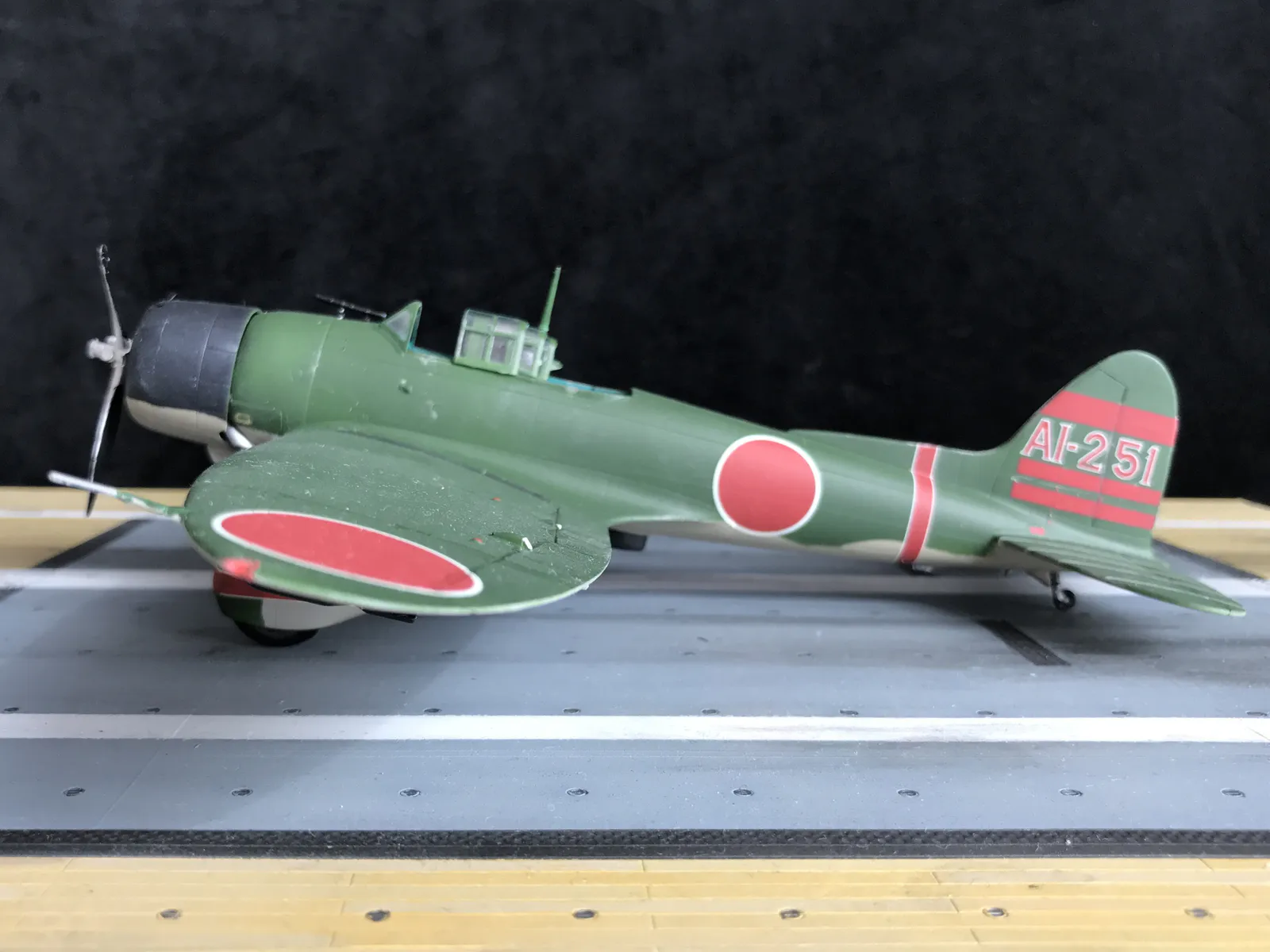
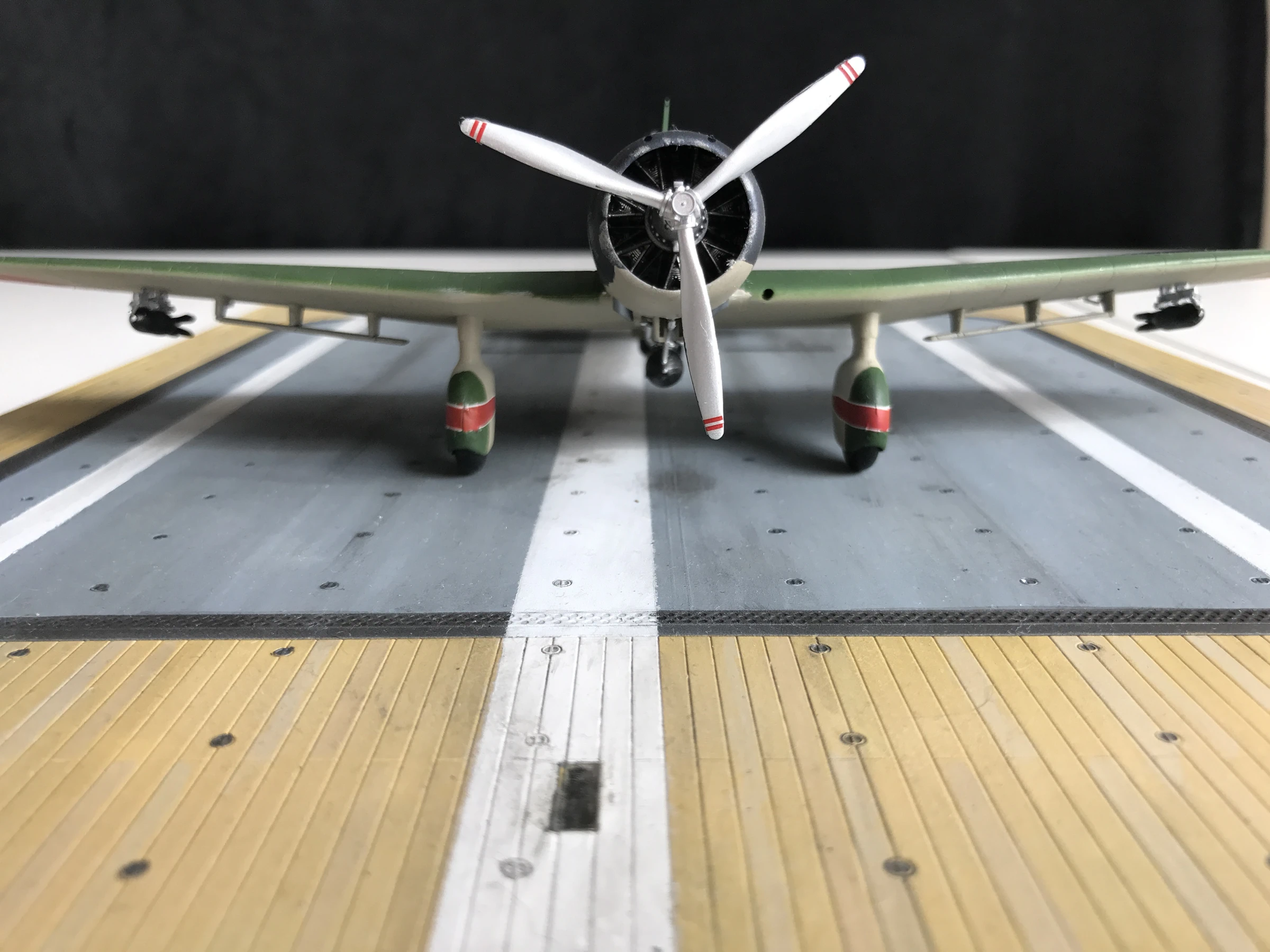
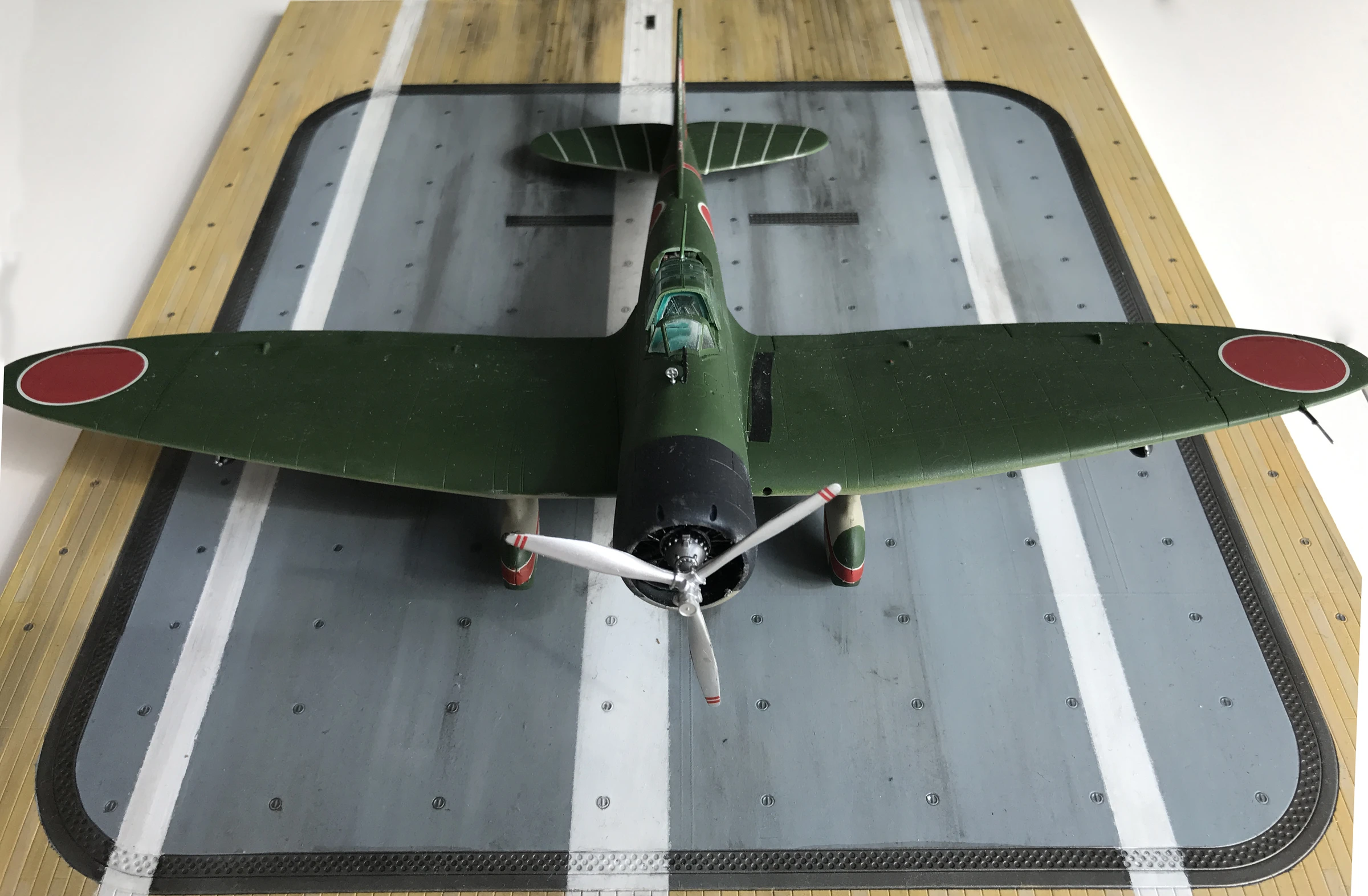
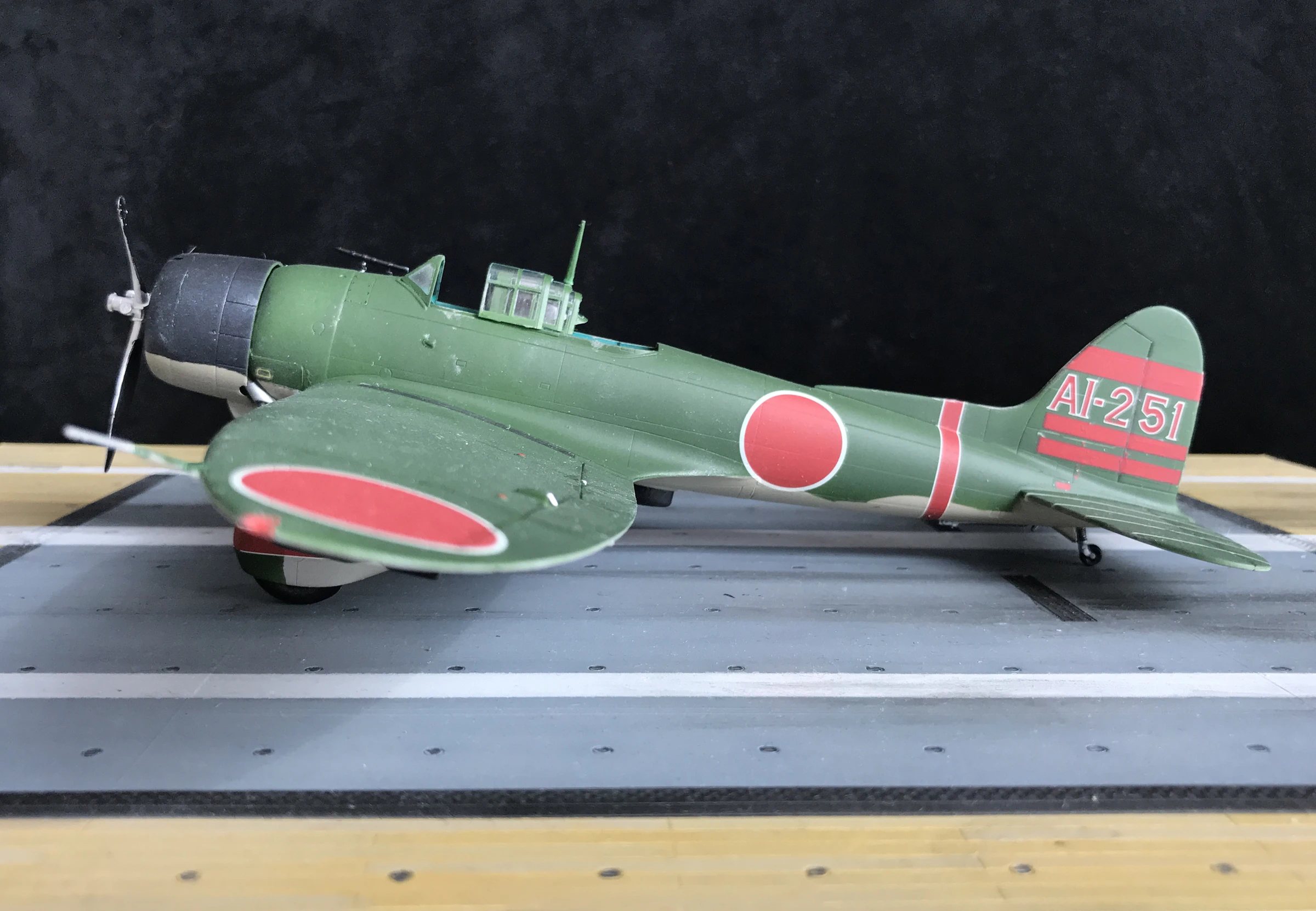
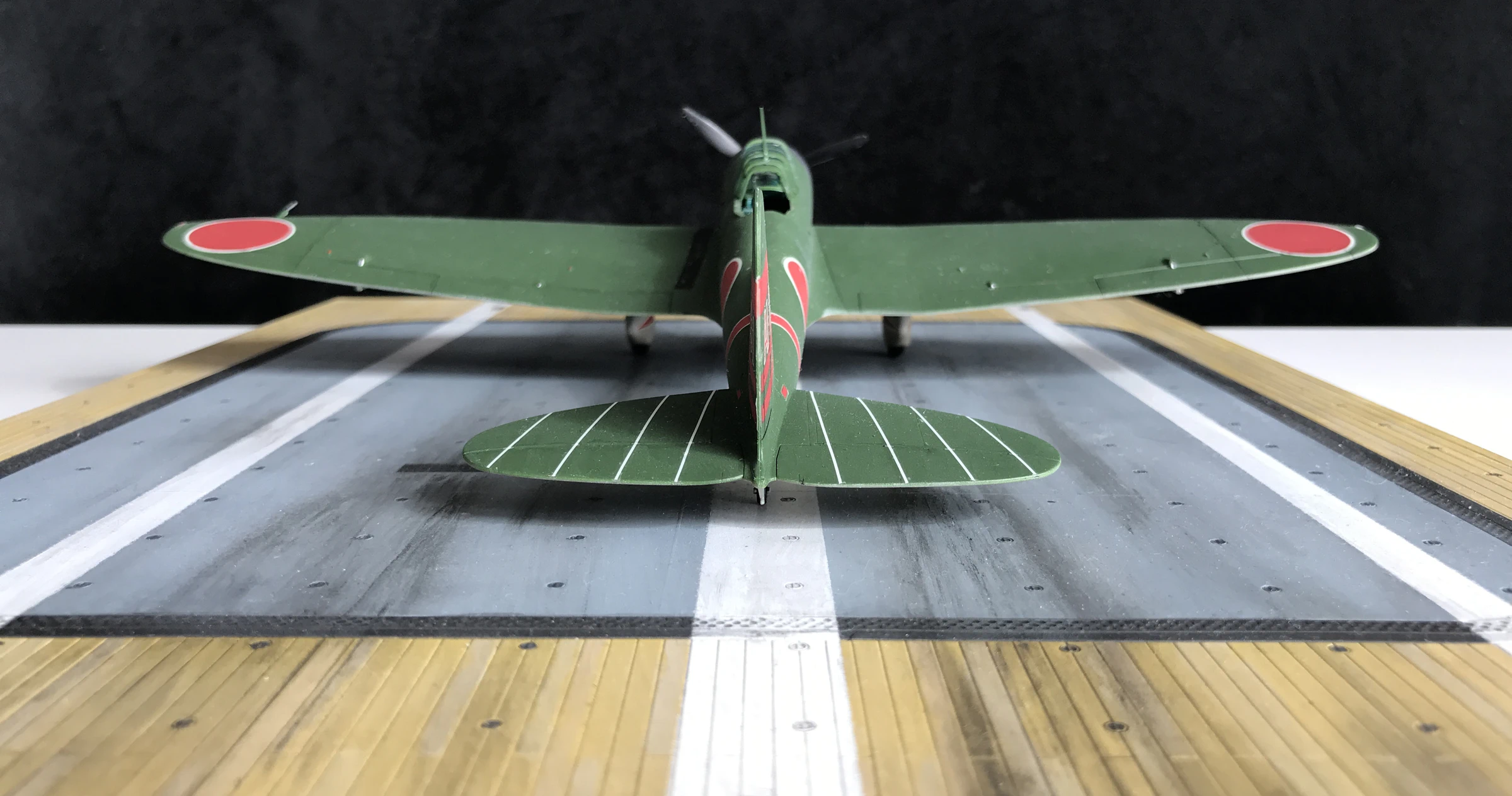
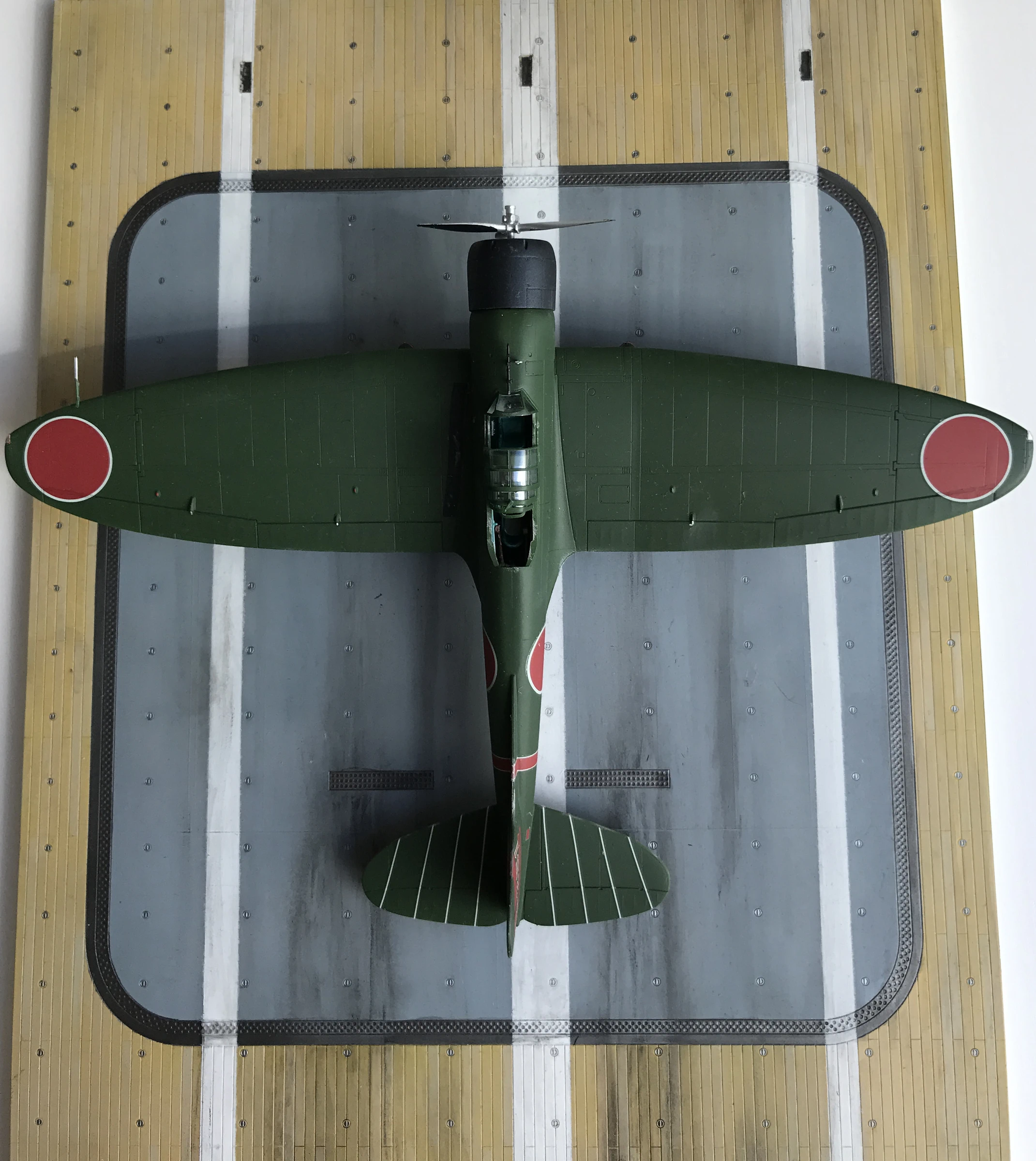
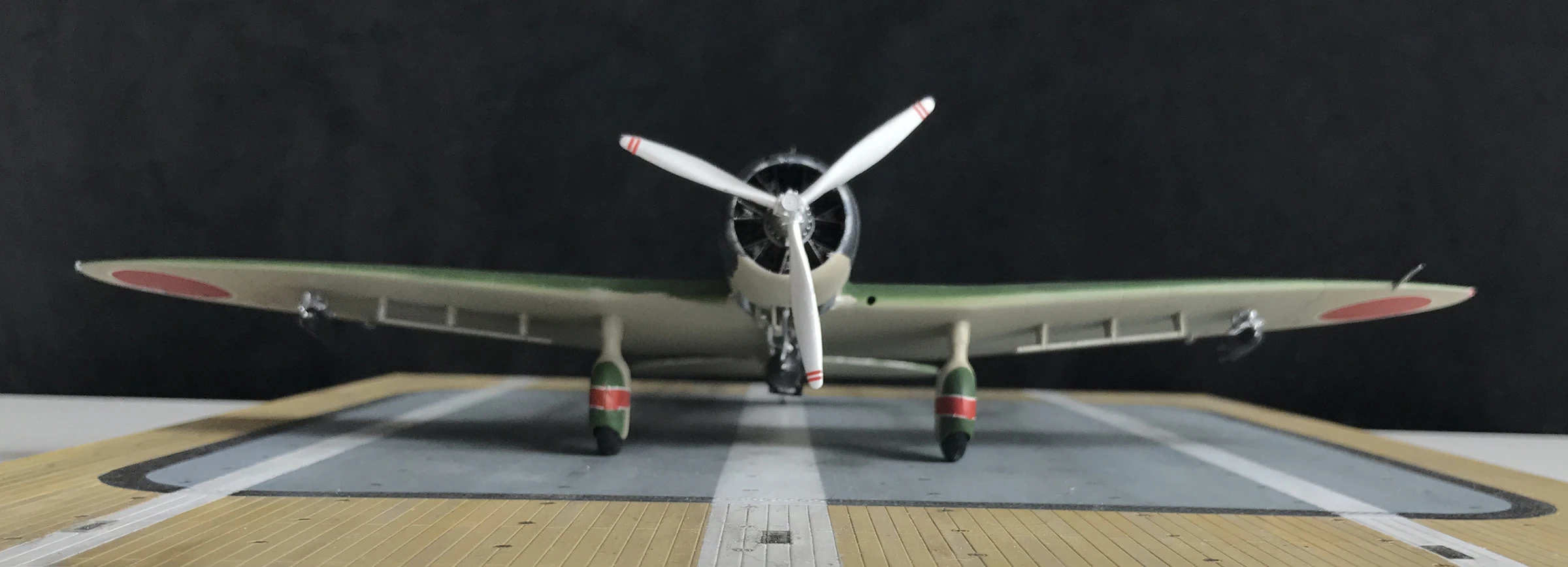
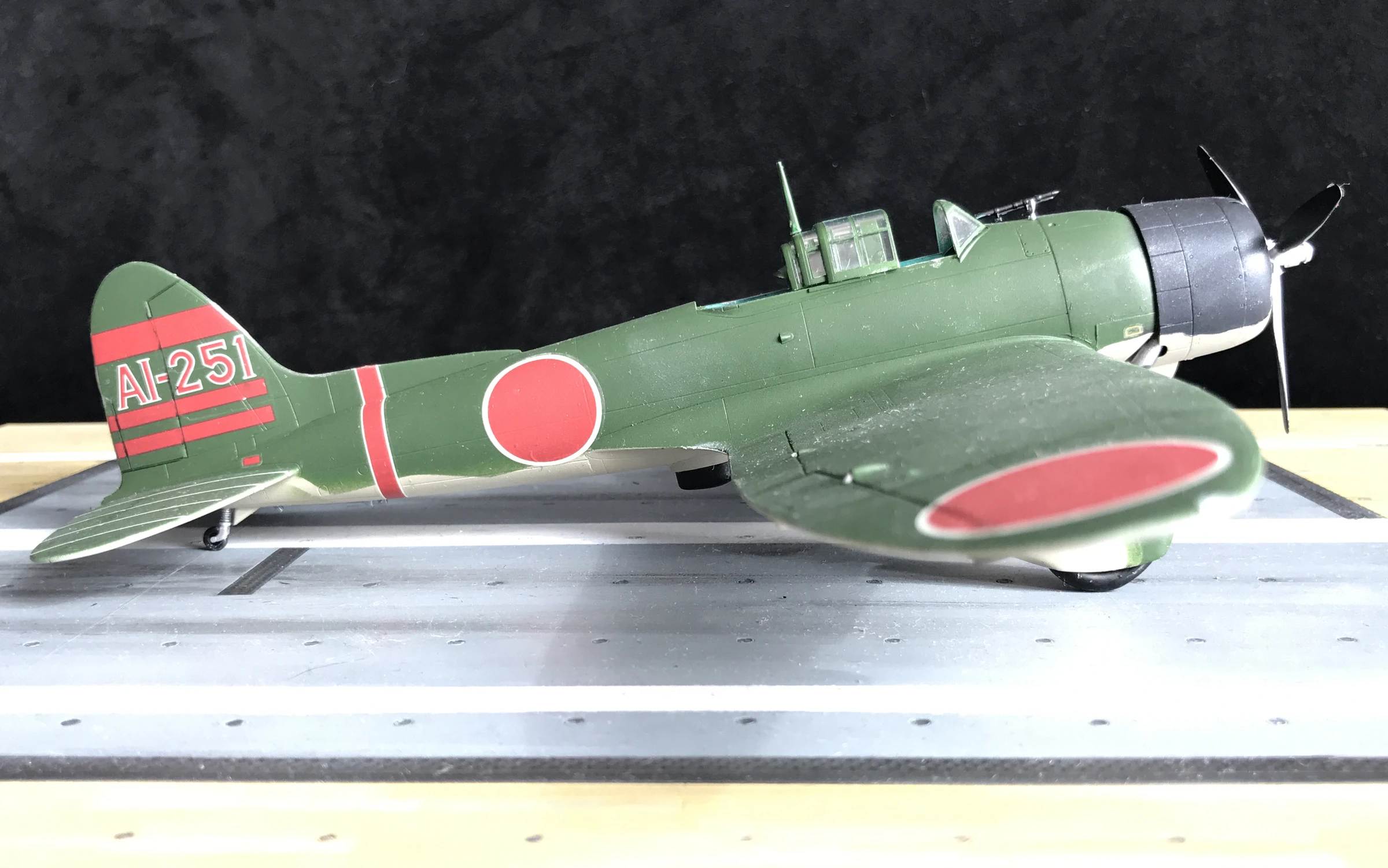
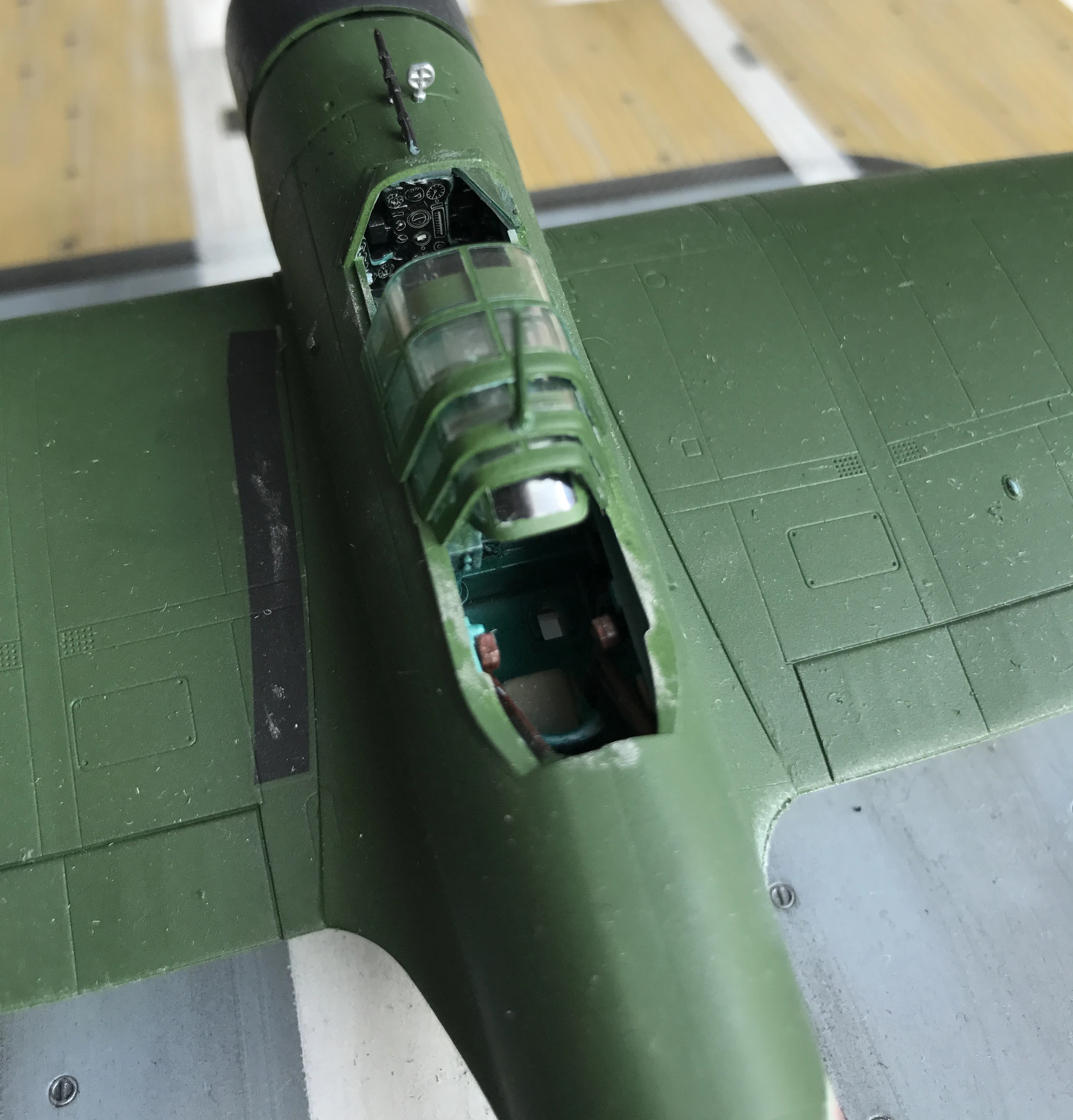
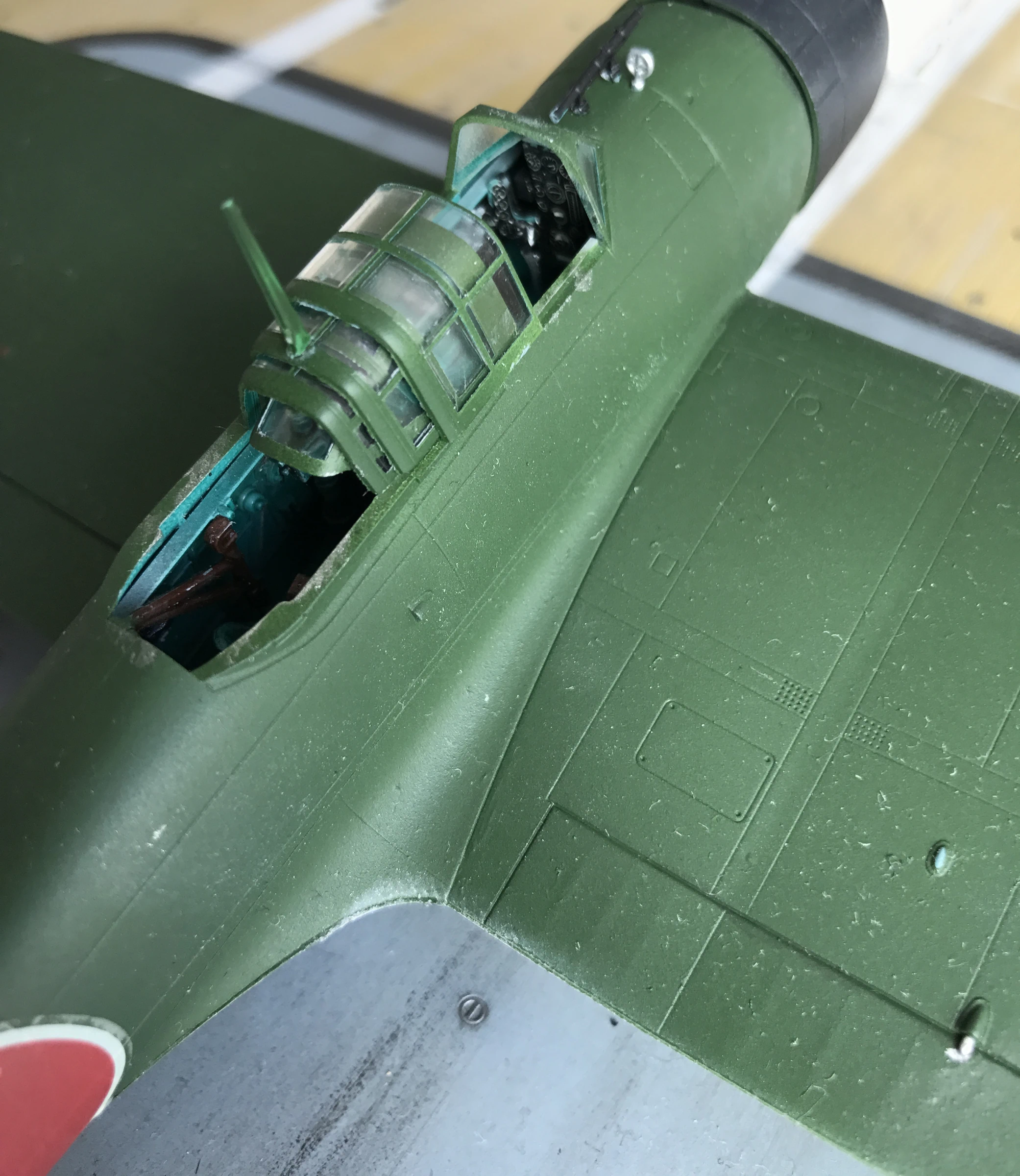
Leader of the dive bombers that attacked Midway was Lieutenant Takehiko Chihaya in his Aichi D3A1 Type 99 ‘Val’ dive bomber AI-251, accompanied by 35 others. The whole attack force was led by Navy Lieutenant Joichi Tomonaga in his Nakajima B5N2 Type 97 ‘Kate’ torpedo bomber, followed by another 35 ‘Kates’, all escorted by 36 Mitsubishi A6M Zero fighters. After breaking through the fighter defence in front of Midway they arrived over the atoll at 6:20 in the morning.
First came the ‘Kates’. They were dismayed to find their primary target — the planes at Midway — gone. The airfield was almost devoid of aircraft, as the Americans had sent their forces off to attack the Japanese fleet or simply get them out of harm’s way. The Kates went ahead and attacked their secondary target, the anti-aircraft defences, to clear the way for the Val dive bombers. They scored a direct hit on three oil storage tanks on the north-eastern tip of Sand Island, sending a massive column of oily black smoke high into the air — smoke that would later serve as a landmark for American stragglers trying to find their way back to Midway.
The AA fire was fierce and two of the Kate’s was shot down. Tomonaga’s plane also received a hit damaging his fuel tanks. He managed to get back to the carrier Hiryū while radioing back to Admiral Nagumo that a second air attack on Midway was needed.
Next it was time for Lieutenant Takehiko Chihaya and the Val dive bombers. The lead Val pealed off and dove down to about 100 feet and turned upside down and proceeded down the airfield. The AA crews were astonished by this stunt and stood there staring until someone cried “What the hell, let’s go at him.” and opened fire downing the plane. This was the only Val shot down during the attack. The others came down dropping their bombs on the islands. One struck VMF-221’s rearming pit setting off eight 100-pound bombs and 10,000 rounds of ammunition killing four maintenance personnel.
Despite the spectacle, the attack was indecisive. Only twenty men had been killed, camouflage had effectively protected the 5-inch coastal guns, and most of the damage to installations was repairable. The runways had received so little damage that Captain Simard, the US Navy commander, suspected the Japanese had deliberately spared them for their own use once the atoll was captured.
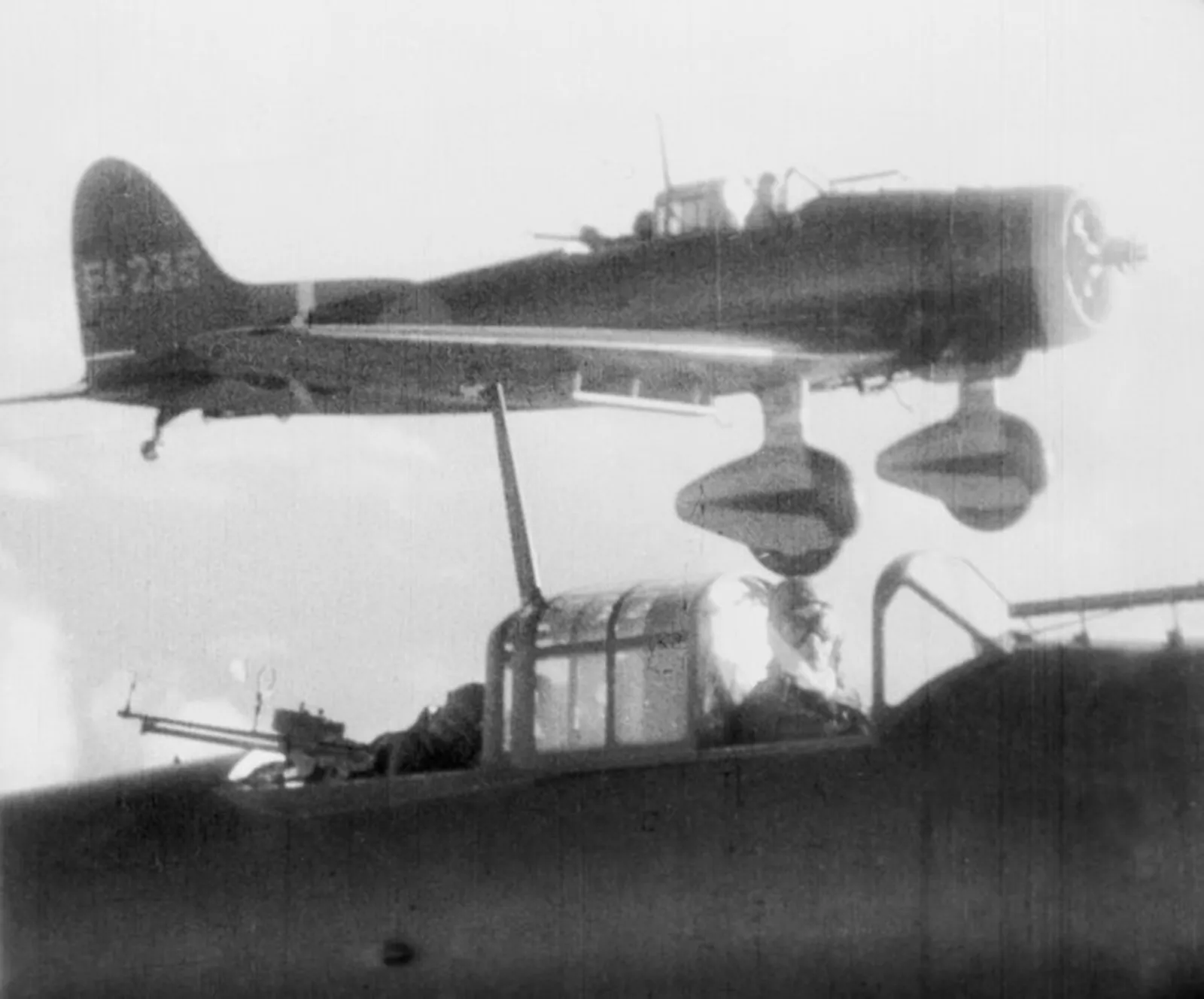
After at first receiving a hot welcome by the Japanese AA-crews in their own fleet, Chihaya landed back on Akagi fairly sizzling with indignation. “A gunnery officer who mistakes friendly planes for the enemy should be fired!” he shouted. He and his colleague Lieutenant Yamada reported to the bridge, advising that, contrary to Japanese Intelligence data, there were three air strips on the island.