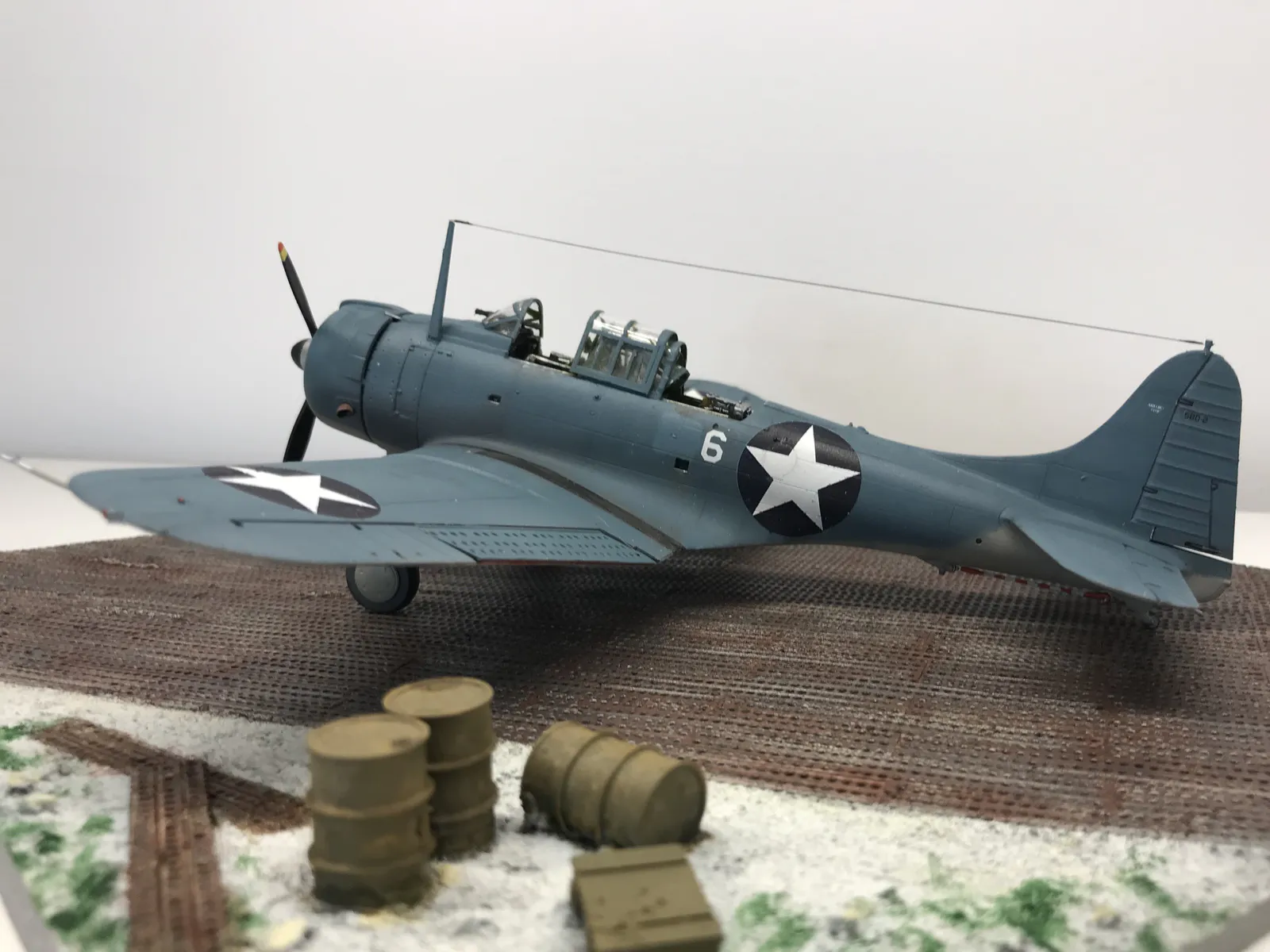
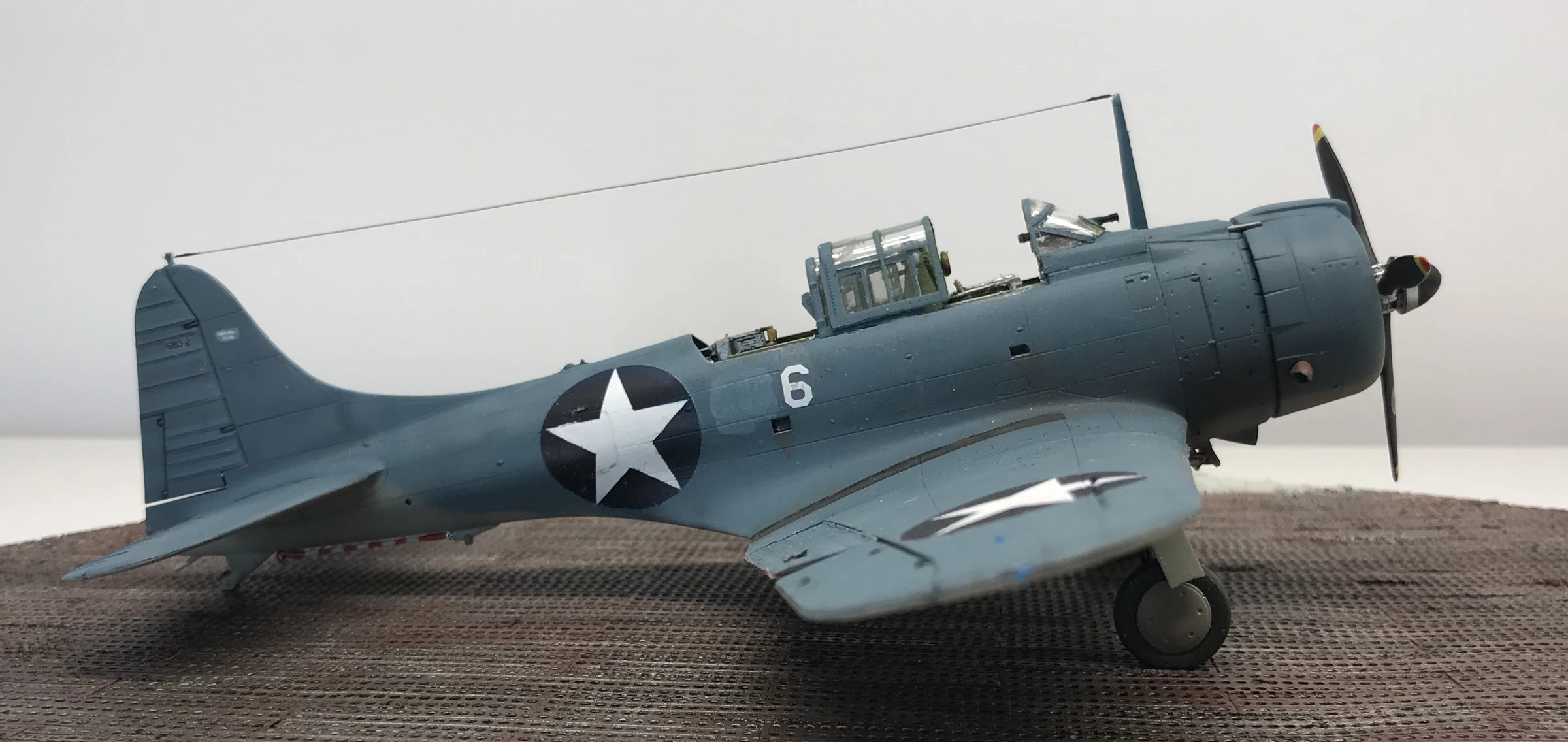
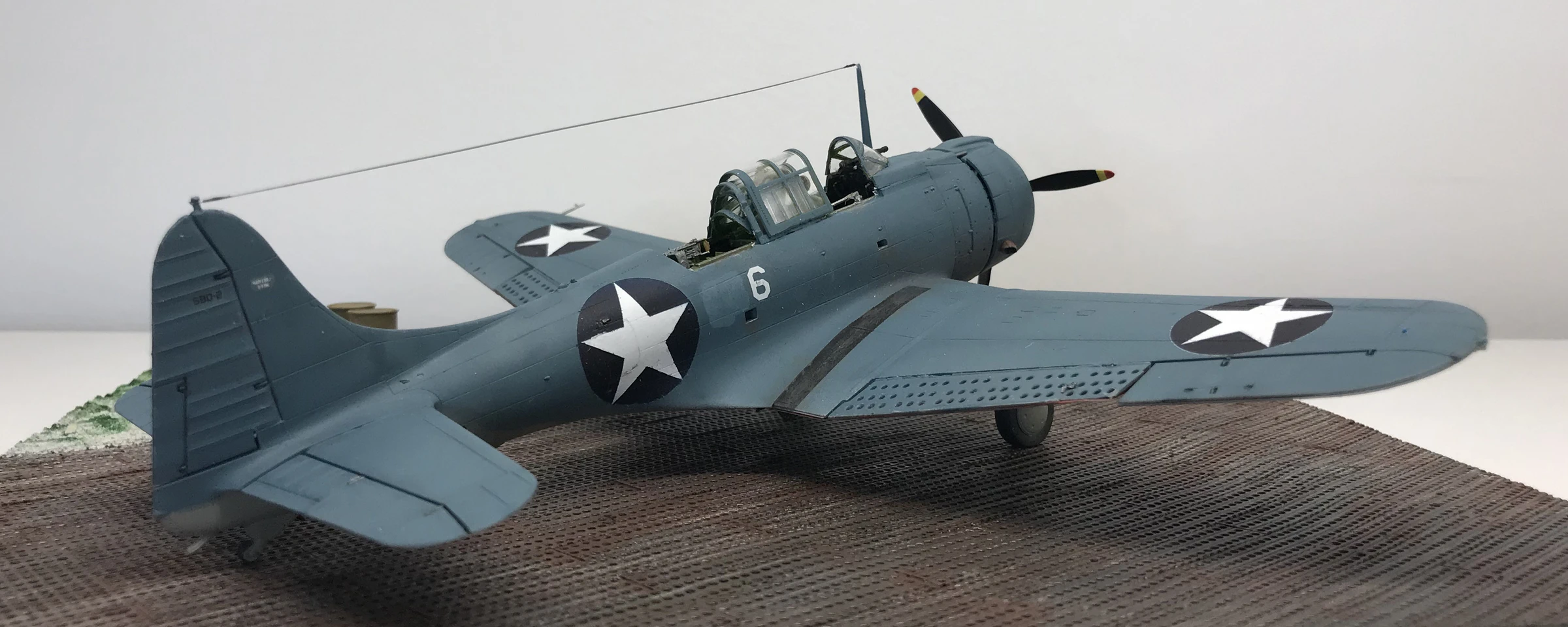
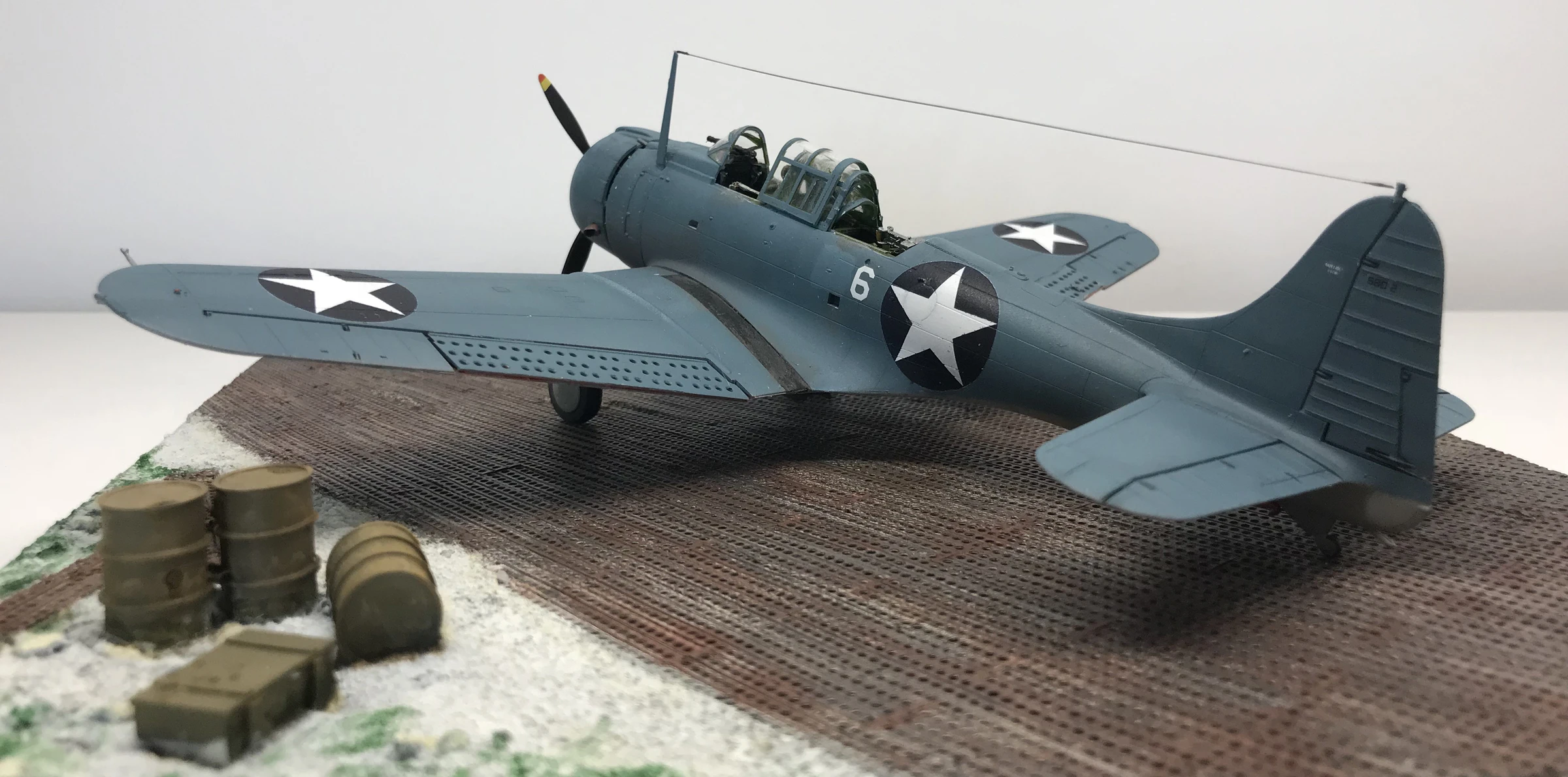
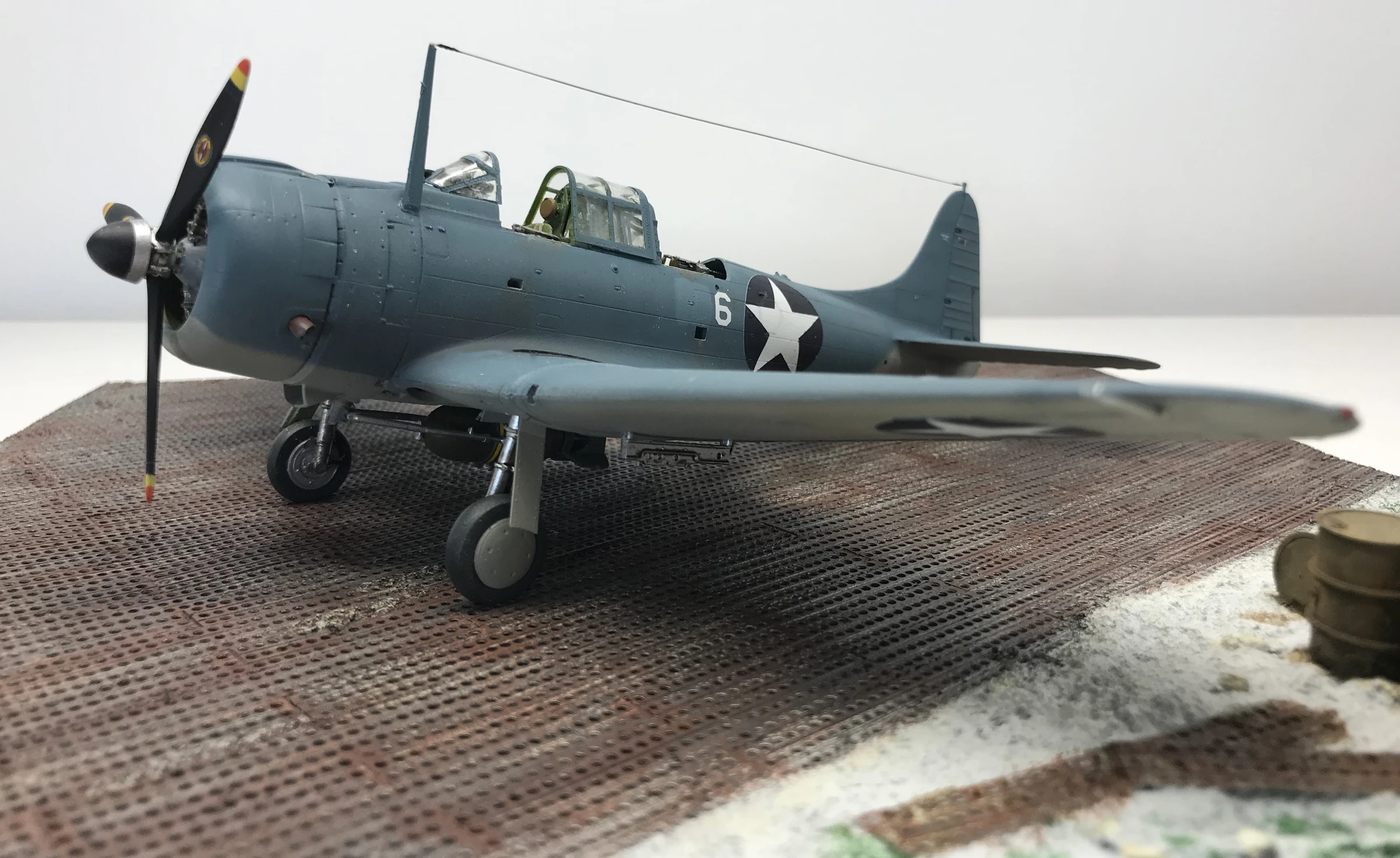
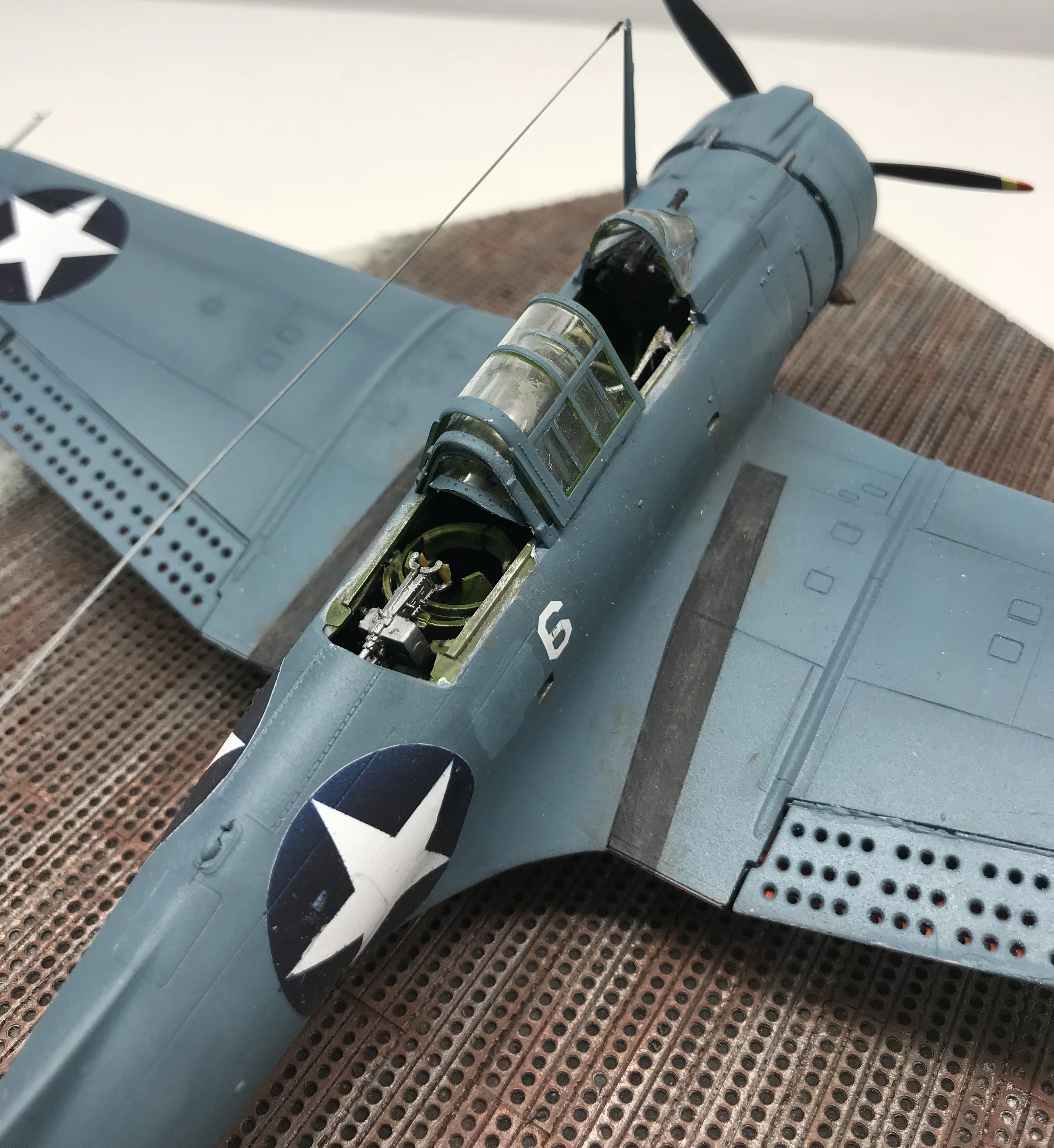
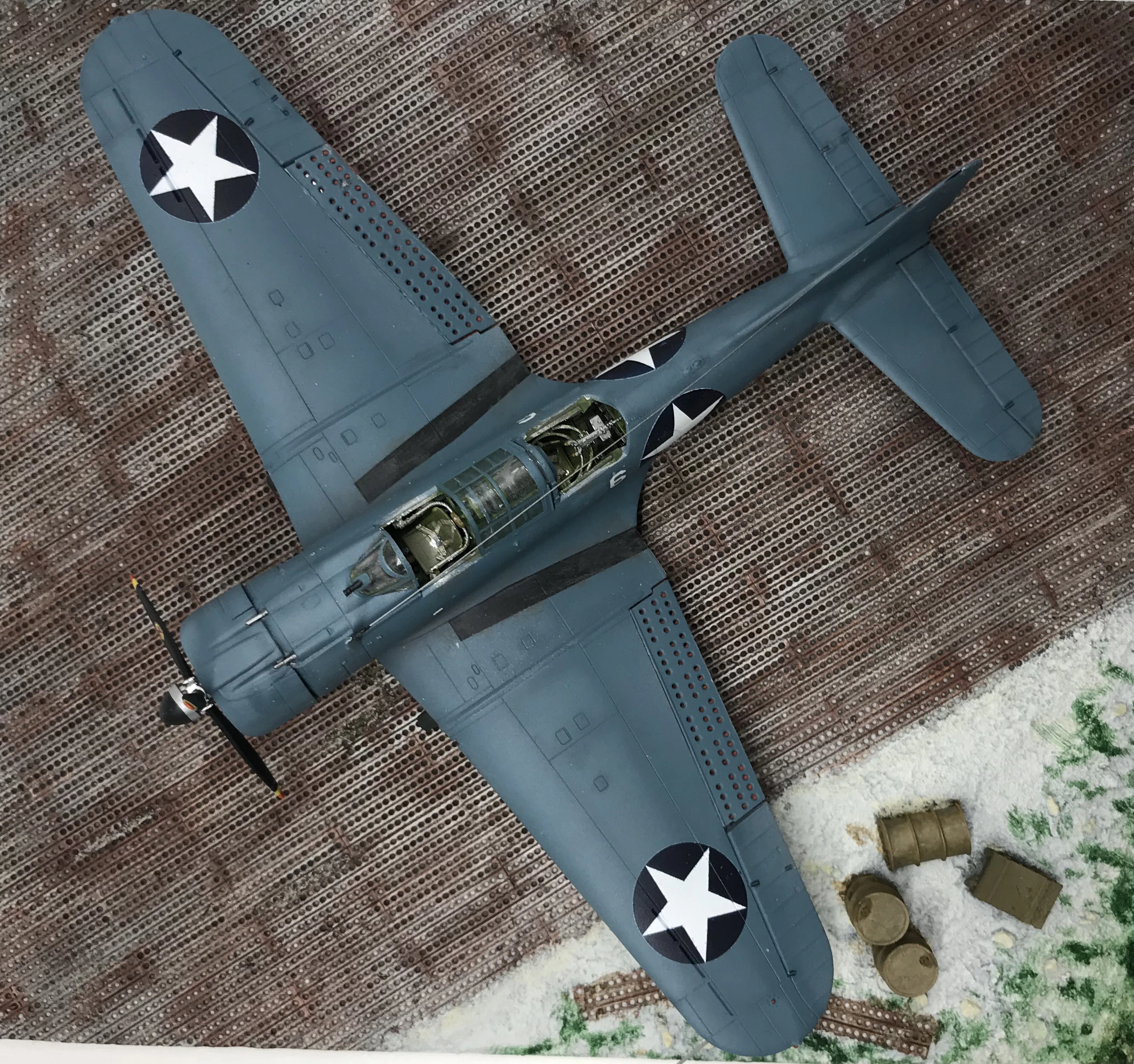
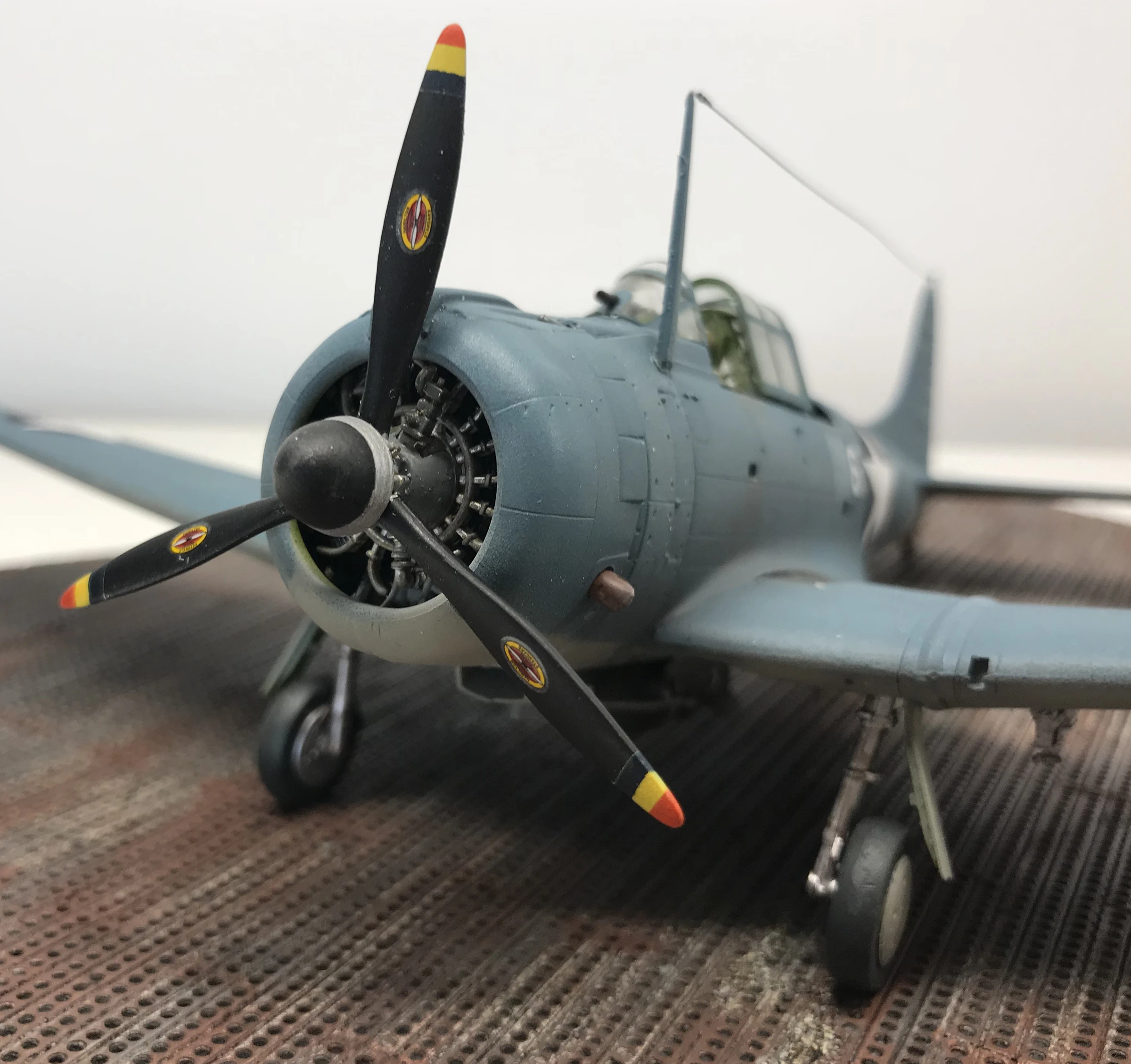
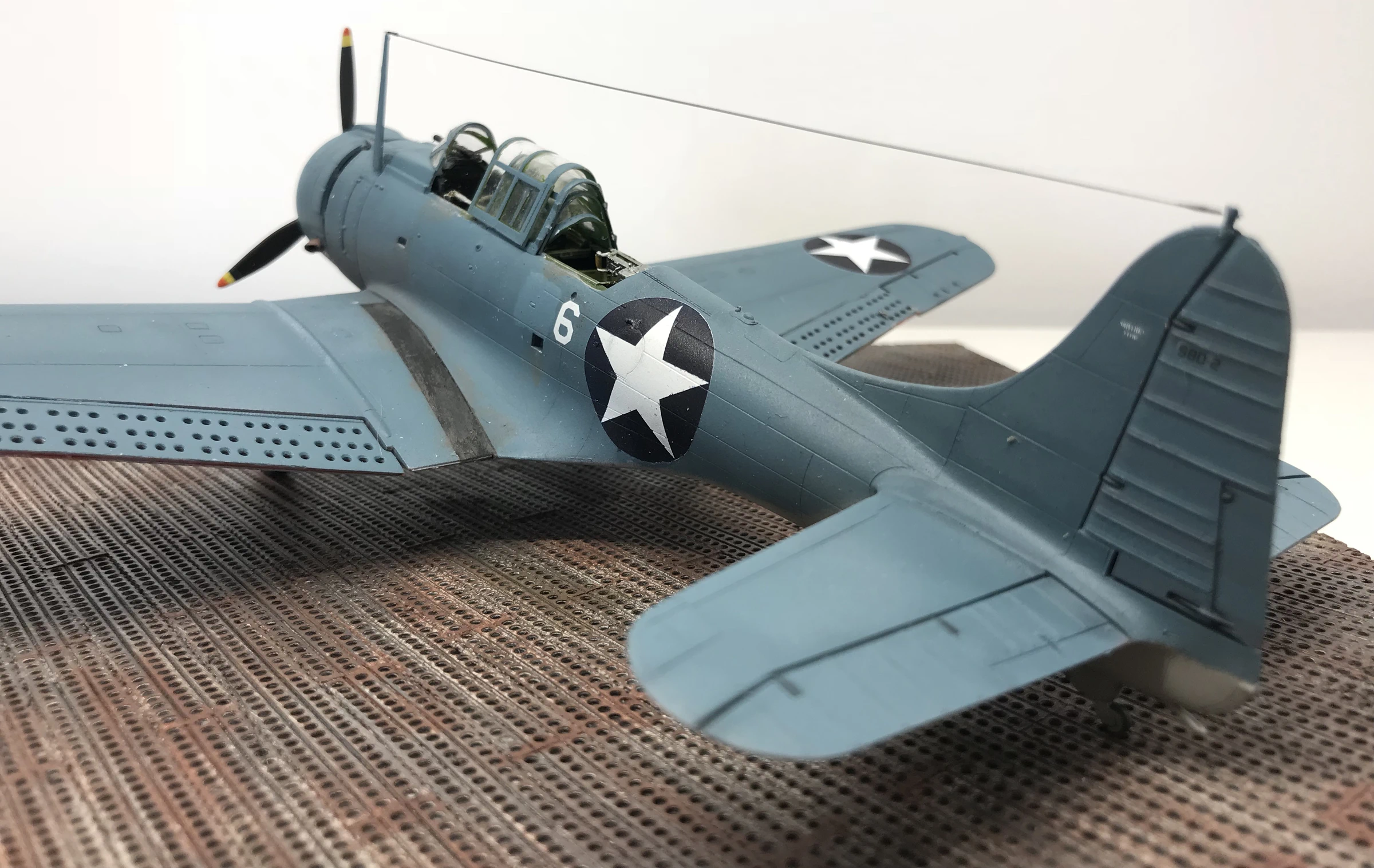
Right after the Avengers and Marauders had taken off from Midway it was time for Marine Scout-Bombing Squadron 241. This group was equipped with older dive bombers retired from carrier service, divided into three groups: Major Henderson’s with nine SBD-2 planes, Captain Tyler’s with nine SBD-2 planes, and Major Norris’ with twelve SB2U-3 Vindicators. Two Dauntlesses had to stay behind due to engine trouble and one Vindicator turned back shortly after take-off when an engine cowling blew off.
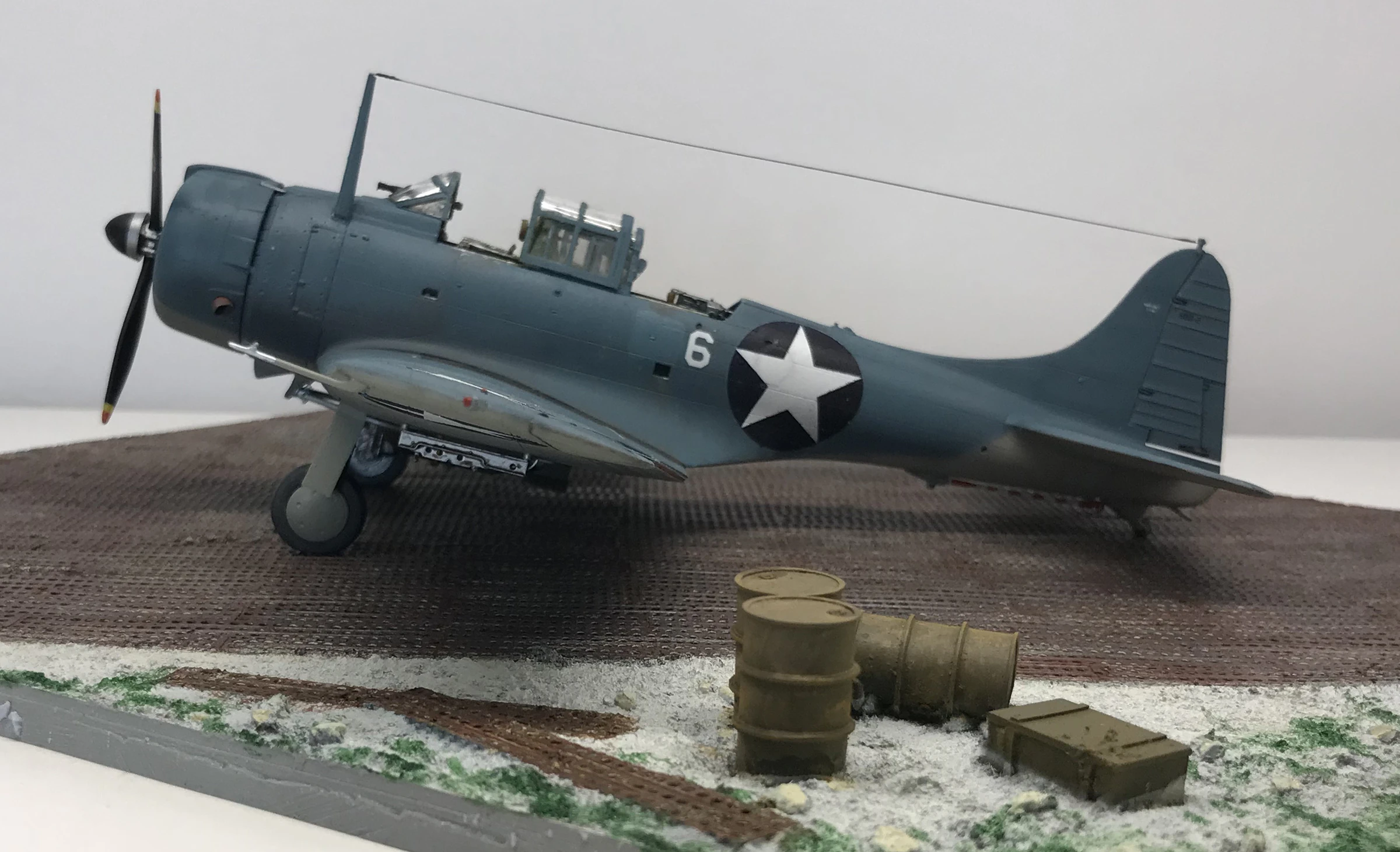
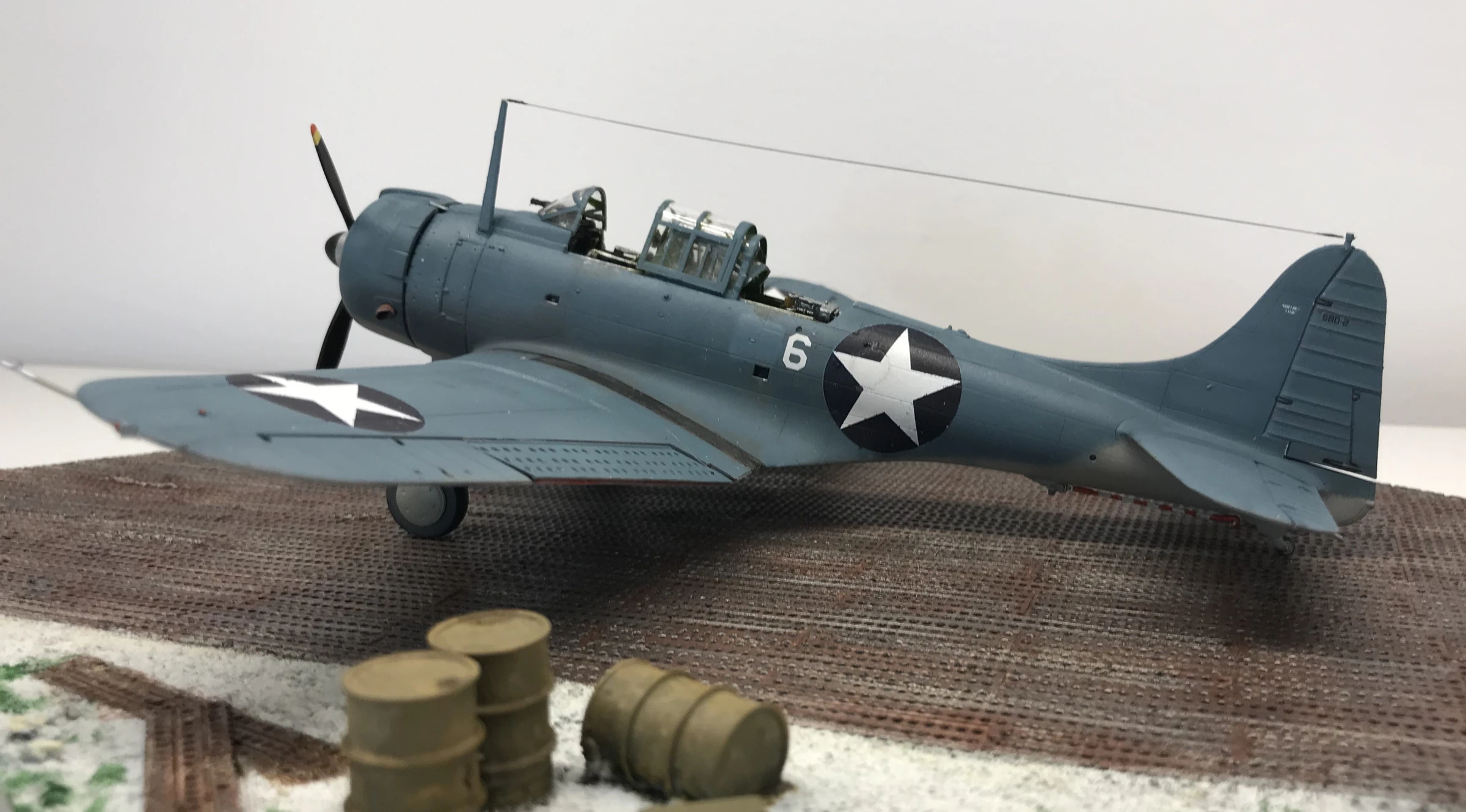
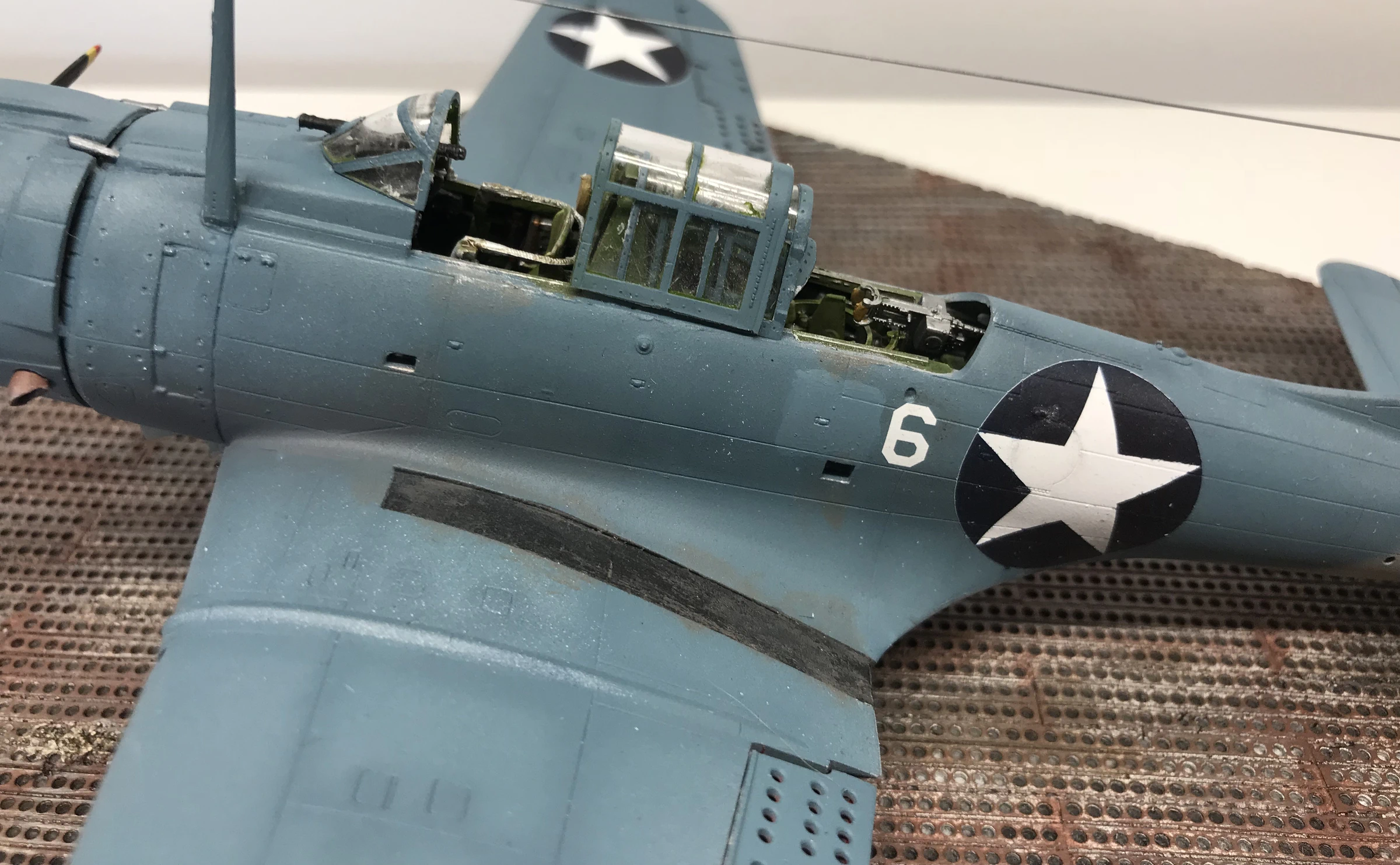
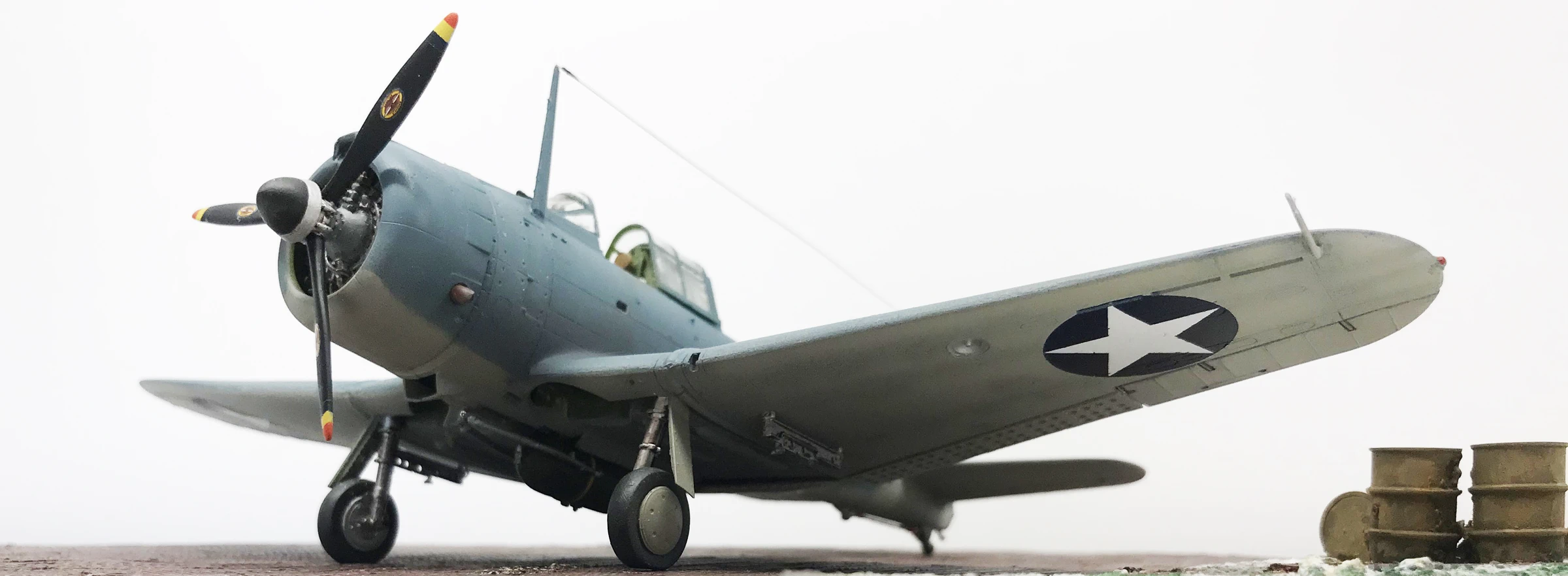
In Major Henderson’s group flew SBD-2 No. 6 (BuNo 2106), piloted by 1st Lieutenant Daniel Iverson and manned by radio/gunner Marine Private First Class Wallace J. Reid. When the force had gathered in the air they set course for the Japanese fleet with Henderson in the lead.
At 7:55 they sighted the enemy fleet just to port. Closing in, they were jumped from above by Japanese Zeros on combat air patrol. Henderson kept his squadron intact in the attack but was then seen crashing into the sea. Iverson’s radio was out of action and they even lacked intercockpit communication, so no attack signal was made. At 1,500 feet he selected a carrier and peeled off to attack, immediately followed by two enemy fighters. After releasing his bomb at 300 feet amid fighter fire and heavy AA he pulled out at sea level, only to find that his two pursuers had been joined by another two. They chased him for twenty to thirty miles, taking turns trying to shoot him down, before Iverson finally gained enough altitude to reach the relative safety of the clouds.
Back at Midway, Iverson found that the left gear wouldn’t come down. The airspeed indicator was shot out and they had no hydraulic power. Still, he put the plane down in the middle of the runway, managing to avoid a number of parked B-17 Flying Fortresses. Iverson was wounded in the legs and face, Reid in a foot, but neither seriously enough to prevent them from flying again the next day. Their plane, however, had acquired some 200–250 new holes. Iverson received the Navy Cross and Reid was awarded the Distinguished Flying Cross.

Had it been later in the war BuNo 2106 would have been written off, but now it was repaired and put back into service as a trainer back in the United States. On June 11, 1943, 2nd Lieutenant Donald A. Douglas was practising carrier landings on USS Sable in Lake Michigan when he came in too slow and too low. Waved off by the landing signal officer, he applied power — but the engine coughed and he pancaked into the water. Douglas was quickly rescued but BuNo 2106 sank to the bottom. There it stayed until 1994, when it was salvaged and subsequently restored. It is now displayed at the National Naval Aviation Museum in Pensacola, Florida.