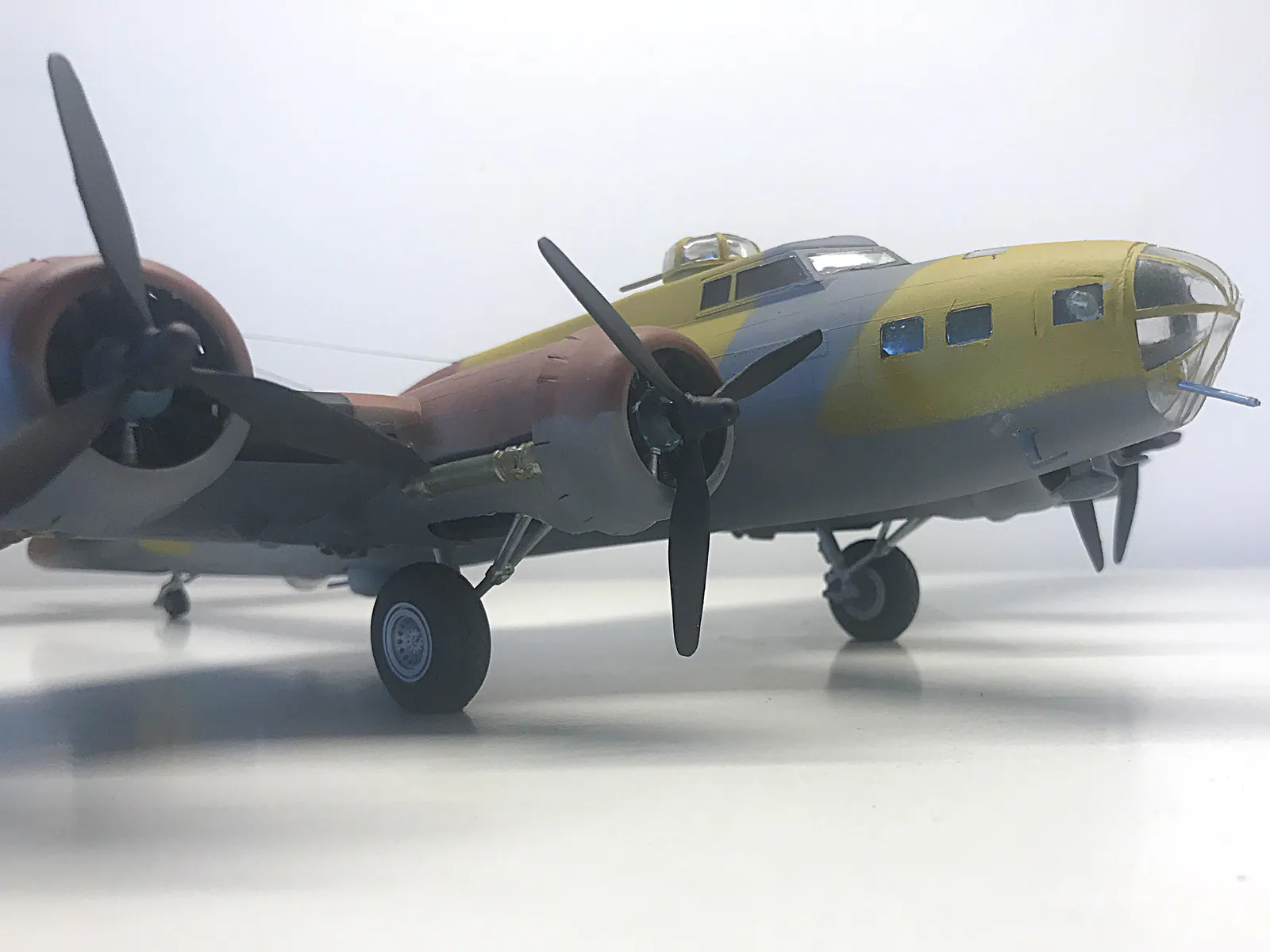
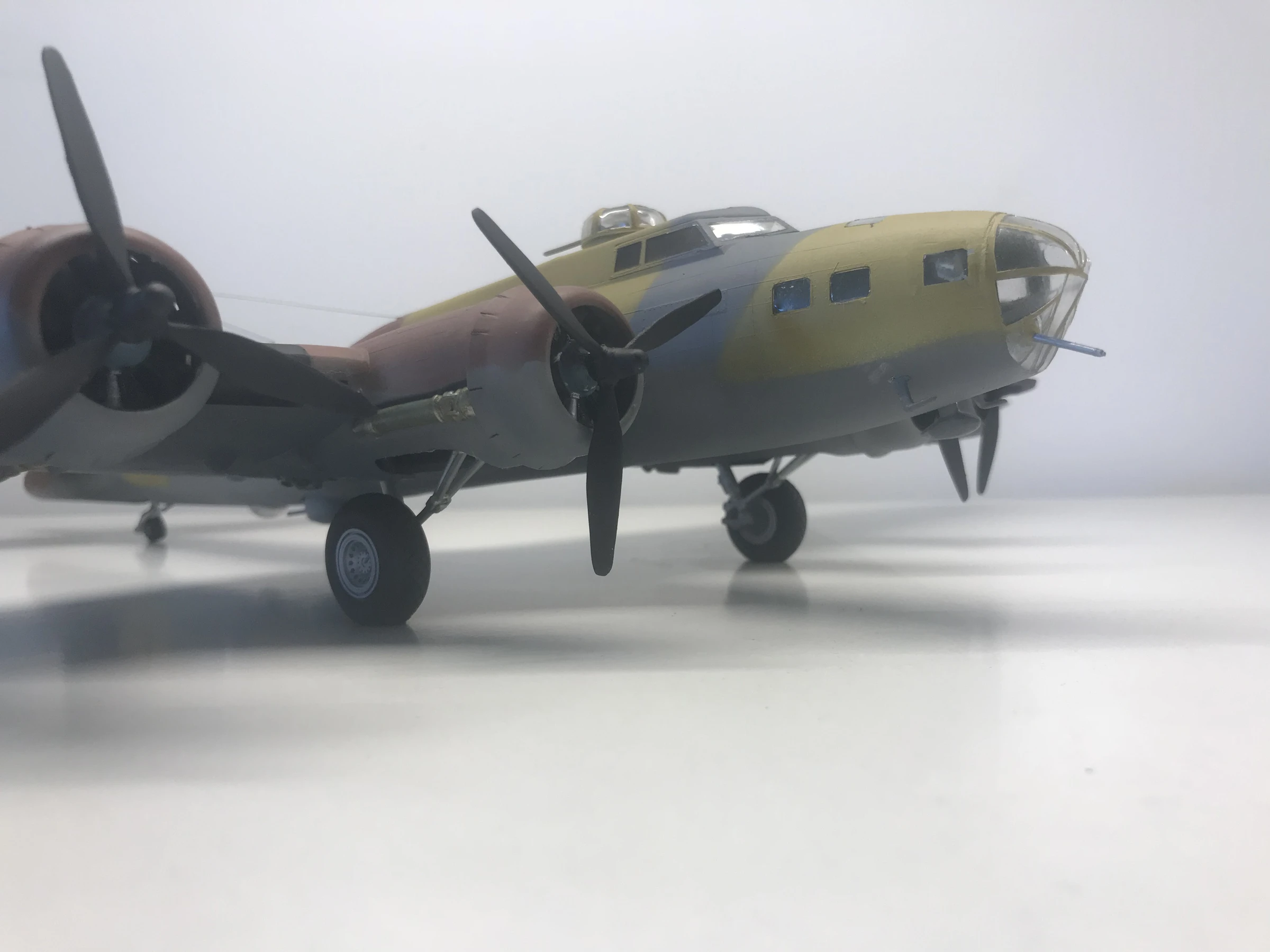
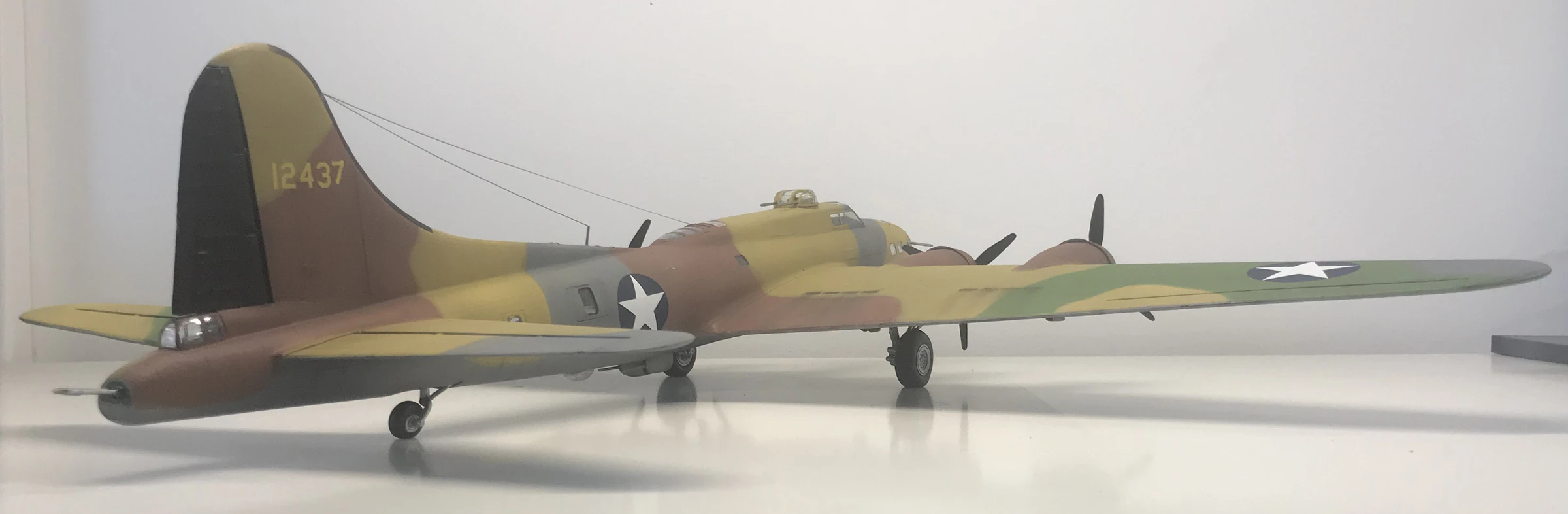
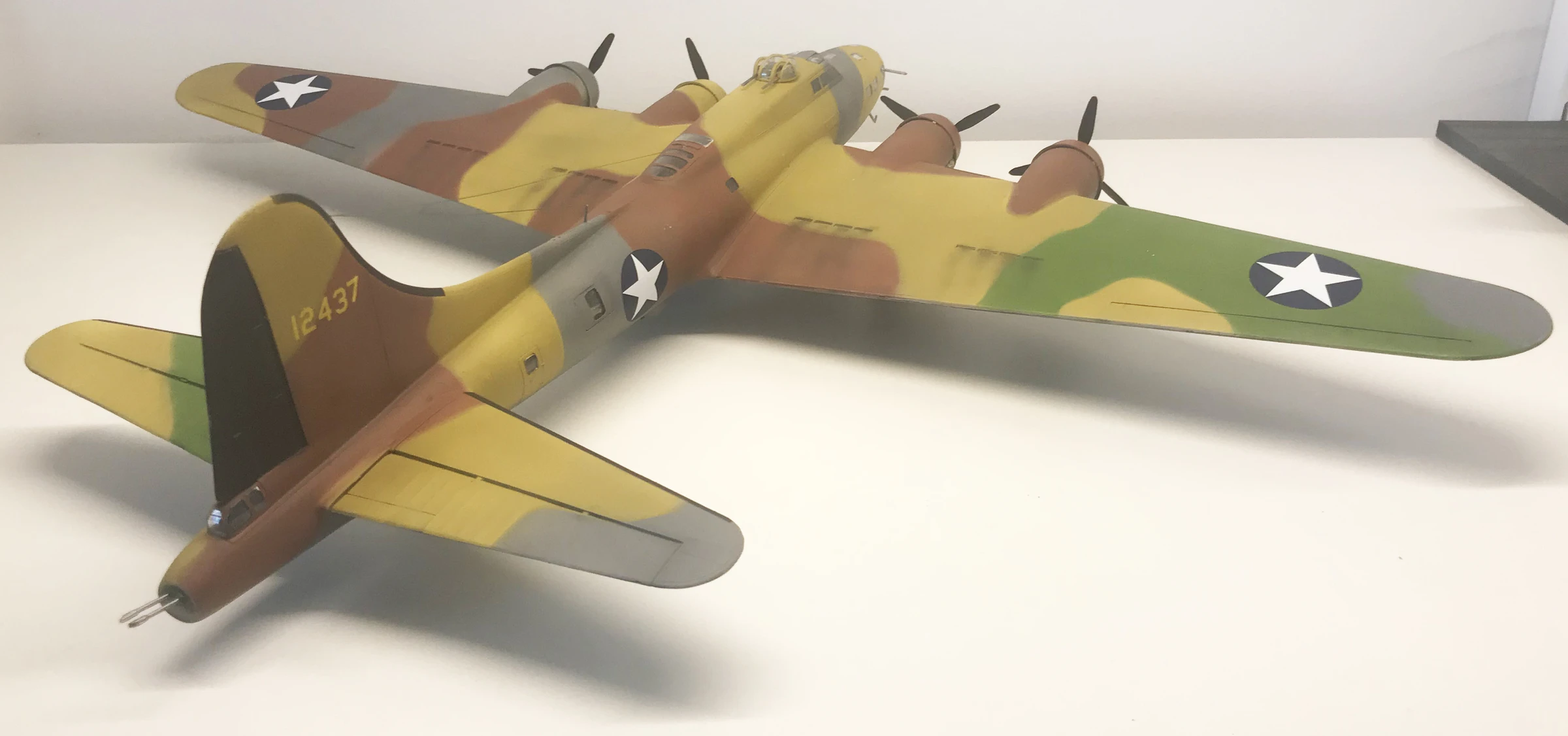
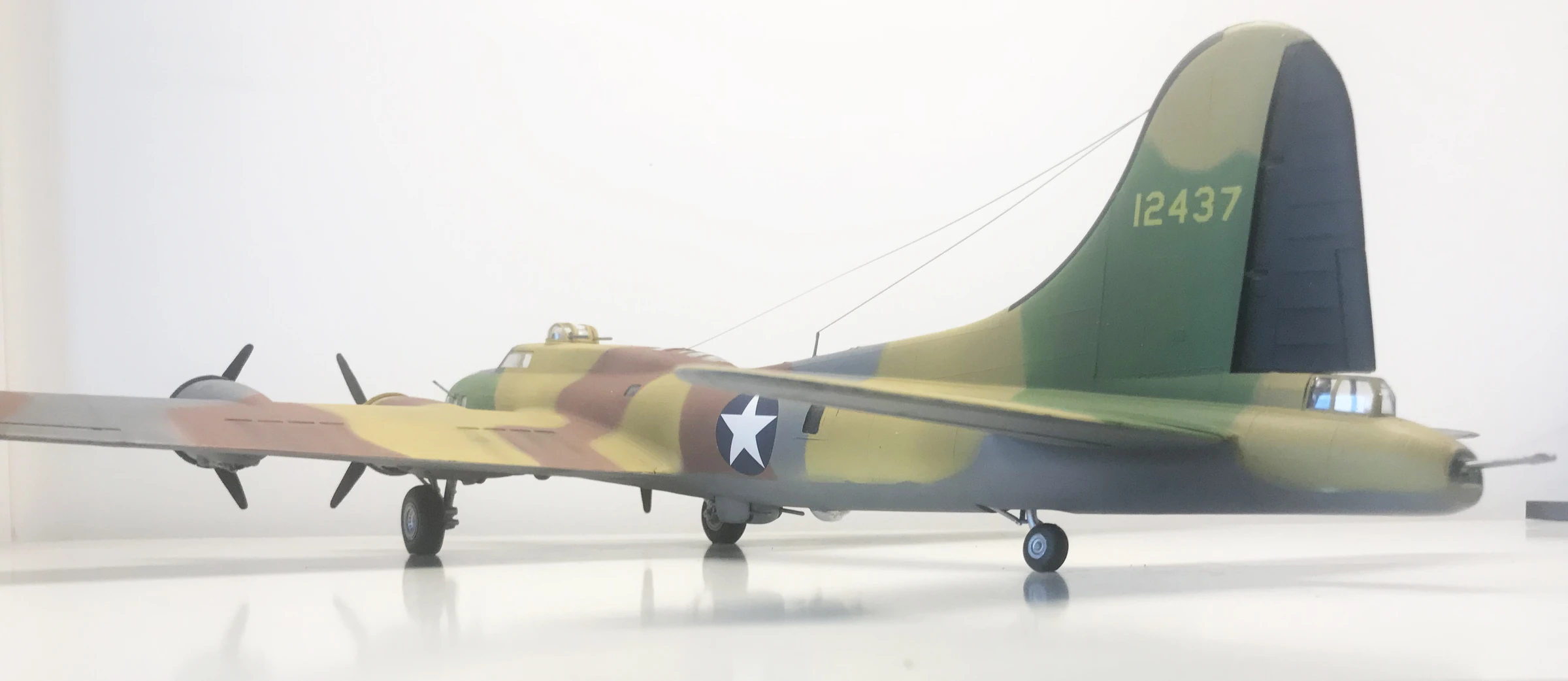
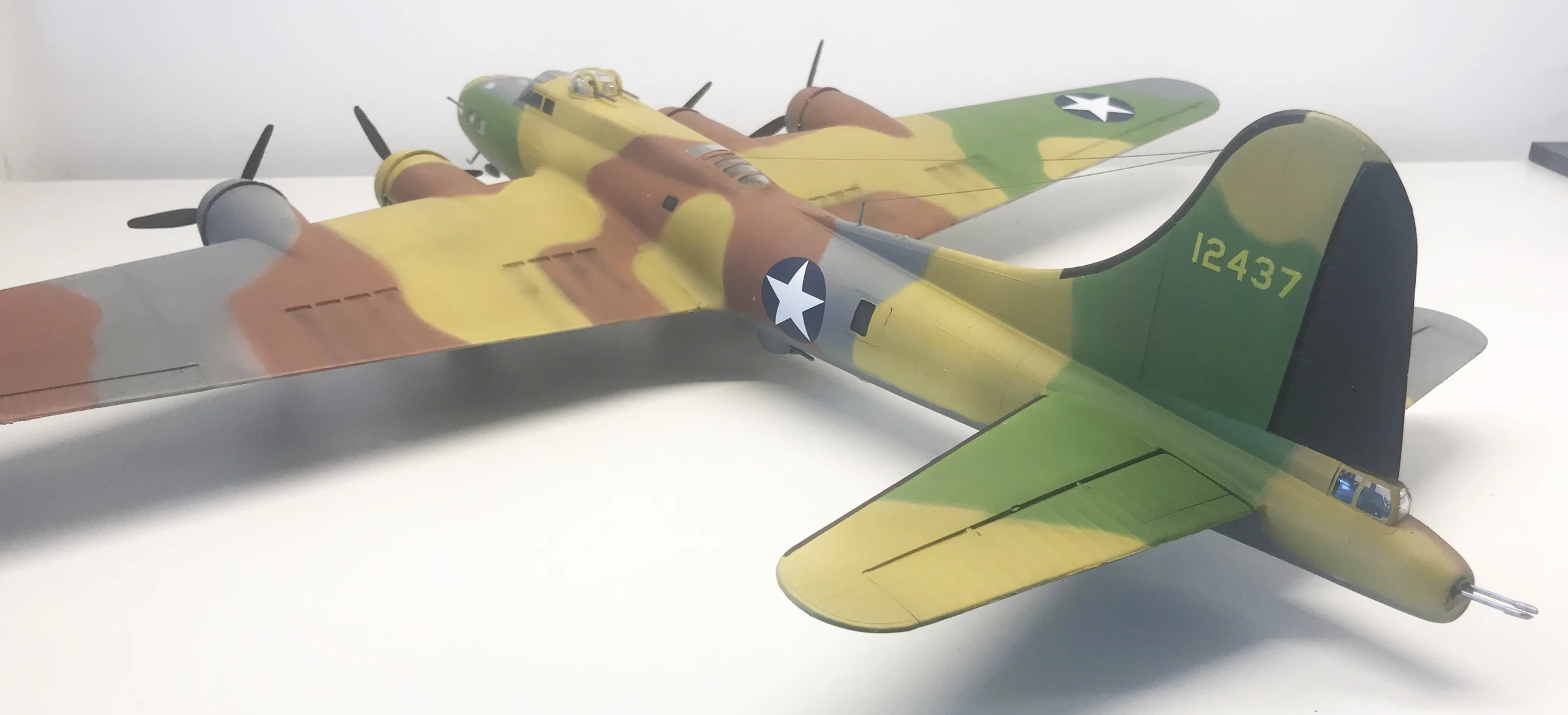
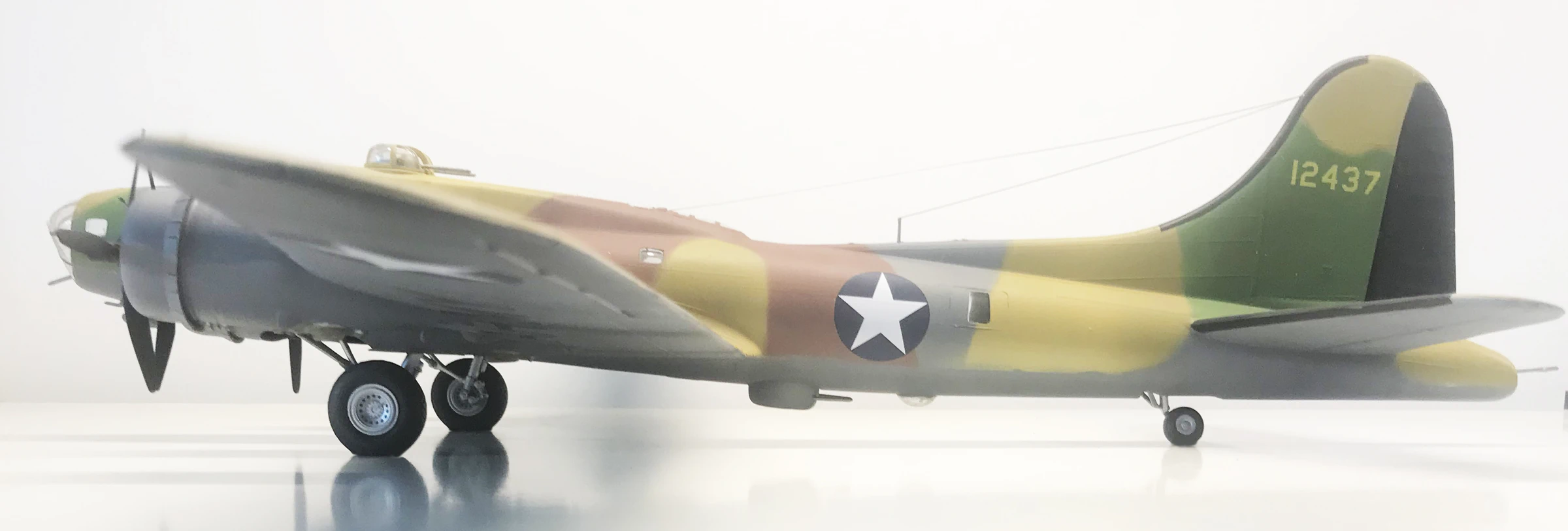
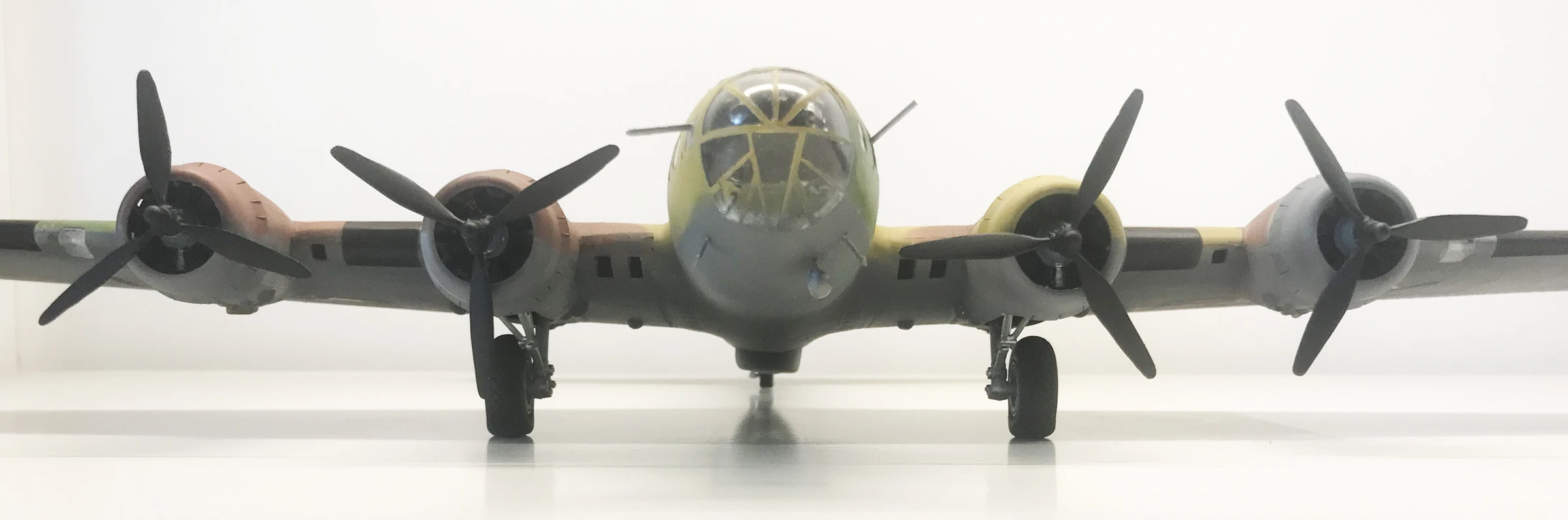
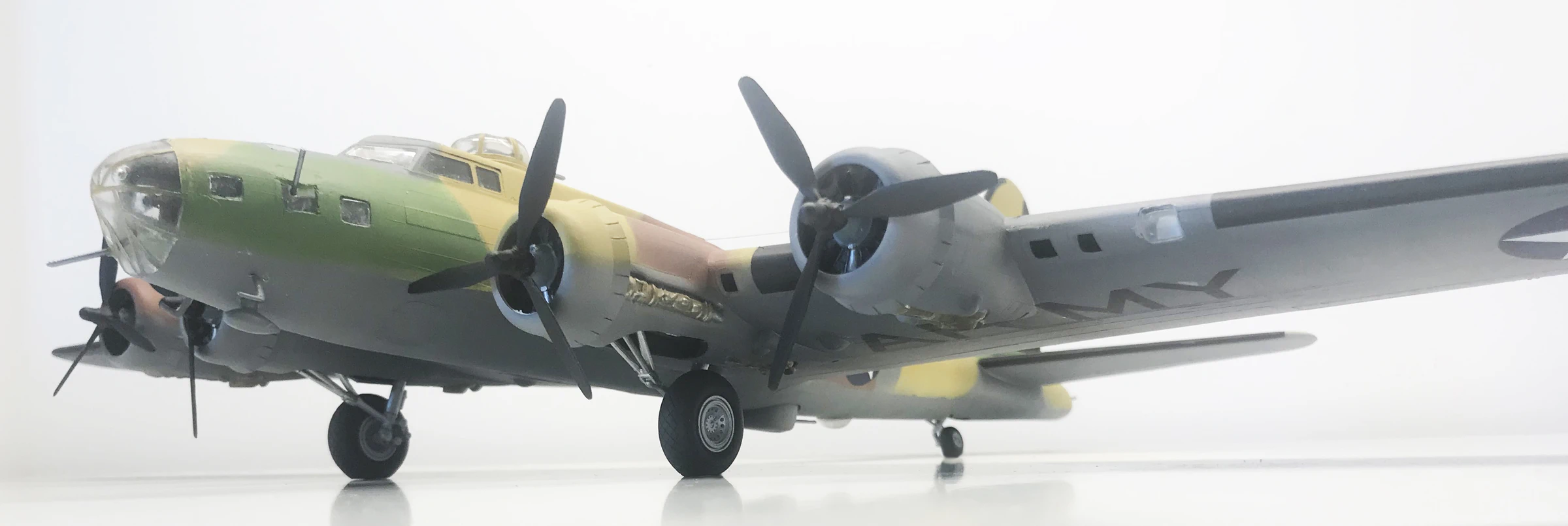
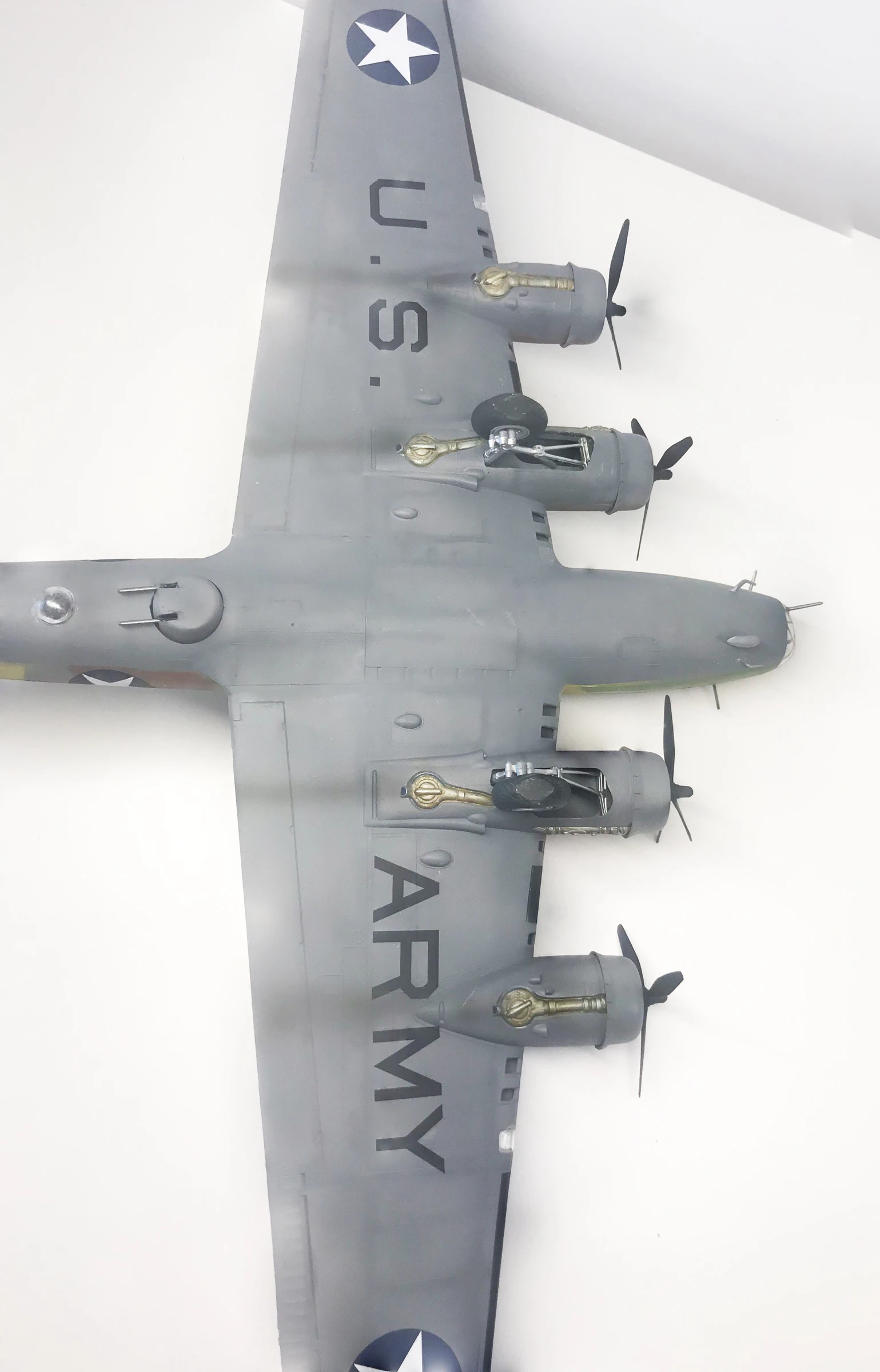
There were 17 B-17E Flying Fortresses stationed at Hickam Field on Midway on June 3, the day before the main battle. When the first traces of the Japanese attack force were found — the invasion fleet spotted by Jack Reid’s Catalina — a B-17 equipped with extra fuel tanks but no bombs was sent out to relieve the Catalina as spotter. Armed with no fewer than eleven guns it was considered far better able to defend itself.
When the enemy fleet was confirmed, nine more B-17s with half a bomb load and extra fuel were dispatched. At 16:23 they sighted the Japanese and went in, approaching in three groups of three at altitudes between 8,000 and 12,000 feet. Met by heavy but tardy AA fire, they released their bombs. No hits were scored.
The next day the B-17s were sent off shortly after the reconnaissance Catalinas at around 4:30, partly as a precaution against the expected attack on the airfield. Since they would need to spend at least four hours airborne regardless, they were redirected to have another go at the invasion force. At 5:52 the Americans finally spotted the main Japanese carrier force and the B-17s were sent after them. They climbed to 20,000 feet and changed course, spotting the first ships at 7:32 but not locating the carriers until 8:10, as they were hidden by clouds. Flying in from the stern they commenced their bomb run. AA fire was heavy and accurate for altitude, though generally behind. The combat air patrol Zeros found the bombers too high to intercept effectively. No hits were scored.
On June 5 three sorties were flown against the remaining Japanese ships. On the last, made by five B-17s at 18:25, they found a lone cruiser and attacked from 11,000 feet. The ship manoeuvred violently and threw up heavy AA fire. During the bomb run one B-17 managed to lose its external fuel tank along with its bombs. The aircraft headed for Midway but at around 23:30 radioed “out of gas and landing” and was never seen again. The remaining planes had trouble finding Midway in the dark — three were guided in by radar, but the last, piloted by Captain Glen H. Kramer, also ran out of fuel and ditched 50 miles short. Everyone but the radio operator was rescued. No hits were scored.
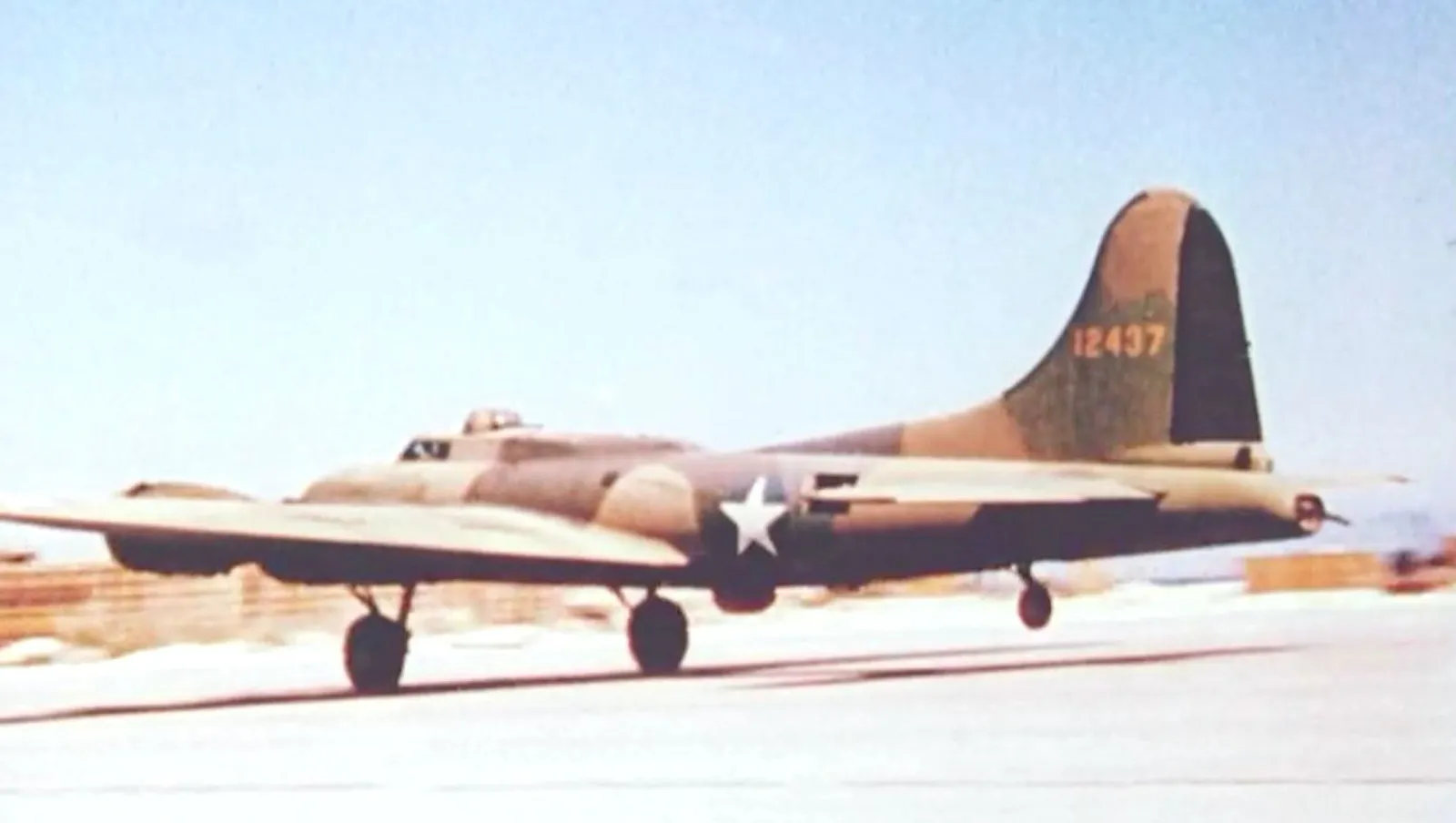
The engagement confirmed that B-17s were better suited to attacking stationary targets than manoeuvring vessels at sea. Their value as long-range reconnaissance platforms, however, was well proven. This individual aircraft (41-2437) was filmed by John Ford for his documentary of the Battle of Midway and appears in several sequences. It had flown in from Hawaii early on June 4, and afterwards was sent on to Australia. On July 17, 1942, it took part in a bombing raid against Rabaul. It was officially written off on June 15, 1944, and scrapped.