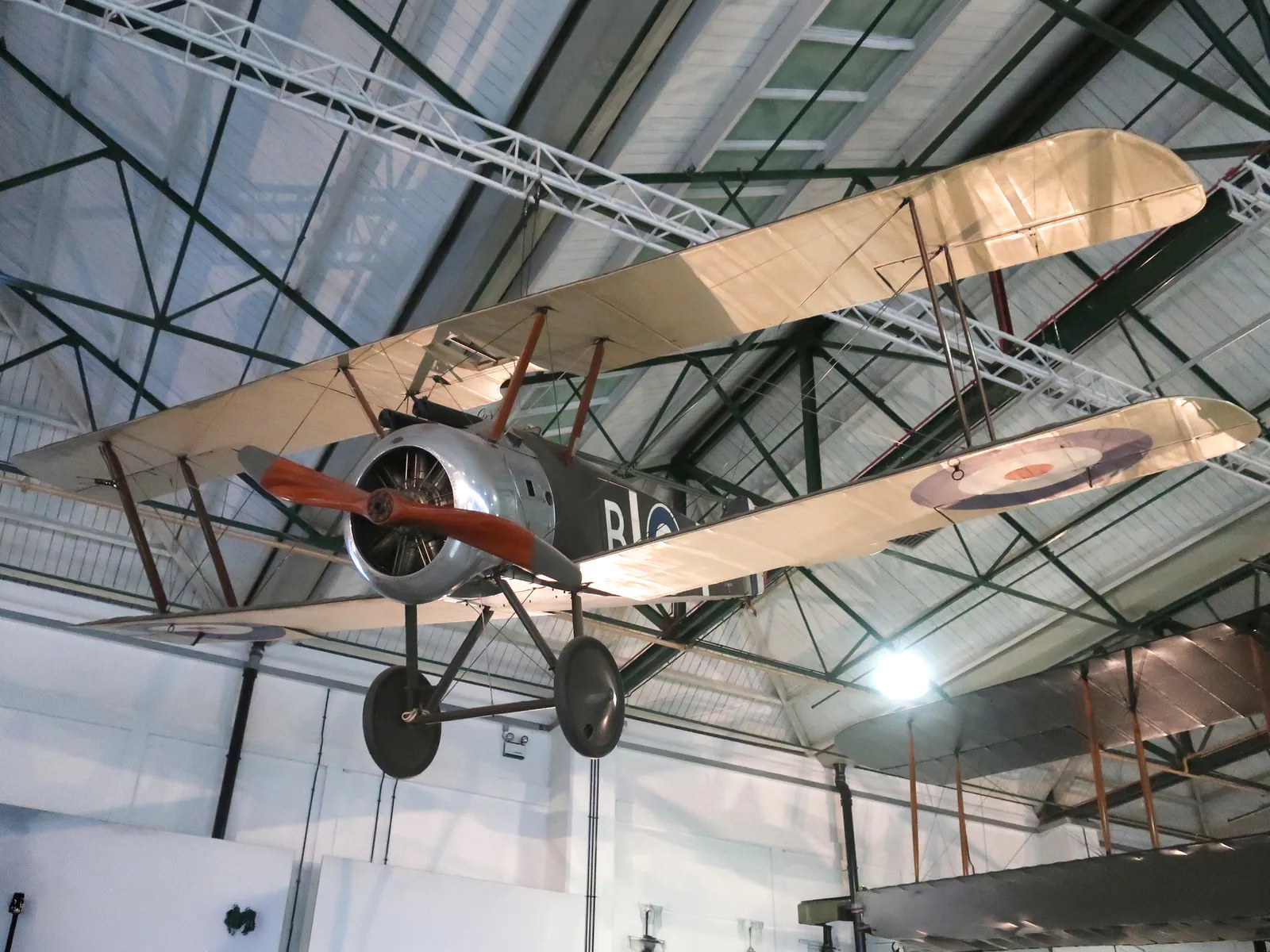
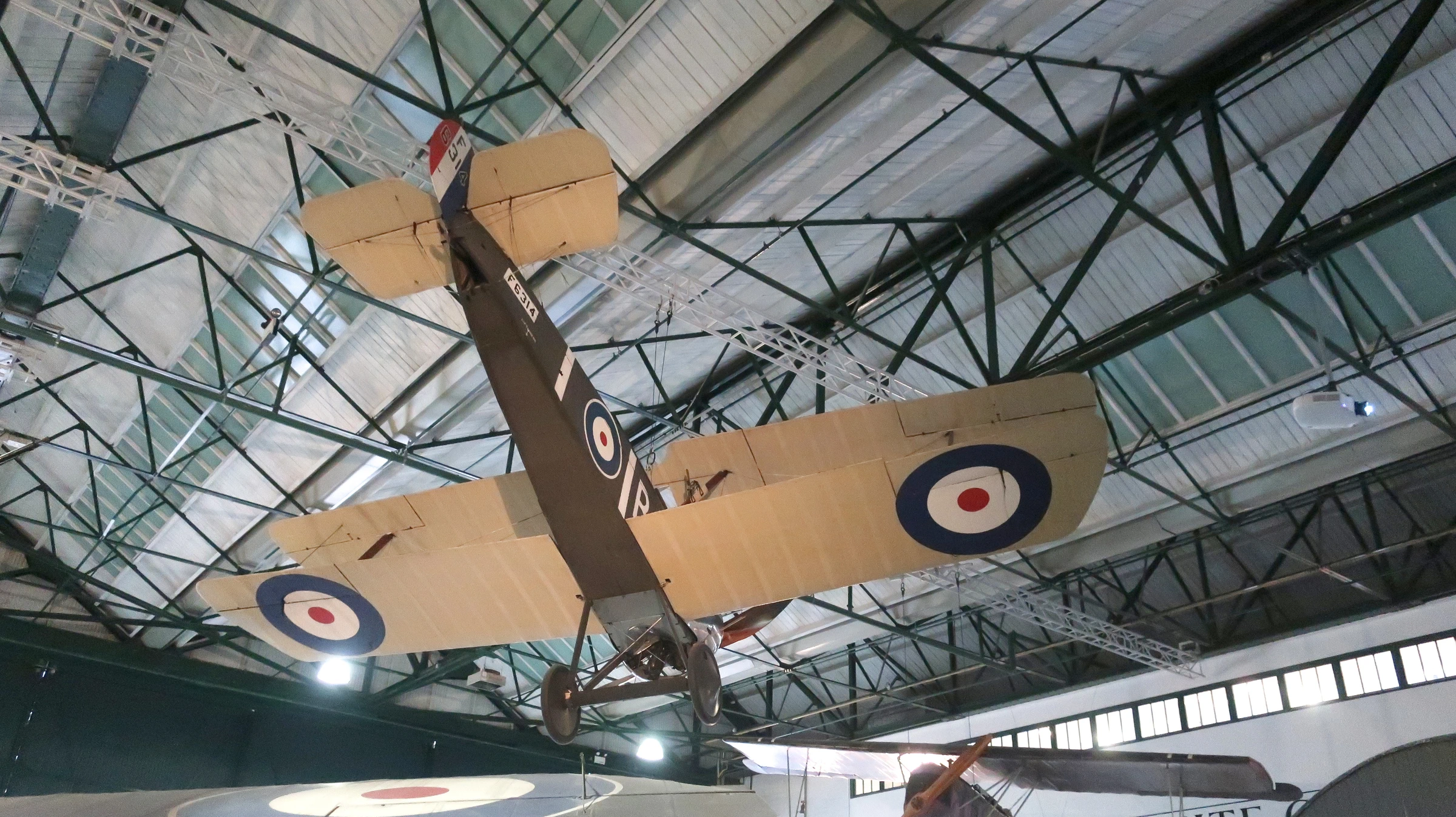
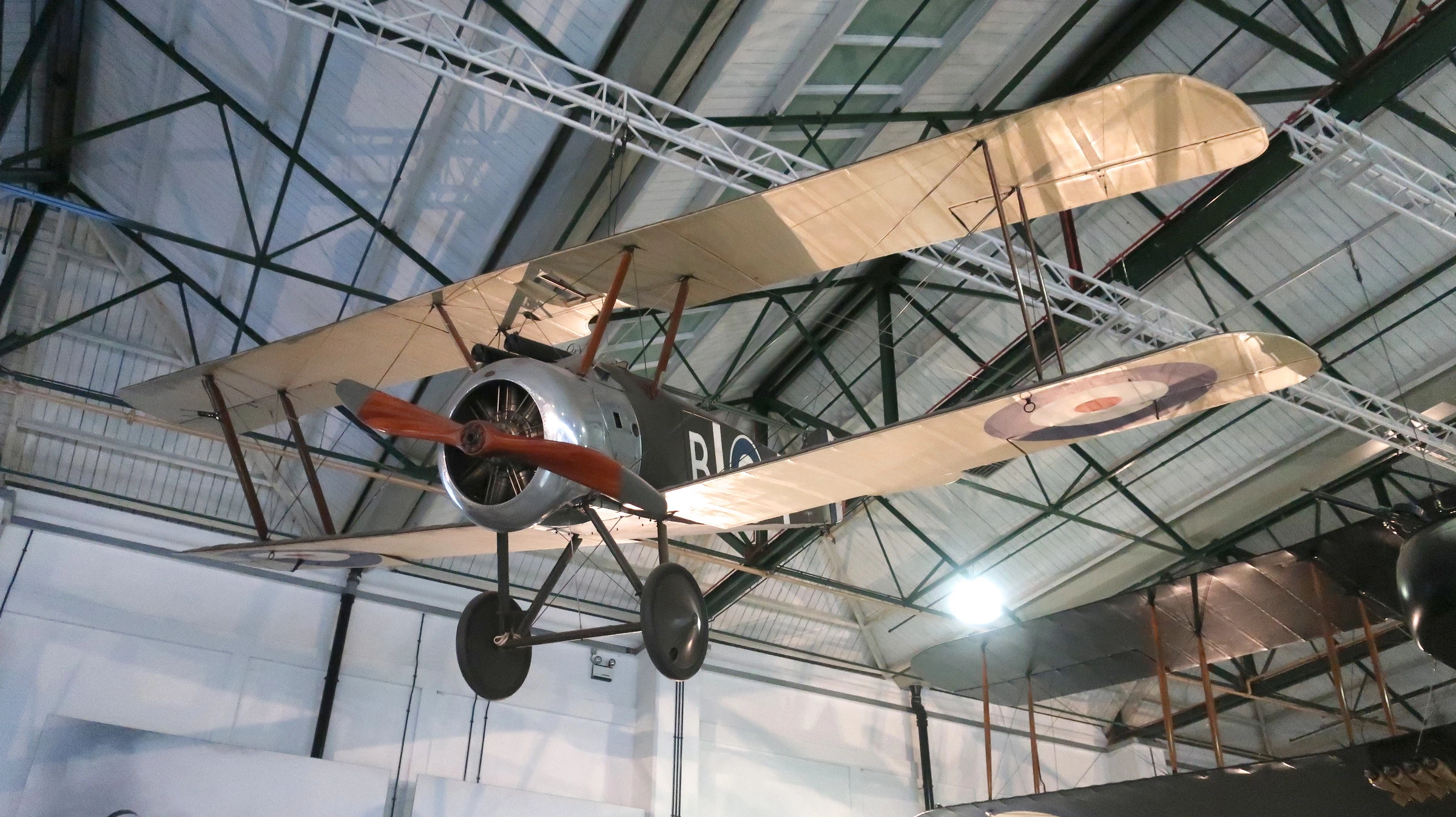
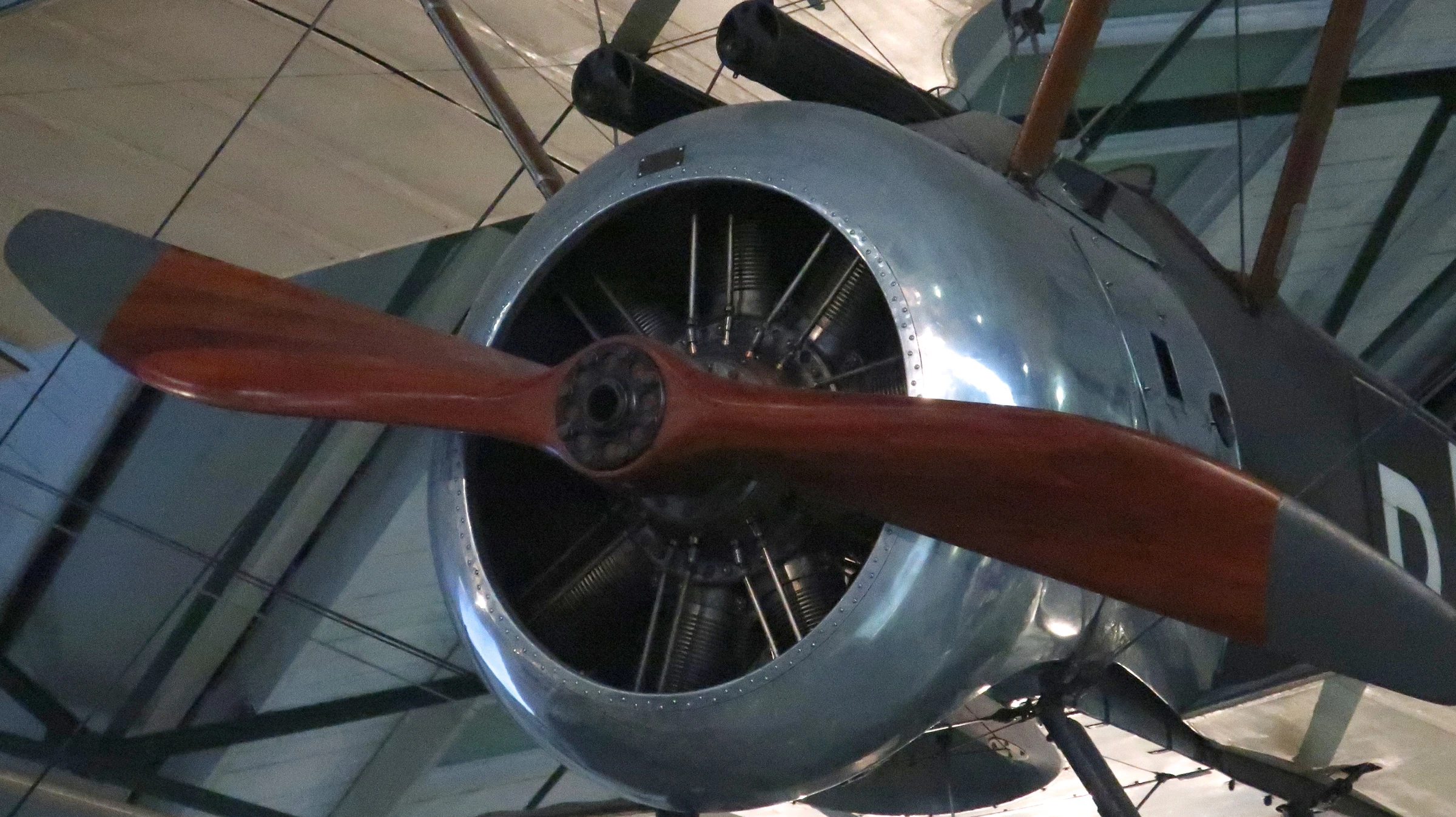
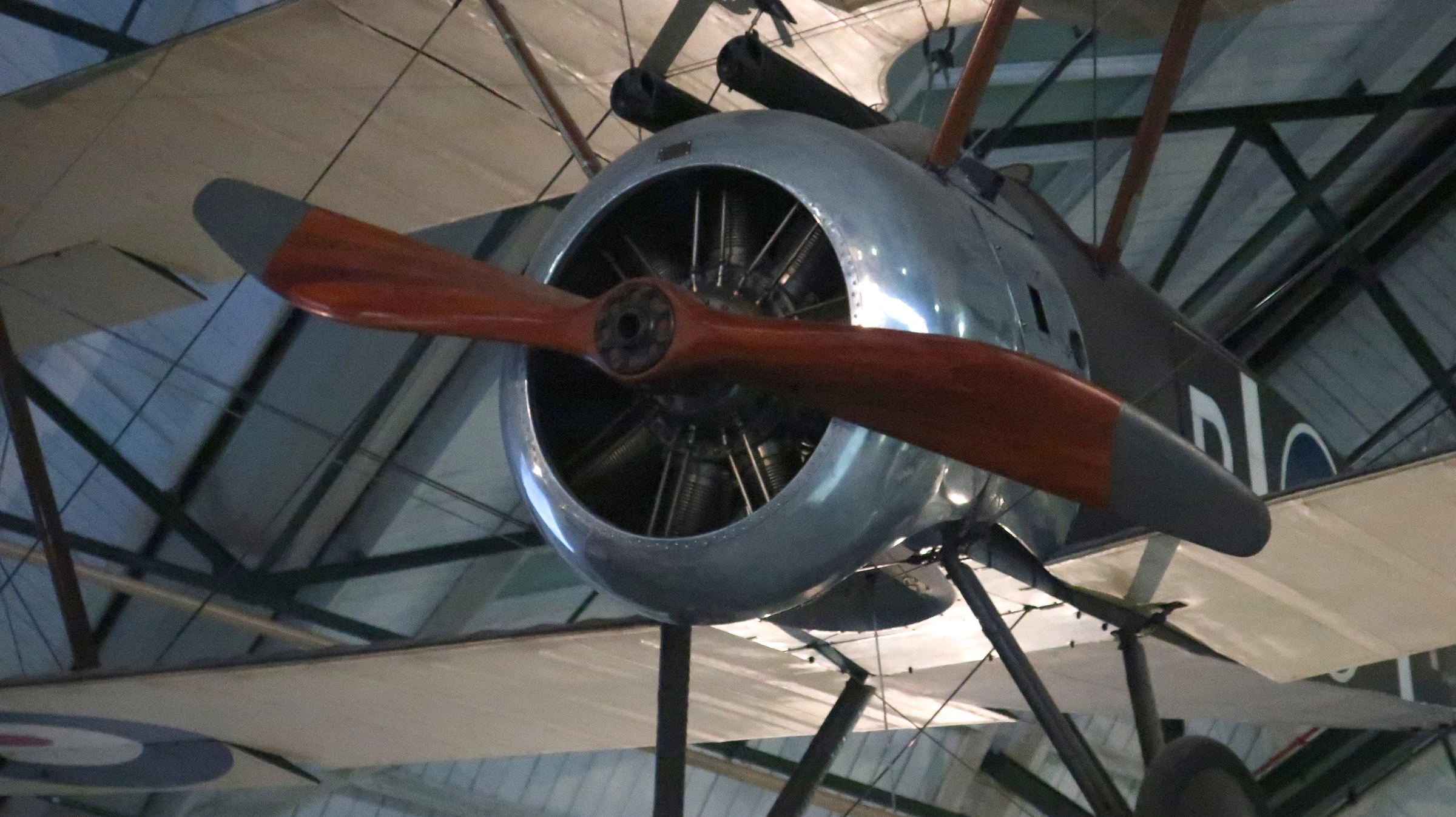
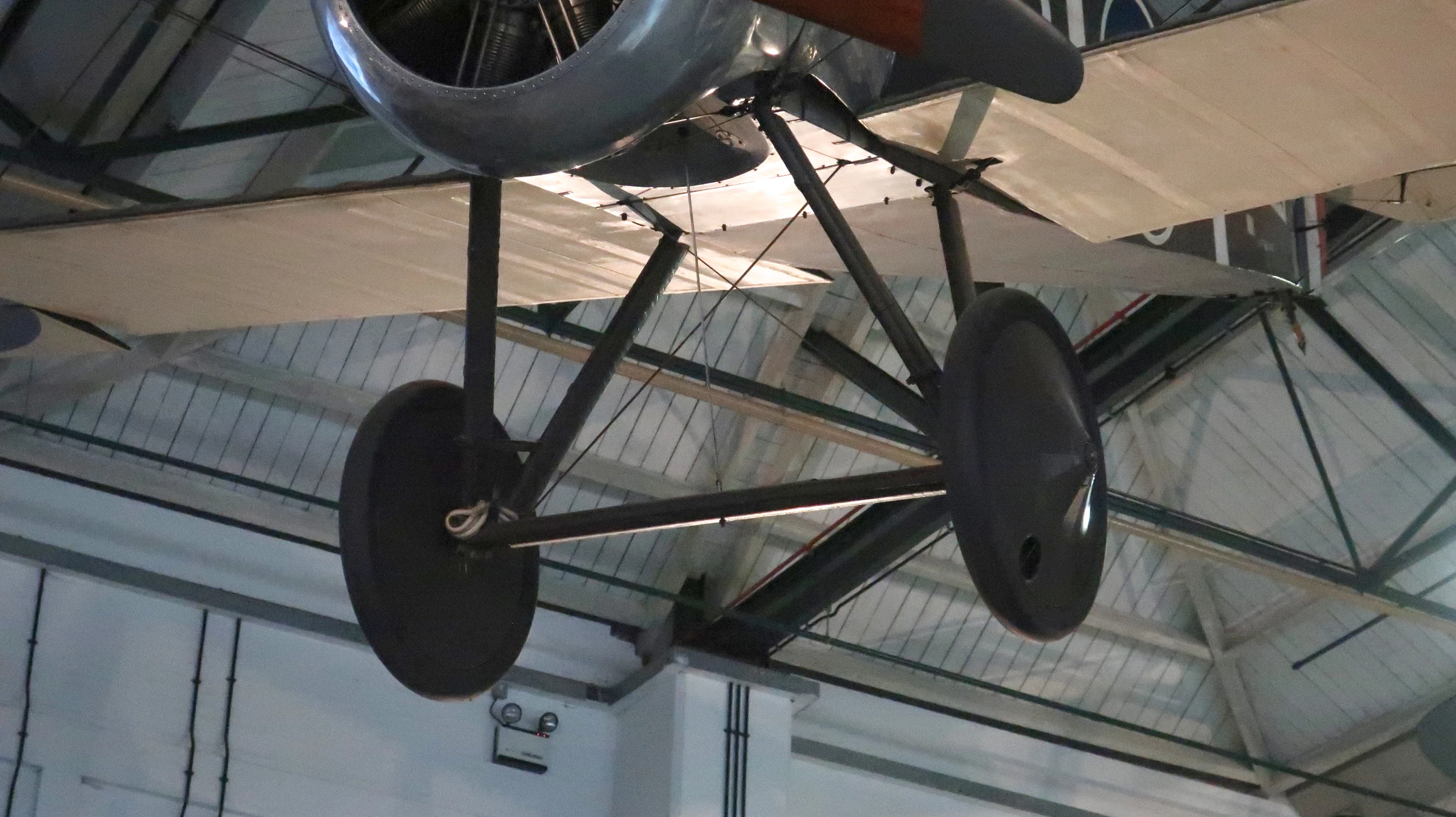
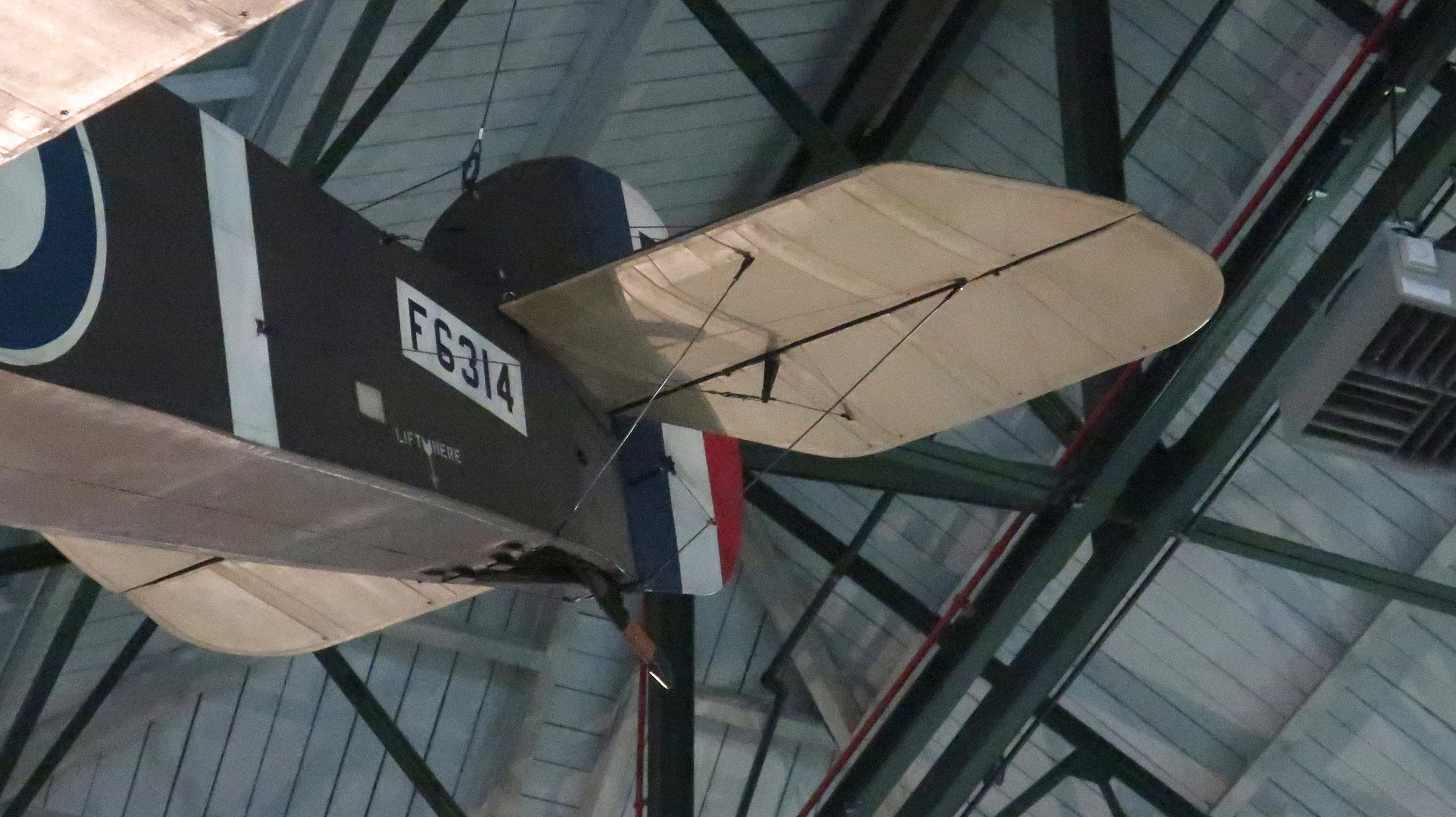
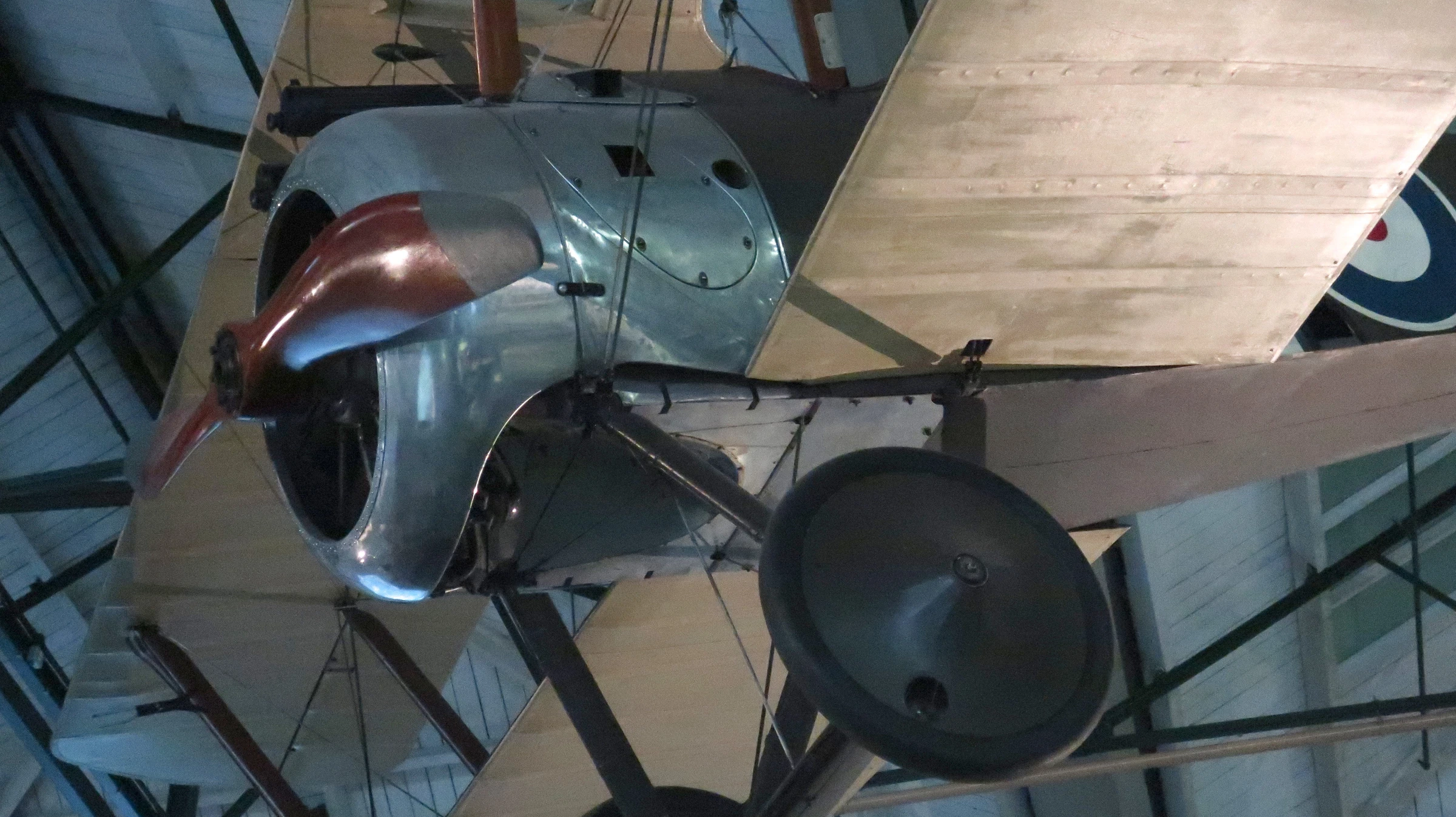
These walk-around photos were taken at the RAF Museum London in Hendon in 2019. They show a Sopwith F.1 Camel, displayed as F6314/B of No. 65 Squadron RFC — the highest-scoring Allied fighter of the First World War, responsible for more enemy aircraft destroyed than any other type. Notoriously demanding to fly, the Camel's gyroscopic rotary engine made it dangerously sensitive to the unwary but almost supernaturally manoeuvrable in the hands of an experienced pilot. Its twin synchronised Vickers machine guns, clustered in the characteristic hump that gave it its nickname, made it lethal in a dogfight. Some 5,490 were built by a range of manufacturers, and the type accounted for around 1,300 enemy aircraft.
The true identity of this airframe is subject to scholarly debate. Built by Boulton and Paul in Norwich in late 1918, its original serial number is uncertain — stamps found during restoration suggest October 1918 as the manufacturing date. It was acquired after the war by journalist and pilot Grenville Manton, later passing to collector Richard Nash who displayed it alongside the Bleriot XXVII and Fokker D.VII at the Science Museum in 1939. The serial F6314 was applied during a 1950s restoration on the basis of markings found on the lower wings. After further restorations and numerous public appearances it came to Hendon, where it has been suspended in the Grahame-White Factory since 2003.