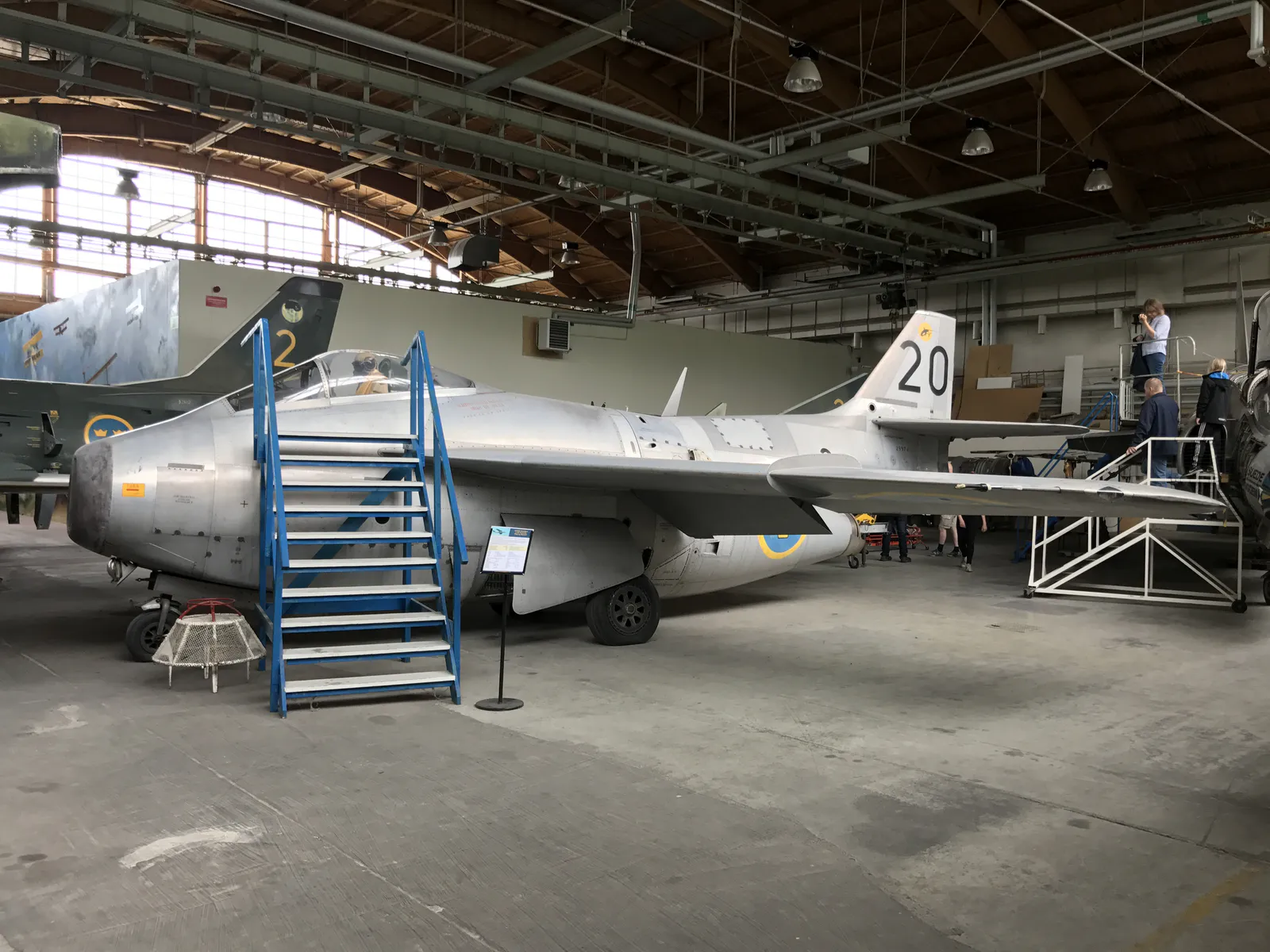
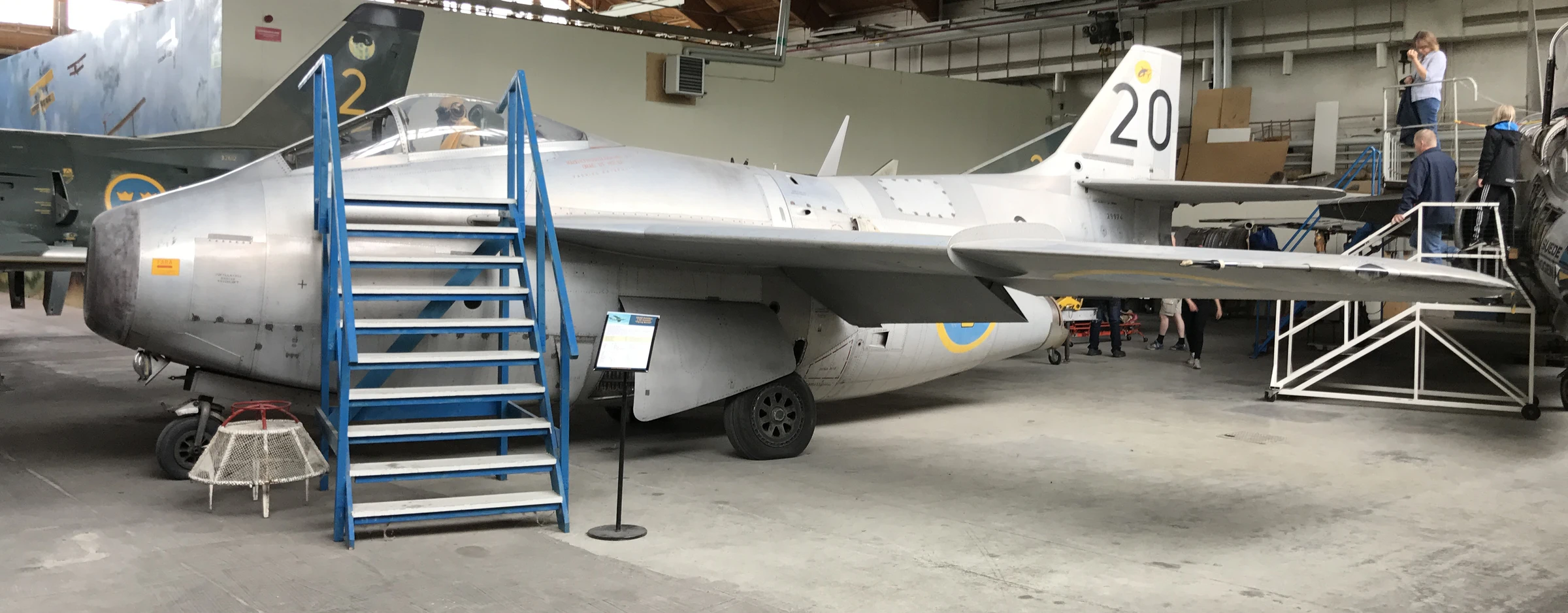
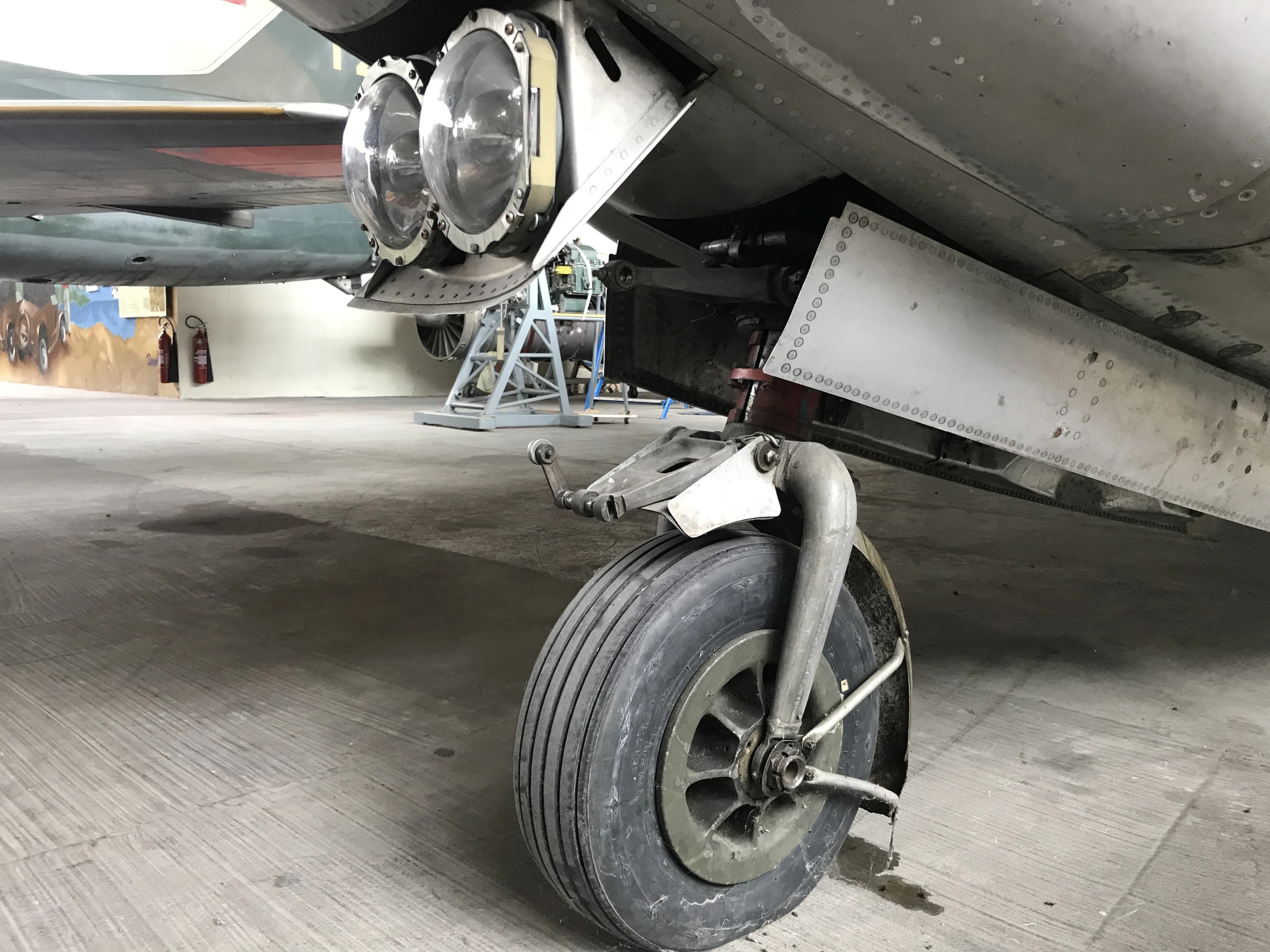
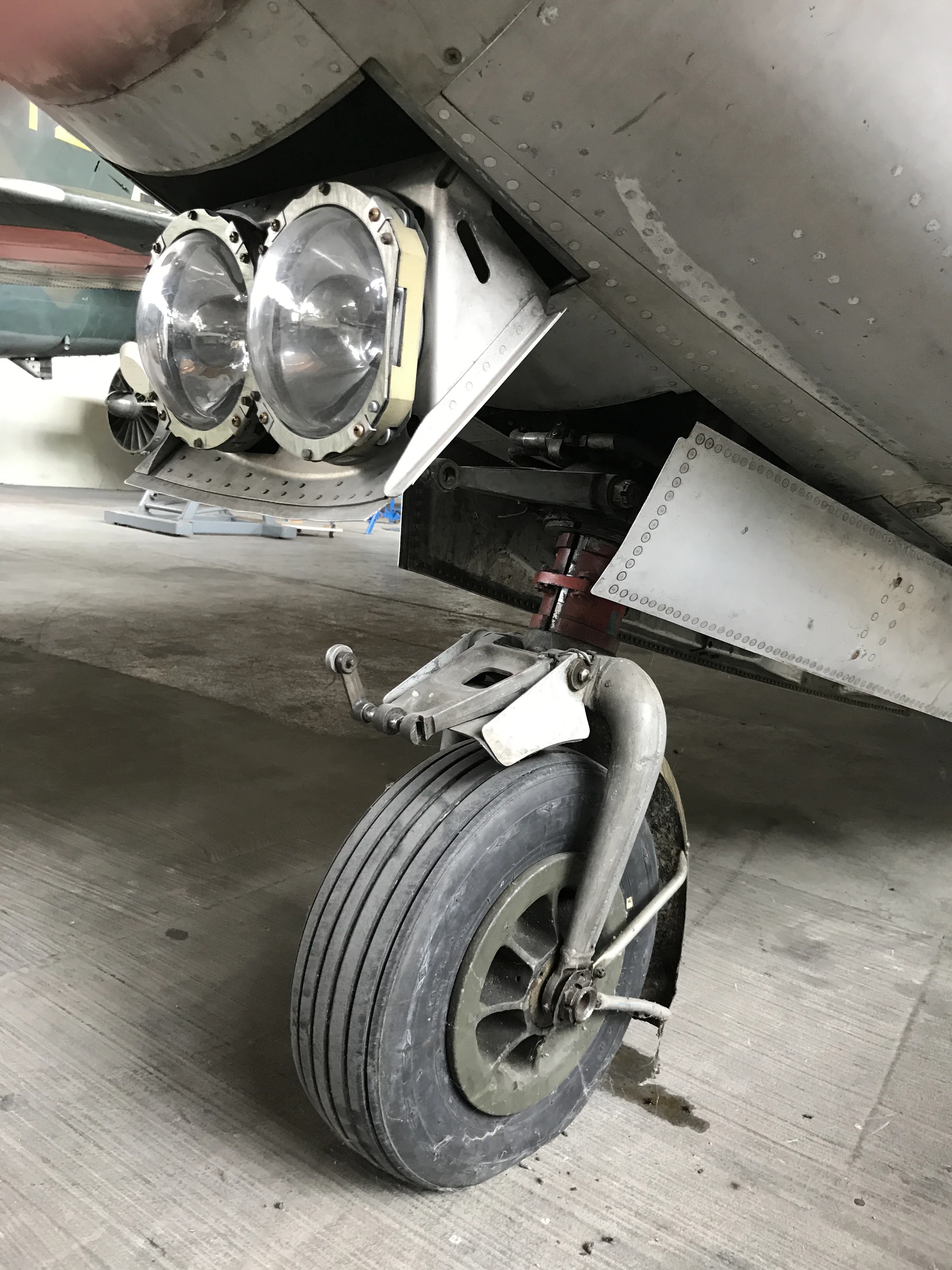
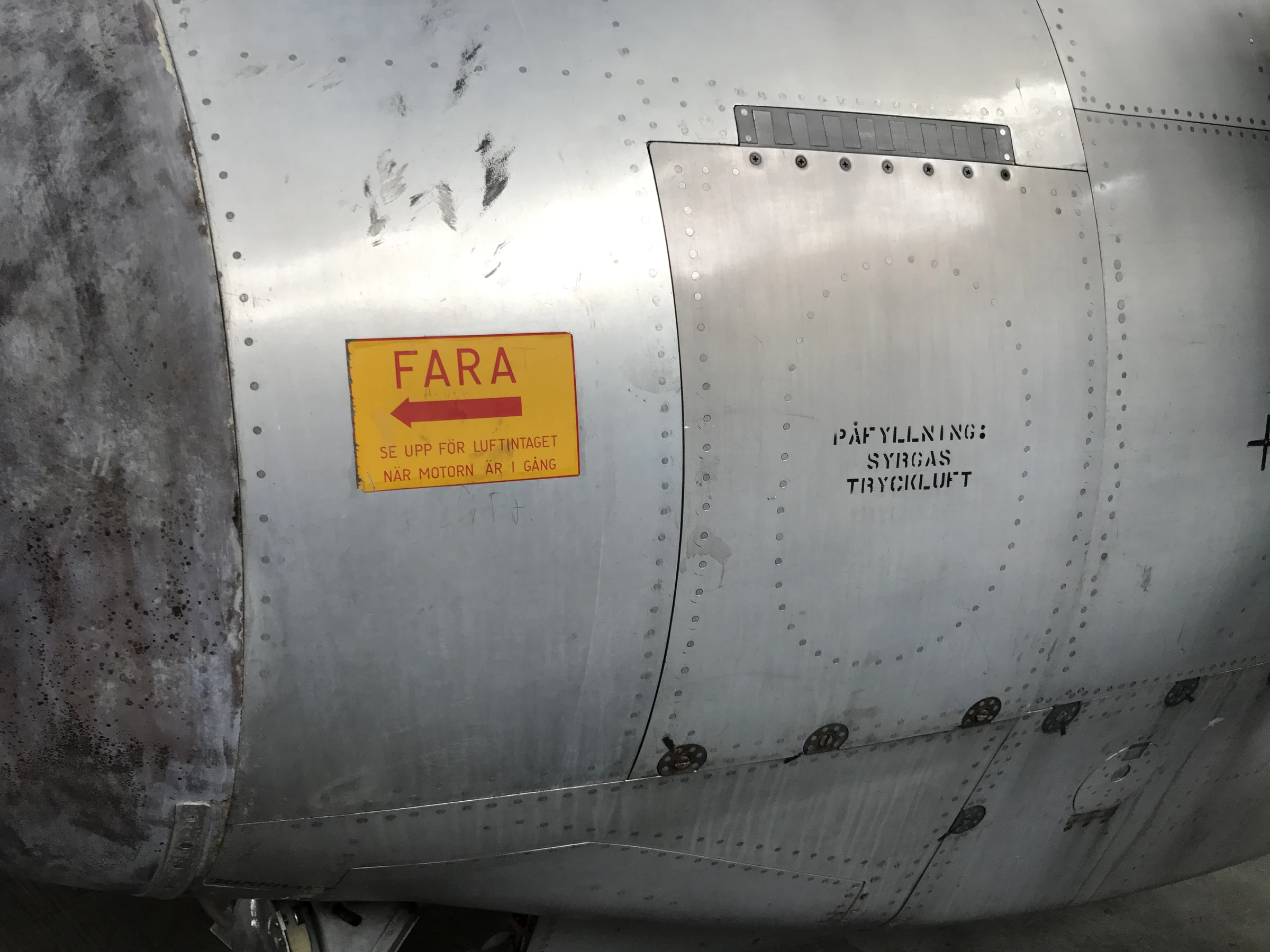
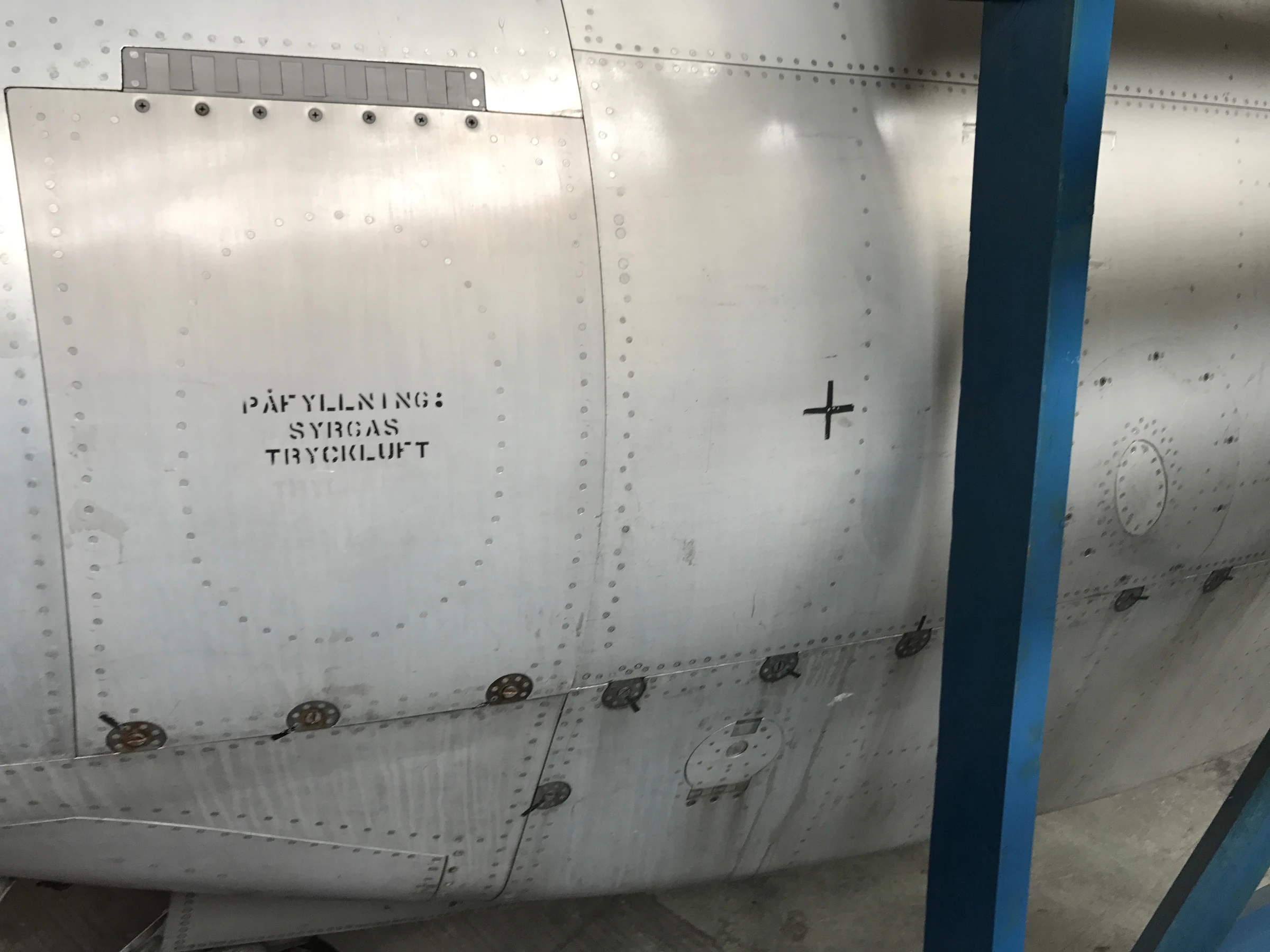
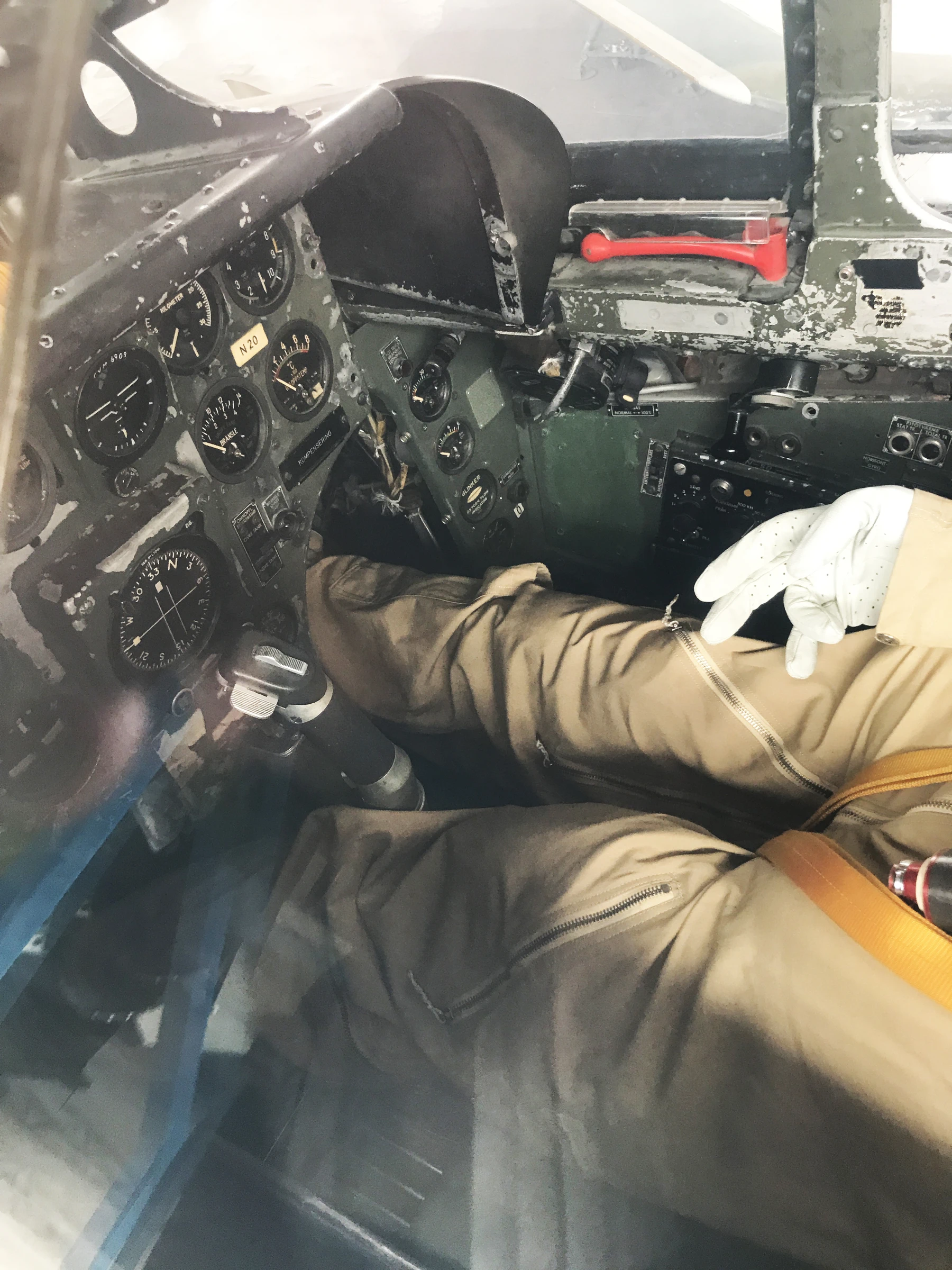
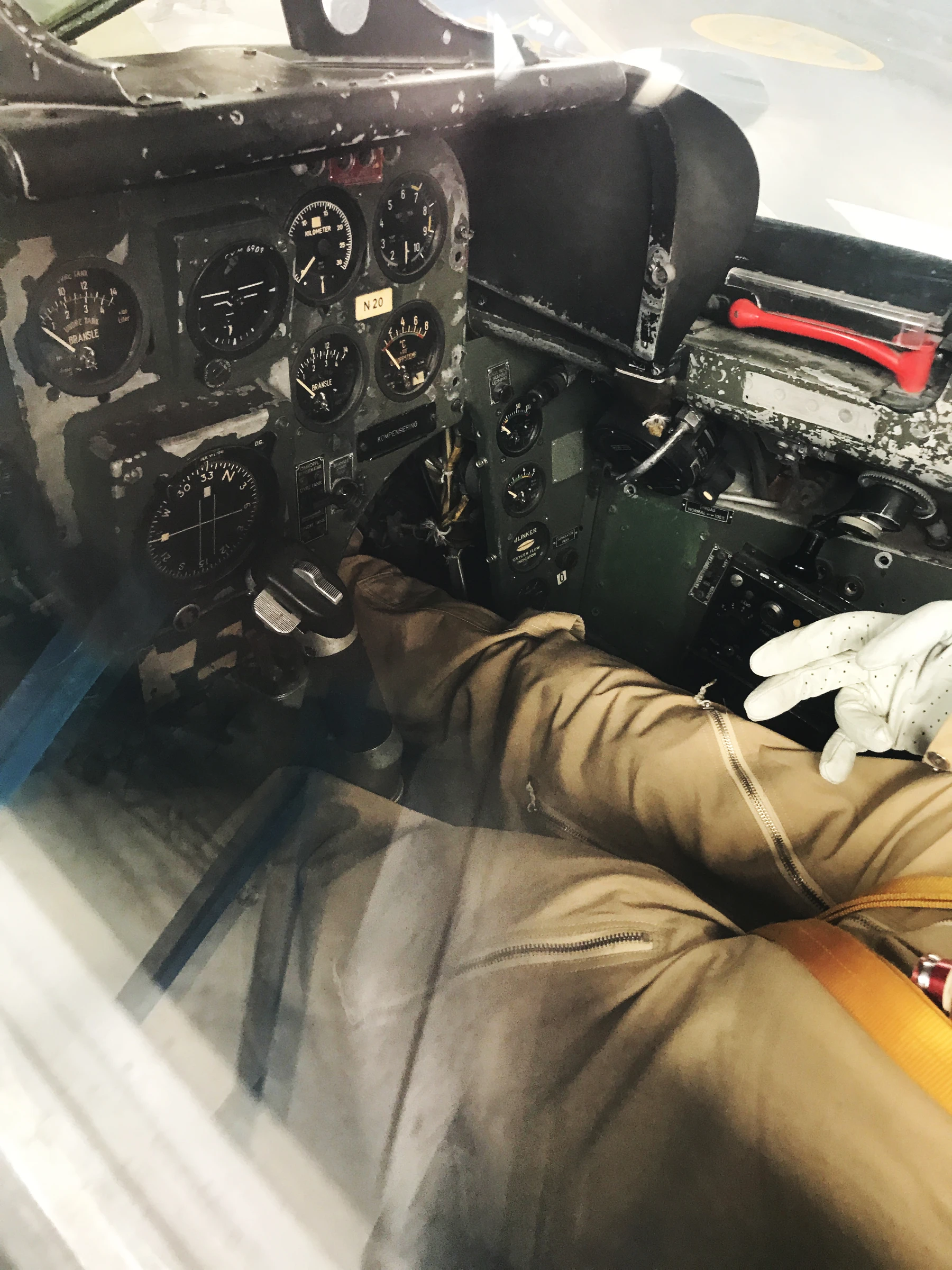
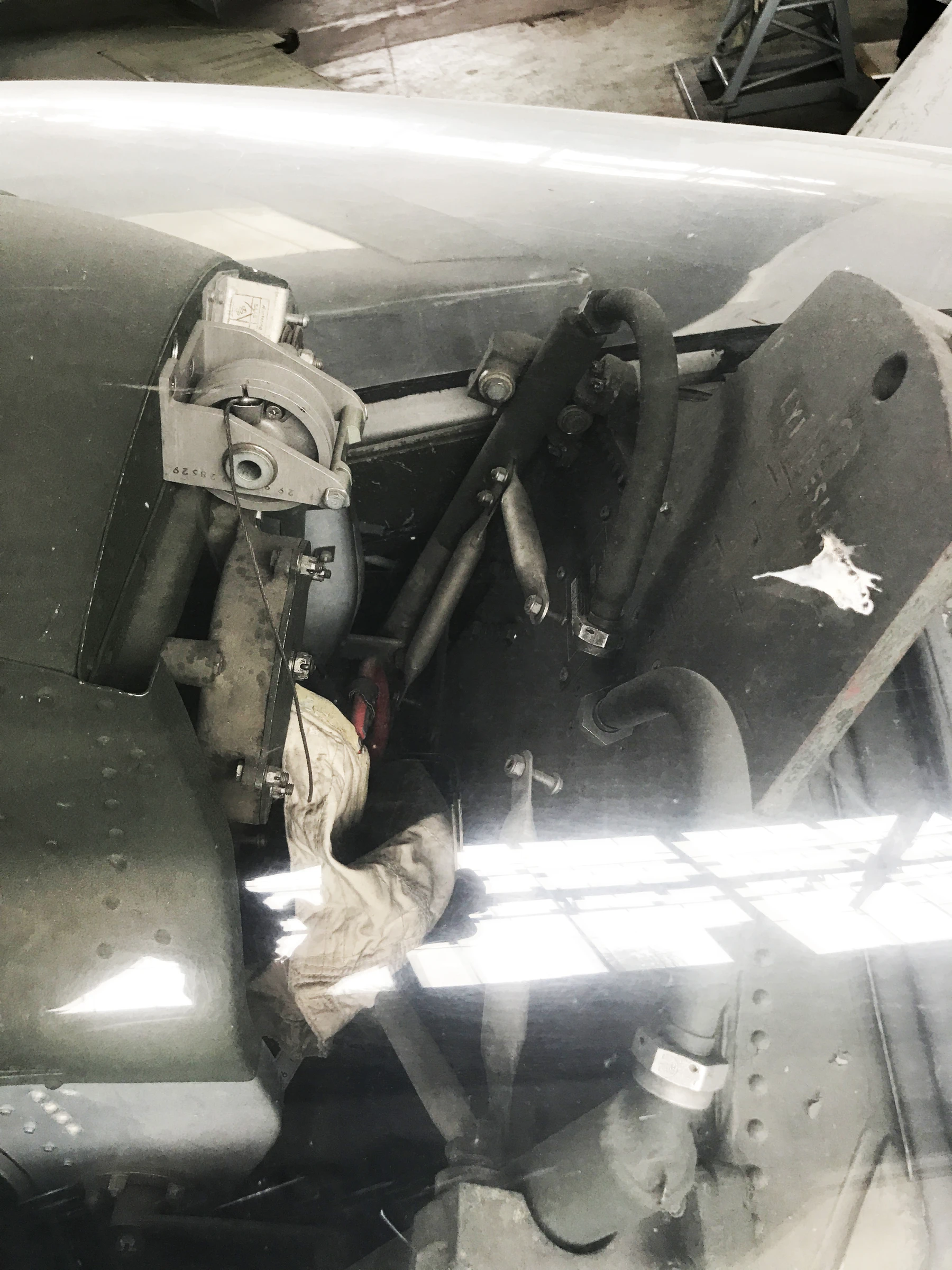
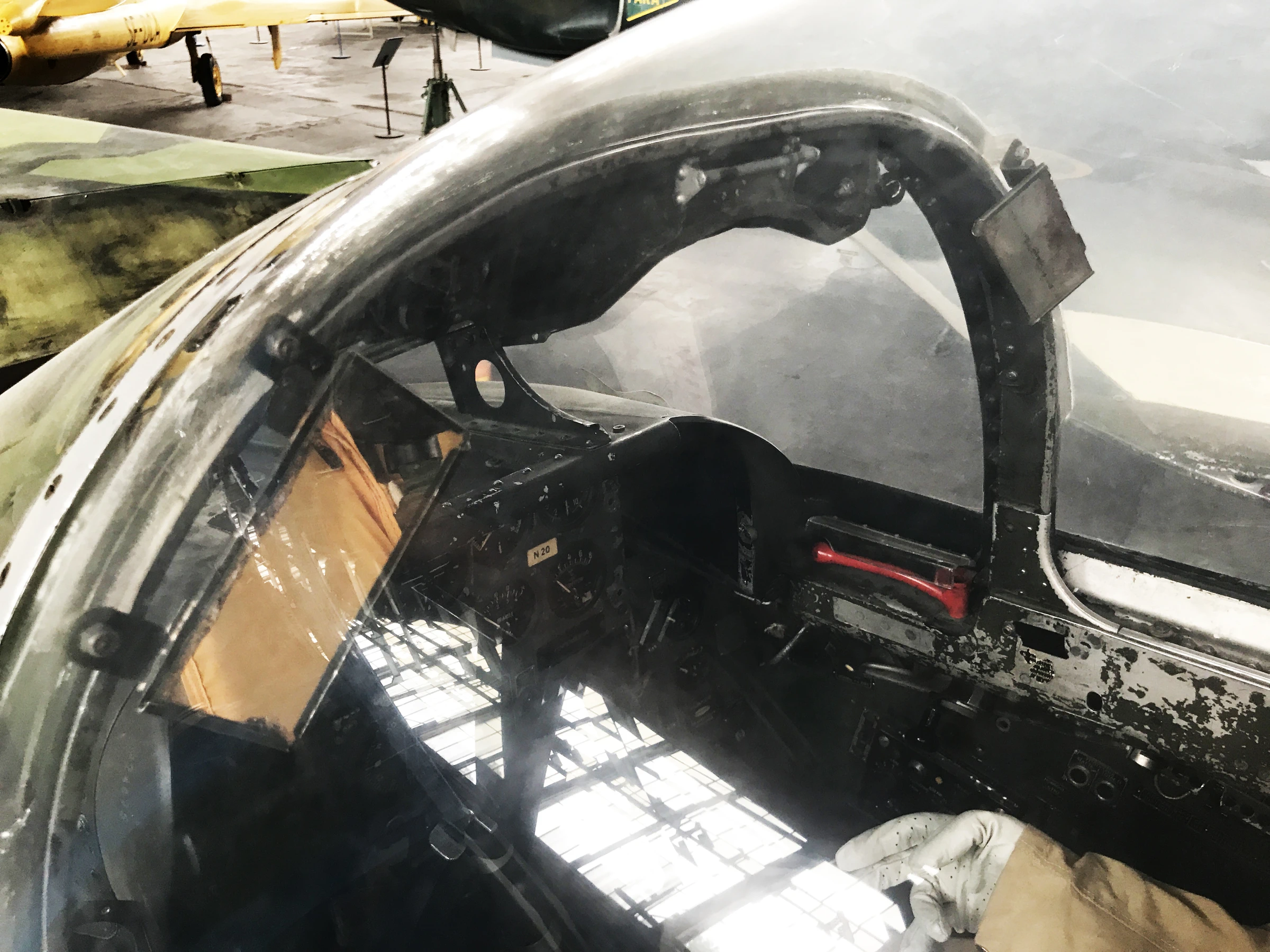
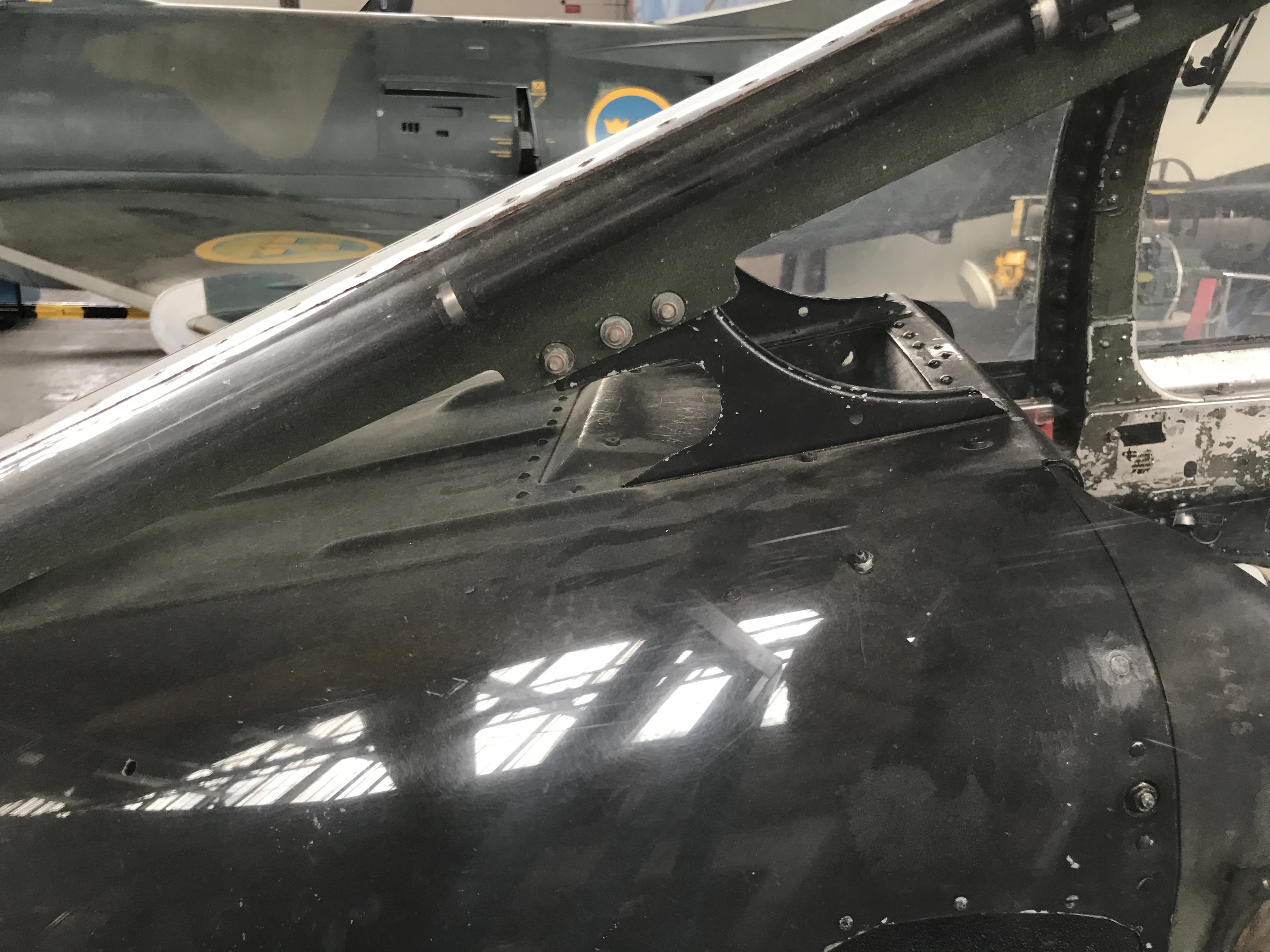
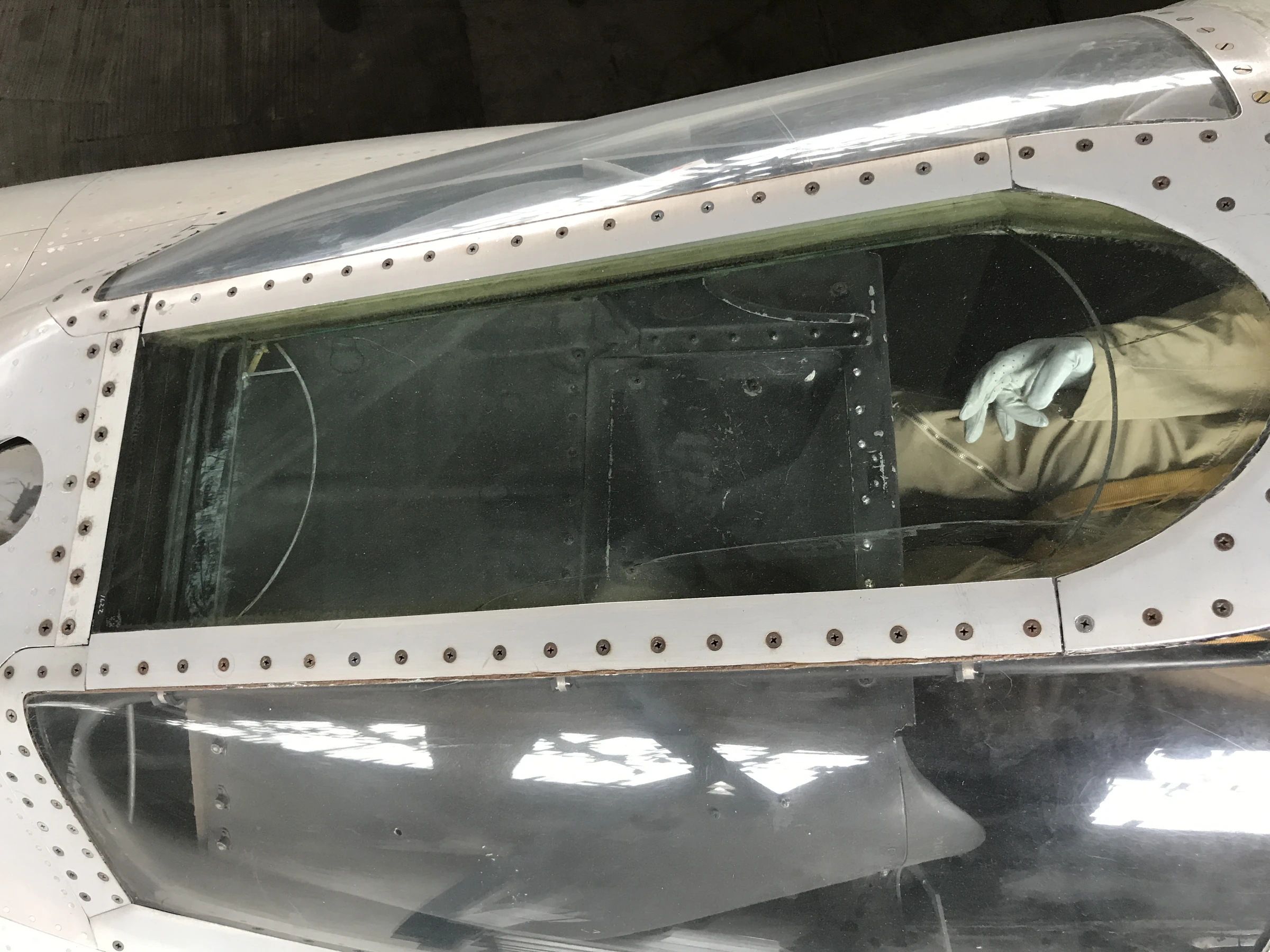
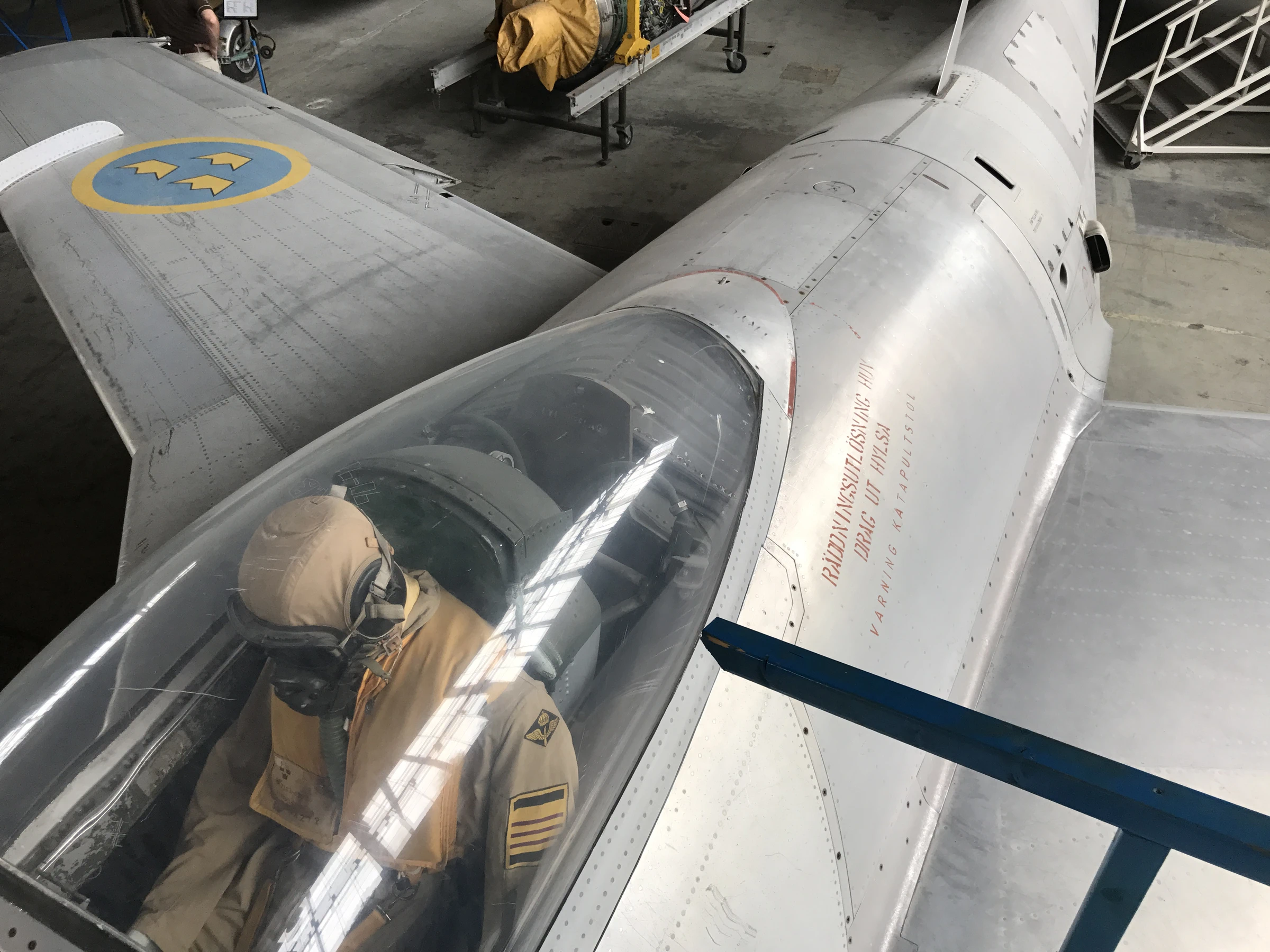
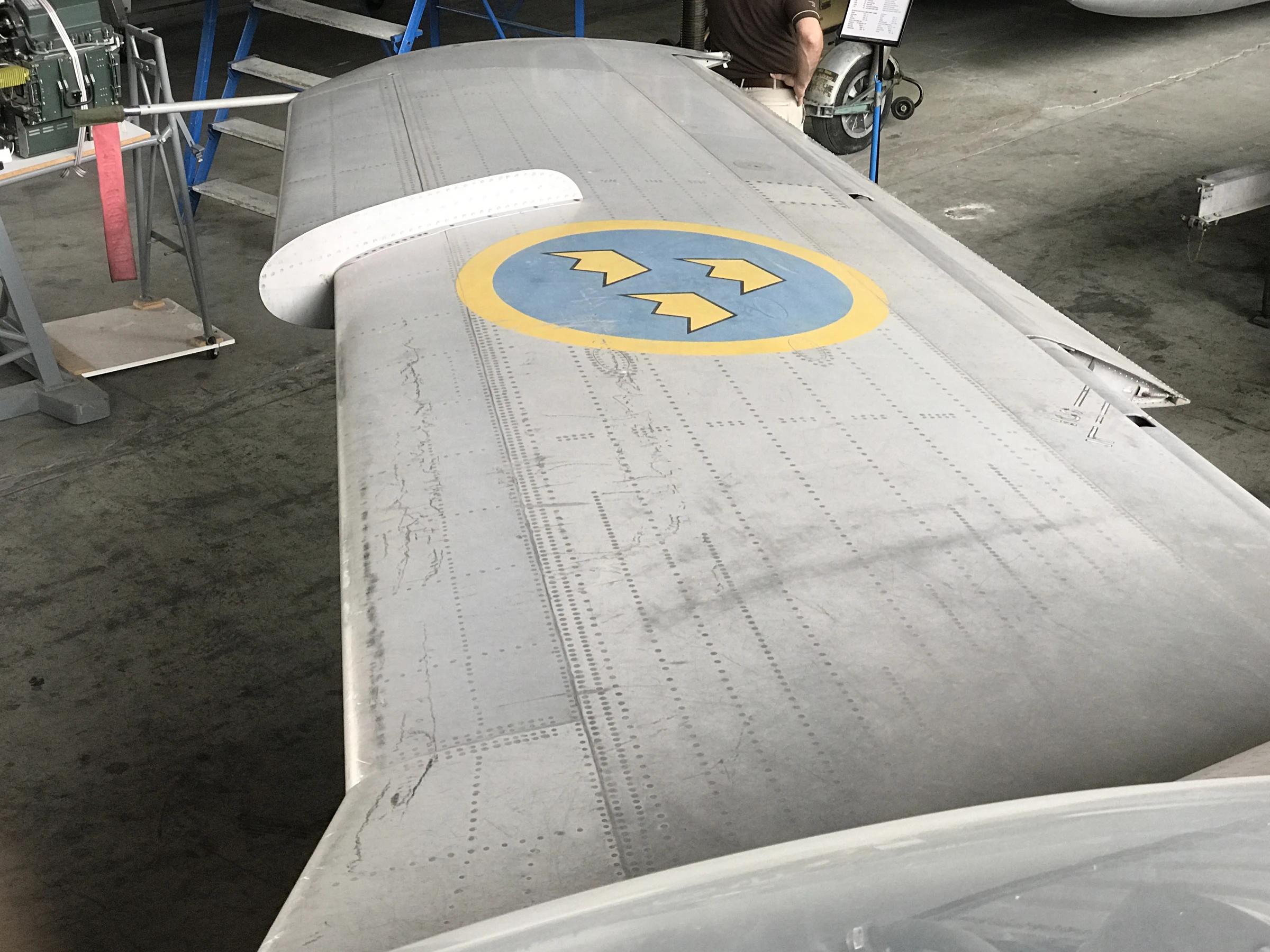
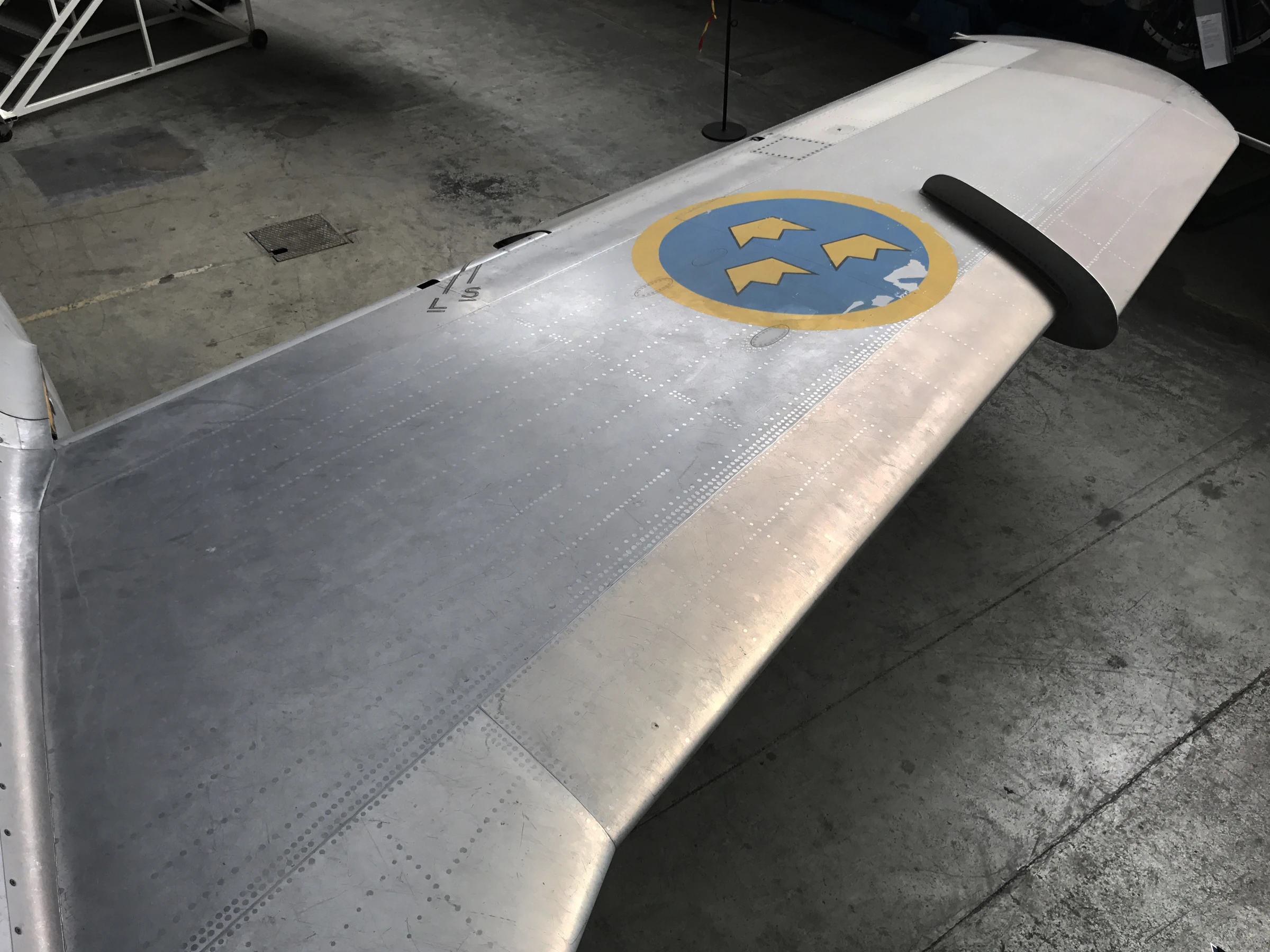
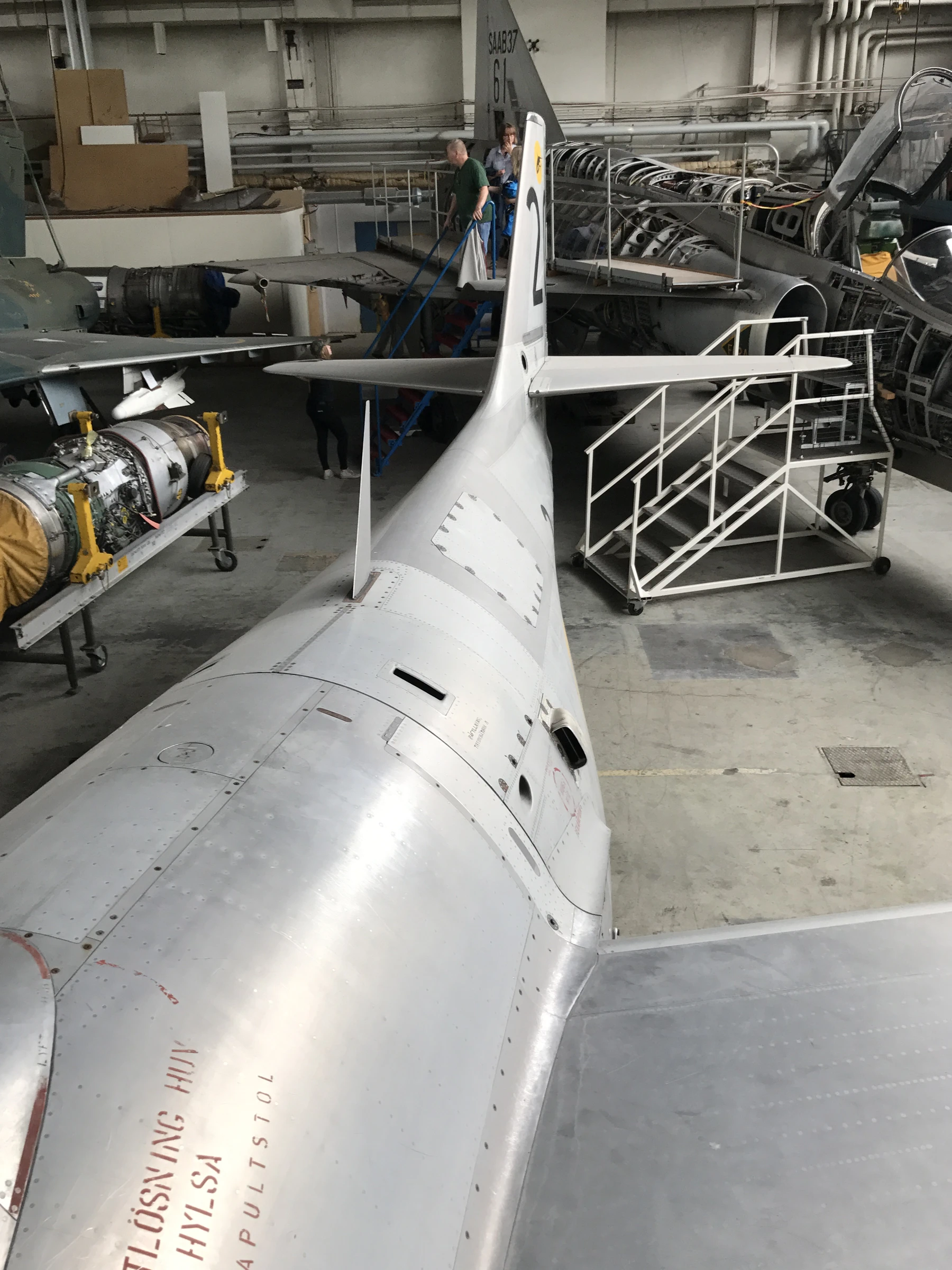
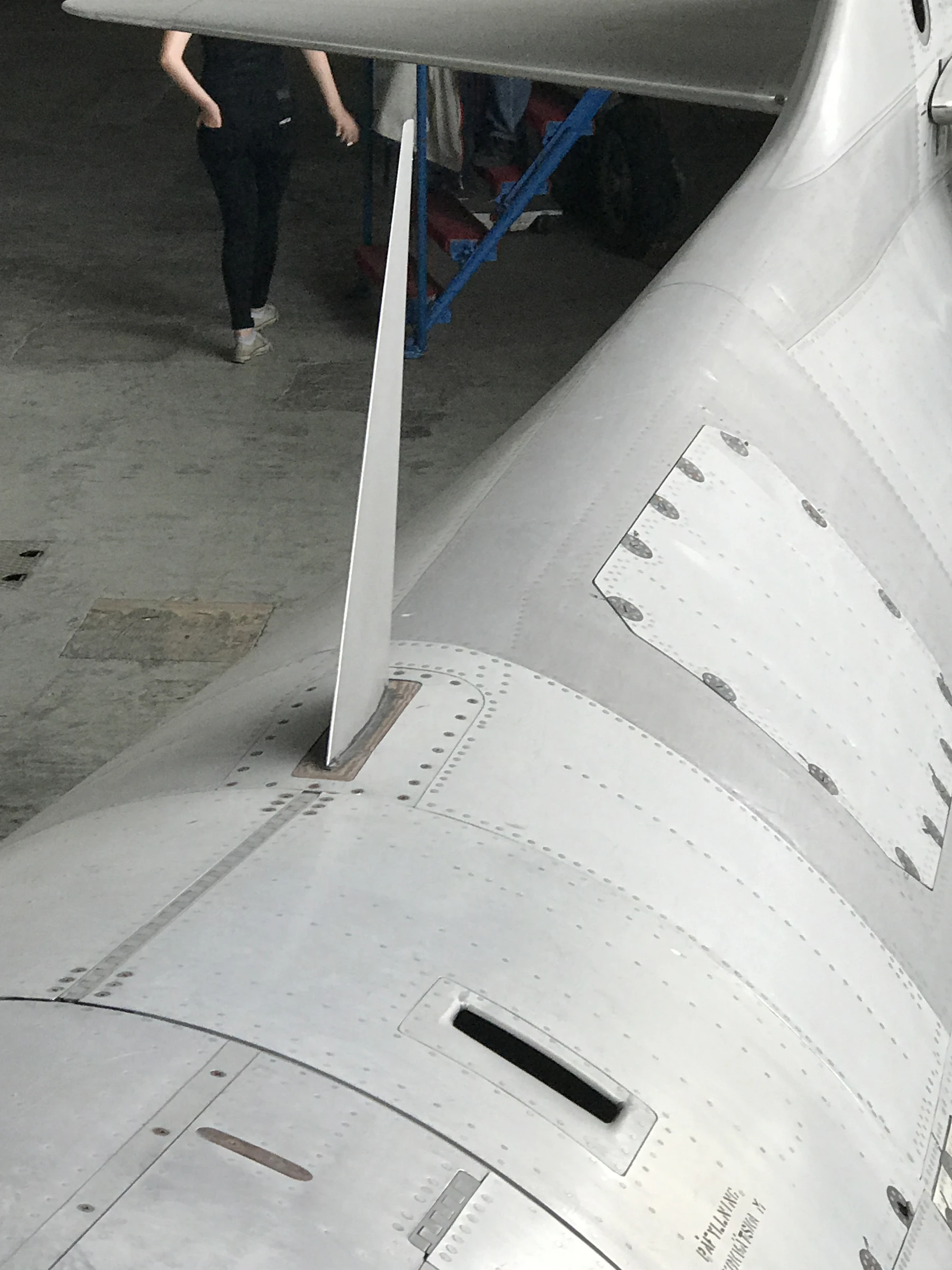
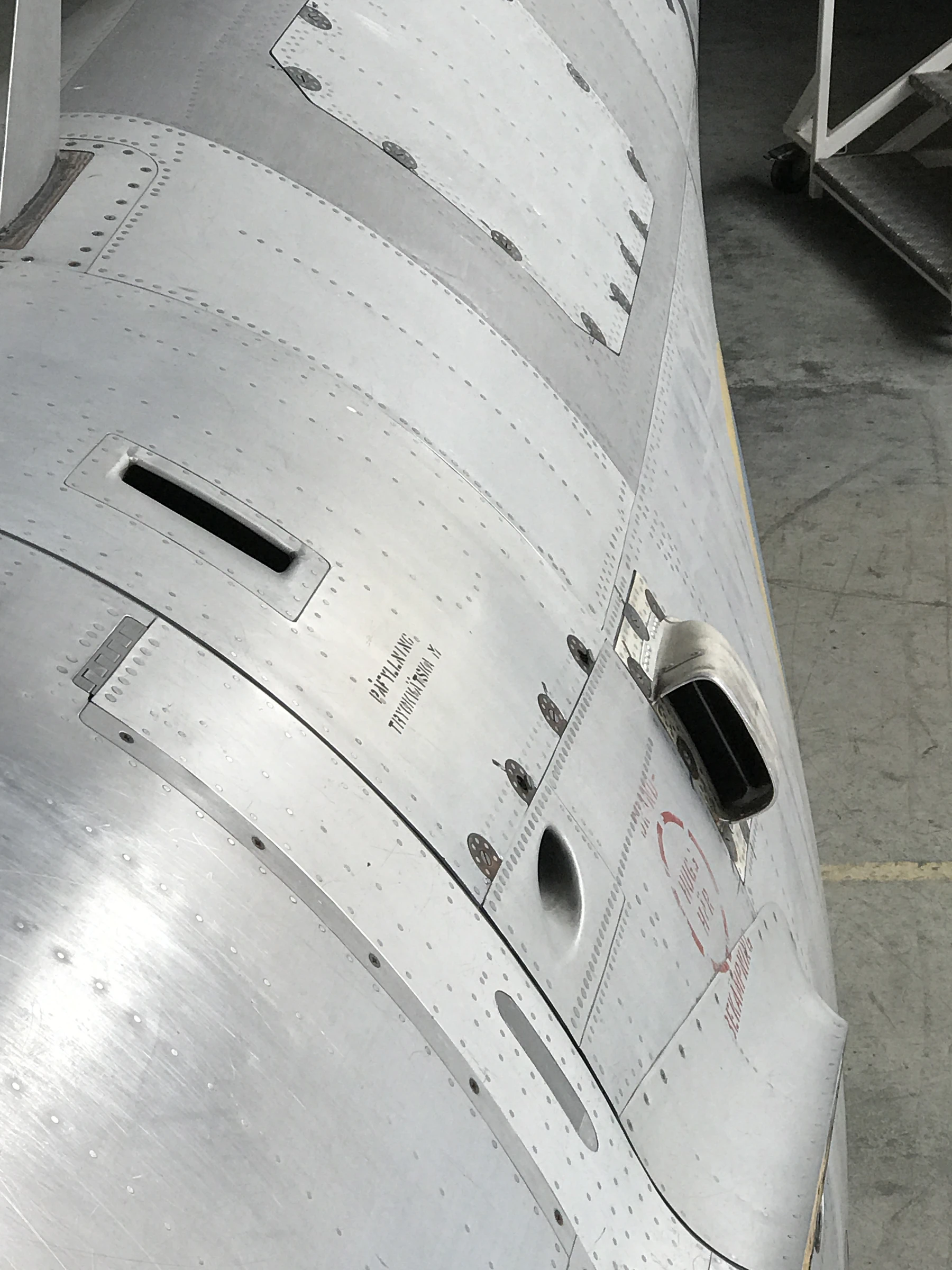
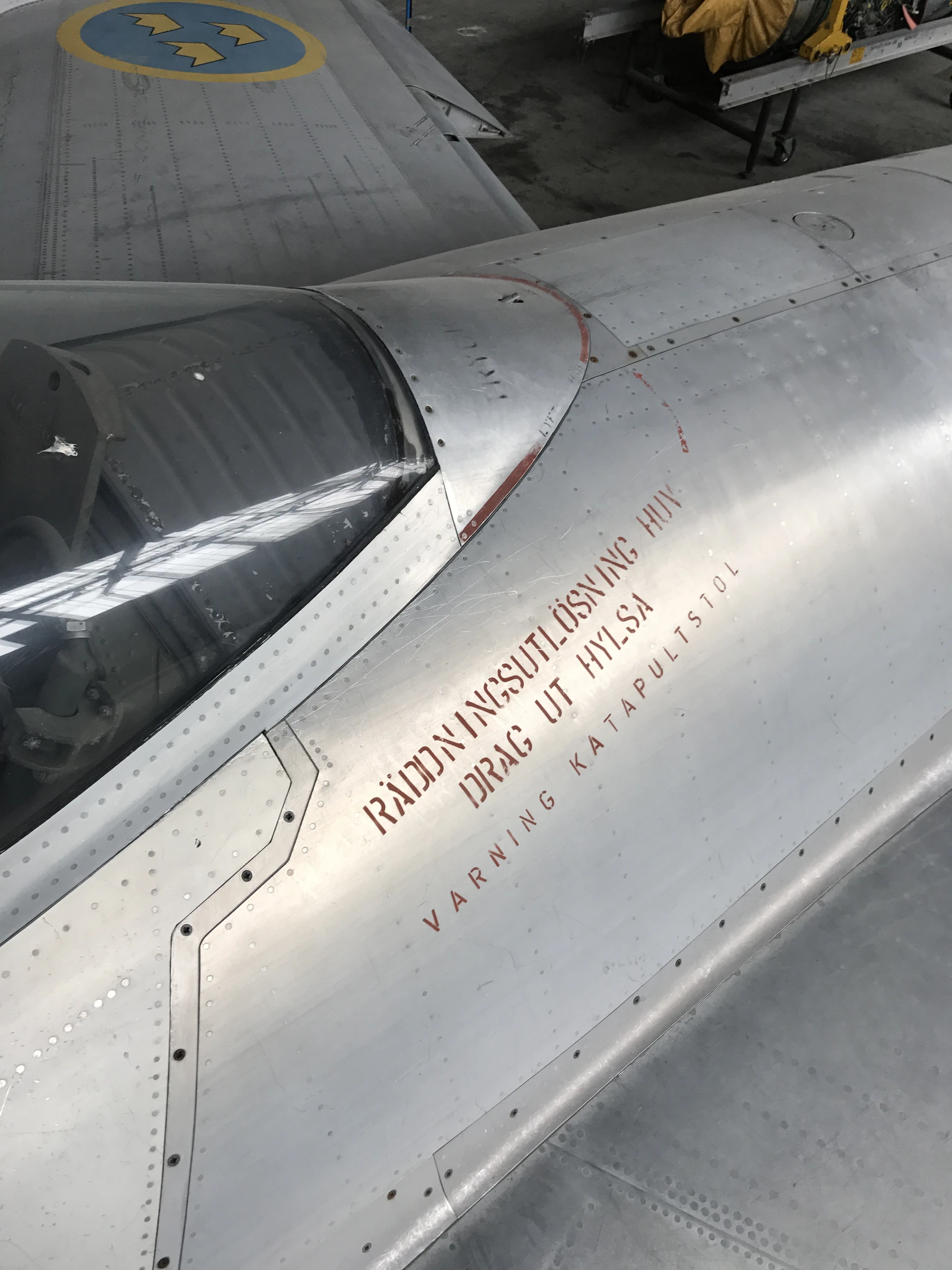
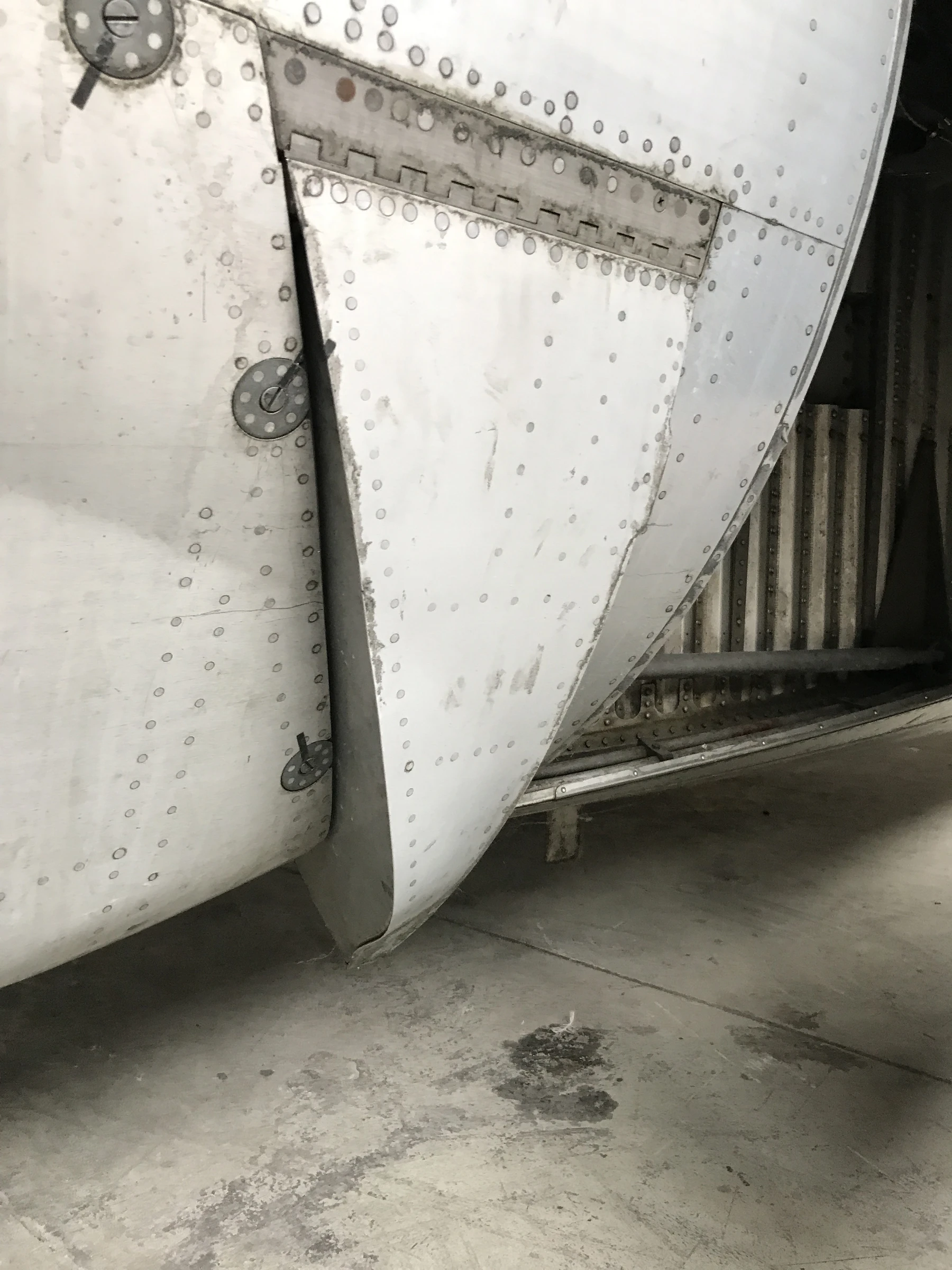
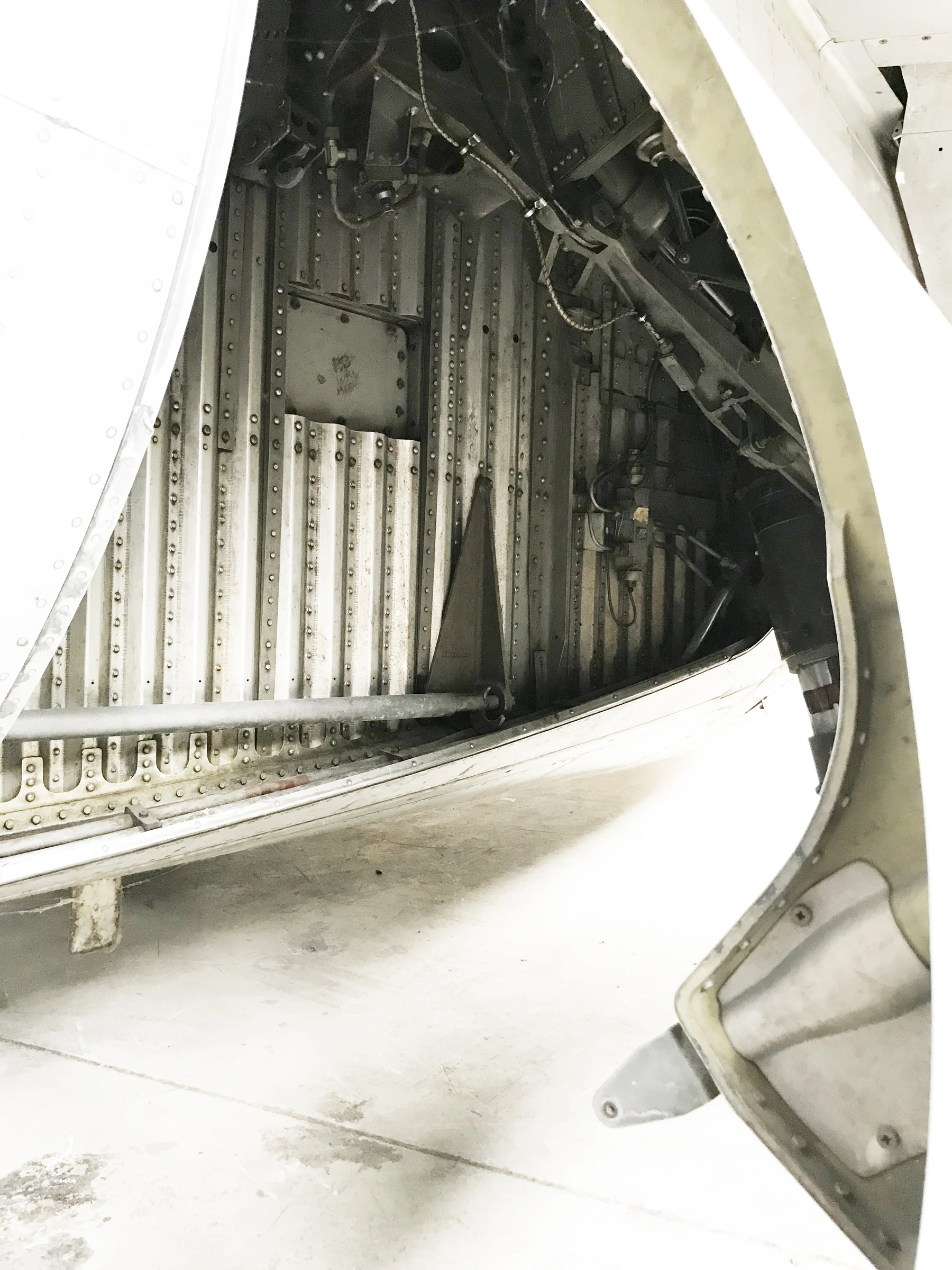
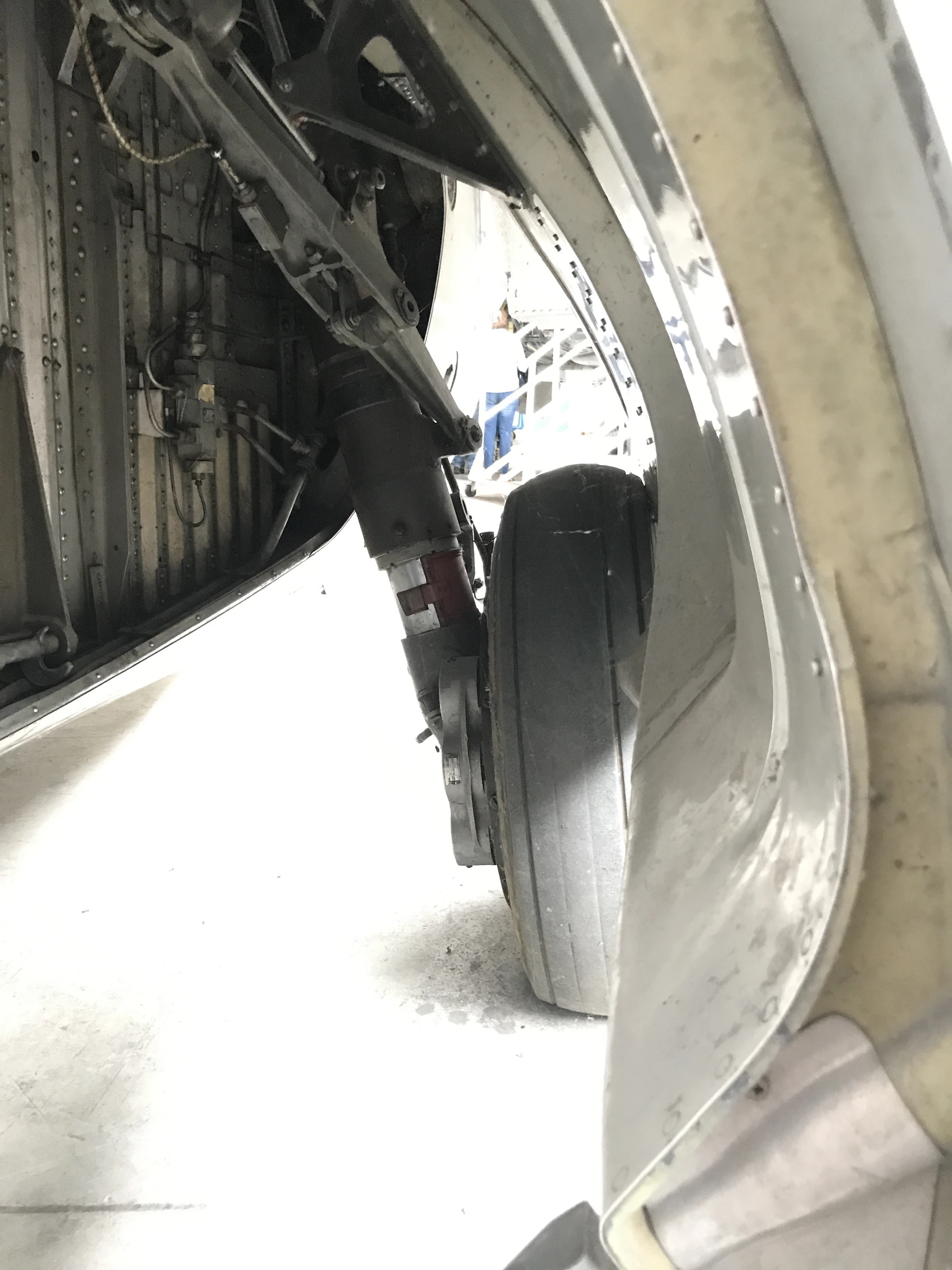
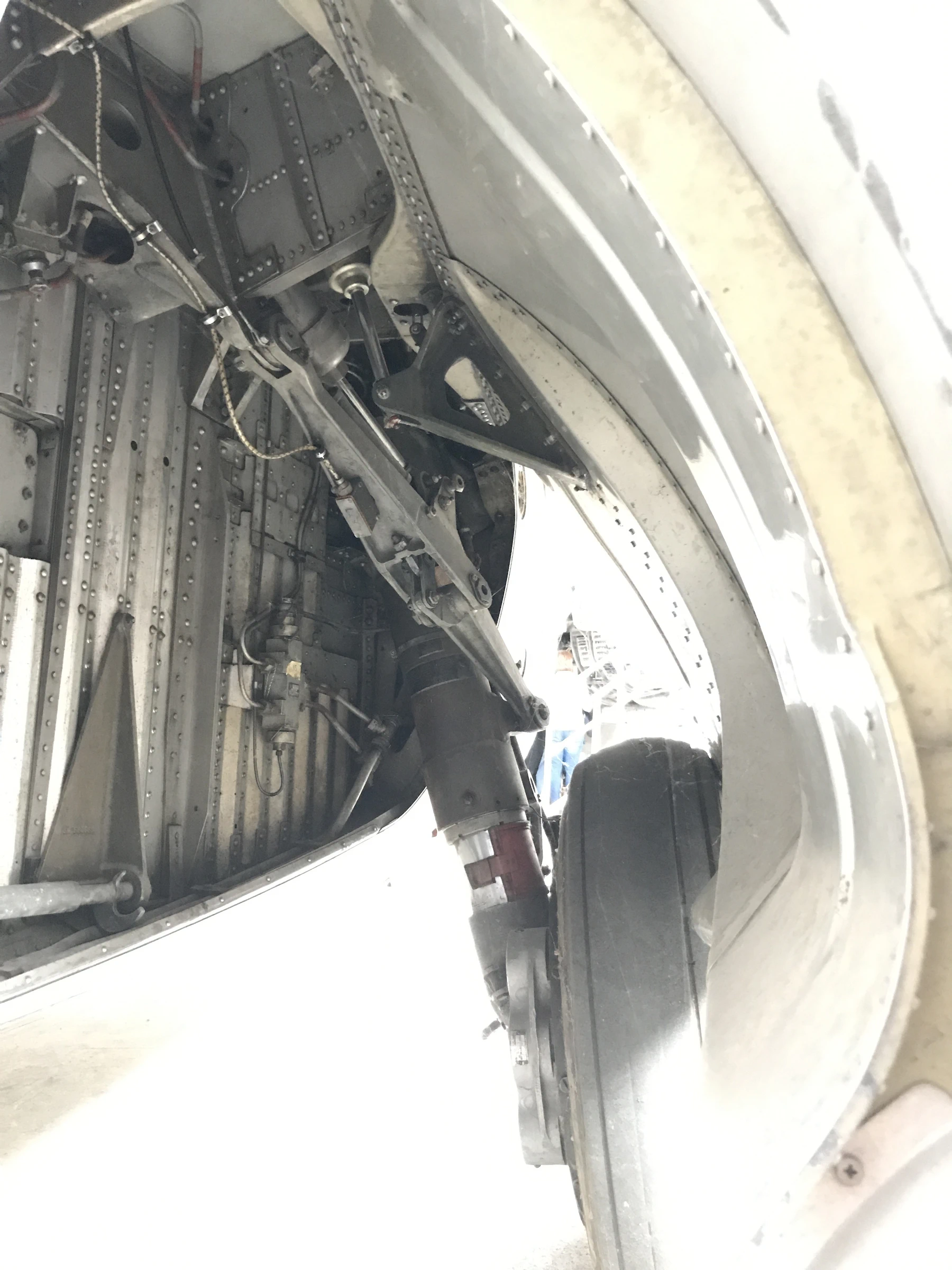
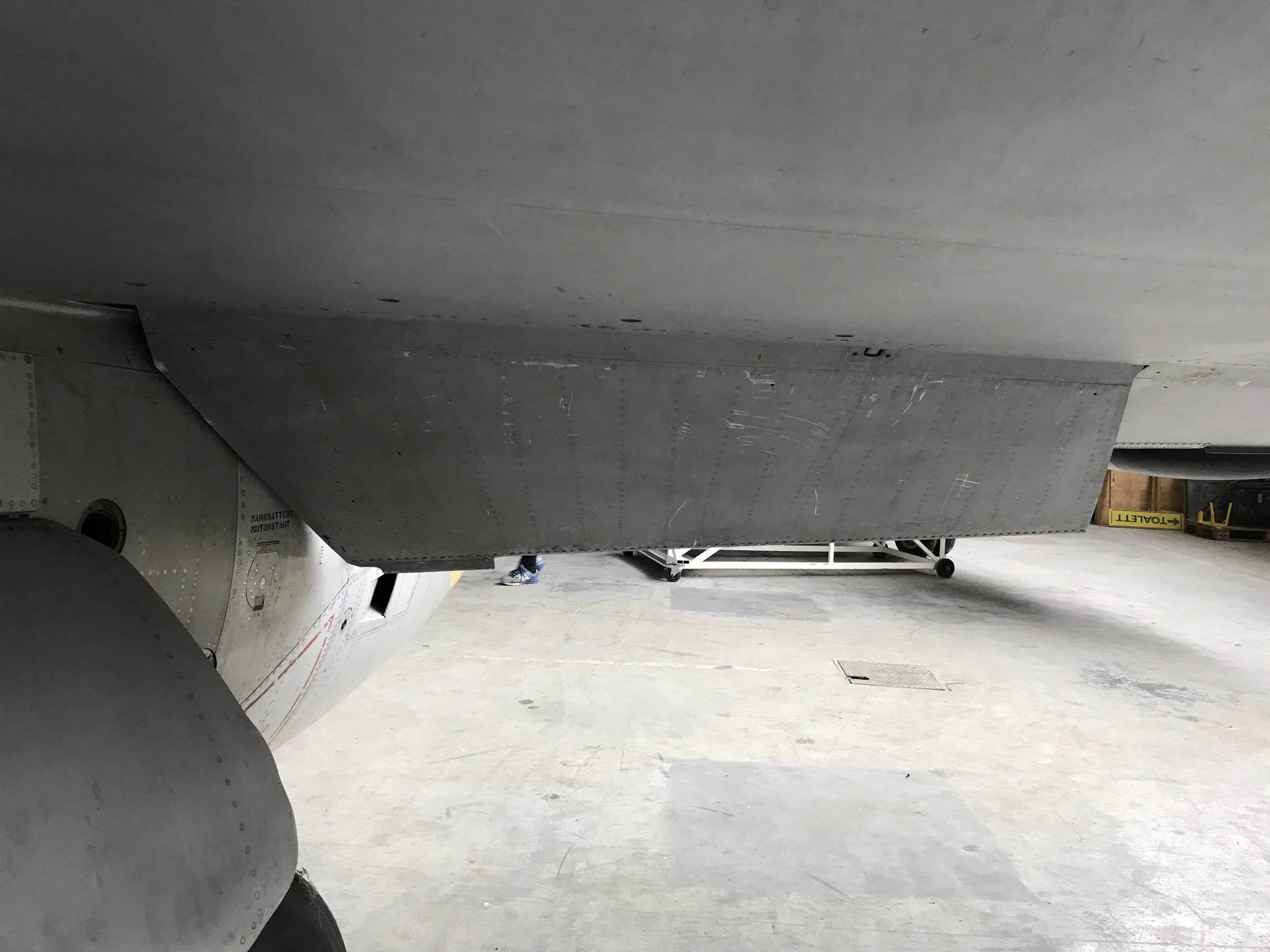
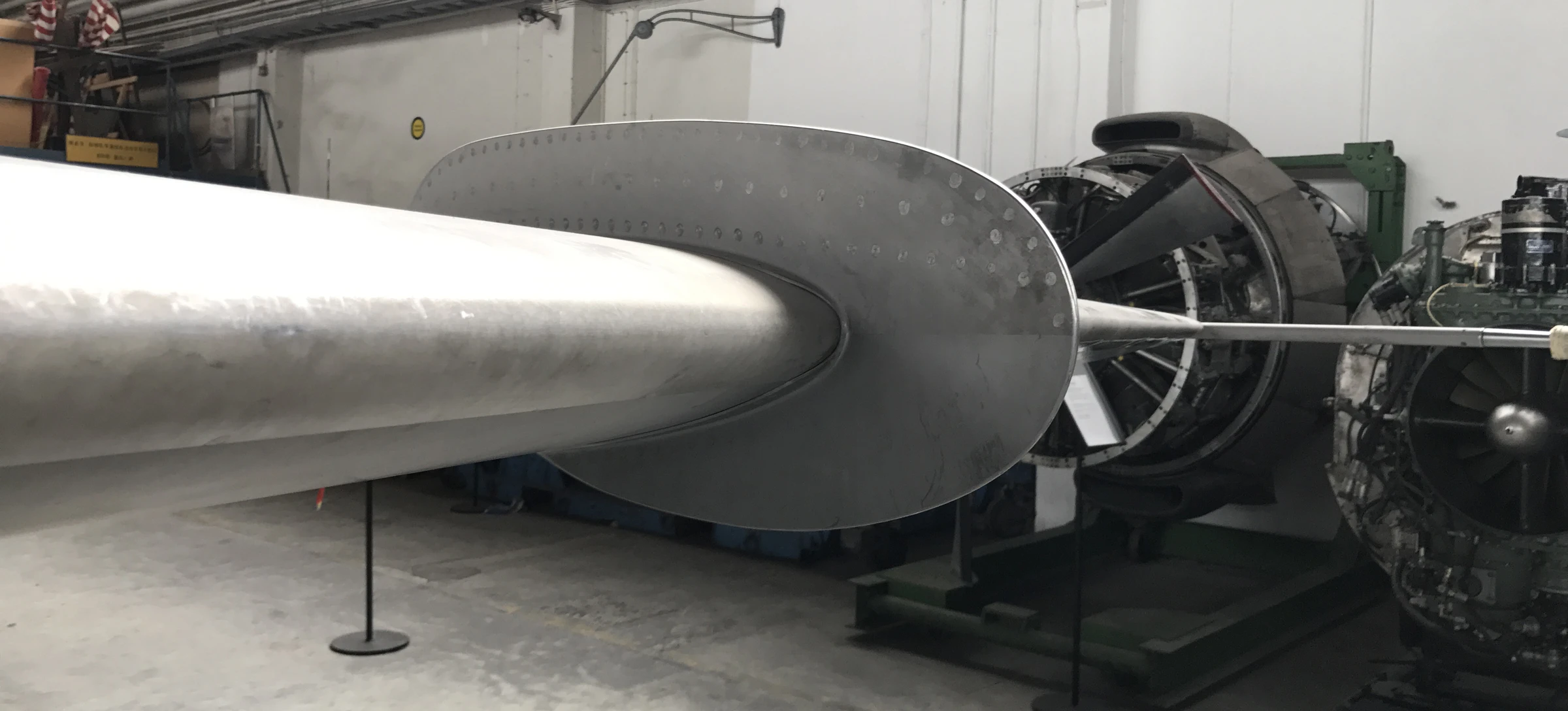
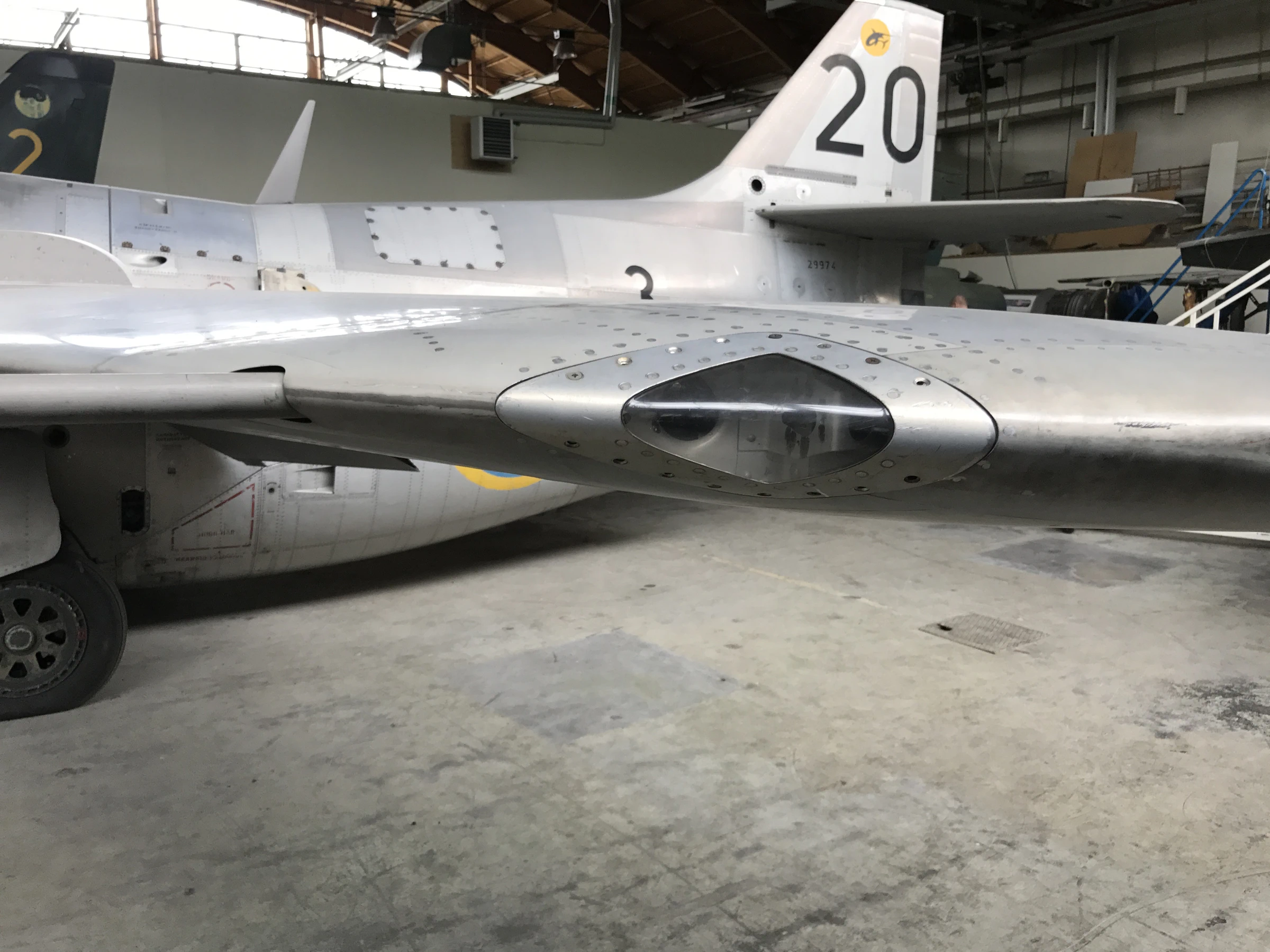
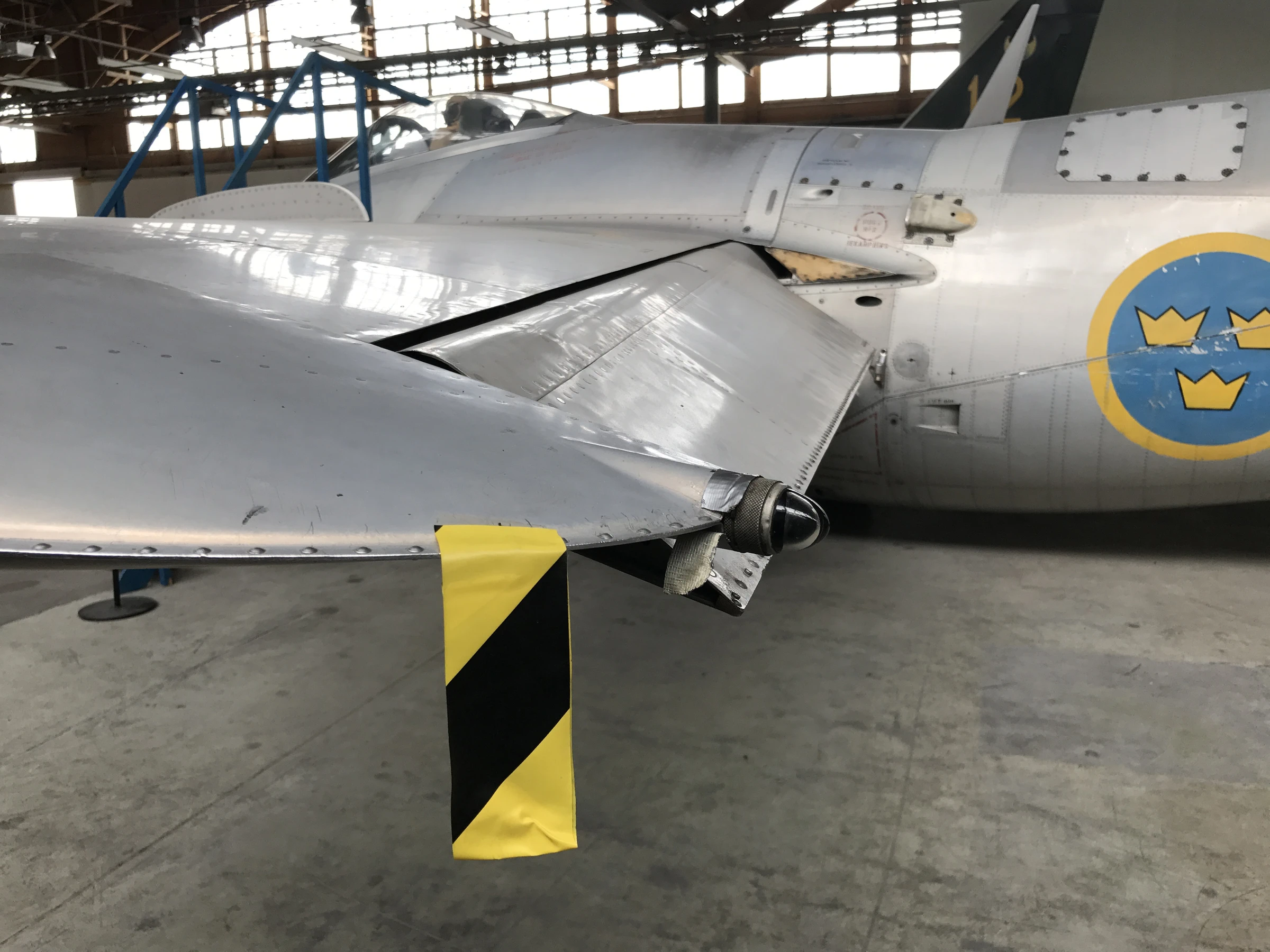
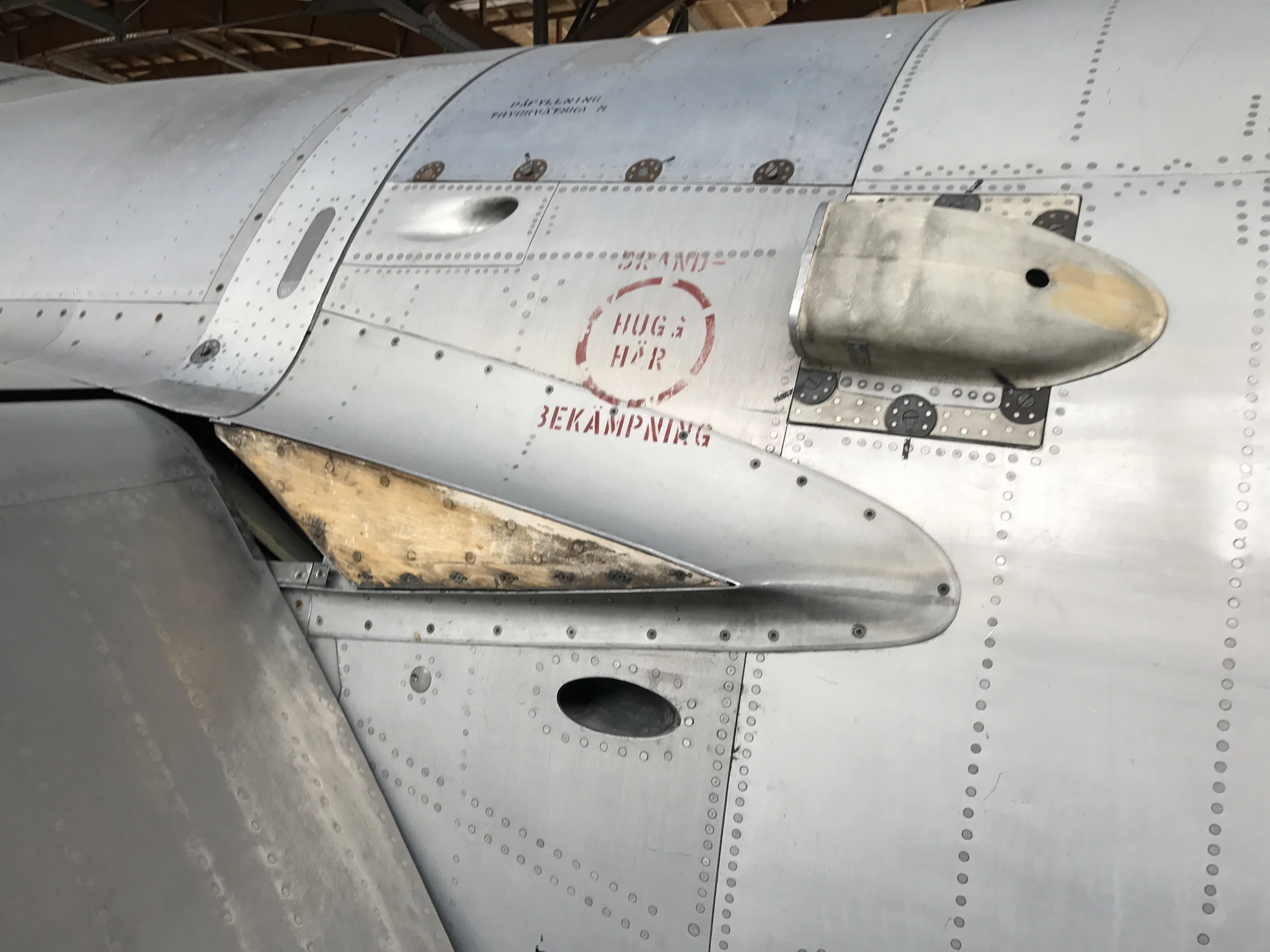
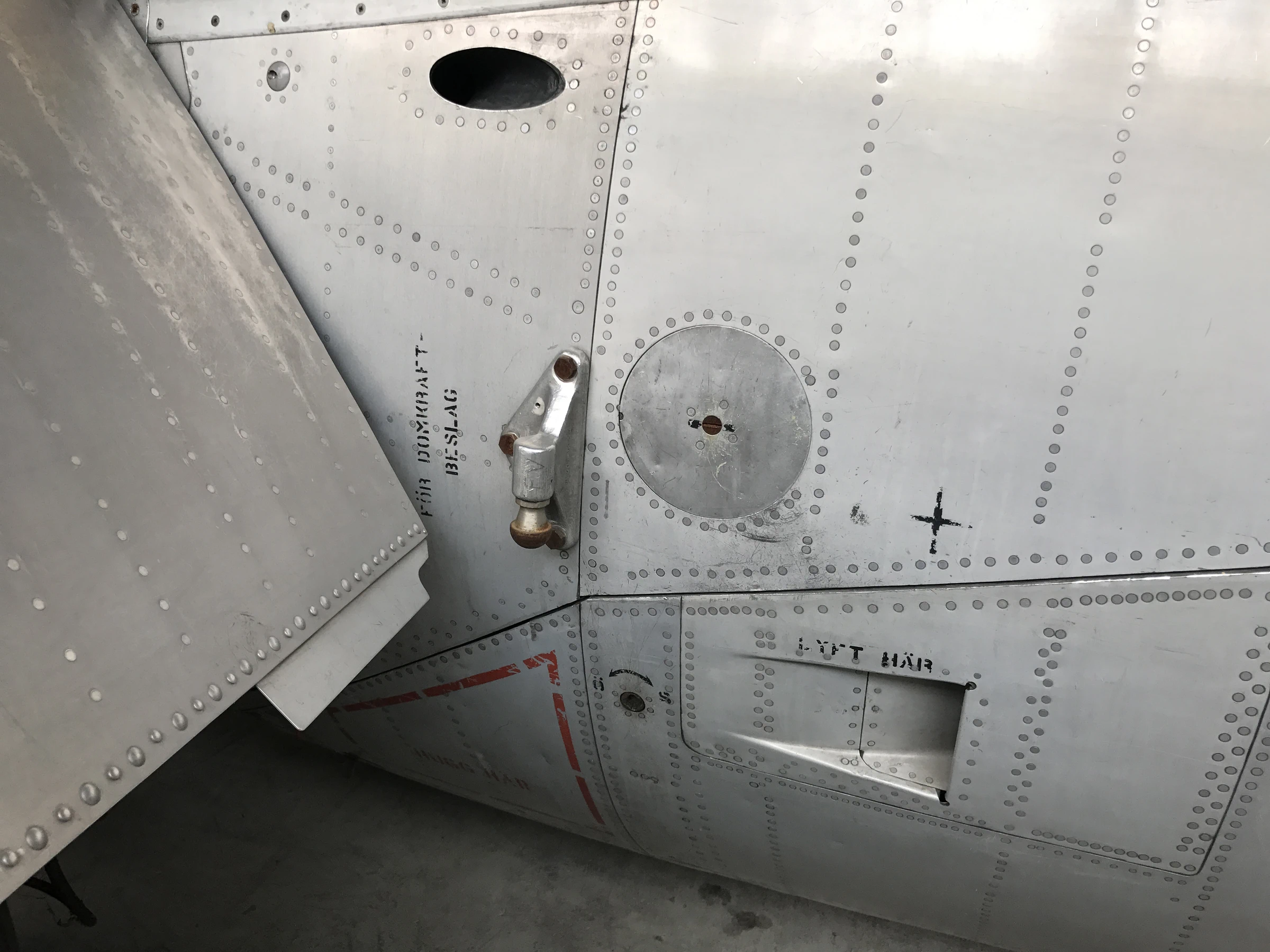
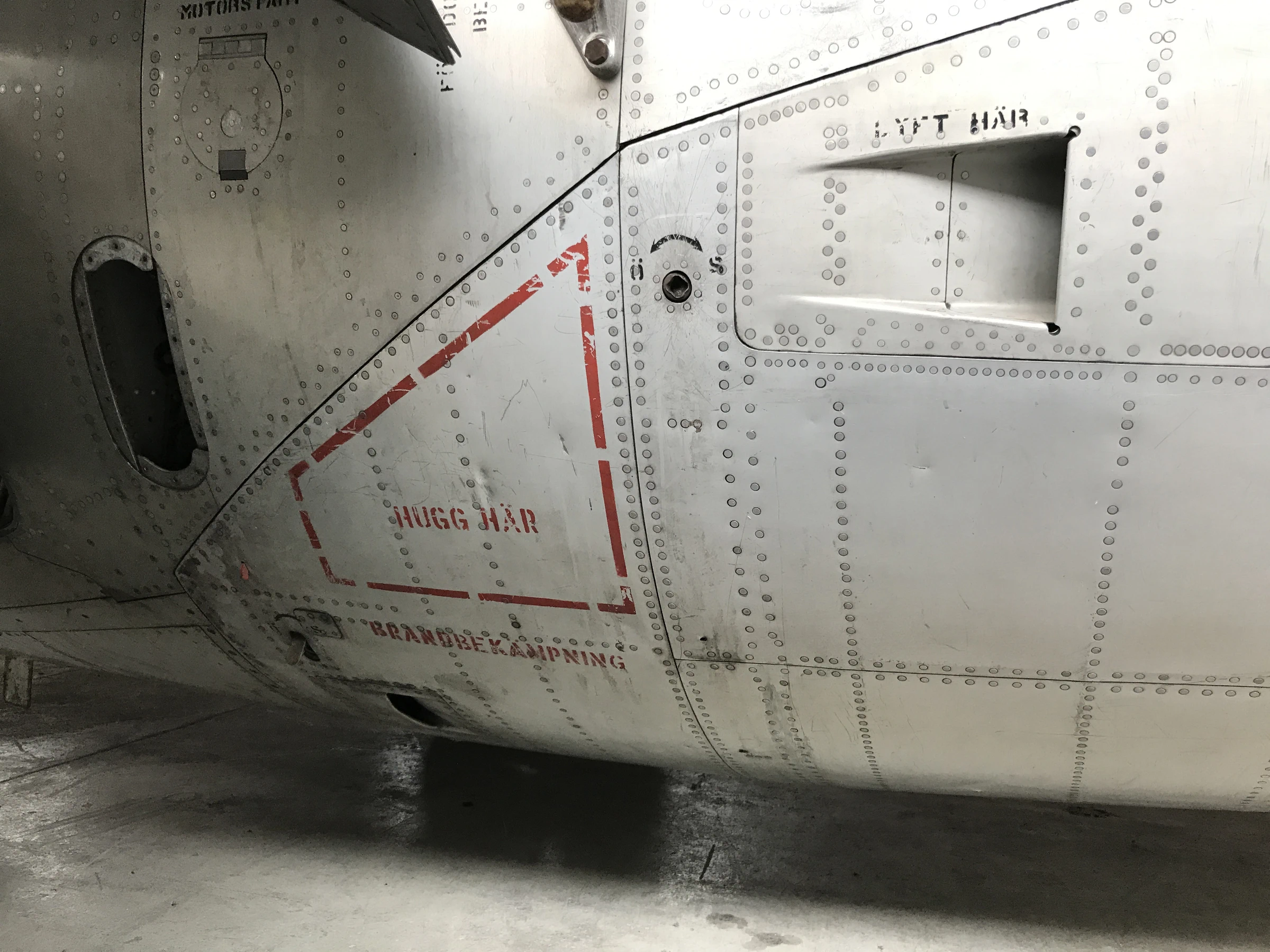
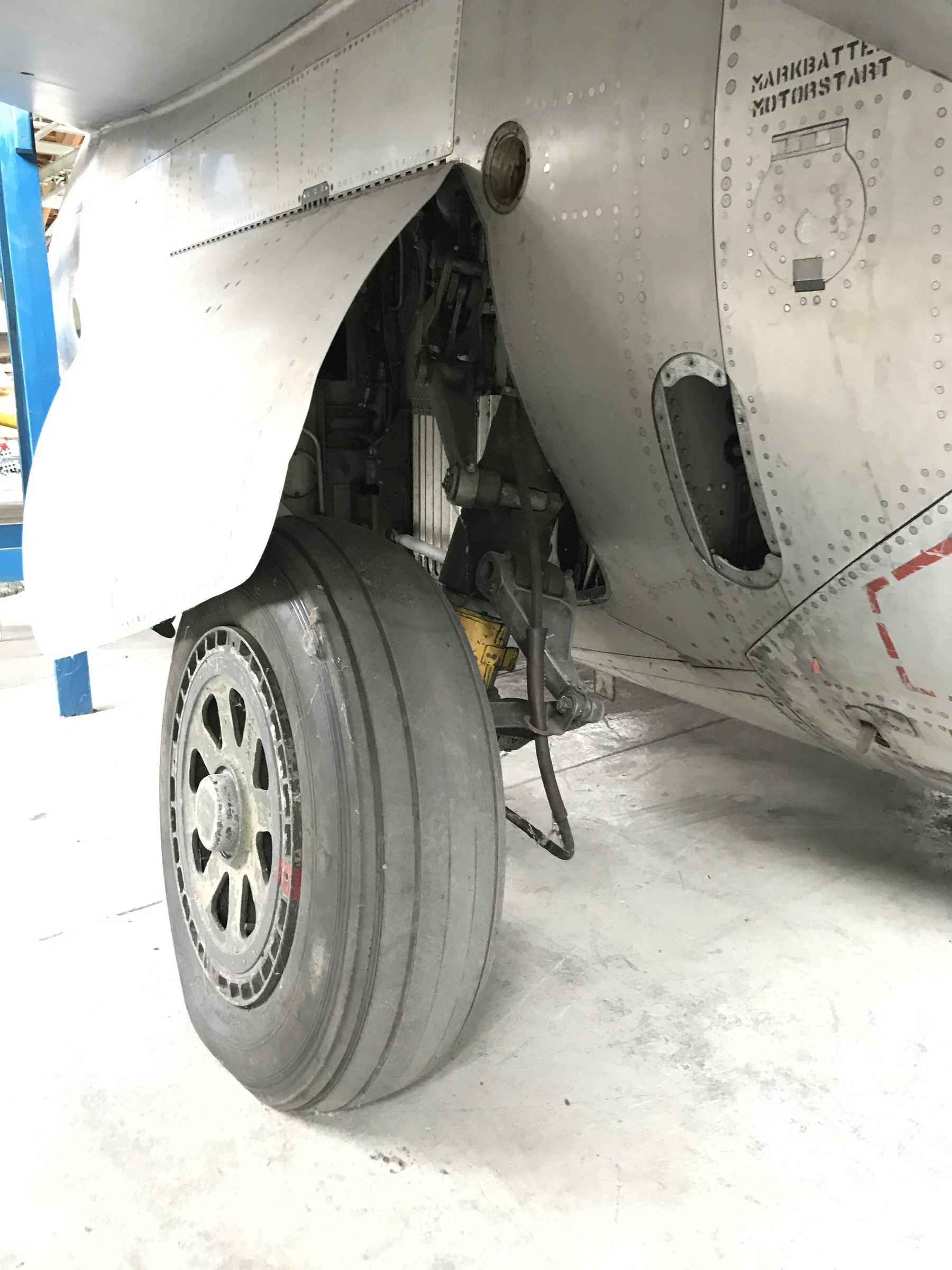
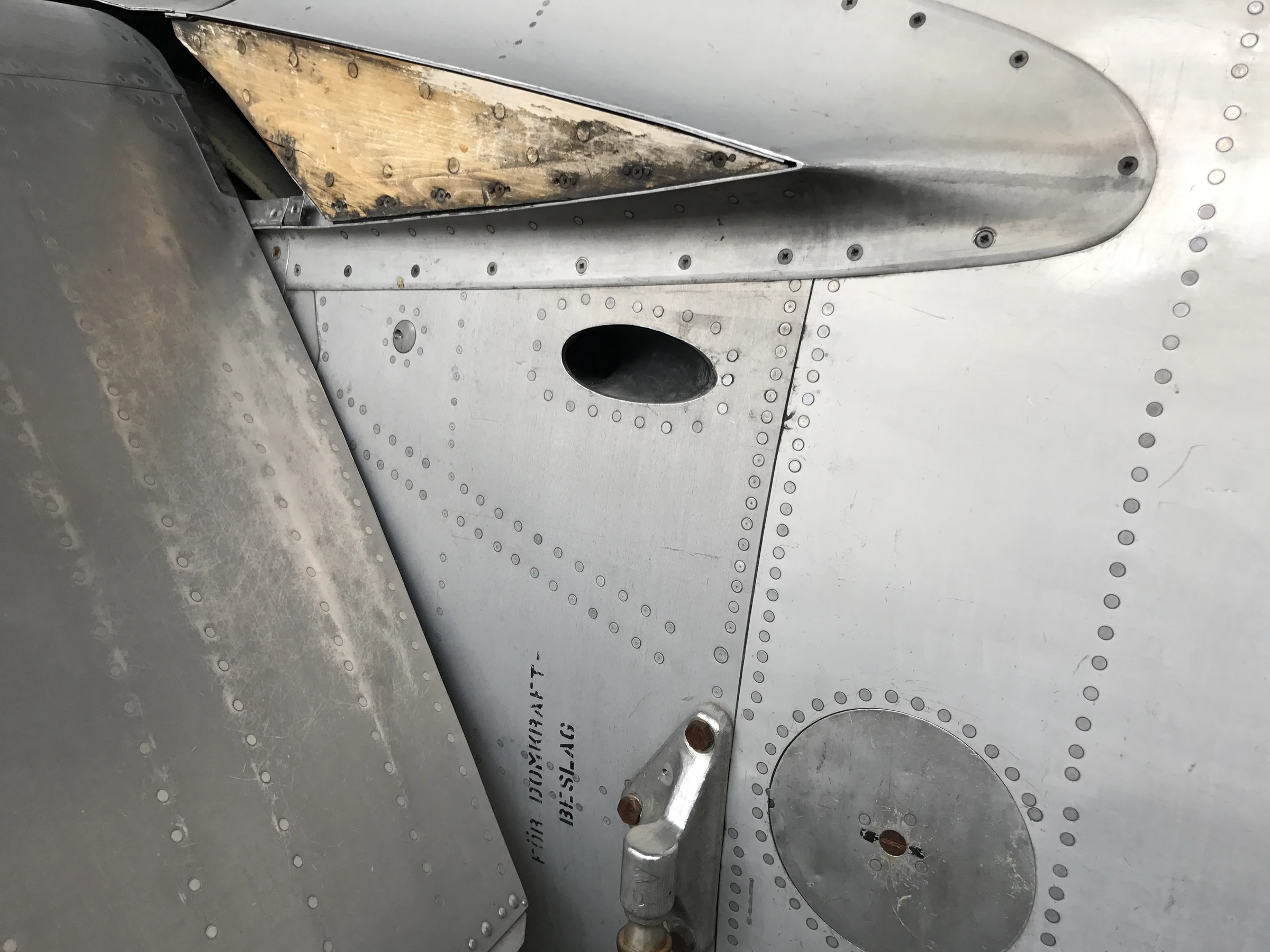
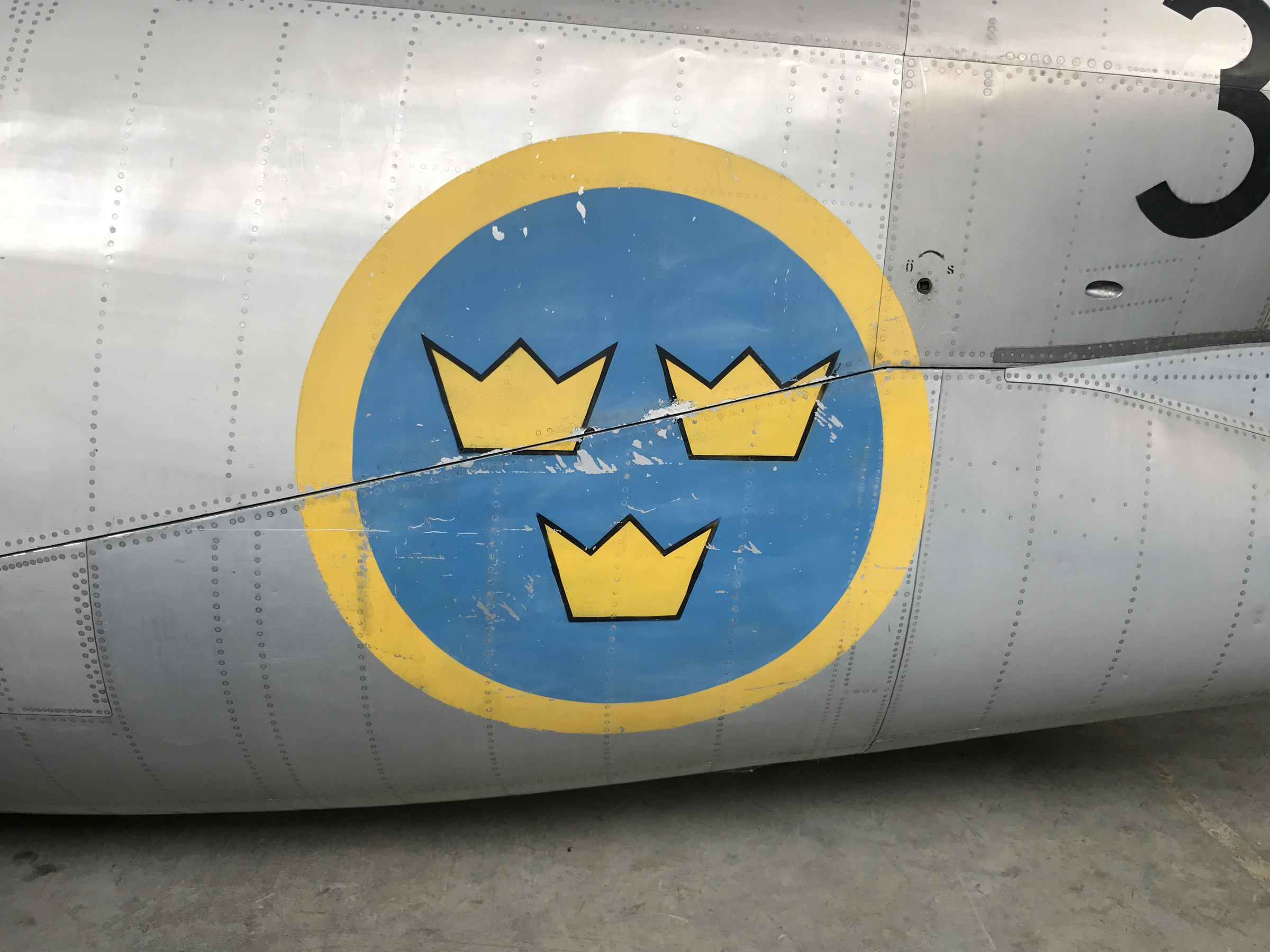
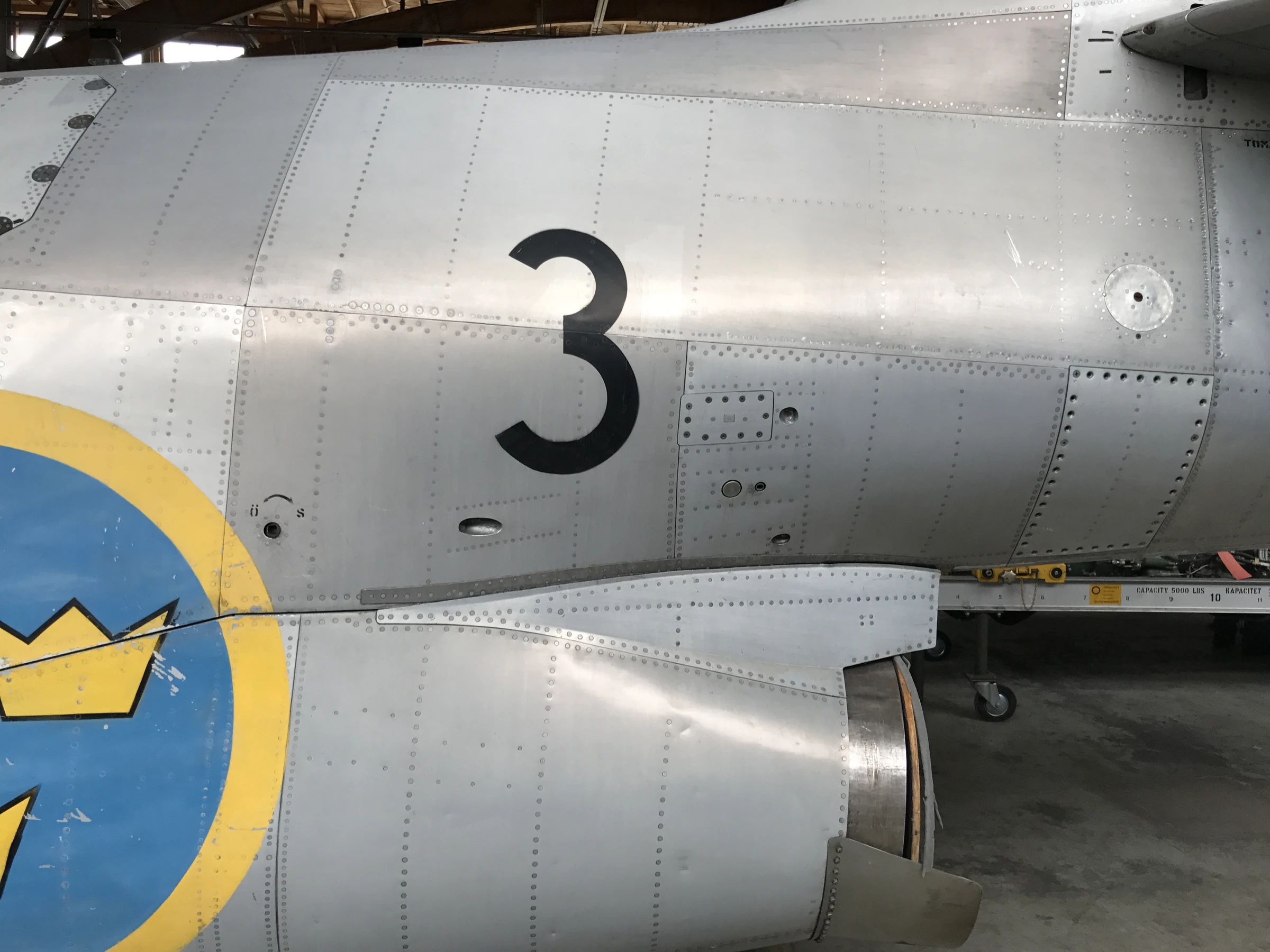
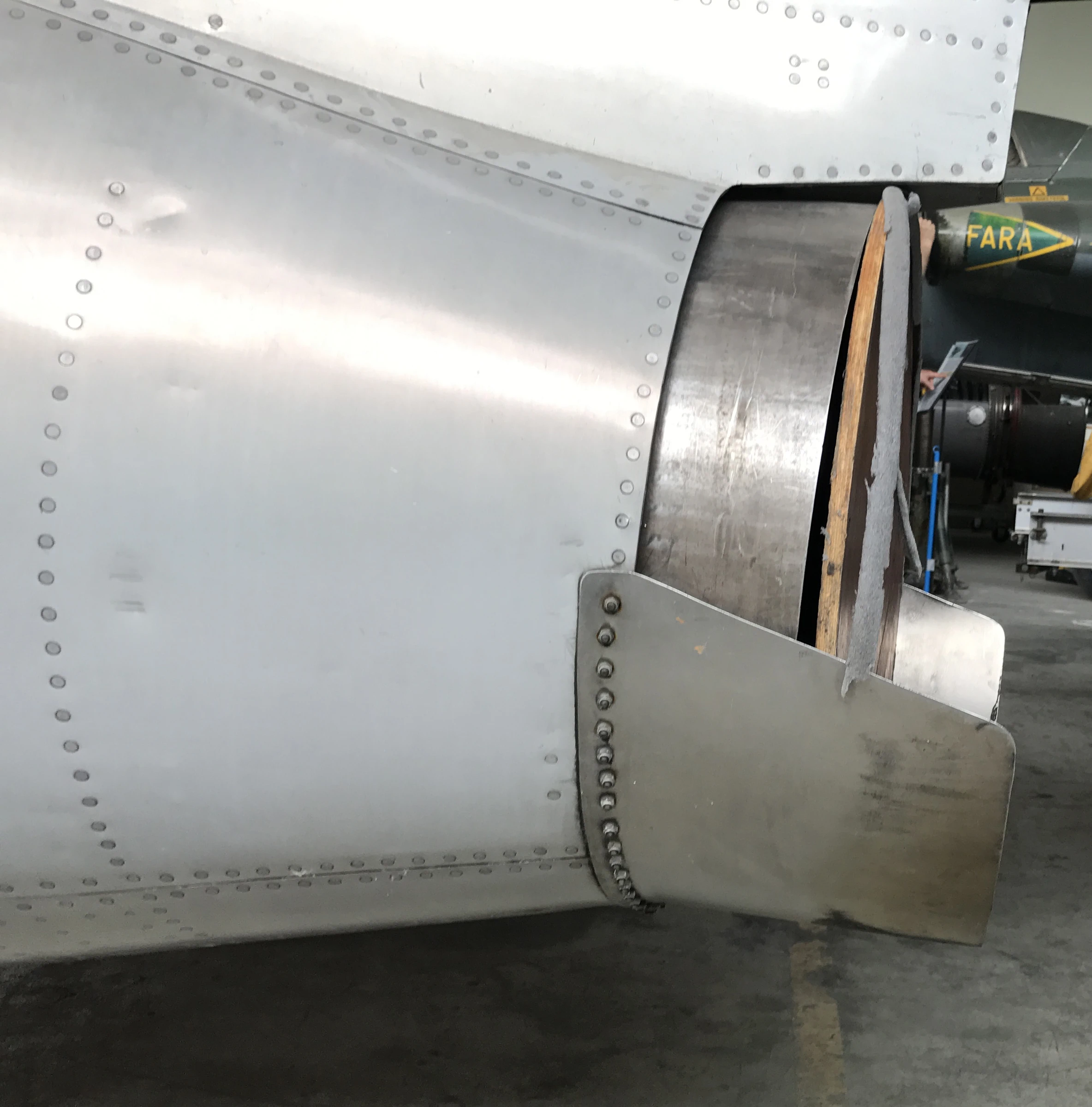
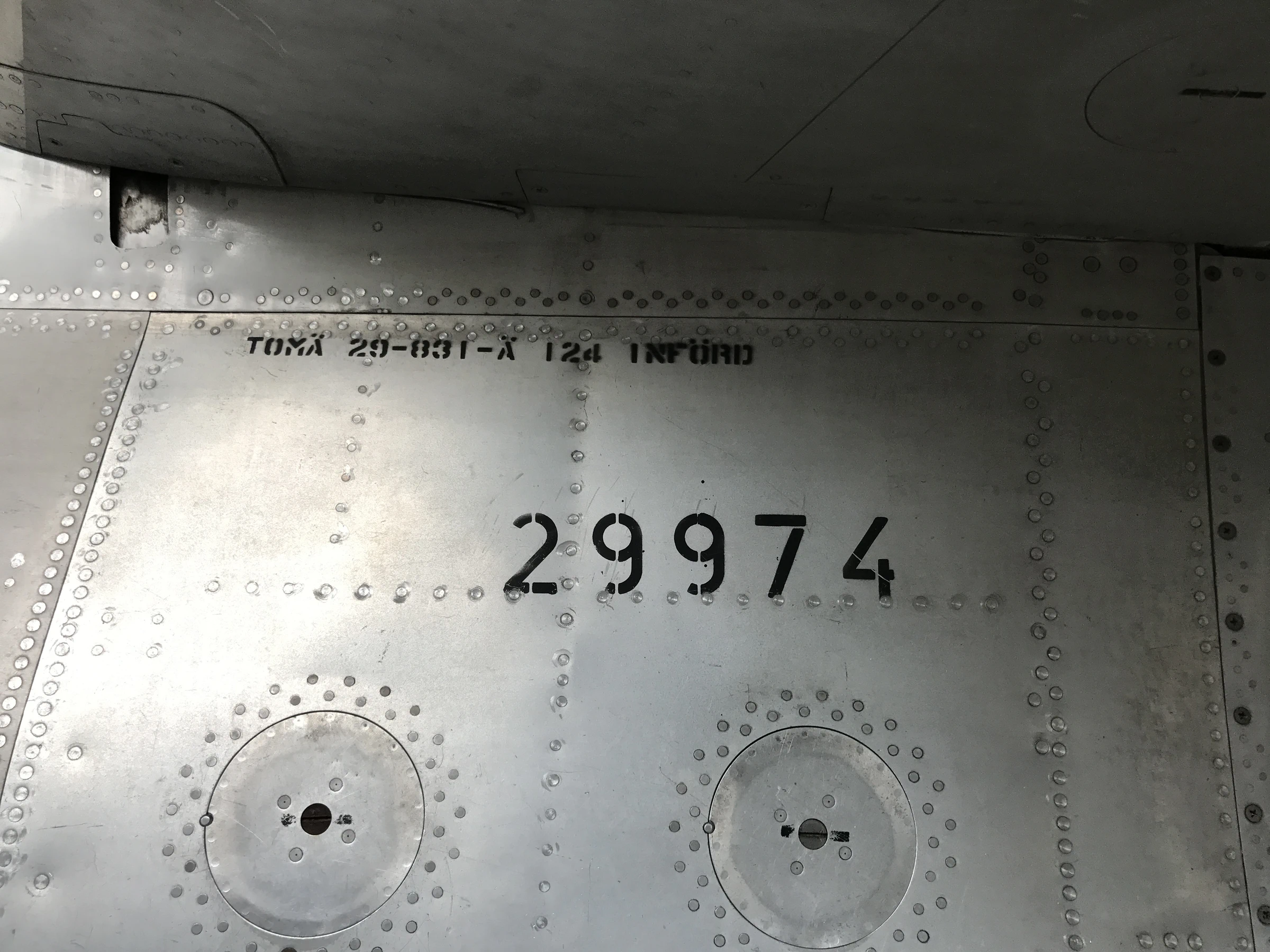
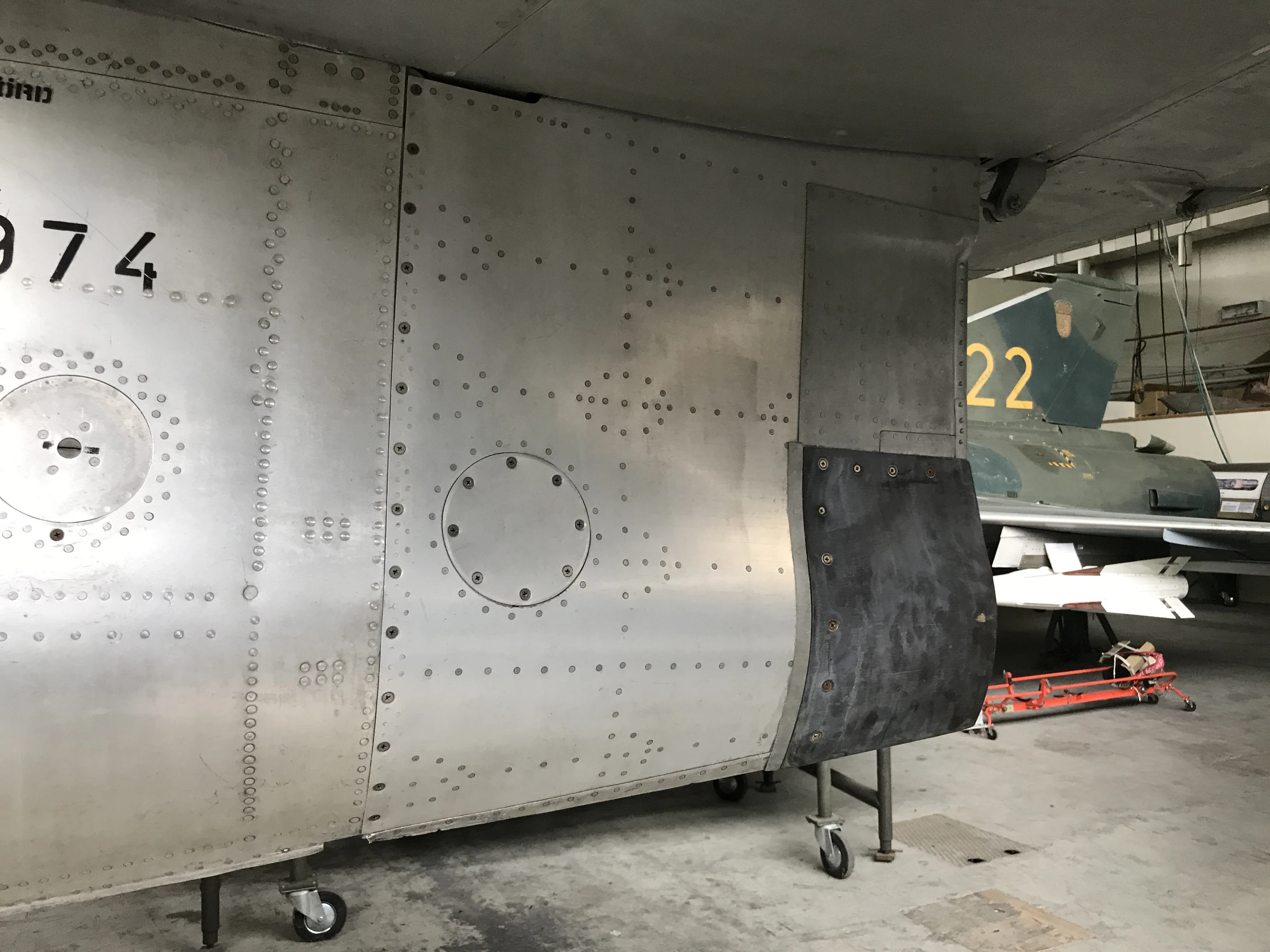
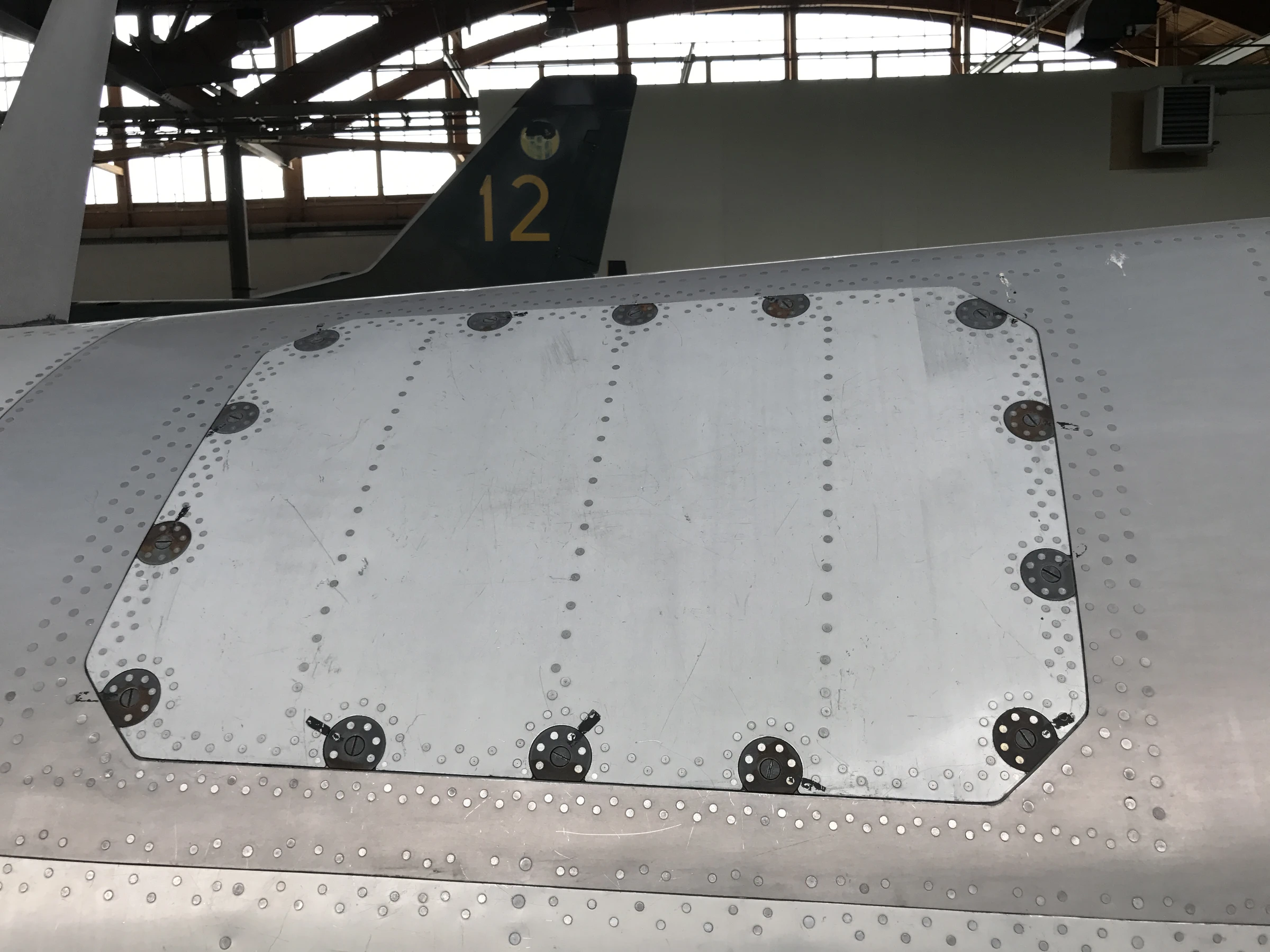
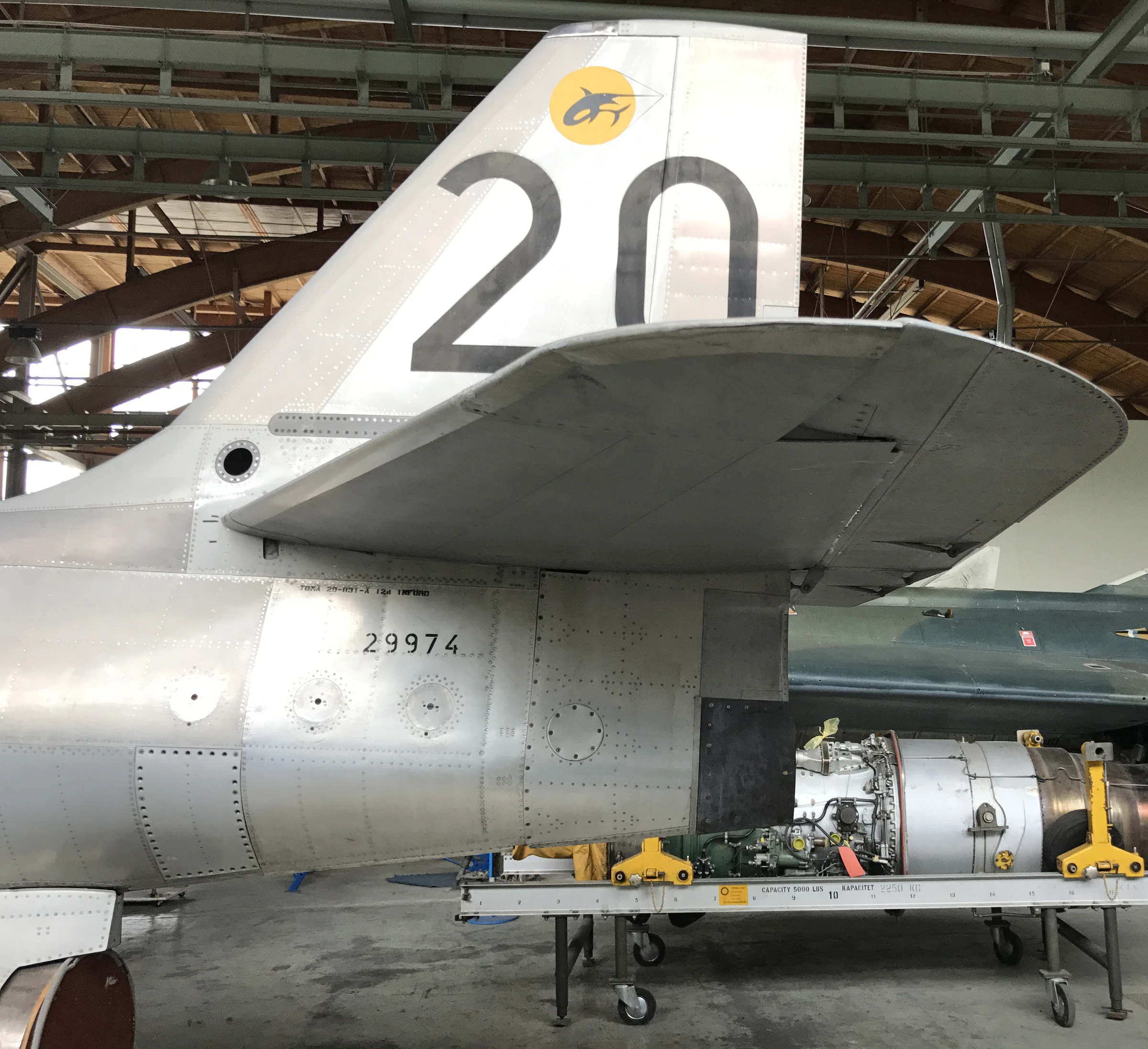
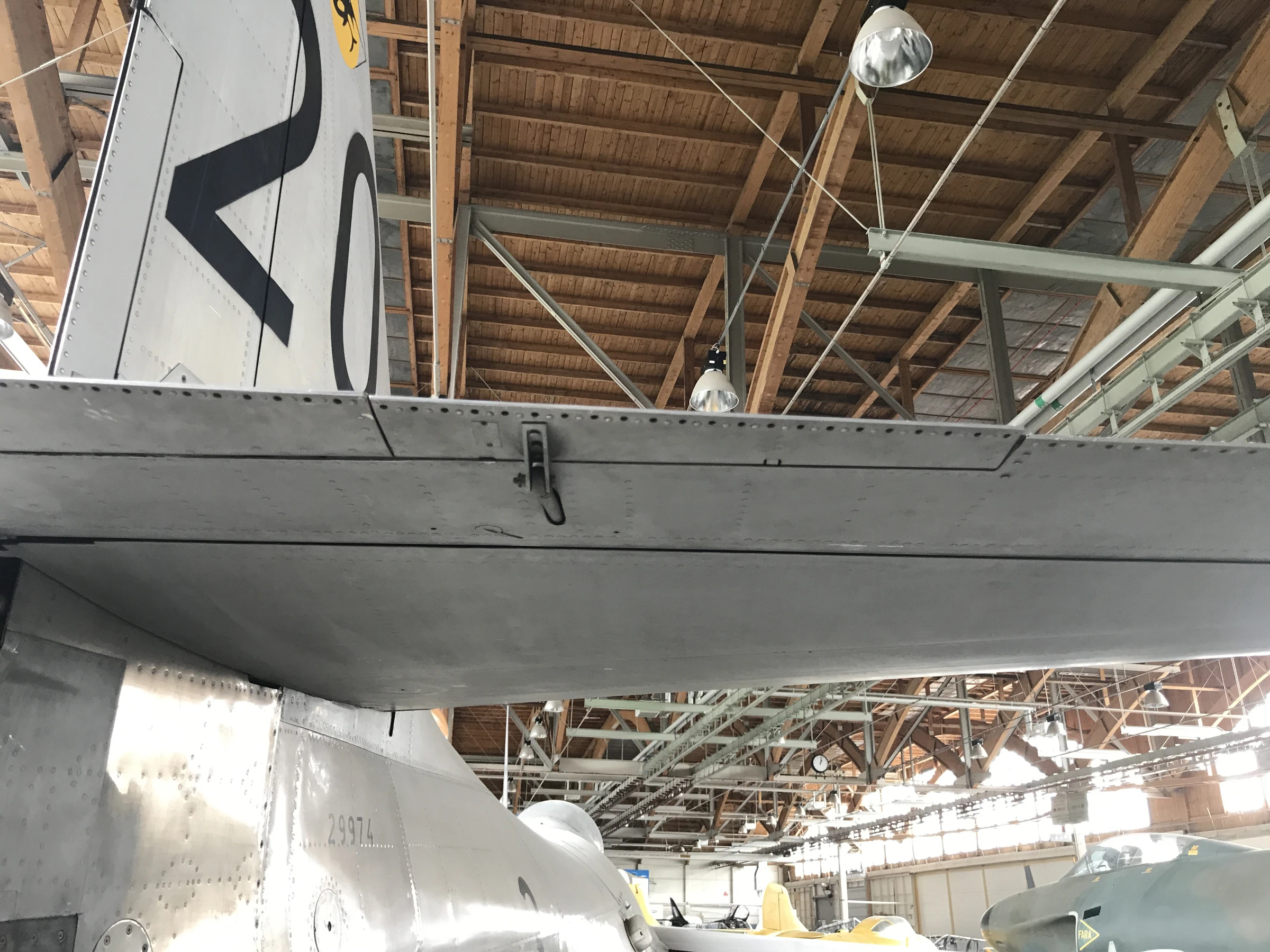
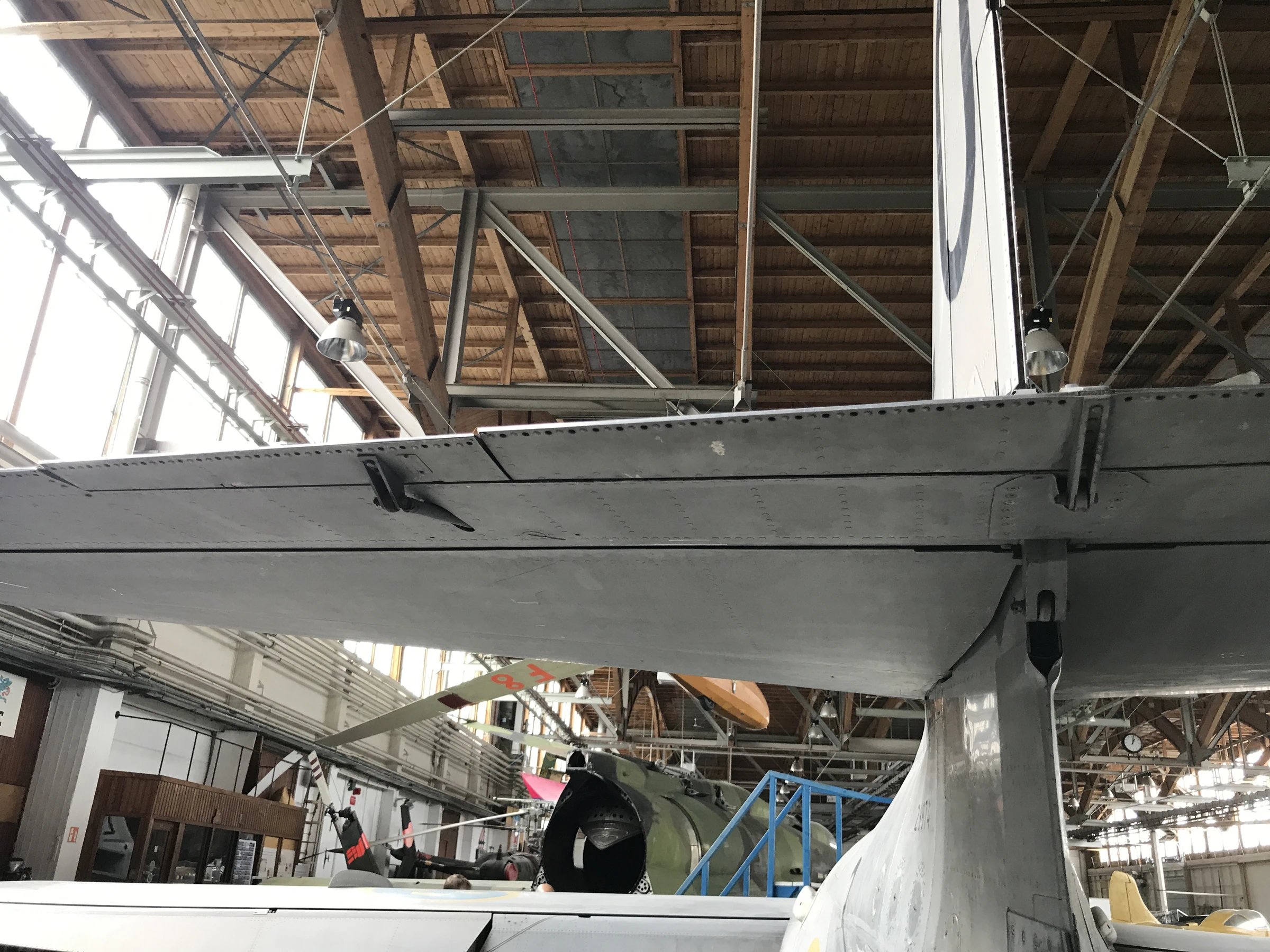
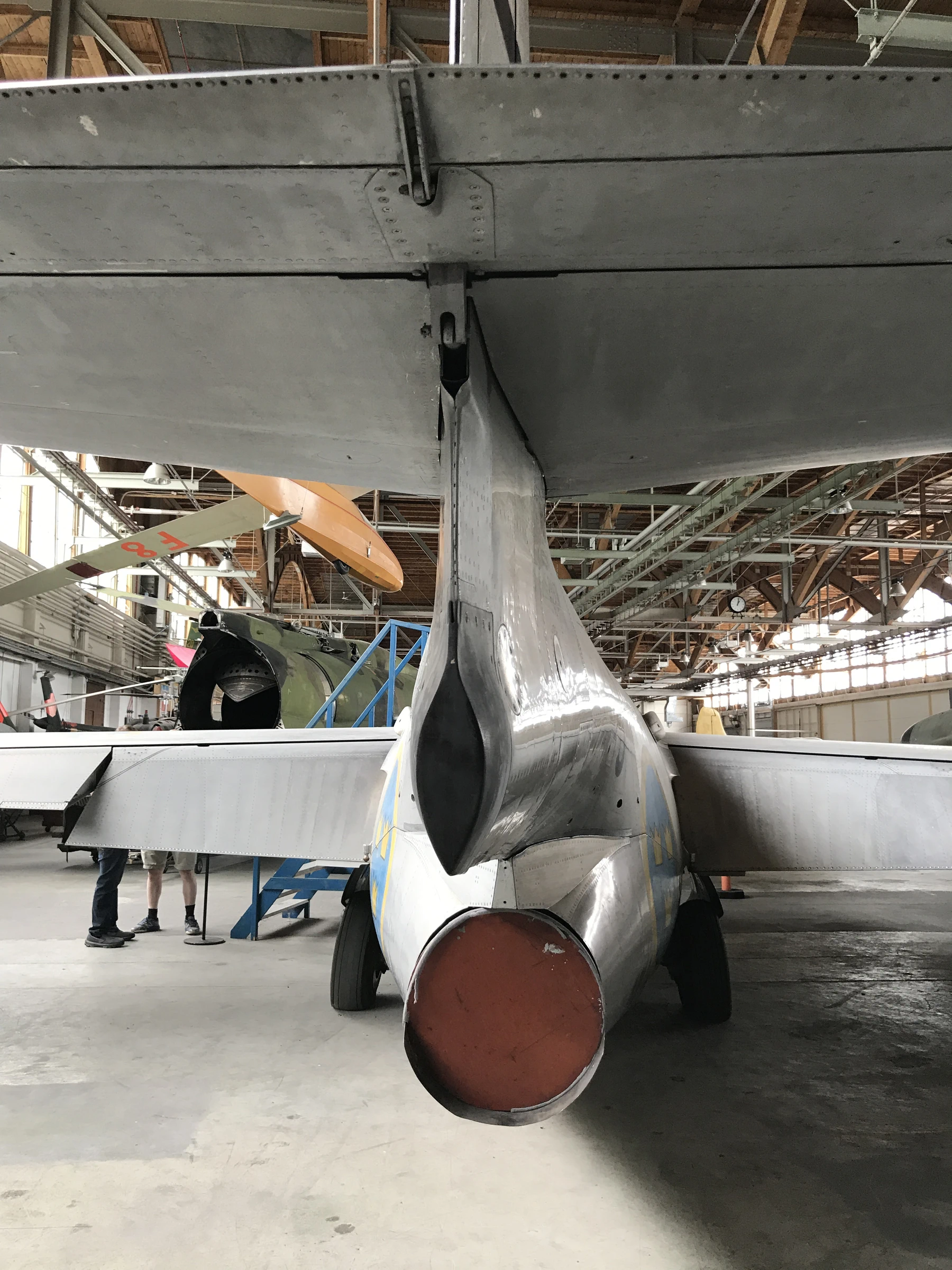
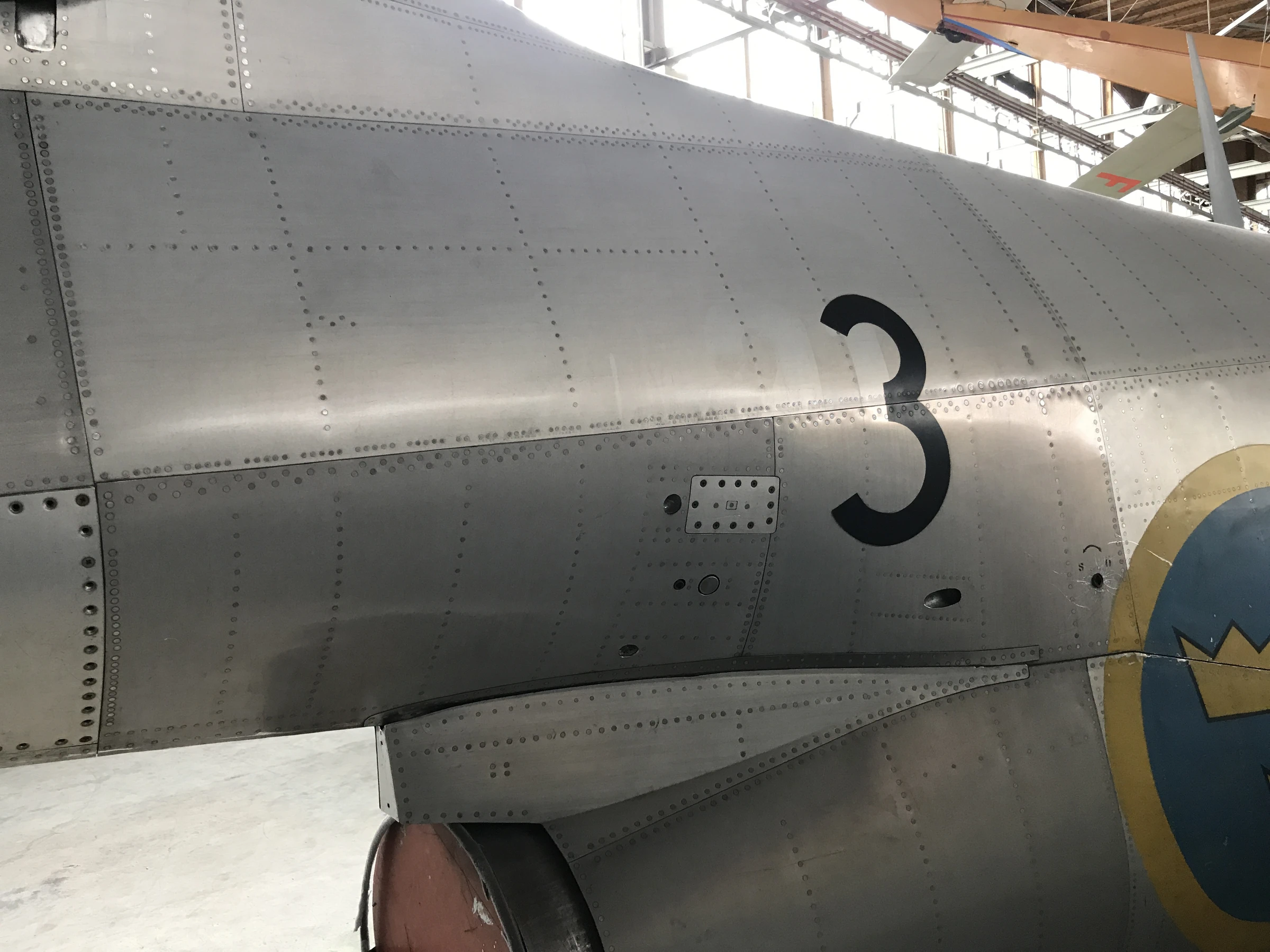
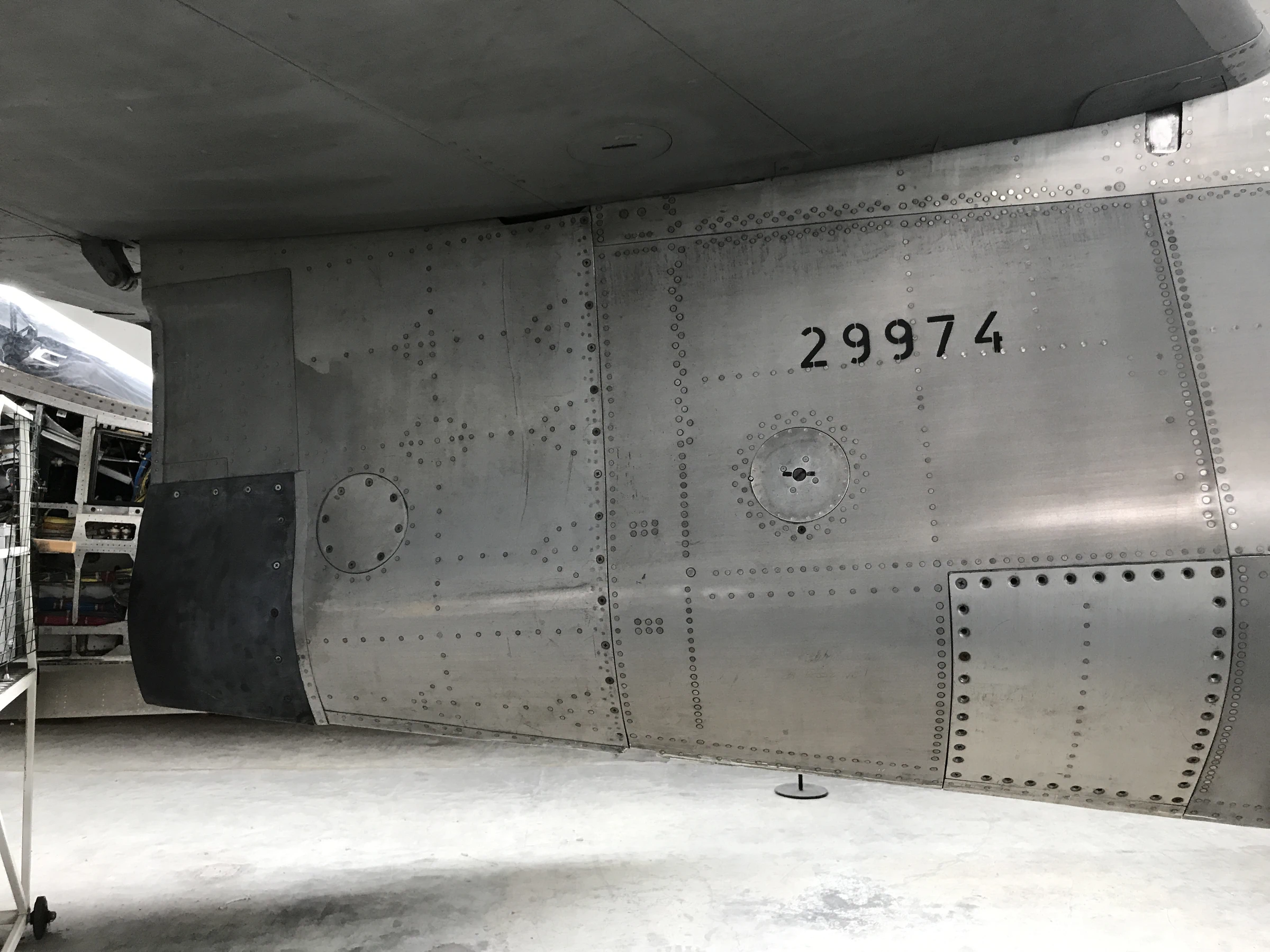
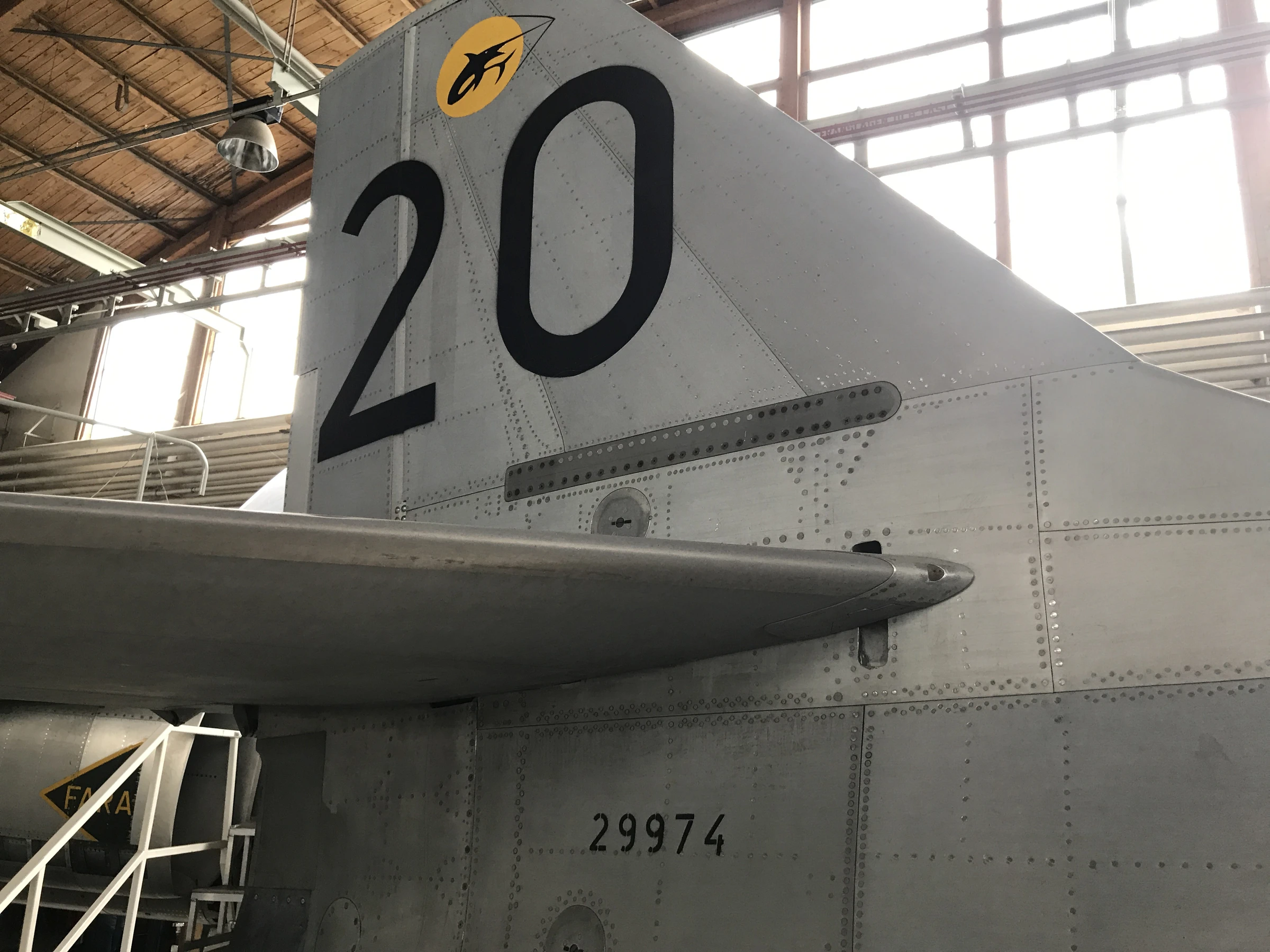
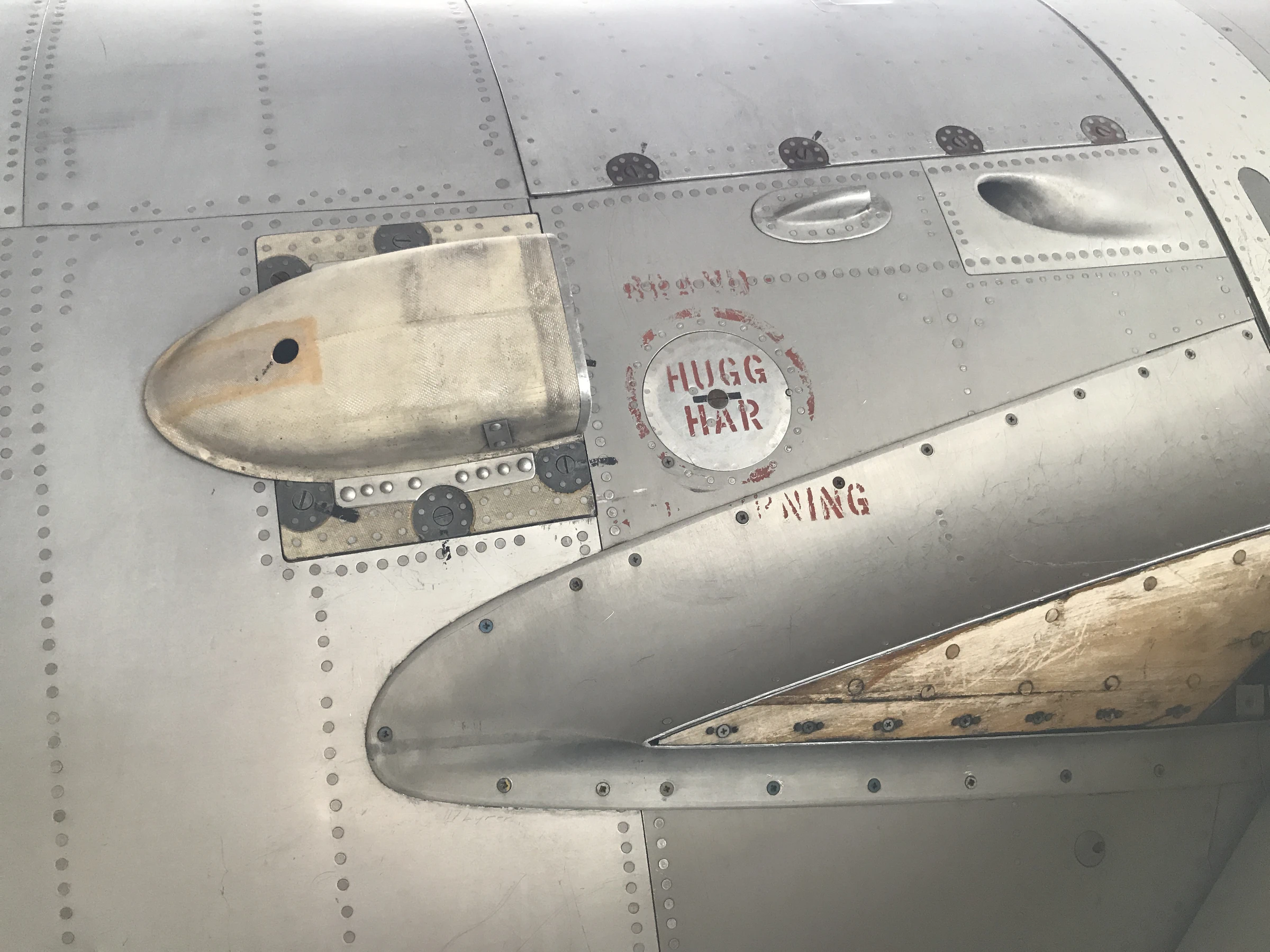
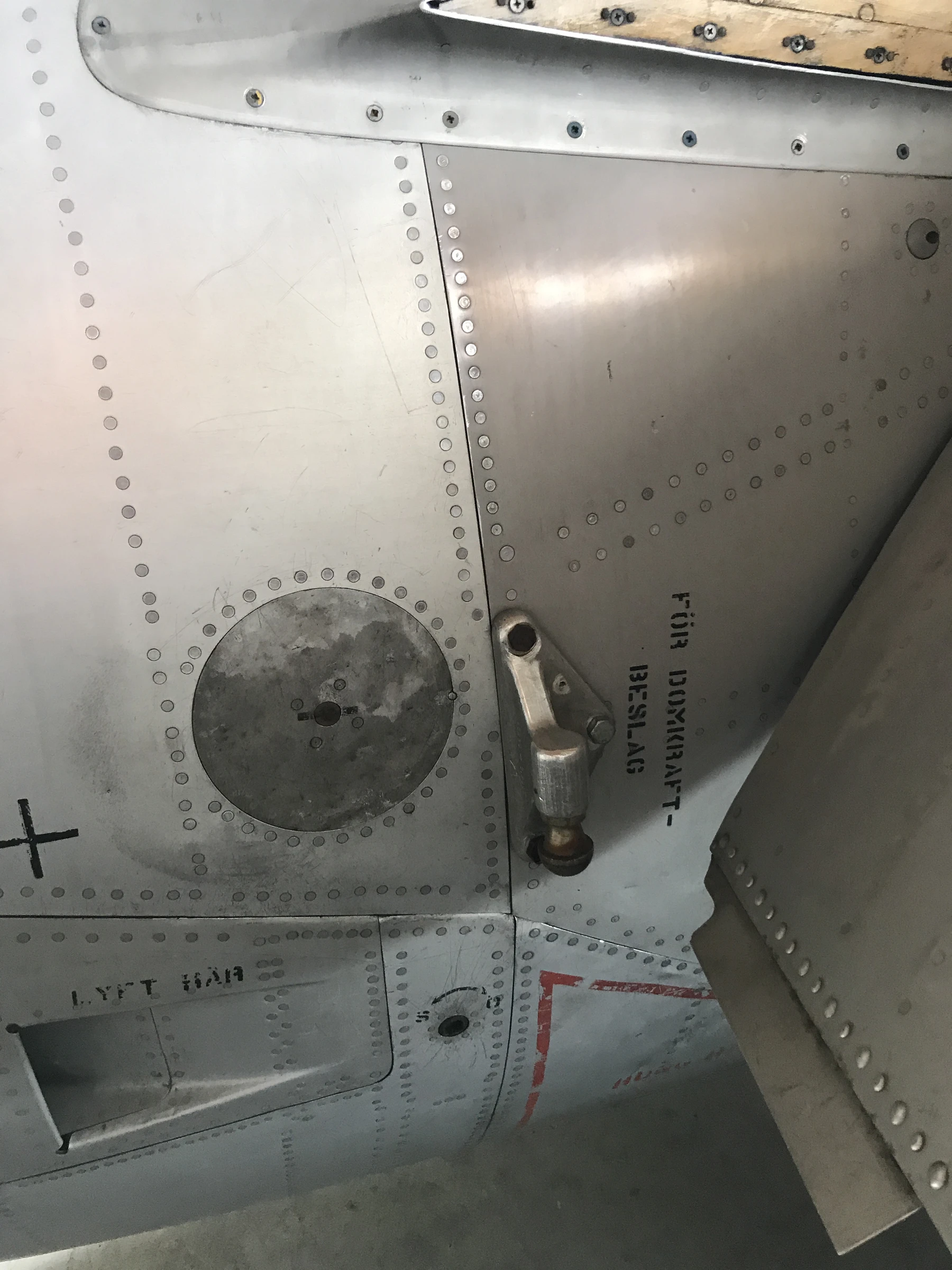
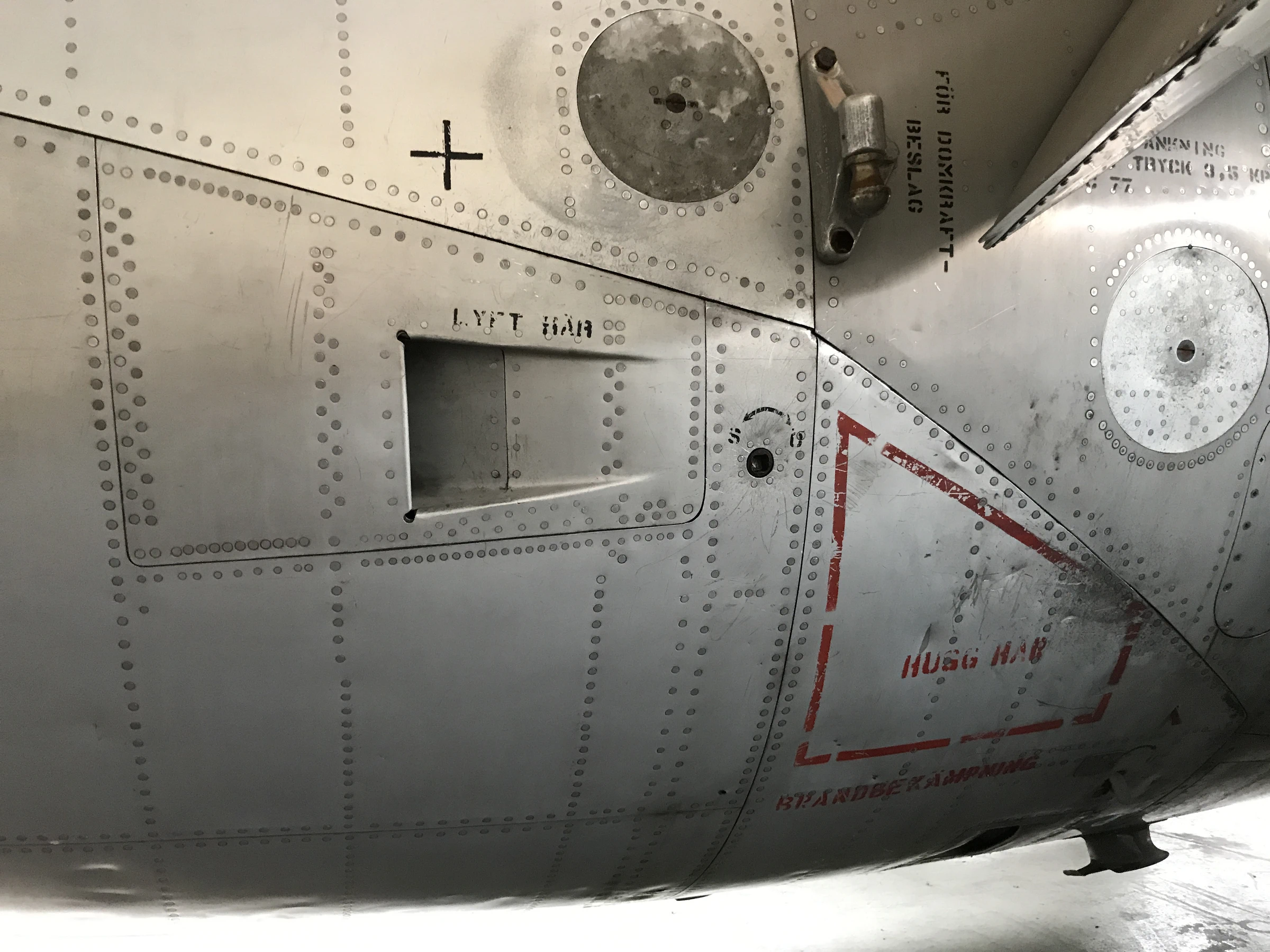
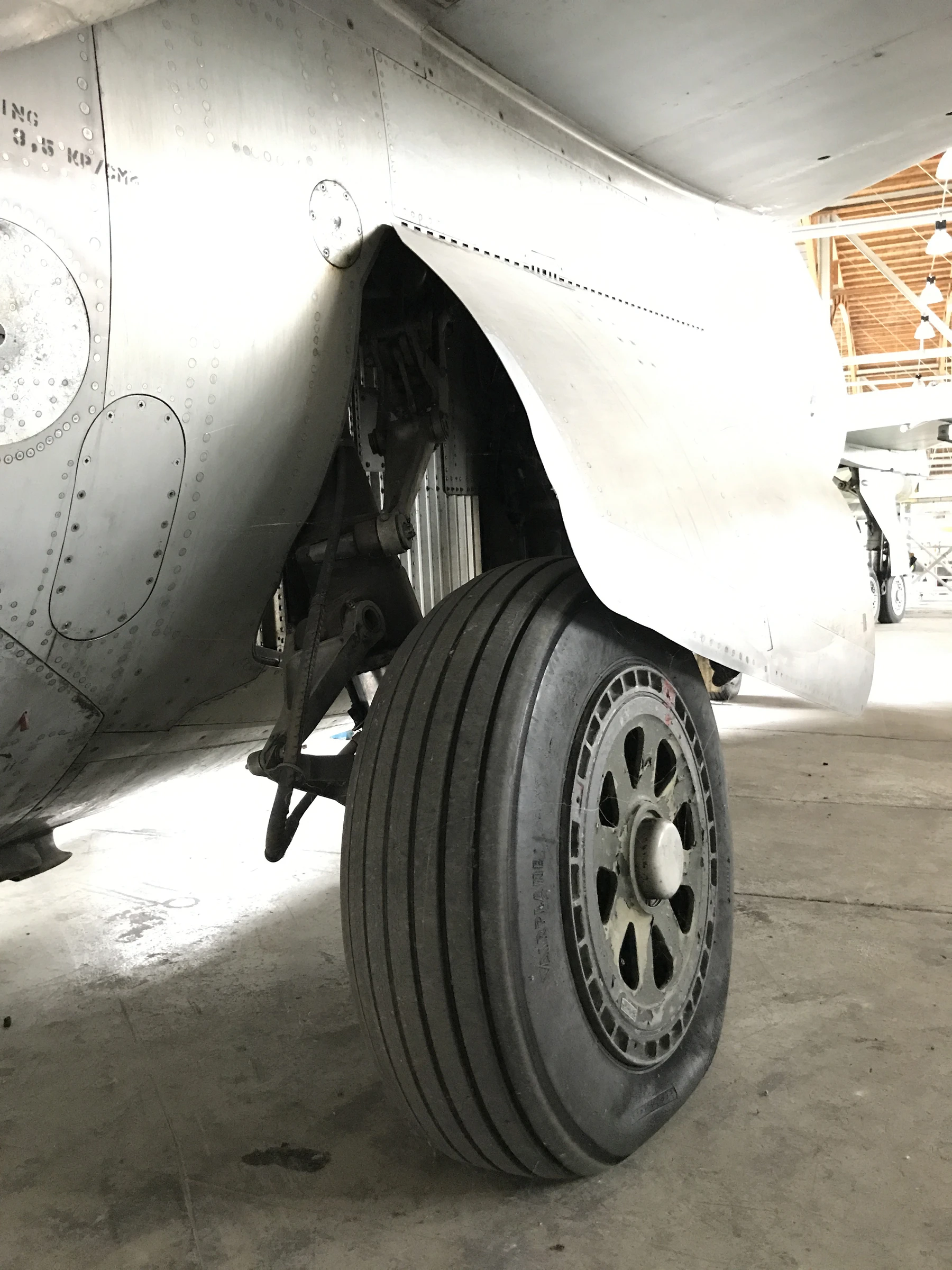
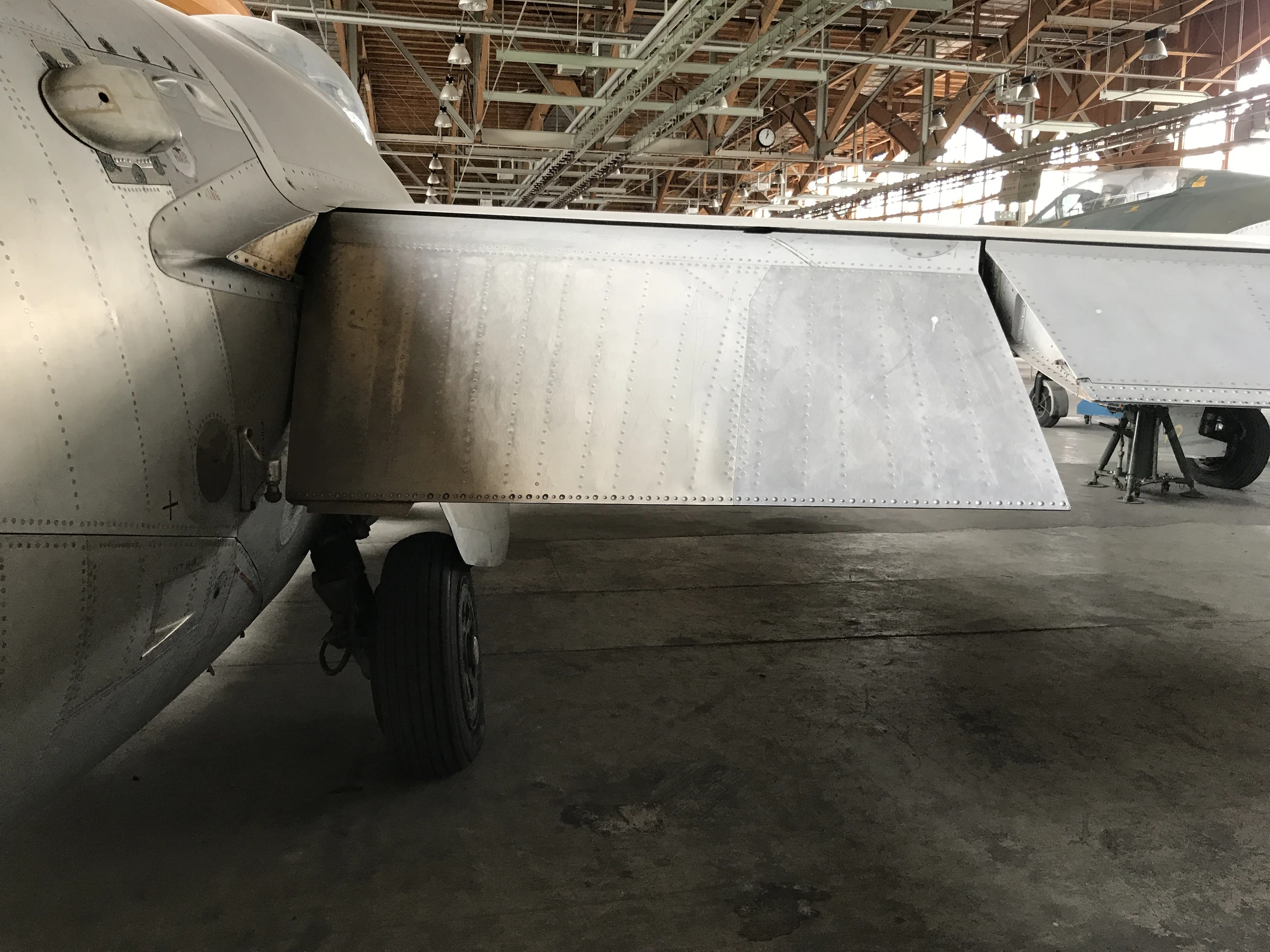
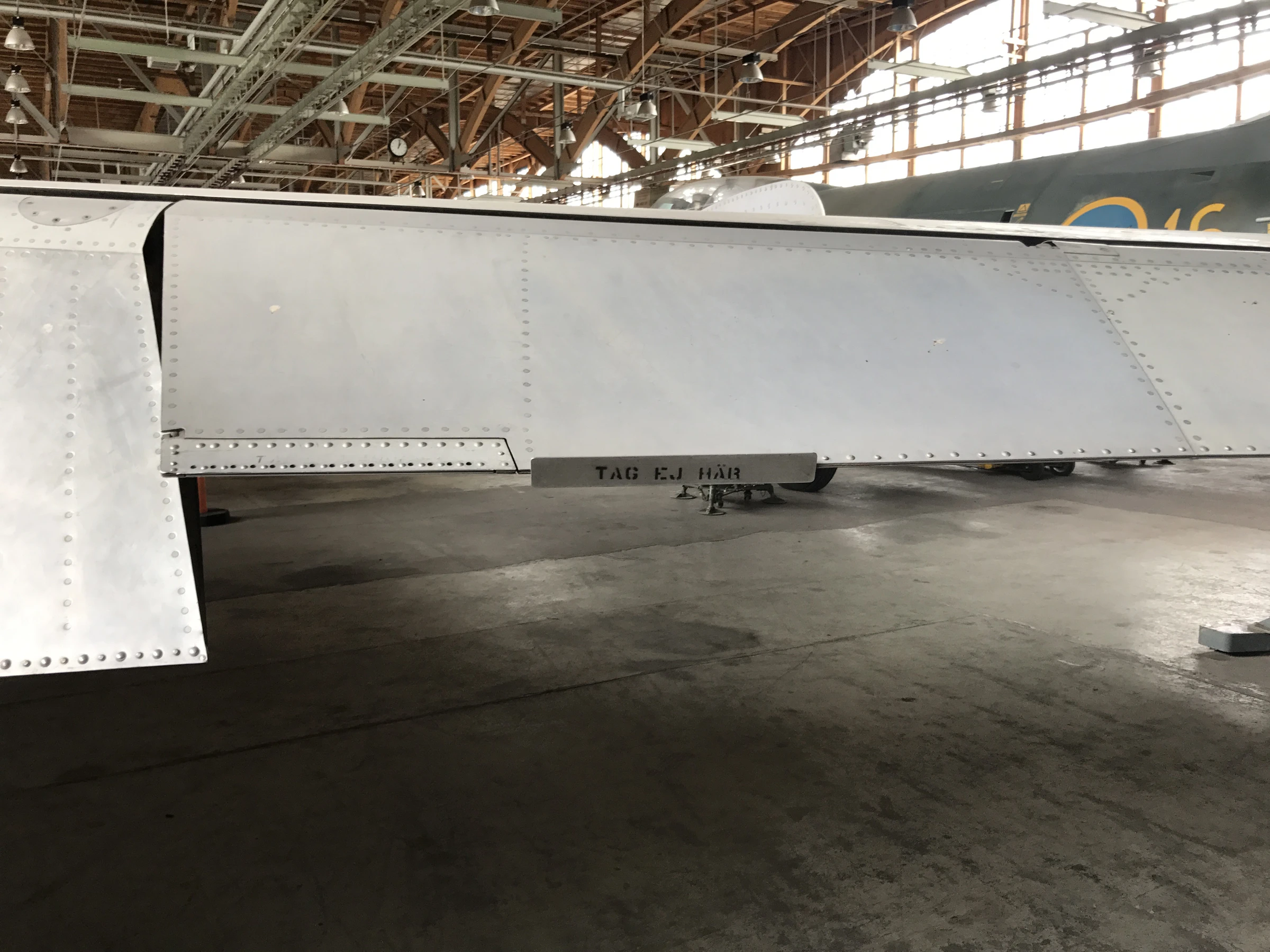
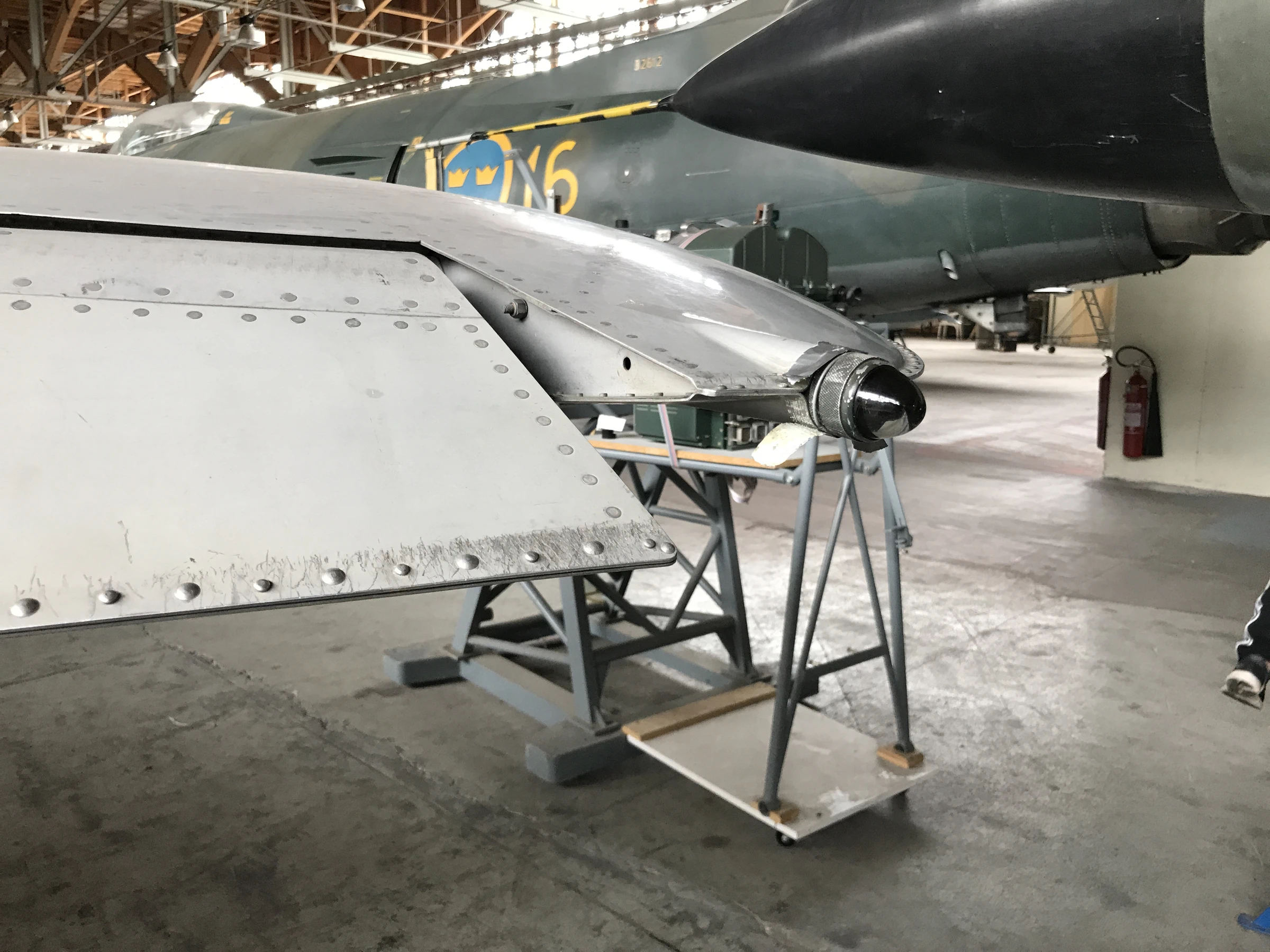
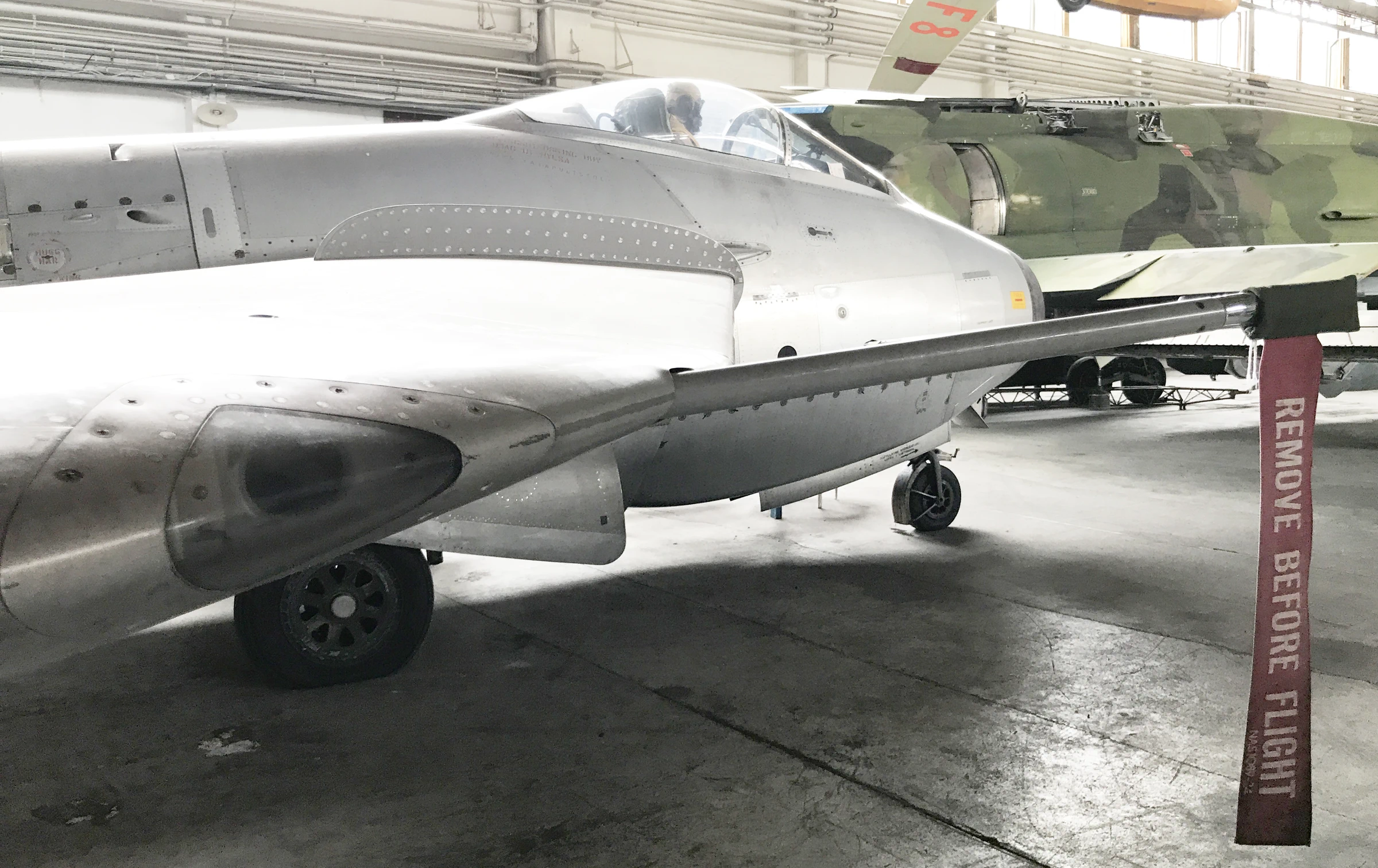
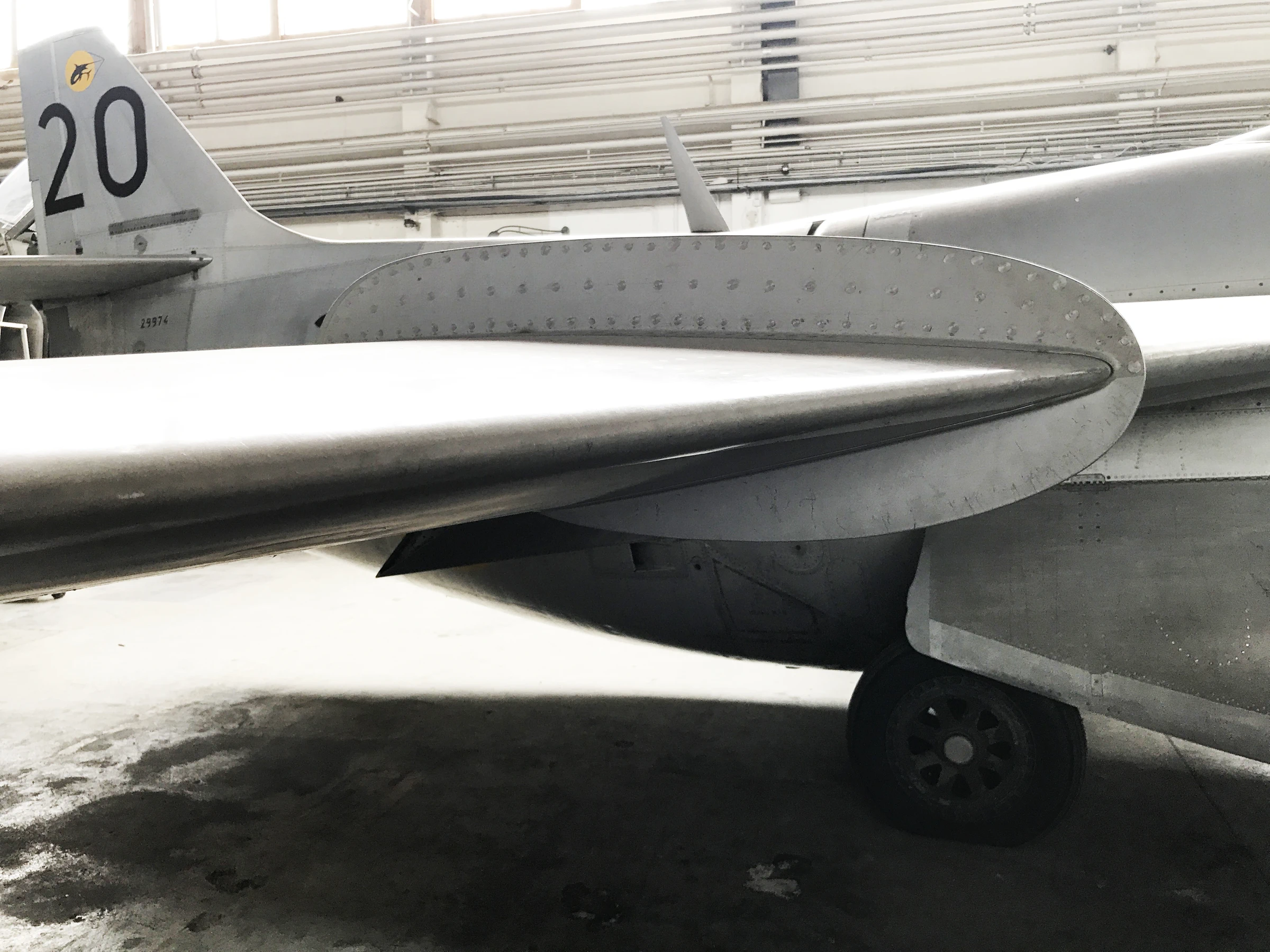
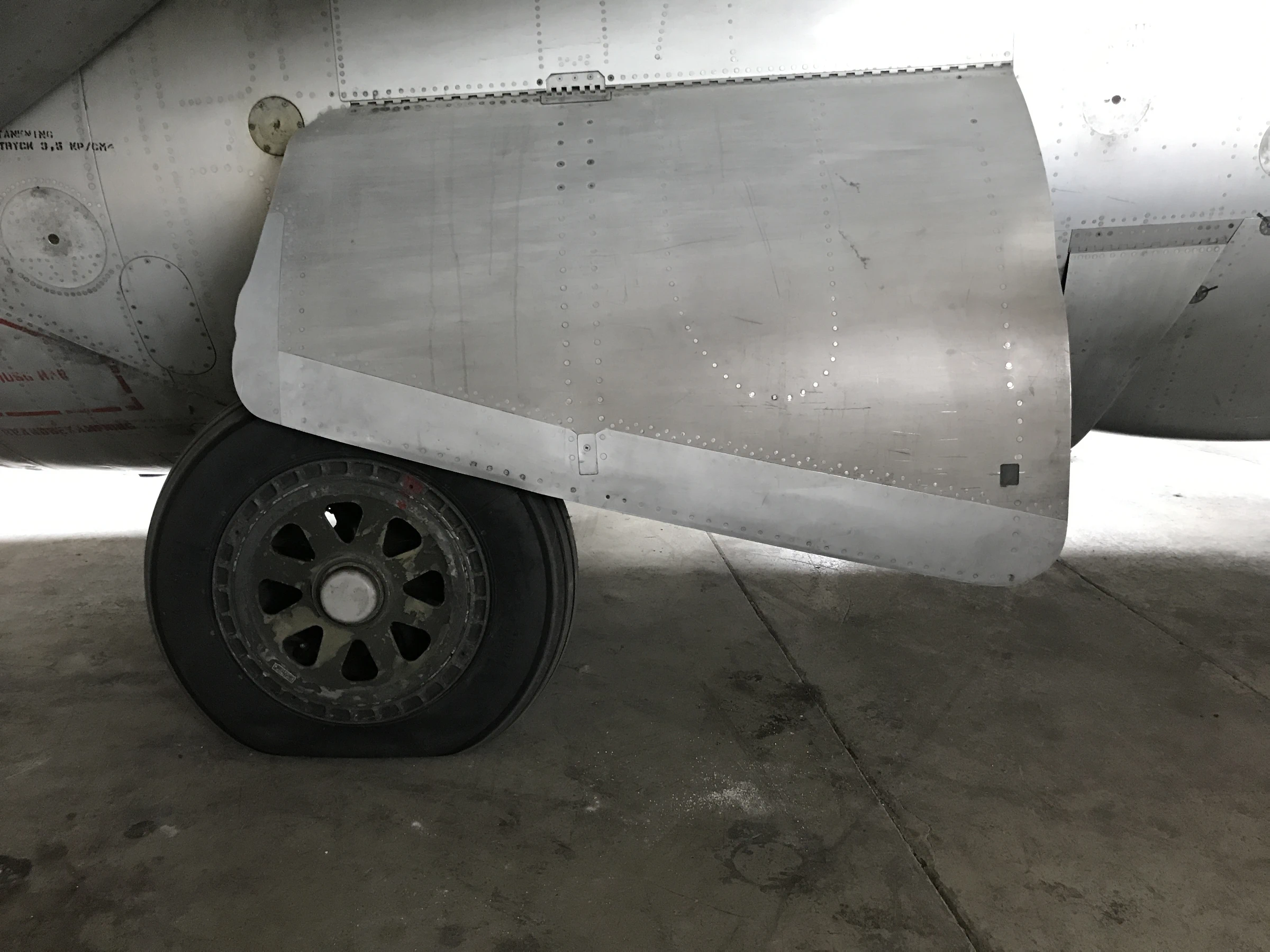
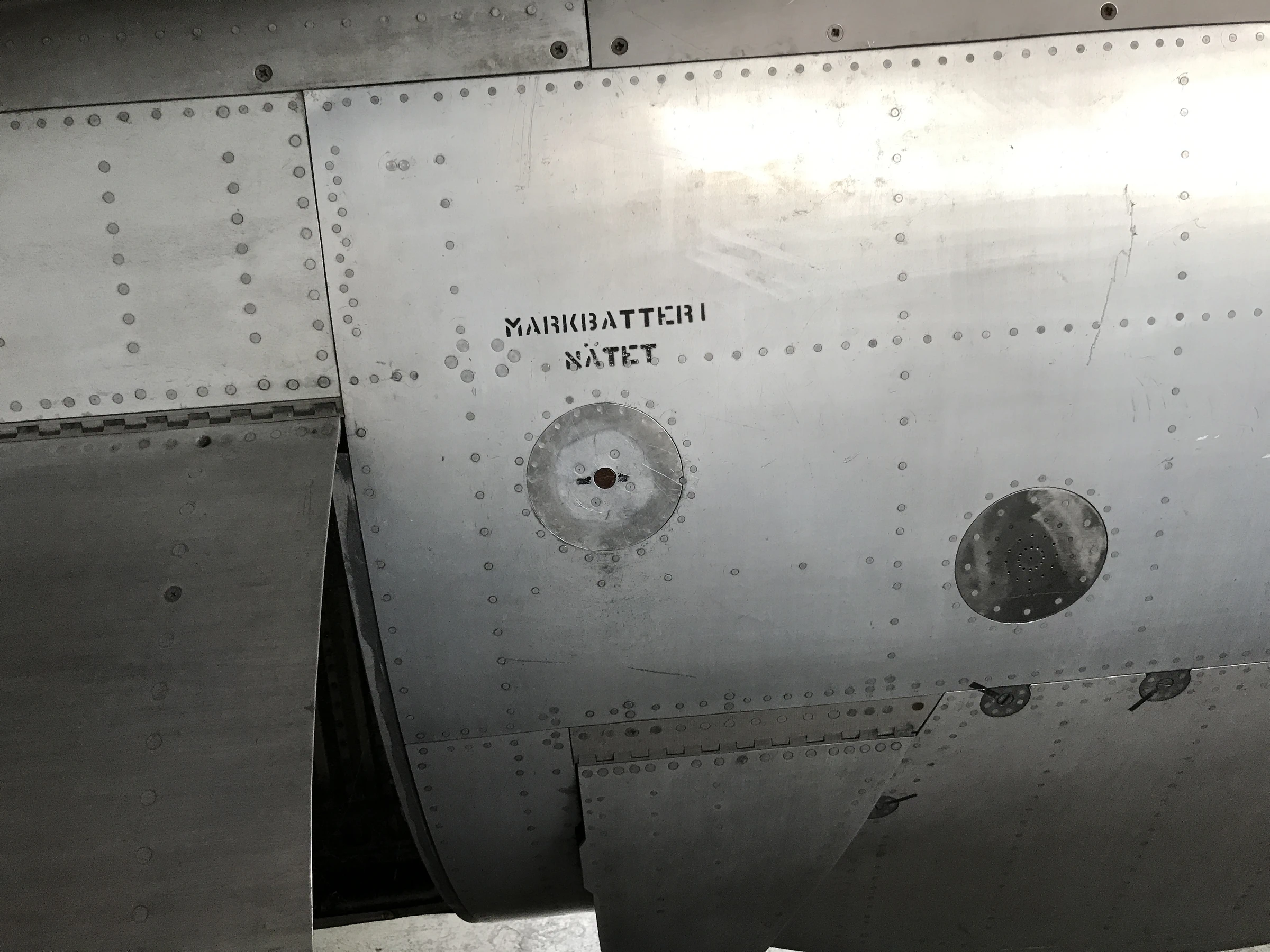
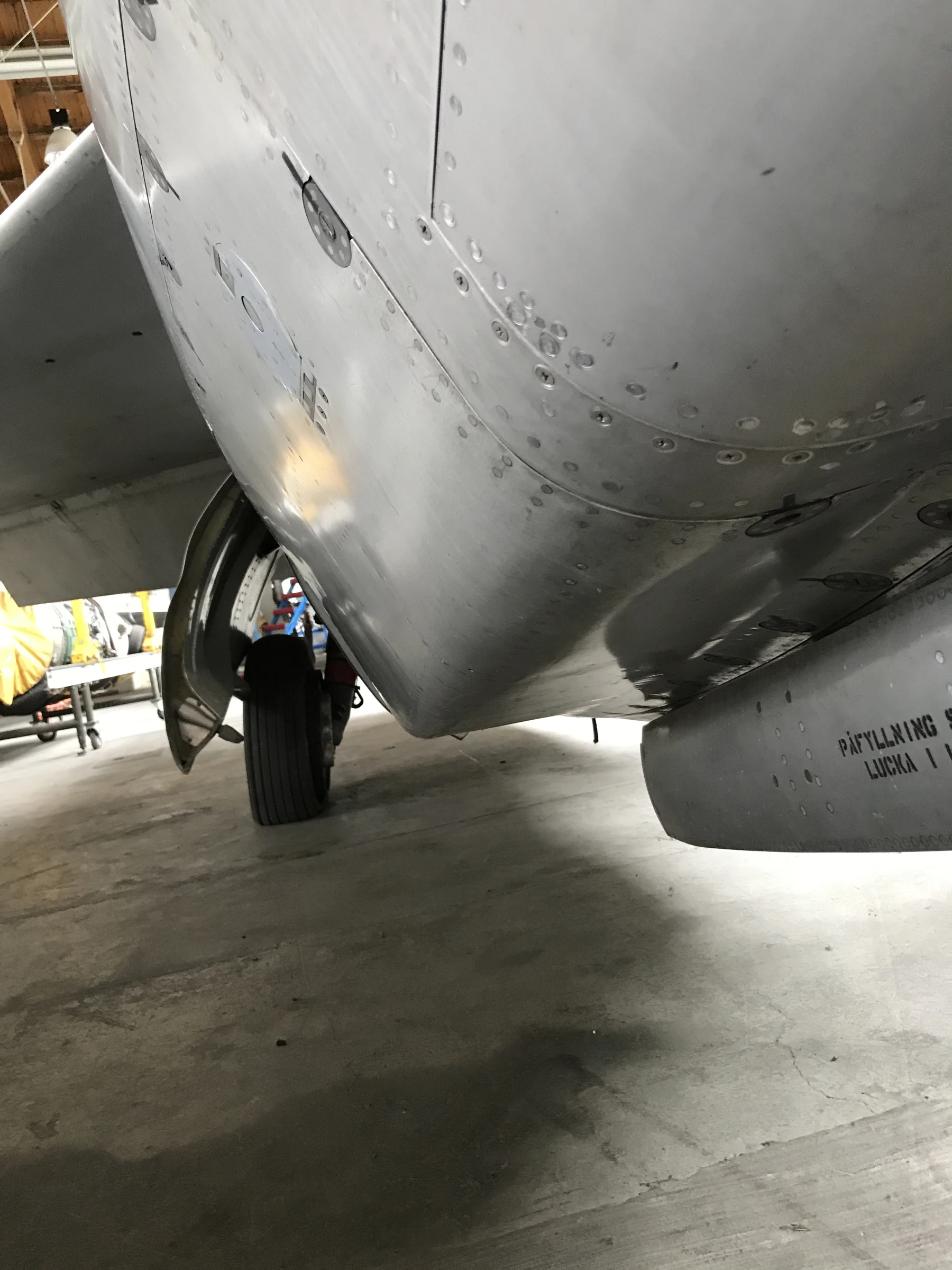
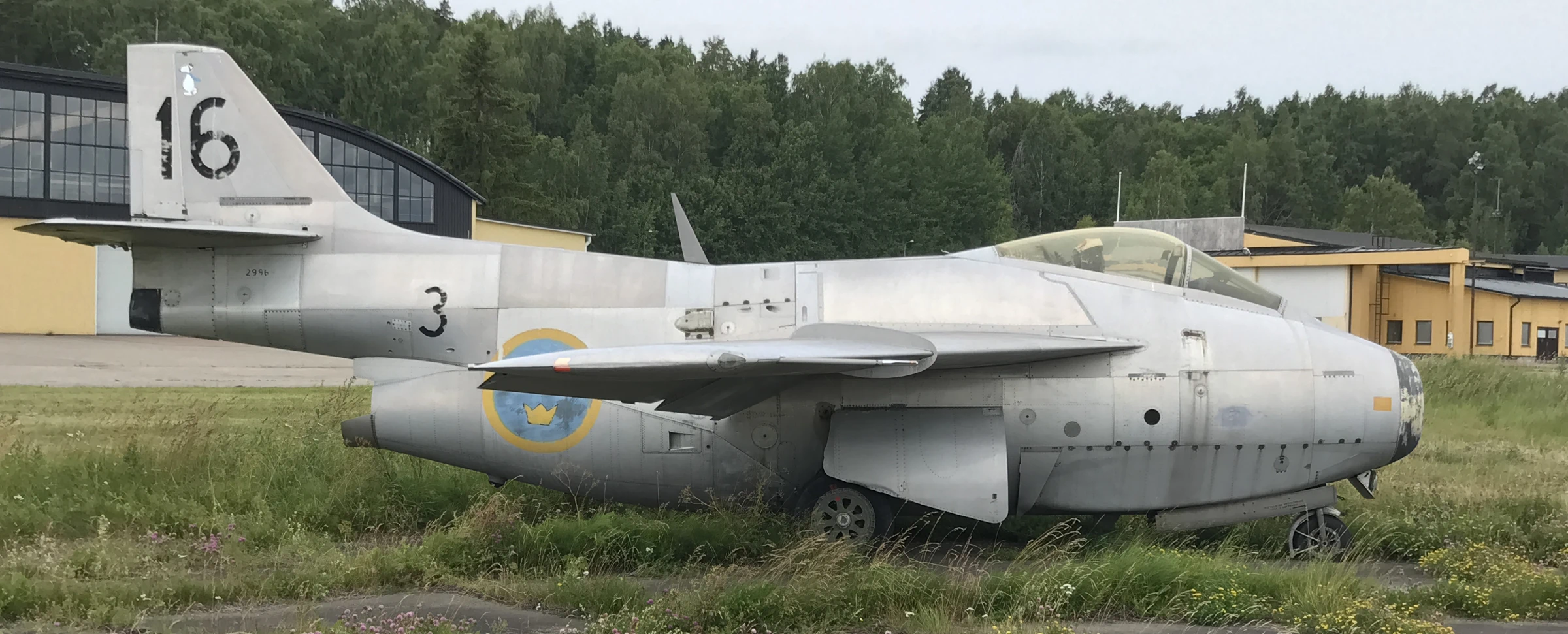
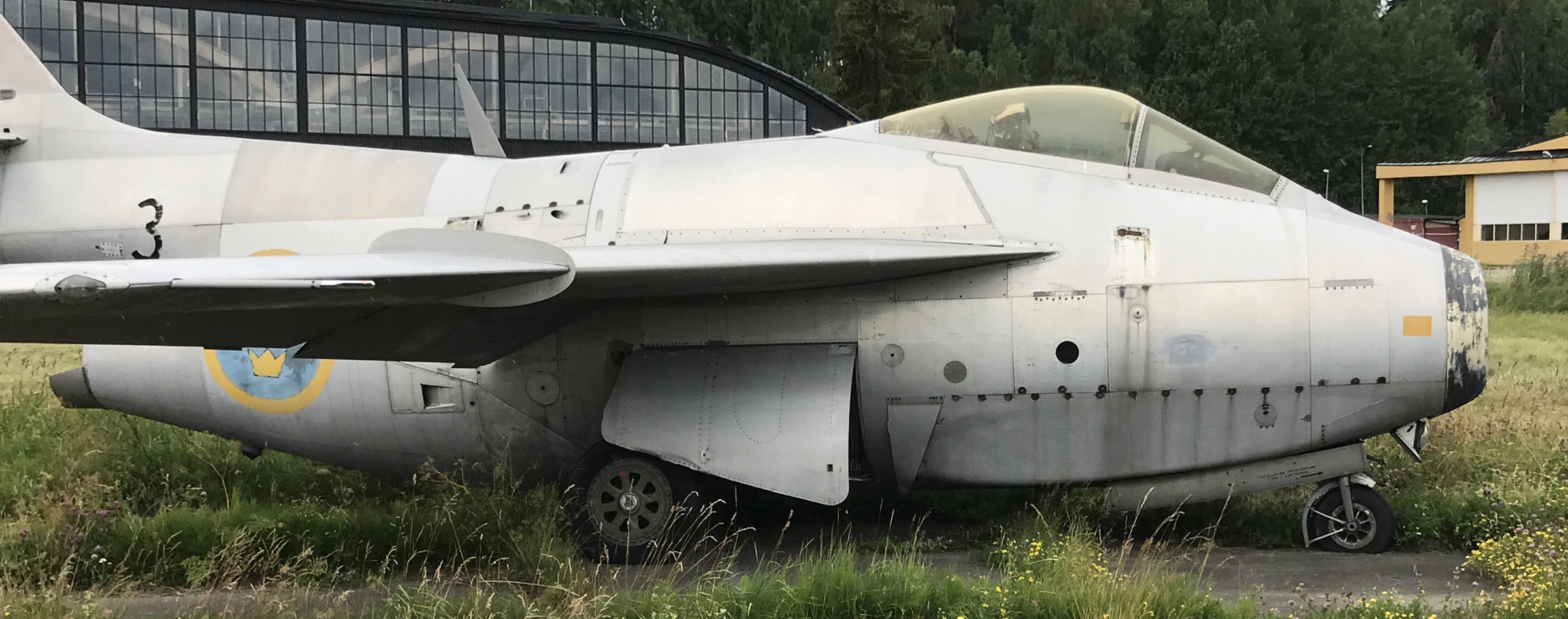
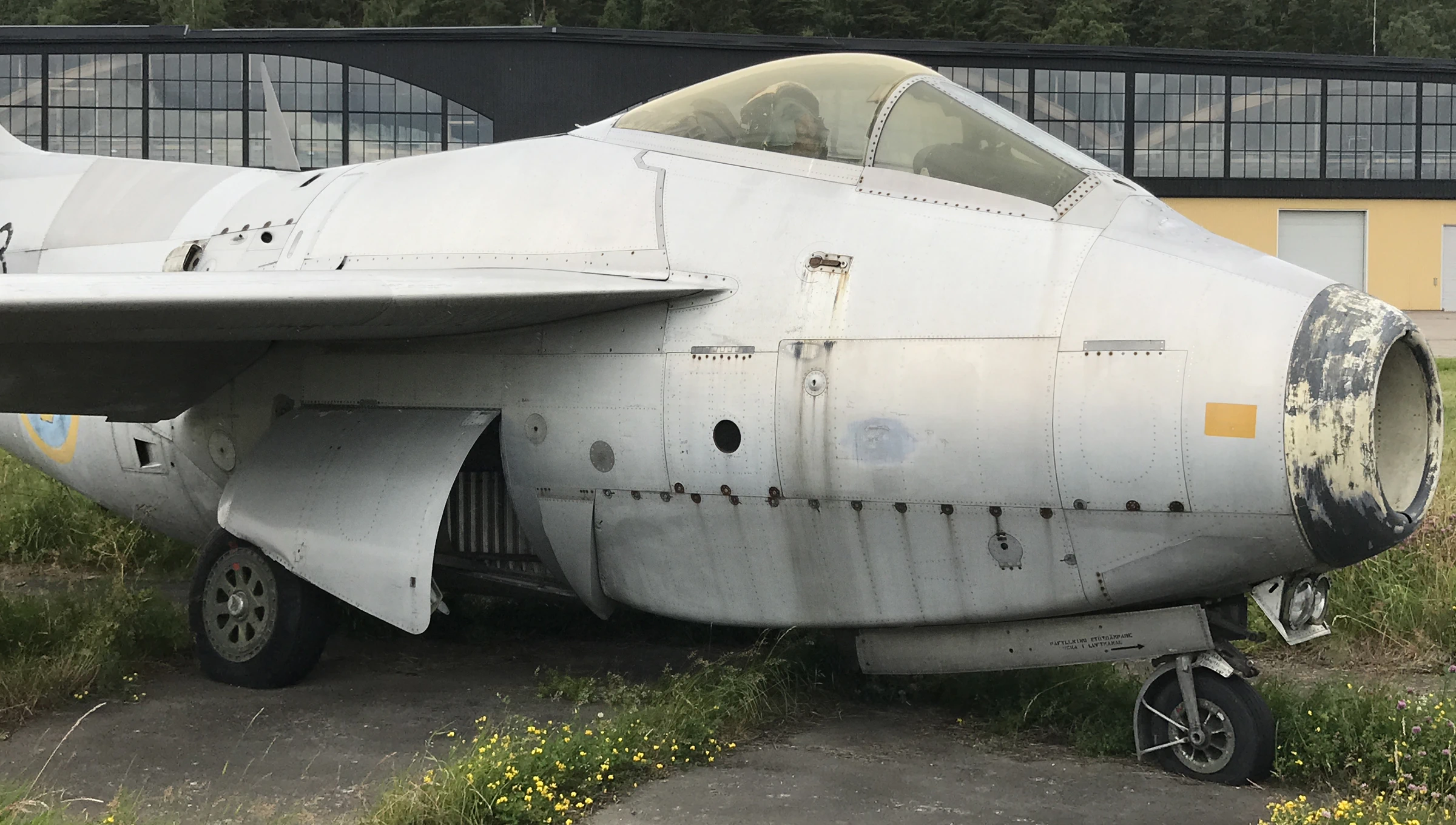
These walk-around photos were taken at Västerås Flygmuseum in 2017. They show a SAAB S 29C Tunnan, individual number 29974 — the dedicated photo-reconnaissance variant of Sweden's iconic "Flying Barrel", one of the most remarkable jet fighters of the early Cold War era. With its distinctively rotund fuselage and swept wings drawing on captured German wartime aerodynamic research, the Tunnan was Europe's fastest aircraft when it entered service in 1950. The S 29C was the reconnaissance version, equipped with cameras for both high- and low-altitude photography and a radar detector, and served primarily at F 11 in Nyköping and briefly at F 21 in Luleå.
During its career the type was used for some of the most sensitive operations of the Cold War, including clandestine reconnaissance missions along the Soviet-controlled Baltic coastline, and two S 29Cs served in the Congo under UN colours in 1962 — the only Tunnans to see actual combat. The type set an international speed record over a 1,000-kilometre closed circuit in 1955, a record achieved with two S 29C aircraft. Västerås Flygmuseum is housed in a historic 1930s wooden hangar built for the Swedish Air Force on the former F 1 wing's base at Hässlö — a fitting setting for an aircraft that represents some of the finest Swedish aviation engineering of the postwar decades.