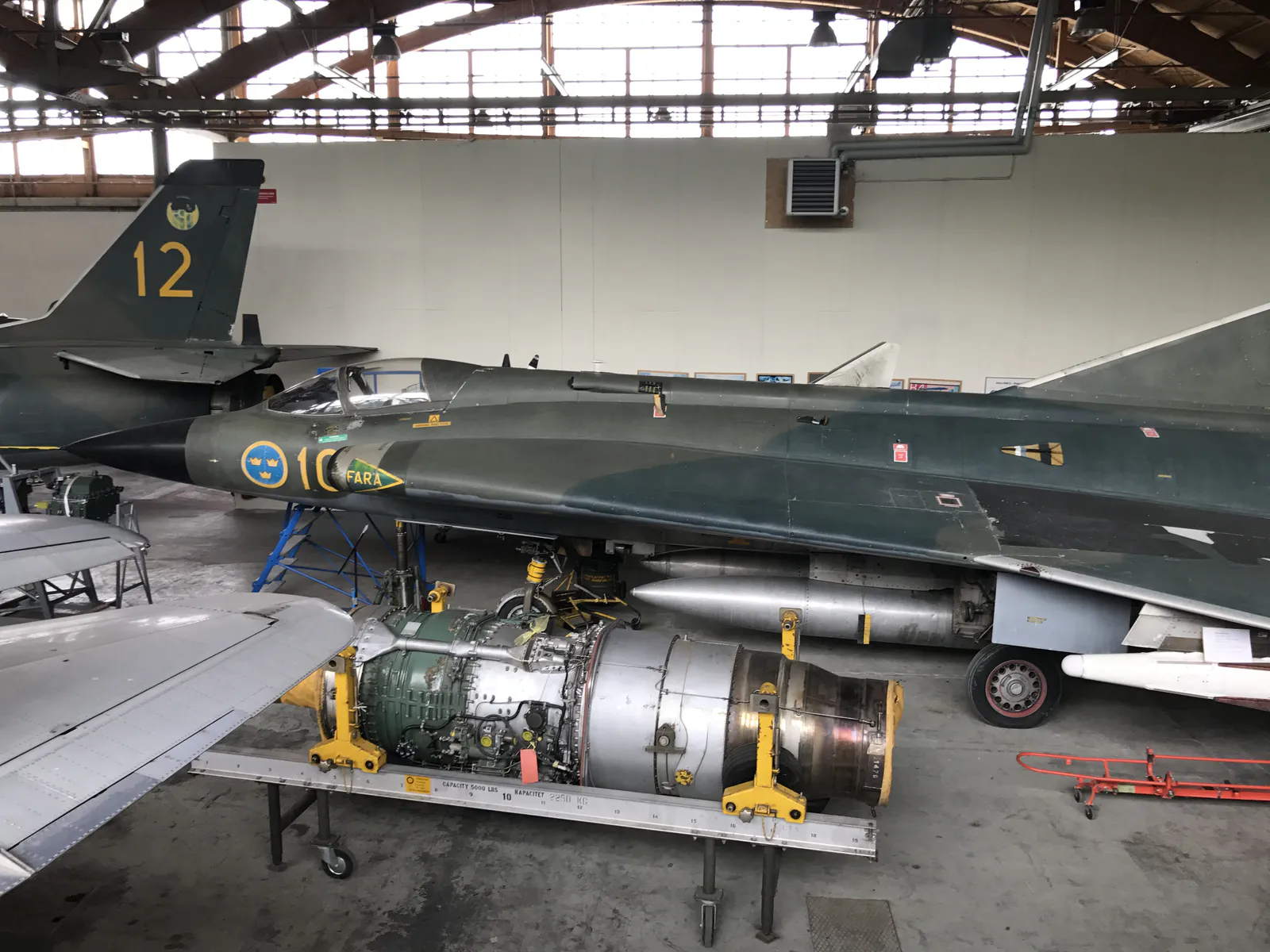
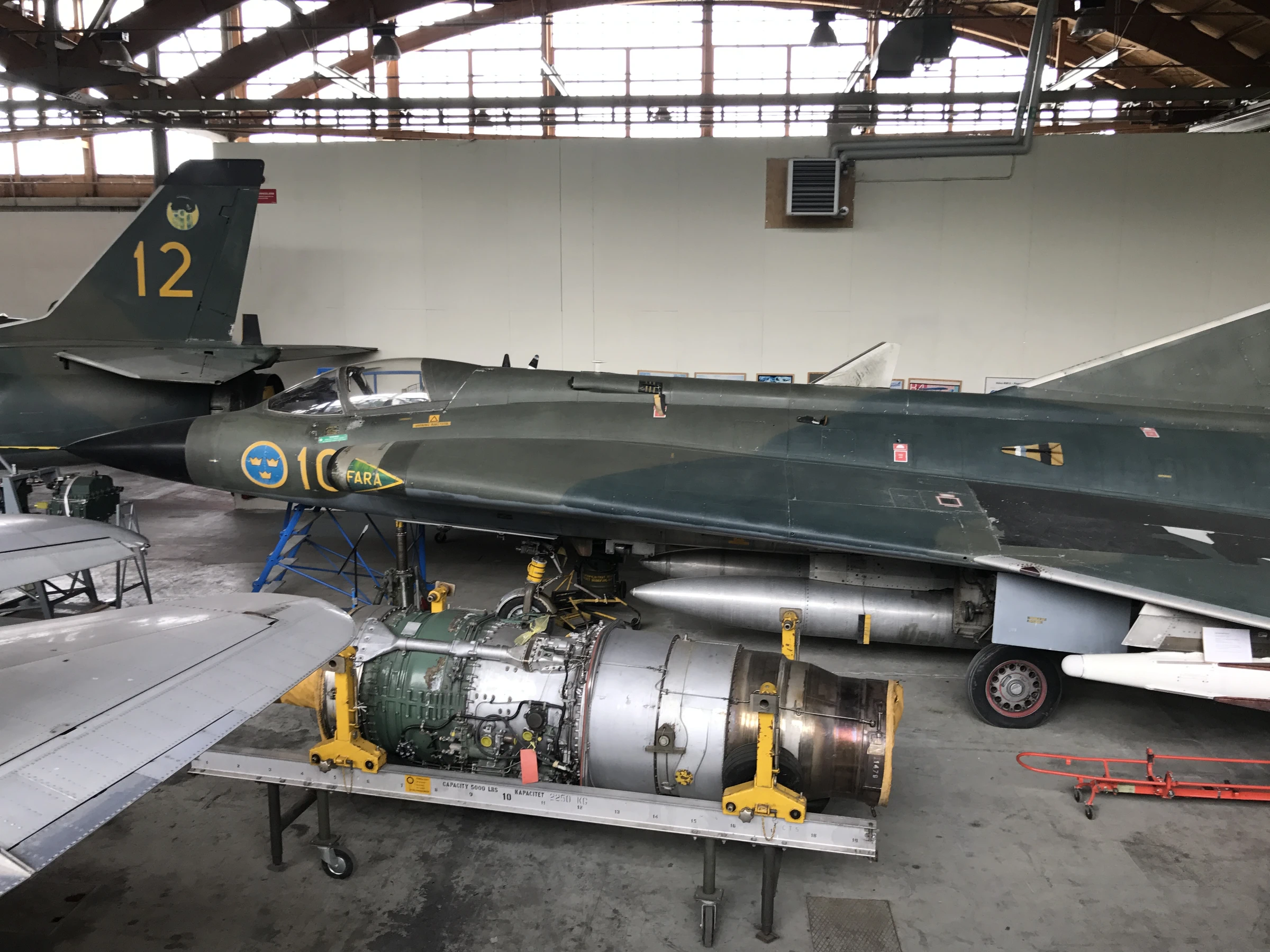
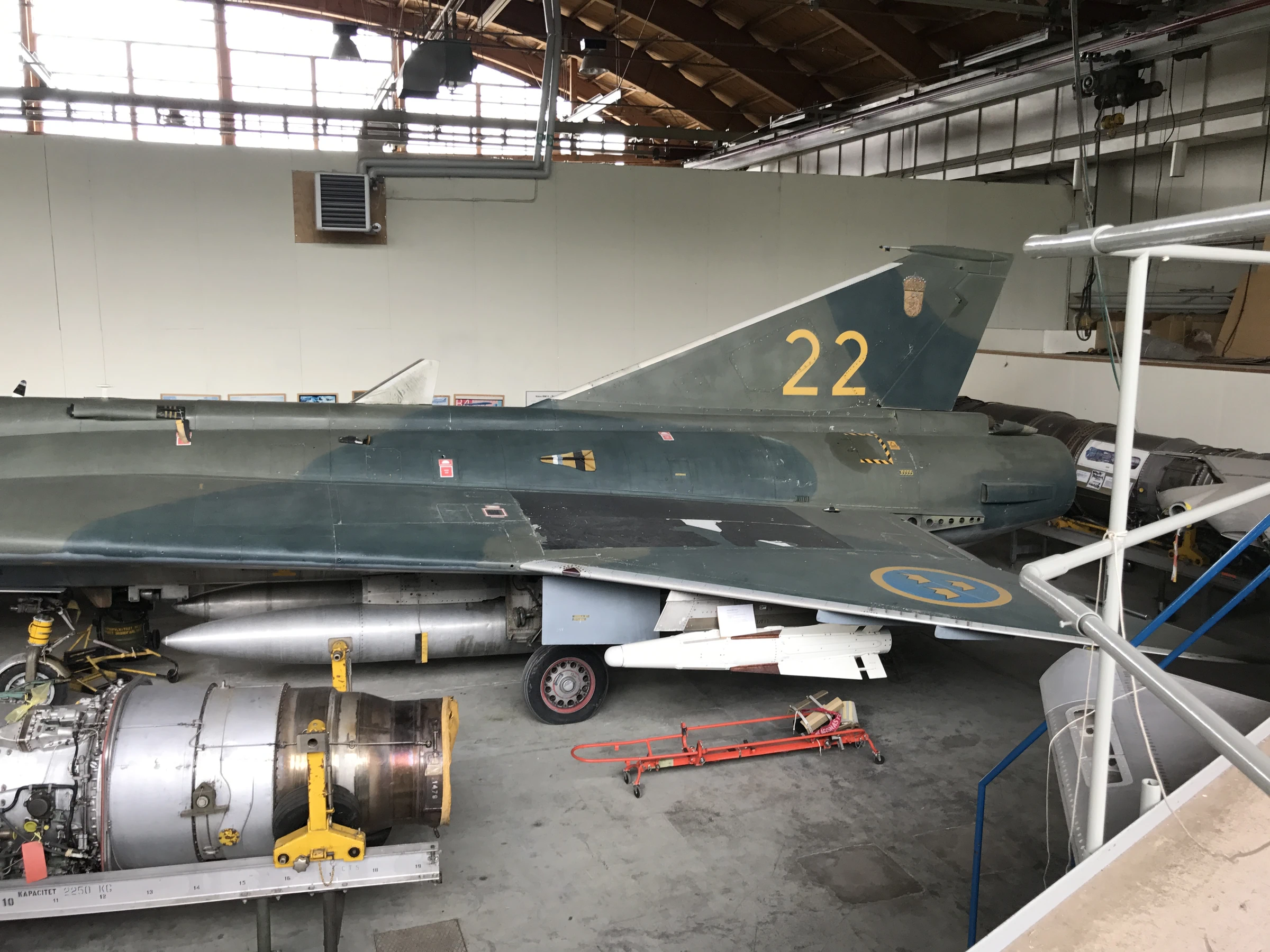
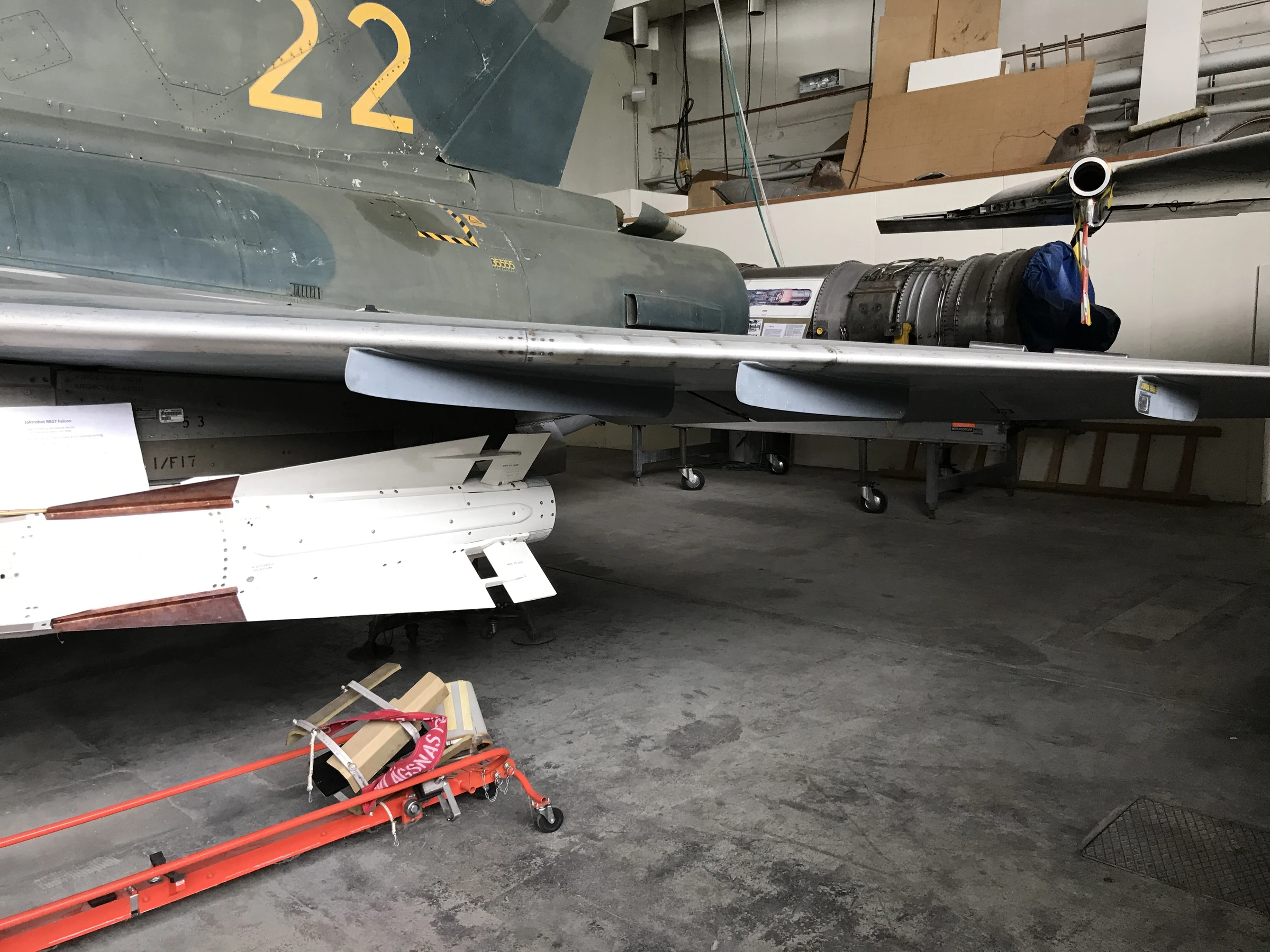
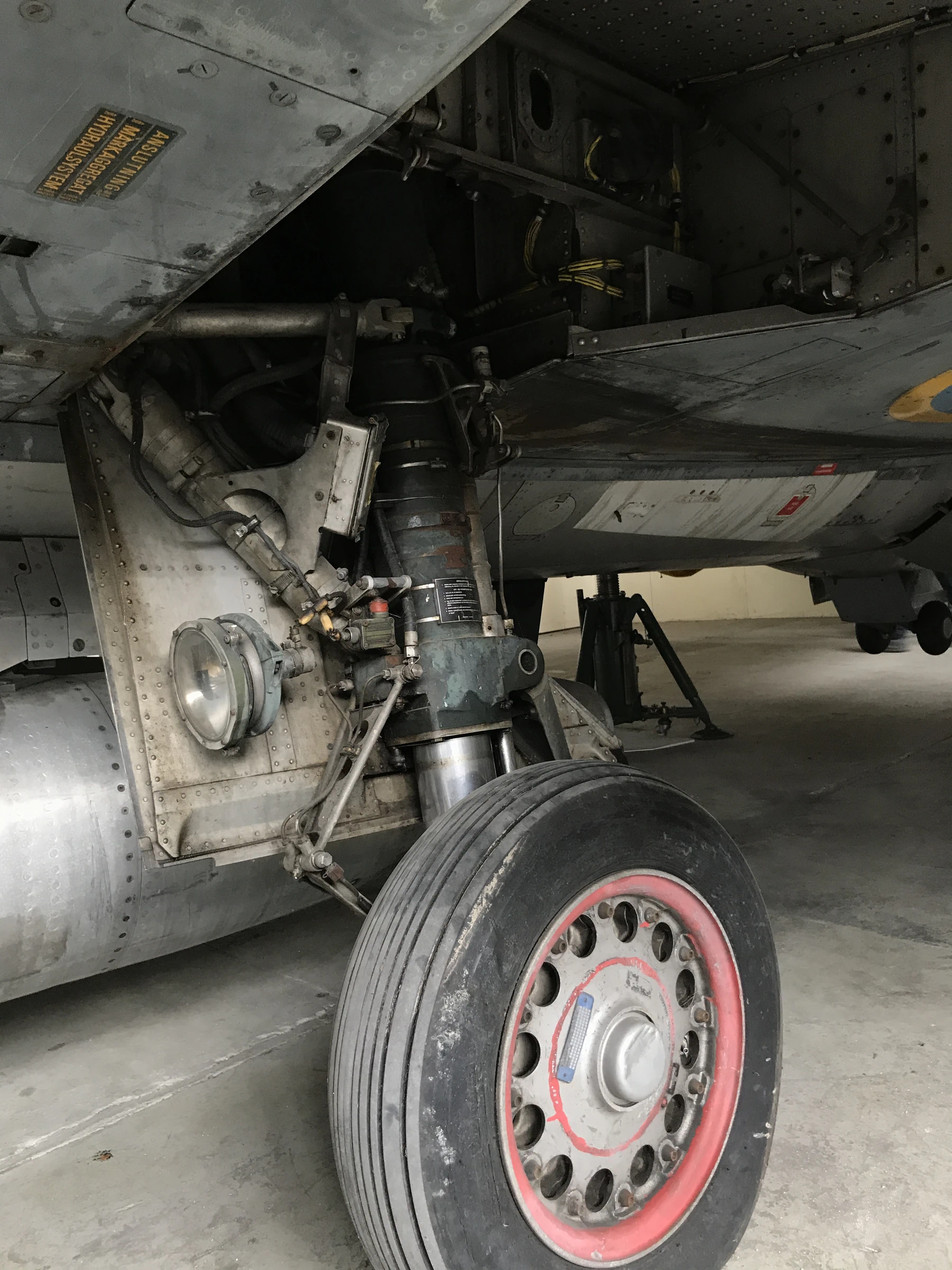
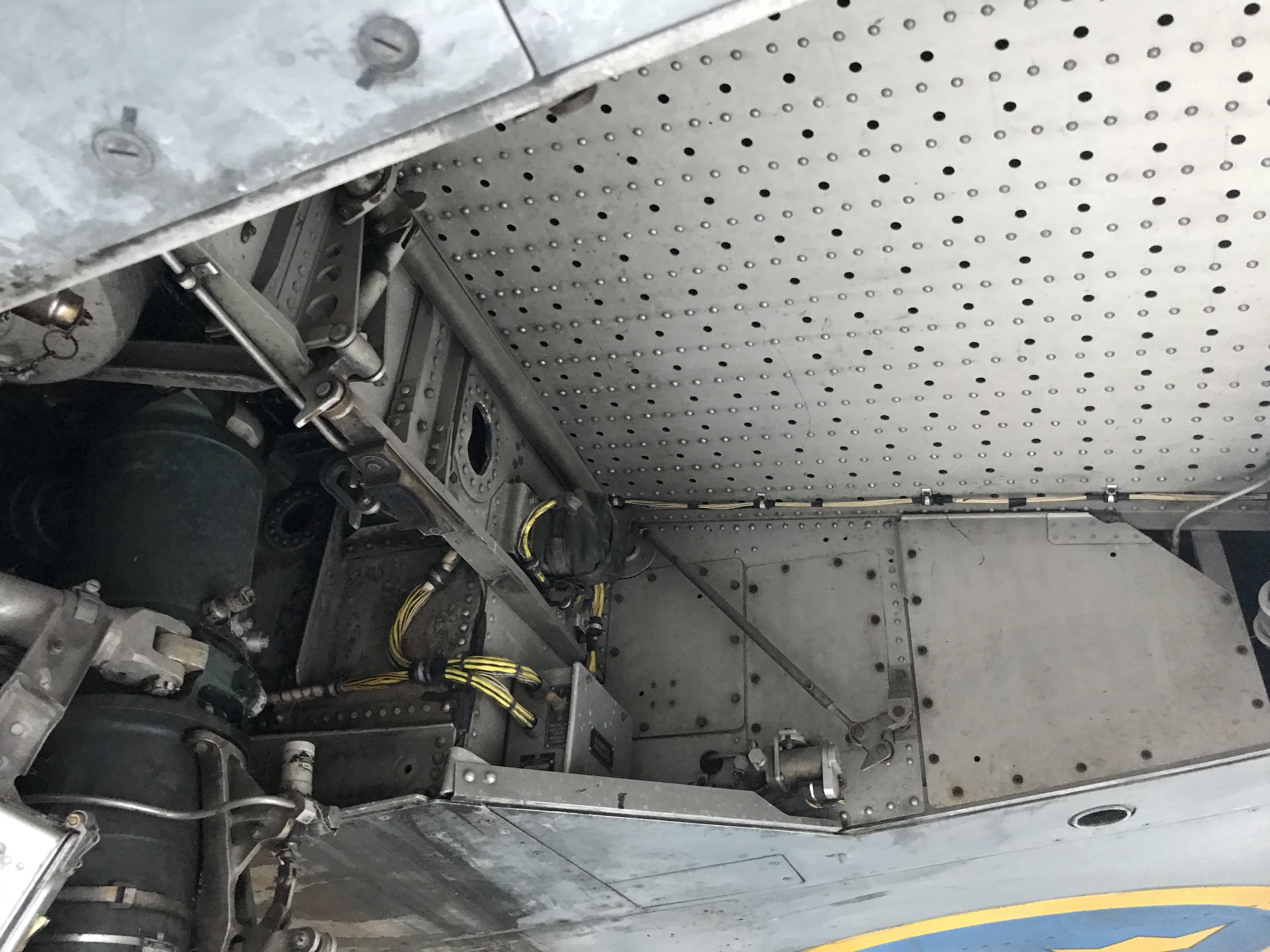
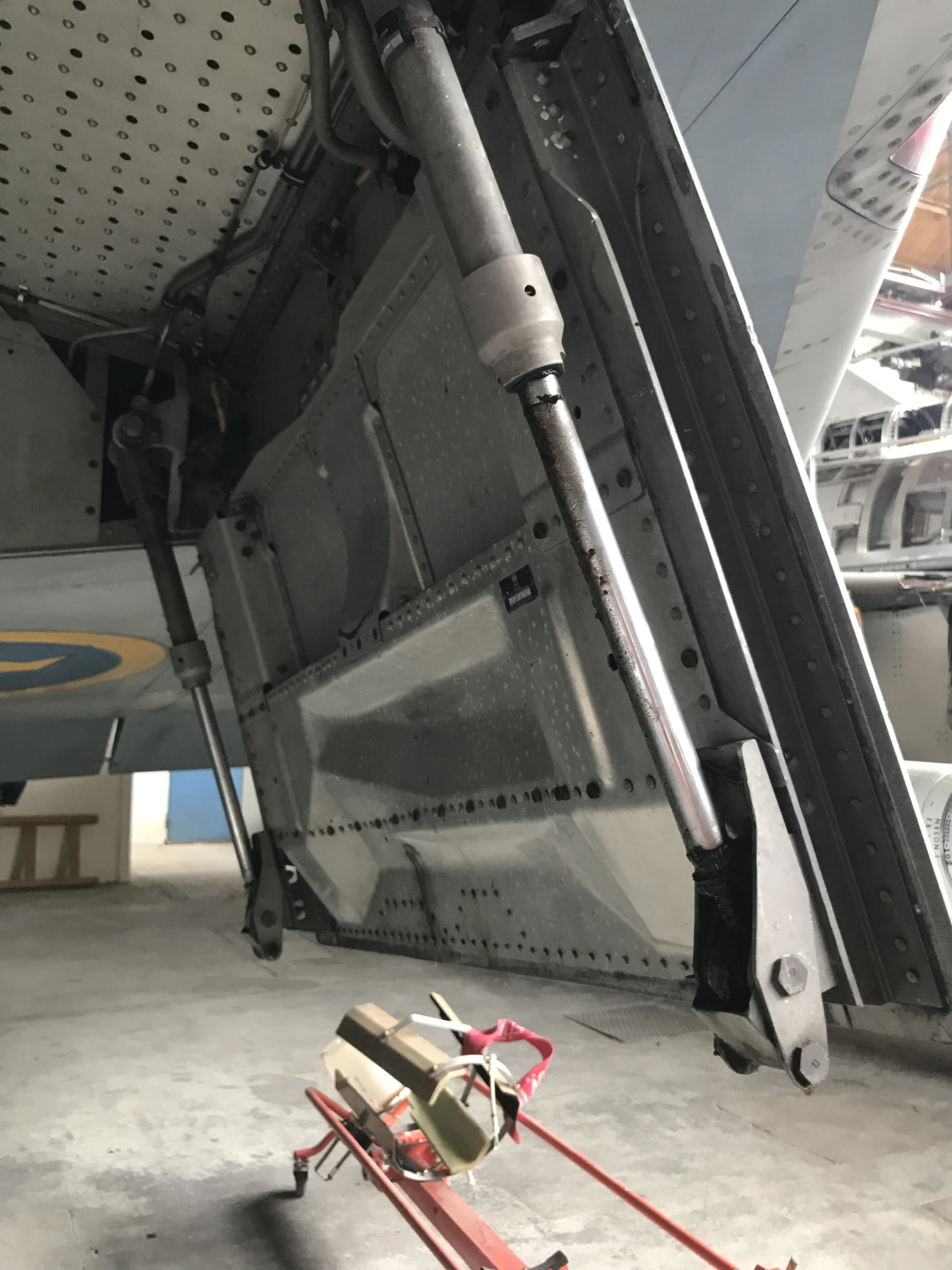
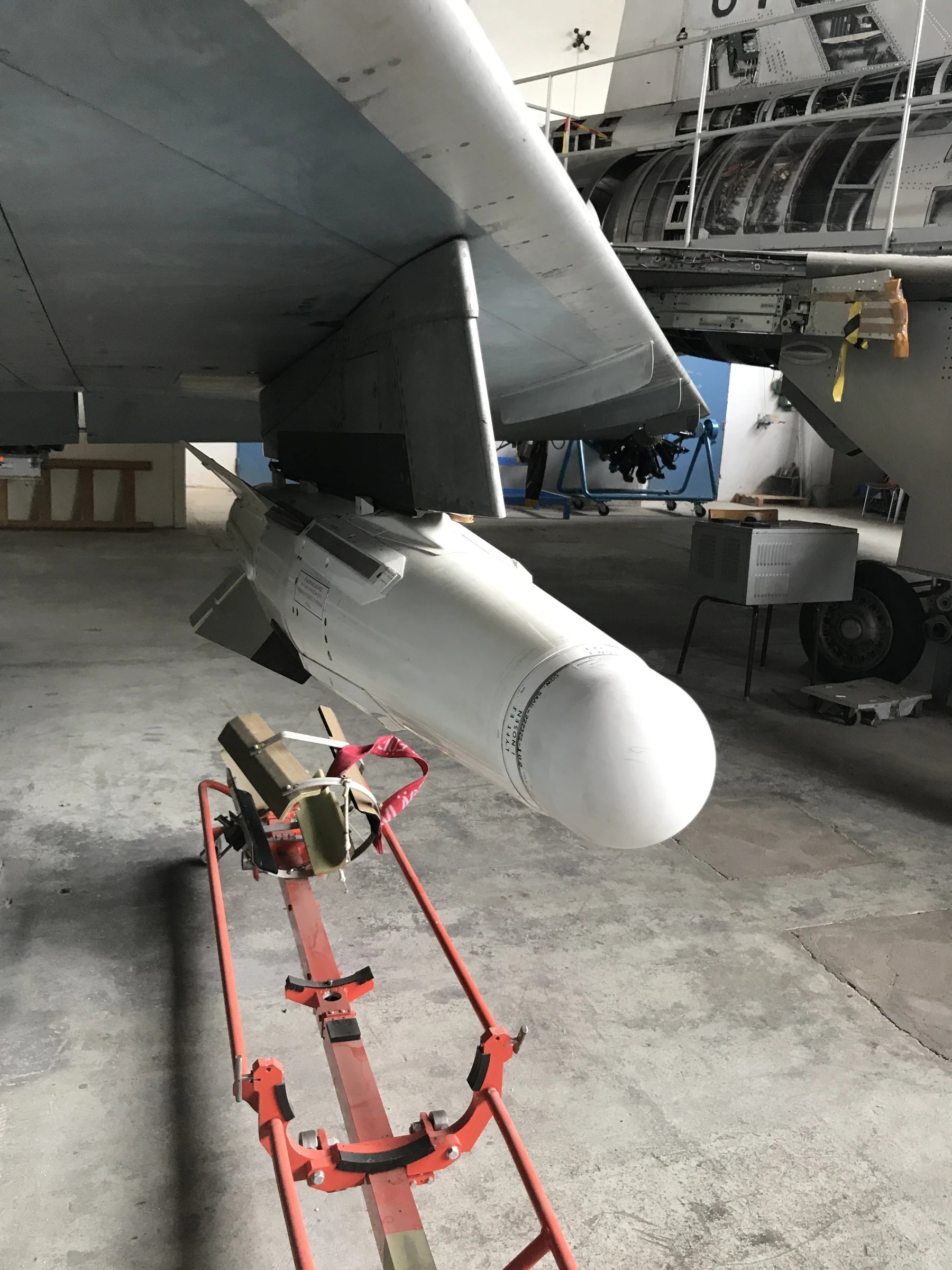
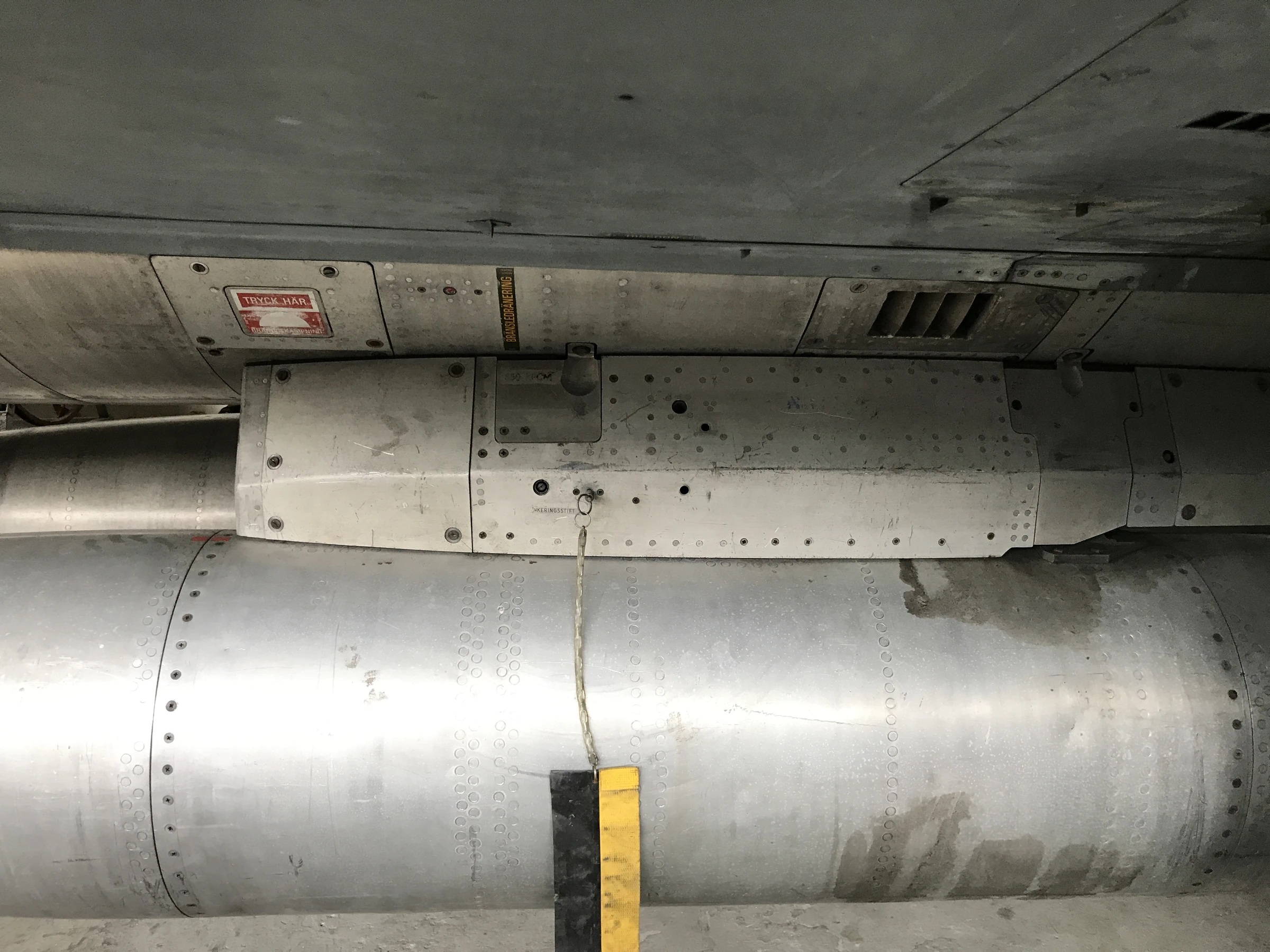
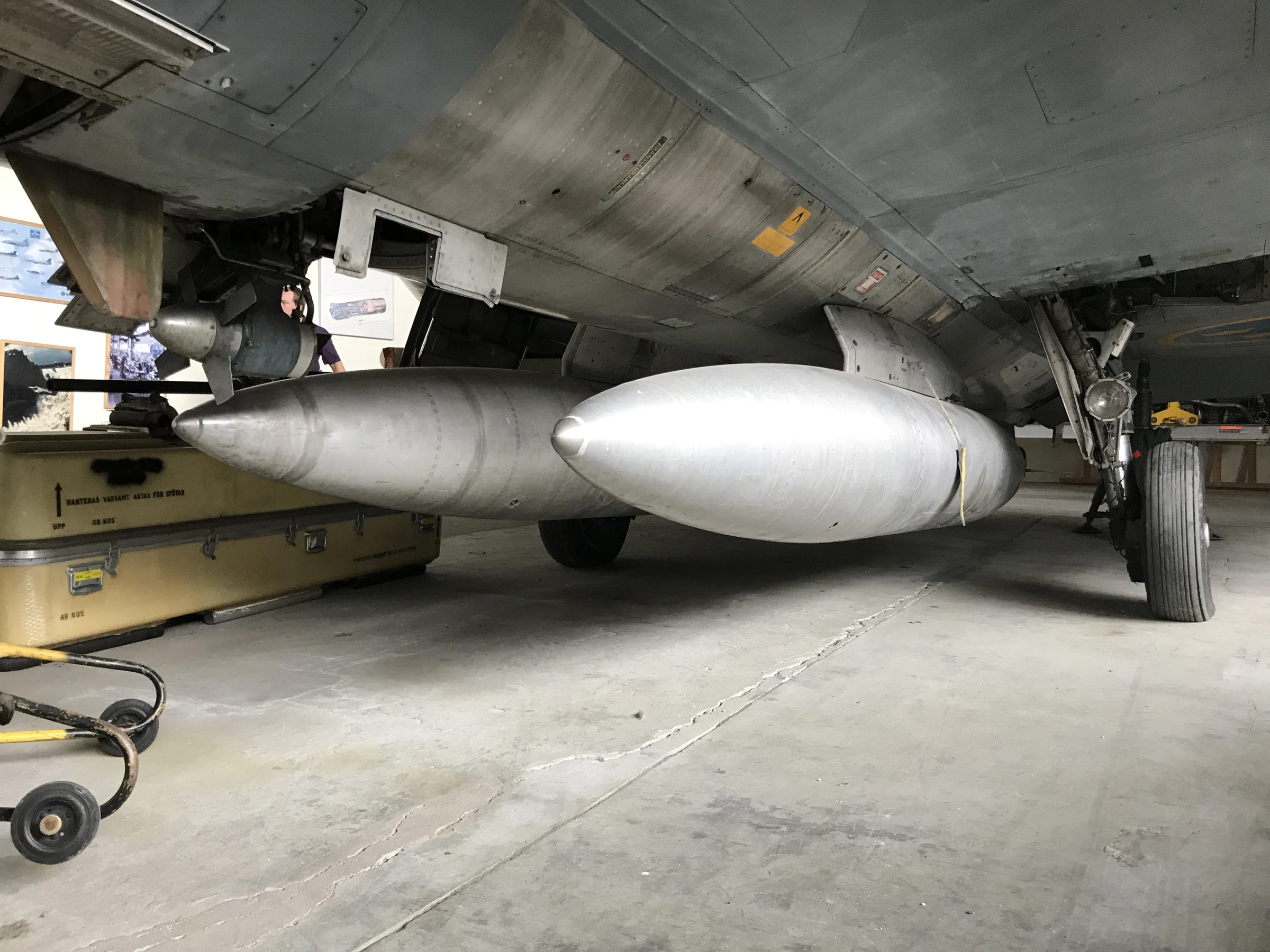
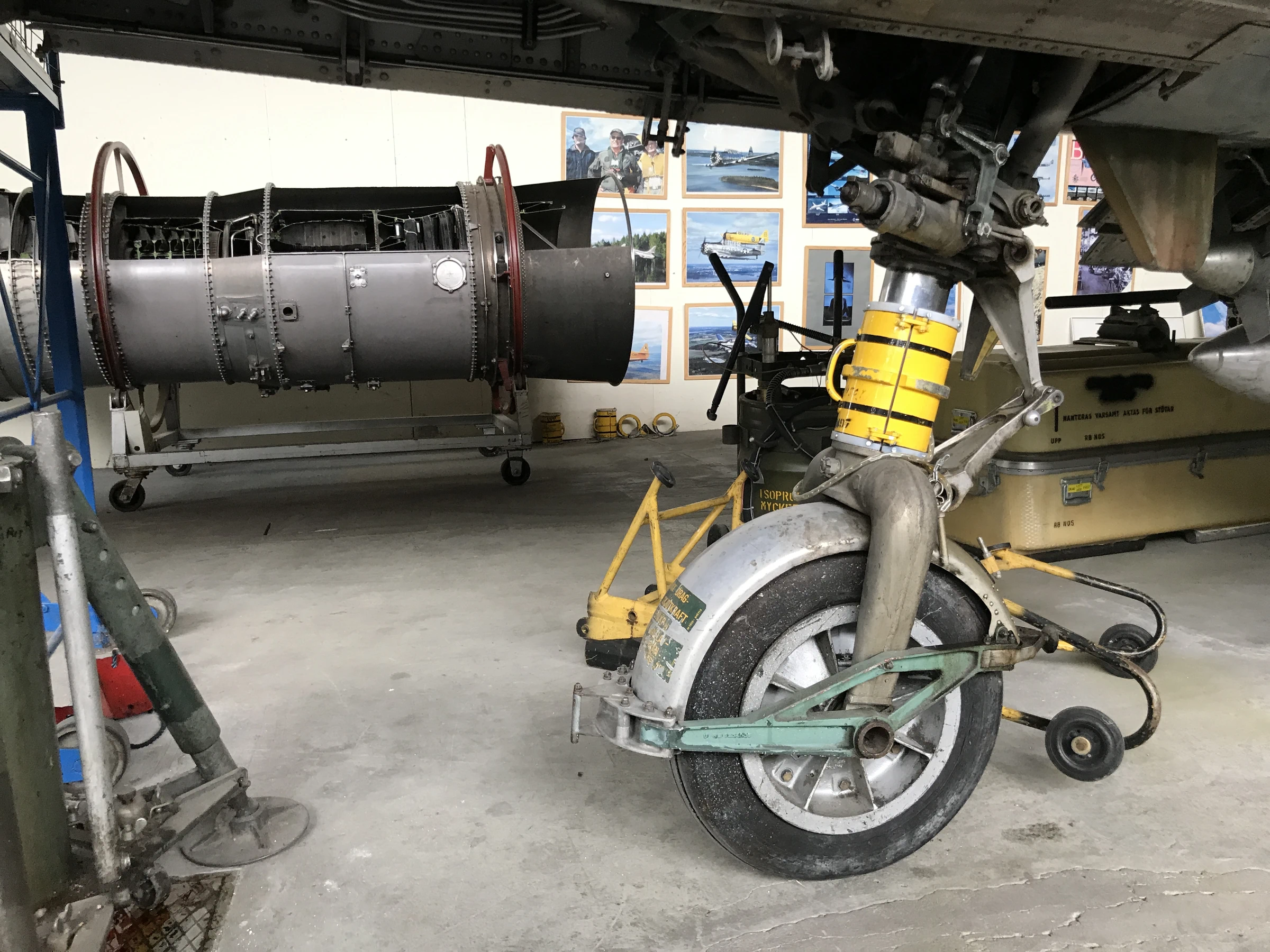
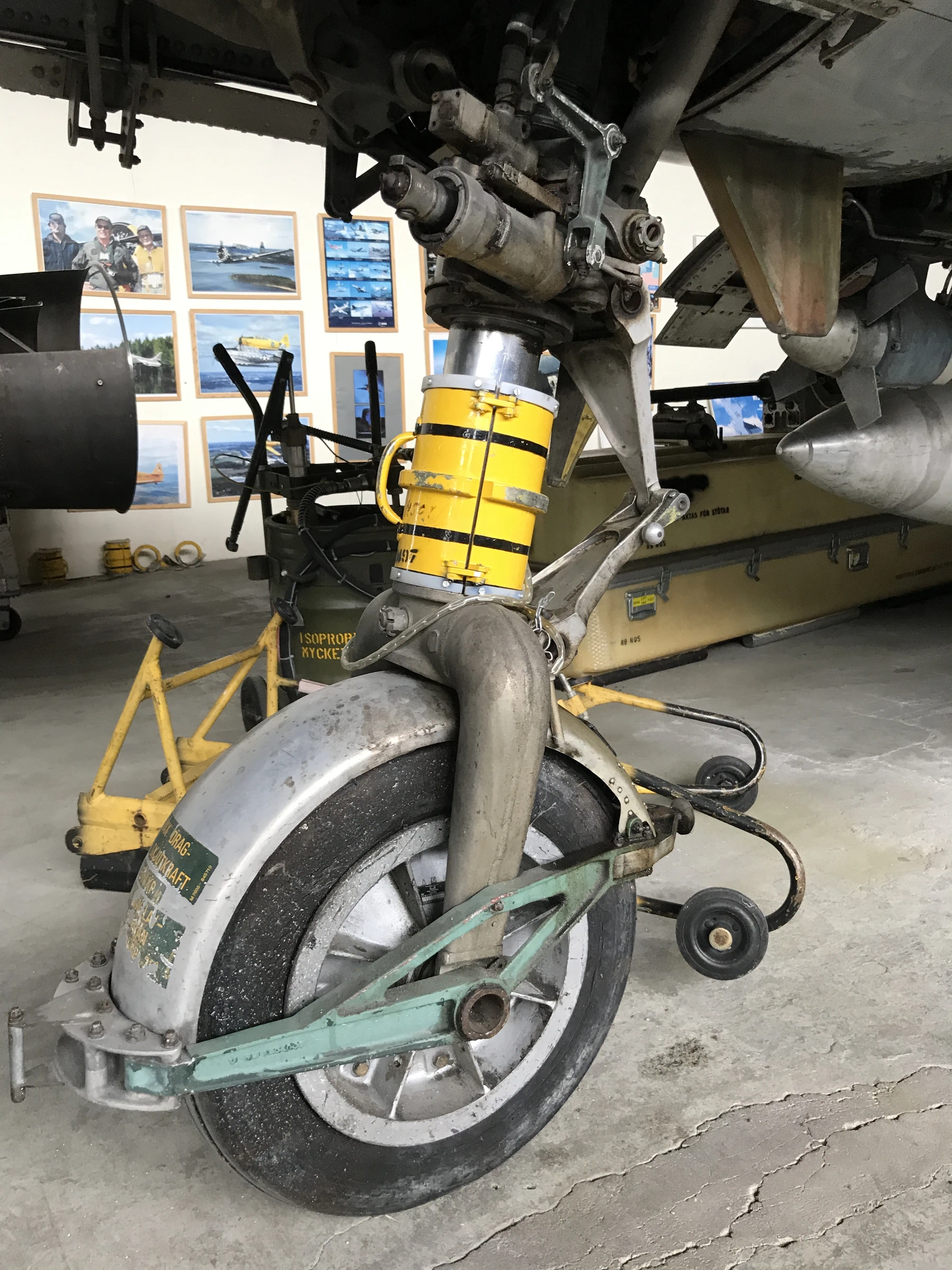
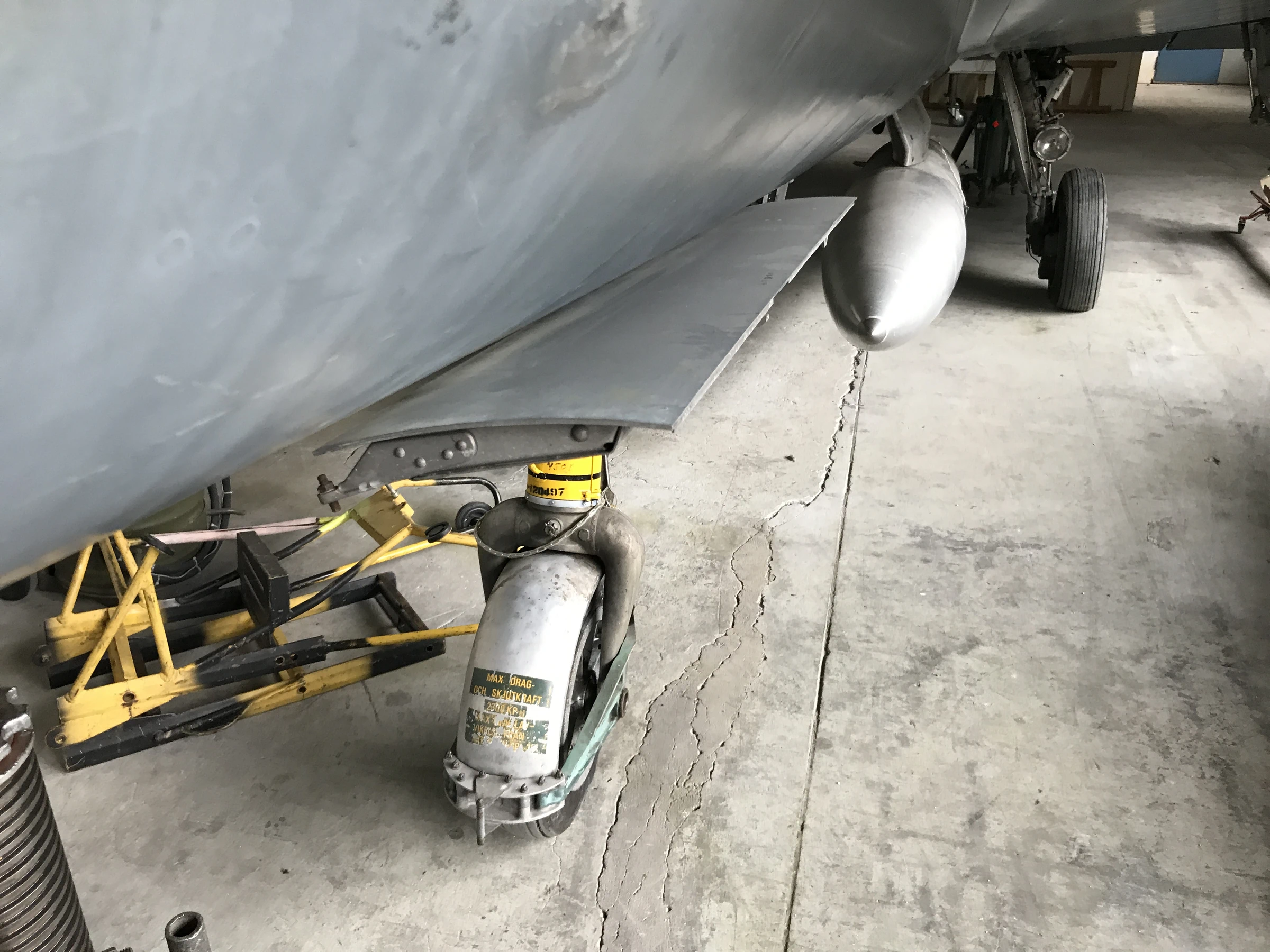
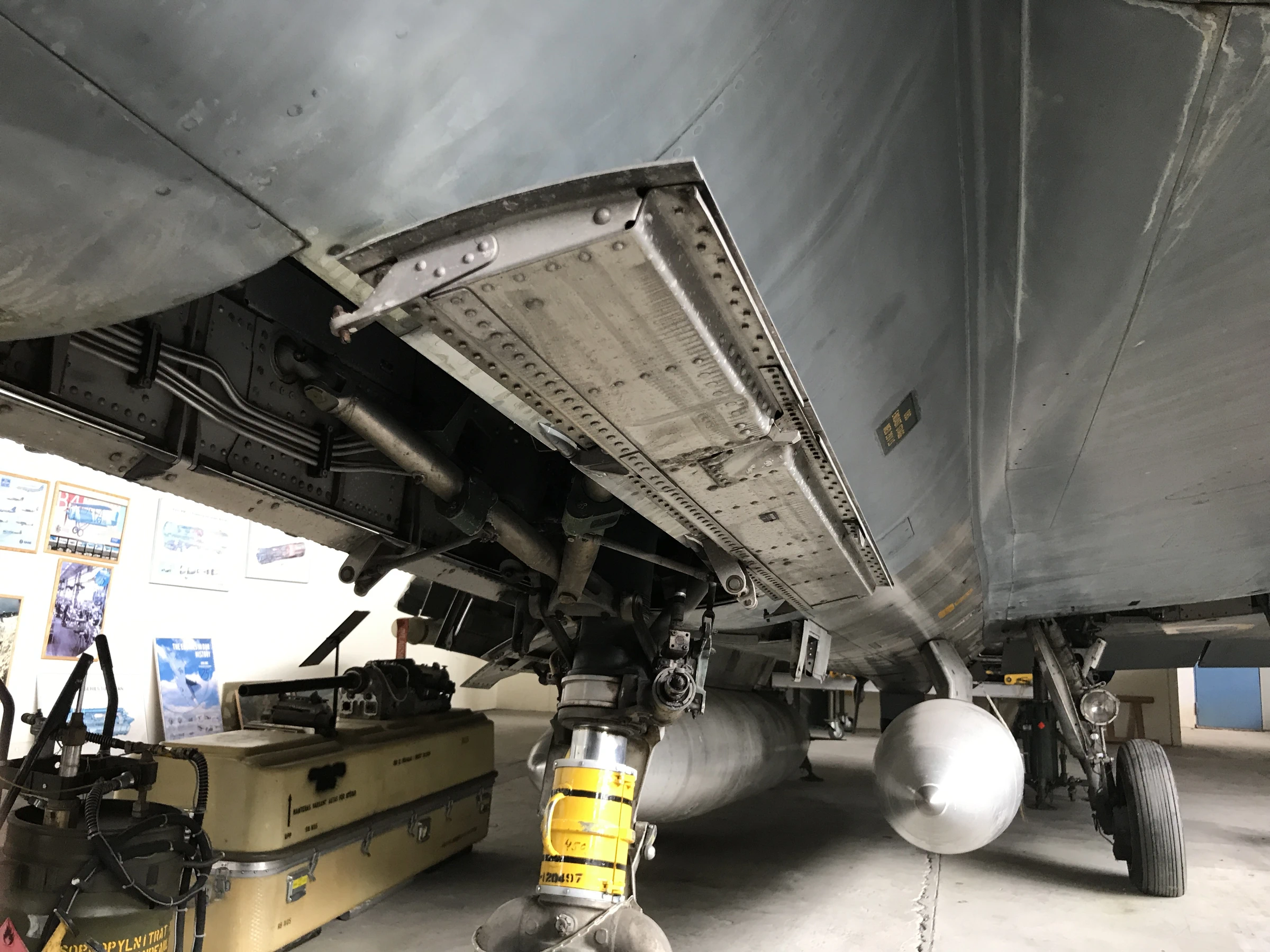
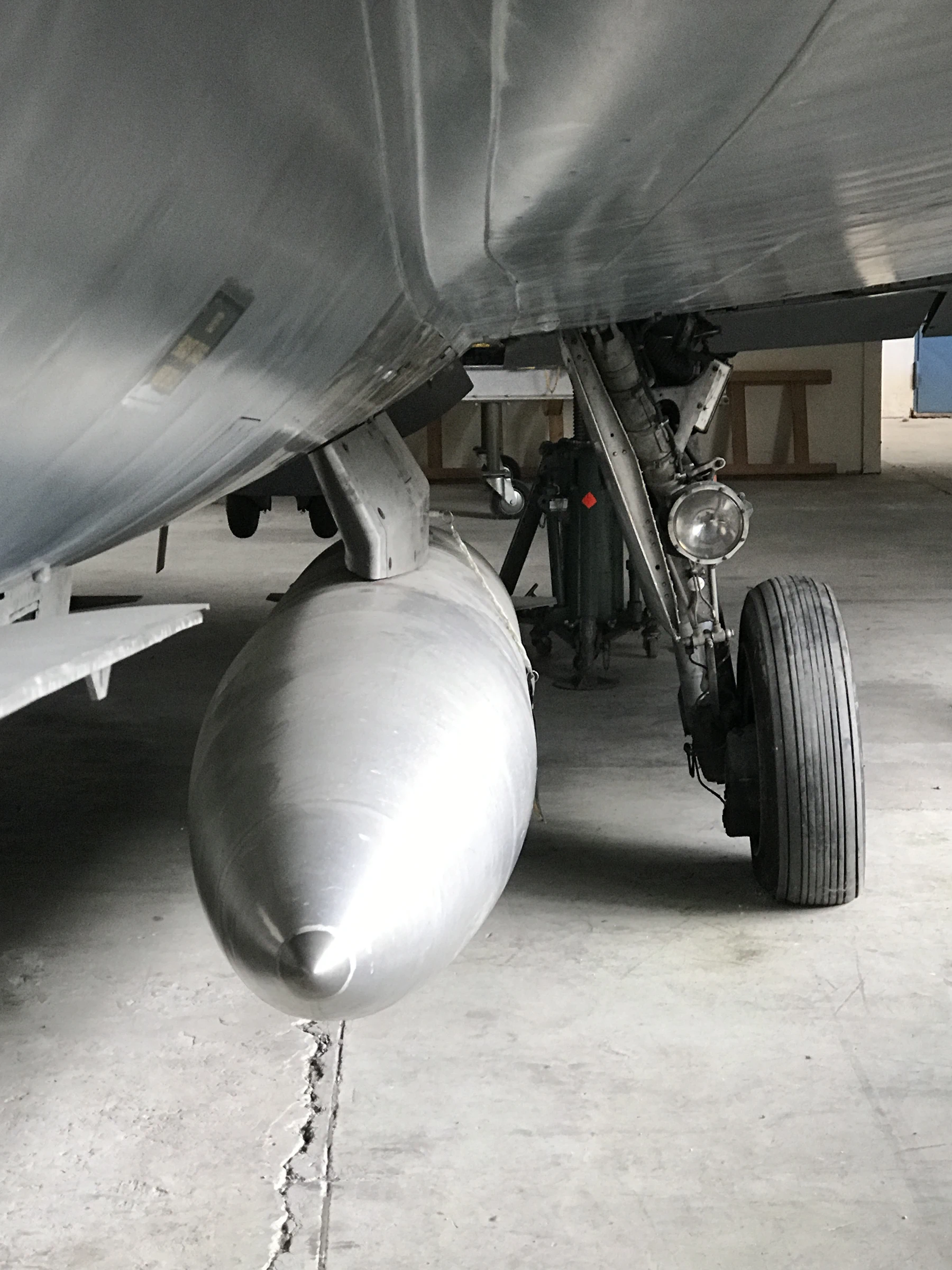
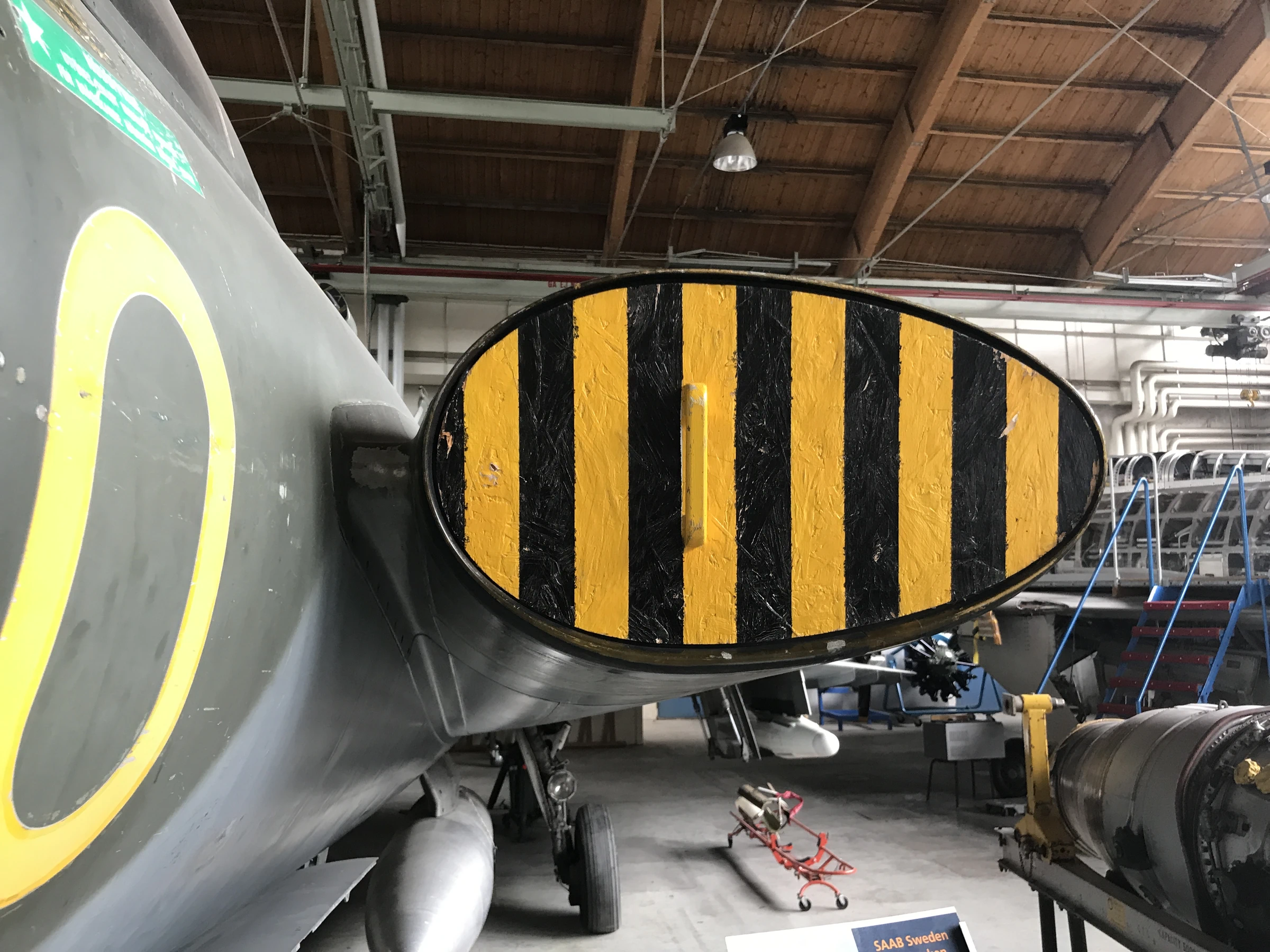
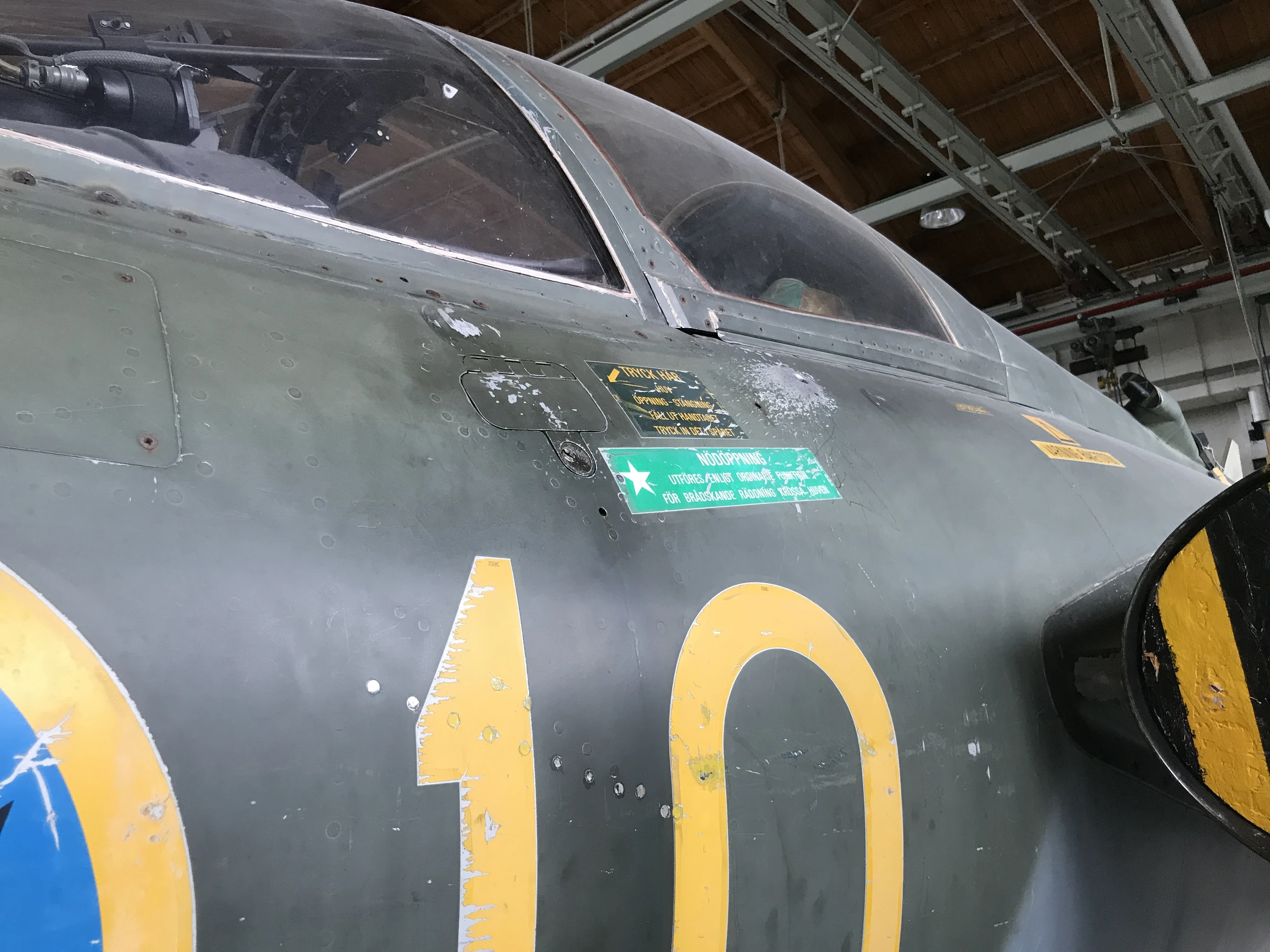
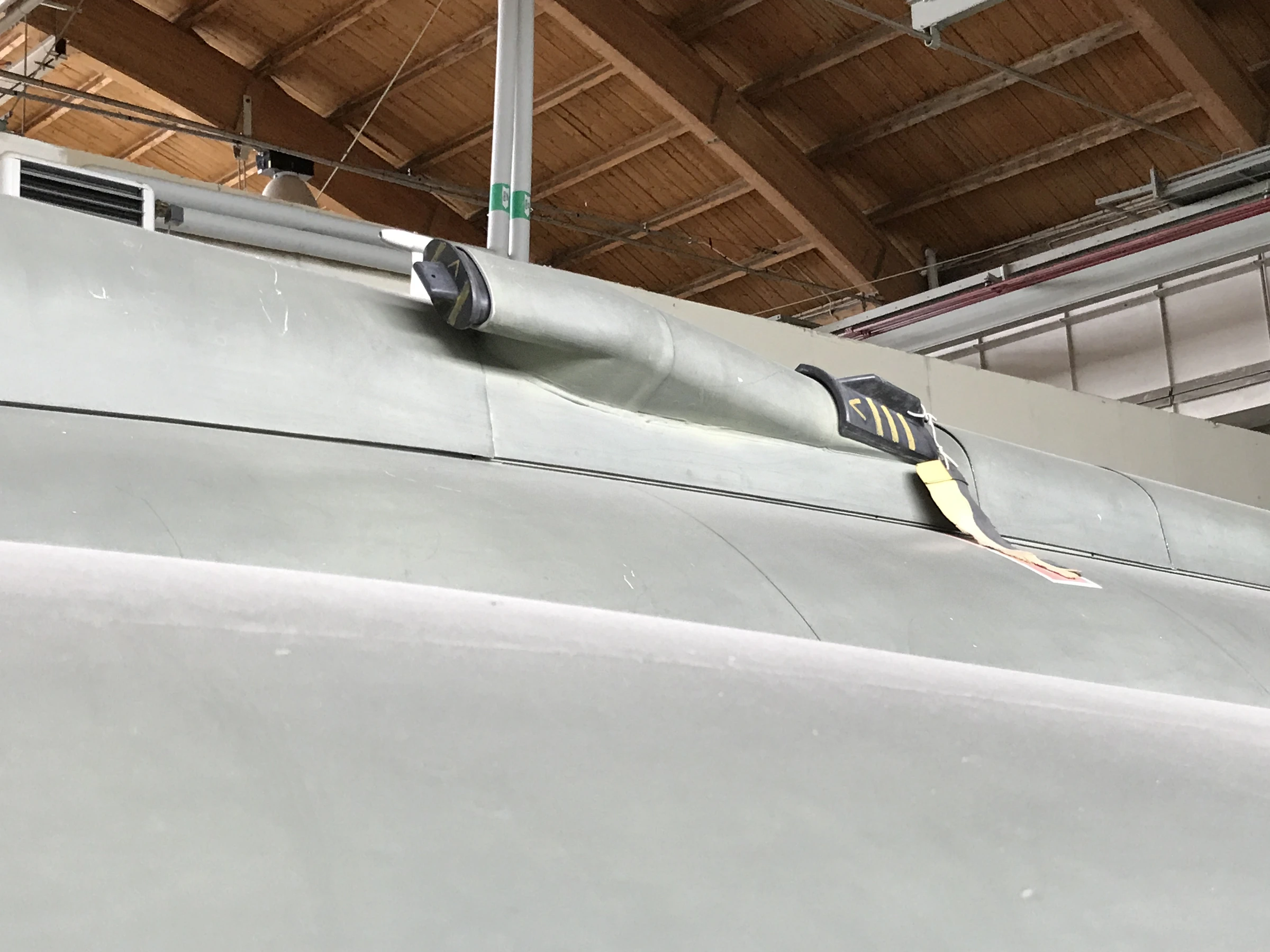
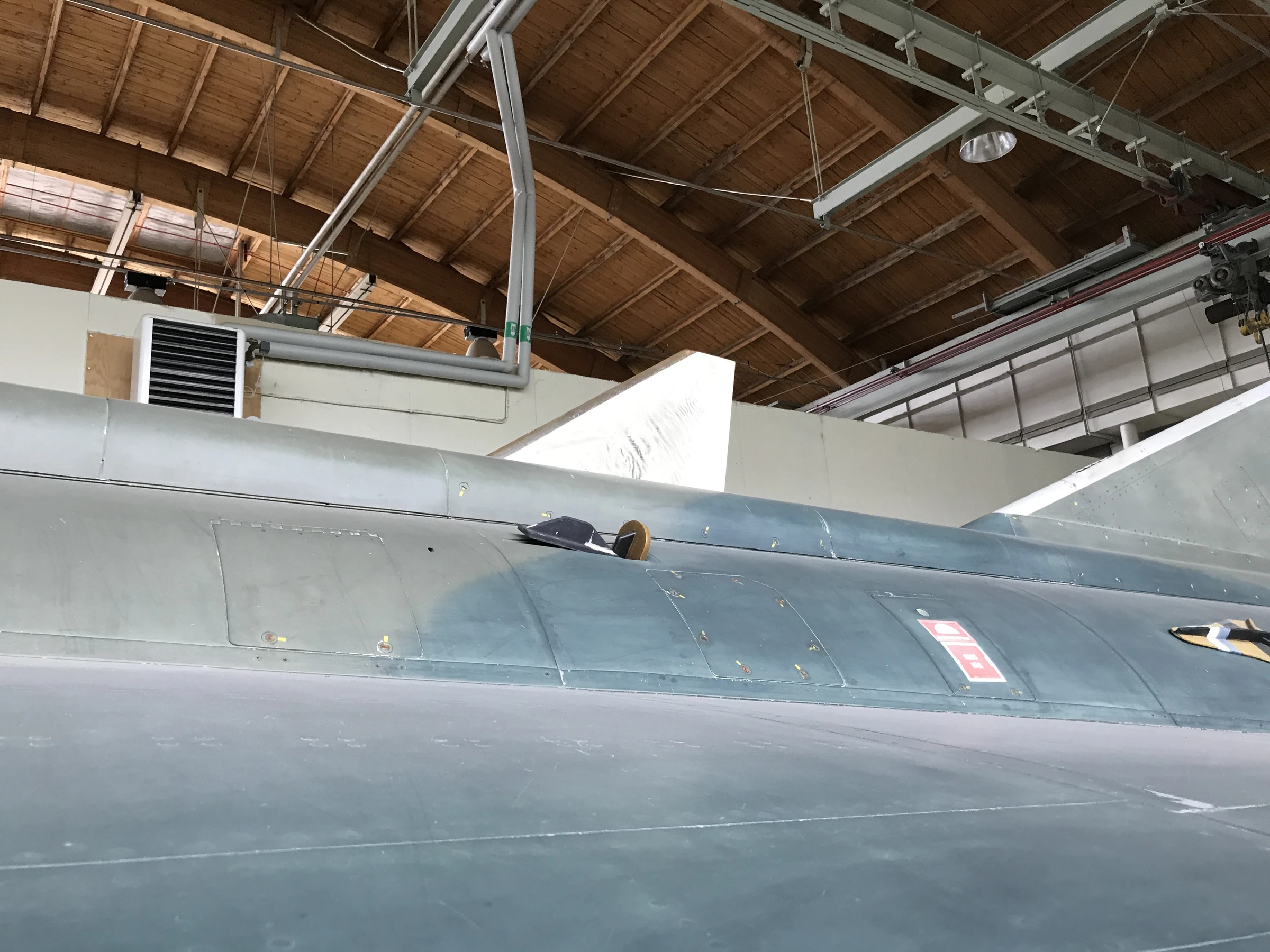
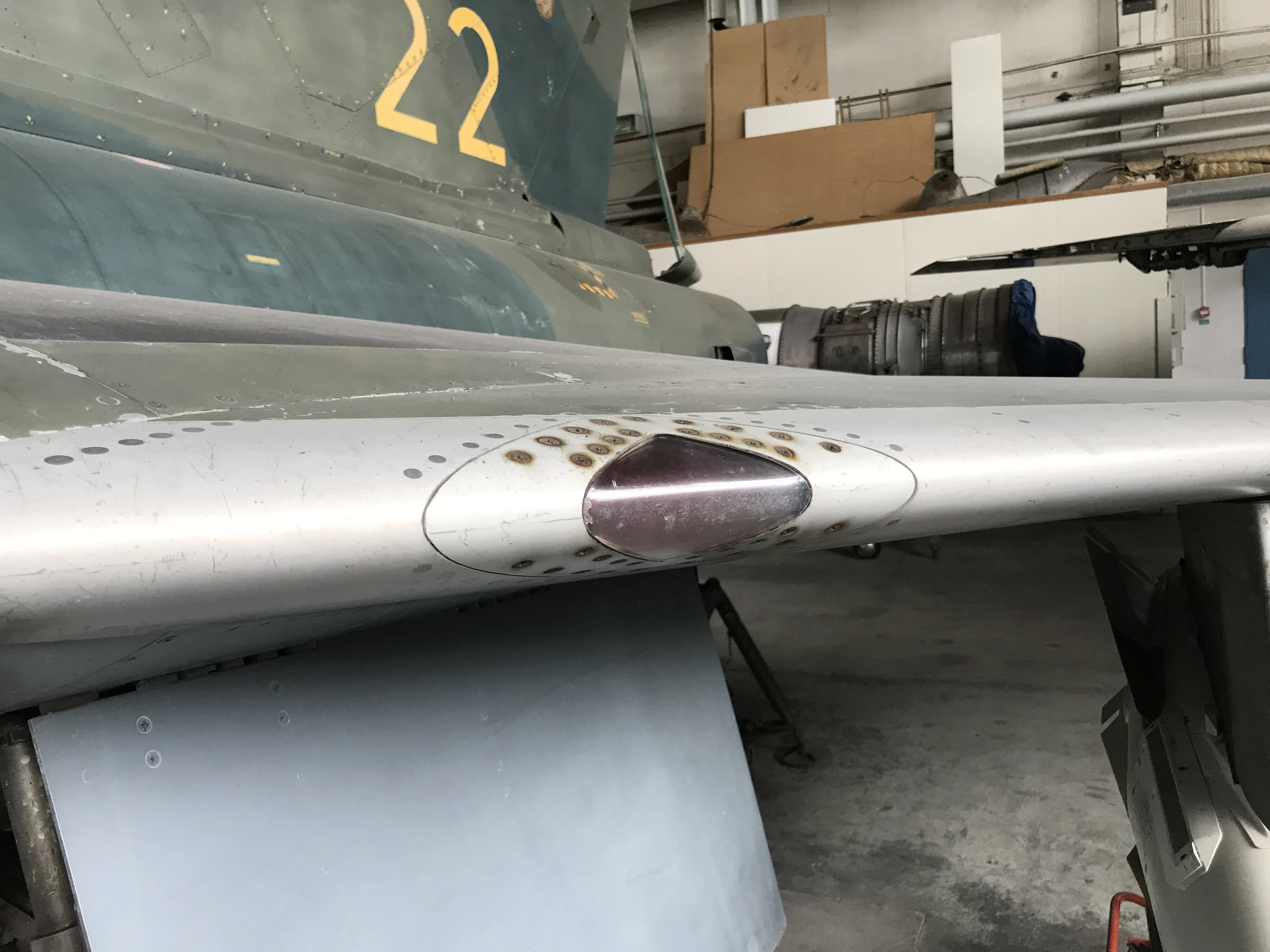
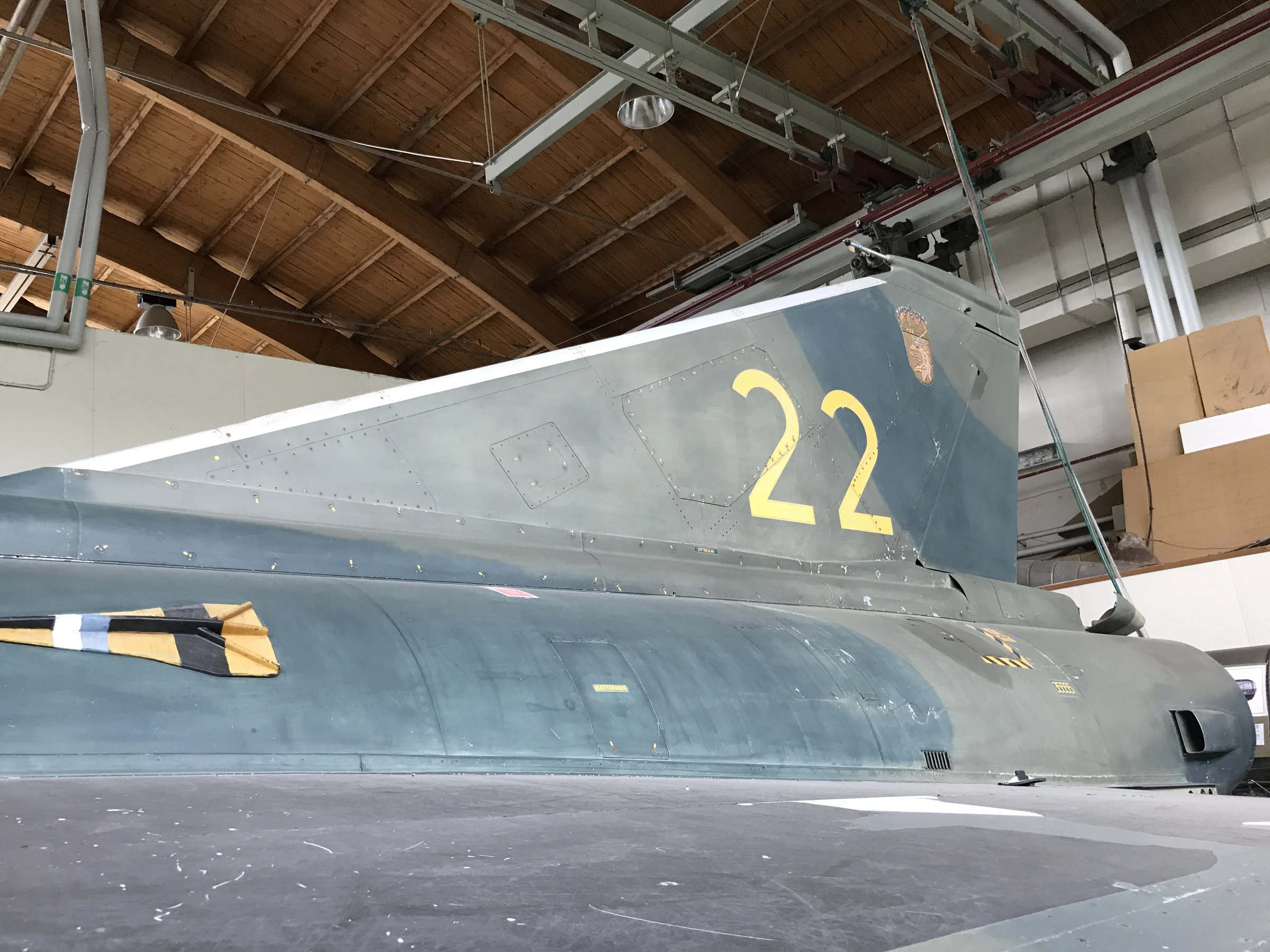
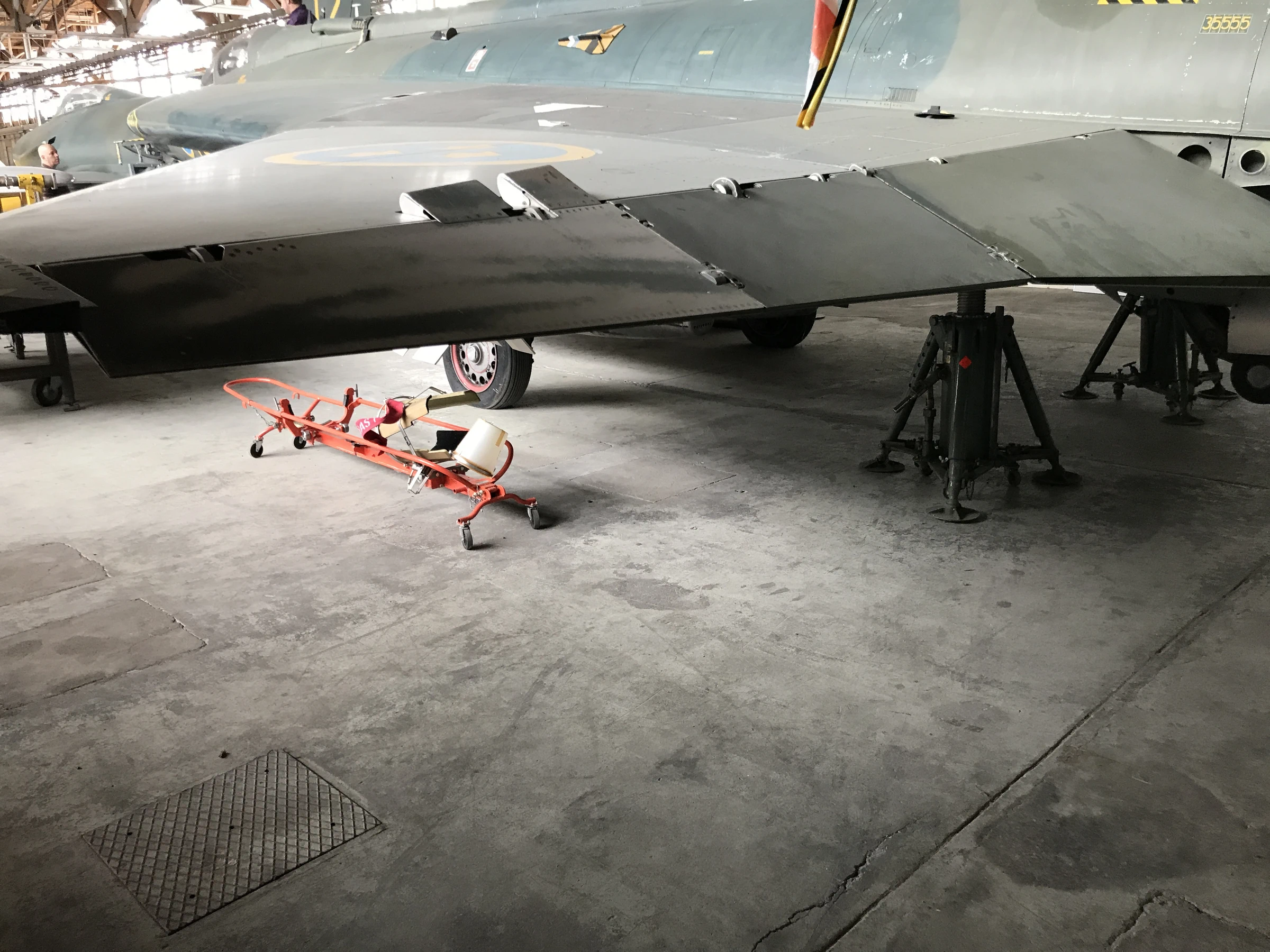
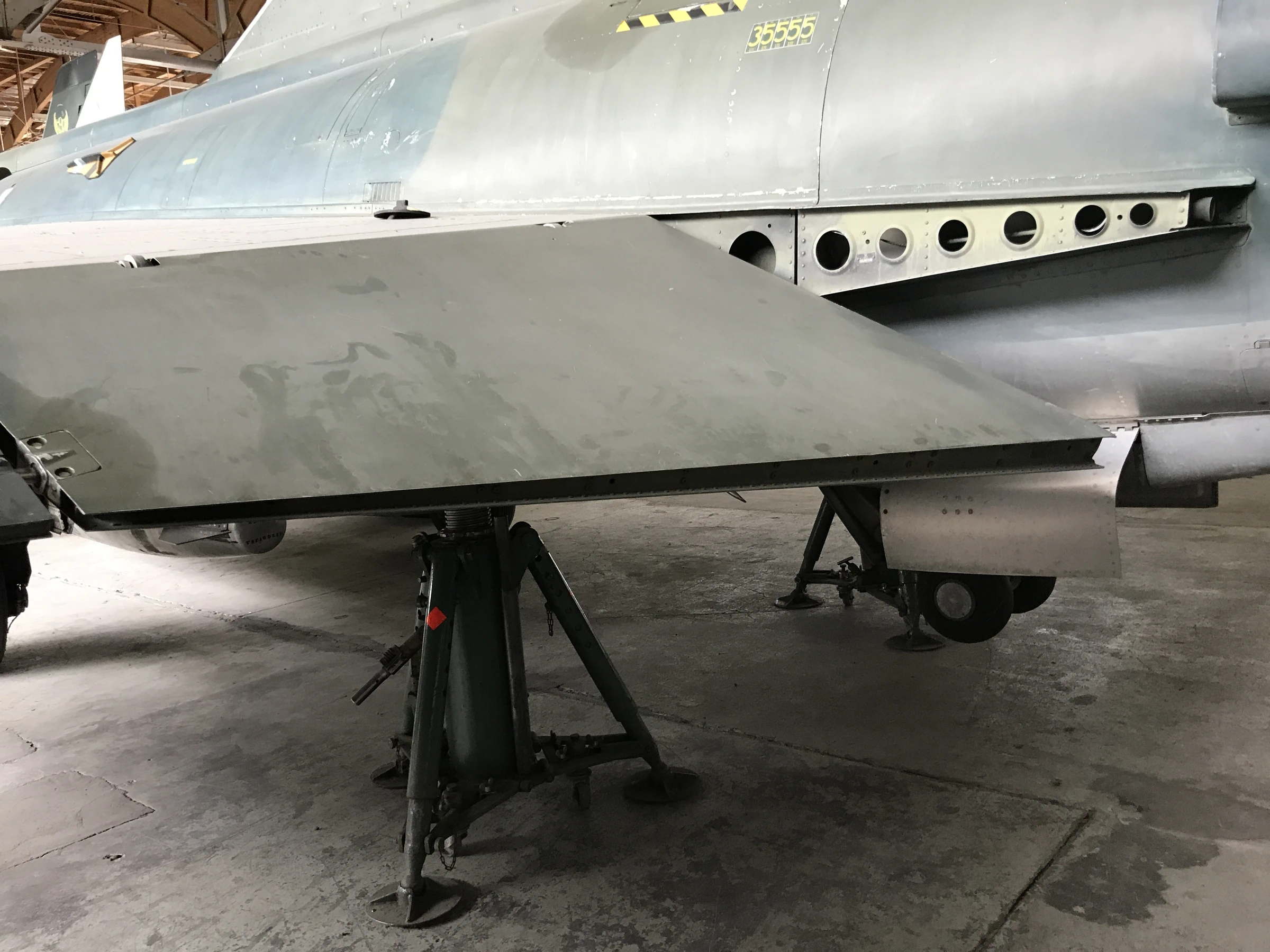
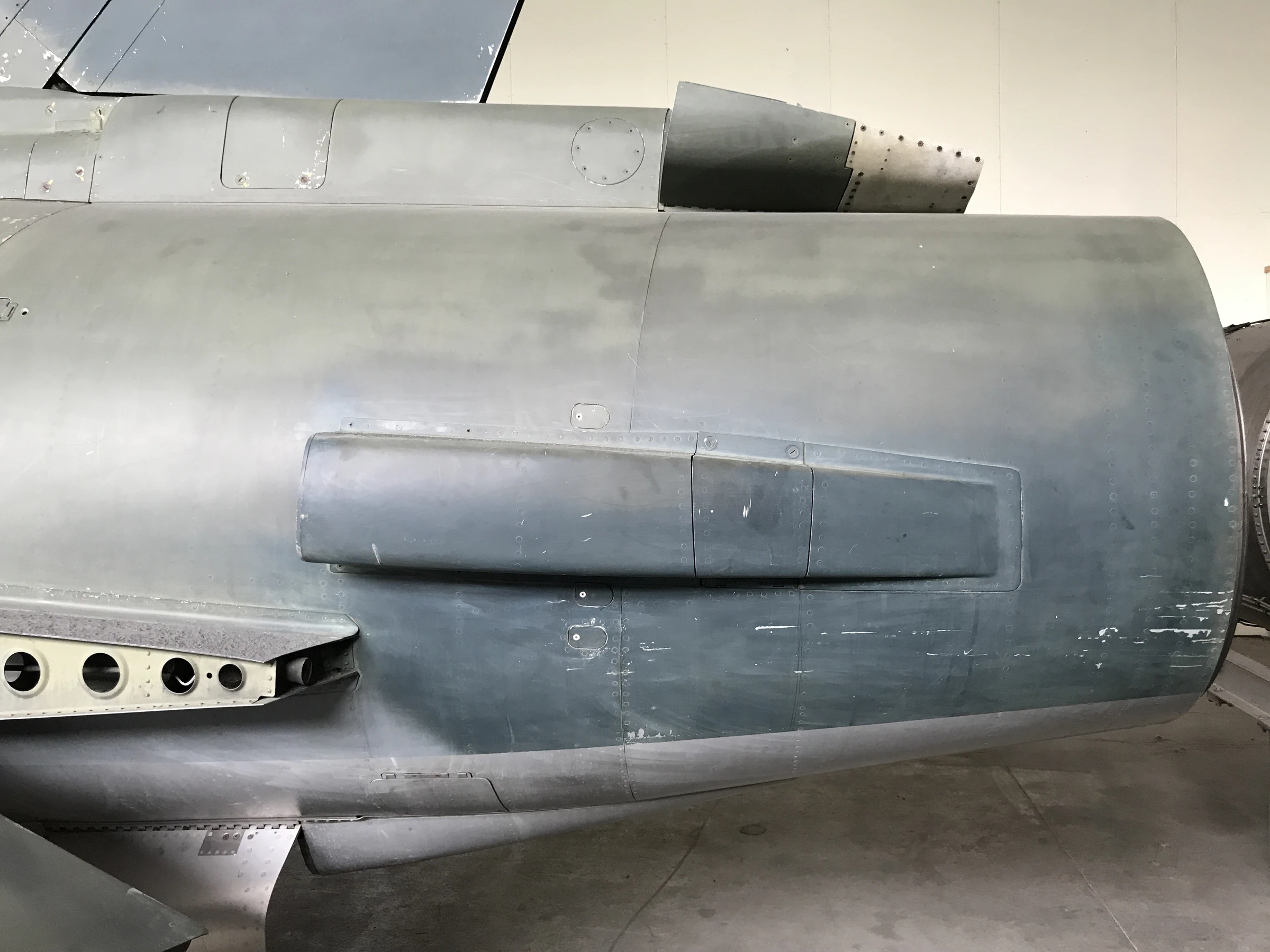
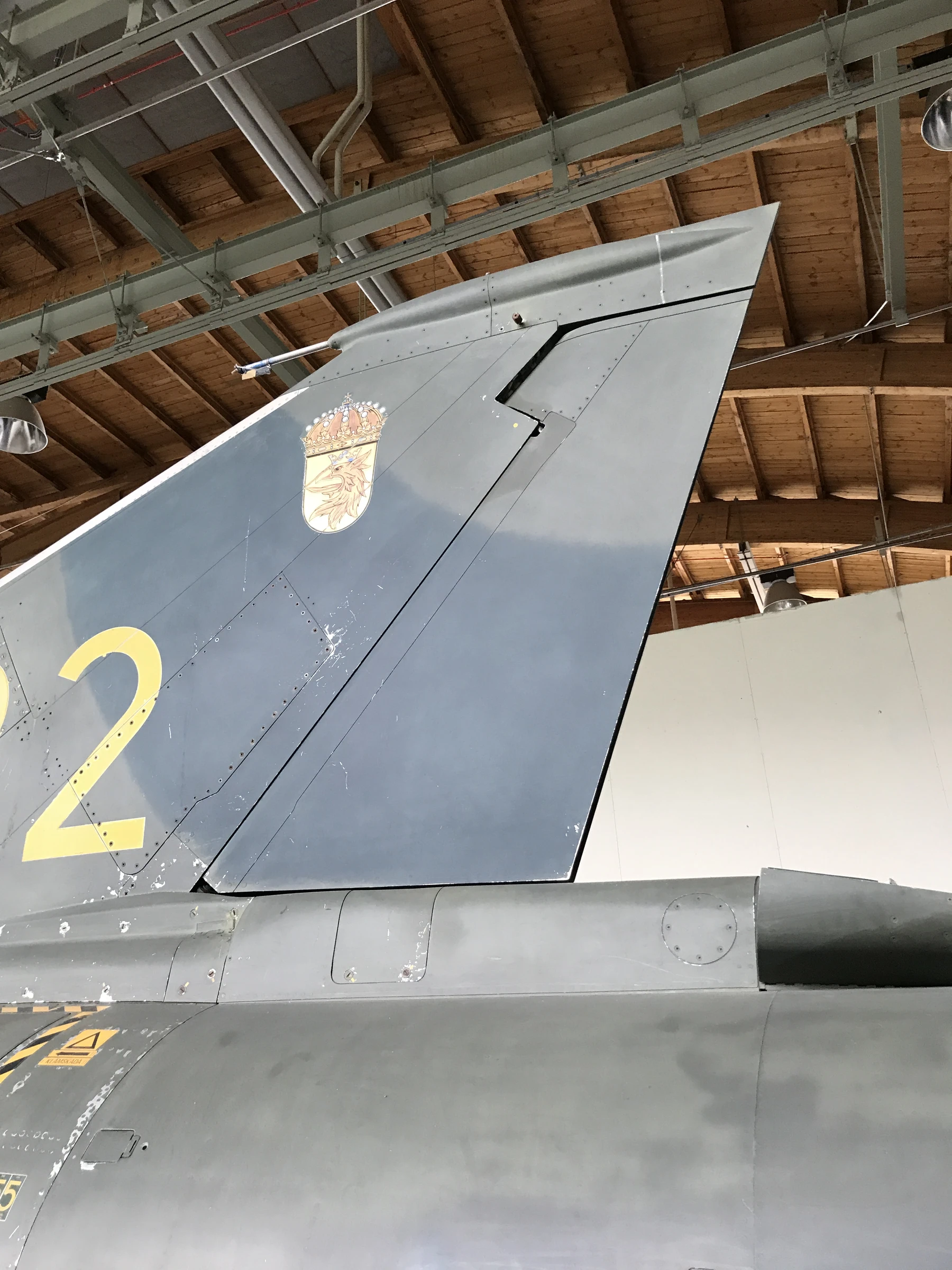
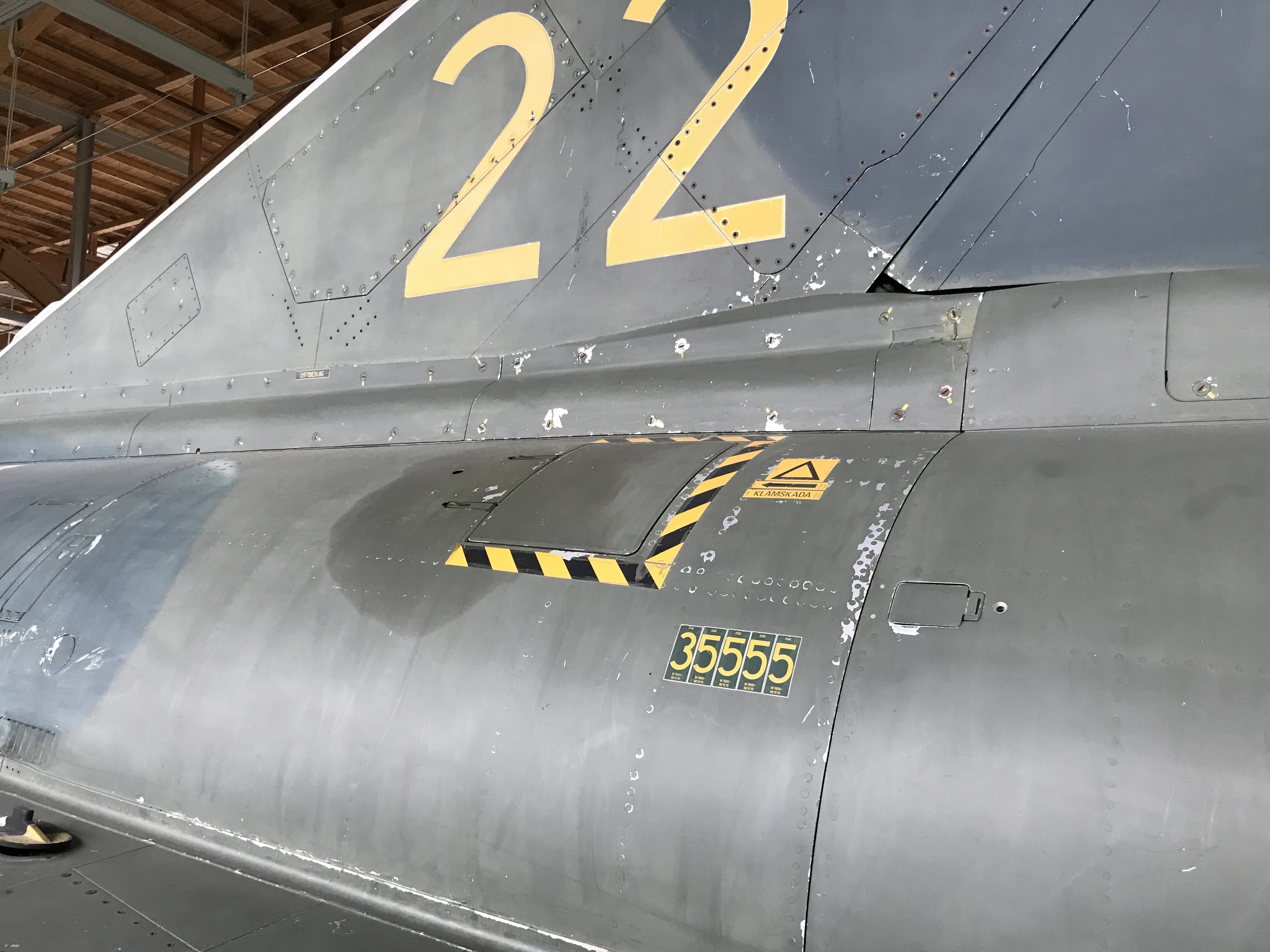
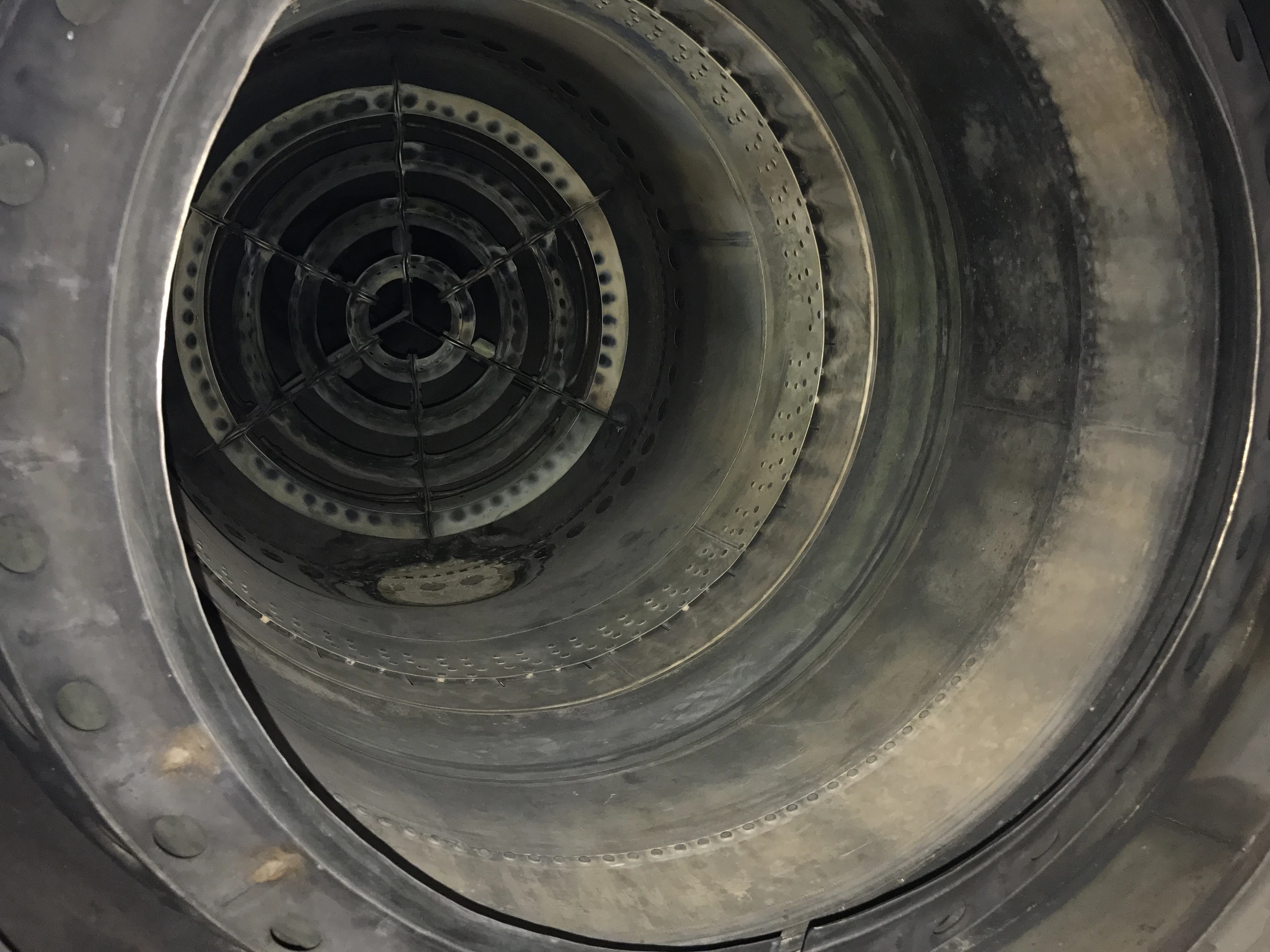
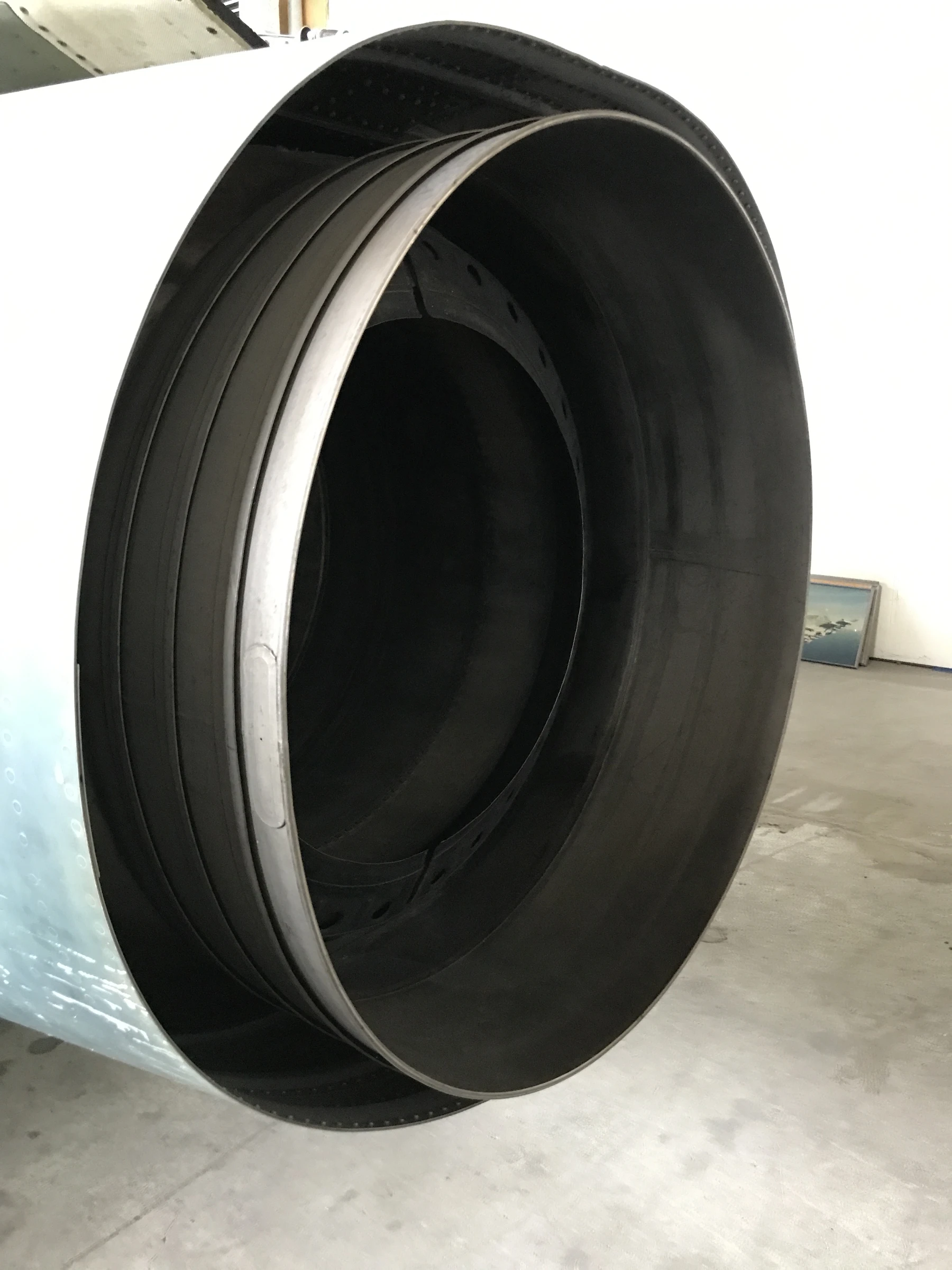
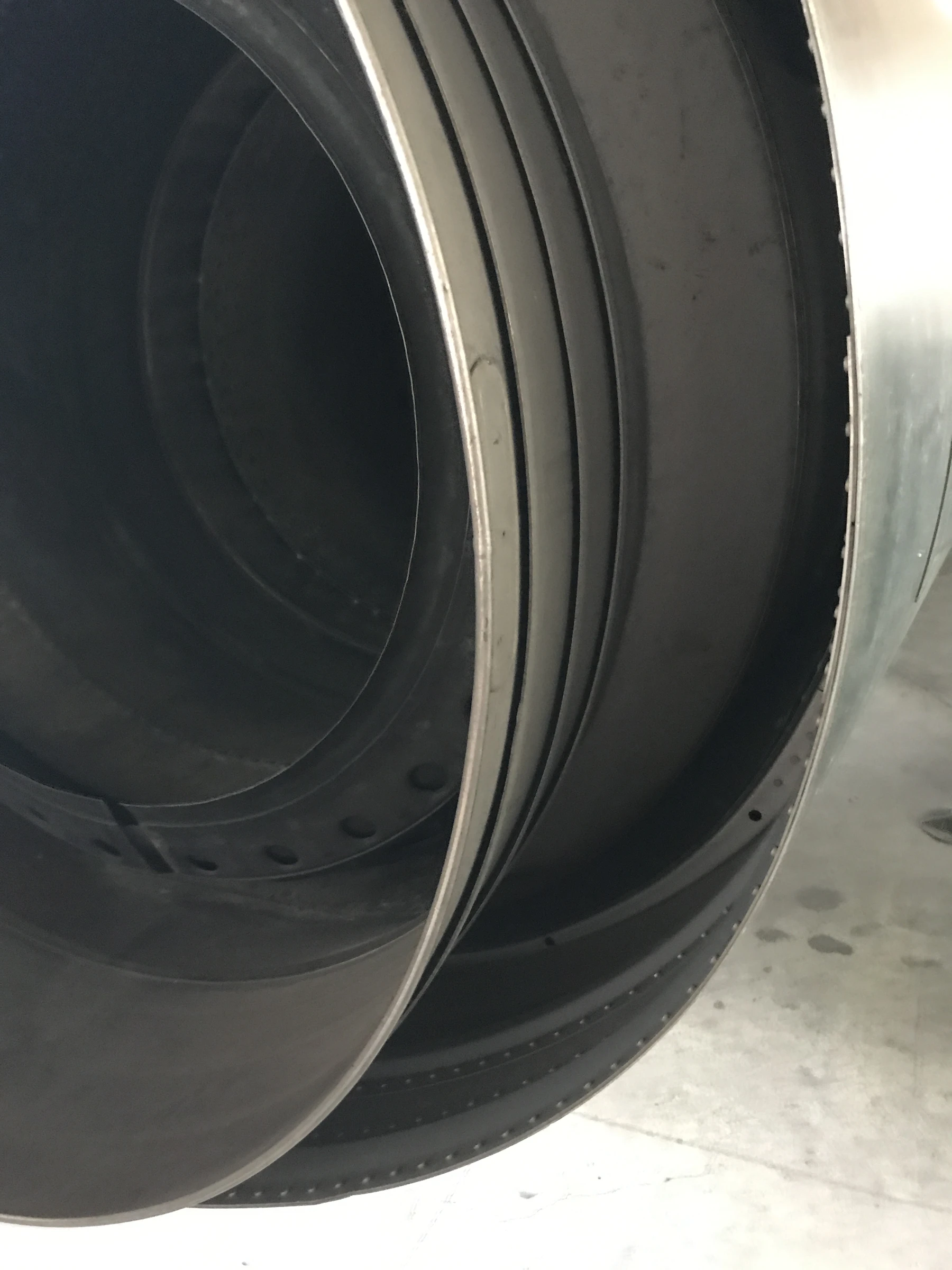
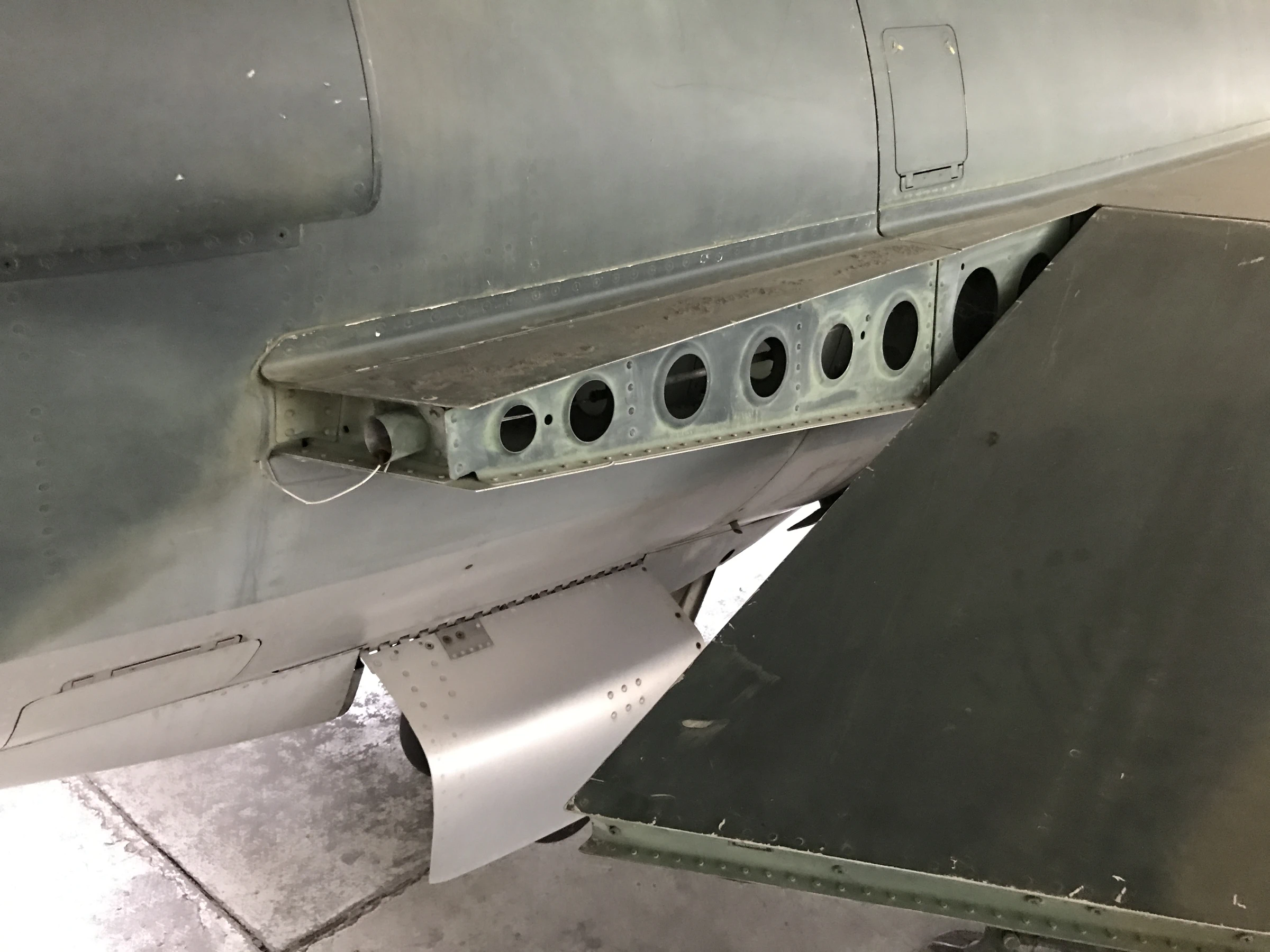
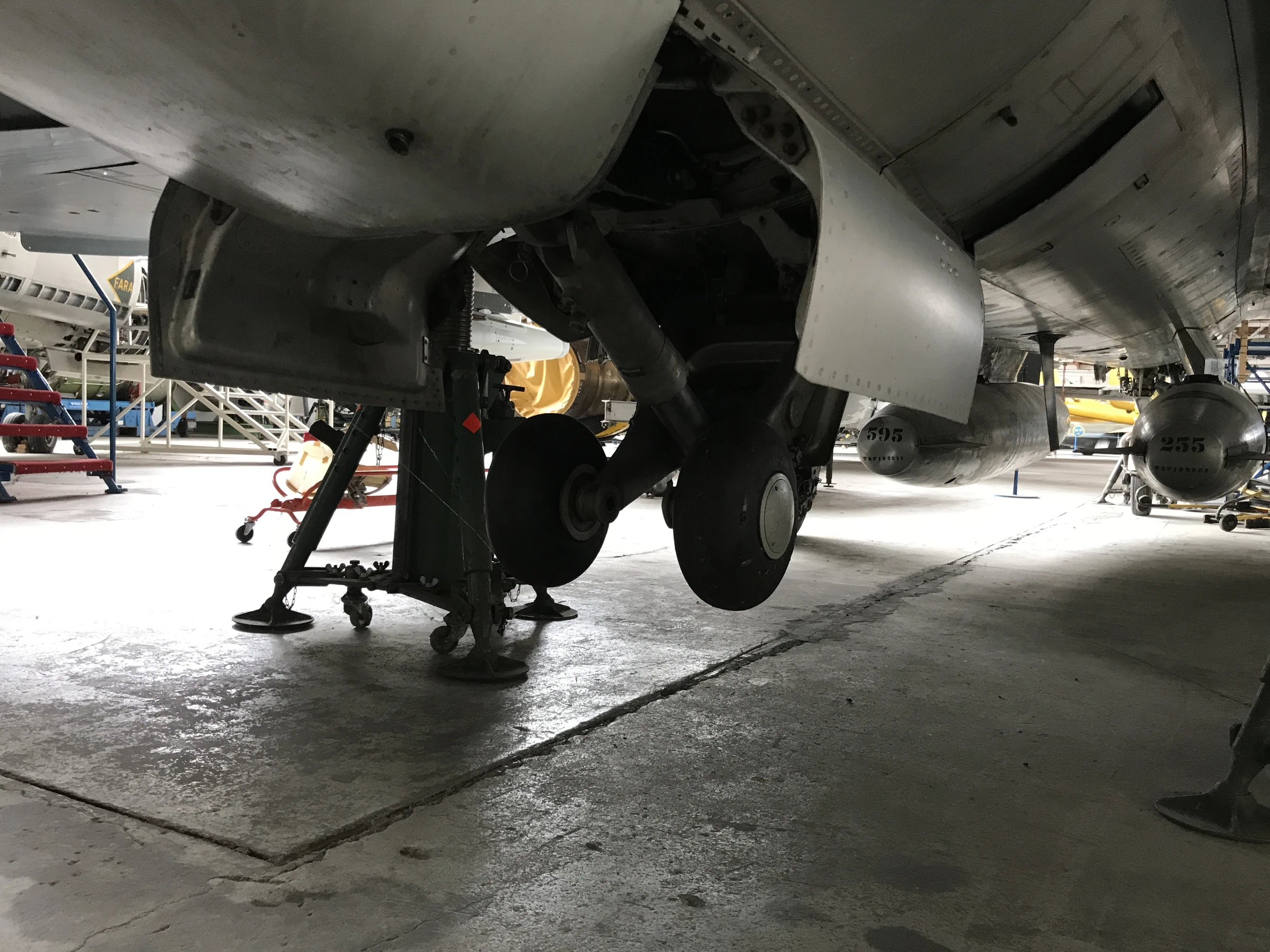
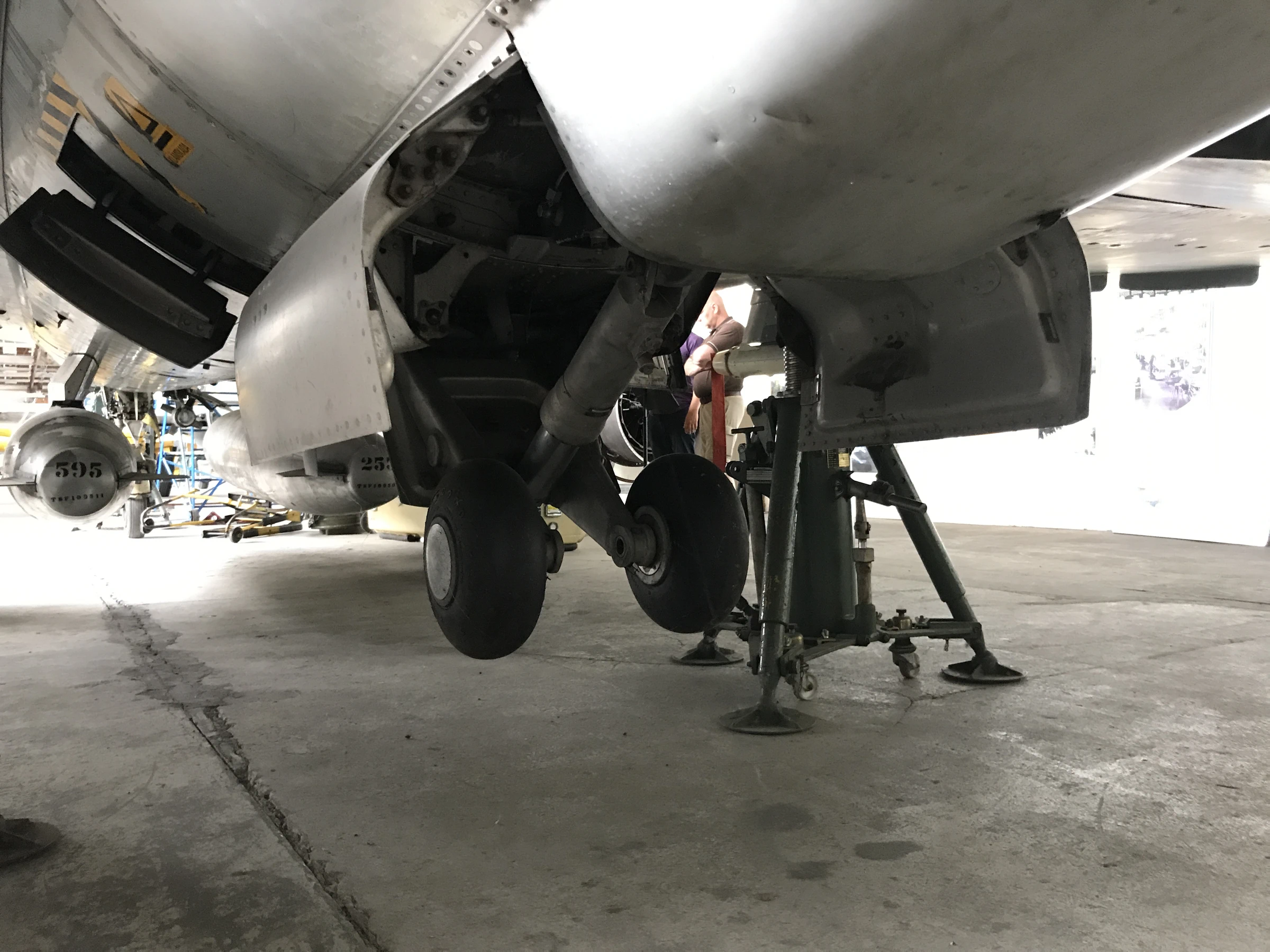
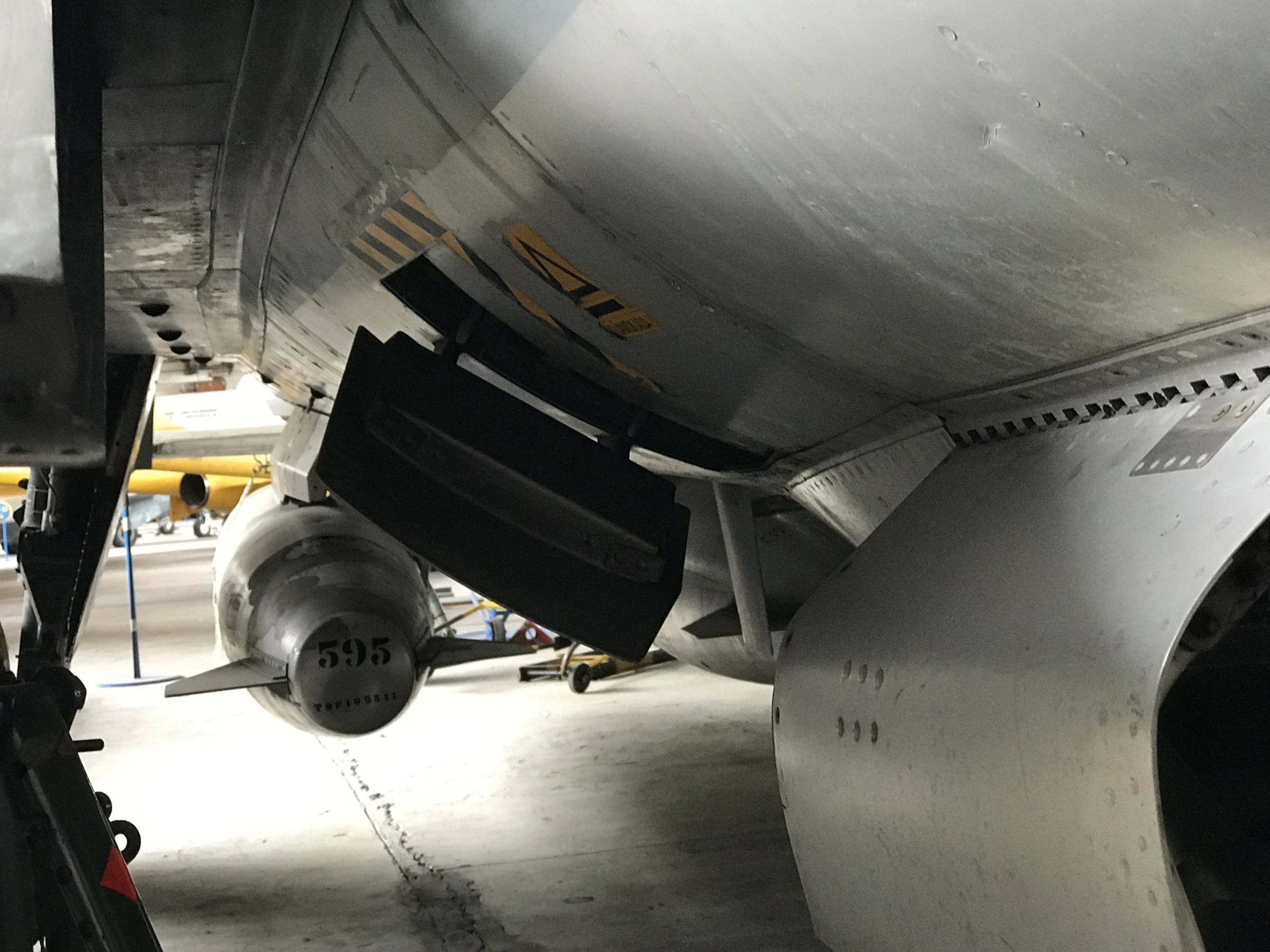
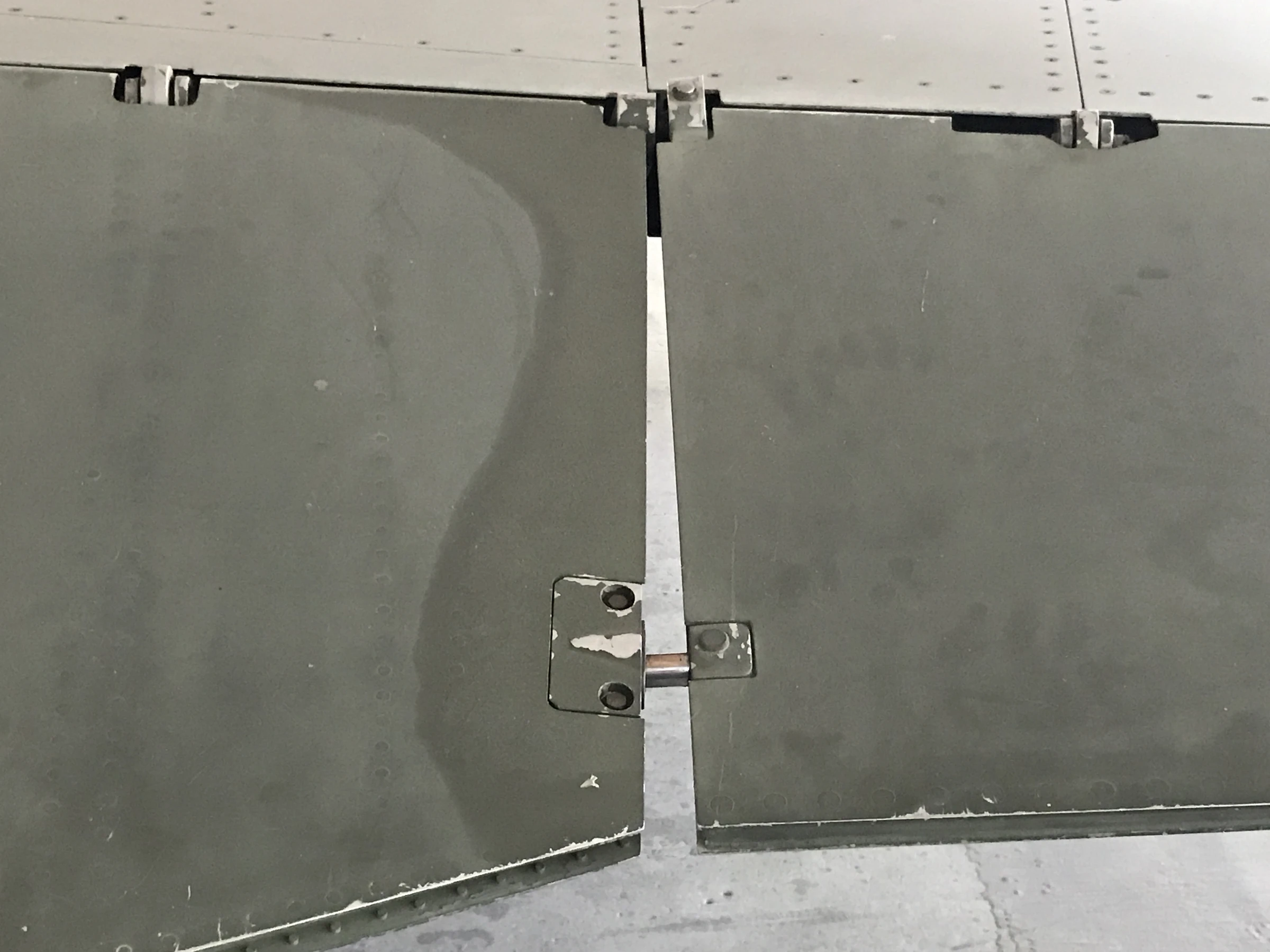
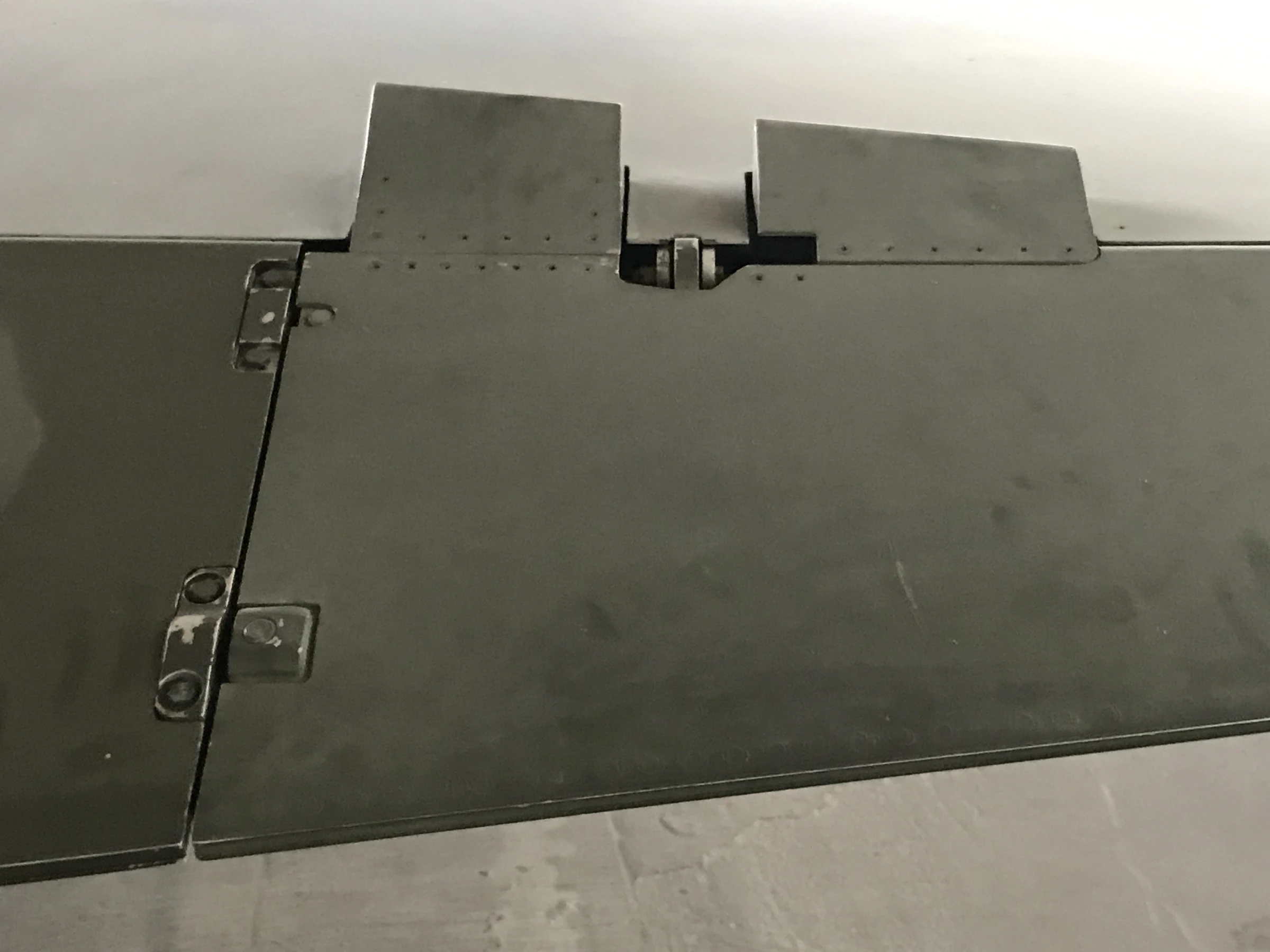
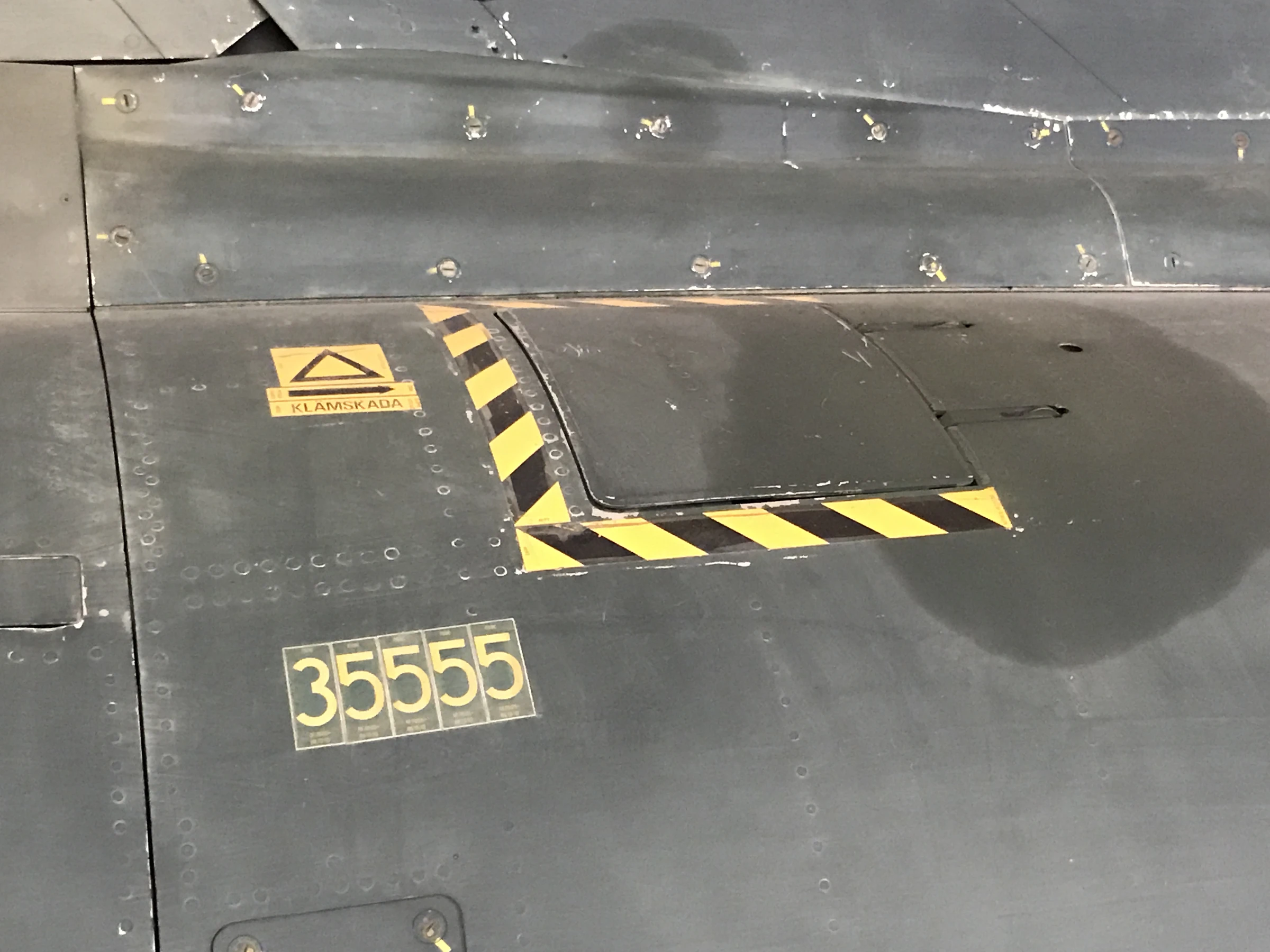
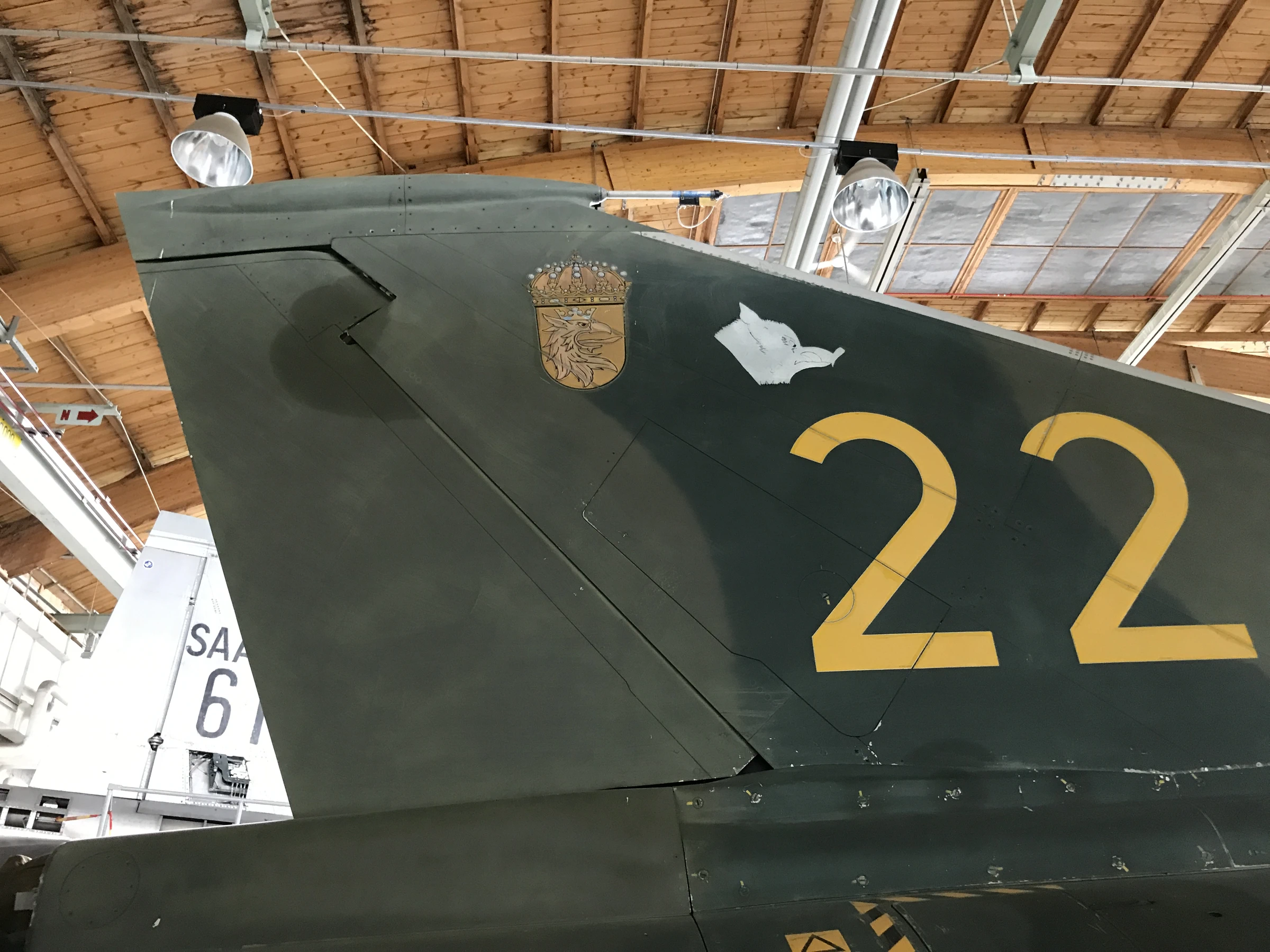
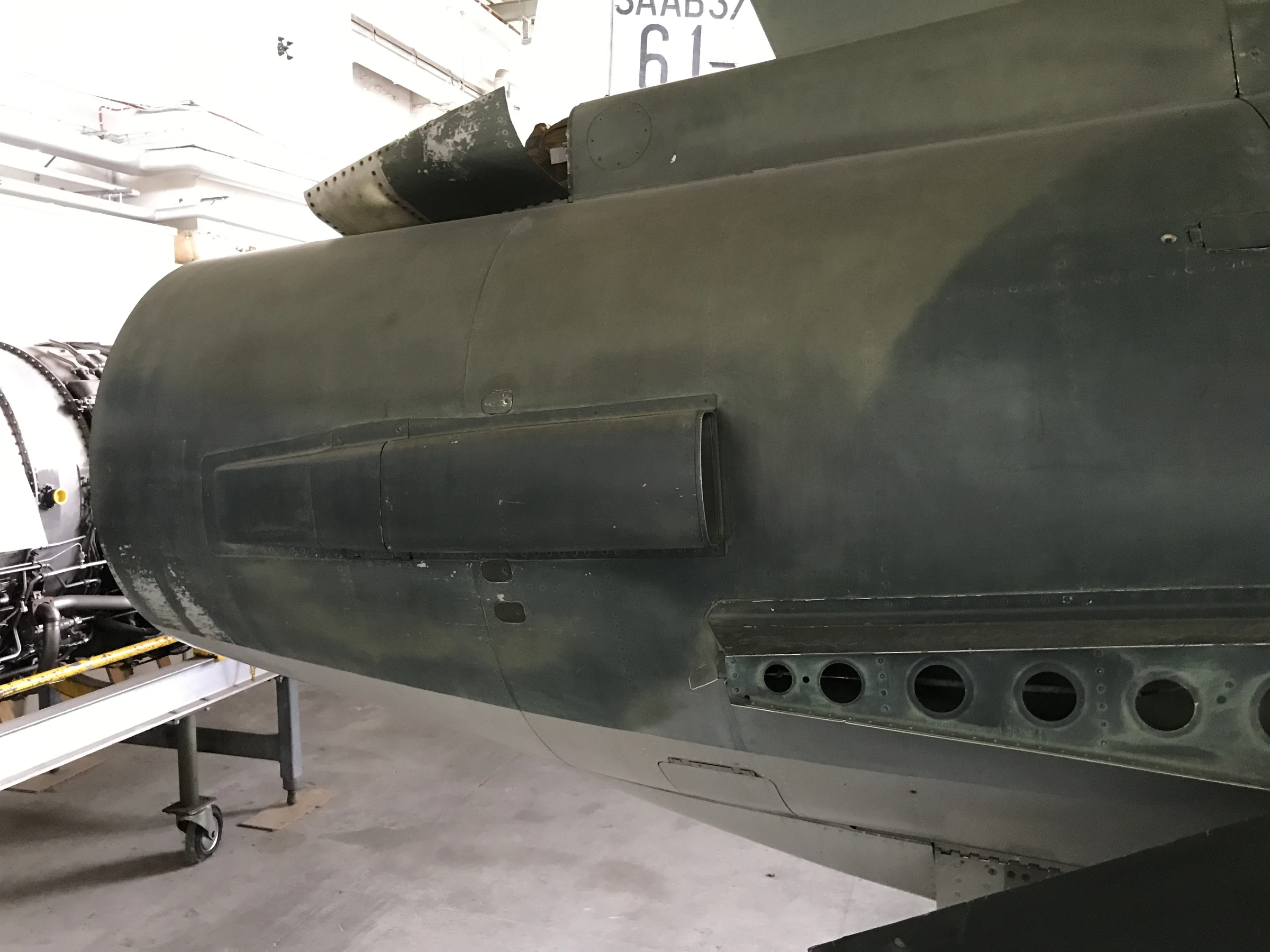
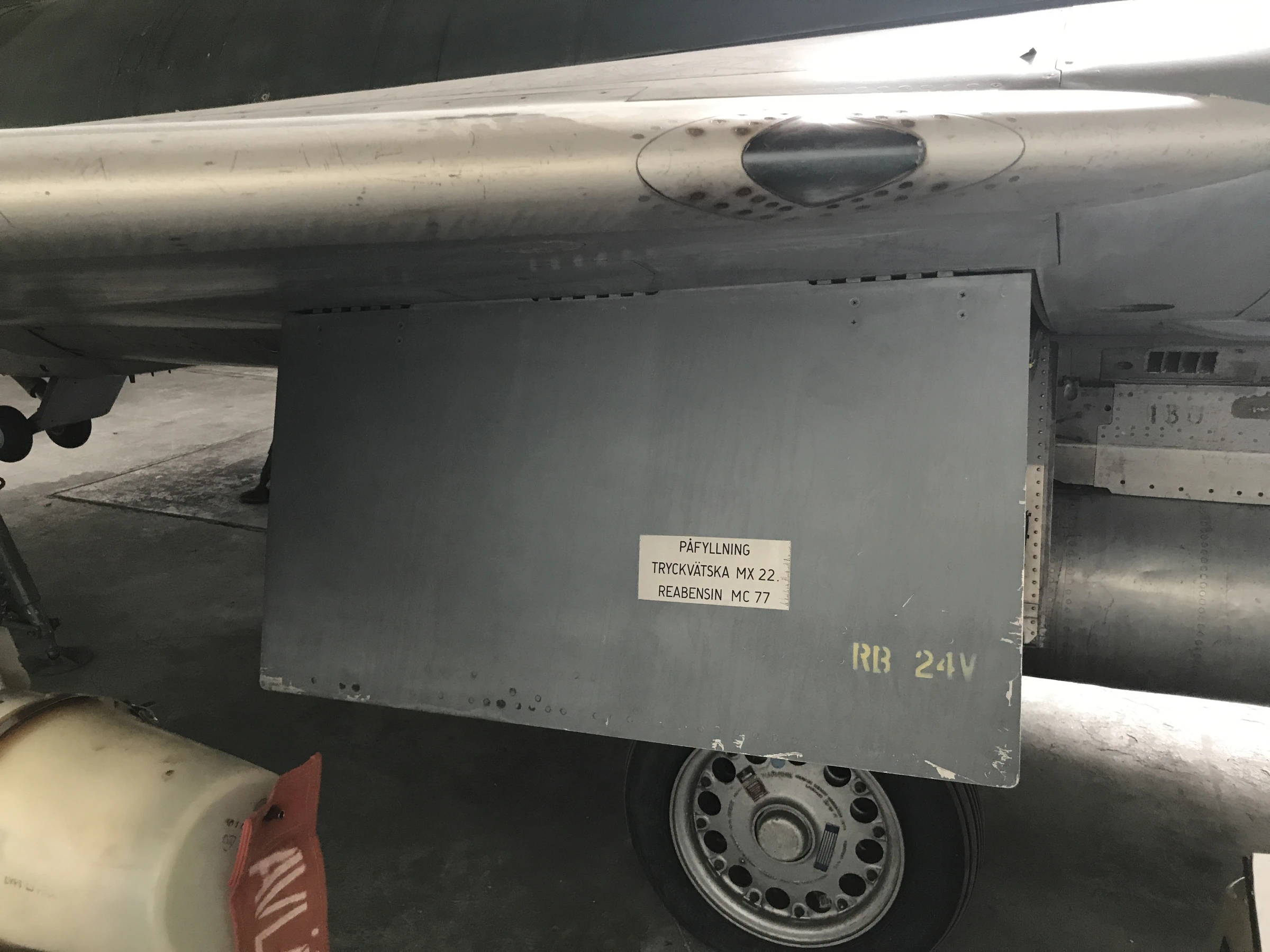
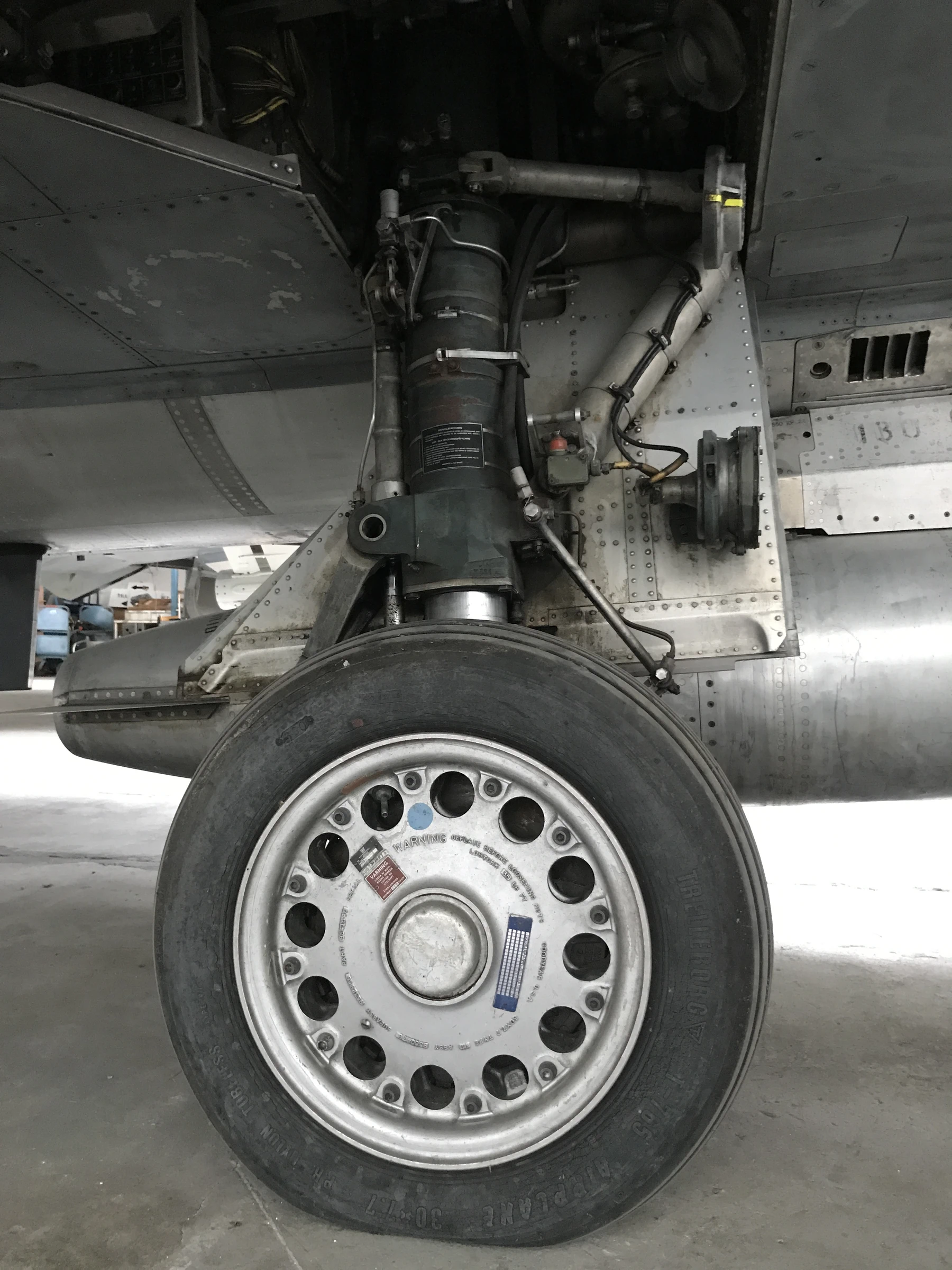
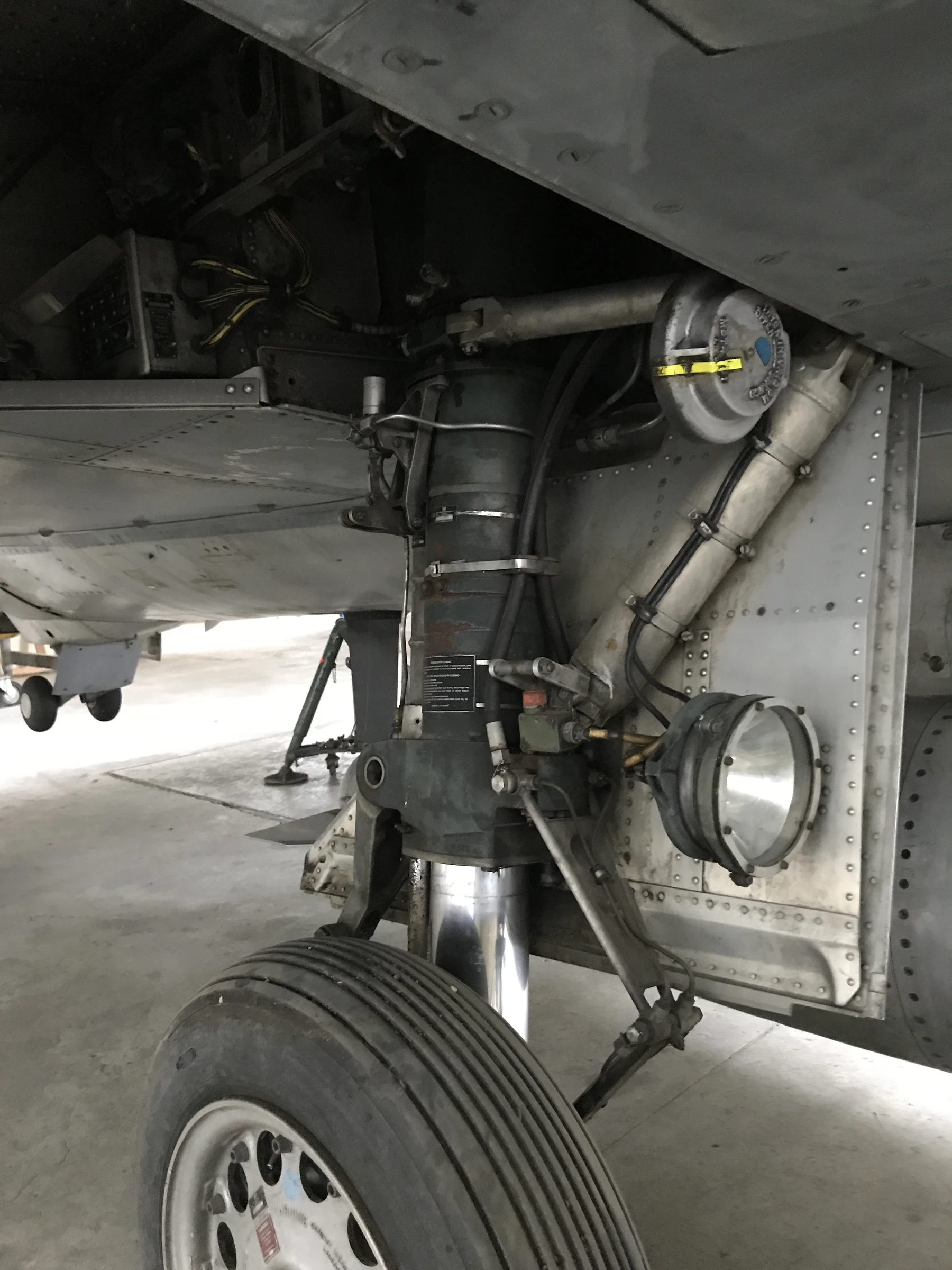
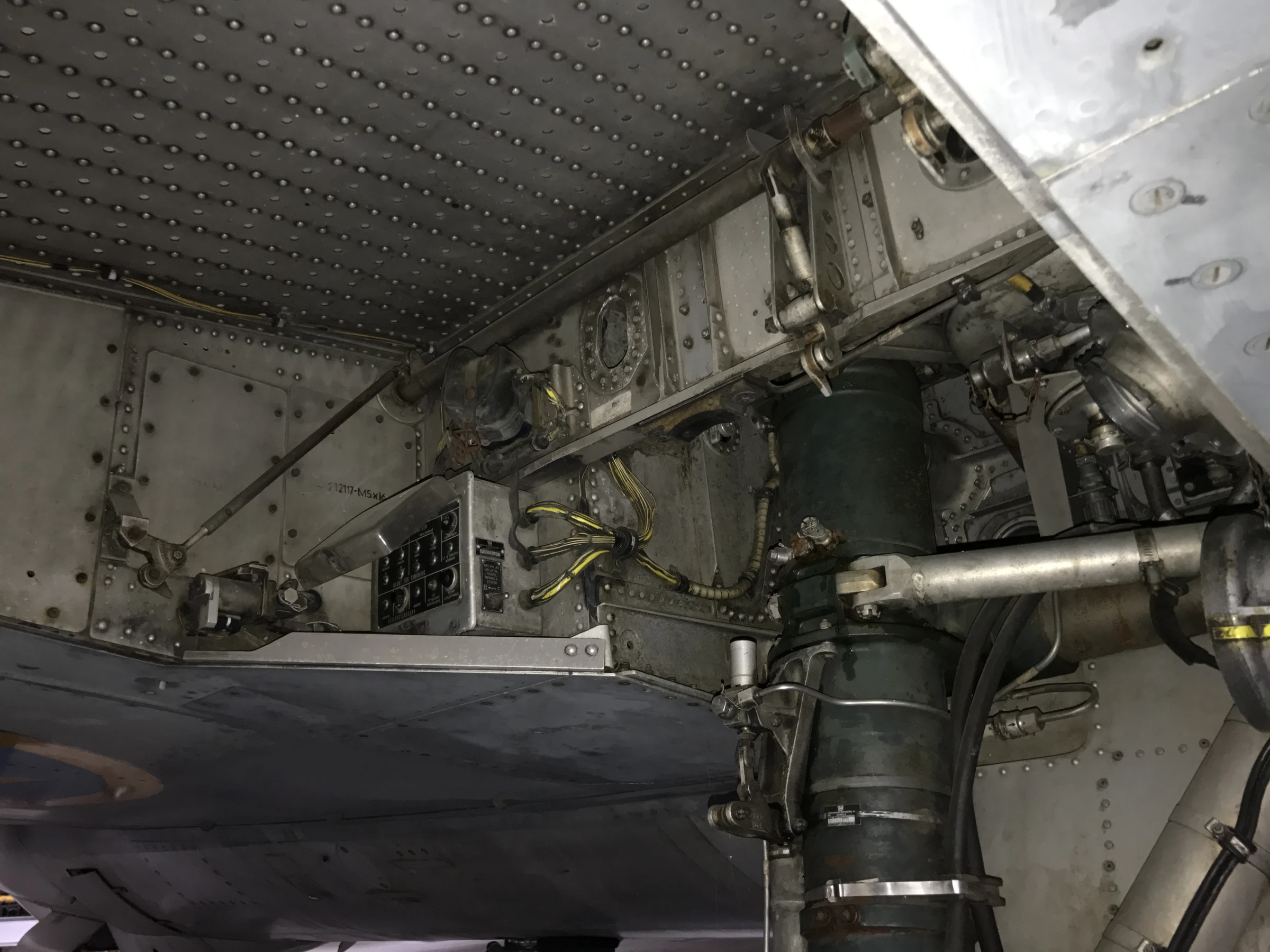
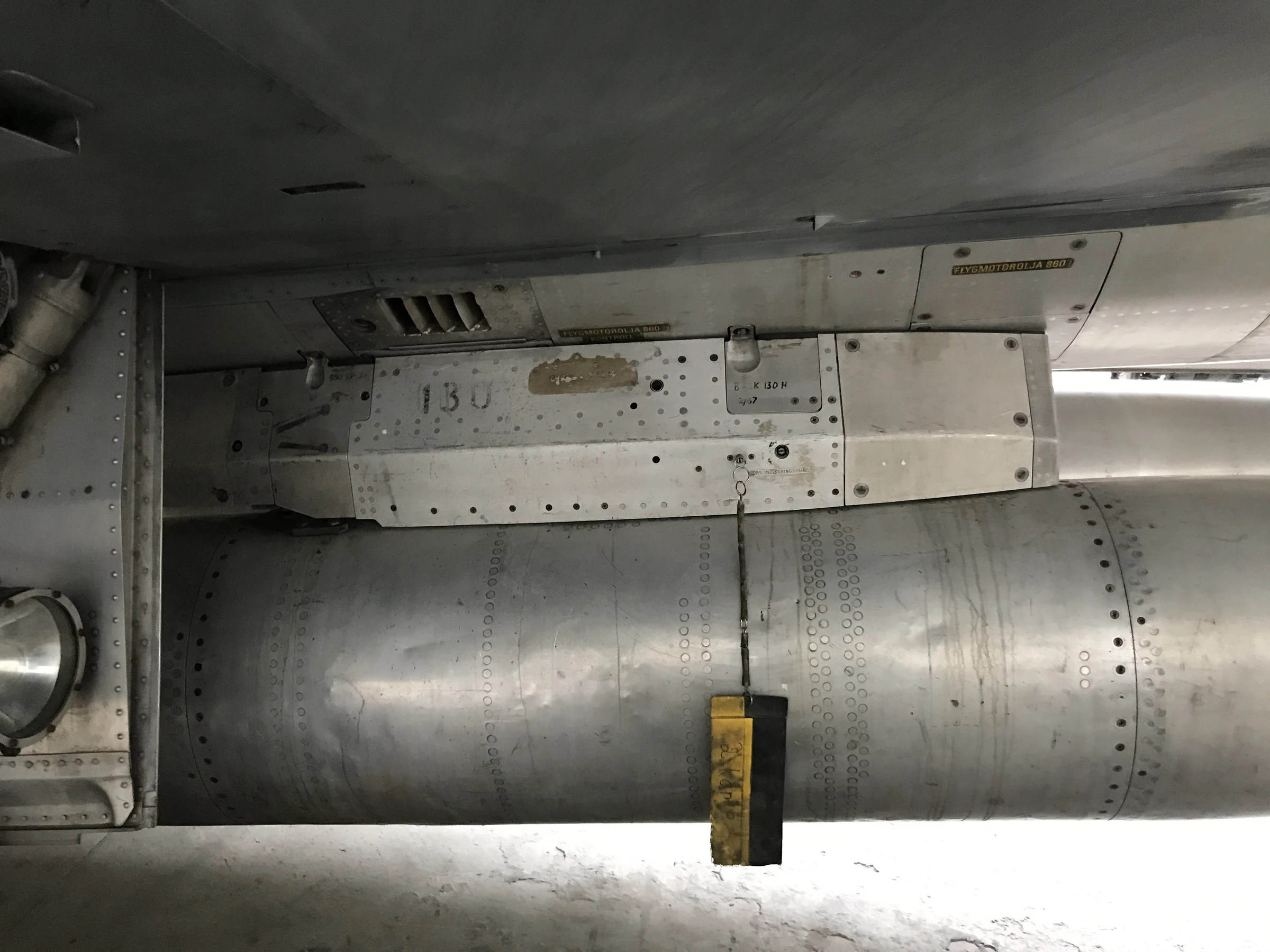
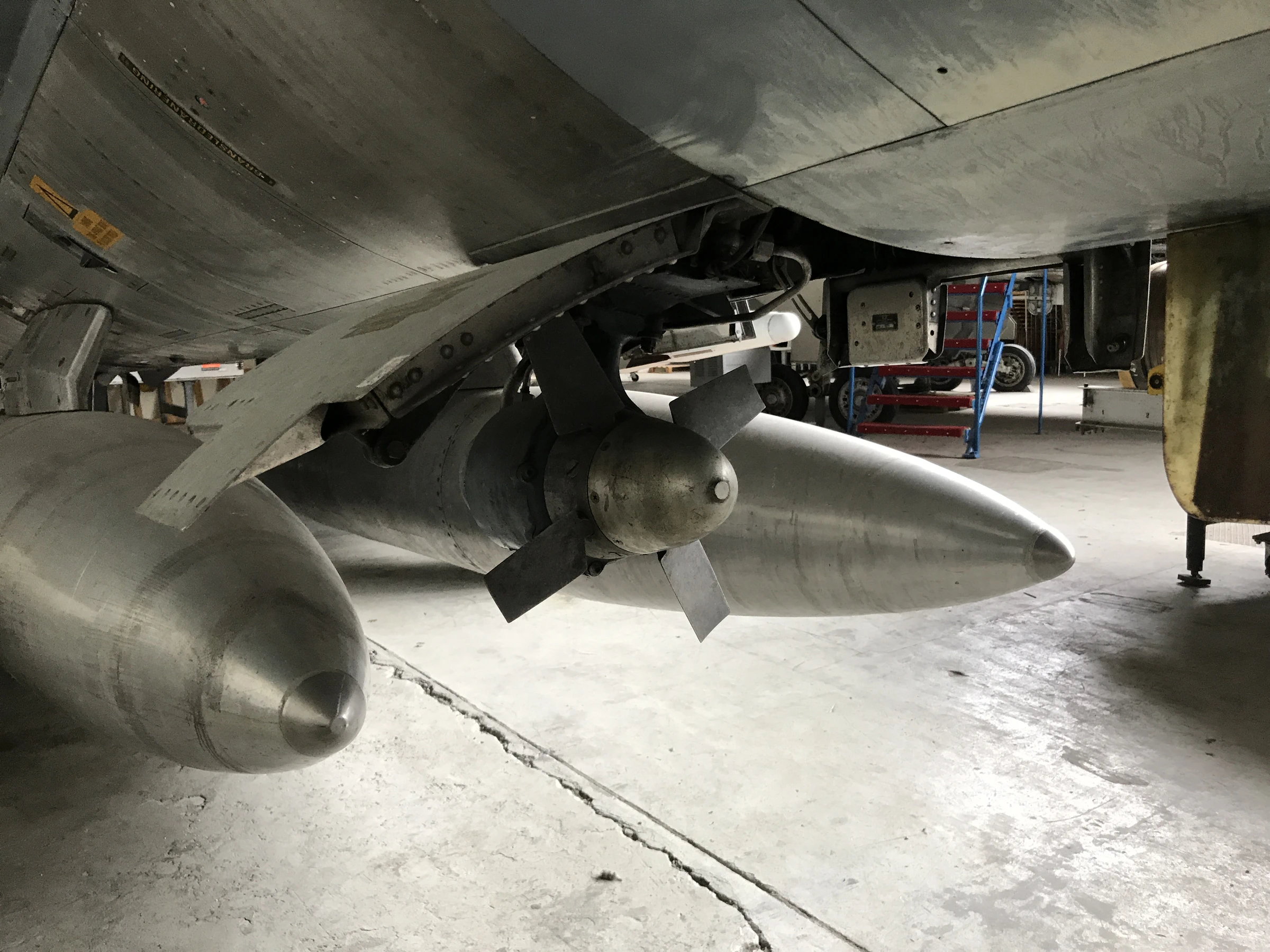
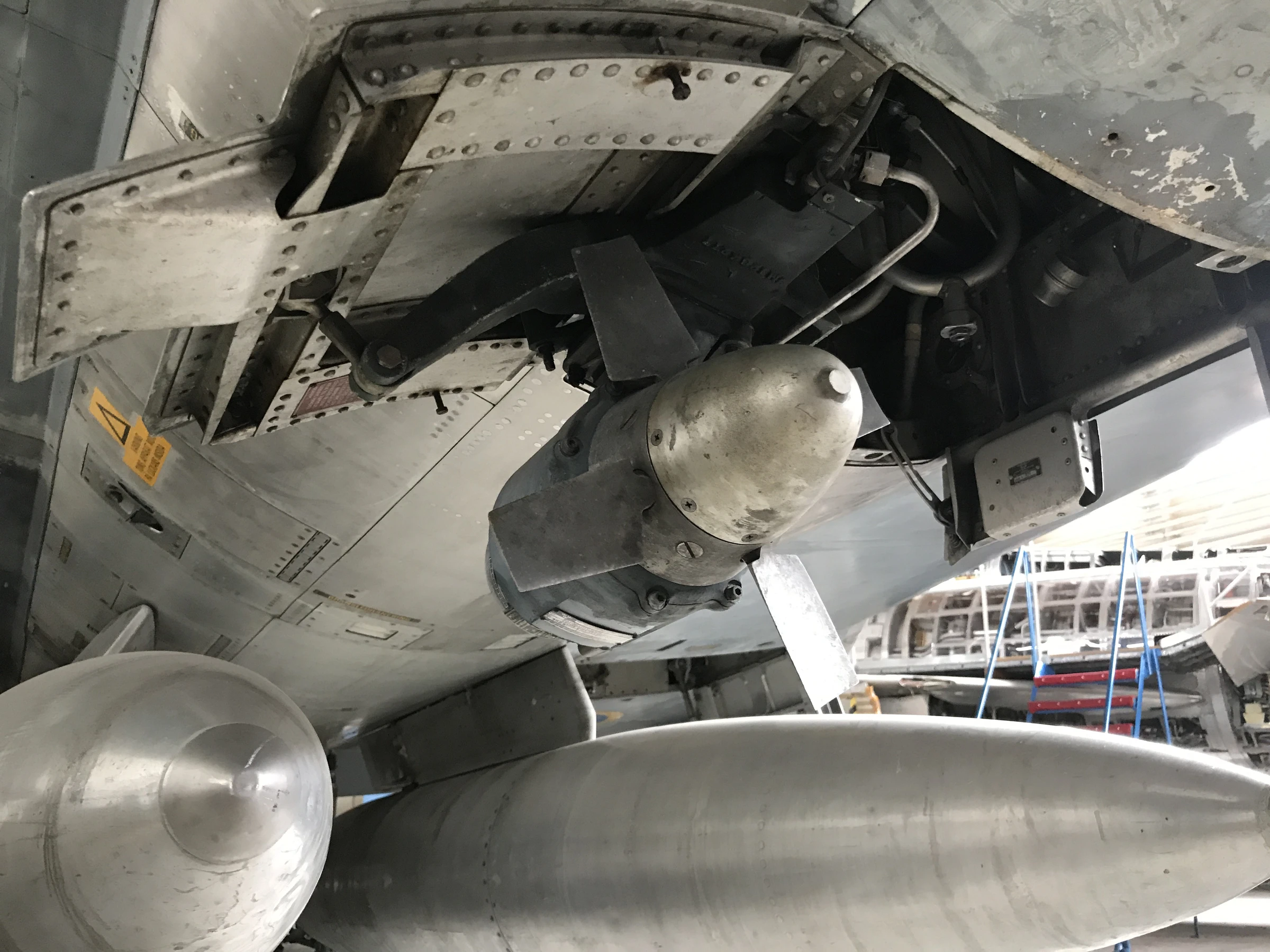
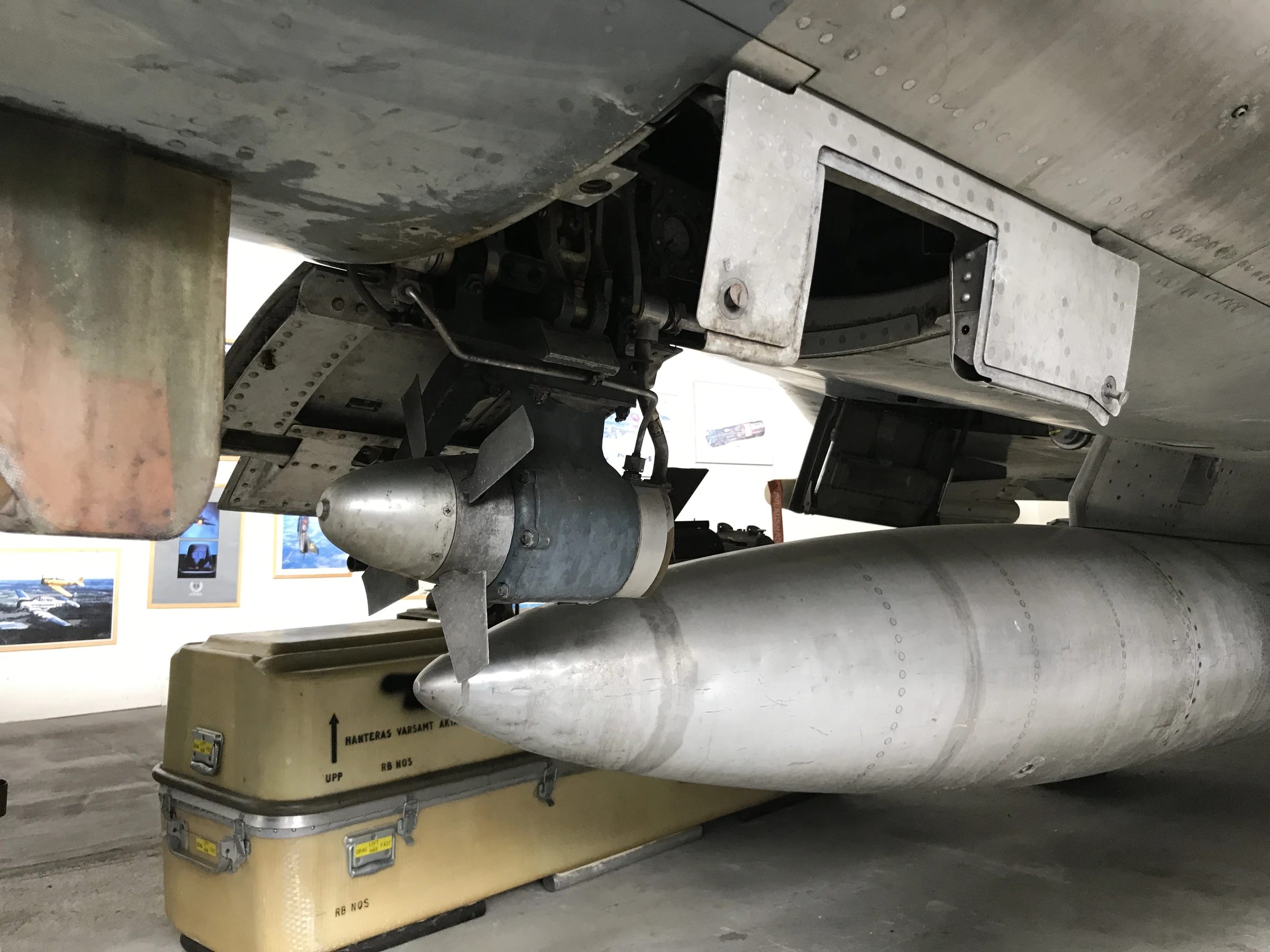
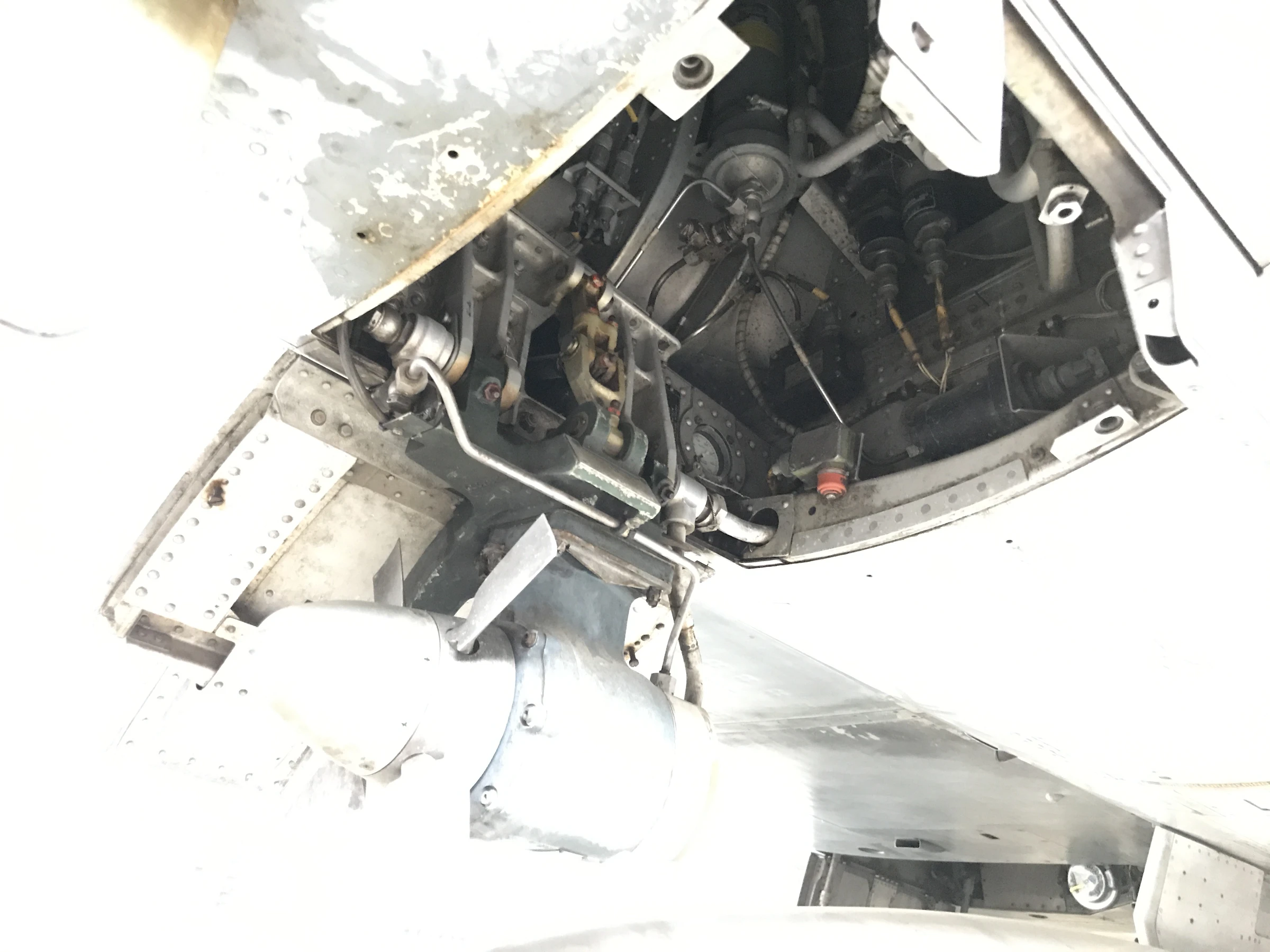
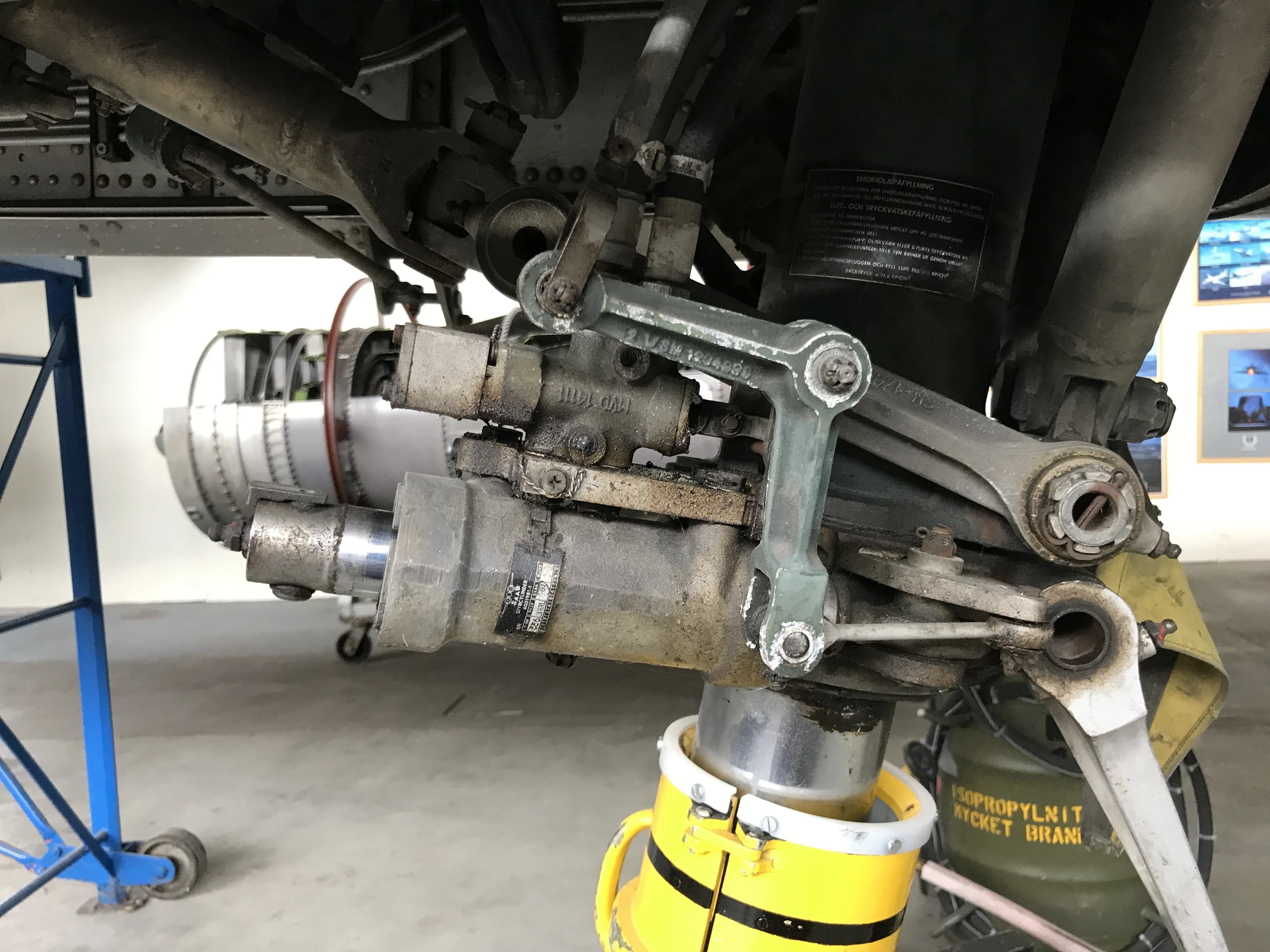
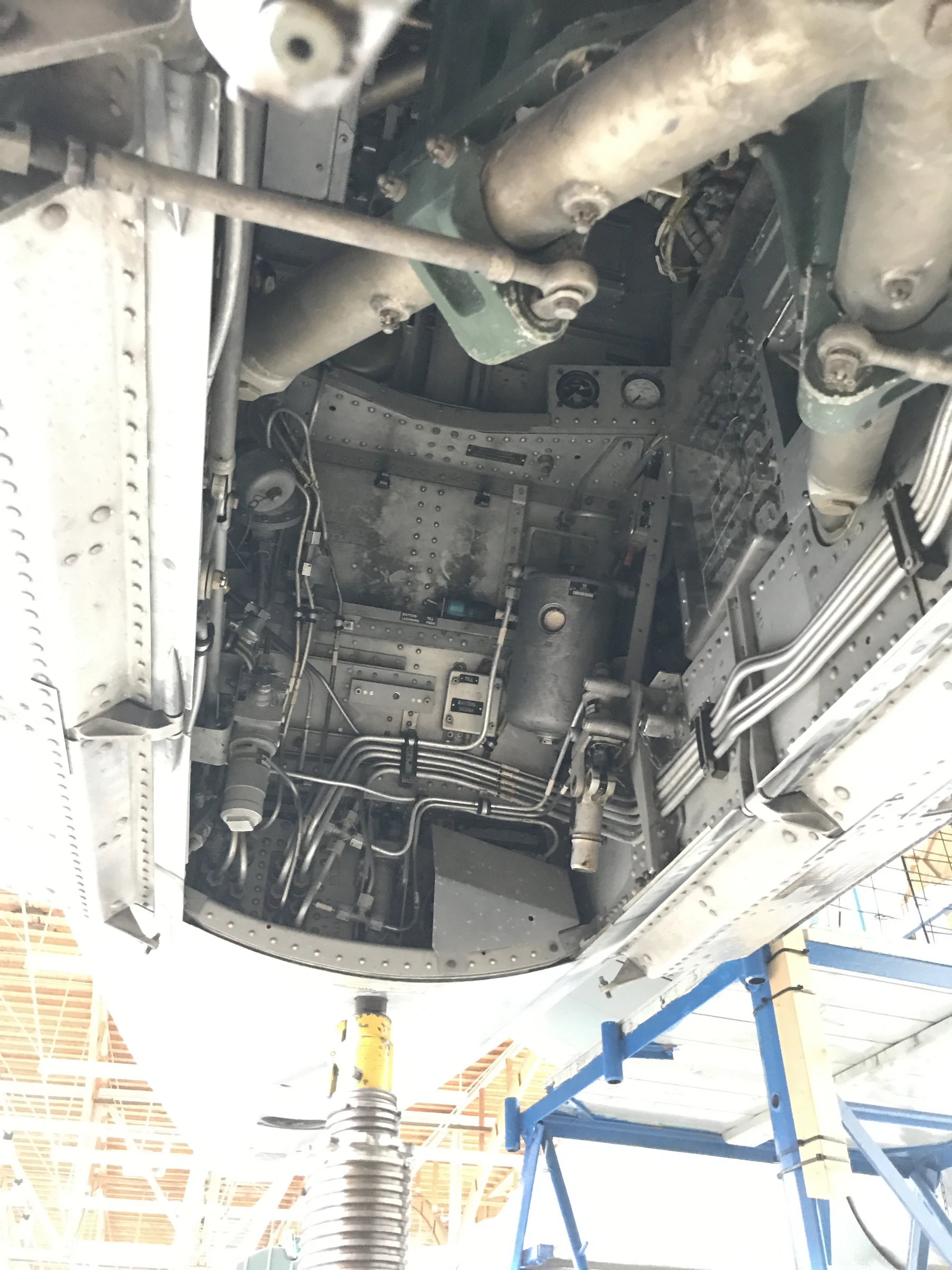
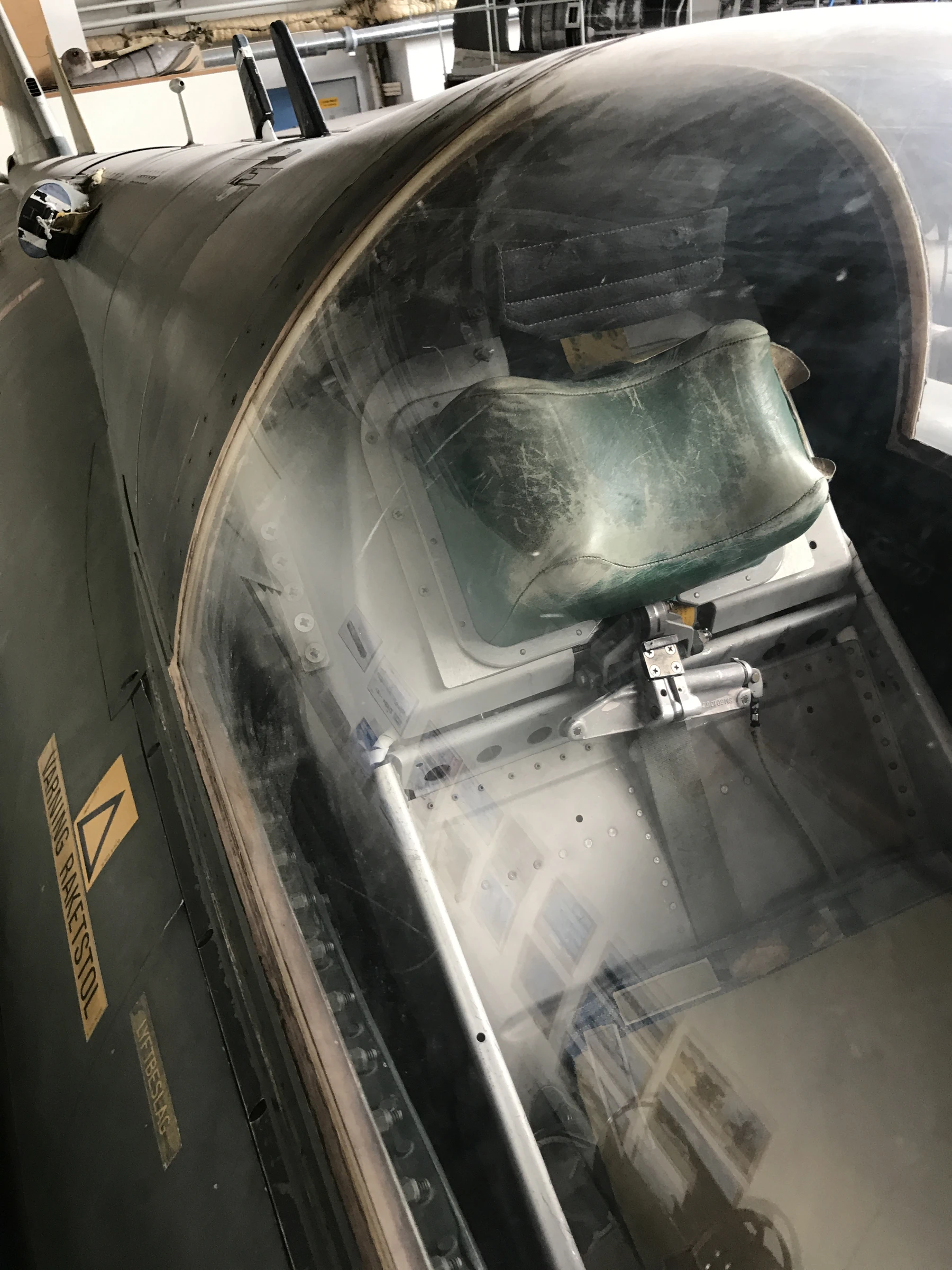
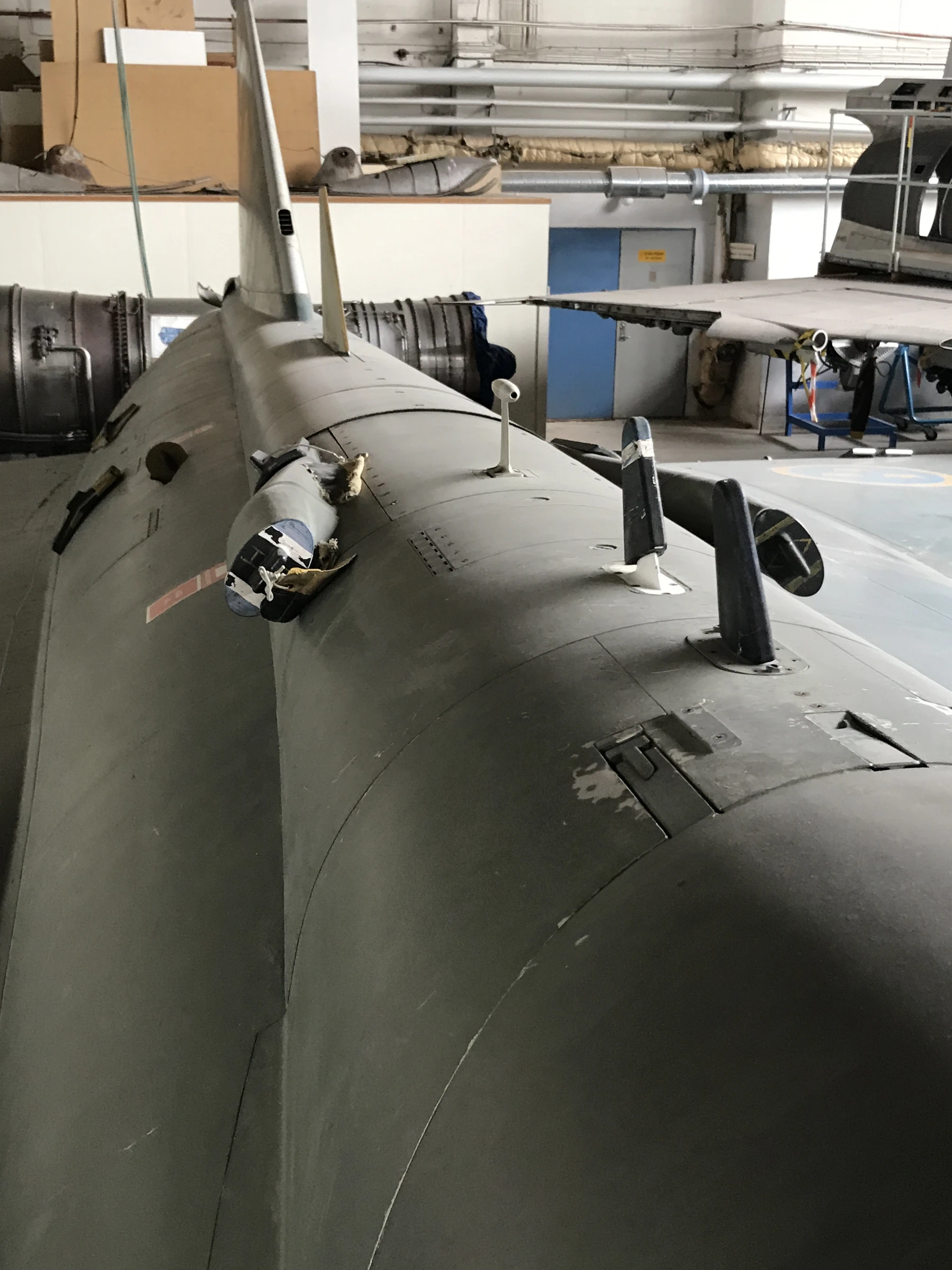
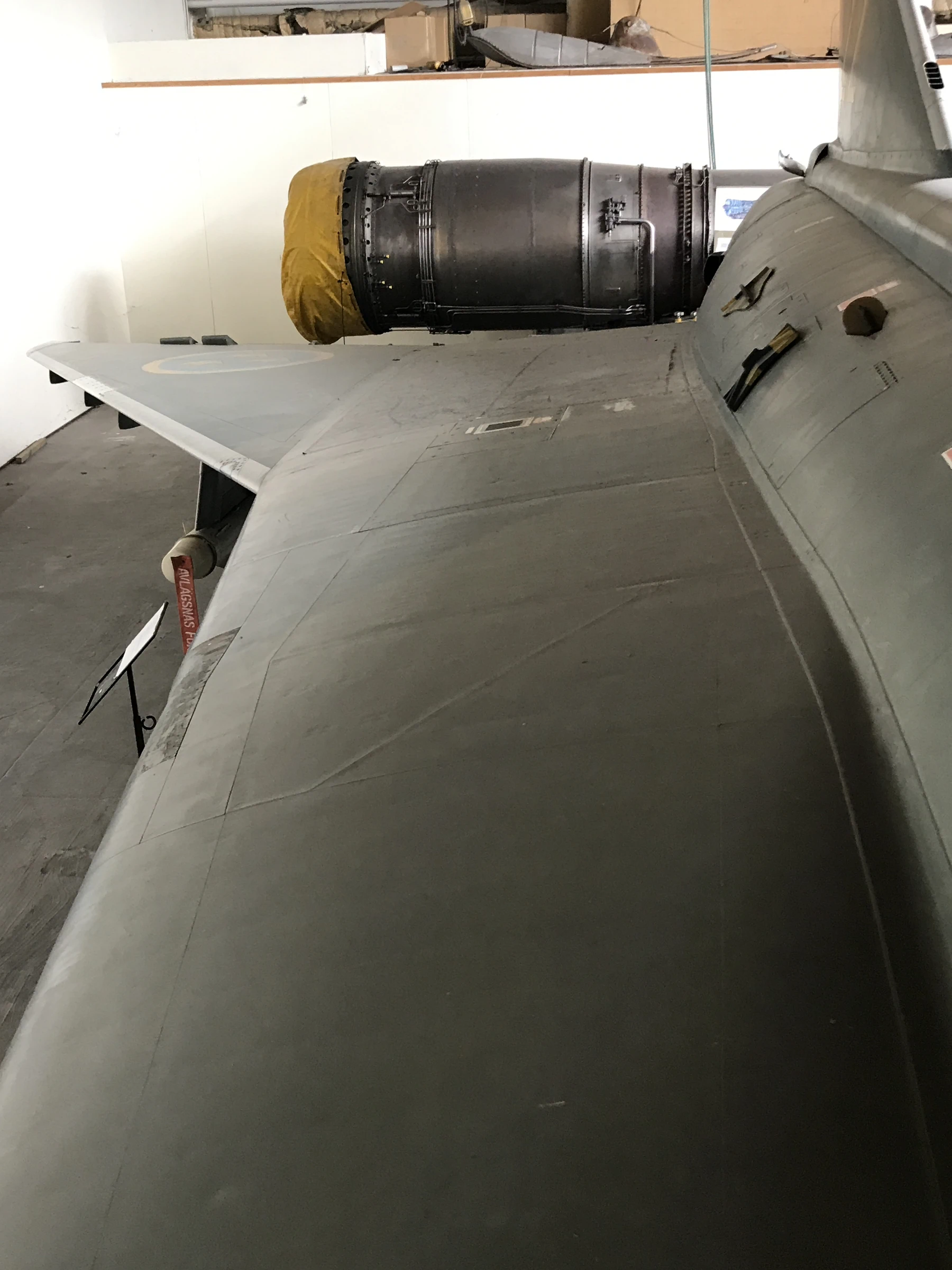
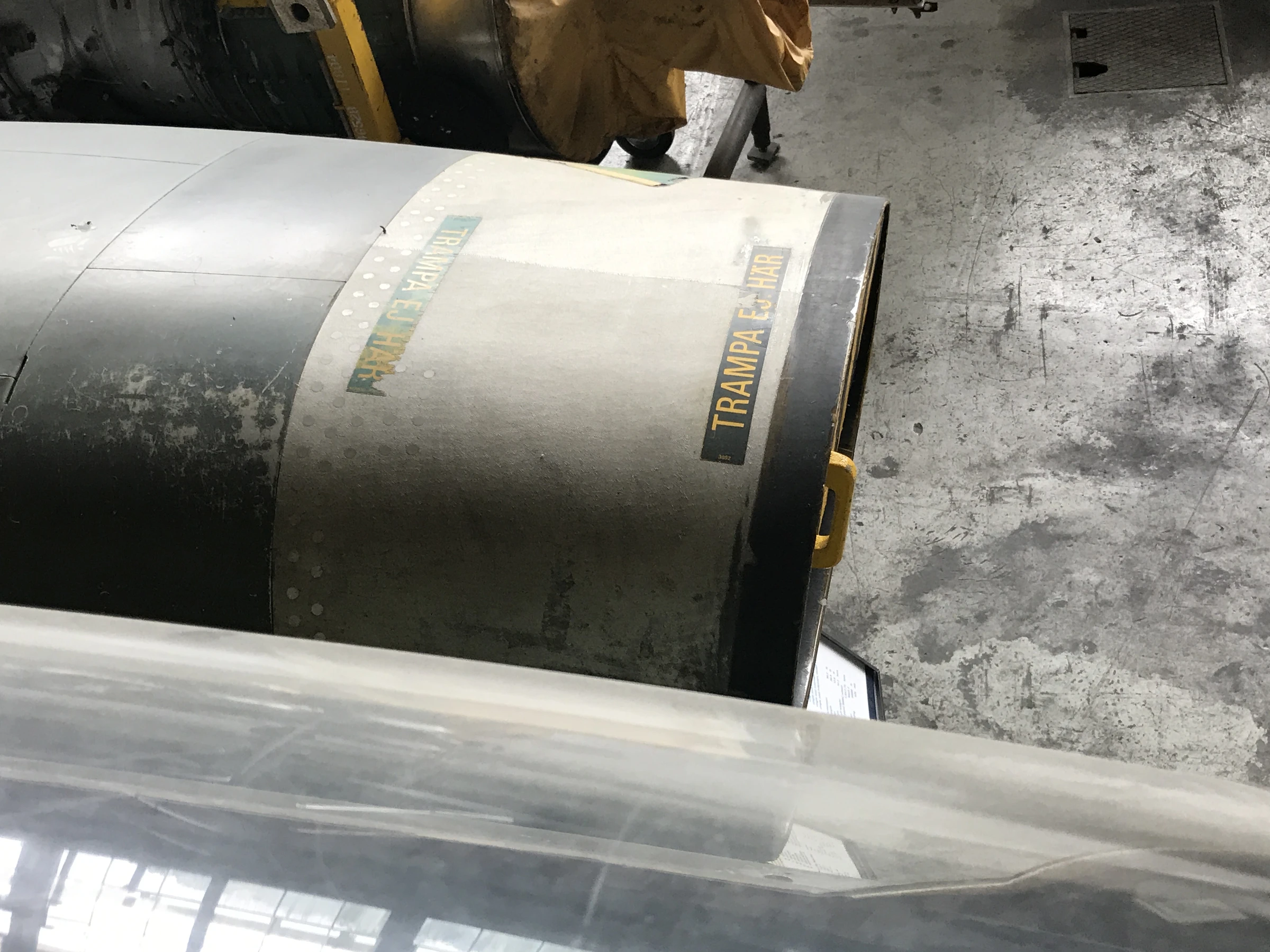
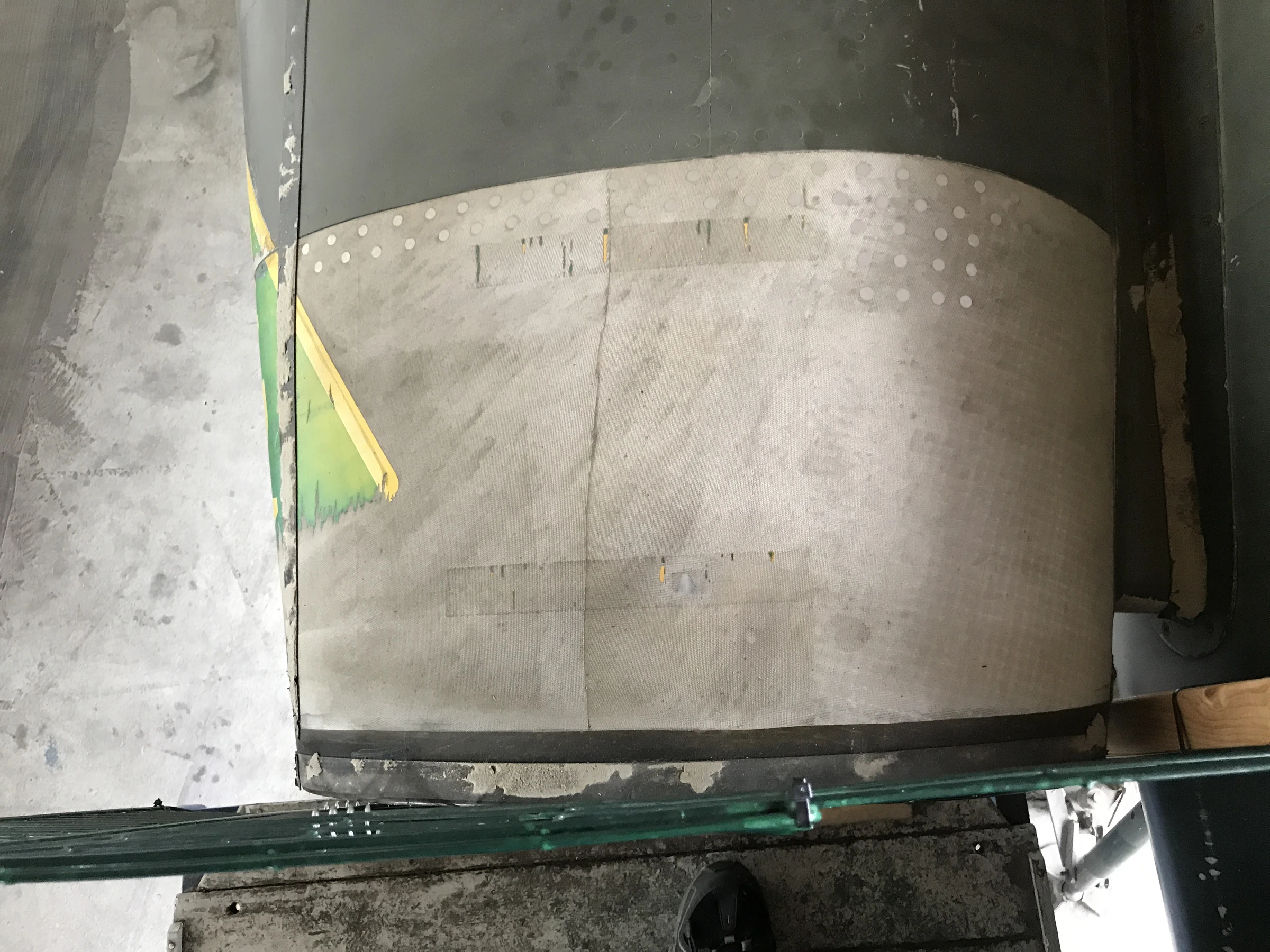
These walk-around photos were taken at Västerås Flygmuseum in 2017. They show a SAAB J 35F-2 Draken, serial 35555, wearing the markings of F 10 Ängelholm where it served its final years — one of two Drakens preserved at Västerås, the other being J 35F 35496. The Draken (Dragon) was one of the most remarkable aircraft designs of the Cold War, conceived in 1949 to intercept Soviet bombers at high altitude while remaining capable of operating from public roads. Its revolutionary double-delta wing — an inner delta at 80° for high-speed performance nested within an outer delta at 60° for low-speed handling — solved the seemingly impossible requirement for a supersonic aircraft that could also land and take off on strips of highway, without the complexity of variable-geometry geometry. A total of 651 were built, serving with Sweden, Denmark, Finland and Austria.
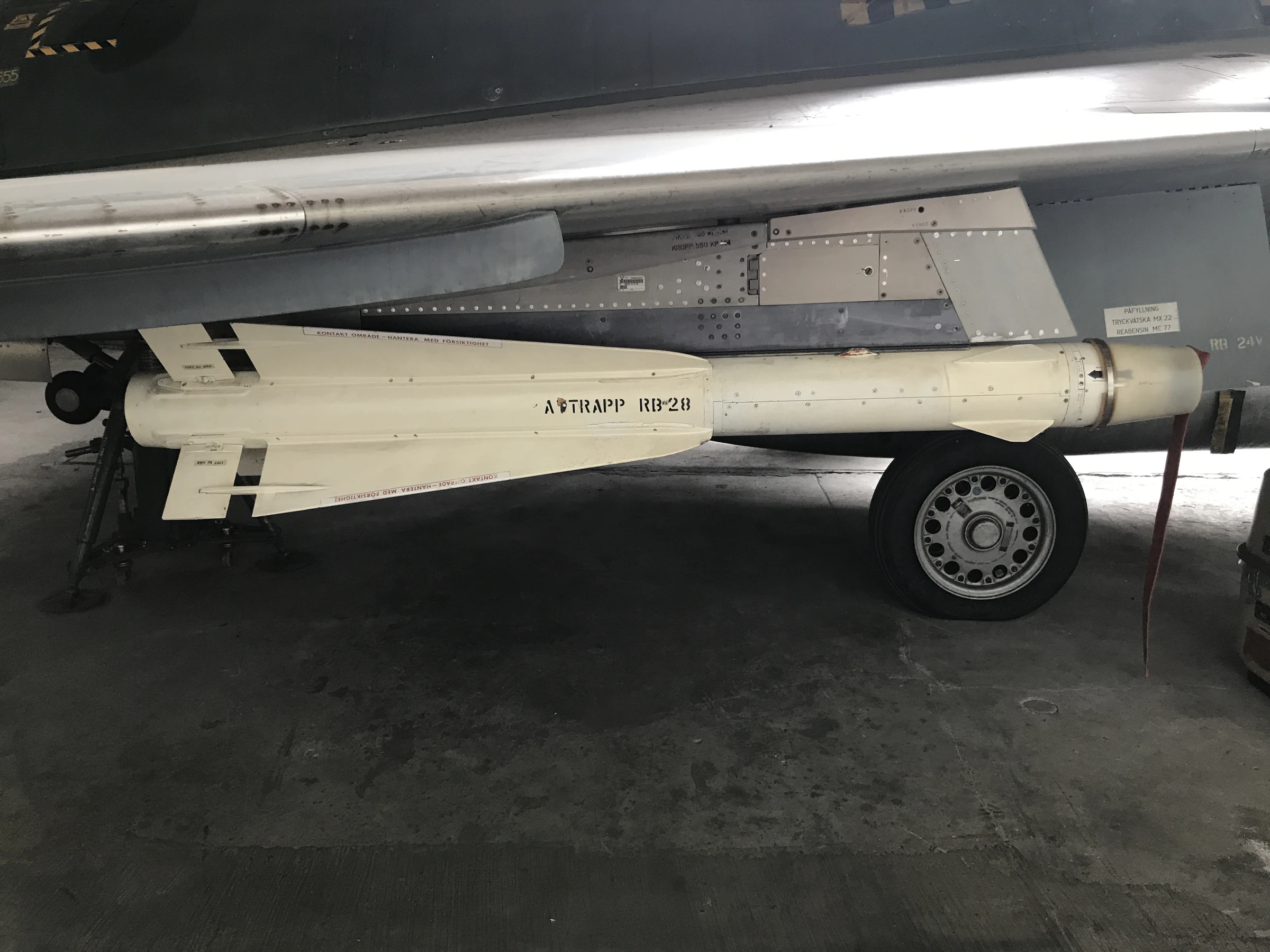
The J 35F was the definitive Swedish Draken variant, featuring a more powerful RM6C engine, improved PS-01 radar, and a combination of cannon, Sidewinder missiles and the Swedish Rb 28 Falcon missile. The F-2 sub-variant added an infra-red search and track sensor under the nose — though 35555 is displayed without it. Built in 1969 and delivered to F 10 Ängelholm as F10-22, 35555 served until the Draken was retired from Swedish service in 1999. It has been on display at Västerås Flygmuseum since the museum opened, along with its sister aircraft 35496 which is displayed in flying condition.