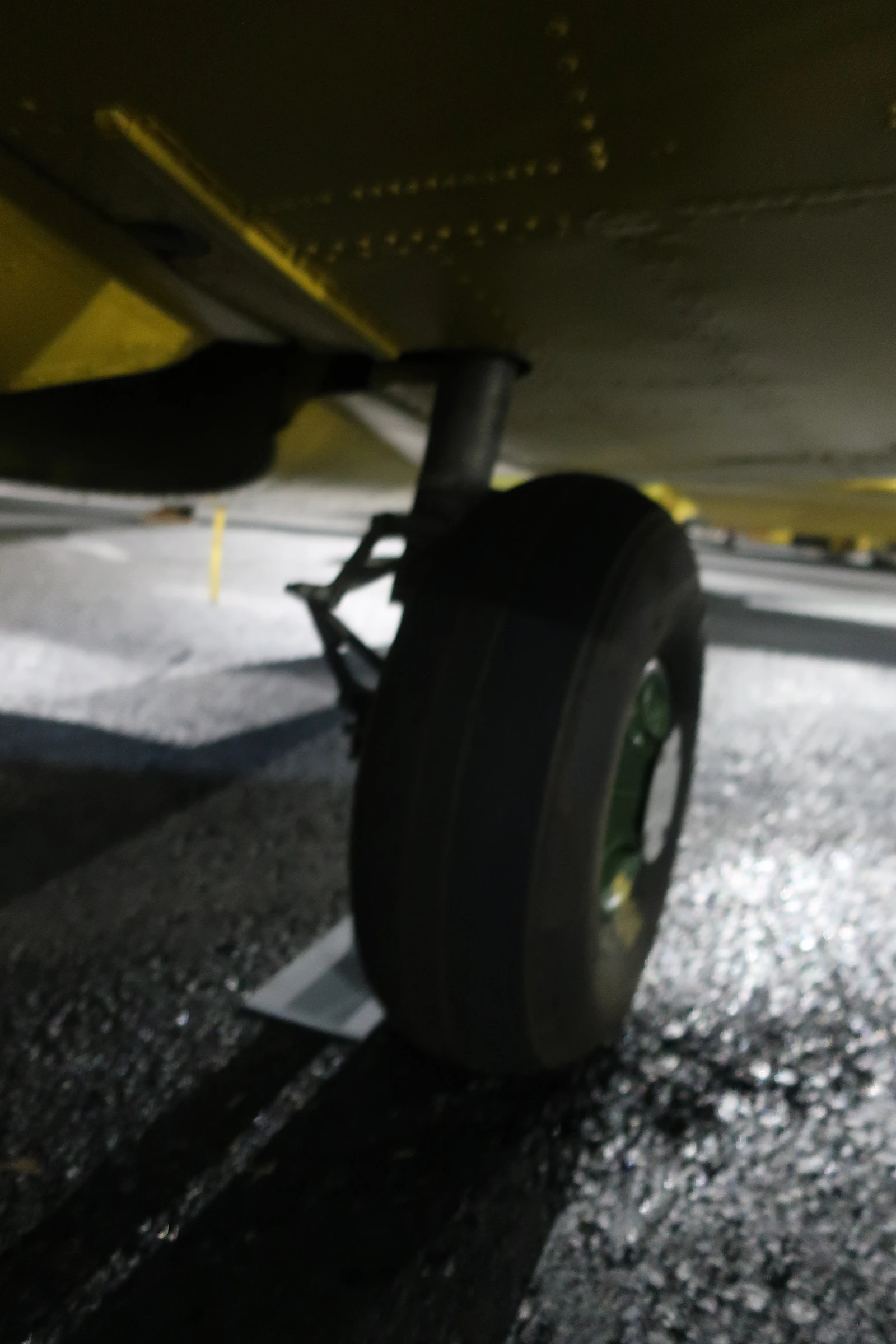
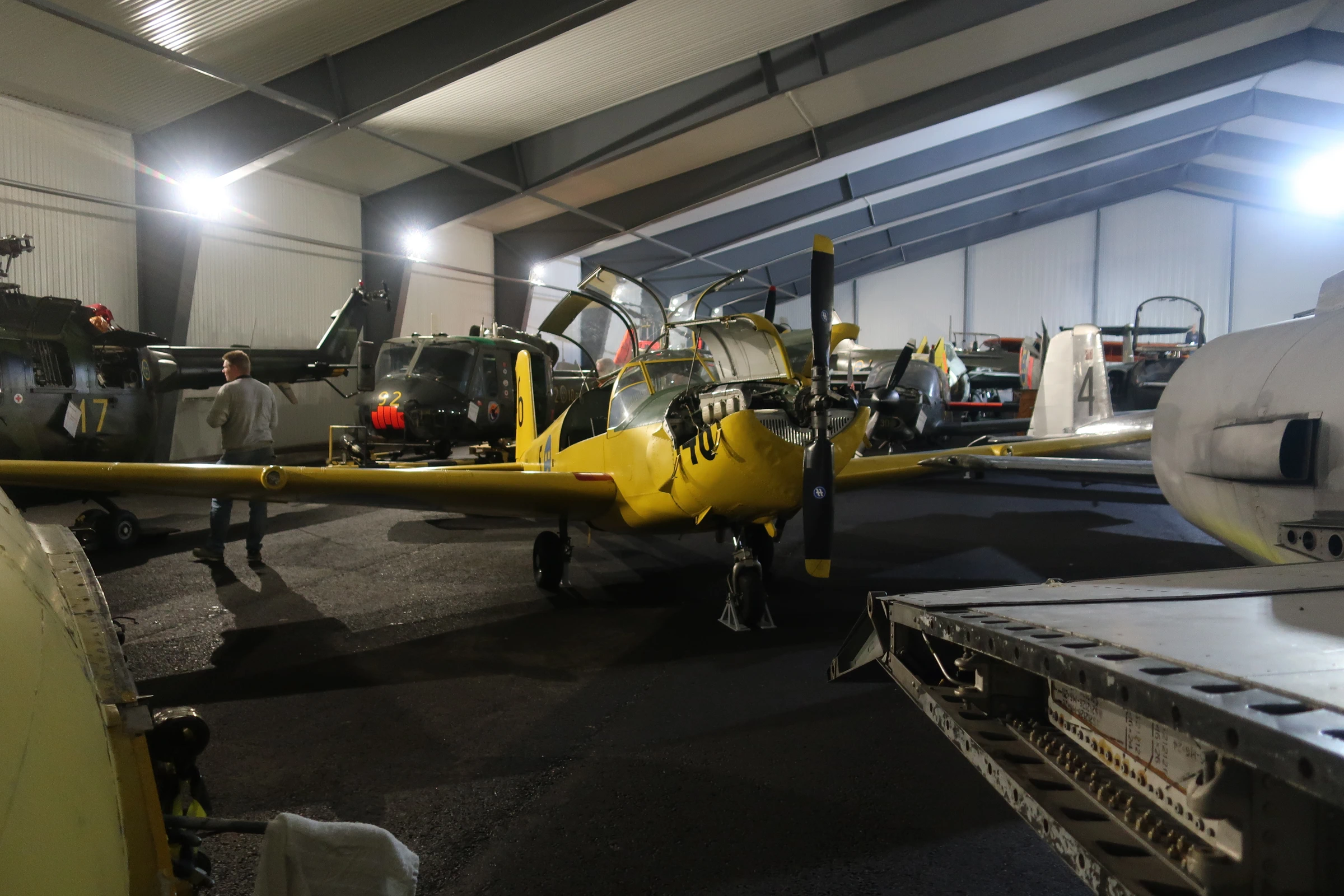
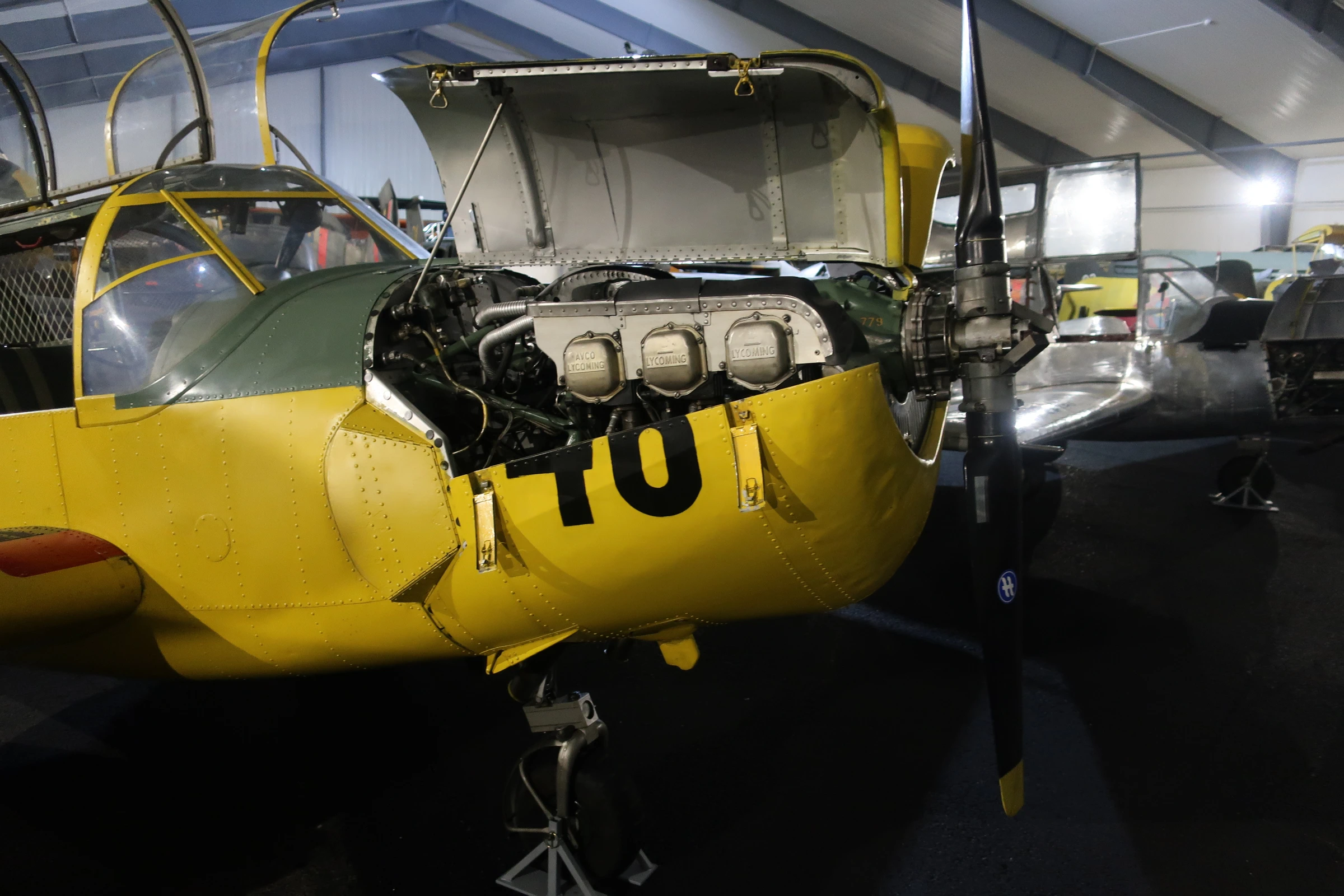
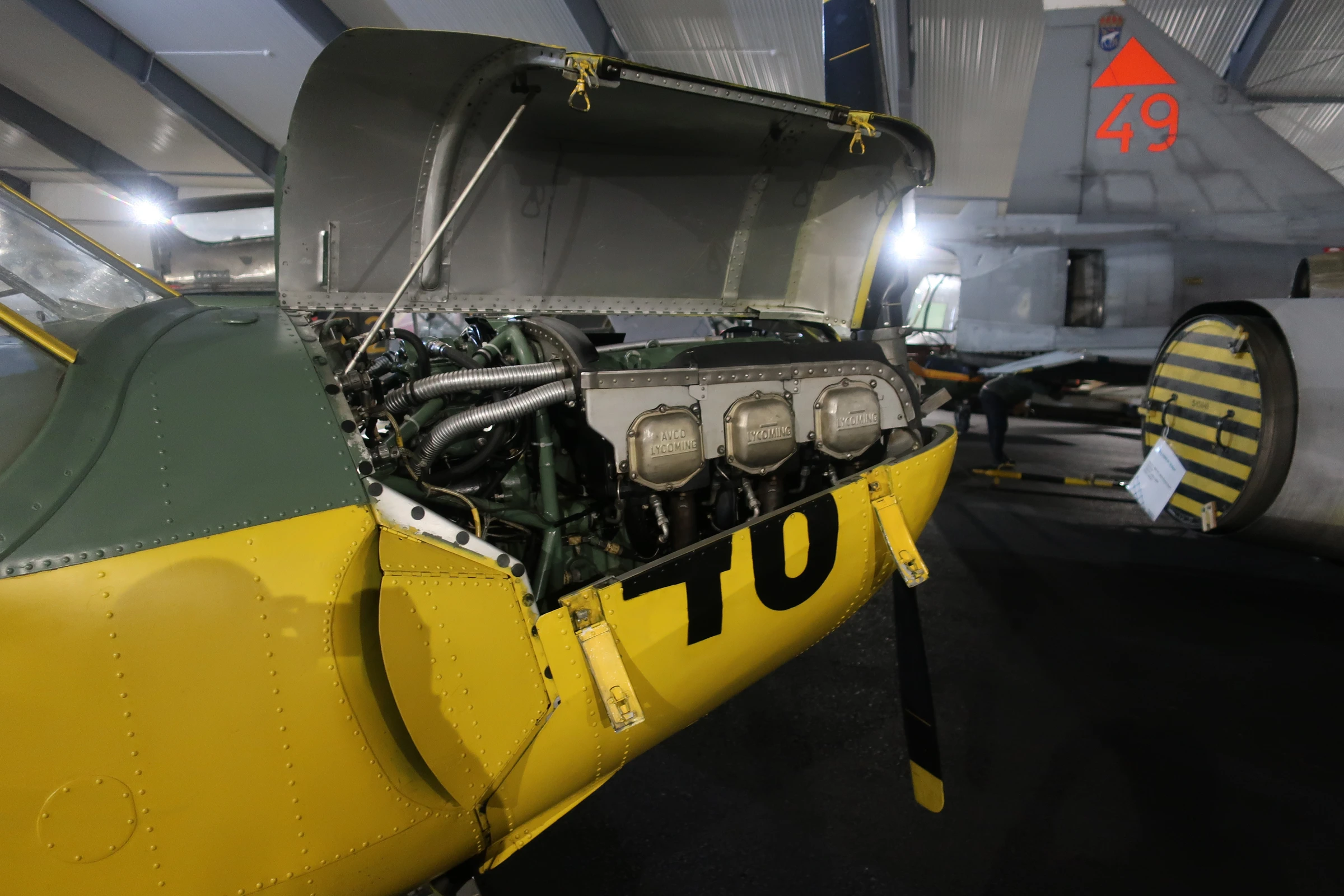
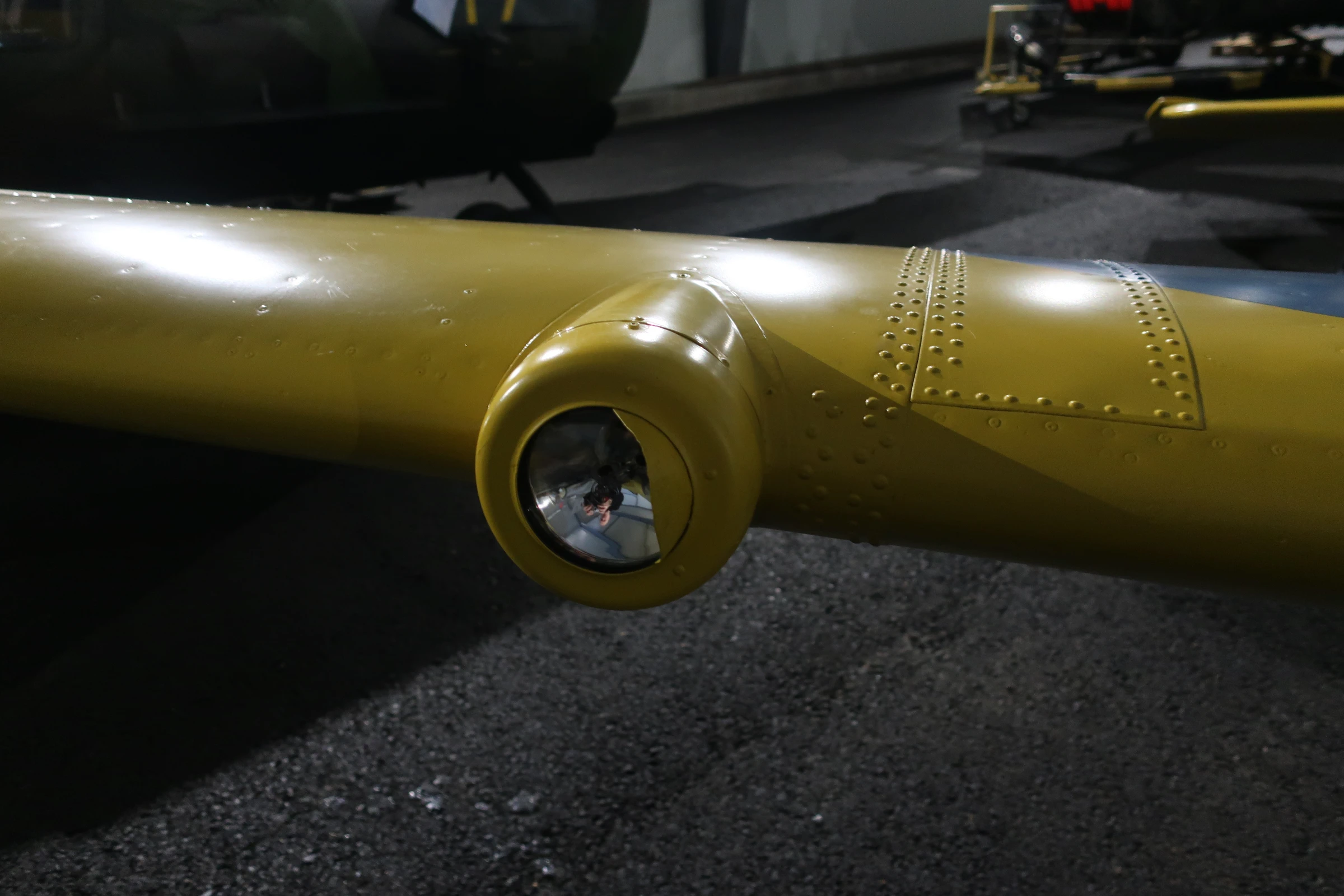
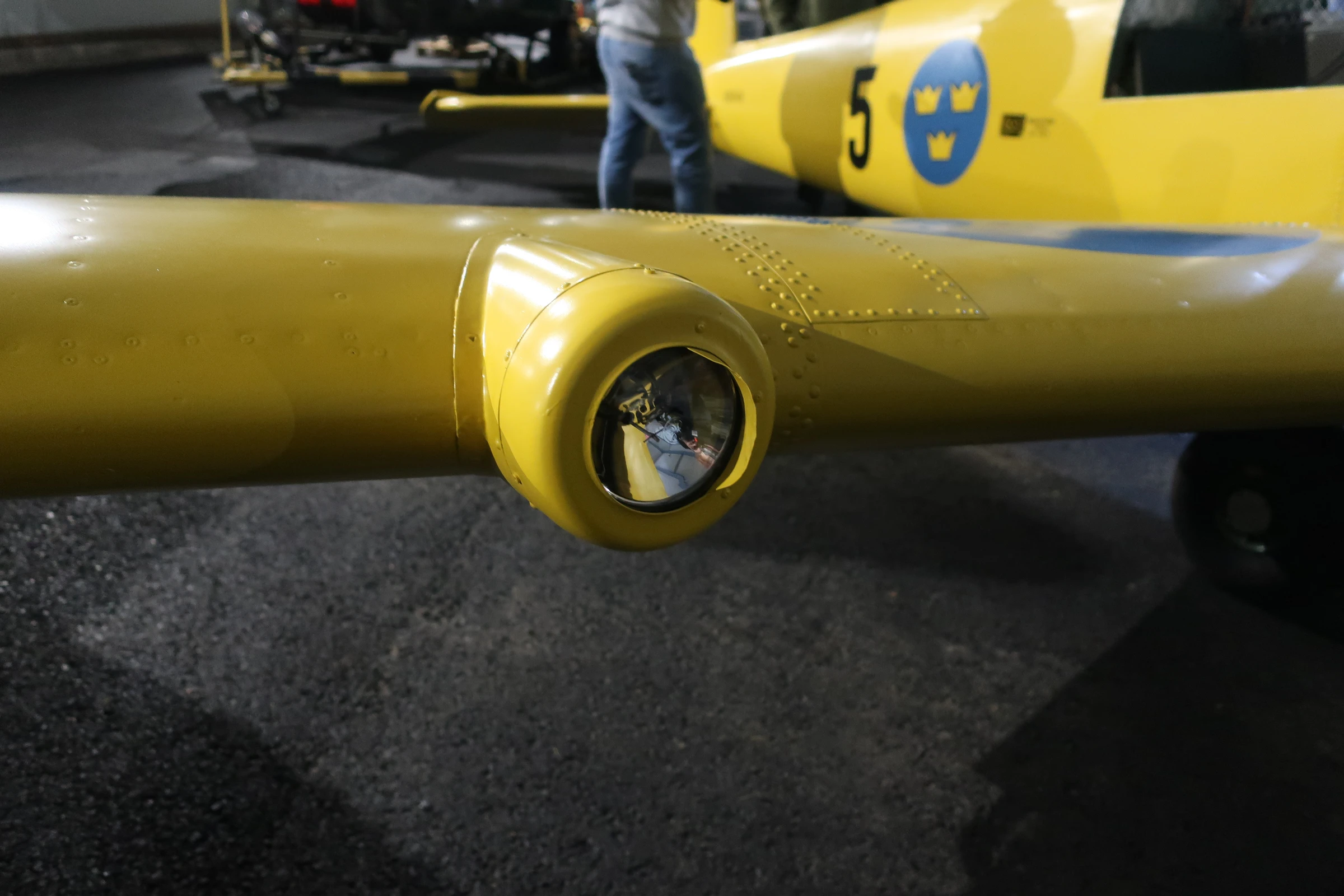
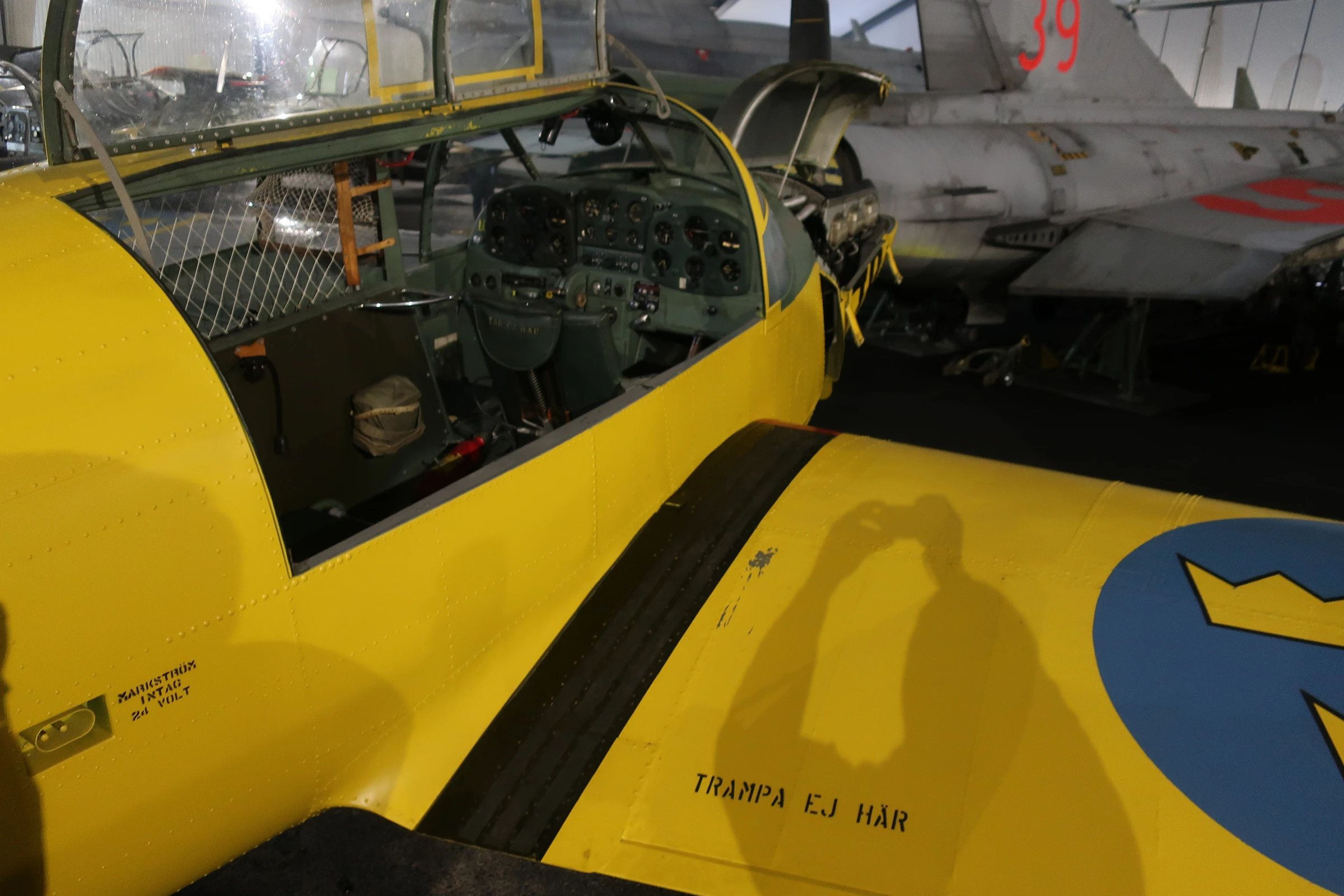
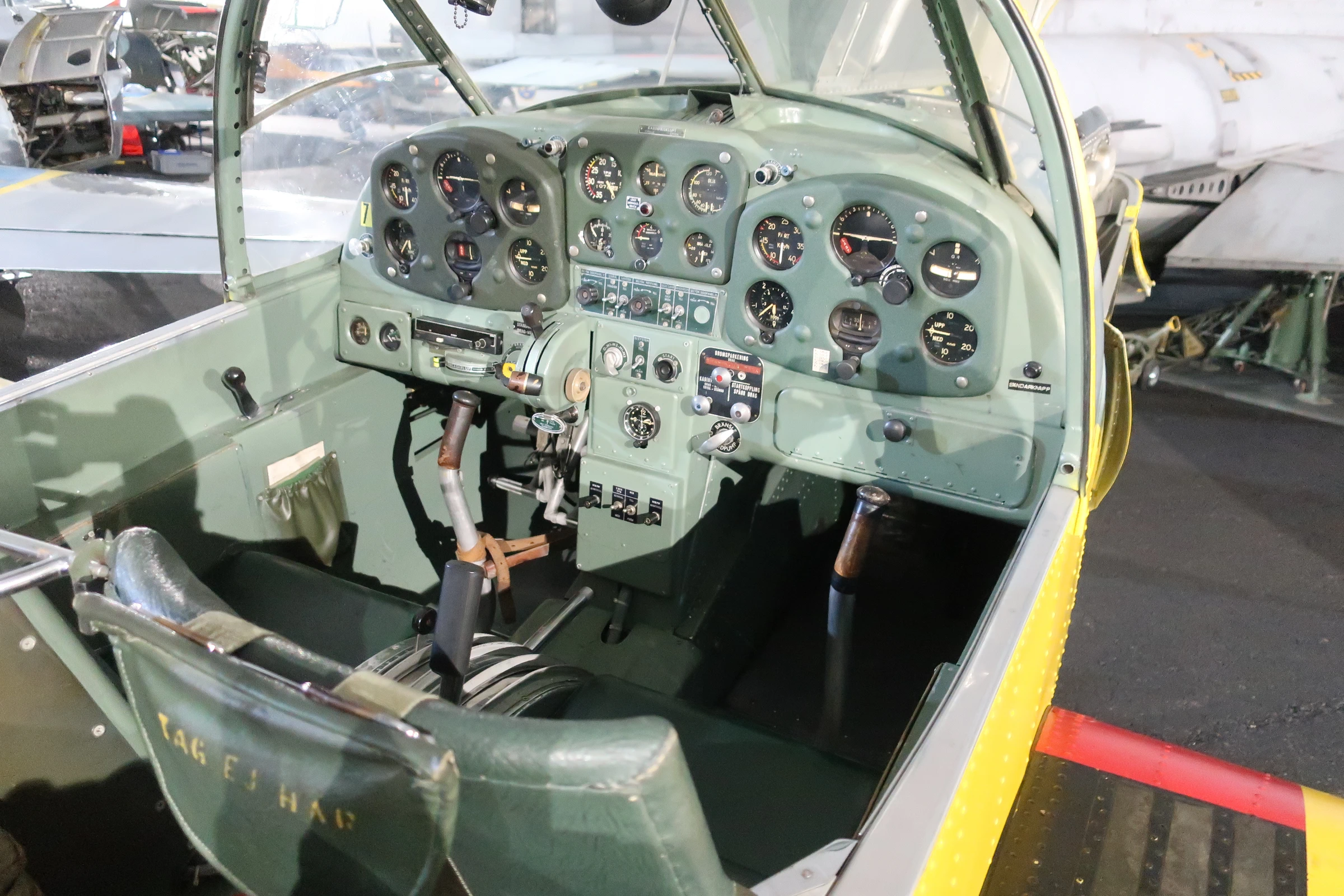
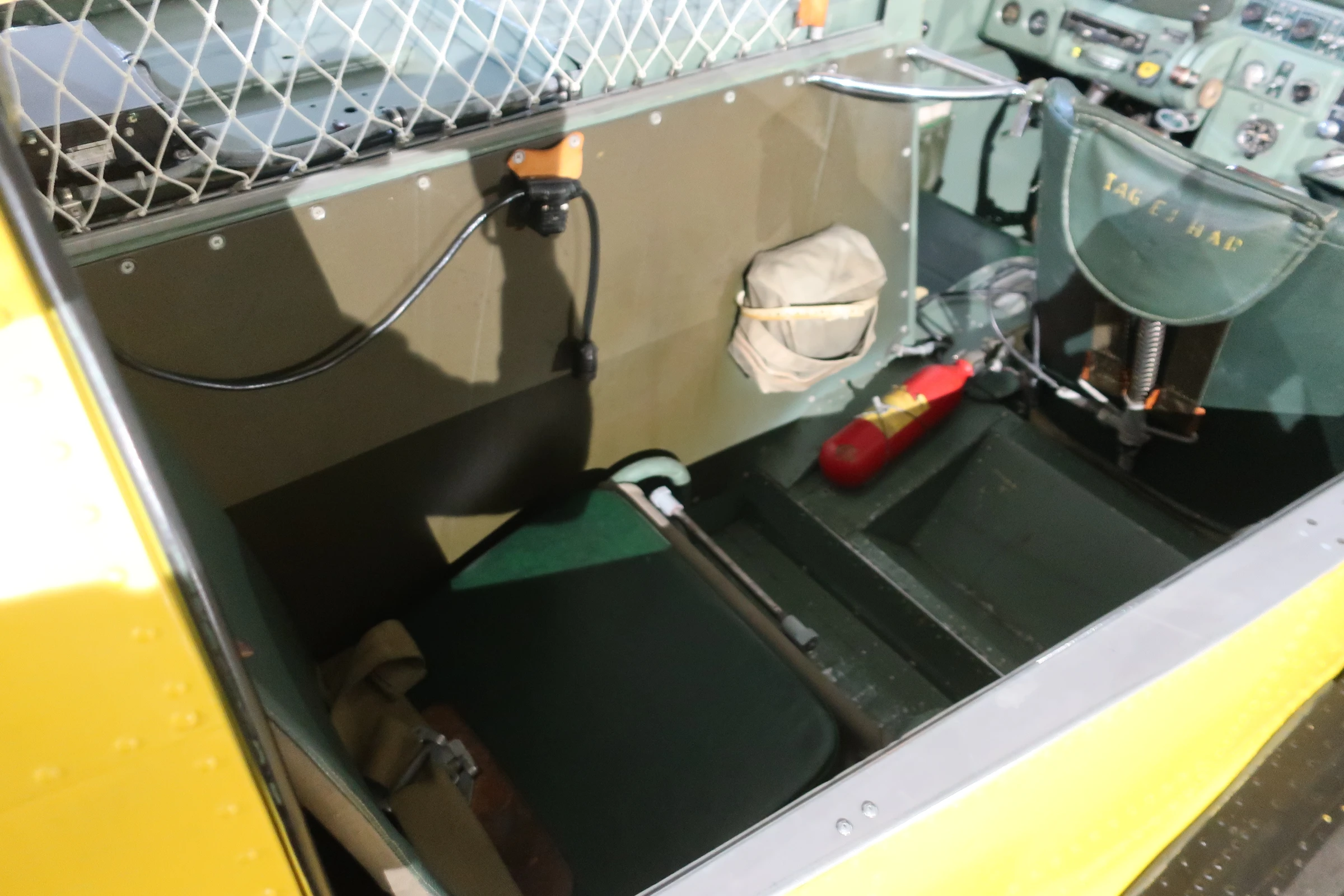
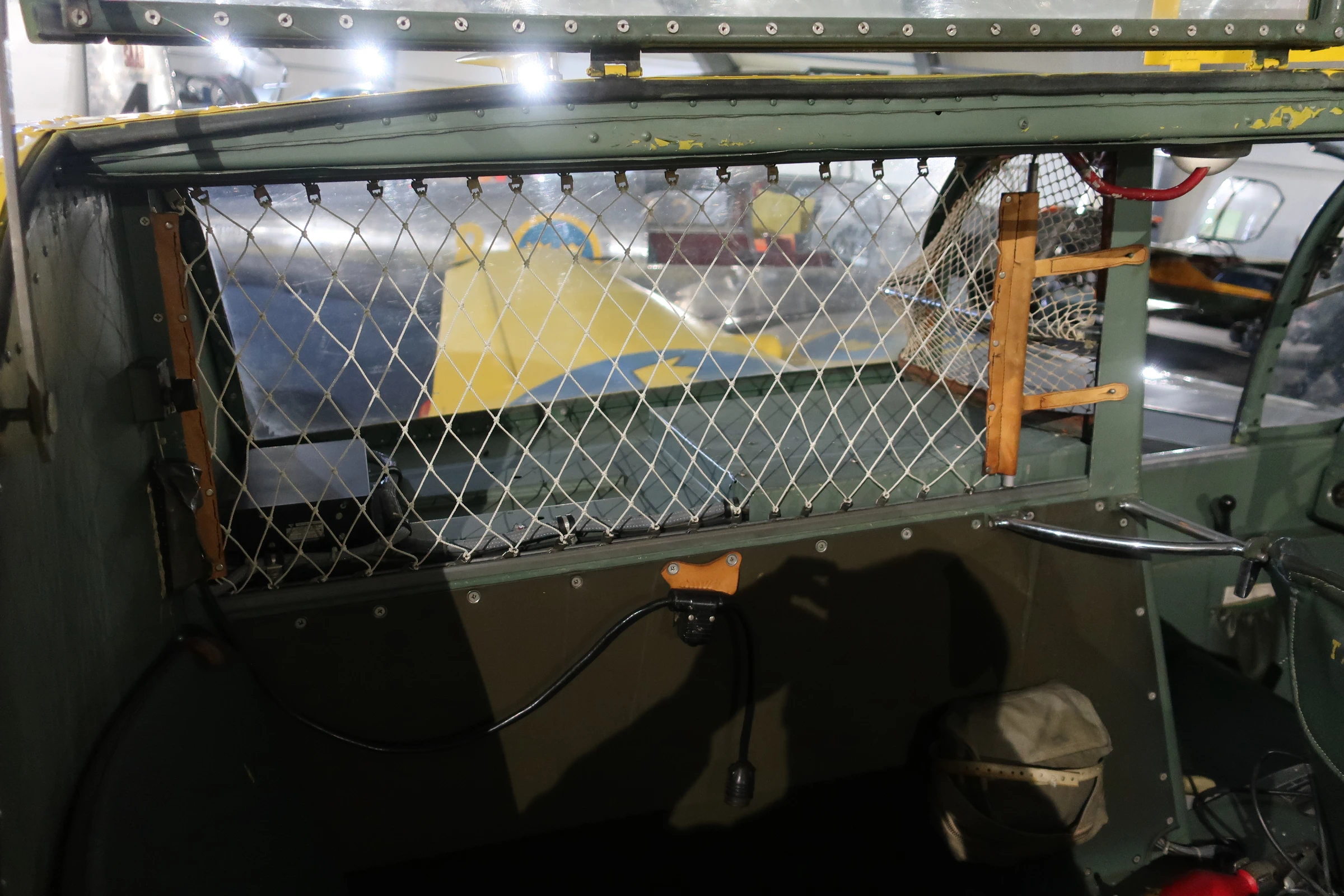
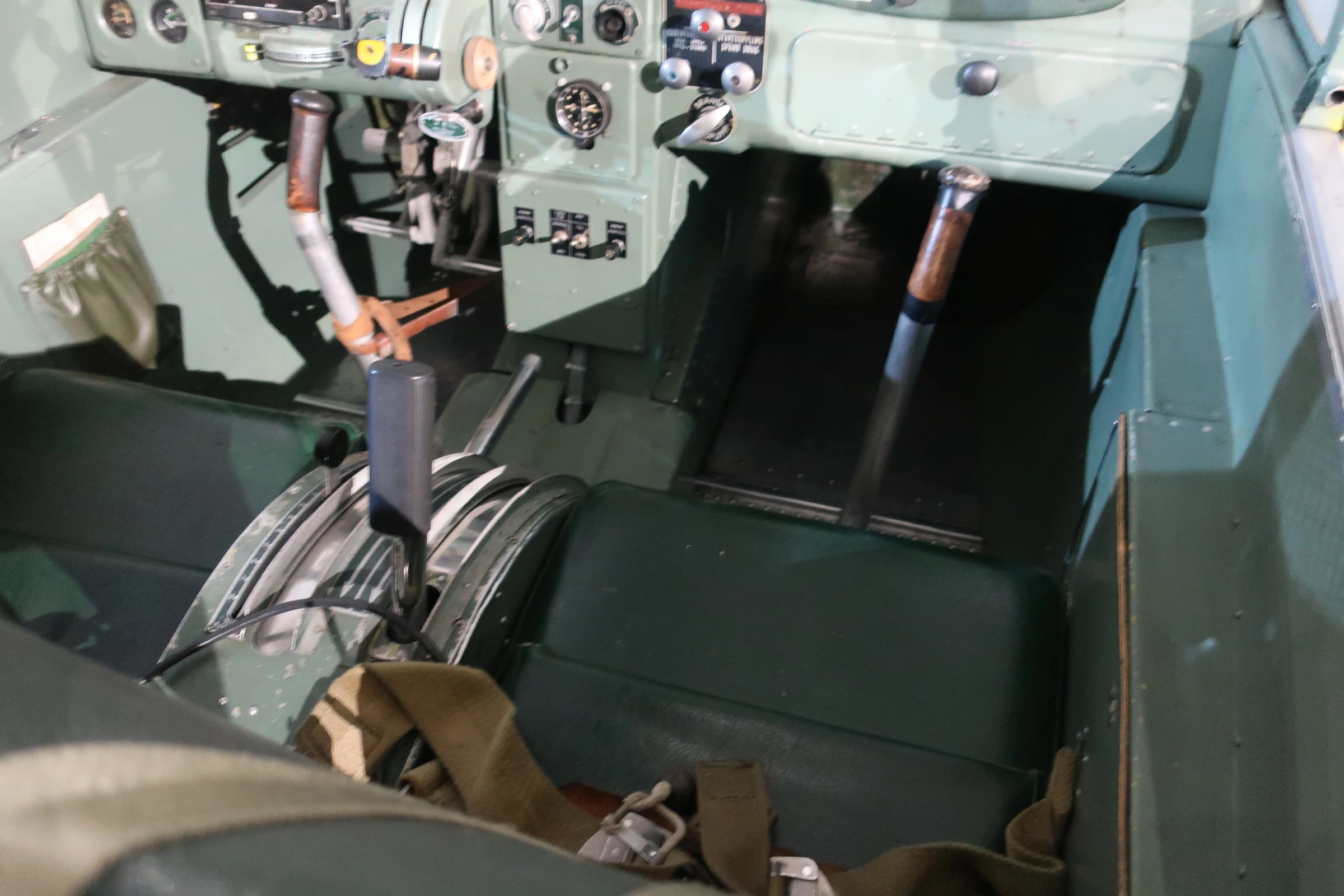
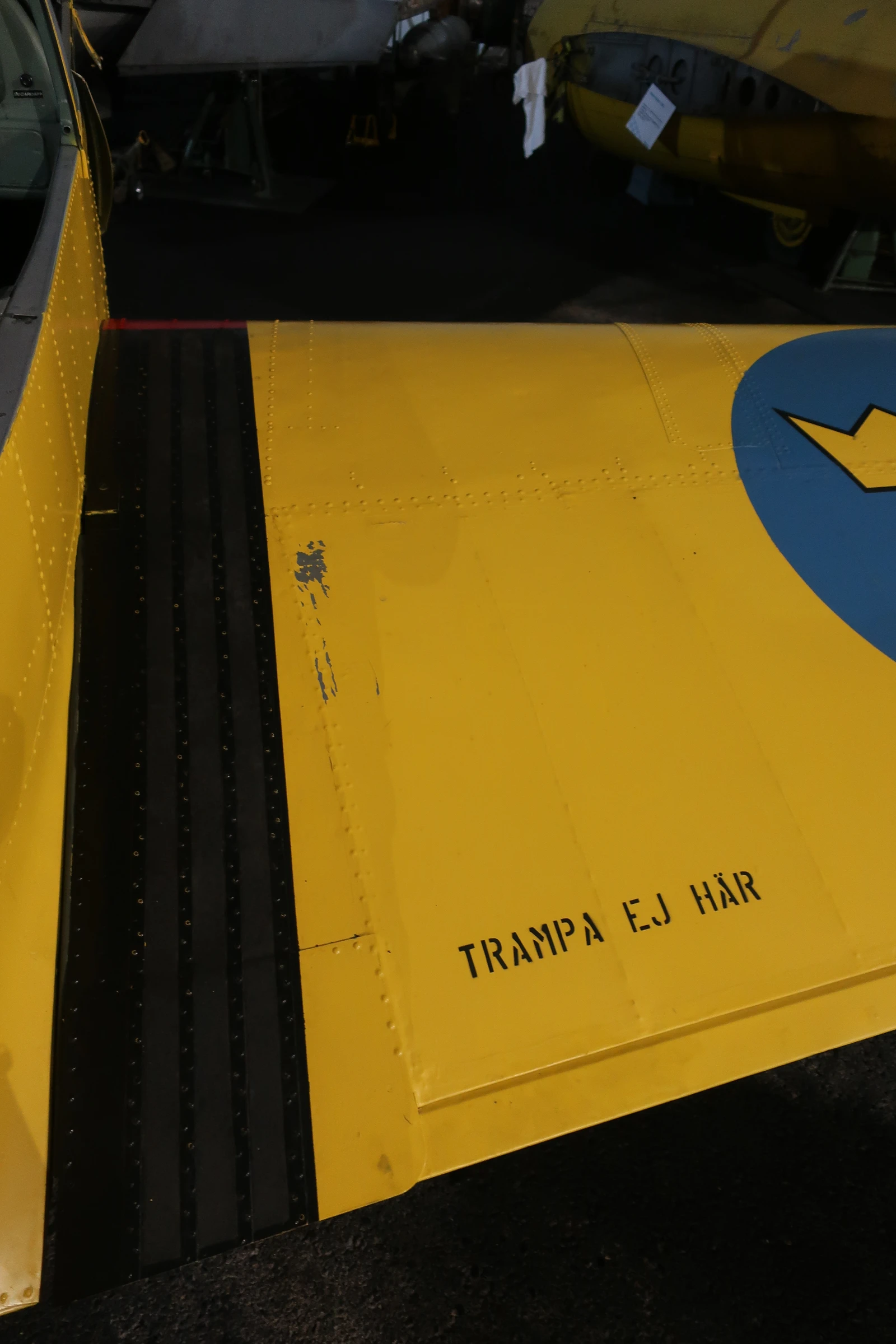
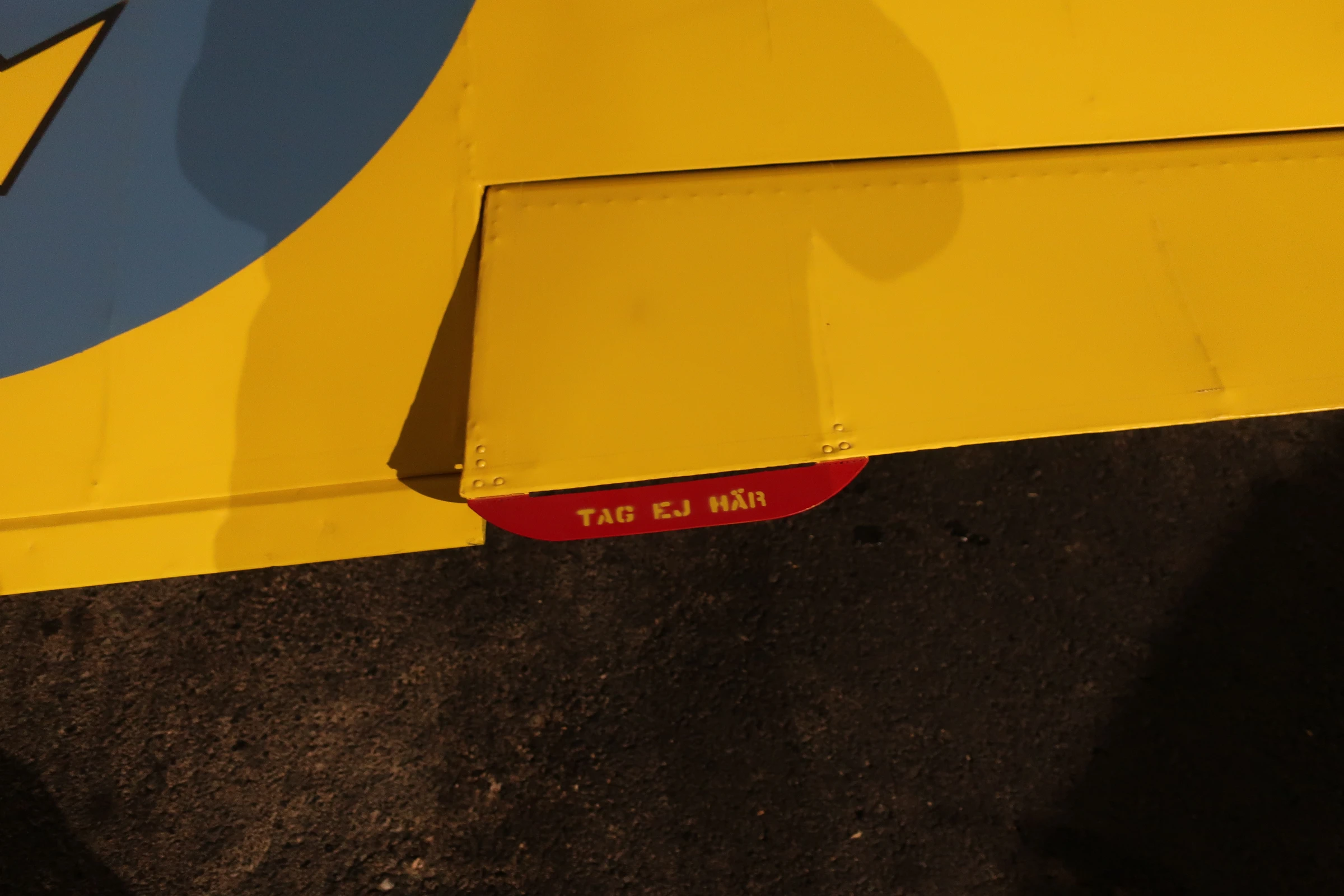
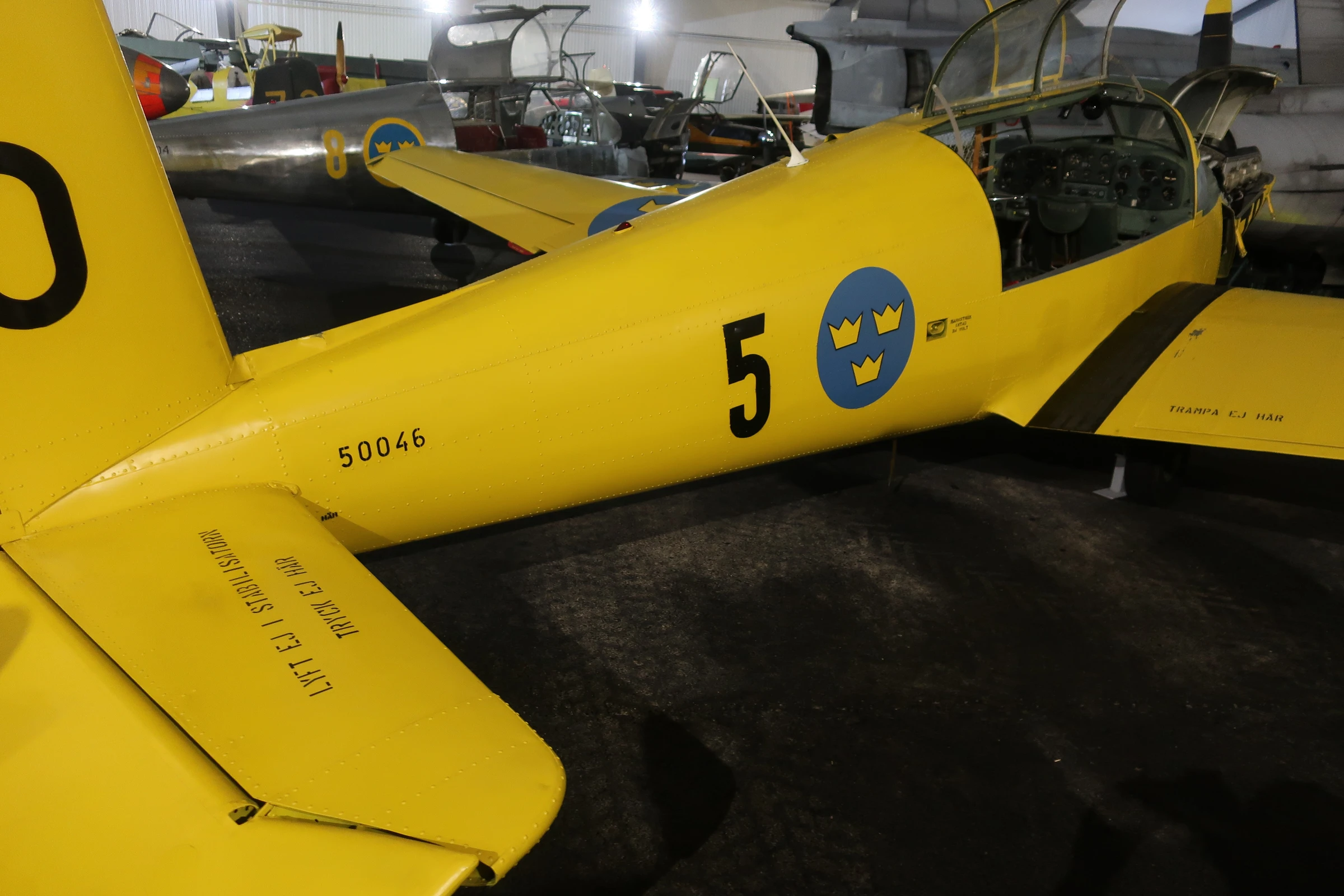
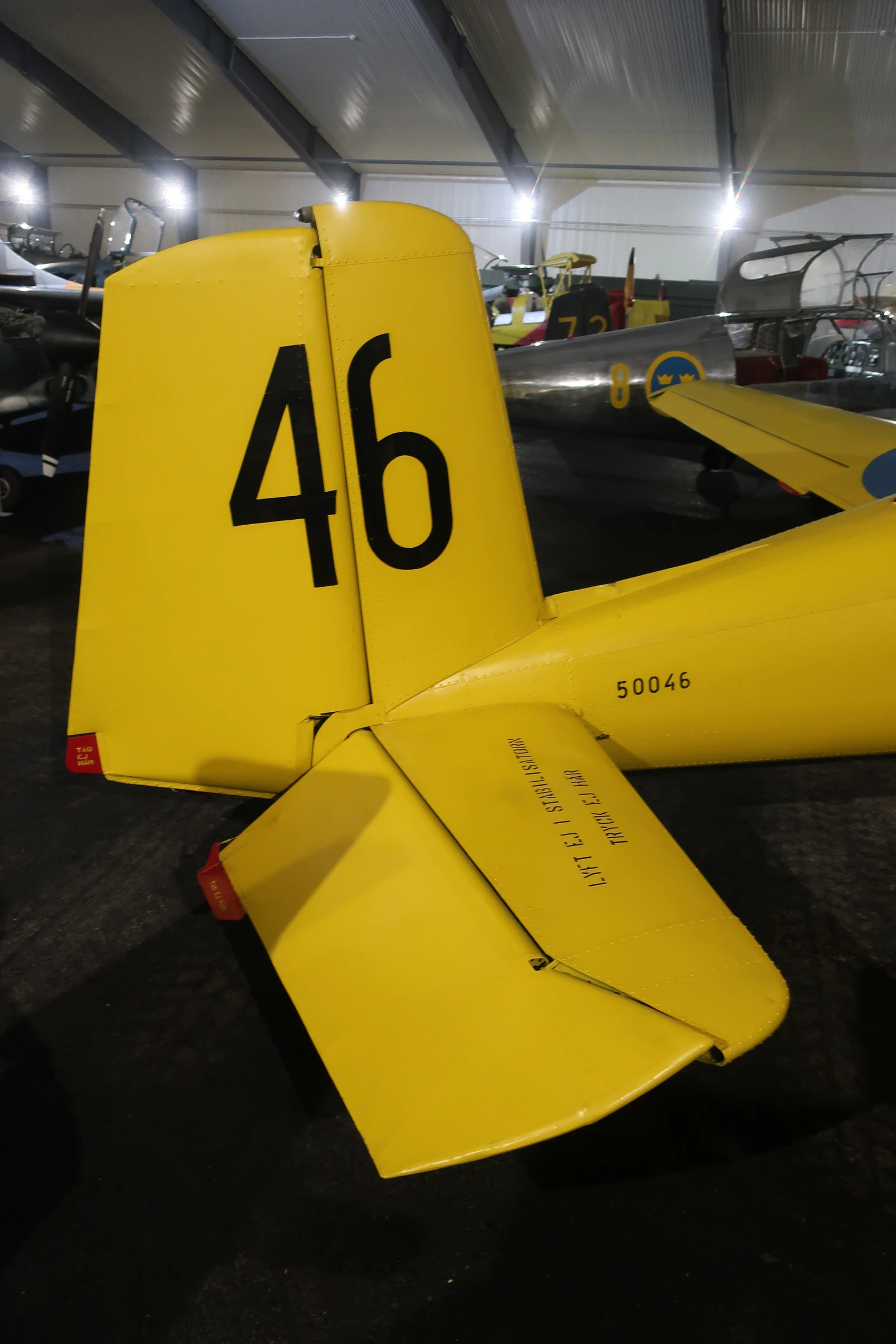
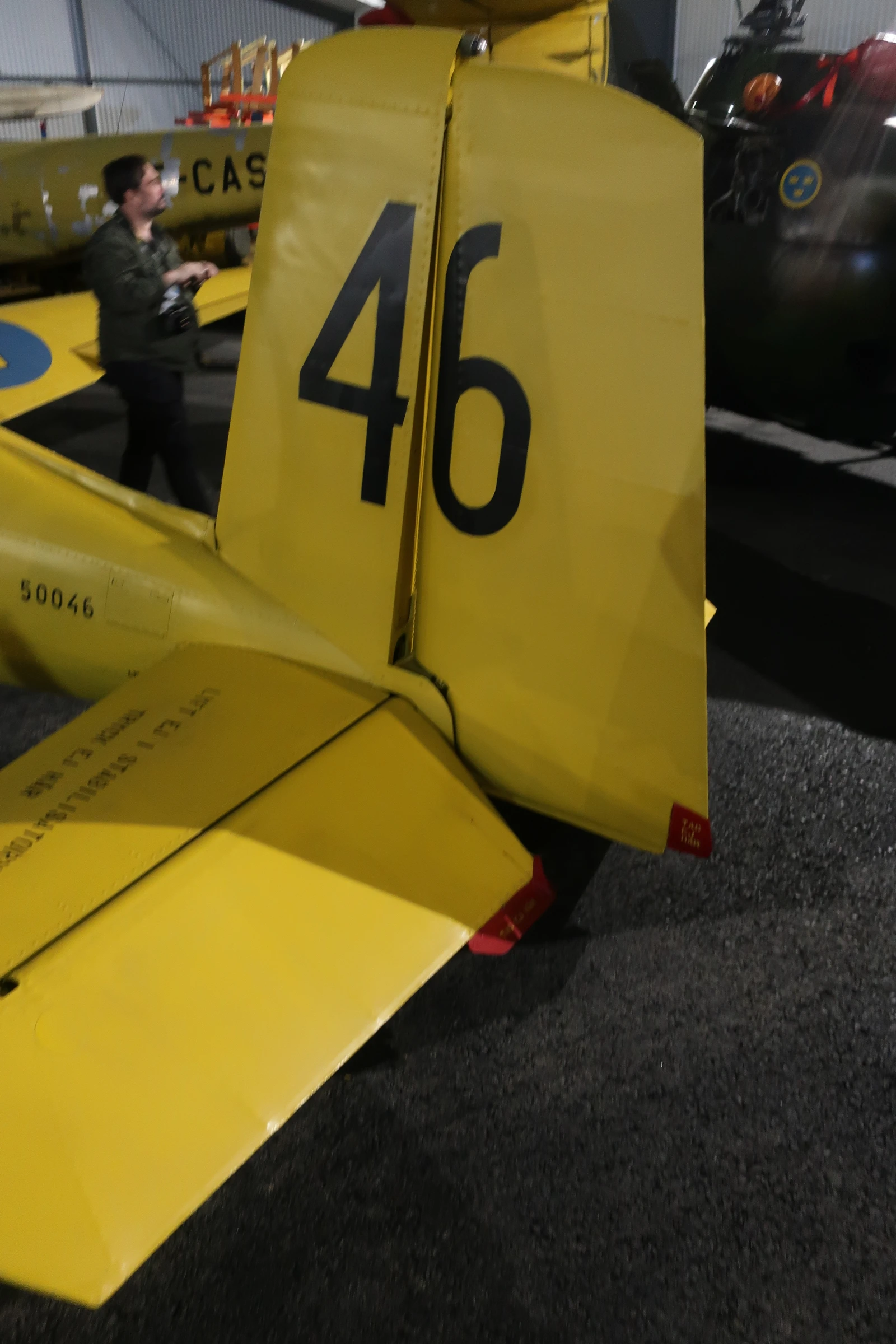
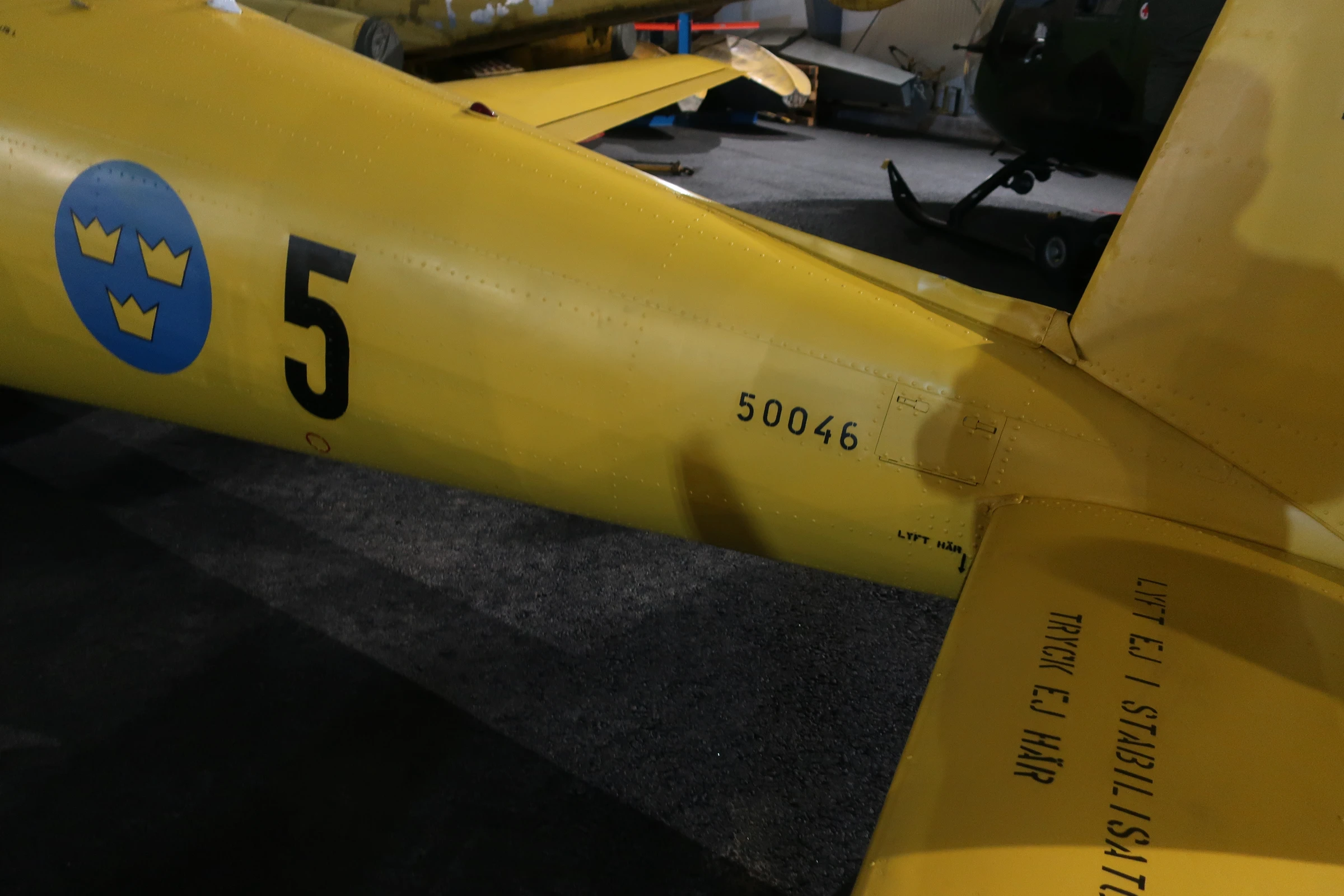
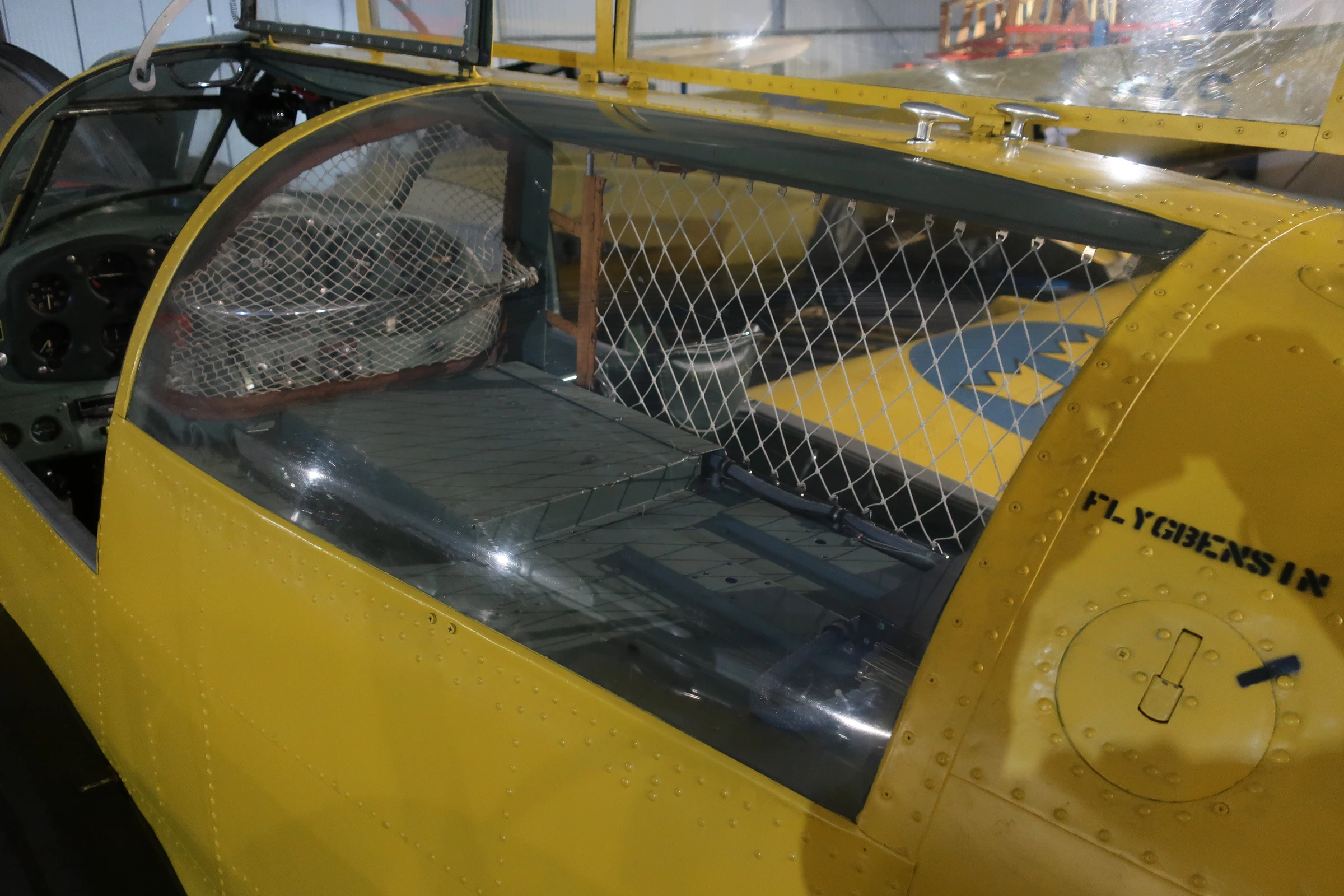
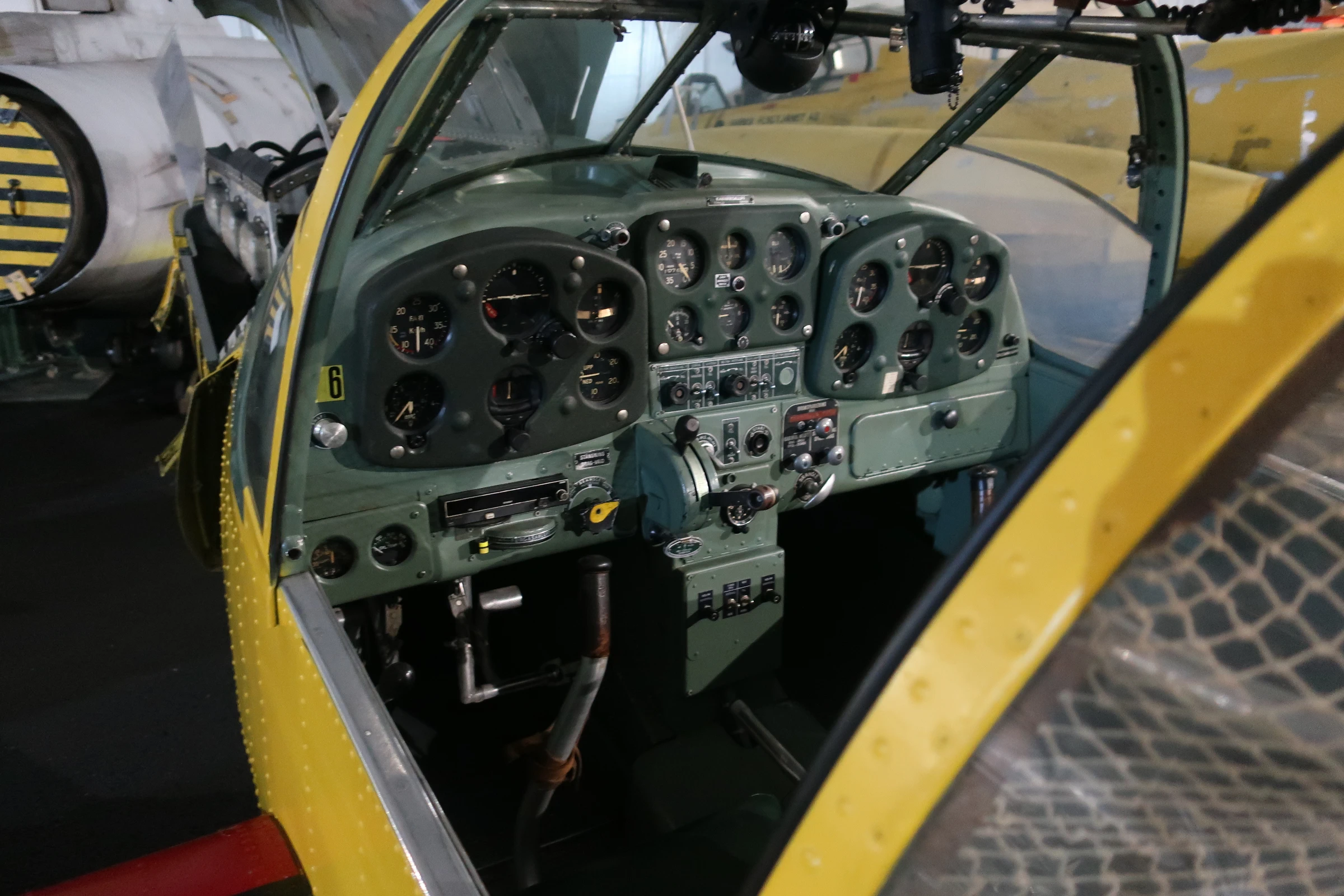
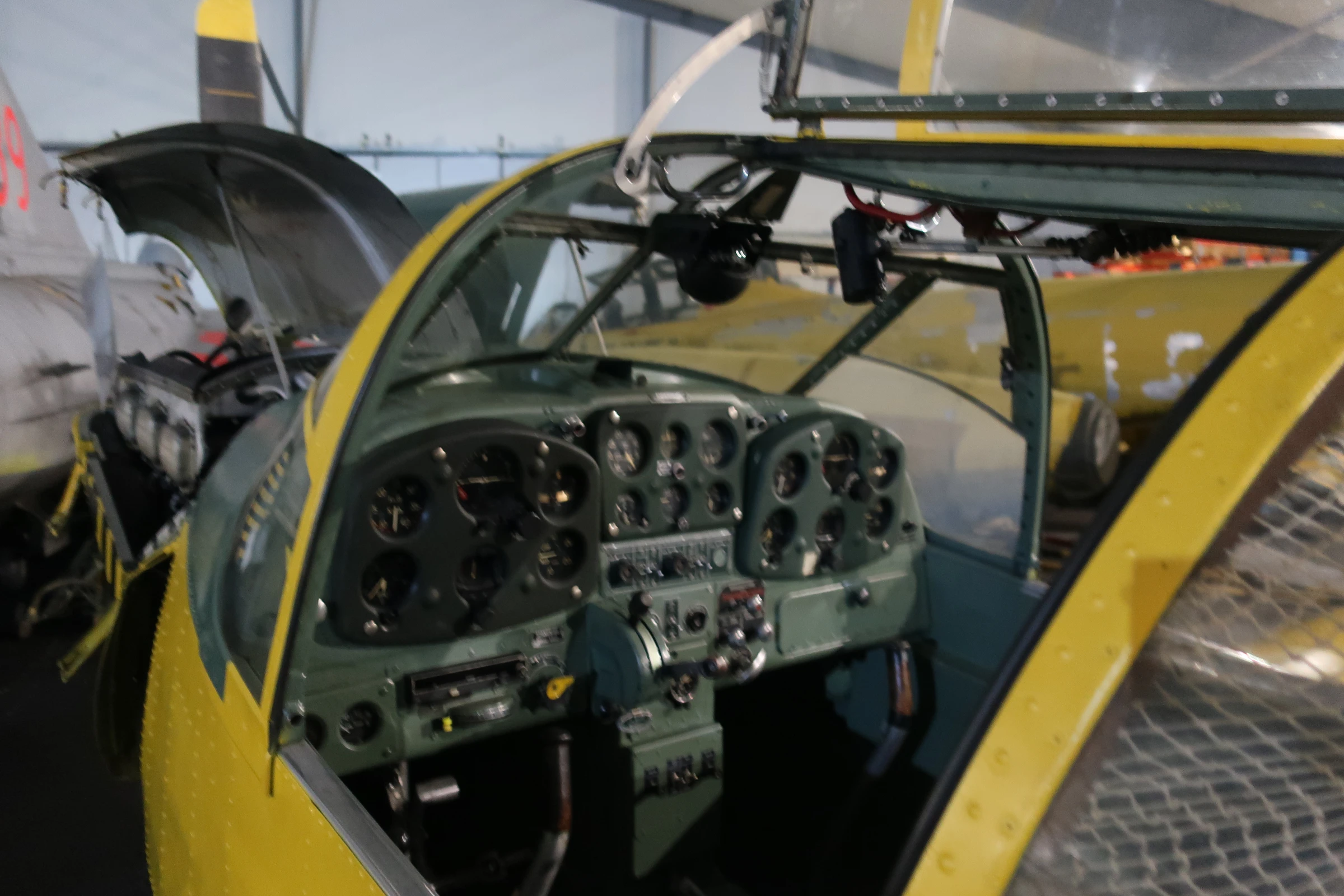
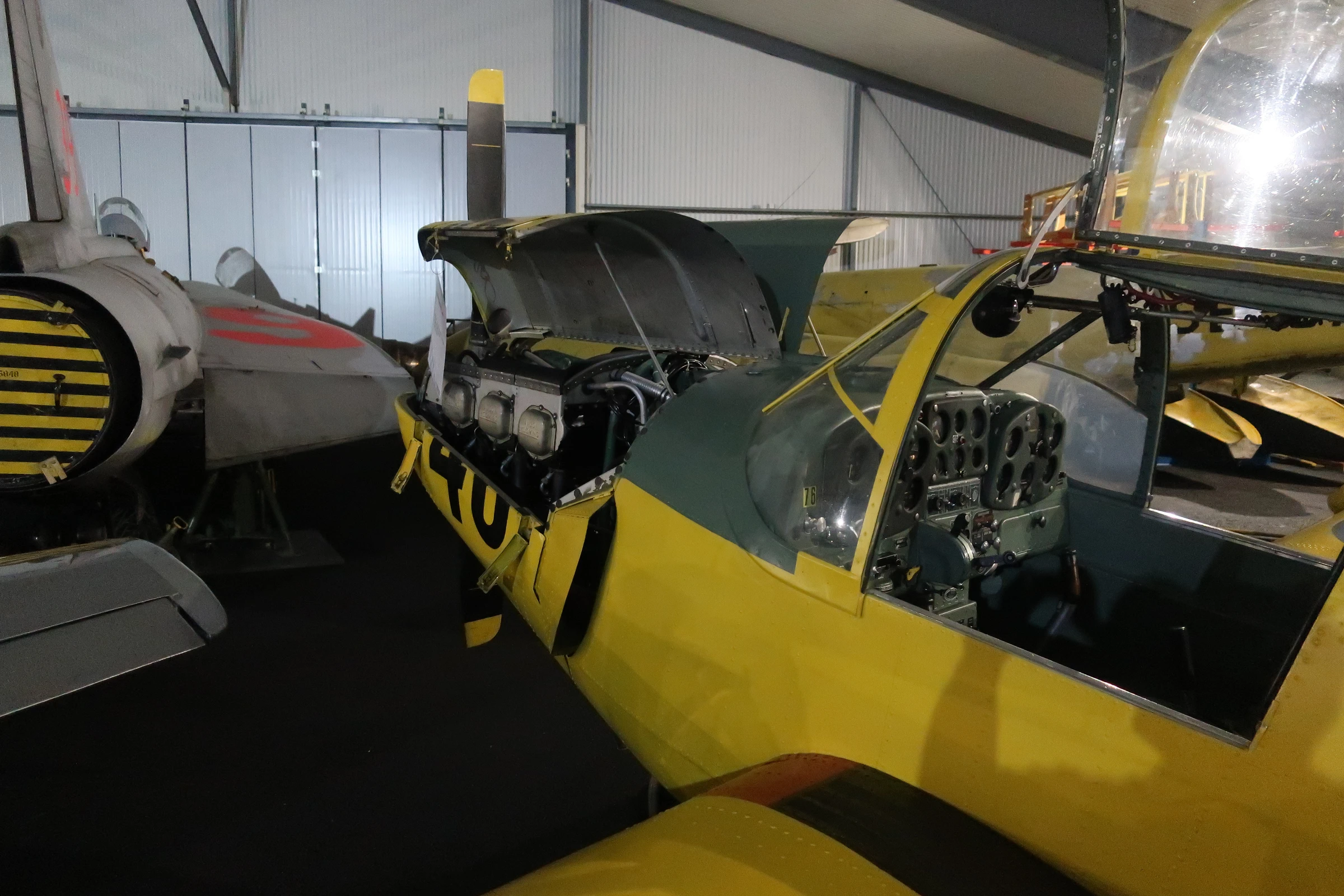
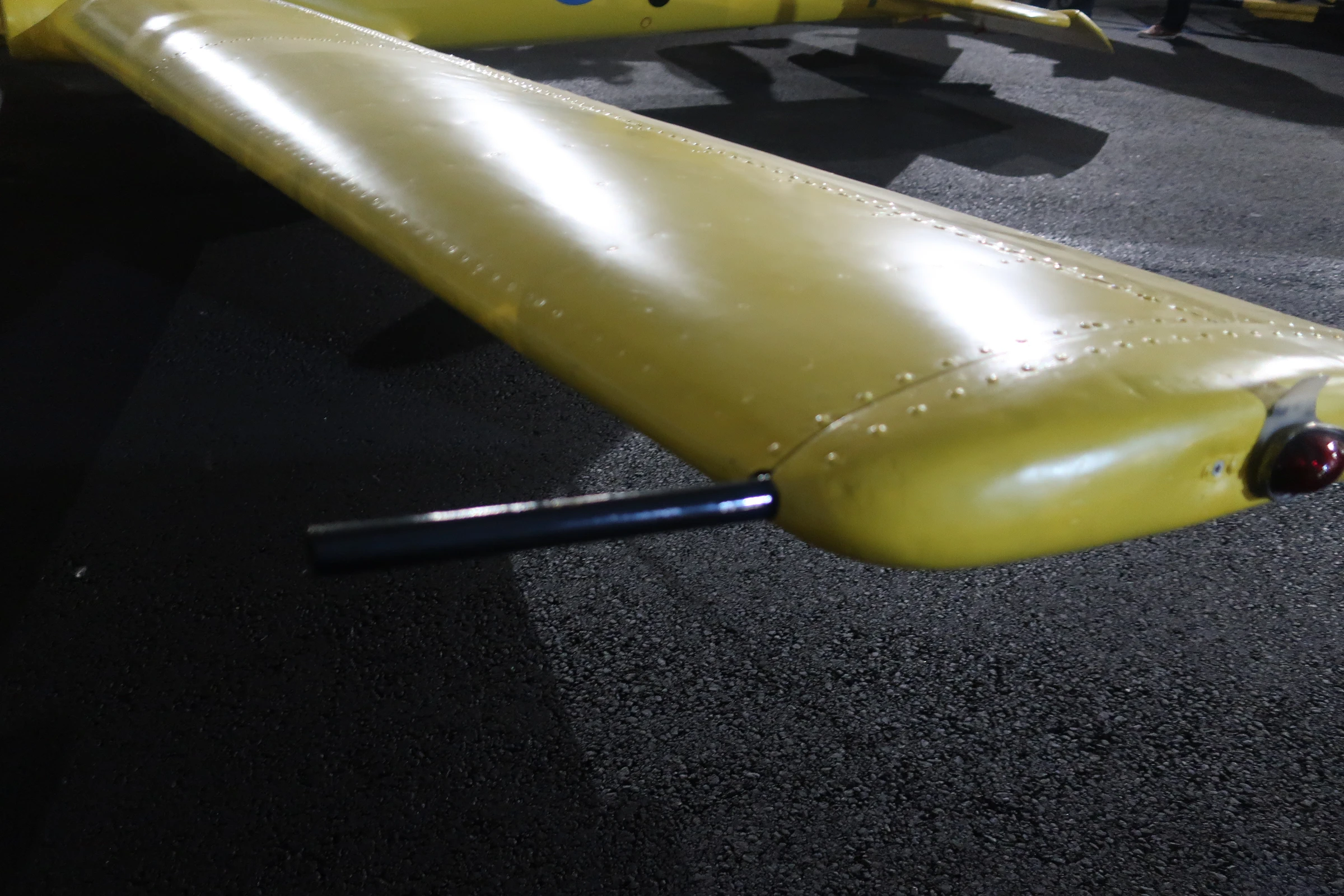
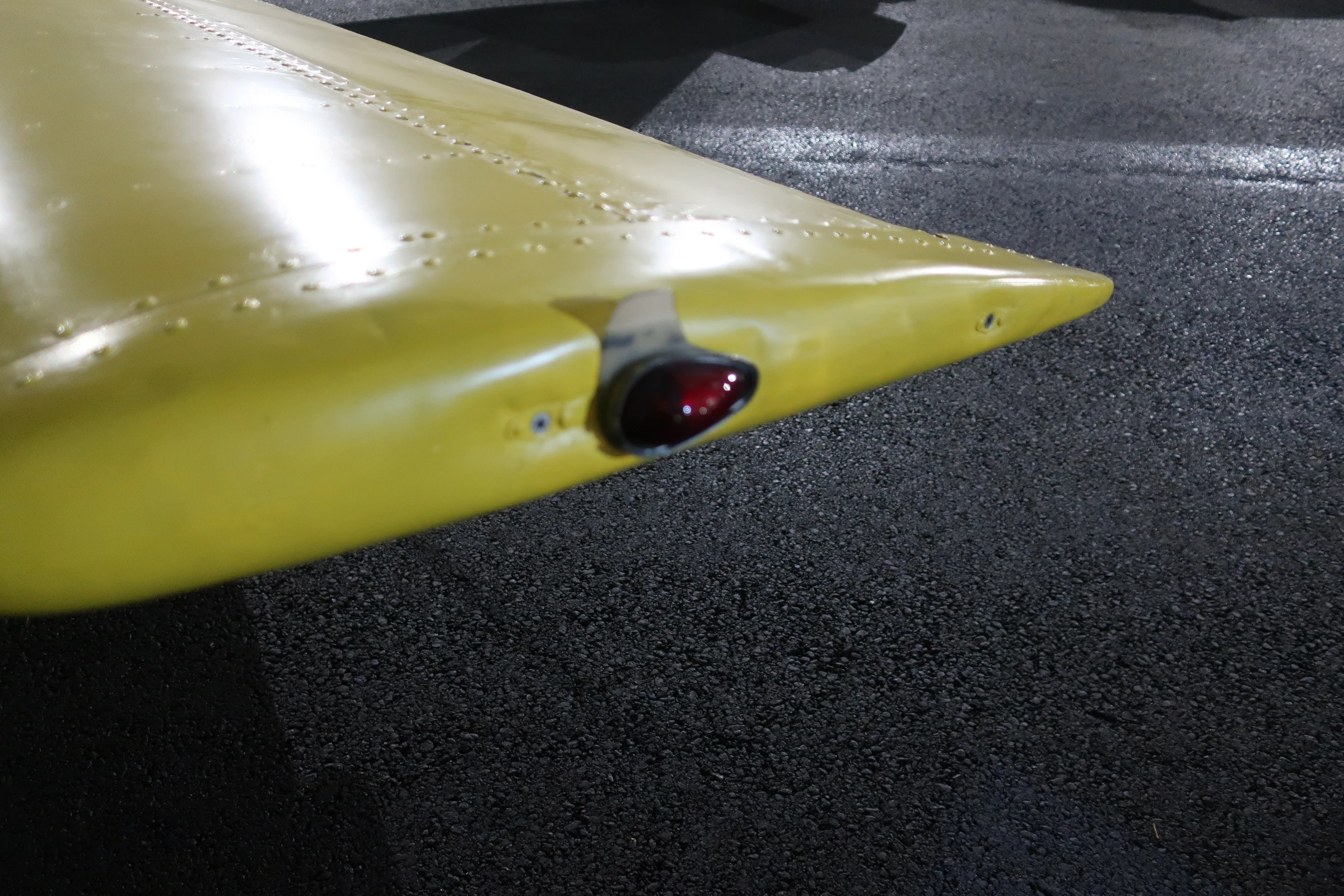
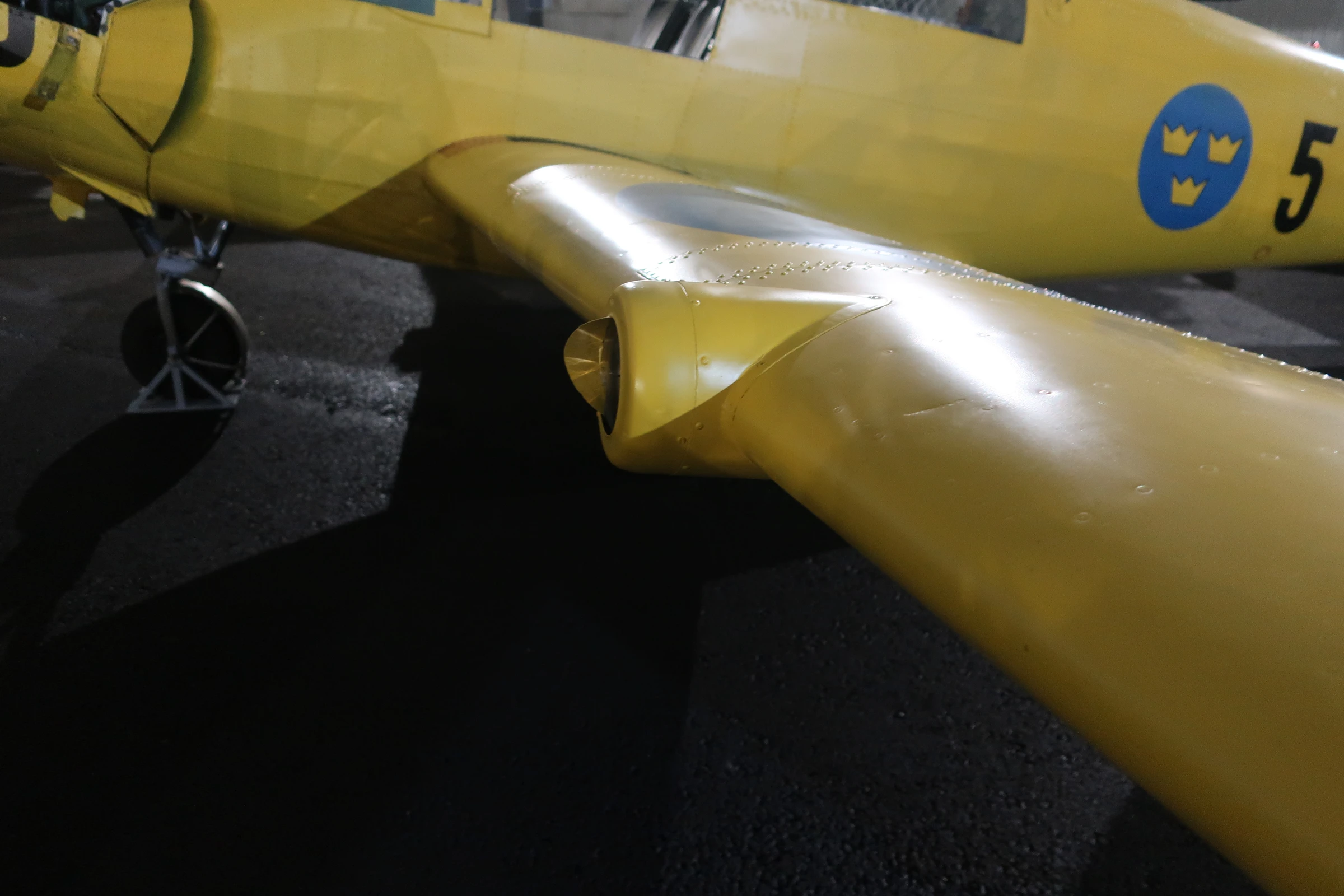
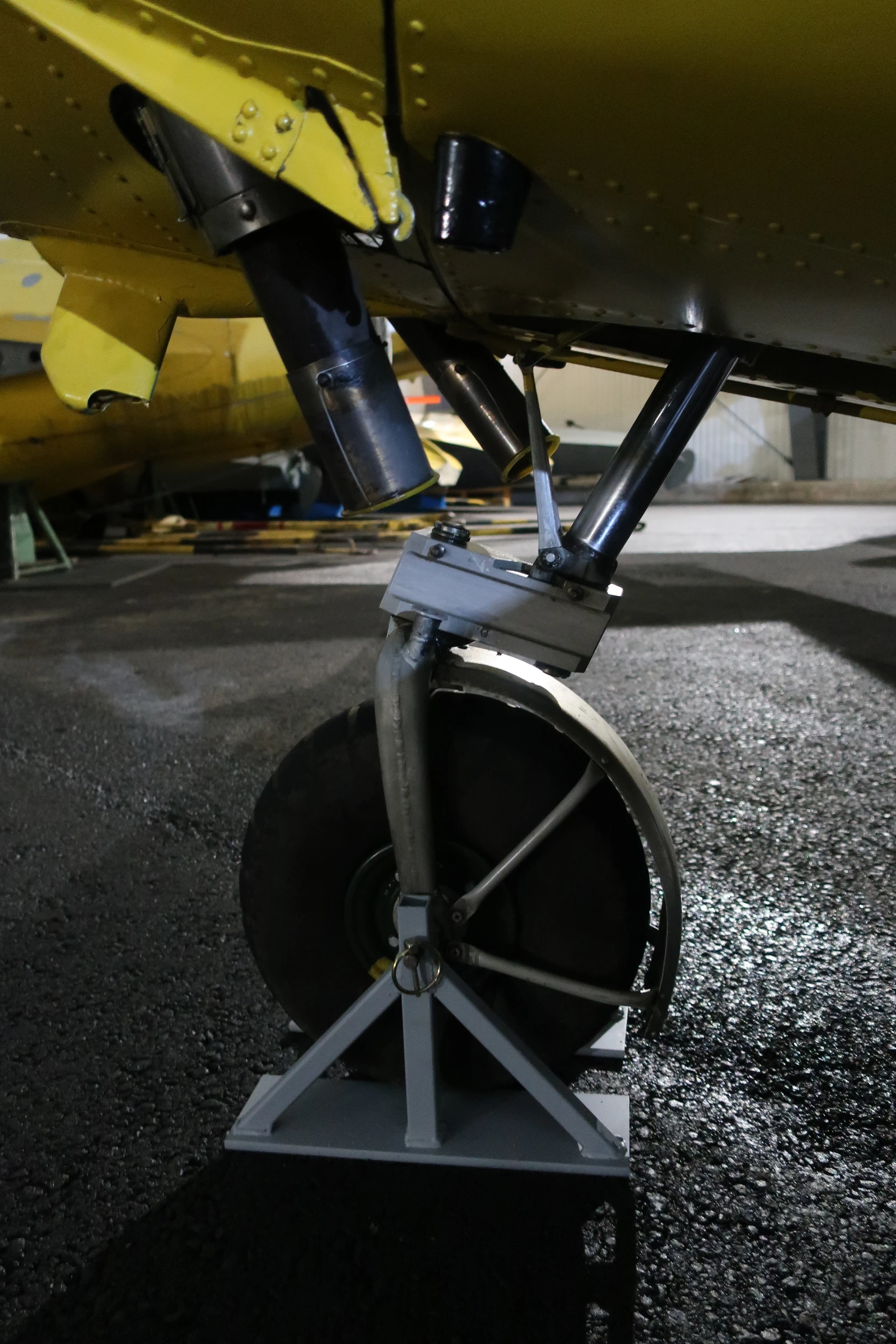
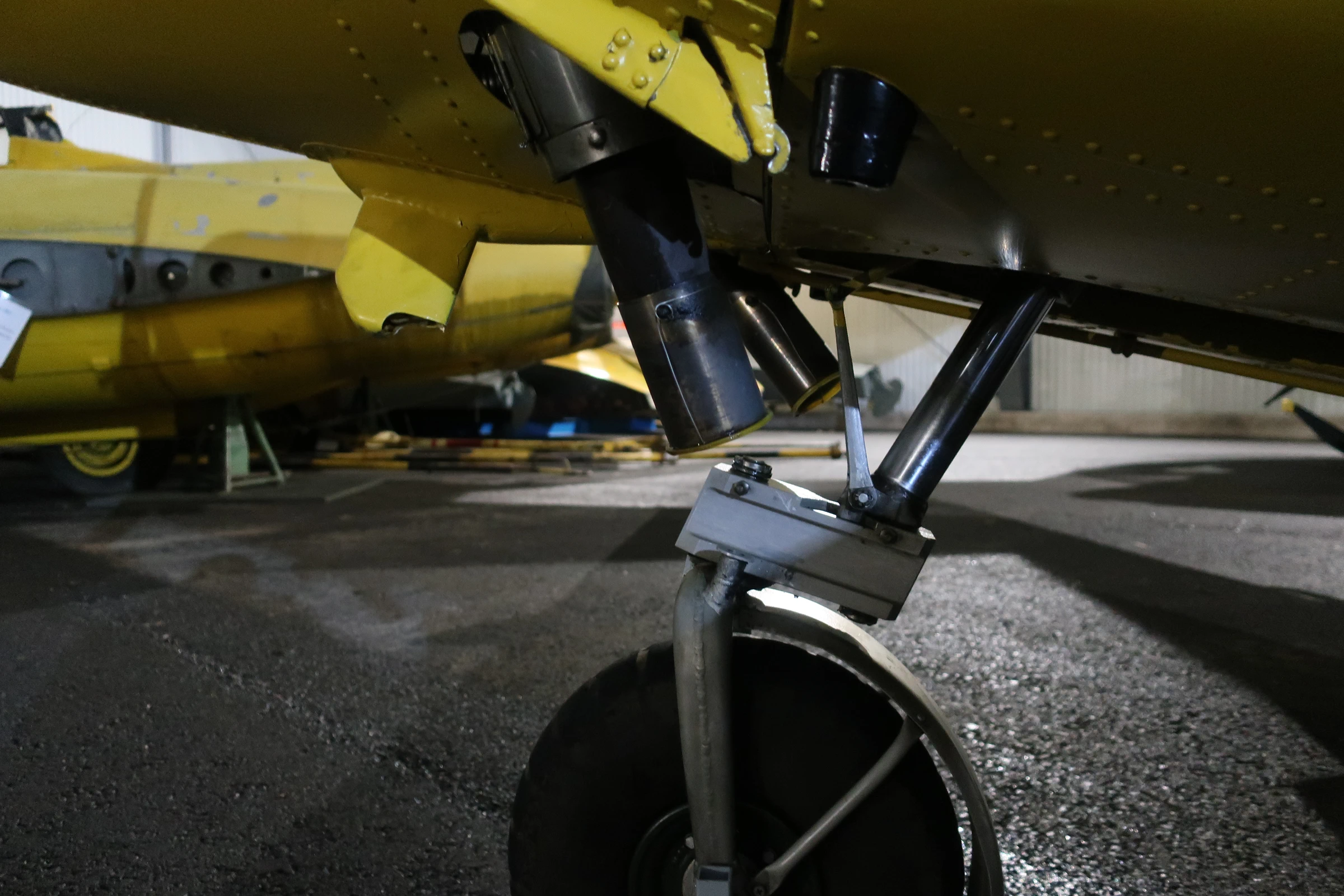
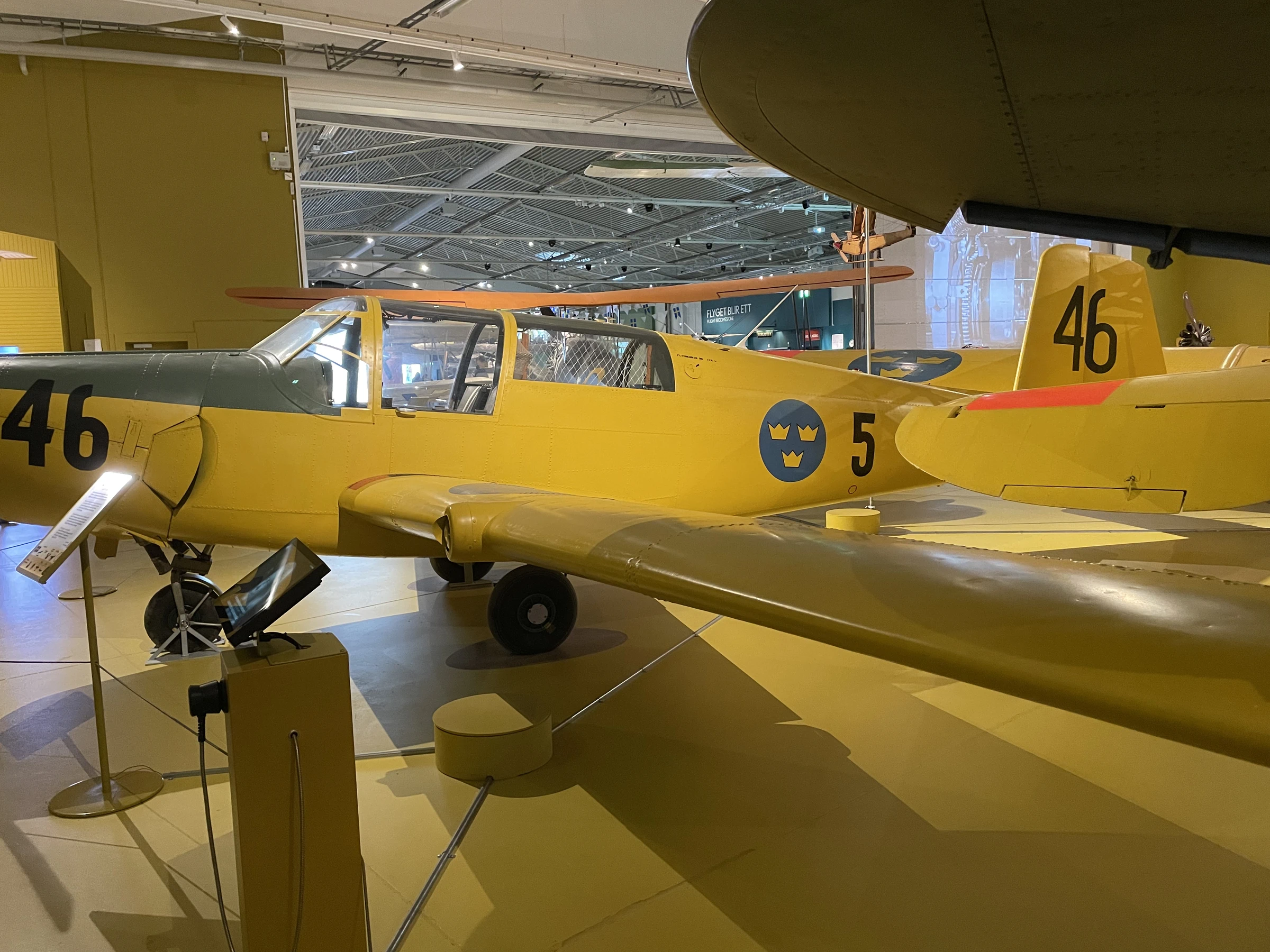
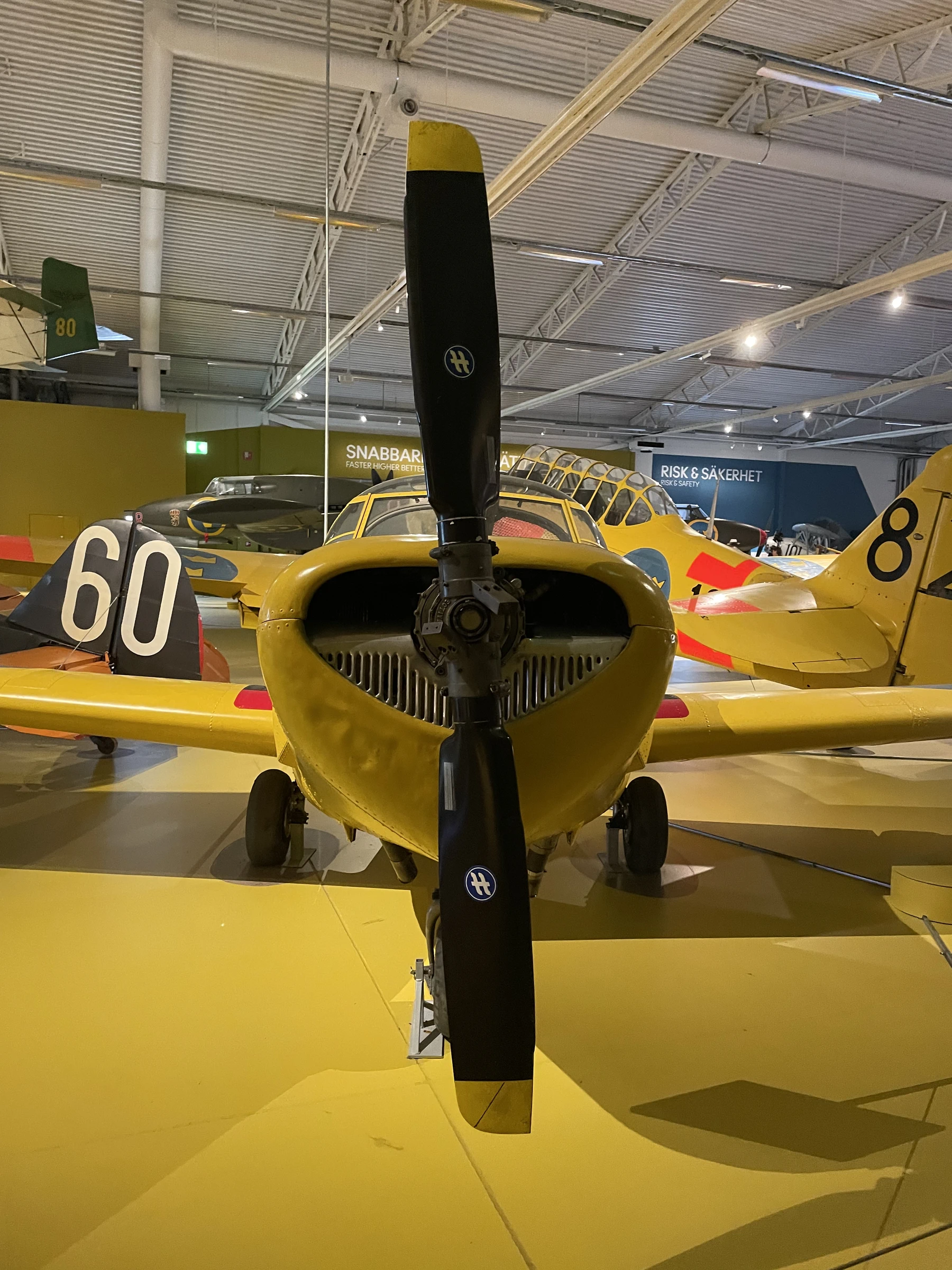
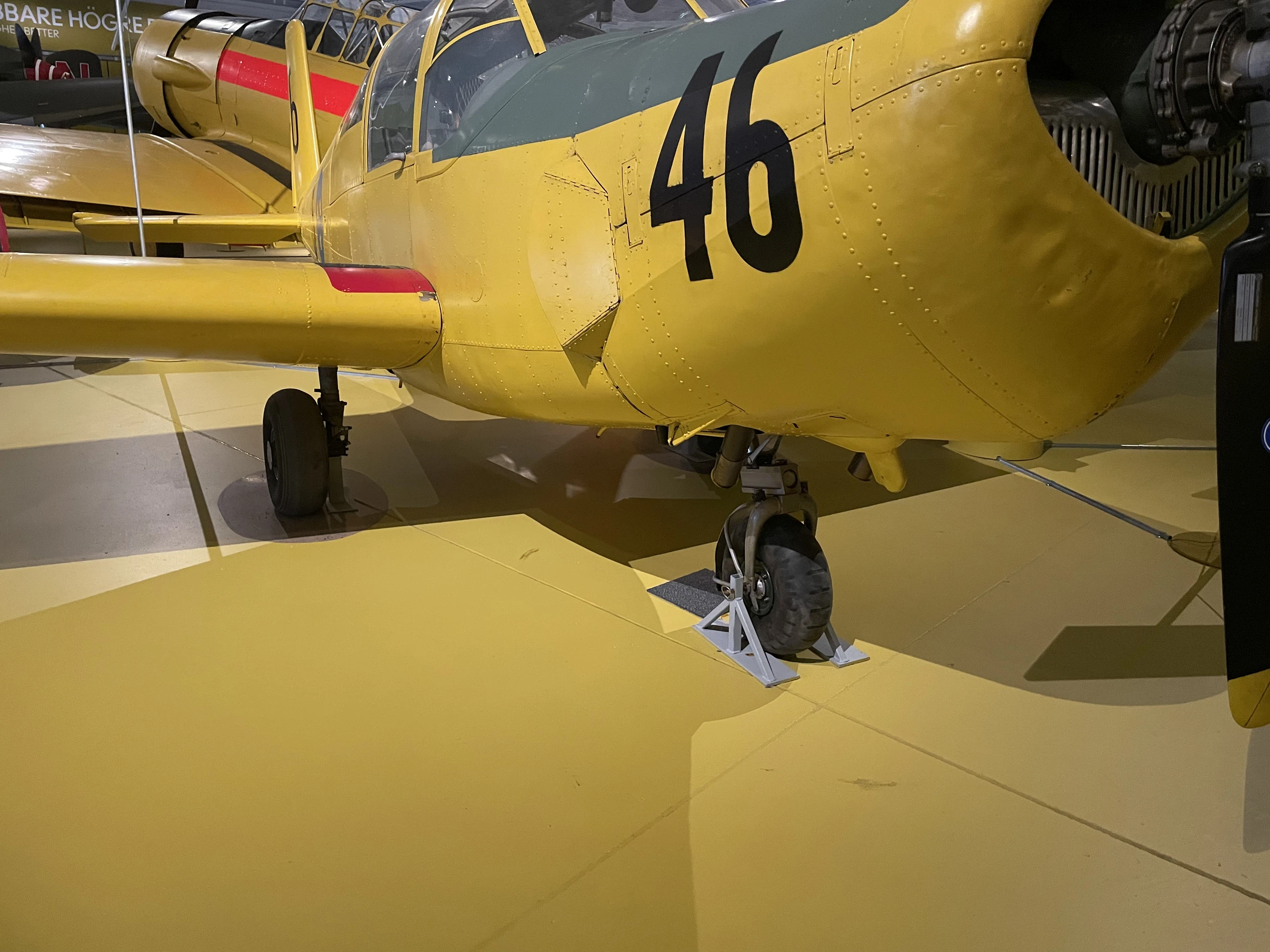
These walk-around photos were taken in one of Flygvapenmuseum's storage facilities in 2019. They show a Saab 91B Safir, designated Sk 50B in Swedish service — the aircraft with which a whole generation of Swedish Air Force pilots took their first steps in the cockpit. Designed by Anders Johan Andersson — the same engineer behind the Bücker Bü 181 Bestmann — the Safir first flew in November 1945 and went on to become Saab's greatest export success prior to the Saab 340, serving with air forces in Sweden, Norway, Finland, Austria, Ethiopia, Tunisia and several other countries. The prototype even served as an aerodynamic testbed for the swept wing of the J 29 Tunnan and later the wing of the A 32 Lansen.
The Swedish Air Force ordered 75 Sk 50Bs in 1951 to replace the ageing Sk 25 Bestmann, but Saab's factory was fully committed to producing the J 29 Tunnan. Production was therefore contracted out to the Dutch company De Schelde at their Dordrecht factory, which delivered 76 aircraft to Sweden between 1952 and 1953. The Sk 50B became inseparably associated with the flying school at F 5 Ljungbyhed, where it formed the backbone of basic pilot training for decades and remained in service until the early 1990s. Individual 50046, coded 5-46, was one of the F 5 aircraft and is now part of Flygvapenmuseum's collection.