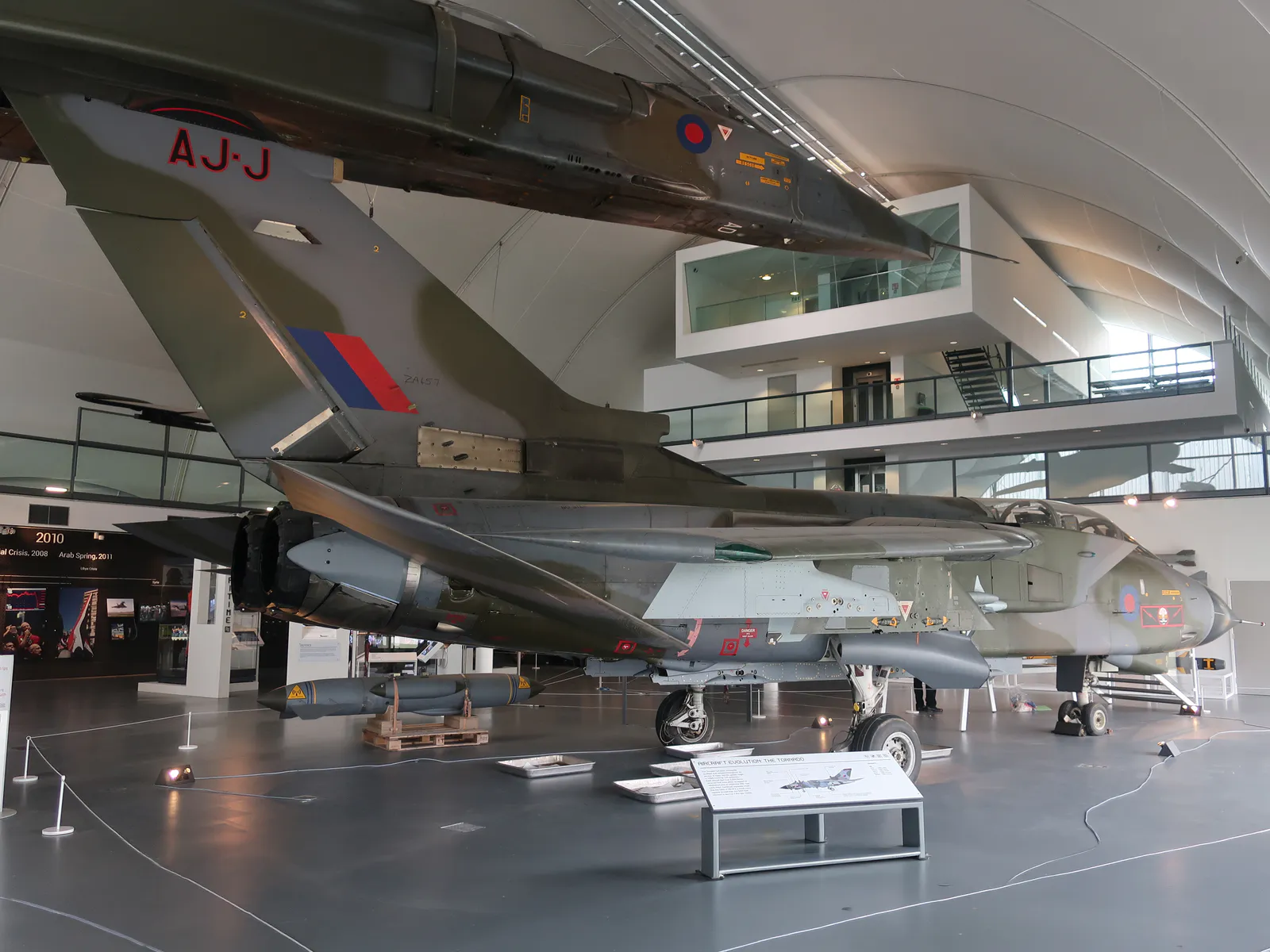
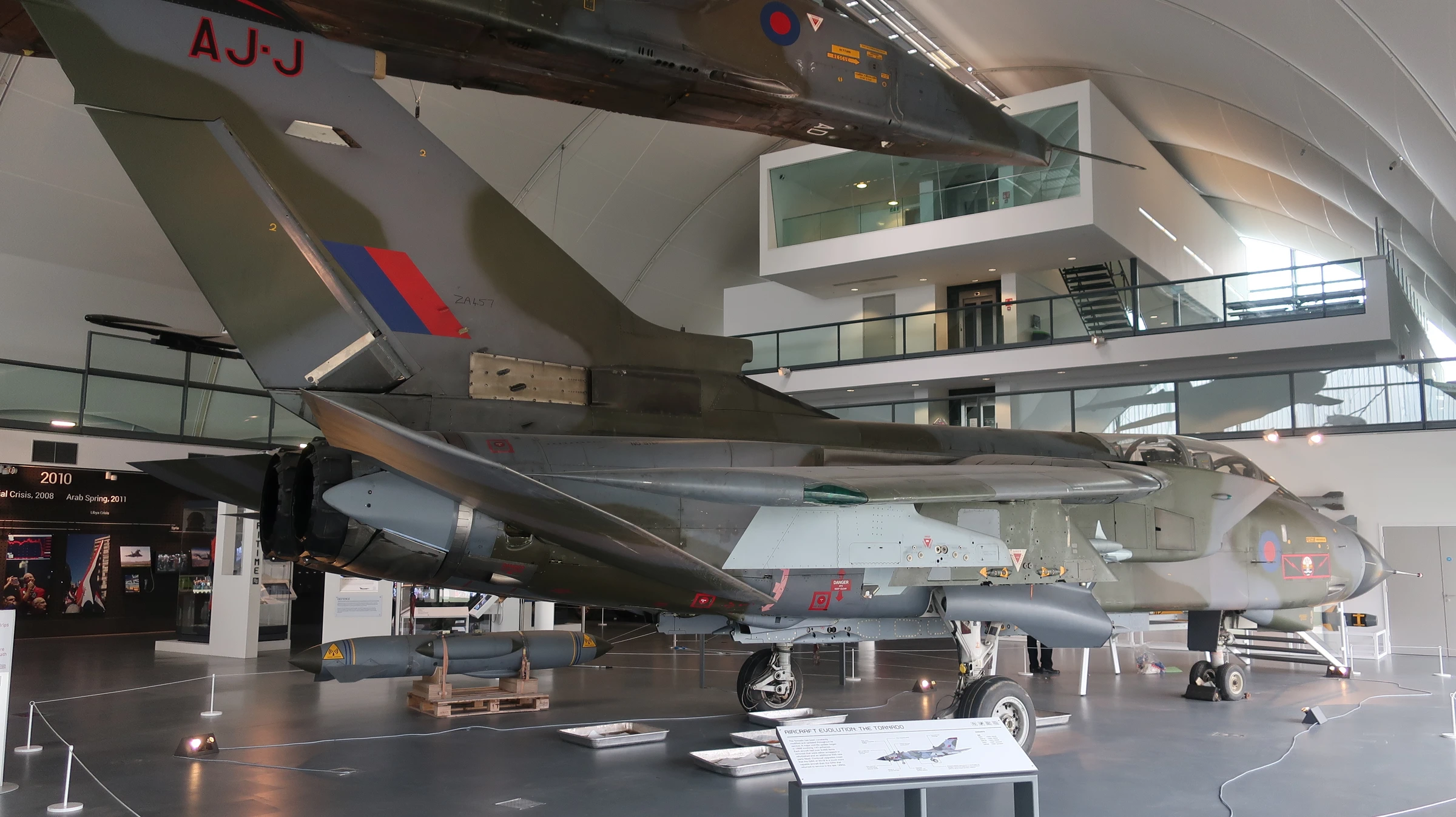
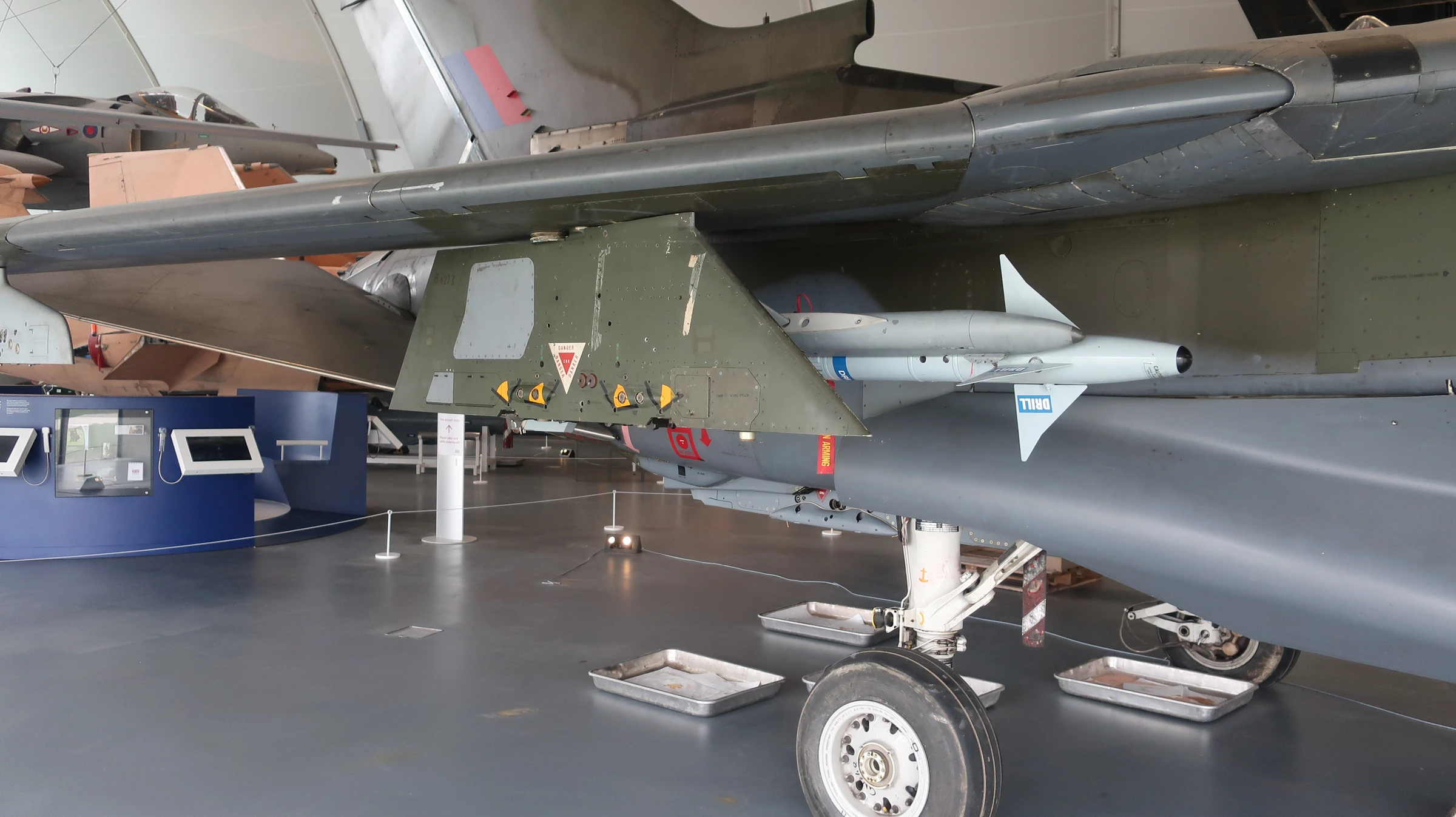
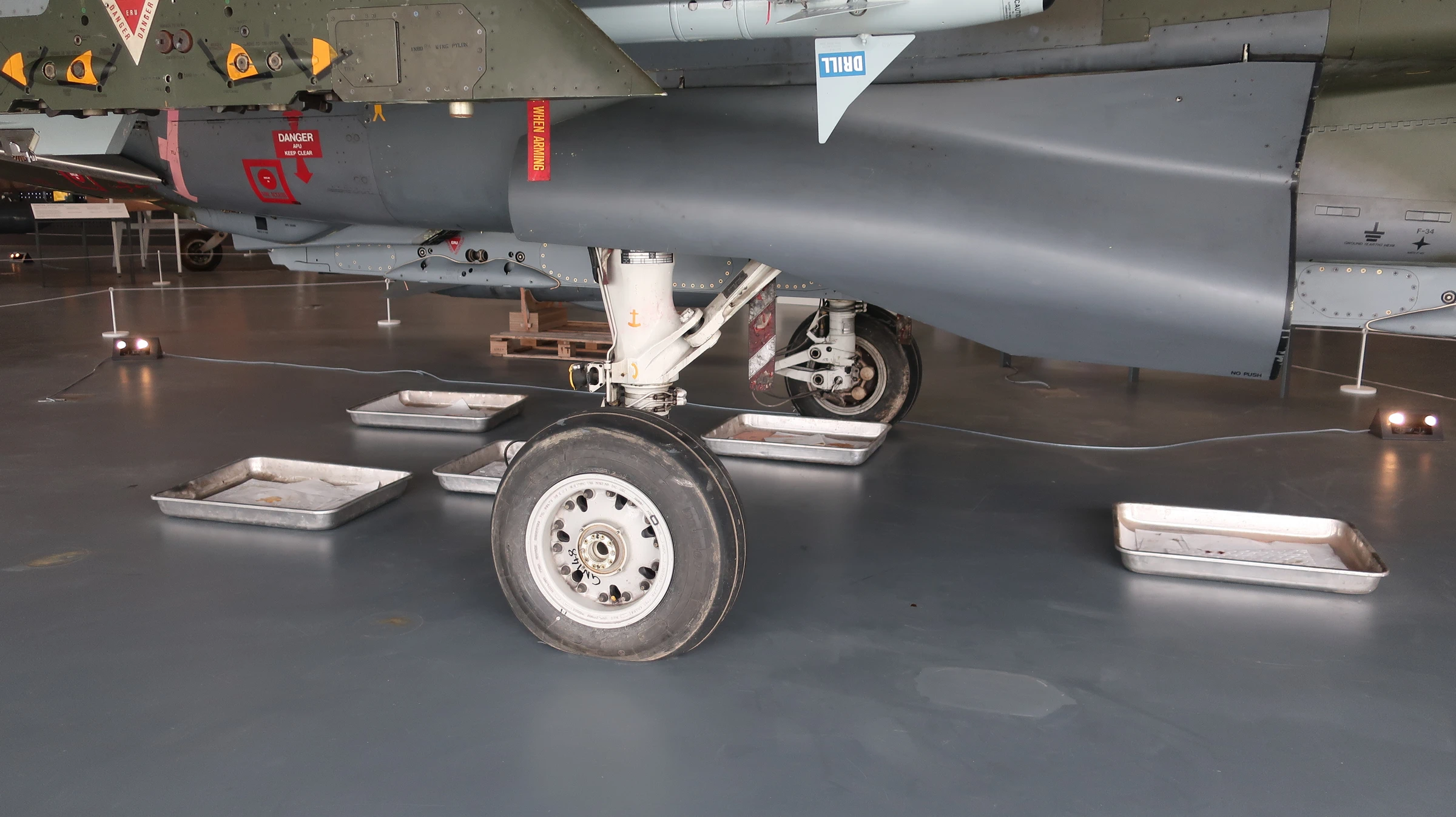
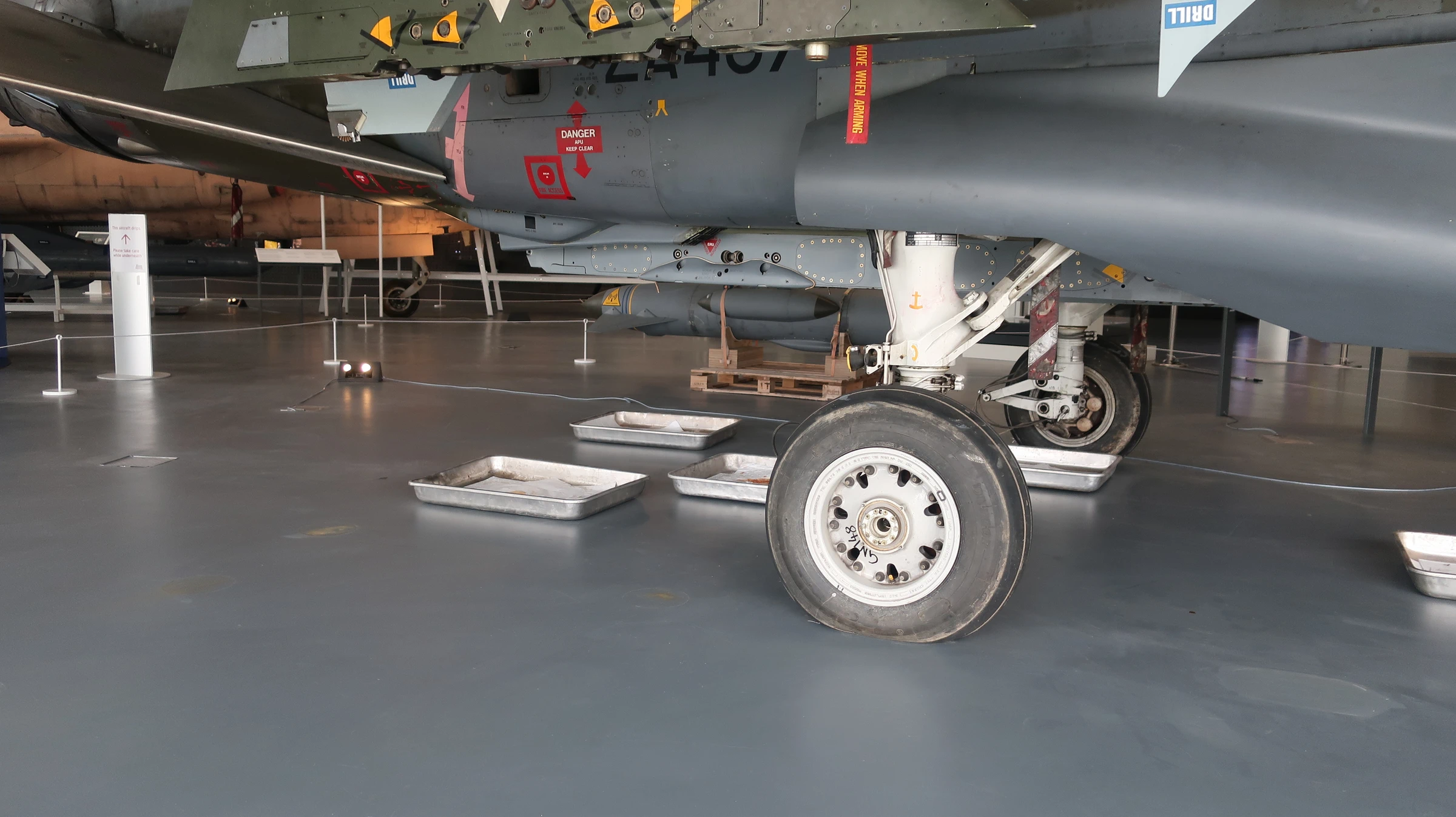
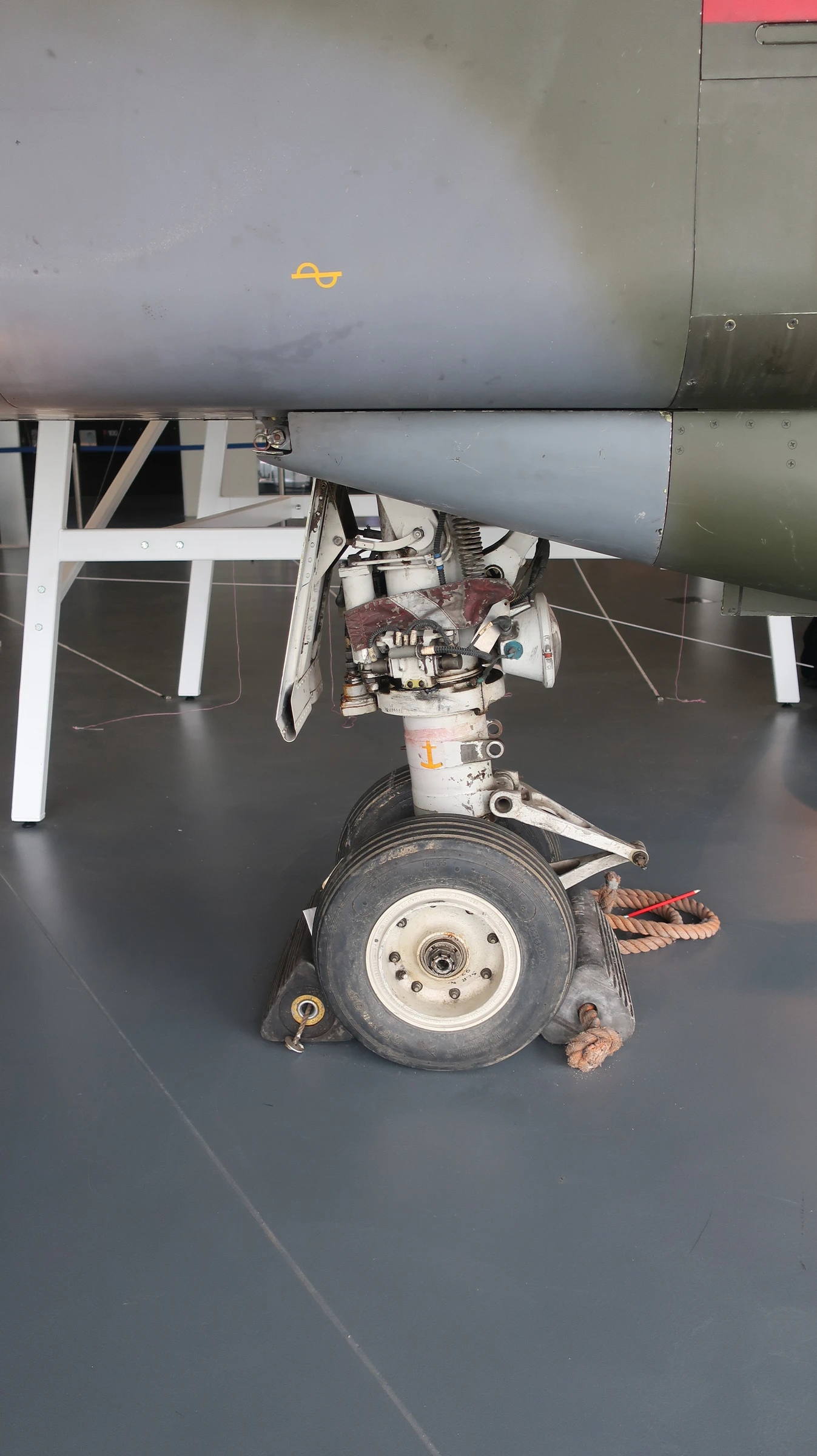
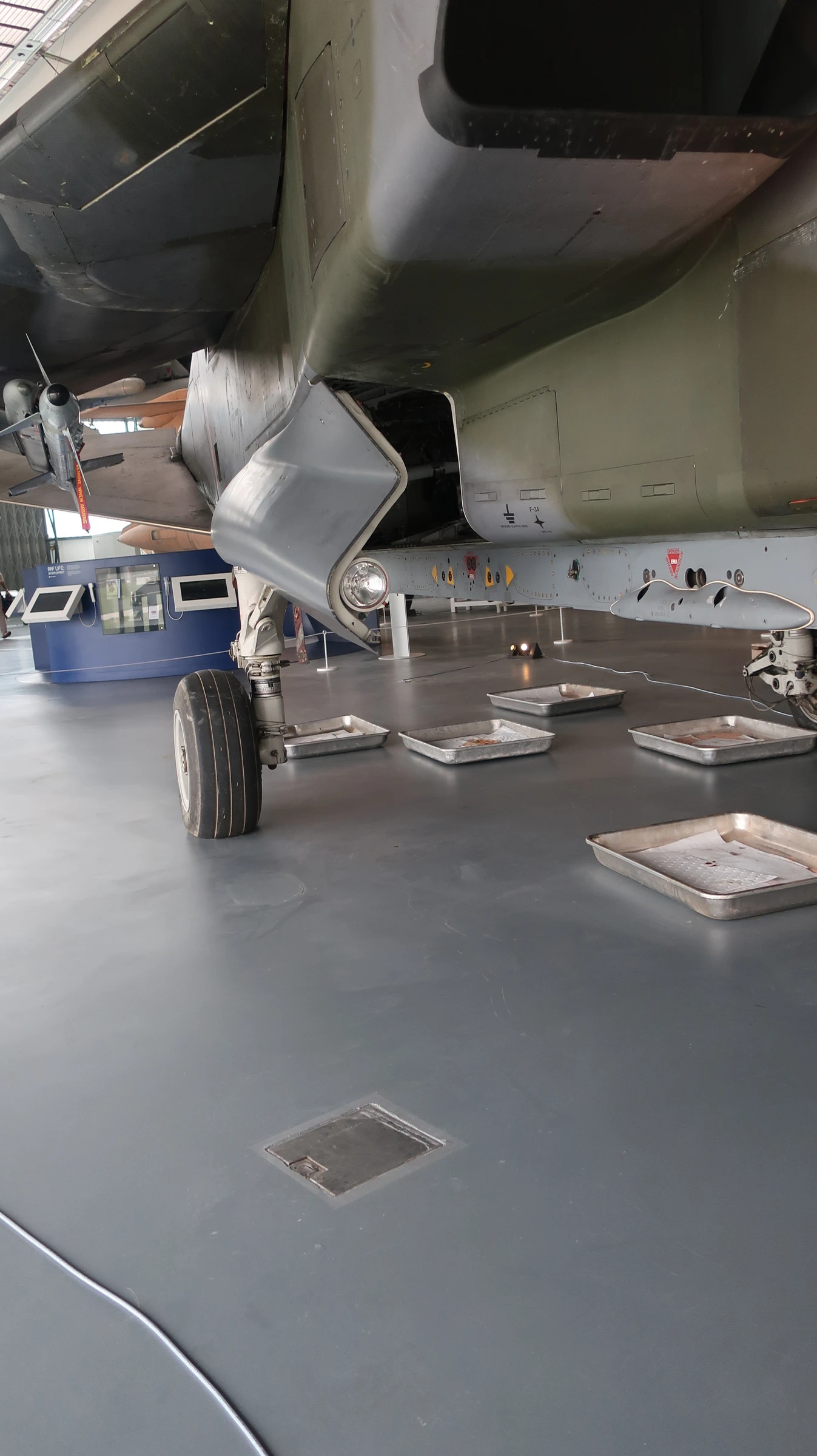
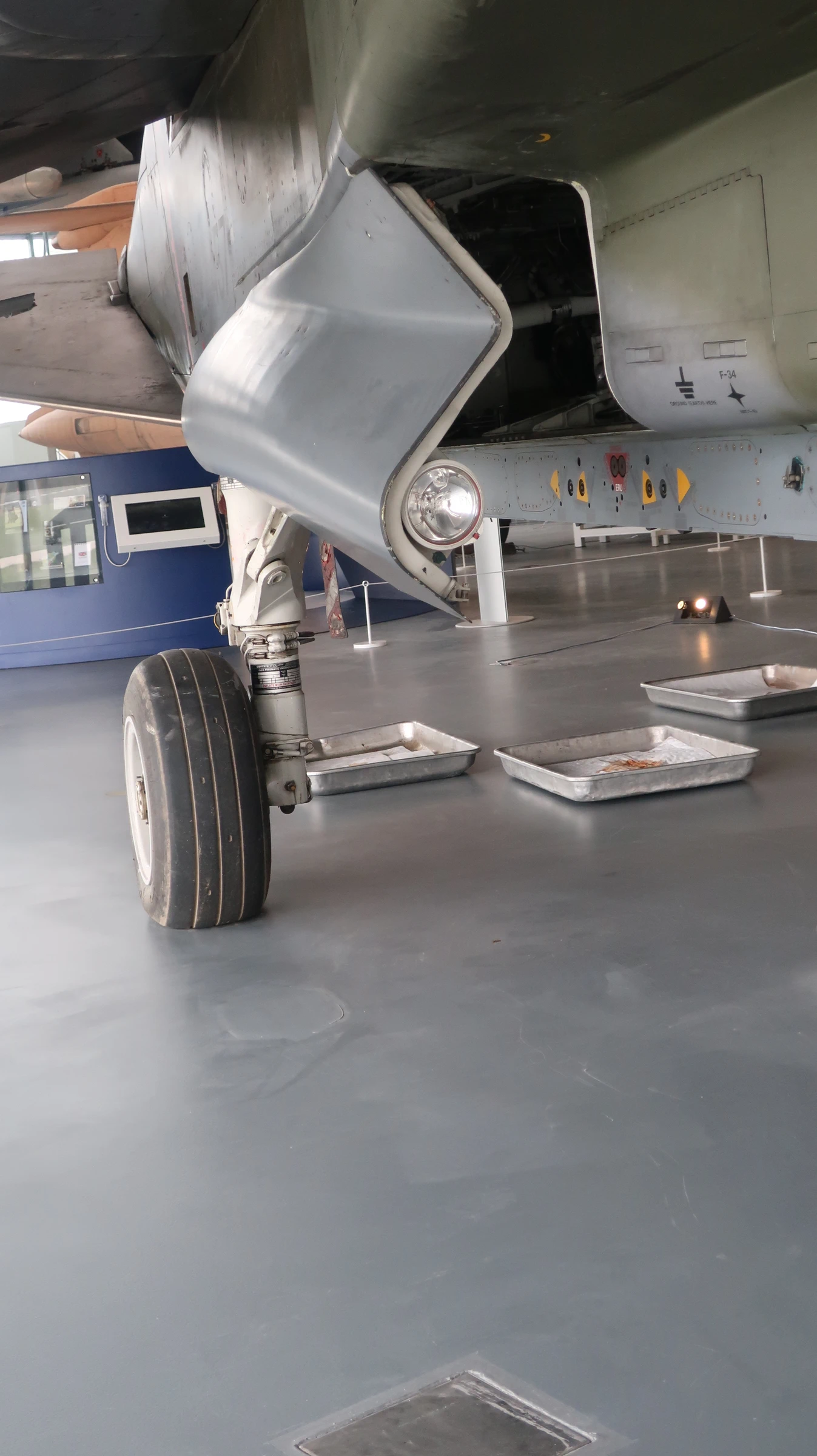
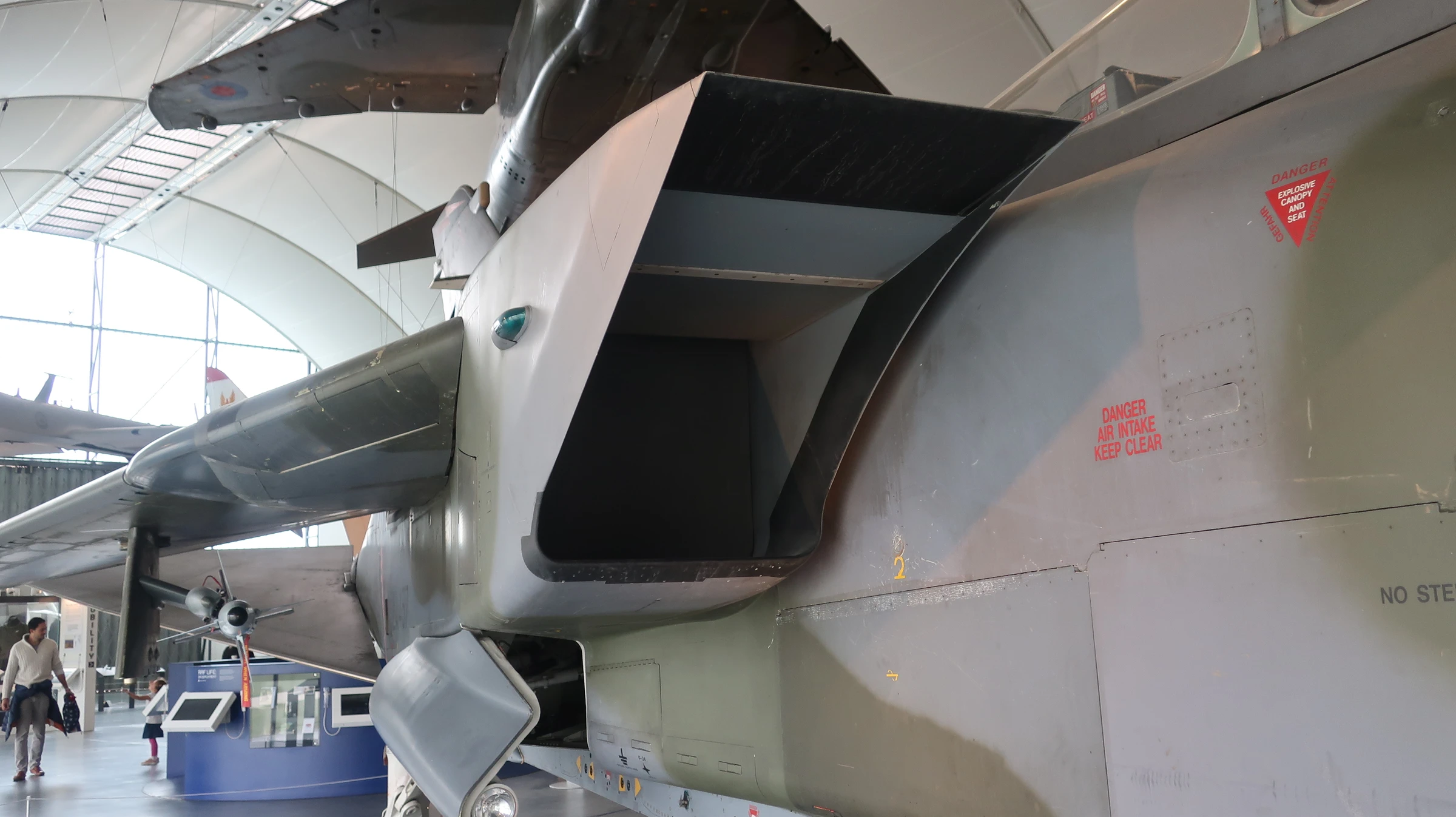
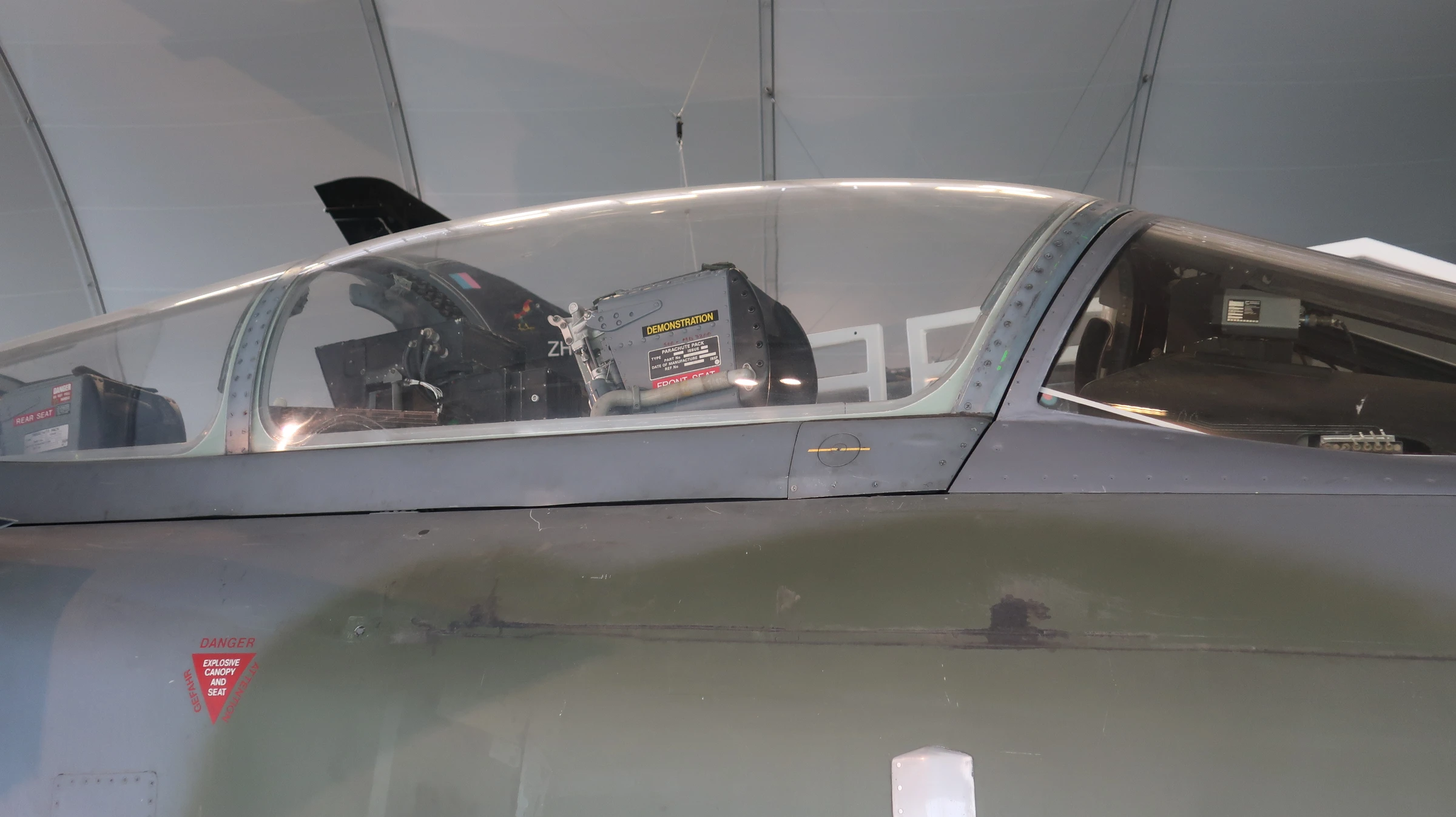
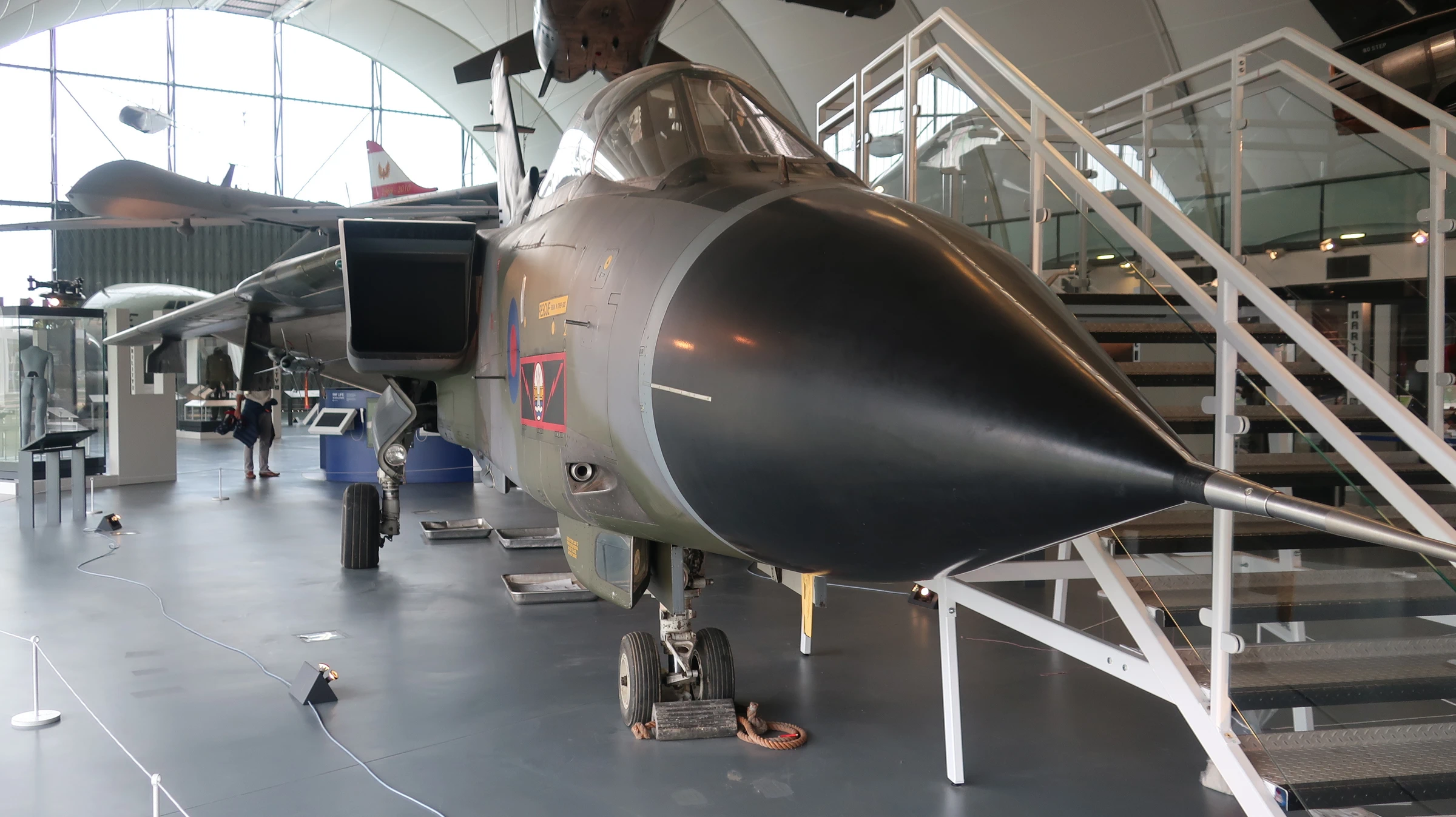
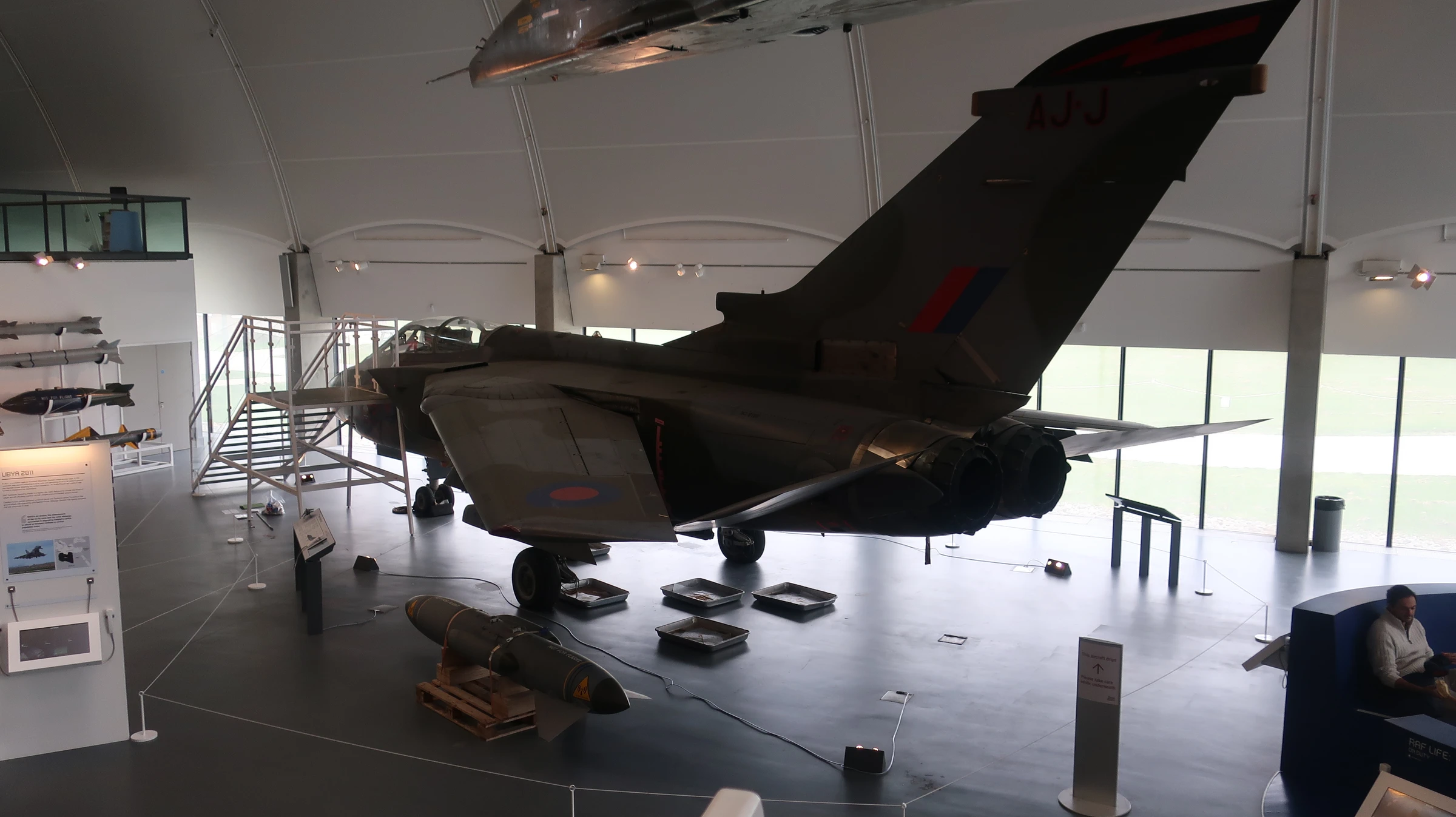
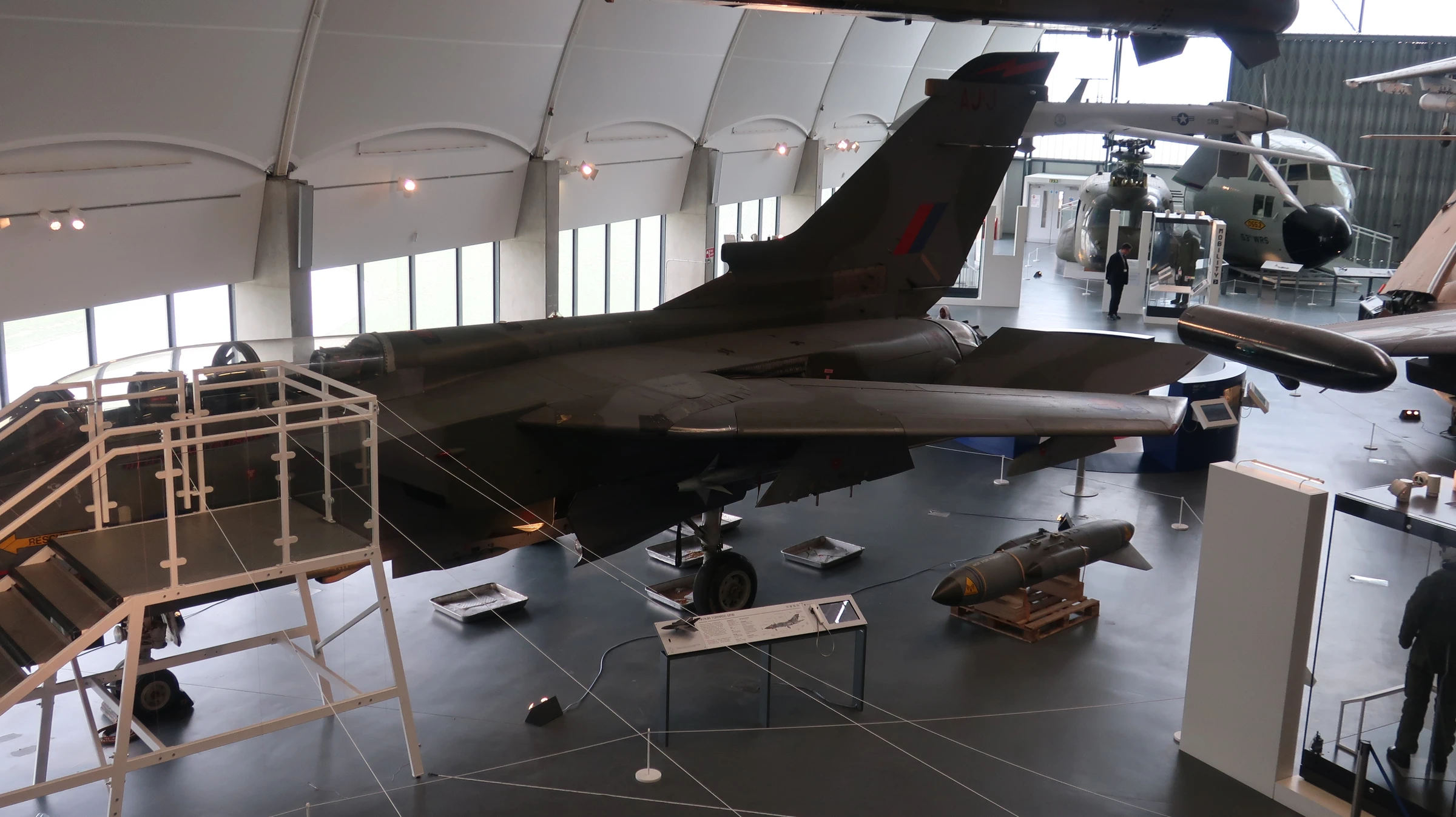
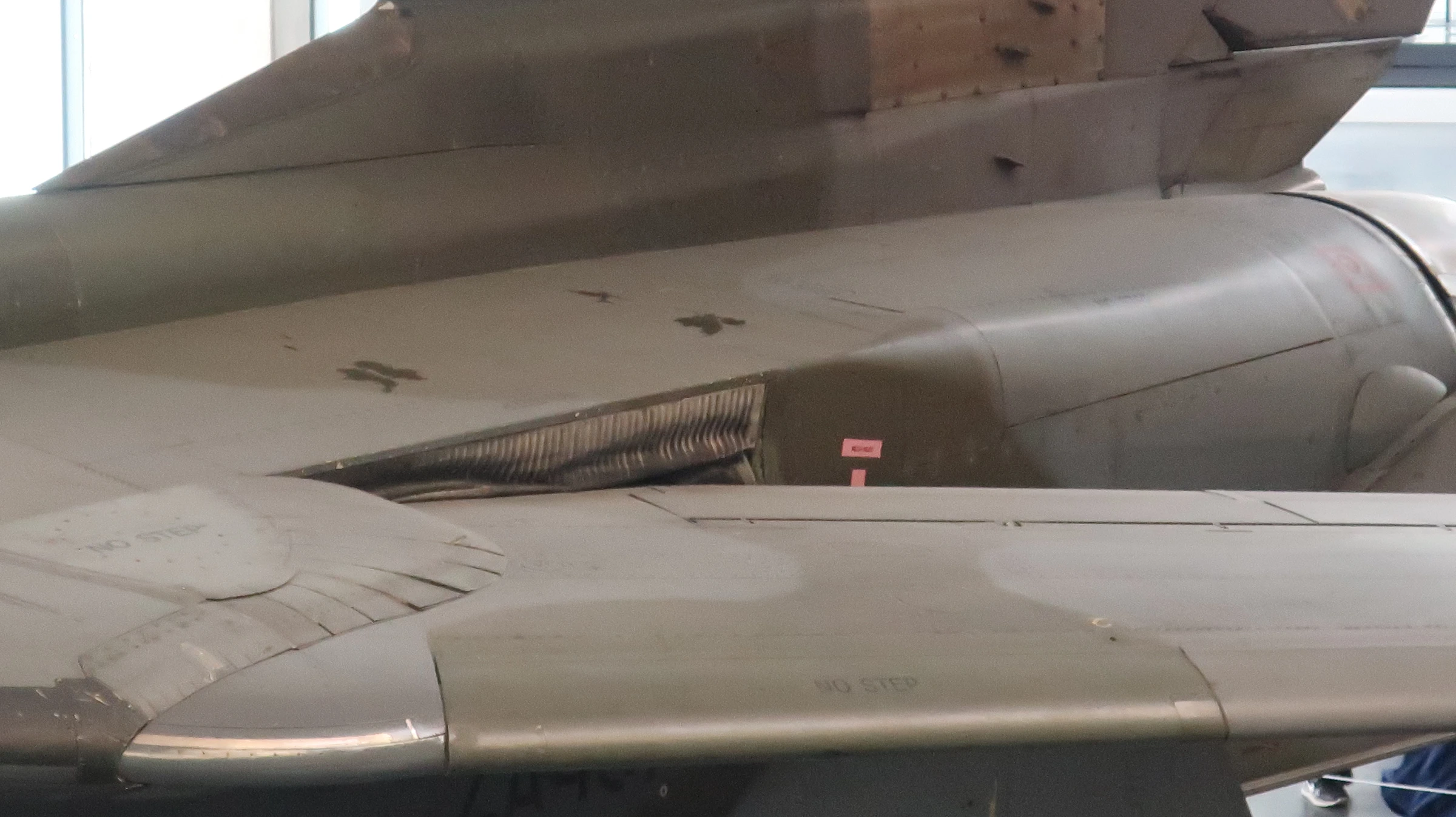
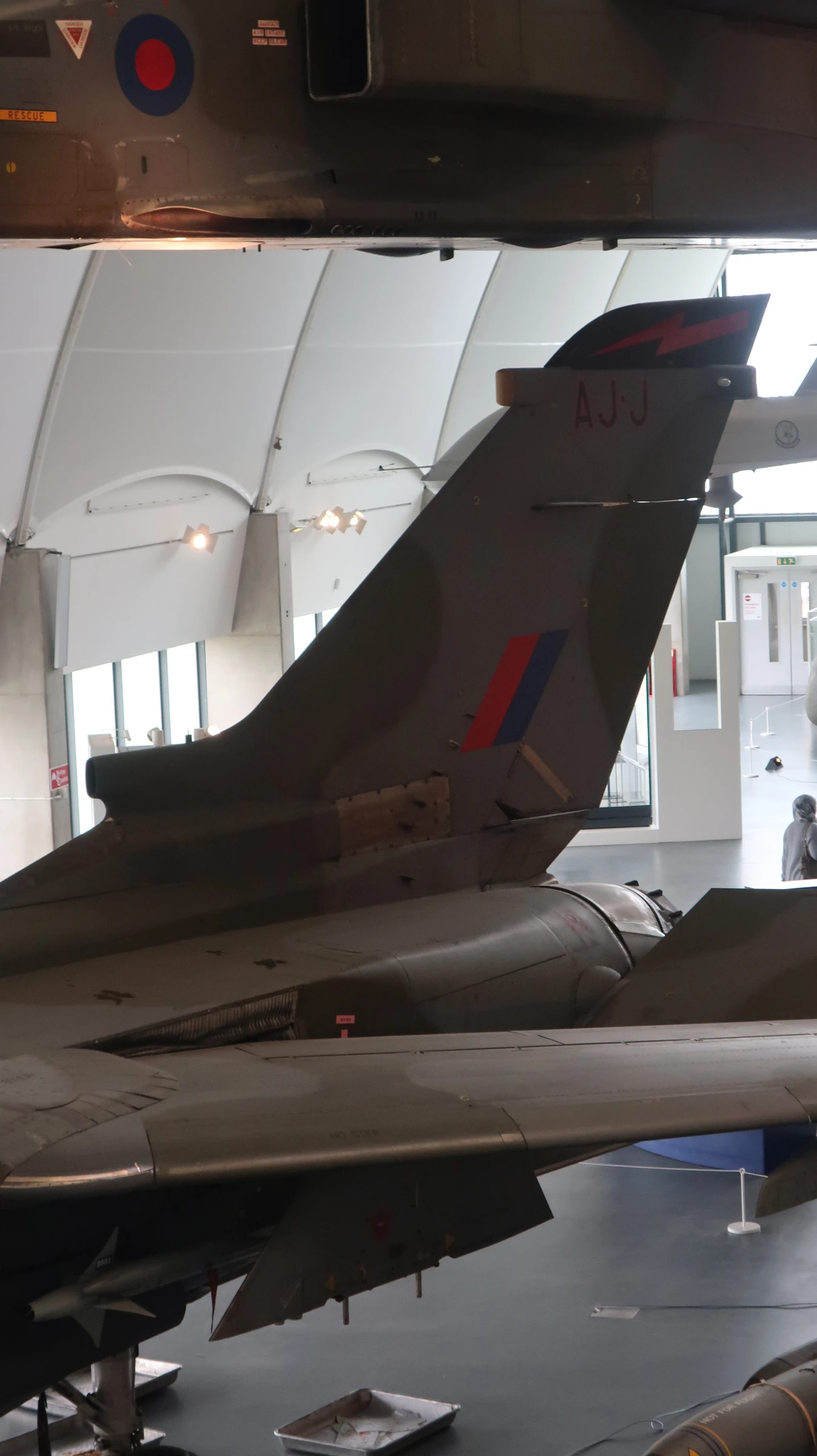
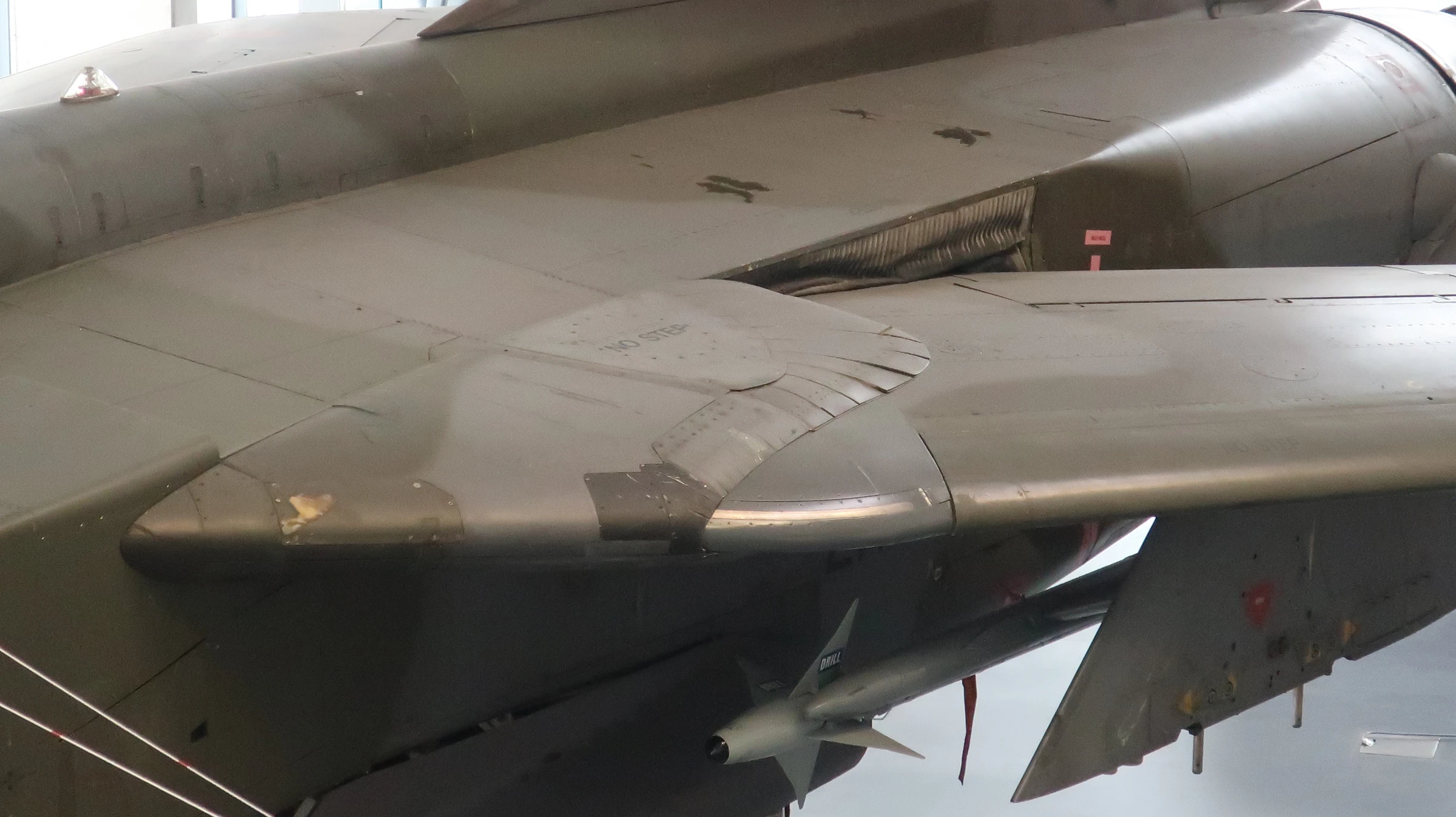
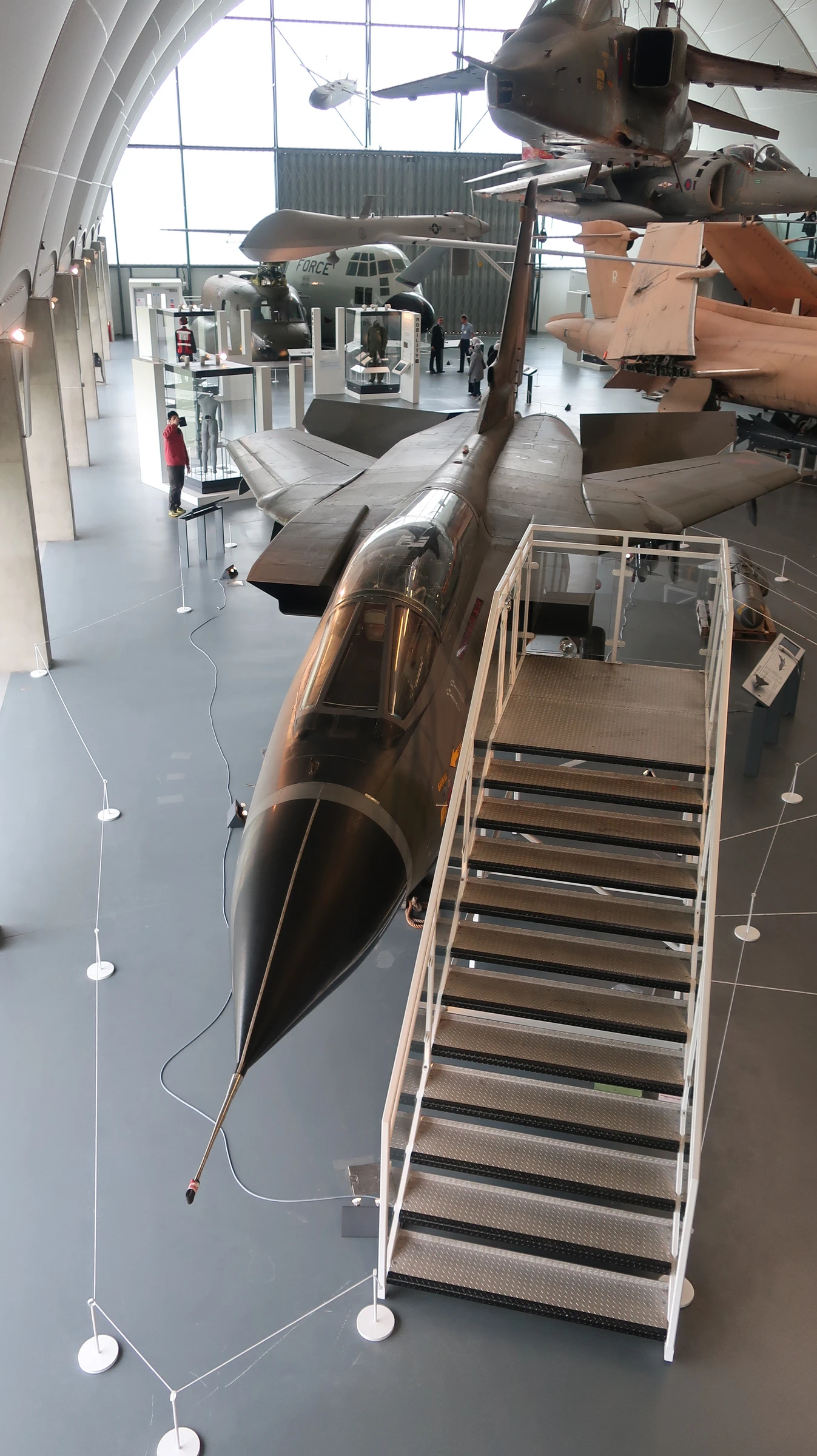
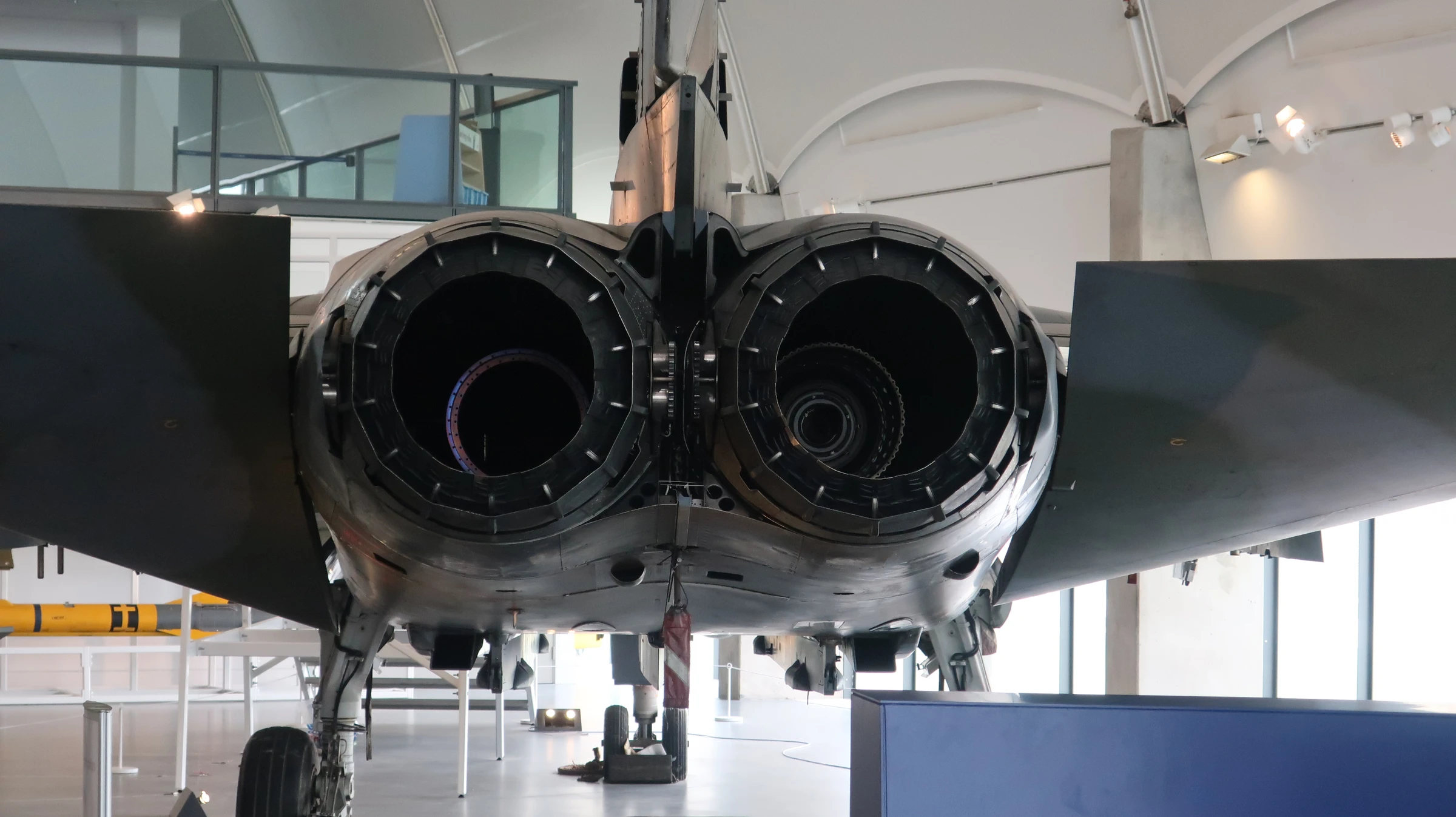
These walk-around photos were taken at the RAF Museum London in Hendon in 2019. They show a Panavia Tornado GR.1B, serial ZA457, displayed in the markings of No. 617 "Dambusters" Squadron with the famous wartime Lancaster codes AJ-J — a deliberate link to the squadron's most celebrated operation. The Tornado was the RAF's primary strike aircraft for two decades, a tri-national design developed jointly by Britain, Germany and Italy, capable of supersonic low-level flight using variable-sweep wings that could be swept fully back for high-speed penetration or extended for takeoff, landing and loitering. It entered service in 1979 and saw combat in the Gulf War, Bosnia, Kosovo, Iraq and Afghanistan, forming the backbone of RAF strike operations throughout the Cold War and beyond. The aircraft is nicknamed "Bob" after the television comedy series Blackadder.
Built at British Aerospace Warton in 1983, ZA457 served with Nos. 9, 15, 17 and 617 Squadrons in Germany and at RAF Marham and Lossiemouth before being modified to GR.1B standard in 1994, adding a Sea Eagle anti-shipping missile capability. It flew operational sorties during Operation Desert Fox in December 1998, attacking Iraqi targets from Ali Al Salem in Kuwait over three nights with No. 12 Squadron. Its last operational unit was No. 2 (AC) Squadron at RAF Marham. Delivered to the RAF Museum by road in July 2003, it has been on display at Hendon ever since.