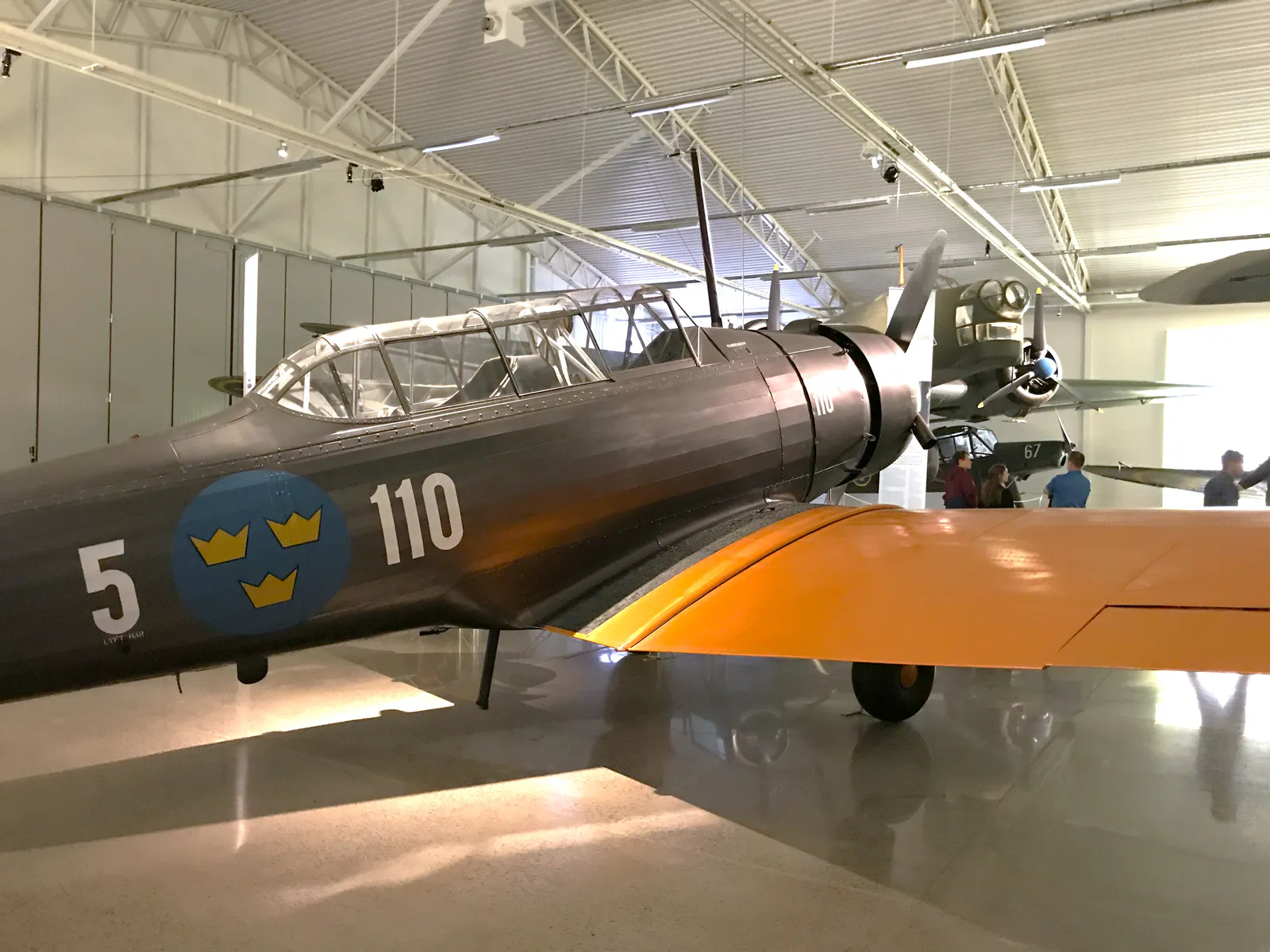
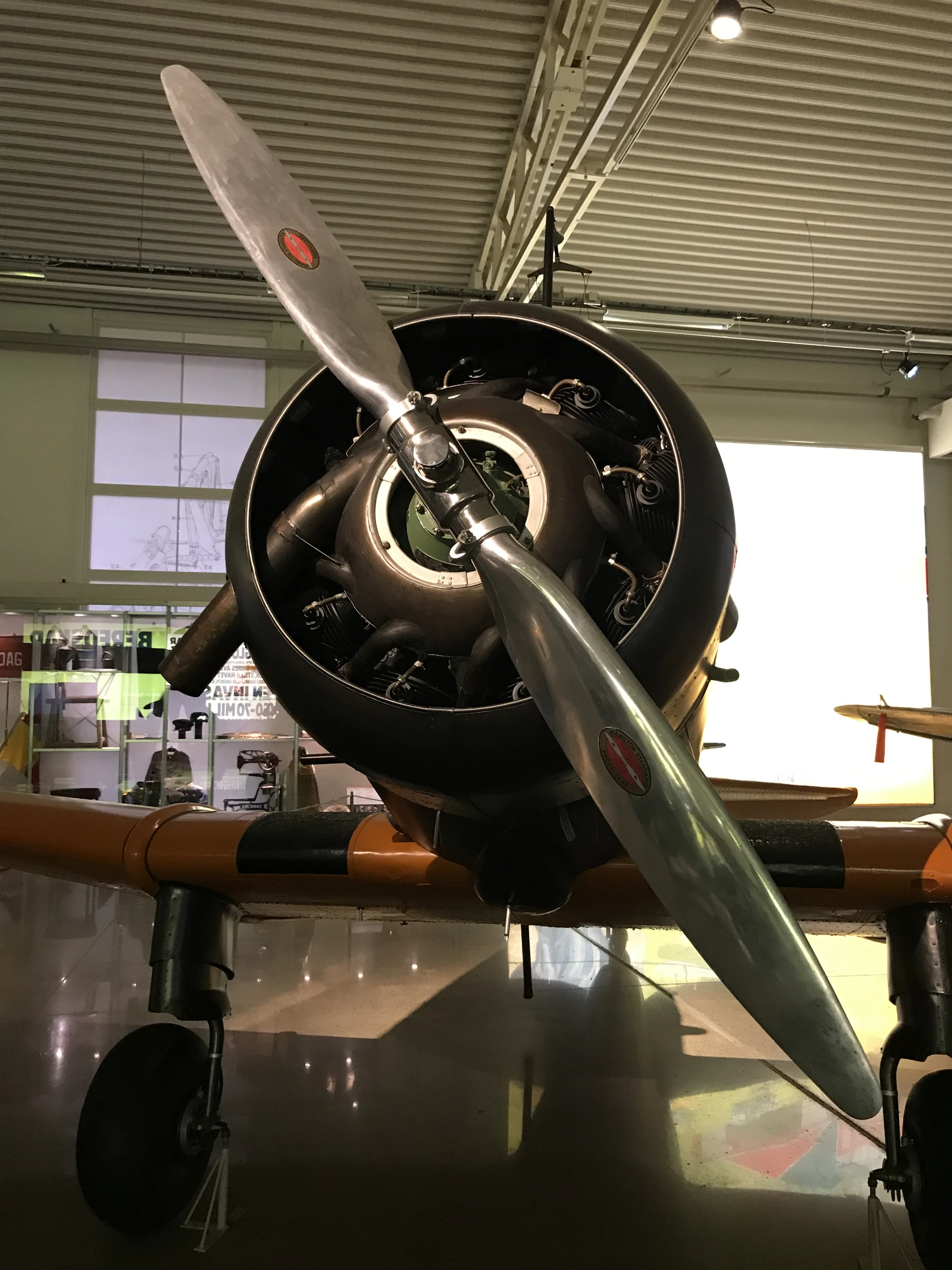
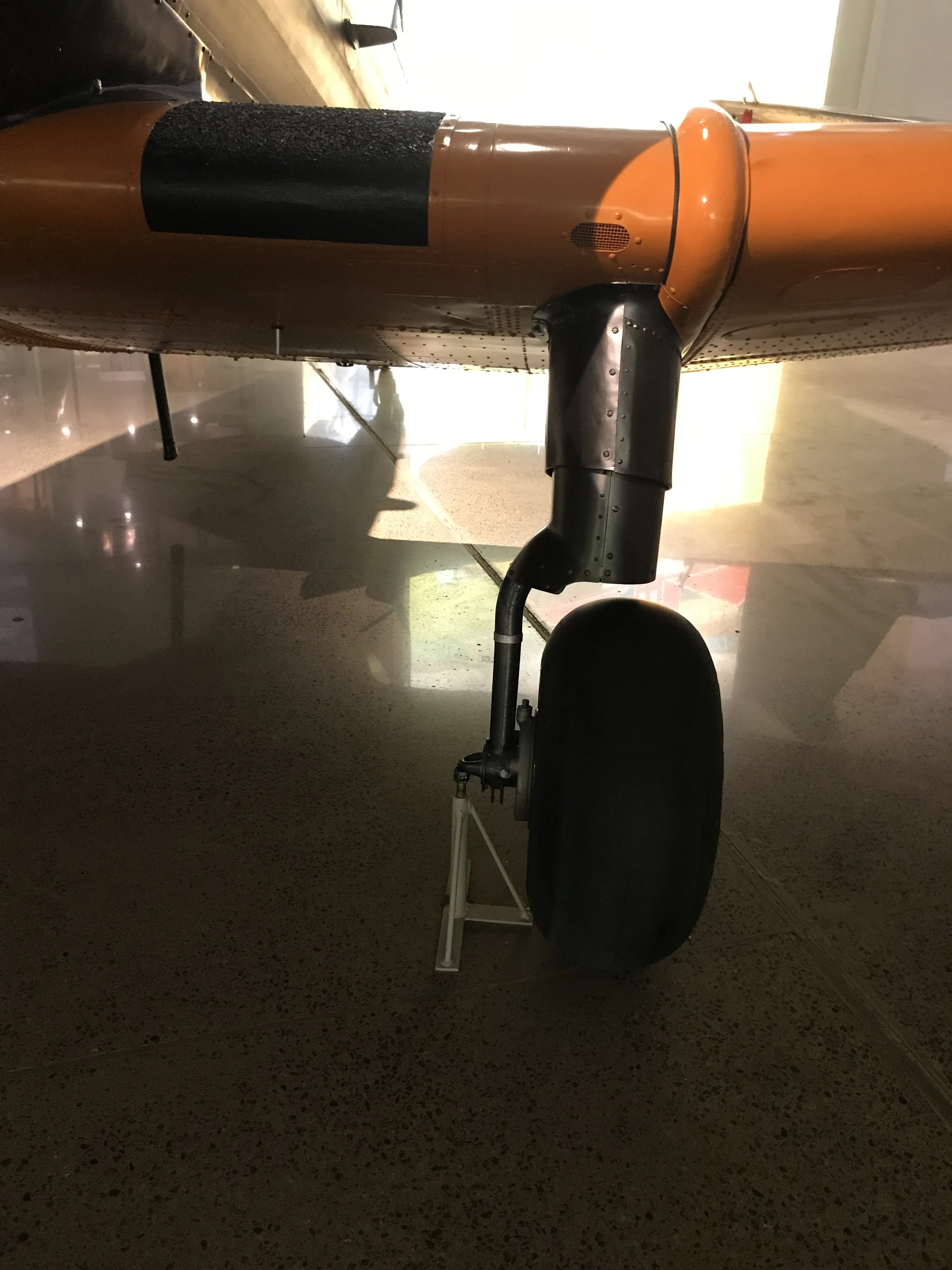
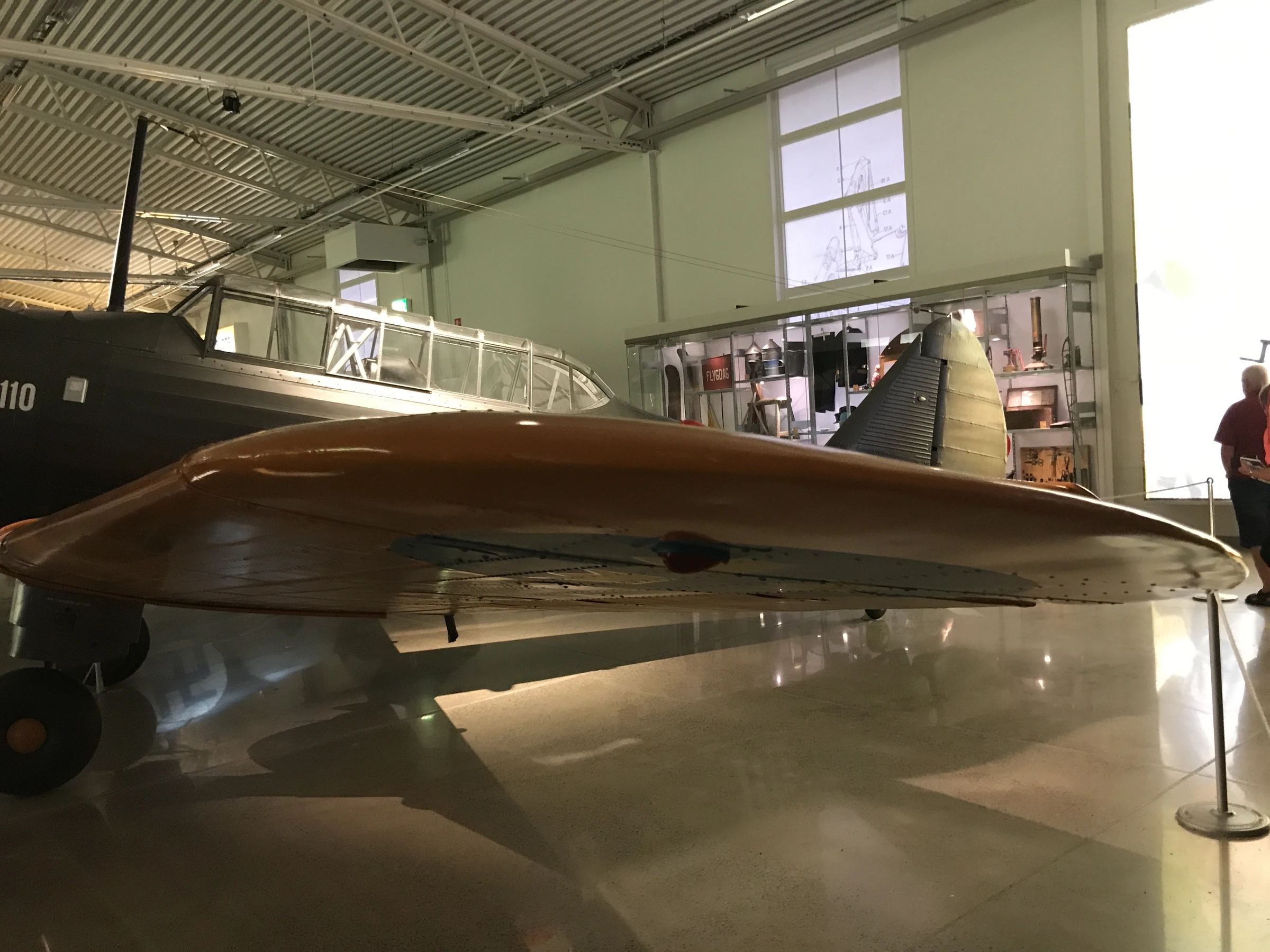
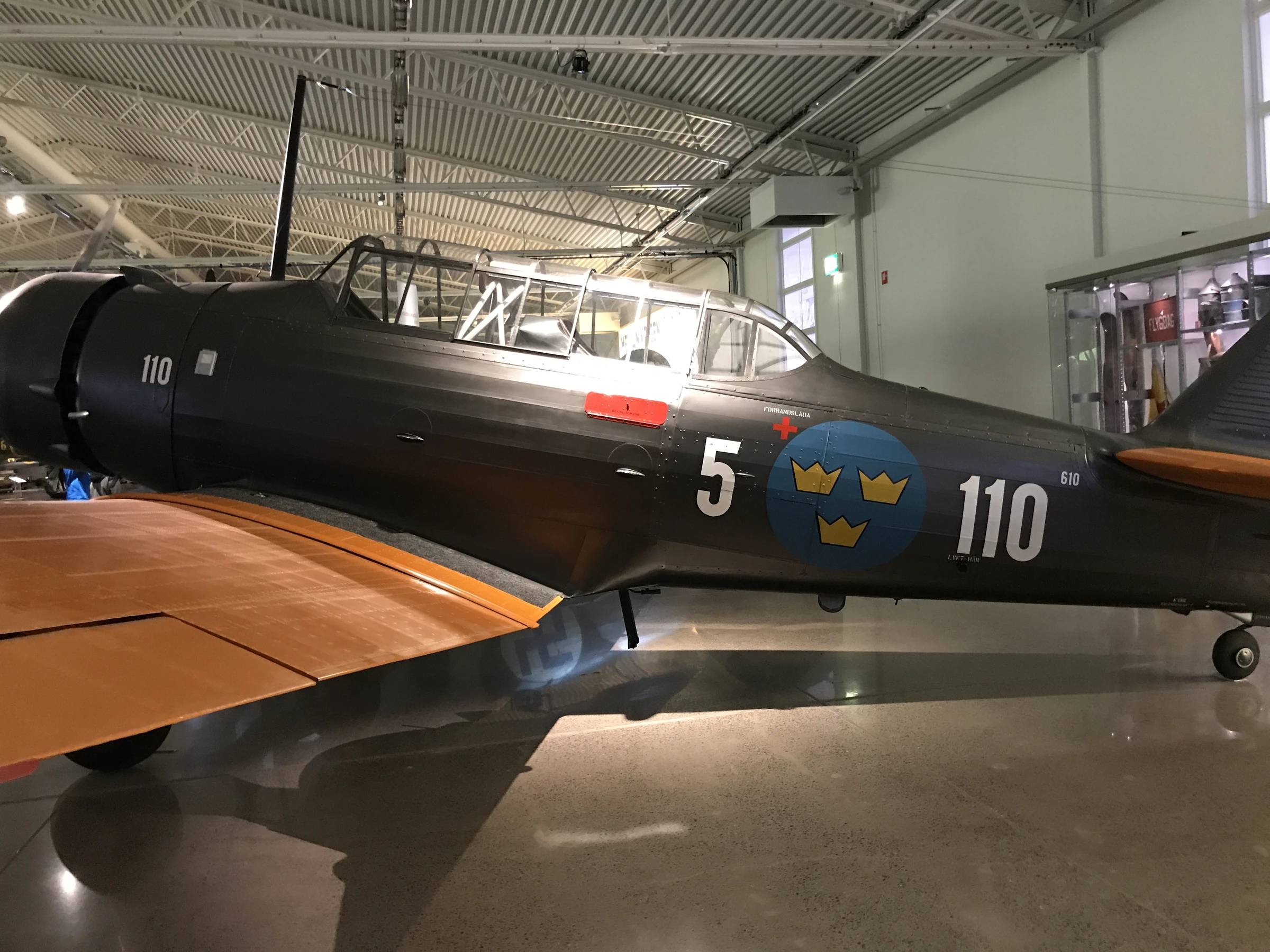
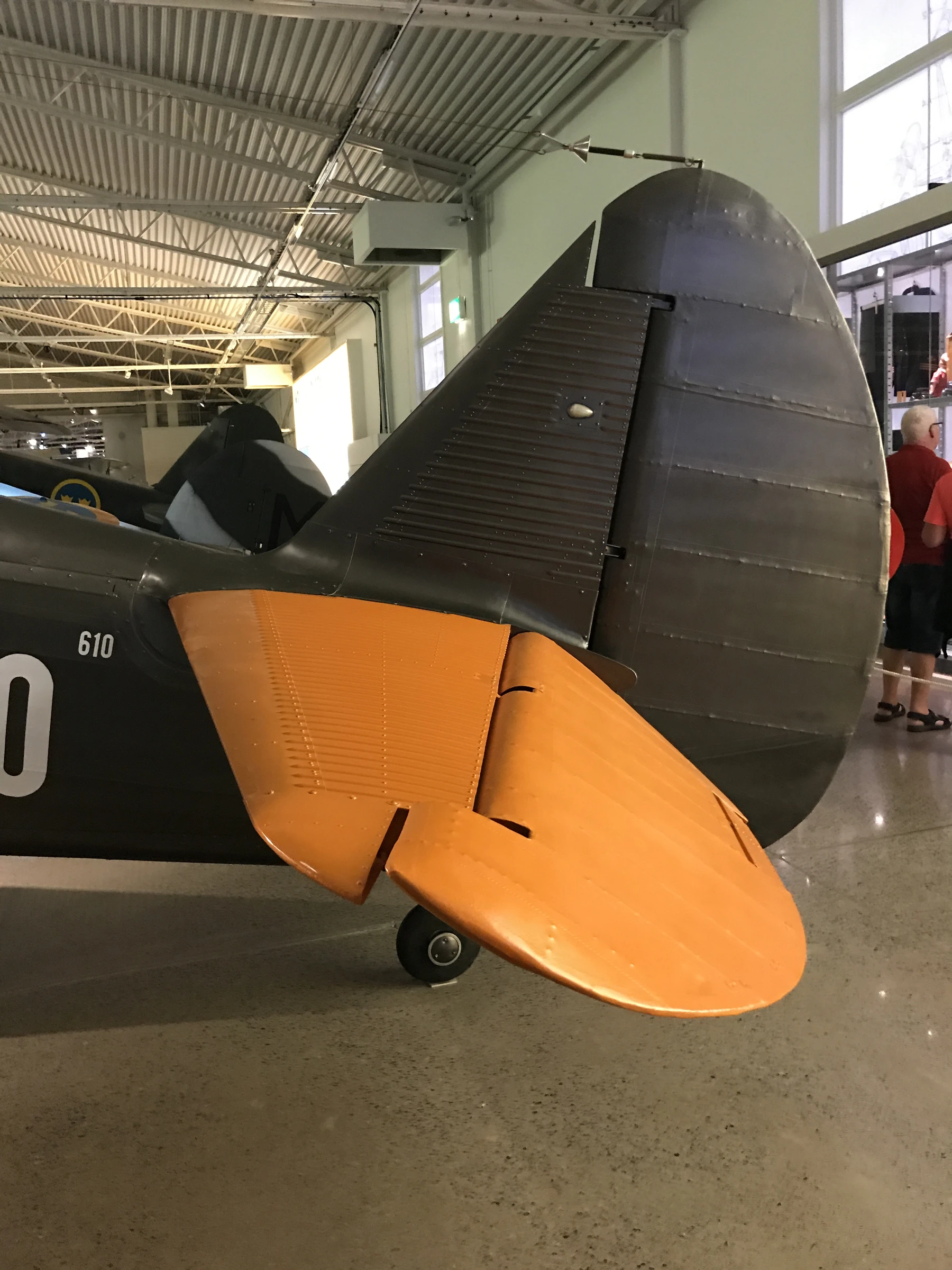
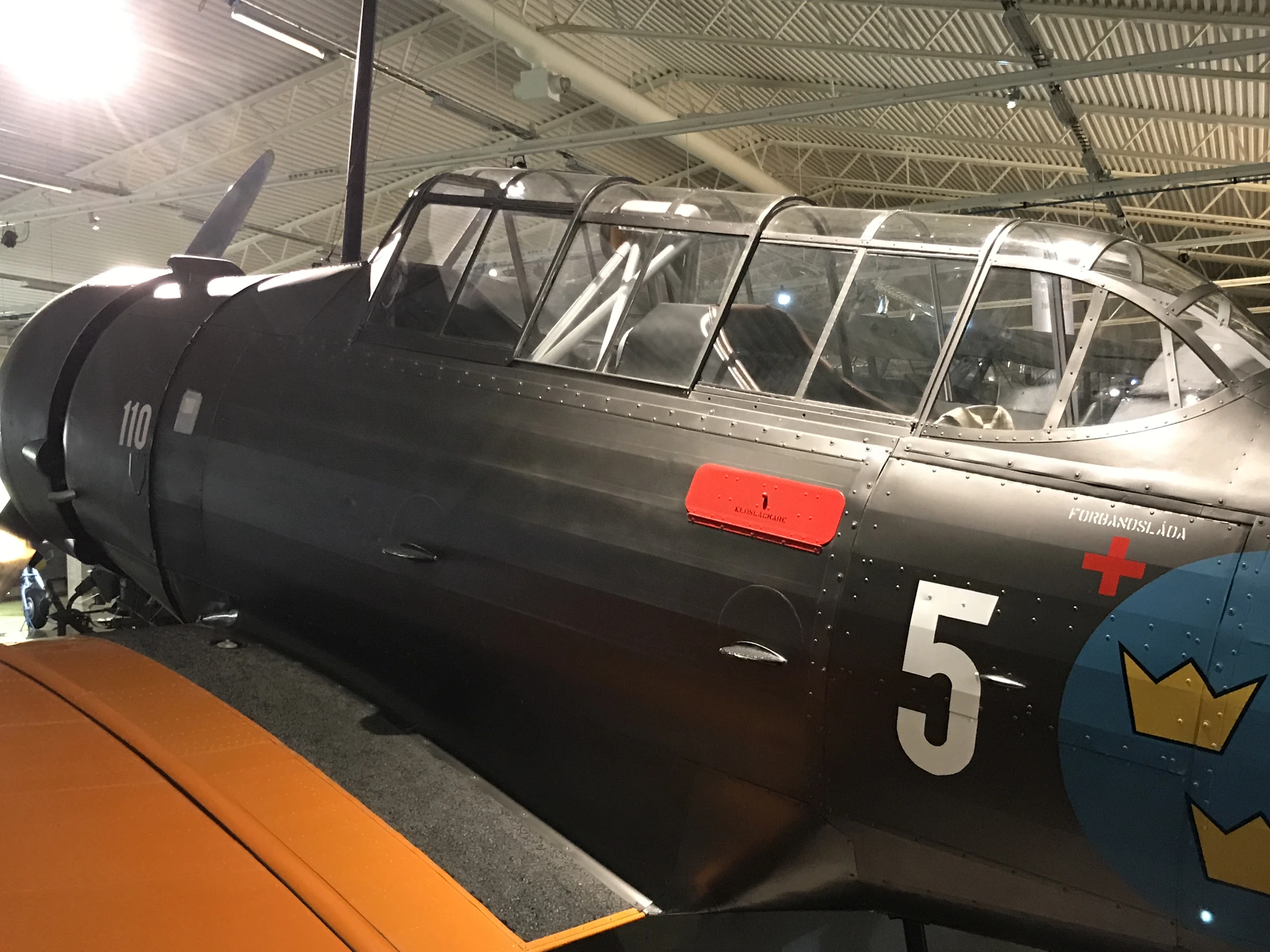
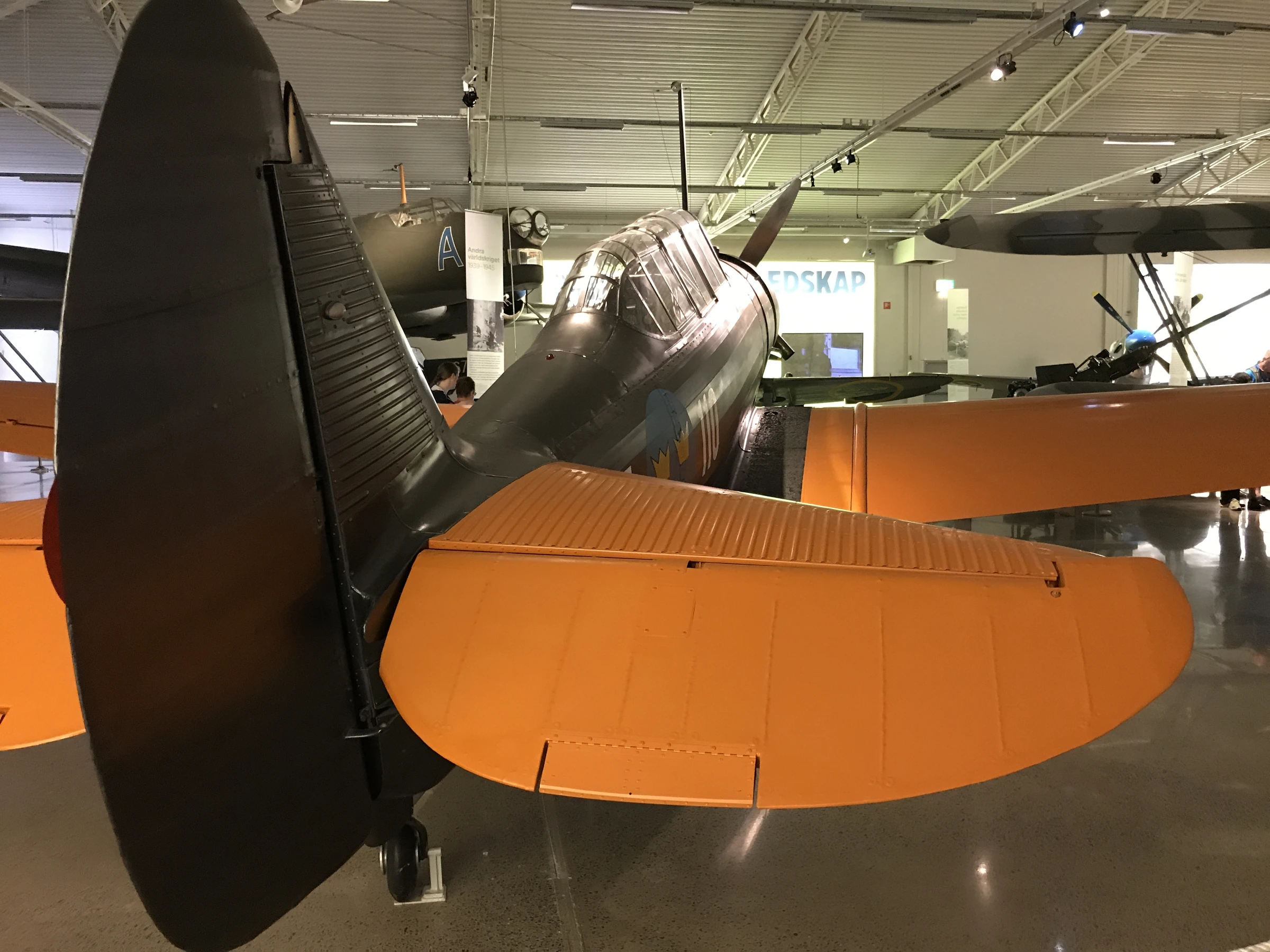
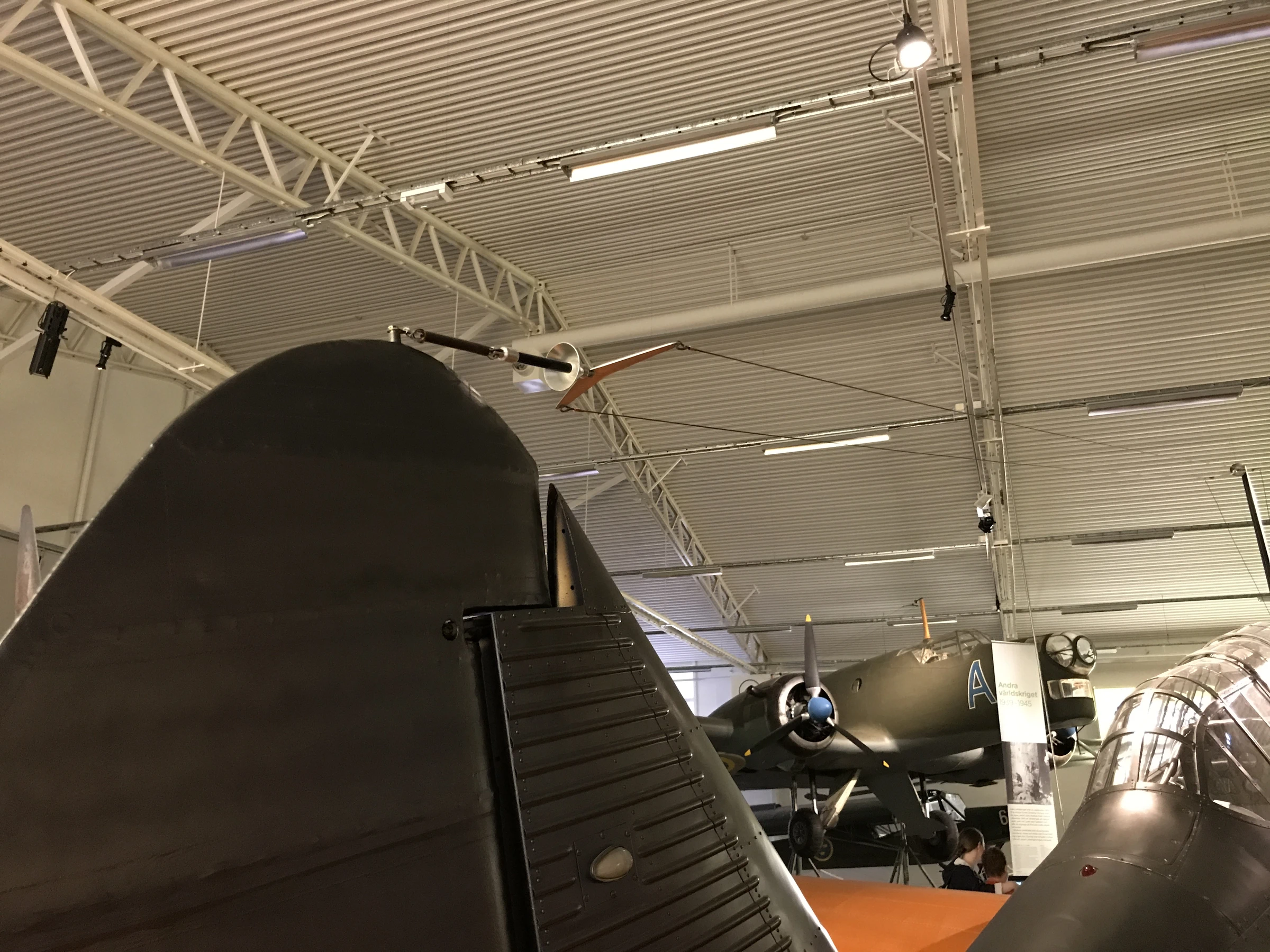
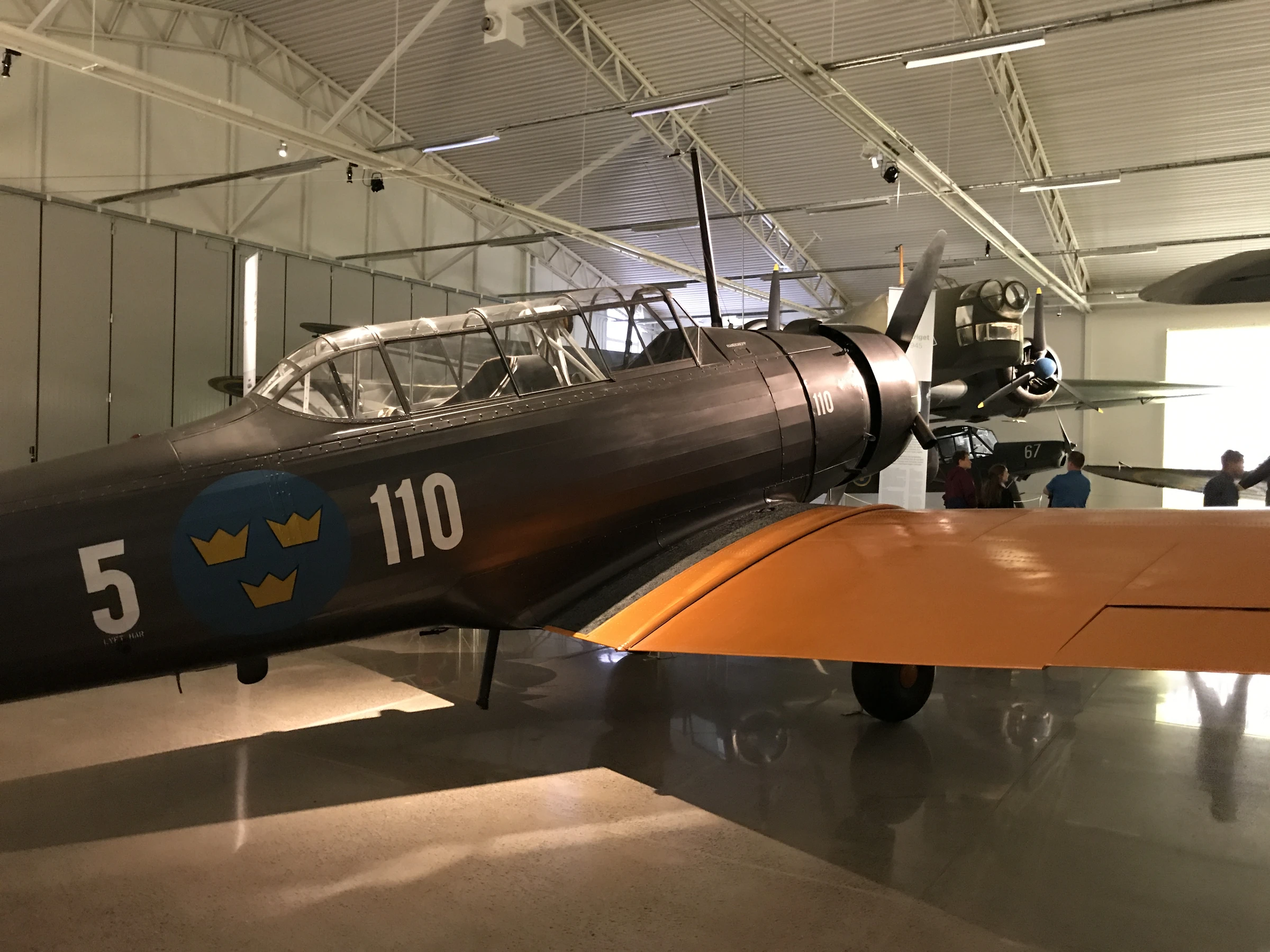
These walk-around photos were taken at Flygvapenmuseum at Malmen outside Linköping in 2017. They show a North American NA-16-4M, designated Sk 14 in Swedish service — the direct forerunner of one of the most produced training aircraft in history, the T-6 Texan/Harvard. Designed by North American Aviation in the mid-1930s, the NA-16 family was a single-engine low-wing monoplane with tandem seating that set the template for advanced military pilot training for a generation. Sweden acquired the licence to build the NA-16-4M in 1937, with production entrusted first to ASJA in Linköping and later, as ASJA was absorbed into SAAB, continued at the SAAB factory in Trollhättan. A total of 136 Sk 14s were built in Sweden, serving primarily at the flying school F 5 in Ljungbyhed from 1939 onwards. Three examples were later modified with tricycle undercarriage as the Sk 14N, used to prepare pilots for the unconventional SAAB J 21.
The aircraft on display, coded 610, is not a surviving original but a reconstruction assembled from an ex-RAAF CAC Wirraway and parts from an ex-RCAF North American NA-64 Yale — closely related types that share their ancestry with the Swedish Sk 14. No original Swedish Sk 14 is known to have survived, making this composite exhibit the only representative of the type in existence.