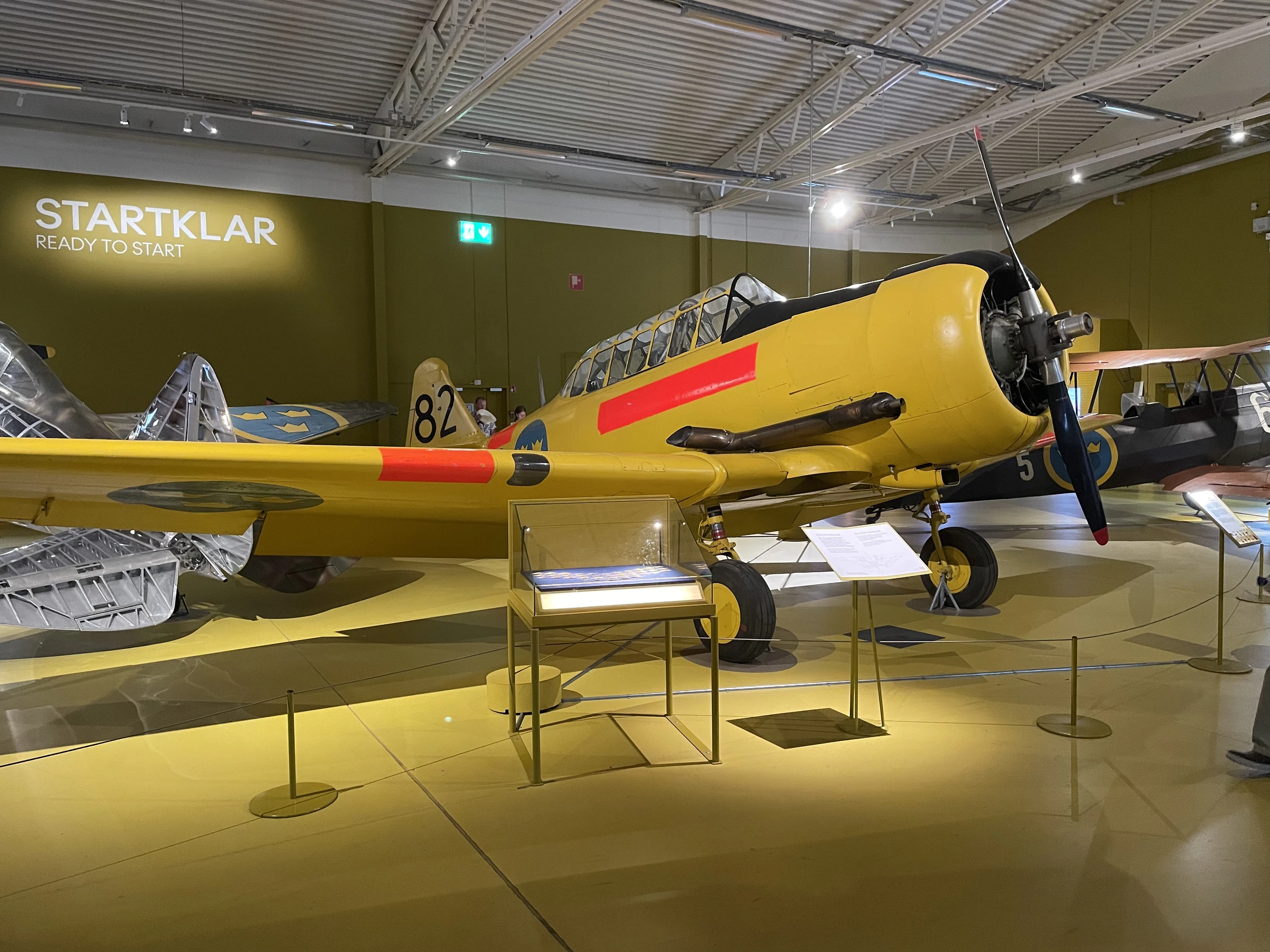
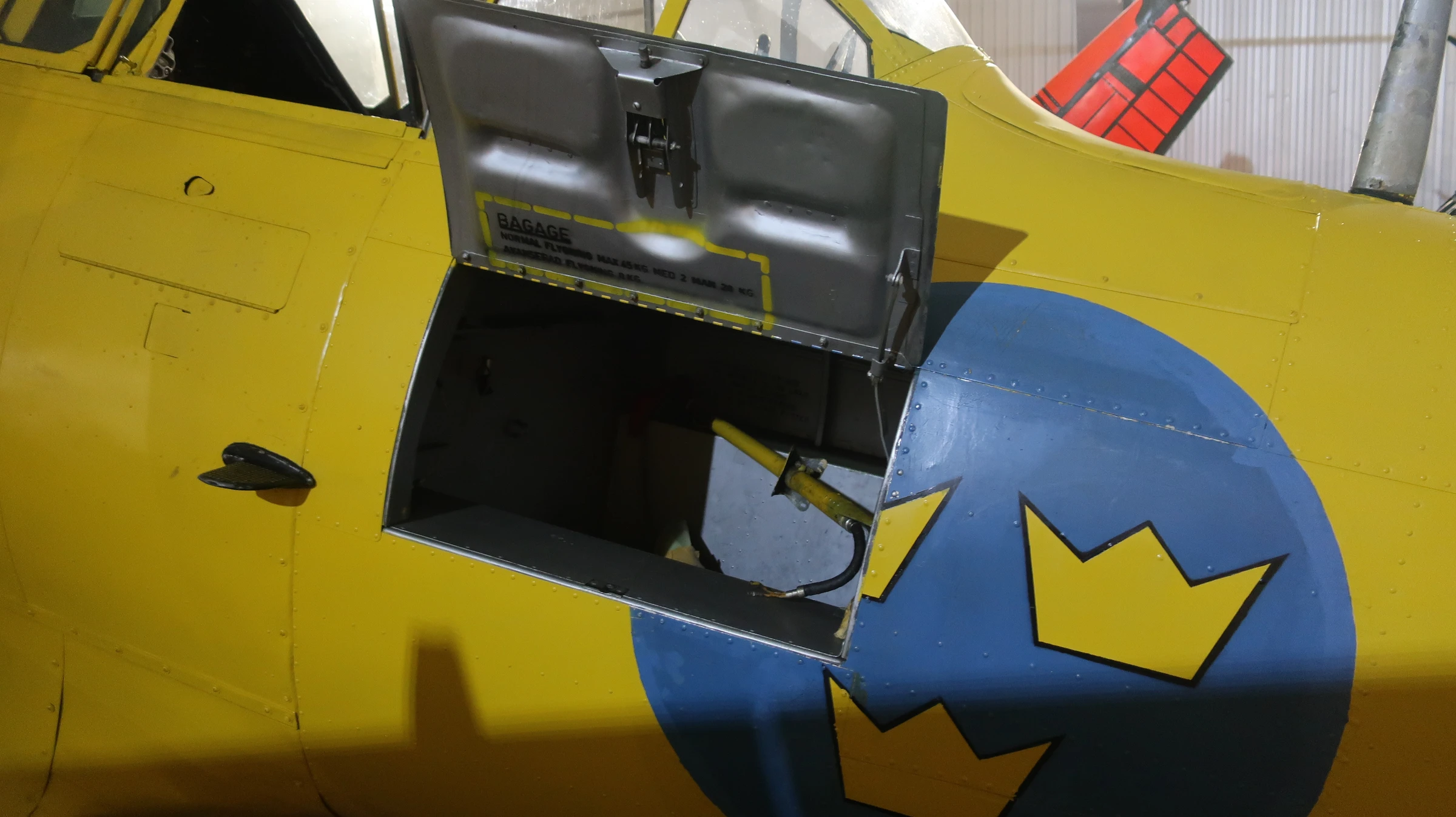
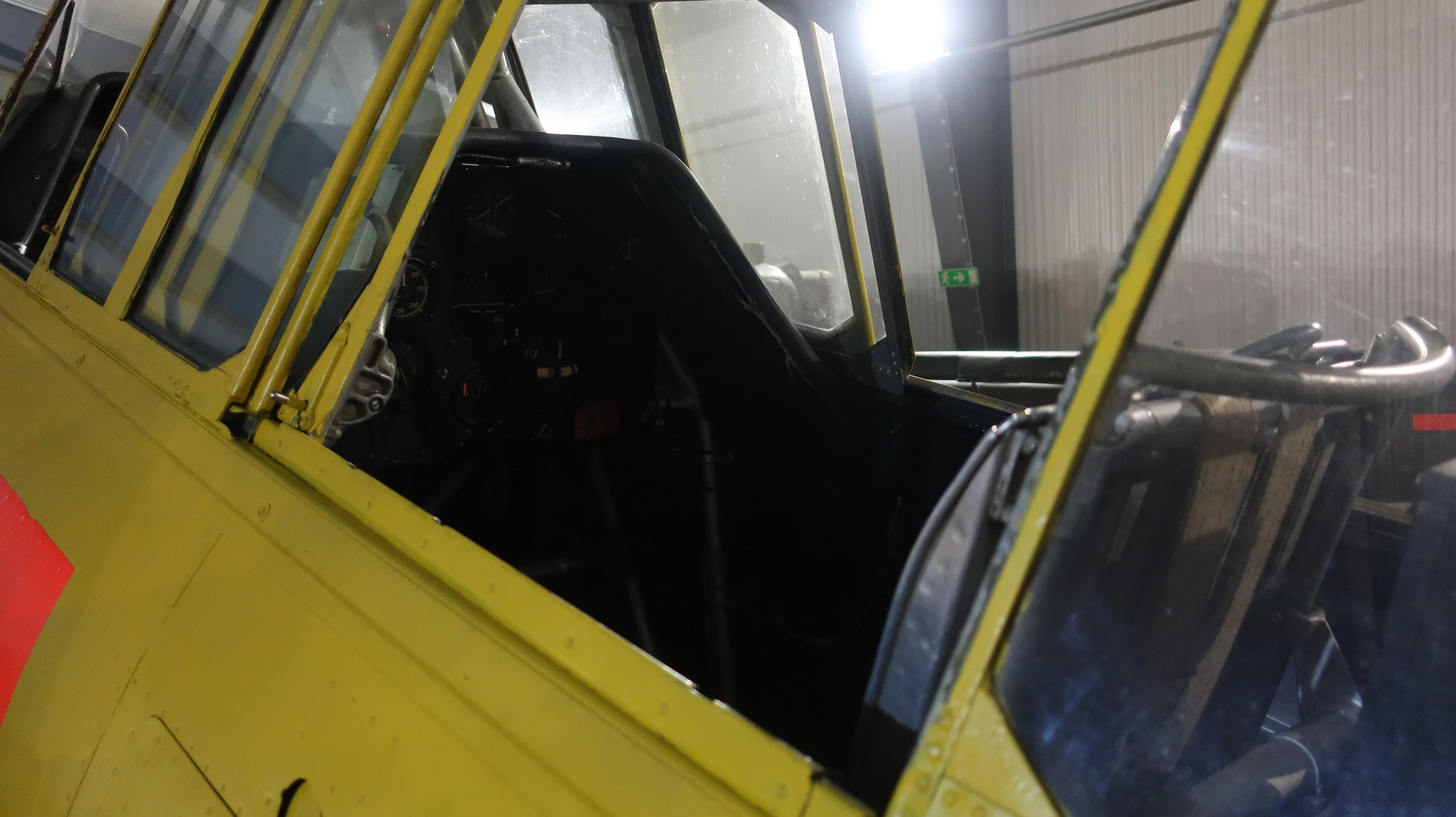
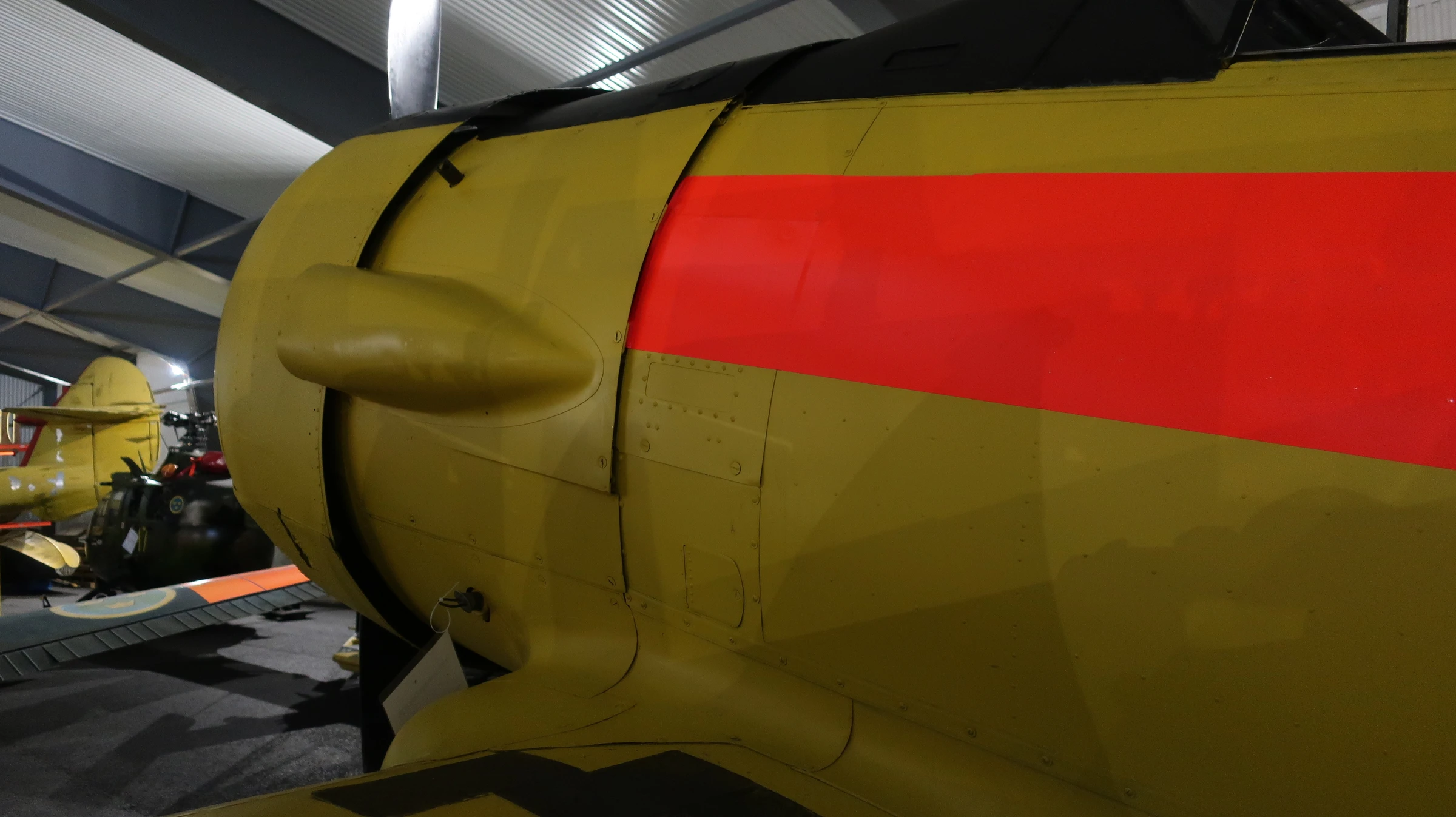
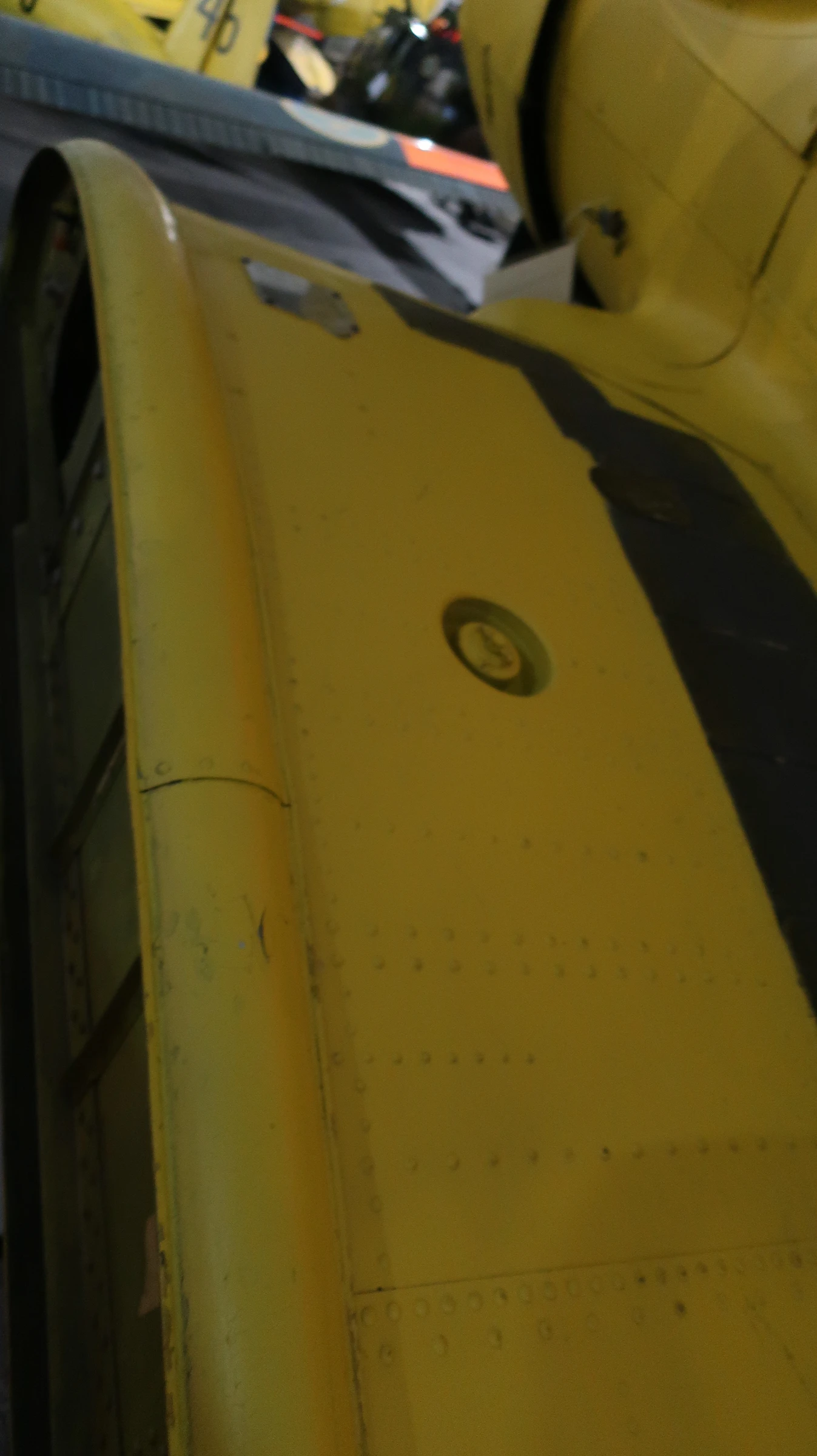
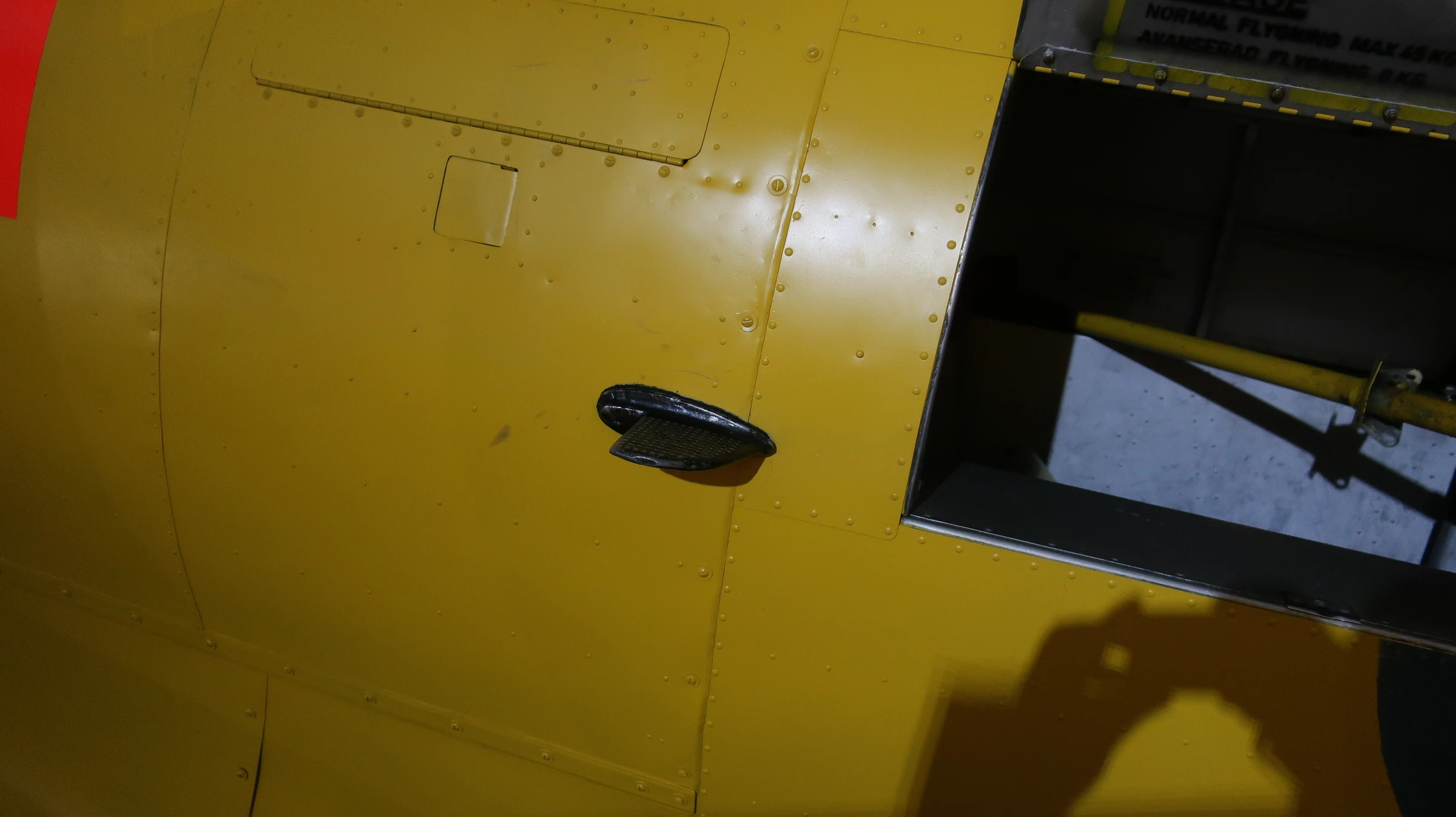
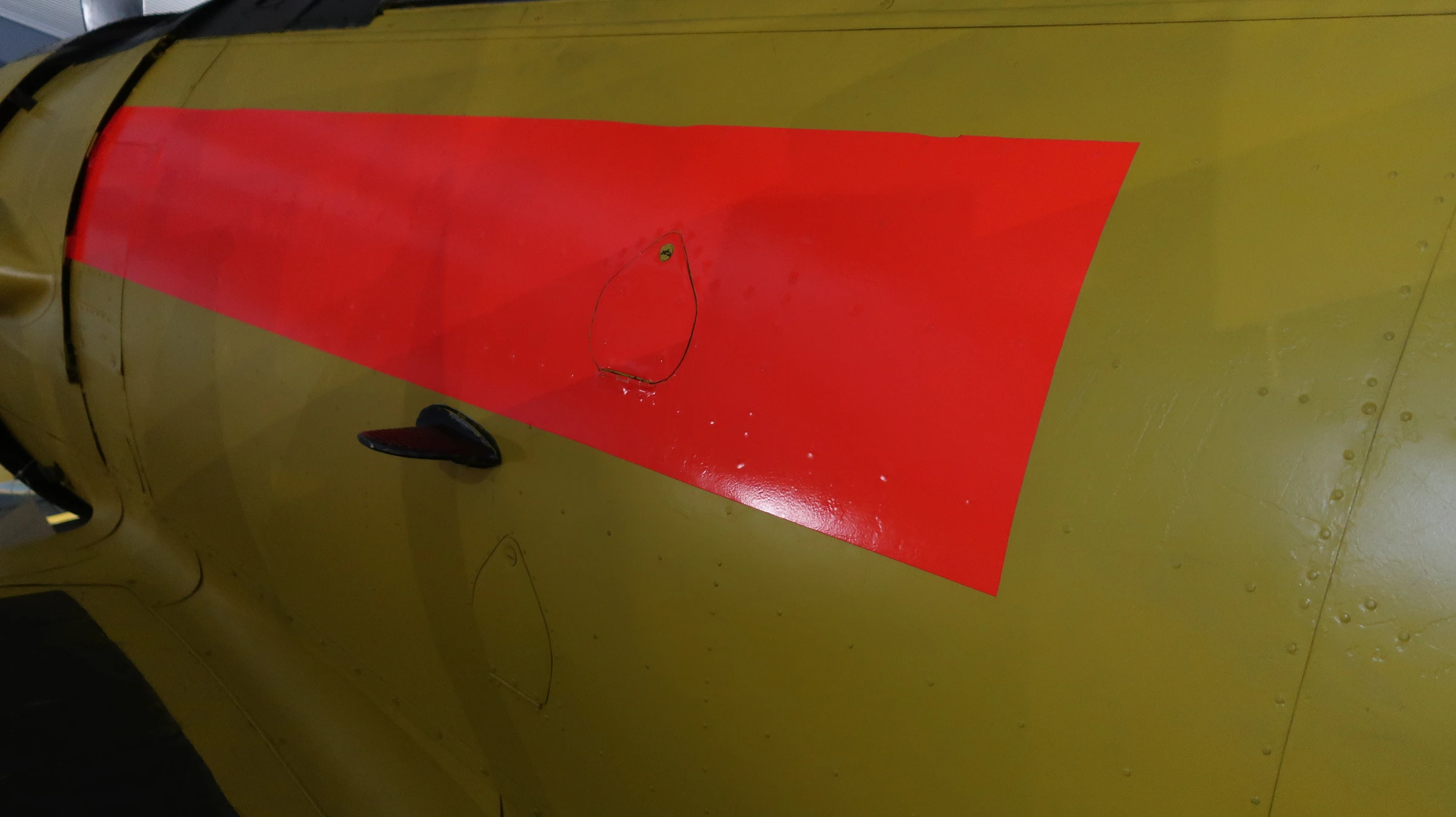
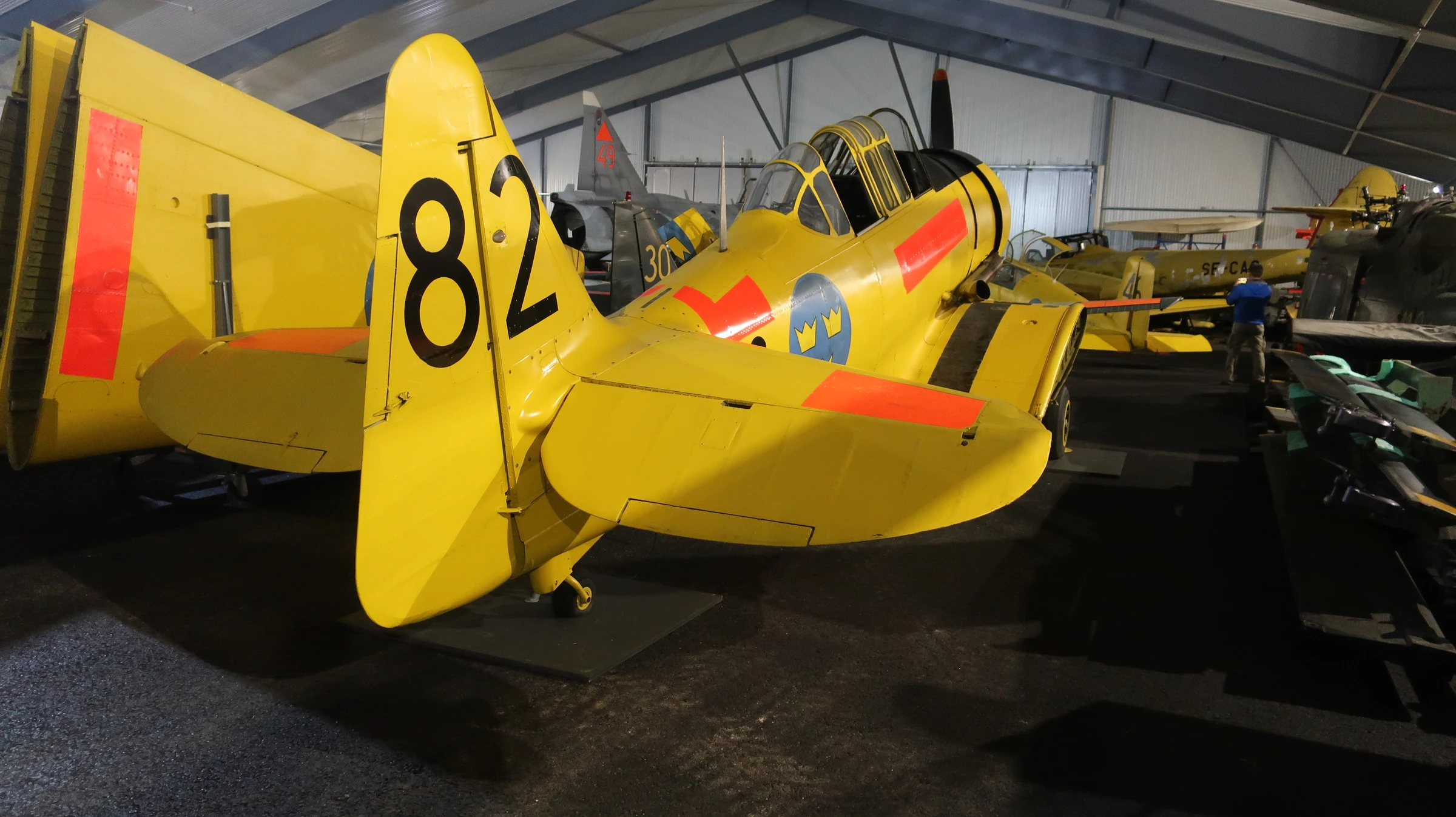
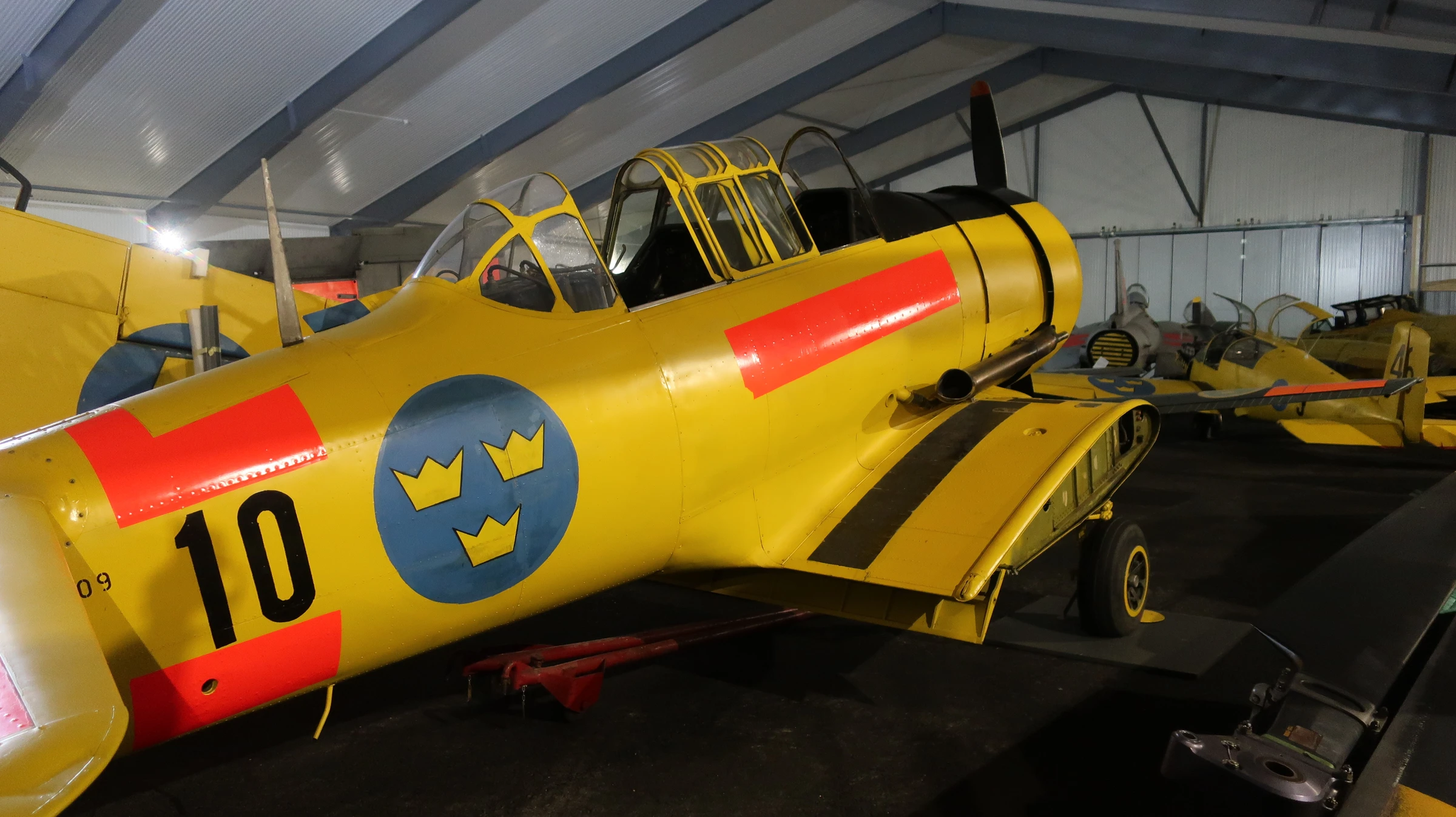
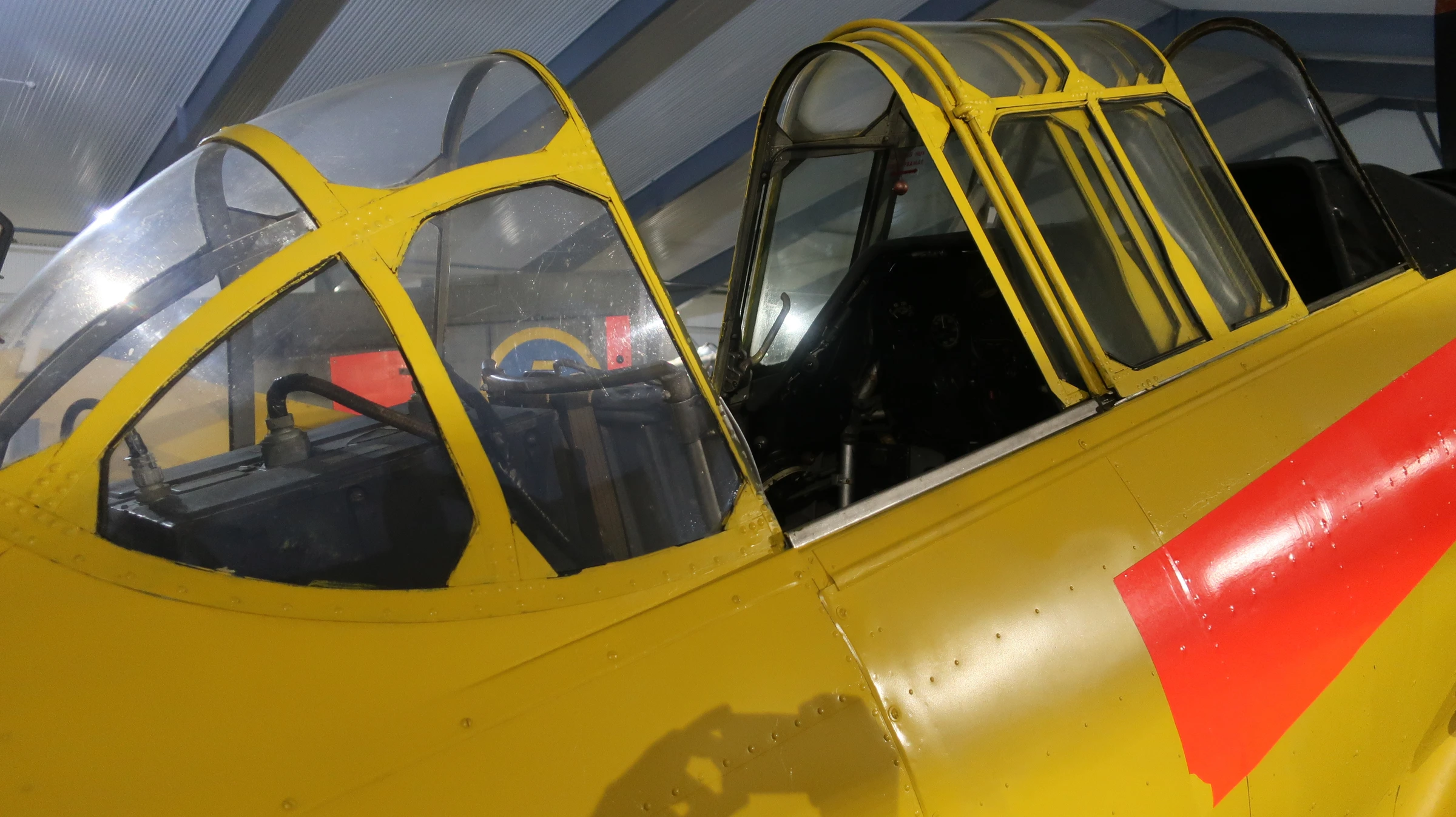
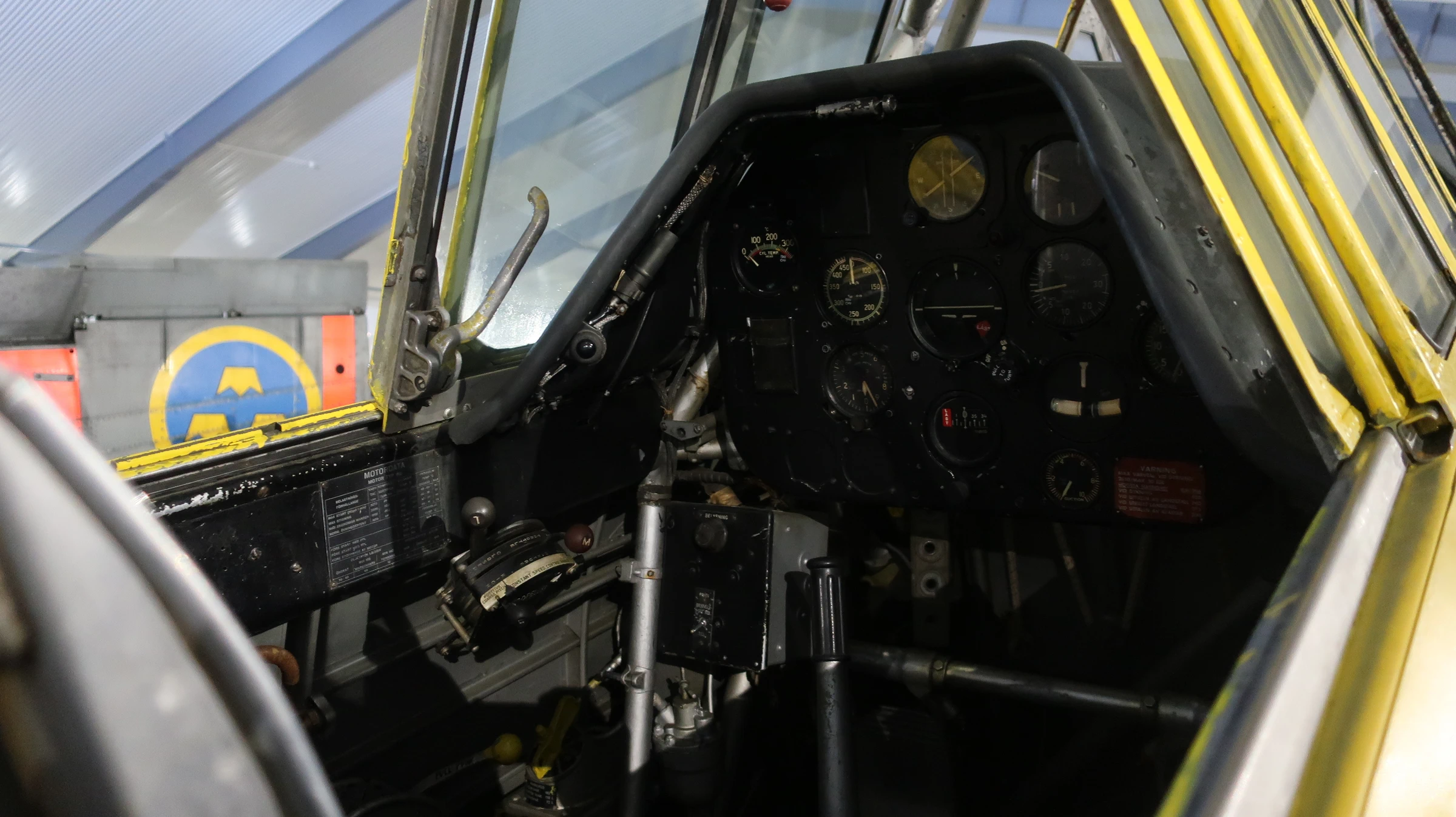
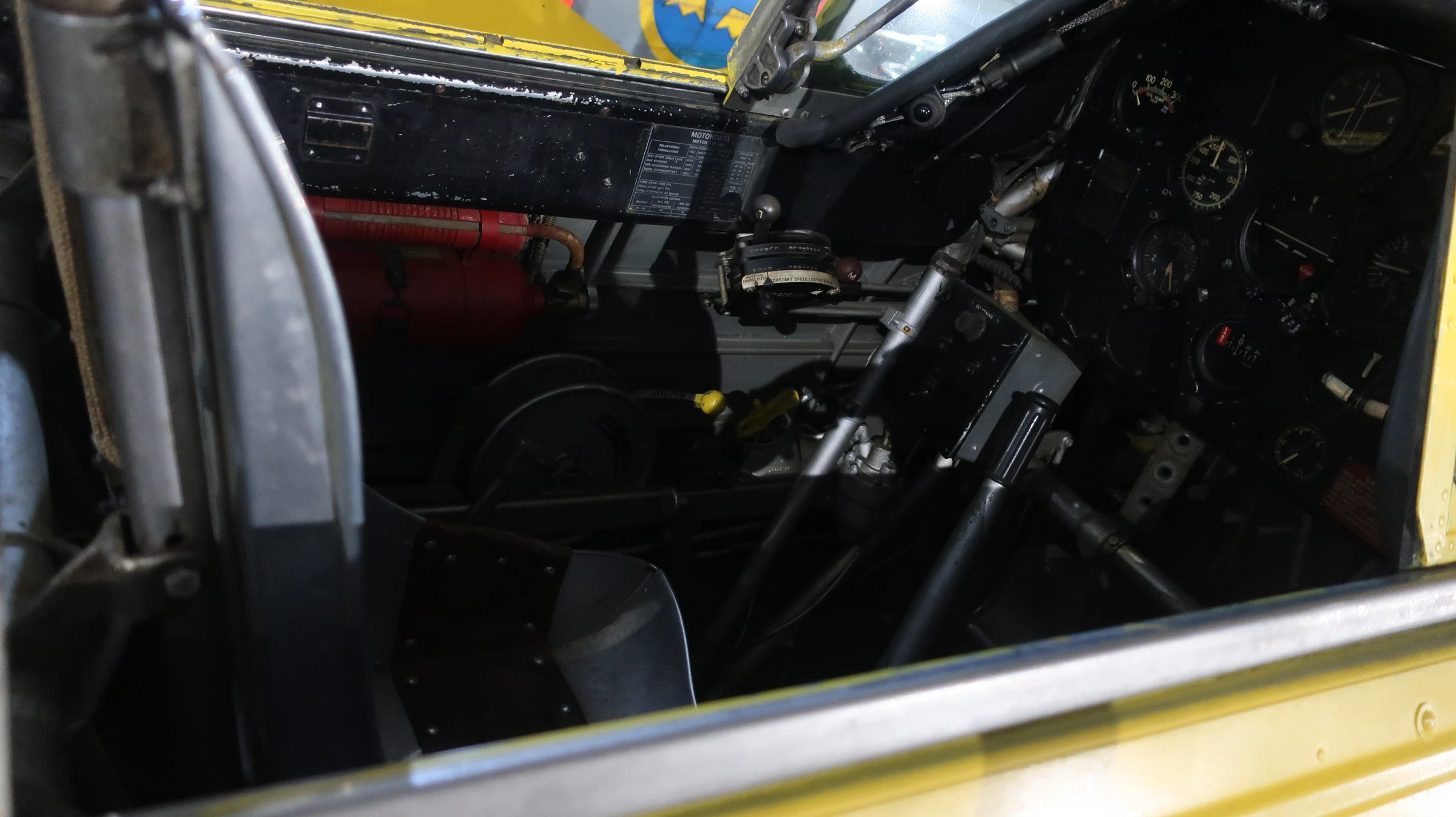
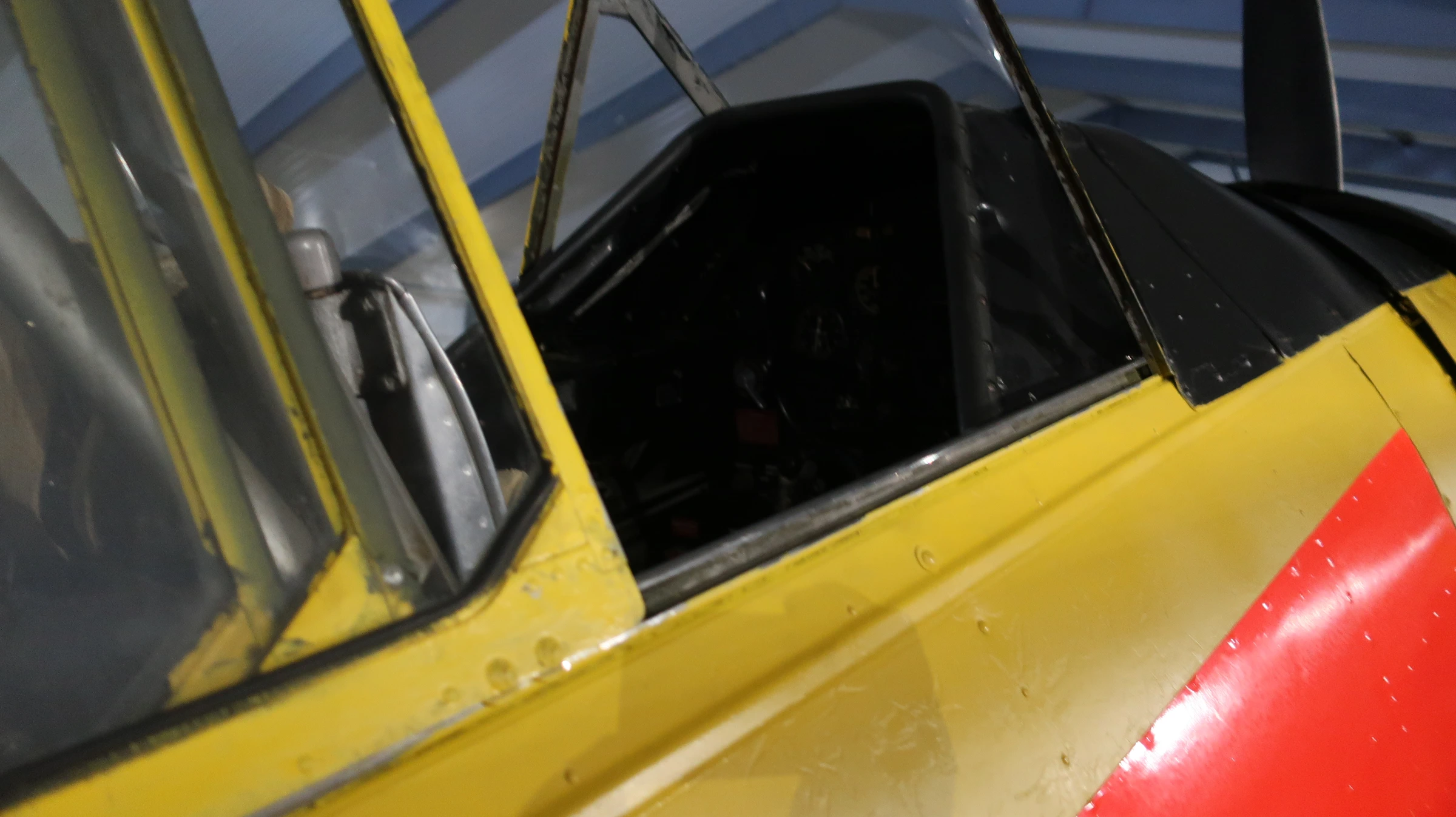
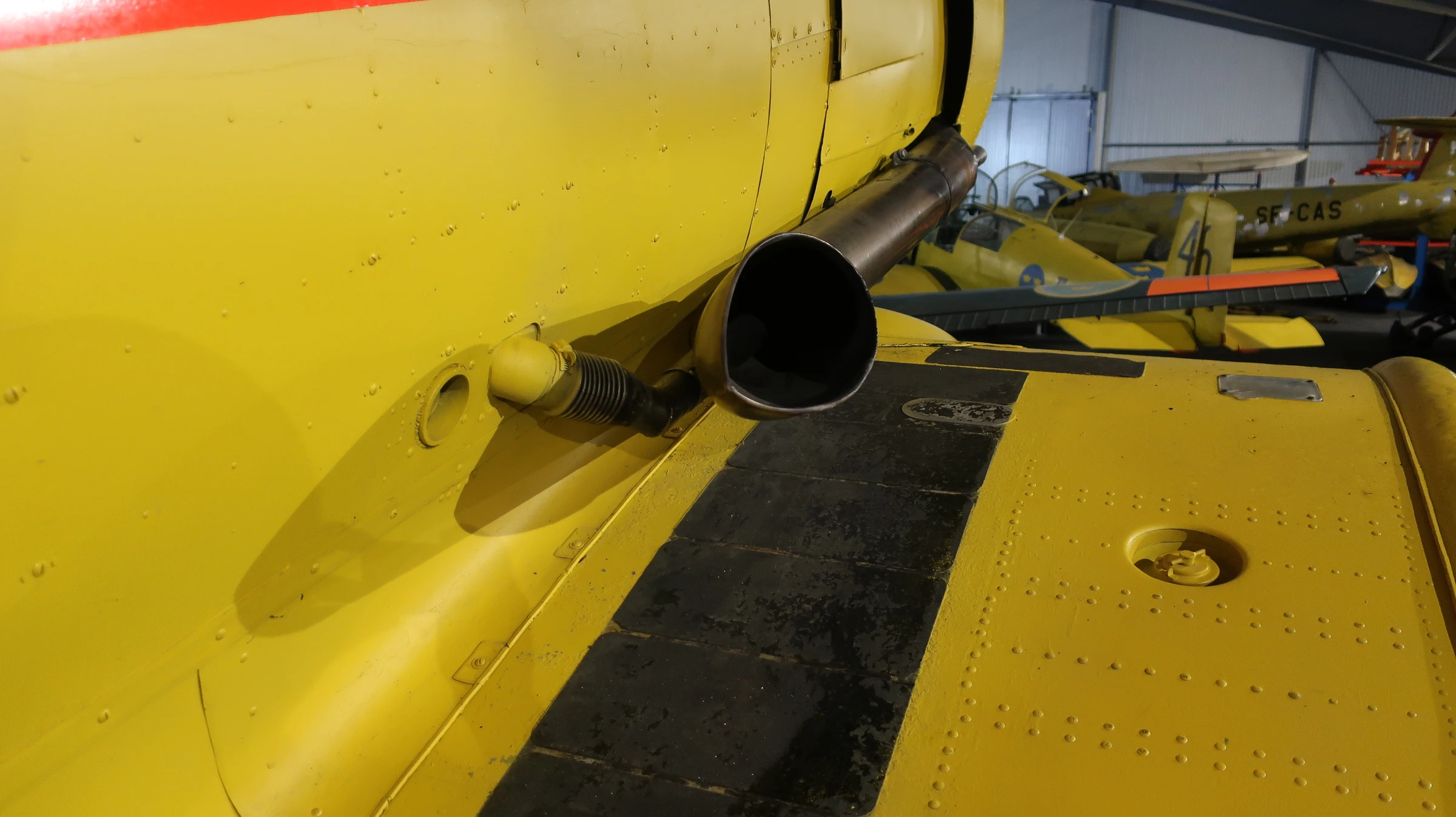
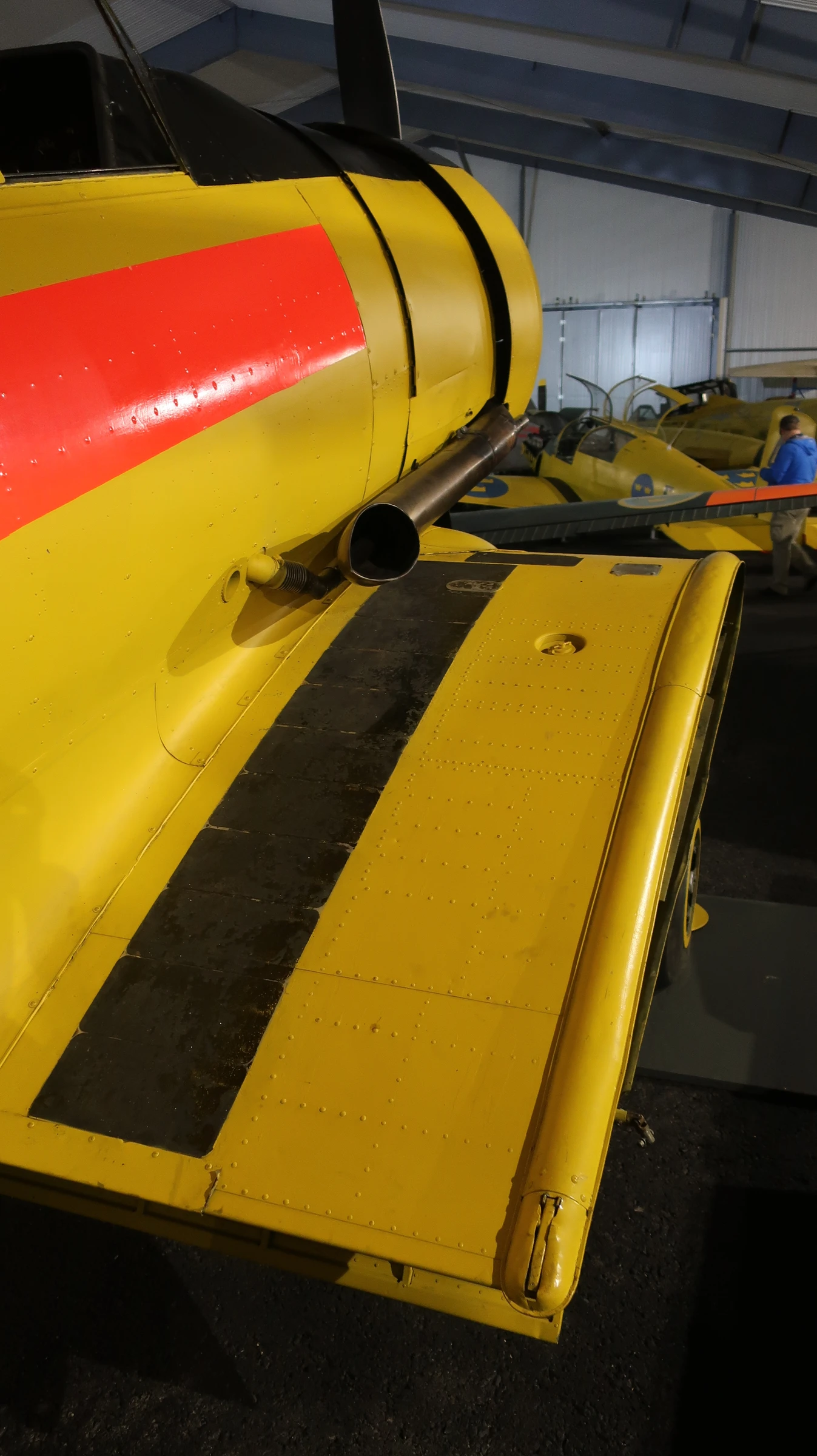
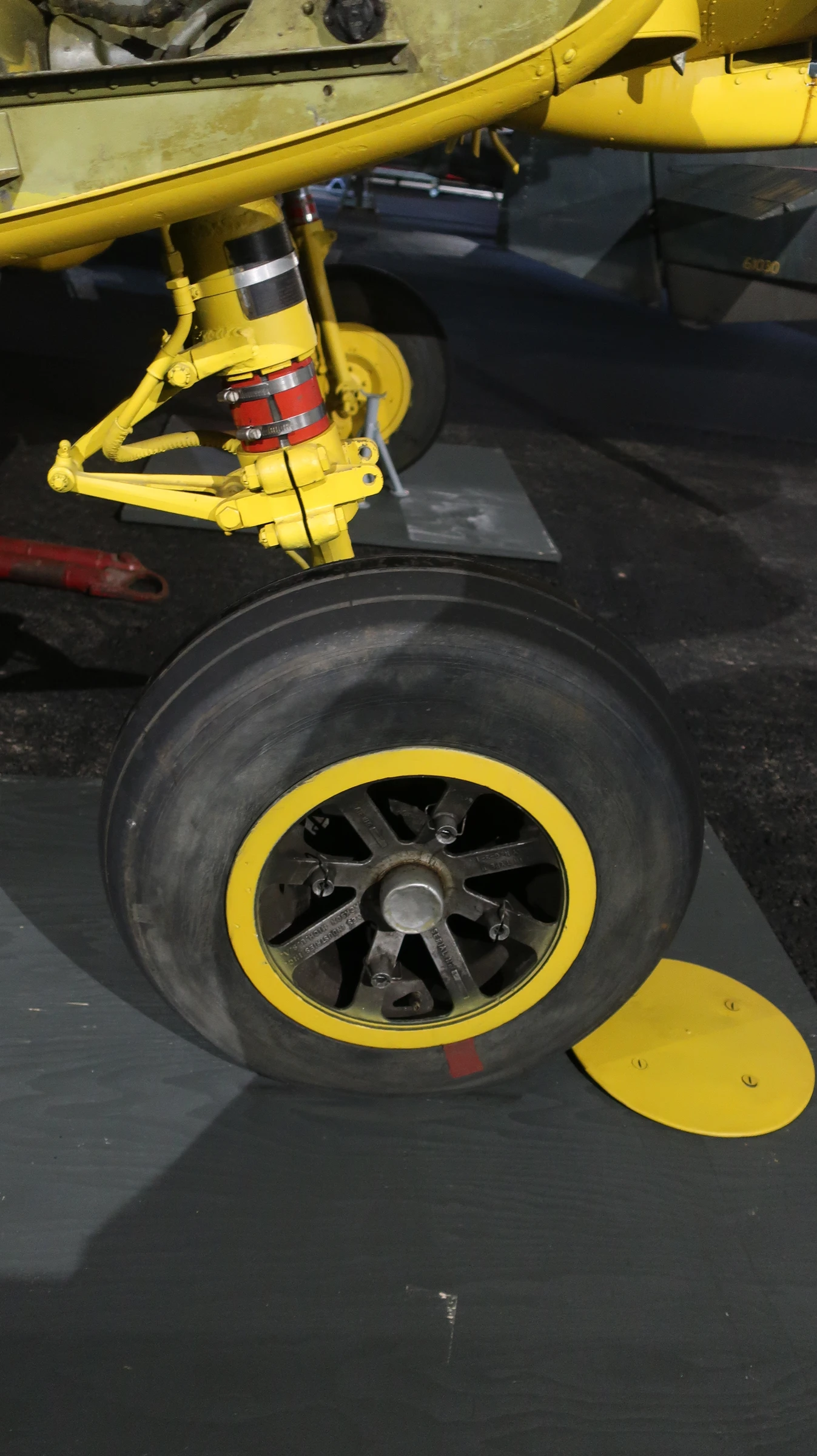
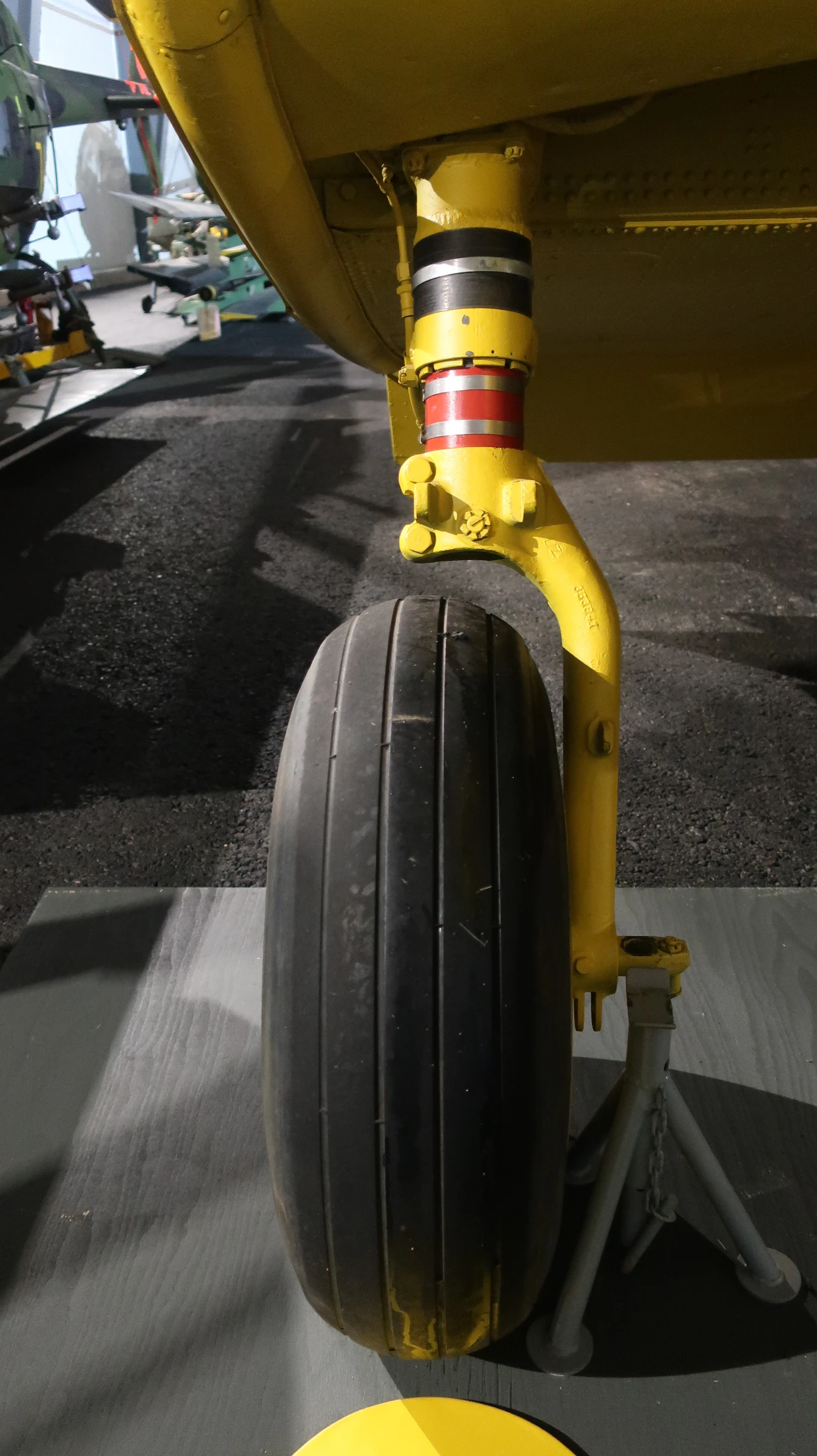
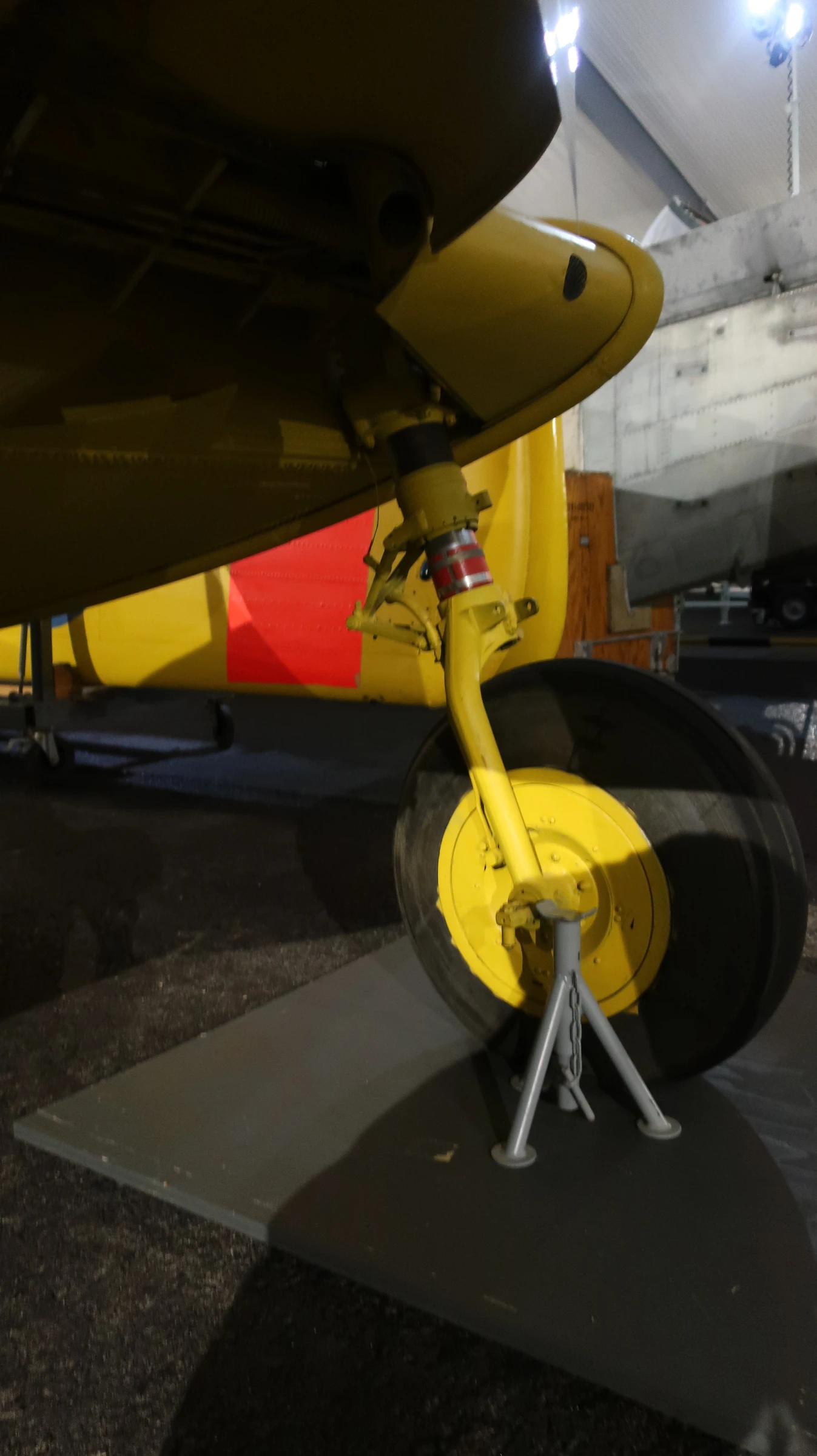
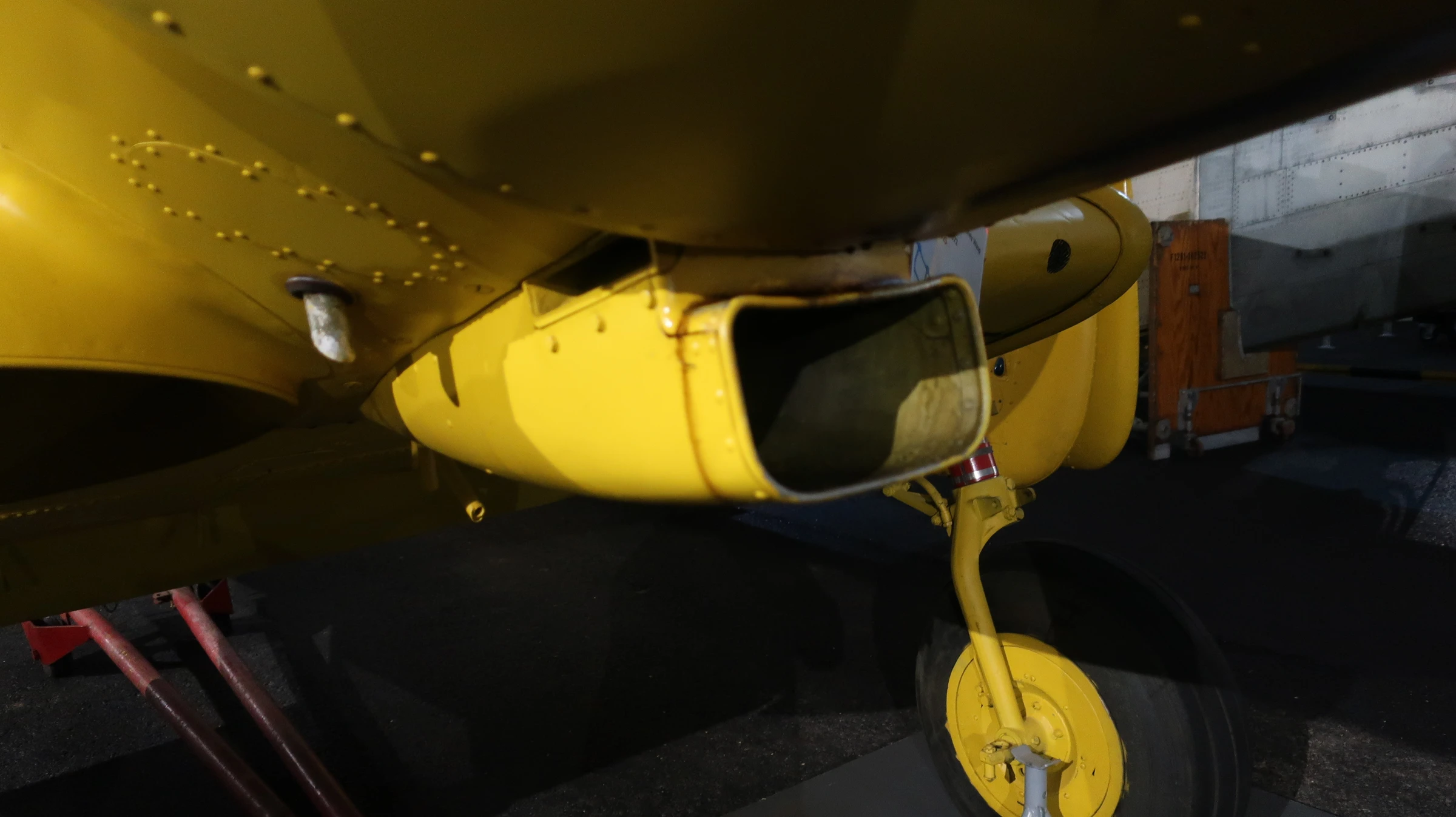
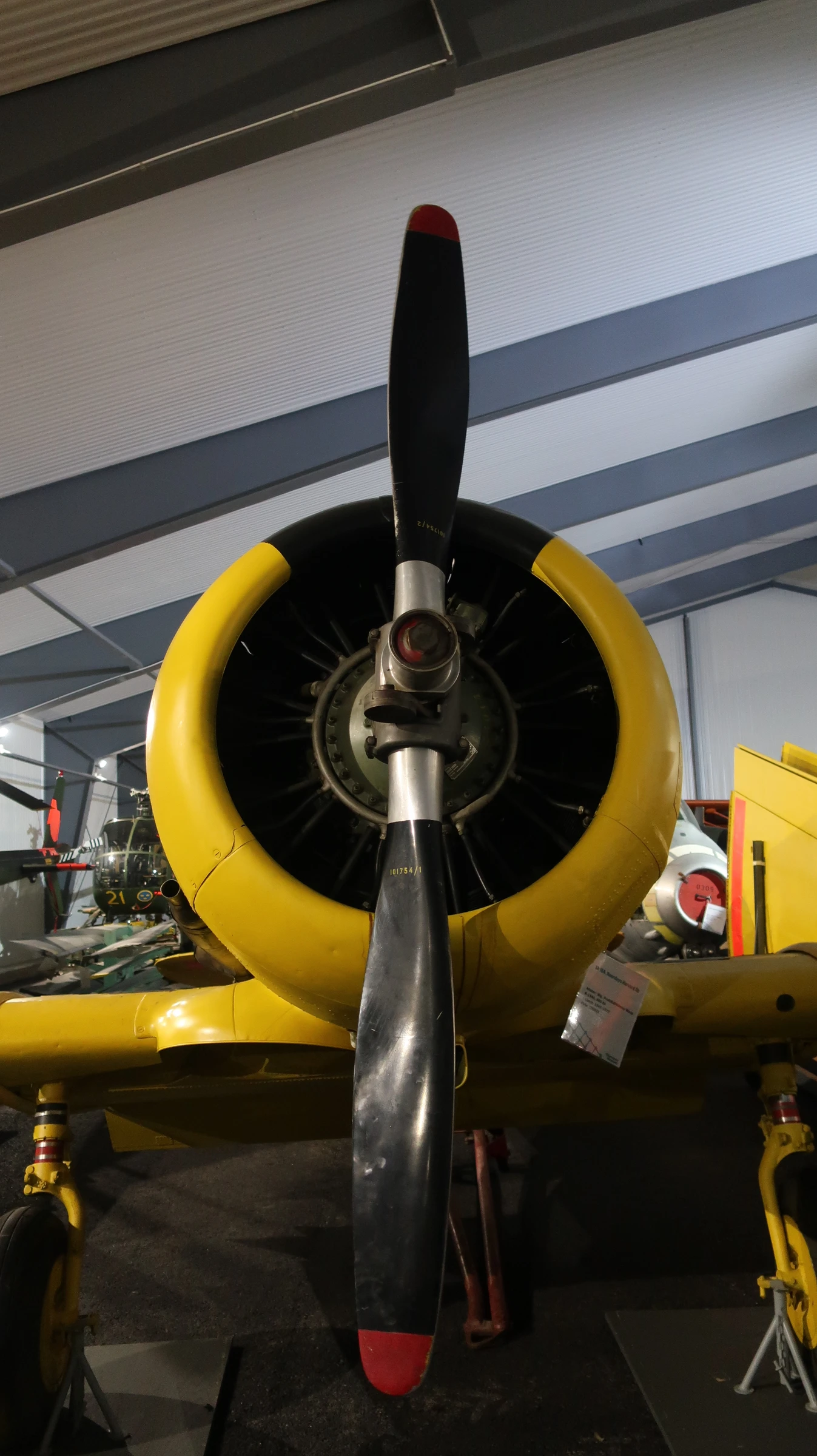
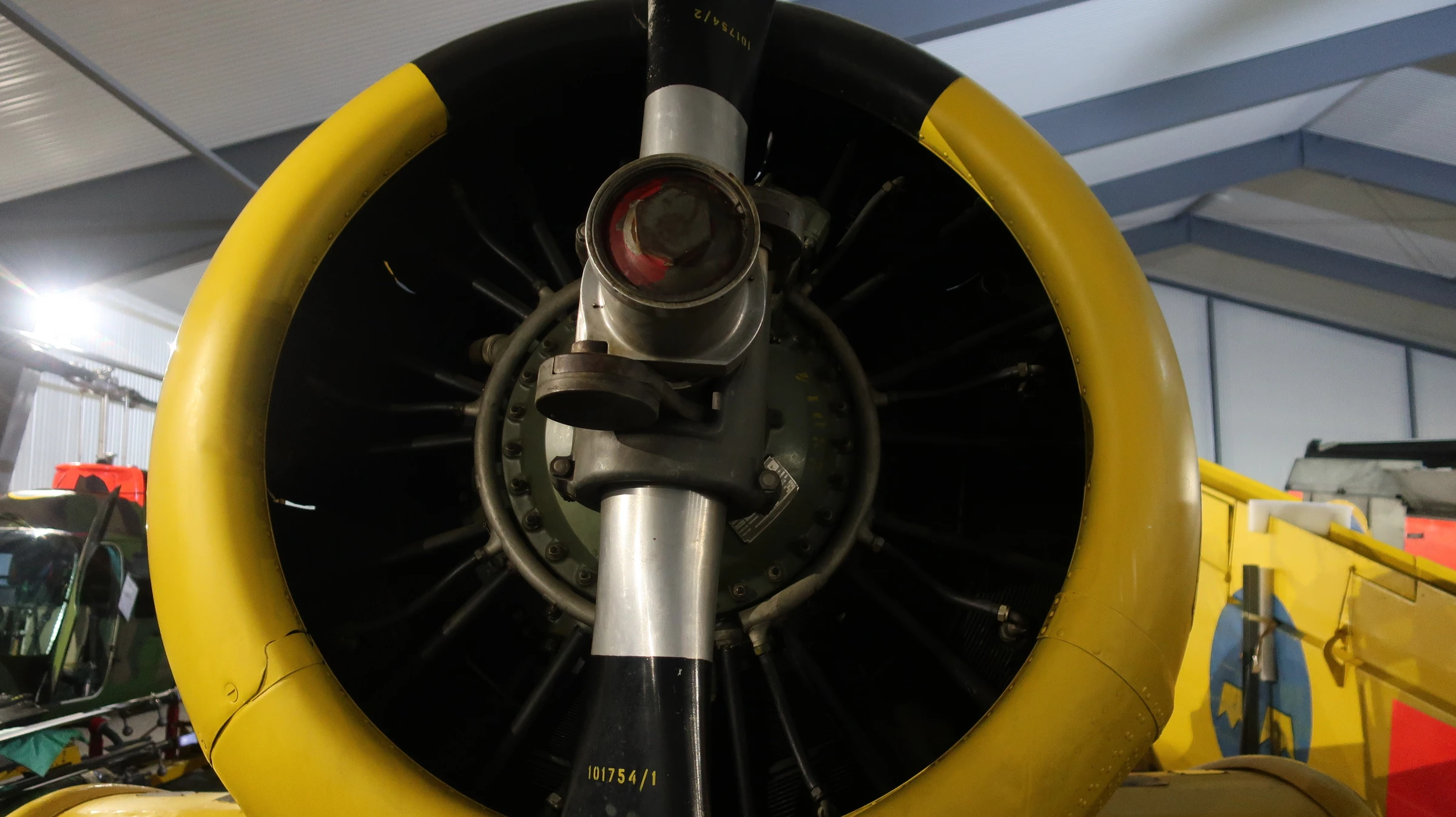
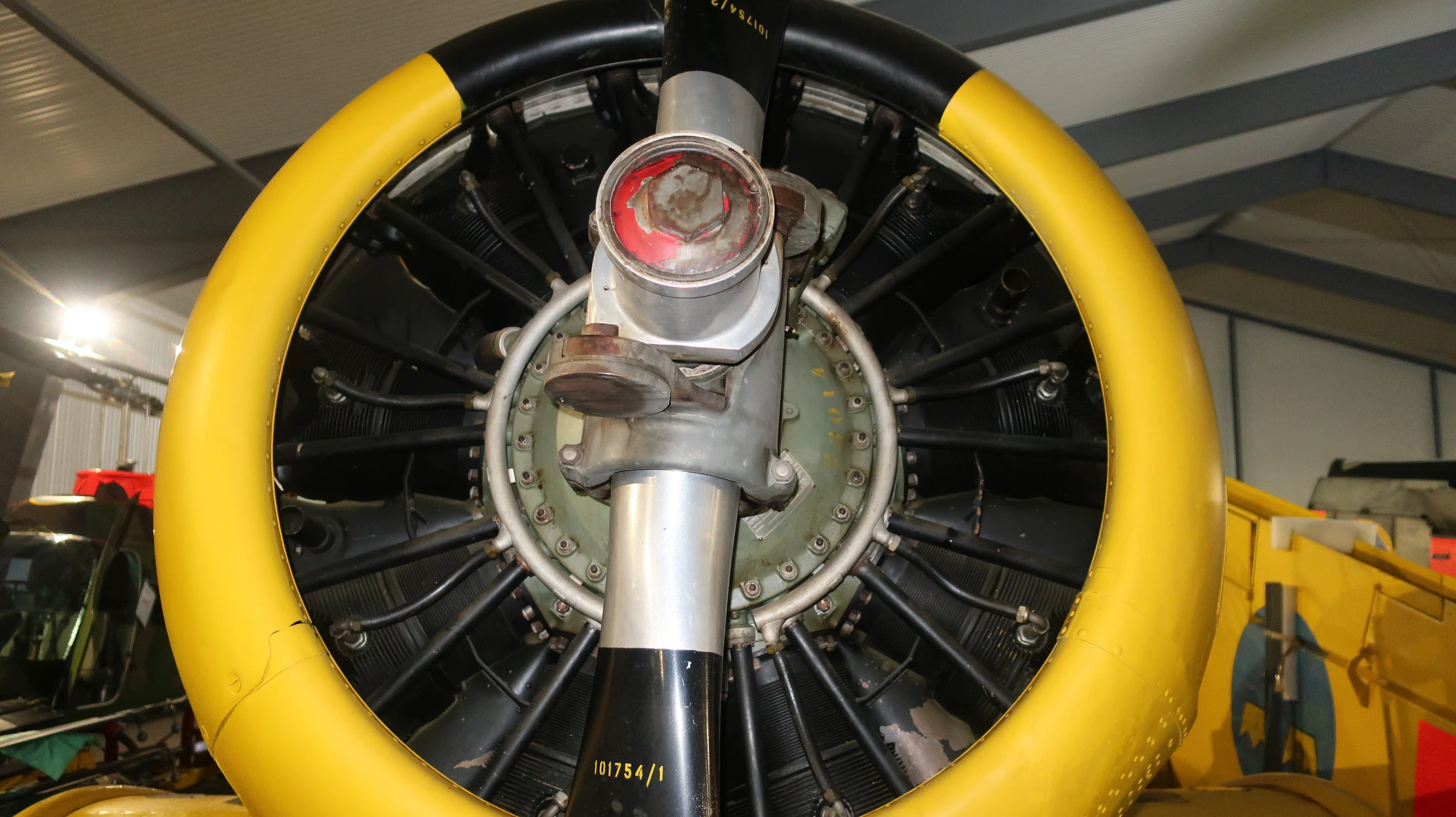
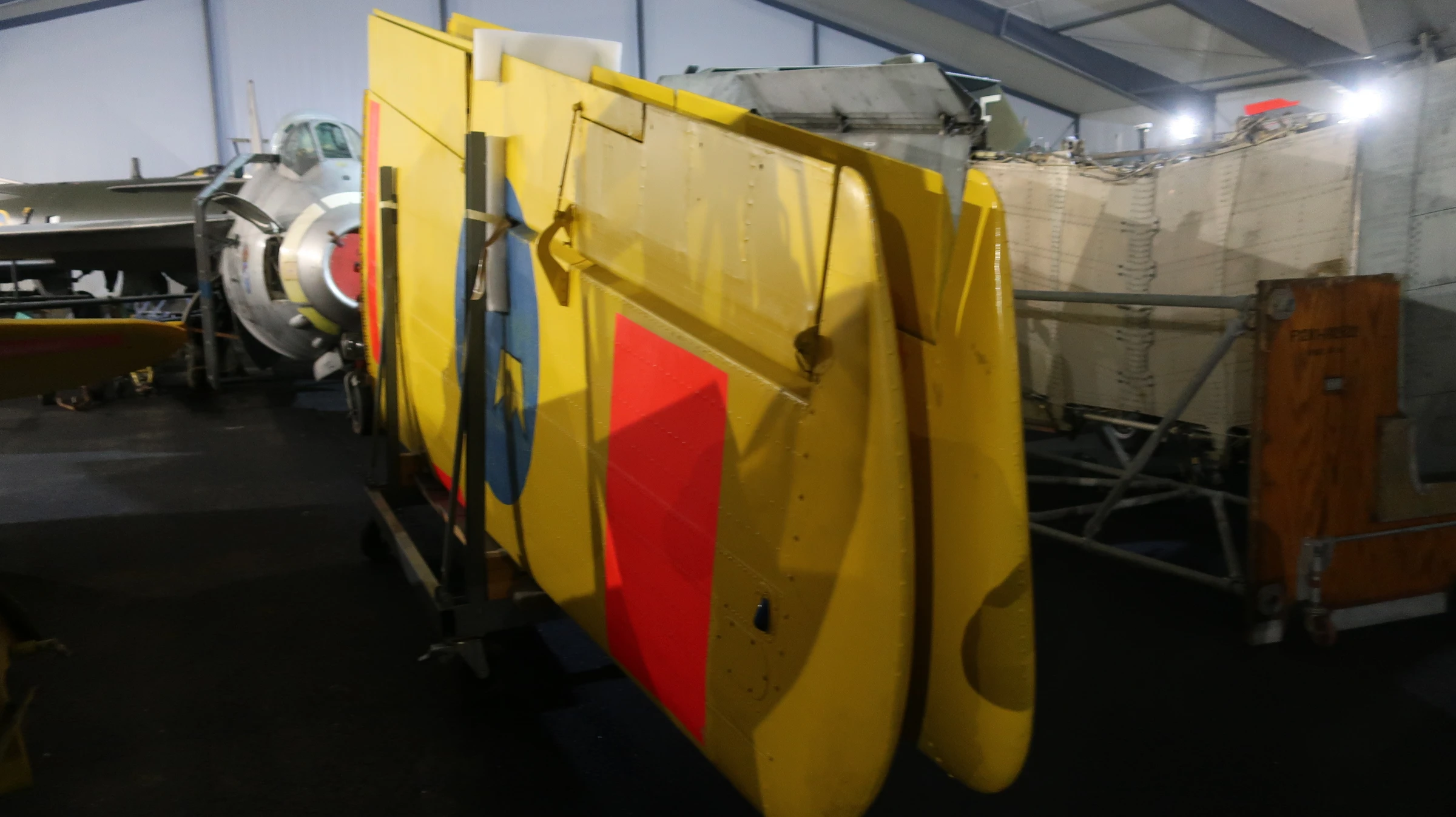
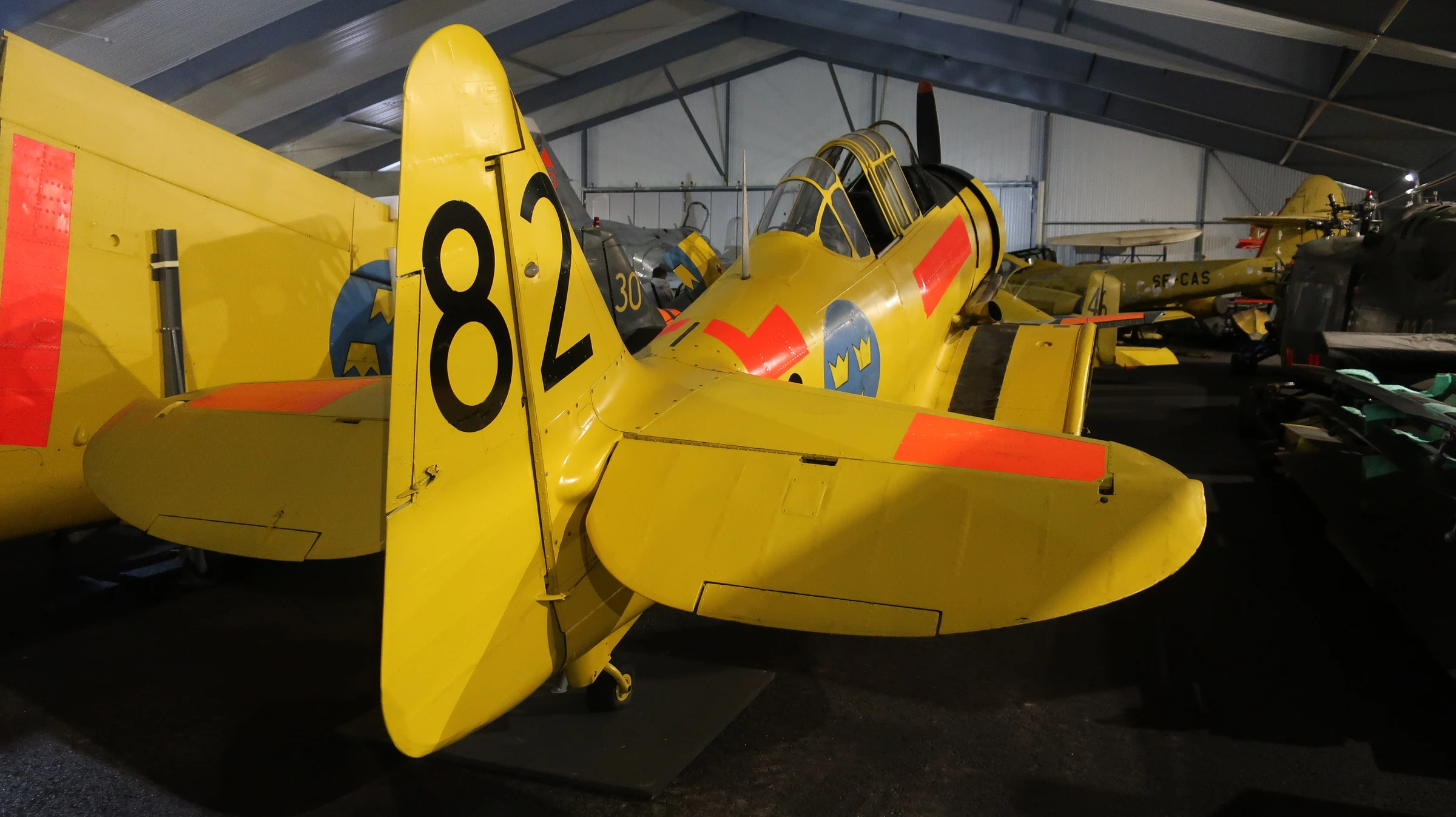
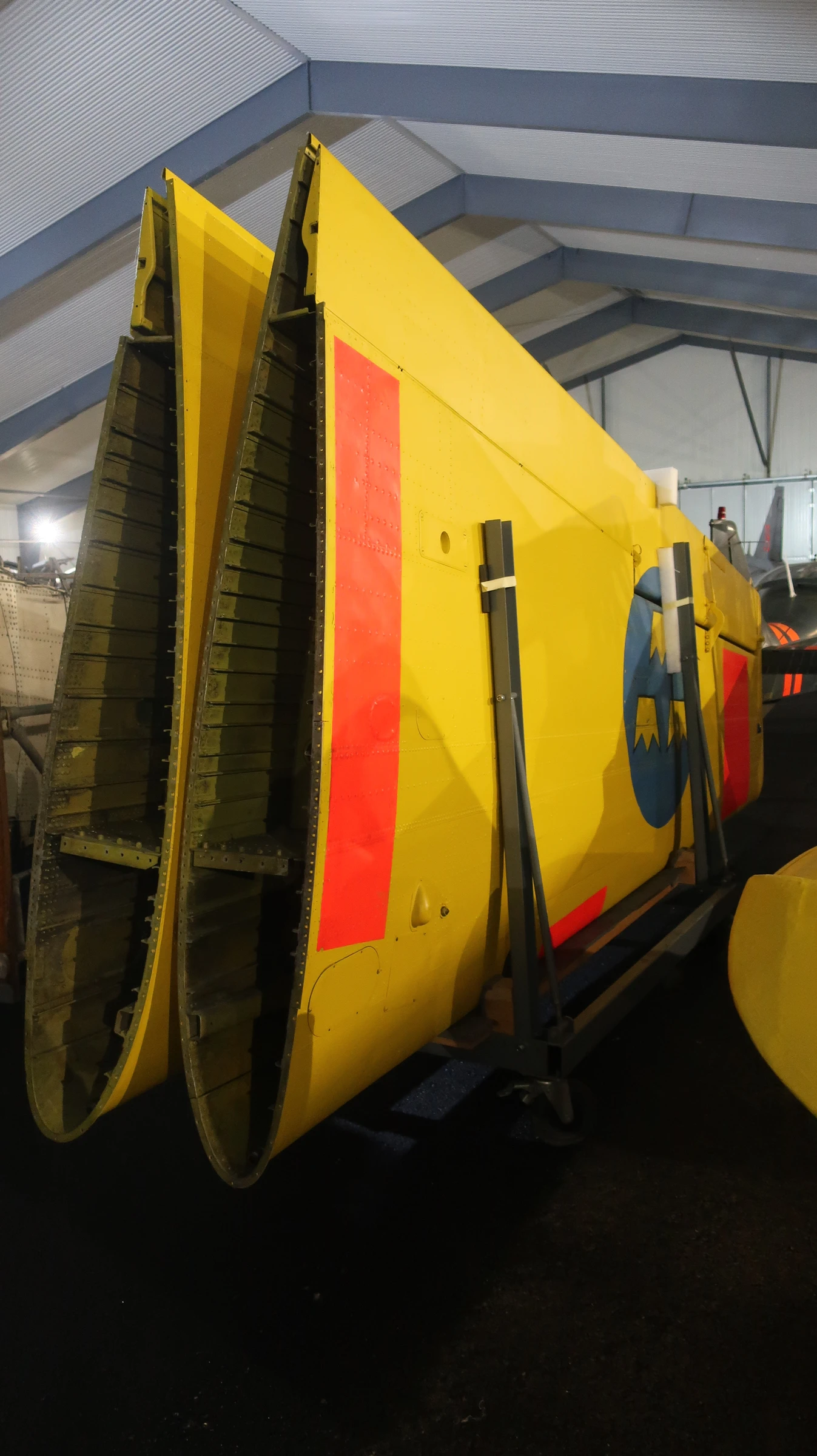
These walk-around photos were taken in one of Flygvapenmuseum's storage facilities in 2019, where the aircraft is seen with its wings removed. They show a Noorduyn AT-16 Harvard IIb, designated Sk 16A in Swedish service — one of the most produced and widely used military trainer aircraft in history, and the type on which a generation of Allied pilots completed their advanced flying training during the Second World War. Designed by North American Aviation in the mid-1930s and built under licence by Noorduyn Aviation in Montreal, the Harvard combined retractable undercarriage, a variable-pitch propeller and a powerful Pratt & Whitney Wasp radial engine to give student pilots a genuine step up in complexity and performance before moving on to front-line types. Its distinctive rasping engine note made it immediately recognisable and earned it the affectionate nickname "the Pilot Maker".
Sweden acquired 145 Harvards in 1947–48 as the Sk 16A, purchasing them at favourable prices from the vast Allied surplus stocks left over after the war — the aircraft arrived dismantled and crated for sea transport, and were reassembled in Sweden. They replaced the Sk 14 in the advanced training role and served at virtually every Air Force wing in the country. Individual 16109 was delivered to F 10 at Ängelholm on 12 August 1948, where it bore the codes 10-6, 10-109 and 10-82 at various points in its career. It was retired in 1968 with over 4,750 flying hours to its credit and transferred to the historic collections at Malmen.