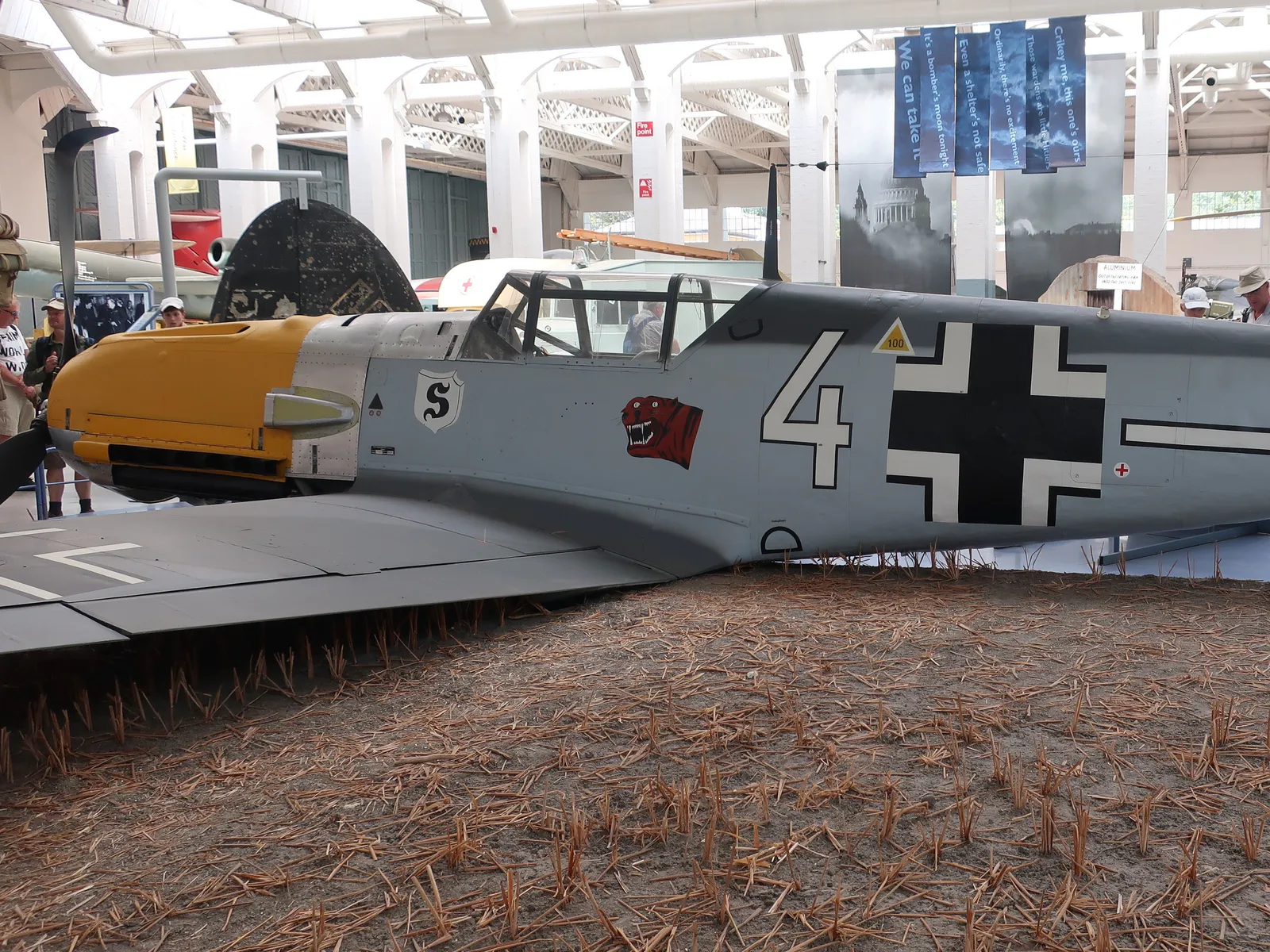
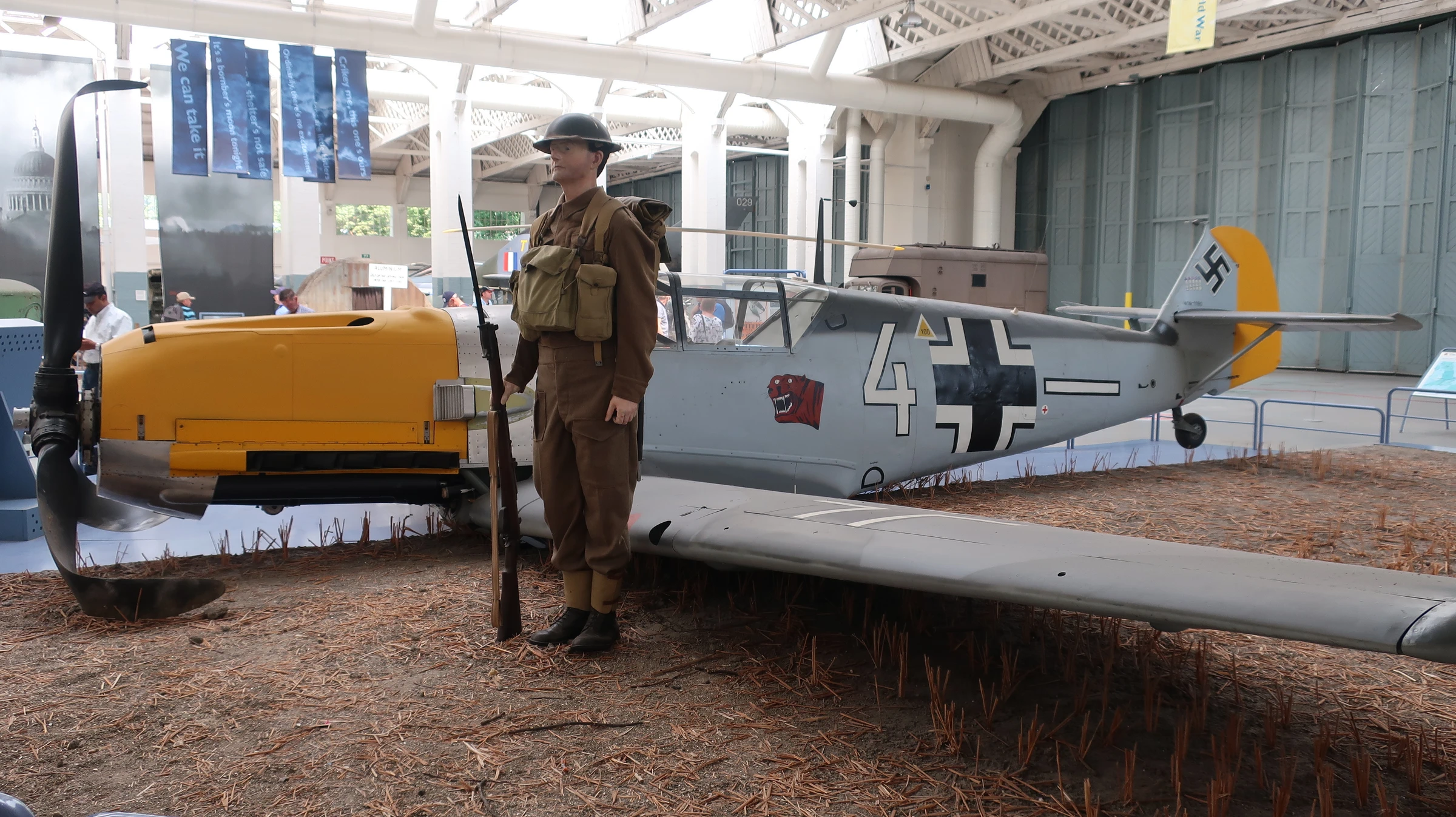
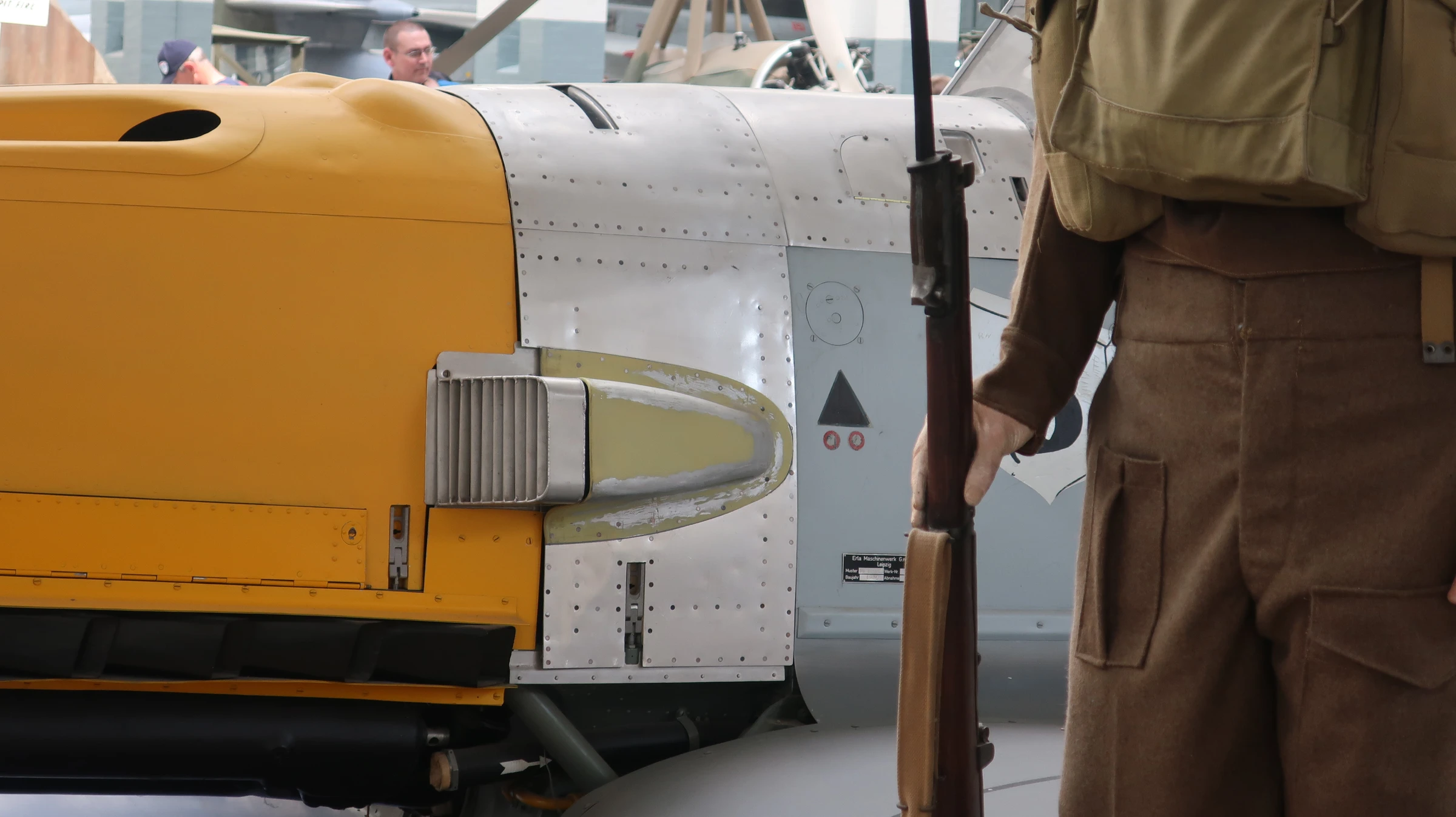
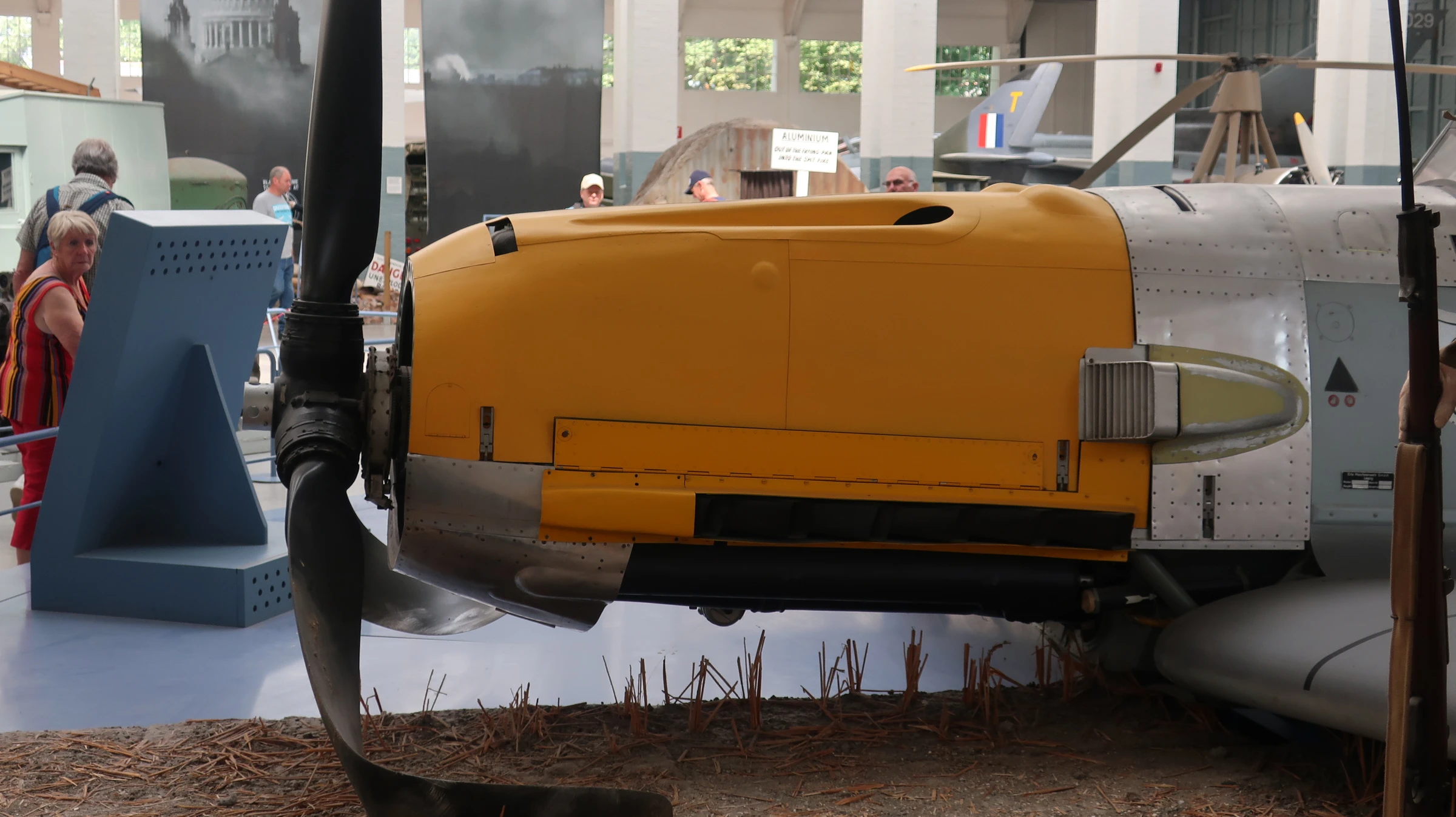
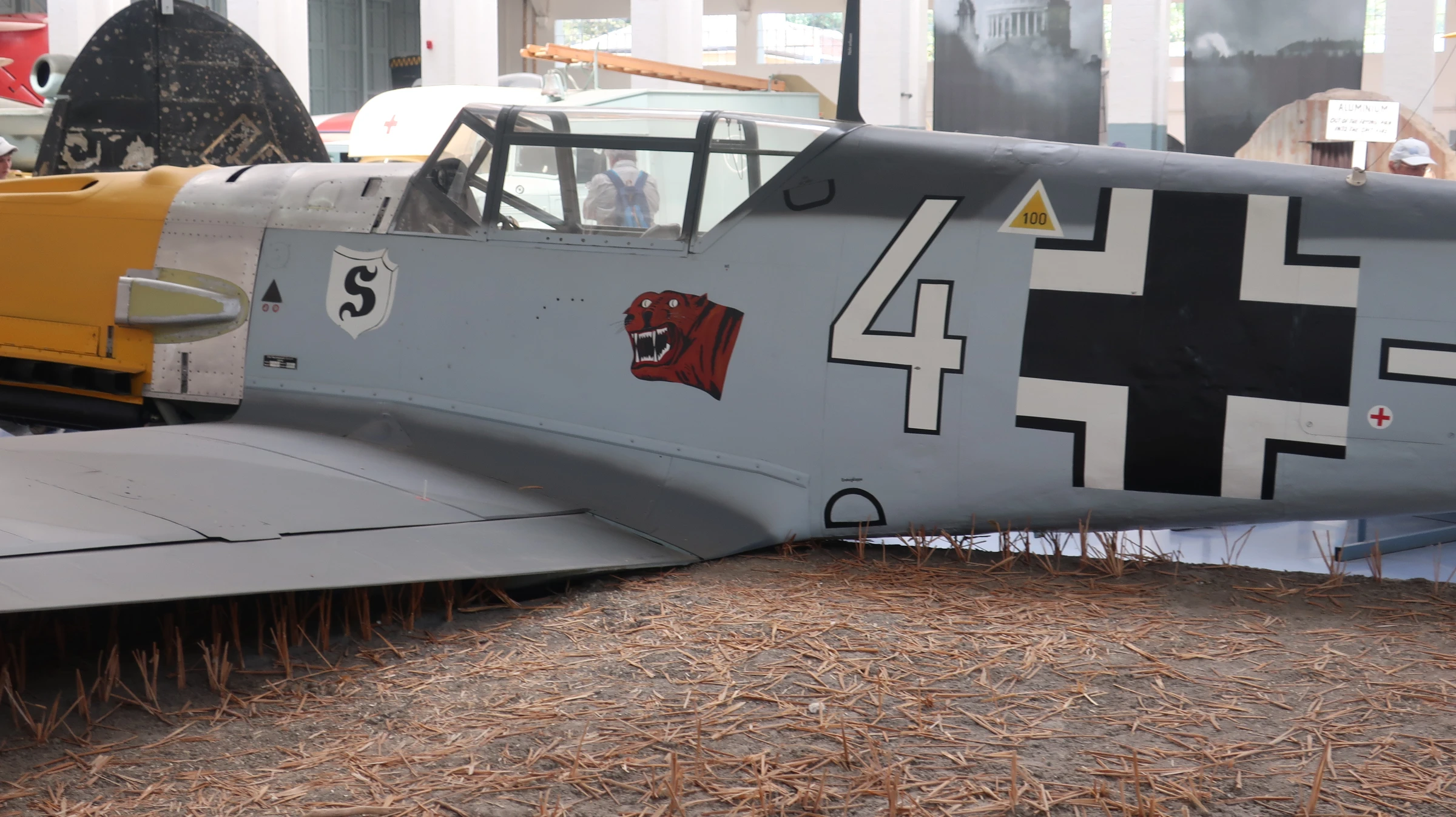
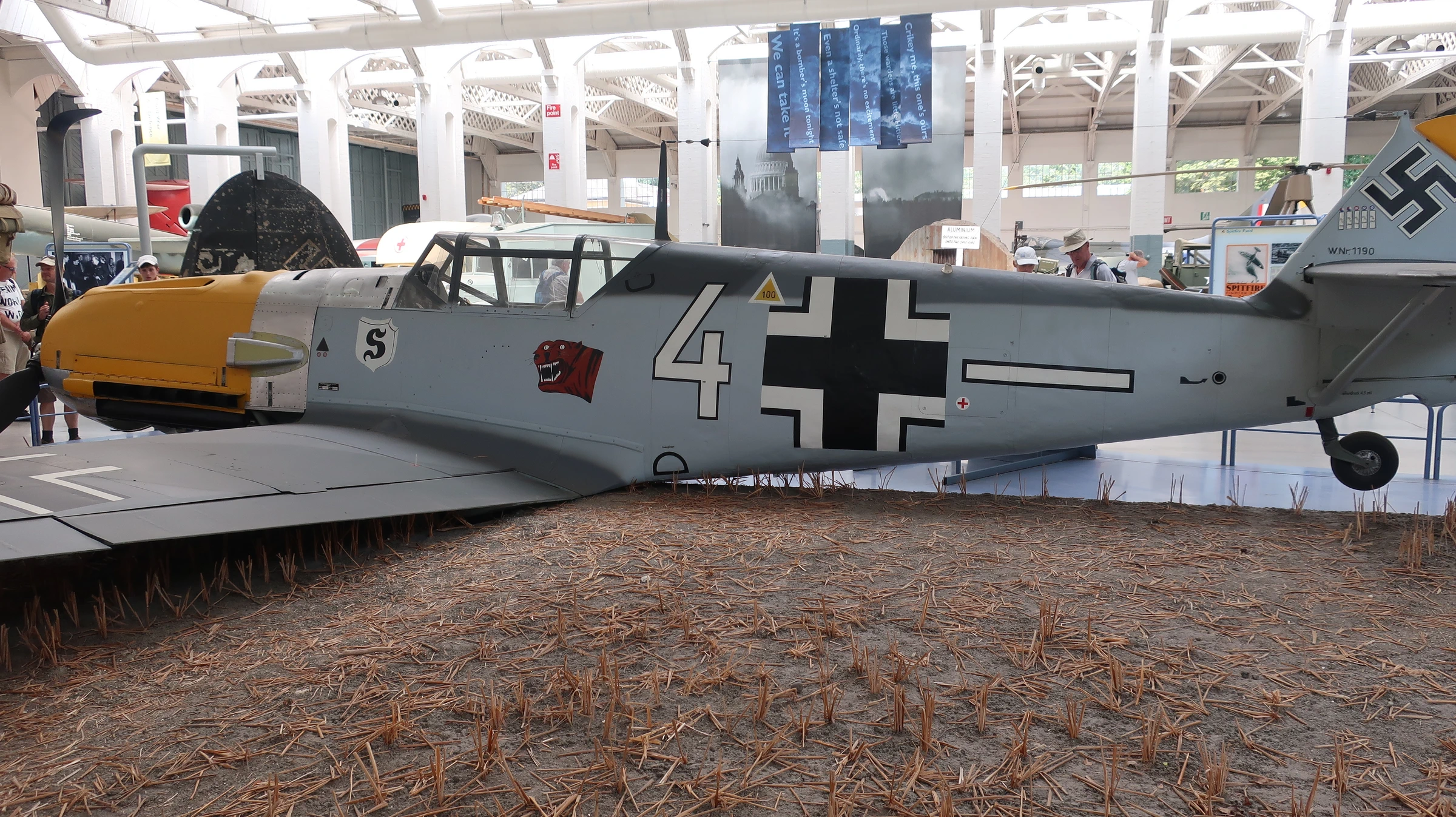
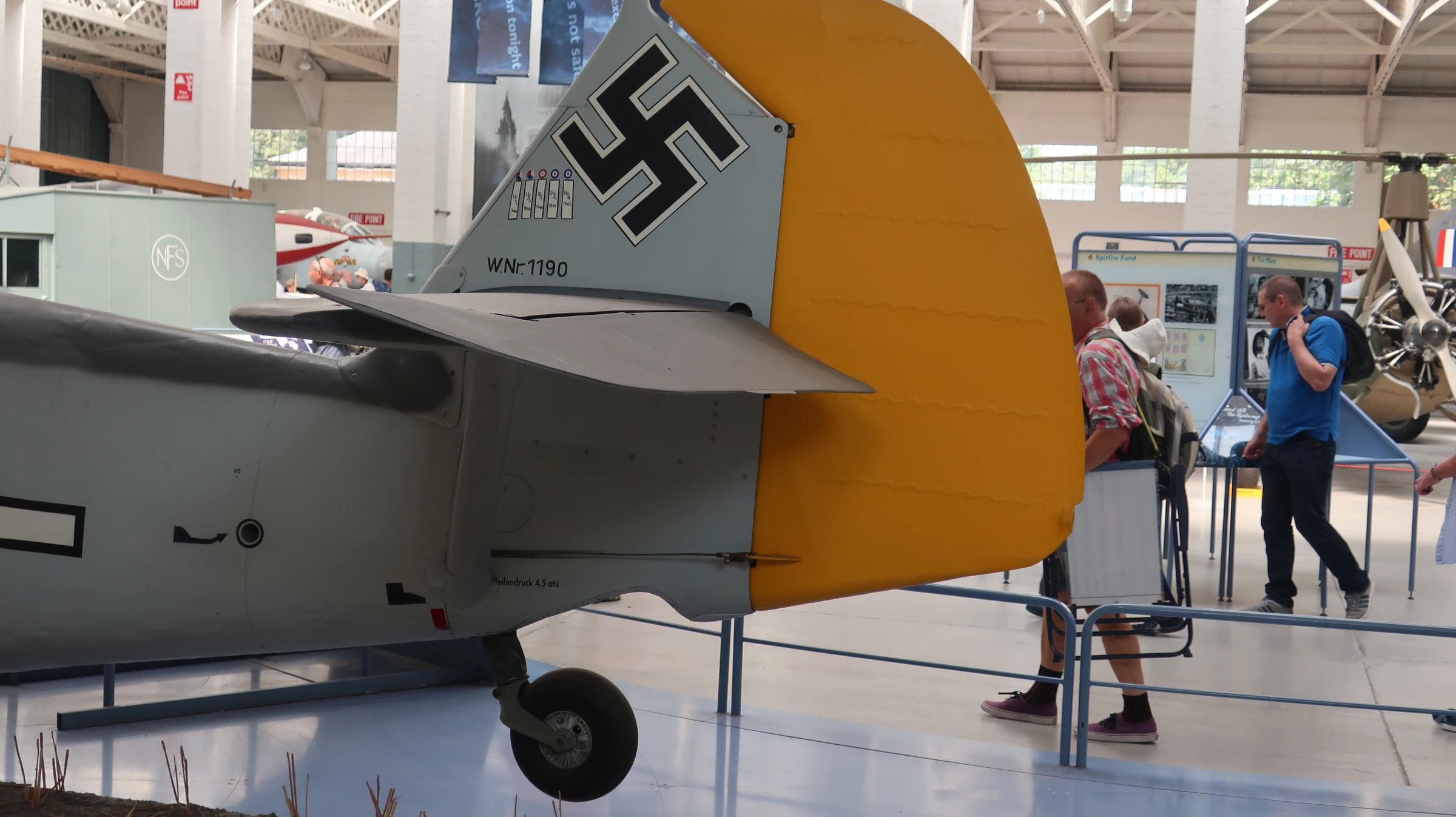
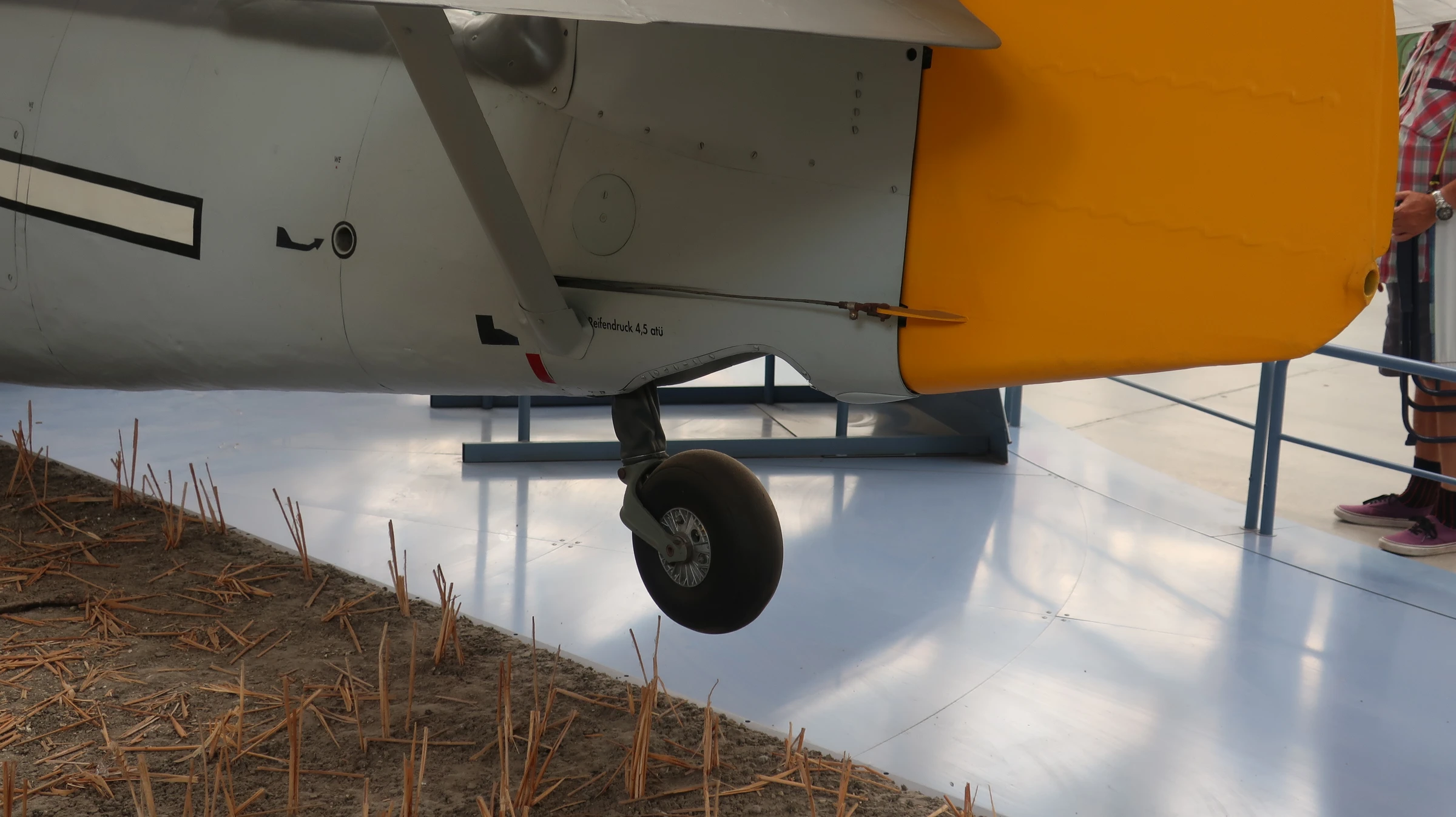
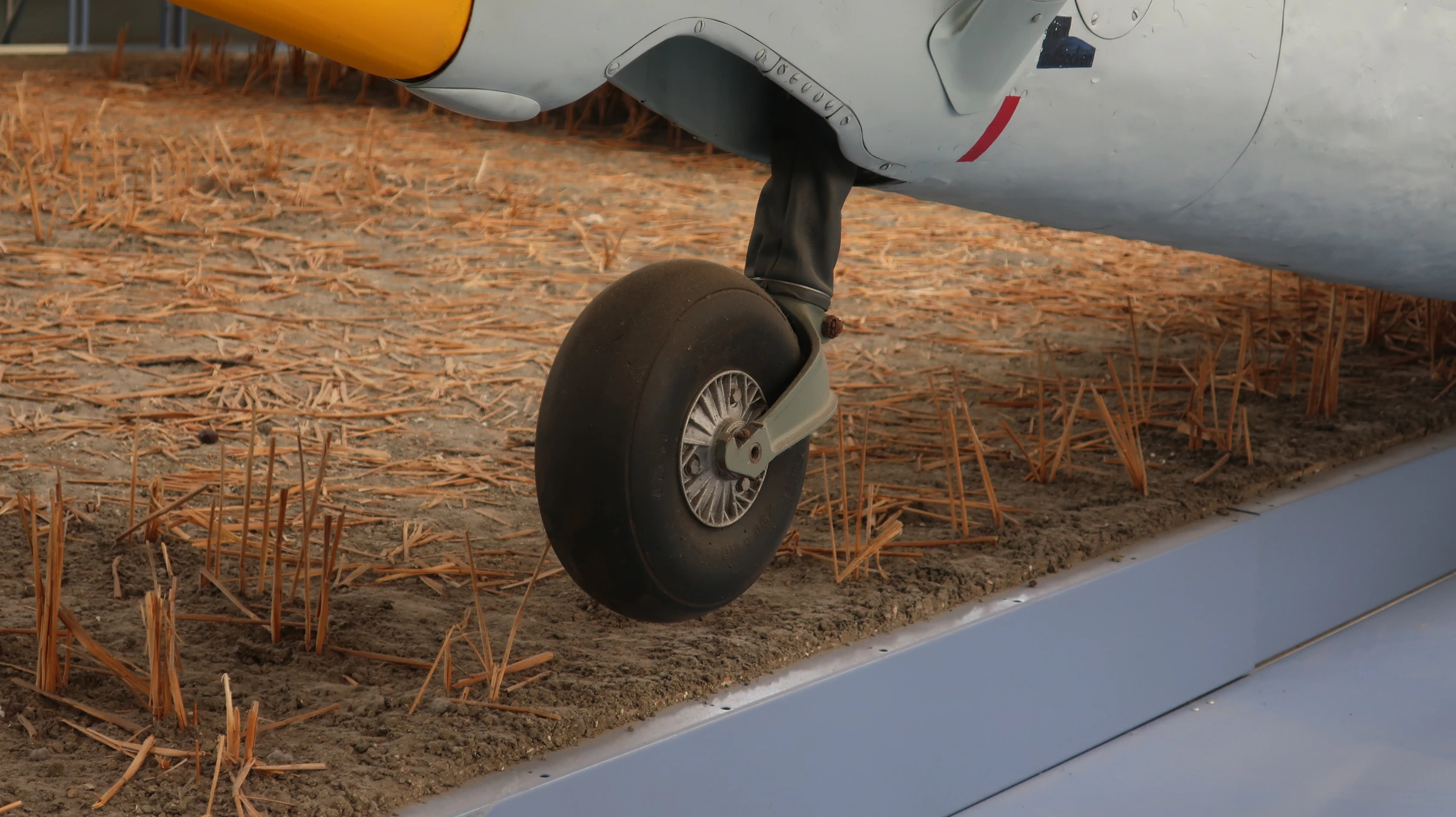
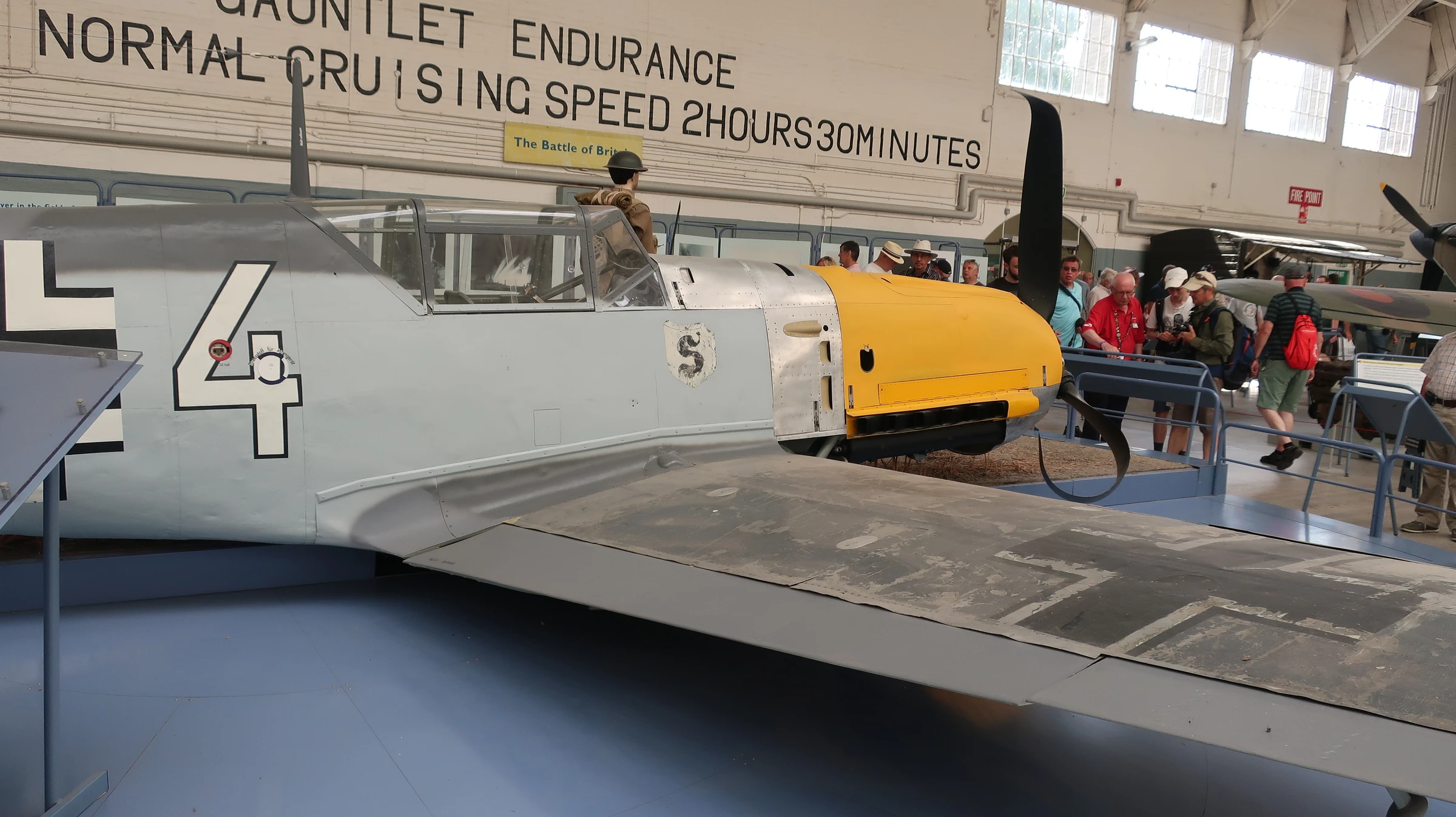
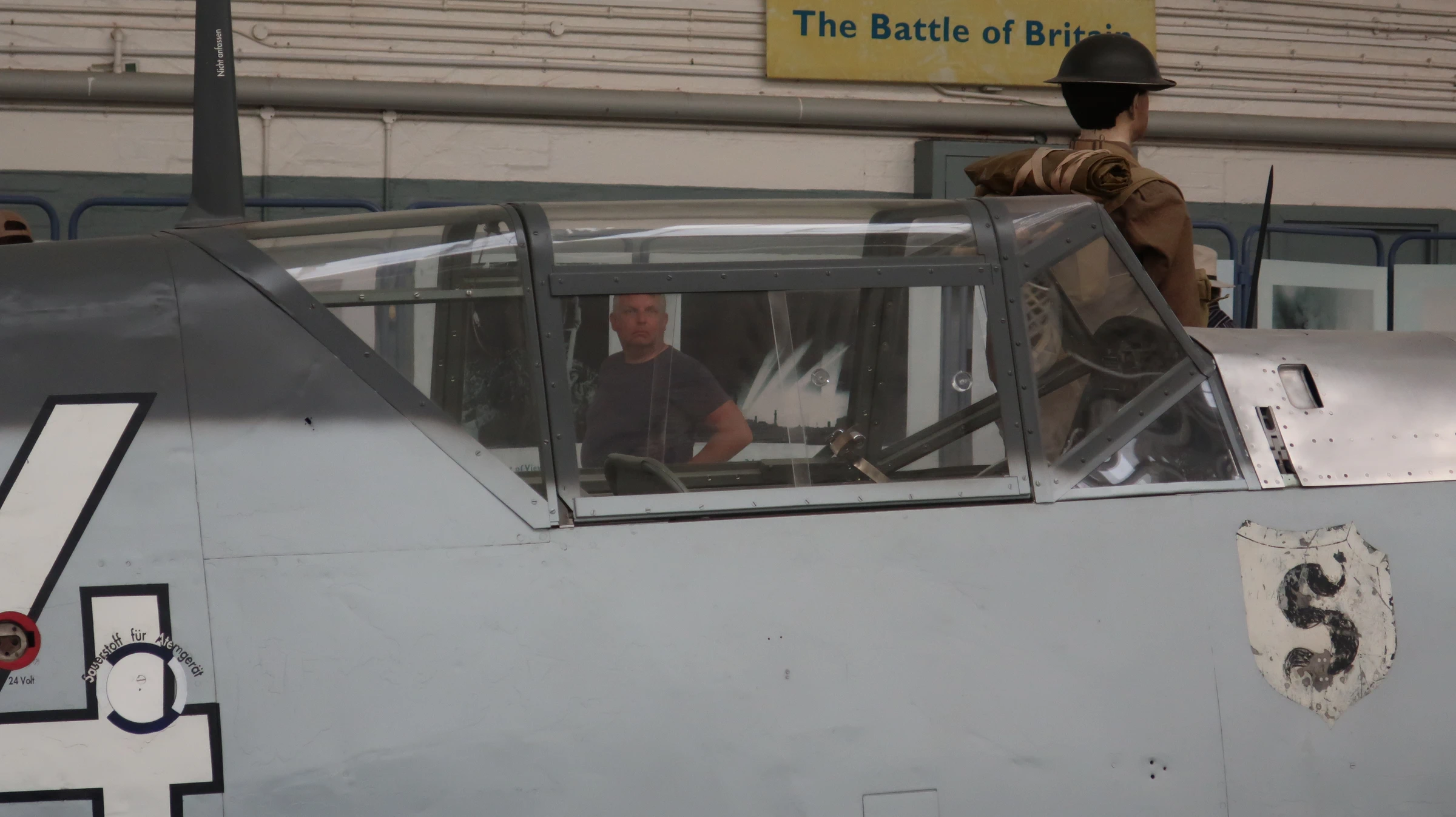
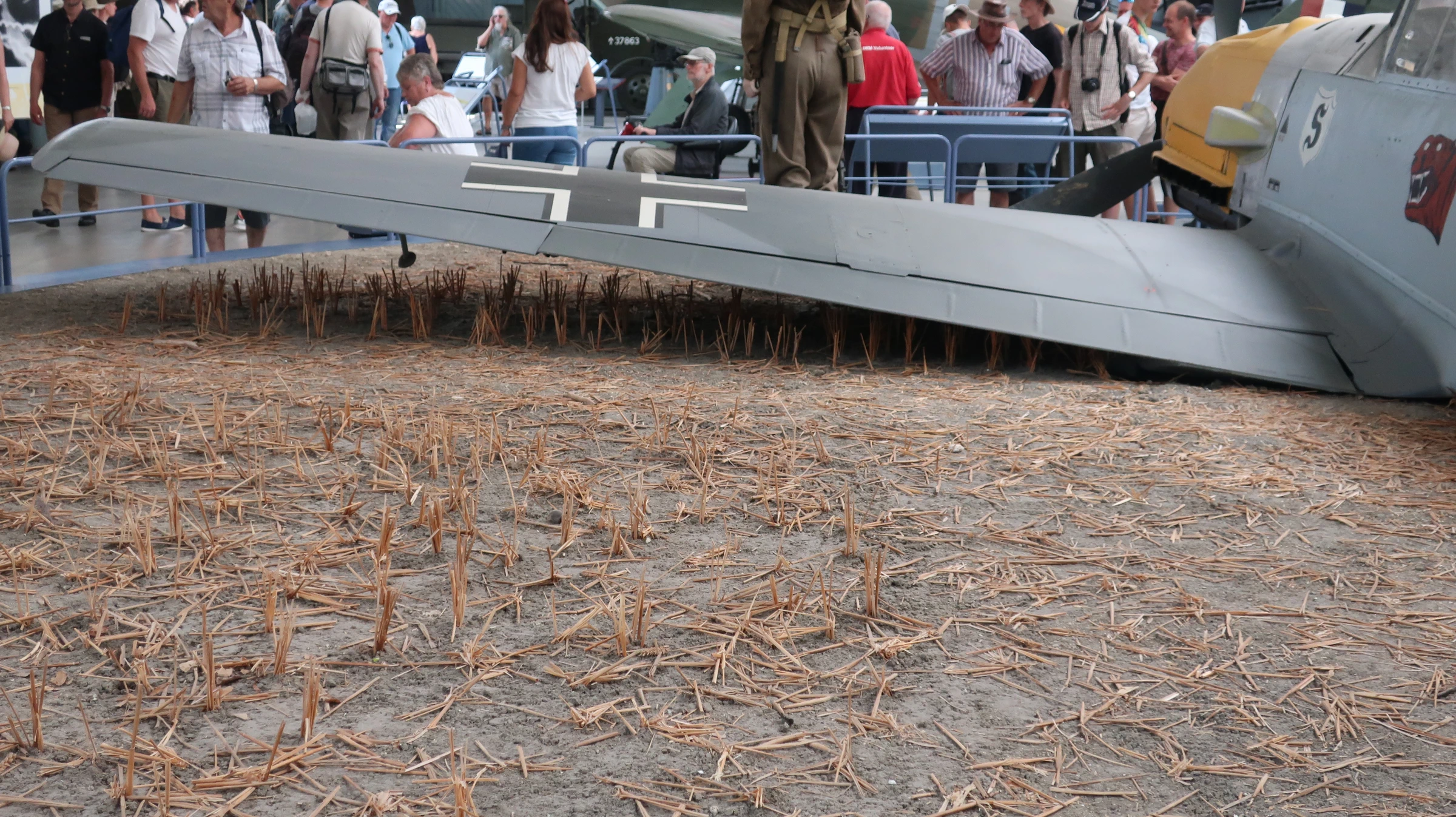
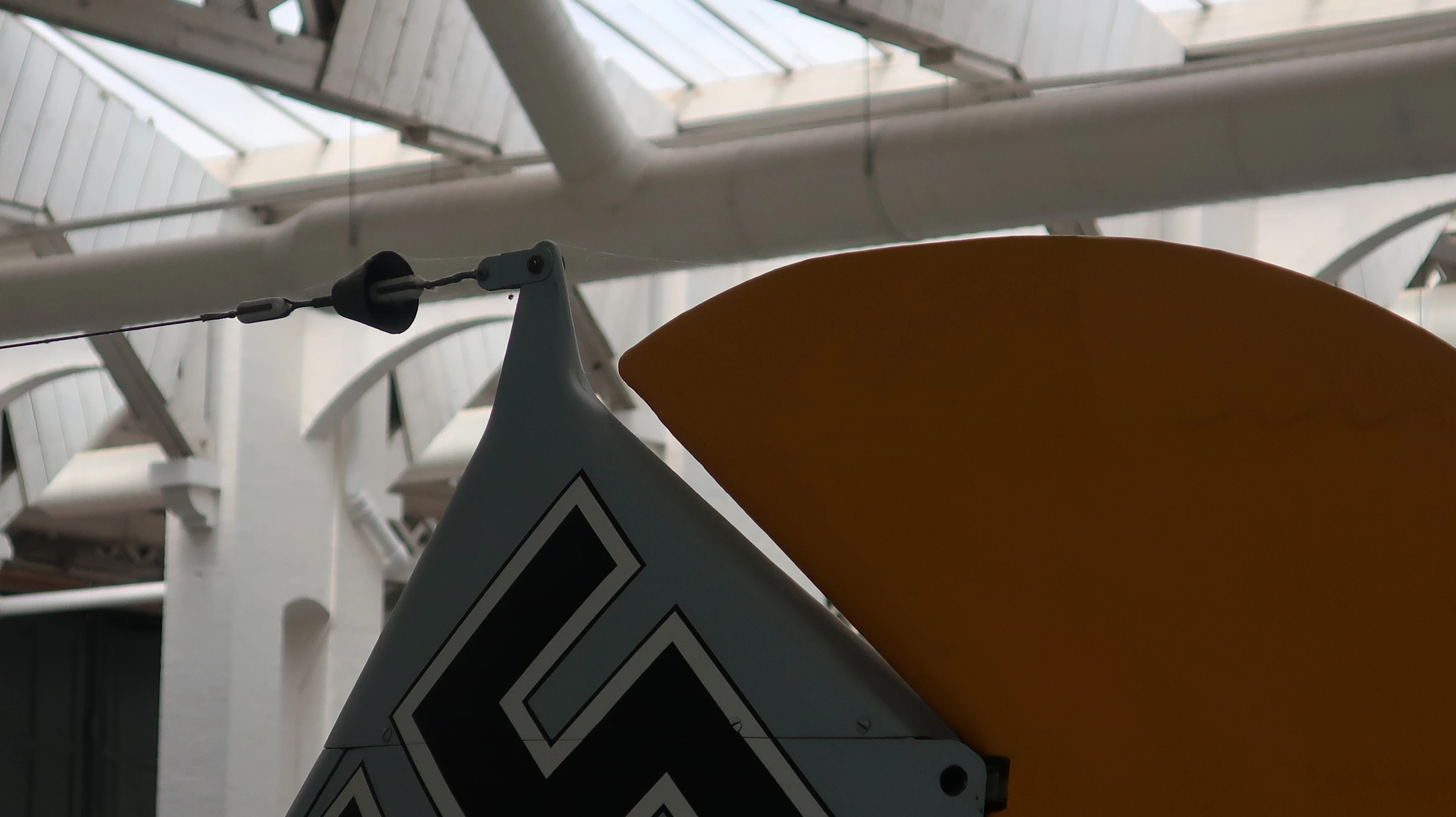
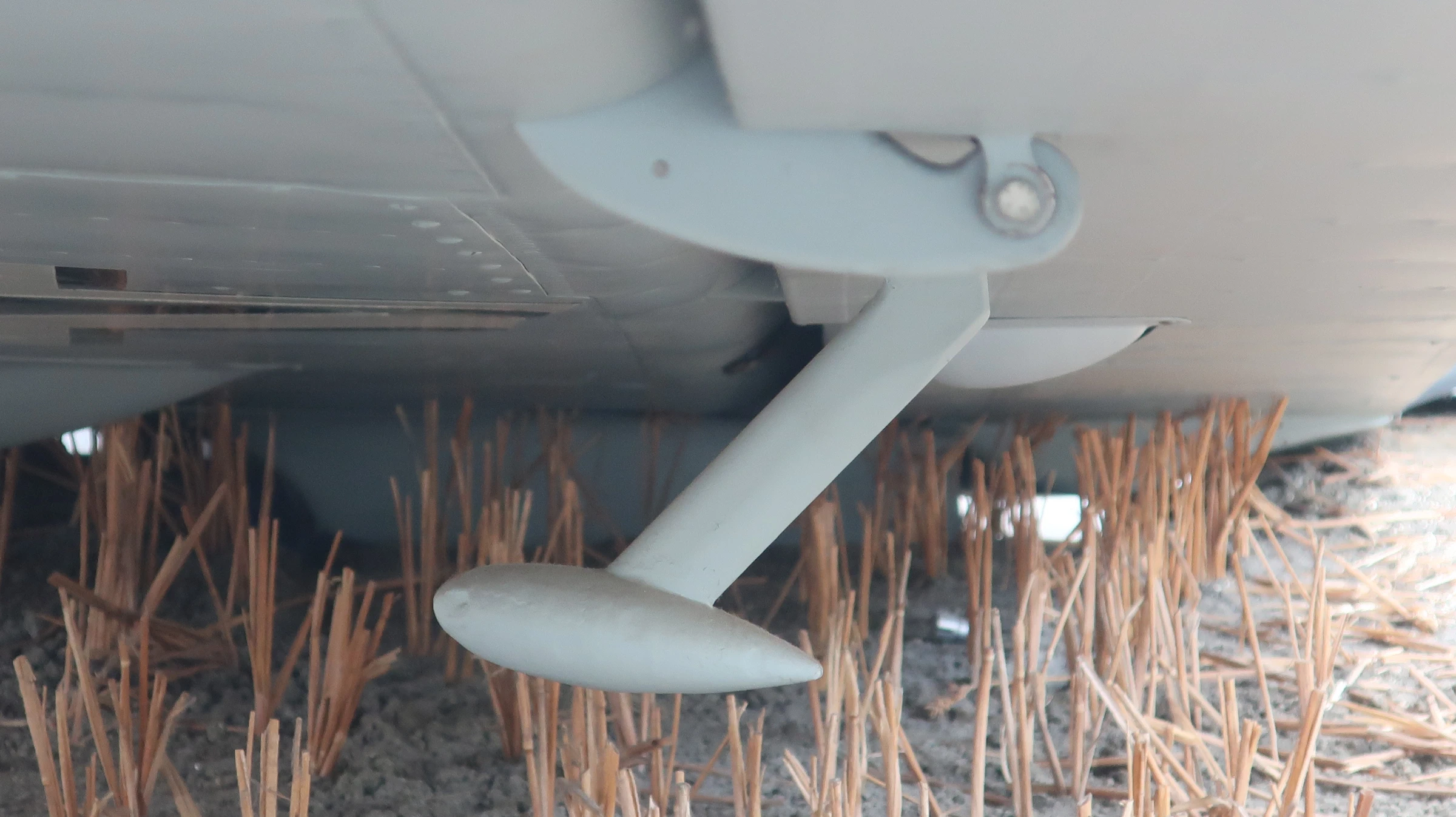
These walk-around photos were taken at IWM Duxford in 2018. They show a Messerschmitt Bf 109 E-3, Werk-Nr. 1190 — the Luftwaffe's primary single-seat fighter throughout the early years of the Second World War and the RAF's most formidable opponent during the Battle of Britain. Fast, agile and heavily armed, the Bf 109 was matched only by the Spitfire, and the two types fought each other to a standstill over southern England in the summer and autumn of 1940.
This particular aircraft was built in September 1939 by Erla Maschinenwerk in Leipzig and issued to Jagdgeschwader 26 in mid-1940 — one of the most distinguished Luftwaffe fighter units of the war, based across the Channel in northern France. Its first known pilot was Karl Ebbighausen, a veteran of the Spanish Civil War and the Battle of France with around five victories to his credit, who flew it during the early stages of the Battle of Britain as a Gruppenkommandeur. On 30 September 1940 — the last day of the Luftwaffe's major daylight offensive — it was flown by Unteroffizier Horst Perez on an escort mission over Beachy Head when it was shot down by a Spitfire of No. 92 Squadron. Perez belly-landed the aircraft in a field near East Dean in Sussex, surviving to become a prisoner of war. The relatively intact aircraft was taken to Farnborough and subsequently toured Canada and the United States as a war trophy — the graffiti left by visitors from those tours can still be seen on the airframe today. It is displayed at Duxford recreating the belly-landing scene, with its propeller still twisted from the impact.