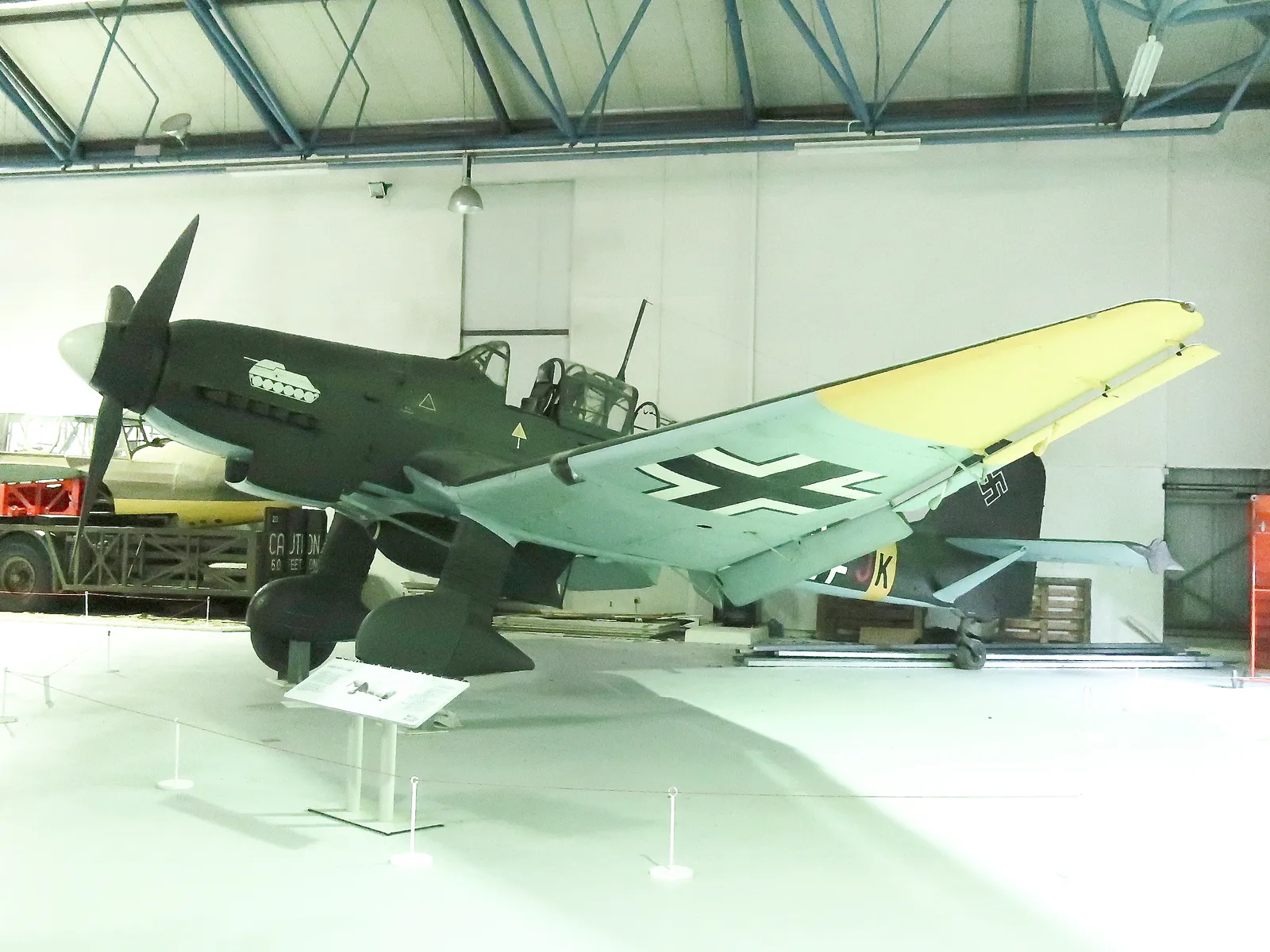
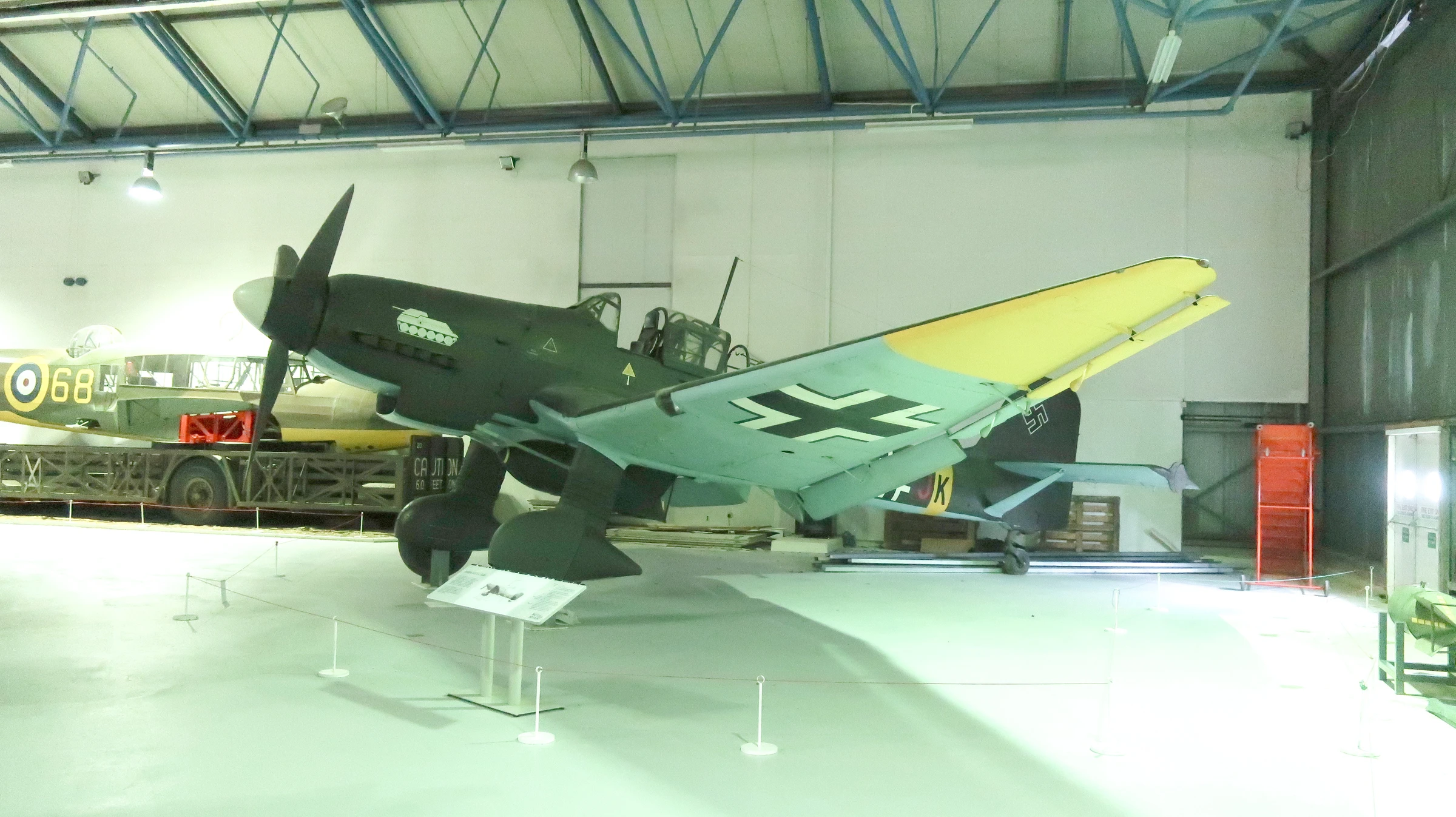
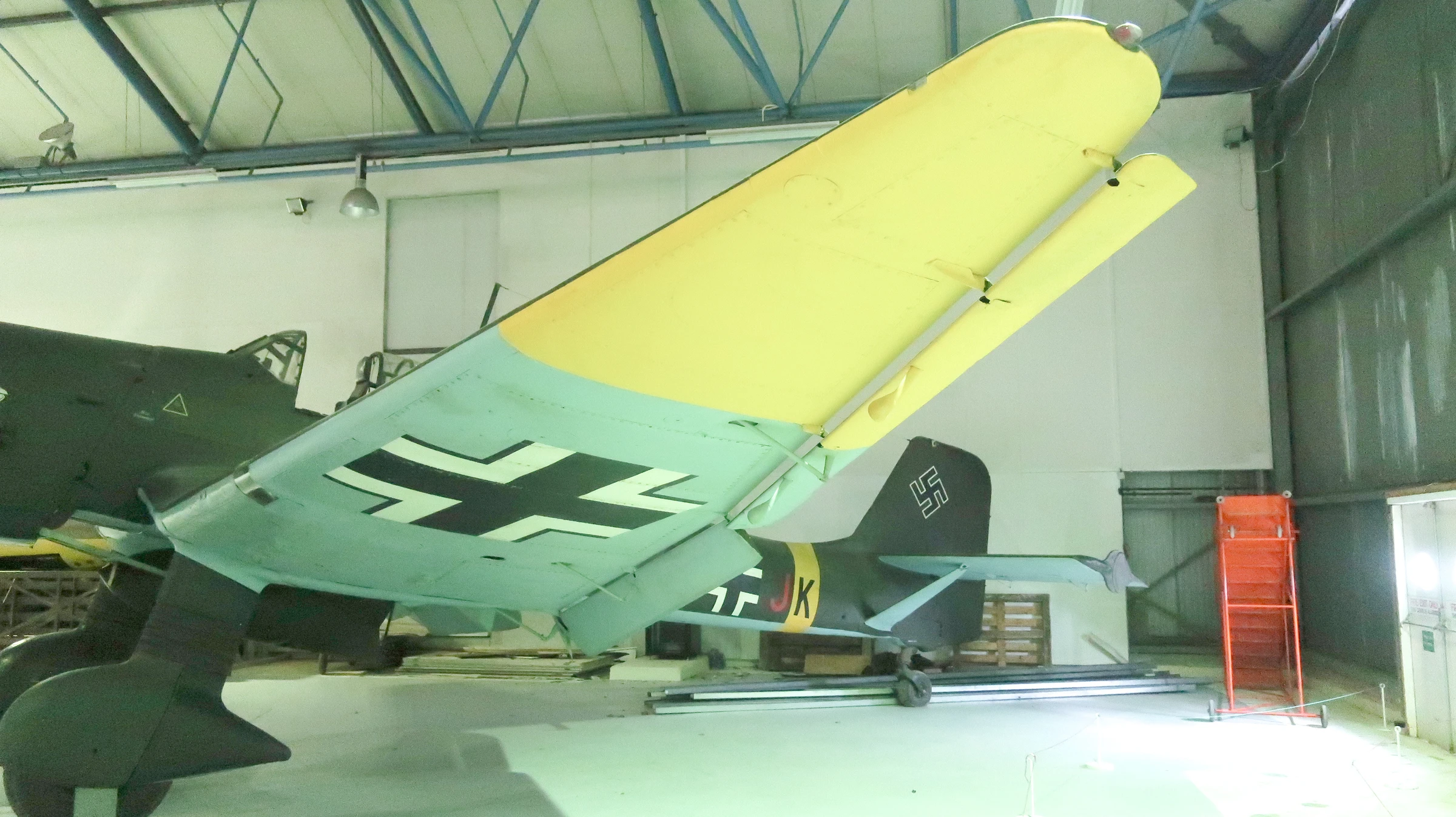
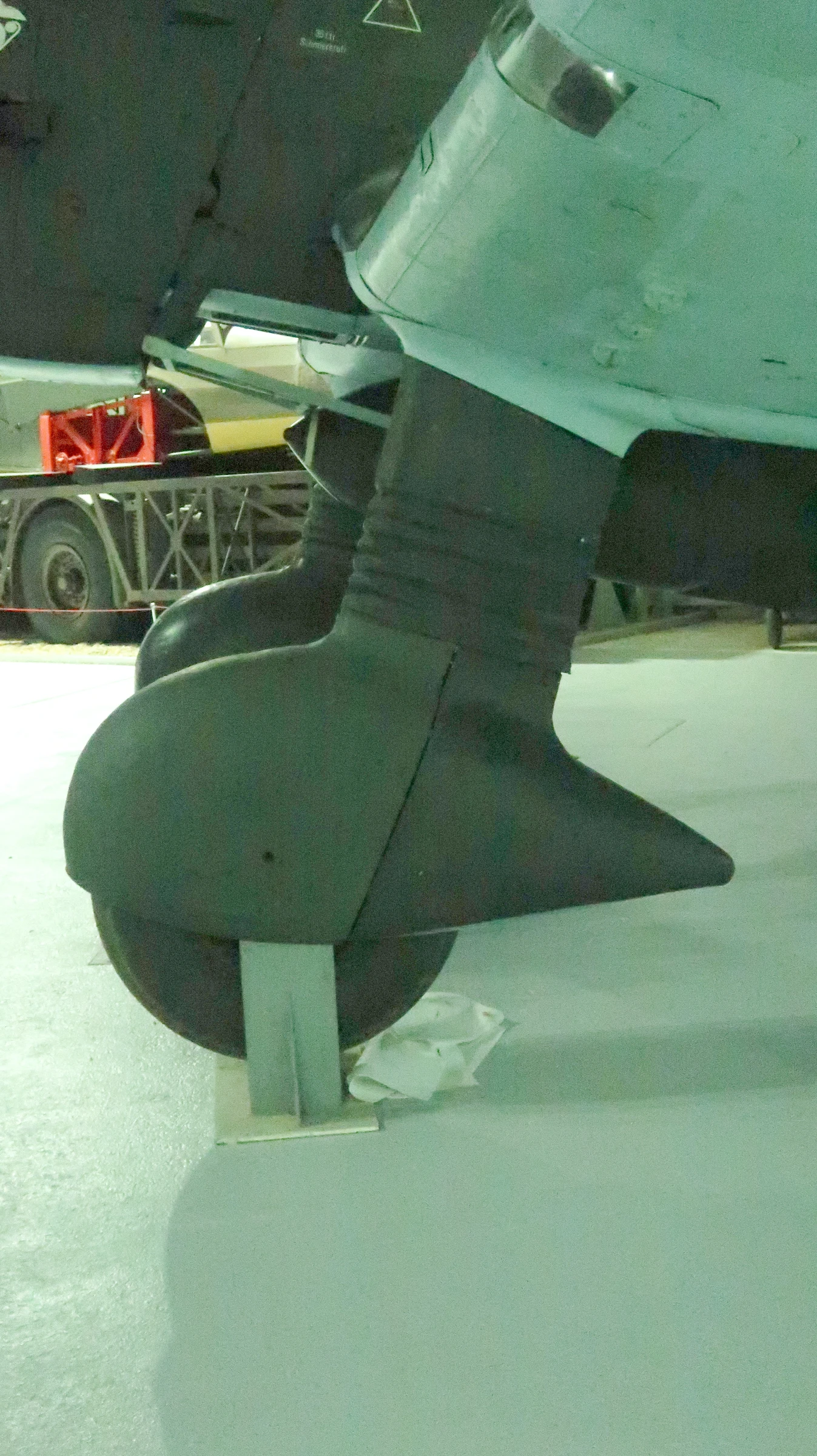
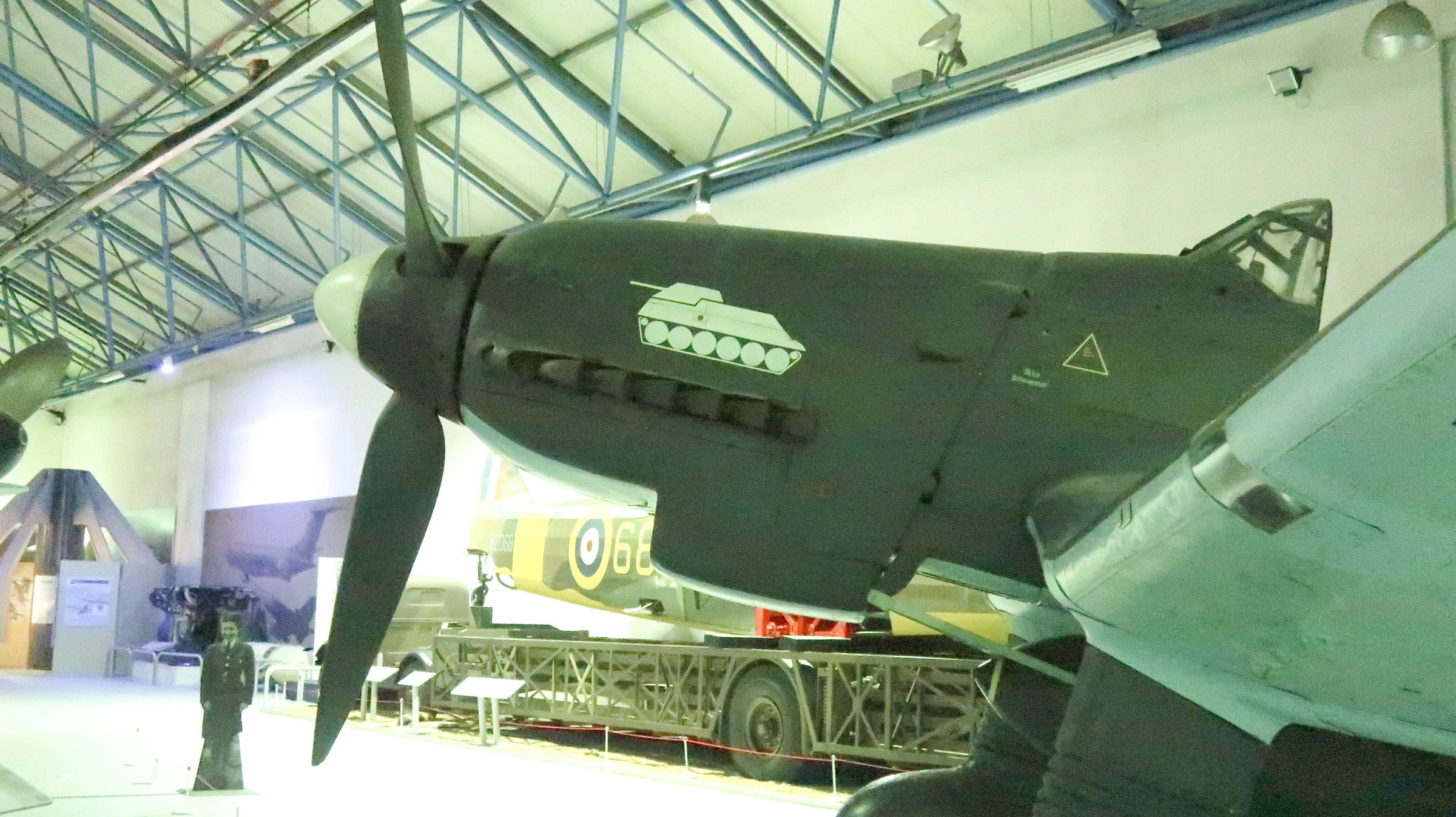
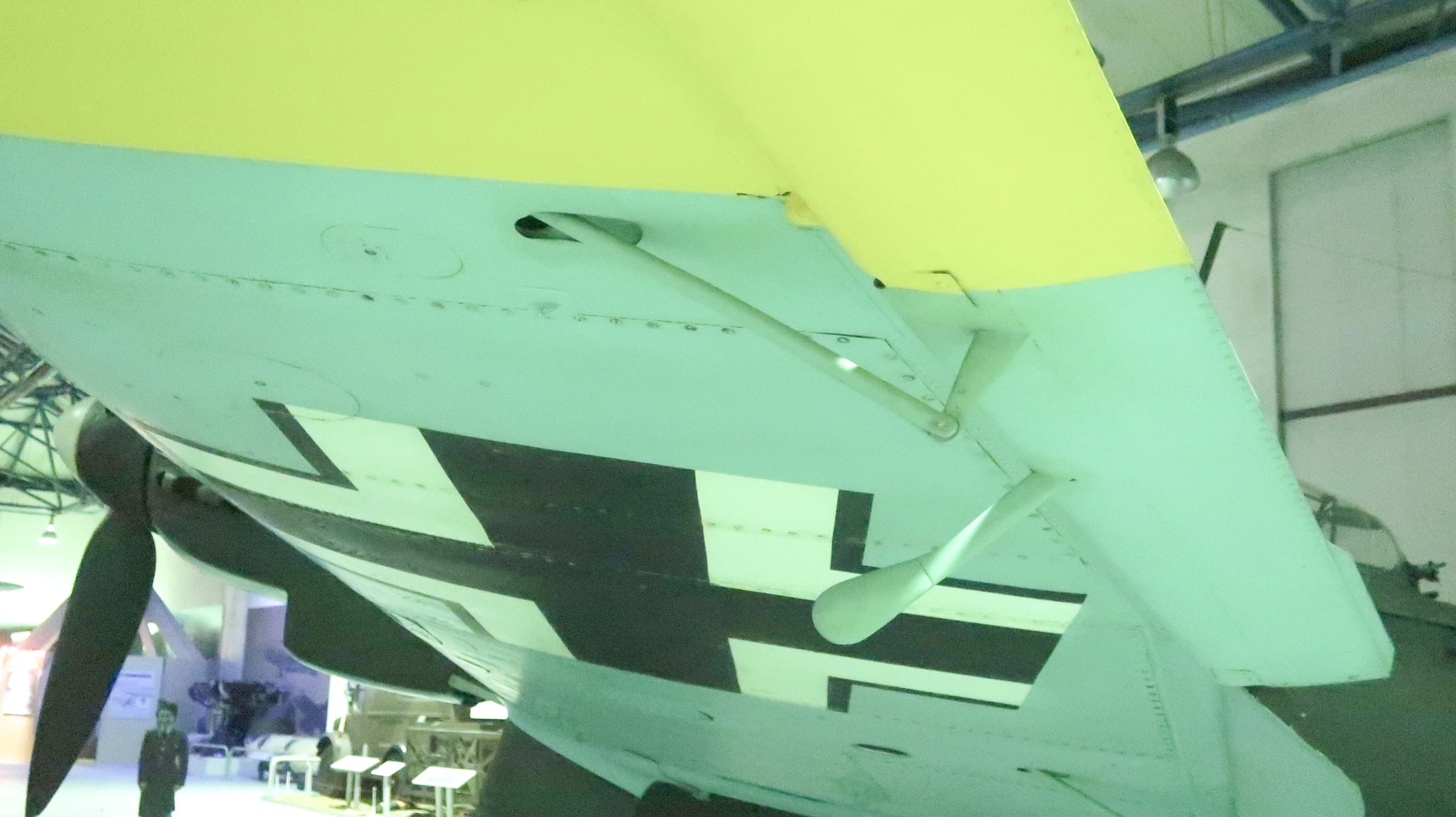
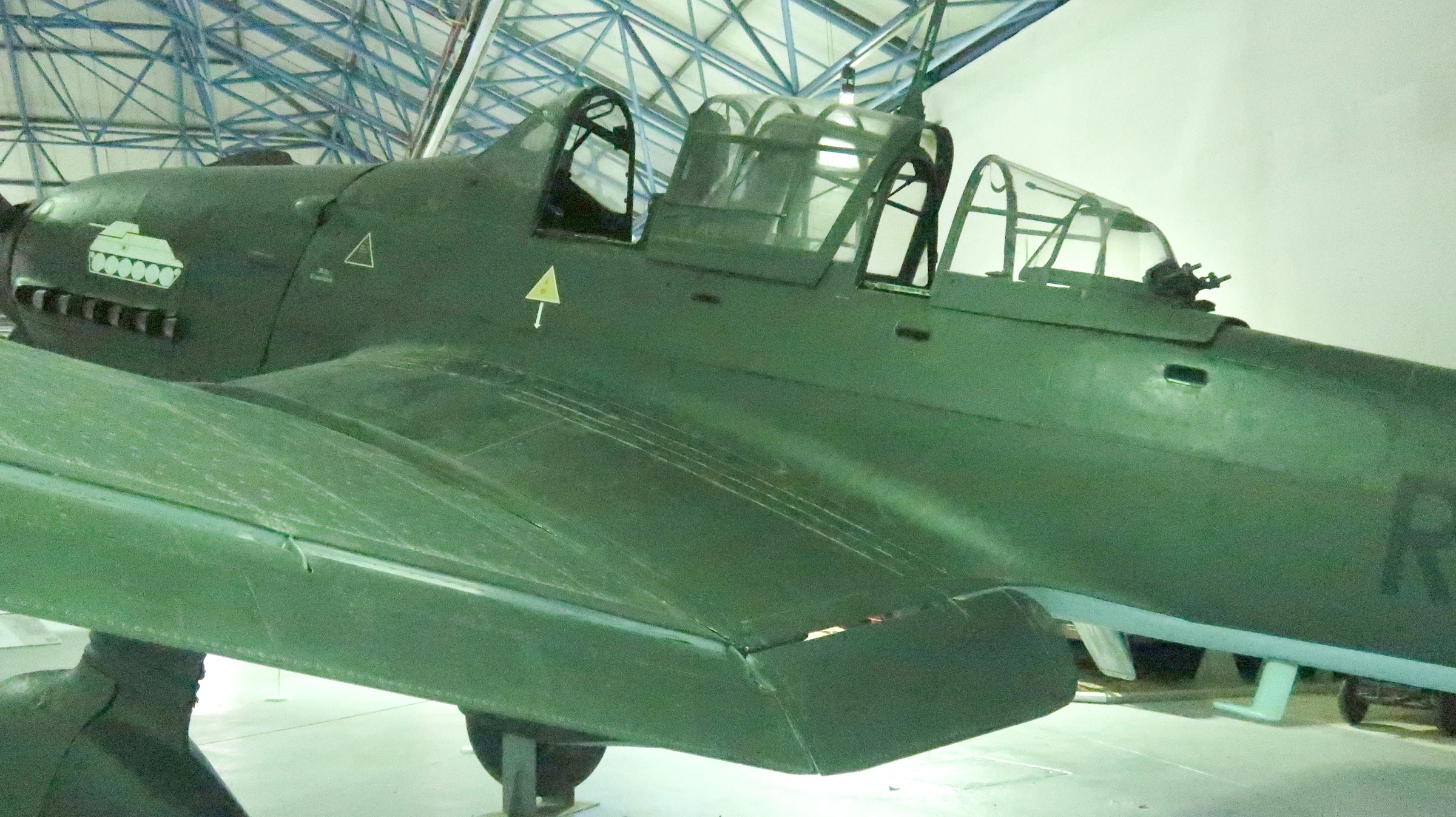
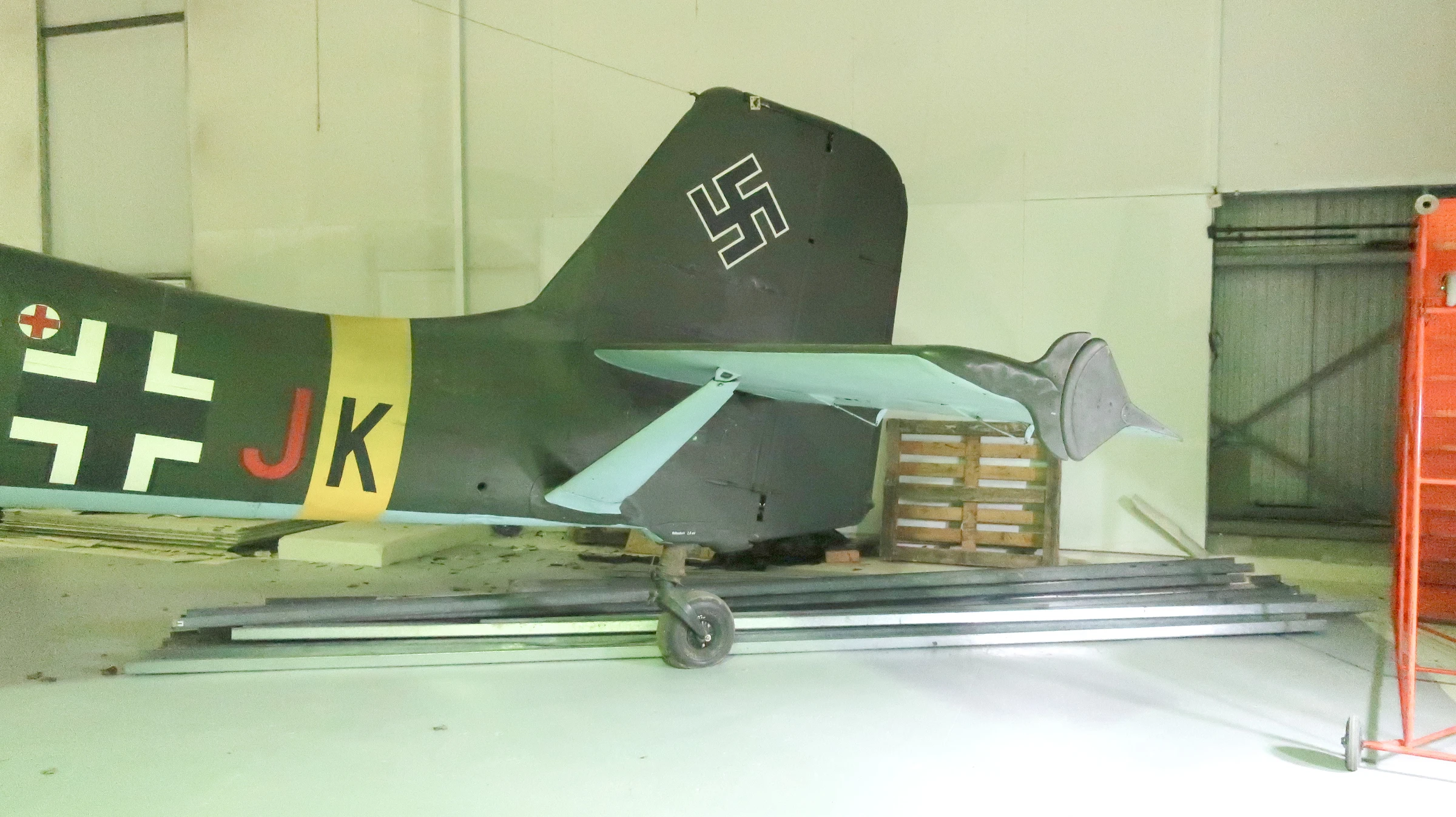
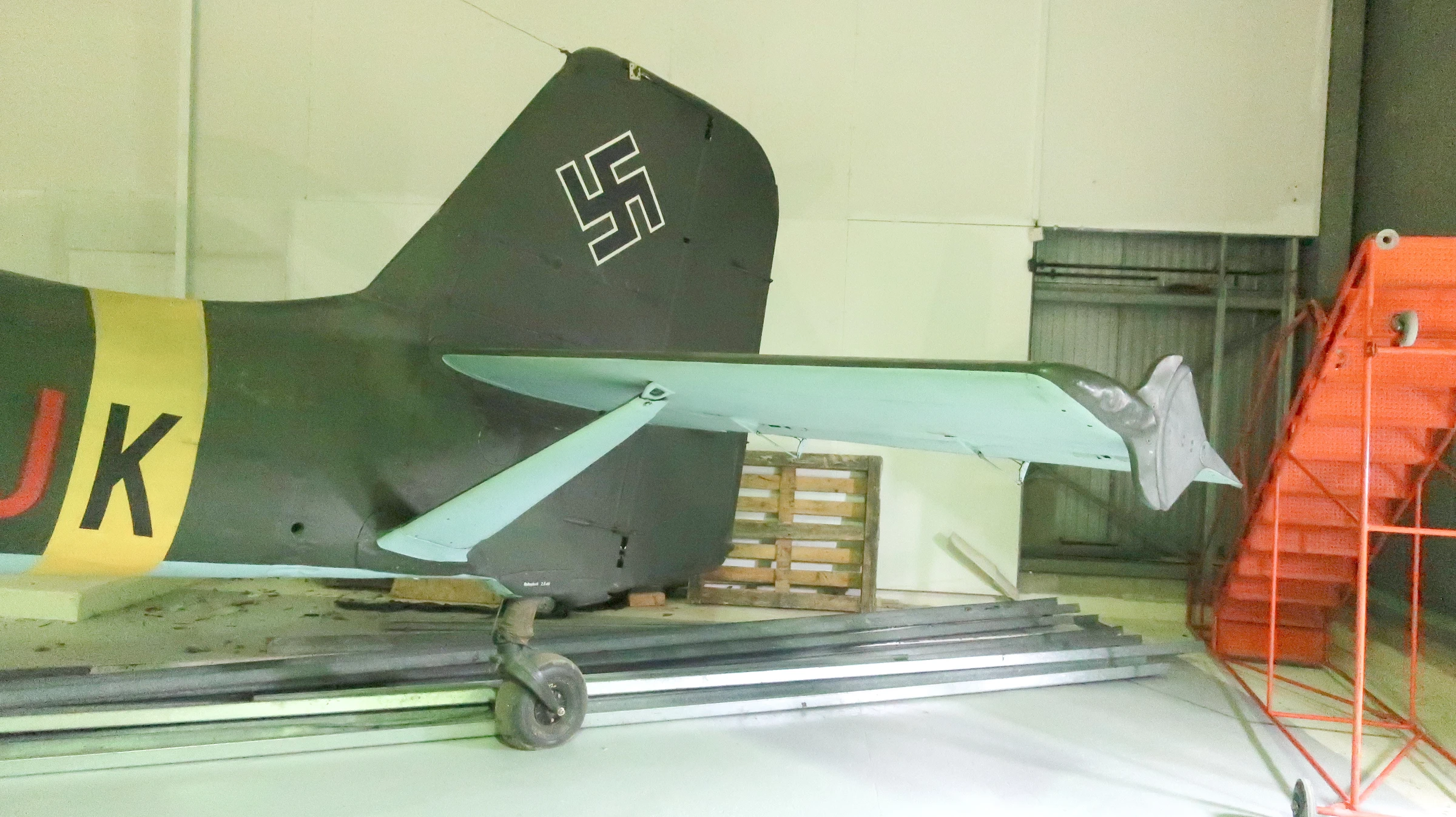
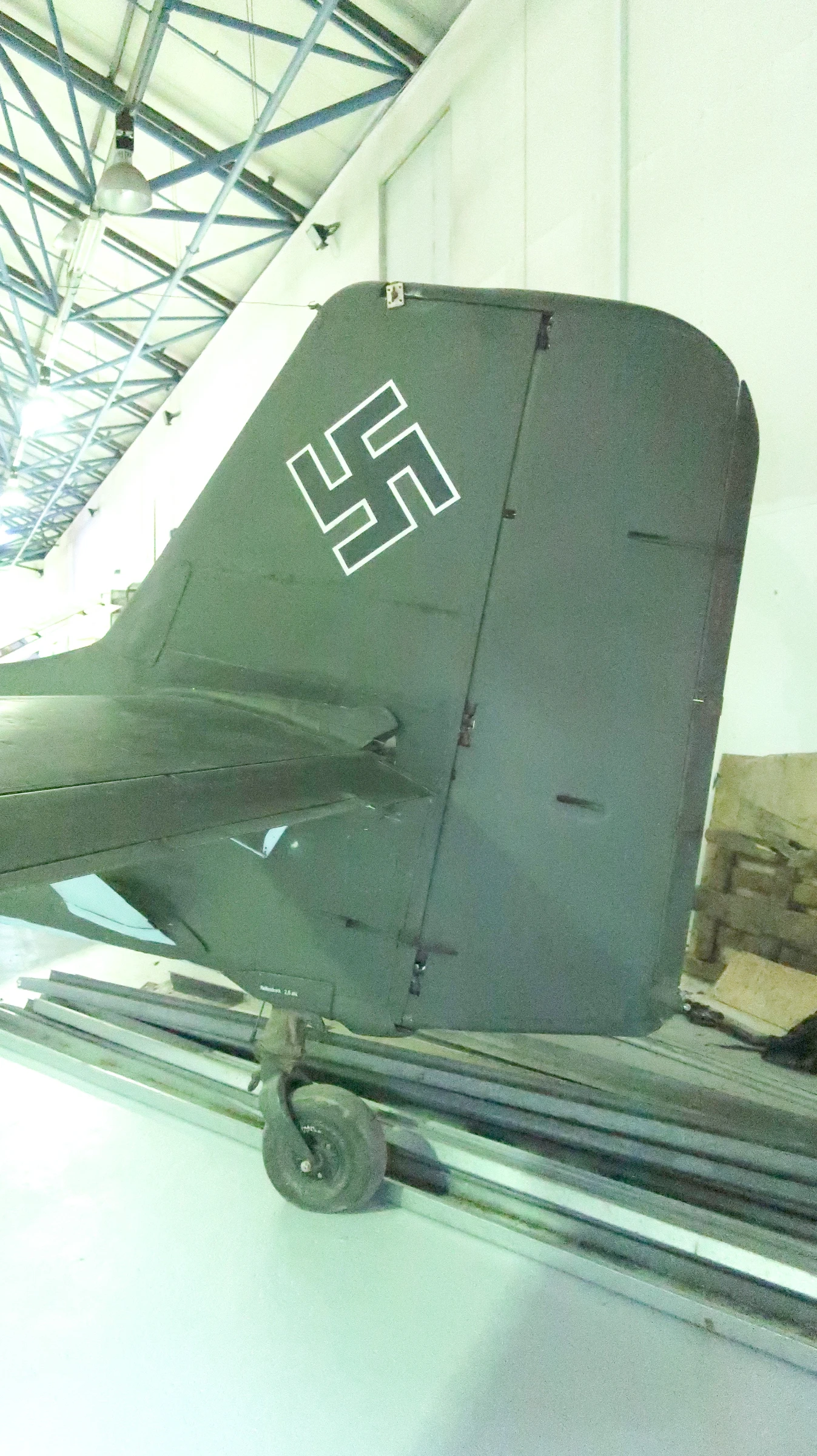
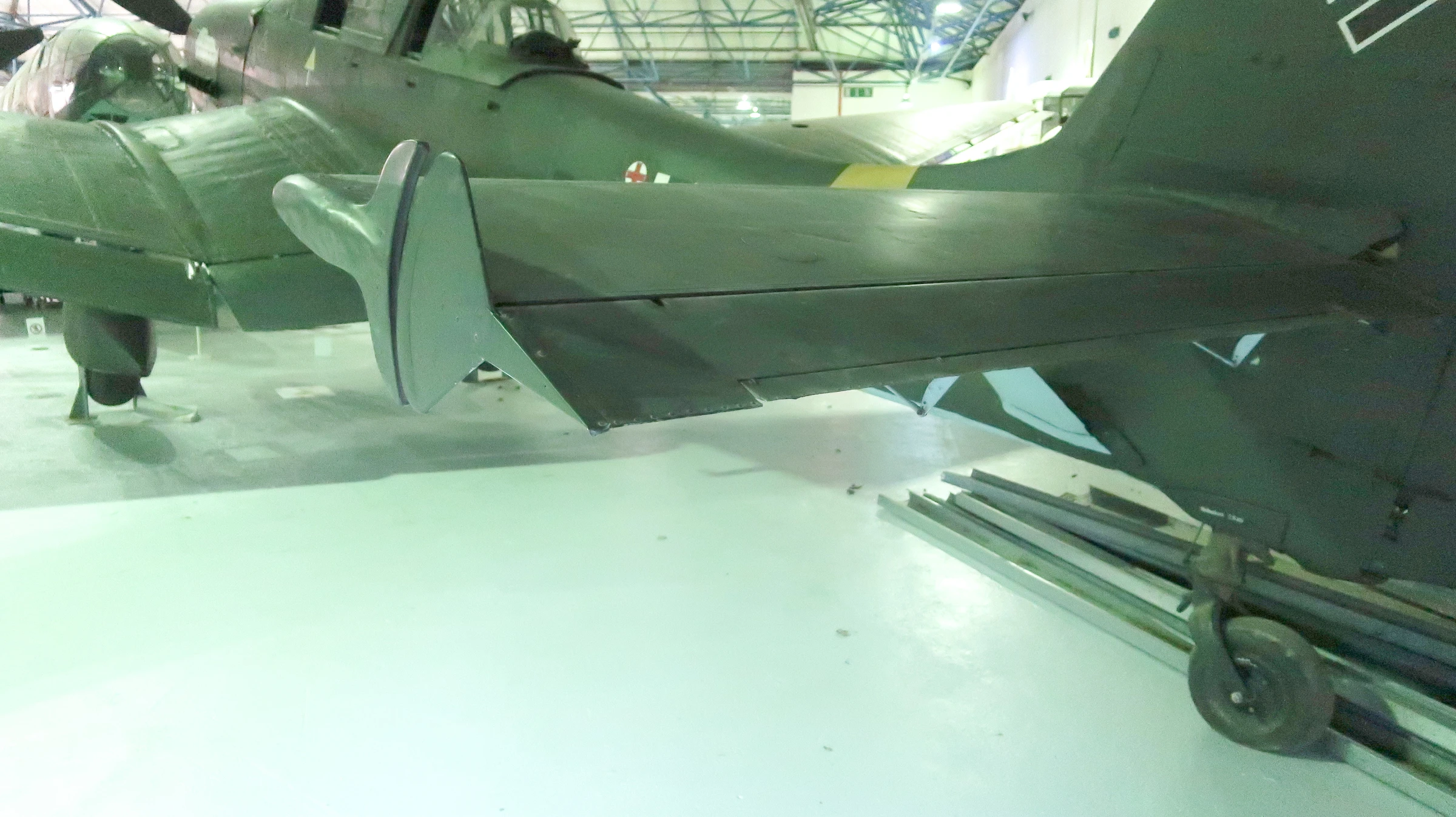
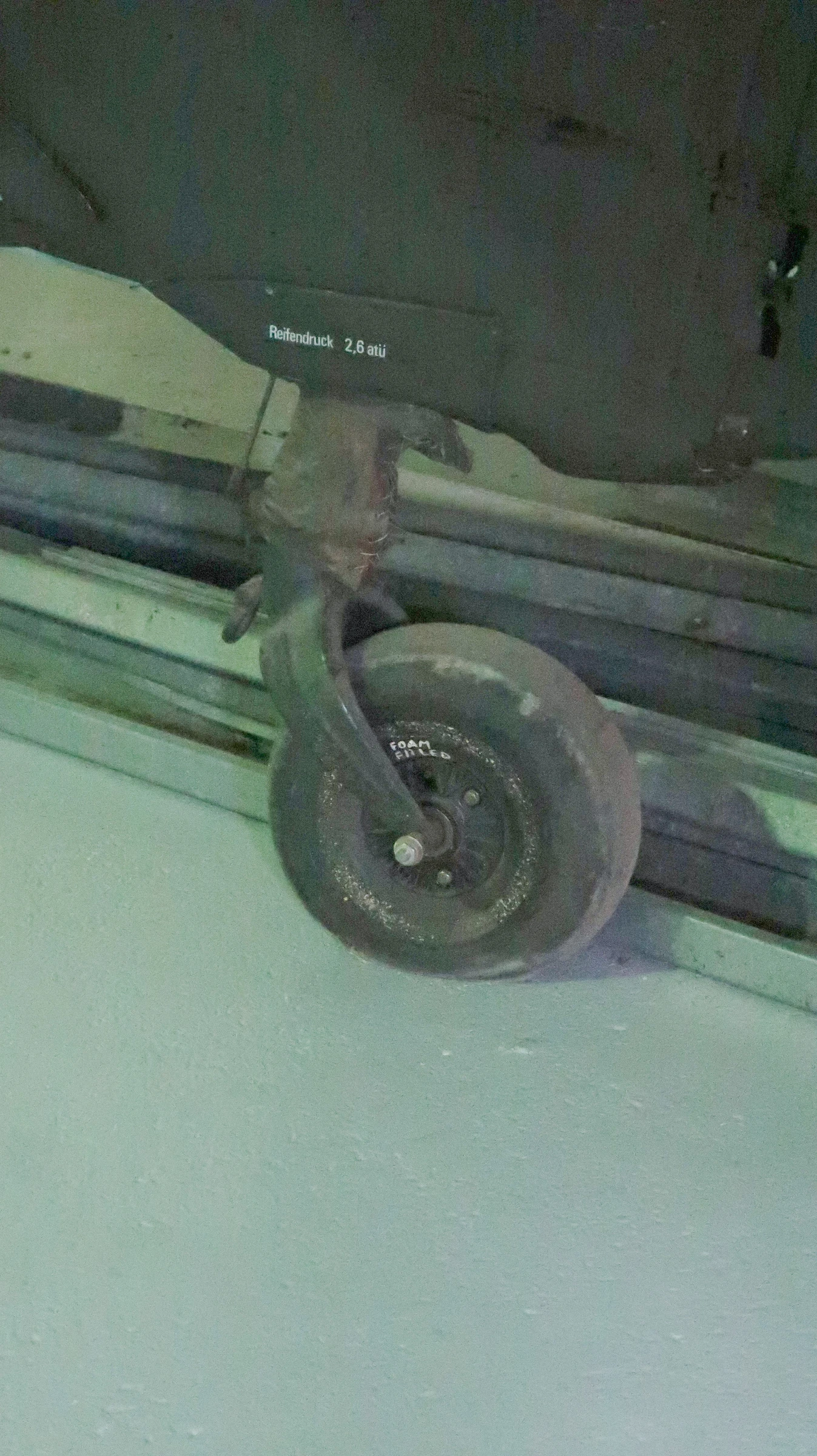
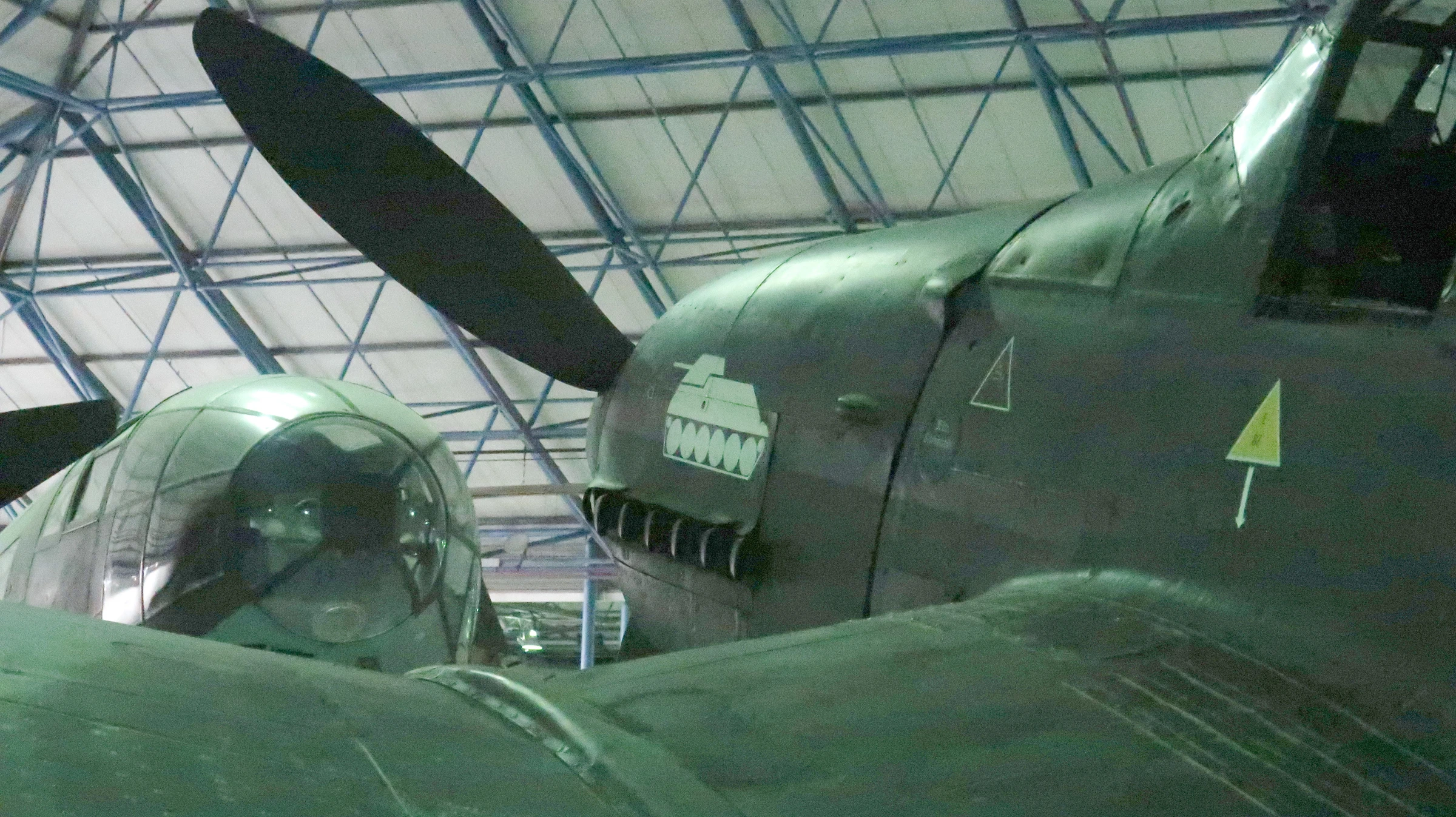
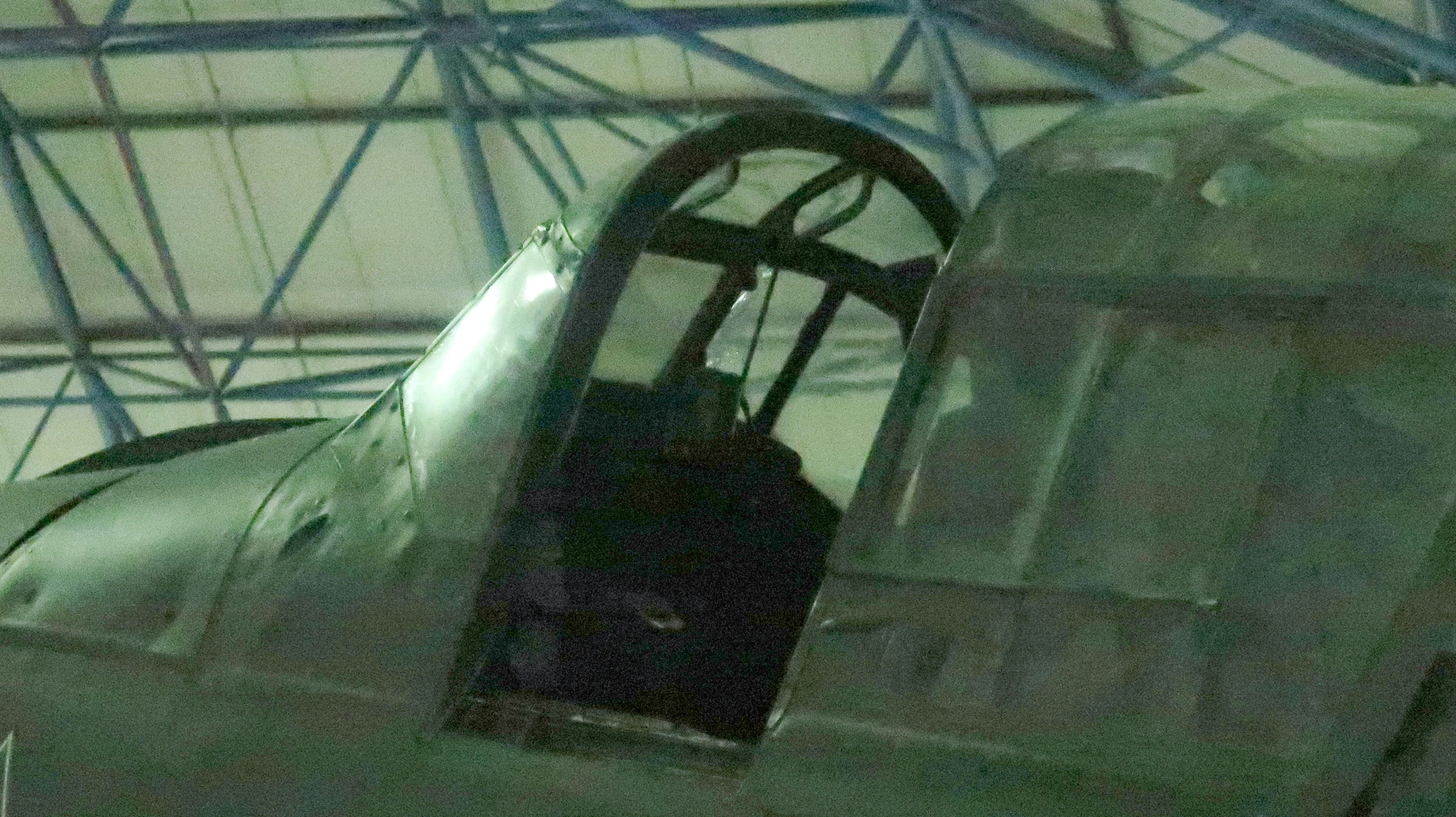
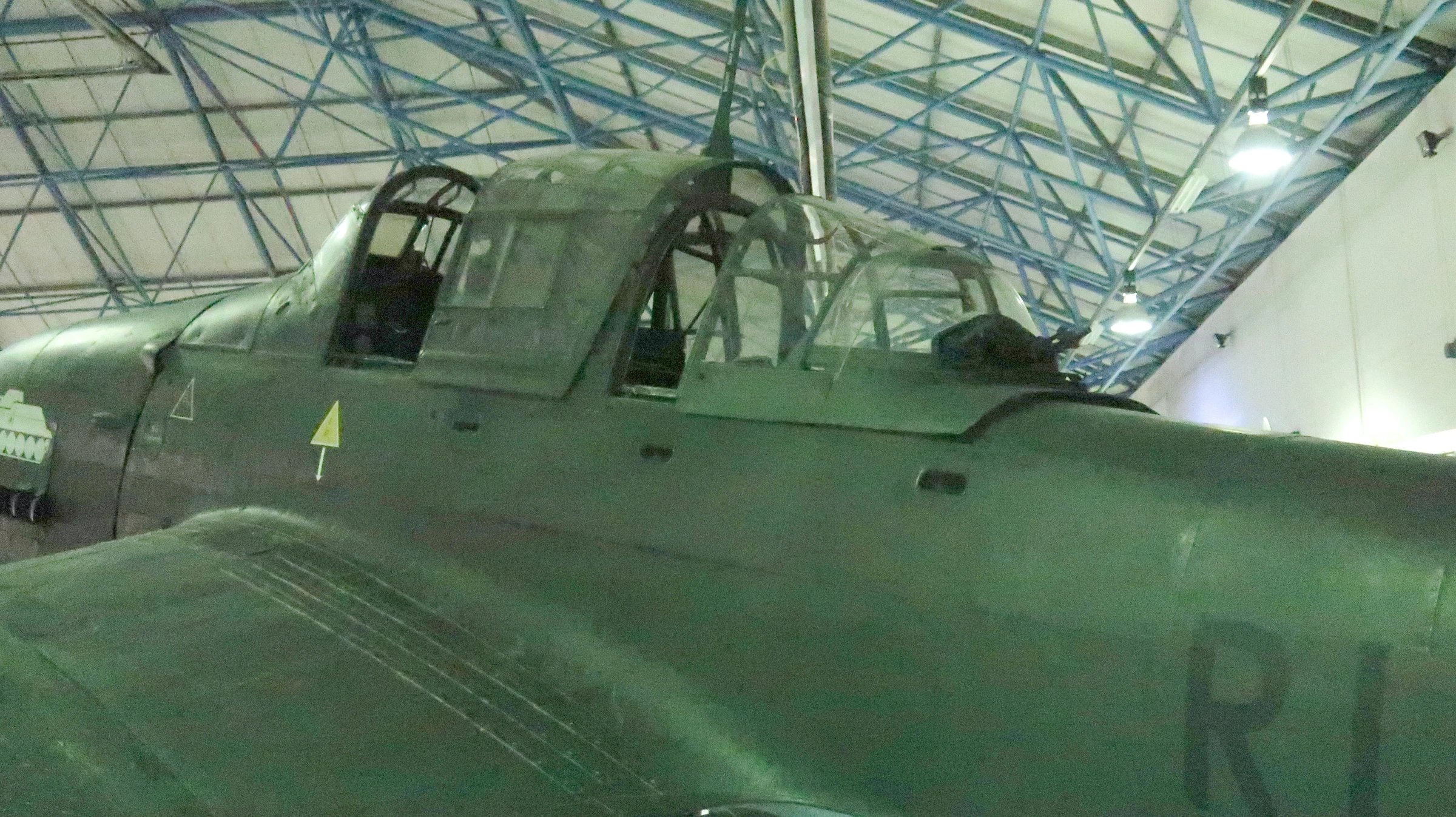
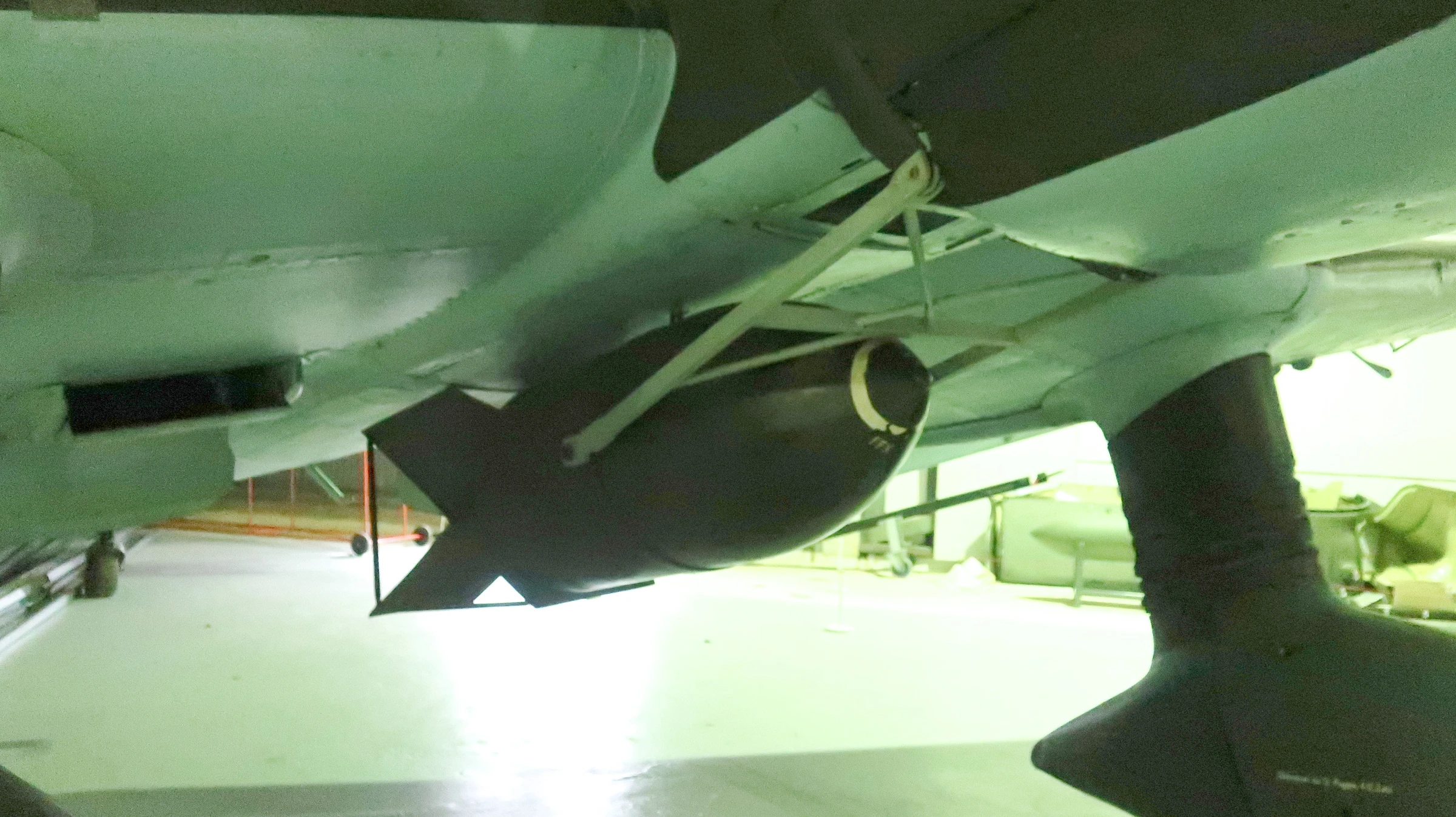
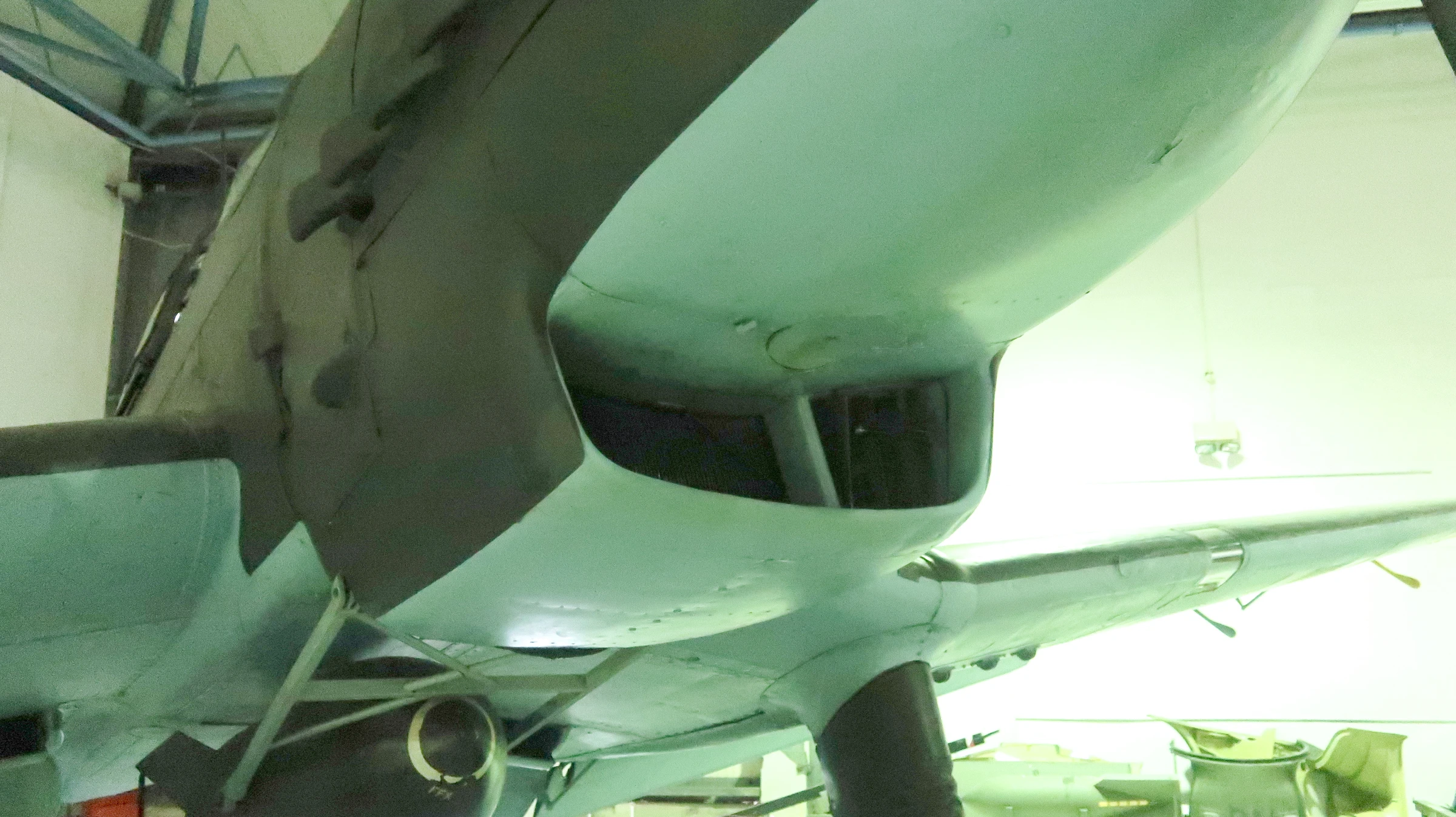
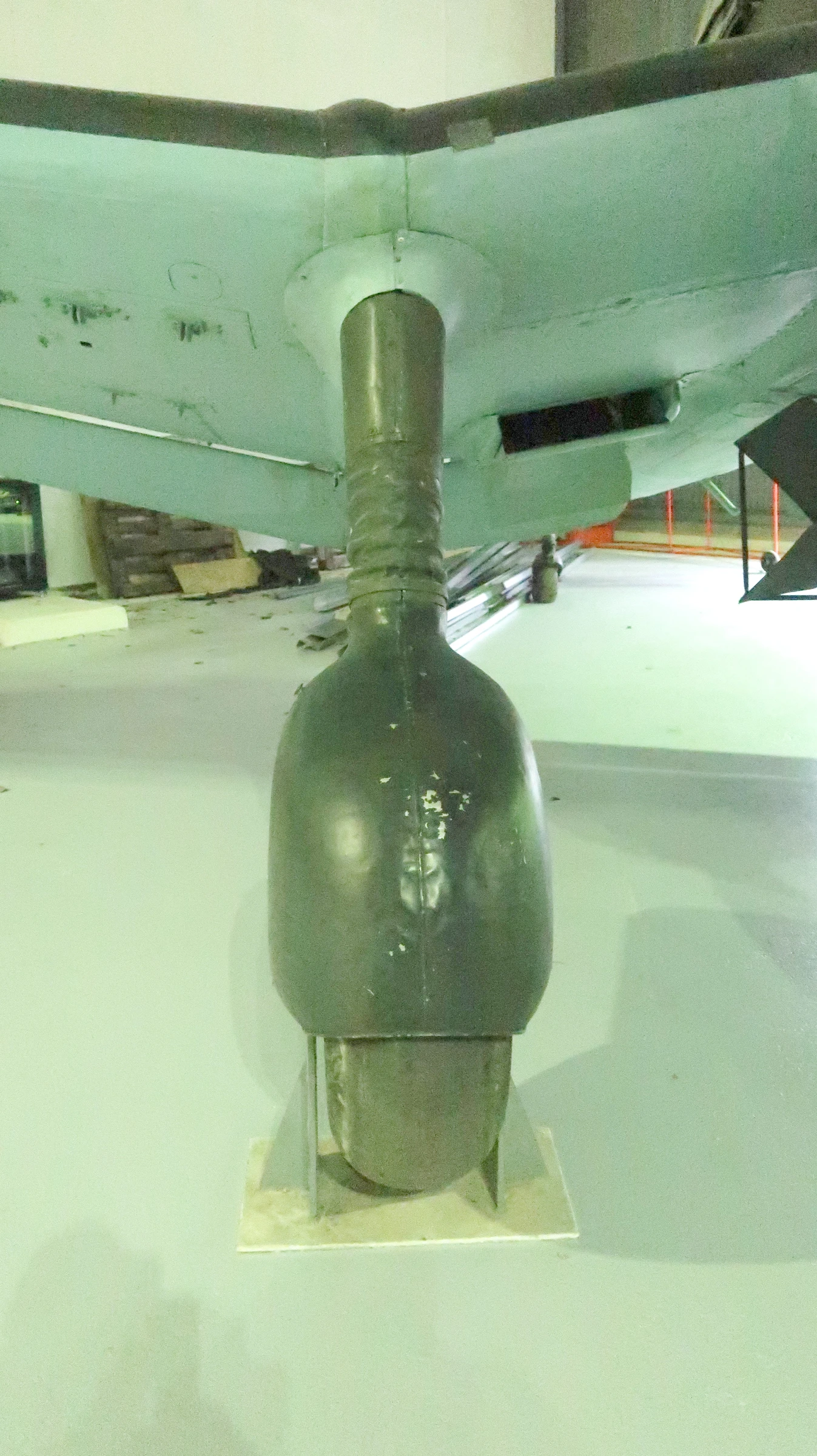
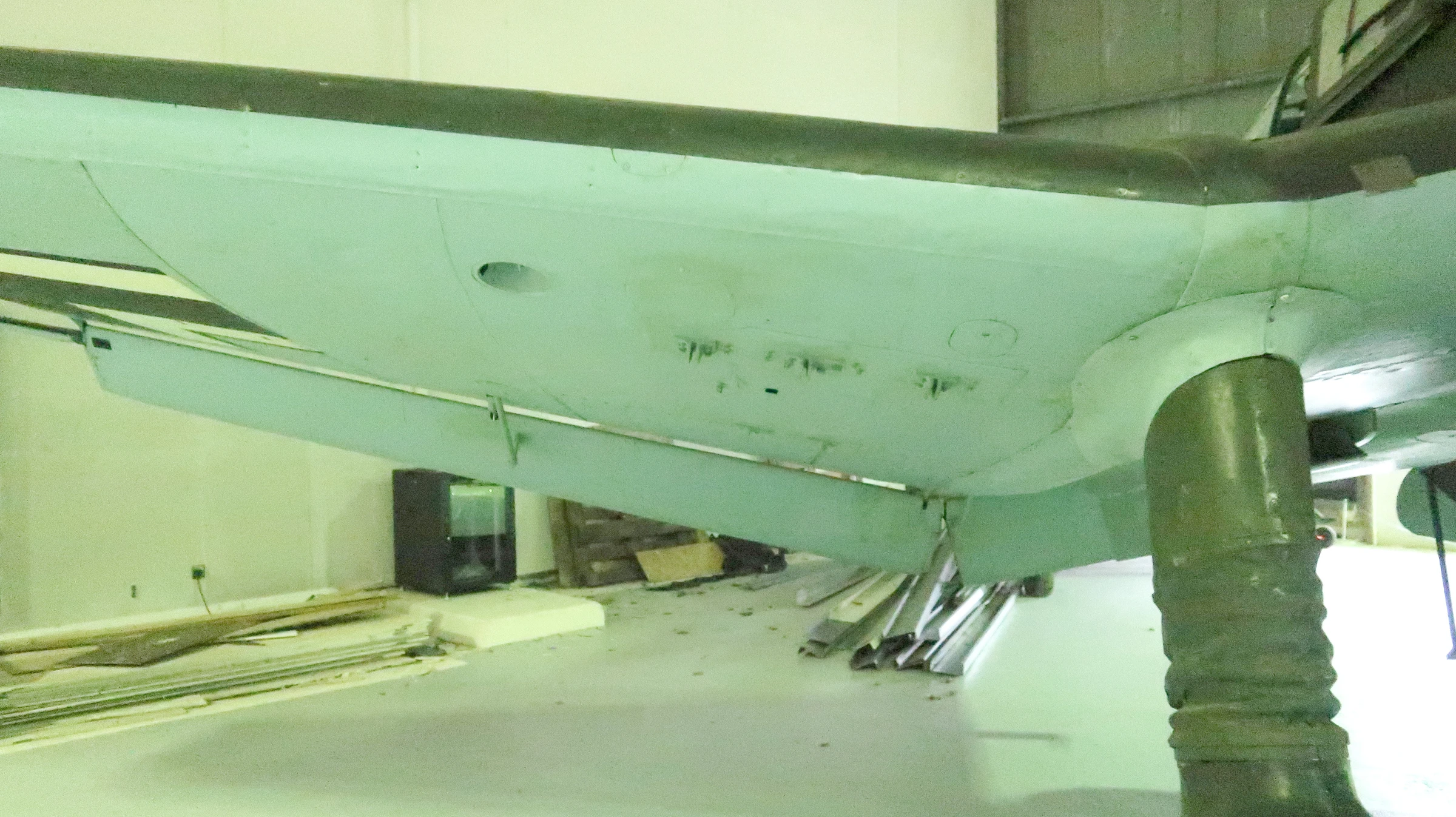
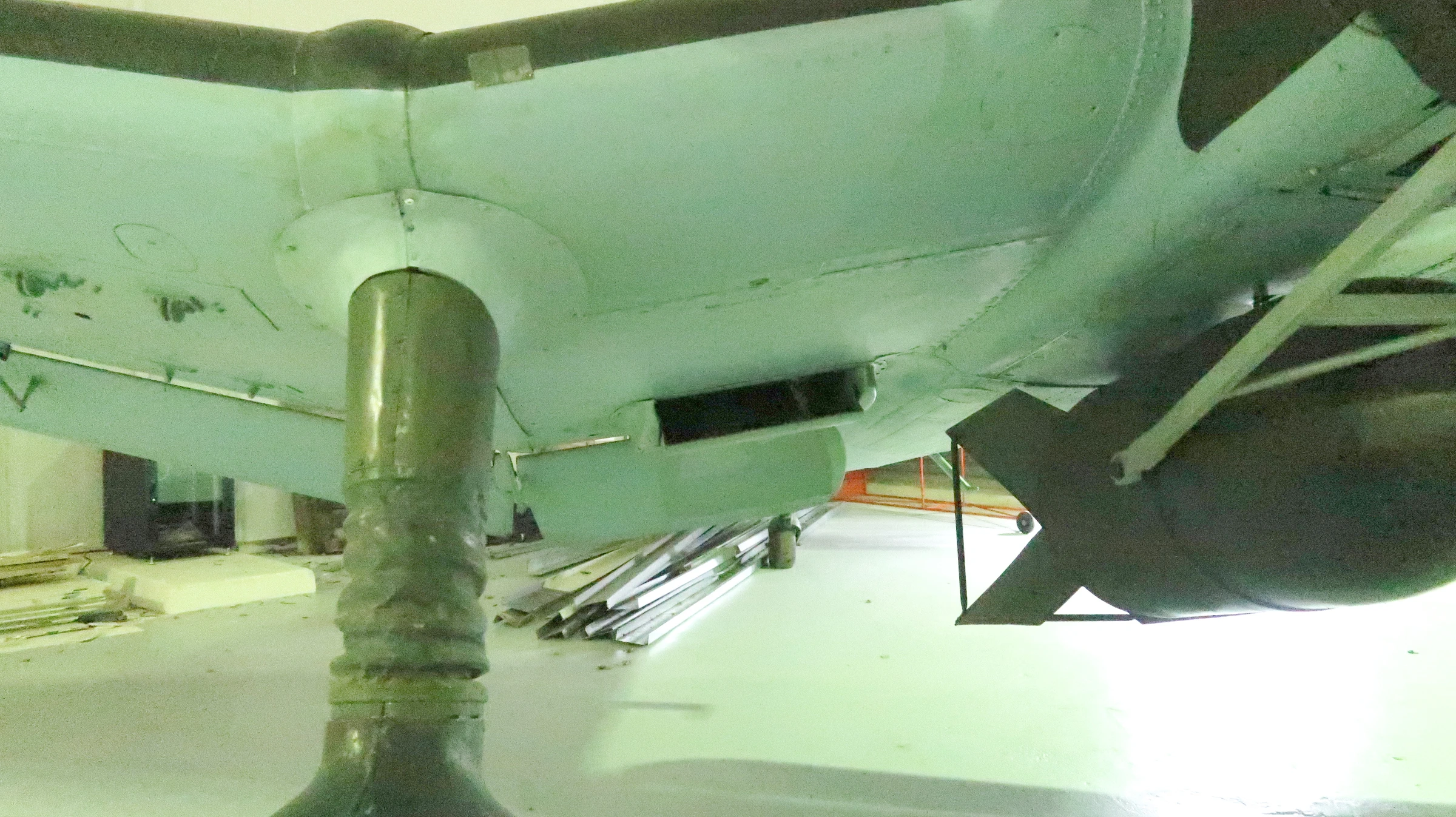
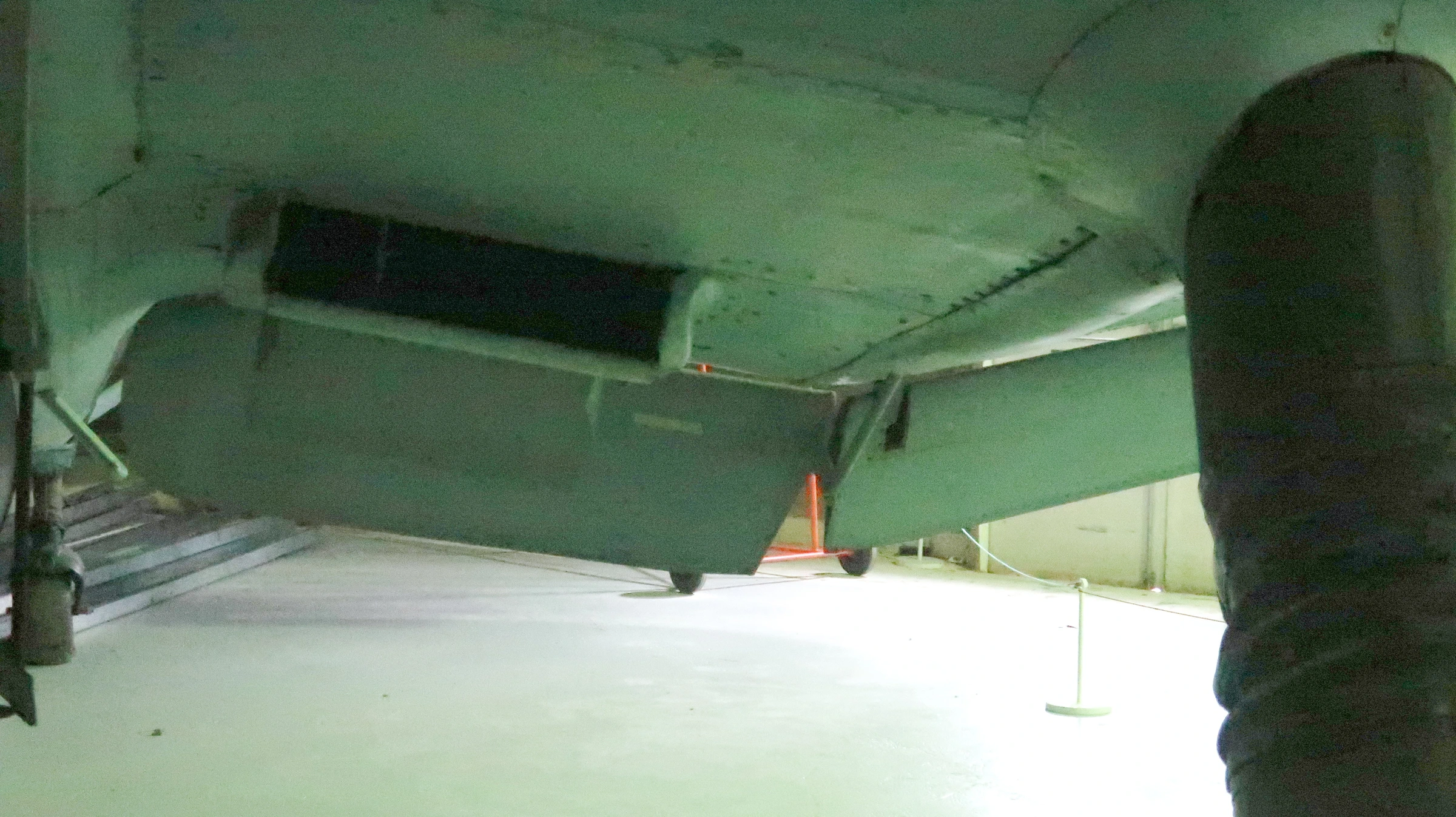
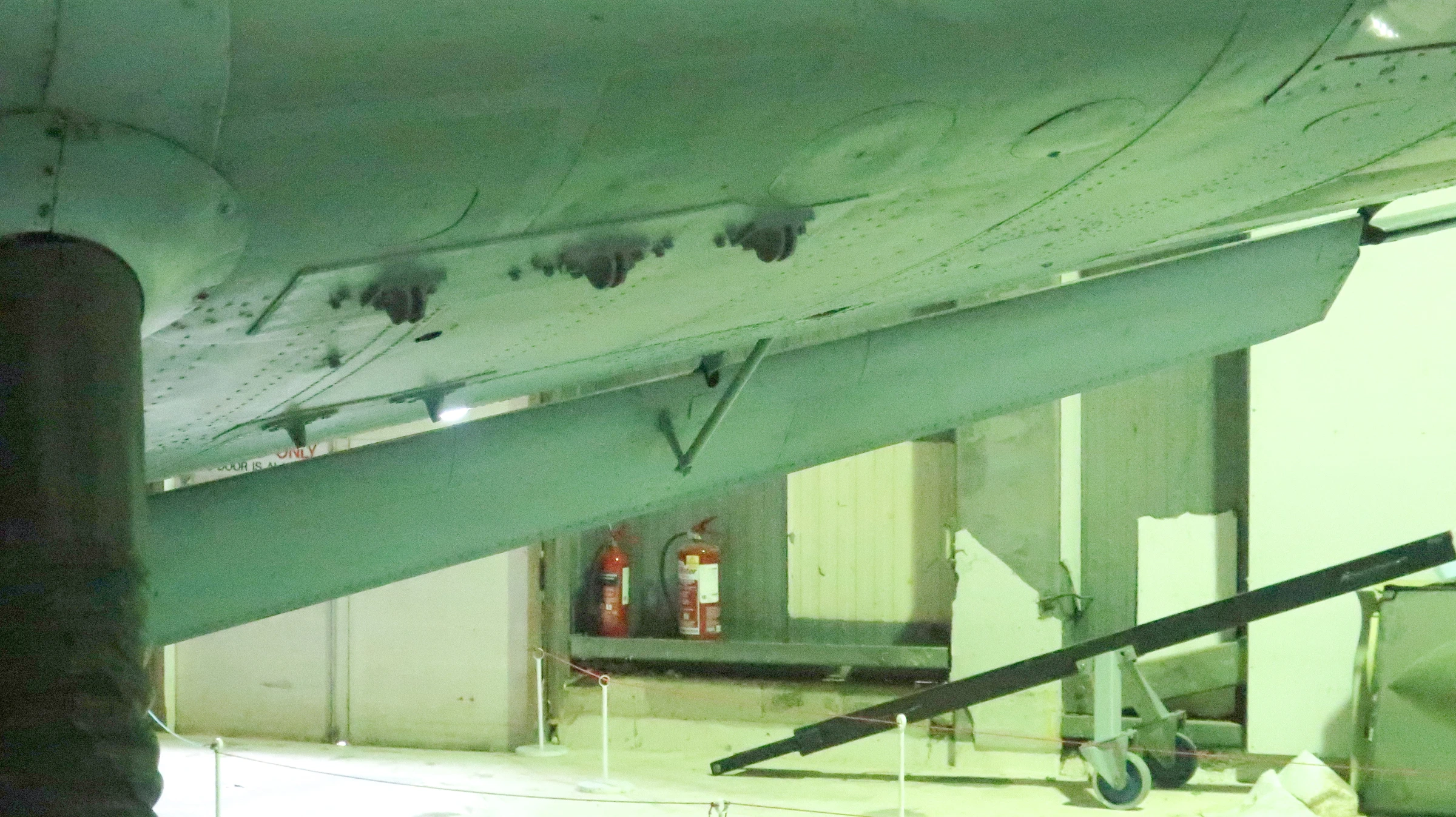
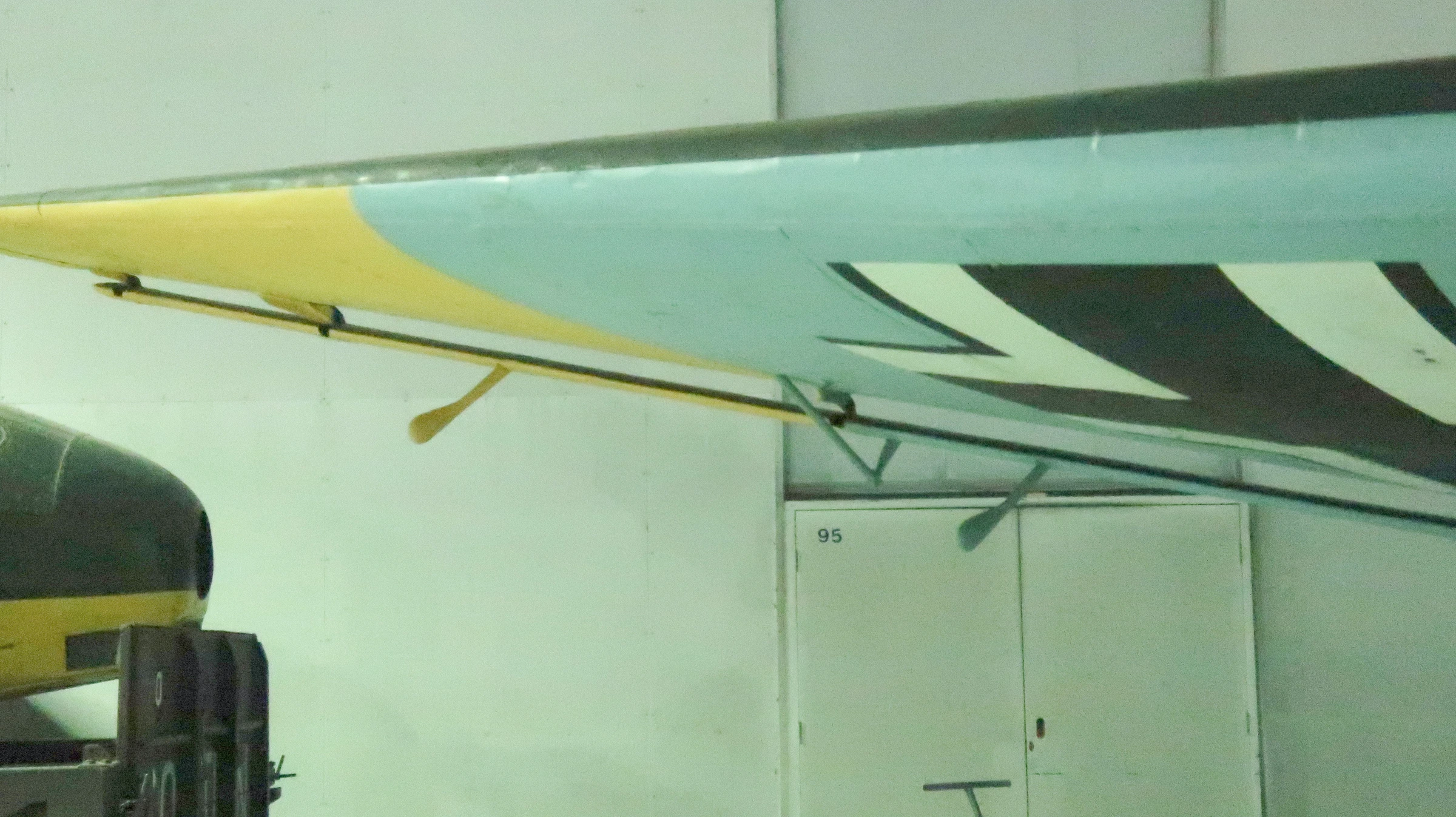
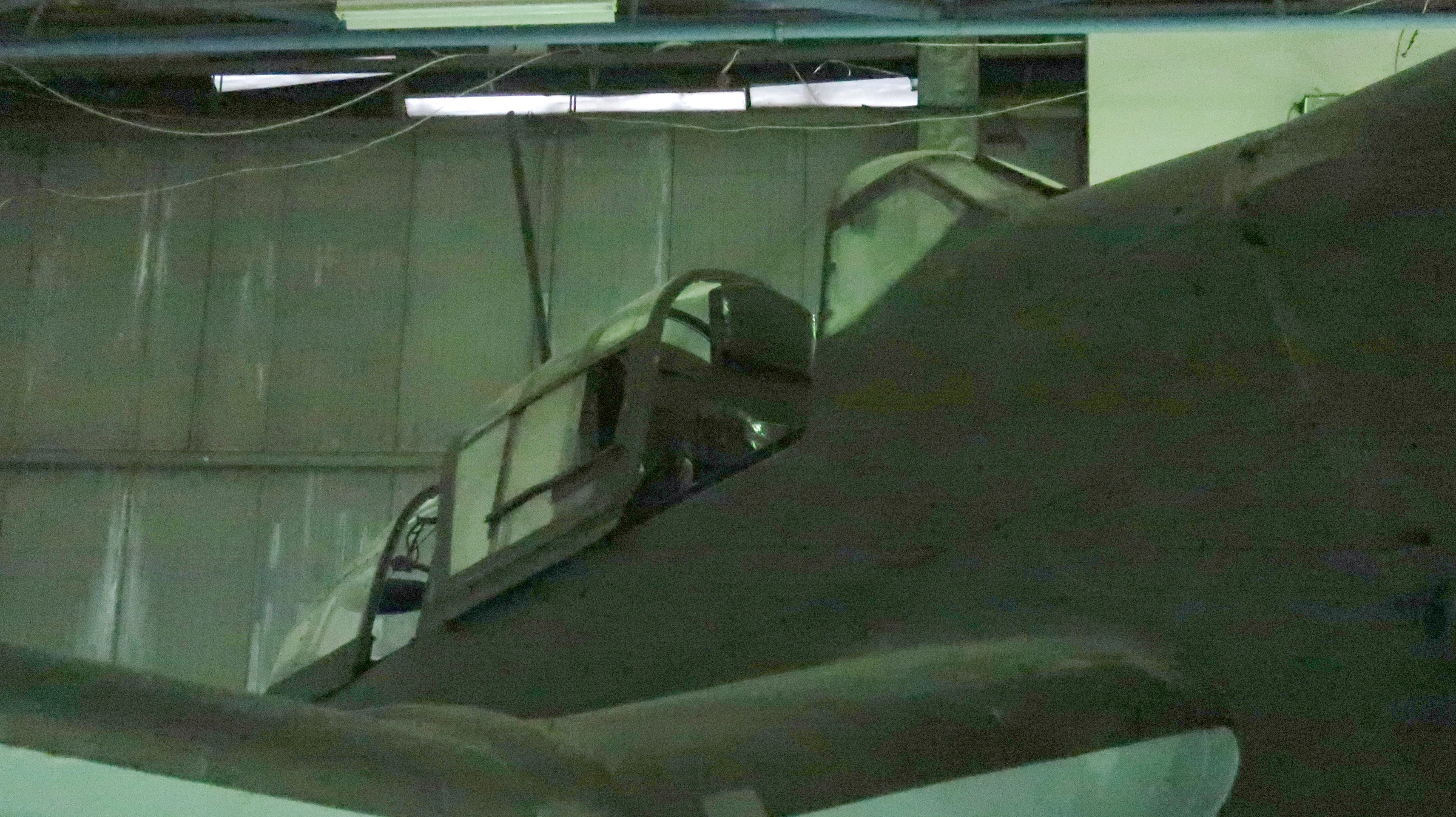
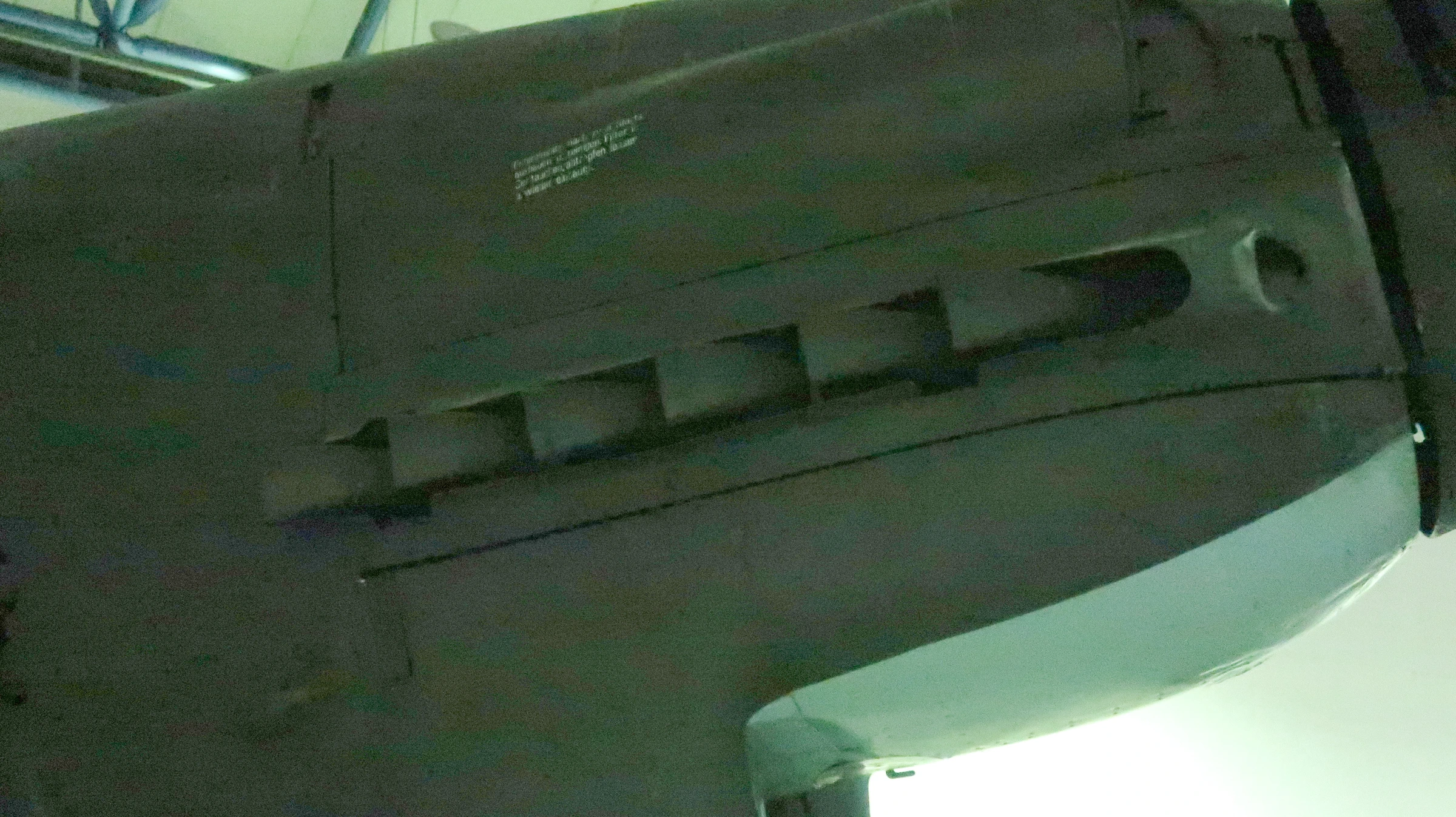
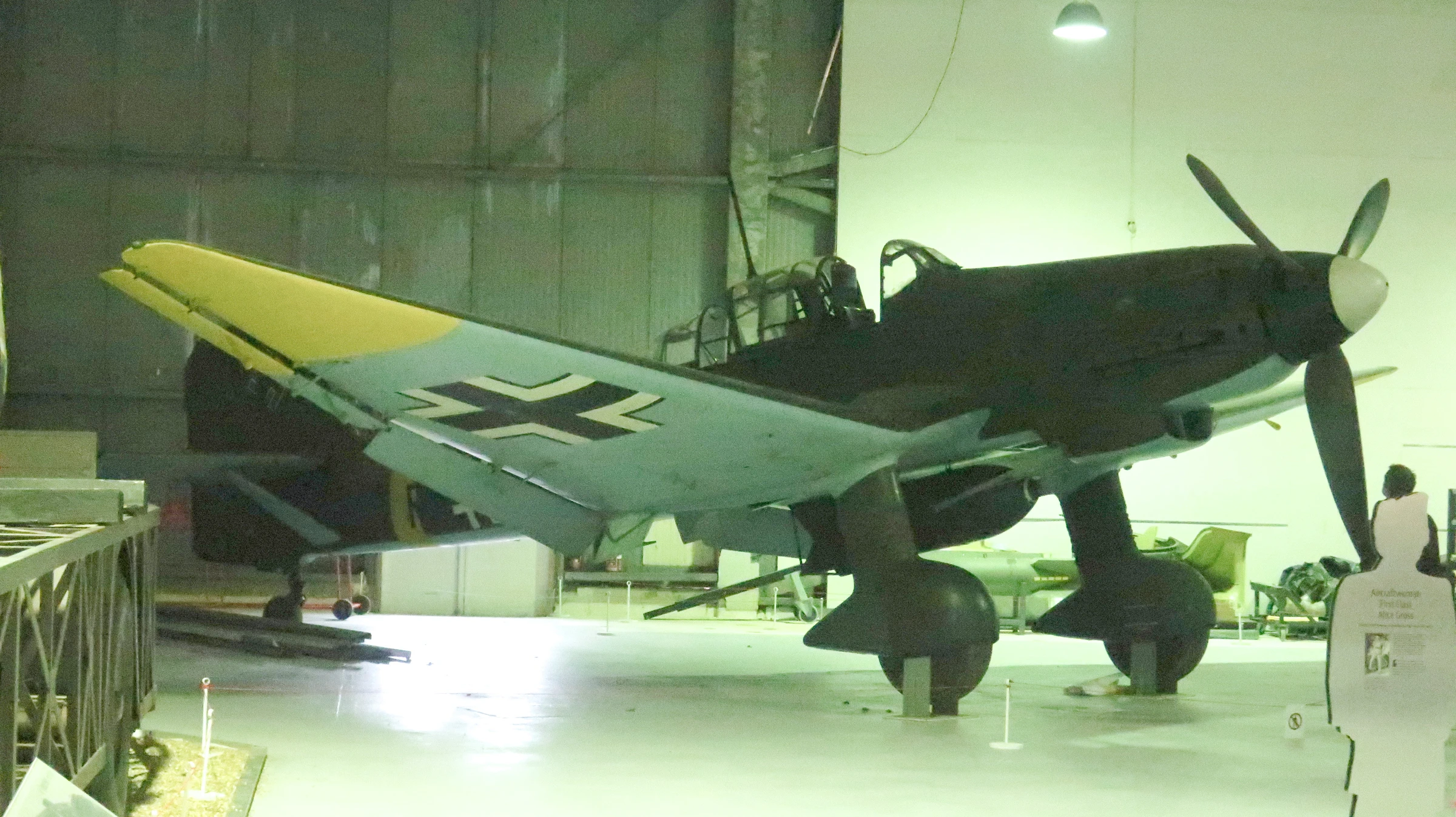
These walk-around photos were taken at the RAF Museum London in Hendon in 2019. They show a Junkers Ju 87 G-2, Werk-Nummer 494083 — one of only two complete surviving Stukas in the world, and the only one on public display outside the United States. The Stuka, with its inverted gull wings, fixed spat-covered undercarriage and the screaming "Jericho Trumpet" sirens on its landing gear legs, became one of the most terrifying and recognisable symbols of the Blitzkrieg. Devastating against opposition that lacked effective fighter cover, it suffered catastrophic losses during the Battle of Britain and was withdrawn from operations over Britain after just a few weeks. It went on to serve effectively on the Eastern Front, where Hans-Ulrich Rudel used it to destroy over 500 Soviet tanks.
Originally built in 1943-44 as a D-5 ground attack variant, this aircraft was later converted to G-2 standard with the installation of outer wing sections mounting two 37mm Flak 18 anti-tank cannon — the formidable "tank buster" configuration. Captured by British forces at Eggebek in Schleswig-Holstein in May 1945, it was selected for museum preservation and brought to England. In 1967 it was repainted and modified for possible use in the Battle of Britain film — the engine was found to run well — but was ultimately deemed too valuable to risk. The film modifications were removed in 1998, returning it to its correct G-2 configuration, and it has been on permanent display at Hendon since 1978.