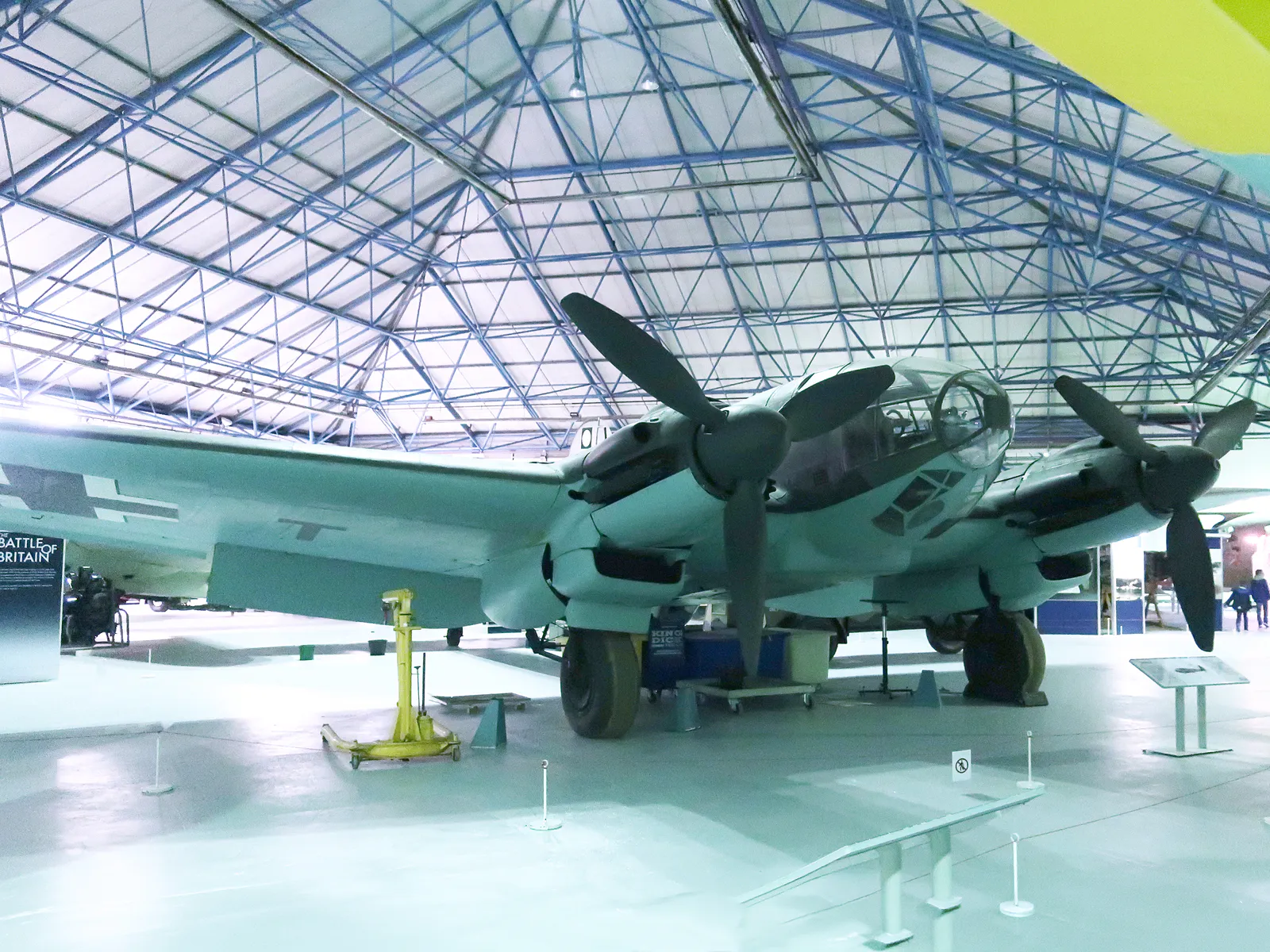
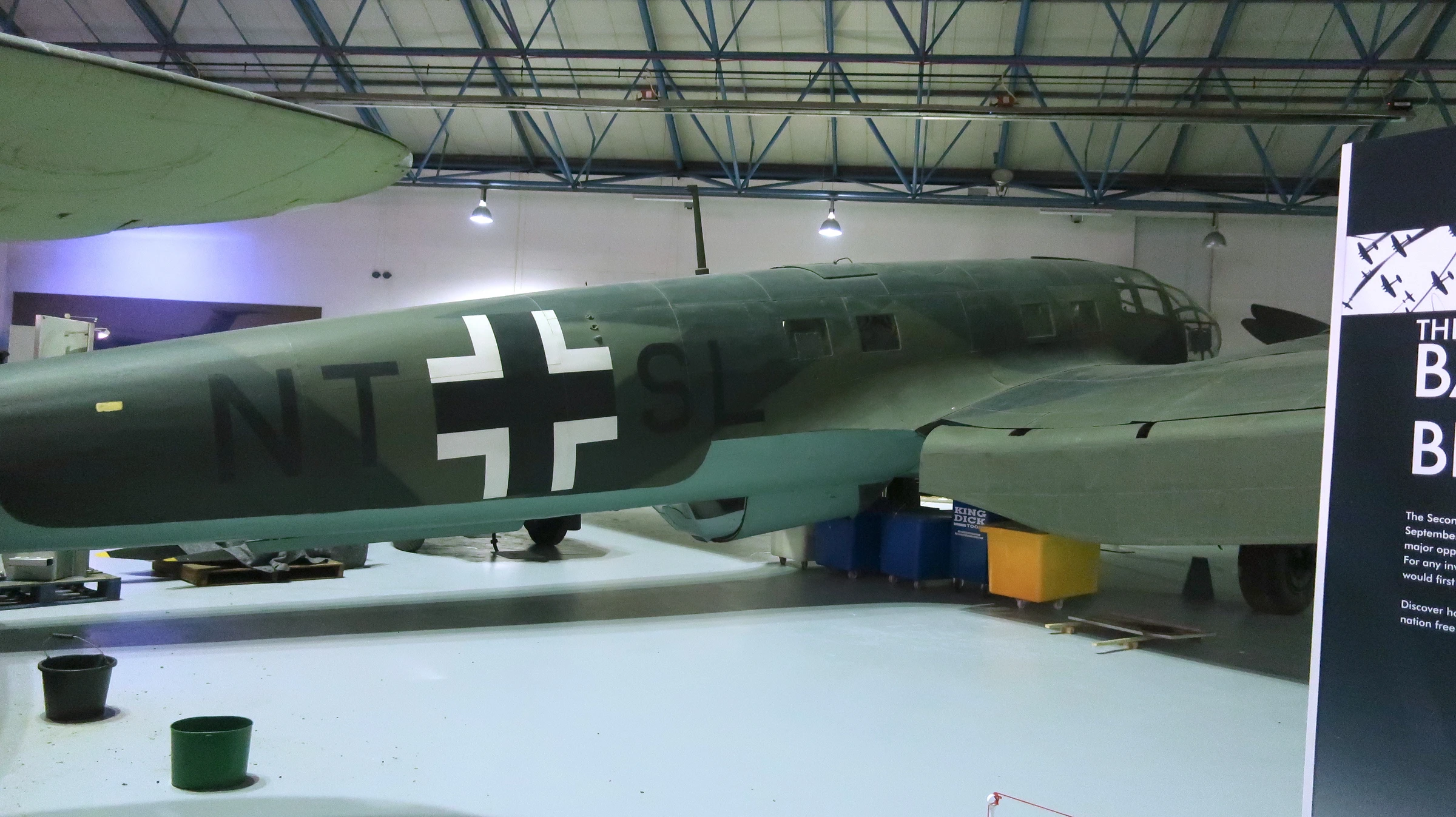
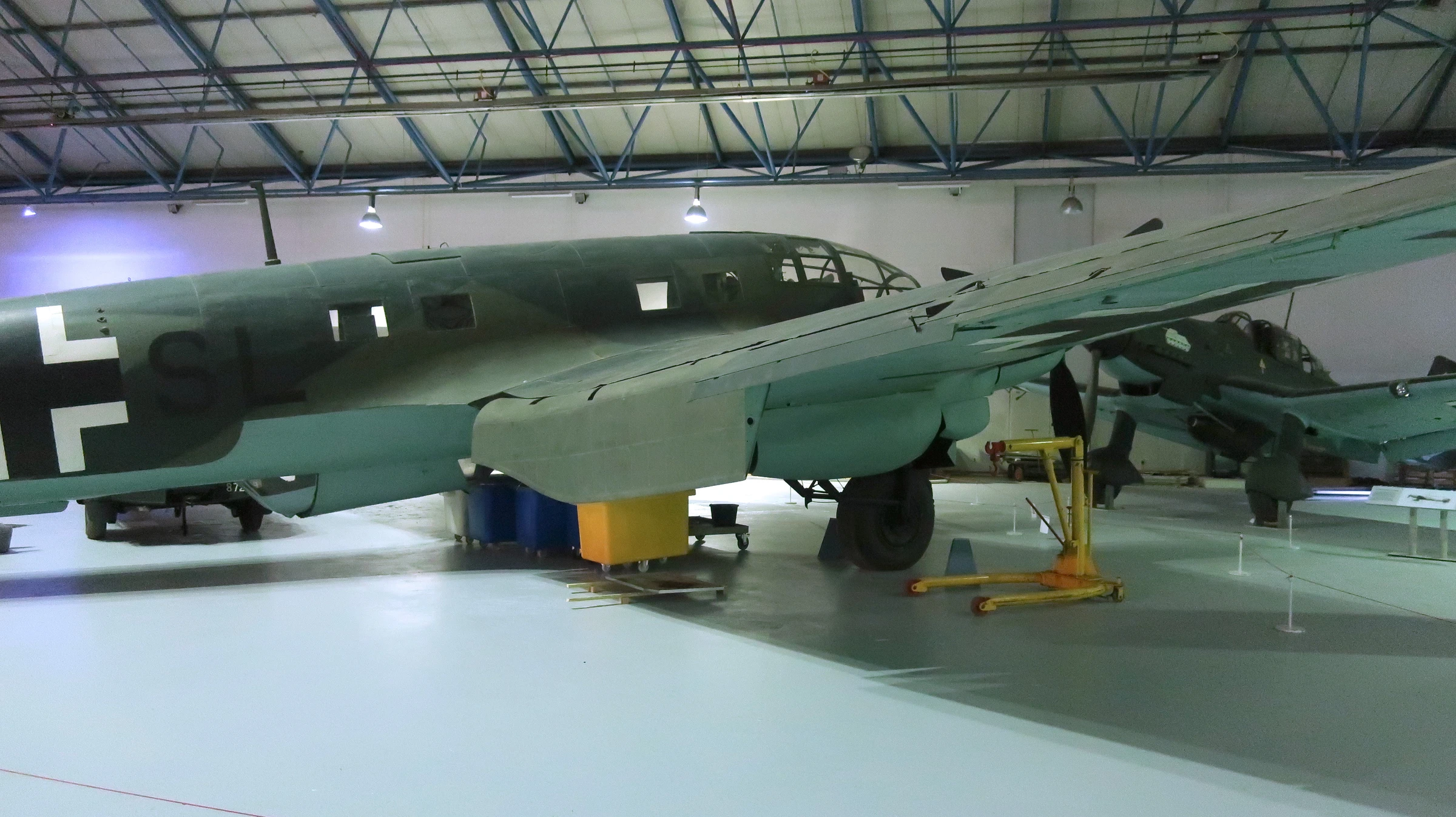
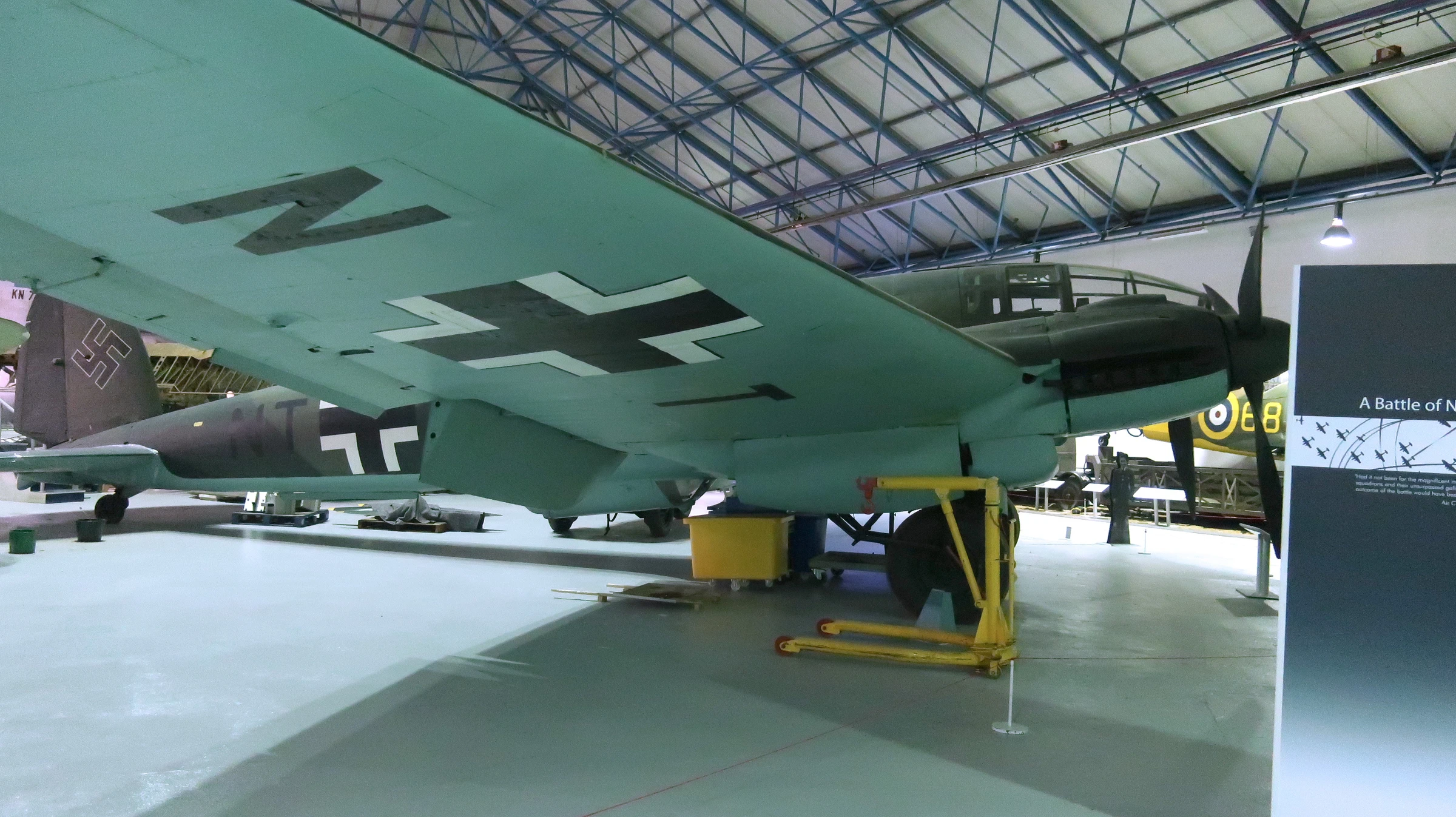
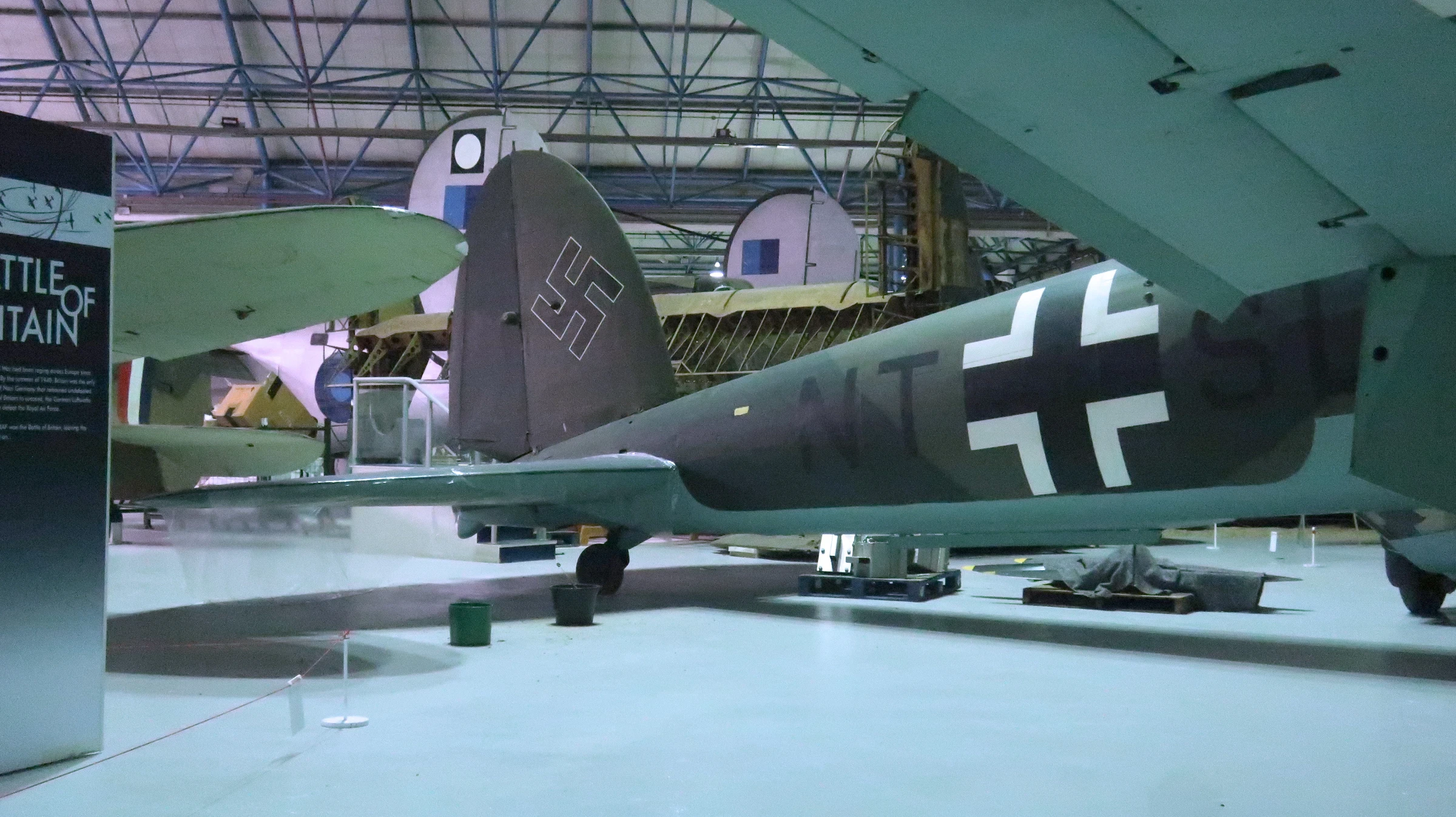
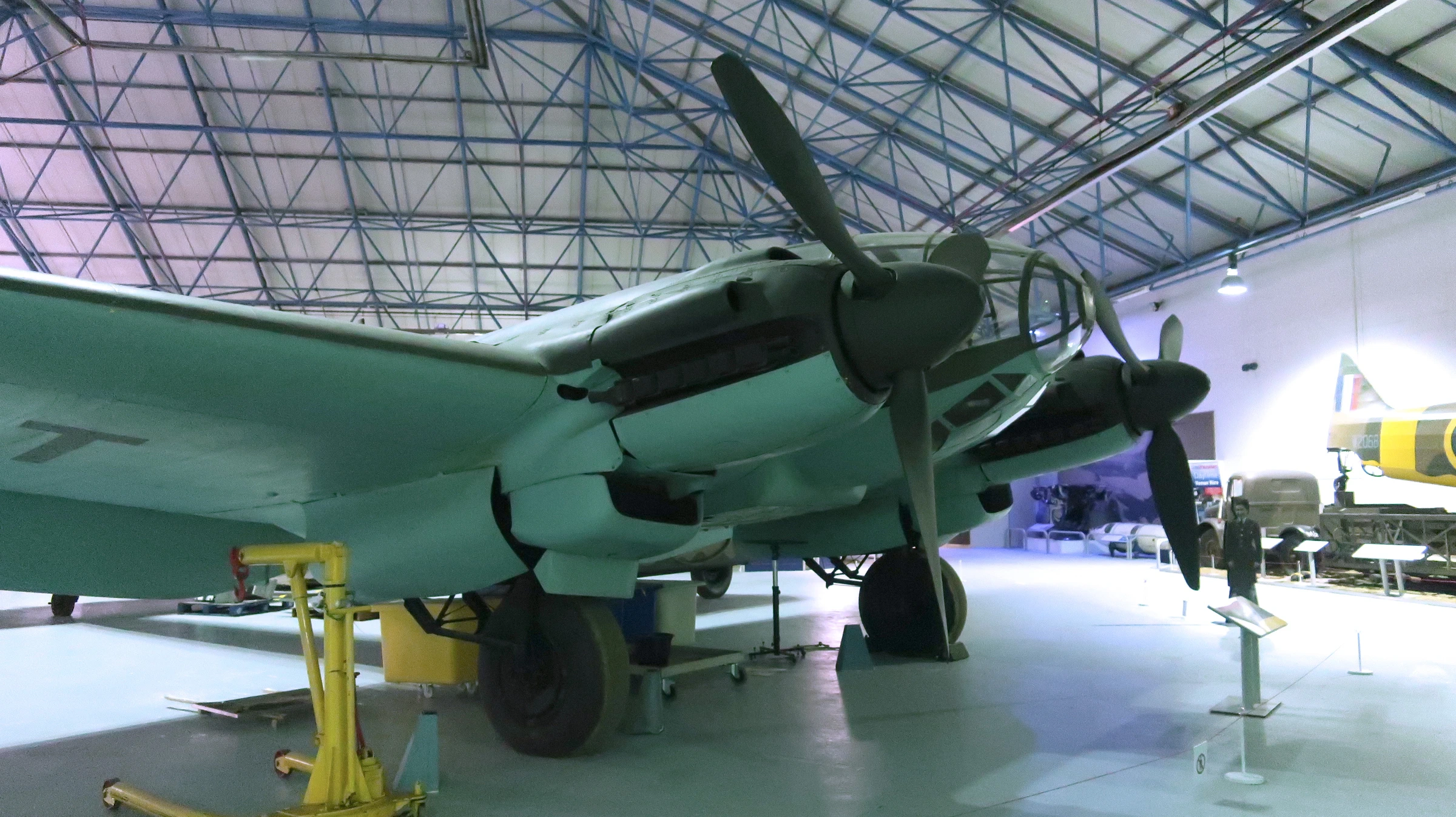
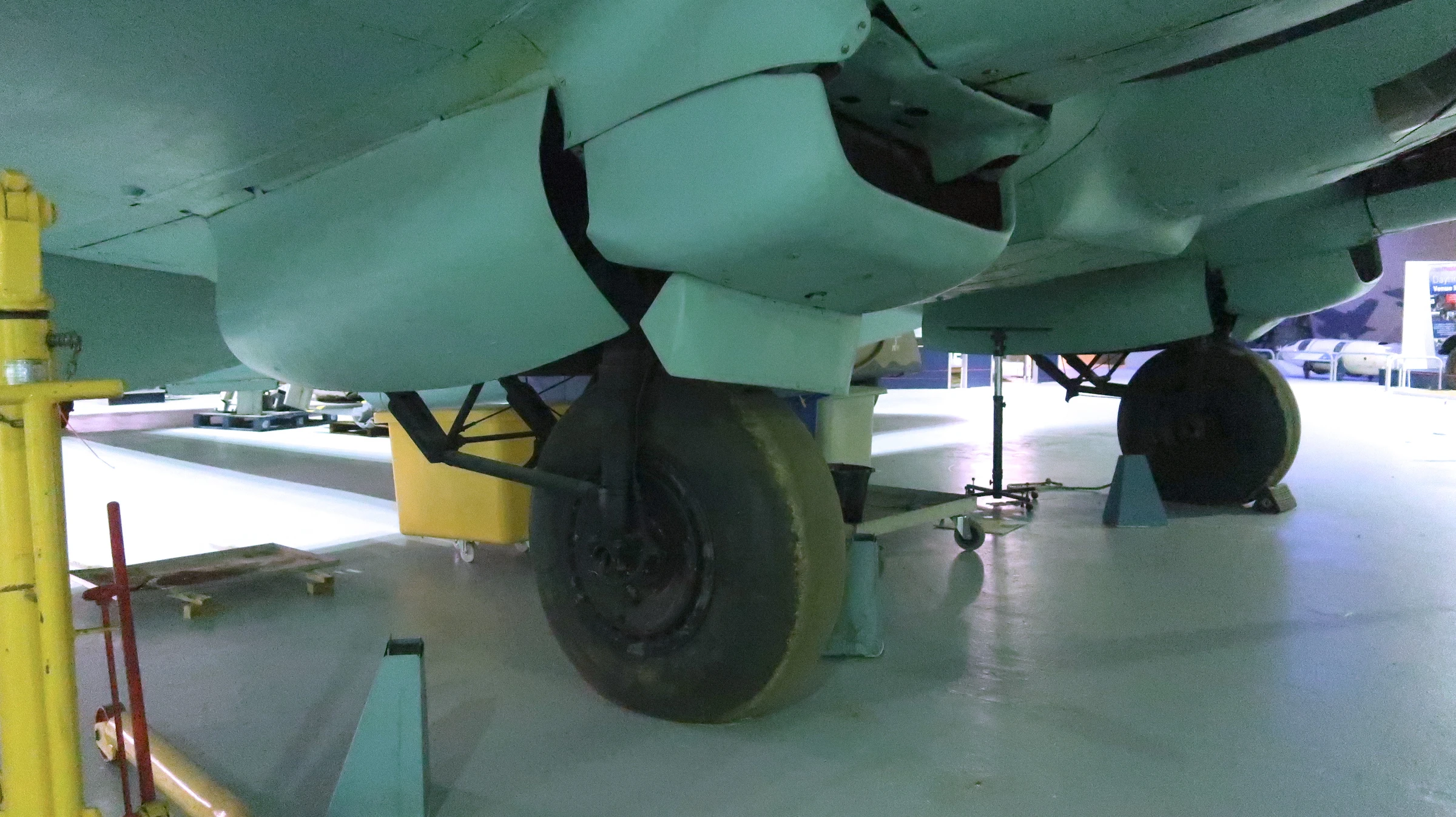
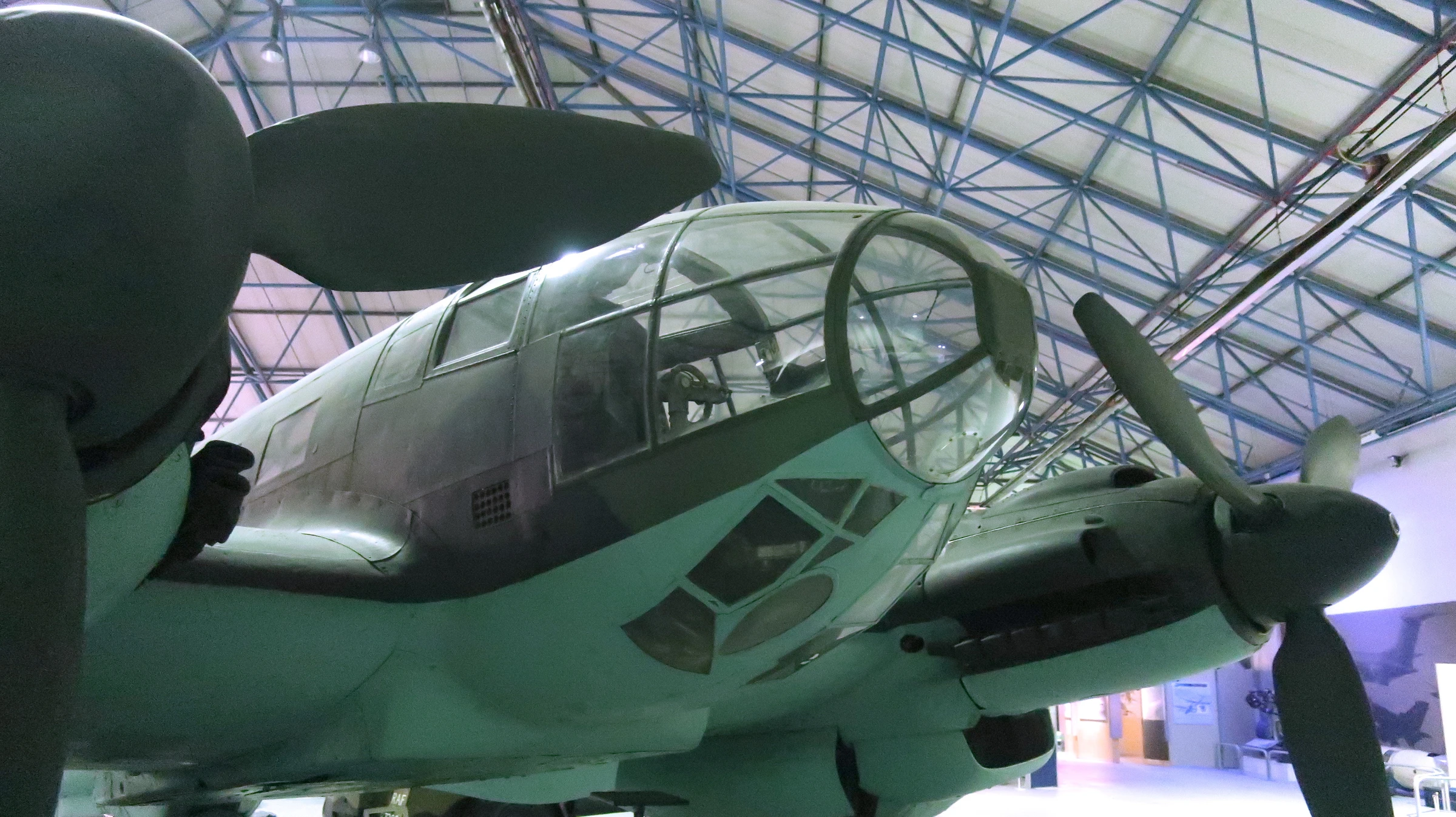
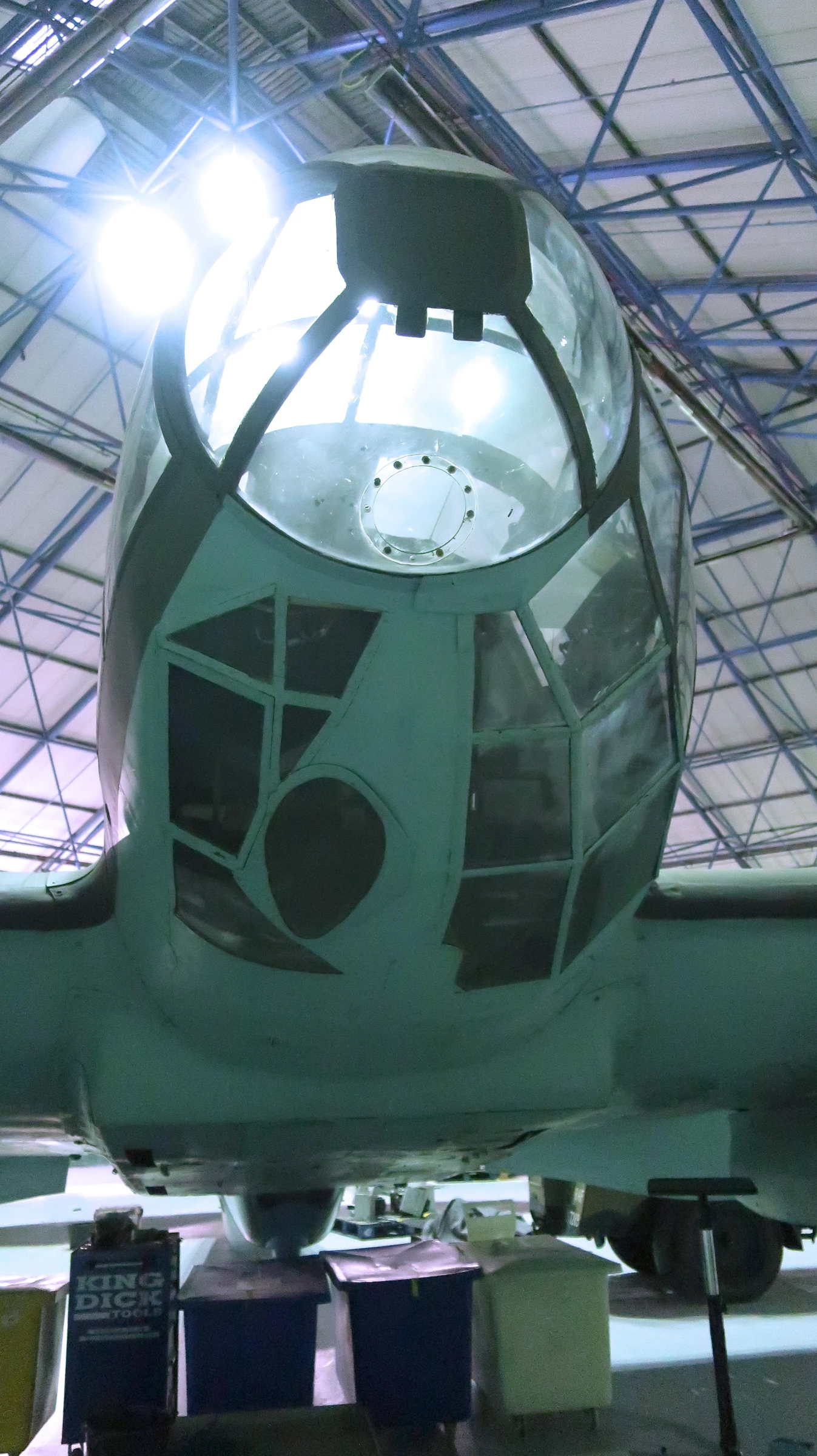
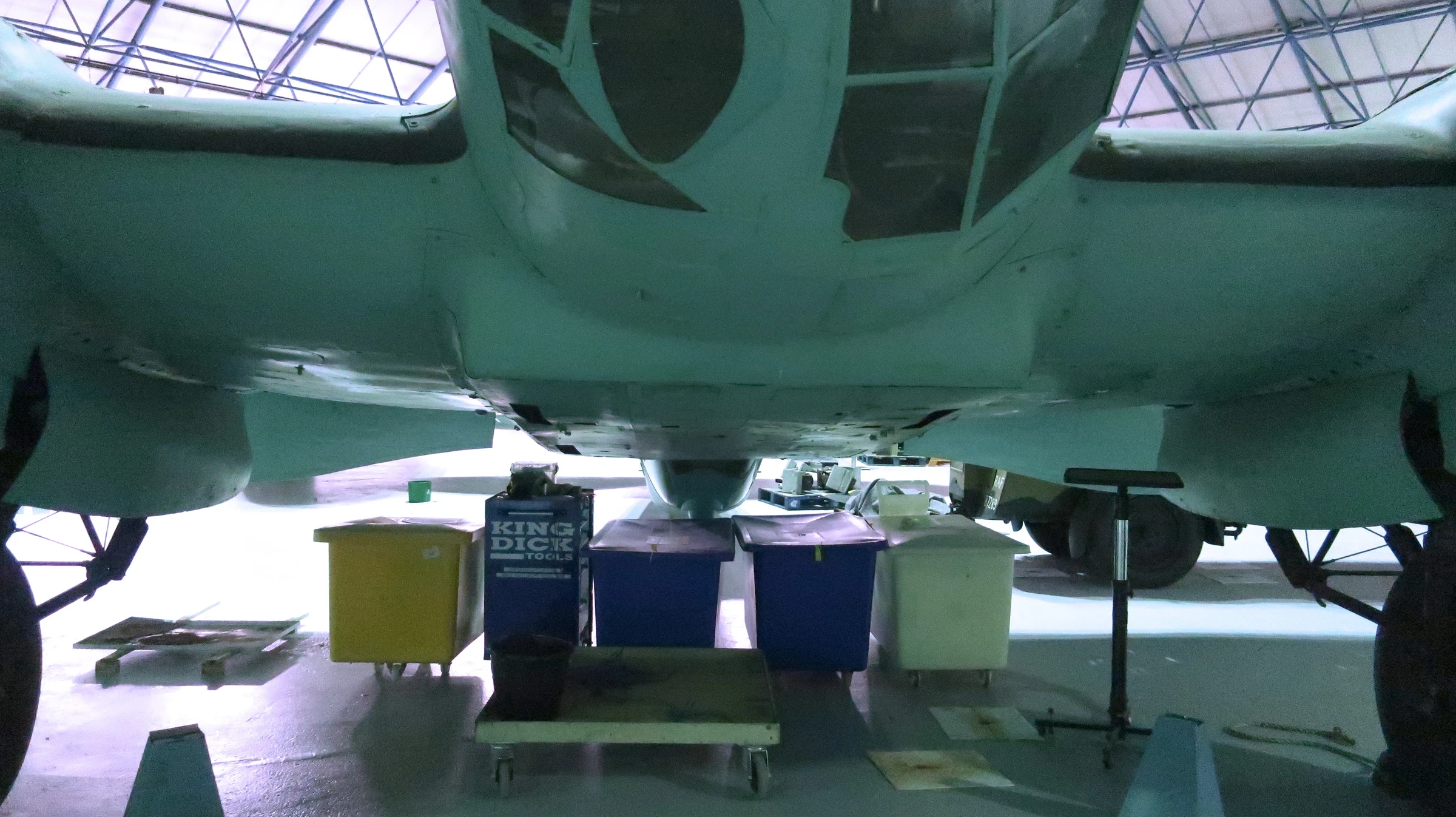
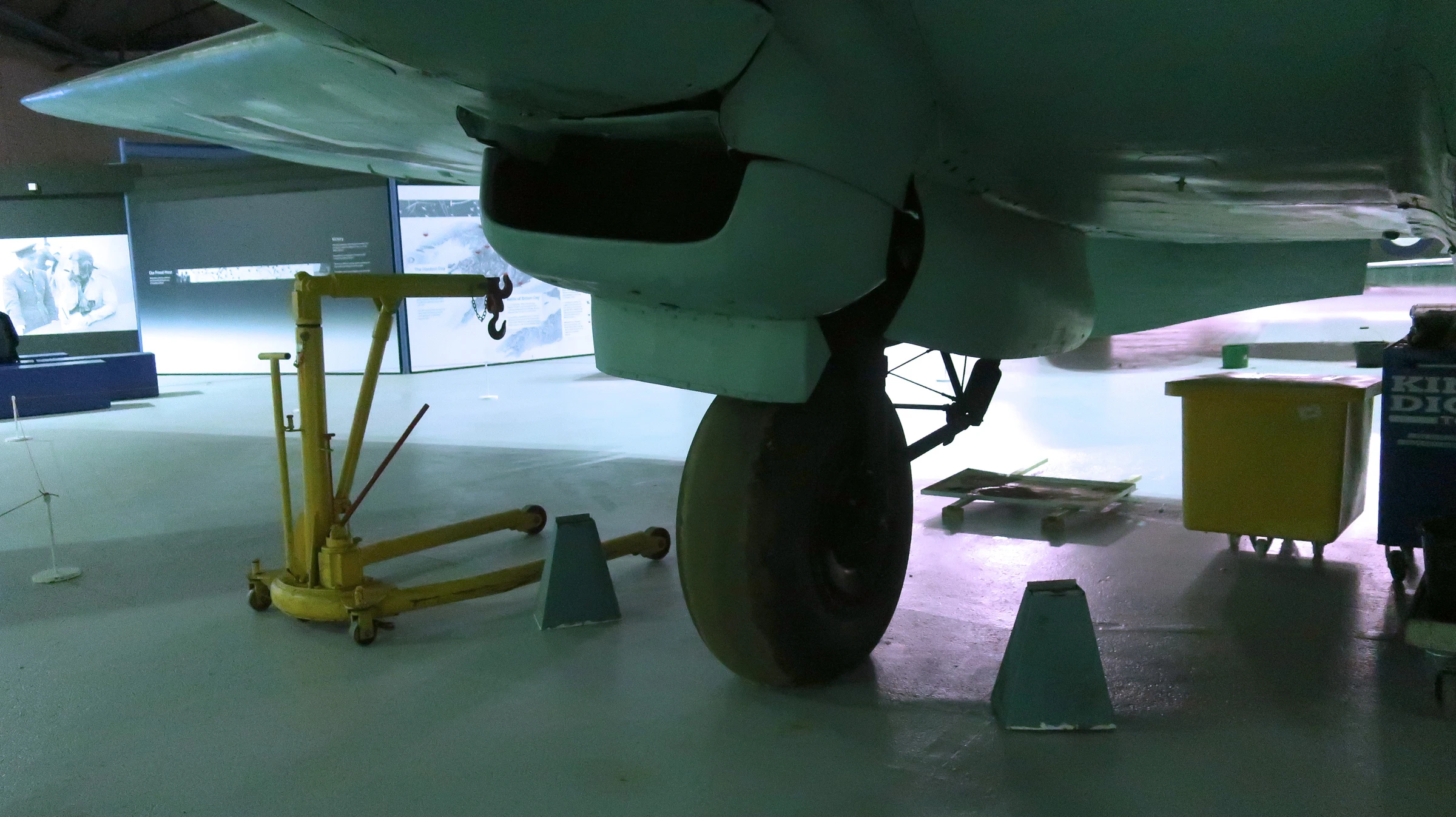
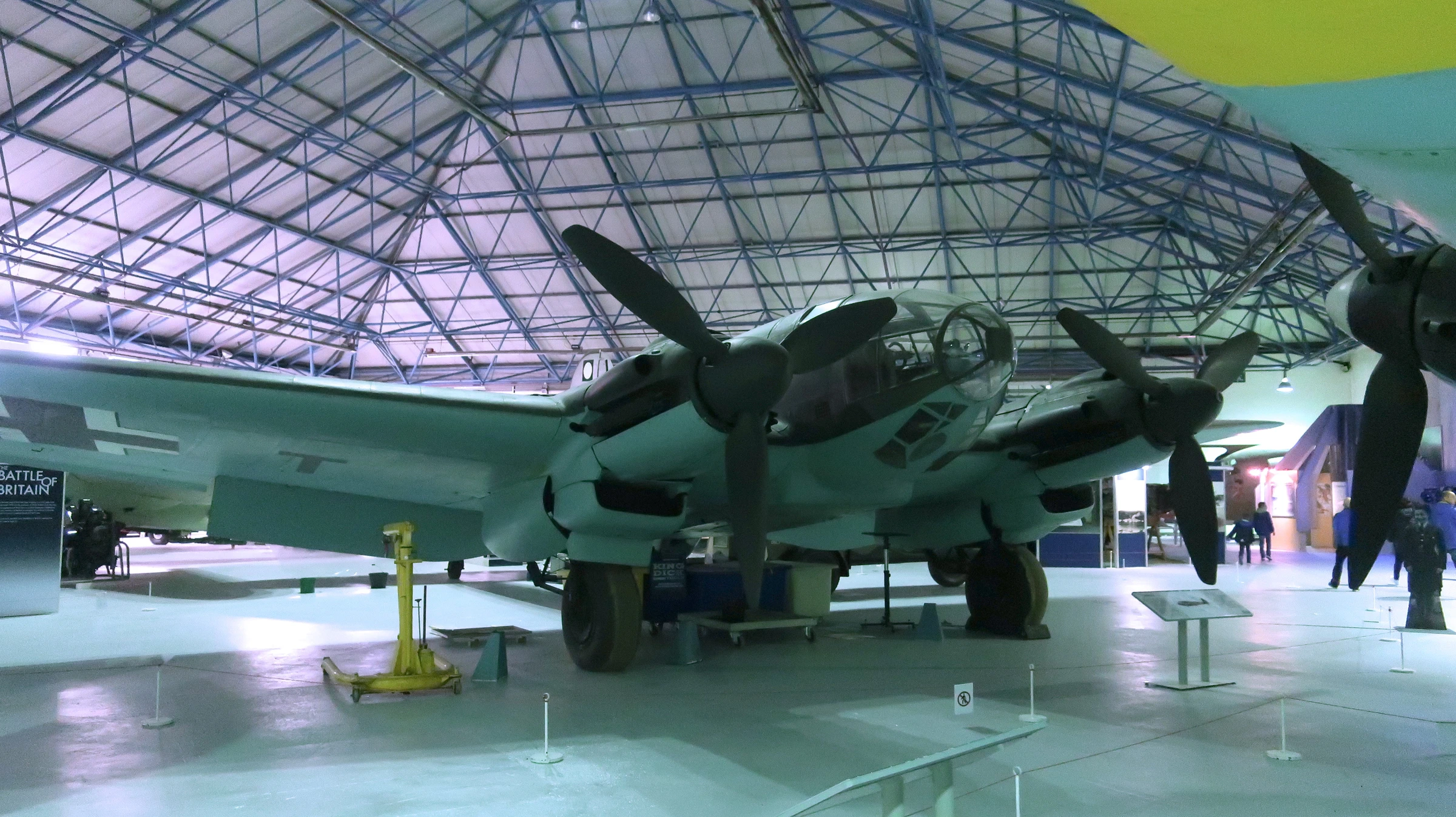
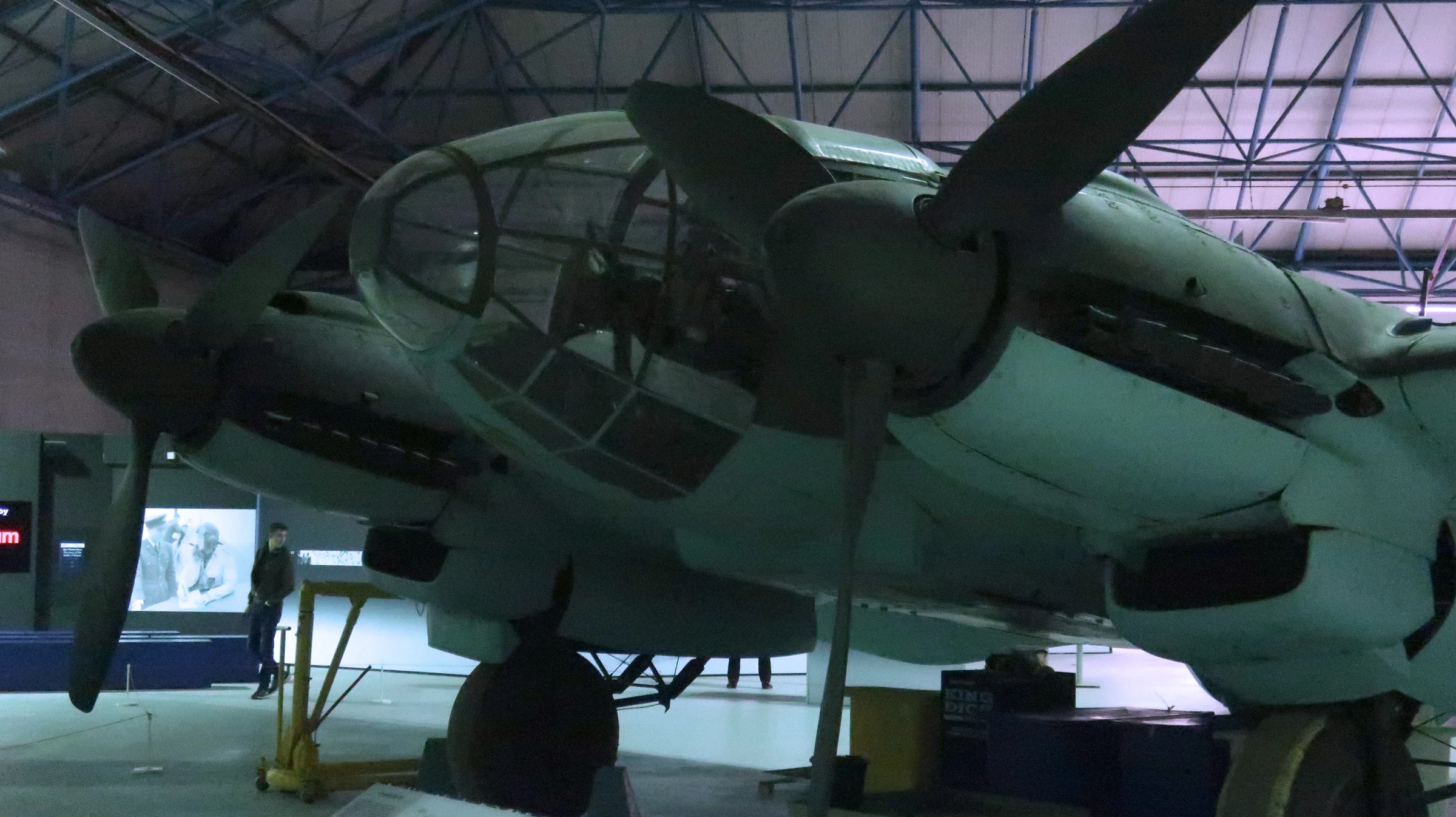
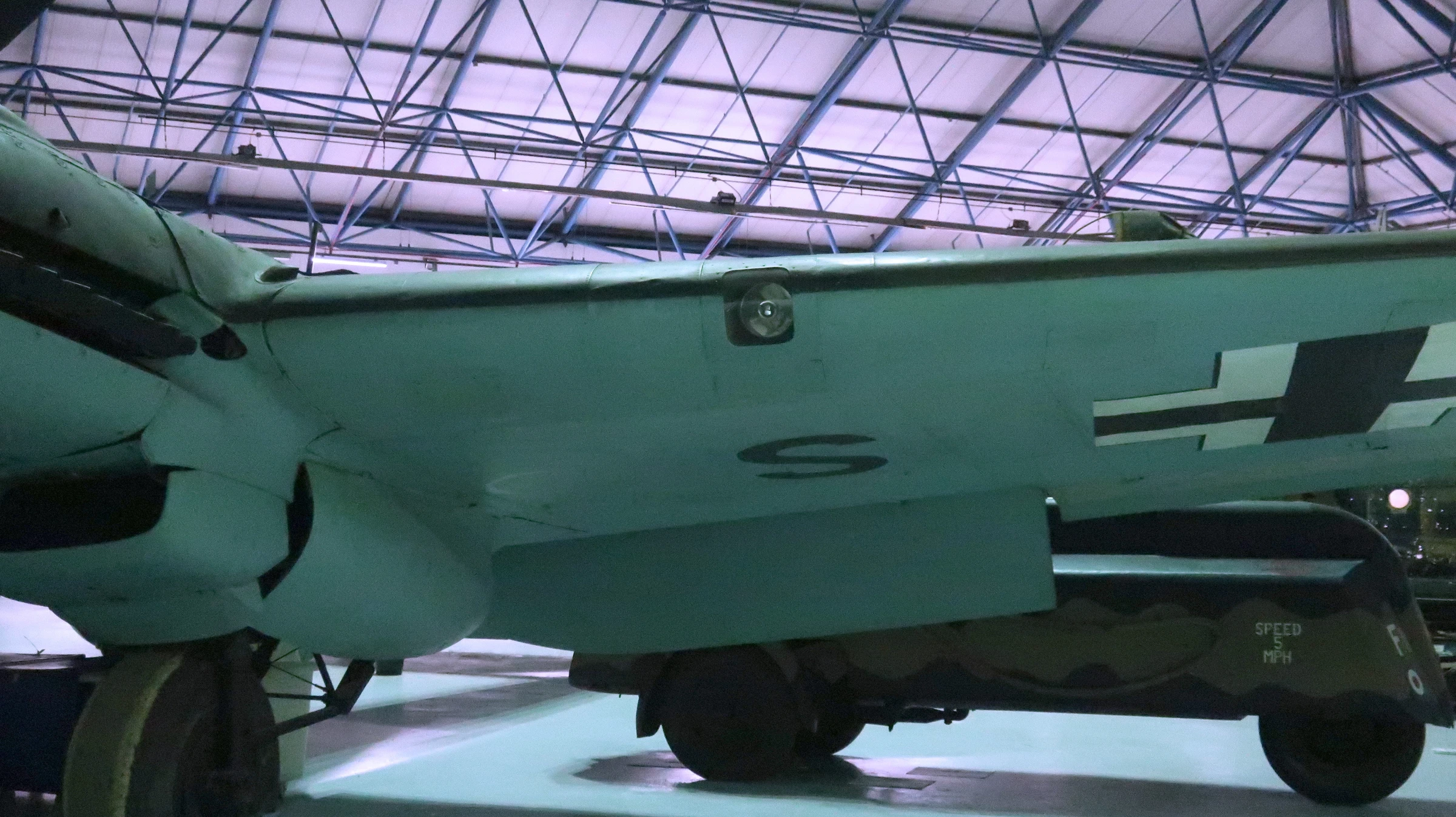
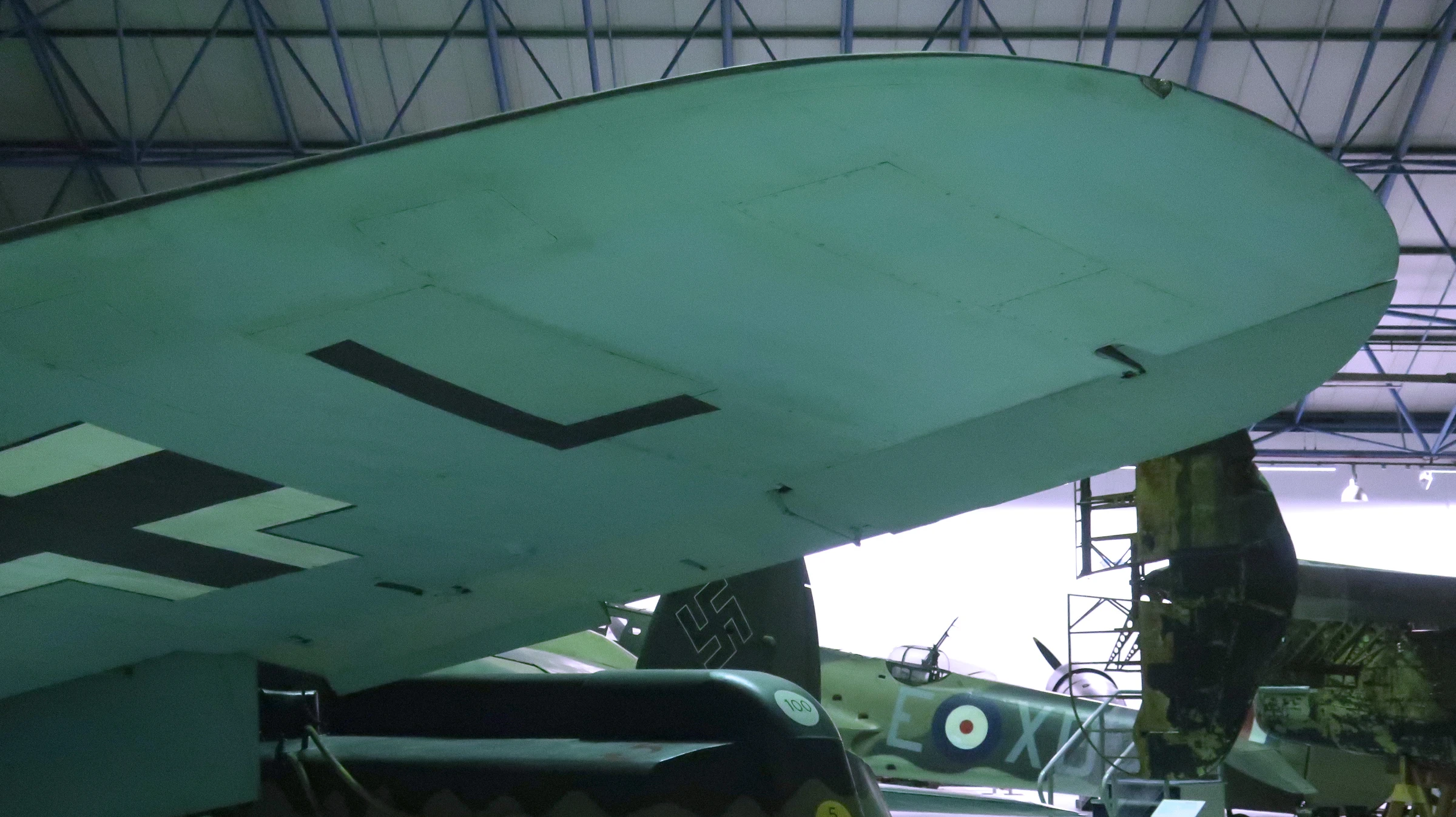
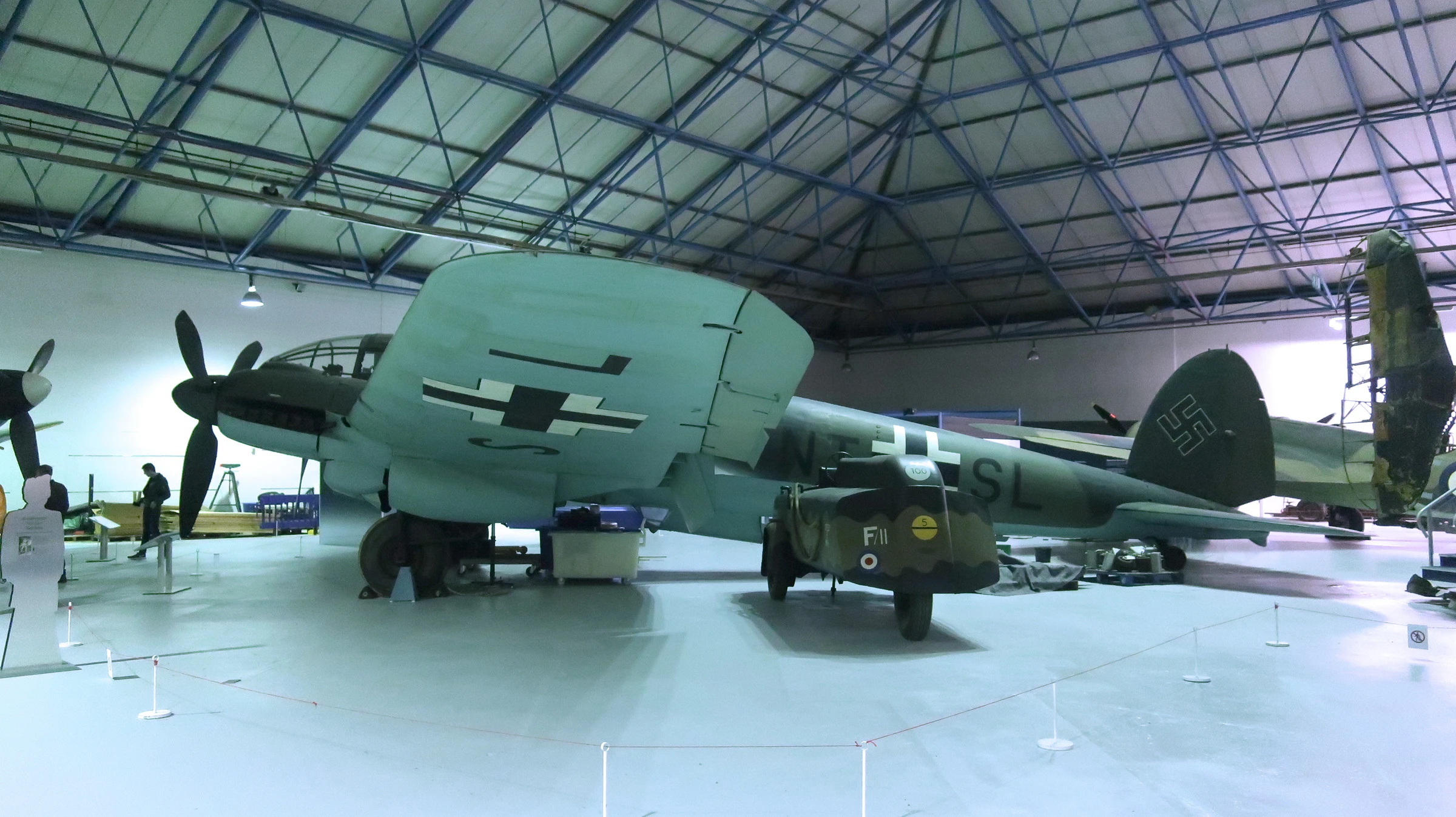
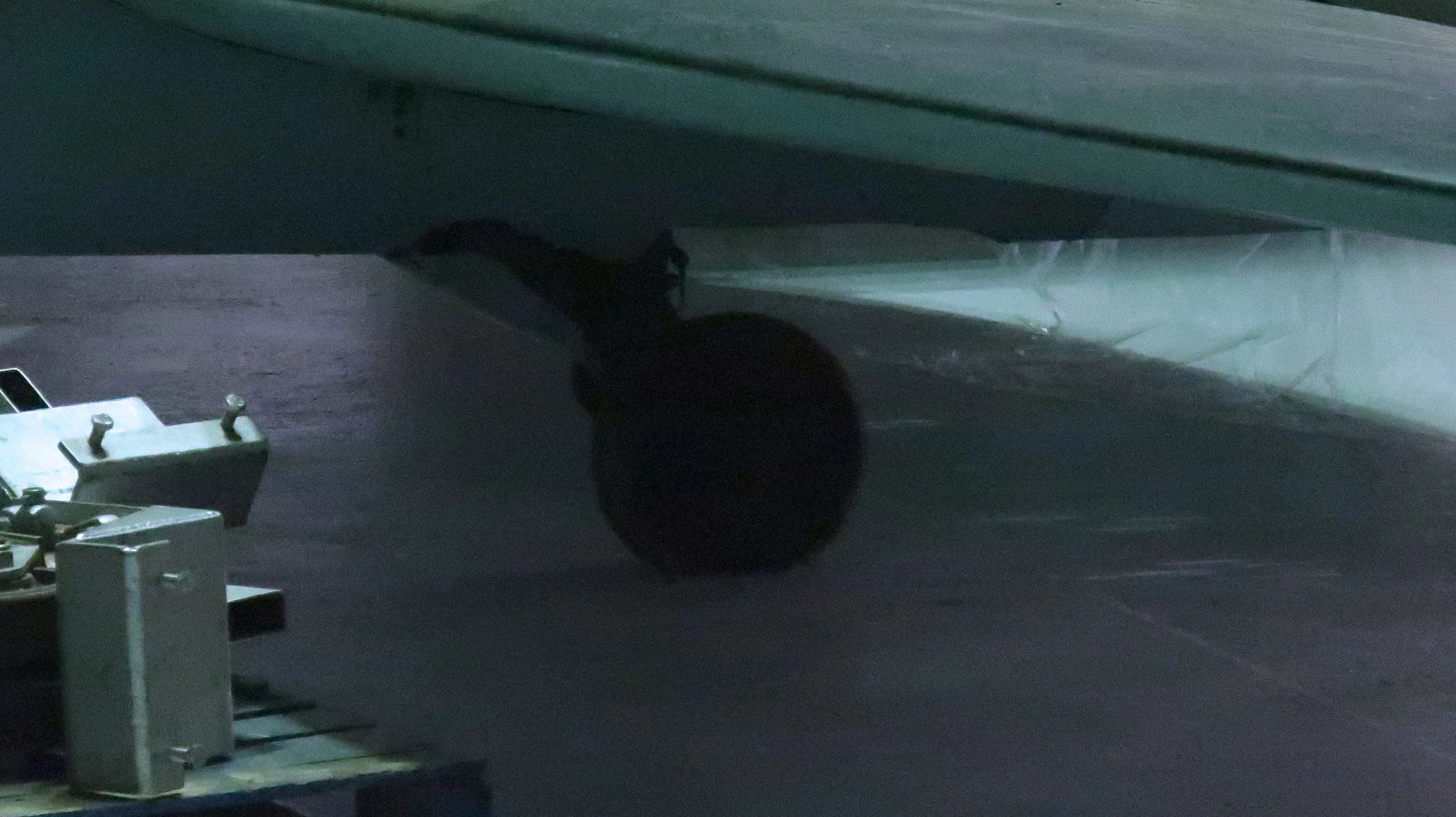
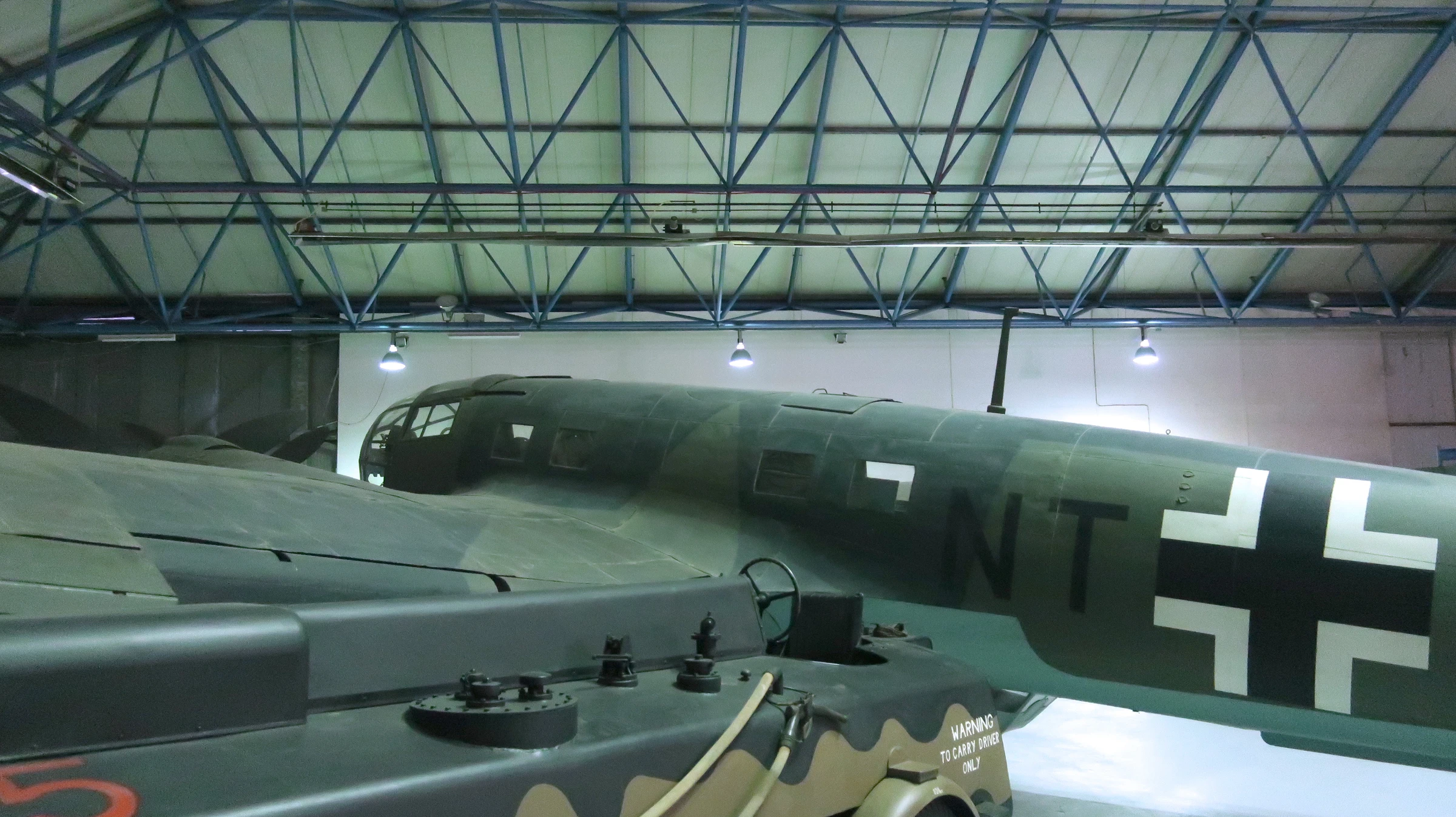
These walk-around photos were taken at the RAF Museum London in Hendon in 2019. They show a Heinkel He 111 H-20, Werk-Nummer 701152, carrying its original factory code NT+SL — one of only a handful of genuine German-built He 111s surviving in the world. The He 111 was the Luftwaffe's most numerous bomber during the early stages of the war, instantly recognisable by its distinctive fully-glazed asymmetric nose. It performed well in Spain and Poland but proved vulnerable during the Battle of Britain, where its defensive armament was inadequate against determined fighter opposition. It nonetheless soldiered on throughout the war in a wide variety of roles.
This particular aircraft was not a Battle of Britain bomber but a late-war H-20 variant, built in 1944 and modified to carry Fallschirmjäger paratroopers. Captured by USAAF pilots in France at the end of the war, it was brought to England and flown with the 61st Fighter Group before being left behind when the unit returned to the United States. Taken on by the RAF and stored at North Weald, it passed to the Air Historical Branch and spent years in various storage locations before being restored at RAF St Athan in the late 1970s to its 1944 factory colour scheme. It has been on display in the Battle of Britain hall at Hendon since 1979.