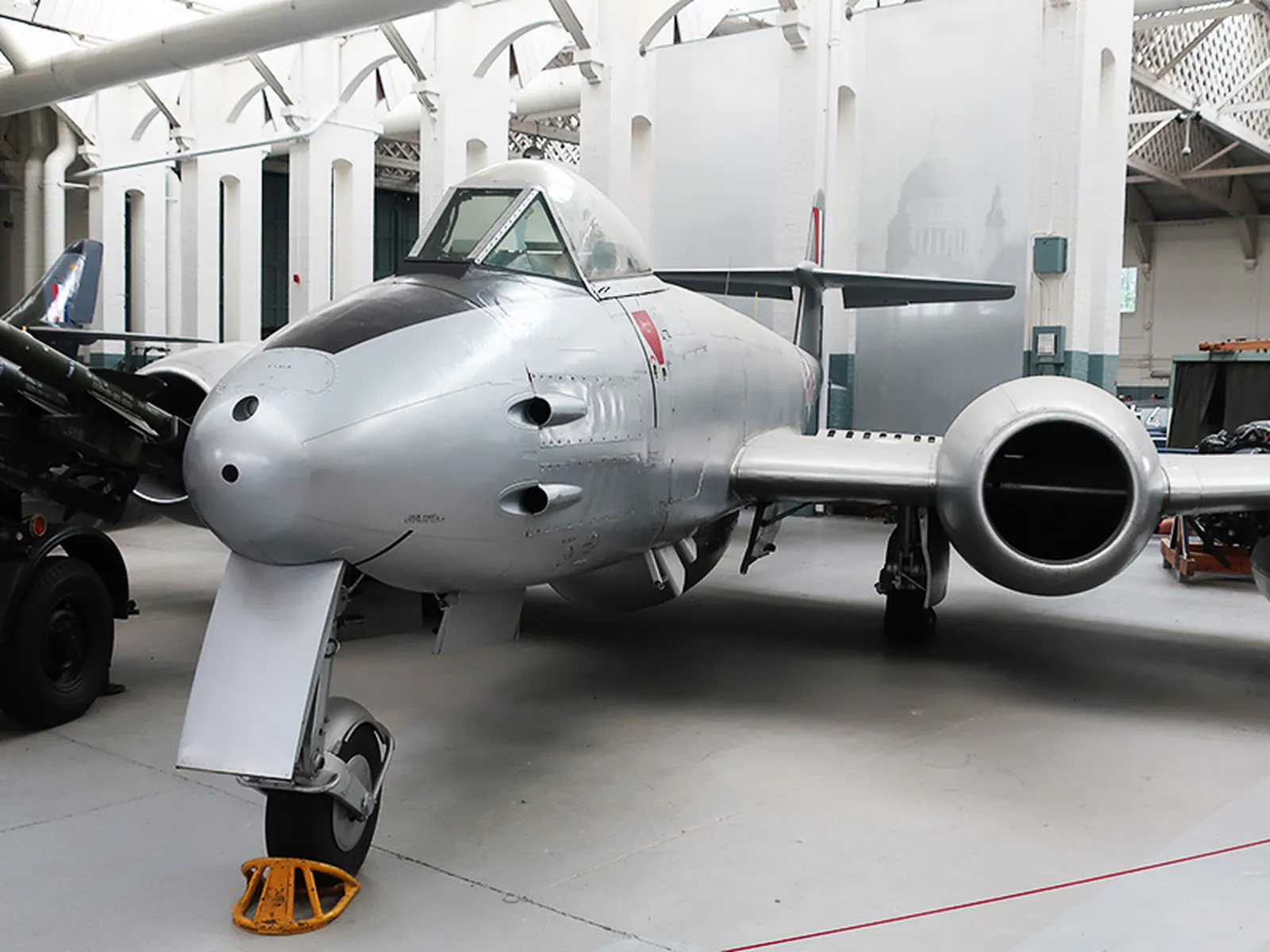
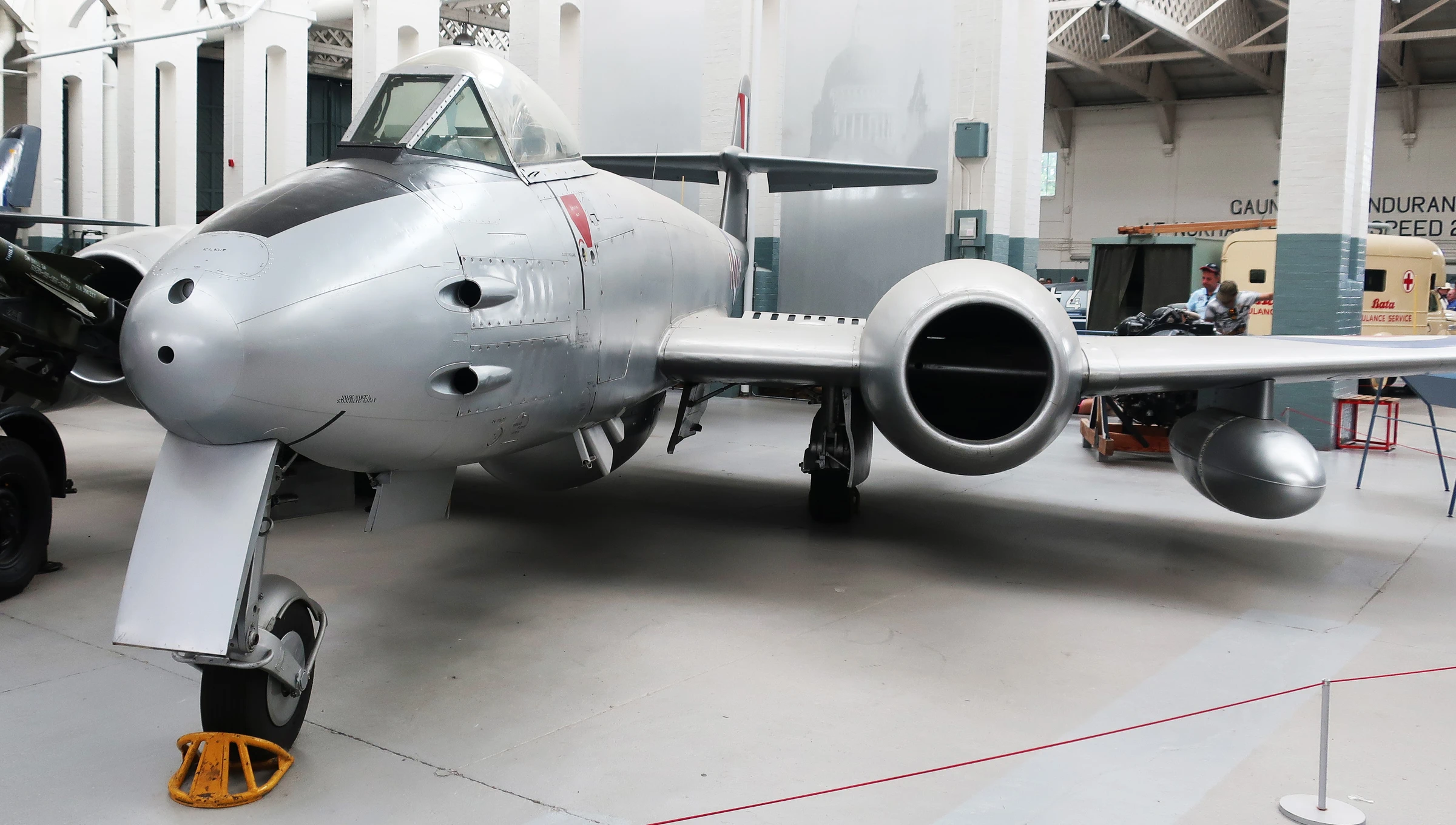
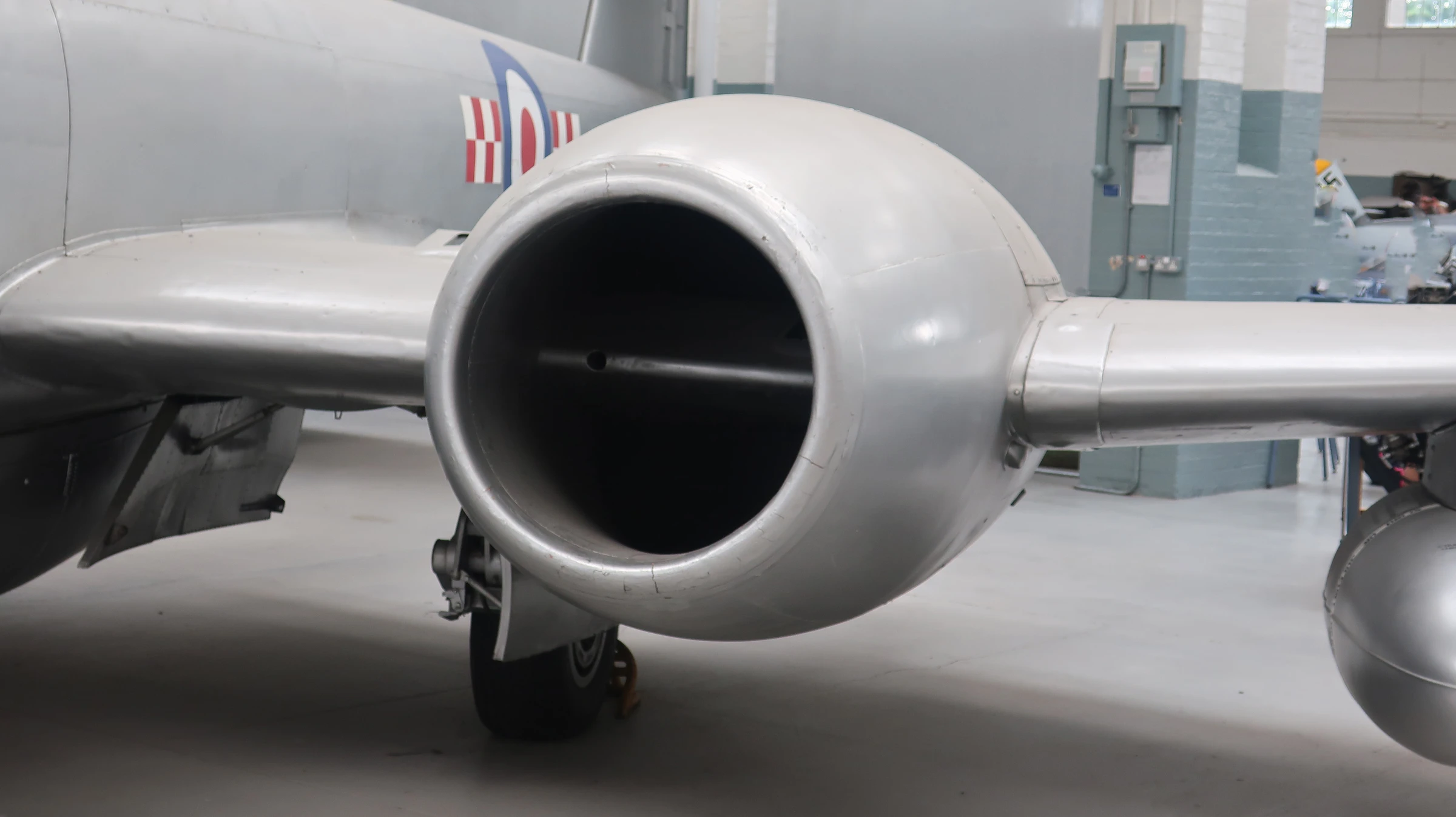
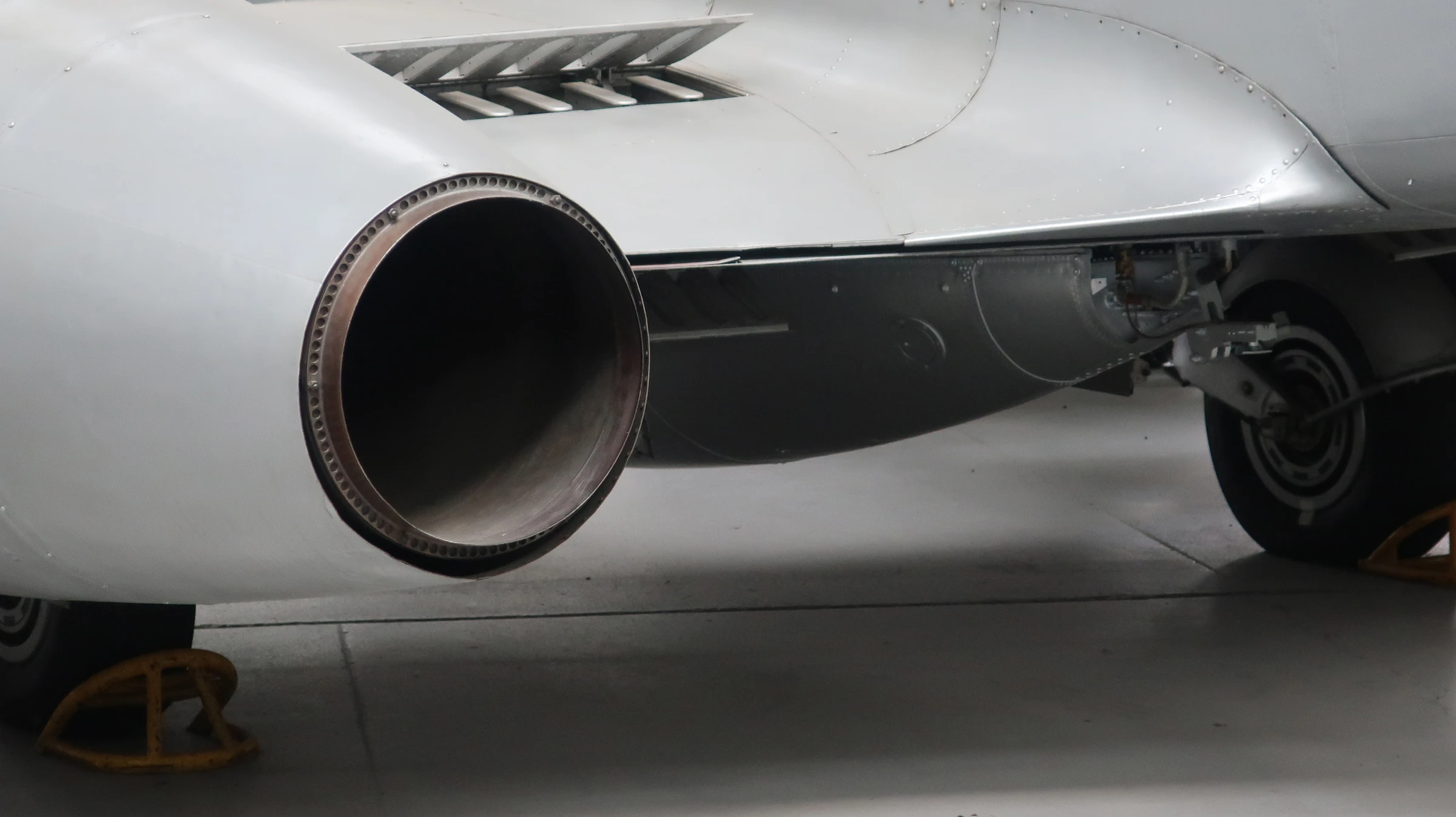
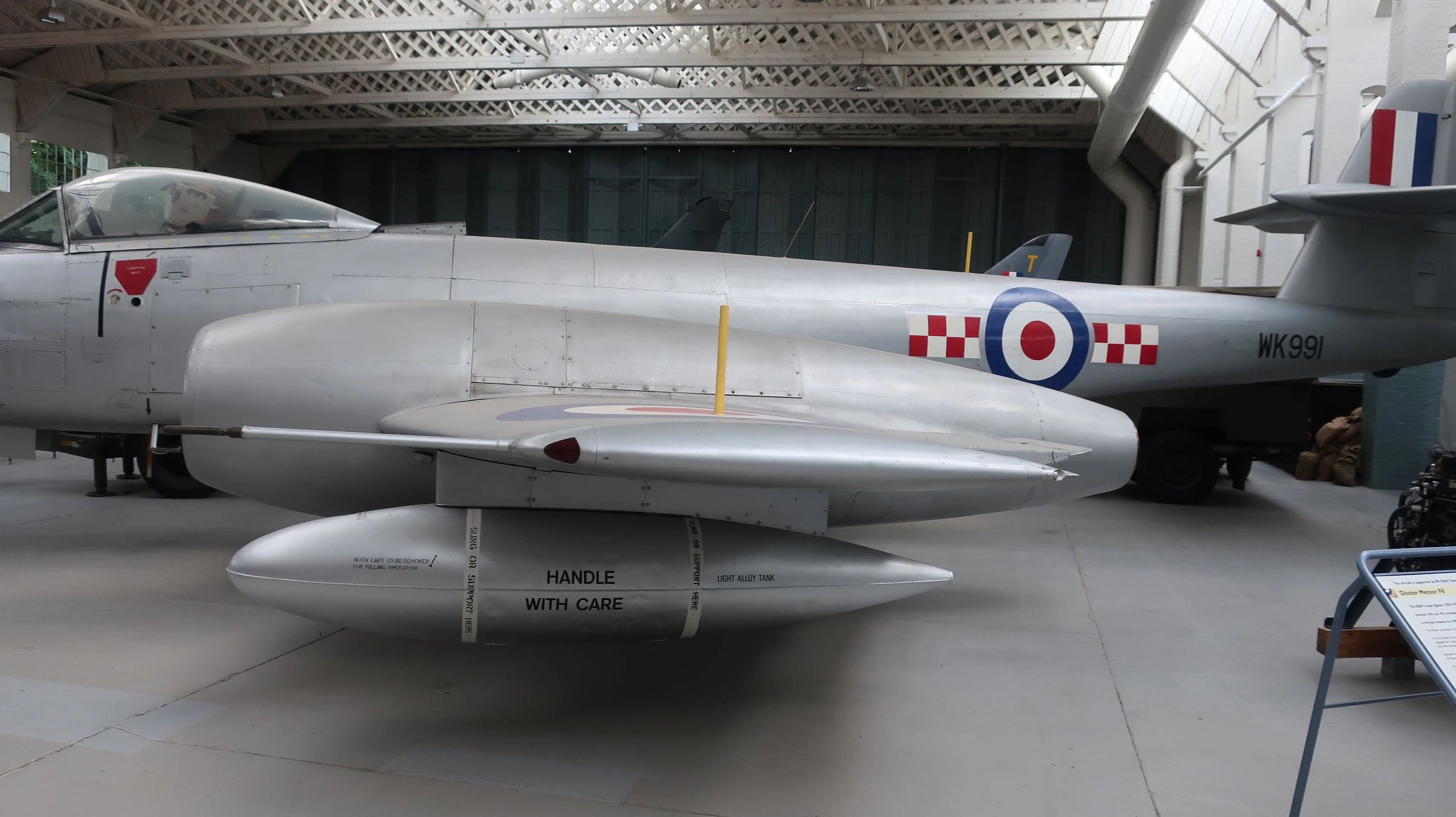
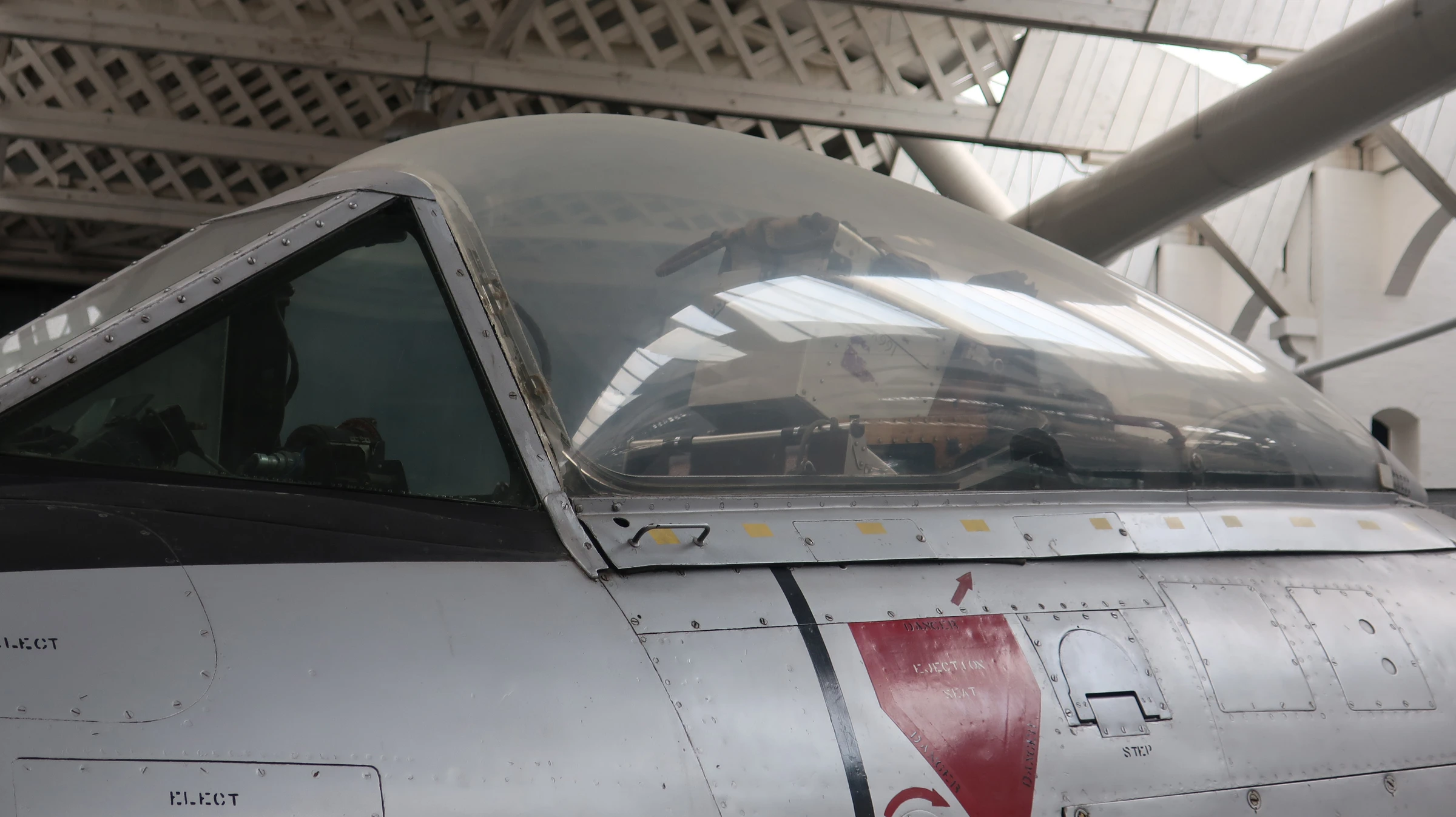
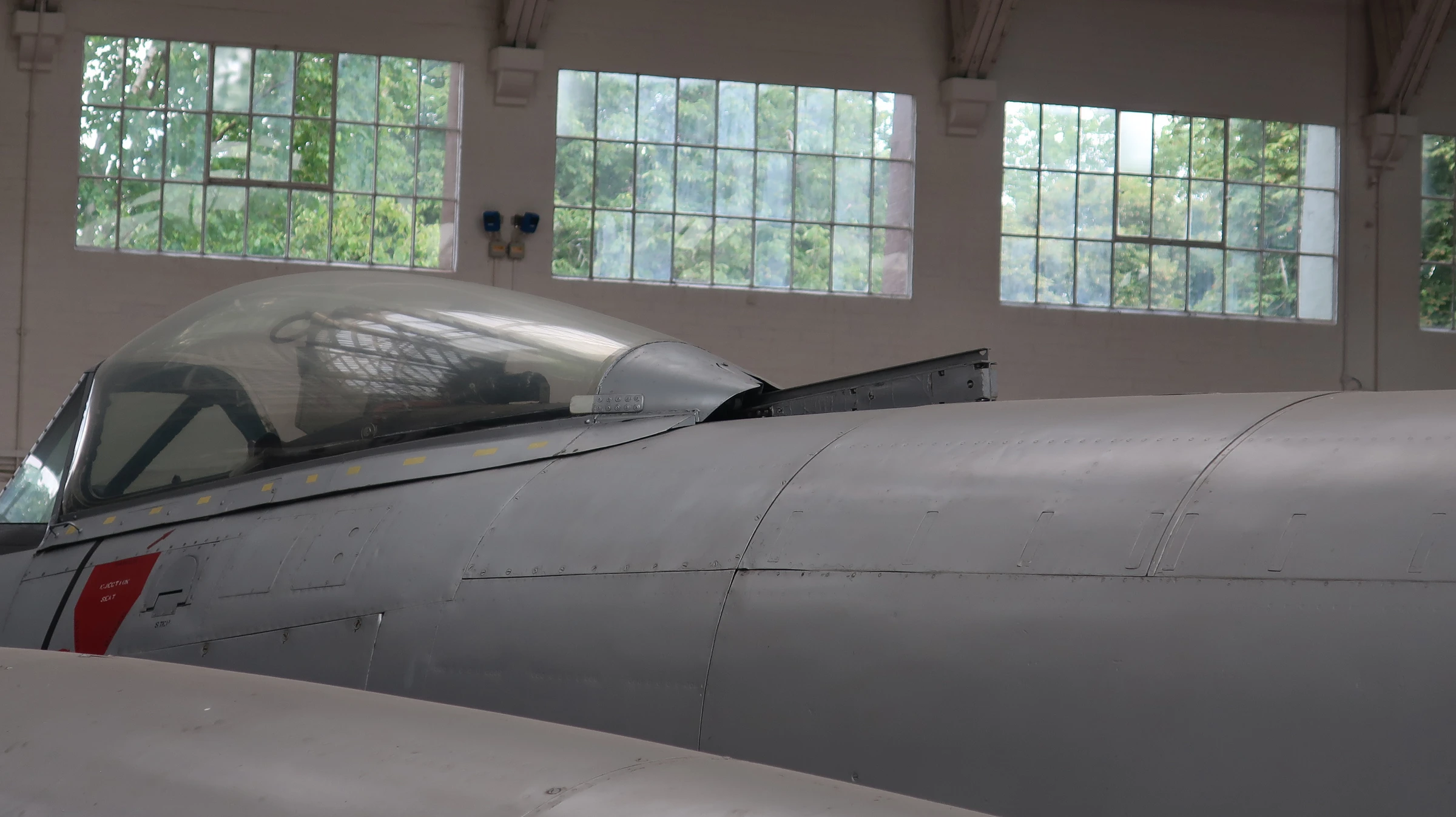
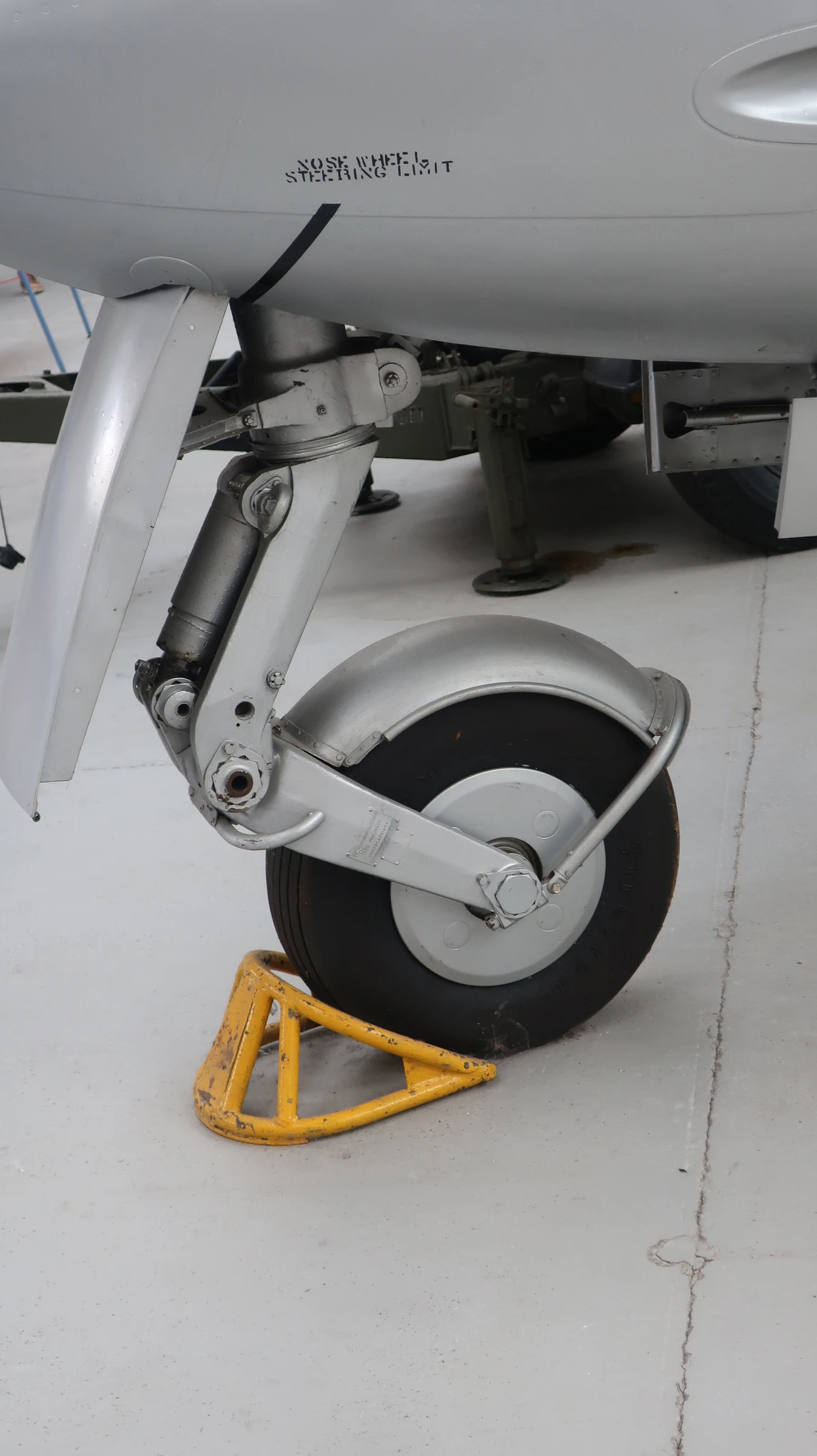
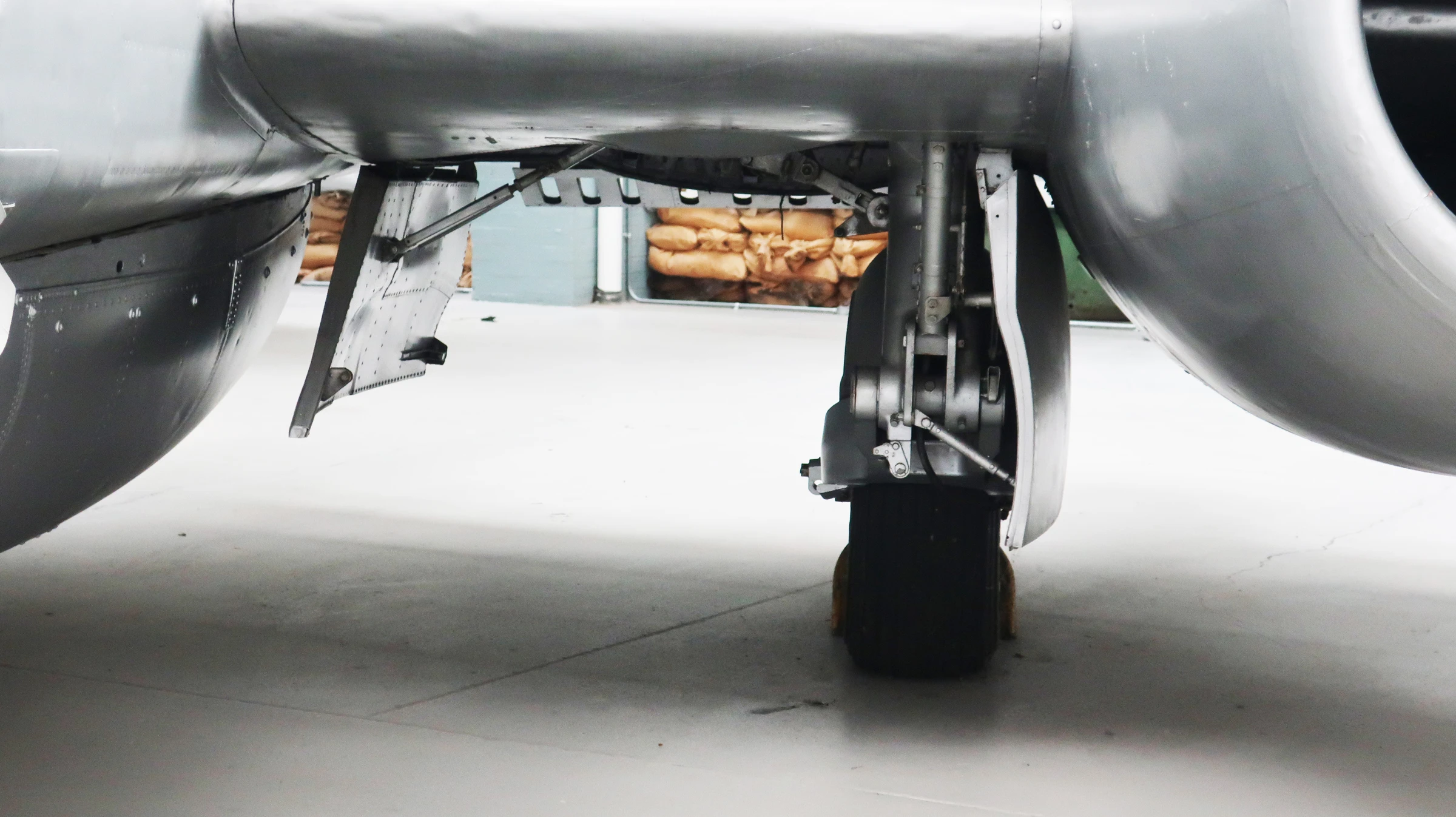
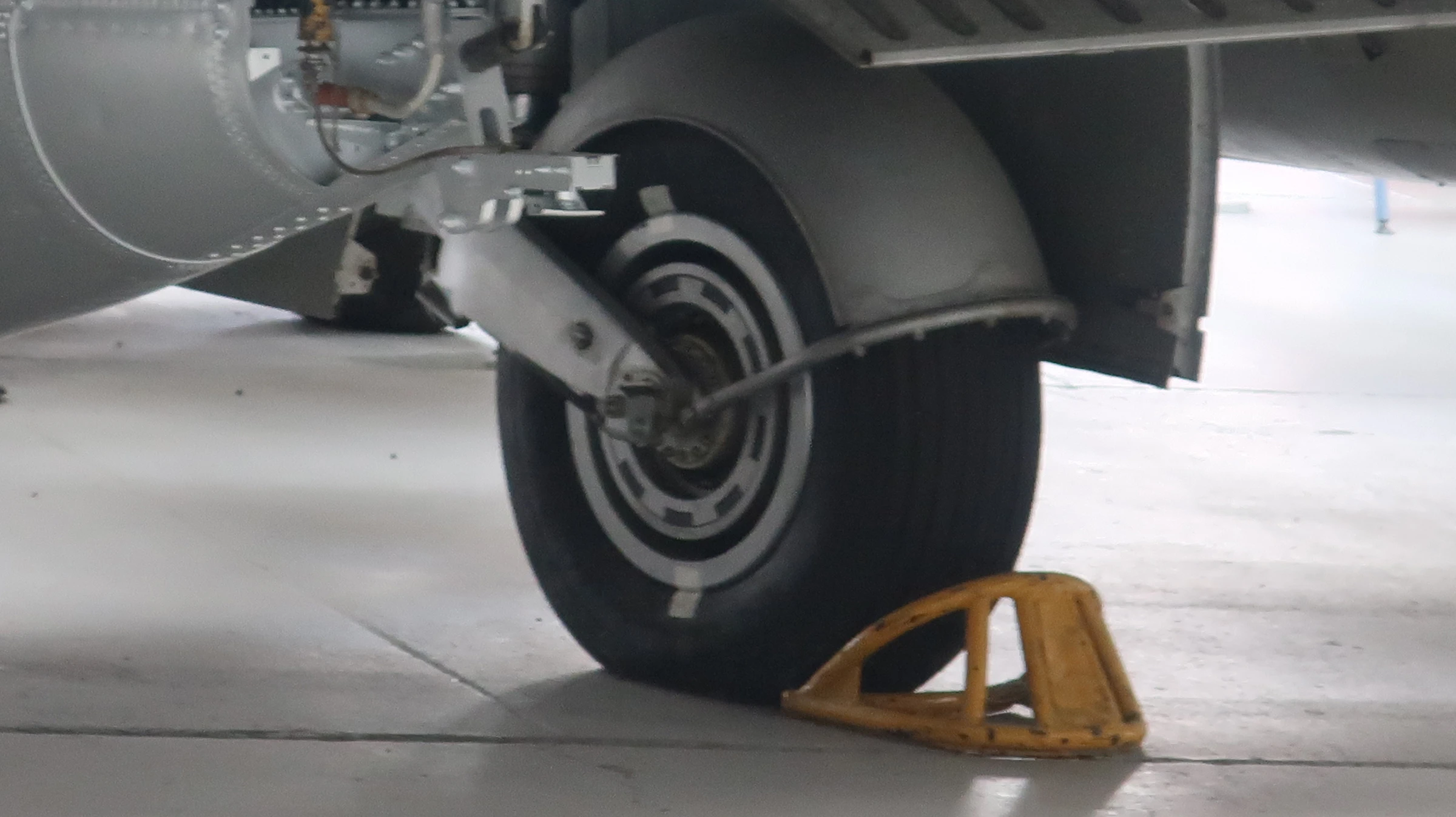
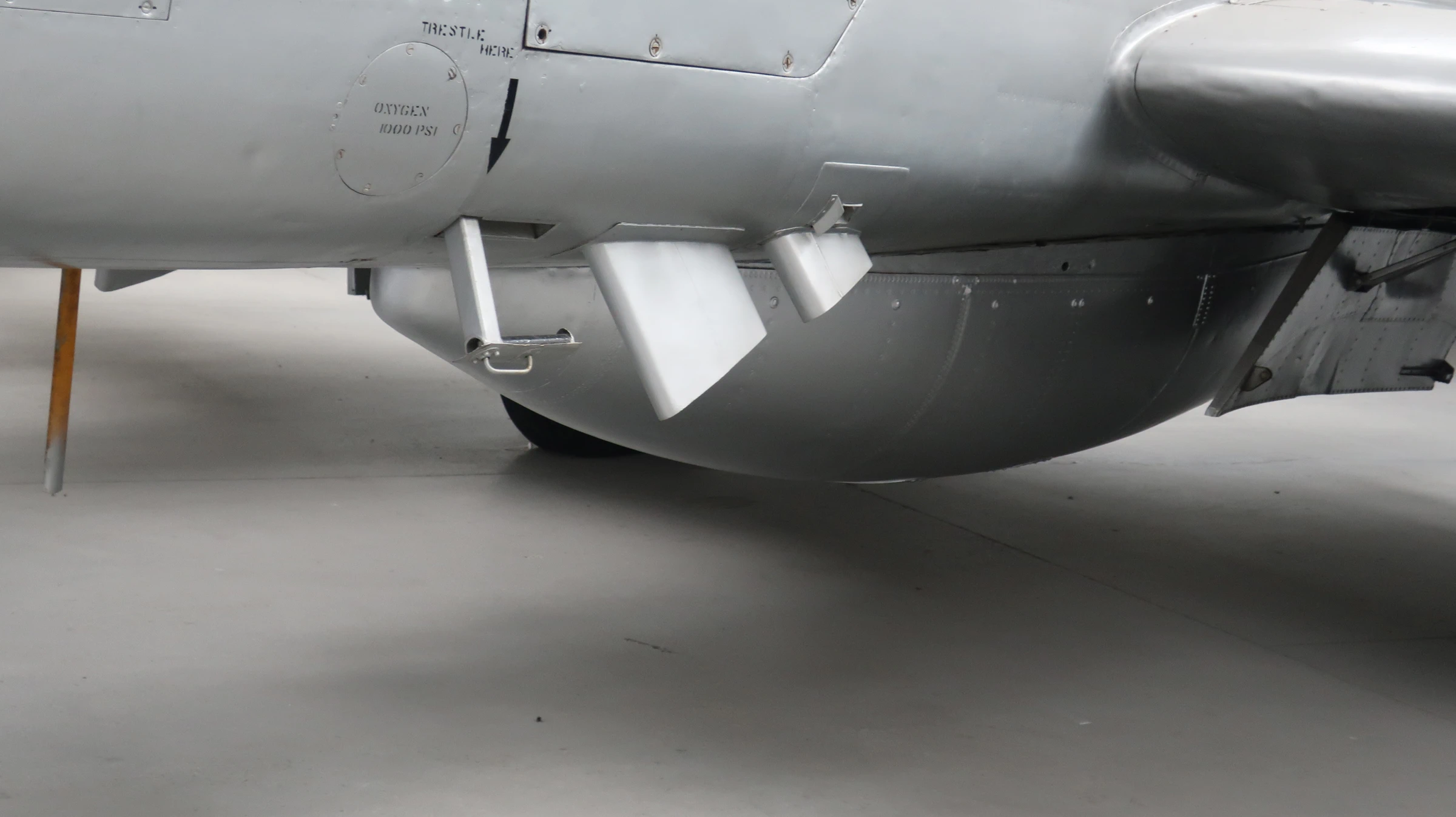
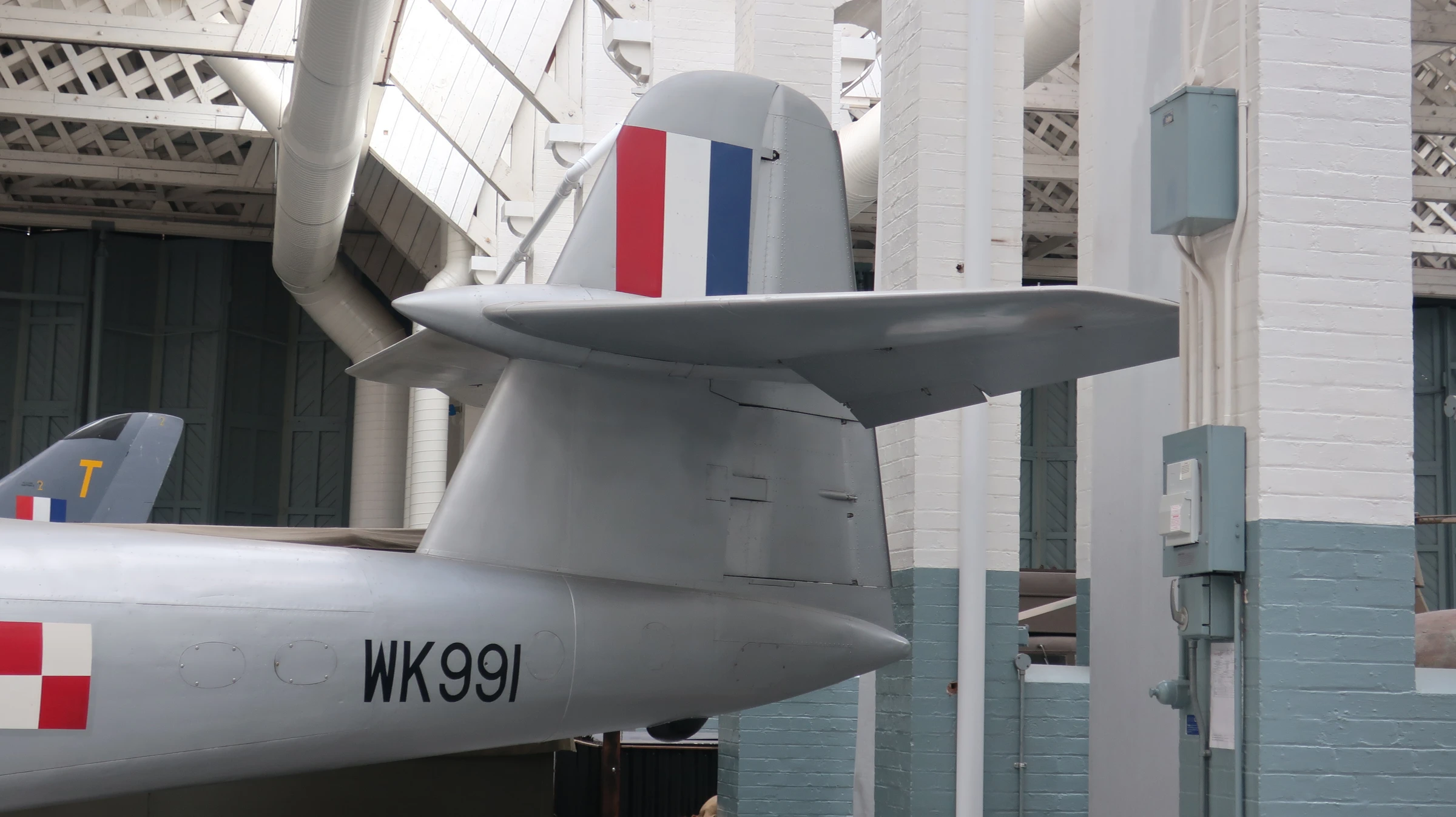
These walk-around photos were taken at IWM Duxford in 2018. They show a Gloster Meteor F Mk 8, serial WK991 — the RAF's first operational jet fighter and the only Allied jet to see combat during the Second World War. The Meteor entered service in 1944, initially used to intercept V-1 flying bombs over southern England, and went on to become the backbone of RAF Fighter Command in the late 1940s and early 1950s. The F Mk 8 was the most capable single-seat day fighter variant, featuring a longer fuselage, greater fuel capacity, a blown canopy and standard ejection seat. The type also saw combat in the Korean War in the hands of the Royal Australian Air Force, where it proved well-suited to ground attack but struggled against the swept-wing MiG-15 at altitude.
WK991 was built by Gloster Aircraft at Hucclecote and delivered to the RAF in July 1953. It never saw frontline fighter service, instead spending its career with various communications flights before being used for target towing. Declared non-effective in 1961, it was transferred to the Imperial War Museum in 1963, initially with only the cockpit section on display at Lambeth Road, before the complete aircraft moved to Duxford in 1973. It is displayed in the markings of No. 56 Squadron, one of the first units to bring the Meteor to Duxford when the airfield transitioned to the jet age.