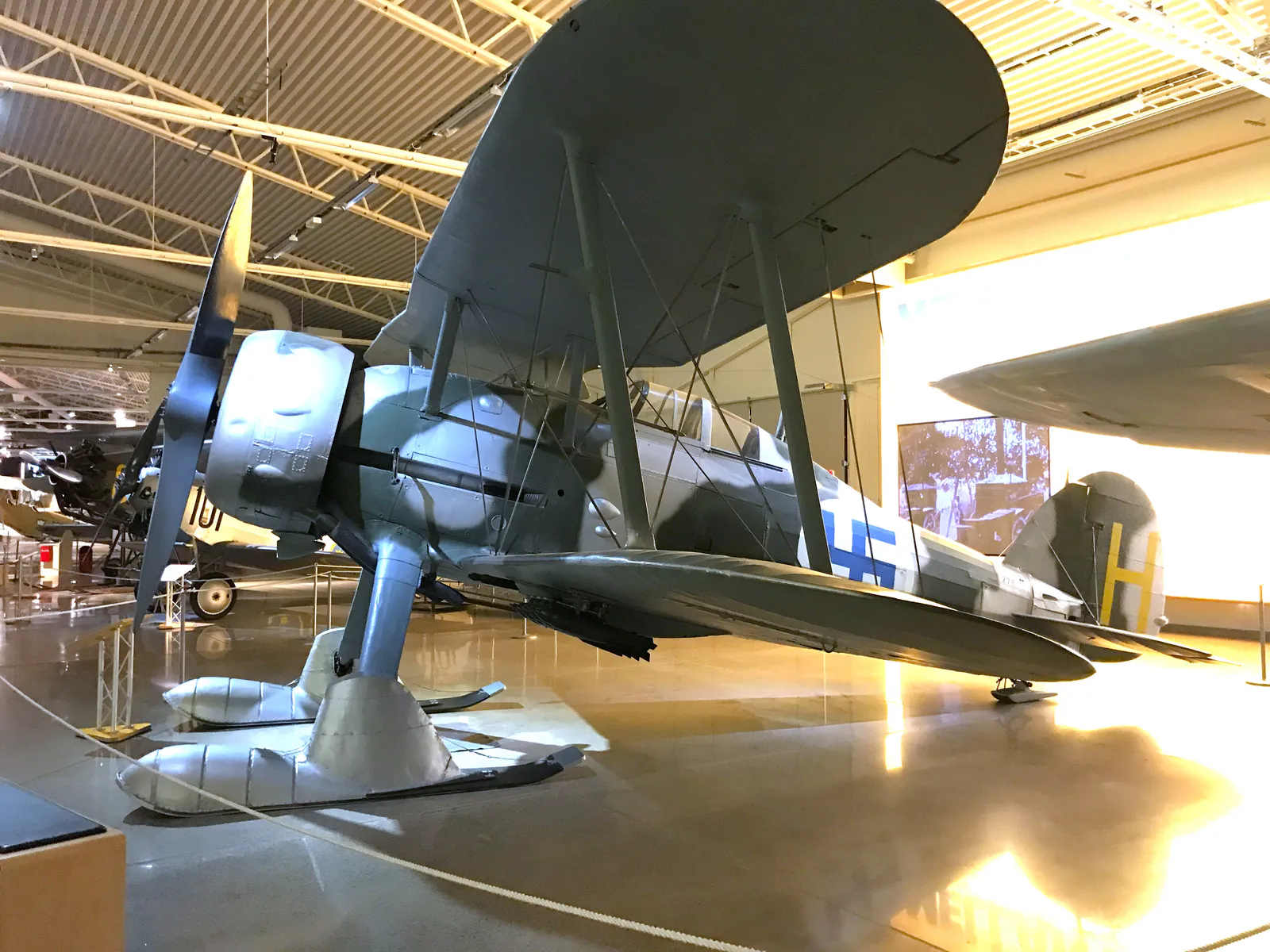
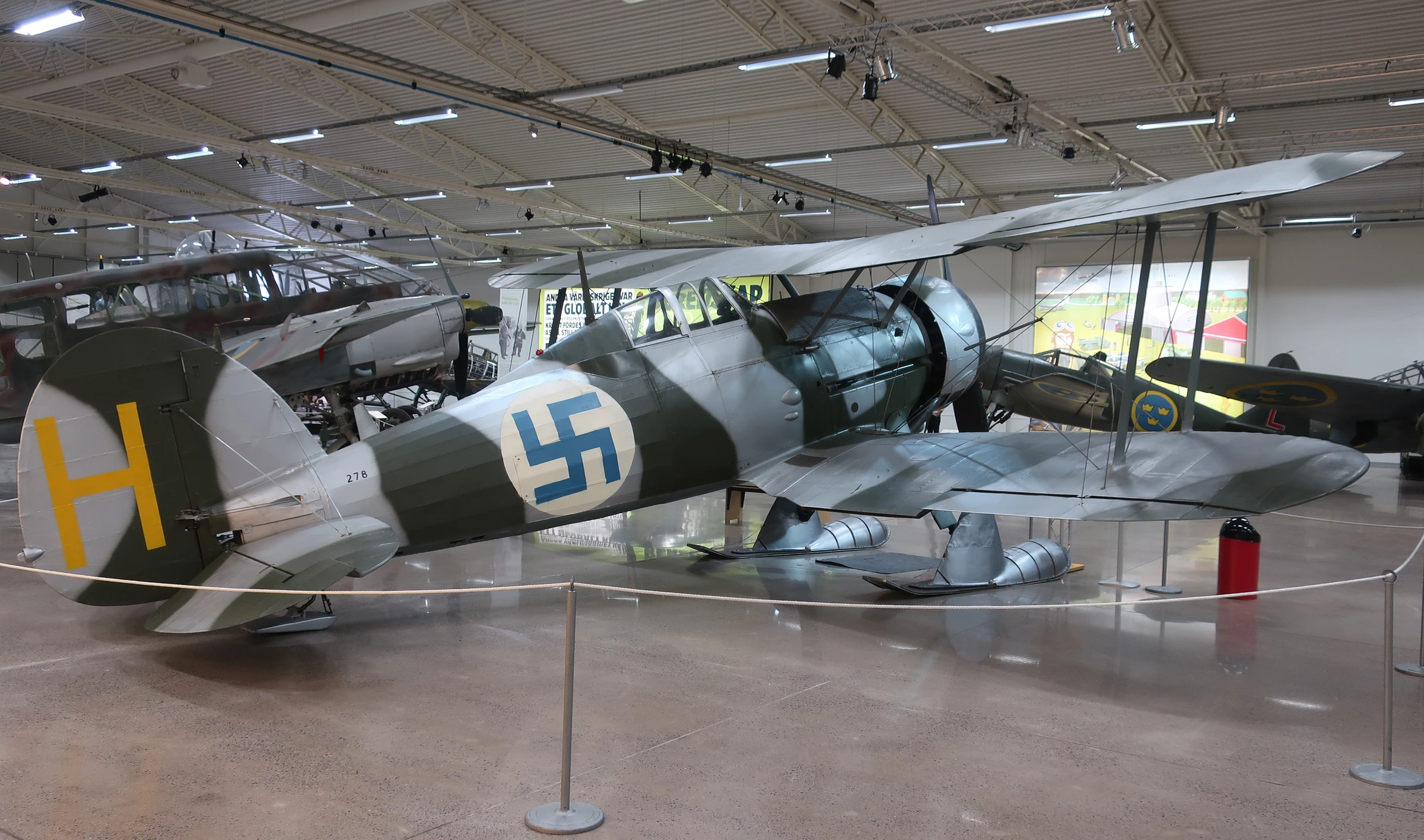
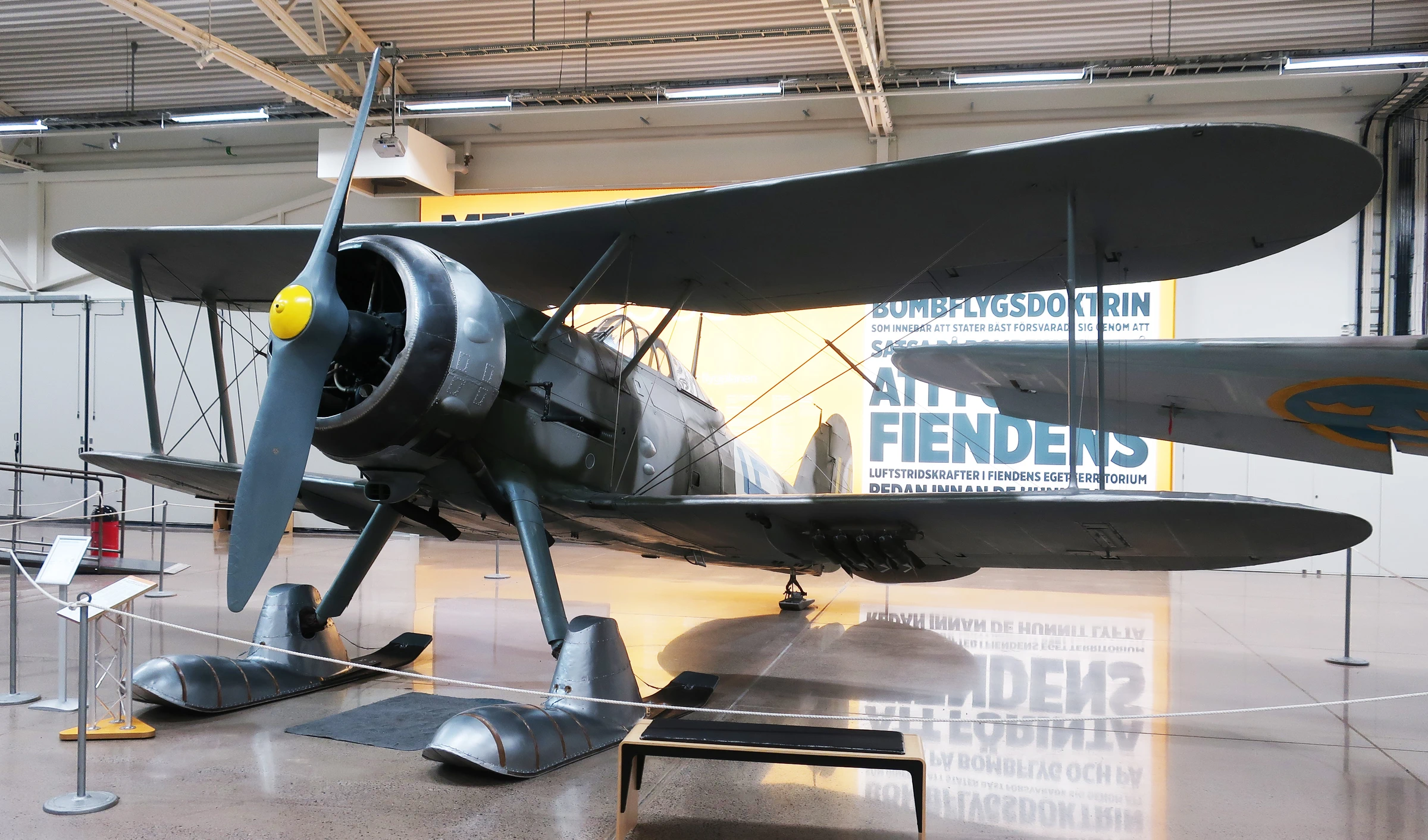
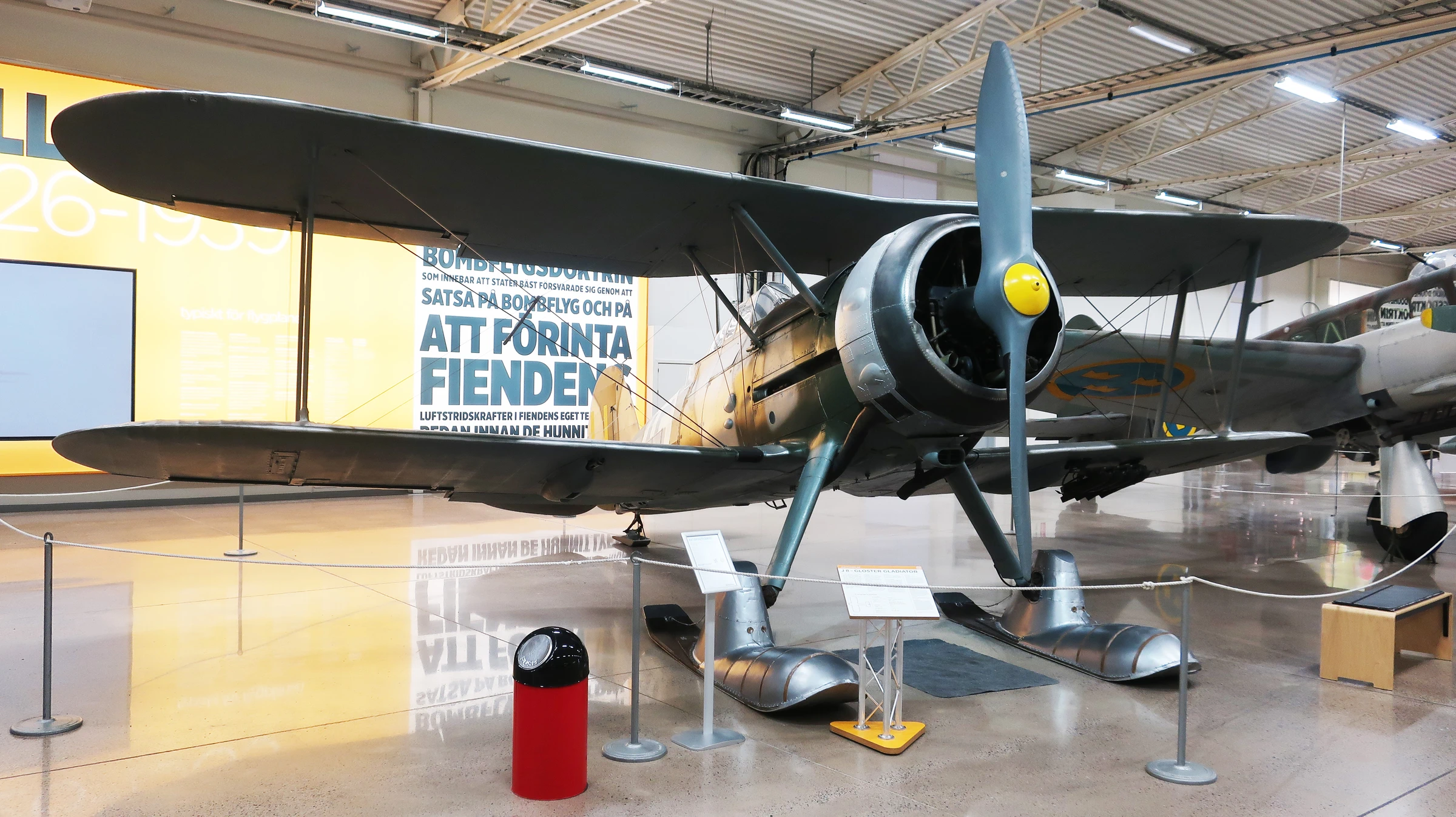
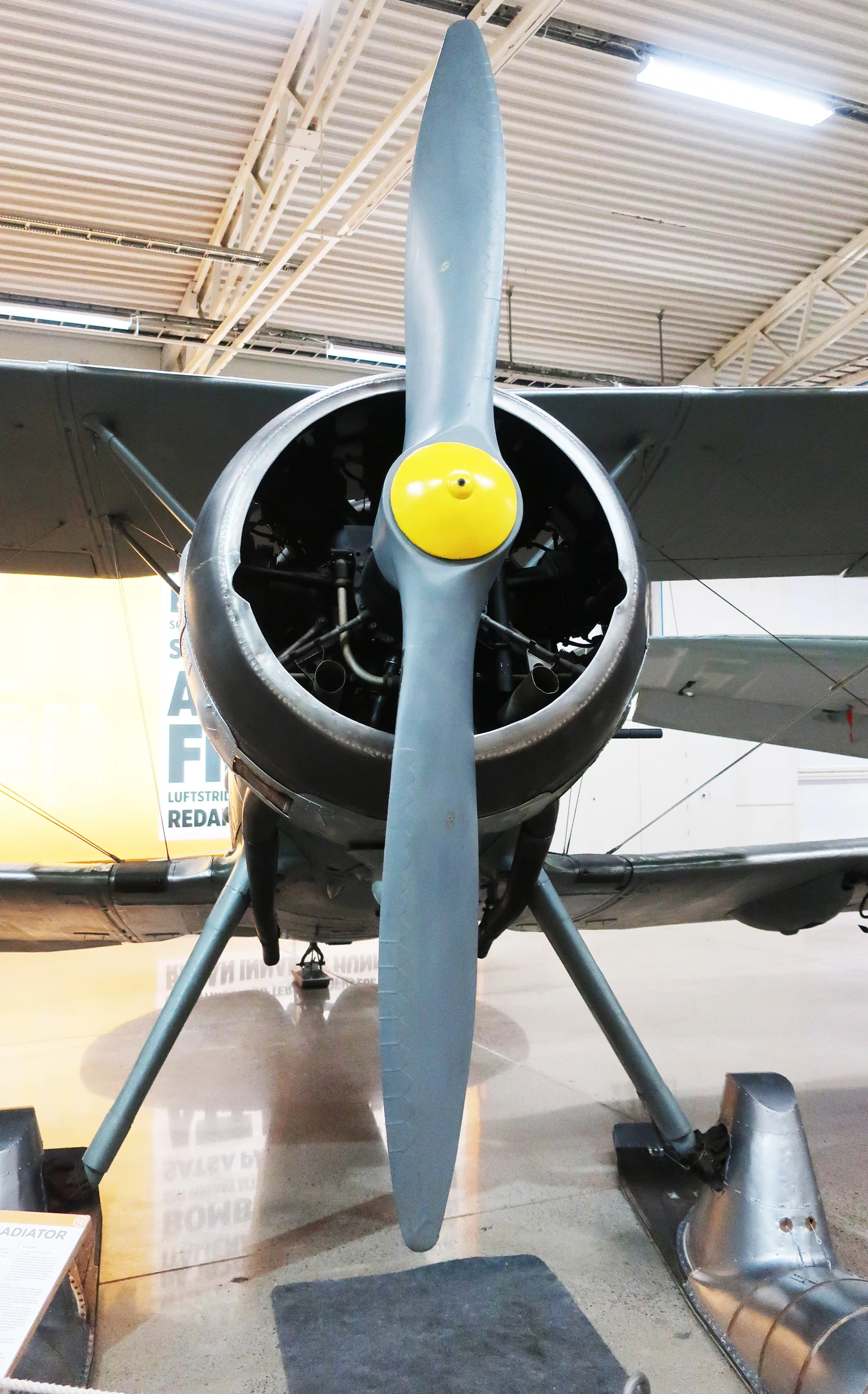
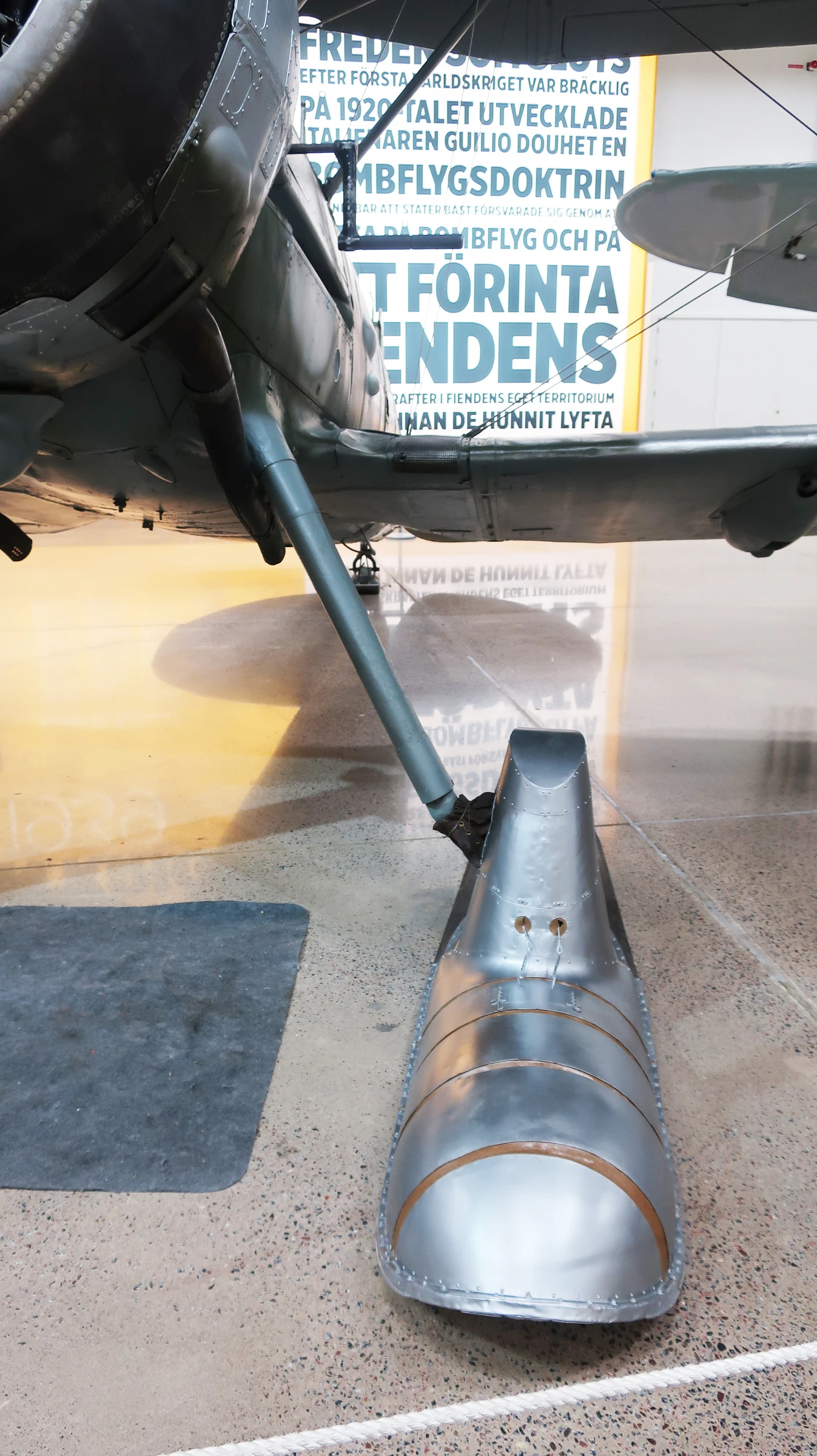
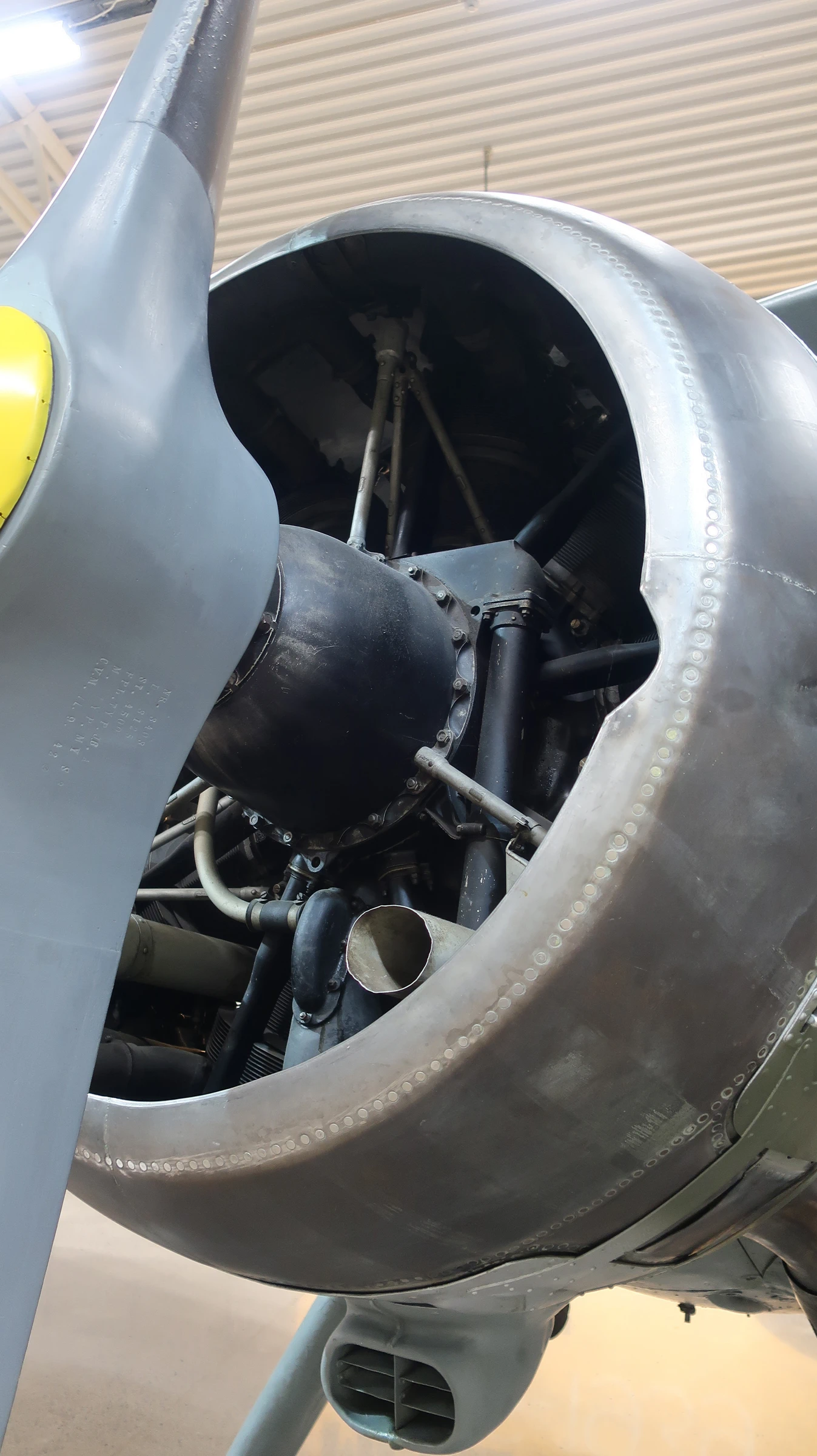
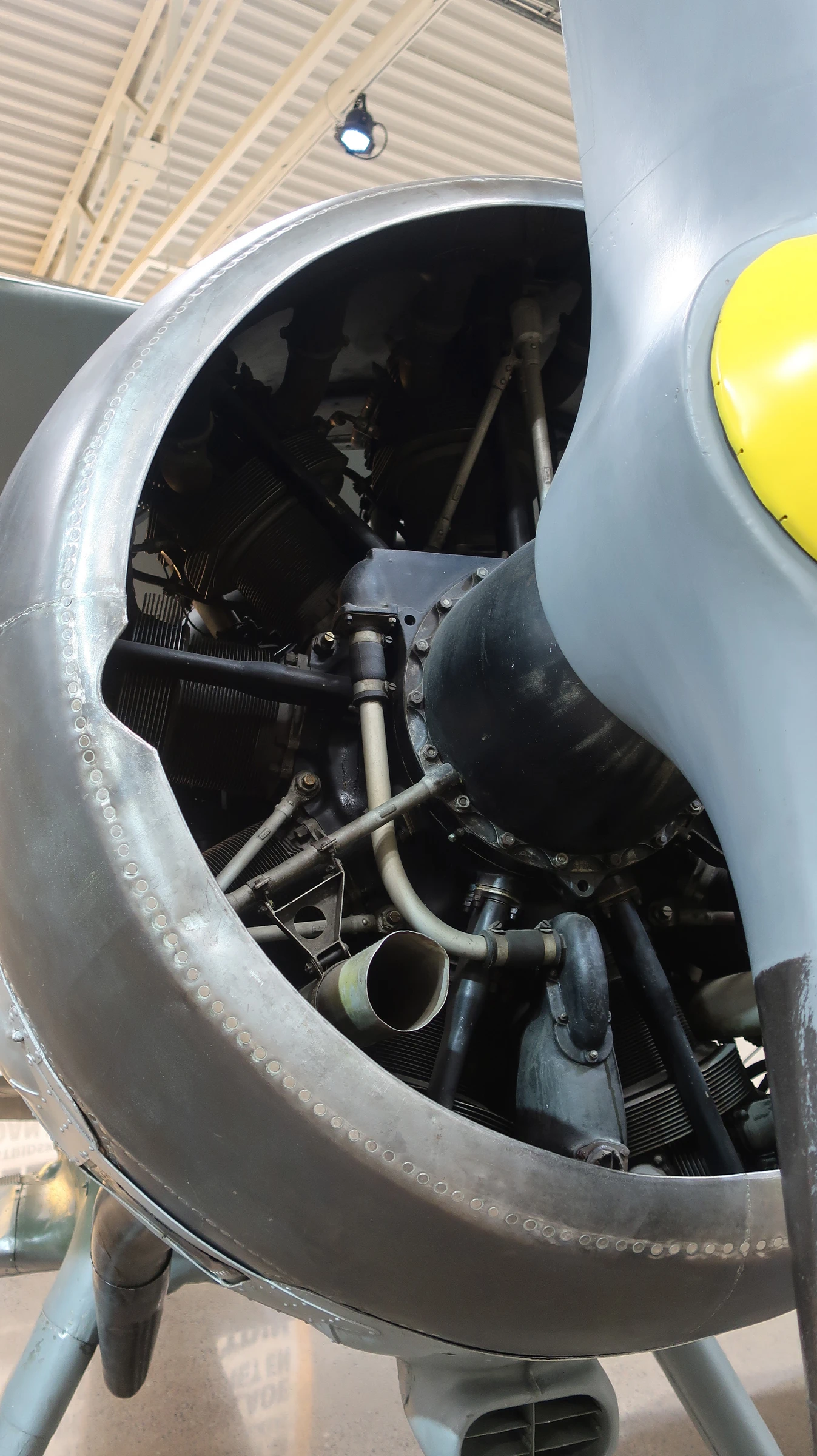
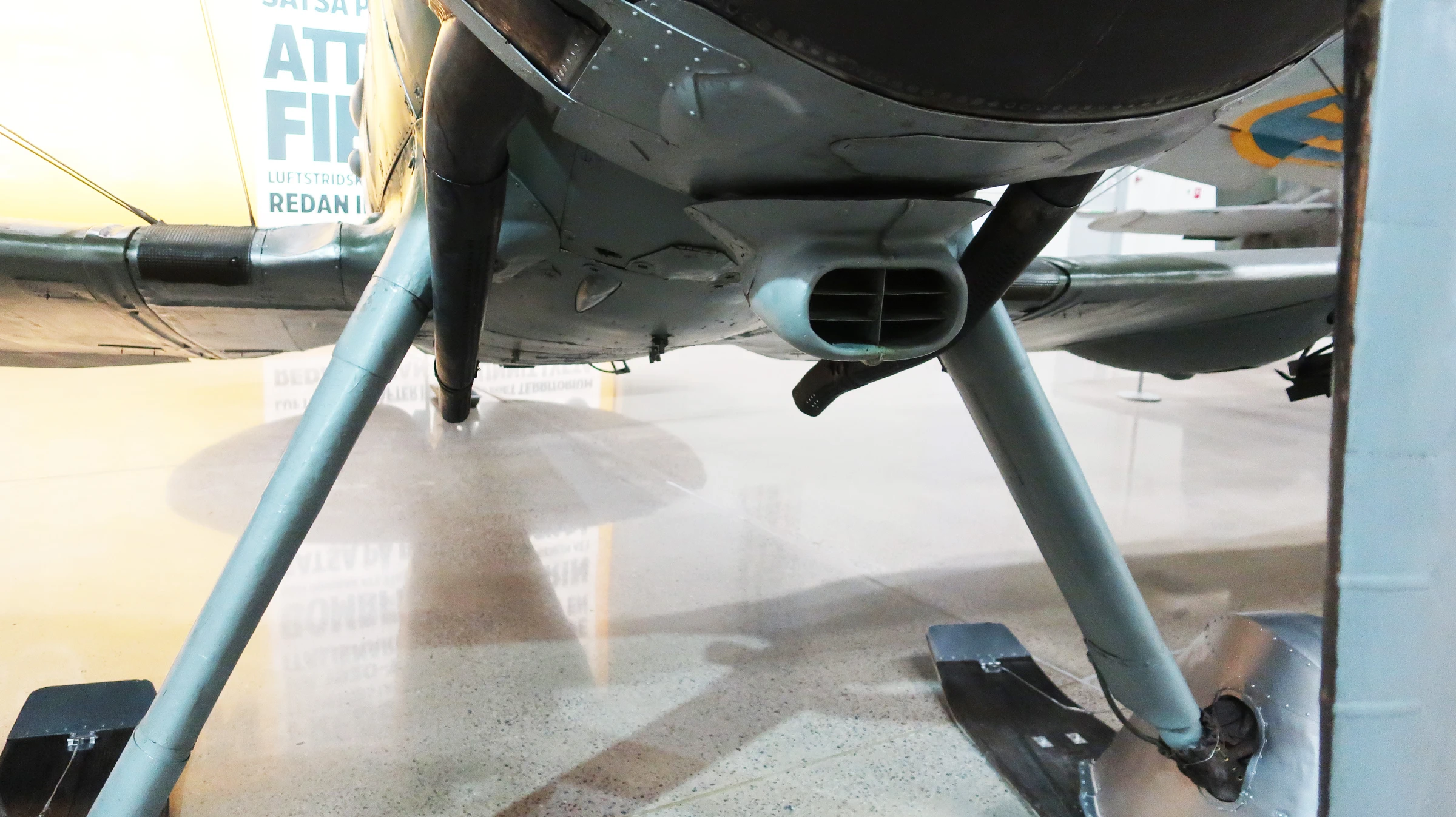
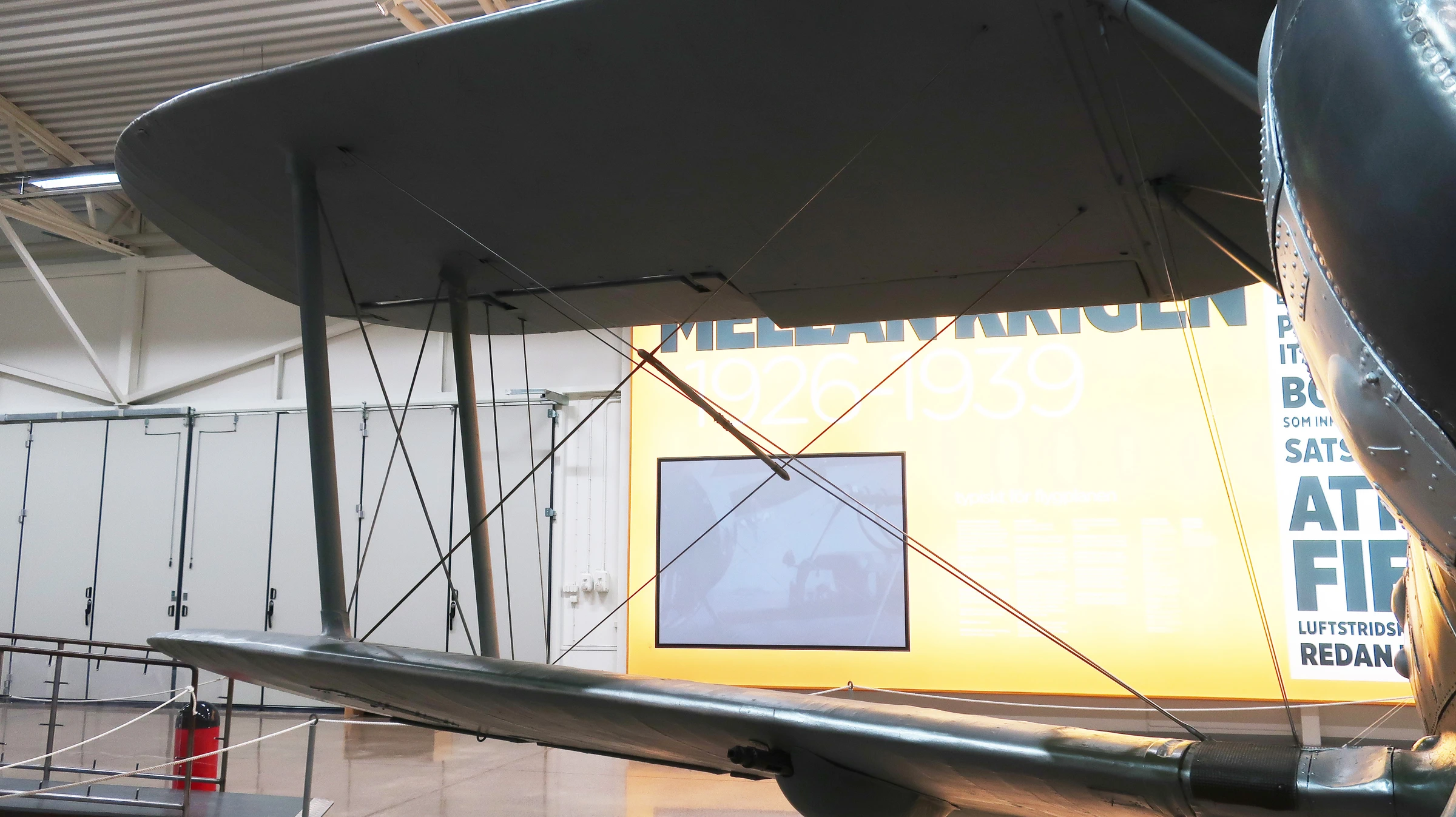
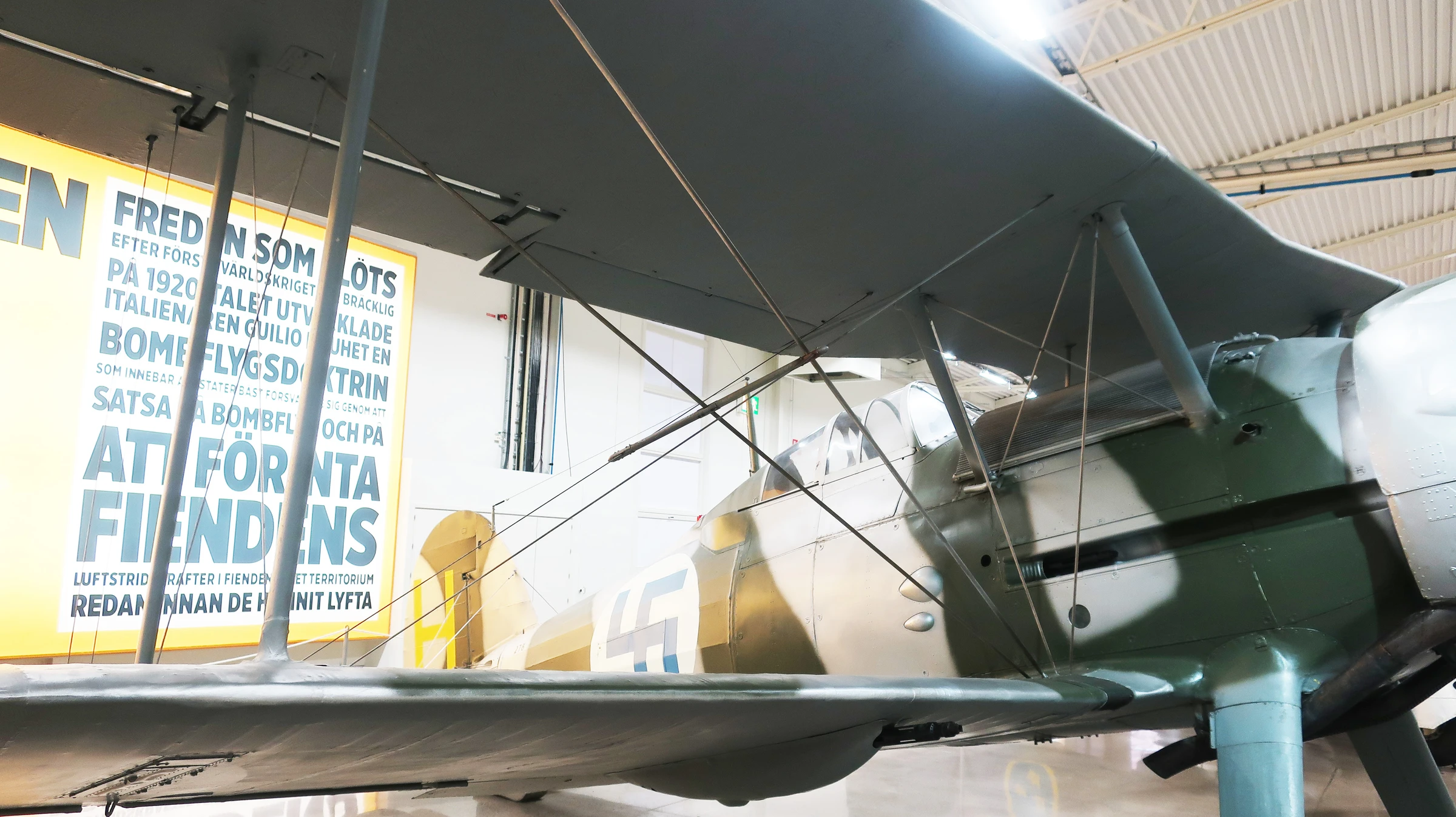
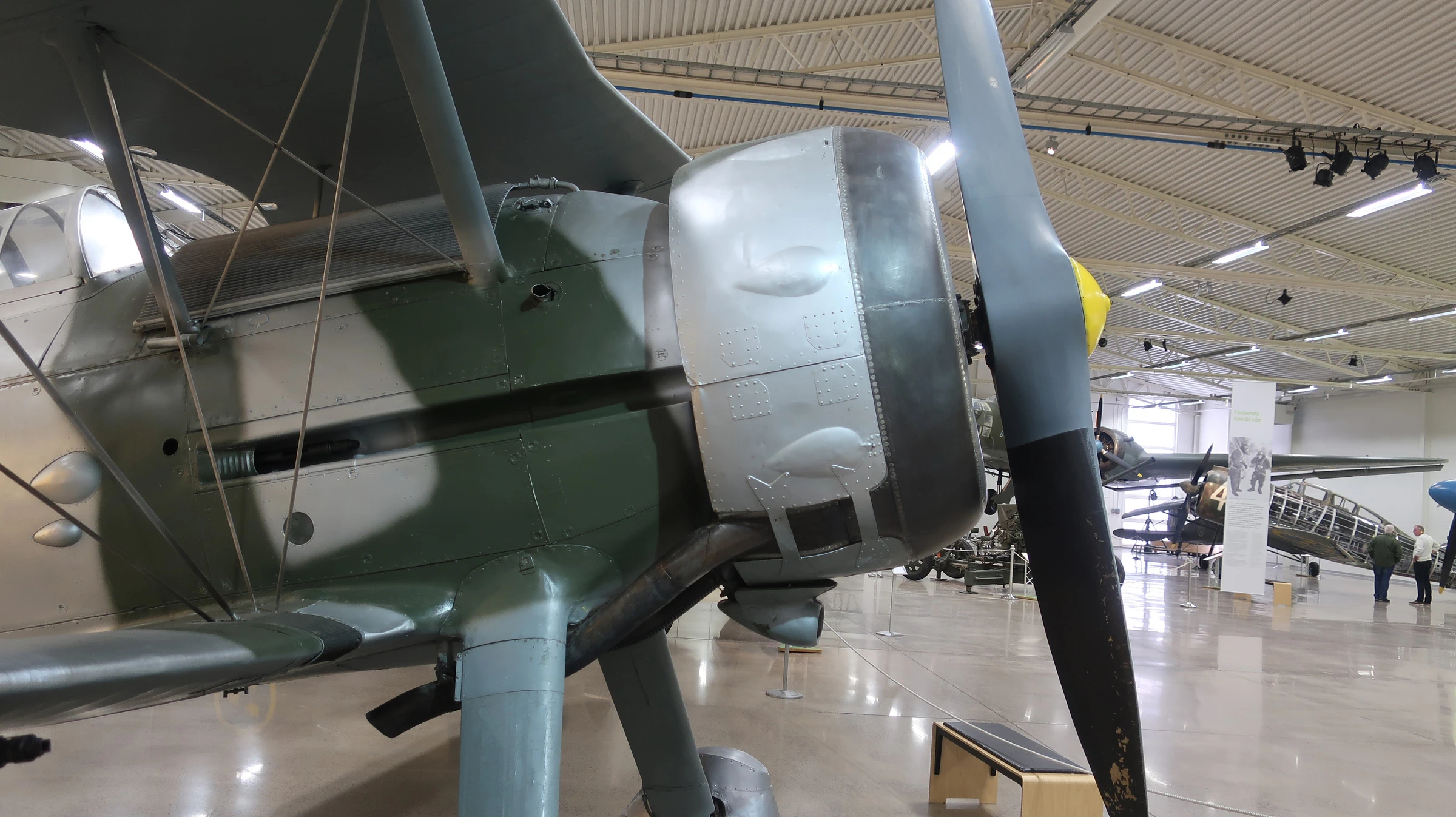
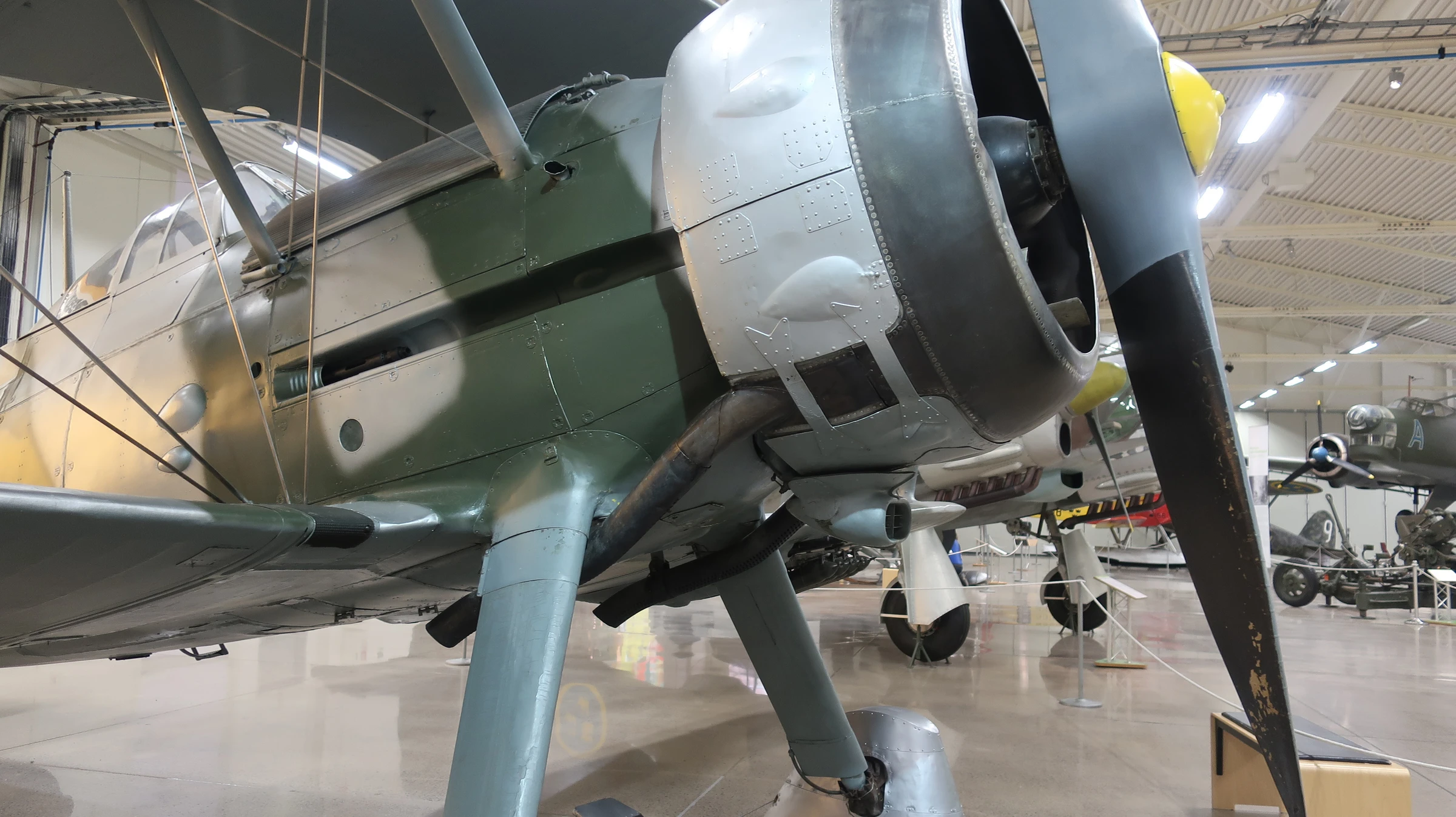
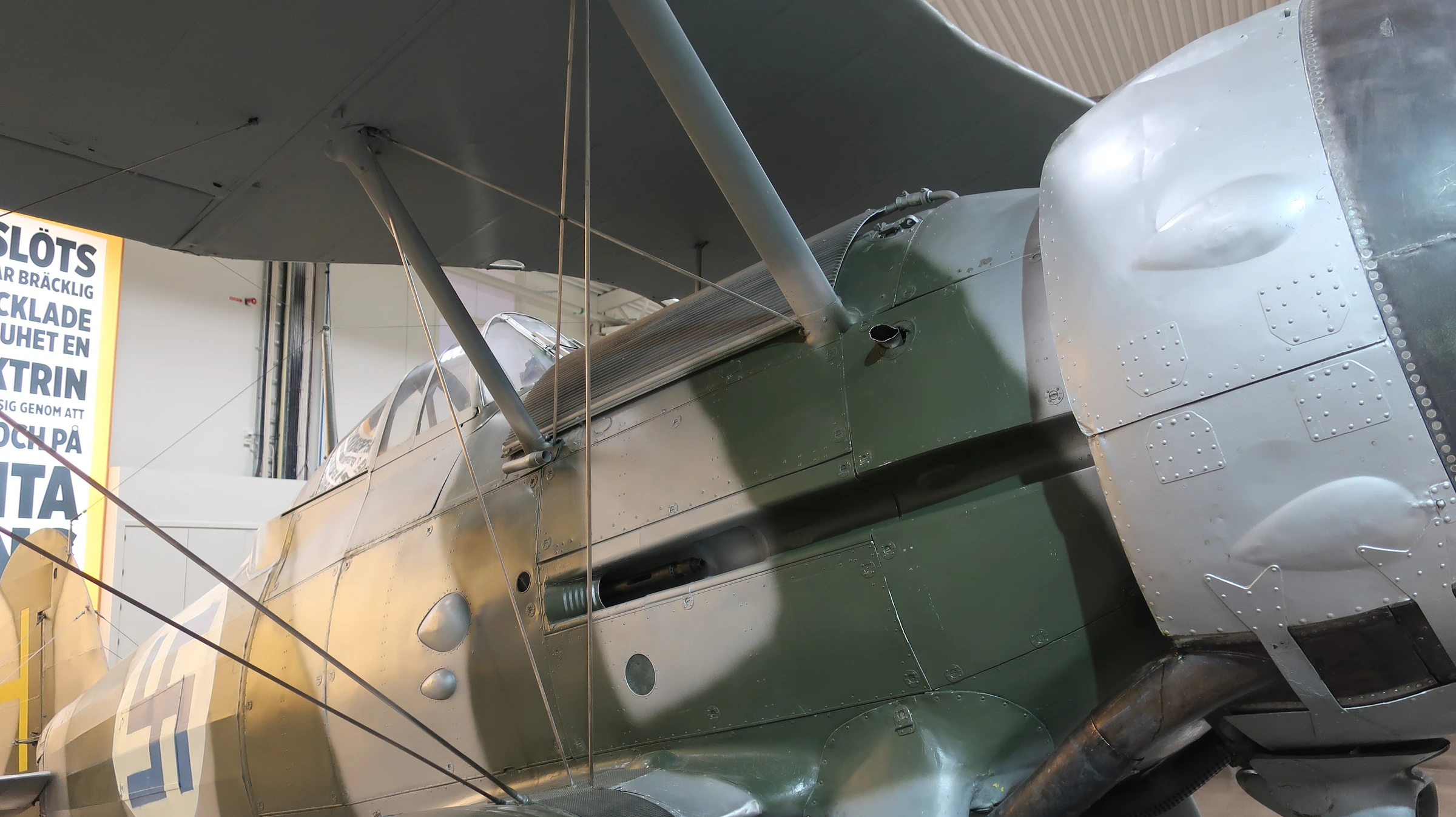
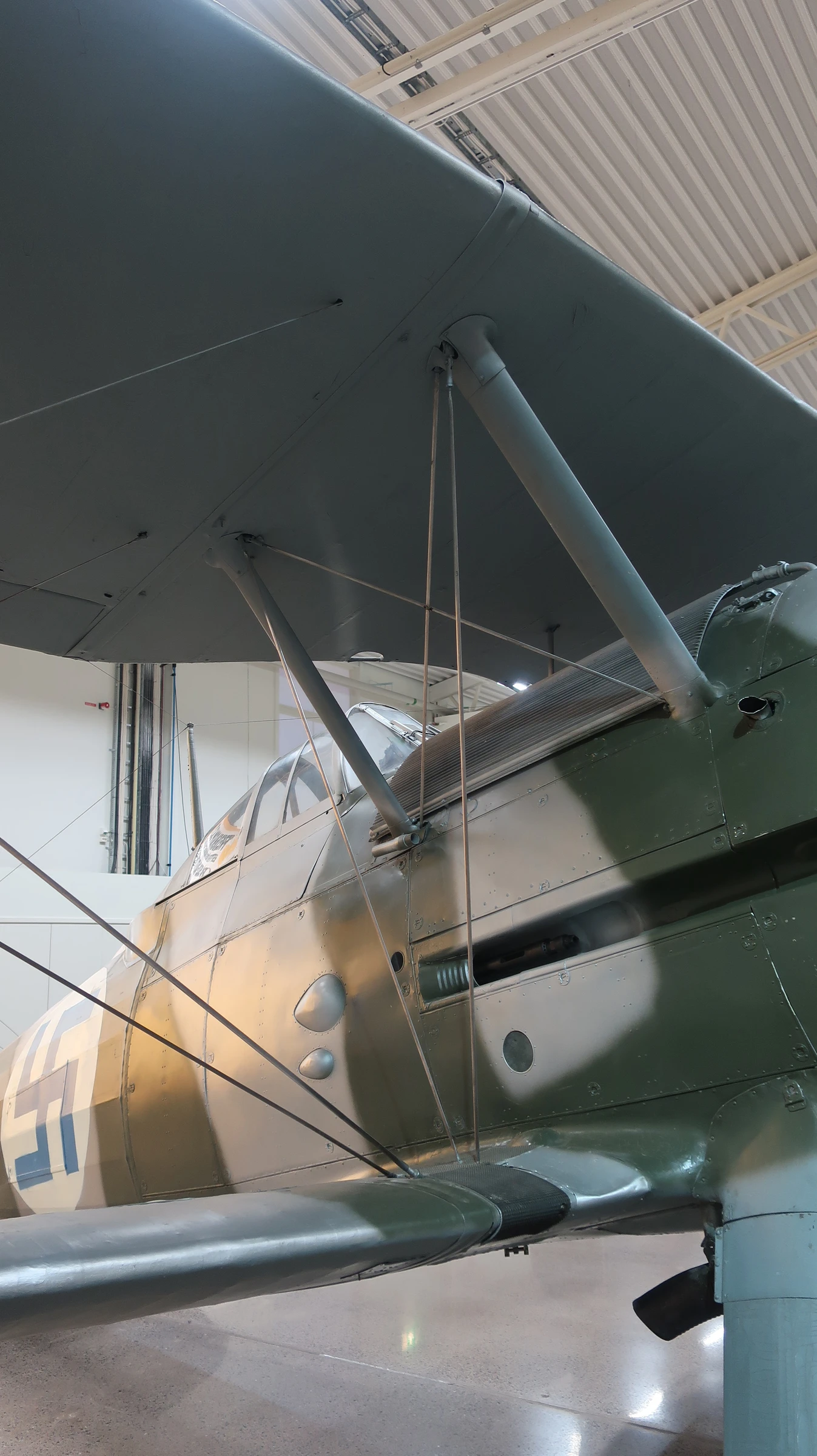
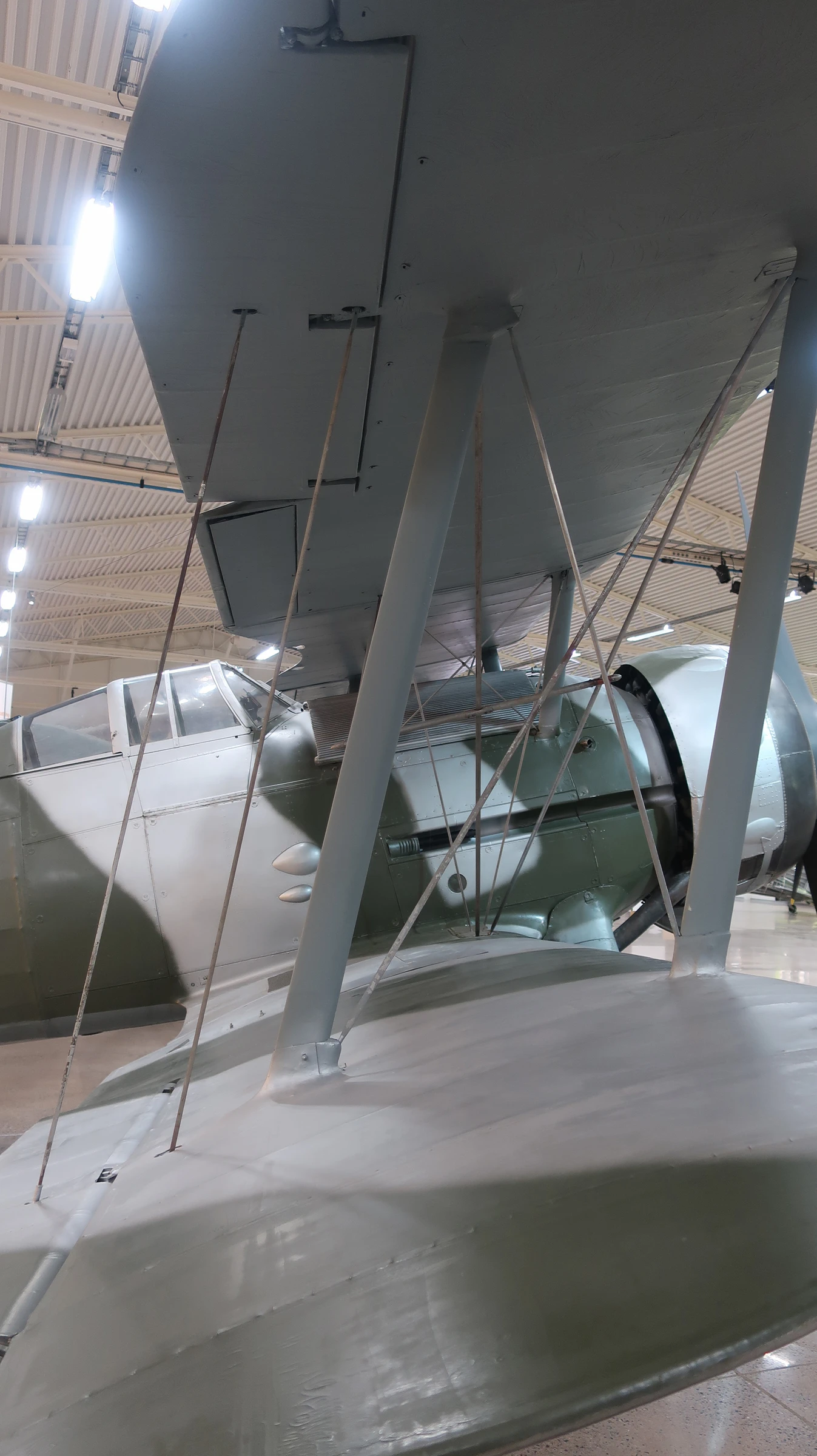
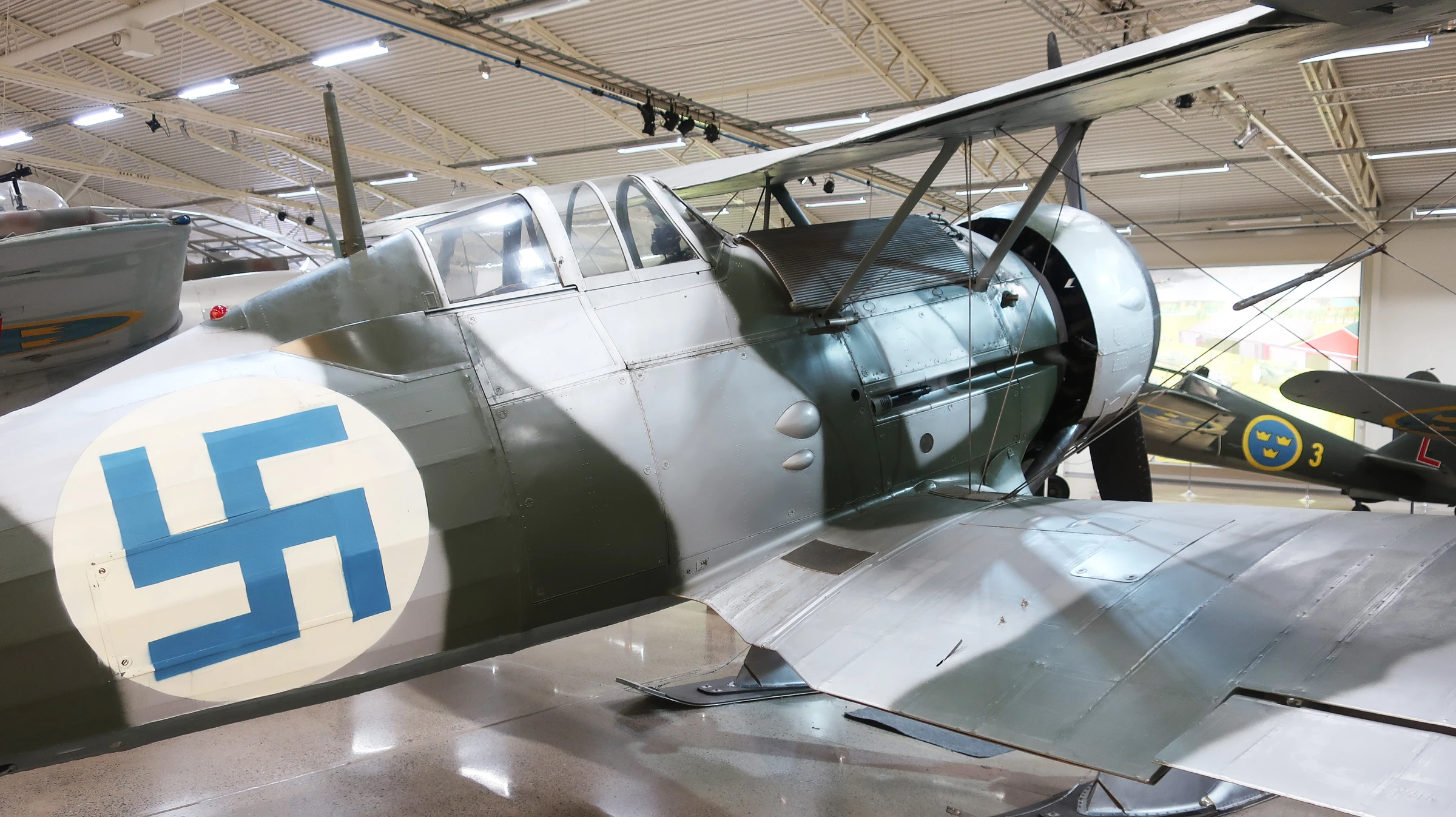
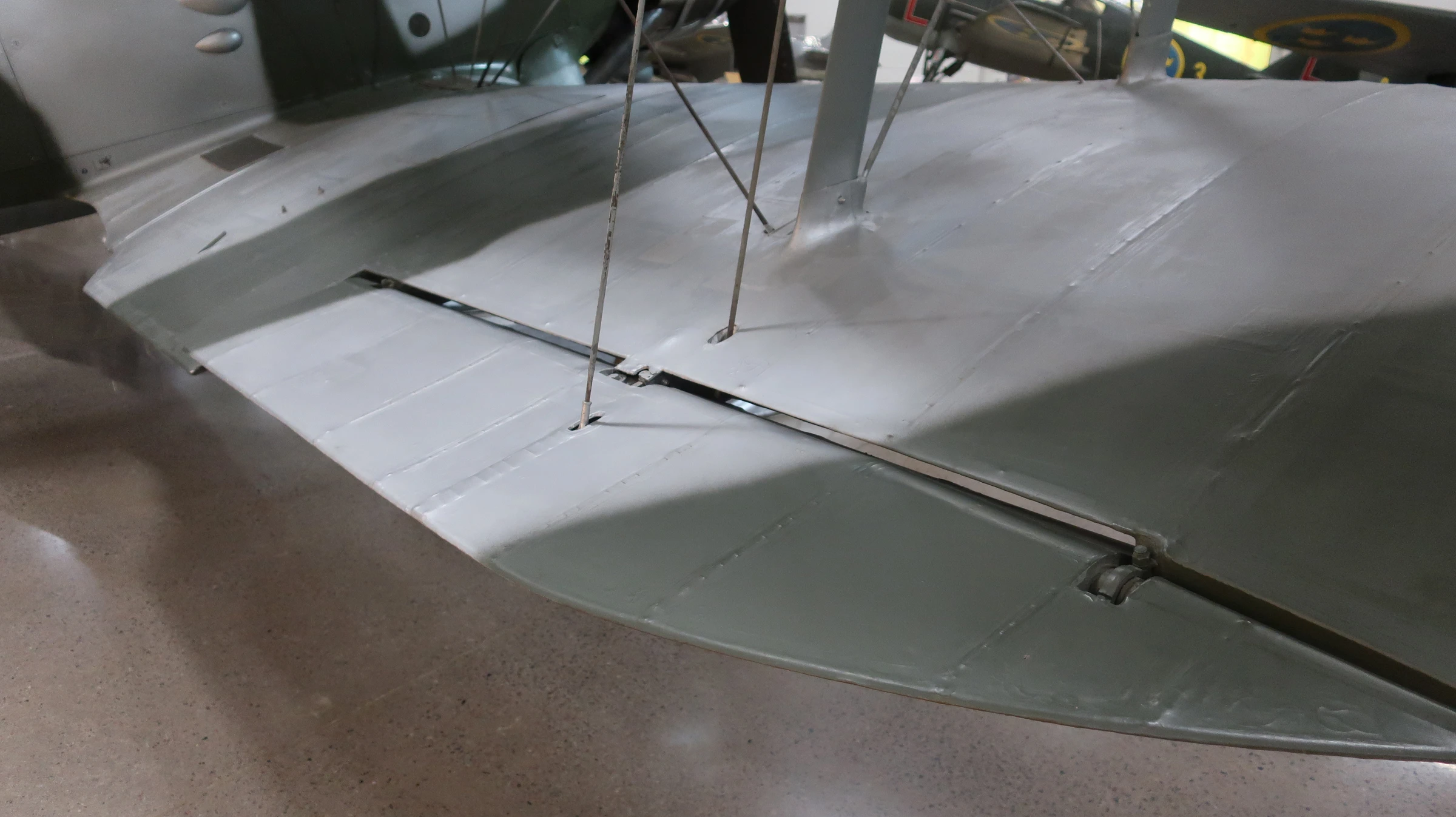
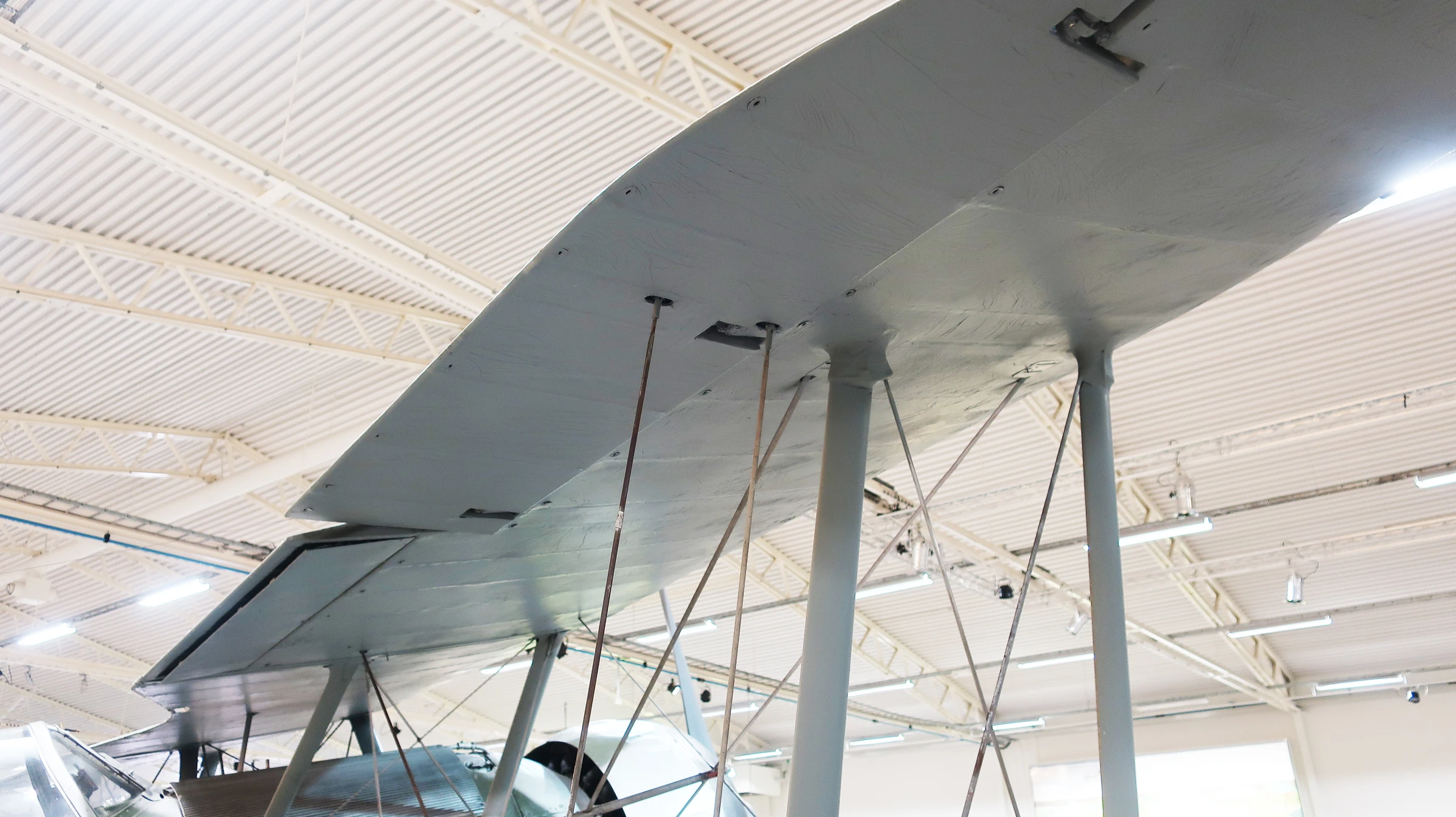
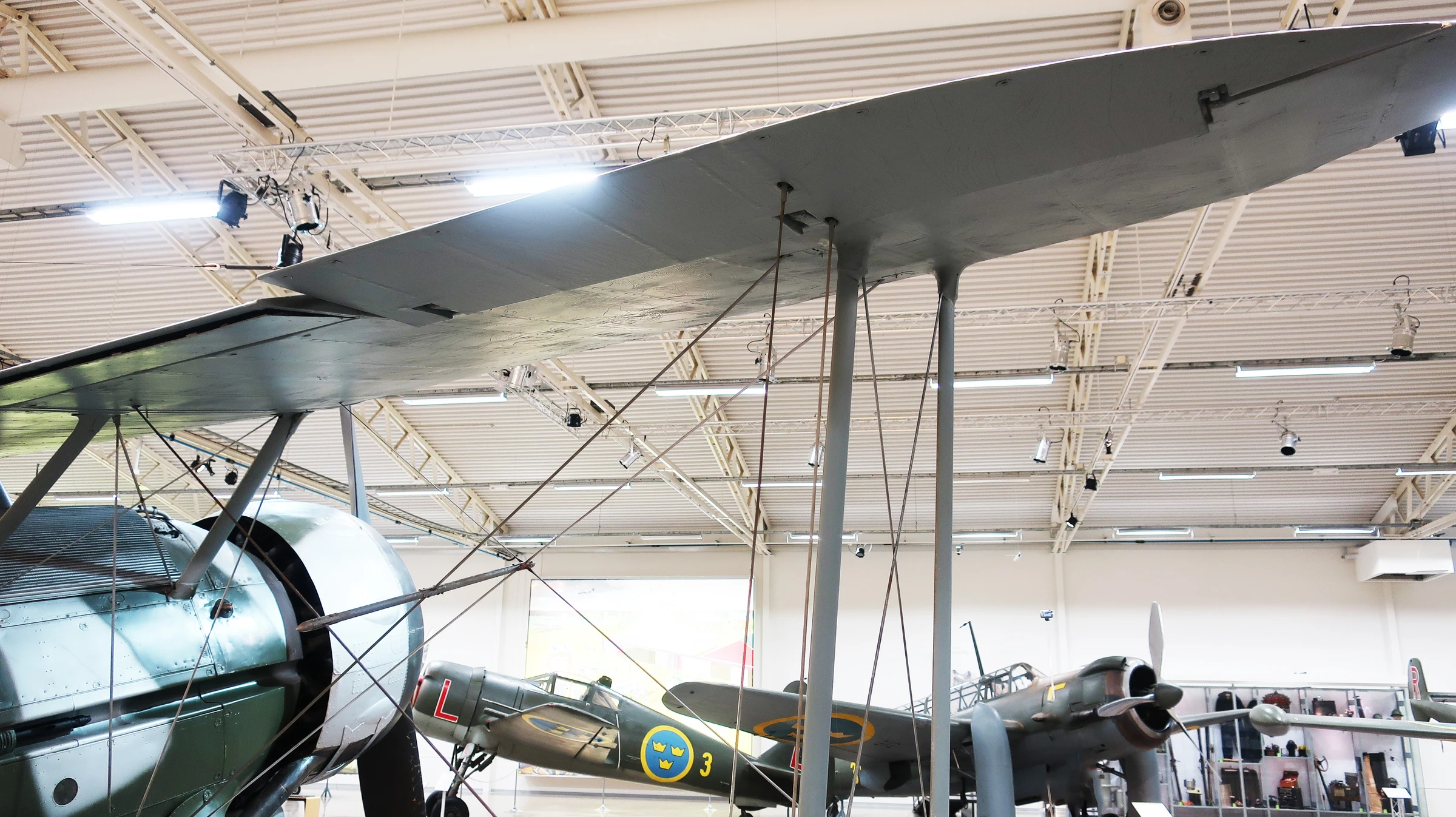
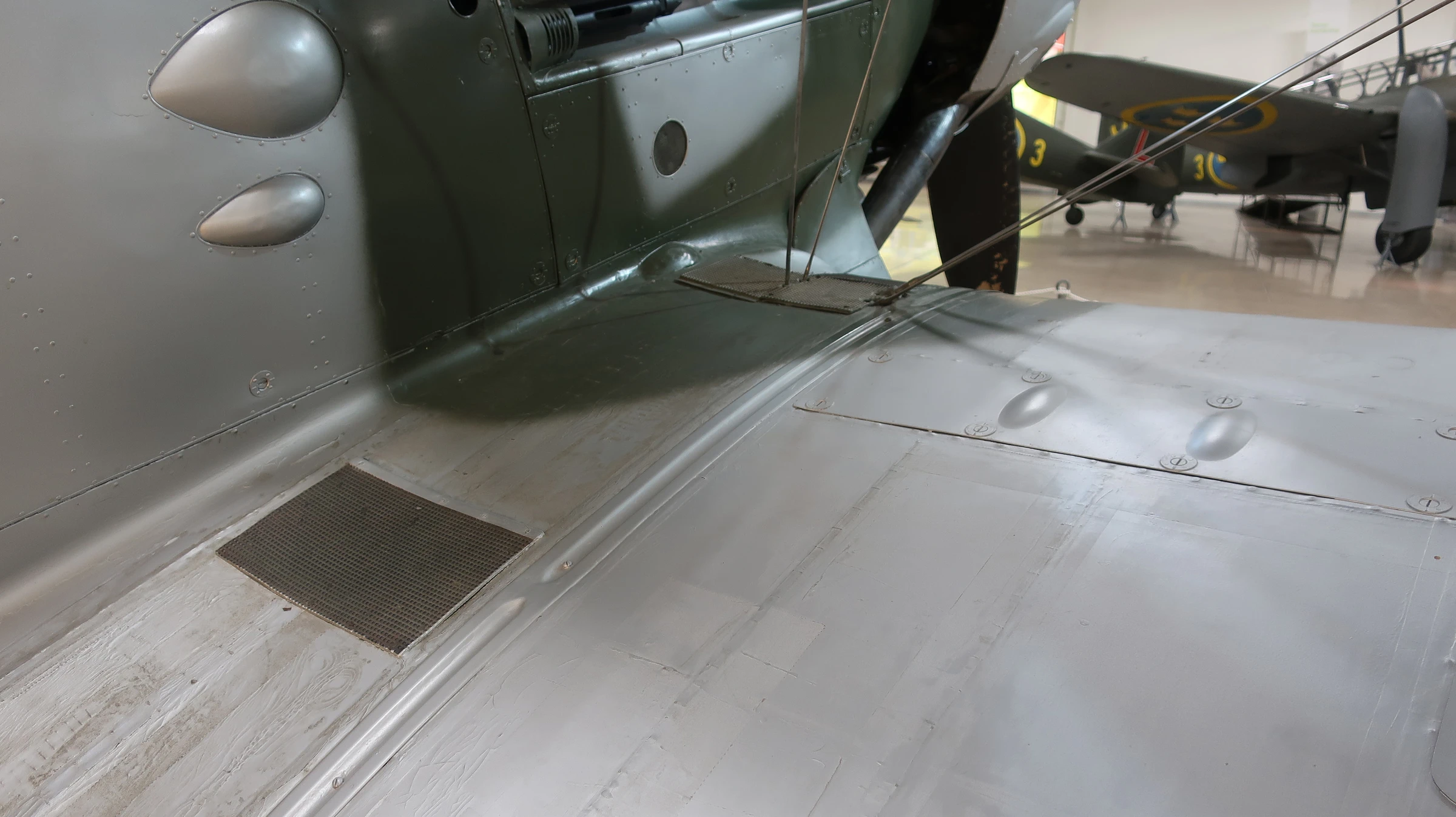
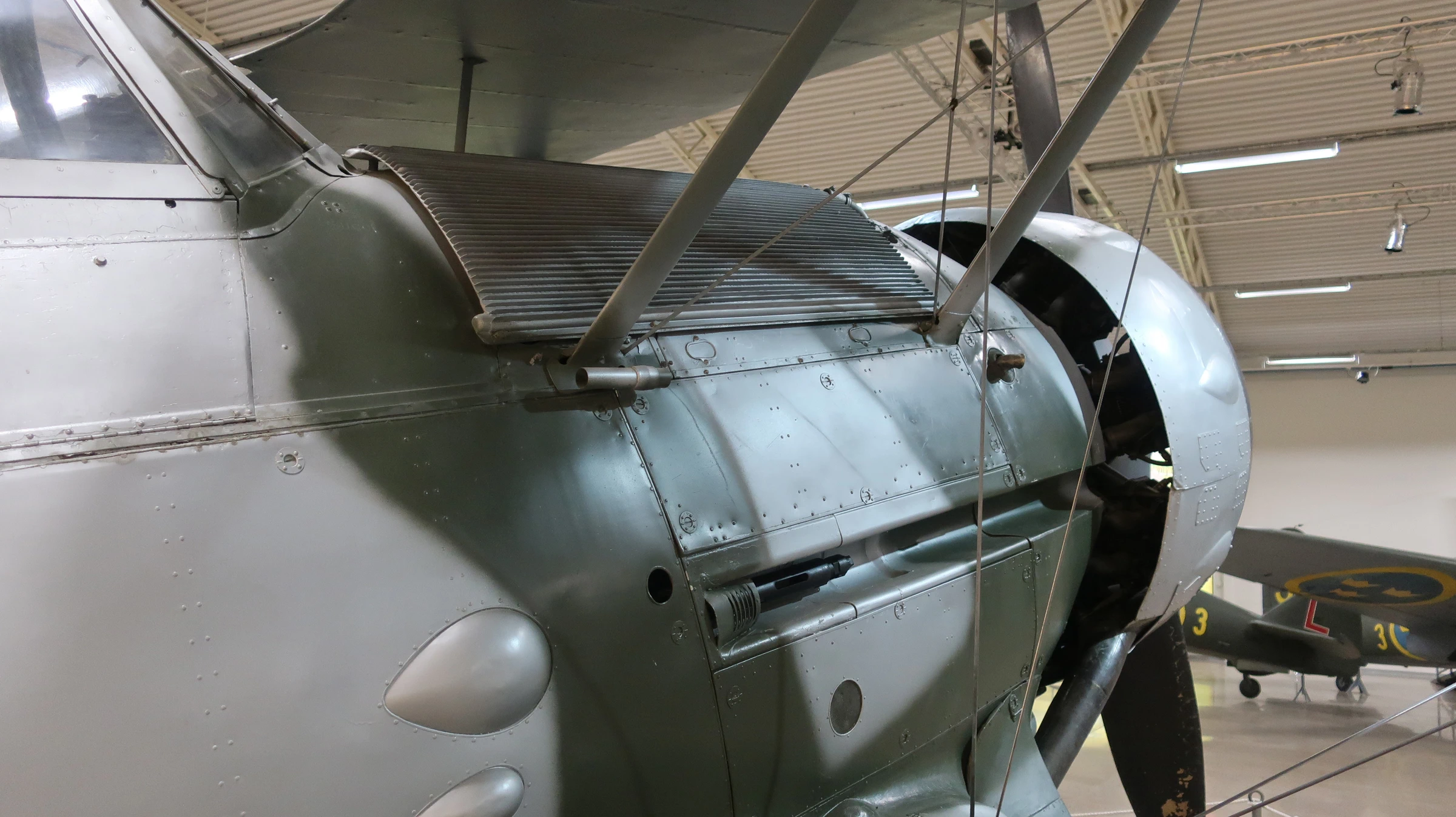
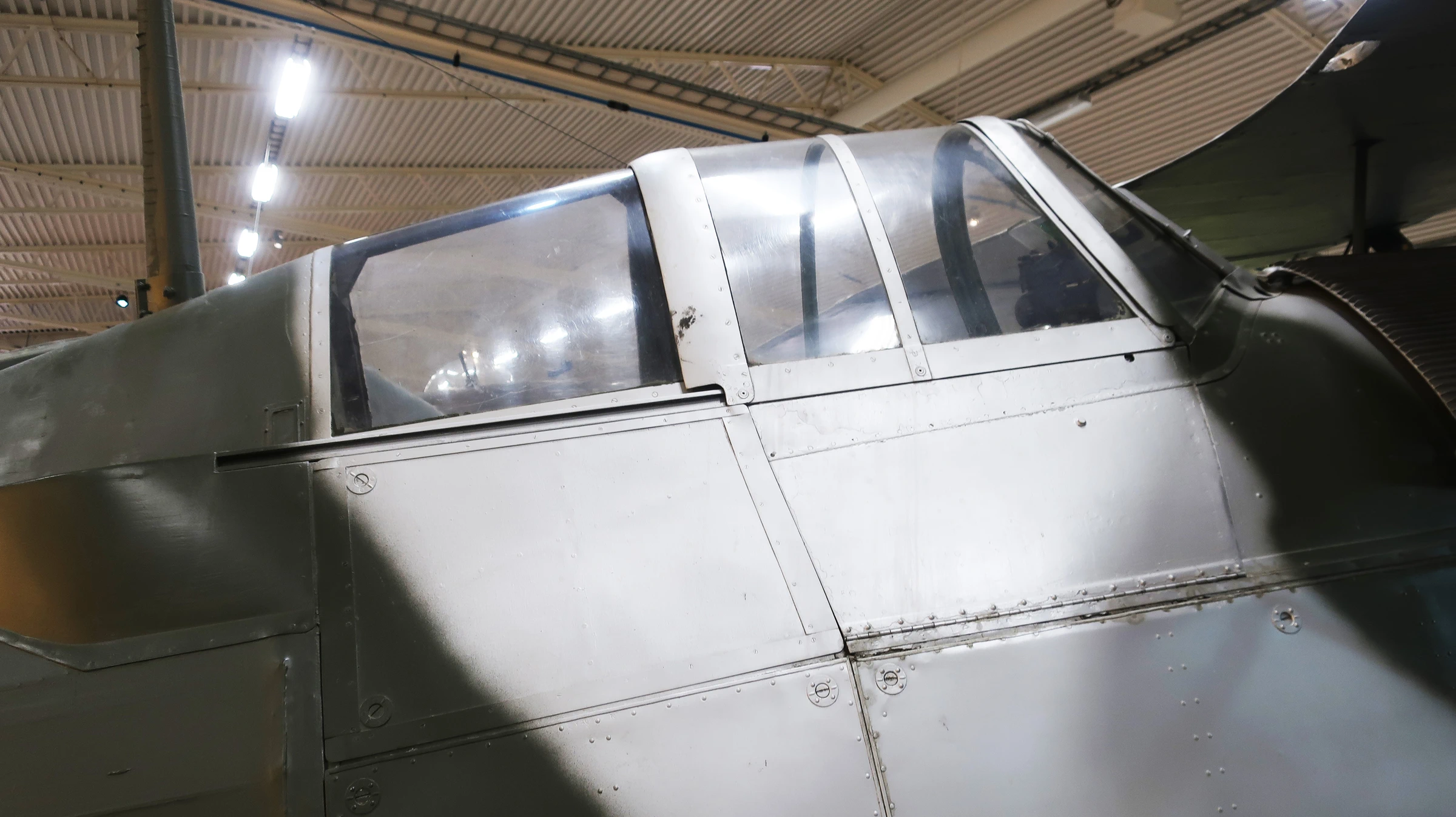
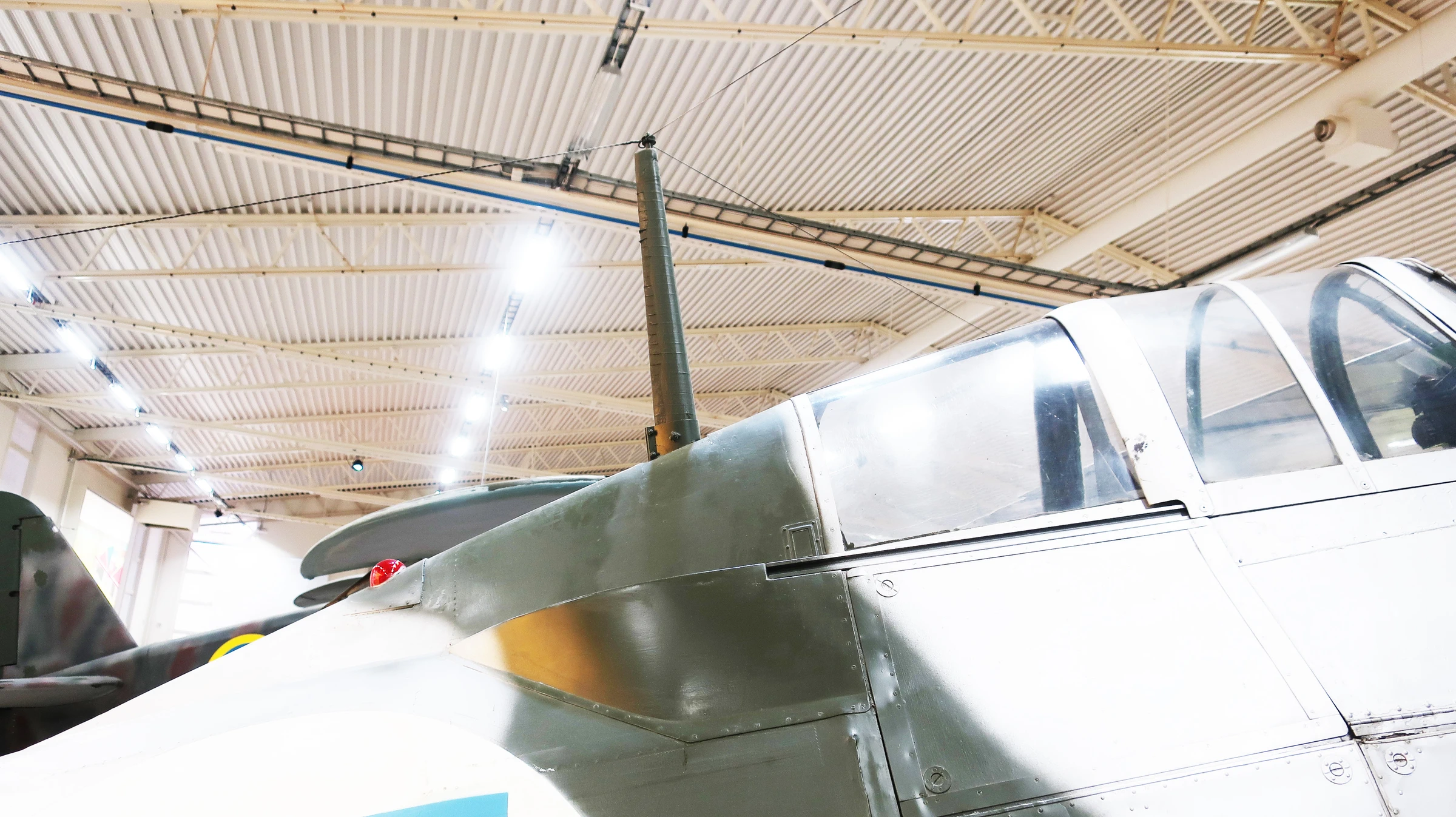
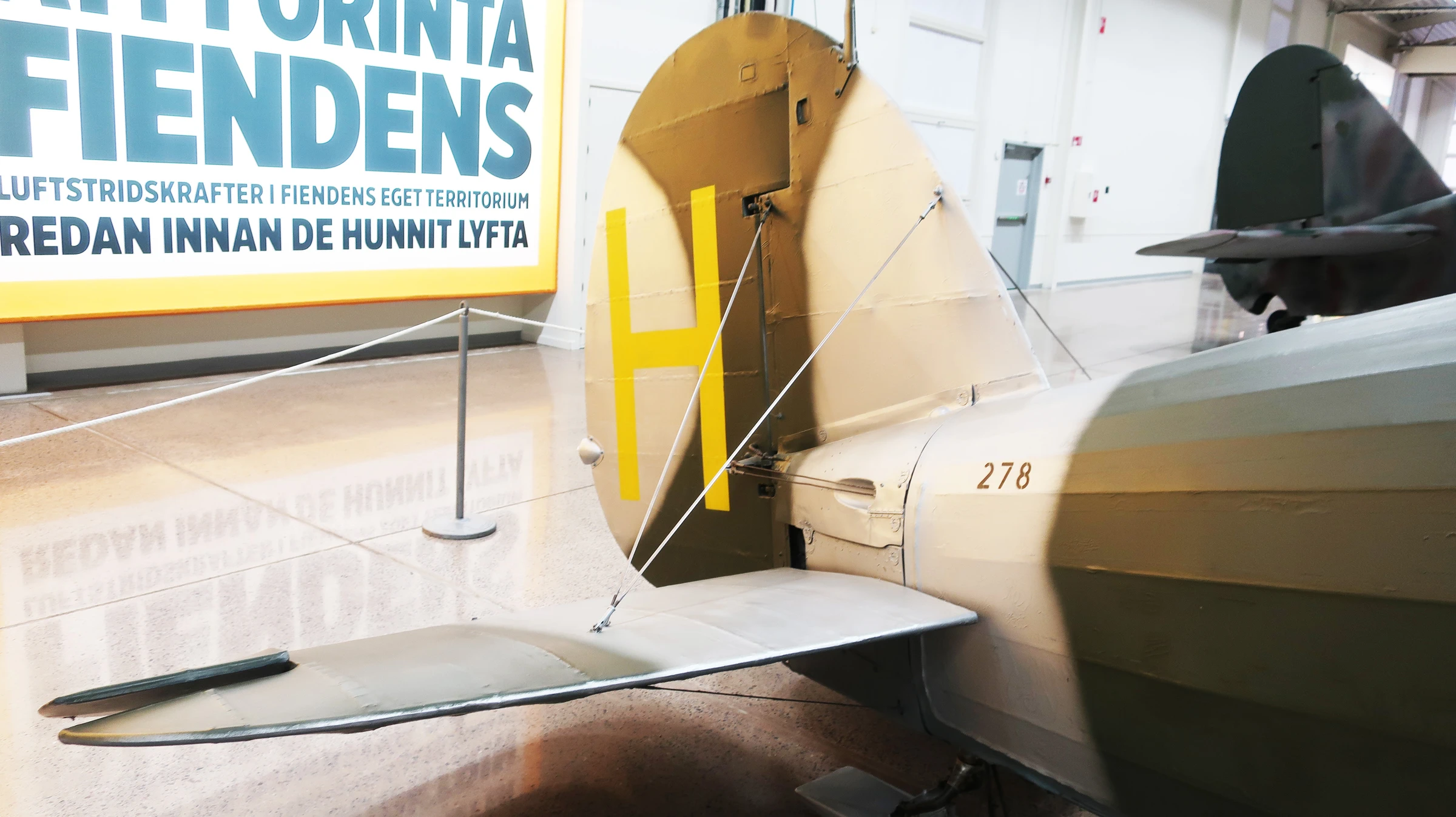
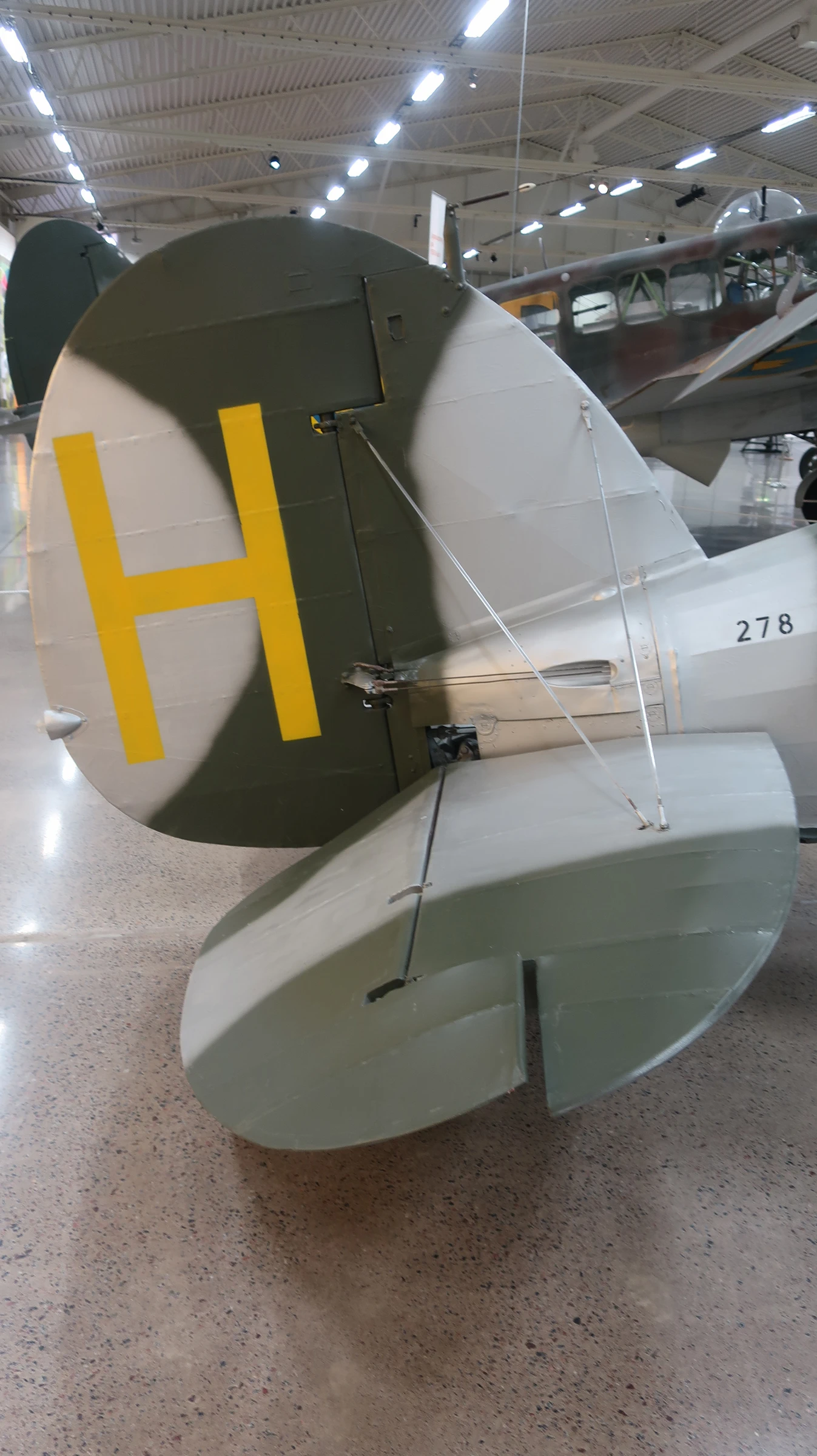
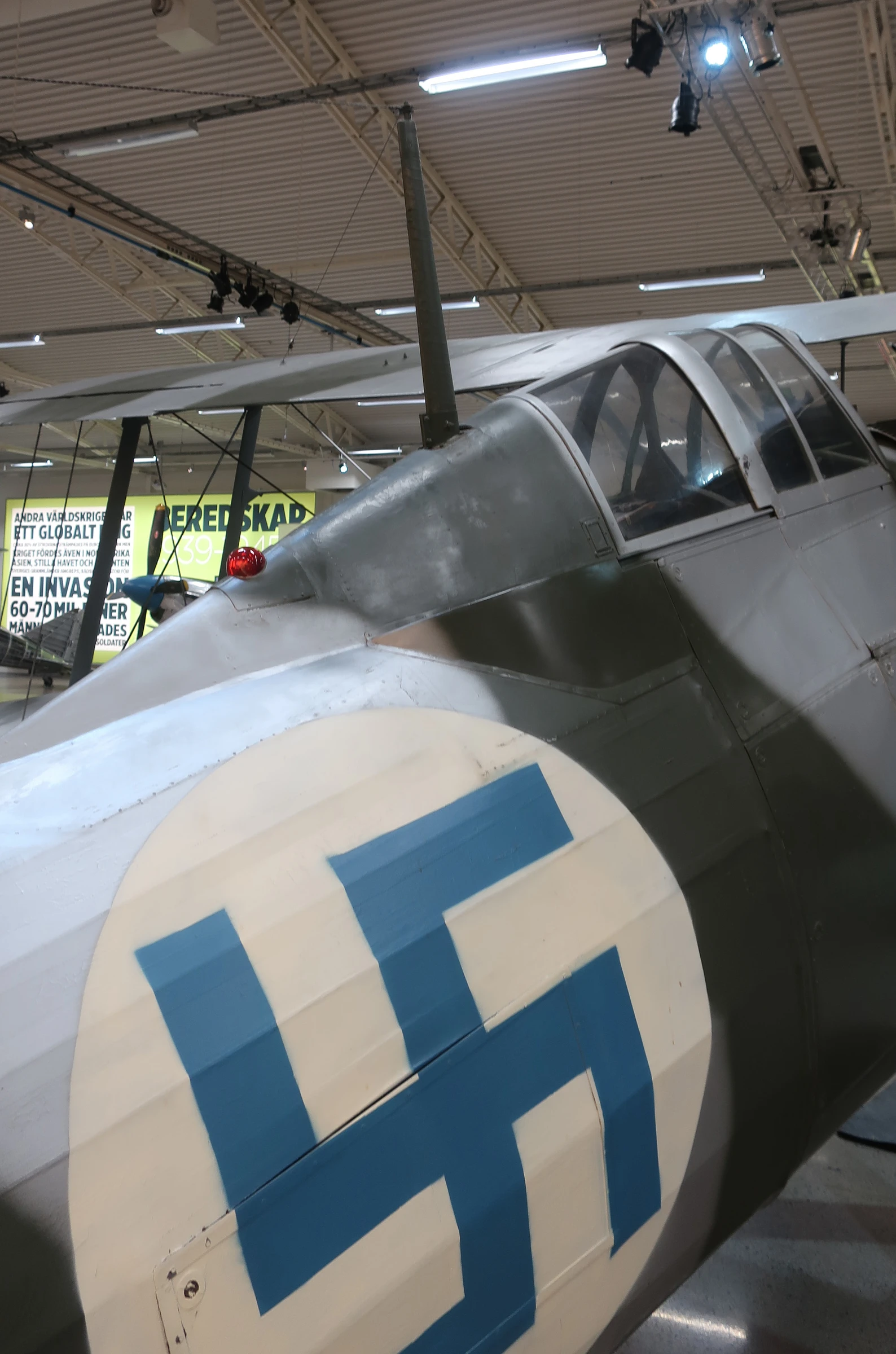
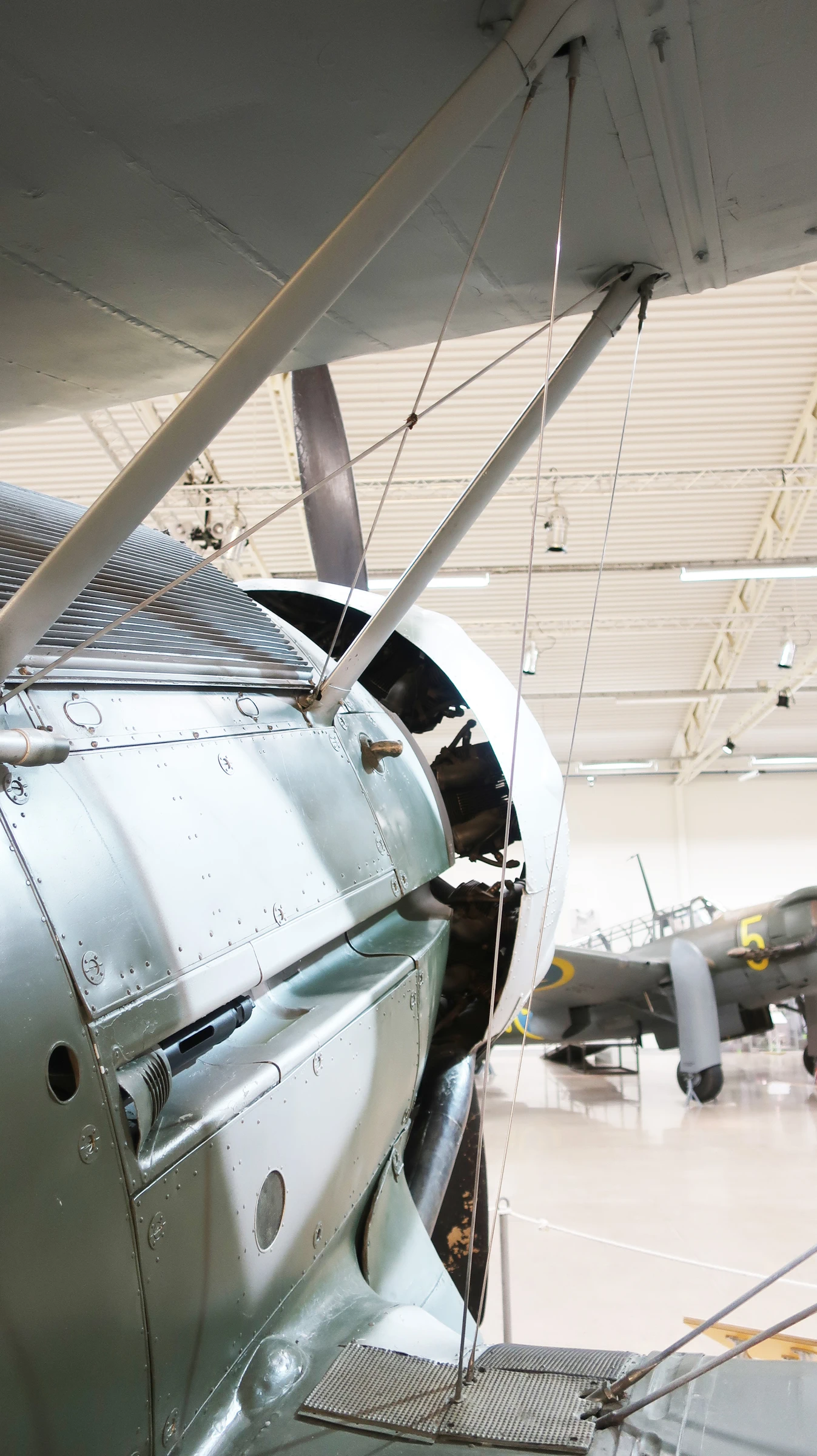
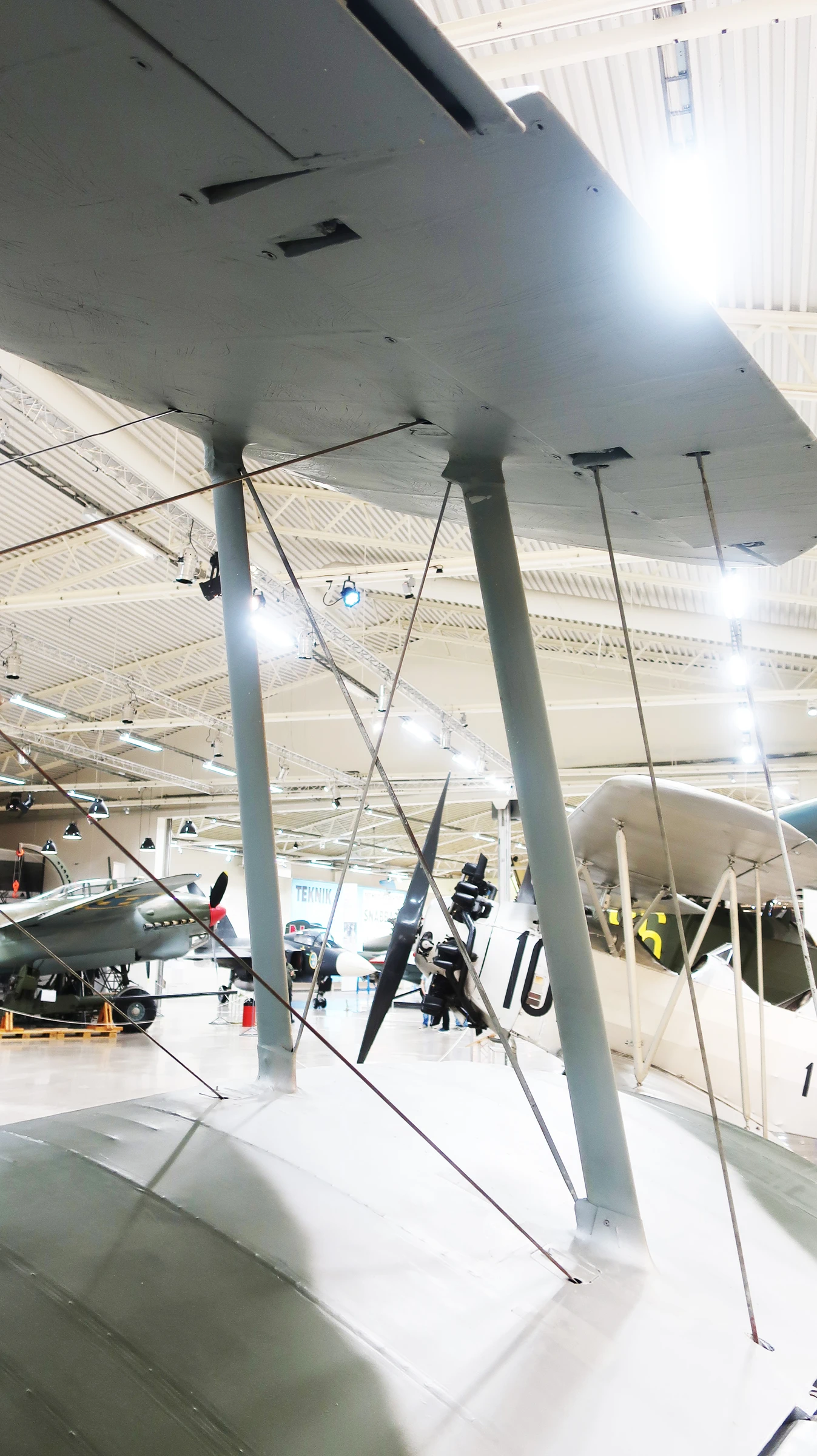
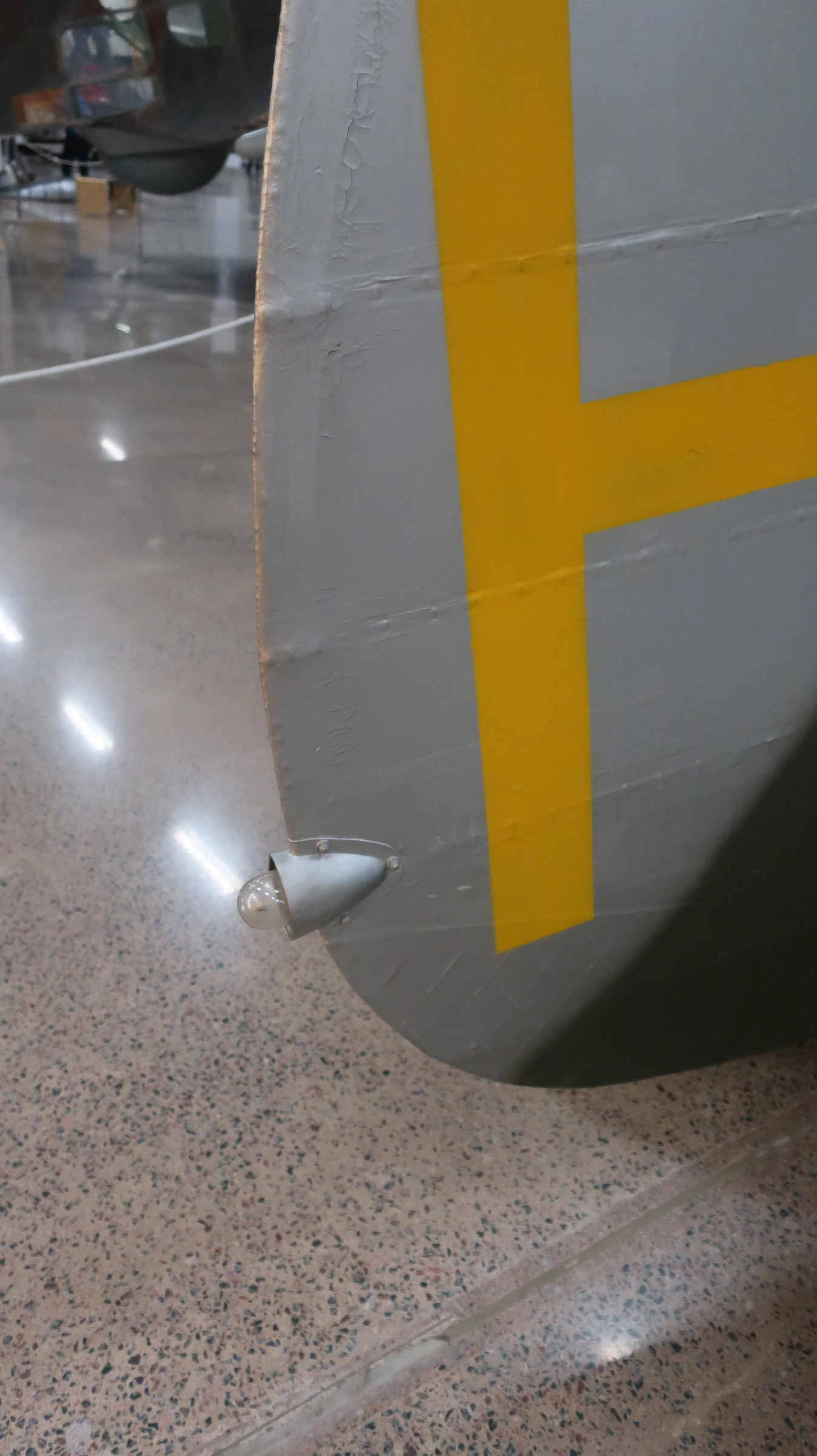
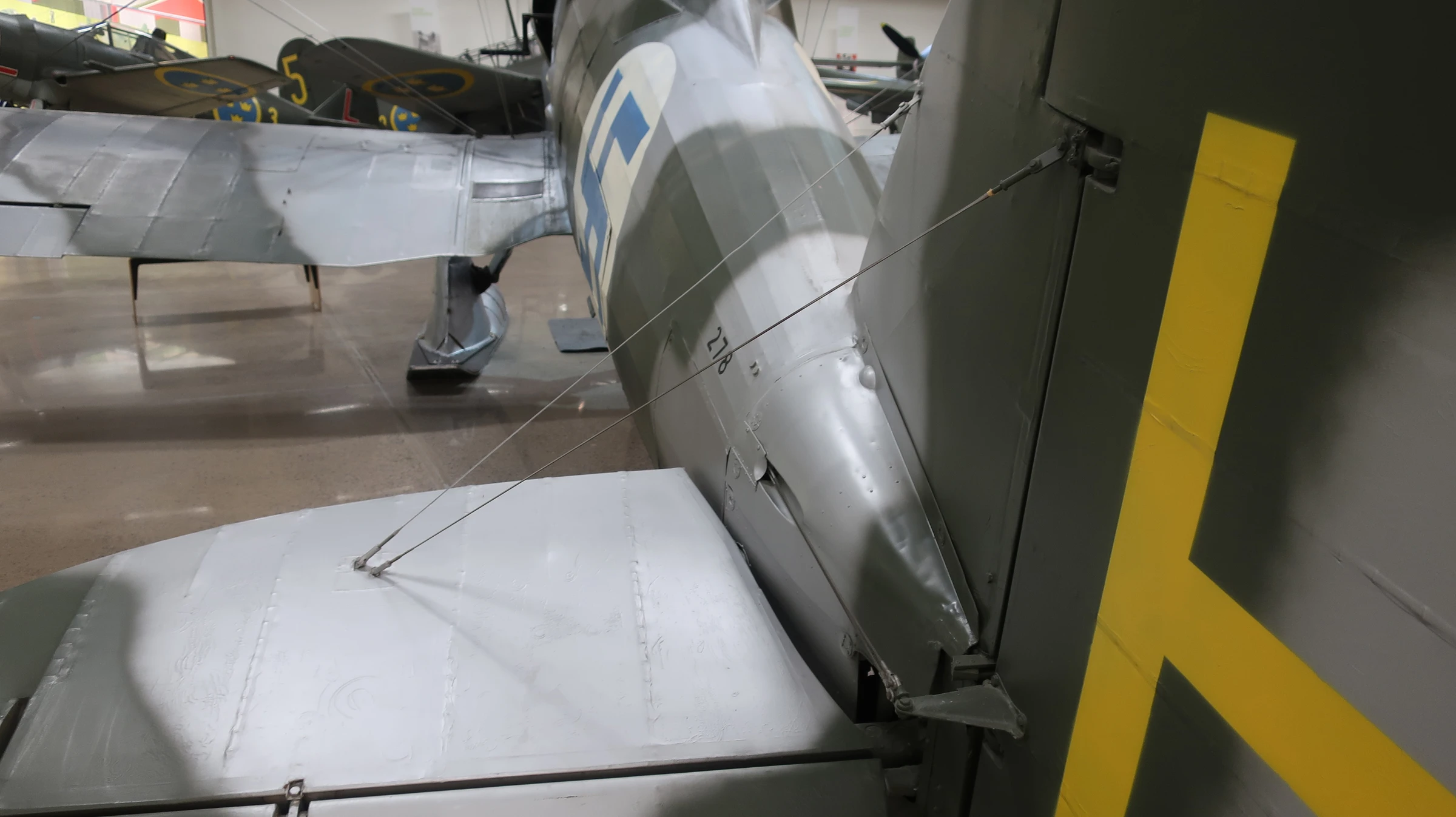
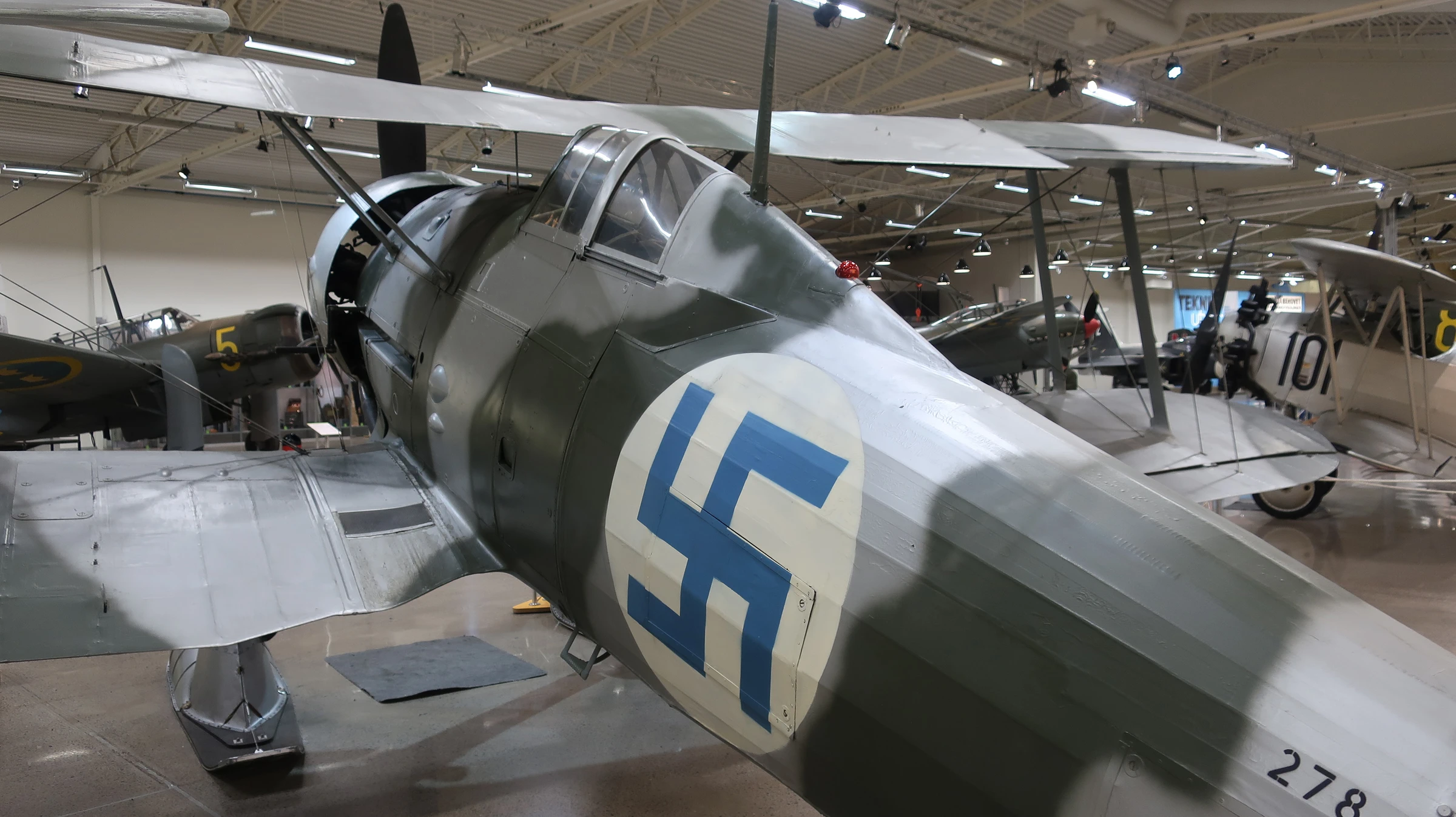
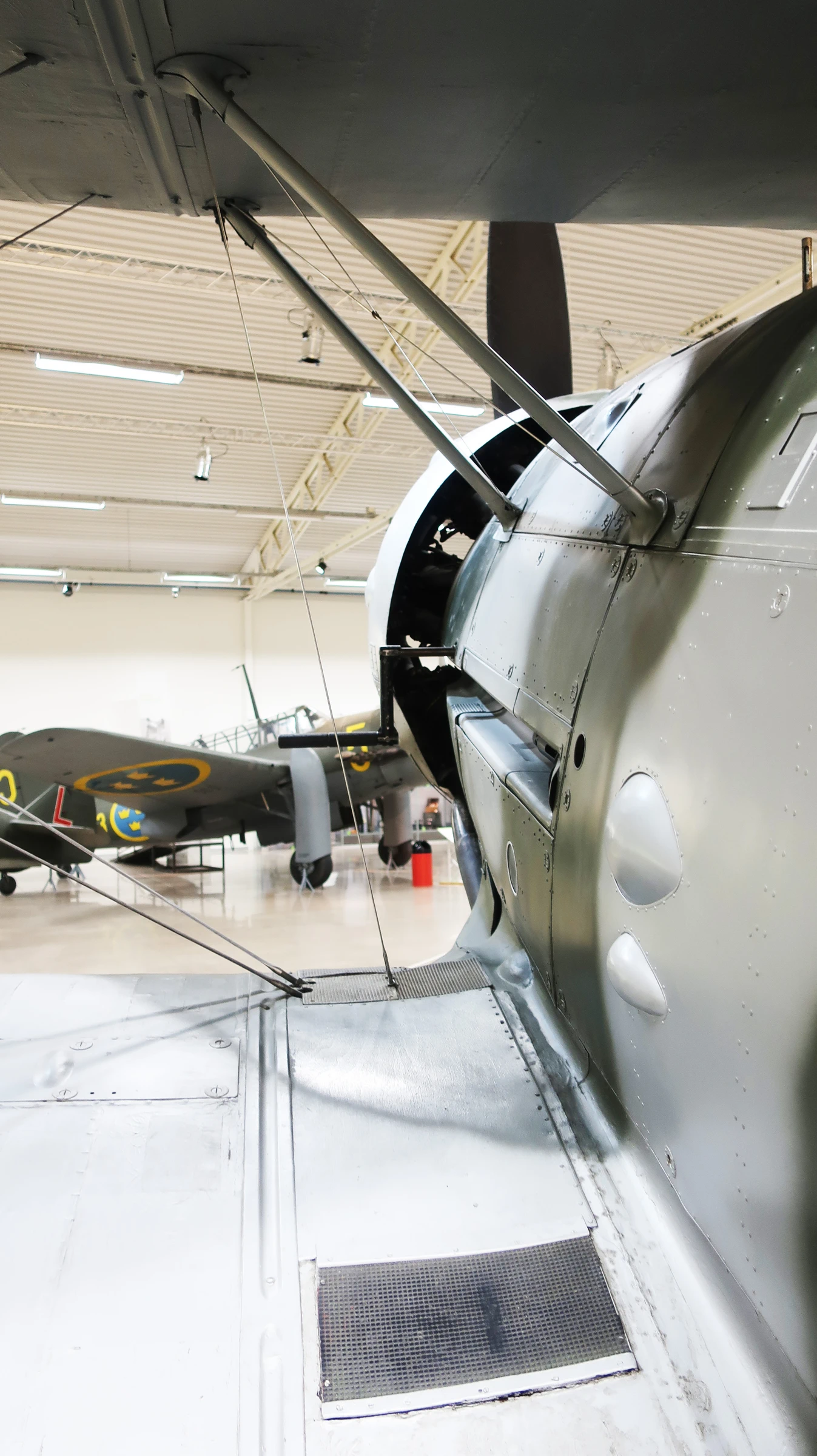
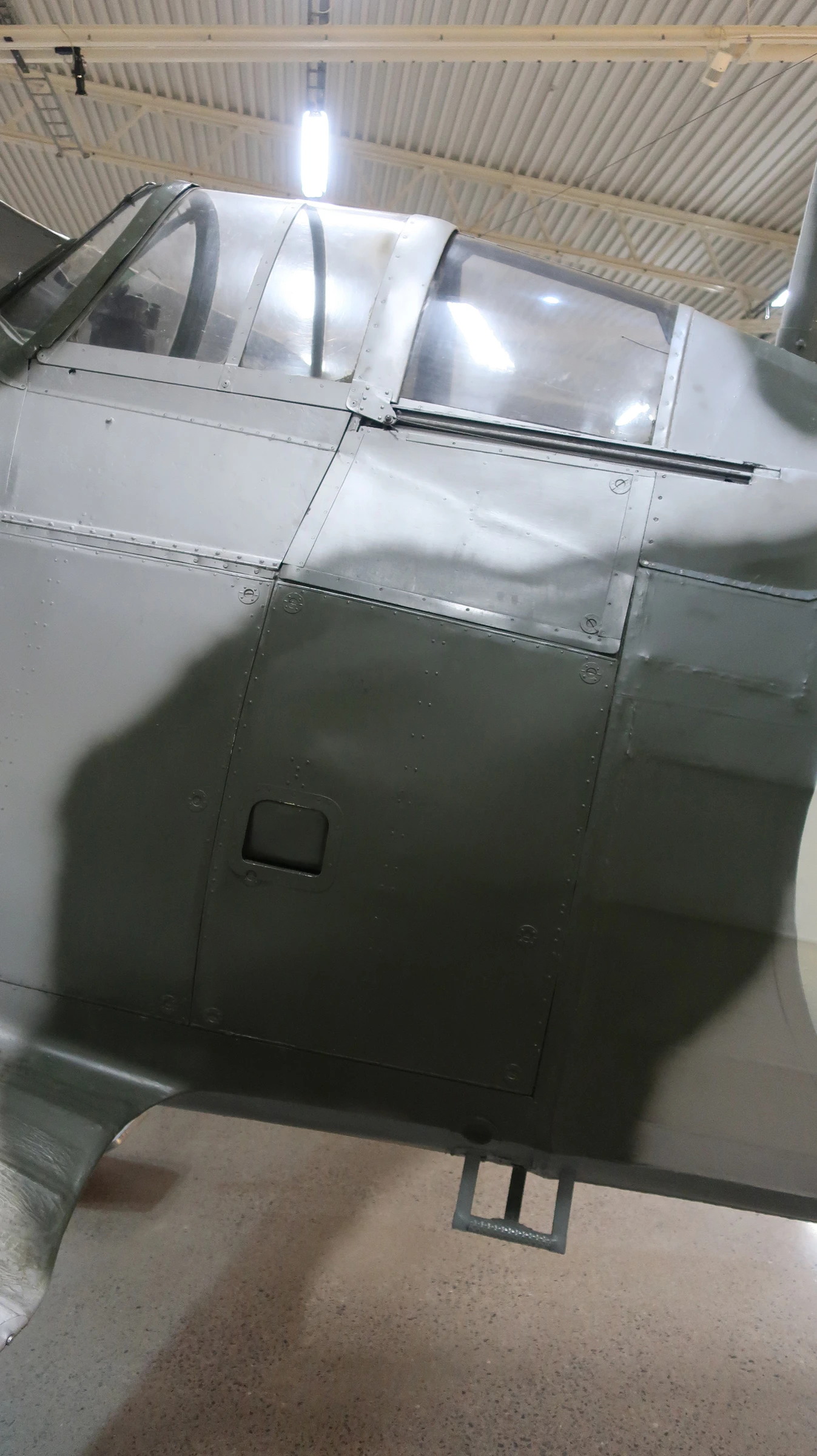
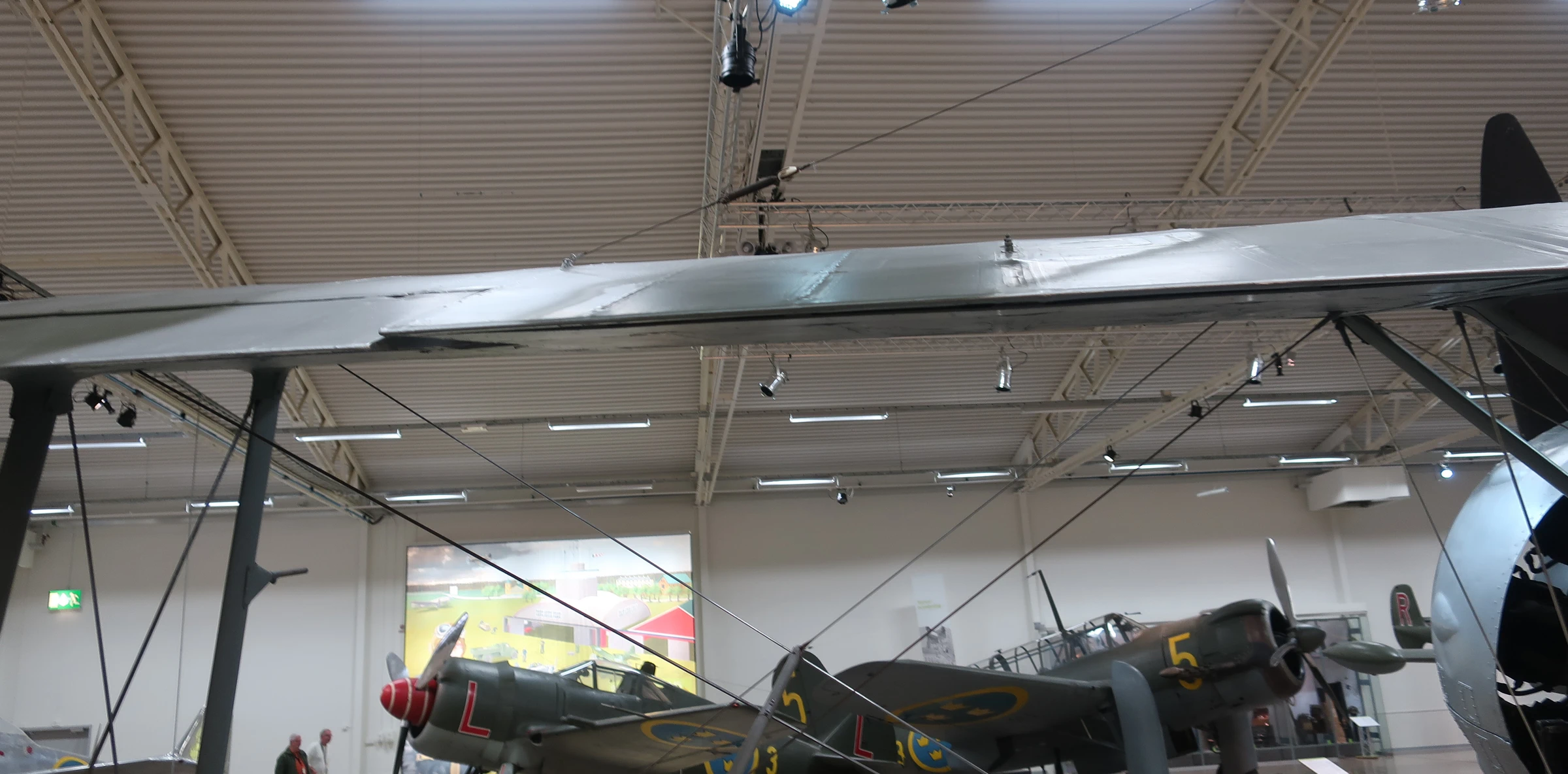
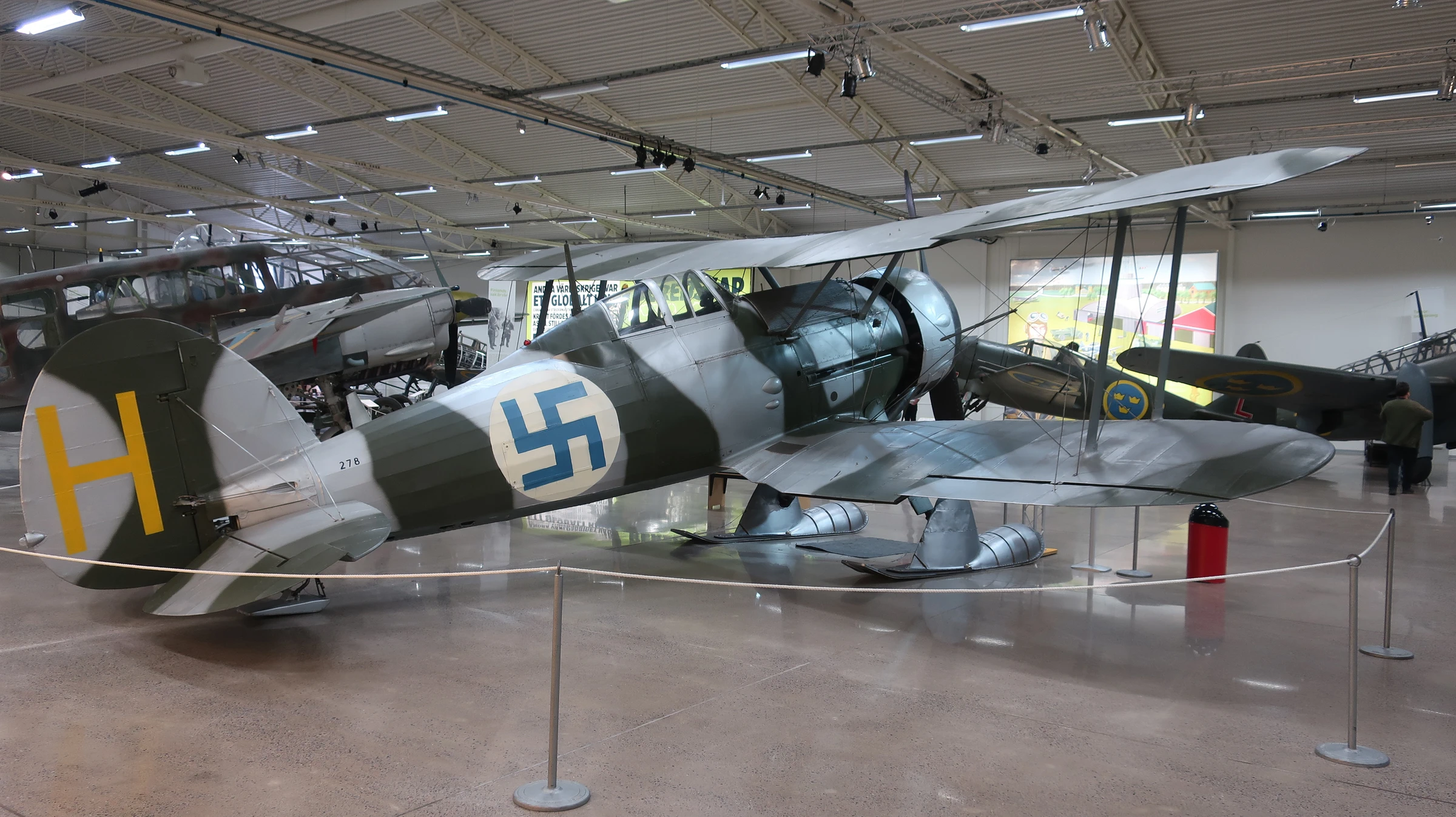
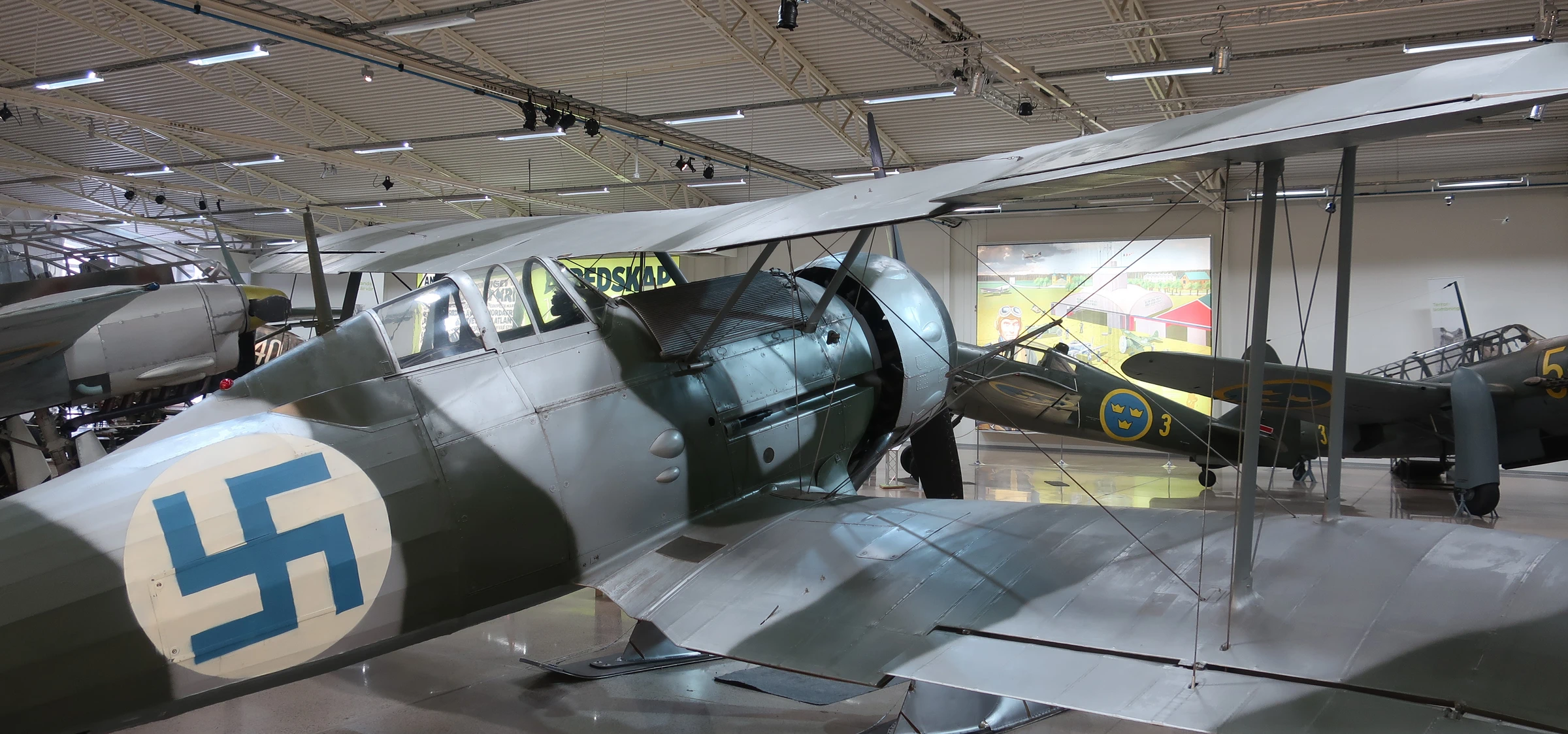
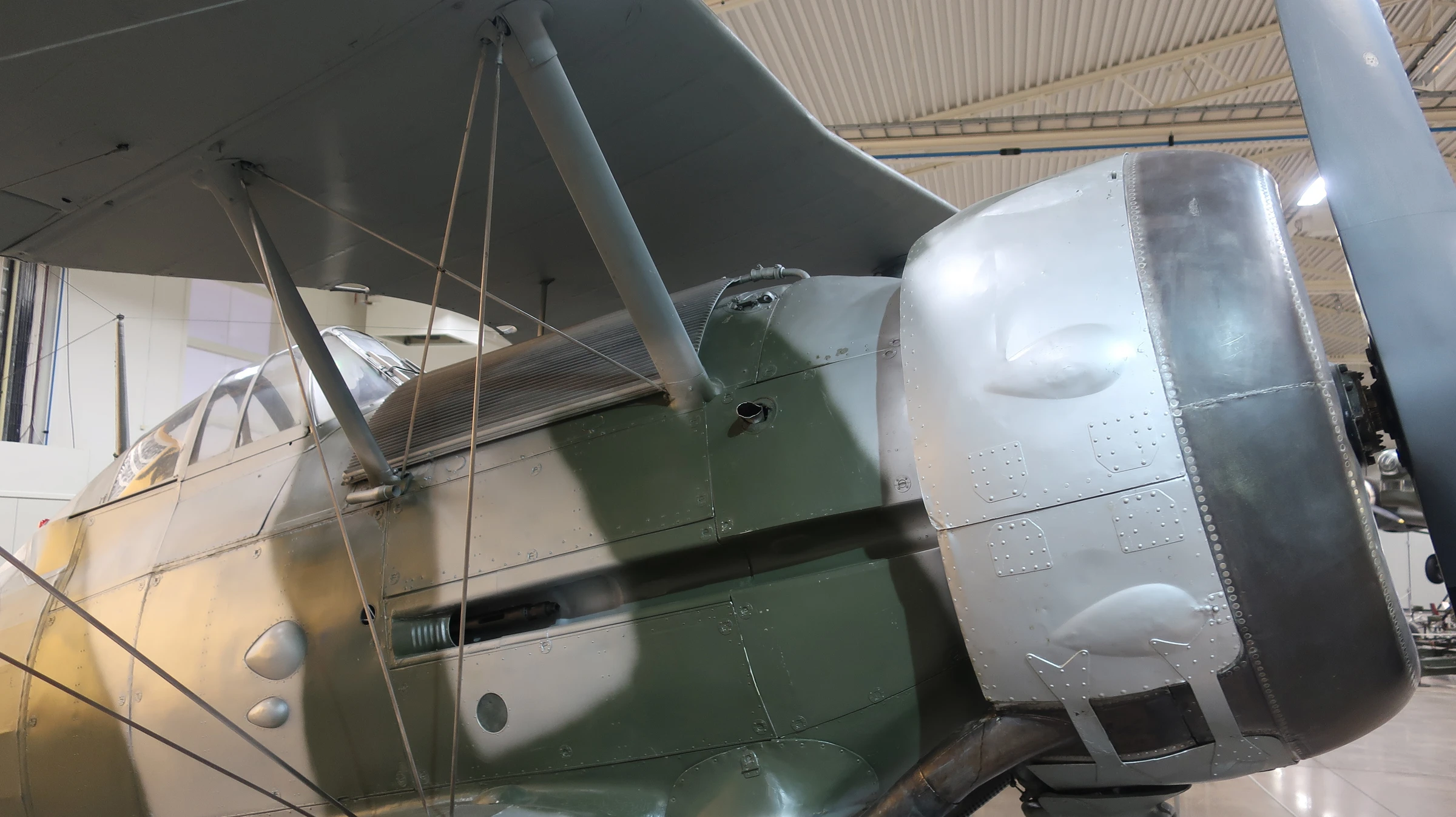
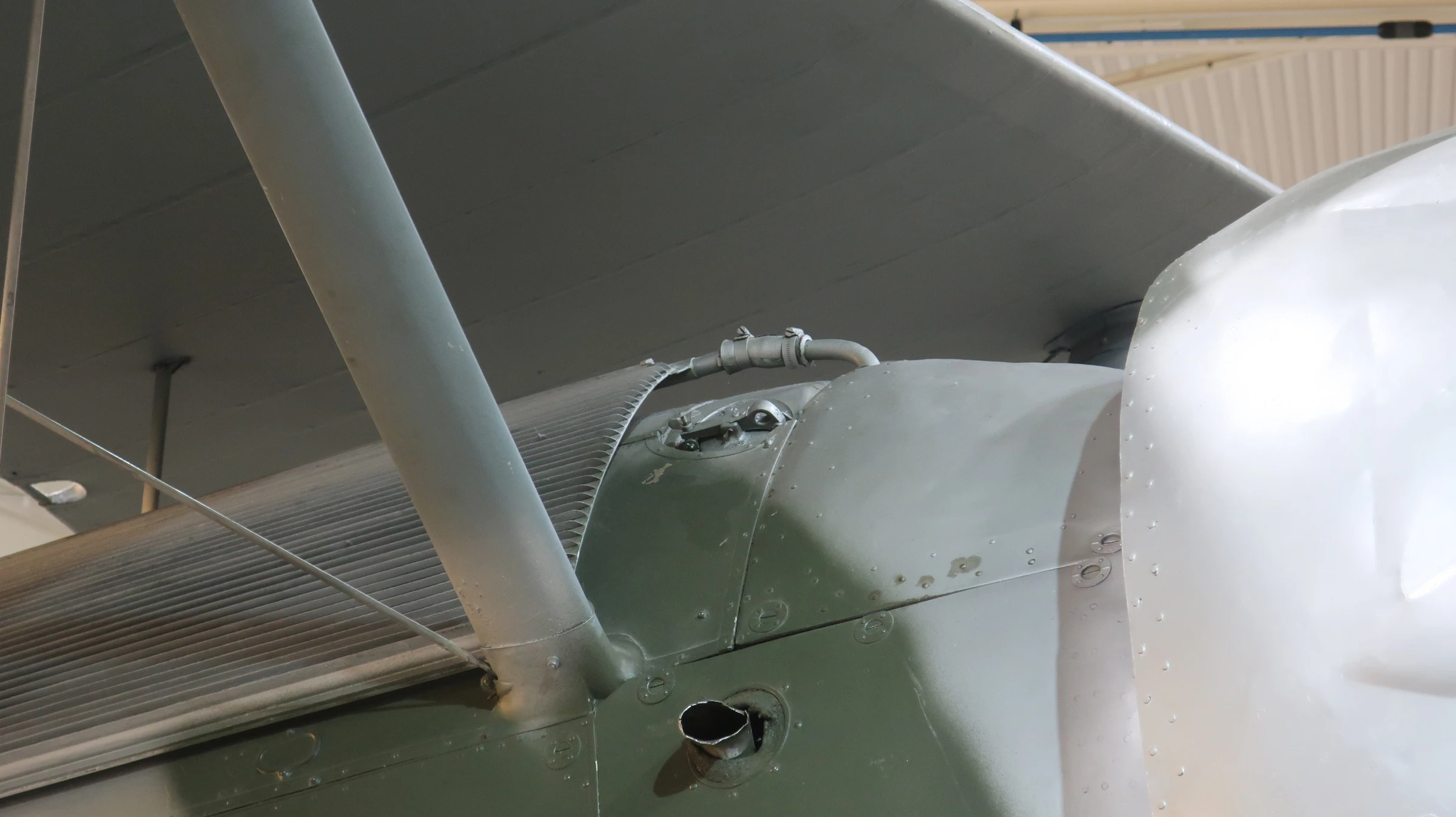
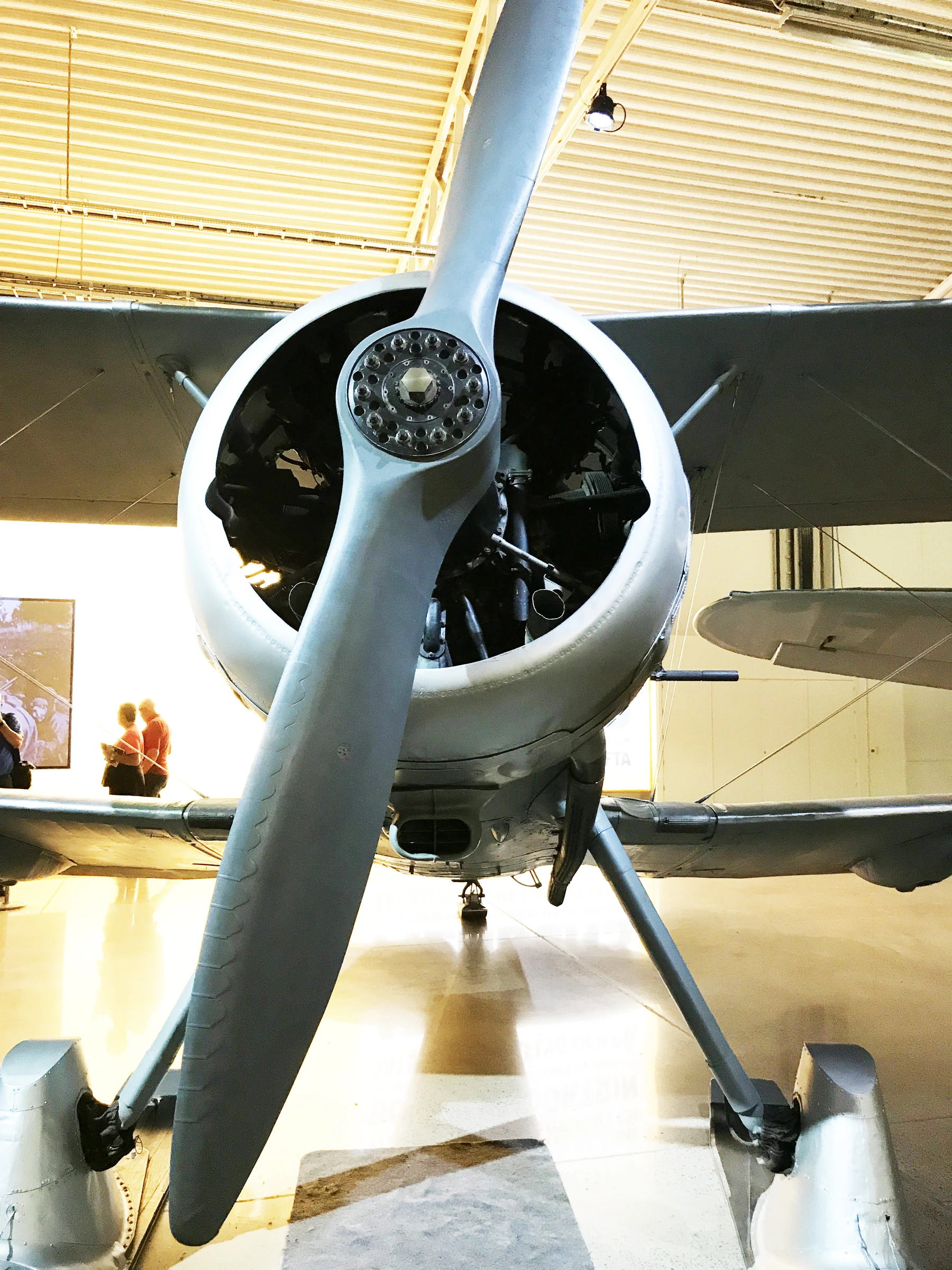
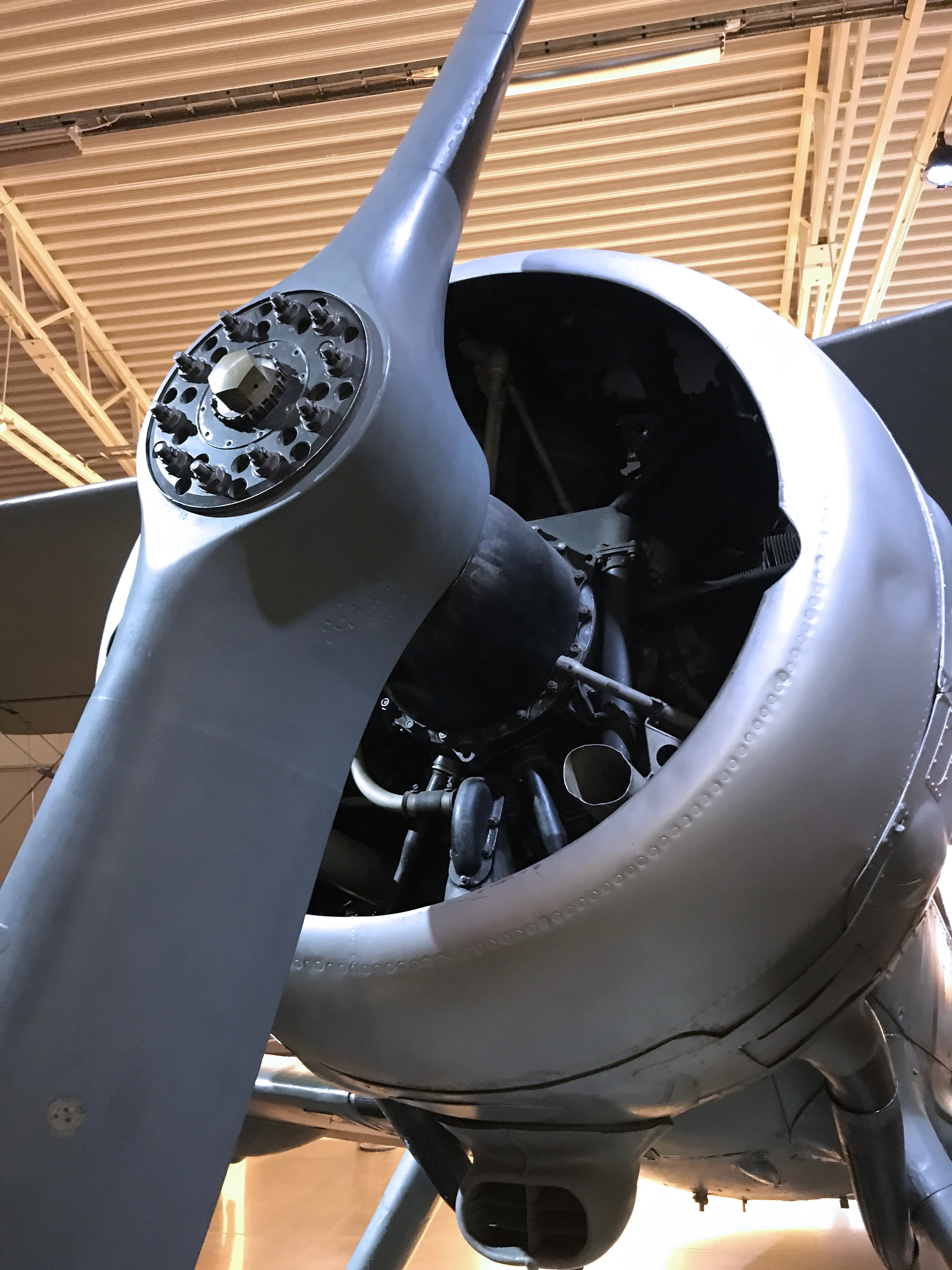
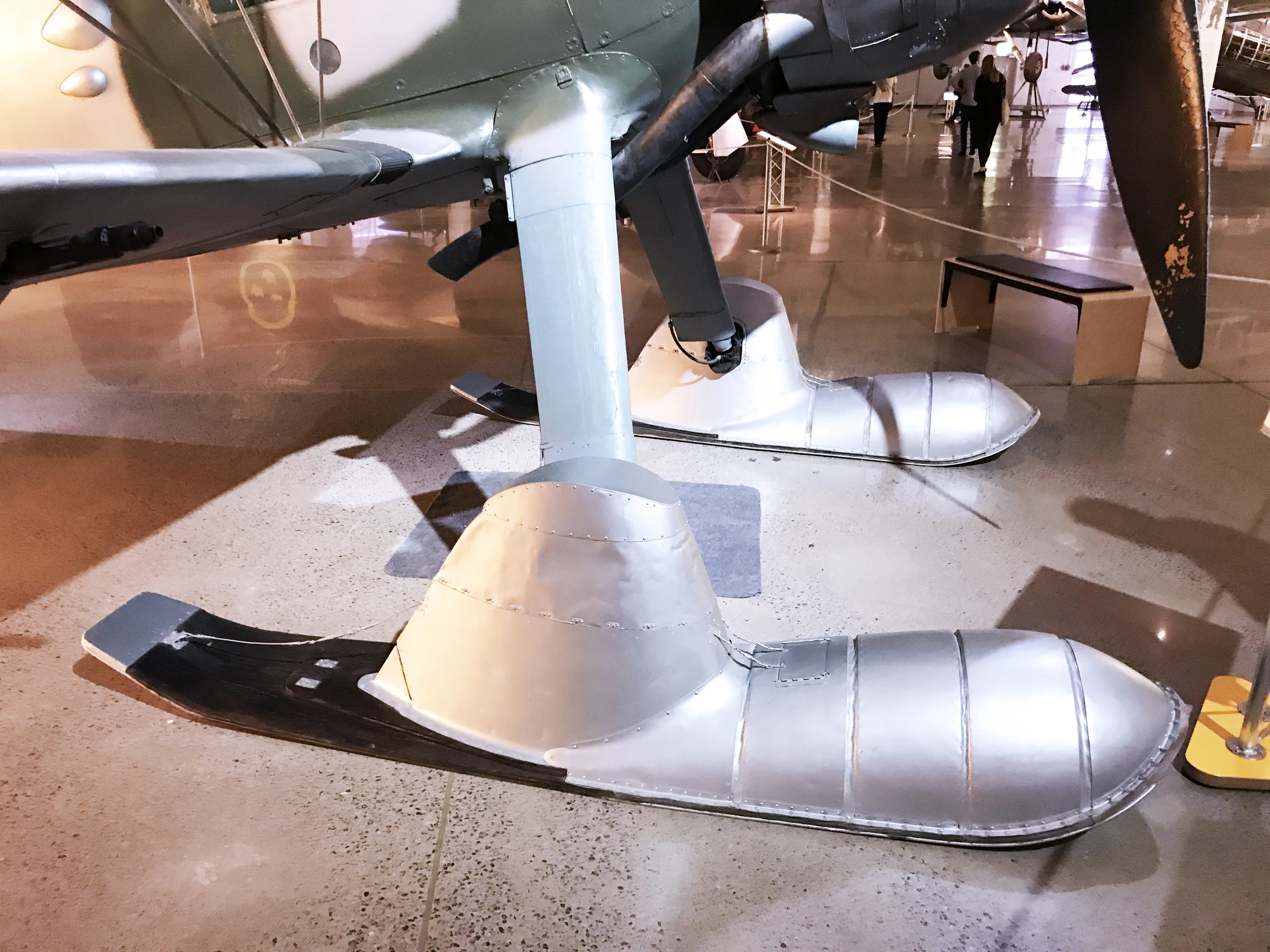
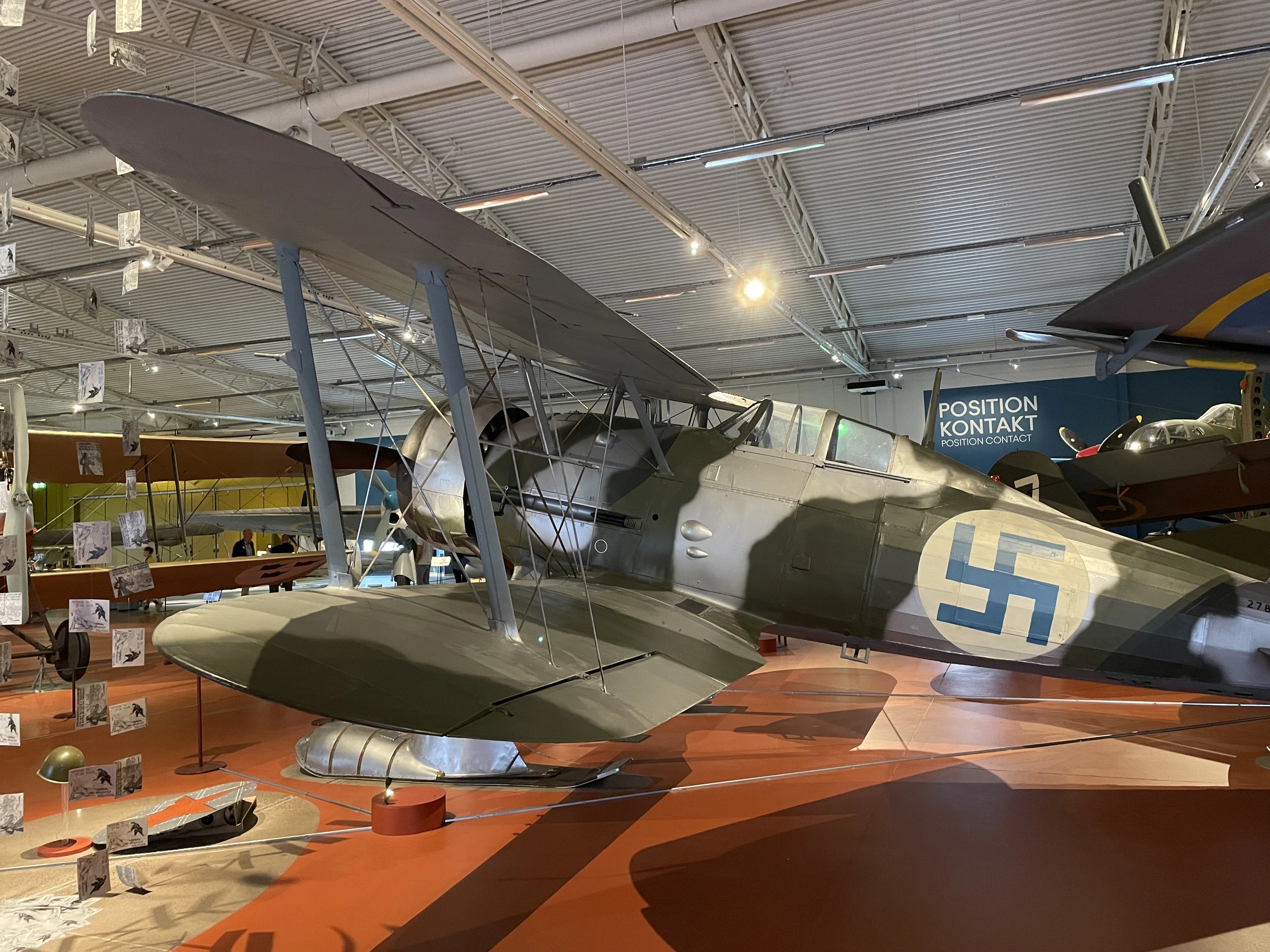
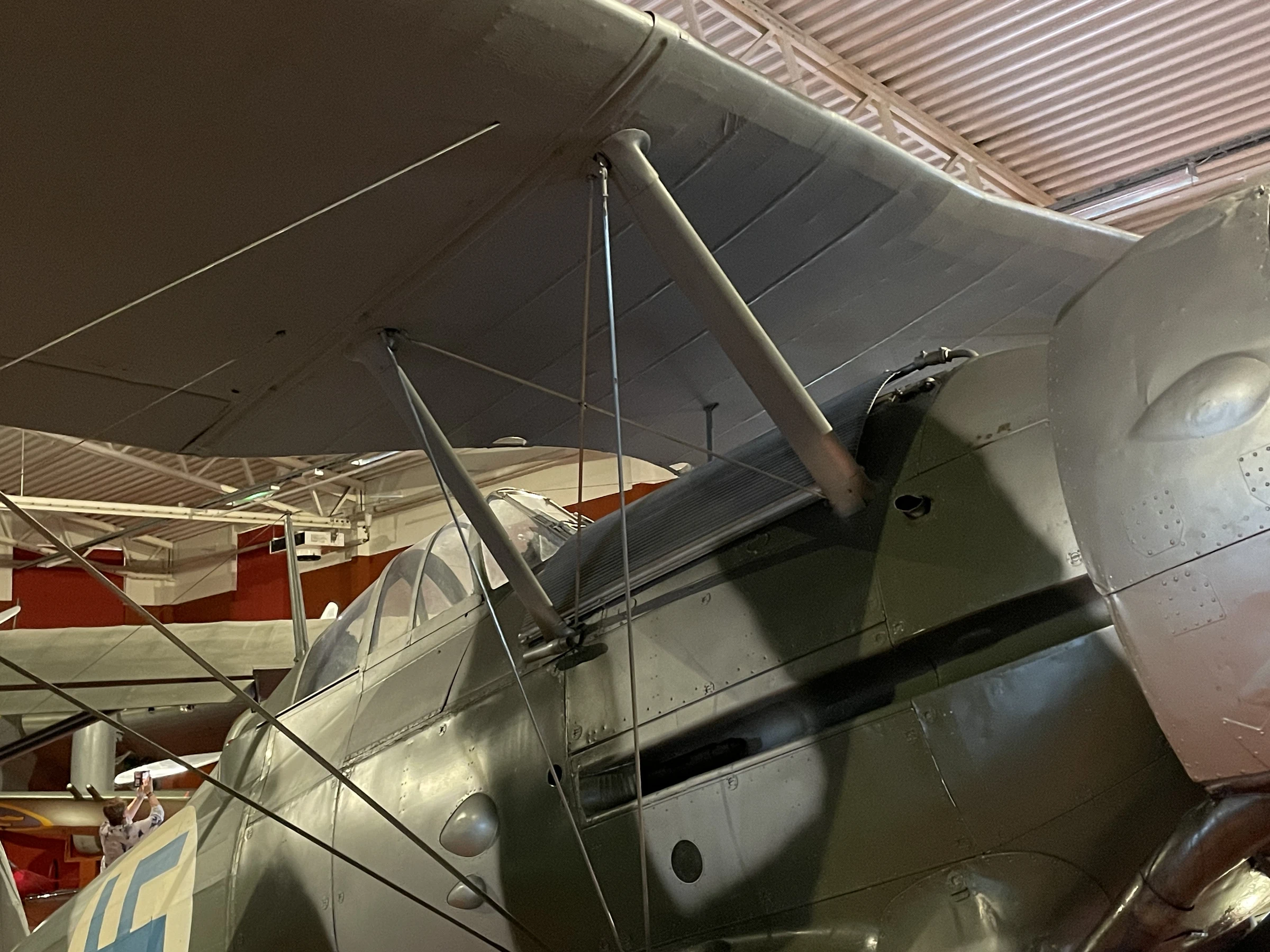
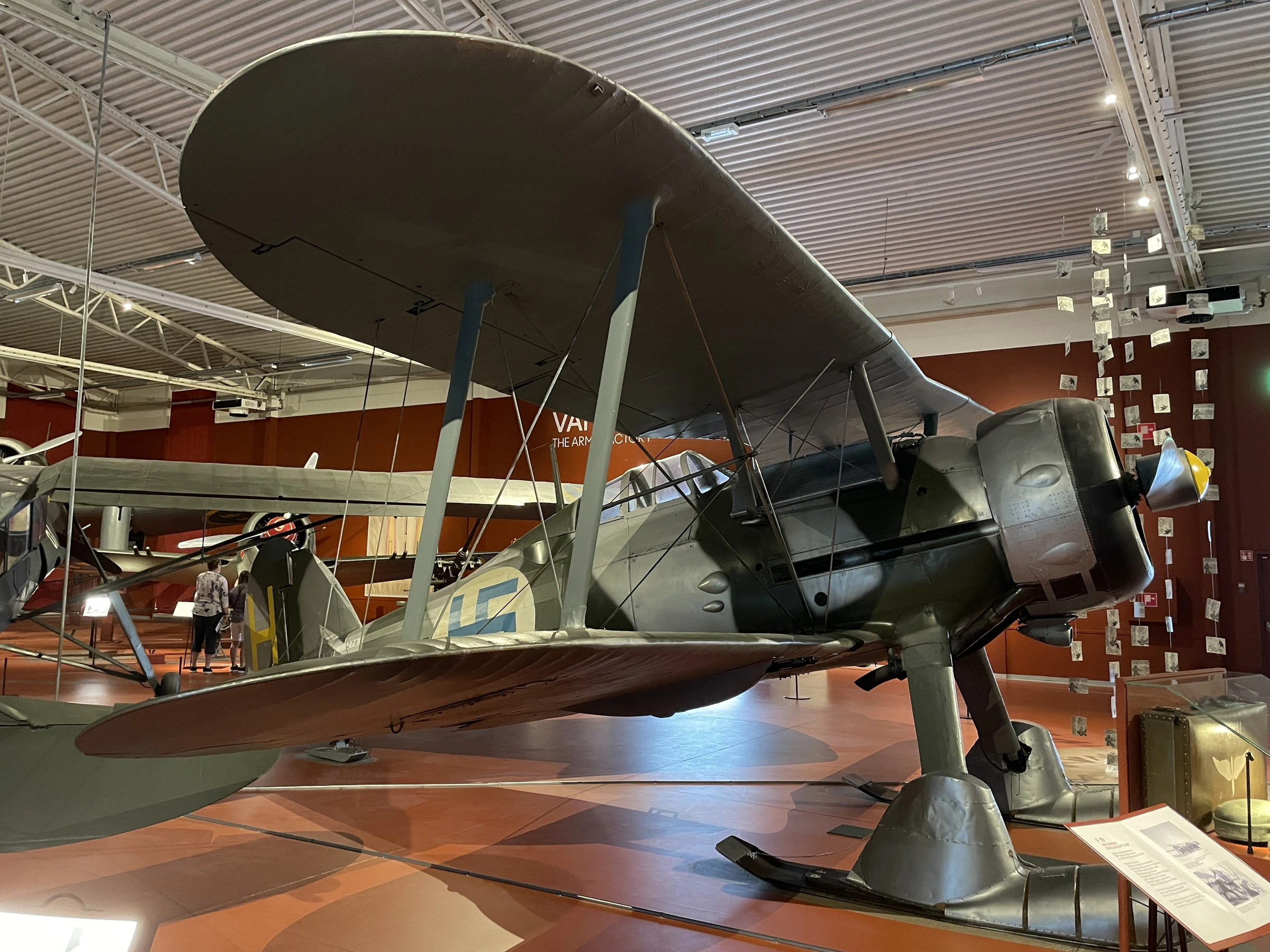
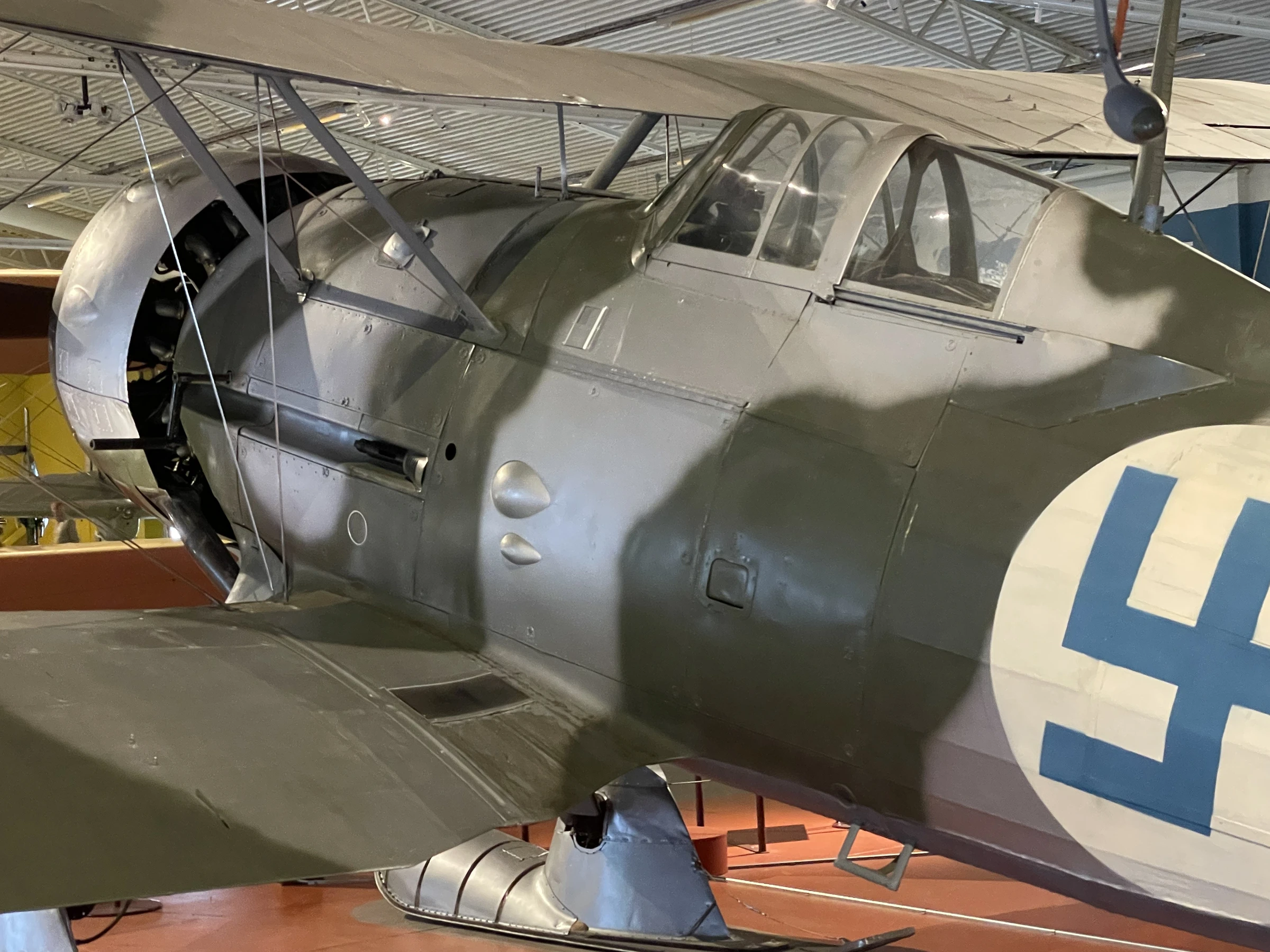
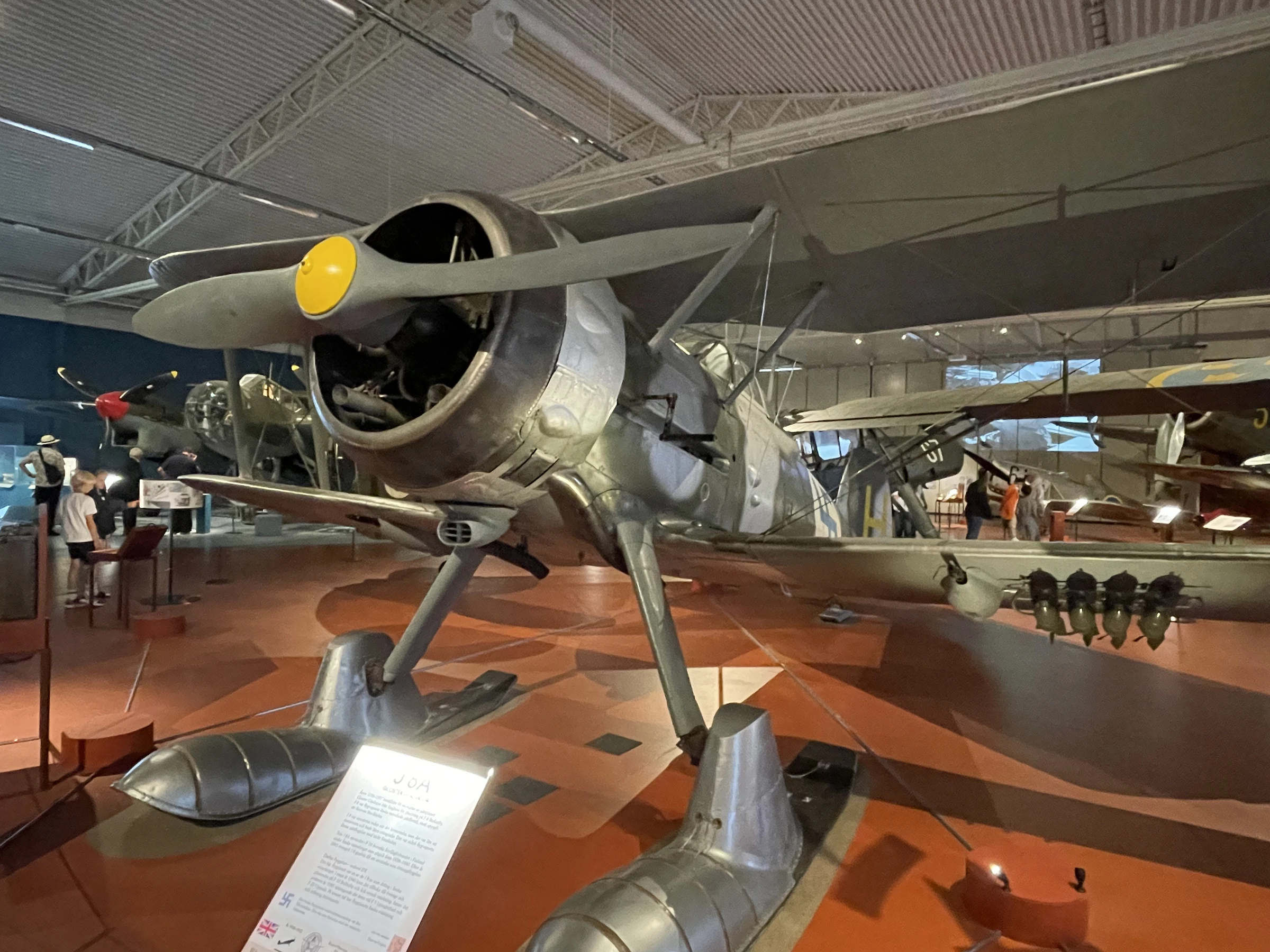
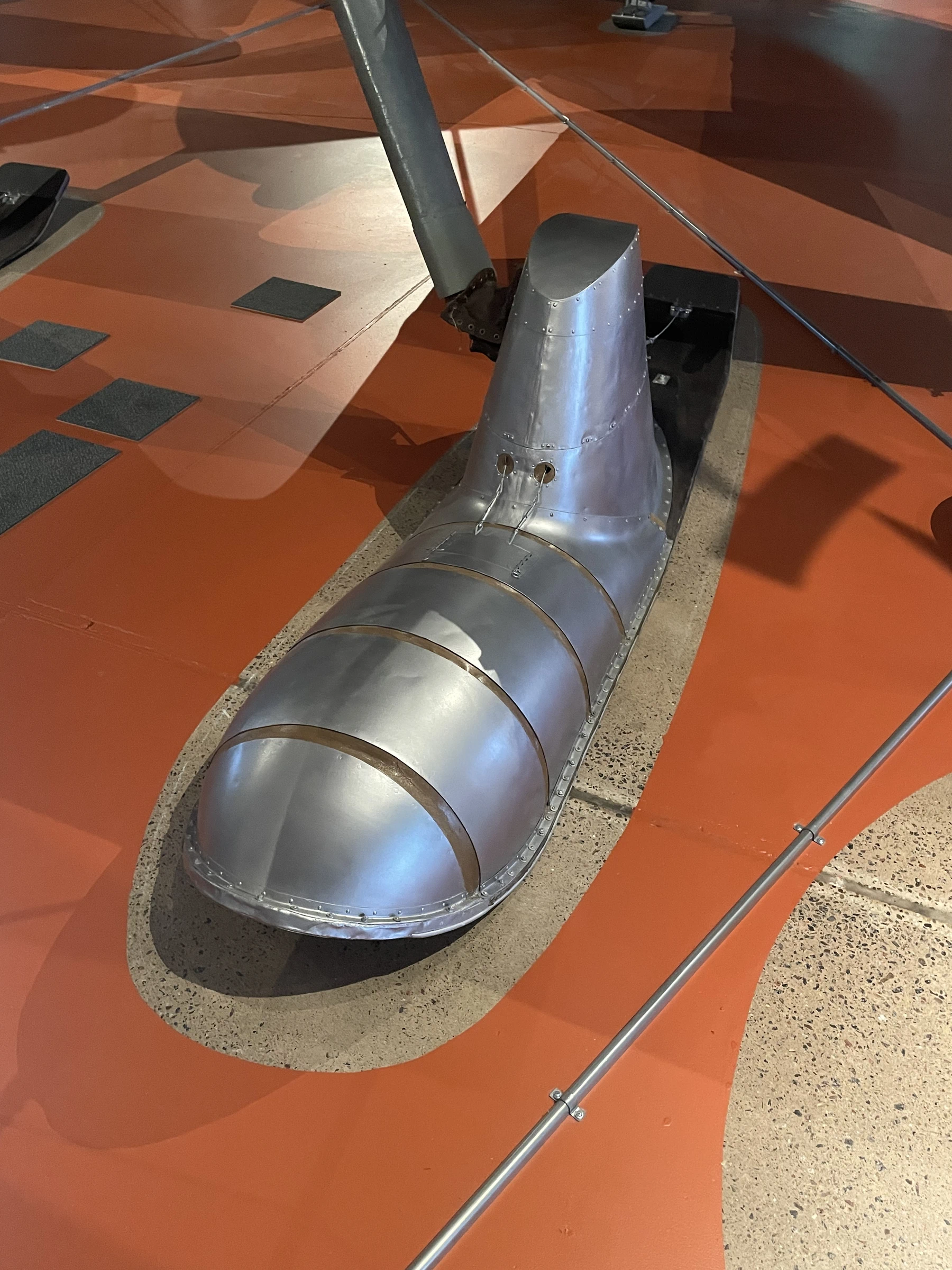
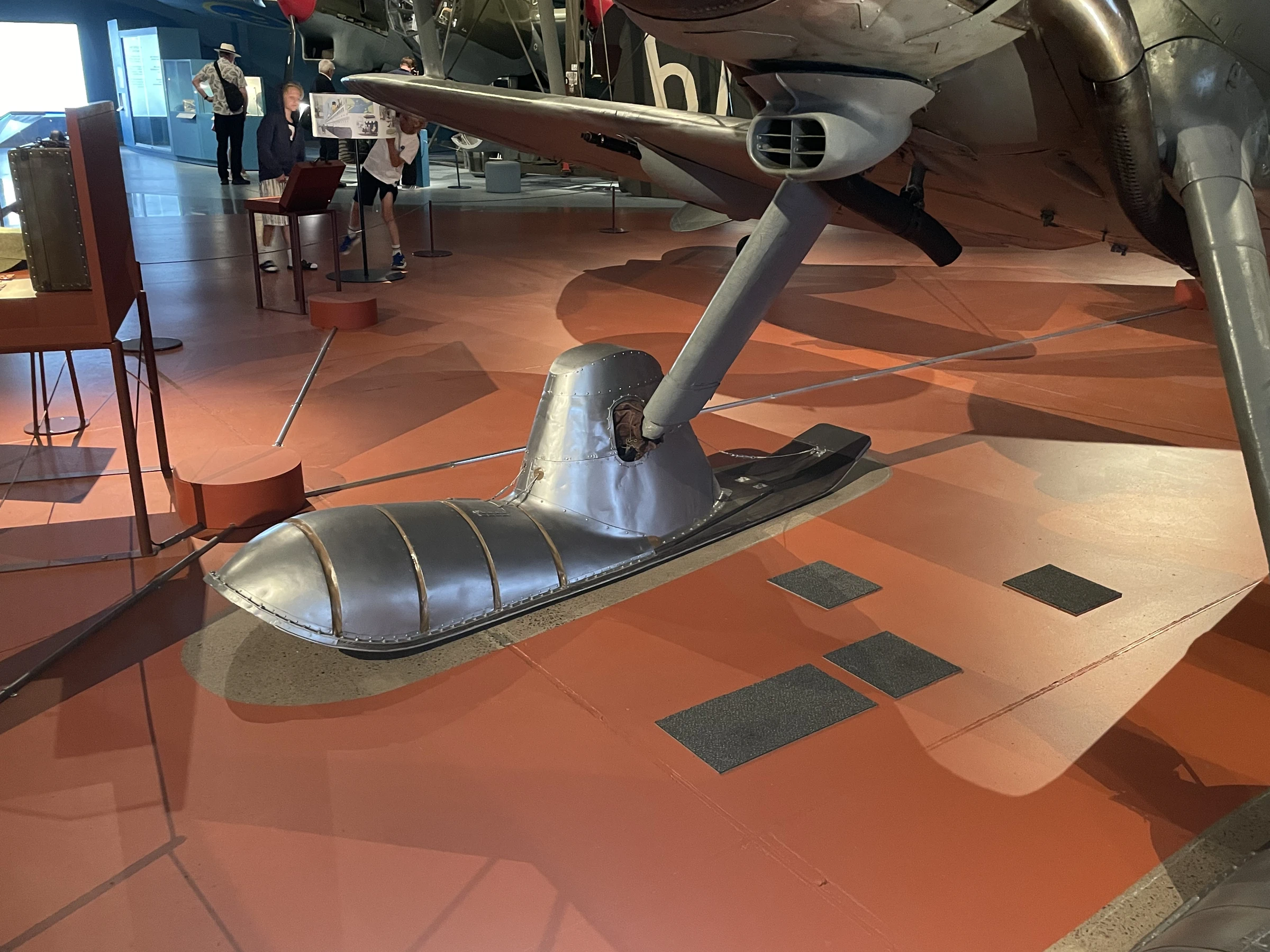
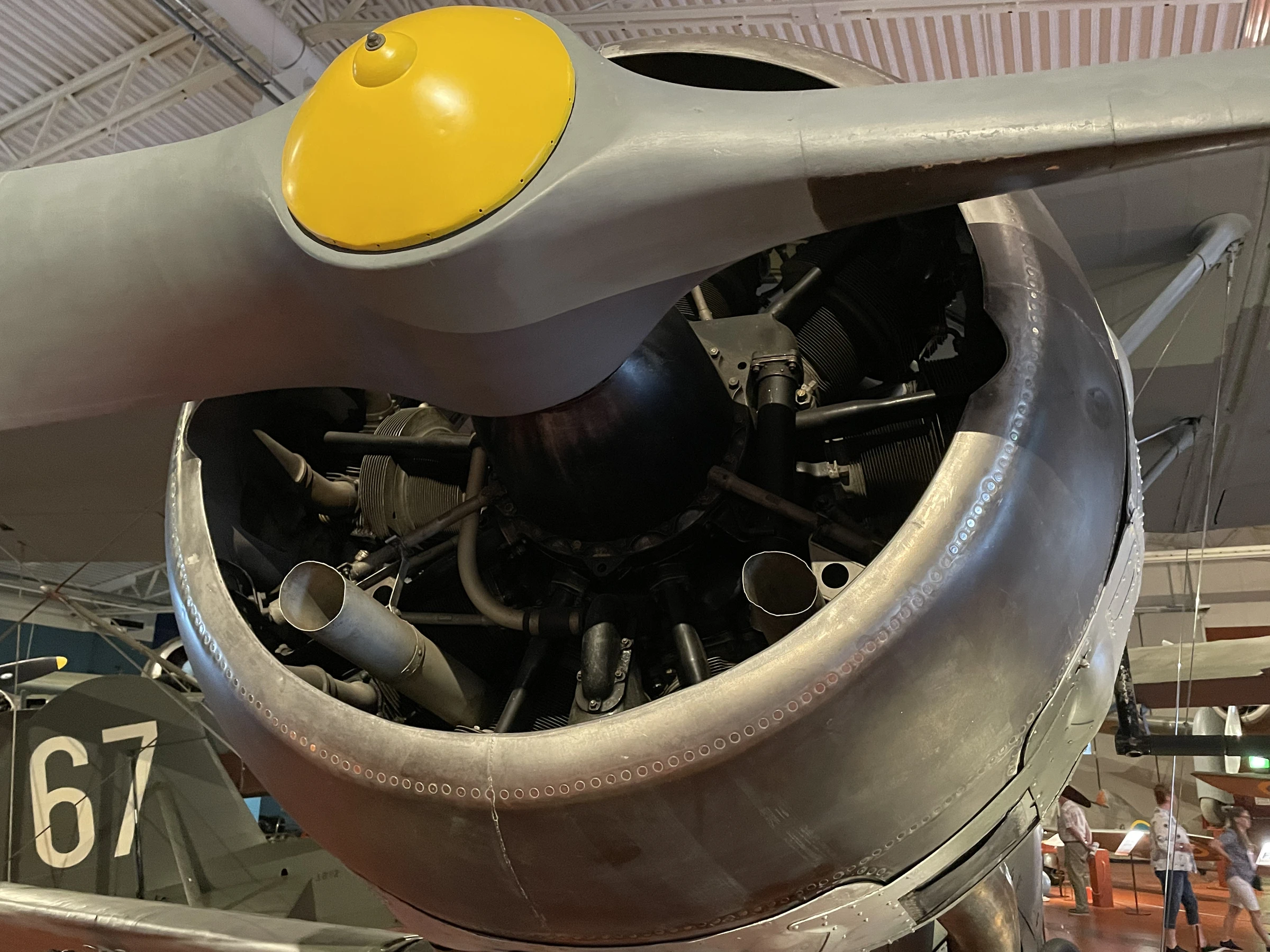
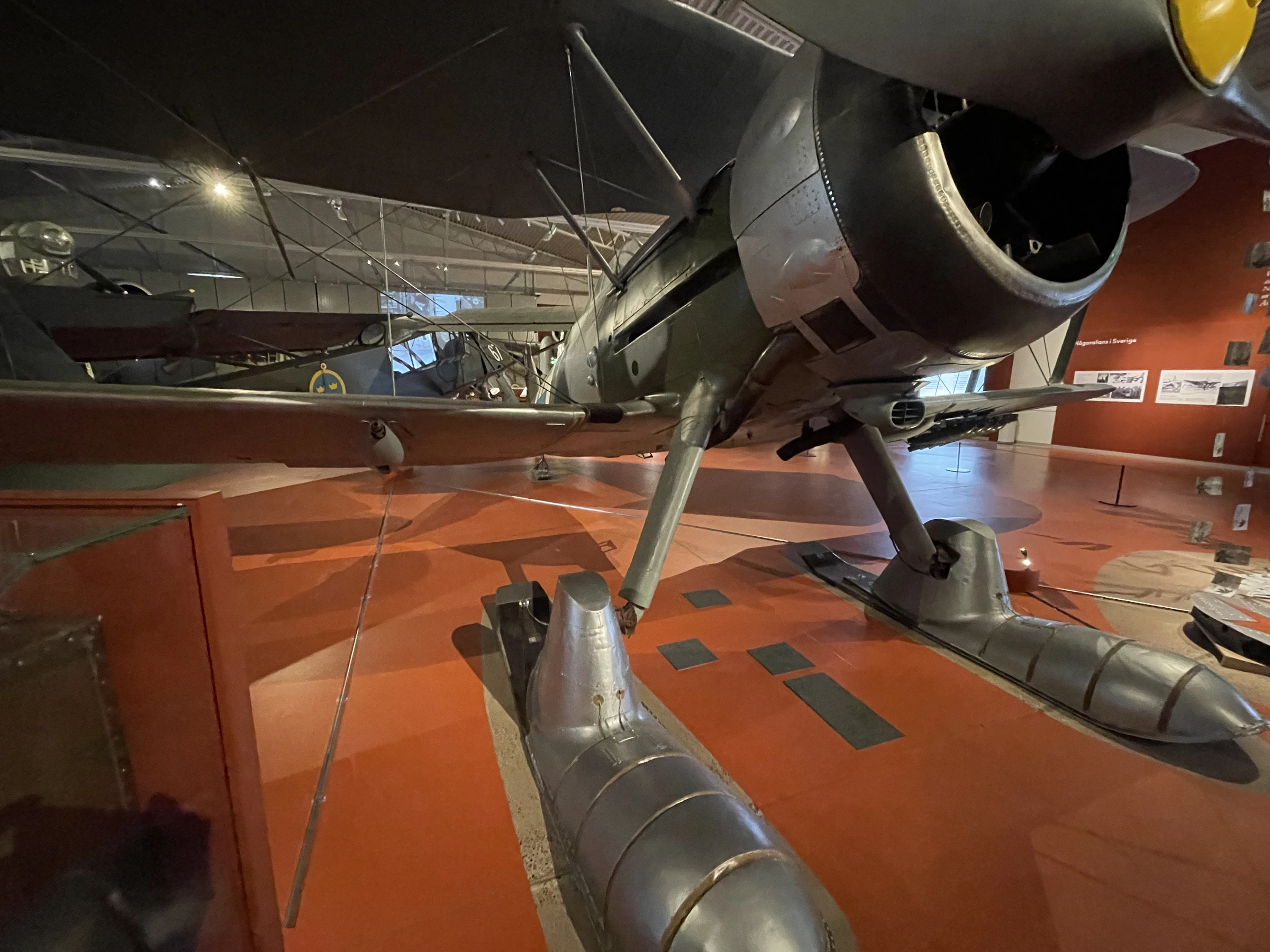
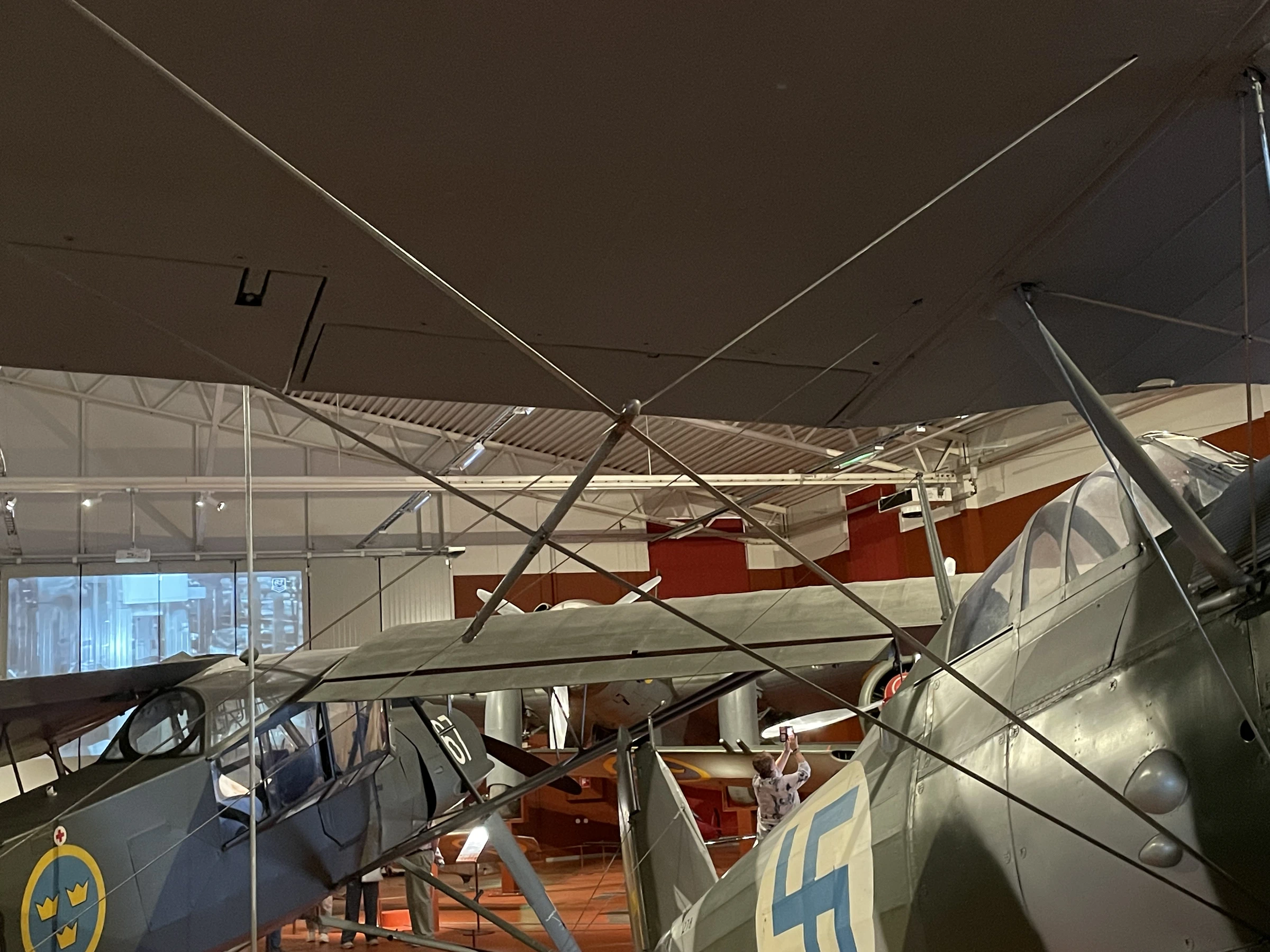
These walk-around photos were taken at Flygvapenmuseum at Malmen outside Linköping in 2017 and 2019. They show a Gloster Gladiator Mk II, designated J 8A in Swedish service — and at first glance something seems wrong. The aircraft wears white winter camouflage and Finnish markings, including the blue swastika on a white roundel of the Finnish Air Force. The explanation is one of the more remarkable chapters in Swedish aviation history.
Sweden acquired 55 Gladiators from 1937, designated J 8 and J 8A, primarily for the defence of Stockholm at F 8 Barkarby. The Gladiator was already conceptually outdated when it entered Swedish service — modern monoplanes like the Bf 109 were clearly superior — but it was the best available option. When the Soviet Union invaded Finland on 30 November 1939, Sweden formed a volunteer wing, Flygflottilj 19, which flew under Finnish colours in support of Finland's defence. F 19 consisted of 12 J 8A Gladiators, 5 Hawker Harts and a handful of support aircraft, commanded by Major Hugo Beckhammar. Operating from northern Finland, the wing flew 464 combat sorties over 62 days, claiming 8 to 12 Soviet aircraft destroyed for the loss of 7 of their own. Individual 278 was delivered to the Swedish Air Force in June 1938 and was one of the aircraft that actually flew with F 19 in Finland during the Winter War of 1940. It is displayed at Flygvapenmuseum in the Finnish markings and winter camouflage it wore during that deployment, with the code yellow H.