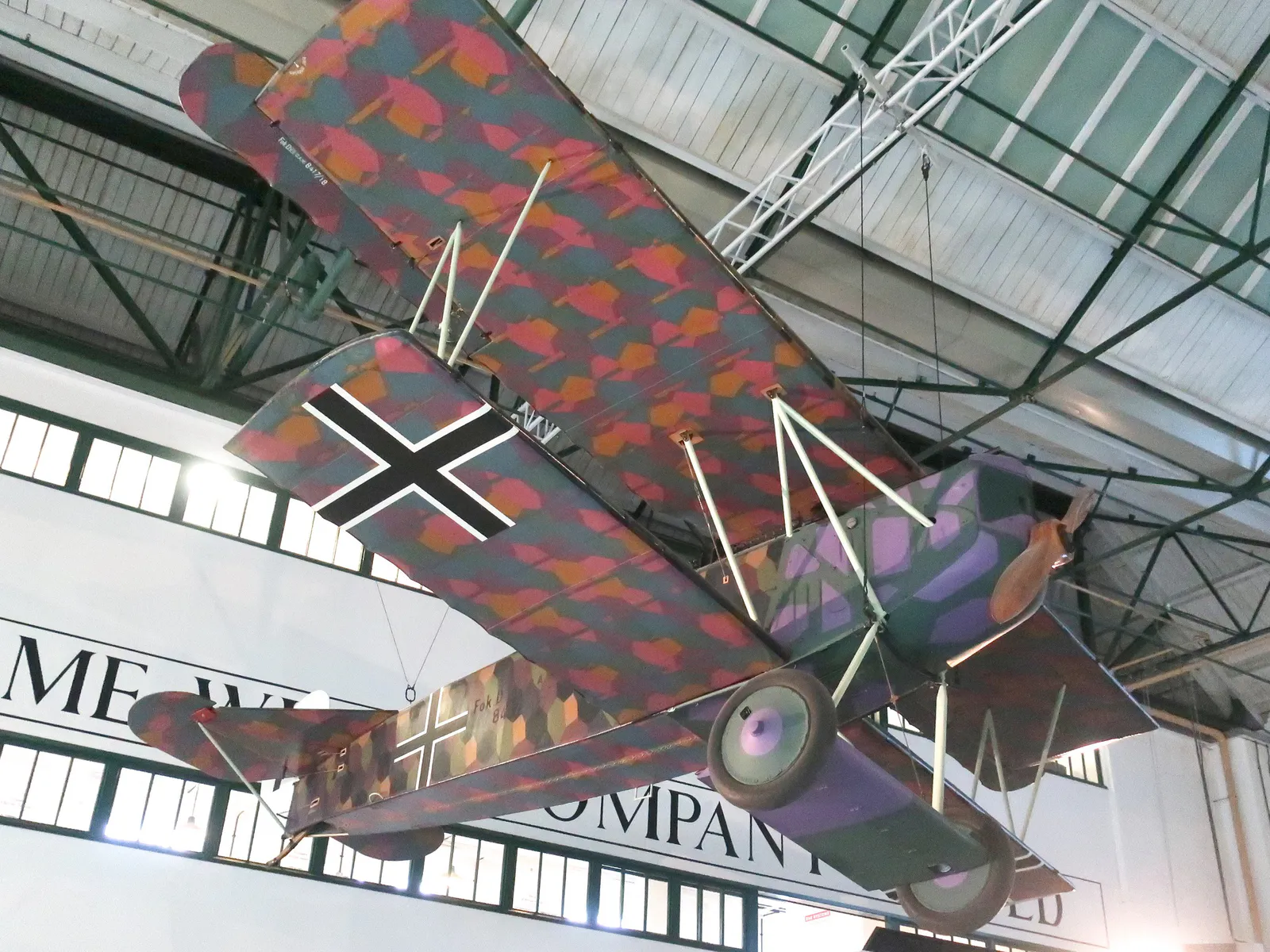
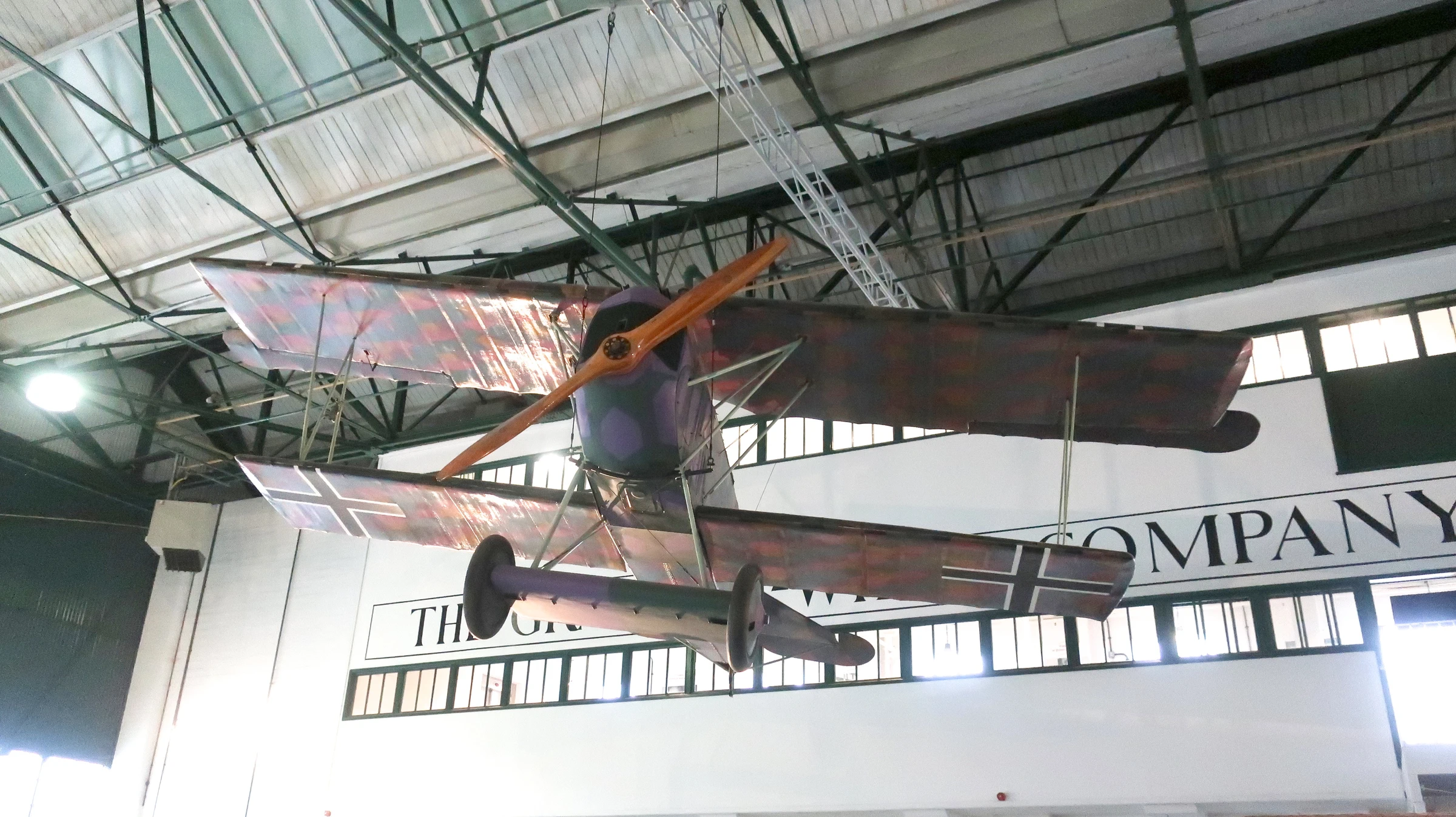
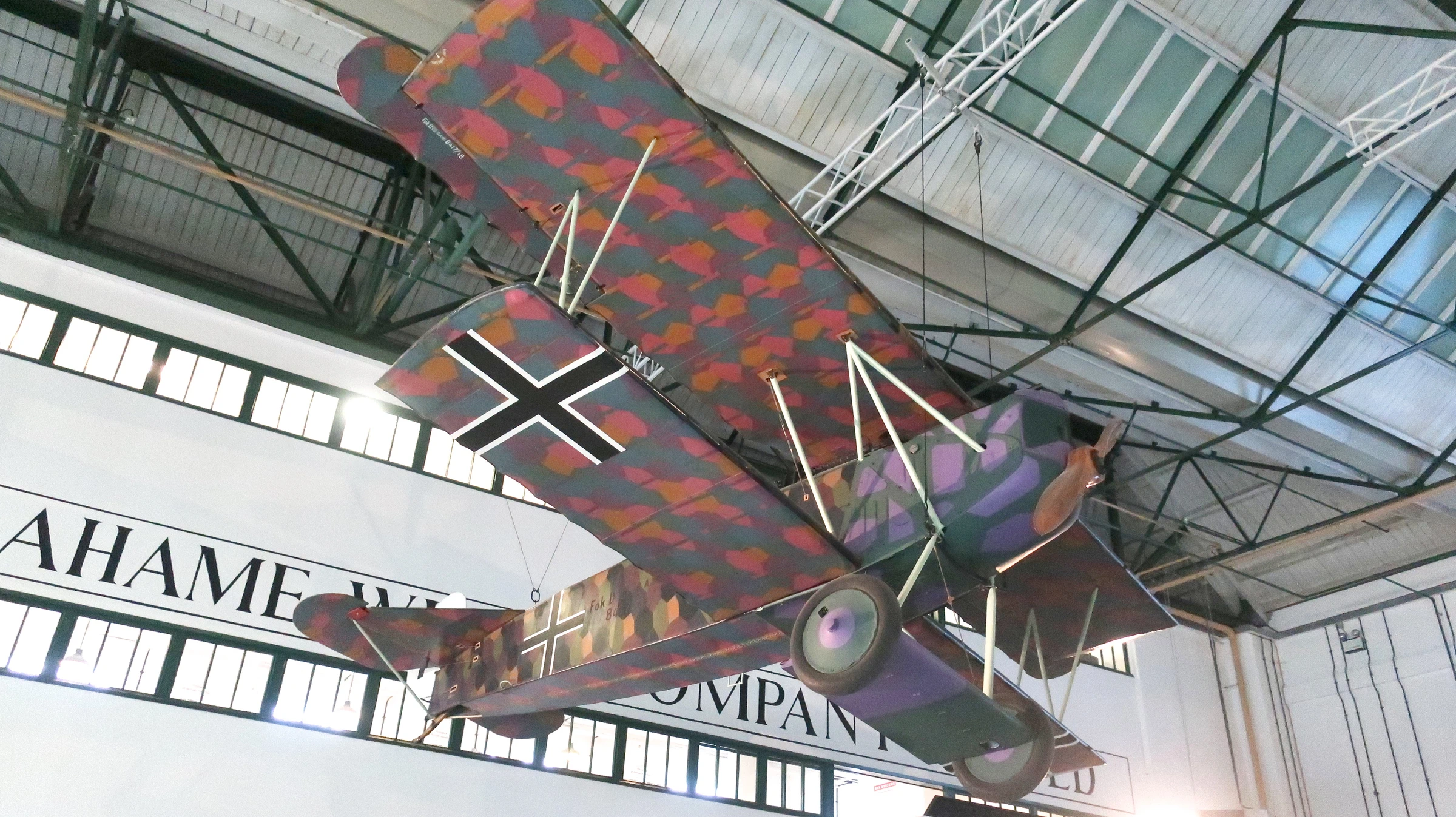
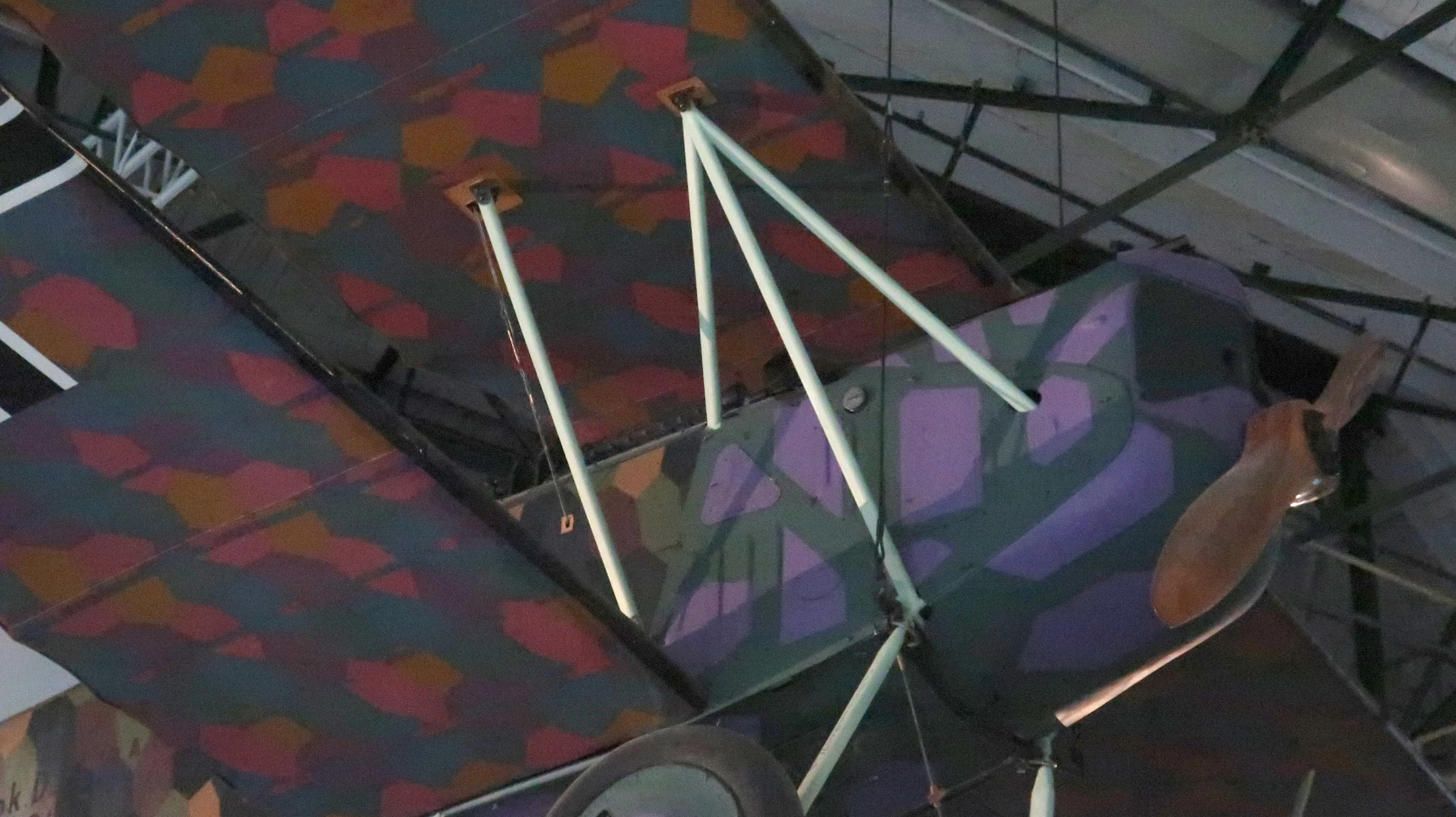
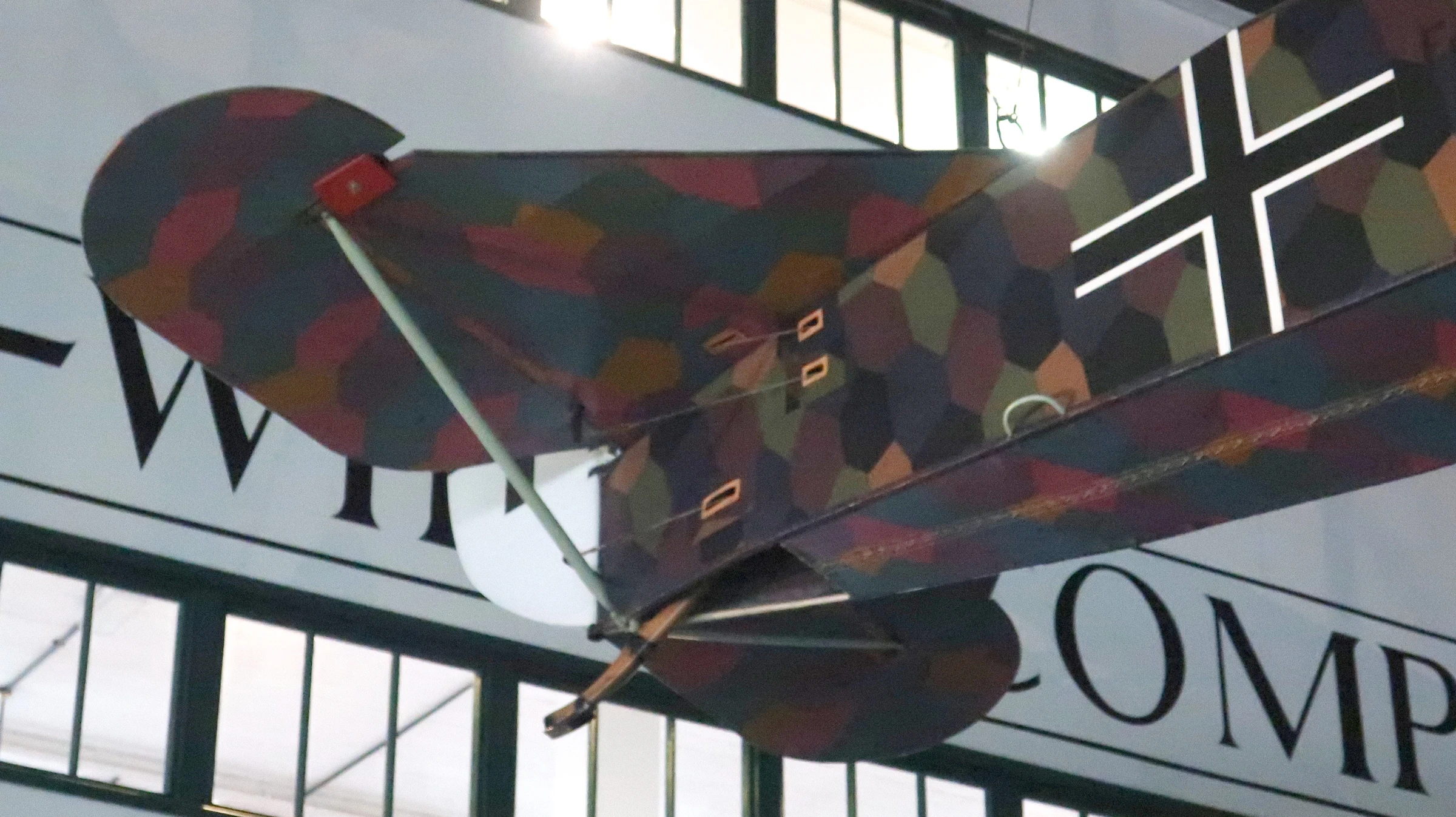
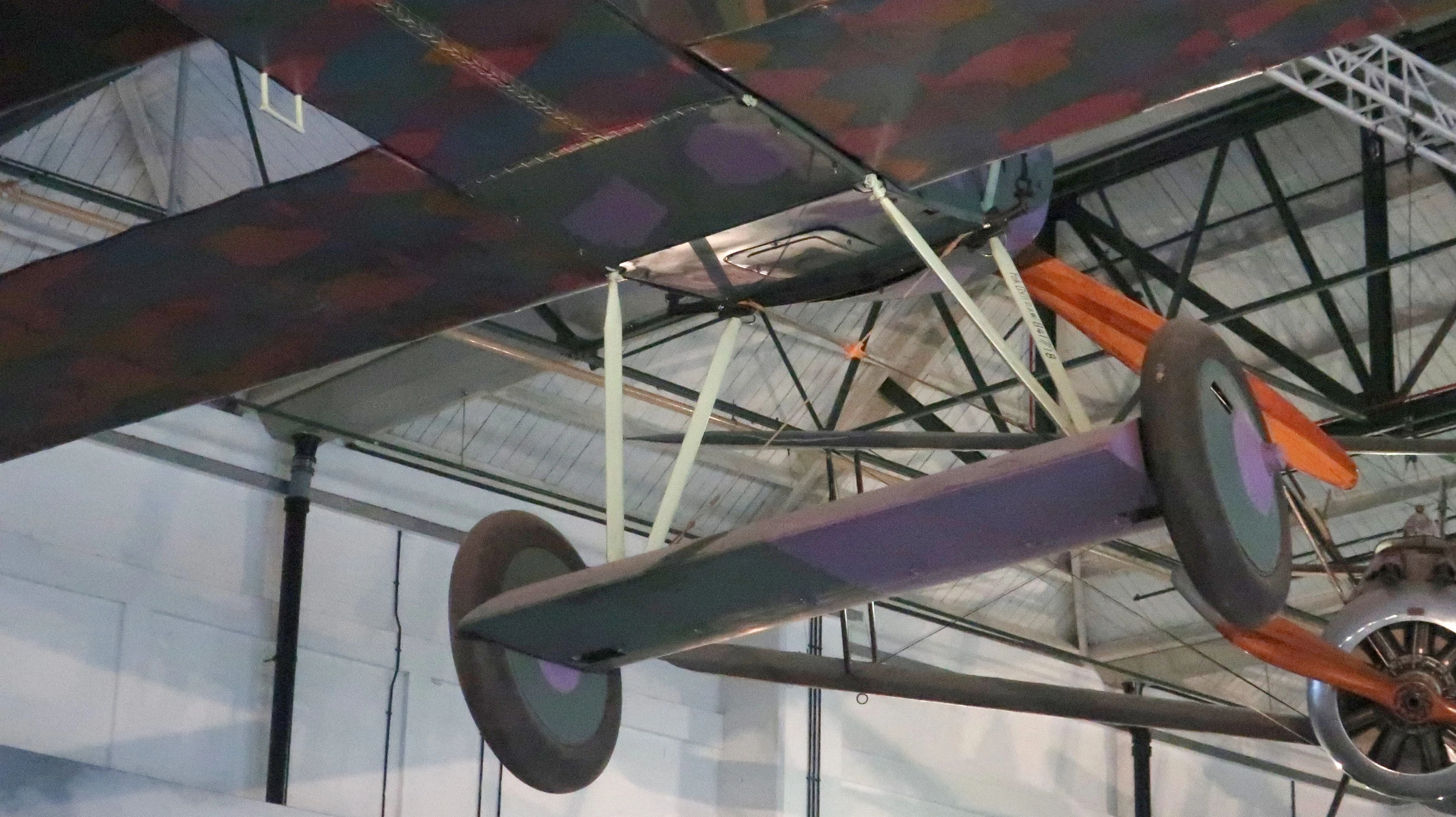
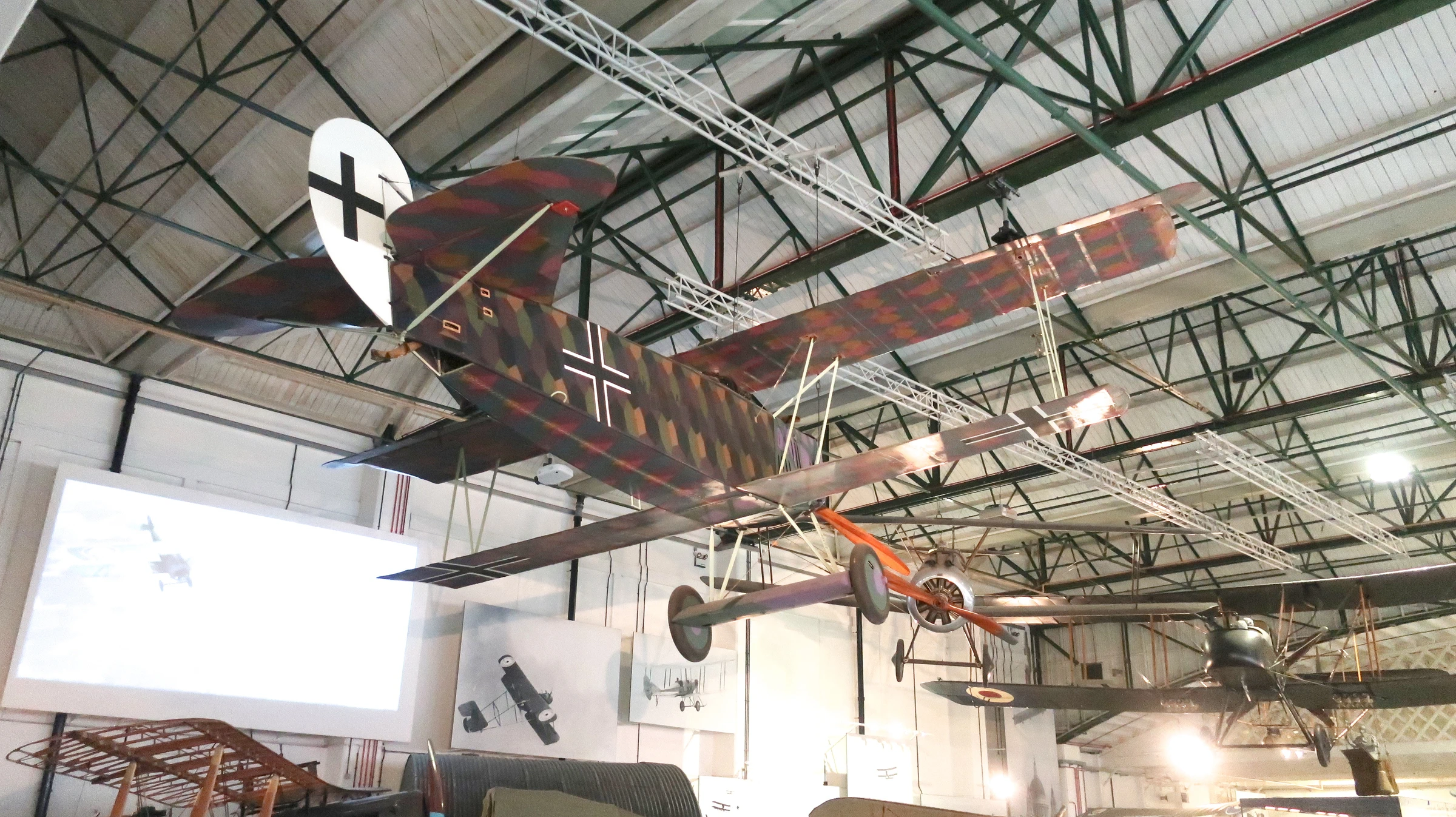
These walk-around photos were taken at the RAF Museum London in Hendon in 2019. They show a Fokker D.VII, order number 8417/18 — one of only seven genuine examples of the type surviving in the world, and widely regarded as the finest fighter aircraft of the First World War. So superior was the D.VII that it was the only aircraft specifically named in the Armistice Agreement of November 1918, with the Allied Powers demanding its surrender as a condition of peace. Built by Ostdeutsche Albatros Werke (OAW) at Schneidemühl in what is now Poland, it featured a welded steel tube fuselage structure and thick aerofoil wing section that gave it exceptional high-altitude performance and the ability to "hang on its propeller" at low speeds — qualities that terrified Allied pilots. Hermann Göring, later head of Hitler's Luftwaffe, was an early D.VII ace.
When the Germans retreated from Belgium in November 1918 this aircraft was left behind at Ostend, subsequently entering service with the Belgian Air Force as a fighter trainer until the early 1930s. One of three Belgian D.VIIs sold to civilian owners, it was acquired by British collector Richard Nash in 1938 and brought to England, surviving the Second World War in storage at Brooklands. After passing to the Royal Aeronautical Society it was eventually acquired by the RAF Museum, fully restored at Cardington, and has been on display at Hendon since 1997.