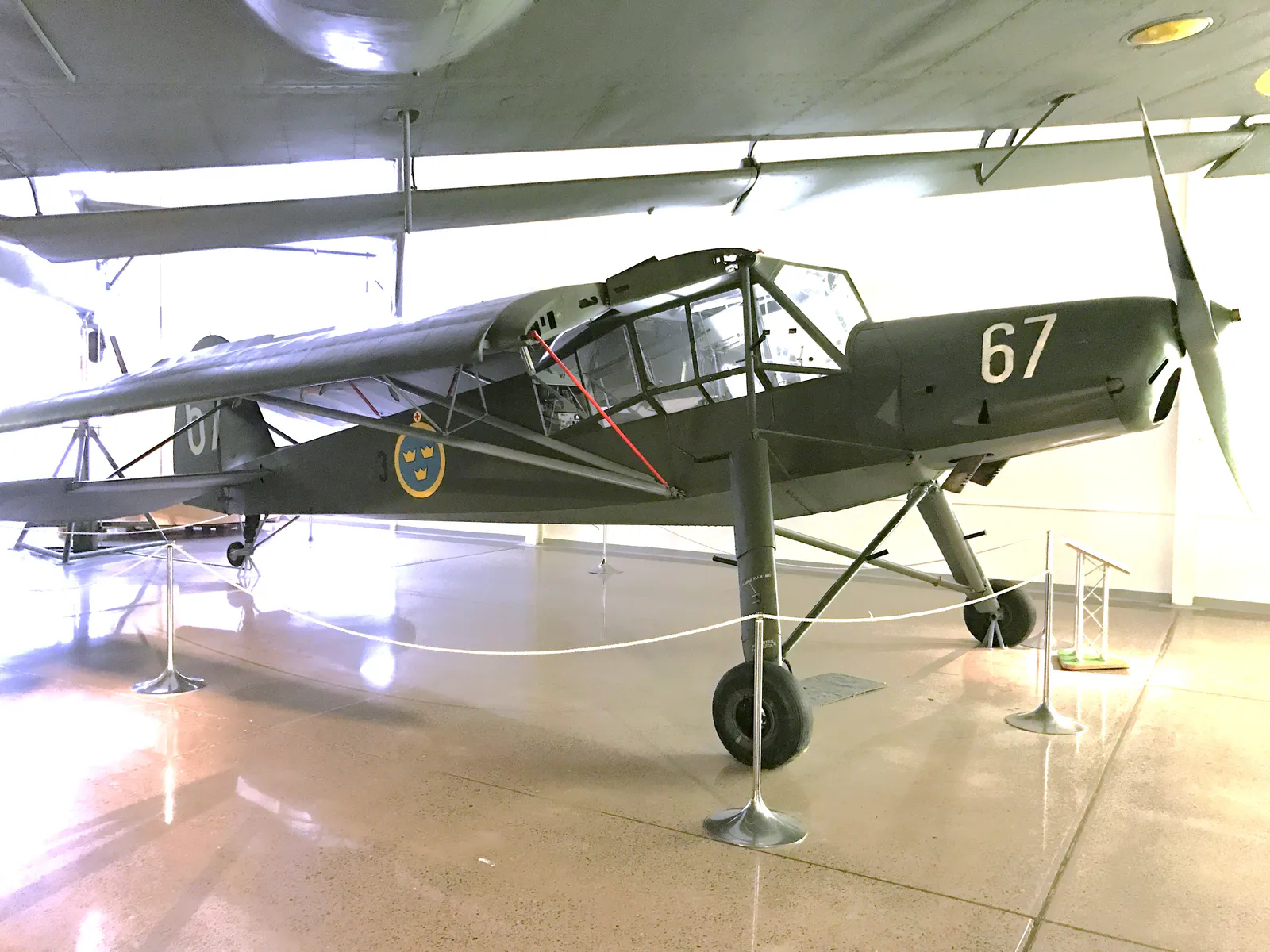
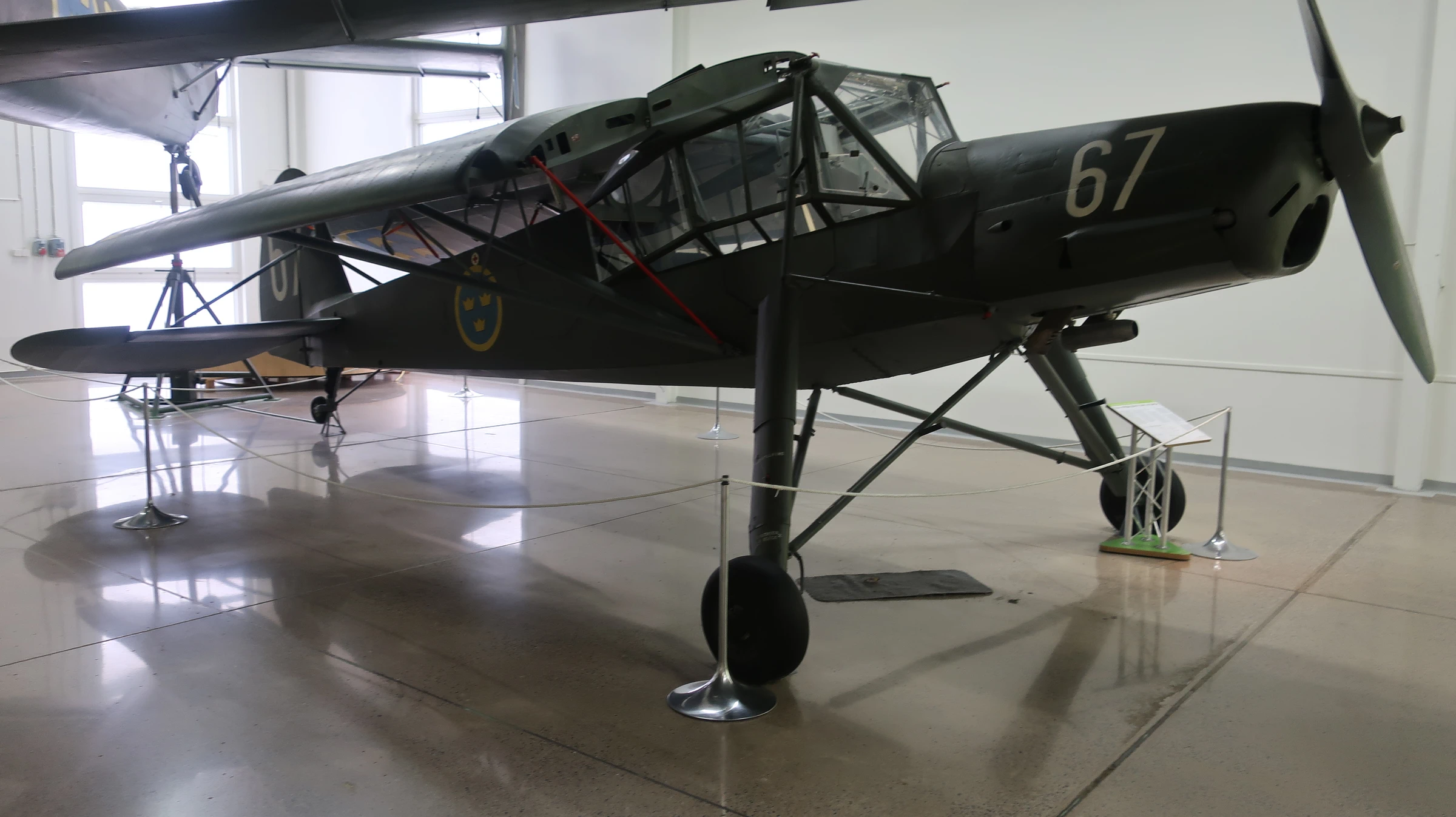
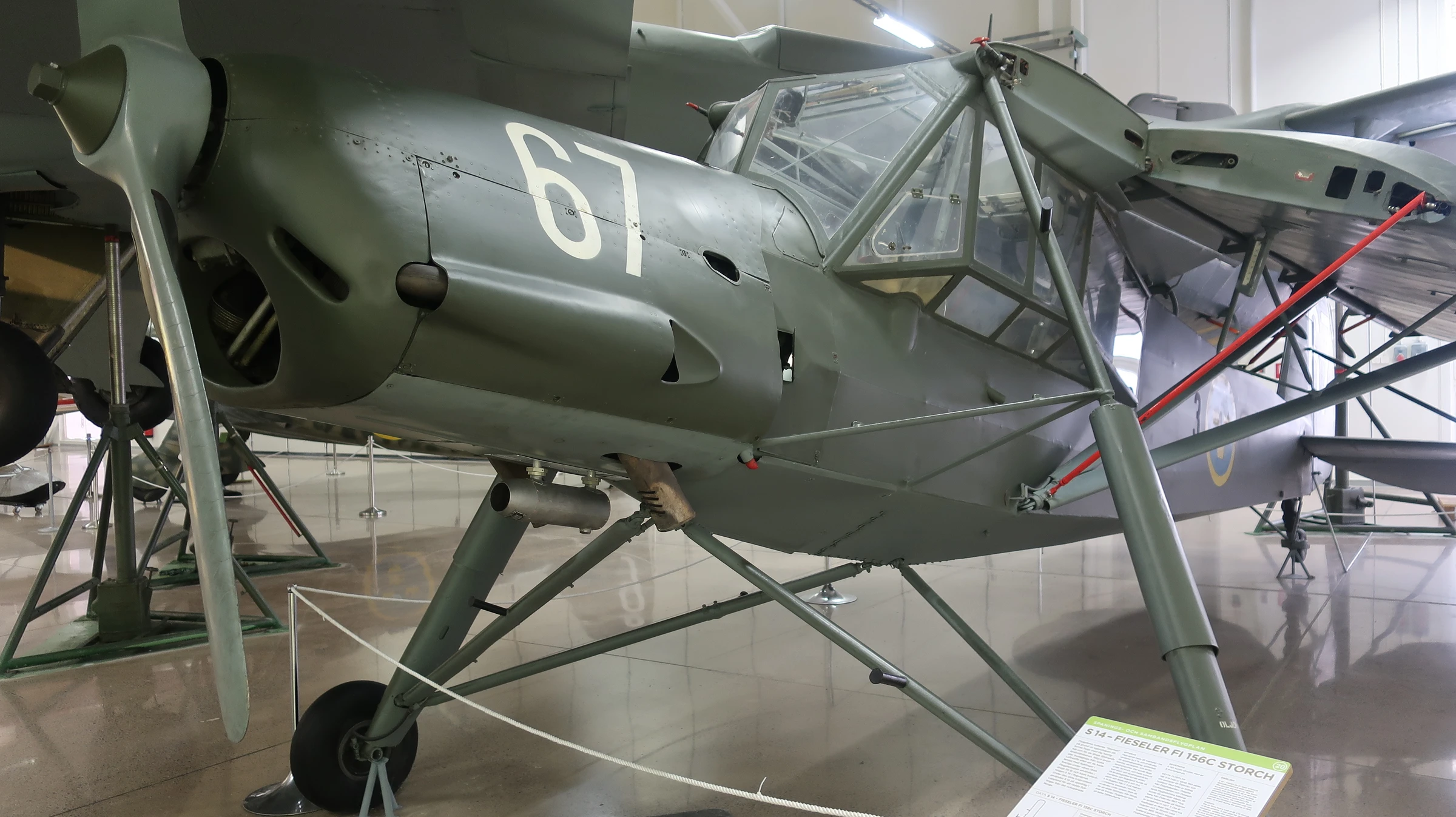
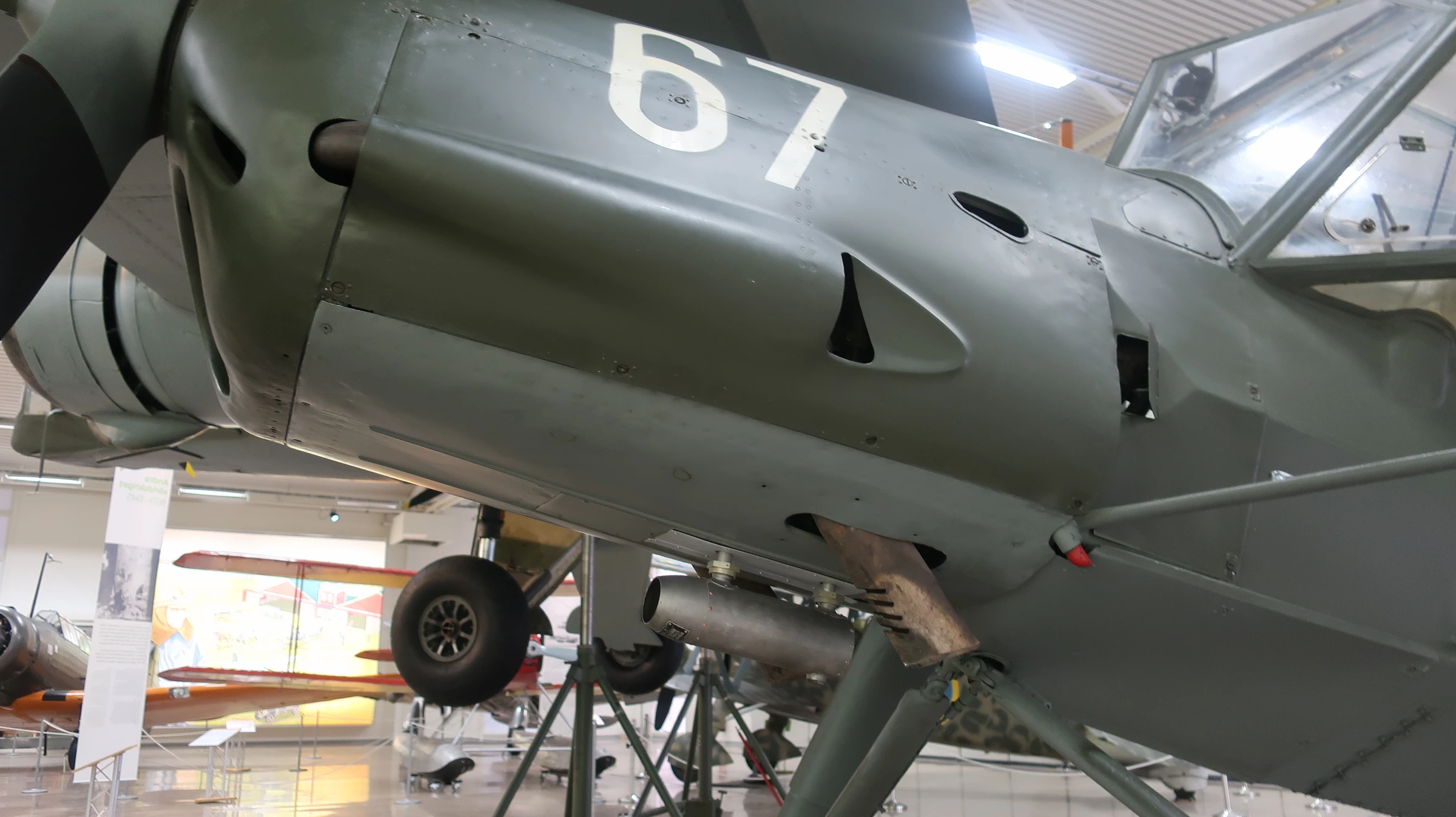
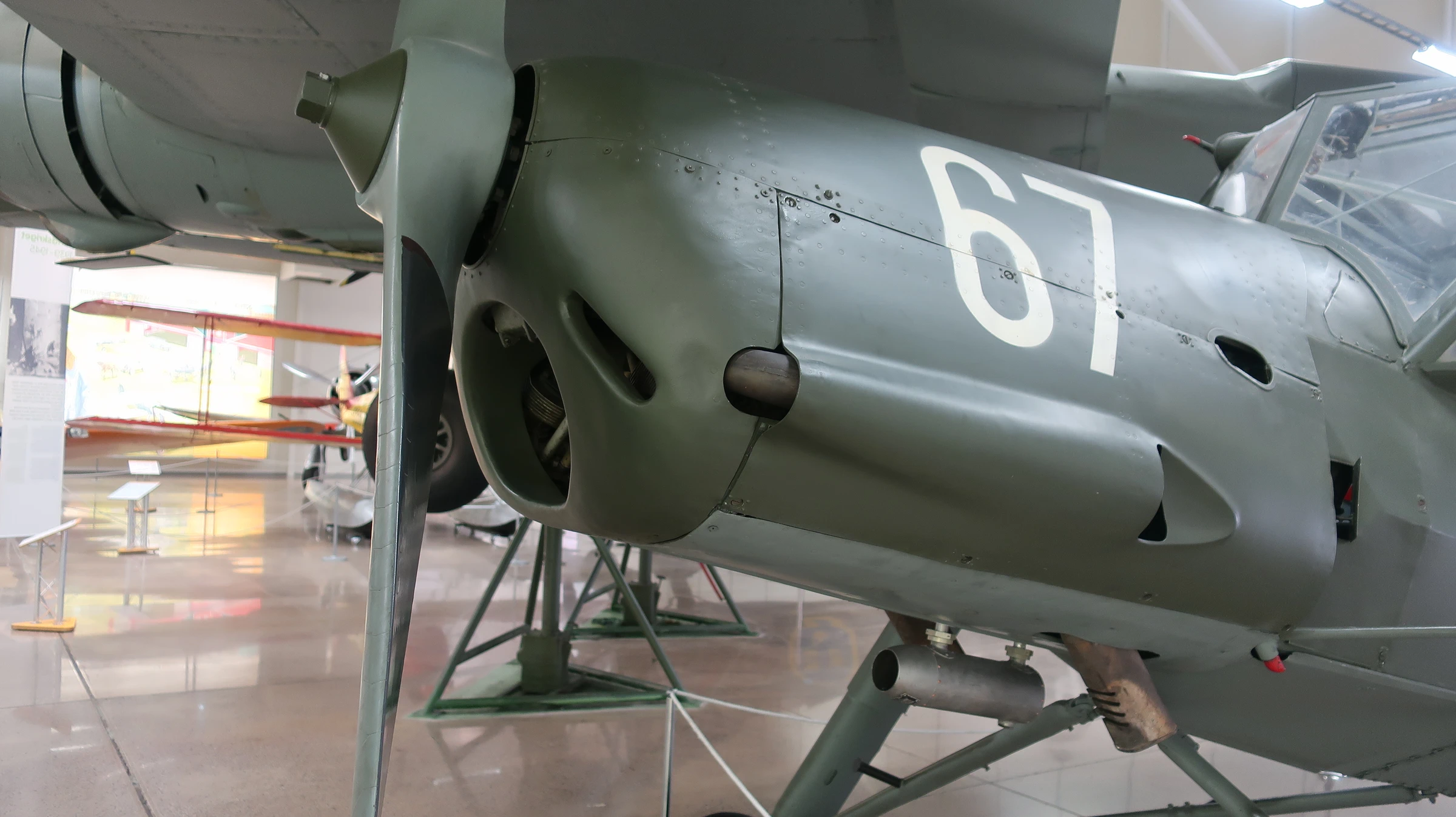
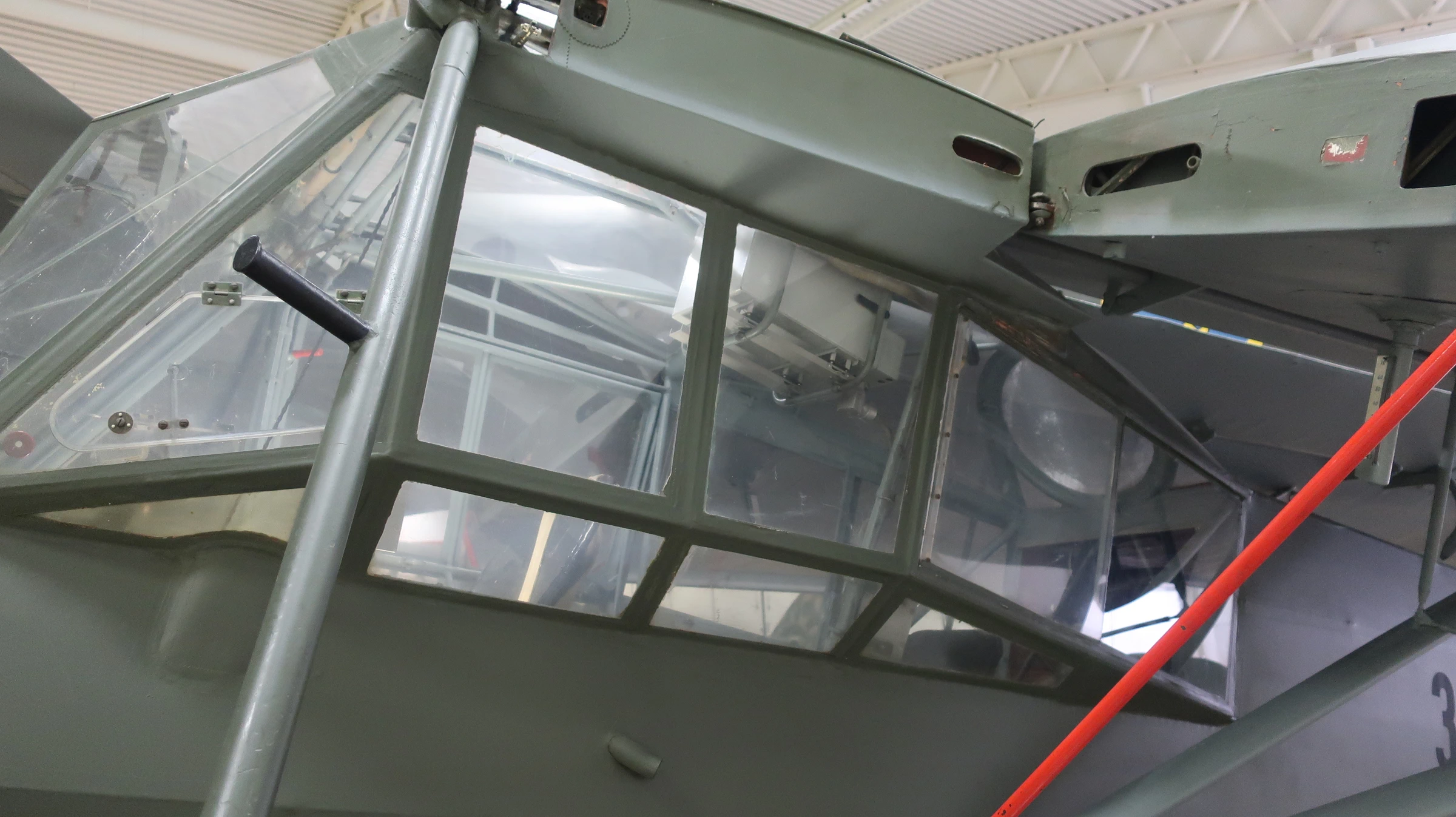
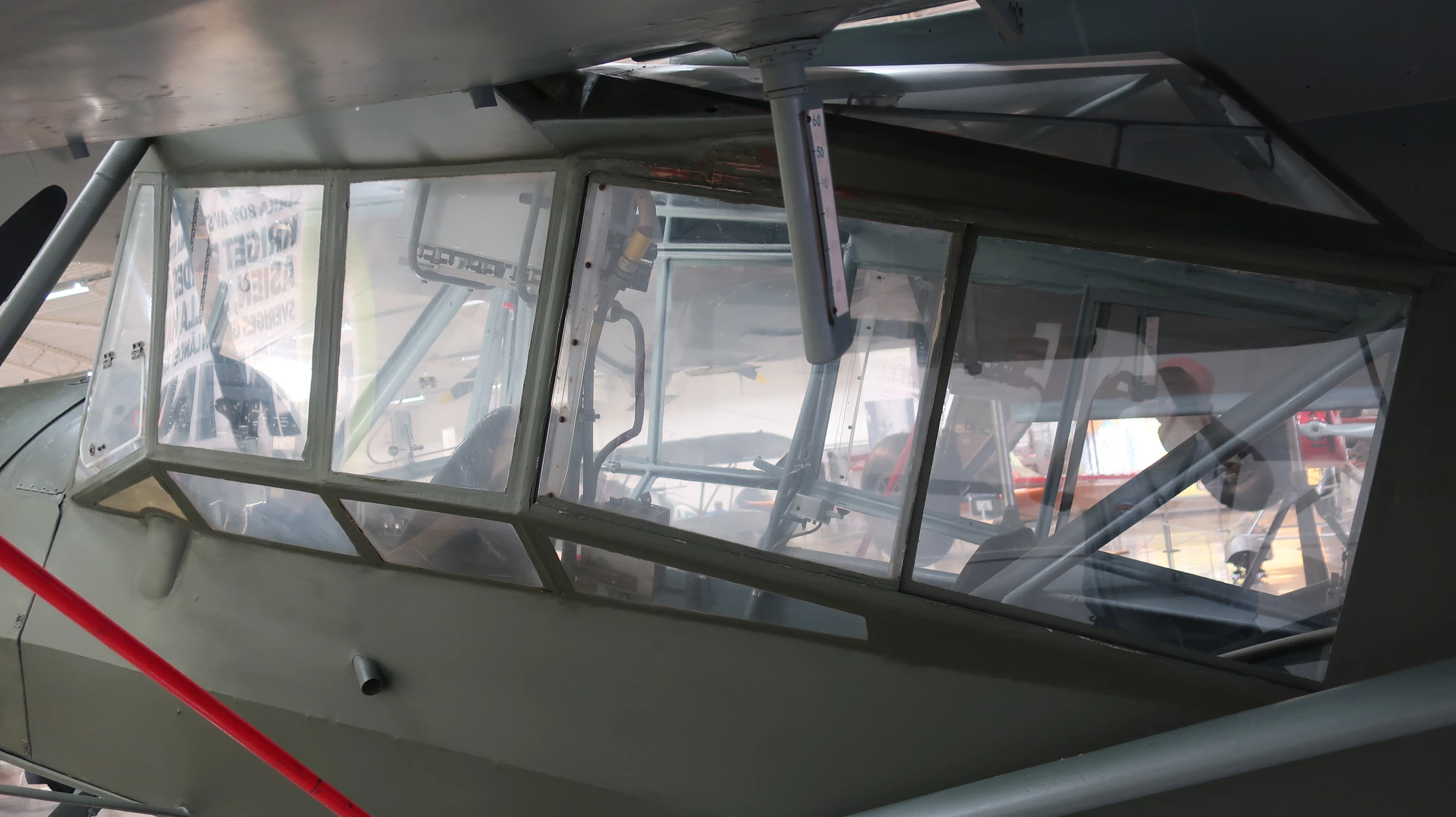
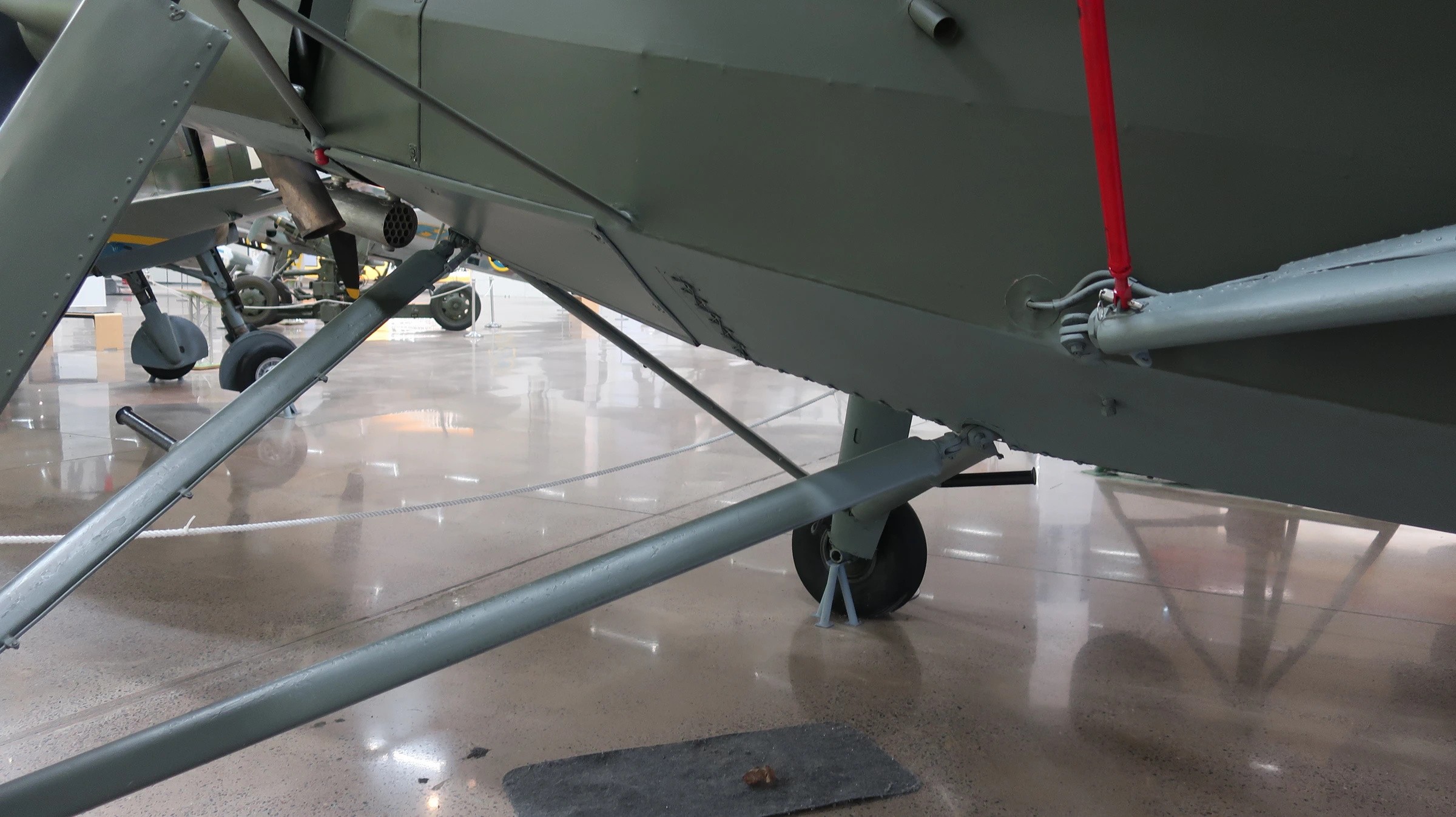
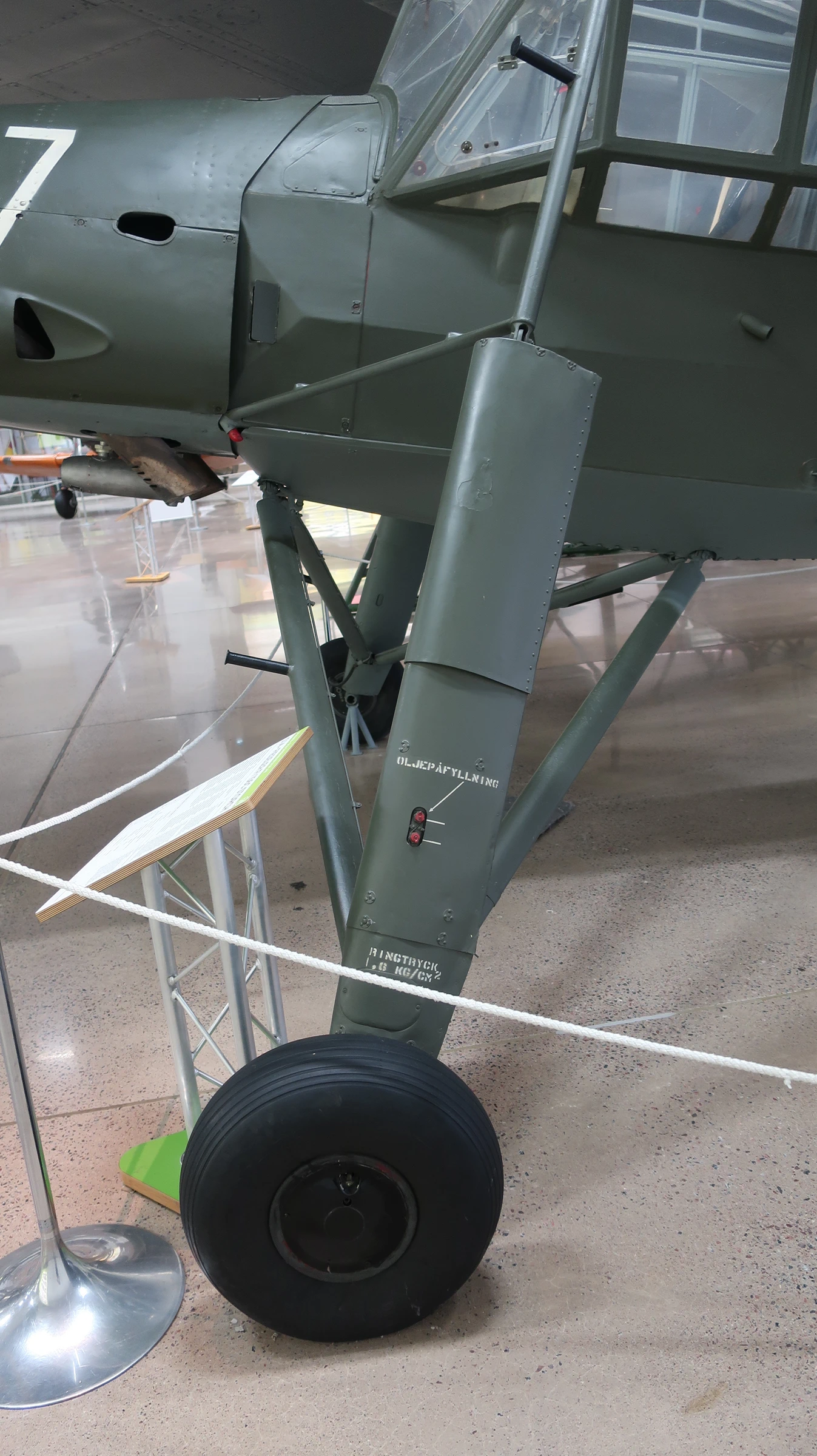
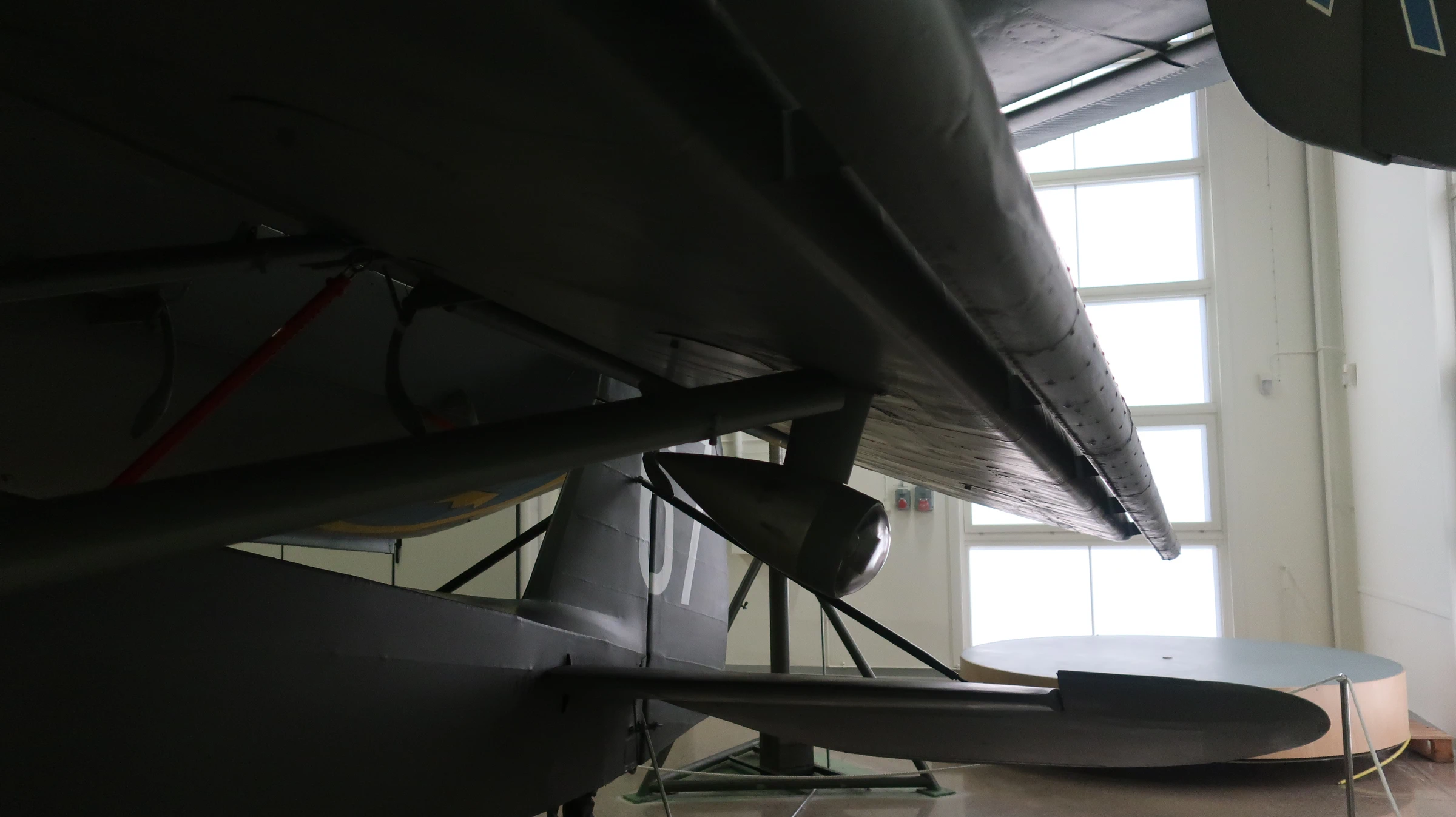
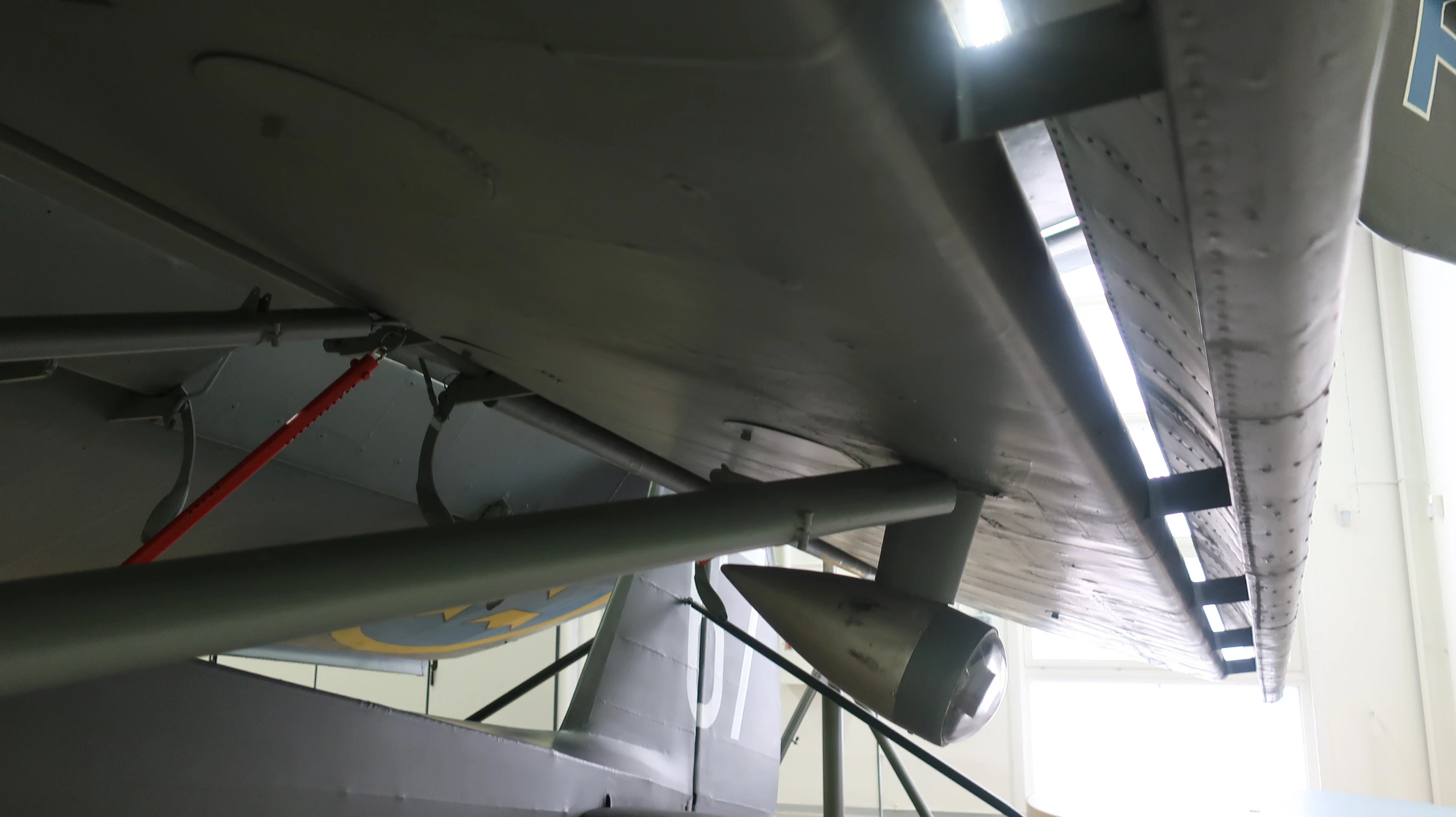
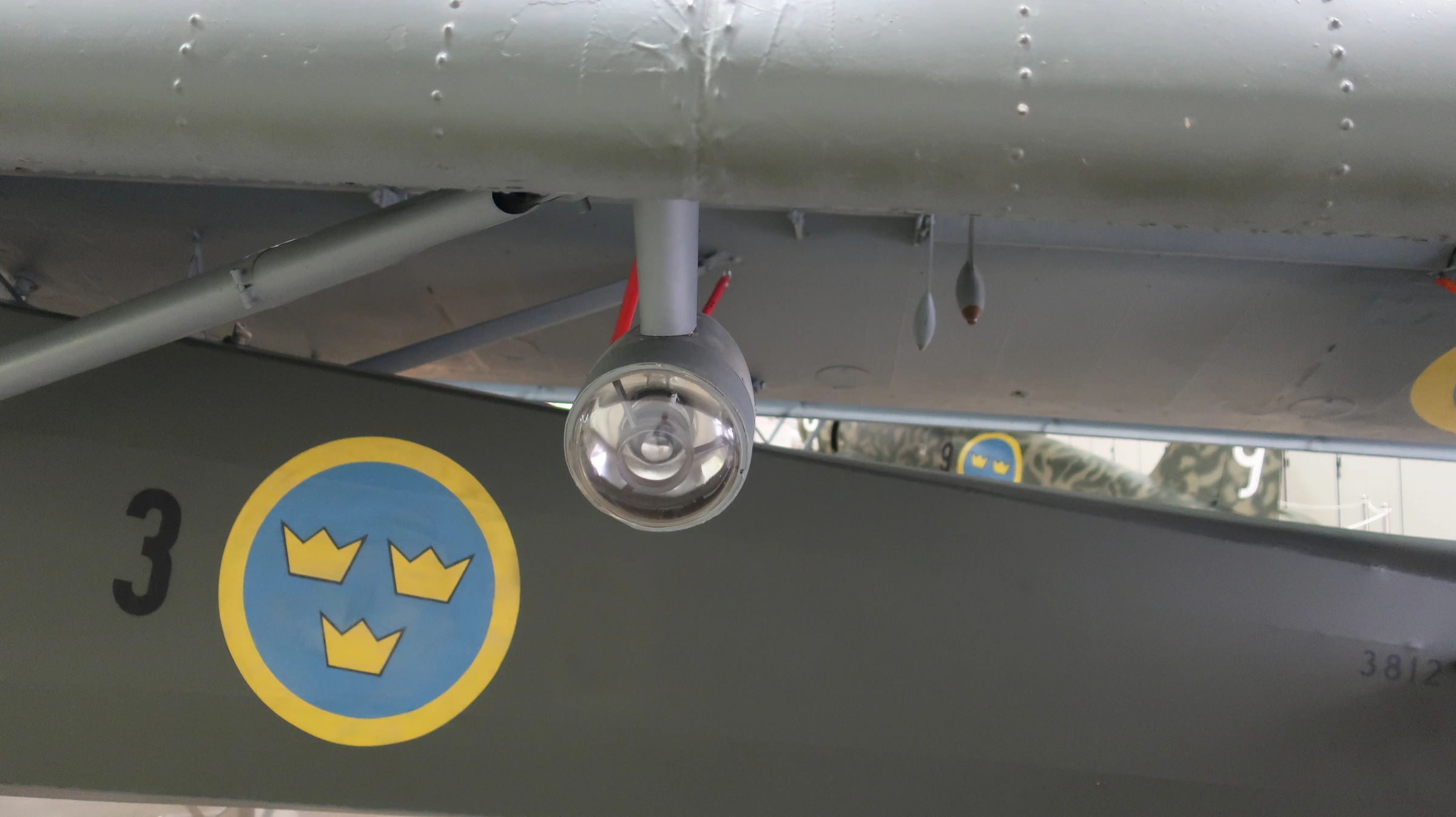
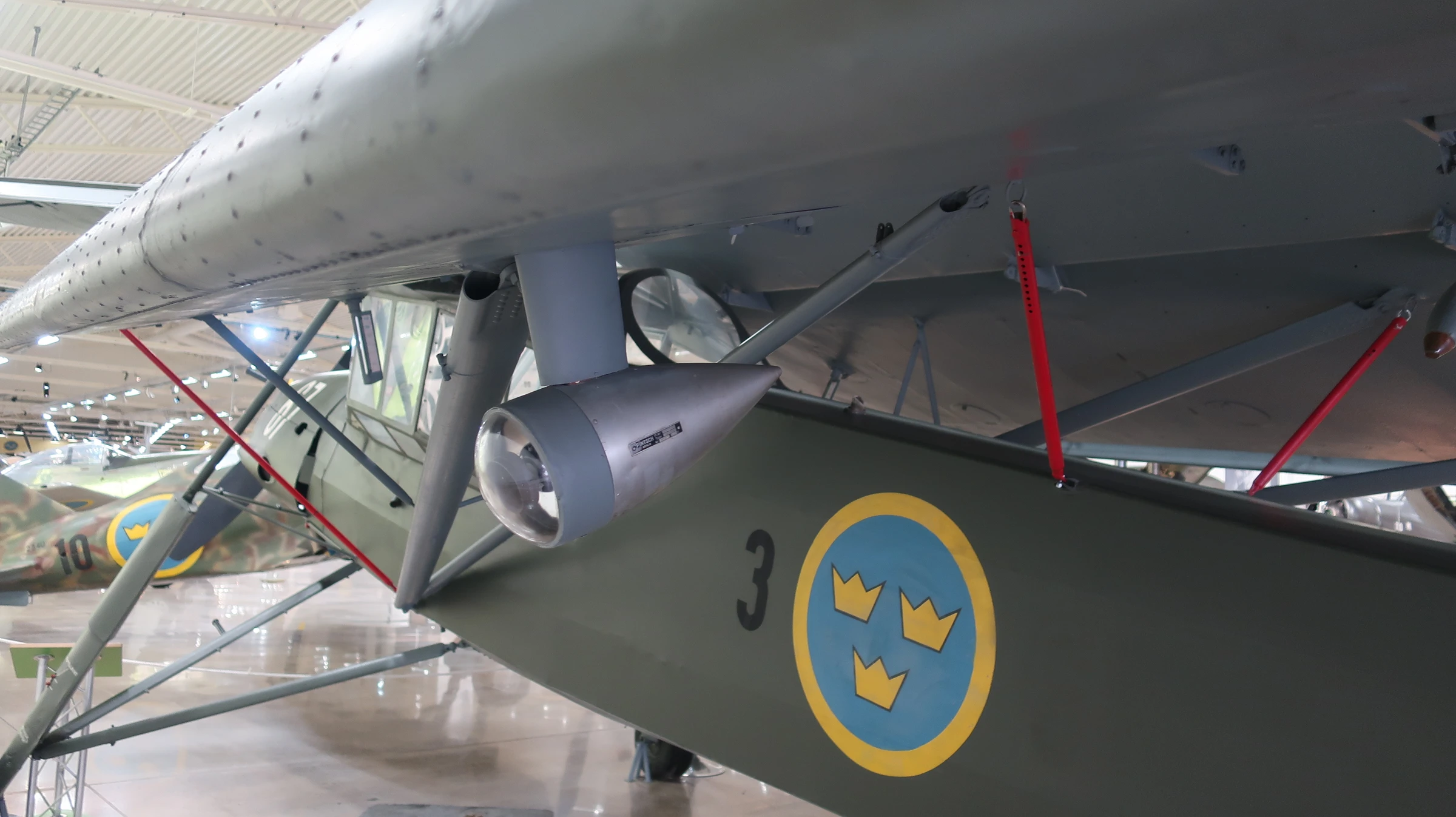
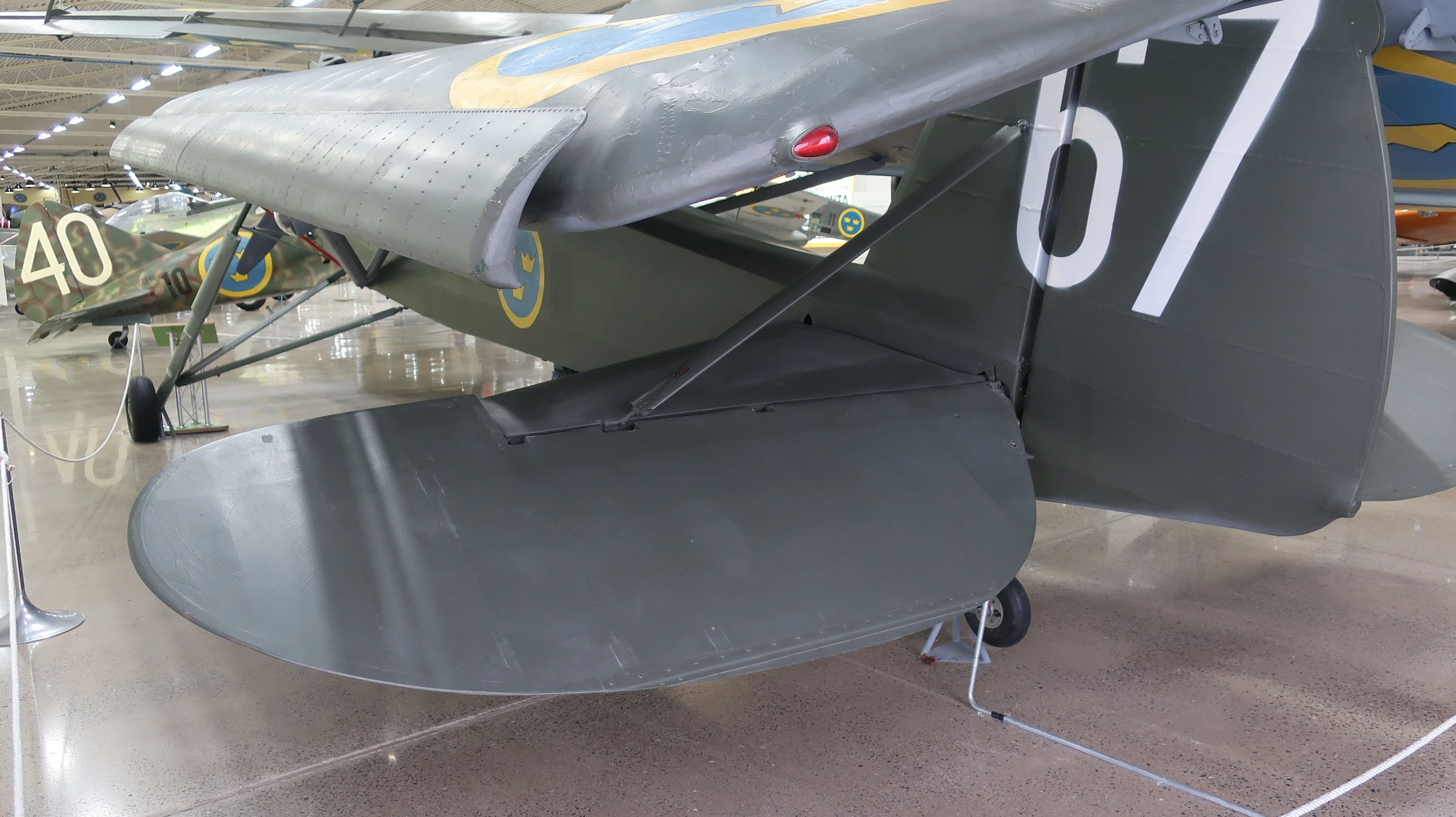
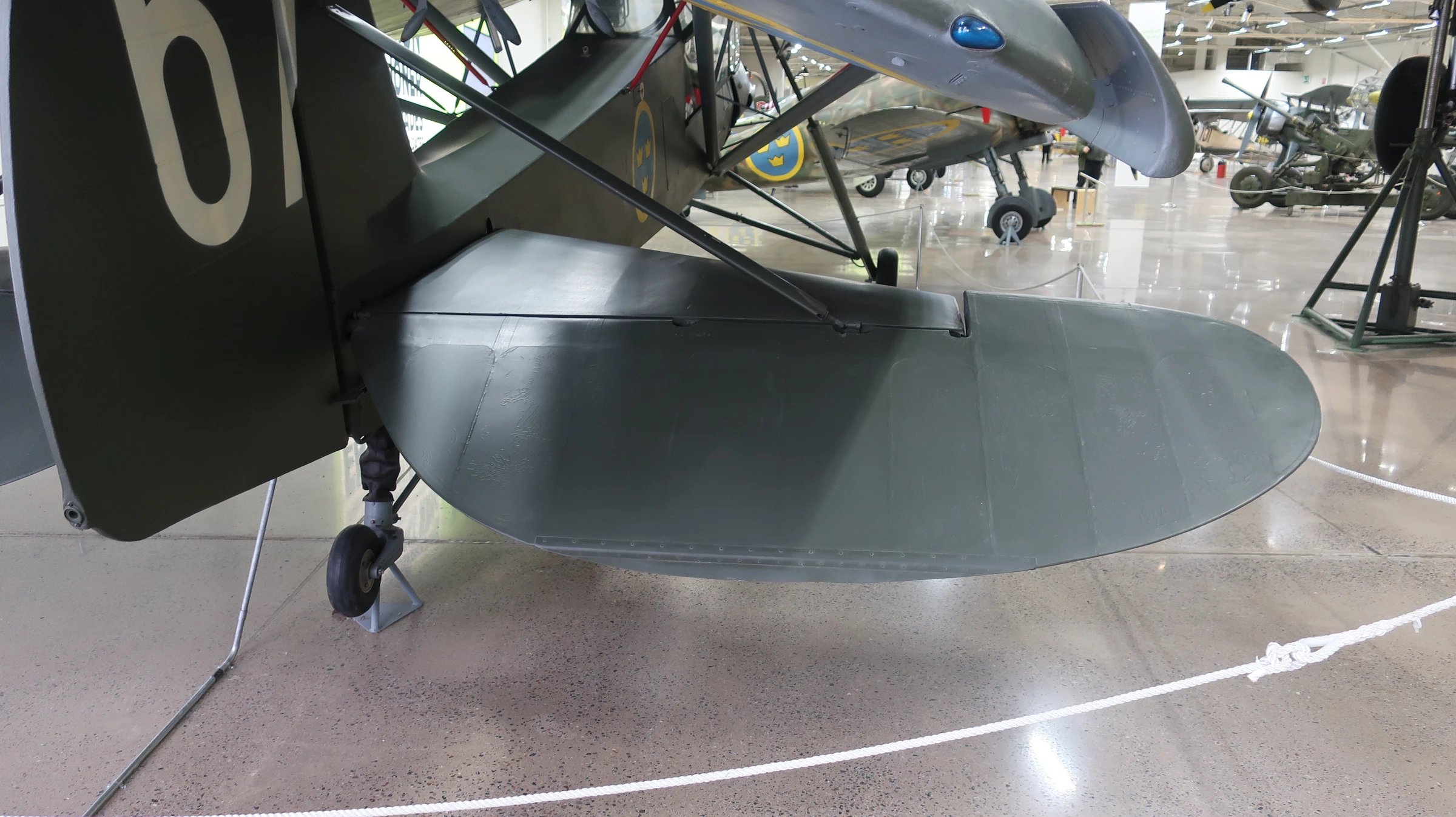
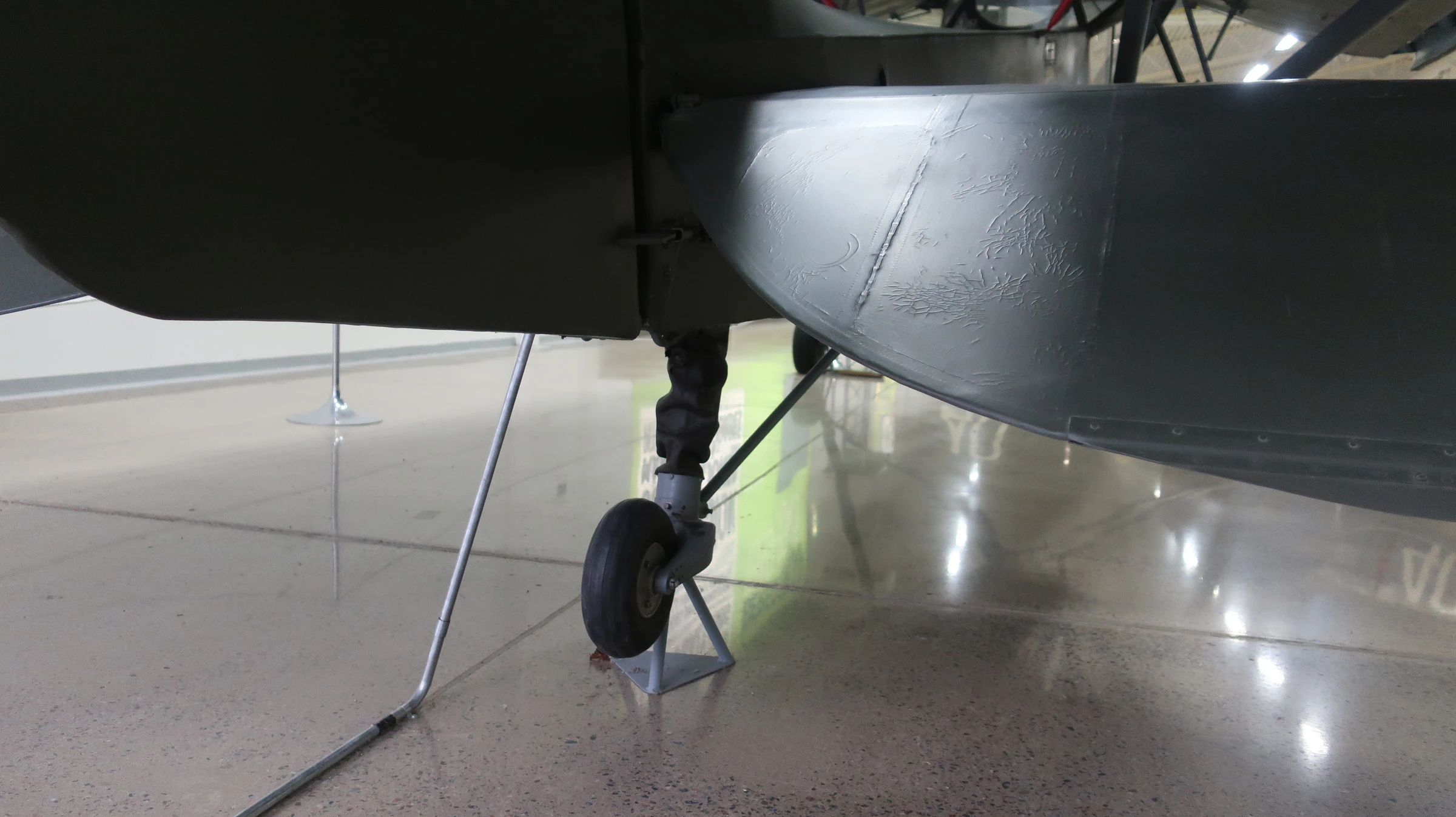
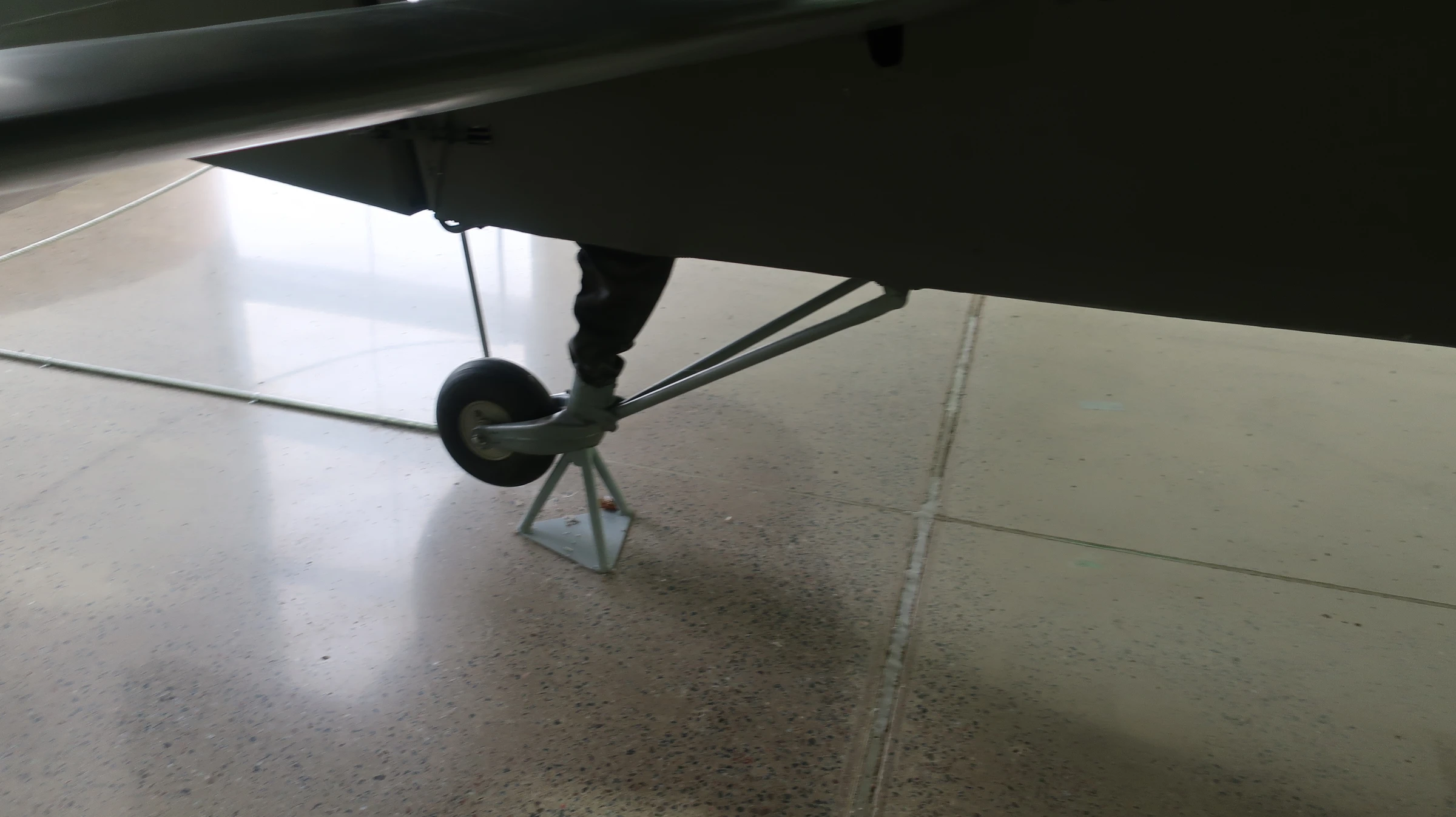
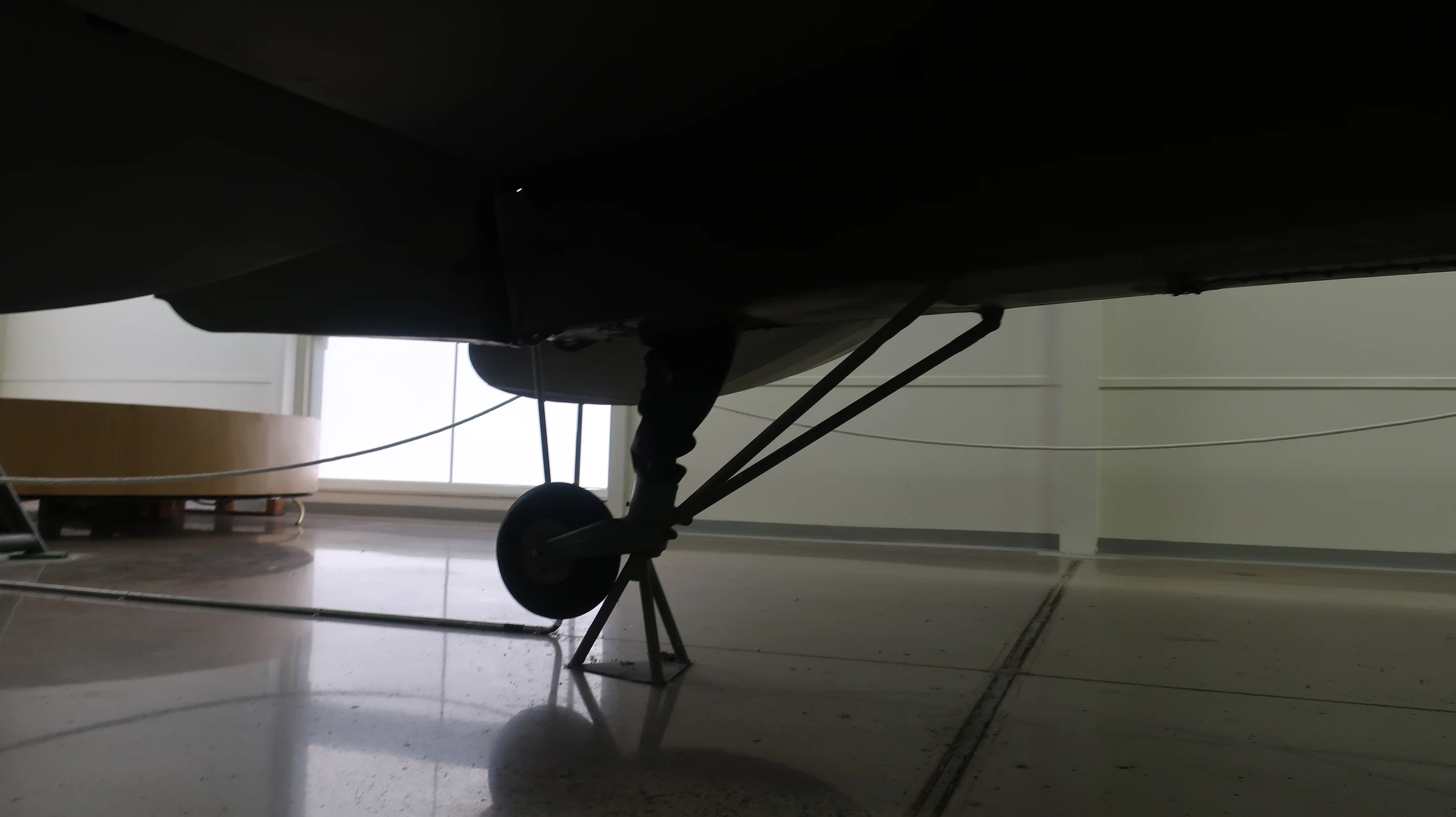
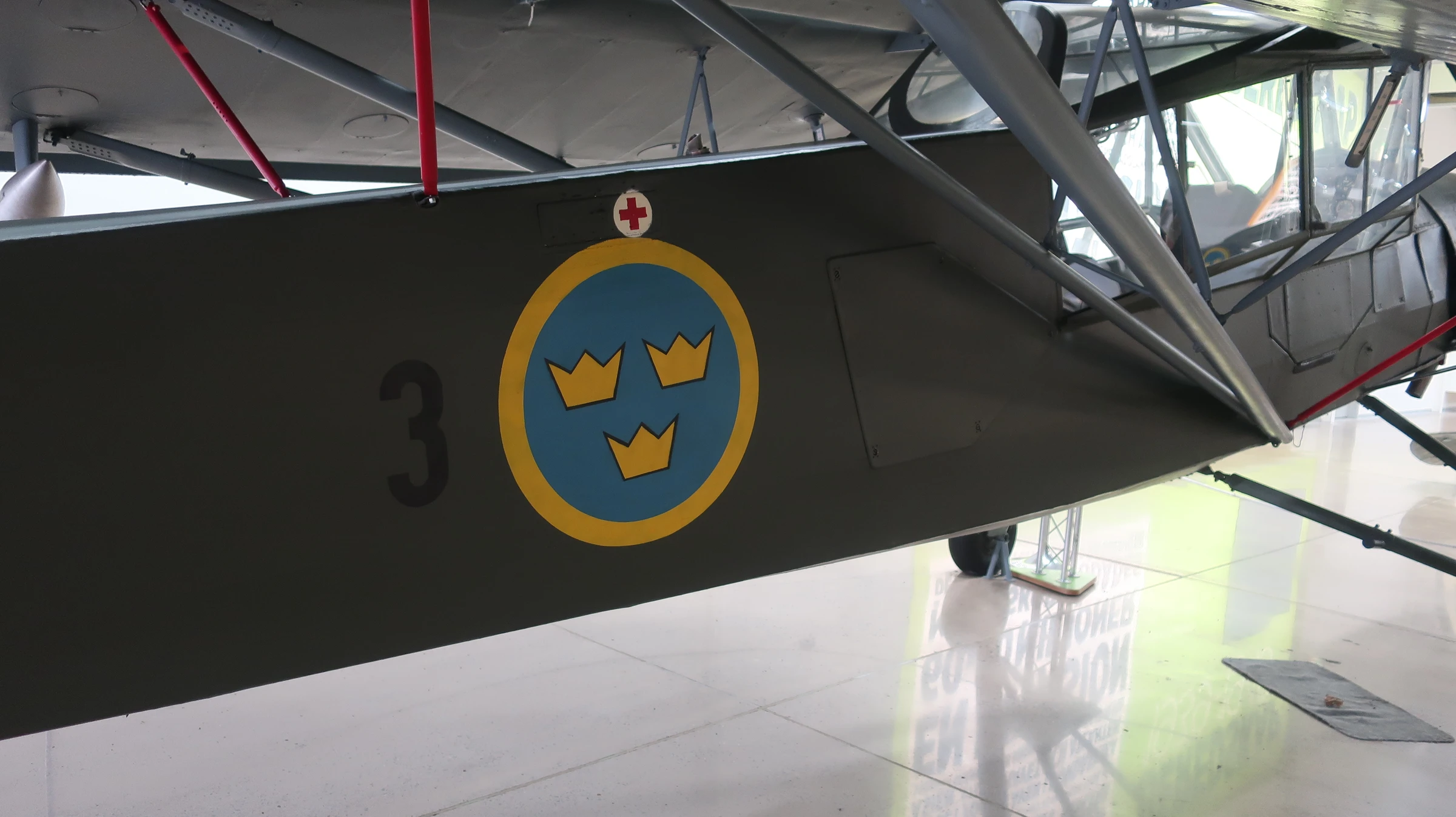
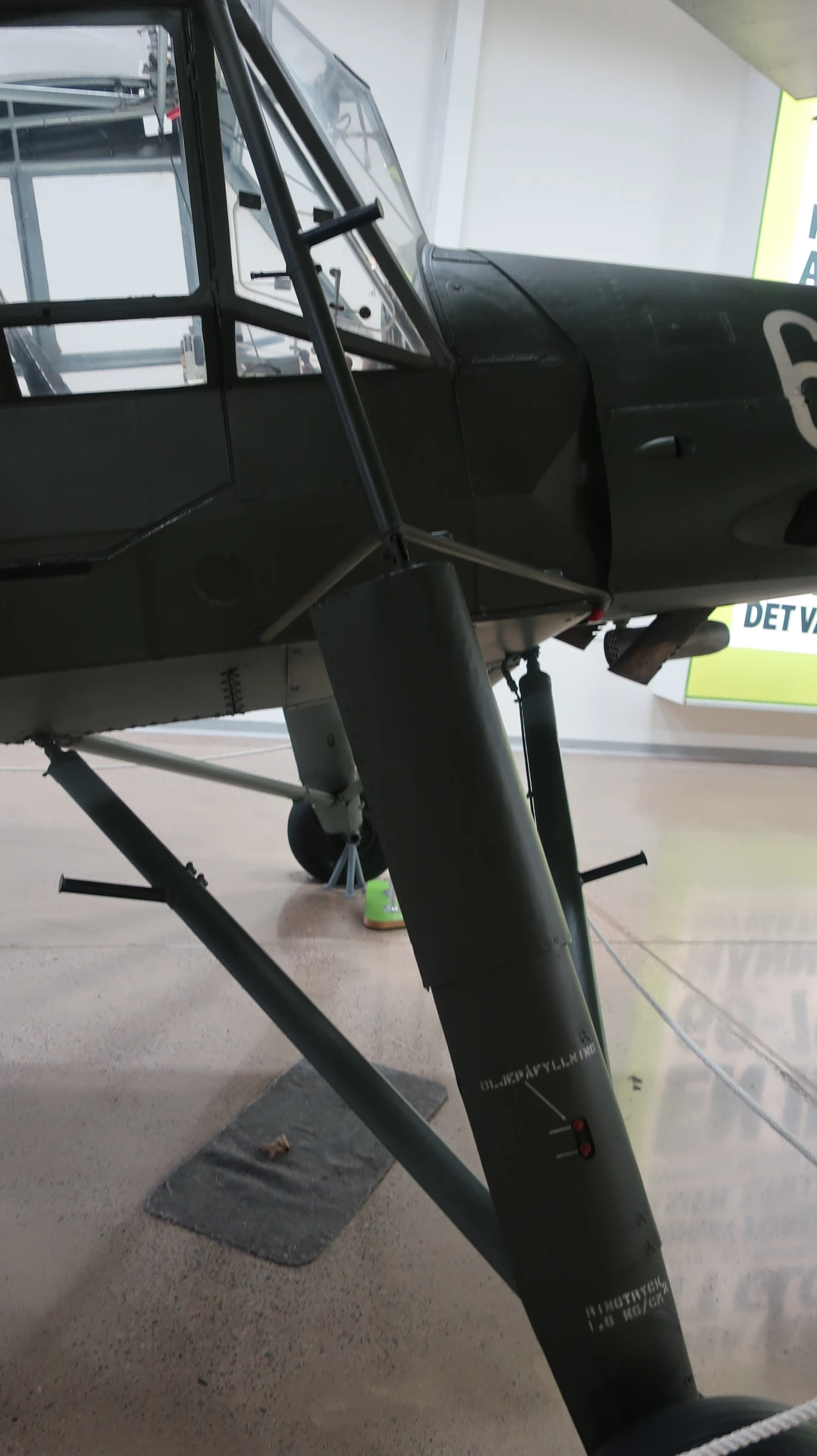
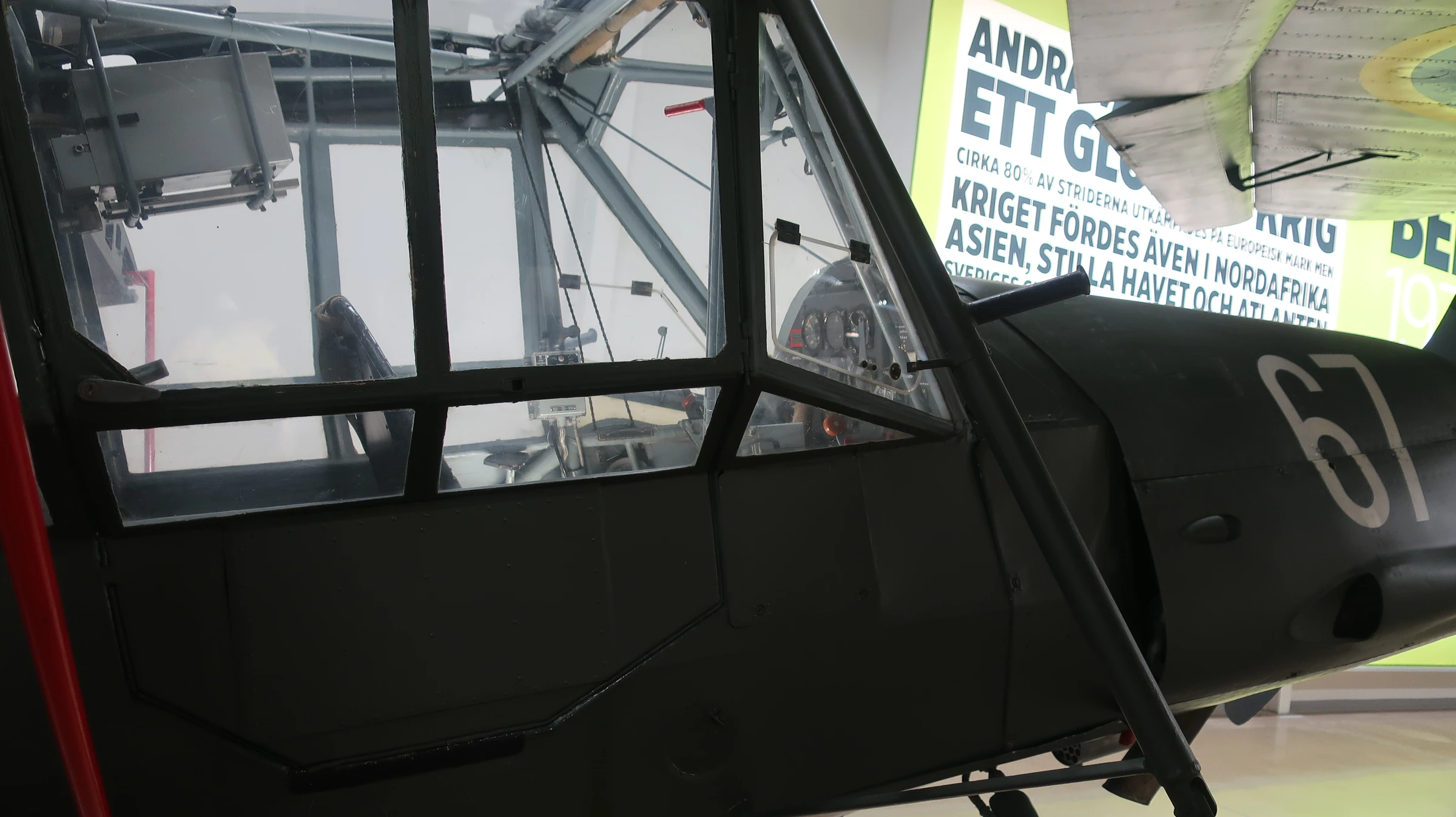
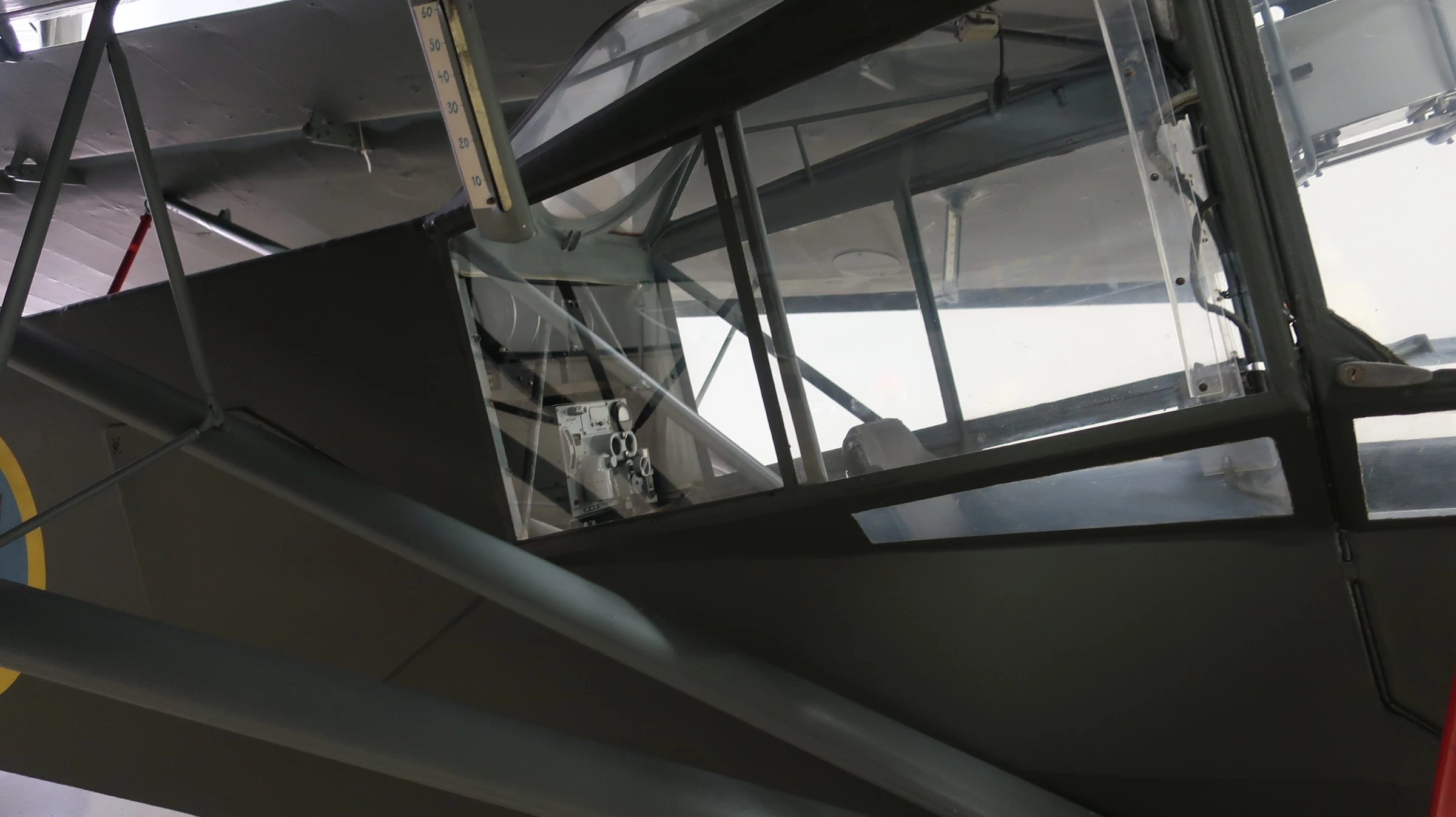
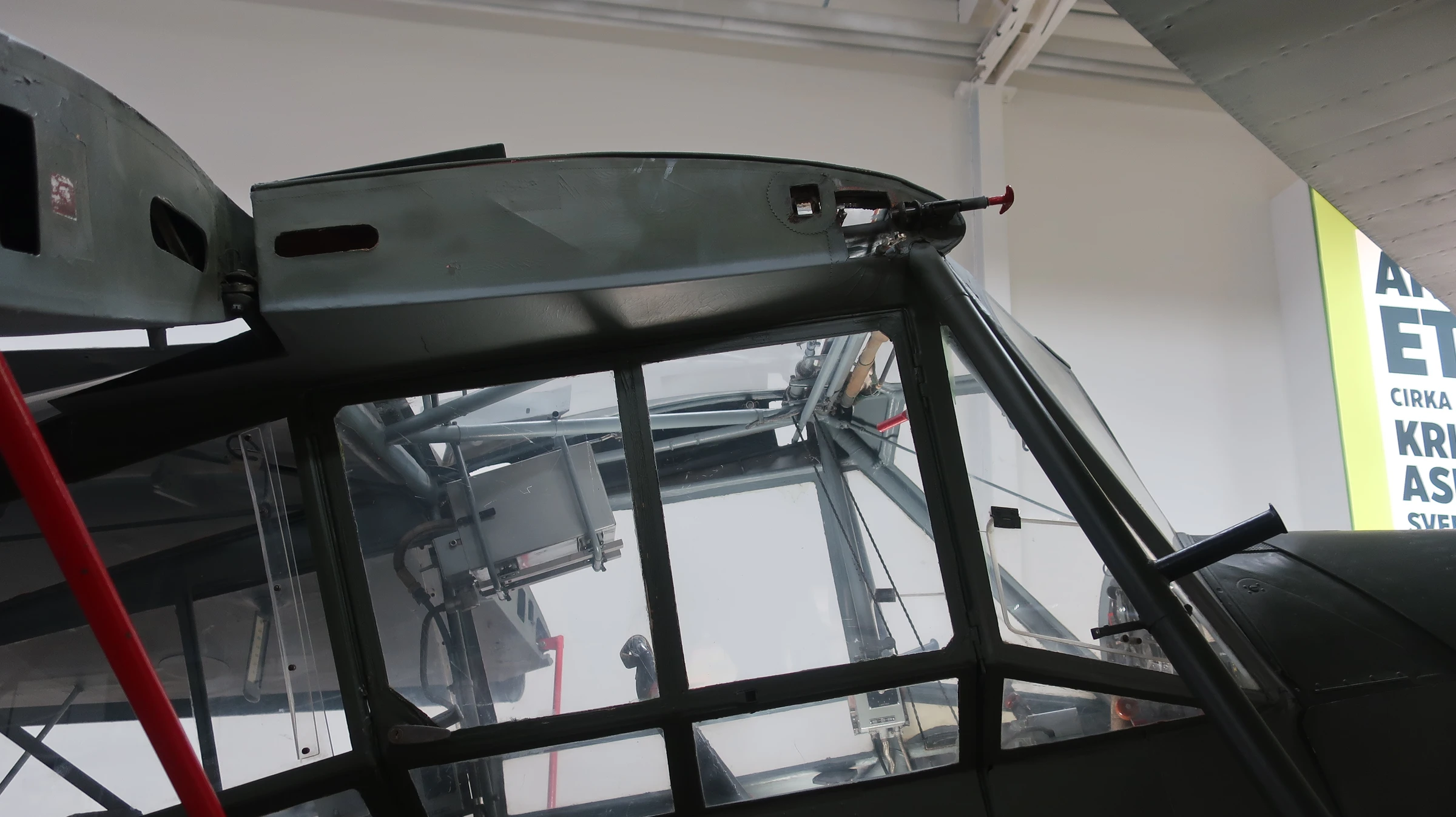
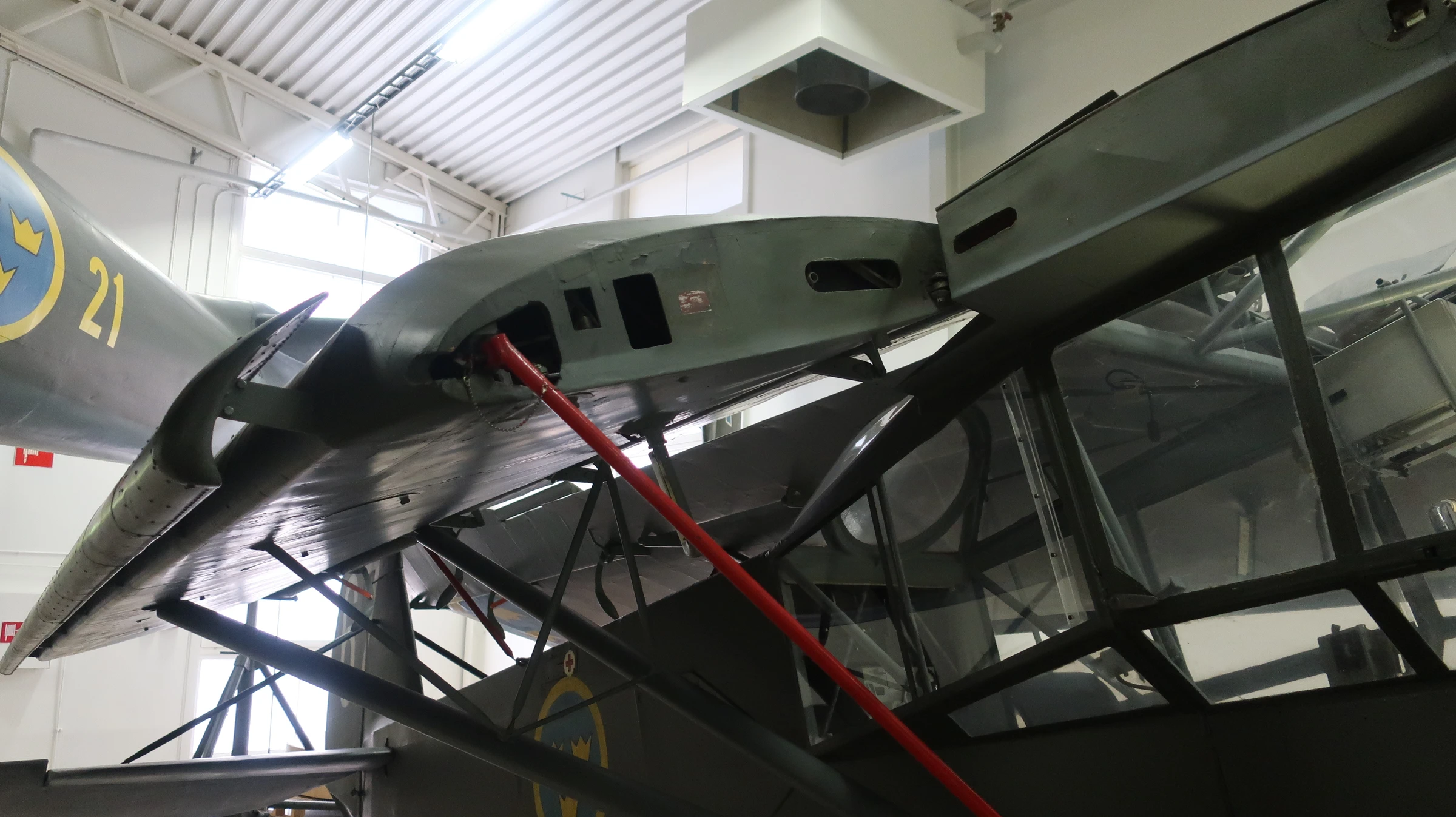
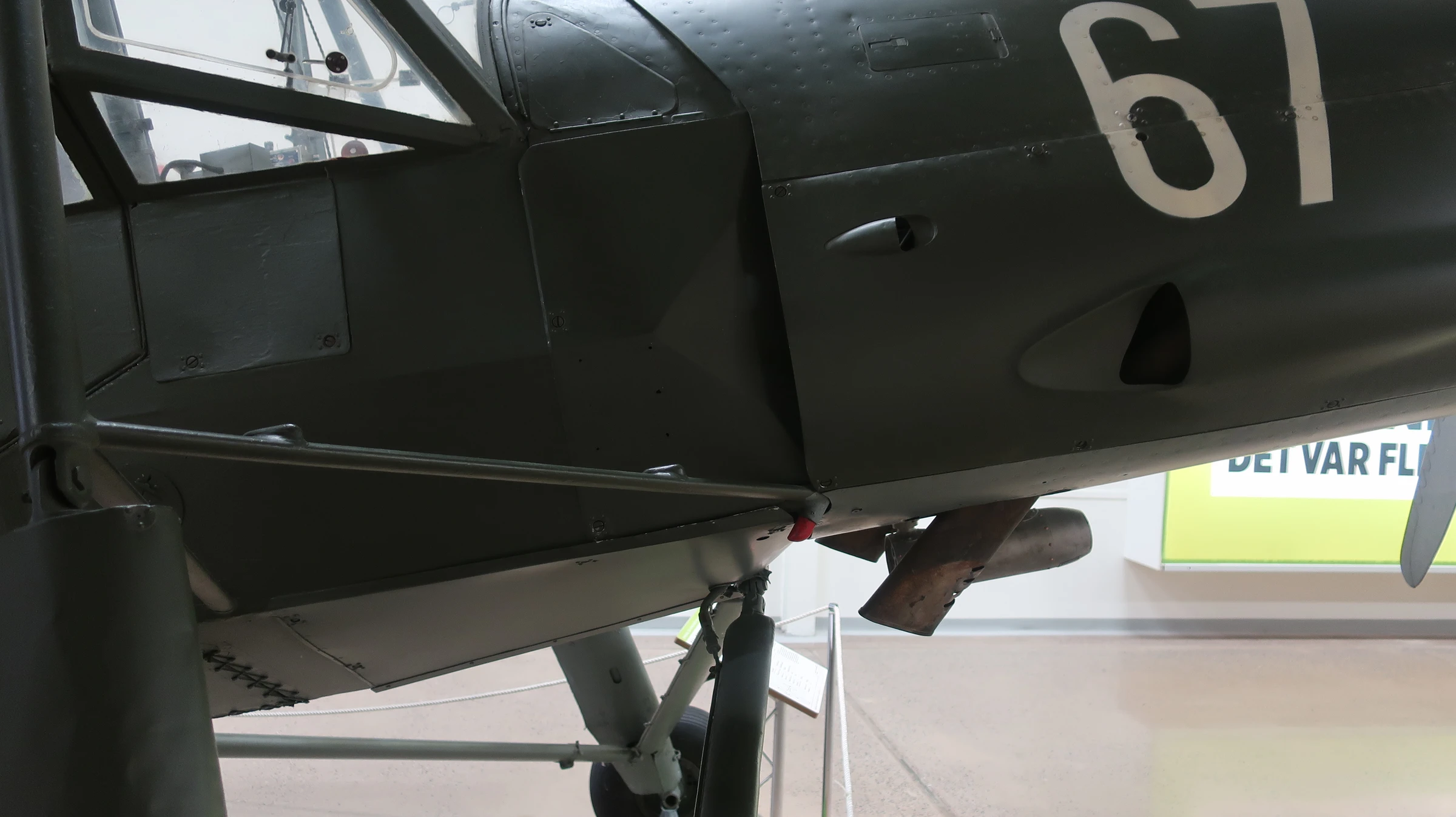
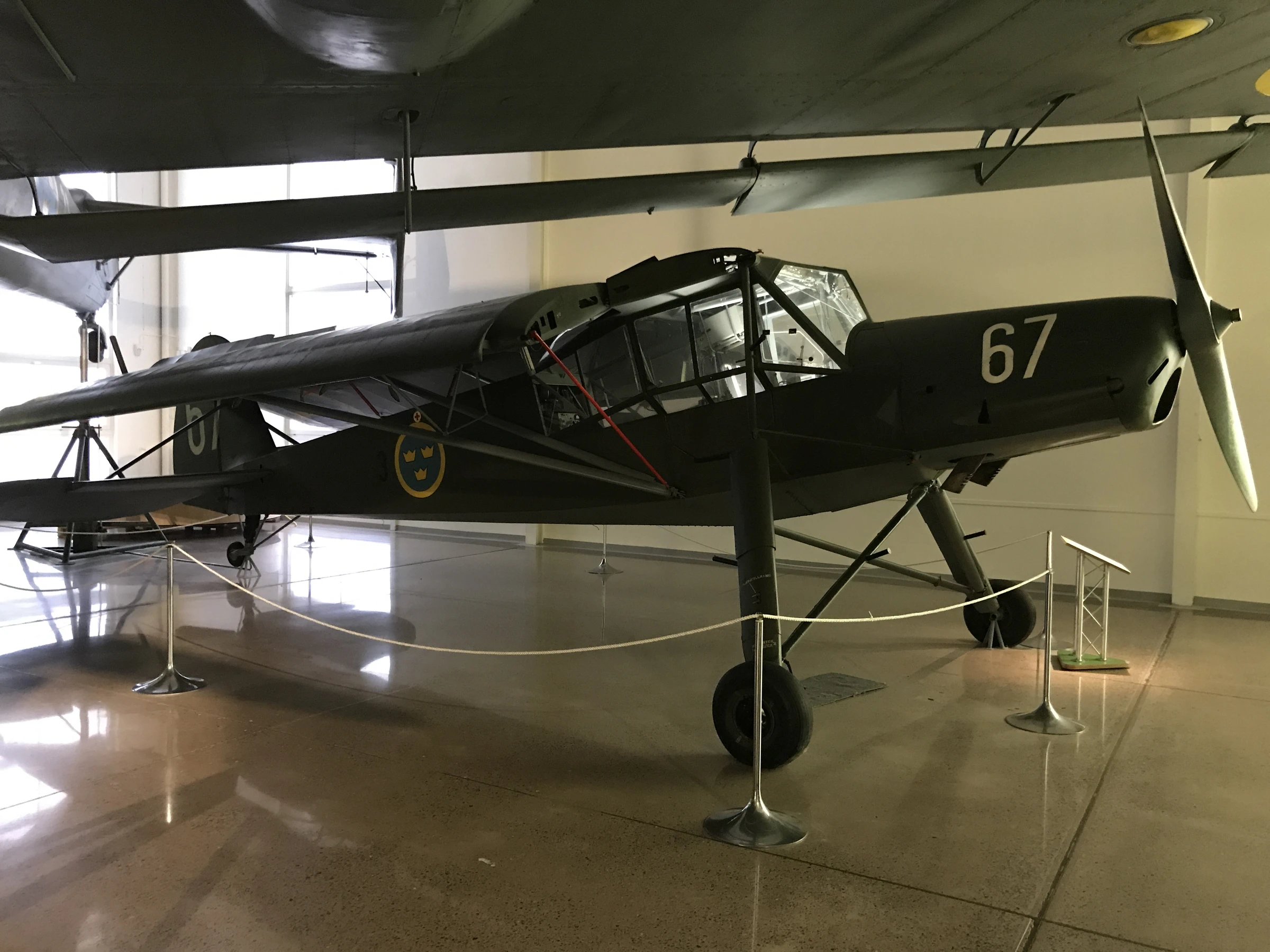
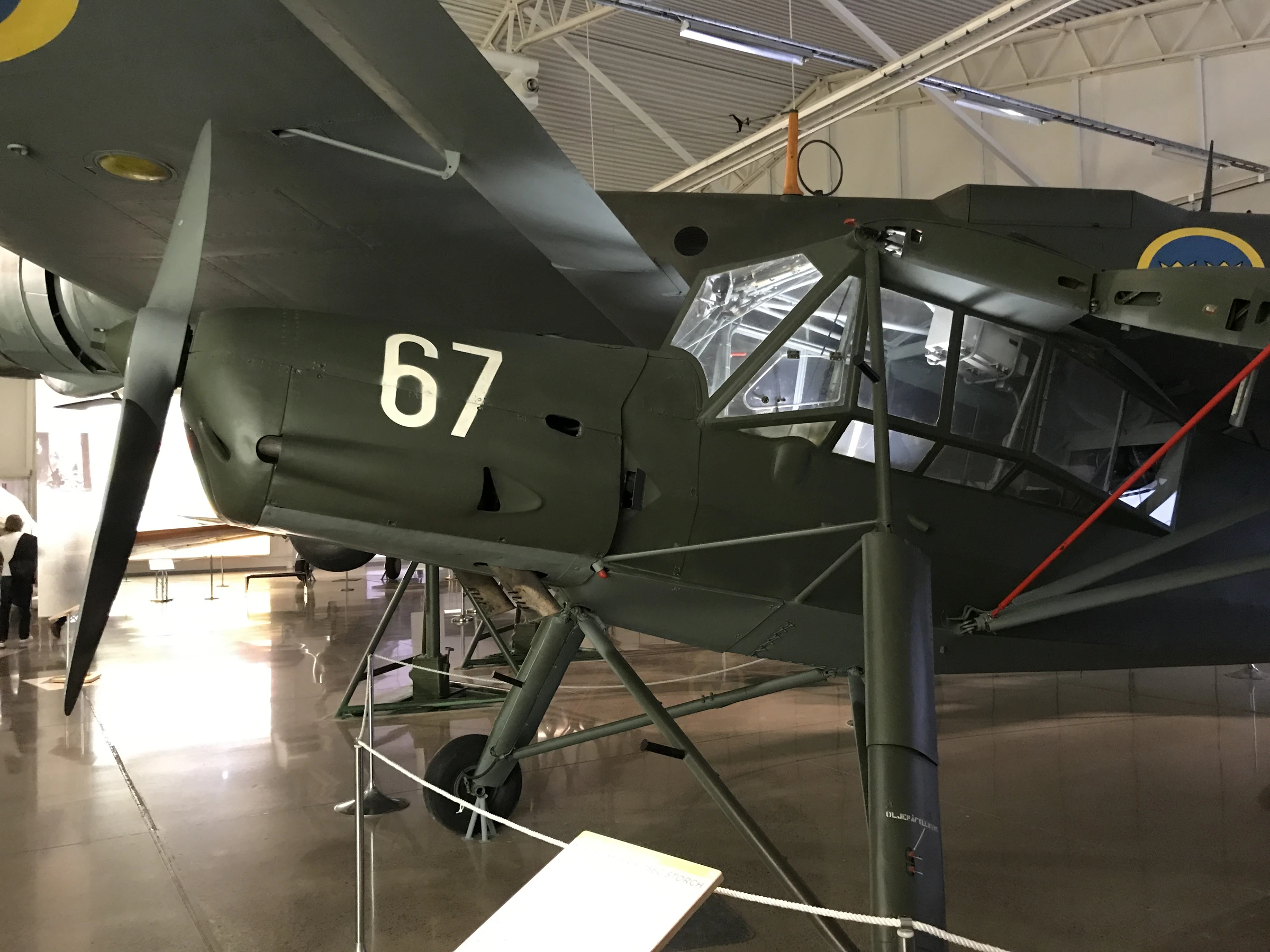
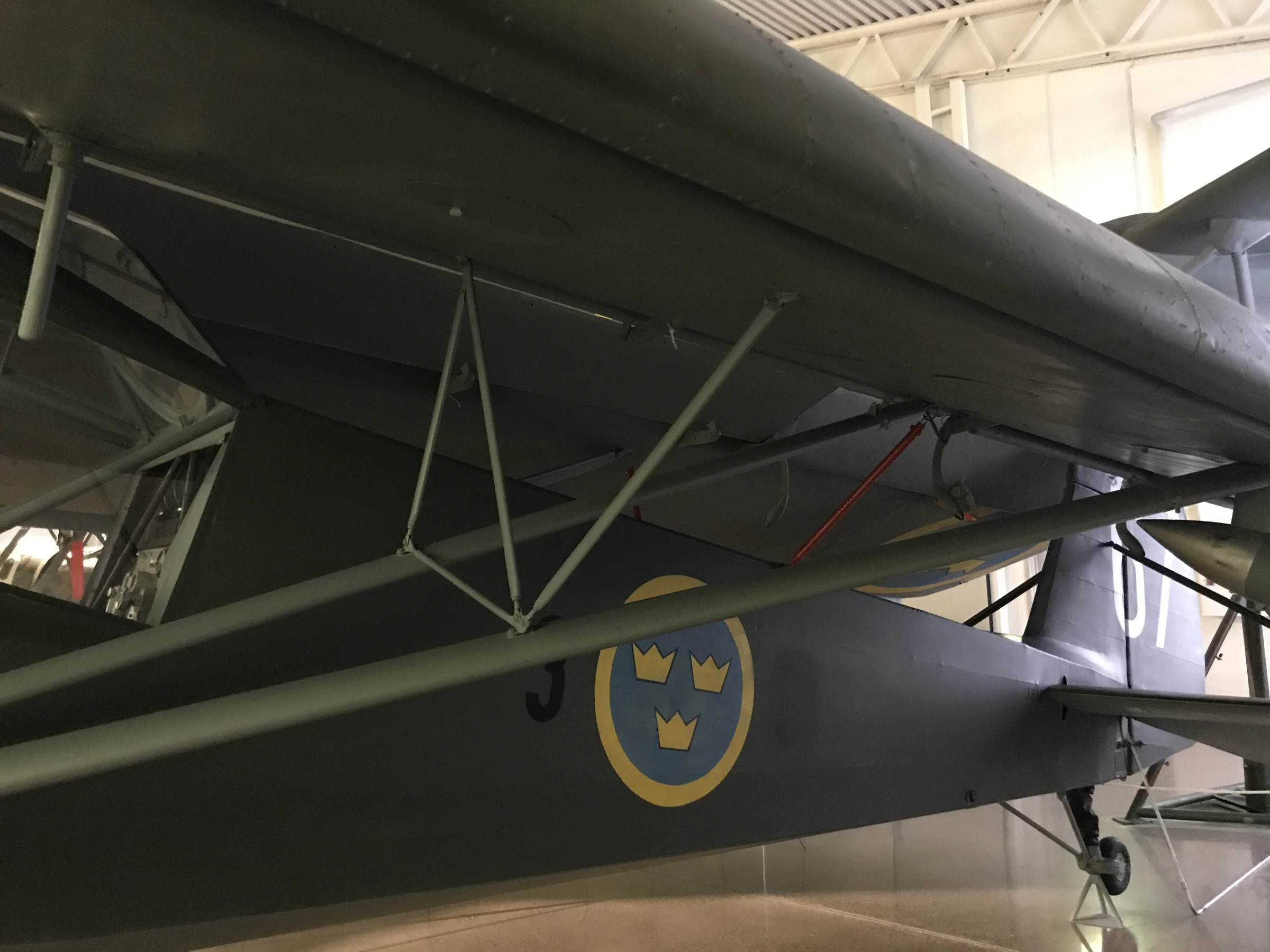
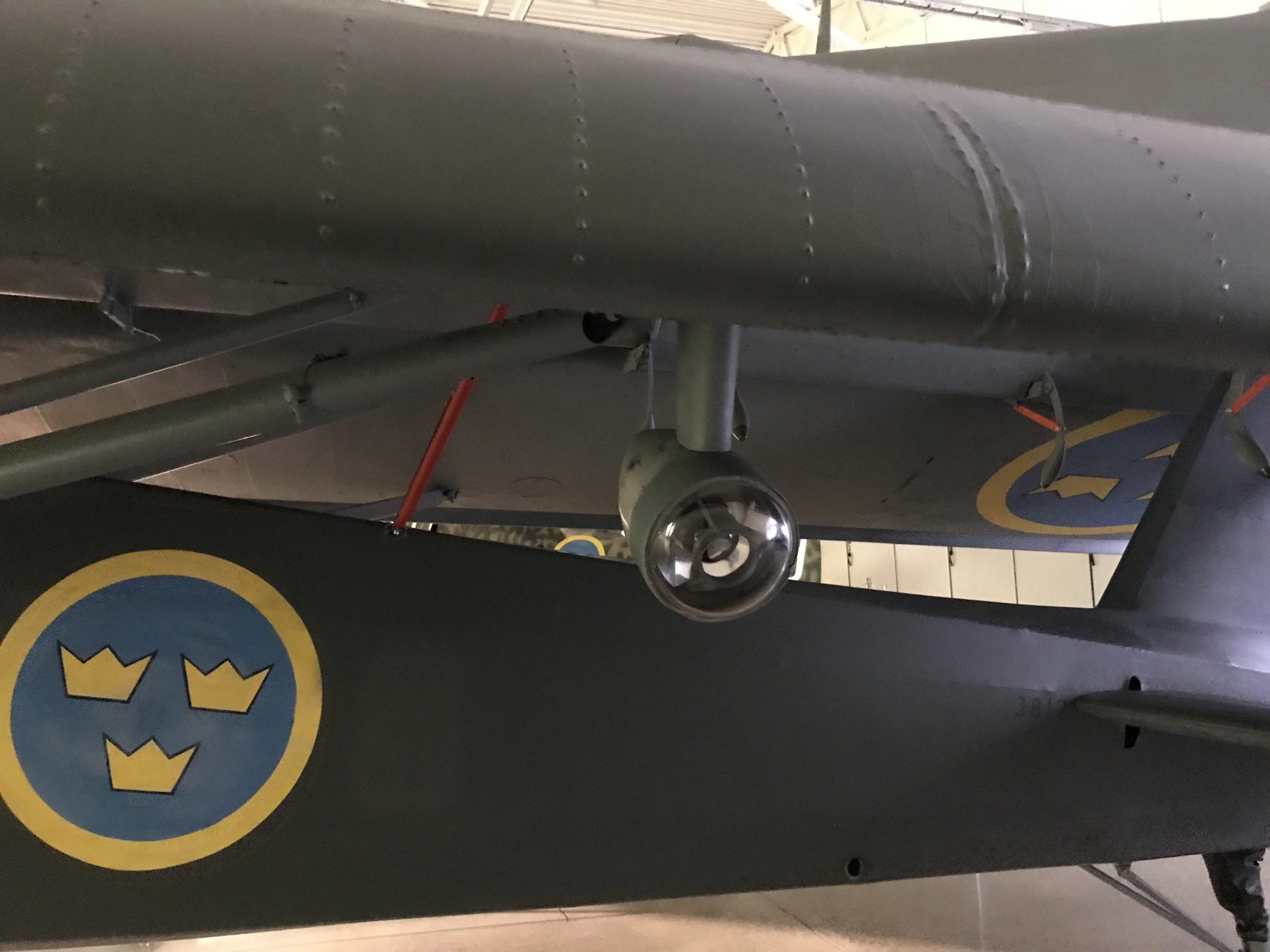
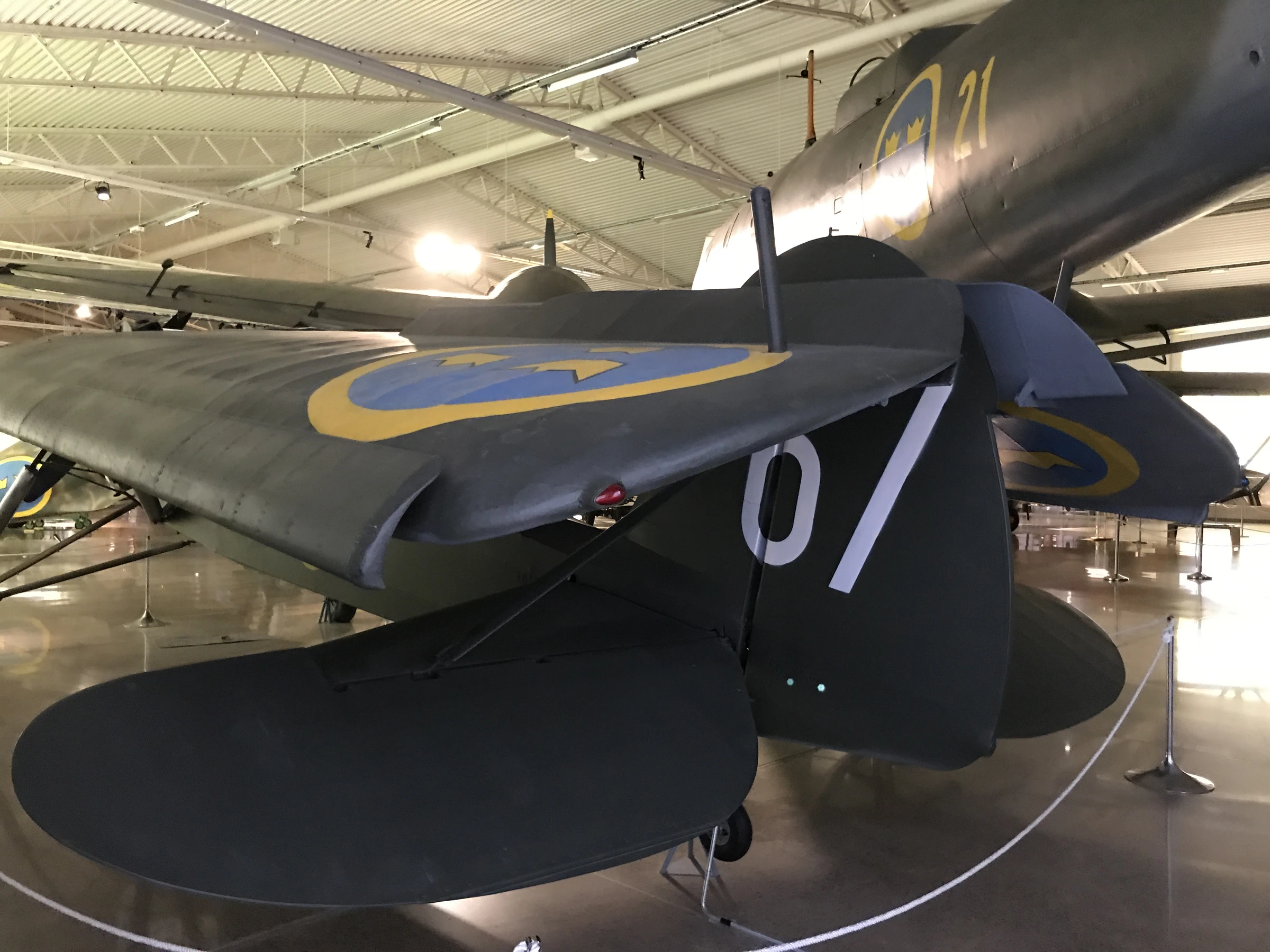
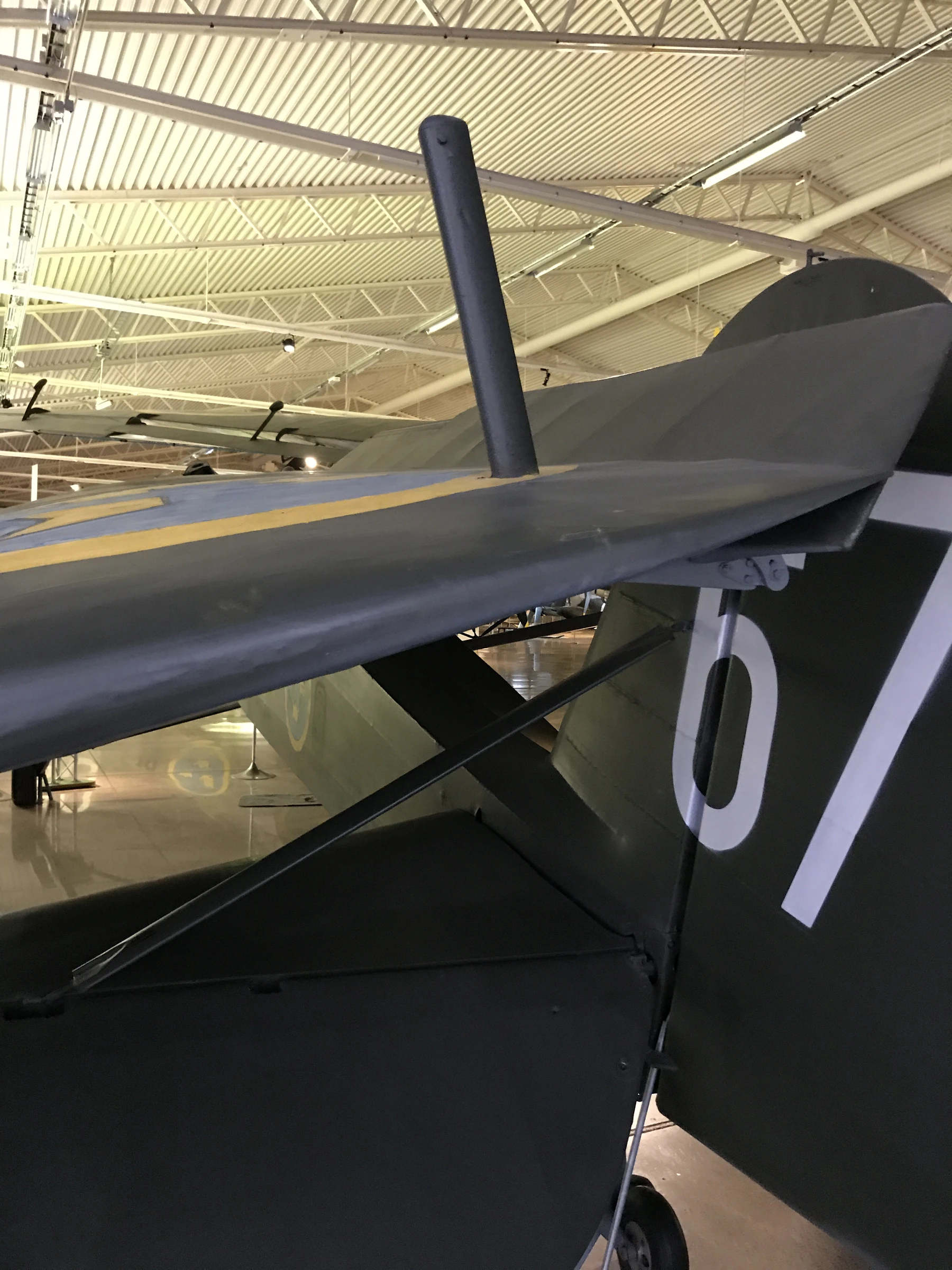
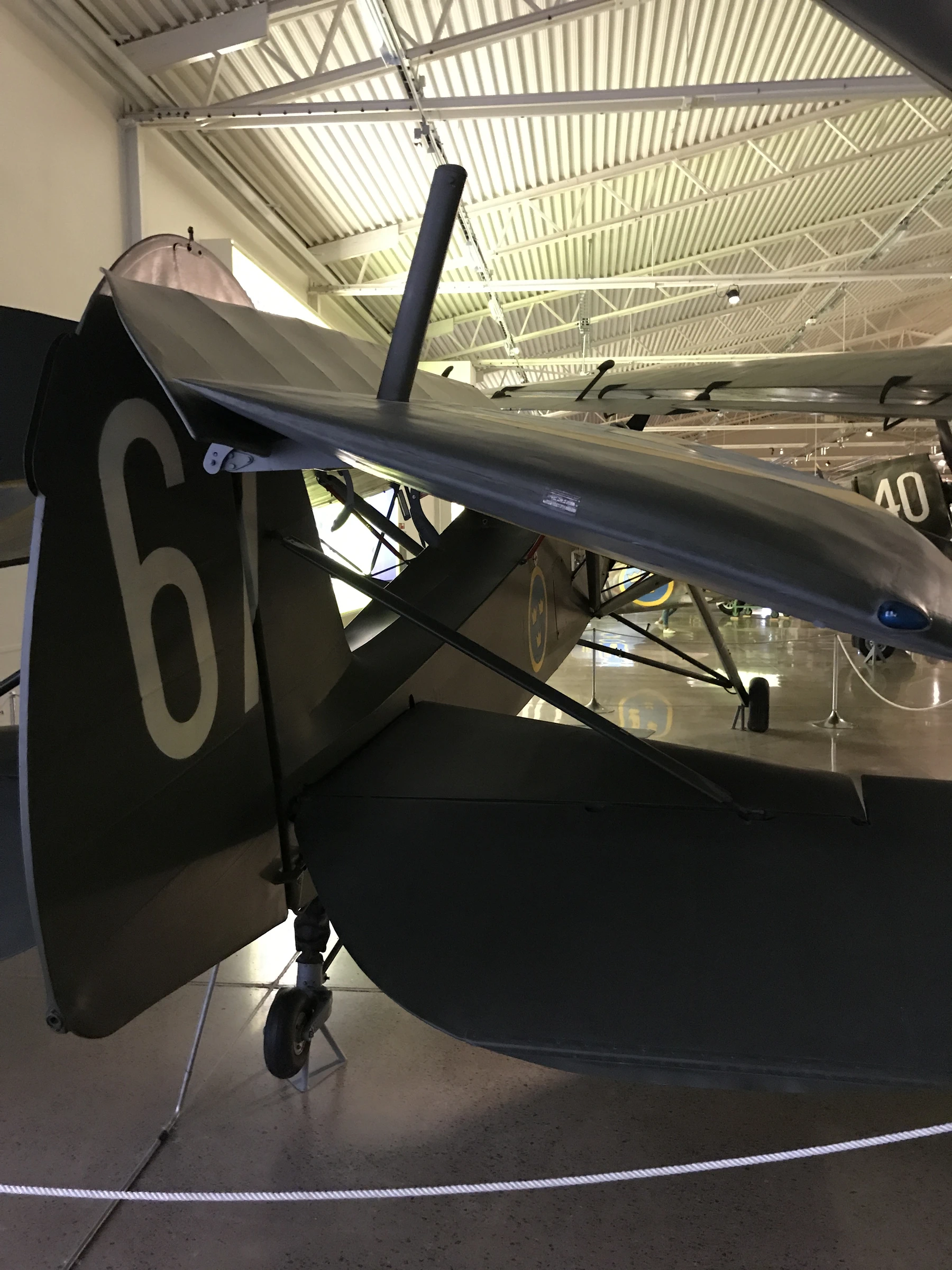
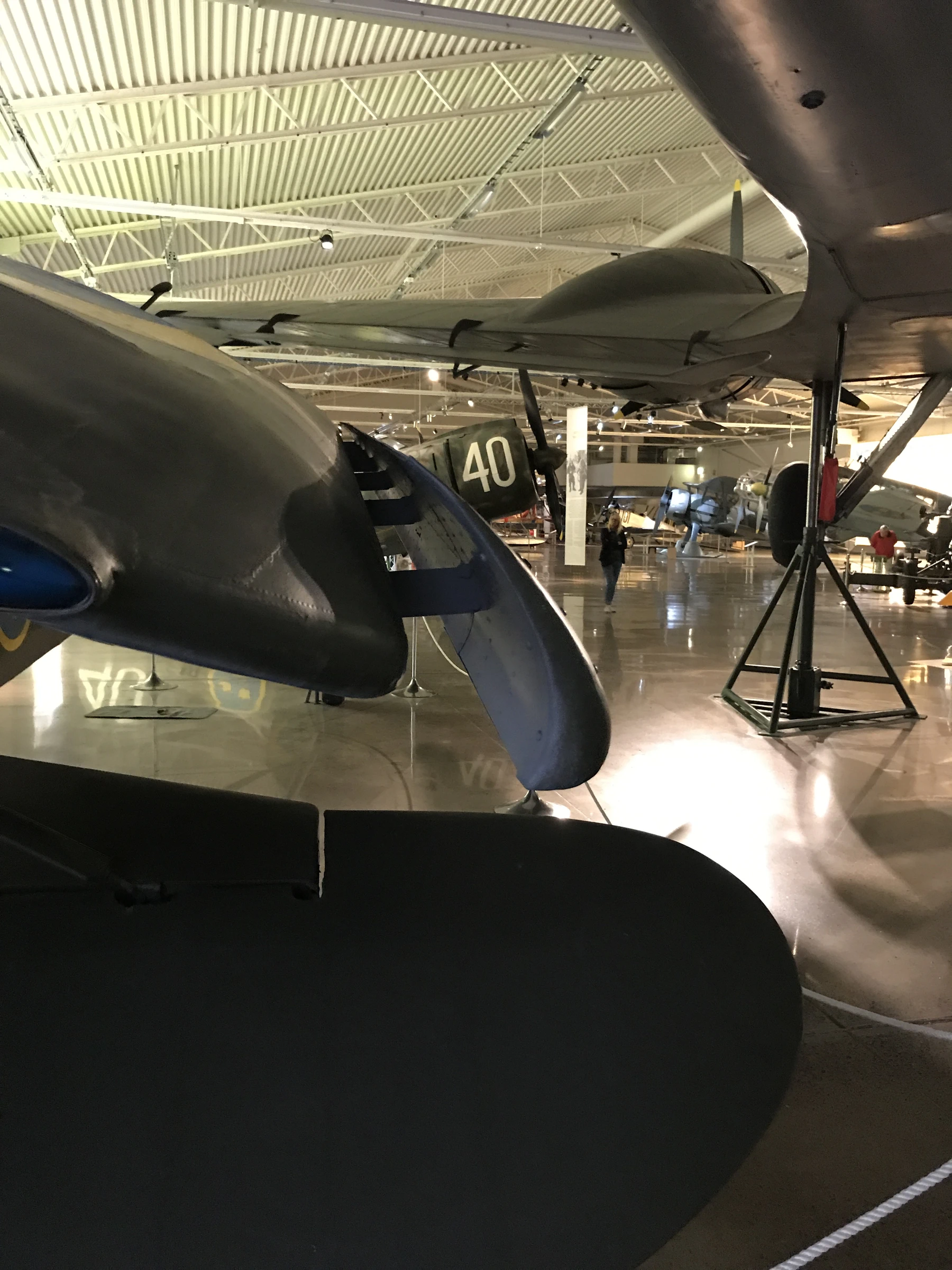
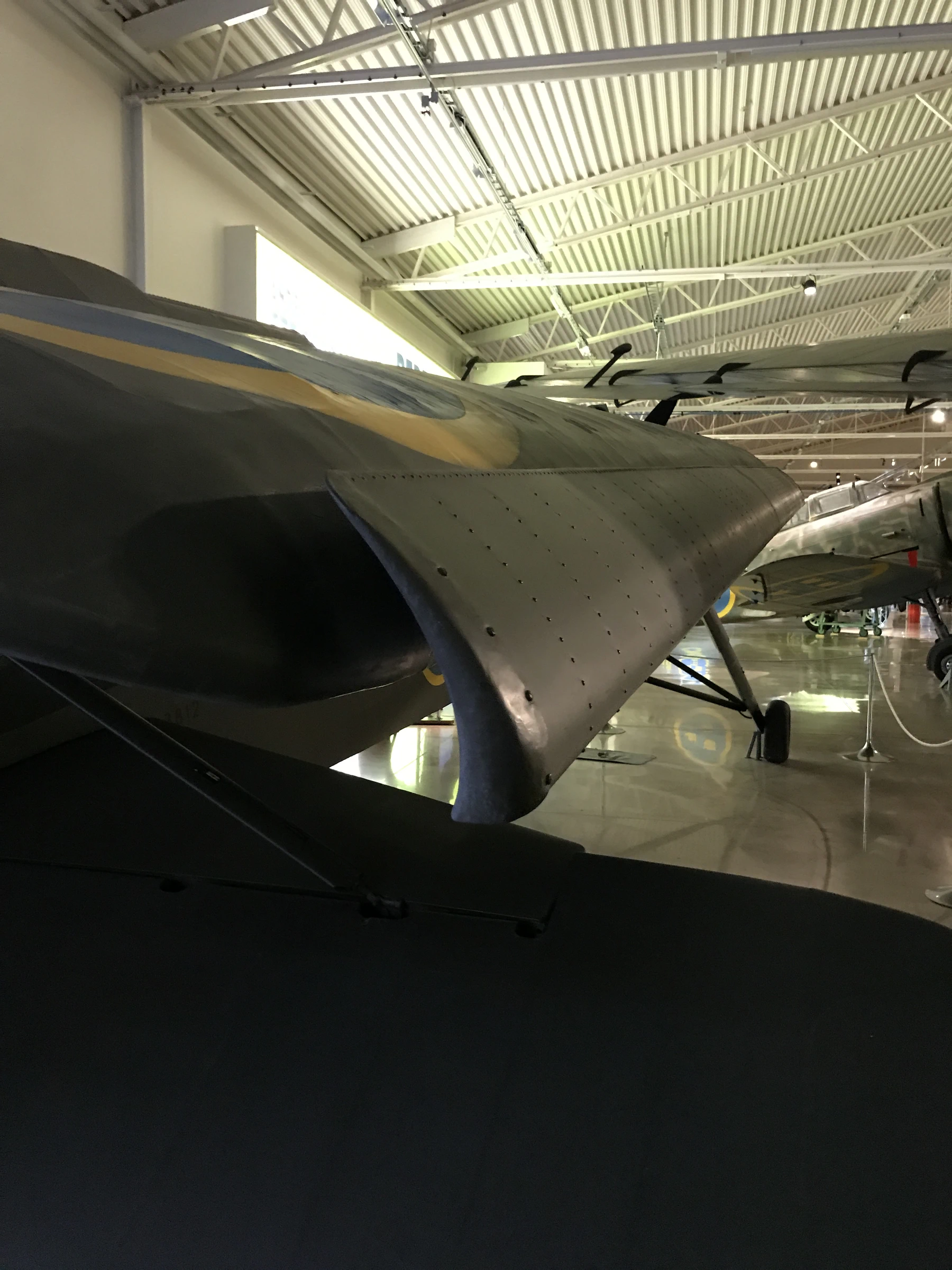
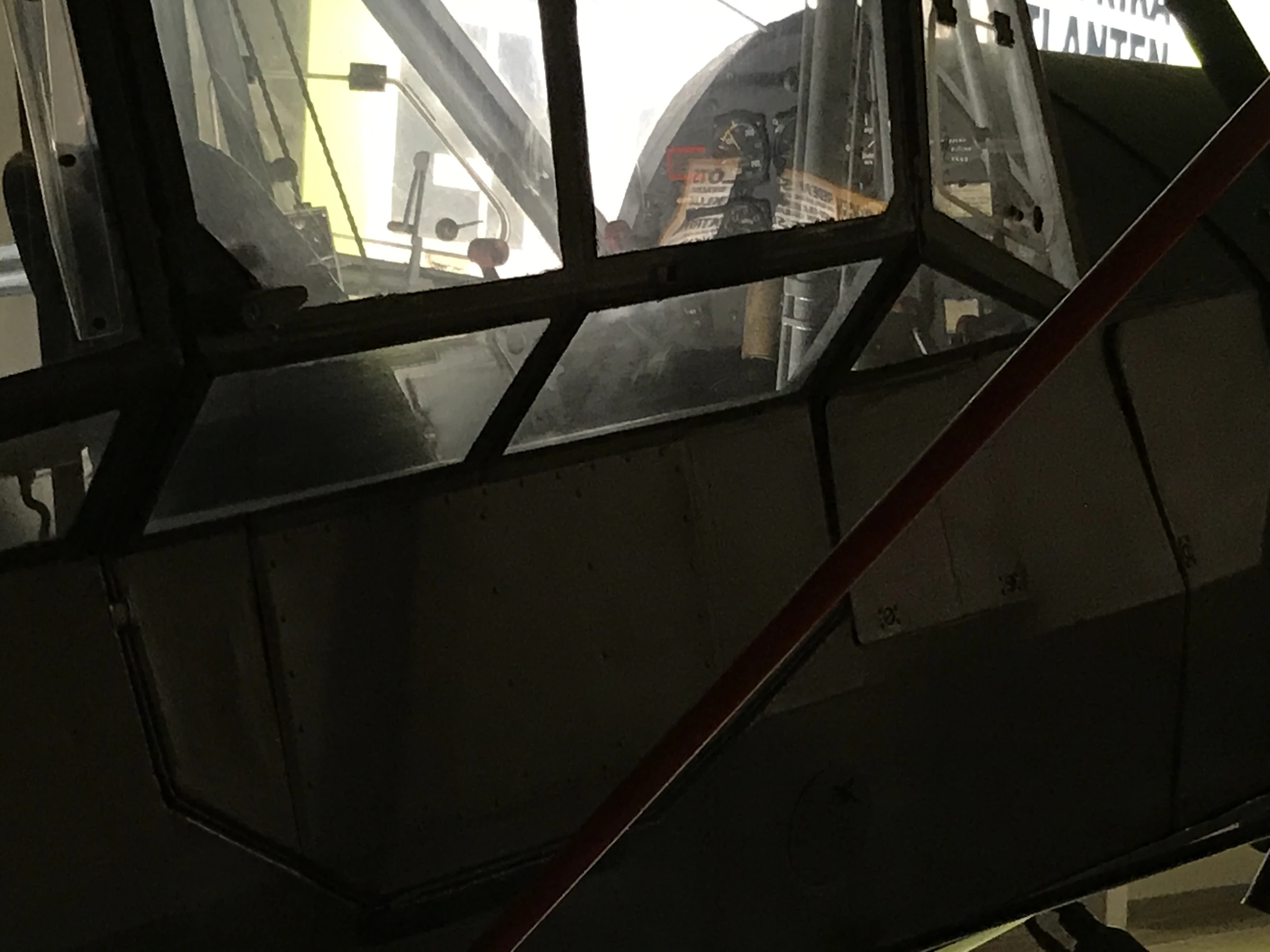
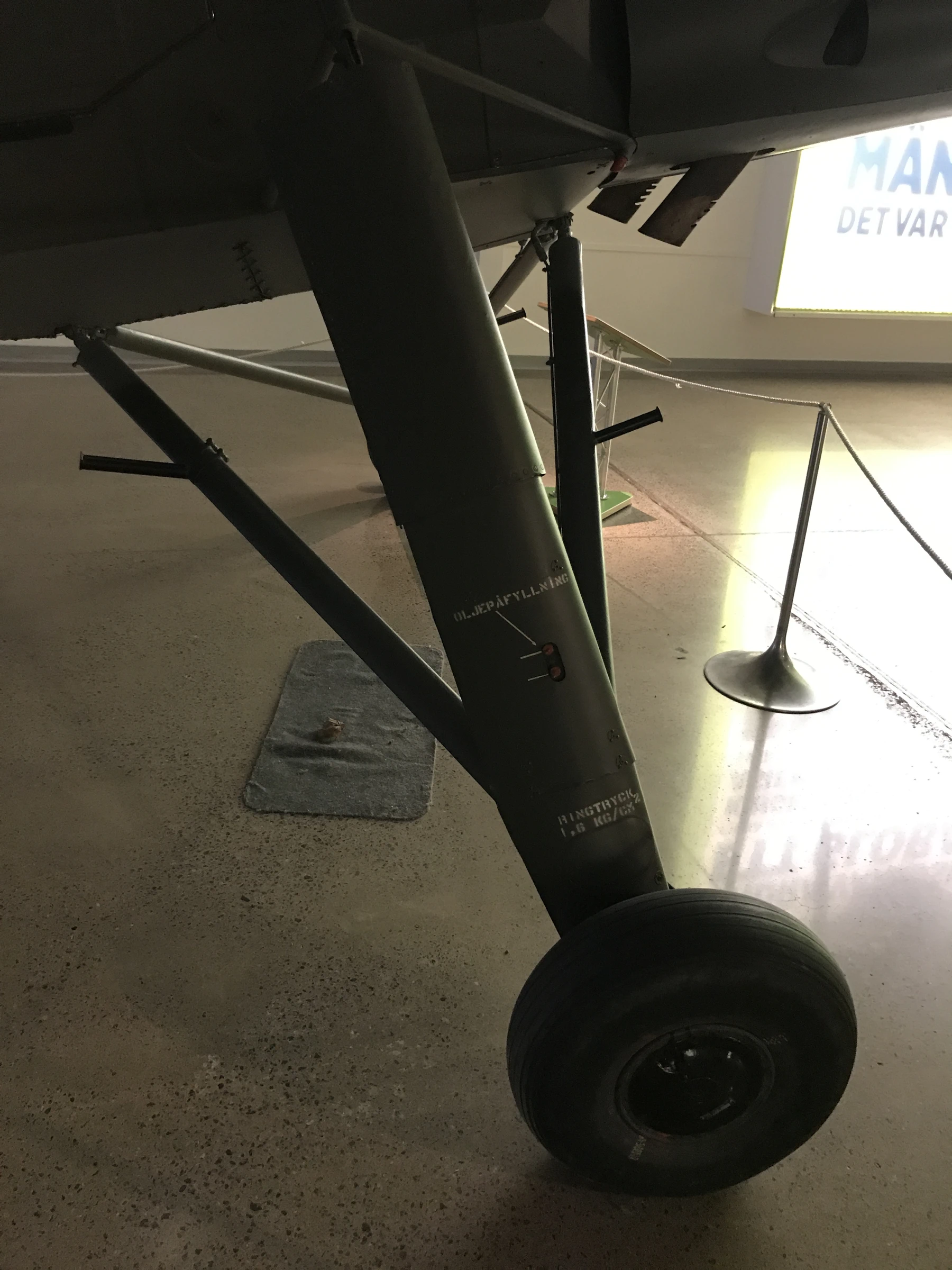
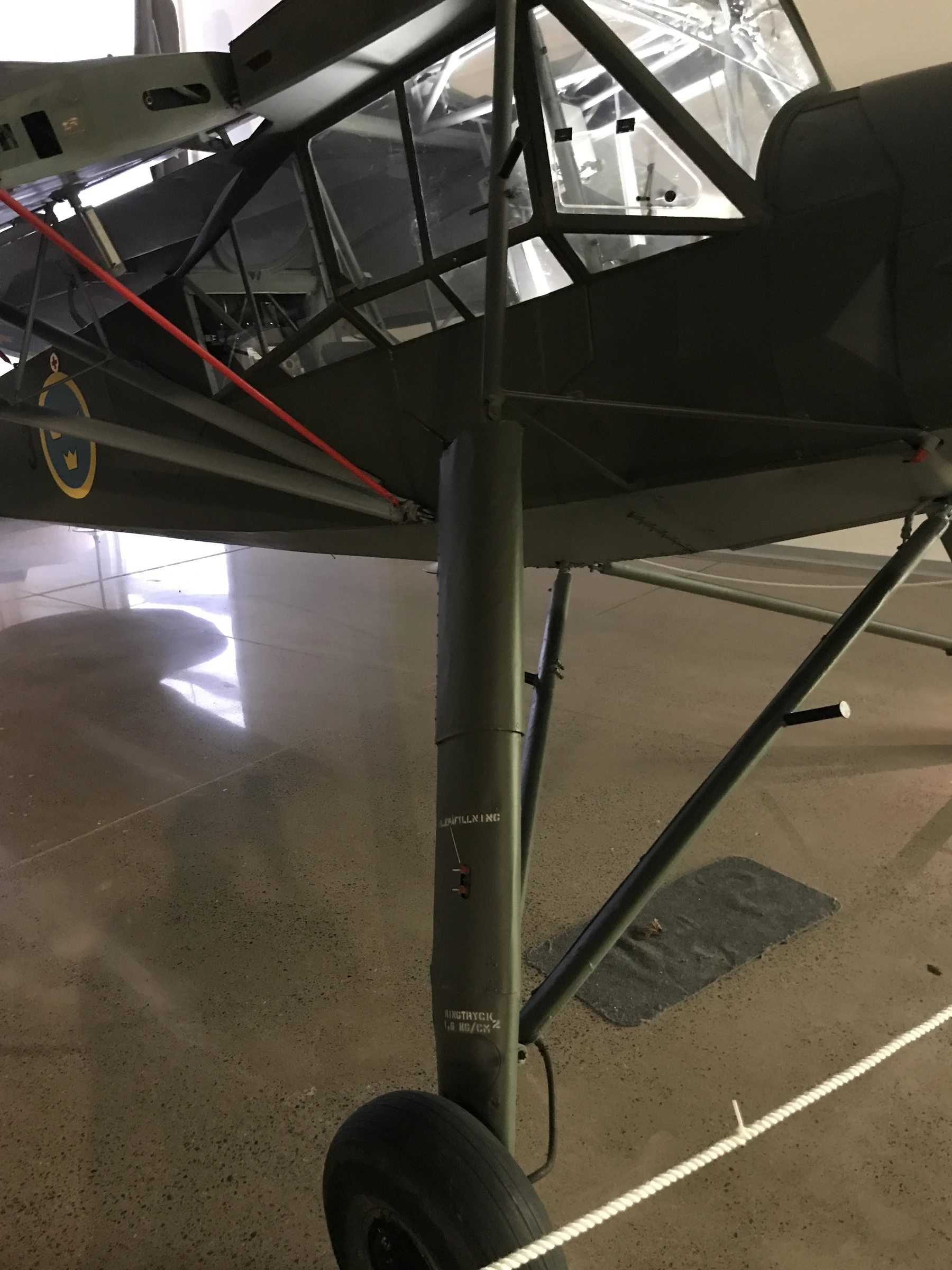
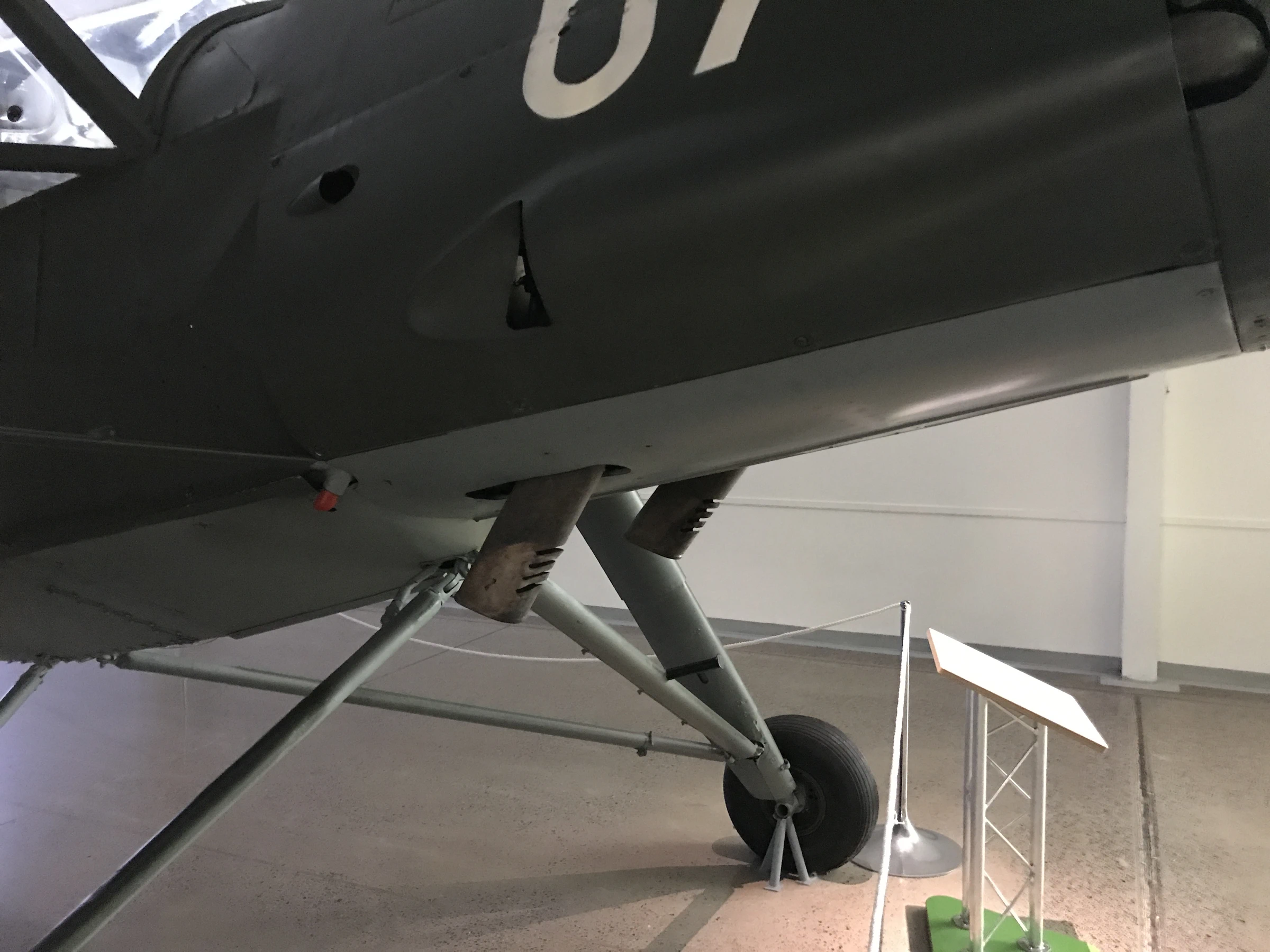
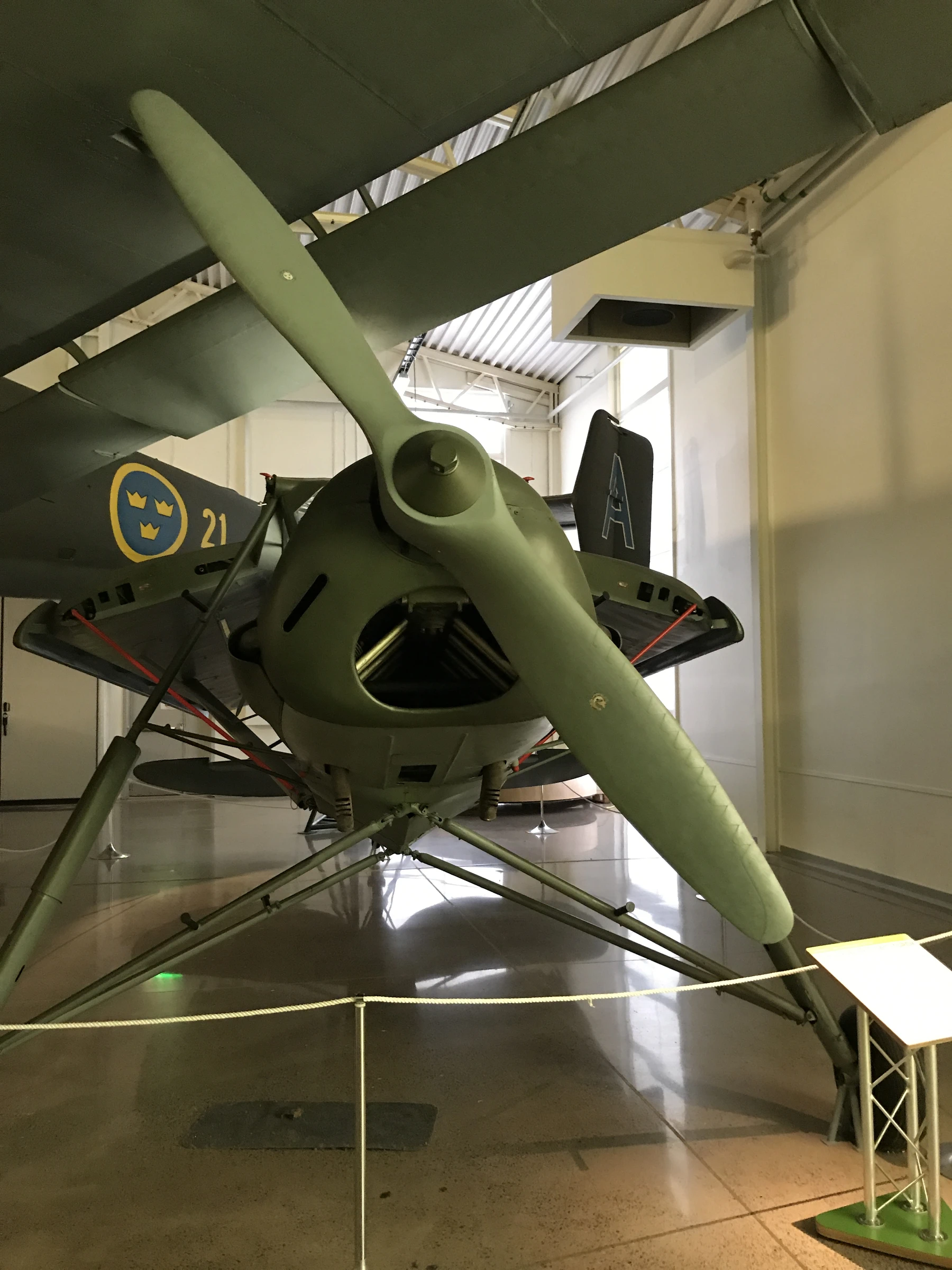
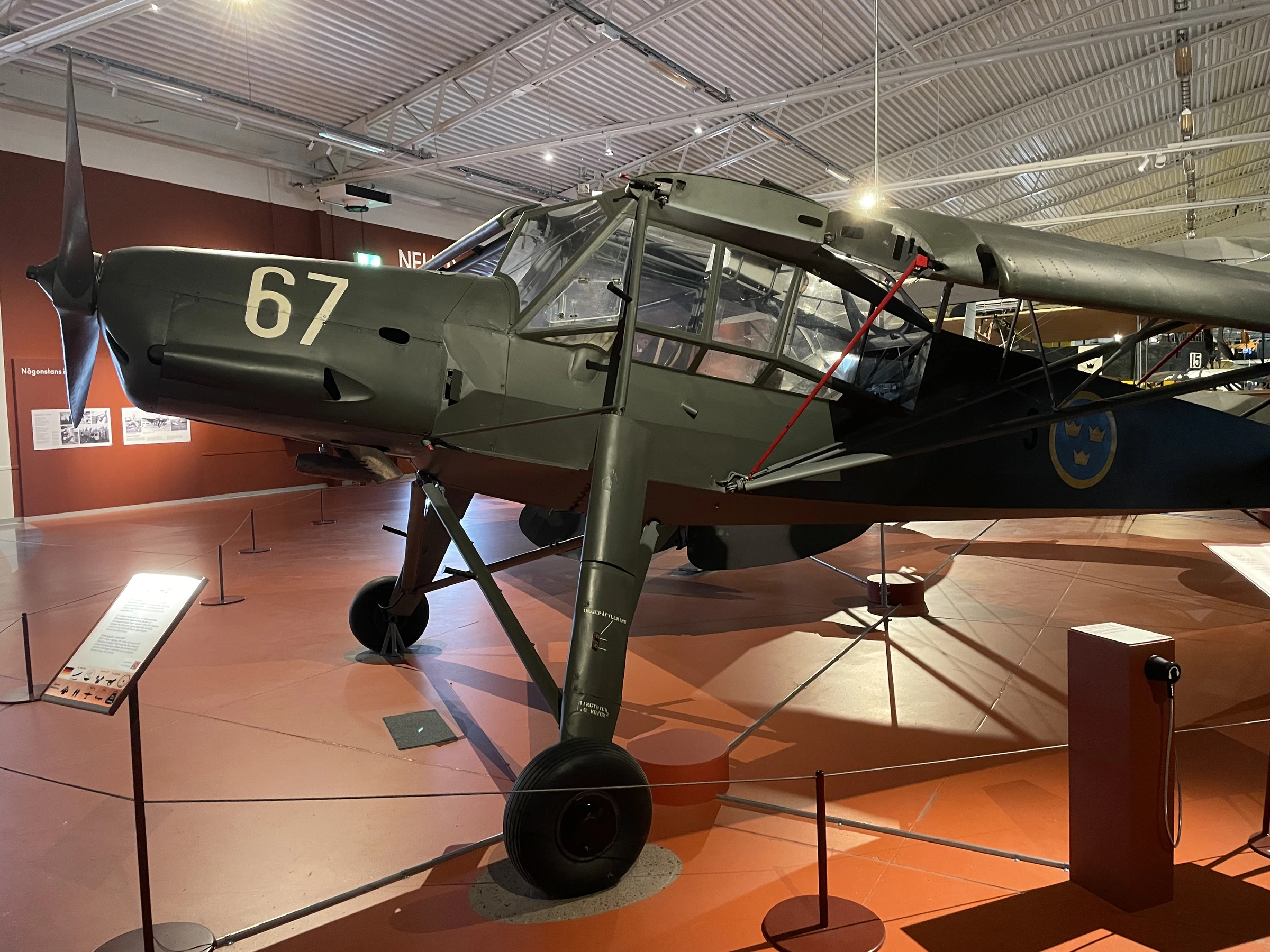
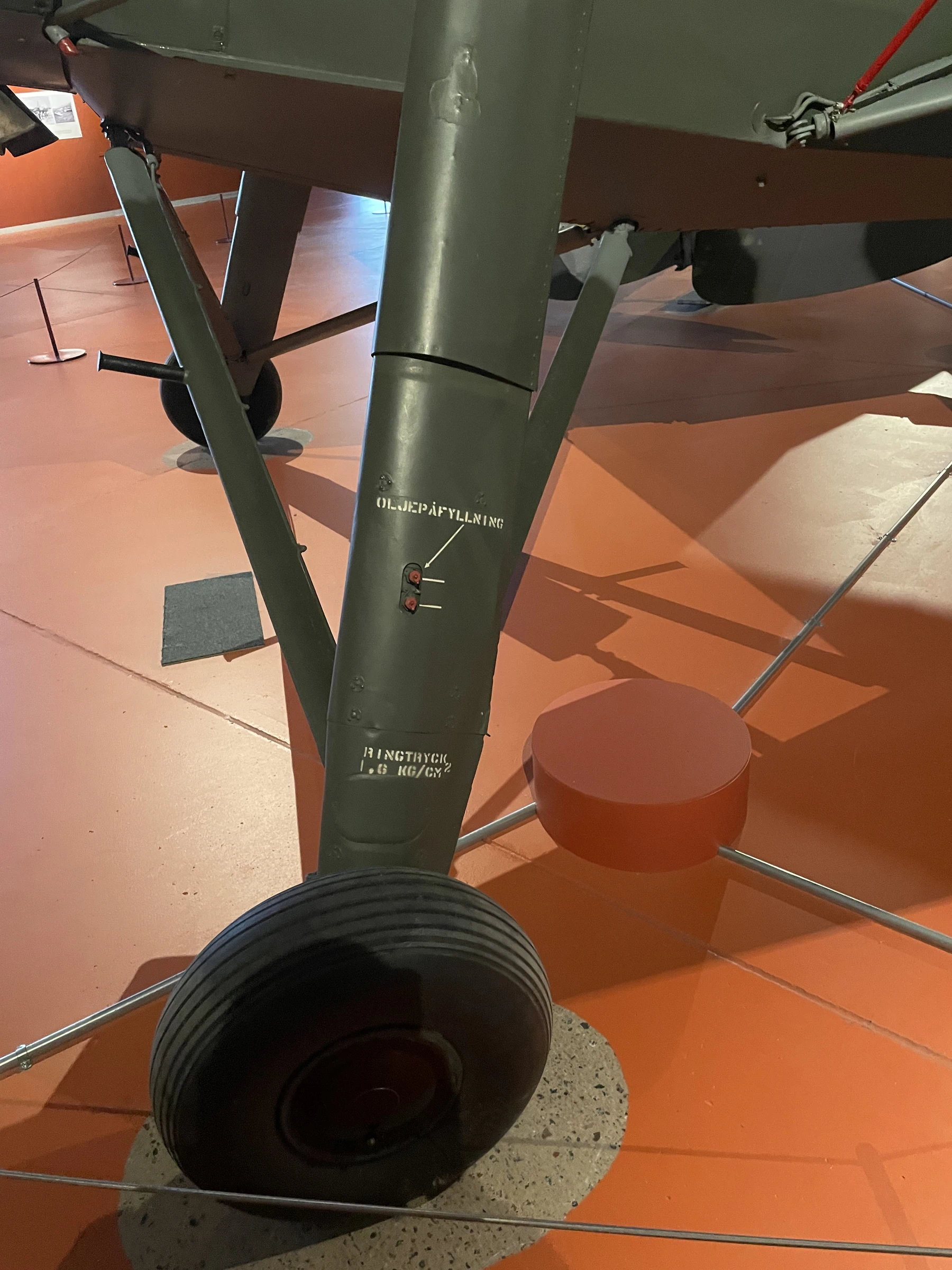
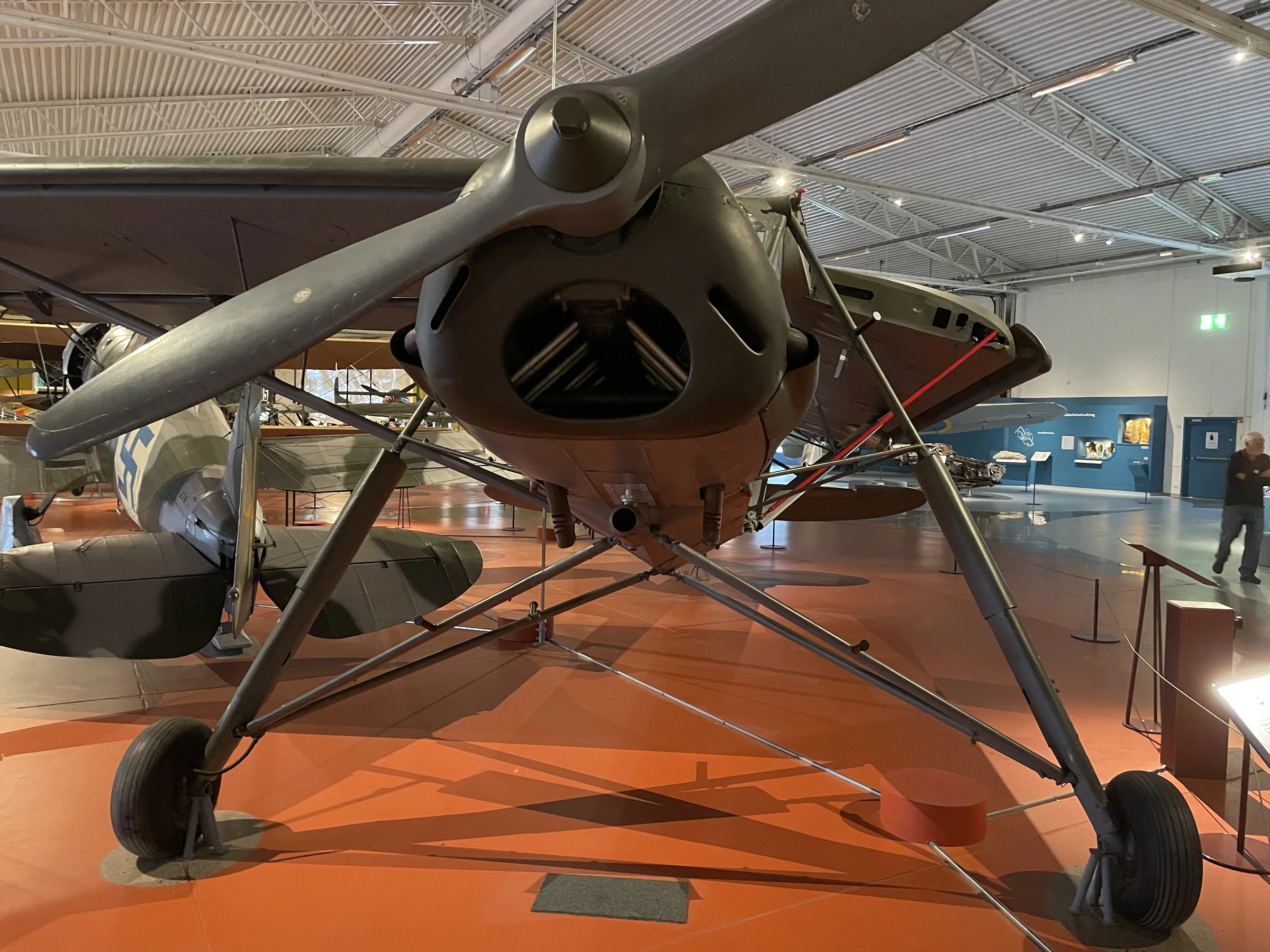
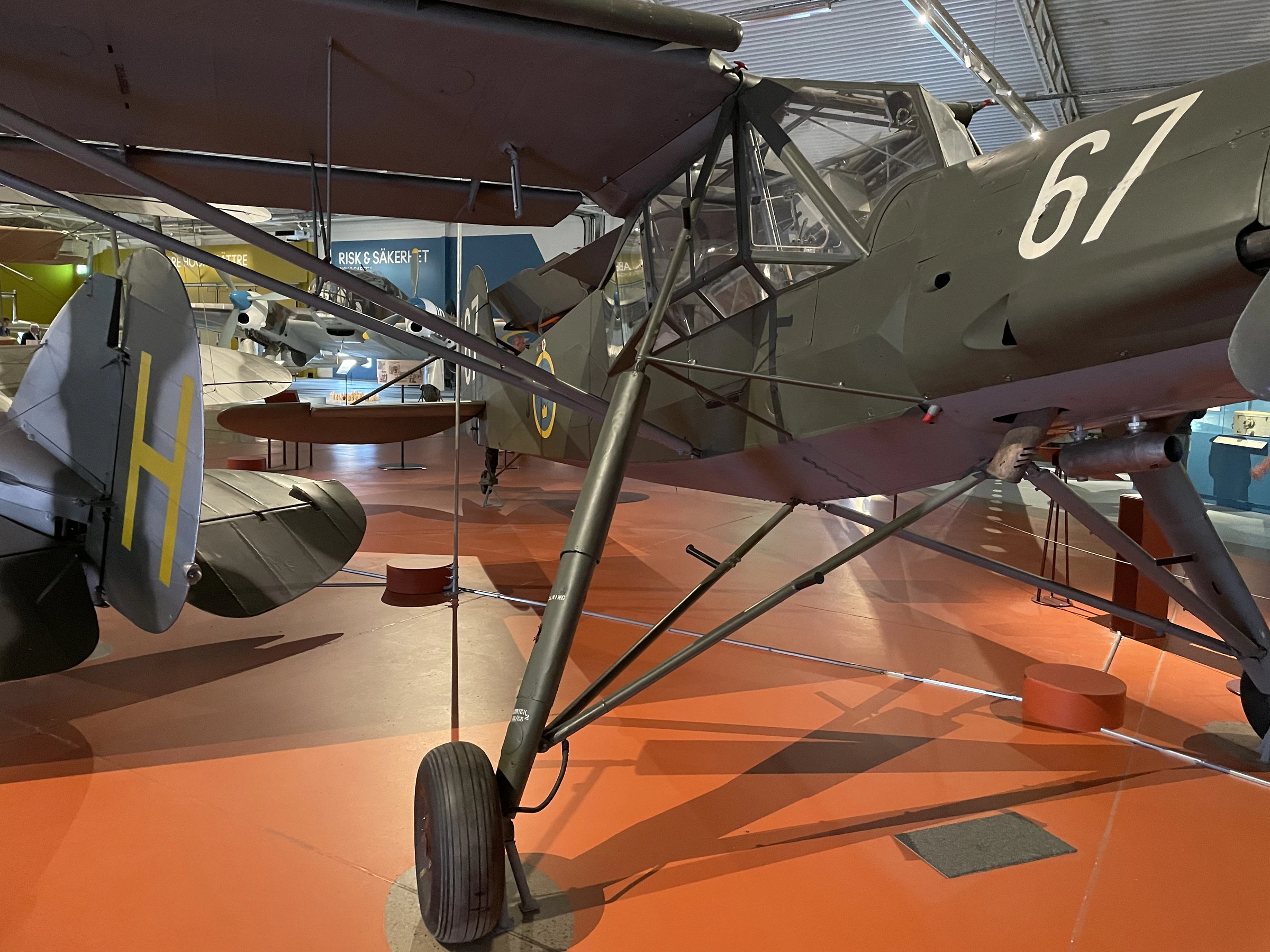
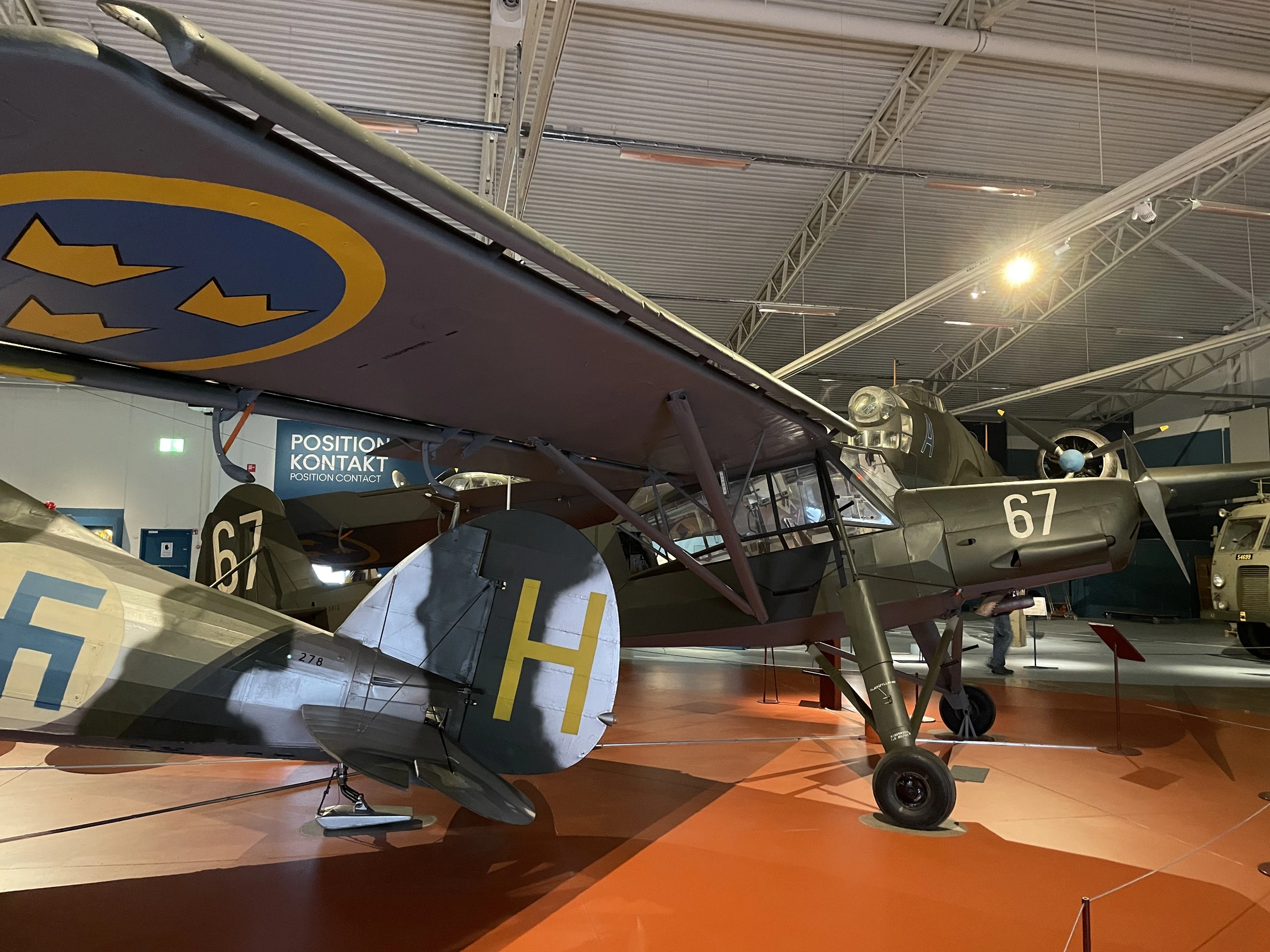
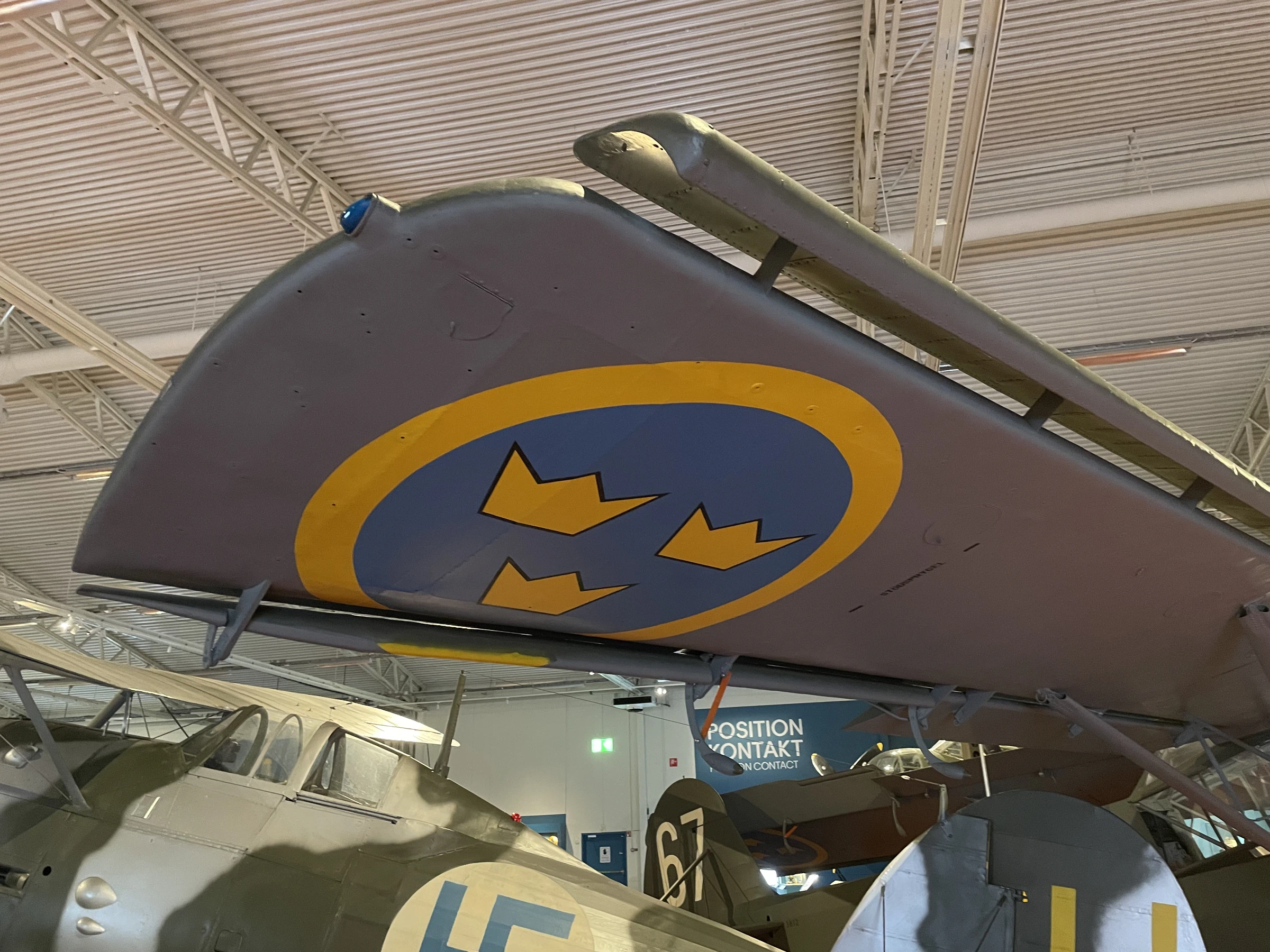
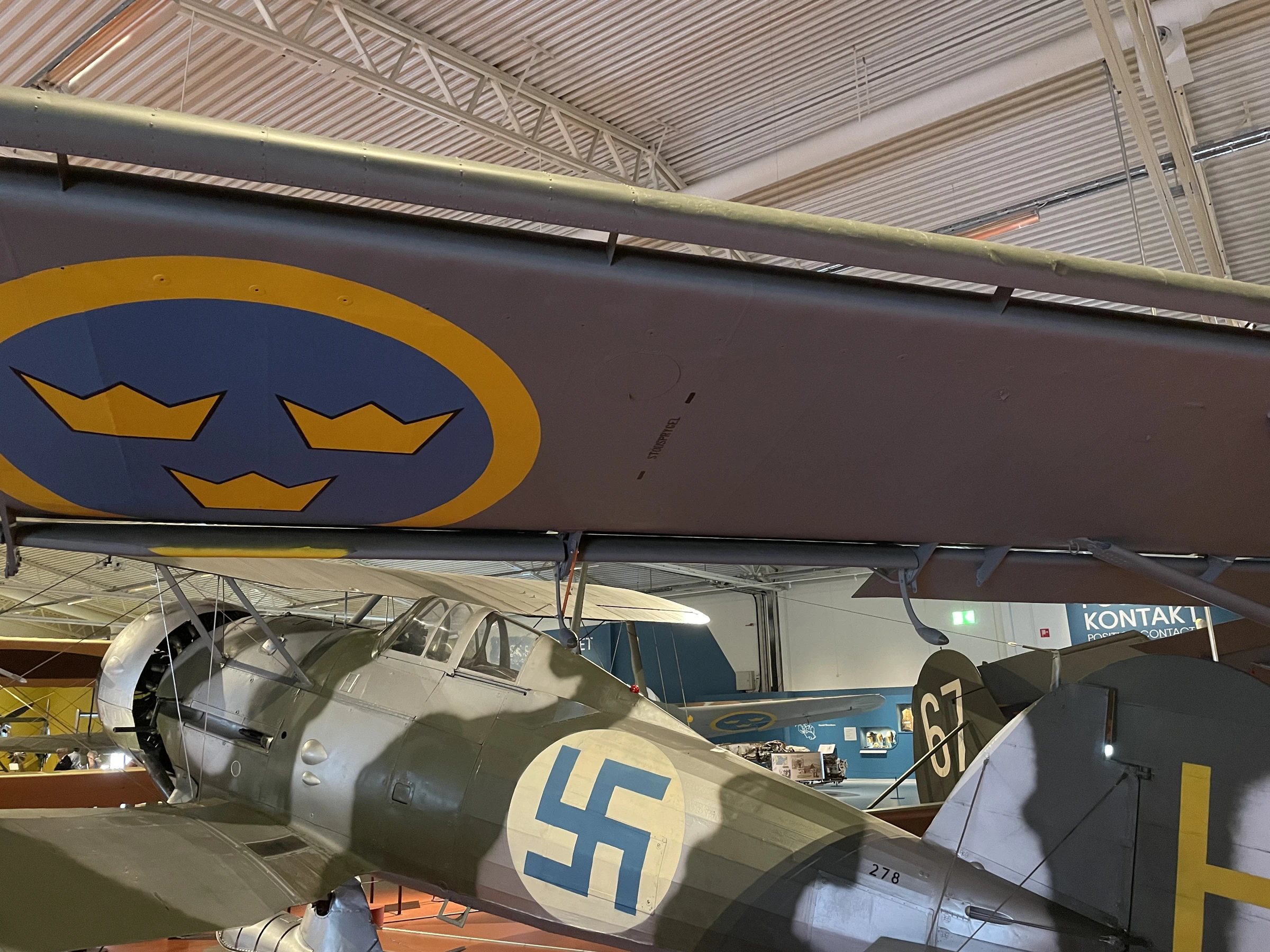
These walk-around photos were taken at Flygvapenmuseum at Malmen outside Linköping in 2017 and 2019. They show a Fieseler Fi 156C Storch, designated S 14 in Swedish service — one of the most remarkable aircraft of the Second World War and one of the very few types for which there is no credible Allied equivalent. Designed in the mid-1930s in response to a Luftwaffe requirement for a general utility aircraft, the Storch was built around its extraordinary short-field performance: a full-length leading-edge slat, large Fowler flaps and drooping ailerons gave it a stalling speed of barely 50 km/h, enabling it to operate from farmyards, roadsides and mountain plateaux. Its tall, springy undercarriage legs earned it the name Storch — the Stork — and the nickname stuck universally. Its most famous single mission was the 1943 rescue of Benito Mussolini from his mountaintop prison, landing on a plateau barely 20 metres long.
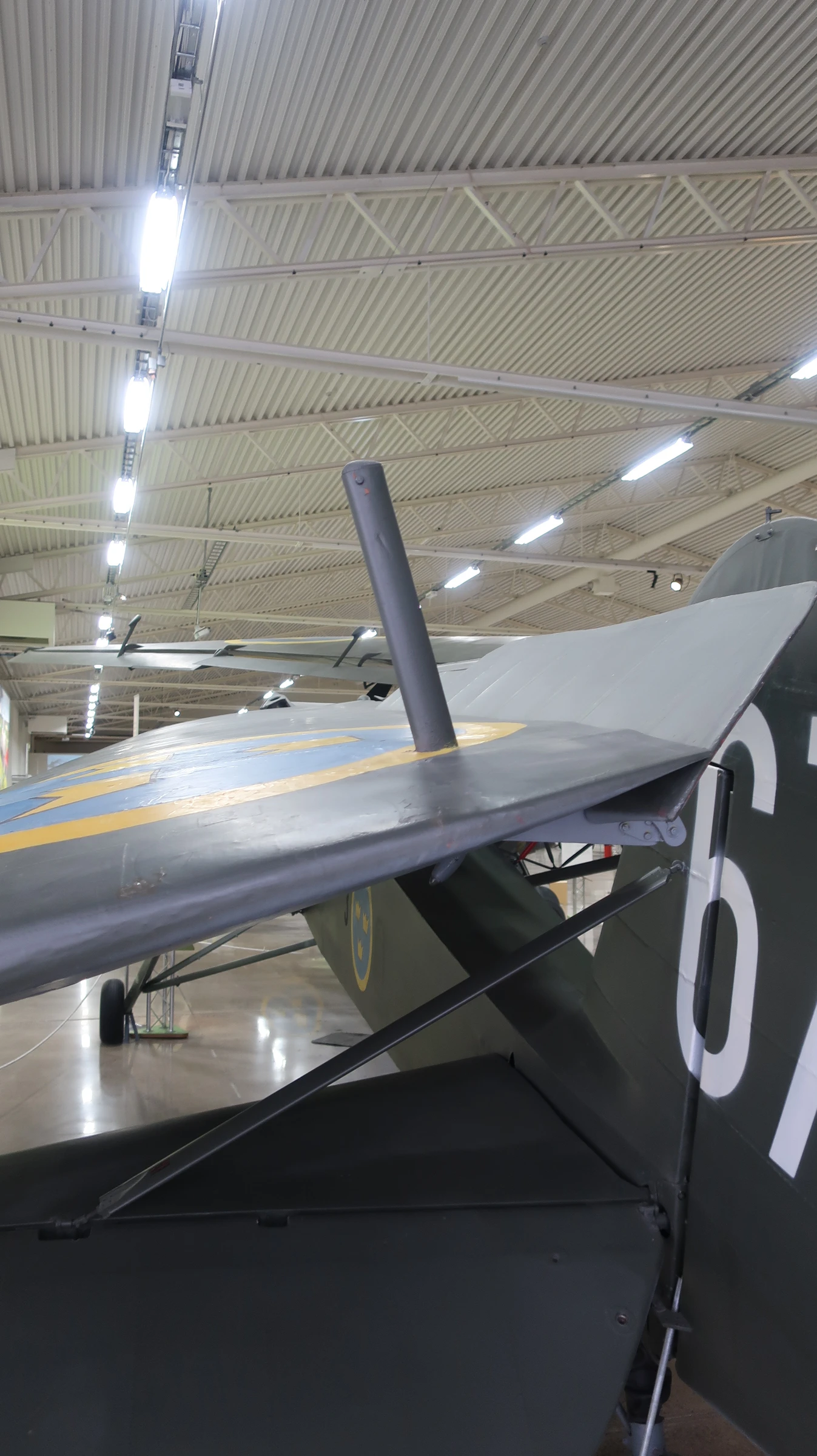
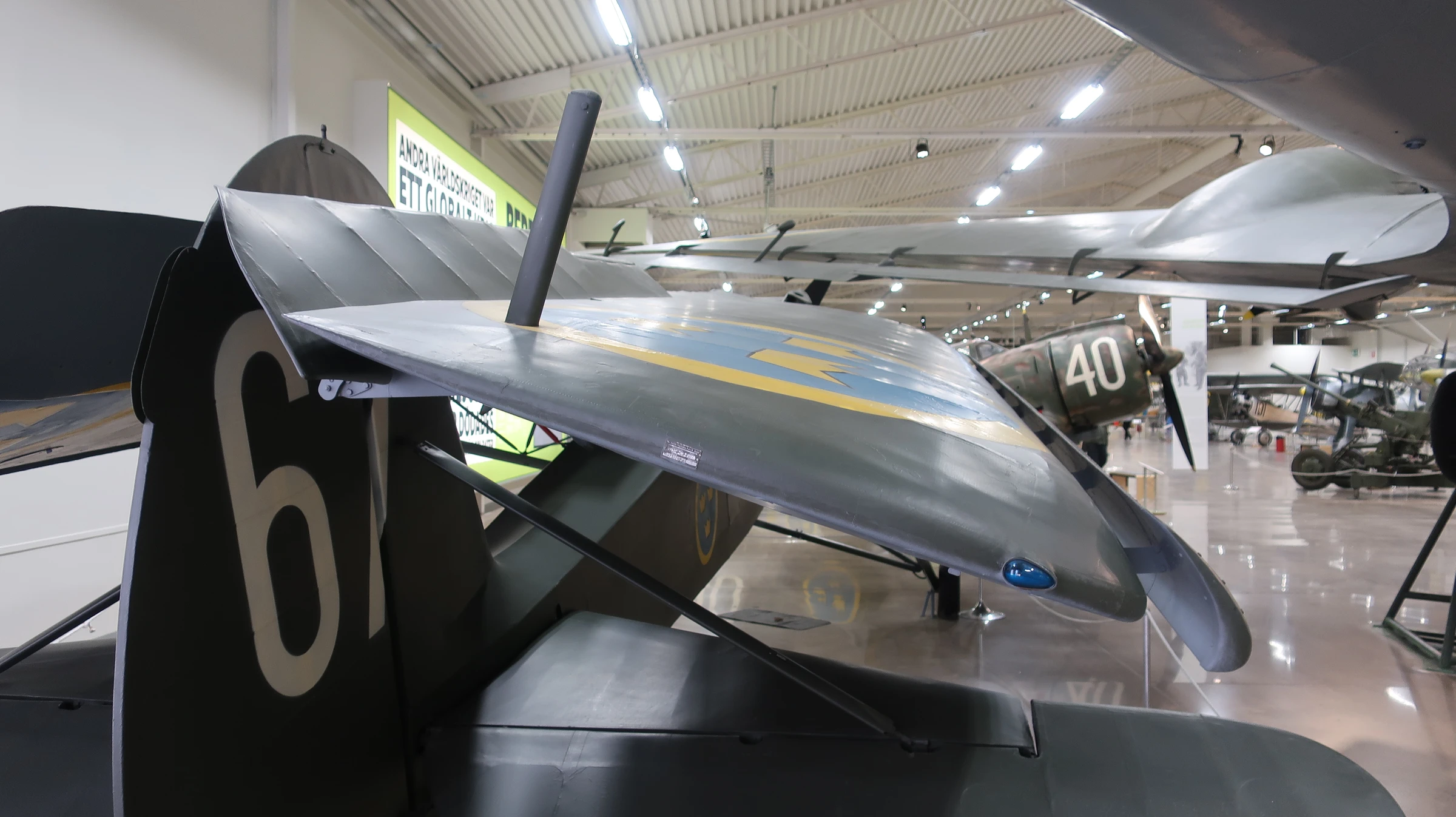
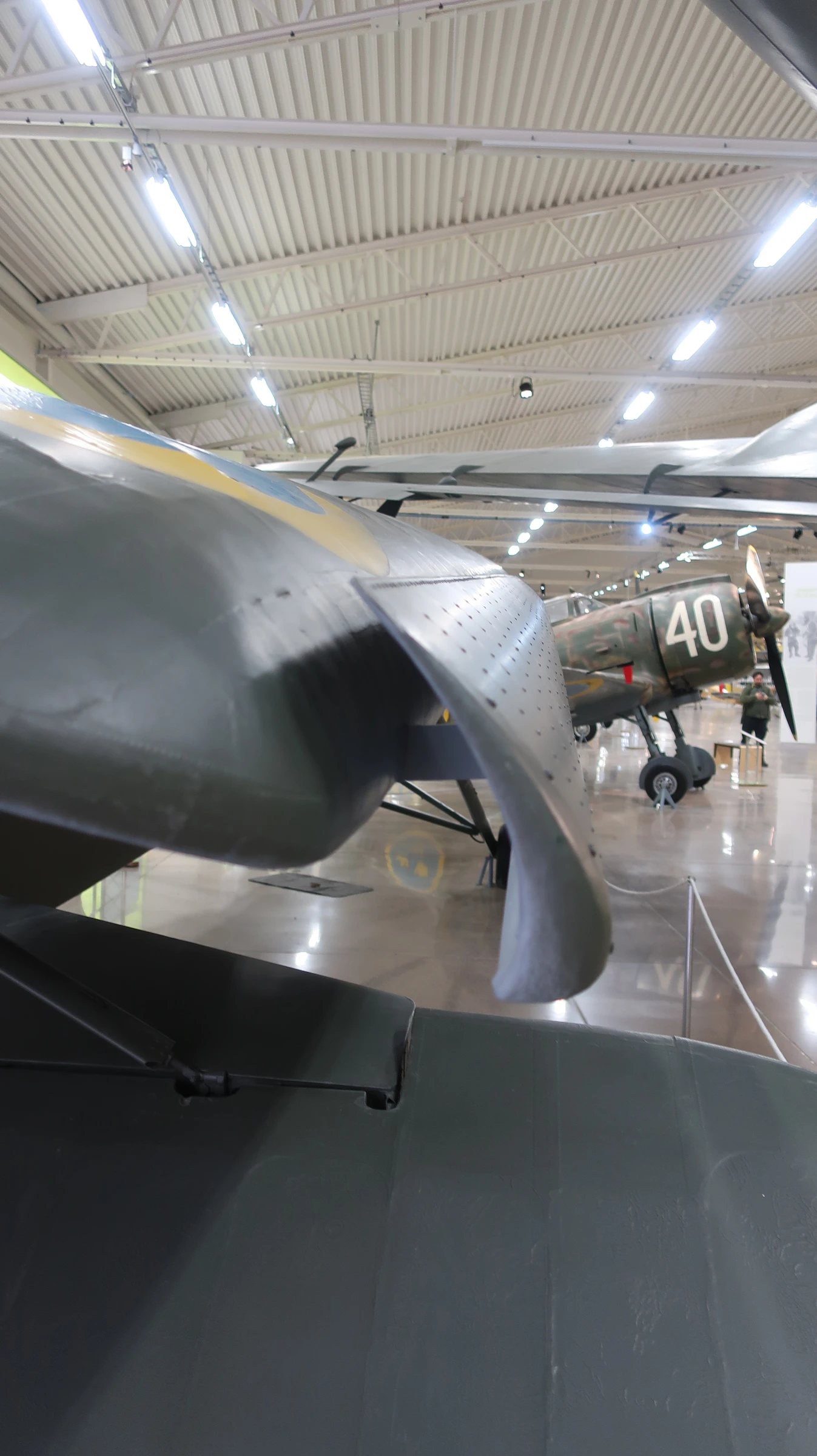
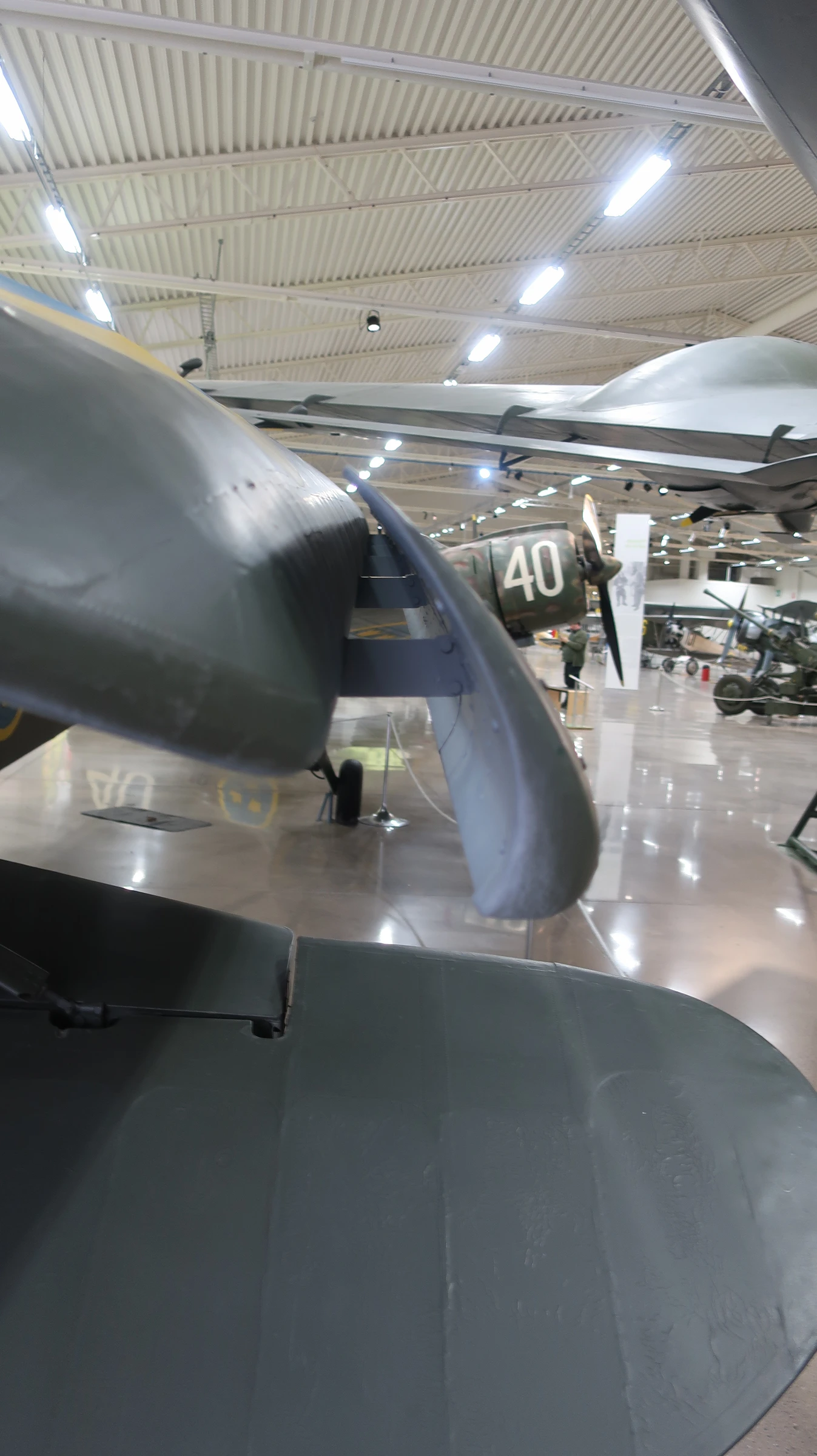
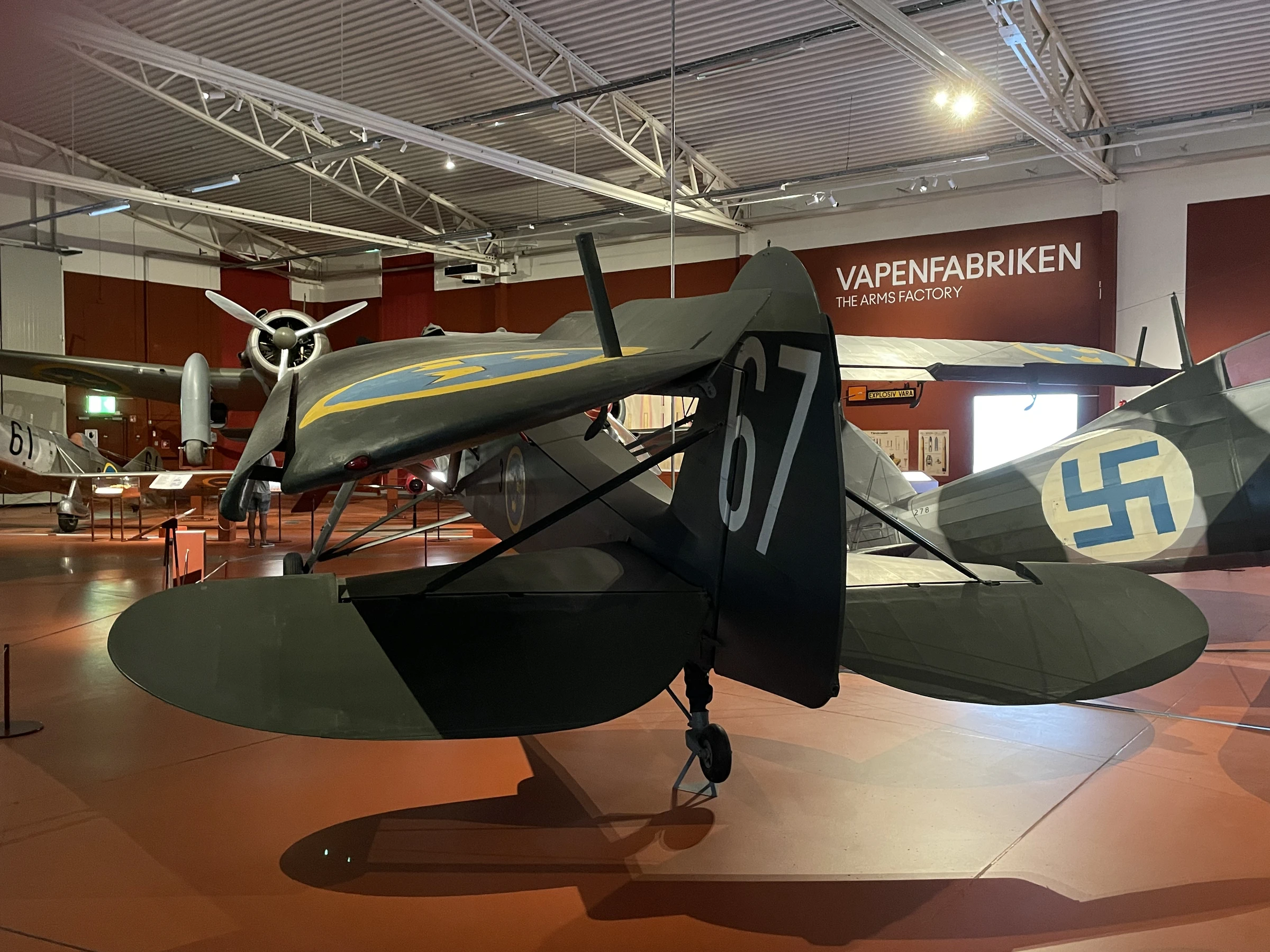
The Swedish Air Force operated 26 Storchs, designated S 14, and their origins were varied: some were purchased new, while others arrived in Sweden with German refugees and deserters during the war and were simply absorbed into service. In Swedish service the type was used for reconnaissance, liaison, ambulance transport, artillery spotting and pilot training, and could be fitted with skis for winter operations. The aircraft is photographed here with its wings folded — a standard feature that allowed the Storch to be stored in confined spaces and transported by road without disassembly, and one that makes clear just how practical a machine it was designed to be. The individual on display, marked F 3-67, is shown in the colours of F 3 Malmslätt, and is a composite airframe assembled from parts of several original aircraft.