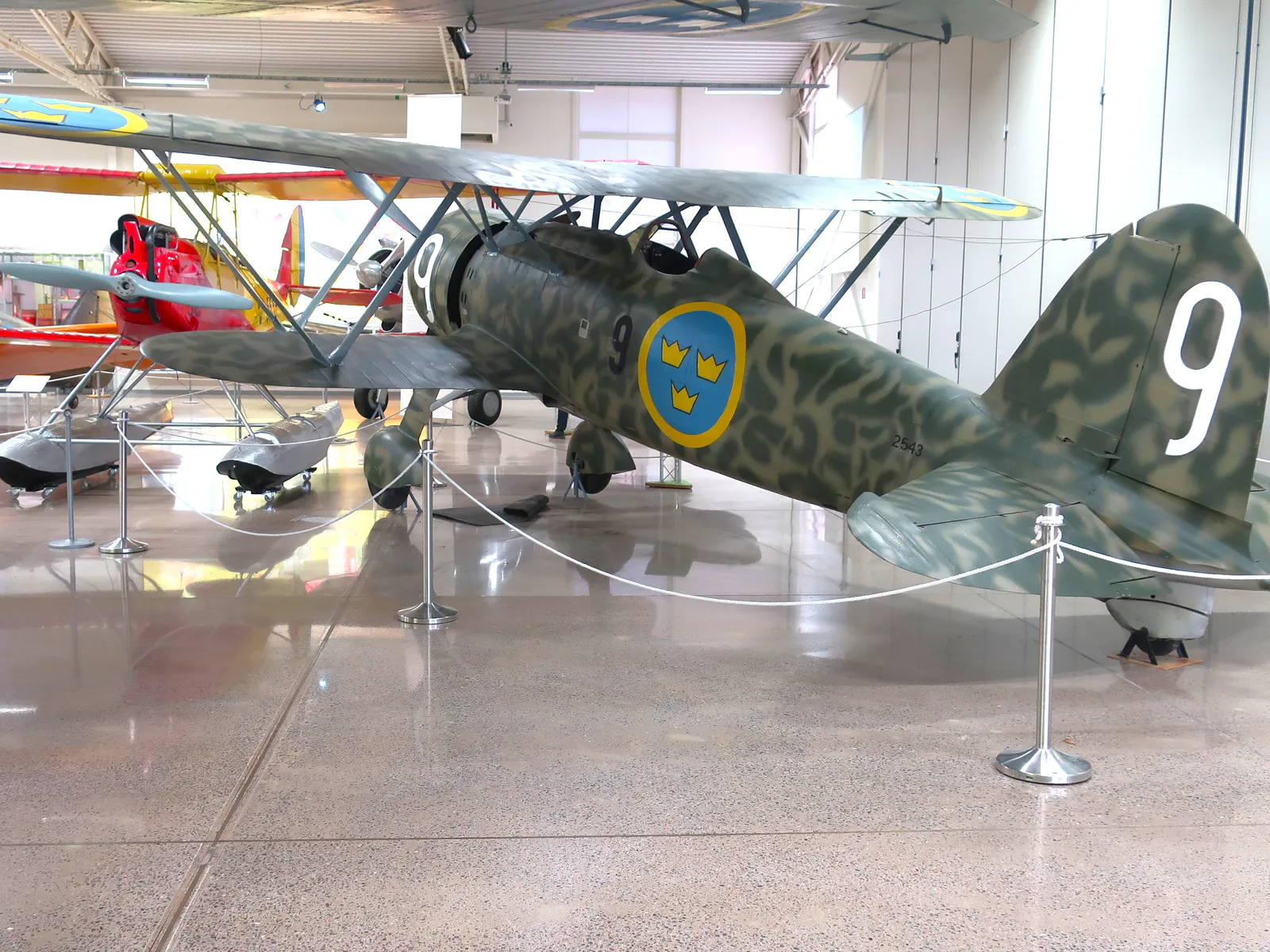
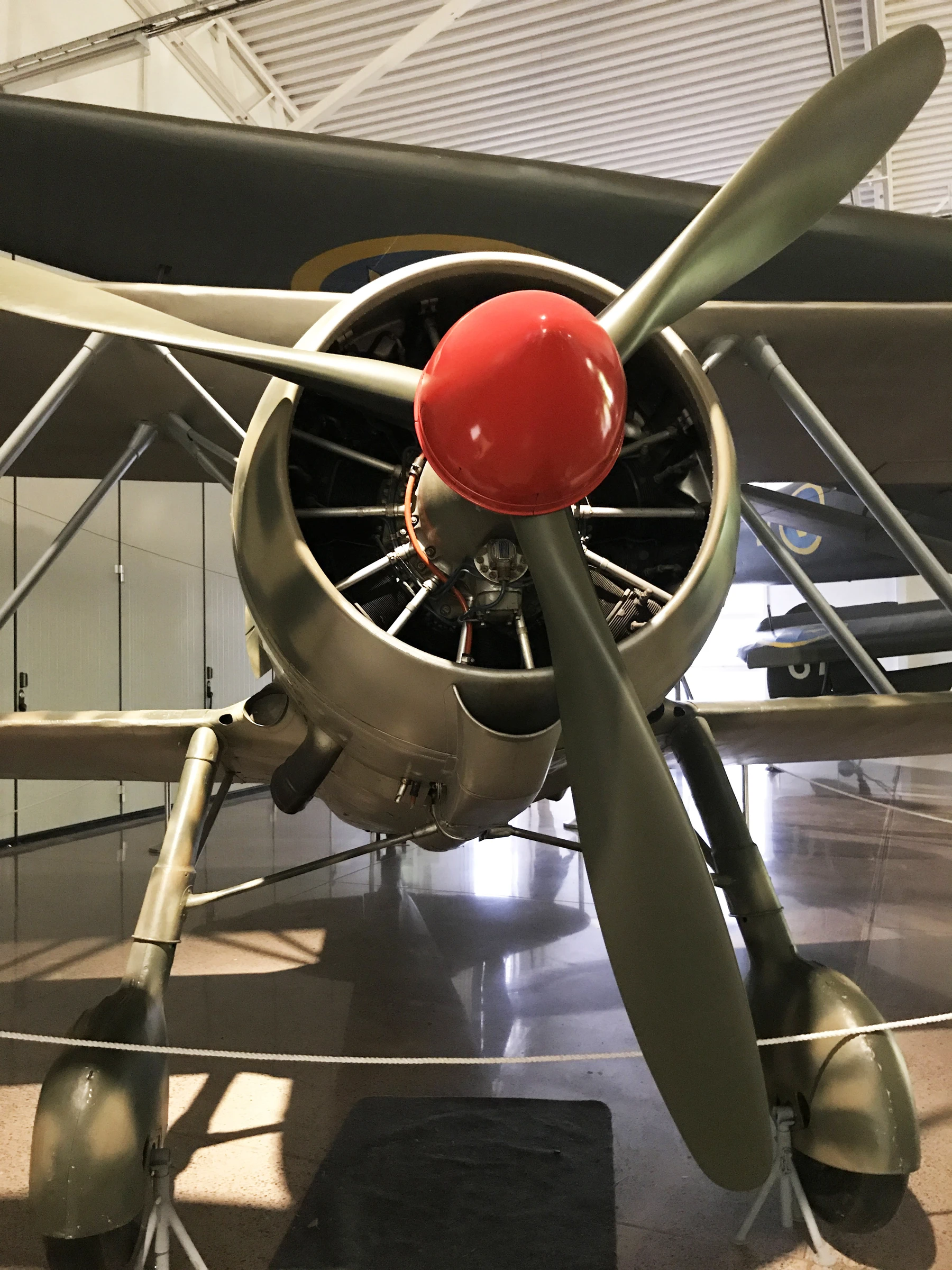
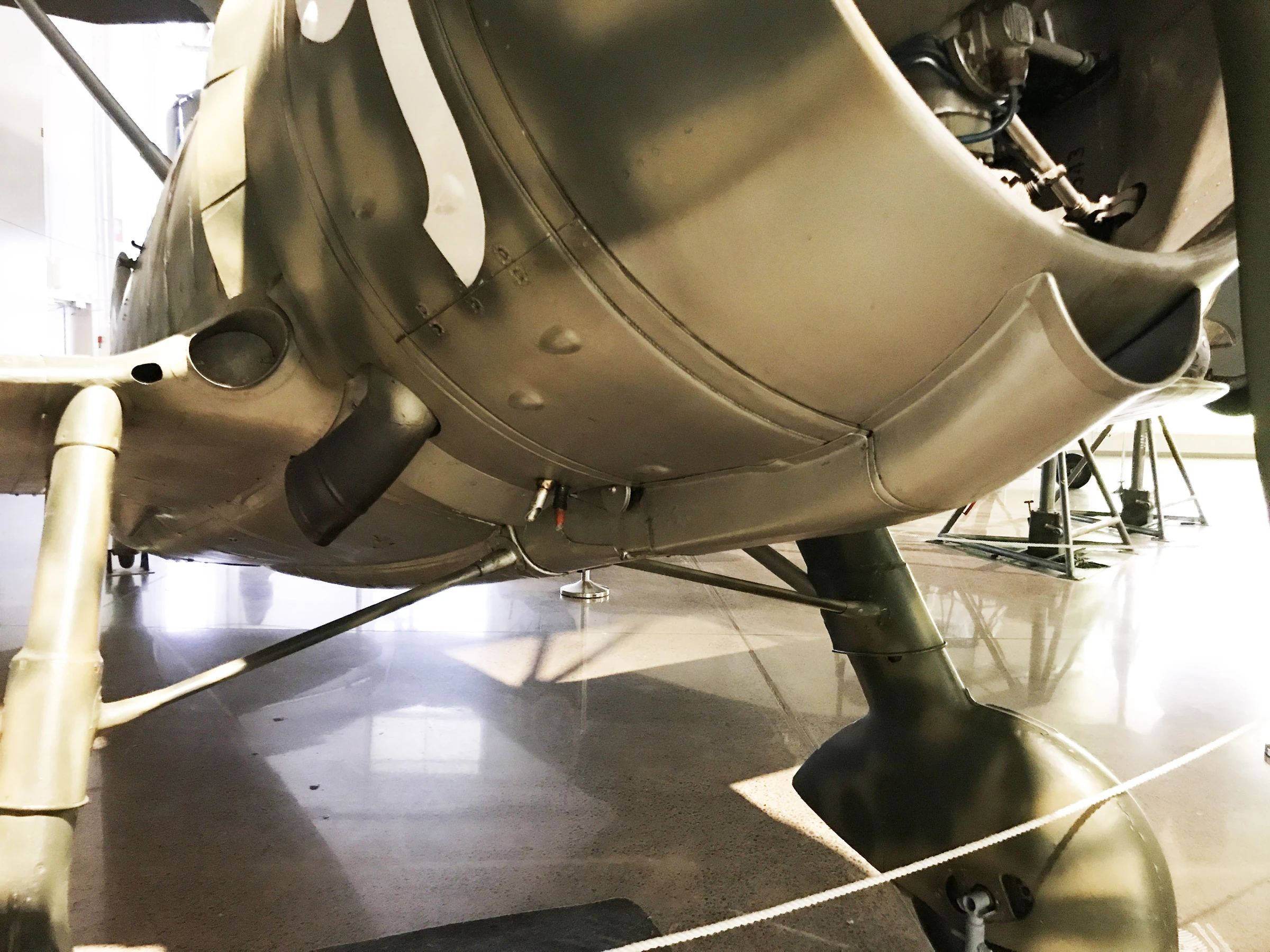
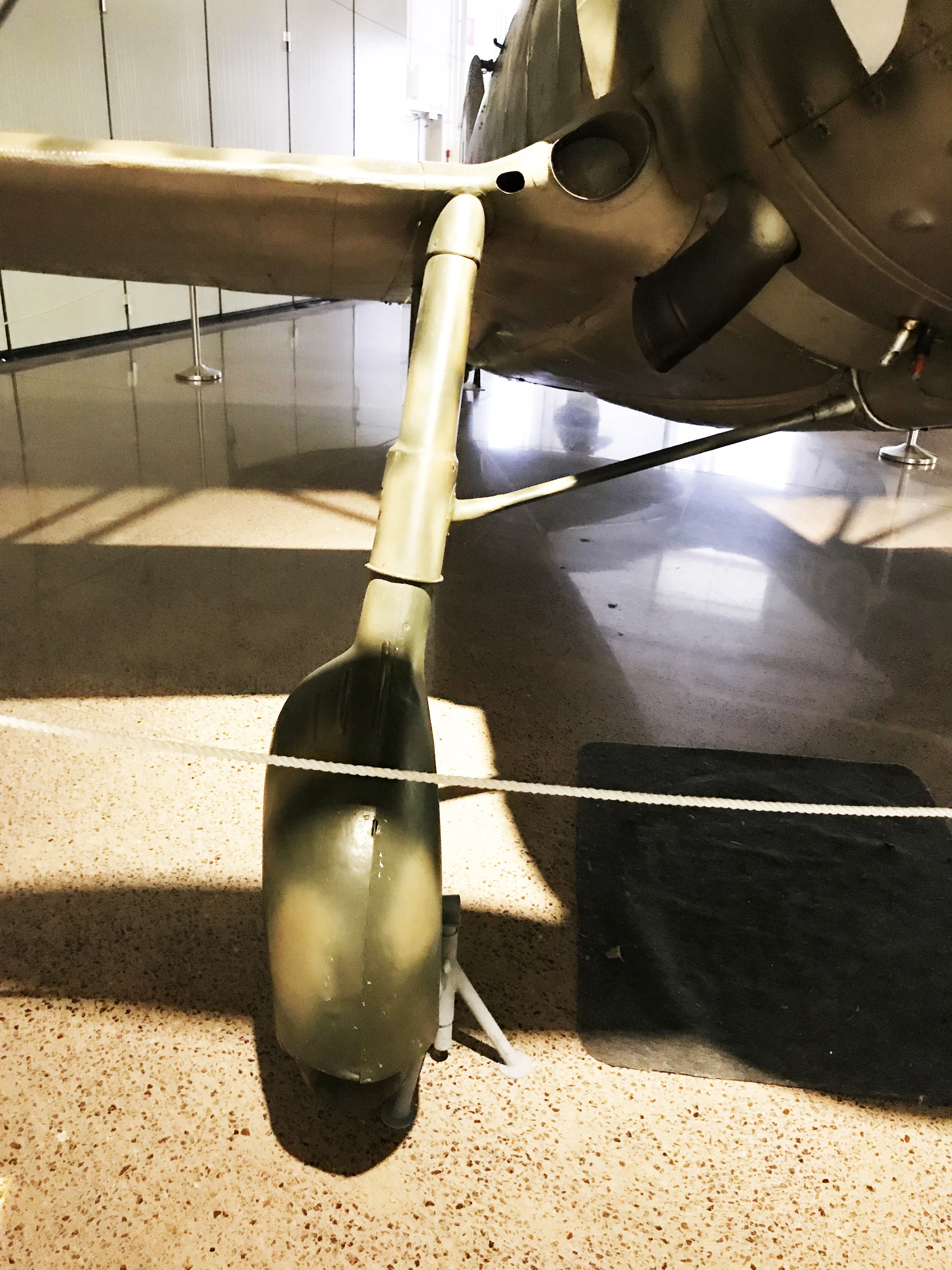
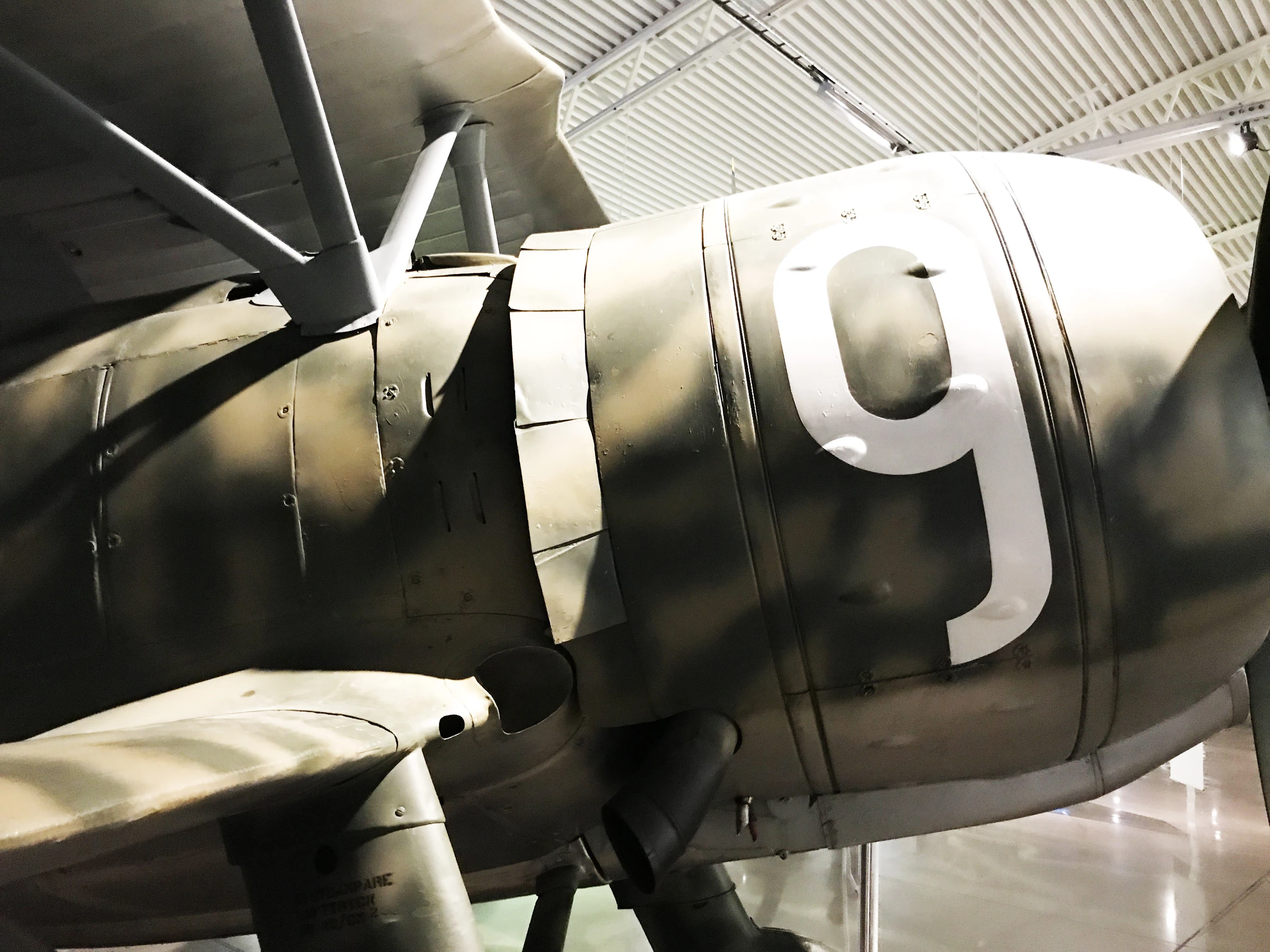
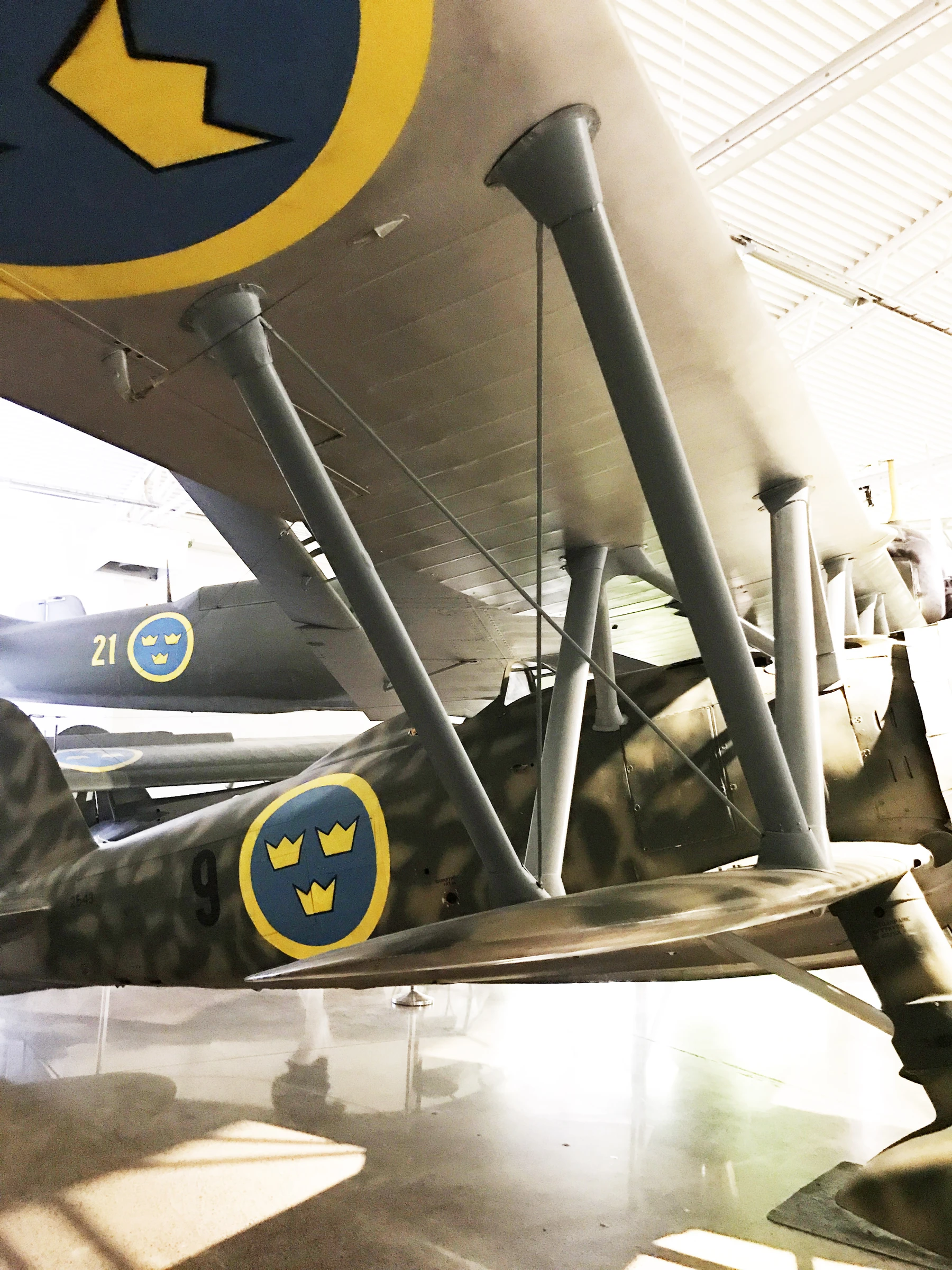
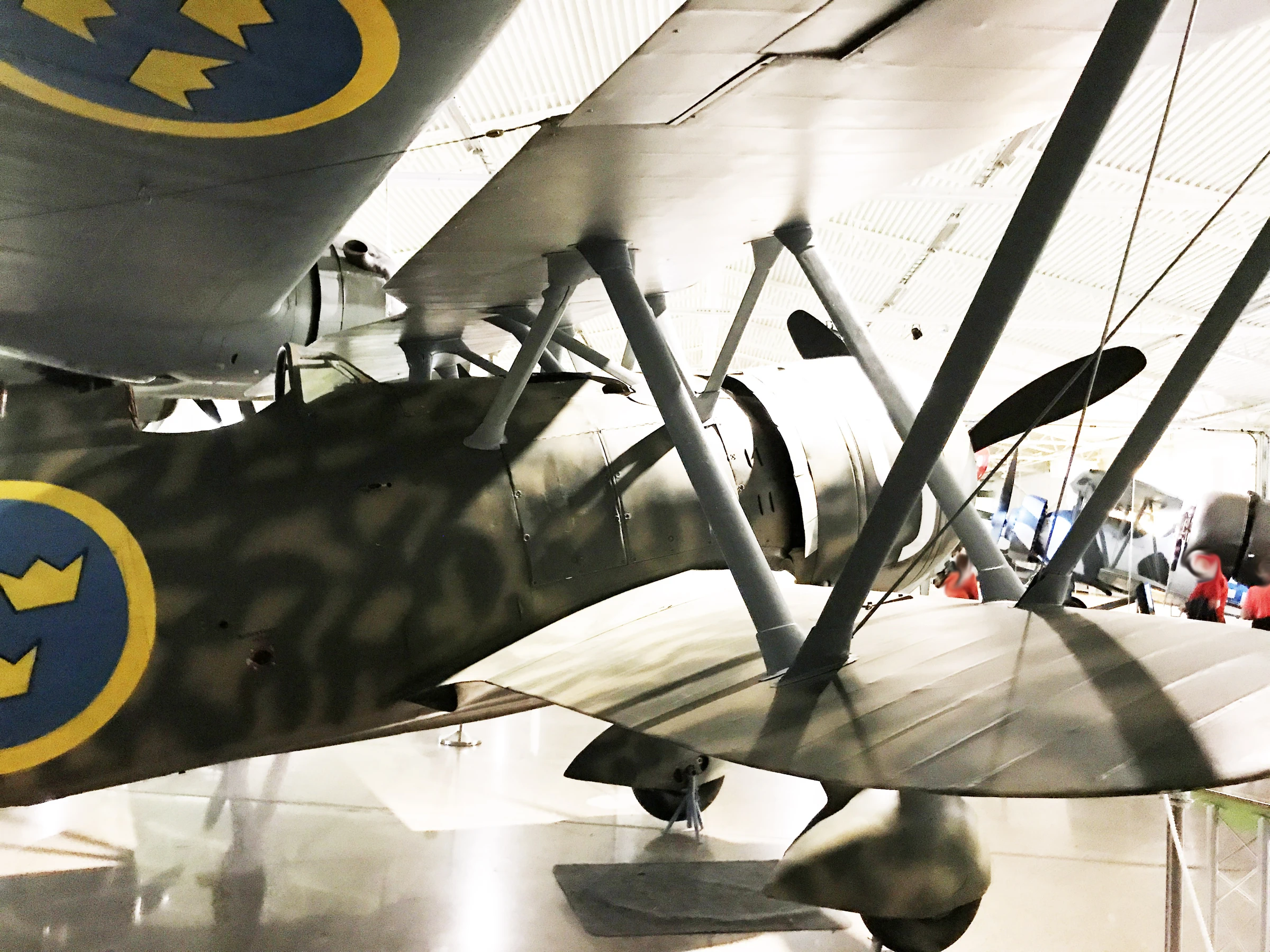
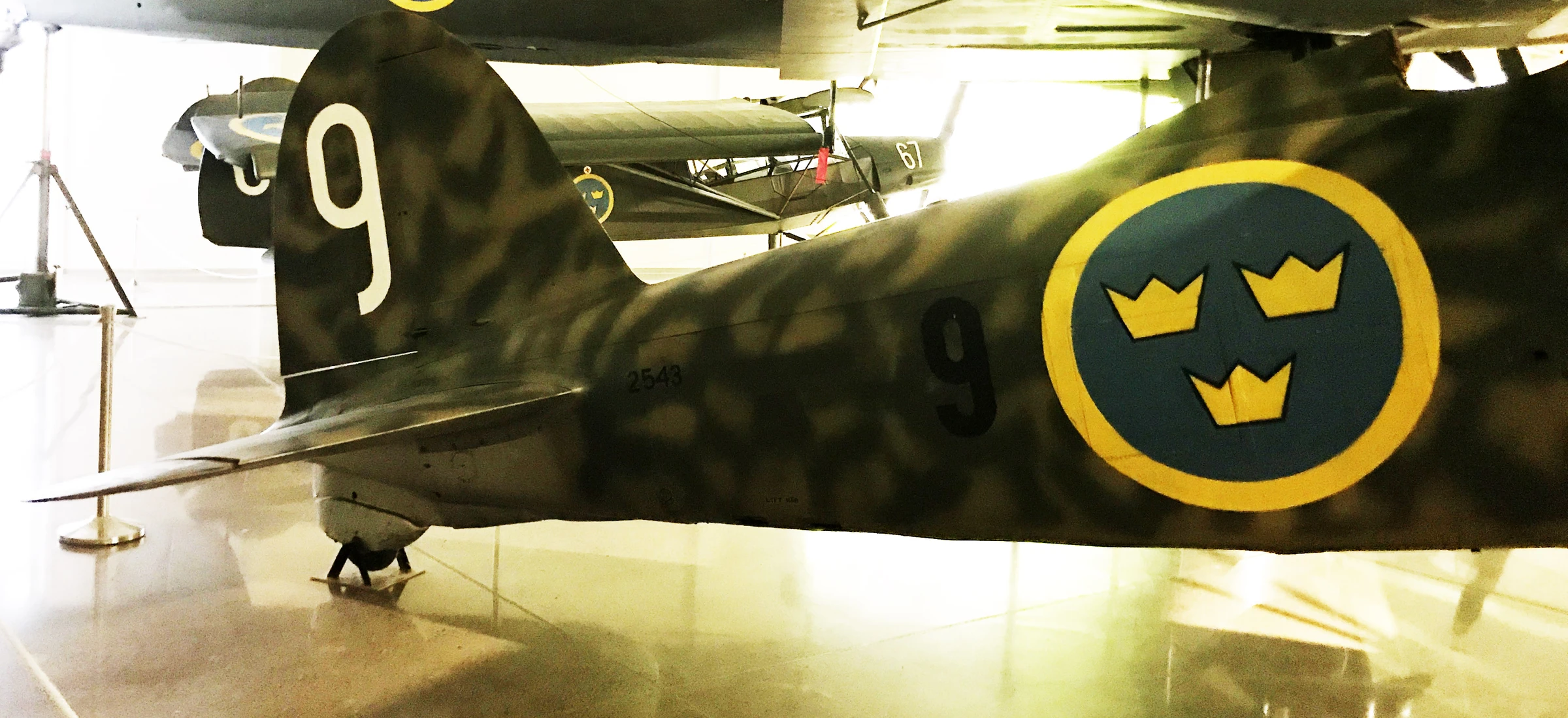
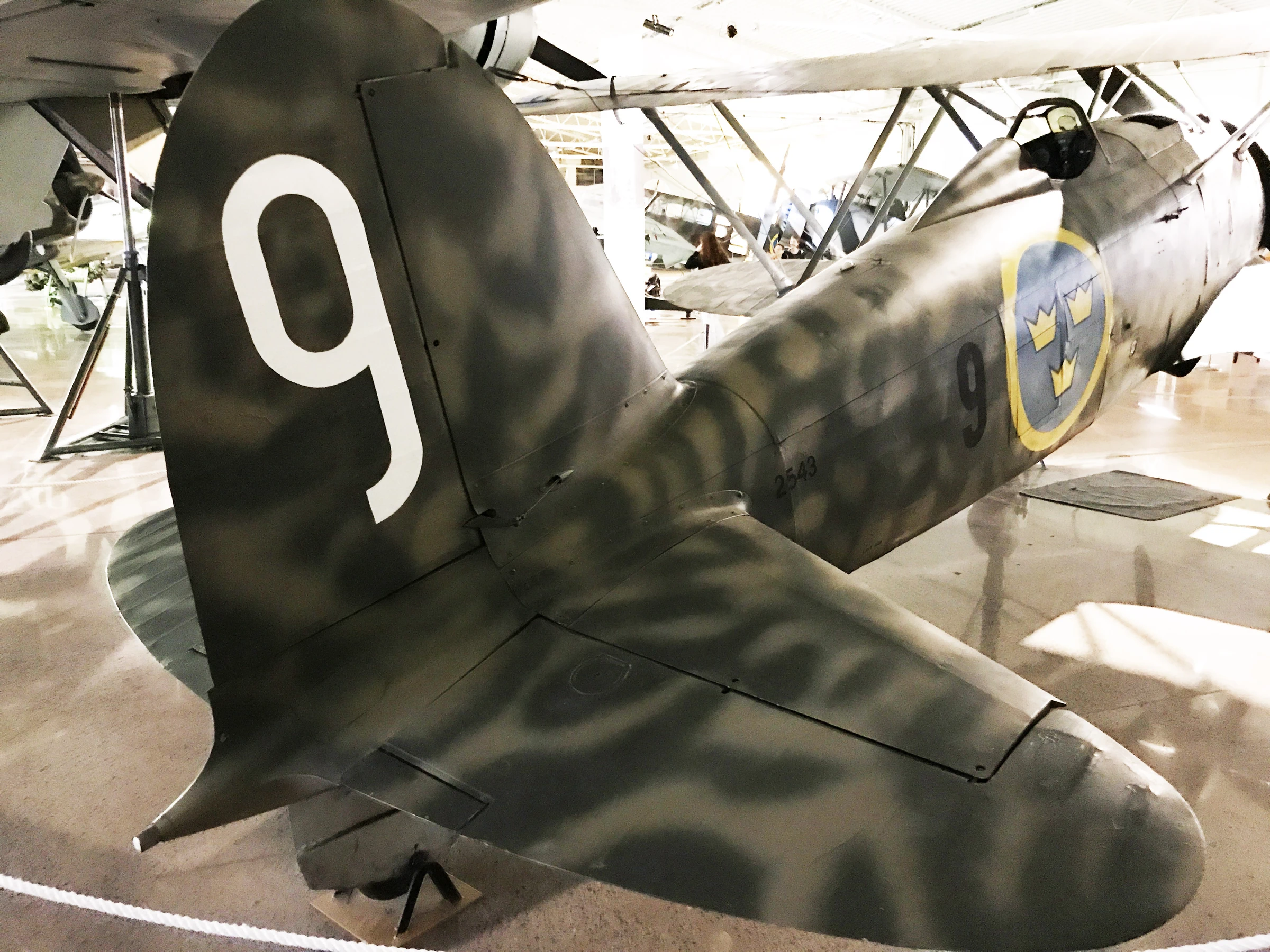
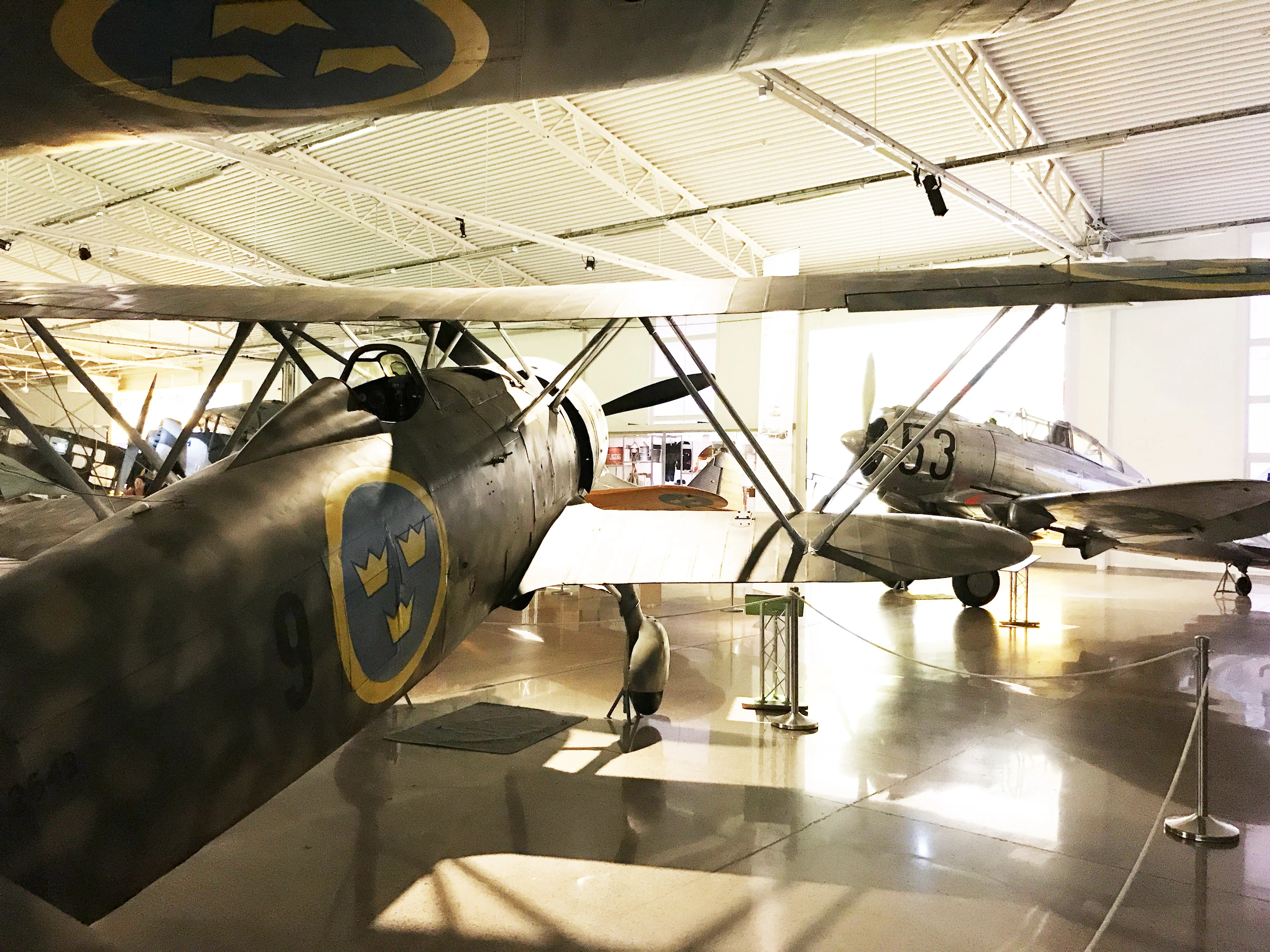
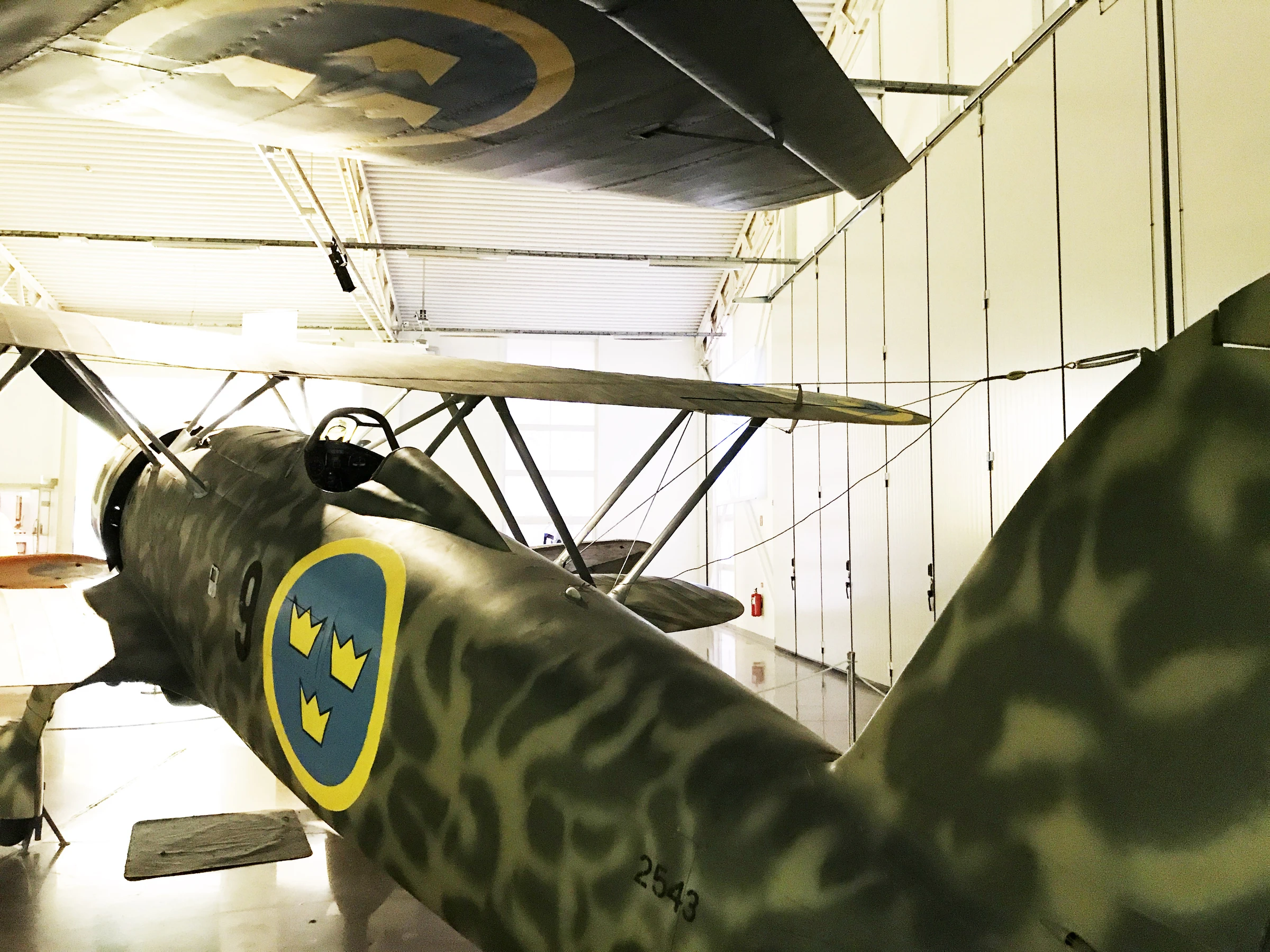
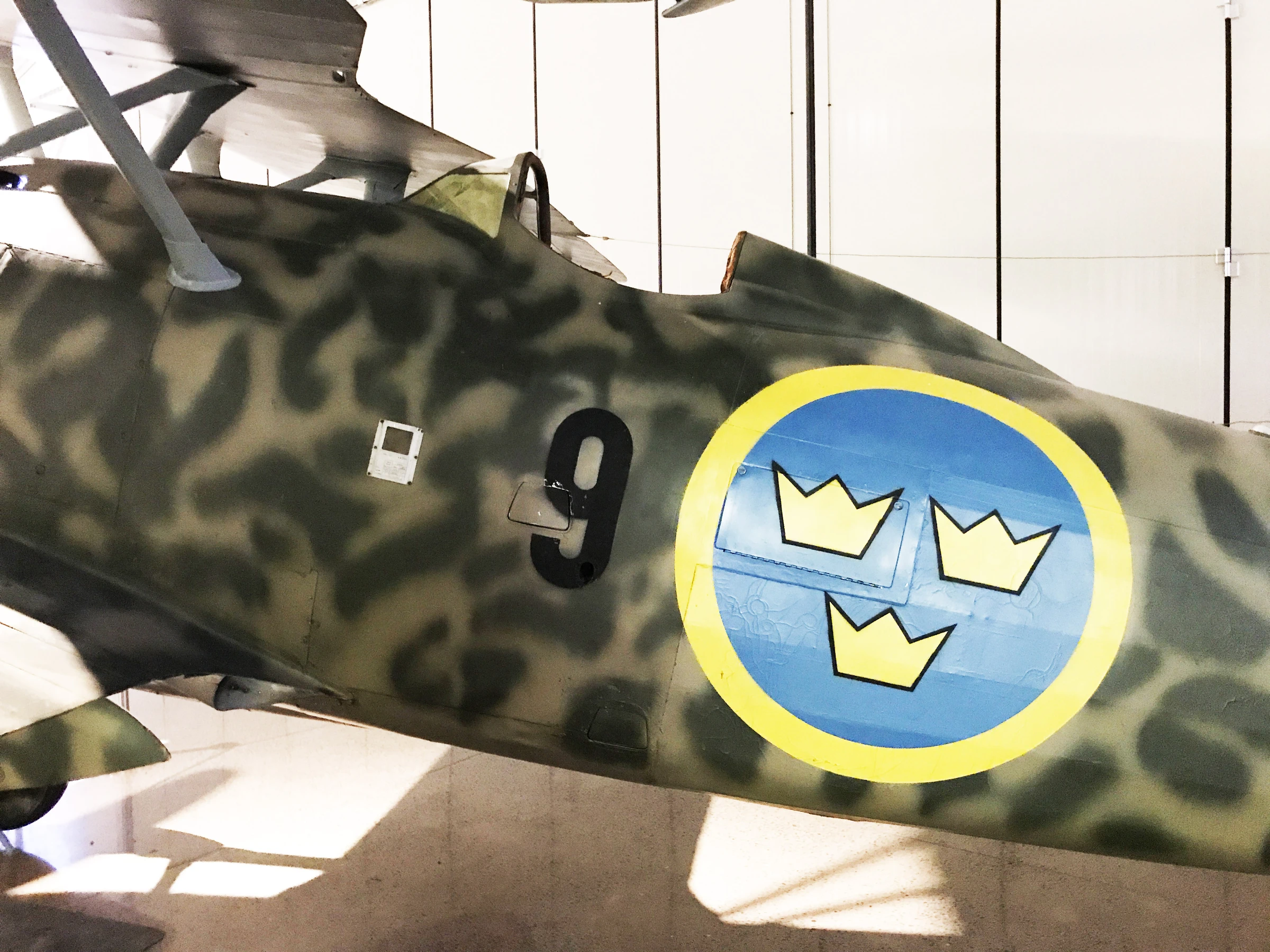
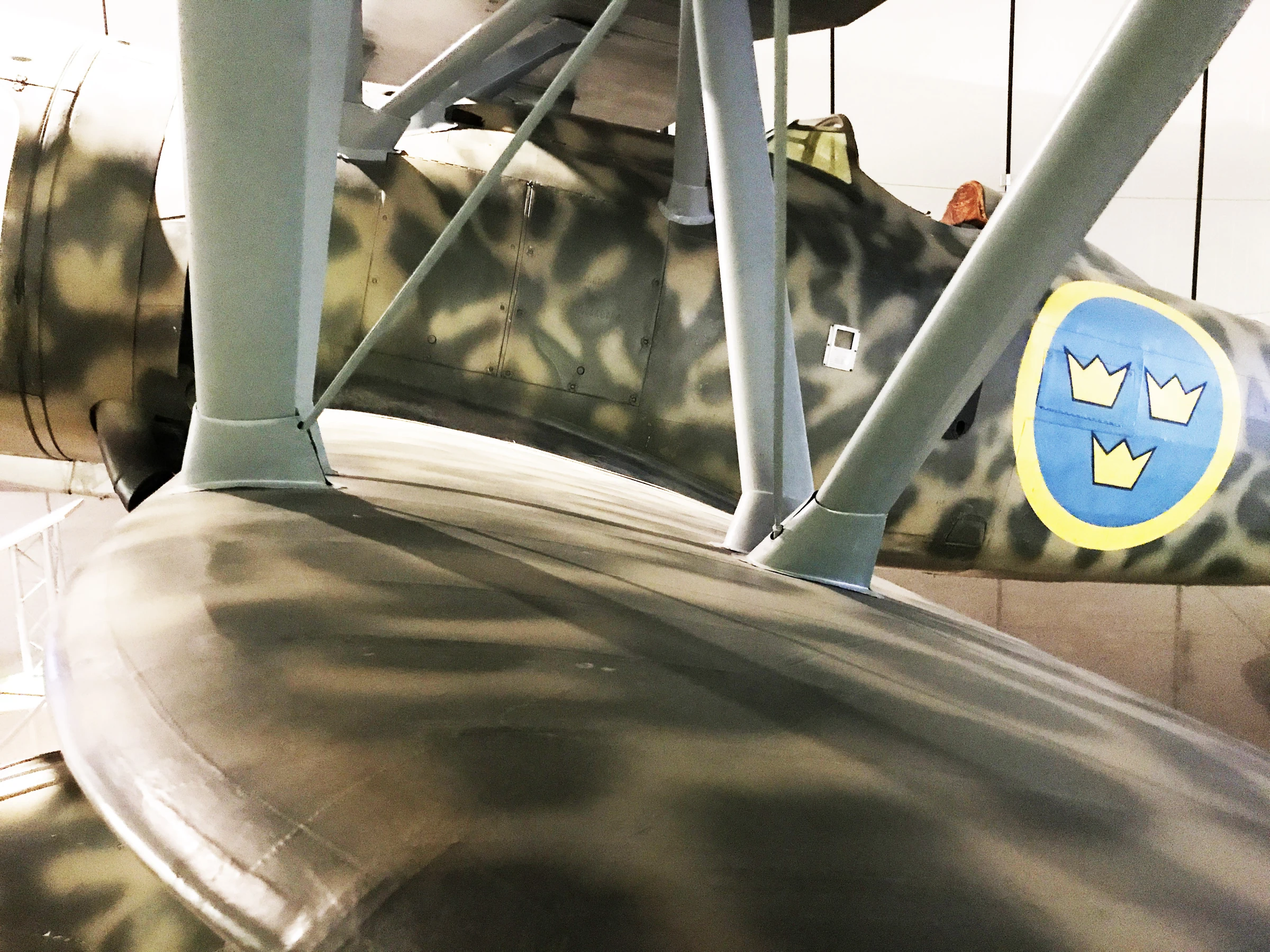
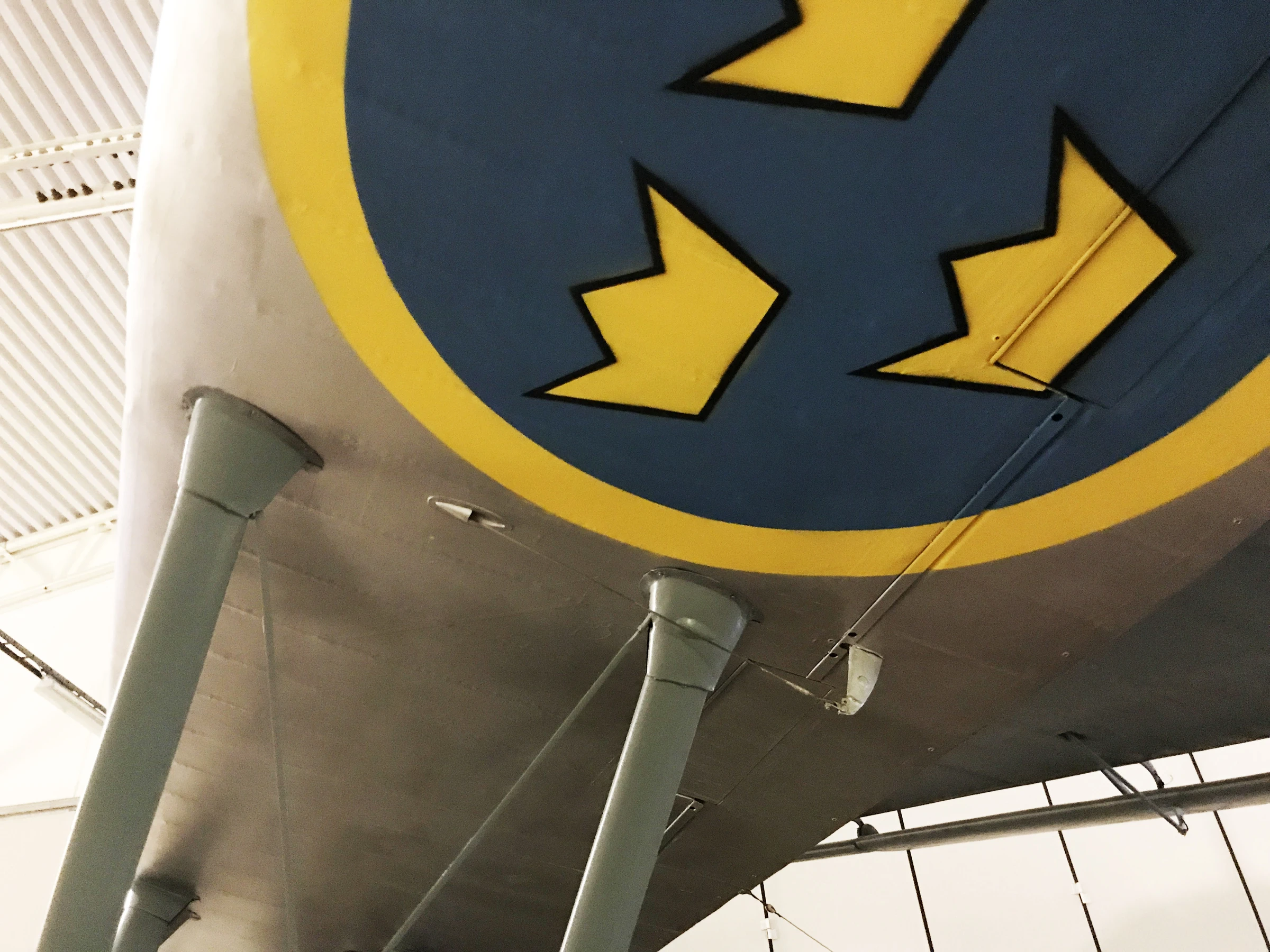
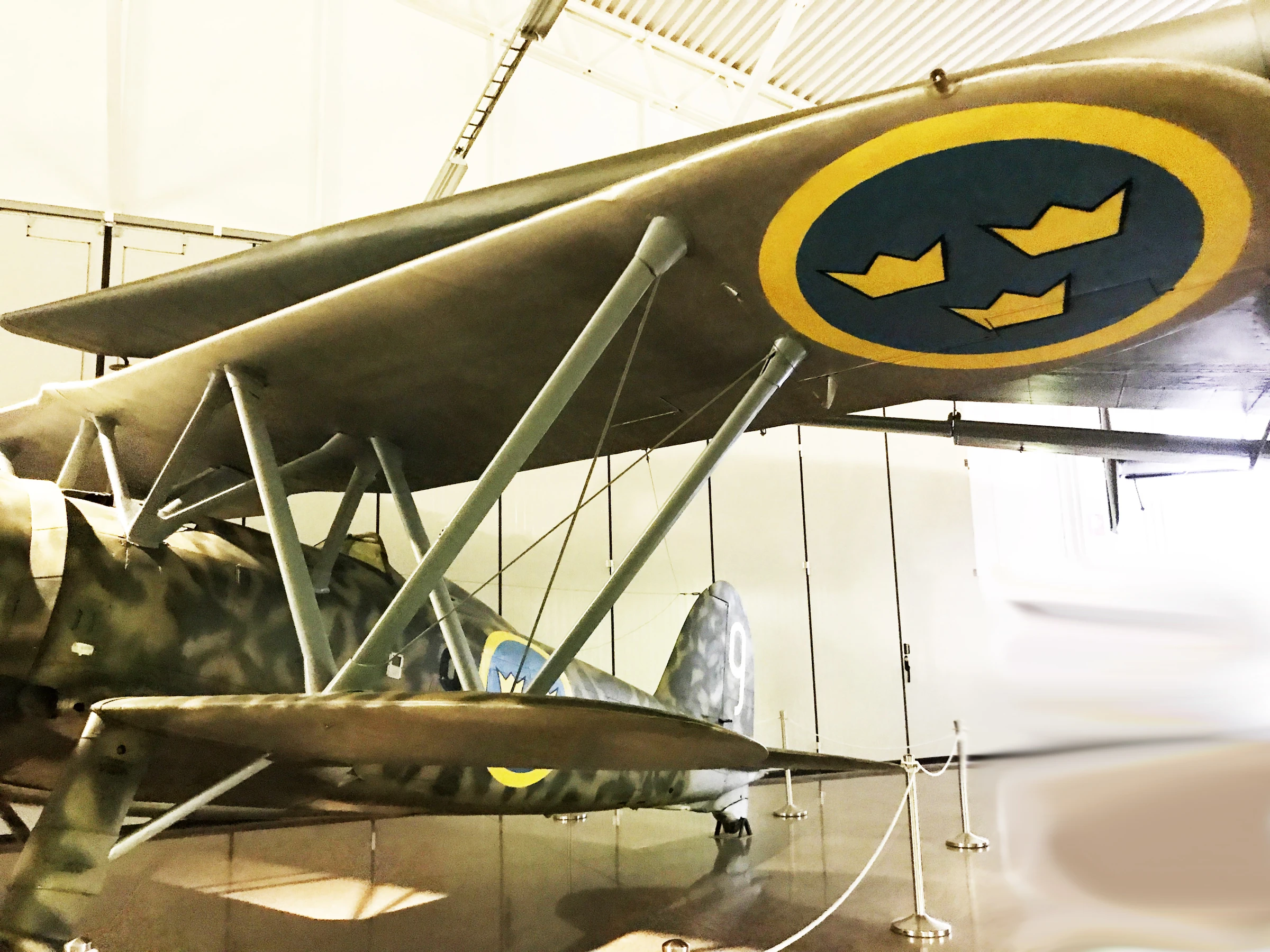
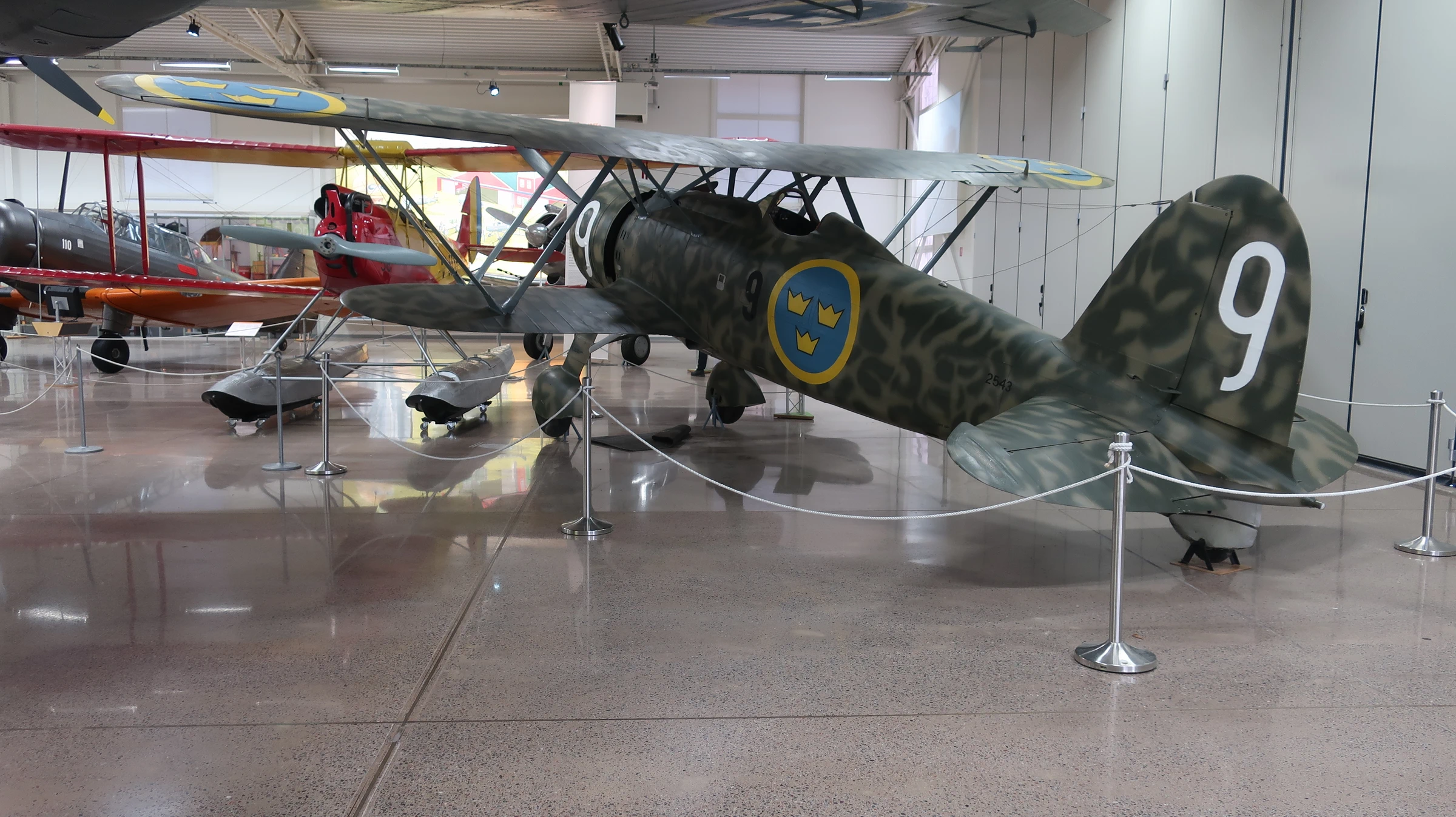
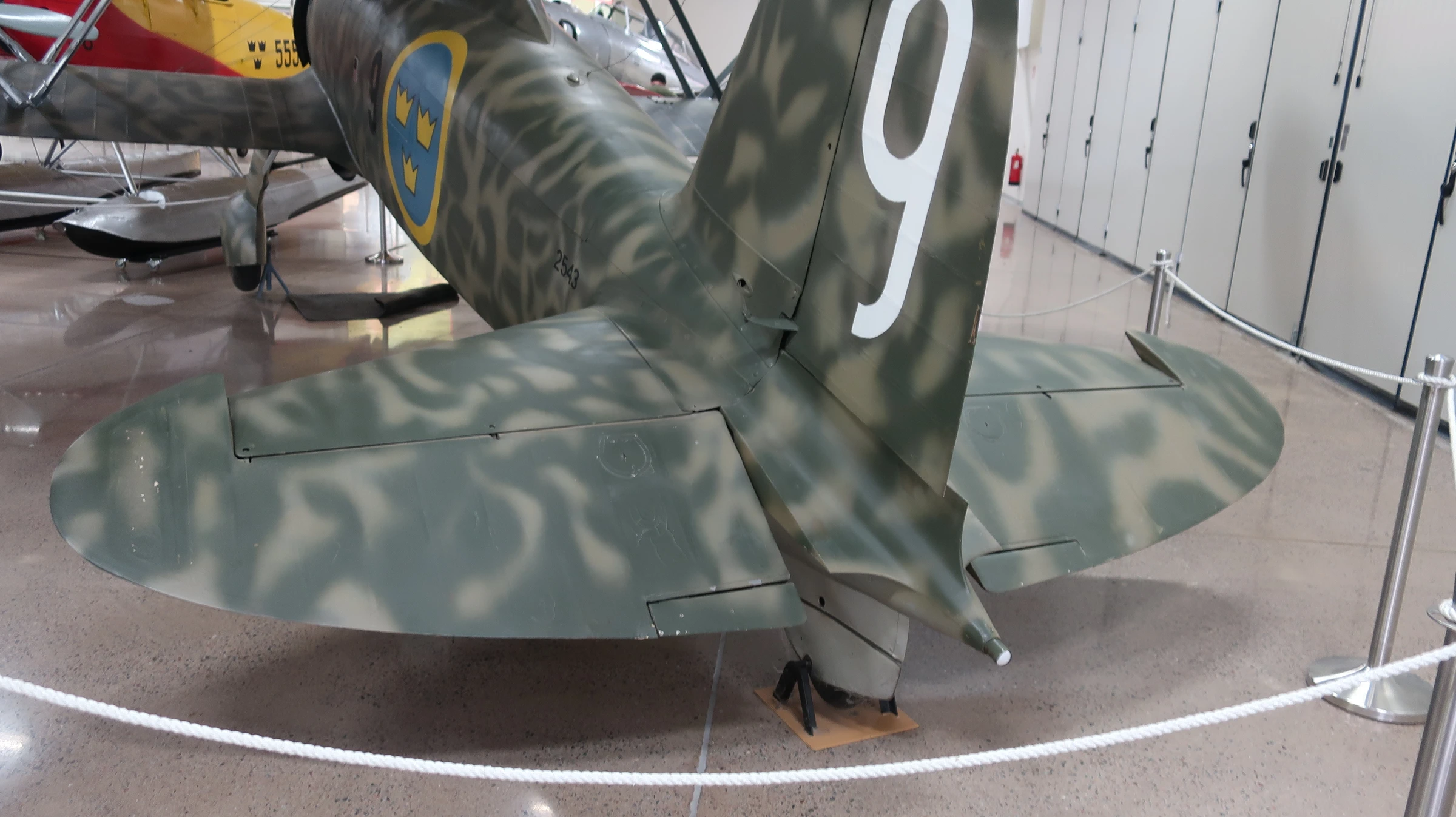
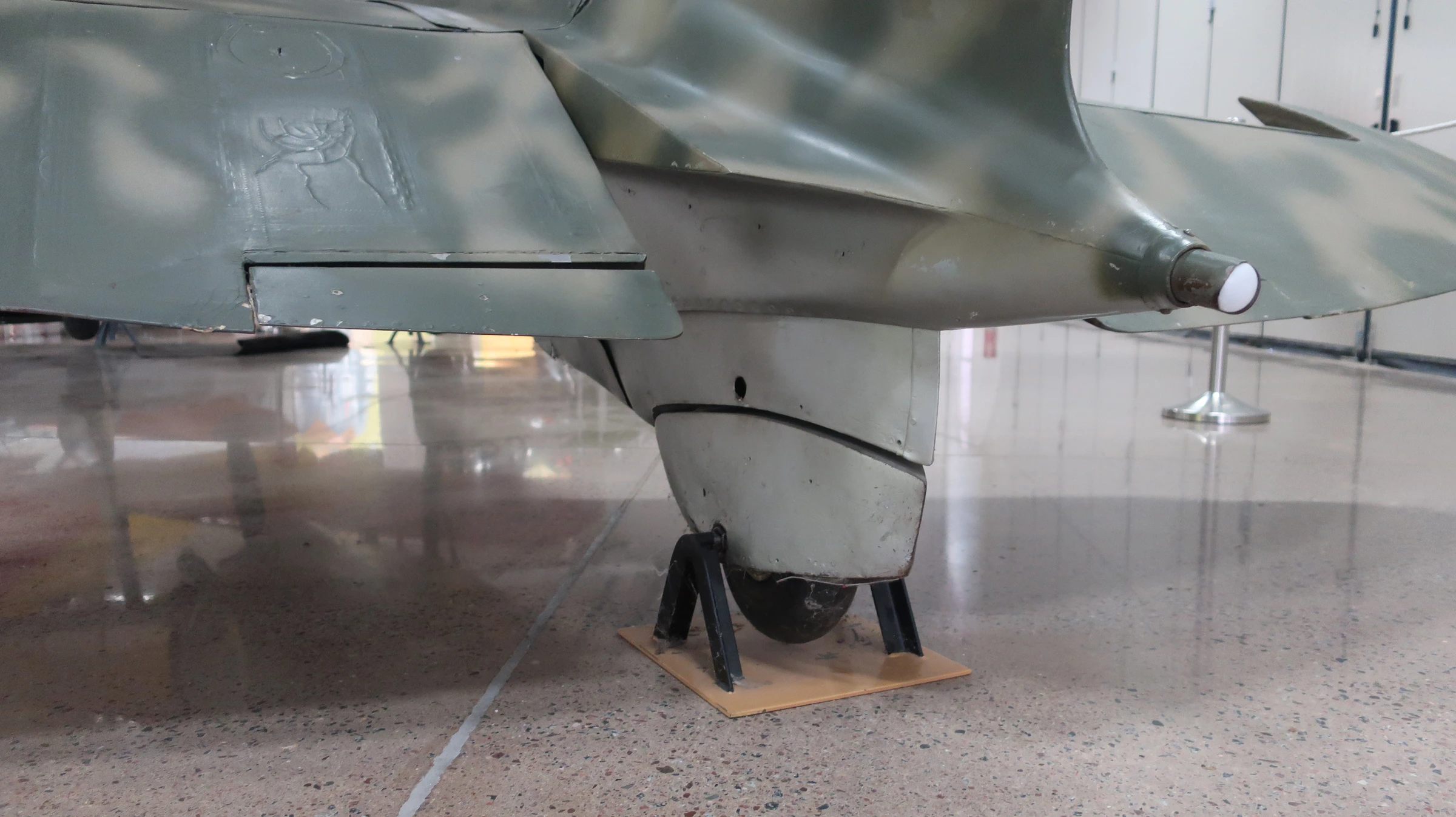
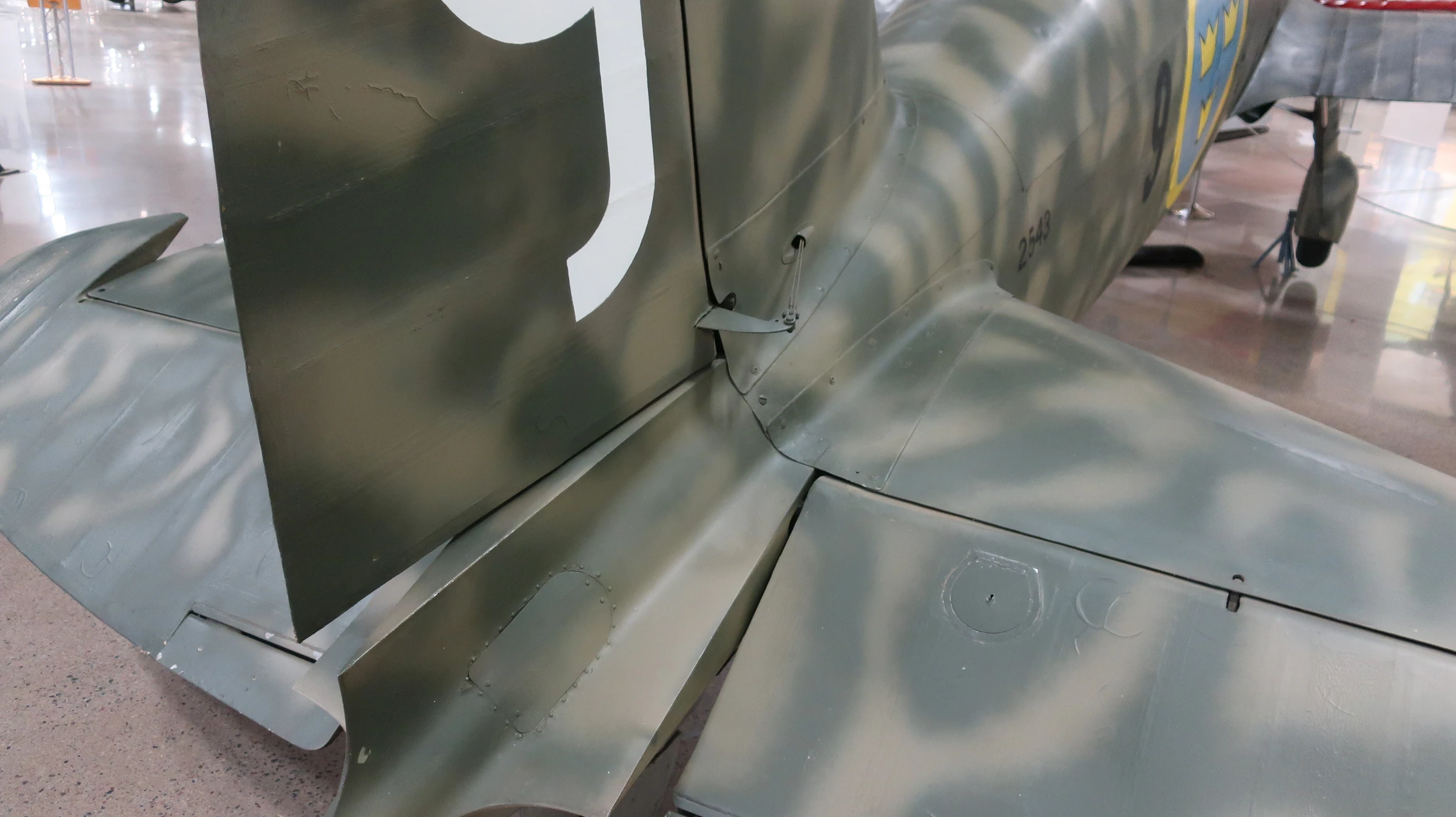
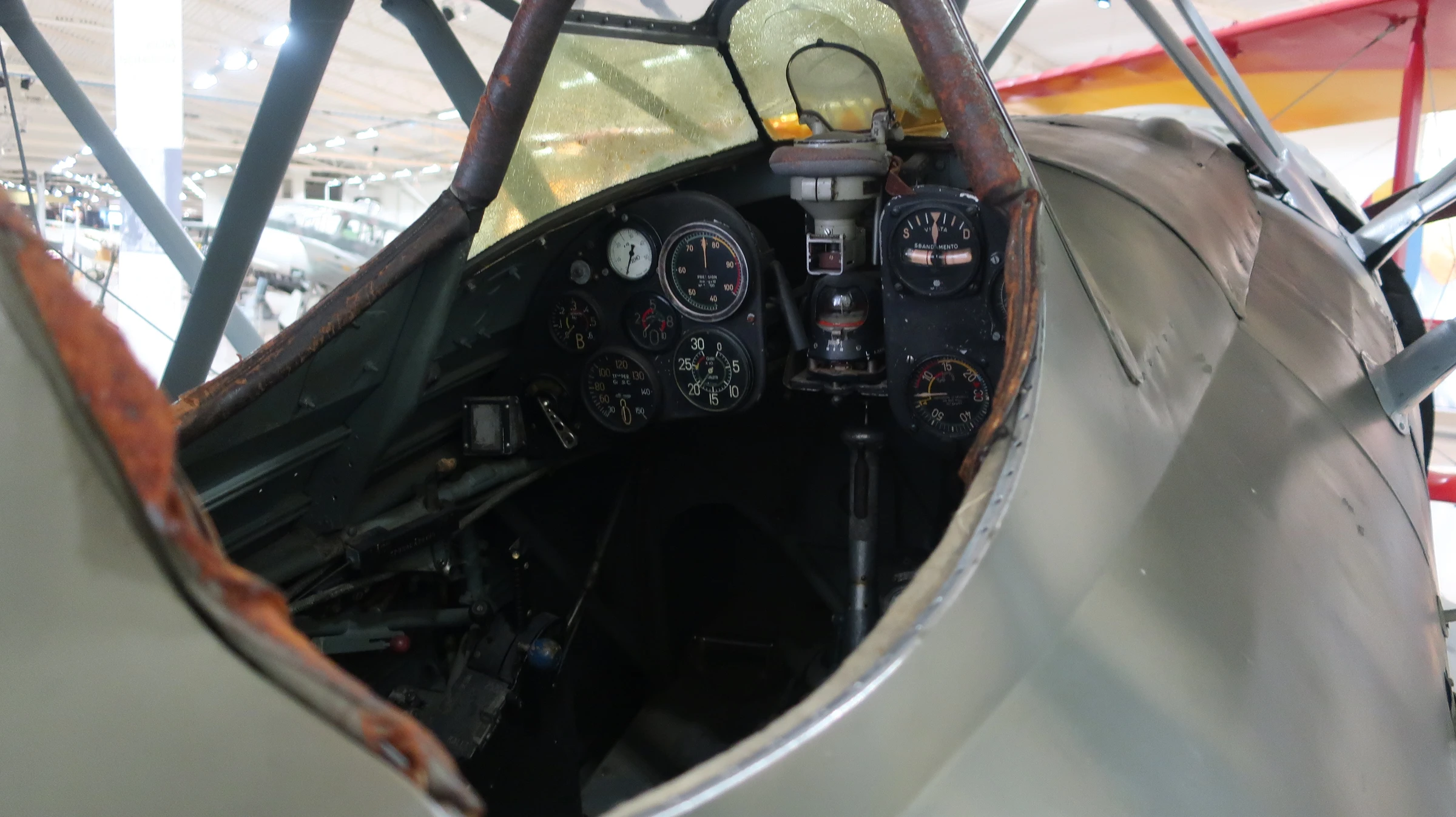
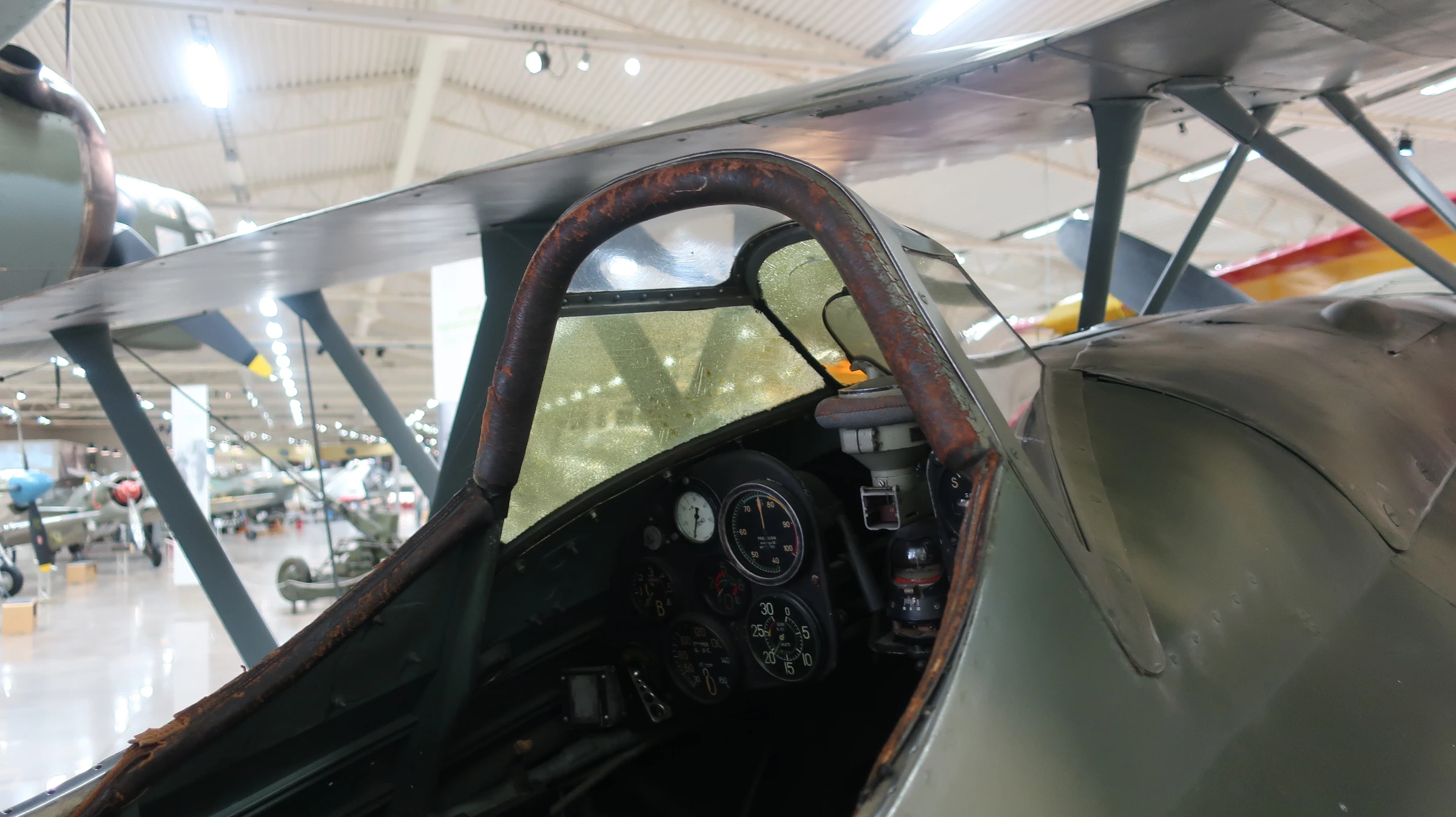
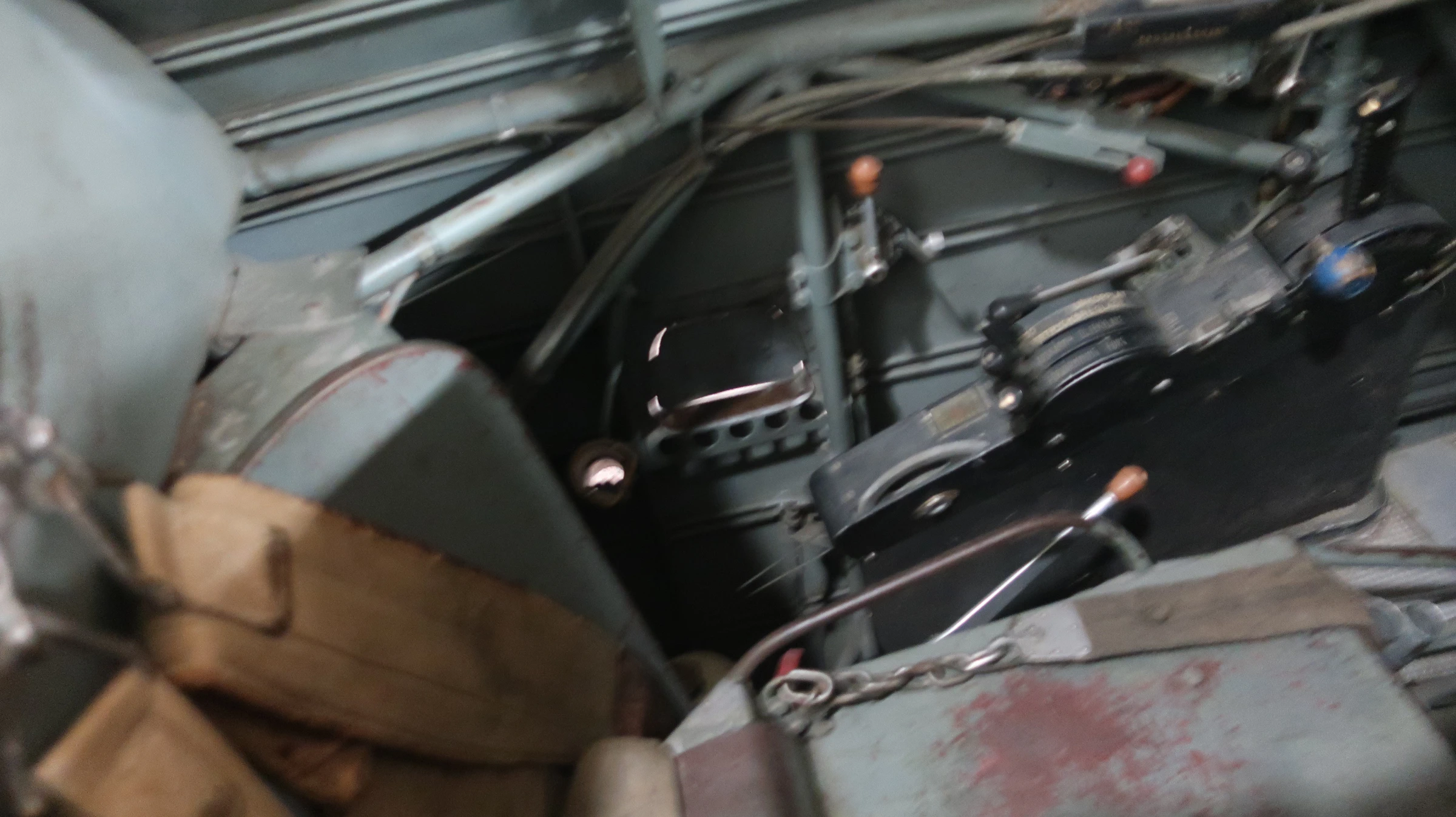
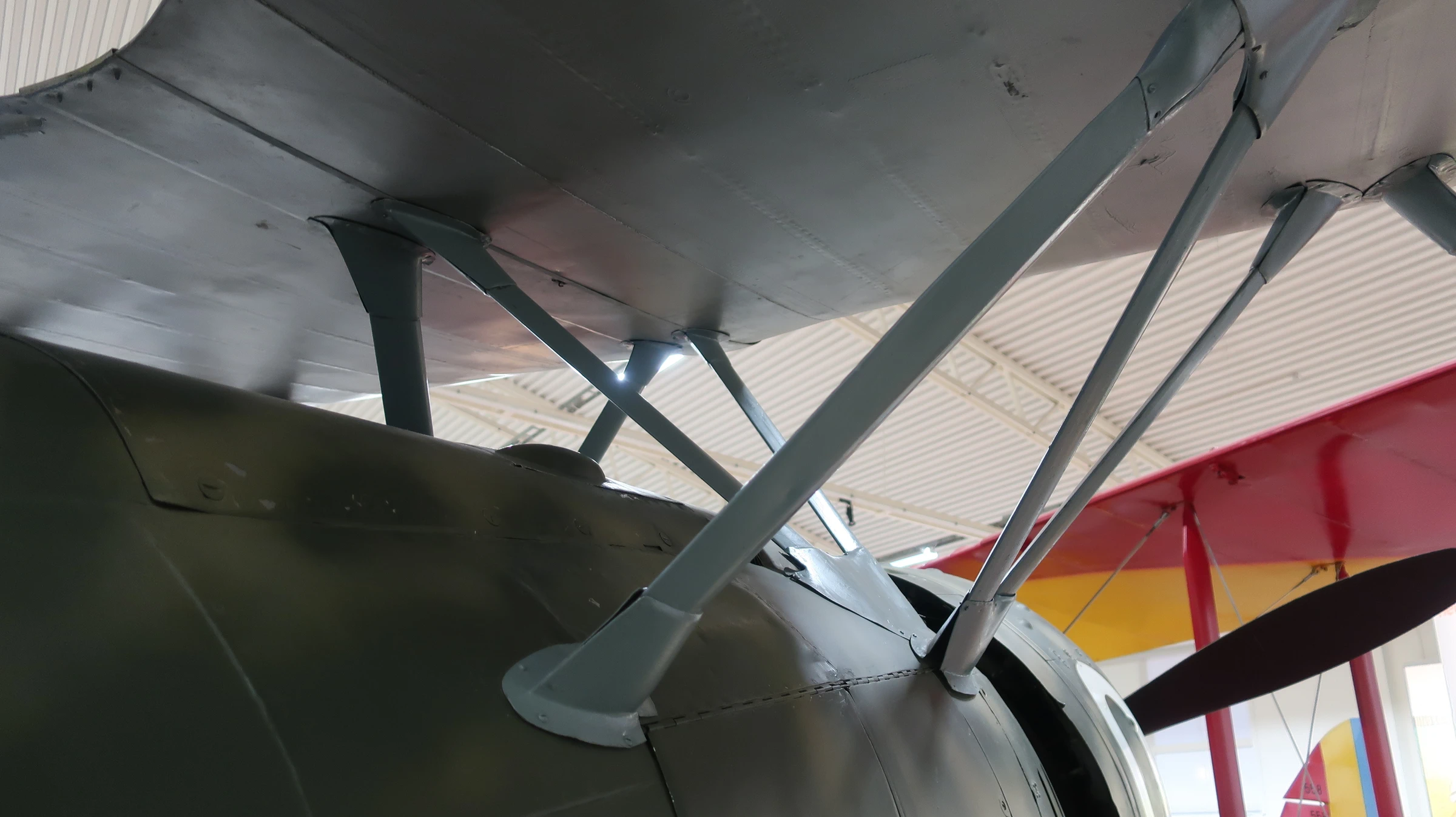
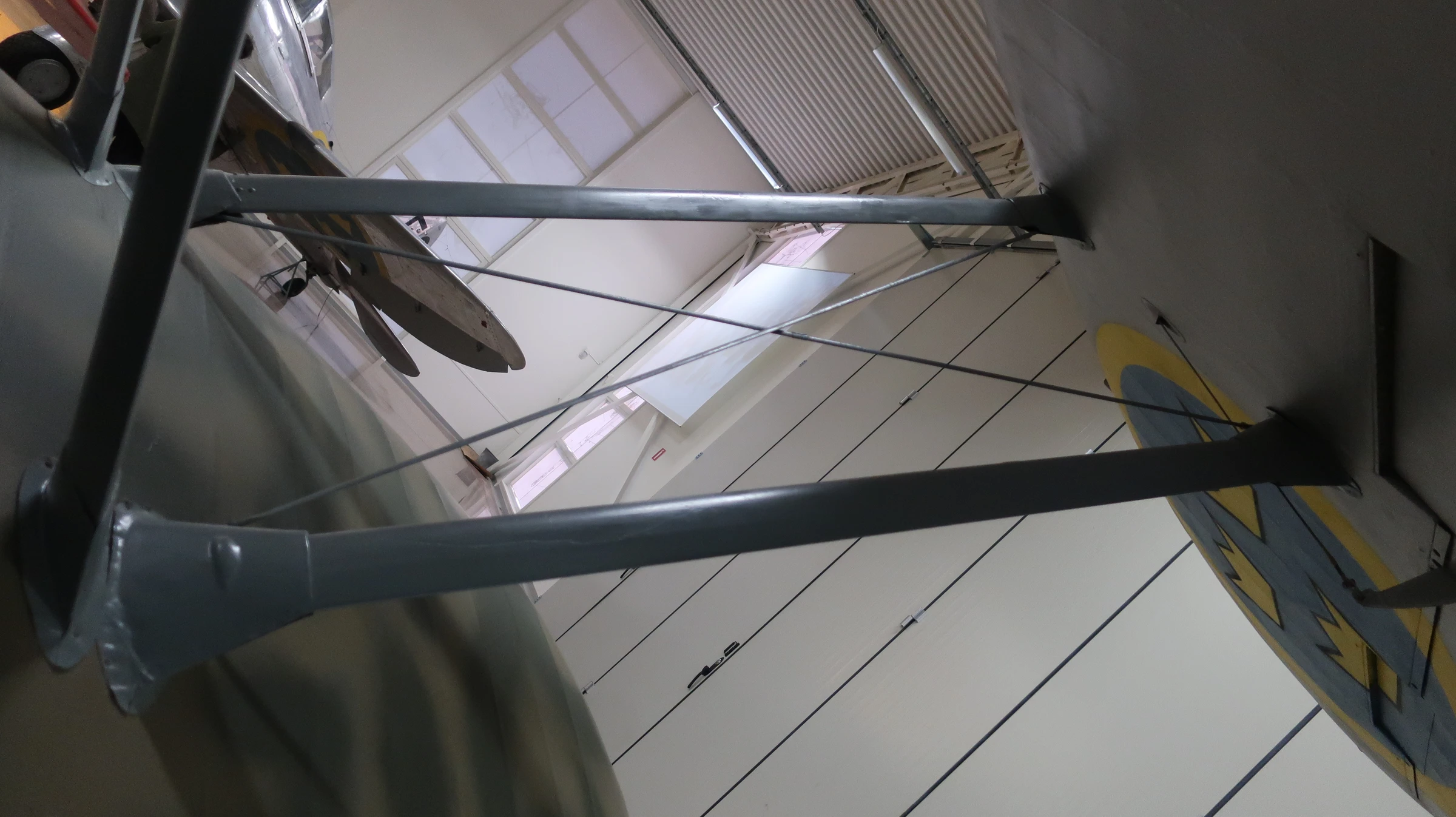
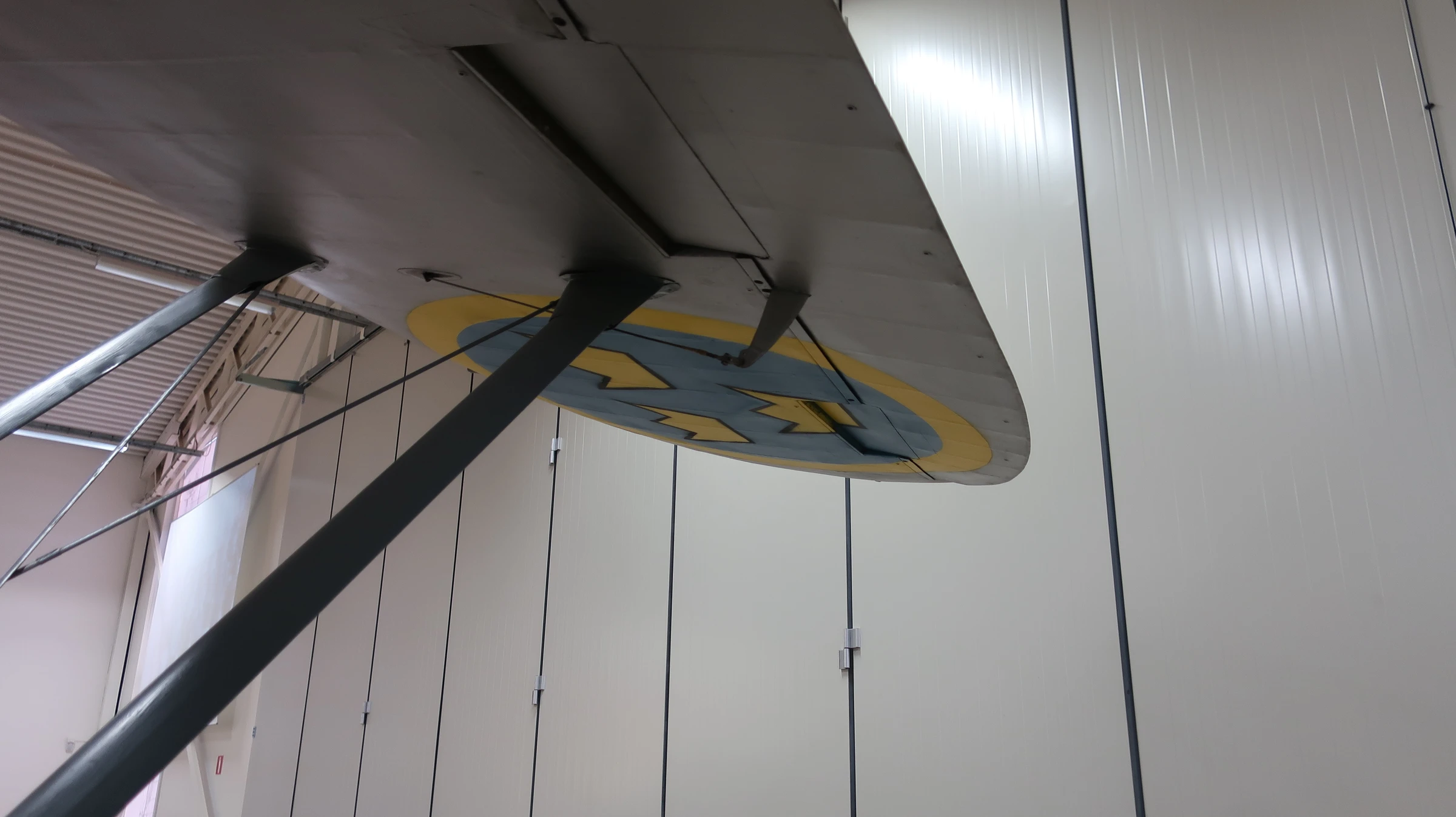
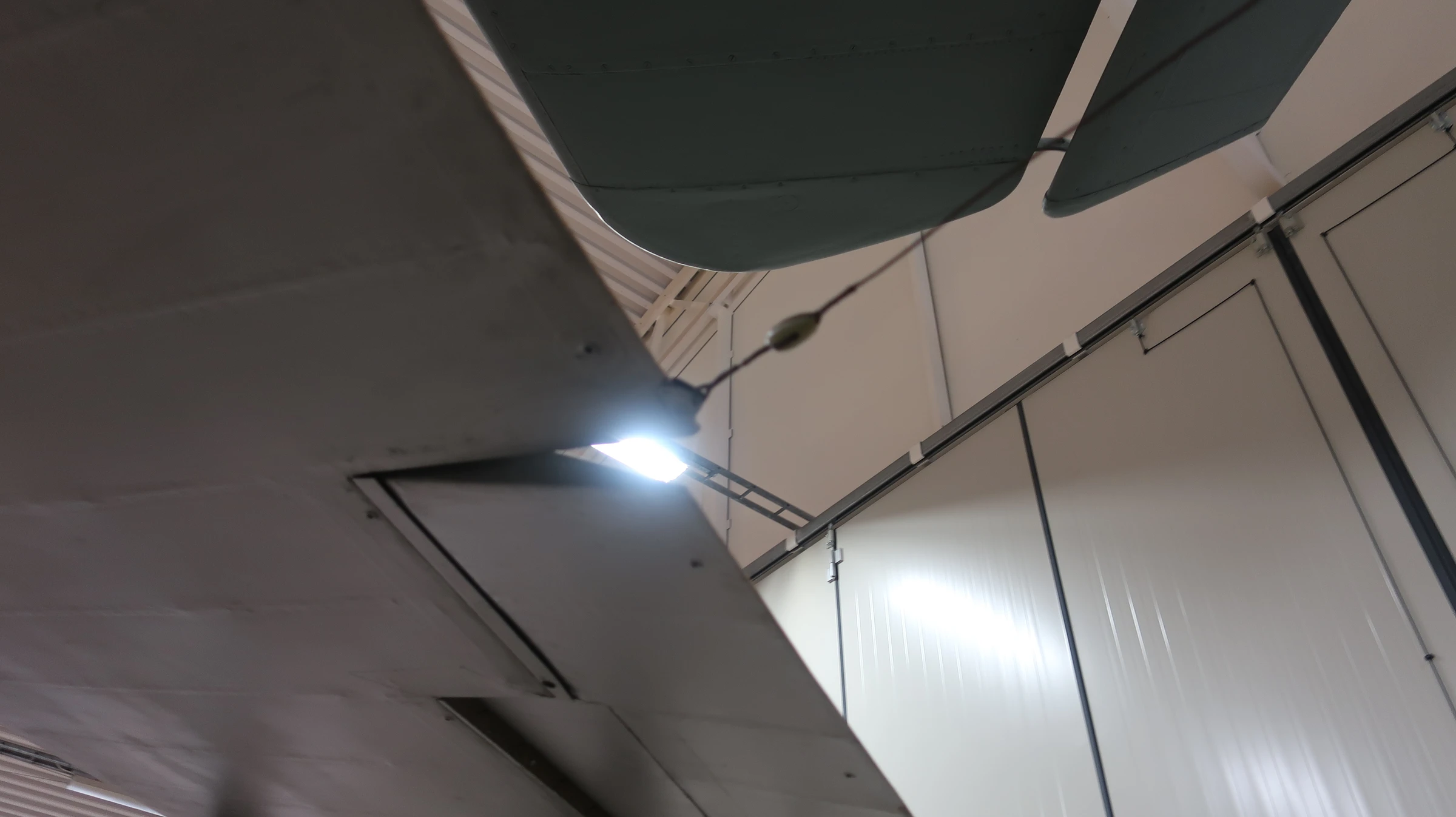
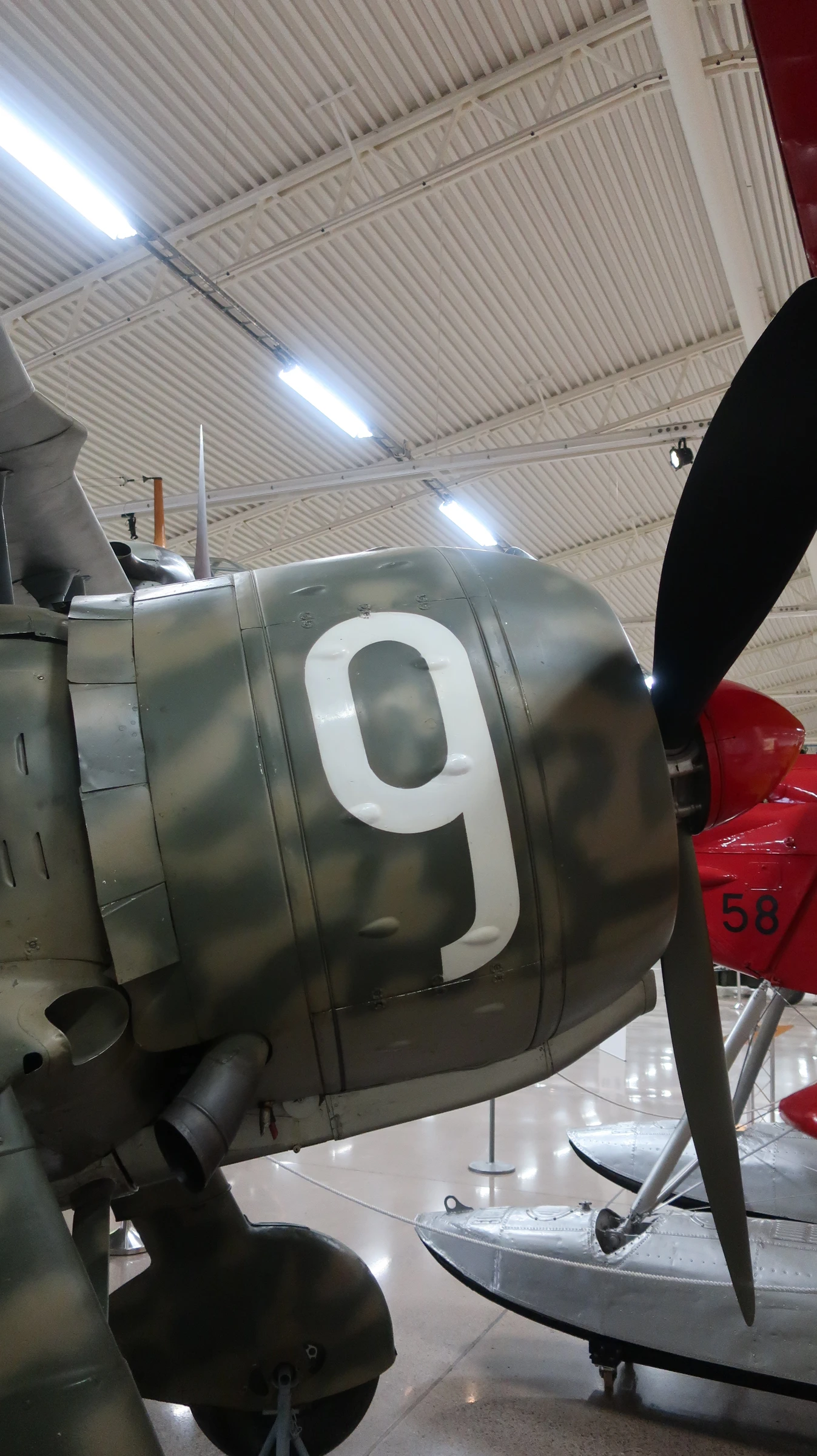
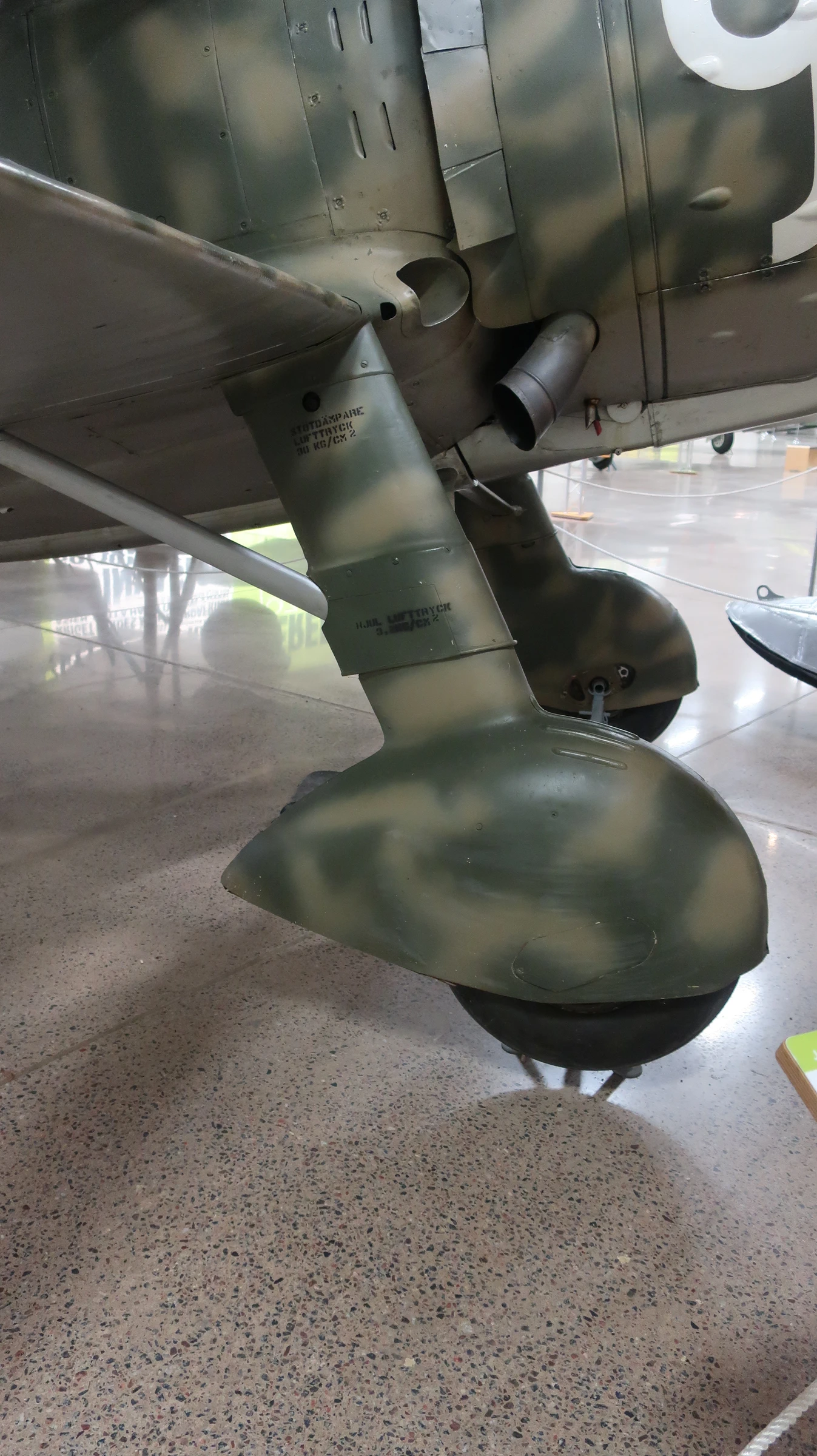
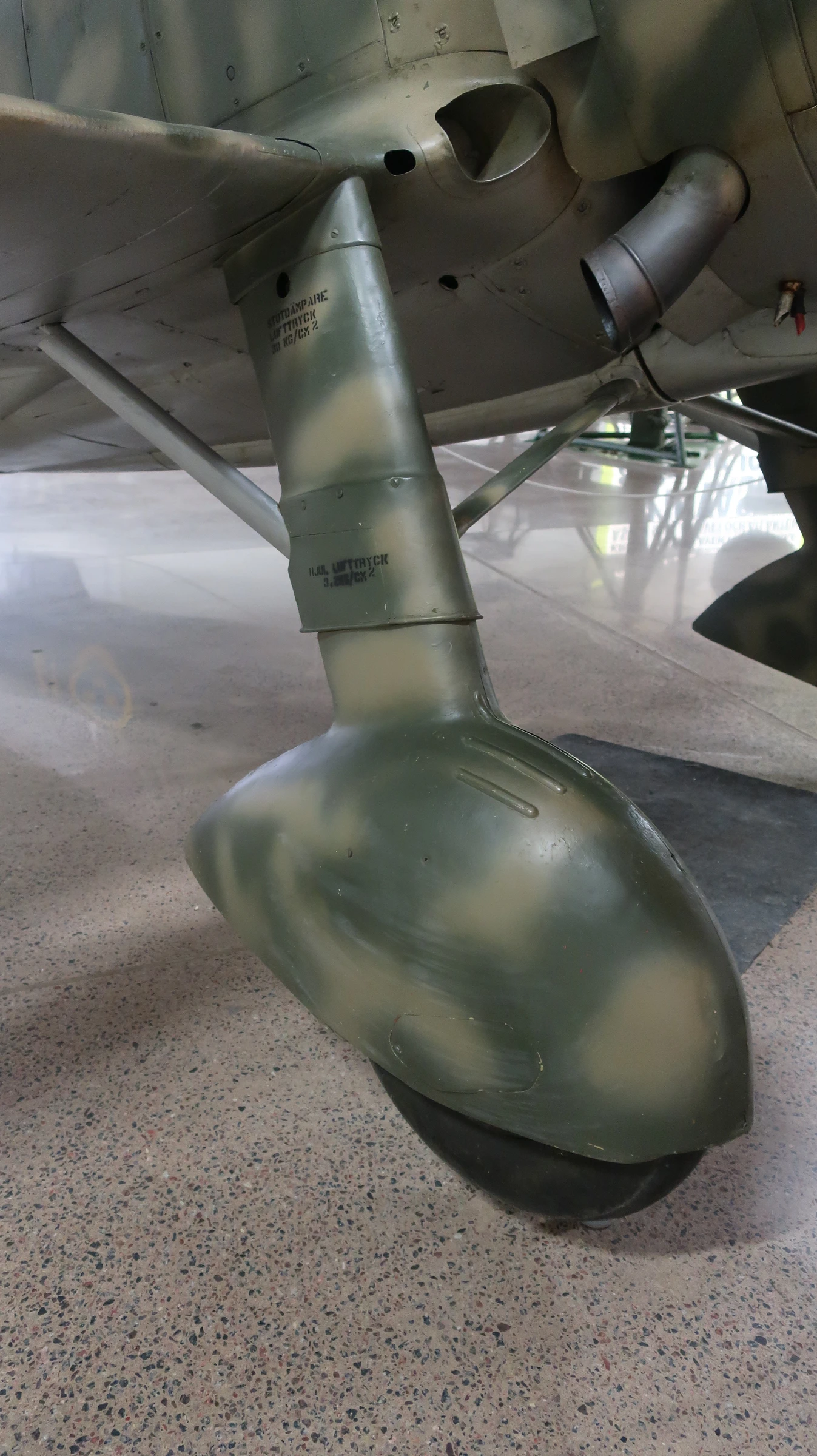
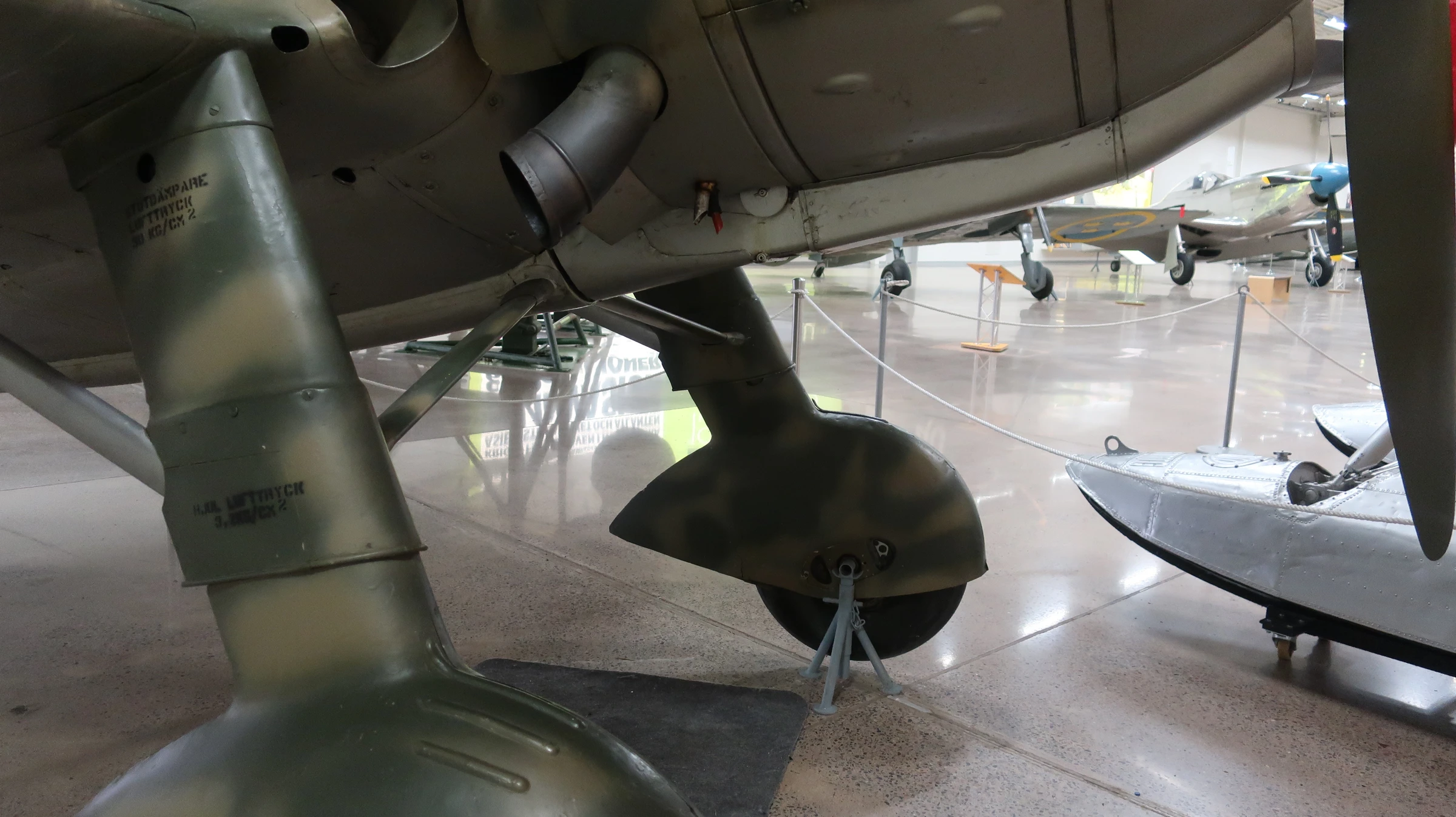
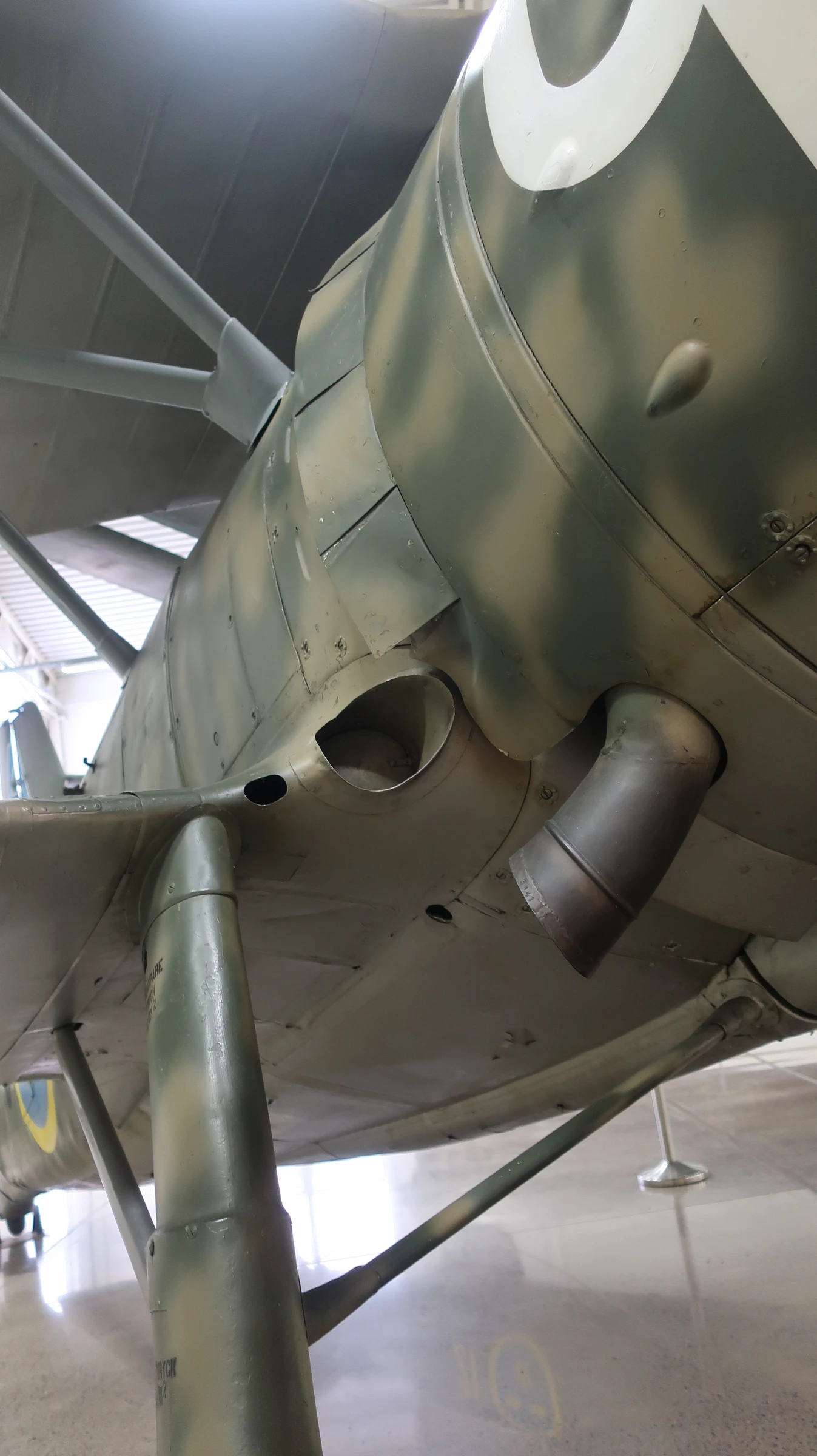
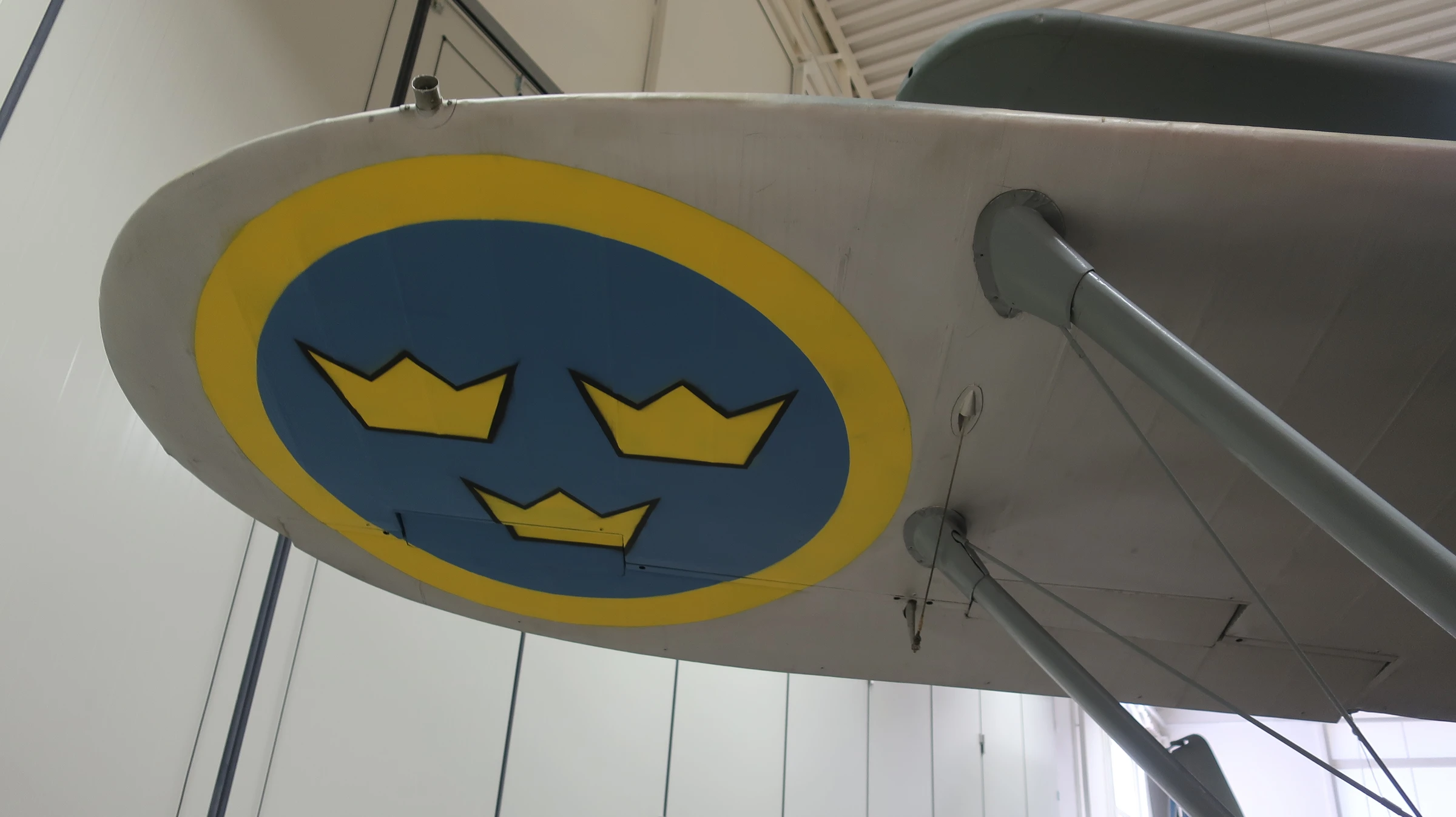
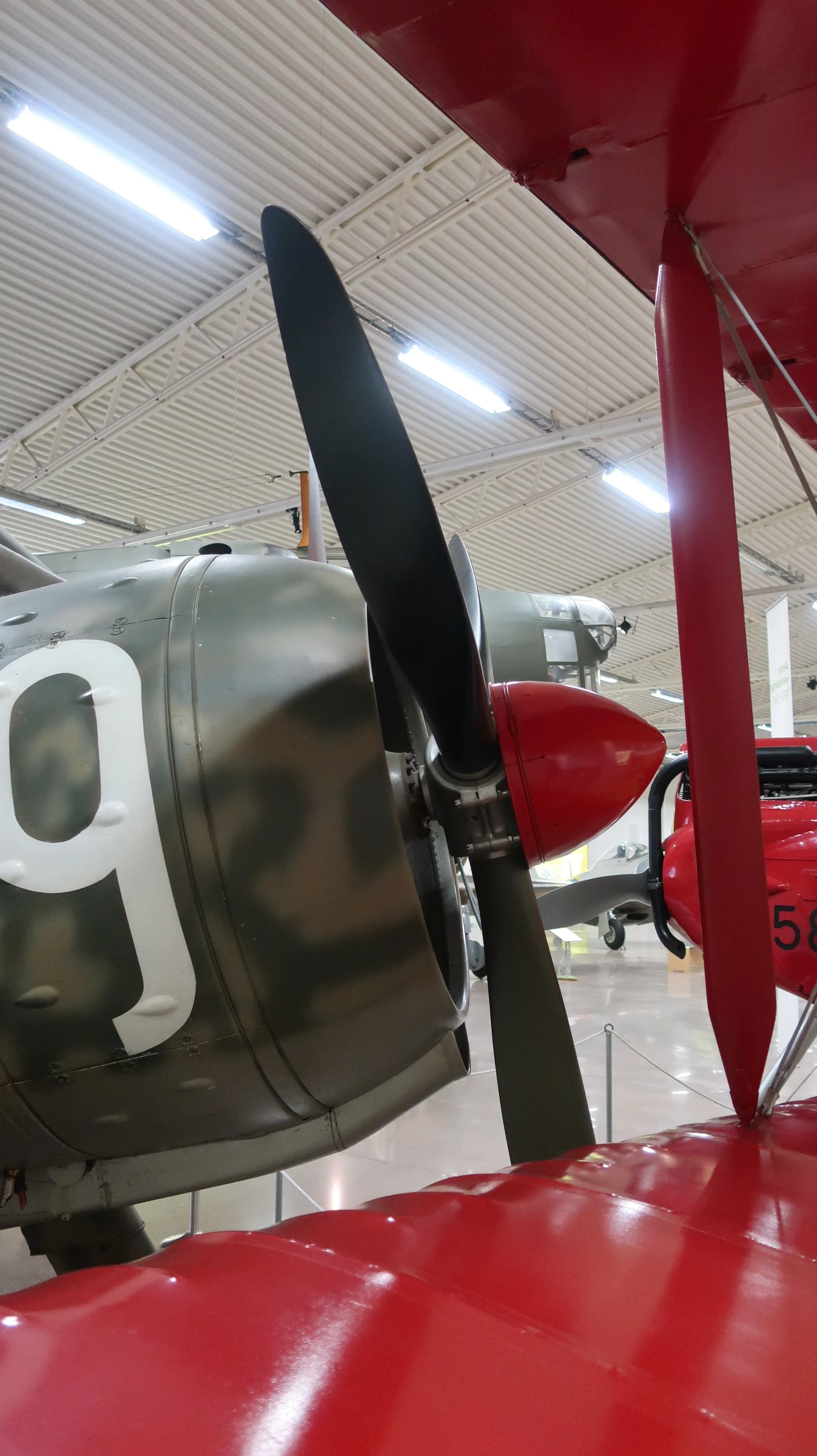
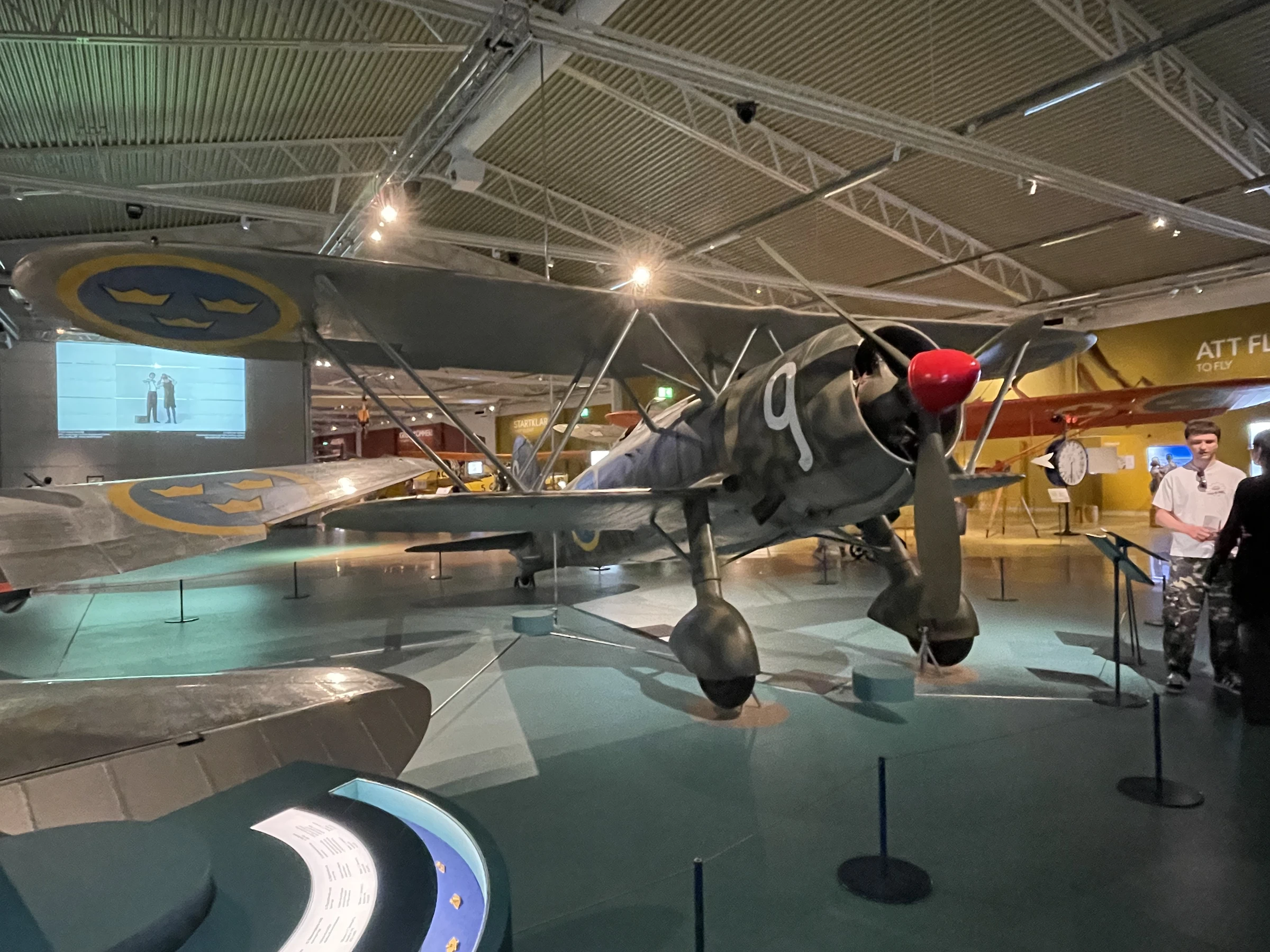
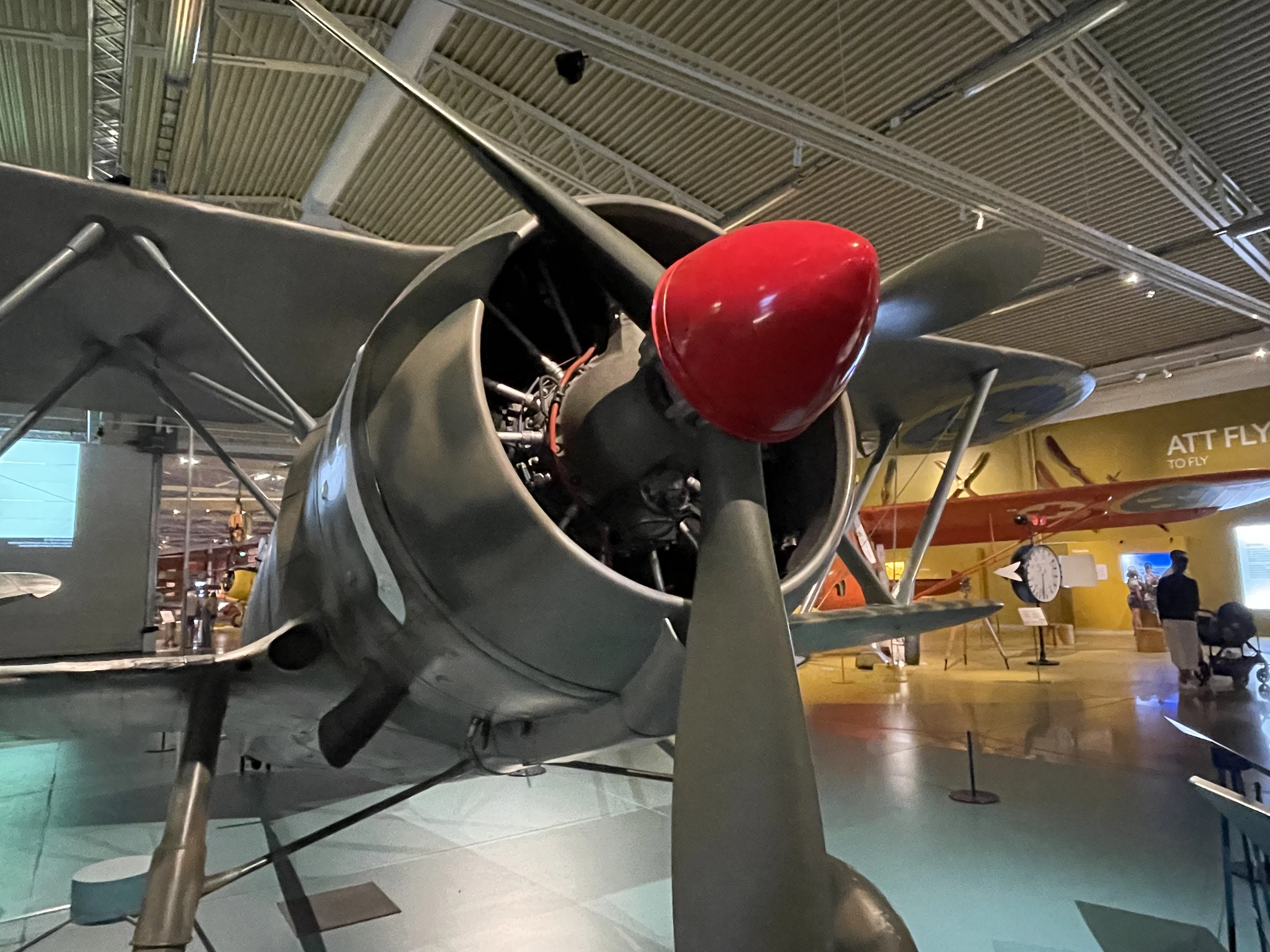
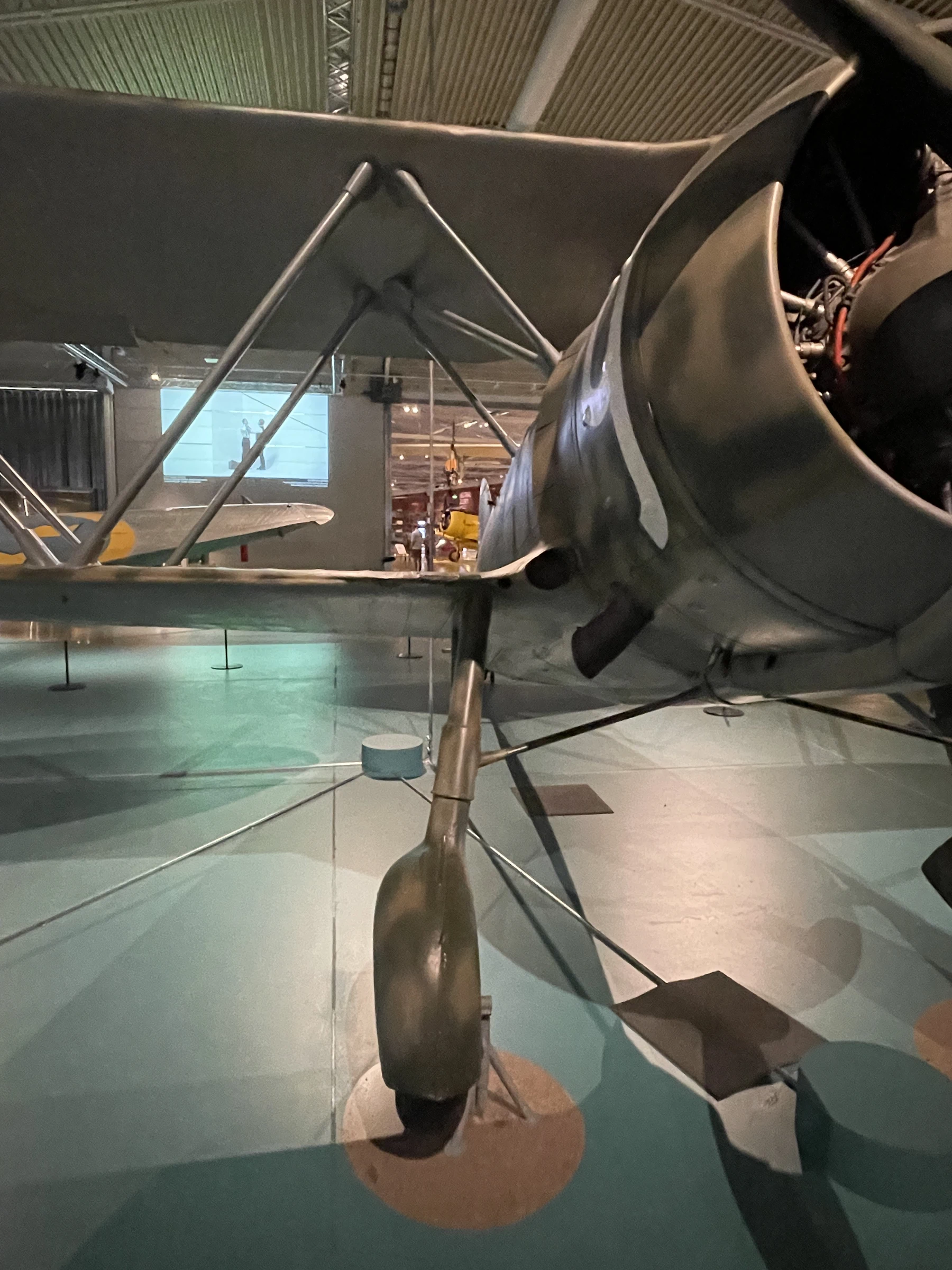
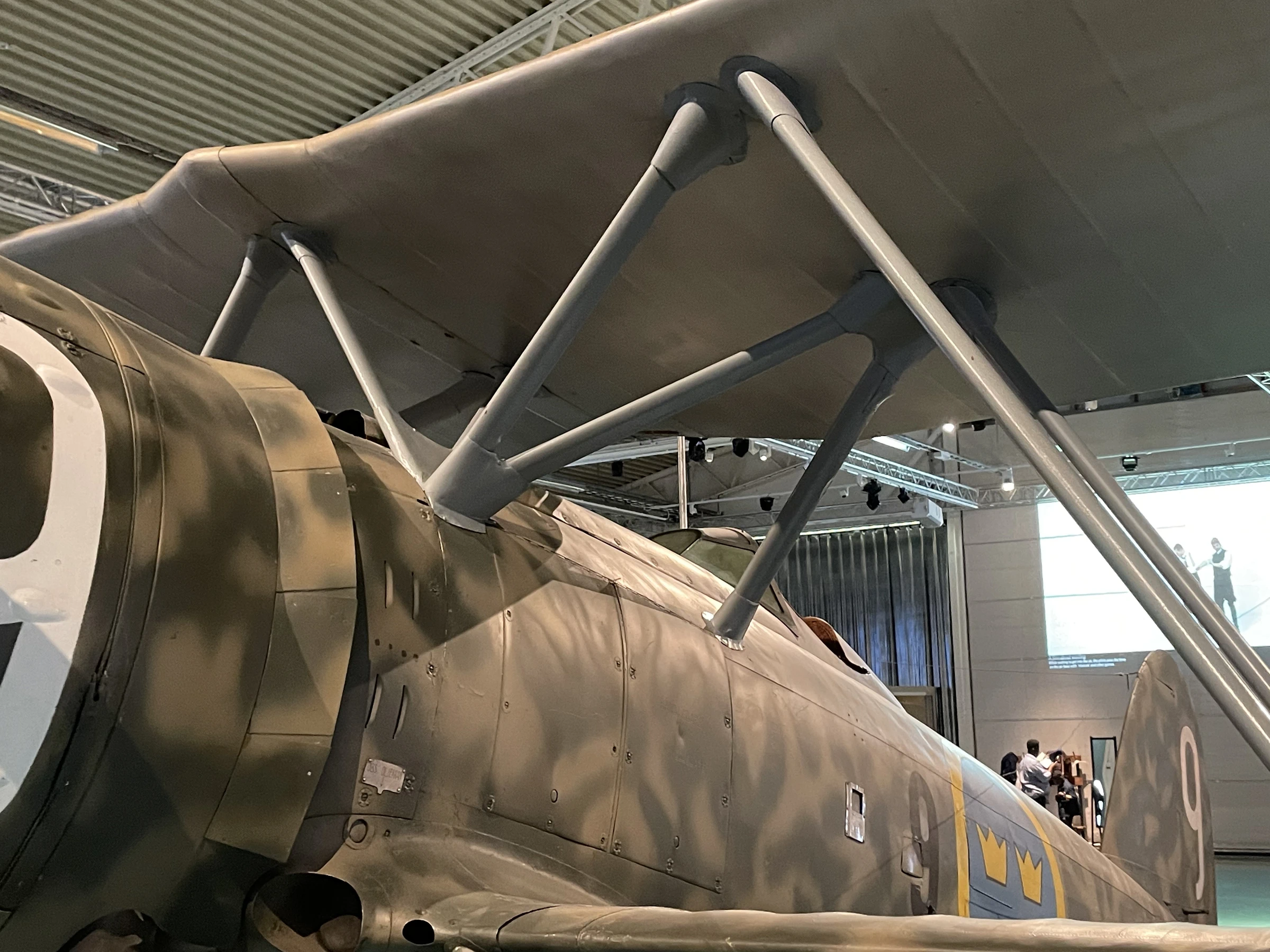
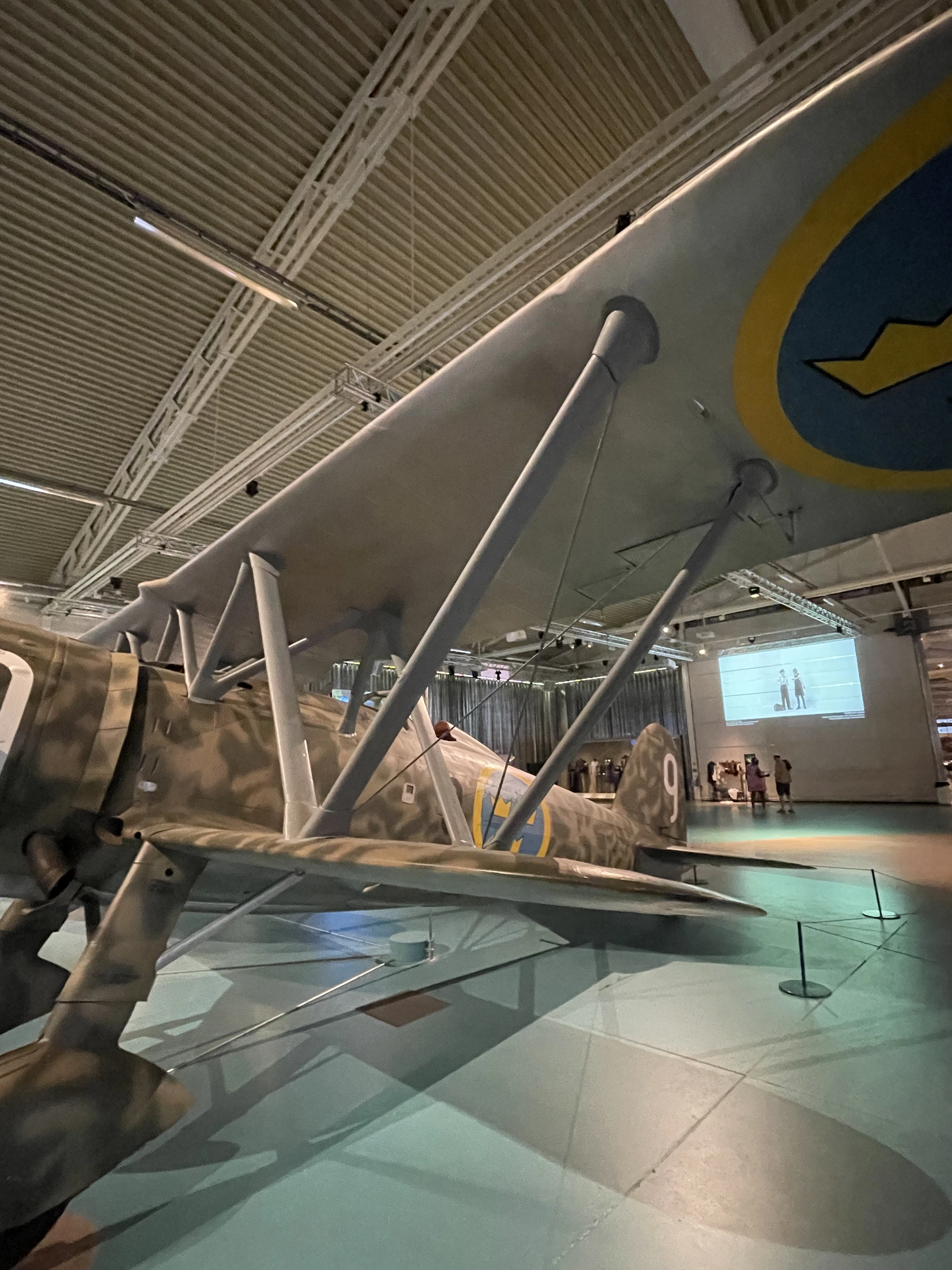
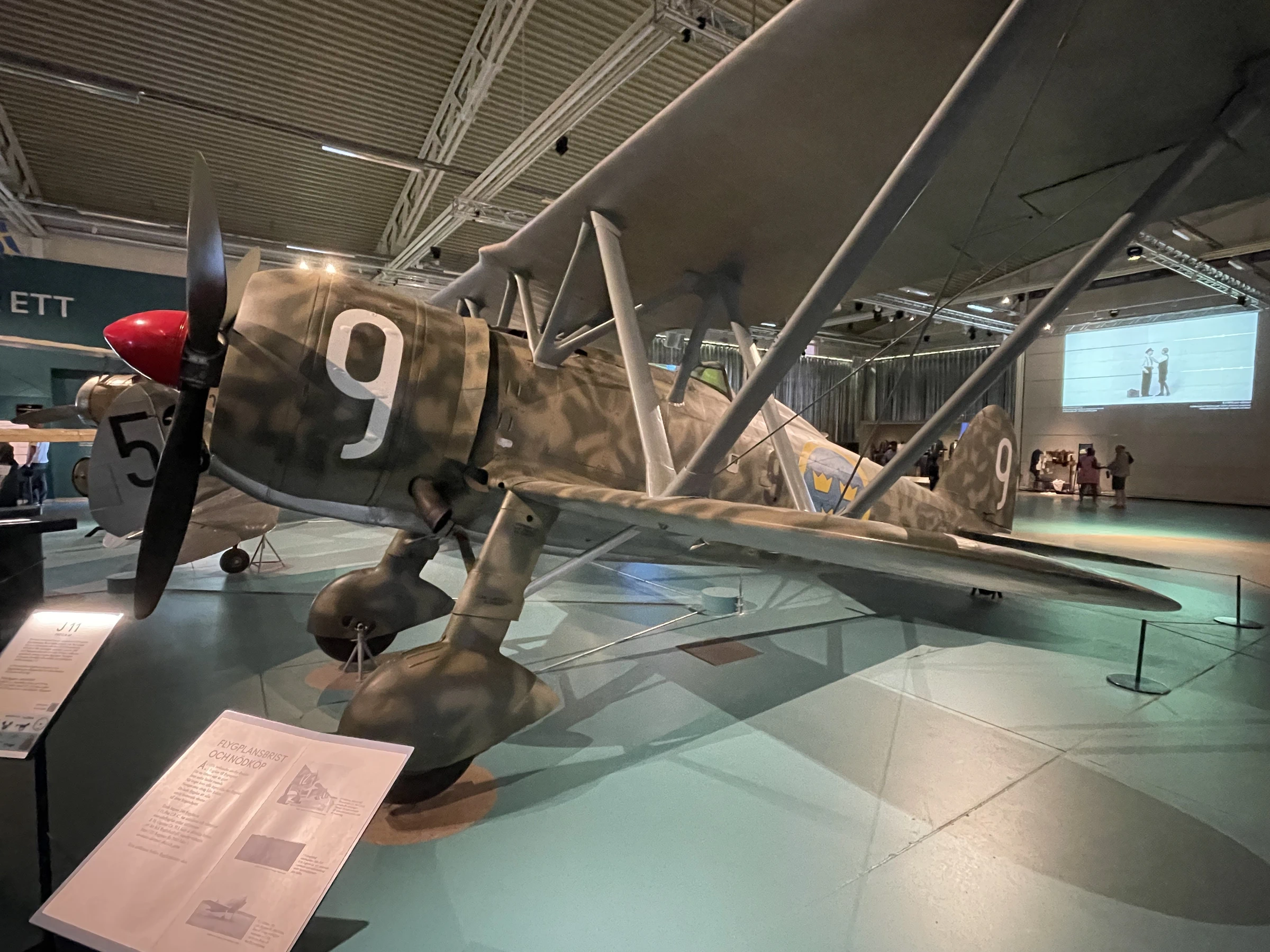
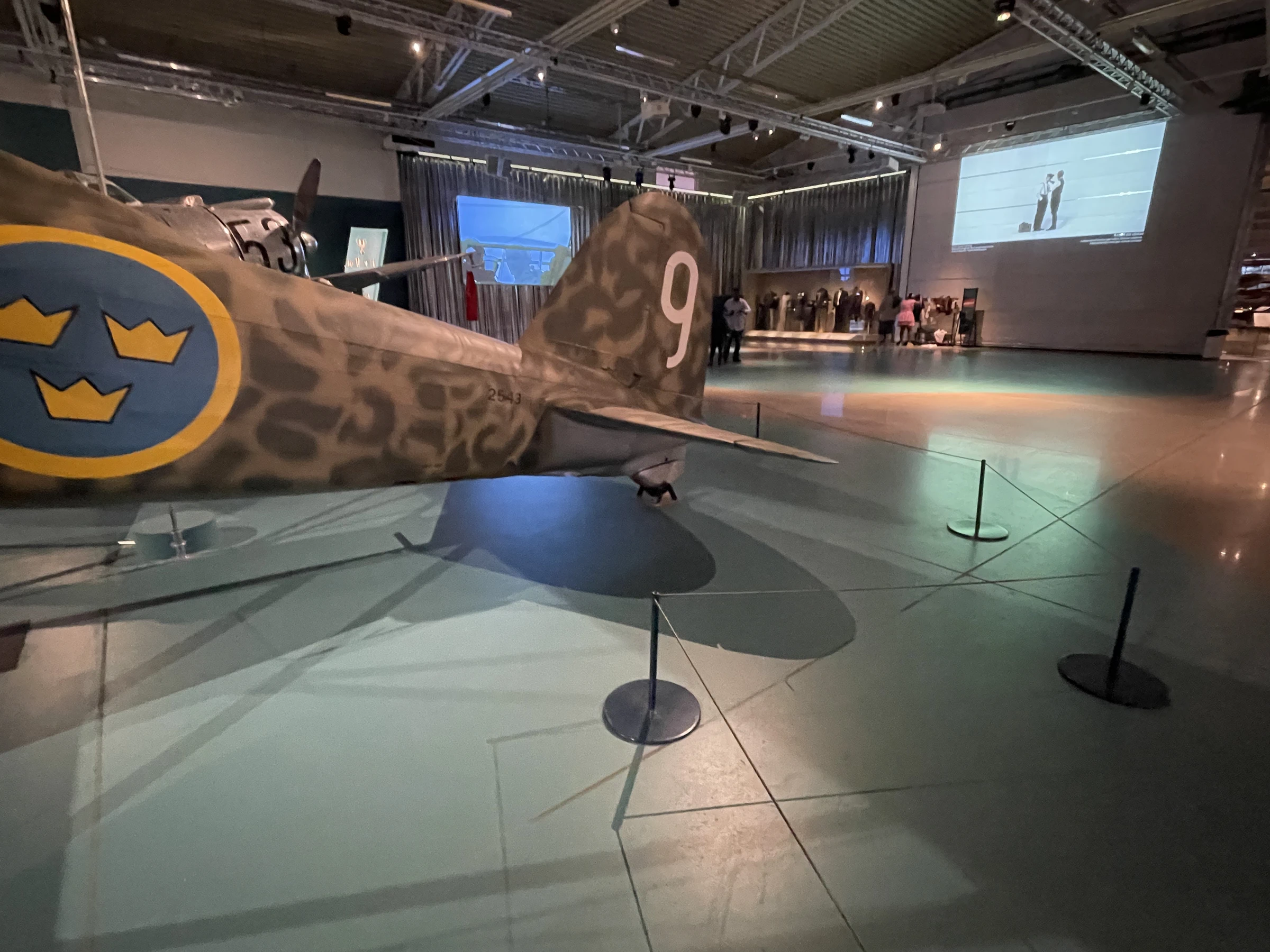
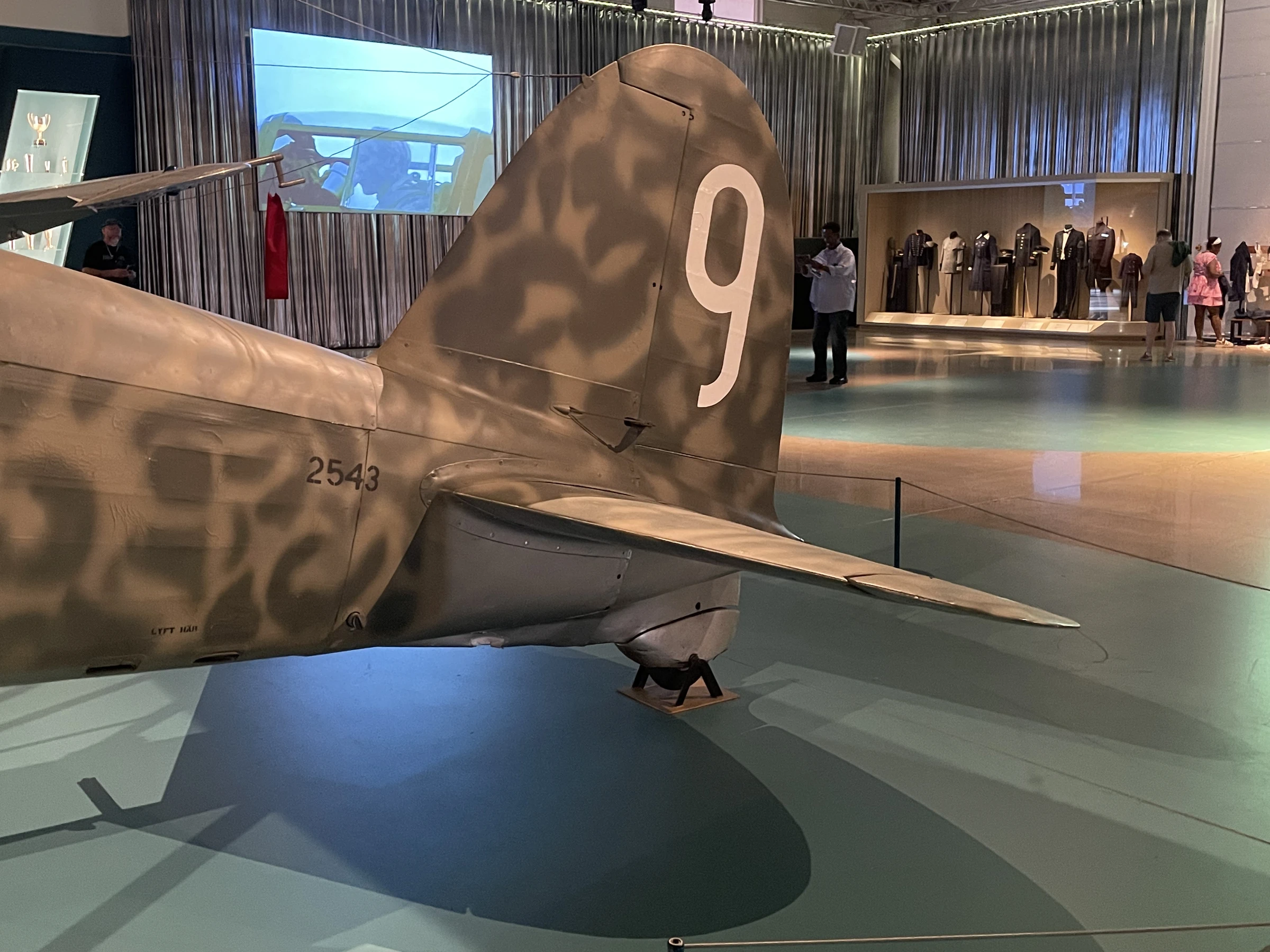
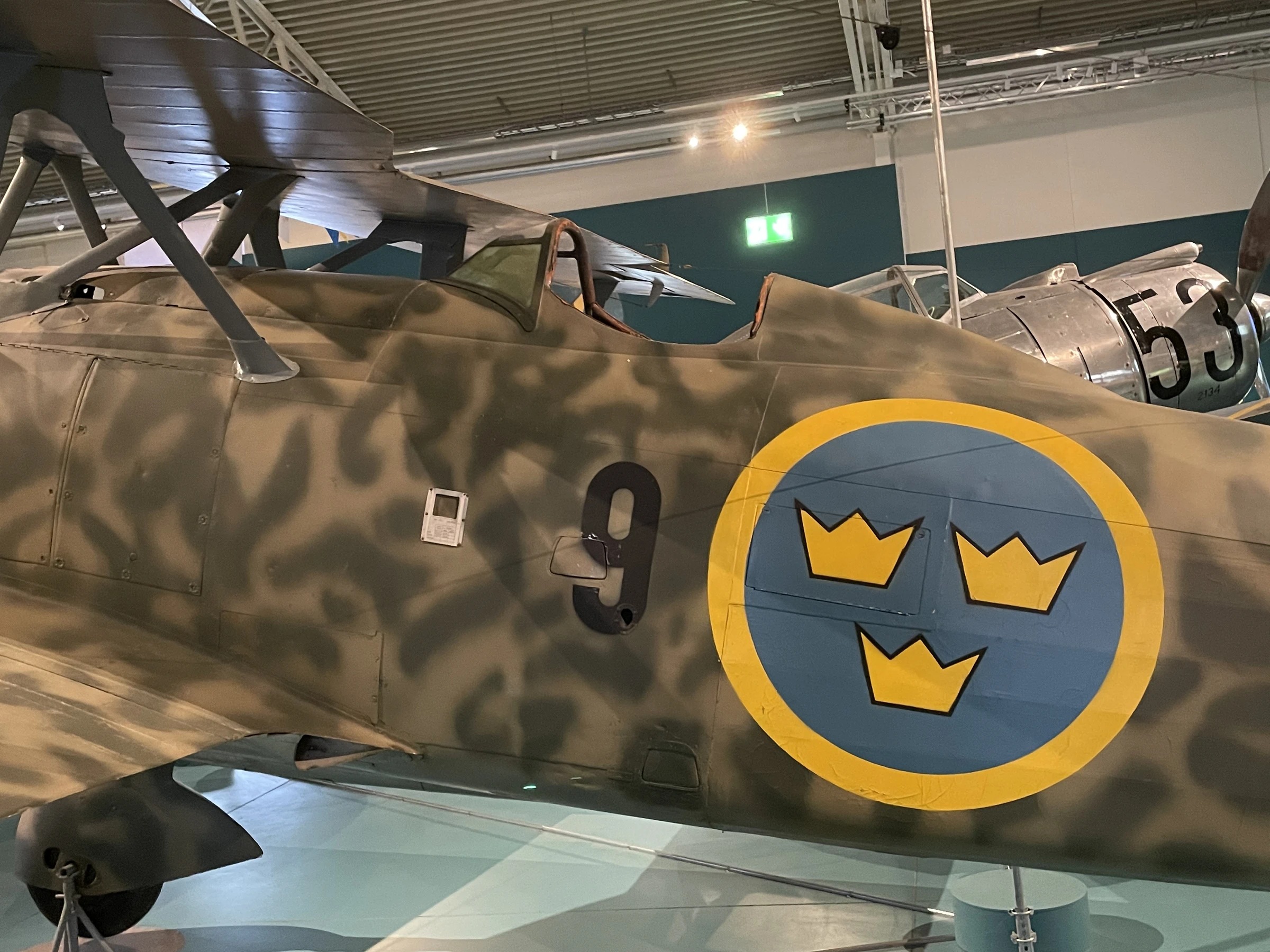
These walk-around photos were taken at Flygvapenmuseum at Malmen outside Linköping in 2017 and 2019. They show a Fiat CR.42 Falco, designated J 11 in Swedish service — one of the most anachronistic combat aircraft of the Second World War, and one of the last biplane fighters ever built for front-line military use. At a time when most air forces were transitioning to sleek monoplanes, Italian designer Celestino Rosatelli remained convinced that the biplane formula could still produce a world-class fighter, and the CR.42 was the result. Powered by a 840 hp Fiat A74 radial engine, it was fast and extraordinarily manoeuvrable, but hopelessly outmatched by the monoplane fighters it would inevitably have faced in combat.
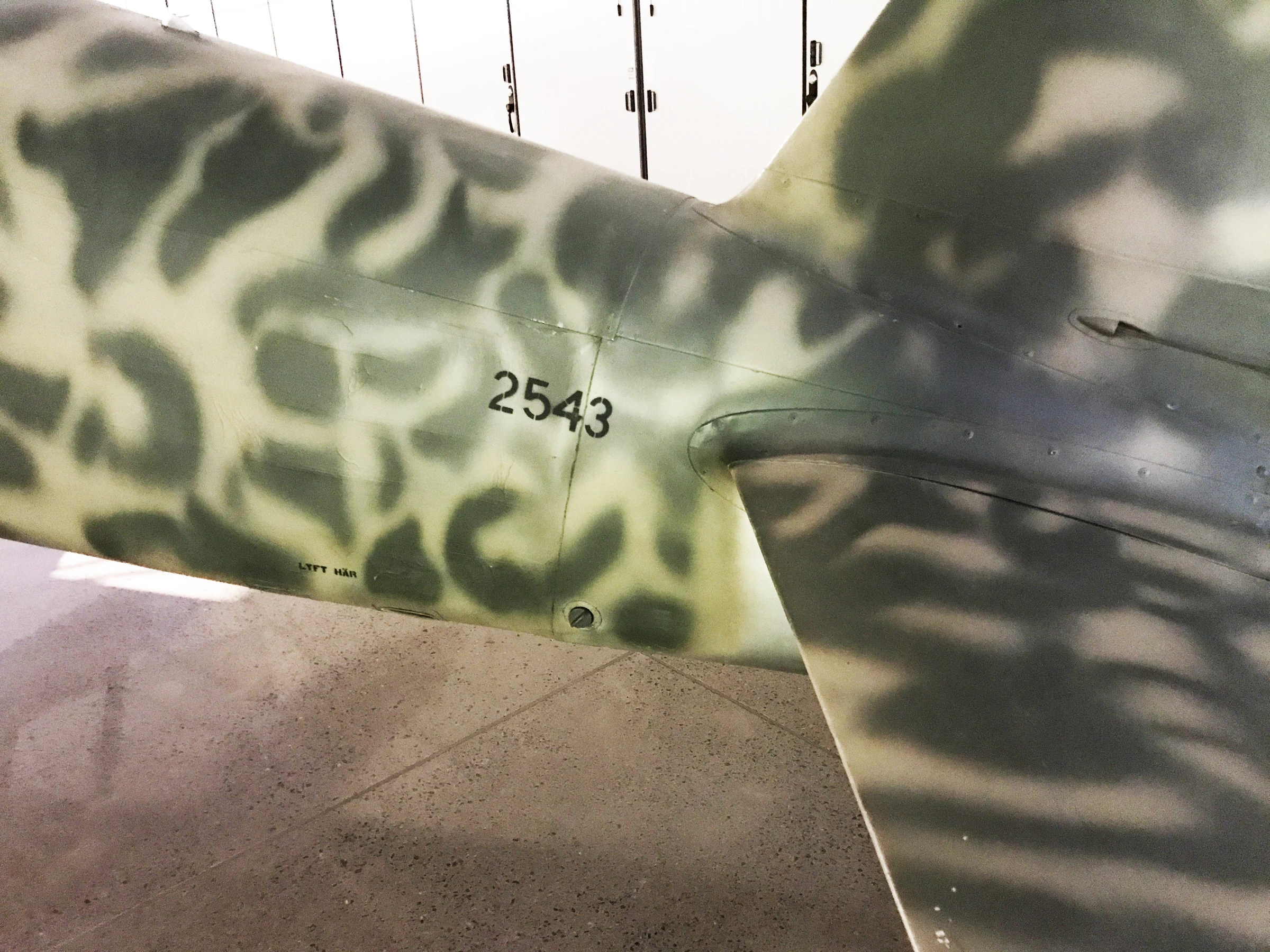
Sweden acquired 72 CR.42s between 1940 and 1941 as an emergency measure after the US arms embargo cut off deliveries of the P-35 and P-66 fighters that had been ordered. The first twelve aircraft were flown directly from Italy to Sweden; the remainder arrived crated for assembly at Malmslätt. They served primarily as fighter trainers and for coastal reconnaissance, and although some 30 were lost to accidents and mechanical failures, none was lost in combat. The type was retired in March 1945. Individual 2543, c/n 921, was delivered to F 9 at Säve in May 1942 and was one of the last J 11s to be retired in May 1945. It was deliberately set aside and hidden away at F 3 Malmslätt with the intention of museum preservation — a foresighted decision, as only four CR.42s survive anywhere in the world today. It is displayed at Flygvapenmuseum in F 9 markings with the code 9-9.