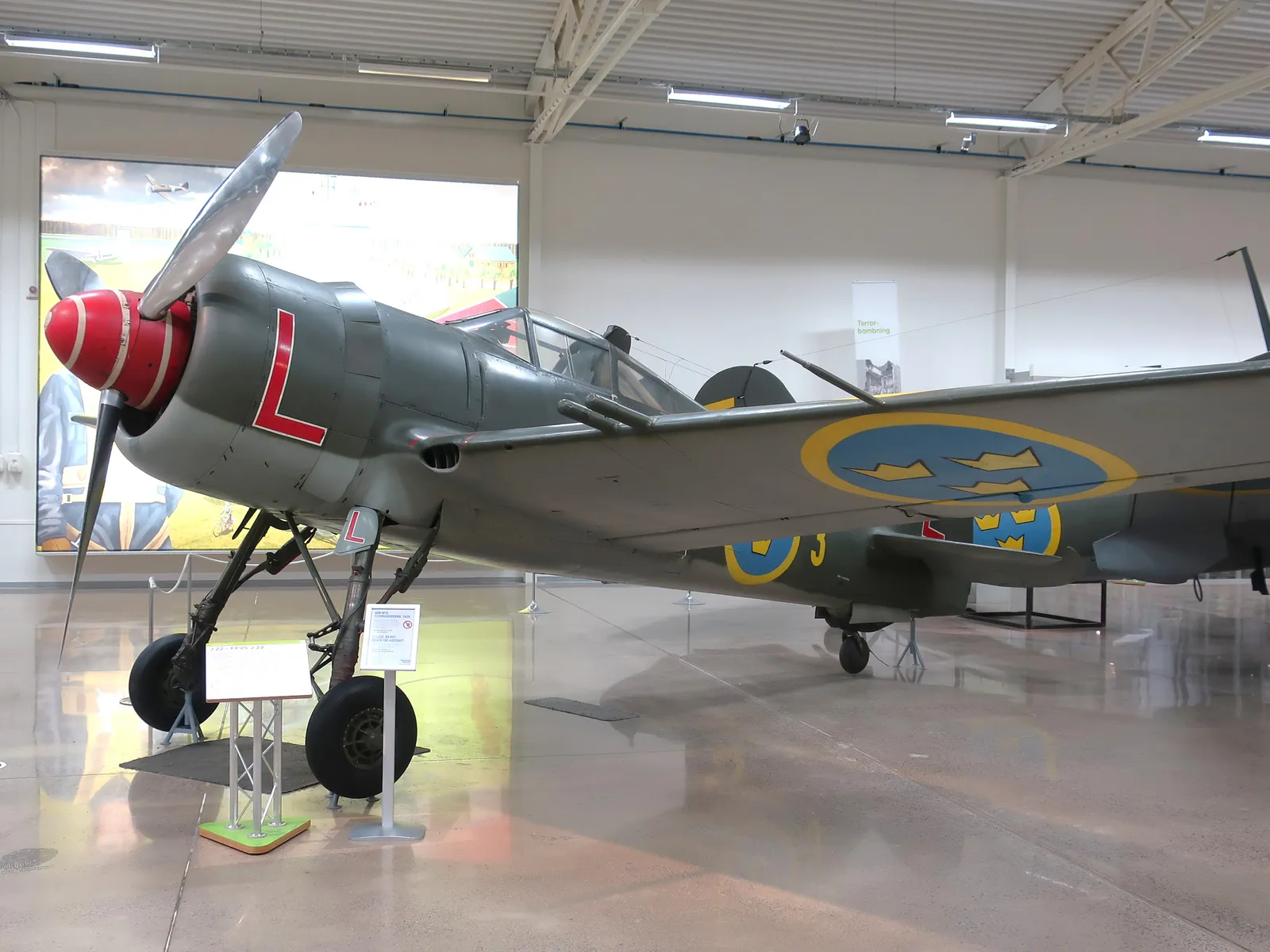
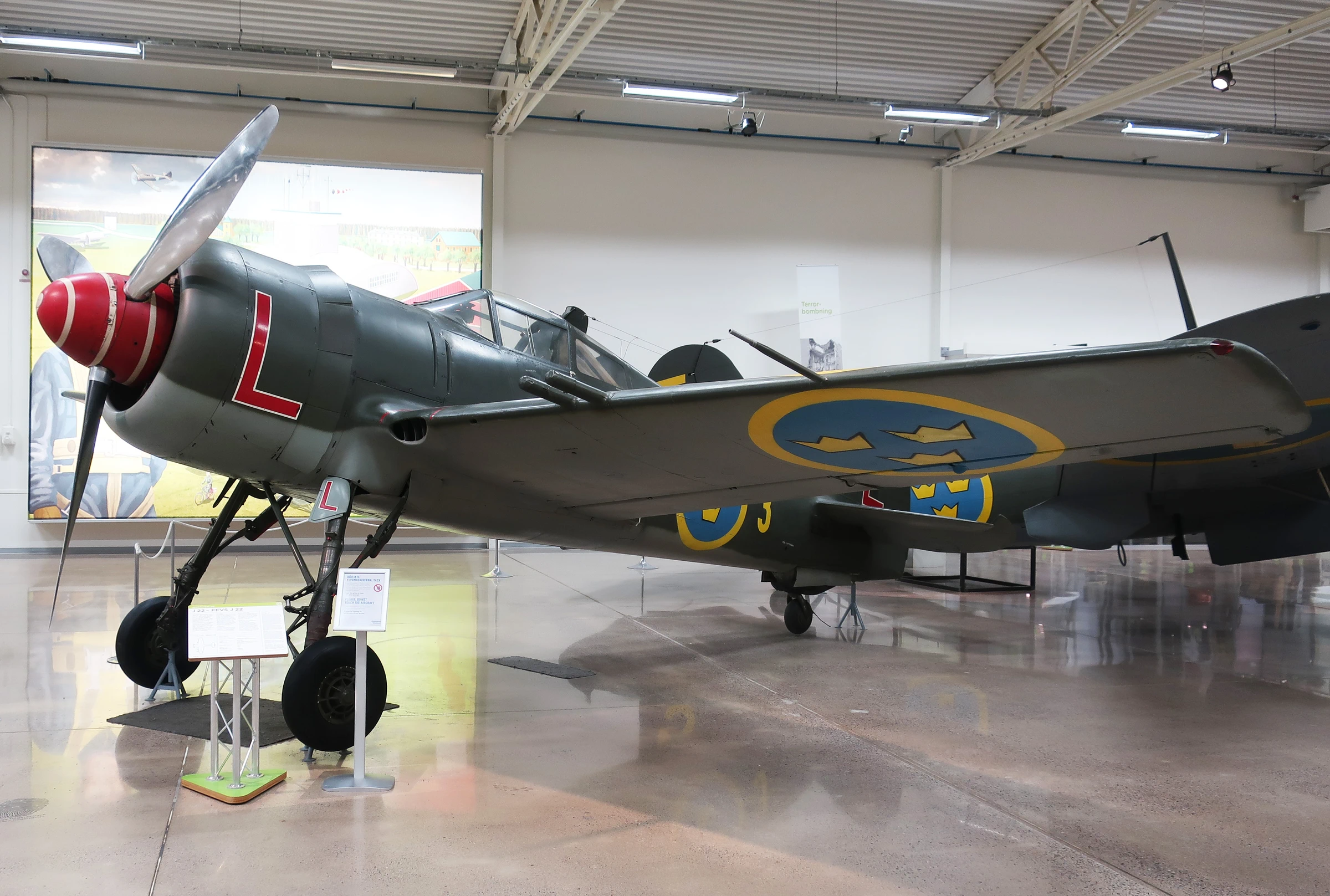
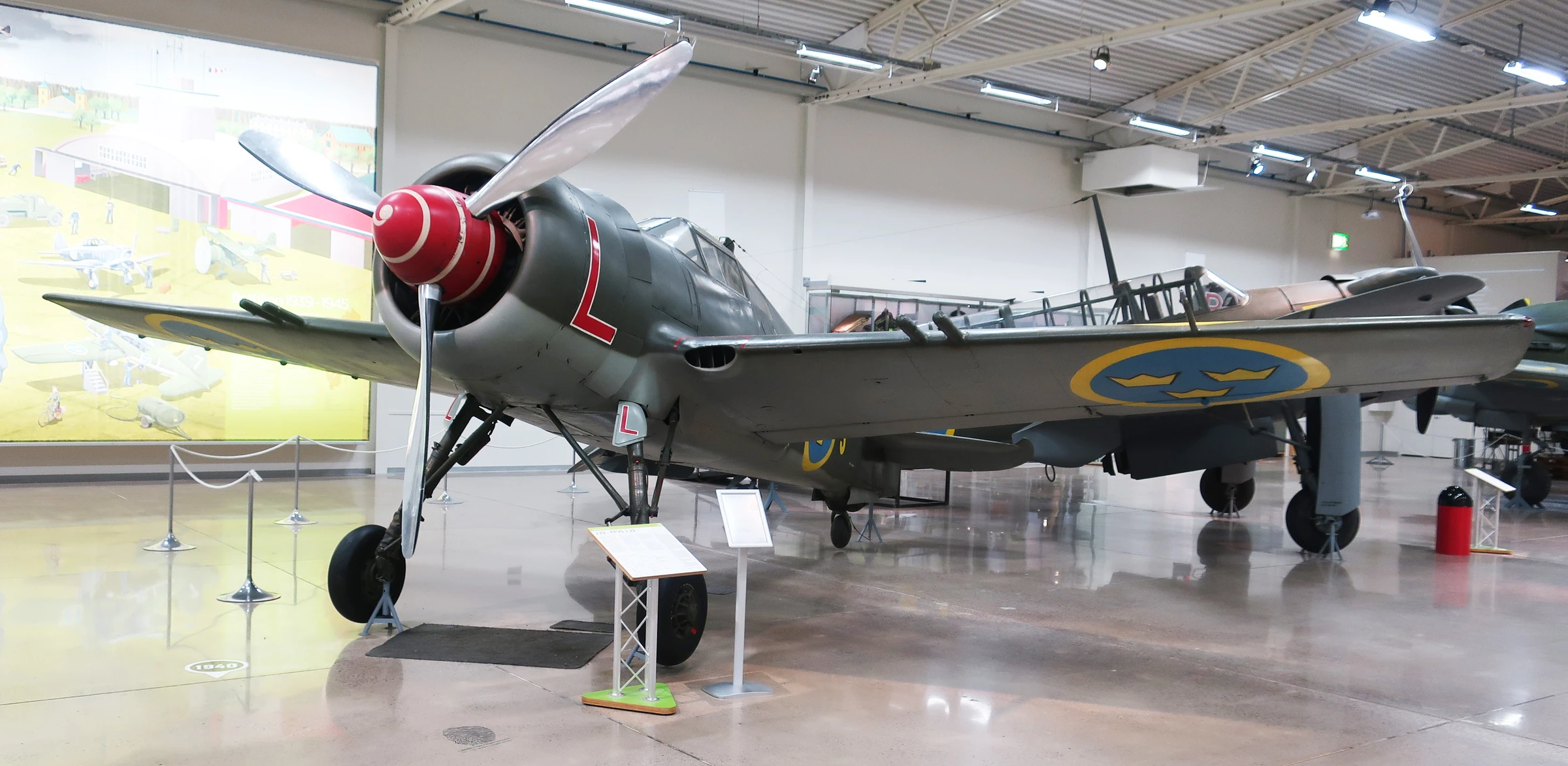
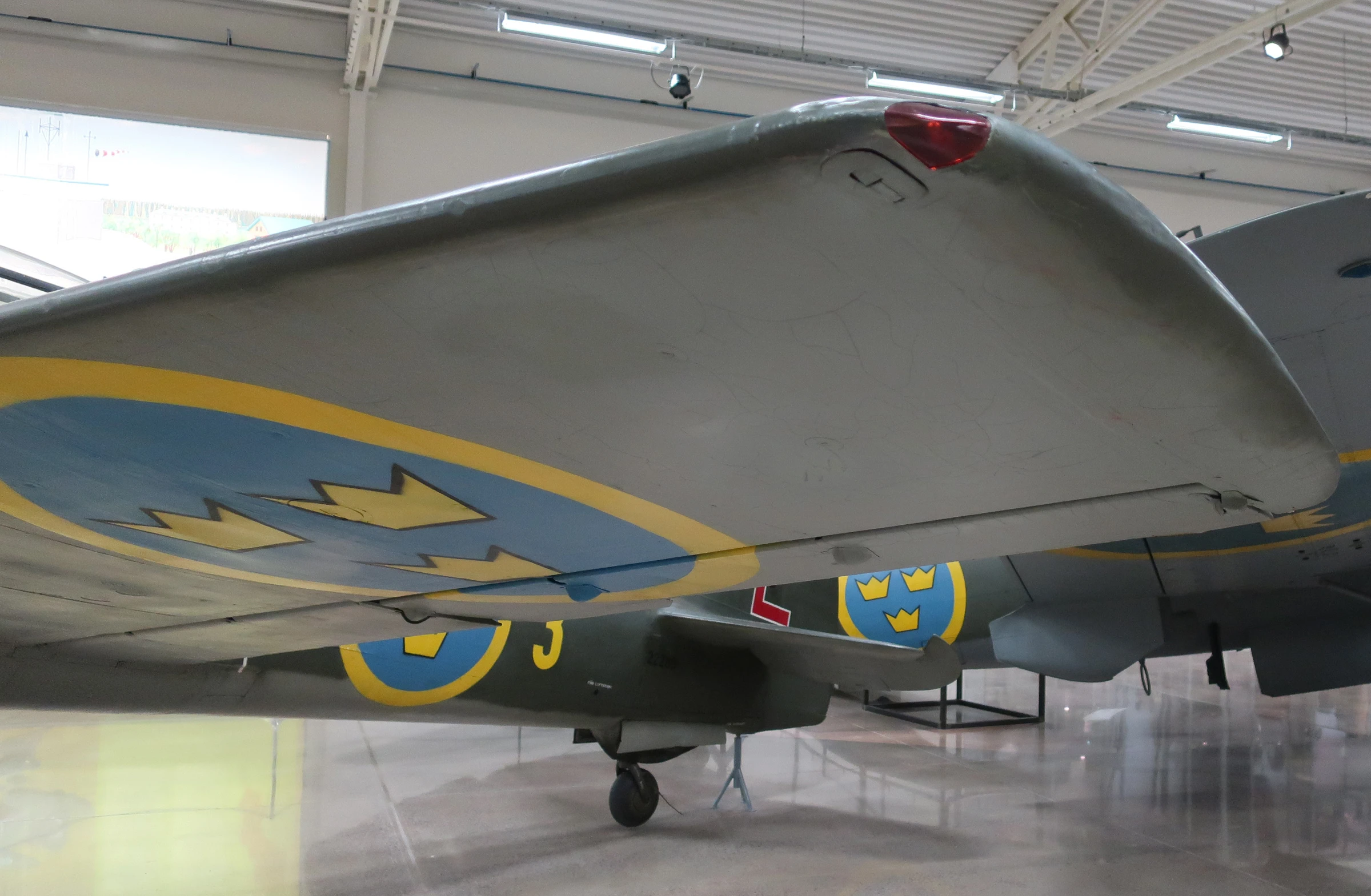
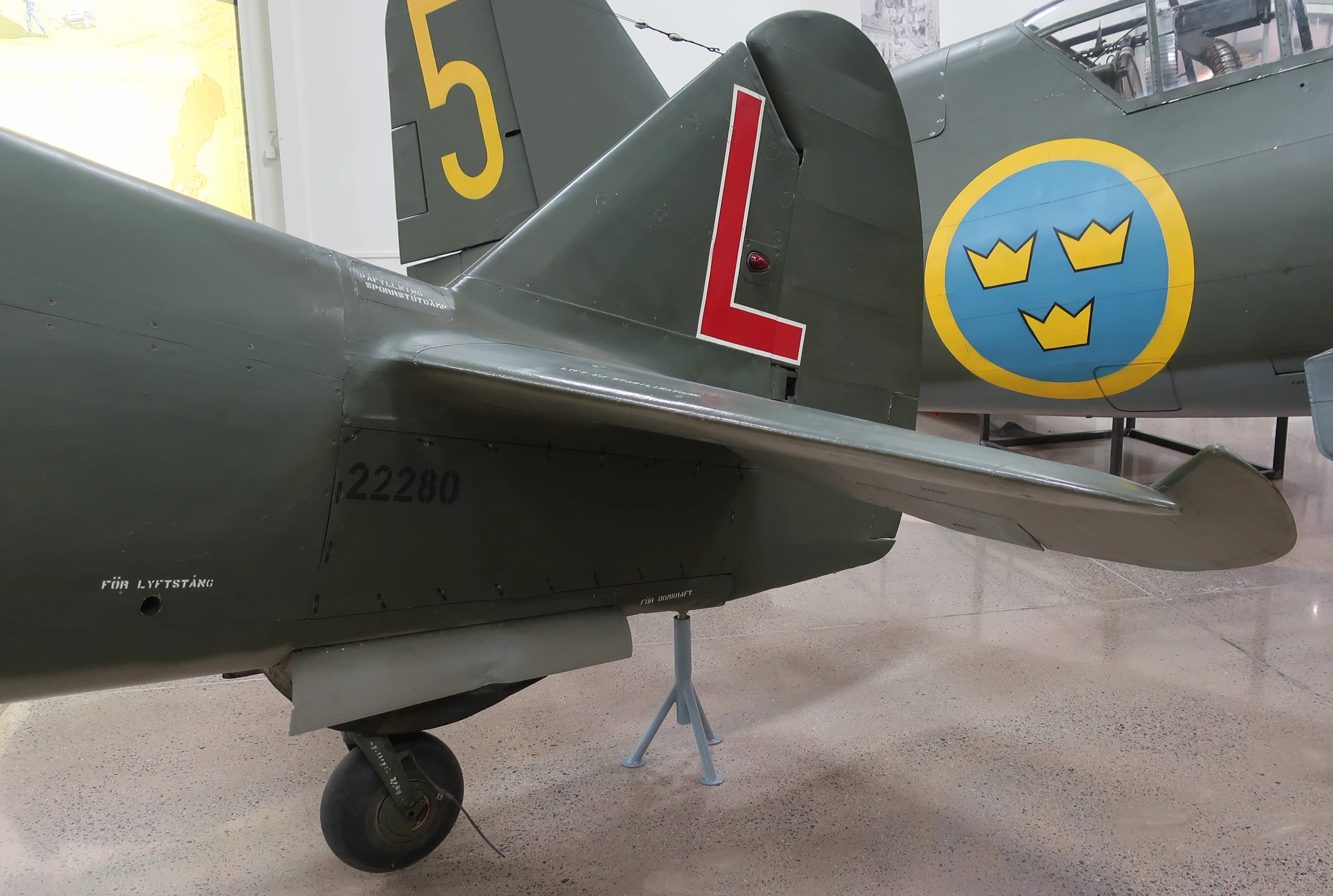
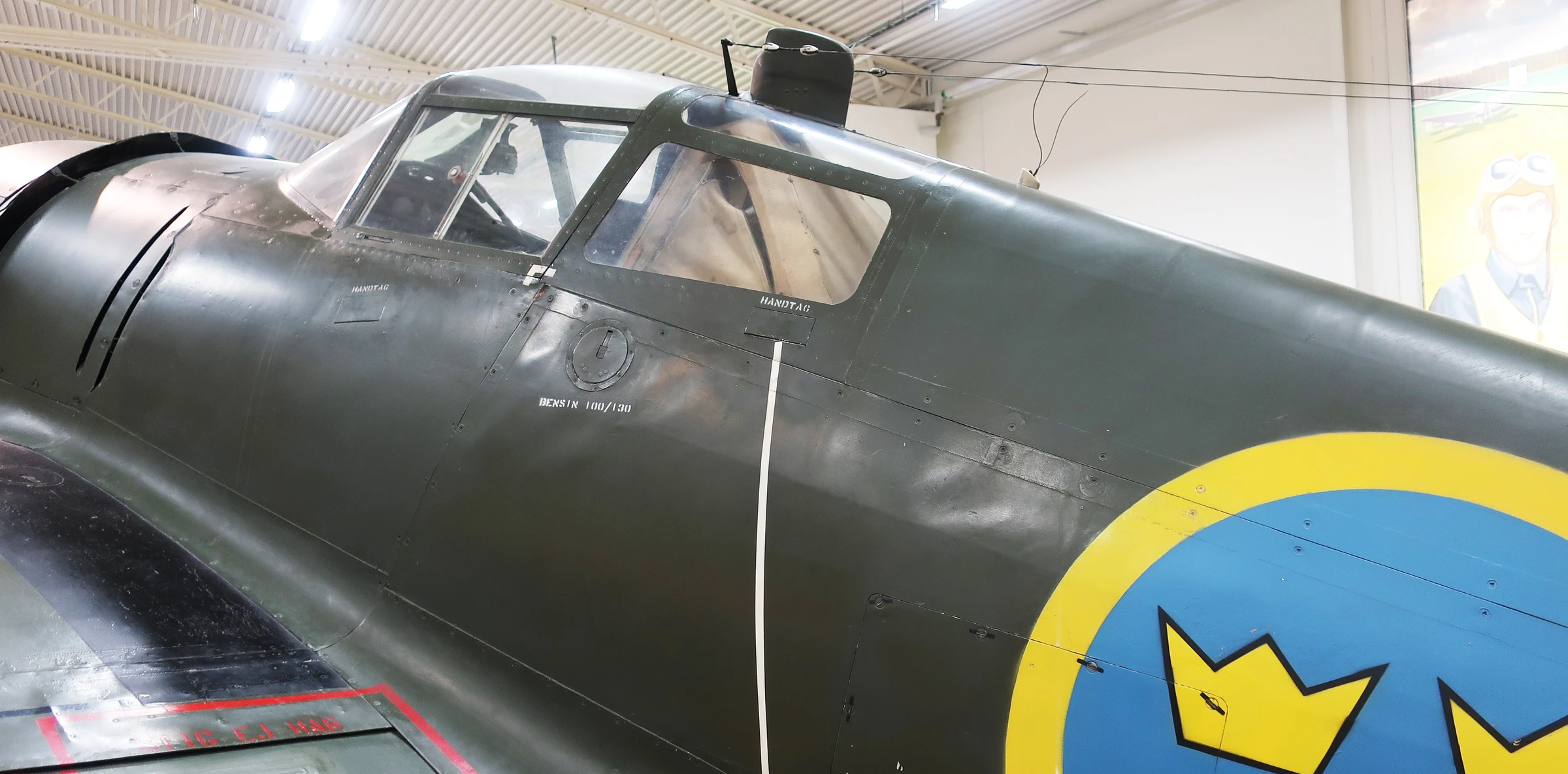
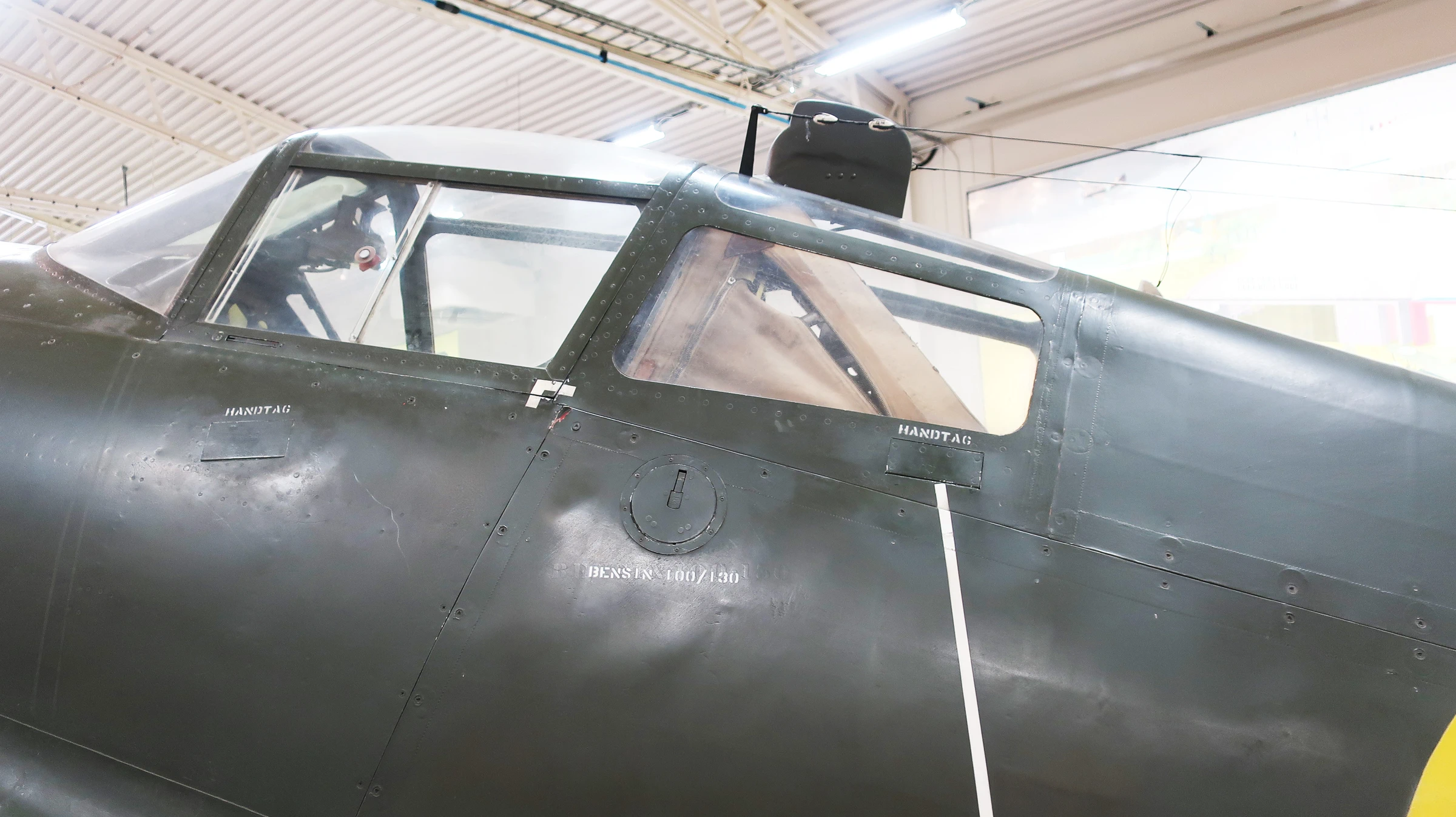
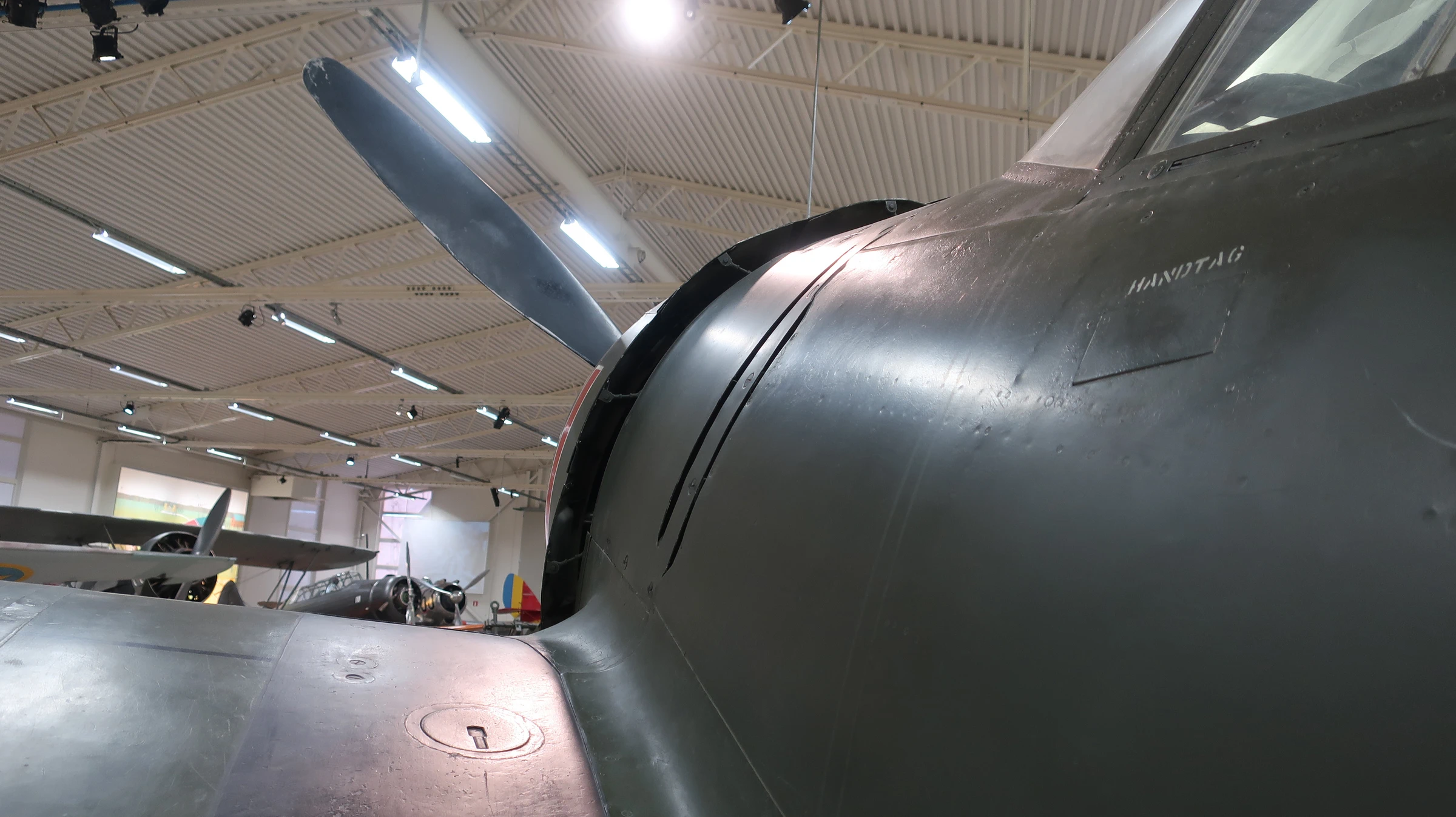
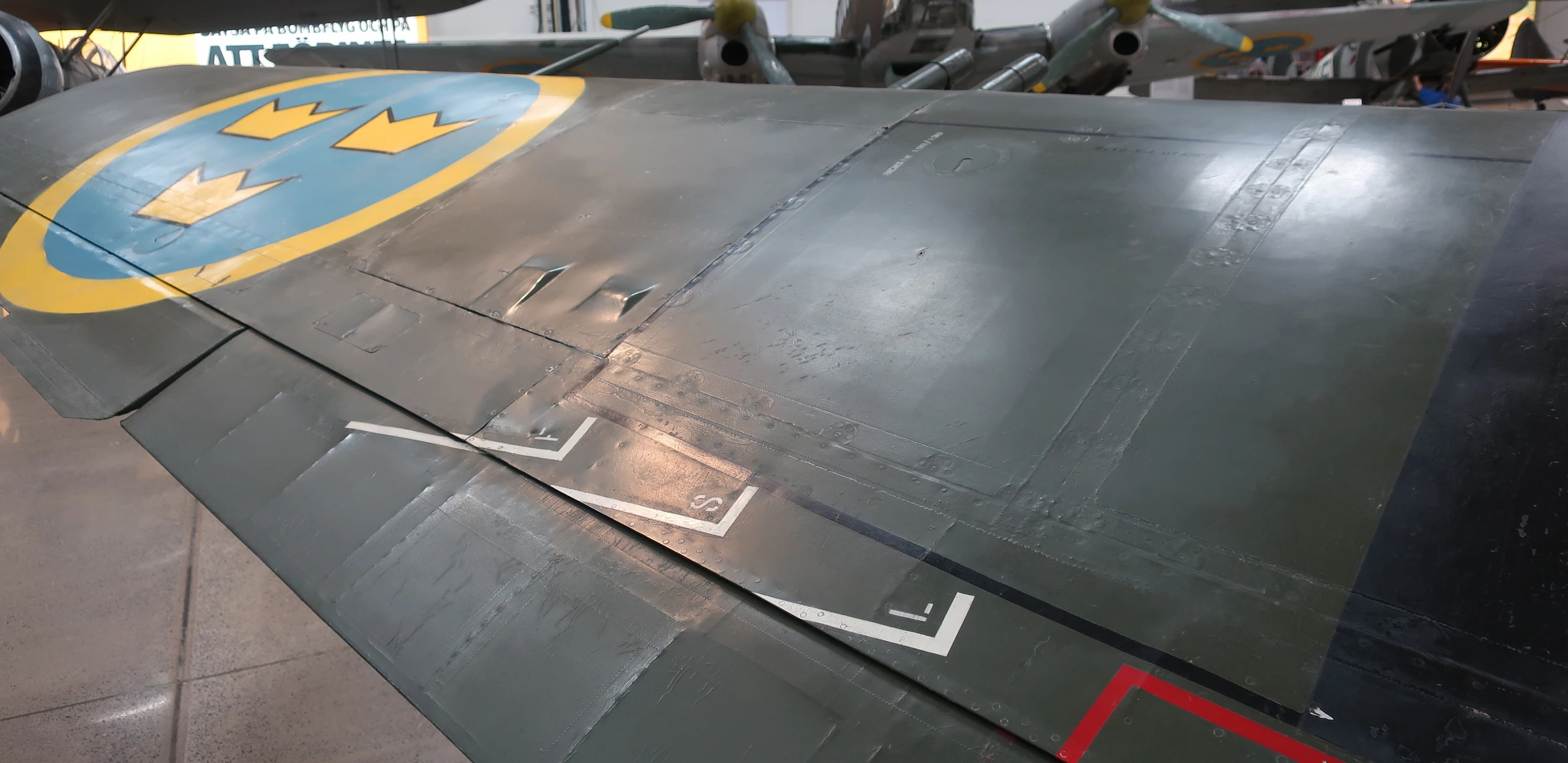
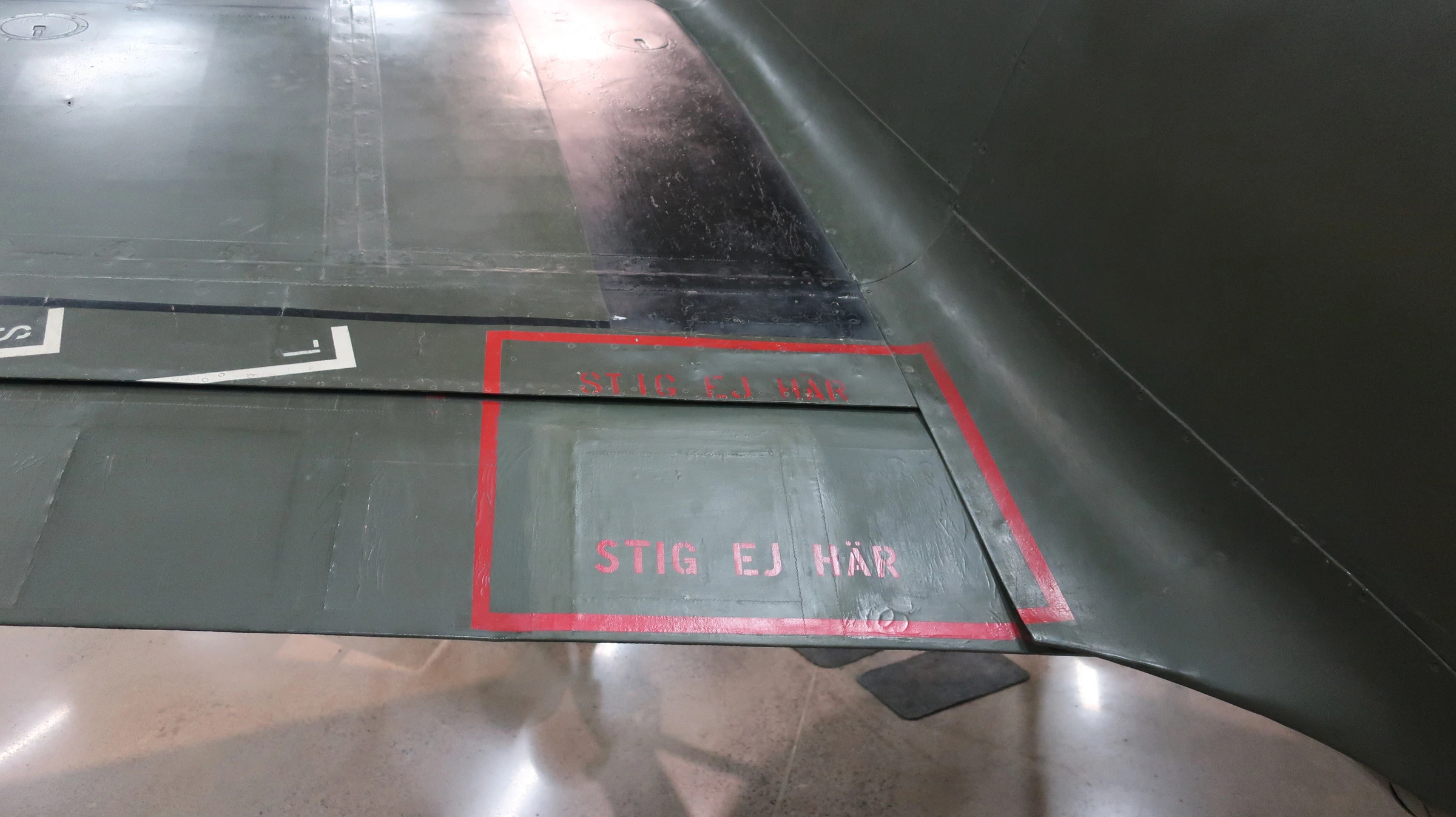
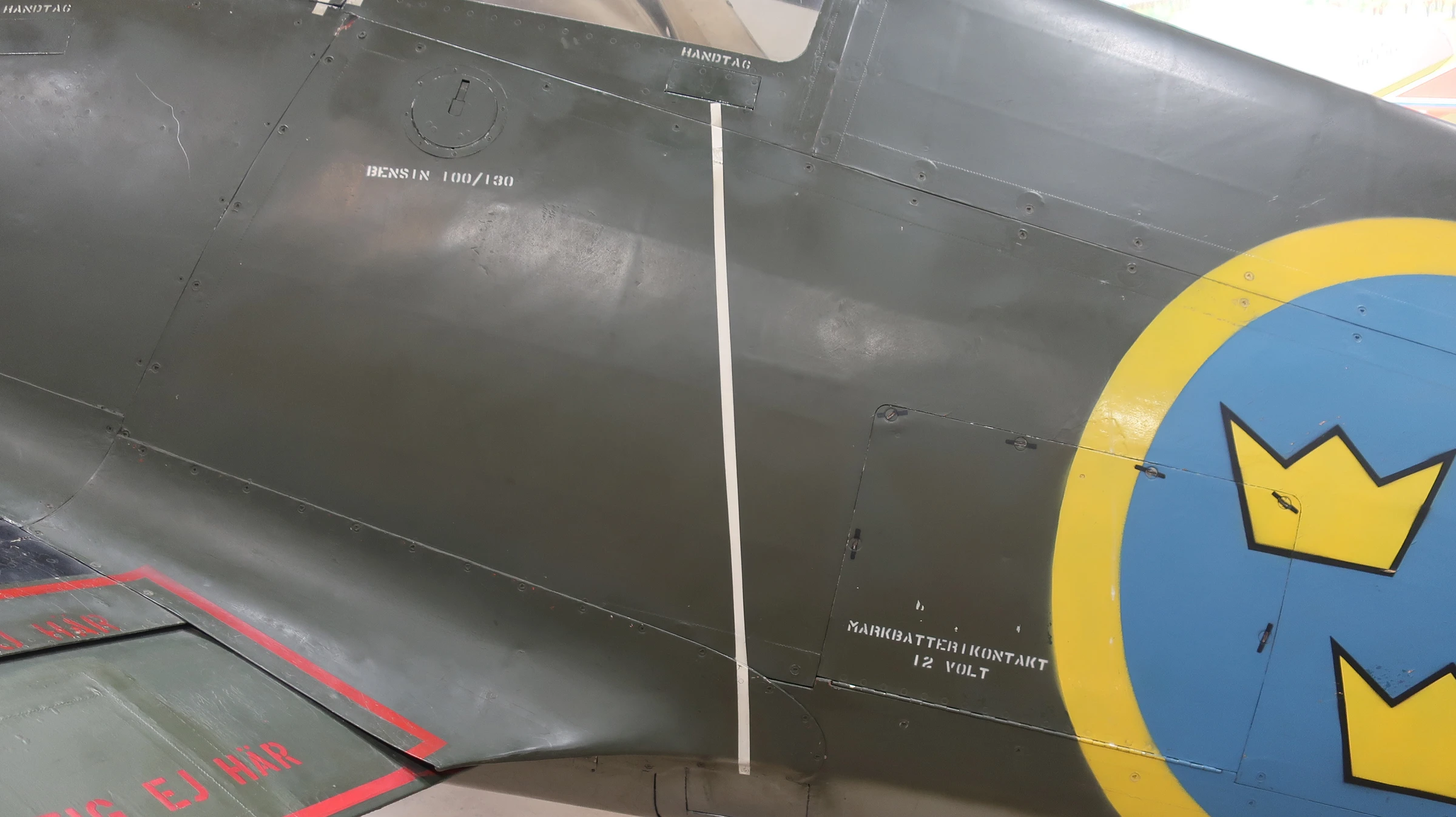
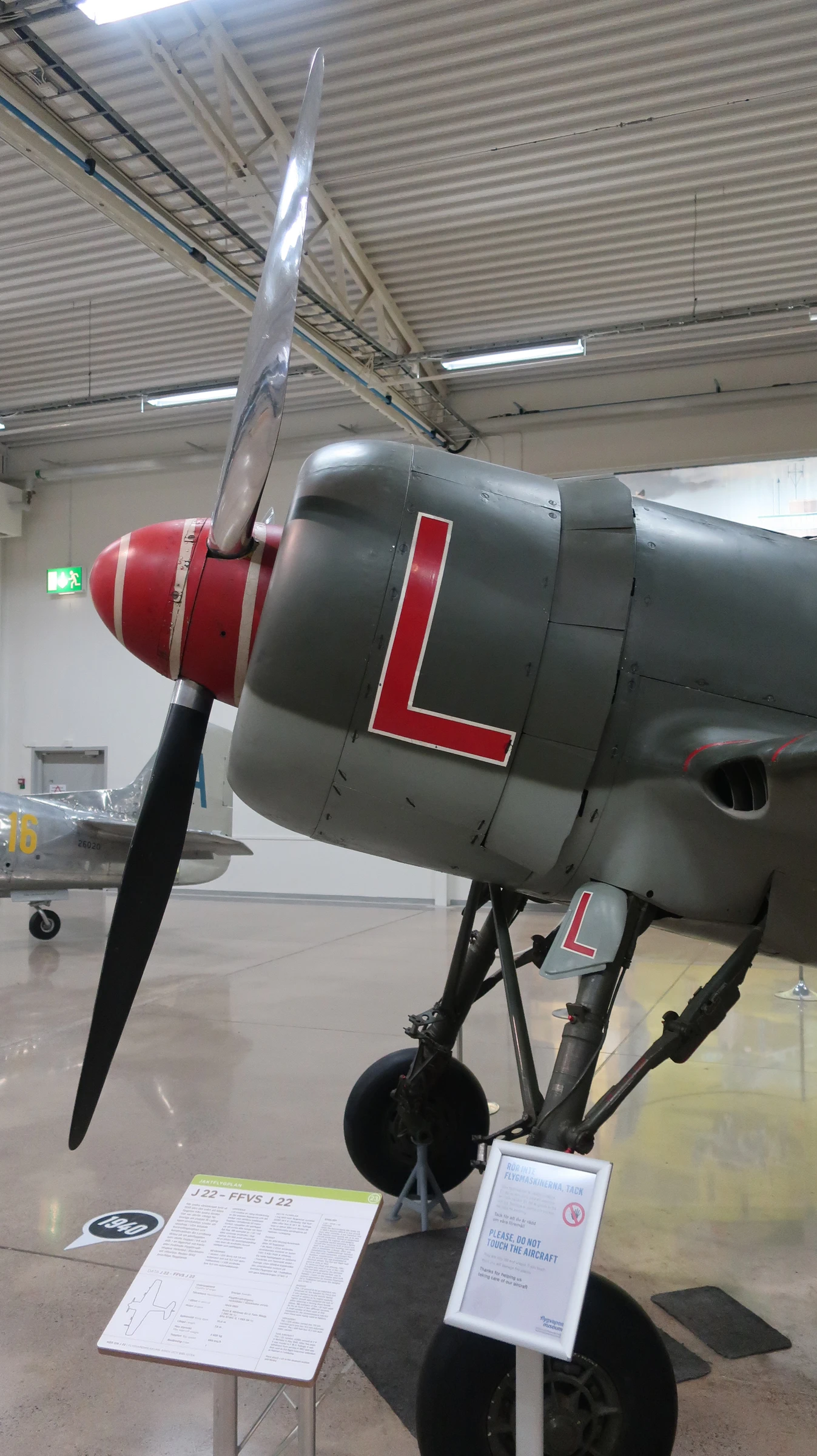
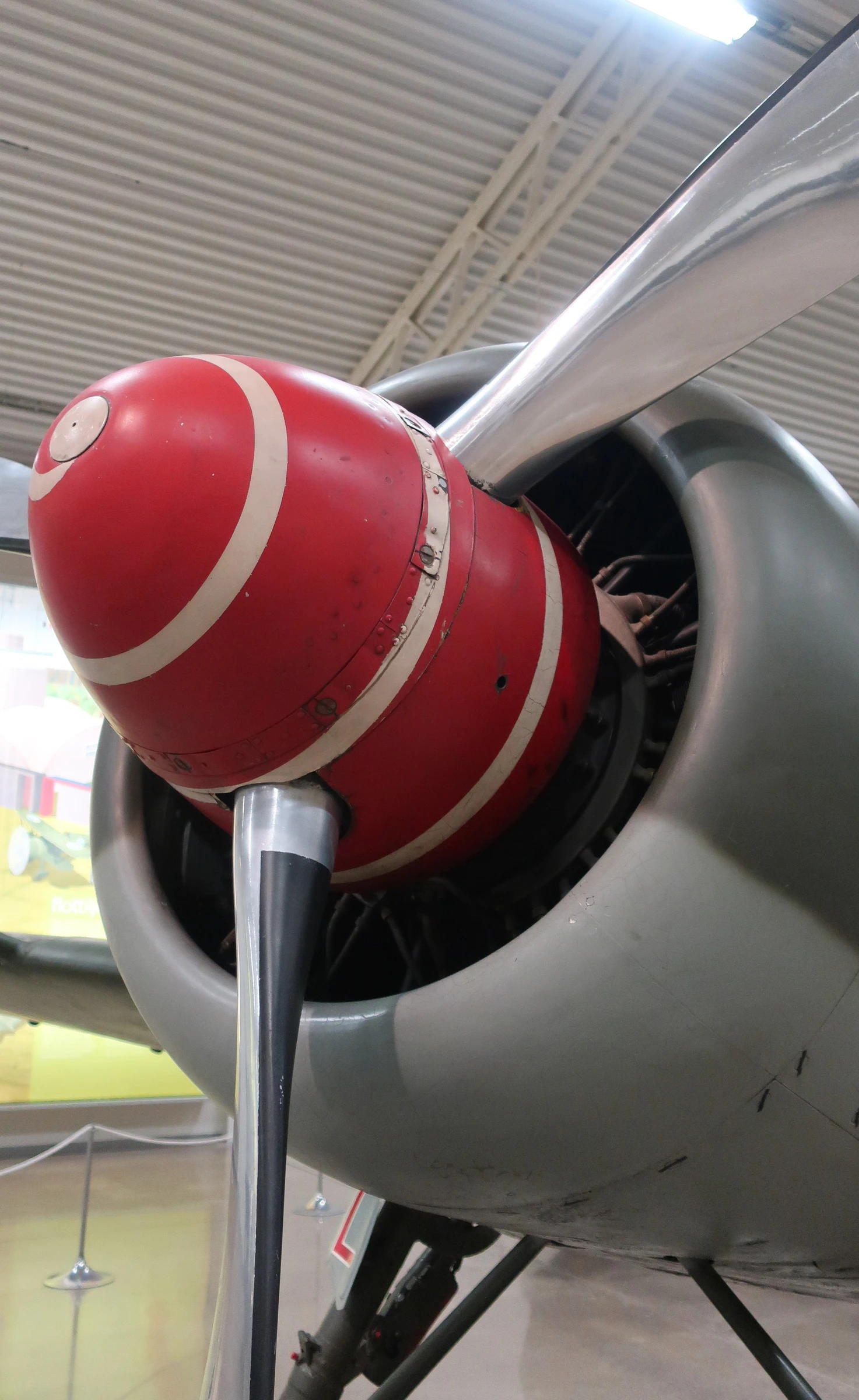
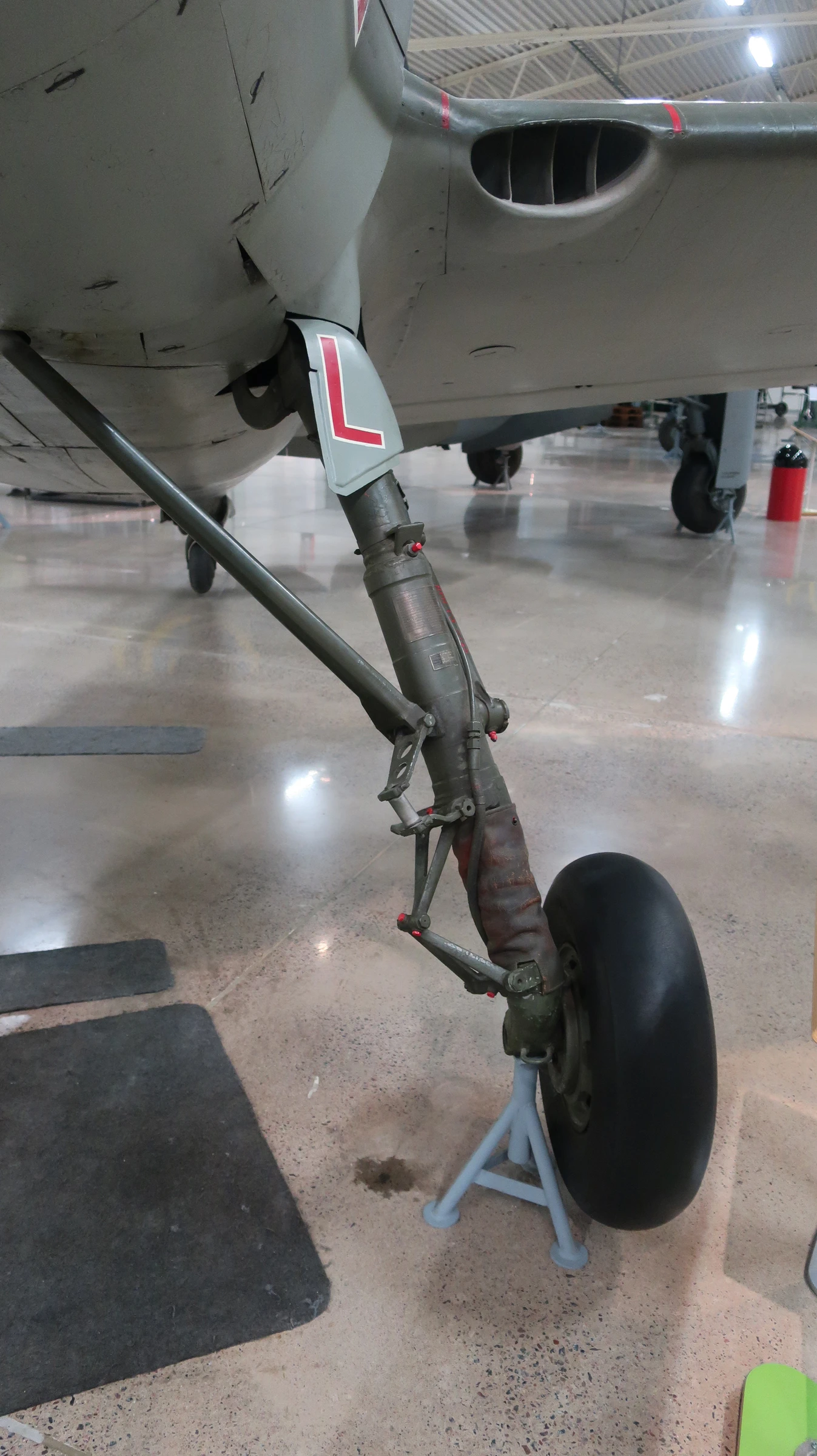
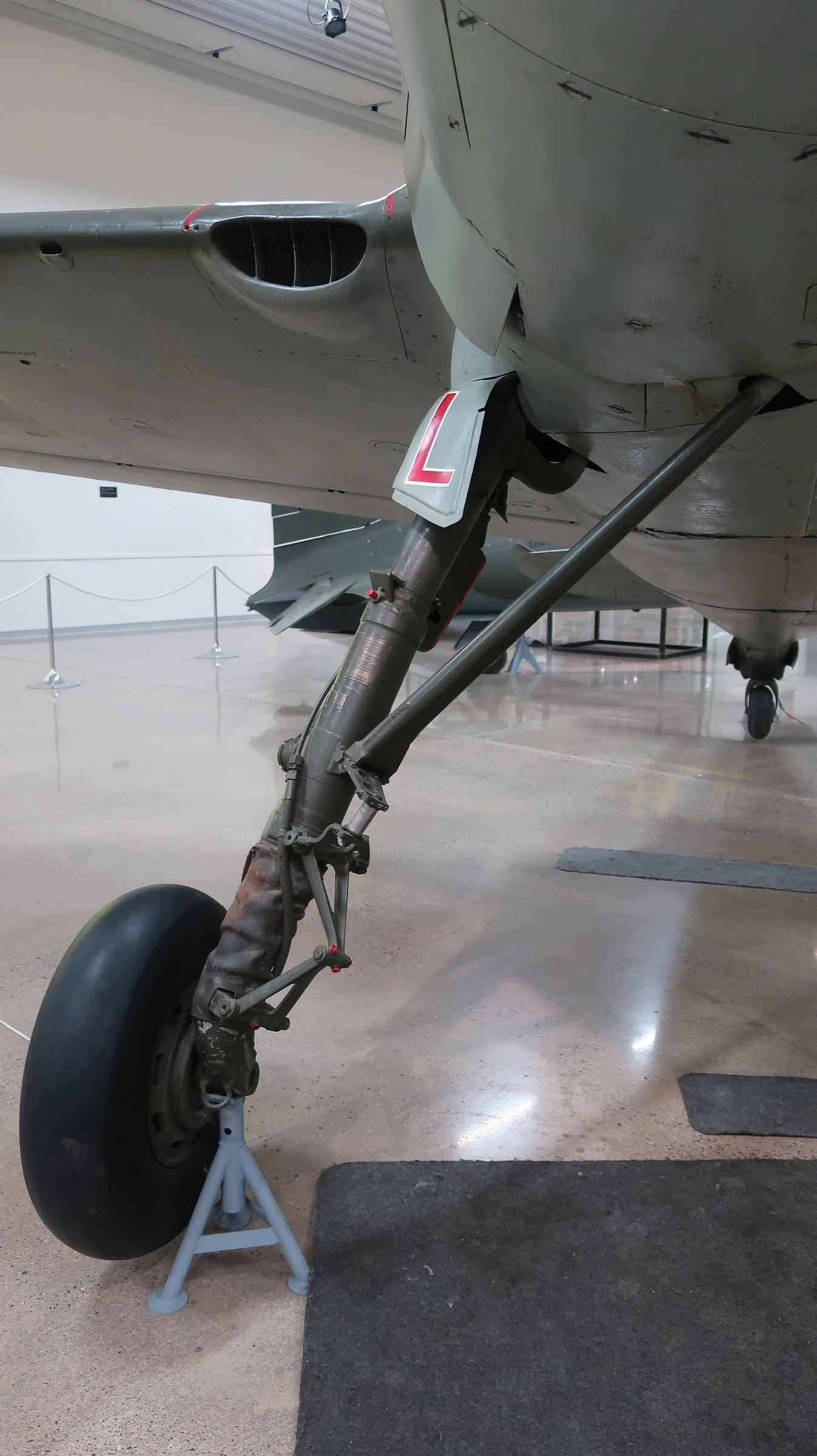
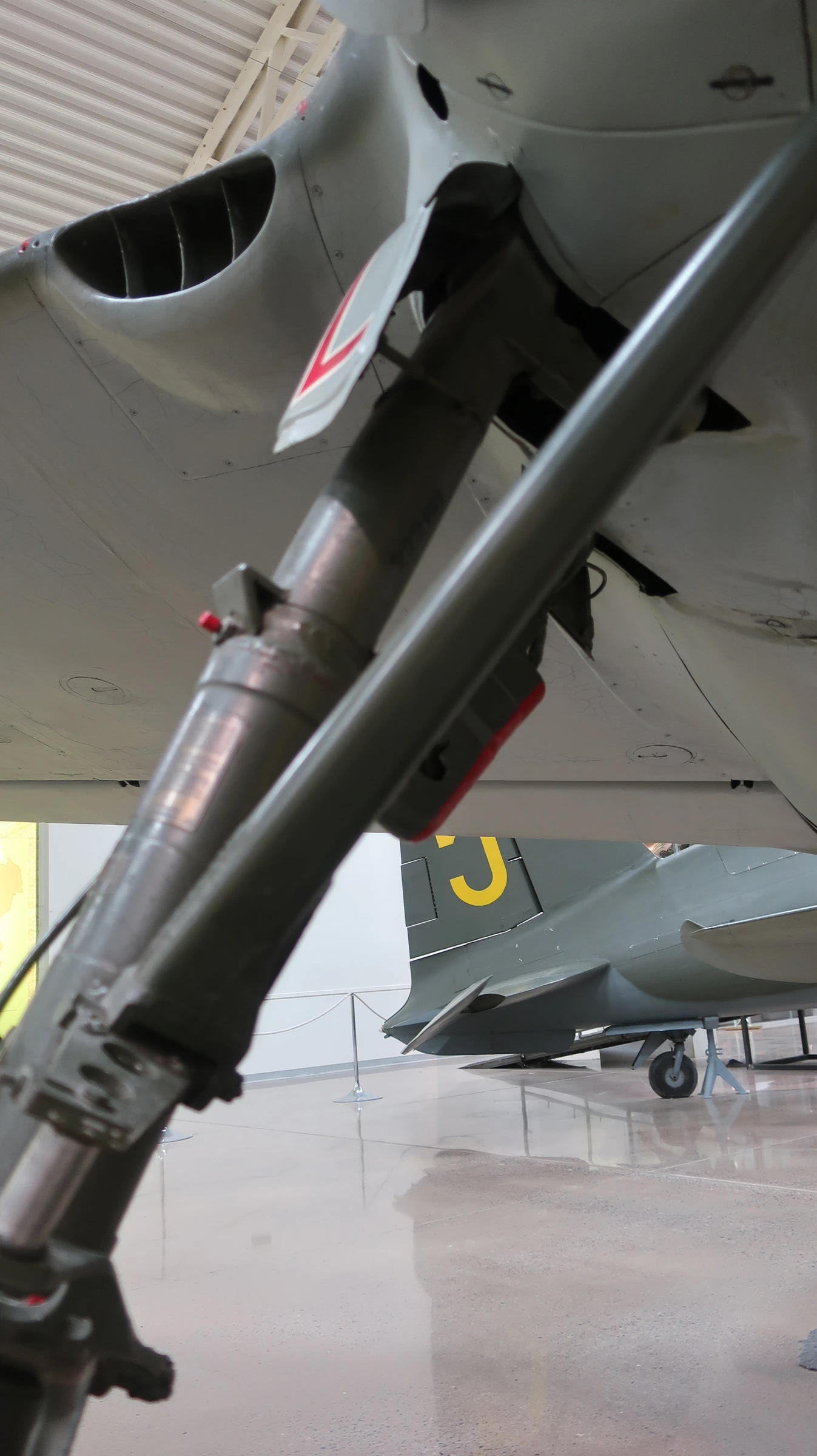
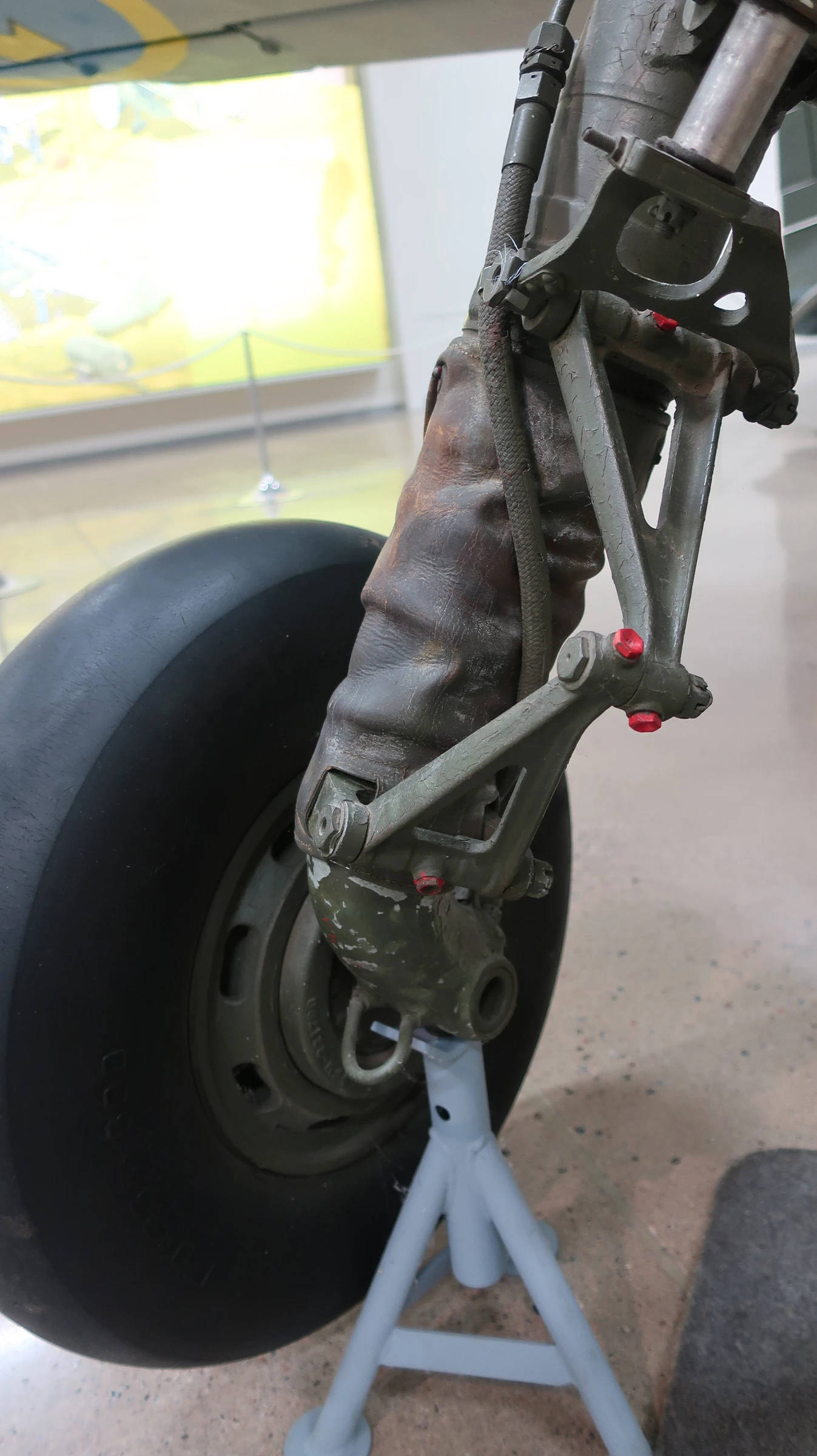
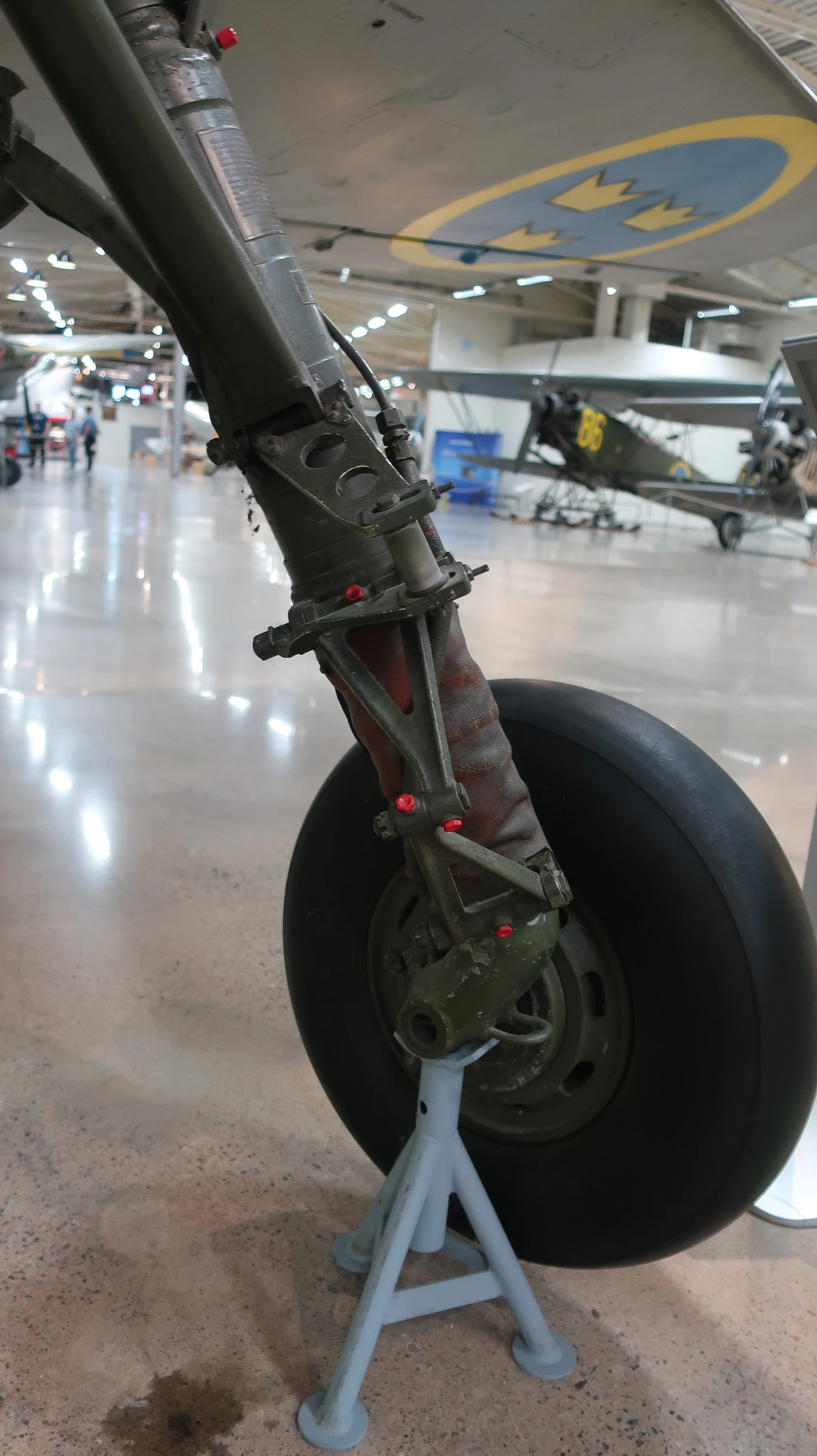
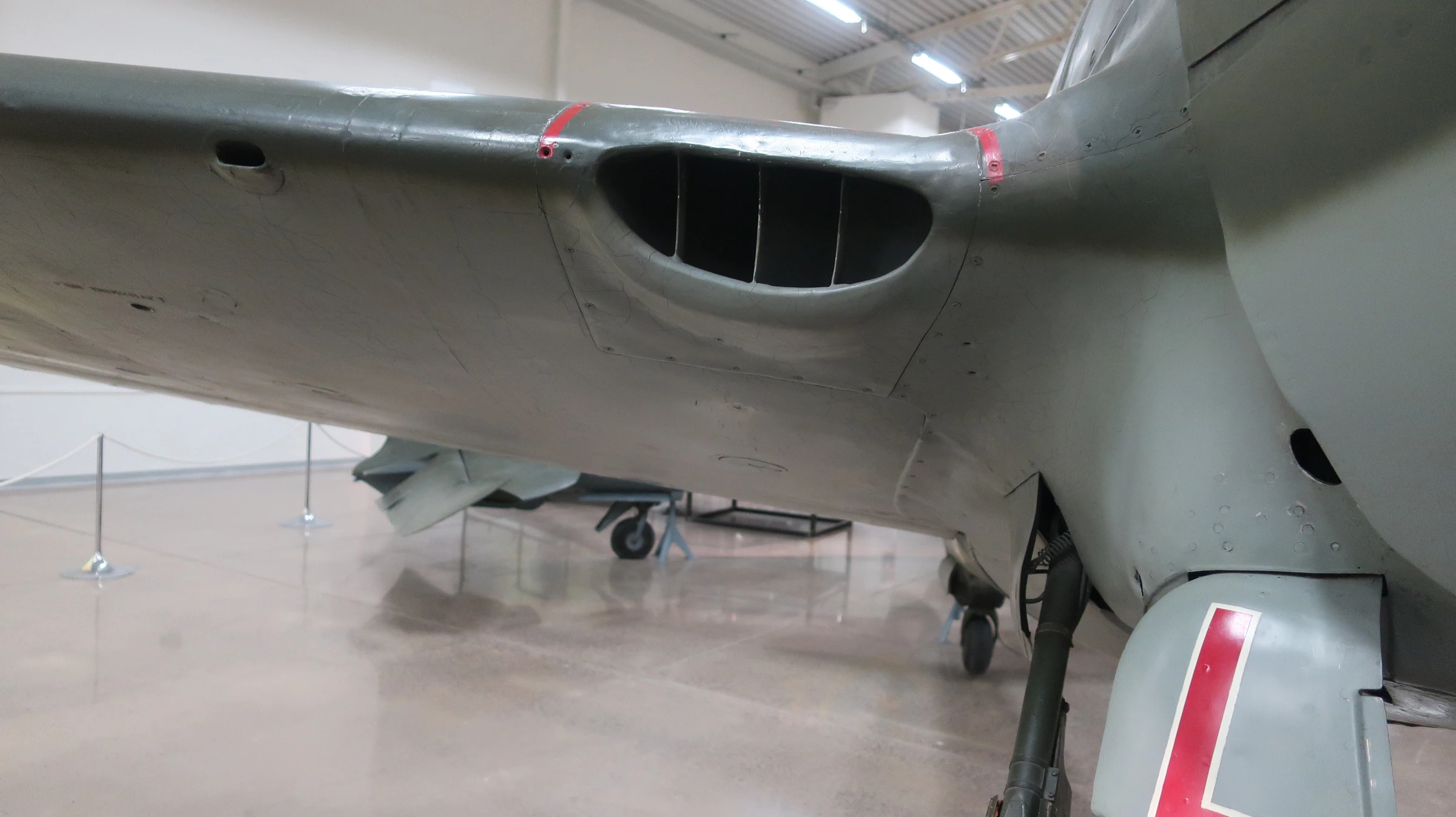
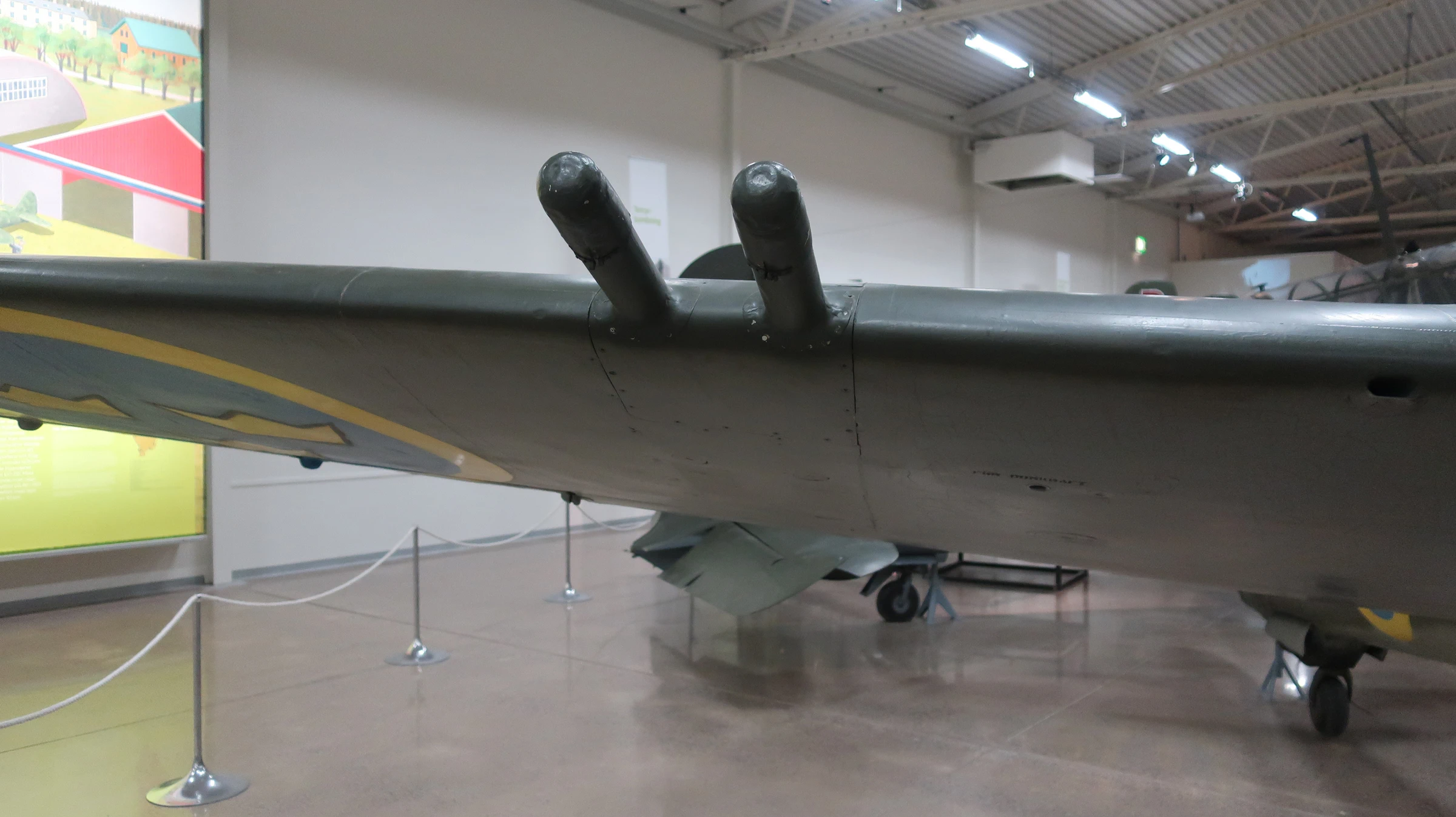
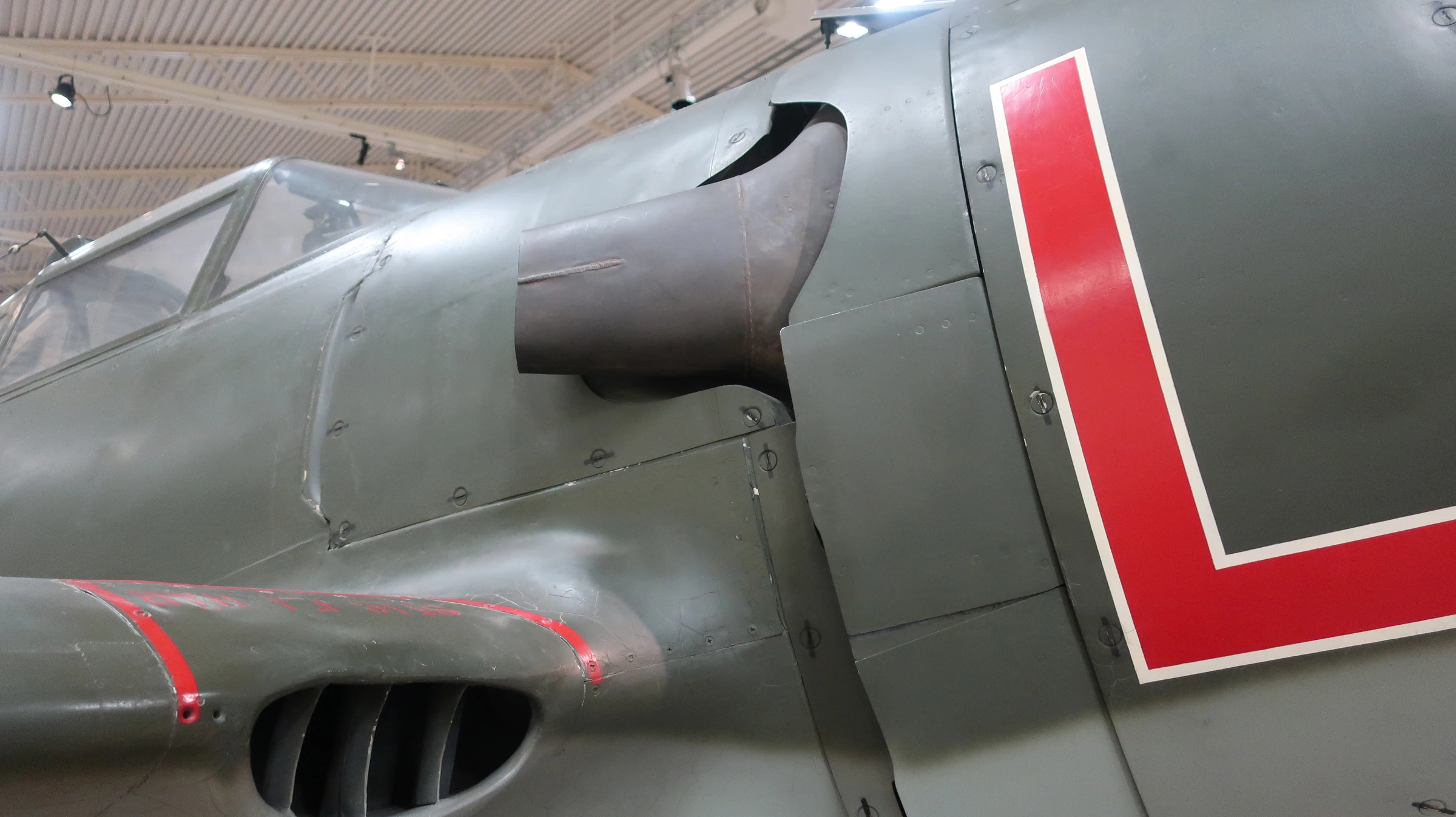
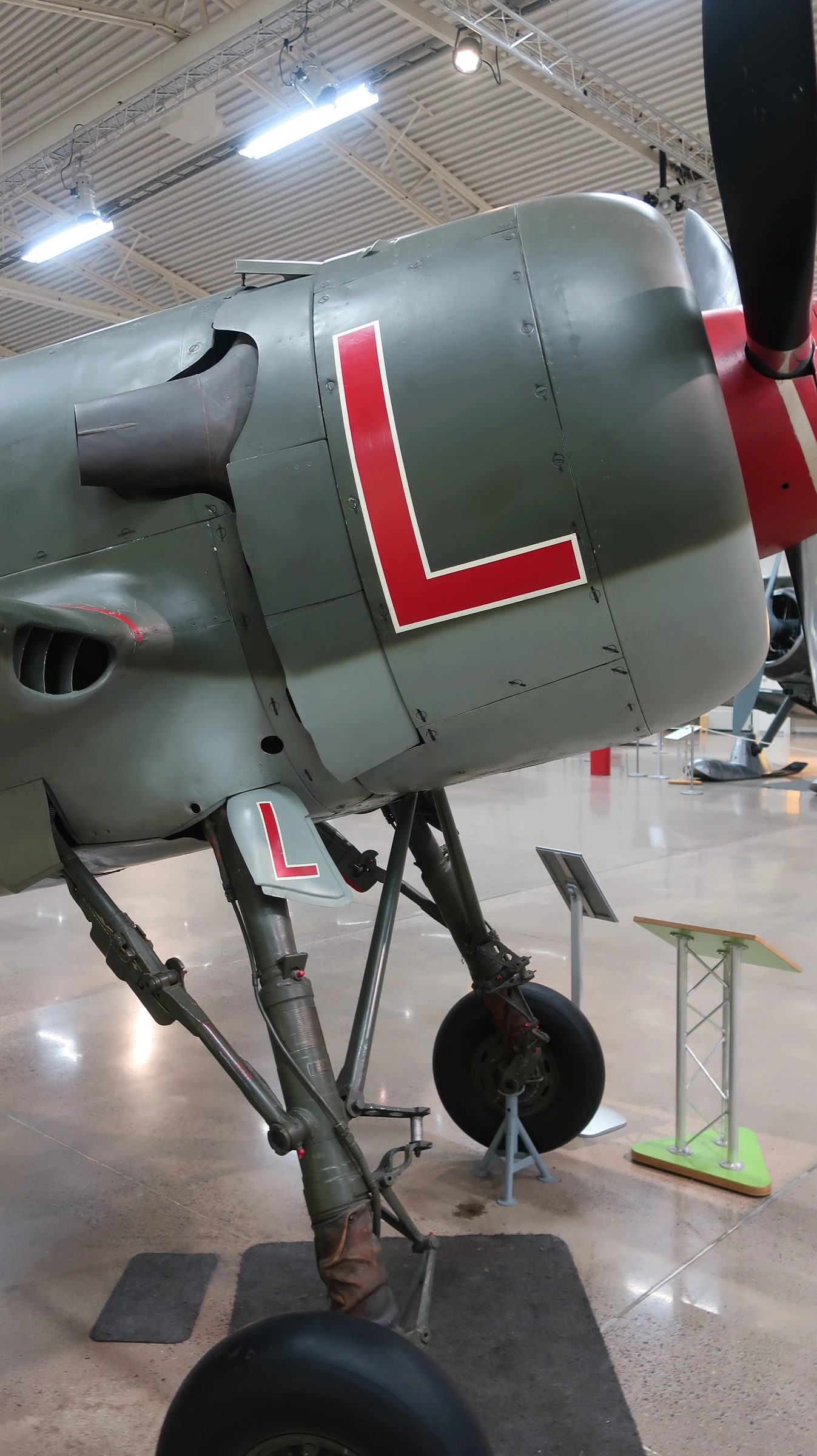
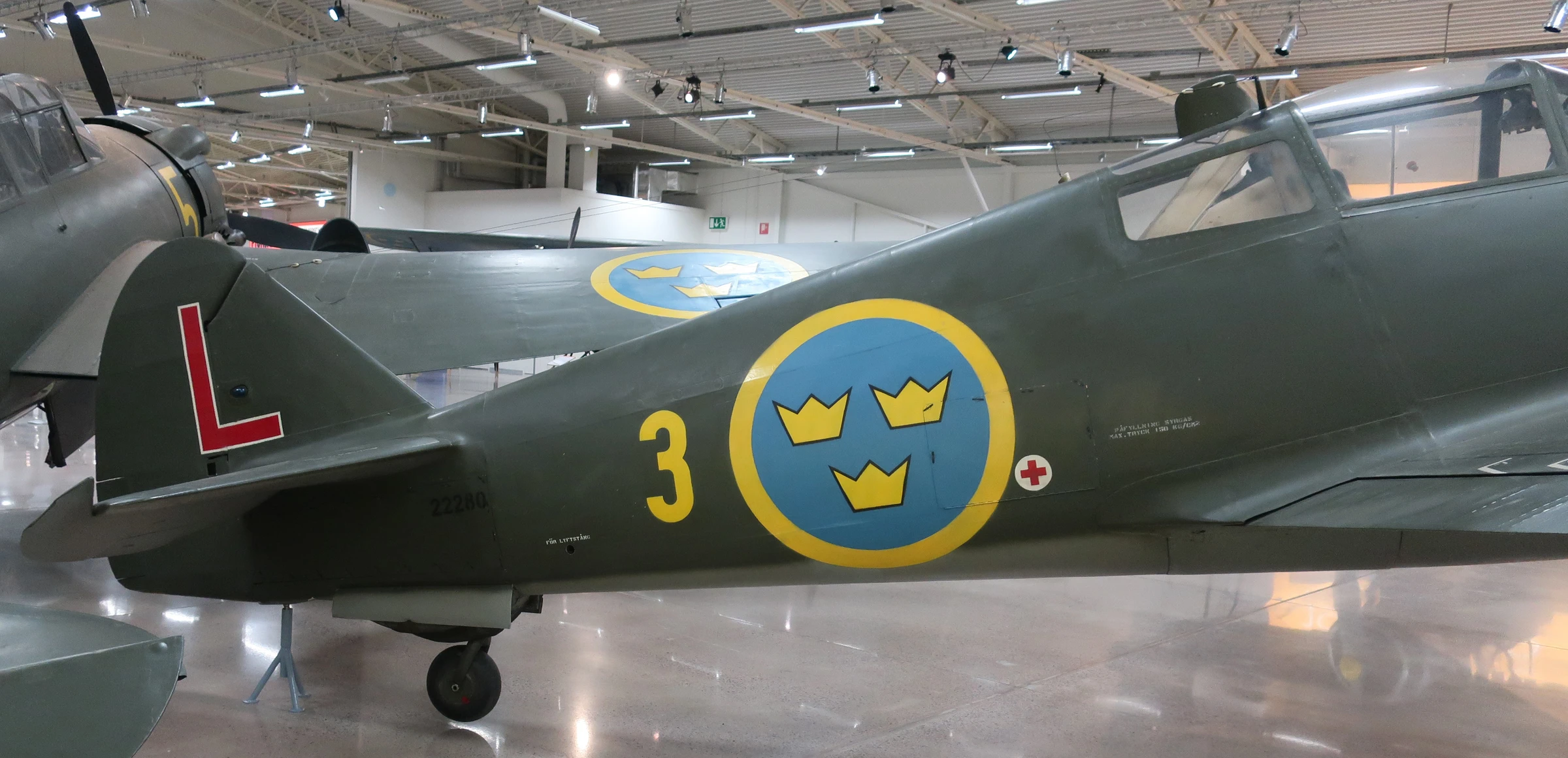
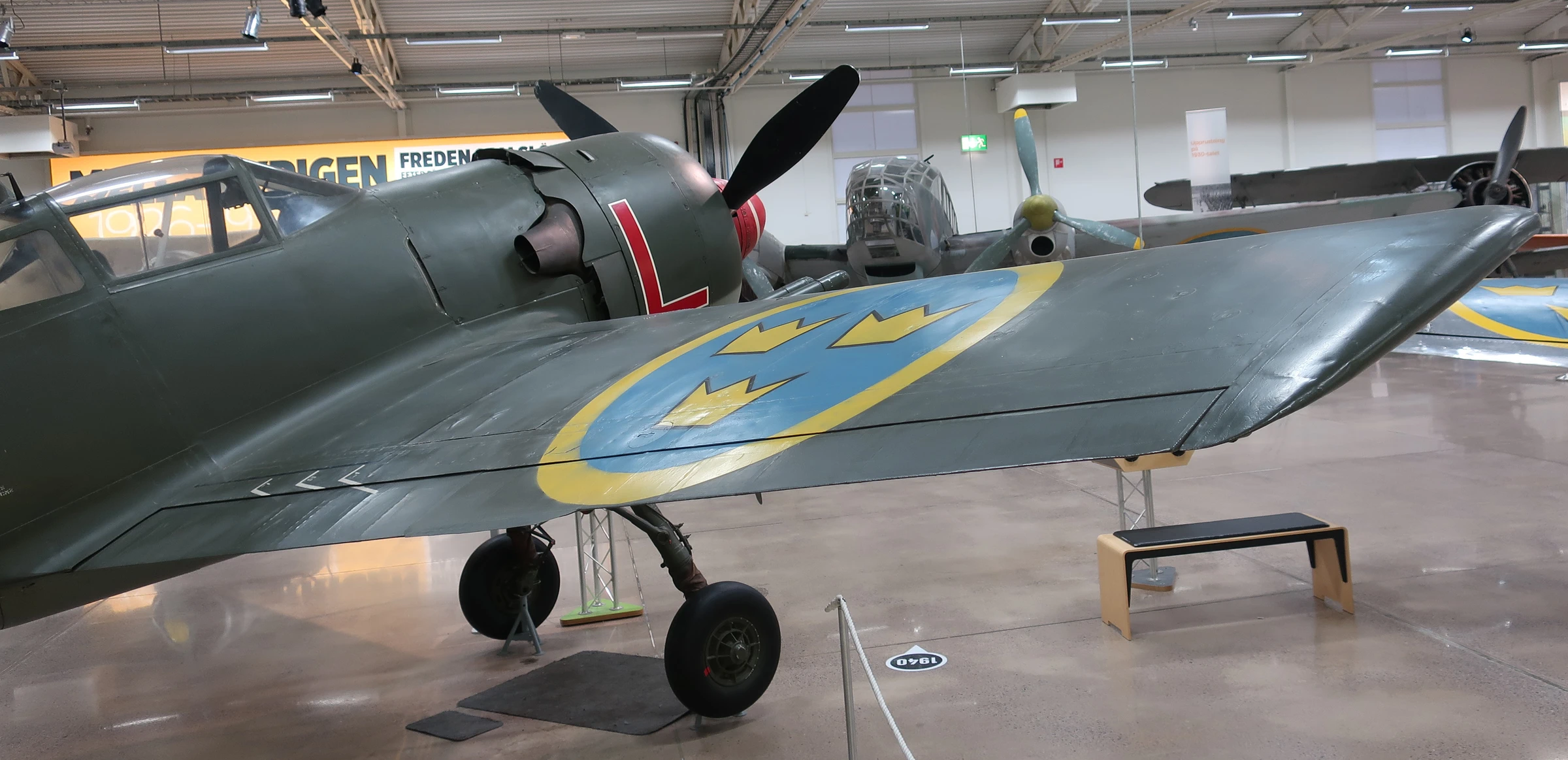
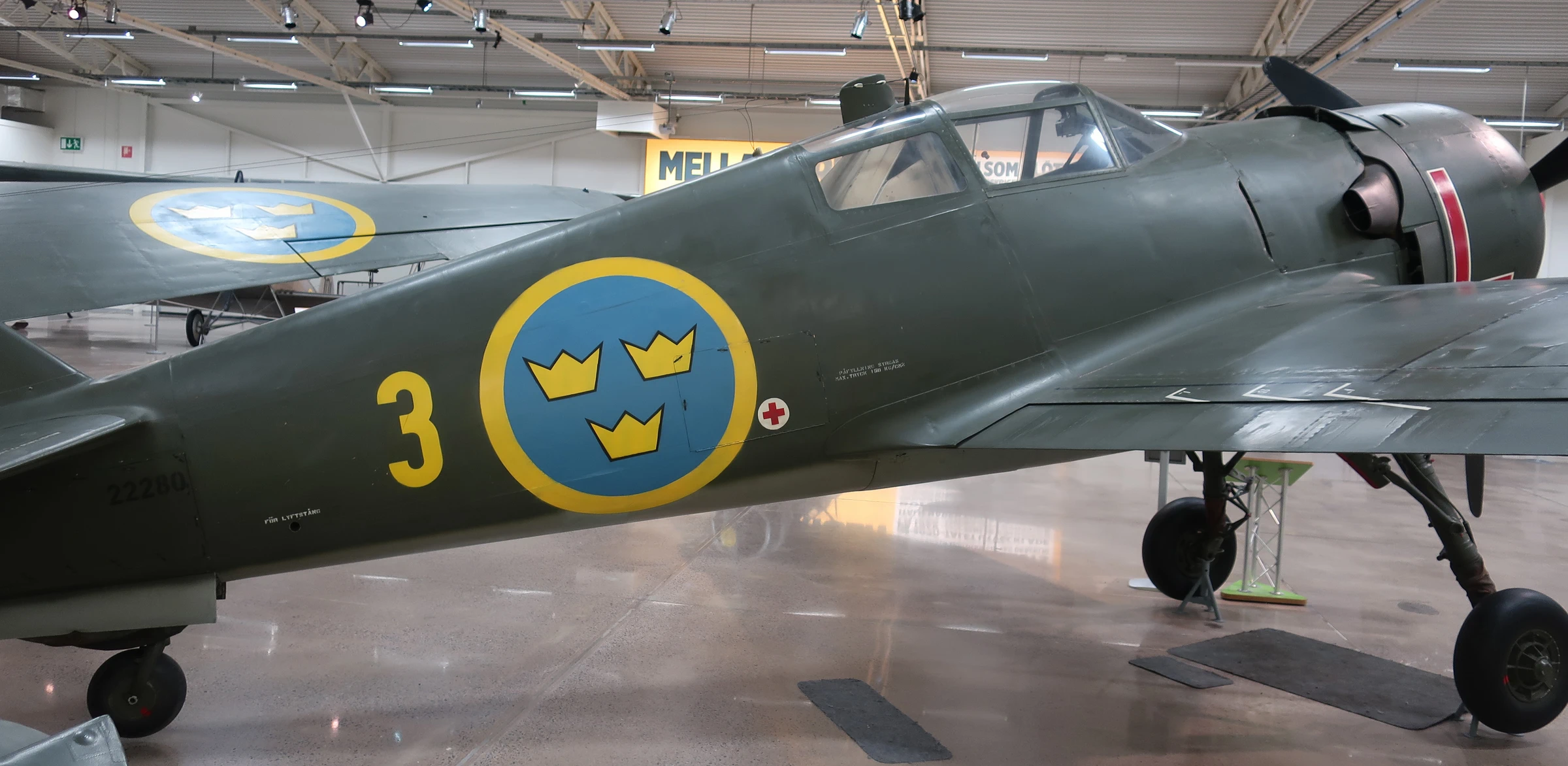
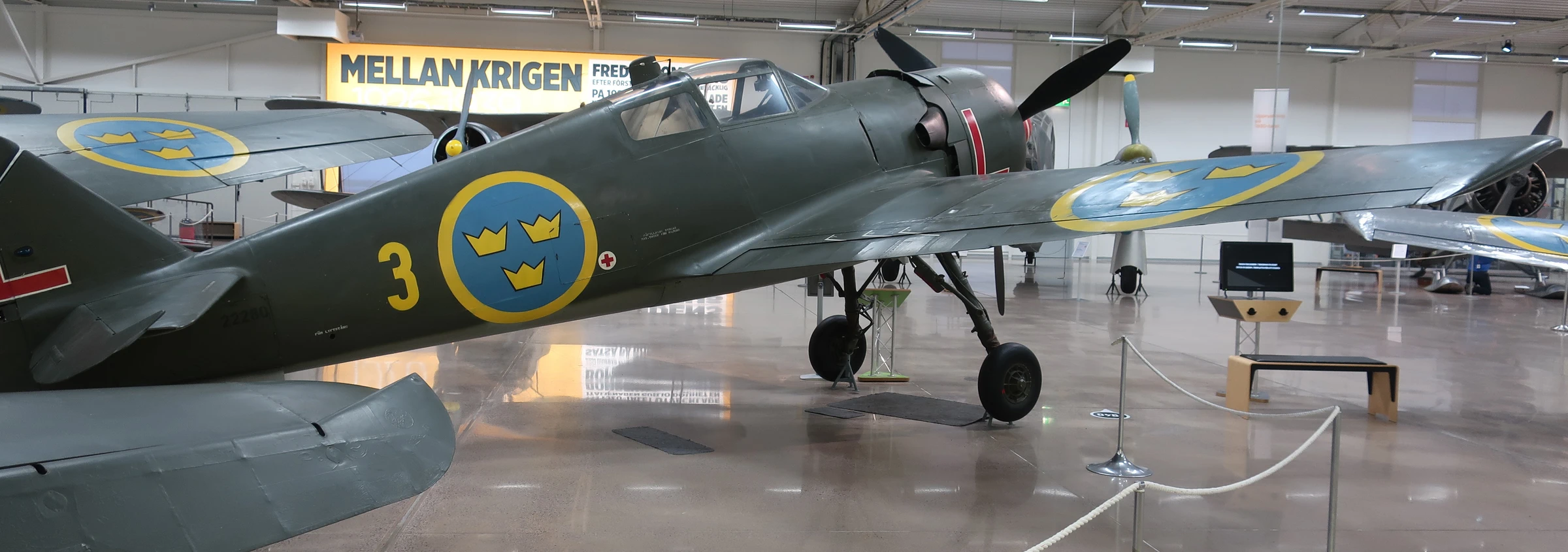
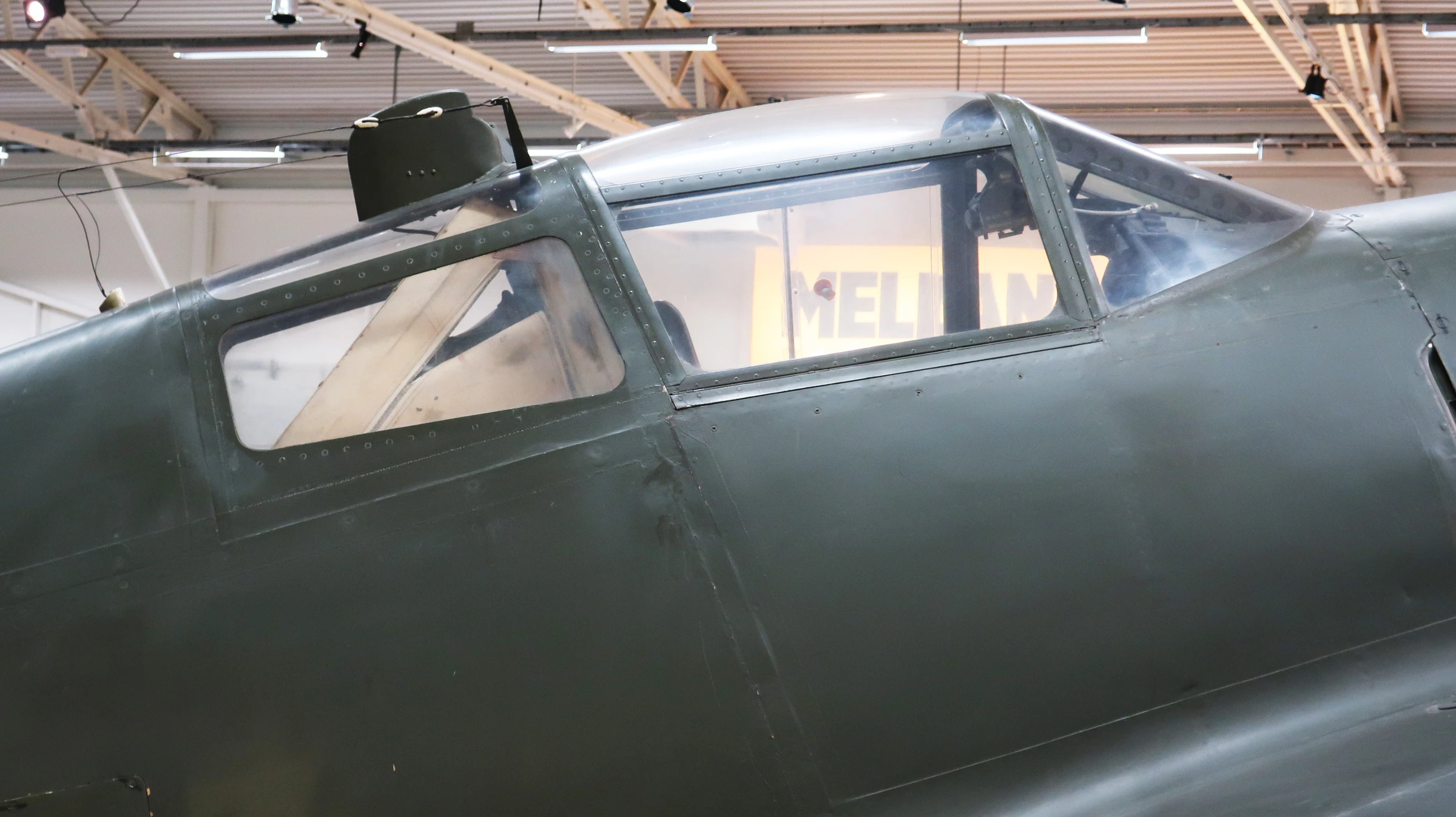
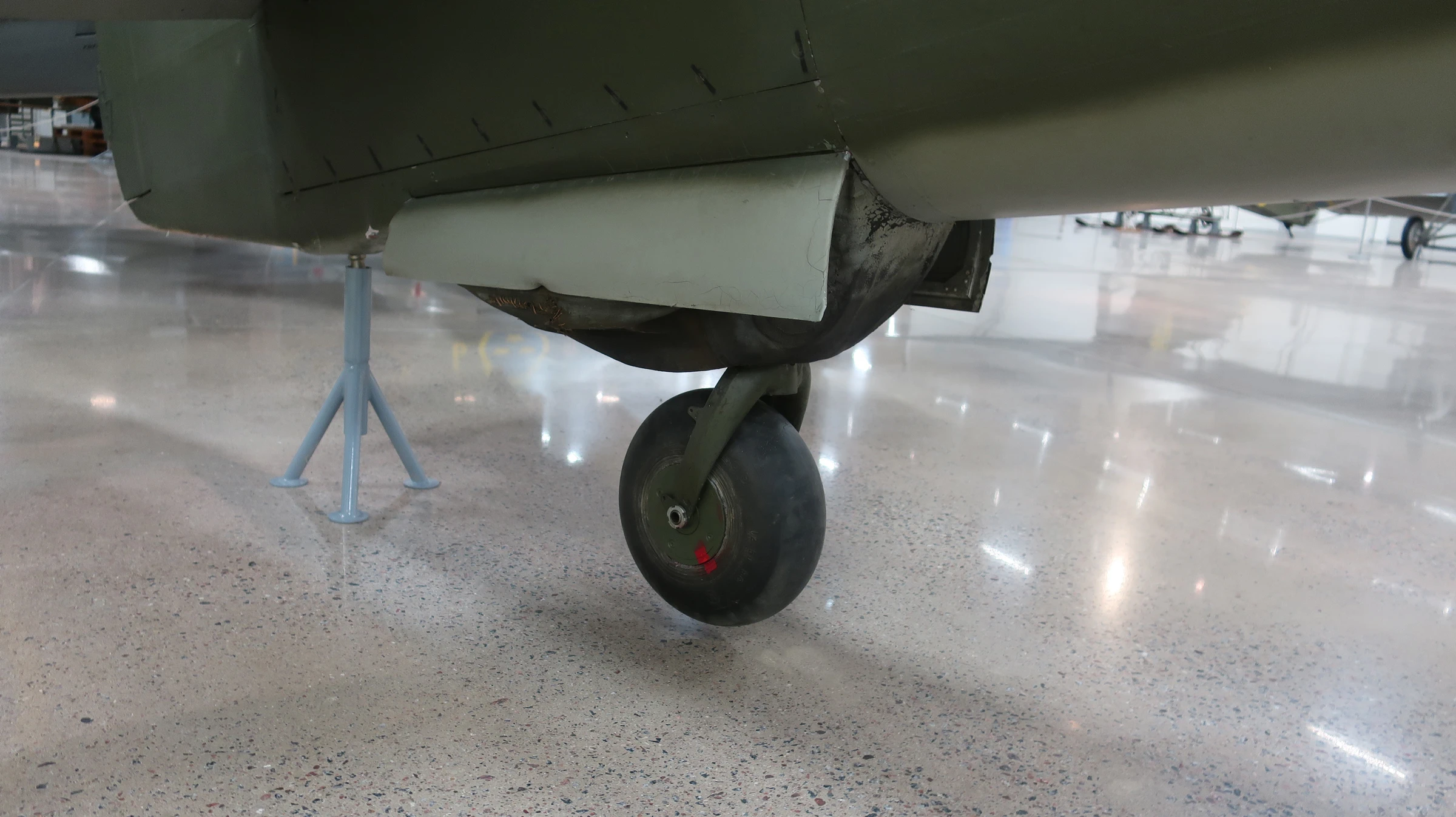
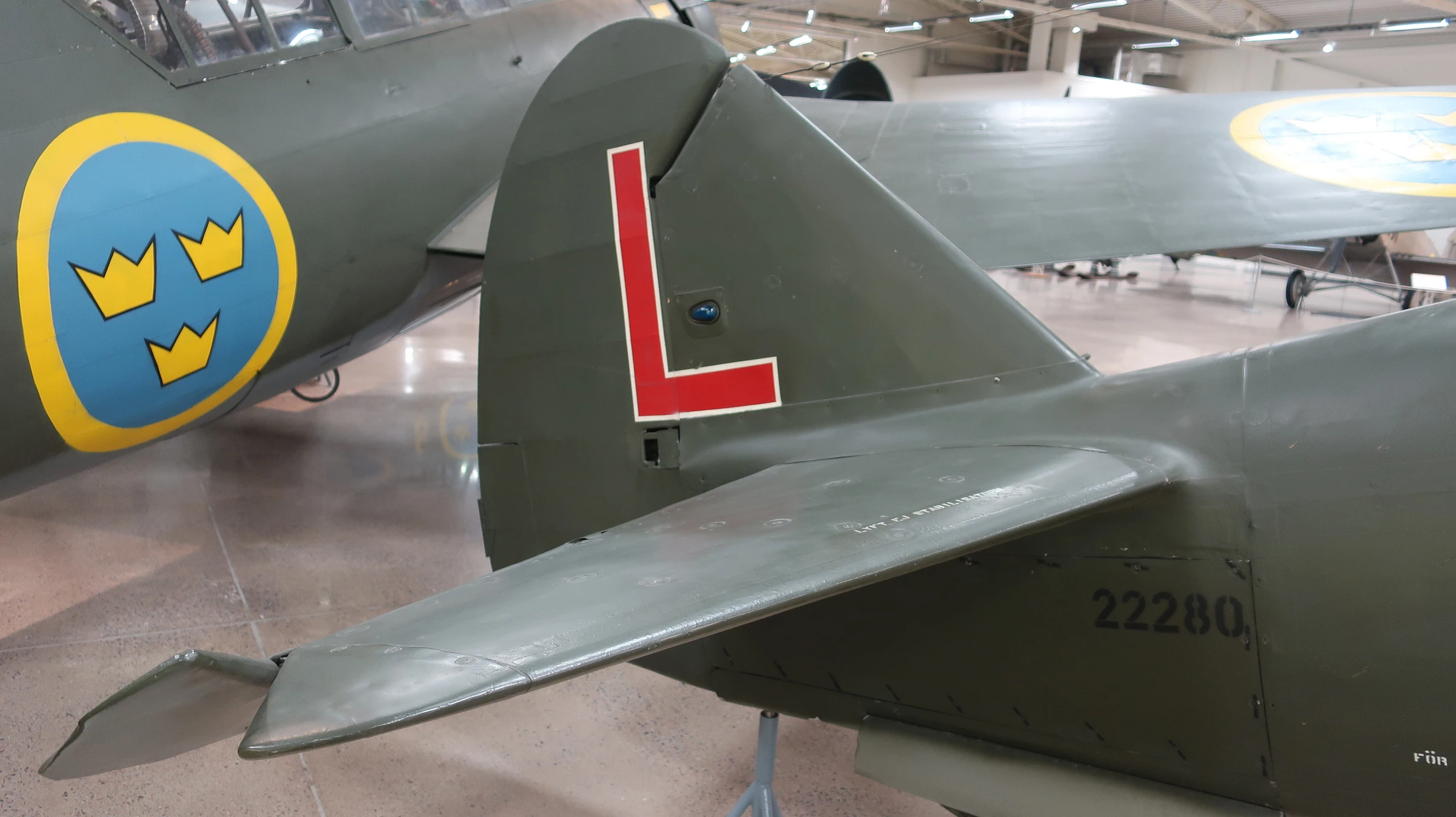
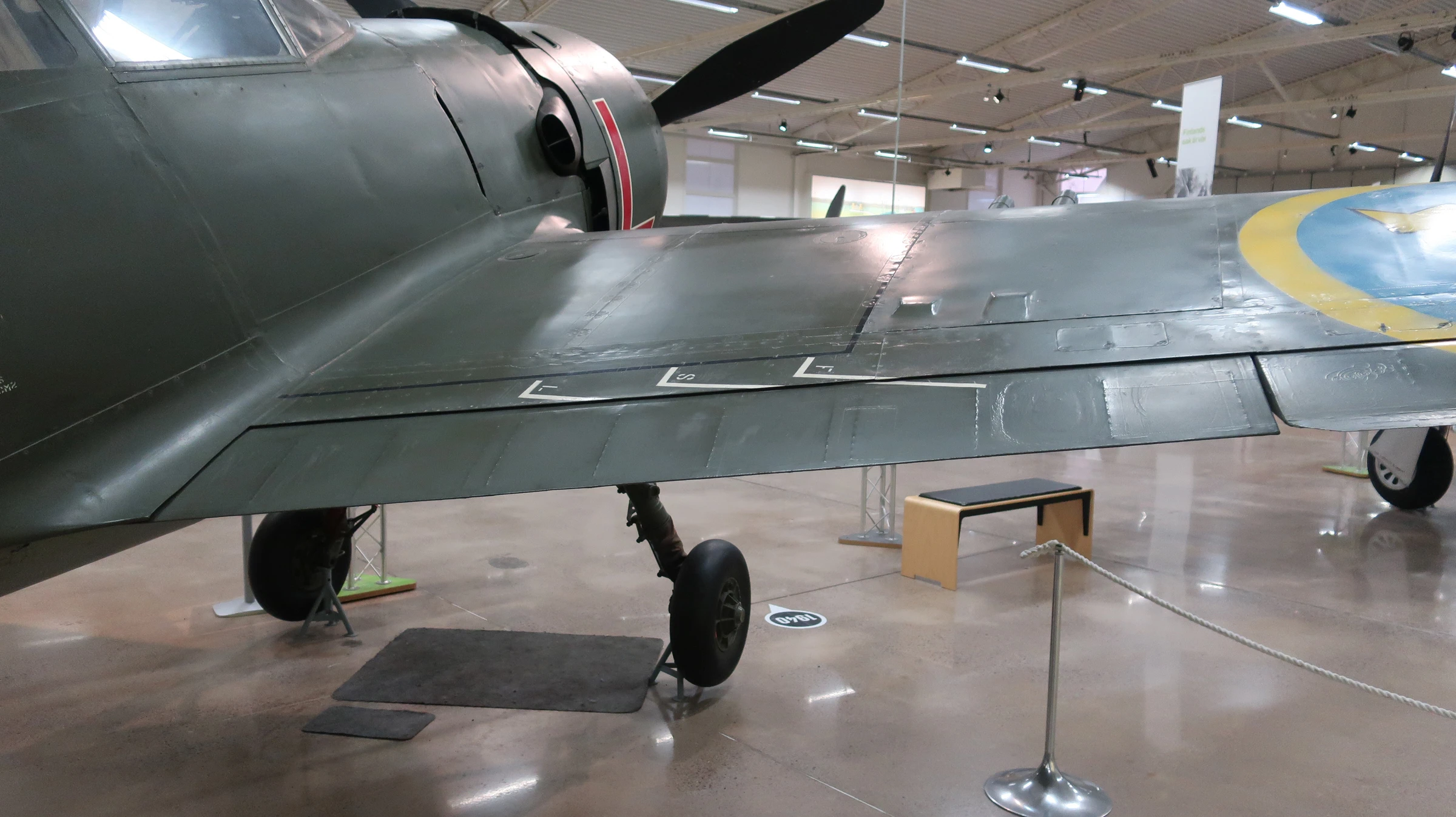
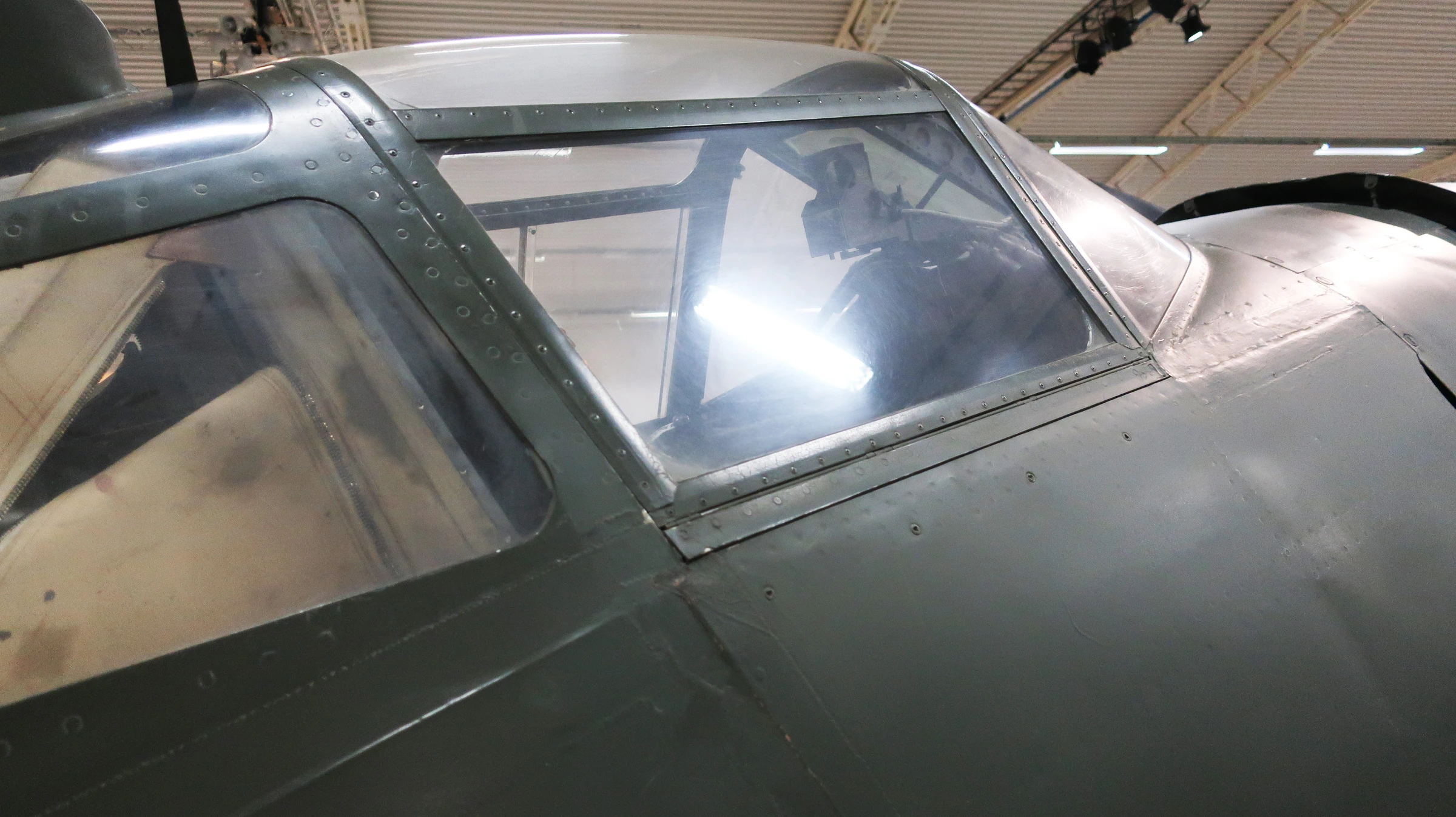
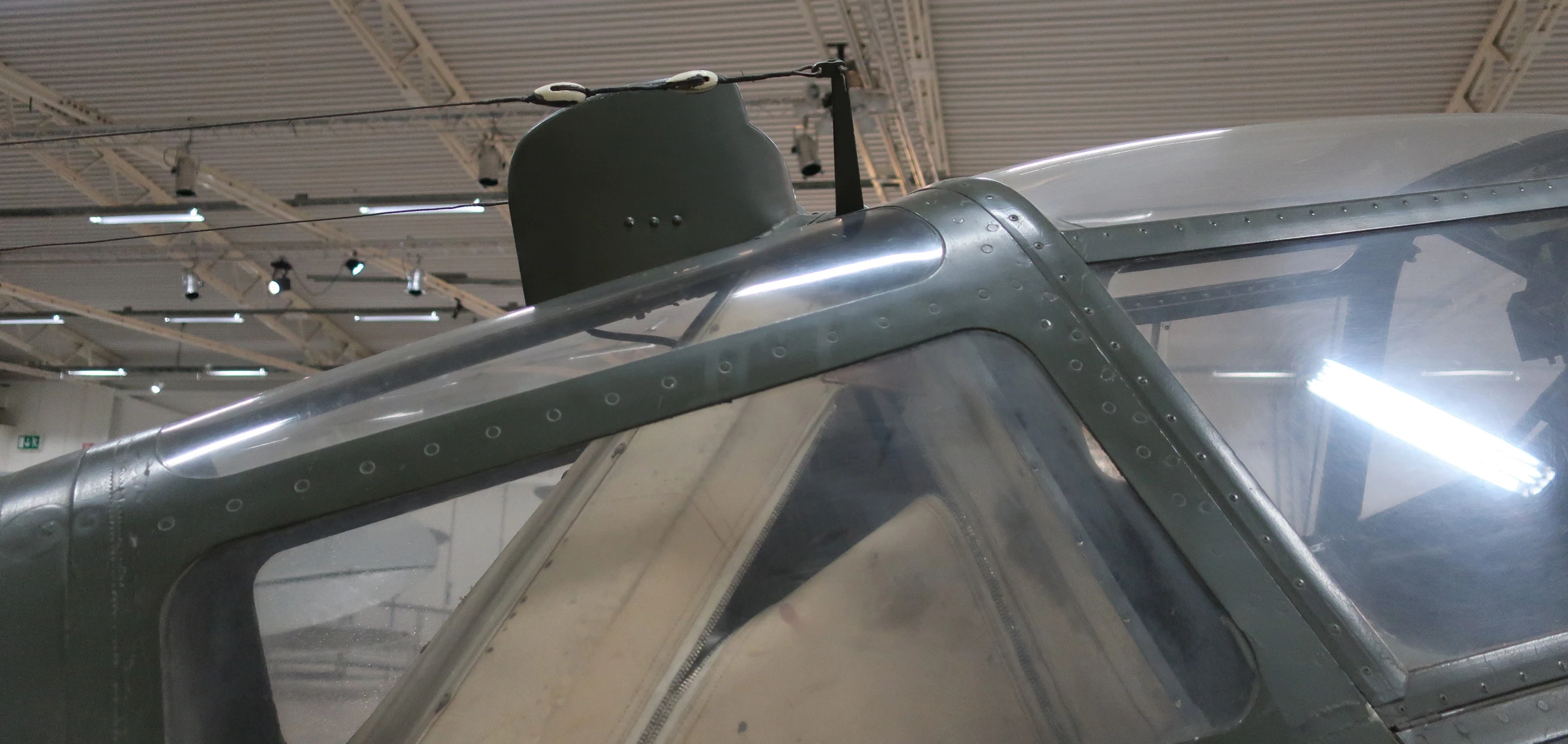
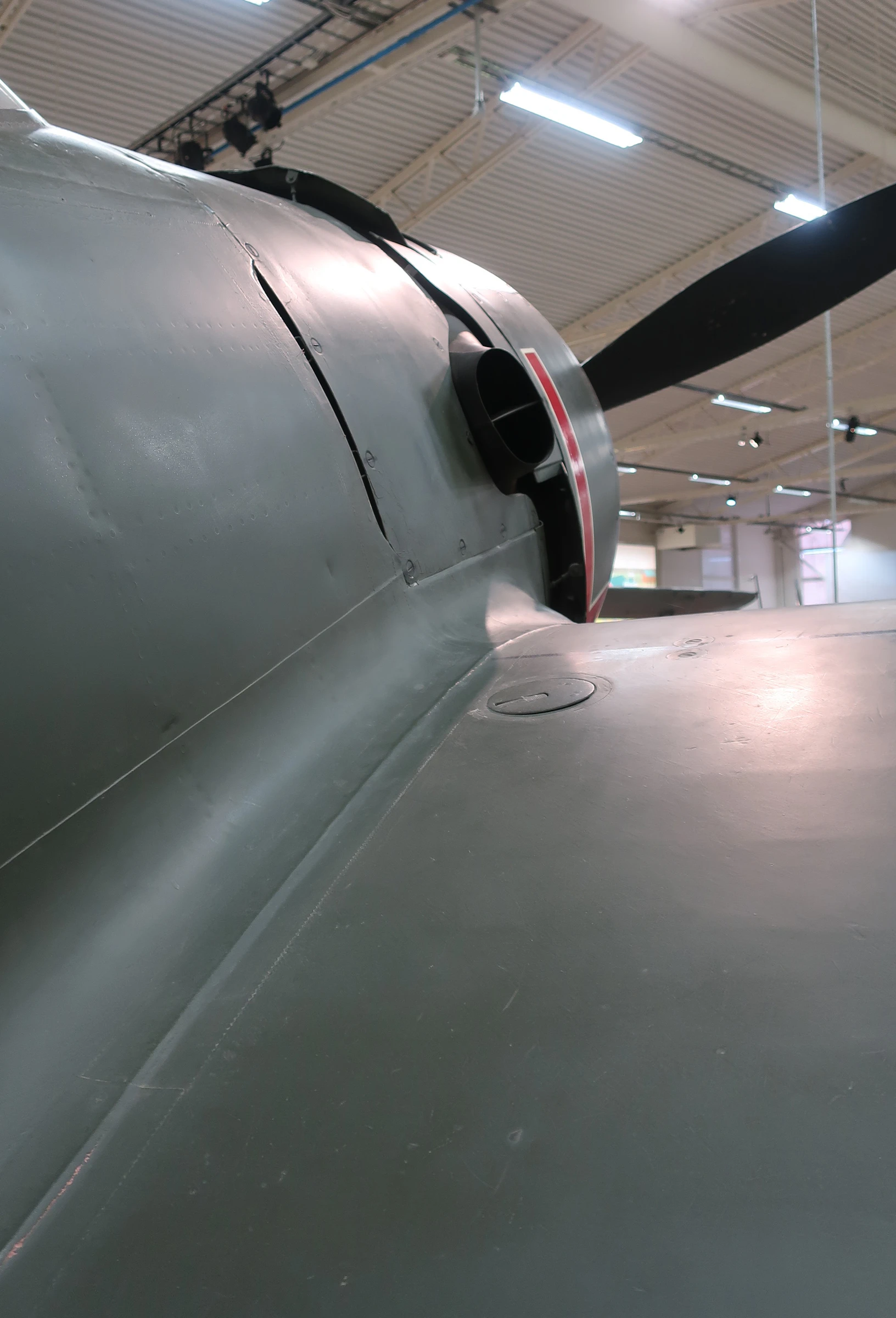
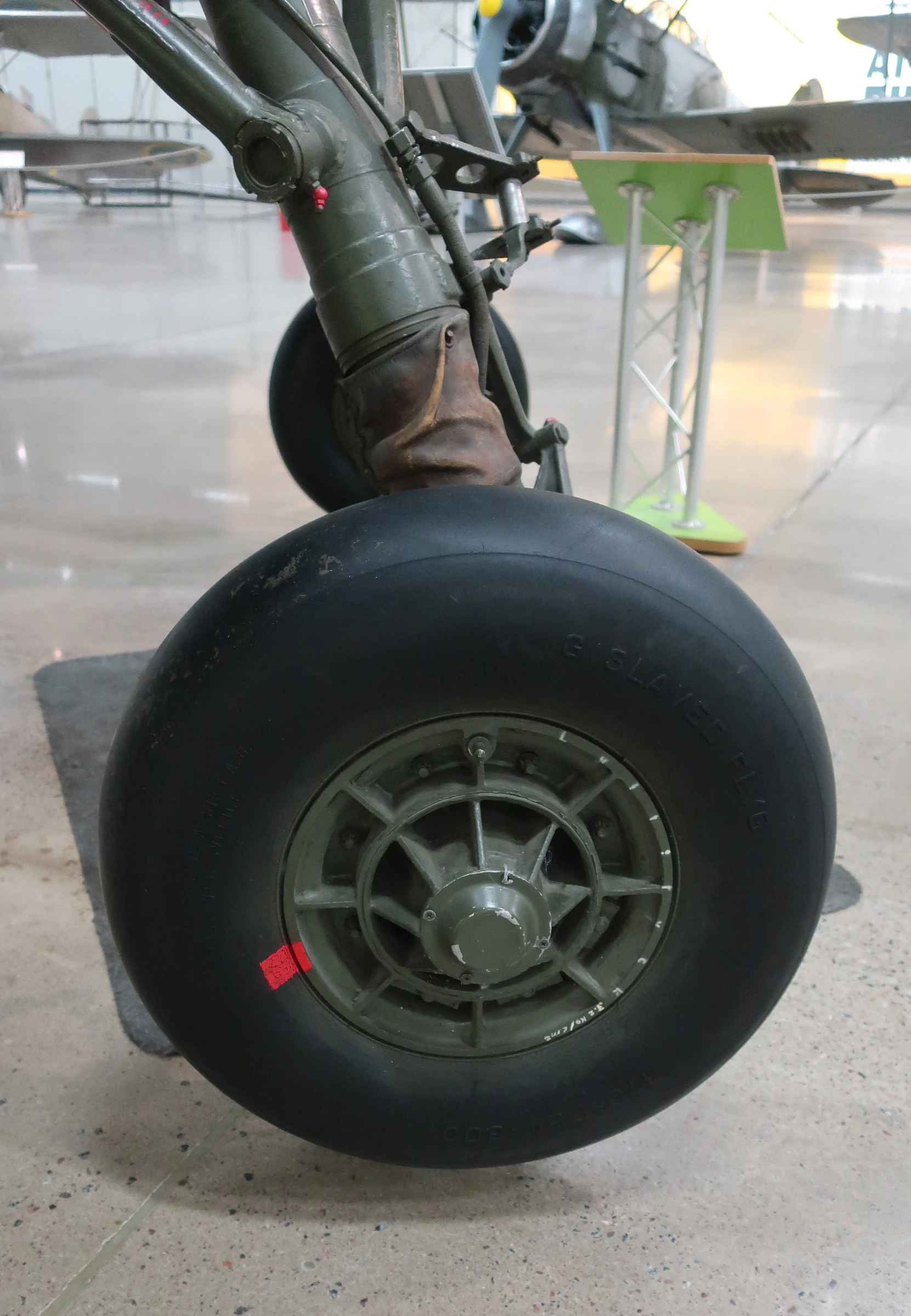
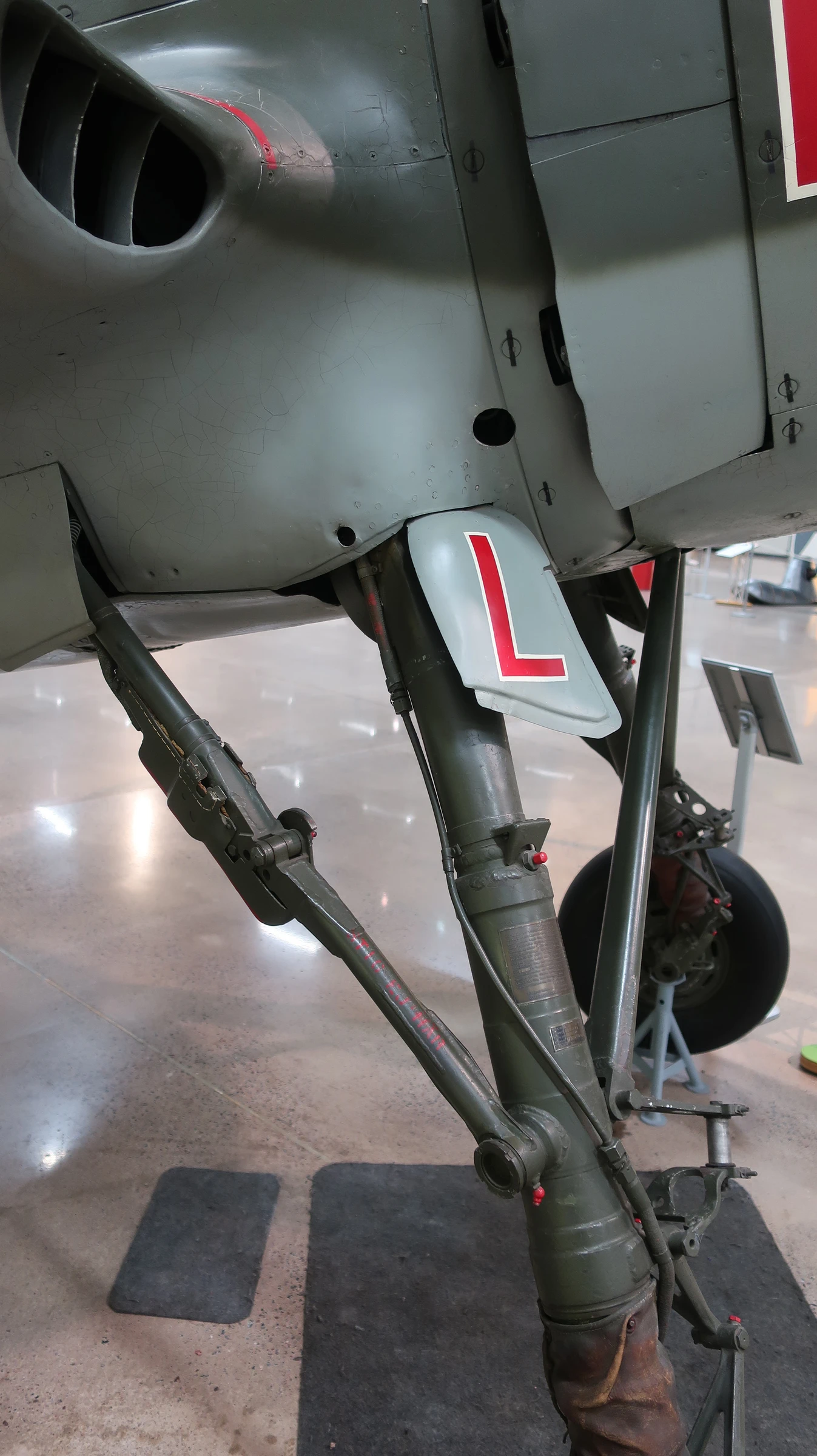
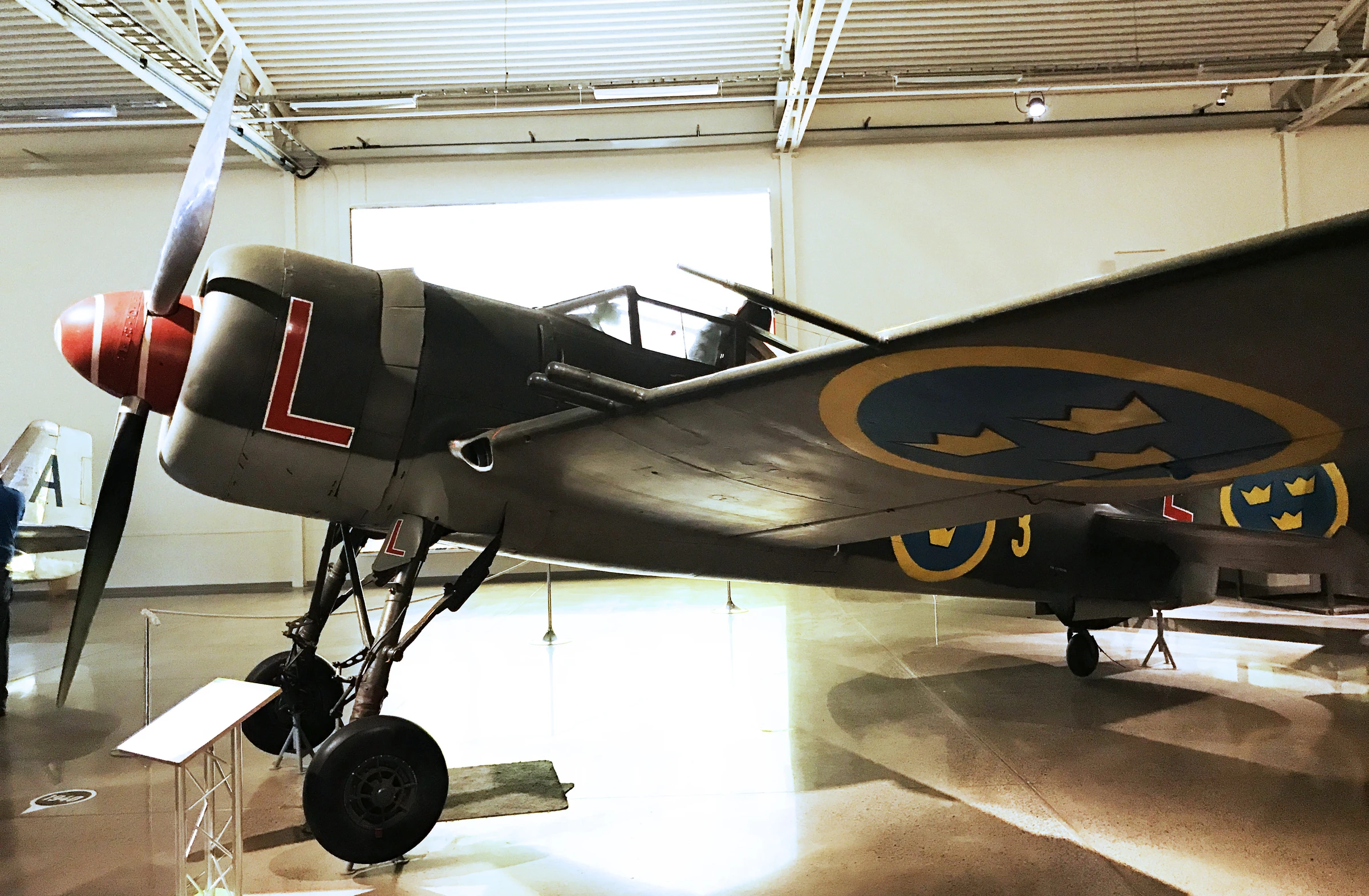
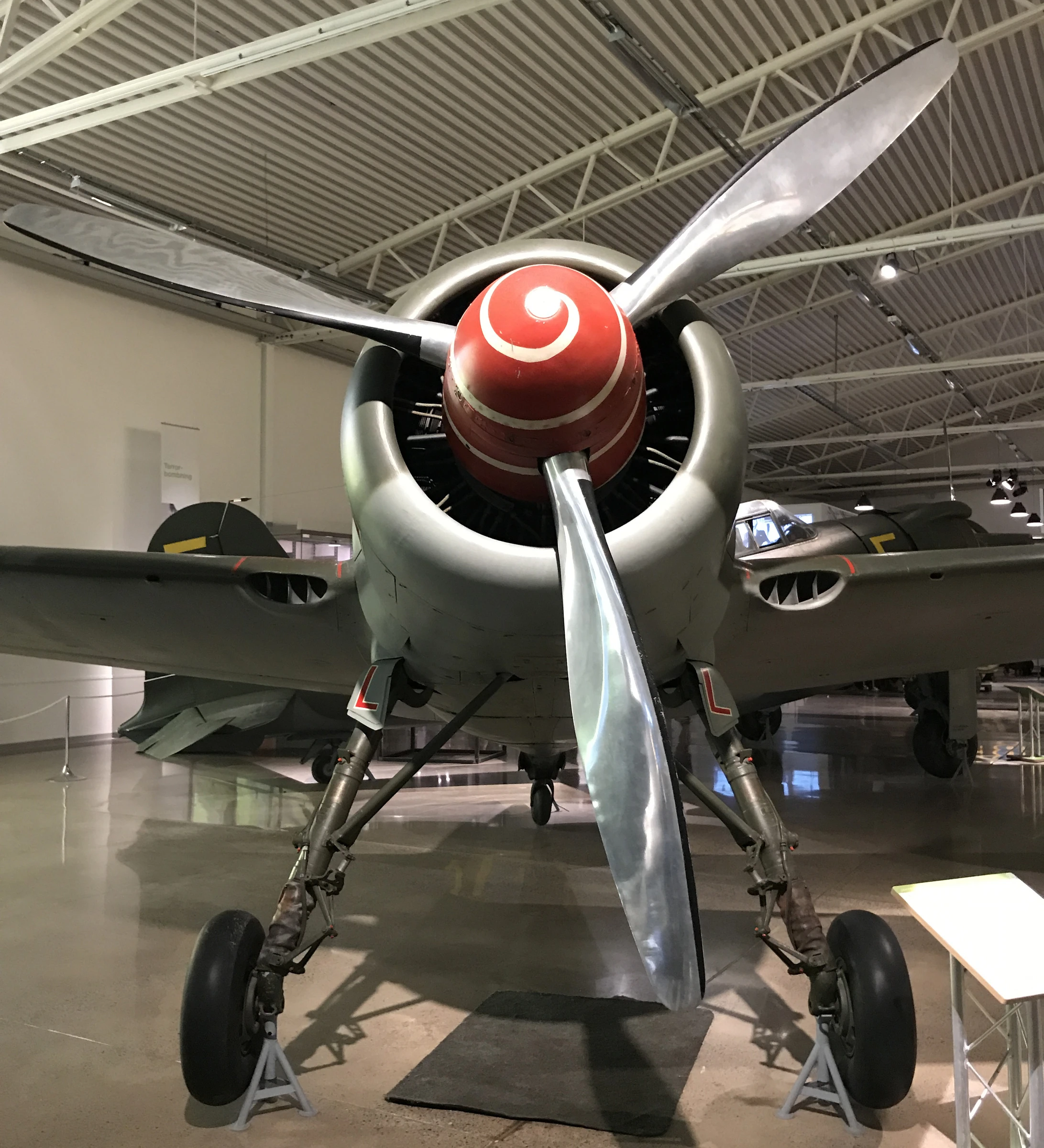
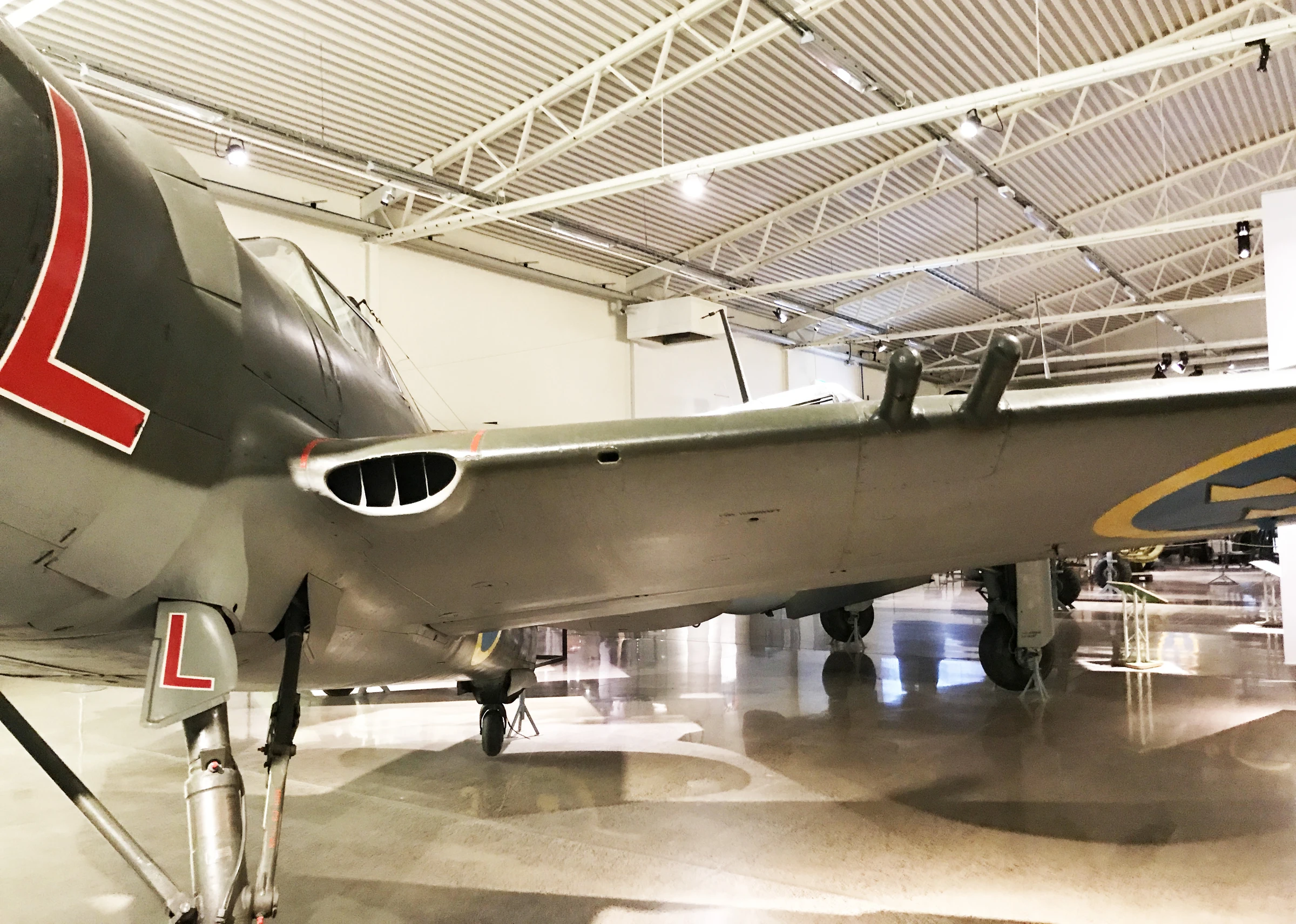
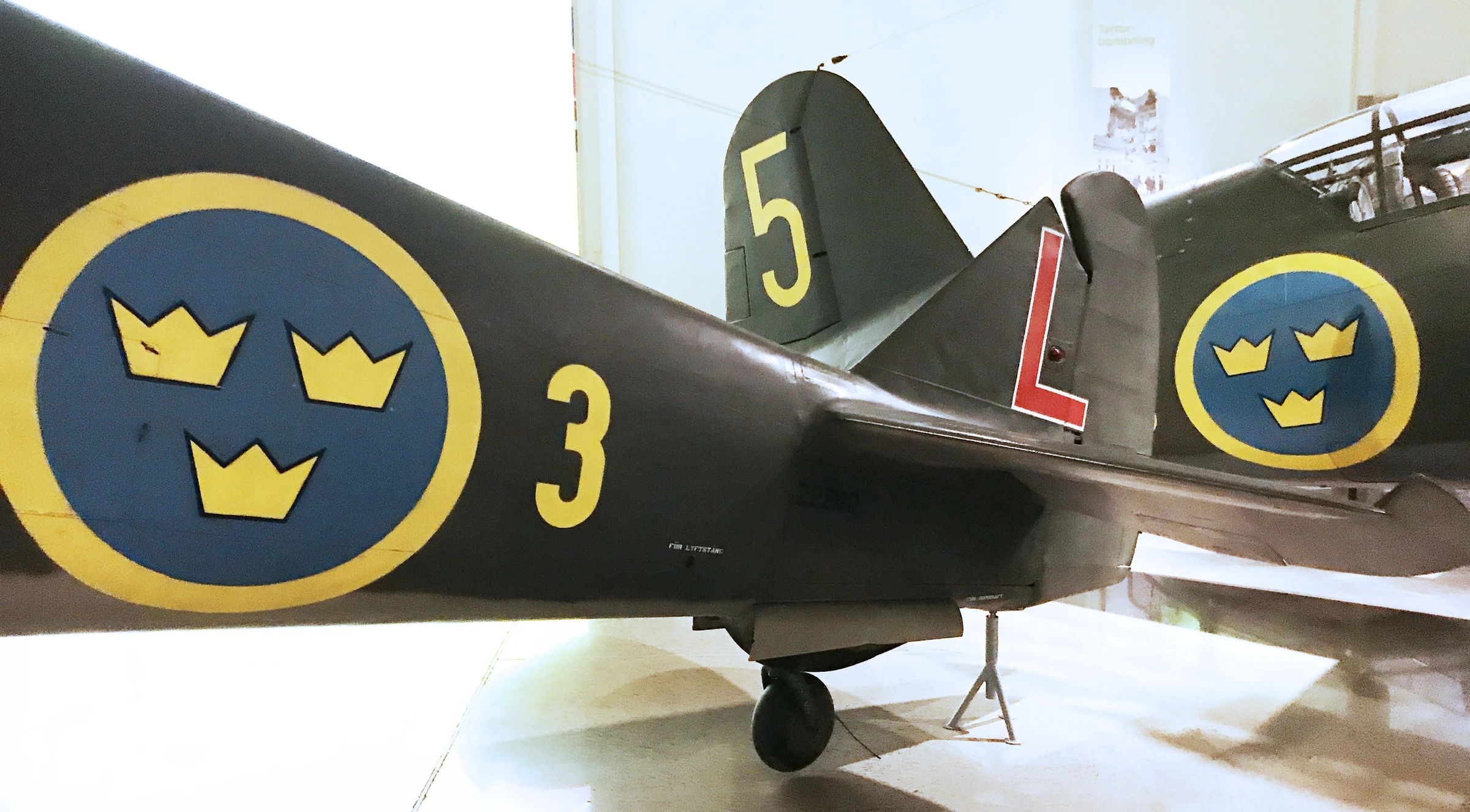
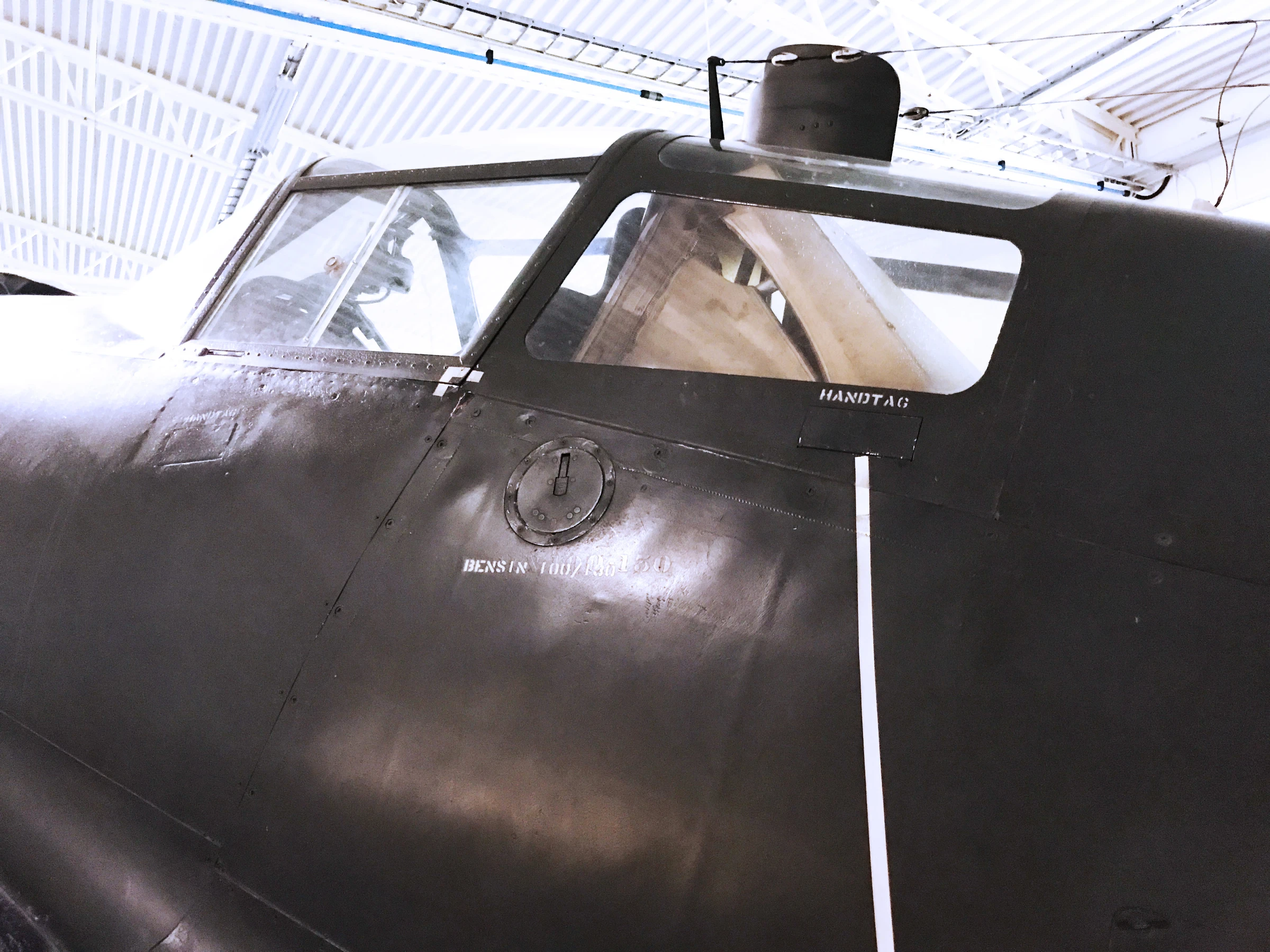
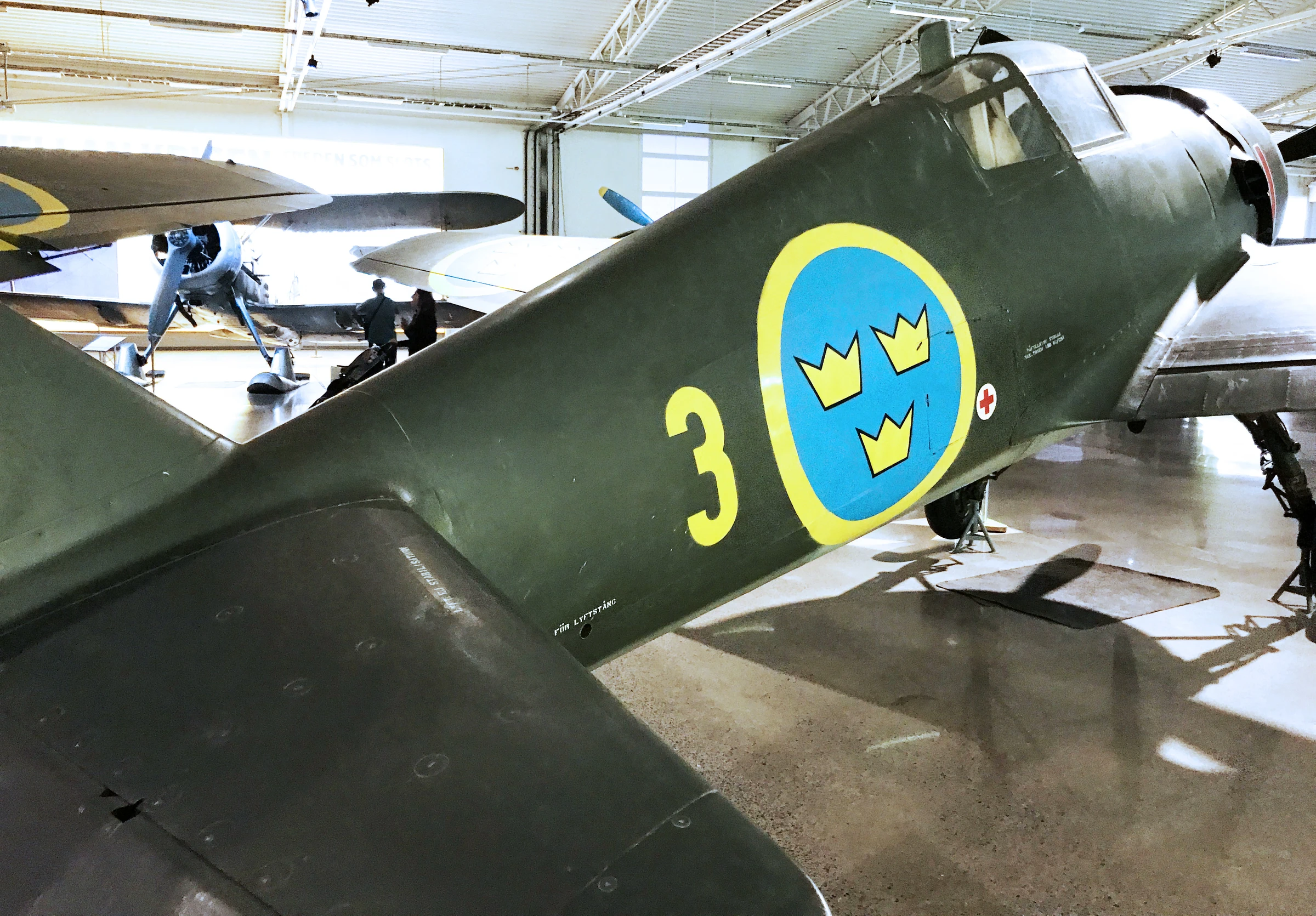
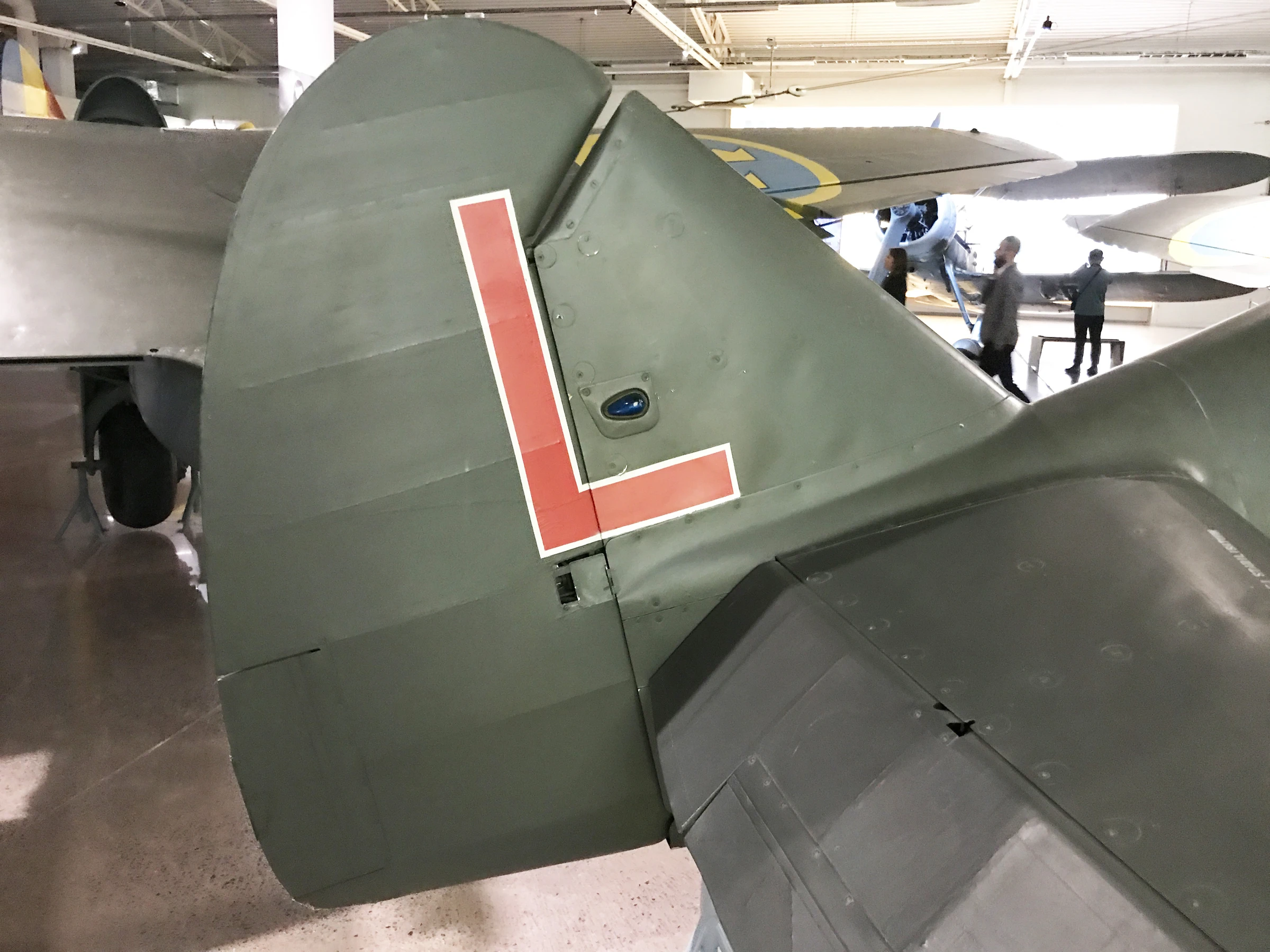
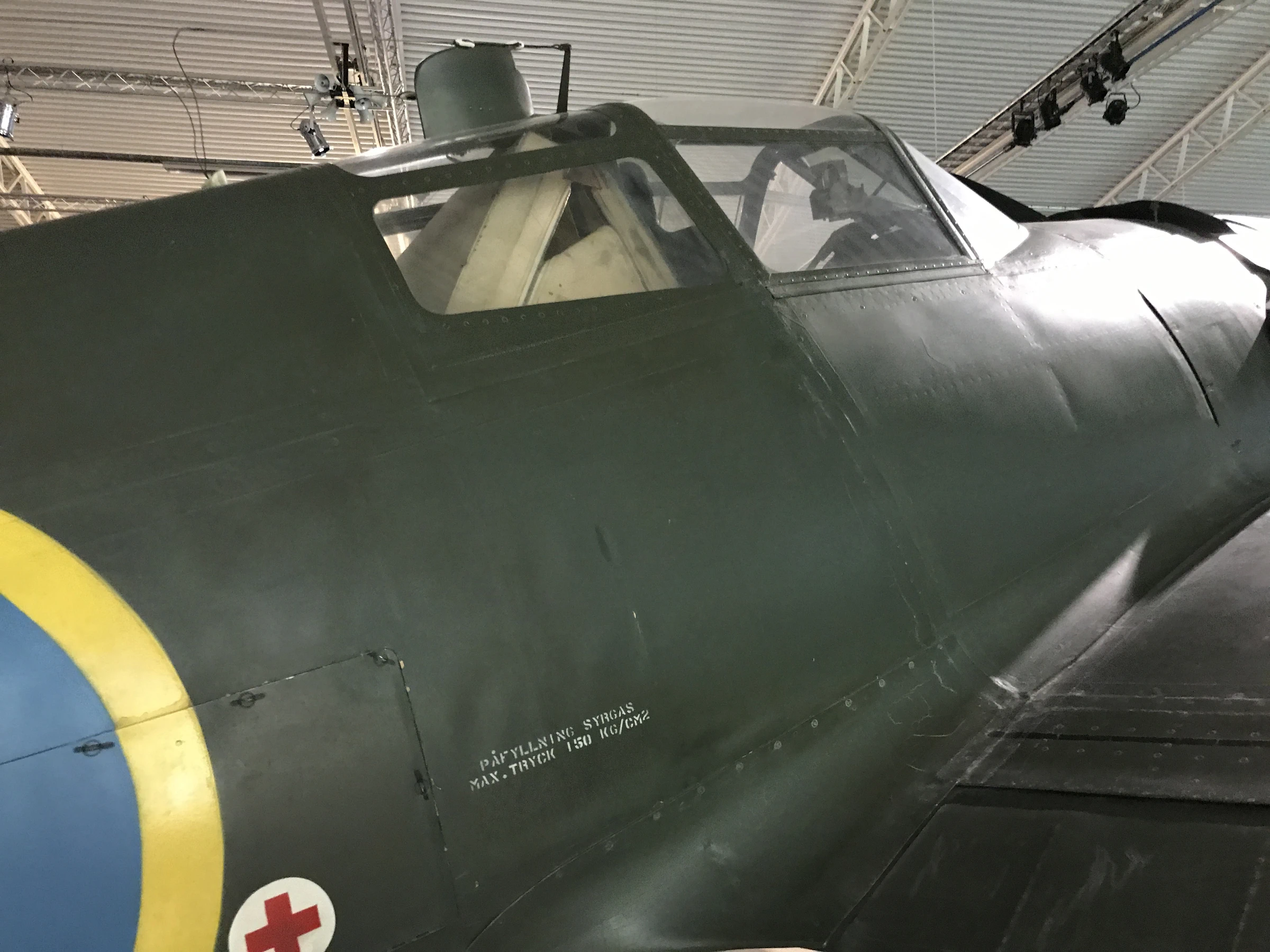
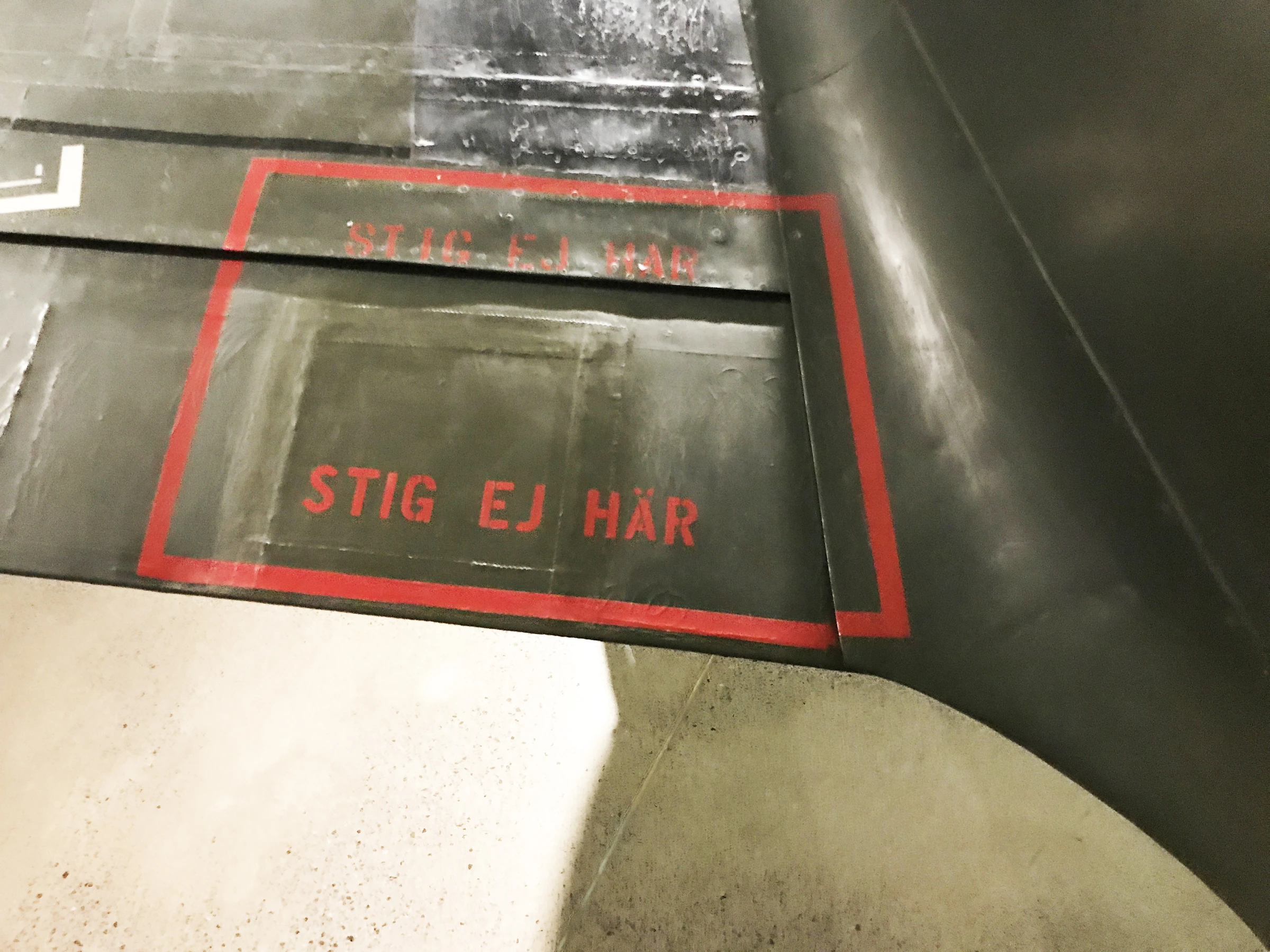
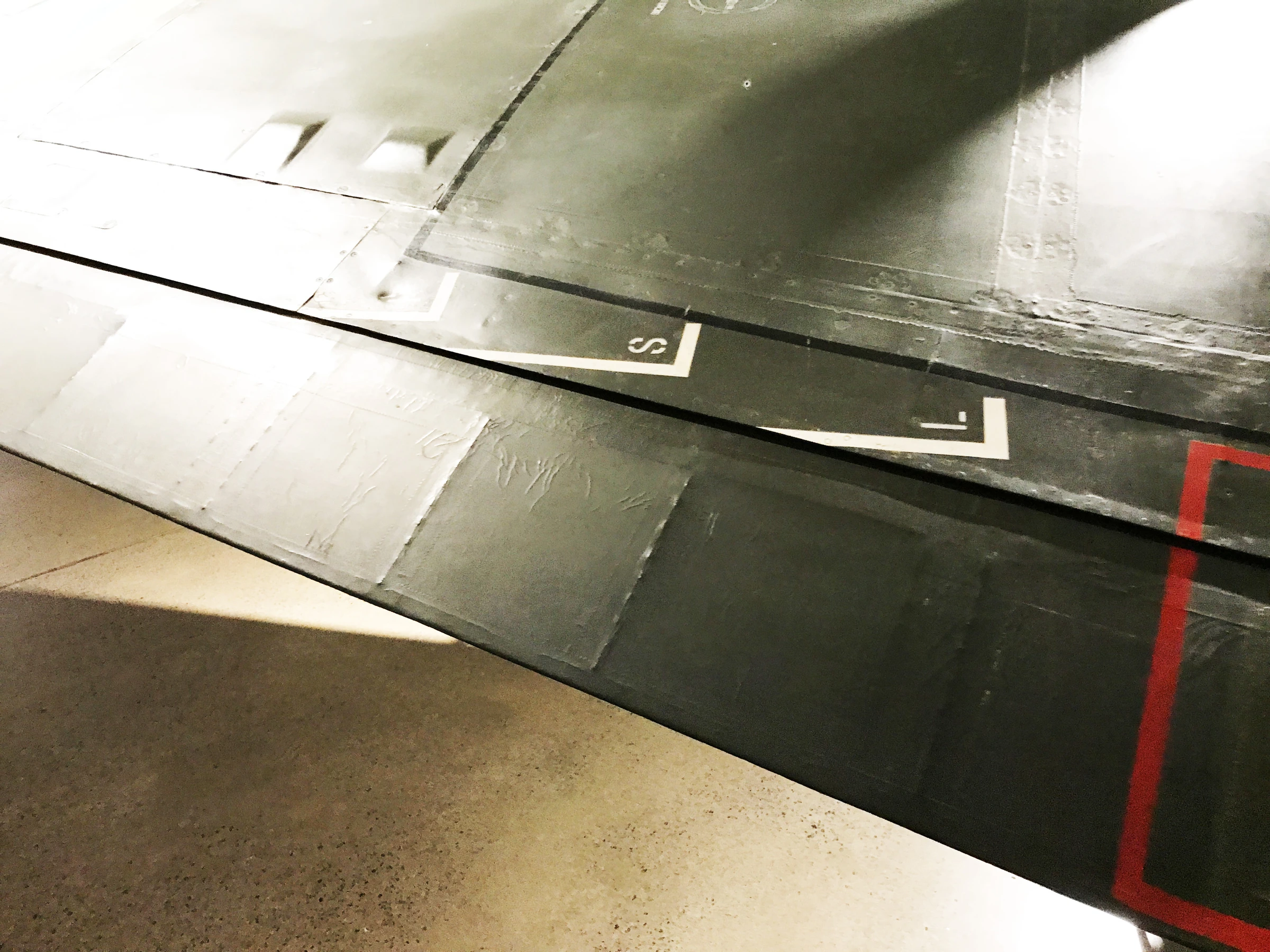
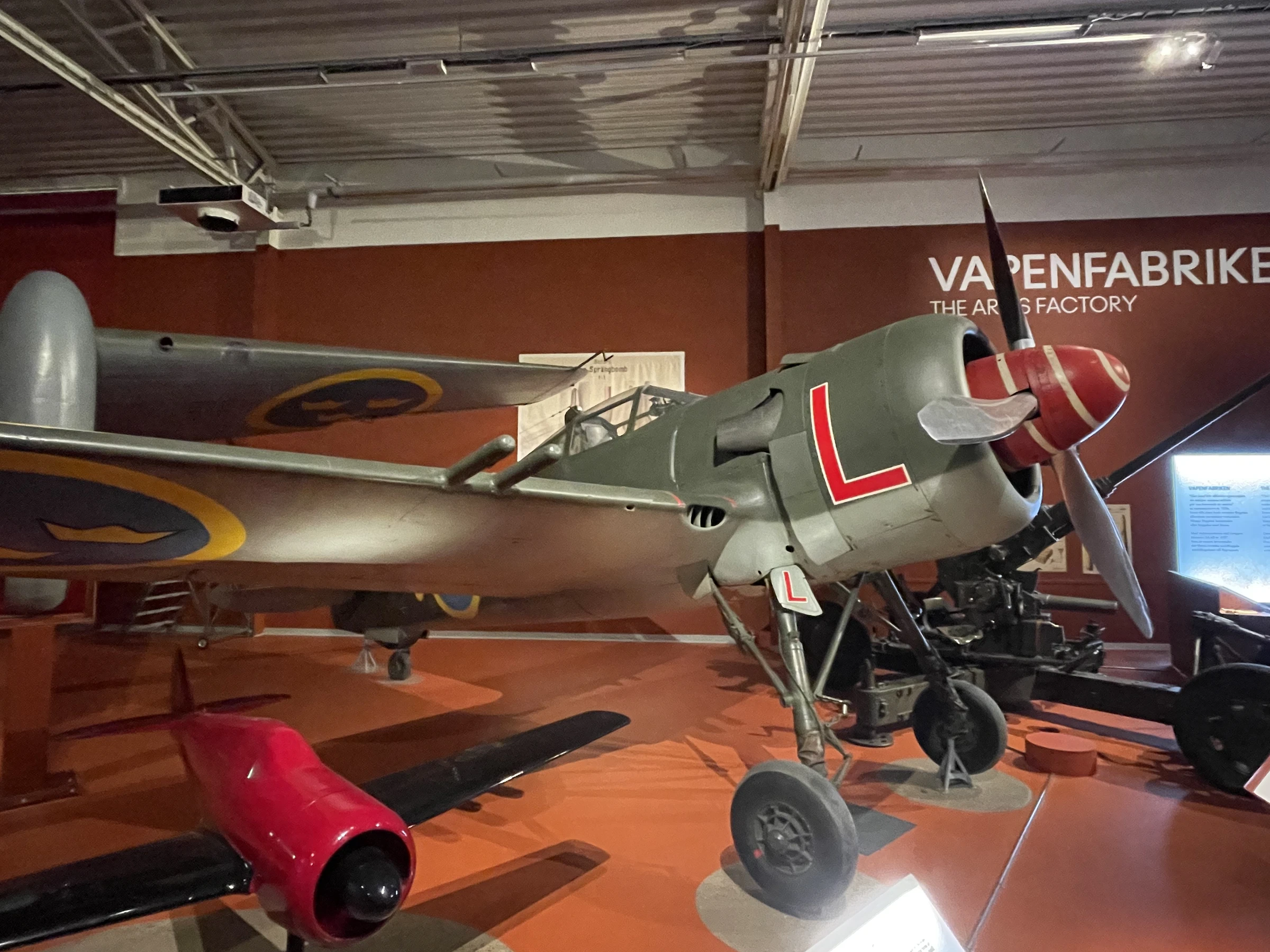
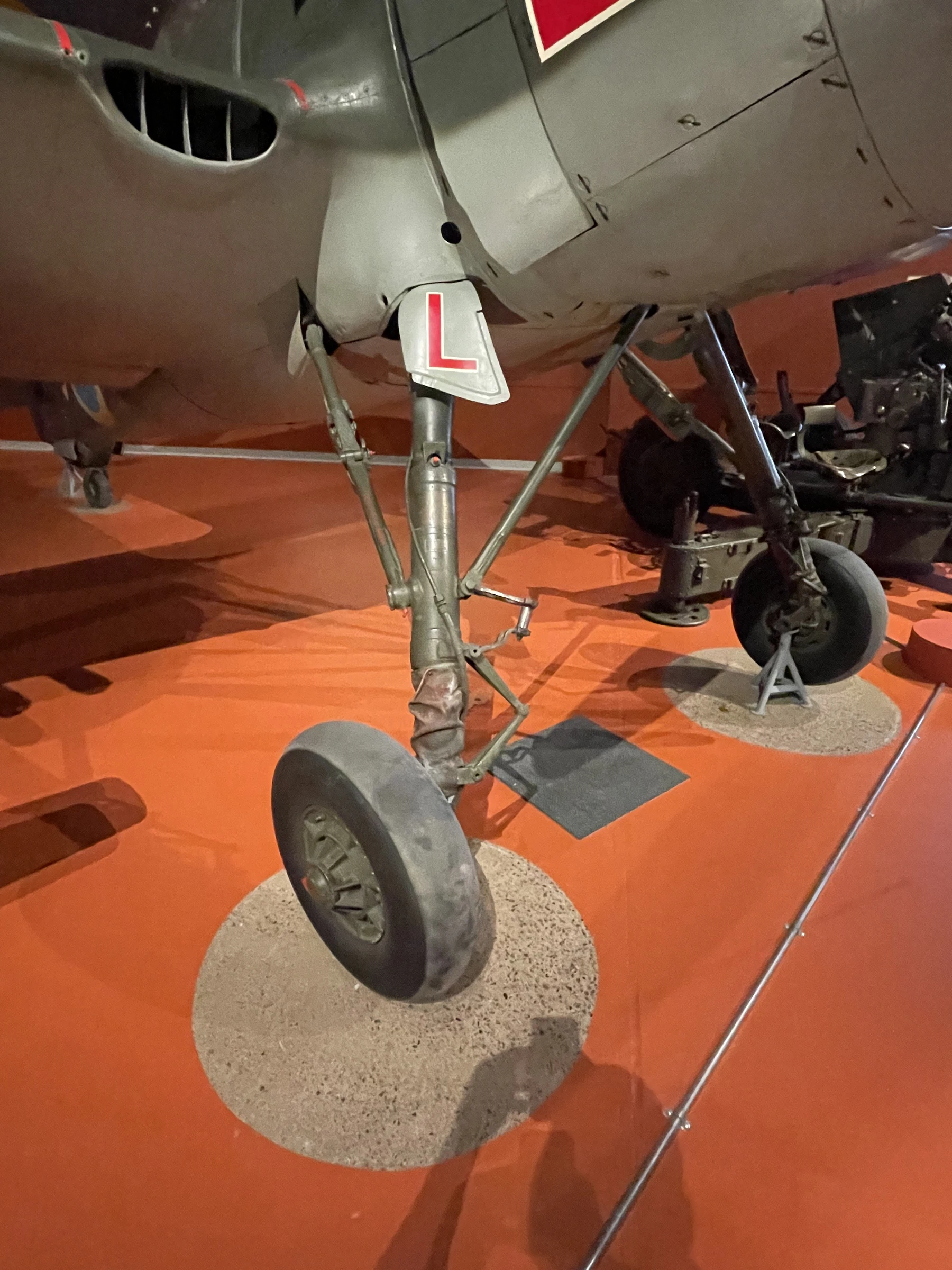
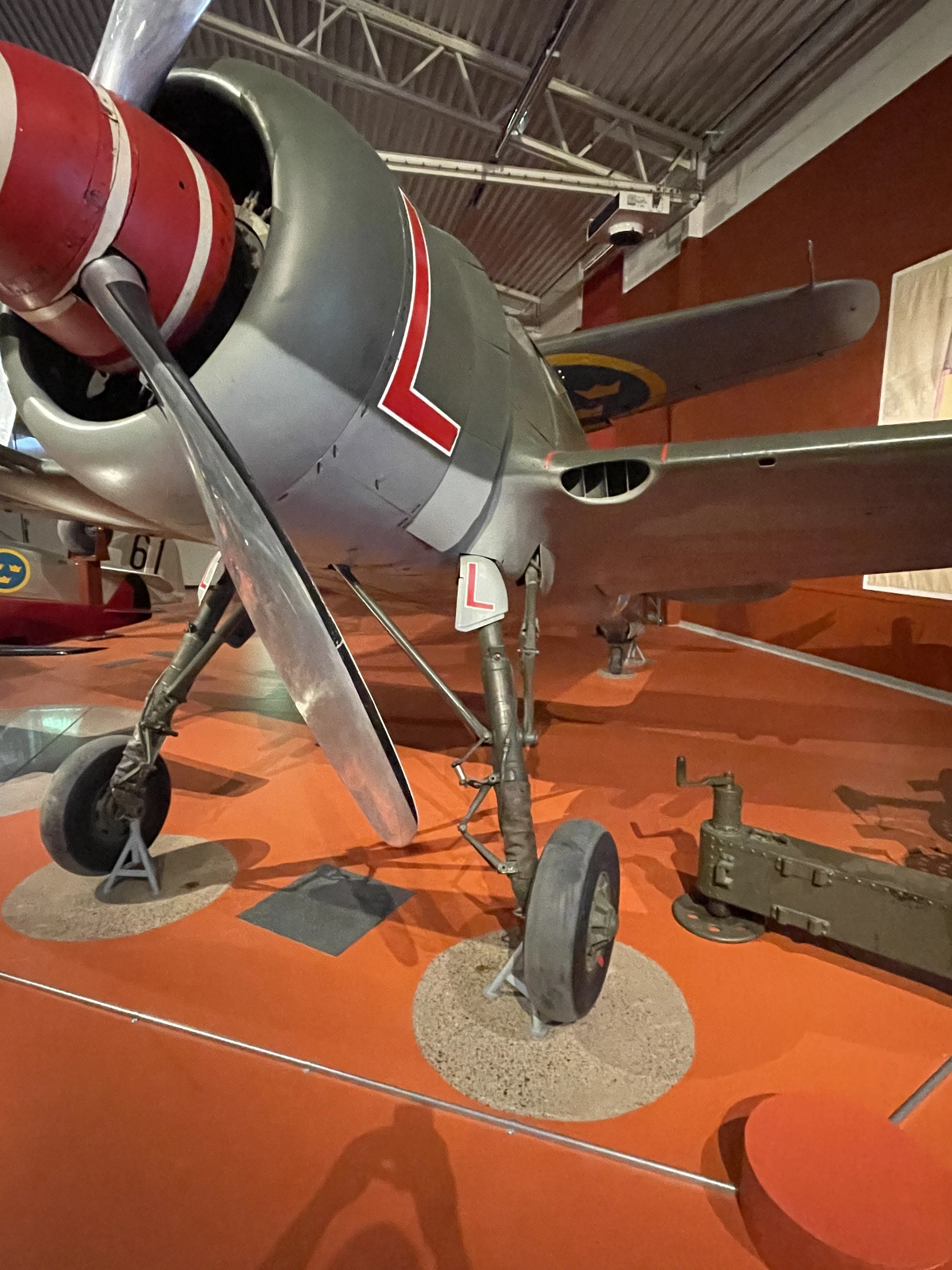
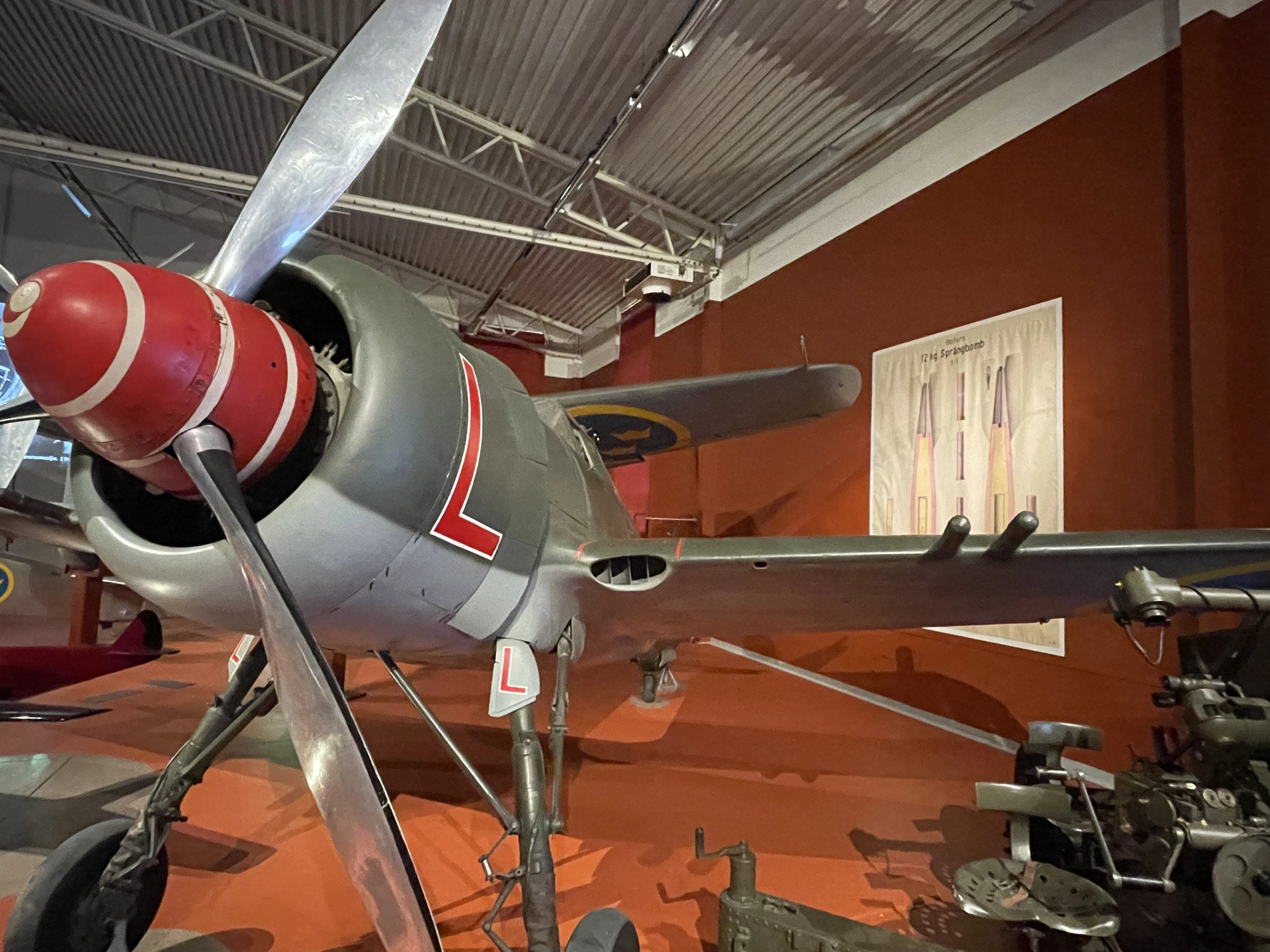
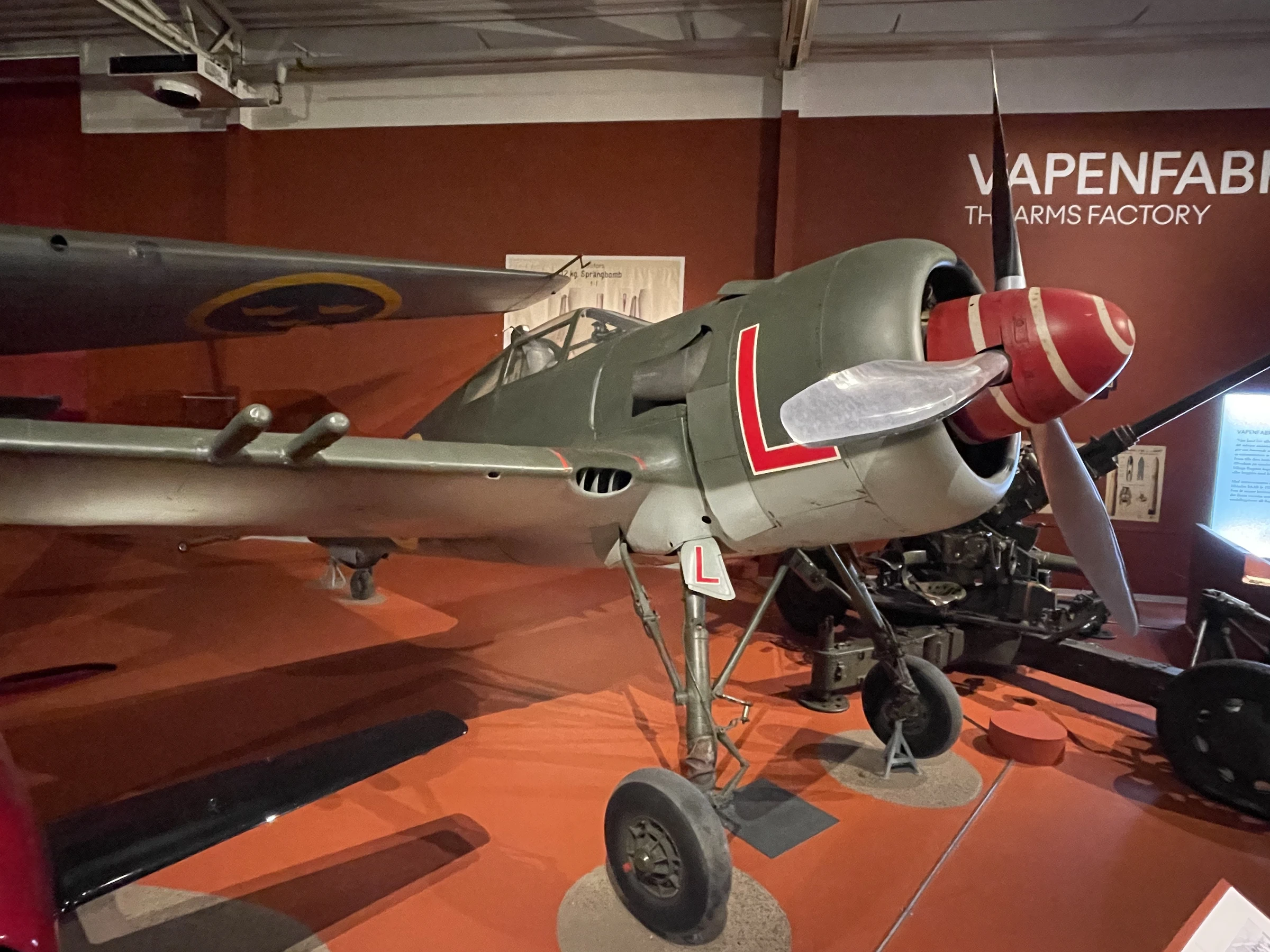
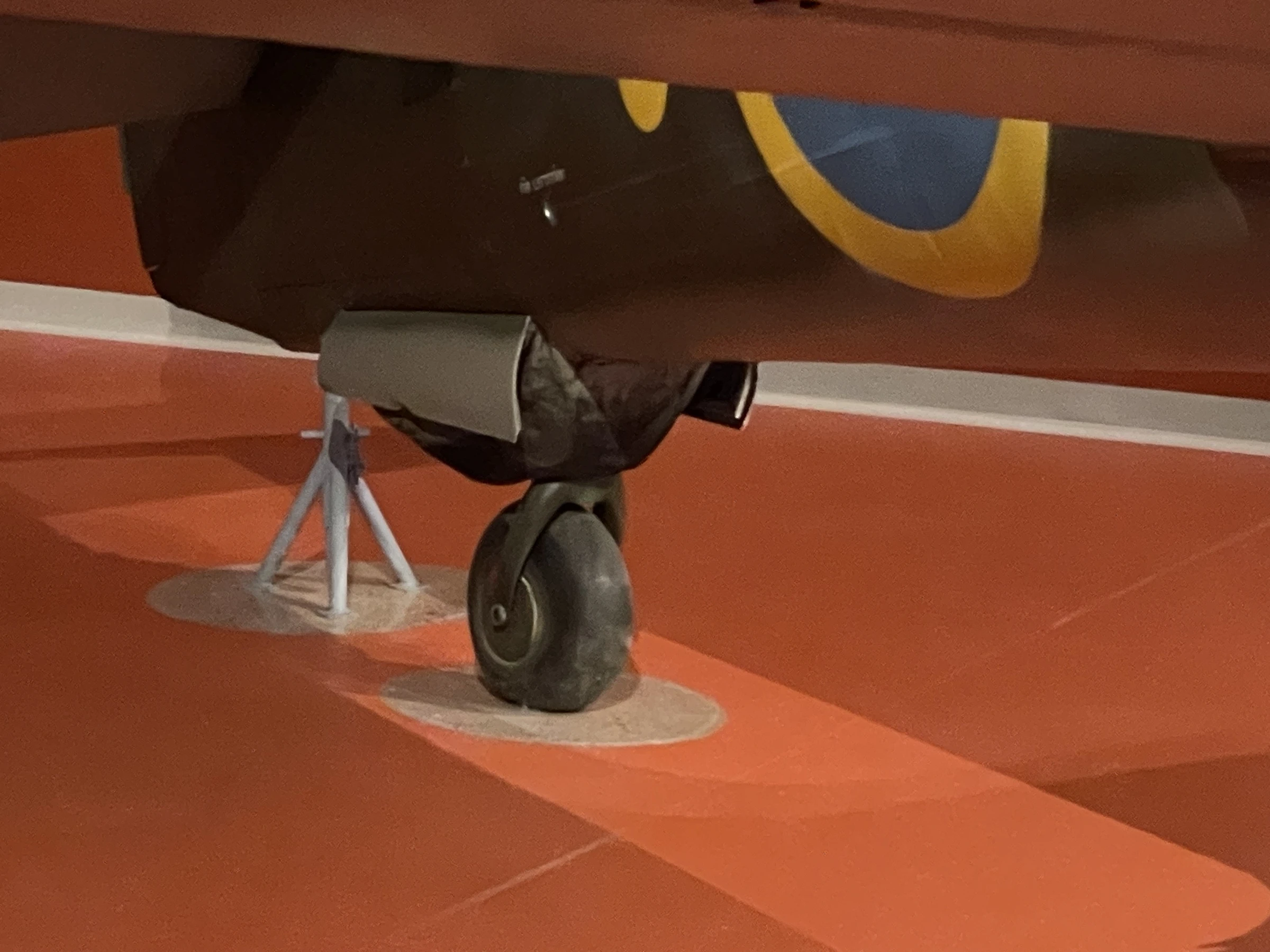
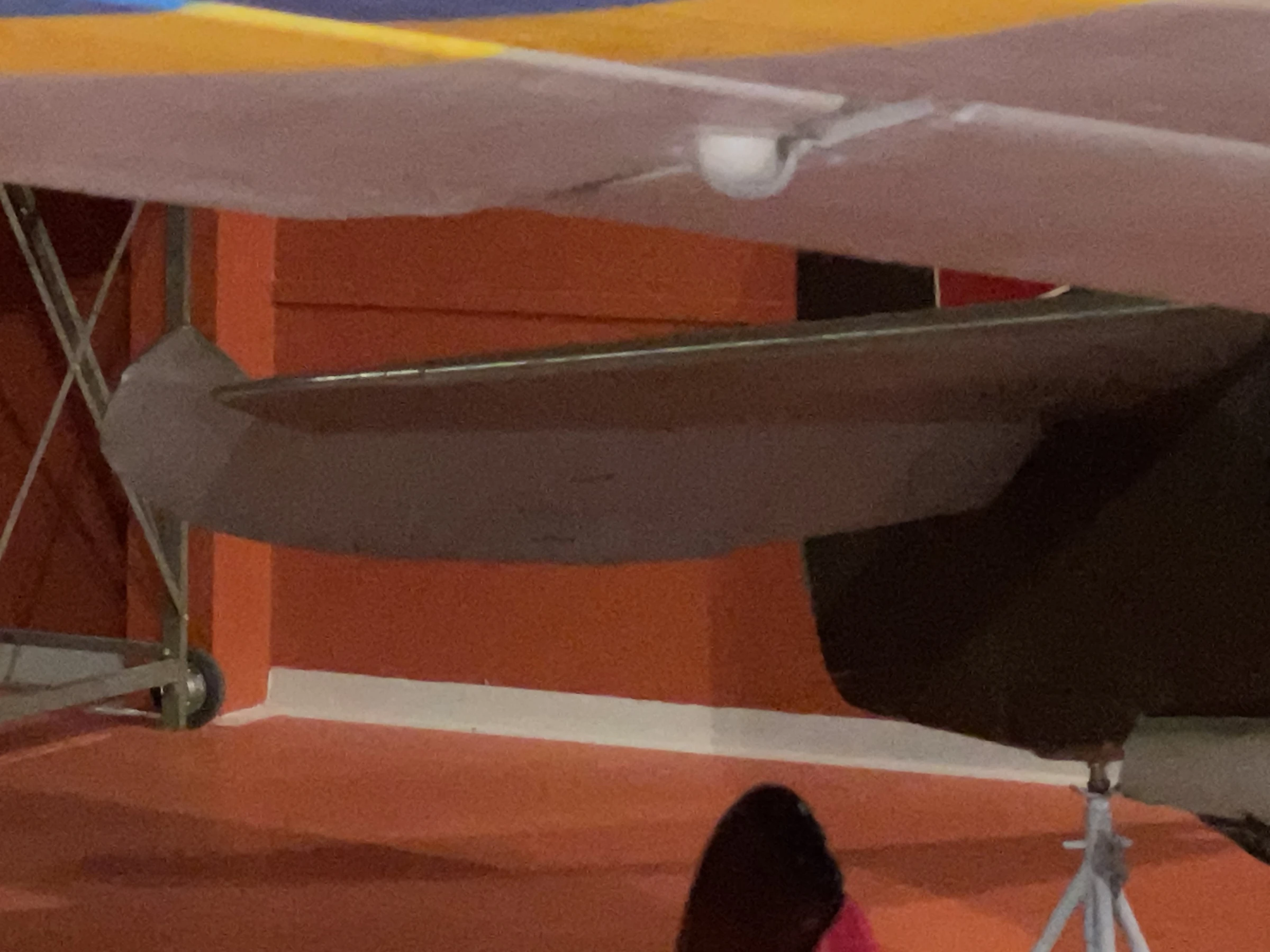
These walk-around photos were taken at Flygvapenmuseum at Malmen outside Linköping in 2017 and 2019. They show a FFVS J 22B, individual number 22280 — one of the most remarkable fighter aircraft stories of the Second World War, and one of very few combat aircraft to be designed and built from scratch during wartime as a direct response to a crisis. When the United States imposed an arms embargo in 1940, the Swedish Air Force suddenly found itself unable to receive the hundreds of American fighters it had ordered. With SAAB running at full capacity on bomber production, a brand new organisation was created for the sole purpose of building Sweden a fighter: Kungliga Flygförvaltningens Flygverkstad i Stockholm, FFVS, under designer Bo Lundberg.
The constraints were severe — only domestic materials could be used, which meant a steel tube frame skinned in birch plywood, and the only available engine was the STW C-3, a Swedish unlicensed copy of the Pratt & Whitney R-1830 Twin Wasp. Despite this, the result was a capable and well-liked fighter. Pilots praised its handling and responsiveness, and it could hold its own against the P-51 Mustang below 4,000 metres. The J 22B was the improved version, replacing the mixed armament of the J 22A with four 13.2 mm akan m/39A automatic cannons. A total of 198 J 22s were built between 1942 and 1946, serving until 1952. Individual 22280, built in 1945, served at F 9 Säve, F 8 Barkarby and finally F 3 Malmslätt, and is displayed at Flygvapenmuseum in F 3 colours with the code red L.