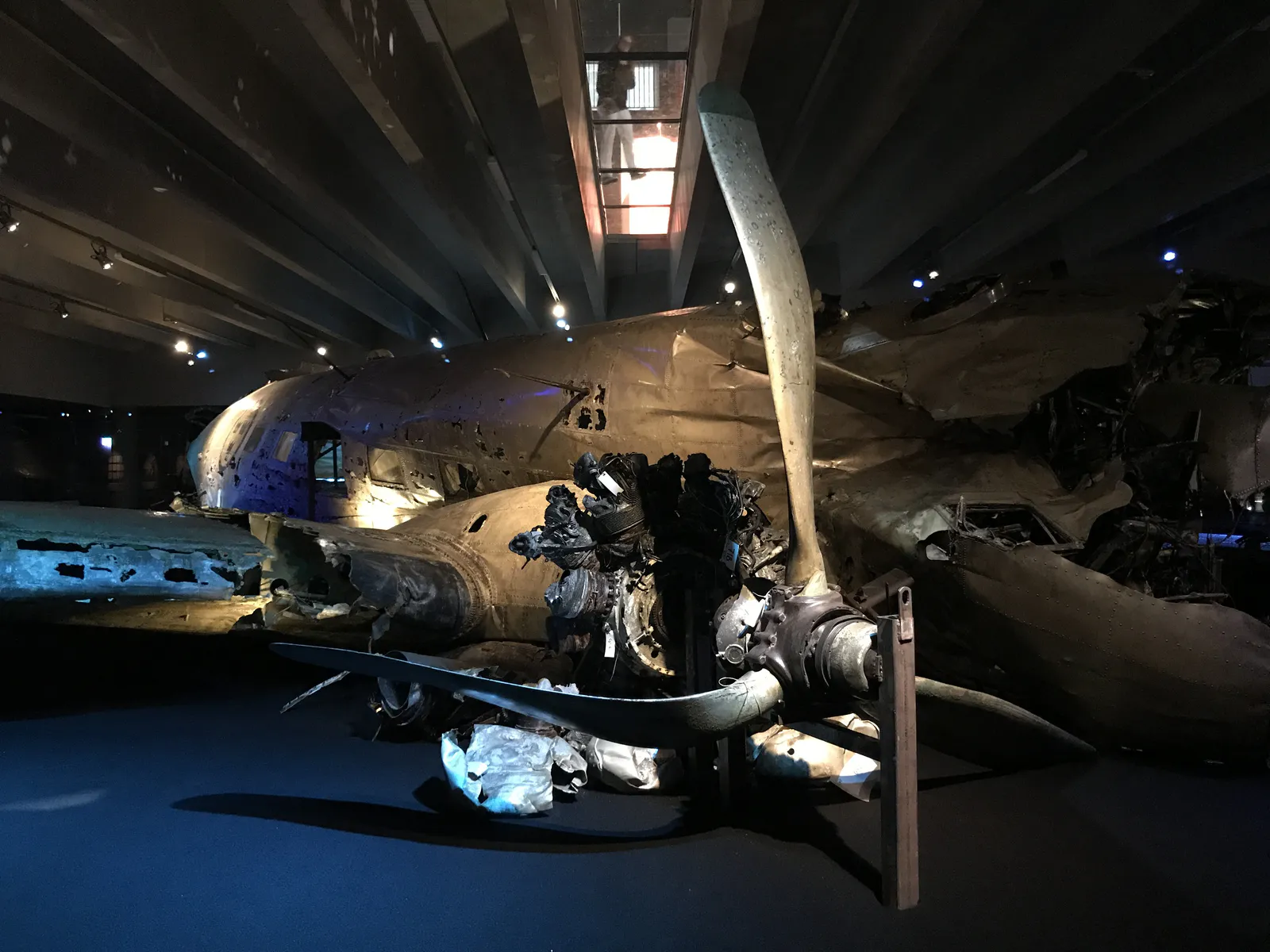
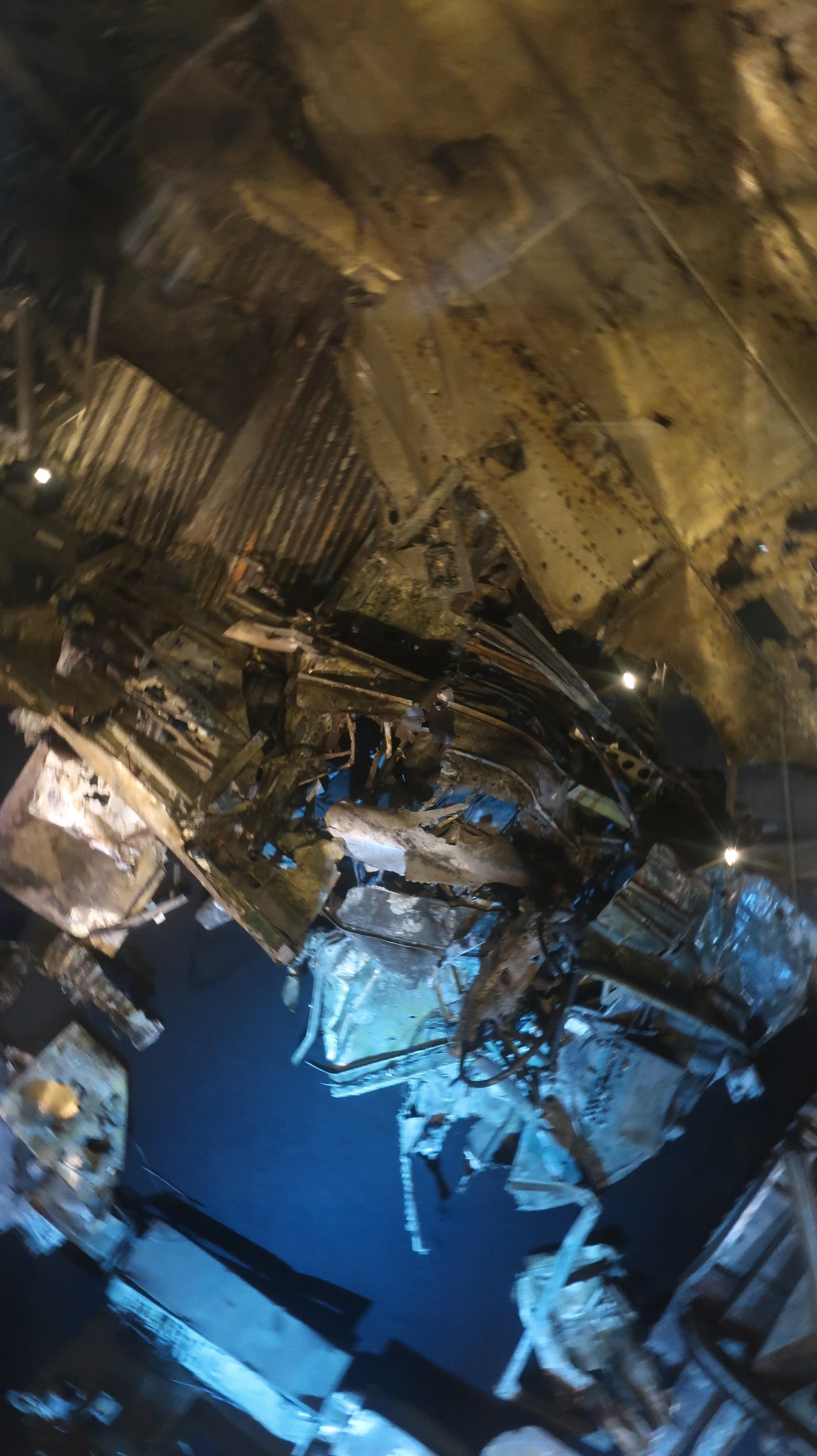
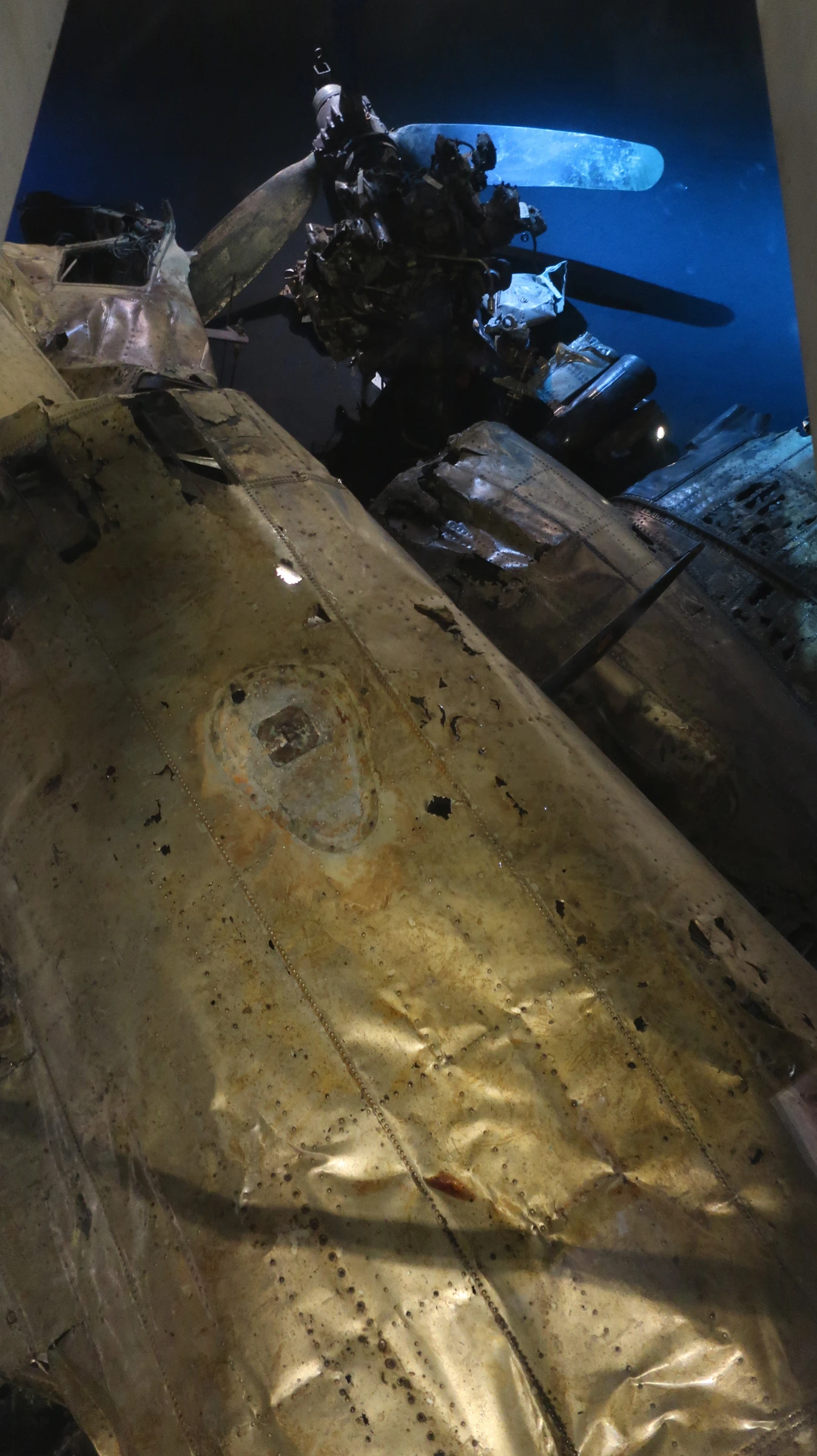
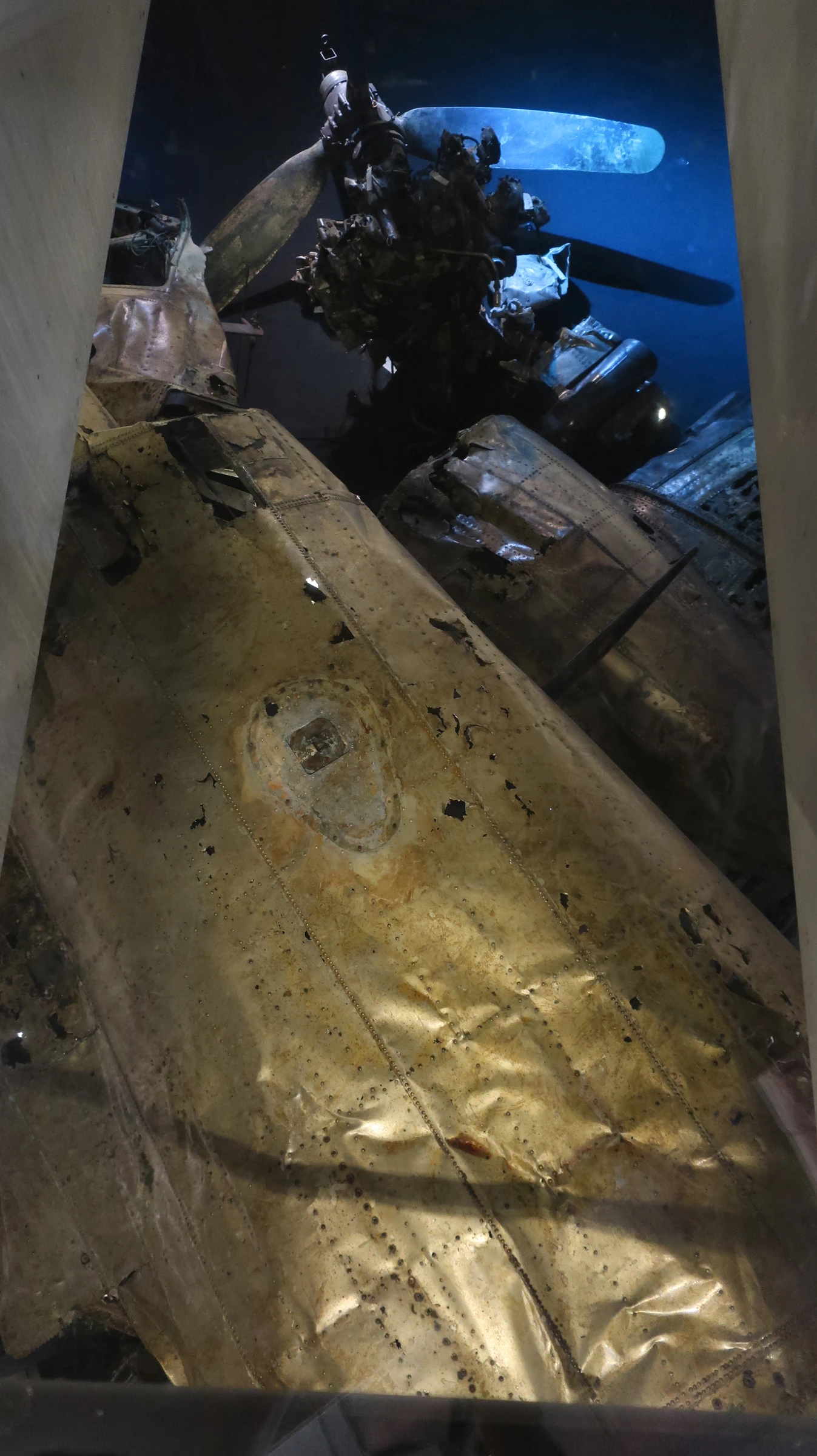
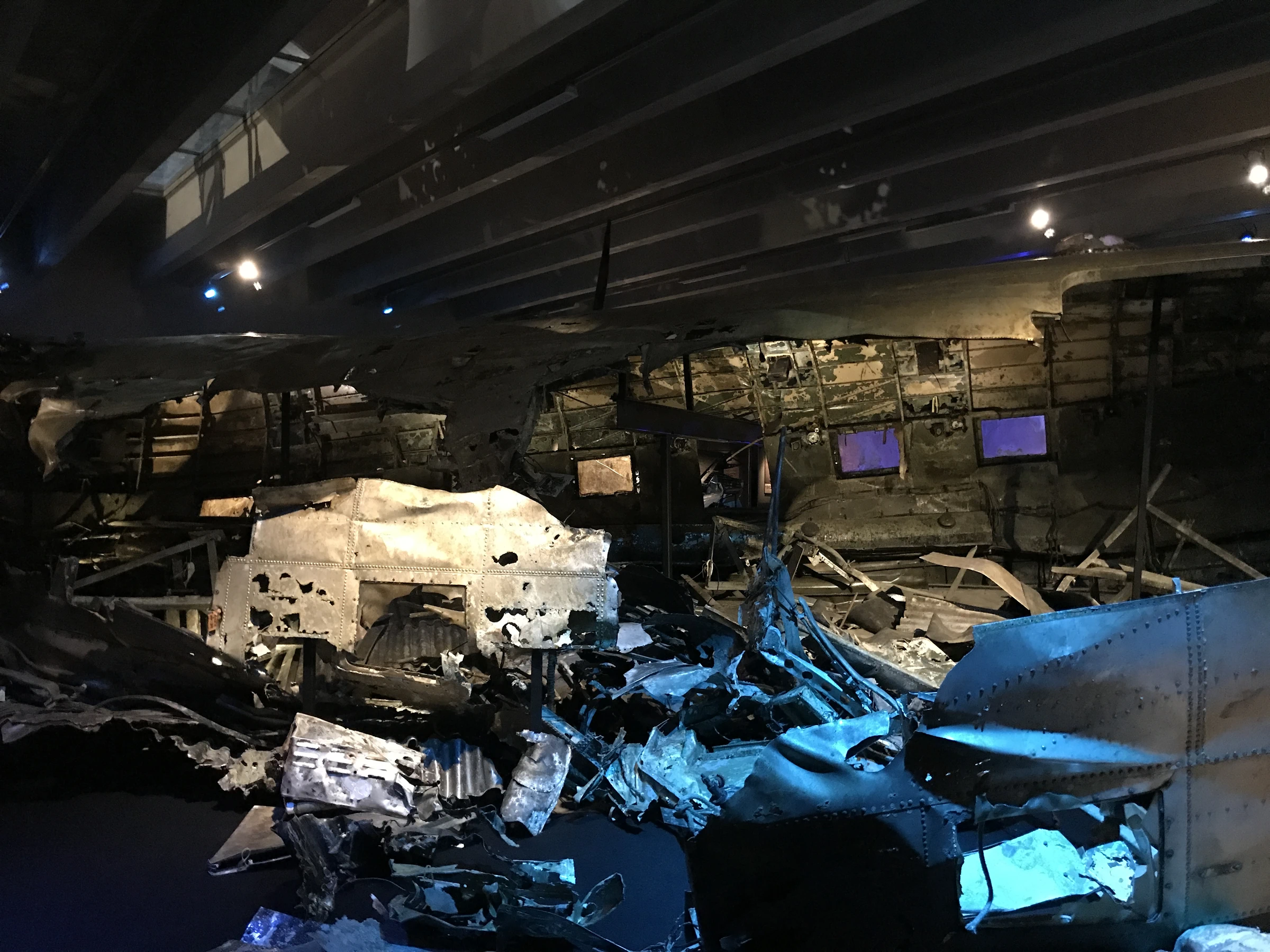
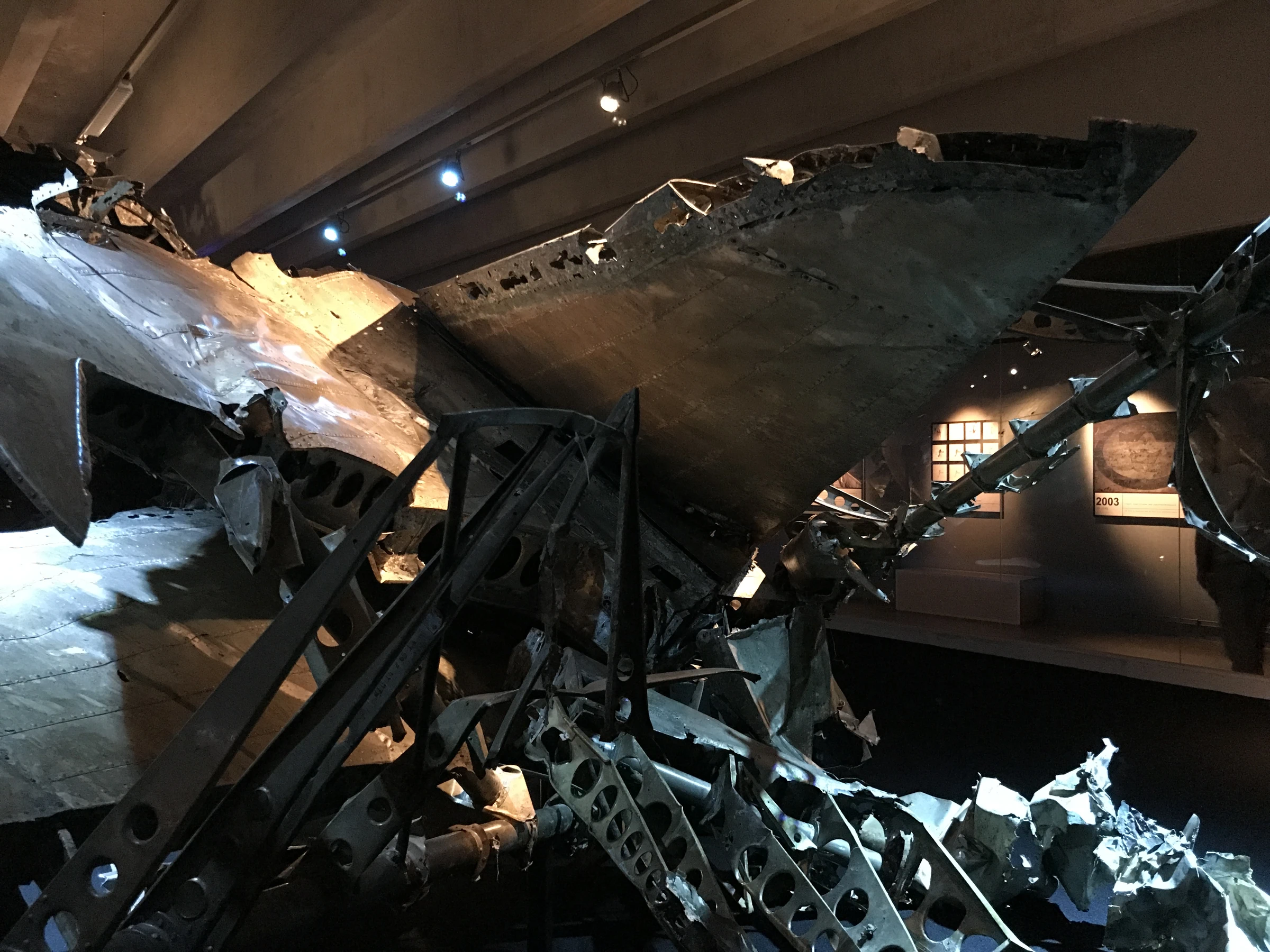
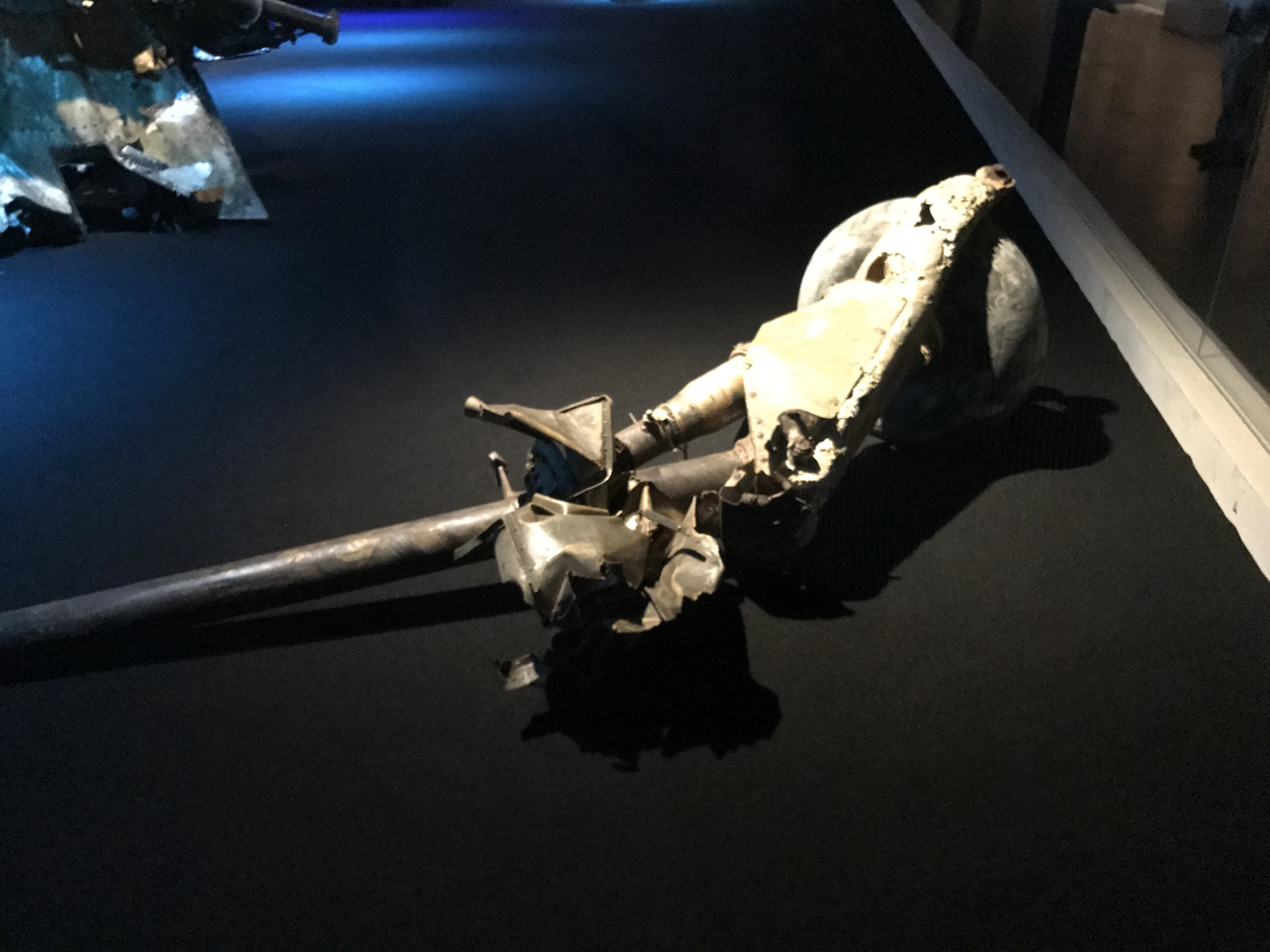
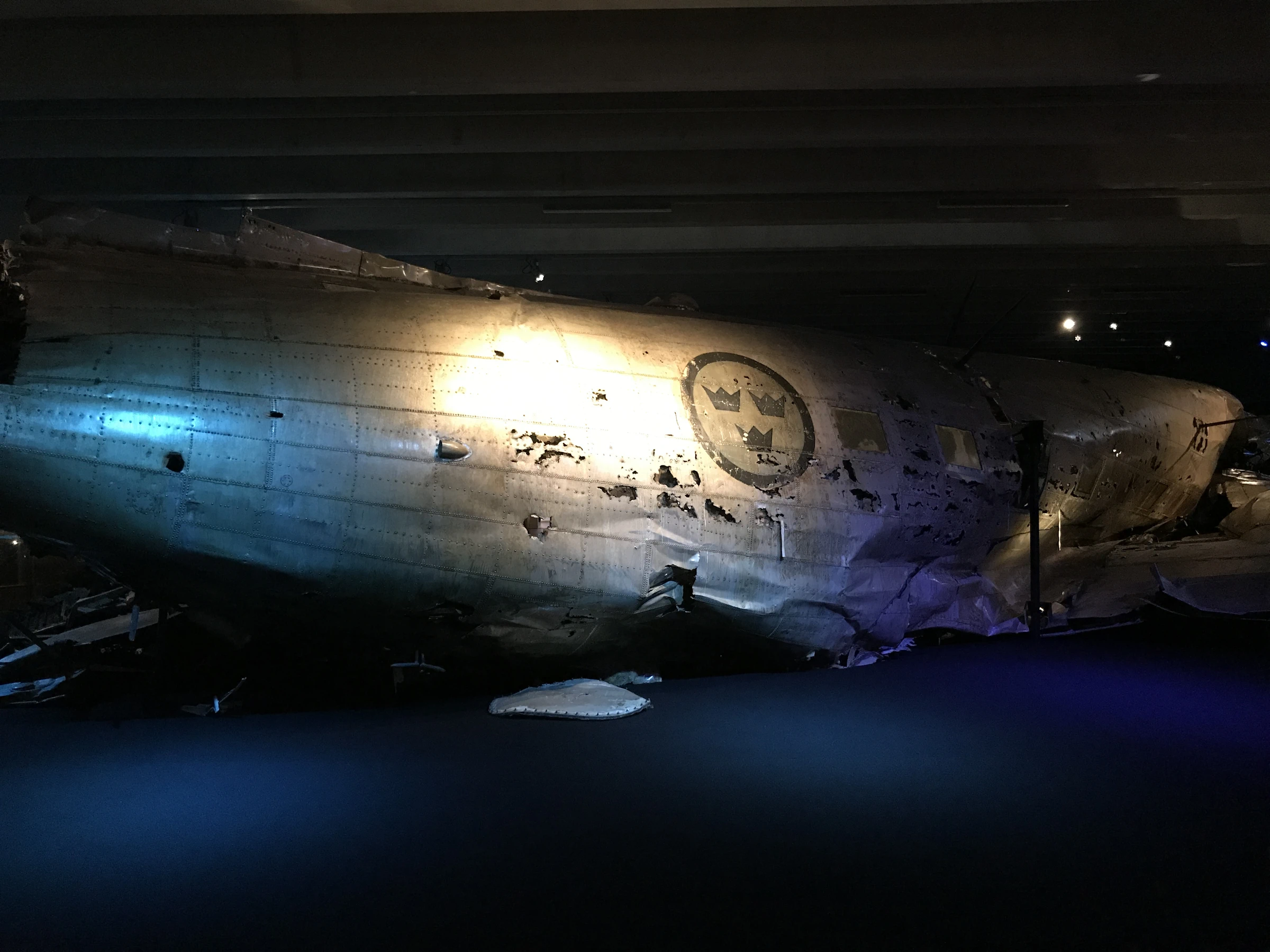
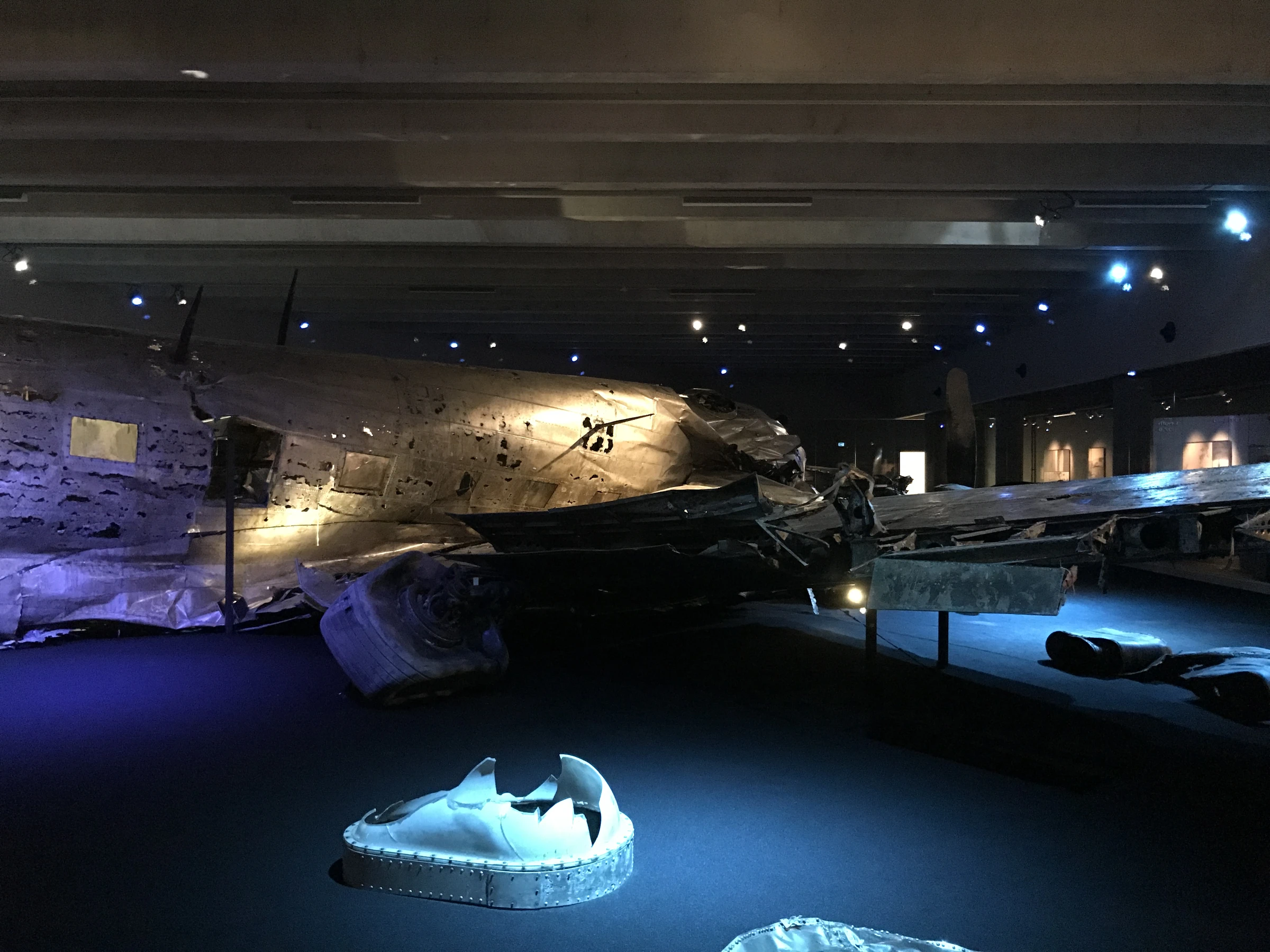
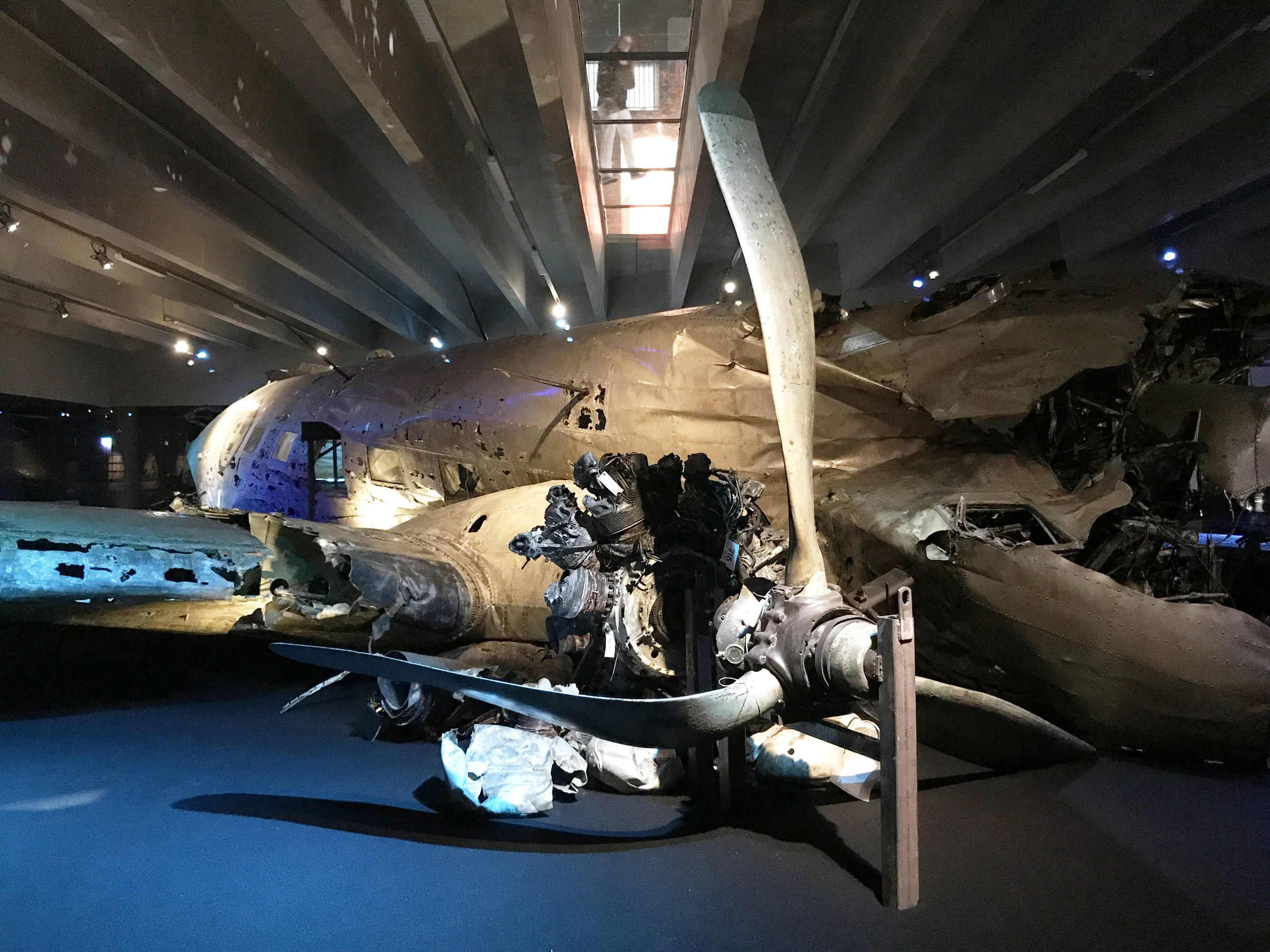
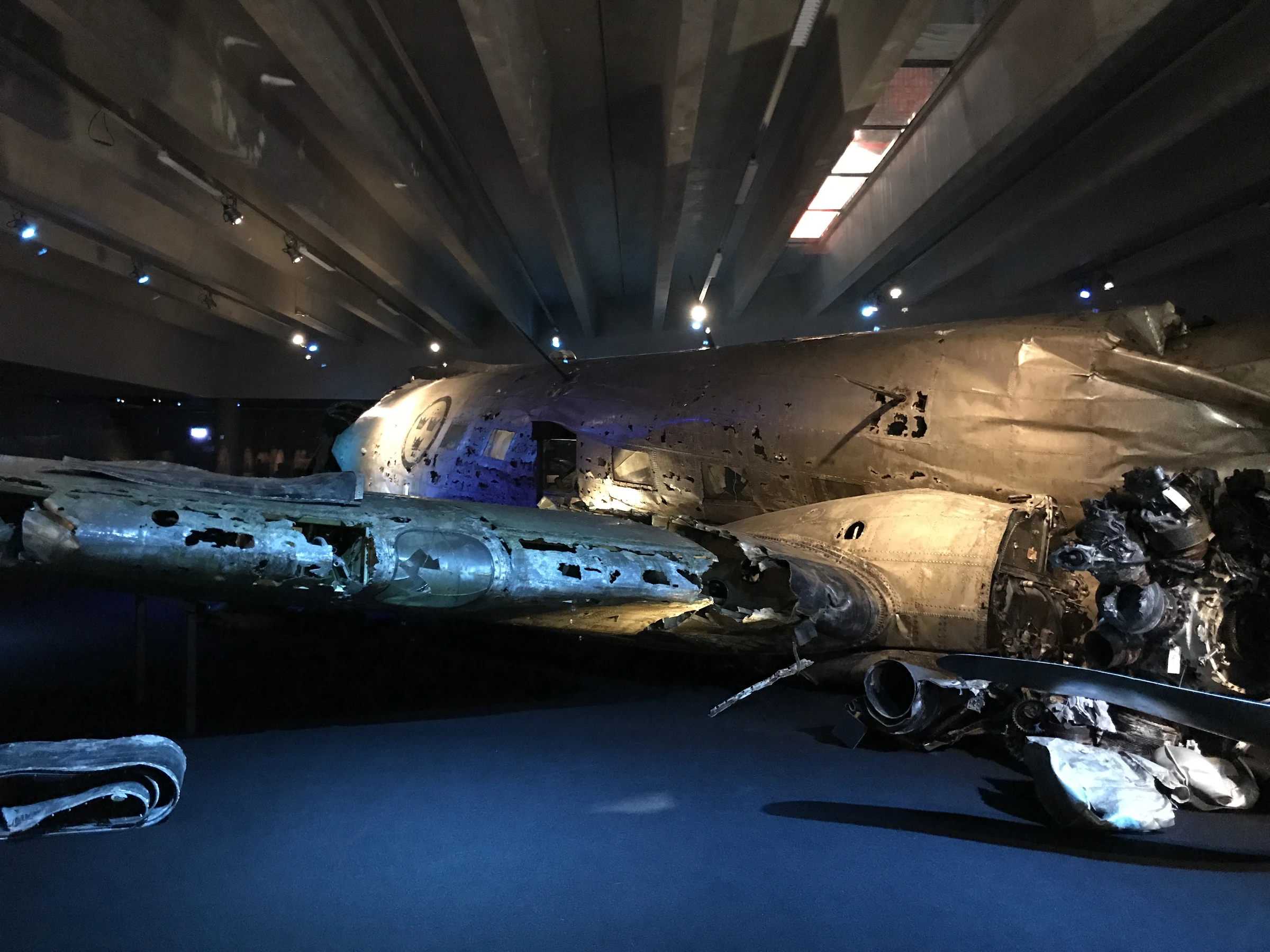
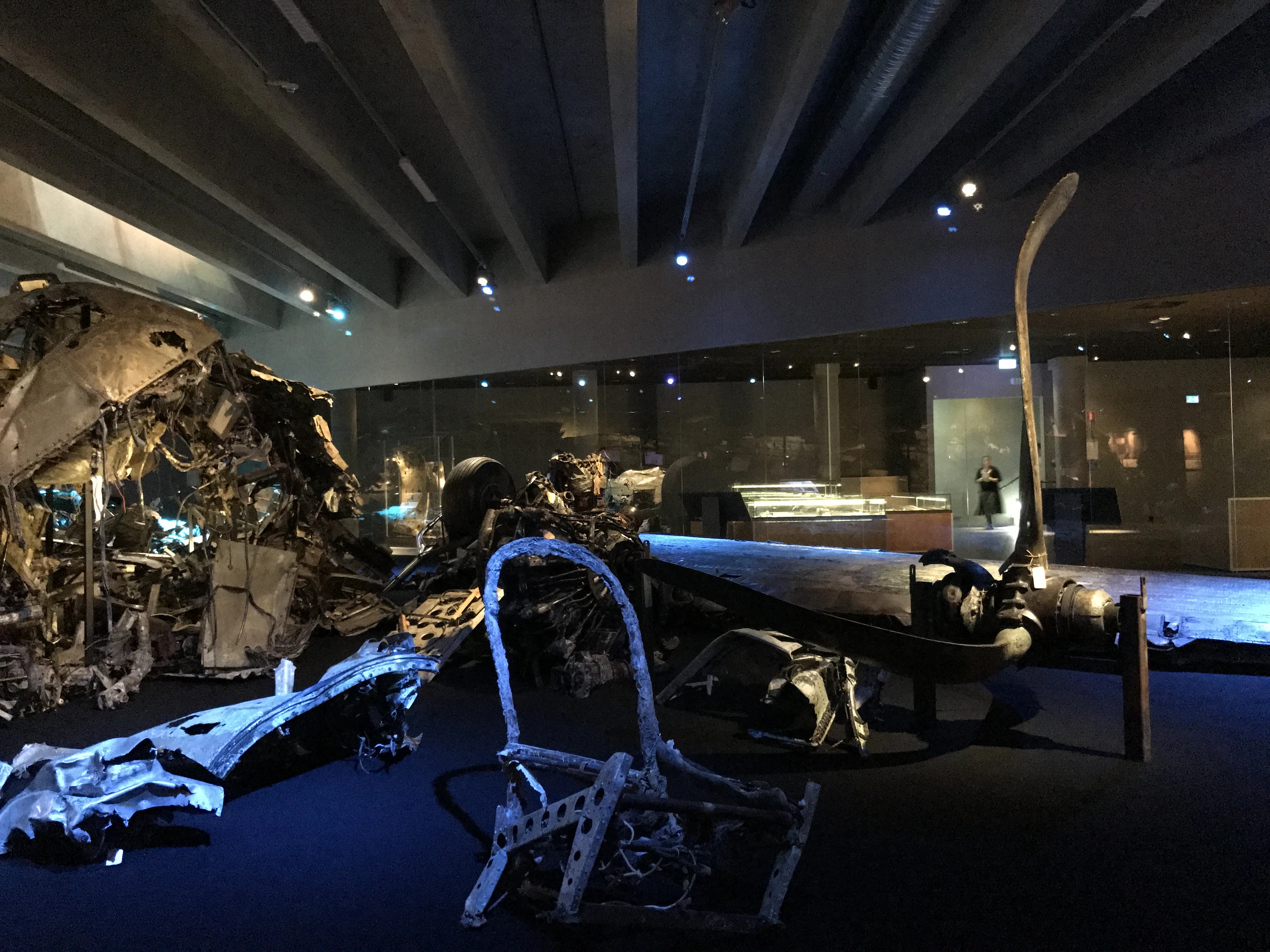
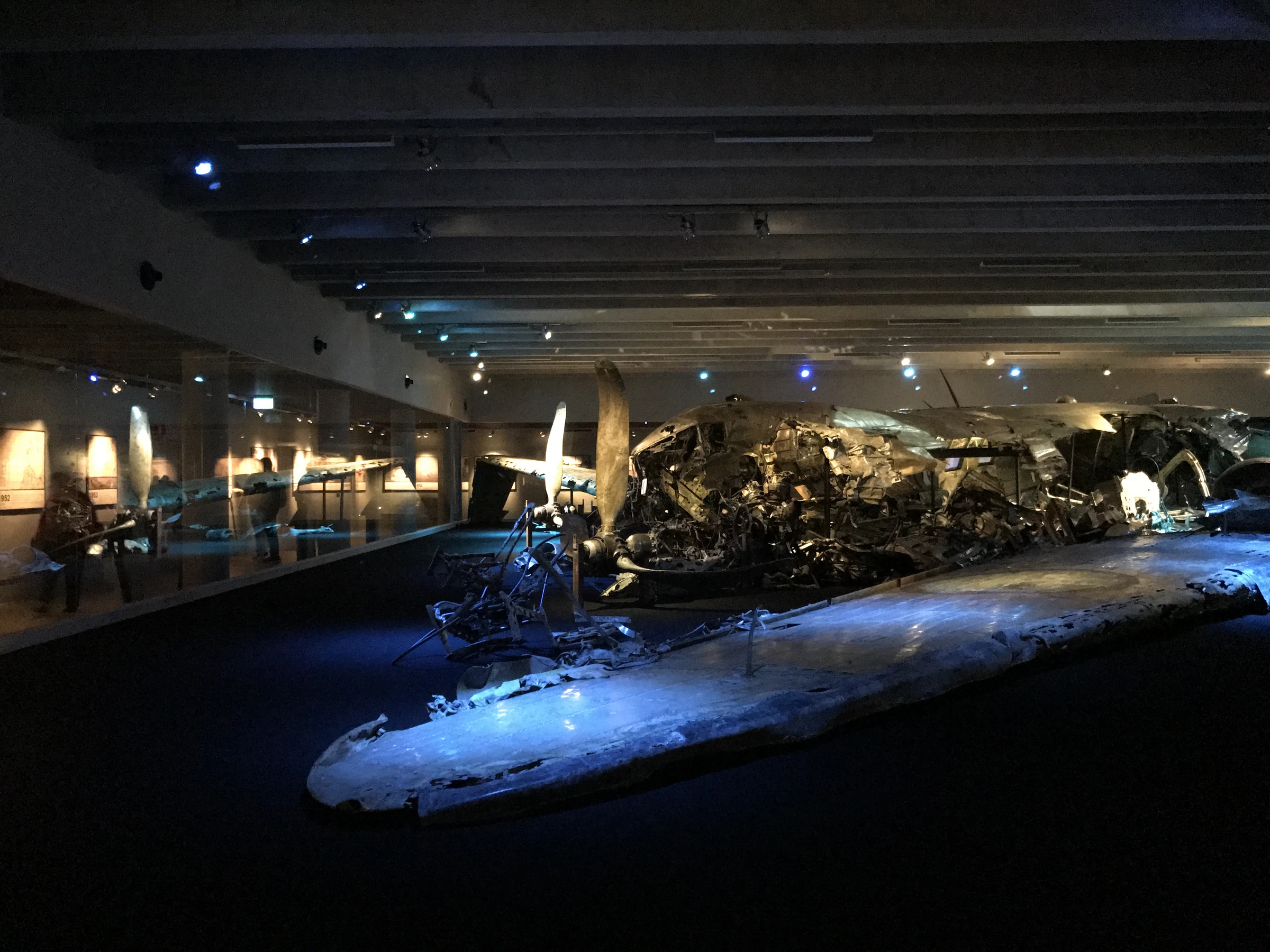
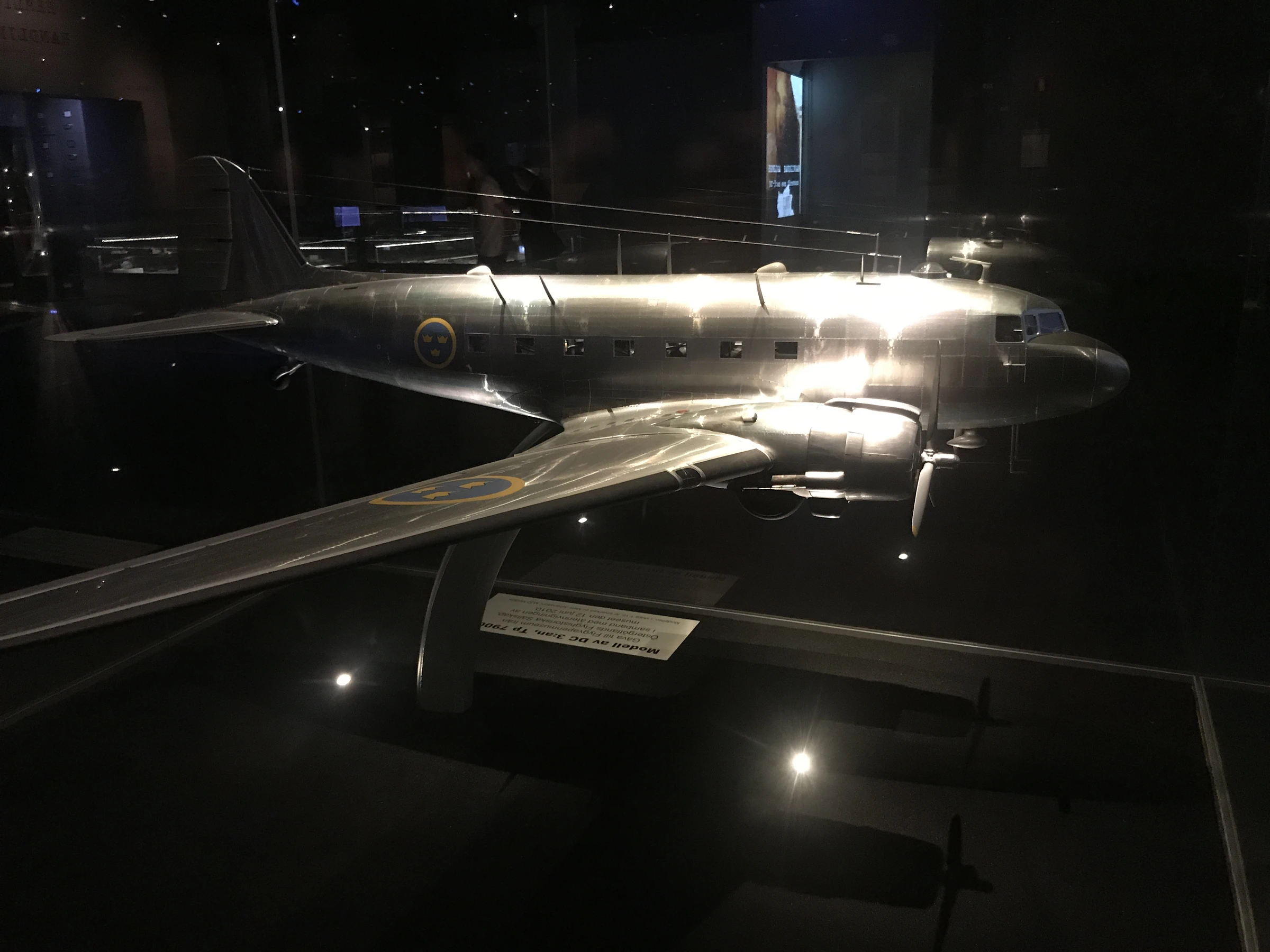
These walk-around photos were taken at Flygvapenmuseum at Malmen outside Linköping in 2017 and 2019, where the wreck is displayed in a dedicated climate-controlled hall. They show the remains of a Douglas C-47A Skytrain, designated Tp 79 in Swedish service and converted for signals intelligence, individual number 79001 — known by its nickname Hugin, after one of Odin's ravens — and one of the most historically significant objects in any aviation museum in the world.
Built in 1943 with the USAAF serial 42-5694, the aircraft served in North Africa and Europe during the Second World War before being civilregistered as SE-APZ in 1946. The Swedish Air Force acquired it in 1949 and converted it into a SIGINT platform for the National Defence Radio Establishment (FRA), equipping it with listening and signals interception equipment supplied in part by the CIA. Together with its sister aircraft 79002 — named Munin — it was based at F 8 Barkarby and operated without fin code or wing markings, its true purpose concealed behind an official cover story of navigation training flights.
On 13 June 1952, Hugin disappeared east of Gotska Sandön over the Baltic Sea. All eight on board were lost — three military personnel and five civilian FRA operators. Three days later a Catalina sent to search for survivors was itself attacked and forced down. The Soviet Union denied involvement for nearly four decades; it was only after the dissolution of the USSR that the shootdown was officially confirmed. Bullet holes in the recovered wreck showed it had been shot down by a MiG-15bis, and one of the cockpit clocks had stopped at 11:28:40.
The wreck was located on the Baltic seabed in 2003 and salvaged in March 2004 using freeze-dredging — 200 cubic metres of surrounding sediment were frozen solid and lifted together with the wreck. After forensic investigation at Muskö Naval Base, the remains were transferred to Flygvapenmuseum where they went on display in 2009. The remains of four of the eight crew members were identified through DNA analysis.These walk-around photos were taken at Flygvapenmuseum at Malmen outside Linköping in 2017 and 2019, where the wreck is displayed in a dedicated climate-controlled hall. They show the remains of a Douglas C-47A Skytrain, designated Tp 79 in Swedish service and converted for signals intelligence, individual number 79001 — known by its nickname Hugin, after one of Odin's ravens — and one of the most historically significant objects in any aviation museum in the world.
Built in 1943 with the USAAF serial 42-5694, the aircraft served in North Africa and Europe during the Second World War before being civilregistered as SE-APZ in 1946. The Swedish Air Force acquired it in 1949 and converted it into a SIGINT platform for the National Defence Radio Establishment (FRA), equipping it with listening and signals interception equipment supplied in part by the CIA. Together with its sister aircraft 79002 — named Munin — it was based at F 8 Barkarby and operated without fin code or wing markings, its true purpose concealed behind an official cover story of navigation training flights.
On 13 June 1952, Hugin disappeared east of Gotska Sandön over the Baltic Sea. All eight on board were lost — three military personnel and five civilian FRA operators. Three days later a Catalina sent to search for survivors was itself attacked and forced down. The Soviet Union denied involvement for nearly four decades; it was only after the dissolution of the USSR that the shootdown was officially confirmed. Bullet holes in the recovered wreck showed it had been shot down by a MiG-15bis, and one of the cockpit clocks had stopped at 11:28:40.
The wreck was located on the Baltic seabed in 2003 and salvaged in March 2004 using freeze-dredging — 200 cubic metres of surrounding sediment were frozen solid and lifted together with the wreck. After forensic investigation at Muskö Naval Base, the remains were transferred to Flygvapenmuseum where they went on display in 2009. The remains of four of the eight crew members were identified through DNA analysis.