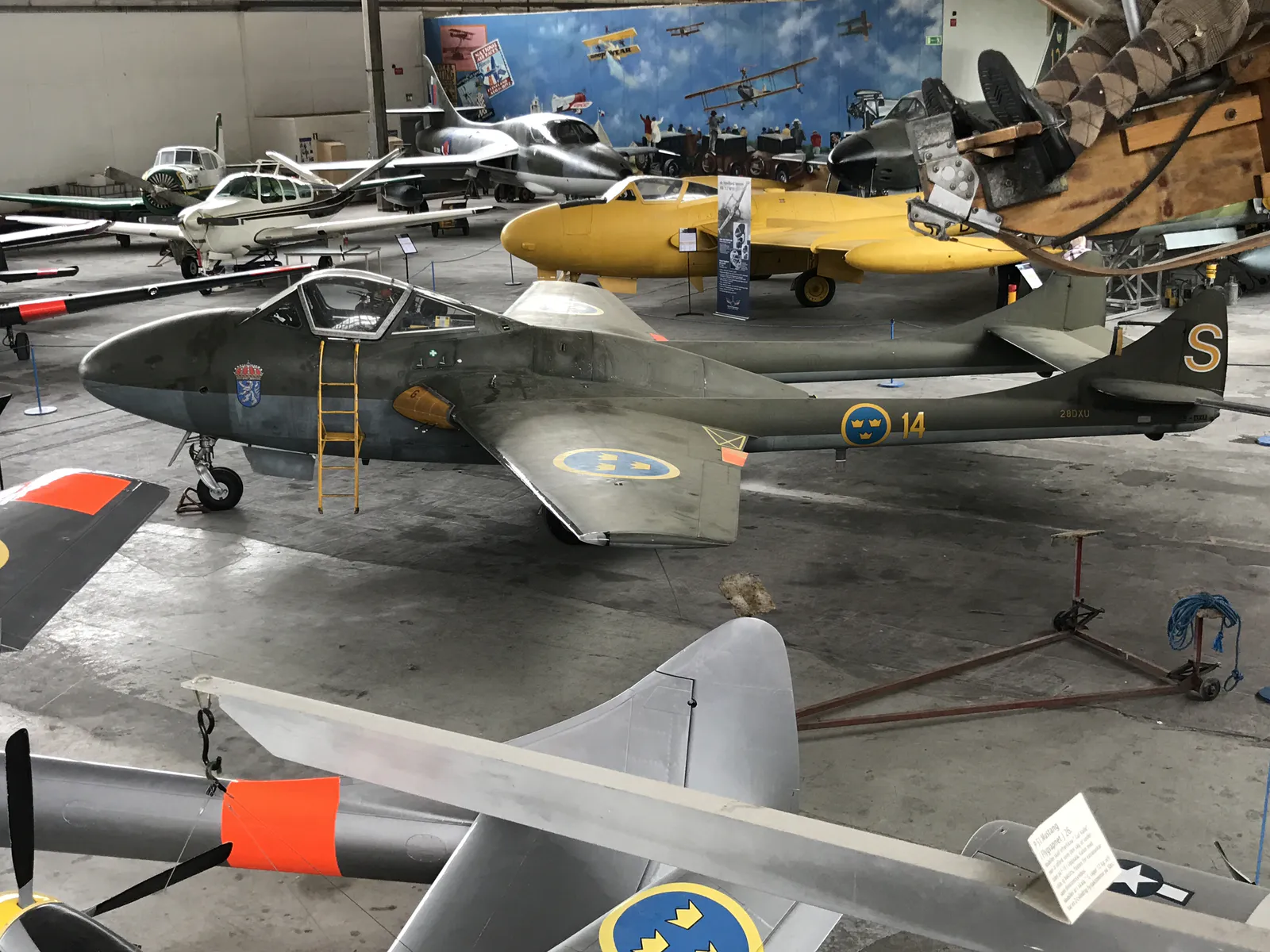
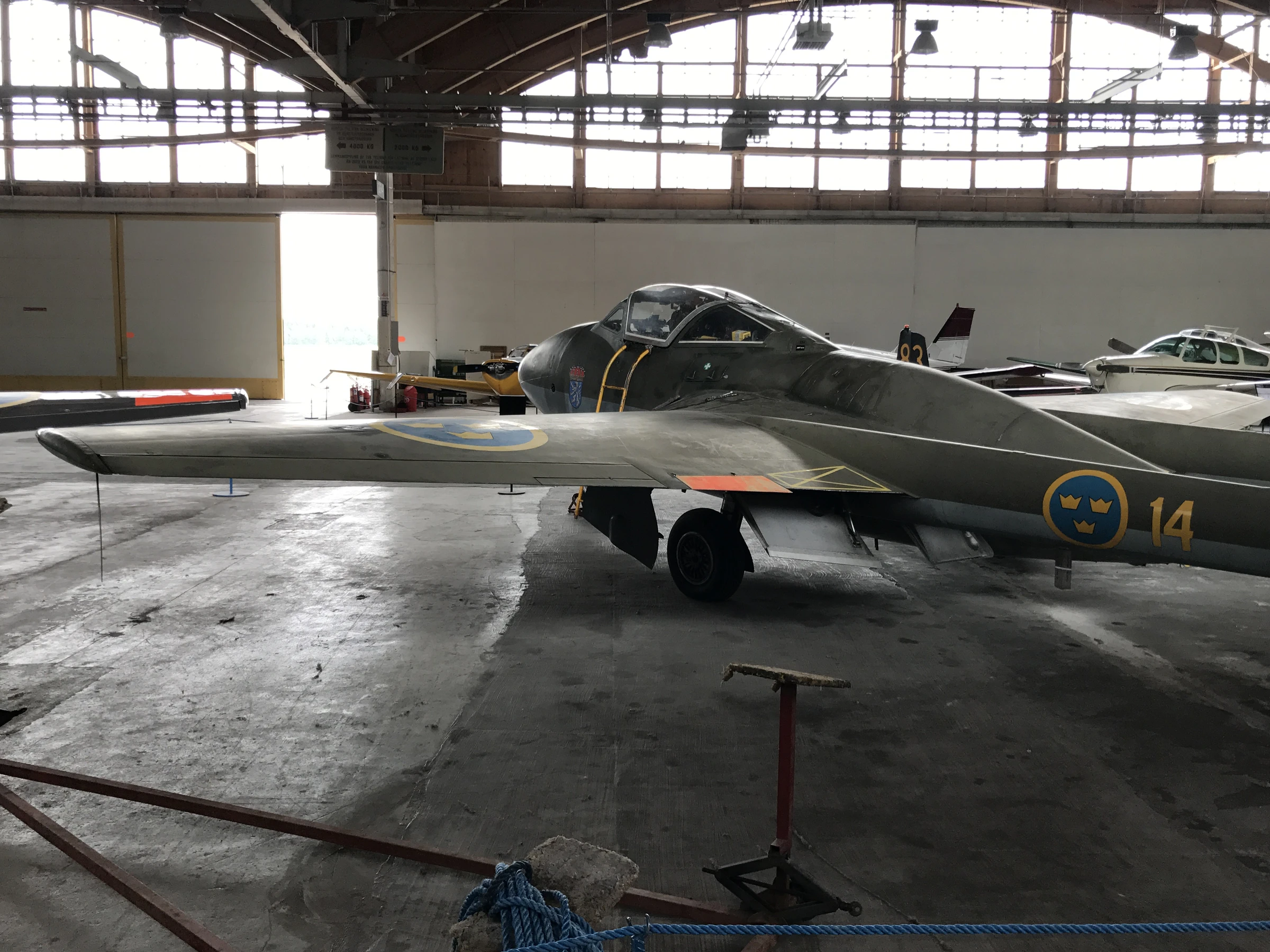
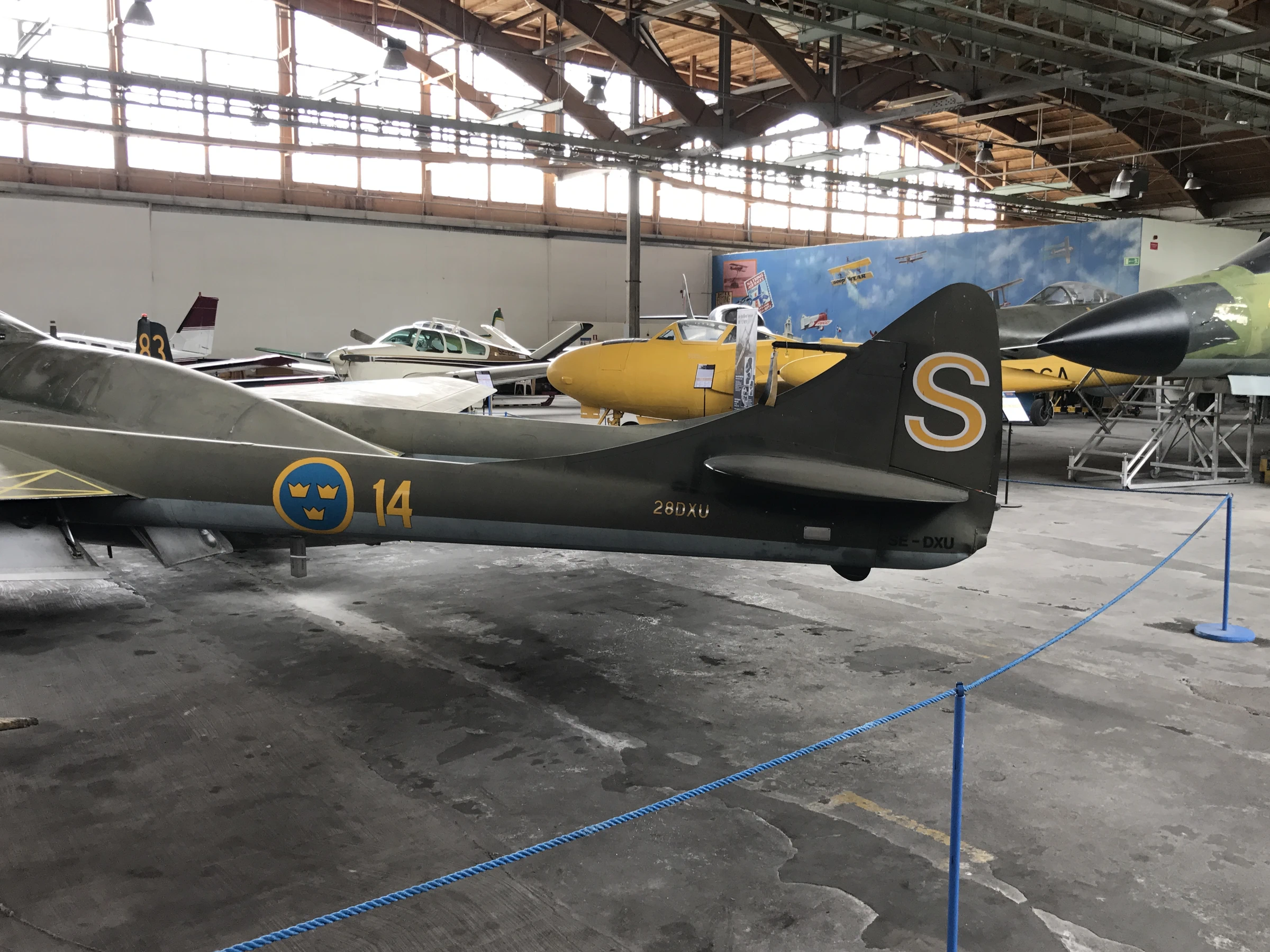
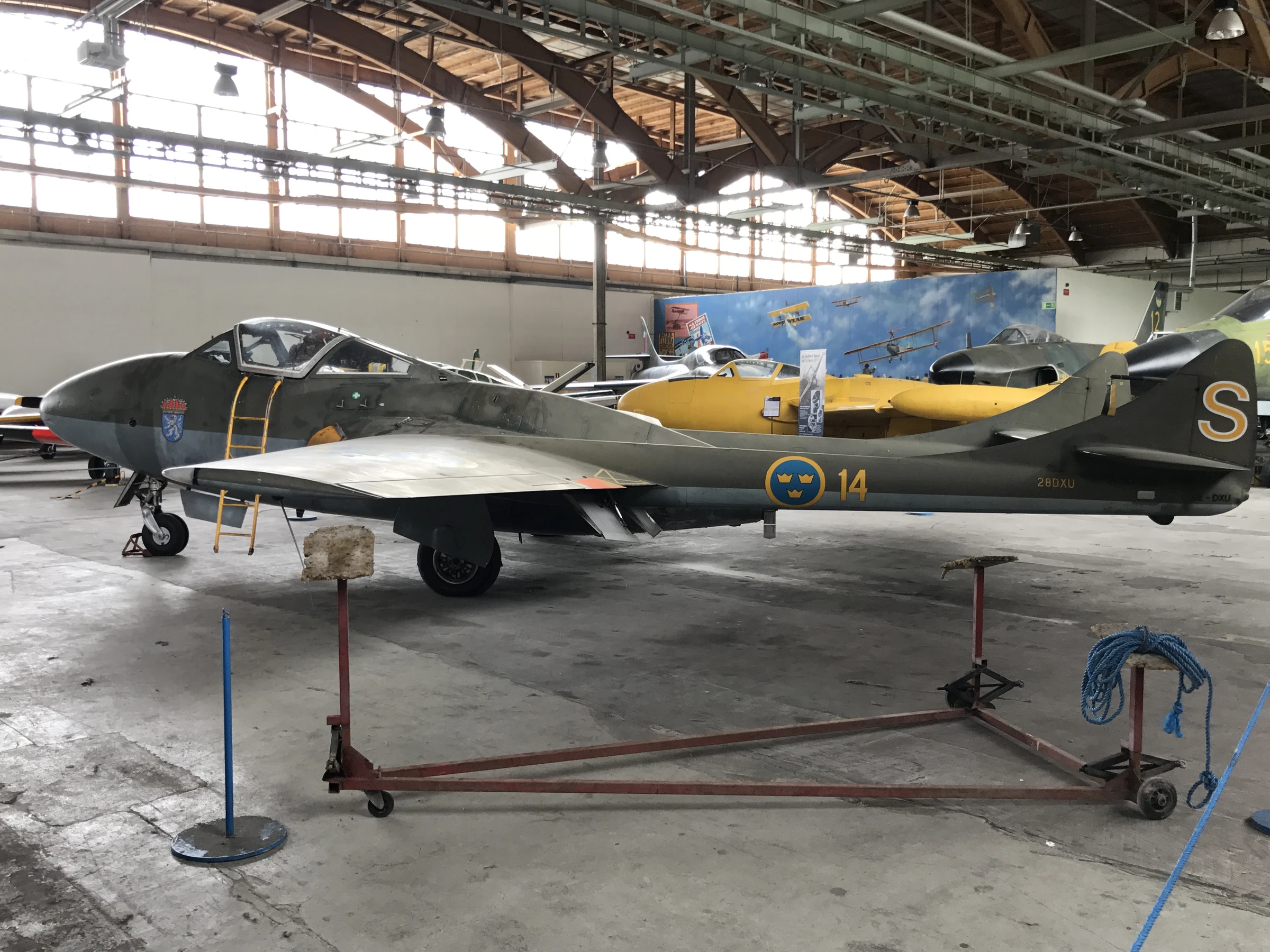
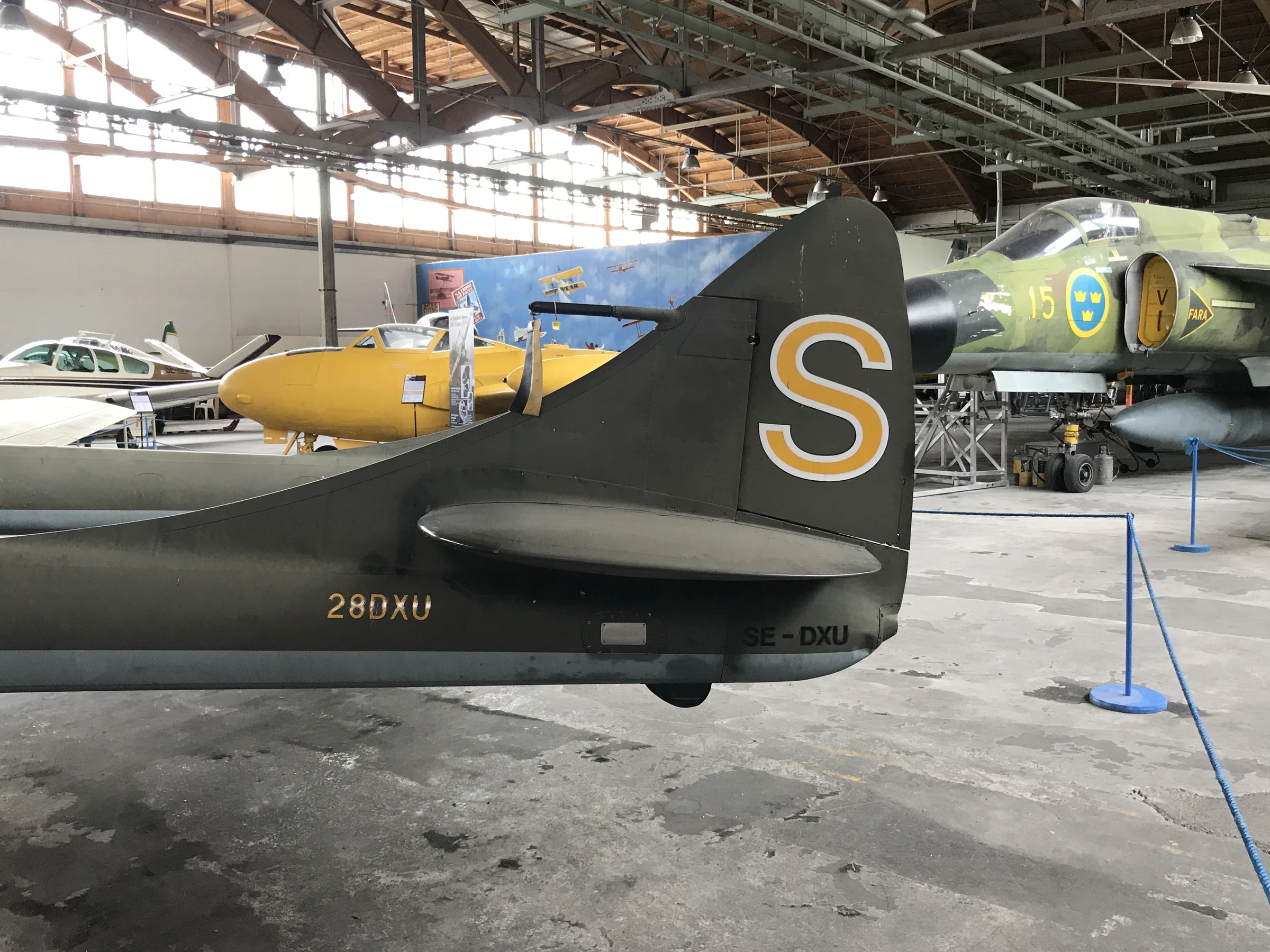
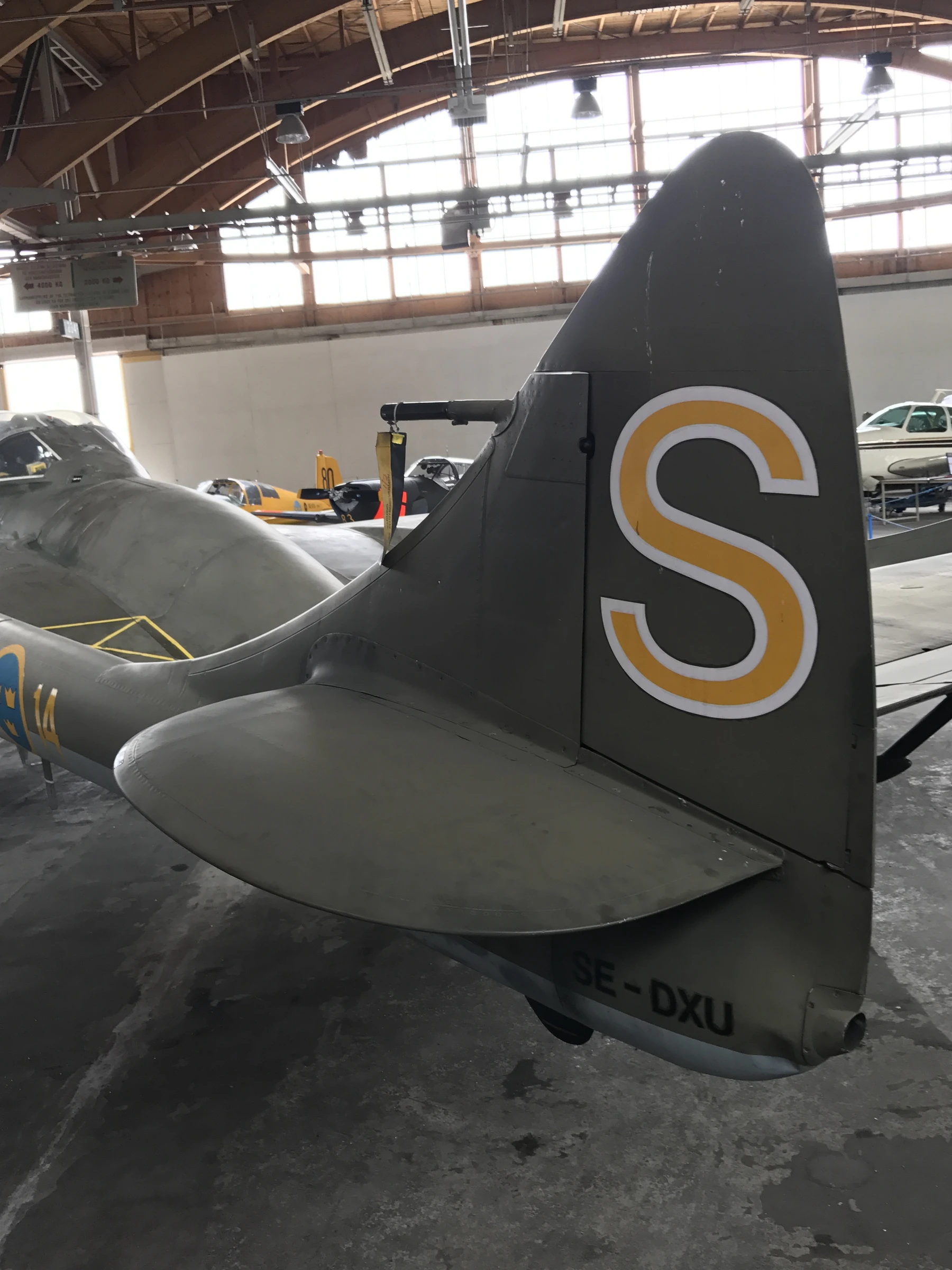
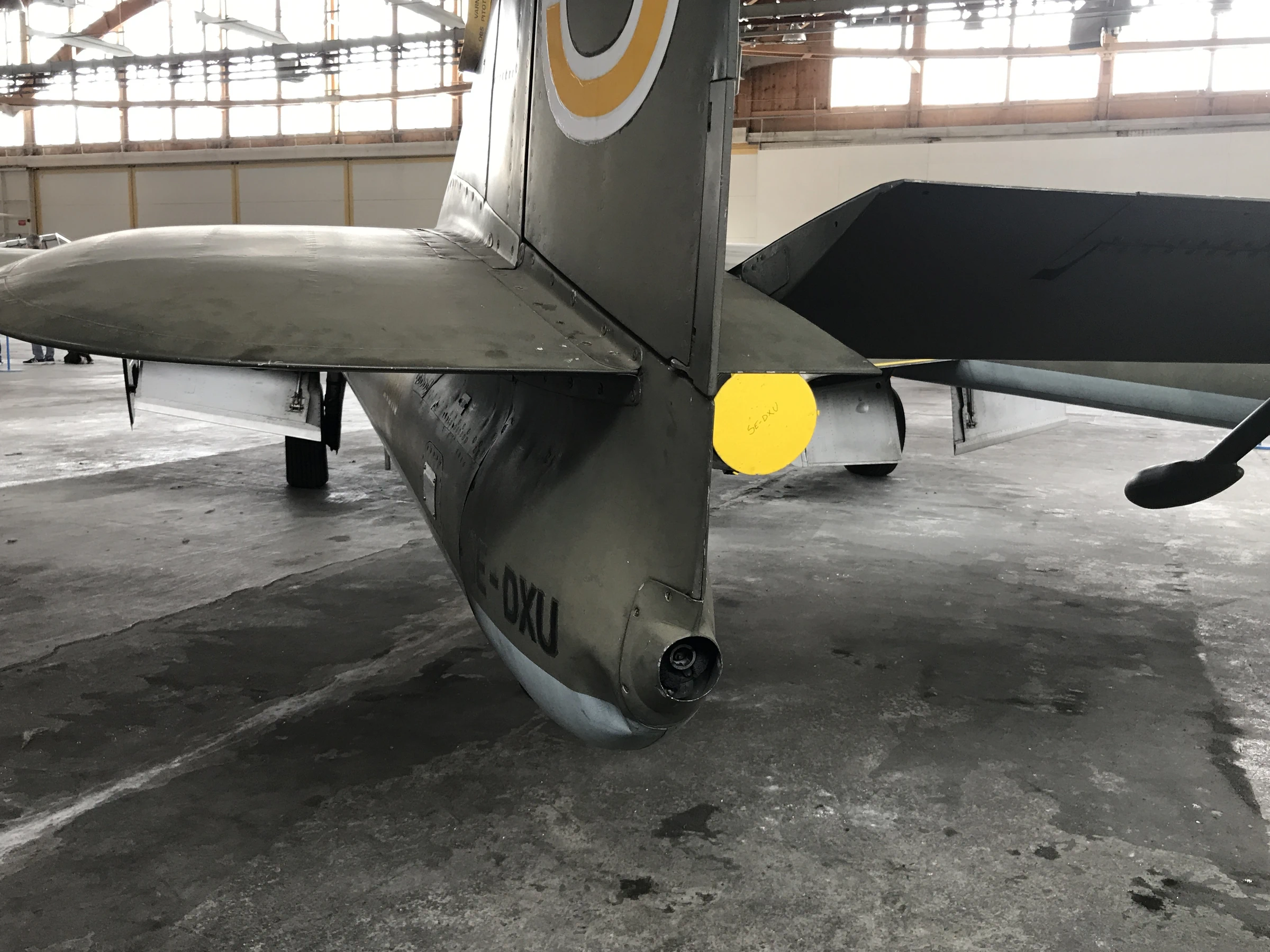
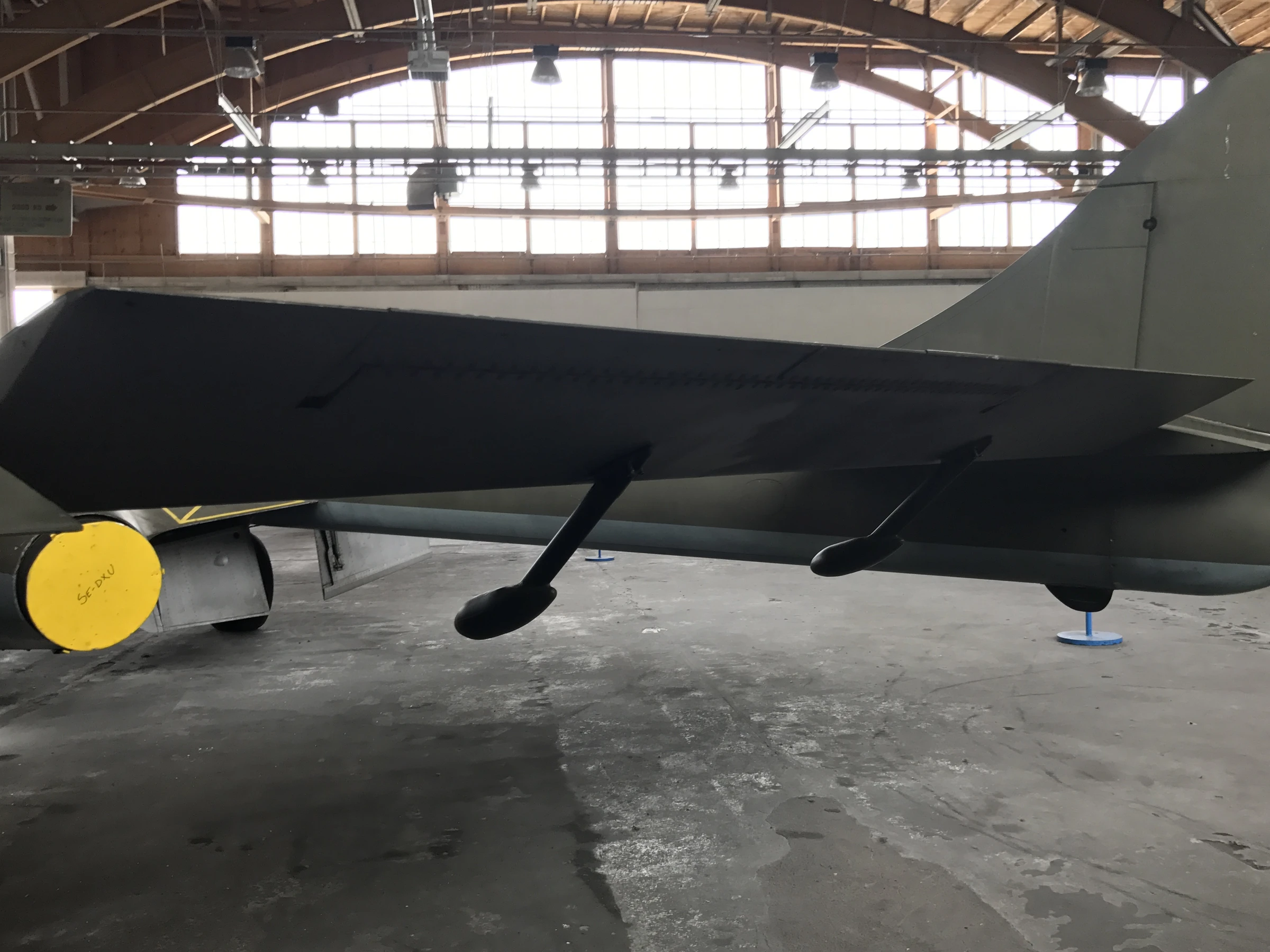
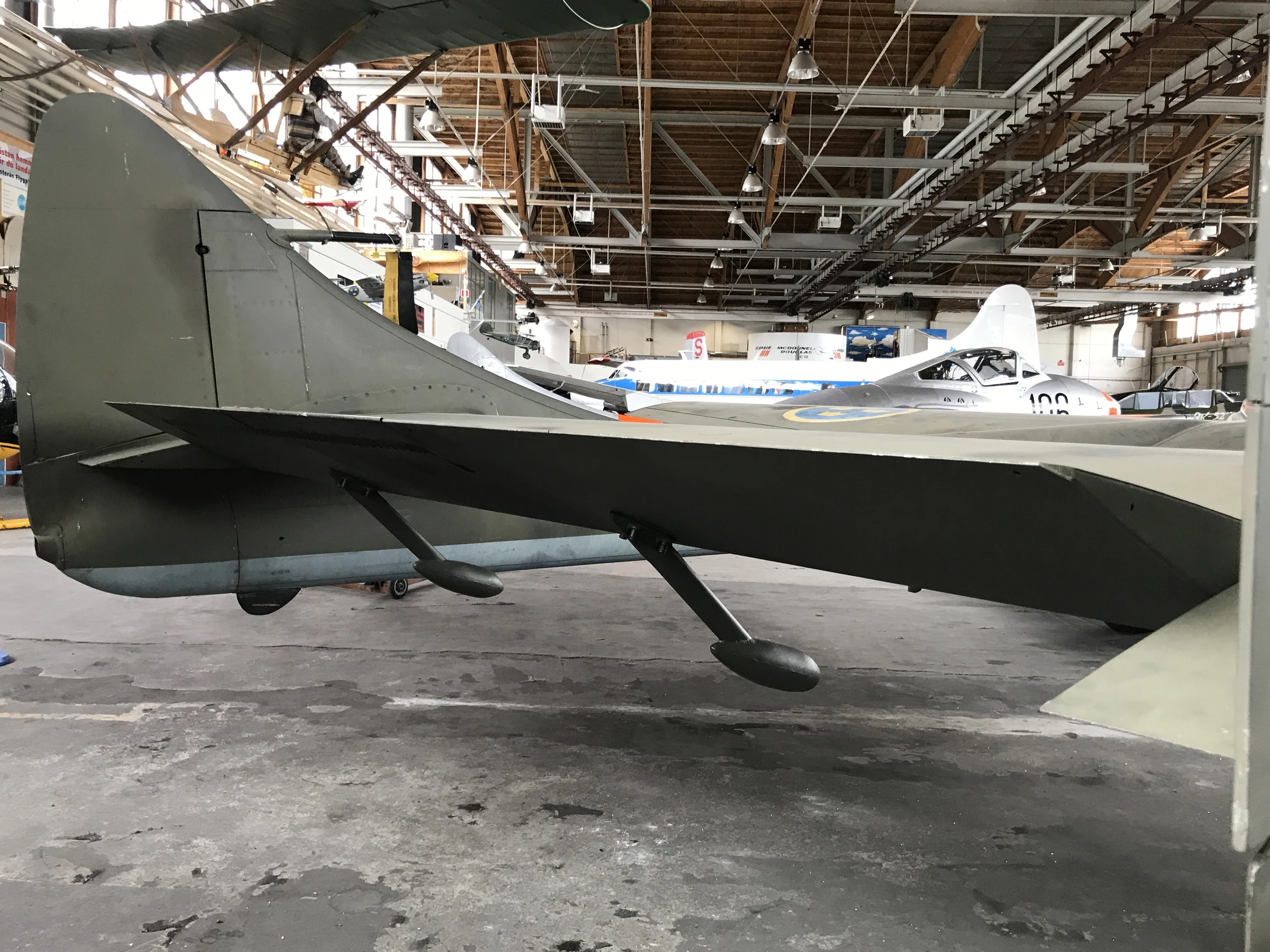
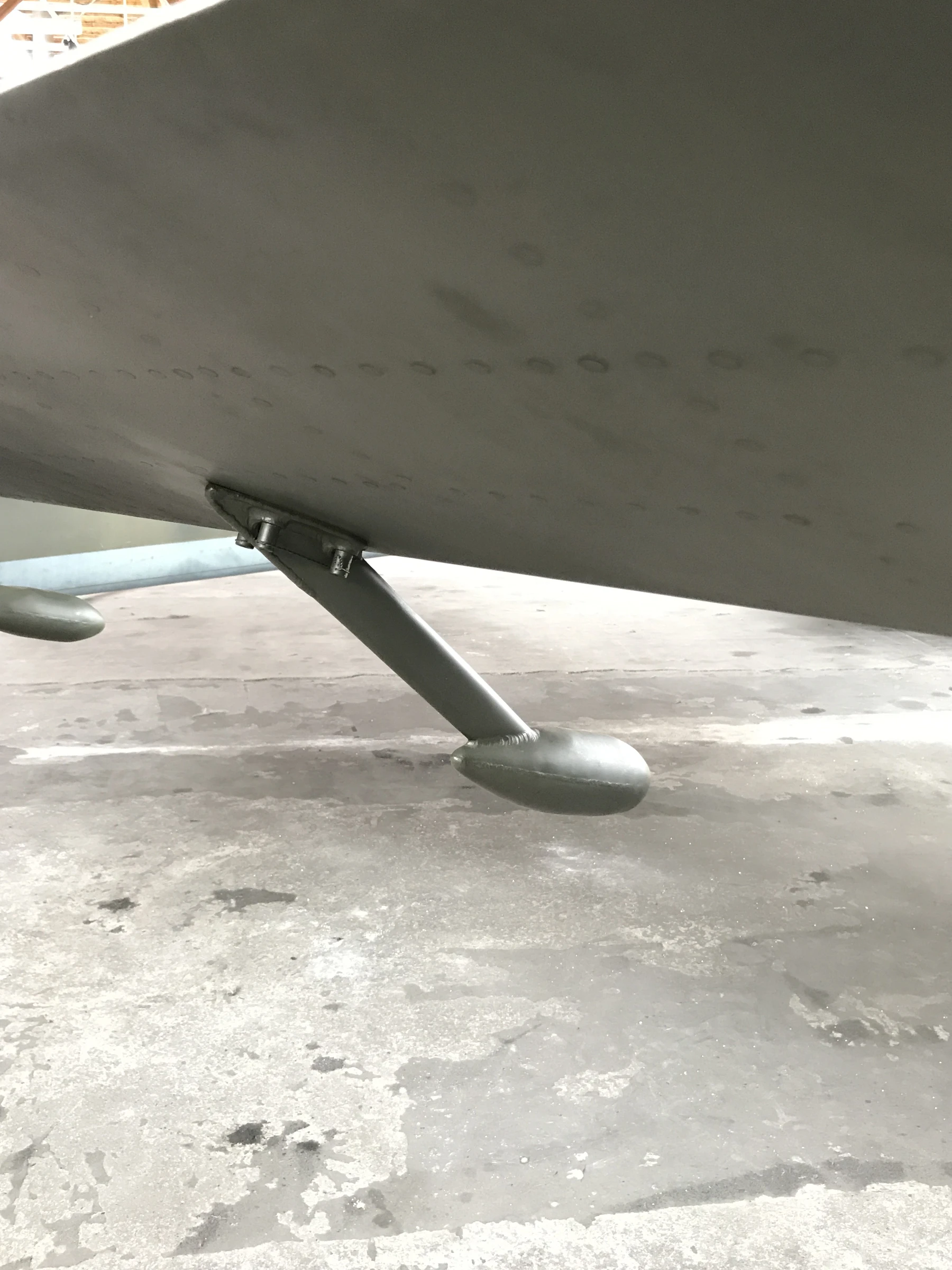
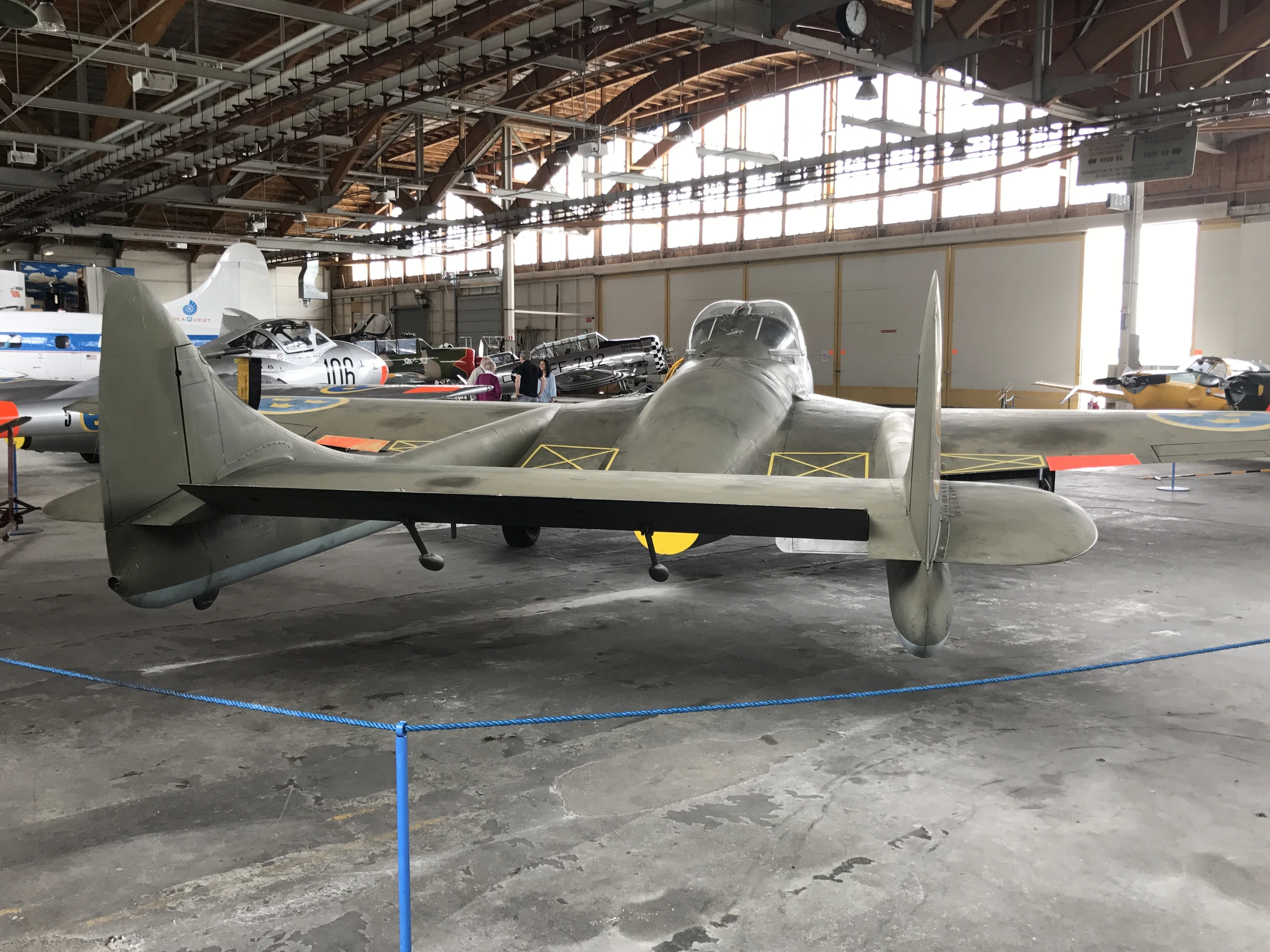
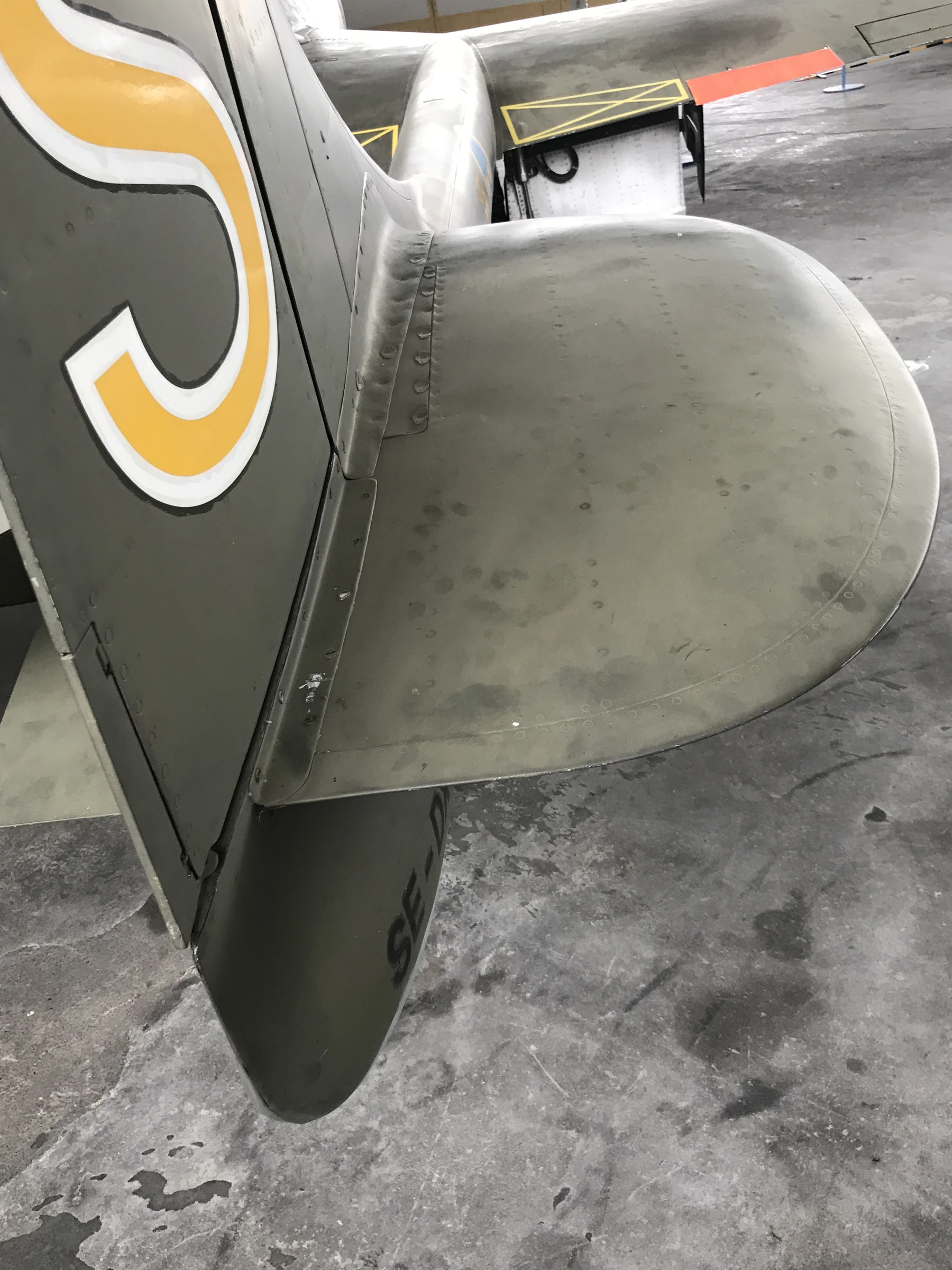
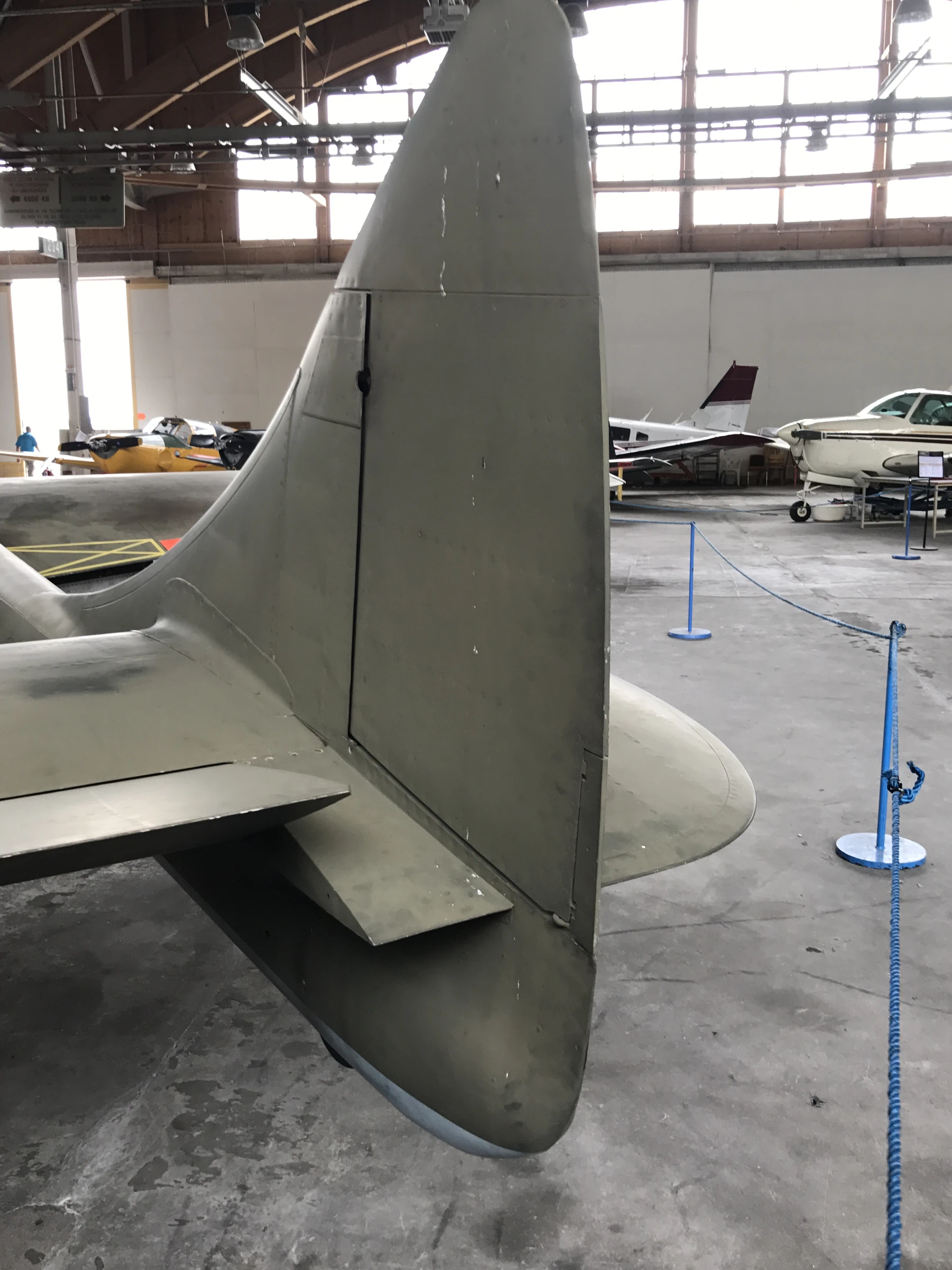
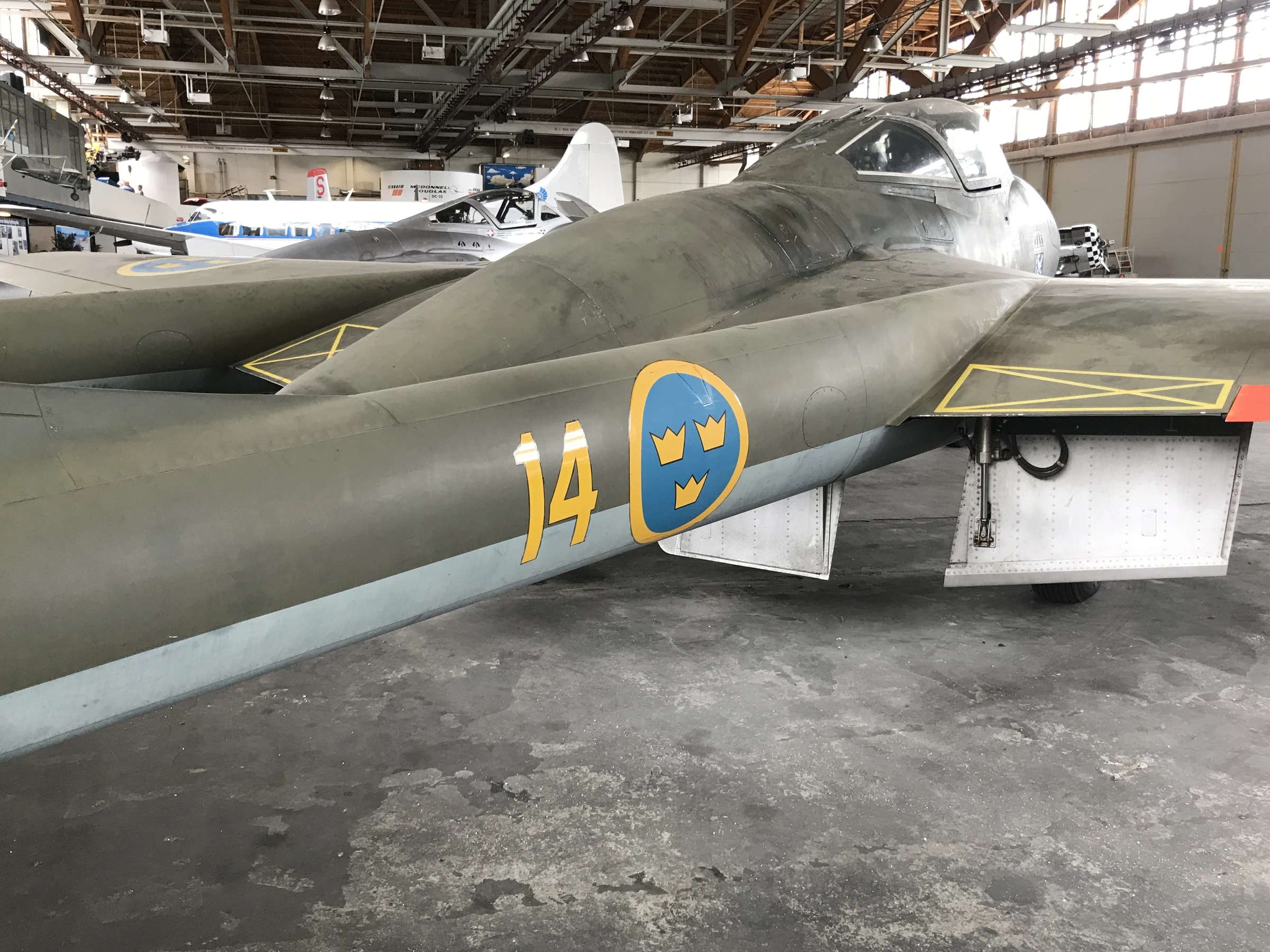
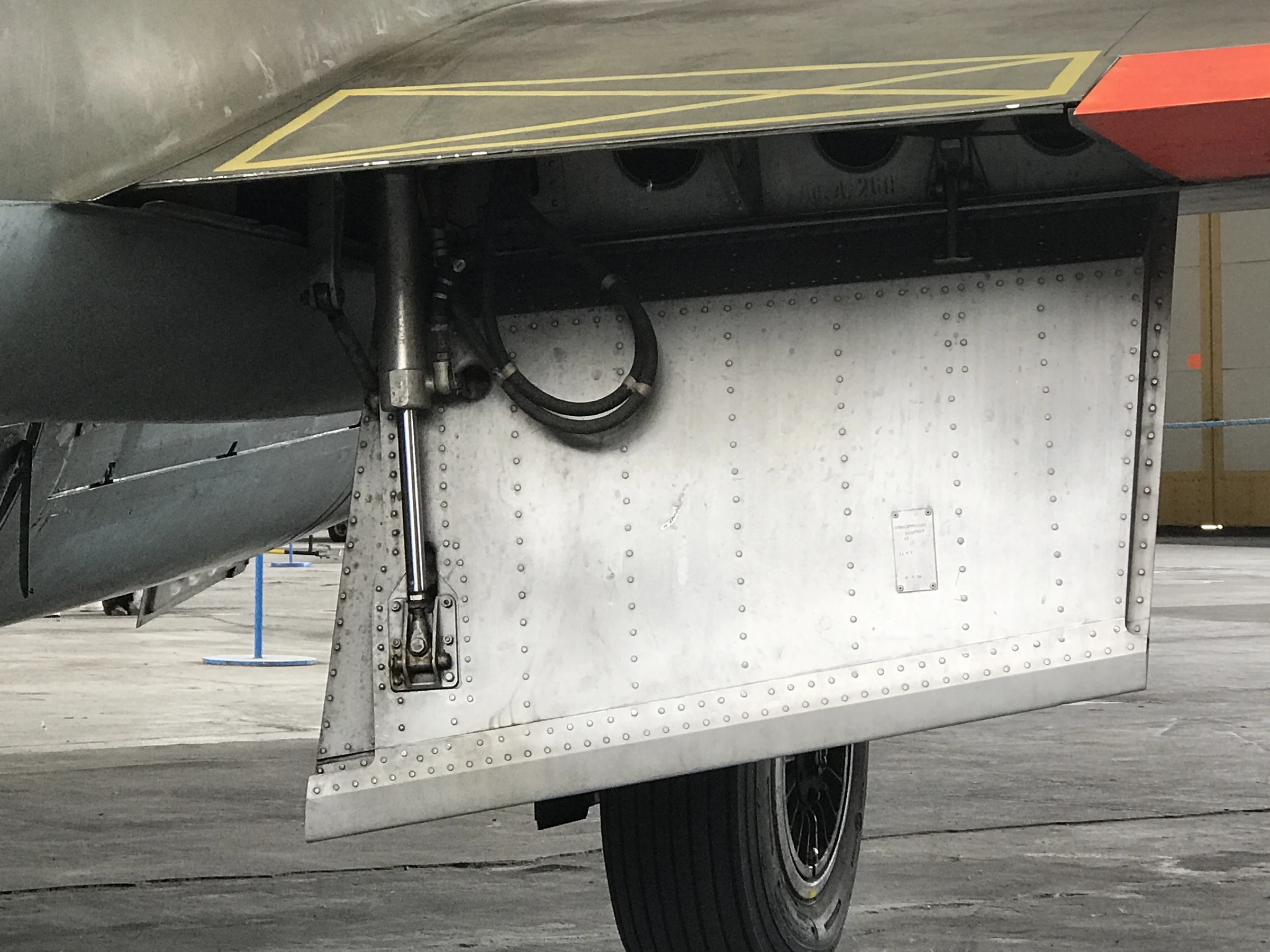
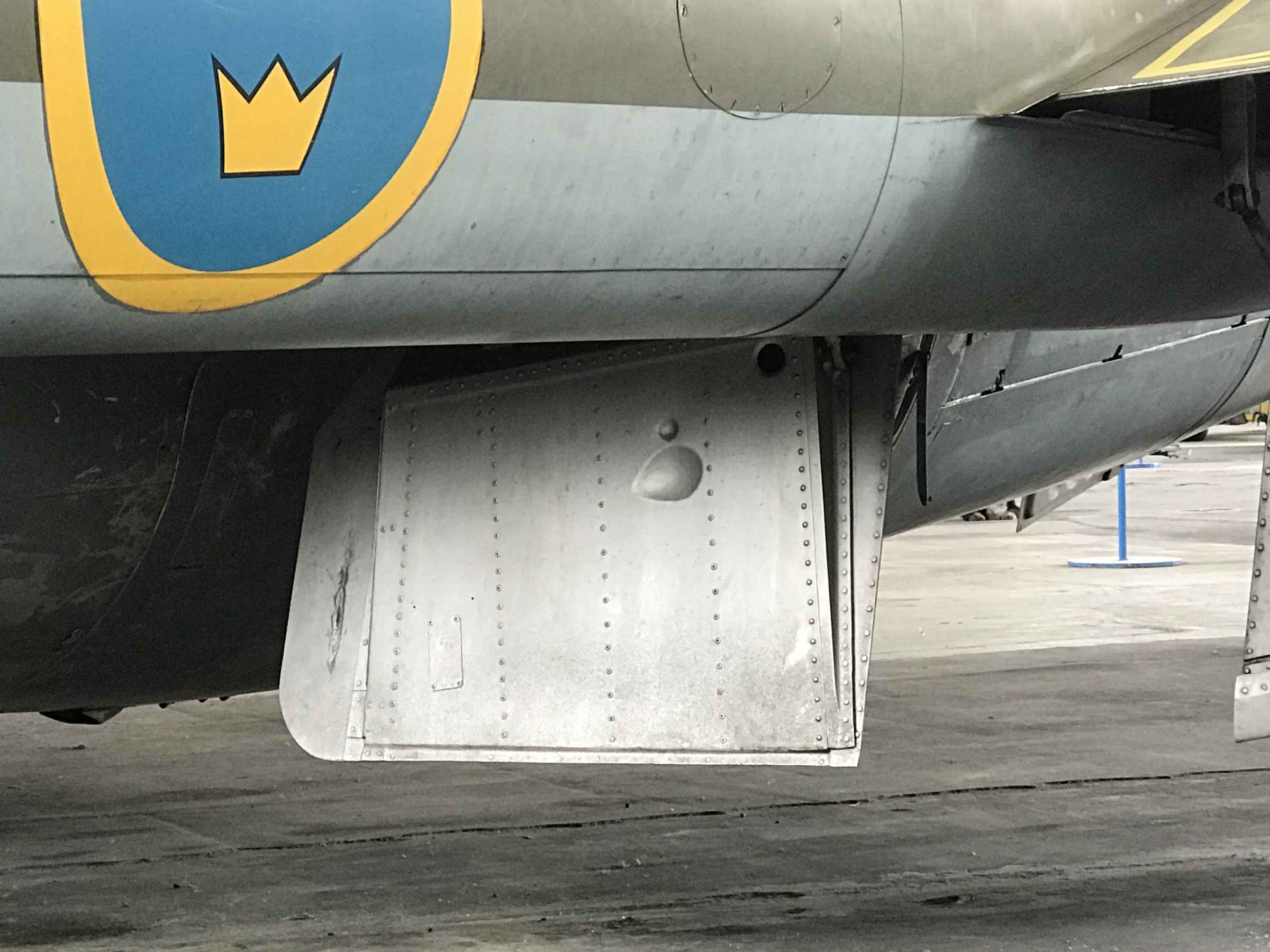
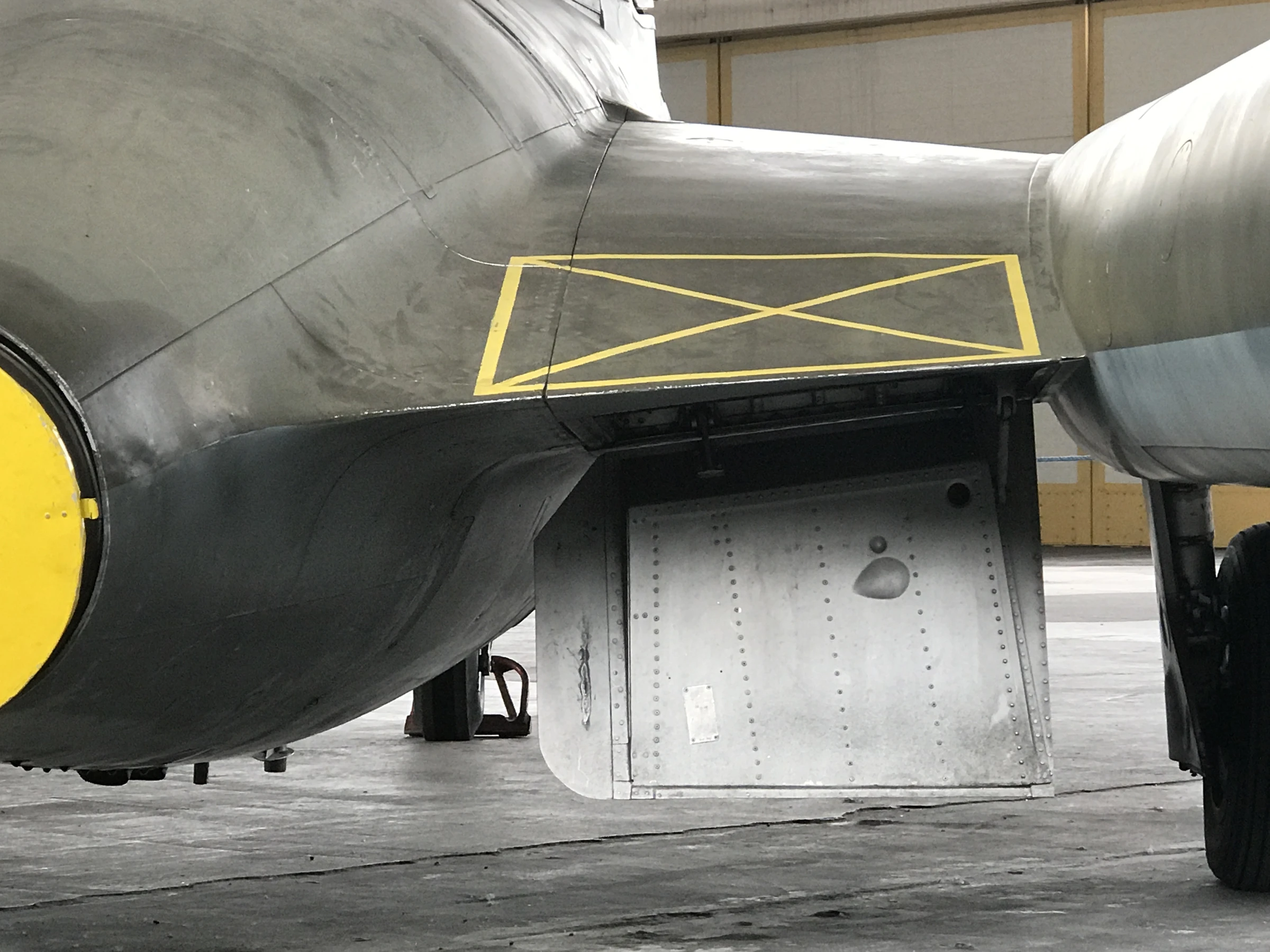
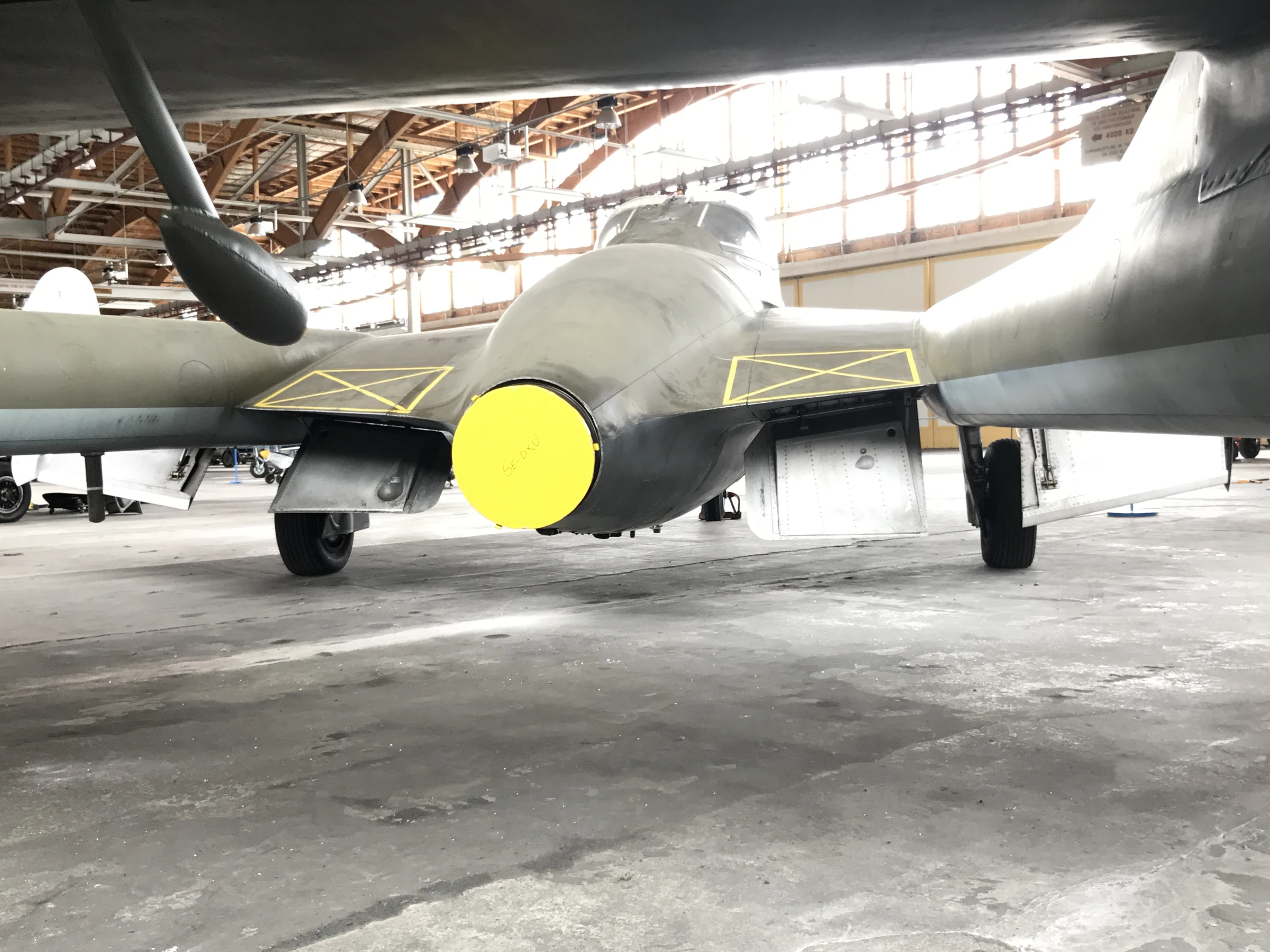
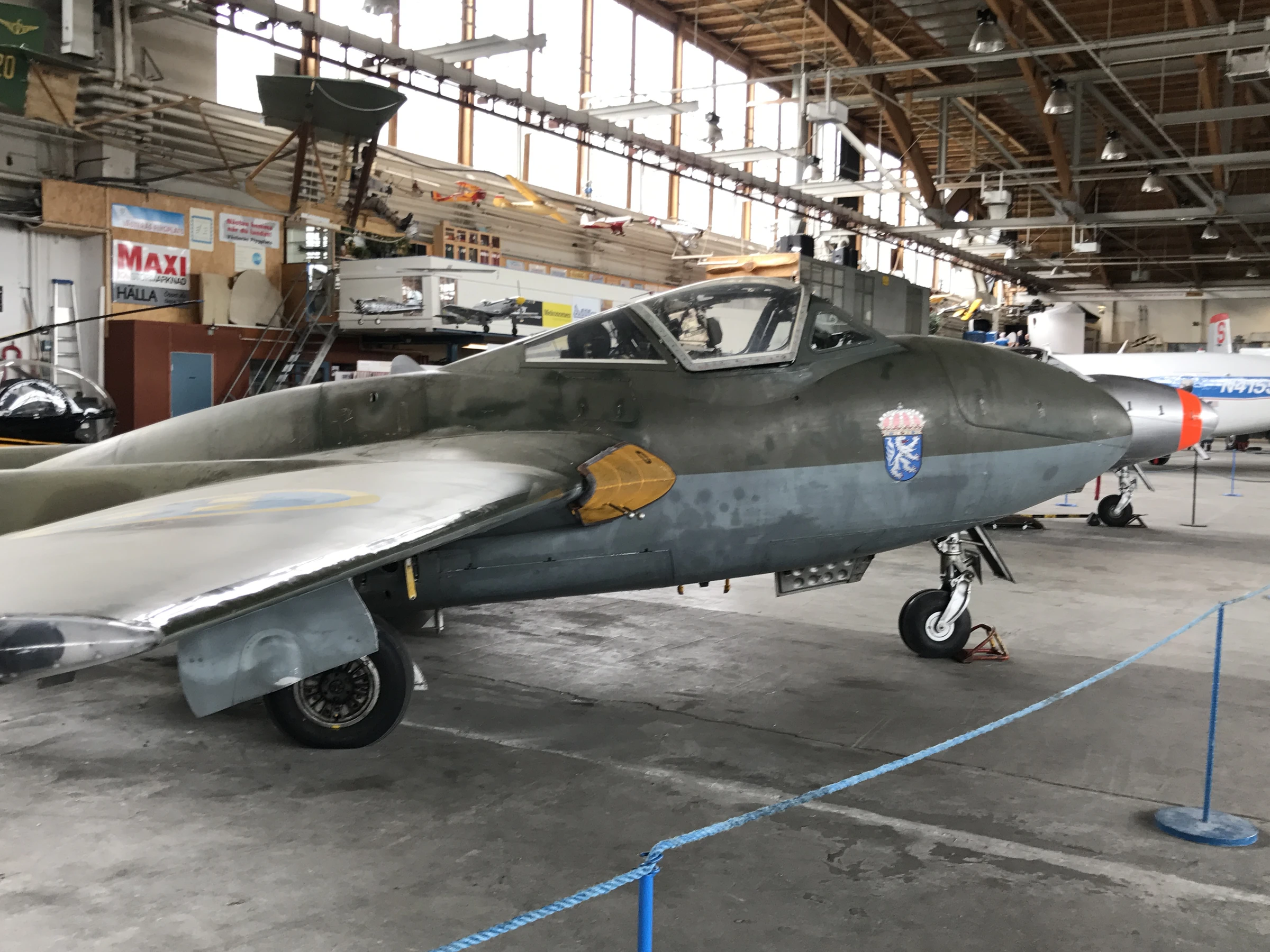
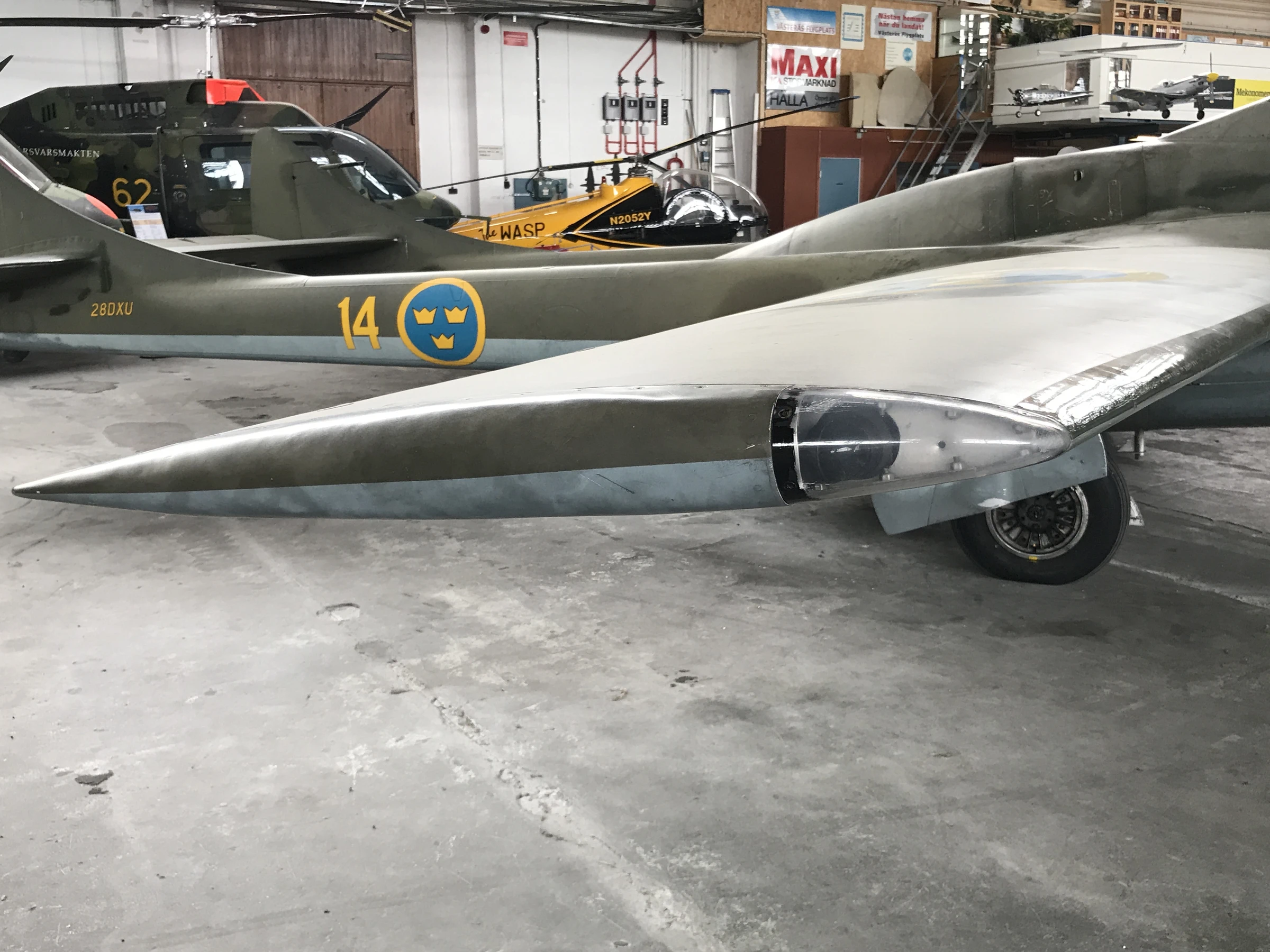
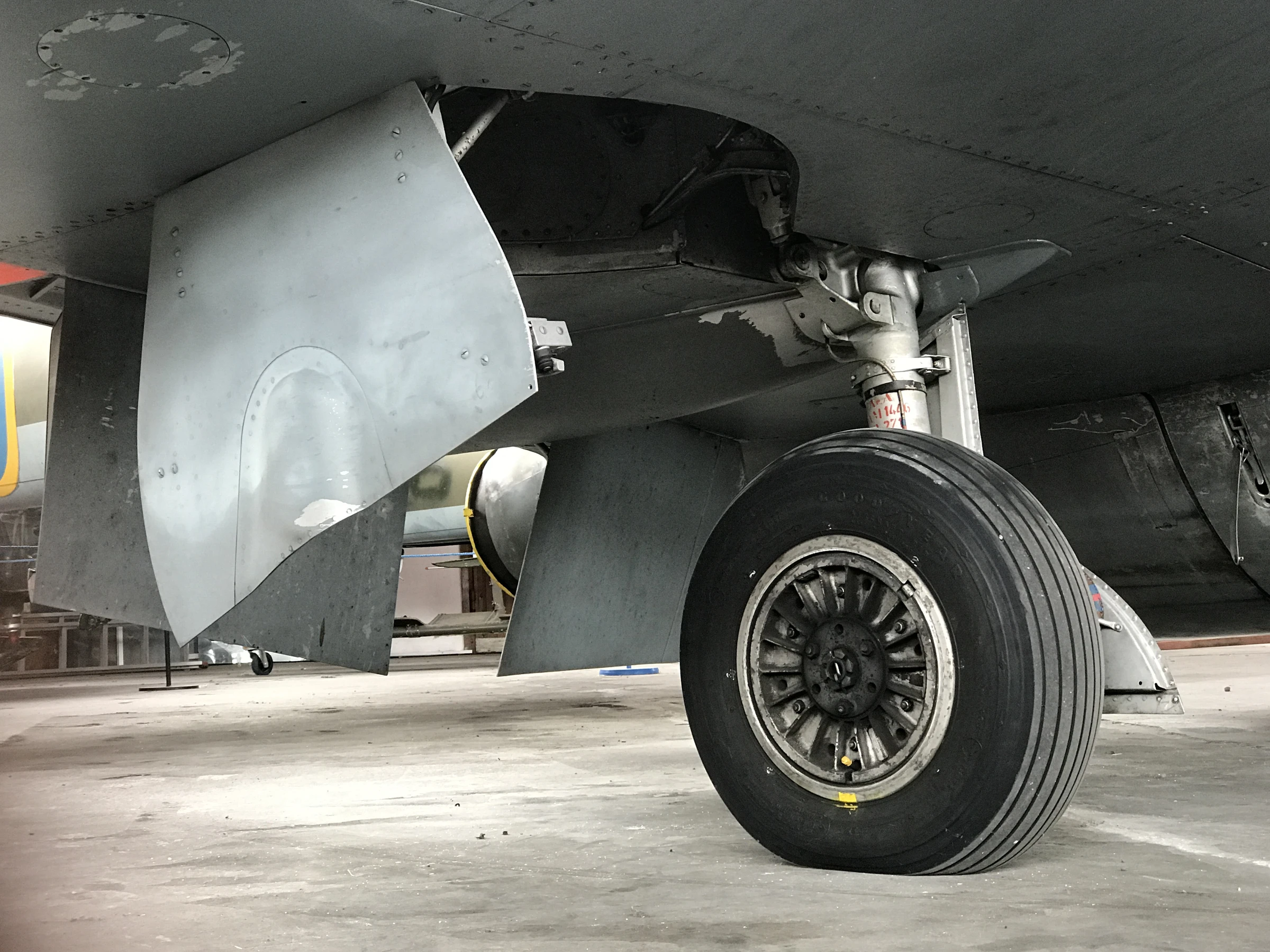
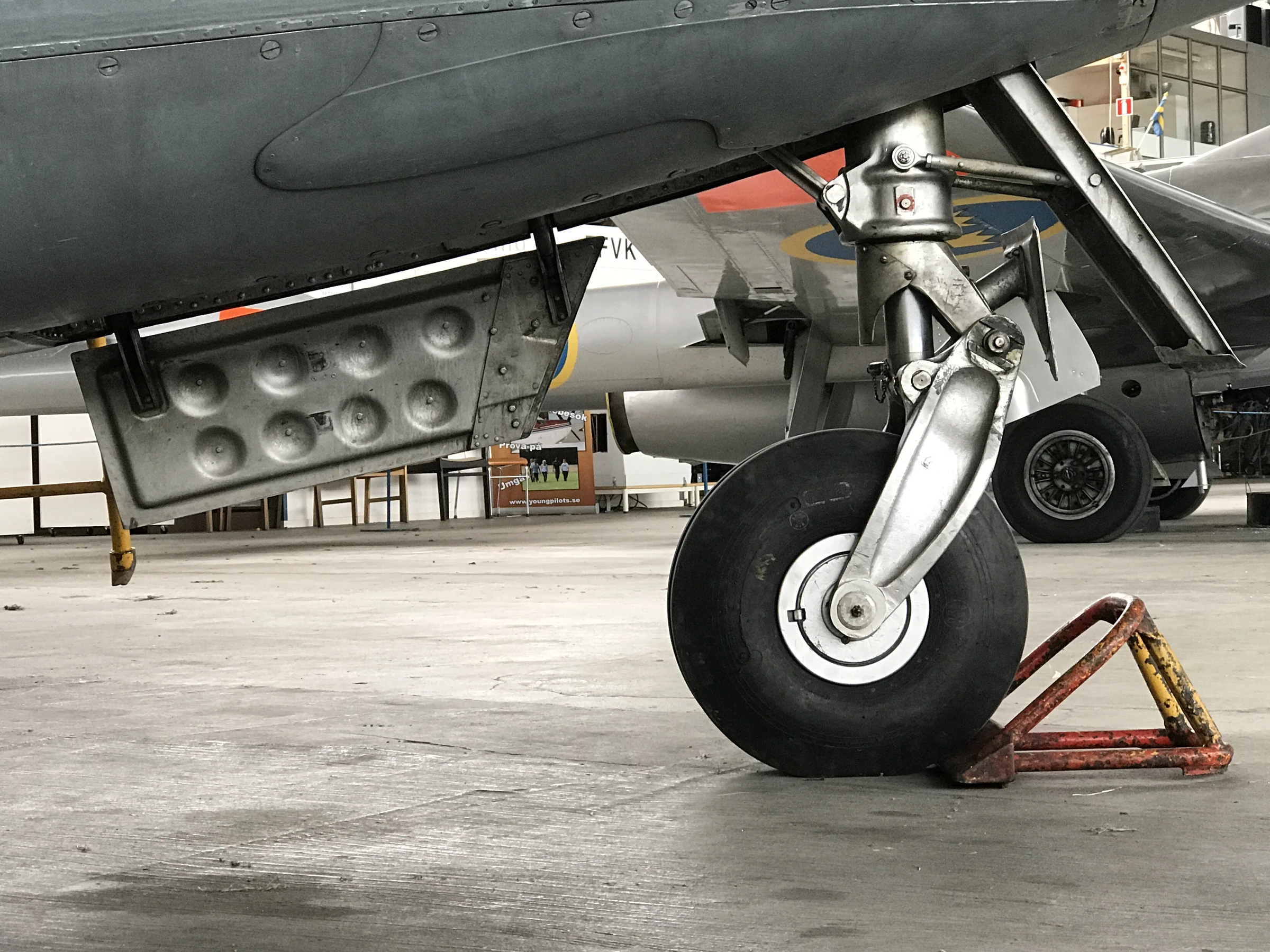
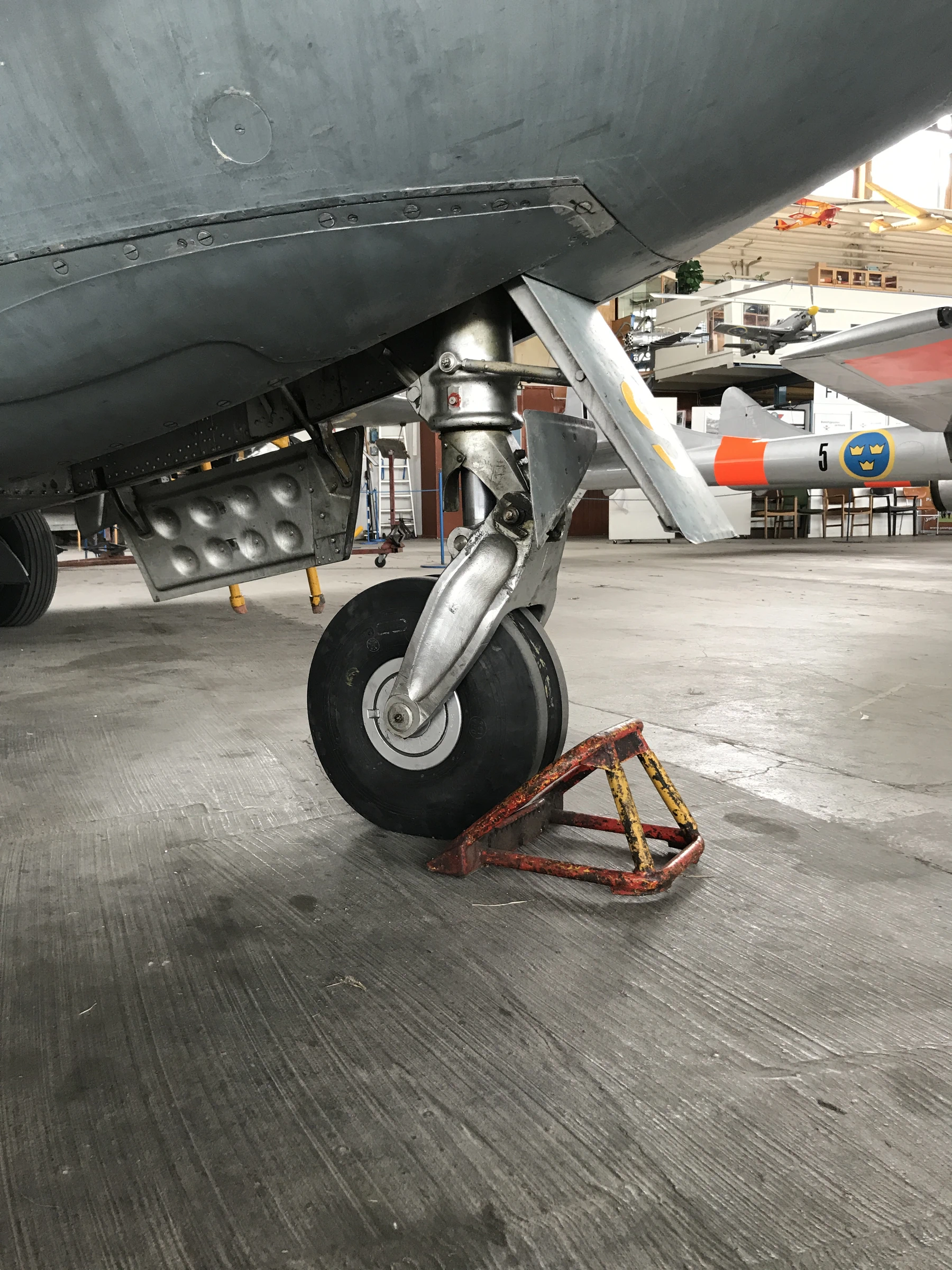
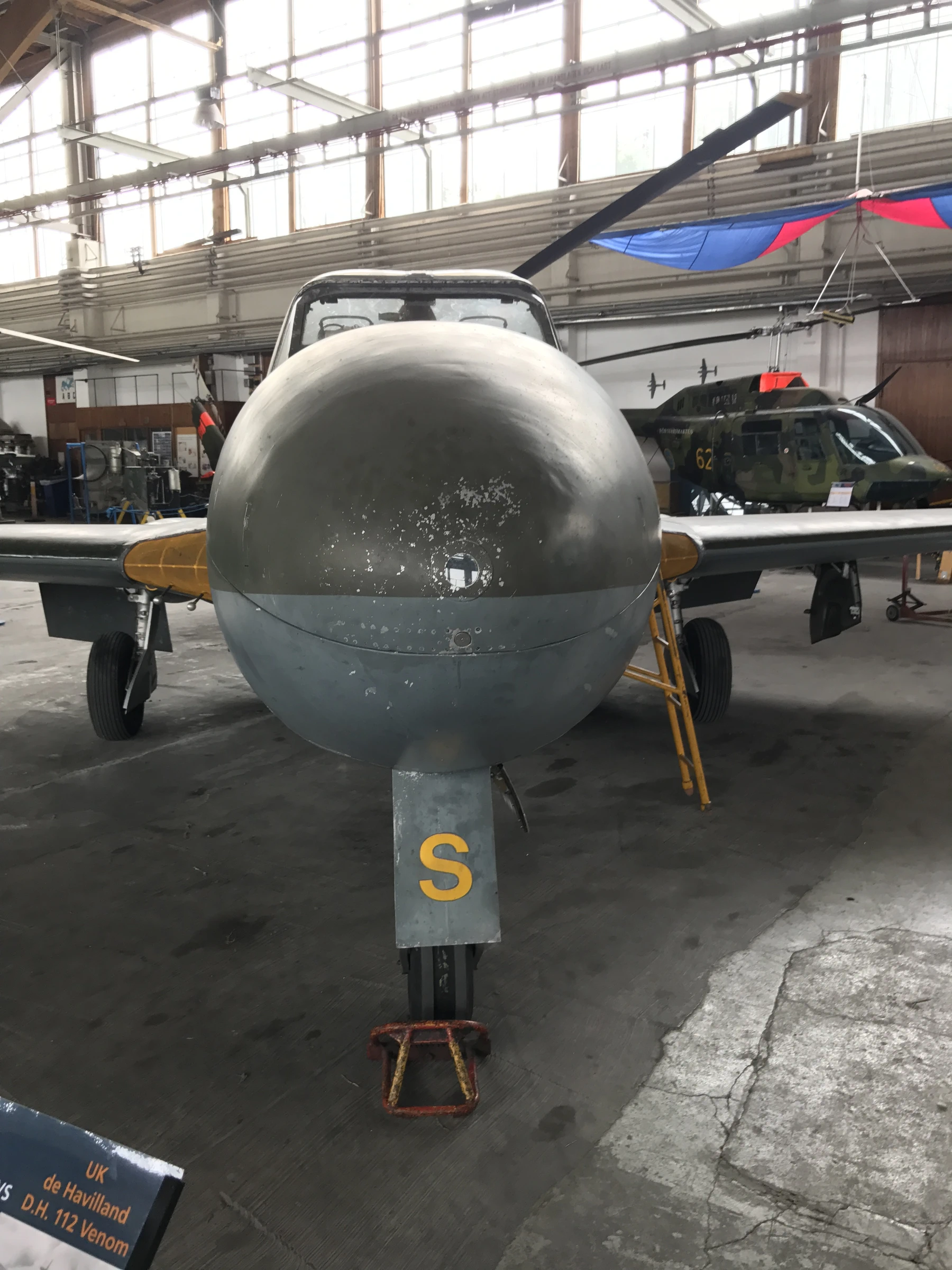
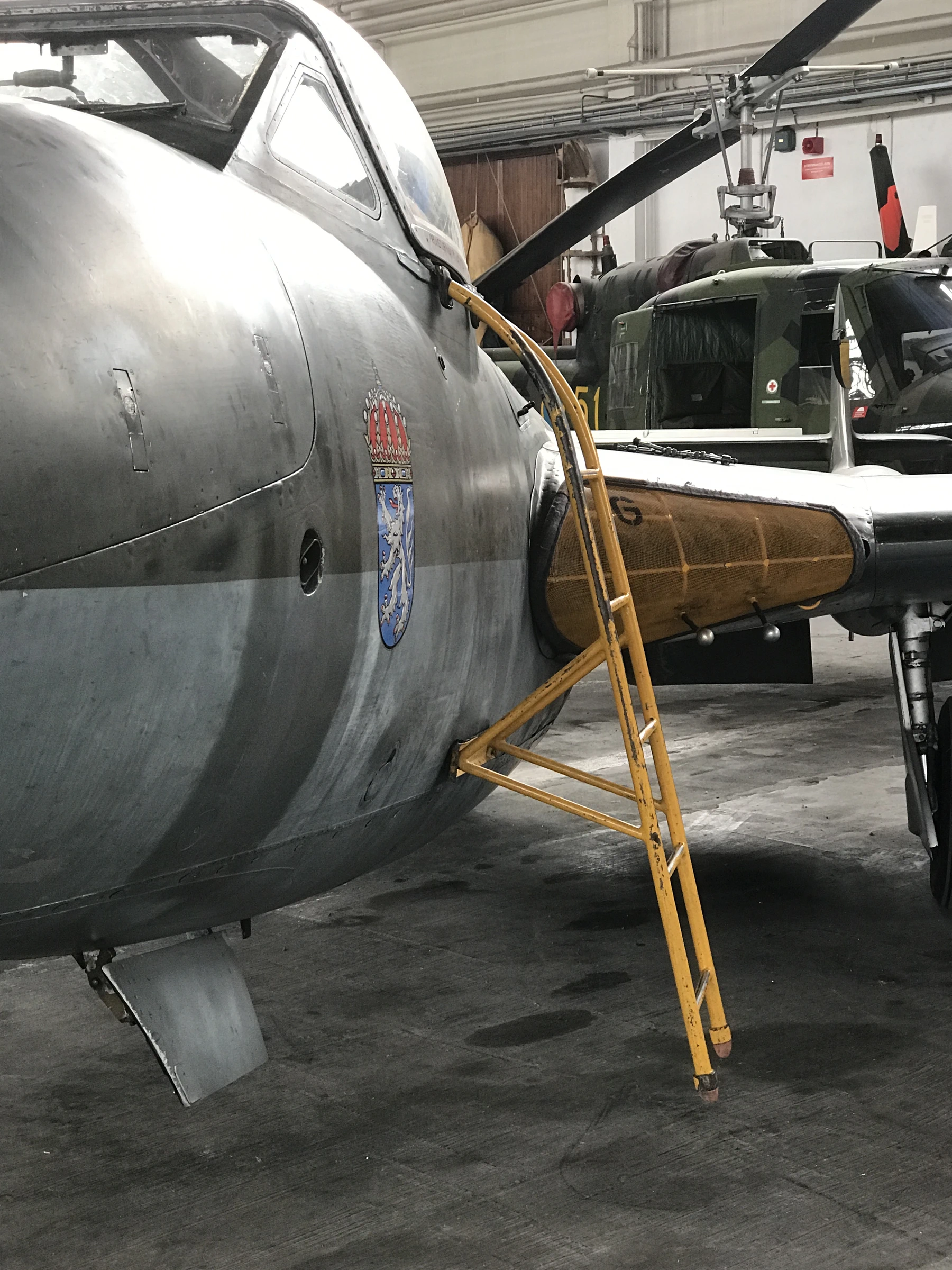
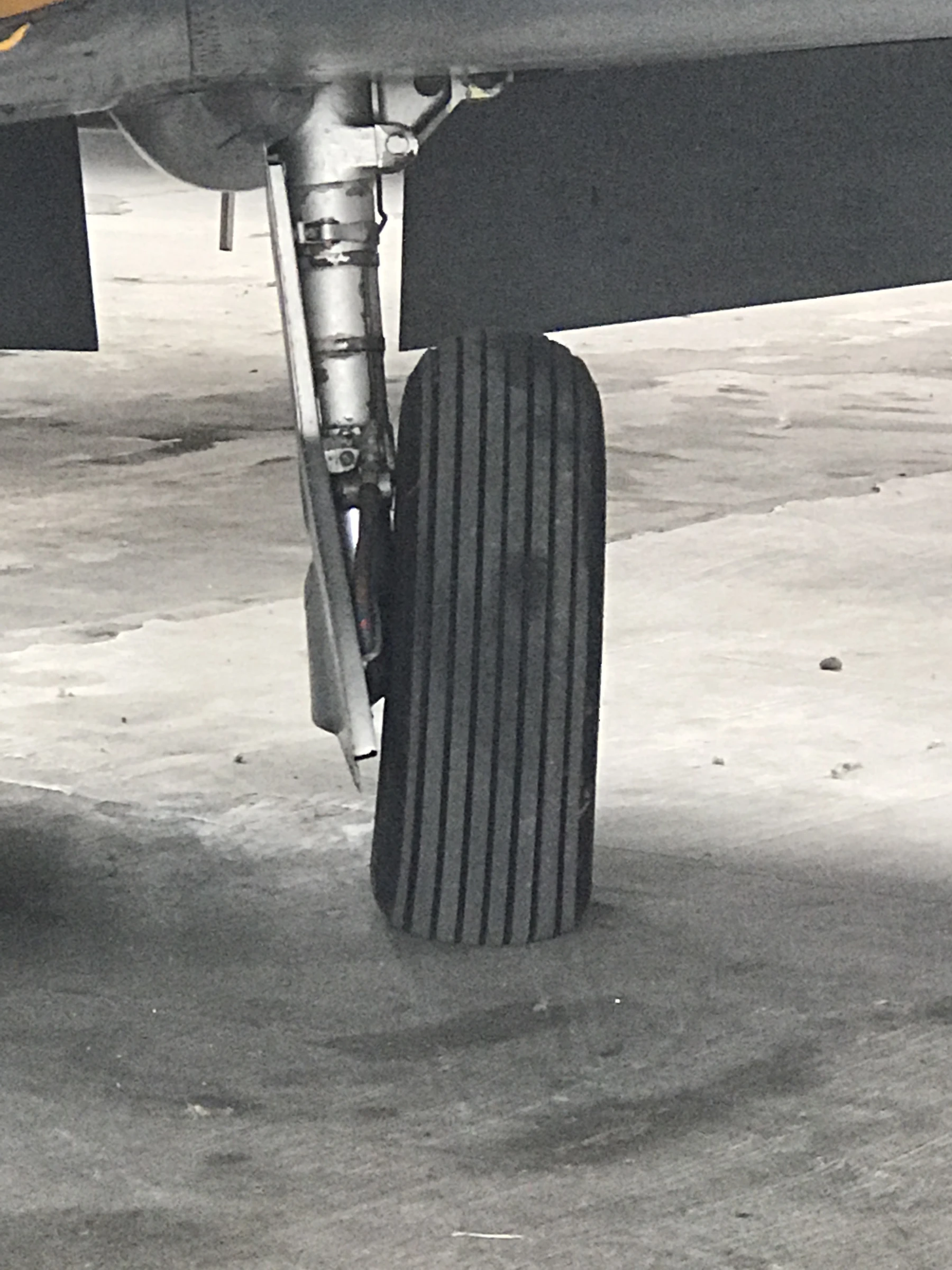
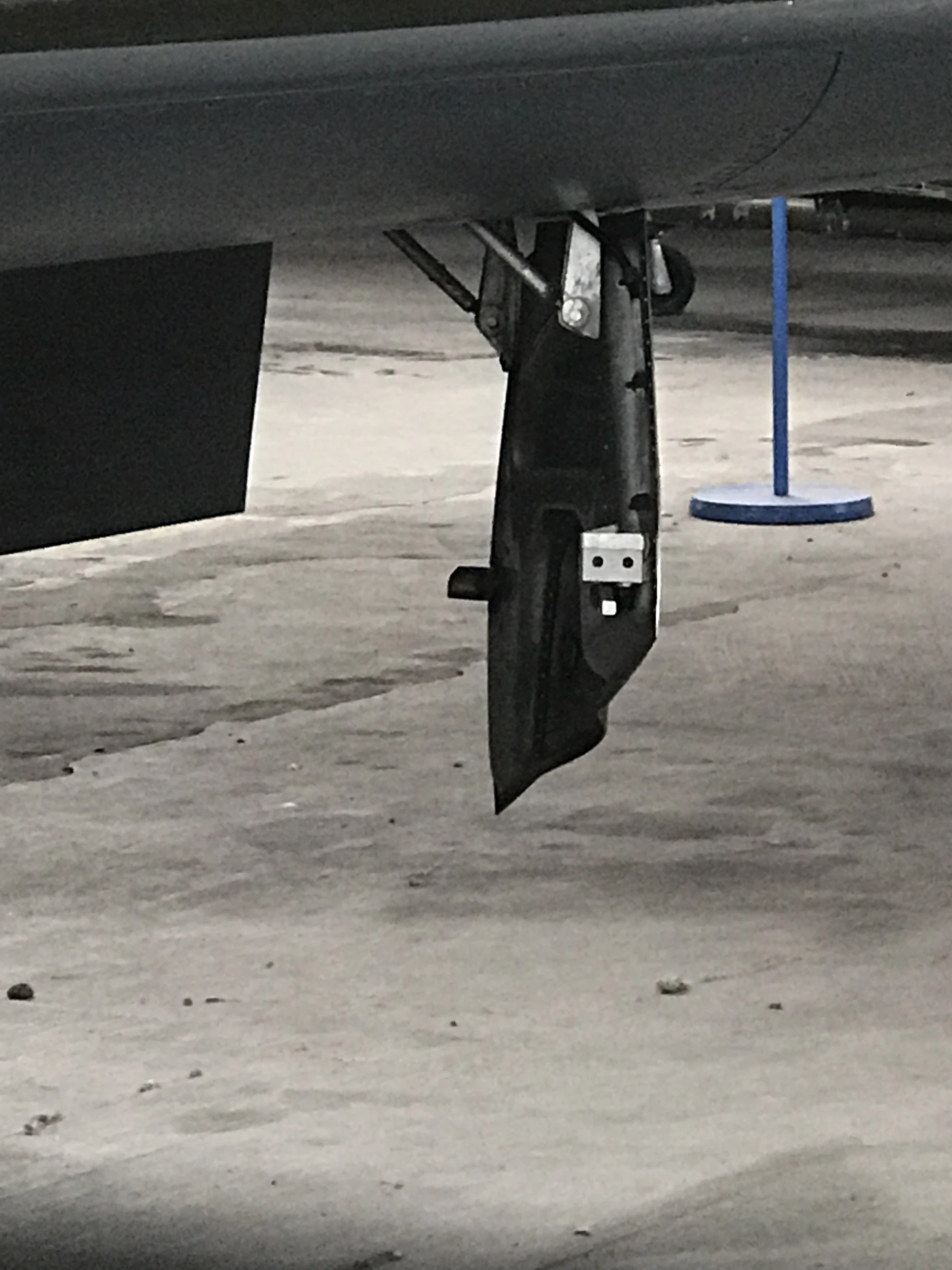
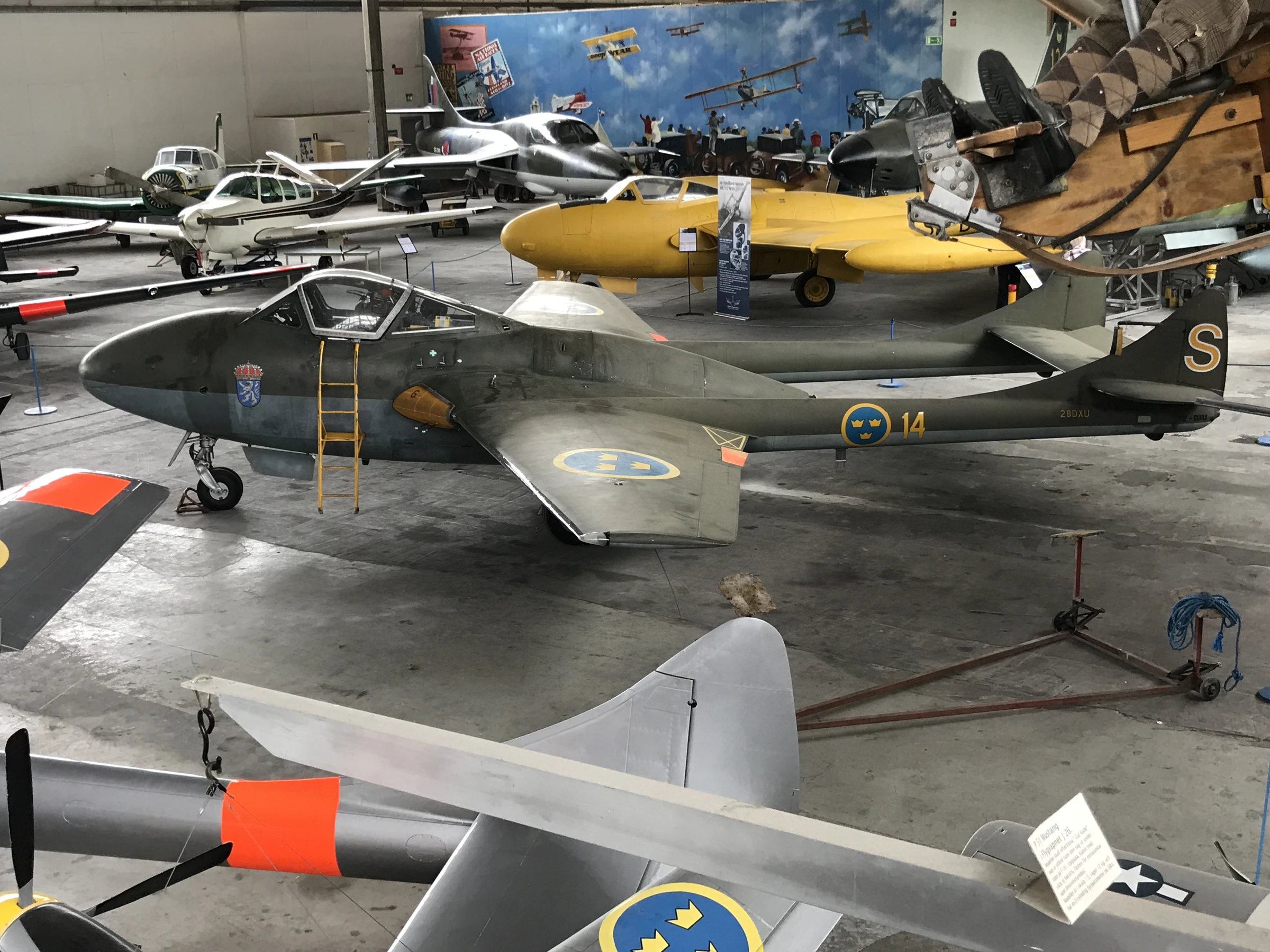
These walk-around photos were taken at Västerås Flygmuseum in 2017. They show a de Havilland DH.115 Vampire T.11, registered SE-DXU and displayed in the markings of a Swedish Air Force J 28C trainer as 28DXU/14-S — though the Swedish markings are not original to the airframe. The Vampire was Britain's second jet aircraft and the first to exceed 500 mph, notable for its twin-boom layout and its partially wooden construction — the forward fuselage pod was built of laminated wood and balsa, the same technique used in the Mosquito. Sweden was the Vampire's first export customer, ordering 70 examples in 1946 as the J 28A, and eventually acquiring 437 Vampires of various versions. The two-seat J 28C served both as a light fighter and as a trainer, and de Havilland Vampire är den flygplanstyp i svenska flygvapnet som flugits av flest piloter.
This particular aircraft was built by de Havilland at Christchurch in 1953, c/n 15264, and entered RAF service as XD440 — a T.11 two-seat trainer. In 1968 it was sold to the Swiss Air Force as U-1238, where it flew until retirement in 1991. The following year it was acquired by a Swedish owner, registered SE-DXU, and painted in J 28C colours to represent a Swedish Air Force trainer. It has been on display at Västerås Flygmuseum since the museum's founding.