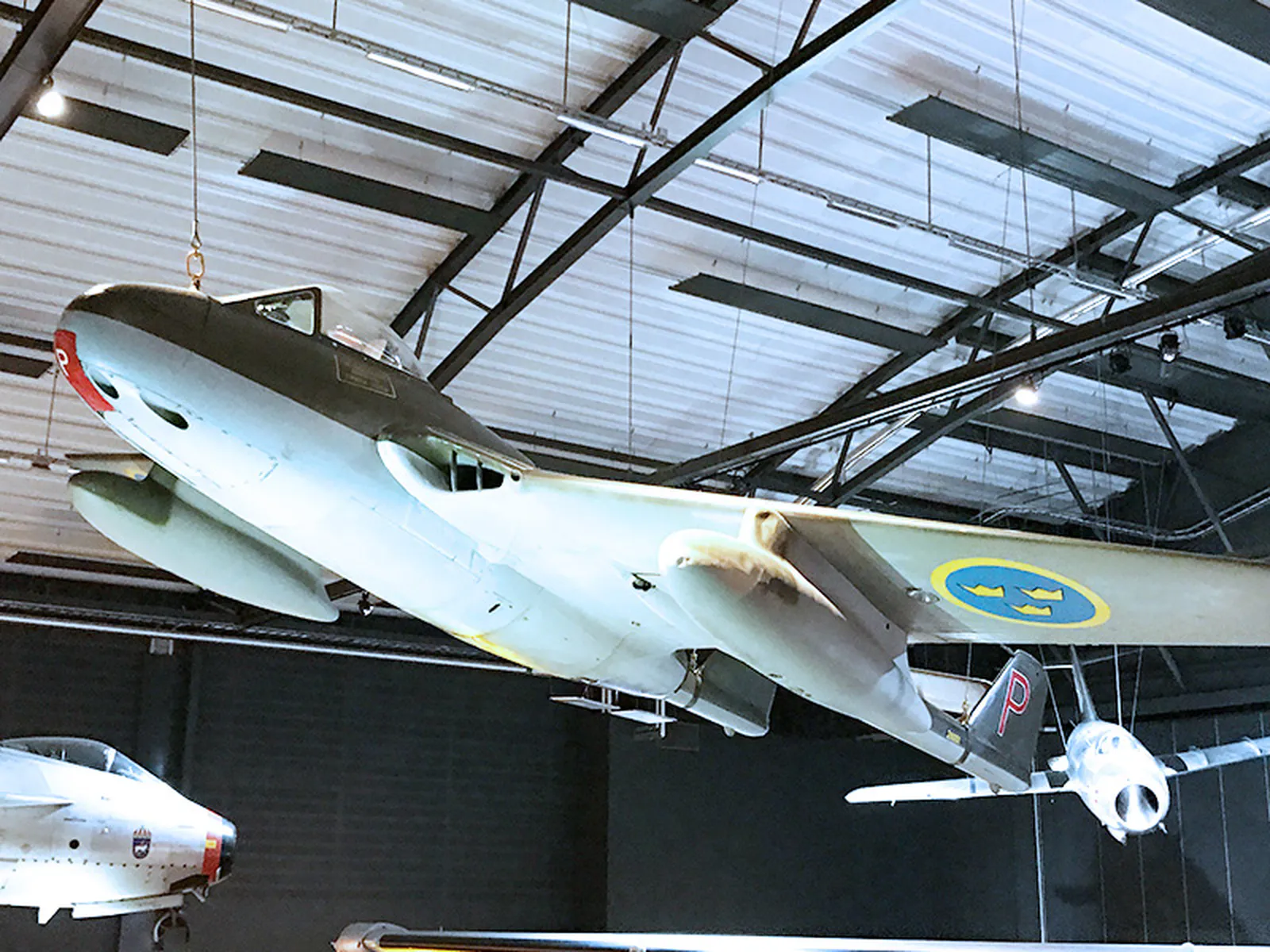
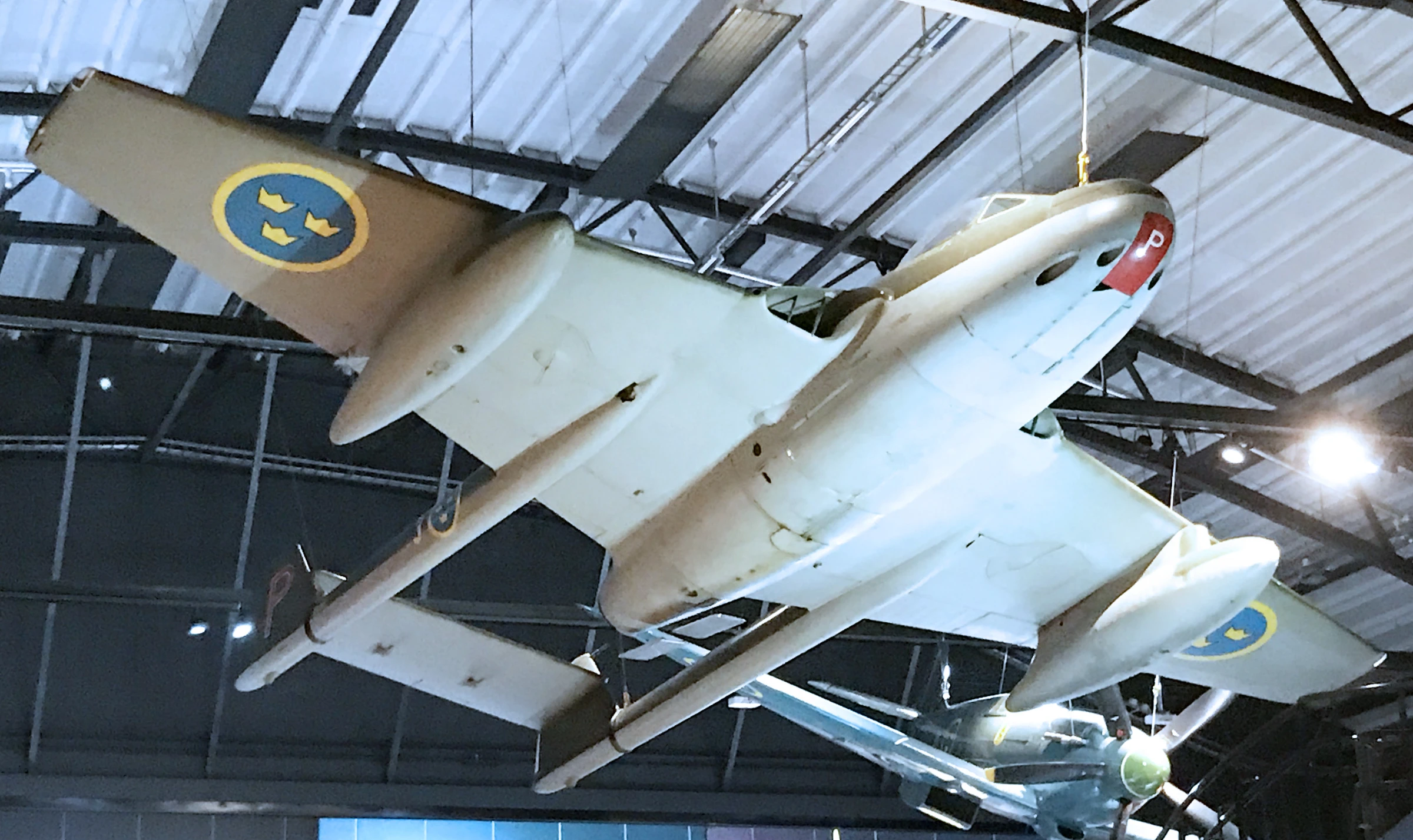
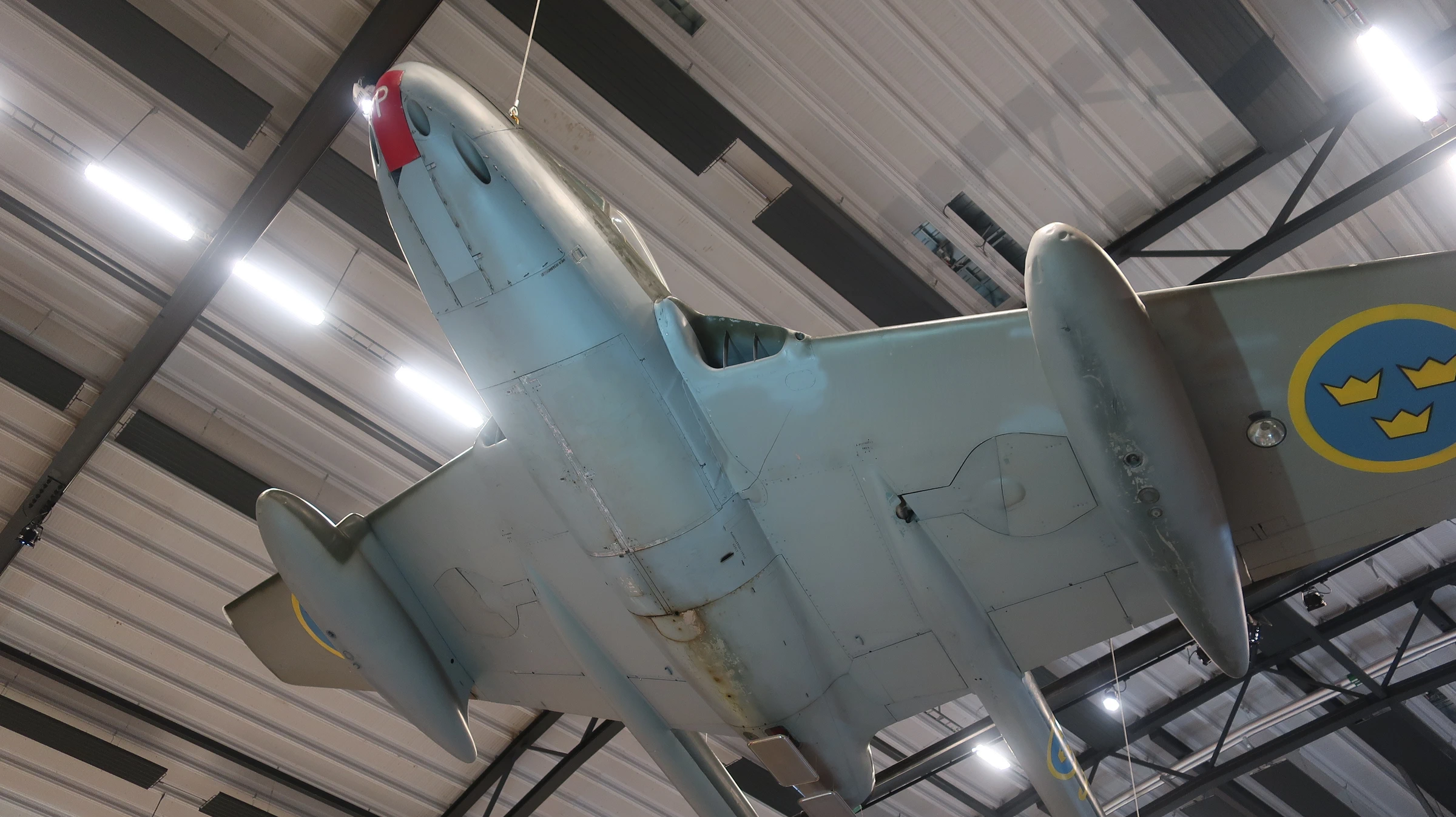
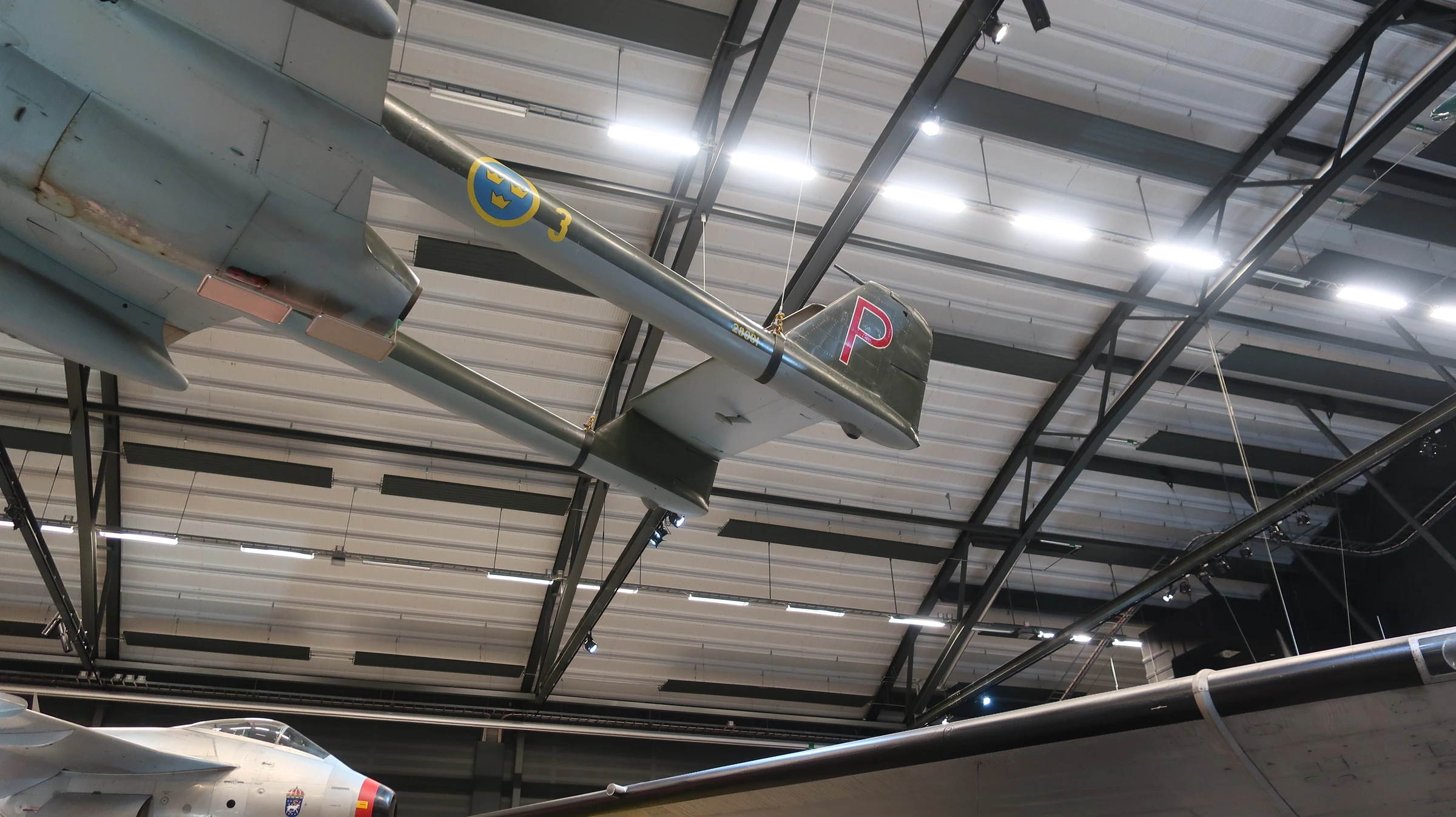
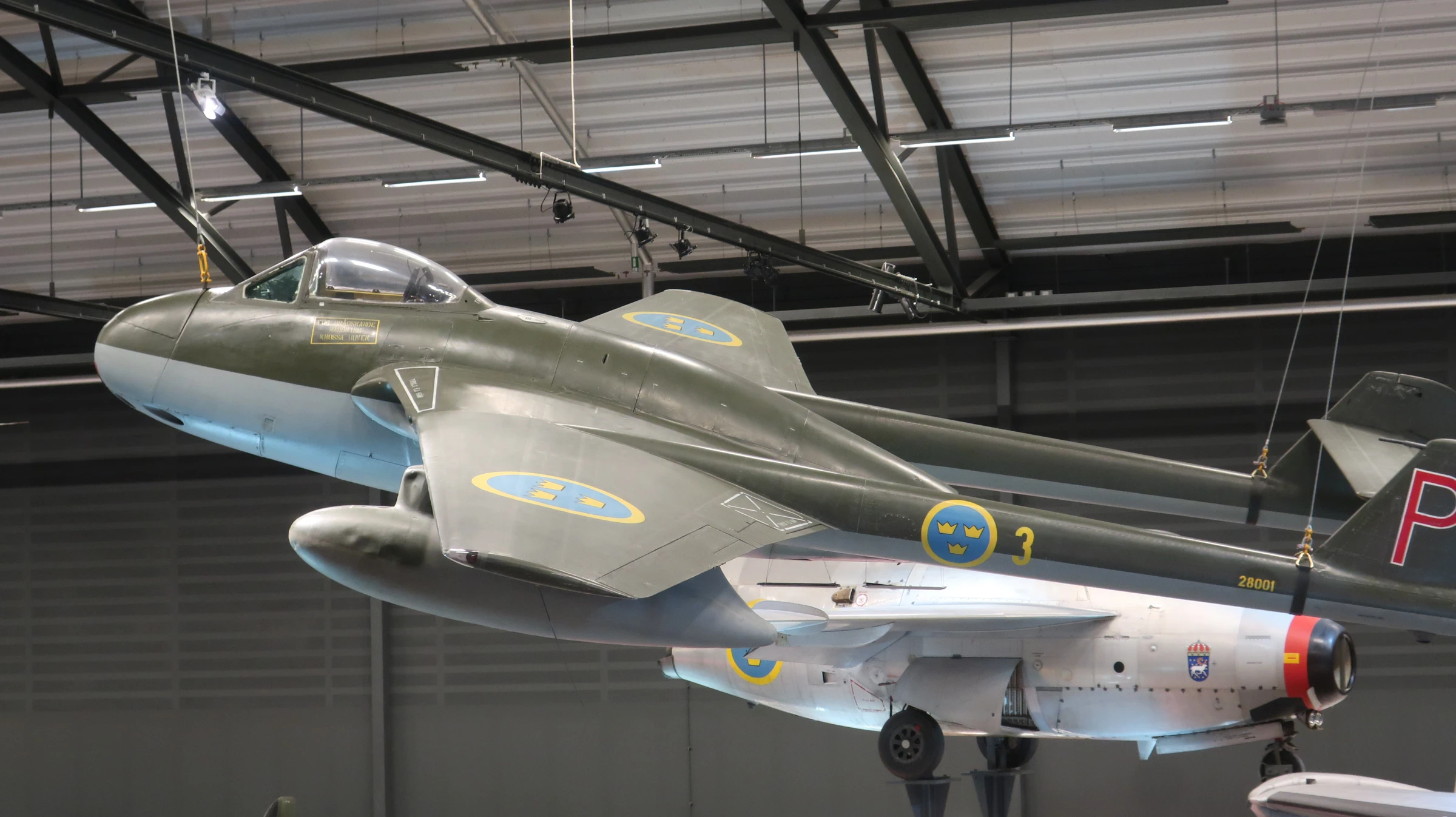
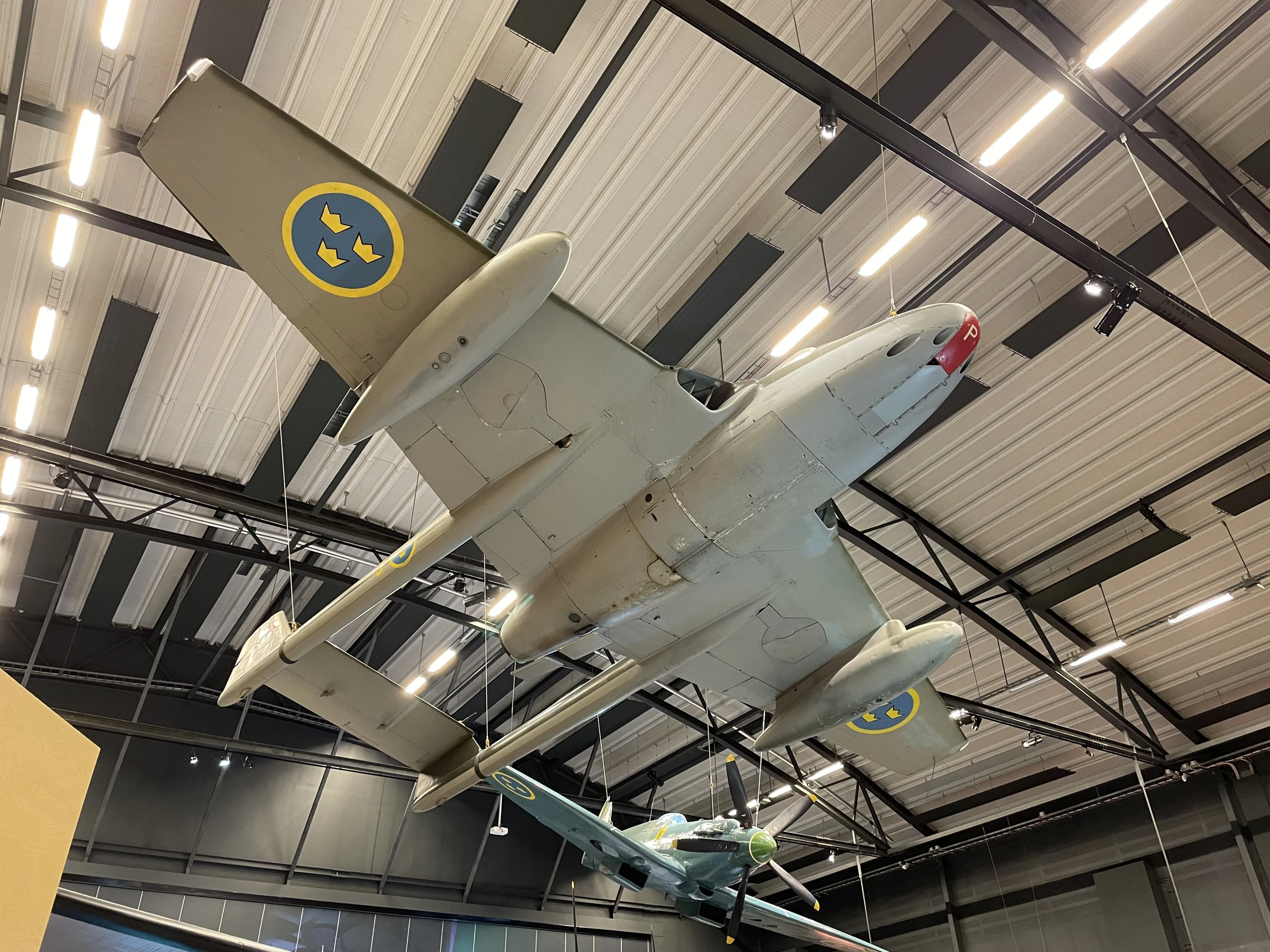
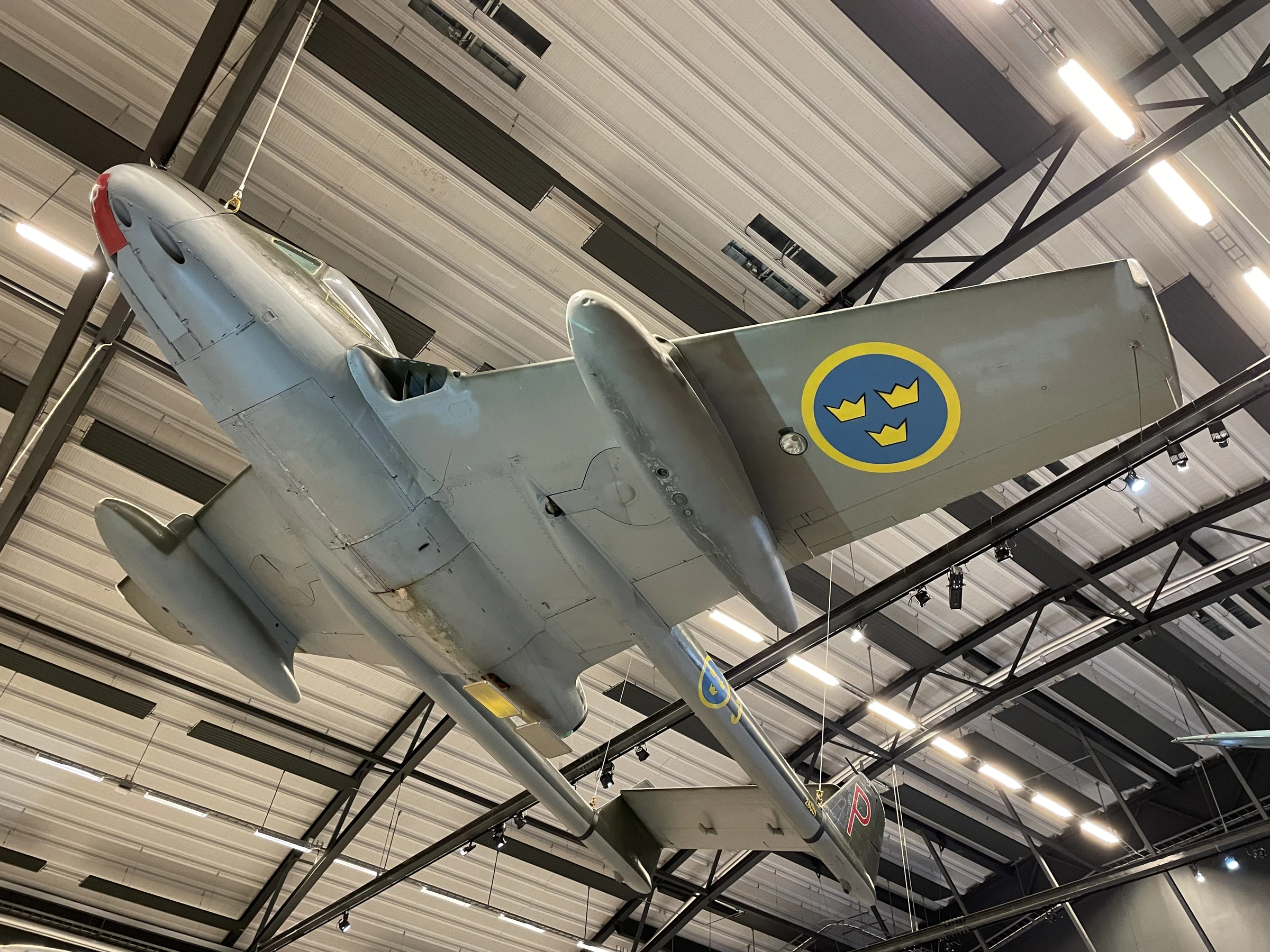
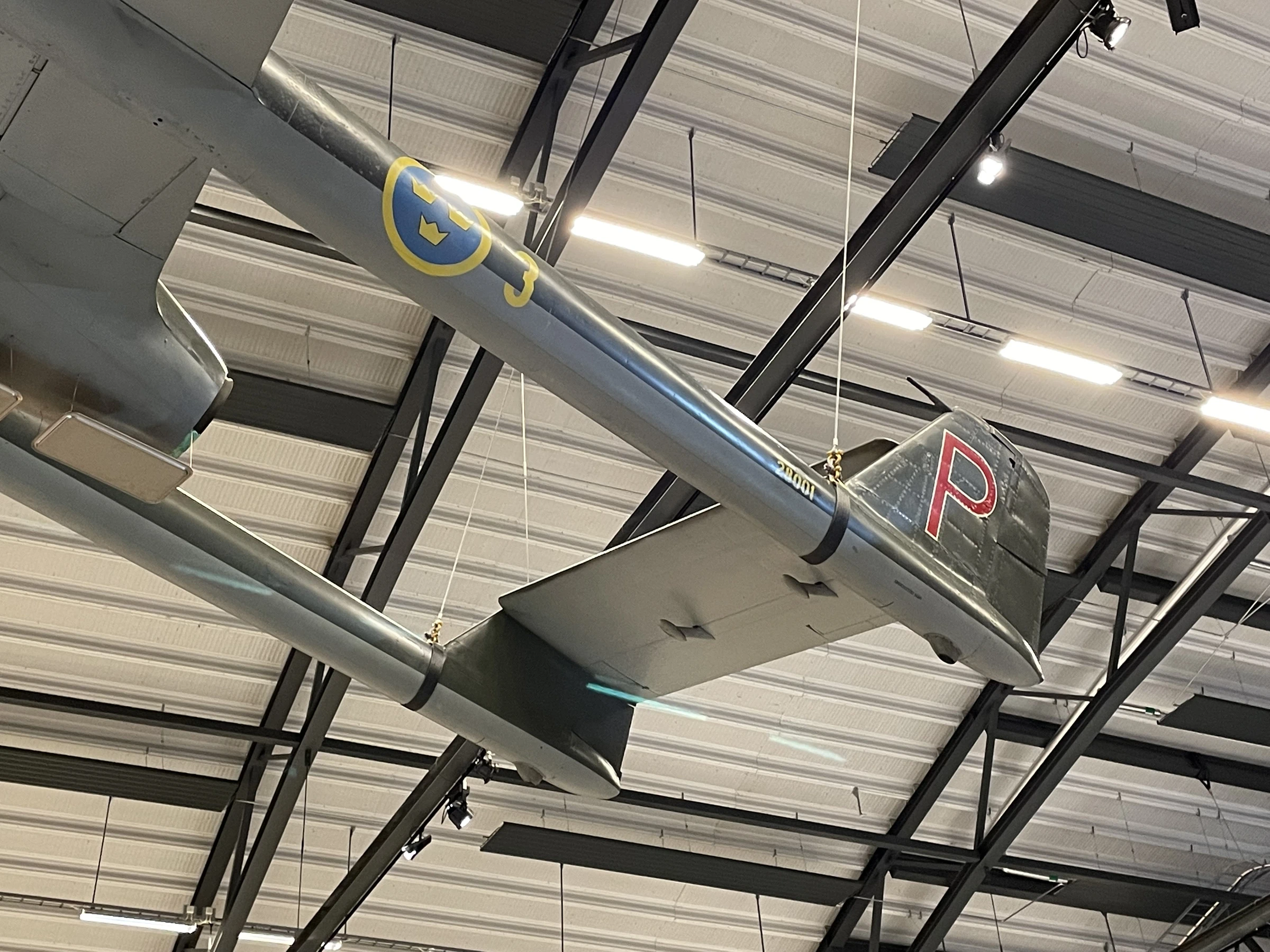
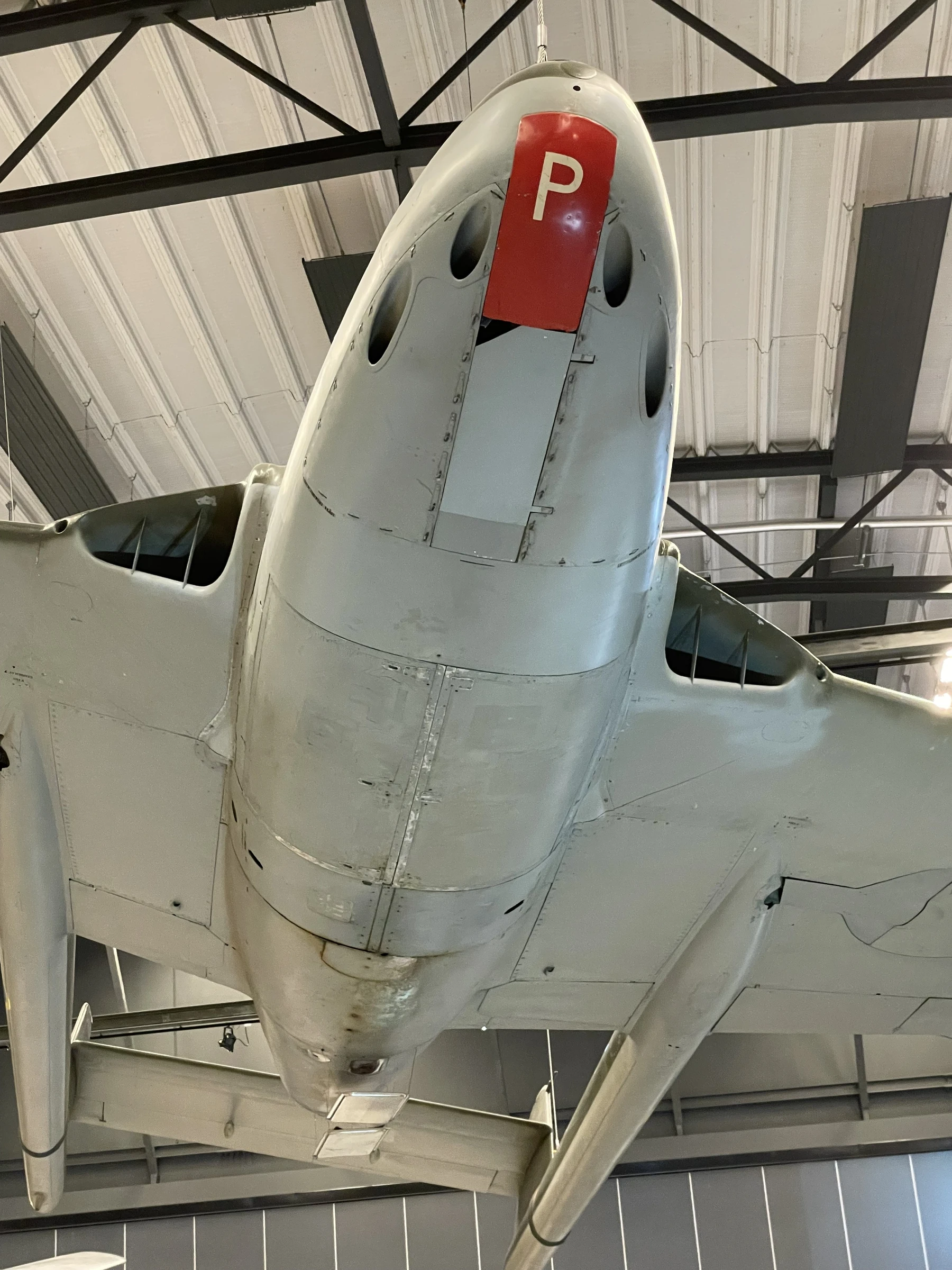
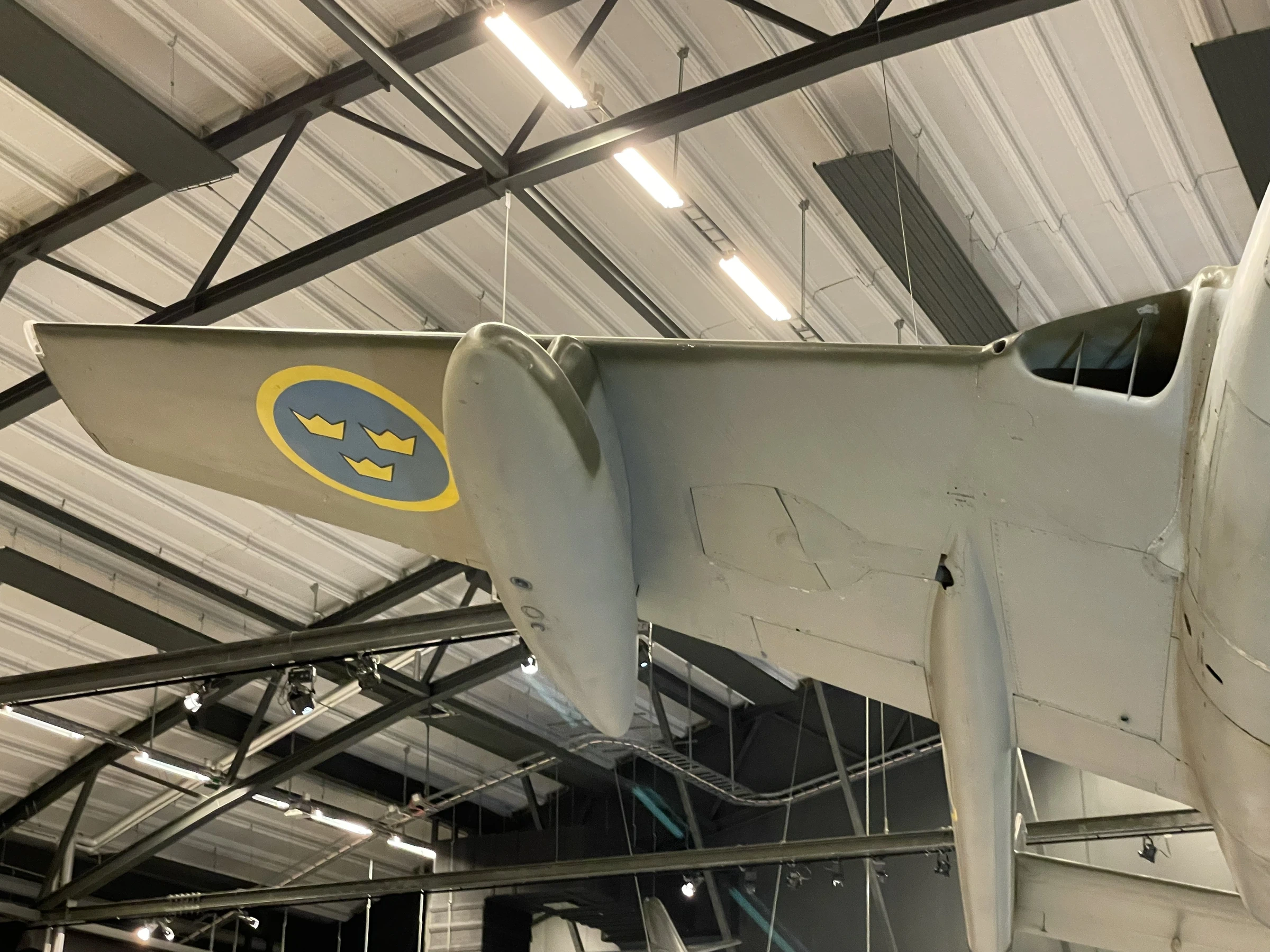
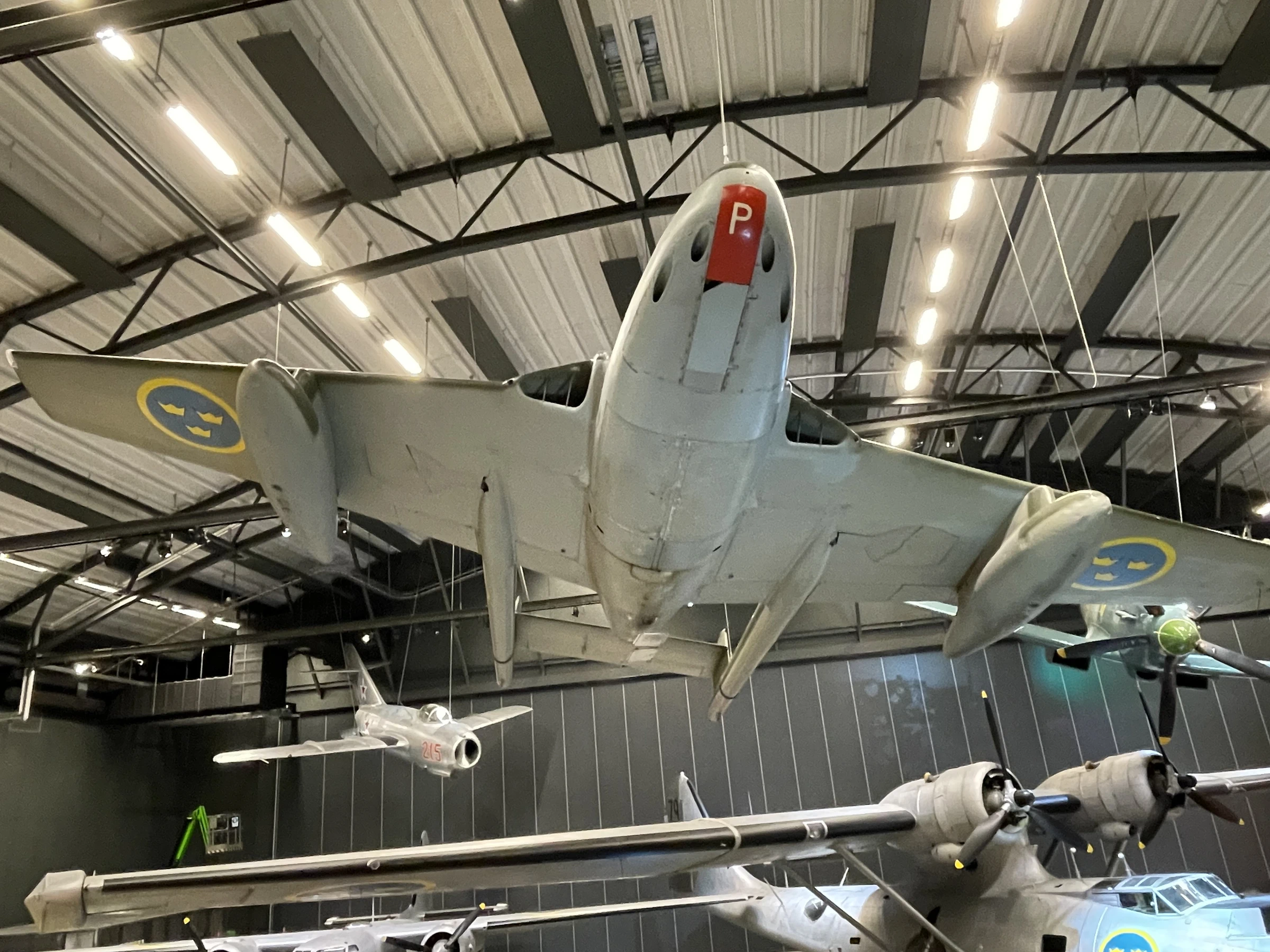
These walk-around photos were taken at Flygvapenmuseum at Malmen outside Linköping in 2017, 2019 and 2022. They show a de Havilland Vampire FB.50, designated J 28B in Swedish service — the aircraft that brought Sweden definitively into the jet age. De Havilland designed the Vampire around a single Goblin turbojet, using a twin-boom configuration to keep the jet pipe as short as possible and minimise power losses — a solution that gave the type its unmistakable silhouette. The nose and forward fuselage were largely wooden, de Havilland's traditional material best known from the Mosquito, while the twin booms and tail were metal.
Sweden was among the first countries in the world to operate jet-powered fighters, receiving the initial Vampire F.1s as J 28A from 1946. In 1949 a follow-on order for 310 of the improved FB.50 variant — designated J 28B — was placed, the largest foreign aircraft purchase in Swedish aviation history. The J 28B was a combined fighter and attack aircraft with greater fuel capacity and the ability to carry external weapons, distinguishable from the earlier J 28A by its clipped square wingtips. Together the two variants equipped five fighter wings and served in training roles well into the 1960s. The Vampire is the type flown by more individual pilots than any other aircraft in the history of the Swedish Air Force, and this example is suspended from the ceiling of Flygvapenmuseum's main hall as a fitting reminder of the moment Sweden stepped into the jet age.