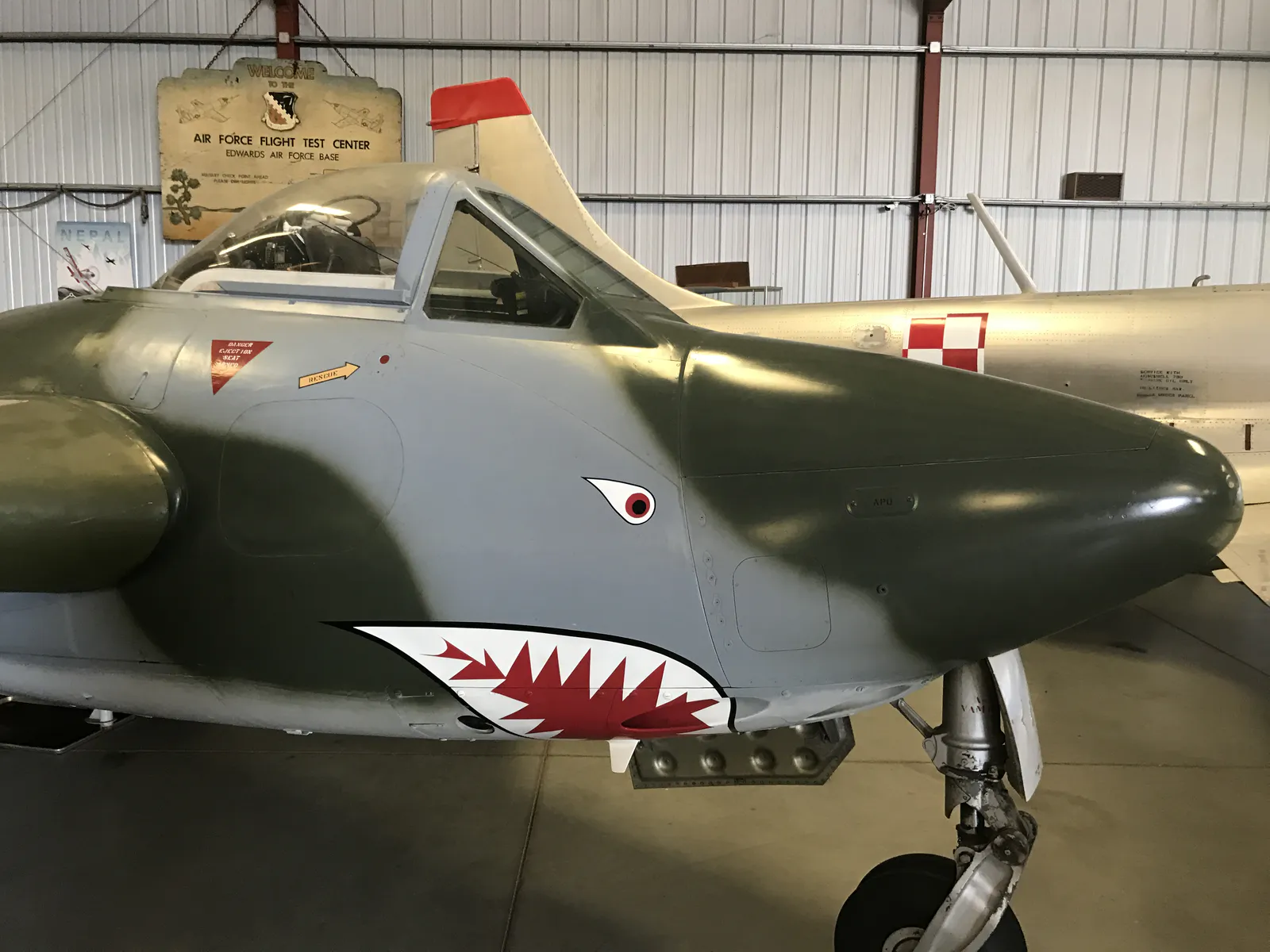
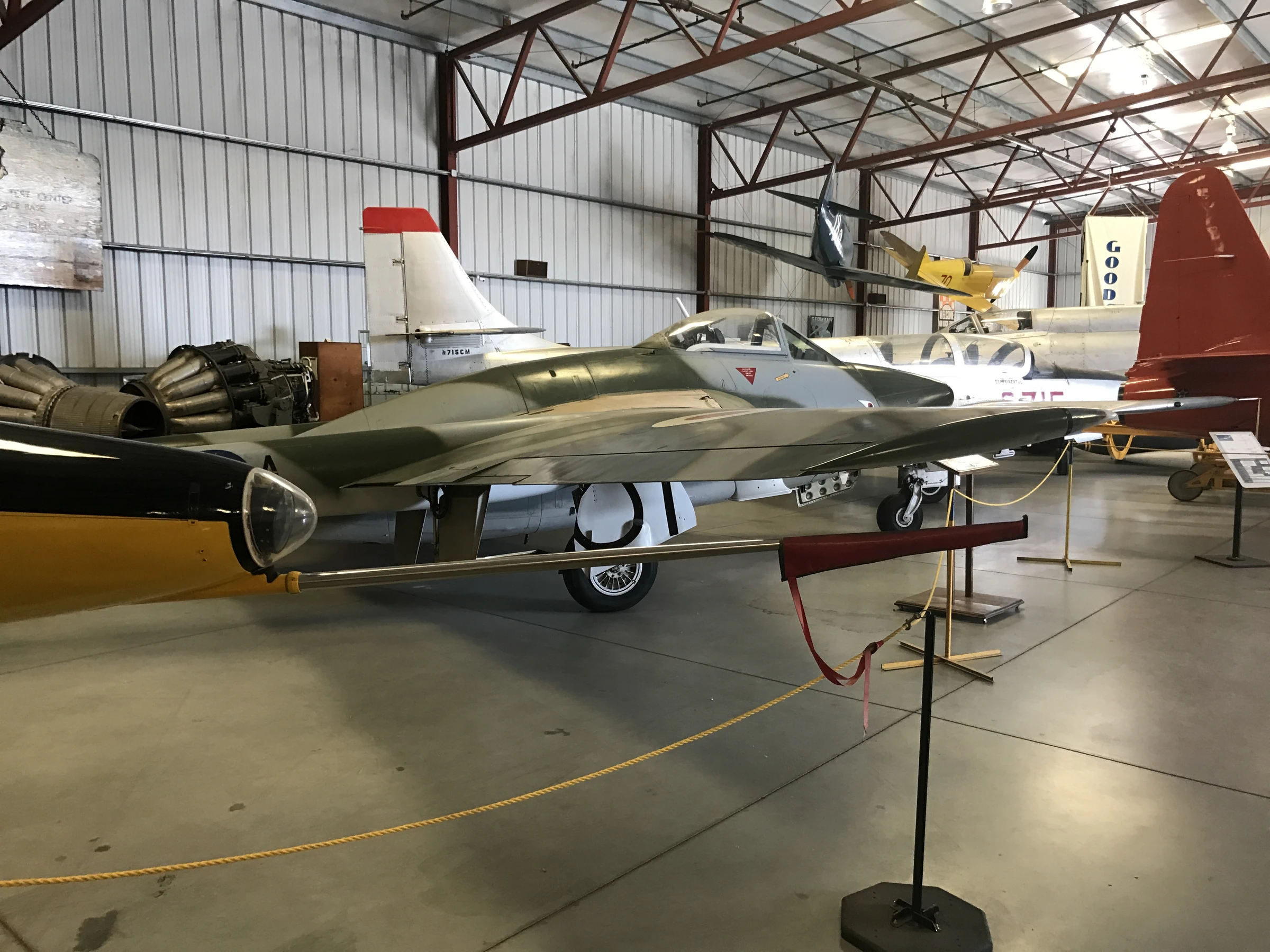
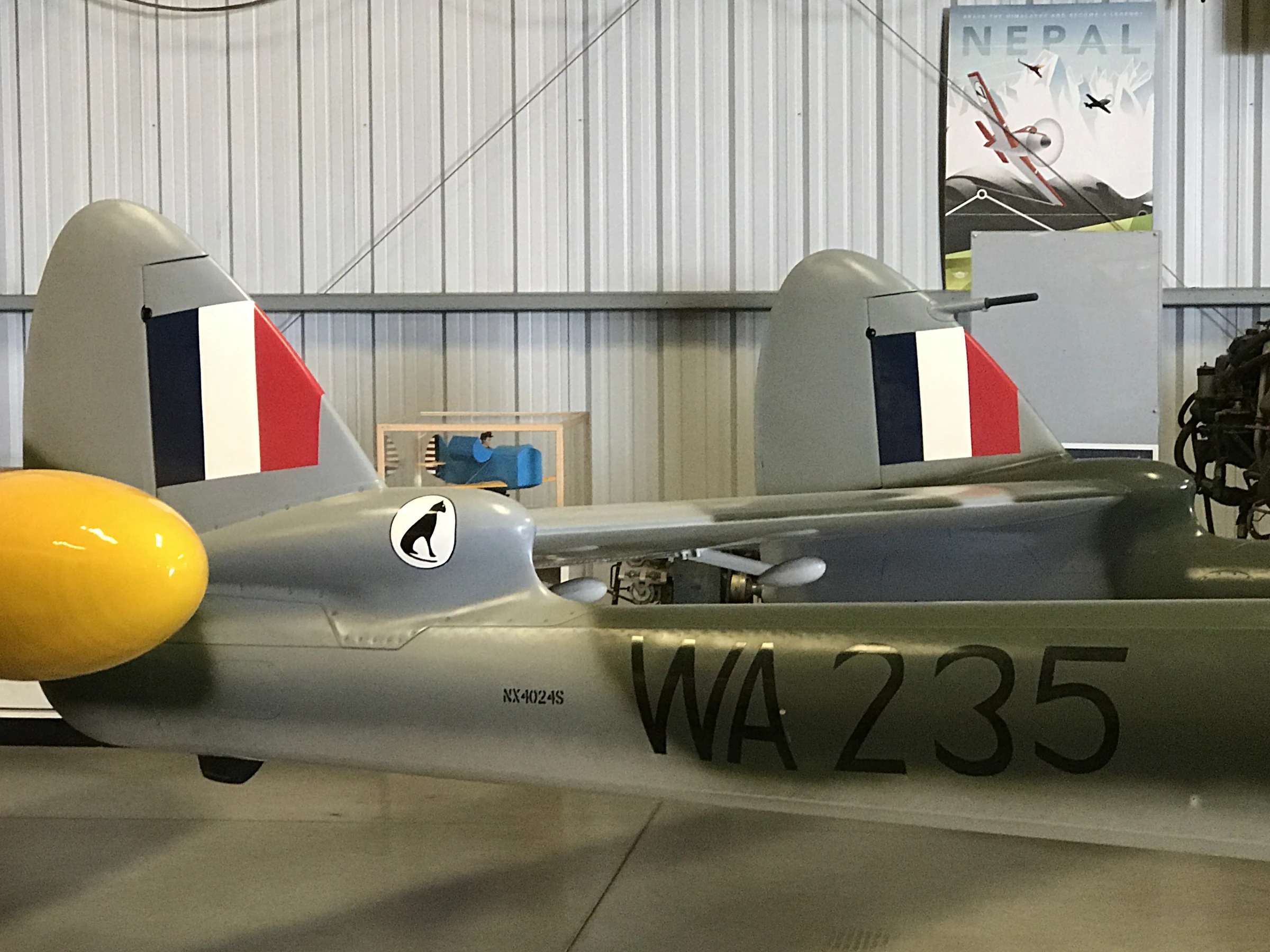
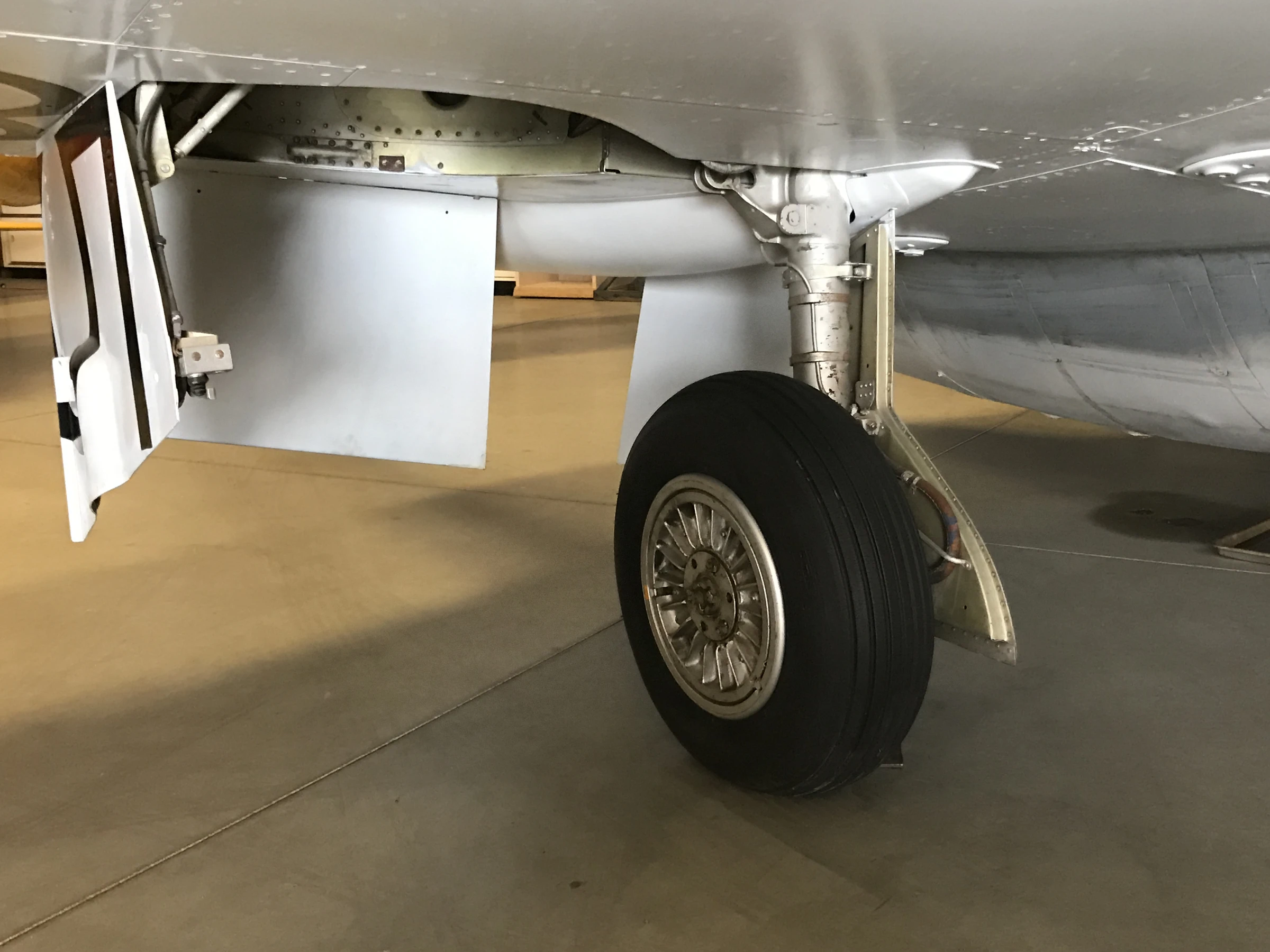
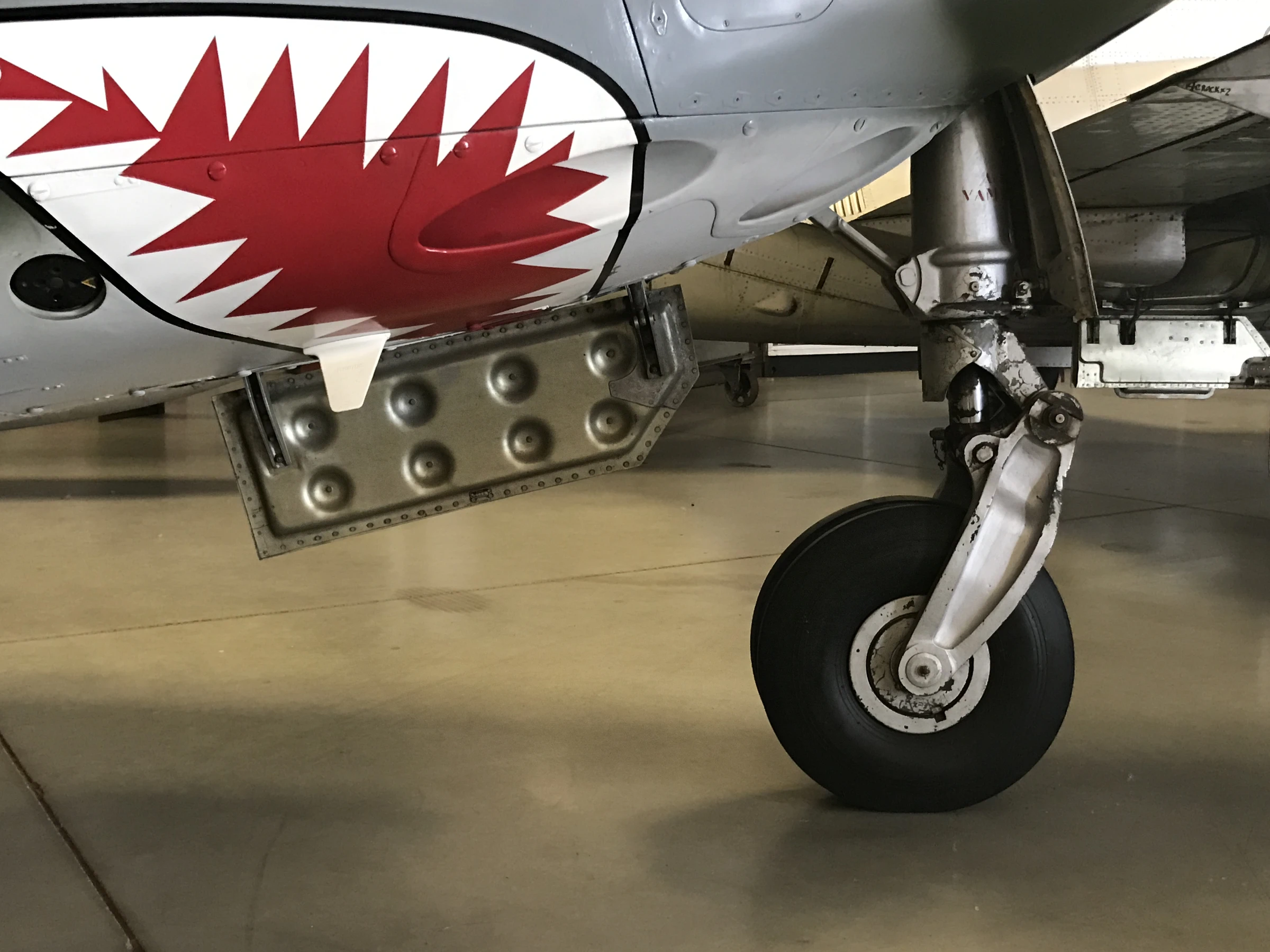
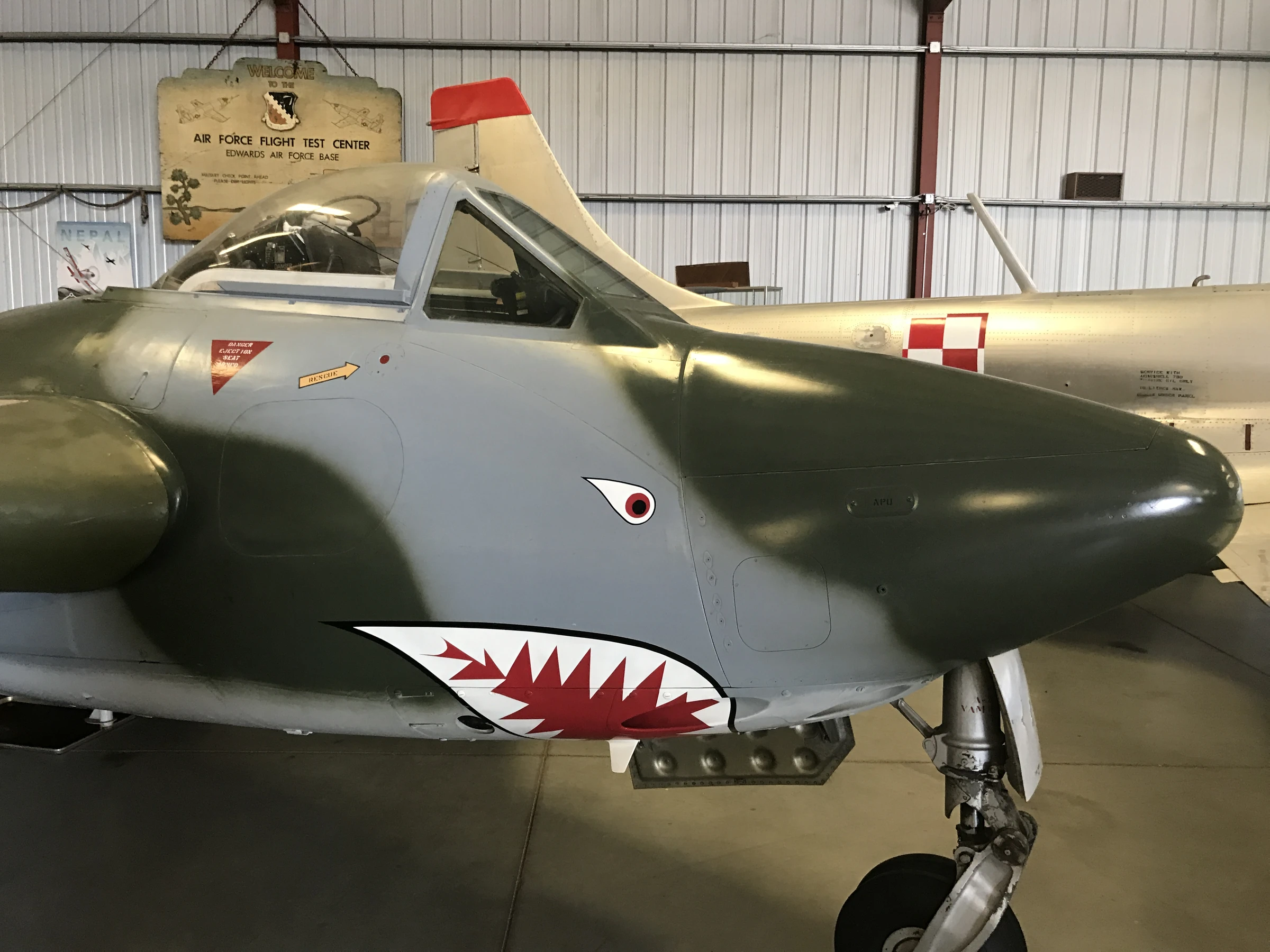
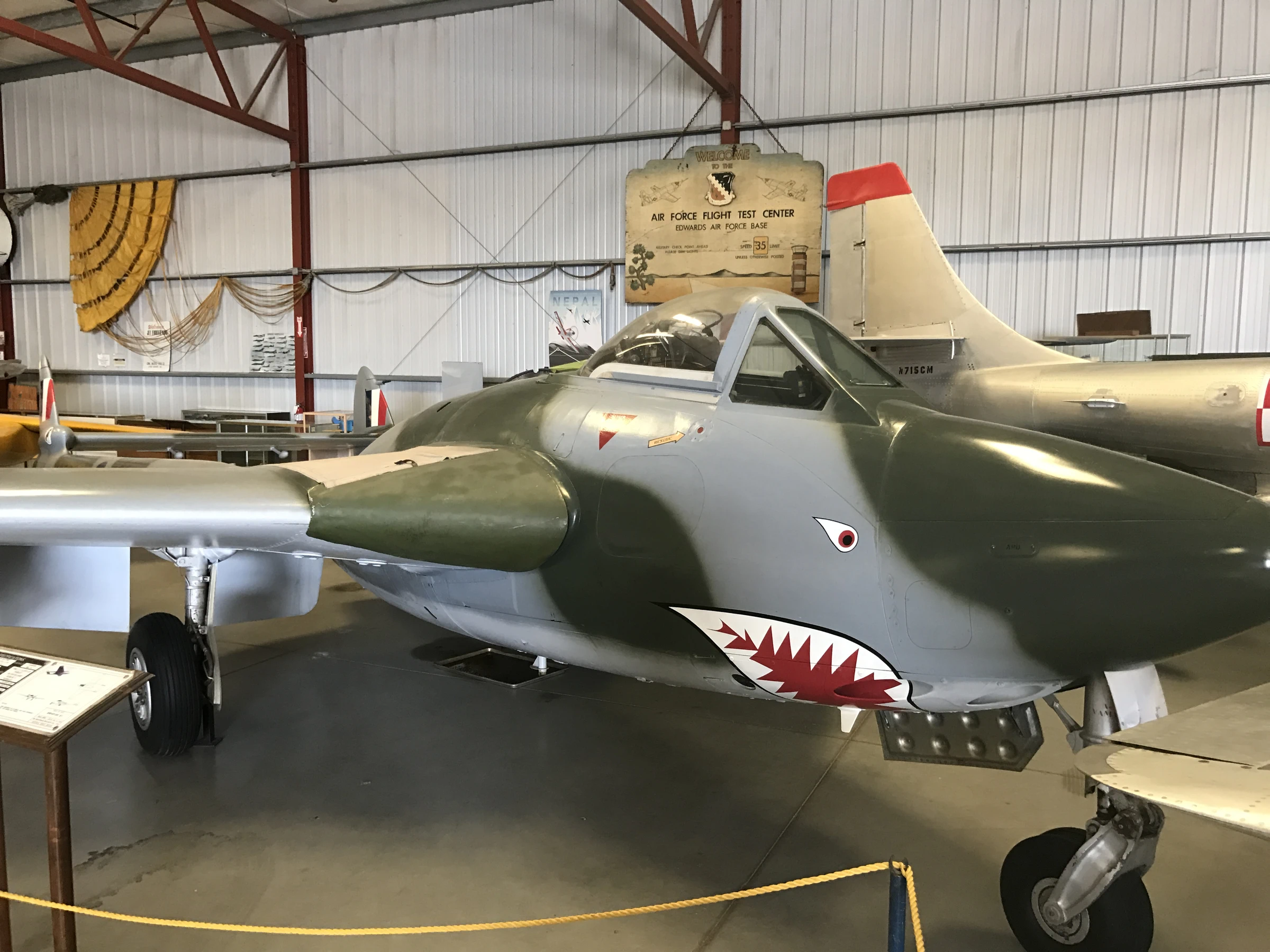
These walk-around photos were taken at the Planes of Fame Air Museum in Chino, California in 2017, where the aircraft is displayed in the Jet & Air Racers hangar. They show a de Havilland DH.100 Vampire FB.6, US civil registration NX4024S, displayed in Royal Air Force markings as WA235/L-A — though the aircraft itself has no British service history.
The Vampire was Britain's second jet fighter to enter RAF service, developed around the de Havilland Goblin turbojet during the Second World War. Its distinctive twin-boom layout was a direct consequence of the engine's modest thrust — by keeping the jet pipe as short as possible, engineers minimised power losses in the exhaust ducting. The result was an agile, compact fighter that entered service in 1946 and went on to serve with air forces across the world, including in the fighter-bomber FB.6 variant displayed here. The FB.6 was an export and licence-built development of the FB.5, with a more powerful Goblin 3 engine and strengthened wings for ground attack operations.
This particular aircraft, c/n 638, was licence-built in Switzerland by the Federal Aircraft Factory for the Swiss Air Force, where it served as J-1129. Switzerland operated a substantial fleet of licence-built Vampires from the late 1940s and was one of several countries to manufacture the type domestically. The aircraft is now displayed in RAF markings — a common practice in American museums — but its origins are entirely Swiss.