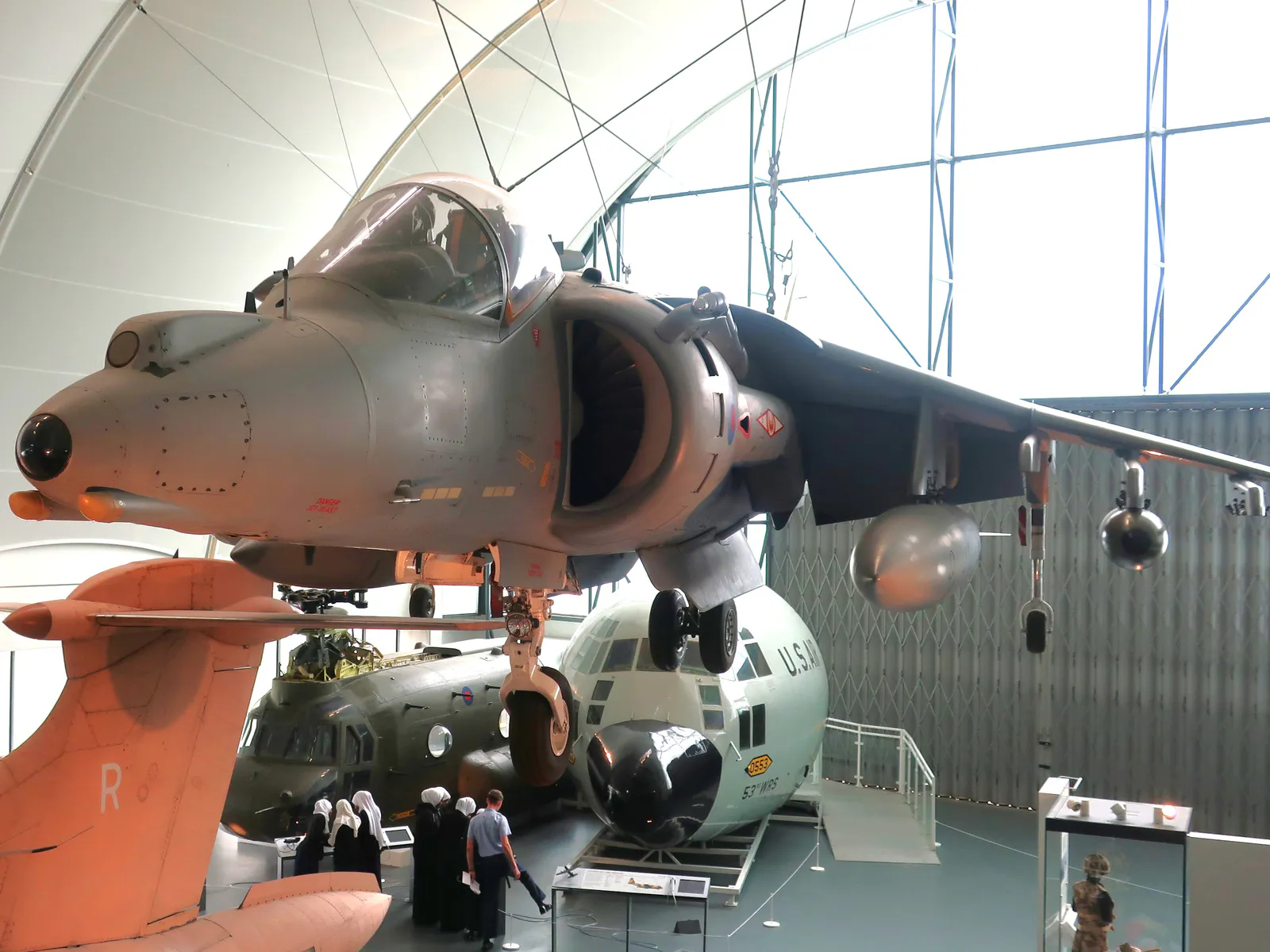
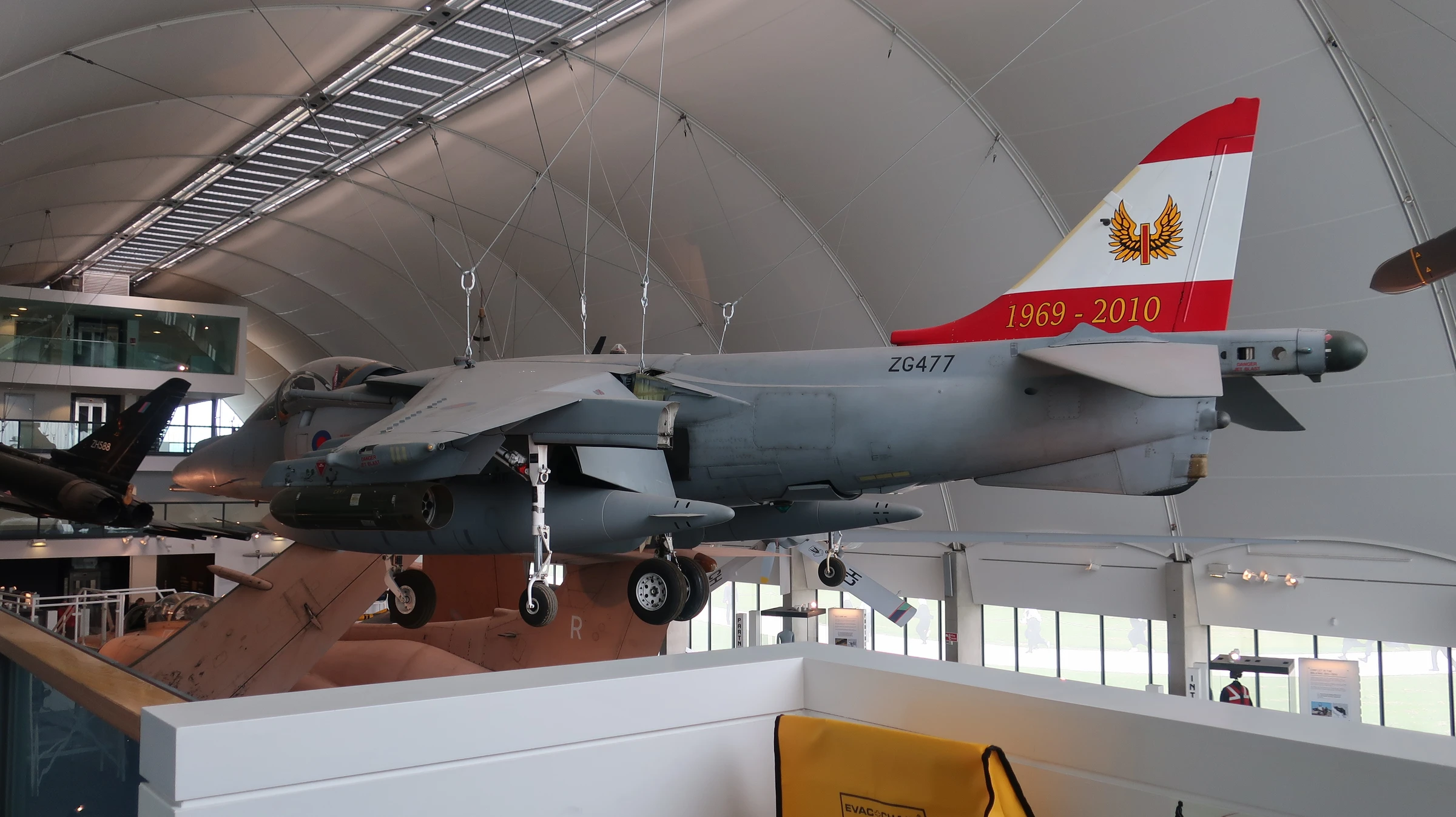
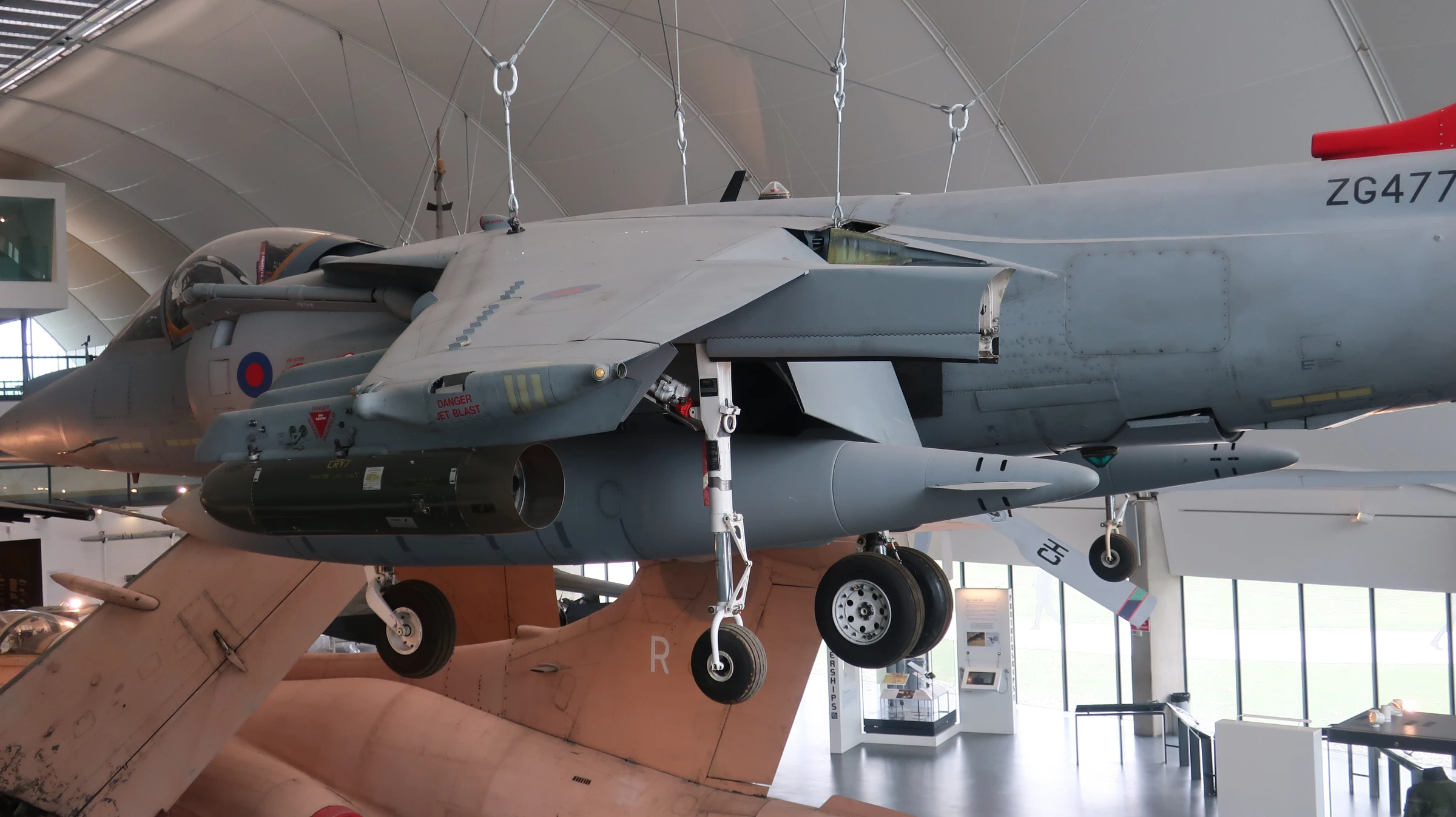
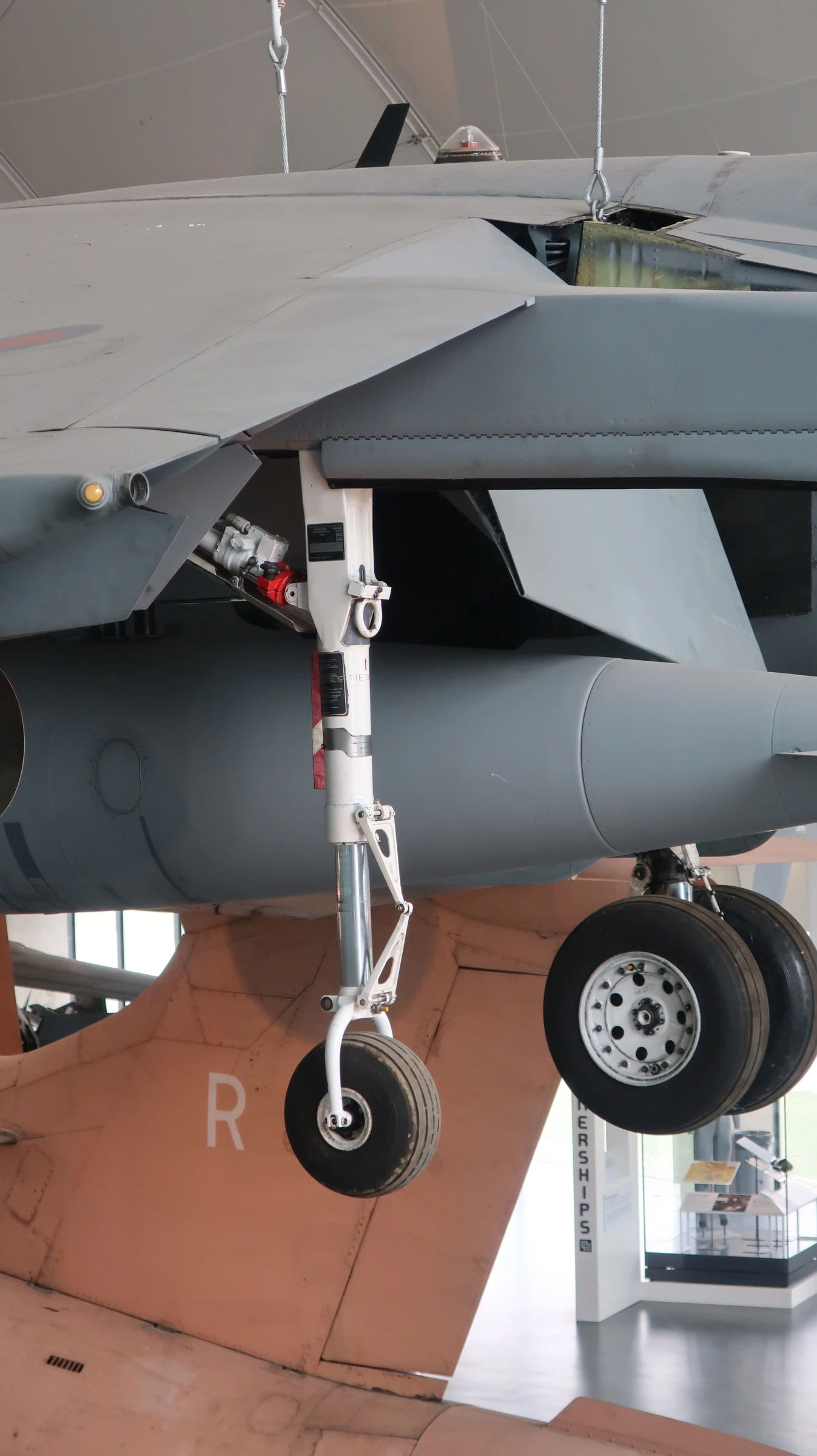
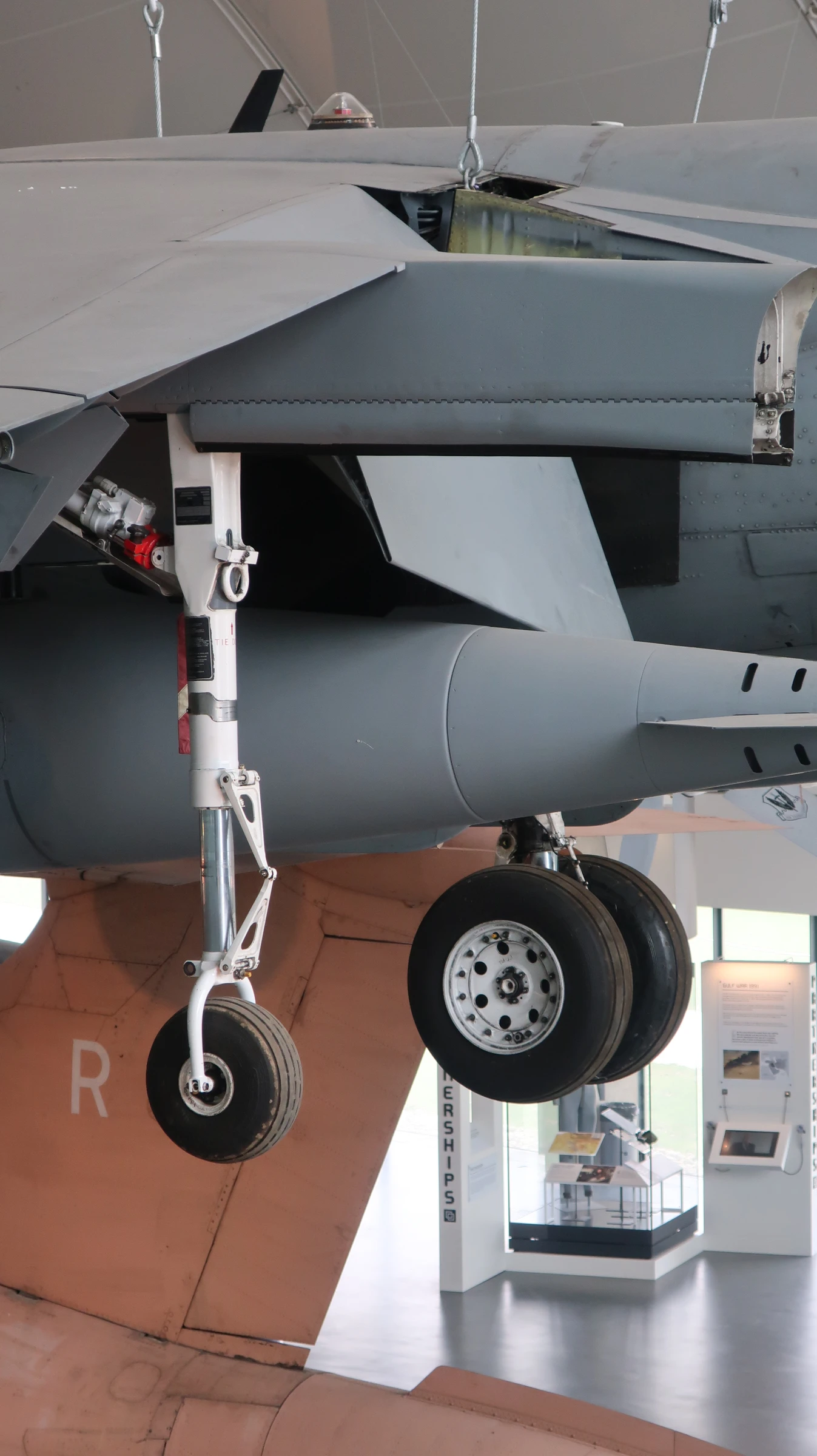
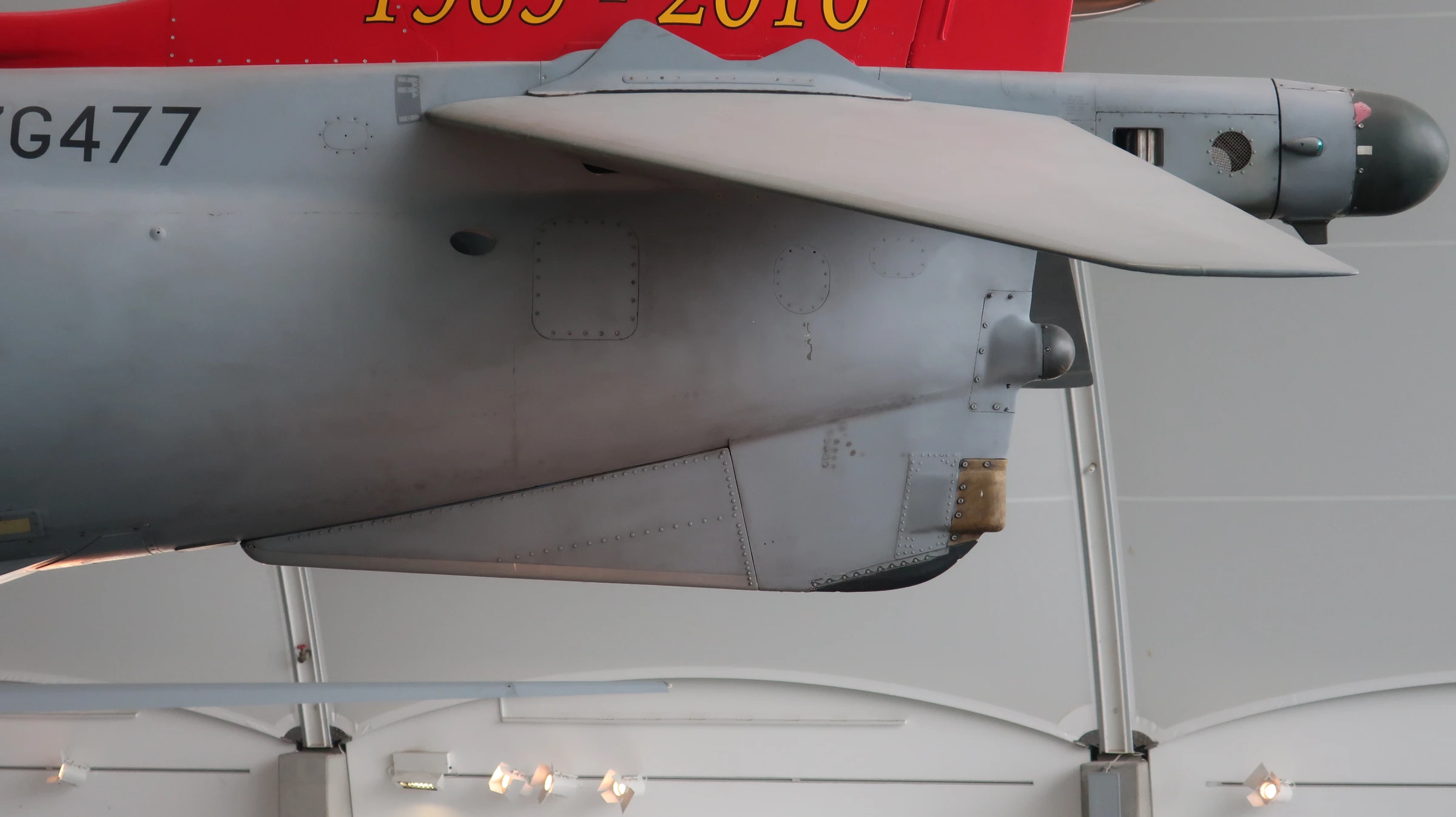
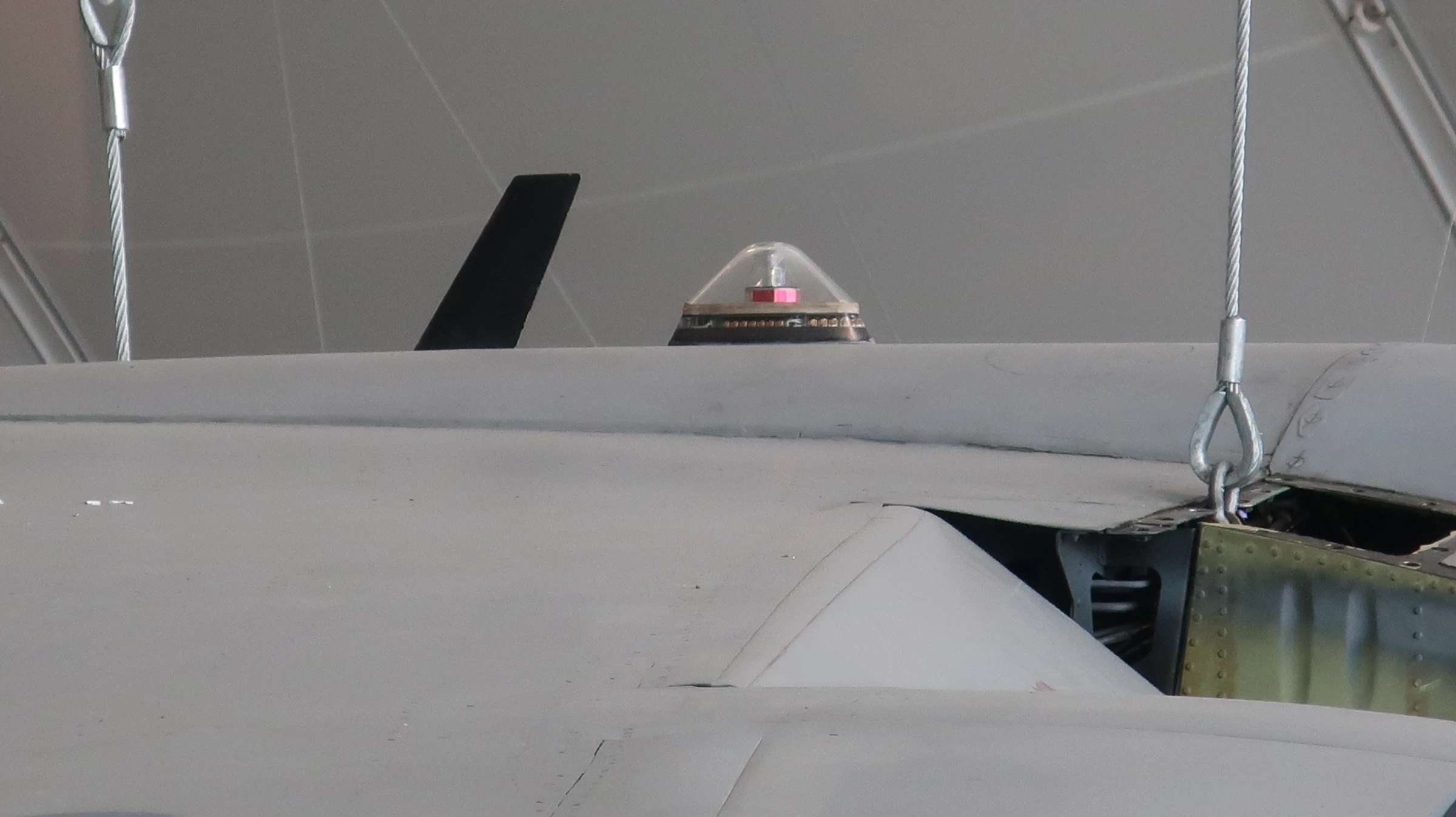
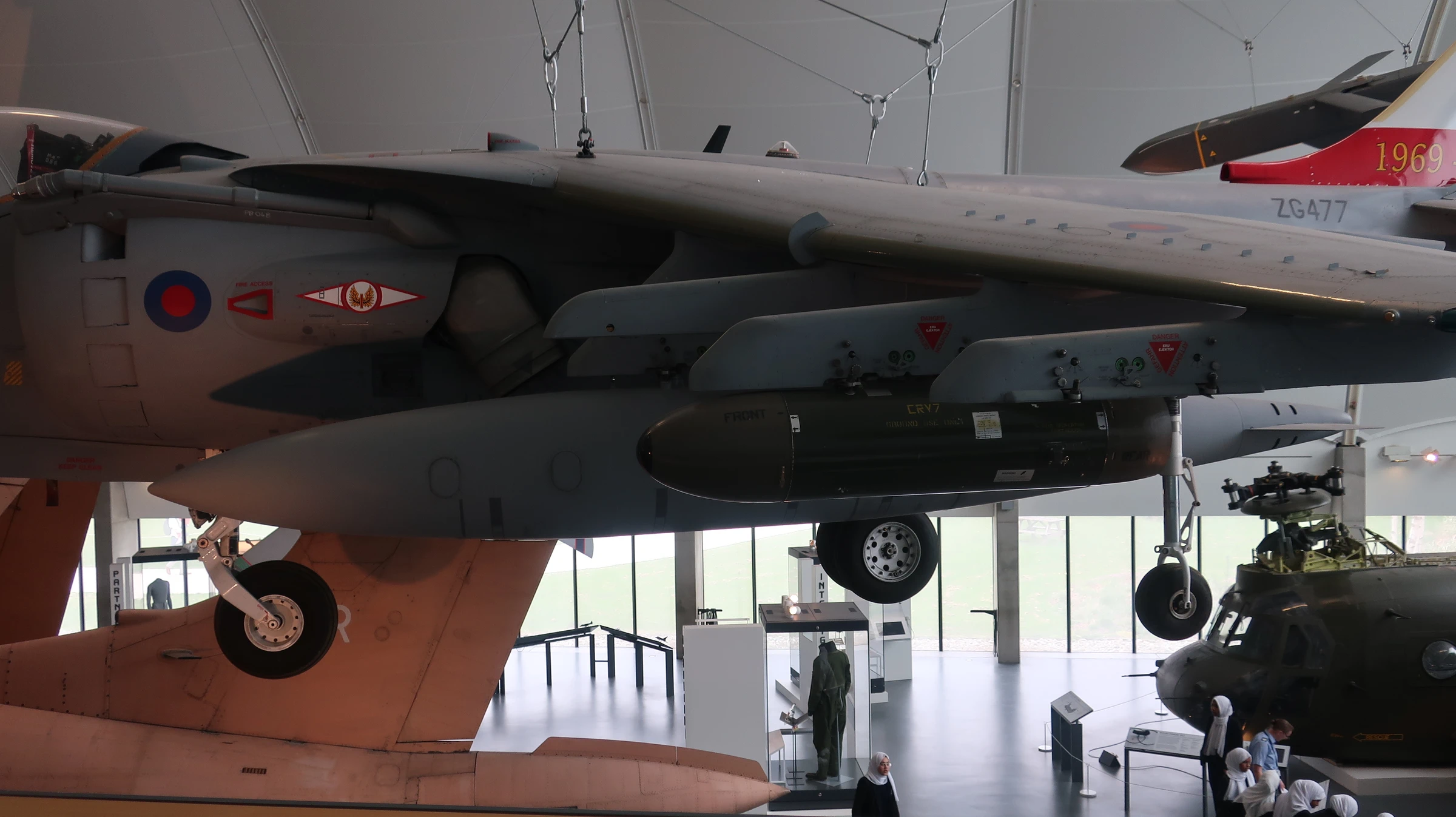
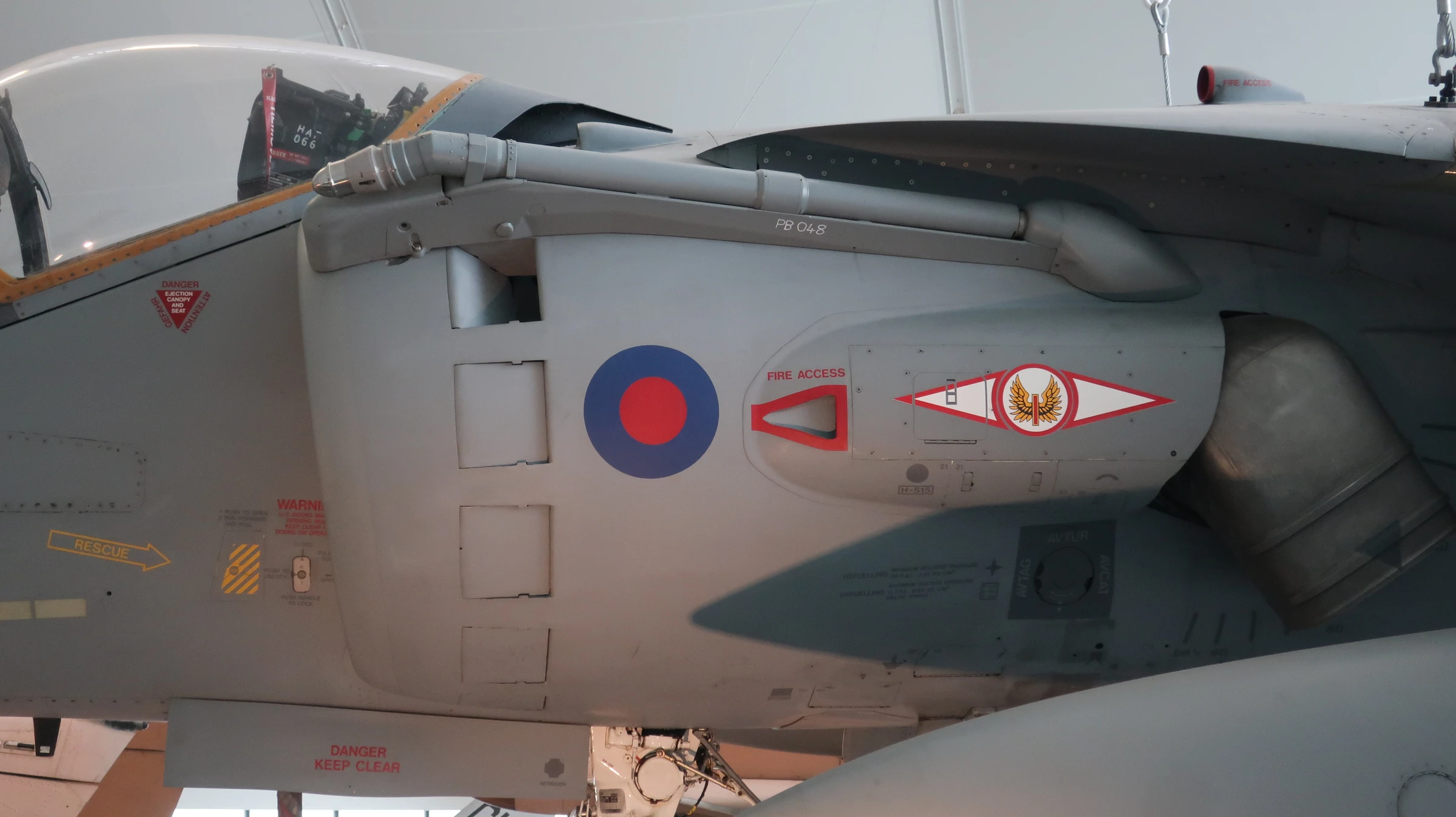
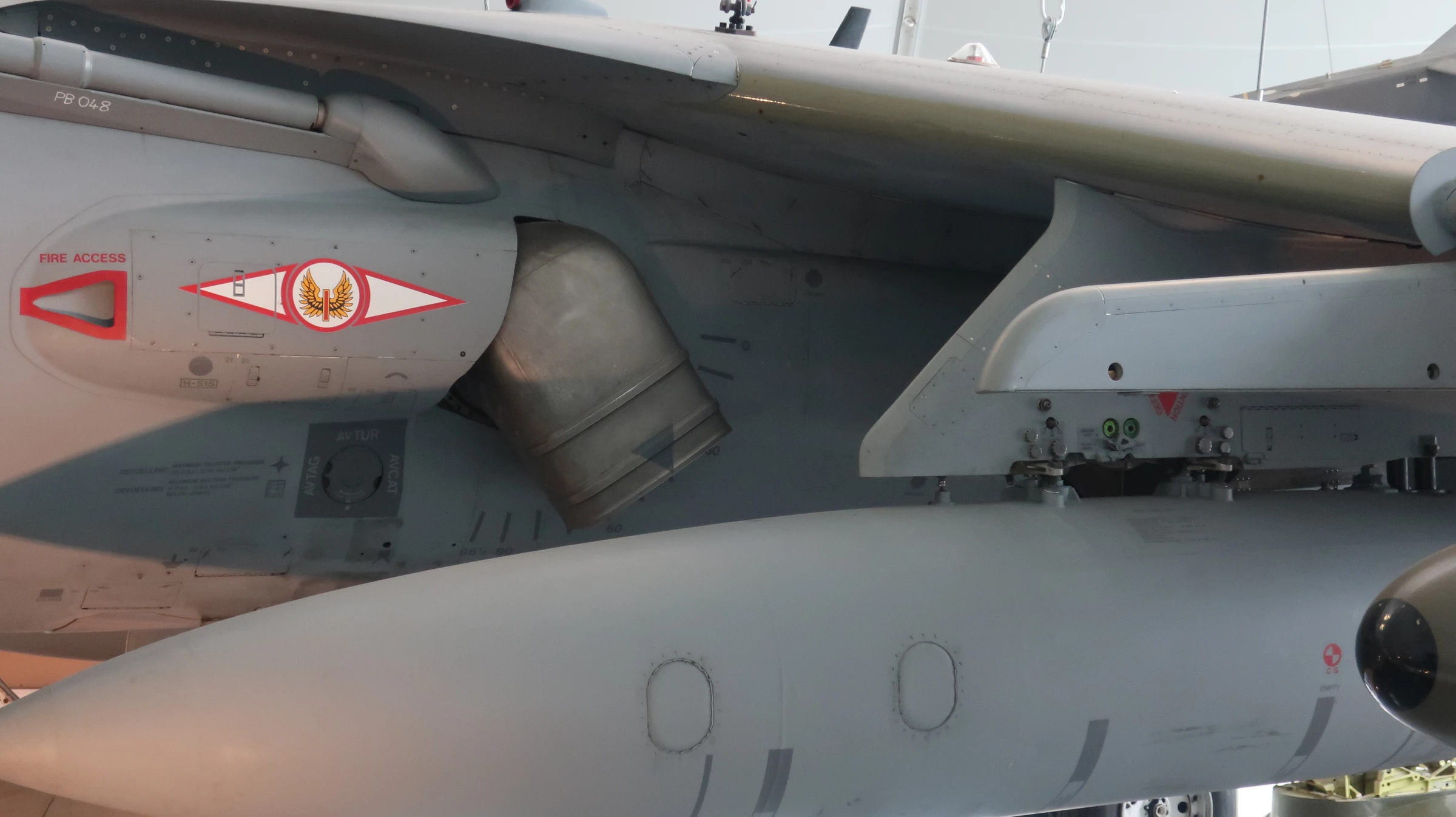
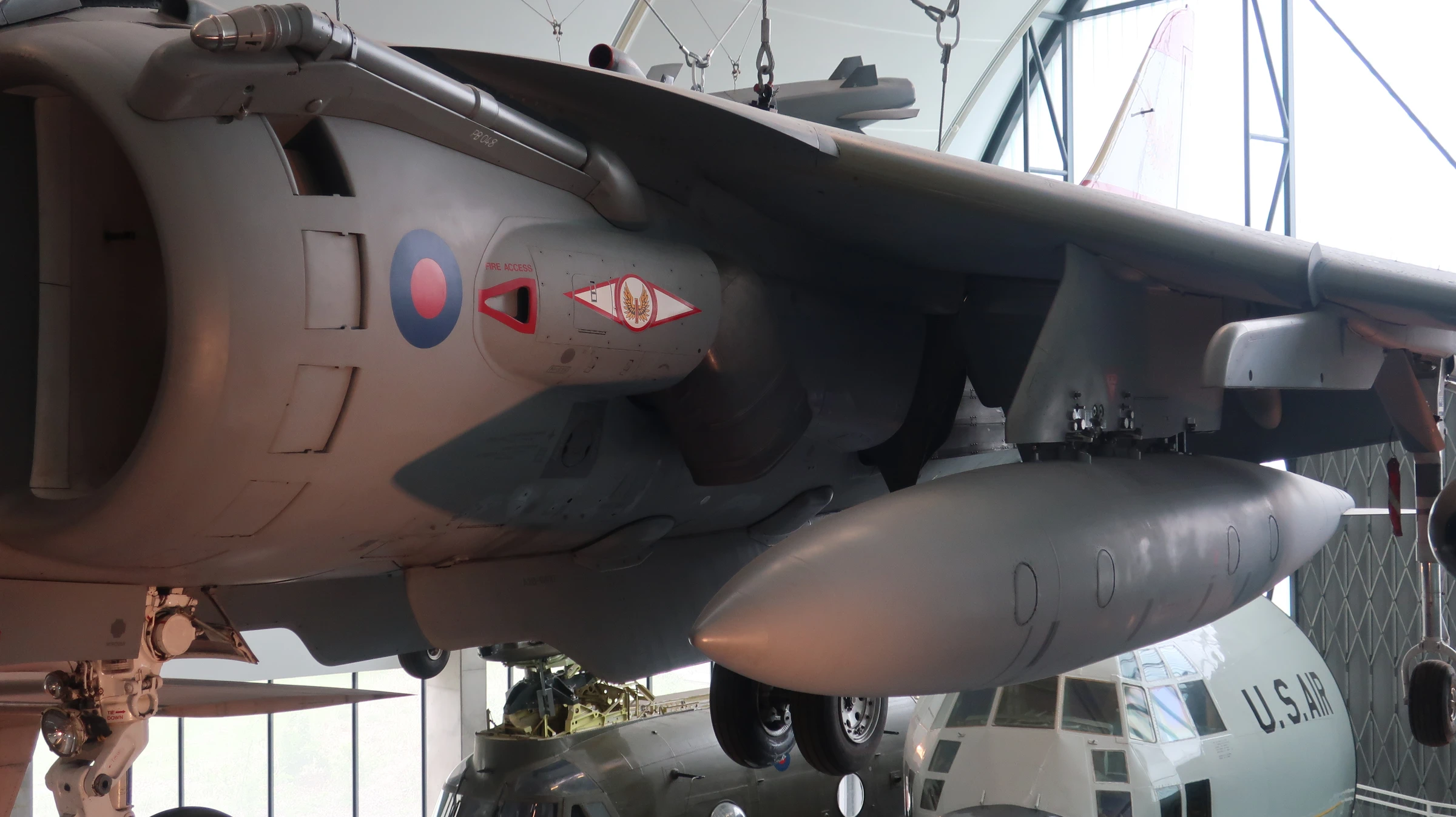
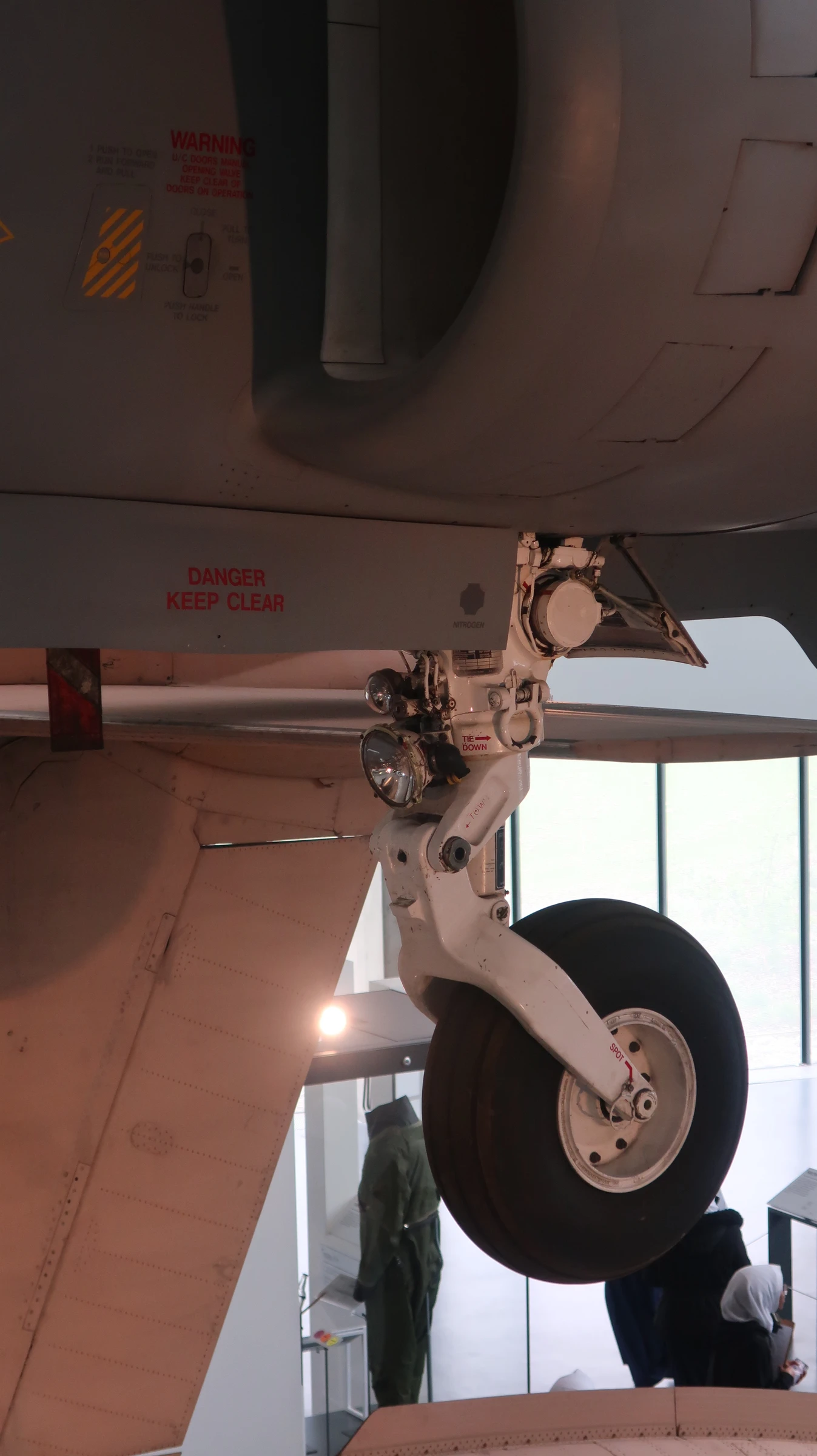
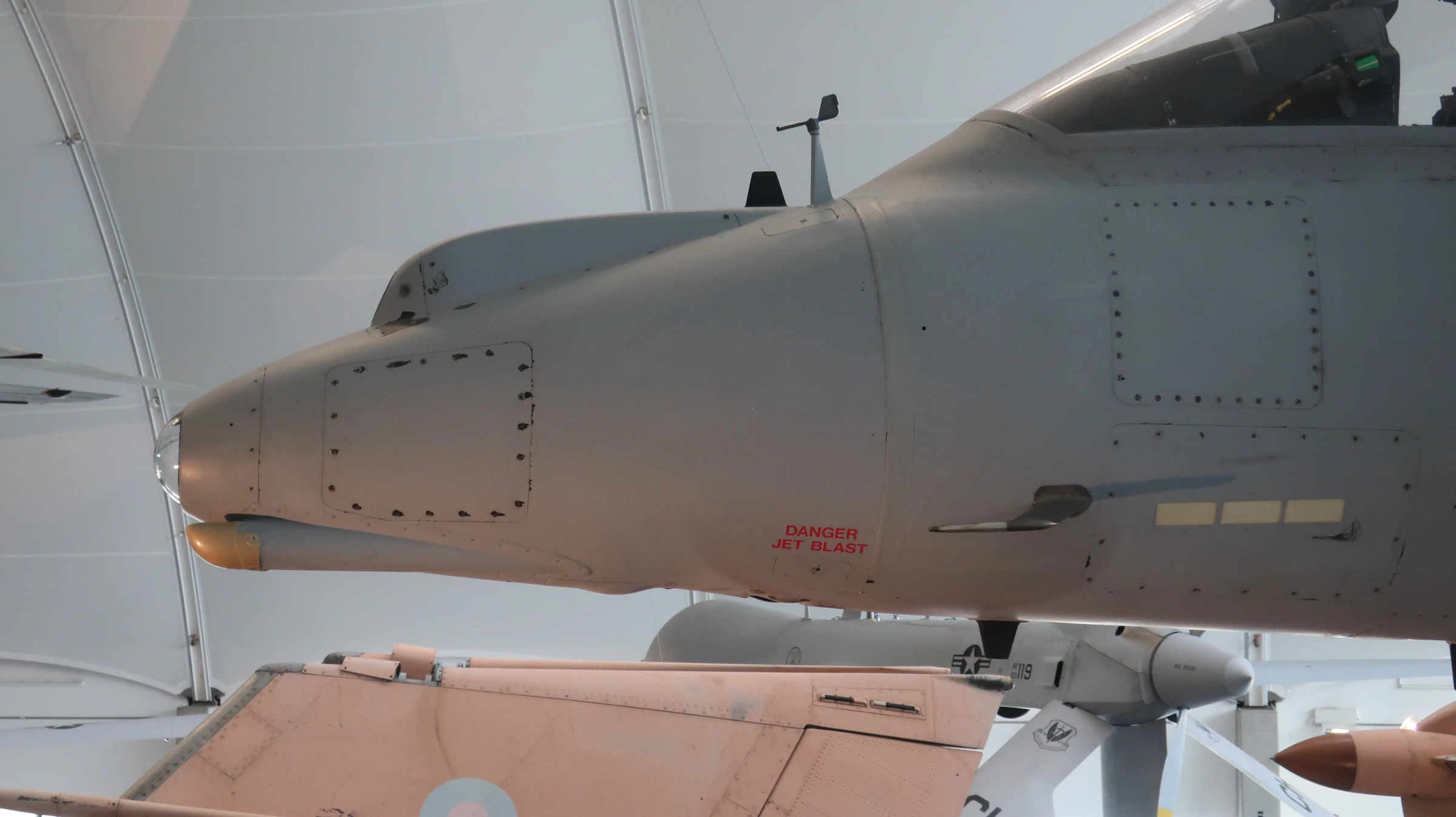
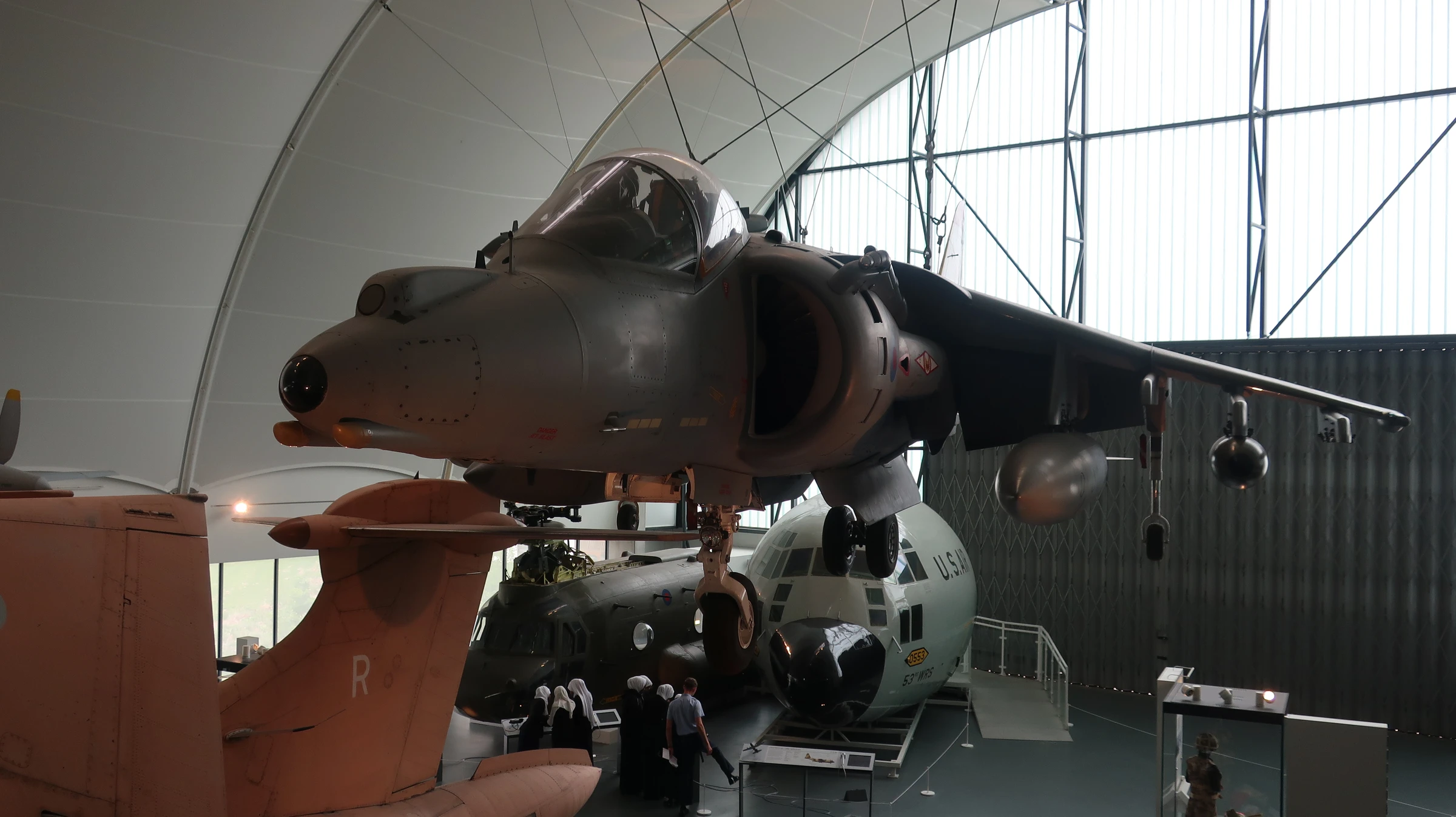
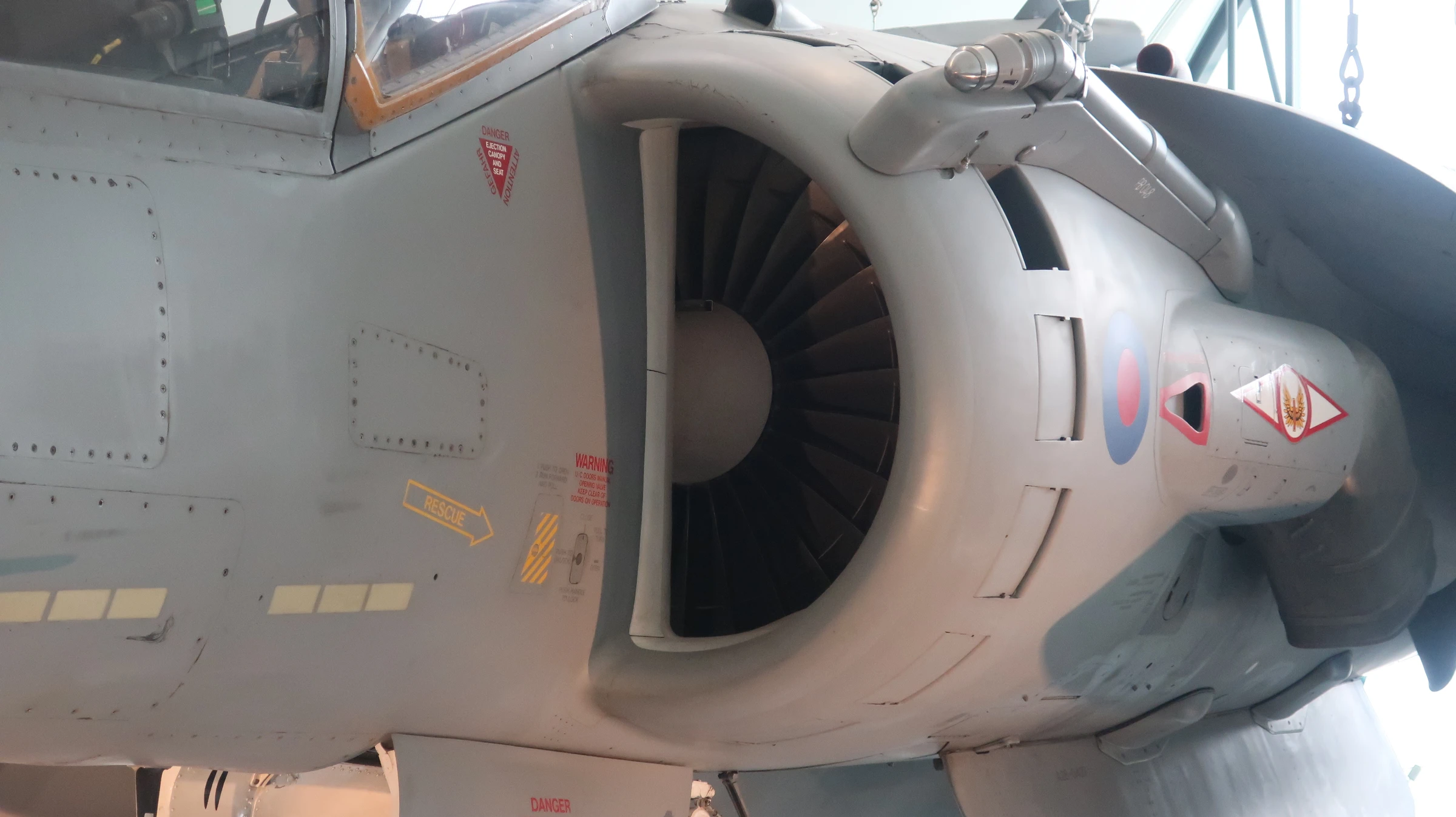
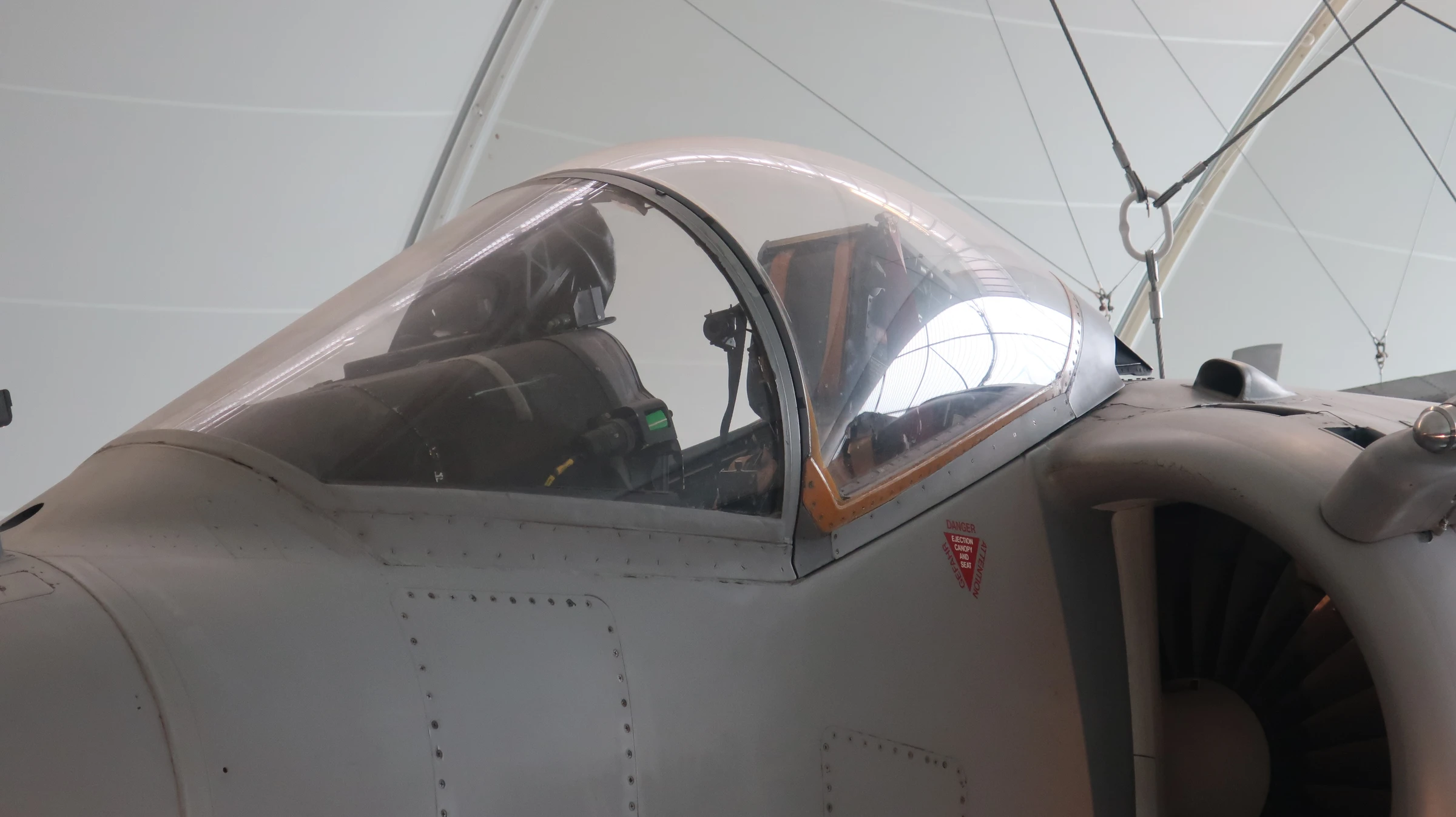
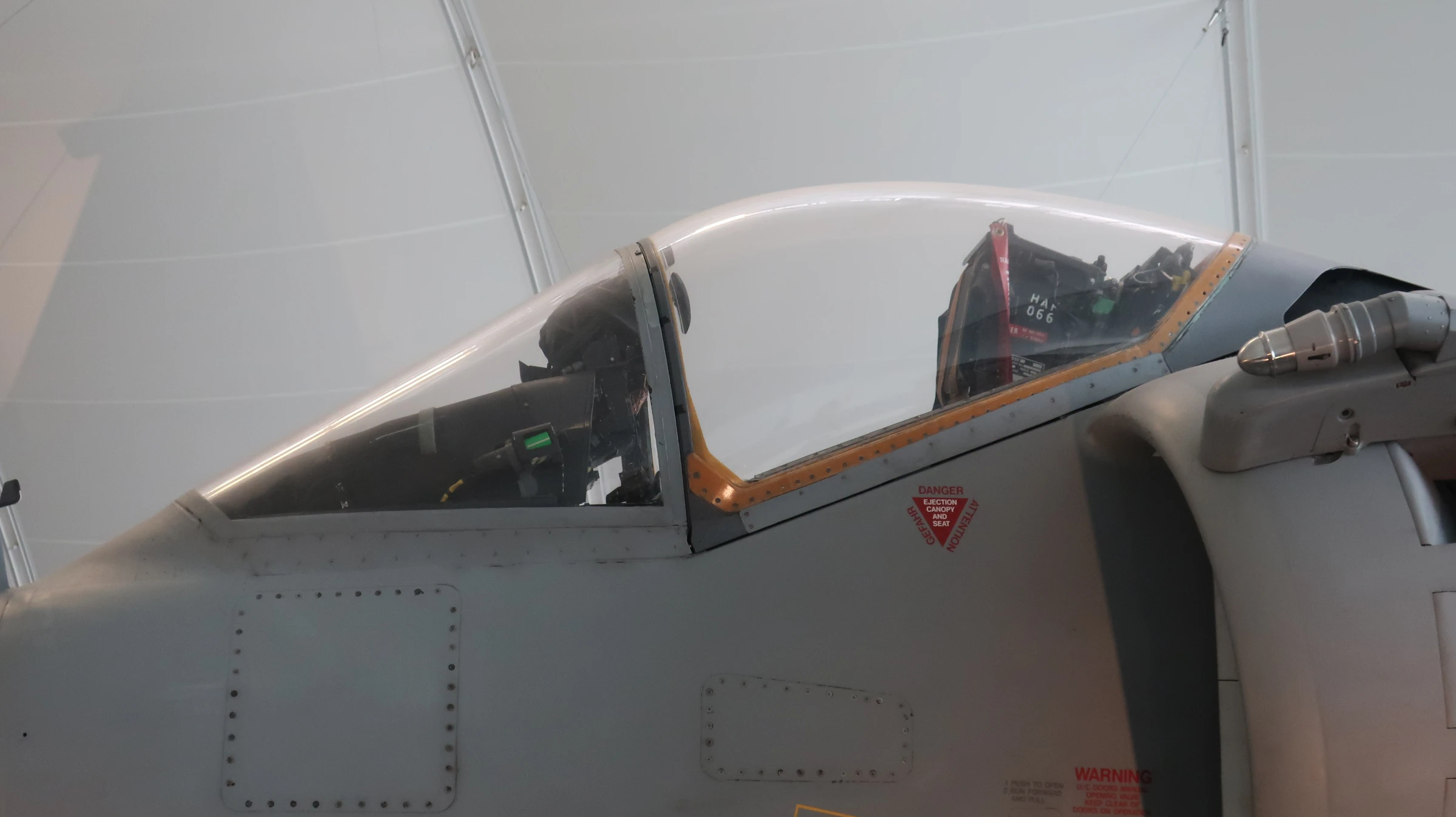
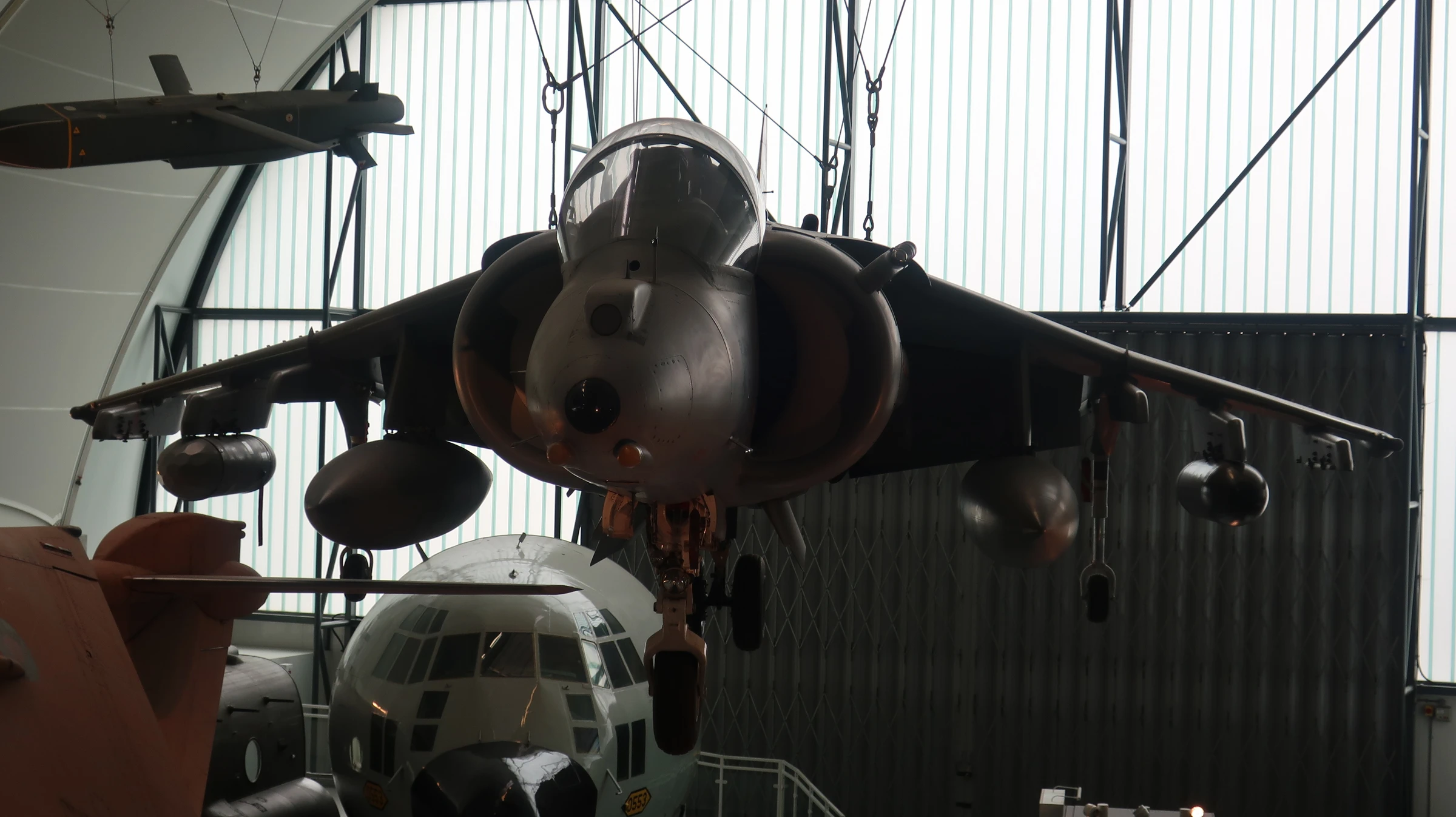
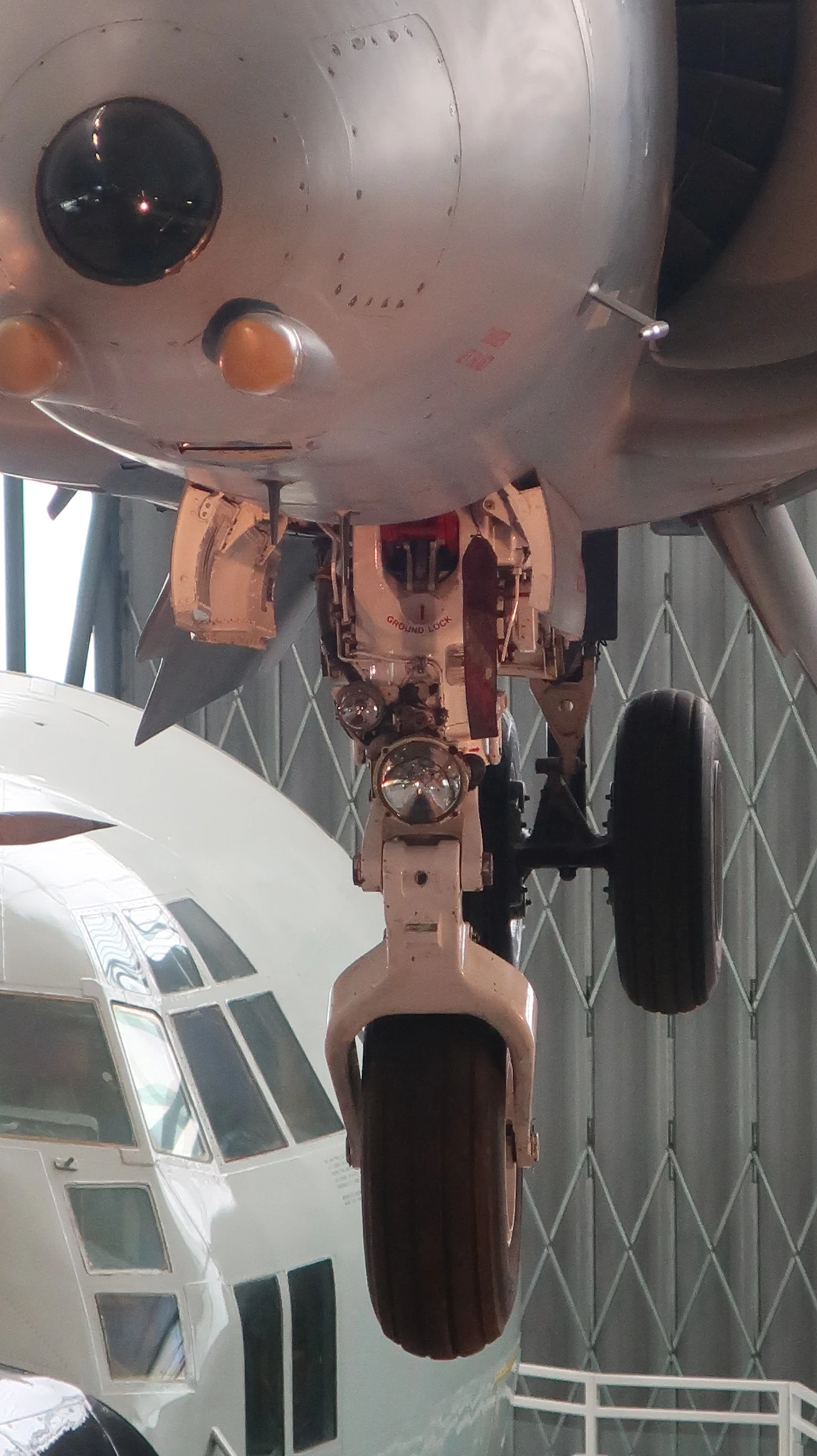
These walk-around photos were taken at the RAF Museum London in Hendon in 2019. They show a BAe Harrier GR.9A, serial ZG477, wearing the commemorative tail markings of No. 1 (F) Squadron with the inscription "1969–2010" — marking the full span of RAF Harrier operations. The Harrier was the world's first operational fixed-wing STOVL aircraft, capable of vertical and short take-off and landing through vectored thrust from its Rolls-Royce Pegasus engine, a combination of characteristics that made it unique among combat jets of its era and a cornerstone of both RAF and Royal Navy aviation for four decades.
Built initially as a GR.7 and delivered in 1990, ZG477 served with Nos. 3 and 4 Squadrons in Germany before policing the Northern Exclusion Zone over Iraq as part of Operation Warden in the early 1990s. In 1999 it flew combat missions over Kosovo during Operation Allied Force, and in 2003 participated in the invasion of Iraq. Upgraded to GR.9A standard in 2004 with a more powerful Pegasus 107 engine and an integrated weapons suite, it later served in Afghanistan with eight other Harriers flying close air support missions over Helmand Province. As "Jedi 1" — the Boss's aircraft — ZG477 was flown by Wing Commander Dave Haines leading the 16-aircraft "Kestrel Formation" farewell flight on 15 December 2010, the day the entire RAF Harrier fleet was grounded as a result of the Strategic Defence Review.