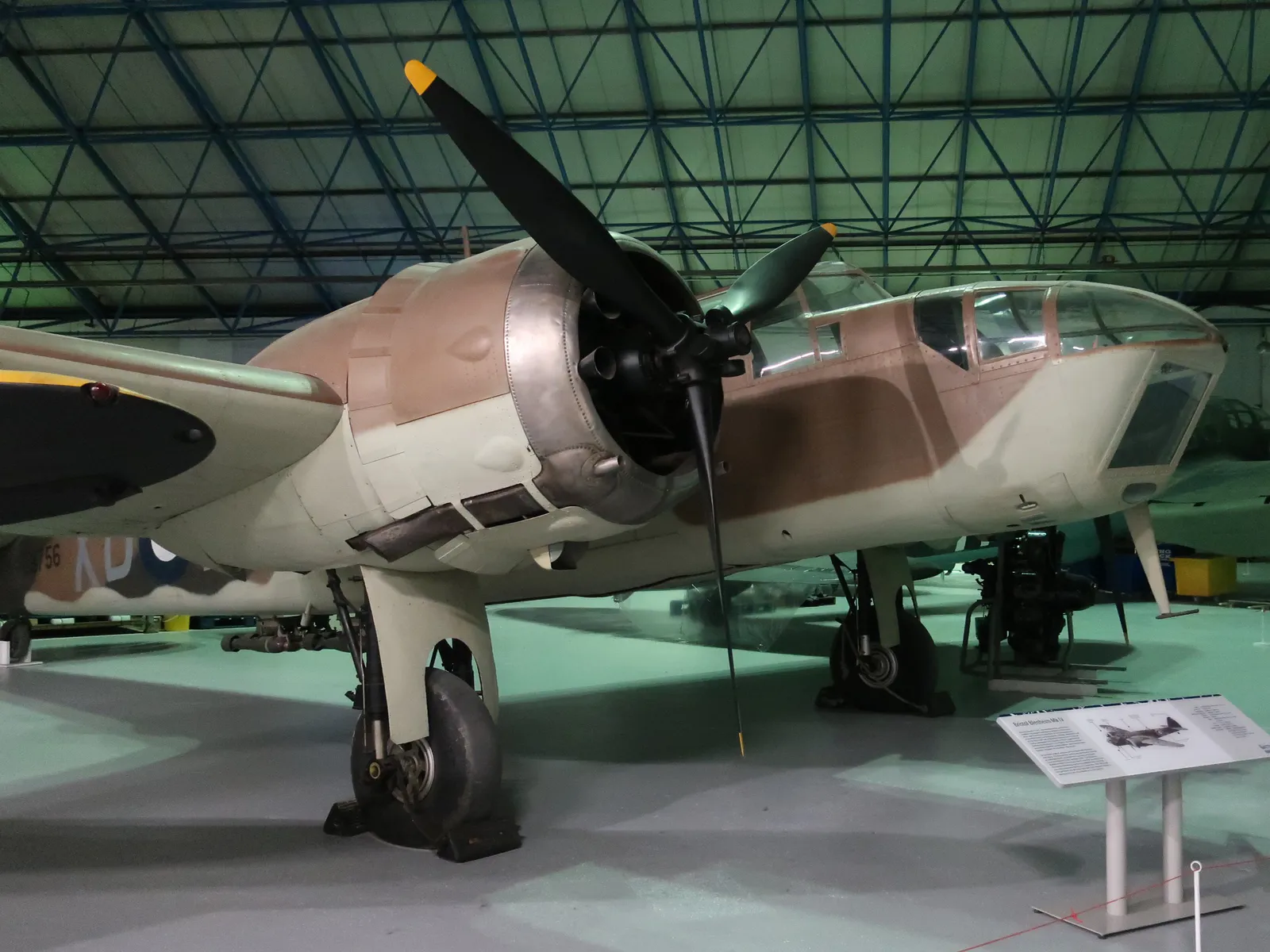
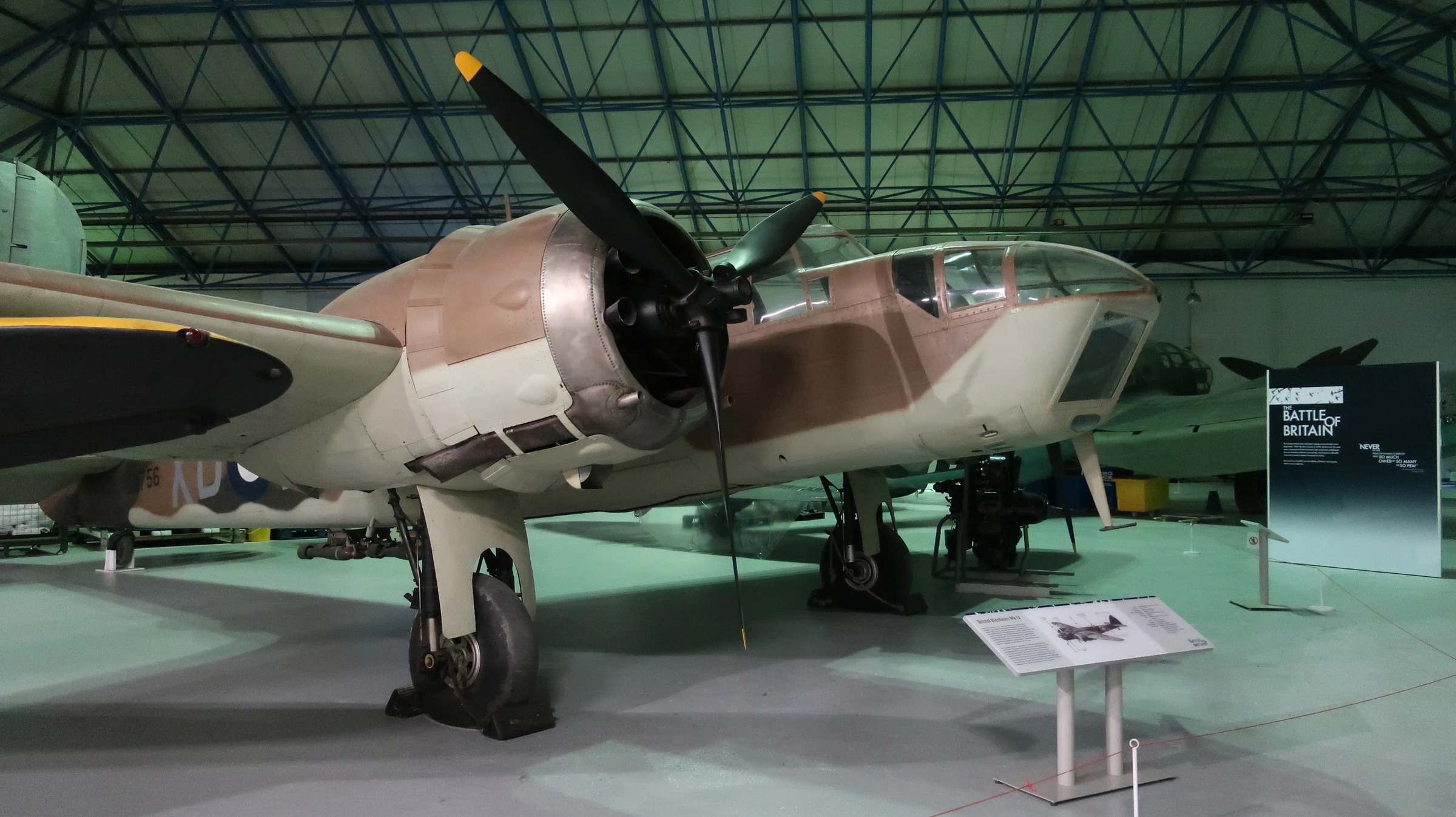
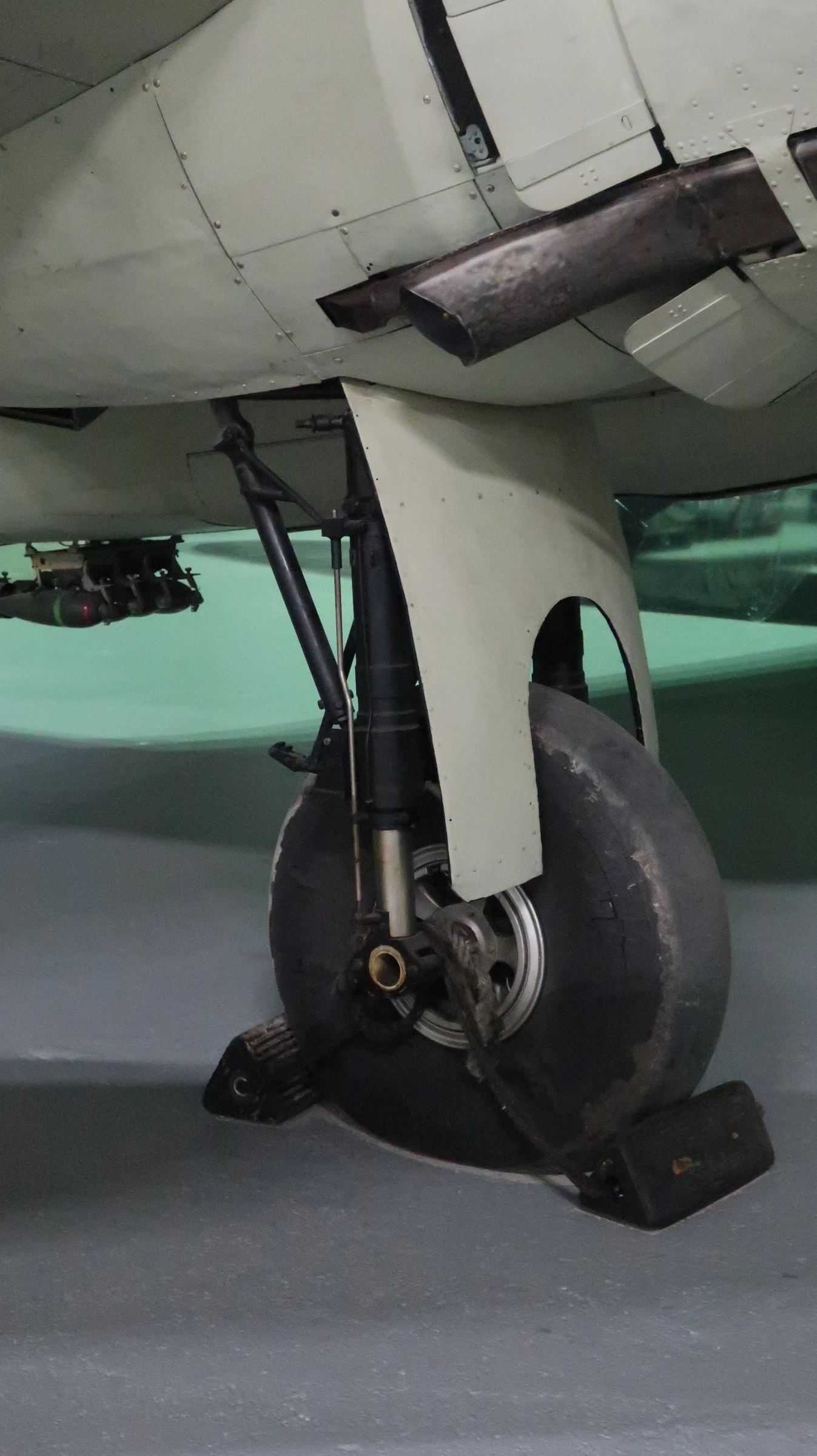
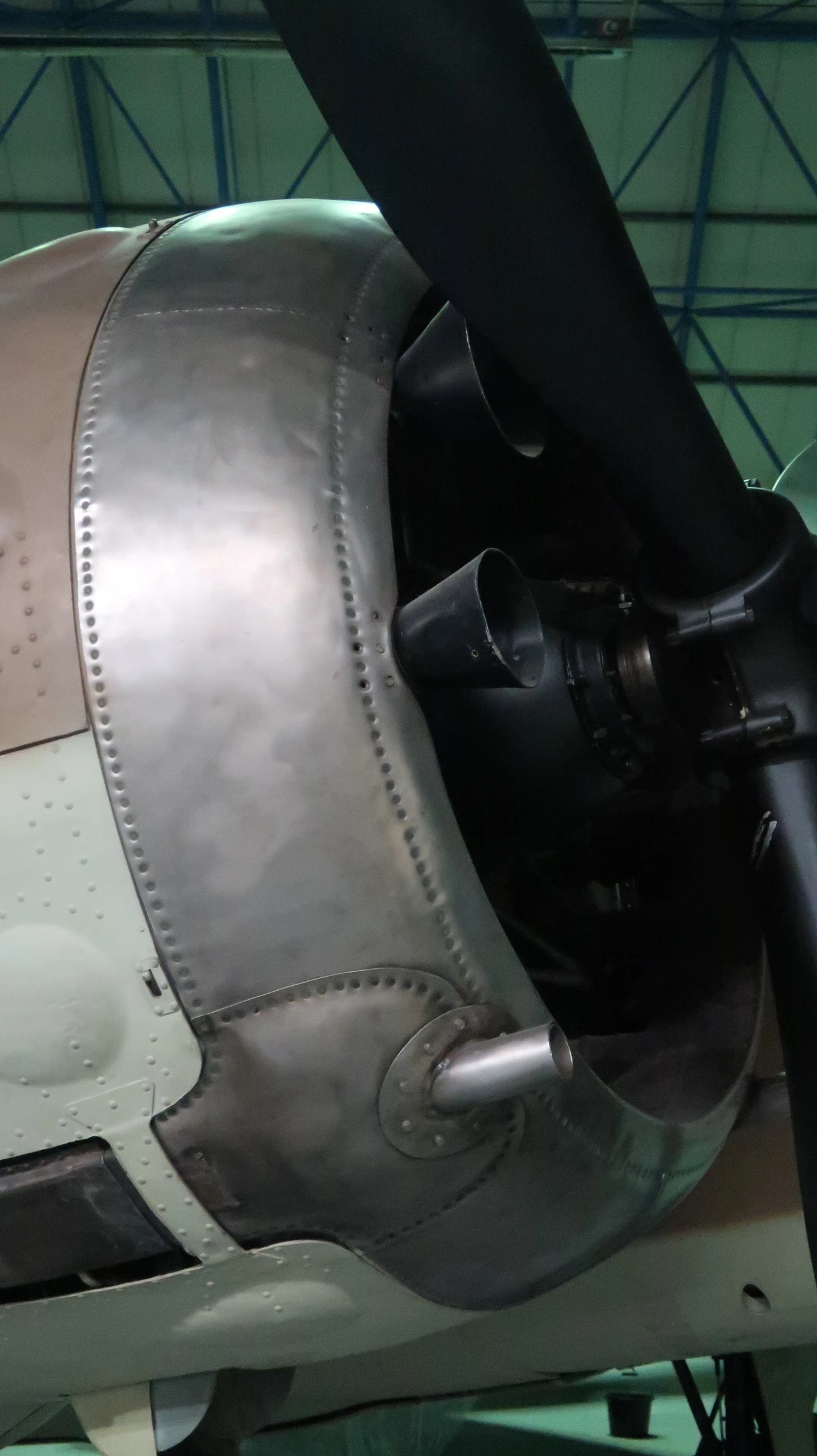
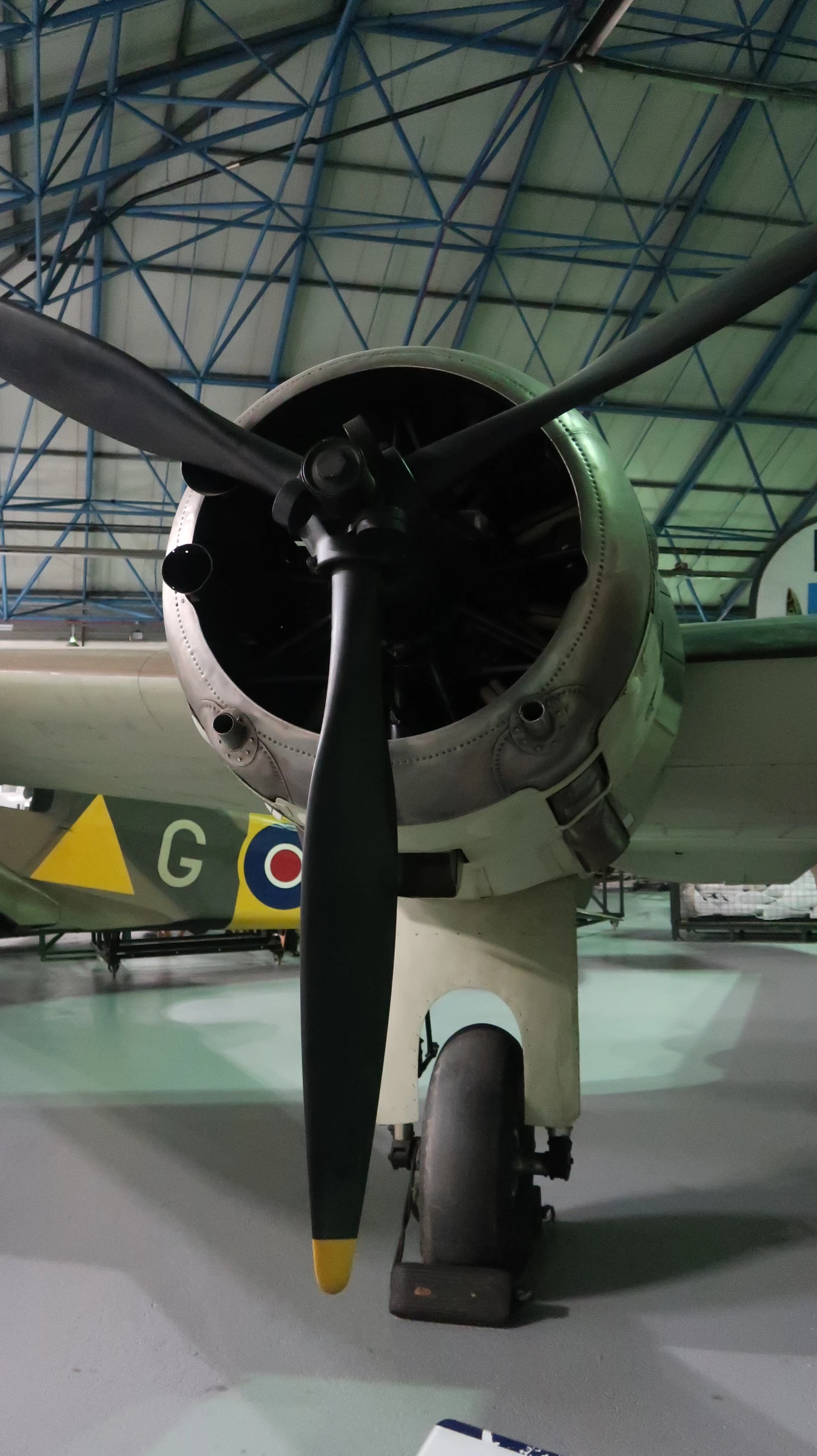
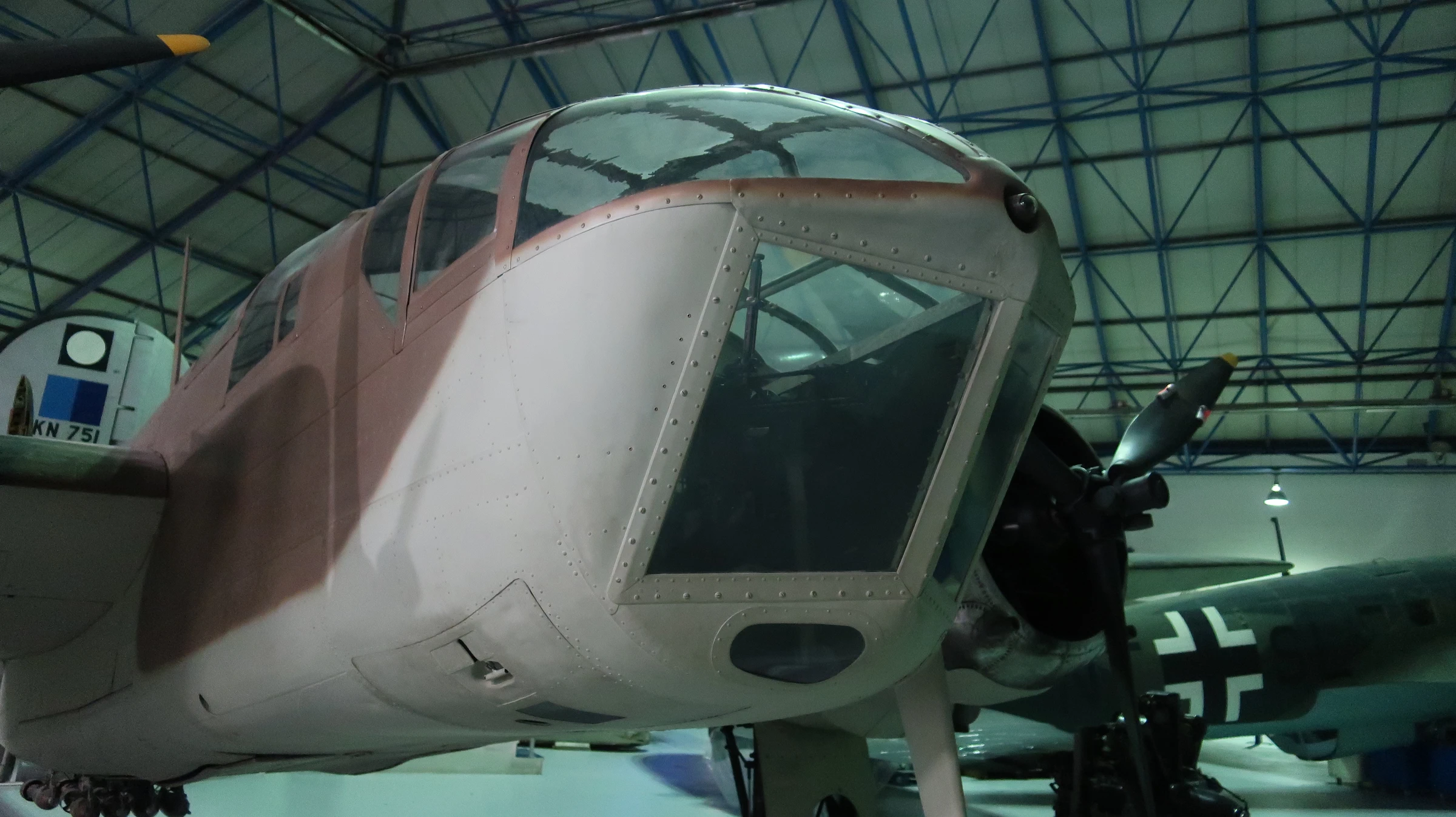
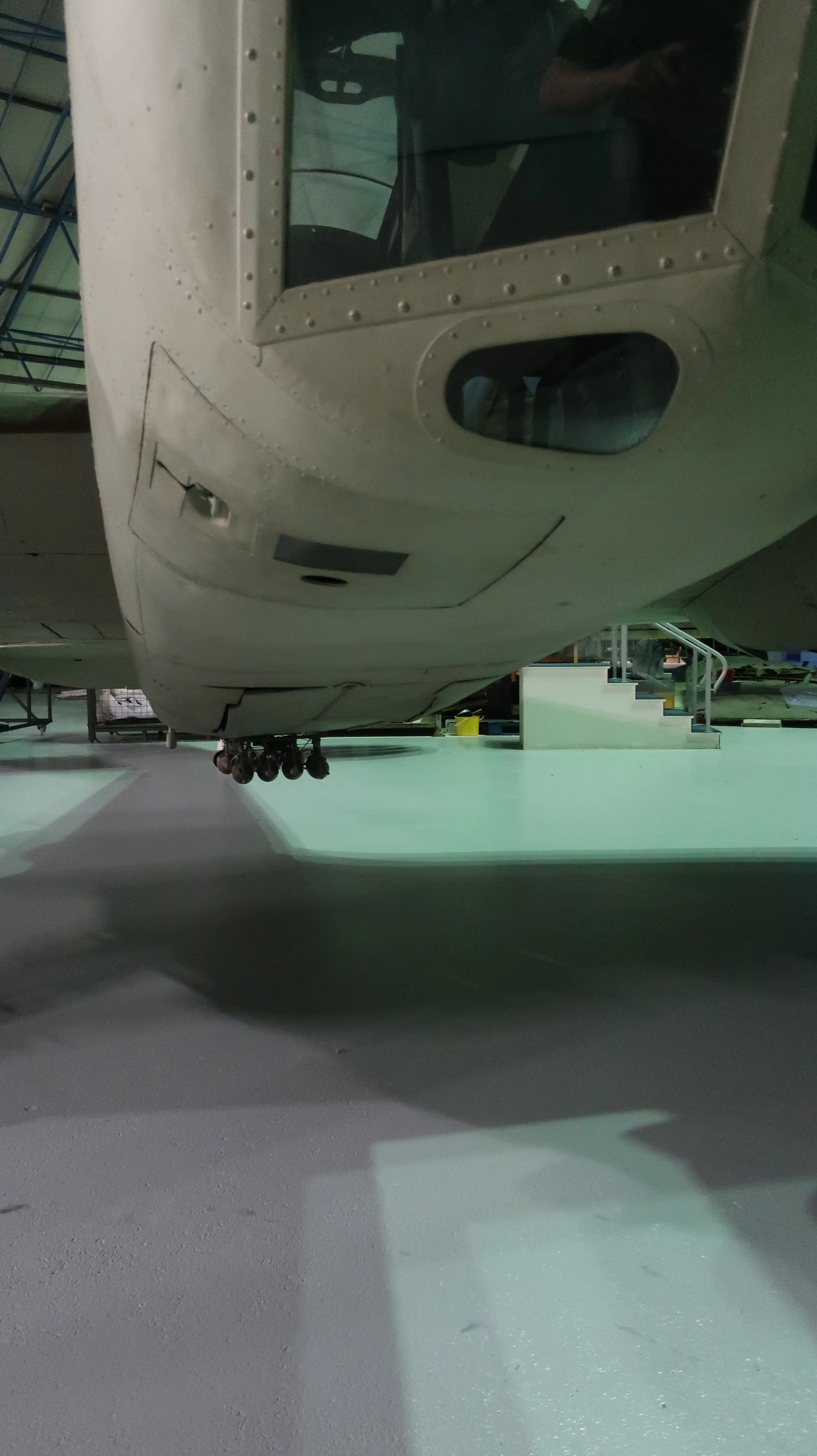
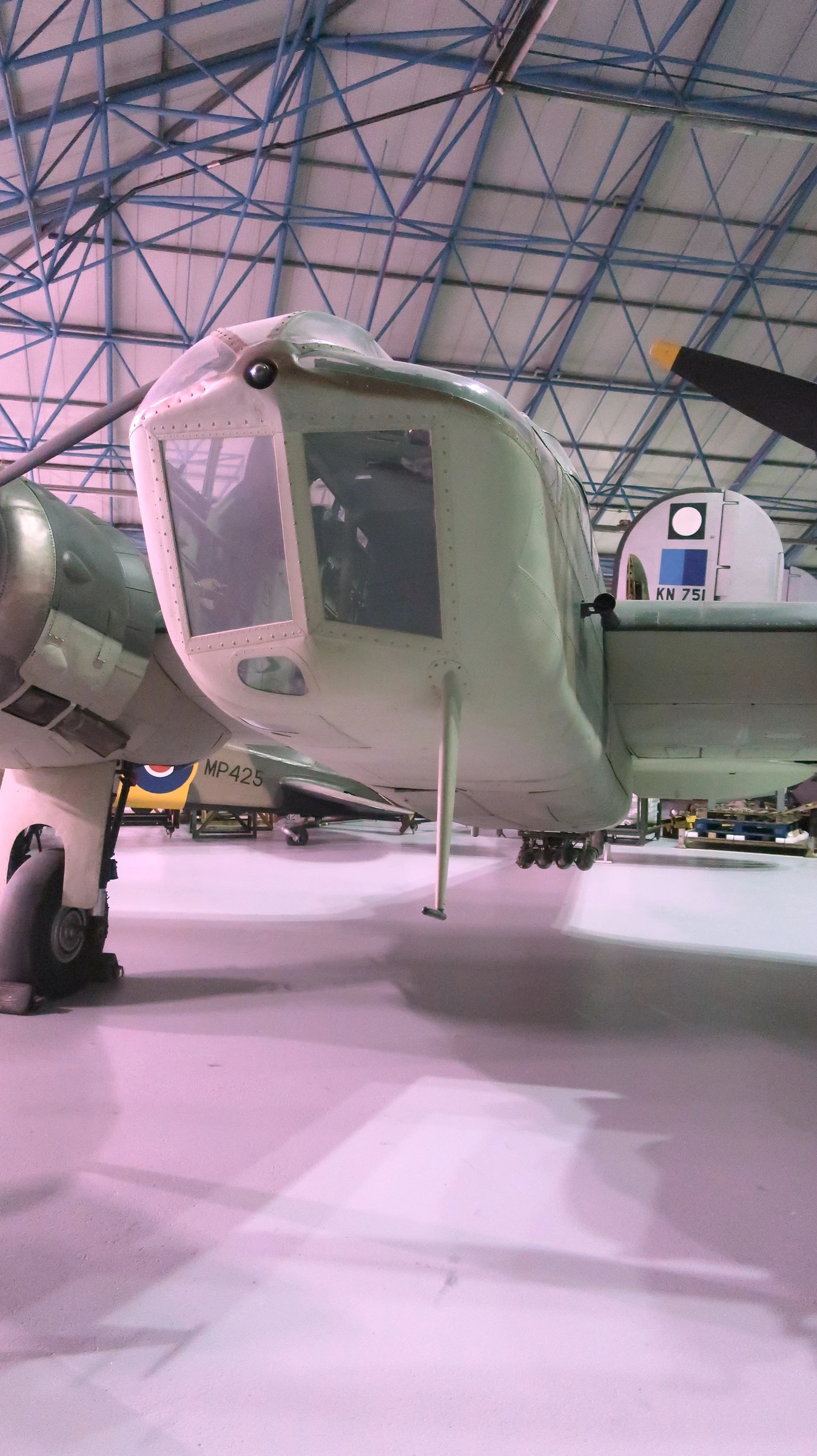
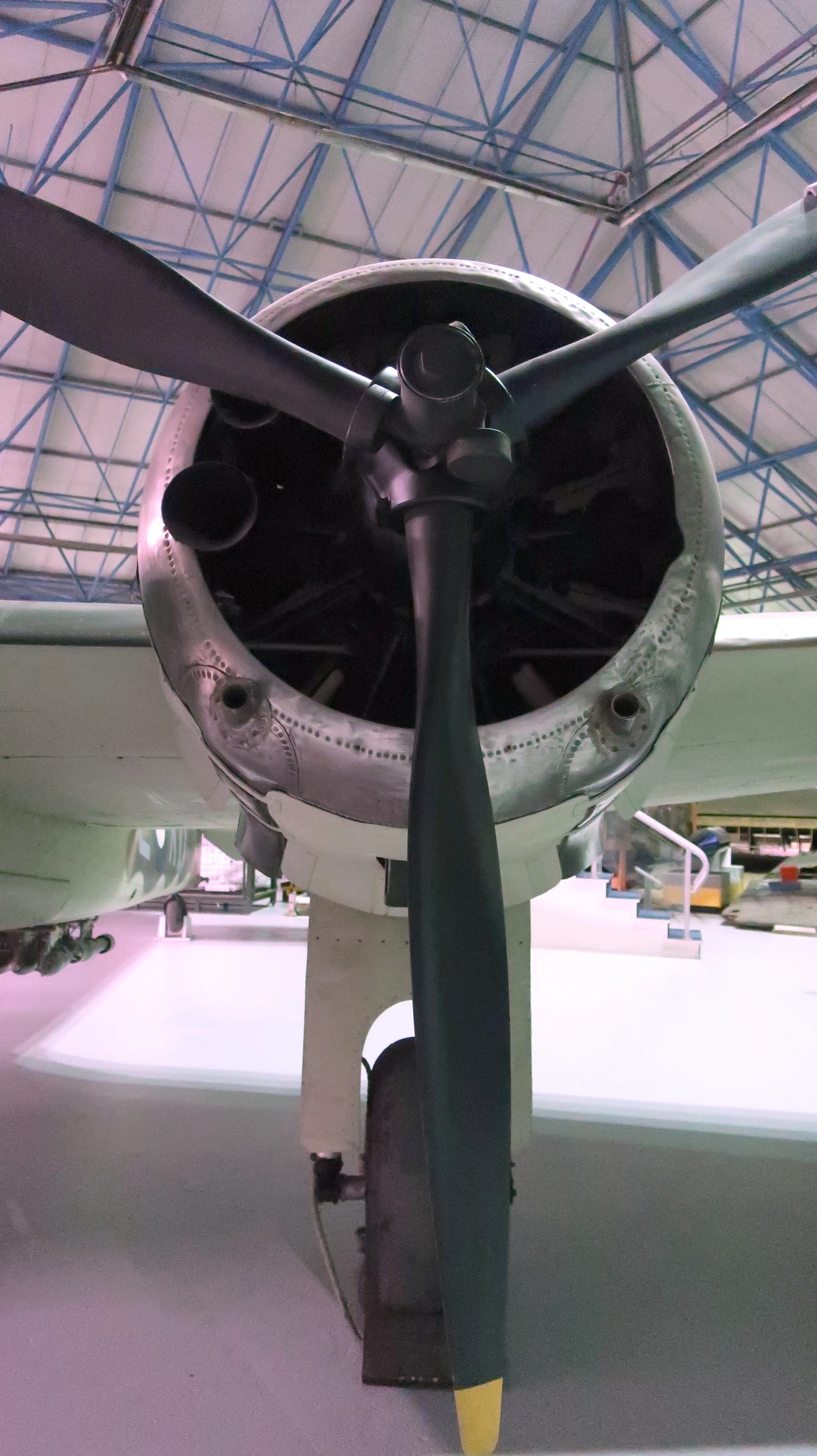
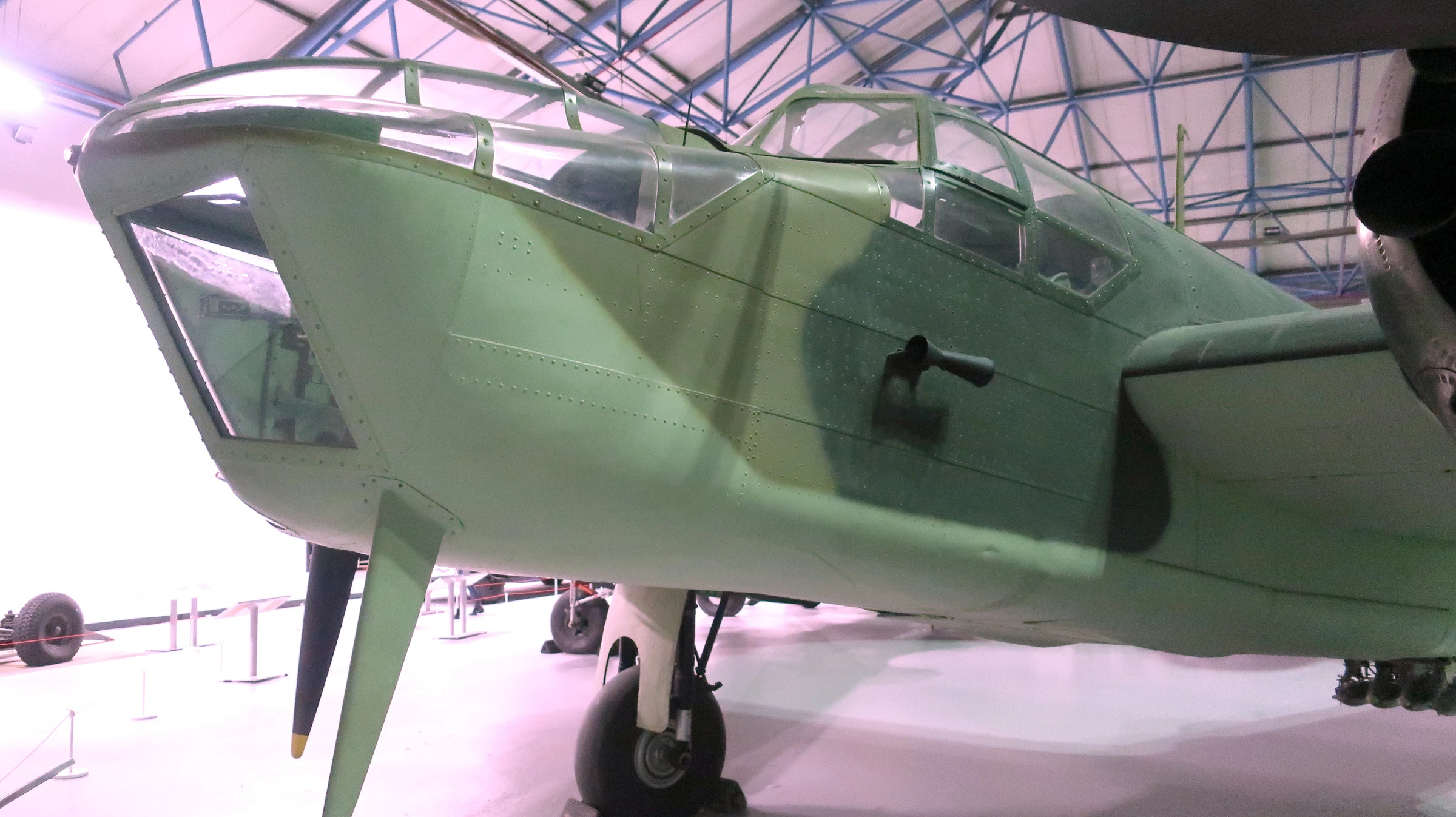
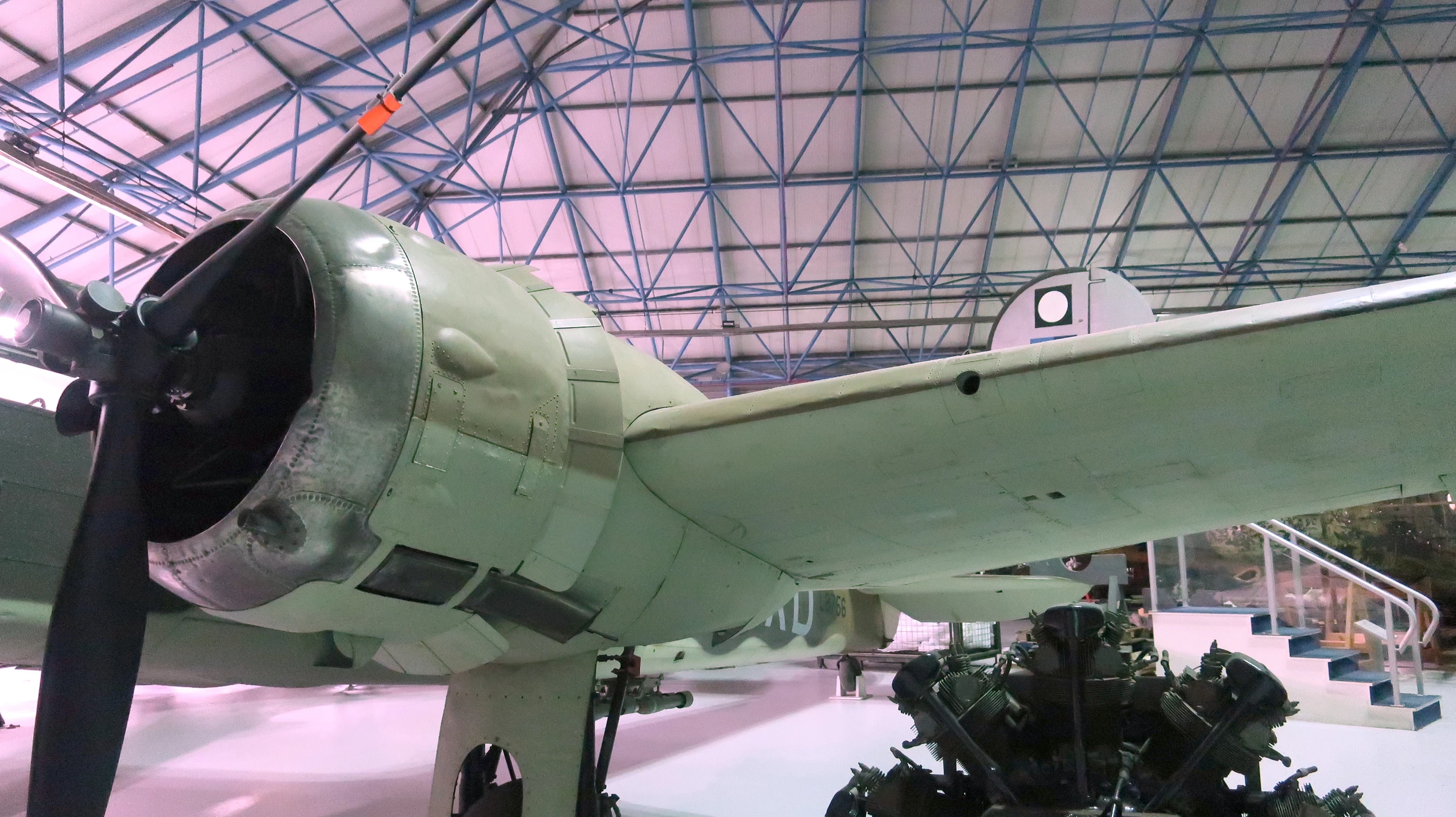
These walk-around photos were taken at the RAF Museum London in Hendon in 2019. They show an aircraft displayed as Bristol Blenheim IV L8756/XD-E of No. 139 Squadron RAF — the squadron that flew the RAF's very first operational sortie of the Second World War. The Blenheim IV, with its extended and redesigned nose, was the primary RAF light bomber at the outbreak of war in 1939 and bore a heavy burden during the desperate daylight raids against German army positions in France and the Low Countries in May 1940, suffering catastrophic losses. No higher loss rate, relative to the size of the operation, has ever been recorded in RAF history.
The aircraft on display is not in fact a British-built Blenheim but a Fairchild Bolingbroke IV-T, constructor's number 10001 — a Canadian licence-built version of the type produced by Fairchild Aircraft at Longueuil, Québec in 1942 for the RCAF, where it served as a gunnery and bombing trainer in Saskatchewan. After the war it was sold off and spent two decades in derelict condition on a farm in Manitoba before being purchased by the RAF Museum in 1966. It was restored over some 8,000 hours by volunteers at Boscombe Down between 1972 and 1978, wearing the identity of L8756/XD-E to represent the 139 Squadron Blenheim and has been on display at Hendon since 1978.