Boeing-Vertol 107-II-15 (HKP 4C)
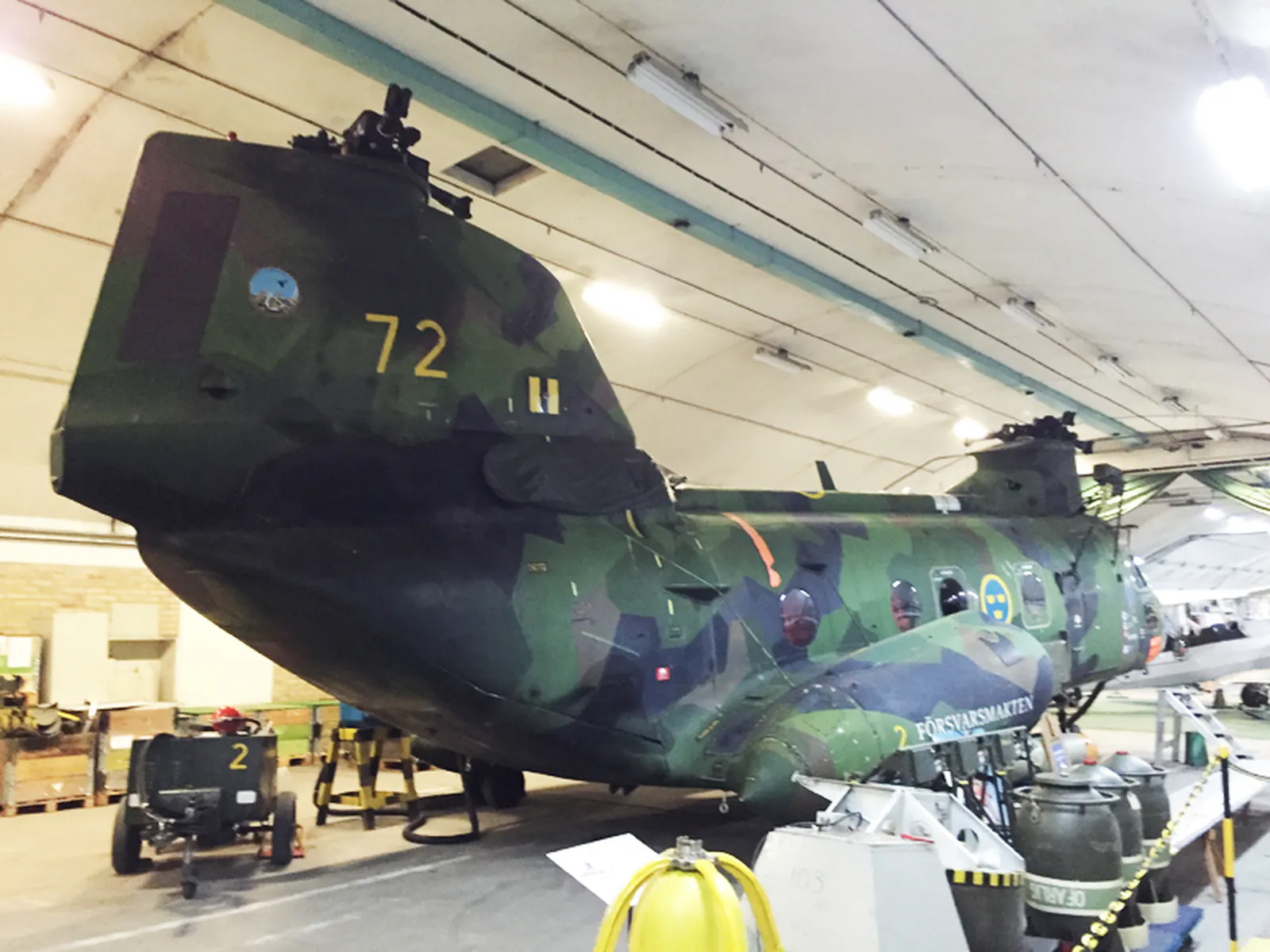
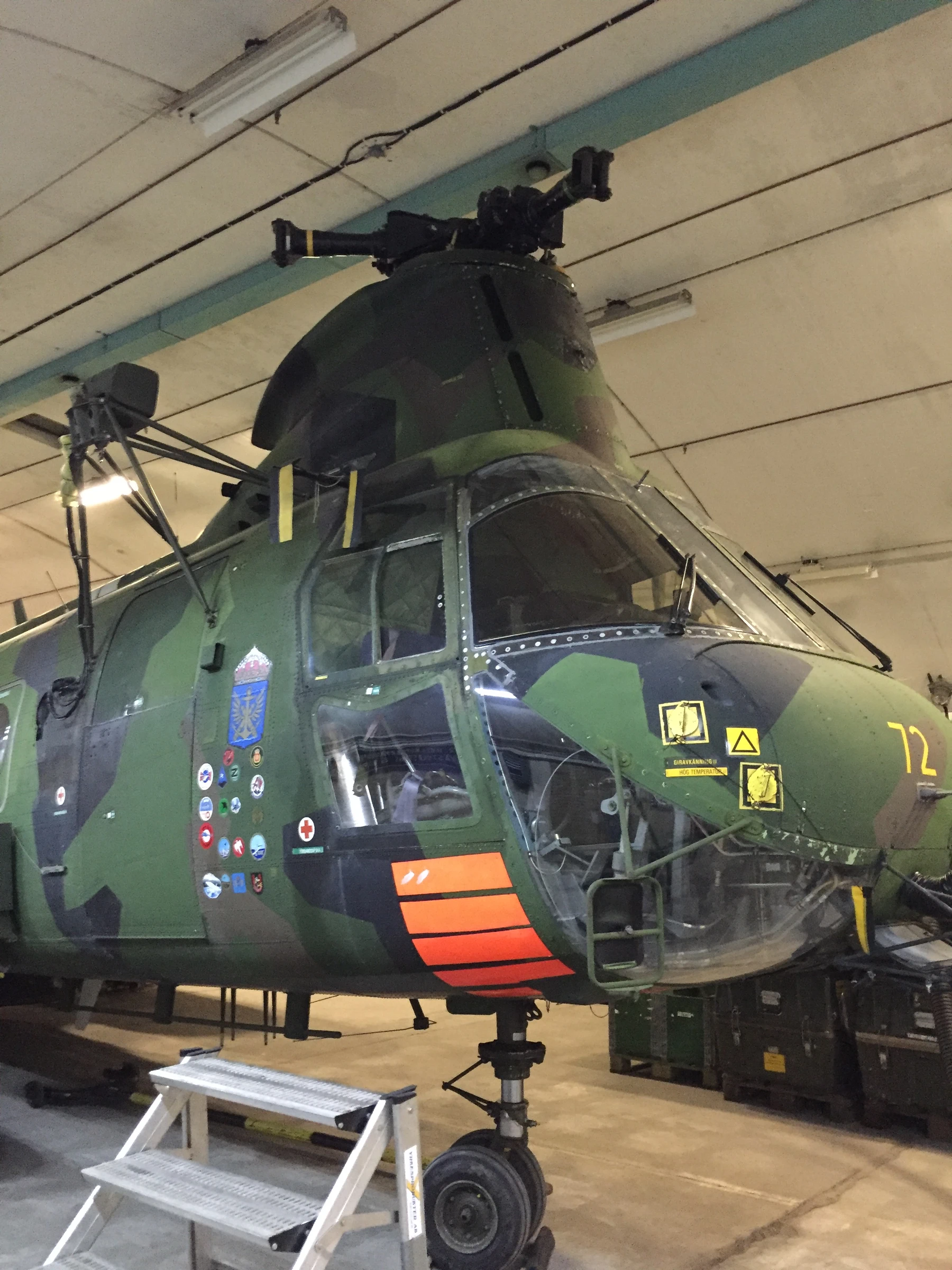
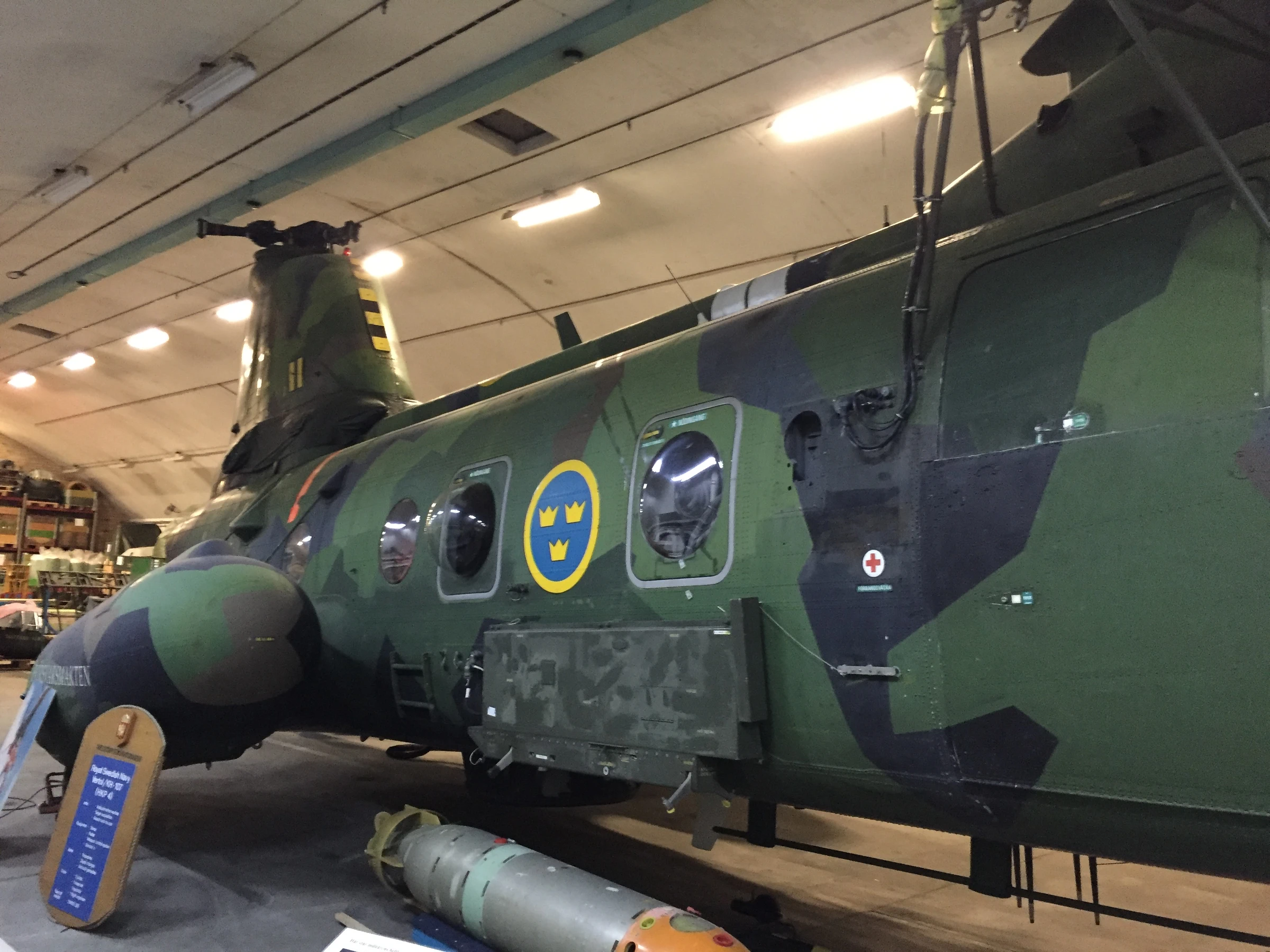
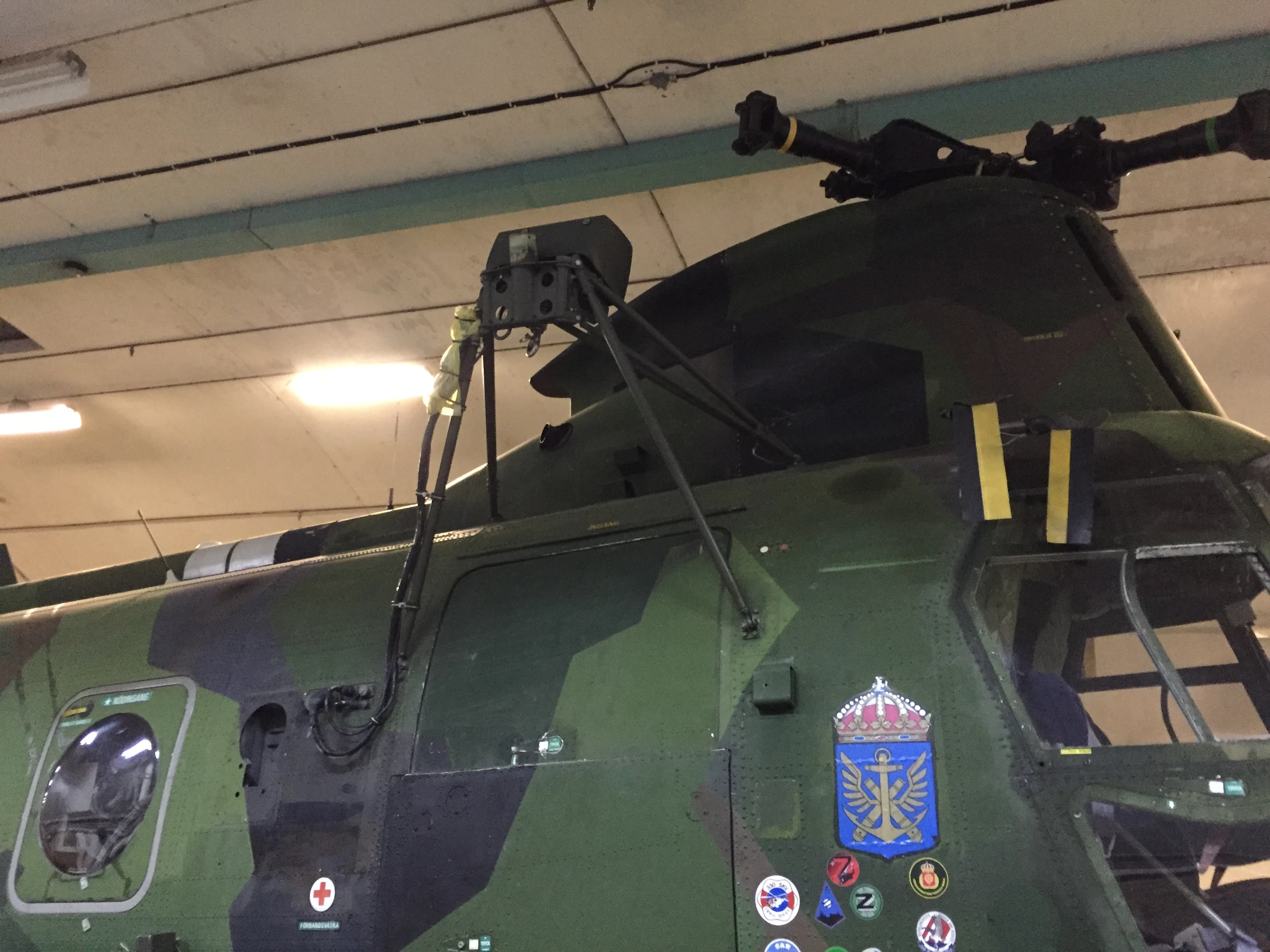
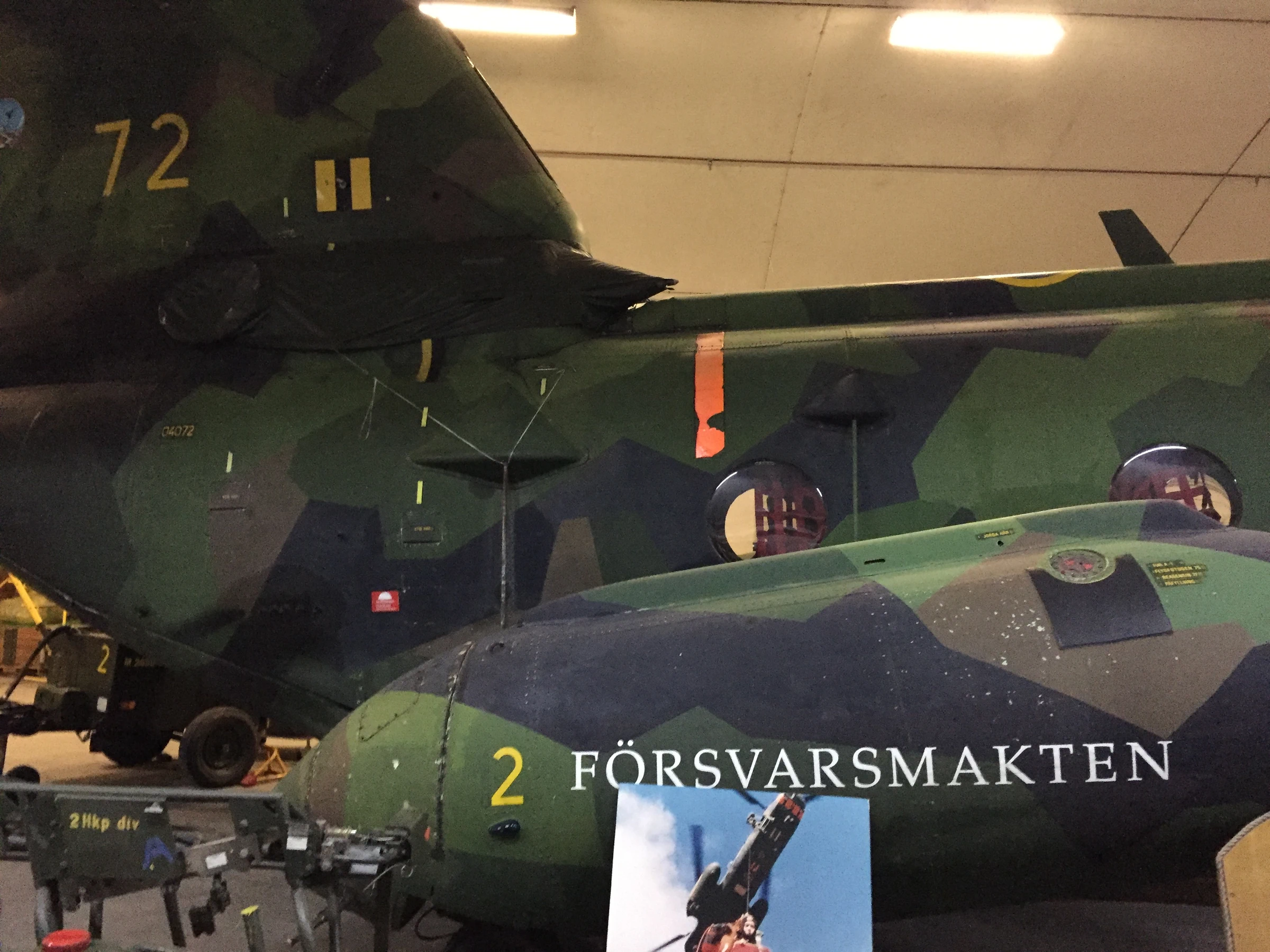
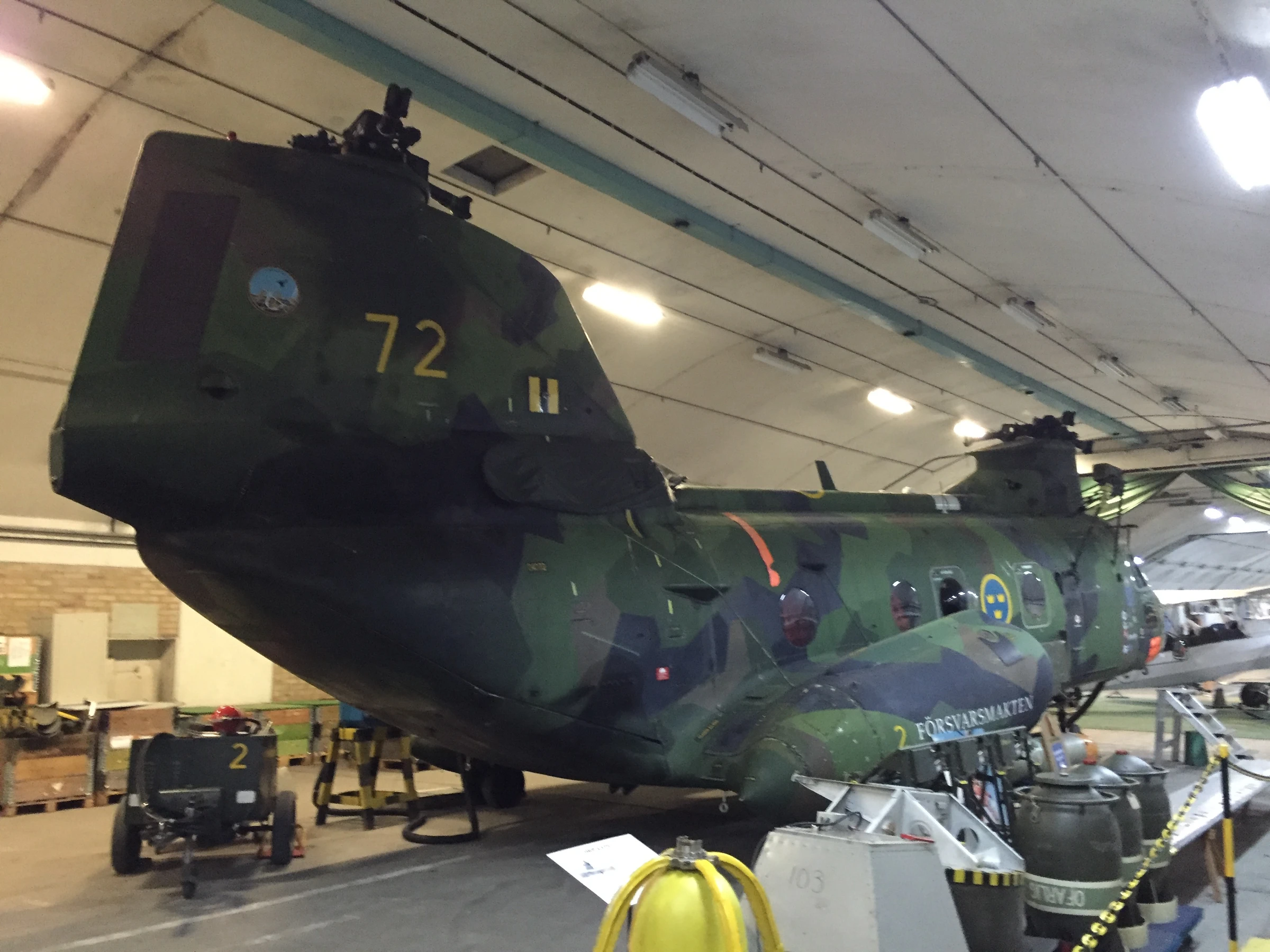
These walk-around photos were taken at Aeroseum in Gothenburg in 2016, where the aircraft is displayed in the museum's remarkable underground hangar beneath the former Göta Air Force Wing F 9 at Säve. They show a Kawasaki-Vertol 107-II-15, designated Hkp 4C in Swedish service — the Japanese-built version of the tandem-rotor helicopter that served as the Swedish Navy's primary submarine hunter and maritime rescue helicopter for nearly five decades. While its Boeing-built predecessors the Hkp 4A and 4B served mainly with the Air Force in the rescue role, the Kawasaki-built Hkp 4C variants were purpose-configured for the Navy, equipped with dipping sonar, depth charges, torpedoes, radar and an advanced SA-08 autopilot for anti-submarine operations.
Individual 04072 came into existence as a direct consequence of bad luck: when the very first of the Navy's Kawasaki order, 04065, was badly damaged in a storm during shipment to Sweden in 1973, a replacement was ordered — and 04072 was built to fill that gap. It was delivered to the Swedish Navy and served throughout the submarine hunting operations of the 1980s and 1990s that attracted intense public attention during the Cold War. After retirement it made its last flight in August 2010 and was transferred to Aeroseum as a static museum exhibit. In September 2013 it was brought back to life for a ground run filmed for a Discovery Channel documentary — a fitting tribute to a helicopter that spent its career in some of Sweden's most dramatic Cold War operations.