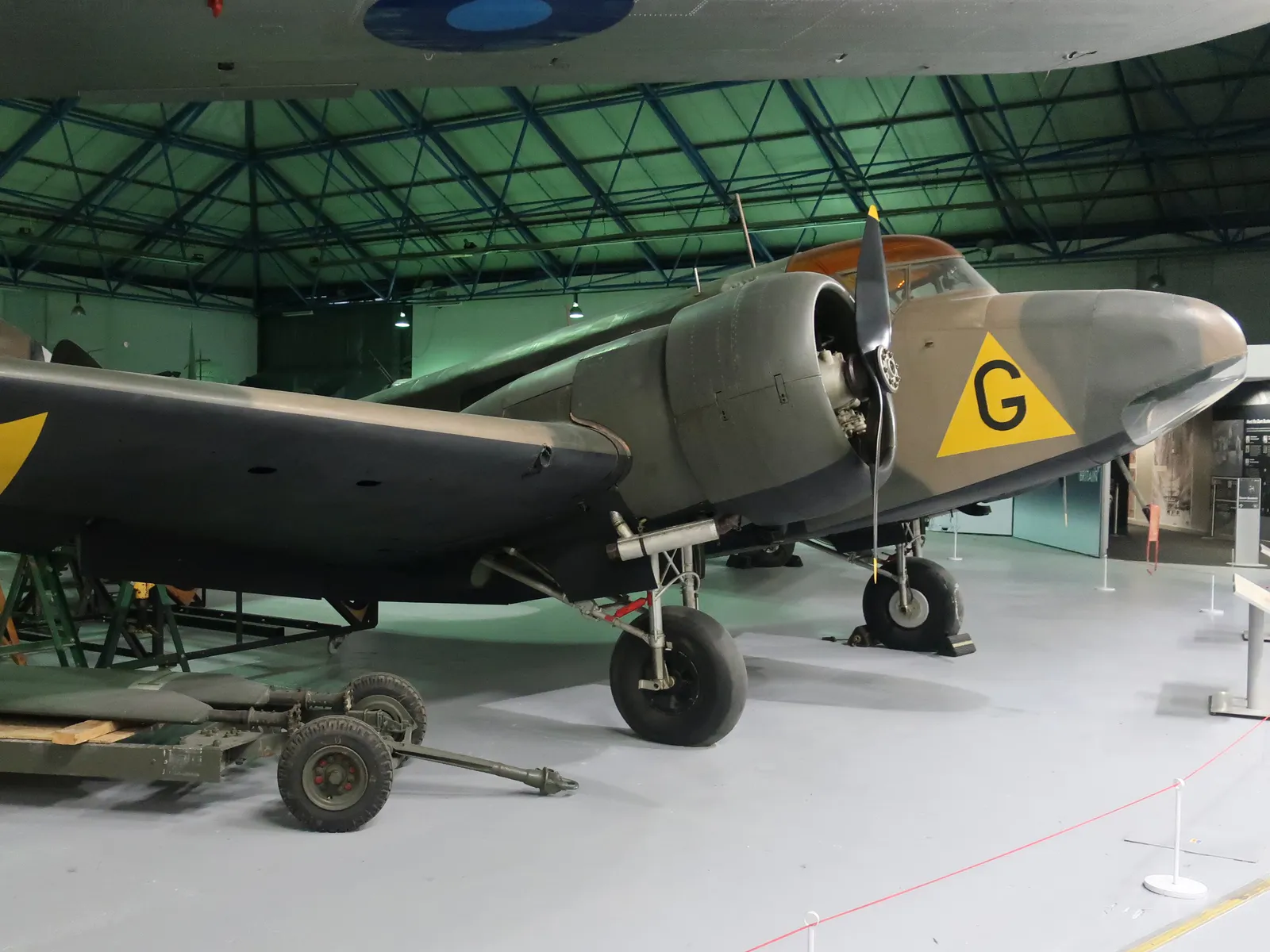
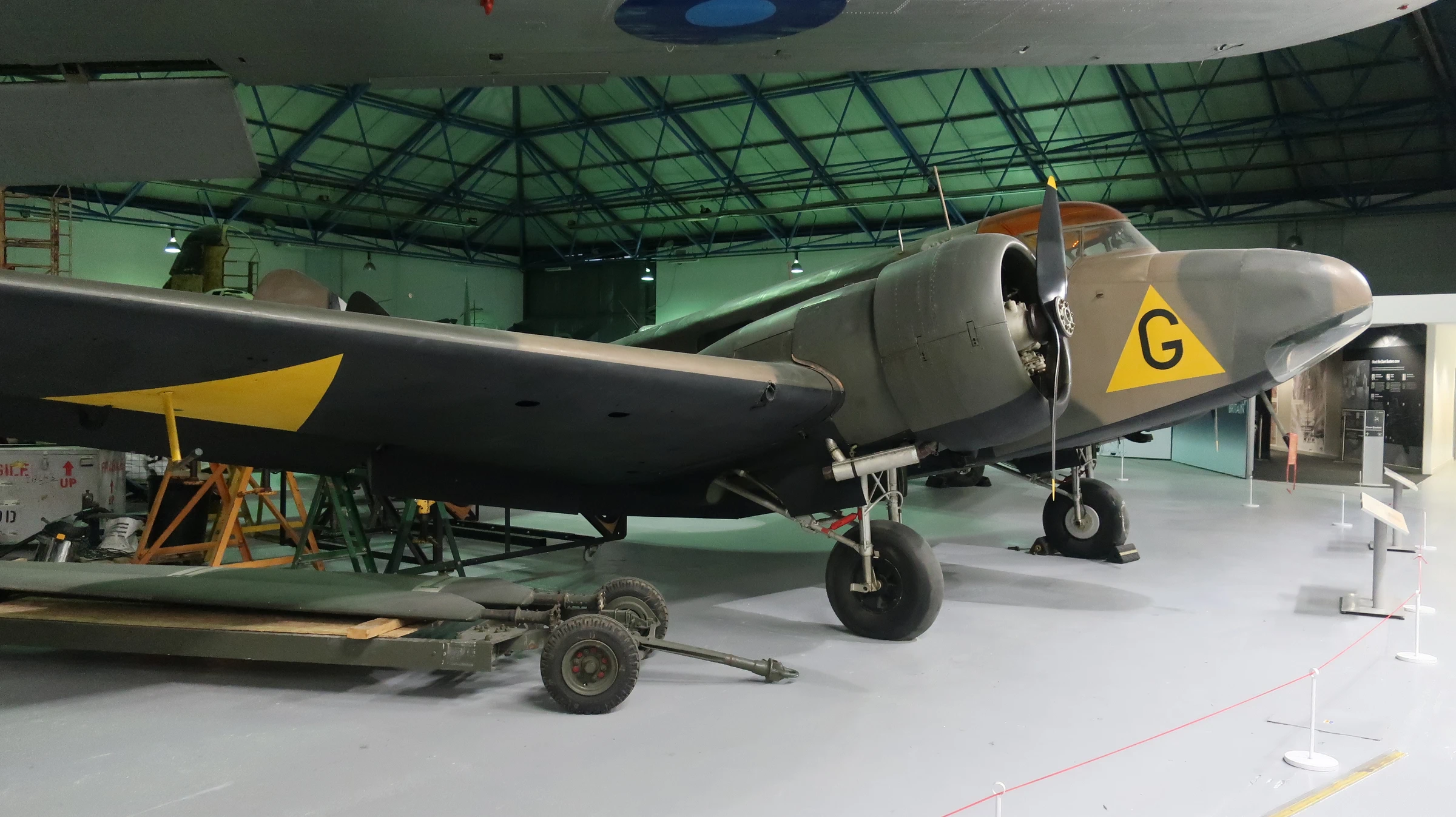
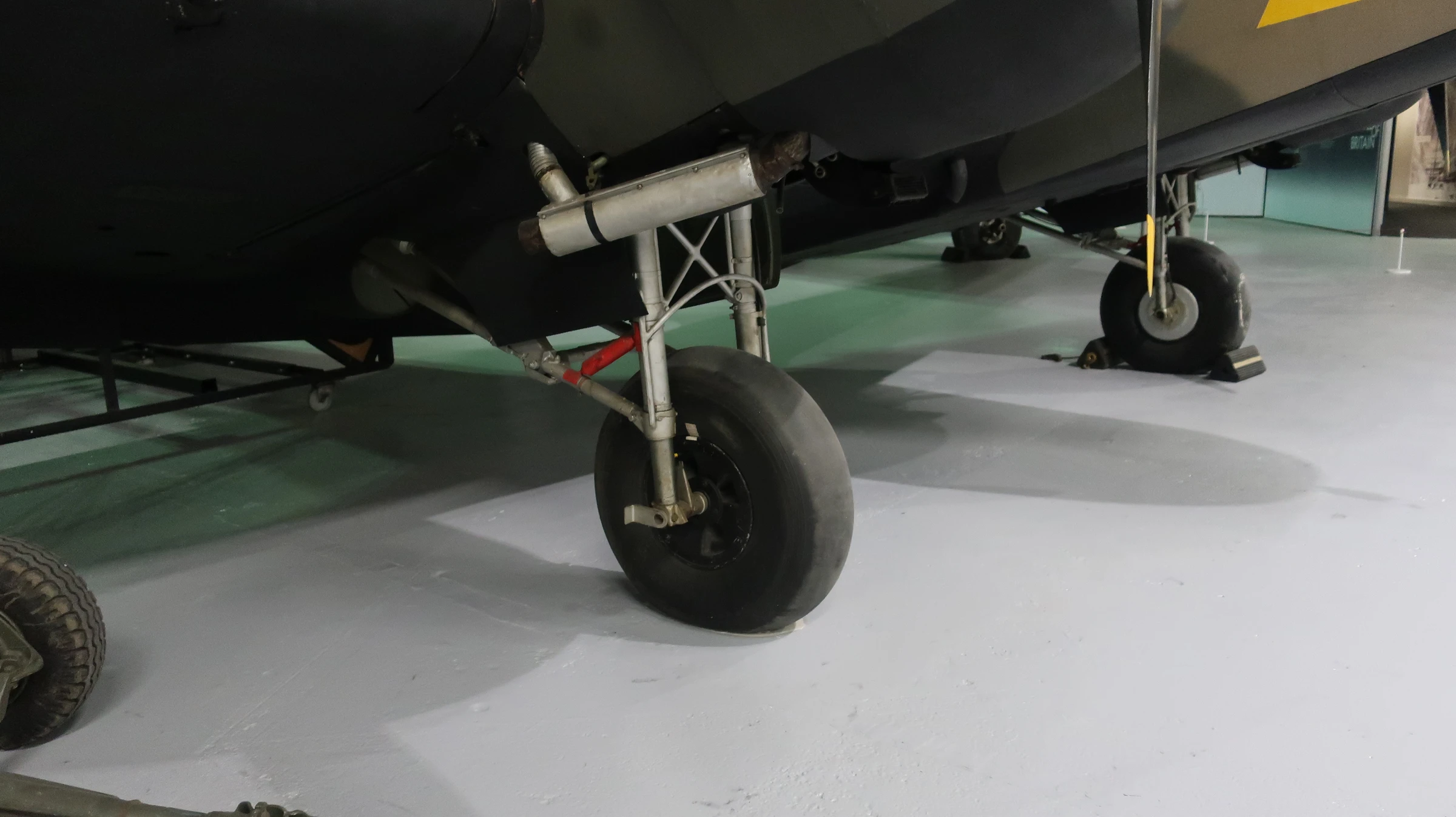
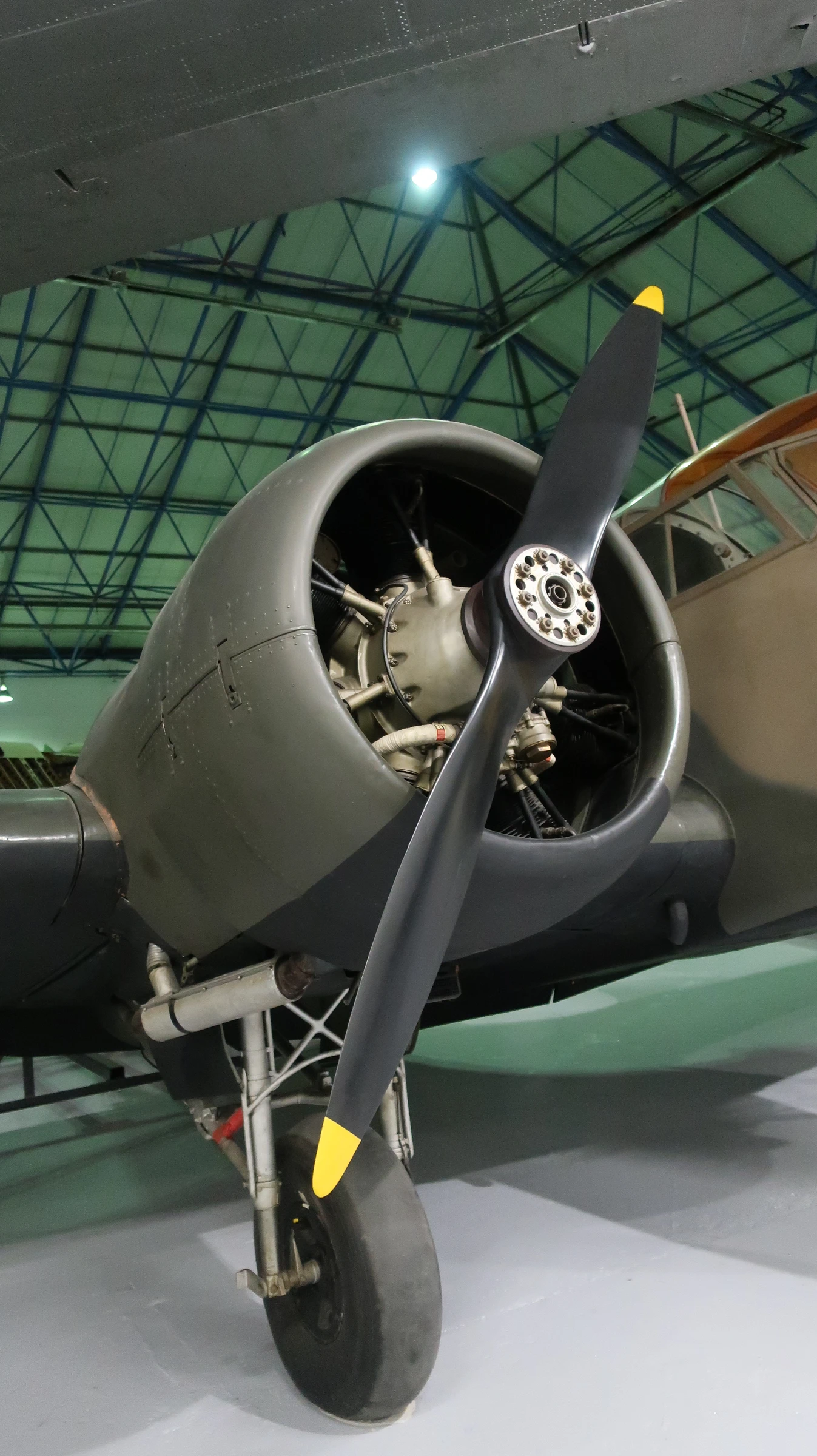
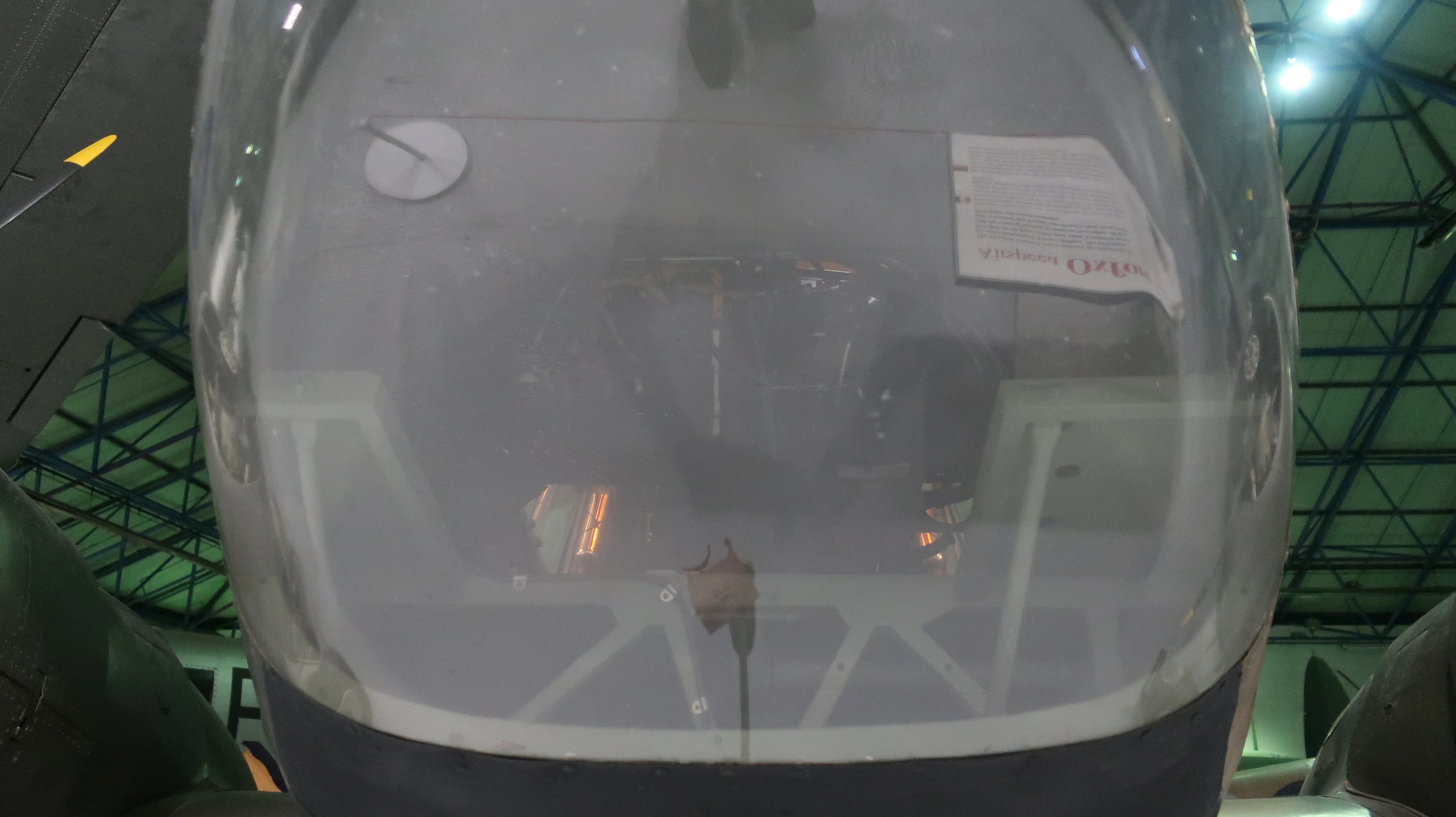
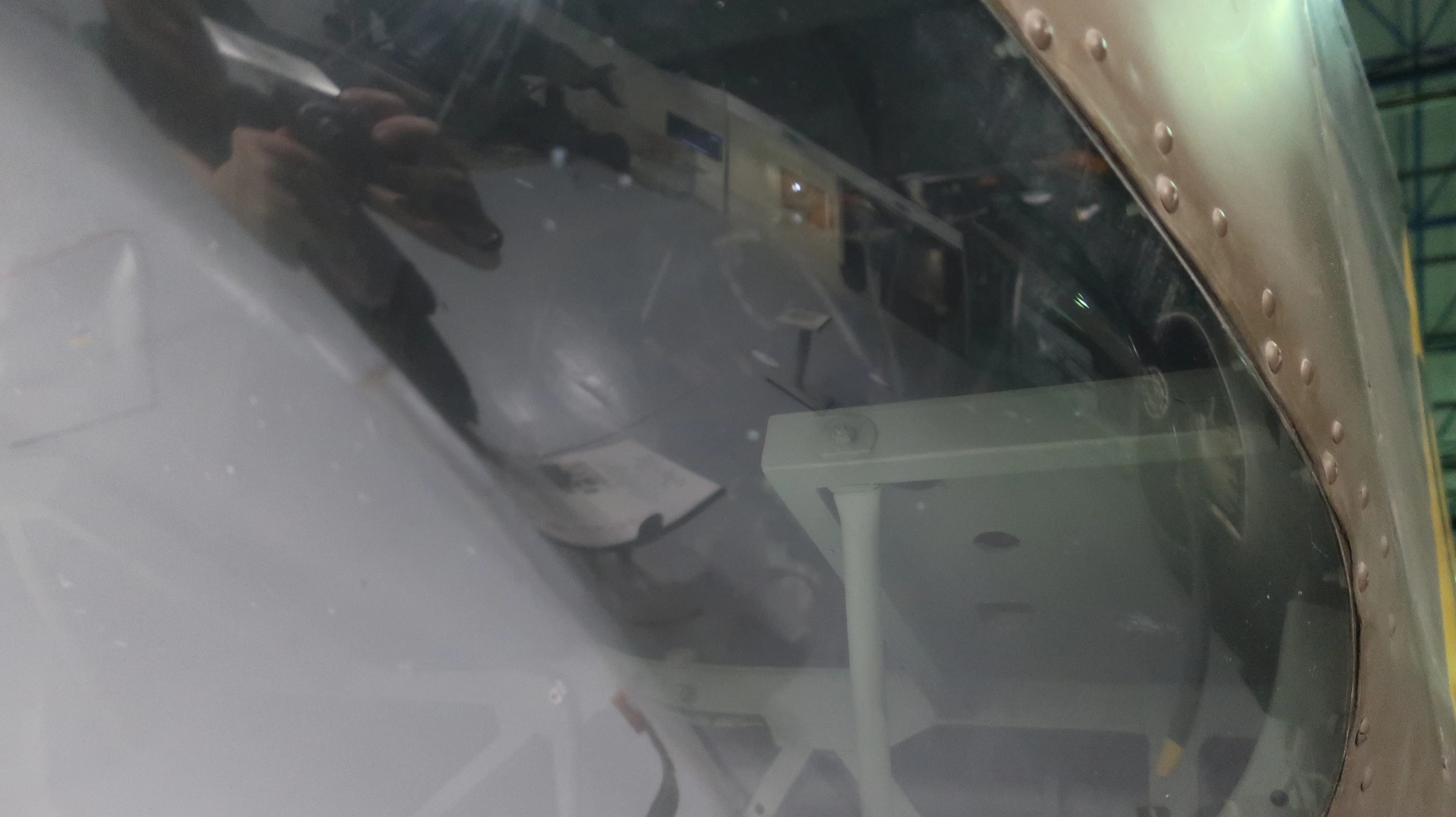
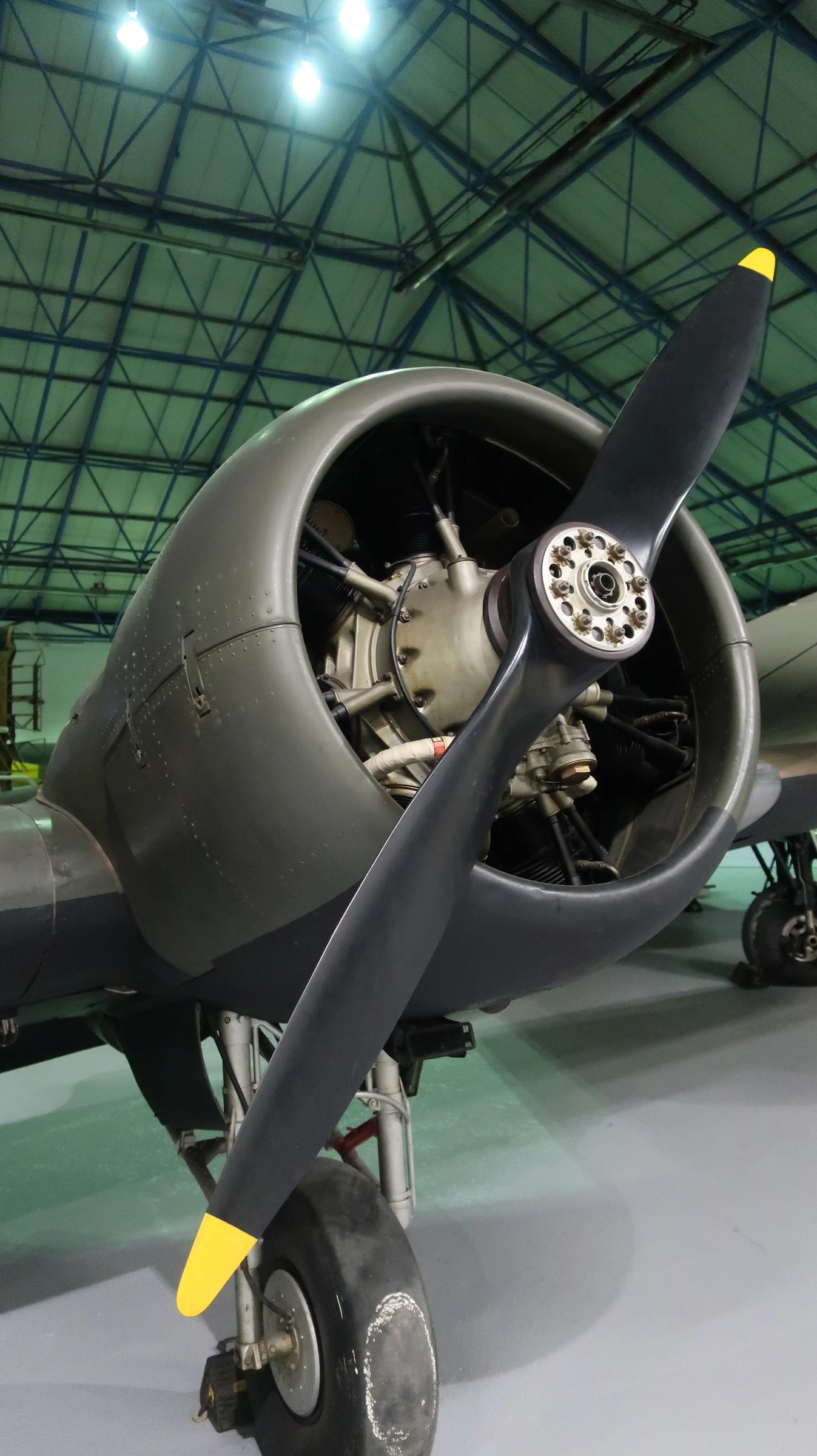
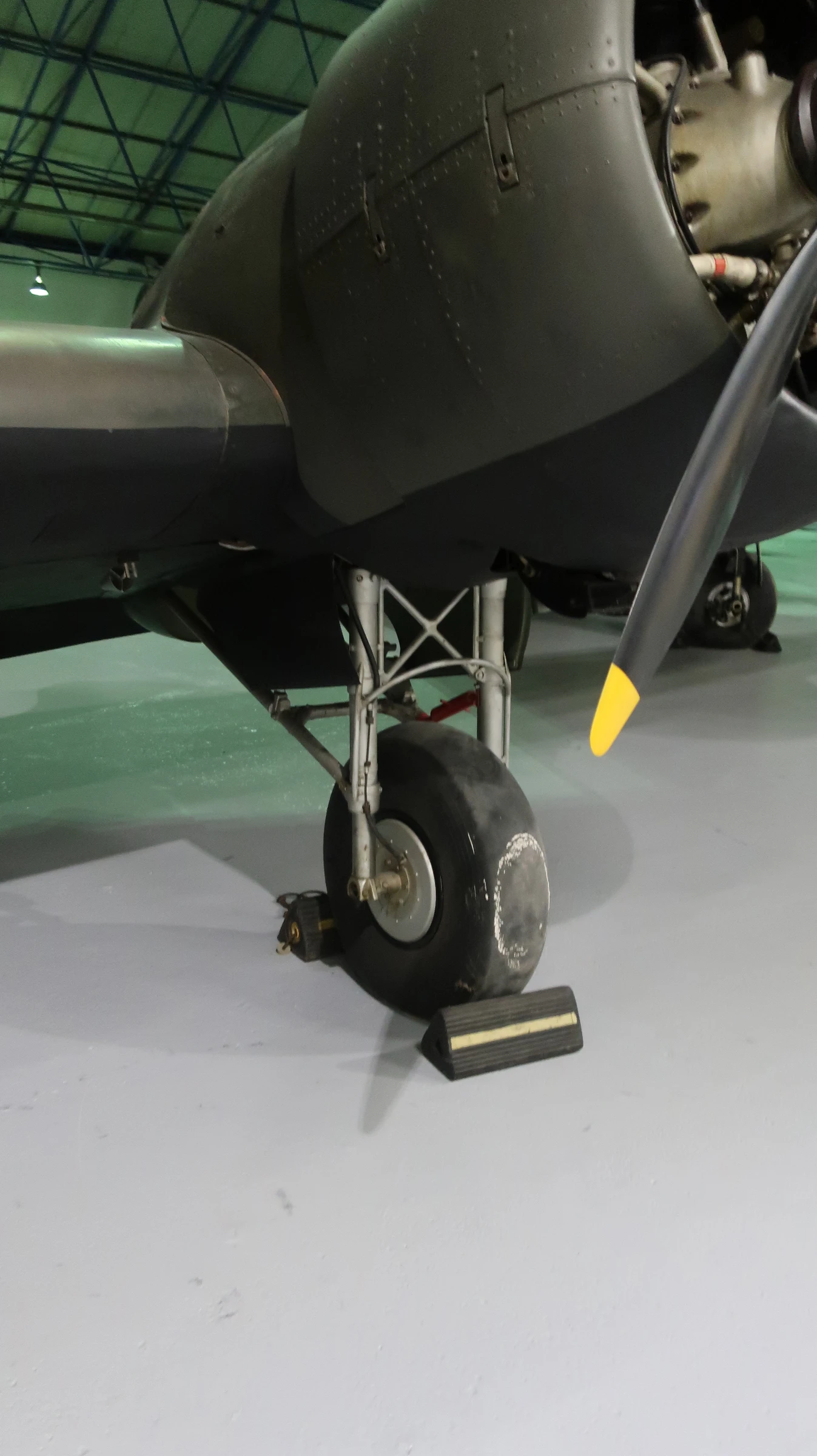
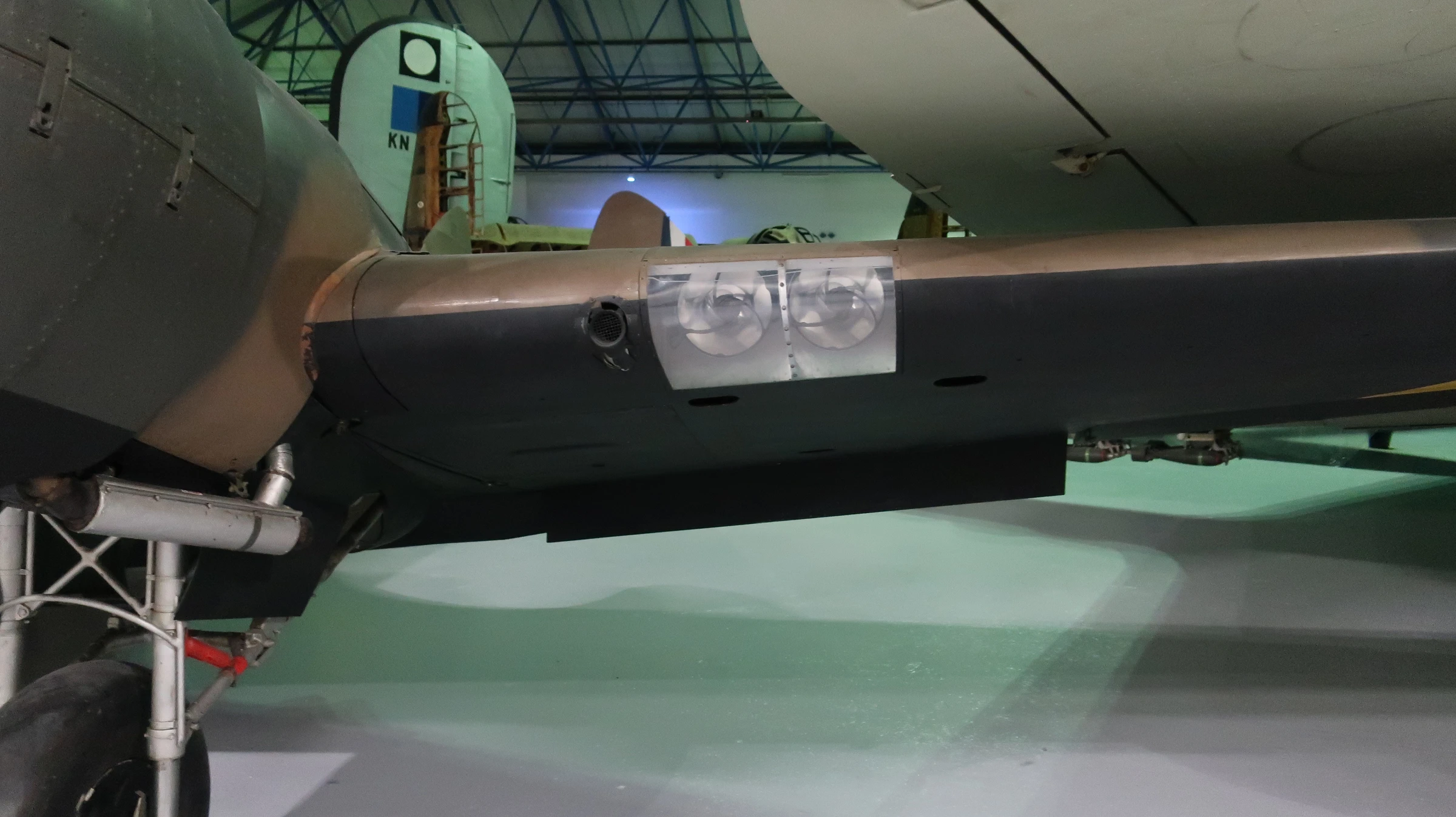
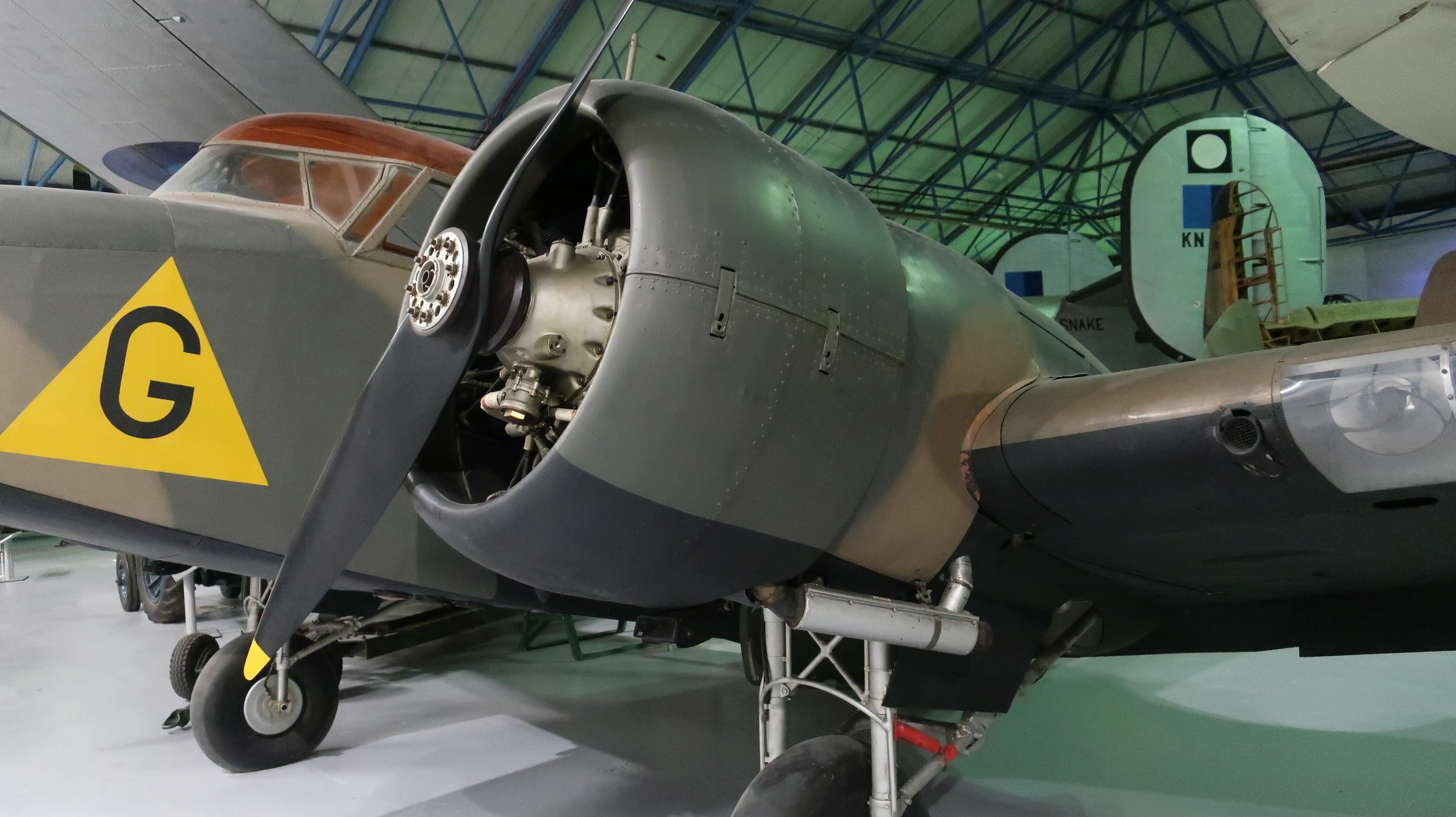
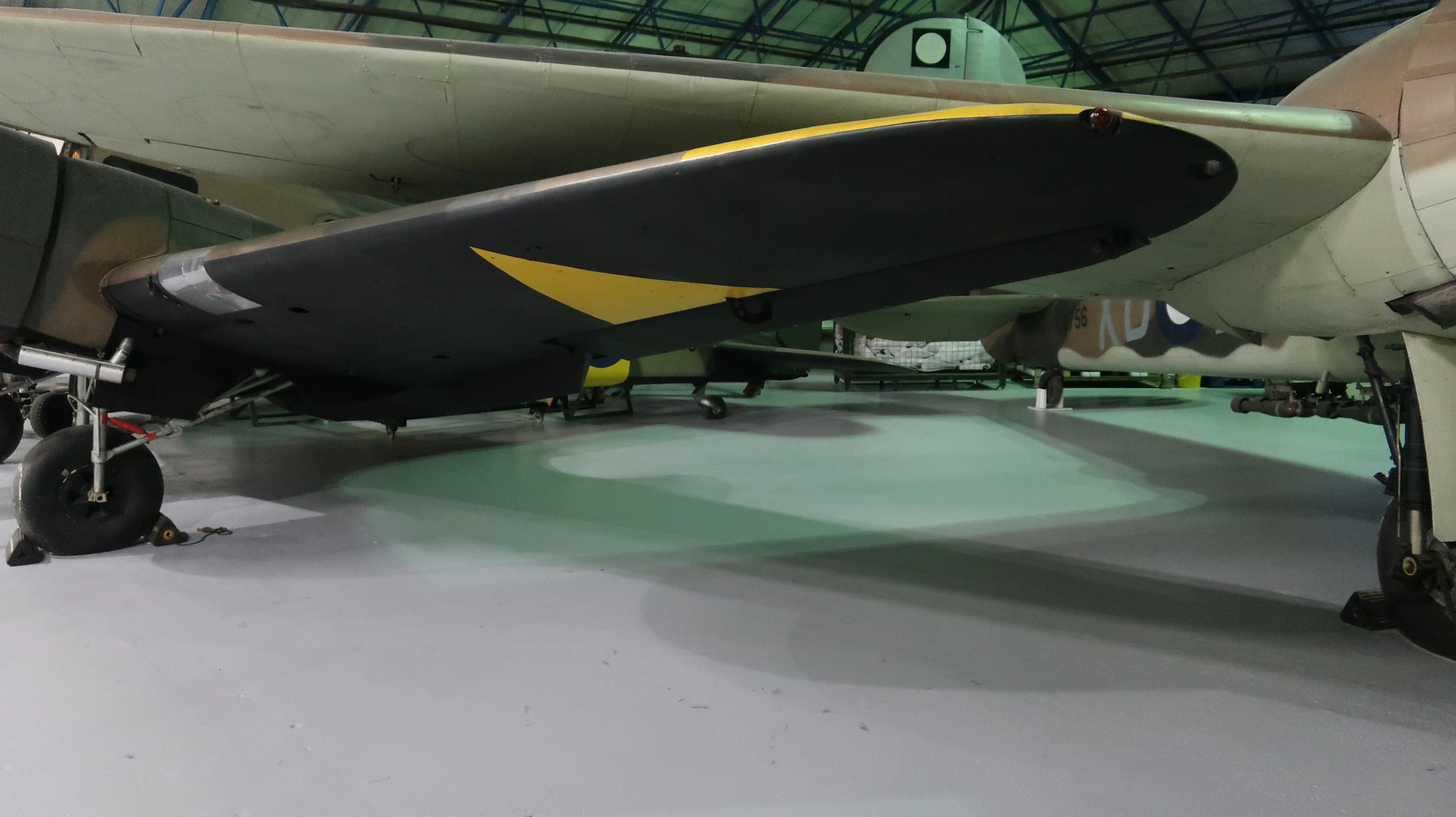
These walk-around photos were taken at the RAF Museum London in Hendon in 2019. They show an Airspeed Oxford Mk I, serial MP425, one of the most widely used aircrew trainers of the Second World War — affectionately known to its crews as the "Ox-Box". Developed as a military derivative of Airspeed's AS.6 Envoy airliner, the Oxford entered service in November 1937 as the RAF's first twin-engined monoplane advanced trainer, and went on to train pilots, navigators, bomb aimers and wireless operators in vast numbers across the Commonwealth. Of the 8,586 built, MP425 was one of 750 Mk Is constructed by the Standard Motor Car Company in Coventry.
Issued in March 1943 to No. 1536 Beam Approach Training Flight at Spitalgate in Lincolnshire, MP425 trained night fighter pilots in instrument landing with cockpit windows screened off — the yellow triangles on the fuselage warning other aircraft to keep clear. After further service with pilot training units and postwar civilian use with Air Service Training Ltd at Hamble as G-AITB, it was purchased by the RAF Museum in 1969 and eventually restored to its No. 1536 BATF colours and code letter G. It has been on public display at Hendon since 1994.