Getting parts to stay where you put them is one of the fundamental challenges of the hobby. The good news is that there’s a glue for every situation — once you know which one to reach for.
Get Your Things Together
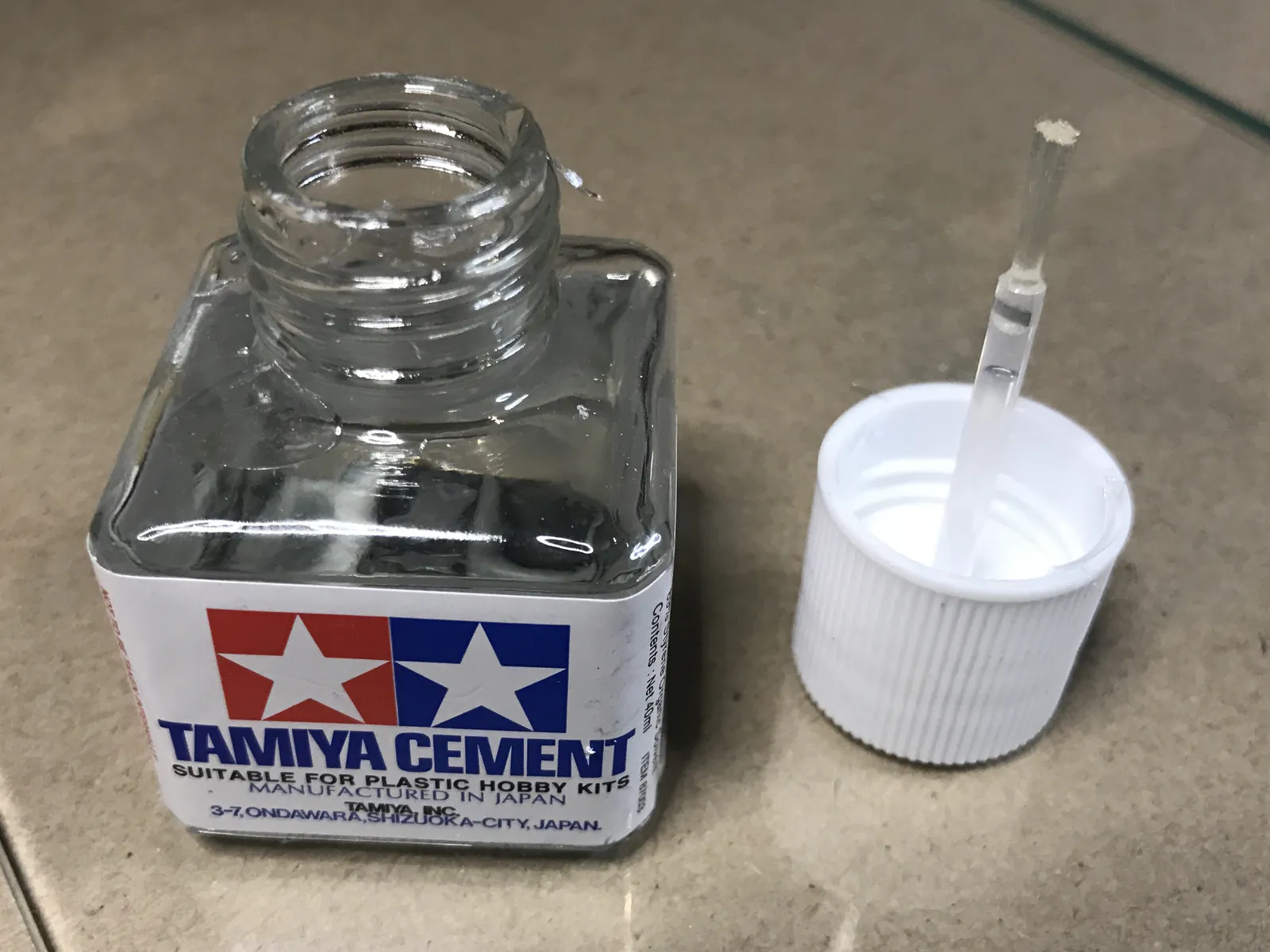
The poly cement
The most common glue for plastic models is poly cement — a solvent-based compound that works by actually welding the plastic together rather than just sticking it. It's effective, but it has its quirks.
The main issue with tube-based cement is that it's difficult to control how much comes out. Too much and you risk deforming the plastic, leaving a joint that takes forever to harden and a mess that's hard to clean up. Some manufacturers sell it in bottles with a fine applicator instead, which is a significant improvement. Whichever form you use, apply sparingly — any excess in the wrong place will leave marks that are very difficult to remove.
The main issue with tube-based cement is that it's difficult to control how much comes out. Too much and you risk deforming the plastic, leaving a joint that takes forever to harden and a mess that's hard to clean up. Some manufacturers sell it in bottles with a fine applicator instead, which is a significant improvement. Whichever form you use, apply sparingly — any excess in the wrong place will leave marks that are very difficult to remove.
Extra Thin Cement
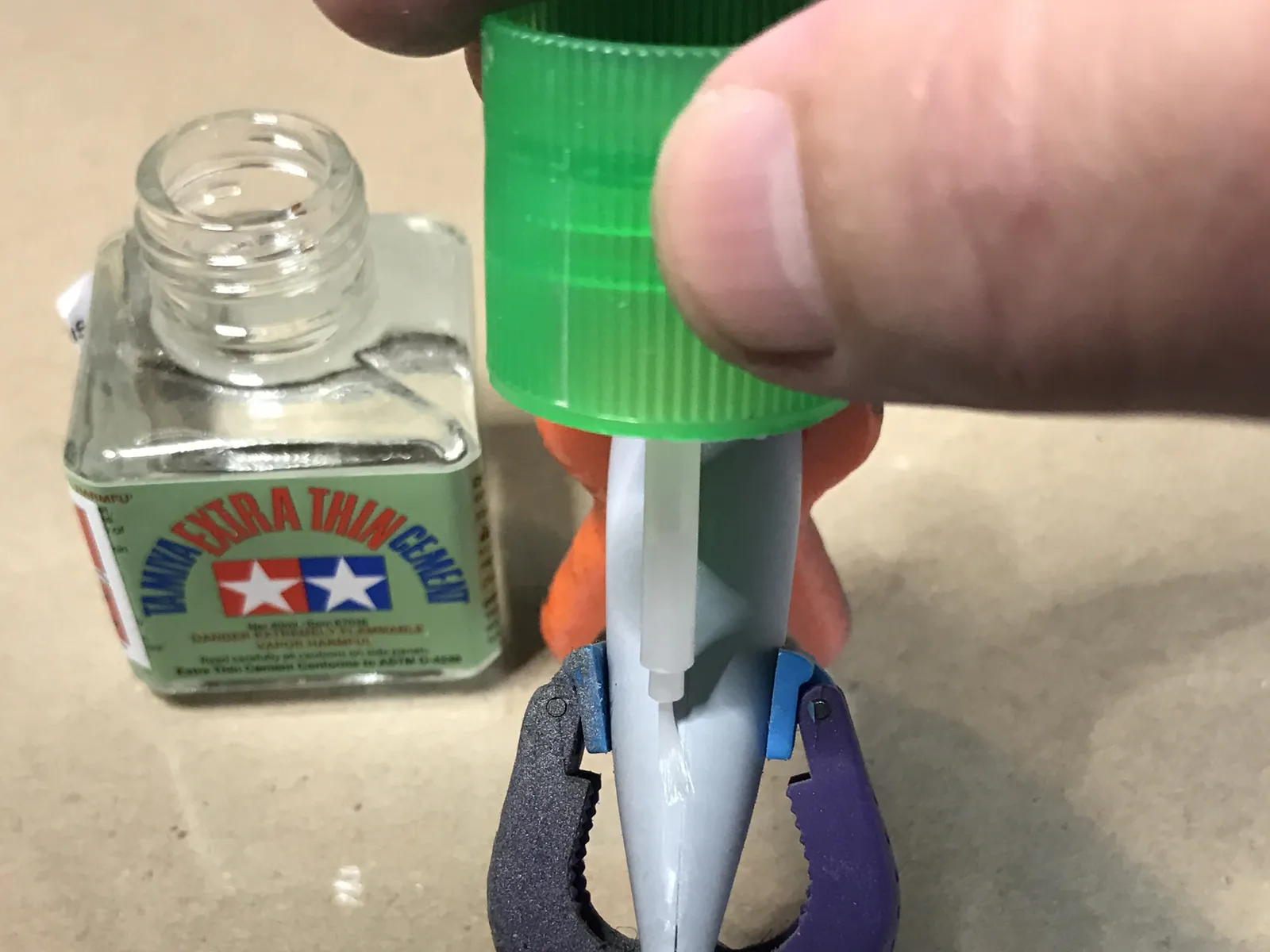
This one changed everything for me. When I first got it I couldn't make it work — it kept drying before I had the parts together. The reason was that I was using it the wrong way.
The trick is to reverse the process entirely. Press the parts together first, then apply the cement along the joint with the brush. The capillary action does the rest, drawing the cement into the join and welding it from the inside. Because it's so thin it leaves no marks on the outside either.
I've found it particularly useful for clear parts like canopies and windows. Place the part, touch the brush to the joint, and it holds — with minimal risk of clouding the plastic. That said, I still keep regular cement on hand for details and situations where it's difficult to hold parts in exactly the right position while applying.
The trick is to reverse the process entirely. Press the parts together first, then apply the cement along the joint with the brush. The capillary action does the rest, drawing the cement into the join and welding it from the inside. Because it's so thin it leaves no marks on the outside either.
I've found it particularly useful for clear parts like canopies and windows. Place the part, touch the brush to the joint, and it holds — with minimal risk of clouding the plastic. That said, I still keep regular cement on hand for details and situations where it's difficult to hold parts in exactly the right position while applying.
The CA glue
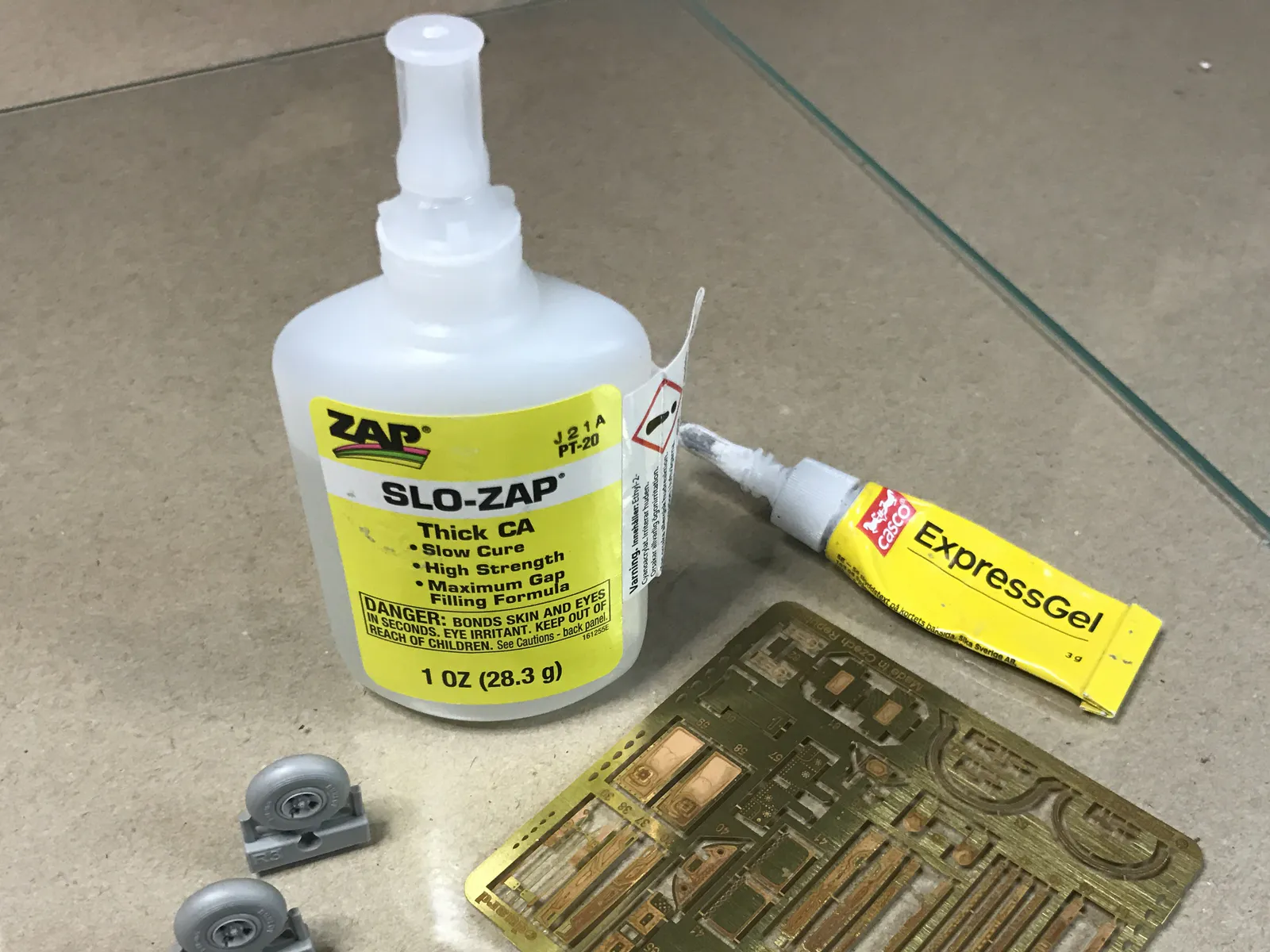
Not everything on a plastic kit is plastic. Detail parts — whether included in the kit or bought separately — are often made of metal or resin, and poly cement simply won't bond these materials. That's where CA glue comes in. You probably know it better as super glue.
It comes in different viscosities. Thin CA dries almost instantly, while thicker variants give you a few extra seconds to adjust the parts before they set. Either way, work carefully — this stuff doesn't forgive hesitation. And whatever you do, don't touch your face while it's on your fingers.
It comes in different viscosities. Thin CA dries almost instantly, while thicker variants give you a few extra seconds to adjust the parts before they set. Either way, work carefully — this stuff doesn't forgive hesitation. And whatever you do, don't touch your face while it's on your fingers.
Micro Kristal Klear
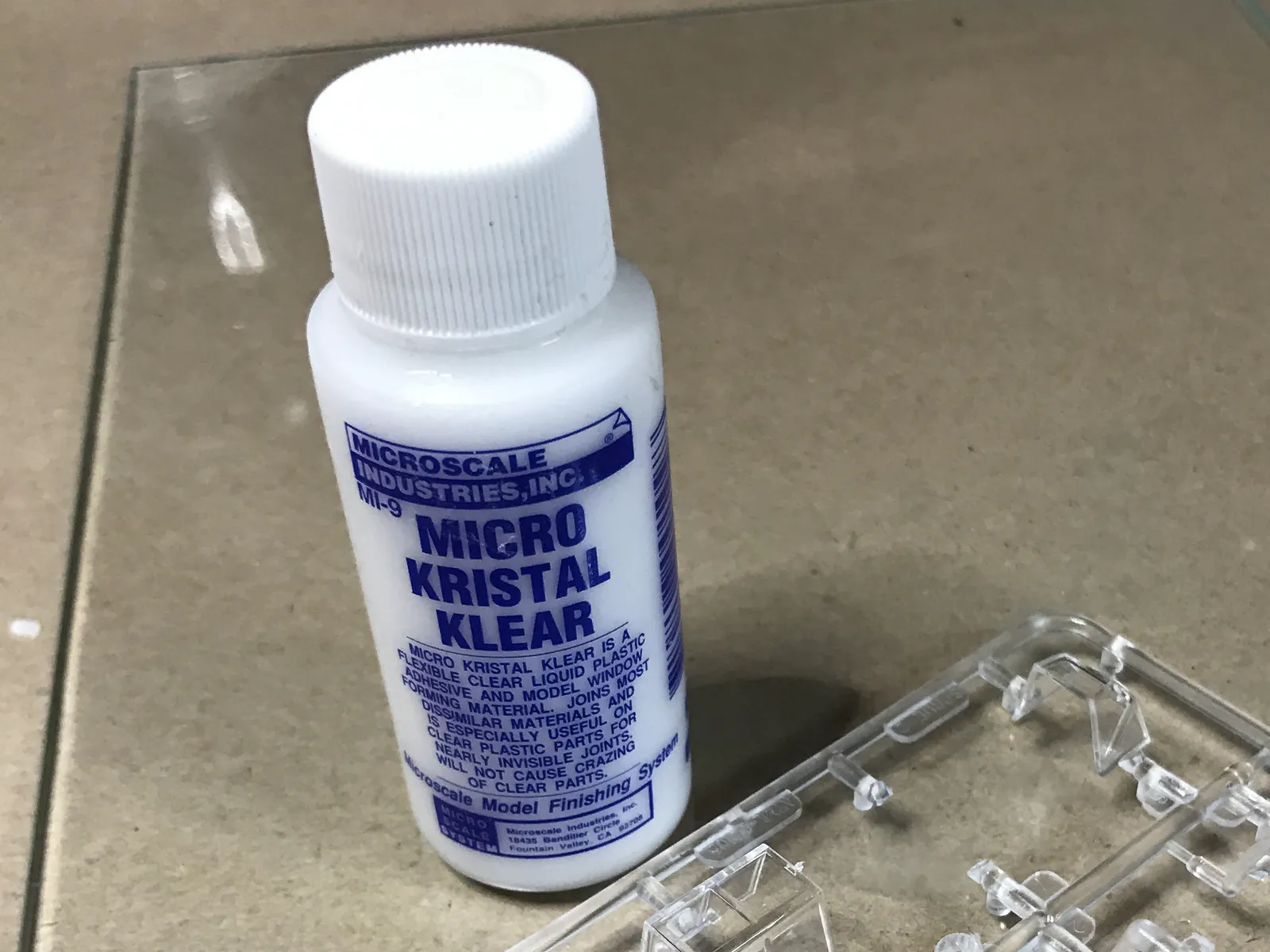
This category of glue deserves a mention of its own. Micro Kristal Klear from Micro Scale is probably the best known, but the underlying idea is simple — a water-based, flexible adhesive that dries completely clear and won't damage transparent plastic. In practice it's not far removed from ordinary PVA white glue, and there are several alternatives worth knowing about: Humbrol Clearfix, Deluxe Materials Glue 'n' Glaze and Formula 560 Canopy Glue all work on the same principle and are widely used in the hobby.
The main use is bonding clear parts where other glues risk clouding or crazing the plastic. But there's a more creative application too — you can use it to build up an entire window from scratch, applying it in thin layers and letting each one cure before adding the next. If you've launched your canopy across the room with your tweezers, this might just save the project.
The main use is bonding clear parts where other glues risk clouding or crazing the plastic. But there's a more creative application too — you can use it to build up an entire window from scratch, applying it in thin layers and letting each one cure before adding the next. If you've launched your canopy across the room with your tweezers, this might just save the project.