Right after the Avengers and Marauders had taken off from Midway it was time for Marine Scout-Bombing Squadron 241. This group was equipped with older dive bombers retired from carrier service, divided into three groups: Major Henderson’s with nine SBD-2 planes, Captain Tyler’s with nine SBD-2 planes, and Major Norris’ with twelve SB2U-3 Vindicators. Two Dauntlesses had to stay behind due to engine trouble and one Vindicator turned back shortly after take-off when an engine cowling blew off.
In Major Henderson’s group flew SBD-2 No. 6 (BuNo 2106), piloted by 1st Lieutenant Daniel Iverson and manned by radio/gunner Marine Private First Class Wallace J. Reid. When the force had gathered in the air they set course for the Japanese fleet with Henderson in the lead.
At 7:55 they sighted the enemy fleet just to port. Closing in, they were jumped from above by Japanese Zeros on combat air patrol. Henderson kept his squadron intact in the attack but was then seen crashing into the sea. Iverson’s radio was out of action and they even lacked intercockpit communication, so no attack signal was made. At 1,500 feet he selected a carrier and peeled off to attack, immediately followed by two enemy fighters. After releasing his bomb at 300 feet amid fighter fire and heavy AA he pulled out at sea level, only to find that his two pursuers had been joined by another two. They chased him for twenty to thirty miles, taking turns trying to shoot him down, before Iverson finally gained enough altitude to reach the relative safety of the clouds.
Back at Midway, Iverson found that the left gear wouldn’t come down. The airspeed indicator was shot out and they had no hydraulic power. Still, he put the plane down in the middle of the runway, managing to avoid a number of parked B-17 Flying Fortresses. Iverson was wounded in the legs and face, Reid in a foot, but neither seriously enough to prevent them from flying again the next day. Their plane, however, had acquired some 200–250 new holes. Iverson received the Navy Cross and Reid was awarded the Distinguished Flying Cross.

Had it been later in the war BuNo 2106 would have been written off, but now it was repaired and put back into service as a trainer back in the United States. On June 11, 1943, 2nd Lieutenant Donald A. Douglas was practising carrier landings on USS Sable in Lake Michigan when he came in too slow and too low. Waved off by the landing signal officer, he applied power — but the engine coughed and he pancaked into the water. Douglas was quickly rescued but BuNo 2106 sank to the bottom. There it stayed until 1994, when it was salvaged and subsequently restored. It is now displayed at the National Naval Aviation Museum in Pensacola, Florida.
A group of four Martin B-26 Marauders on their way to New Guinea had been diverted to Midway during the build-up to the battle. They were led by Captain James Collins. Among them was the B-26 “Susie Q” (Bu. No. 40-1391), named after the pilot’s wife’s nickname. The pilot was First Lieutenant Jim Muri. He and his crew had no combat experience and no training in torpedo launching. Nevertheless, at 6:00 in the morning of June 4 they left Midway armed with a 2,000-pound torpedo to attack the Japanese carrier force, taking off right after the six Avengers.
They had just sighted the Japanese fleet and Muri was in the process of lighting a cigarette when the Zeros struck the formation. He immediately focused on following Collins, who was manoeuvring to avoid the fighters while finding a good angle of attack on the carriers. Finally they dived down to sea level and took aim. By then Muri had lost track of the other two B-26s, his attention fixed entirely on his leader. At about 800 yards Collins released his torpedo and banked right.
Muri’s co-pilot Lieutenant Pete Moore was ready to launch, and Muri shouted the order. Moore turned the release plug but there was no indication whether it had gone. Muri kept shouting “Is it away?” until Moore finally answered “How the hell do I know?” By now they were up close to the carrier, continuously hit by AA and fighter fire. In a desperate move Muri banked hard and flew straight down the length of the carrier deck. Their bombardier Lieutenant Russ Johnson grabbed the nose gun and strafed the carrier, killing two seamen and temporarily disabling an AA gun. As they pulled away they saw one of the other B-26s narrowly miss the carrier’s bridge before plunging into the sea.
The torpedo had in fact launched but missed its target, which turned out to be the Akagi. Clearing the deck they were again attacked by Zeros. Corporal Frank L. Mello Jr., the waist turret gunner, crawled to the cockpit to report that the plane was on fire. Moore left his seat, found and extinguished the fire, tended the wounded, and then manned the gun turret. Finally the Japanese fighters had to turn back, and Muri managed to find Collins’ equally battered B-26 still in the air.
Back at Midway, Muri landed with the left tyre shot off, all propeller blades damaged and more than 500 bullet holes in Susie Q. The three gunners were wounded but the entire crew survived. Two of the four B-26s were lost and no torpedo hits were scored. Susie Q was subsequently scrapped, but Muri was allowed to cut out her name from the fuselage.
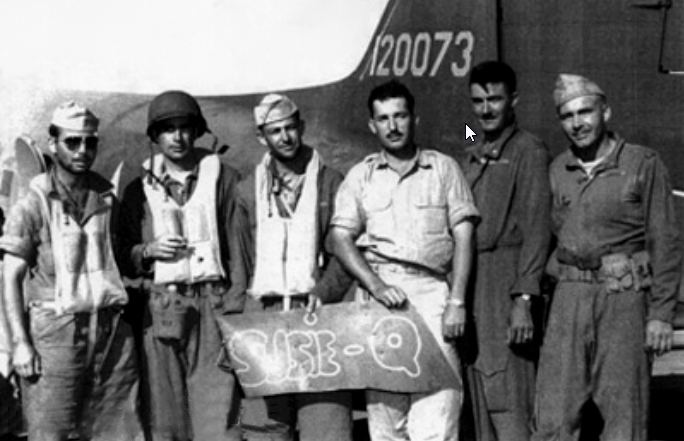
This kit is from ESCI. To be meticulous it is the wrong variant — the rear gun placement is incorrect — but it is the closest available at the time.
As the fighters scrambled to defend Midway, the island’s attack forces were also being launched — without fighter escort, as every available fighter was needed for the defence. First to lift off after the fighters were six Grumman TBF Avengers that had arrived from the mainland just six days earlier with fresh crews. They were the first operational Avengers delivered to the Navy, on their way to join VT-8 aboard the carrier USS Hornet. They were led by Lieutenant Fieberling, and in one of the other planes, 8-T-1 (Bu. No. 00380), flew pilot Albert K. Earnest (age 25), radioman Harry Ferrier (age 17) and gunner Jay Manning (age 17).
On their way out they spotted the Japanese formation heading toward Midway. Only one Zero peeled off toward them but soon lost interest. The Avengers were the first to reach the Japanese fleet, at 07:10 in the morning. Almost immediately they were swarmed by Zeros — so many that Earnest got the impression they were getting in each other’s way. Manning fired back from his rear turret but soon fell silent. Ferrier climbed up to check and found Manning slumped over the guns. “Quite suddenly I was scared, a mature old man at the age of 18,” he later recalled. He climbed back down only to find that the view from his belly gun was blocked by the tail wheel — the hydraulic system had been shot out. Soon afterwards he was wounded in the wrist, and the next attack grazed his head and knocked him unconscious.
Meanwhile Earnest brought the plane down to 200 feet and opened the bomb bay doors for the torpedo run. Bullets were hitting the plane continuously when something flew through the canopy and struck him in the neck. Despite blood everywhere, Earnest felt no pain. Then he lost his elevator controls. With a carrier still some distance away it seemed certain they were going down. Earnest kicked the plane toward a nearby cruiser and released the torpedo. Following his training he rolled the elevator tab back — and suddenly the plane responded. He could control altitude with the tabs alone. Still pursued by two Zeros he fought his way clear, and eventually they gave up or were called back.
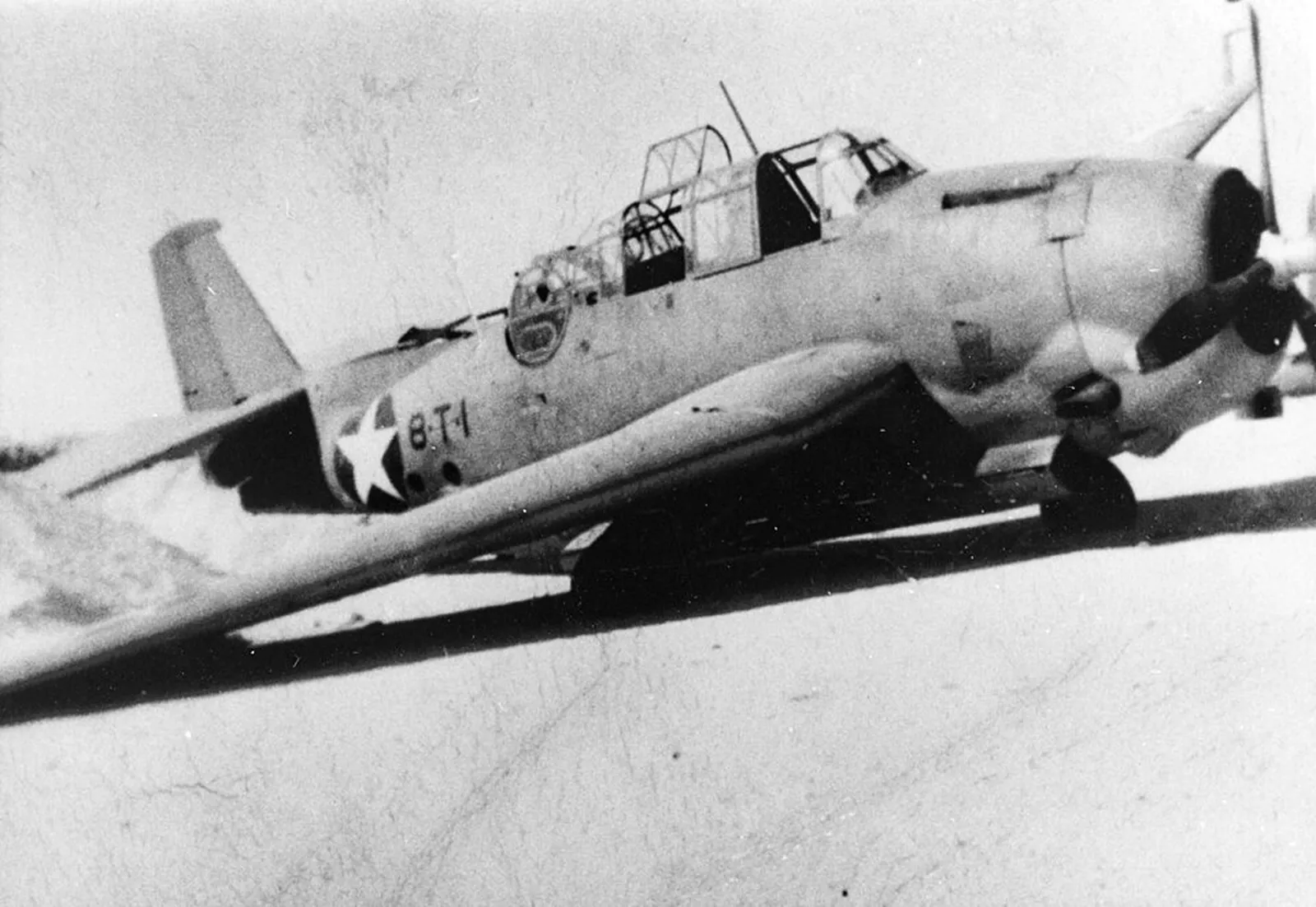
Now he was northeast of the Japanese fleet, which lay between him and Midway. His compass was shot away, but the sun was still low in the east so he turned south, then east, and climbed above the clouds. There he spotted the thick black smoke climbing from the burning oil tanks on Sand Island. On approach to Midway he attempted to lower the wheels but only the left came down. He tried repeatedly, but the right was stuck. Twice he attempted to land and was waved off. The ground crew tried to radio him to bail out, but 8-T-1’s radio was also shot out.
On the third attempt Earnest ignored the wave-off and set the plane down. Without flaps and with only one wheel, it rolled down the runway until the right wing struck the ground, graciously spinning 270 degrees before coming to a halt. Earnest was helped out by Lieutenant James P. Muri, who had just landed his own badly damaged B-26. Their ordeal was over — but Earnest and Ferrier were the only two survivors from their flight. None of the other five Avengers returned, and no torpedo hits were scored. They were also two of only three survivors from VT-8’s flight crews. Earnest received the Navy Cross for his actions.
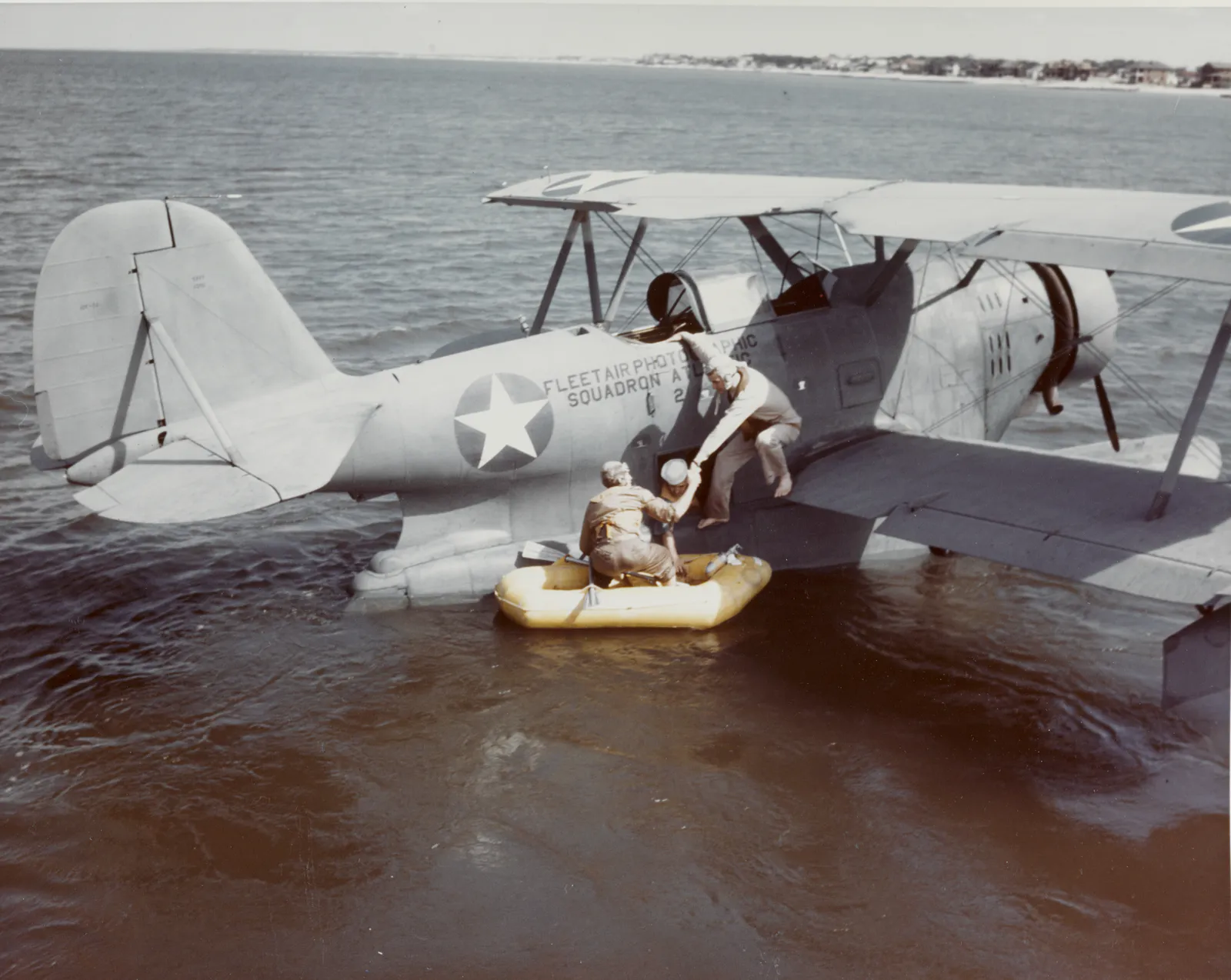
In the morning of June 4 the island awoke early, prepared for the oncoming Japanese attack. As soon as reports came in that the enemy was approaching, all available pilots took to the air — either to attack the Japanese fleet or to defend the island. However one damaged B-17, ten SBD-2 Dauntless and one J2F-2 Duck were left behind due to pilot shortages or engine problems. The J2F-2 Duck with Bu. No. 1209 was assigned directly to the station as a liaison and rescue aircraft. Issued to the Navy in 1938, it was now in the middle of the Pacific doing service as a general utility plane.
The Japanese started to bomb and strafe the base at 6:20 as described in the previous chapter. The Catalina hangars were struck and the oil depot on Sand Island was set on fire, sending up a thick pillar of smoke. Miraculously only two of the ten SBD-2 planes were damaged and not beyond repair. The B-17 also escaped serious damage beyond its already burned out engine, and was later flown back to Hawaii for repairs. On the airfield the Americans had constructed a mock-up plane from scraps and leftovers — it received a direct hit from a bomb.
The Duck was not so lucky. During their strafing runs the Japanese attacked and set it on fire. It burned out completely, beyond saving. It was thus the only aircraft on the ground that the Japanese managed to destroy. One has to admit that to the Japanese it must have been like shooting at a sitting duck.
The kit is from Merit International, with the engine and forward fuselage sourced from a Classic Airframes kit — necessary to accurately represent the J2F-2 variant, which differed from later marks in its engine installation and cowling shape.
Leader of the dive bombers that attacked Midway was Lieutenant Takehiko Chihaya in his Aichi D3A1 Type 99 ‘Val’ dive bomber AI-251, accompanied by 35 others. The whole attack force was led by Navy Lieutenant Joichi Tomonaga in his Nakajima B5N2 Type 97 ‘Kate’ torpedo bomber, followed by another 35 ‘Kates’, all escorted by 36 Mitsubishi A6M Zero fighters. After breaking through the fighter defence in front of Midway they arrived over the atoll at 6:20 in the morning.
First came the ‘Kates’. They were dismayed to find their primary target — the planes at Midway — gone. The airfield was almost devoid of aircraft, as the Americans had sent their forces off to attack the Japanese fleet or simply get them out of harm’s way. The Kates went ahead and attacked their secondary target, the anti-aircraft defences, to clear the way for the Val dive bombers. They scored a direct hit on three oil storage tanks on the north-eastern tip of Sand Island, sending a massive column of oily black smoke high into the air — smoke that would later serve as a landmark for American stragglers trying to find their way back to Midway.
The AA fire was fierce and two of the Kate’s was shot down. Tomonaga’s plane also received a hit damaging his fuel tanks. He managed to get back to the carrier Hiryū while radioing back to Admiral Nagumo that a second air attack on Midway was needed.
Next it was time for Lieutenant Takehiko Chihaya and the Val dive bombers. The lead Val pealed off and dove down to about 100 feet and turned upside down and proceeded down the airfield. The AA crews were astonished by this stunt and stood there staring until someone cried “What the hell, let’s go at him.” and opened fire downing the plane. This was the only Val shot down during the attack. The others came down dropping their bombs on the islands. One struck VMF-221’s rearming pit setting off eight 100-pound bombs and 10,000 rounds of ammunition killing four maintenance personnel.
Despite the spectacle, the attack was indecisive. Only twenty men had been killed, camouflage had effectively protected the 5-inch coastal guns, and most of the damage to installations was repairable. The runways had received so little damage that Captain Simard, the US Navy commander, suspected the Japanese had deliberately spared them for their own use once the atoll was captured.
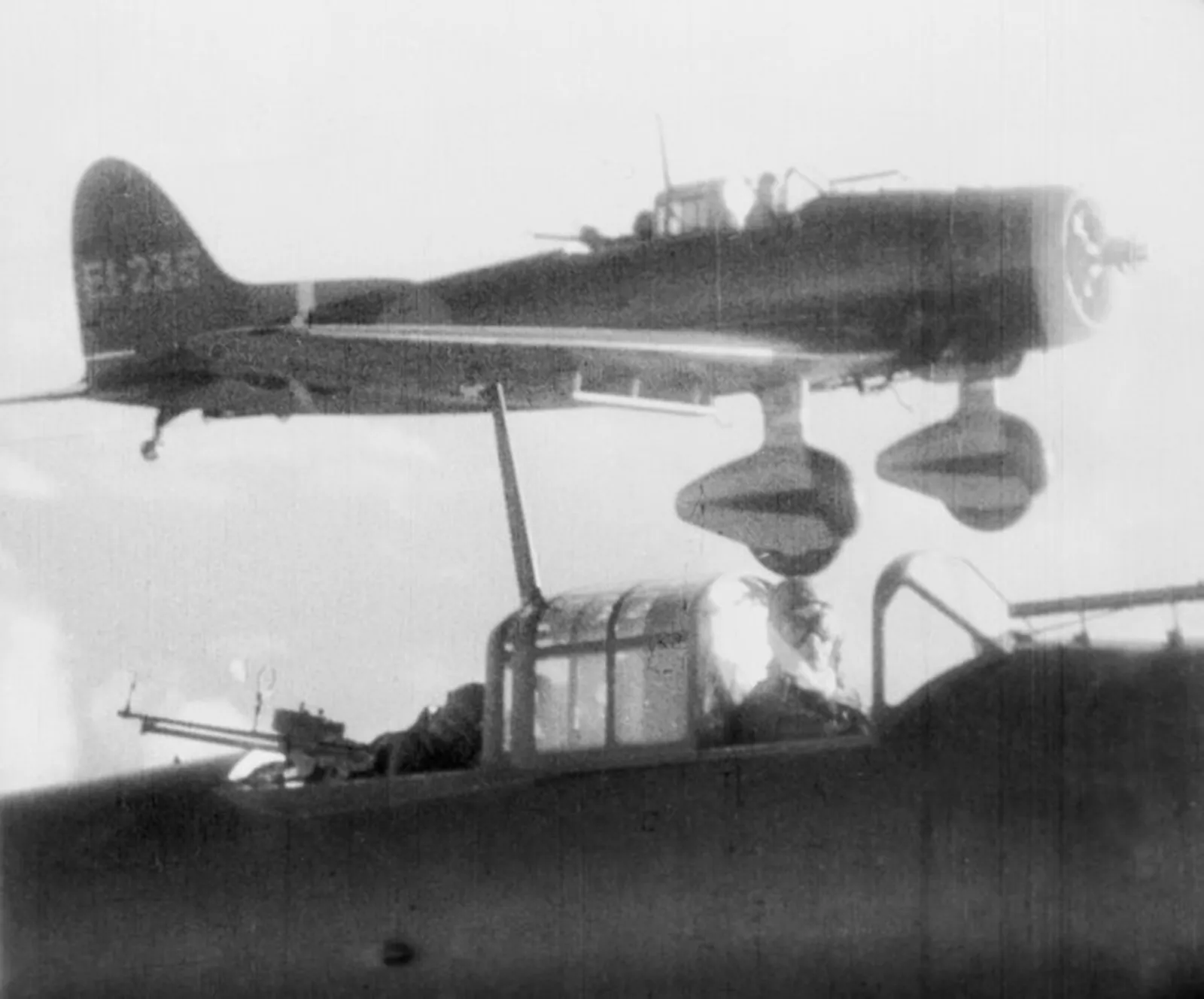
After at first receiving a hot welcome by the Japanese AA-crews in their own fleet, Chihaya landed back on Akagi fairly sizzling with indignation. “A gunnery officer who mistakes friendly planes for the enemy should be fired!” he shouted. He and his colleague Lieutenant Yamada reported to the bridge, advising that, contrary to Japanese Intelligence data, there were three air strips on the island.
Even if the American knew the Japanese were coming they still had to find them in the large Pacific Ocean. At Midway they had stationed 32 Consolidated PBY-5/A Catalinas, long range amphibious planes. At dawn on 3 June 1942 twenty-two of these Catalinas was again sent out to find the Japanese force. One of them were 44-P-4 (Bu. No. 08031) piloted by Ensign Jack Reid. When preparing the planes in the morning Plane Captain Ray Derouin had celebrated that his wife had just given birth by adding an extra 50 gallons of fuel to the planes in his charge, adding about an hour and a half worth of flying time.
Jack and his crew lifted off at 4:00 in the morning continuing westbound. They reached the end of their leg without spotting anything and the navigator Ensign Bob Swan called pilot Jack Ried and asked if they could continue. Jack said OK but to keep track on the fuel consumption. After flying 15 minutes without finding anything Bob asked for another 15 minutes which was again granted. After this Bob was ready to give Jack a heading for home when Jack sighted some specks on the horizon. Just before 9:00 a.m. Jack and his crew spotted a fleet of ships 700 nautical miles west of Midway heading east. They immediately radio this back to Midway.
Using cloud cover on and of they track the fleet for some 30 minutes recording it’s strength. It was Admiral Raizo Tanaka’s Midway Occupation Force consisting of 1 light cruiser, 12 transports carrying 5,000 soldiers, 11 destroyers, 2 seaplane tenders, 1 fleet oiler and 4 patrol boats. The message triggers a force of nine American B-17 Flying Fortresses to lift off and attack Tanaka’s on coming force.
The American air commander, Captain Simard, ordered four PBY Catalinas from VP-24 to be equipped with torpedoes for a night attack. One of them had to turn back due to bad weather but three pushed through. At about 1:30 in the morning of July 4 they came upon the unsuspecting force of Admiral Raizo Tanaka. During the following attack two Catalinas missed their targets but the third Catalina piloted by Ensign Gaylord D. Propst managed to hit the oil tanker Akebono Maru with a torpedo at around 1:54 killing or wounding twenty-three men. This is the only successful torpedo attack by the Americans during the entire battle! The tanker managed to contain the damage and continued with the force.

Now the Americans knew the Japanese where coming. At 4:30 in the morning of 4 June General Nagumo launched his attack on Midway. 36 Aichi D3A1 Type 99 ‘Val’ dive bombers, 36 Nakajima B5N2 Type 97 ‘Kate’ torpedo bombers. They were escorted escorted by 36 Mitsubishi A6M Zero fighters. They flew towards Midway. At the same time some 11 Catalinas were launched from Midway to search for the Japanese. At 5:35 one Catalina reported in the position of the Japanese Carrier fleet and ten minutes later another called in that they’ve sighted the inbound air-strike. The US radar could also pick up the oncoming aircraft from miles away. Now a hectic activity started to empty the air base from aircraft.
First off from the runway was Midway’s fighter defence, the US Marine Fighting Squadron 221 (VMF-221). They were equipped with older planes retired from carrier service. Twenty Brewster F2A-3 Buffalo and six Grumman F4F-3 Wildcat. At 6:00 when the fighter scrambled two of the Wildcats were out on patrol and another soon returned with engine trouble. So in all there was twenty-three fighters up against the oncoming 108 enemies.
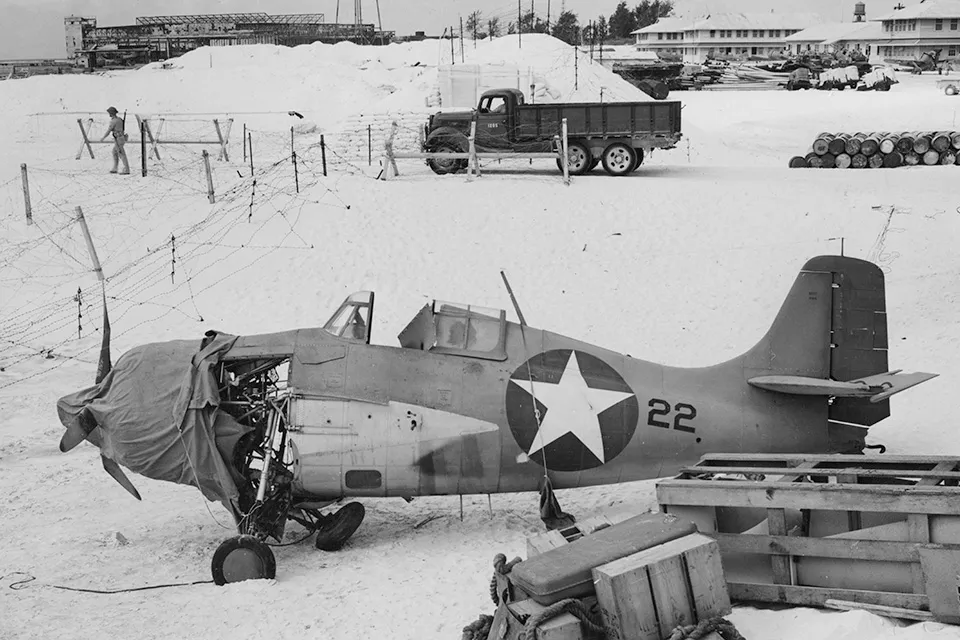
One of the pilots was Captain Philip R. White in his F2A-3 Buffalo MF-11 (Bu. No. 01568). The attack formation was lead by Captain Daniel J. Hennessy. At 6:20 Captain John F Carey spotted the enemy and called out “Tally-ho! Hawks at Angels twelve supported by fighters” on the radio. They attacked the first wave which consisted of B5N2 ‘Kate’ bombers. In the first pass White lost track of his wingman and the rest of the division. Going in for a third time he was suddenly attacked by a A6M Zero. Pushing his stick forward and entering a steep dive he managed to avoid the Japanese fighter.
Regaining hight he found a D3A1 ‘Val’ which he made a long pass on and saw it waver and make an easy left turn into the water. (Here are diverging accounts, White is said to have shot down a Val but only one Val was lost in the raid and it was shot down by AA-fire. The citation for the Navy Cross he received states a Navy Aichi Type Dive Bomber. Can it be that it was a ‘Kate’ he shot down?). He found another ‘Val’ but on his second pass on it he had ran out of ammunition. Meanwhile the Japanese easily broke through the defences and attacked Midway, see 4. The attack on Midway – The ‘Val’.
After the attack White returned to Midway to rearm and took off again but by then the Japanese planes had returned to their carriers and he was called back down again. White was one of the lucky ones. Of the twenty-three planes that took off sixteen were shot down (with two pilots surviving), the rest made it back to Midway either to land or crash land. After the mission only two planes were fit to fly again, one of these were White’s. In his report he wrote: “It is my belief that any commander that orders pilots out for combat in a F2A-3 should consider the pilot as lost before leaving the ground.” White was awarded the Navy Cross for his actions on this day.