There were 17 B-17E Flying Fortresses stationed at Hickam Field on Midway on June 3, the day before the main battle. When the first traces of the Japanese attack force were found — the invasion fleet spotted by Jack Reid’s Catalina — a B-17 equipped with extra fuel tanks but no bombs was sent out to relieve the Catalina as spotter. Armed with no fewer than eleven guns it was considered far better able to defend itself.
When the enemy fleet was confirmed, nine more B-17s with half a bomb load and extra fuel were dispatched. At 16:23 they sighted the Japanese and went in, approaching in three groups of three at altitudes between 8,000 and 12,000 feet. Met by heavy but tardy AA fire, they released their bombs. No hits were scored.
The next day the B-17s were sent off shortly after the reconnaissance Catalinas at around 4:30, partly as a precaution against the expected attack on the airfield. Since they would need to spend at least four hours airborne regardless, they were redirected to have another go at the invasion force. At 5:52 the Americans finally spotted the main Japanese carrier force and the B-17s were sent after them. They climbed to 20,000 feet and changed course, spotting the first ships at 7:32 but not locating the carriers until 8:10, as they were hidden by clouds. Flying in from the stern they commenced their bomb run. AA fire was heavy and accurate for altitude, though generally behind. The combat air patrol Zeros found the bombers too high to intercept effectively. No hits were scored.
On June 5 three sorties were flown against the remaining Japanese ships. On the last, made by five B-17s at 18:25, they found a lone cruiser and attacked from 11,000 feet. The ship manoeuvred violently and threw up heavy AA fire. During the bomb run one B-17 managed to lose its external fuel tank along with its bombs. The aircraft headed for Midway but at around 23:30 radioed “out of gas and landing” and was never seen again. The remaining planes had trouble finding Midway in the dark — three were guided in by radar, but the last, piloted by Captain Glen H. Kramer, also ran out of fuel and ditched 50 miles short. Everyone but the radio operator was rescued. No hits were scored.
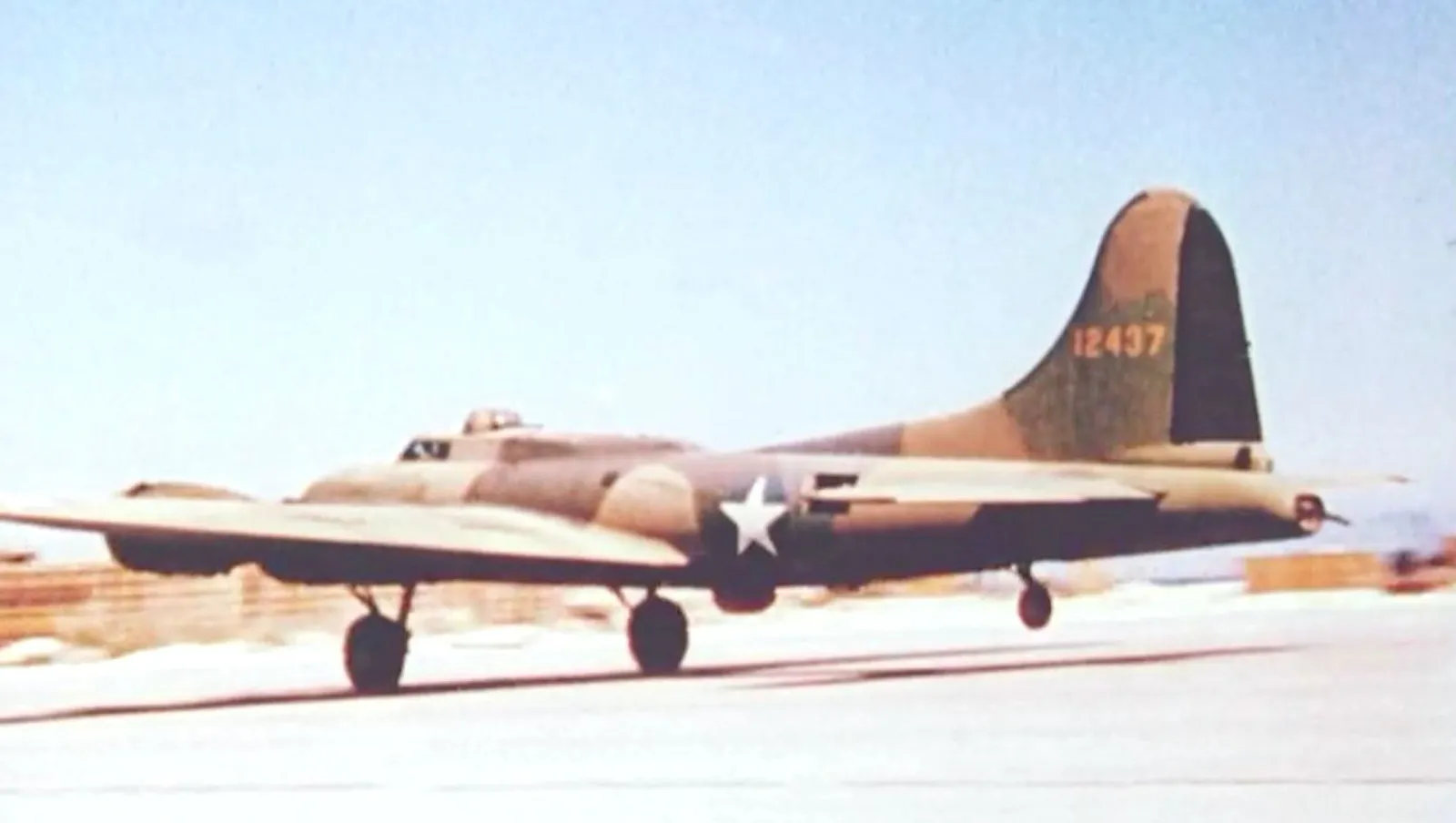
The engagement confirmed that B-17s were better suited to attacking stationary targets than manoeuvring vessels at sea. Their value as long-range reconnaissance platforms, however, was well proven. This individual aircraft (41-2437) was filmed by John Ford for his documentary of the Battle of Midway and appears in several sequences. It had flown in from Hawaii early on June 4, and afterwards was sent on to Australia. On July 17, 1942, it took part in a bombing raid against Rabaul. It was officially written off on June 15, 1944, and scrapped.
Even if the American knew the Japanese were coming they still had to find them in the large Pacific Ocean. At Midway they had stationed 32 Consolidated PBY-5/A Catalinas, long range amphibious planes. At dawn on 3 June 1942 twenty-two of these Catalinas was again sent out to find the Japanese force. One of them were 44-P-4 (Bu. No. 08031) piloted by Ensign Jack Reid. When preparing the planes in the morning Plane Captain Ray Derouin had celebrated that his wife had just given birth by adding an extra 50 gallons of fuel to the planes in his charge, adding about an hour and a half worth of flying time.
Jack and his crew lifted off at 4:00 in the morning continuing westbound. They reached the end of their leg without spotting anything and the navigator Ensign Bob Swan called pilot Jack Ried and asked if they could continue. Jack said OK but to keep track on the fuel consumption. After flying 15 minutes without finding anything Bob asked for another 15 minutes which was again granted. After this Bob was ready to give Jack a heading for home when Jack sighted some specks on the horizon. Just before 9:00 a.m. Jack and his crew spotted a fleet of ships 700 nautical miles west of Midway heading east. They immediately radio this back to Midway.
Using cloud cover on and of they track the fleet for some 30 minutes recording it’s strength. It was Admiral Raizo Tanaka’s Midway Occupation Force consisting of 1 light cruiser, 12 transports carrying 5,000 soldiers, 11 destroyers, 2 seaplane tenders, 1 fleet oiler and 4 patrol boats. The message triggers a force of nine American B-17 Flying Fortresses to lift off and attack Tanaka’s on coming force.
The American air commander, Captain Simard, ordered four PBY Catalinas from VP-24 to be equipped with torpedoes for a night attack. One of them had to turn back due to bad weather but three pushed through. At about 1:30 in the morning of July 4 they came upon the unsuspecting force of Admiral Raizo Tanaka. During the following attack two Catalinas missed their targets but the third Catalina piloted by Ensign Gaylord D. Propst managed to hit the oil tanker Akebono Maru with a torpedo at around 1:54 killing or wounding twenty-three men. This is the only successful torpedo attack by the Americans during the entire battle! The tanker managed to contain the damage and continued with the force.
