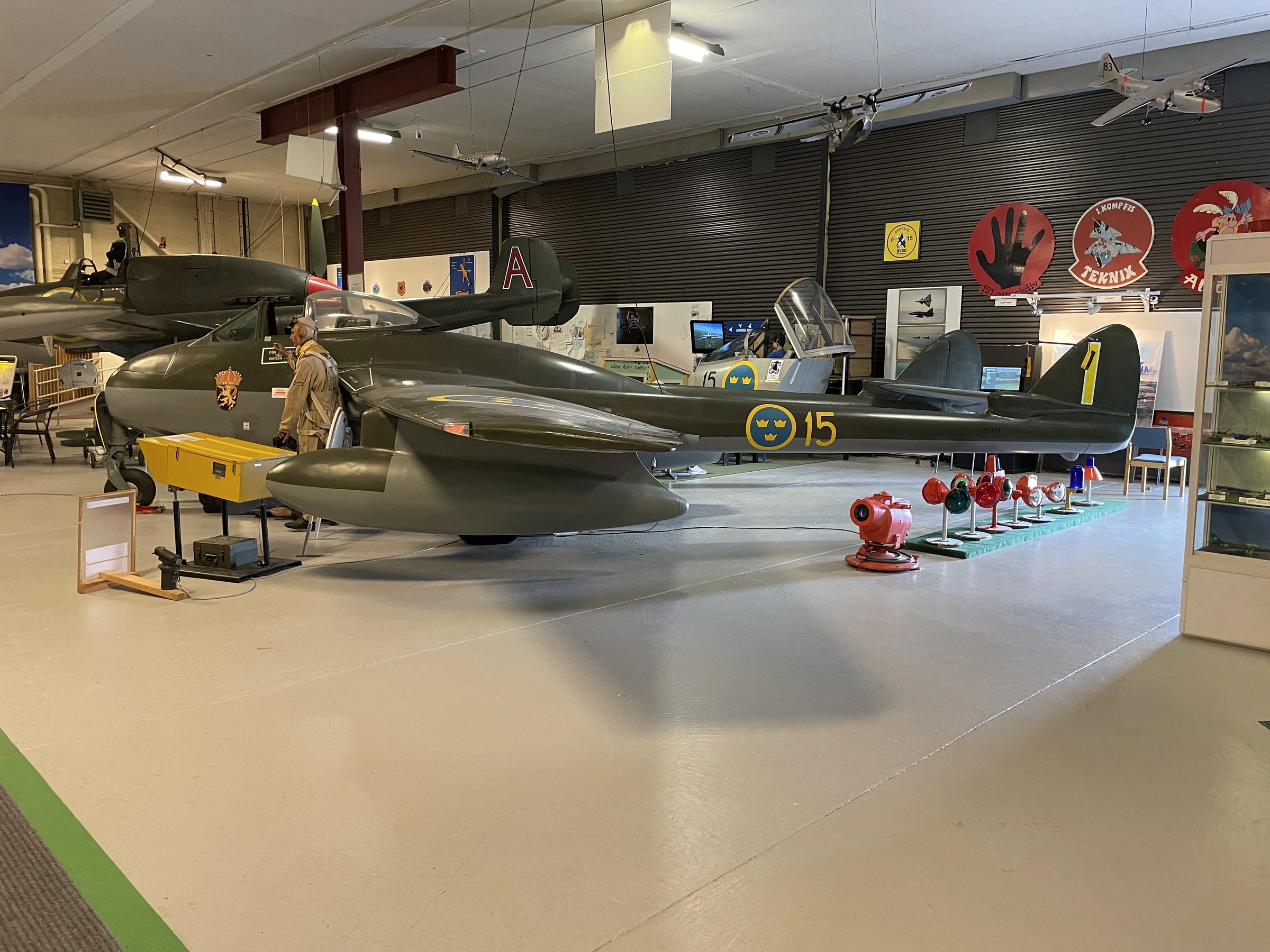
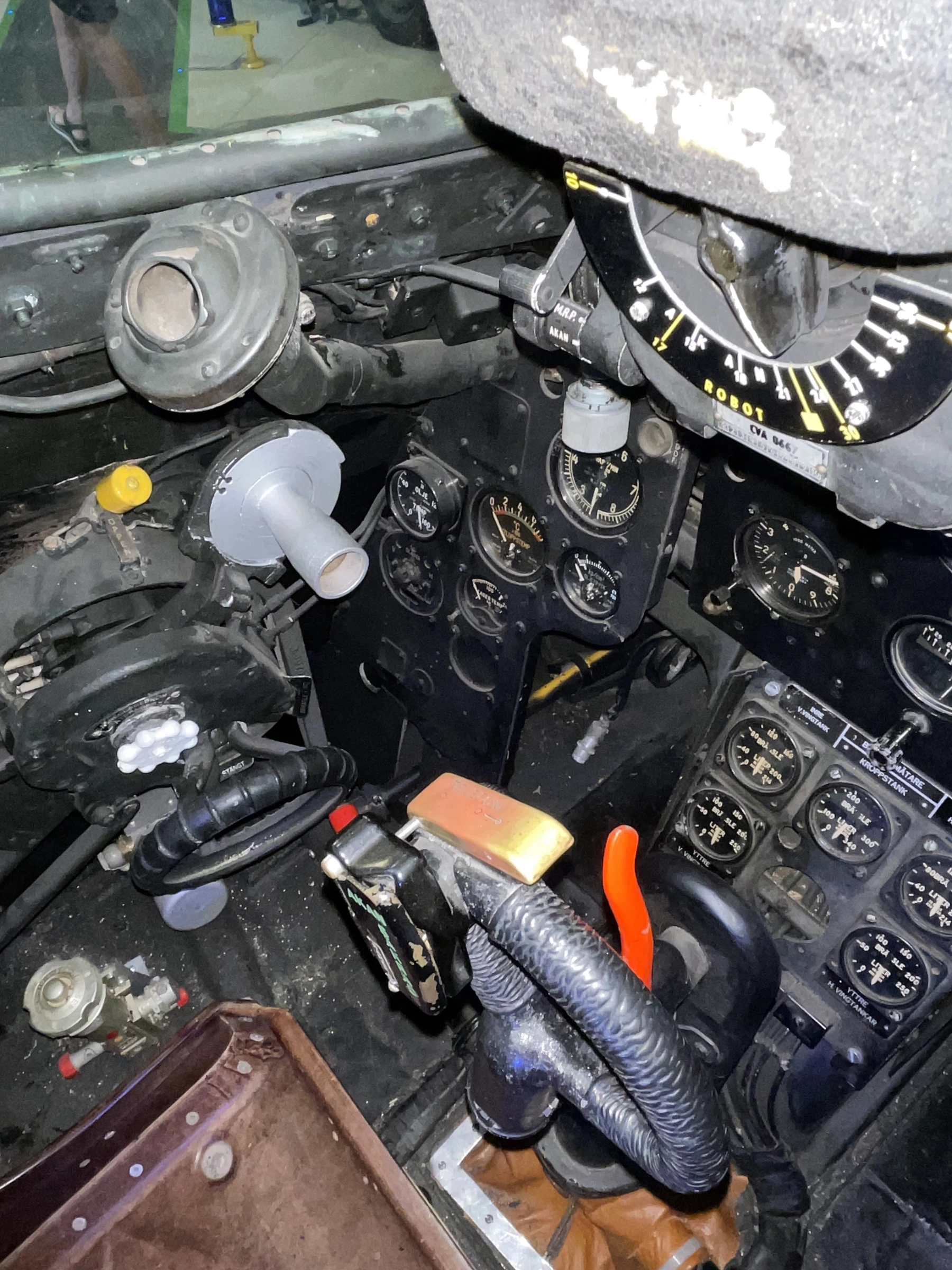
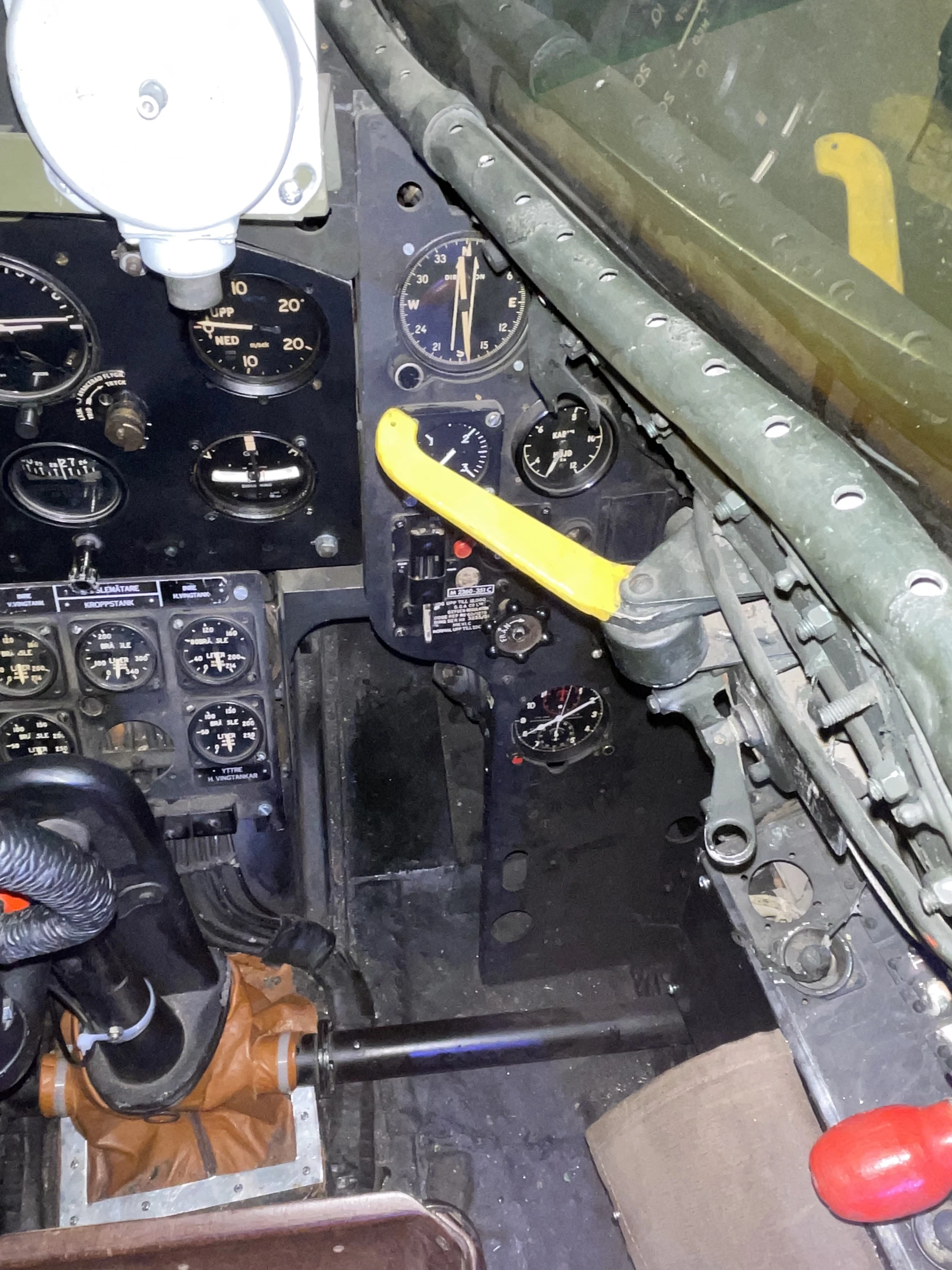
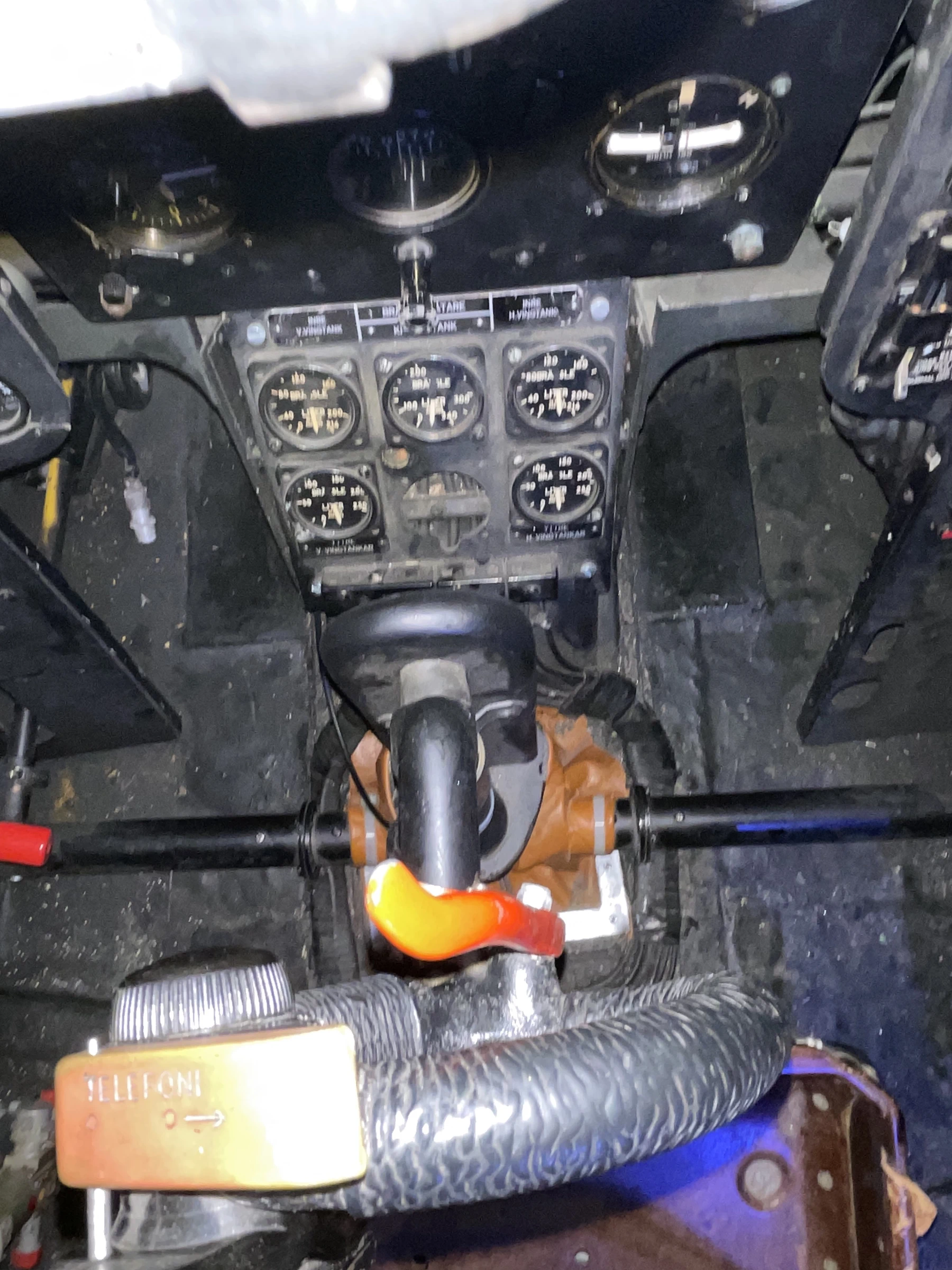
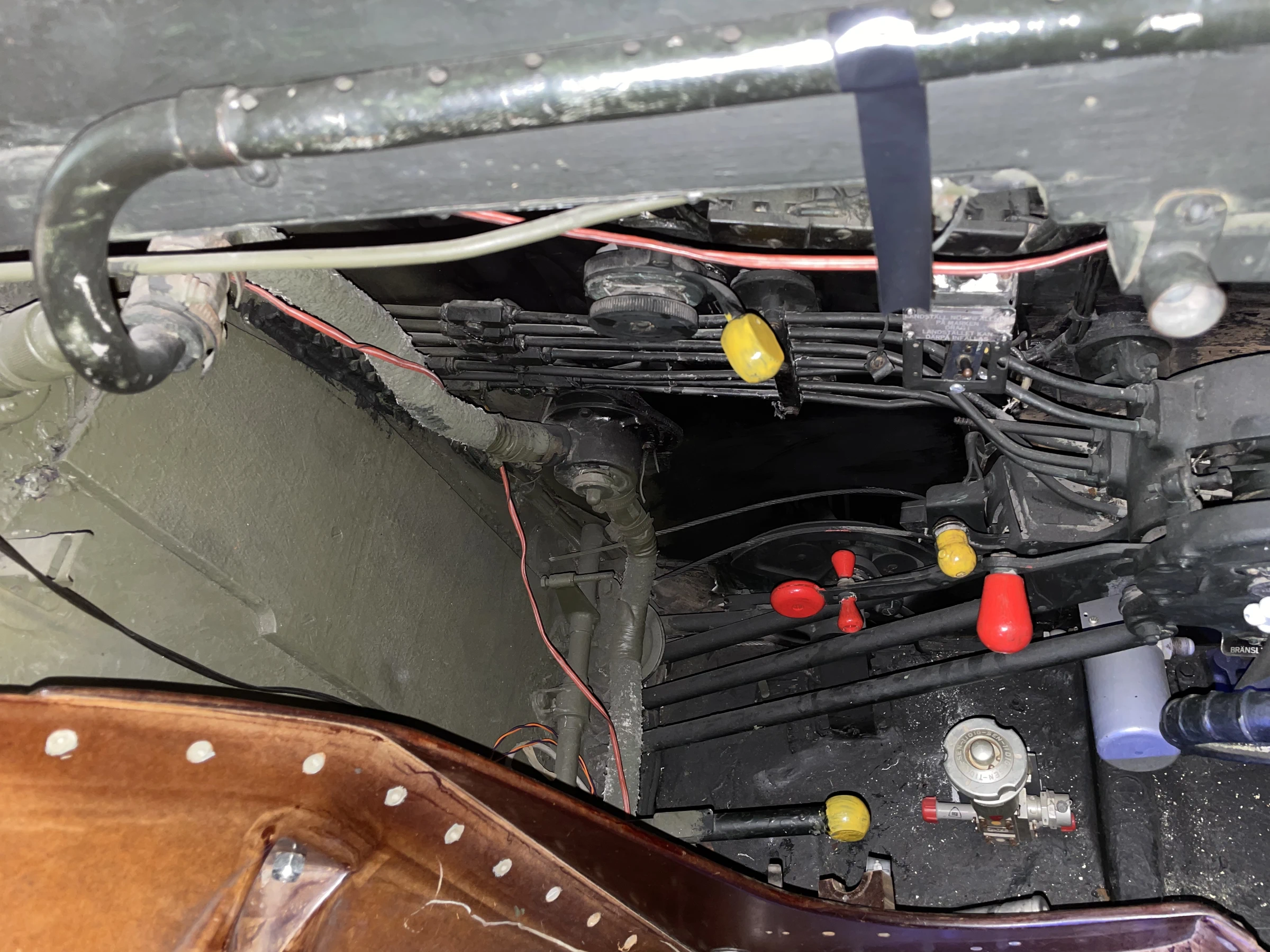
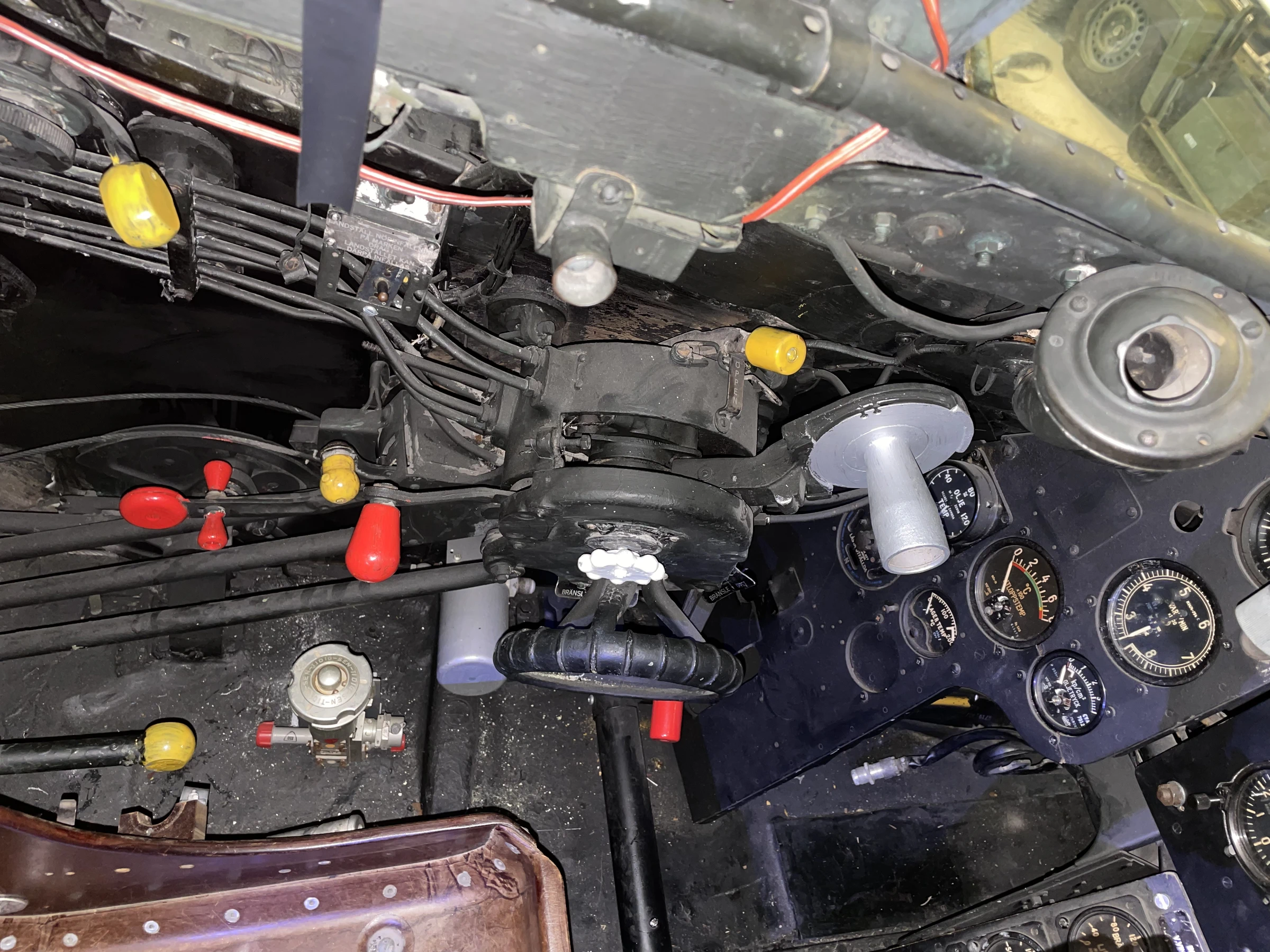
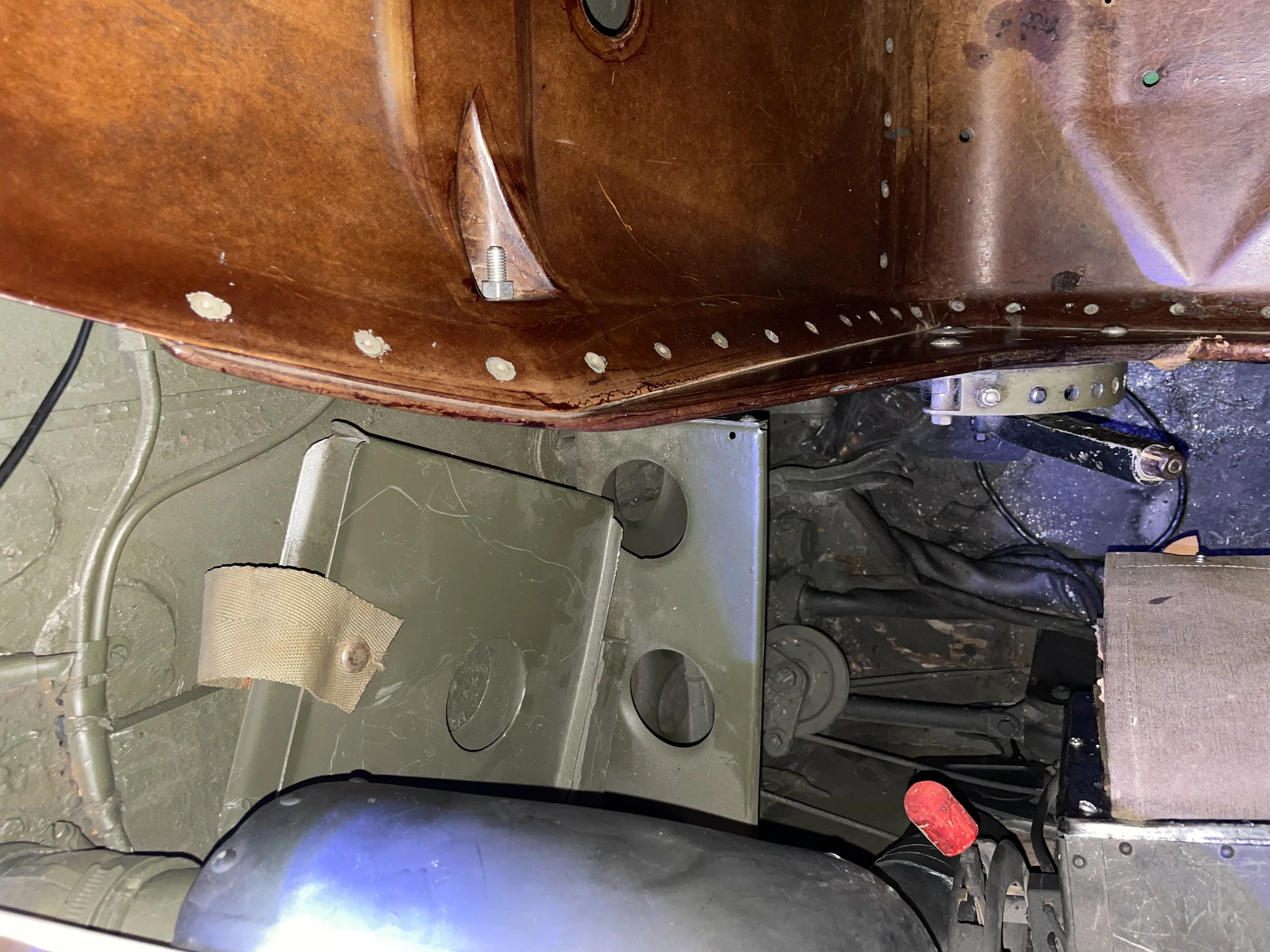
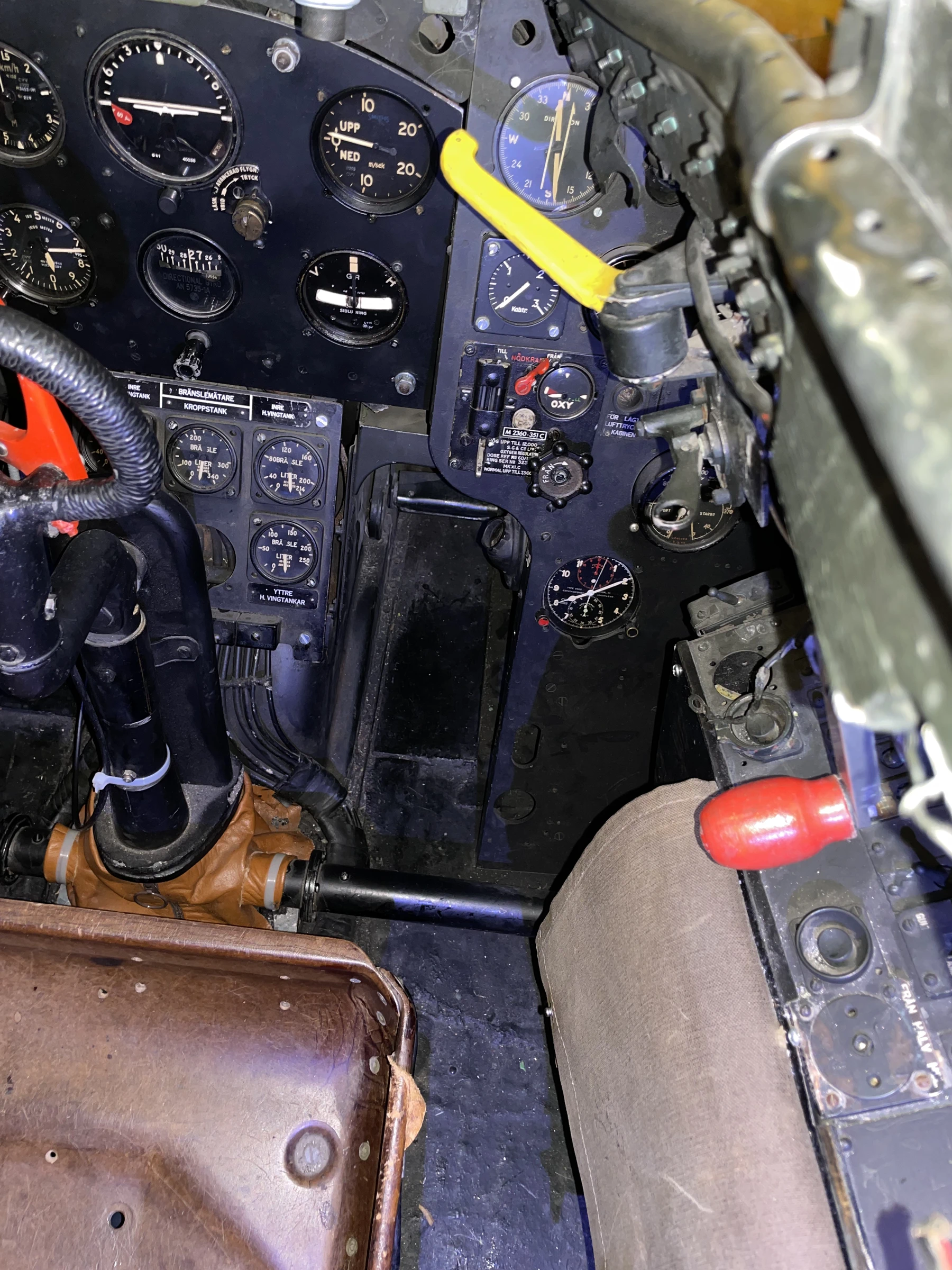
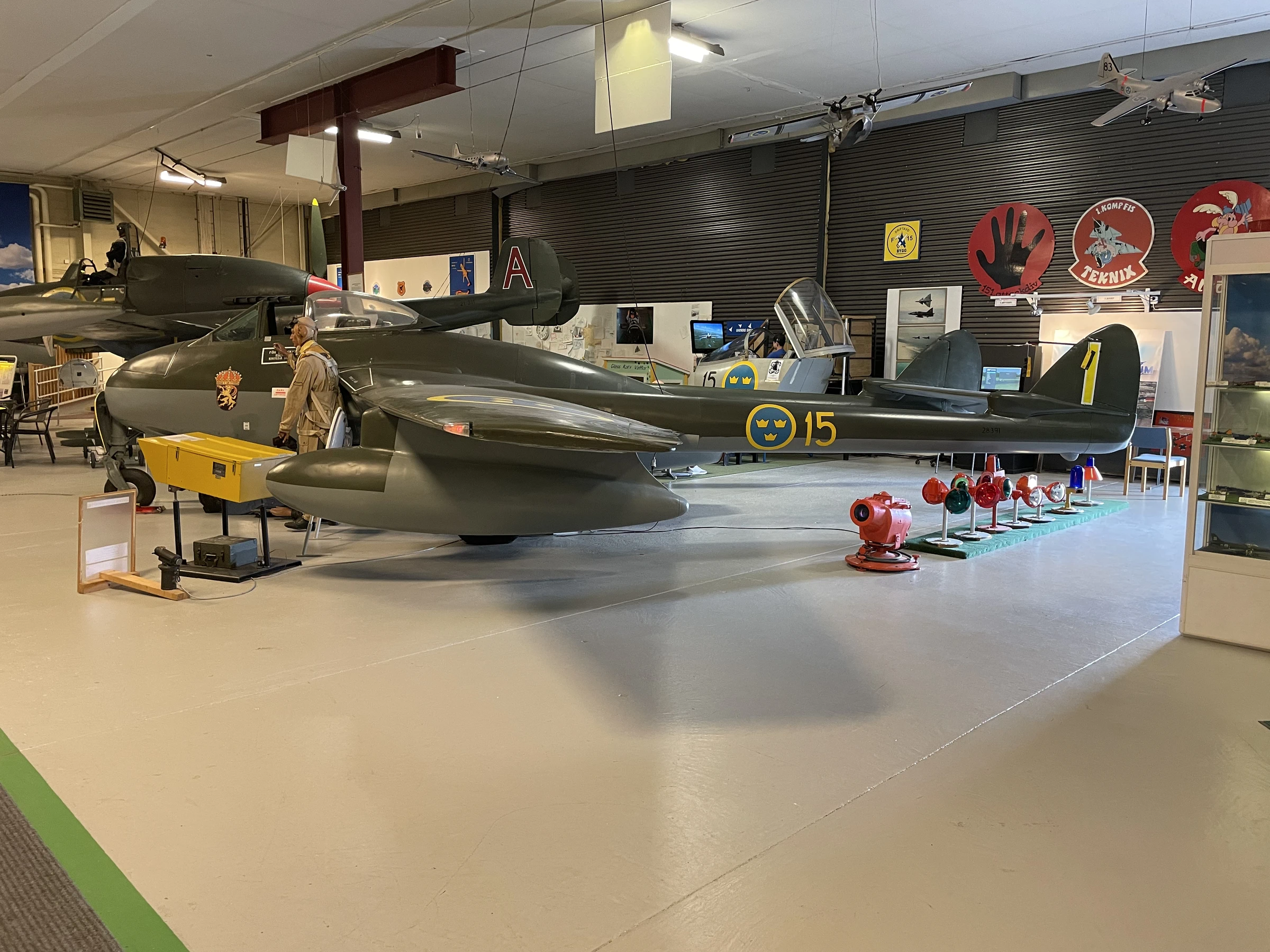
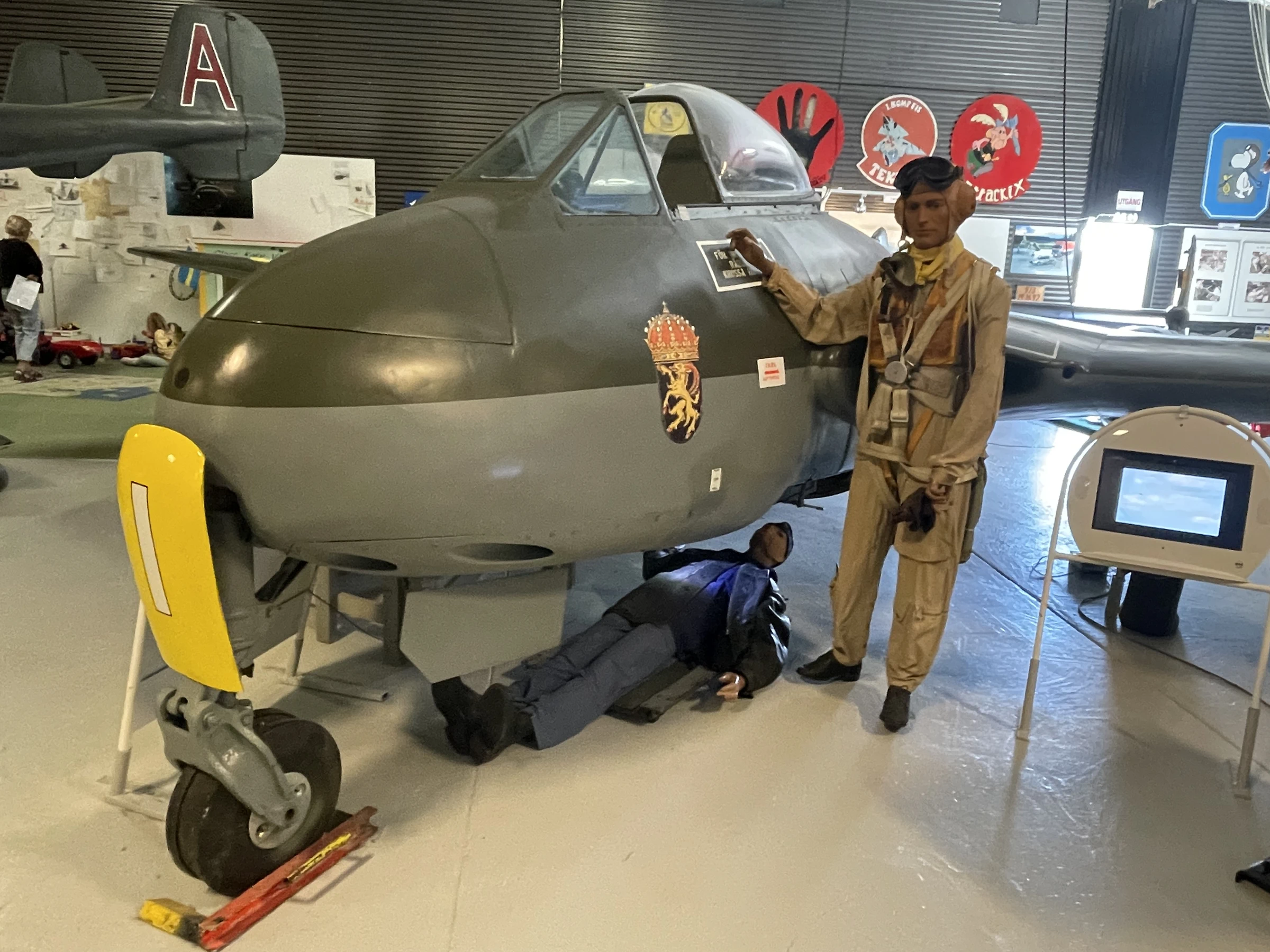
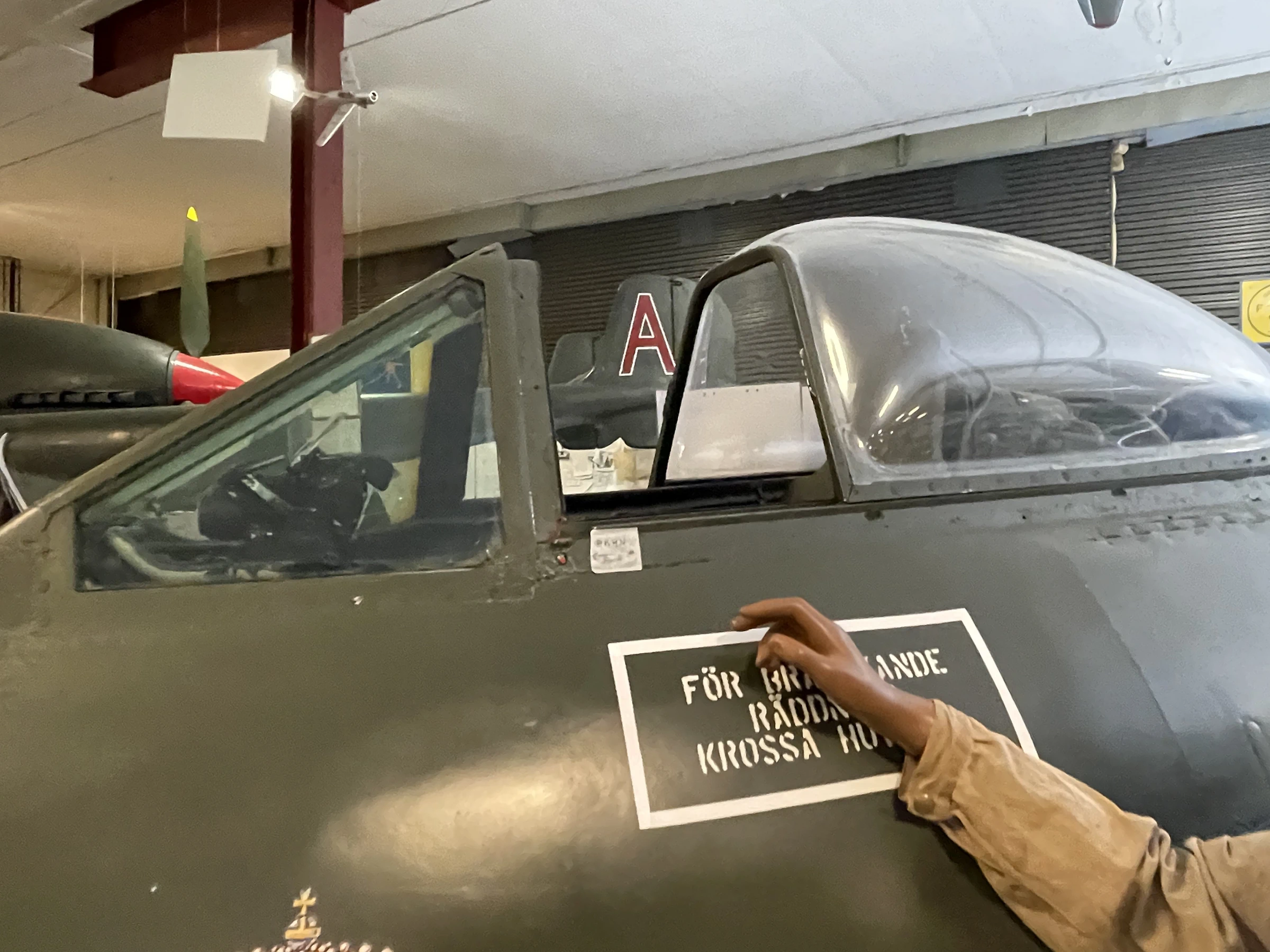
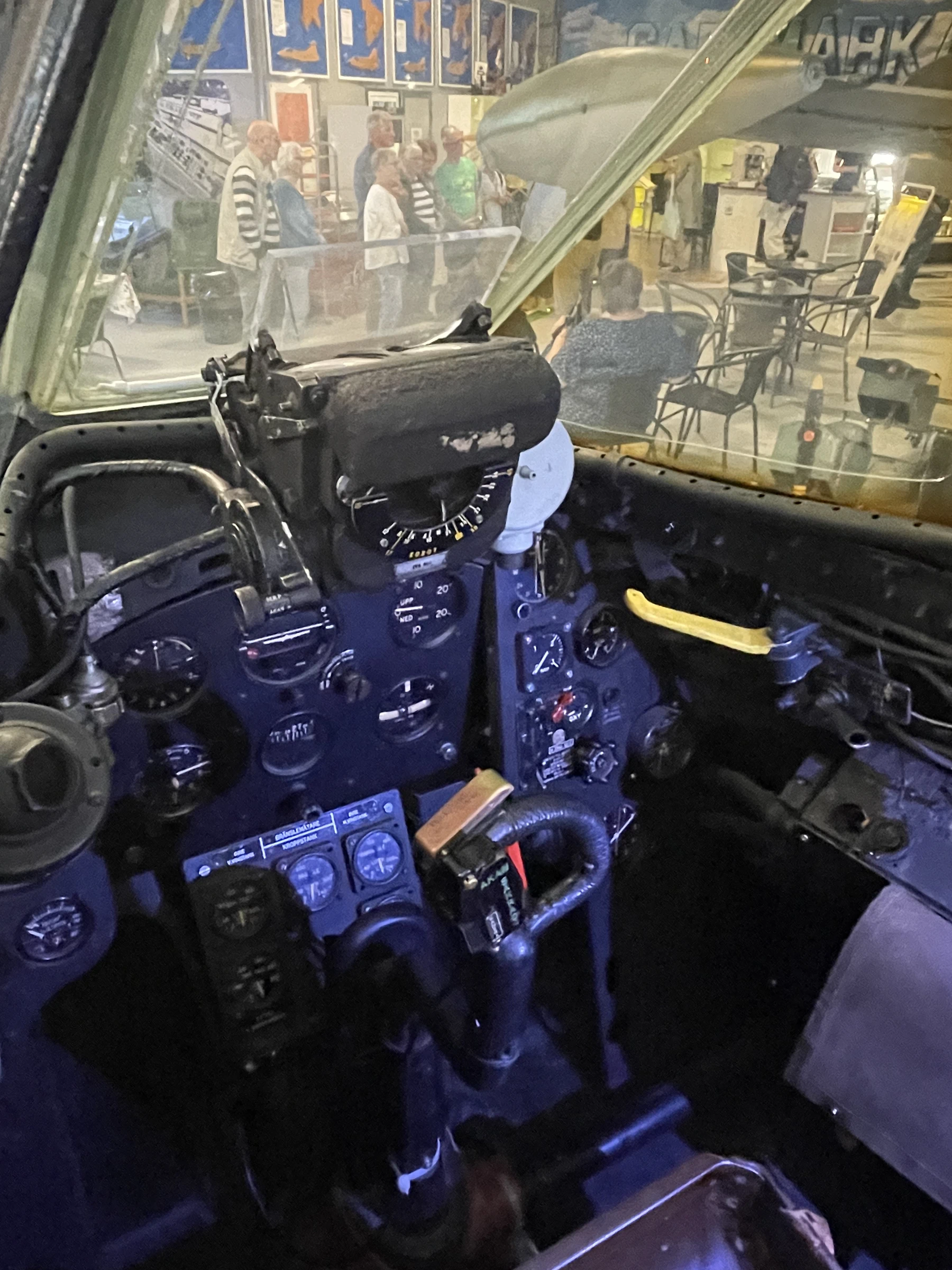
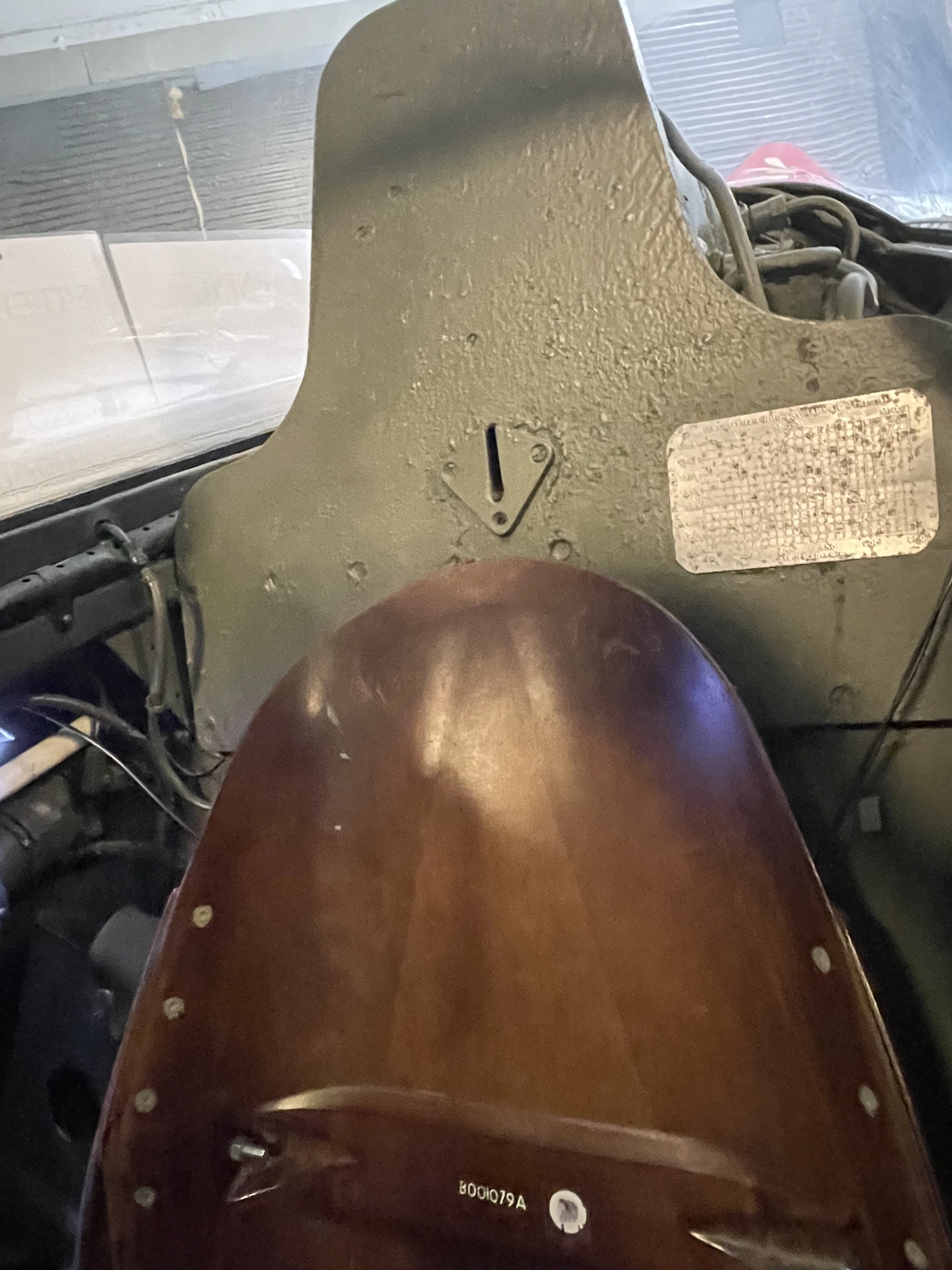
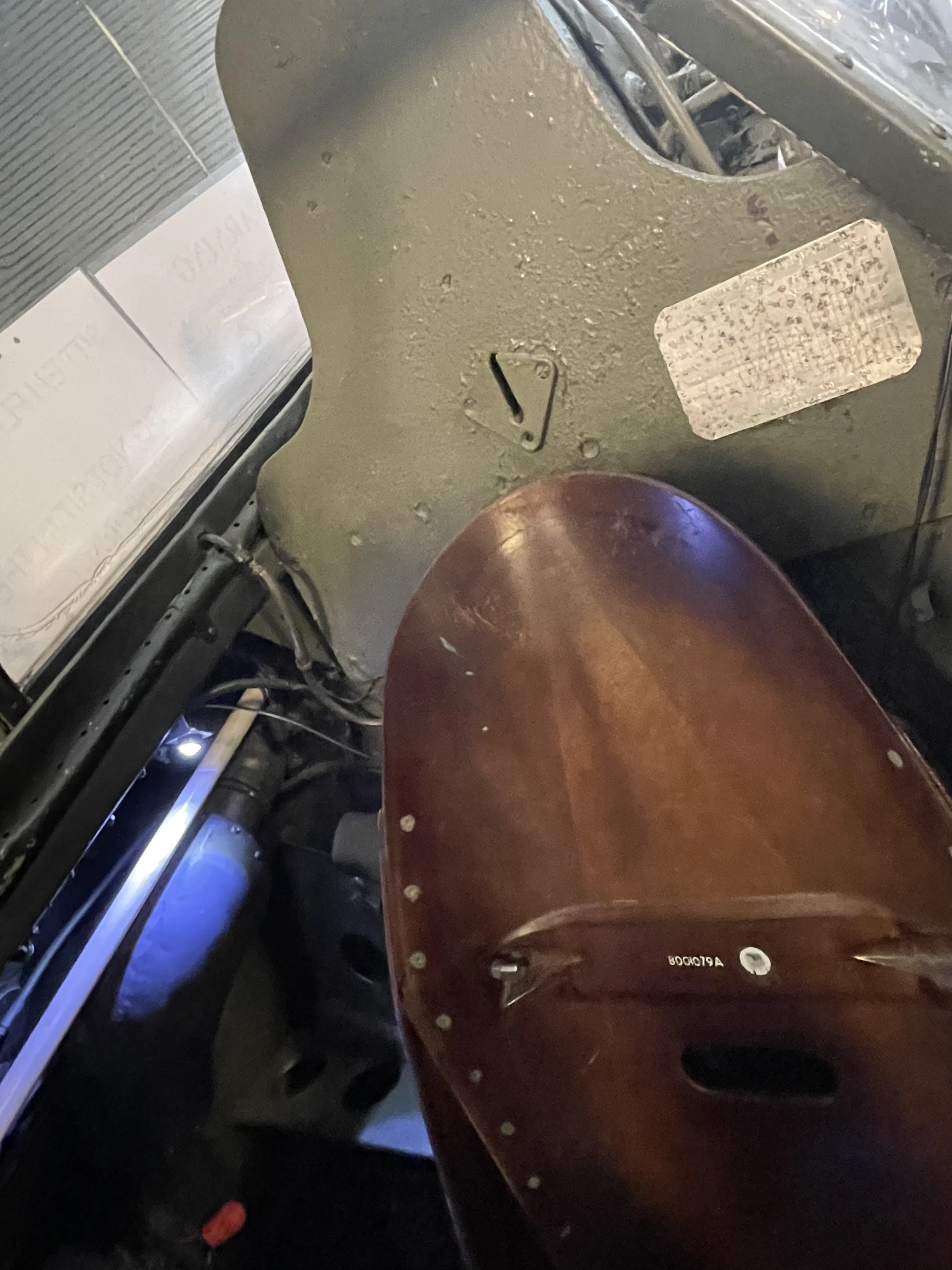
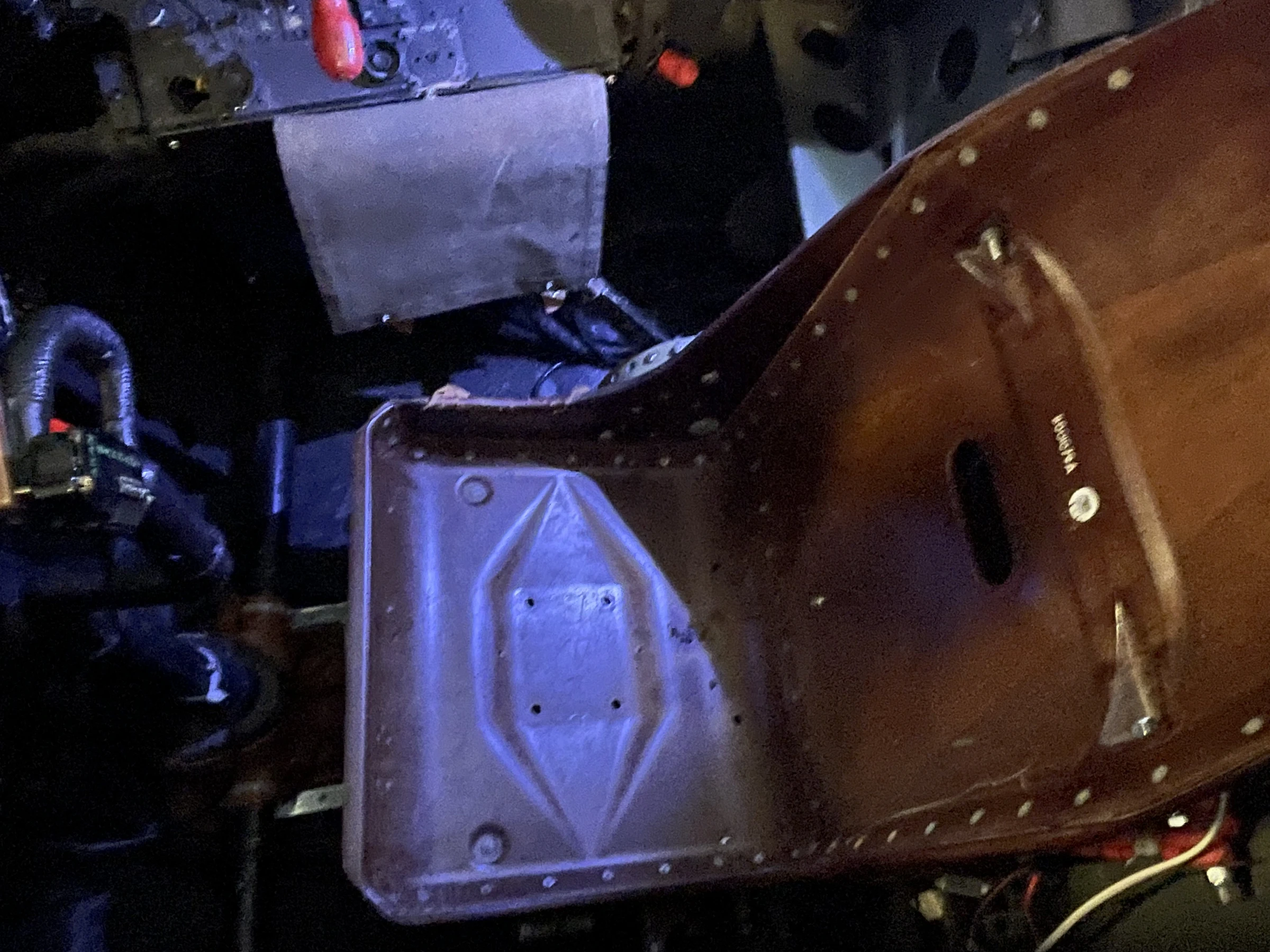
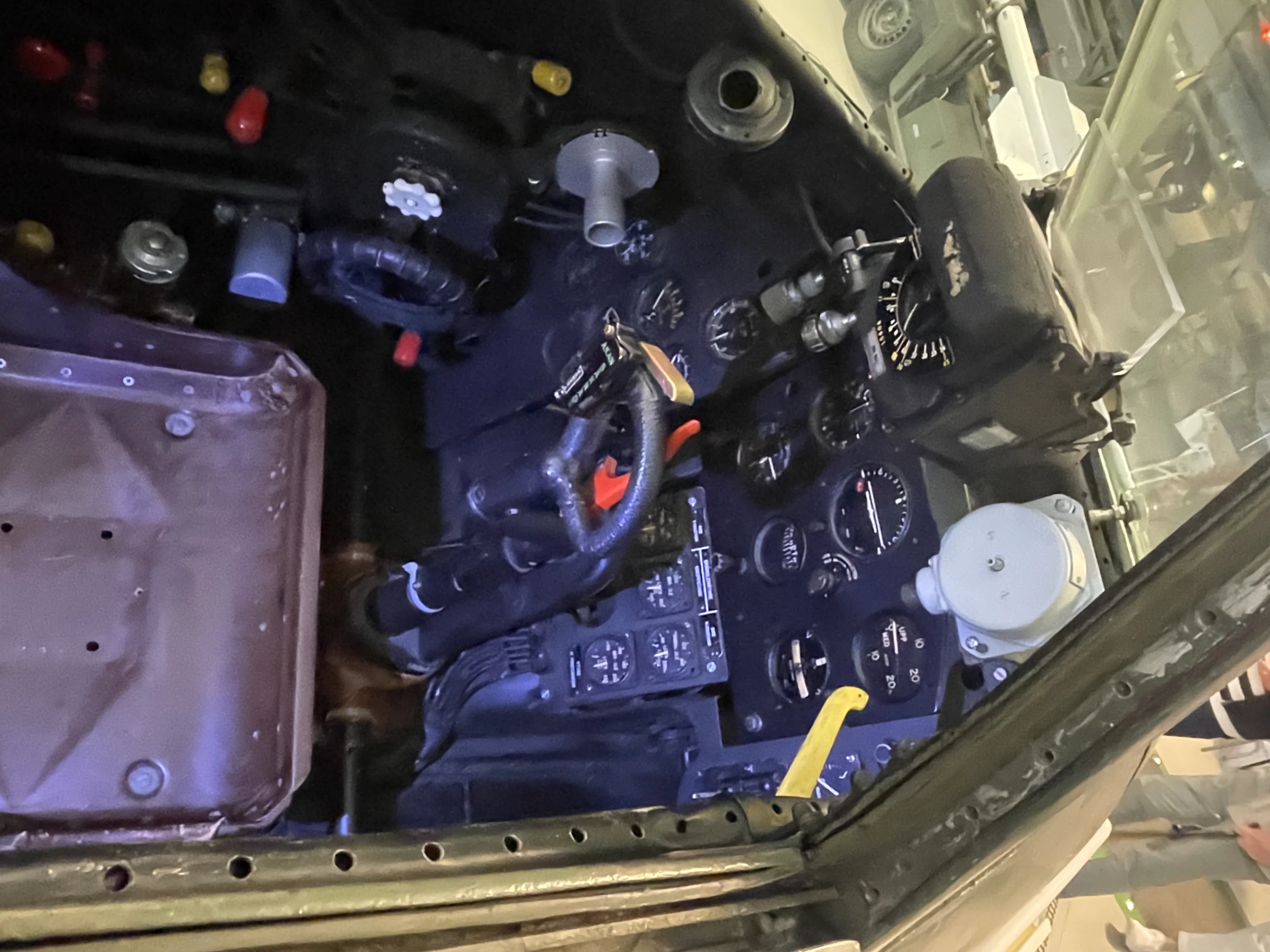
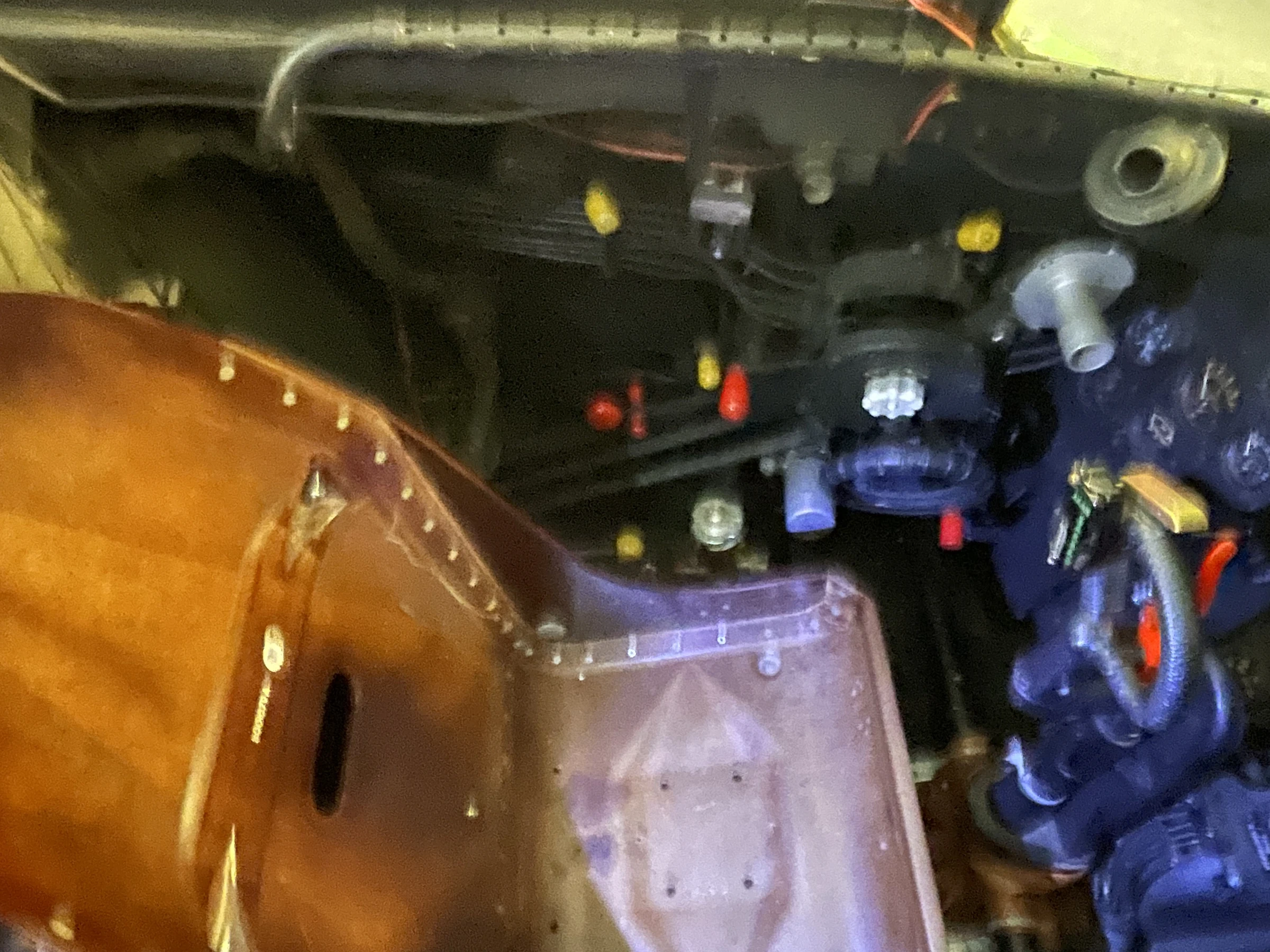
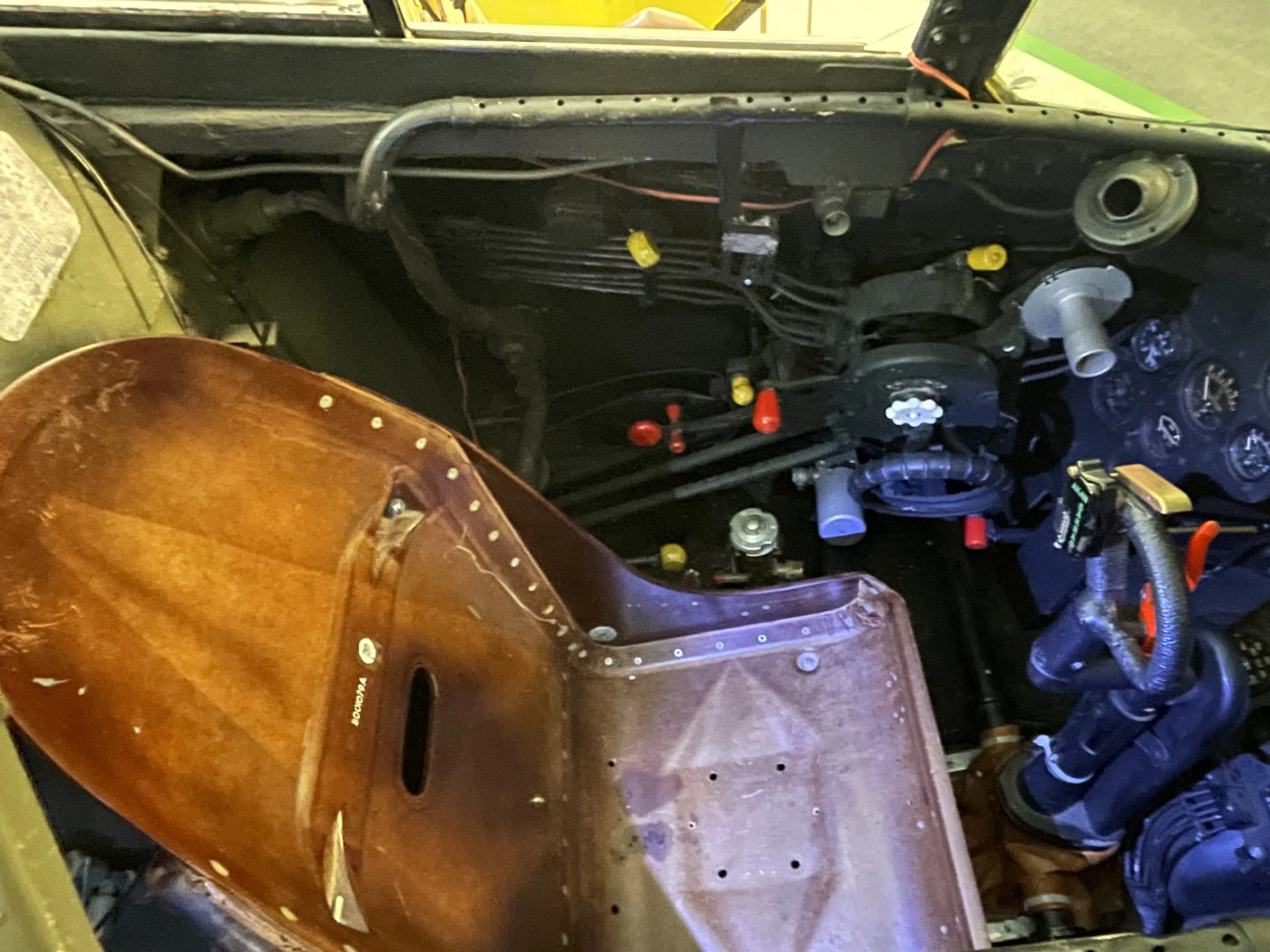
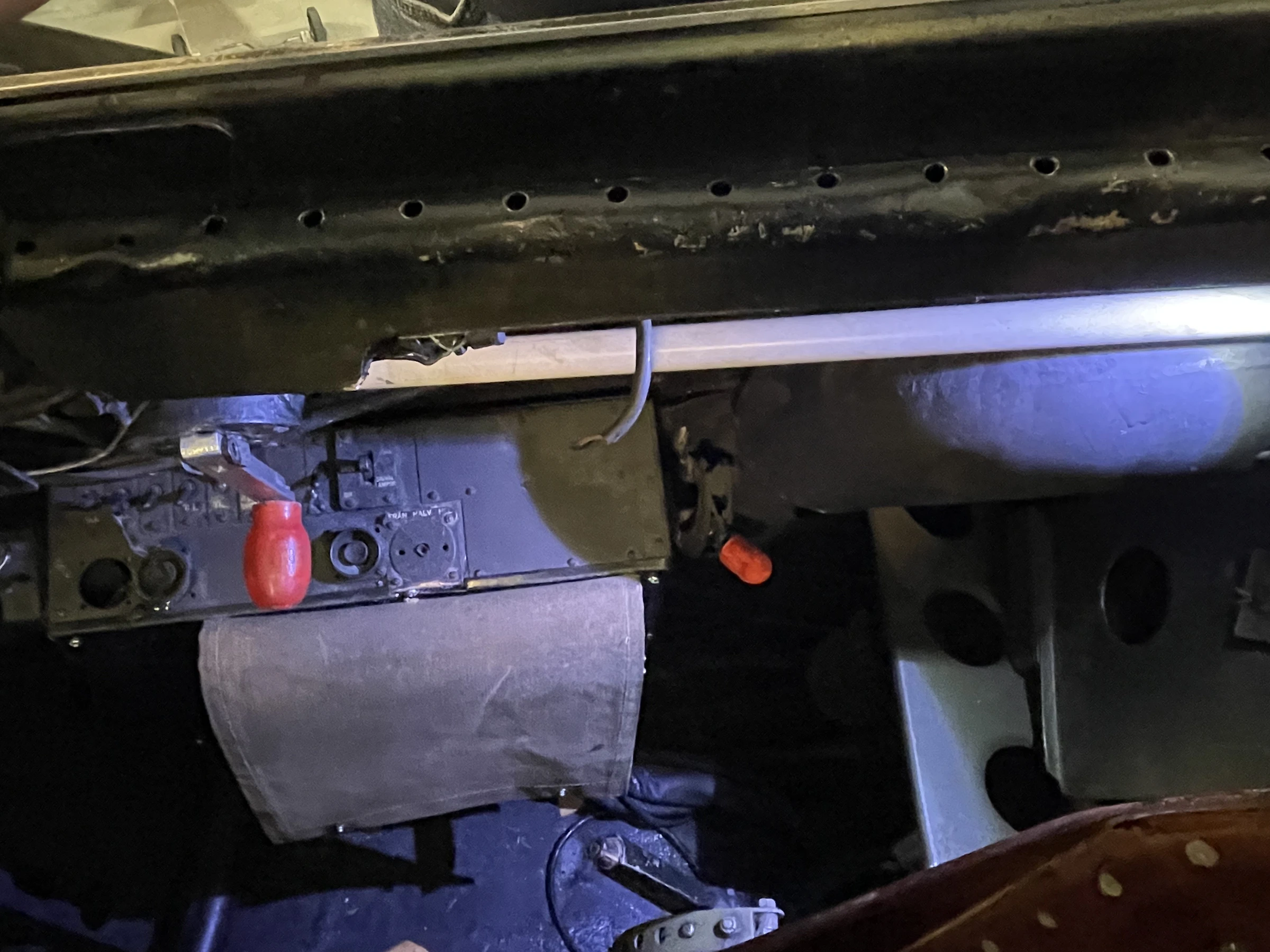
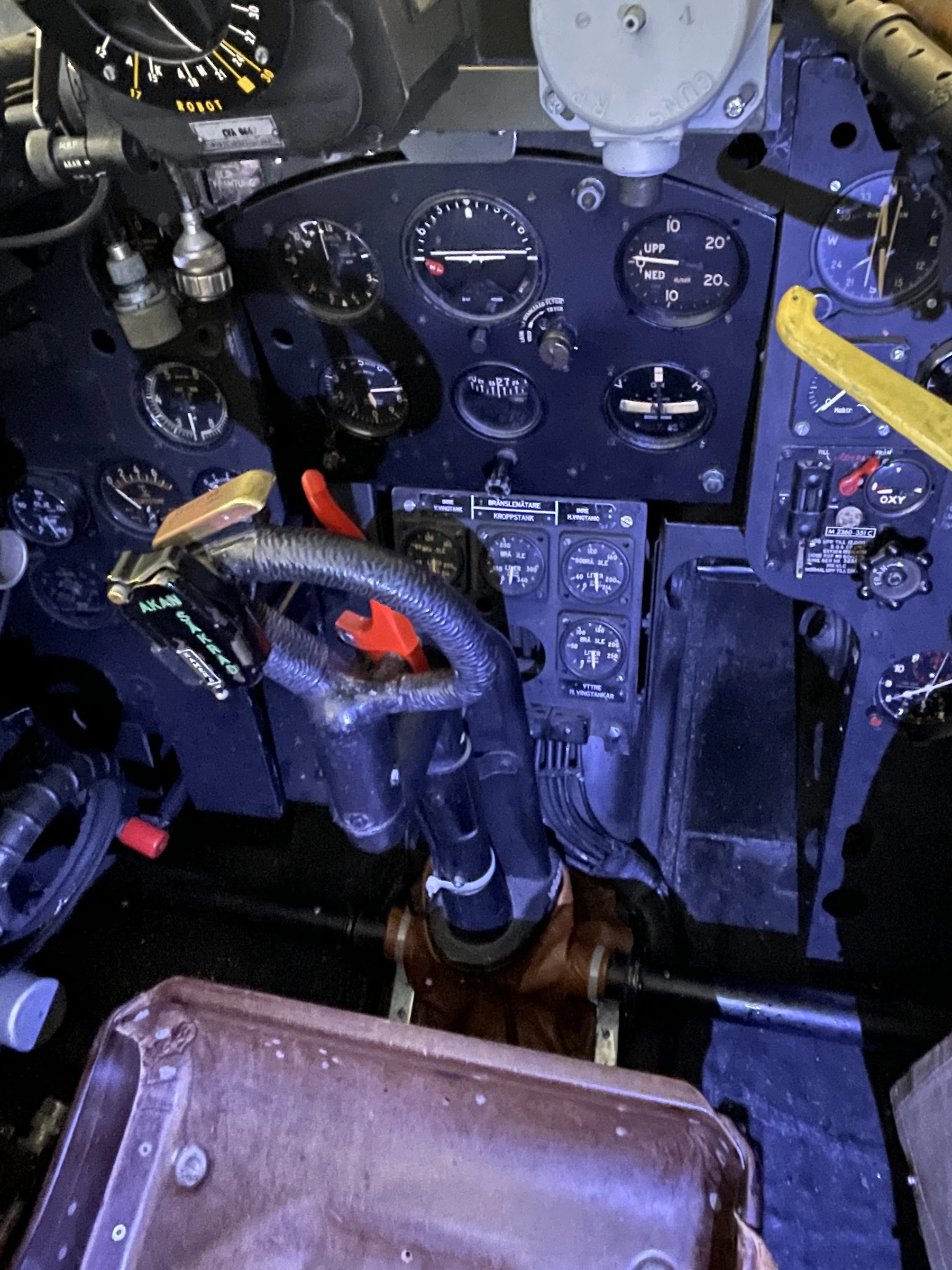
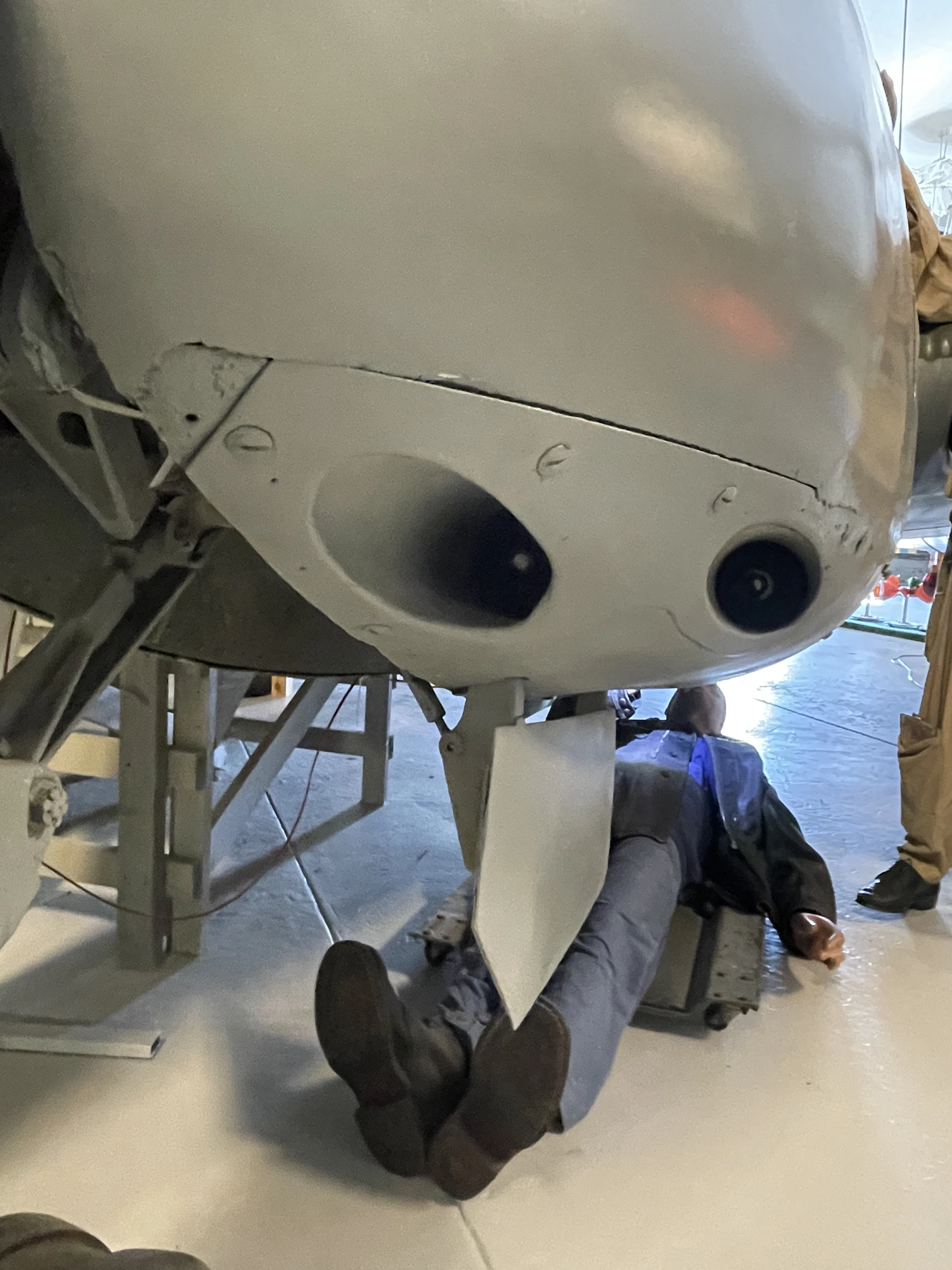
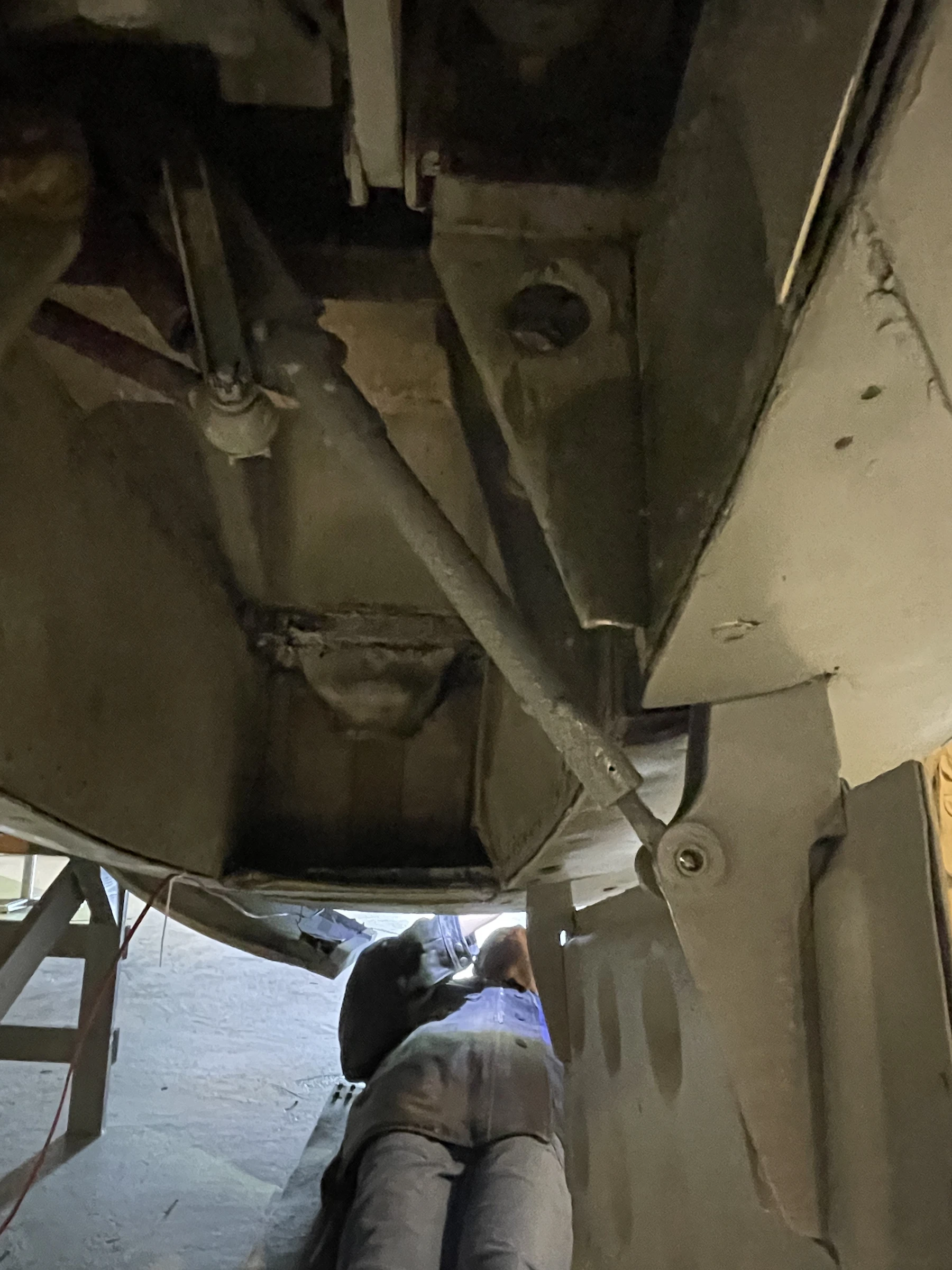
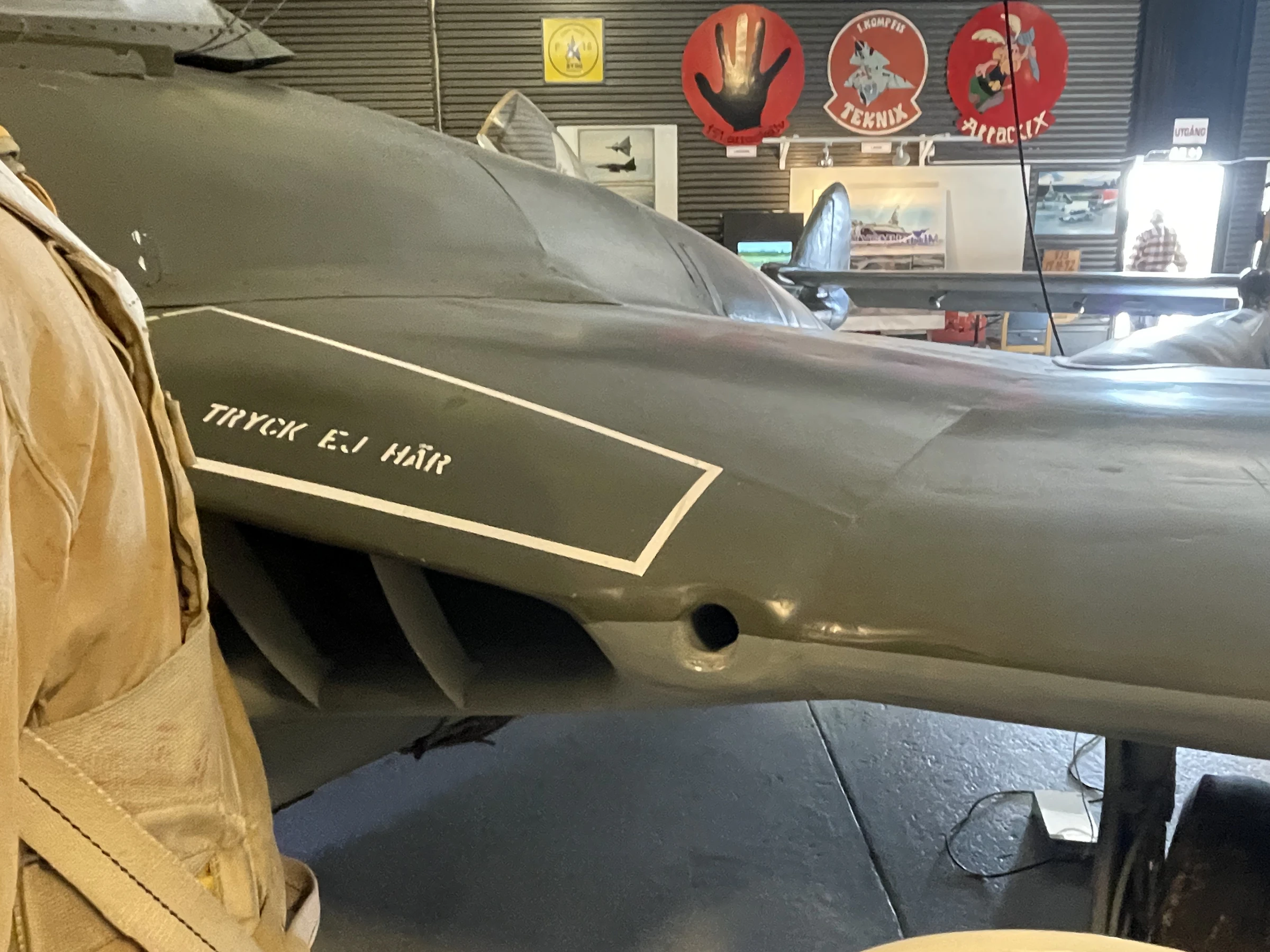
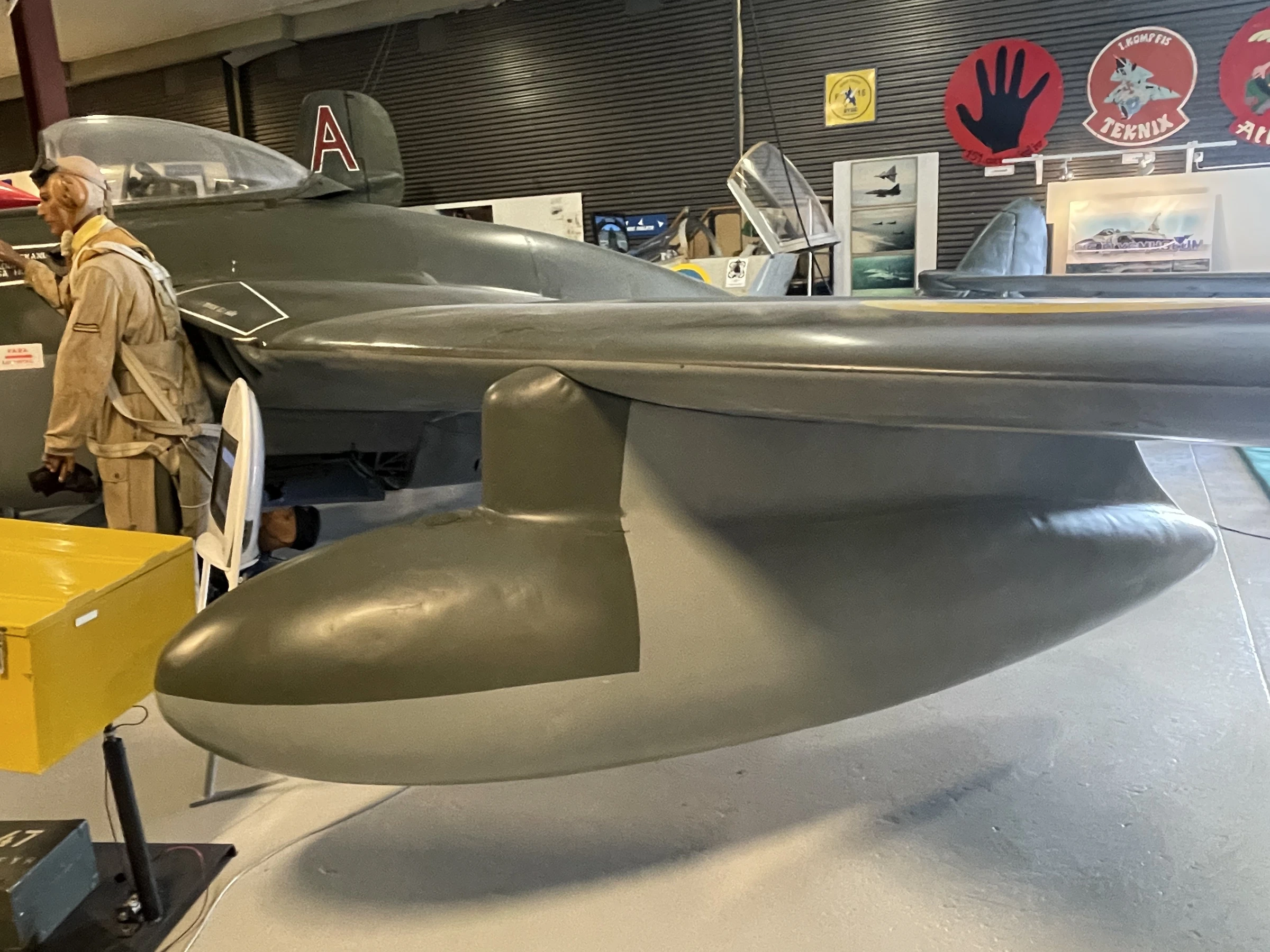
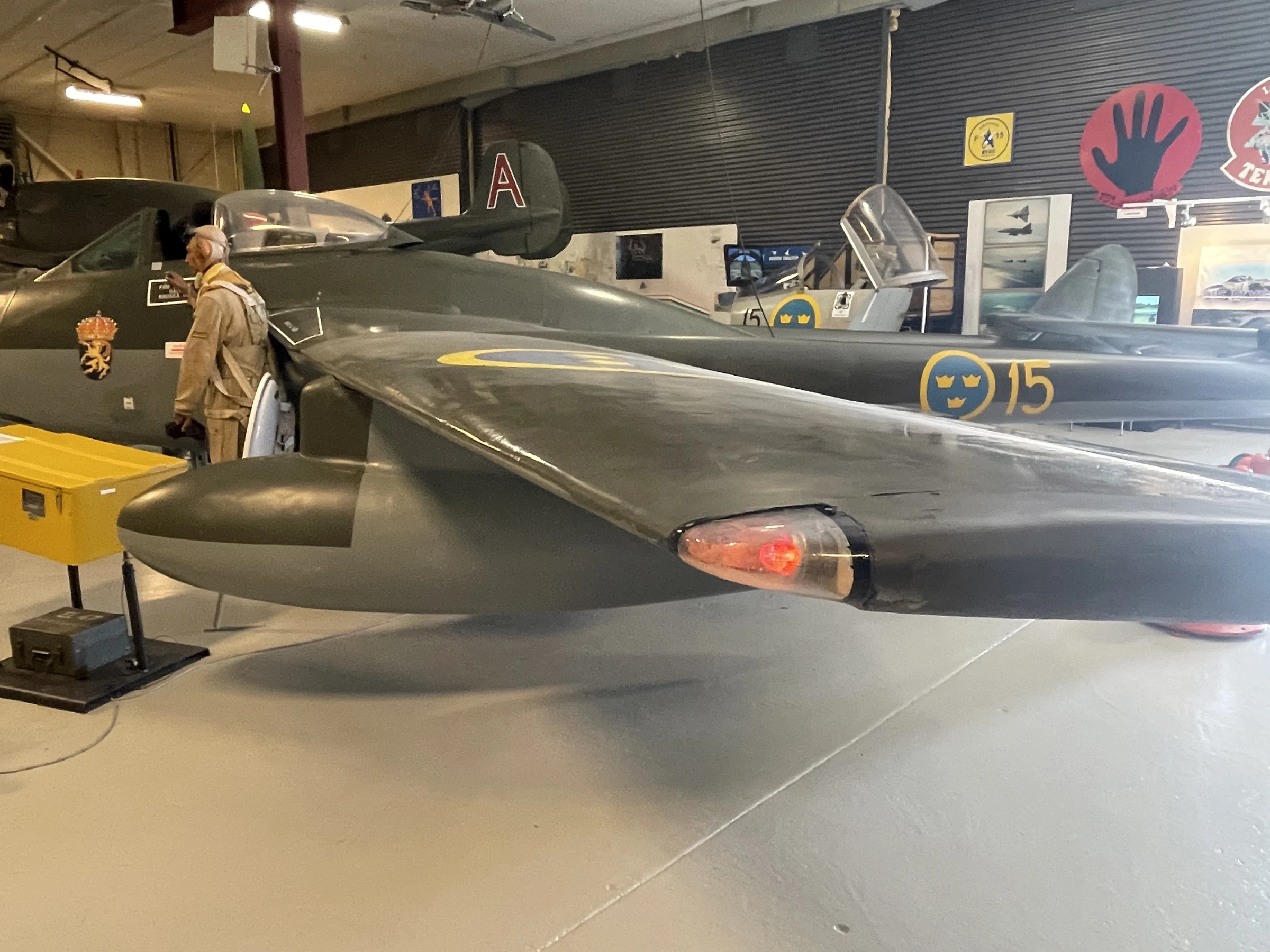
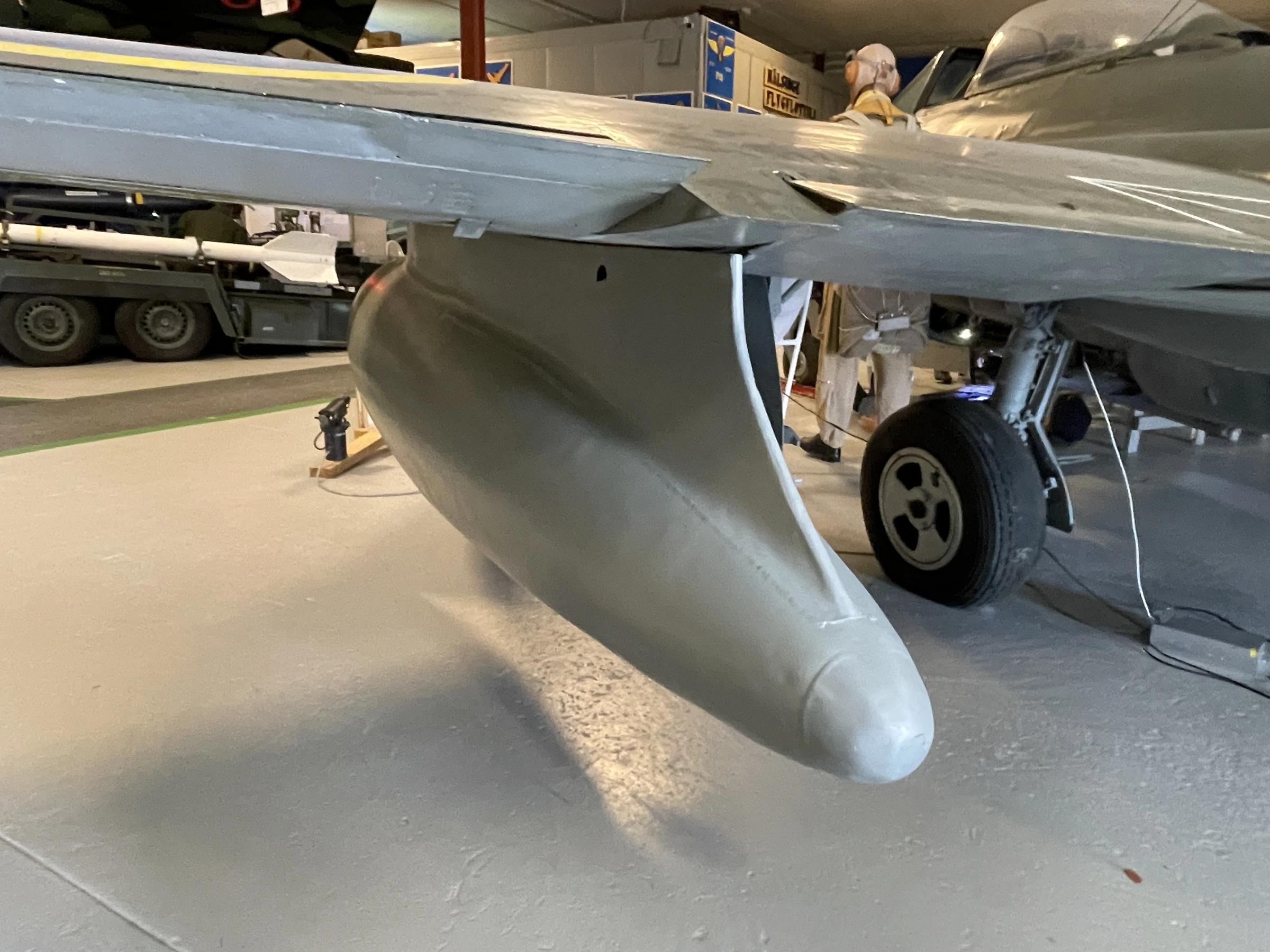
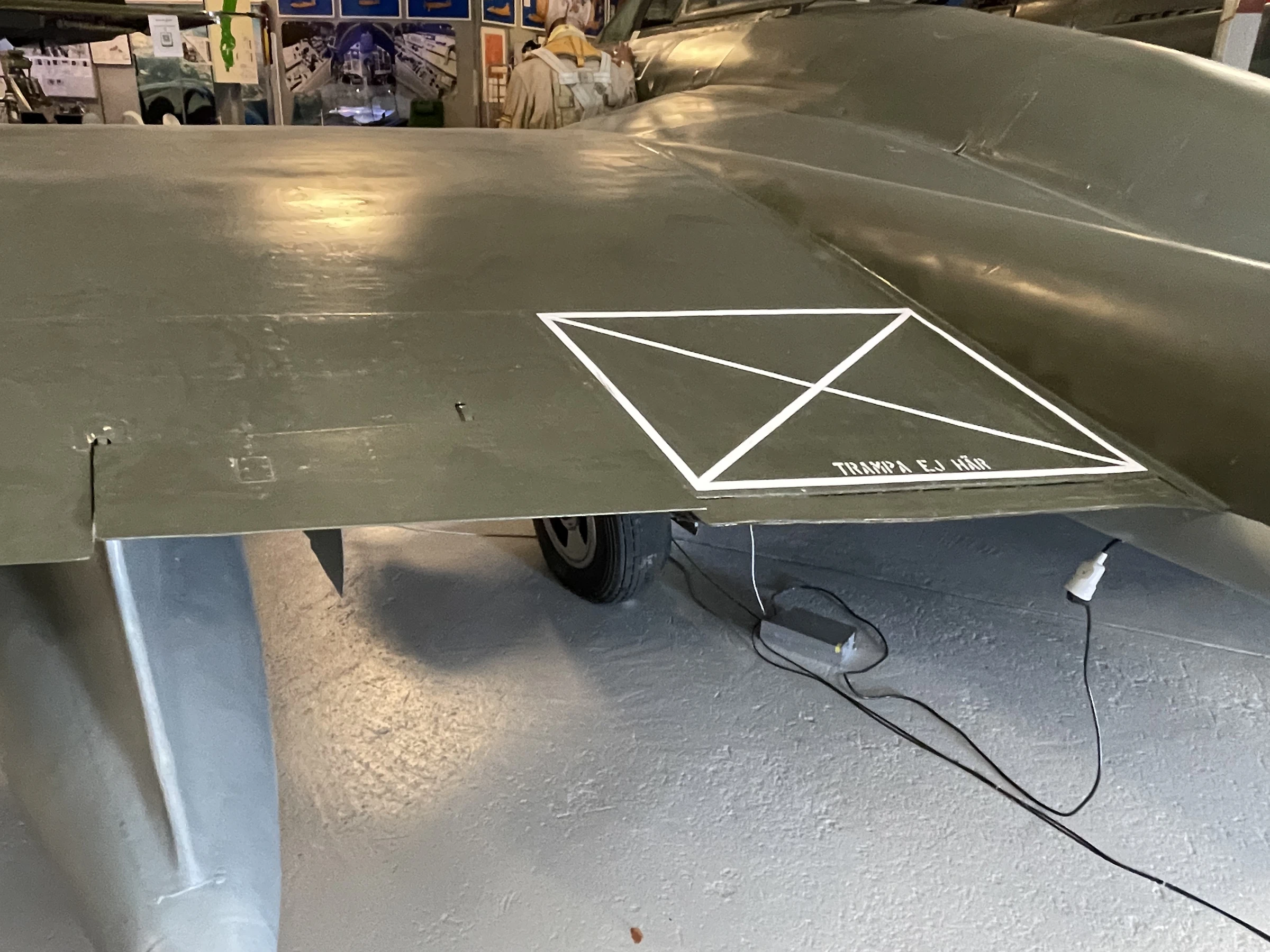
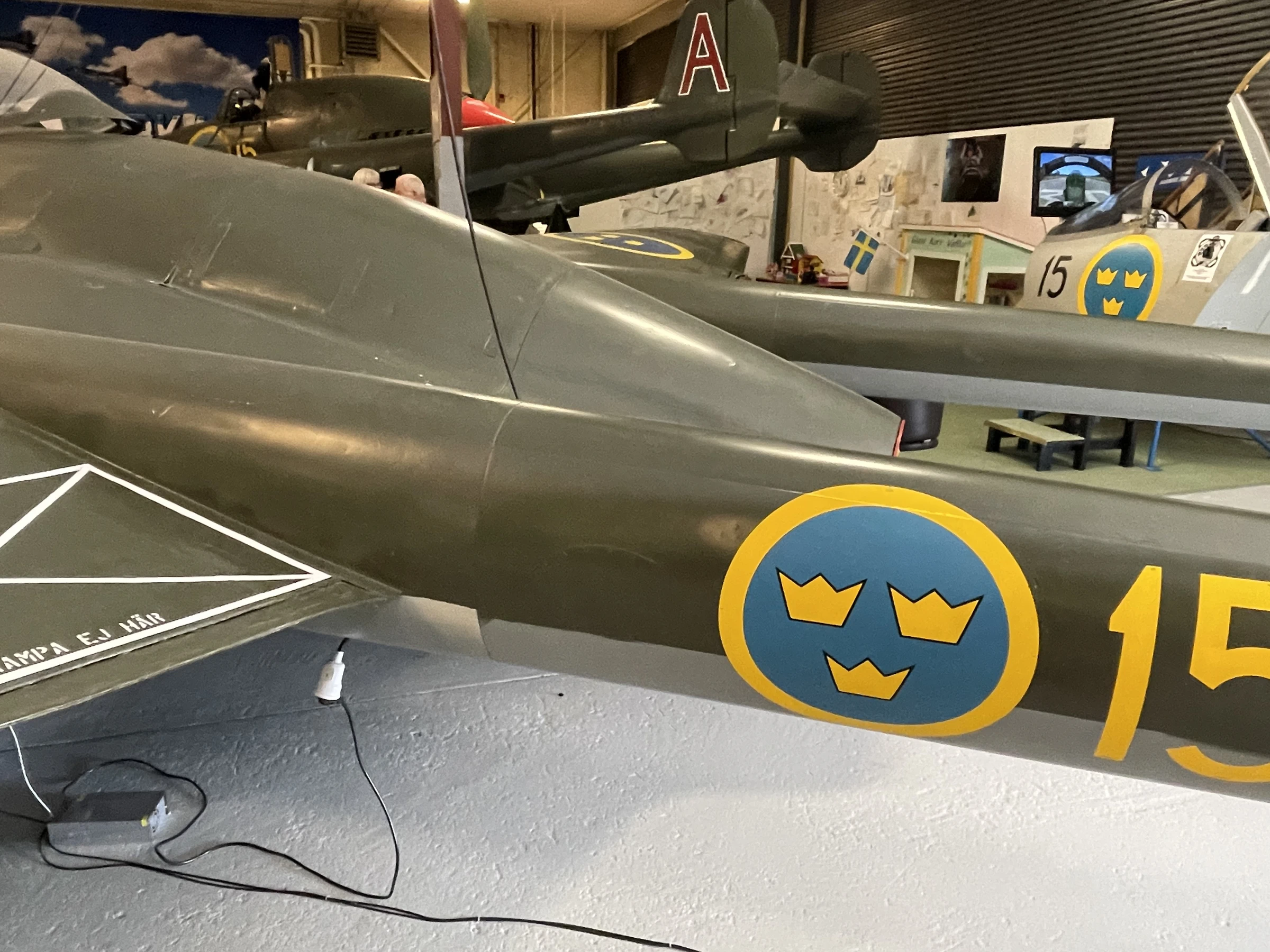
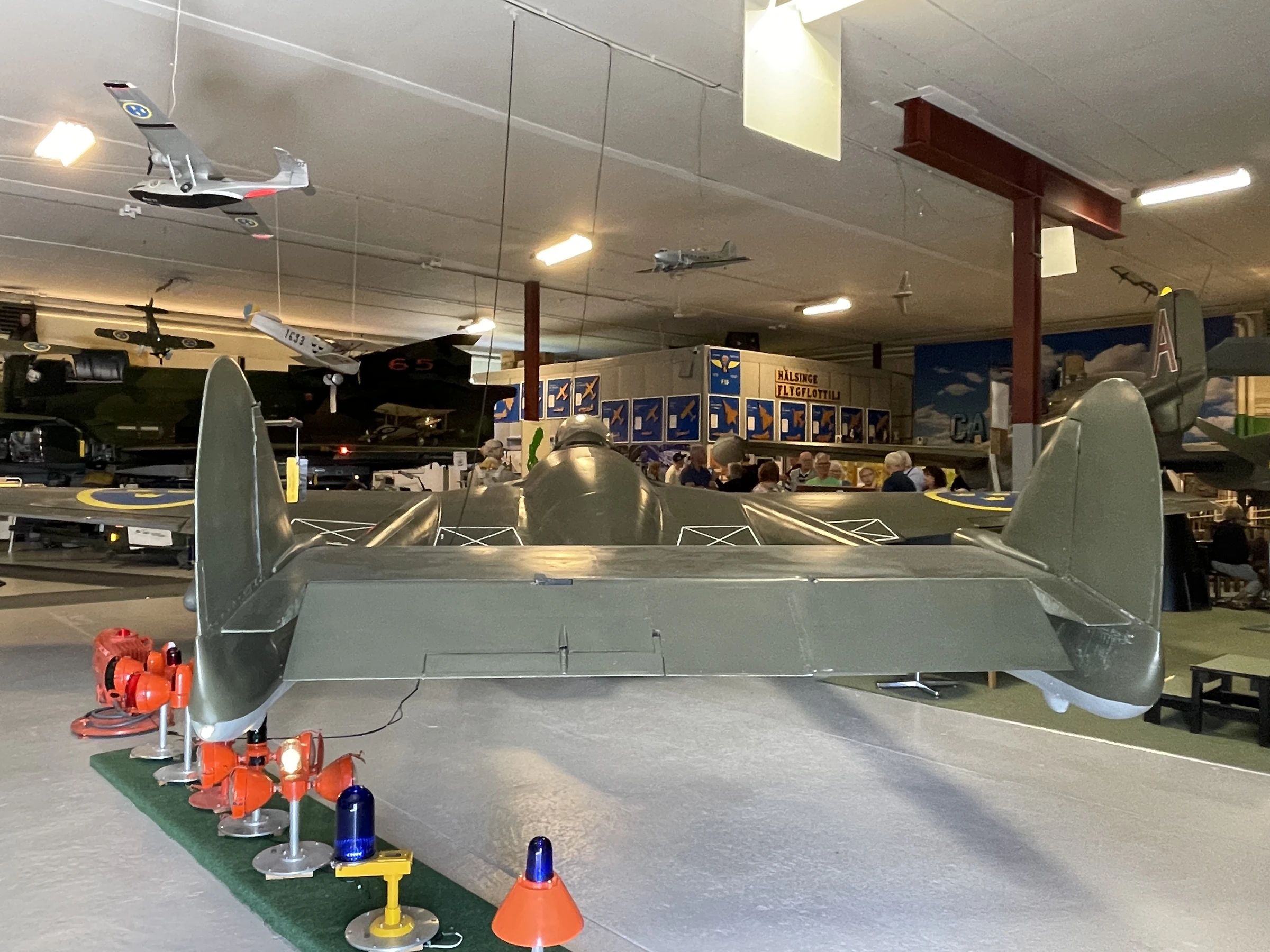
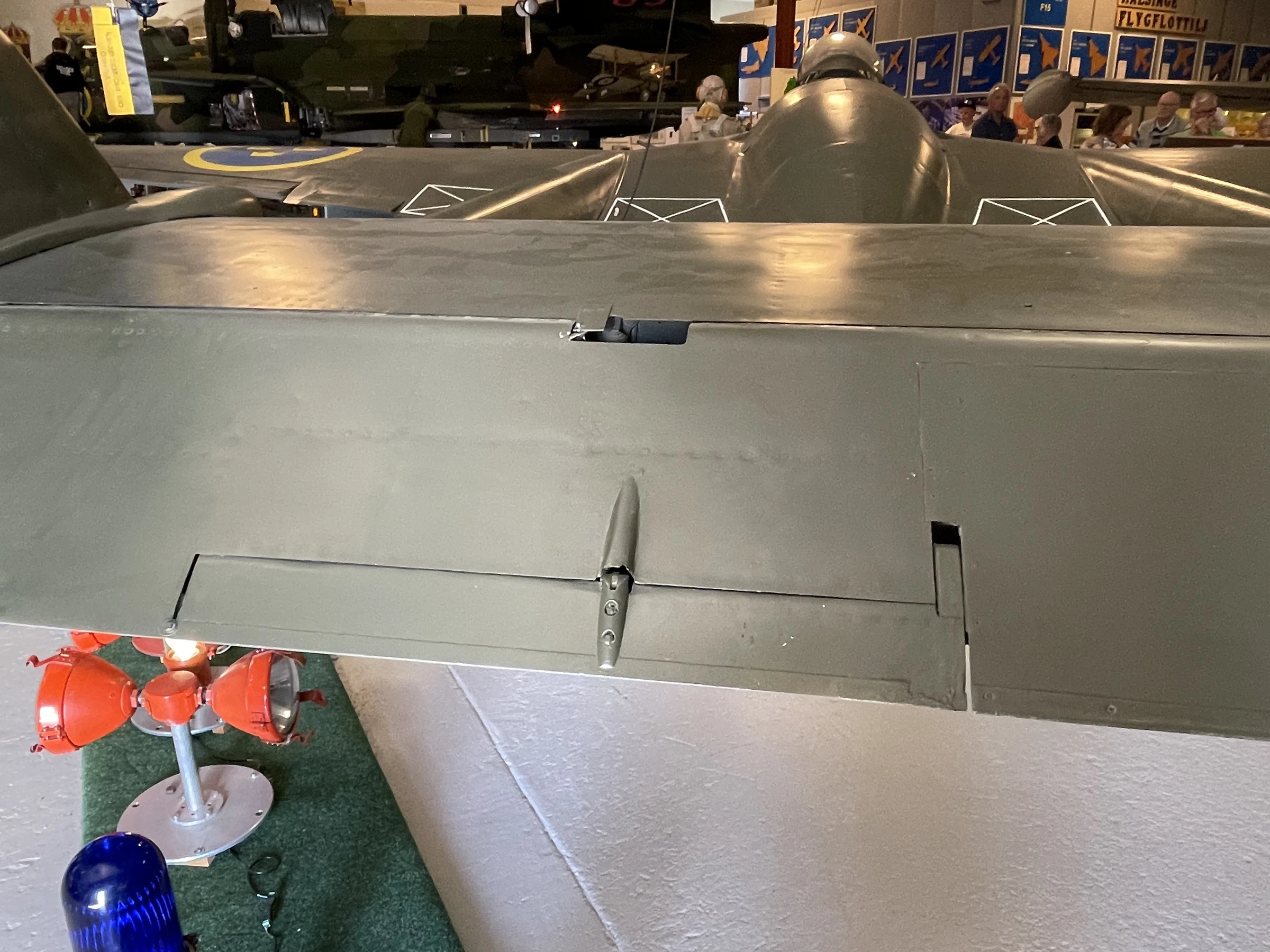
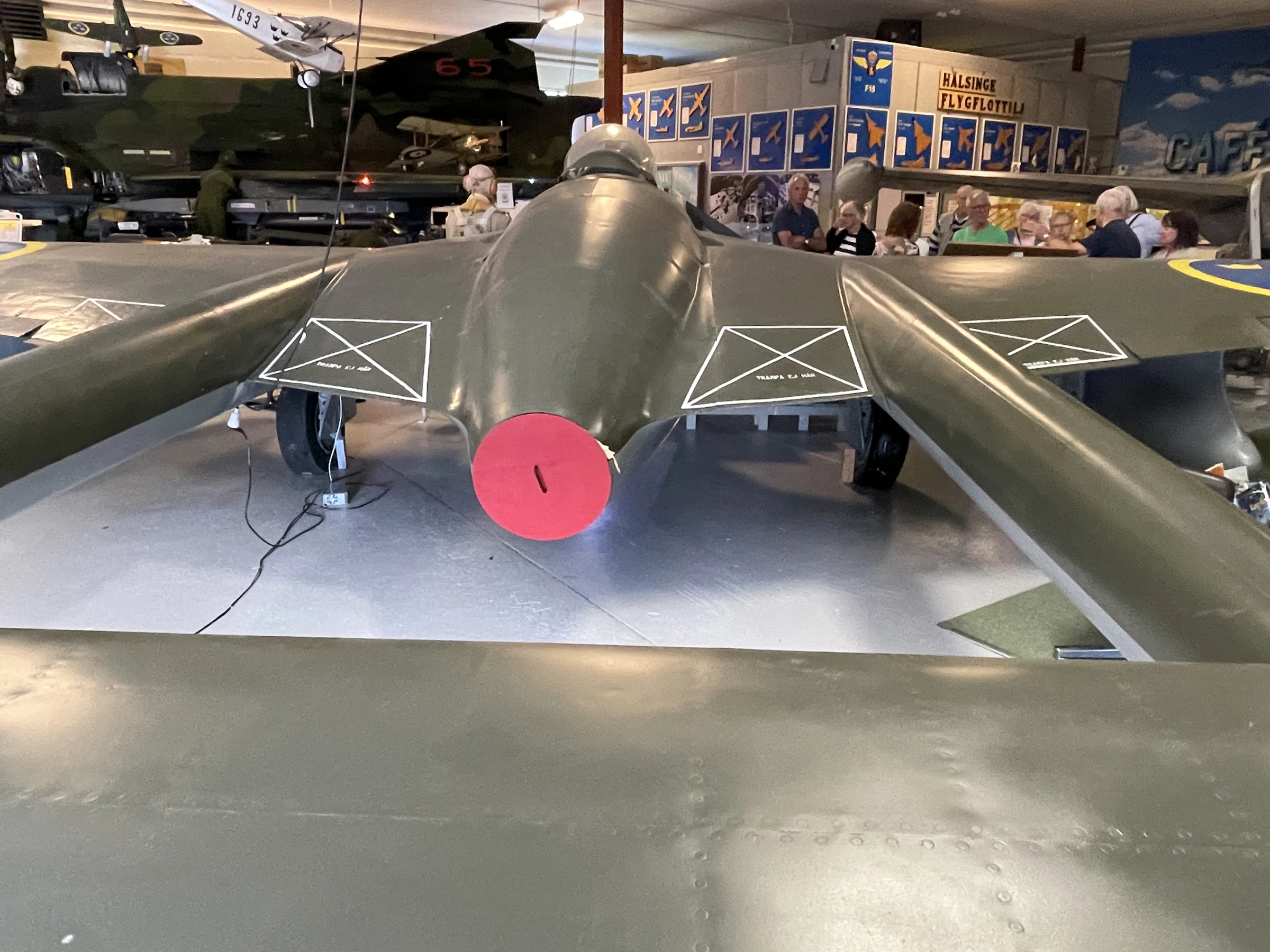
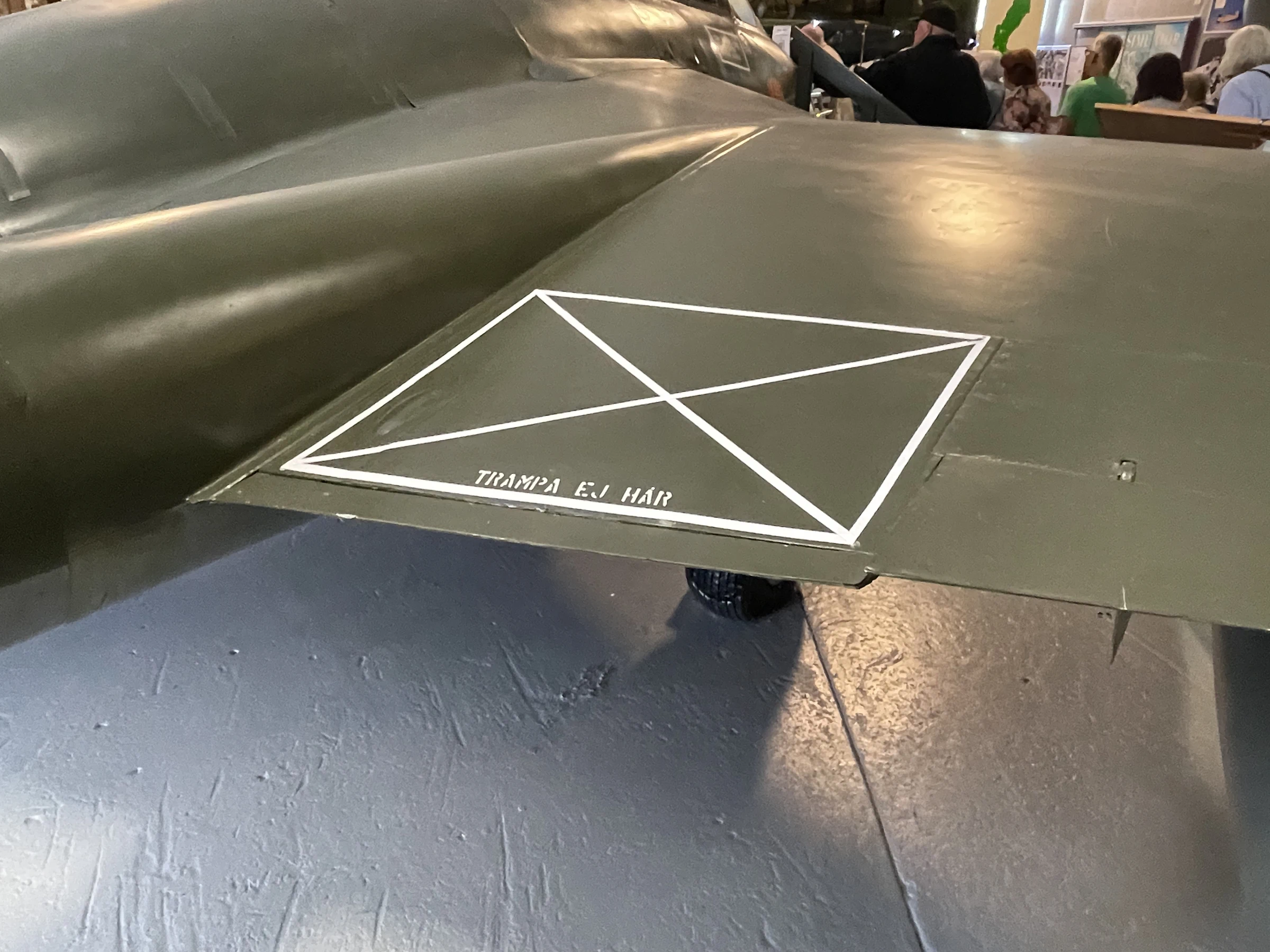
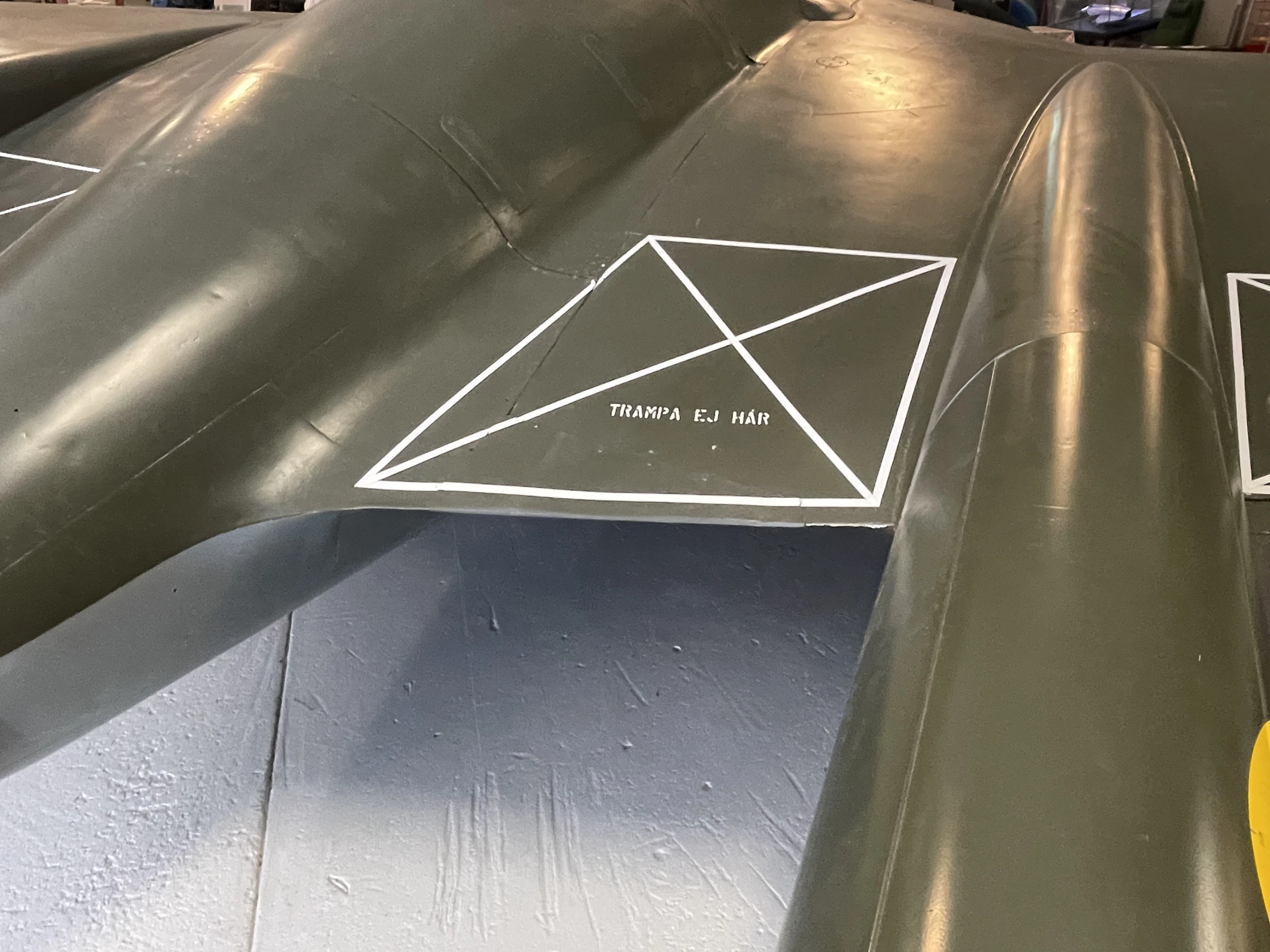
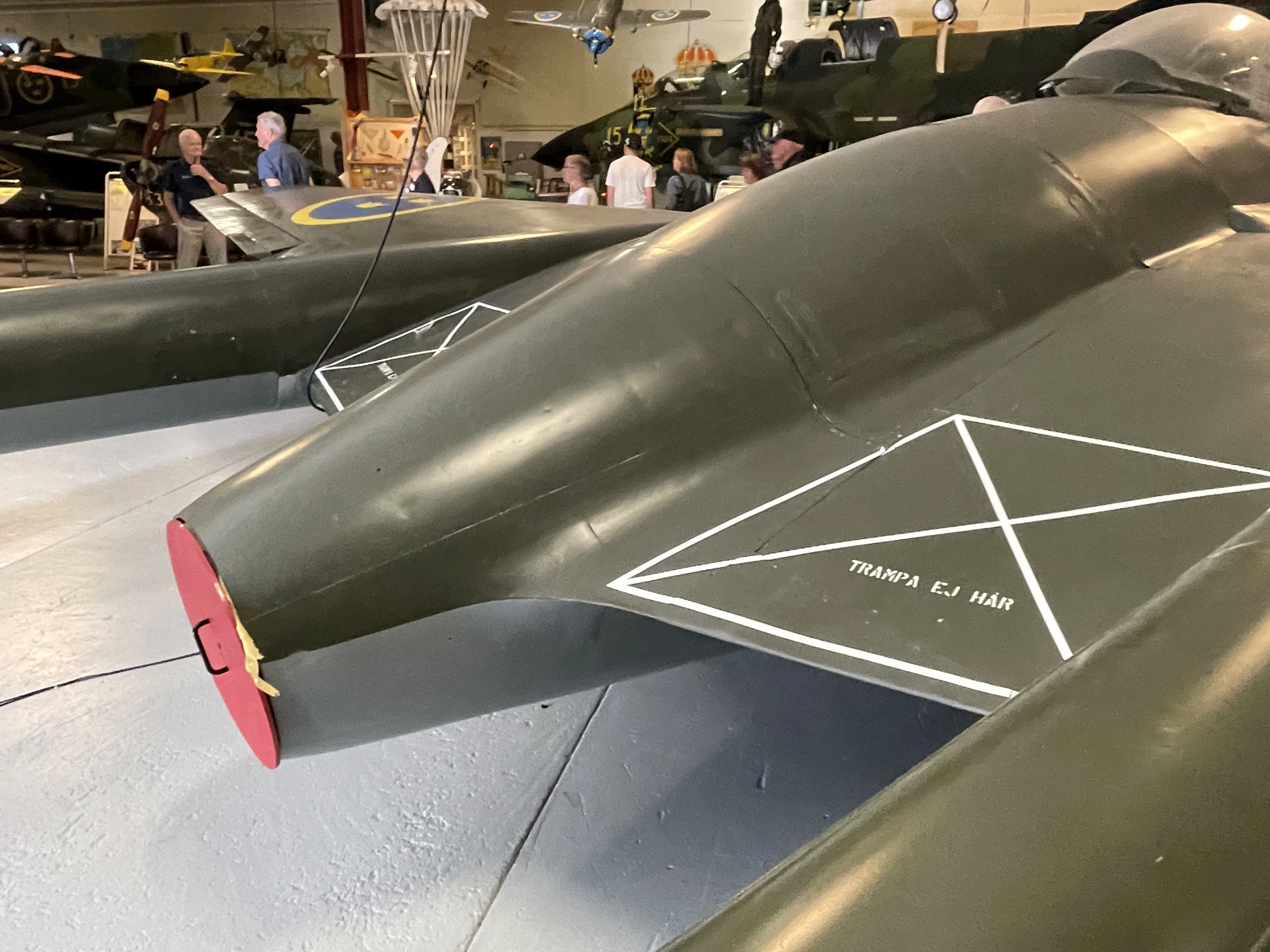
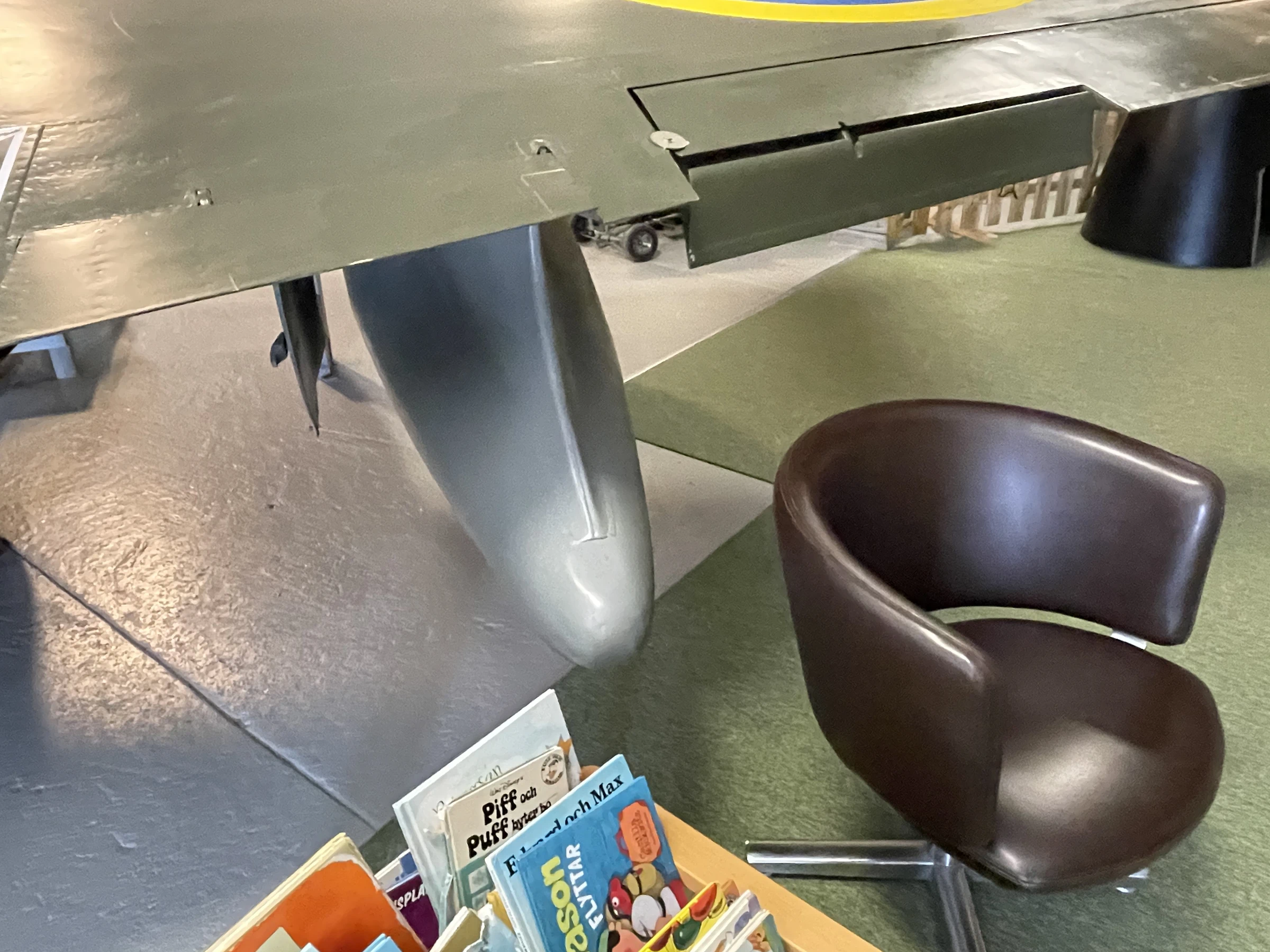
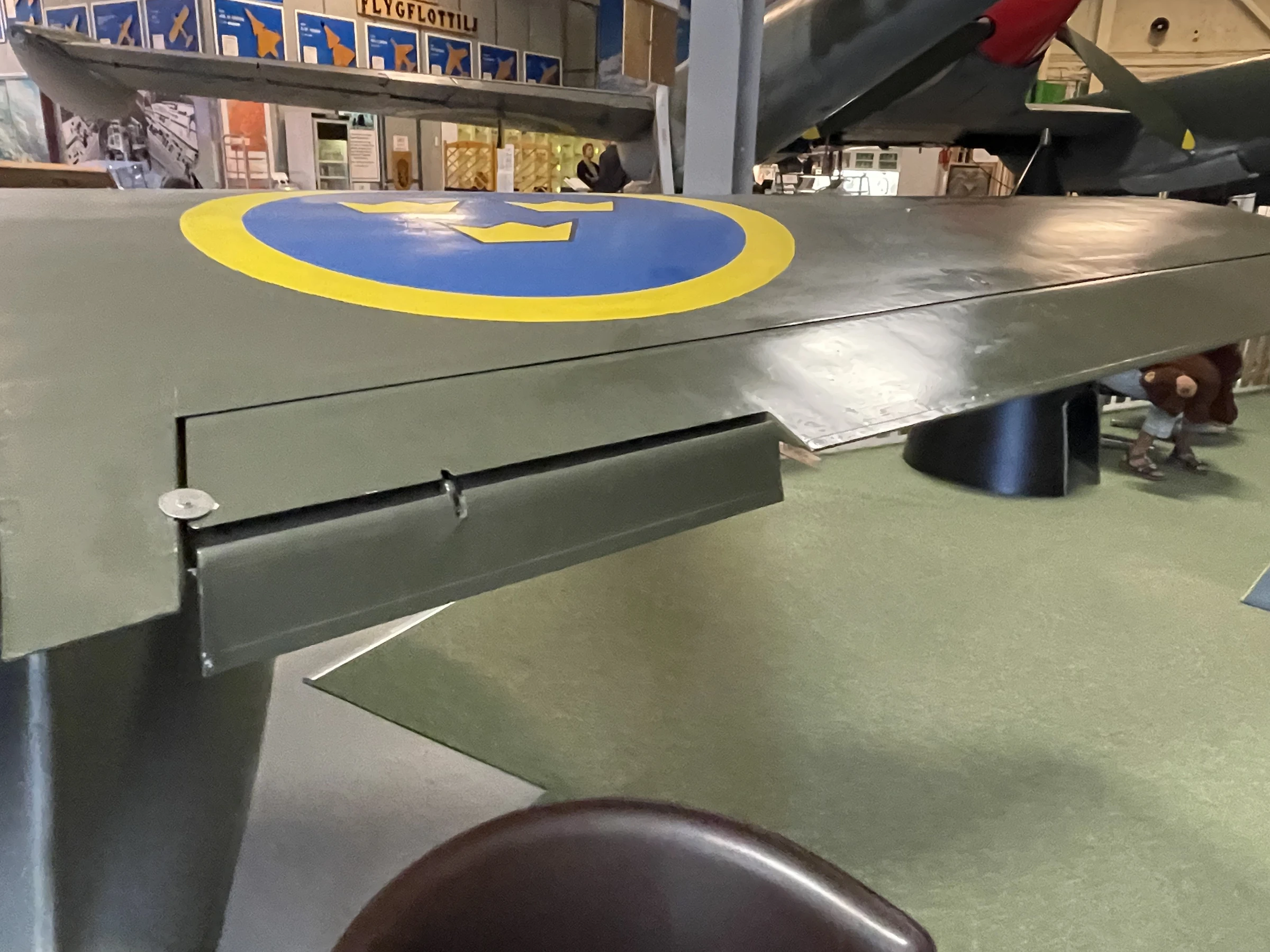
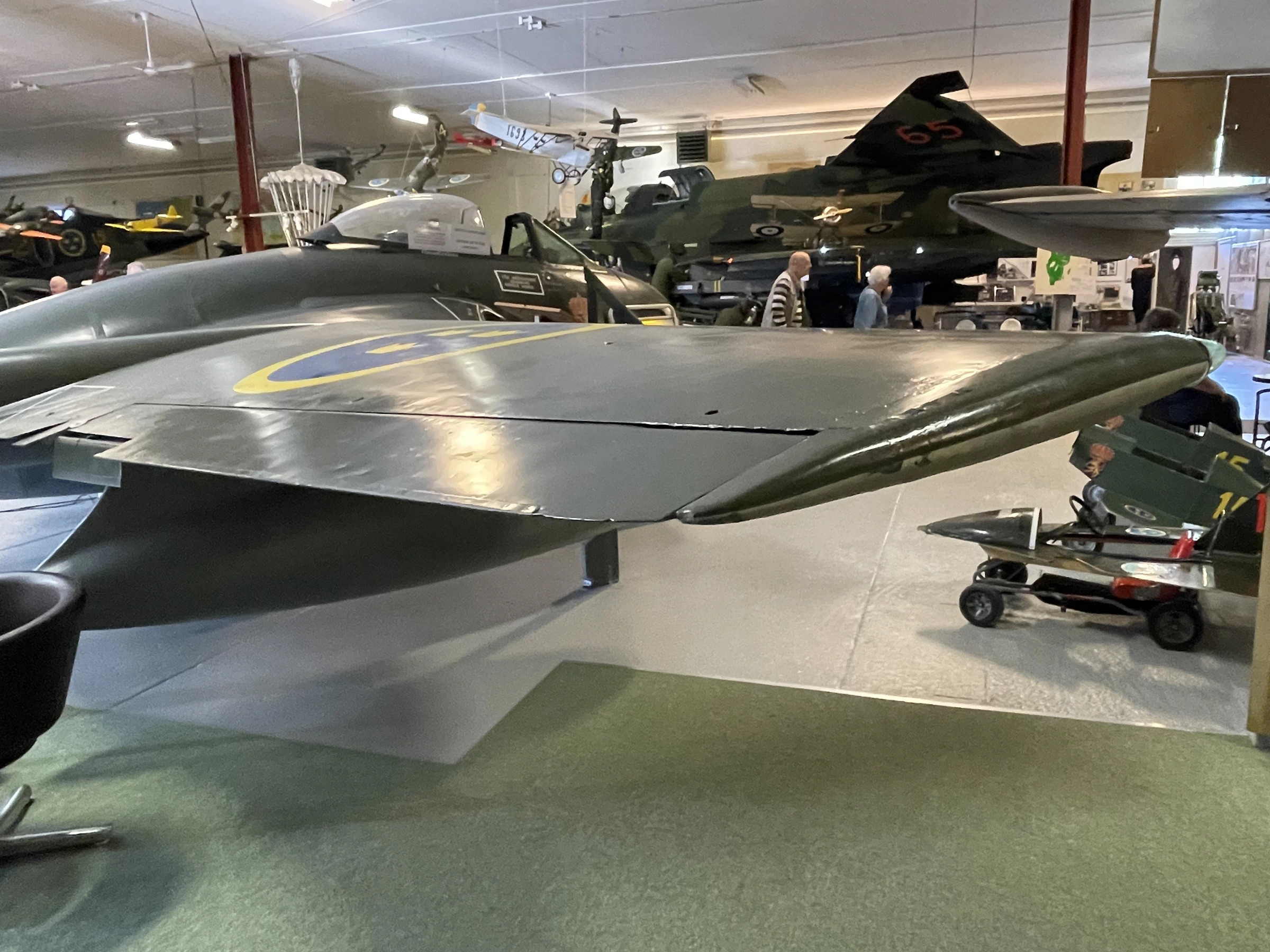
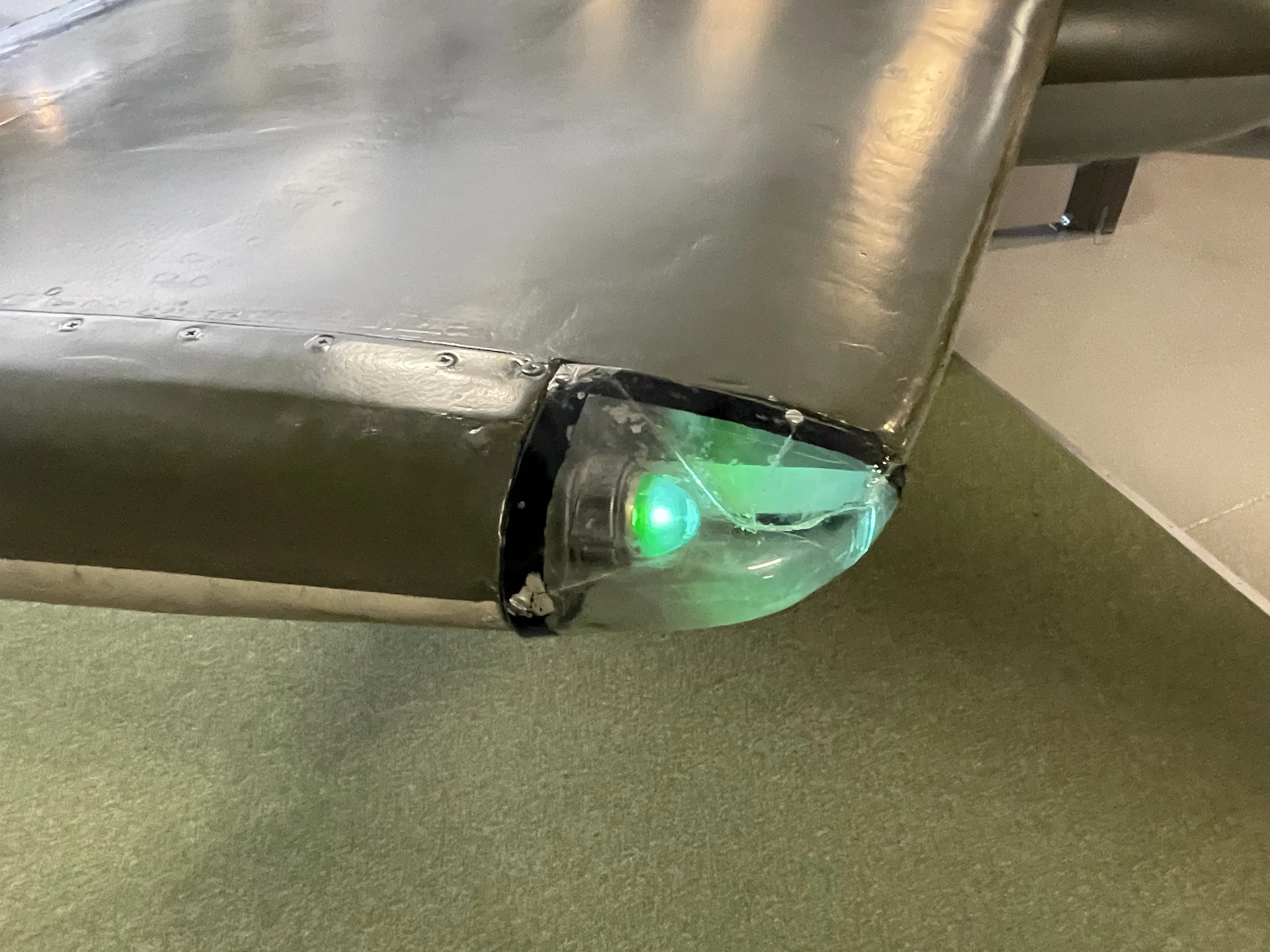
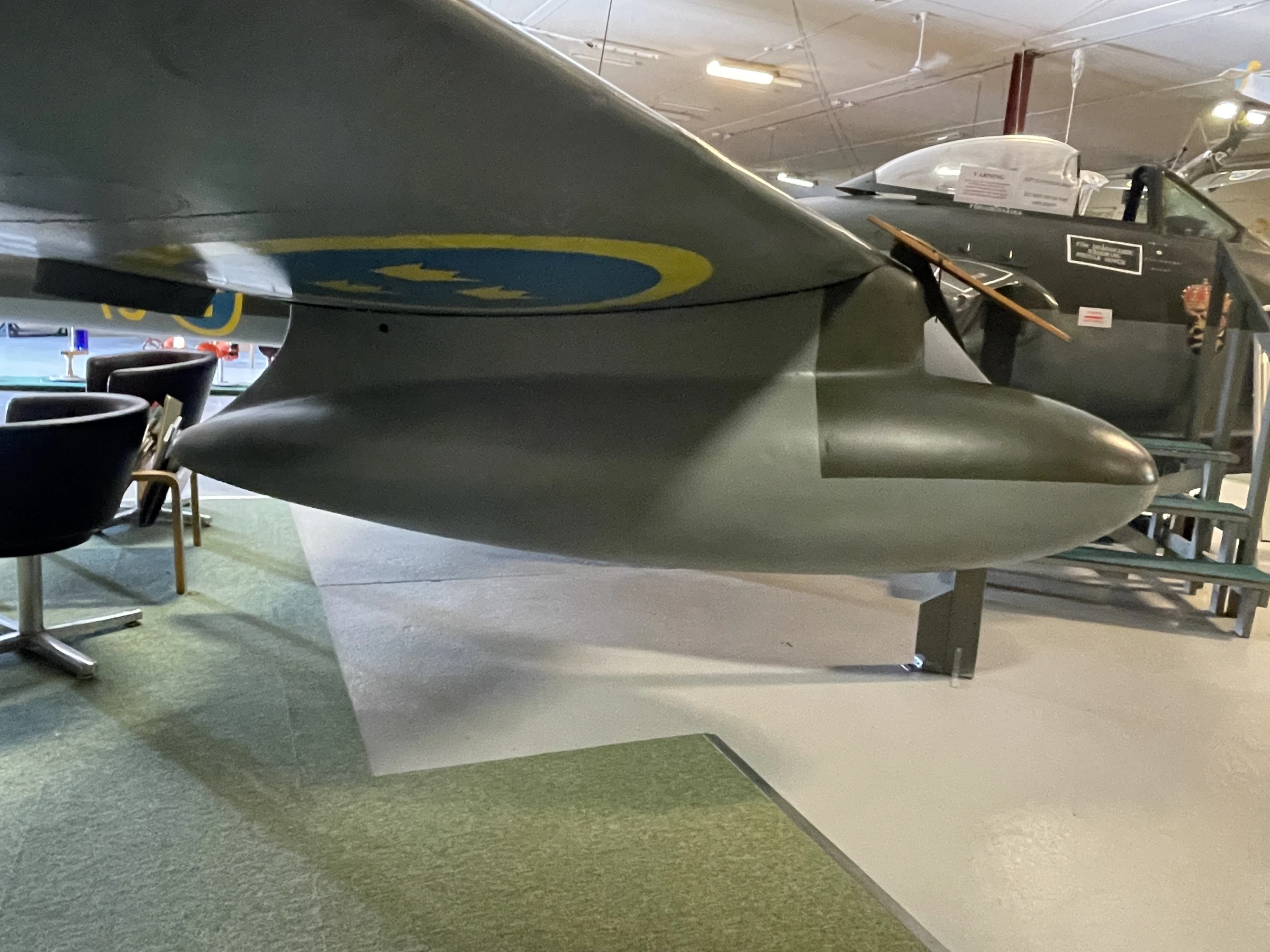
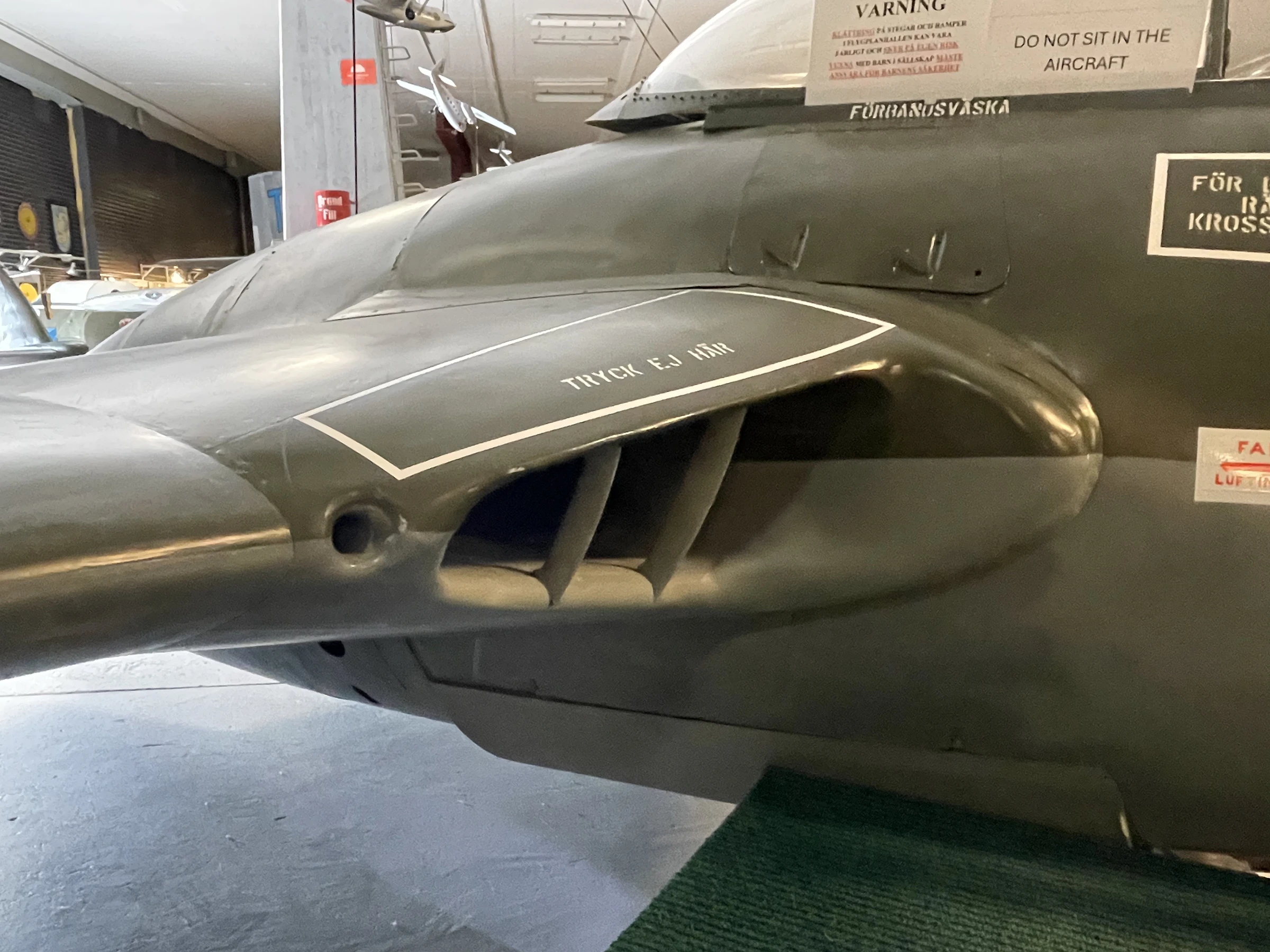
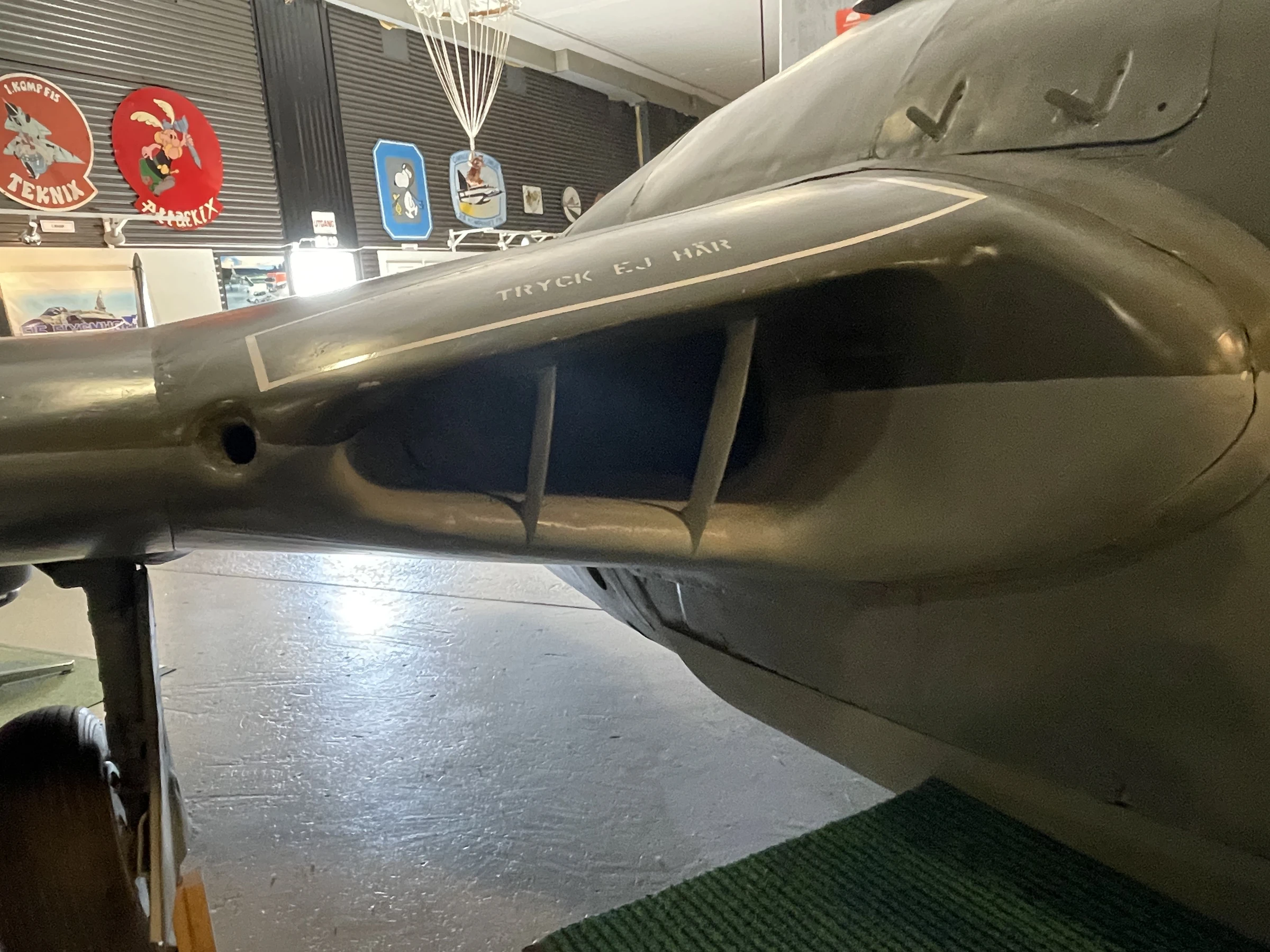
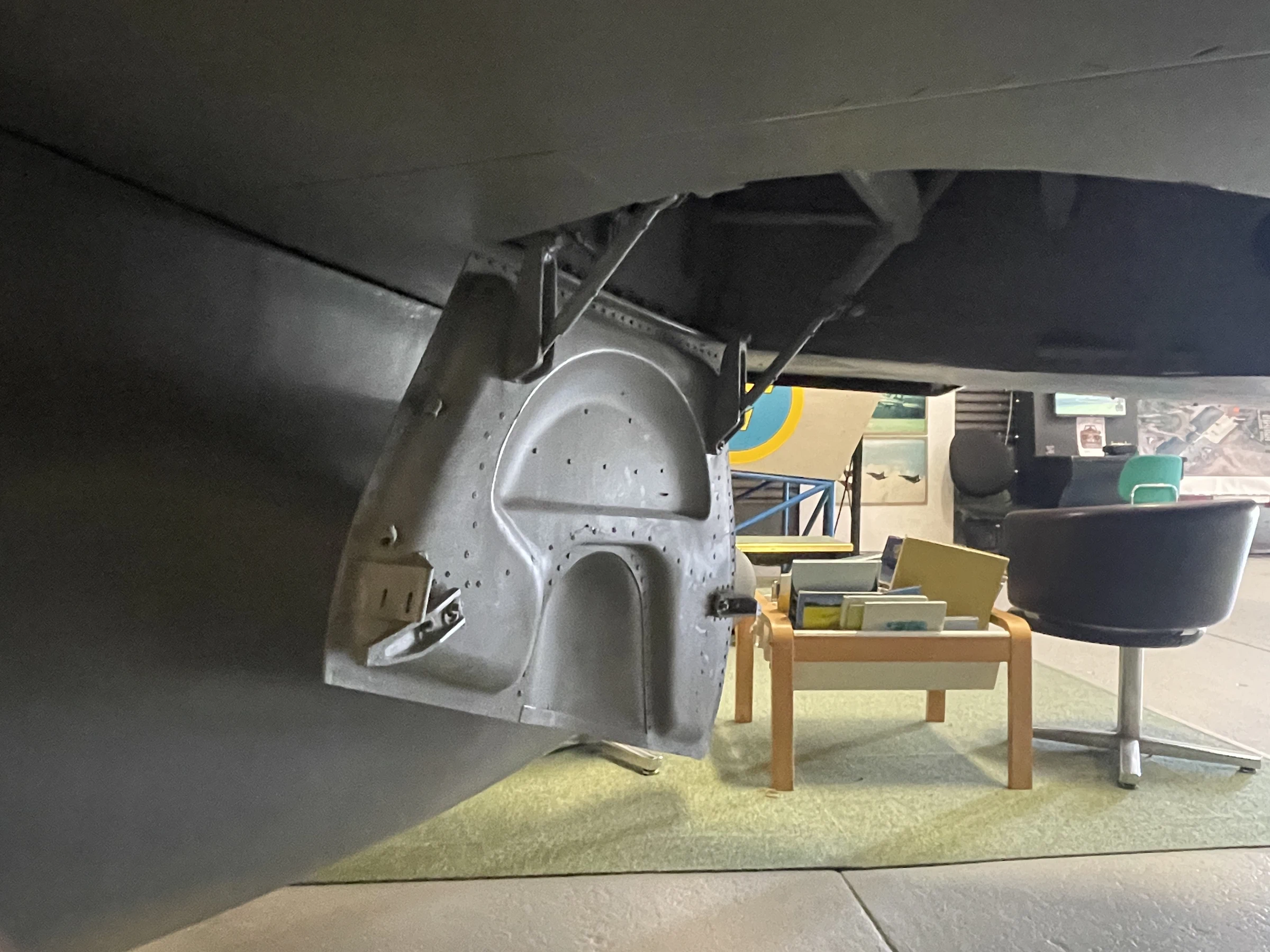
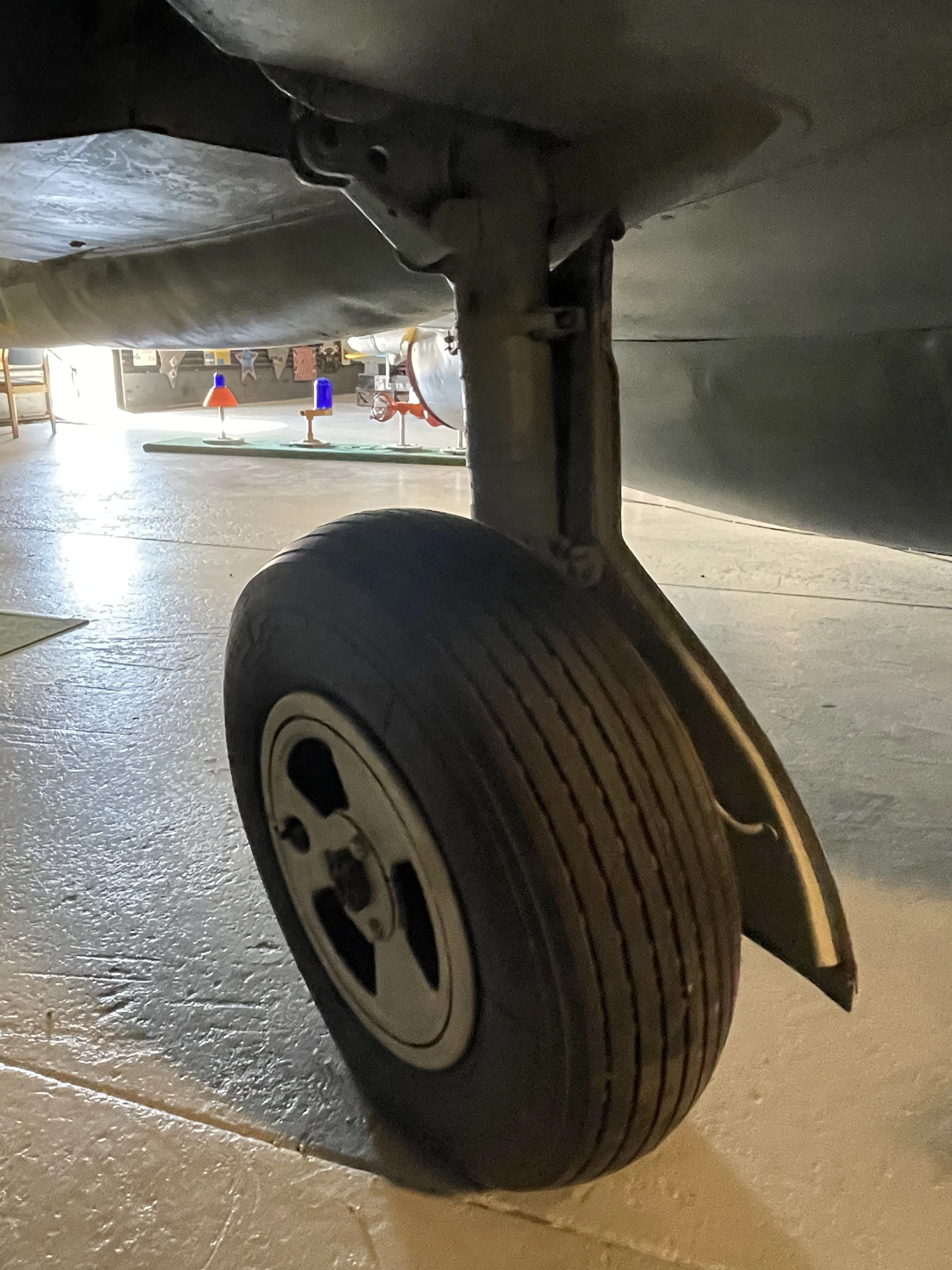
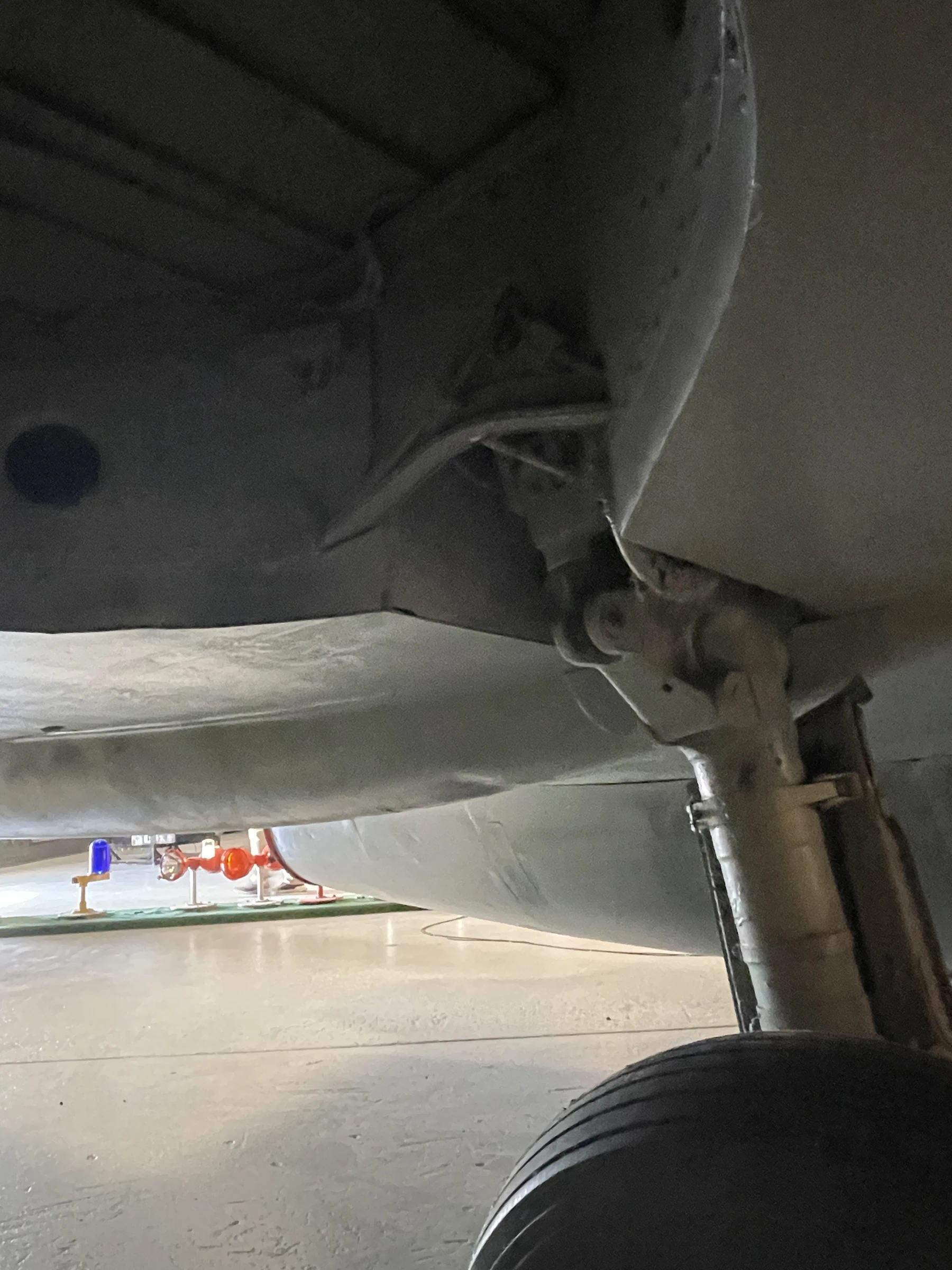
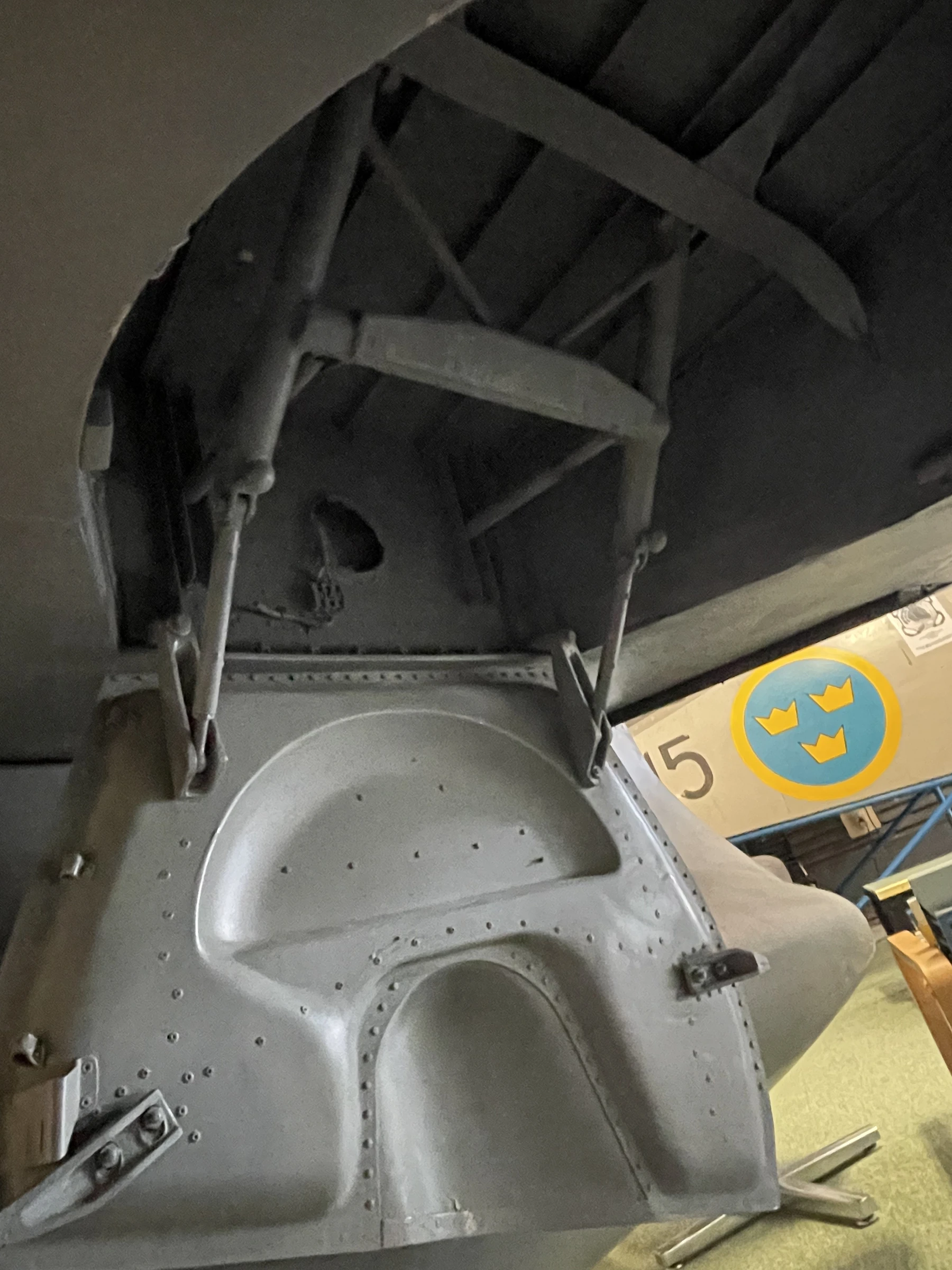
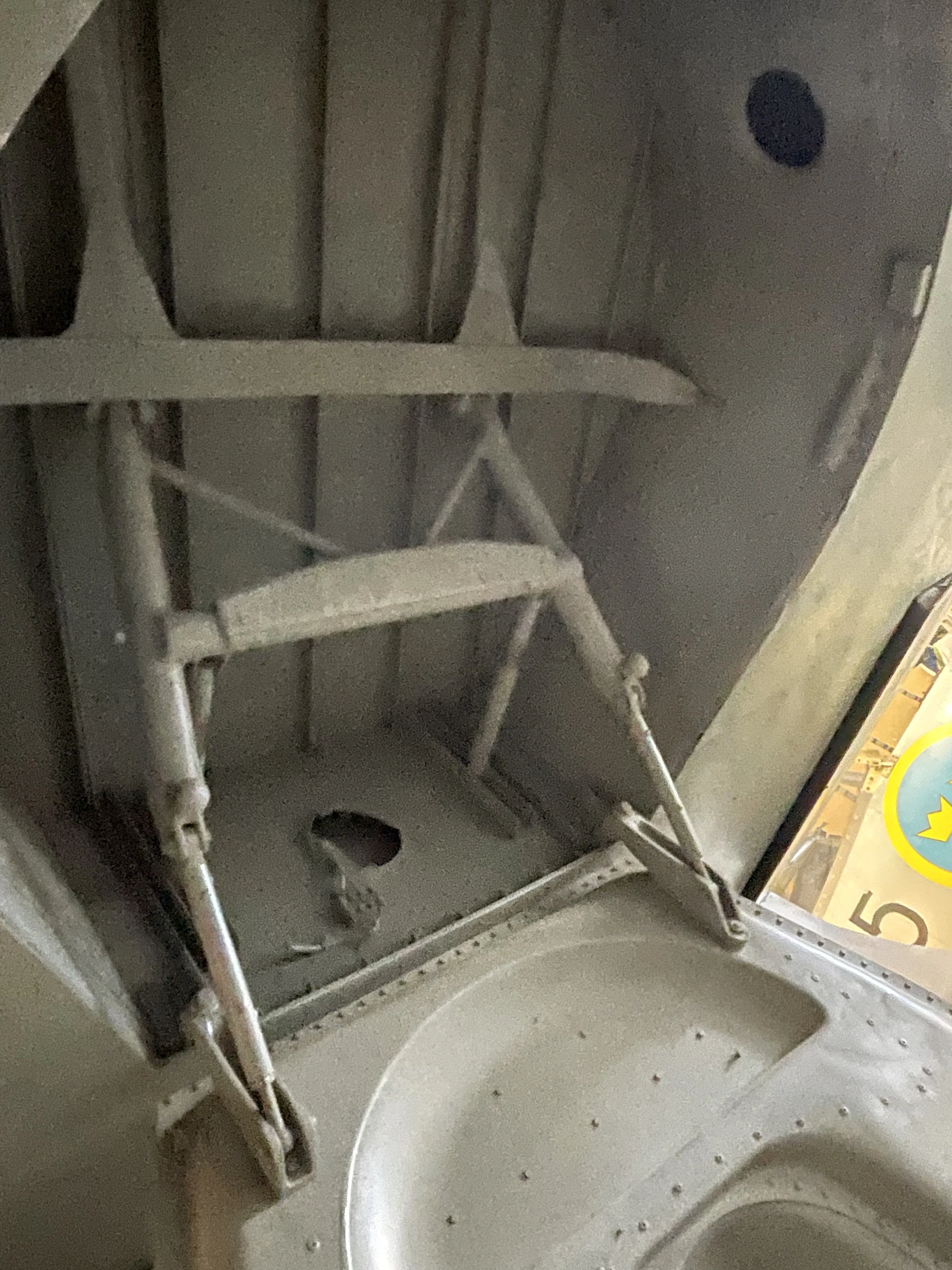
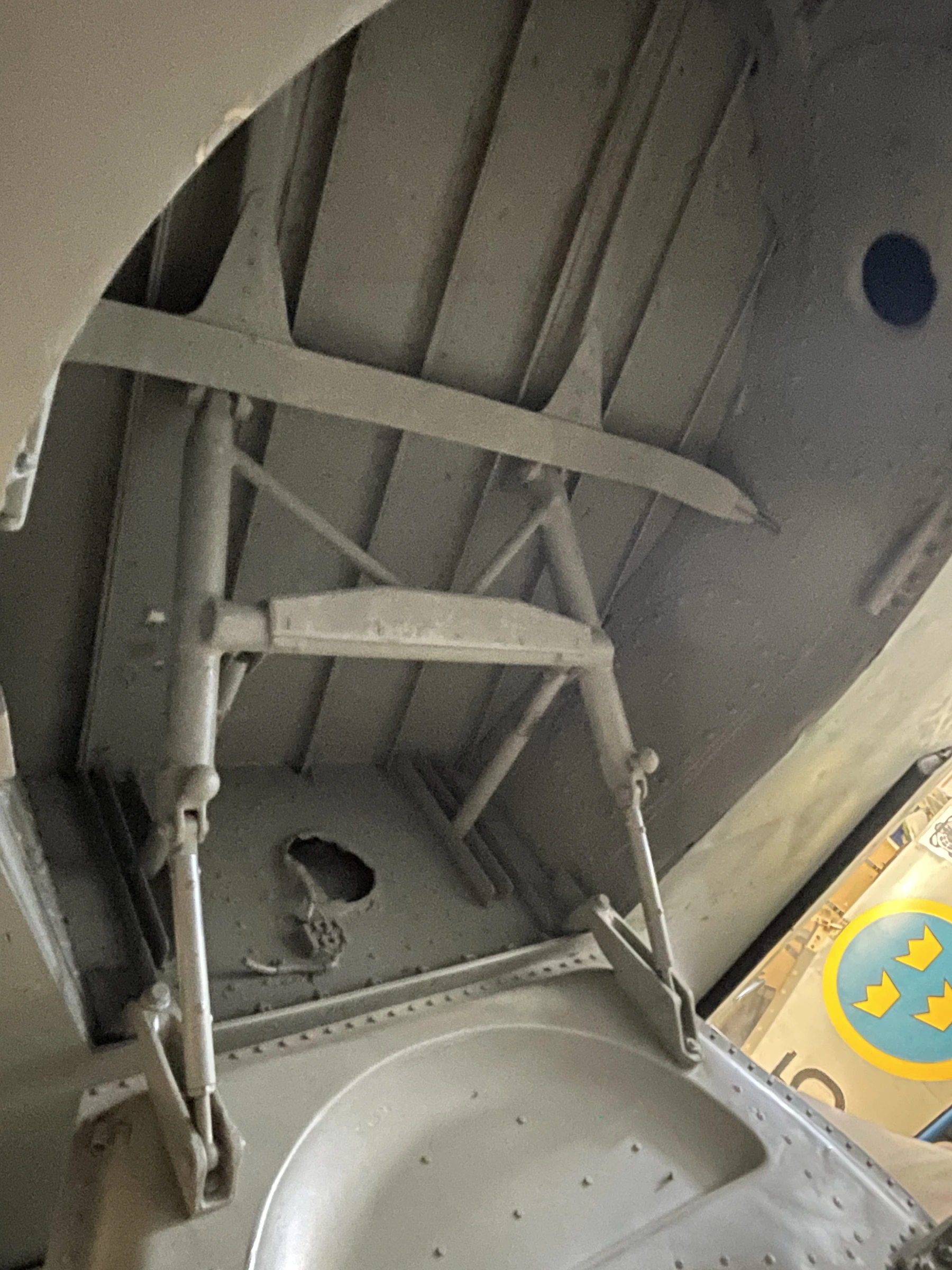
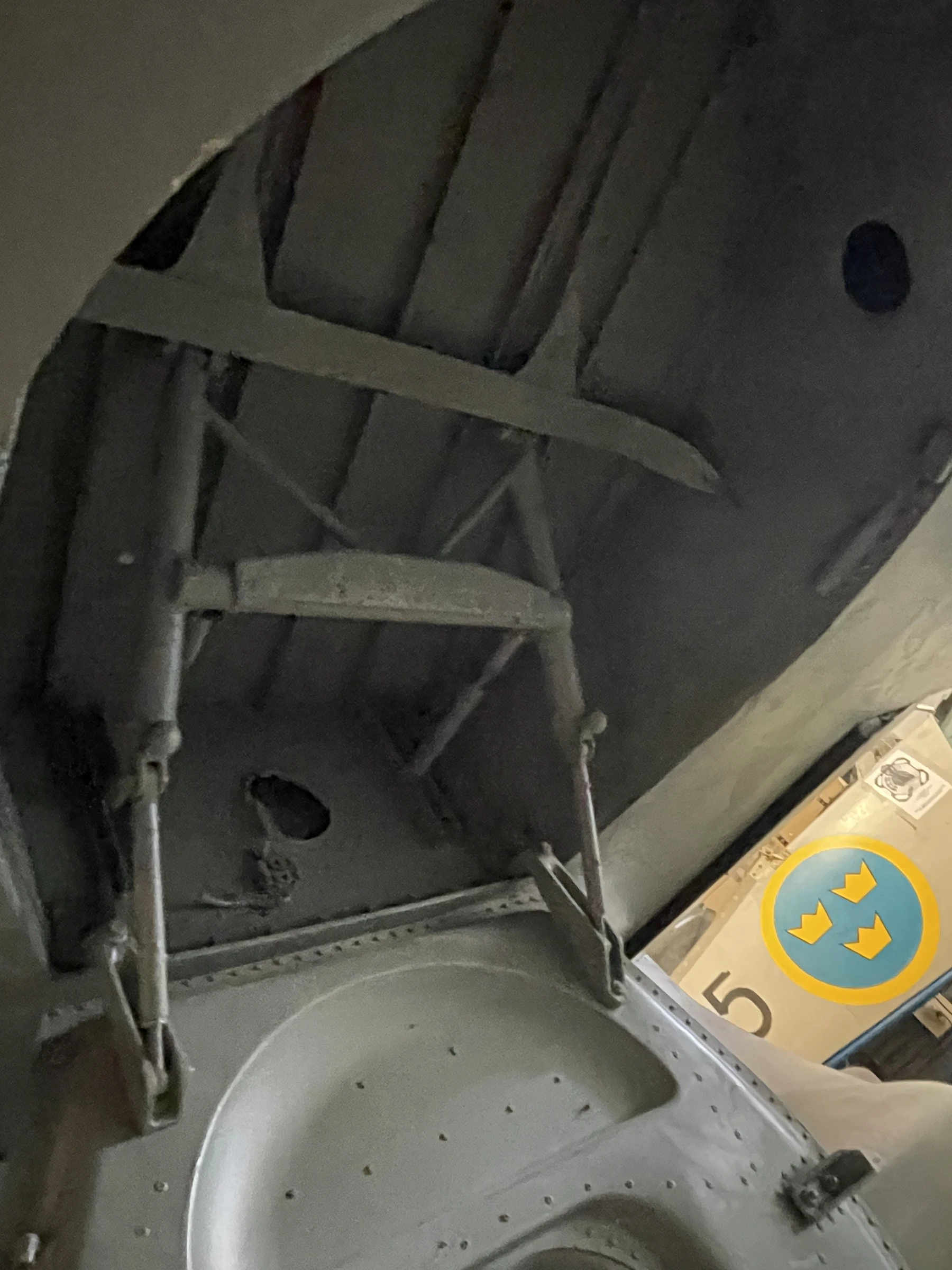
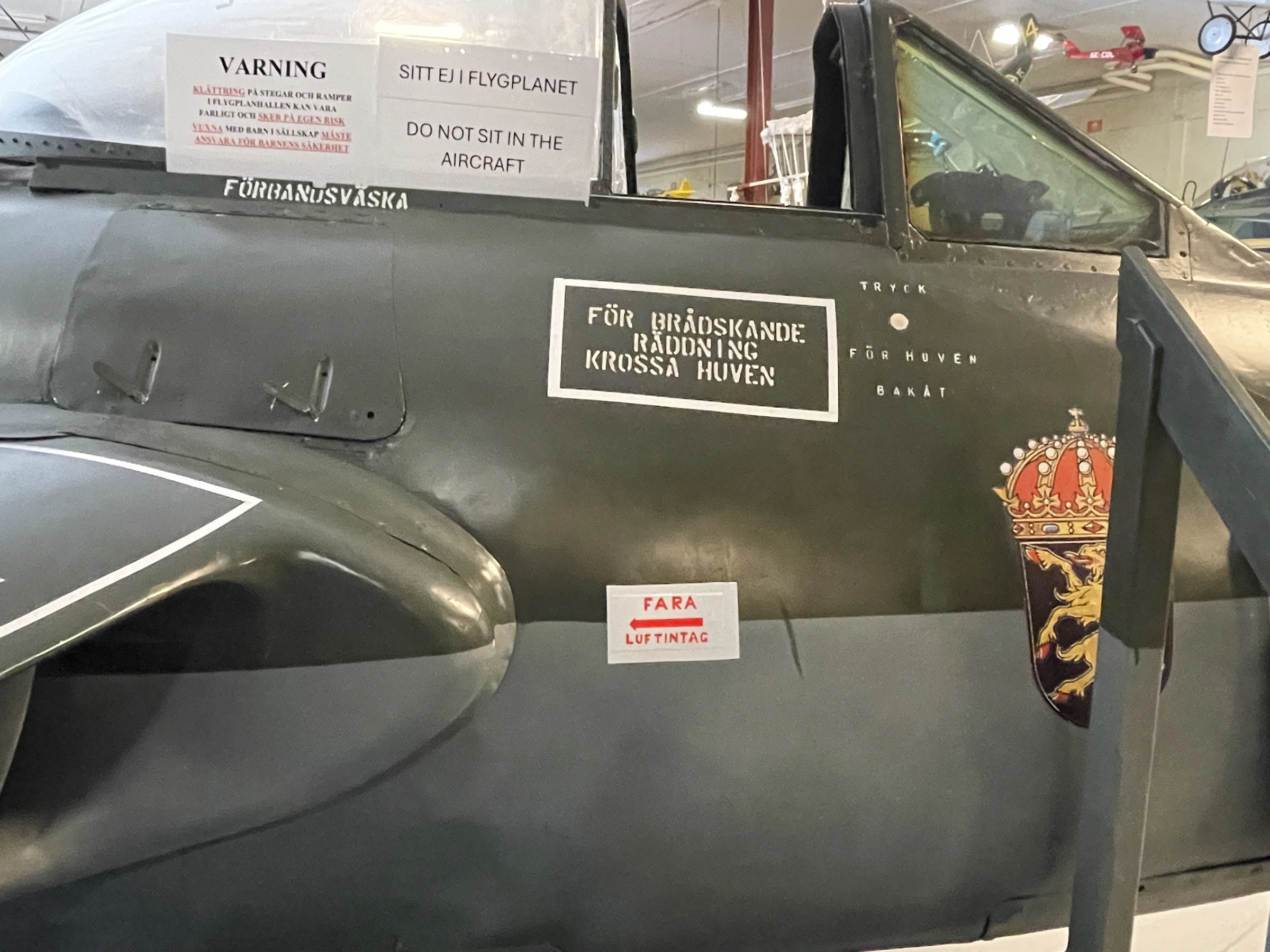
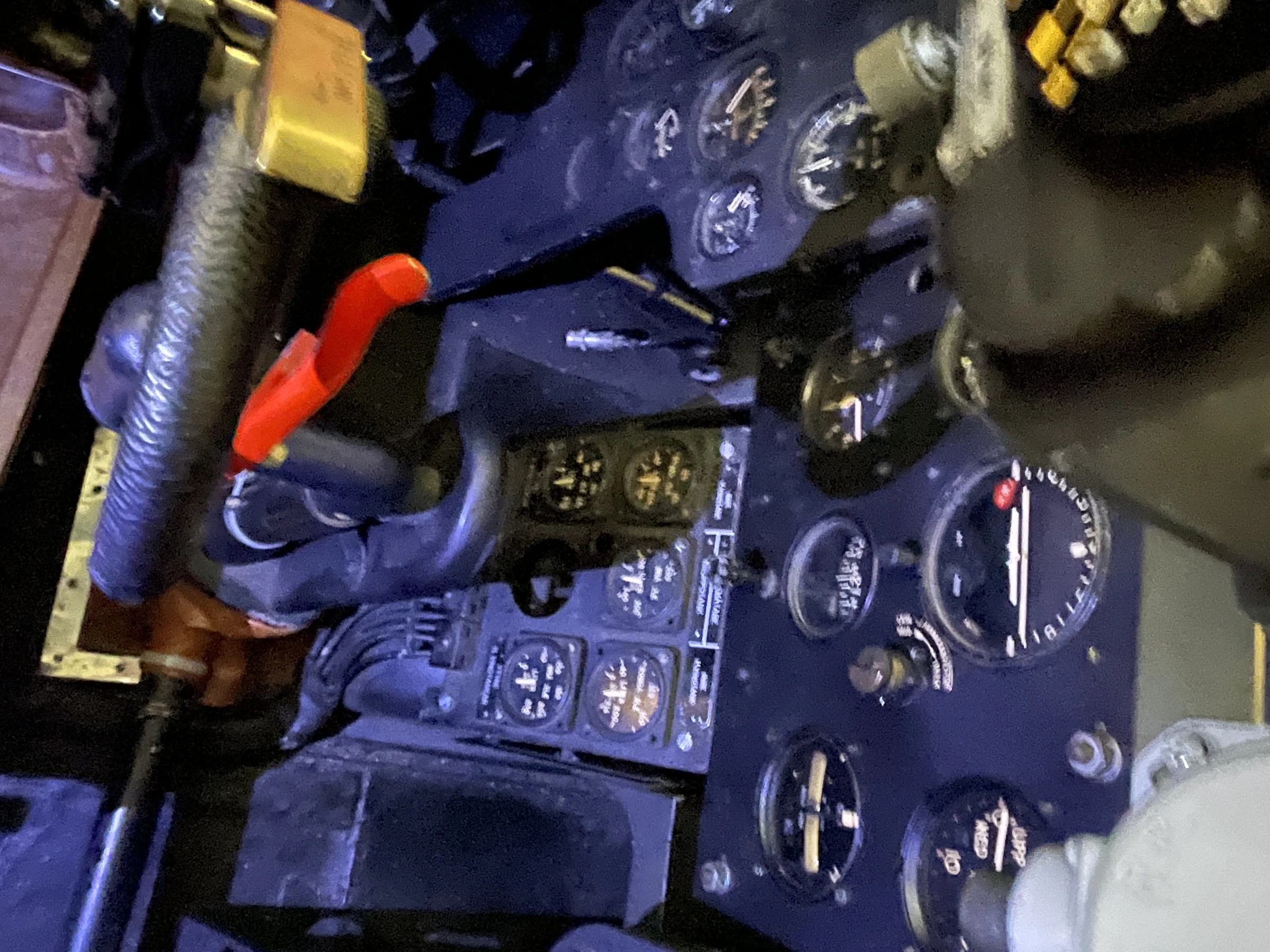
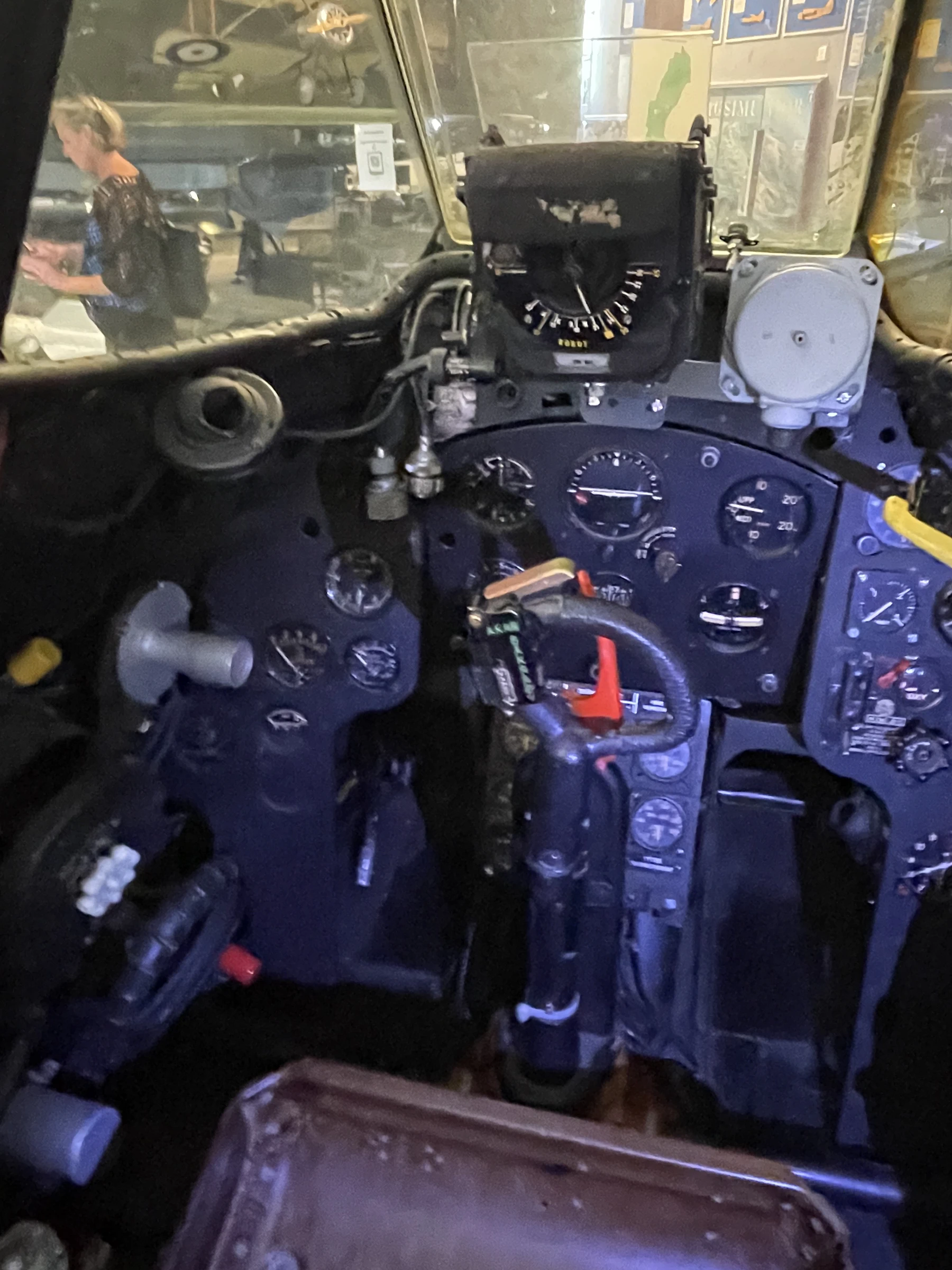
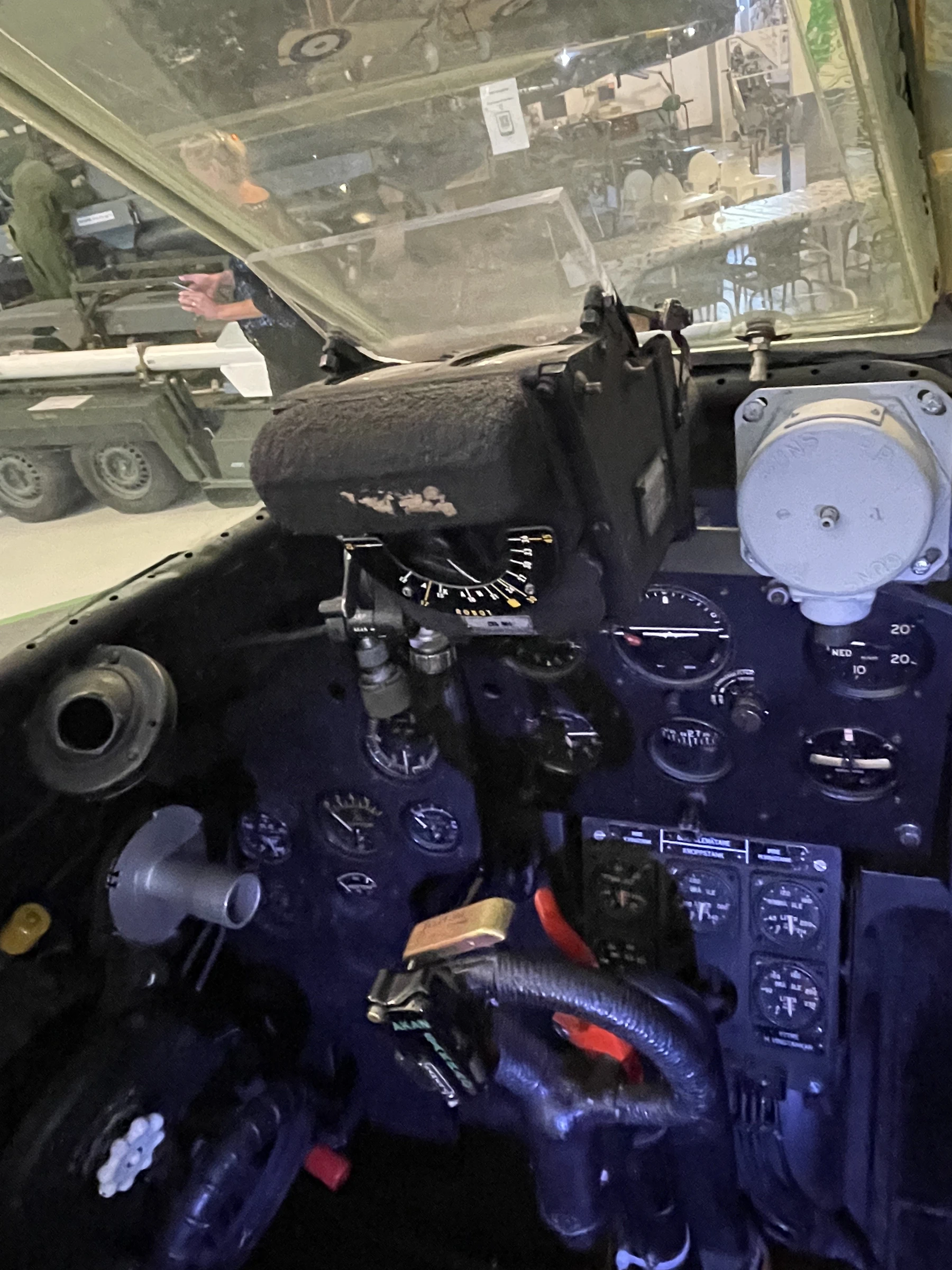
The de Havilland Vampire was Britain's second jet fighter, and in 1946 it became Sweden's first — the Swedish Air Force was among the type's earliest export customers. The heavier FB.50 export version, designated J 28B, followed in 1949, with 310 examples delivered by 1952. Built largely of wood and metal in a twin-boom layout, the Vampire proved light, forgiving to fly and hugely popular with pilots; it remained in Swedish service, latterly as a trainer, until 1968.
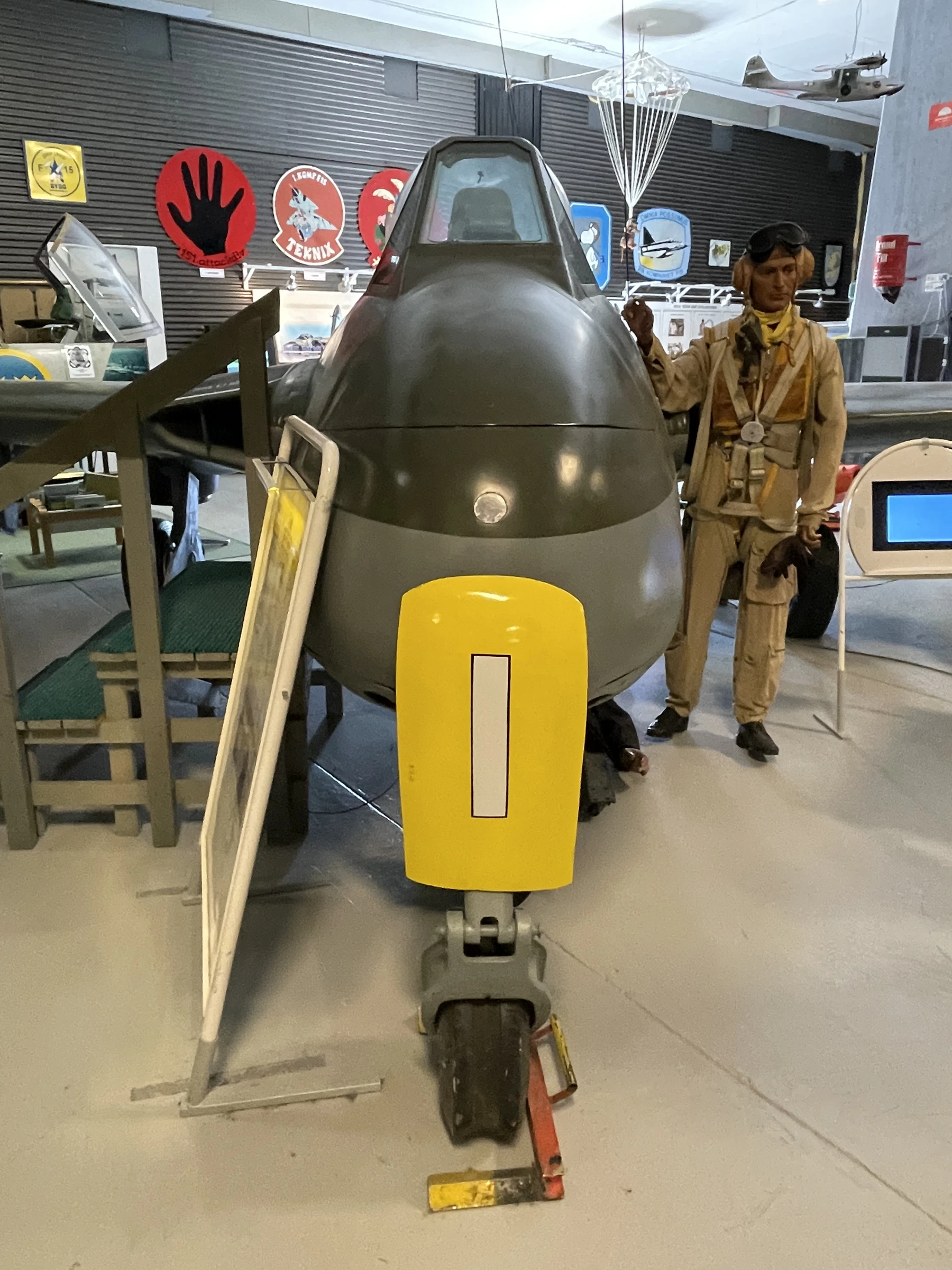
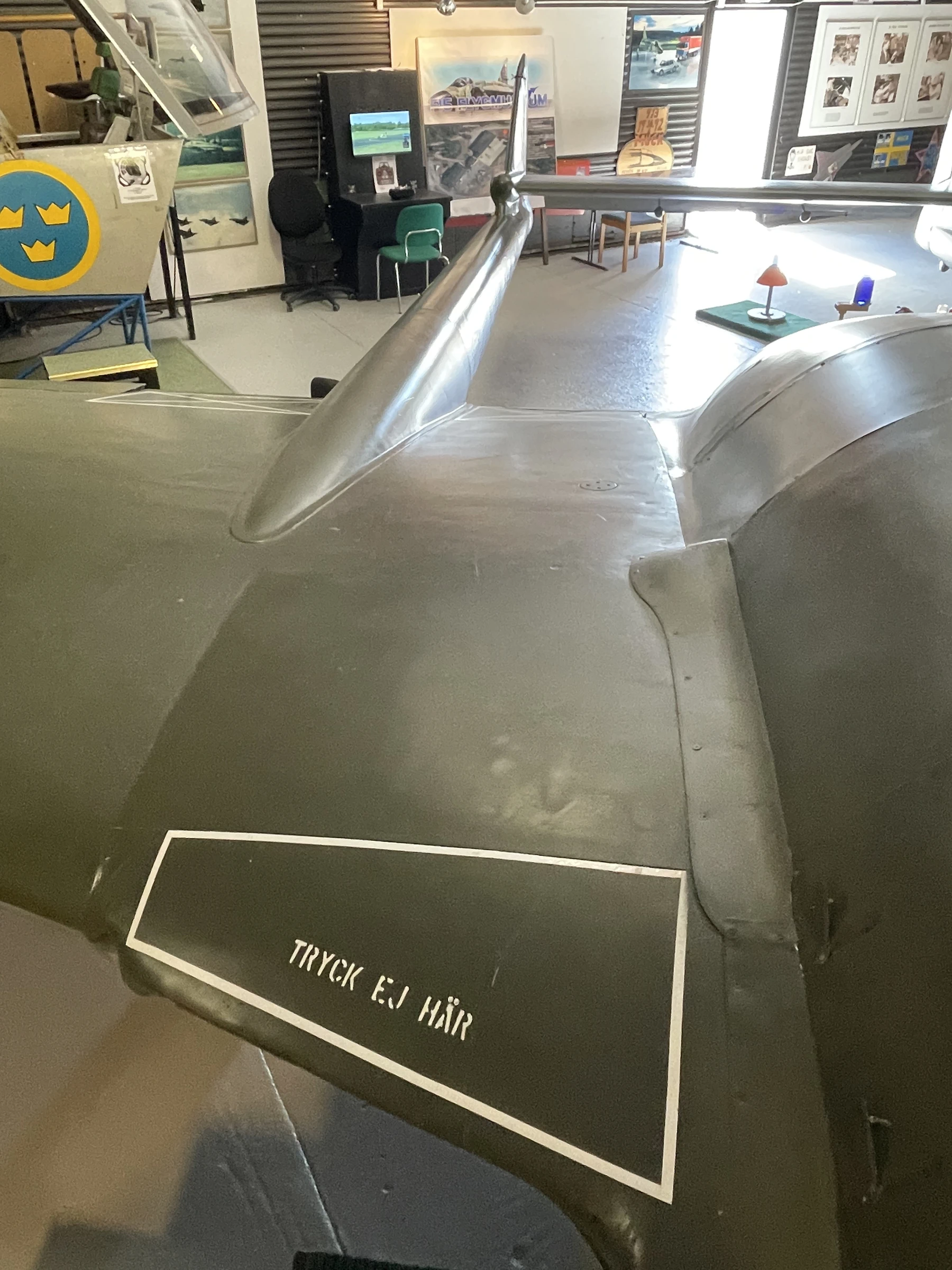
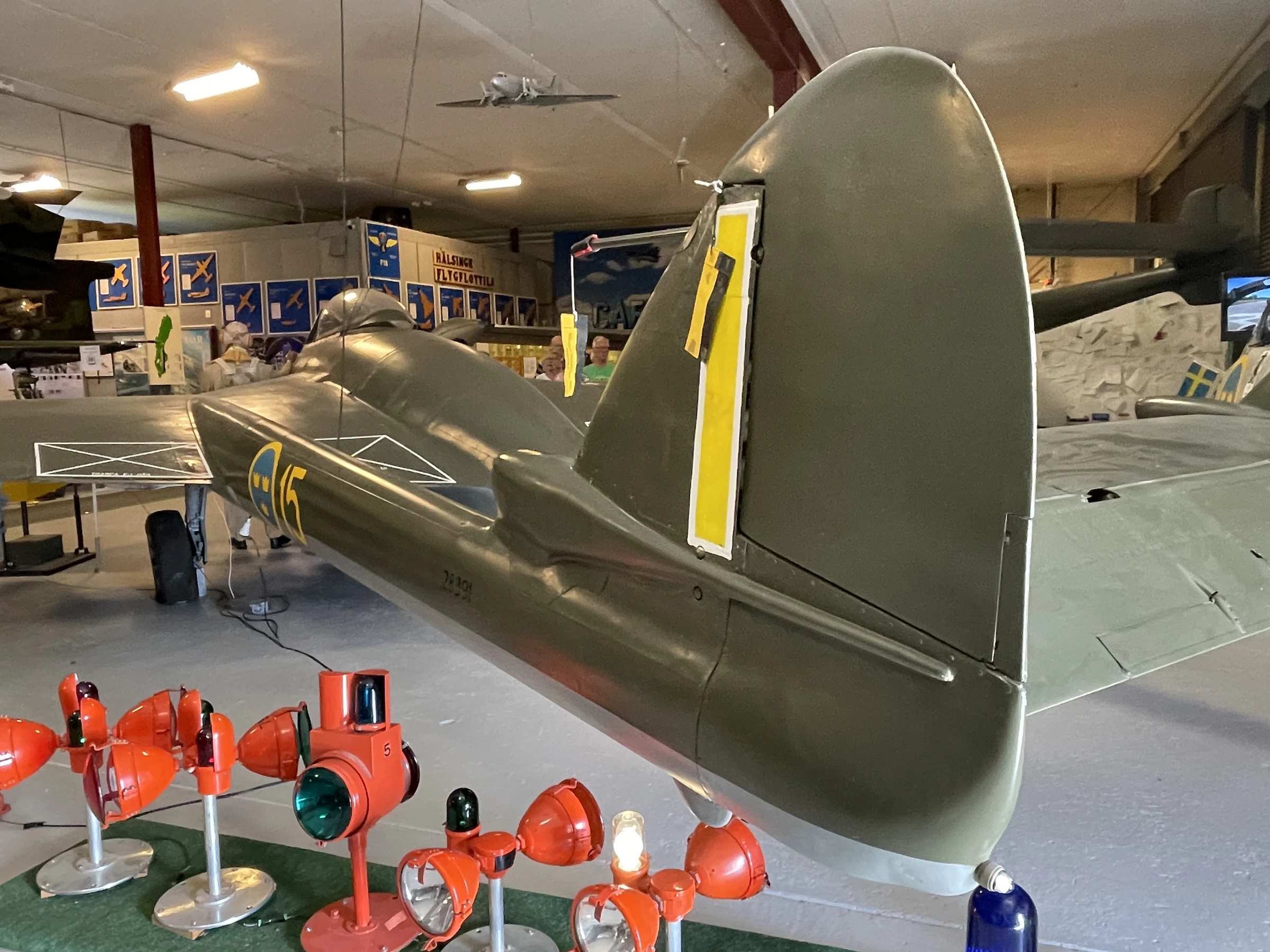
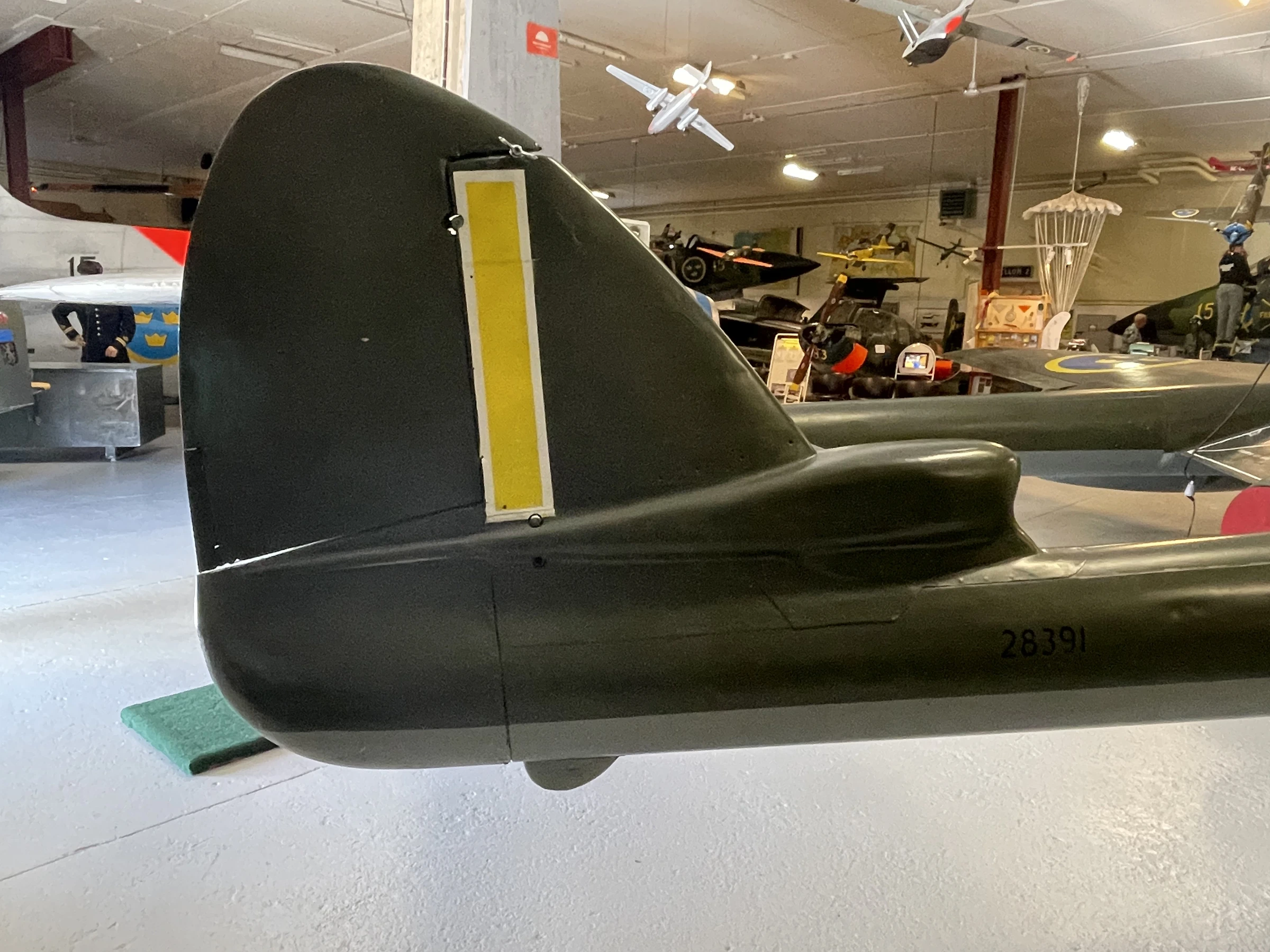
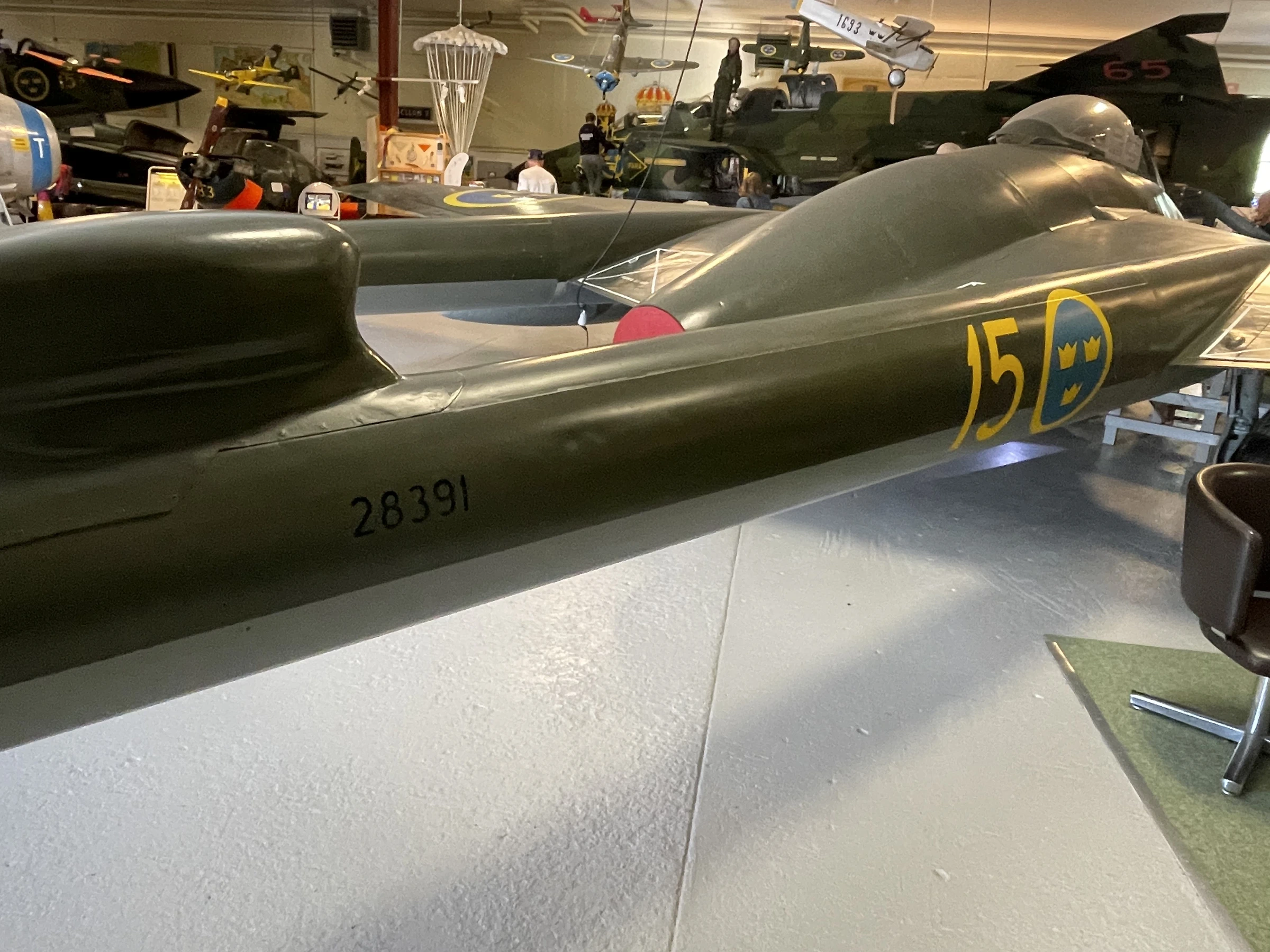
This aircraft is marked as belonging to F15's 1st Division, with the yellow code "I" and F15's black-hand squadron emblem visible on the wall behind it. Its genuine individual number is 28219, delivered to the Air Force on 23 December 1950 and retired on 8 December 1967 — not the "28391" painted on the tail boom, which in fact belongs to a different, separately restored J 28B now on display at Flygmuseet F21 in Luleå.
According to information relayed by the museum, 28219 later stood on display at the High Chaparral theme park before being used as a gunnery target — a common fate for retired Swedish military aircraft. It was subsequently acquired by F15 Flygmuseum and restored over several years to its current condition. This part of its history could not be independently verified.