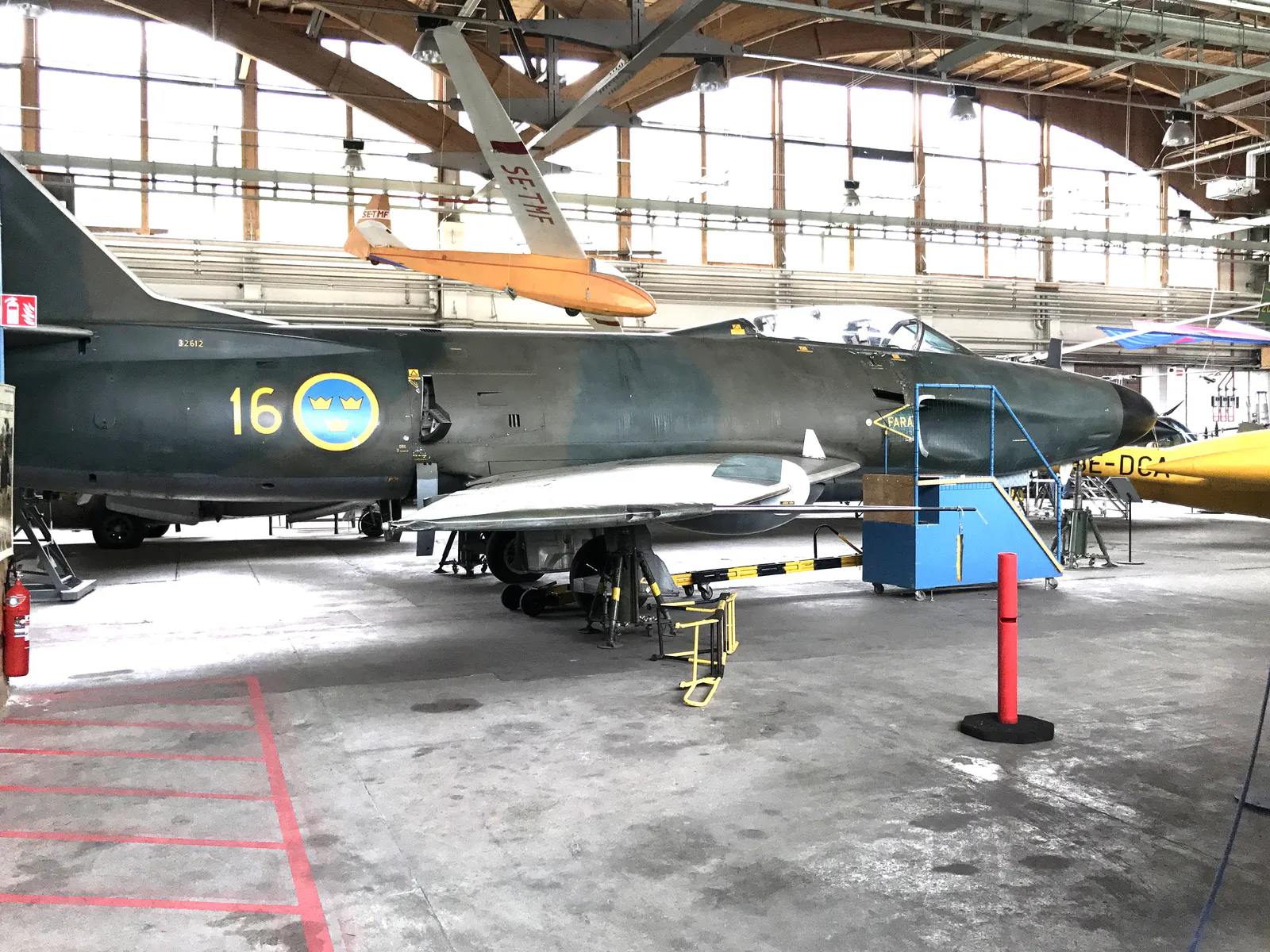
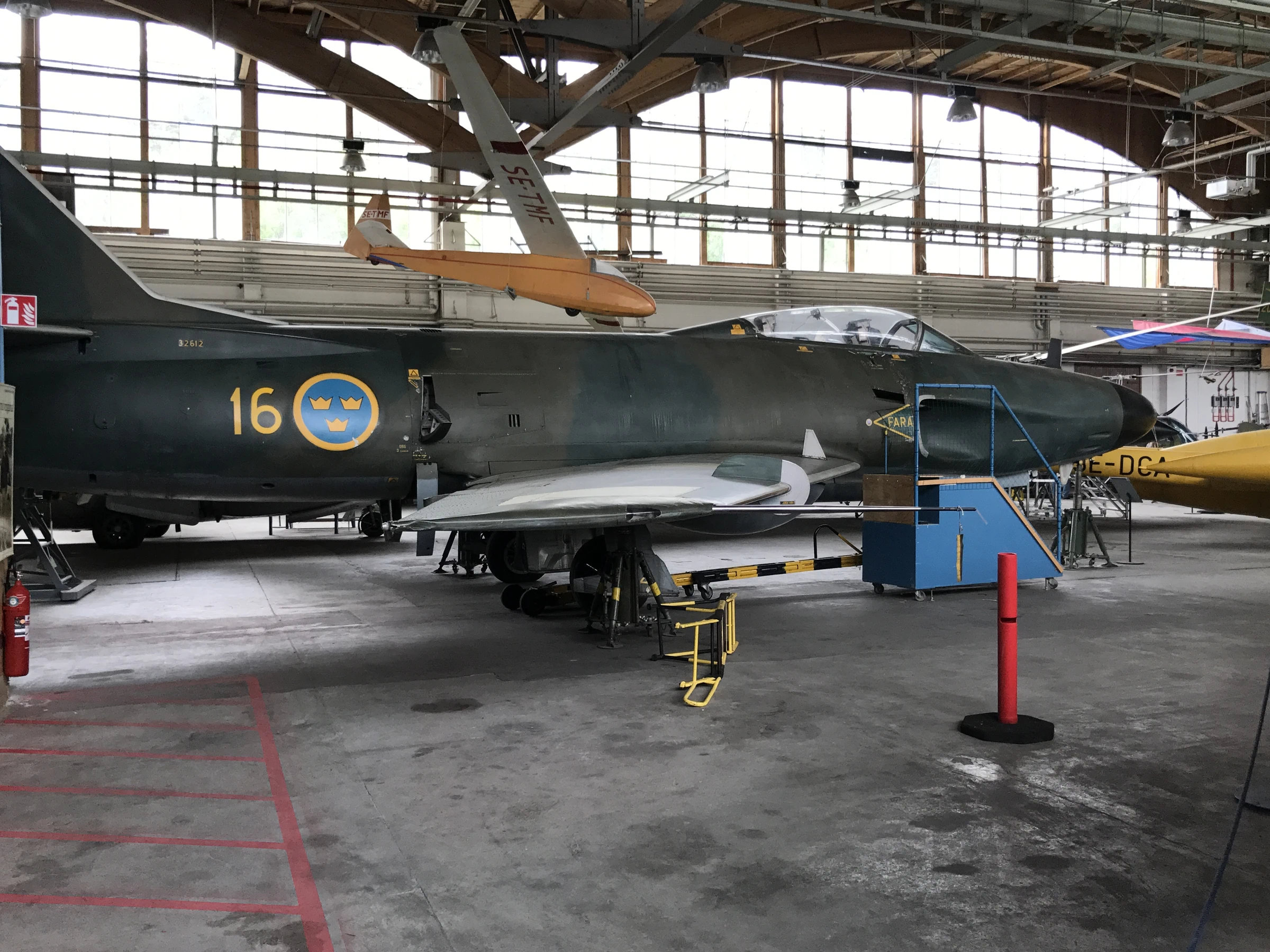
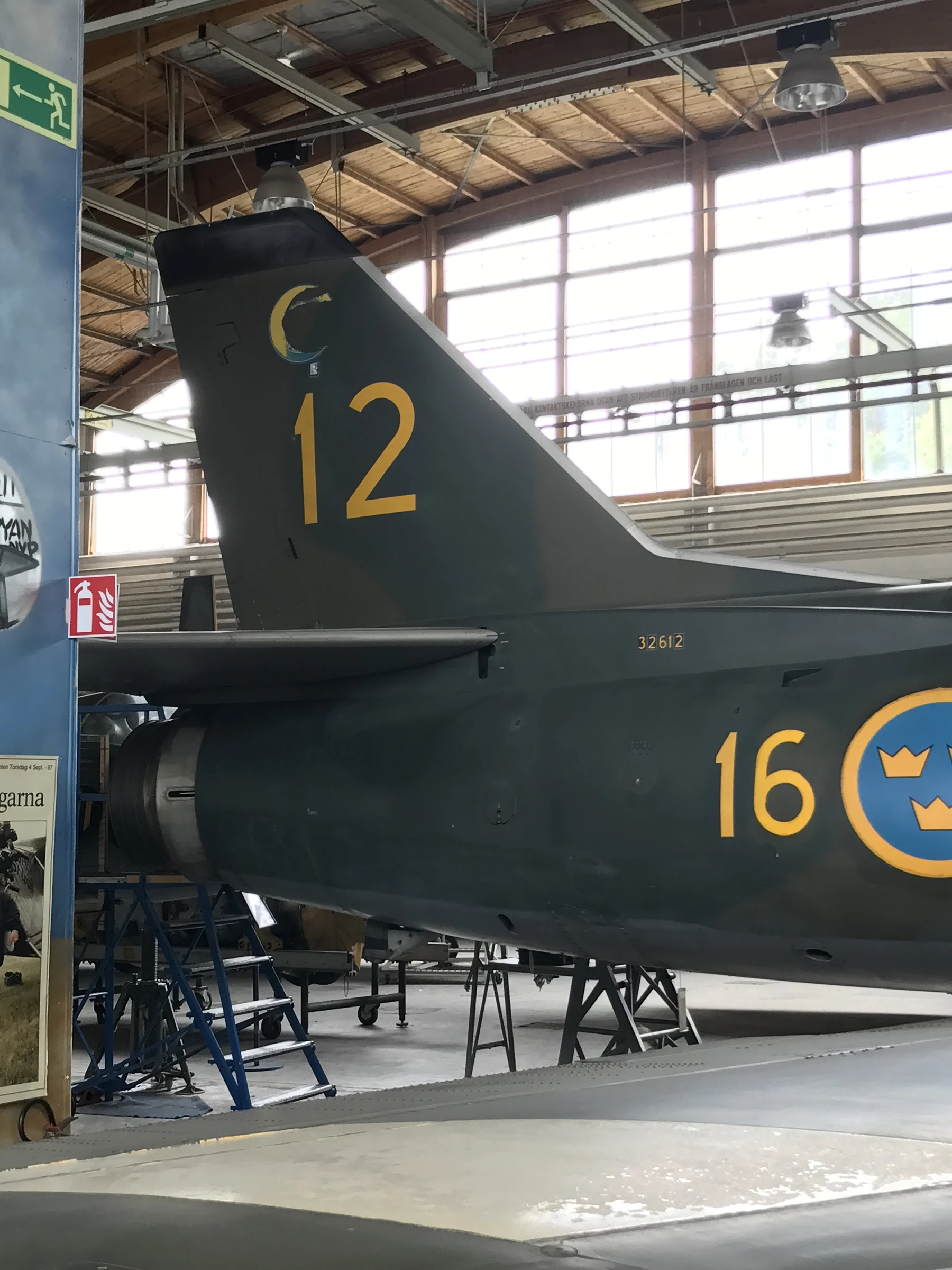
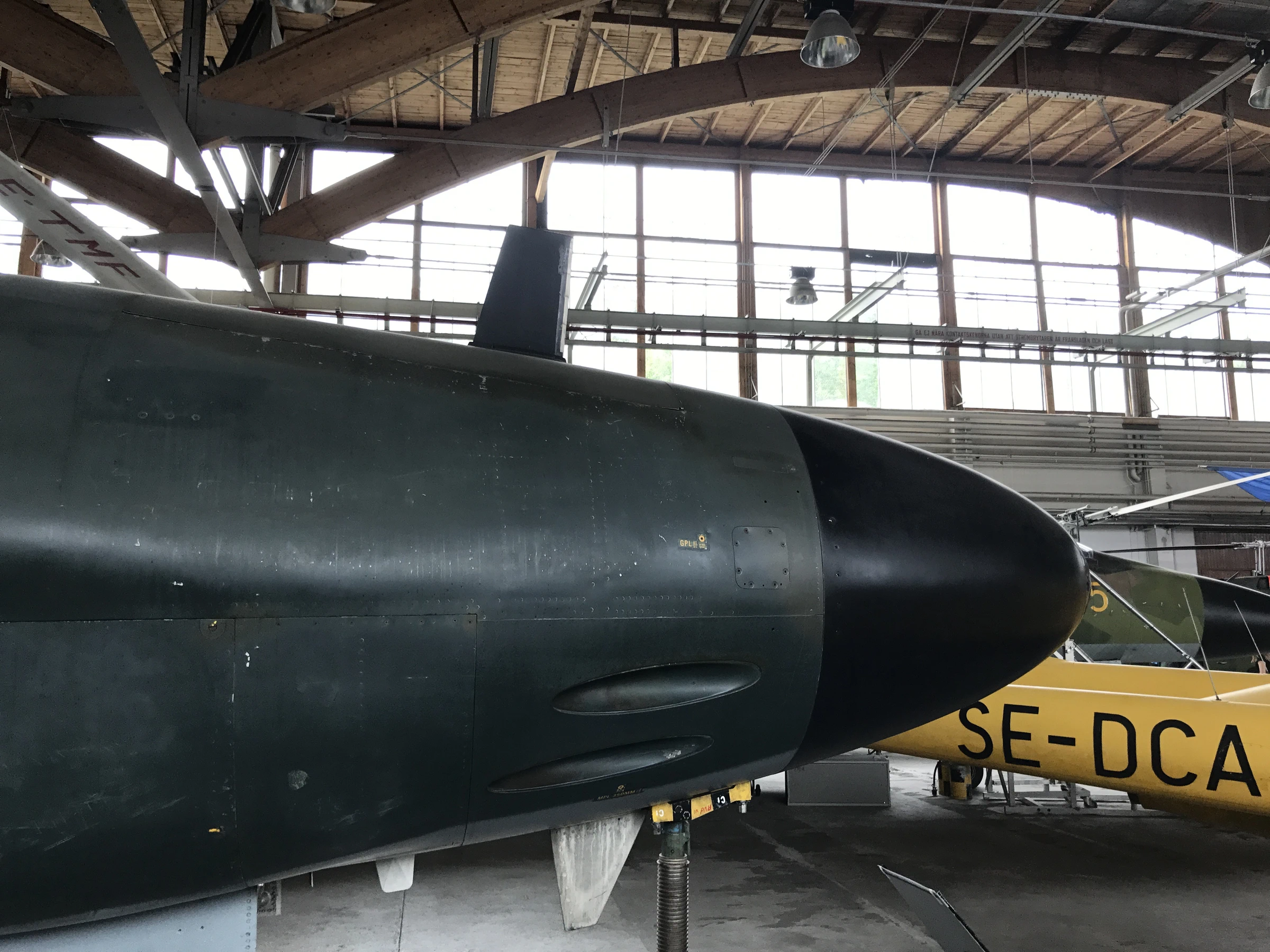
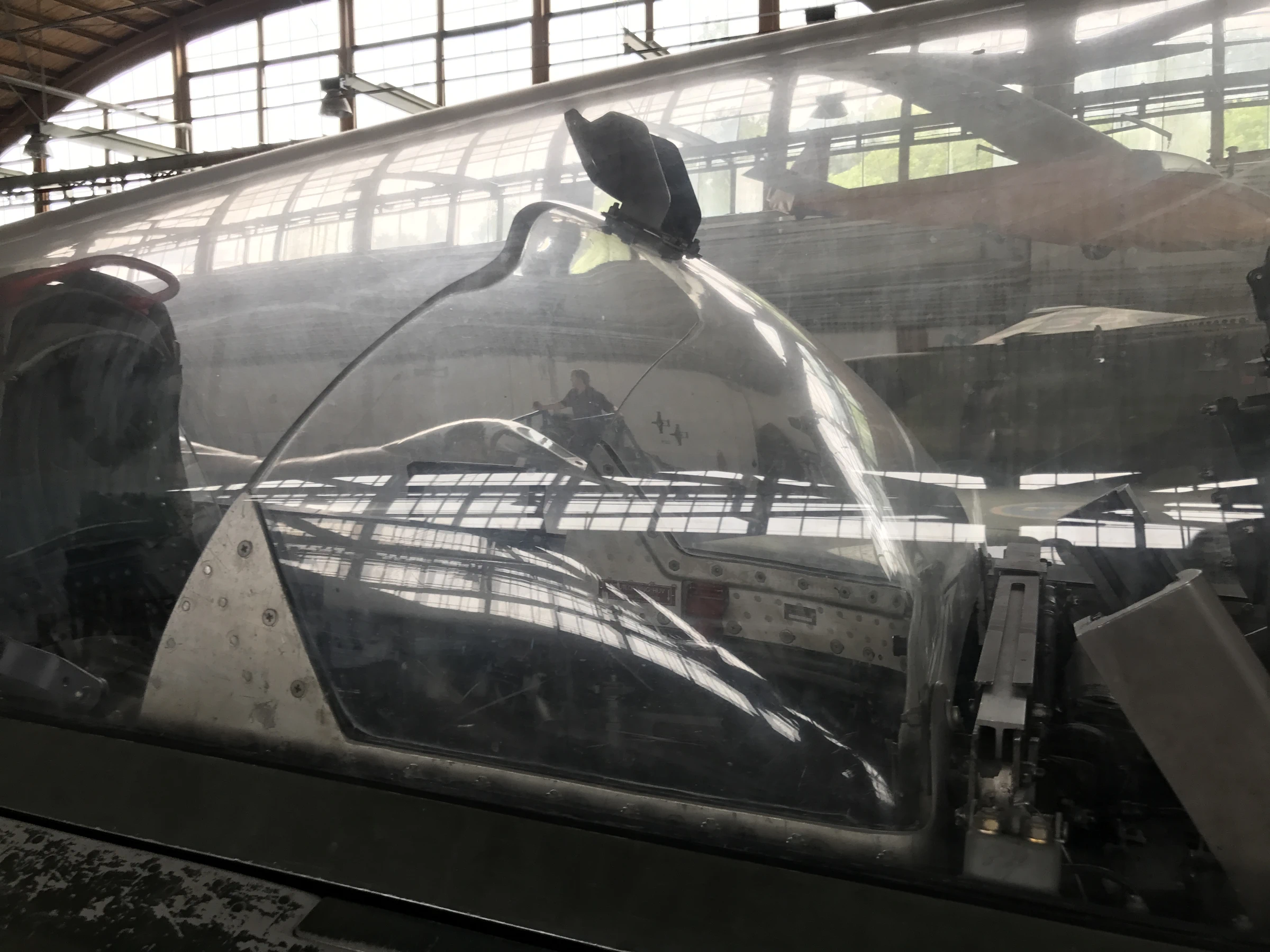
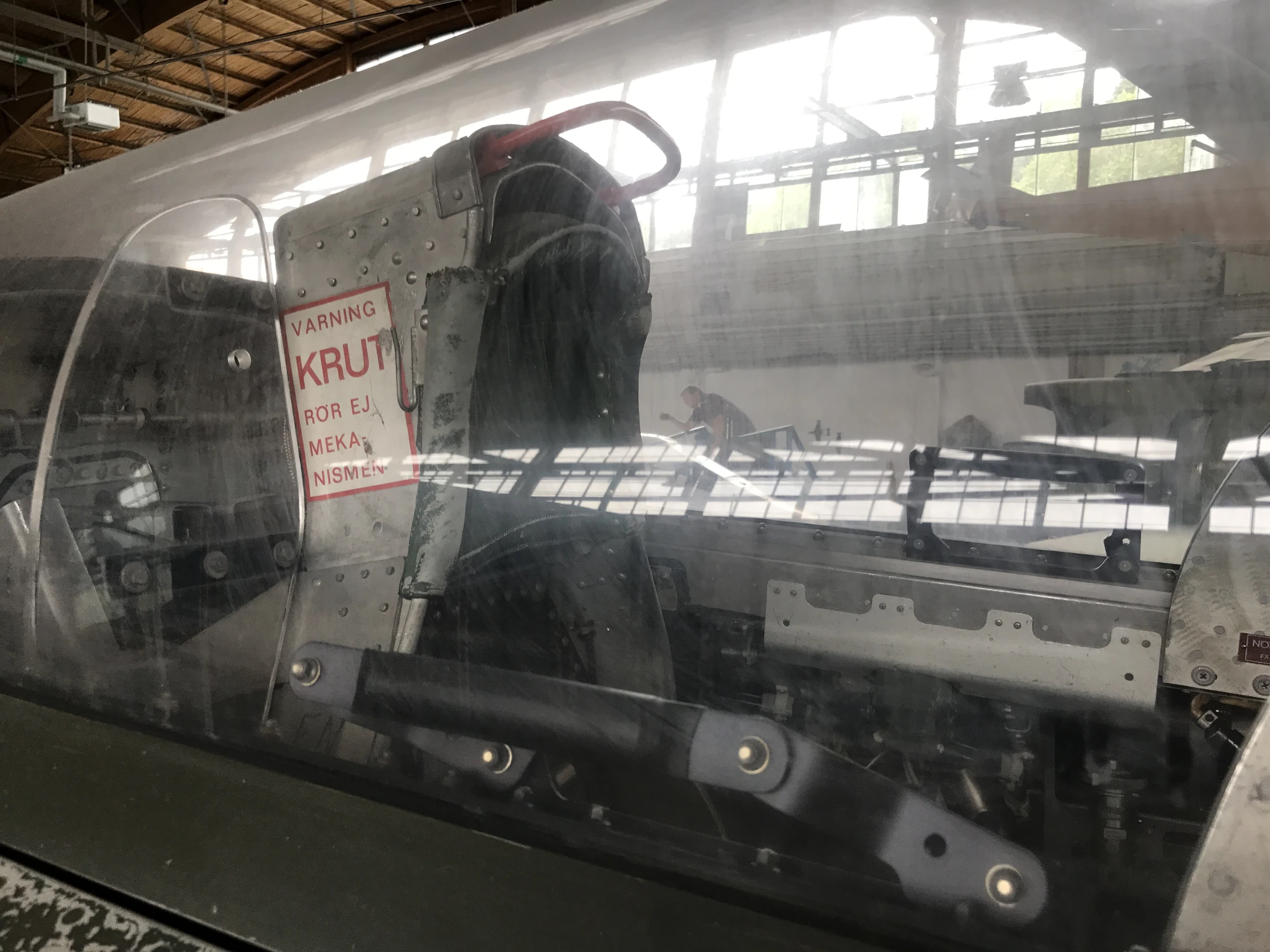
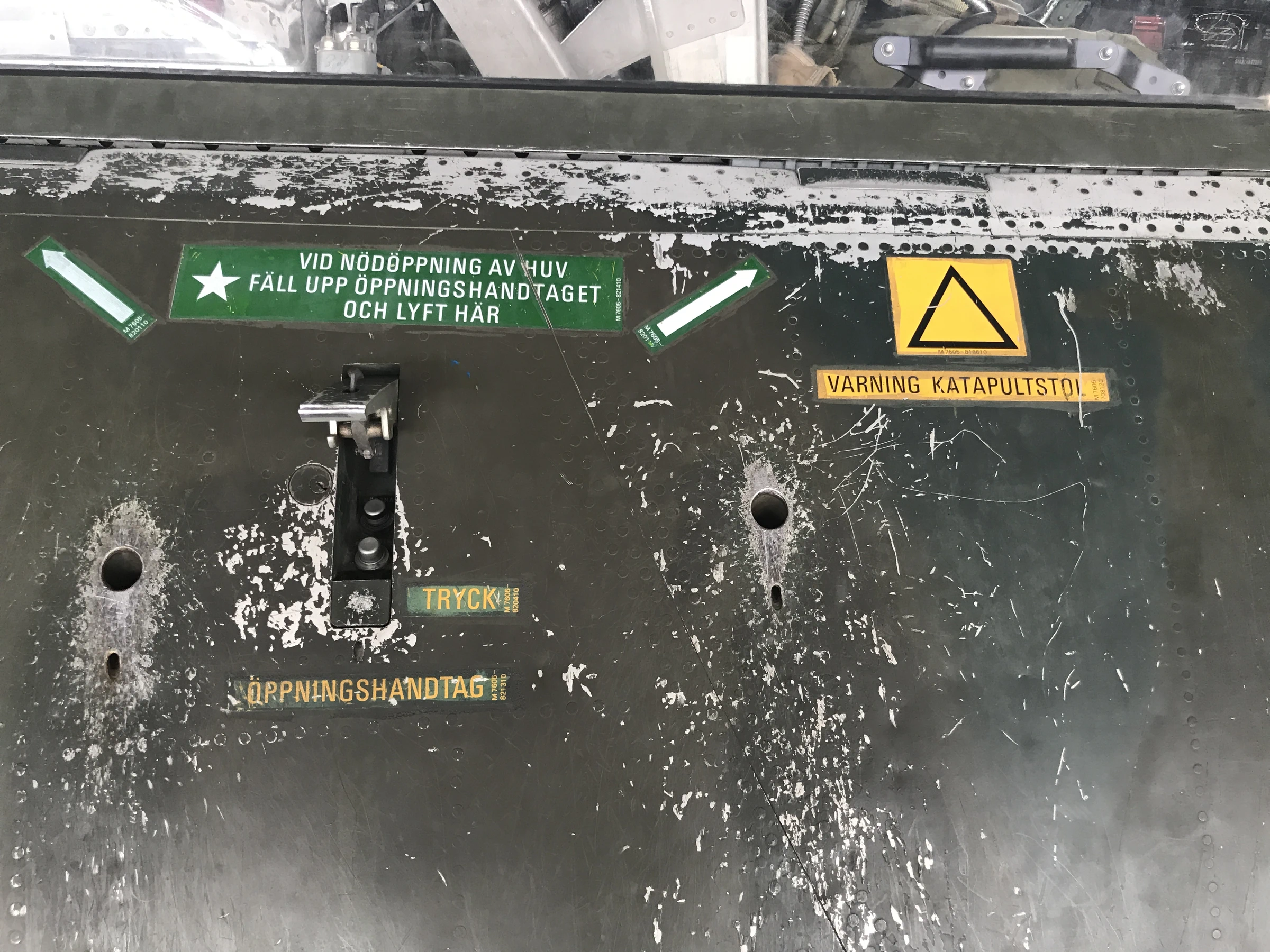
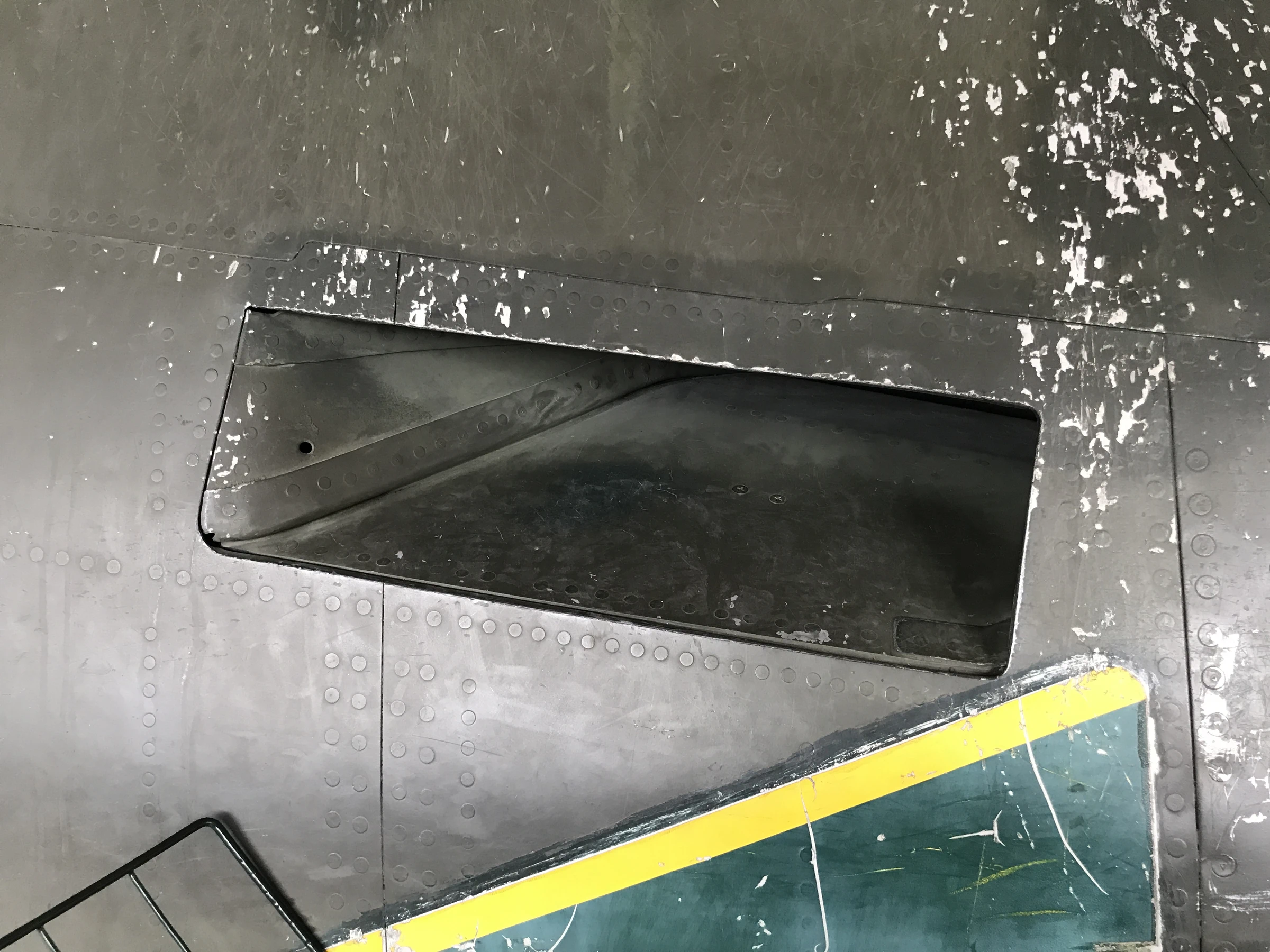
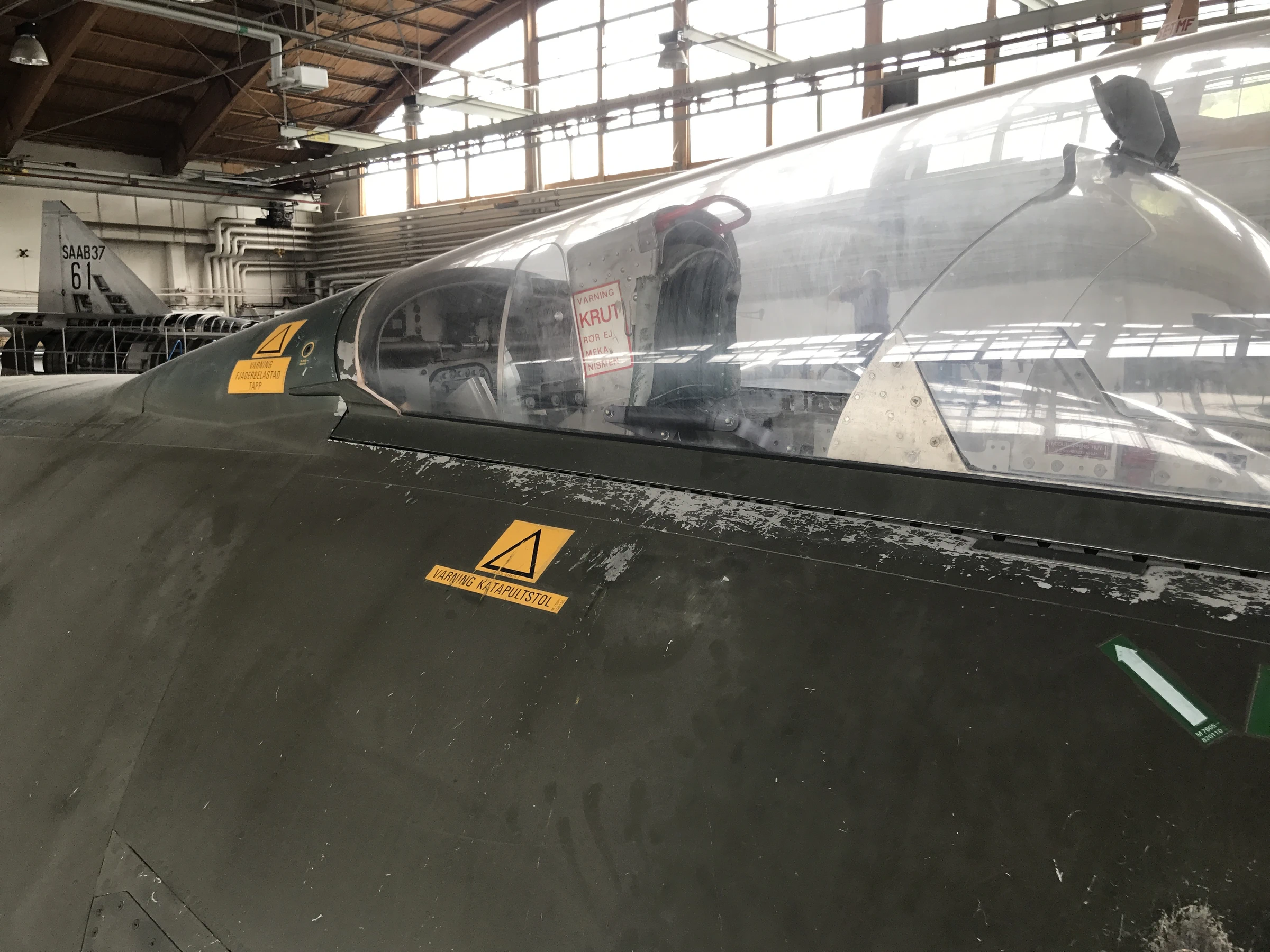
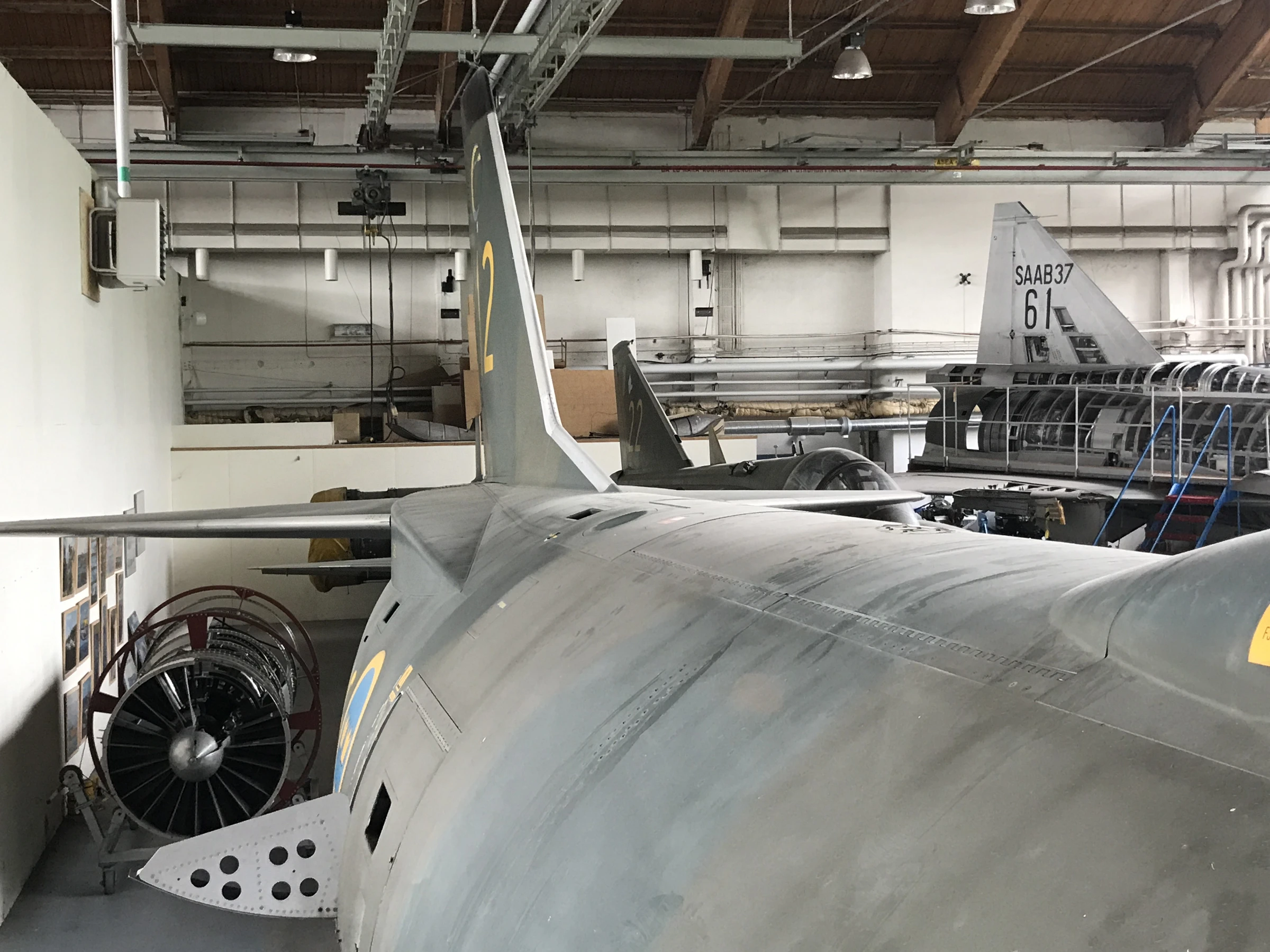
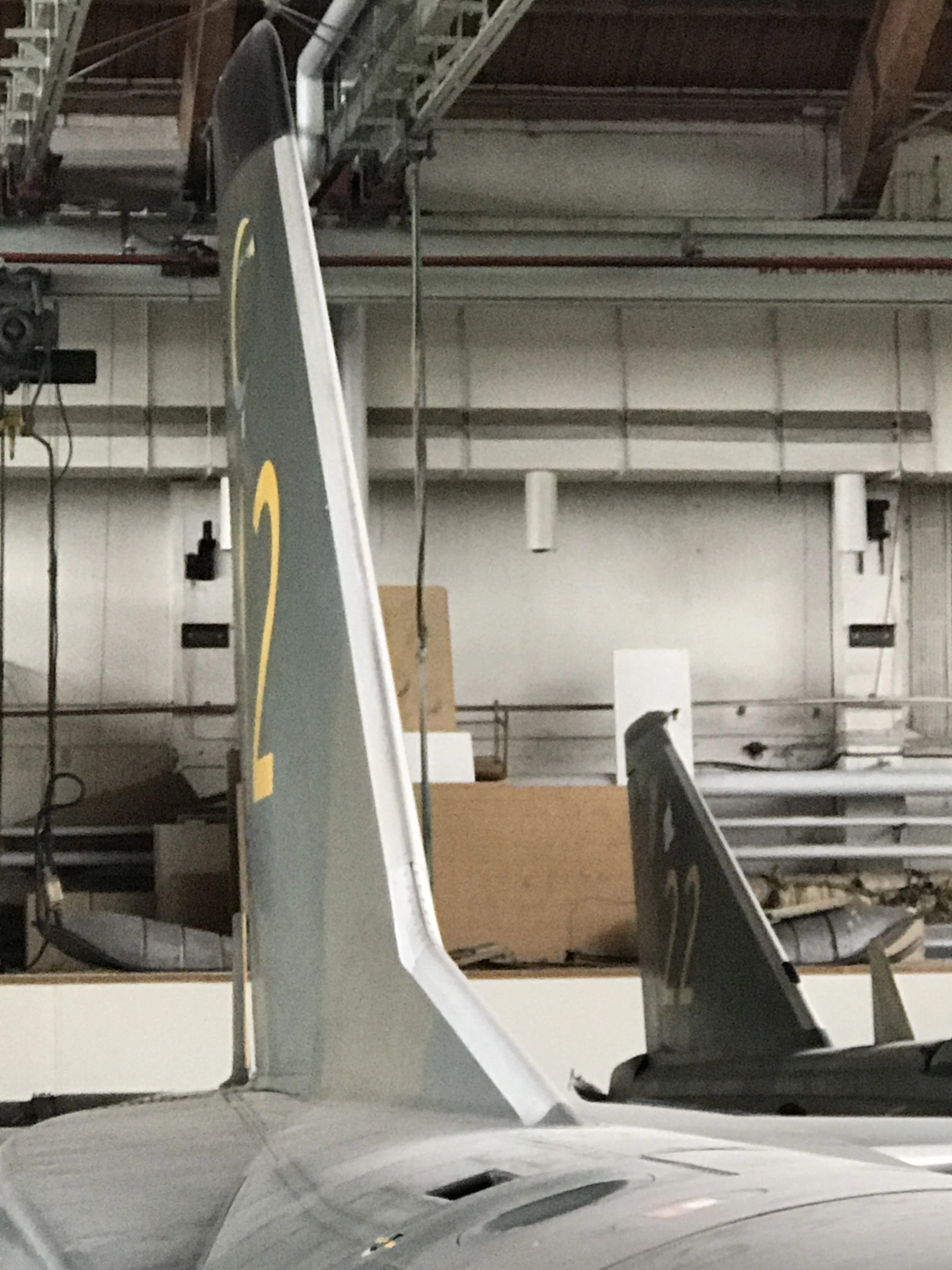
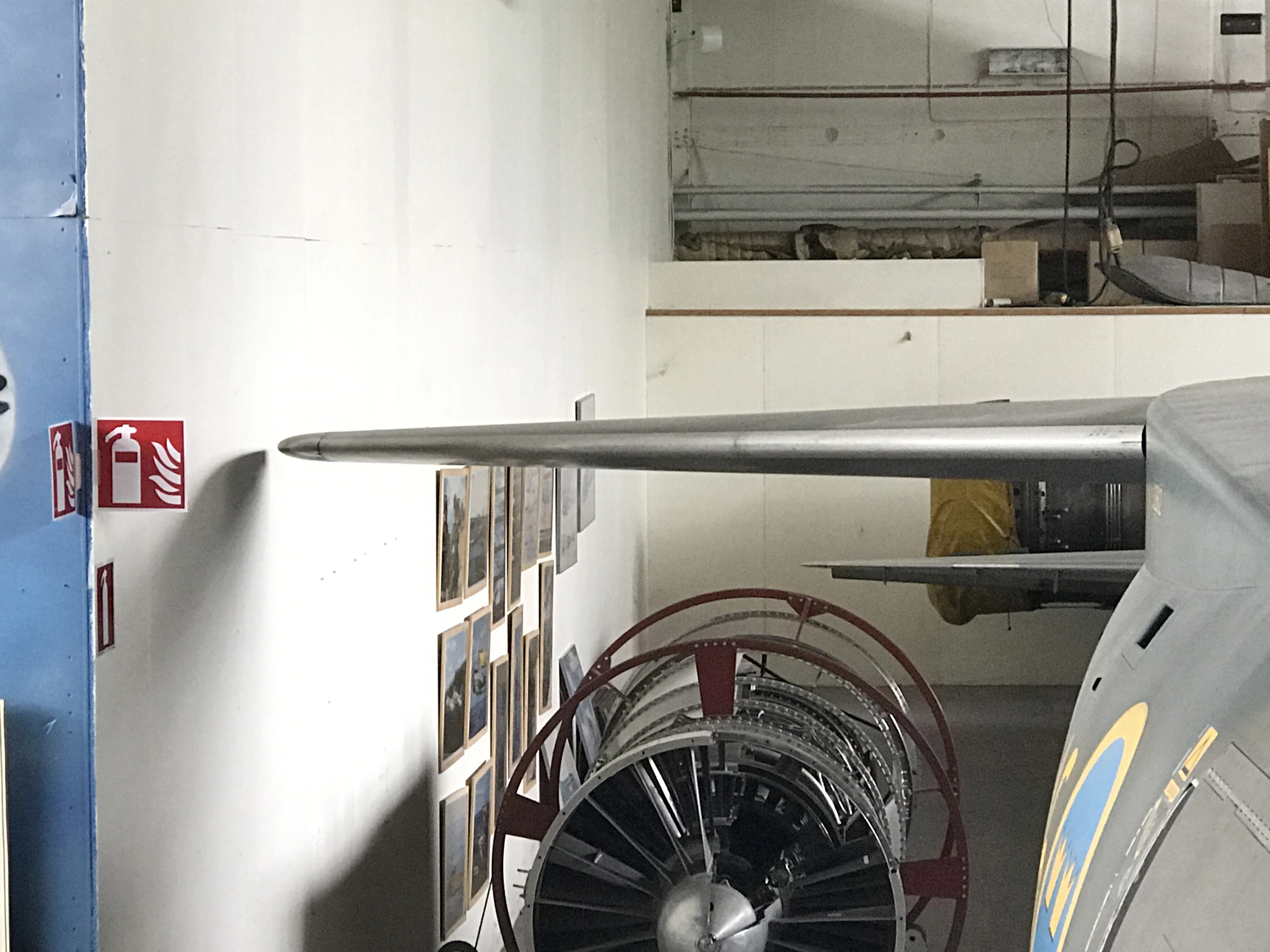
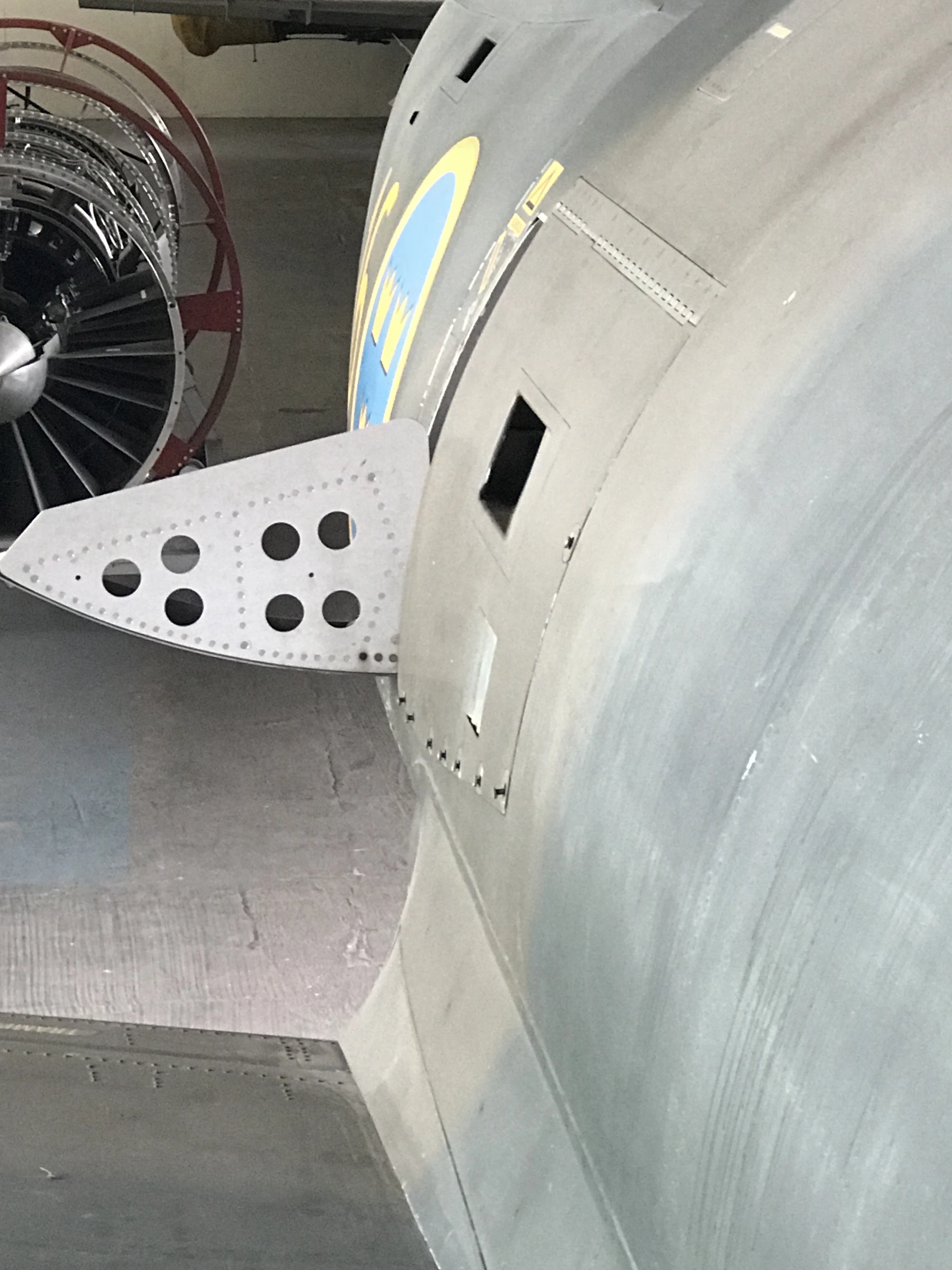
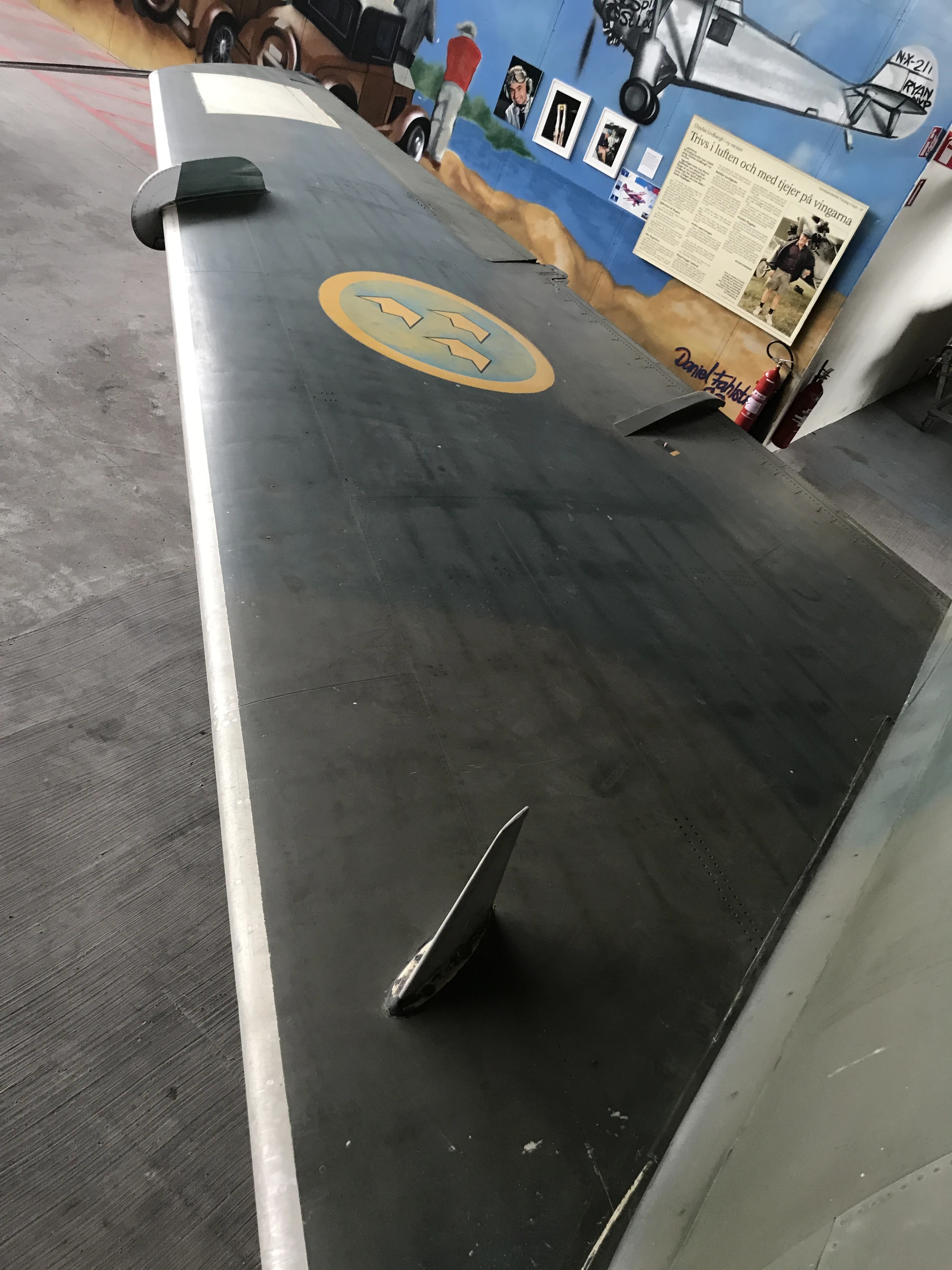
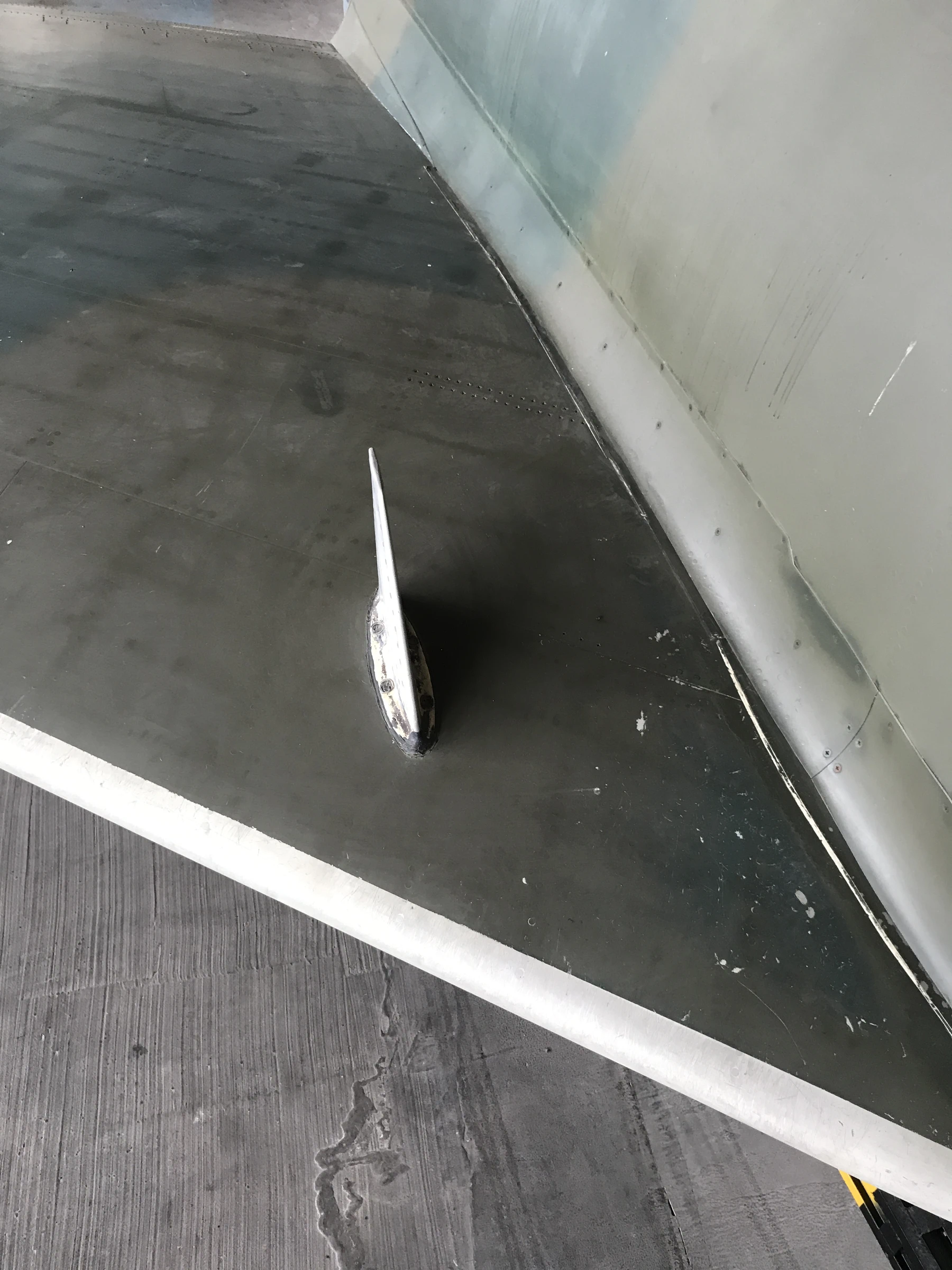
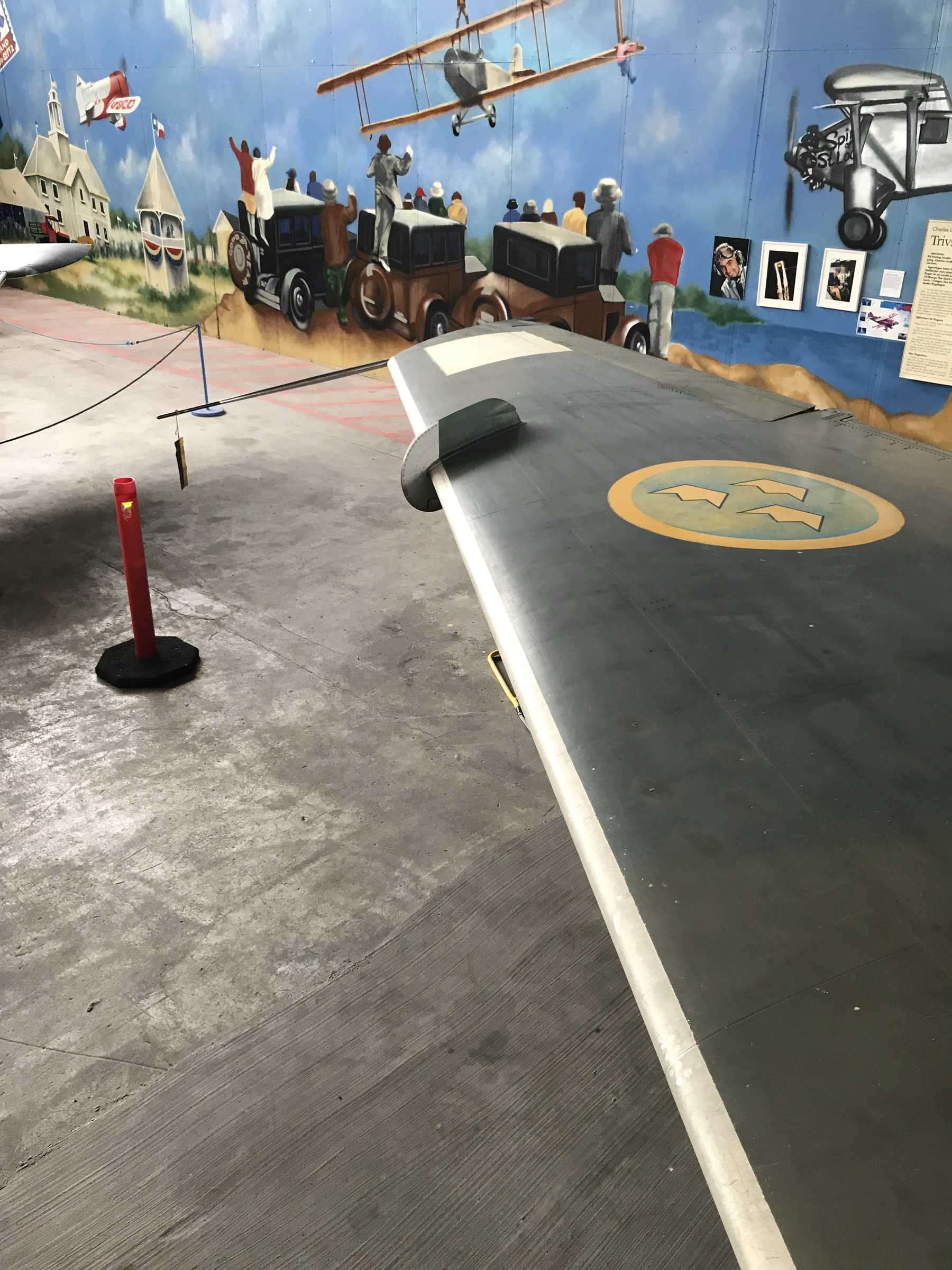
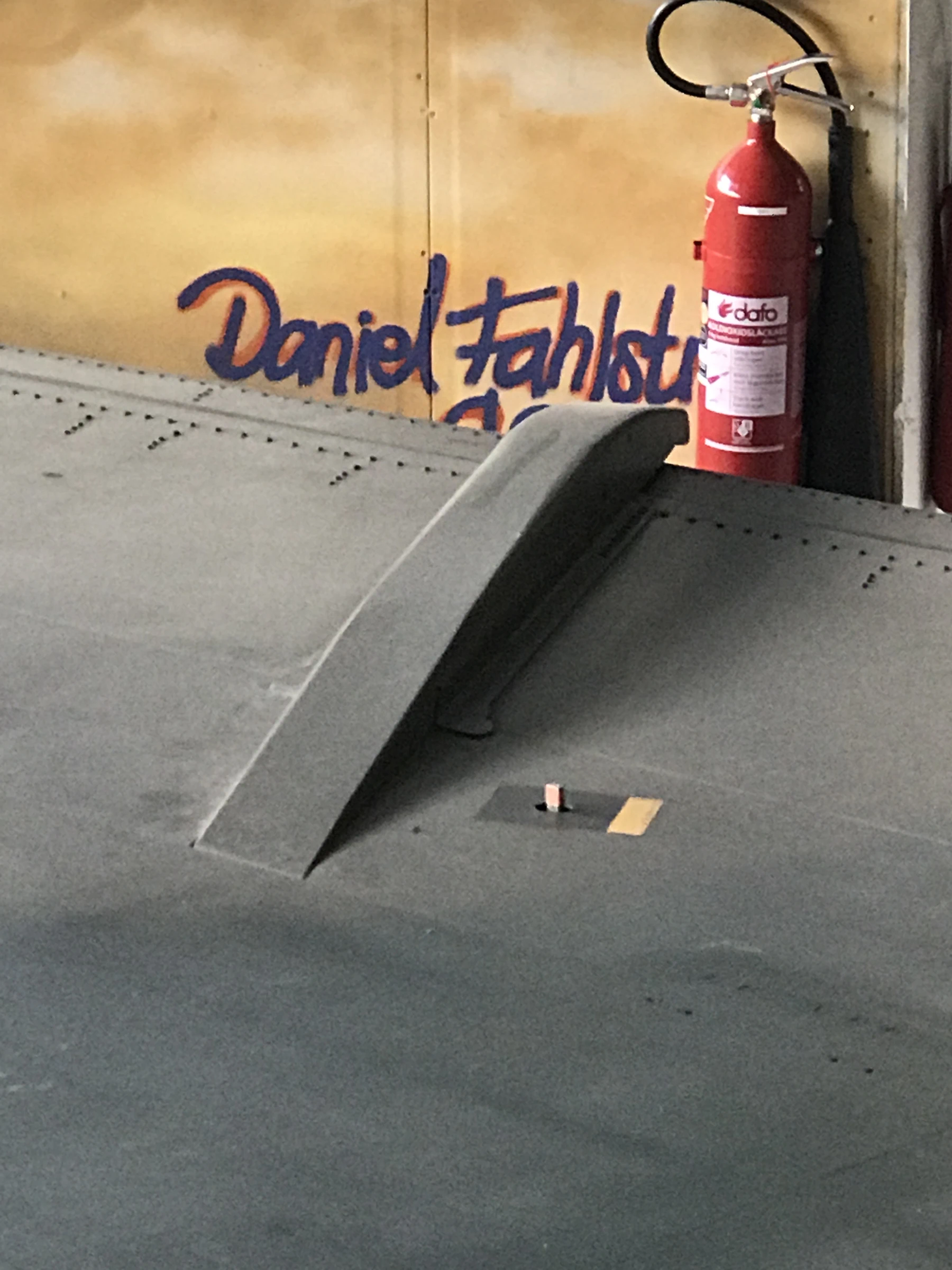
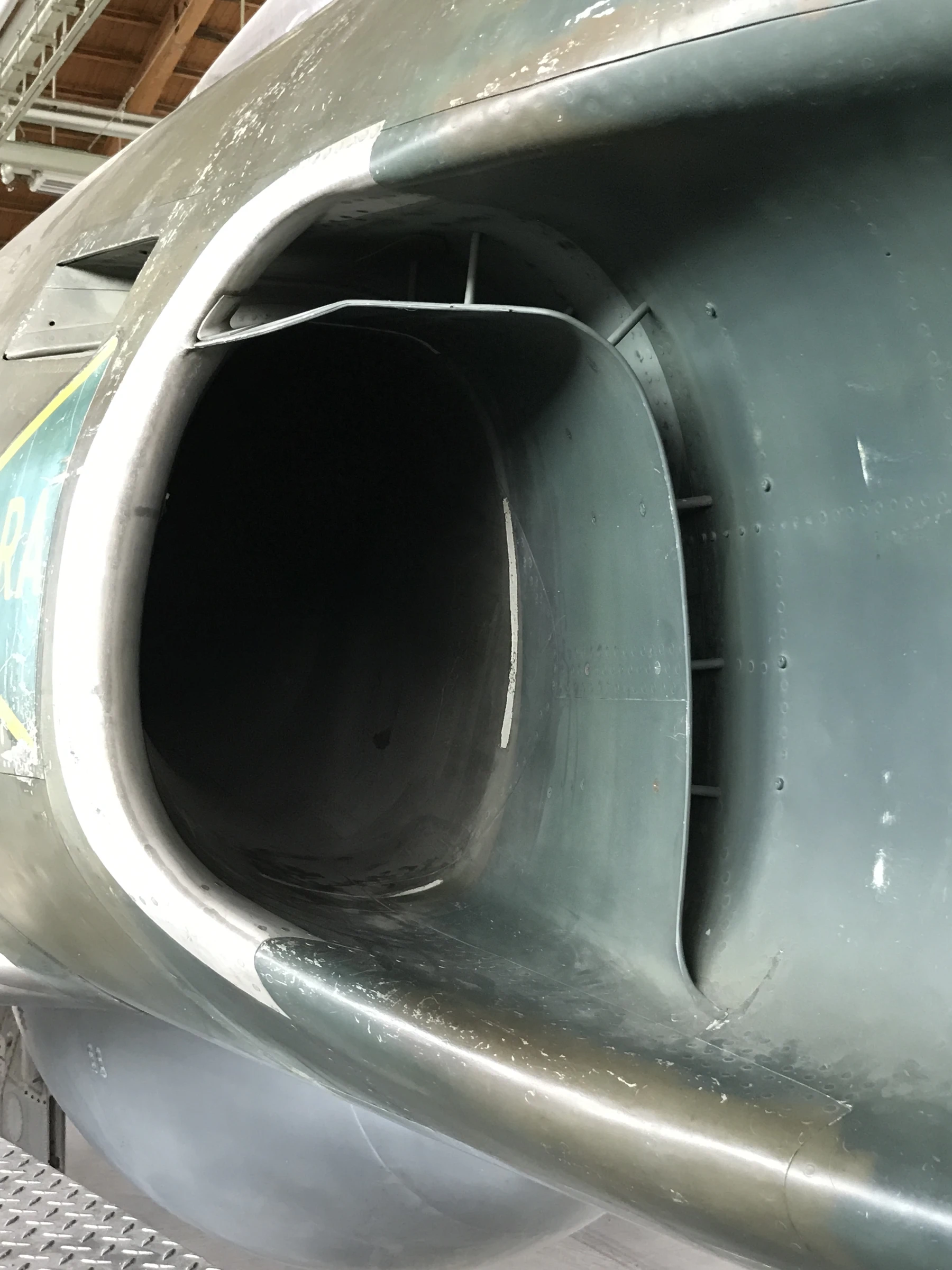
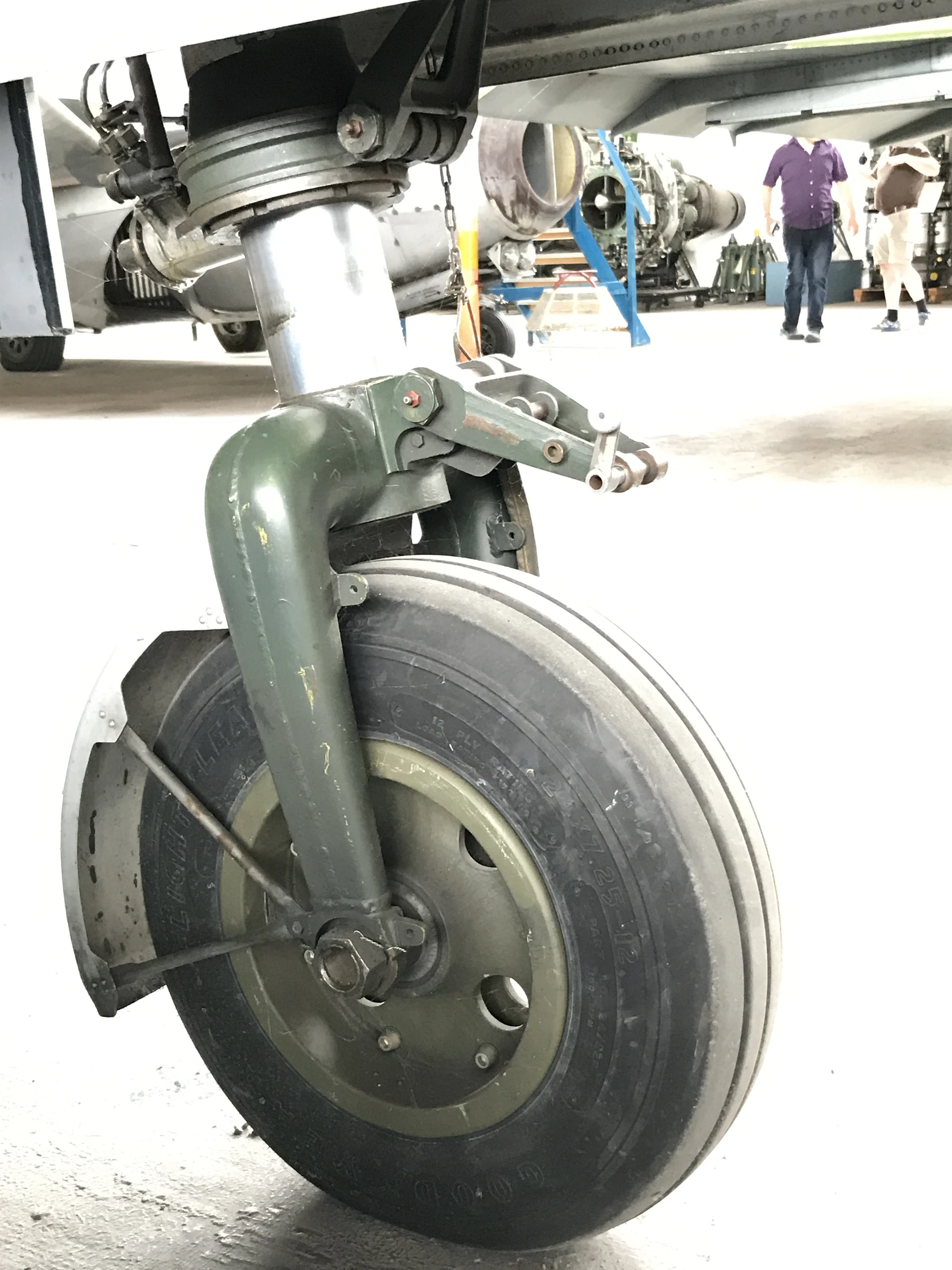
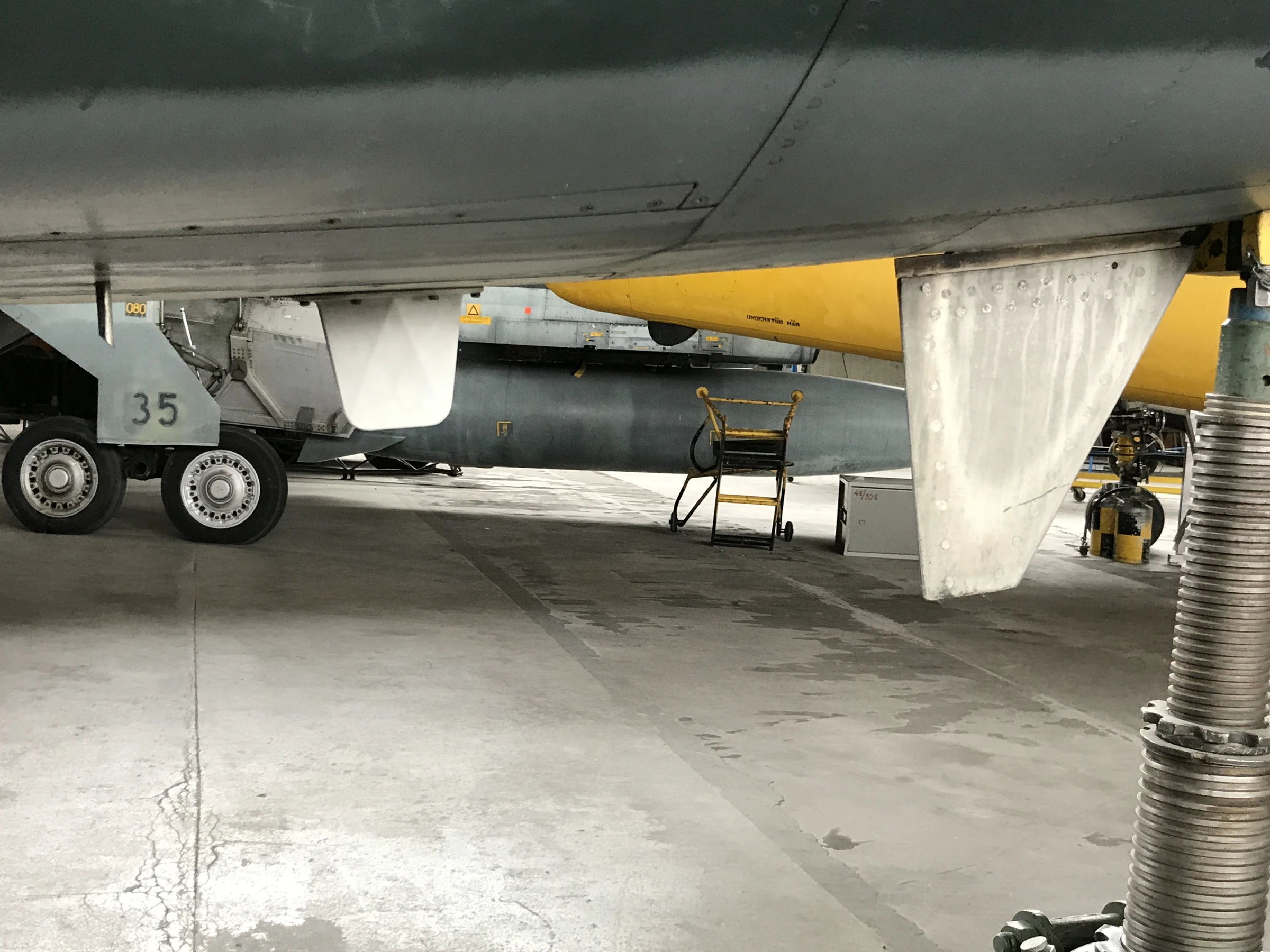
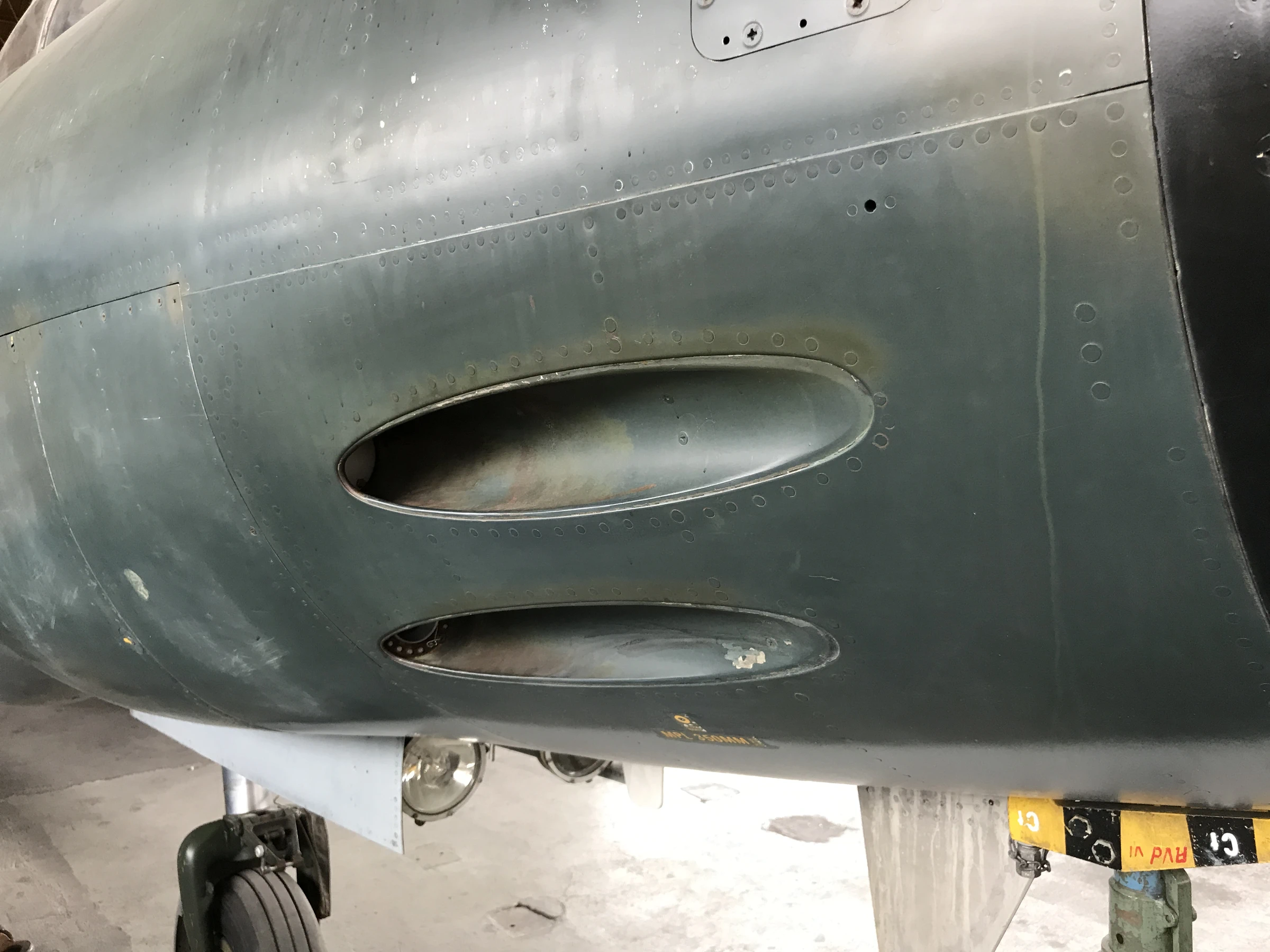
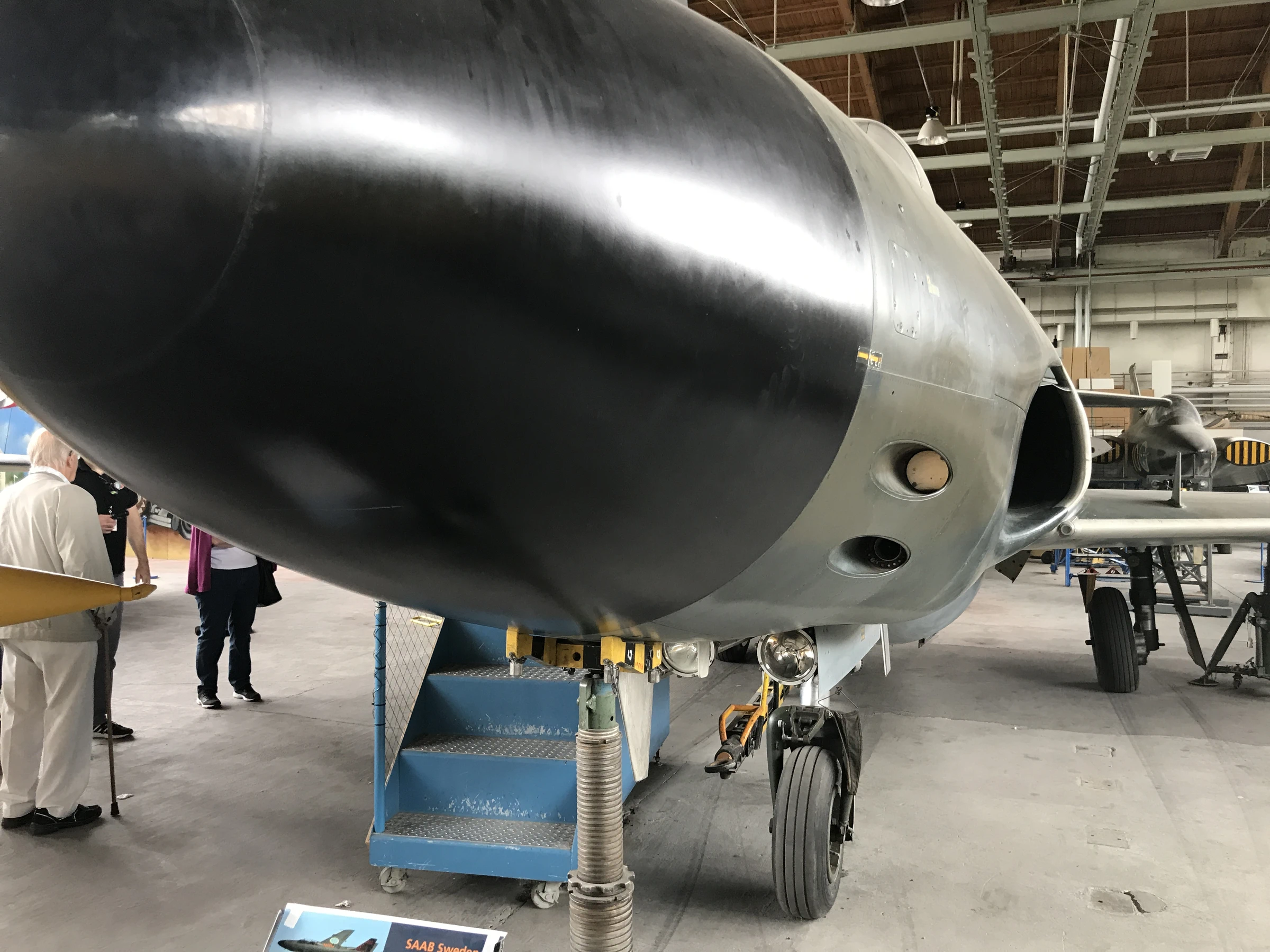
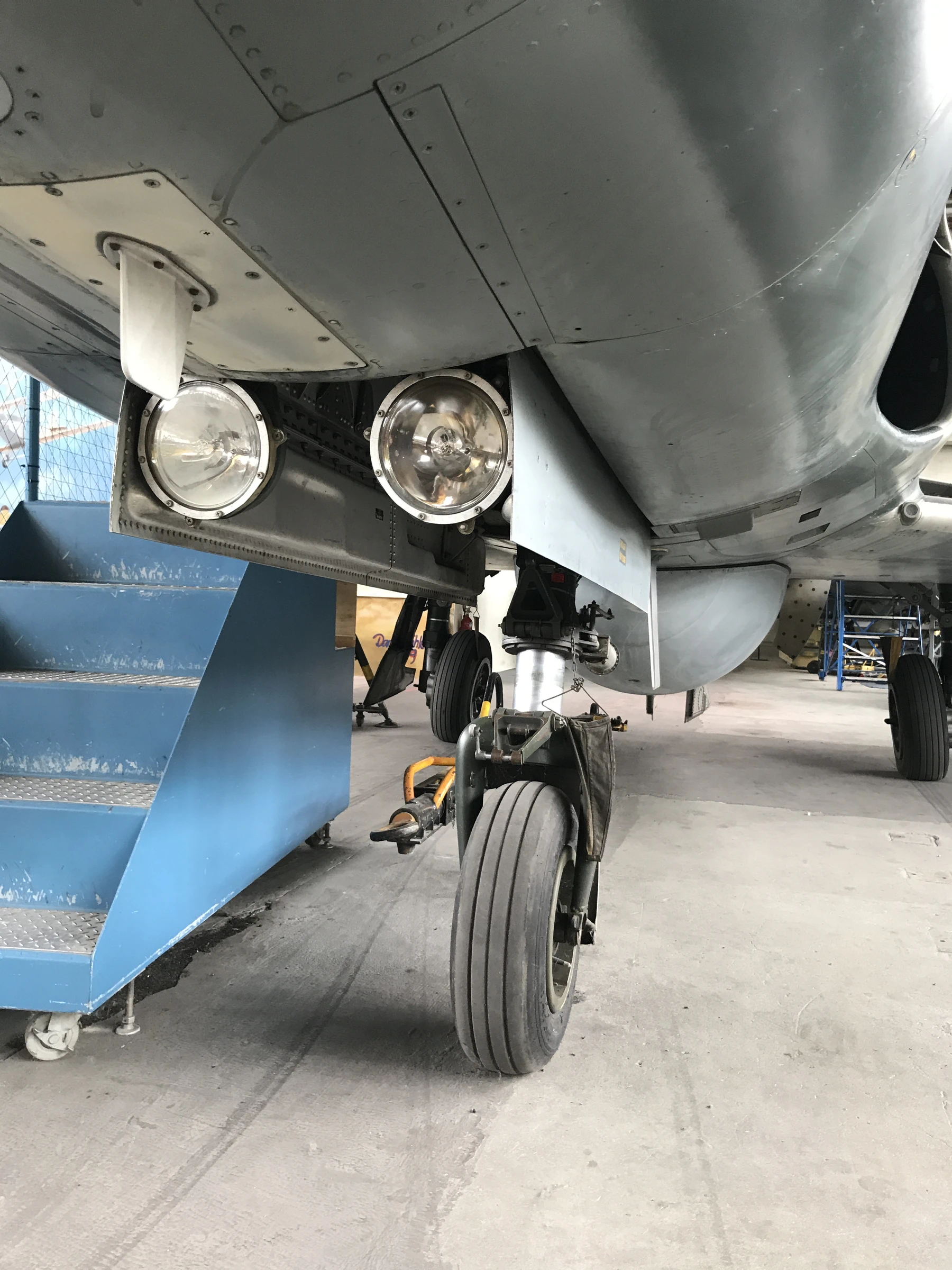
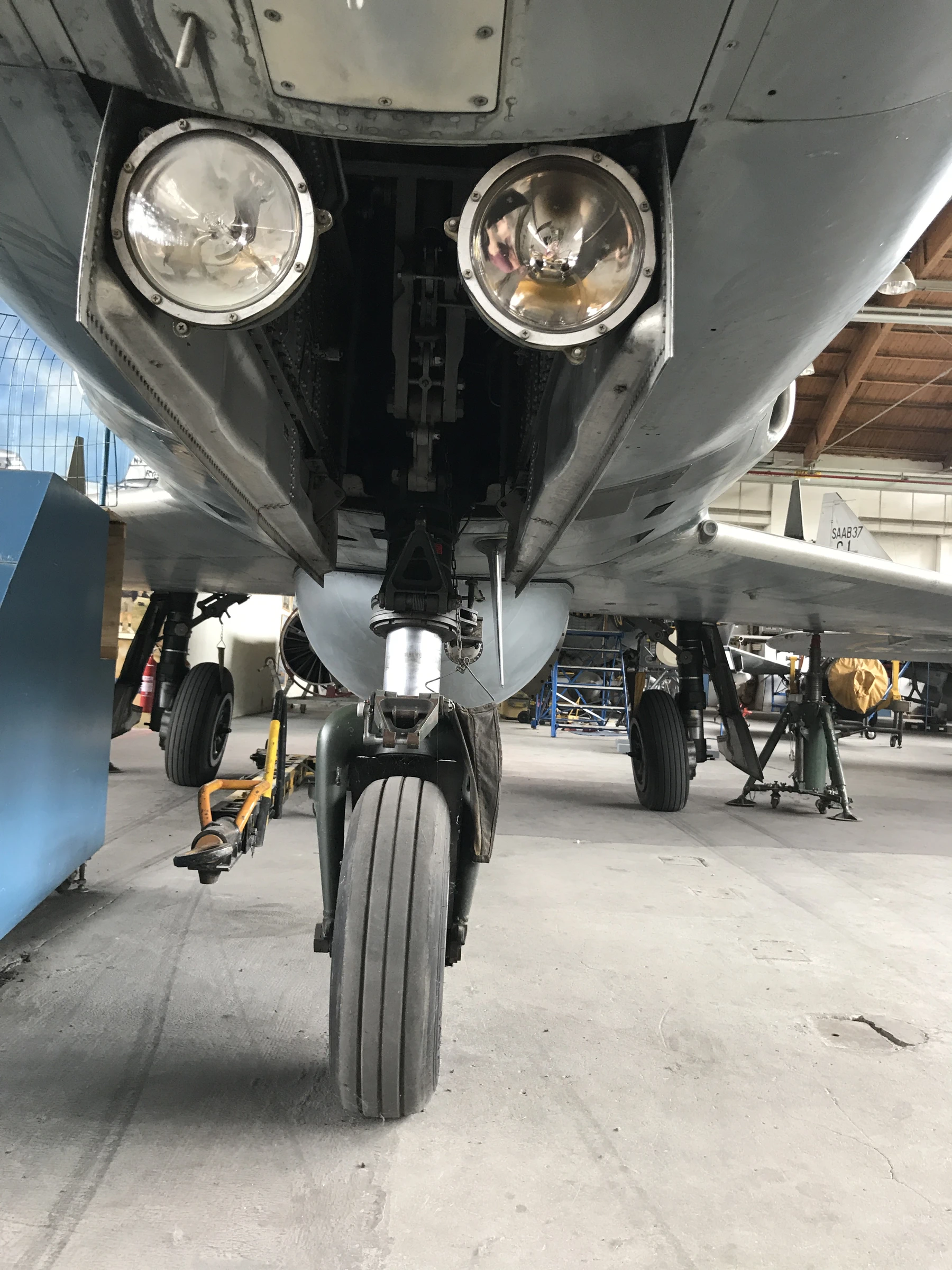
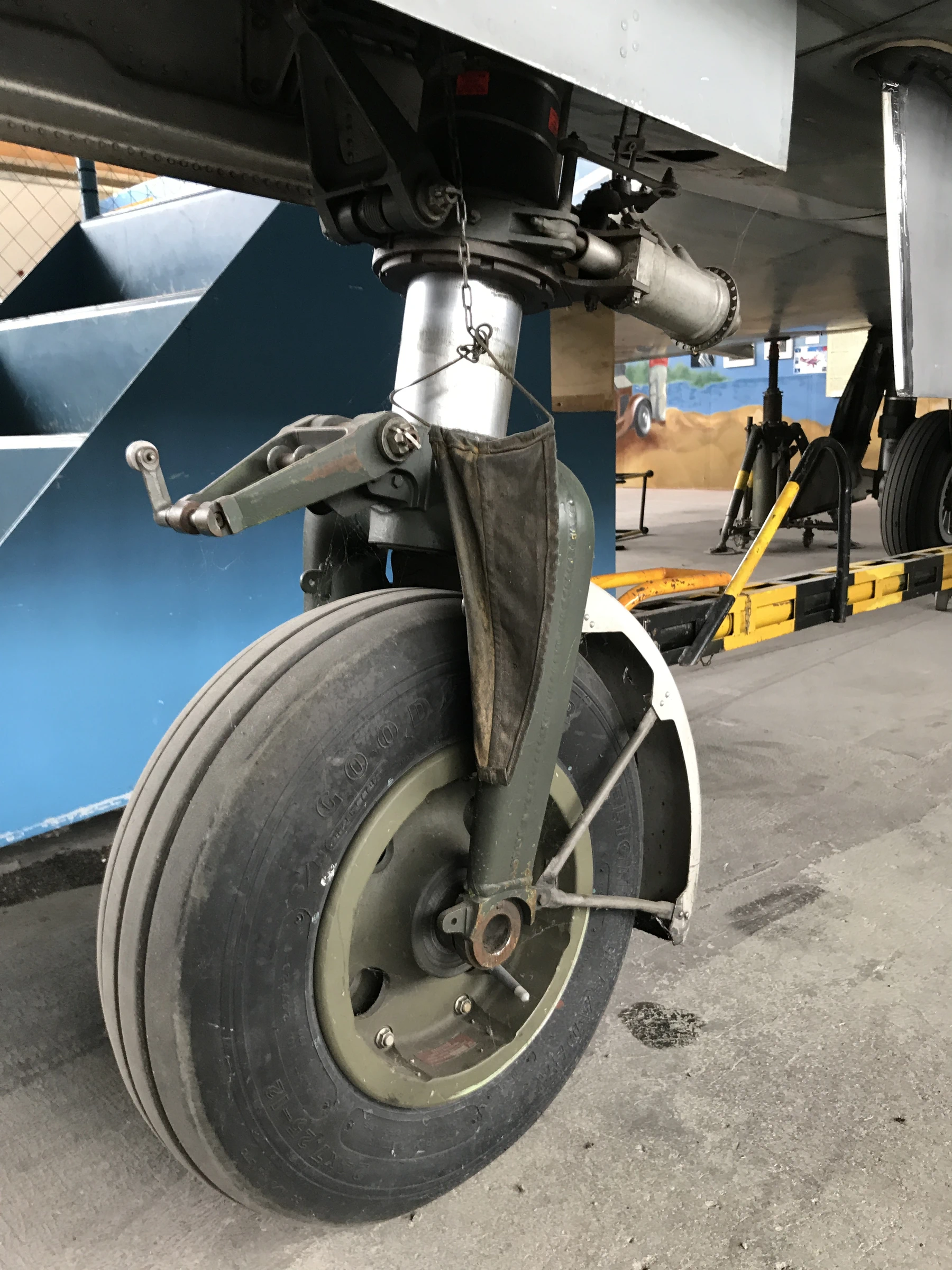
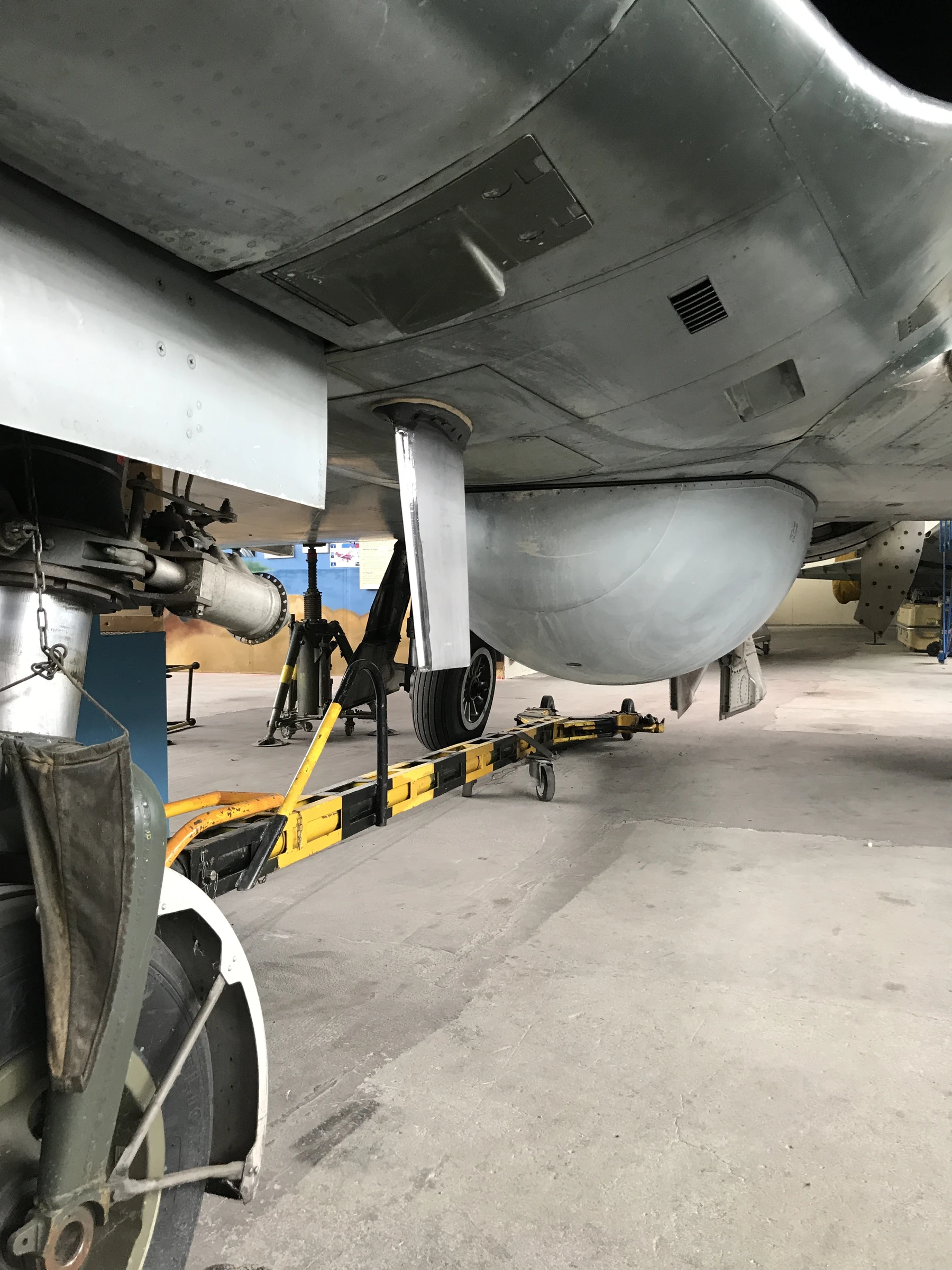
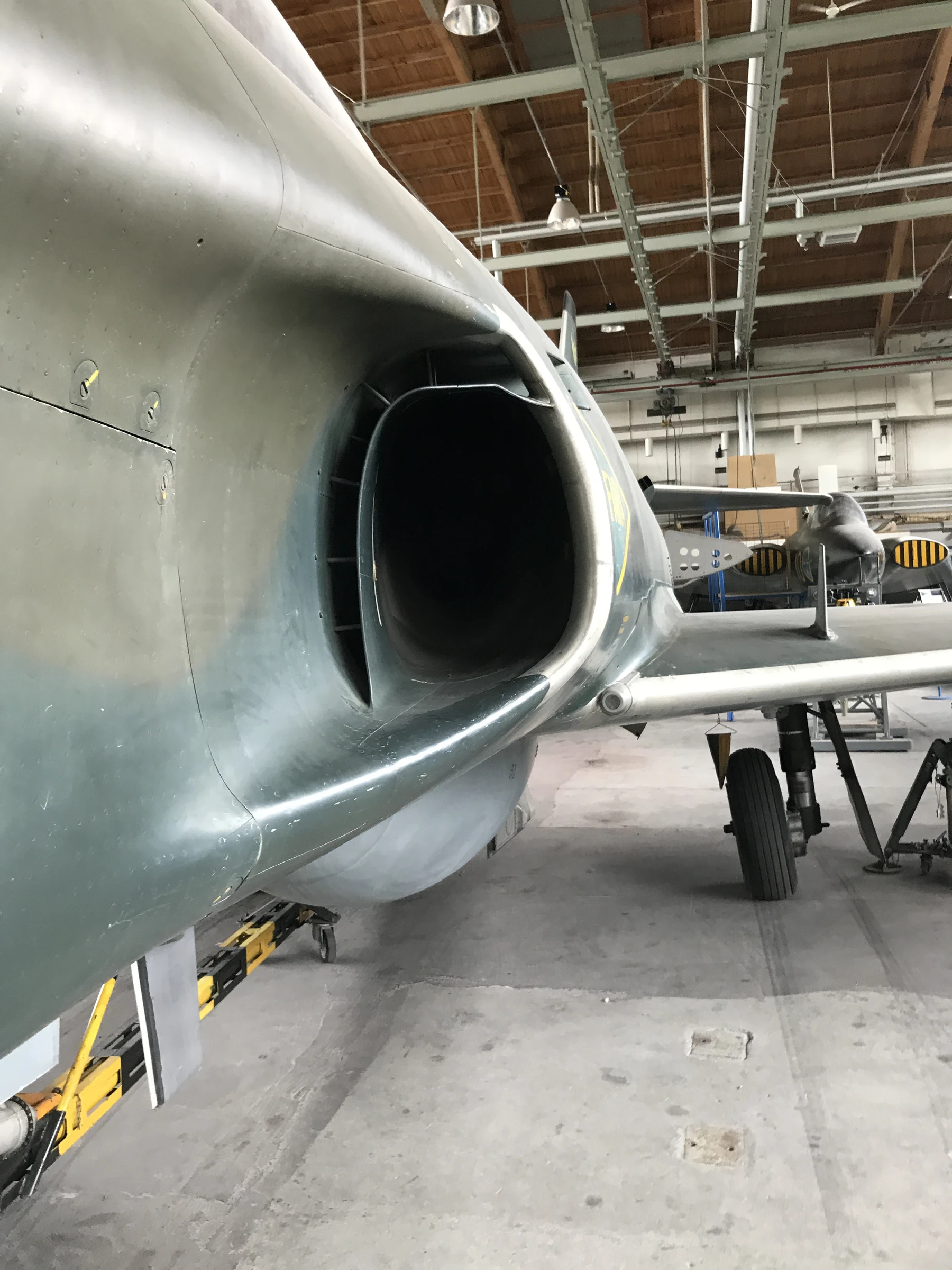
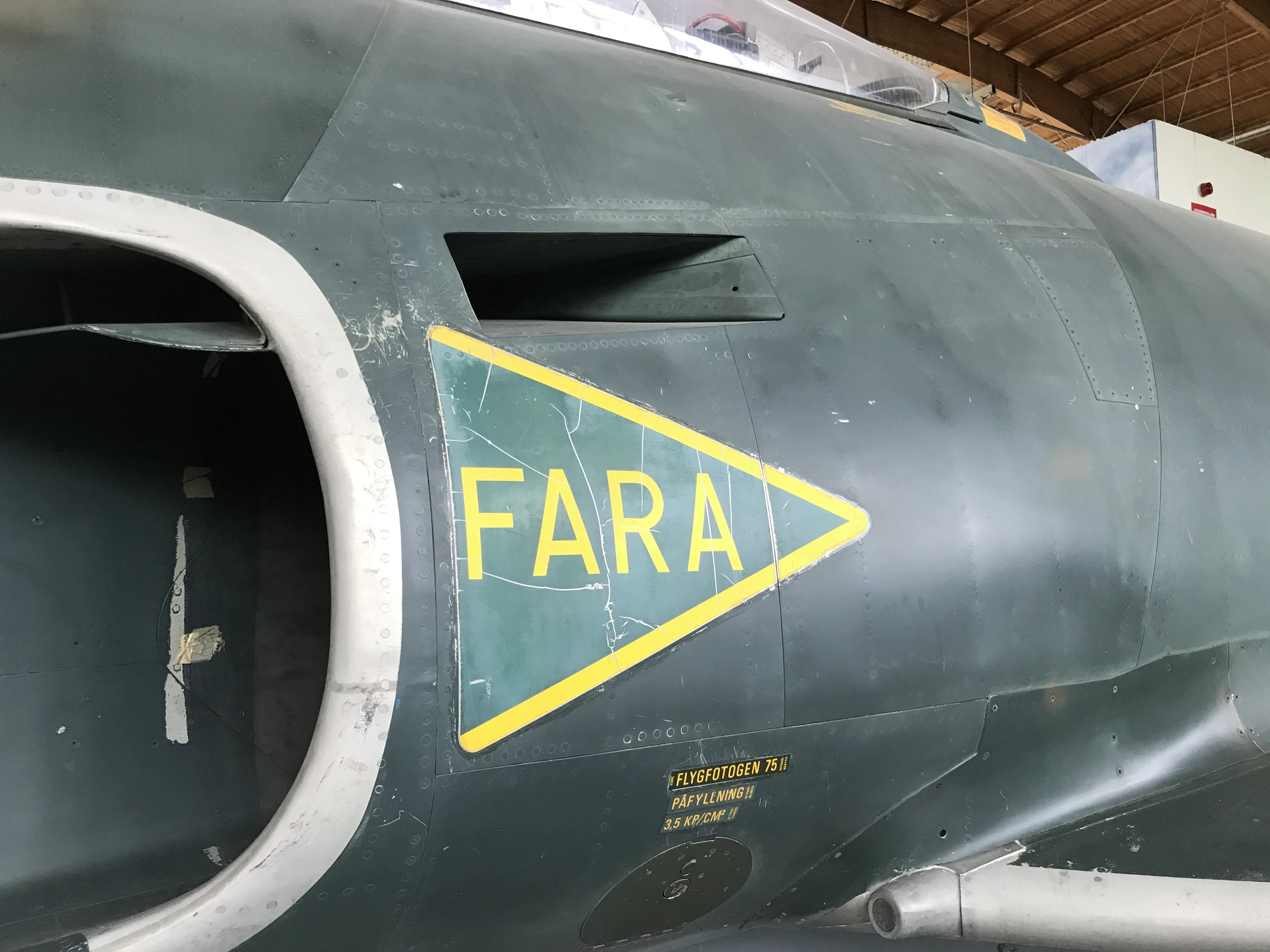
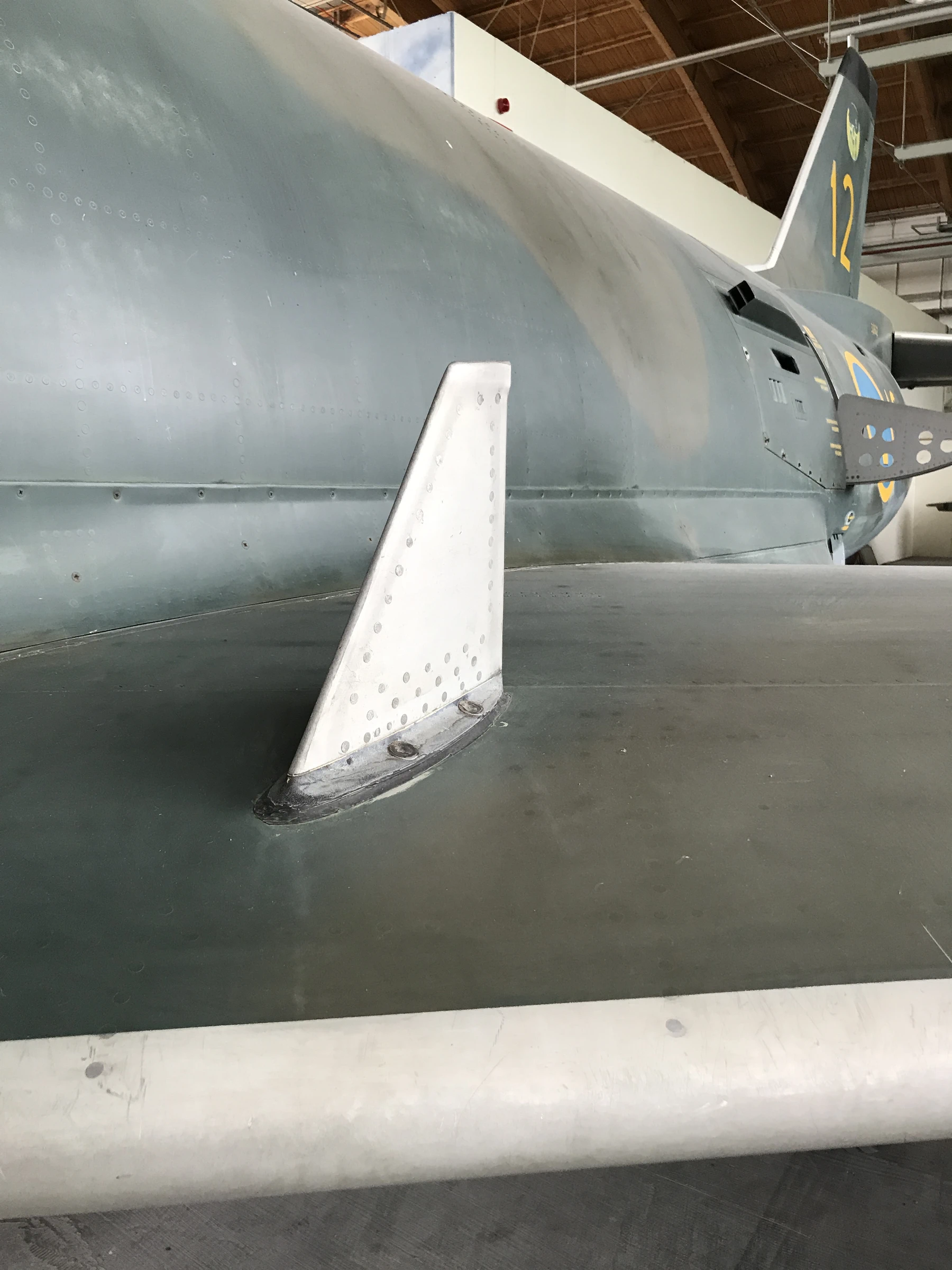
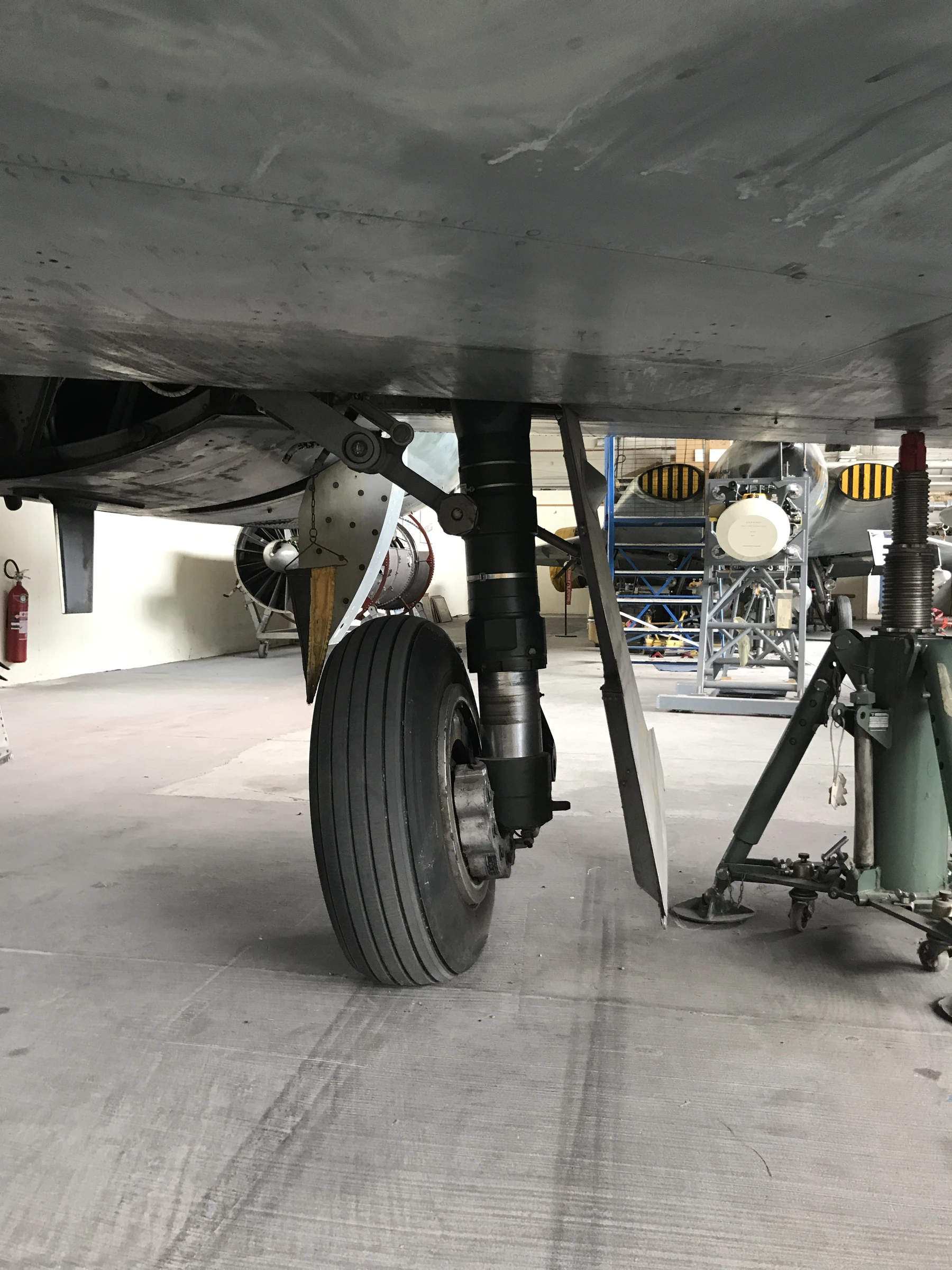
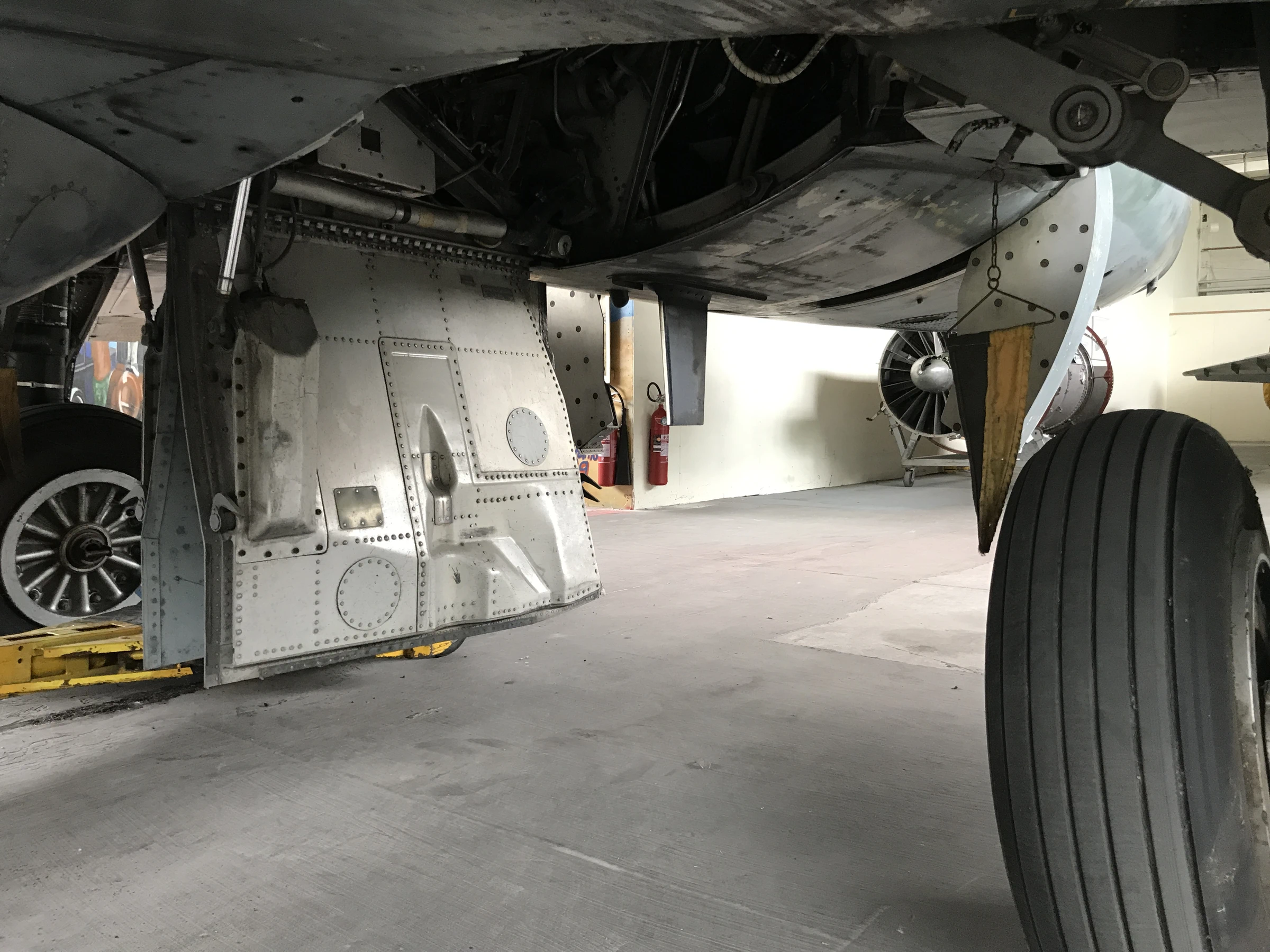
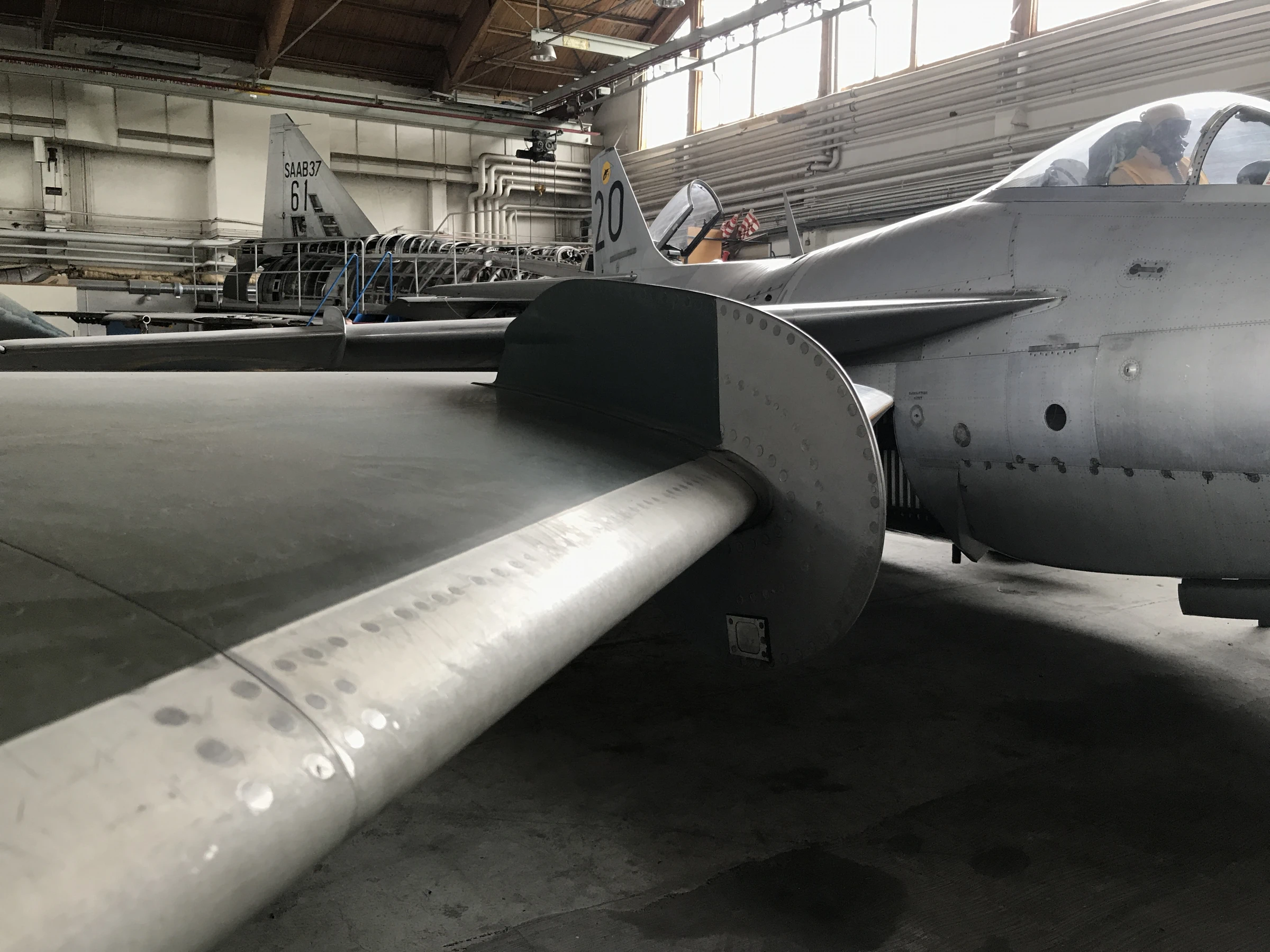
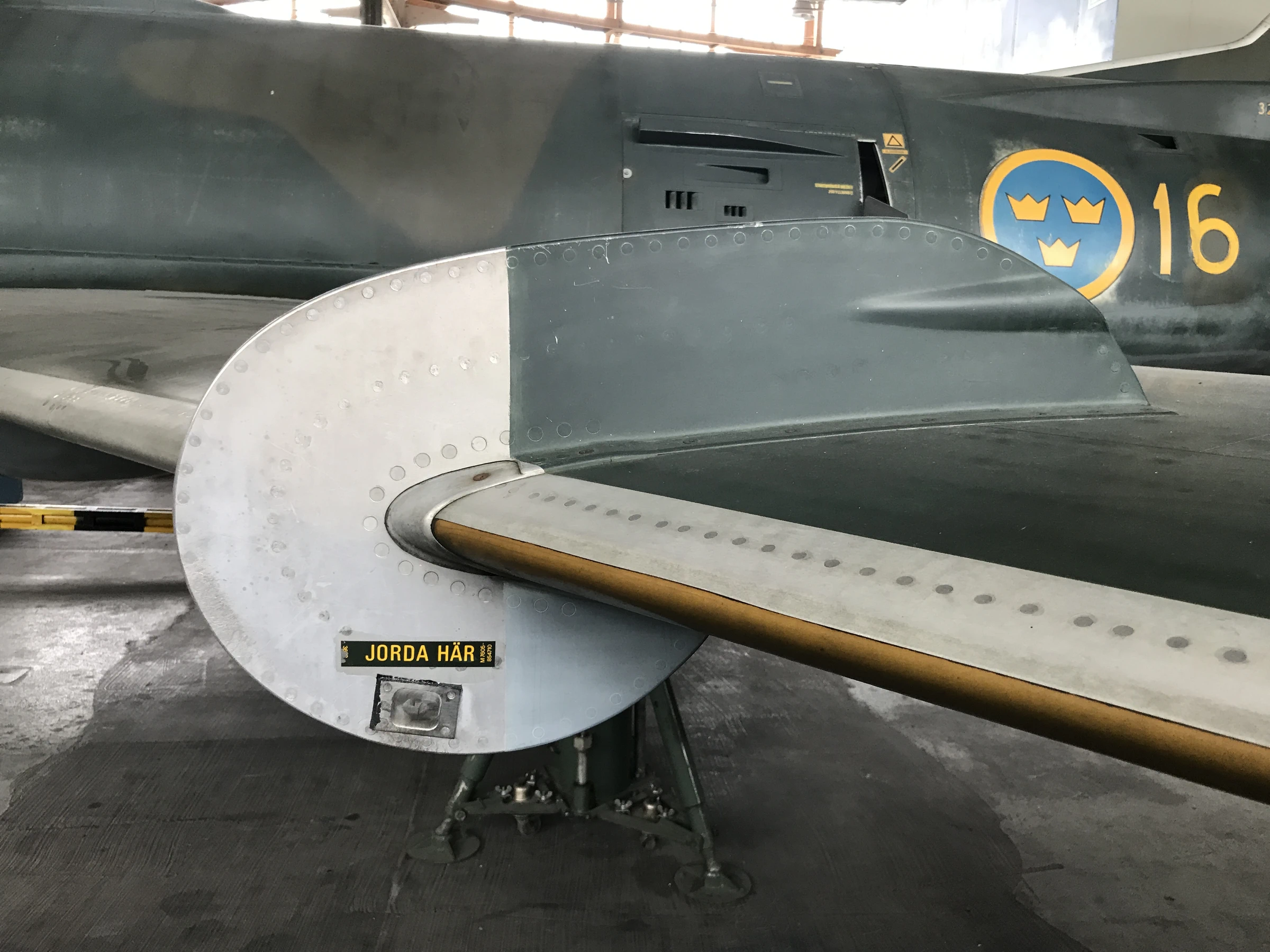
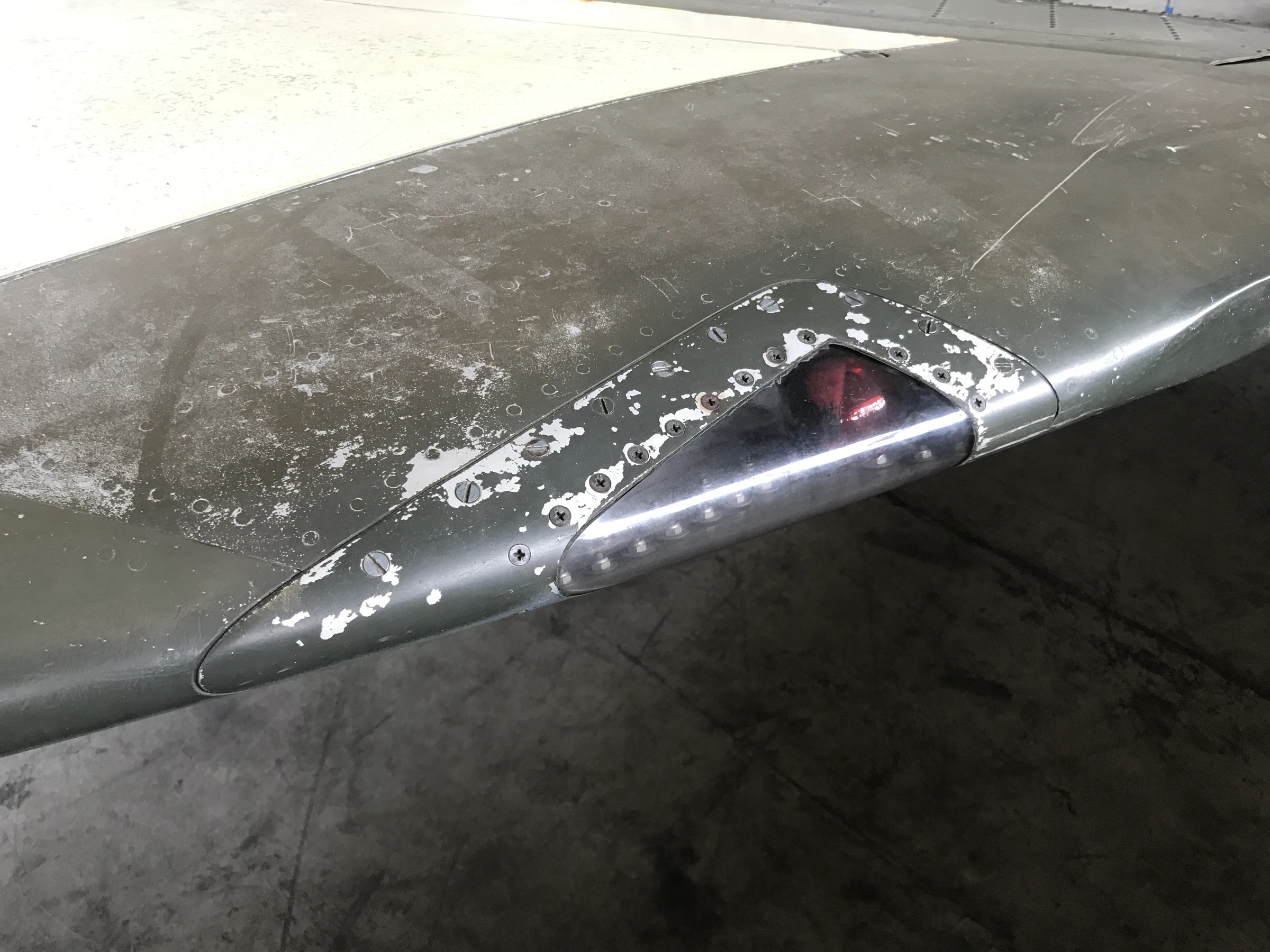
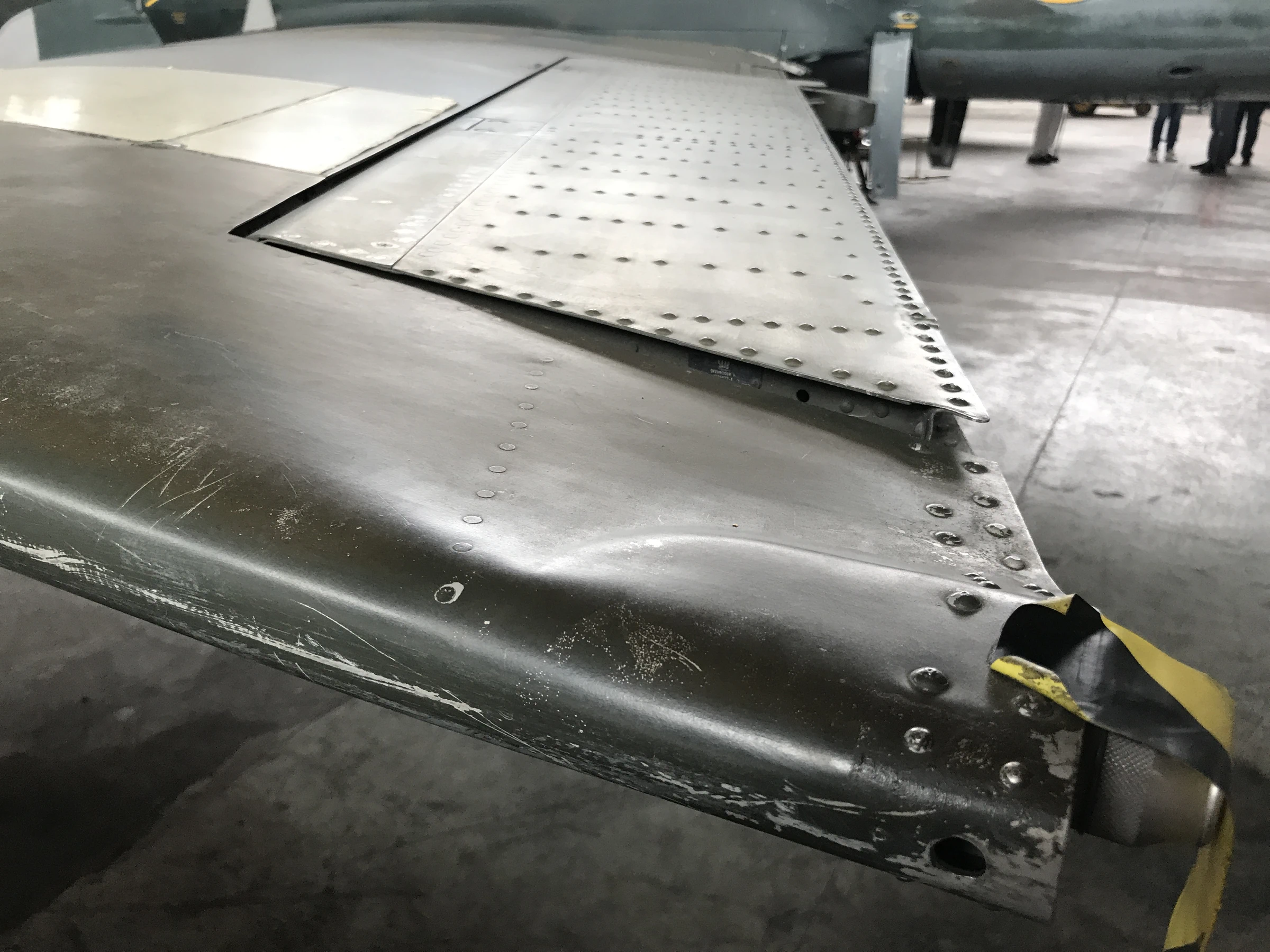
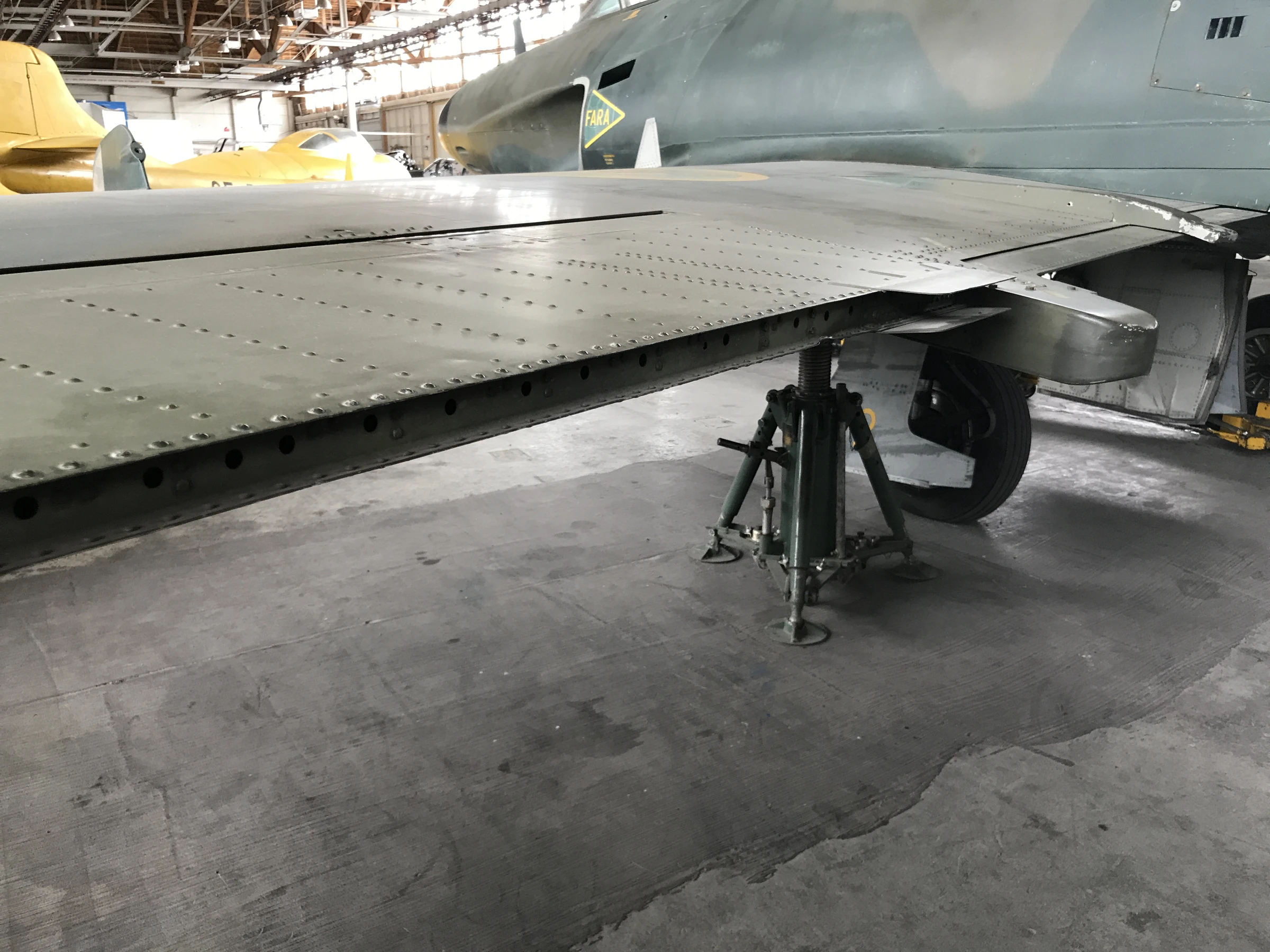
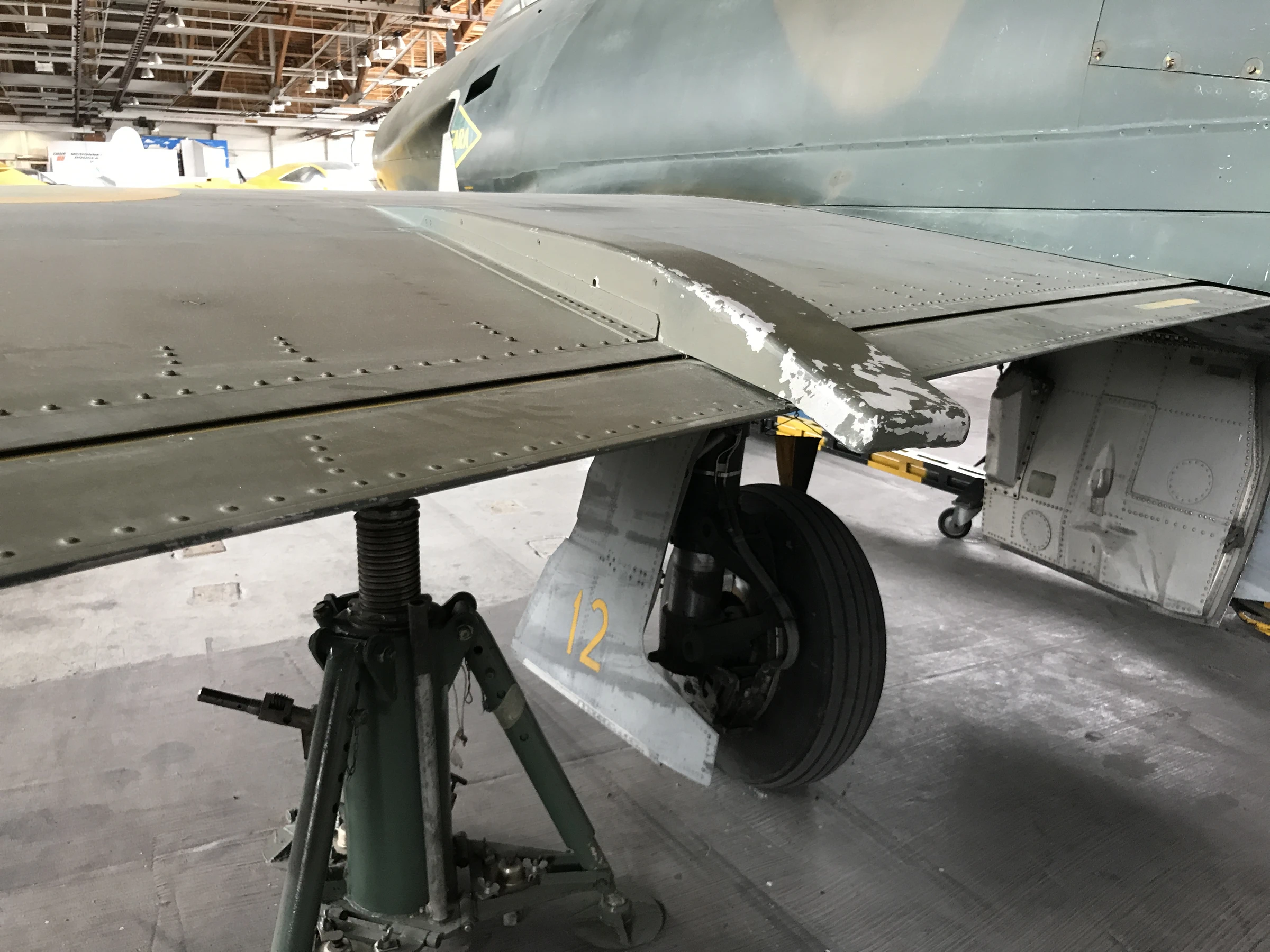
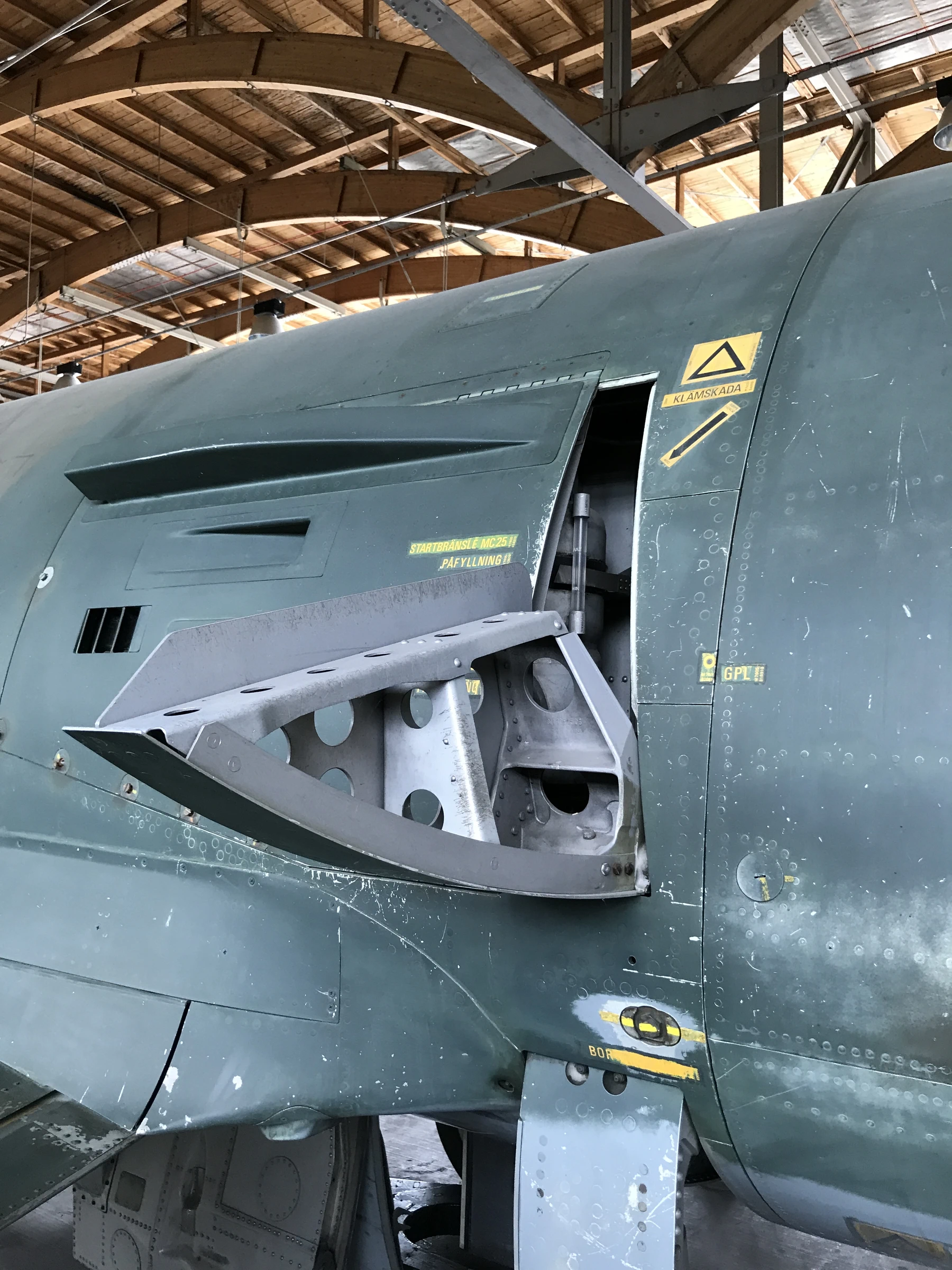
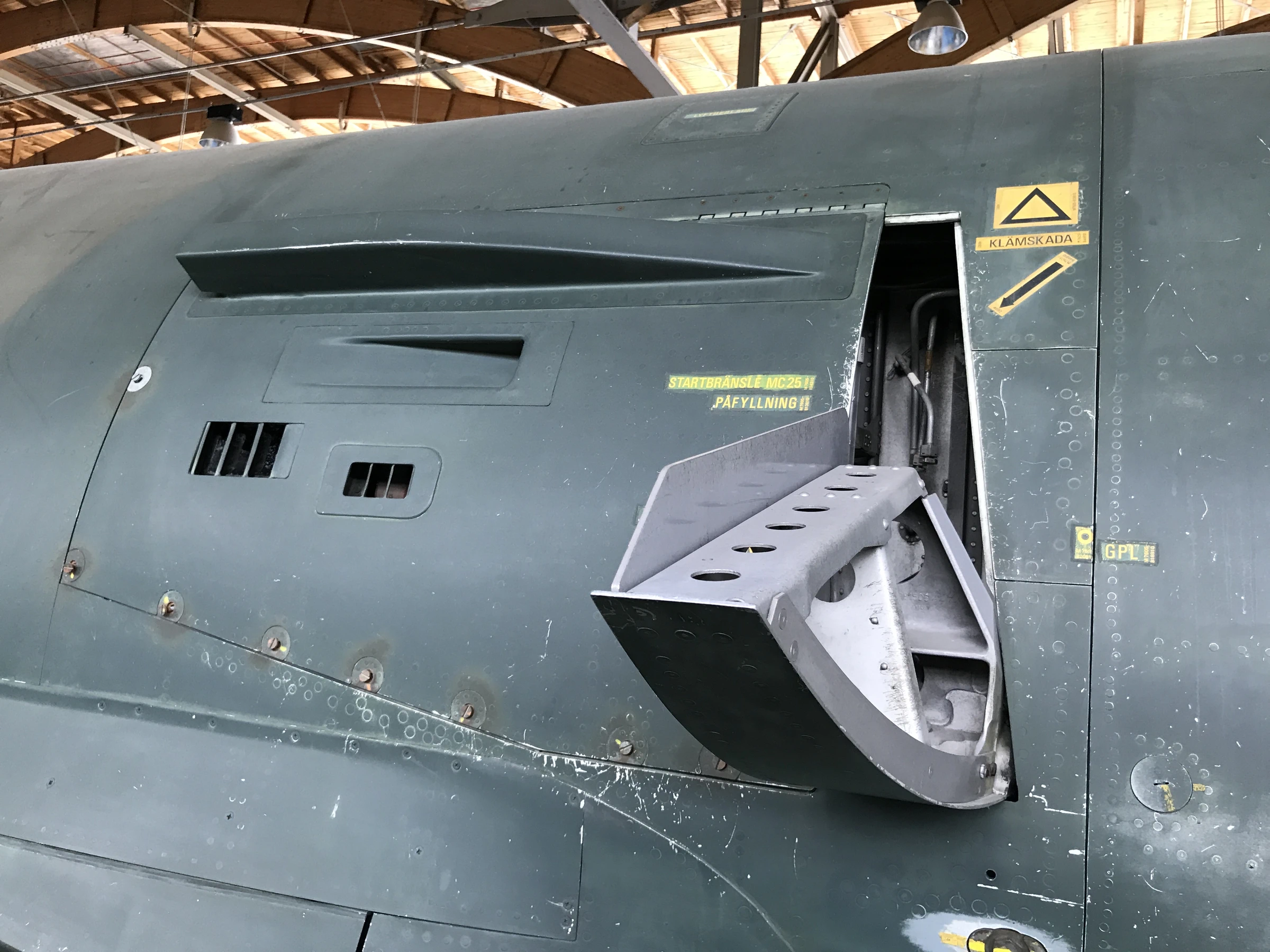
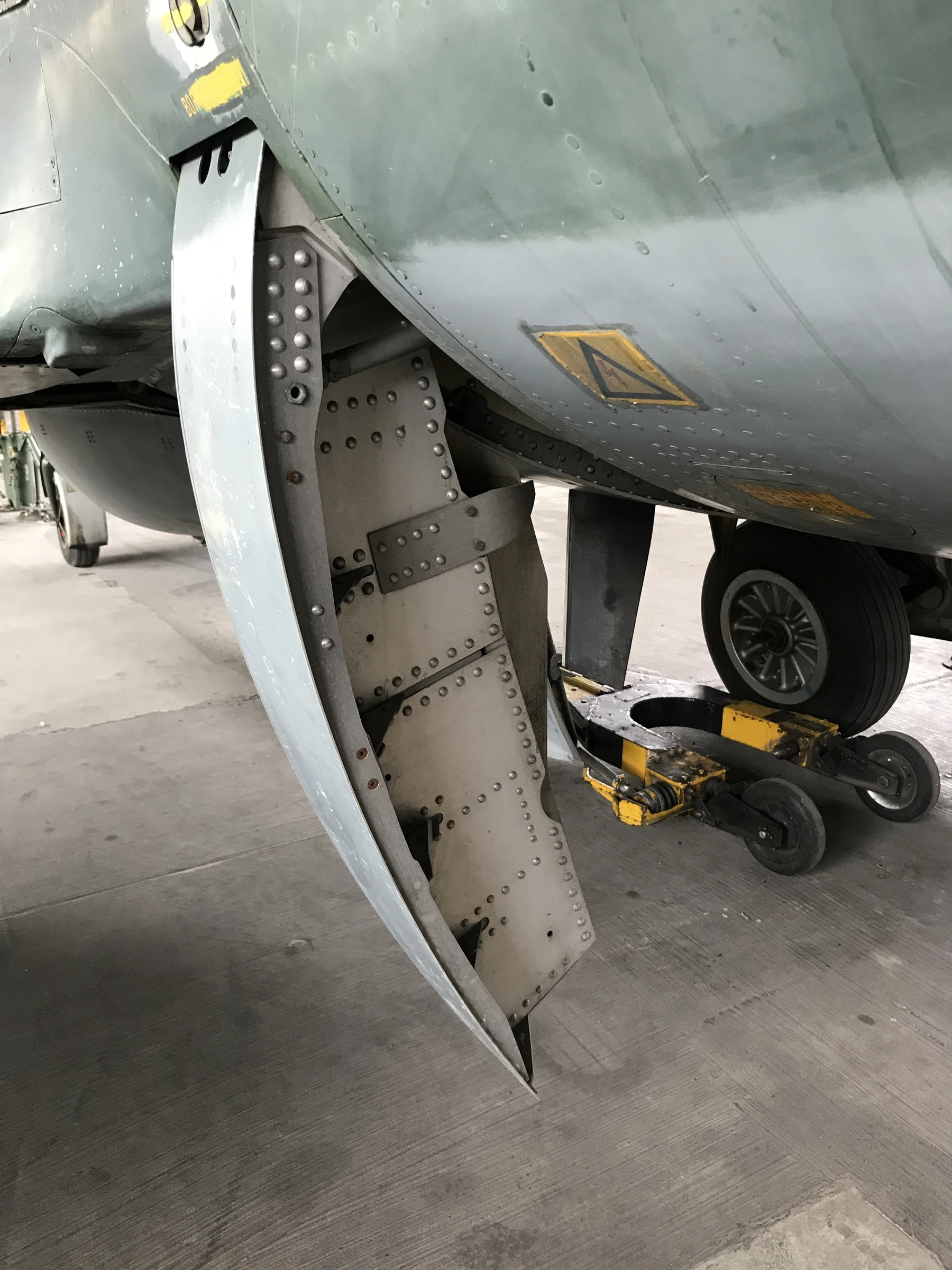
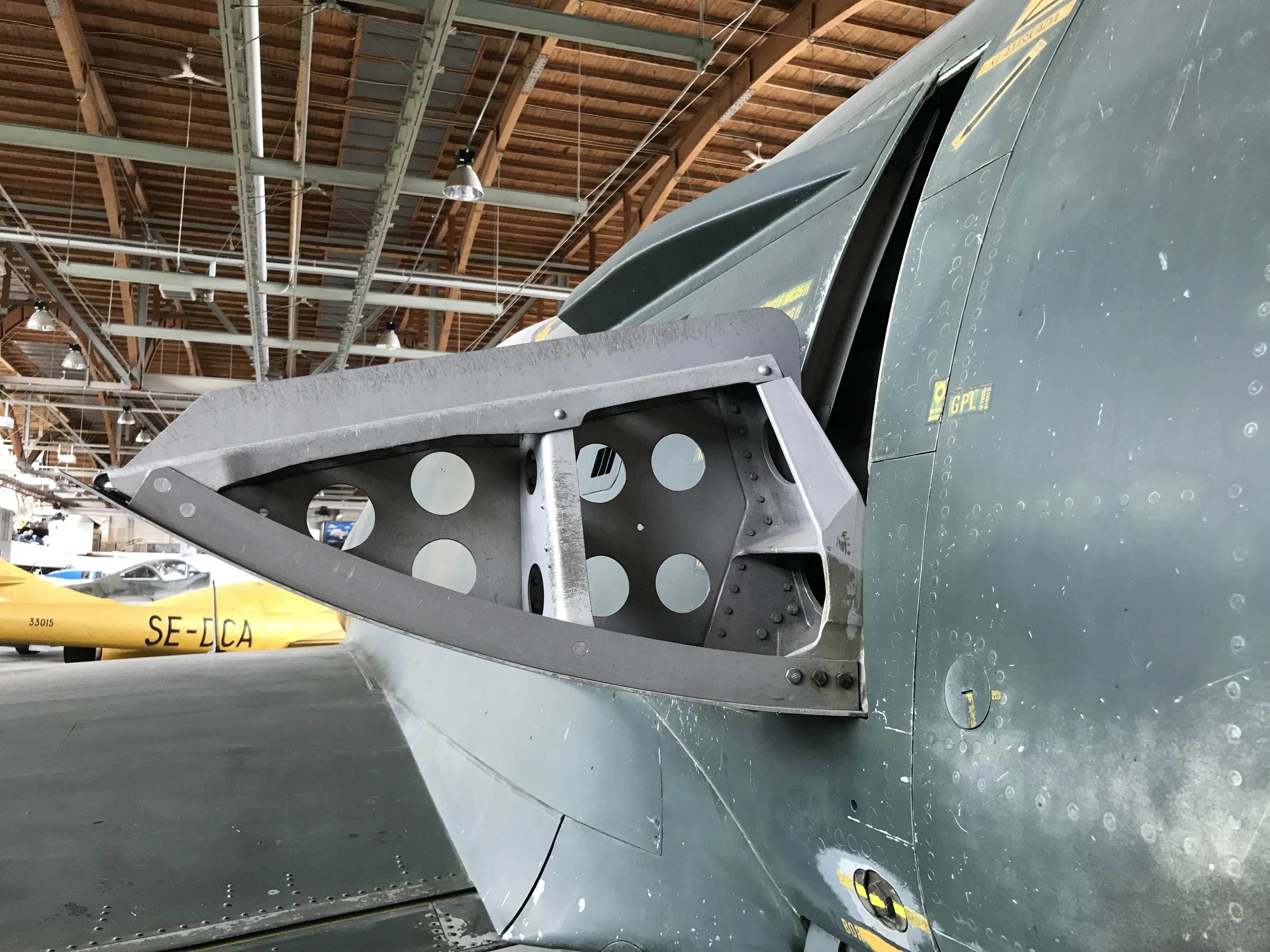
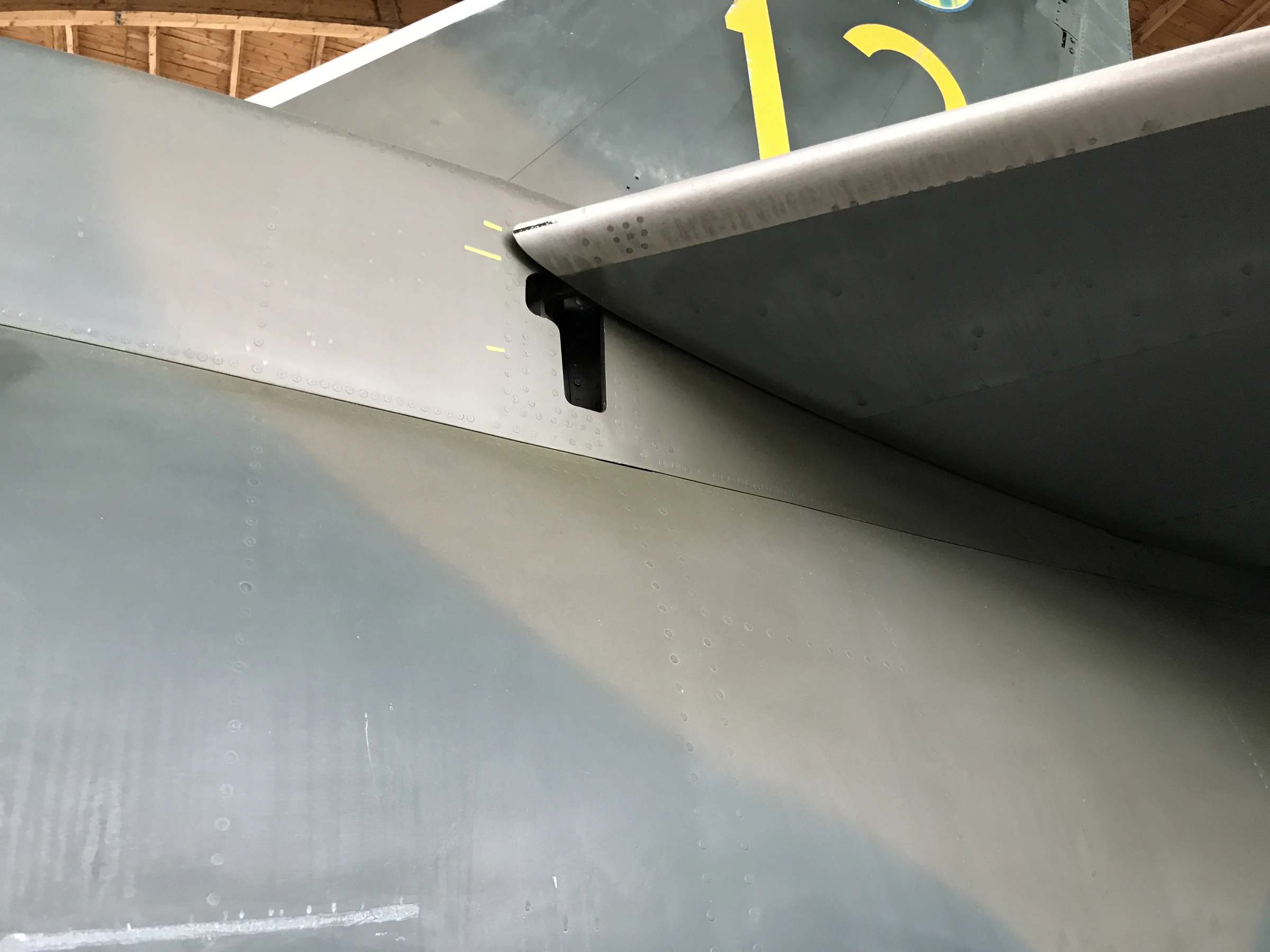
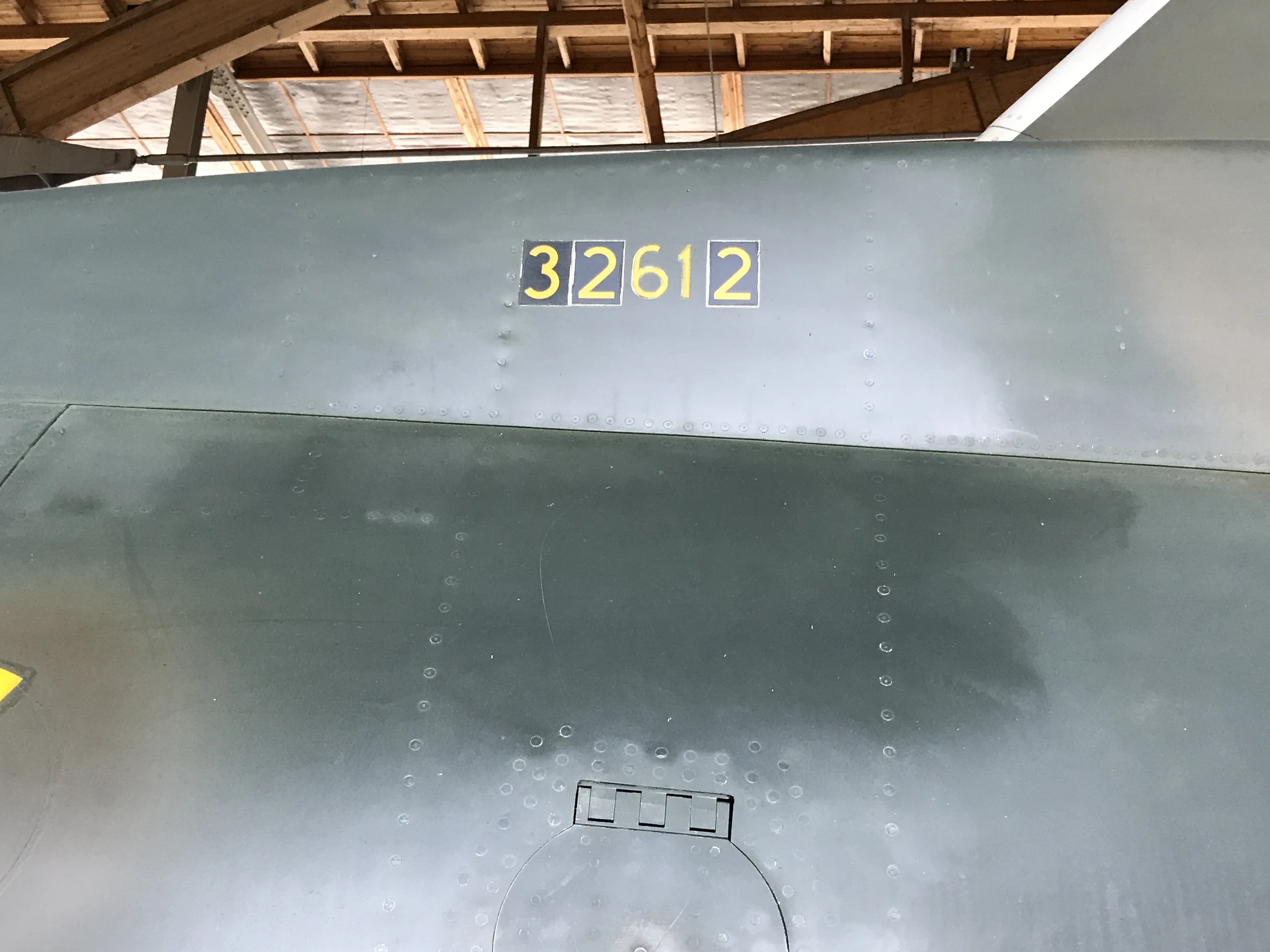
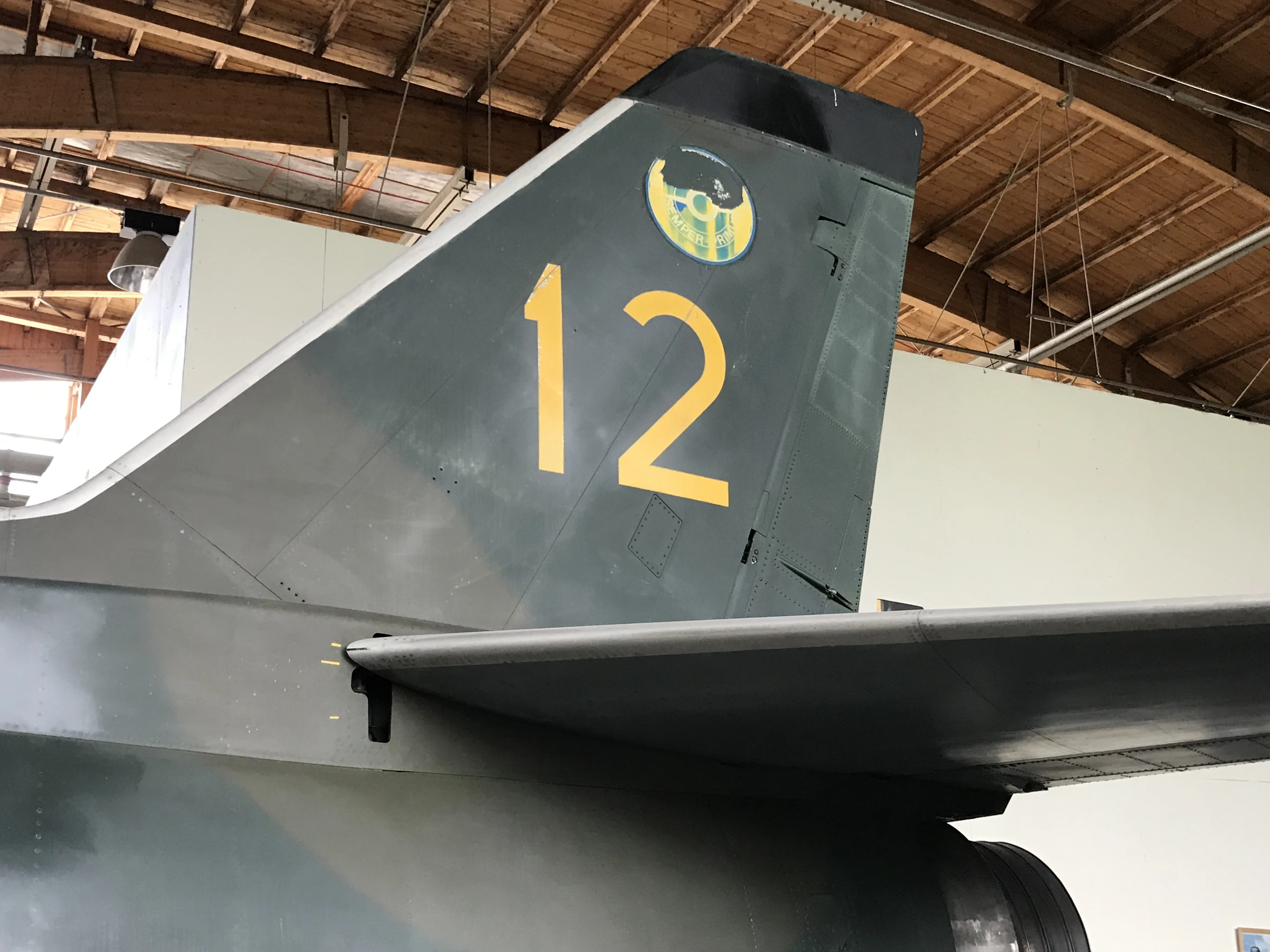
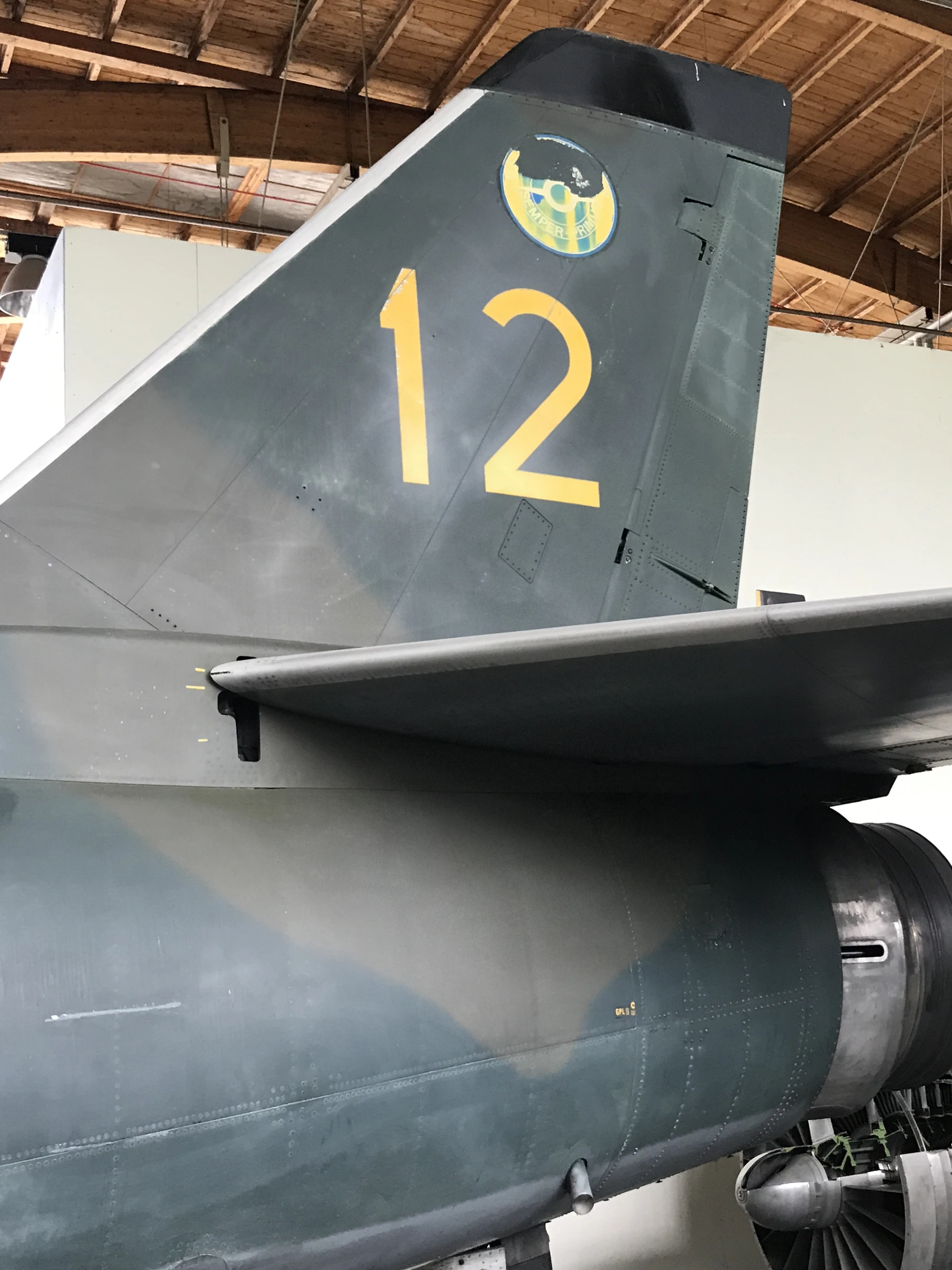
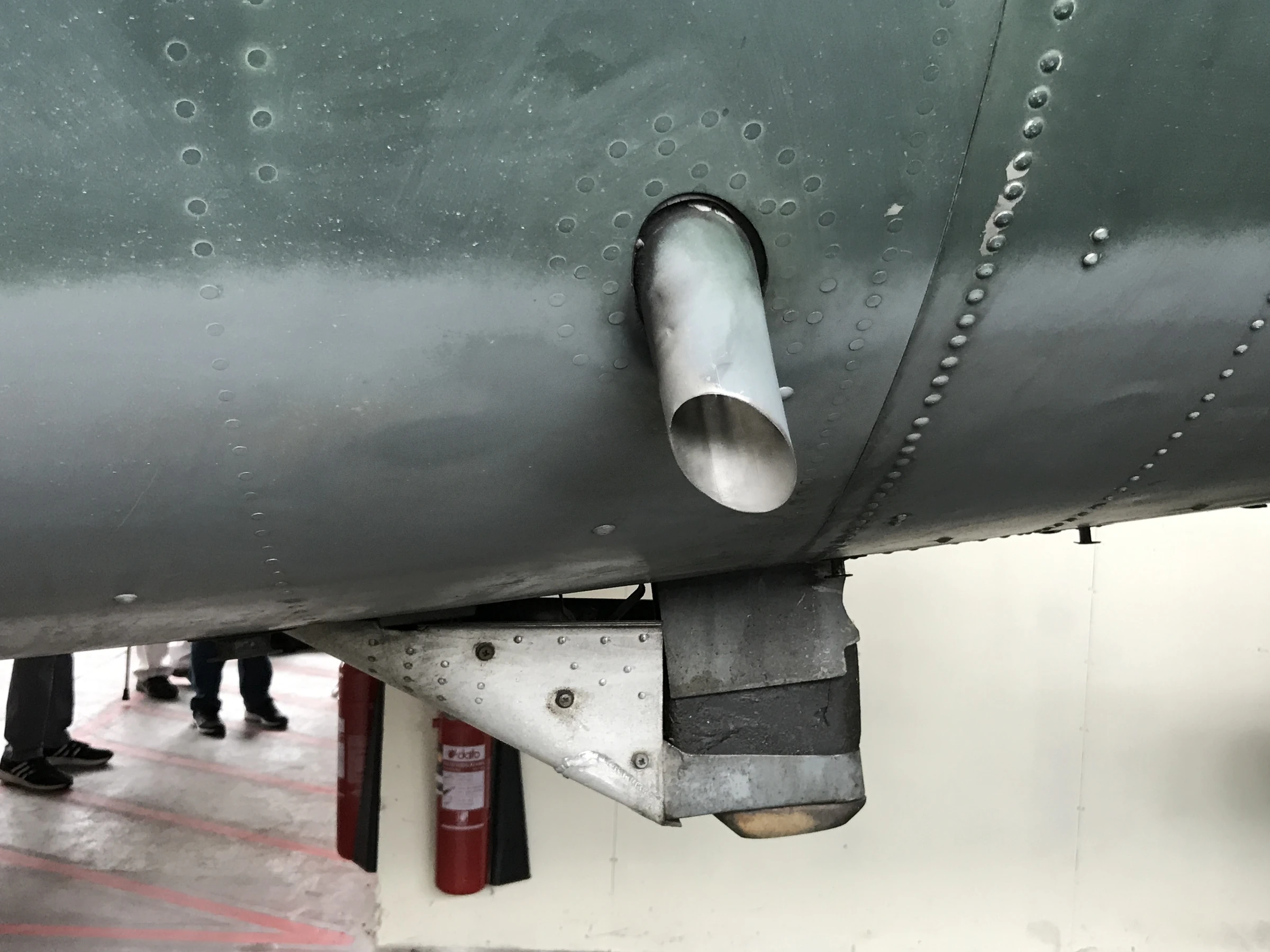
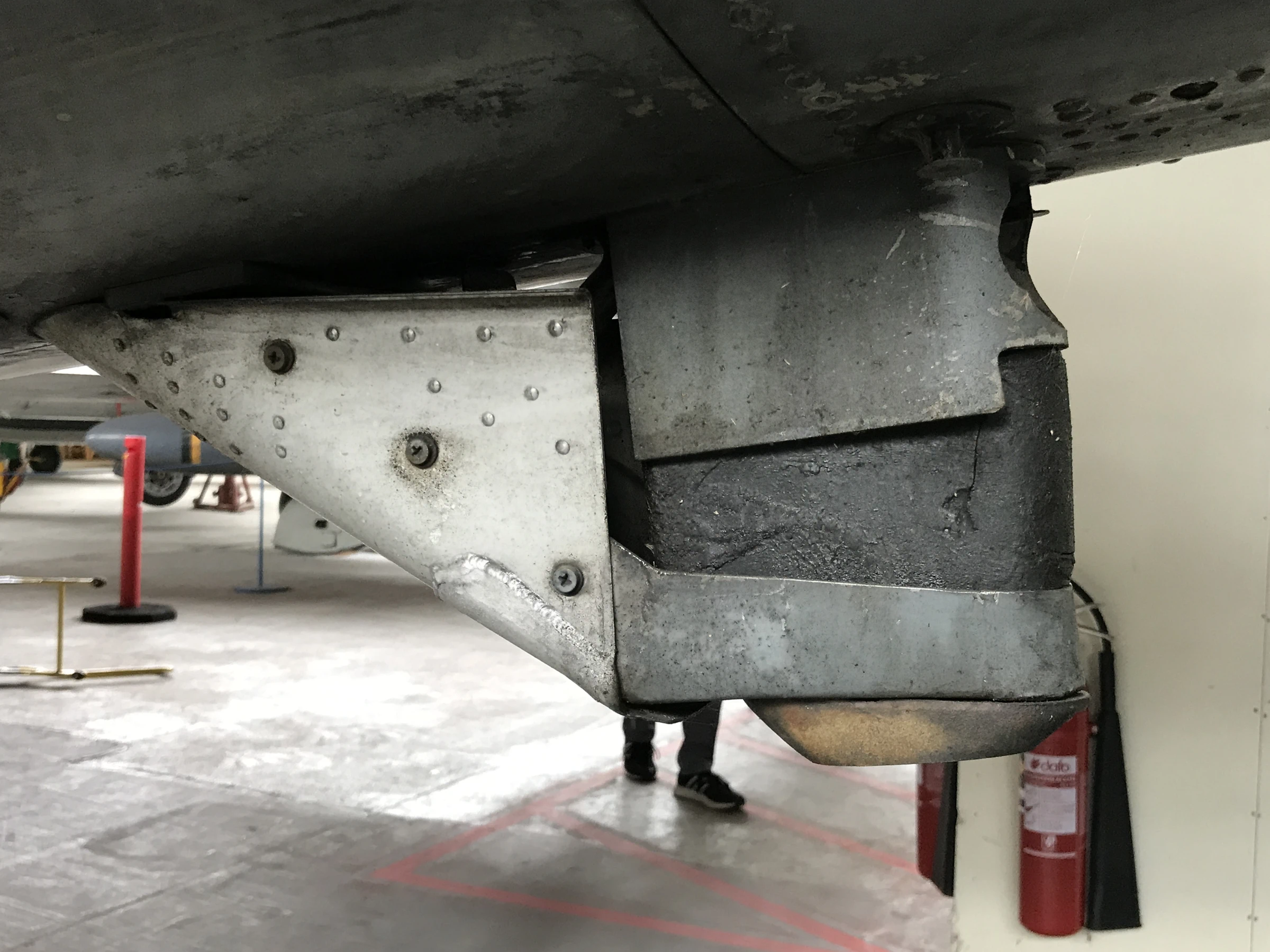
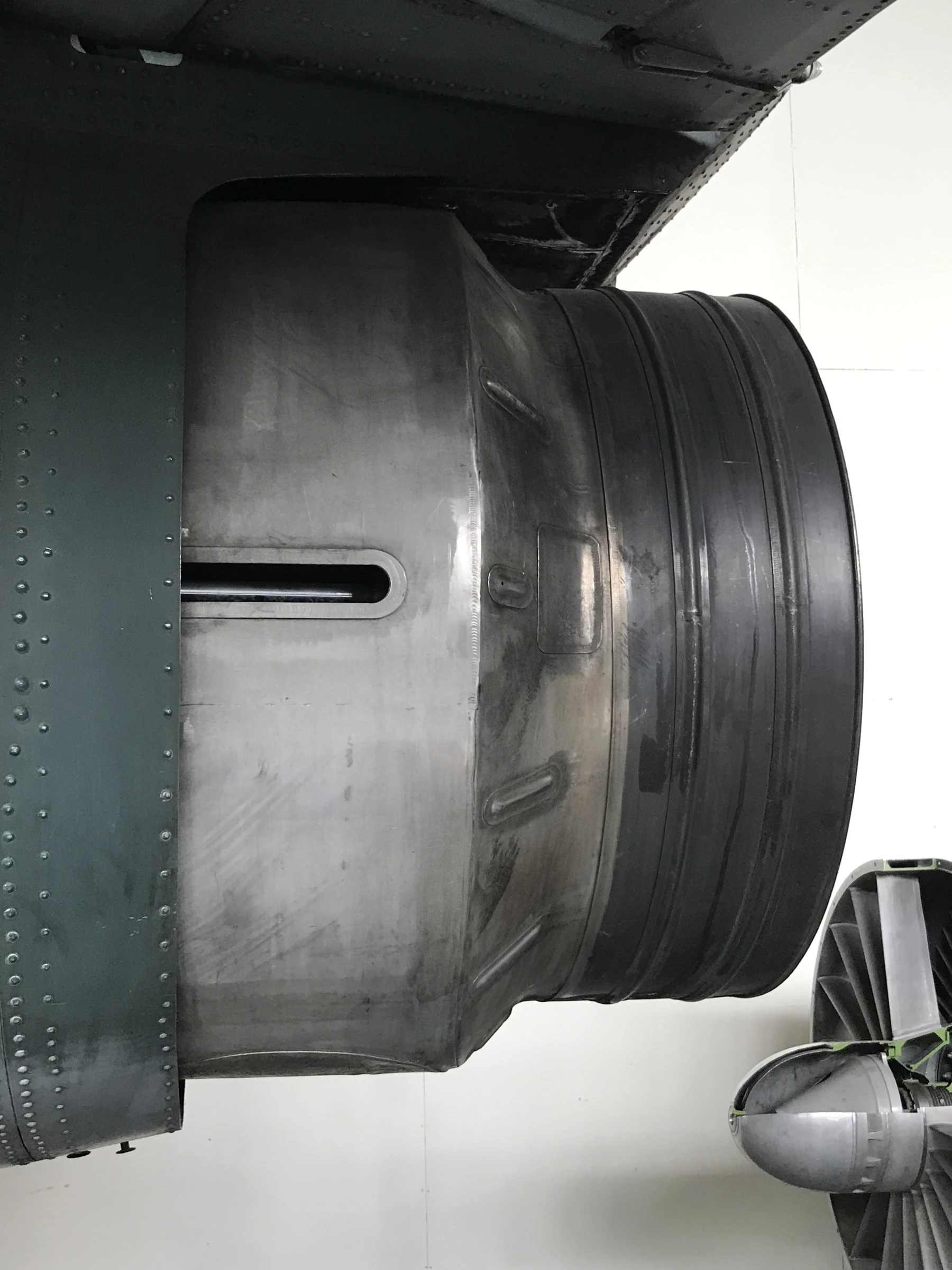
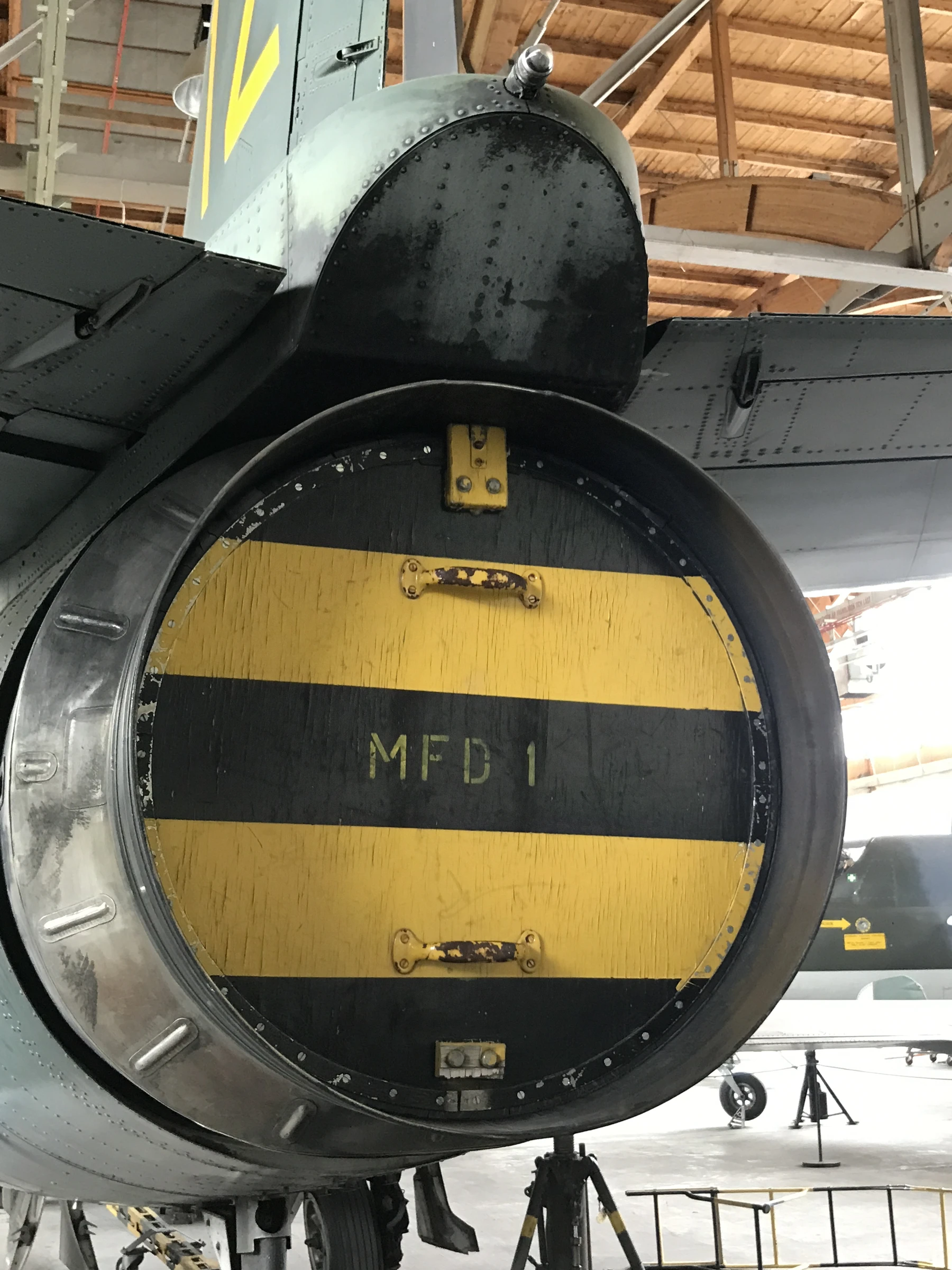
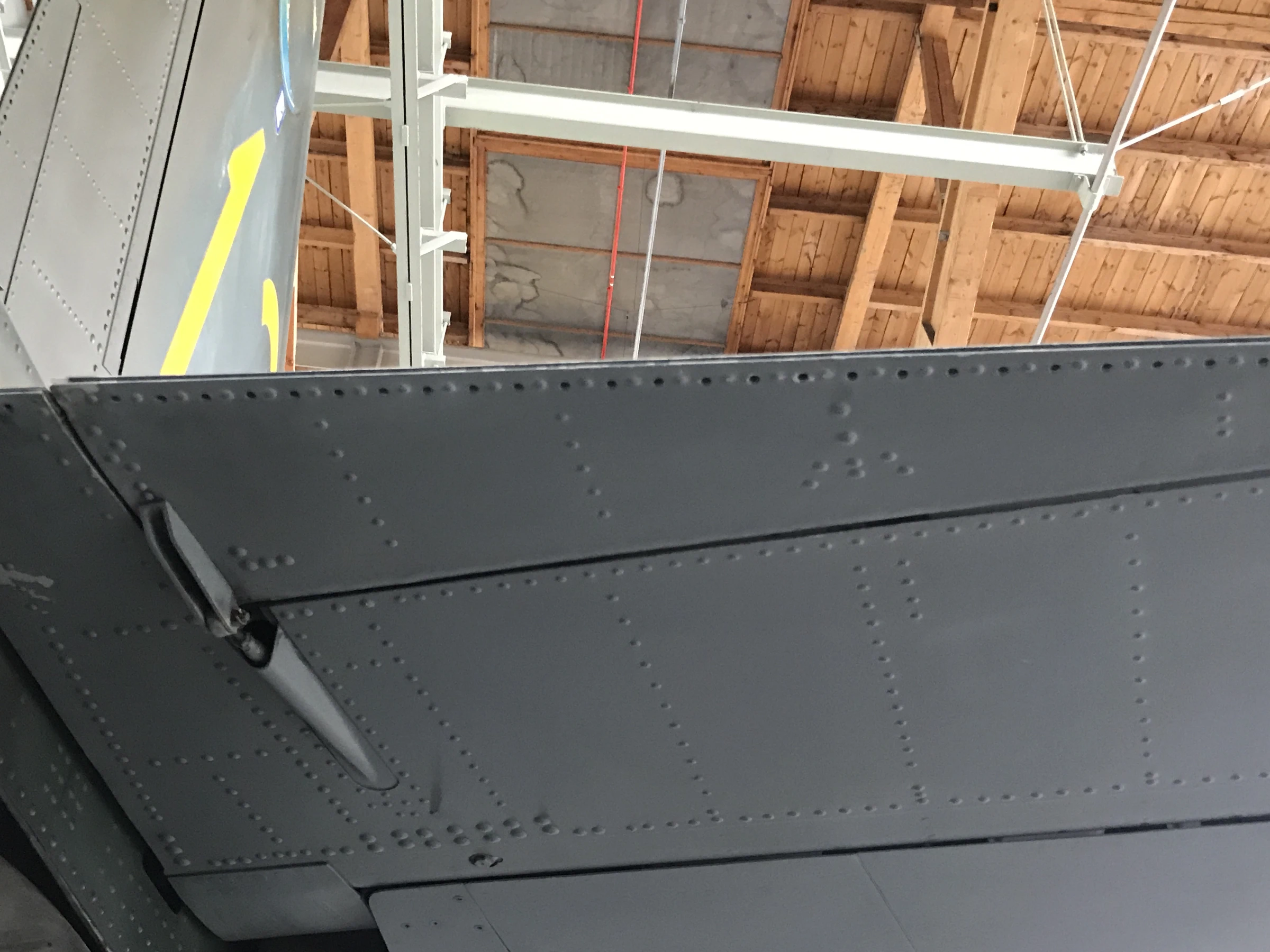
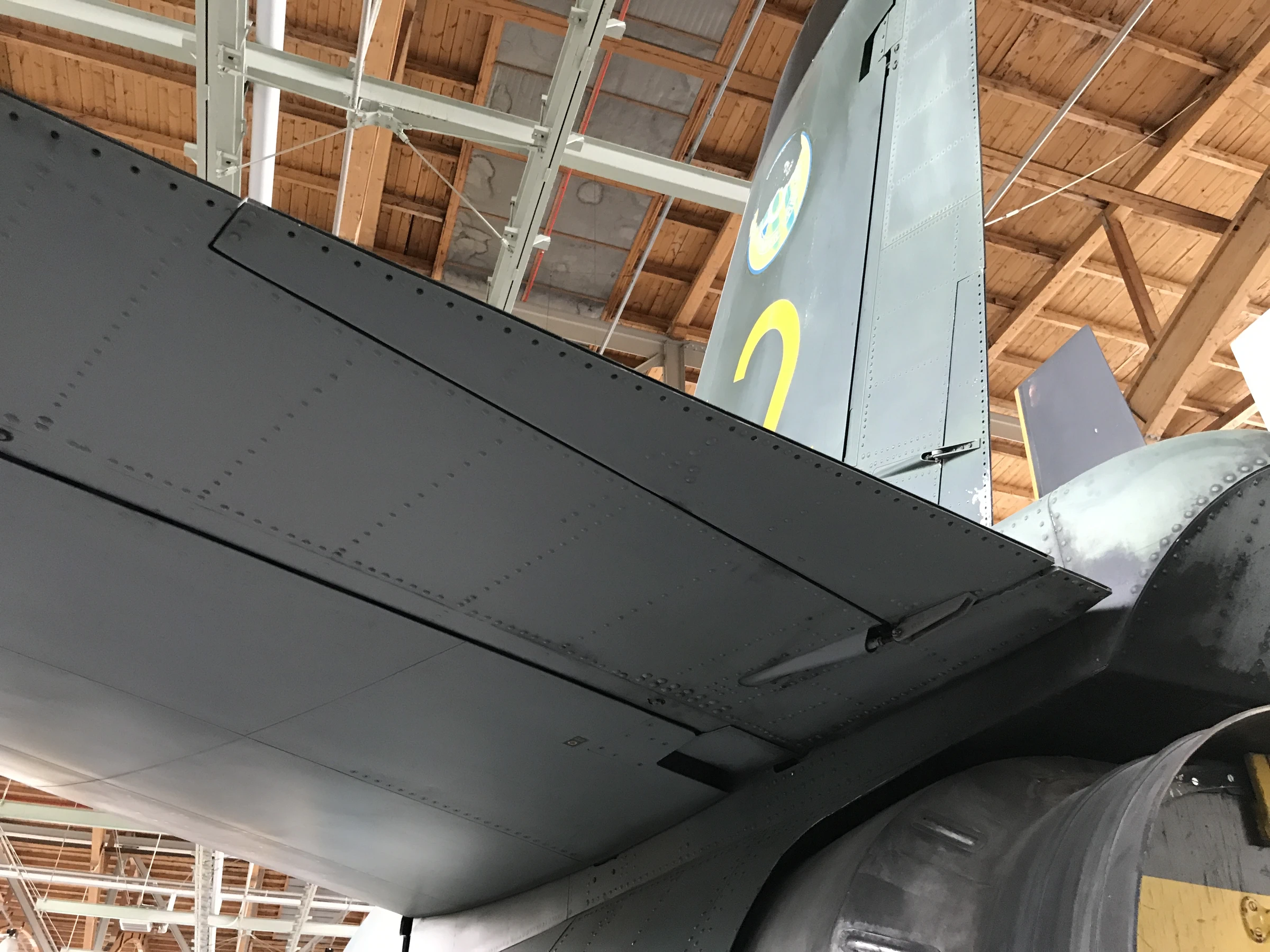
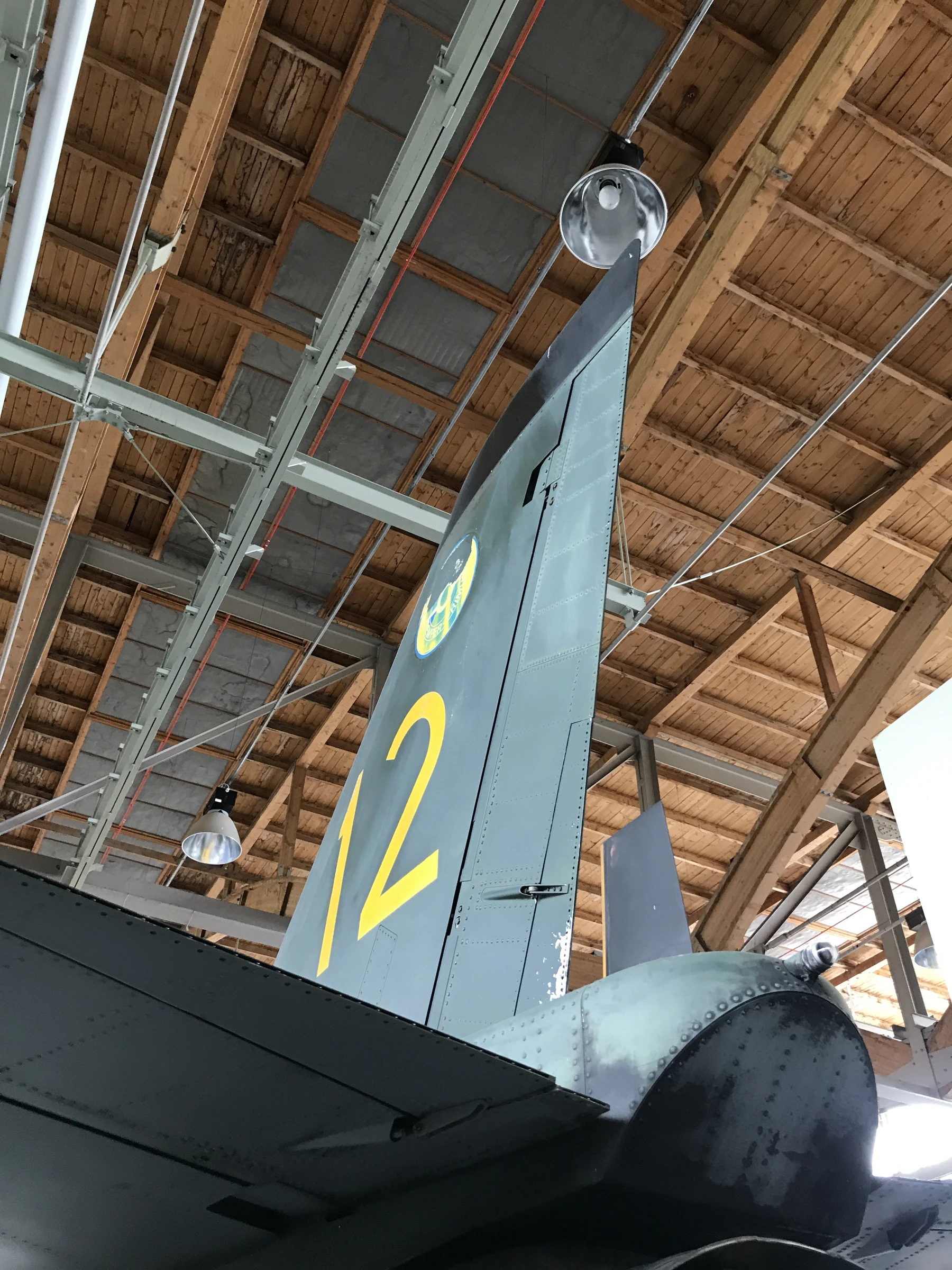
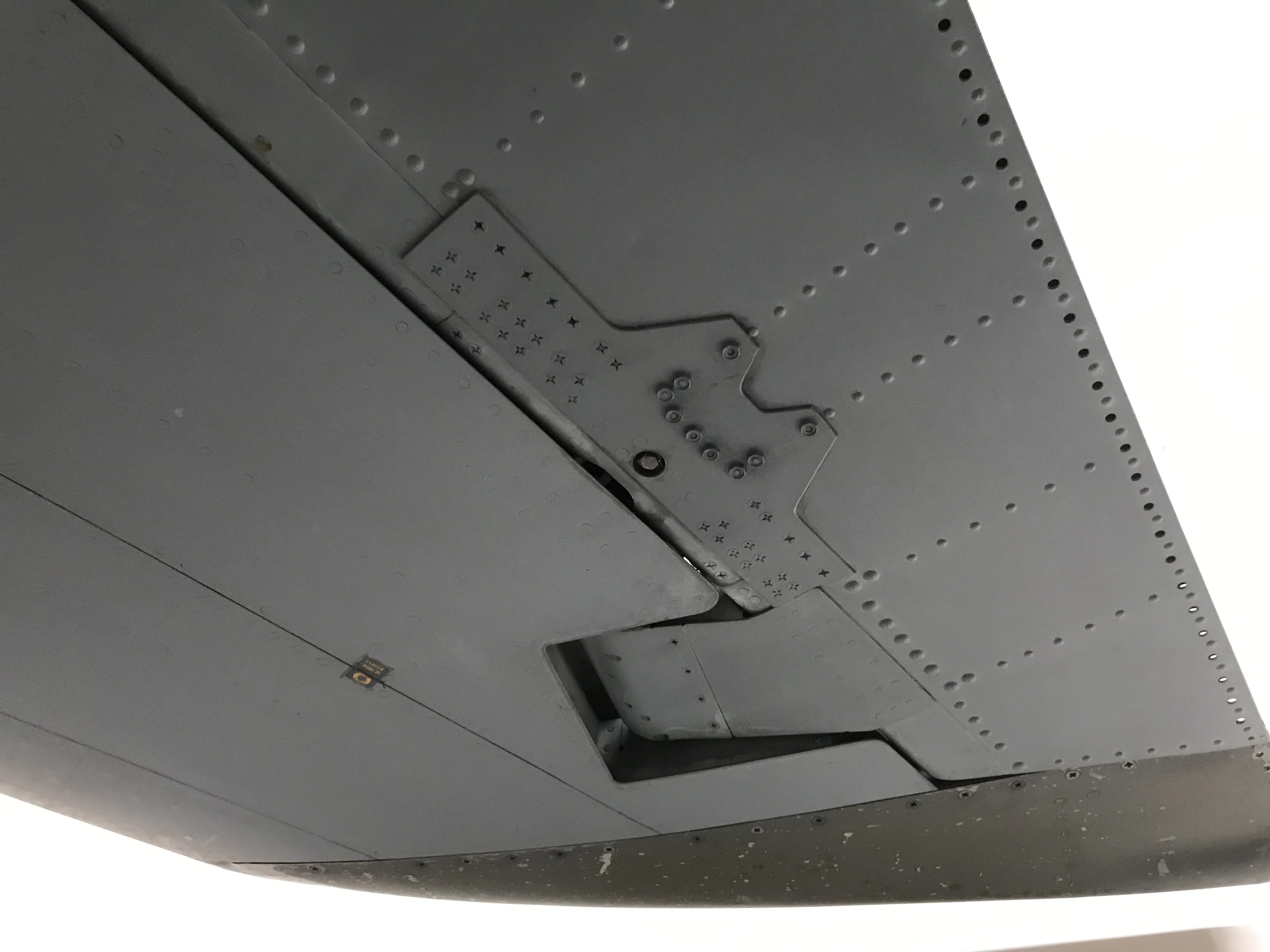
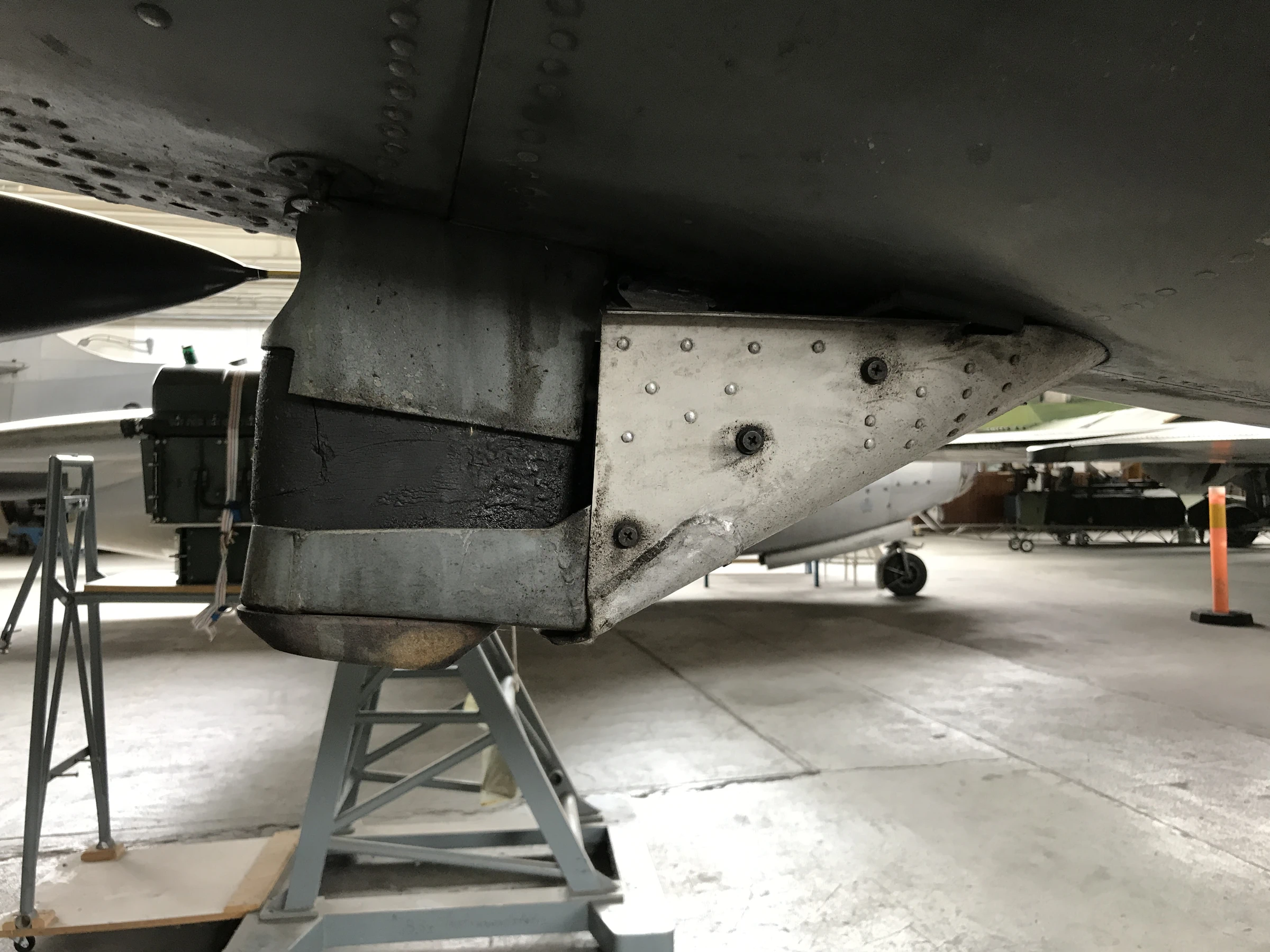
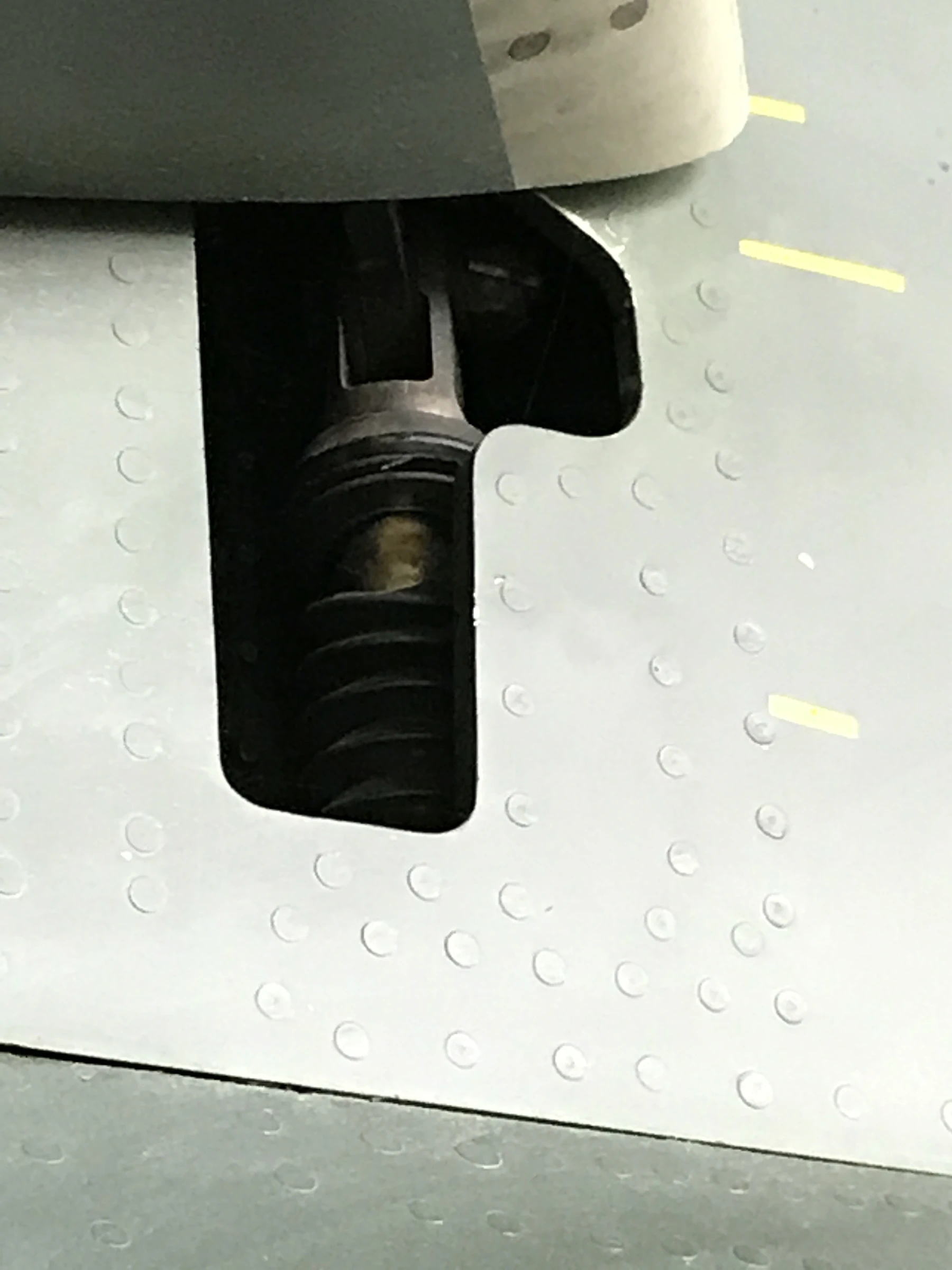
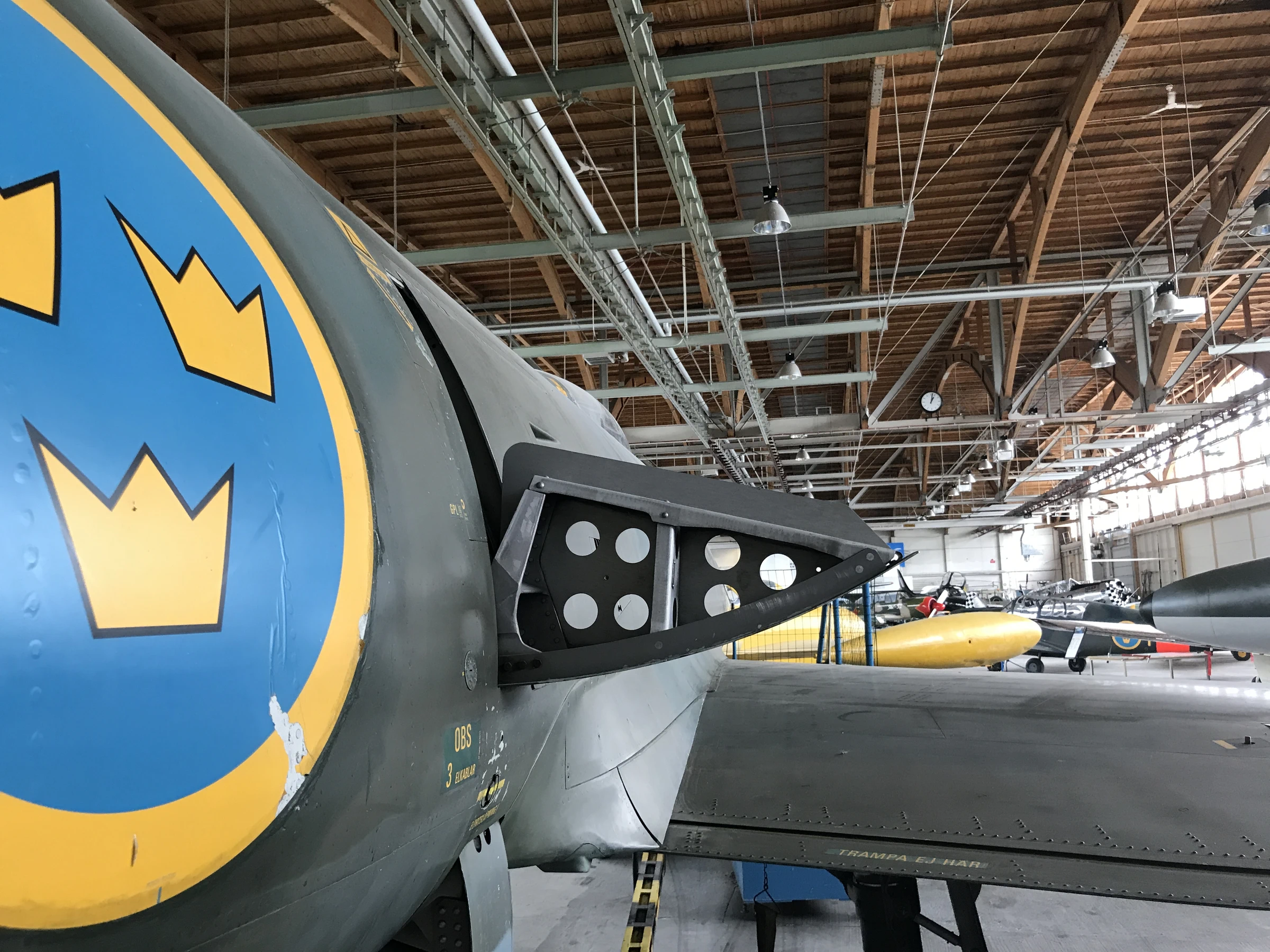
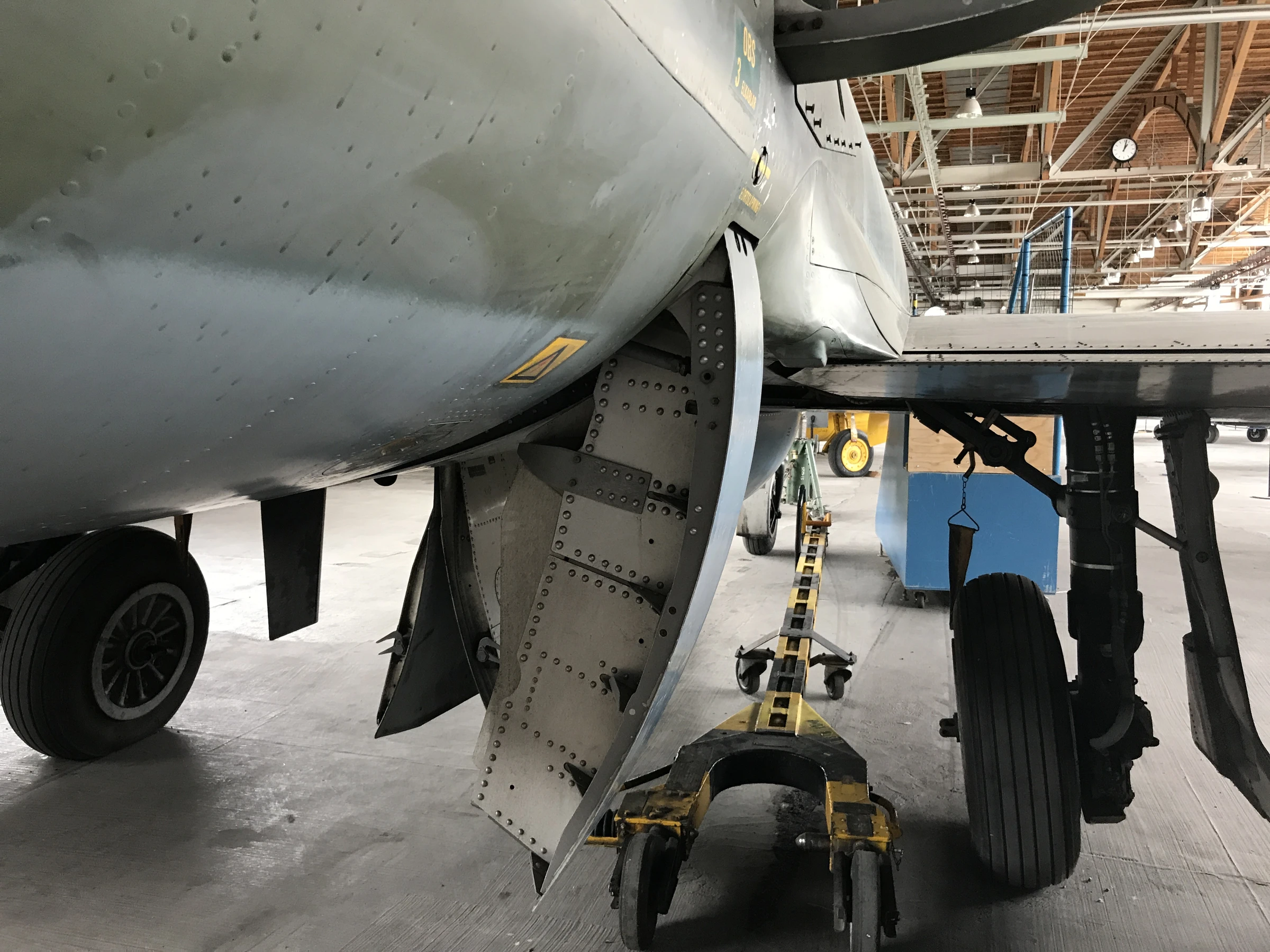
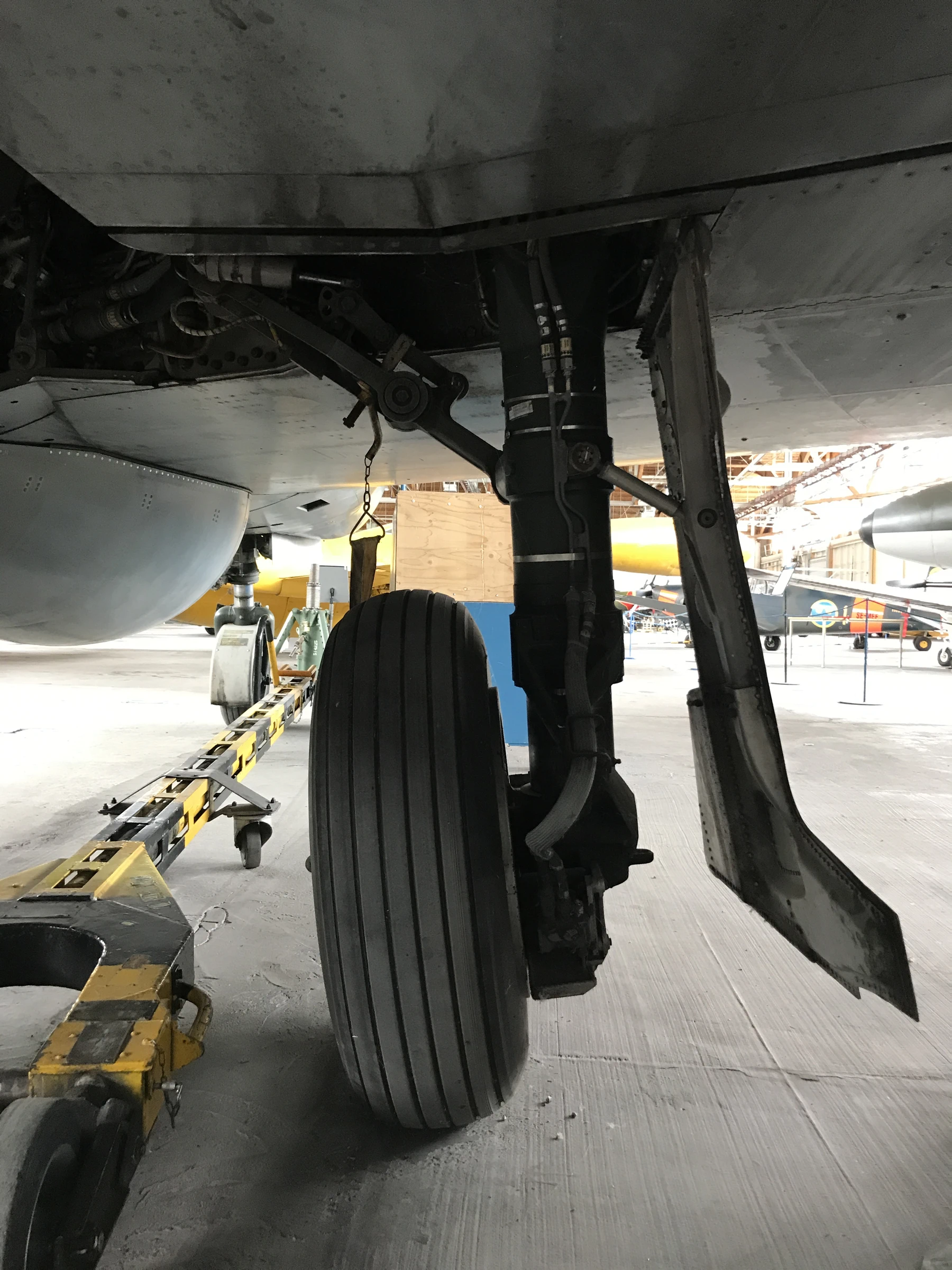
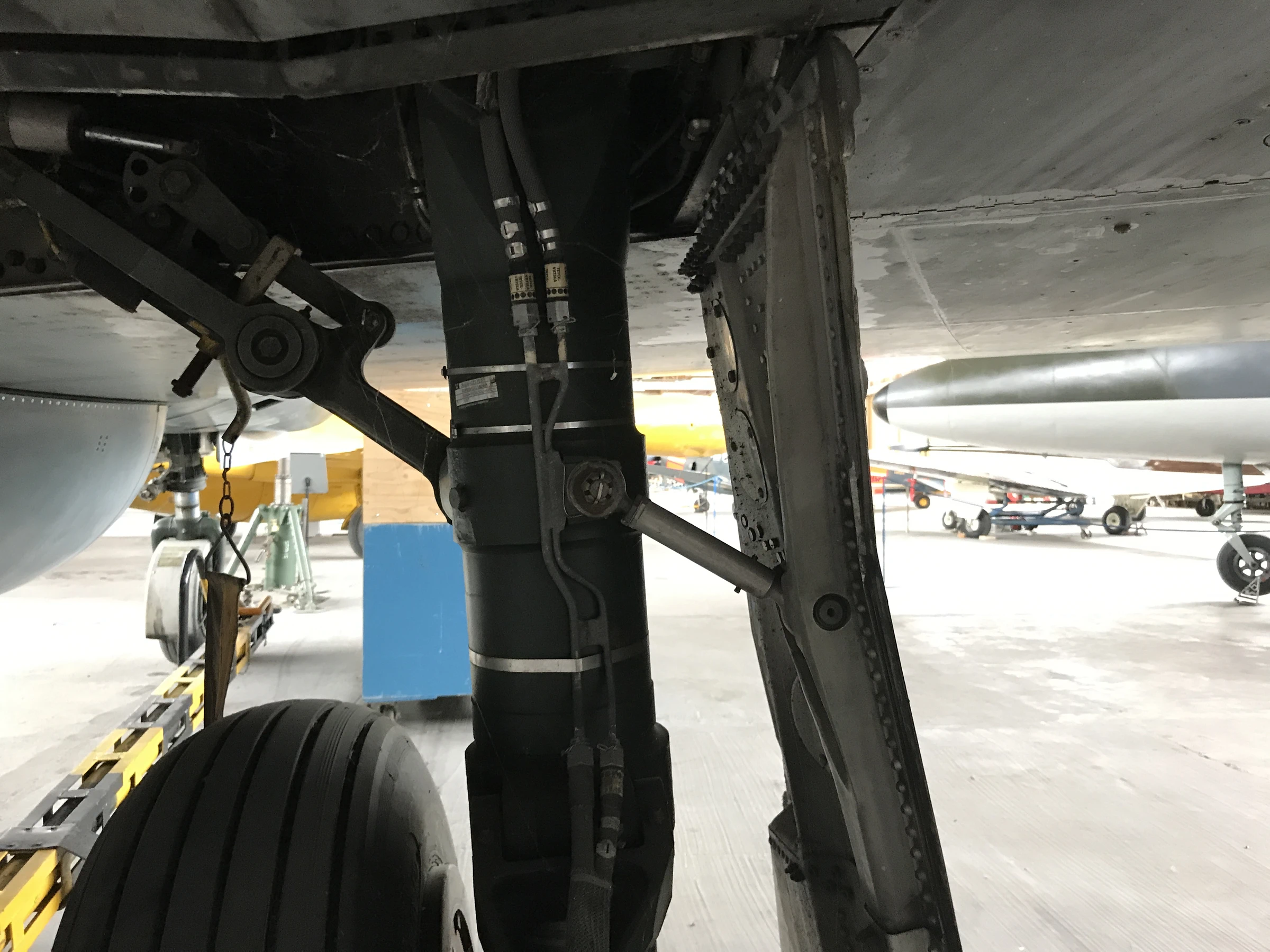
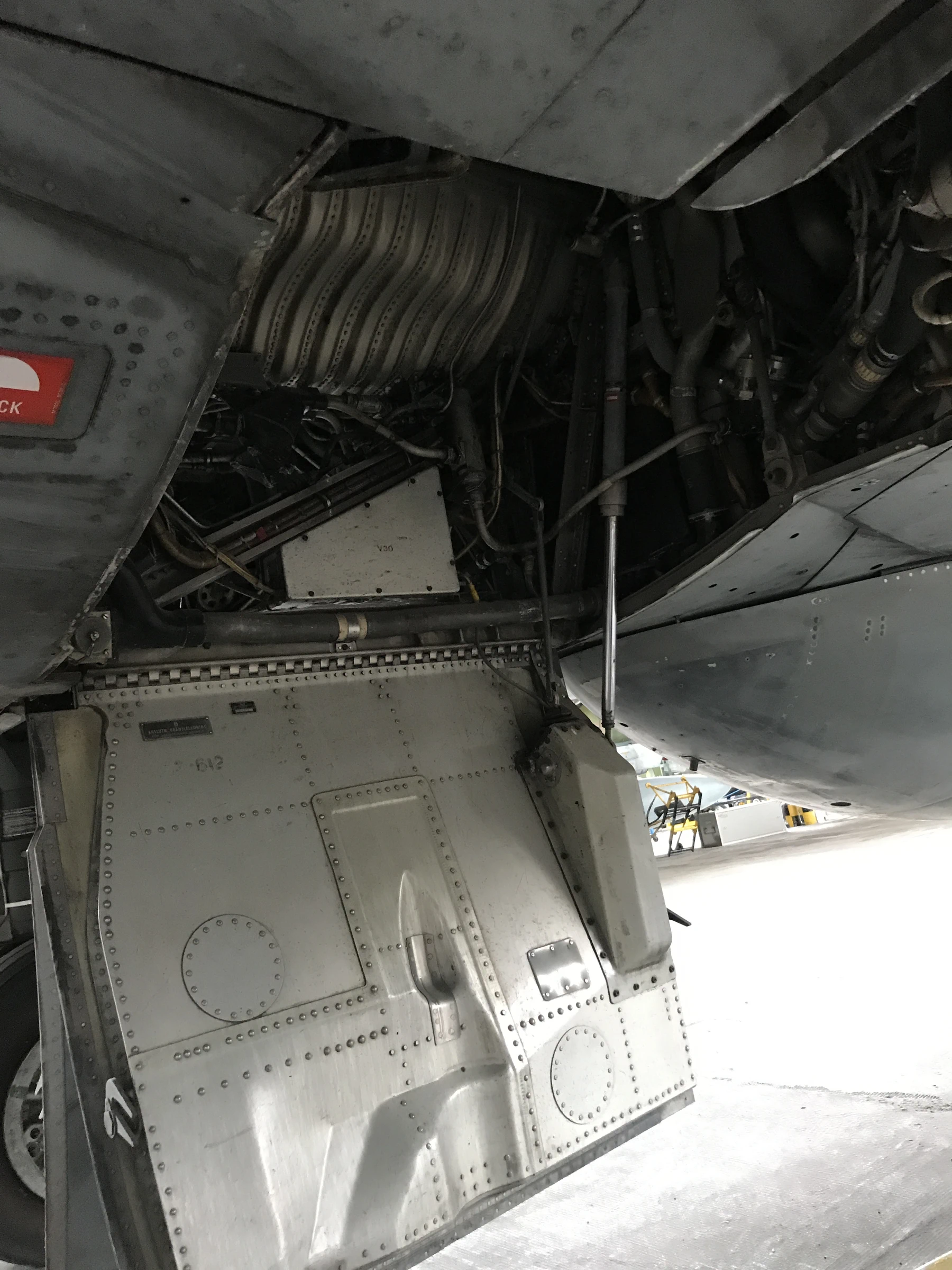
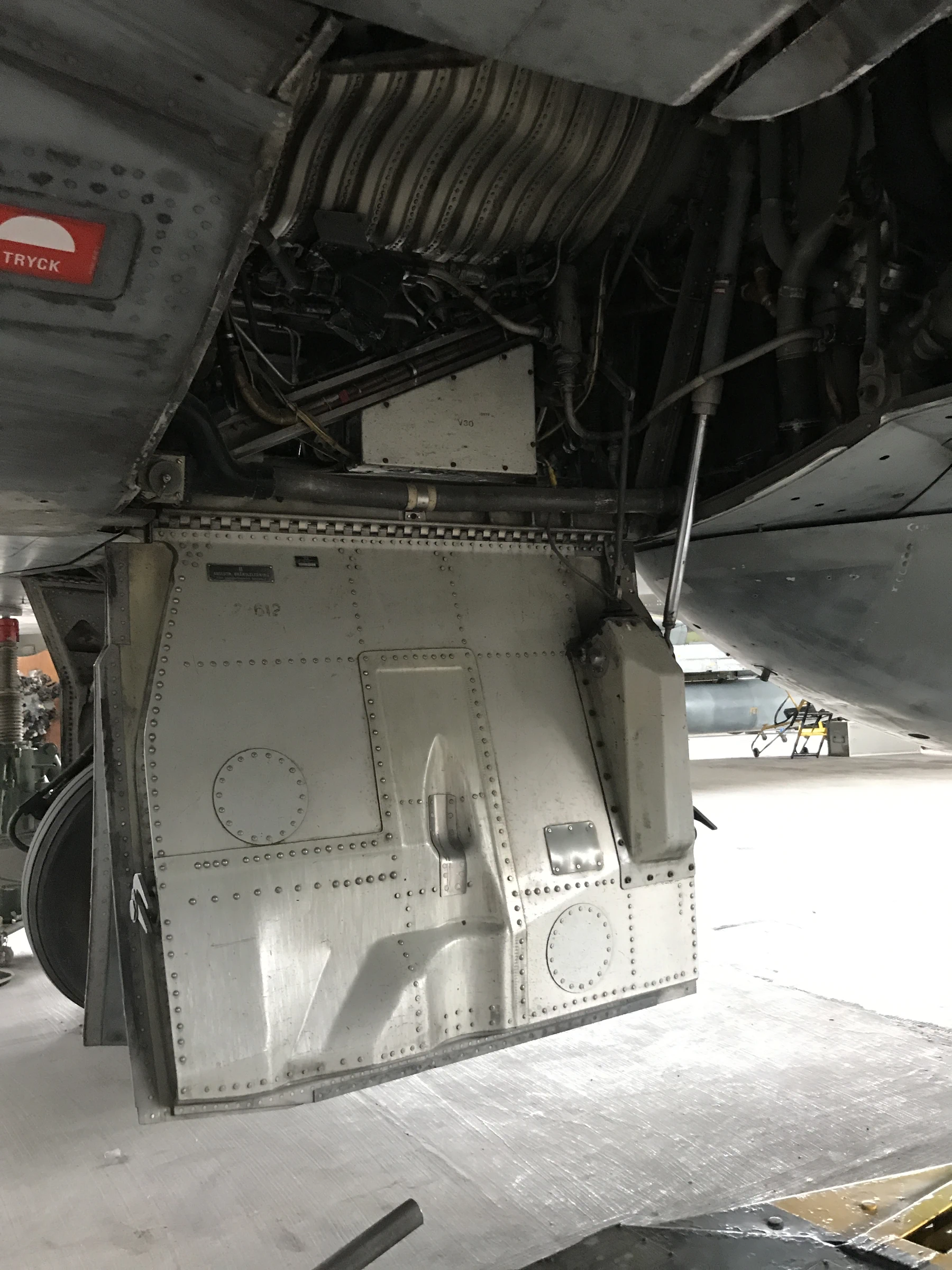
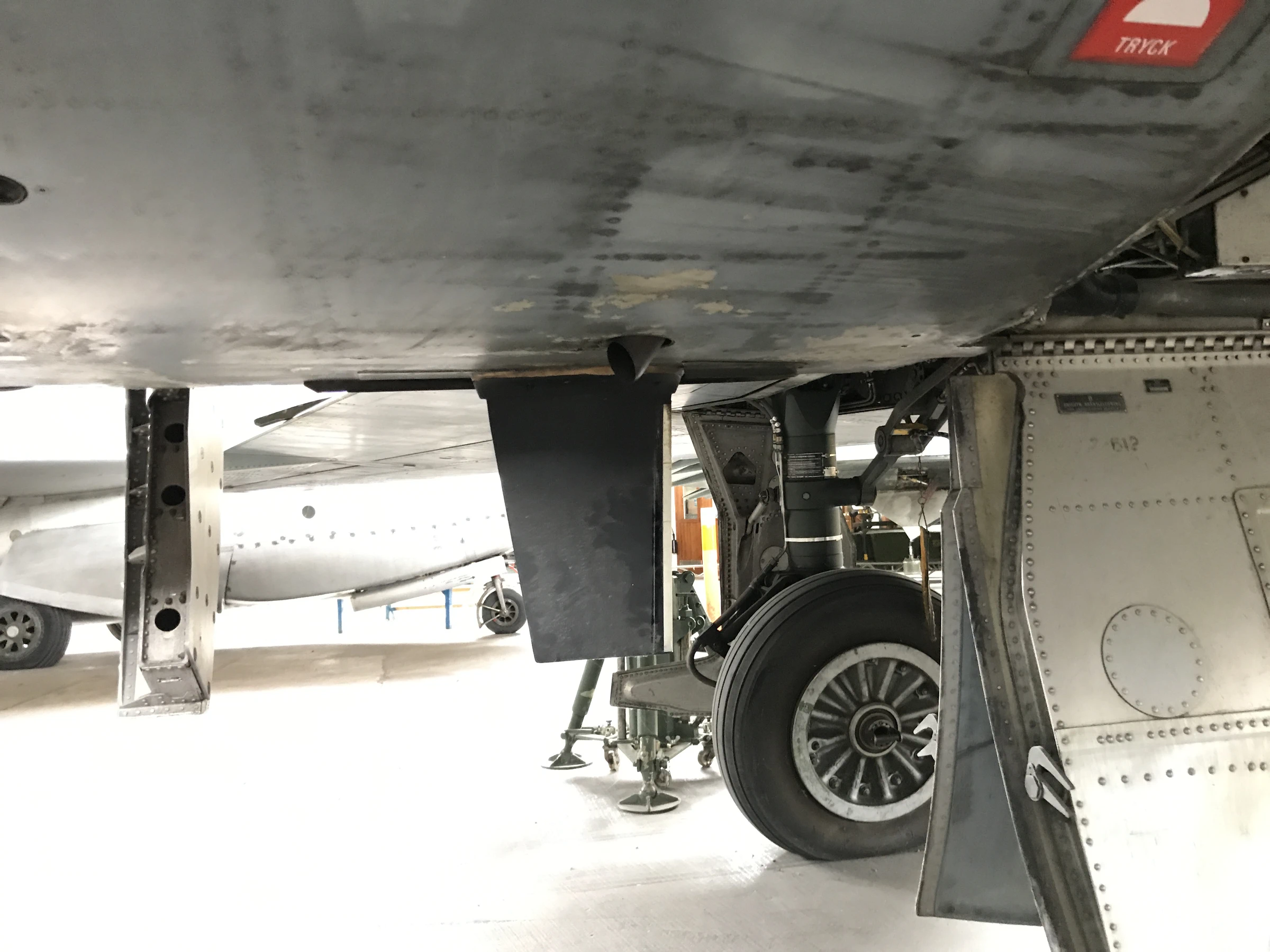
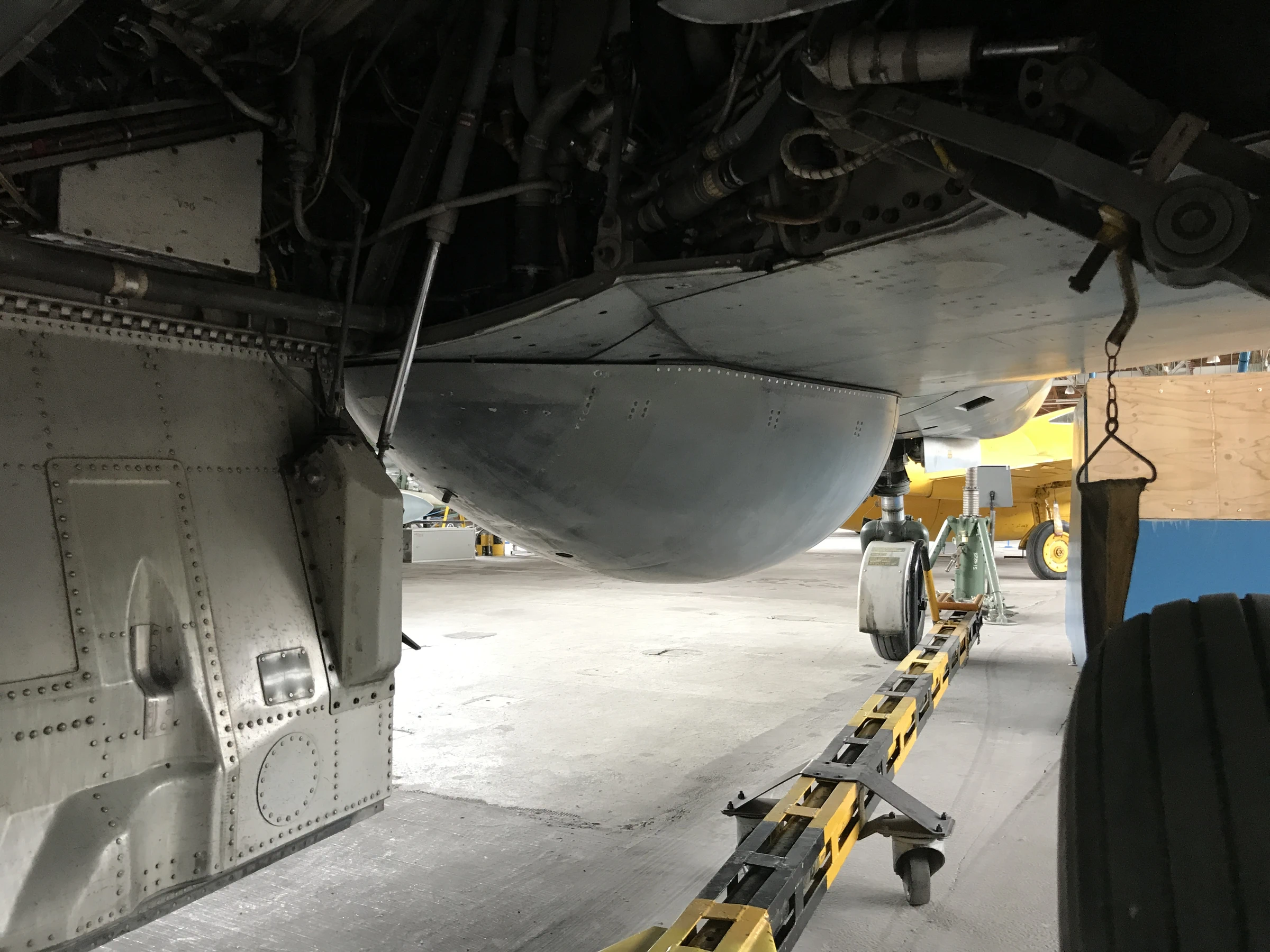
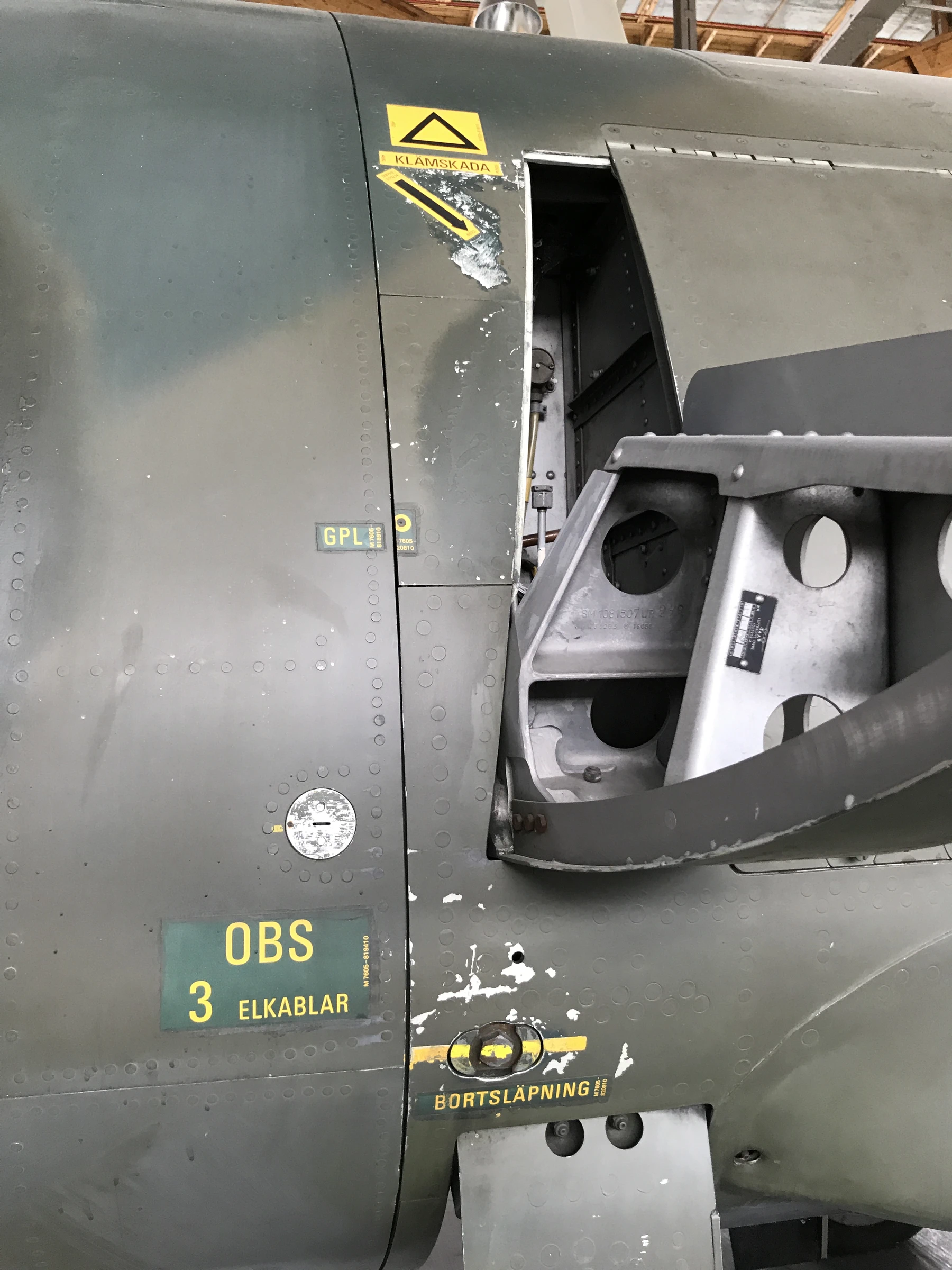
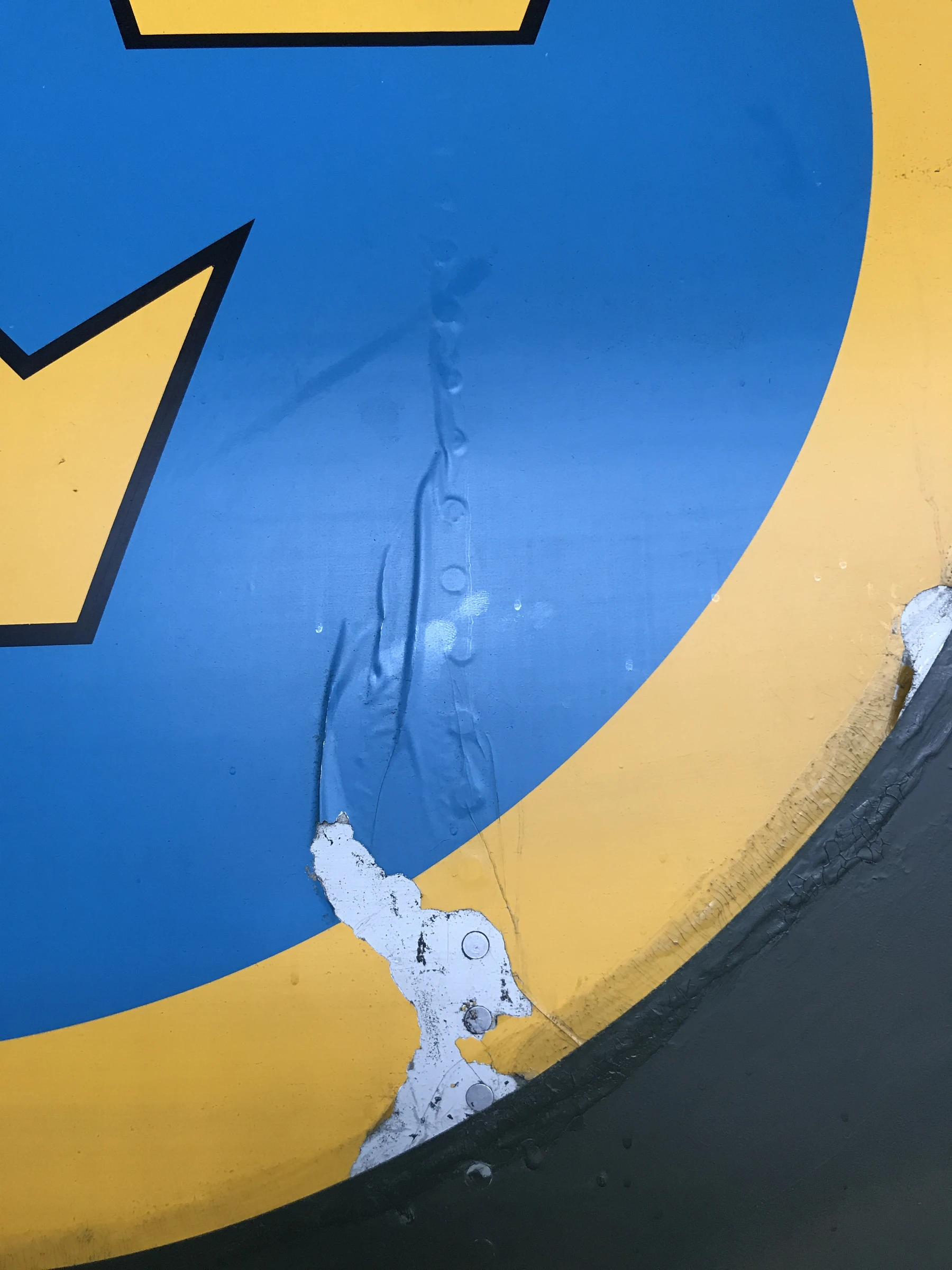
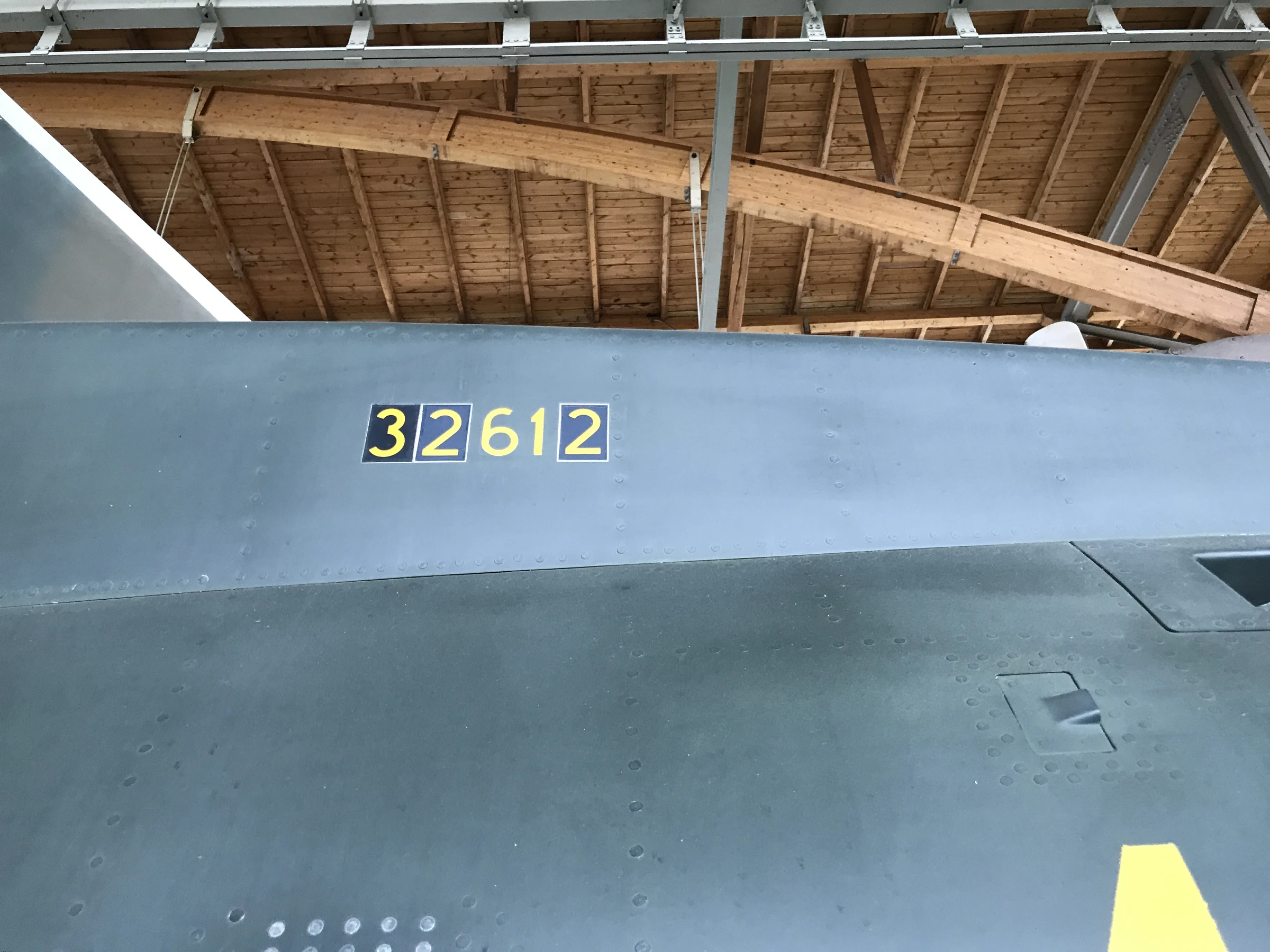
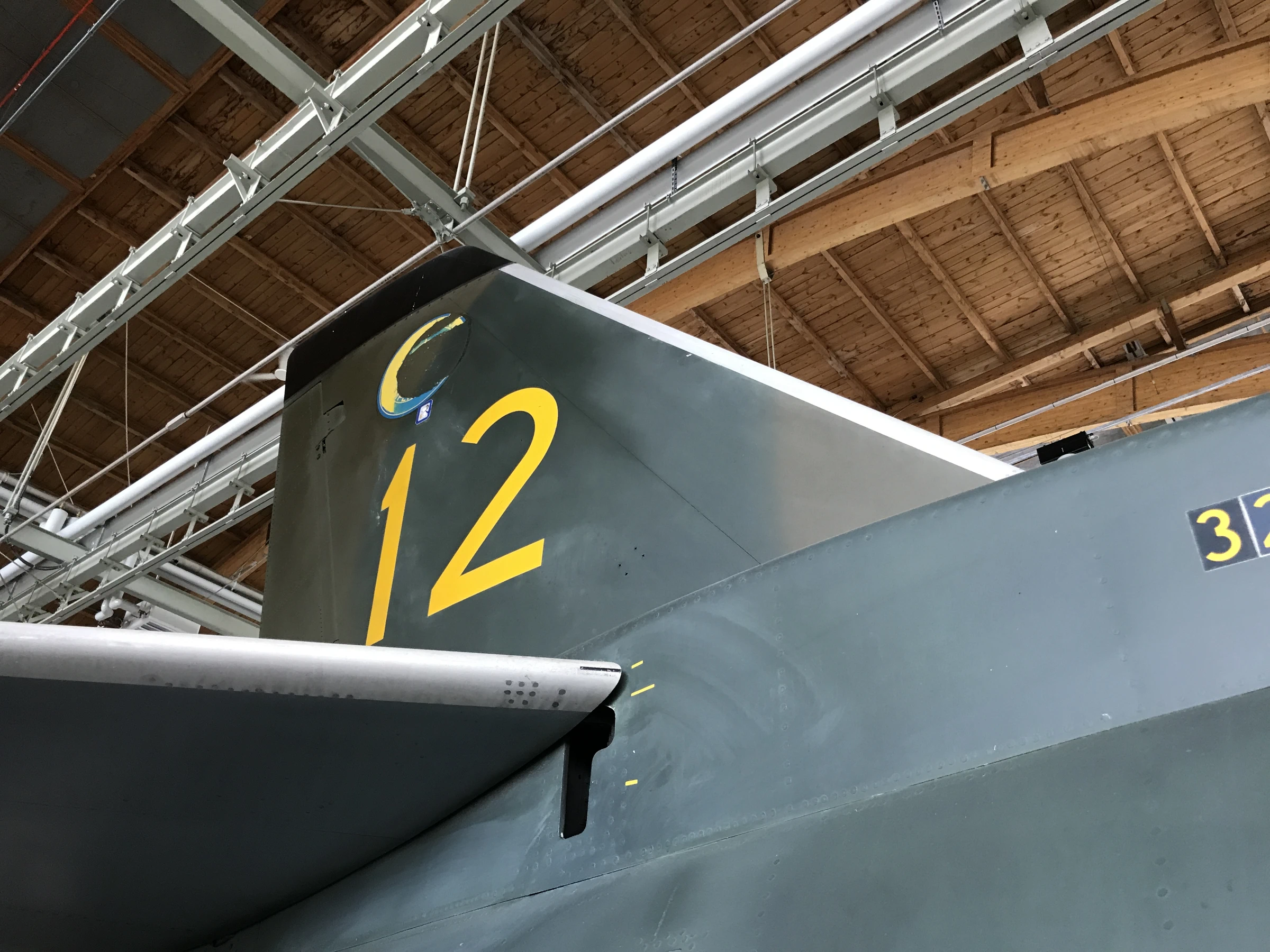
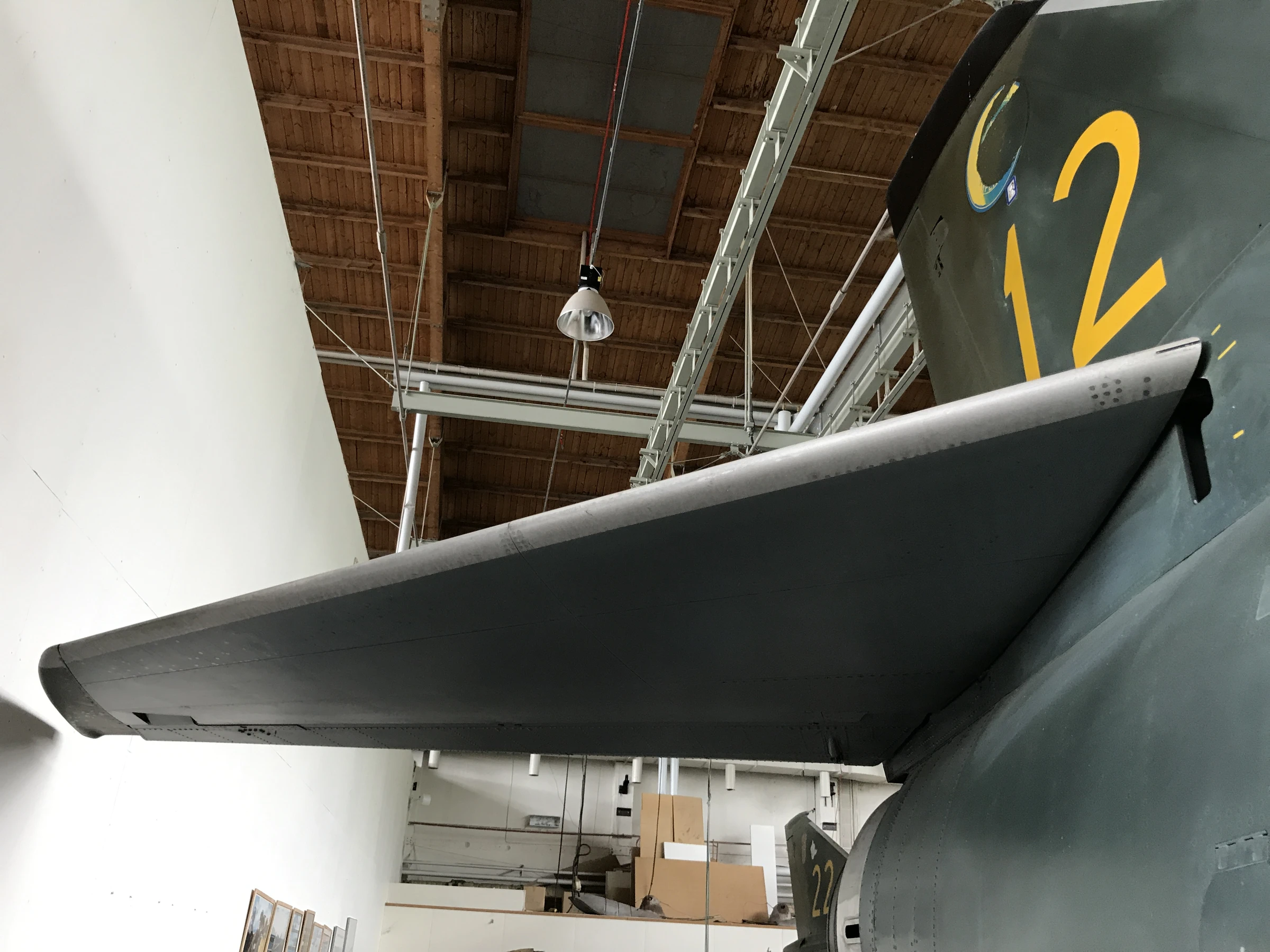
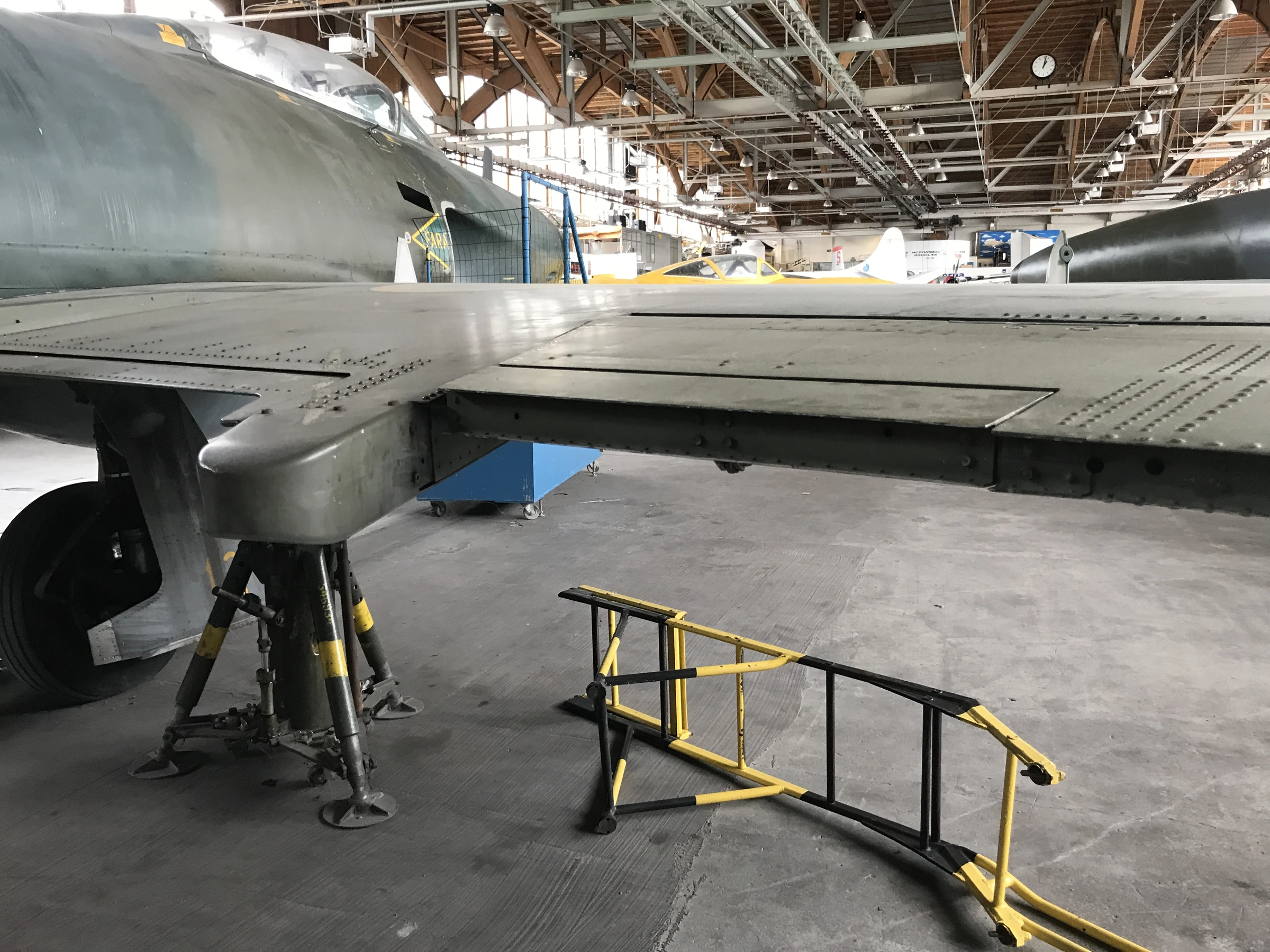
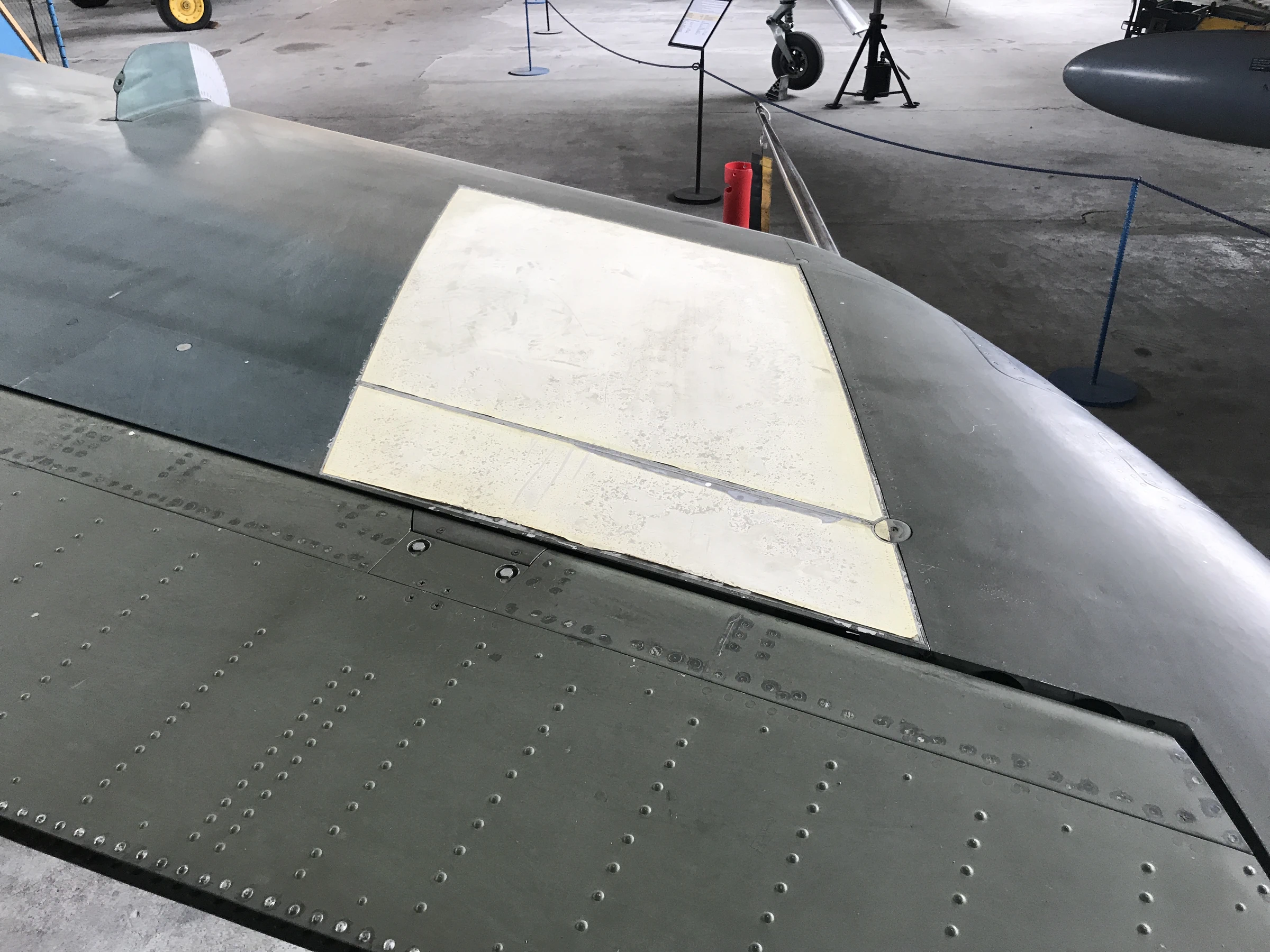
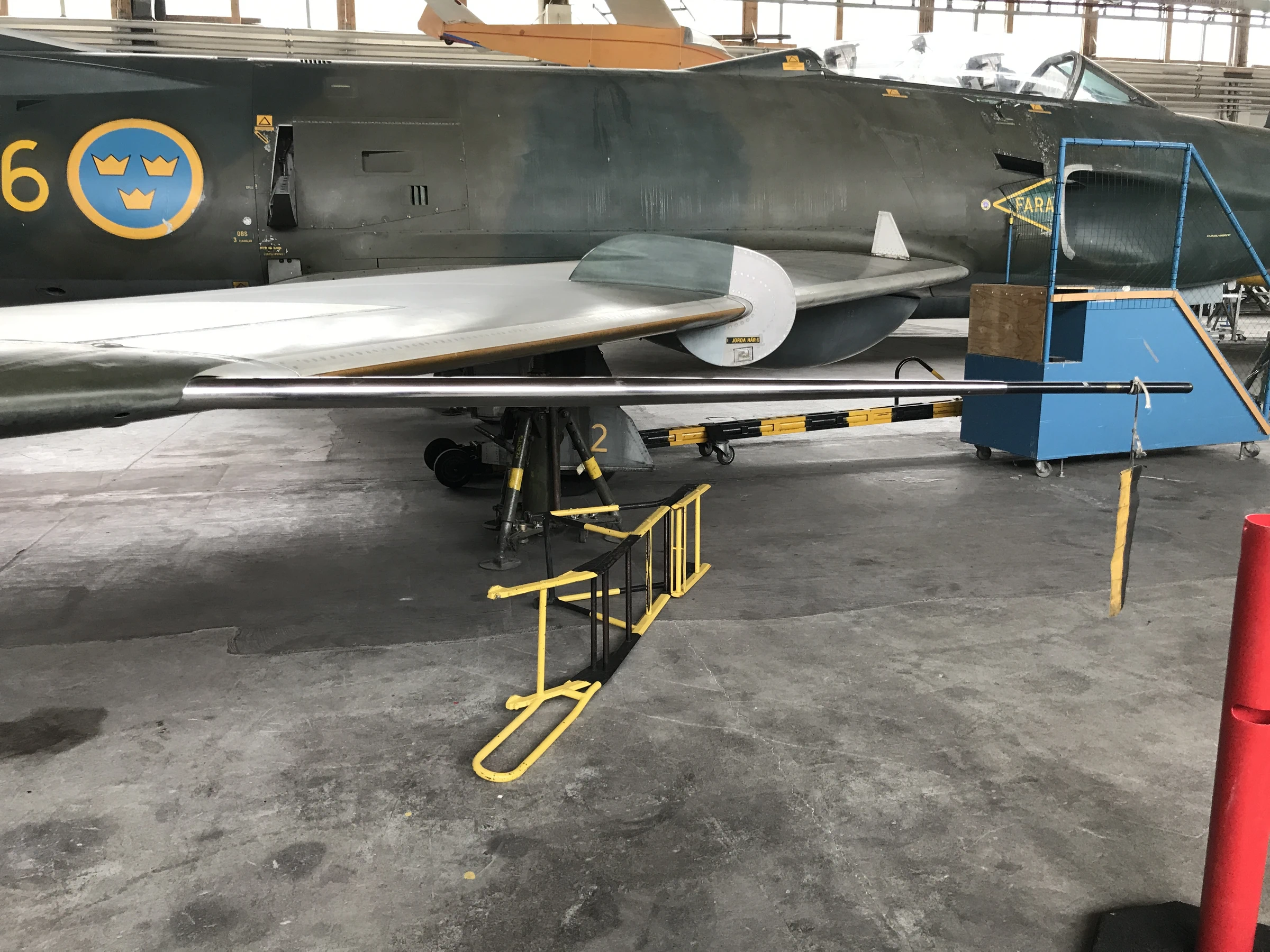
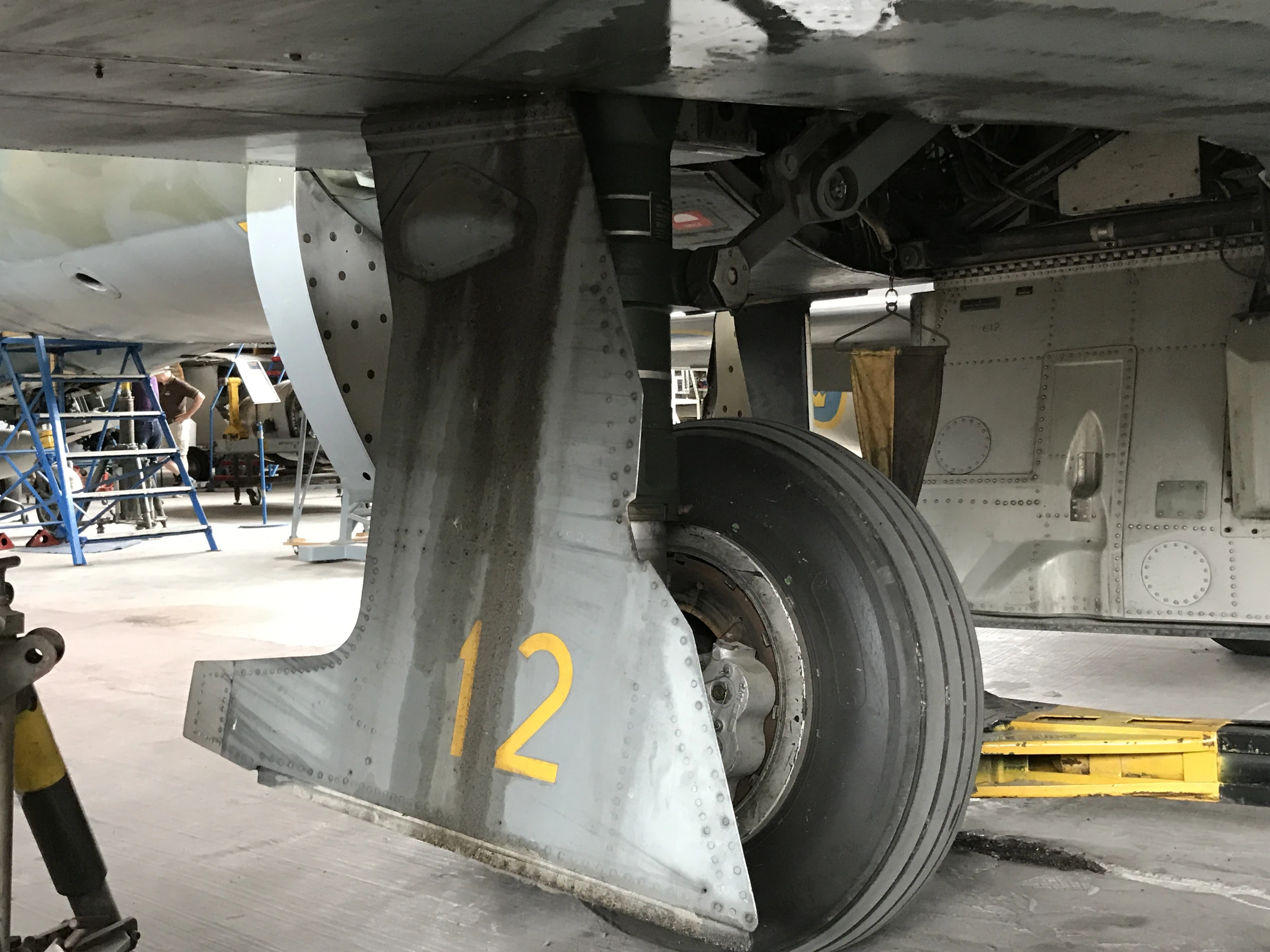
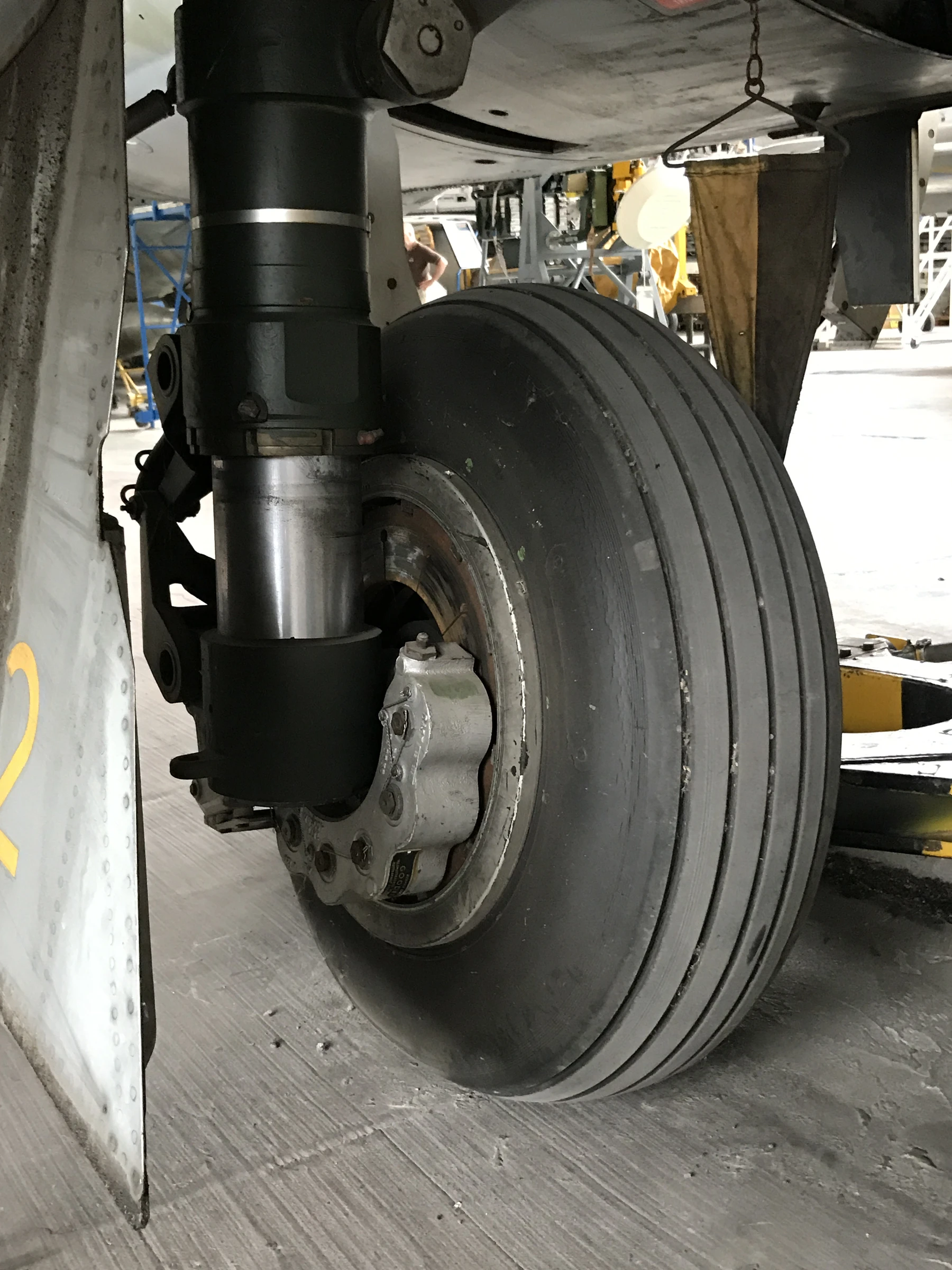
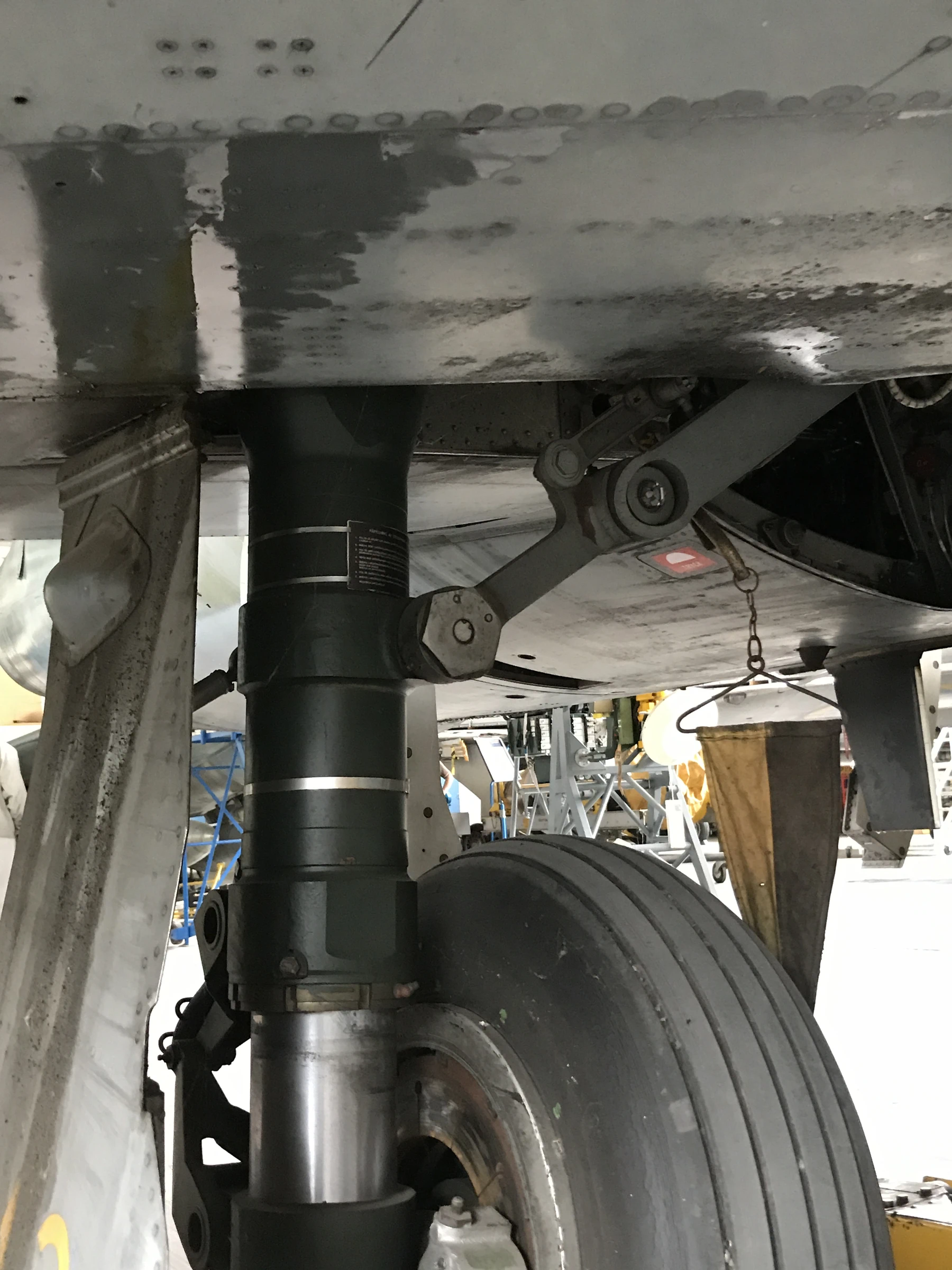
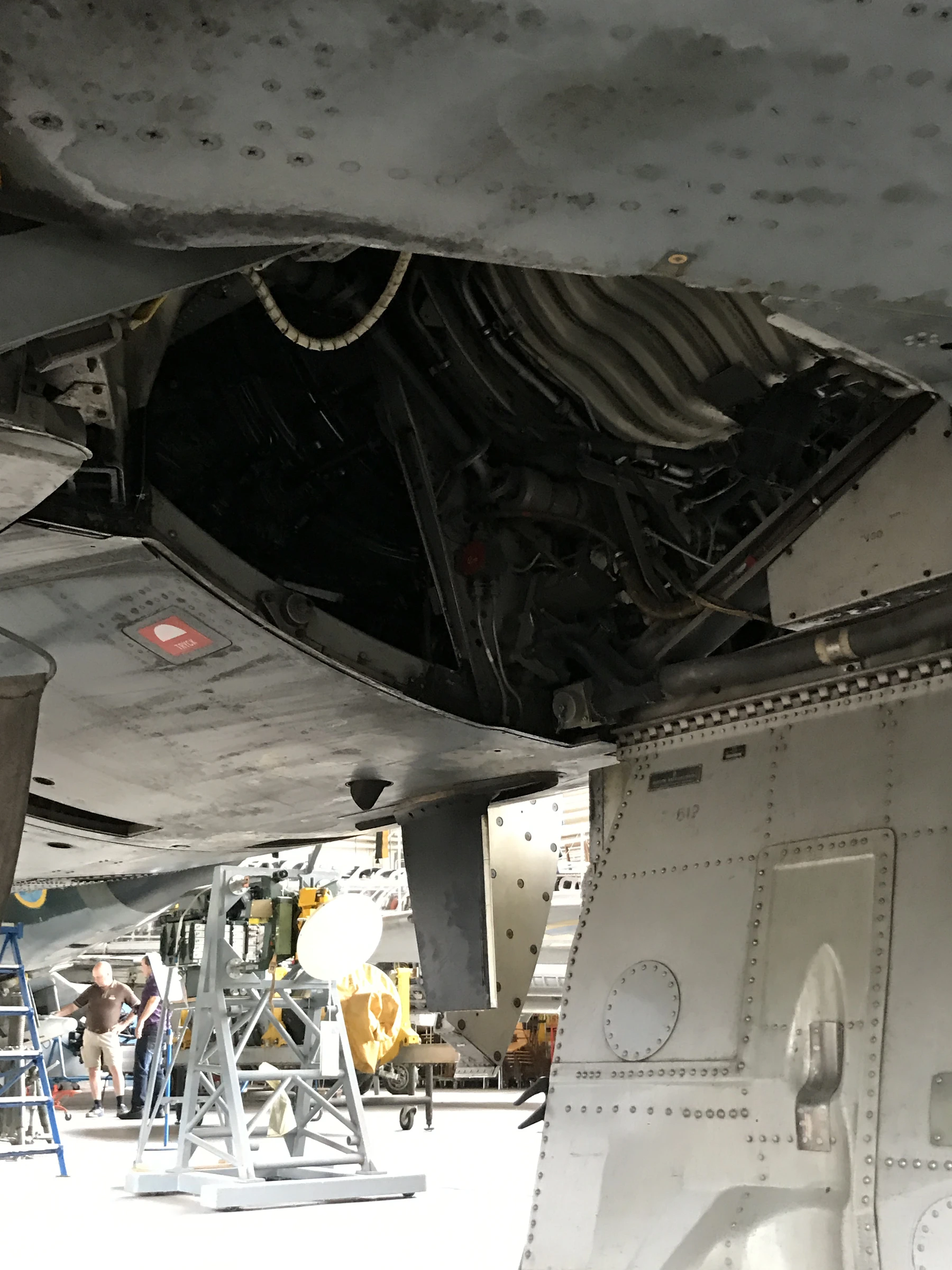
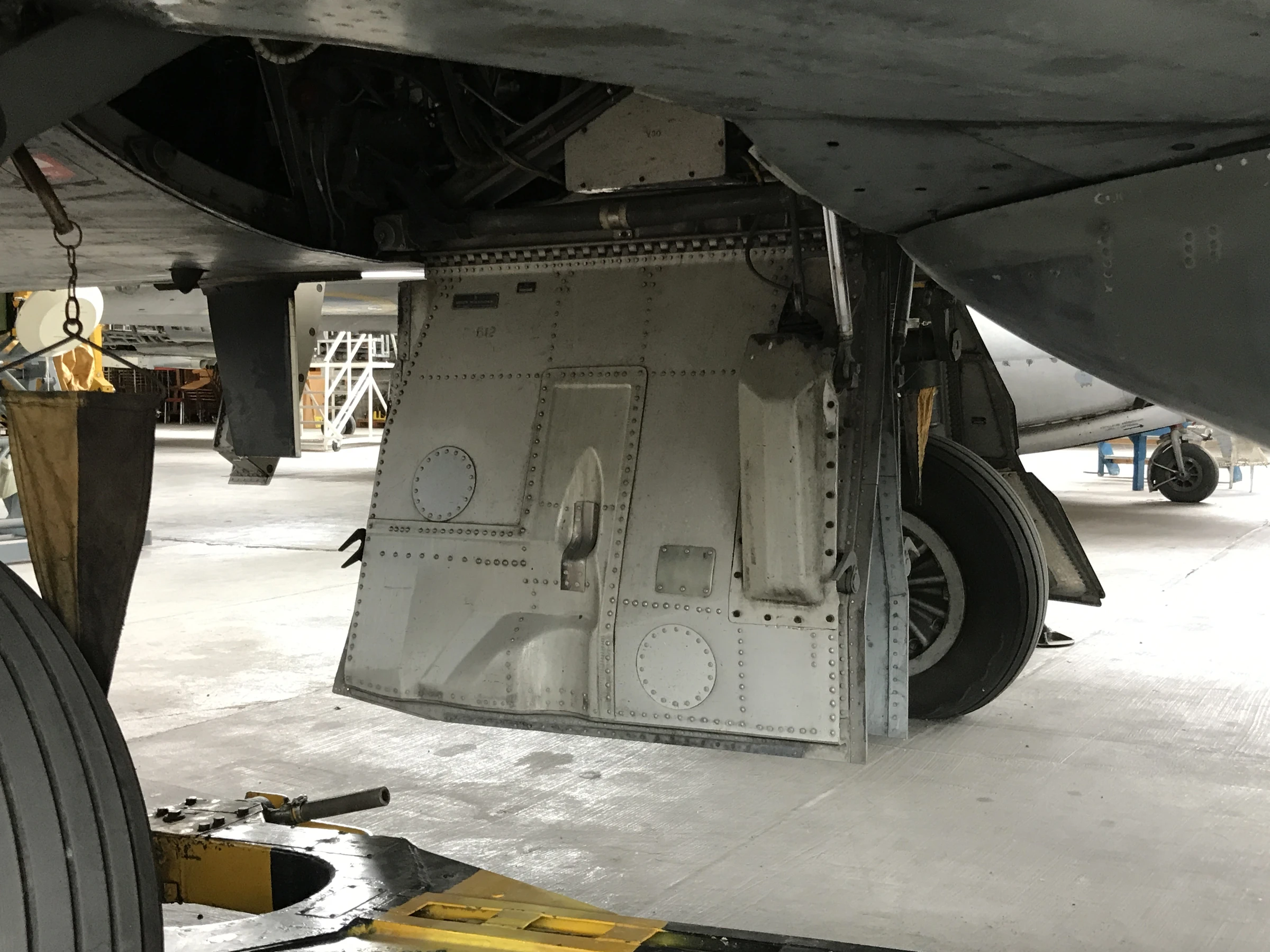
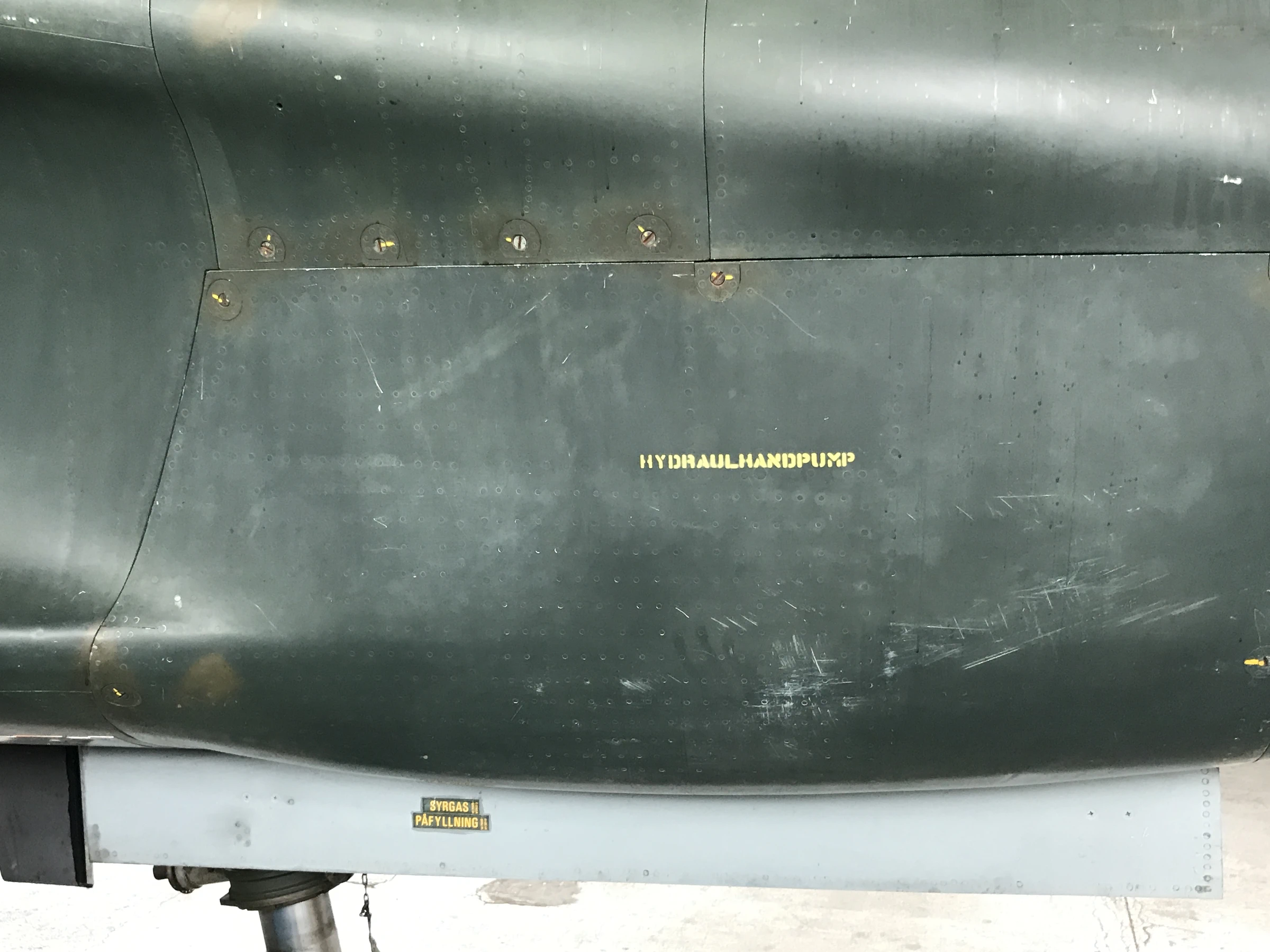
These walk-around photos were taken at Västerås Flygmuseum in 2017. They show a Saab J 32E Lansen, serial 32612, coded 16-12 — one of only 15 examples of the specialized electronic warfare variant that formed Sweden's airborne ECM capability throughout the Cold War. The Lansen (the Spear) was first flown on 3 November 1952 by Bengt Olow and became the Swedish Air Force's first swept-wing aircraft, serving in attack, fighter and reconnaissance variants over four decades. The J 32B variant, powered by a licence-built Rolls-Royce Avon in Swedish designation RM 6A, was an all-weather interceptor with PS-03 radar and four 30mm Aden cannon, and it was from this variant that the J 32E was developed. From 1972, fifteen J 32Bs were converted to J 32E standard, fitted with radar jammers, signal-direction-finding equipment and chaff dispenser pods, and used for both operational electronic countermeasures and ECM training of other units. The J 32E served until 1997 when the type was finally retired as a cost-cutting measure.
Built in 1960 and taken on charge on 14 April that year as a J 32B at F 1 Hässlö in Västerås — where this museum now stands — 32612 served as an interceptor before being converted to J 32E standard in 1972. It later served with F 16M before being preserved at Västerås Flygmuseum from around 2000, returning to its original home base.