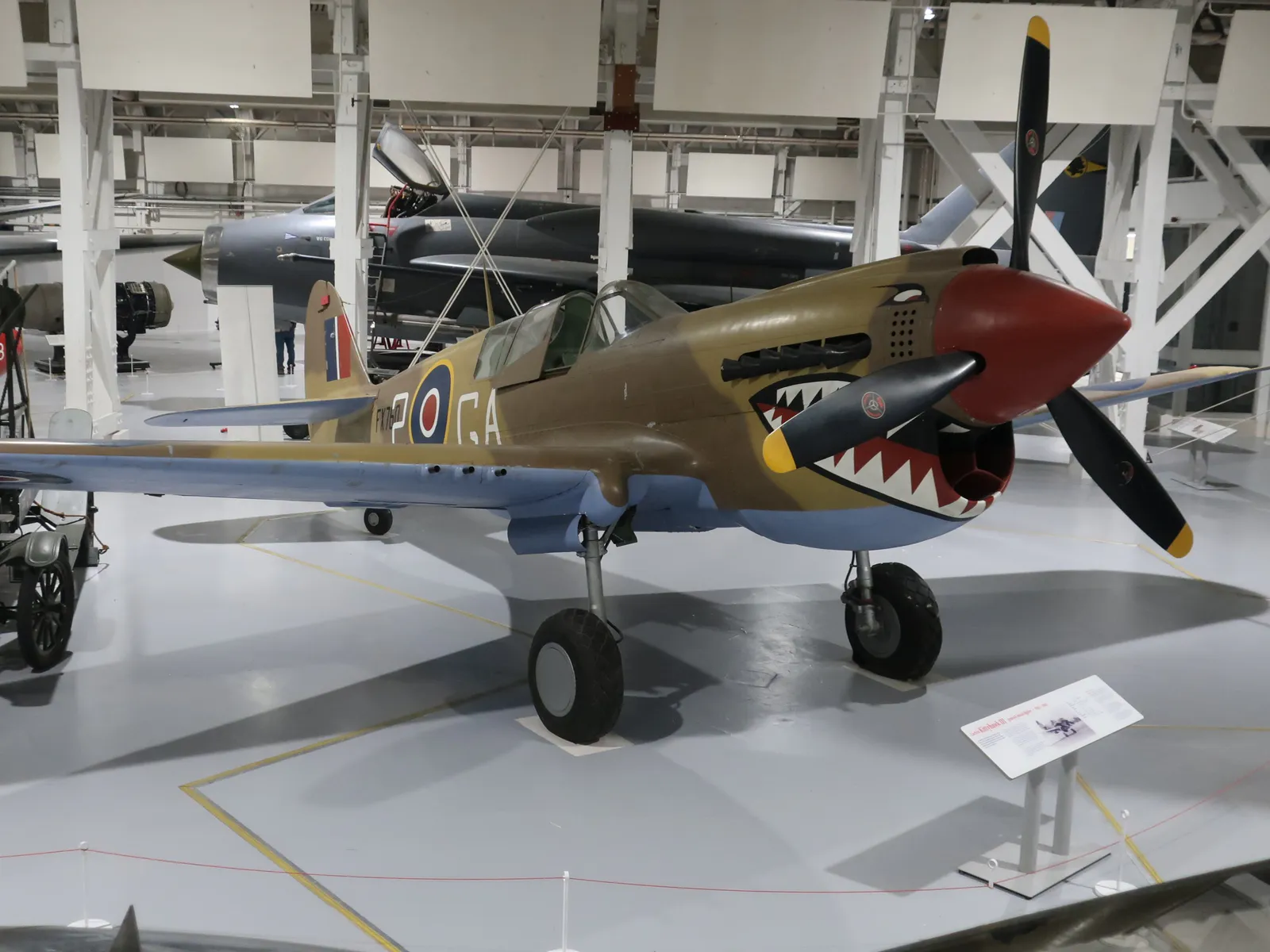
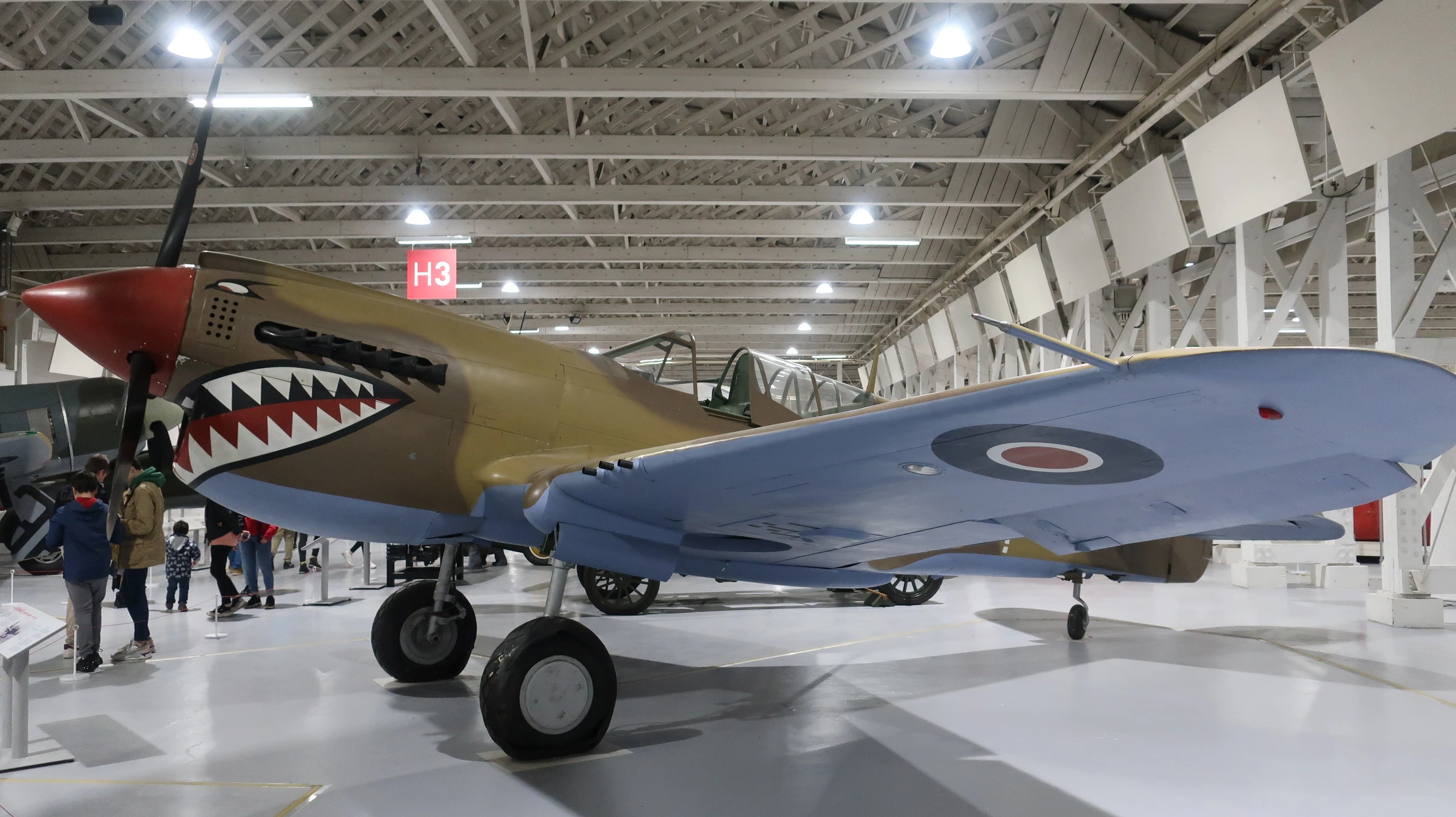
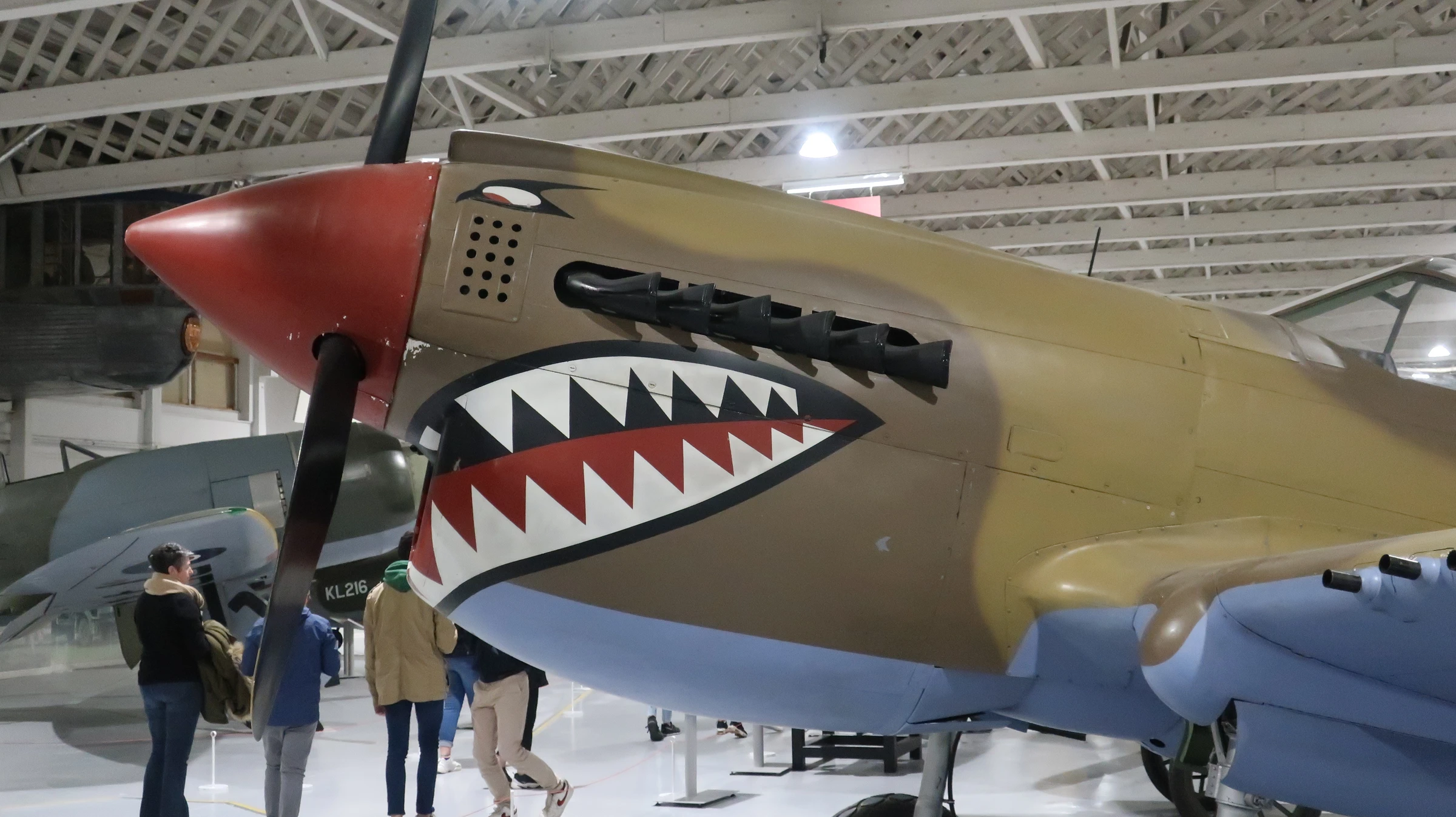
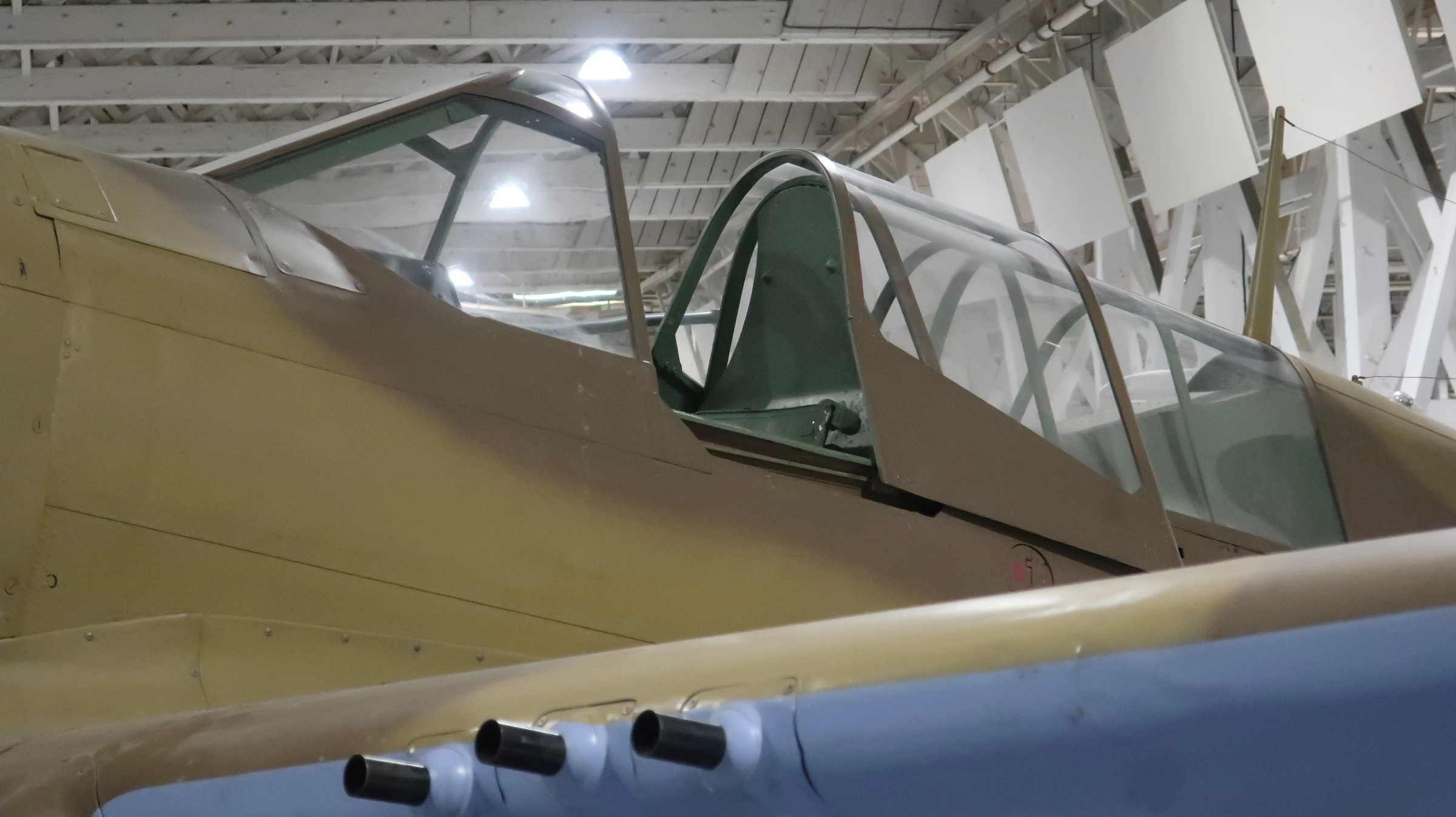
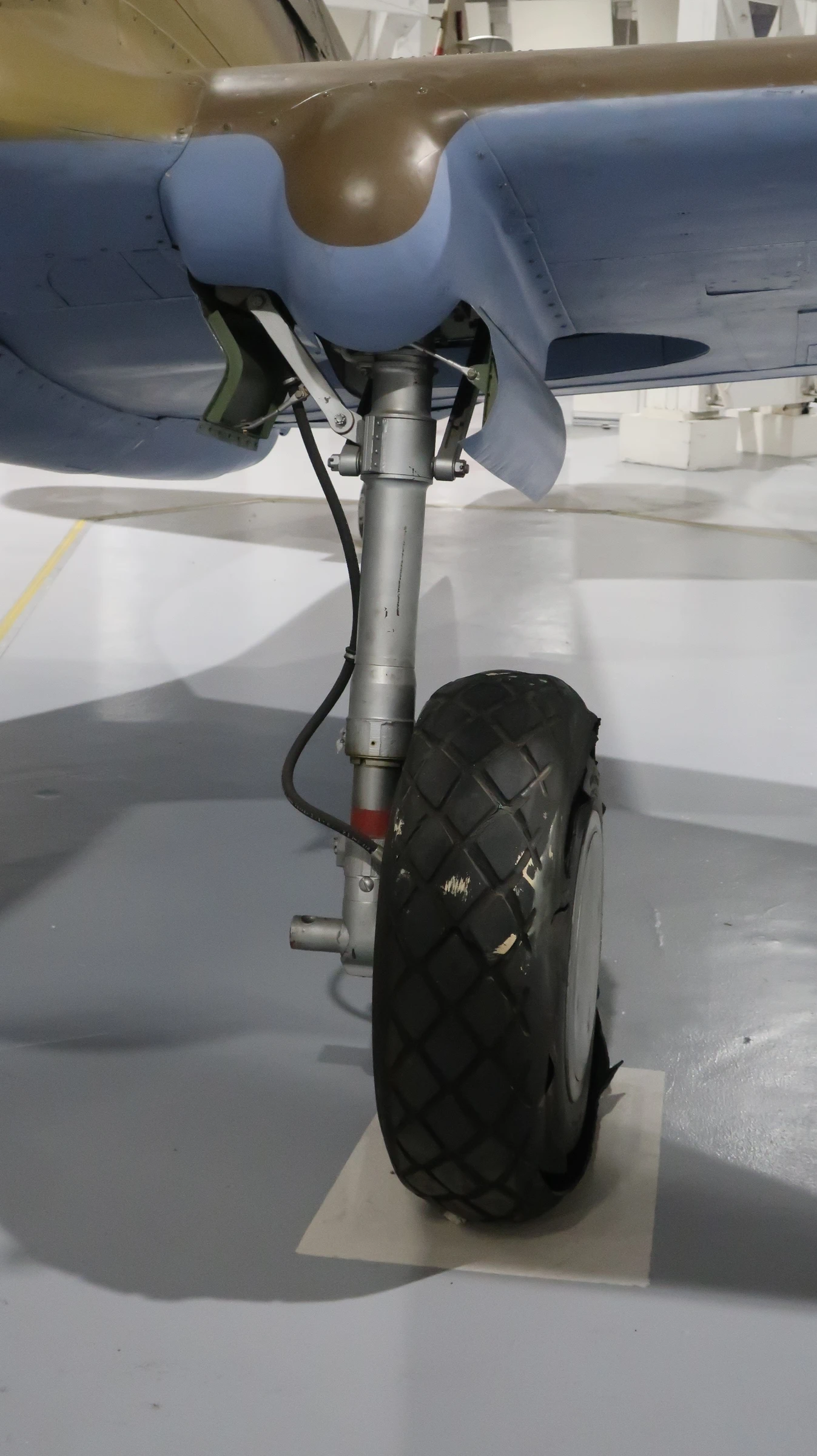
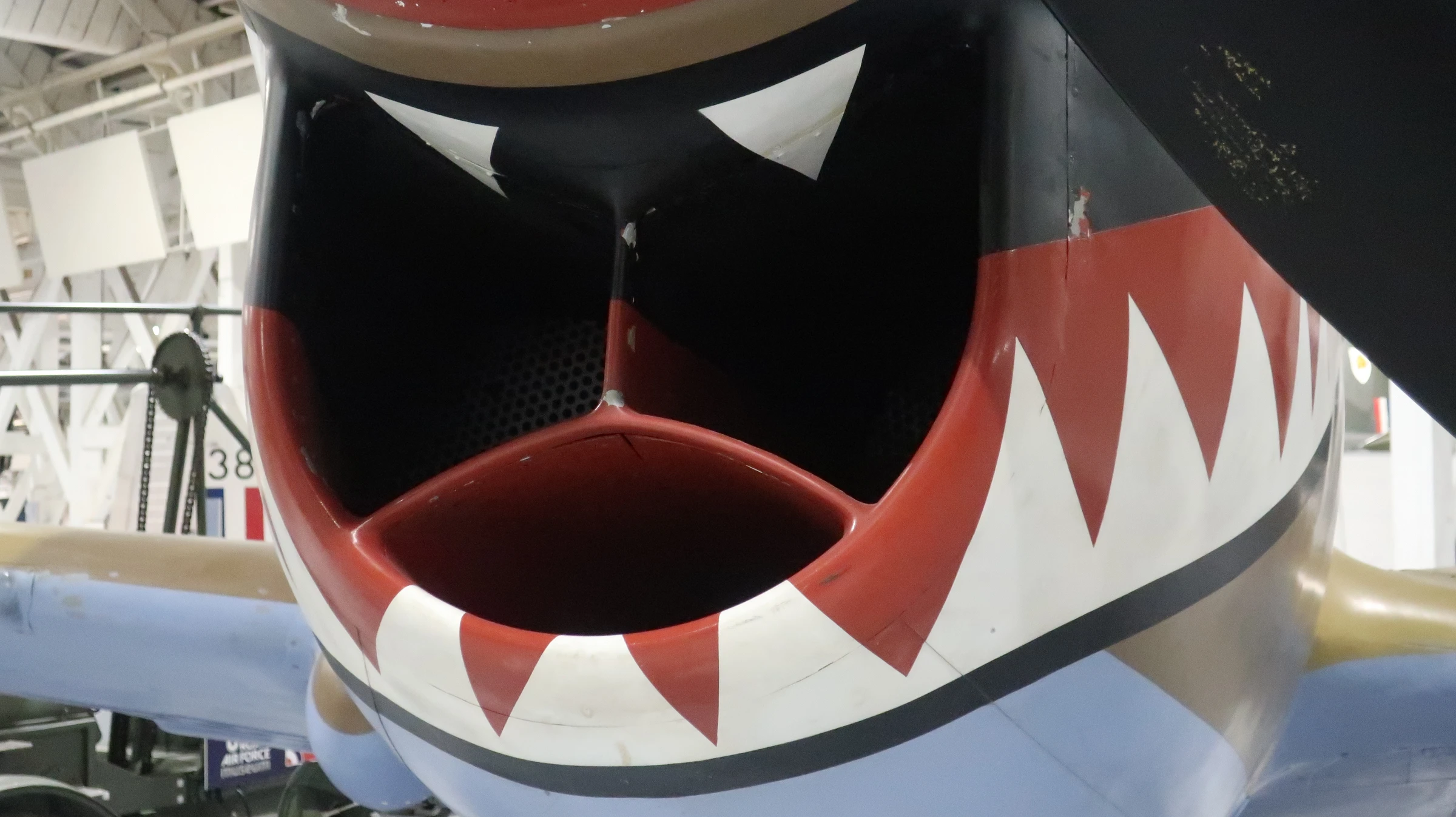
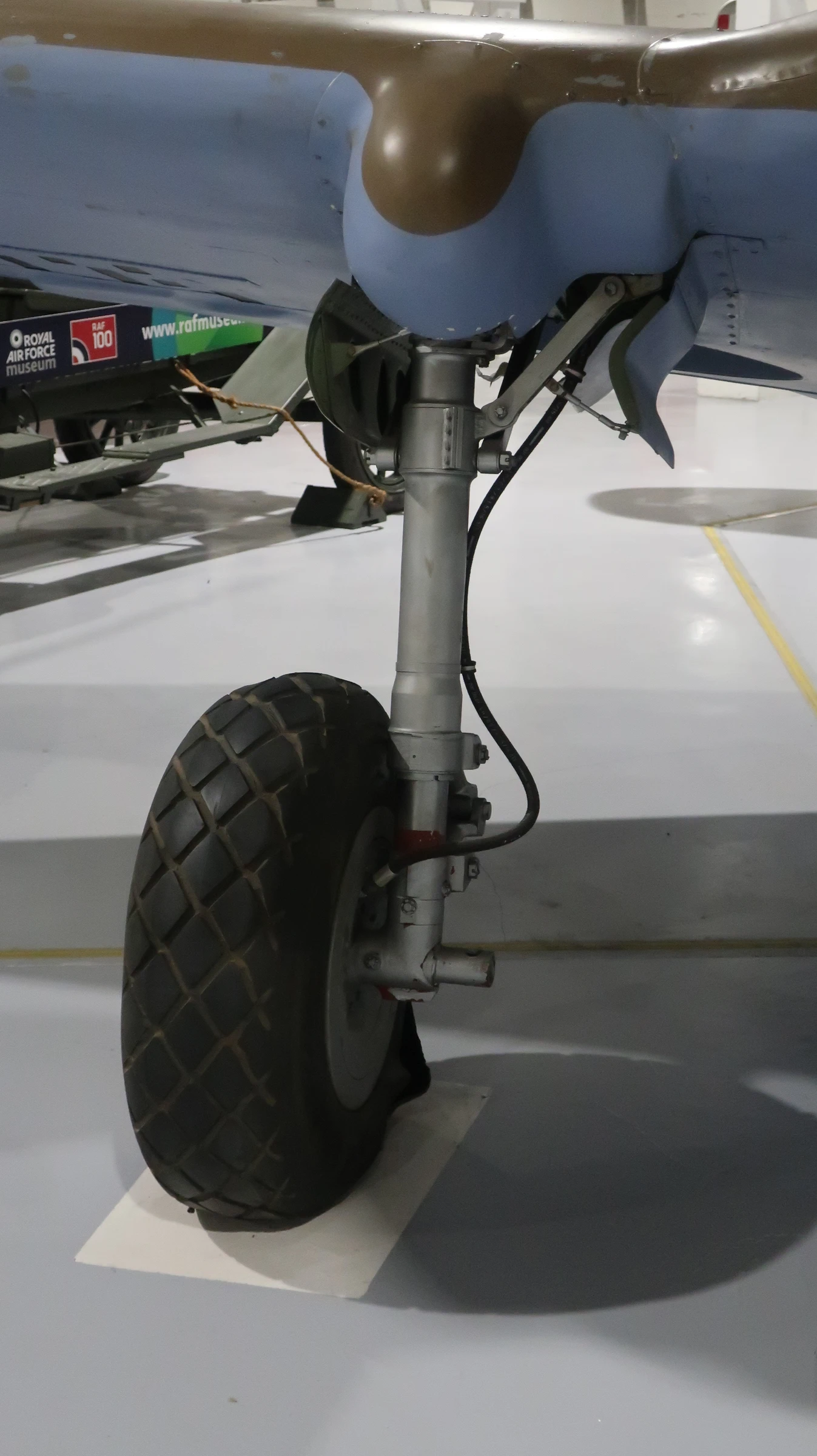
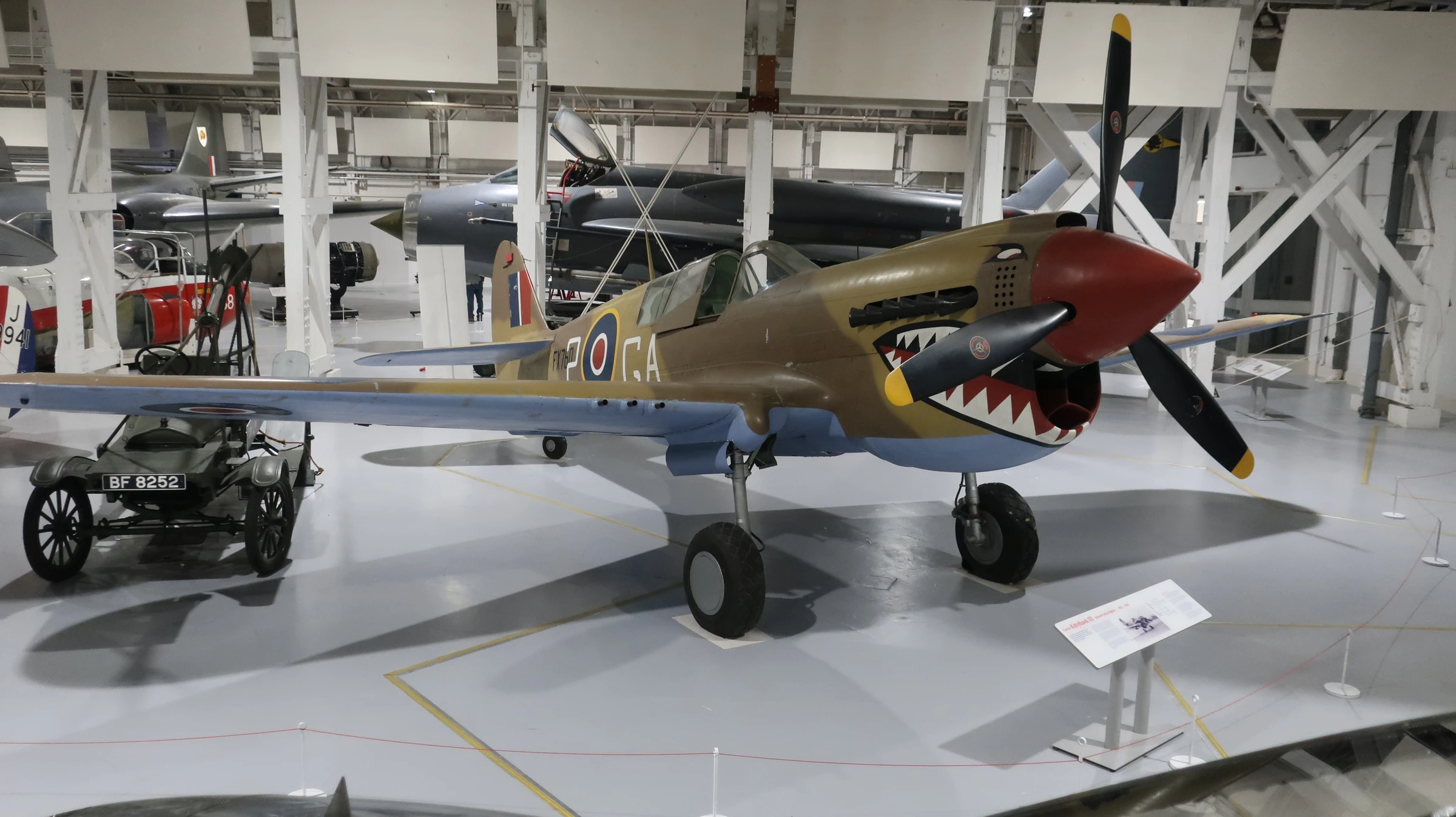
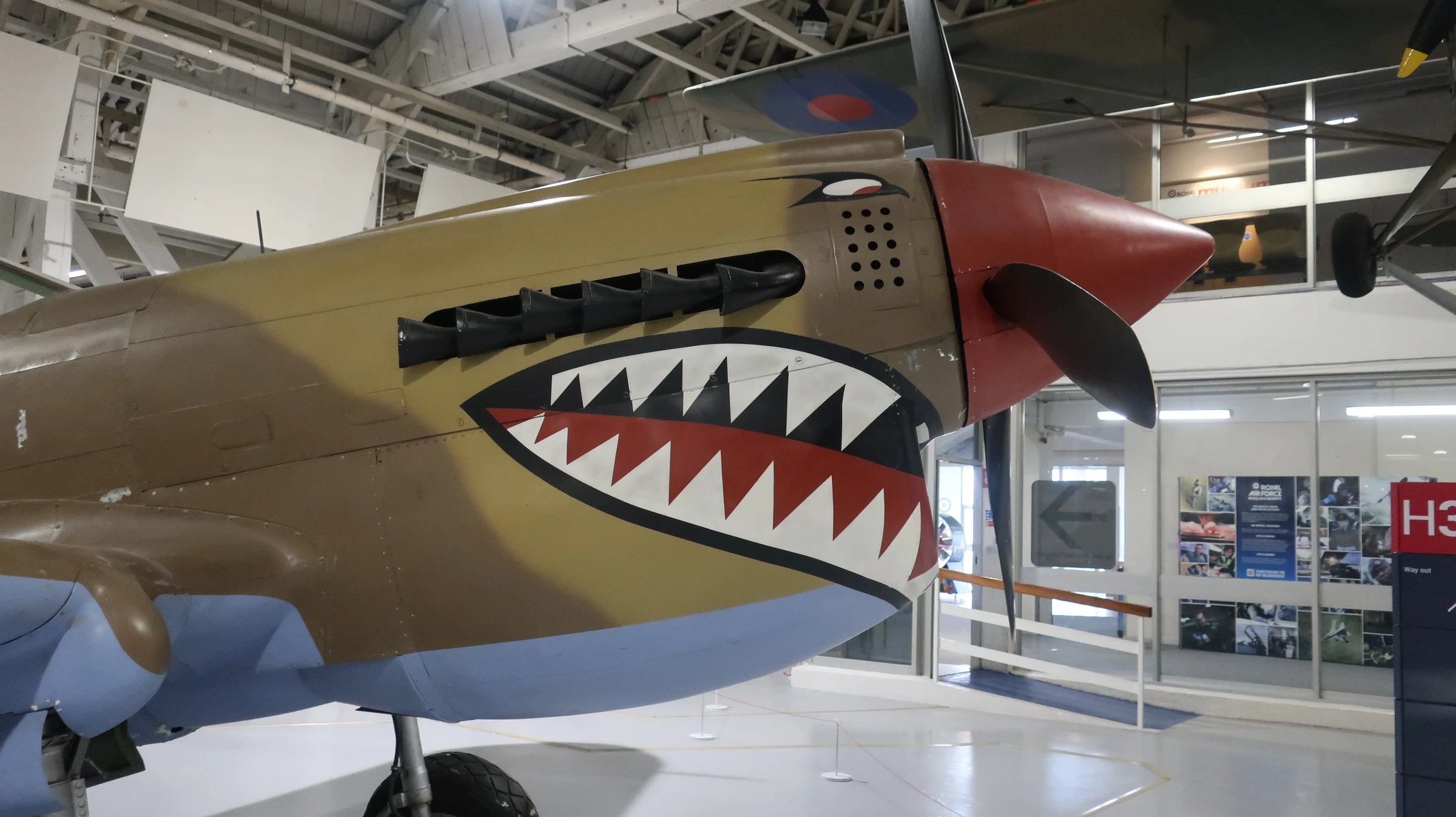
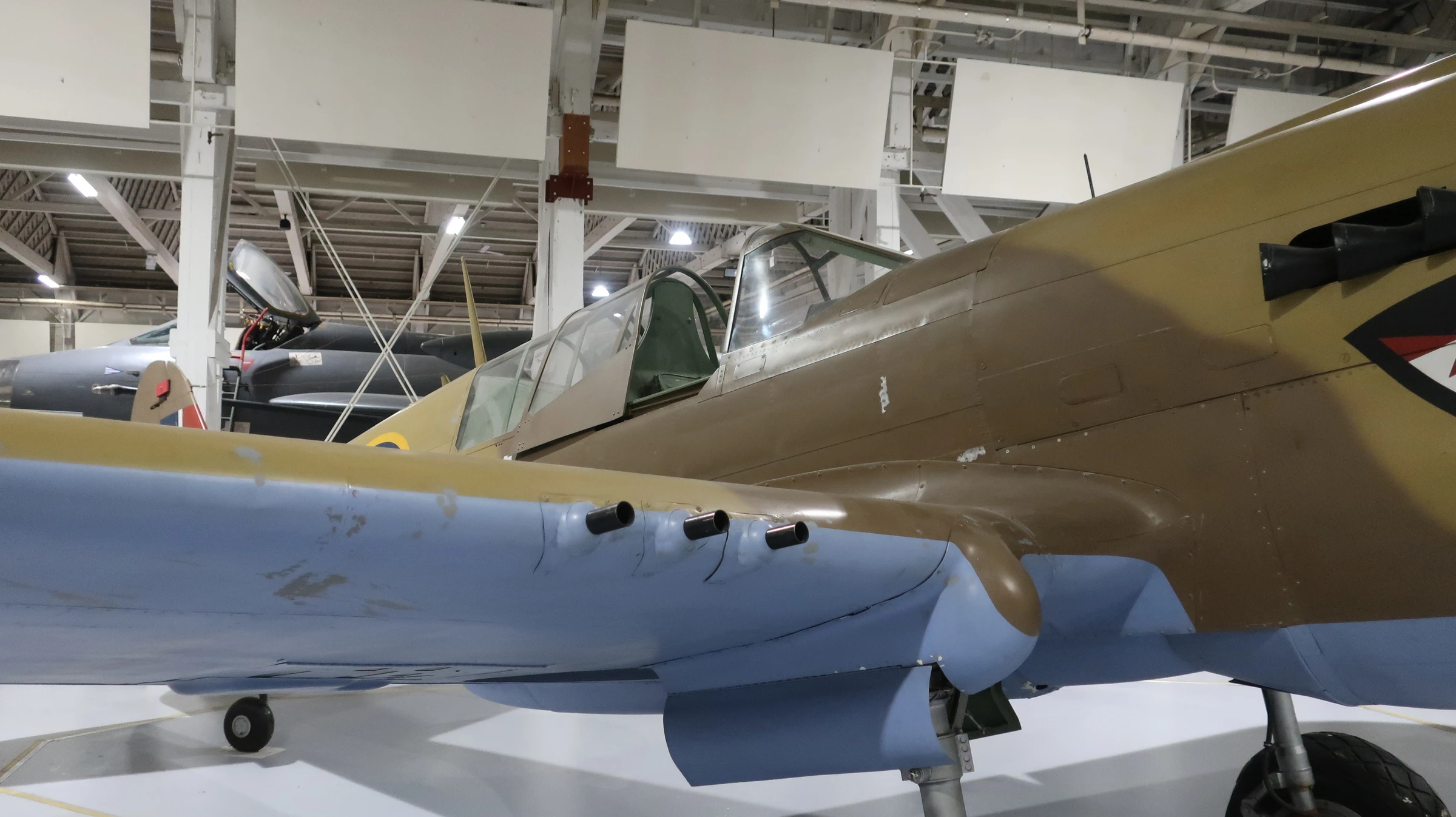
These walk-around photos were taken at the RAF Museum London in Hendon in 2019. They show a Curtiss Kittyhawk IV, displayed as FX760/GA-? of No. 112 Squadron RAF — the squadron famous for its shark mouth markings, which became one of the most iconic images of the desert air war. The Kittyhawk was the principal Commonwealth fighter-bomber in North Africa and the Mediterranean from 1942 onwards, providing essential ground attack capability at a time when more capable aircraft were not yet available in sufficient numbers. No. 112 Squadron operated Kittyhawks throughout the North African and Italian campaigns, flying low-level strikes against enemy transport, armour and gun positions.
The aircraft on display is a composite reconstruction rather than the original FX760, which was shot down by anti-aircraft fire over Italy on 21 August 1944, killing Warrant Officer Halpin. The displayed airframe was assembled in the late 1980s and early 1990s from parts of several wrecks recovered from the jungles of New Guinea, with the primary fuselage coming from RAAF Kittyhawk A29-556. The restoration was completed in Texas in 1992 as part of an exchange deal in which the RAF Museum traded two Spitfire Mk XVI gate guards, and the aircraft went on display at Hendon in May 1992.