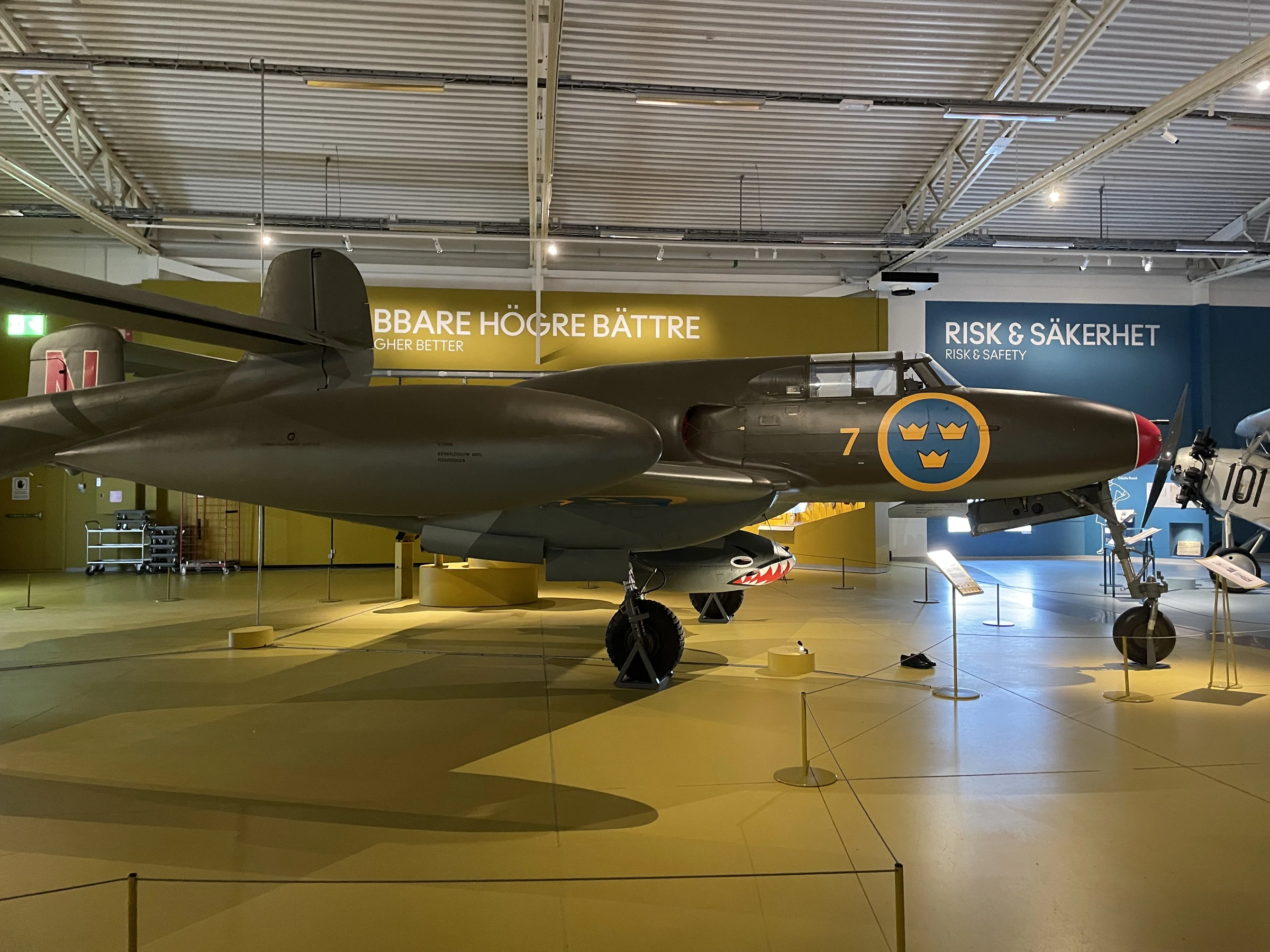
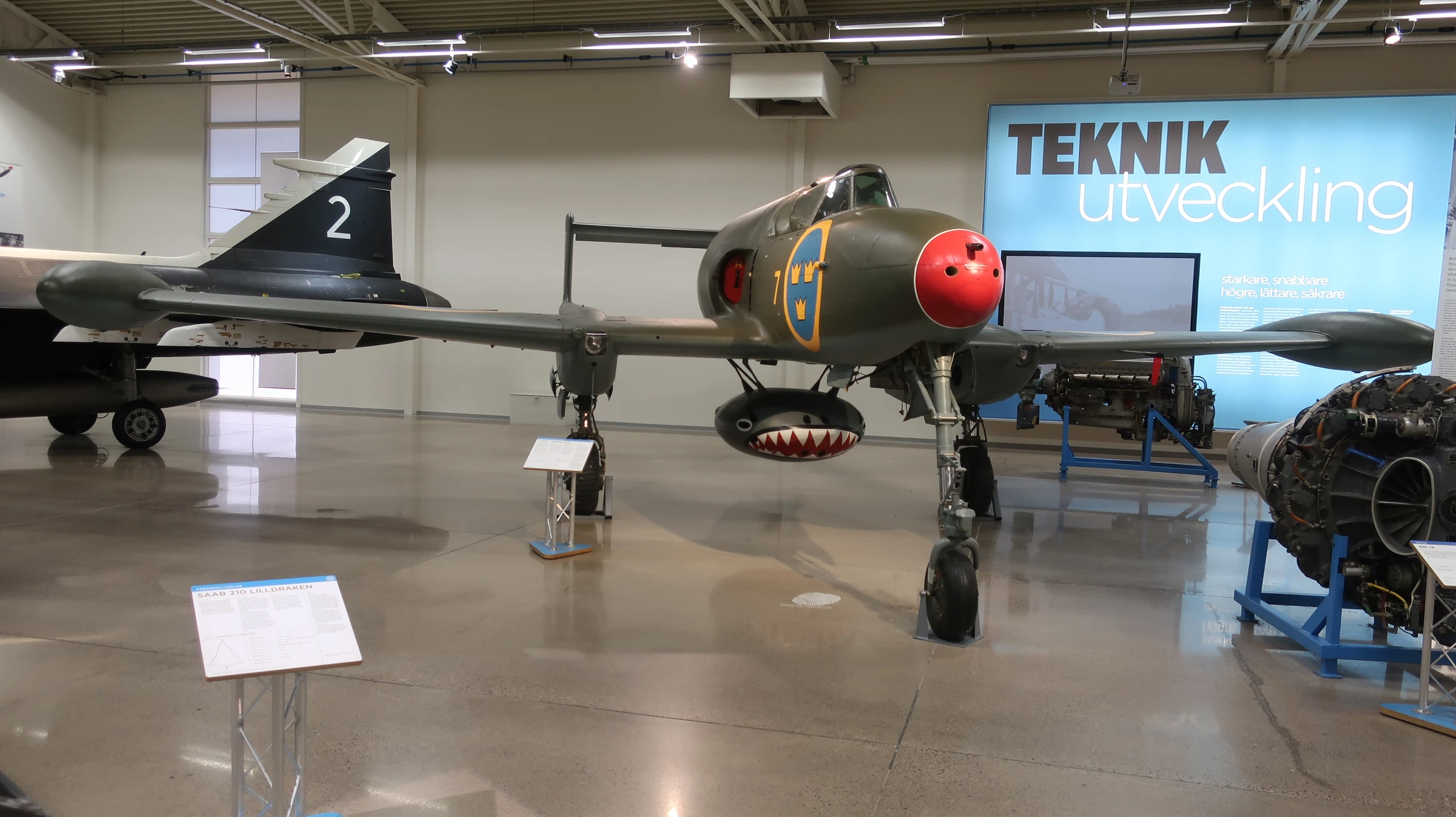
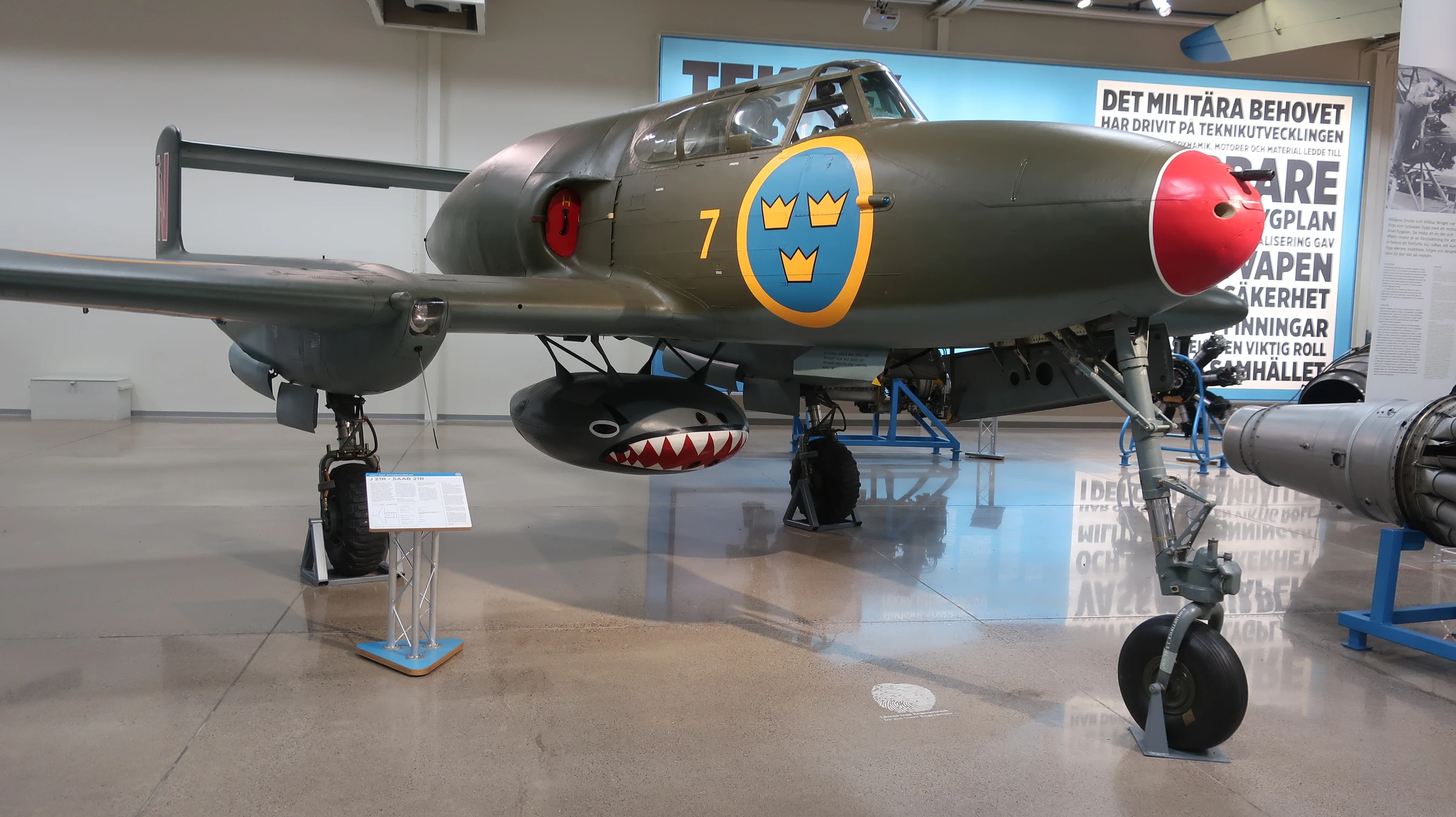
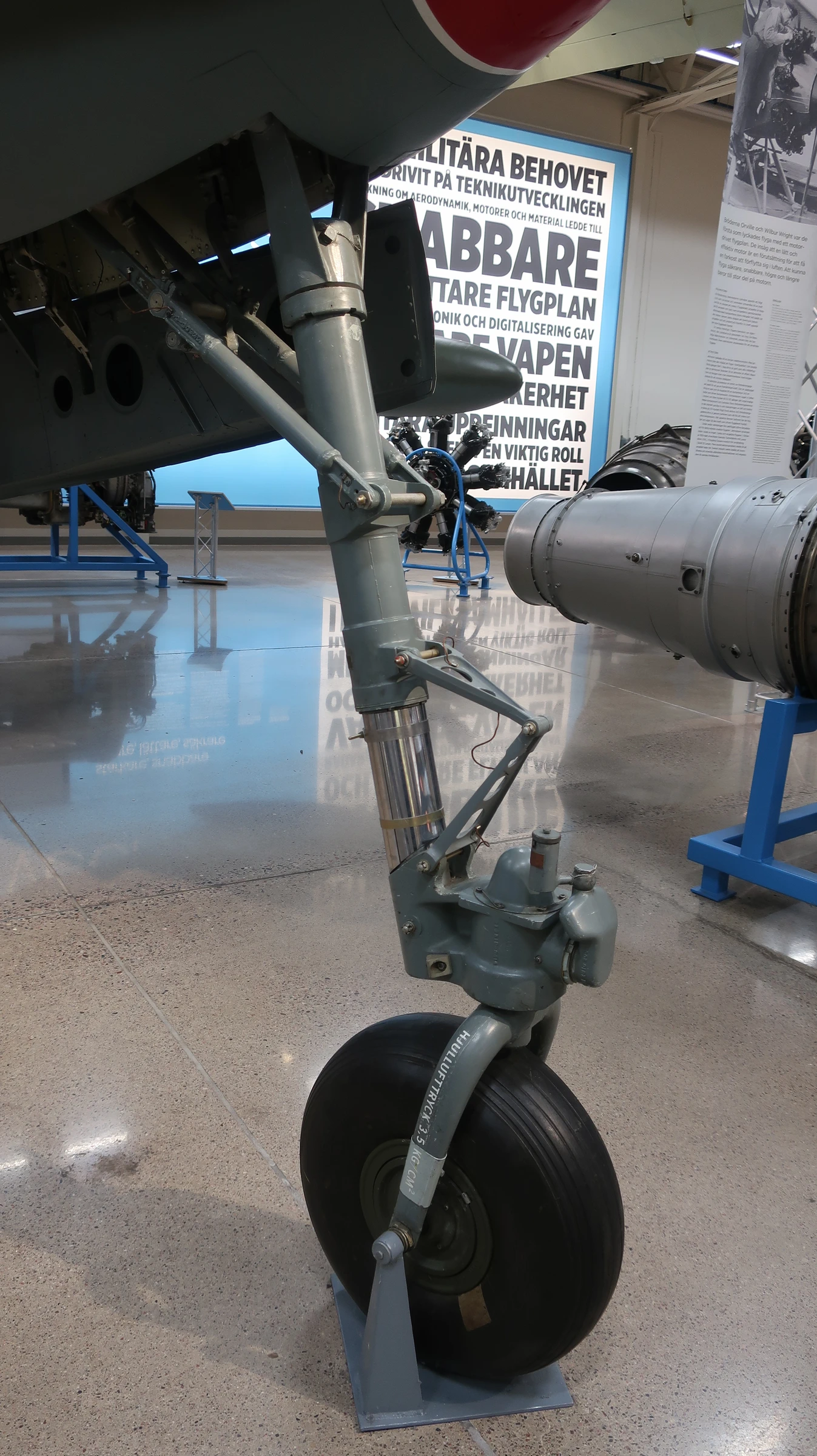
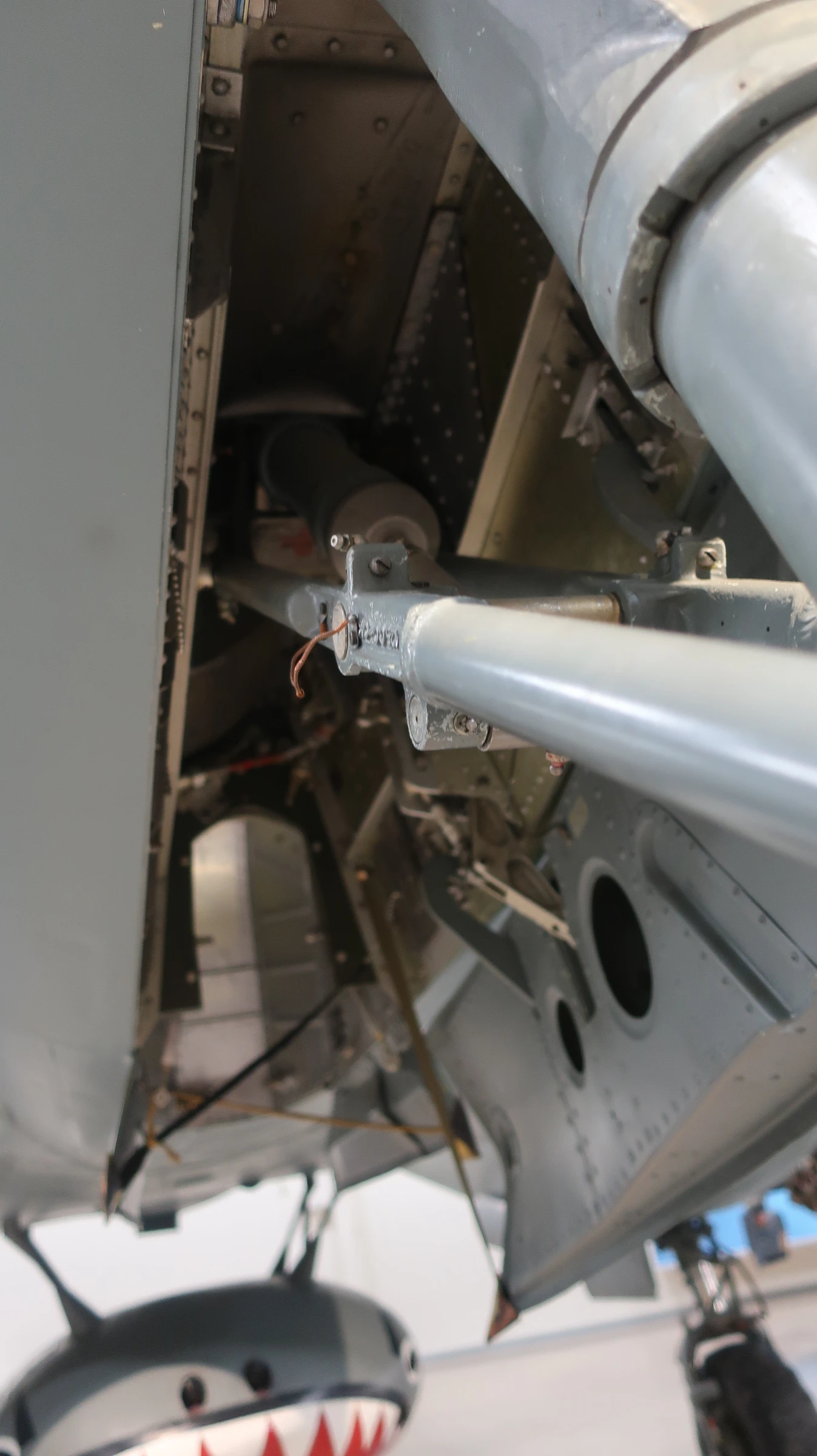
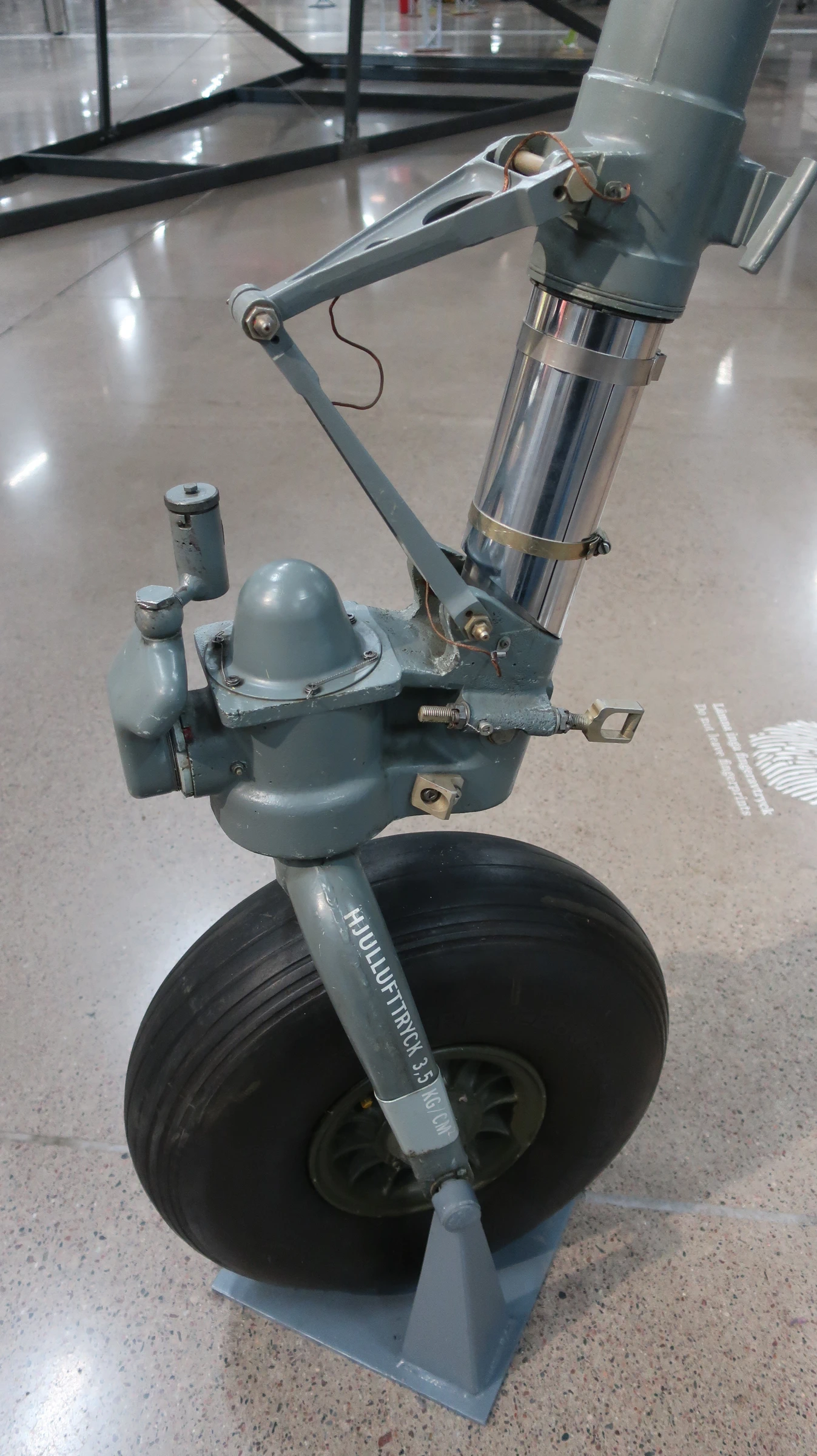
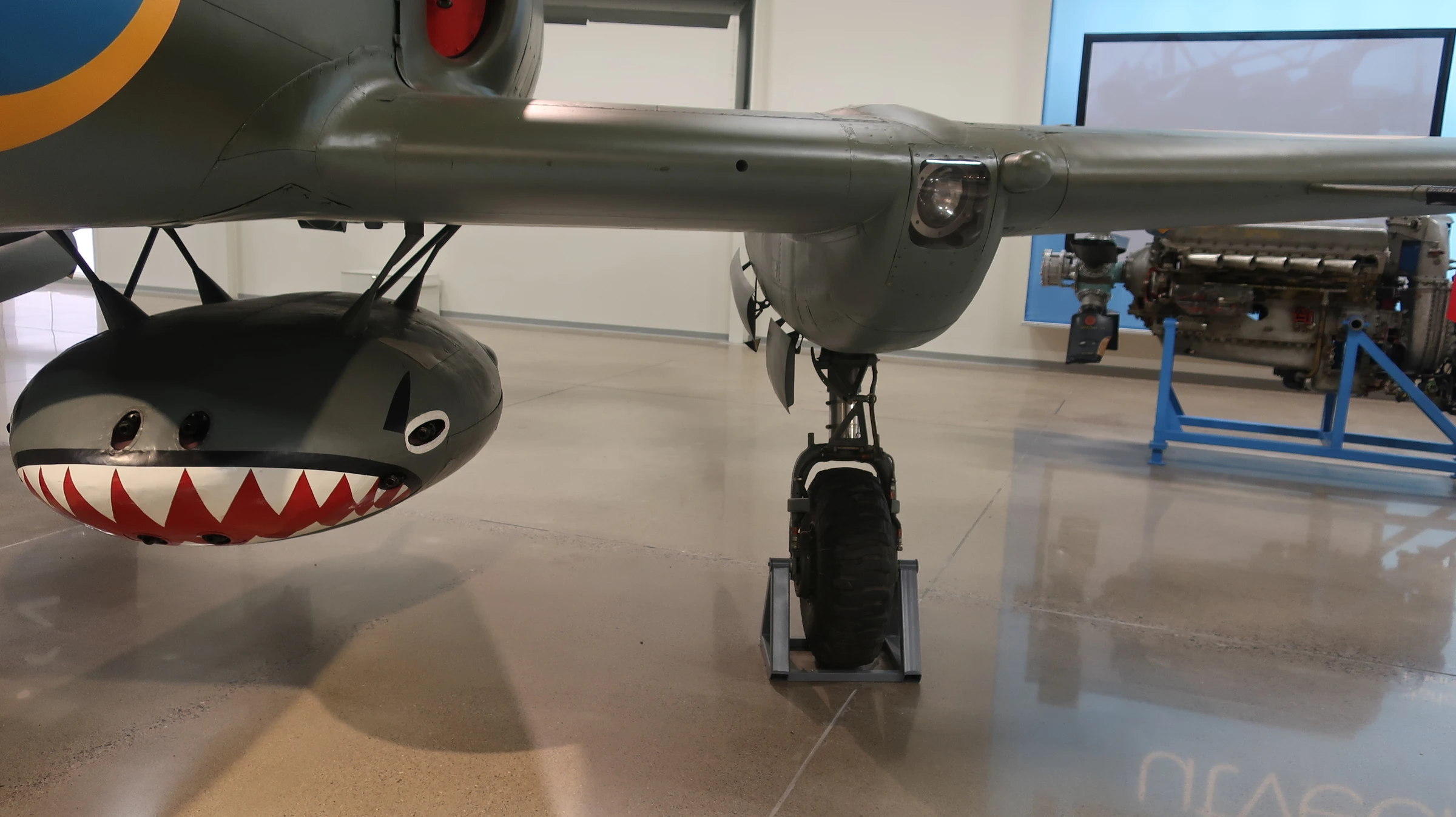
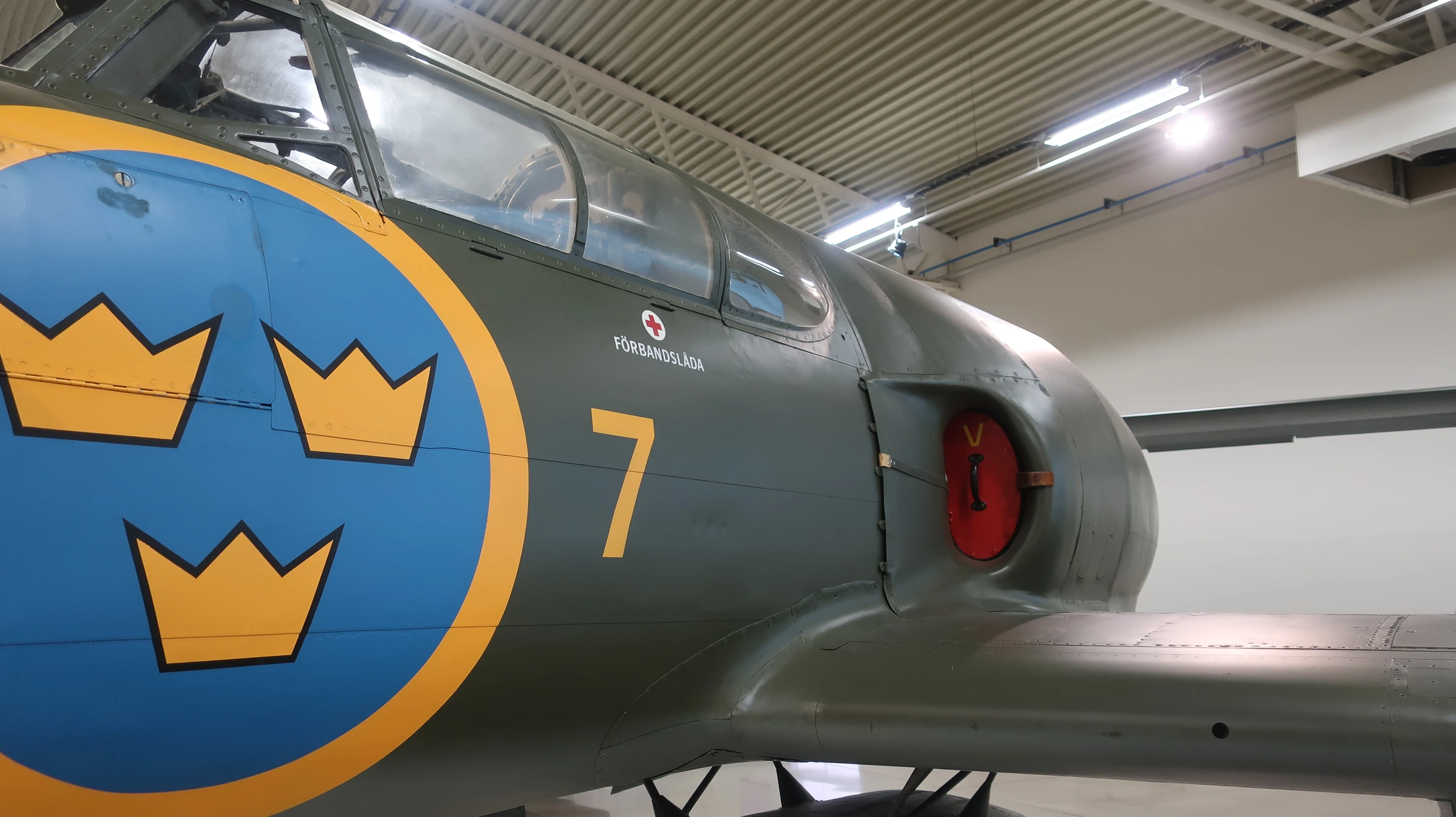
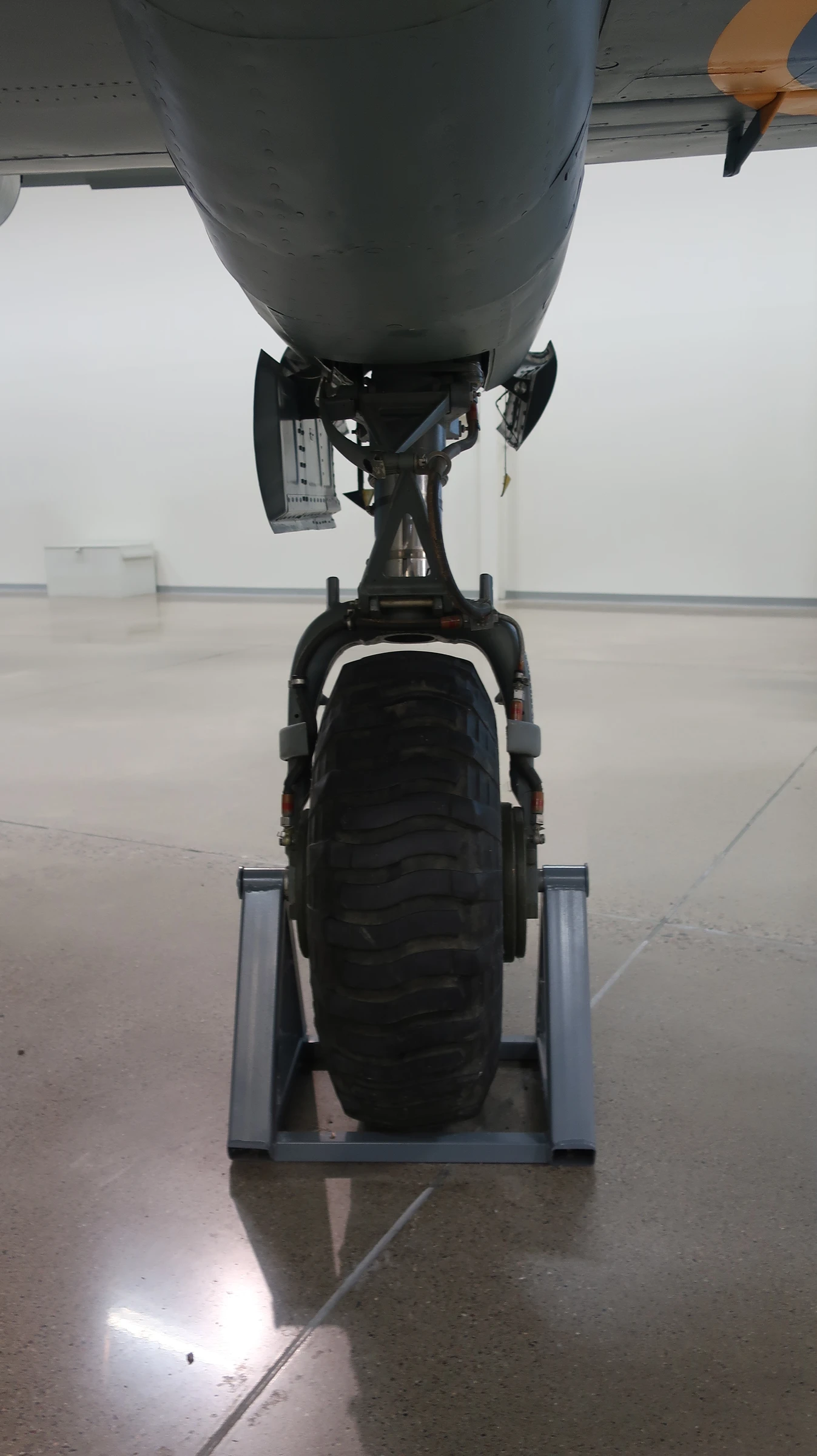
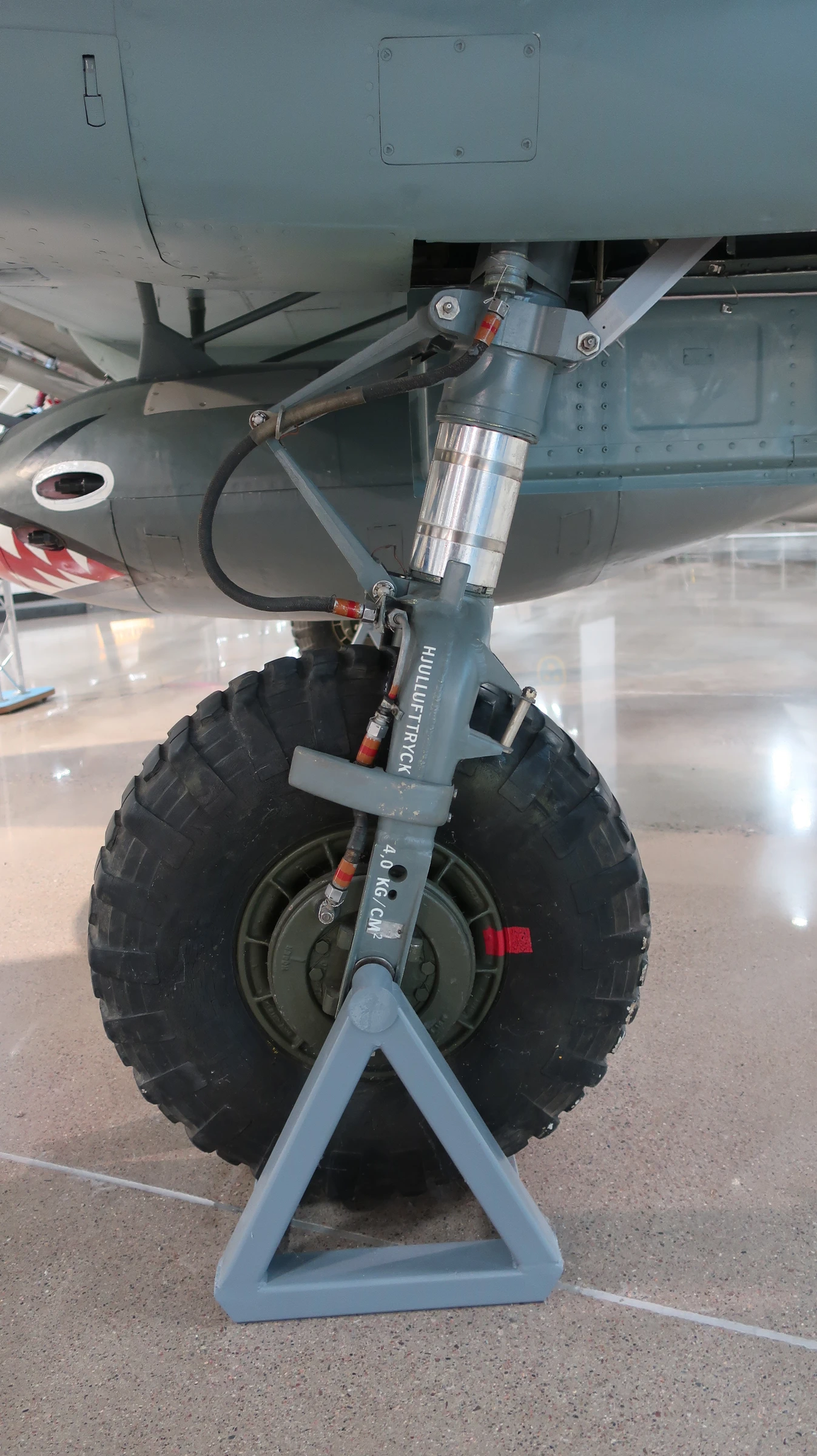
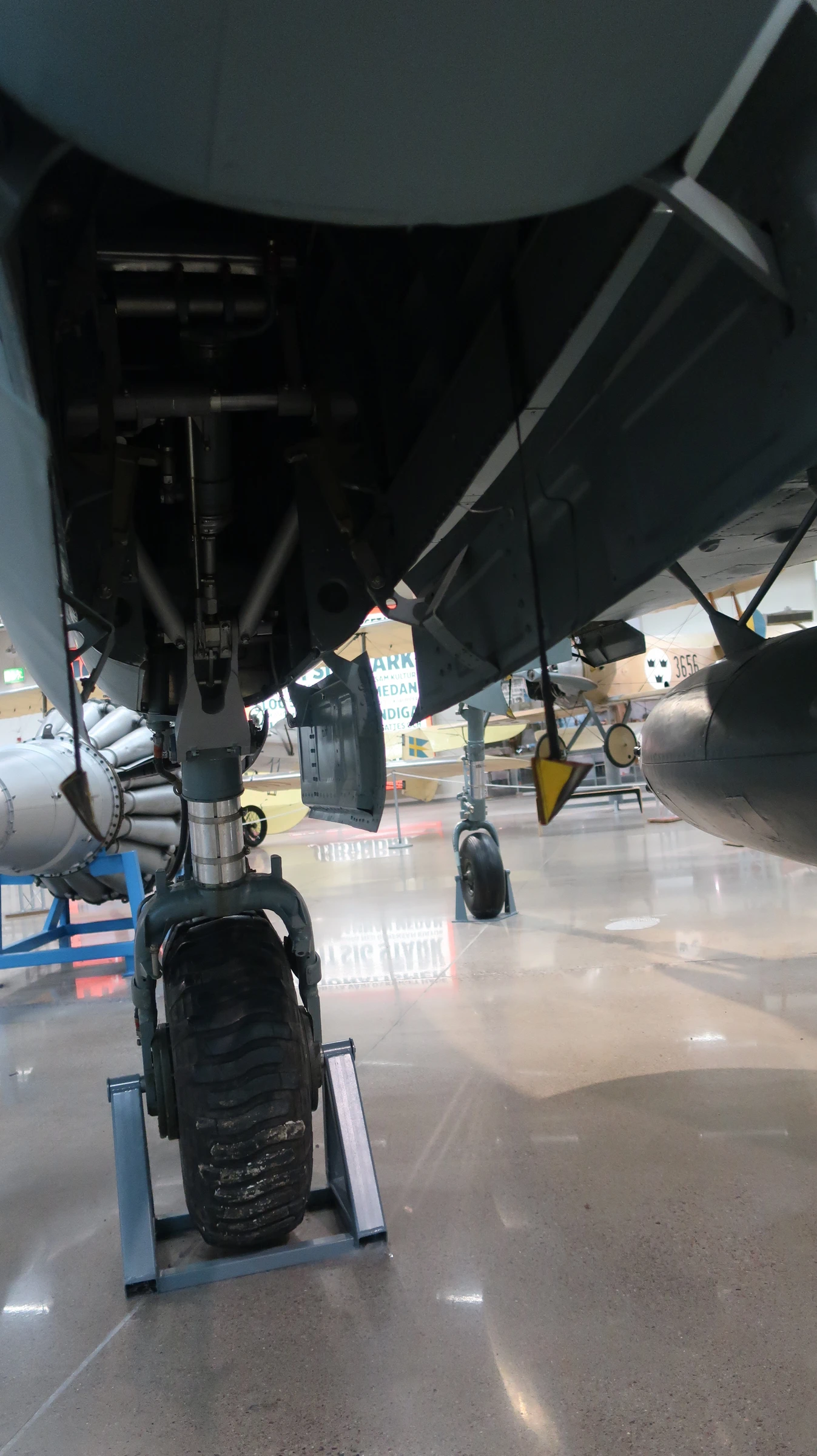
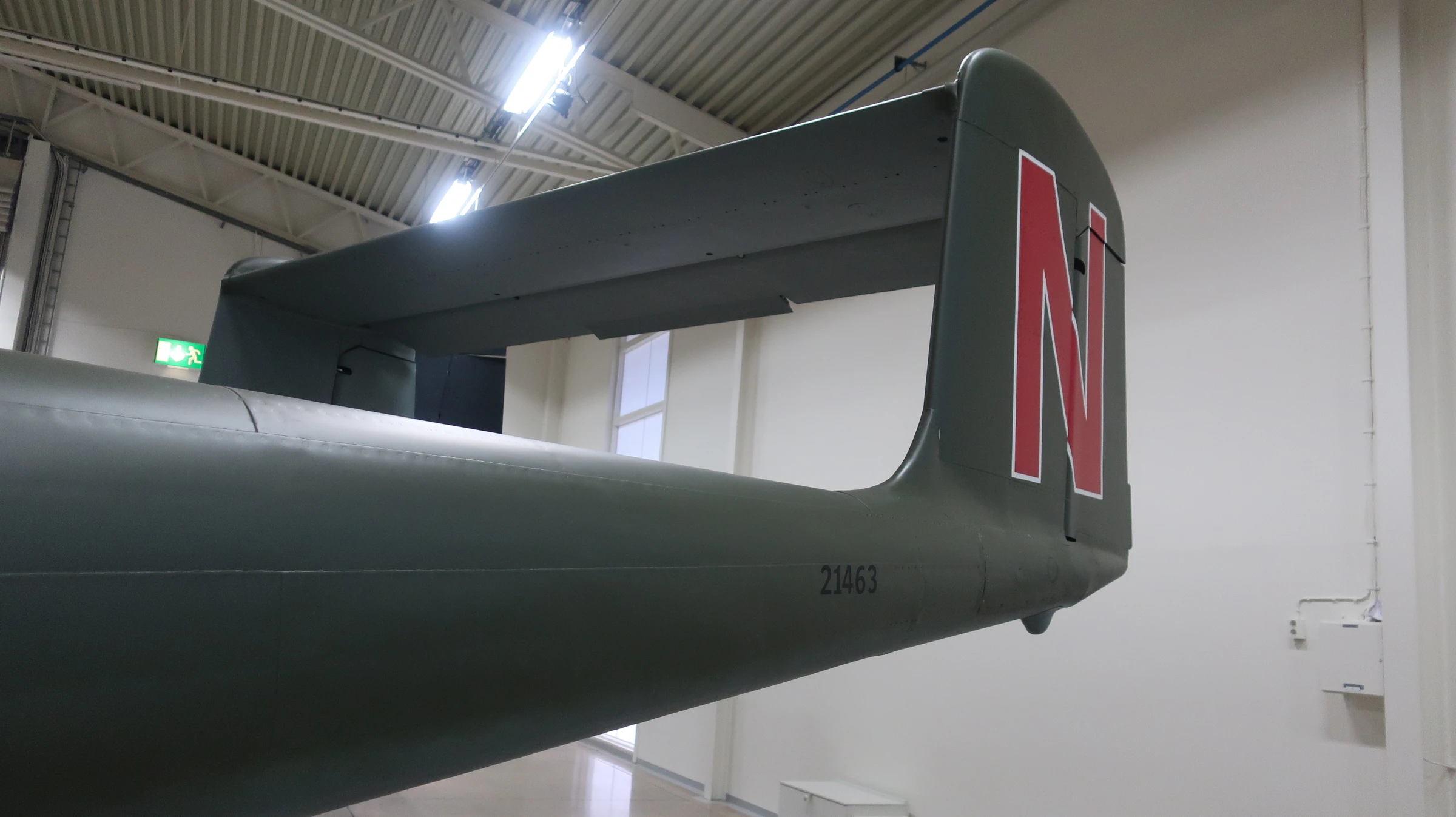
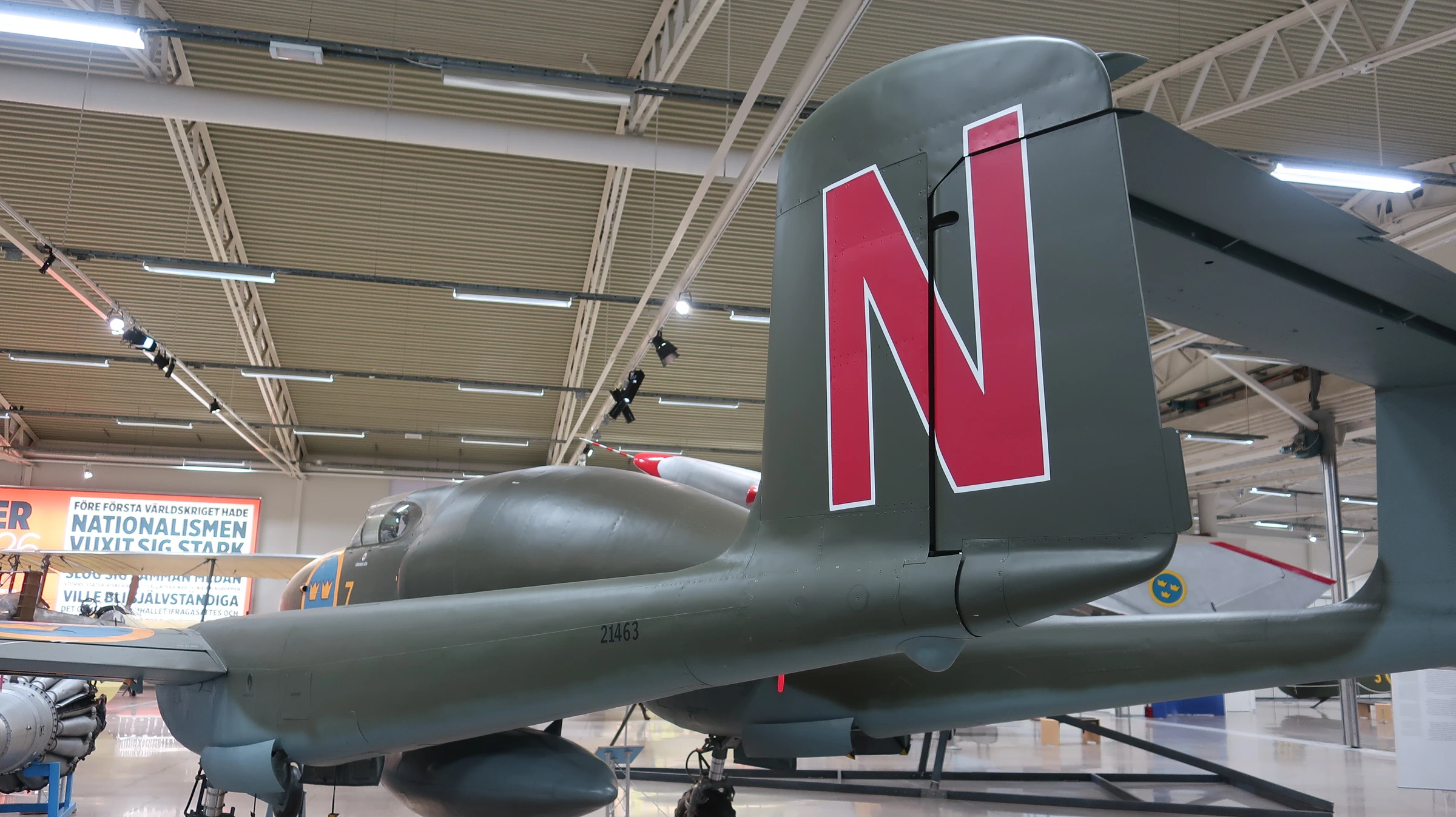
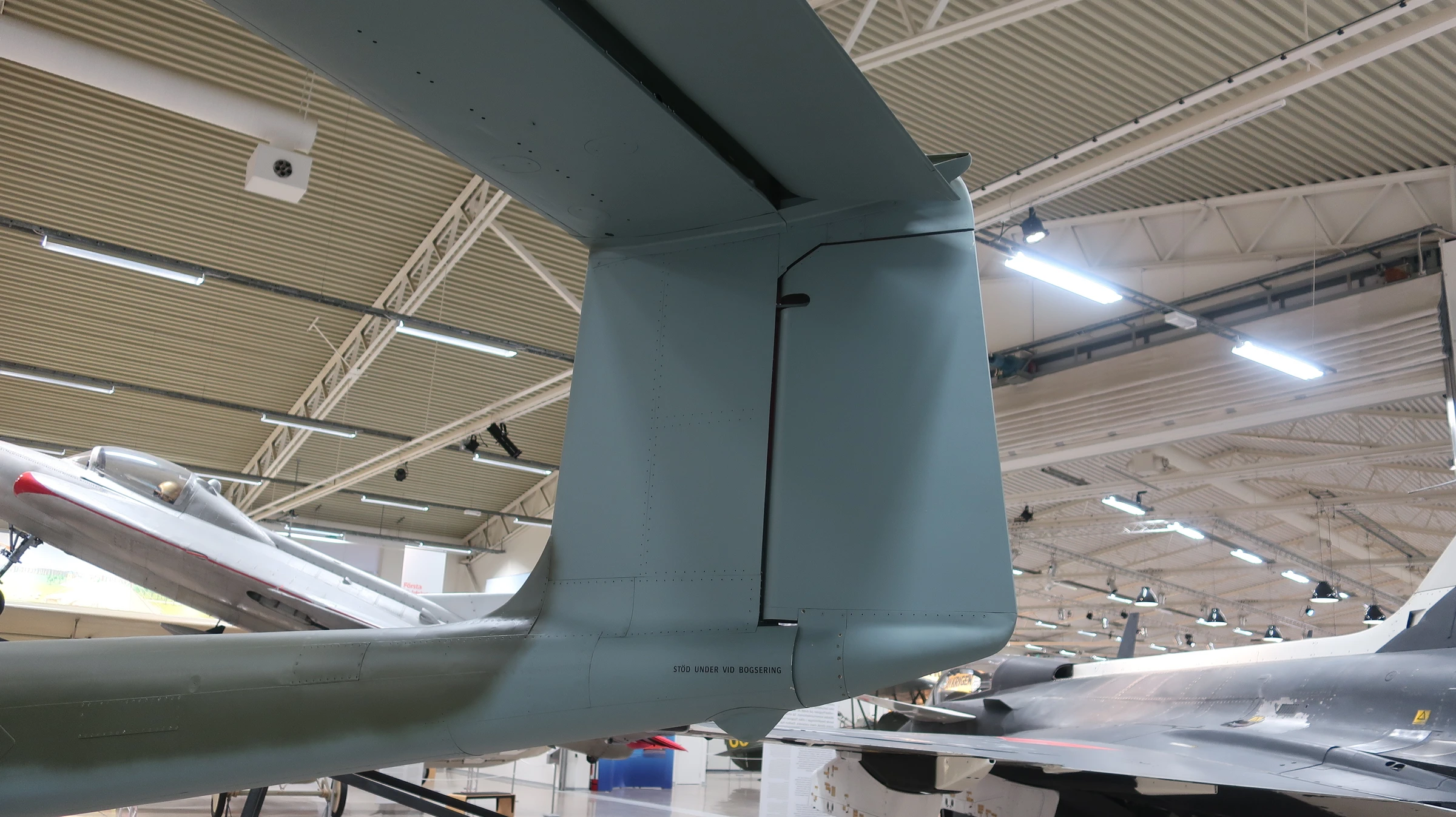
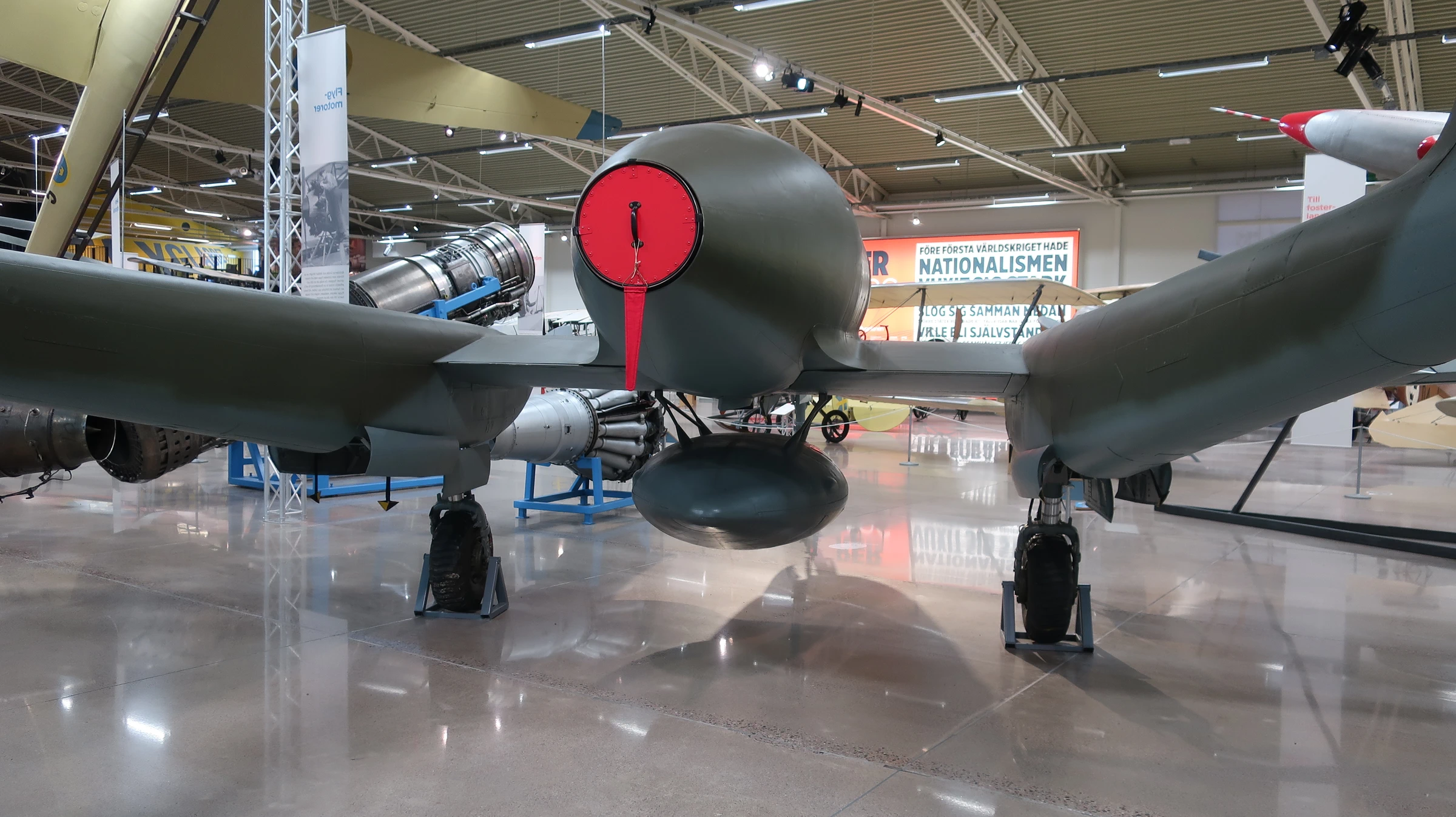
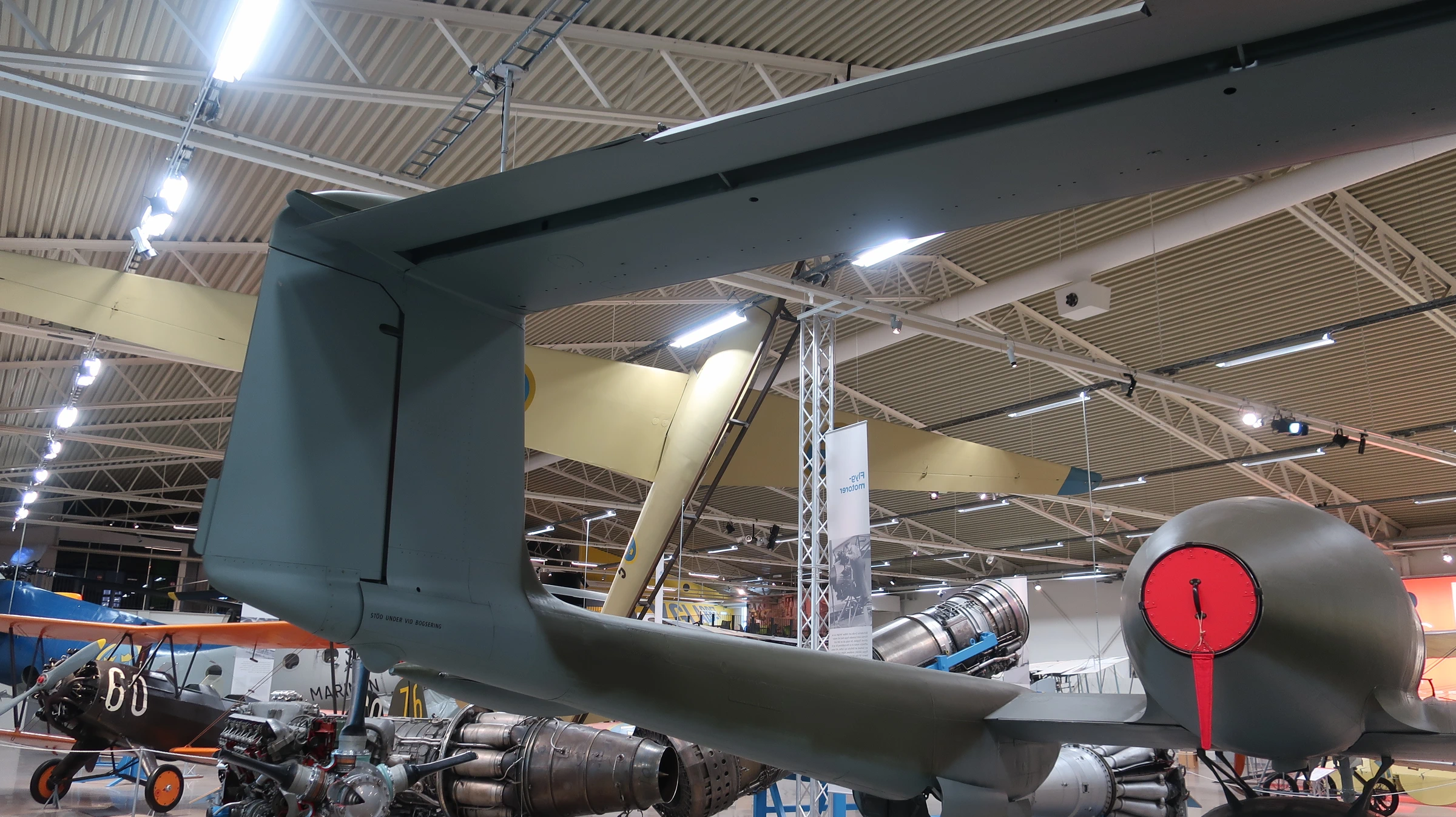
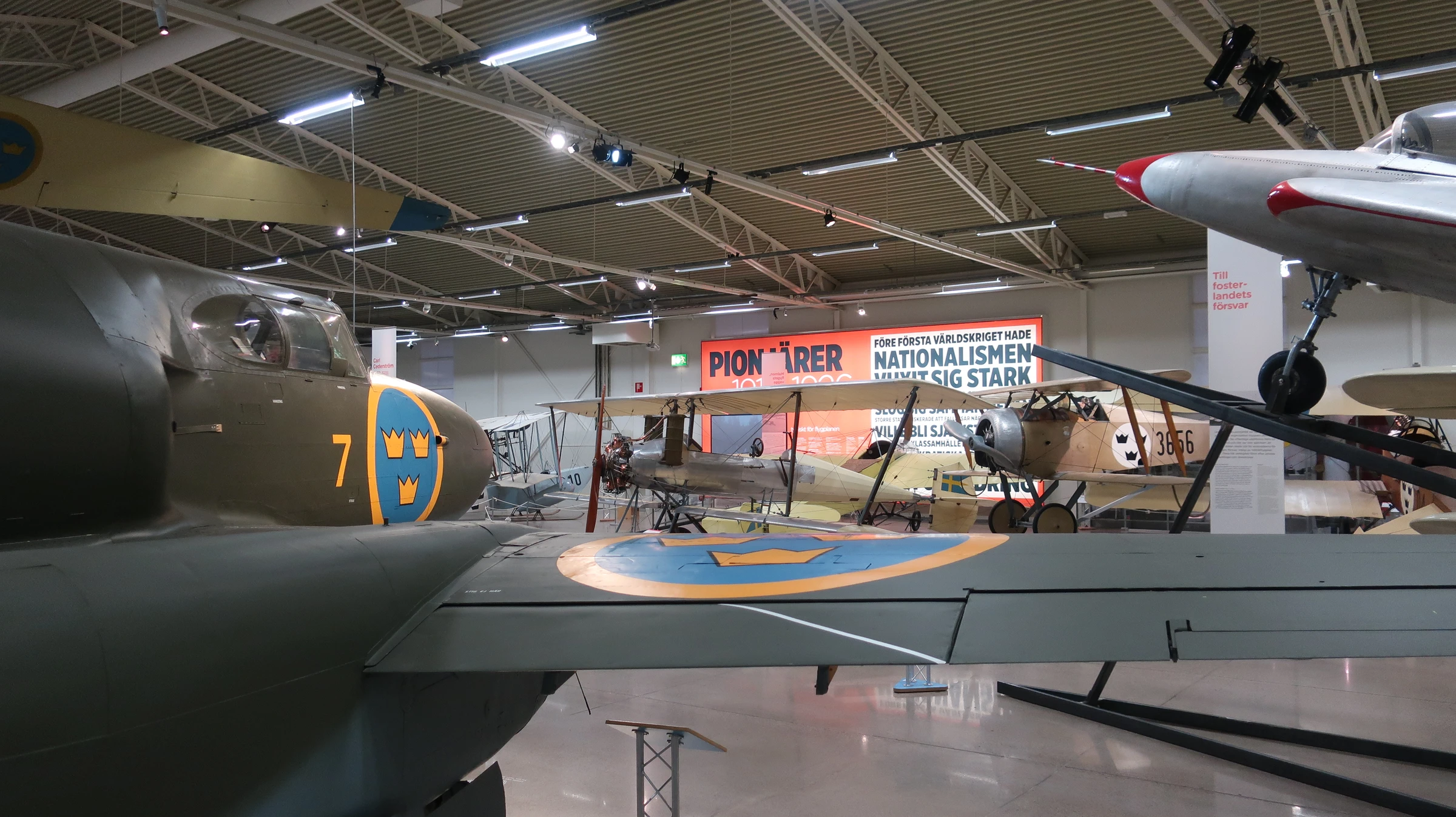
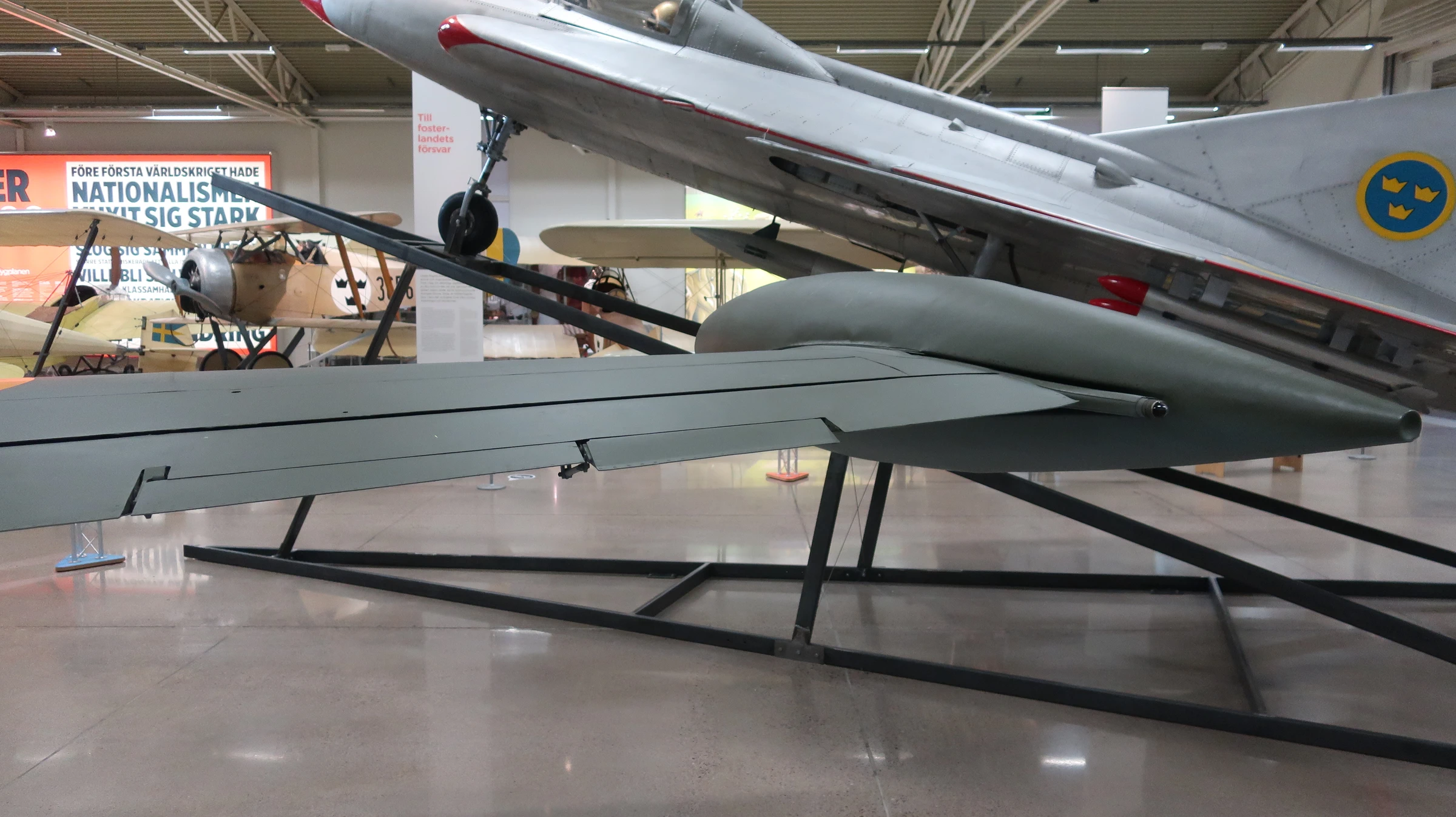
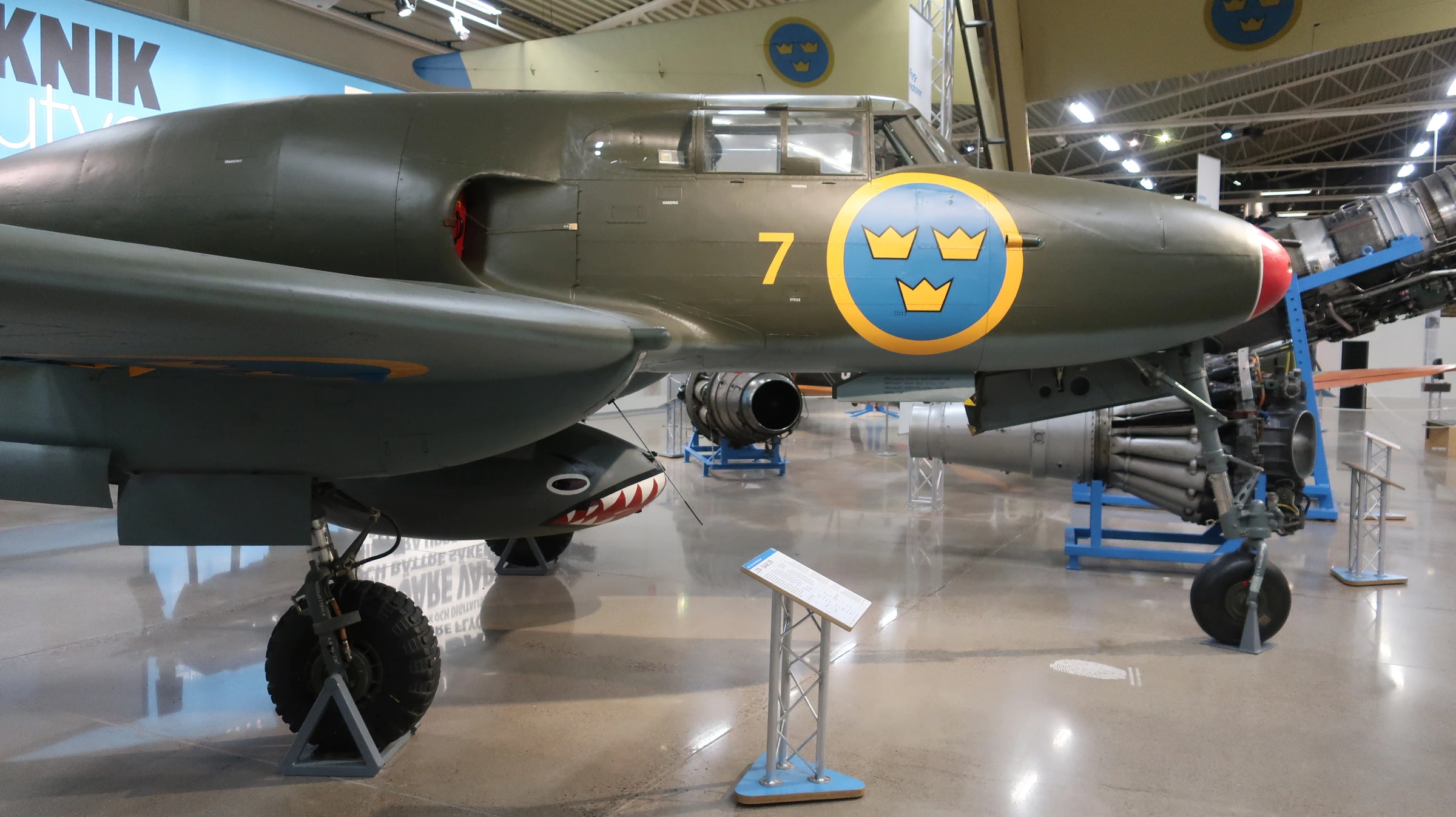
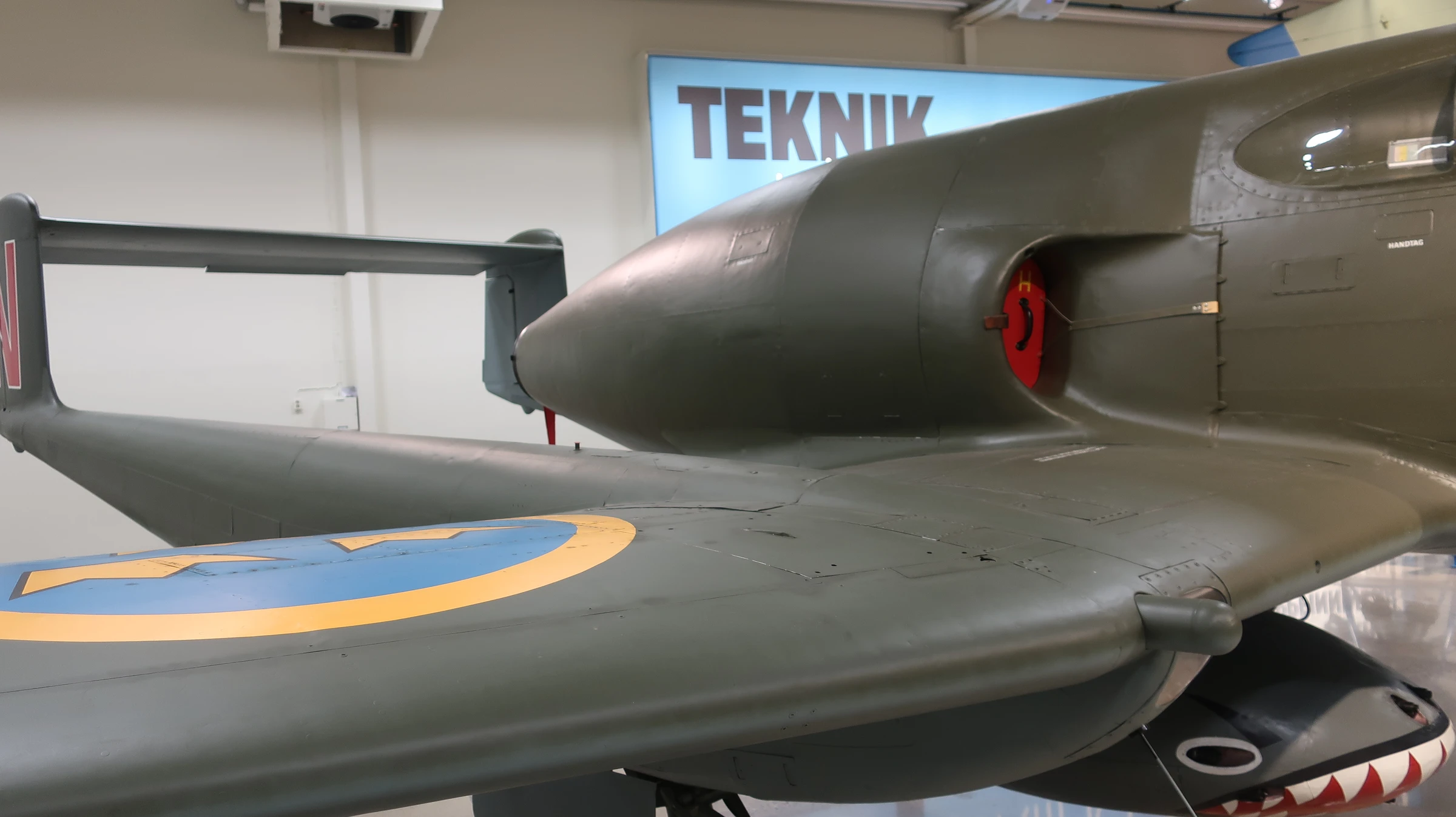
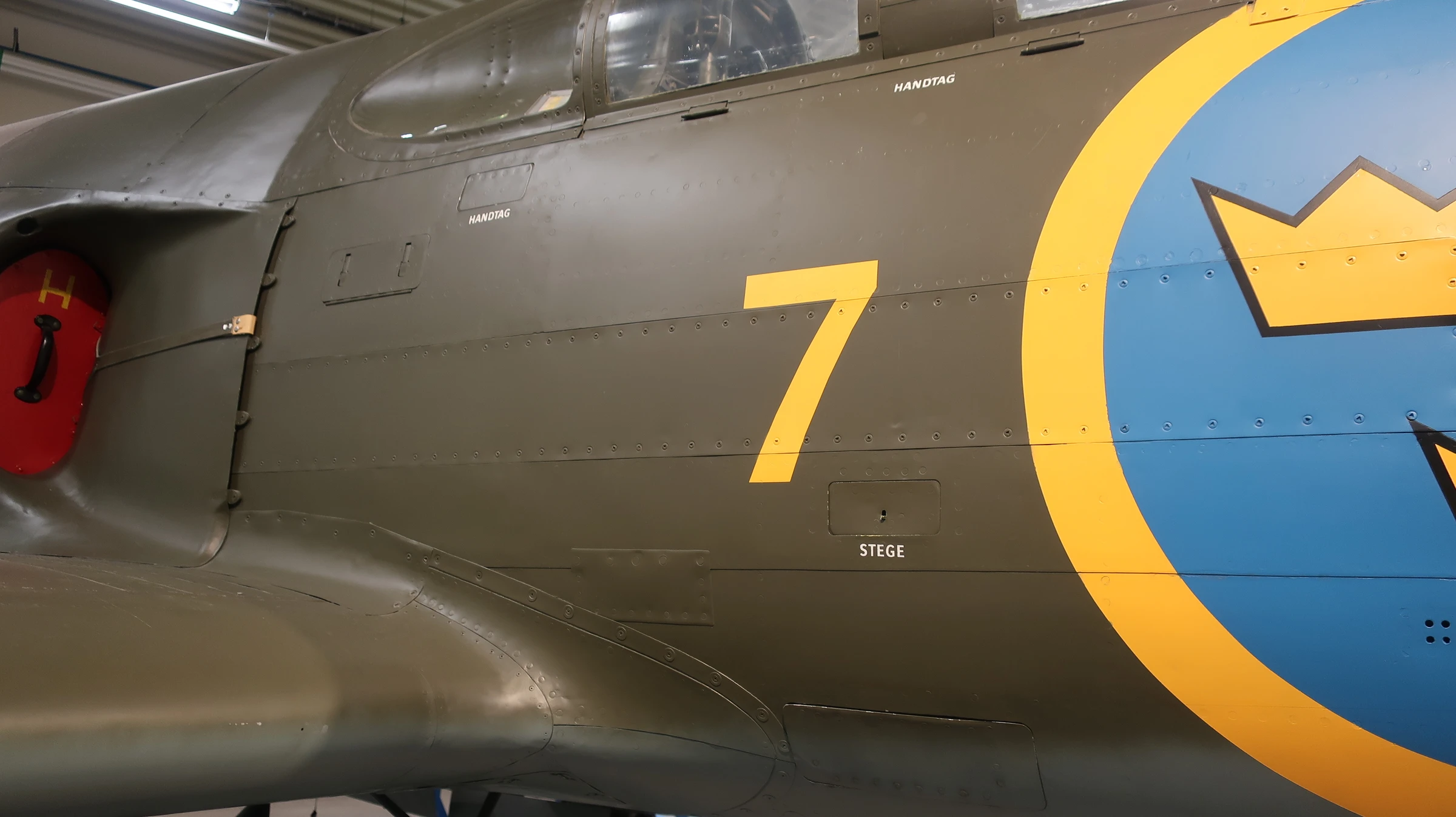
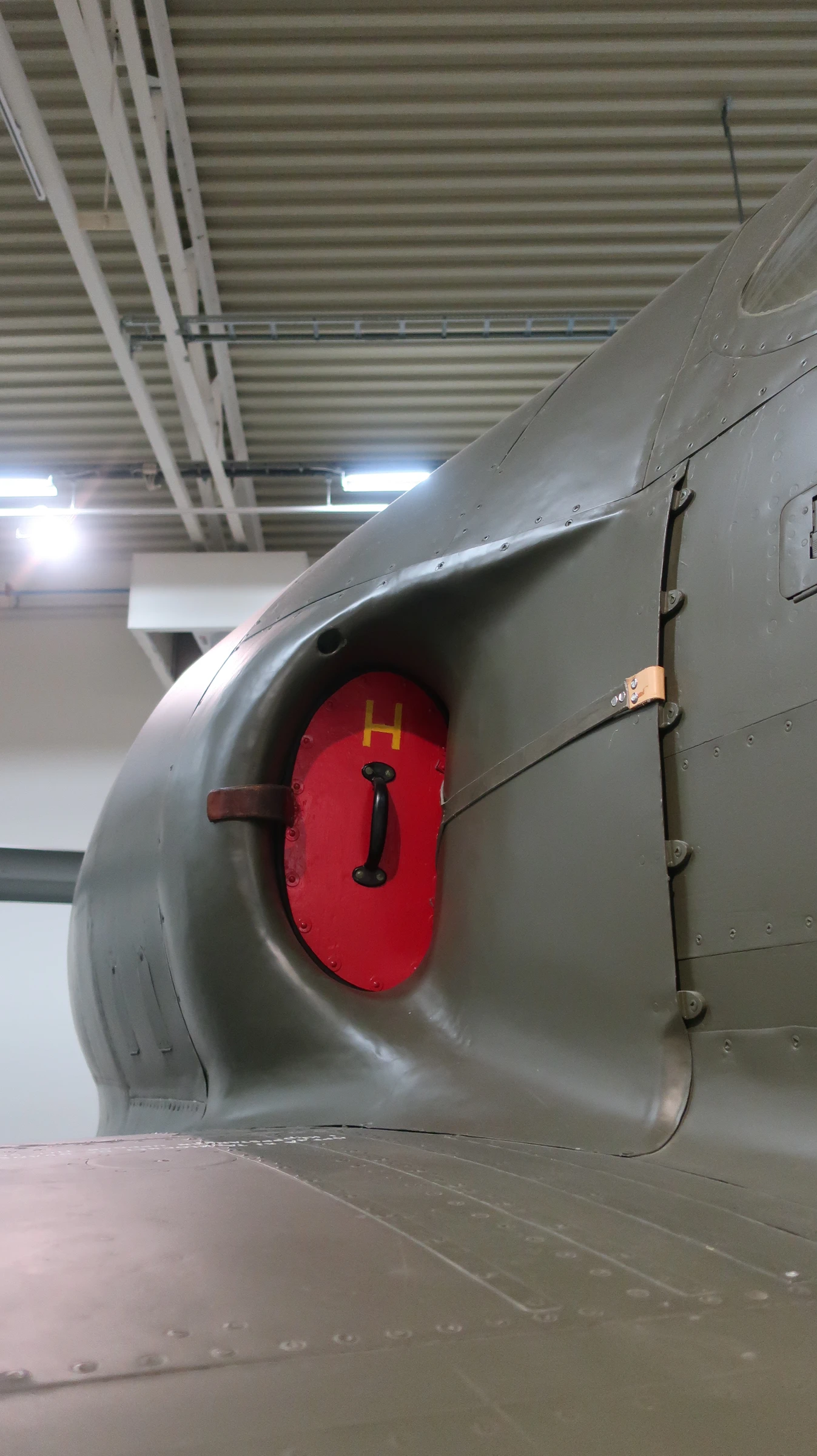
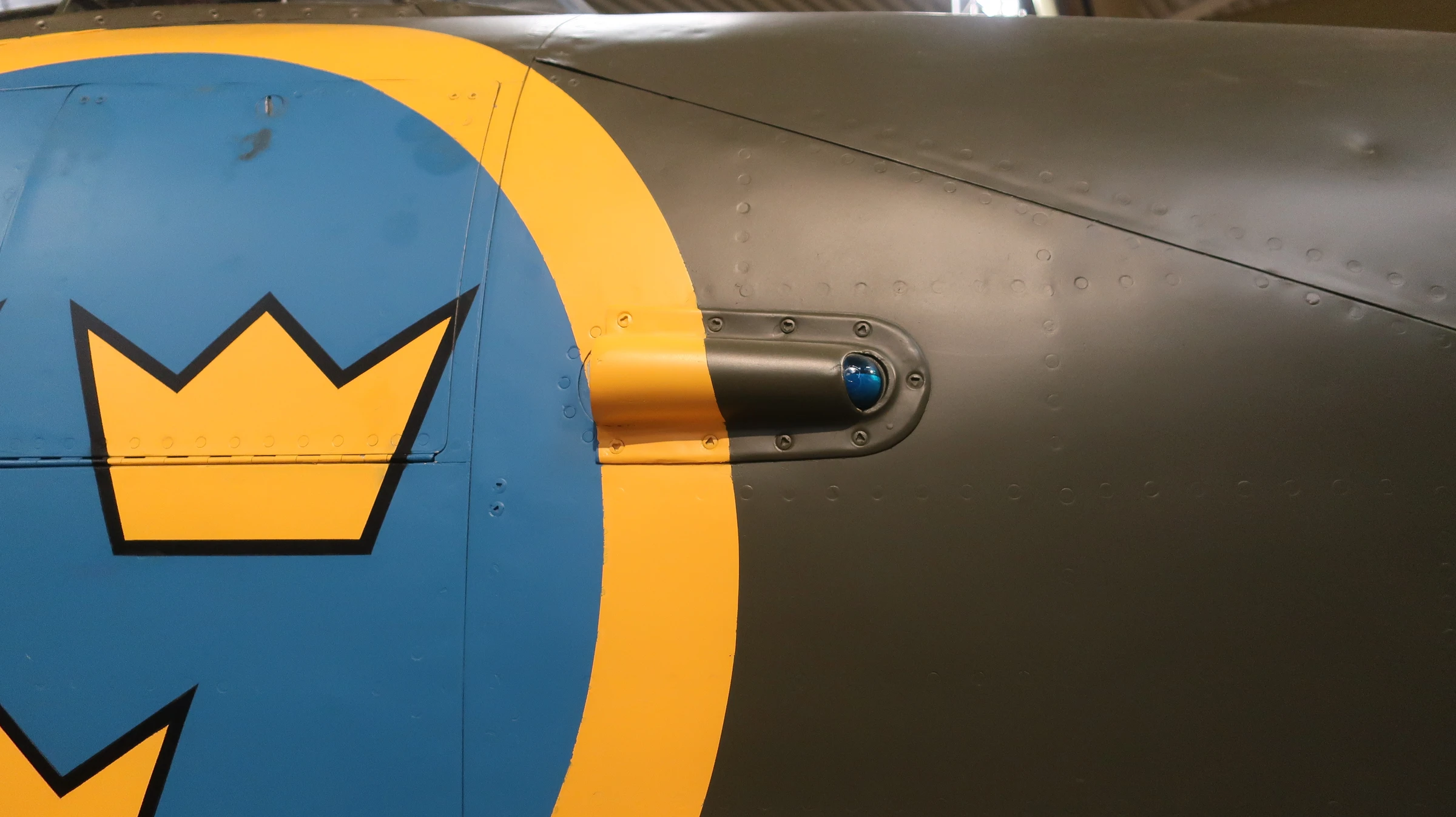
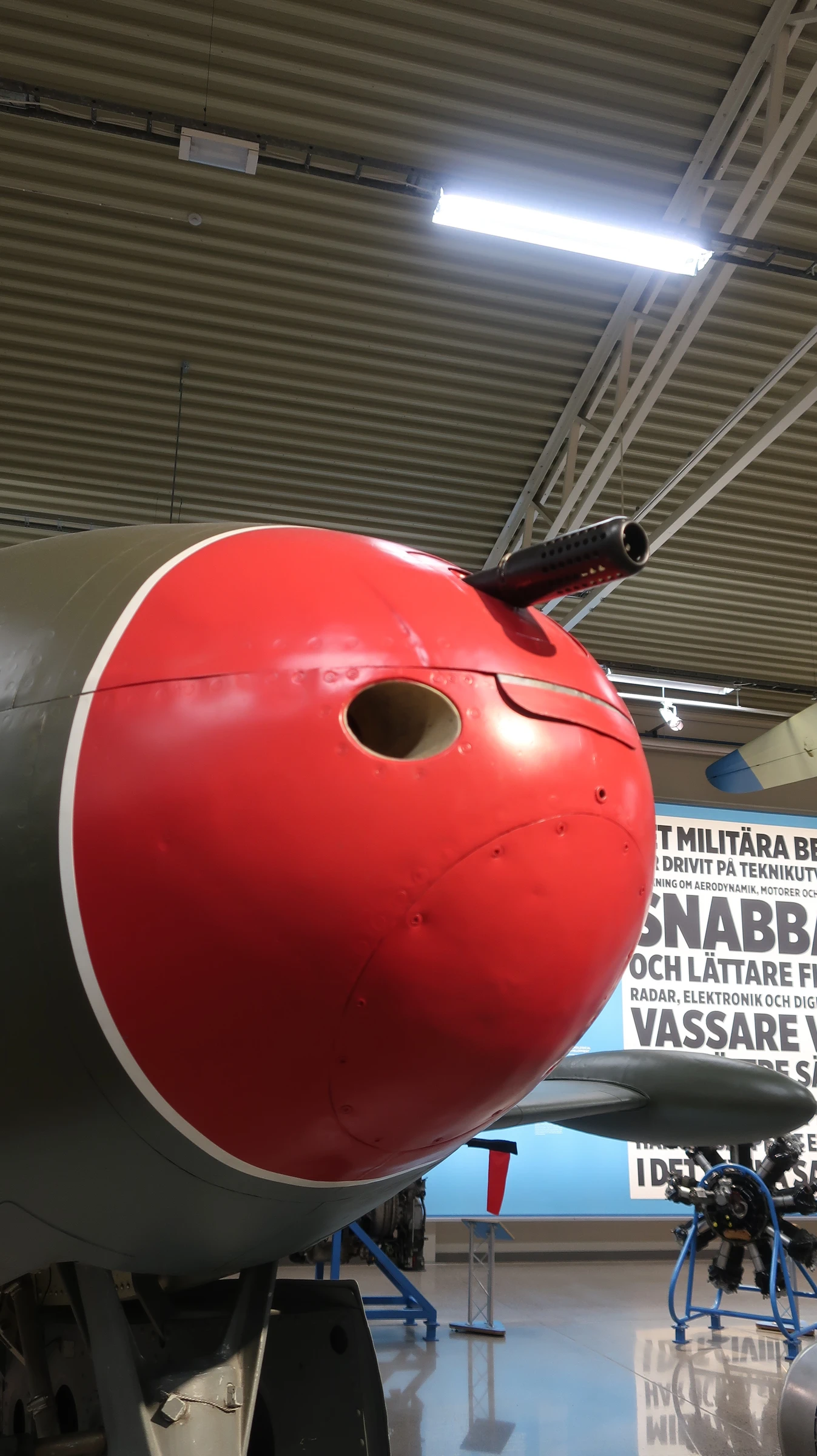
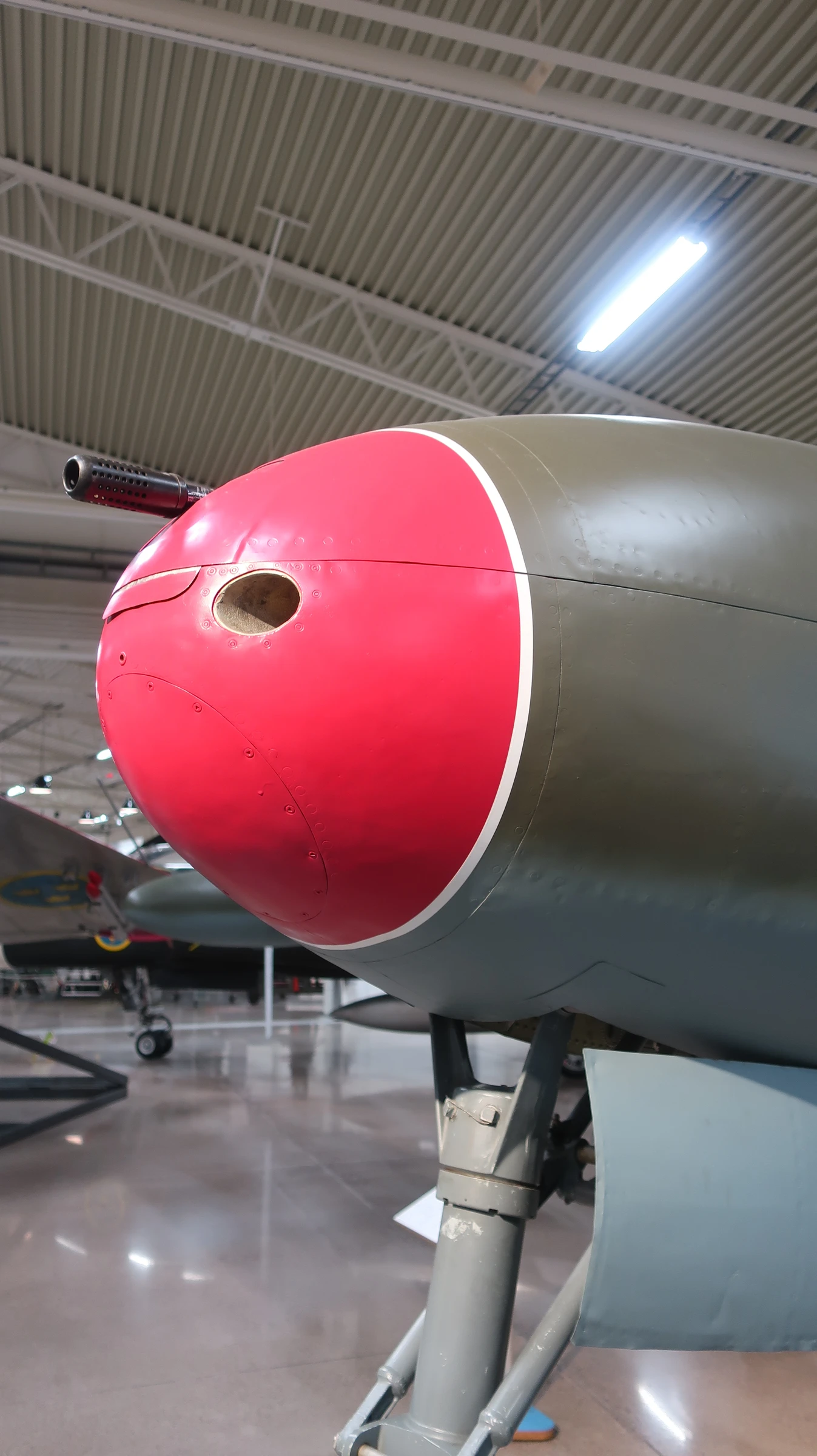
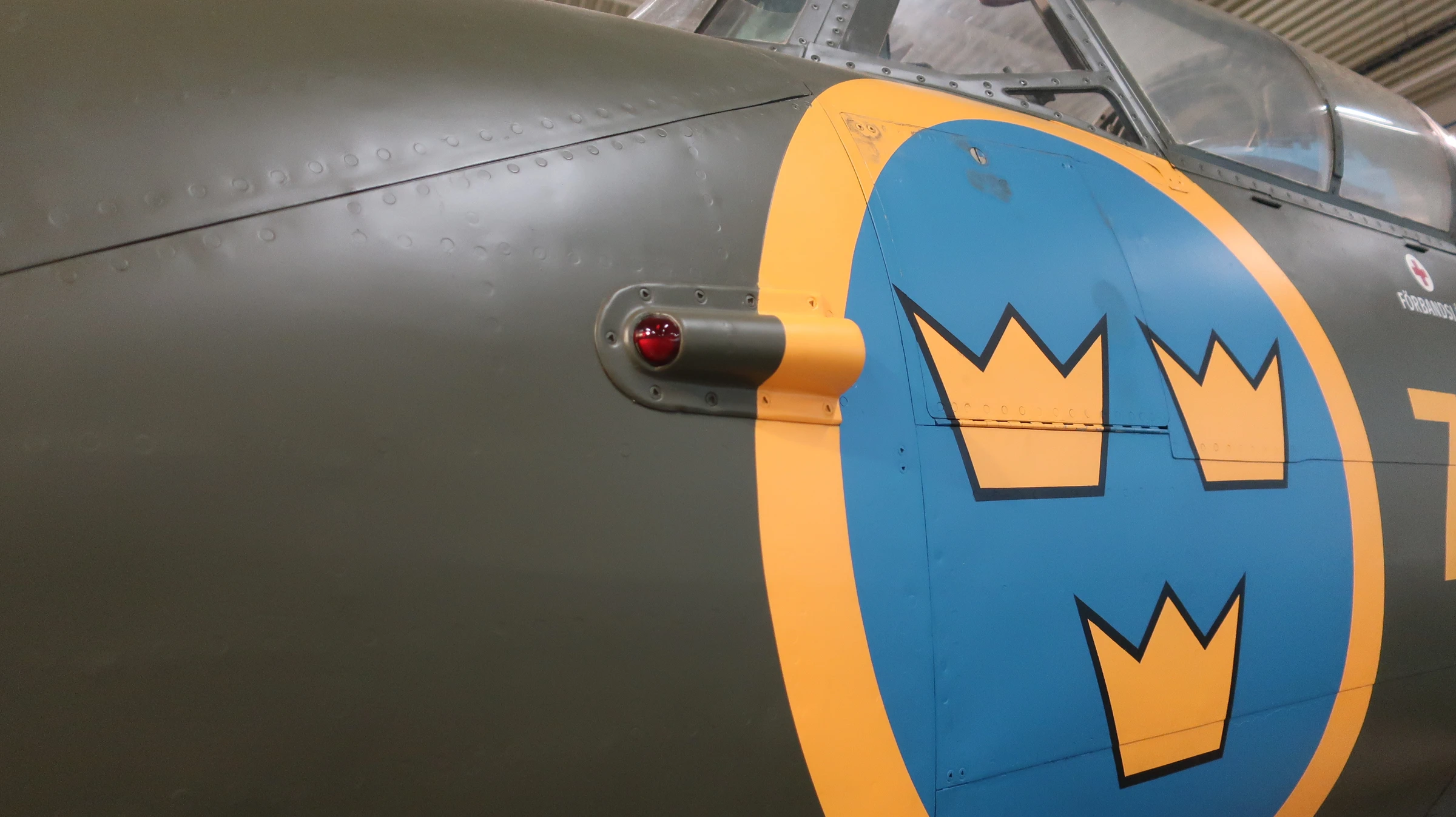
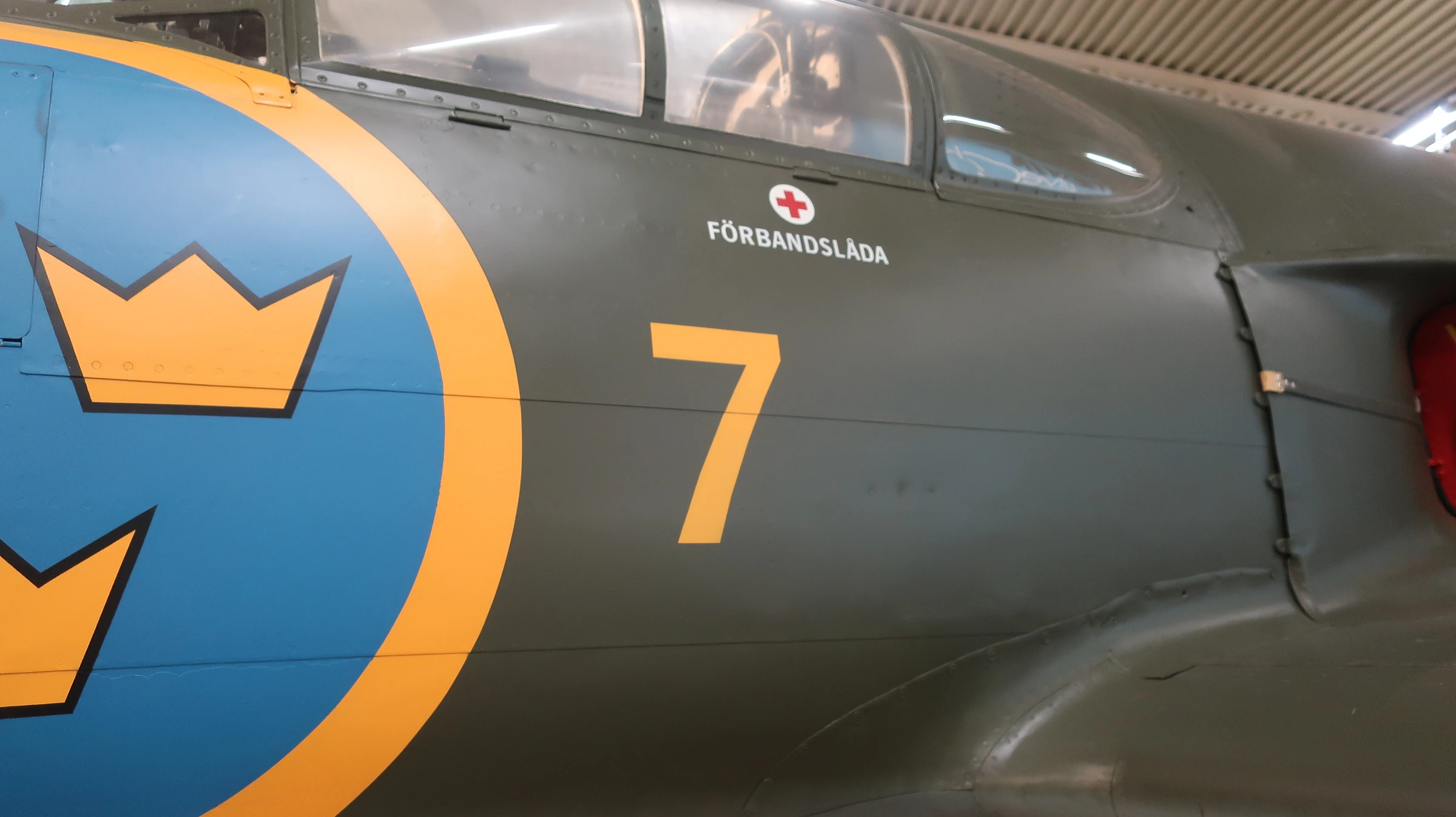
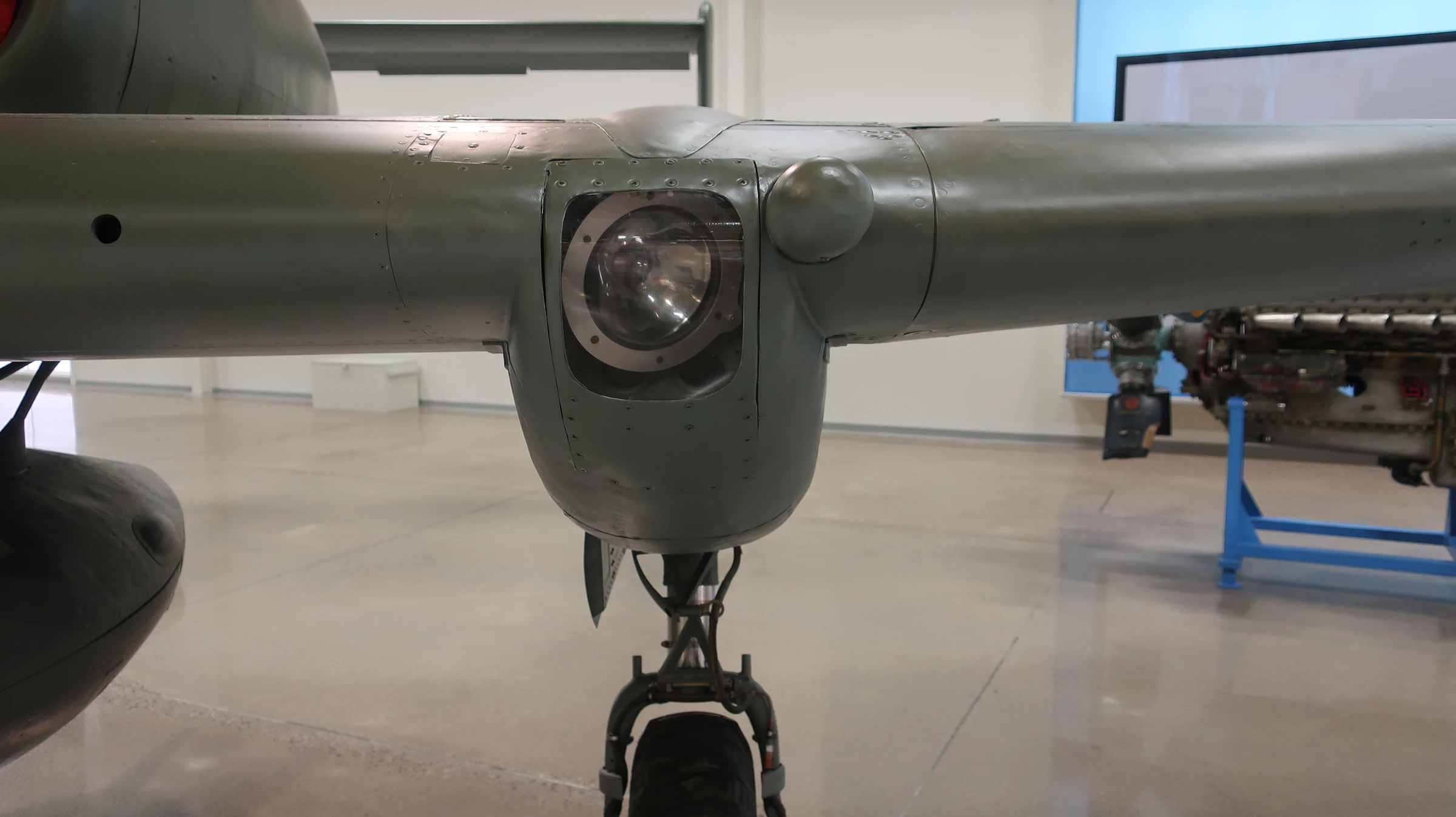
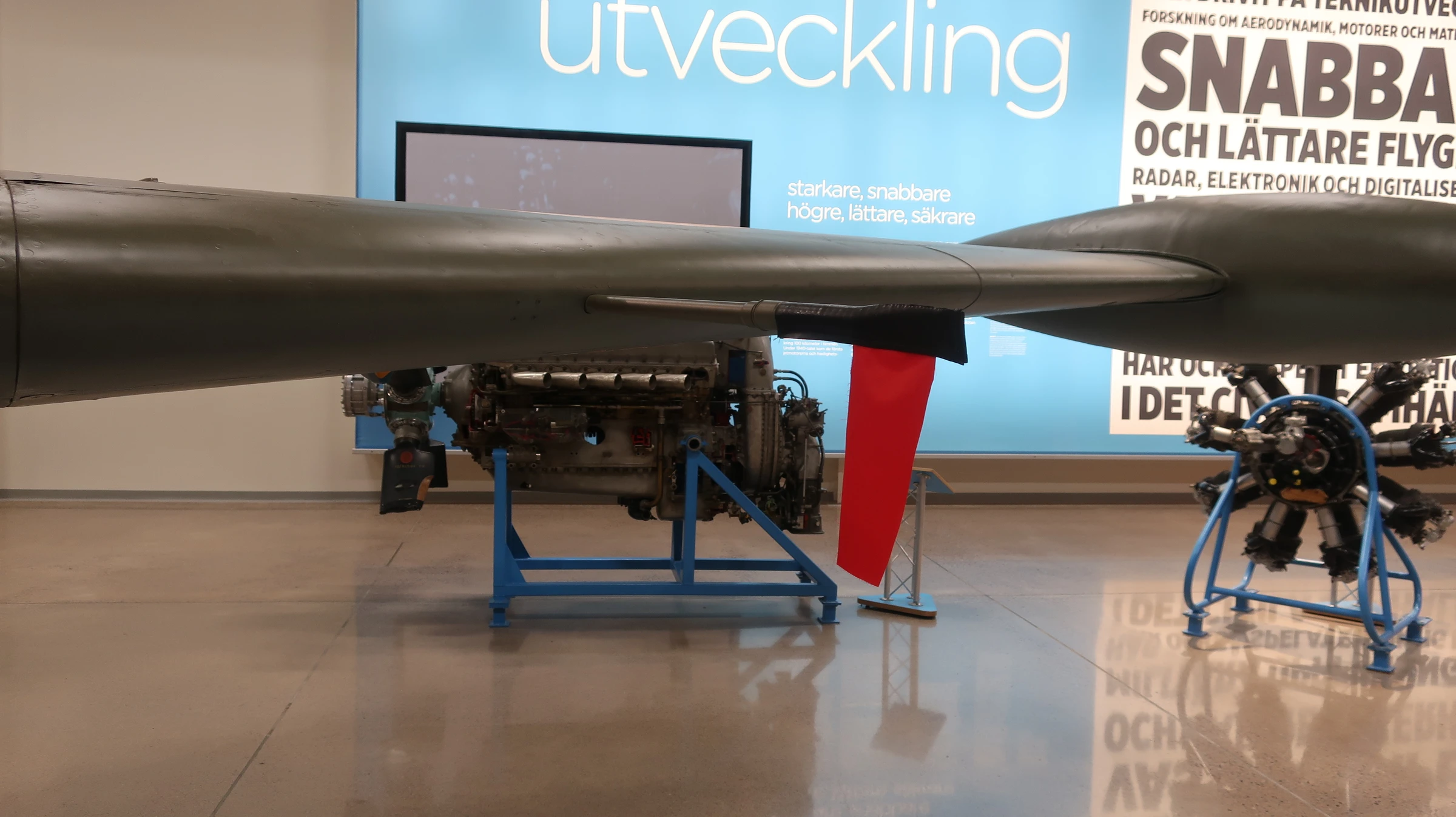
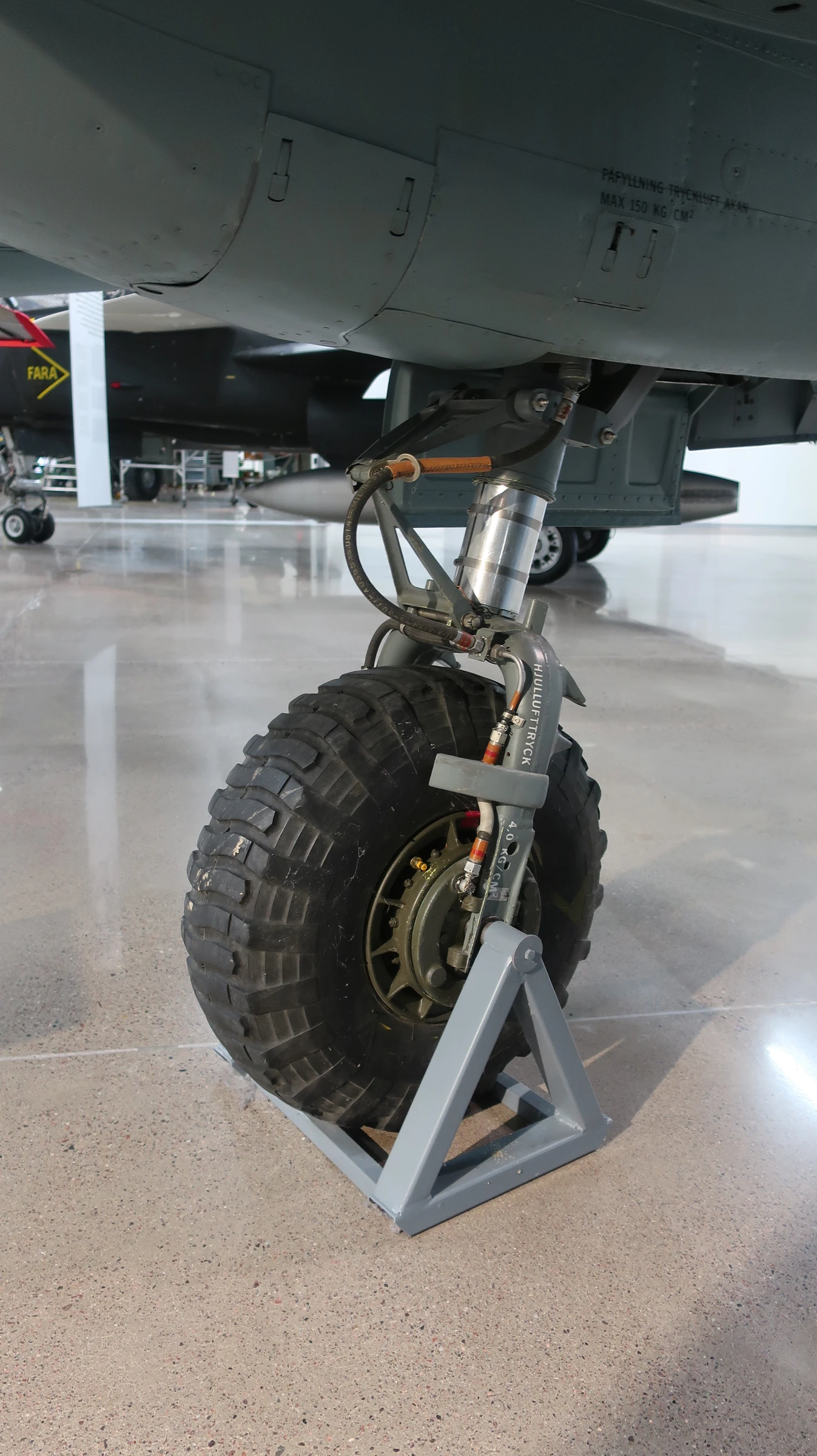
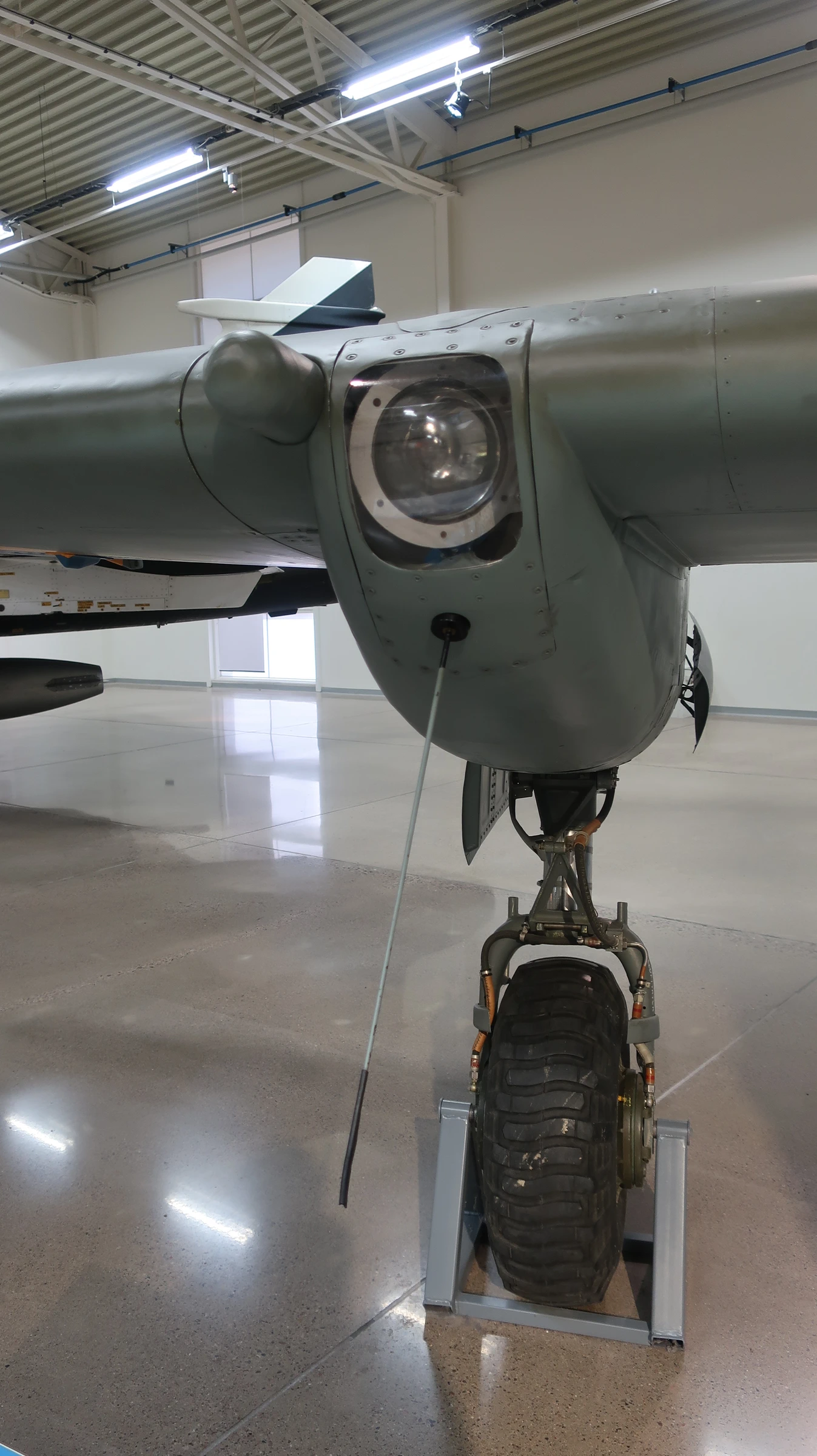
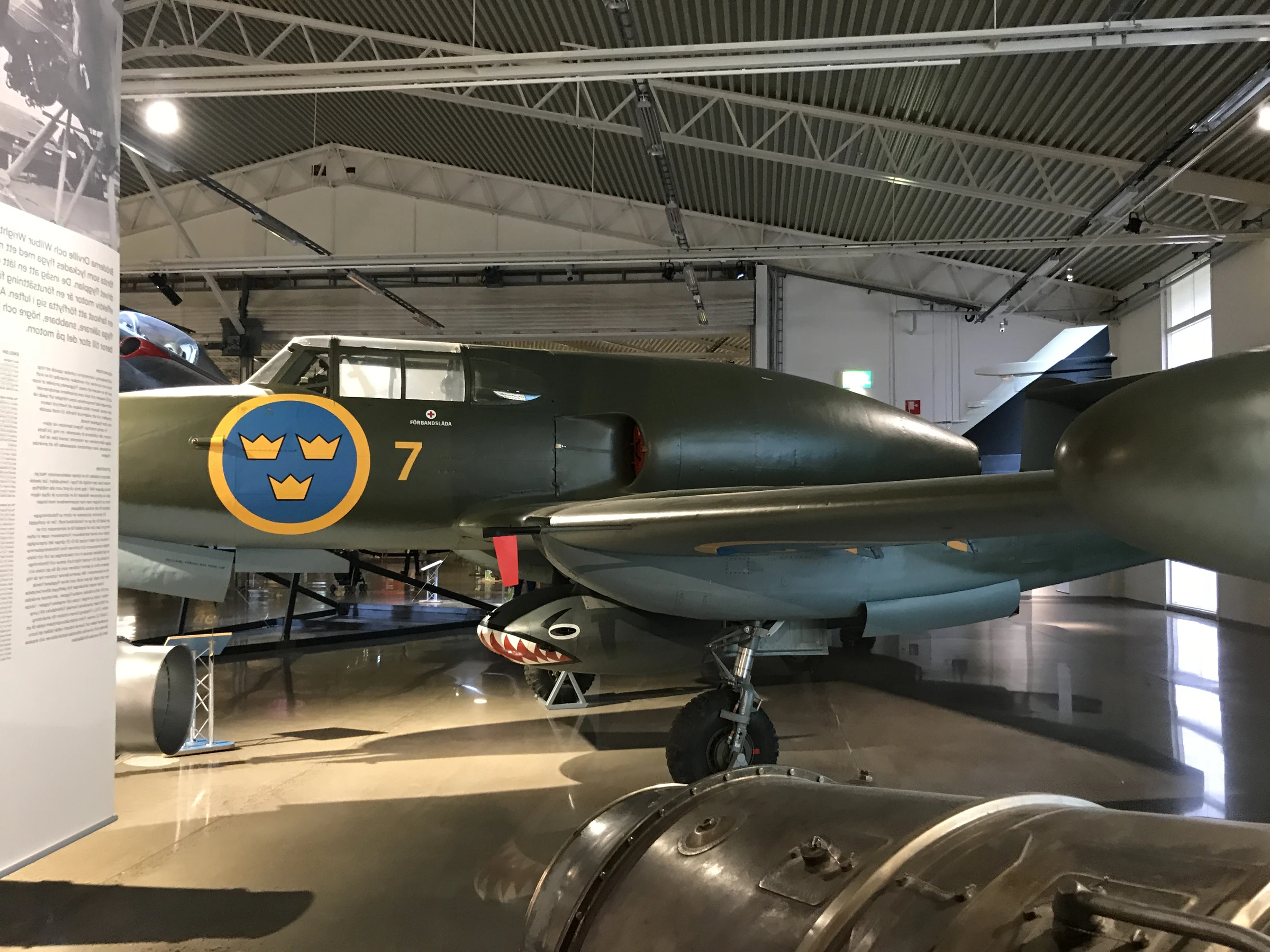
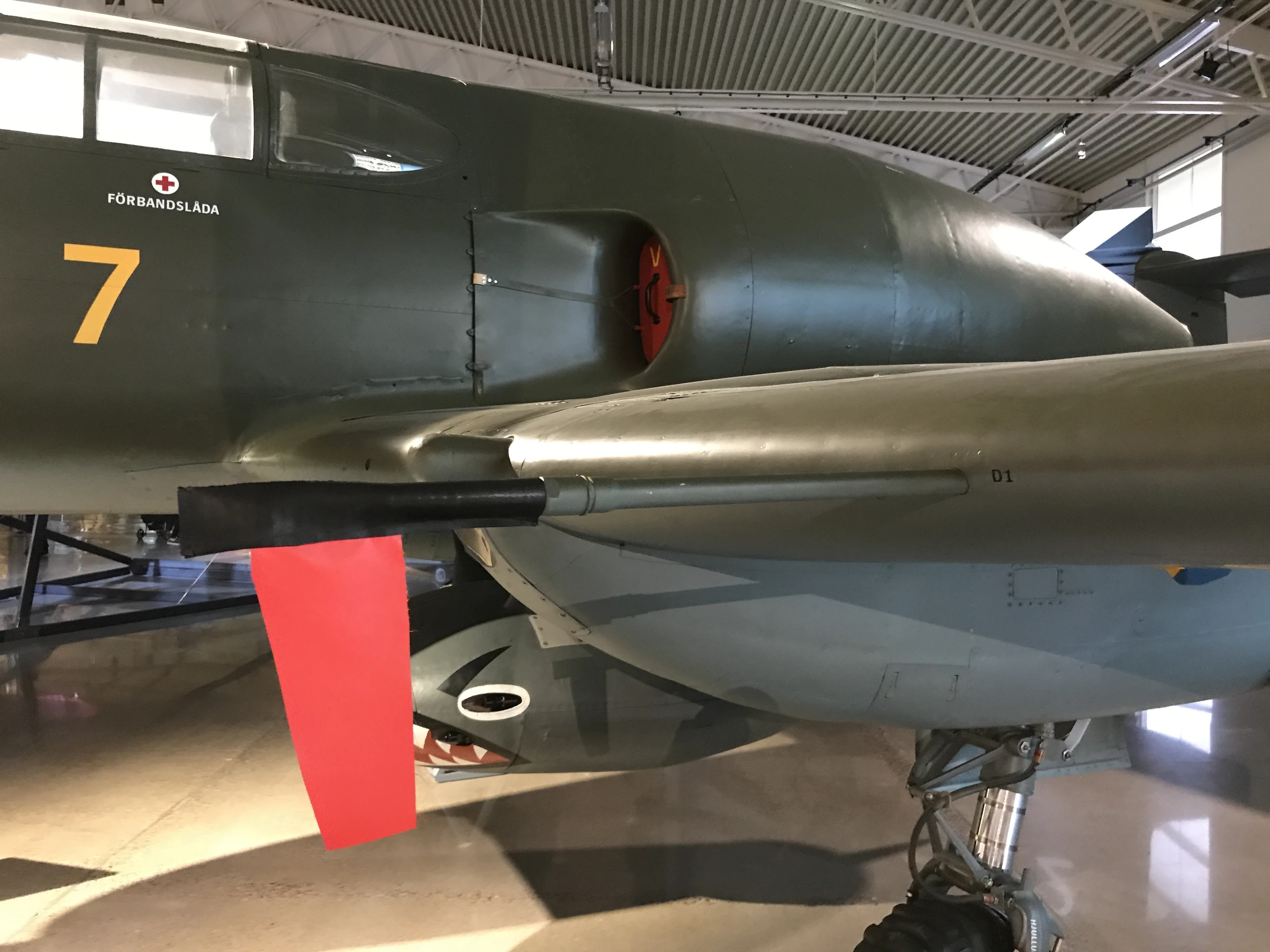
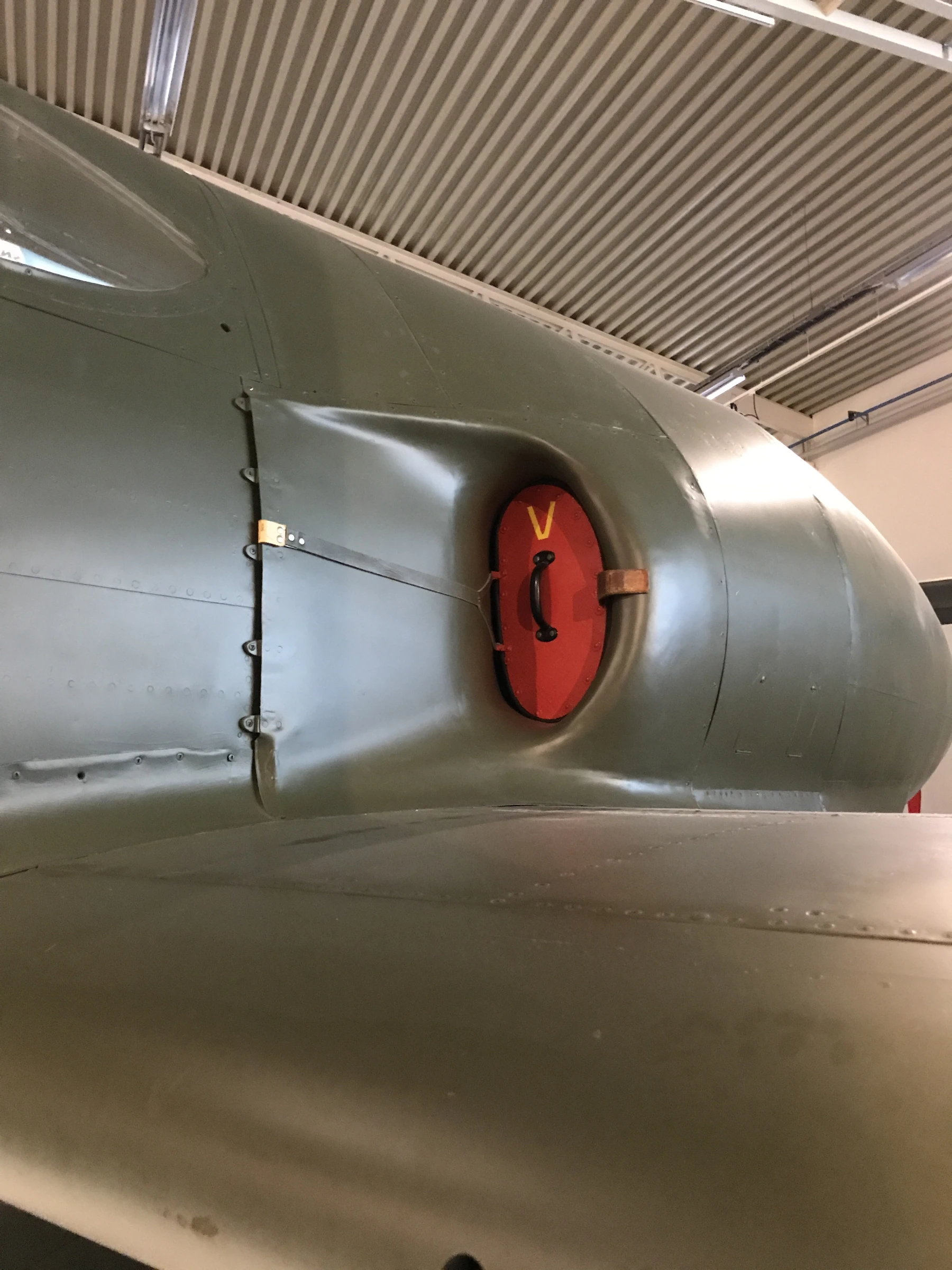
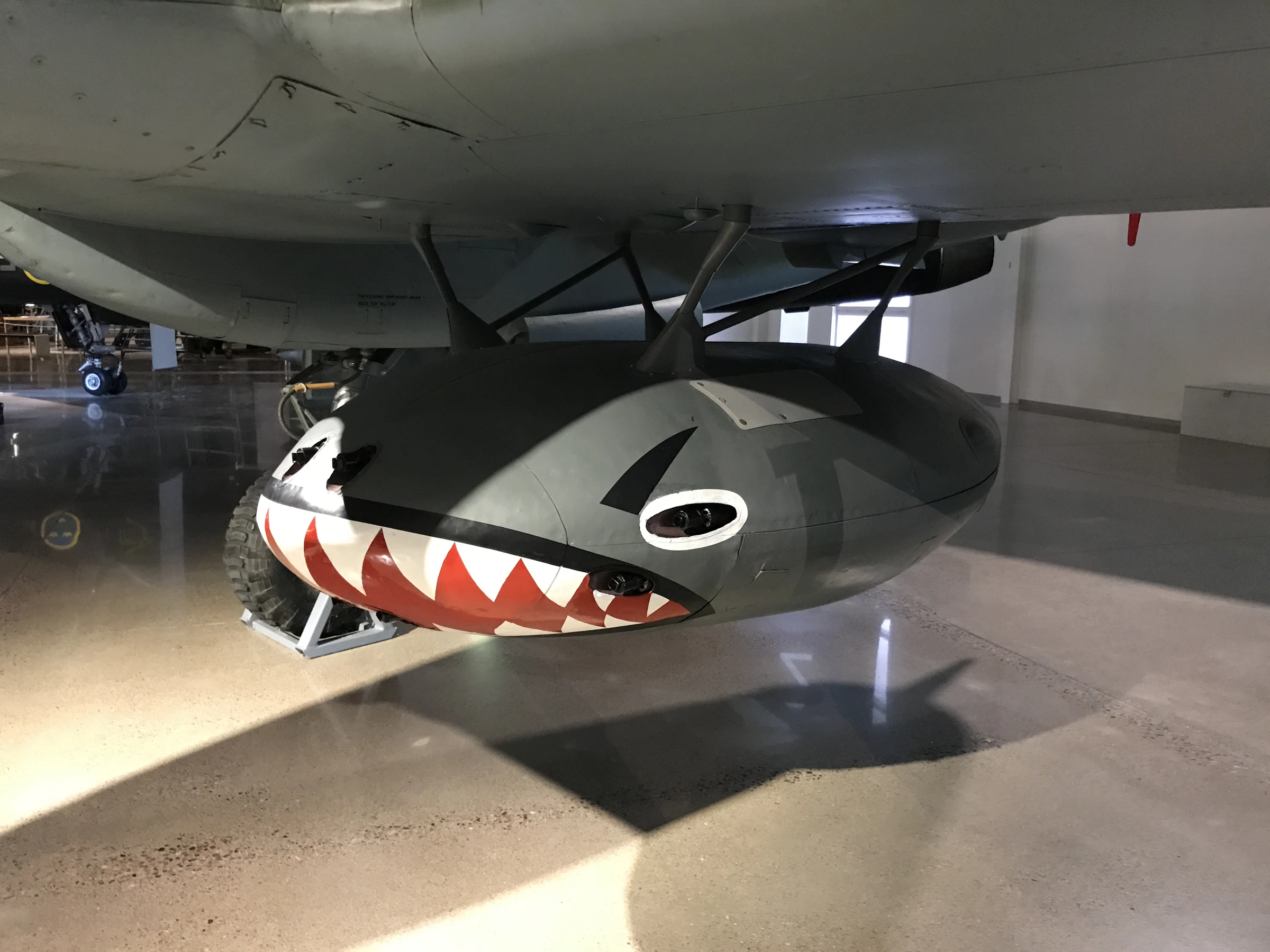
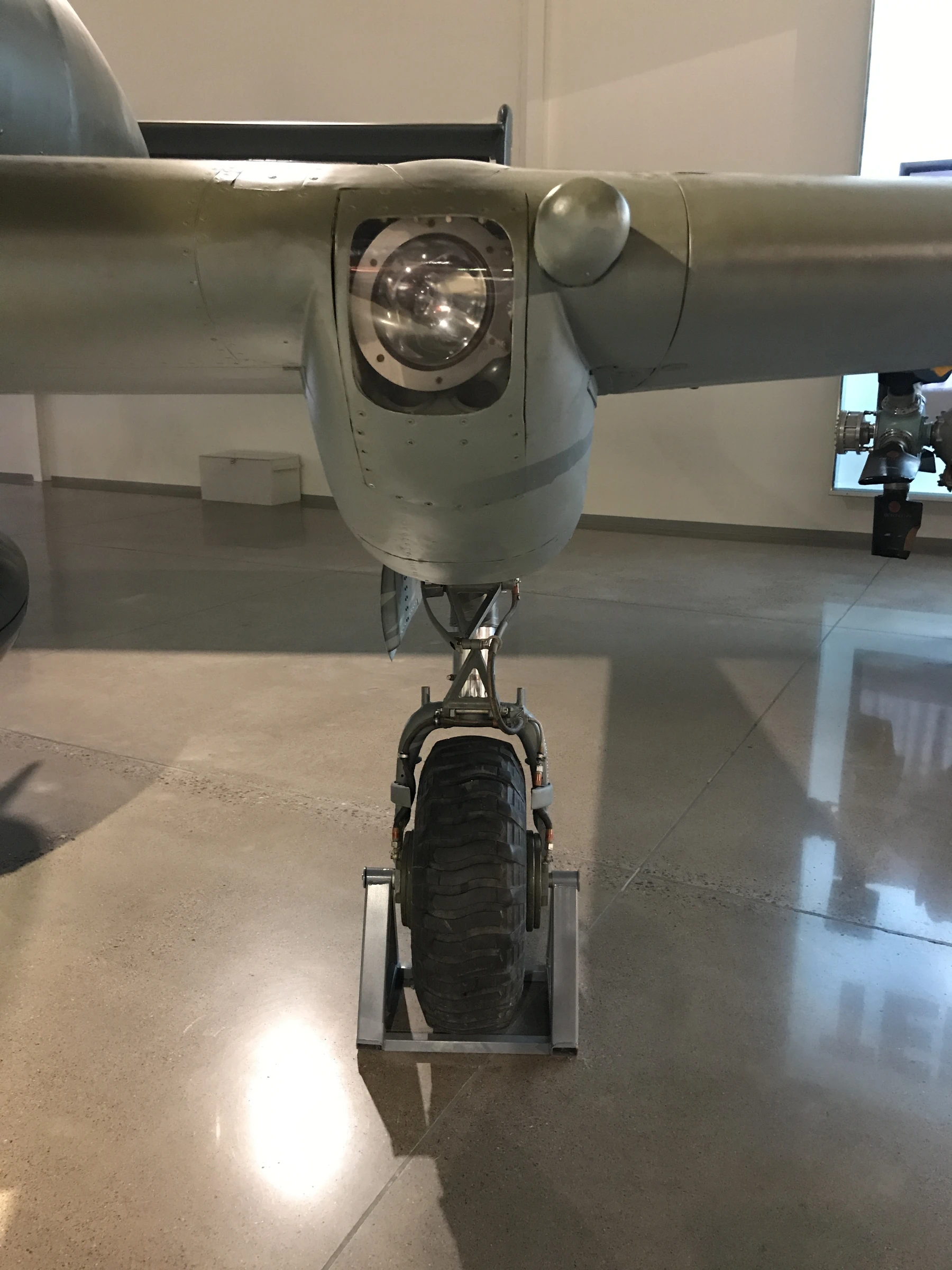
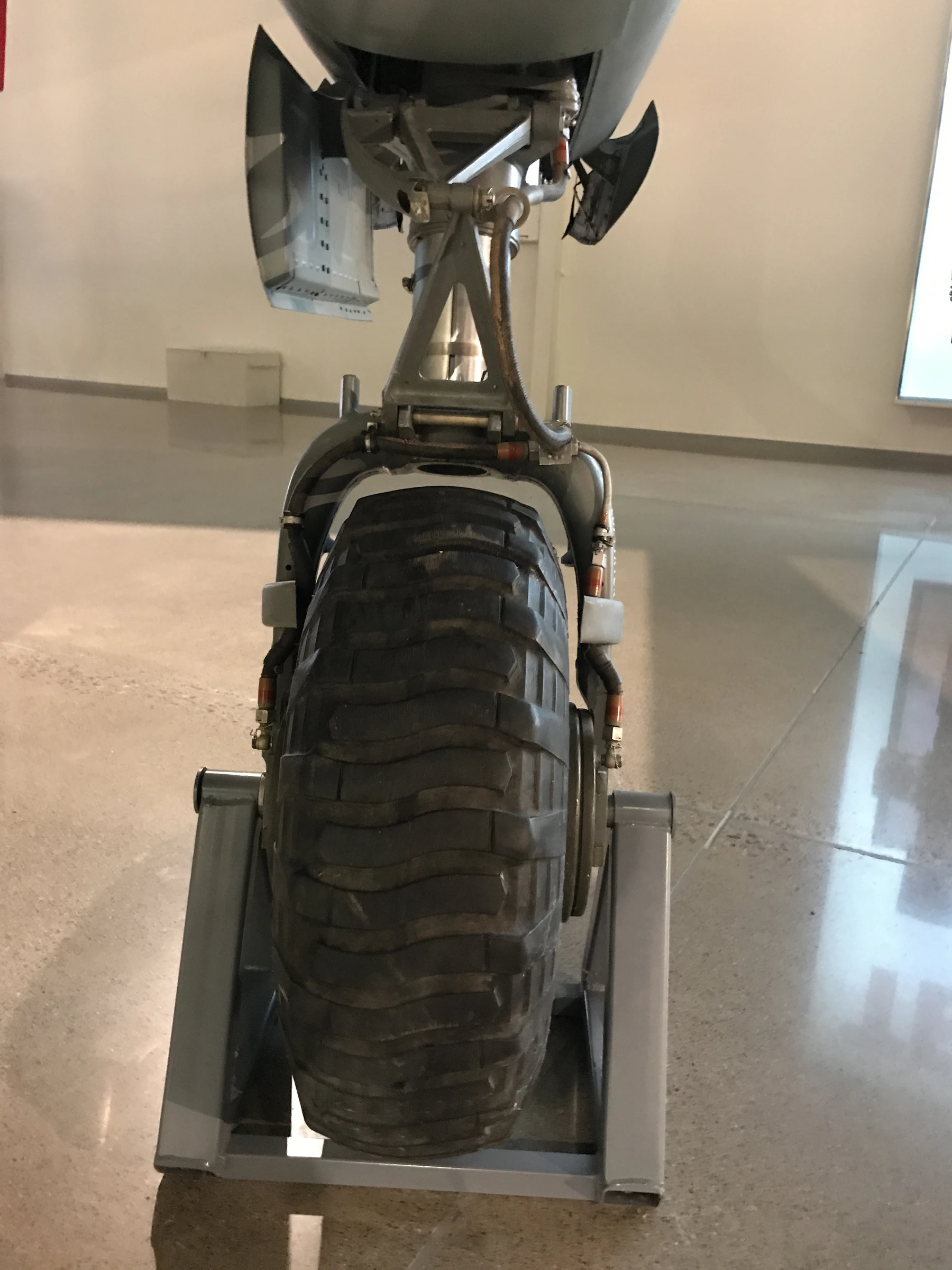
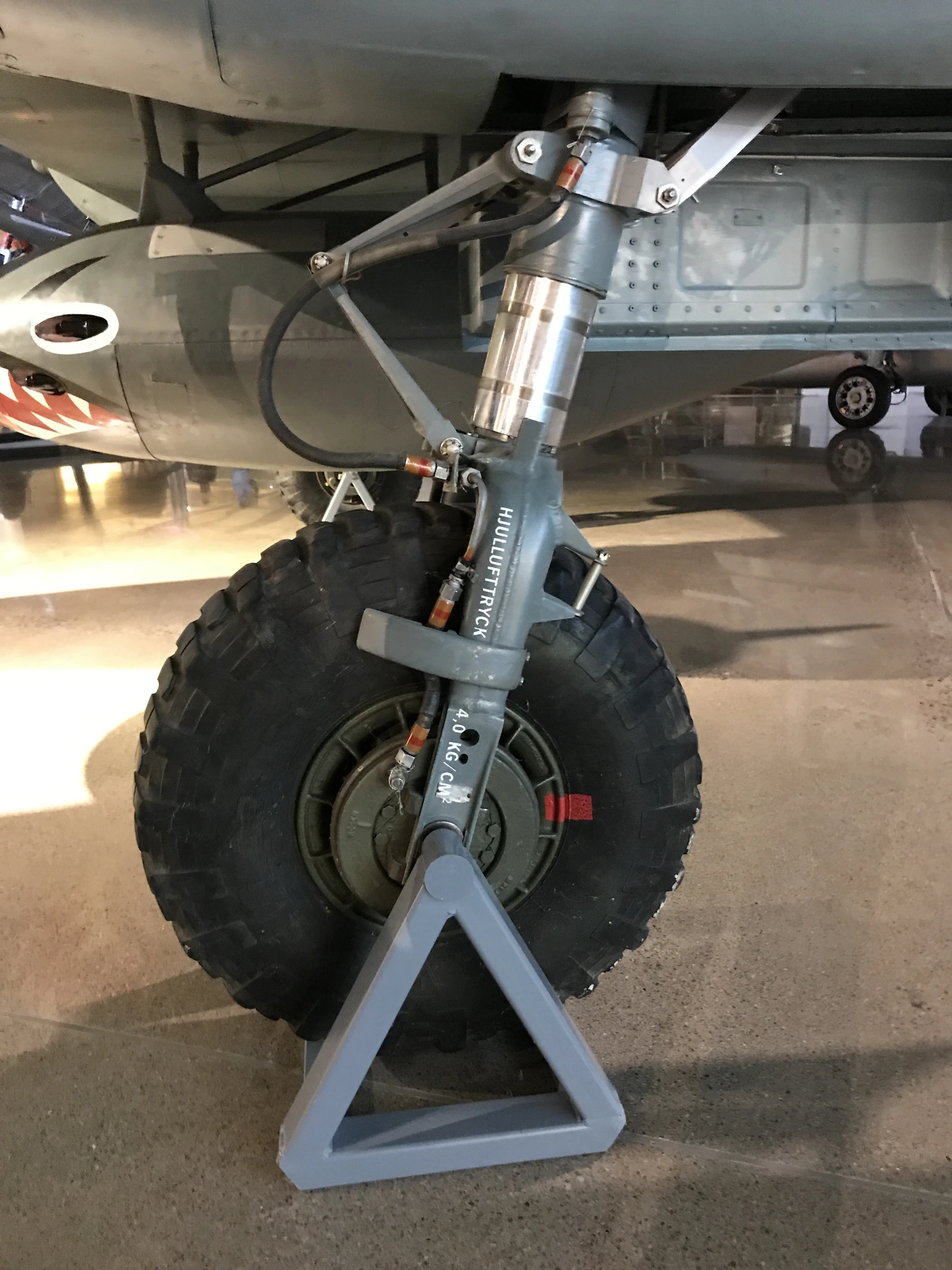
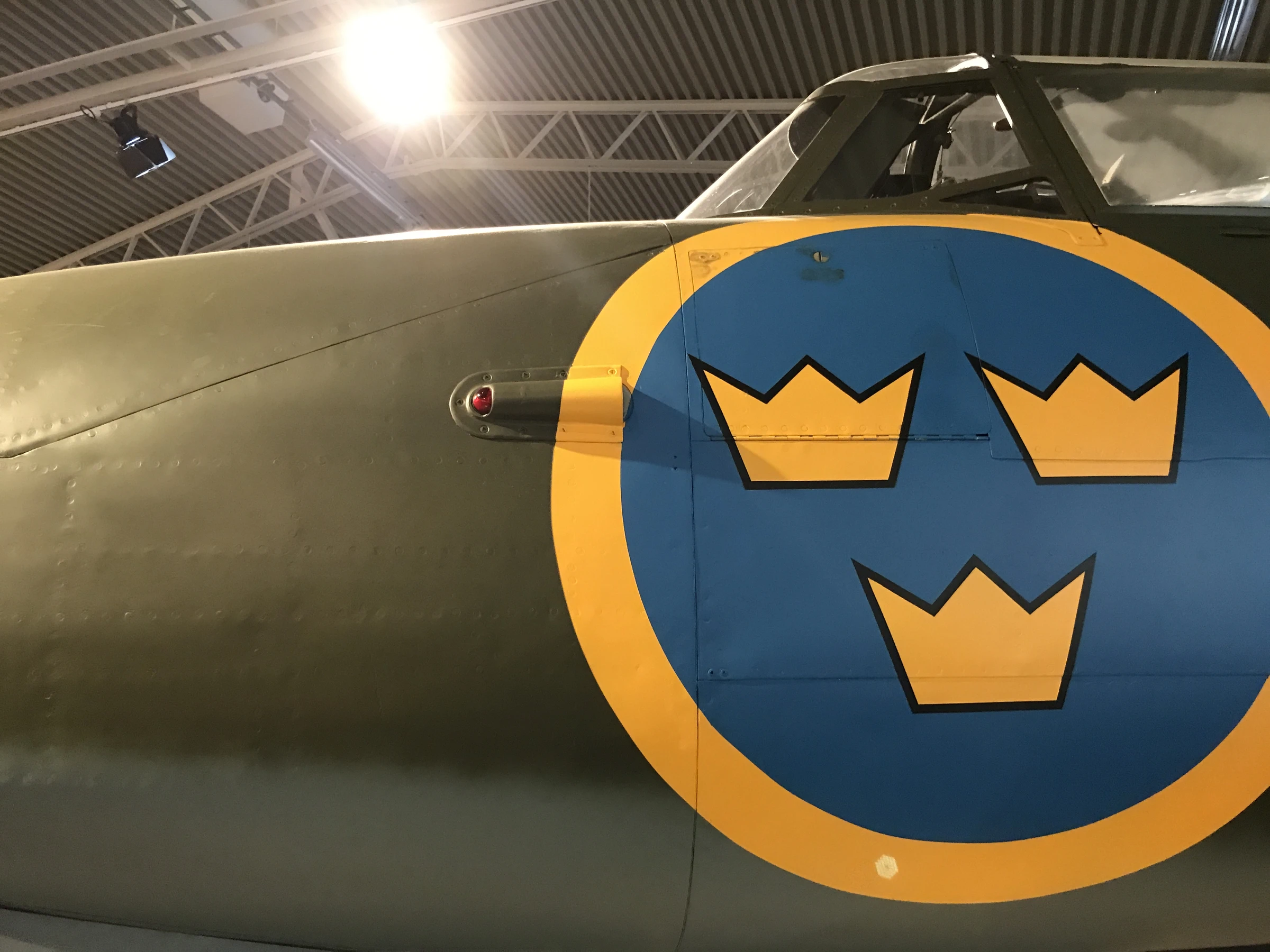
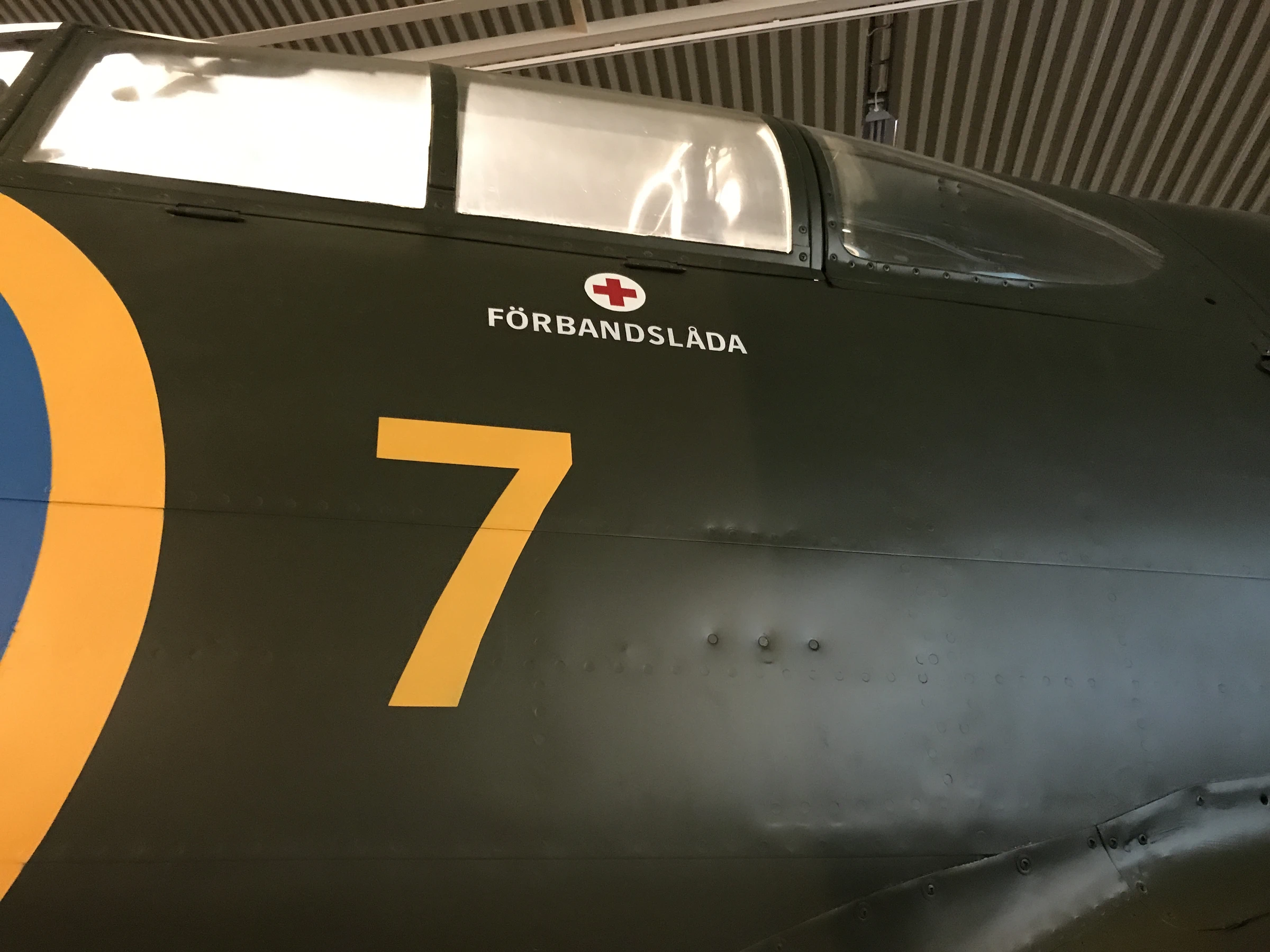
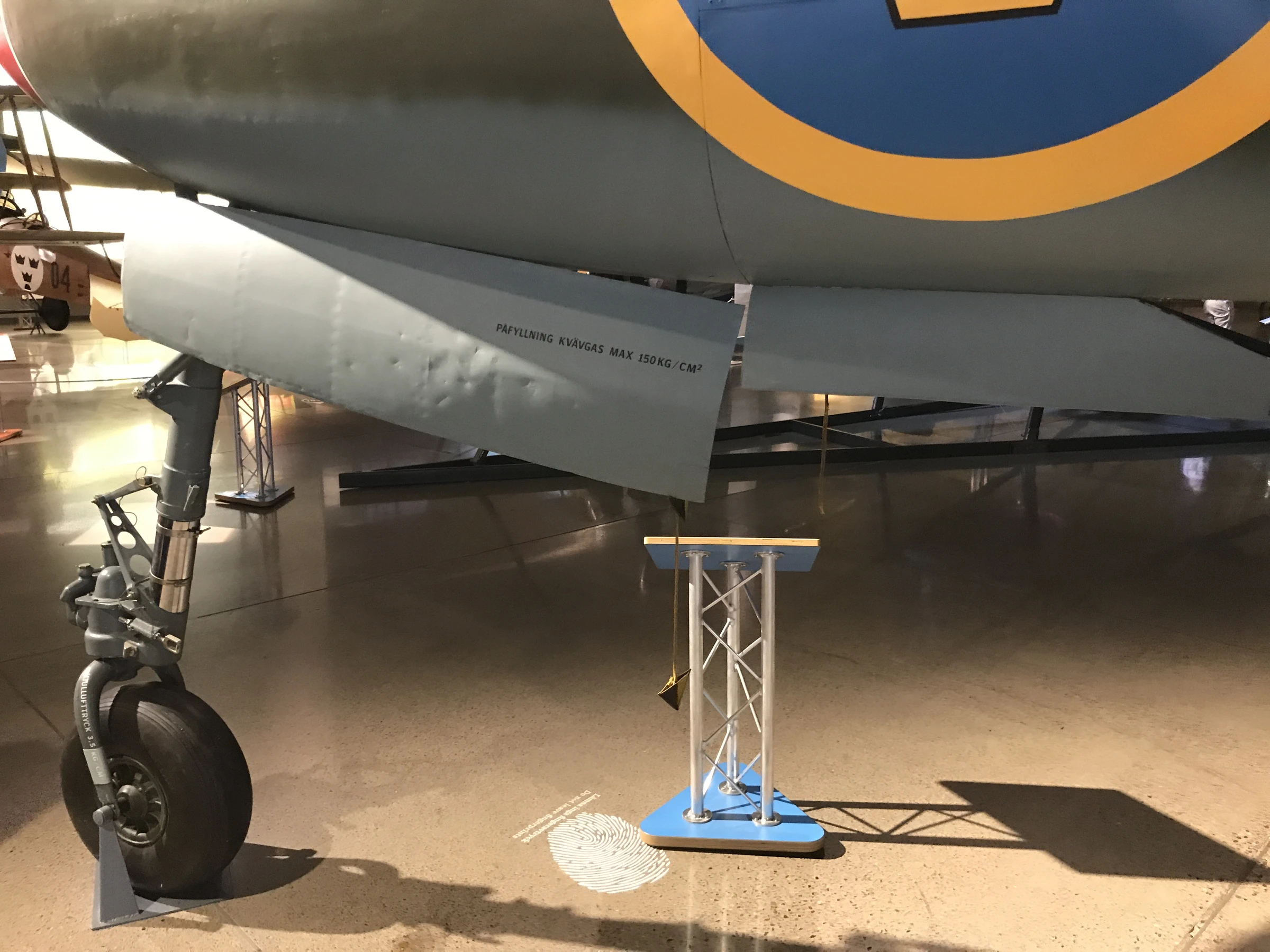
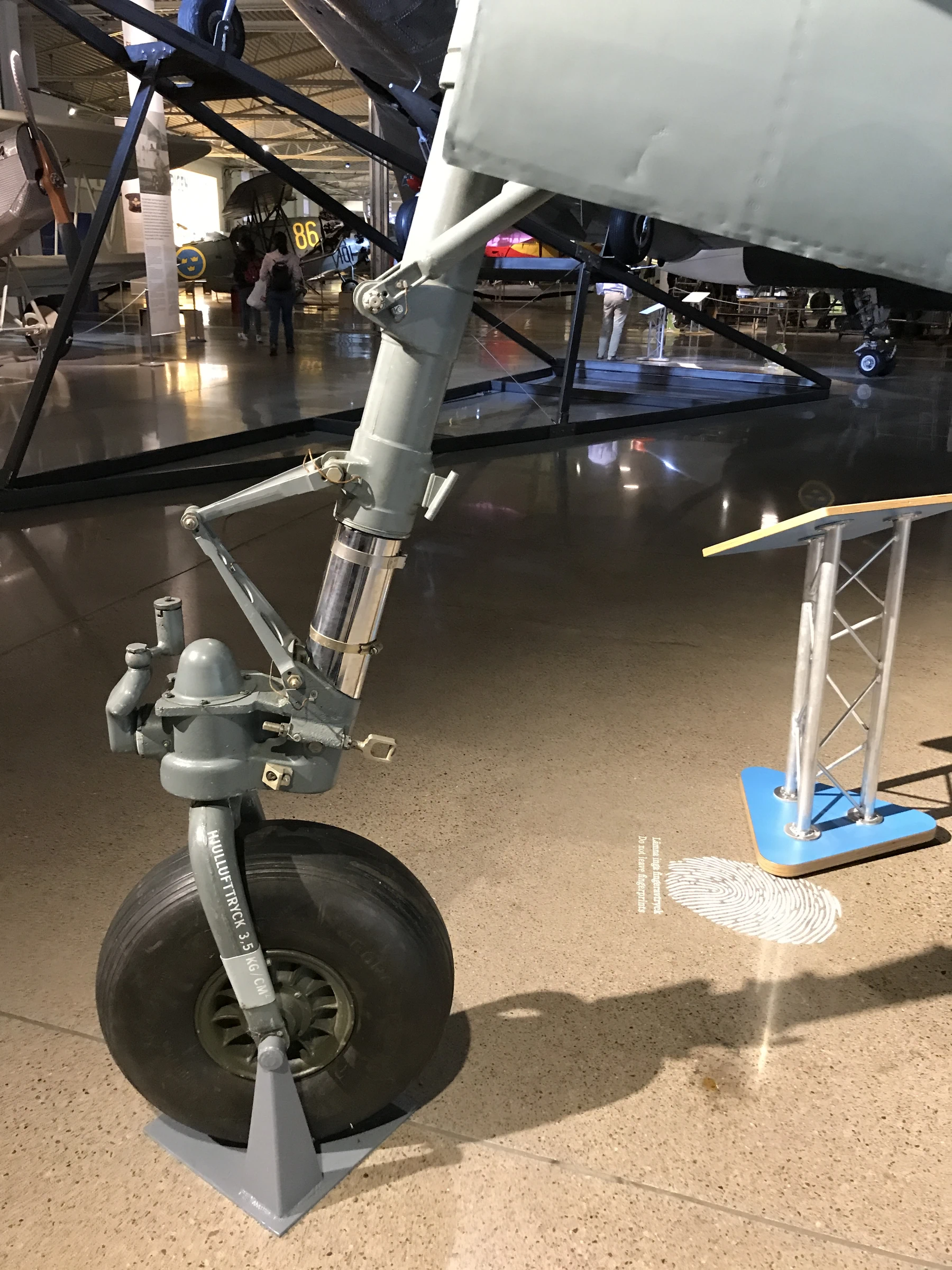
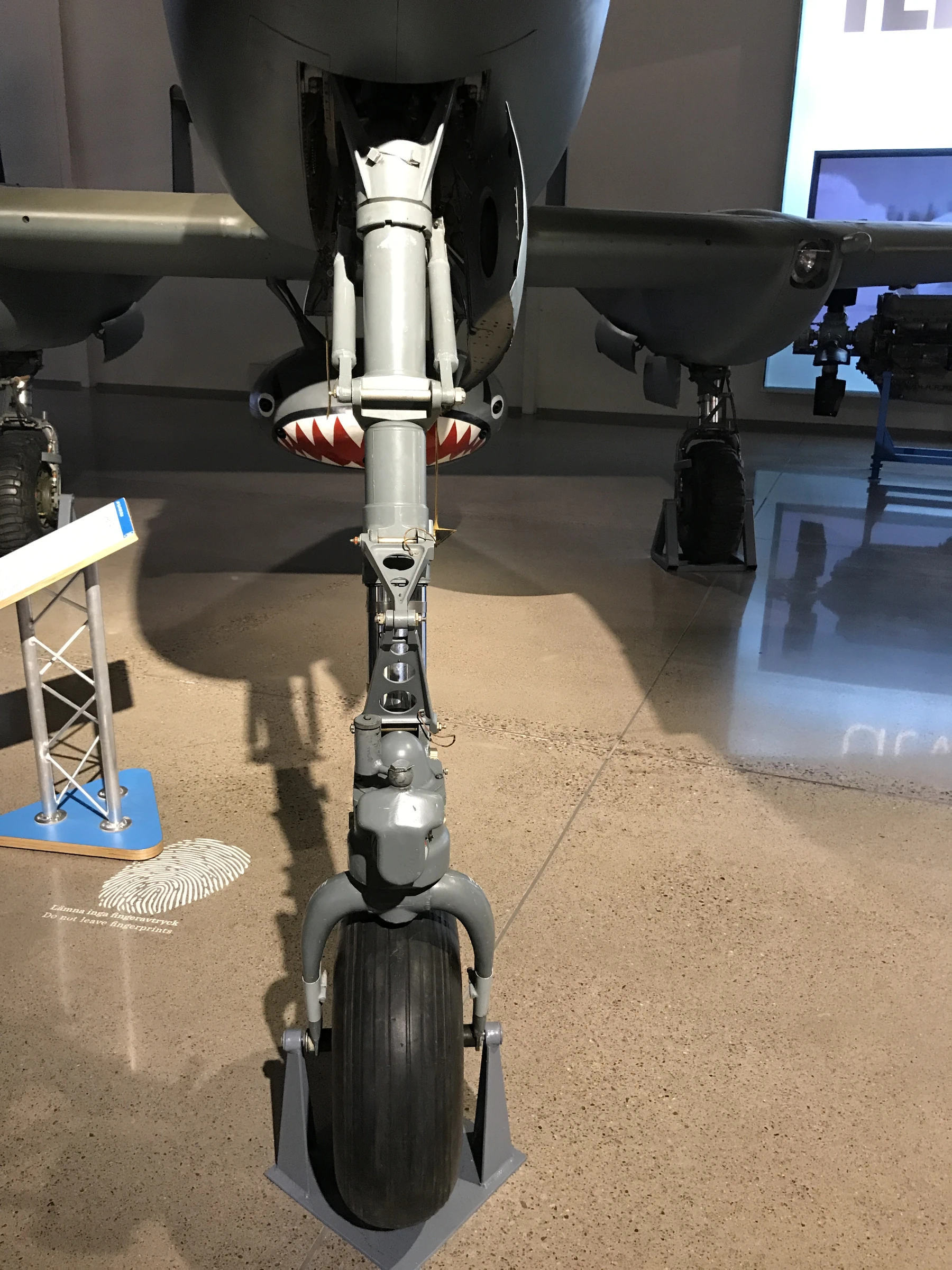
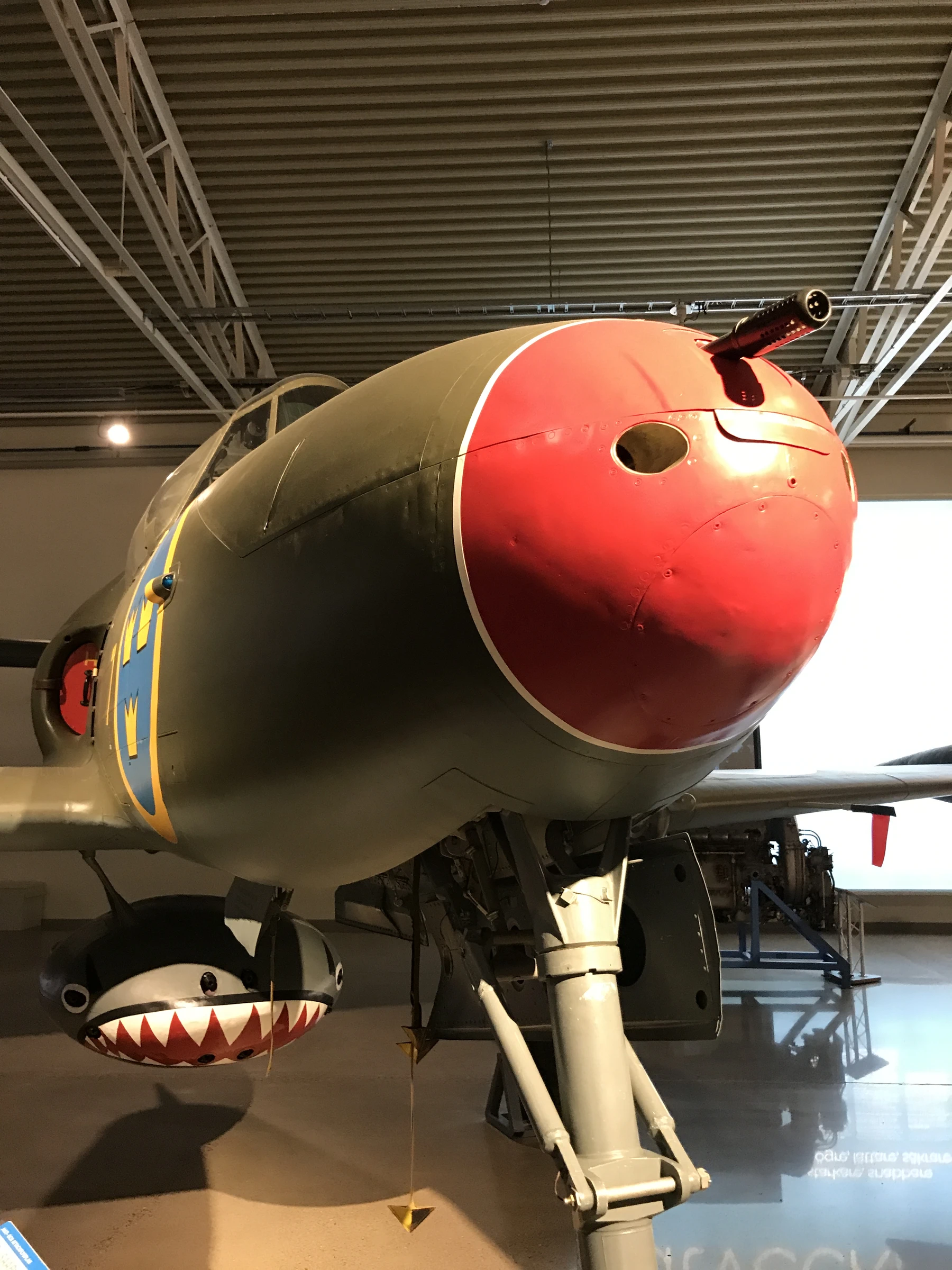
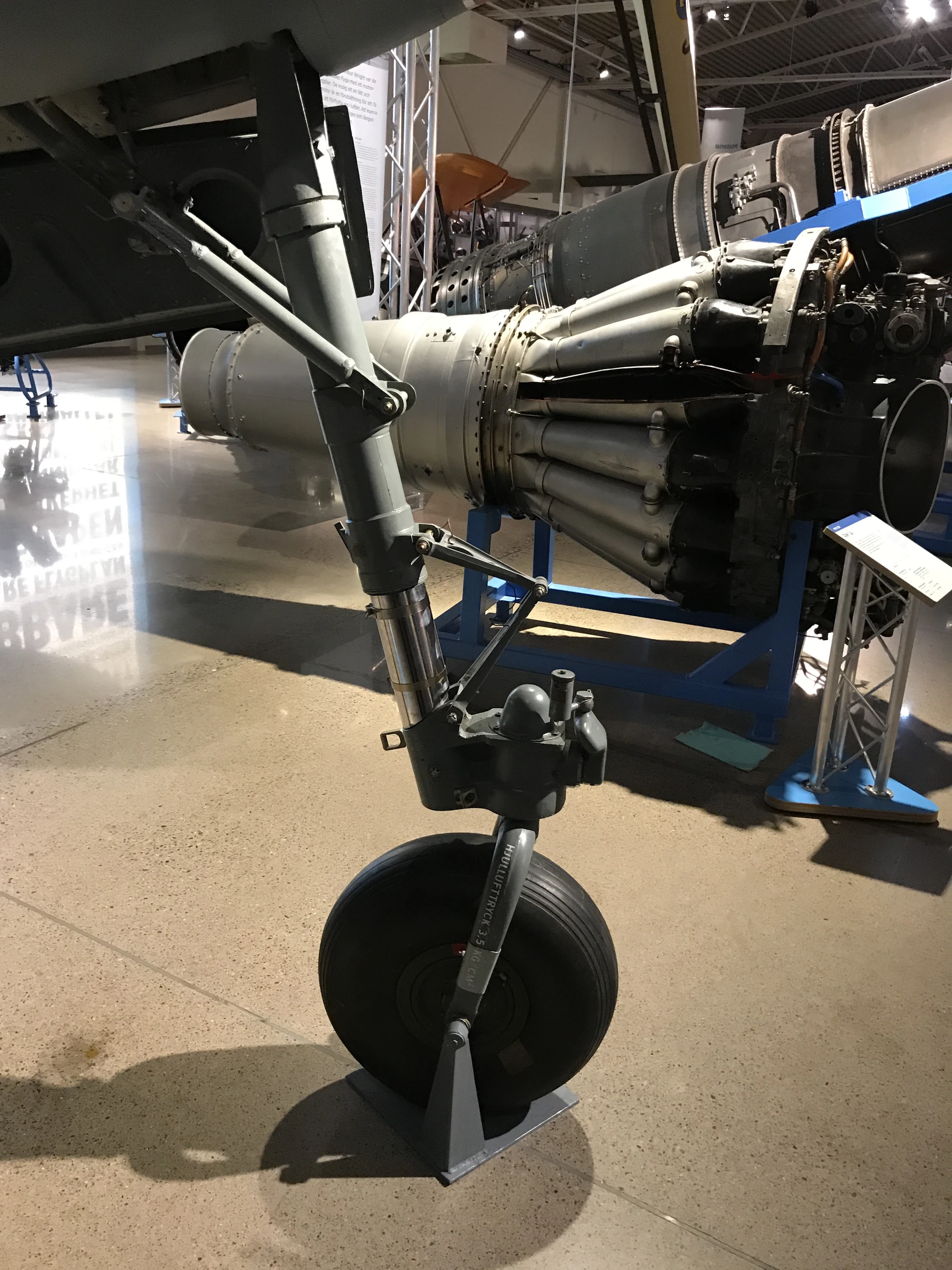
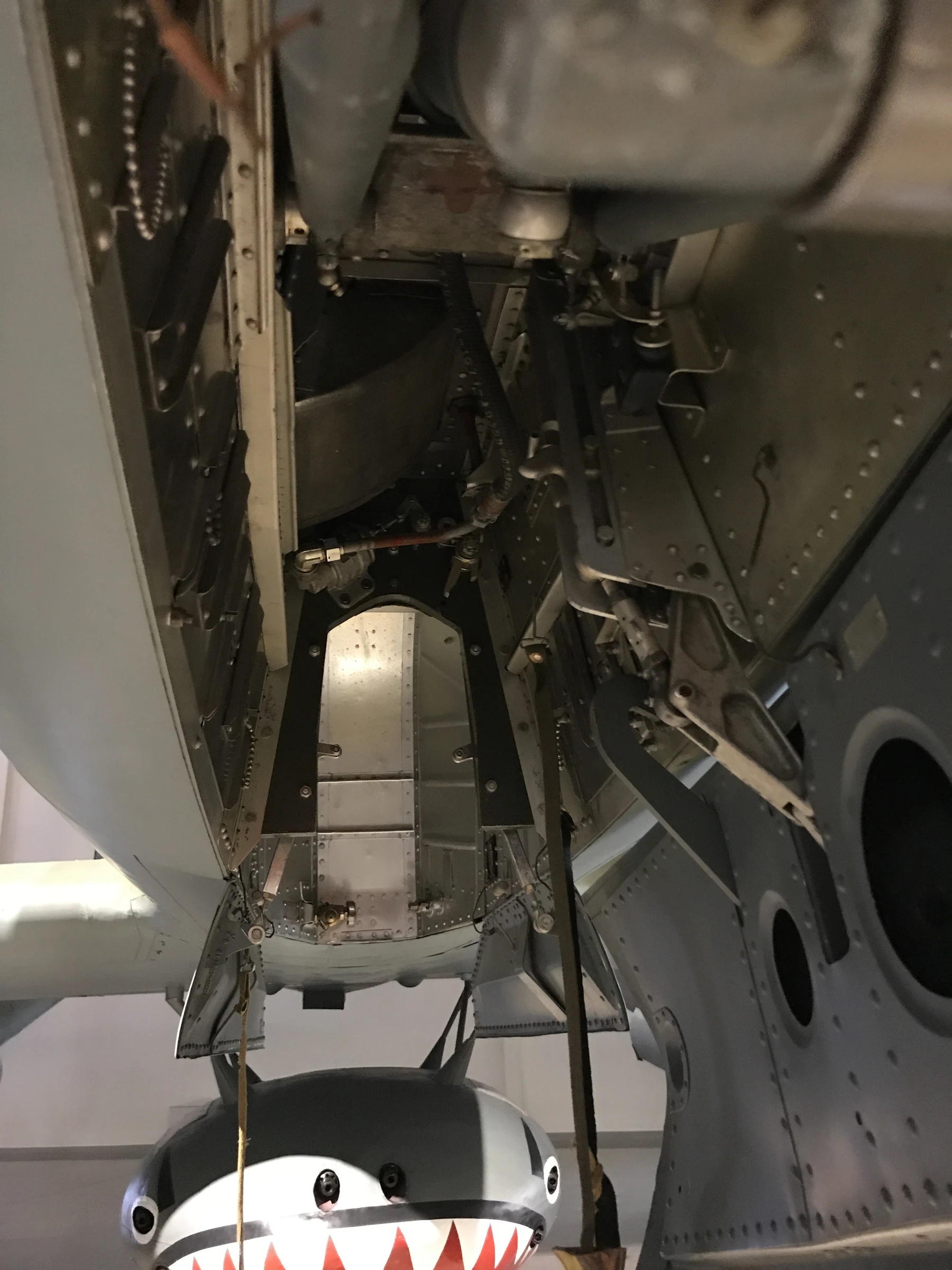
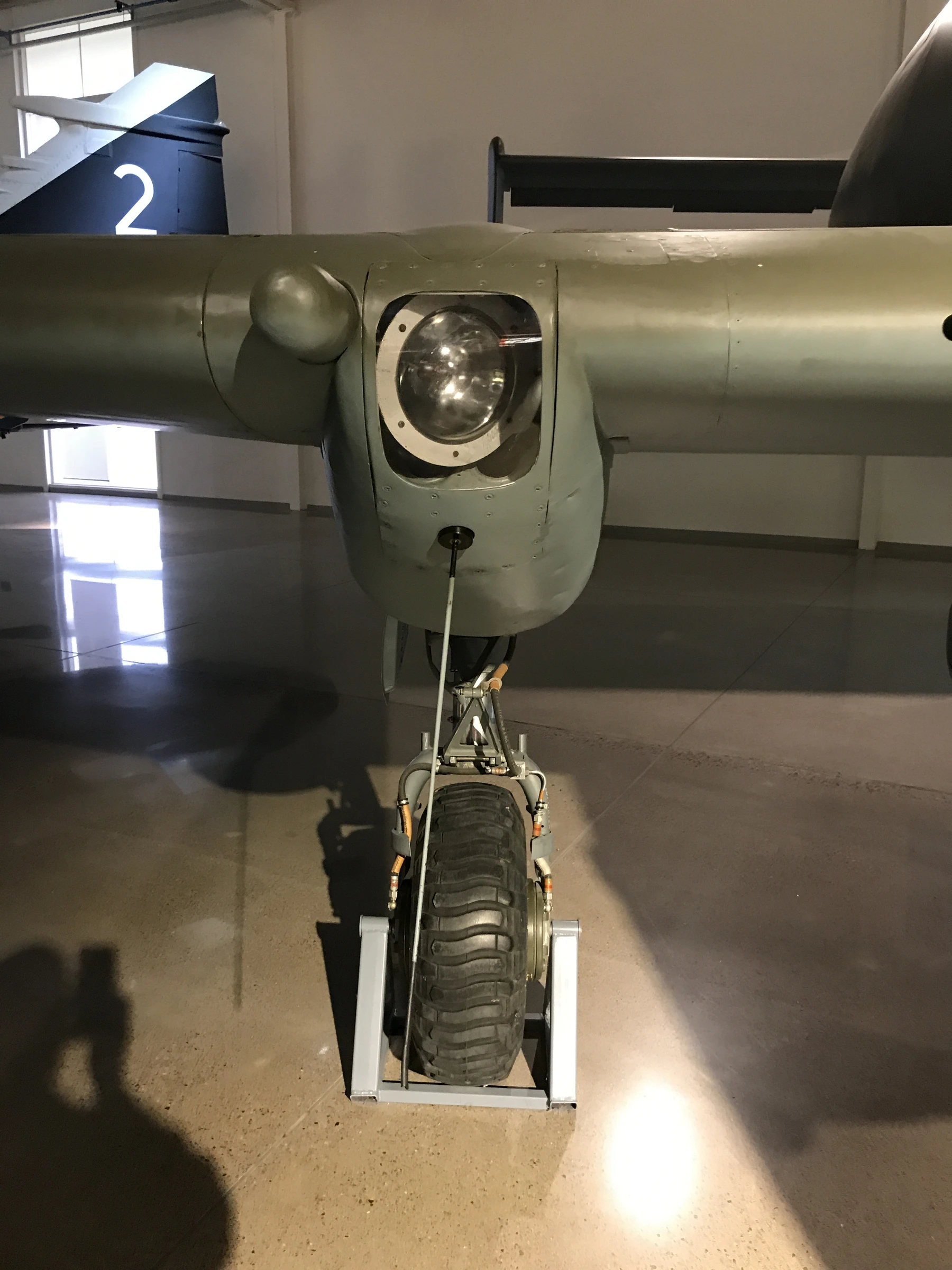
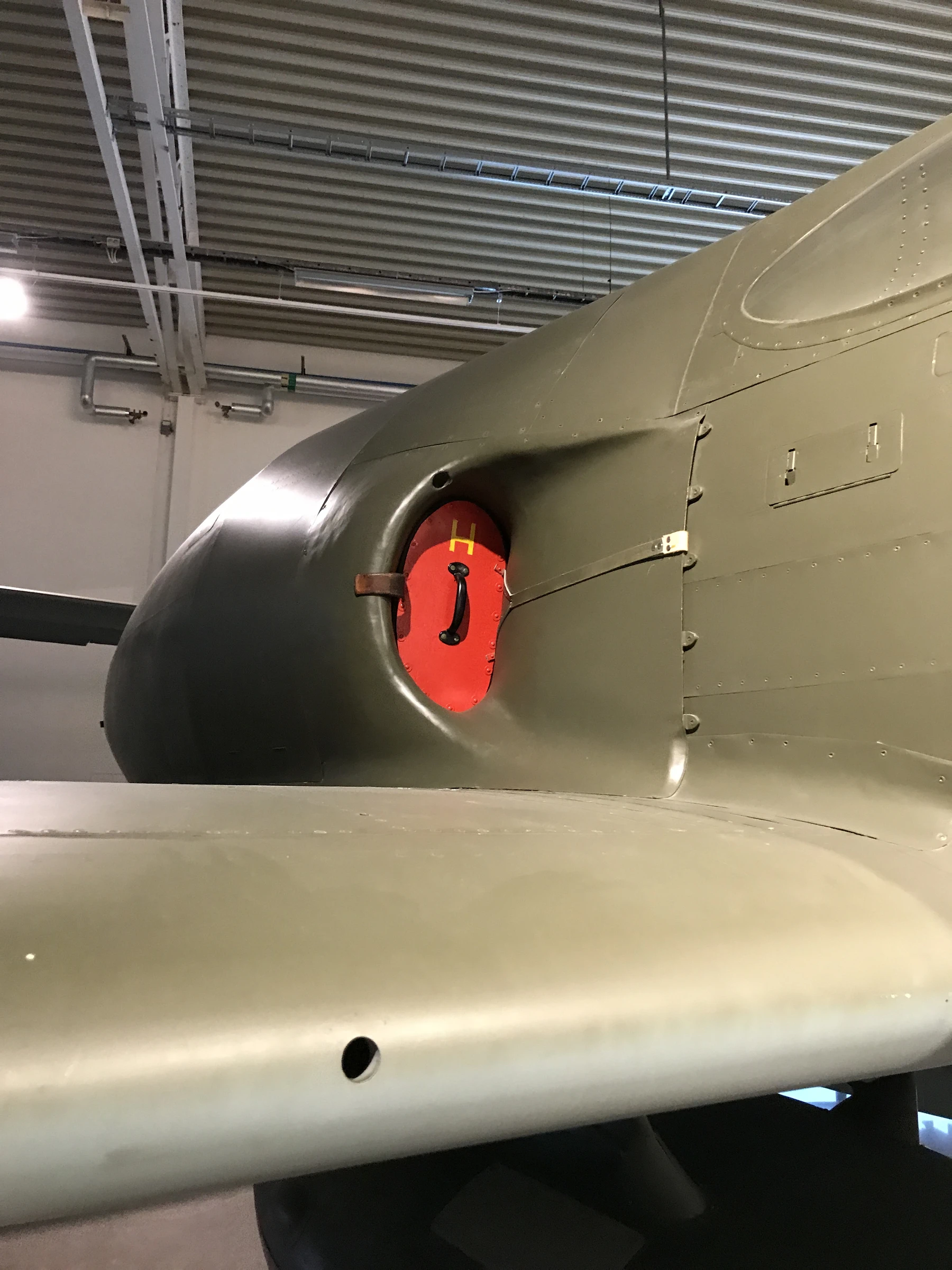
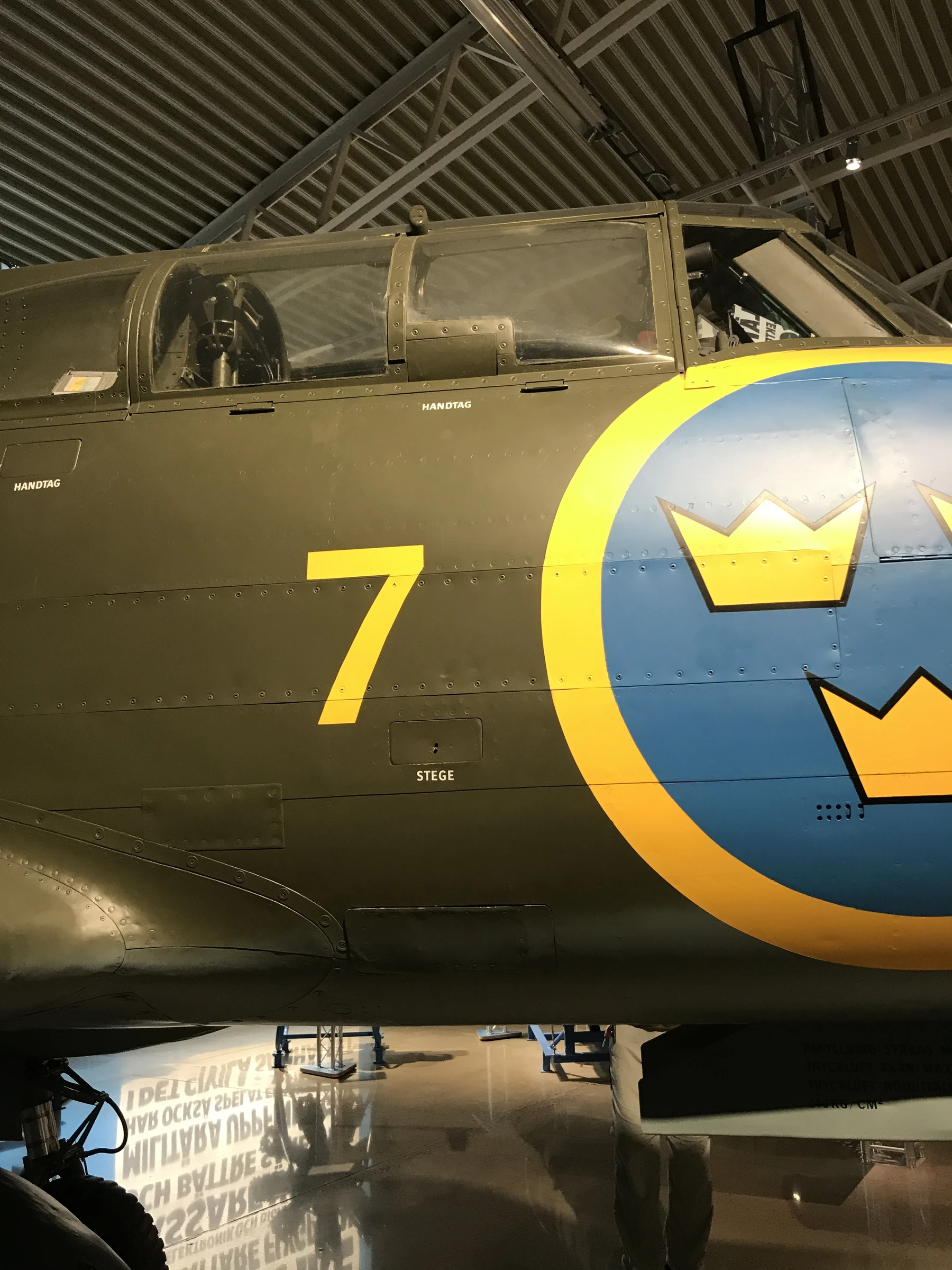
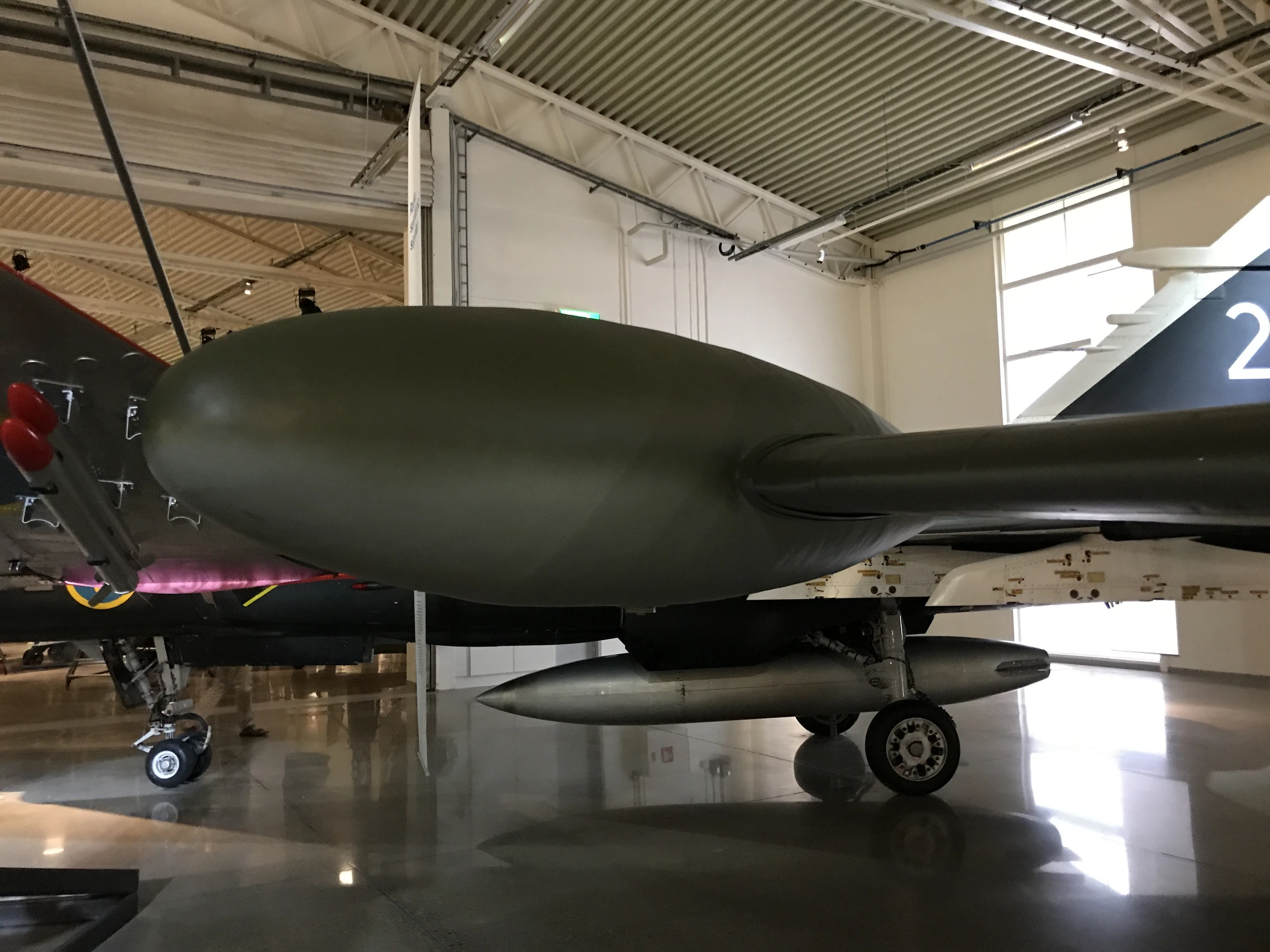
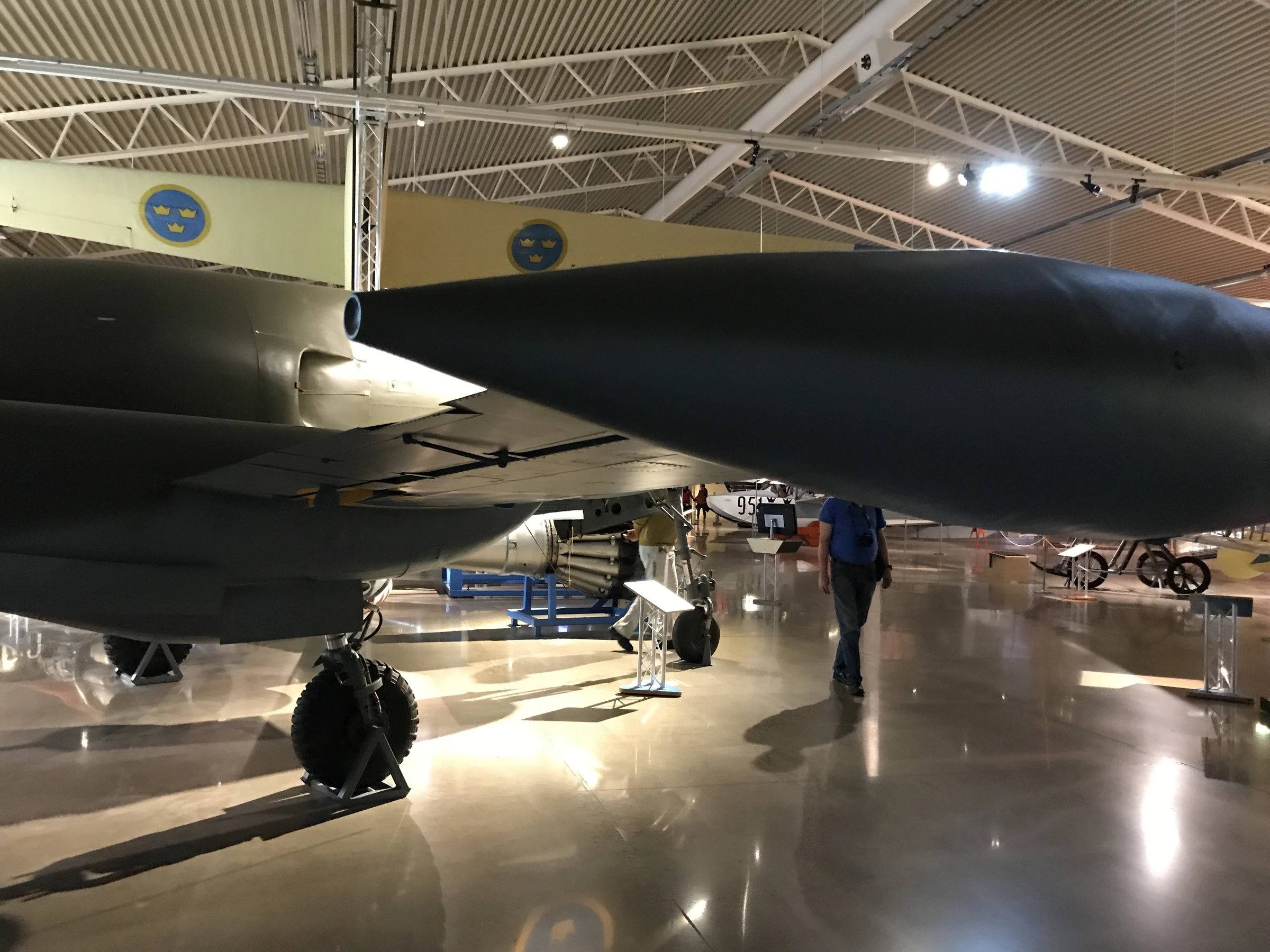
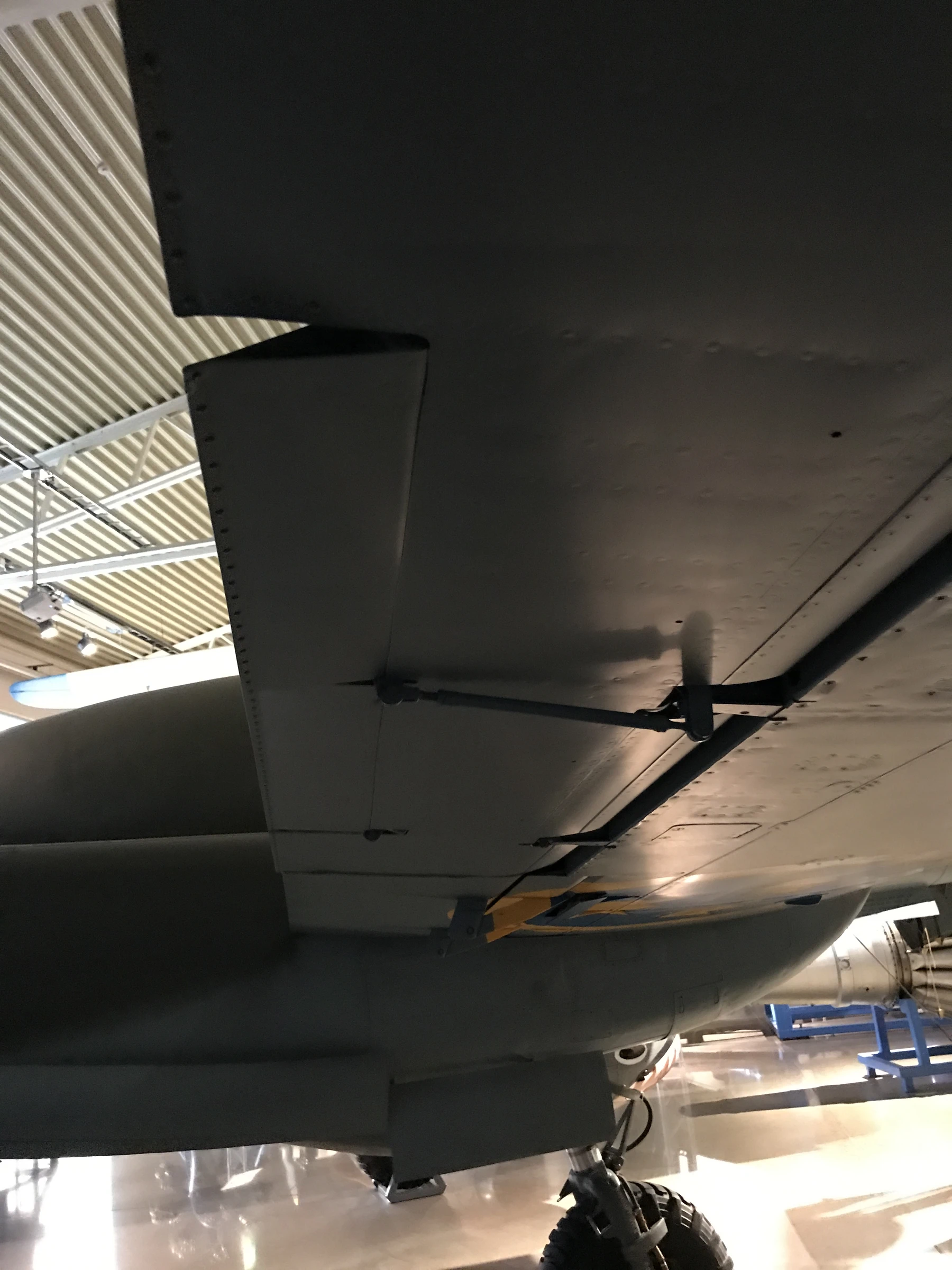
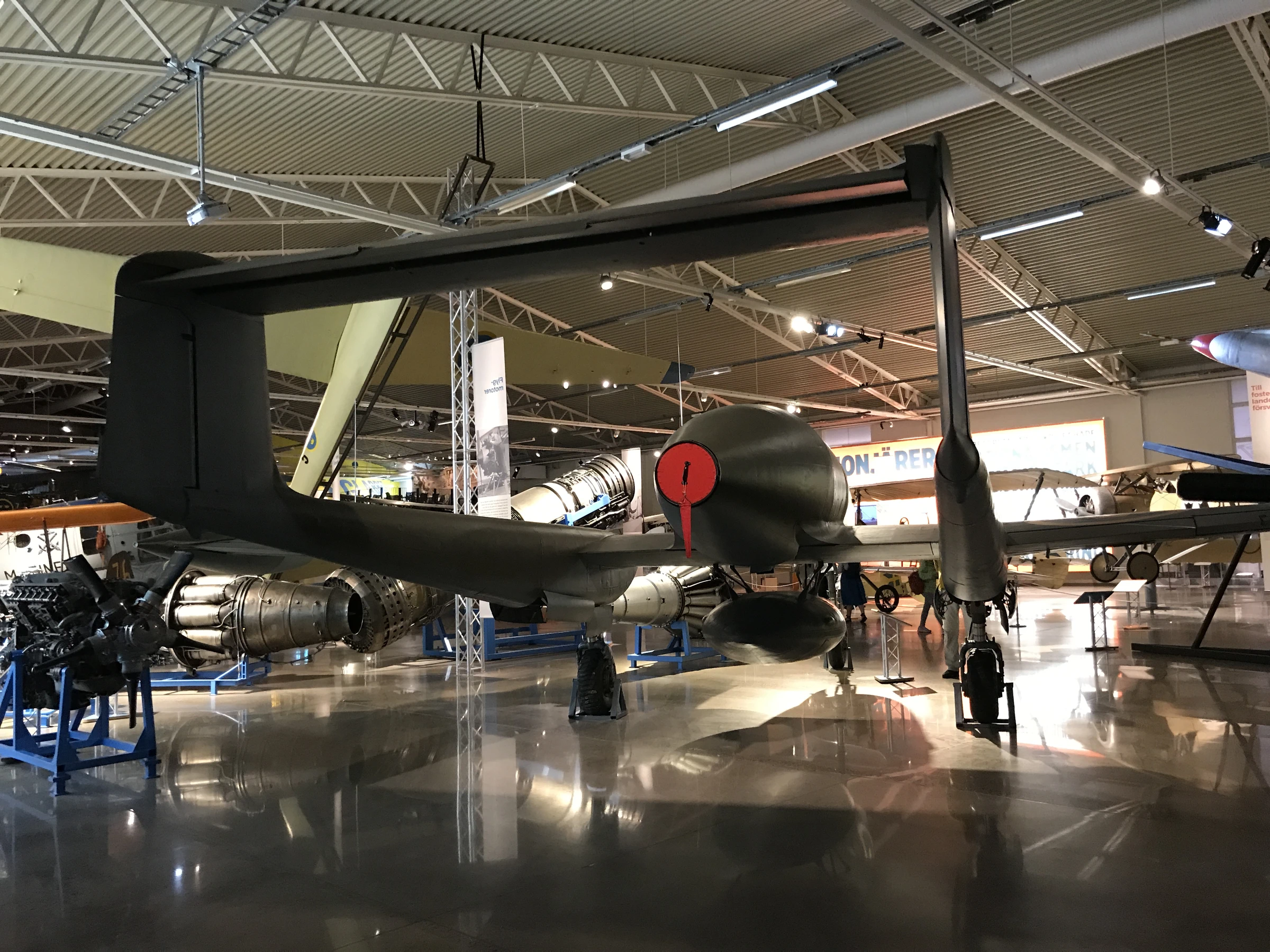
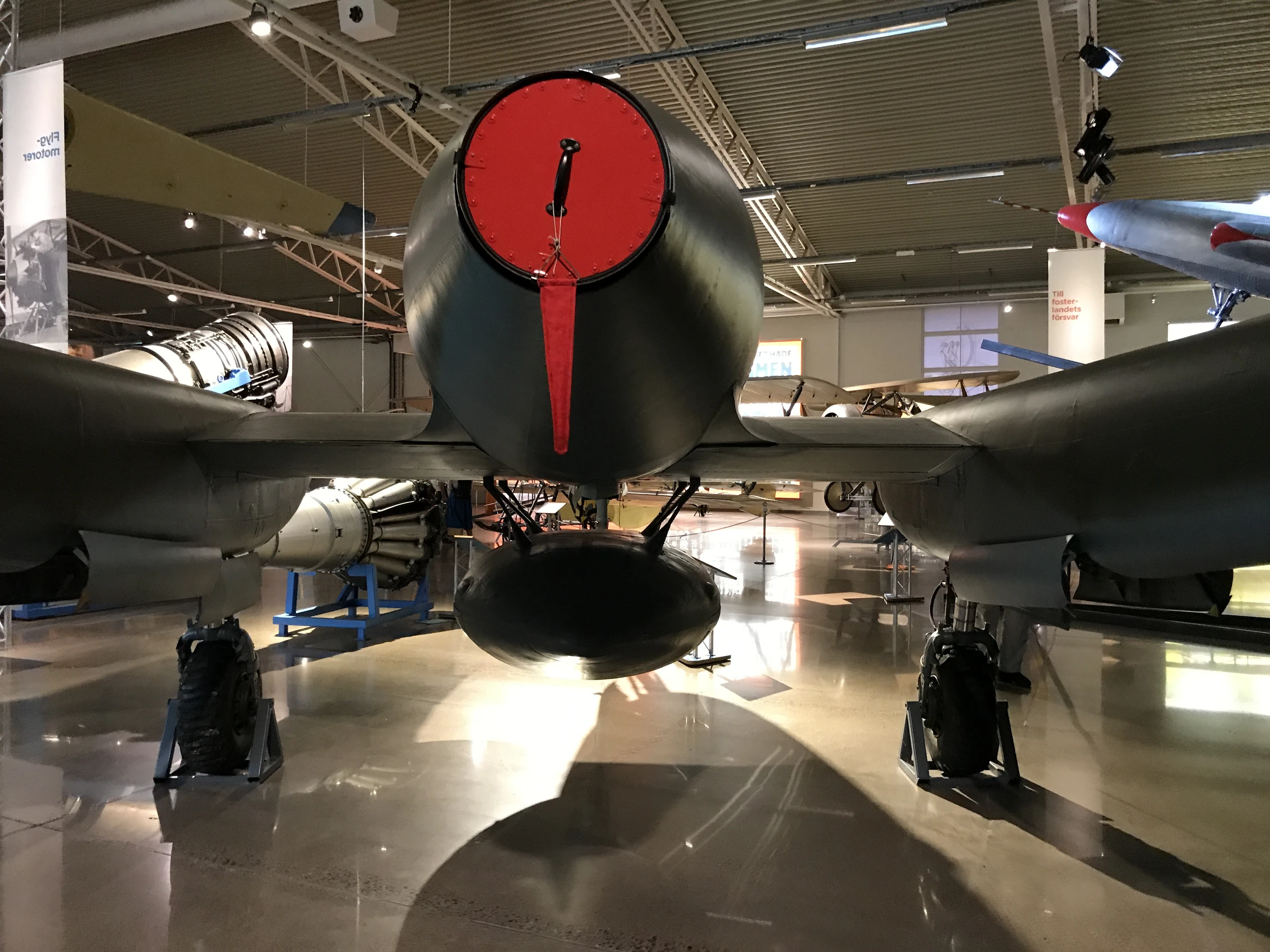
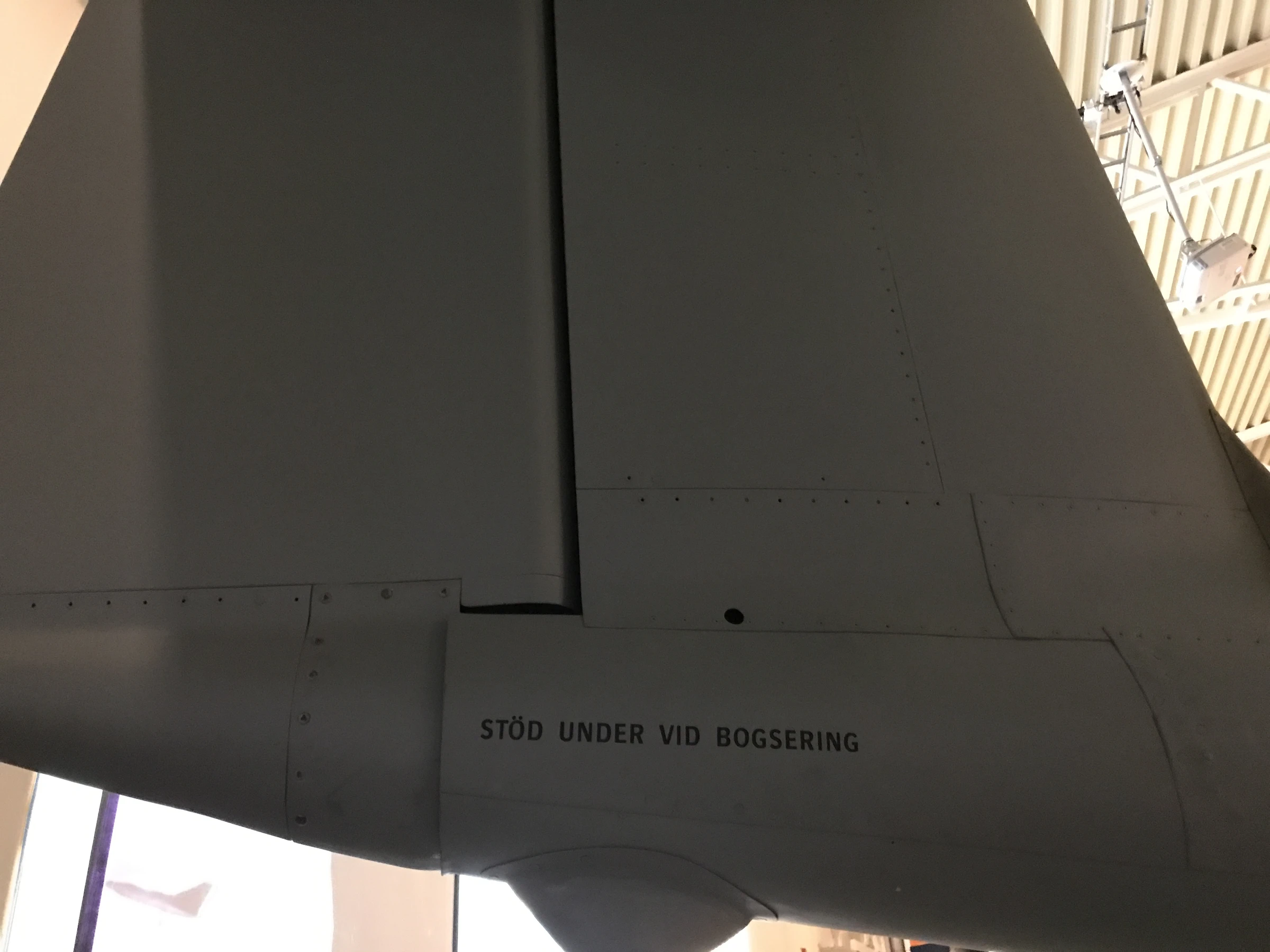
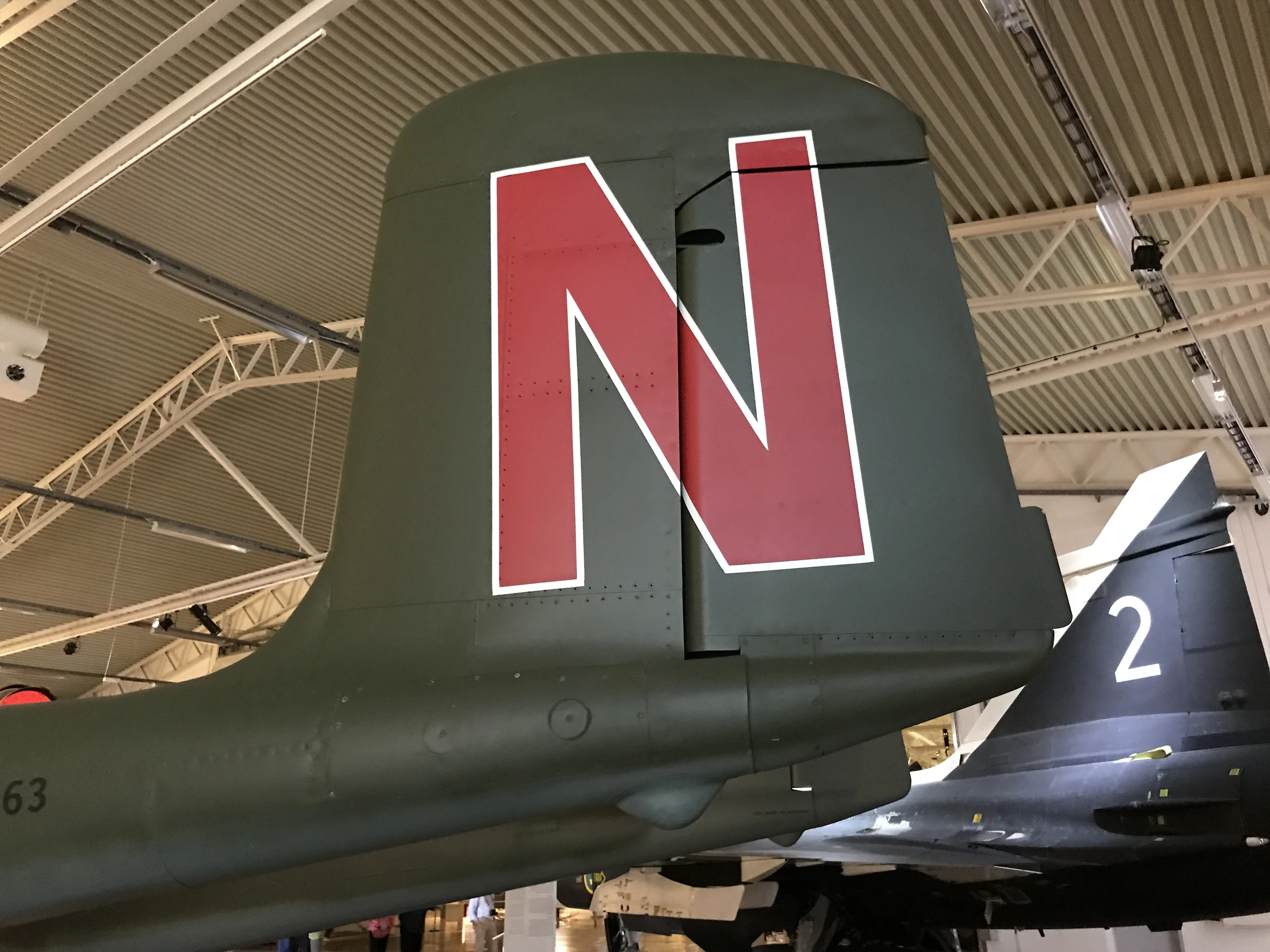
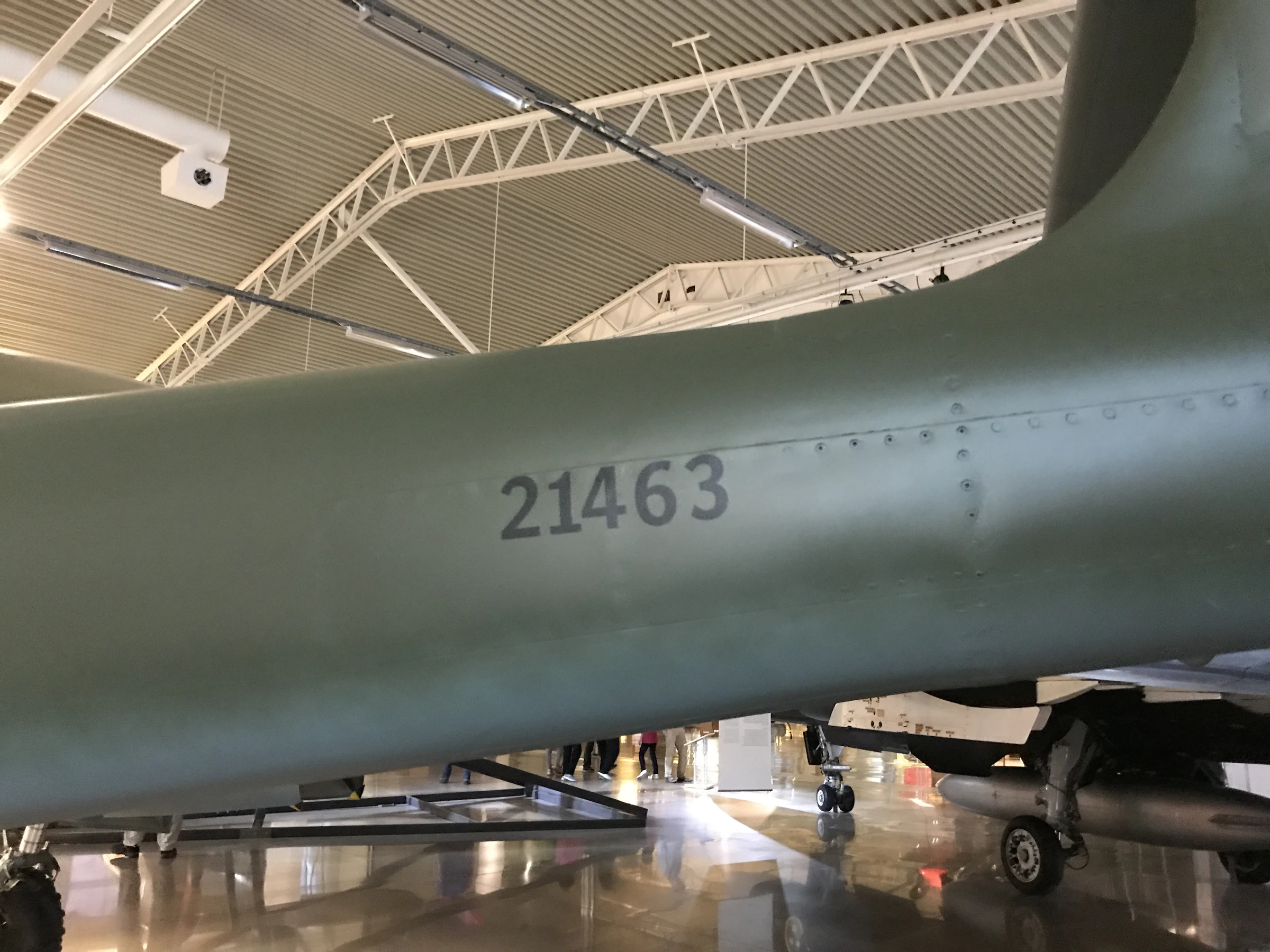
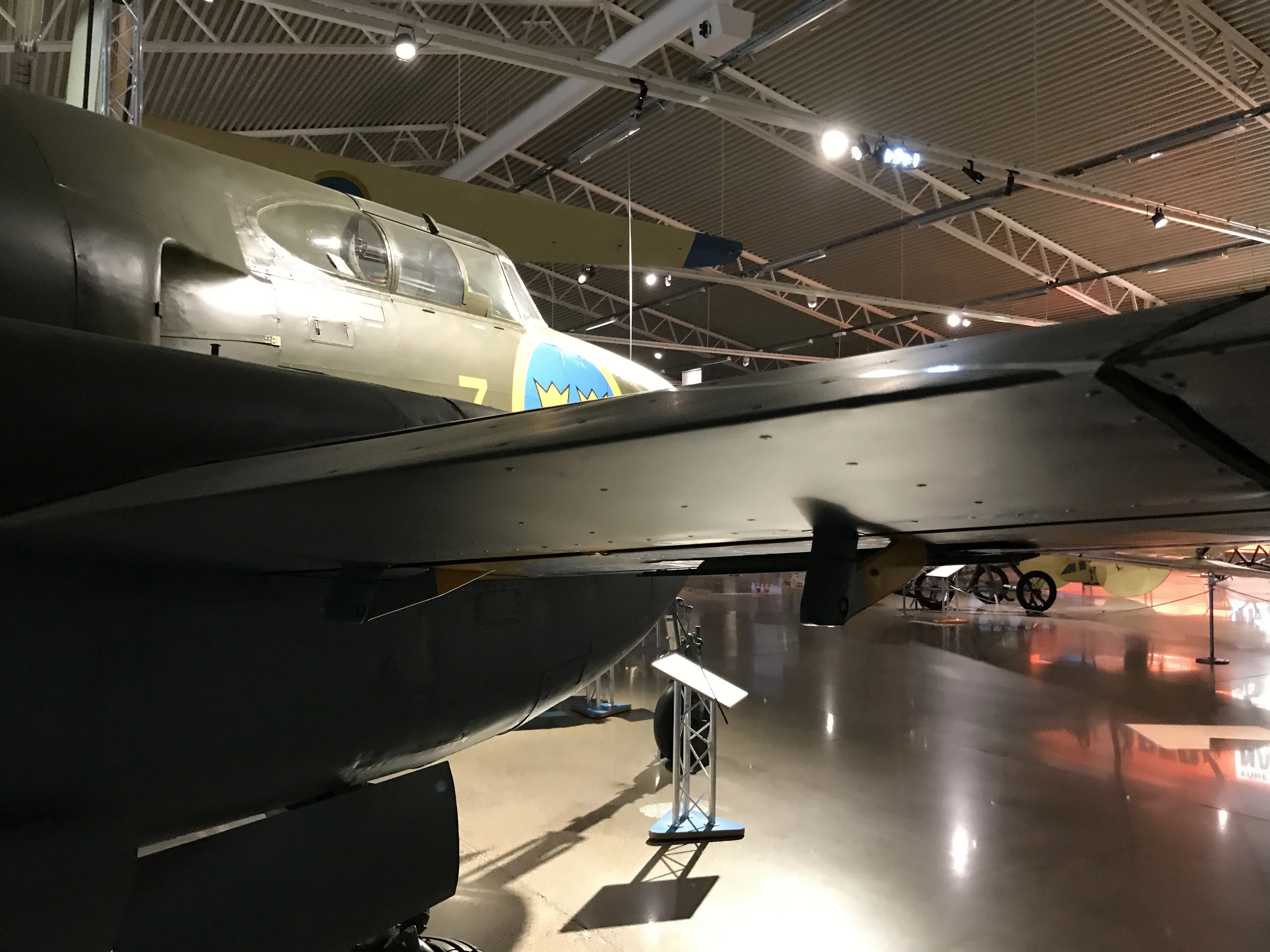
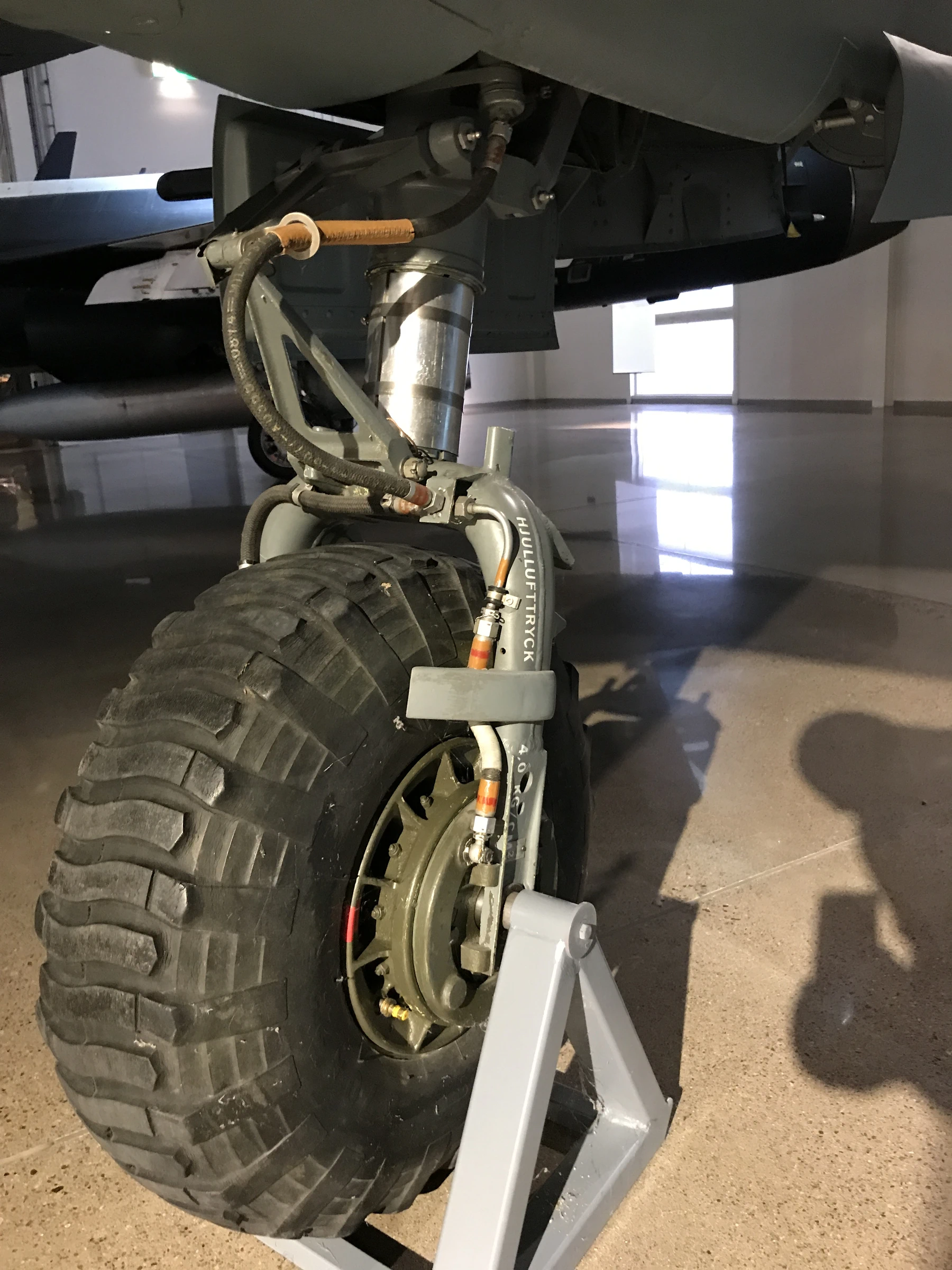
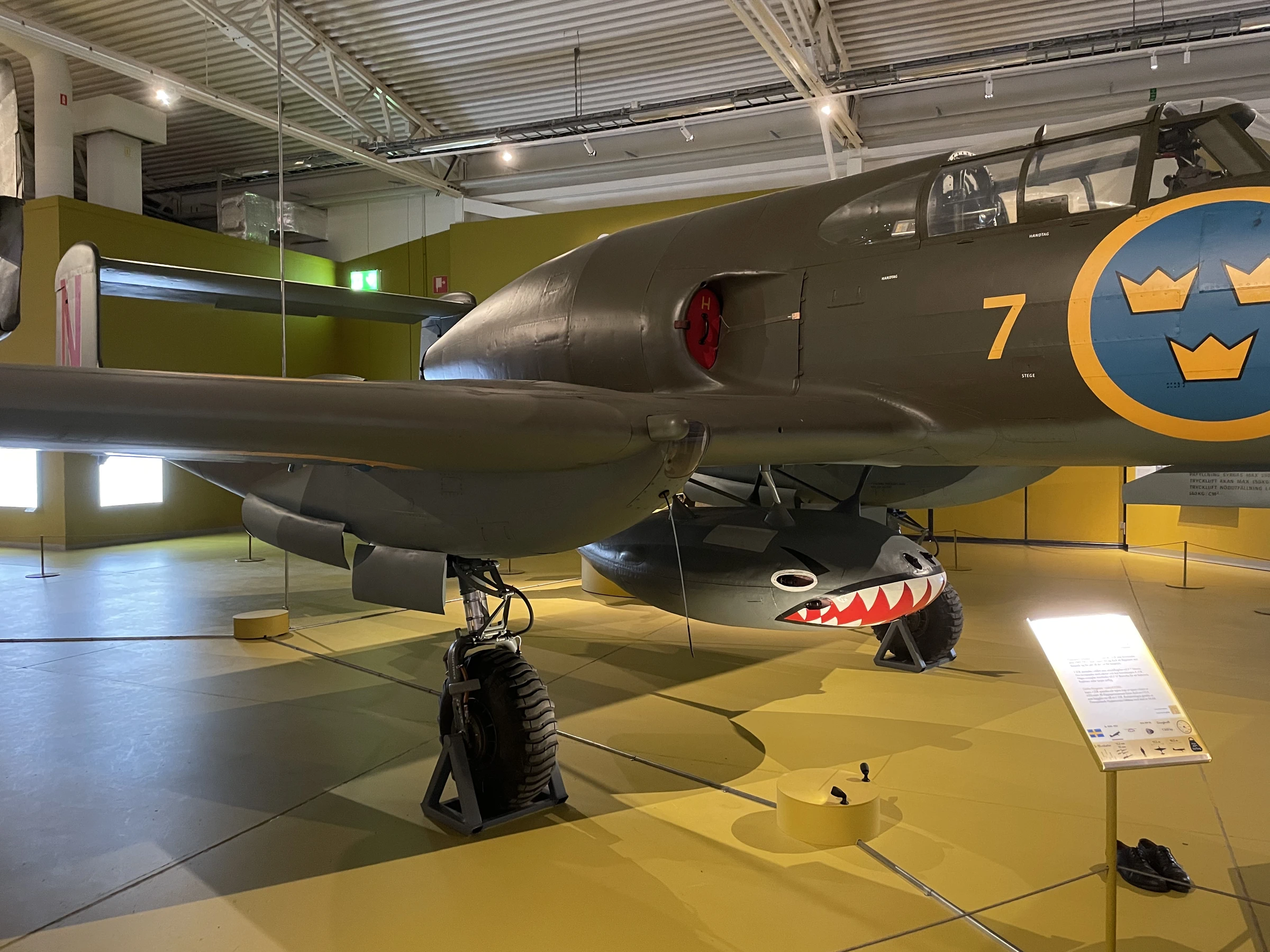
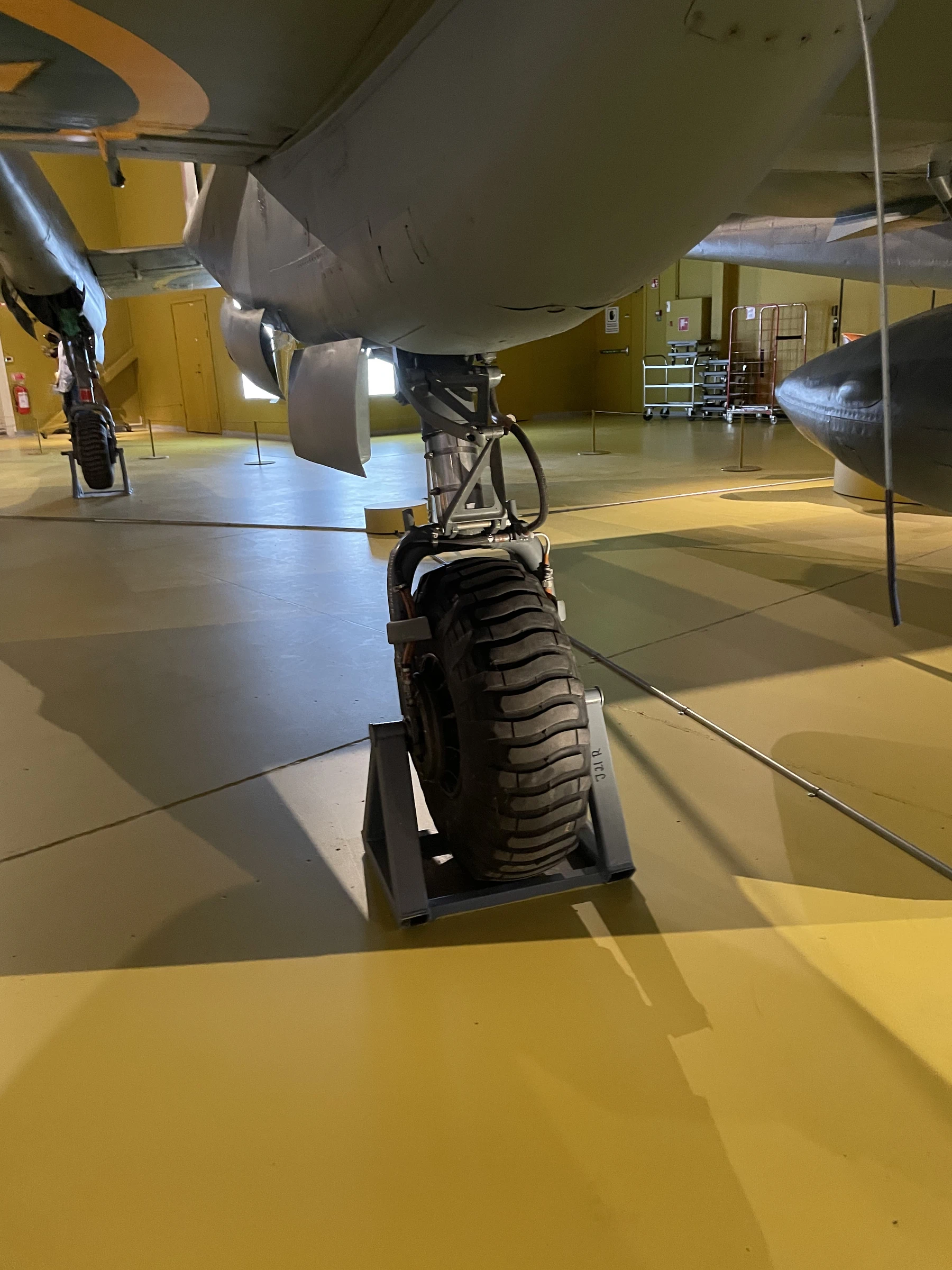
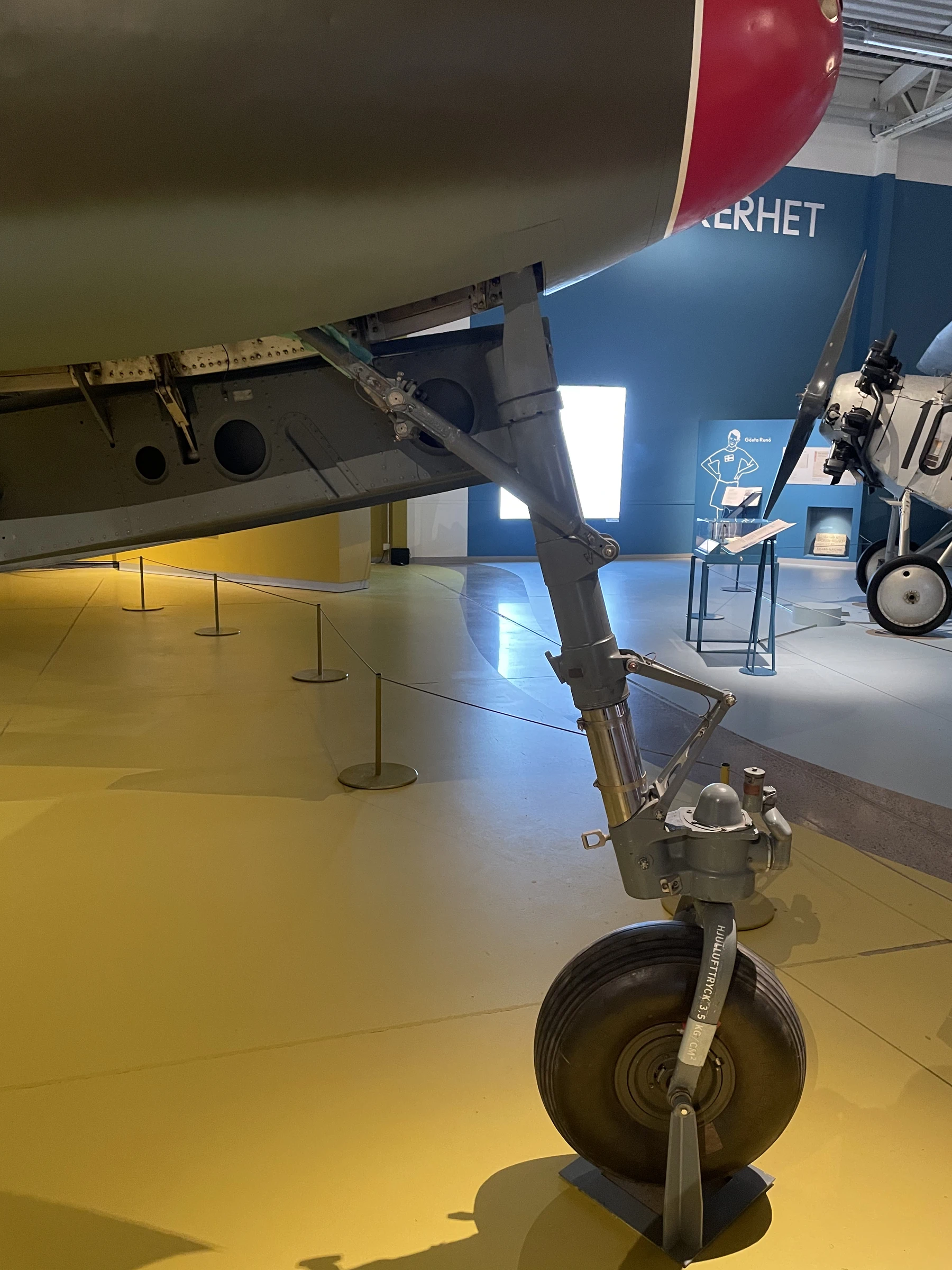
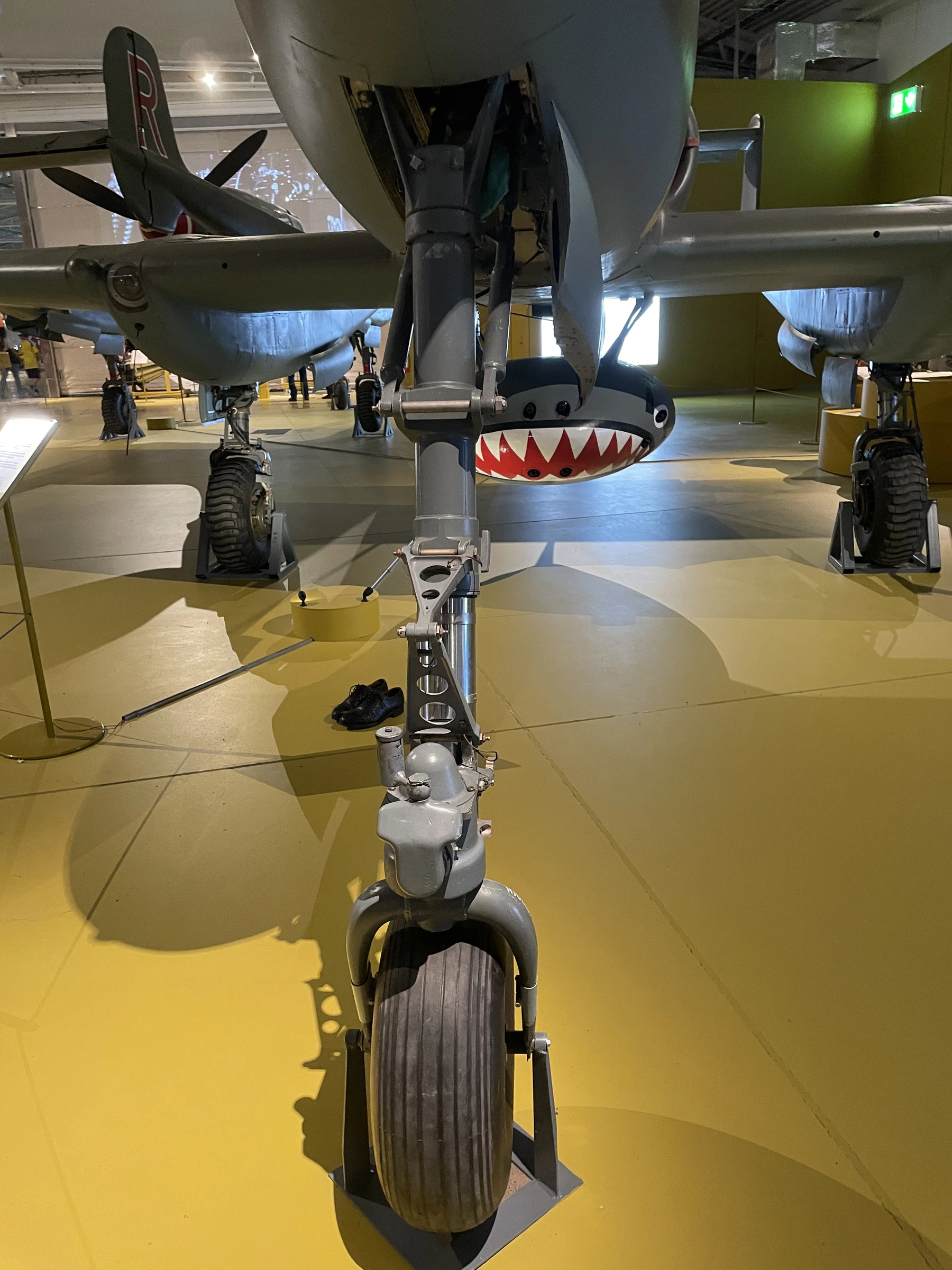
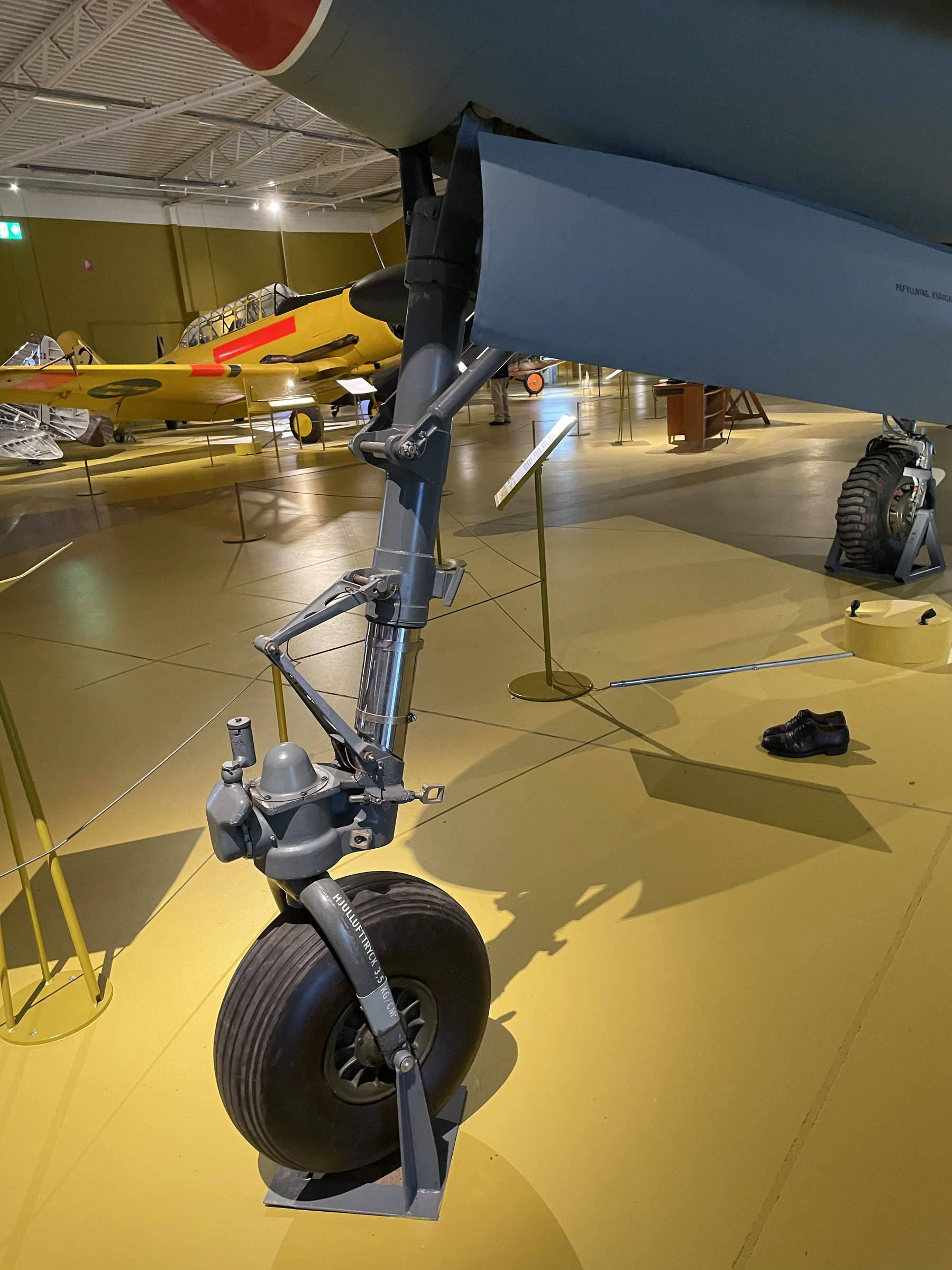
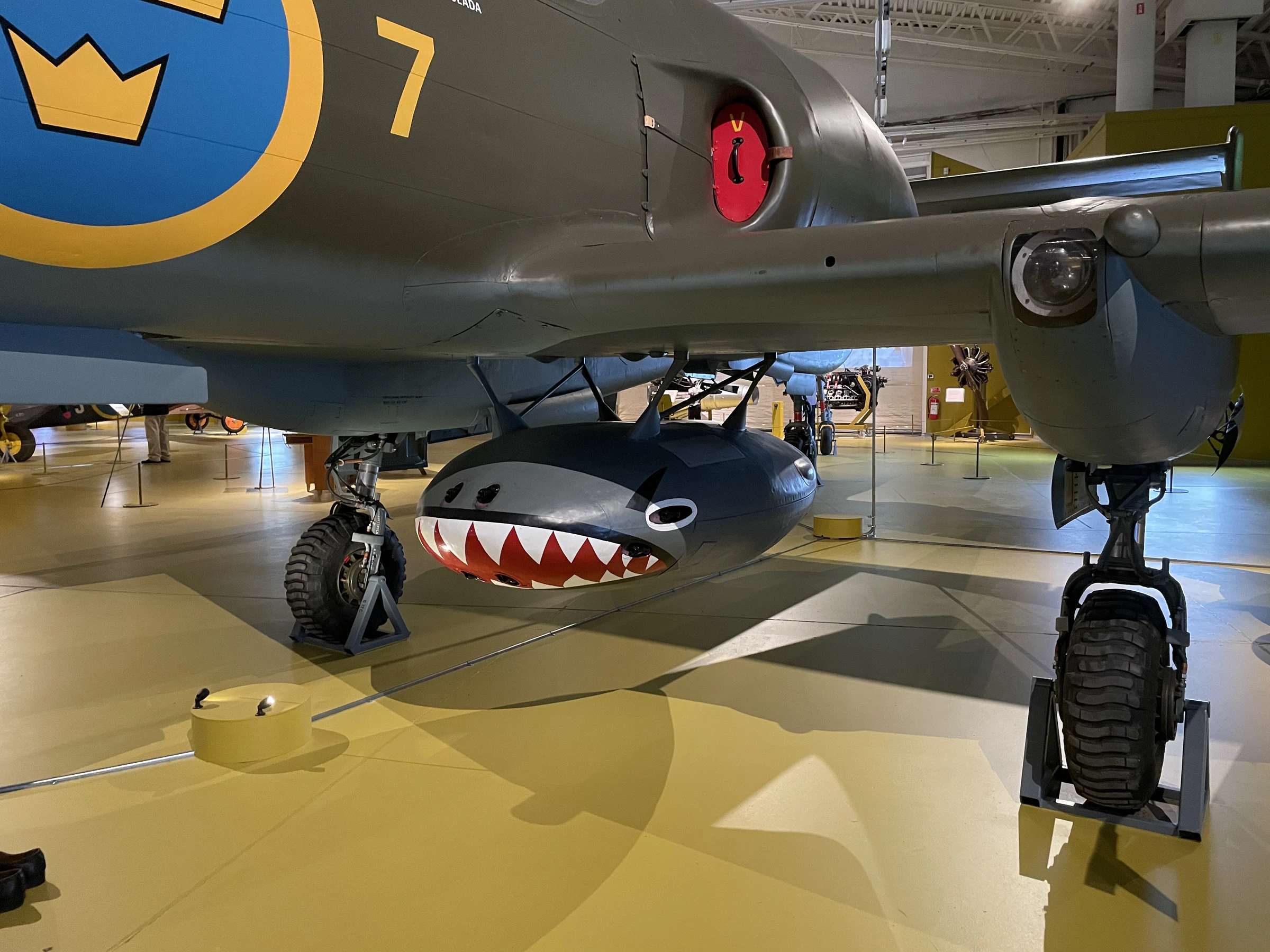
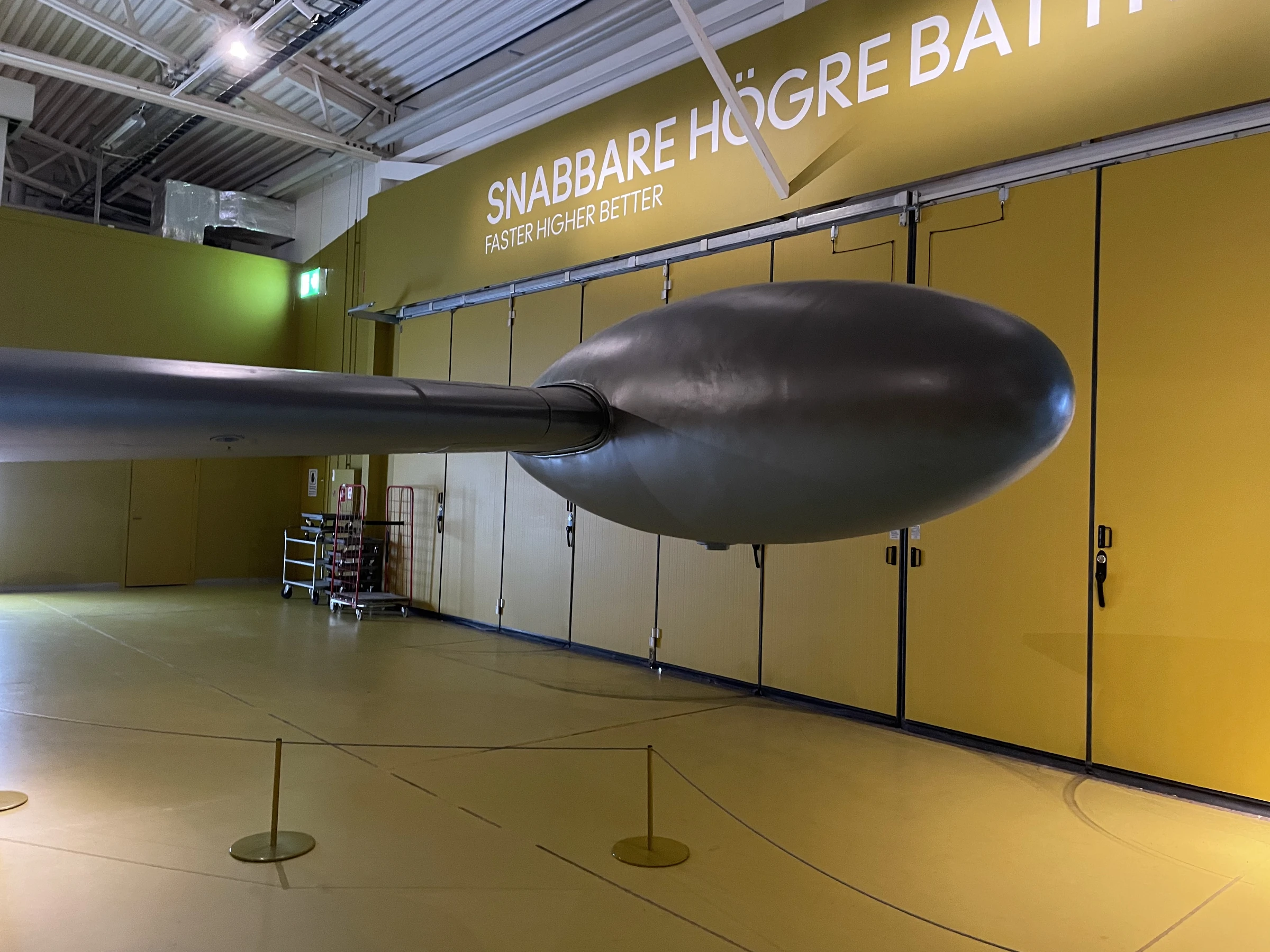
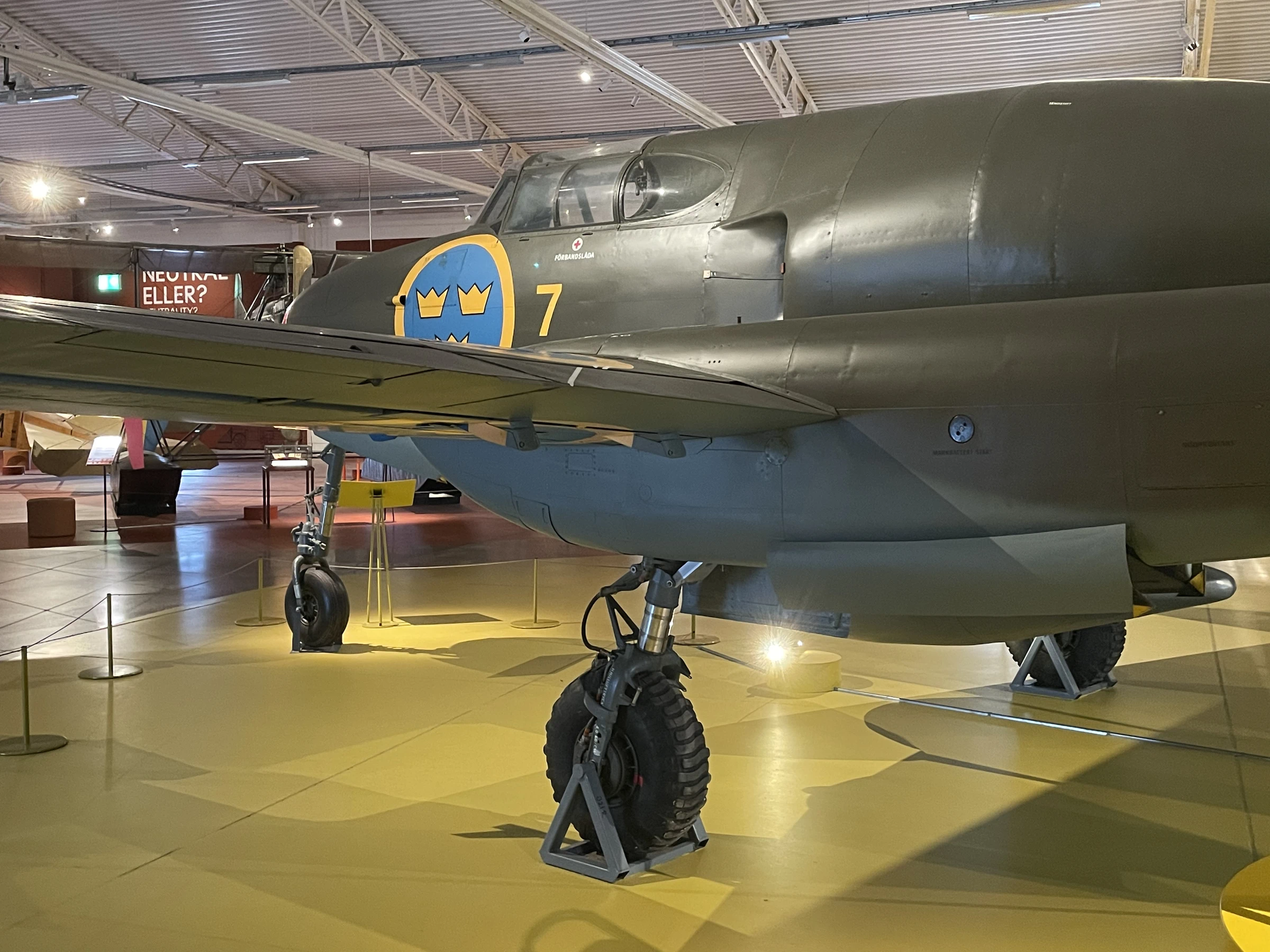
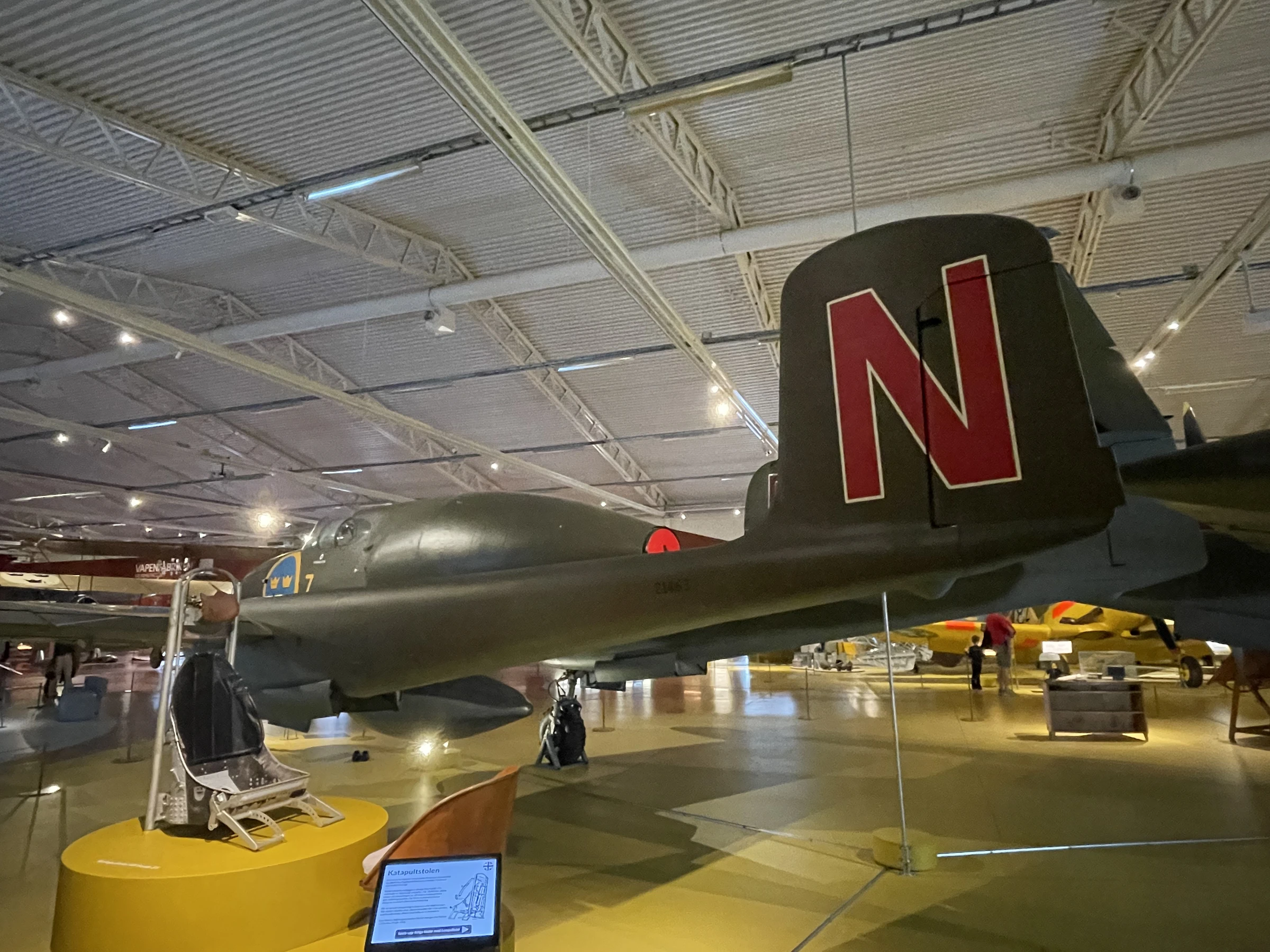
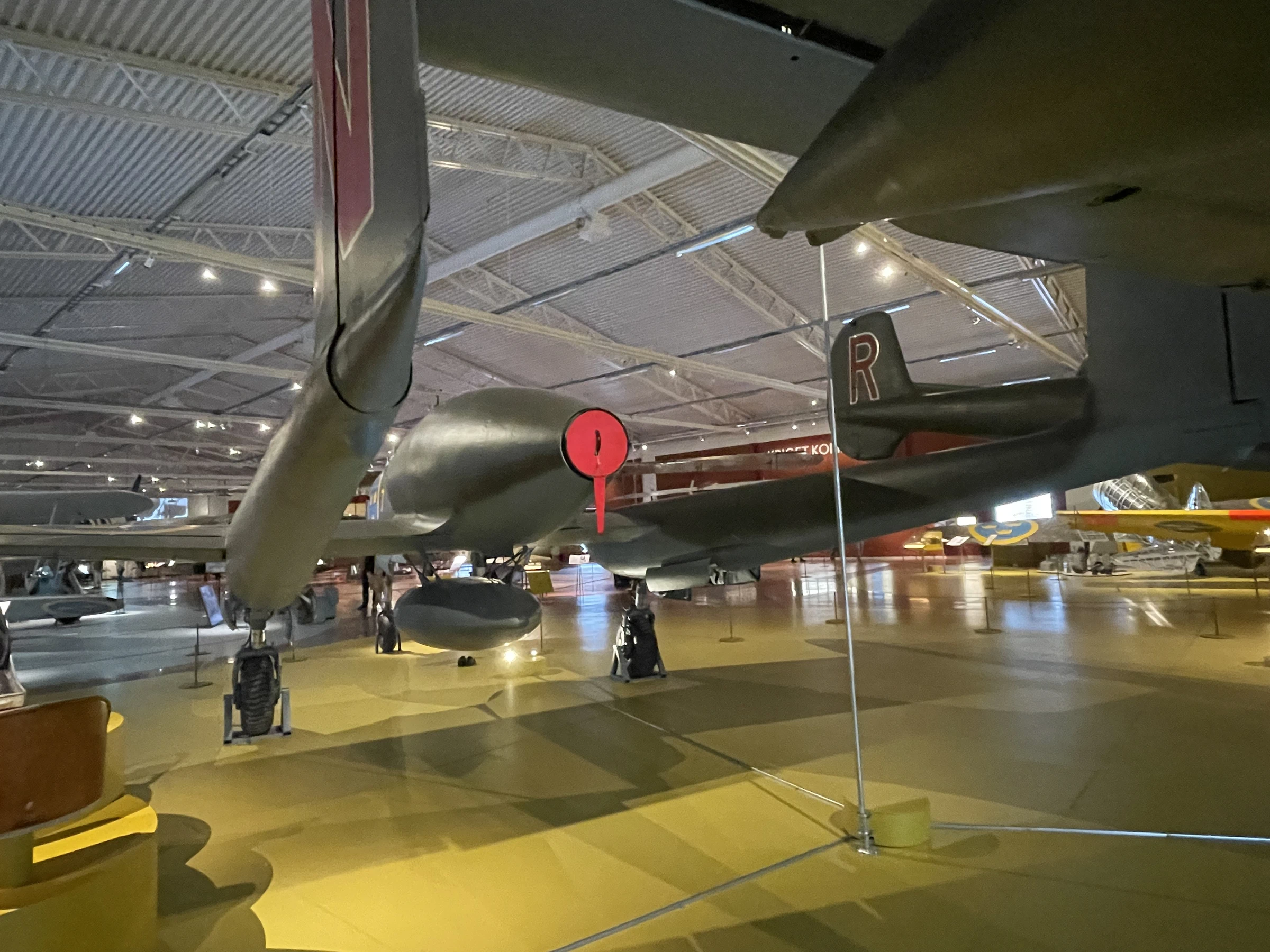
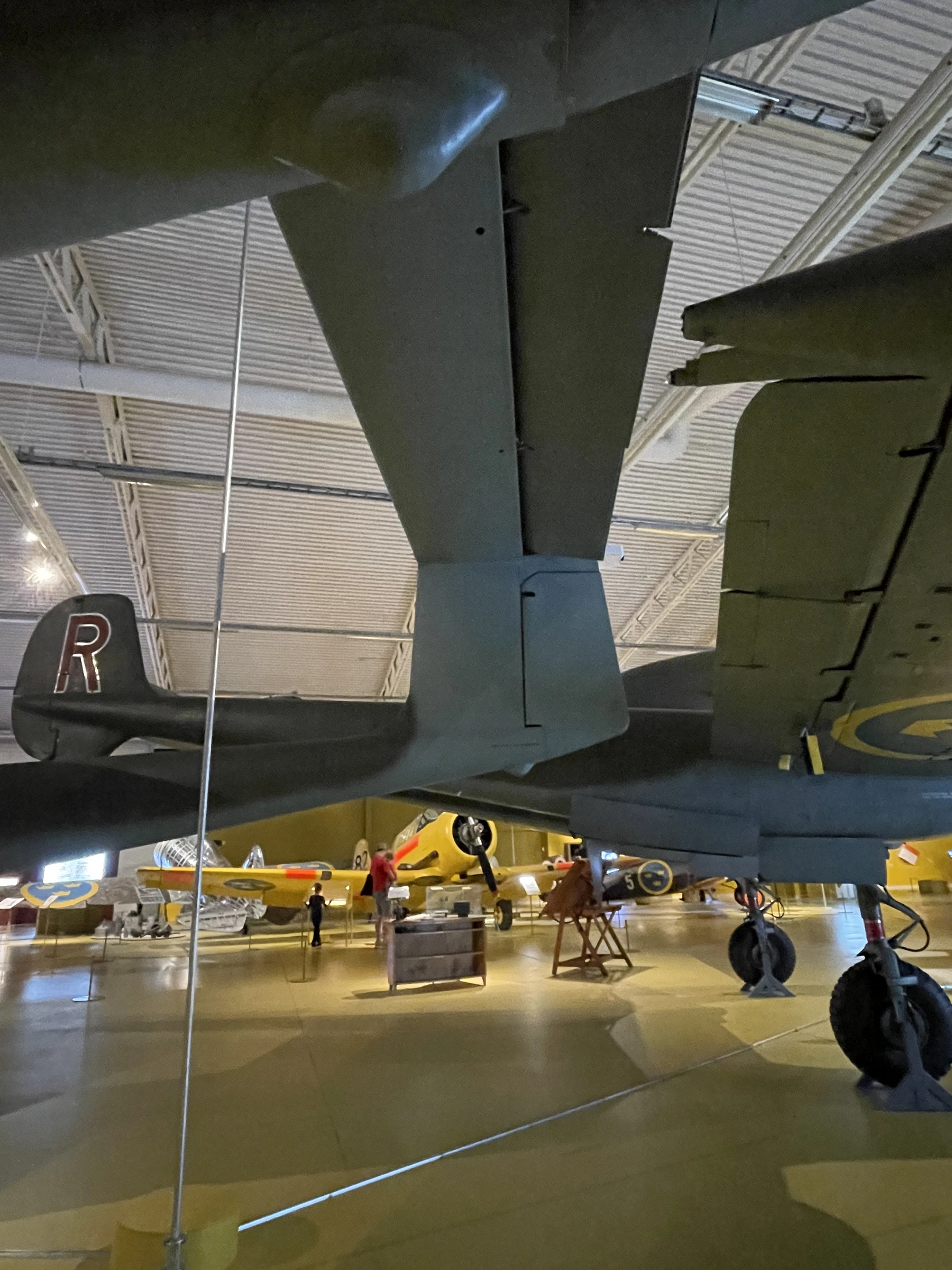
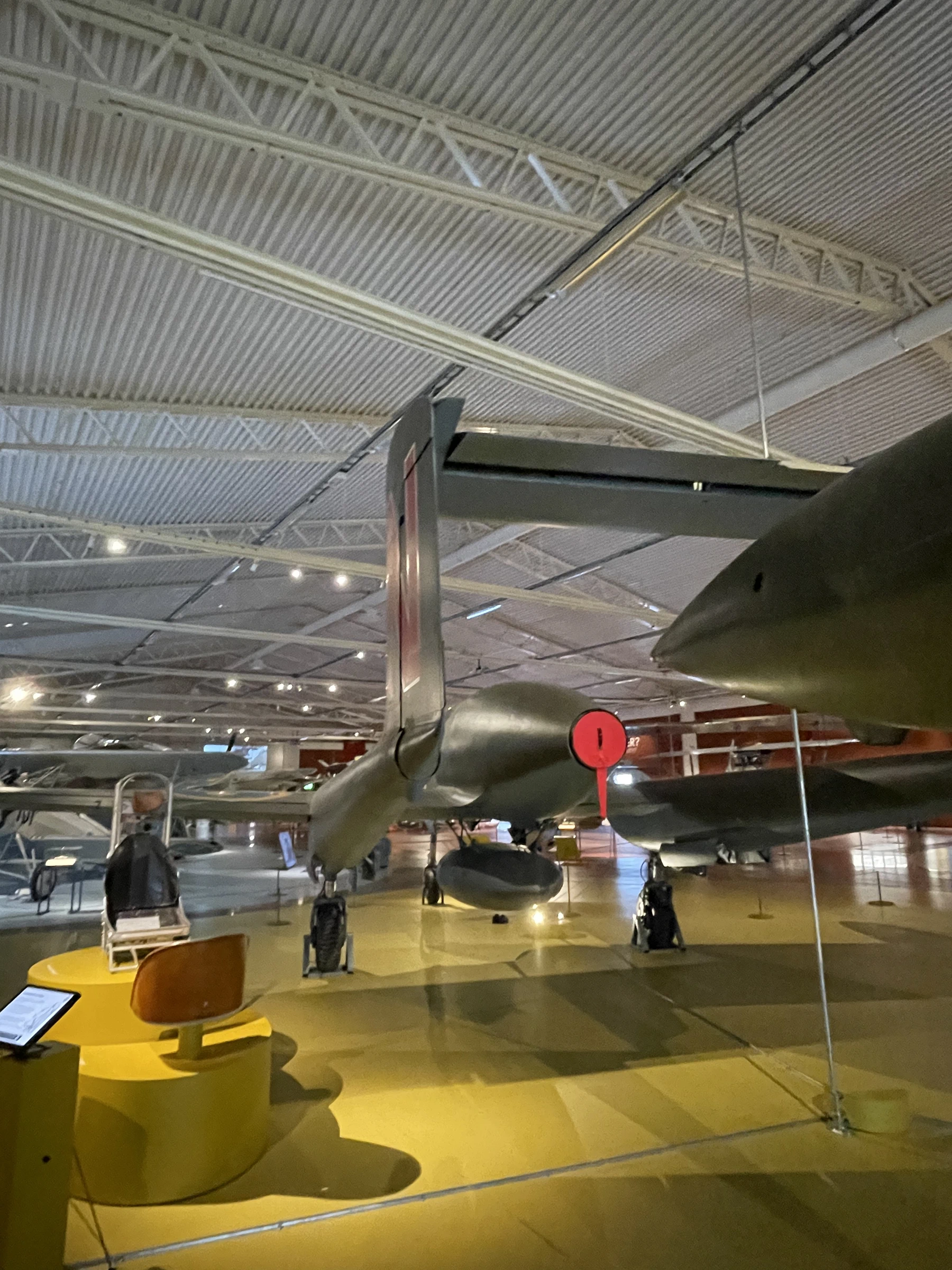
These walk-around photos were taken at Flygvapenmuseum at Malmen outside Linköping in 2017 and 2019. They show a Saab A 21R, displayed in the attack colours of F 7 Såtenäs — the jet-powered development of the piston-engined Saab 21 and one of only two aircraft in history, alongside the Soviet Yakovlev Yak-15, to have been successfully converted from piston to jet propulsion. Where the A 21A-3 seen elsewhere in this walk-around series retained the original Daimler-Benz DB 605B piston engine and pusher propeller, the 21R replaced this entire installation with a British de Havilland Goblin turbojet — designated RM 1 in Swedish service — making it Sweden's first jet-powered combat aircraft. The conversion required modifications to over half the airframe, including a redesigned tail section with a raised horizontal stabilizer to clear the jet exhaust, enlarged fuel capacity to feed the thirsty turbojet, and revised air intakes in the nose.
The first 21R prototype flew on 10 March 1947 and the type entered service with F 10 at Ängelholm in August 1950. Originally designated J 21R as fighters, all 64 production aircraft were soon redirected to the attack role as A 21R as the superior Saab J 29 Tunnan took over the fighter mission. F 7 at Såtenäs operated the type in the attack role from 1950 to 1954. No original 21R airframe survived — all were scrapped after retirement. The aircraft displayed here is a reconstruction completed in the 1990s by volunteers from Östergötlands Flyghistoriska Sällskap, working from a derelict J 21A-3 airframe and supported by Saab, and handed over to Flygvapenmuseum in 1998. It remains the only representative of Sweden's first jet combat aircraft.