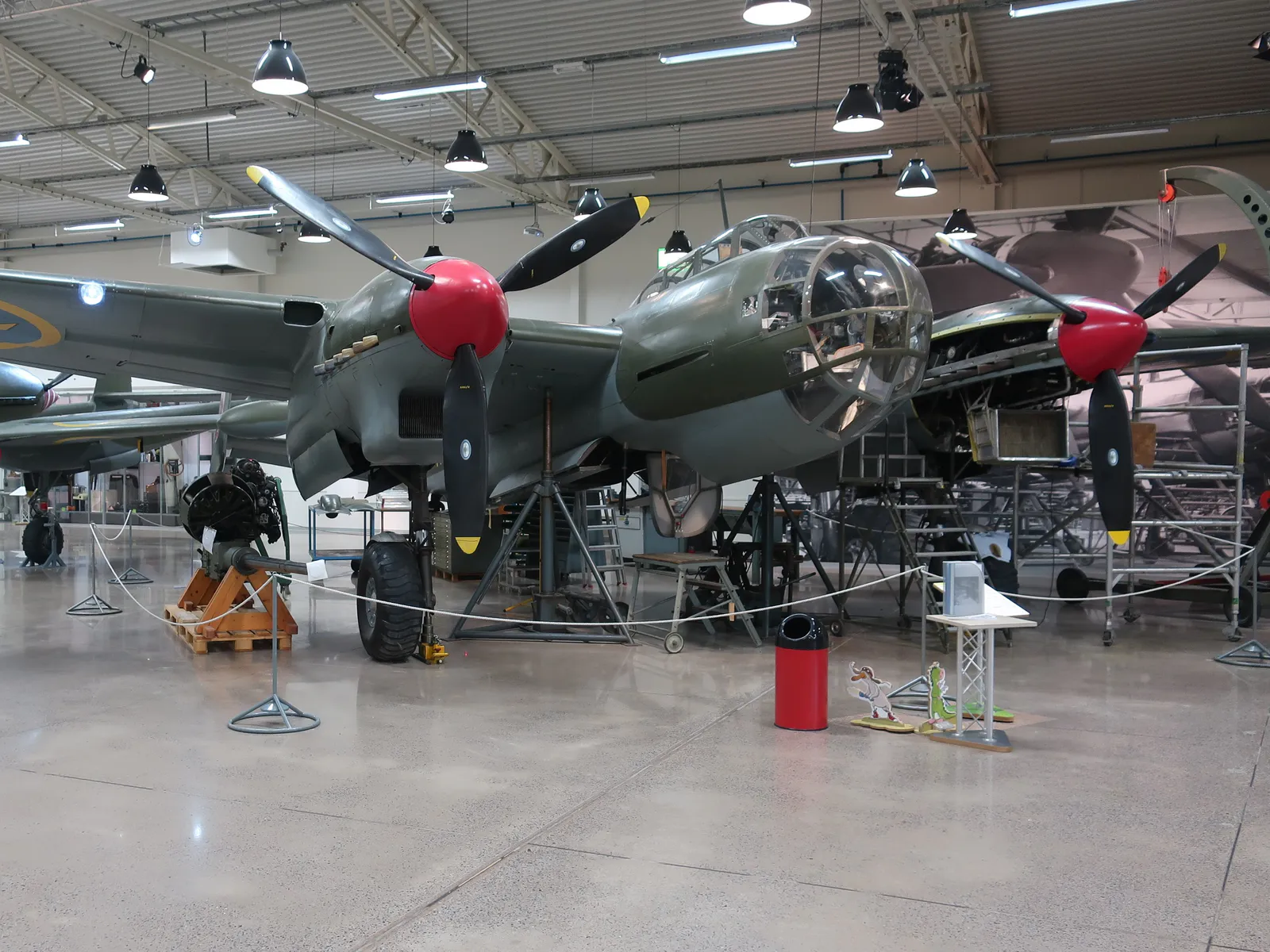
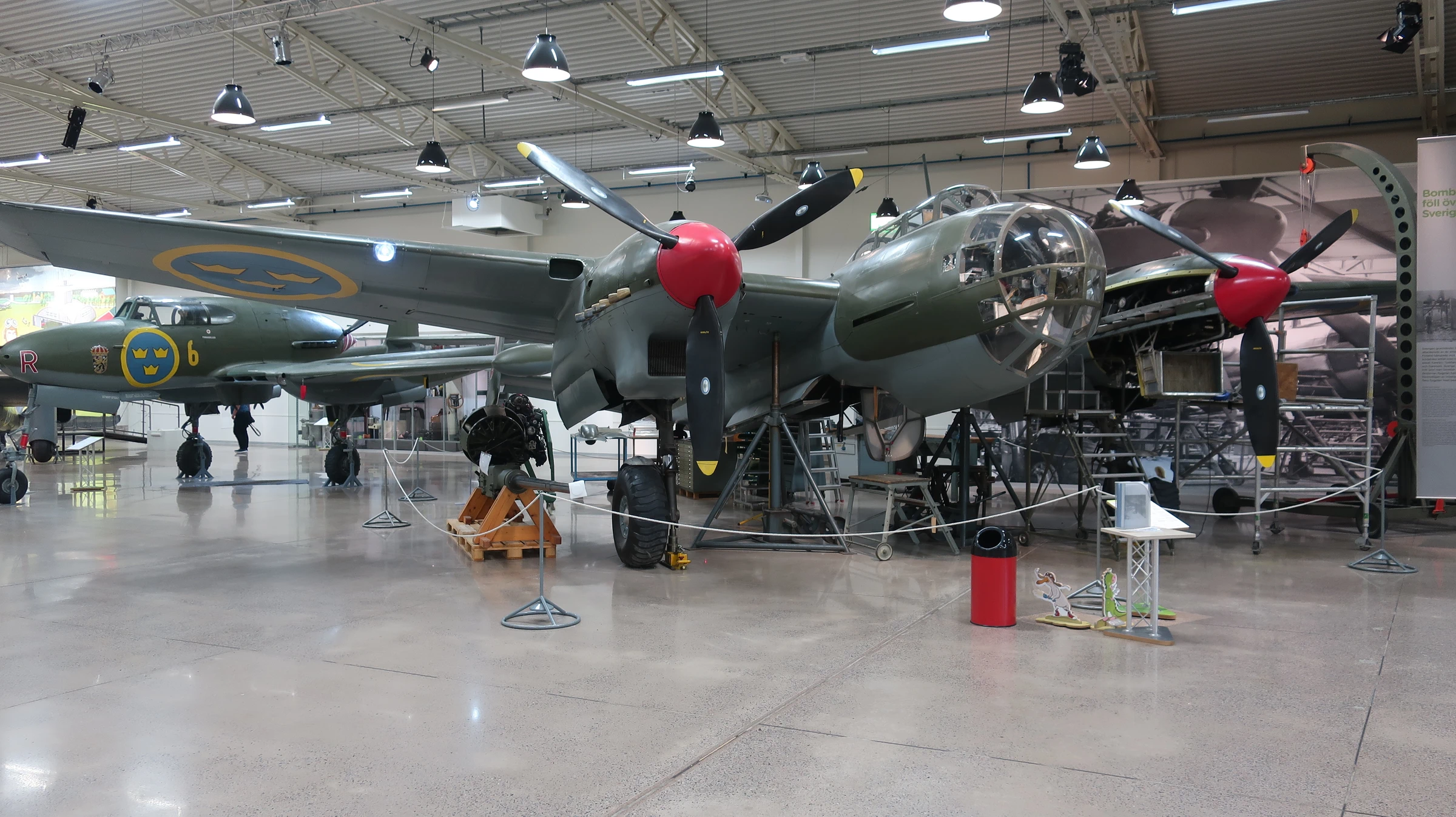
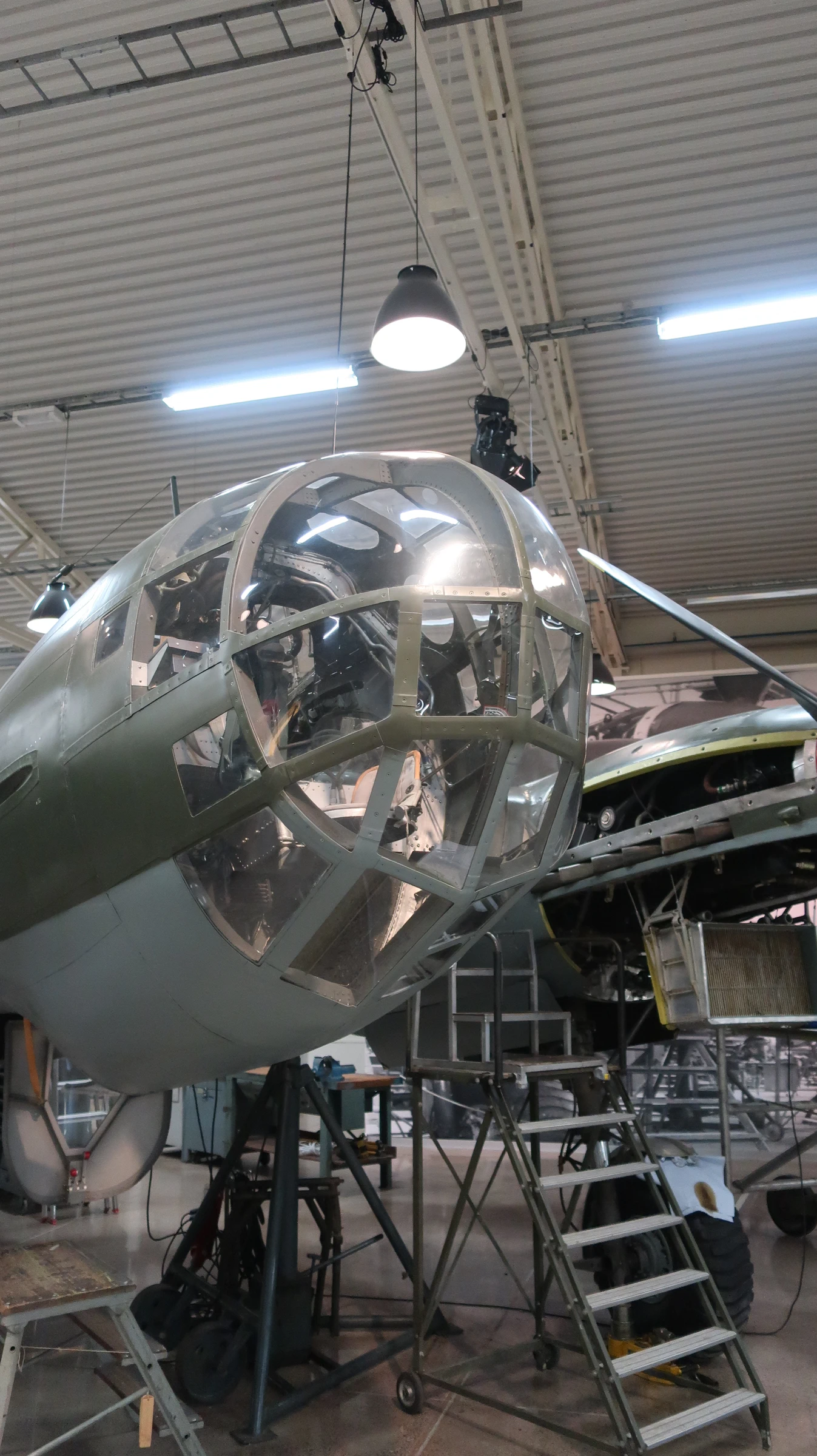
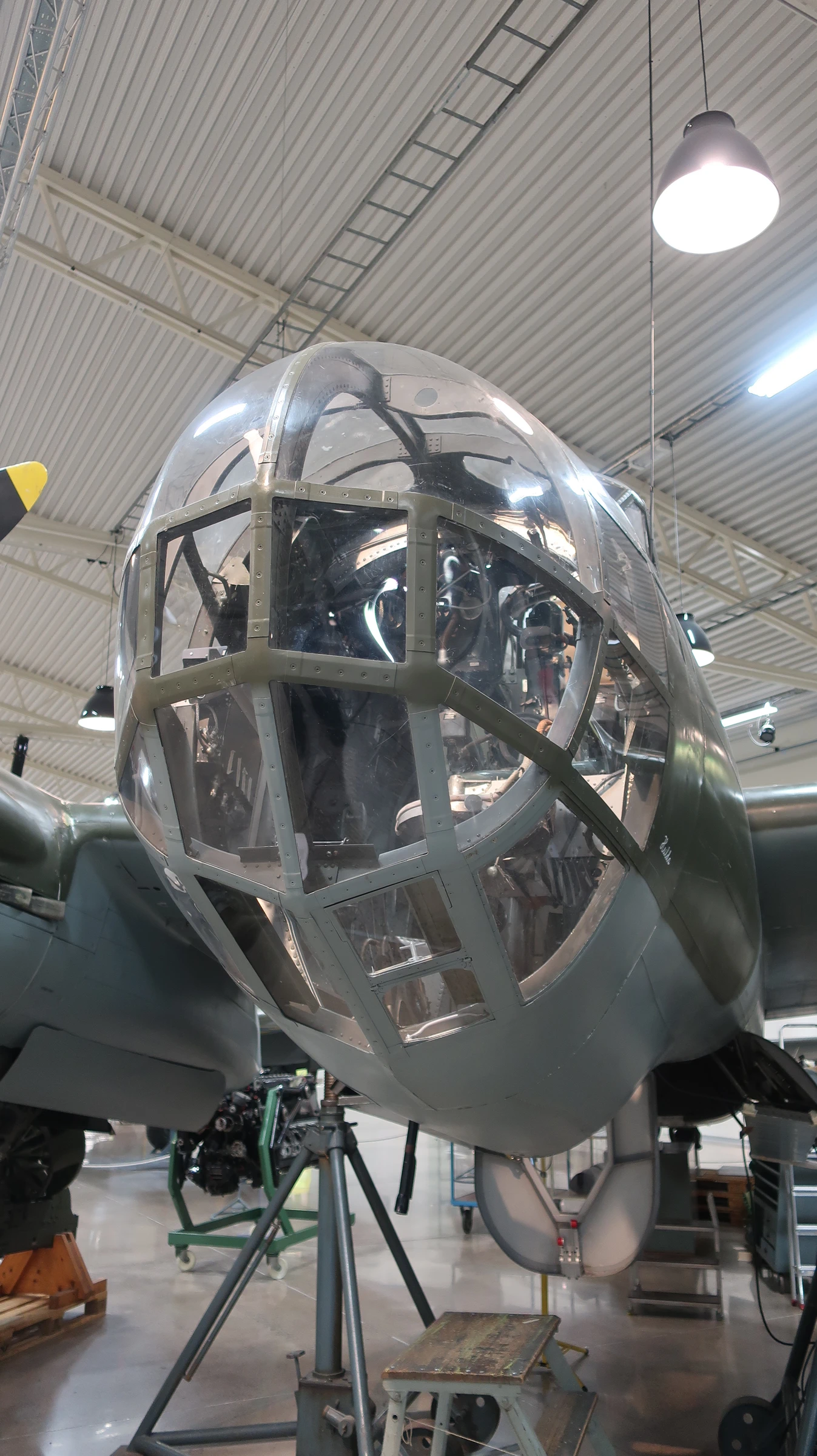
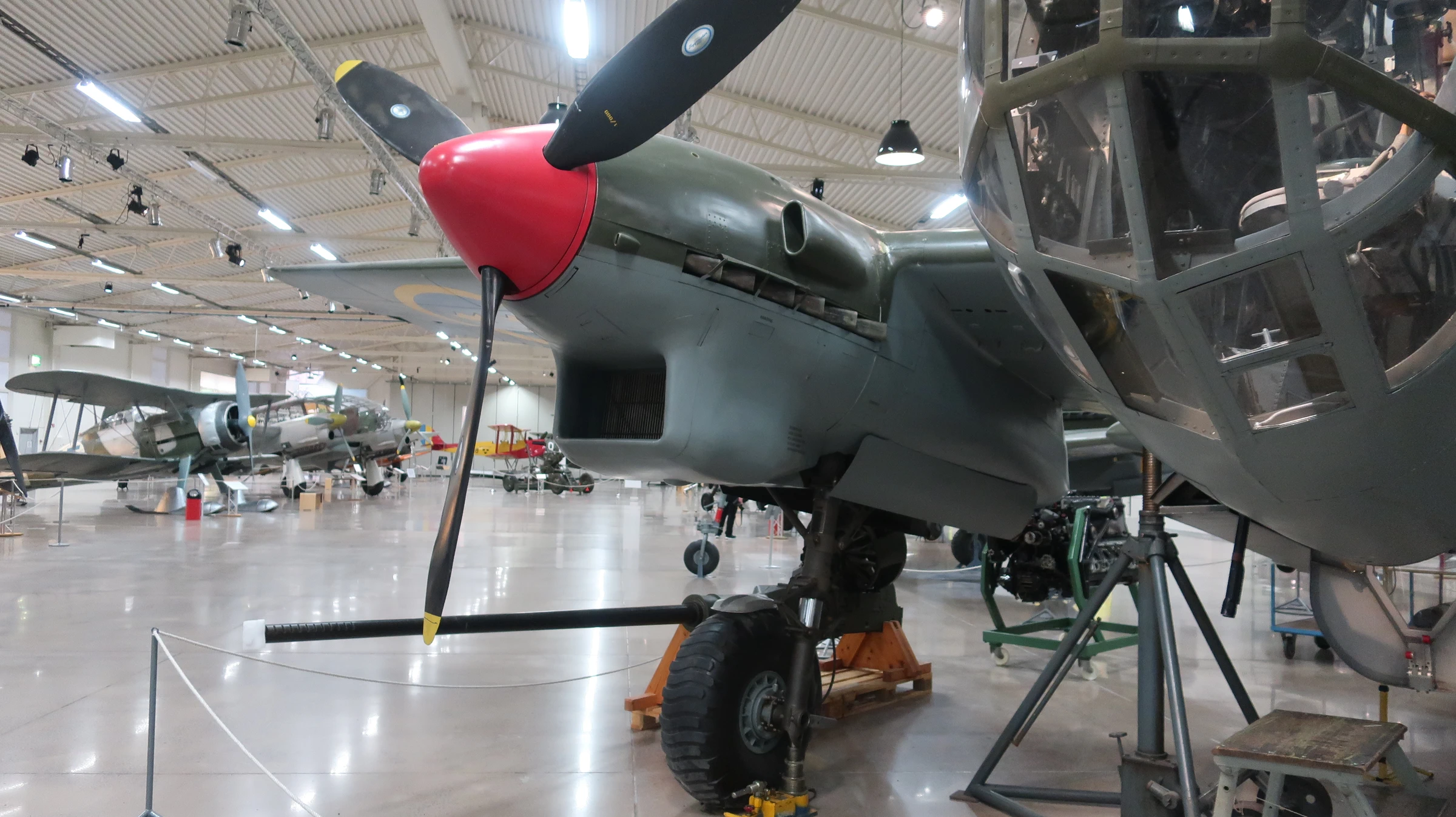
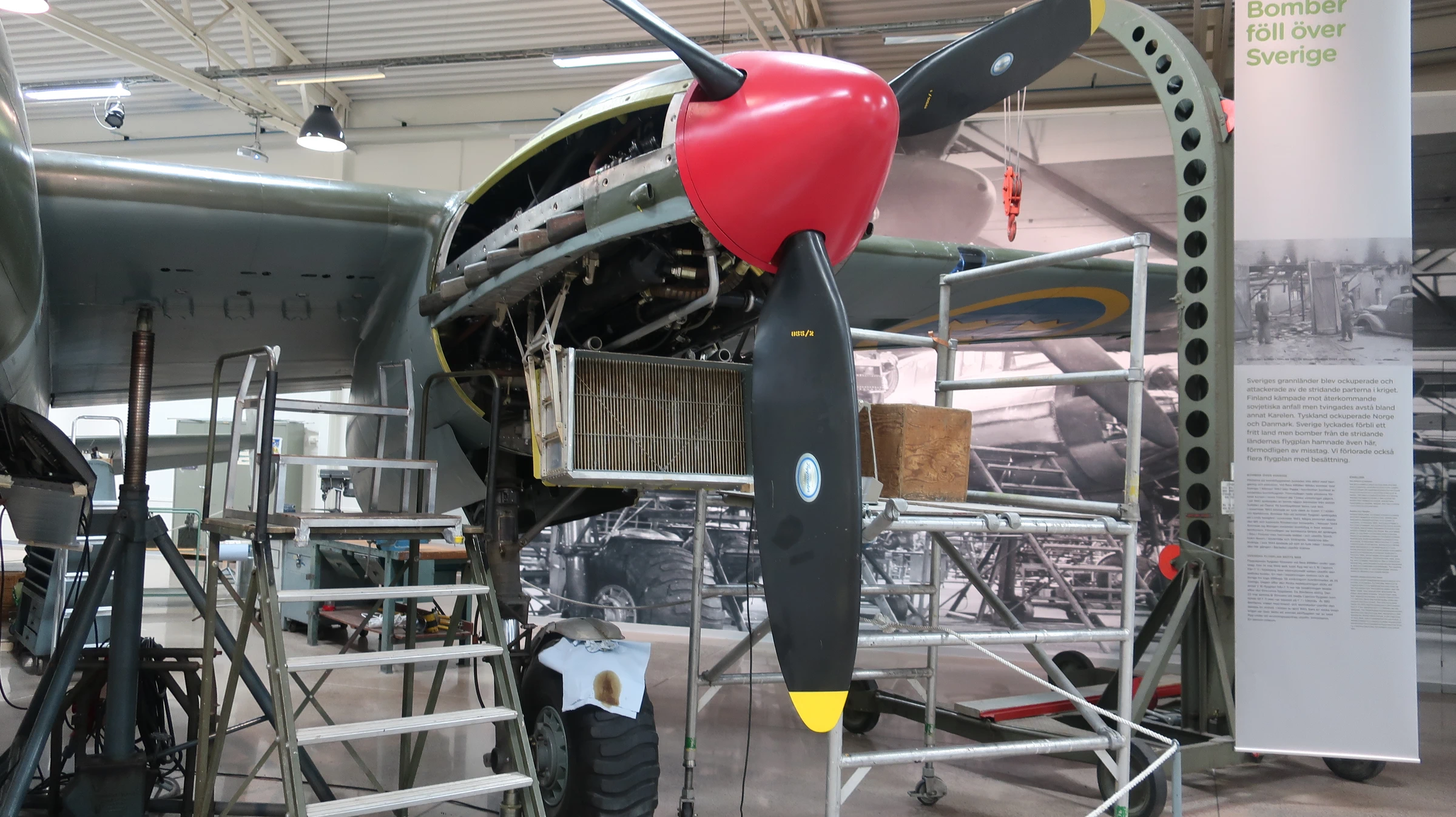
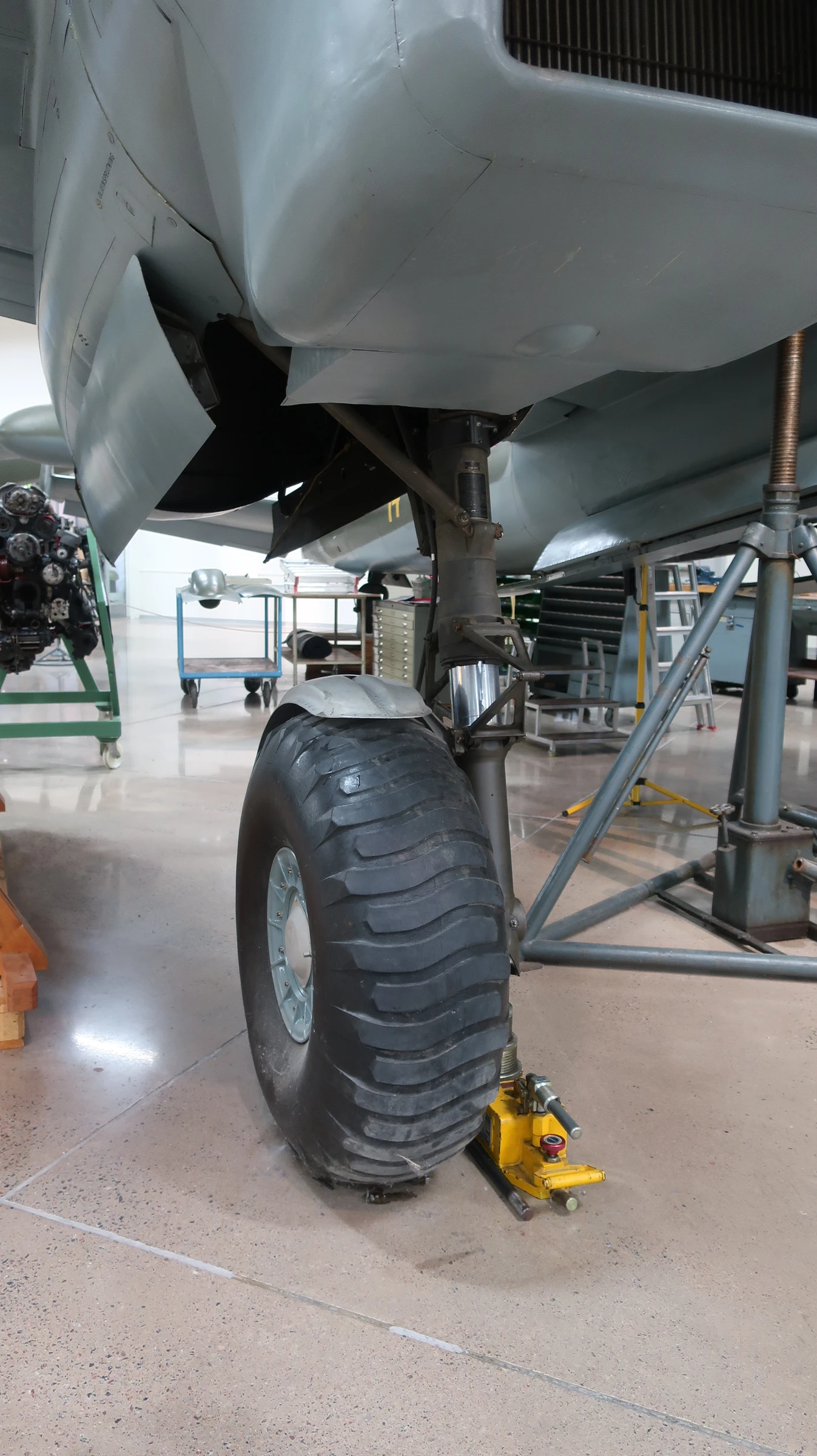
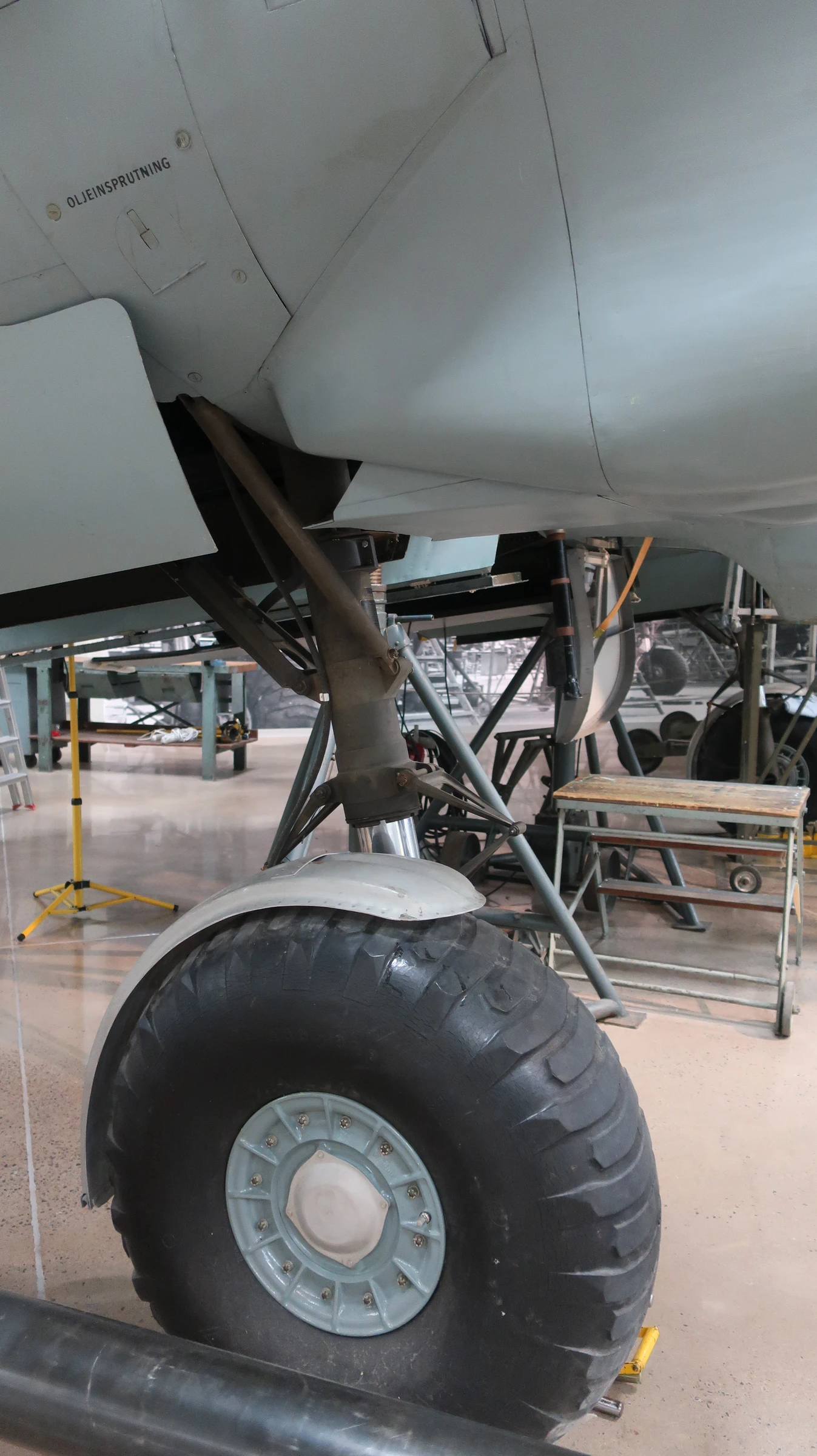
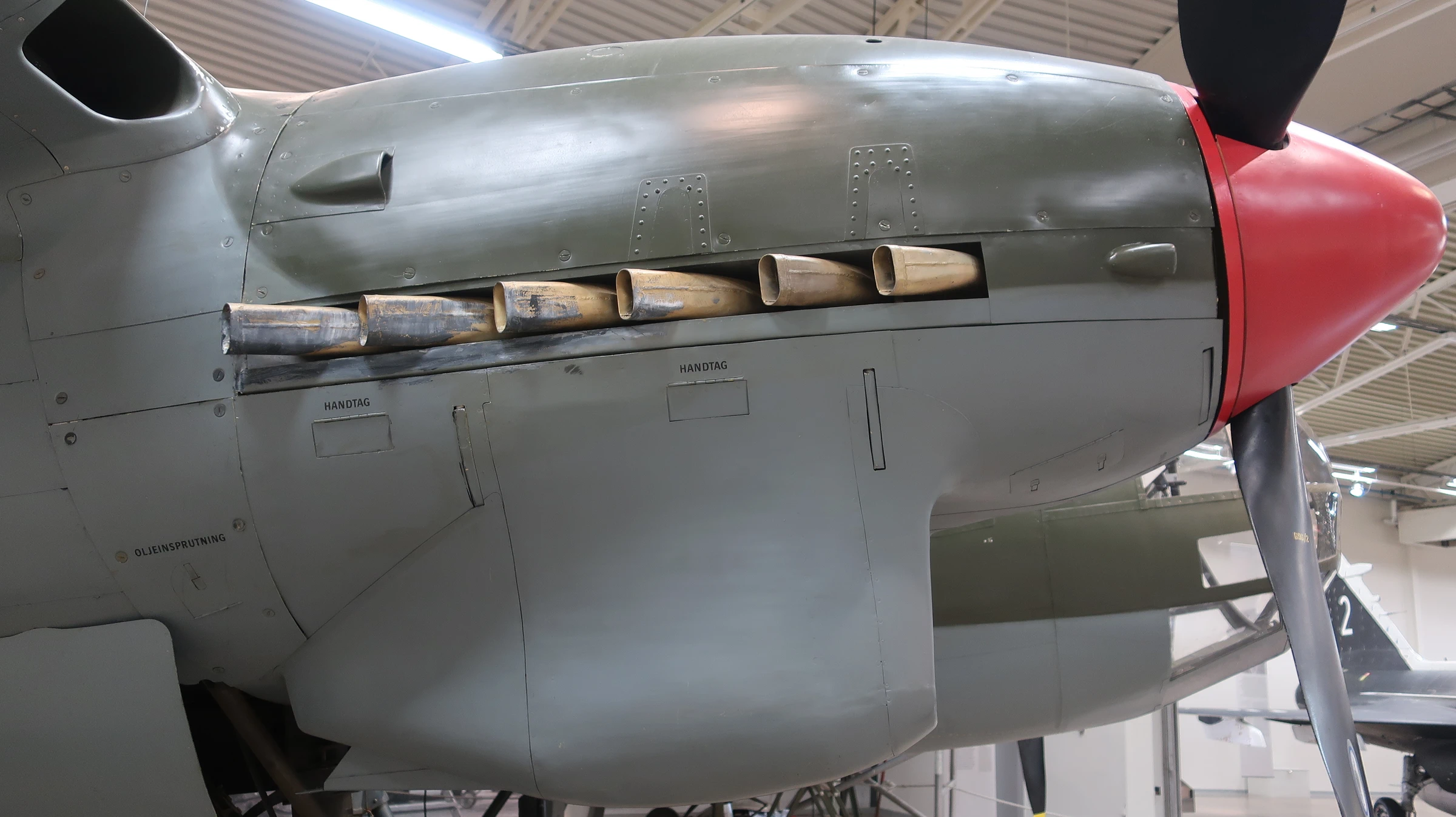
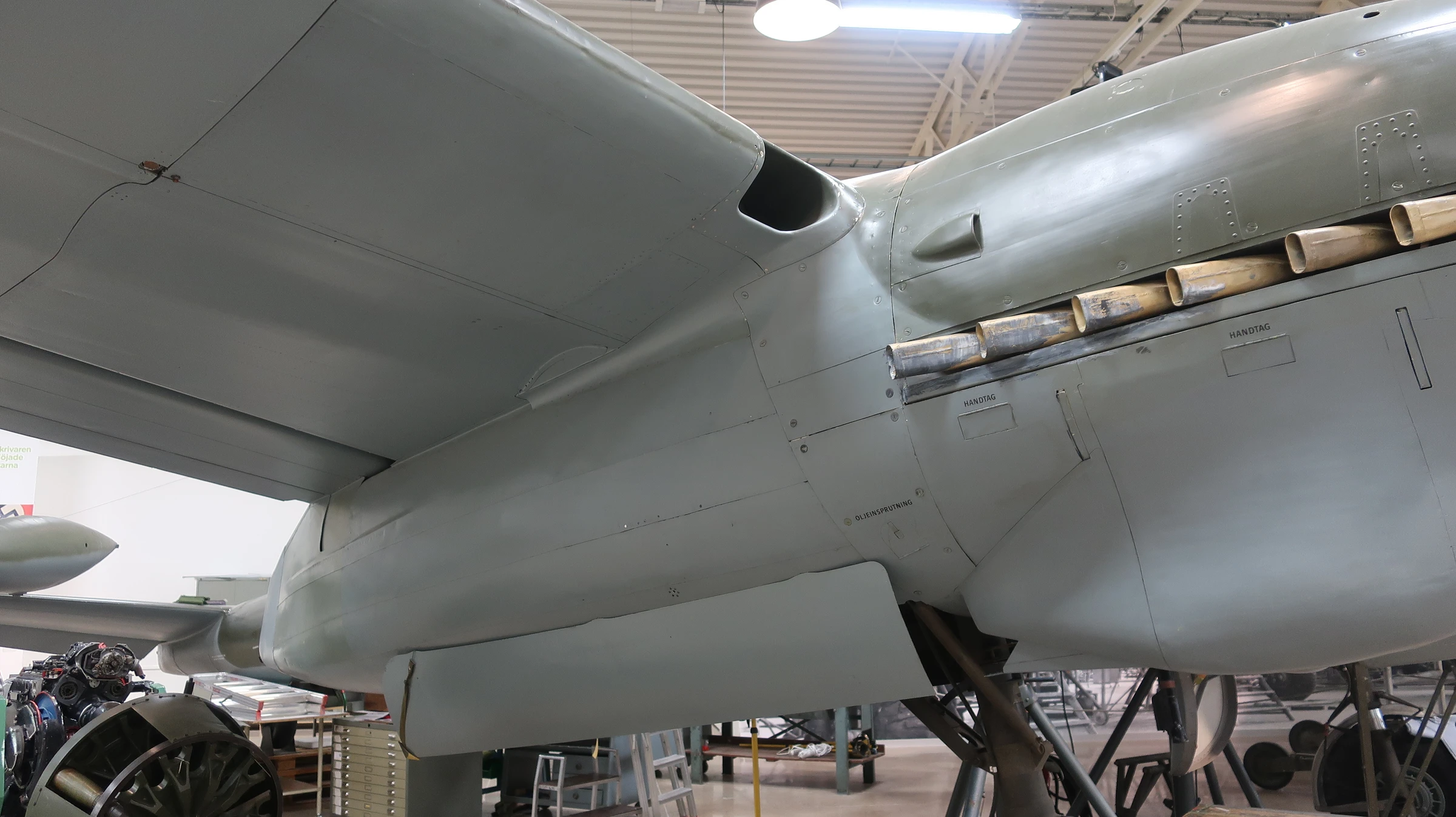
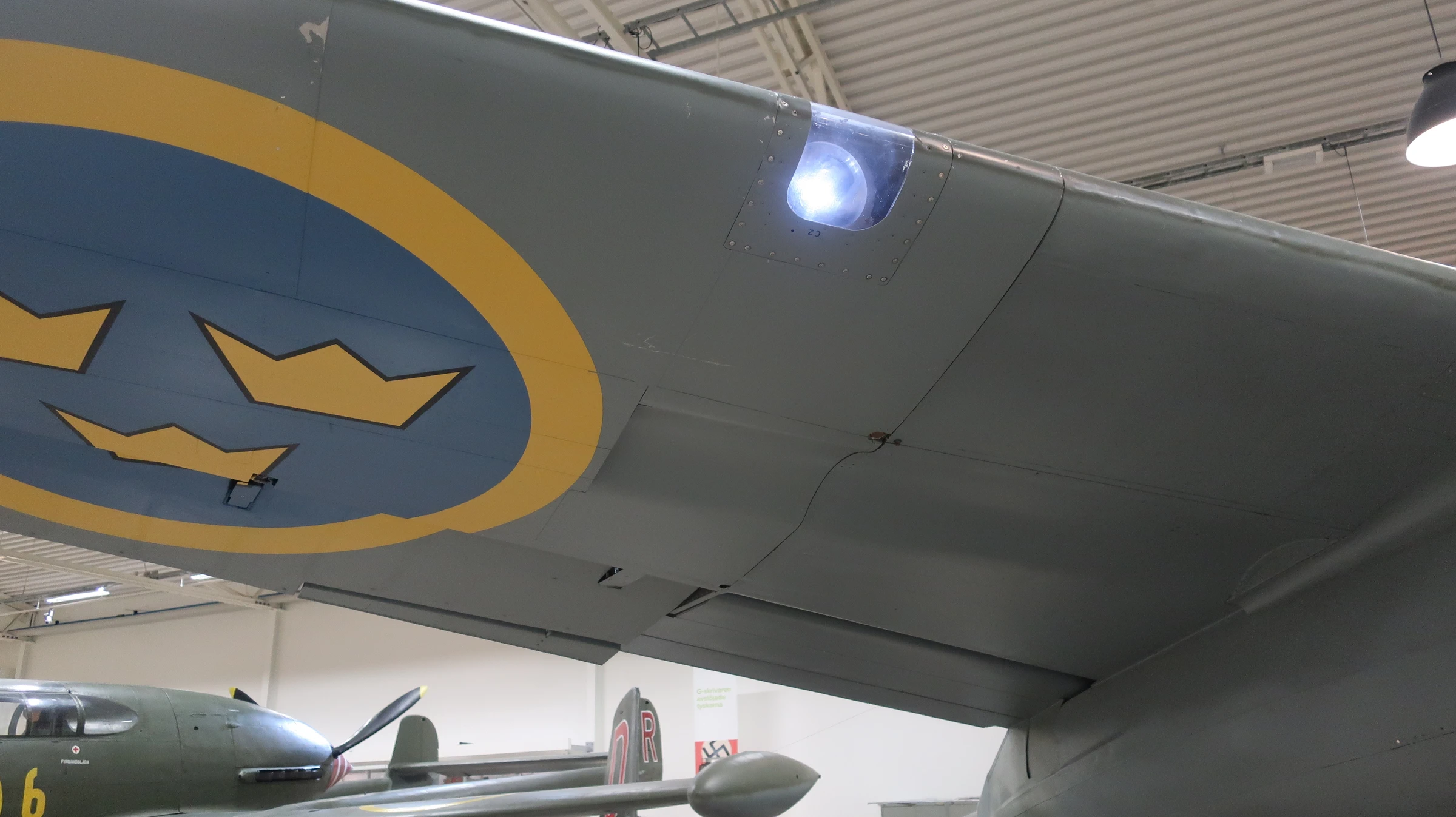
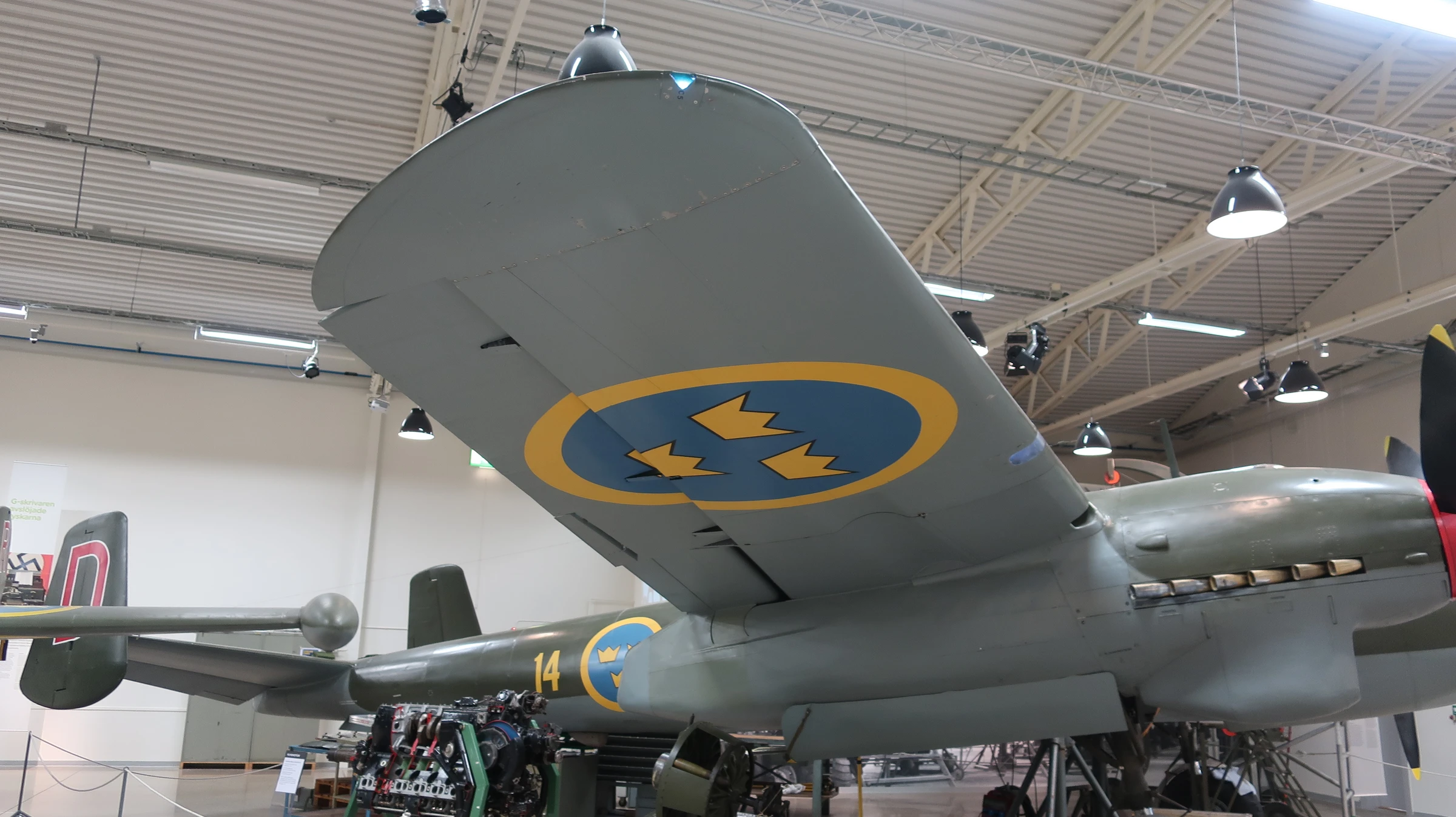
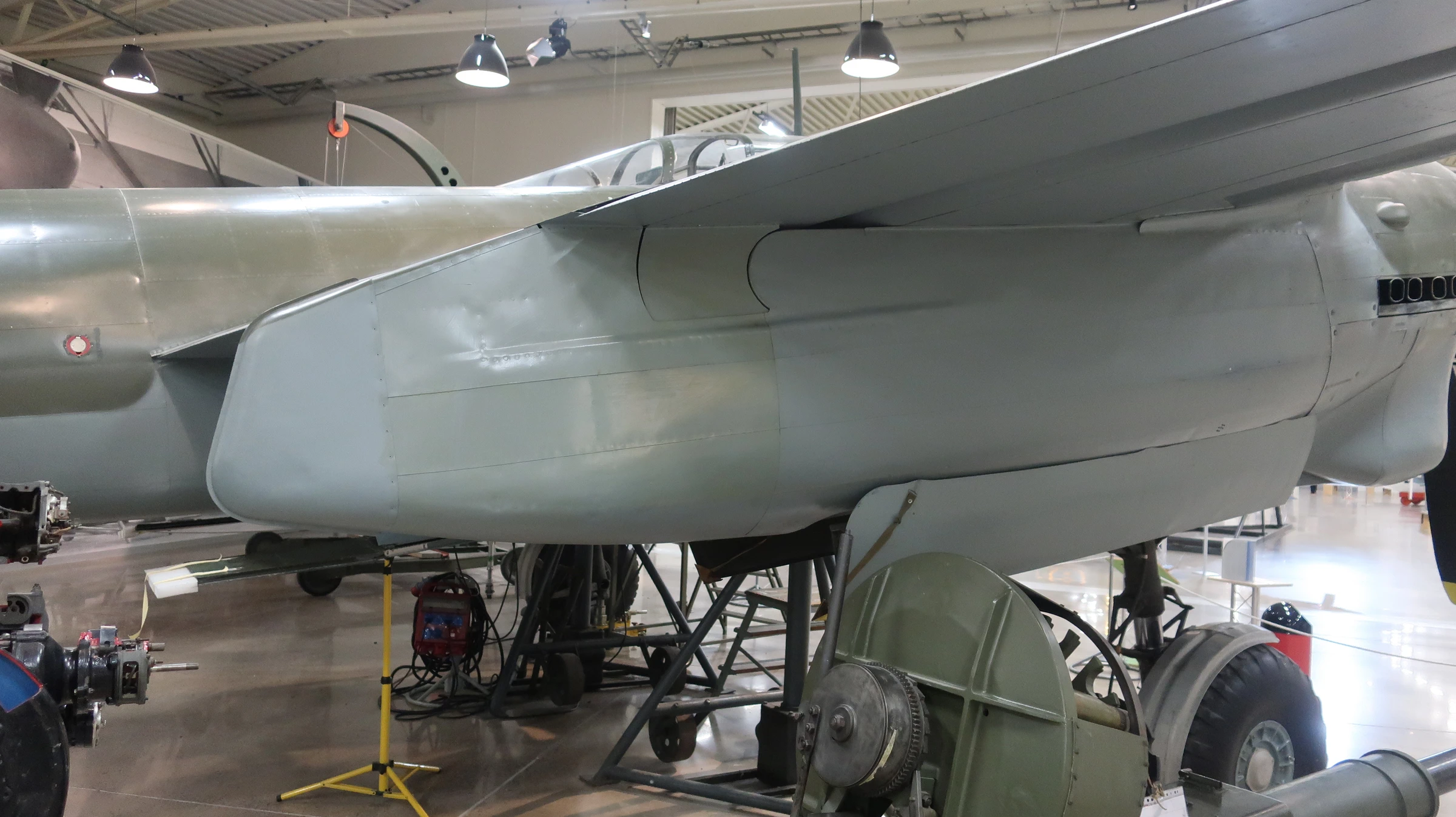
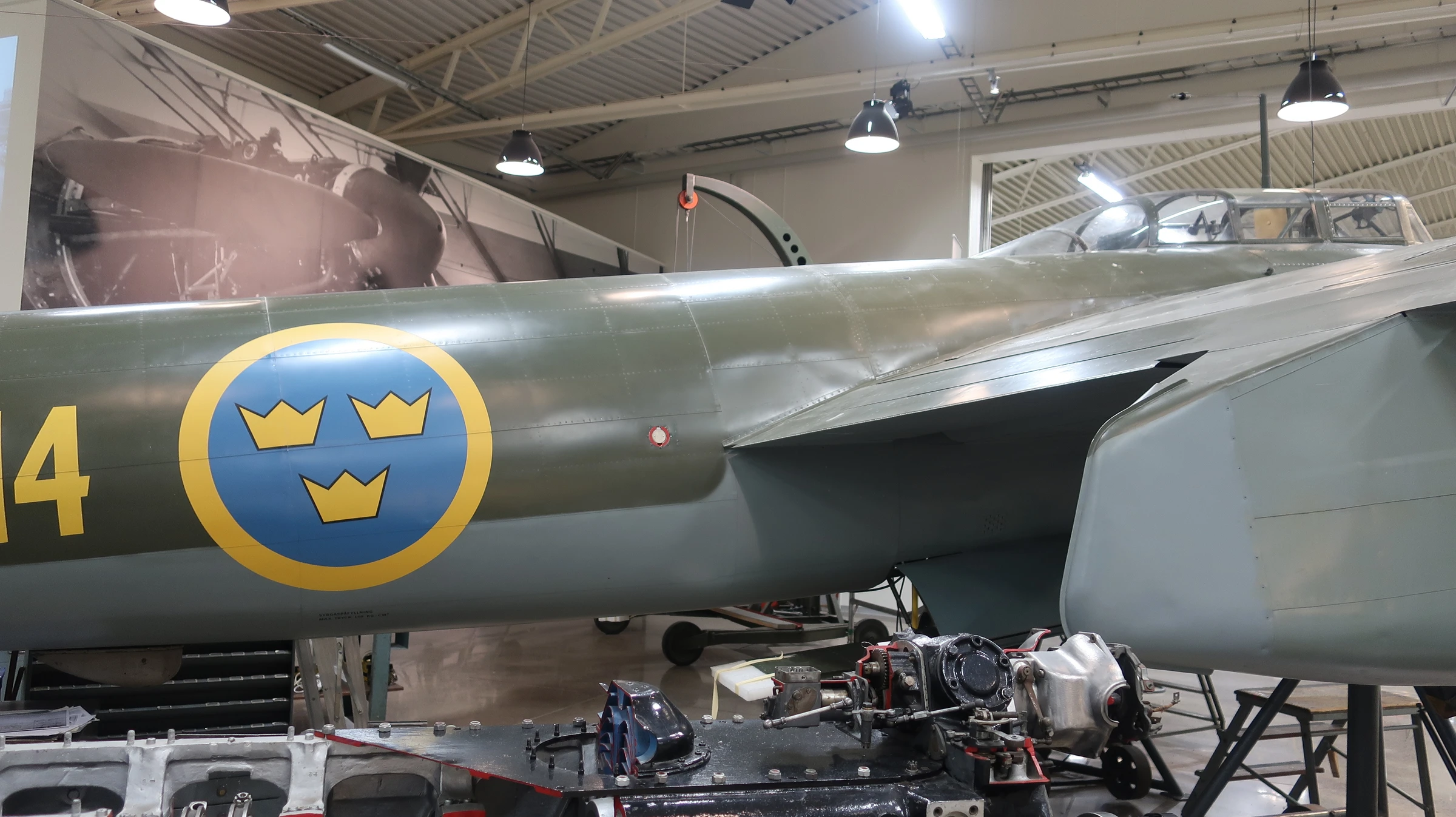
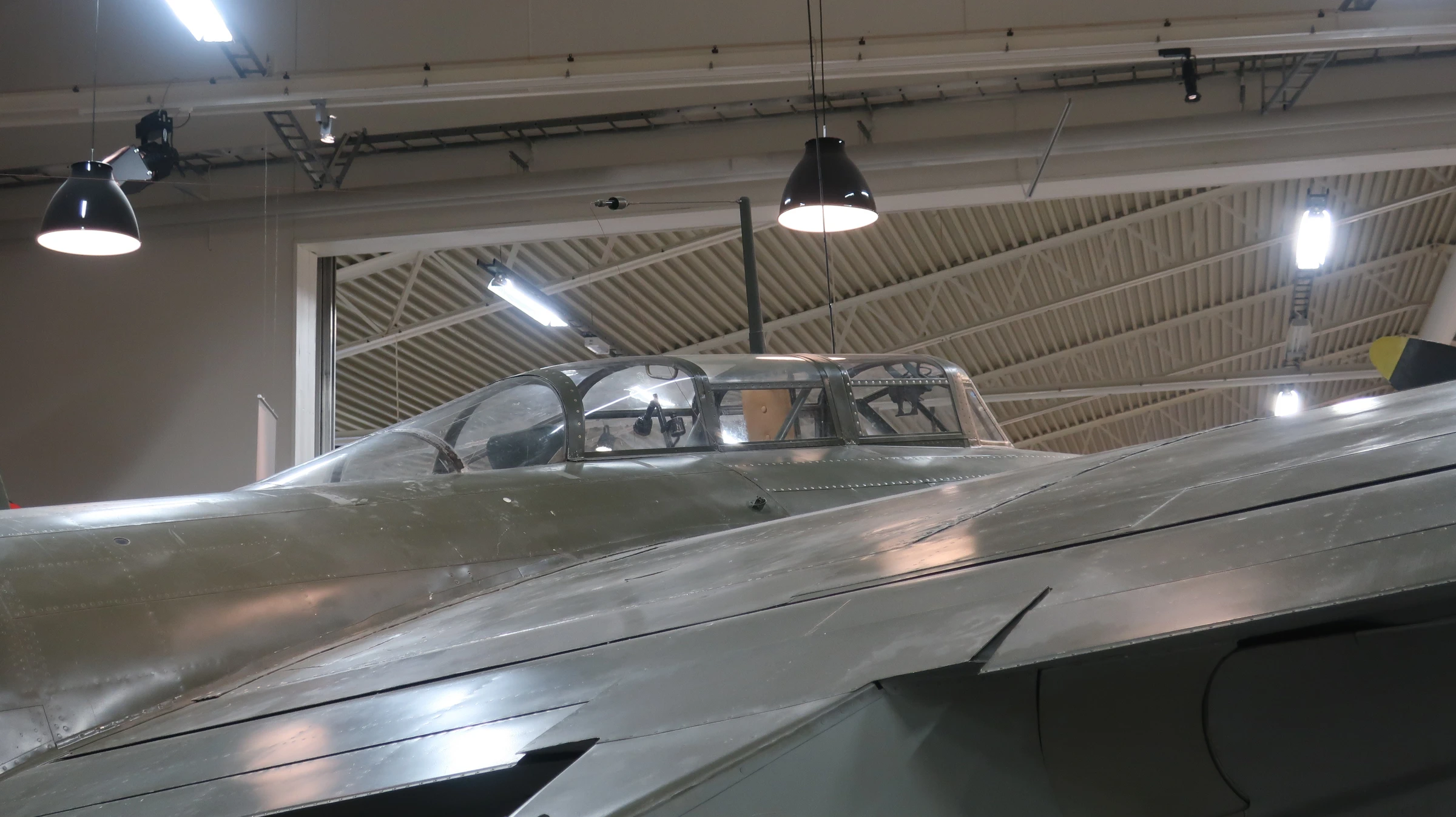
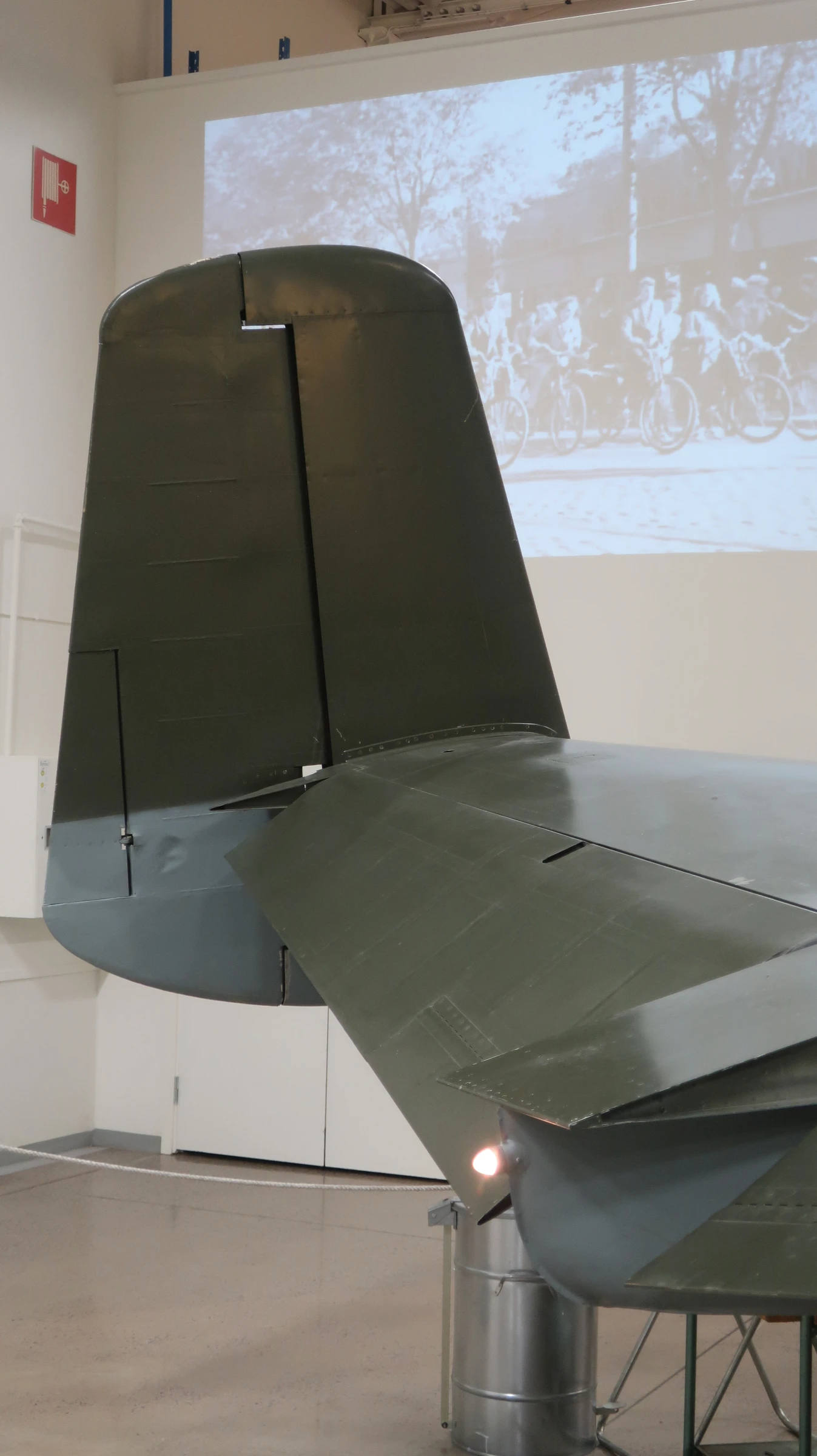
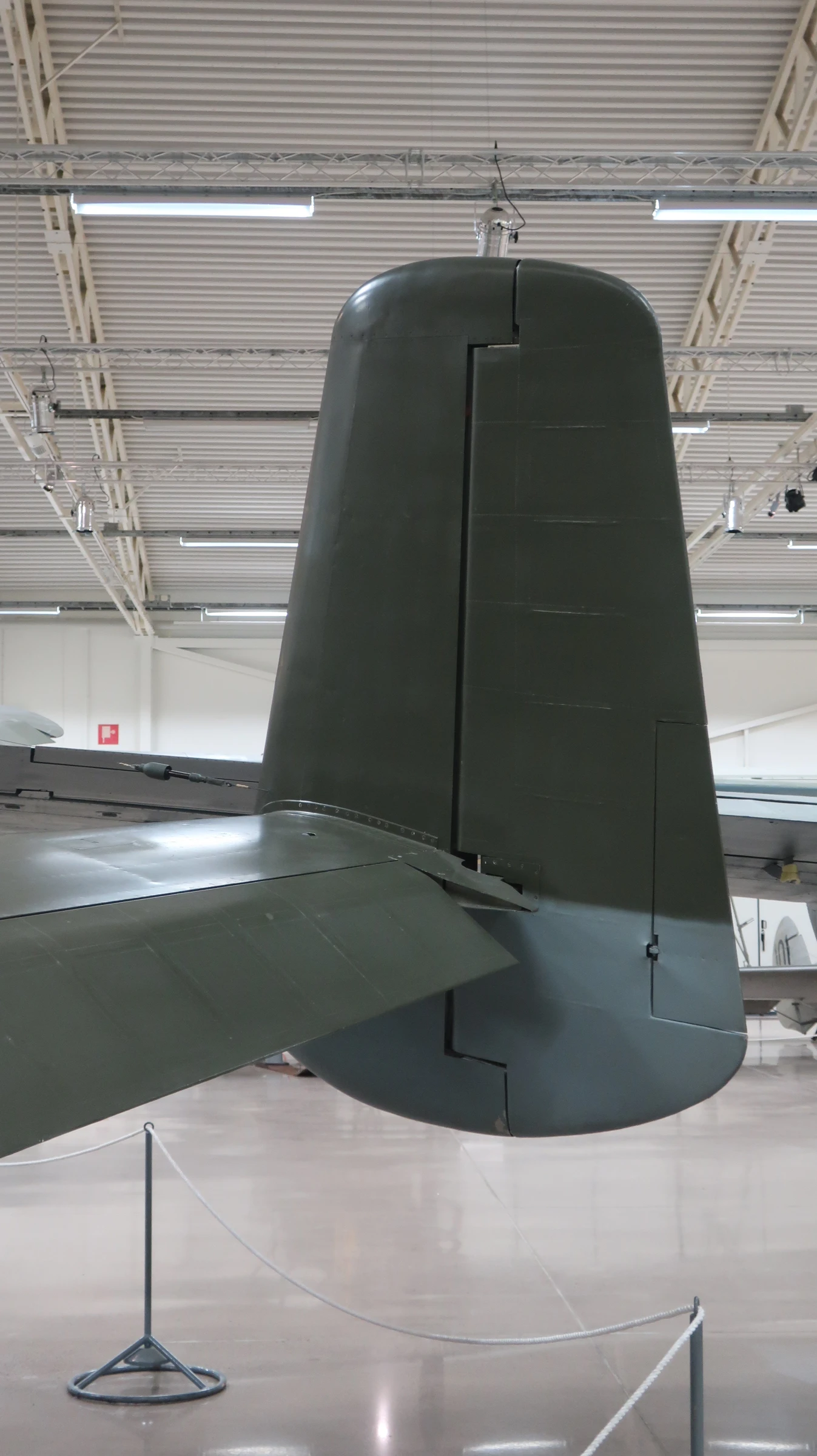
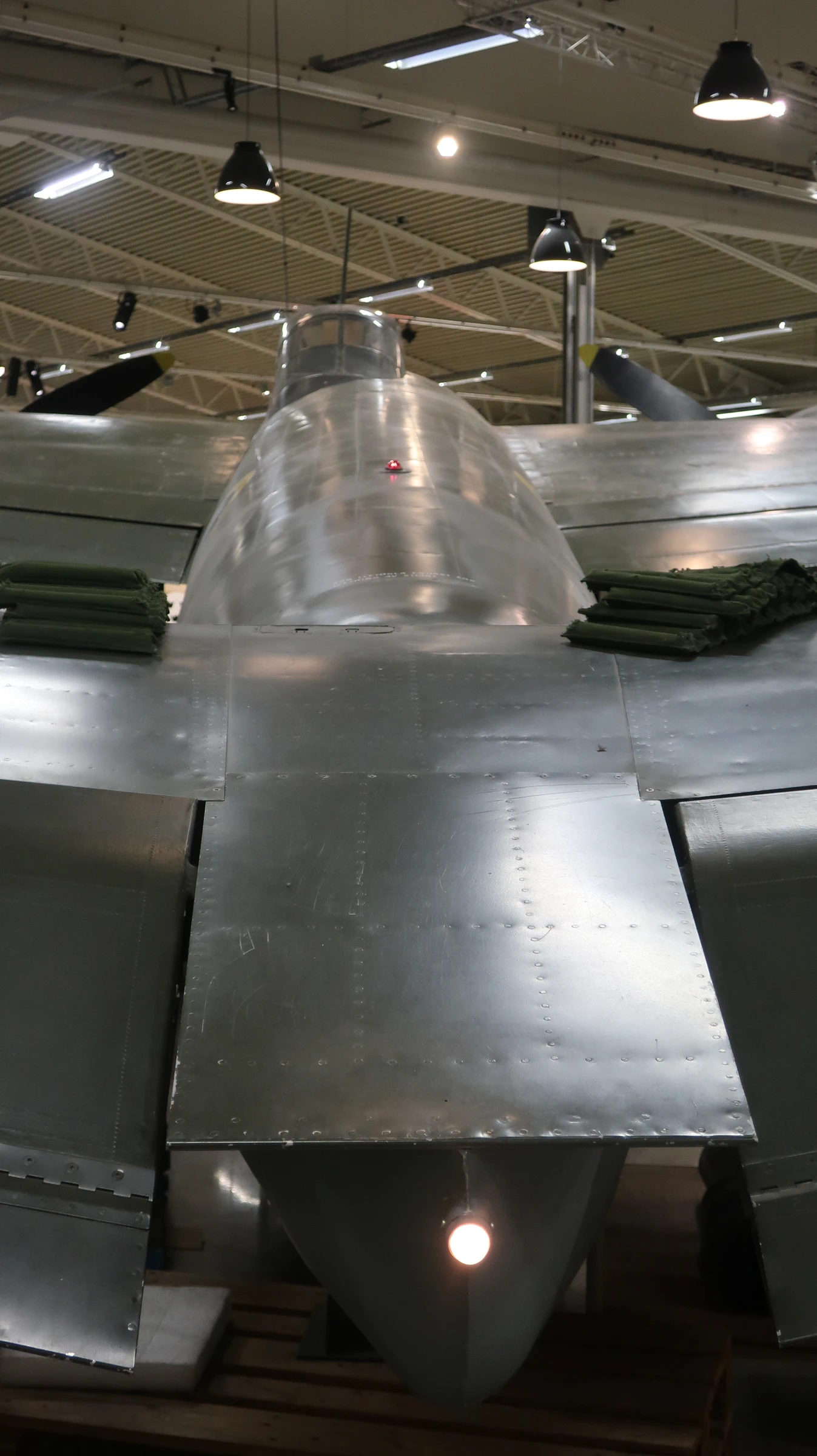
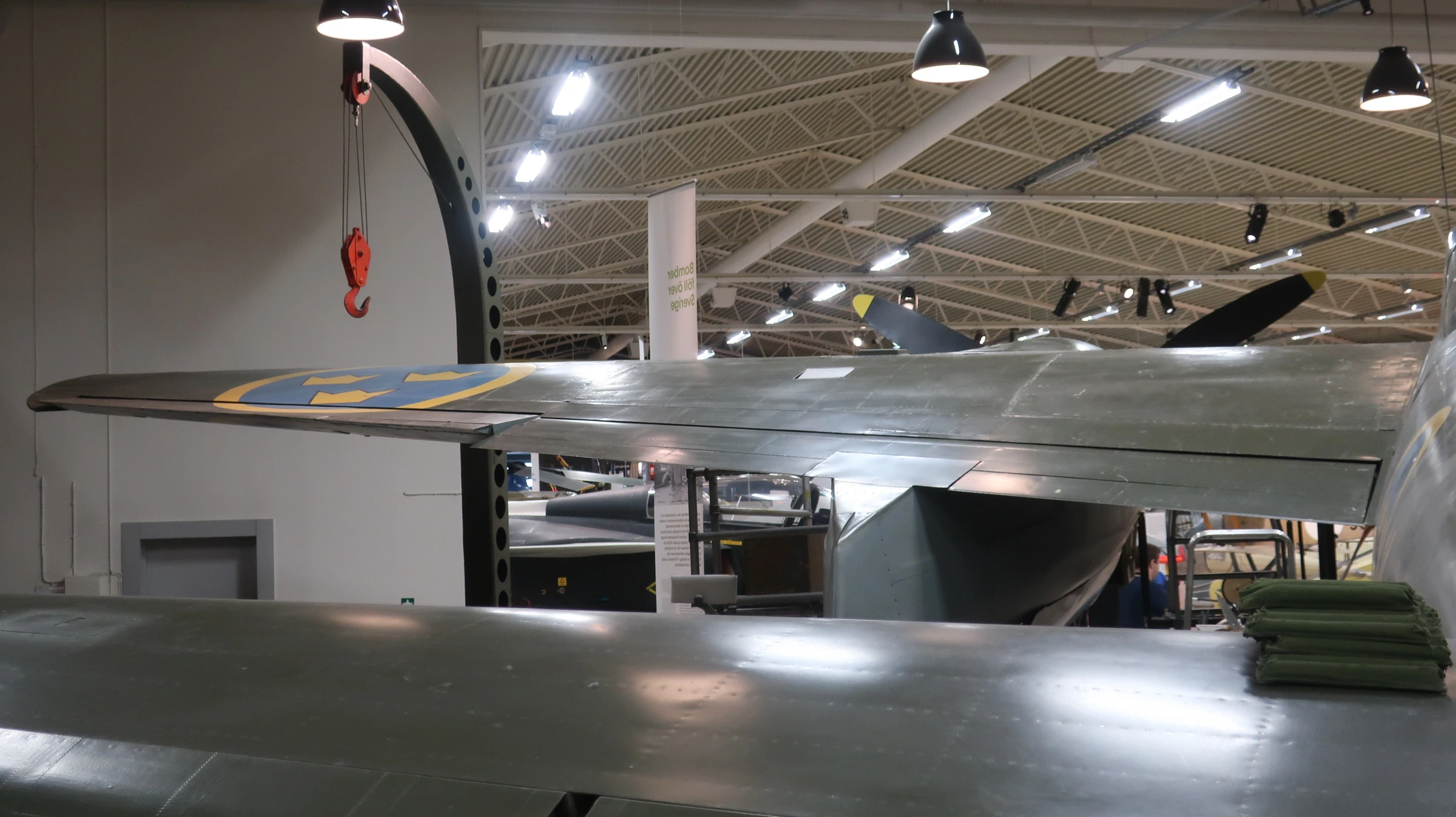
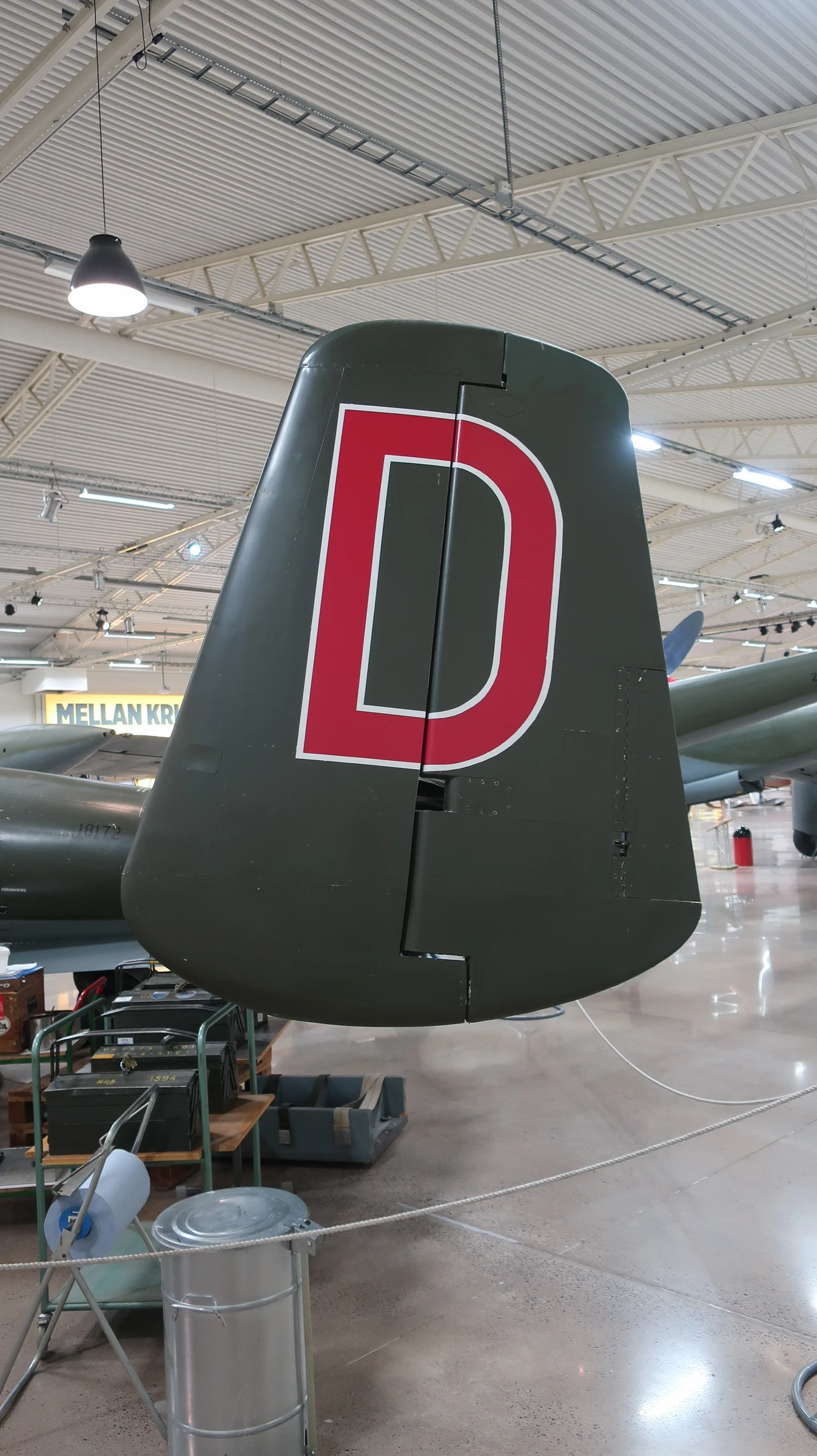
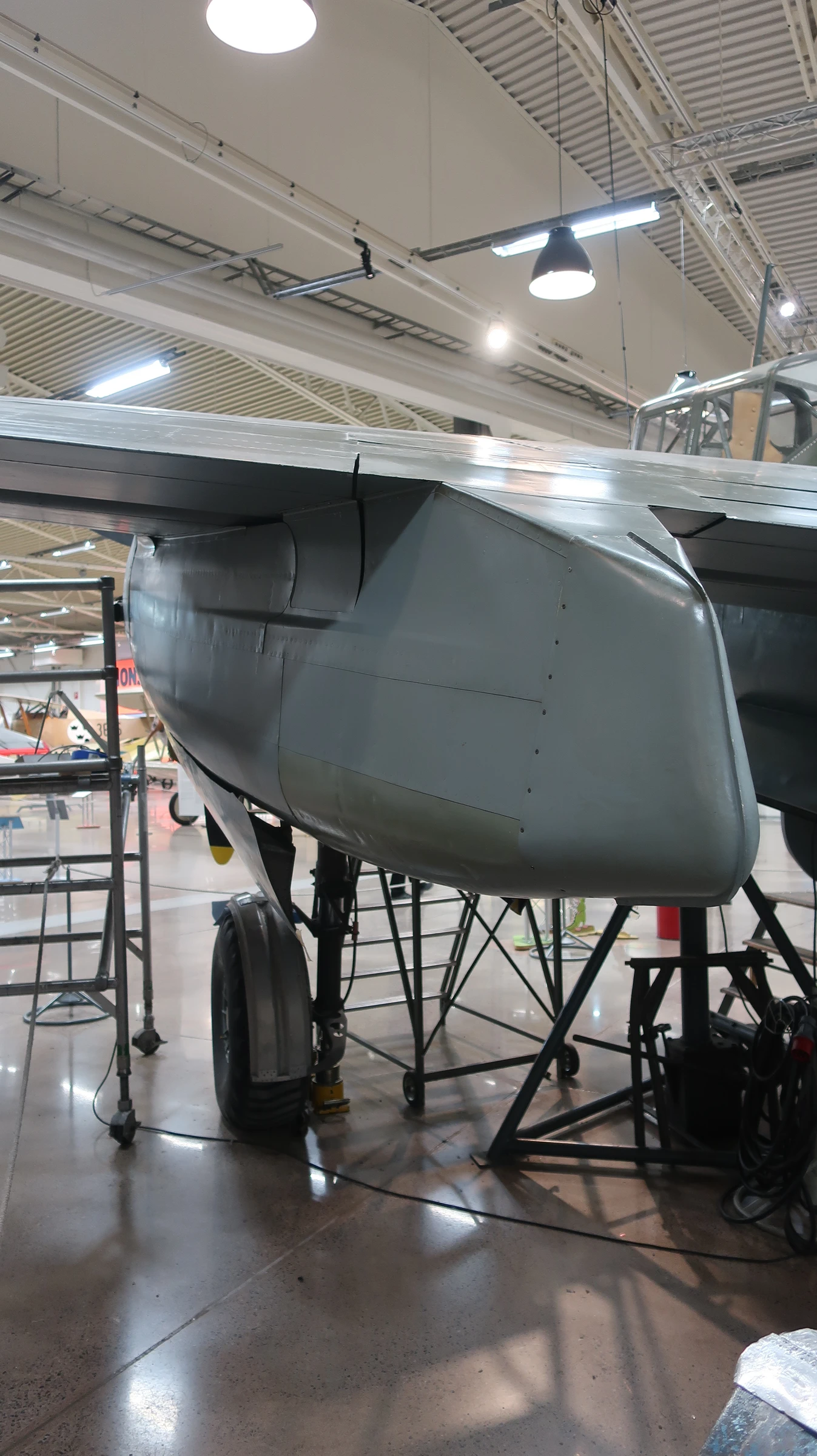
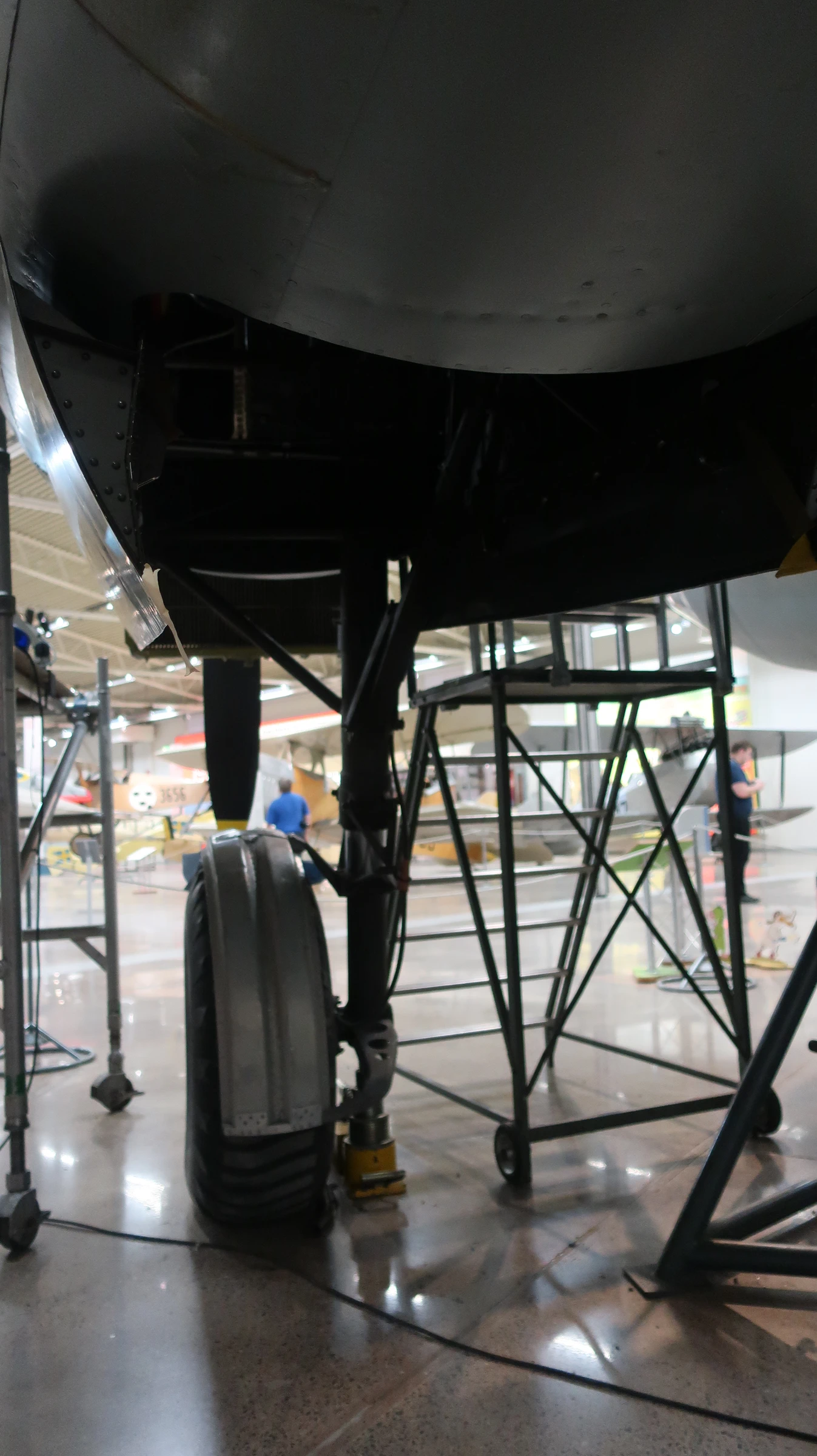
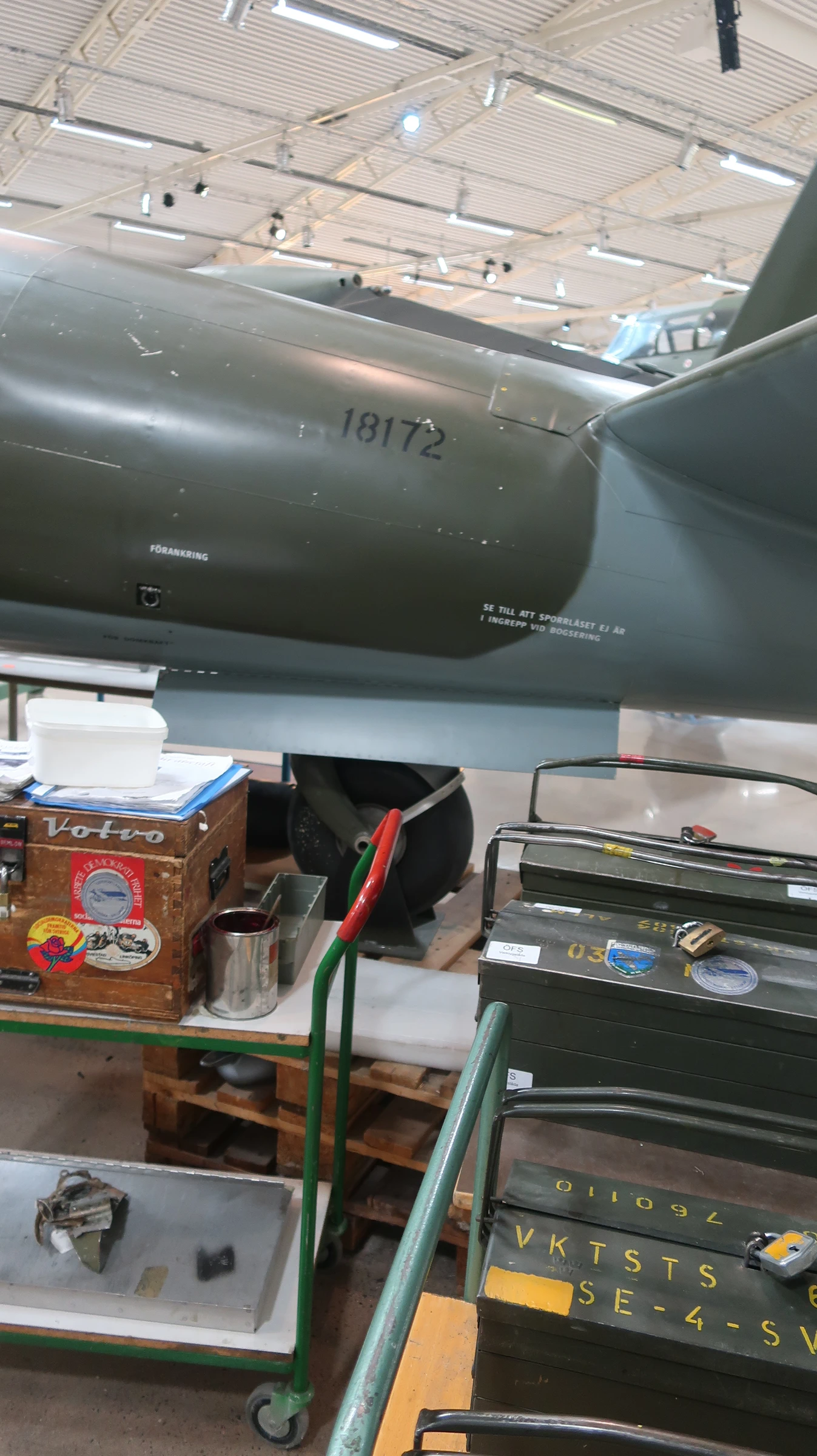
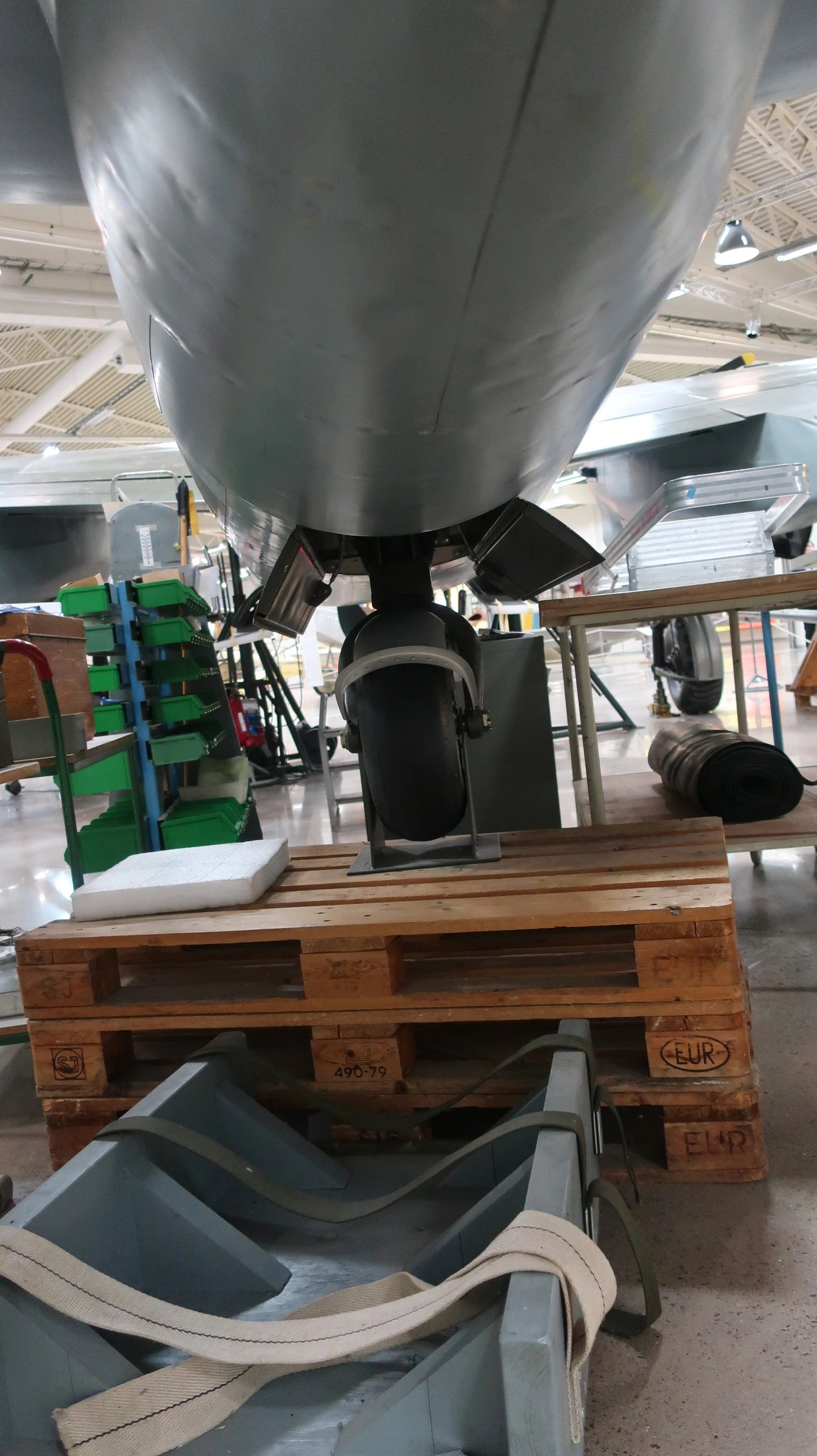
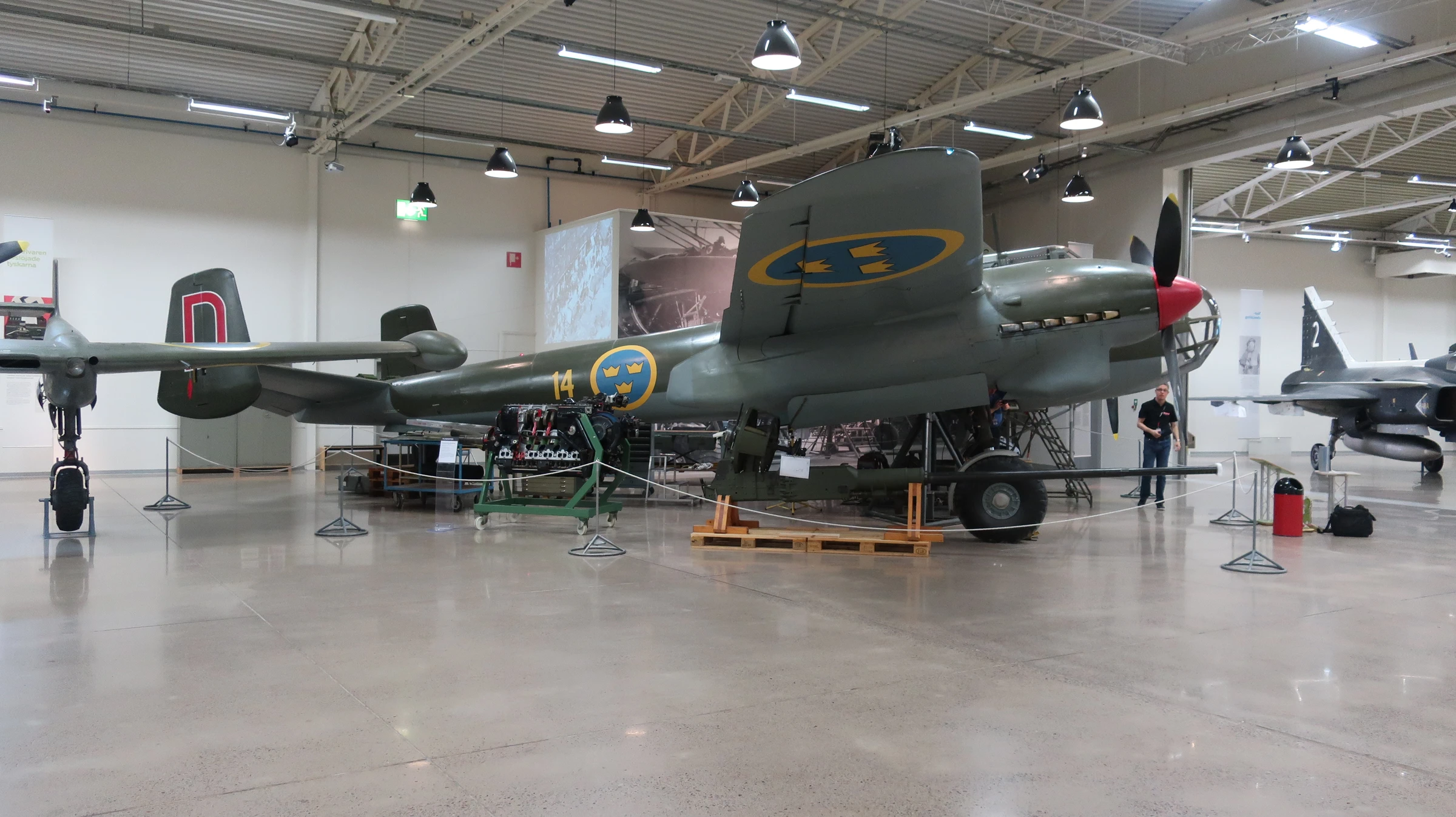
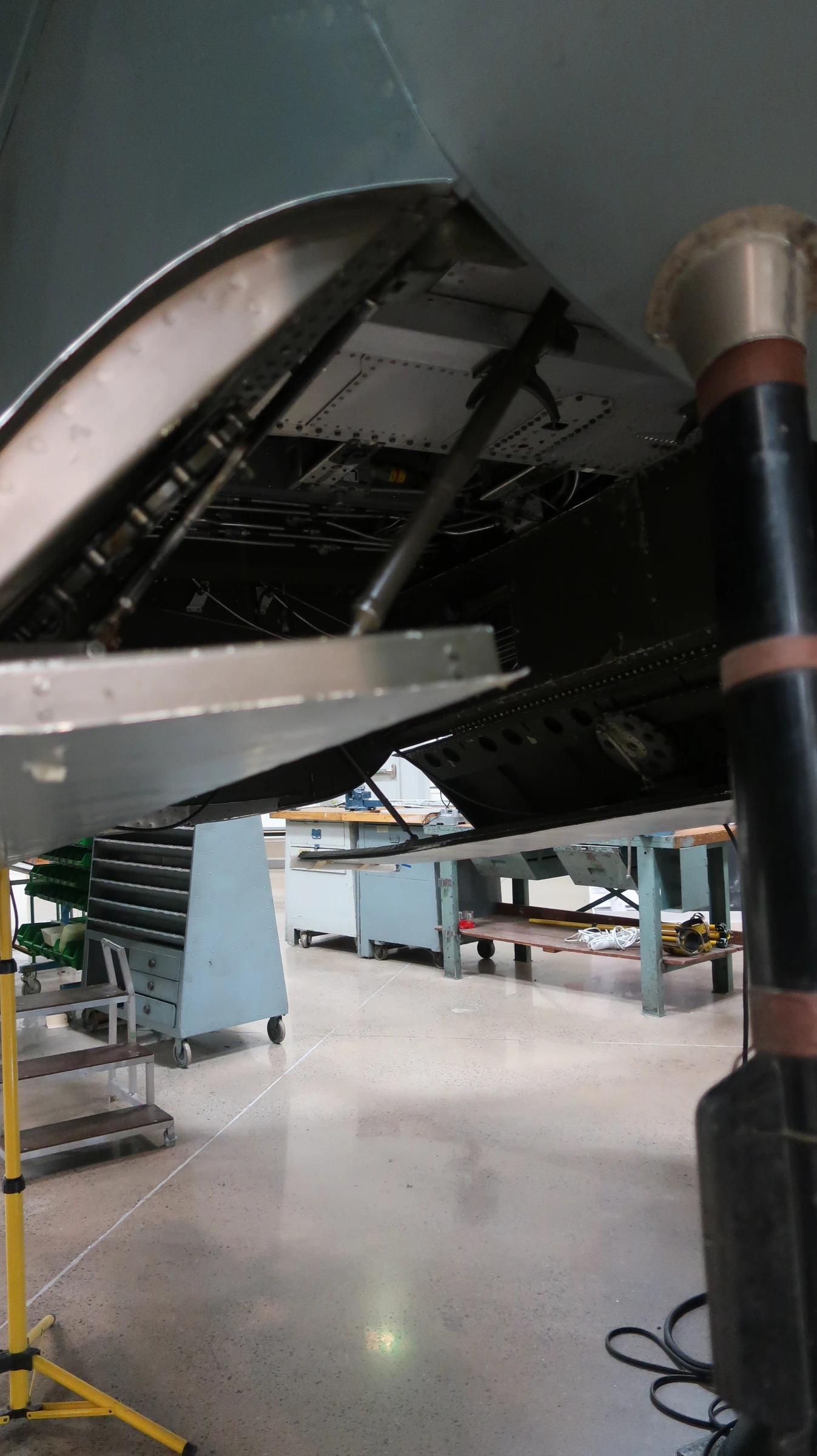
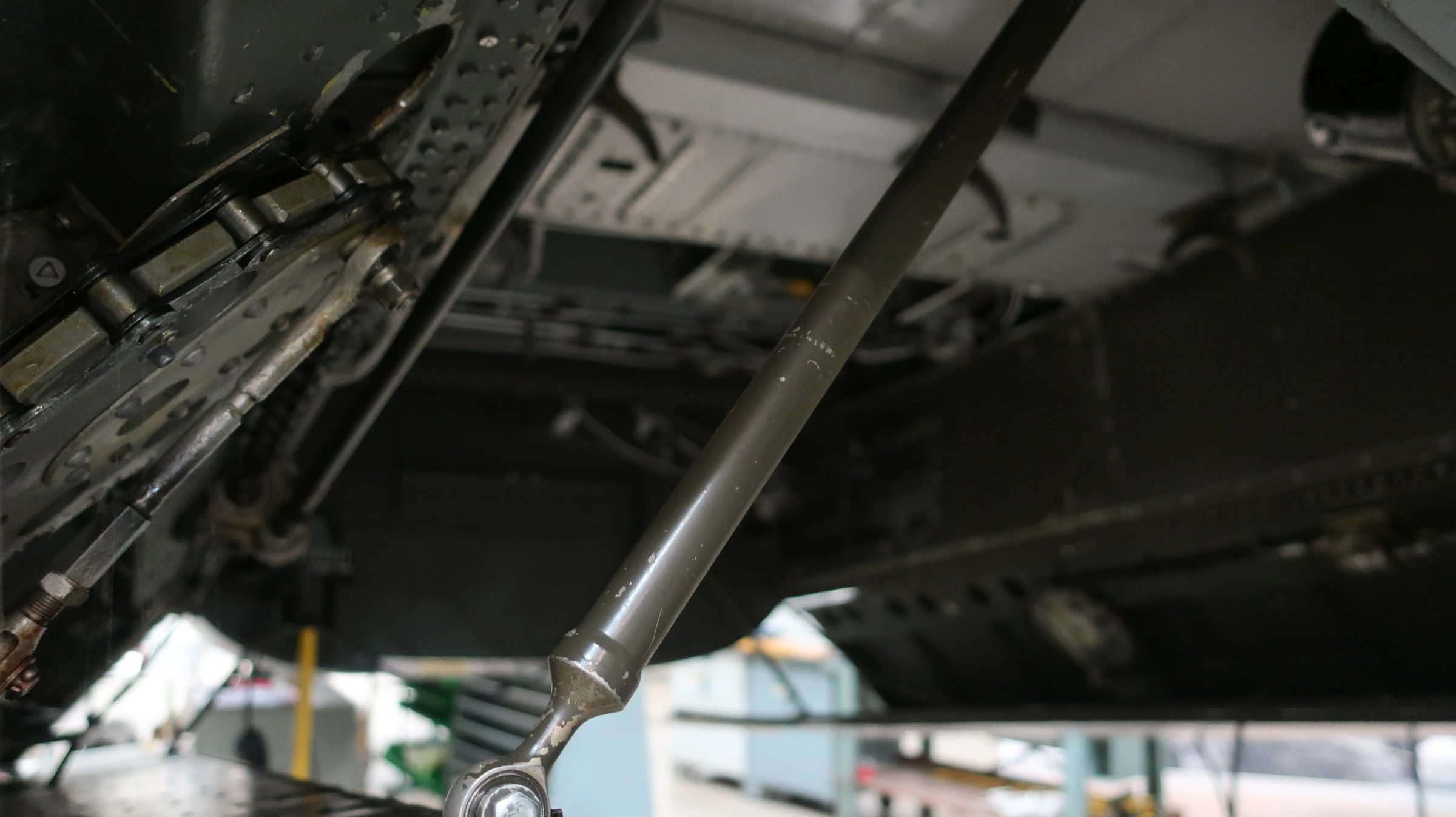
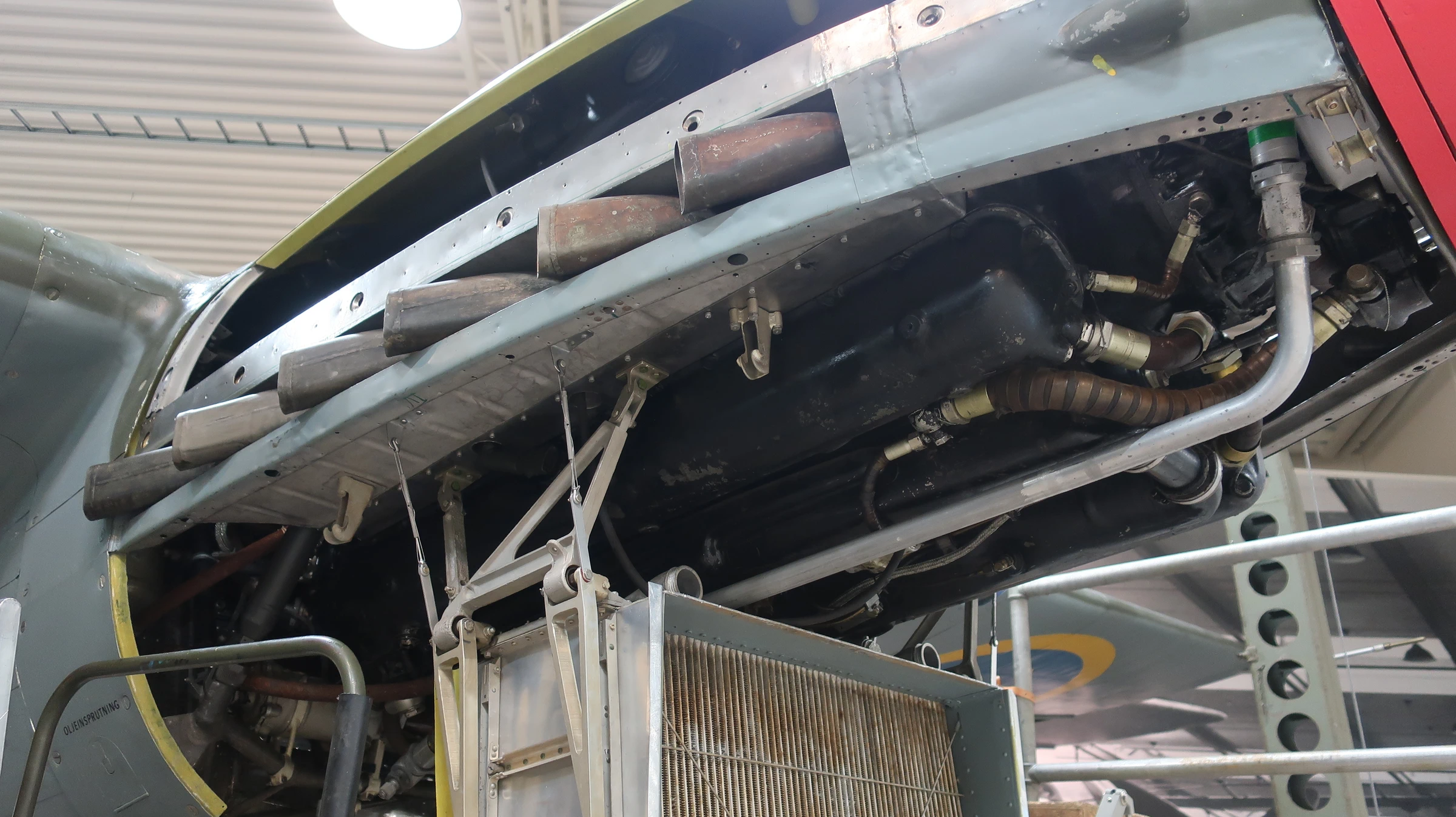
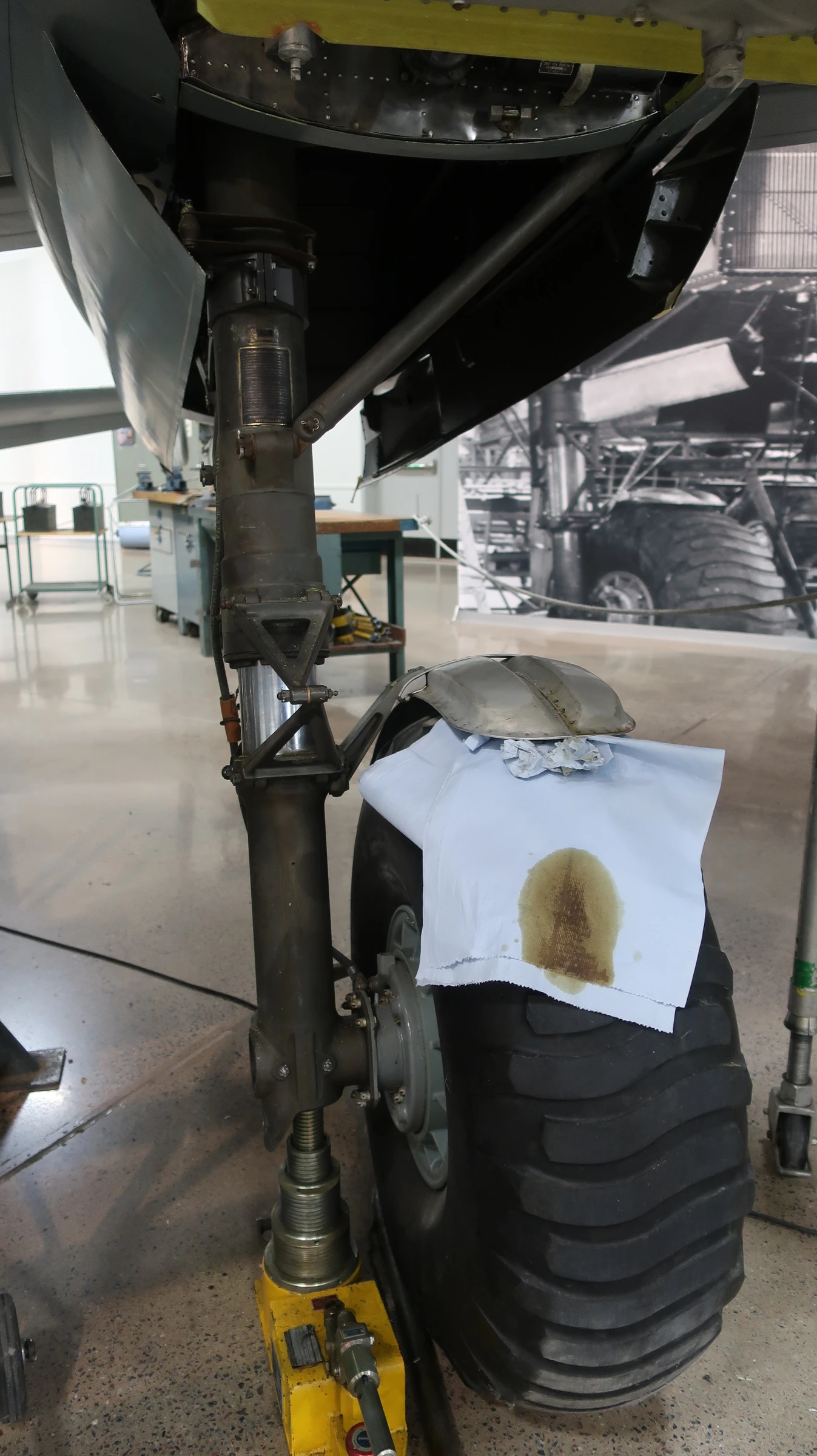
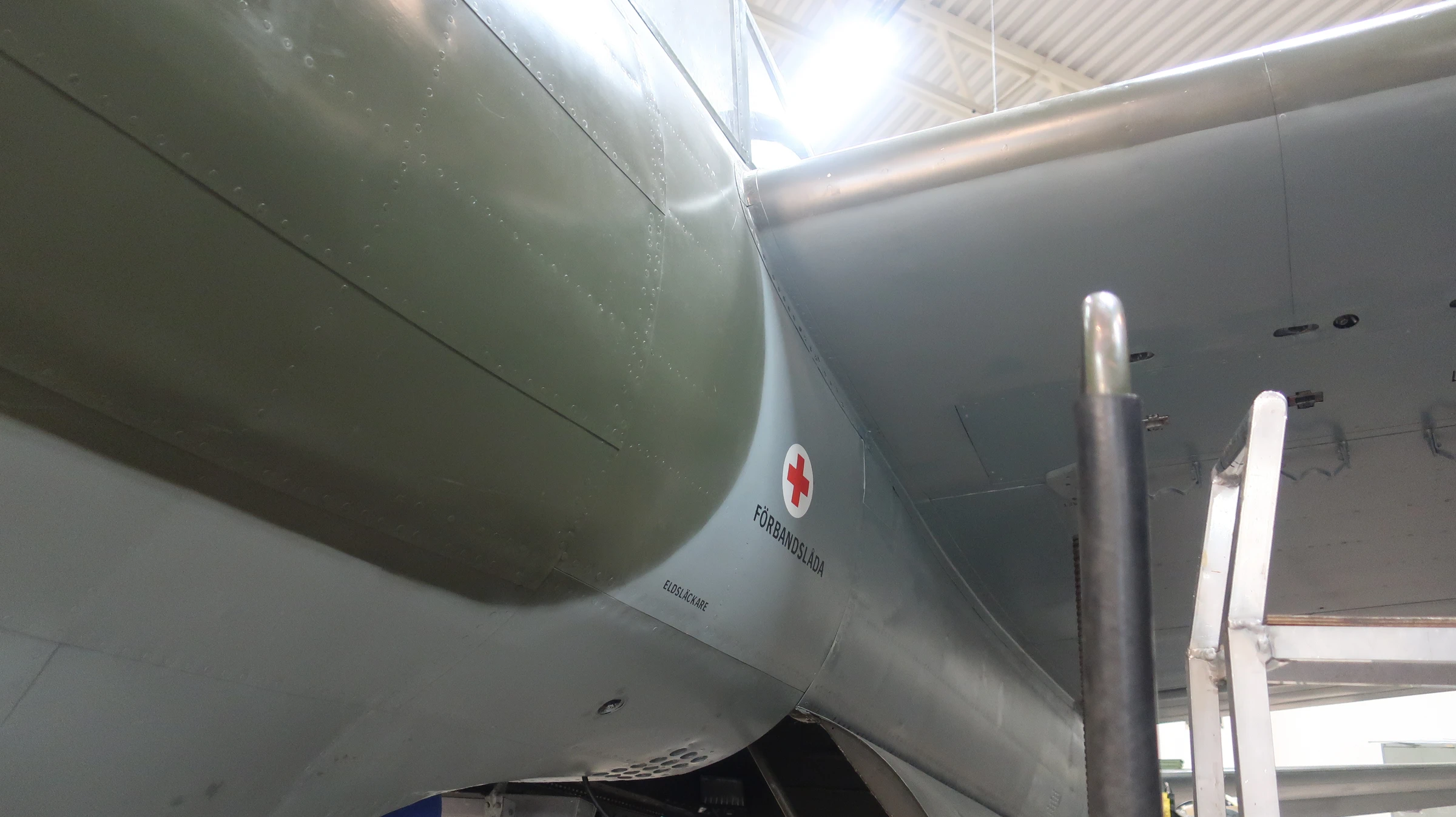
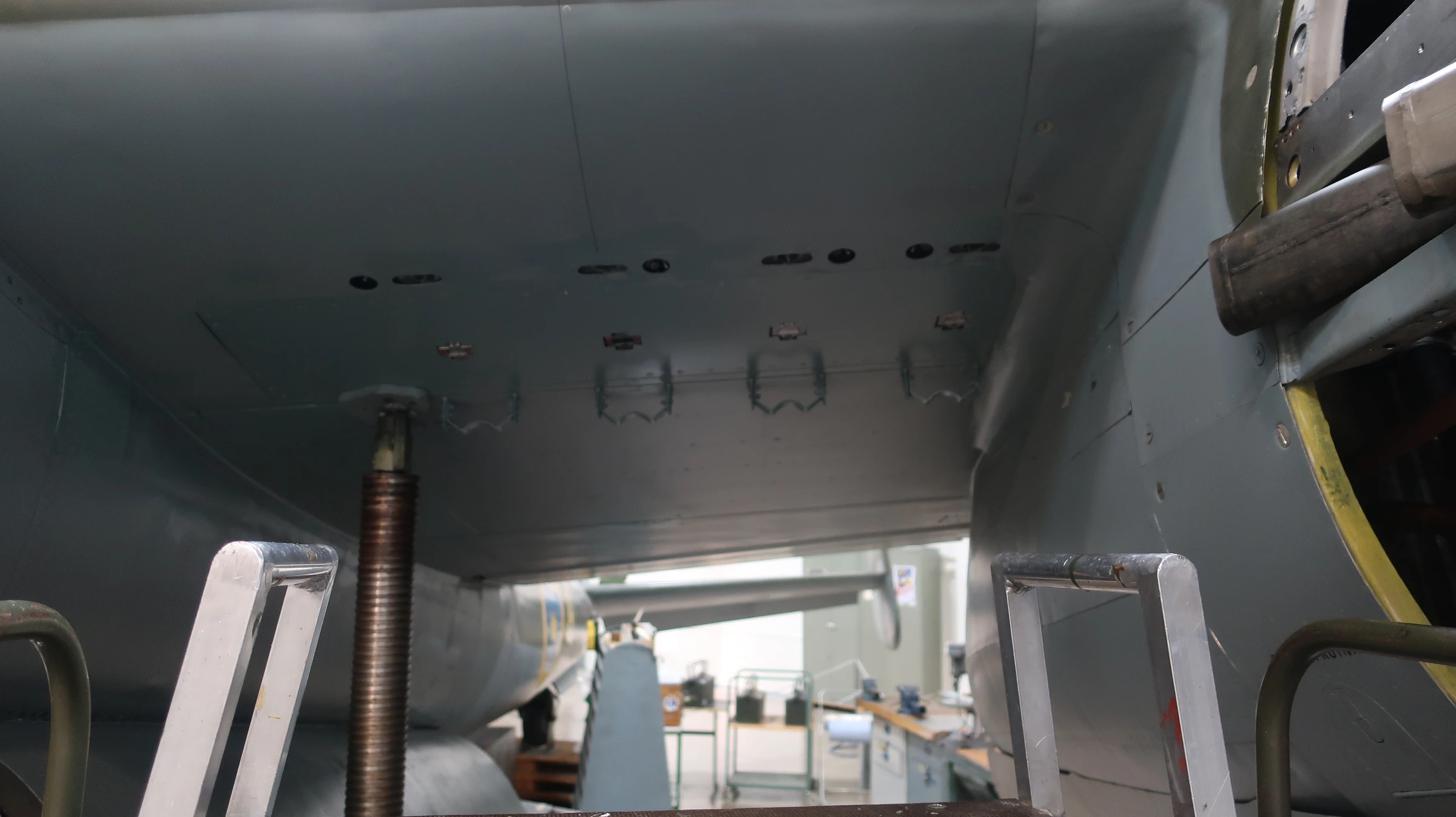
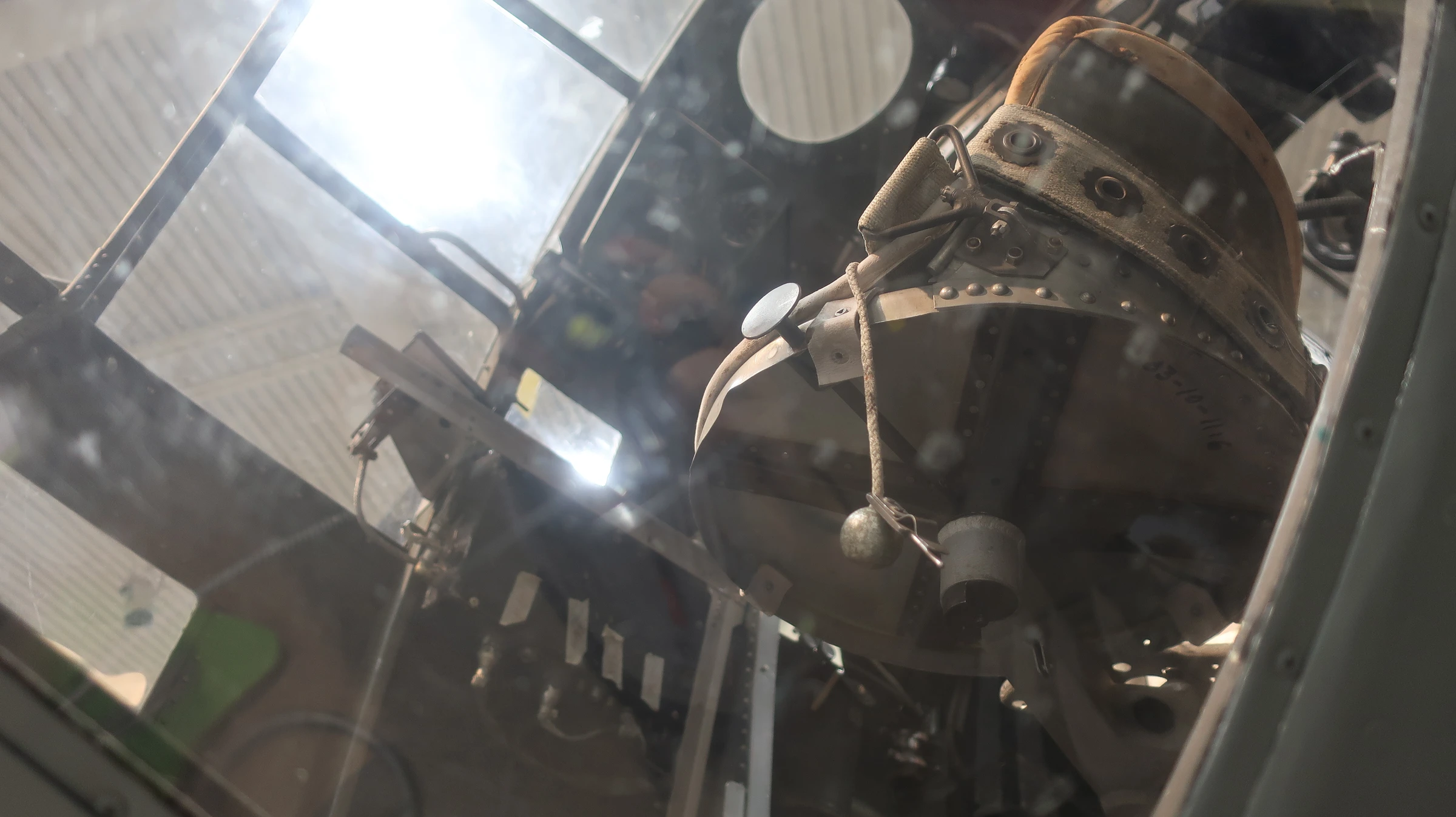
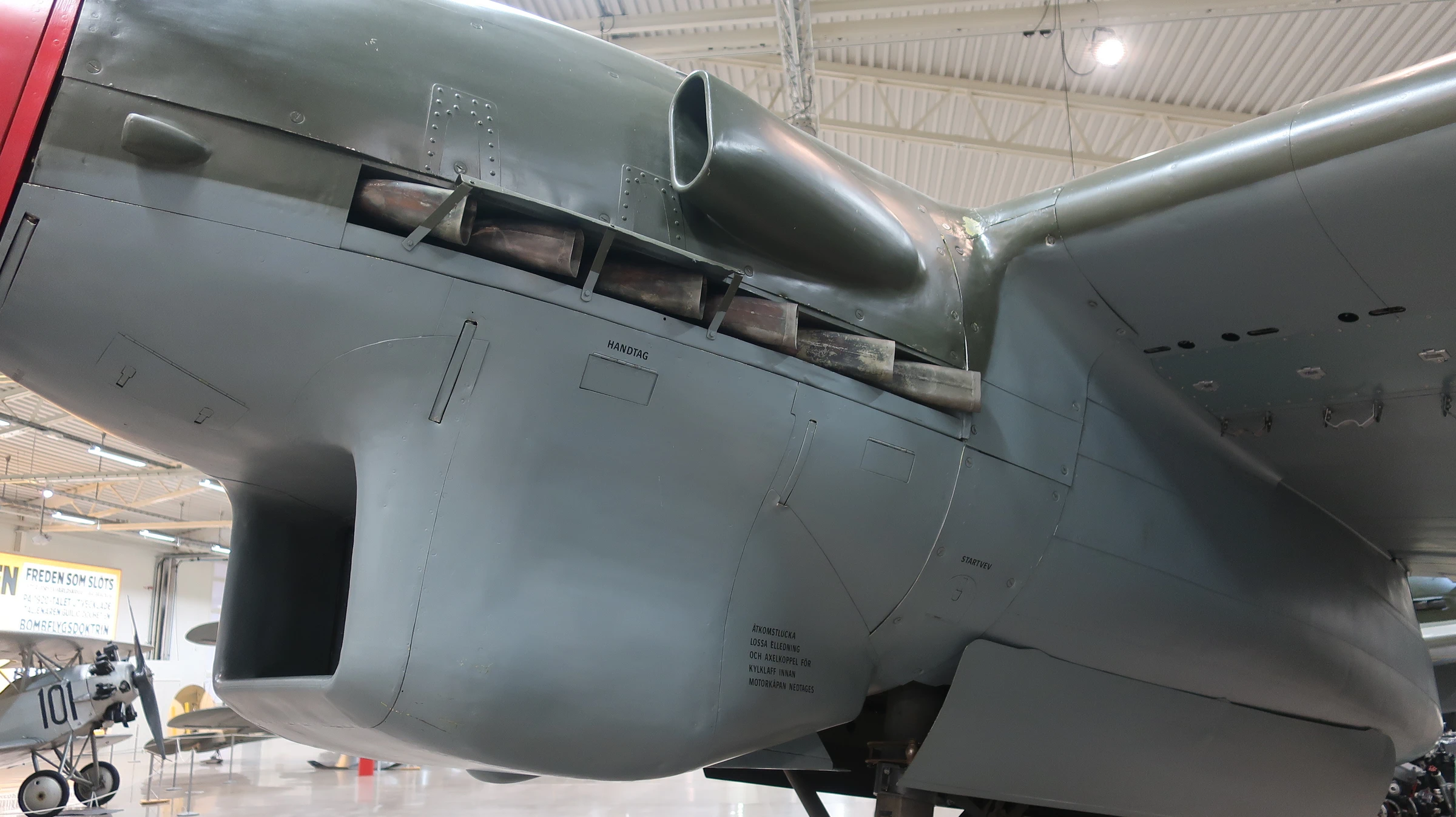
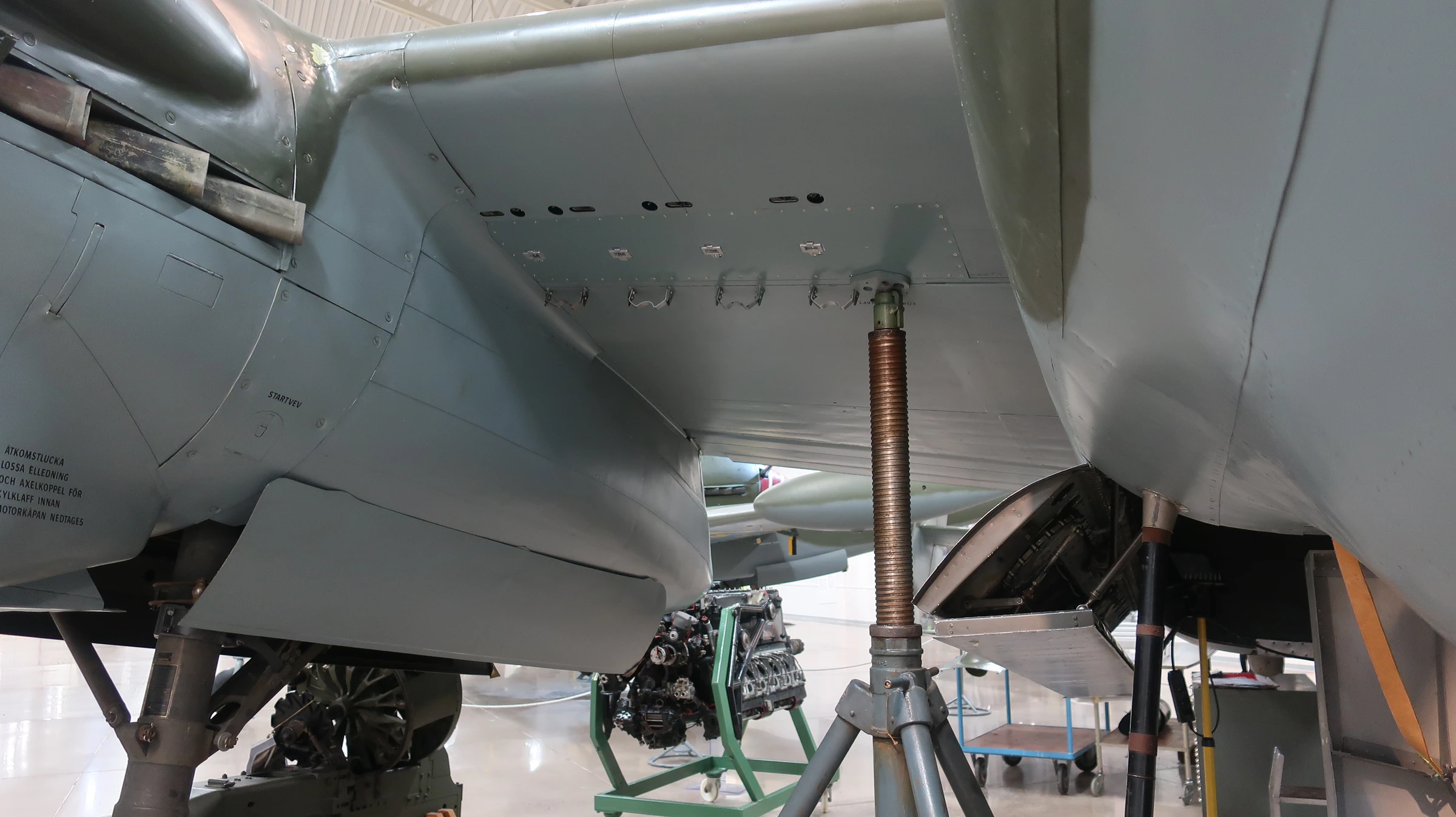
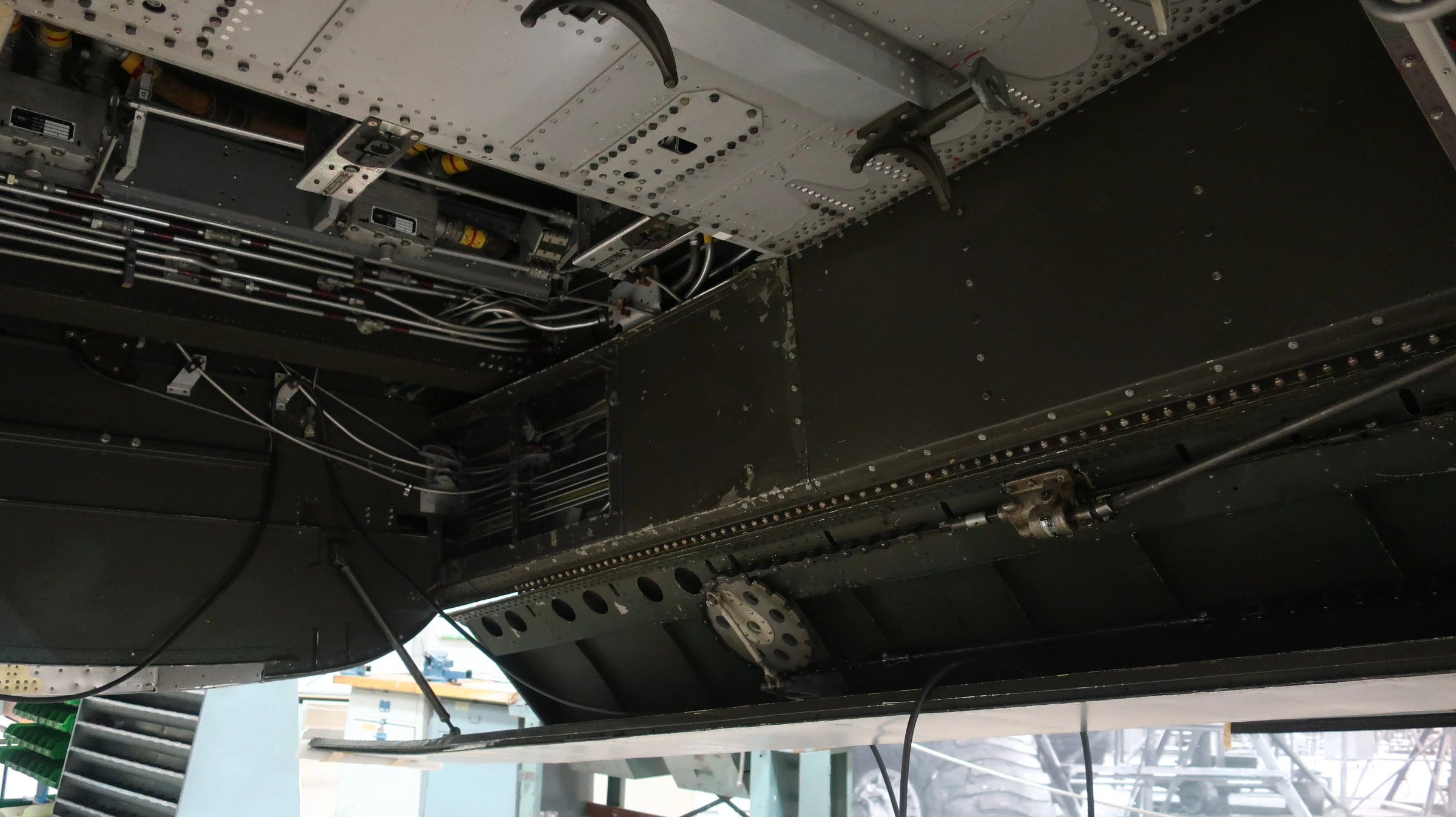
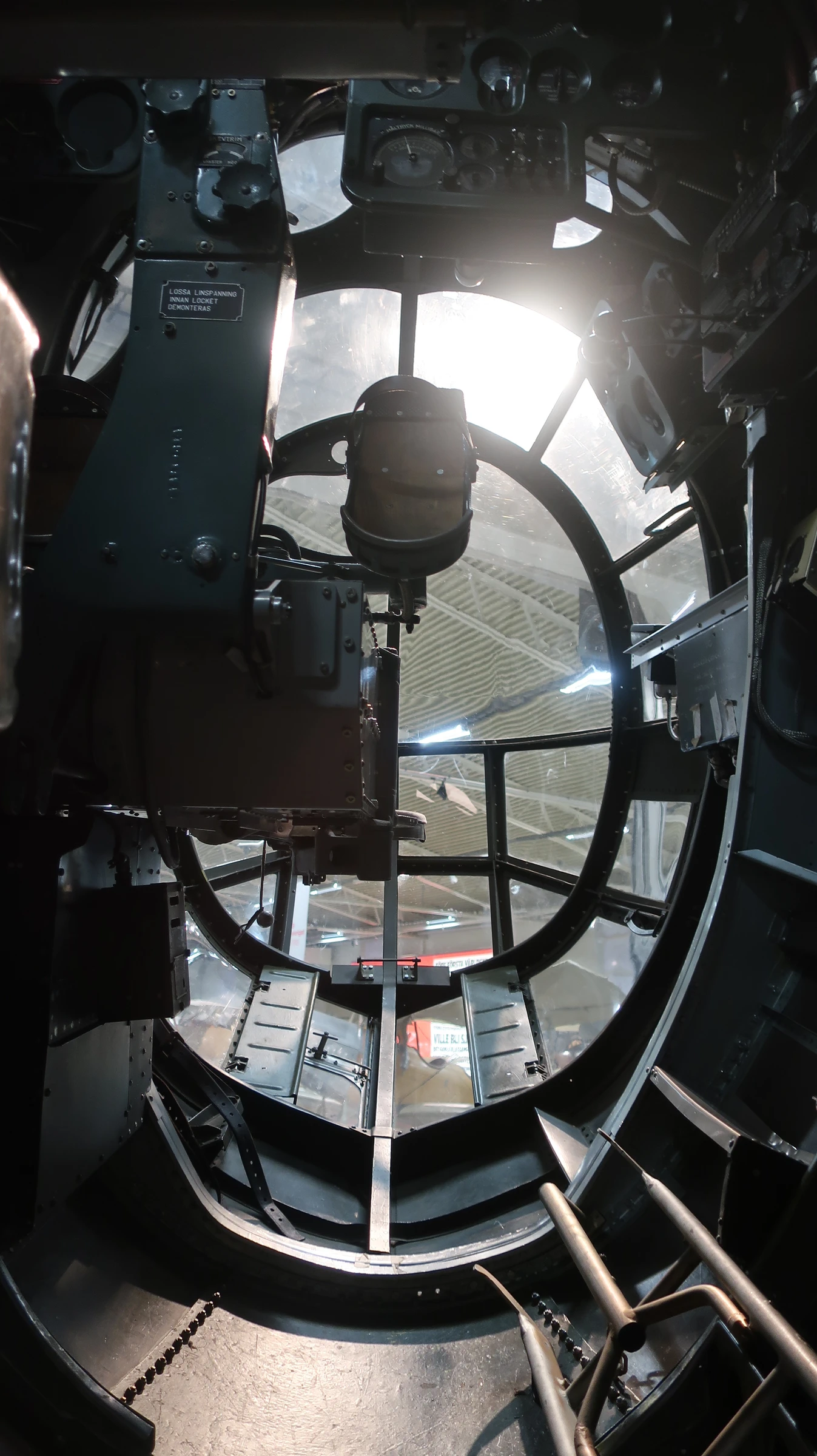
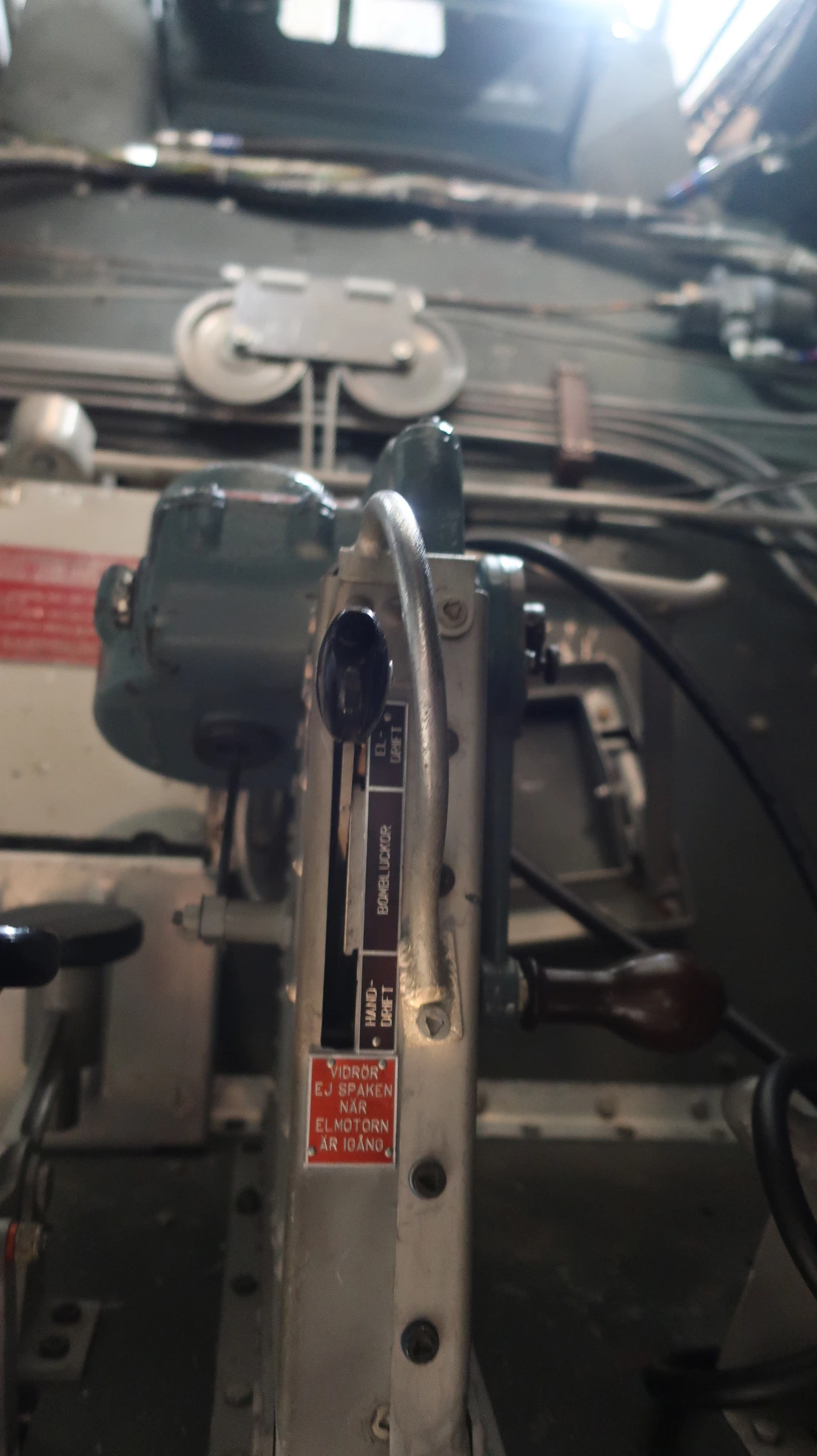
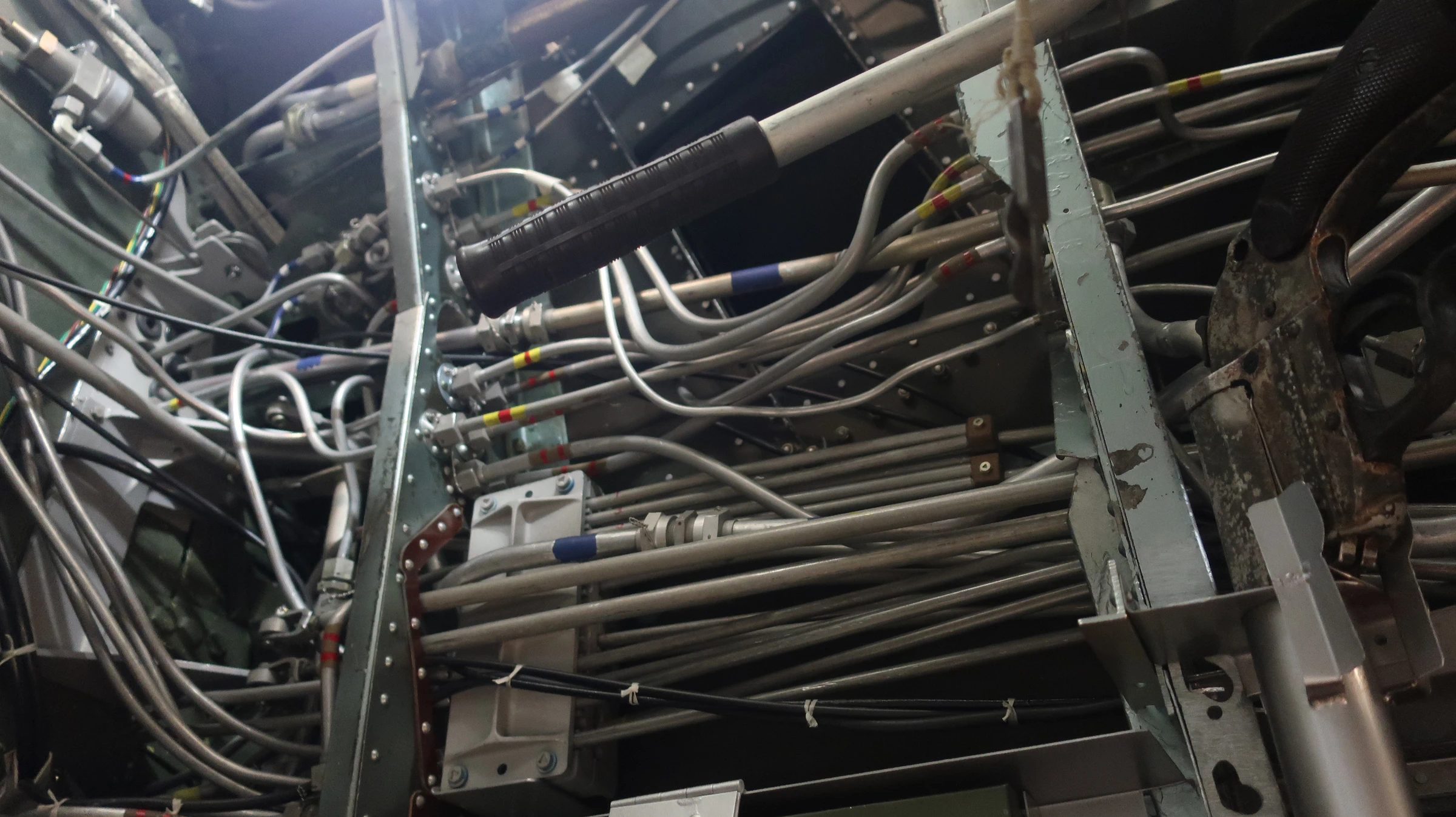
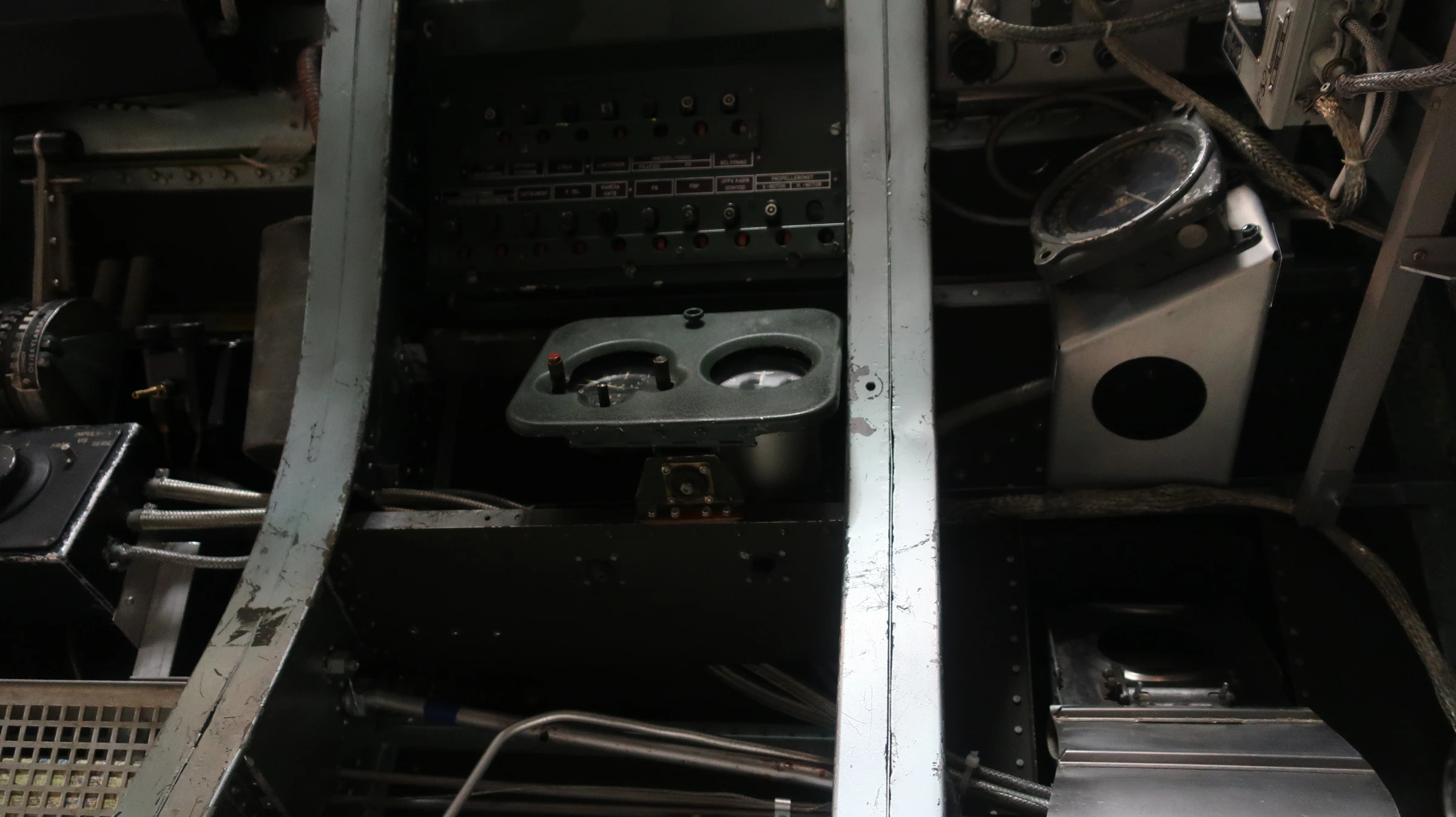
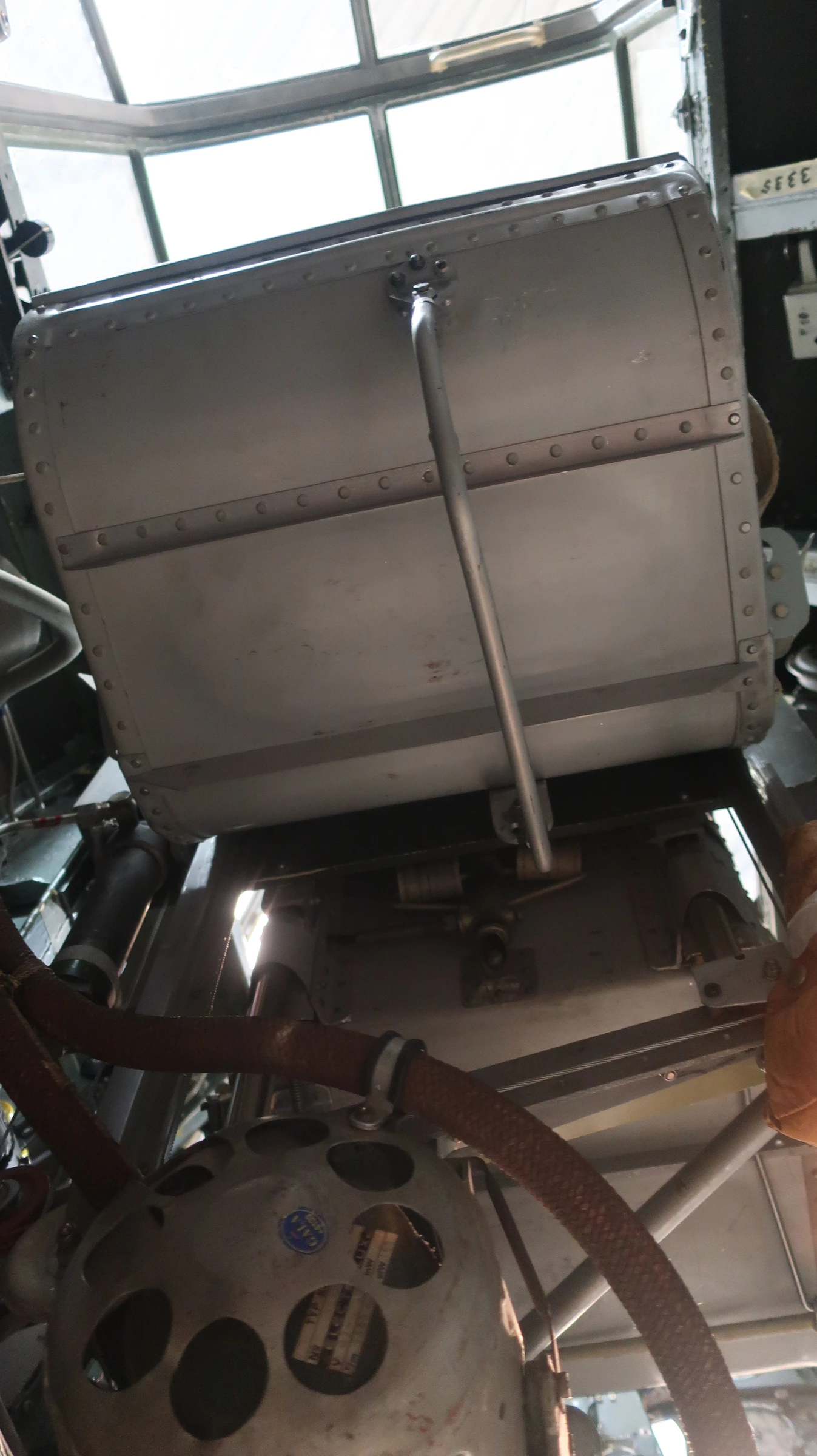
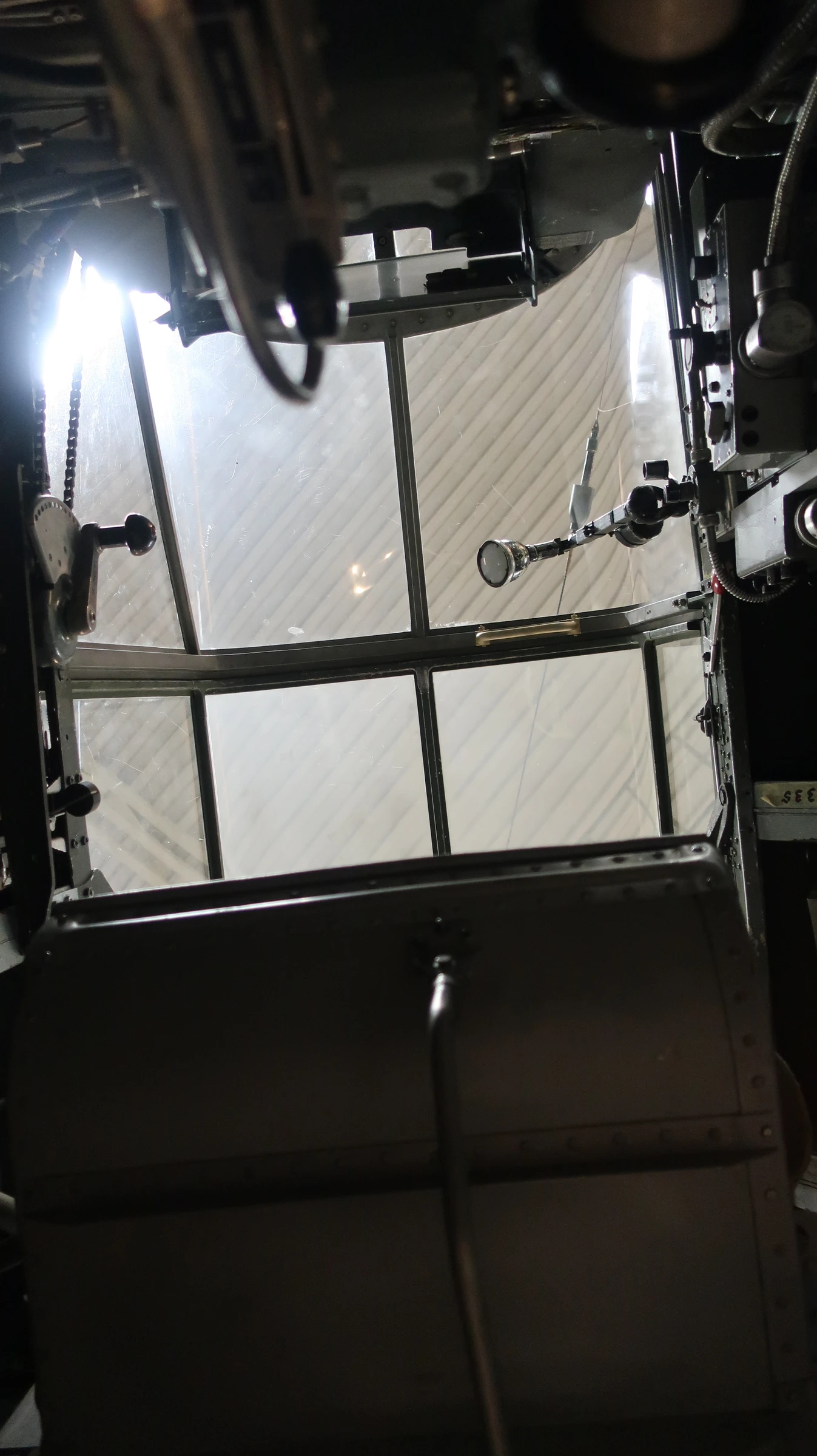
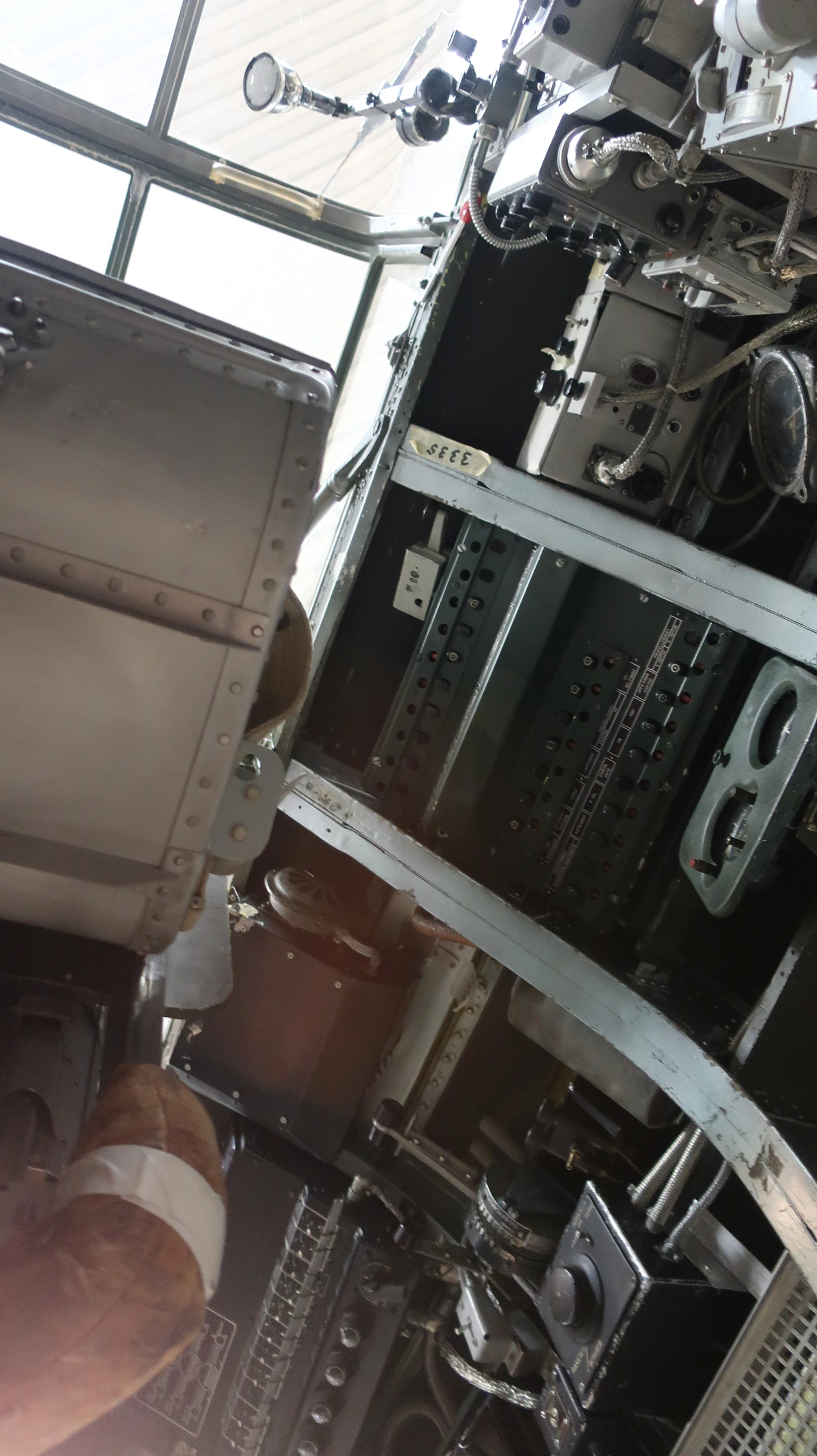
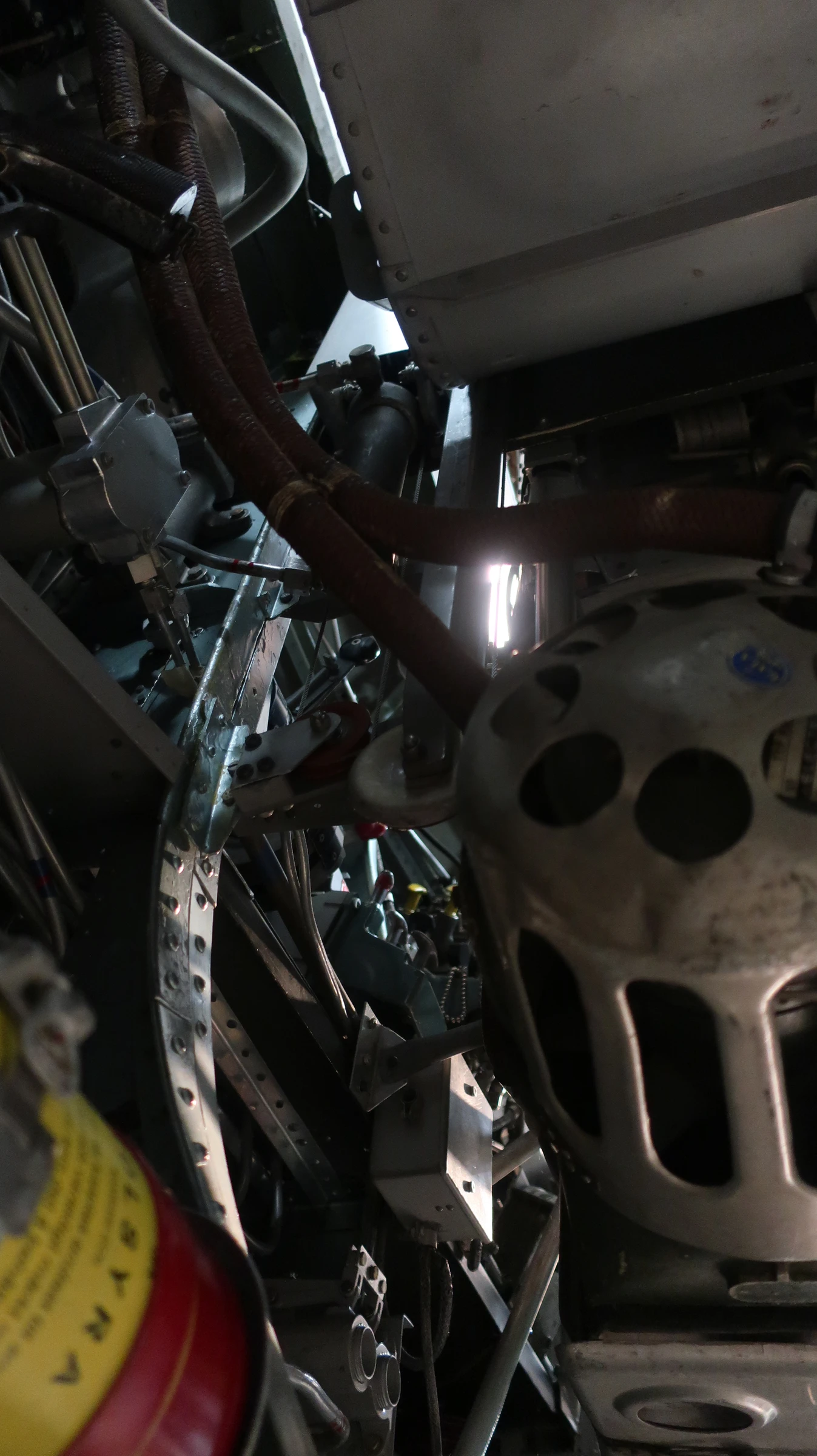
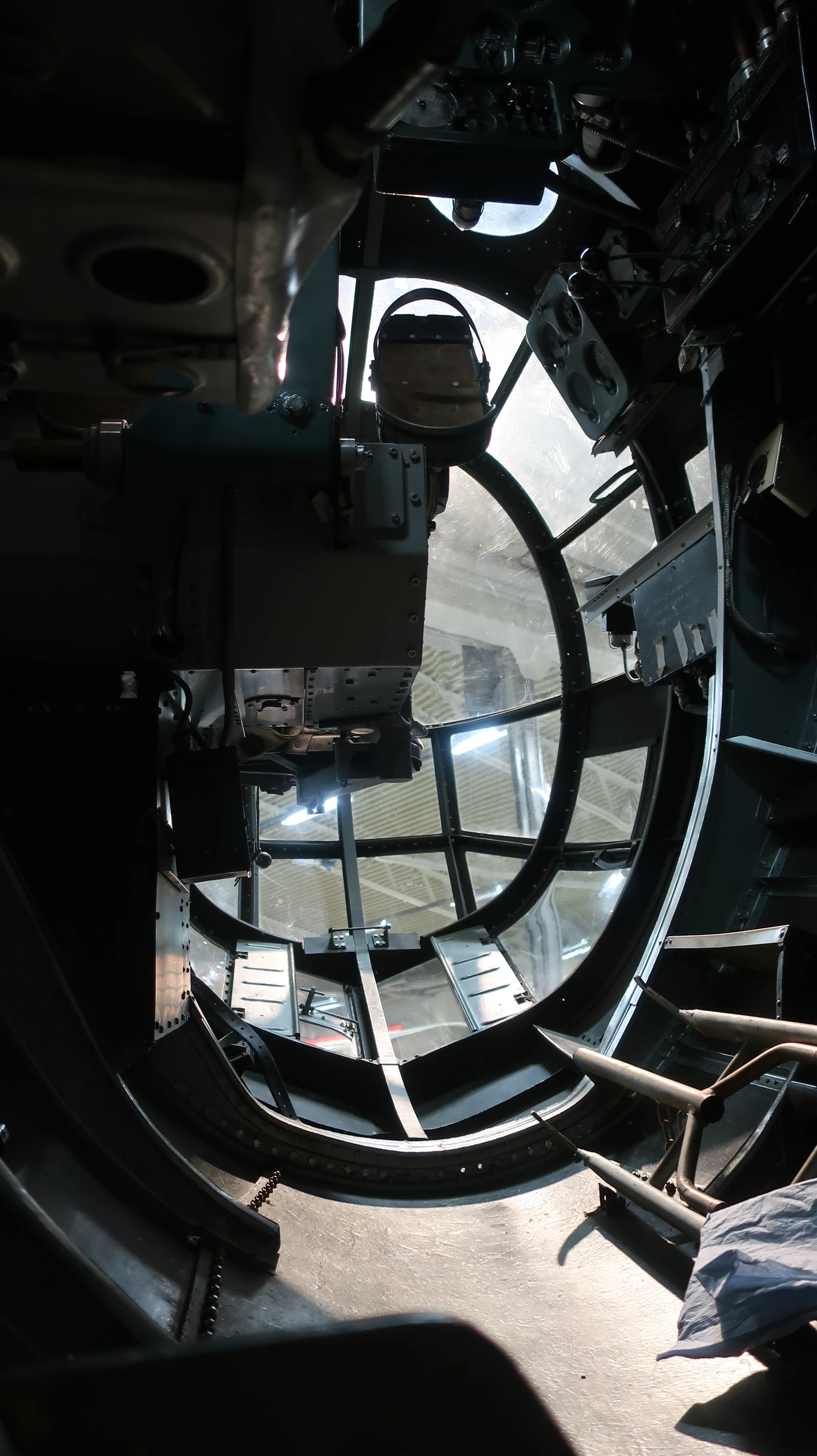
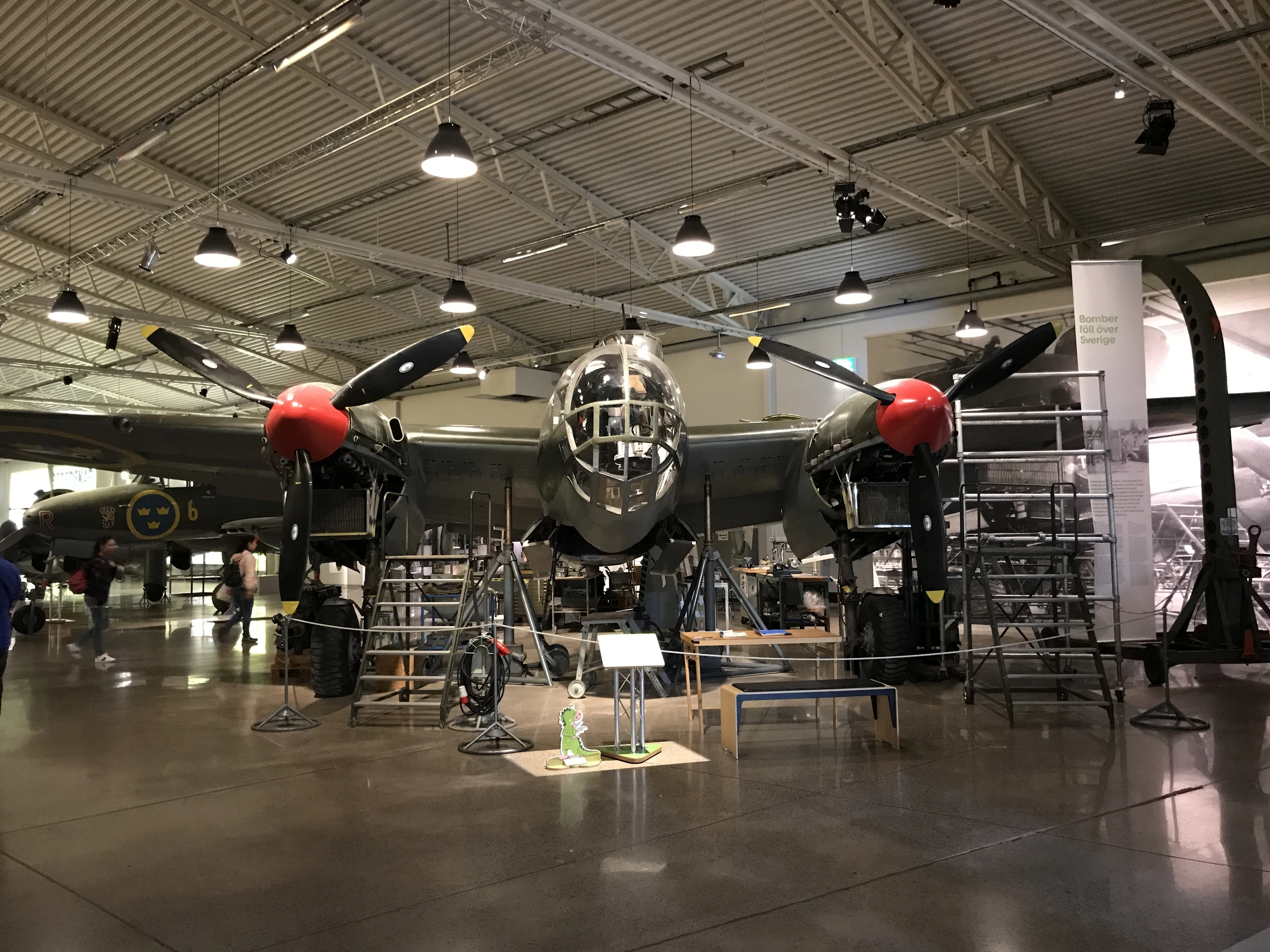
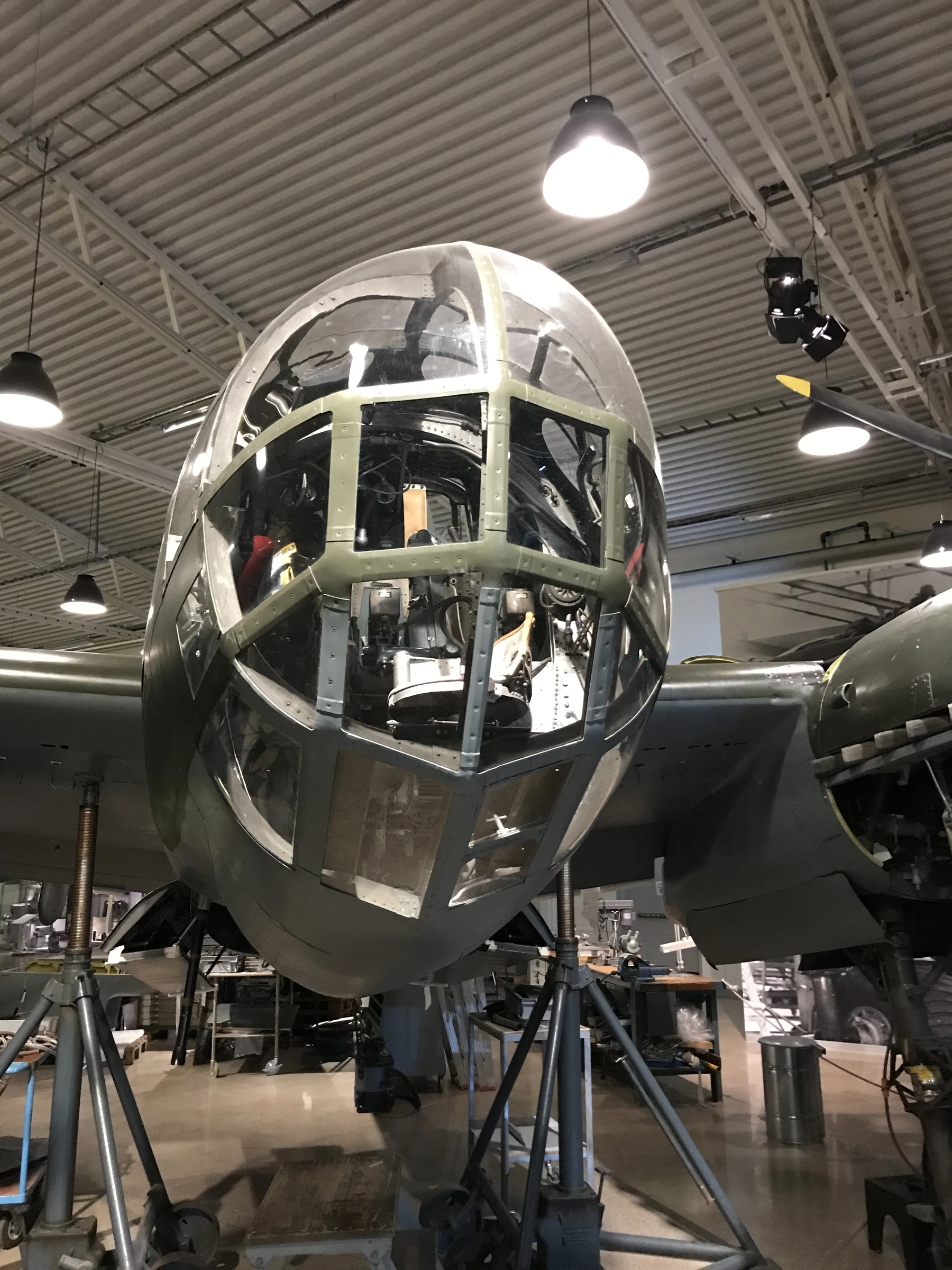
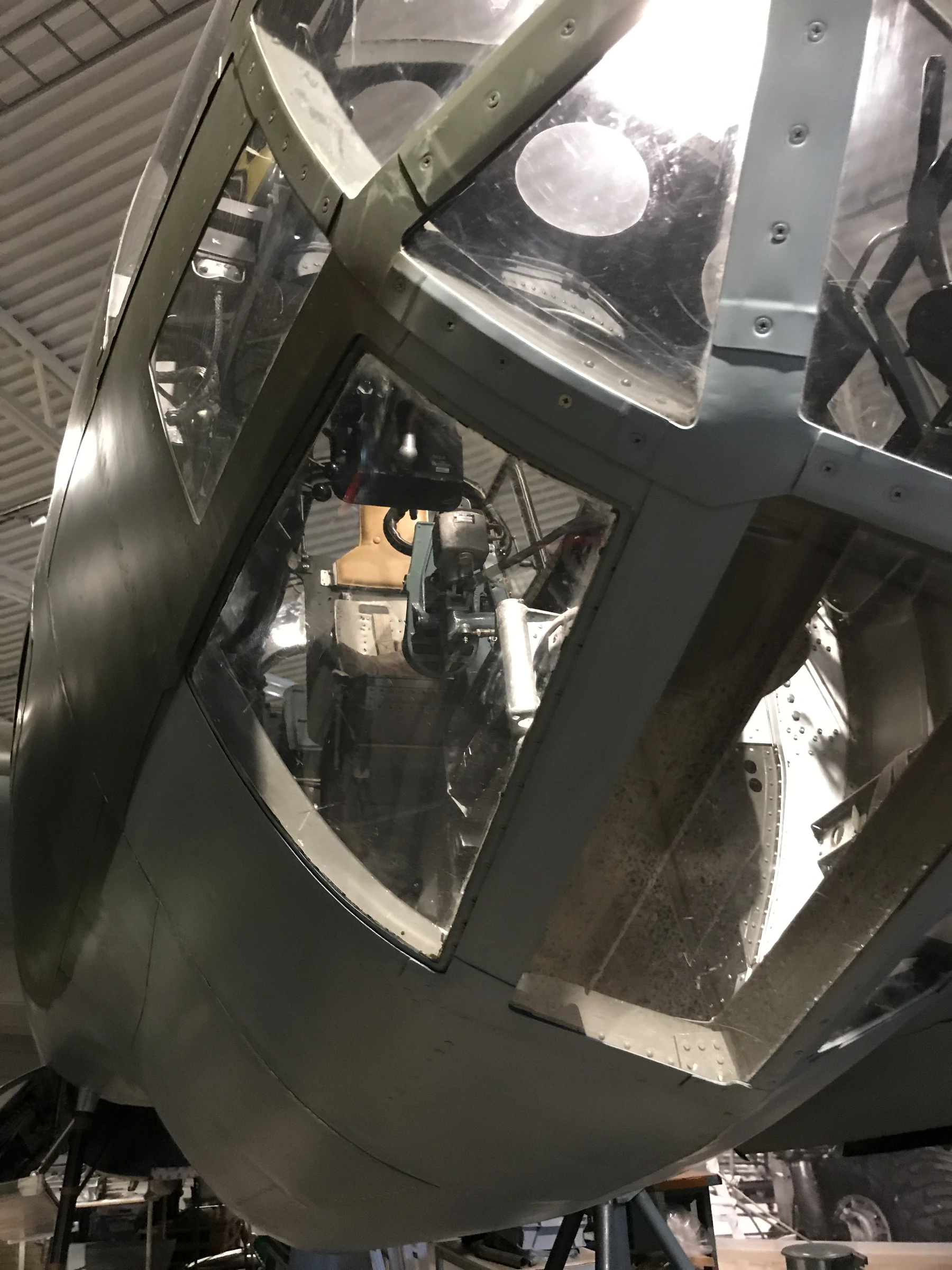
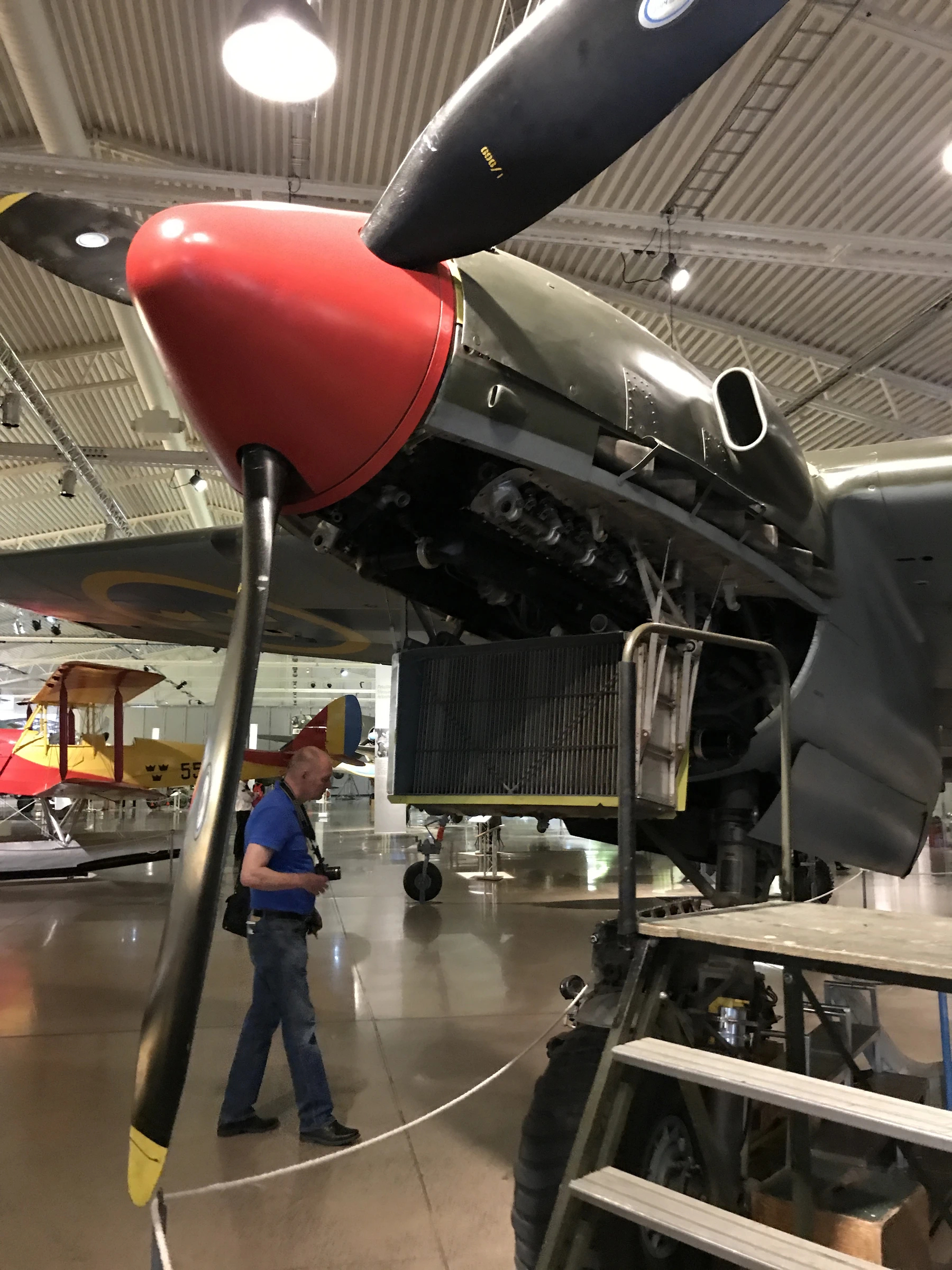
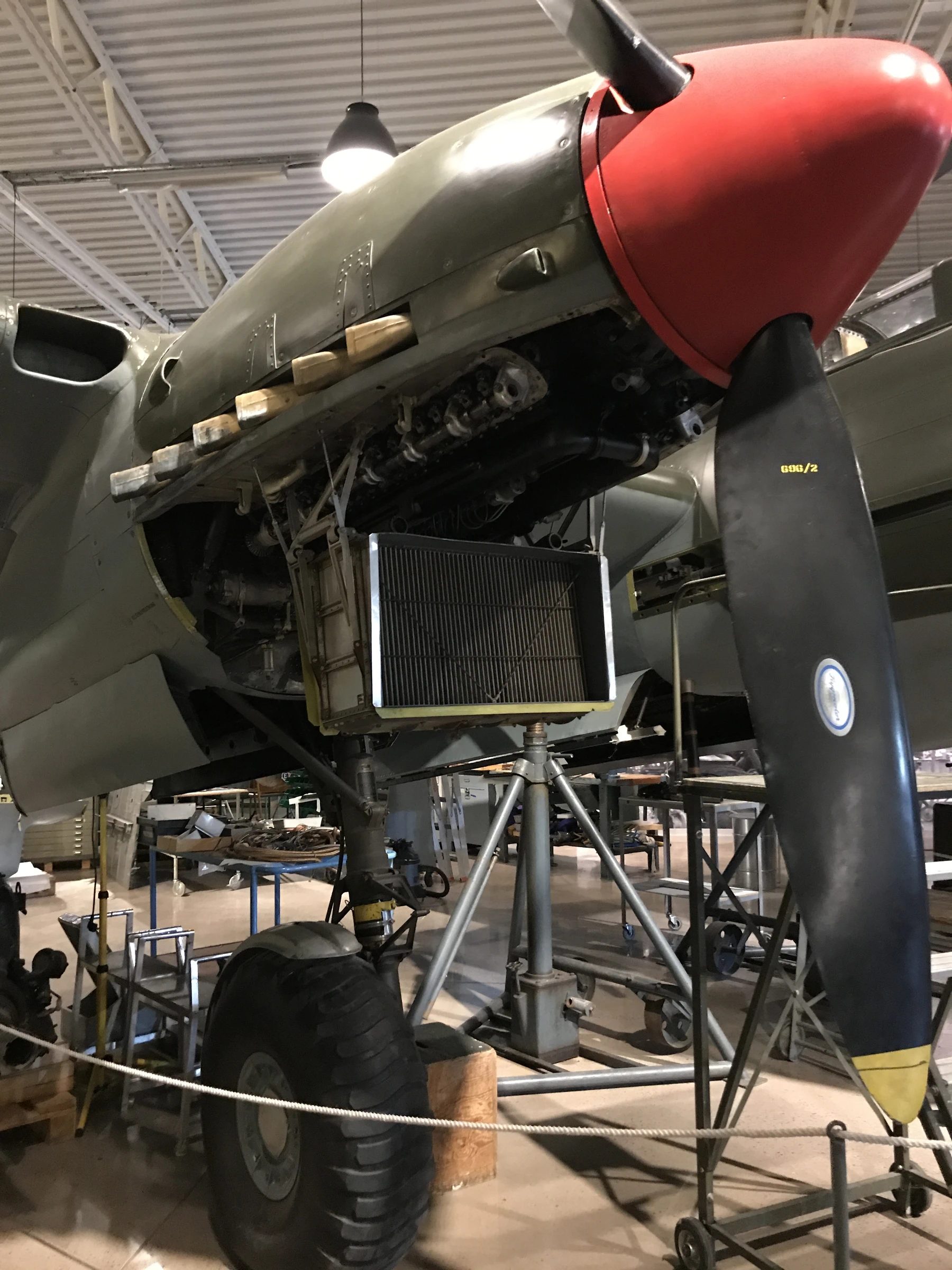
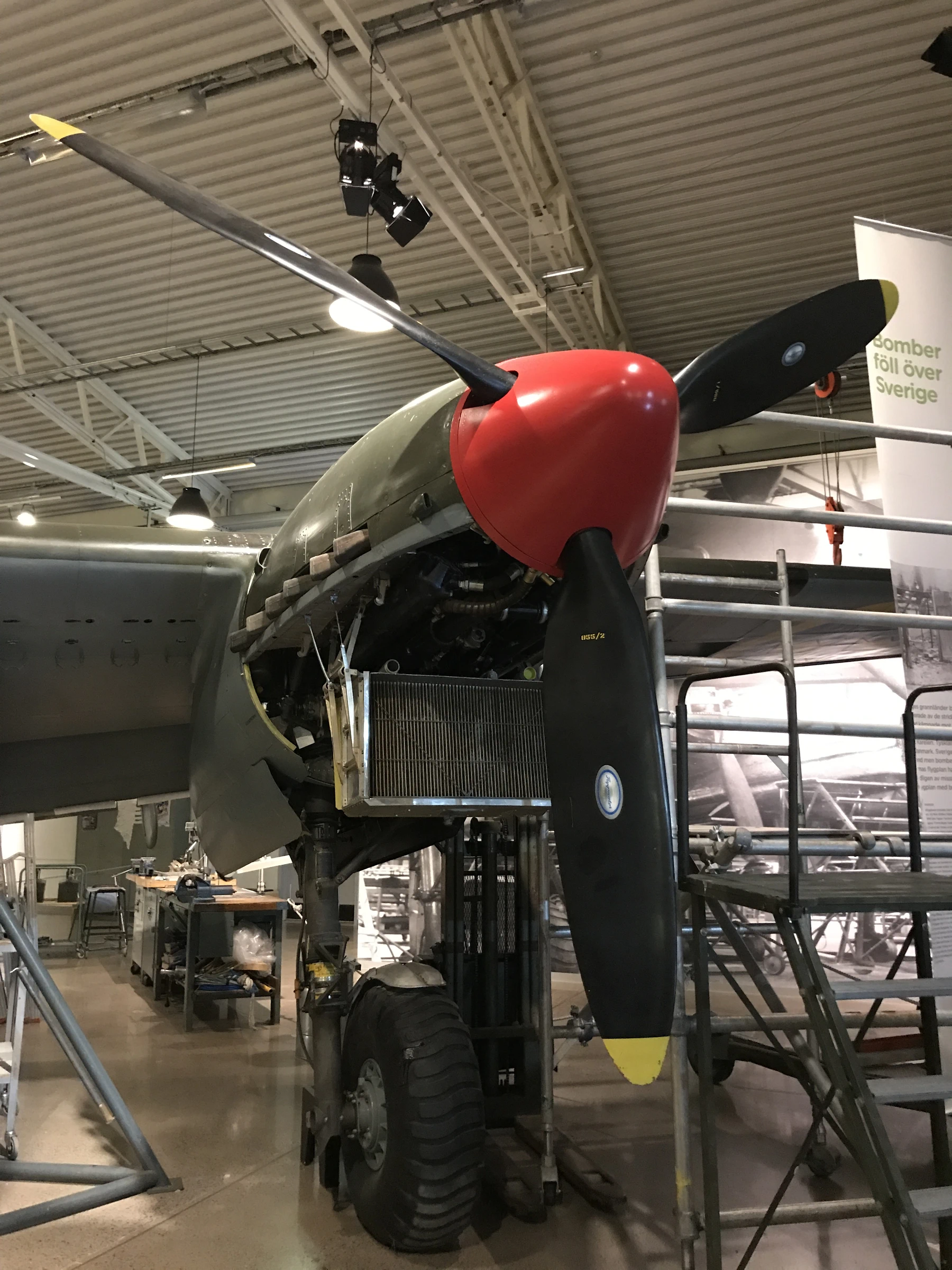
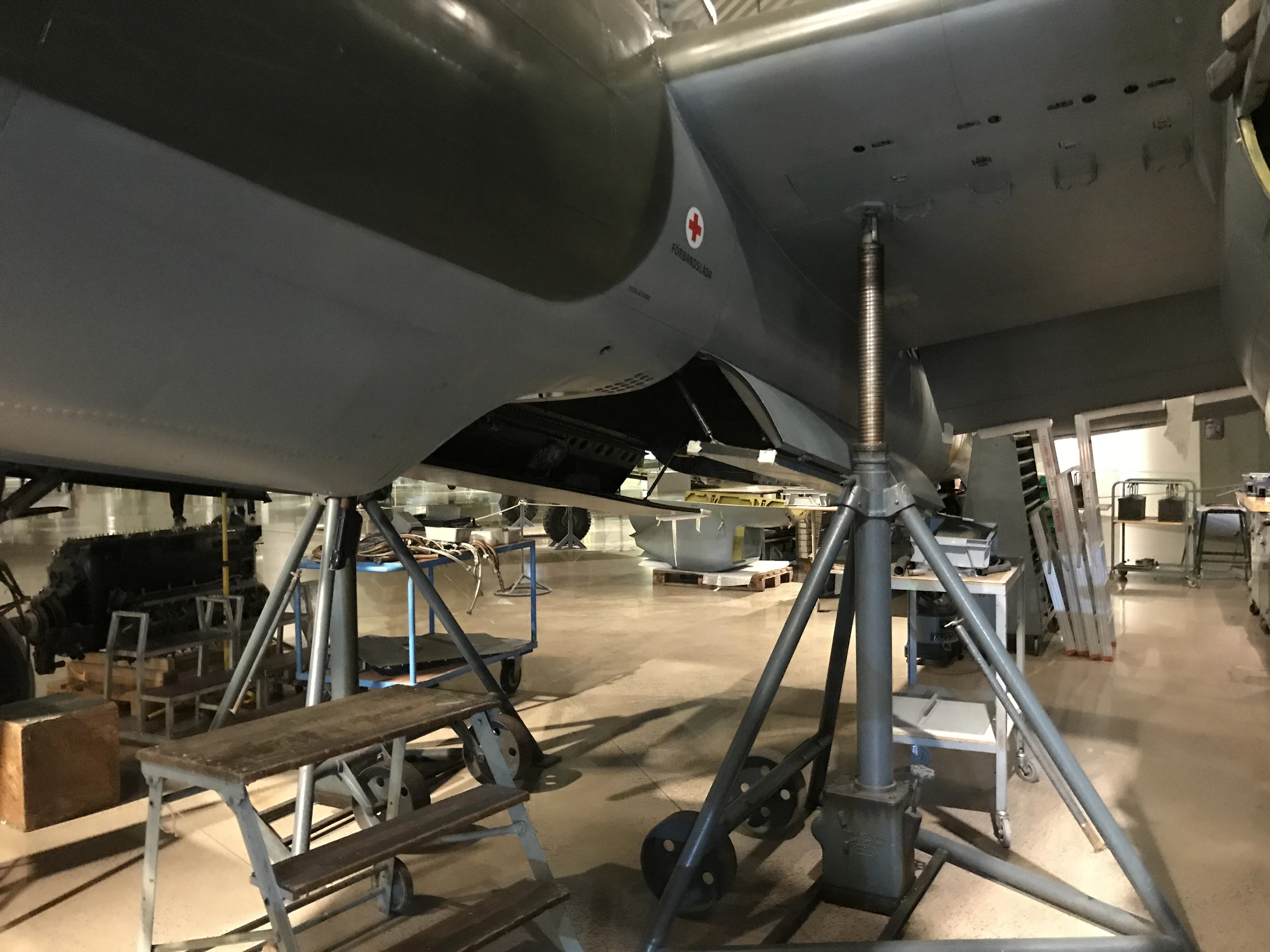
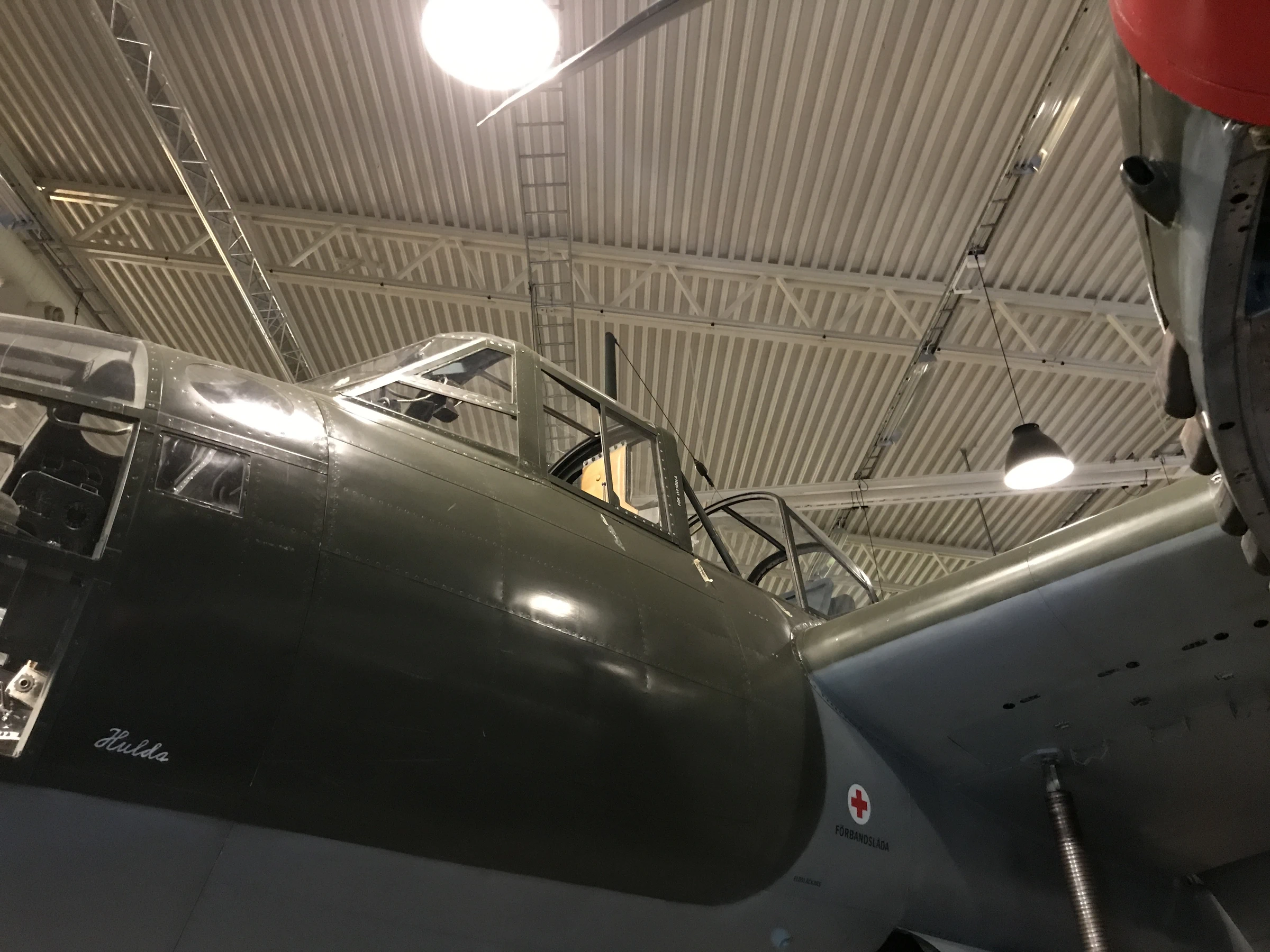
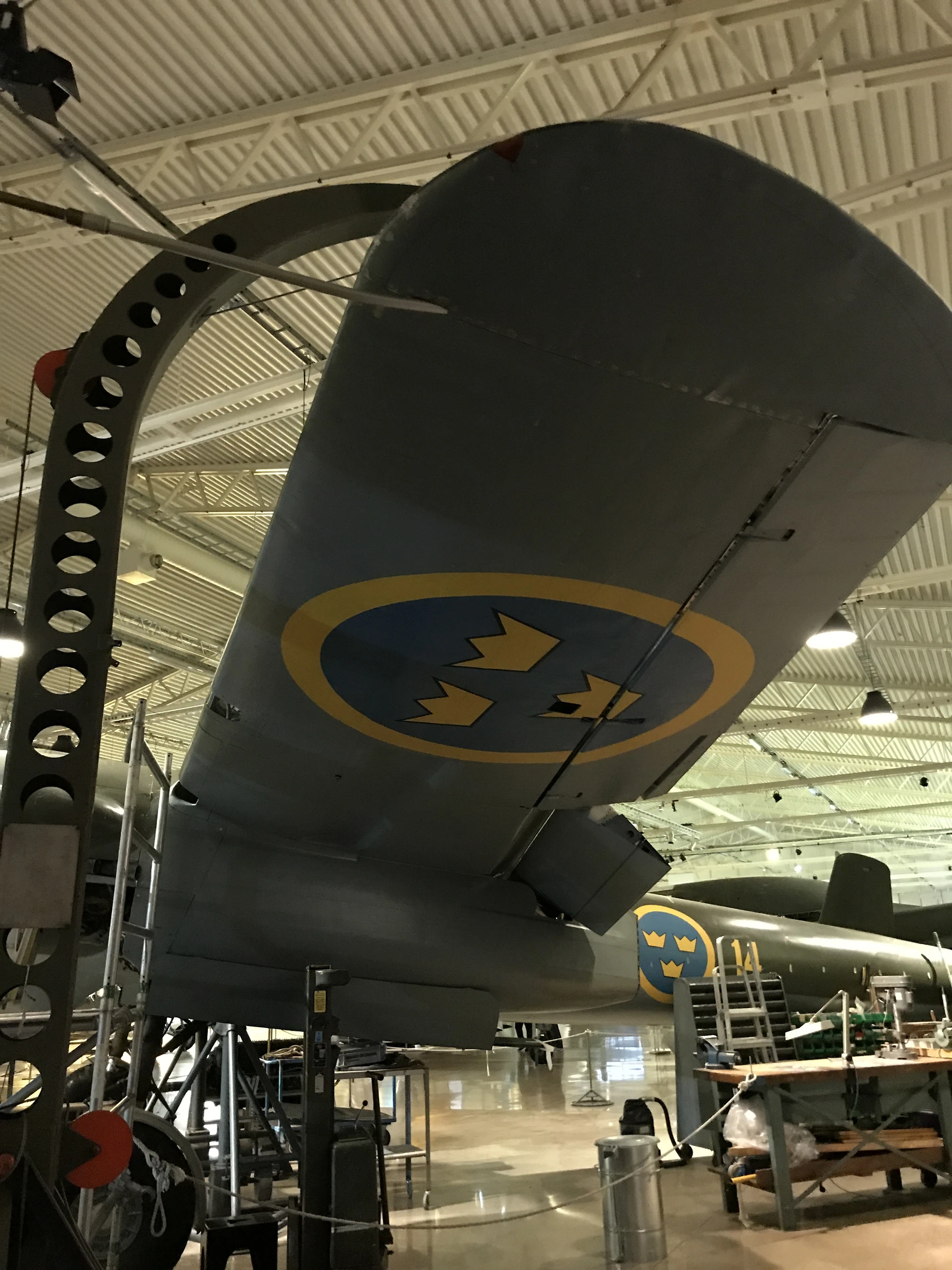
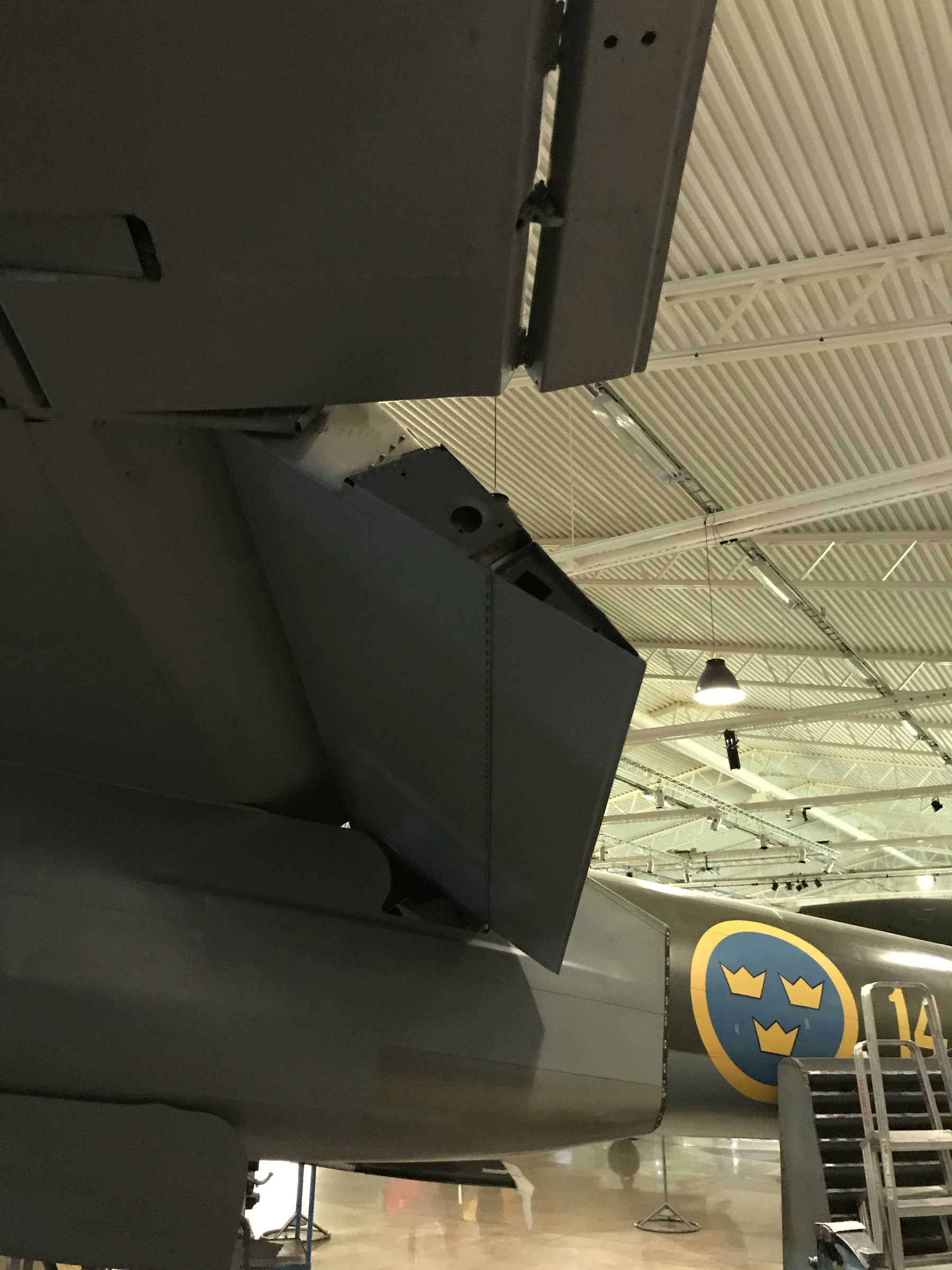
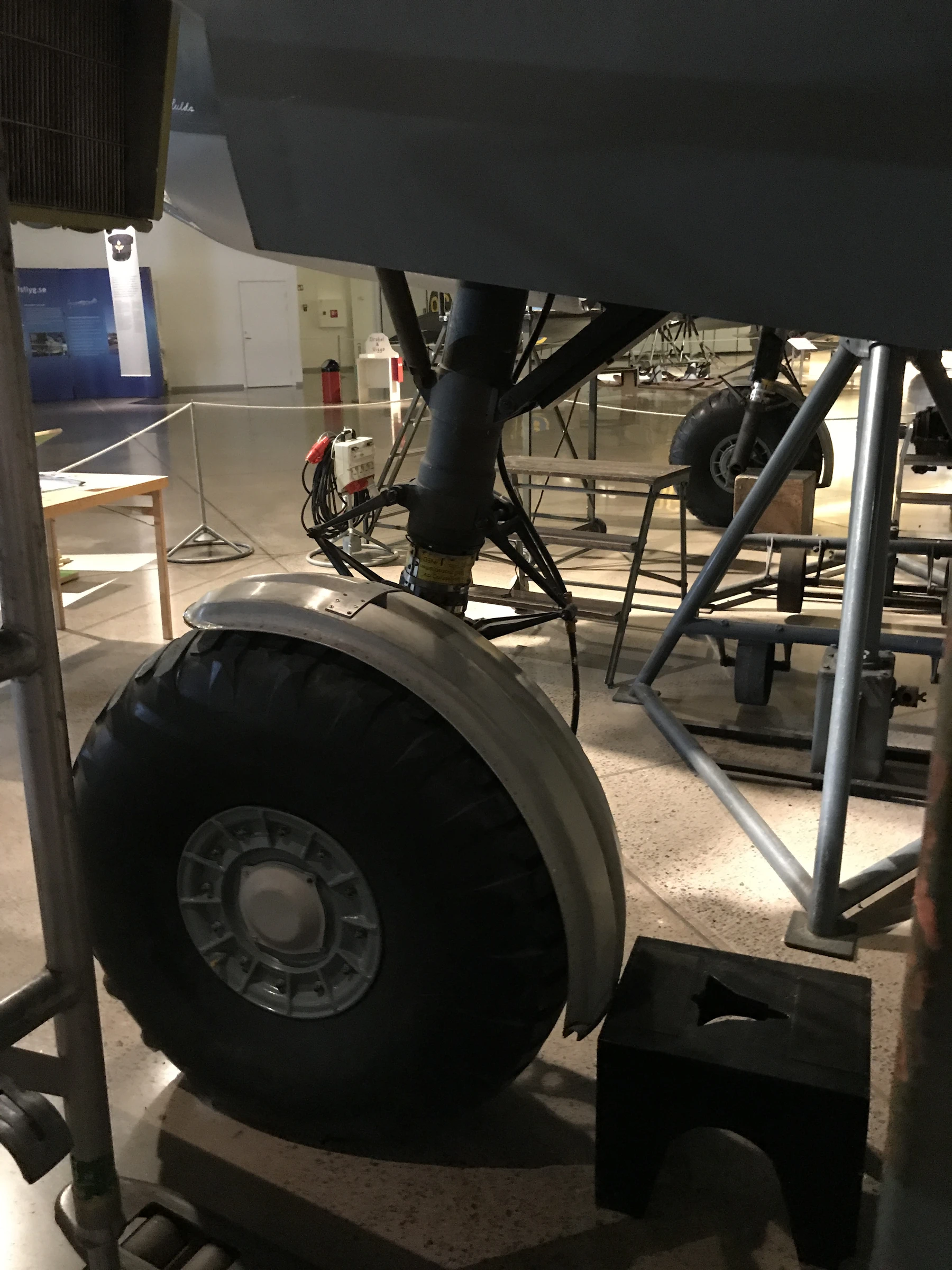
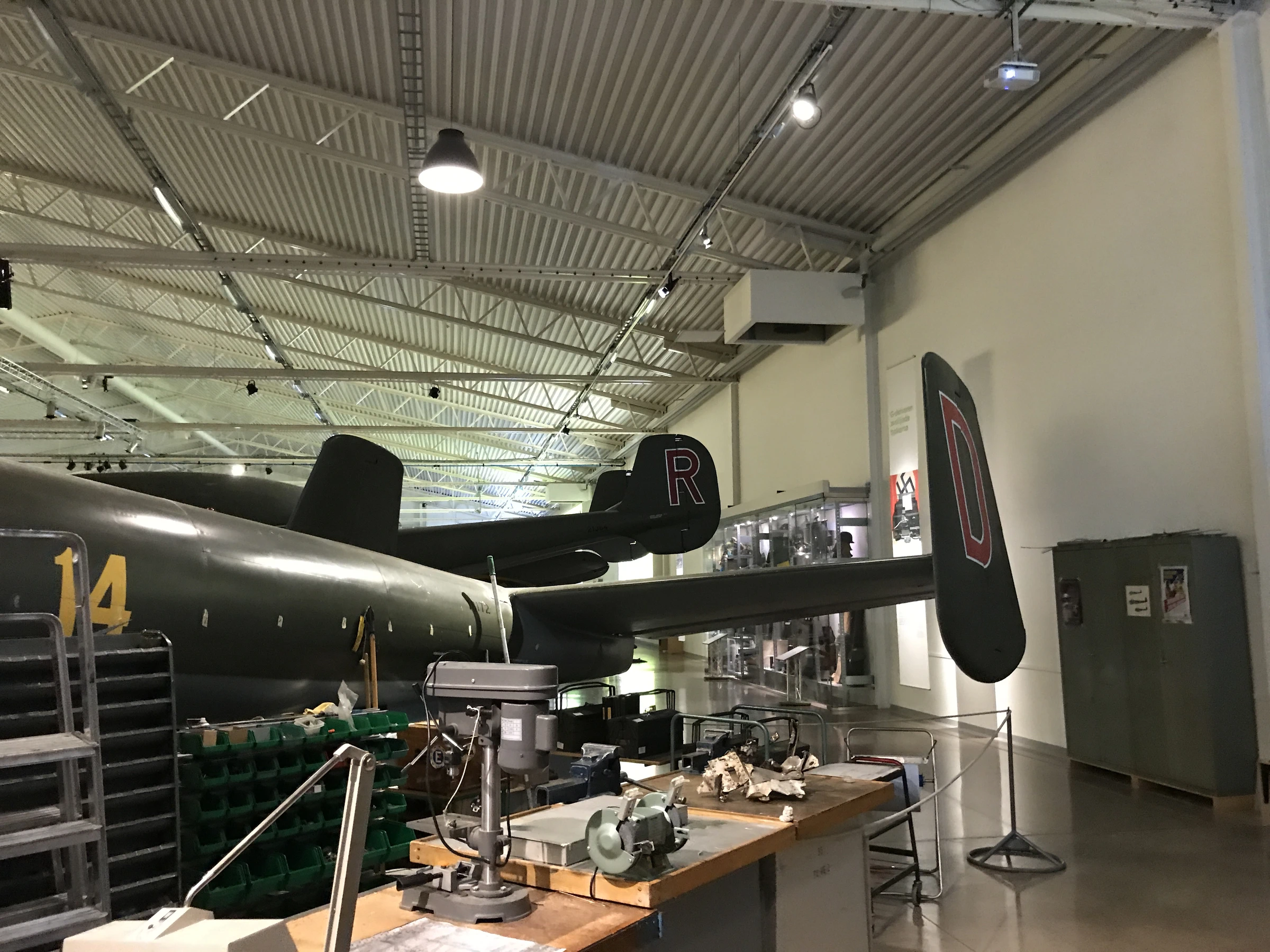
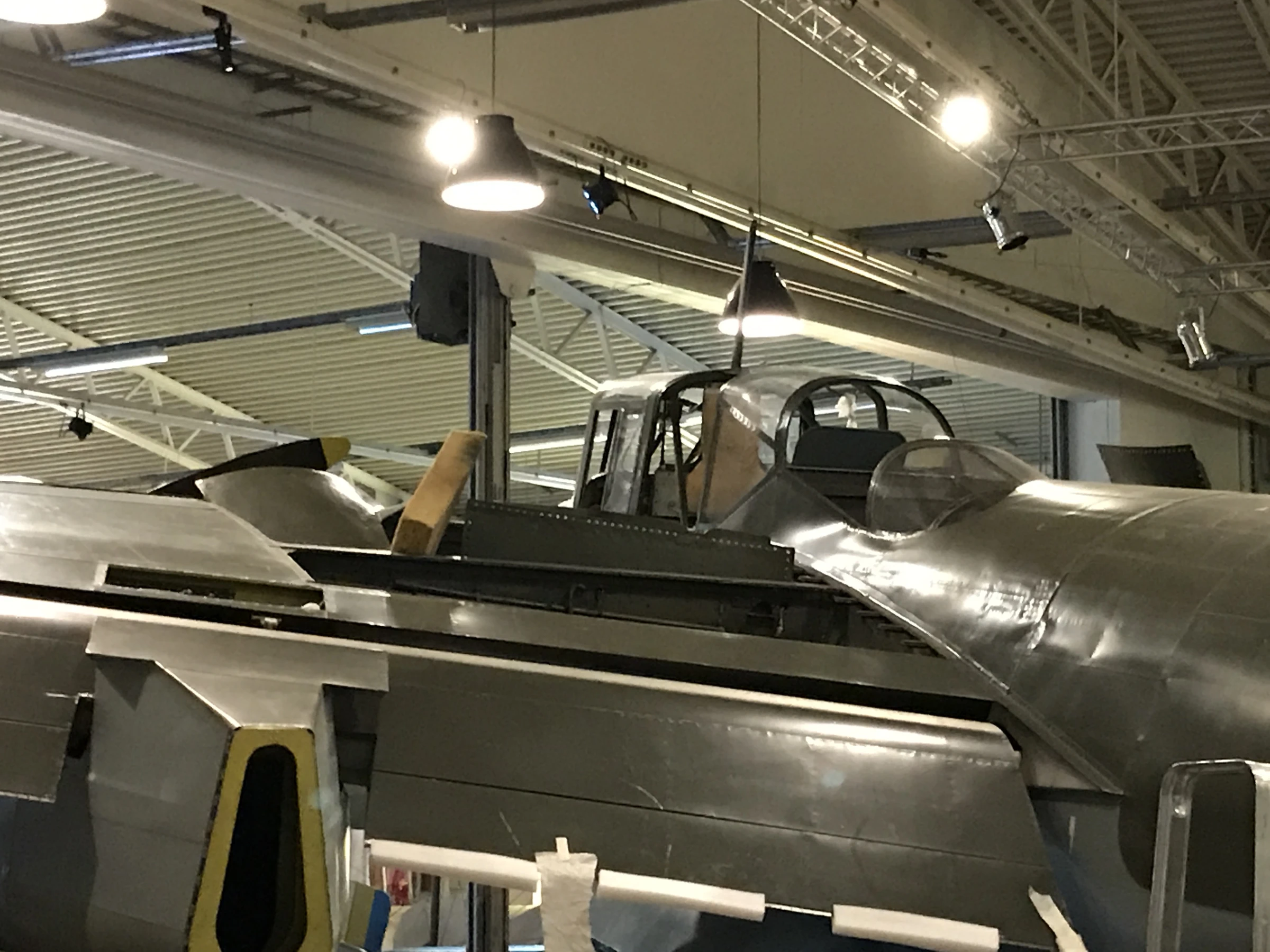
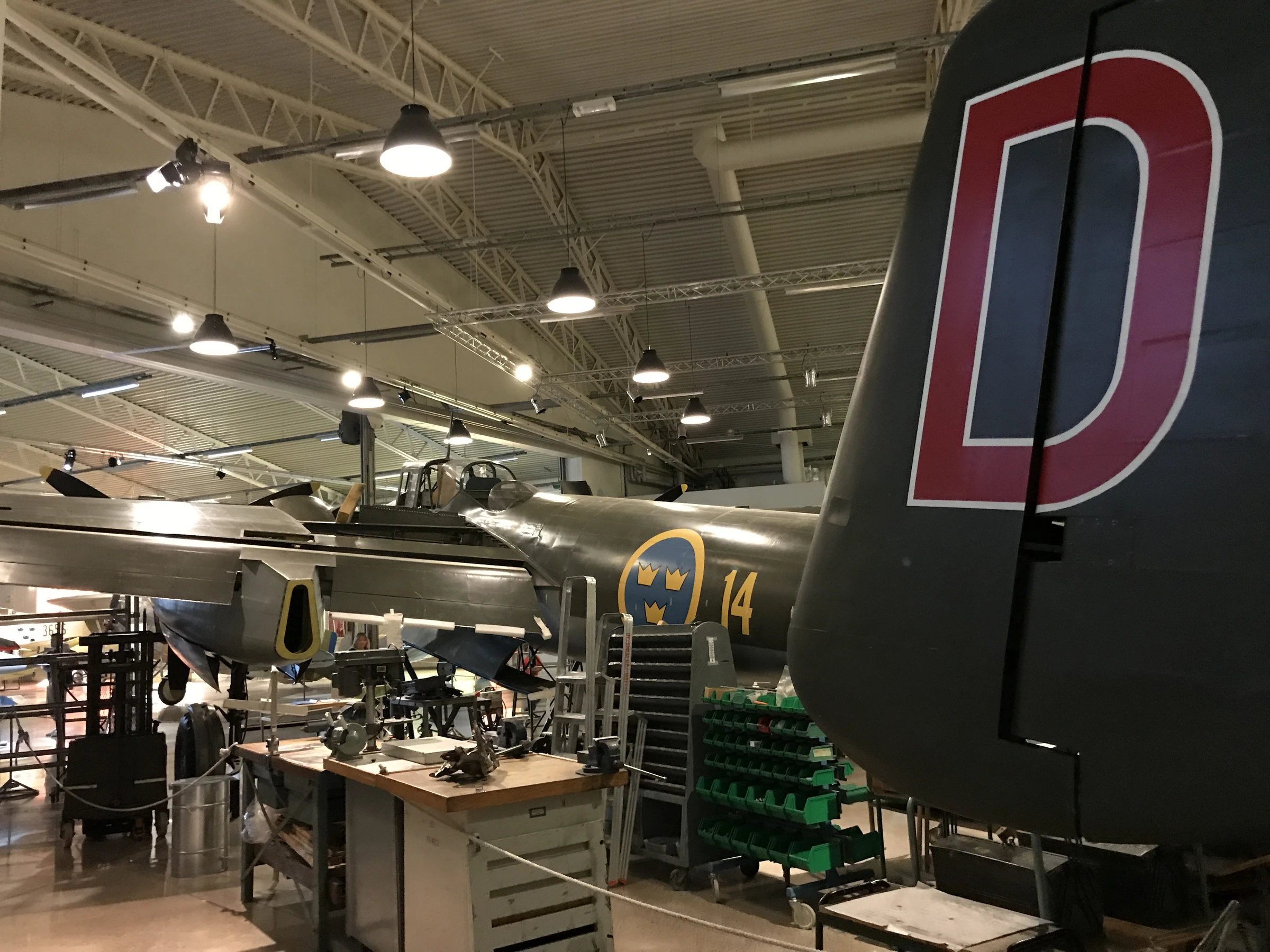
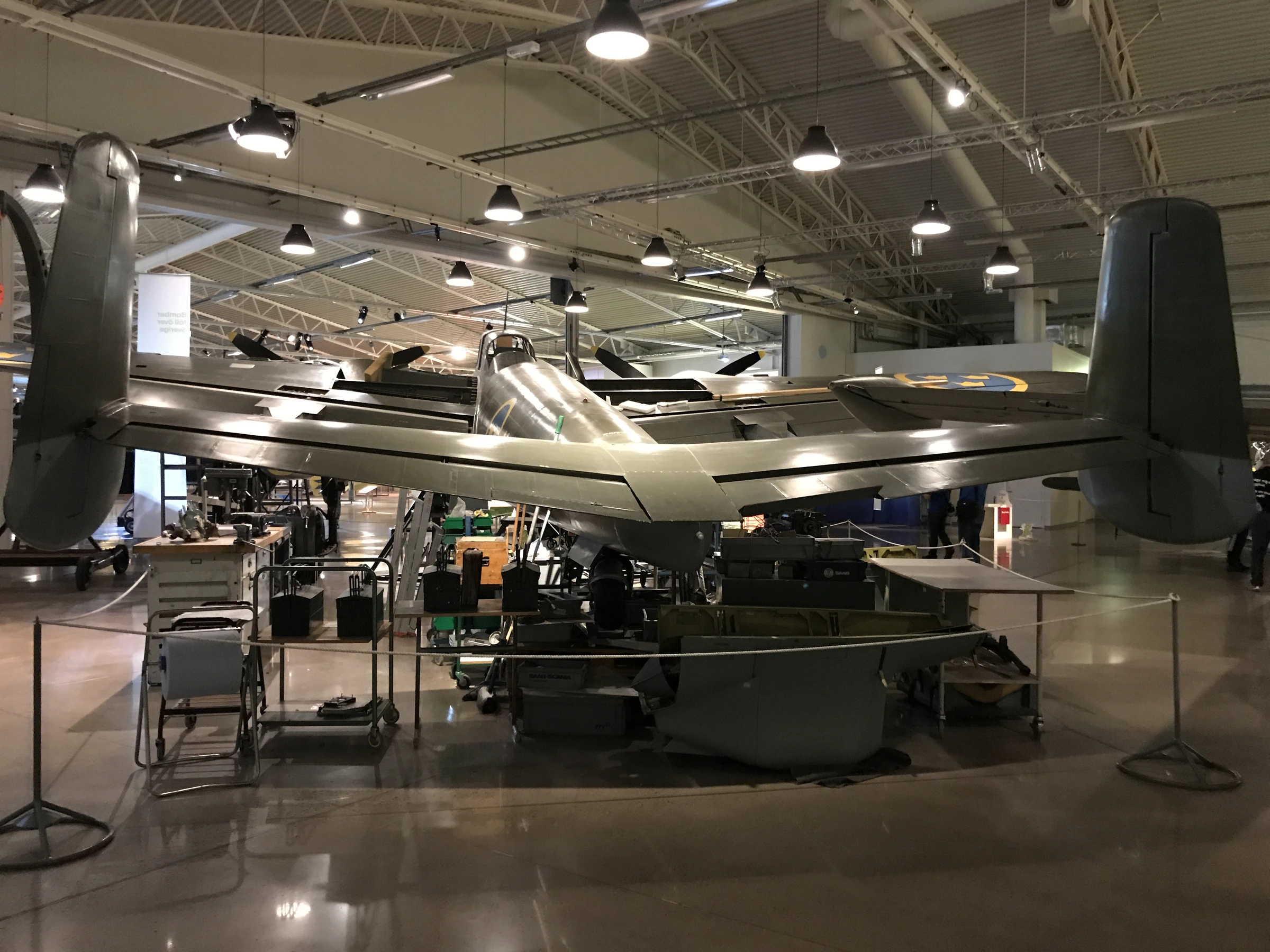
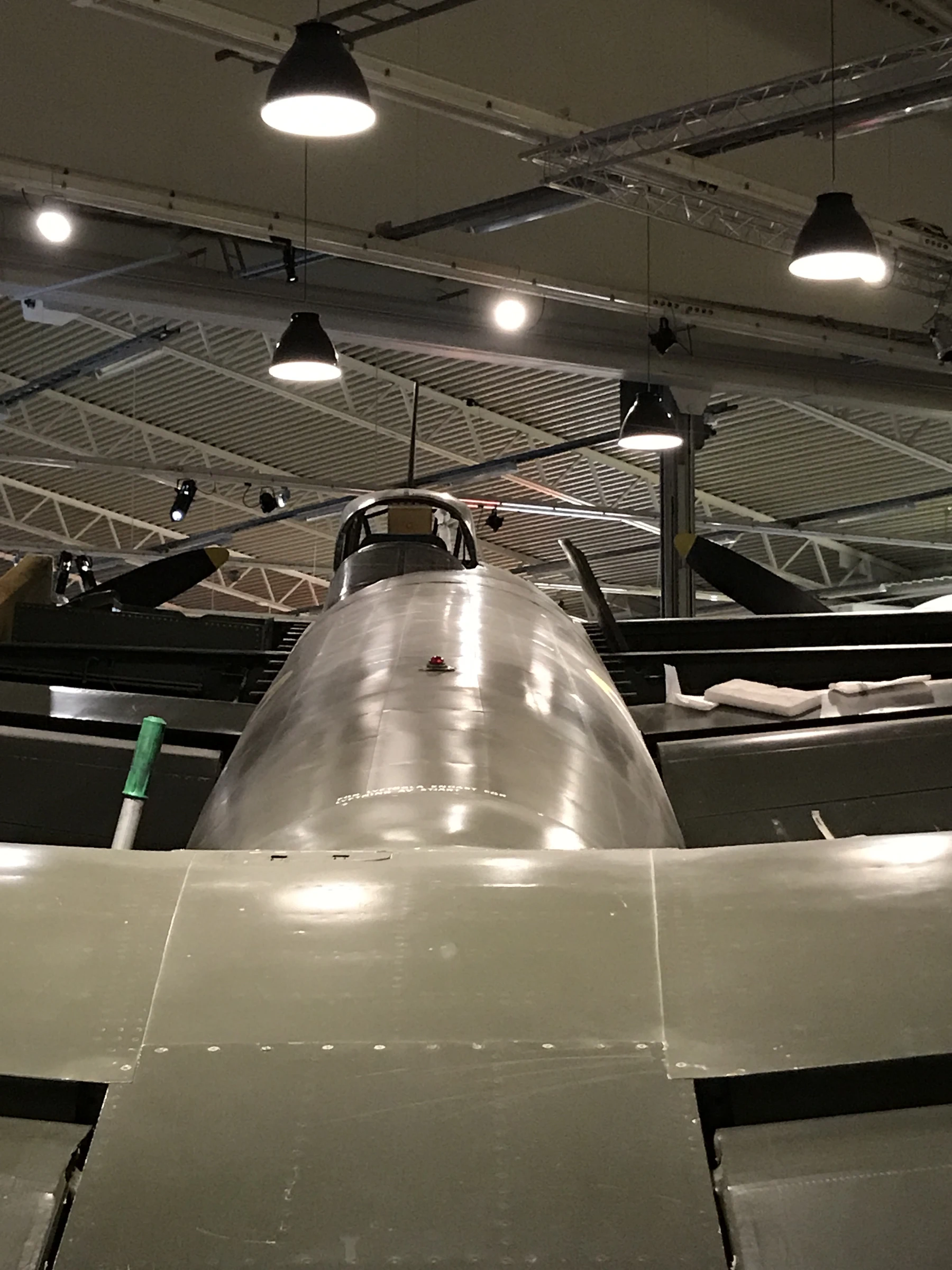
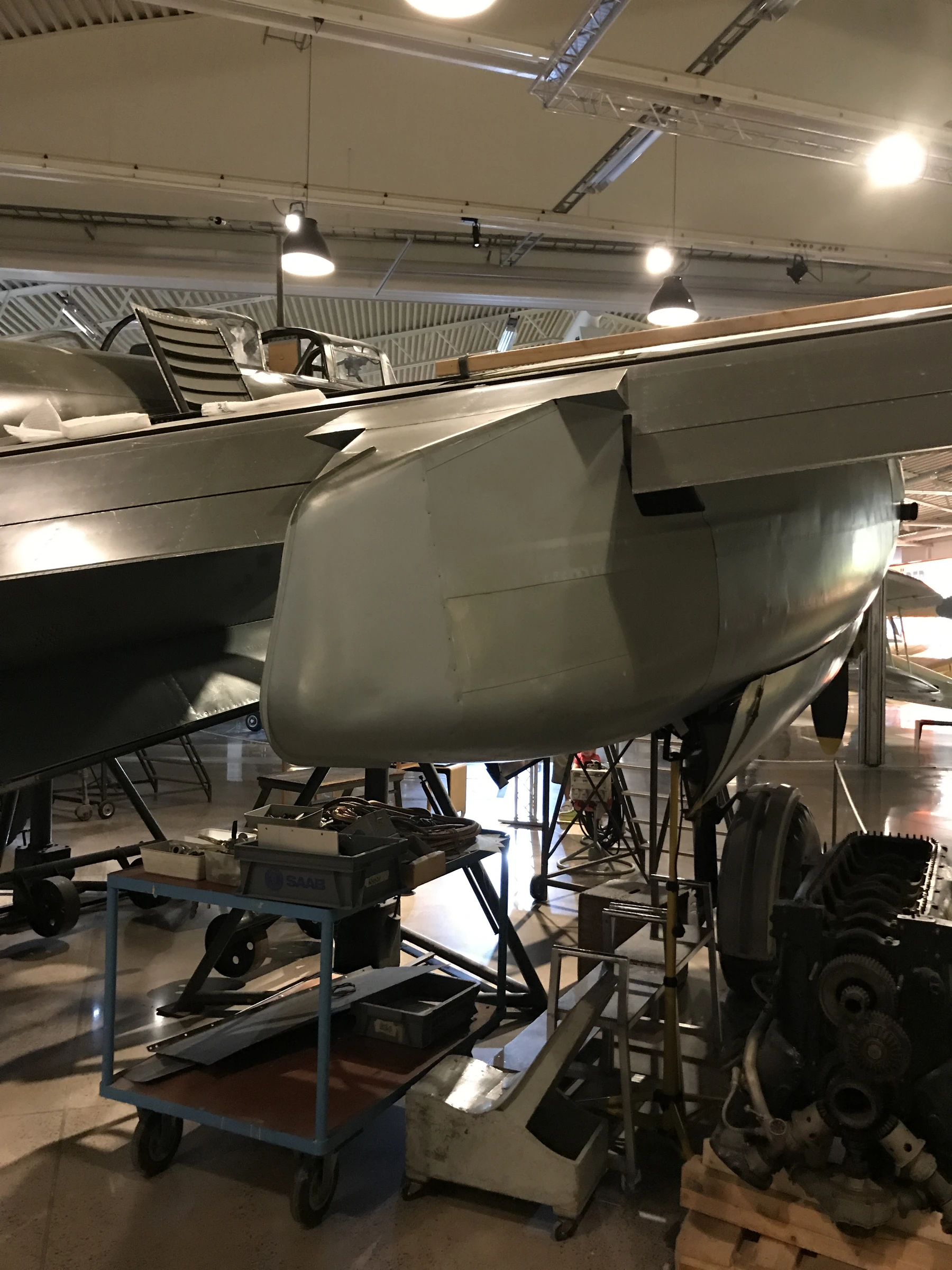
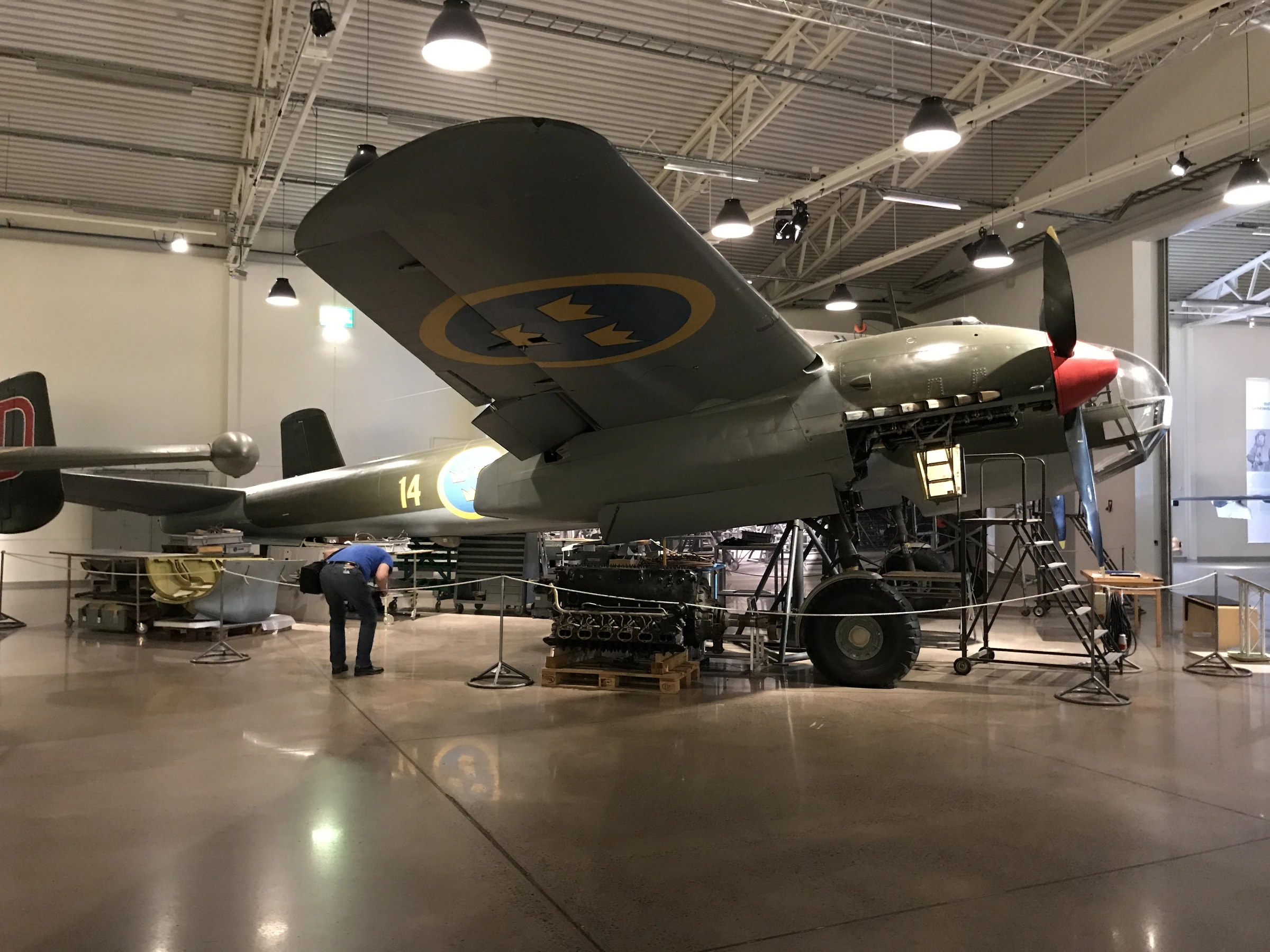
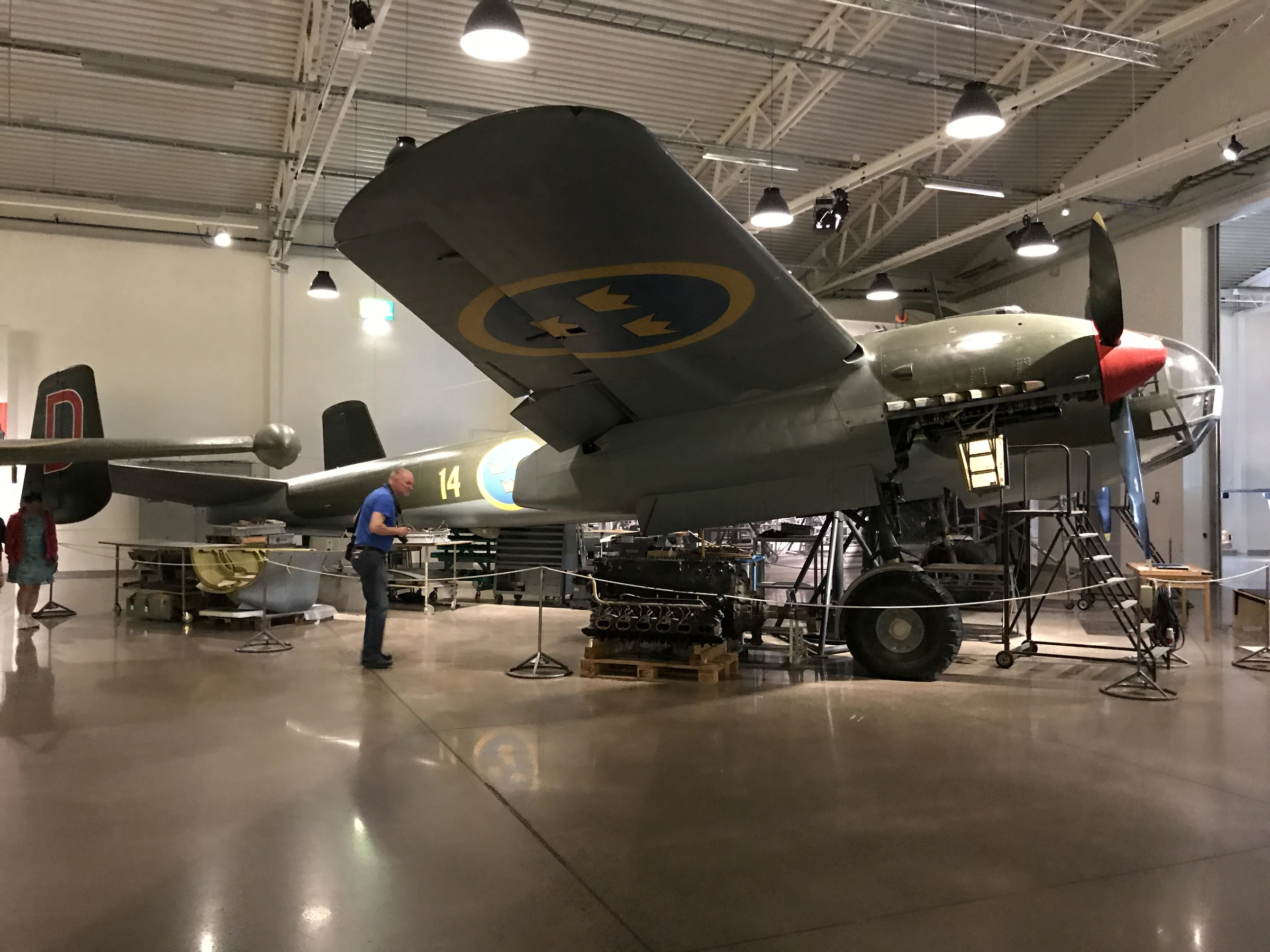
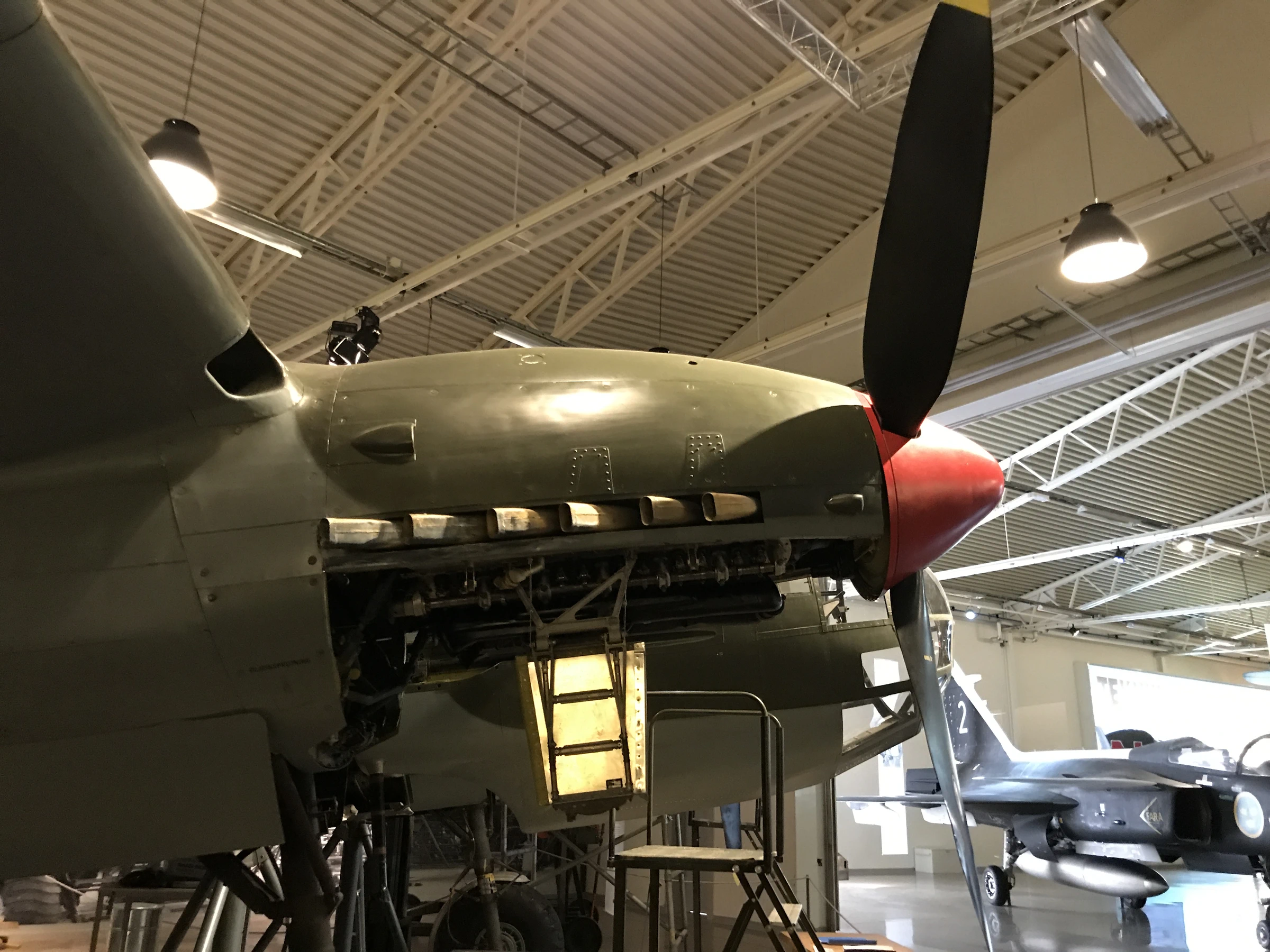
These walk-around photos were taken at Flygvapenmuseum at Malmen outside Linköping in 2017 and 2019. They show a Saab B 18B, individual number 18172, coded Röd D — "Röd David" — and marked with the insignia of F 14 Halmstad. It is the only surviving Saab 18 in the world, and one of the most extraordinary aircraft preservation stories in Swedish aviation history.
The Saab 18 was the second aircraft of Saab's own design, developed from the ASJA L 11 project in the late 1930s and first flown on 19 June 1942. A twin-engine, twin-tail bomber and attack aircraft with a crew of three, it entered service in 1944 and was produced in 244 examples across three main variants. The B 18B was the more capable second bomber version, powered by two licence-built Daimler-Benz DB 605B engines in place of the Twin Wasps of the B 18A, giving it significantly better speed and climb performance. It carried two 20 mm autocannon and was equipped with an advanced dive-bombing sight that calculated the precise release point automatically, accounting for speed, dive angle and wind conditions.
Individual 18172 was built in 1945 and delivered to the first division of F 14 at Halmstad, where it was one of eight aircraft that set out on 10 February 1946 on a ferry flight from Halmstad northward via Västerås and Luleå to Kalixfors. The formation flew into a severe snowstorm, forcing all eight aircraft to make emergency landings on whatever terrain they could find. Röd David came down on the ice in the approaches to Härnösand harbour. The crew escaped unharmed, but when recovery crews attempted to salvage the aircraft a few days later the lifting wire broke and it slid beneath the surface. It remained on the harbour bottom for 33 years until it was finally recovered on 10 September 1979, after which volunteer aviation historians undertook its restoration for Flygvapenmuseum.