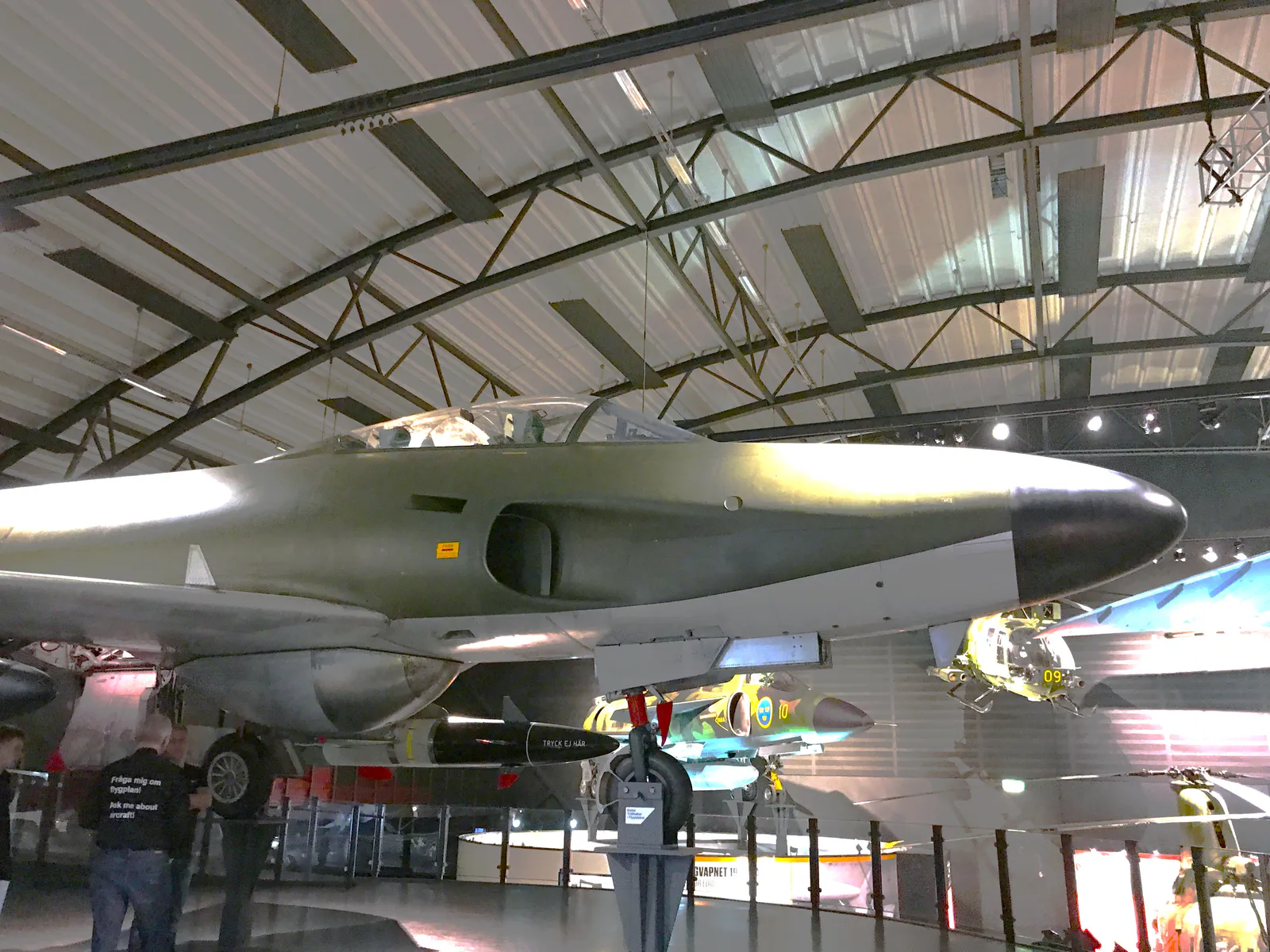
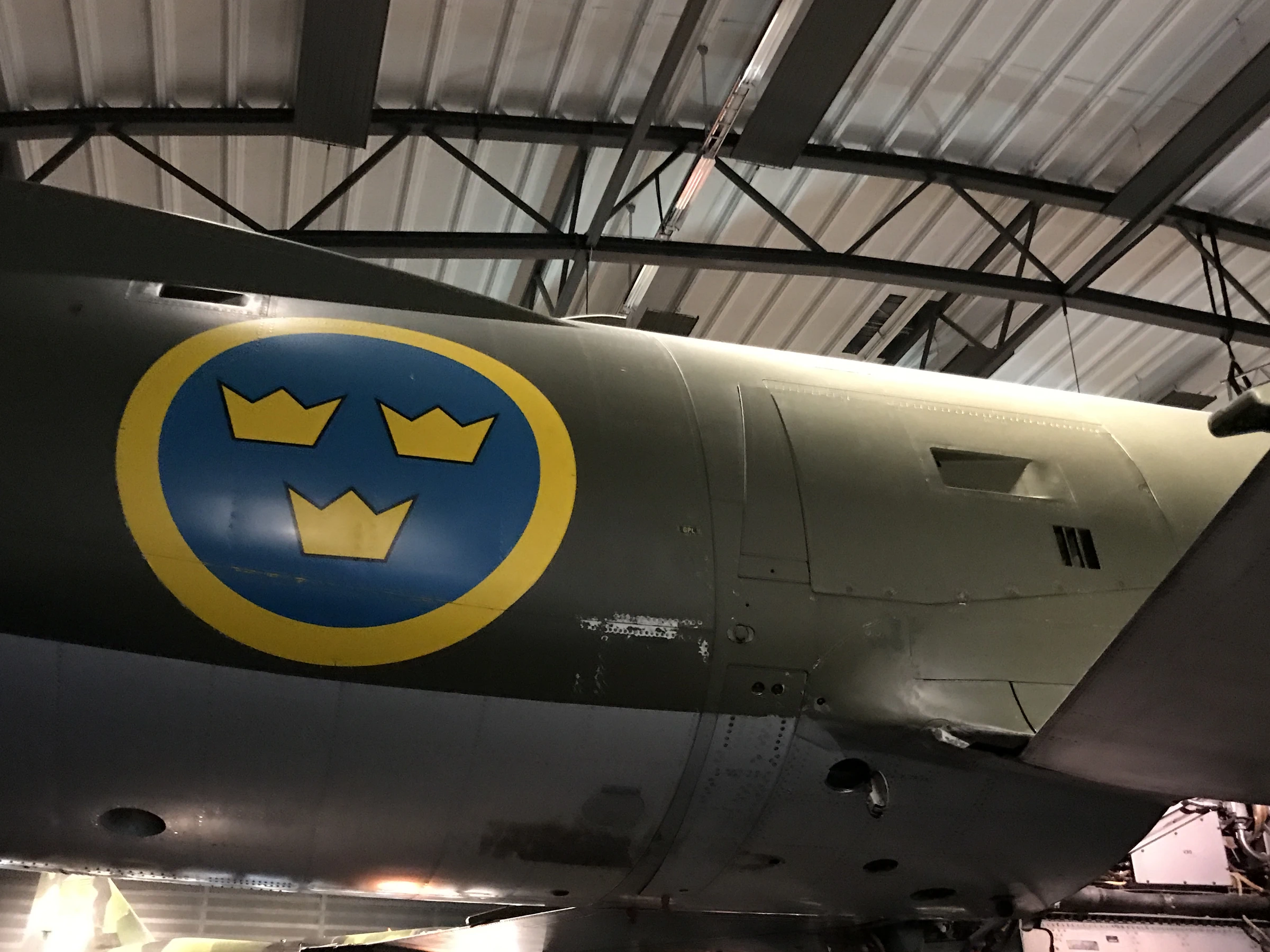
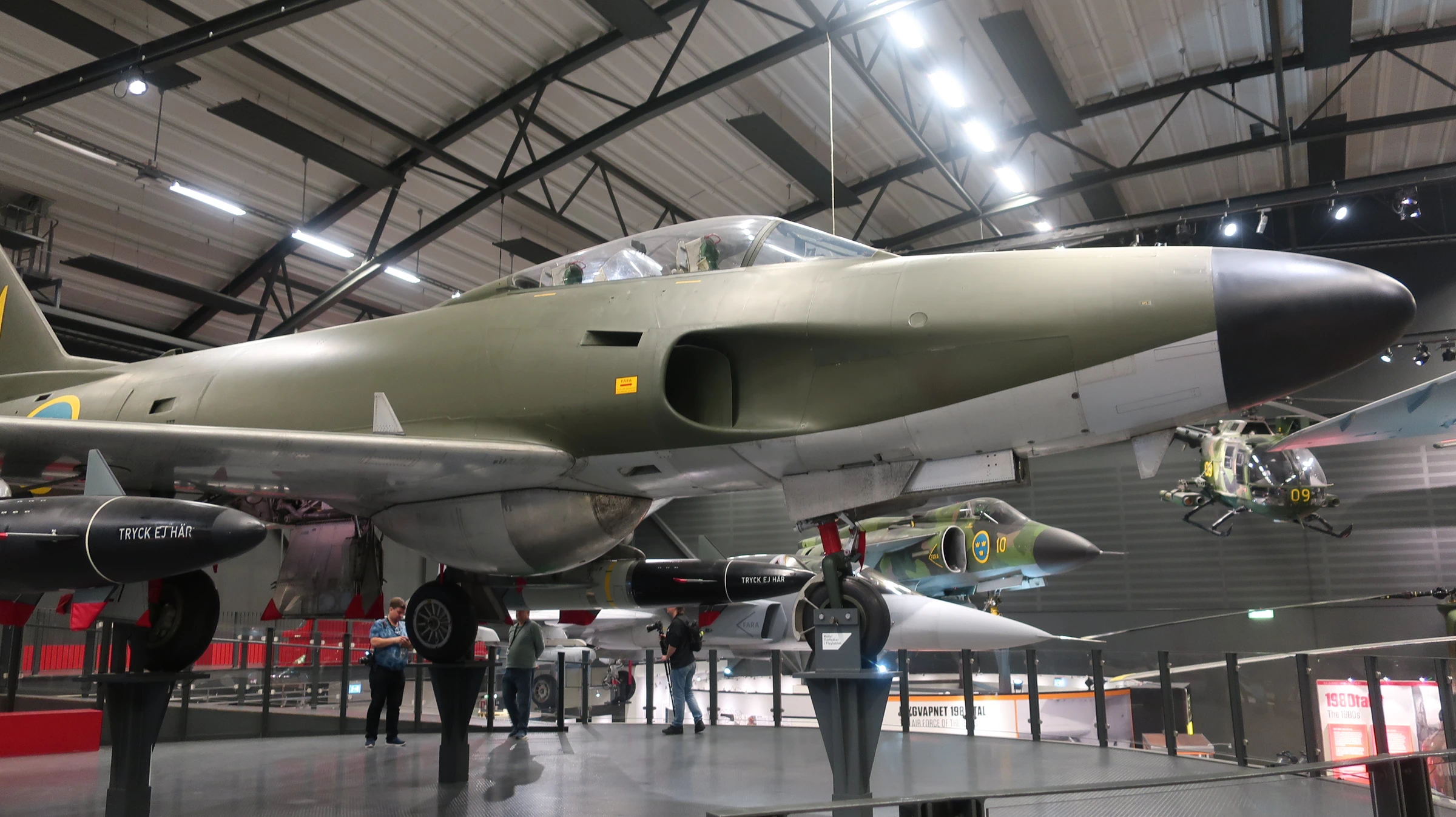
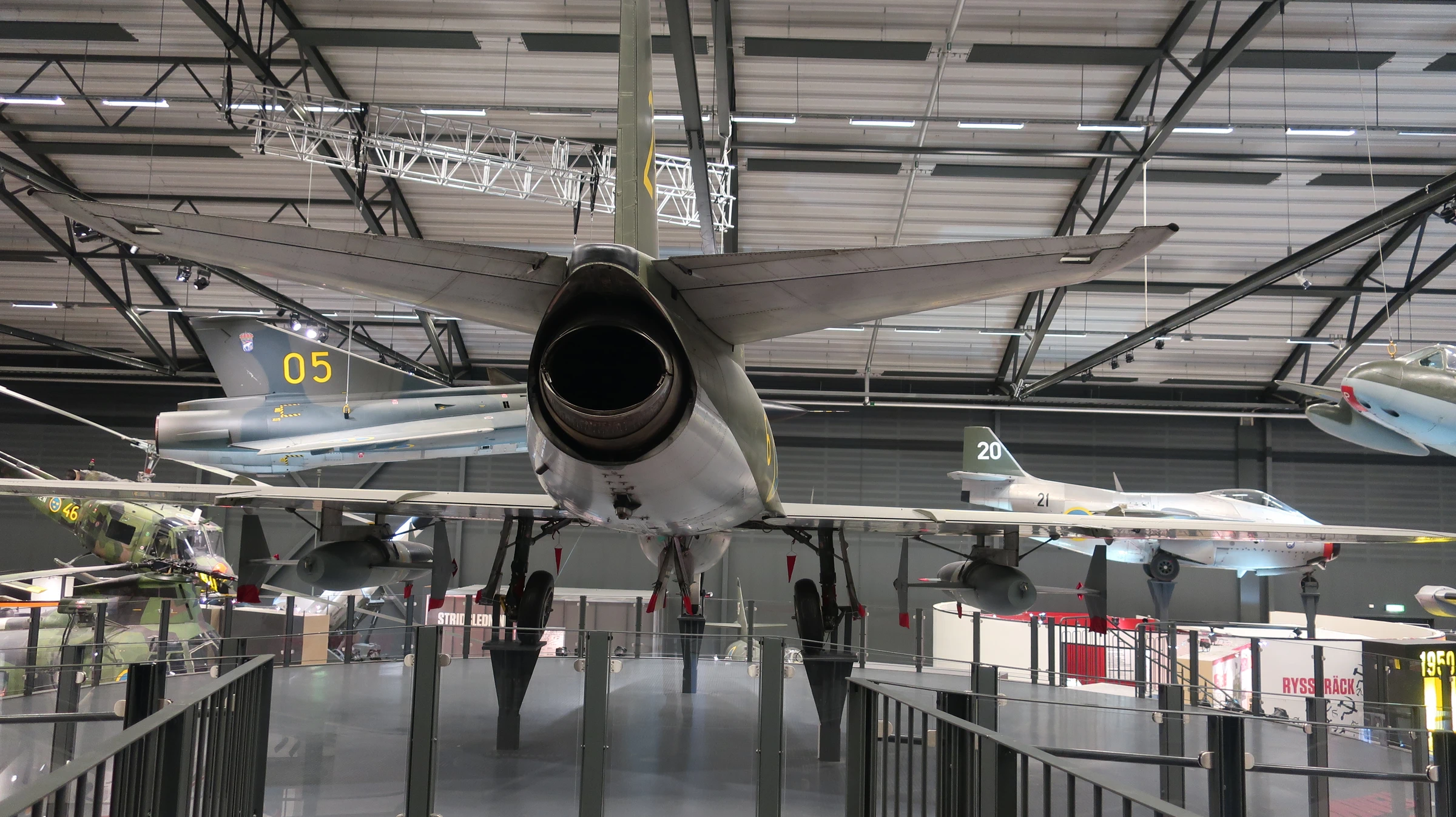
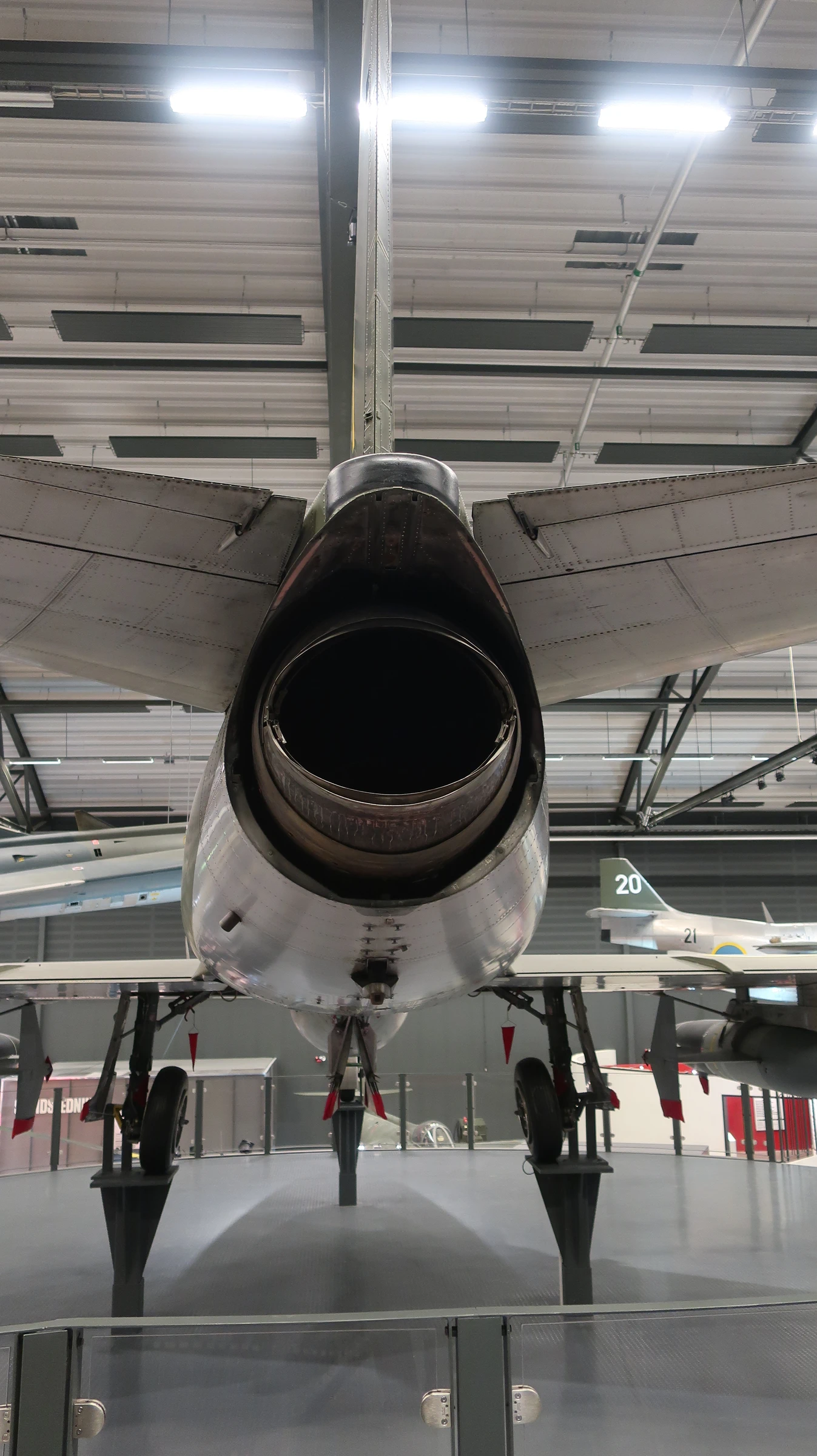
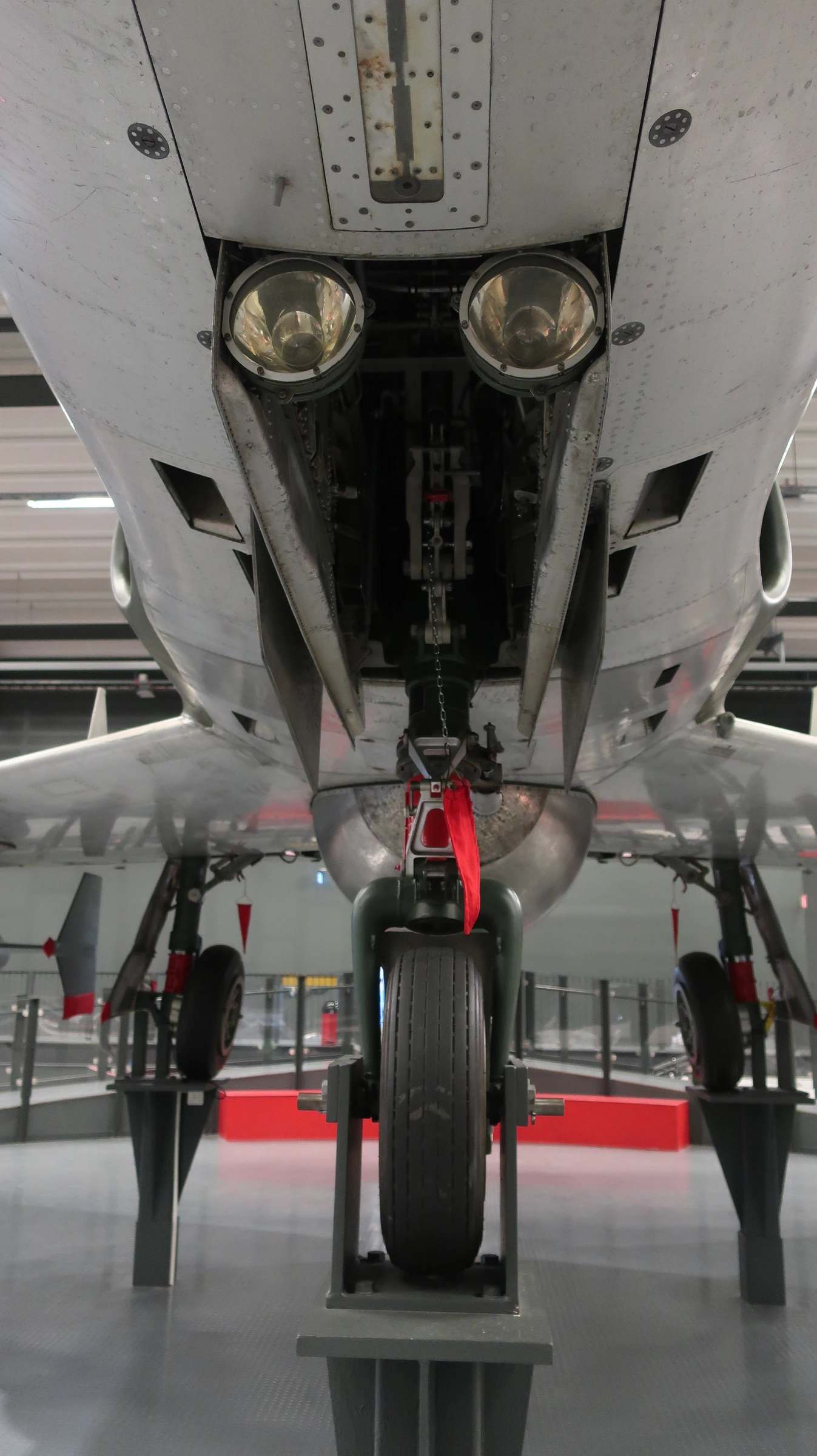
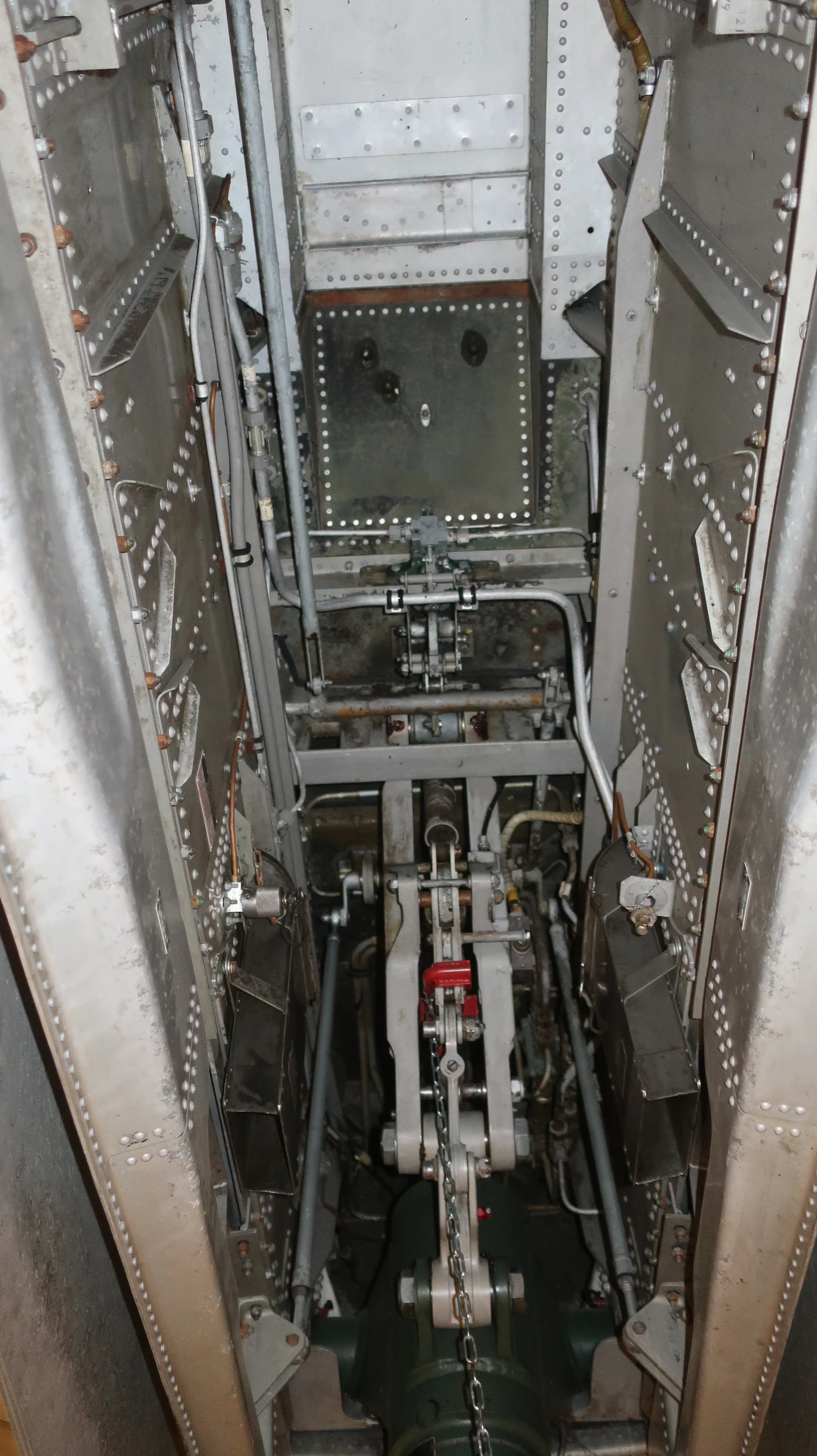
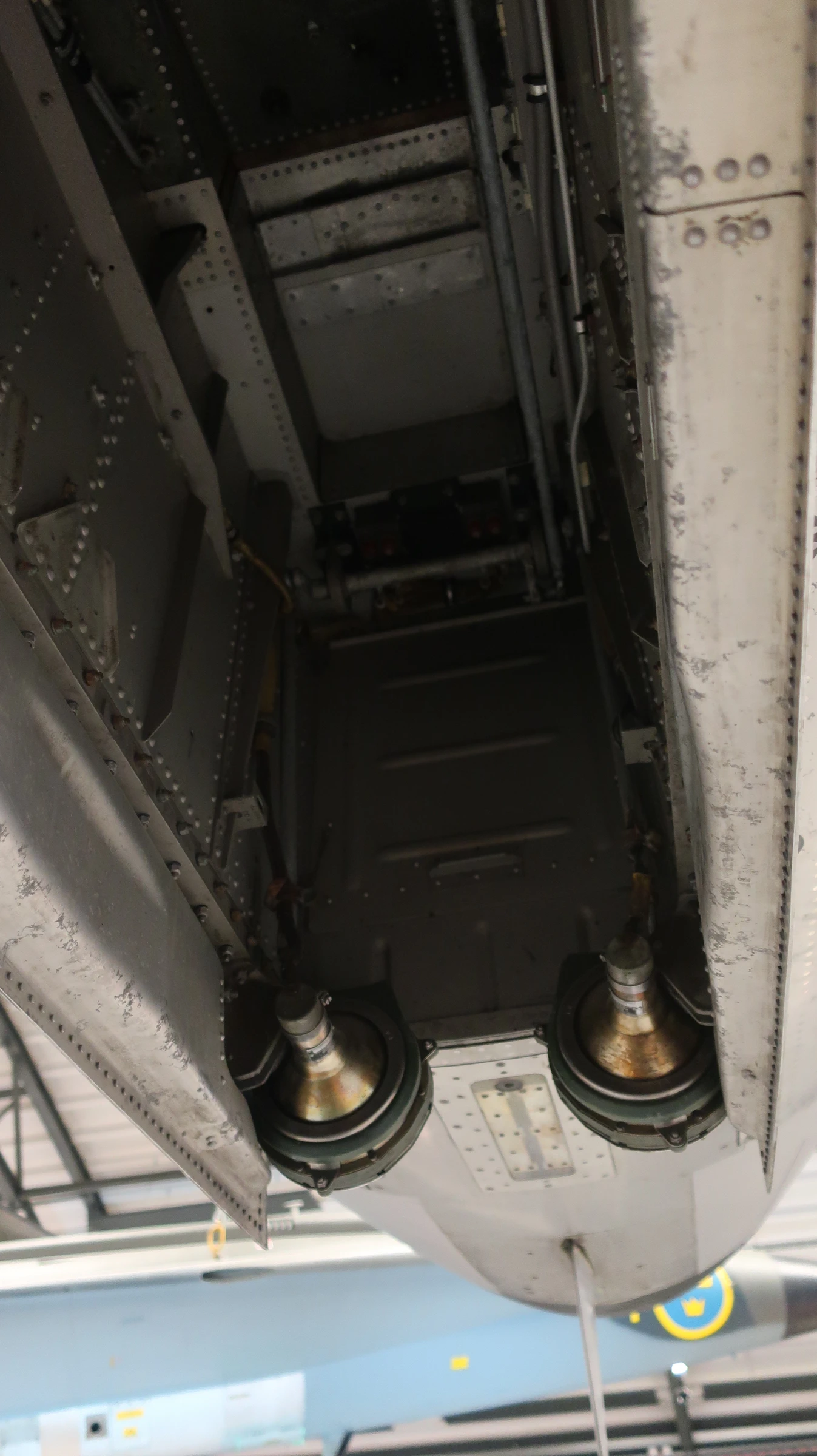
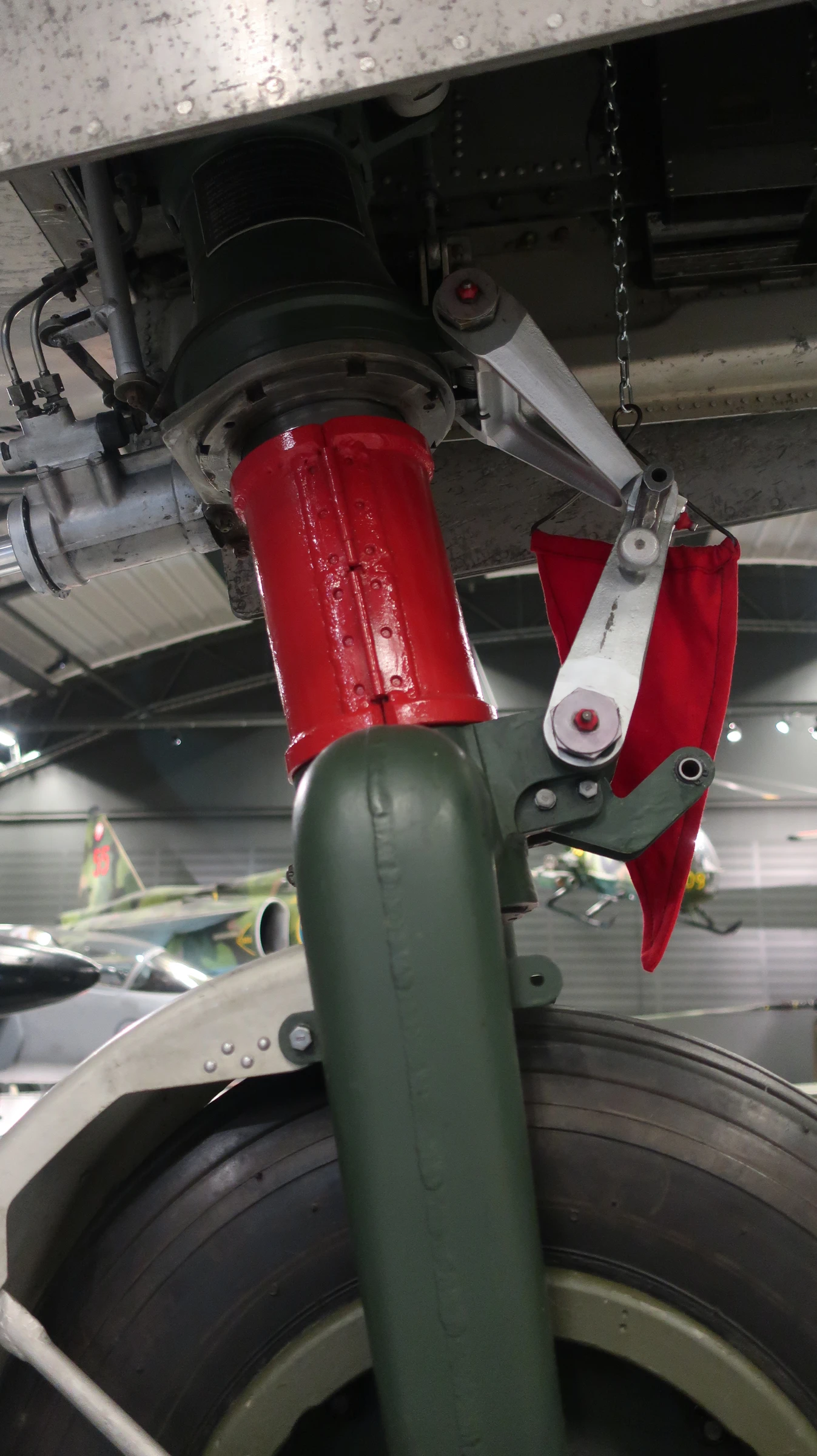
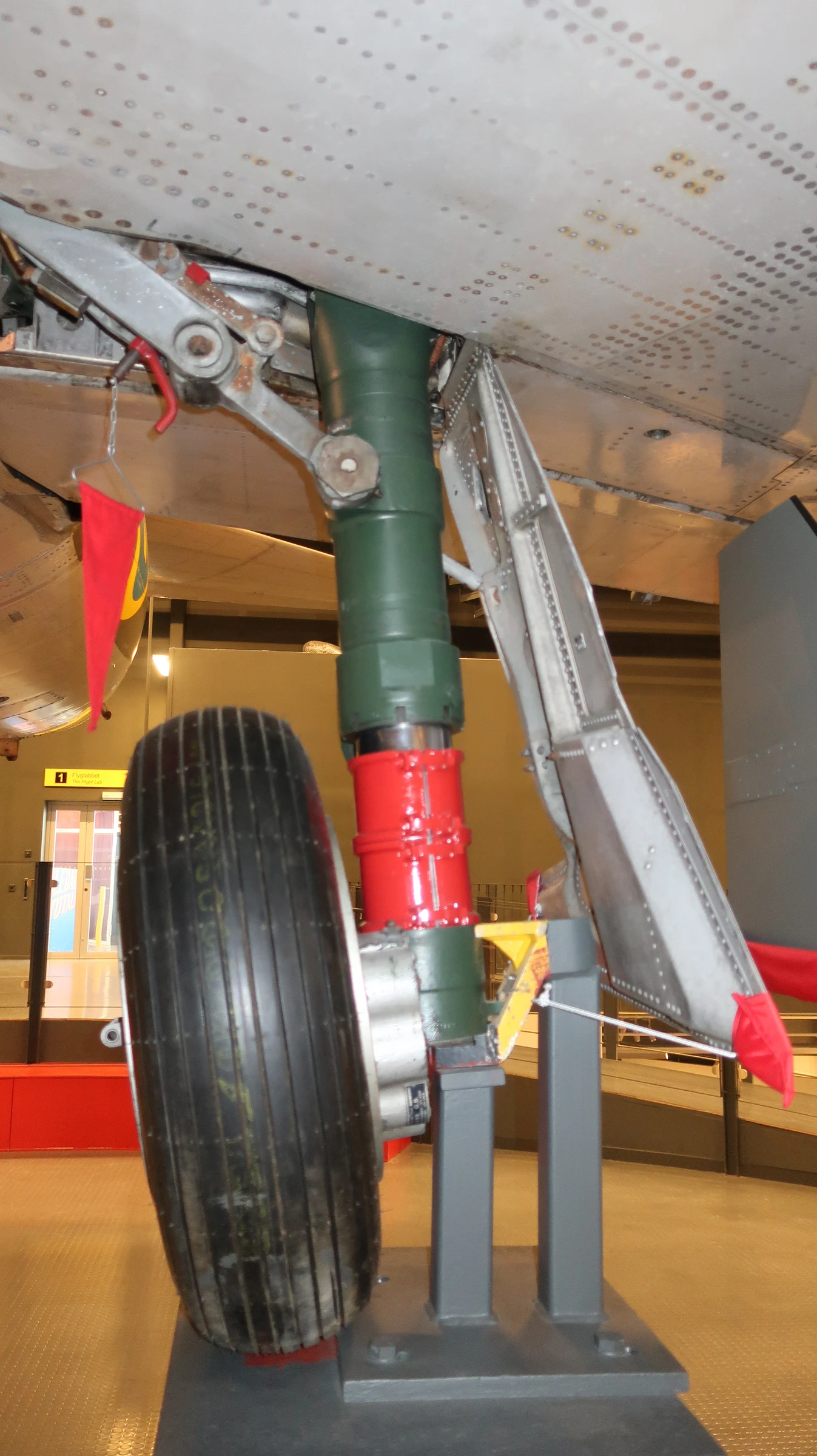
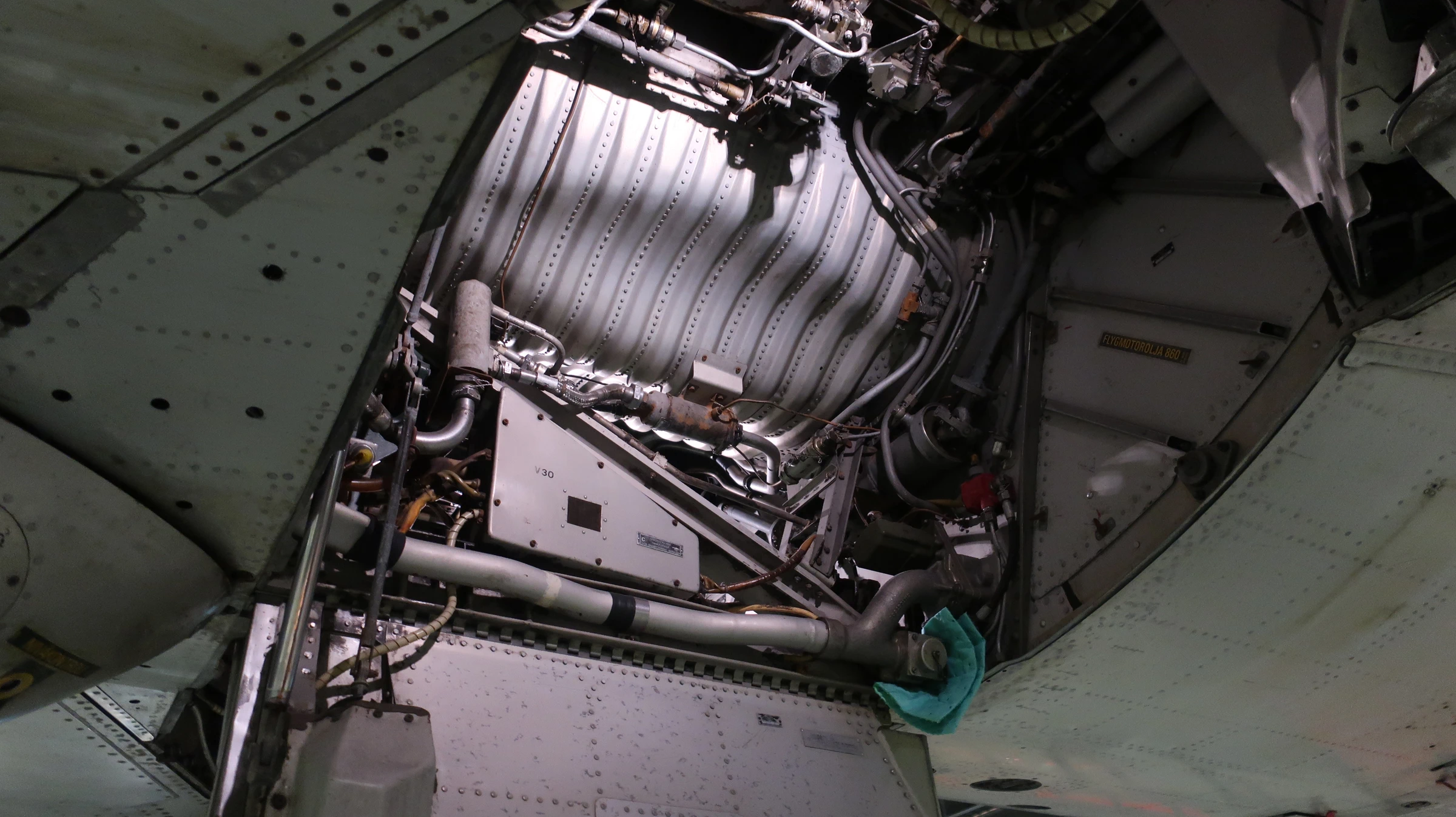
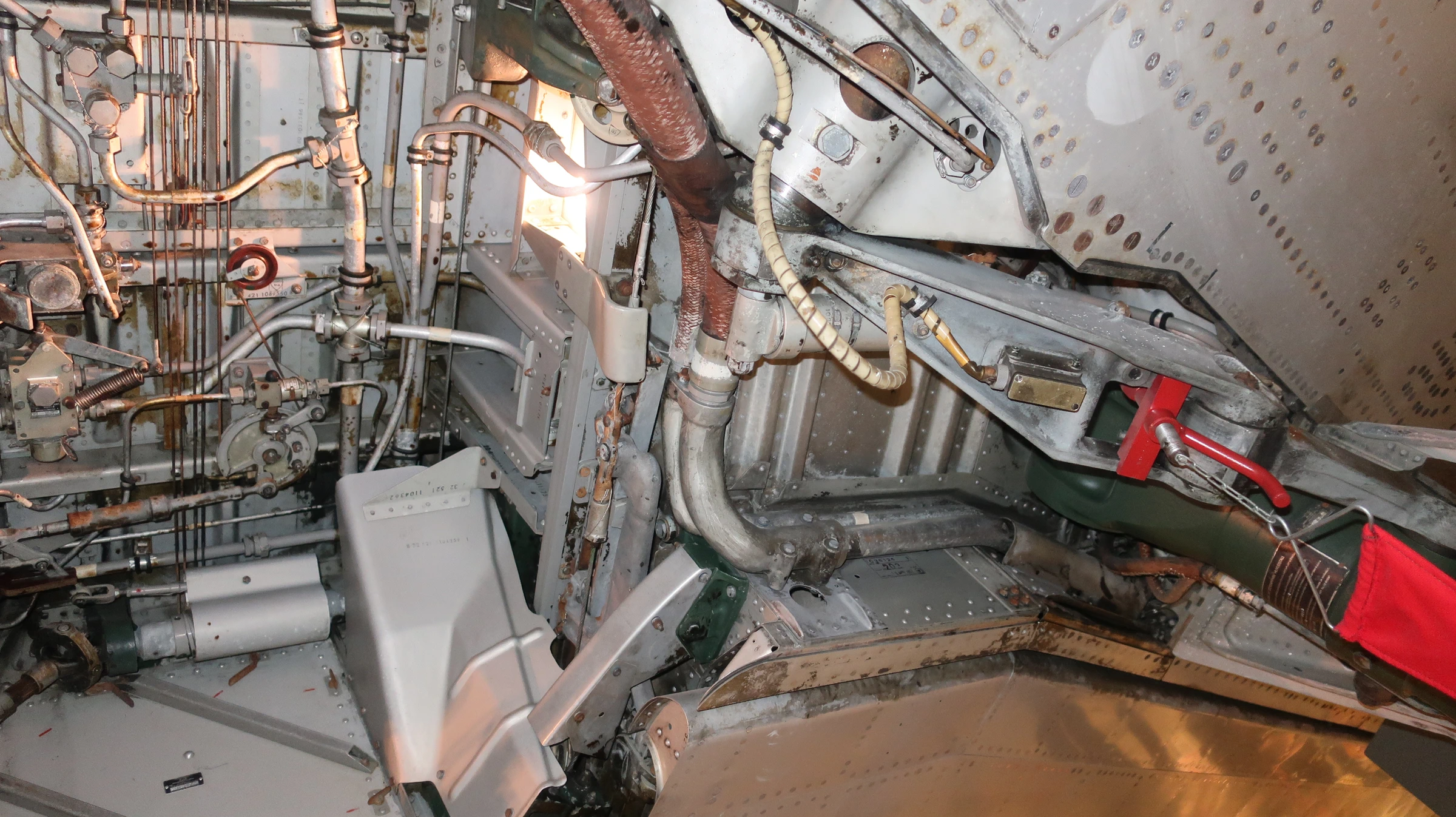
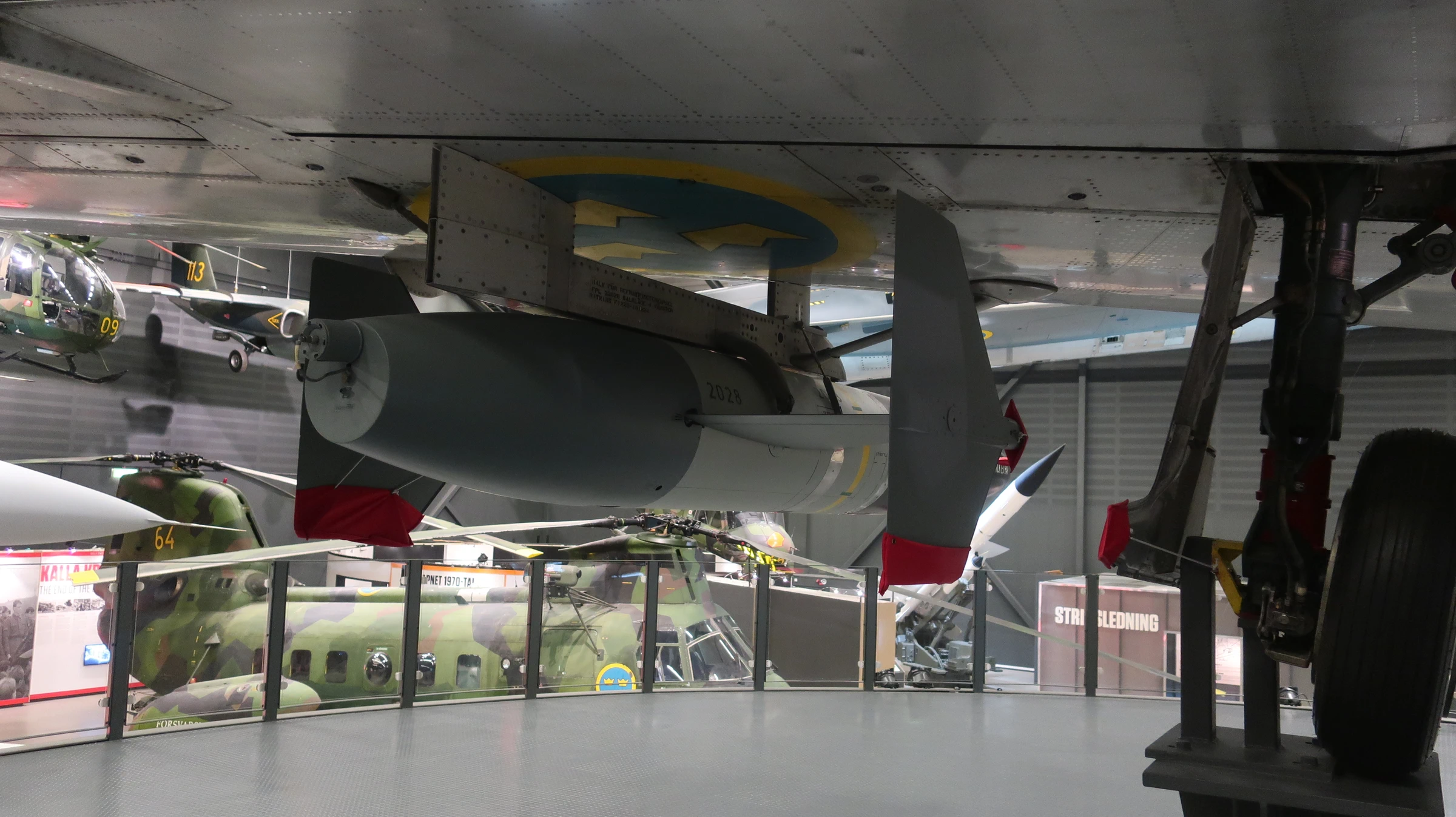
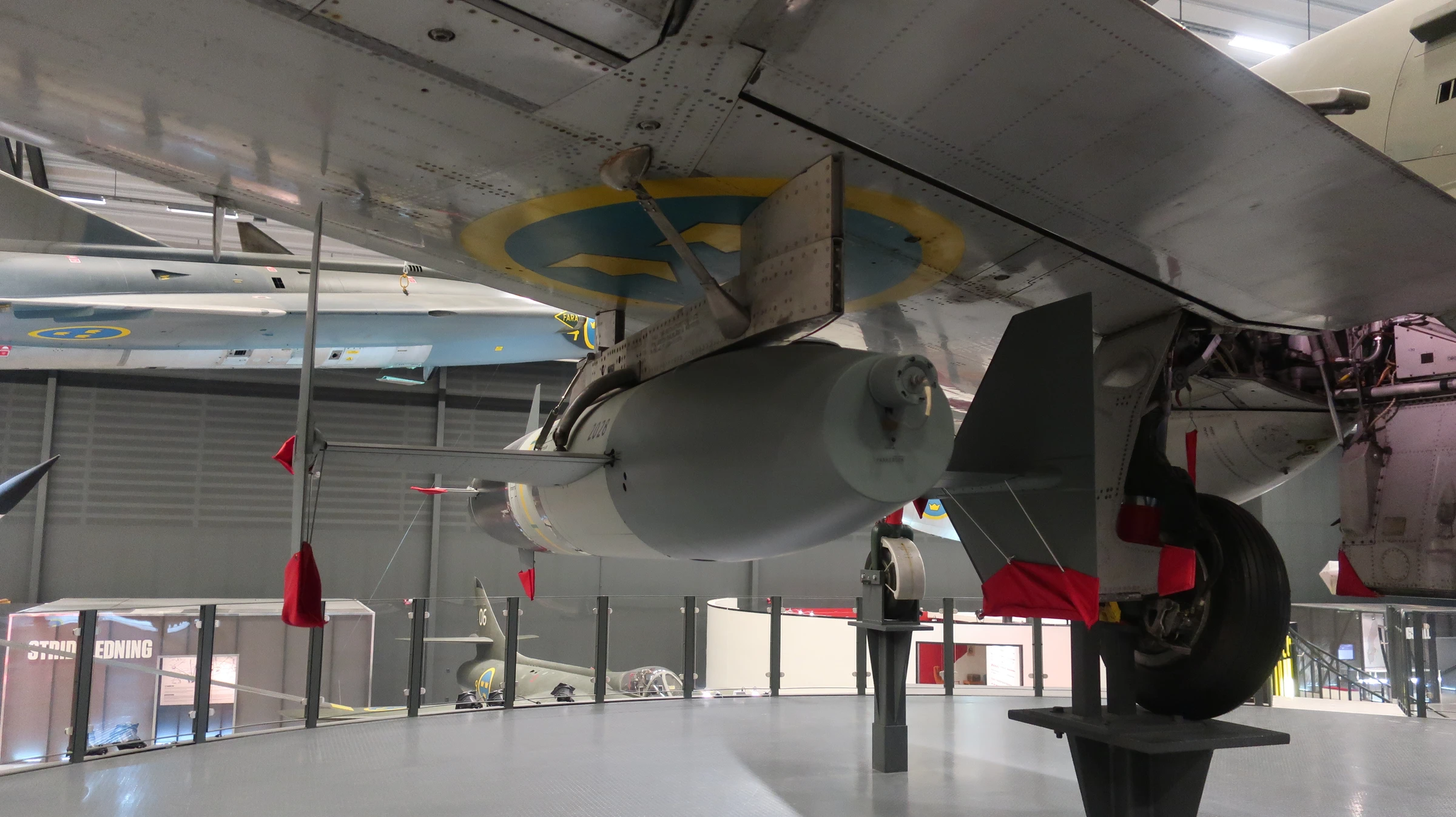
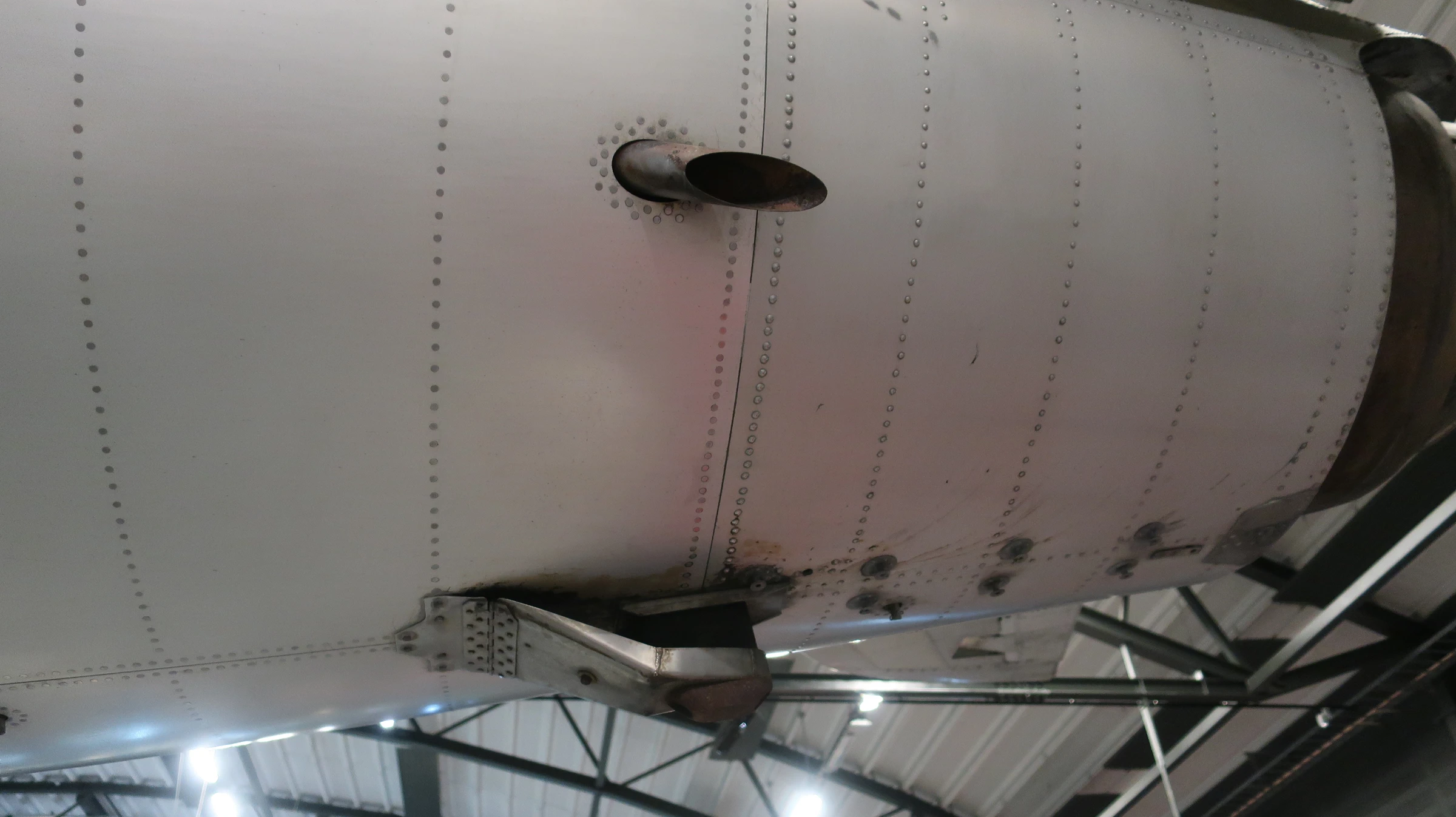
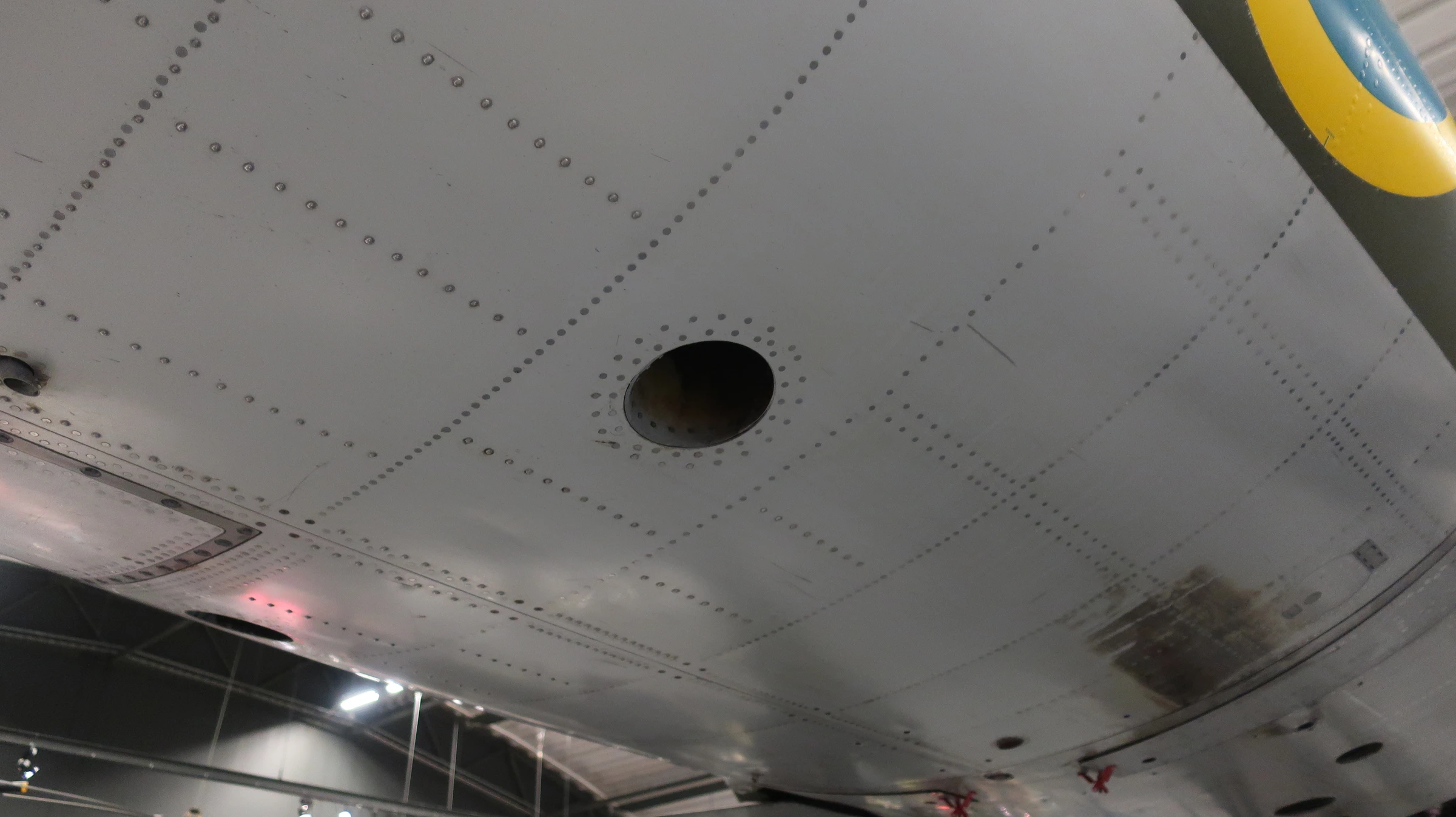
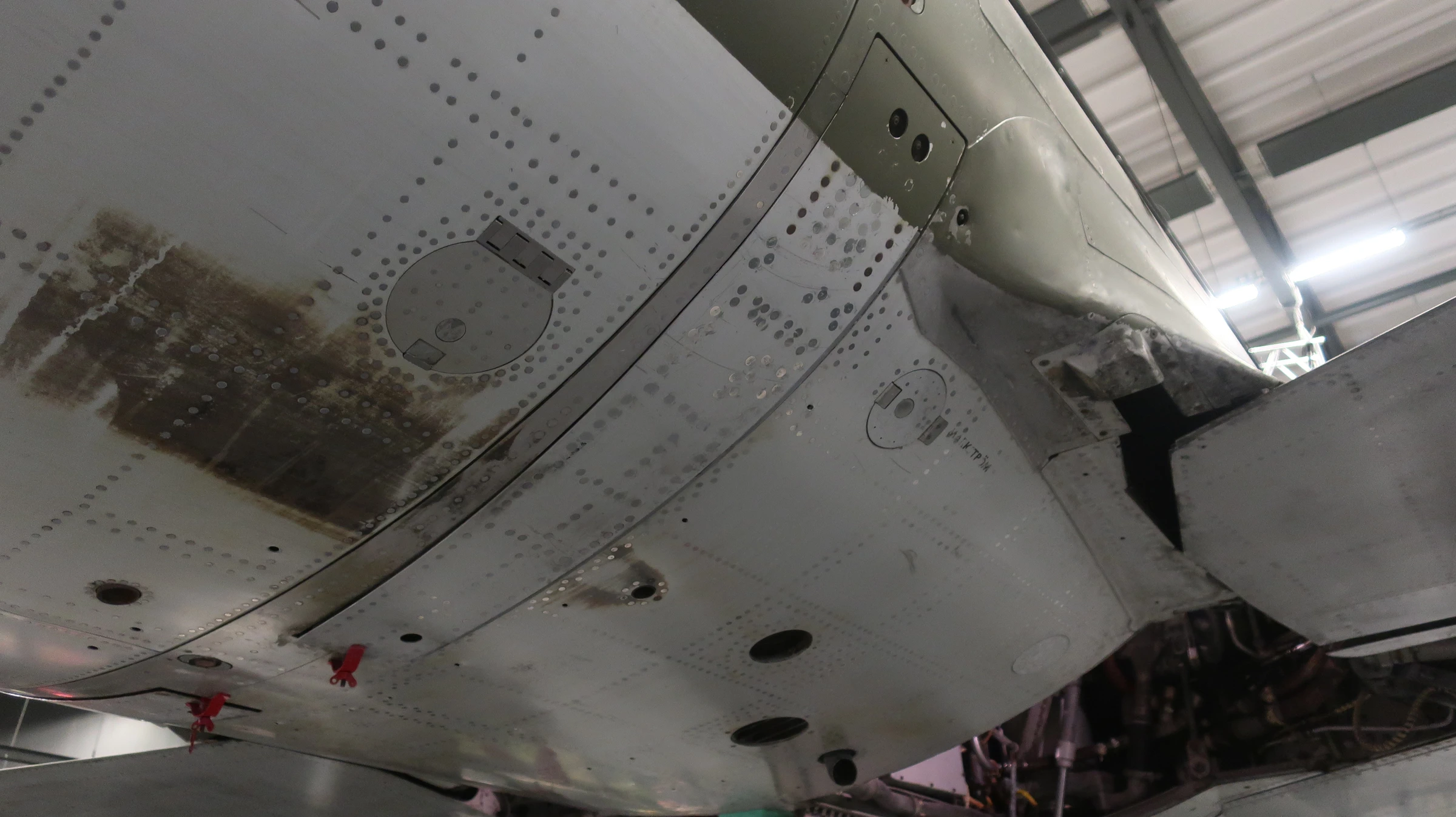
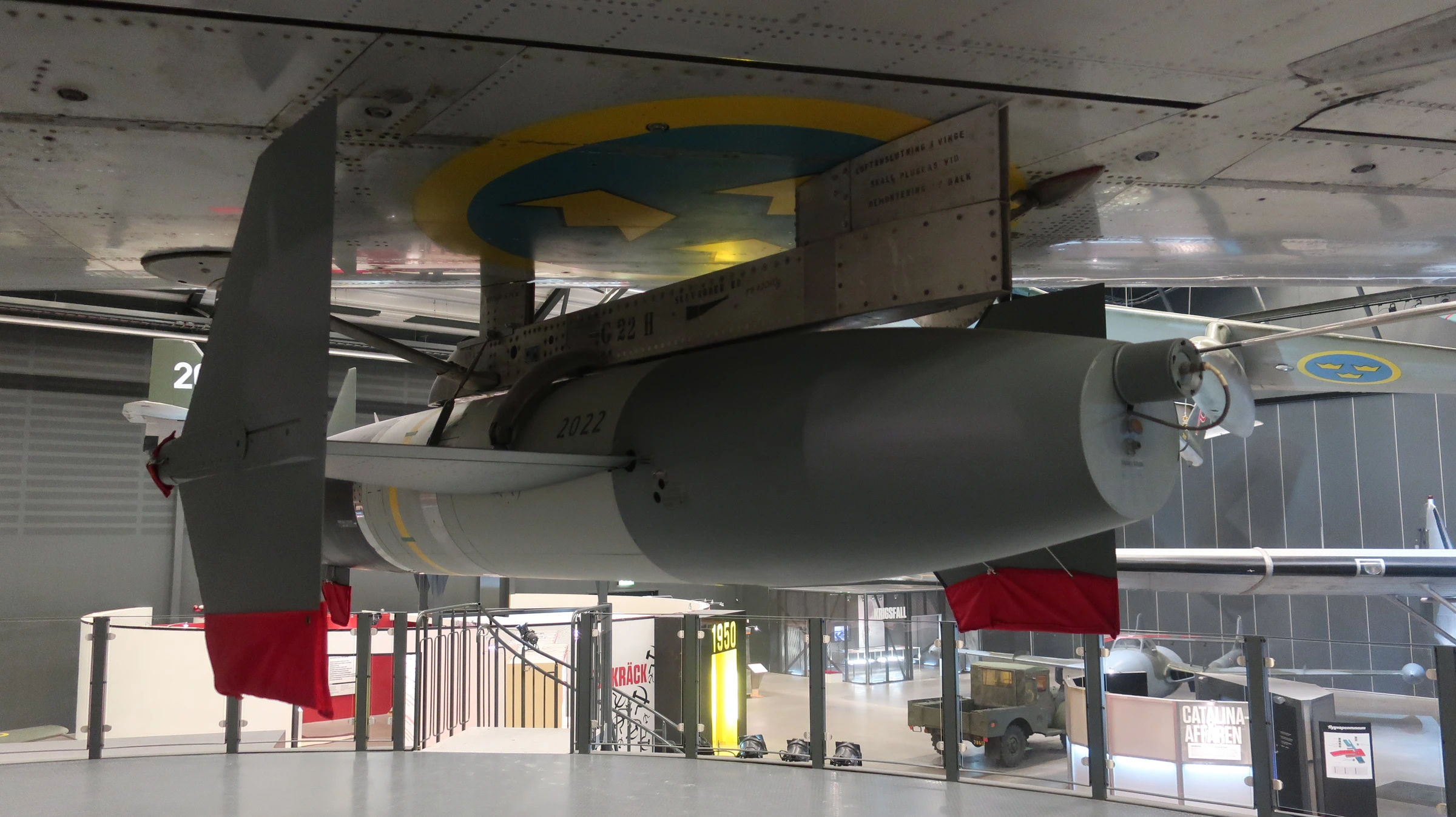
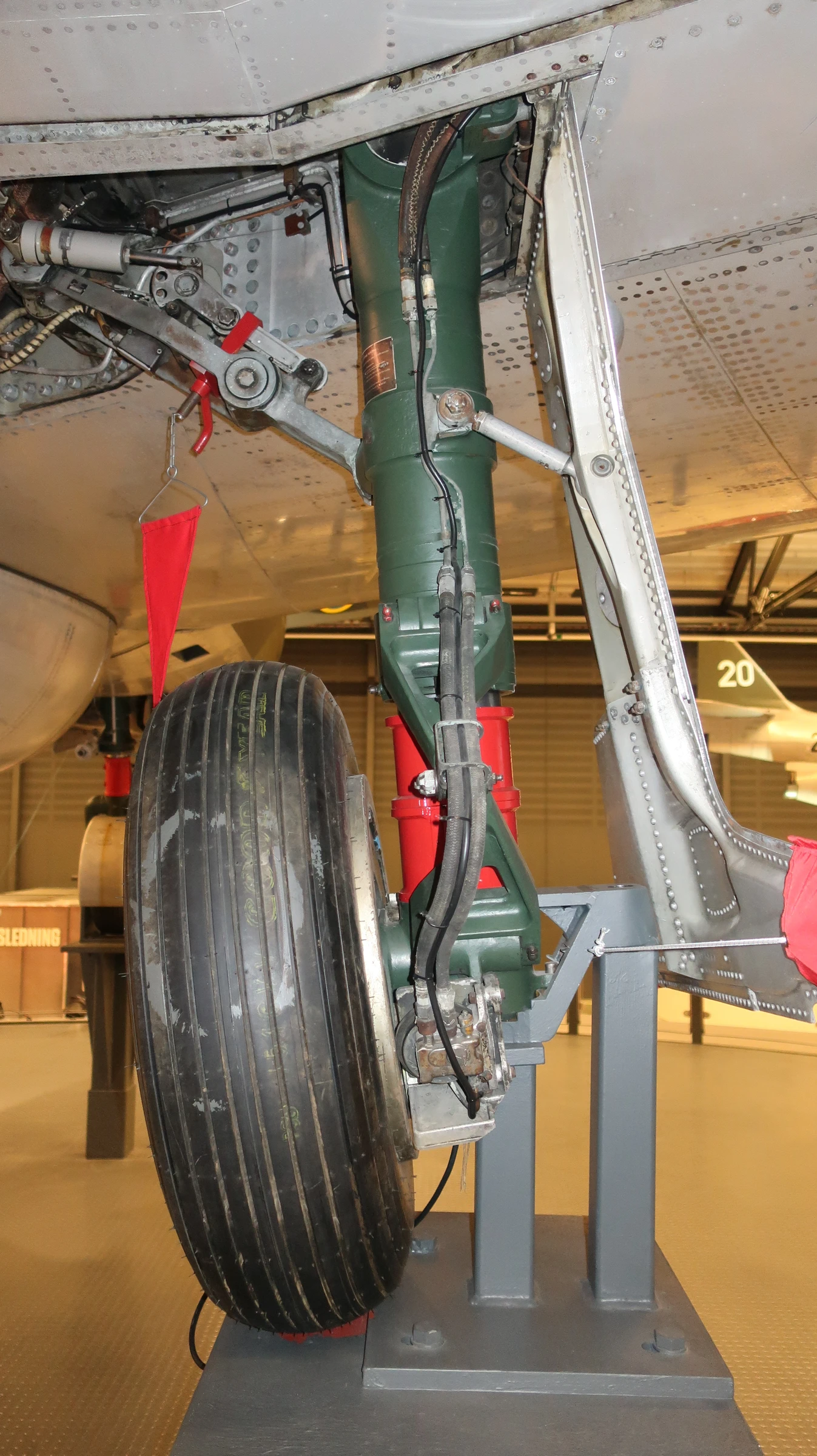
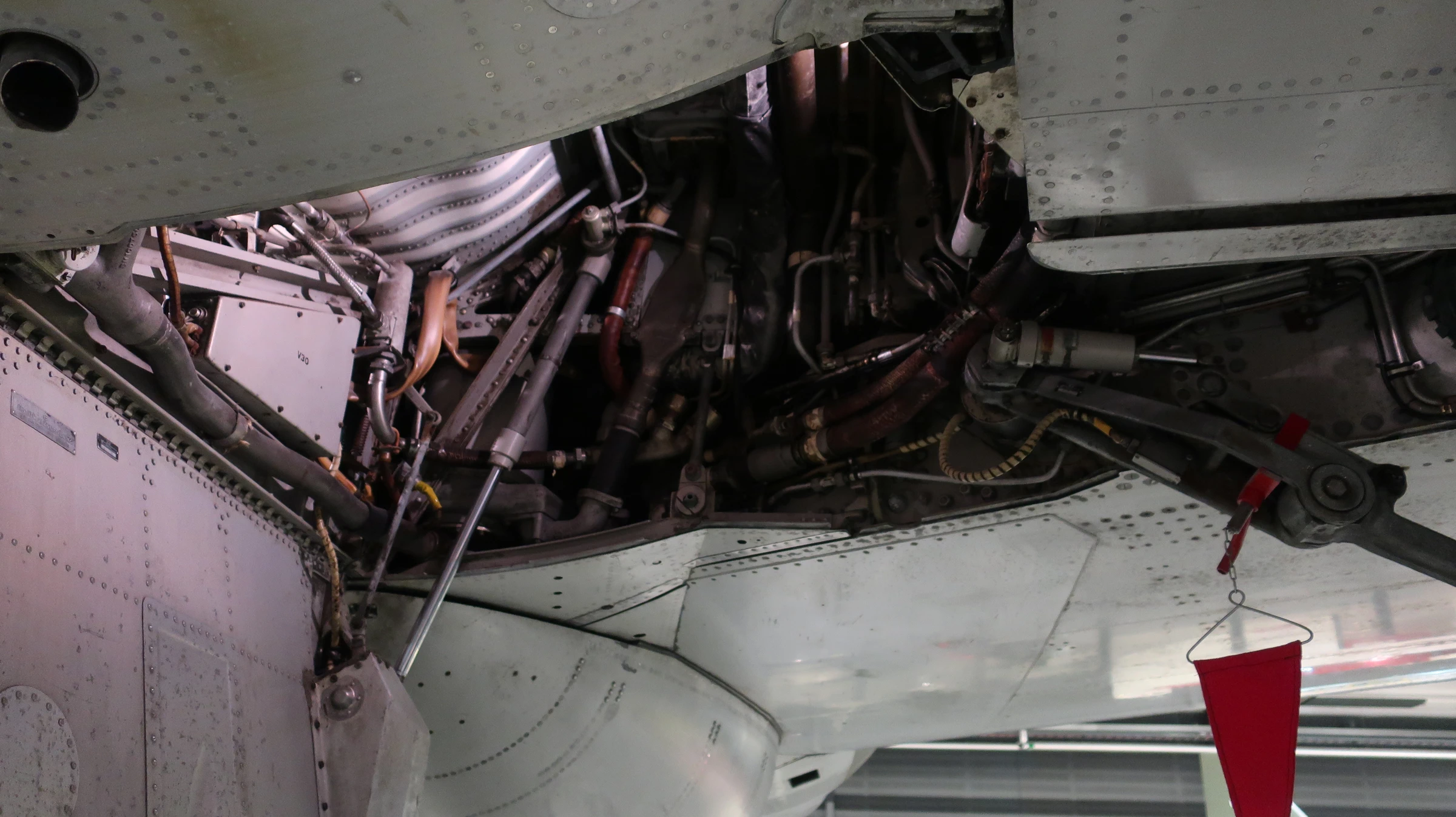
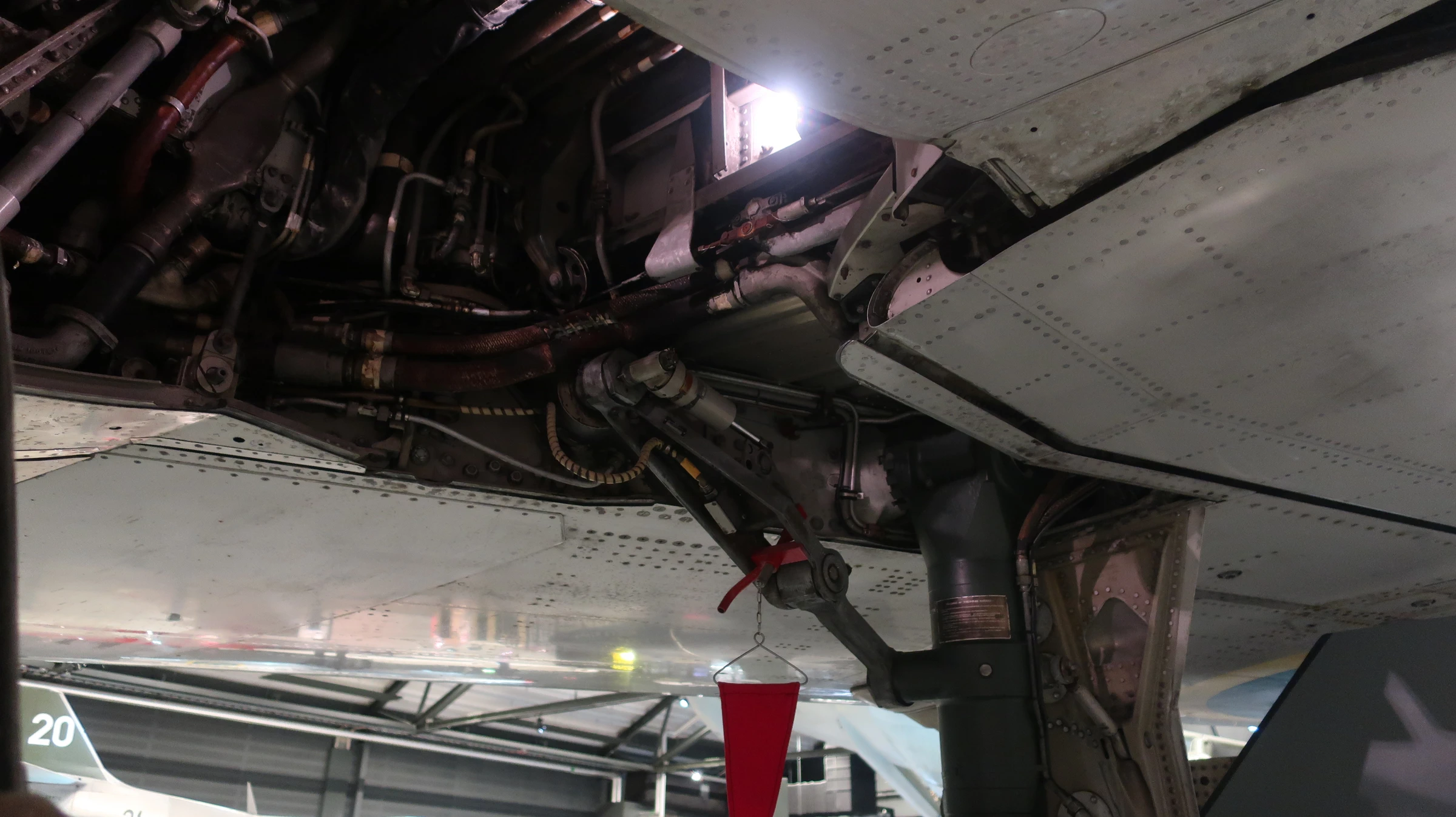
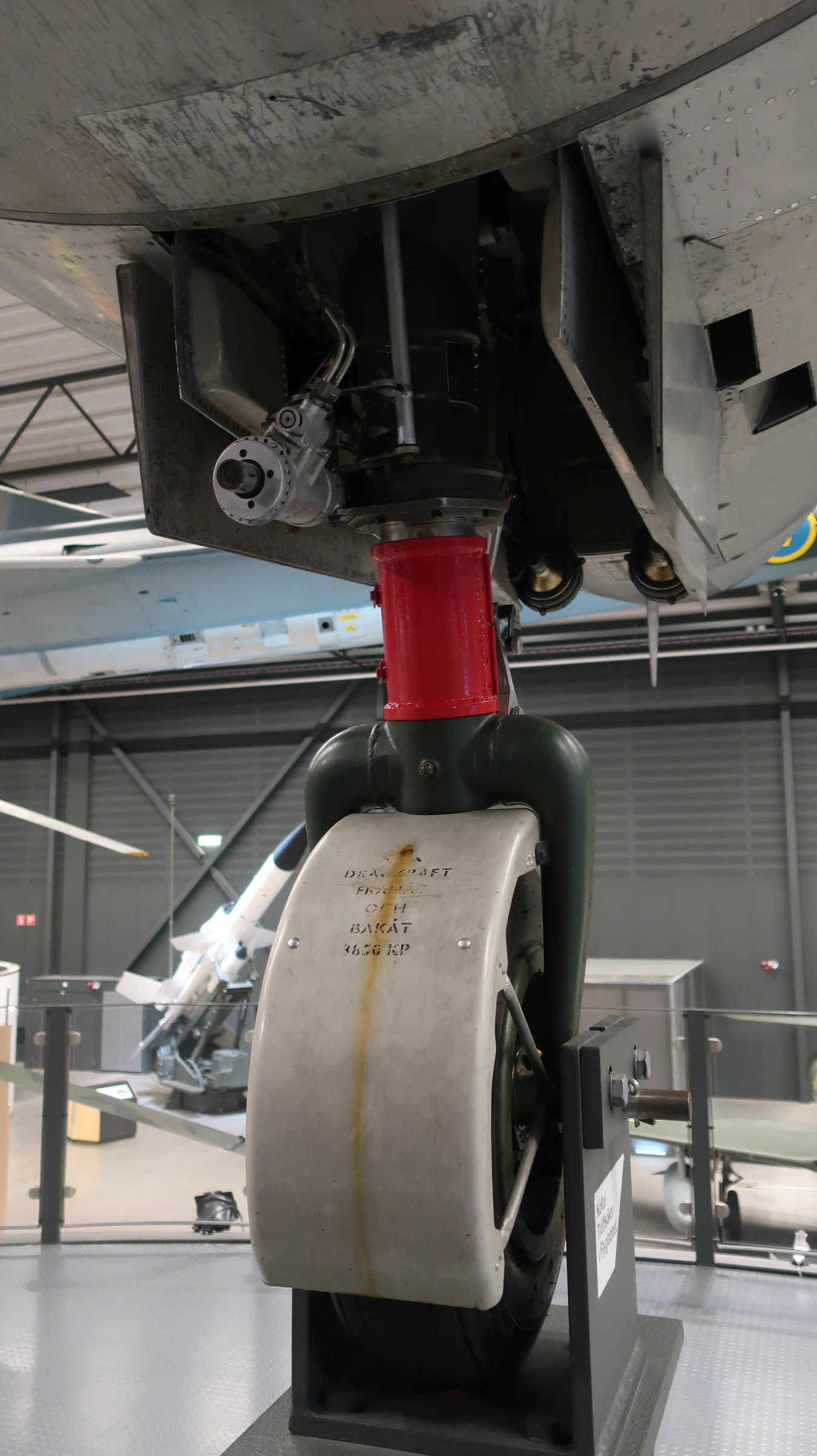
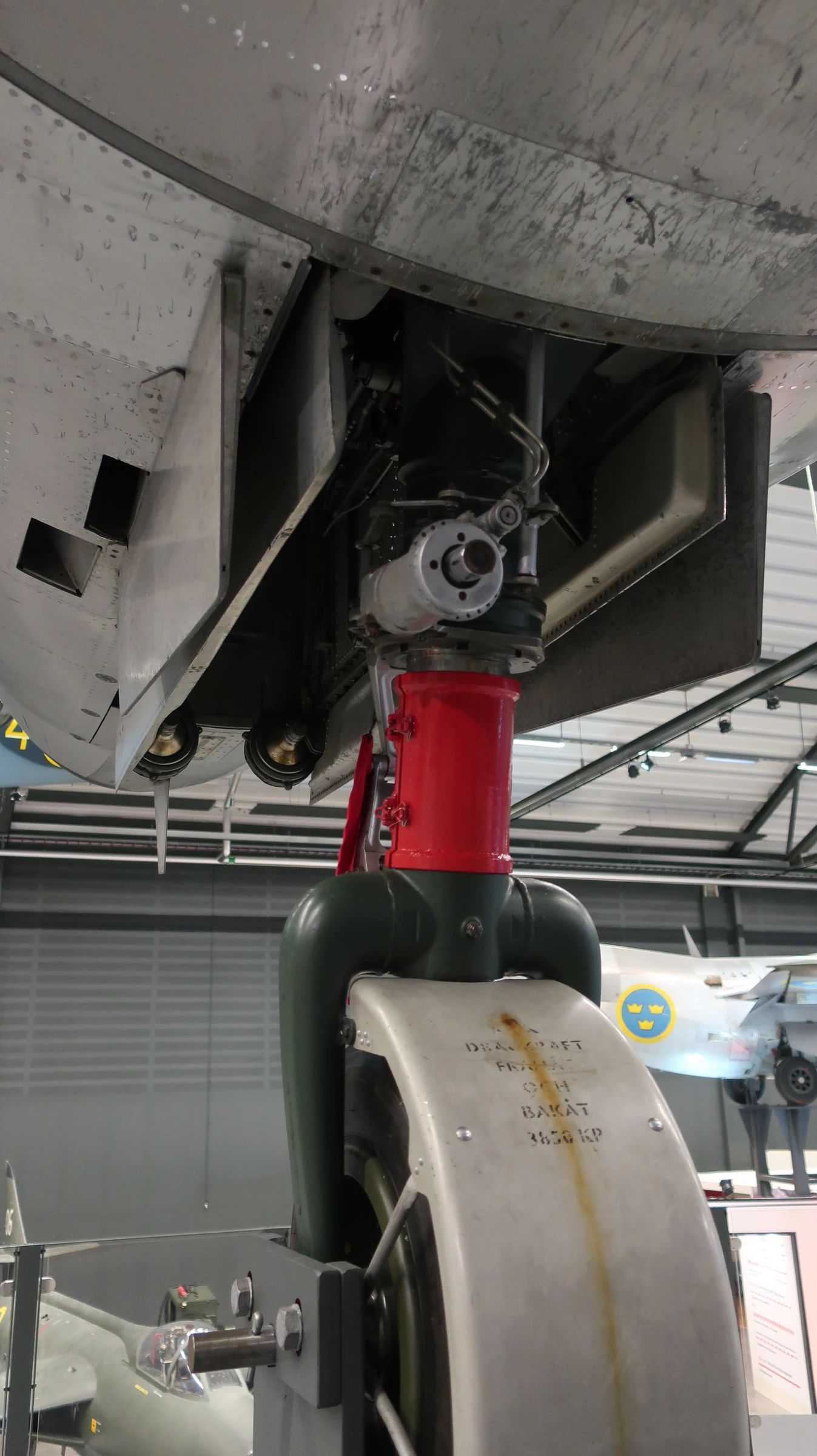
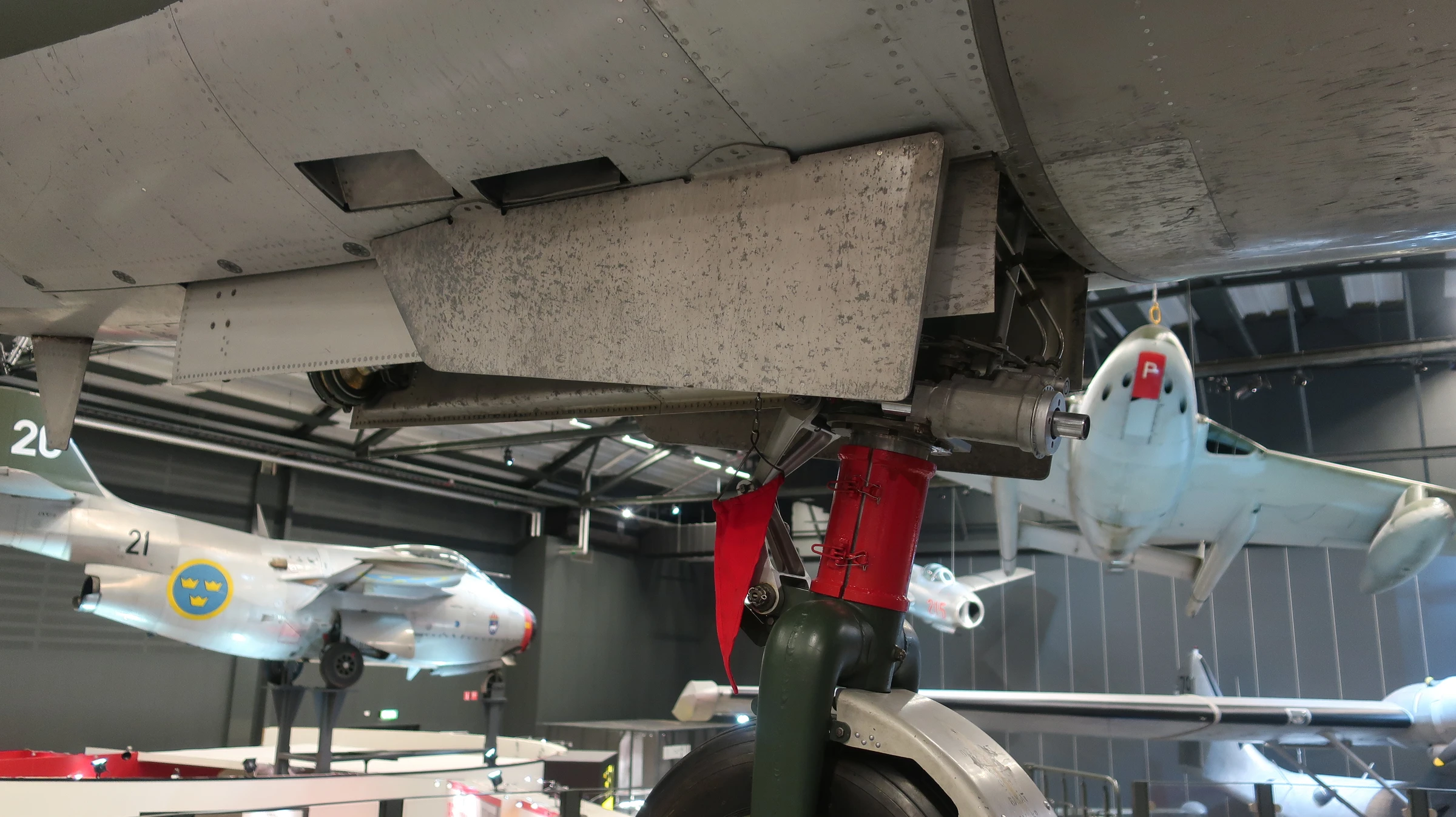
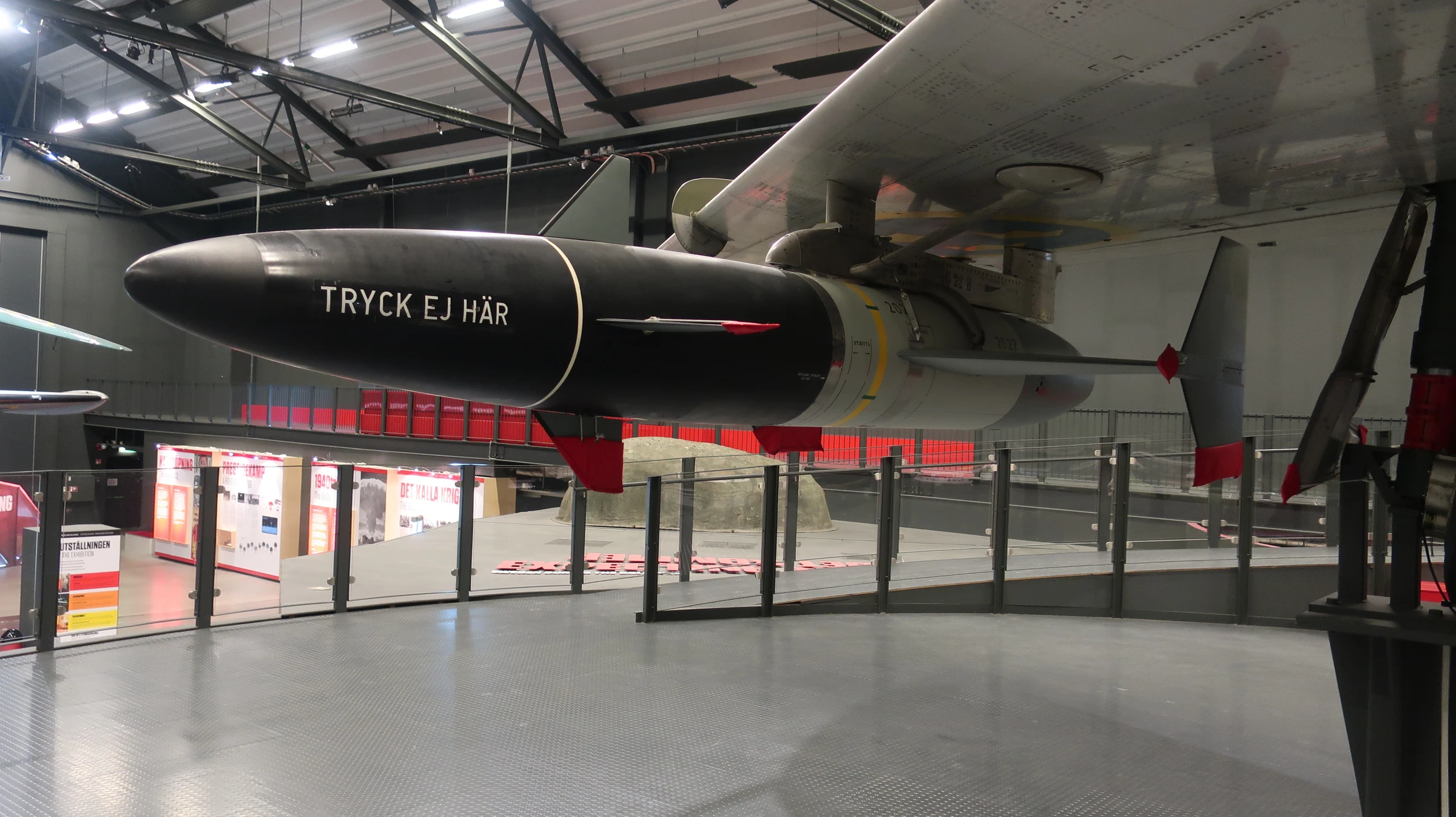
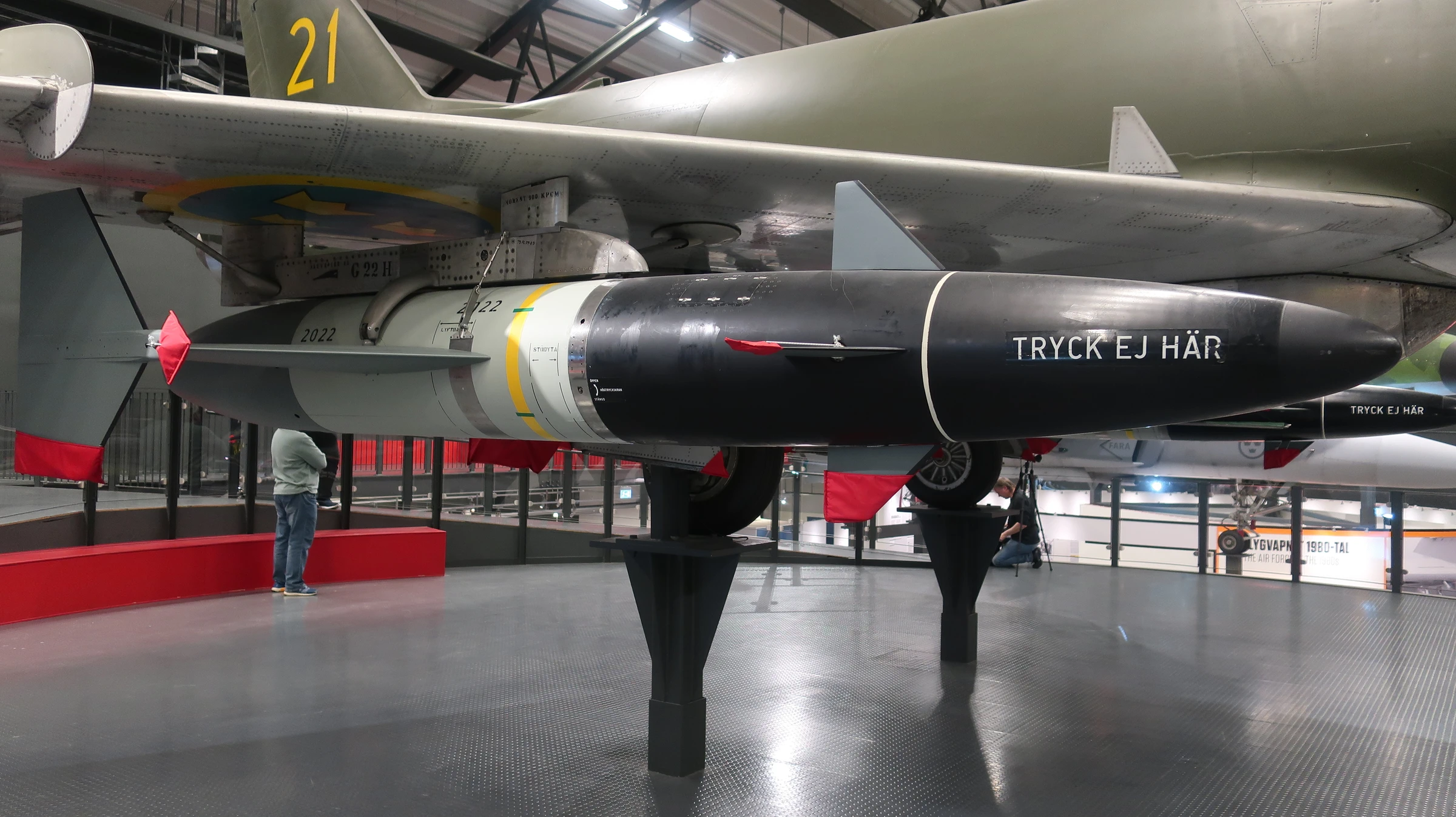
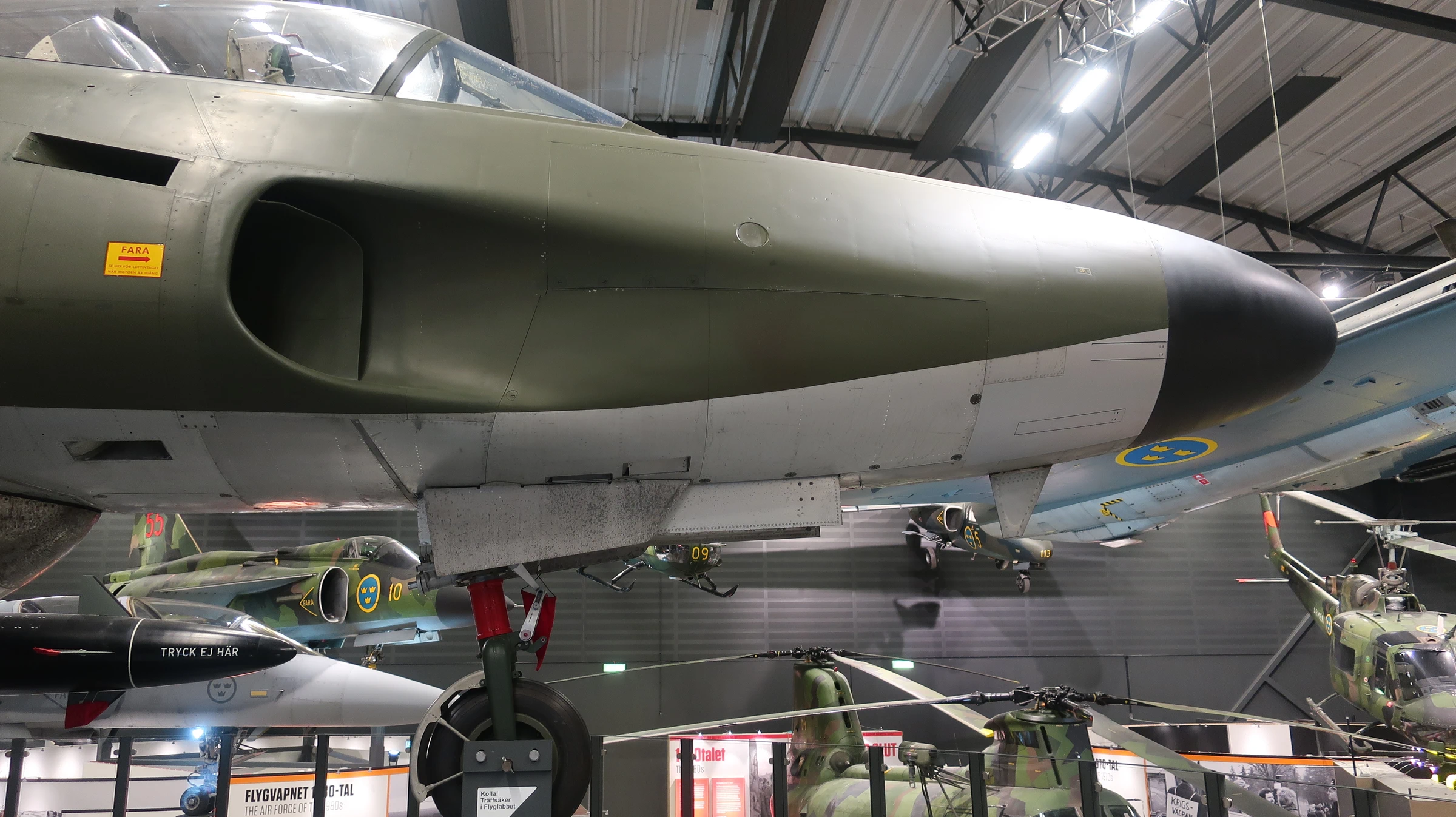
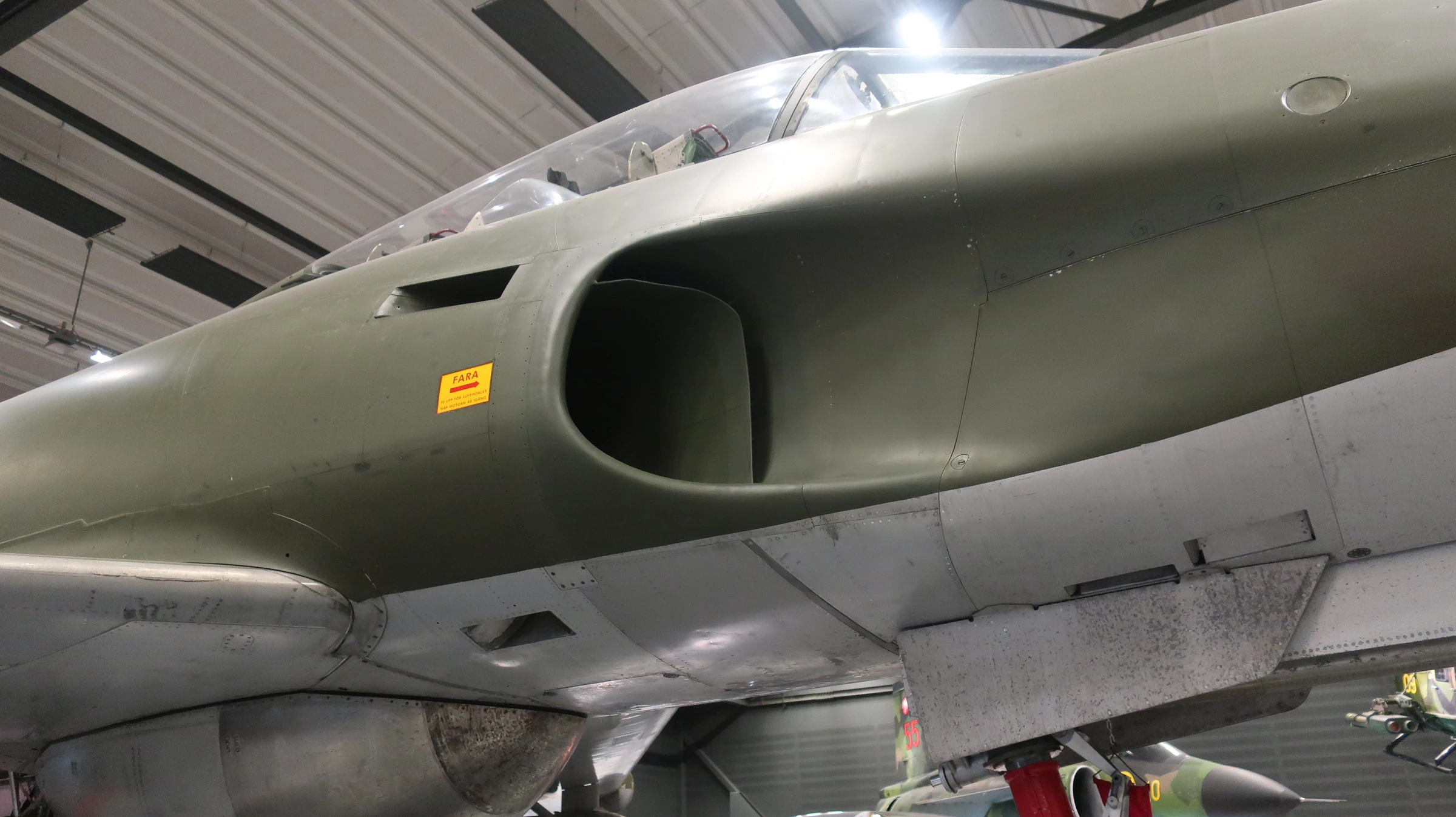
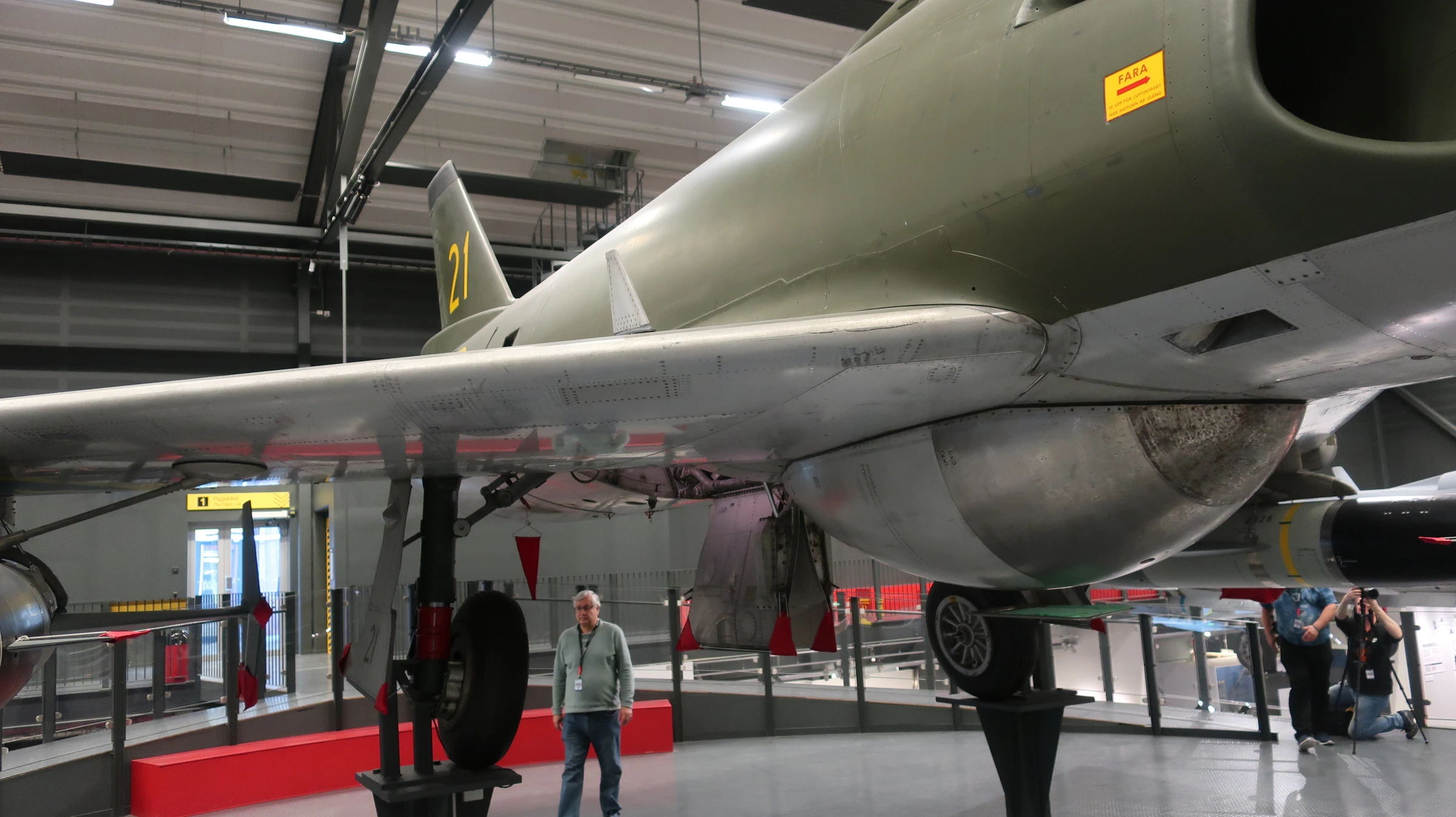
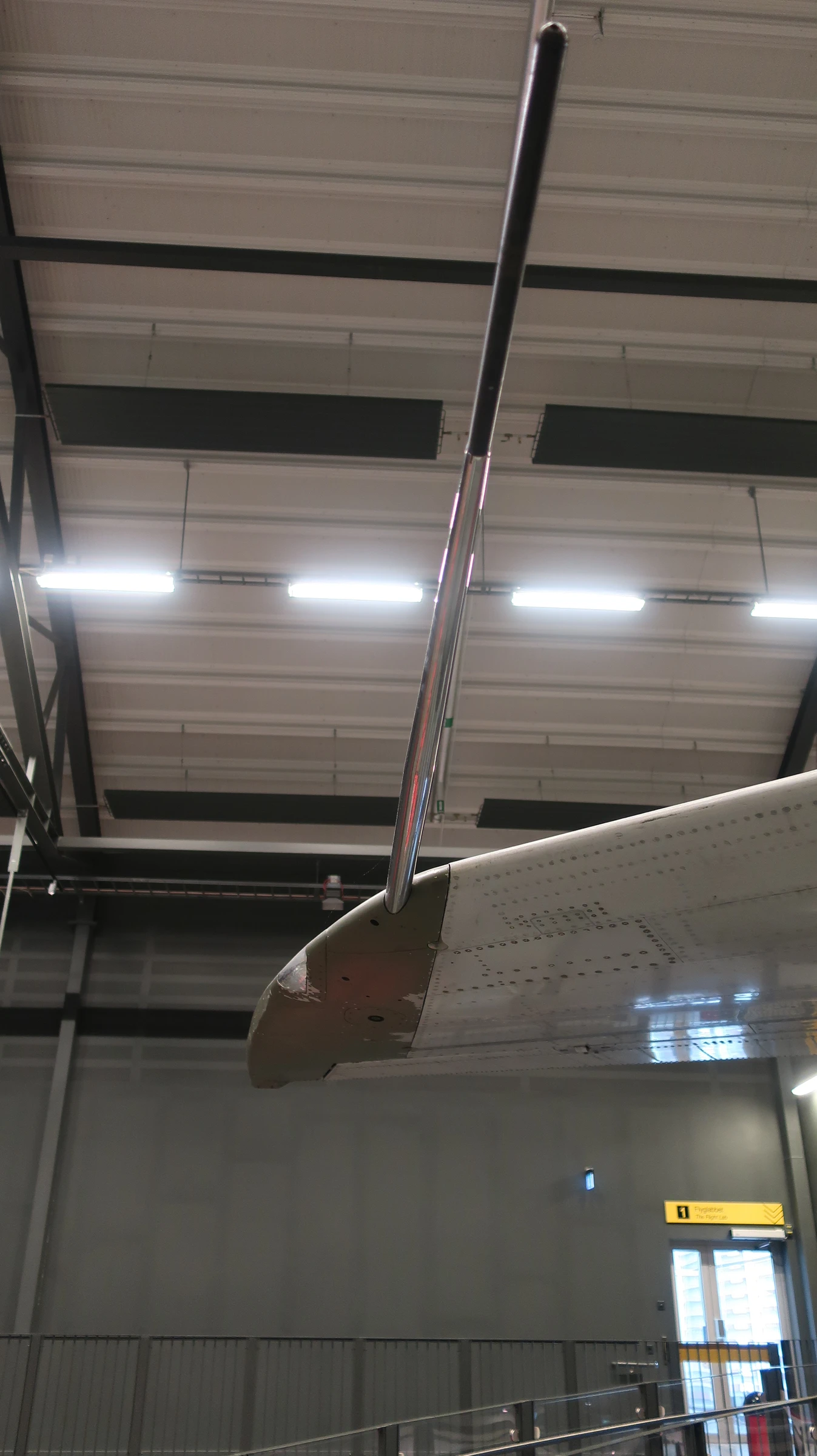
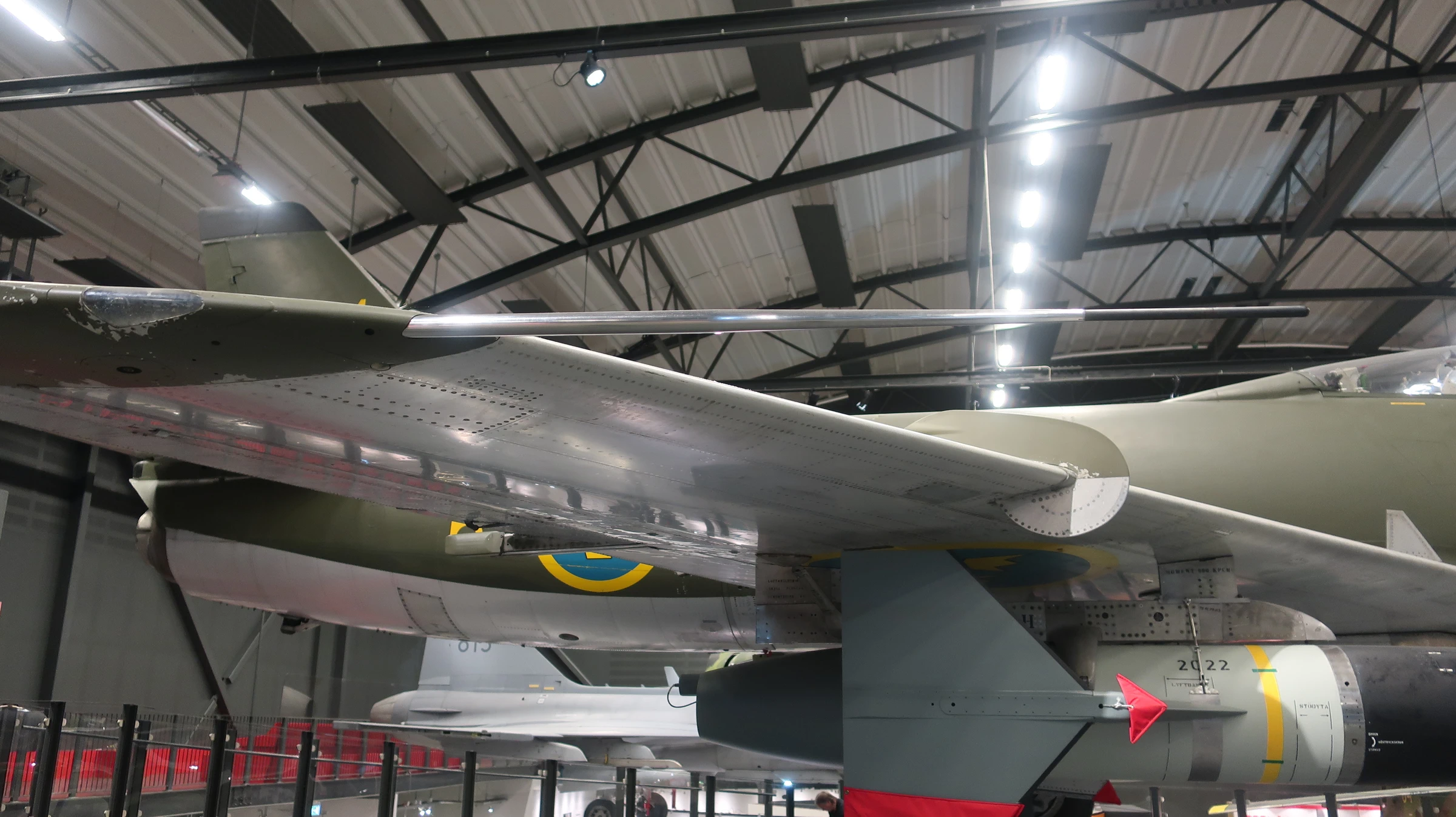
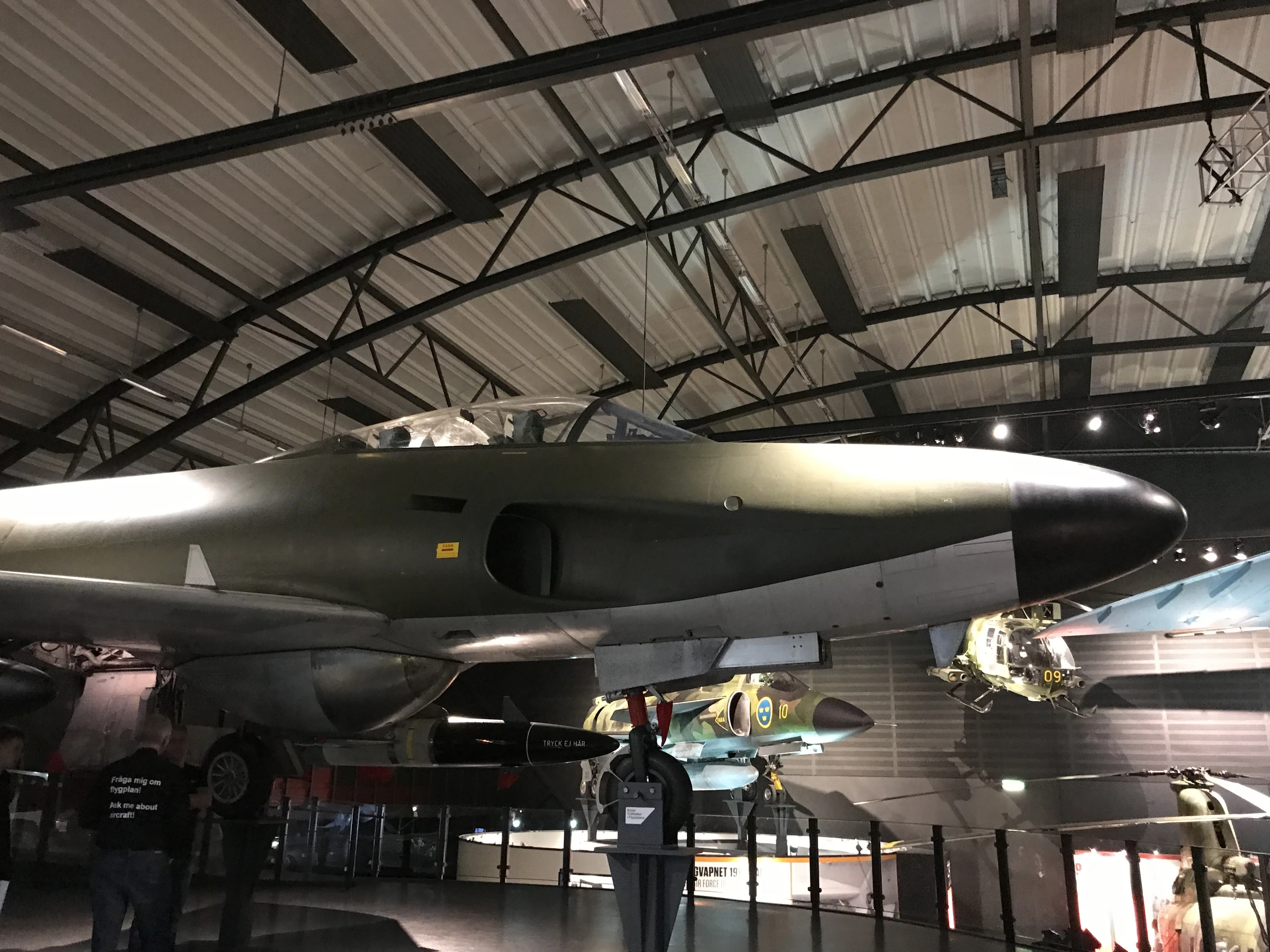
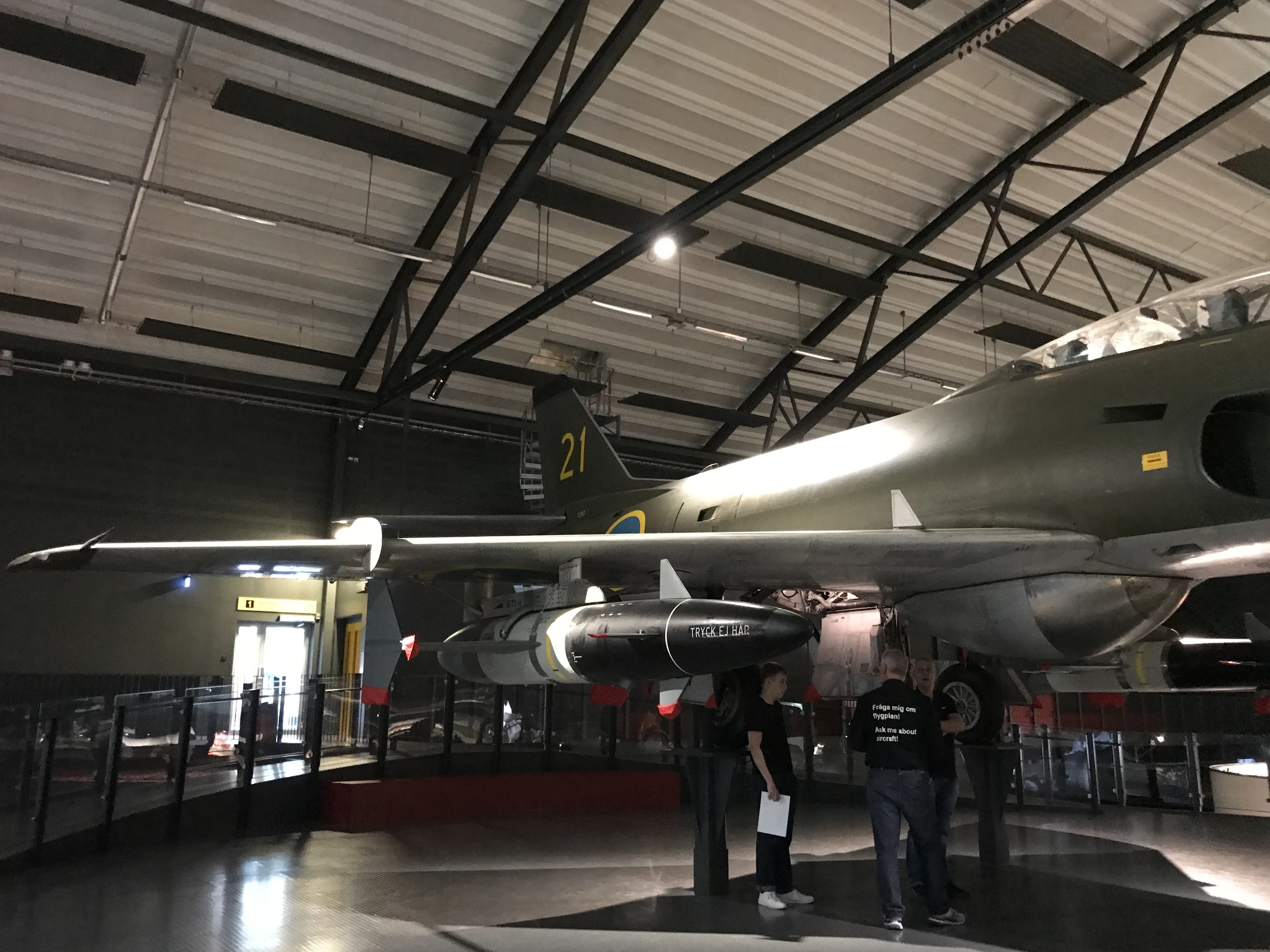
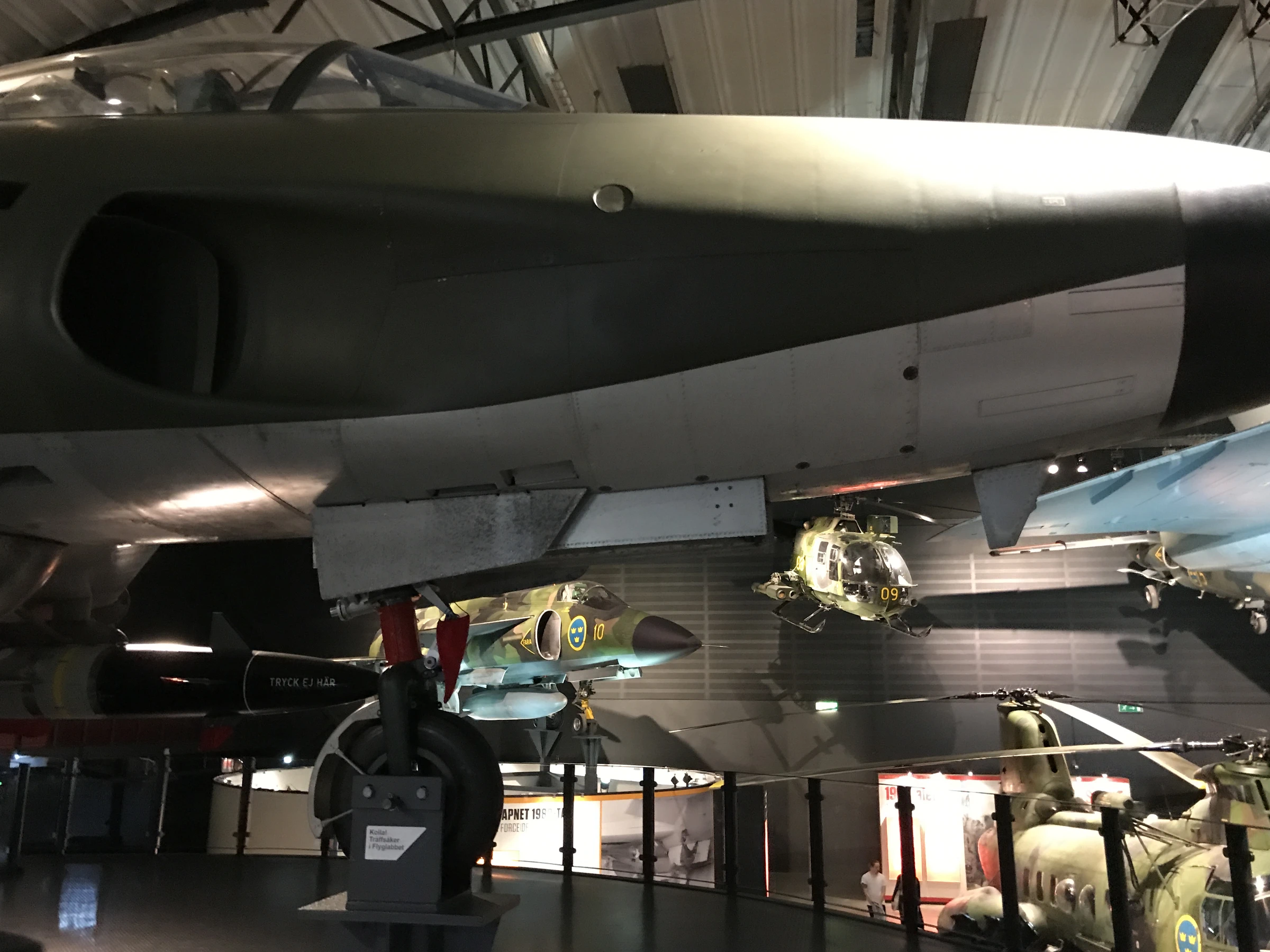
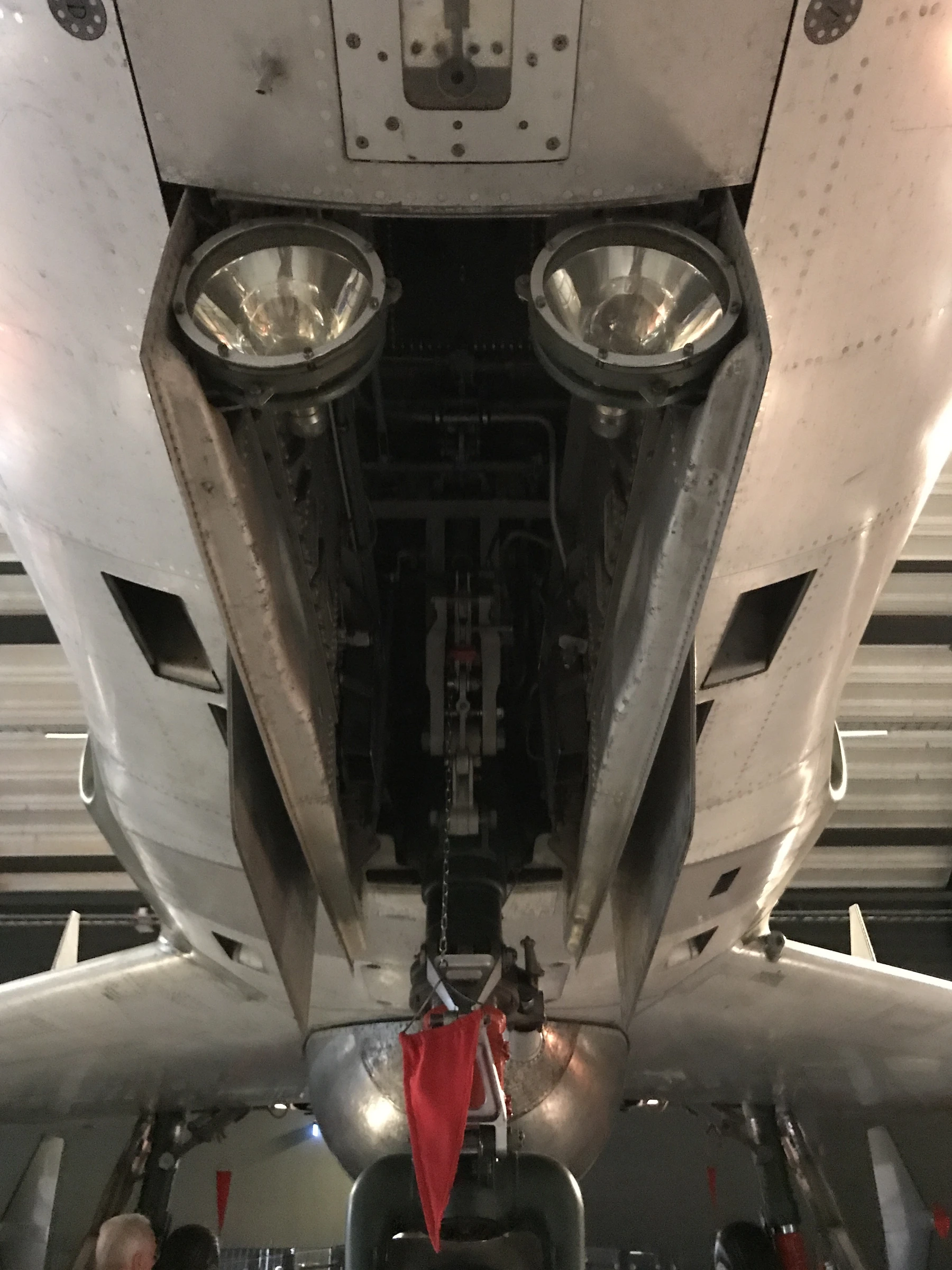
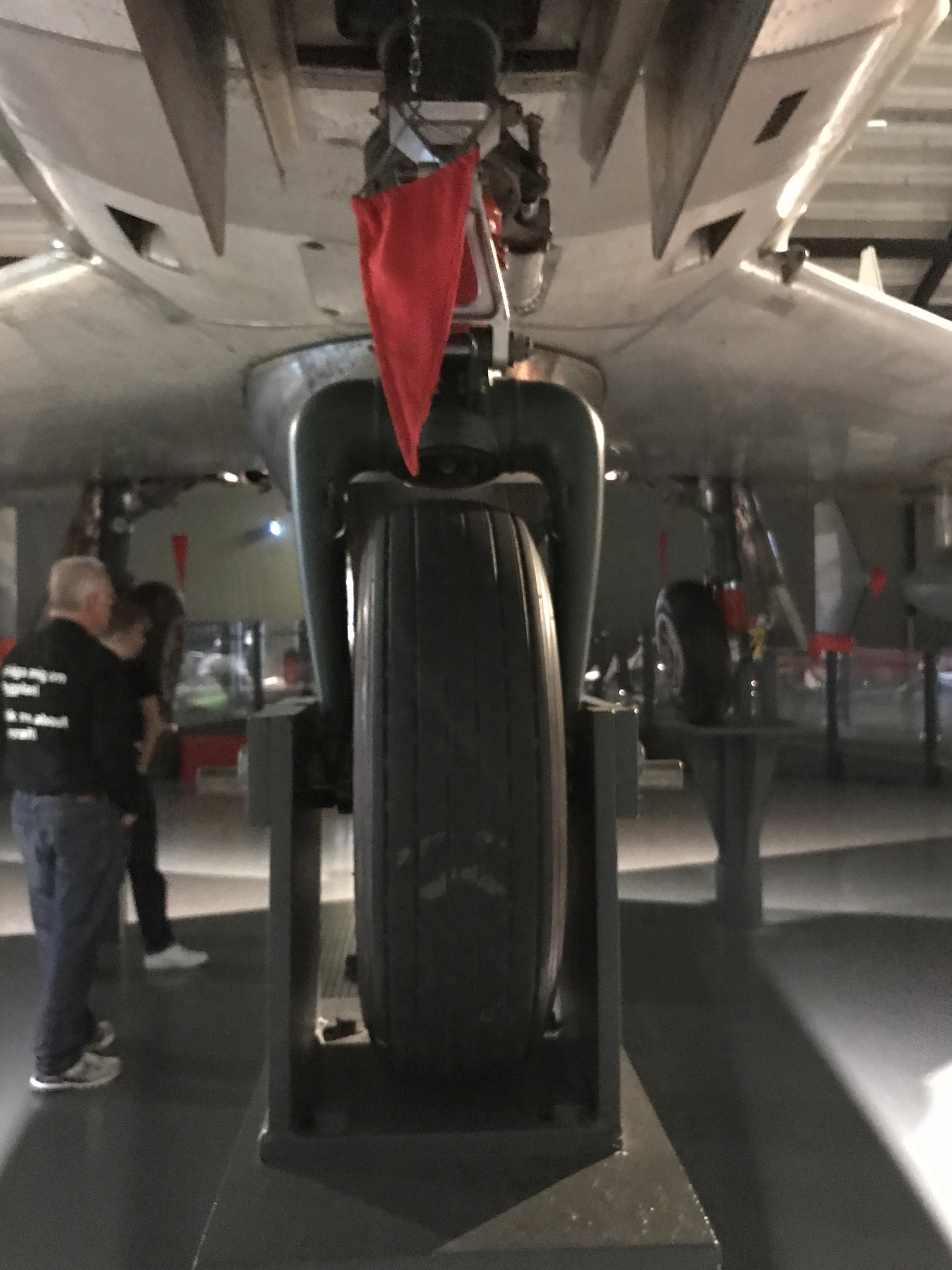
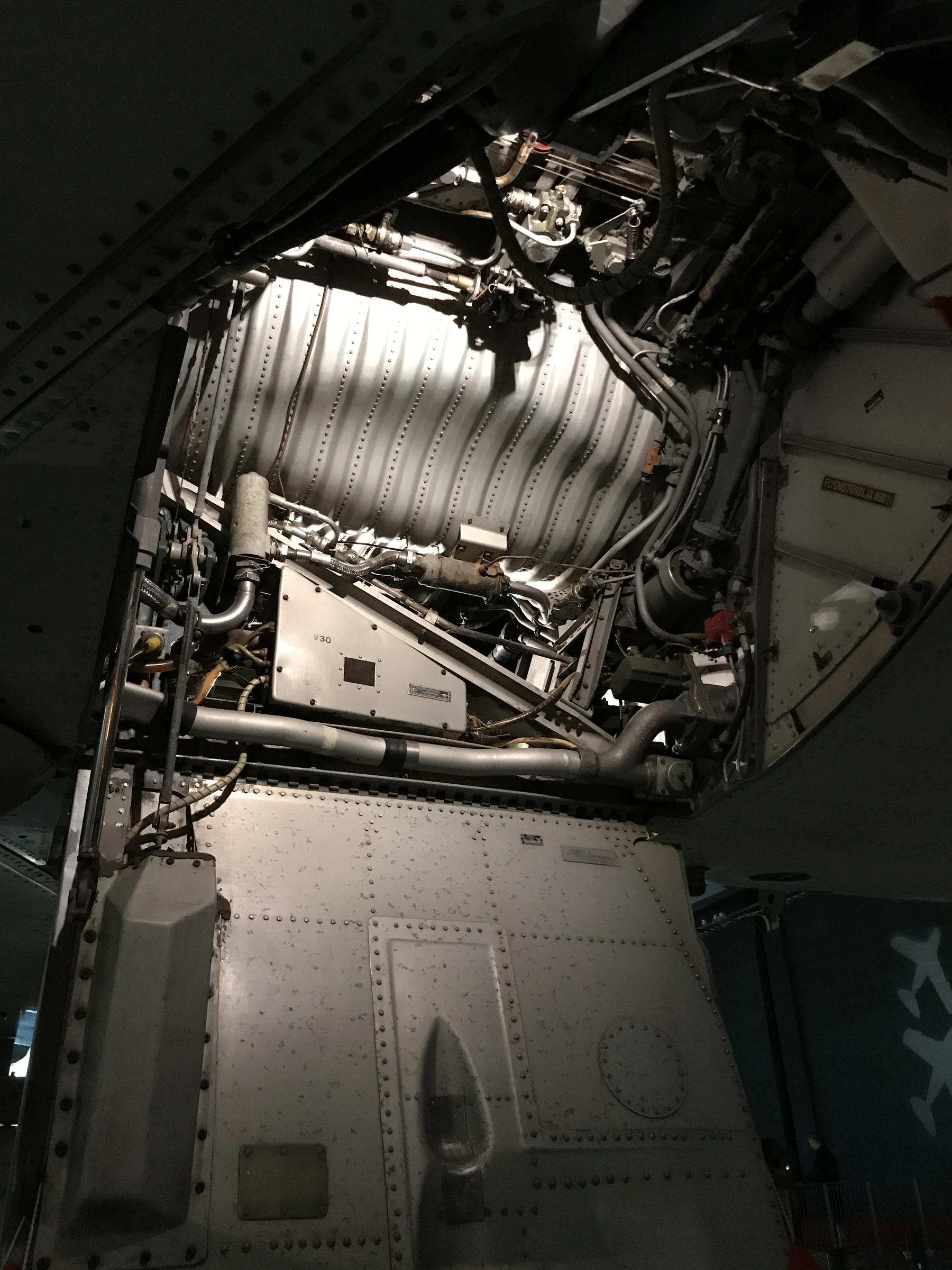
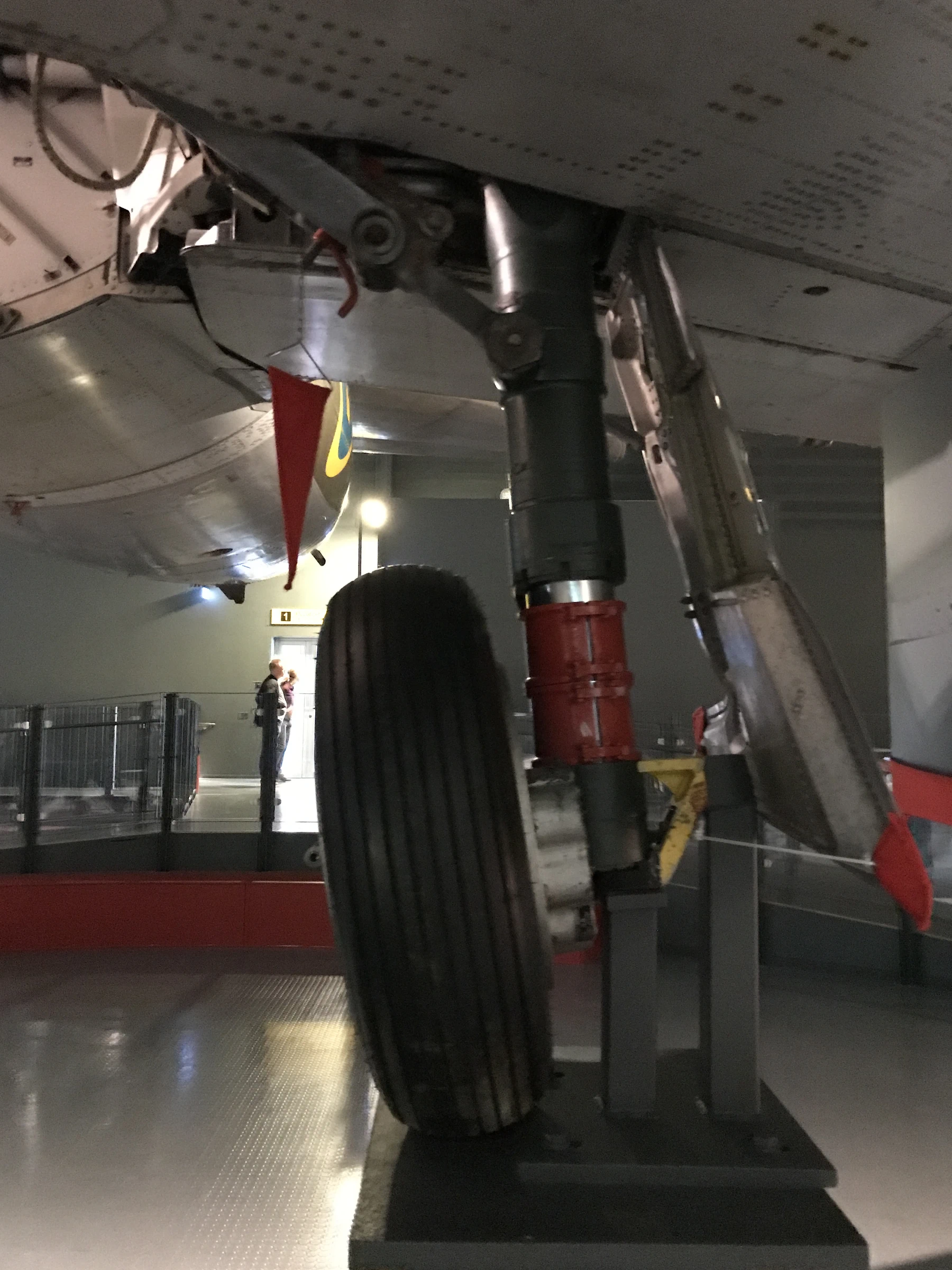
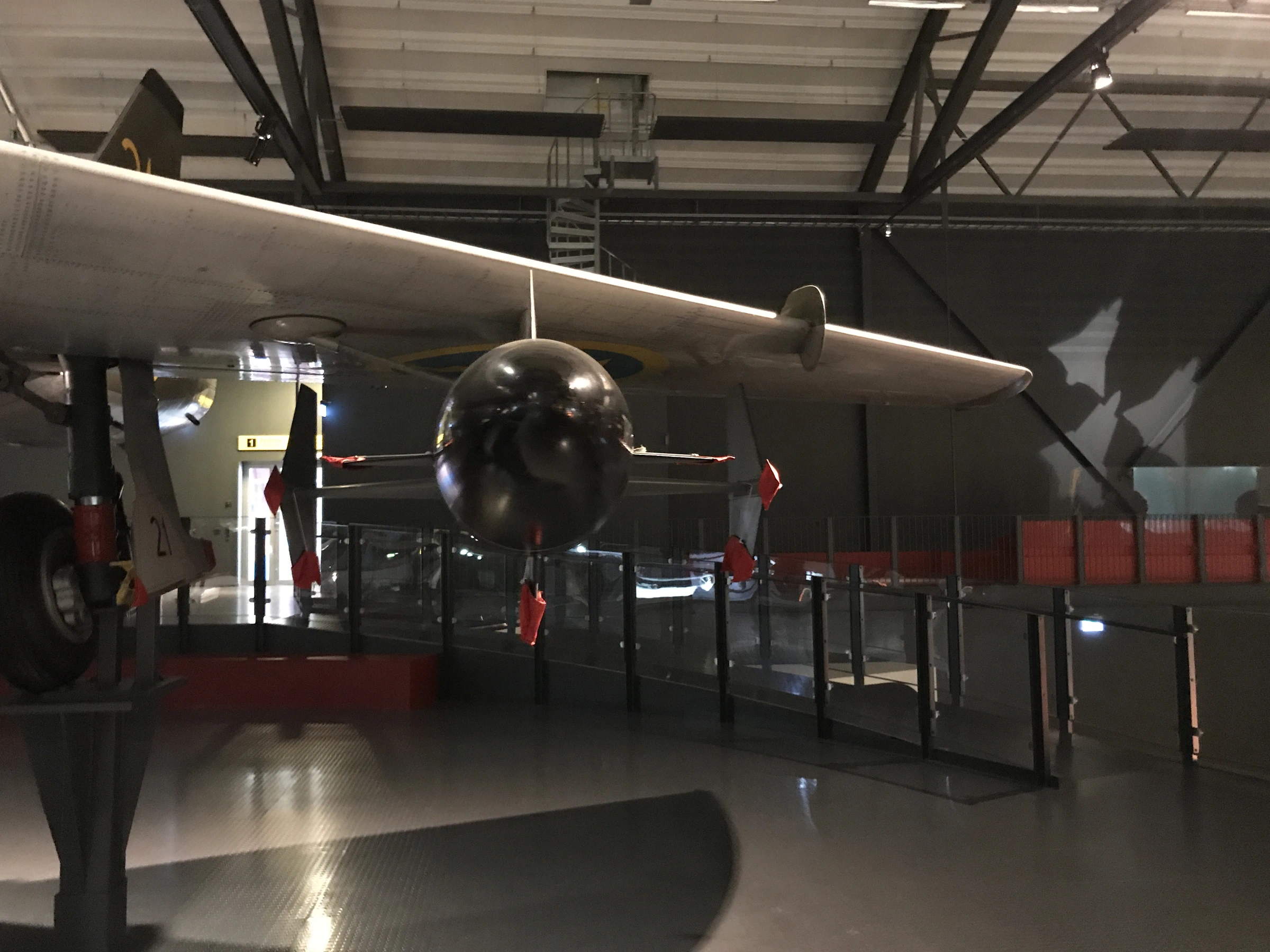
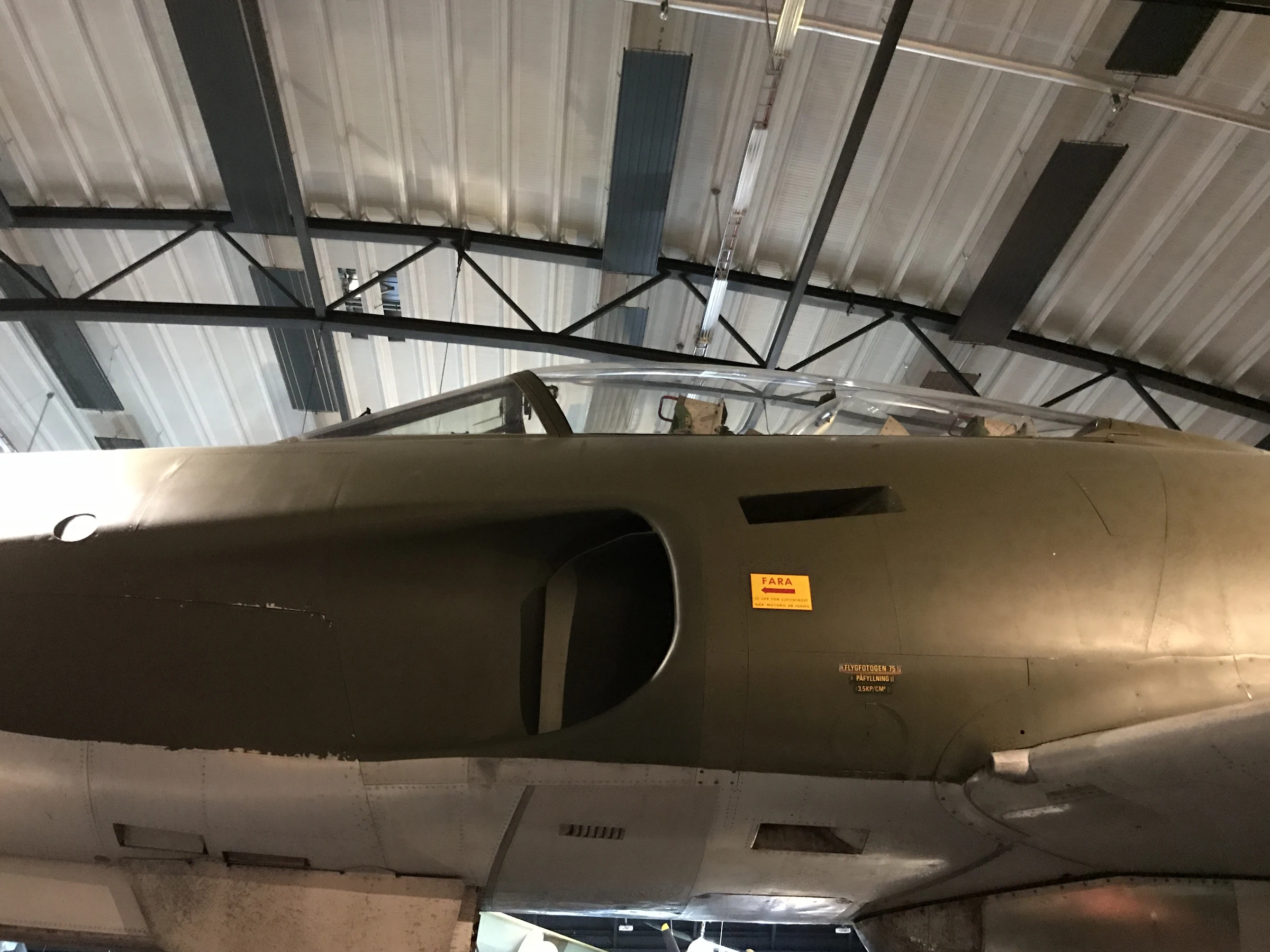
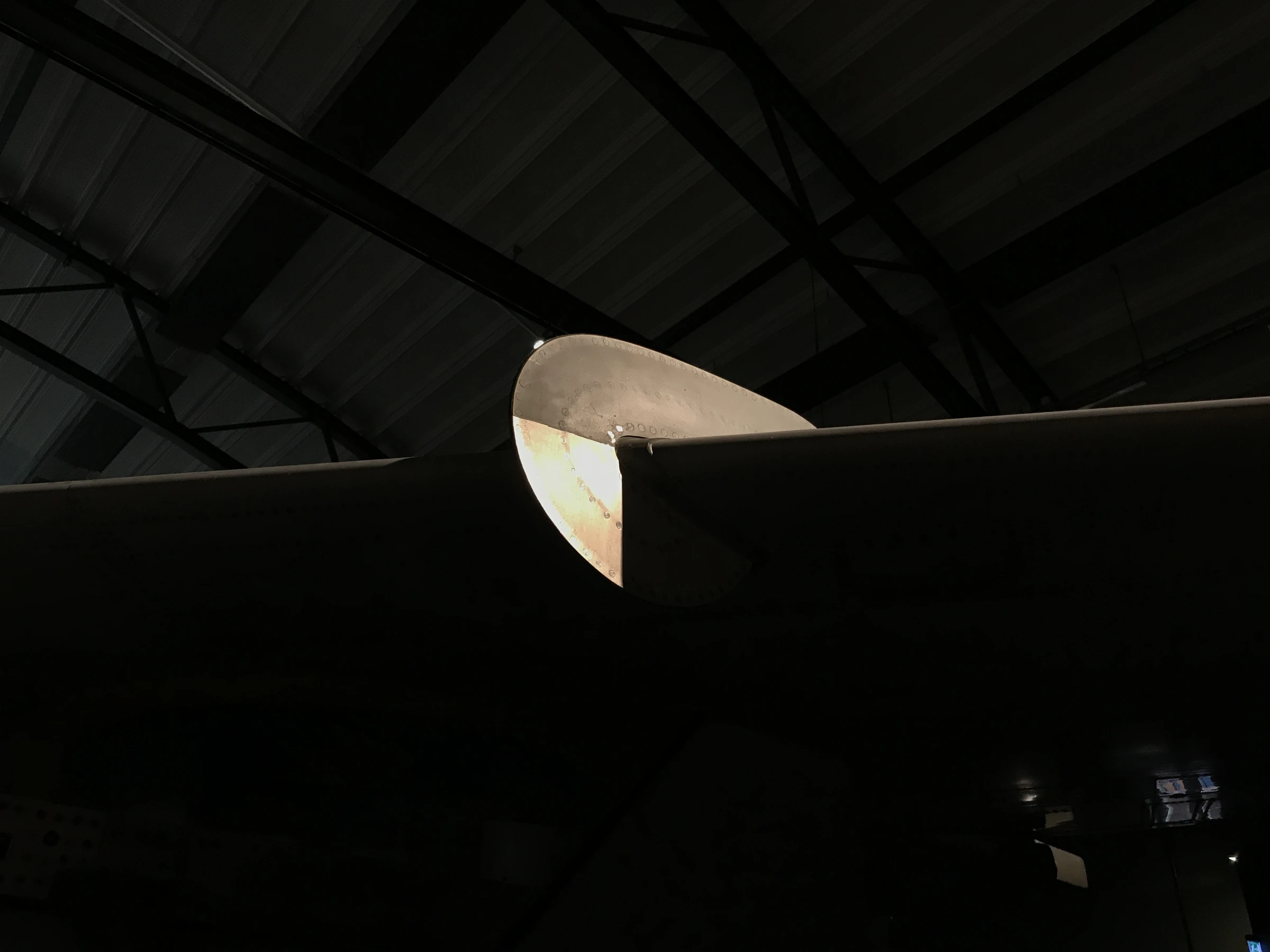
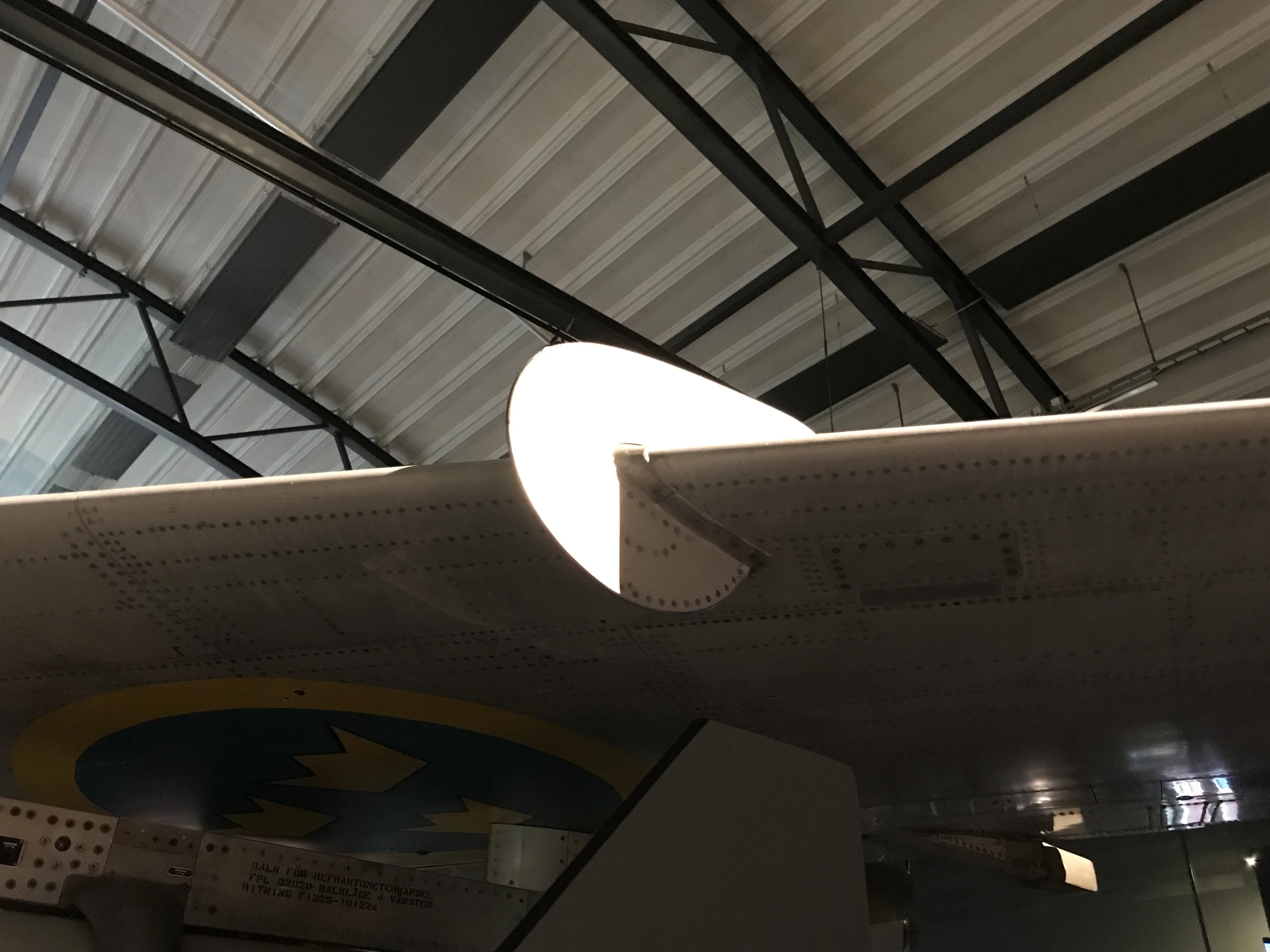
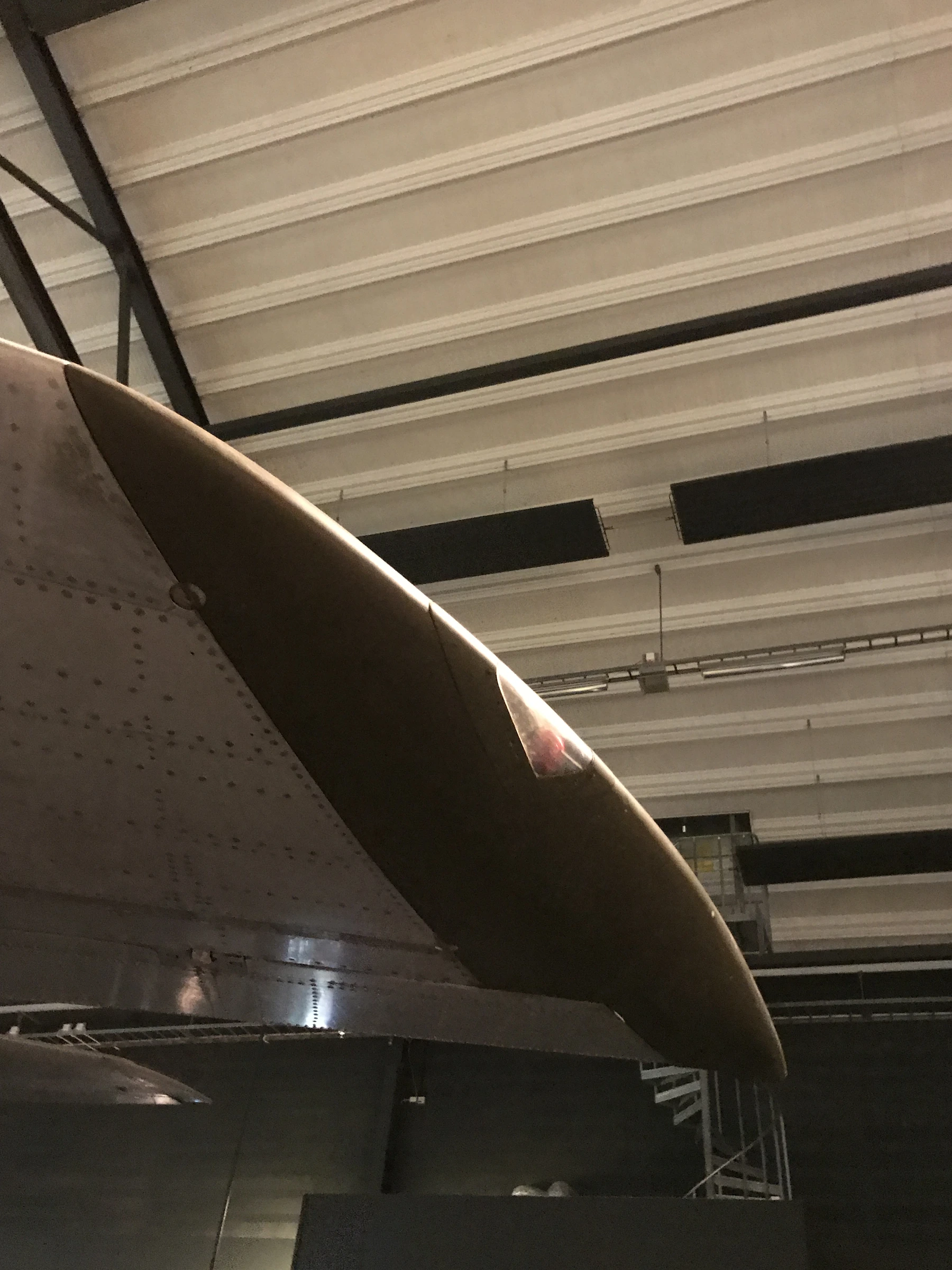
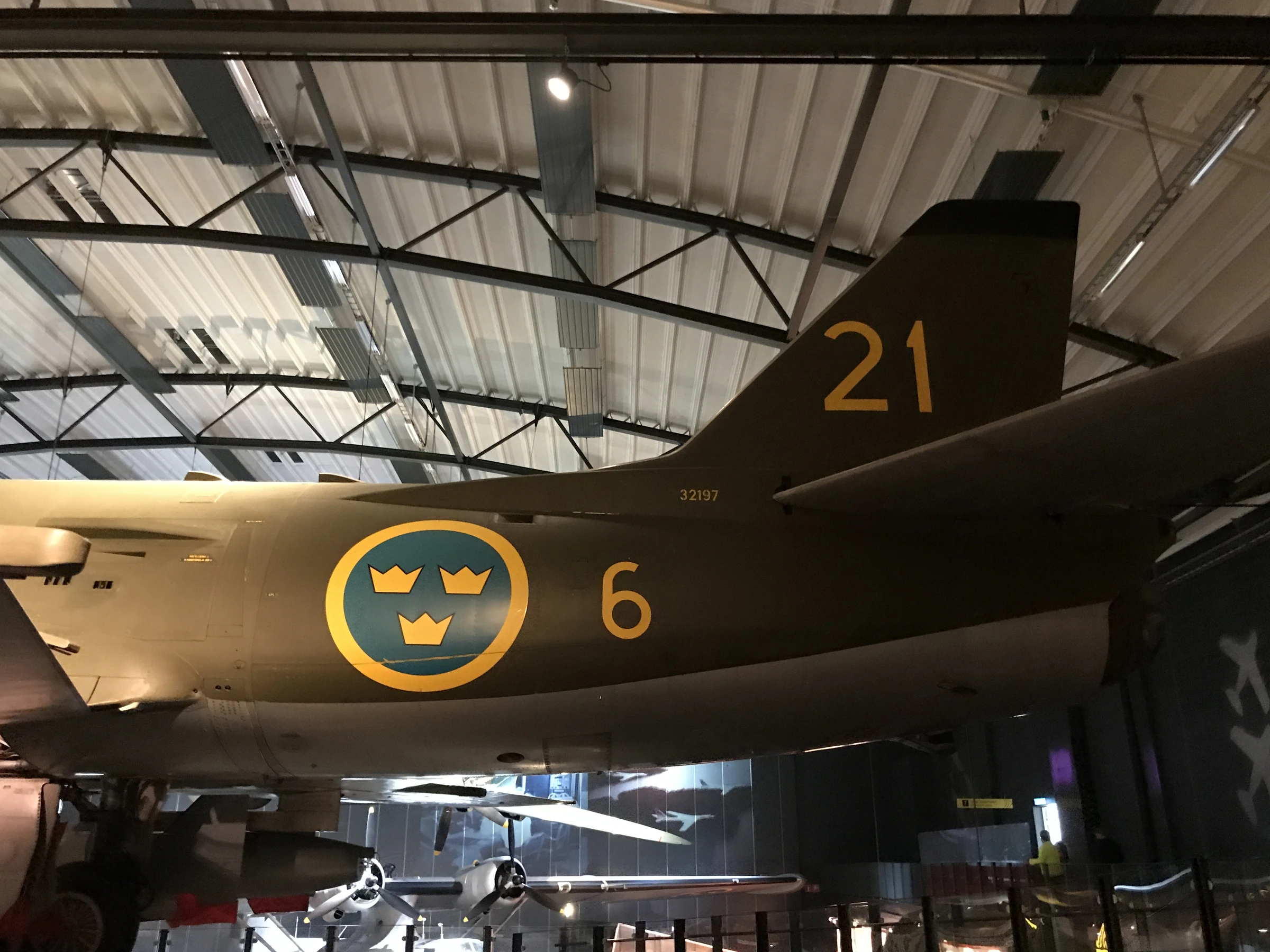
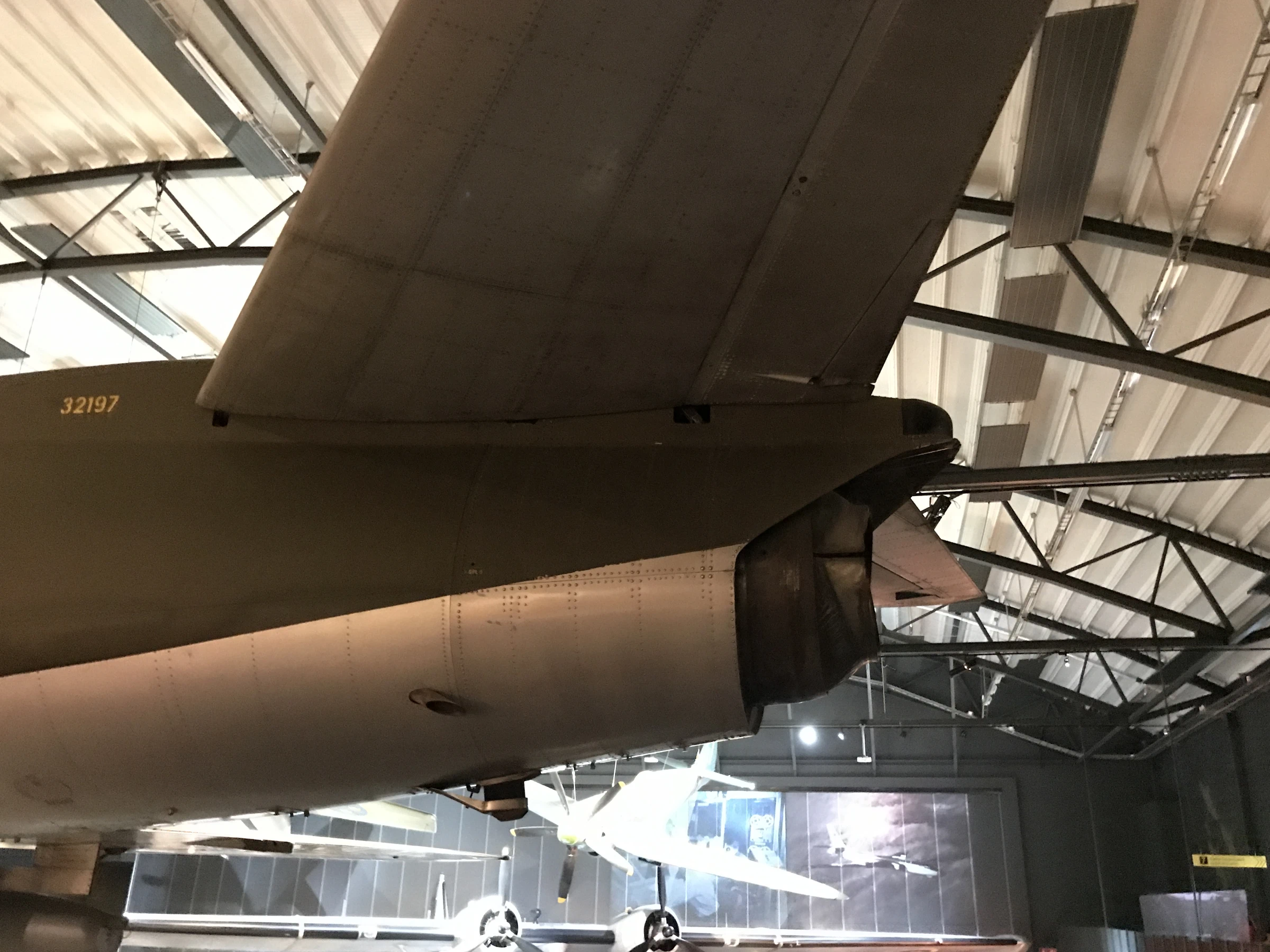
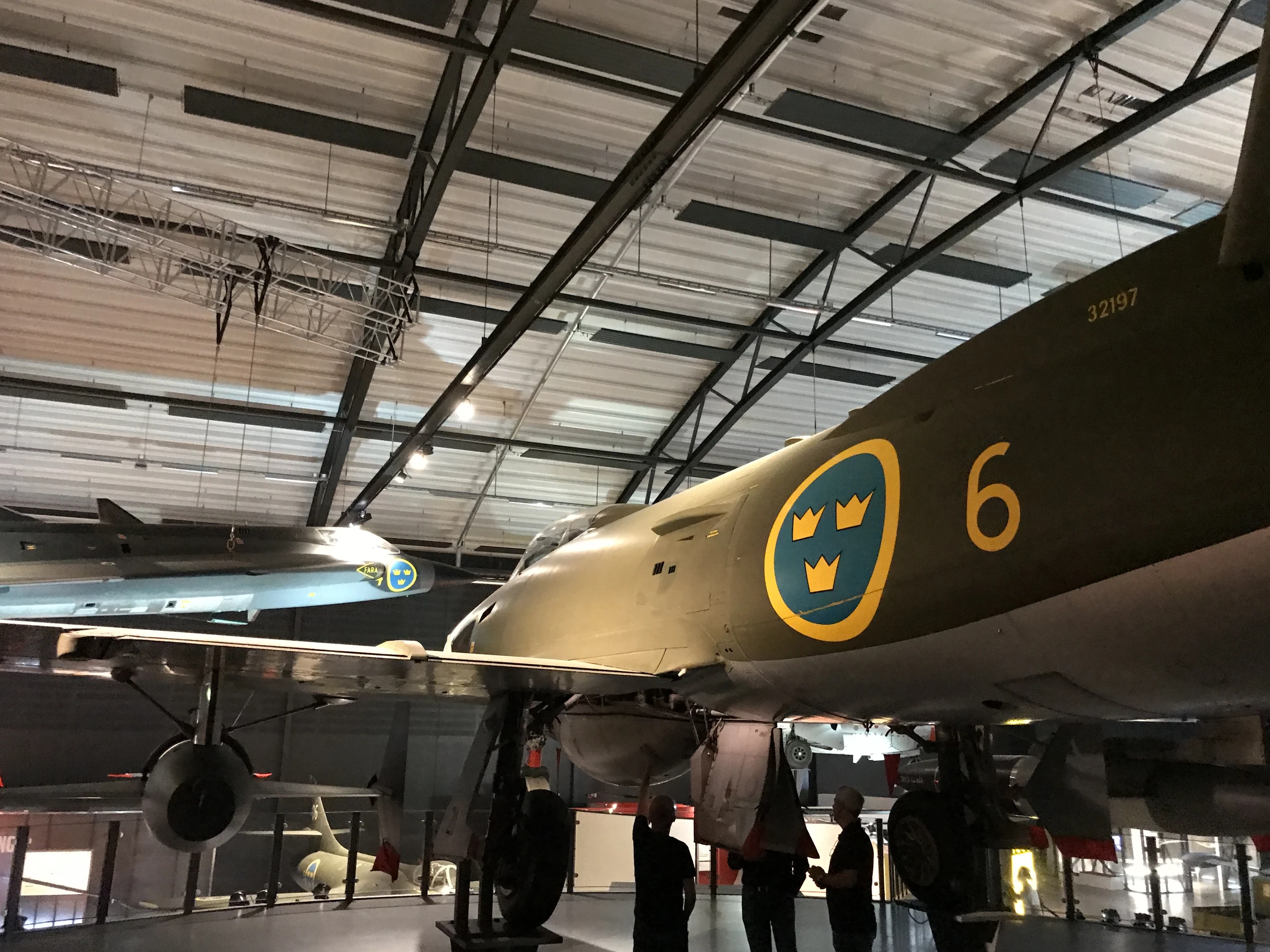
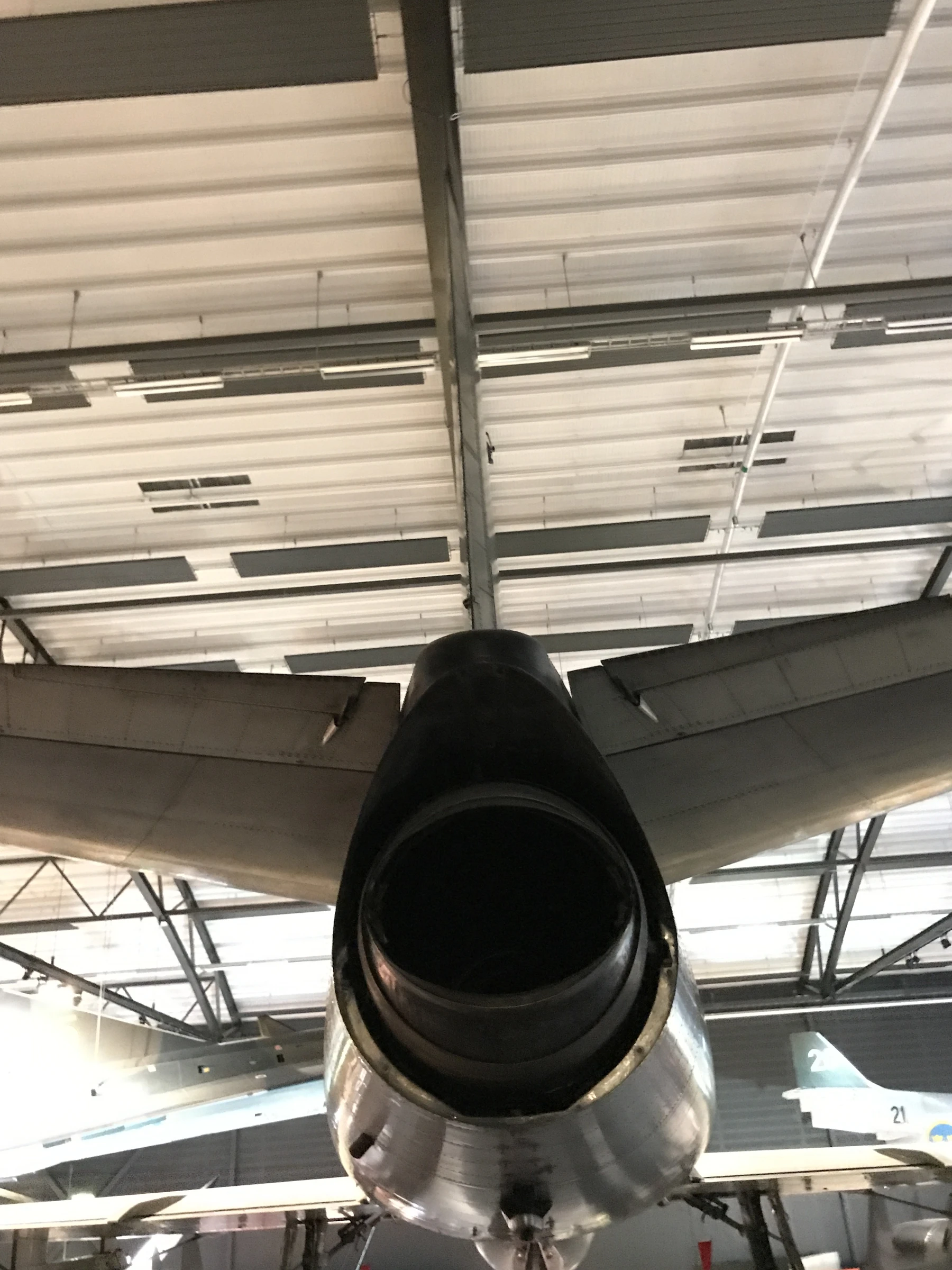
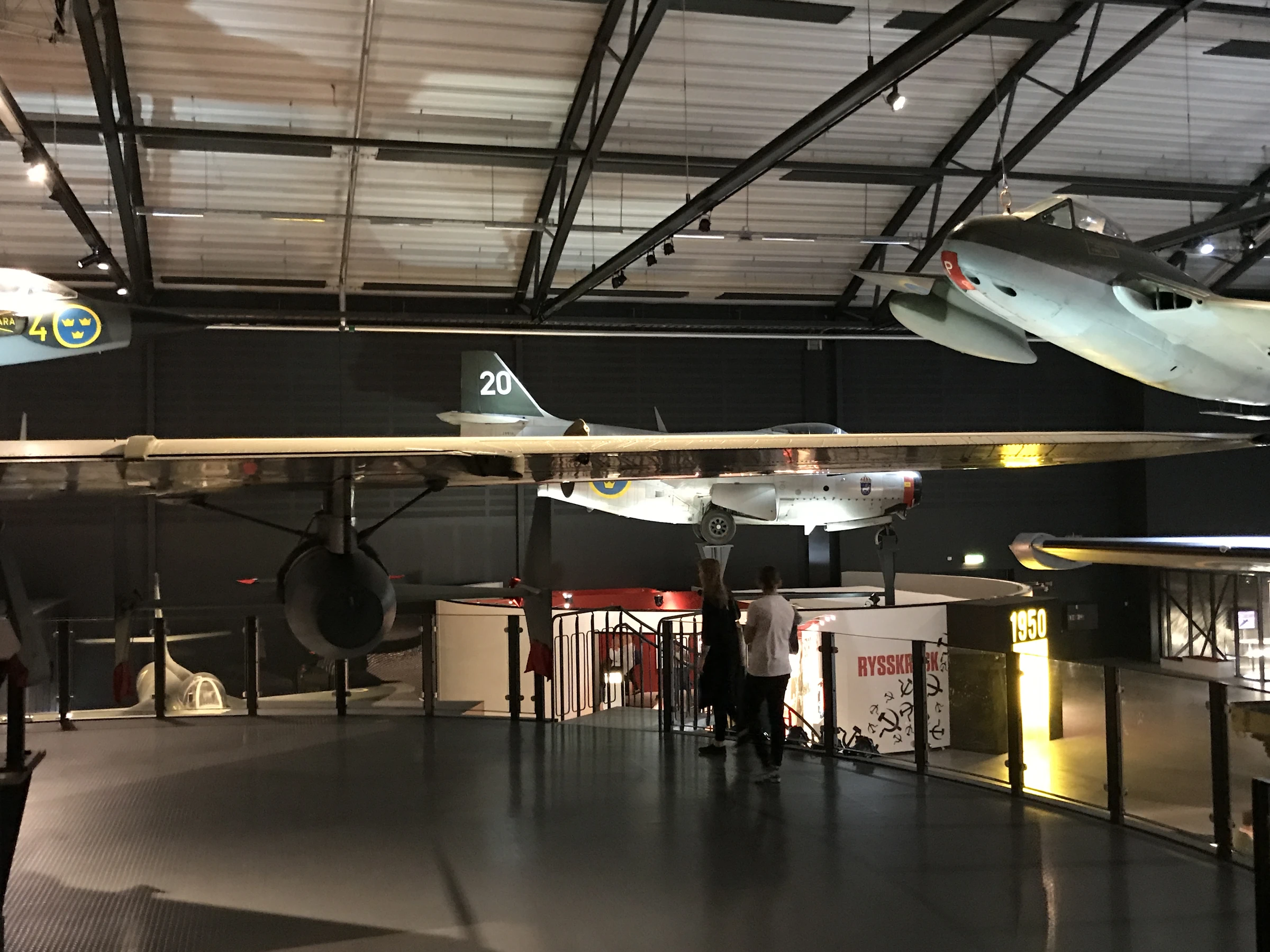
These walk-around photos were taken at Flygvapenmuseum at Malmen outside Linköping in 2017 and 2019. They show a SAAB A 32A Lansen, individual number 32197 — the attack variant of one of the most significant Swedish aircraft of the Cold War era and the first Swedish-designed aircraft to break the sound barrier. A Lansen prototype exceeded Mach 1 in a shallow dive on 25 October 1953, six years after Chuck Yeager's historic flight in the Bell X-1, making Sweden one of a handful of nations capable of building transonic aircraft. The Lansen was also among the first operational aircraft in the world to be designed with the aid of a computer, and one of the earliest swept-wing designs to carry its own radar.
The A 32A was the attack and maritime strike variant, armed with four 20 mm Akan cannon and capable of carrying the Rb 04 anti-ship missile — one of the world's first fire-and-forget missiles — with which it was intended to strike Soviet naval forces as far from Swedish territory as possible. A total of 287 A 32As were delivered from 1955 onwards, replacing the wartime-era Saab B 18 in the attack role. The type served Sweden well but at a high cost: a third of all Lansens were destroyed in accidents over 25 years of service, killing 100 crew and seven civilians. Individual 32197 was delivered to F 6 Karlsborg in 1957 bearing the code 6-21, and was transferred to the historic collections at Malmen in late 1975 — becoming the first Lansen to enter the museum's collection.