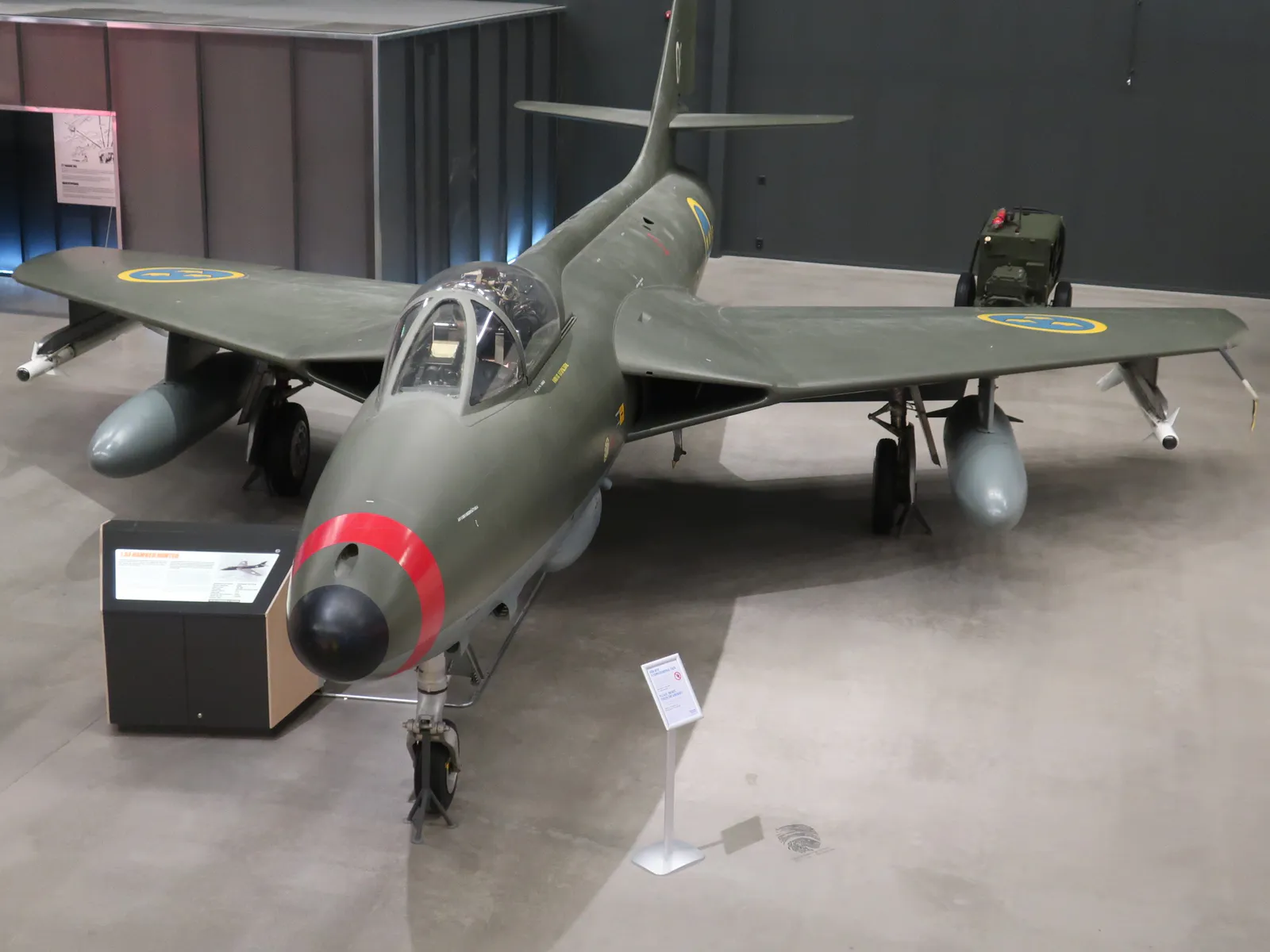
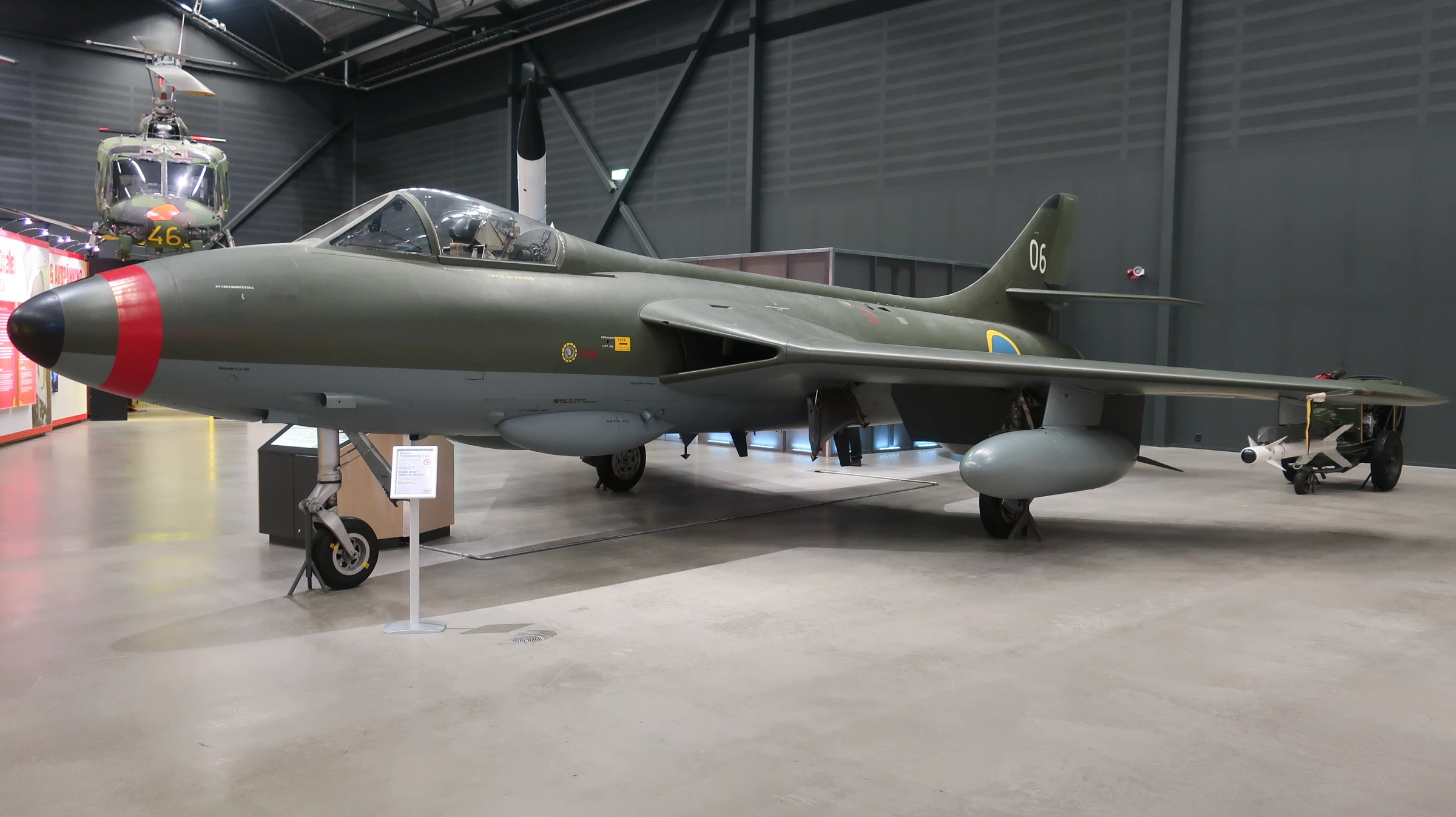
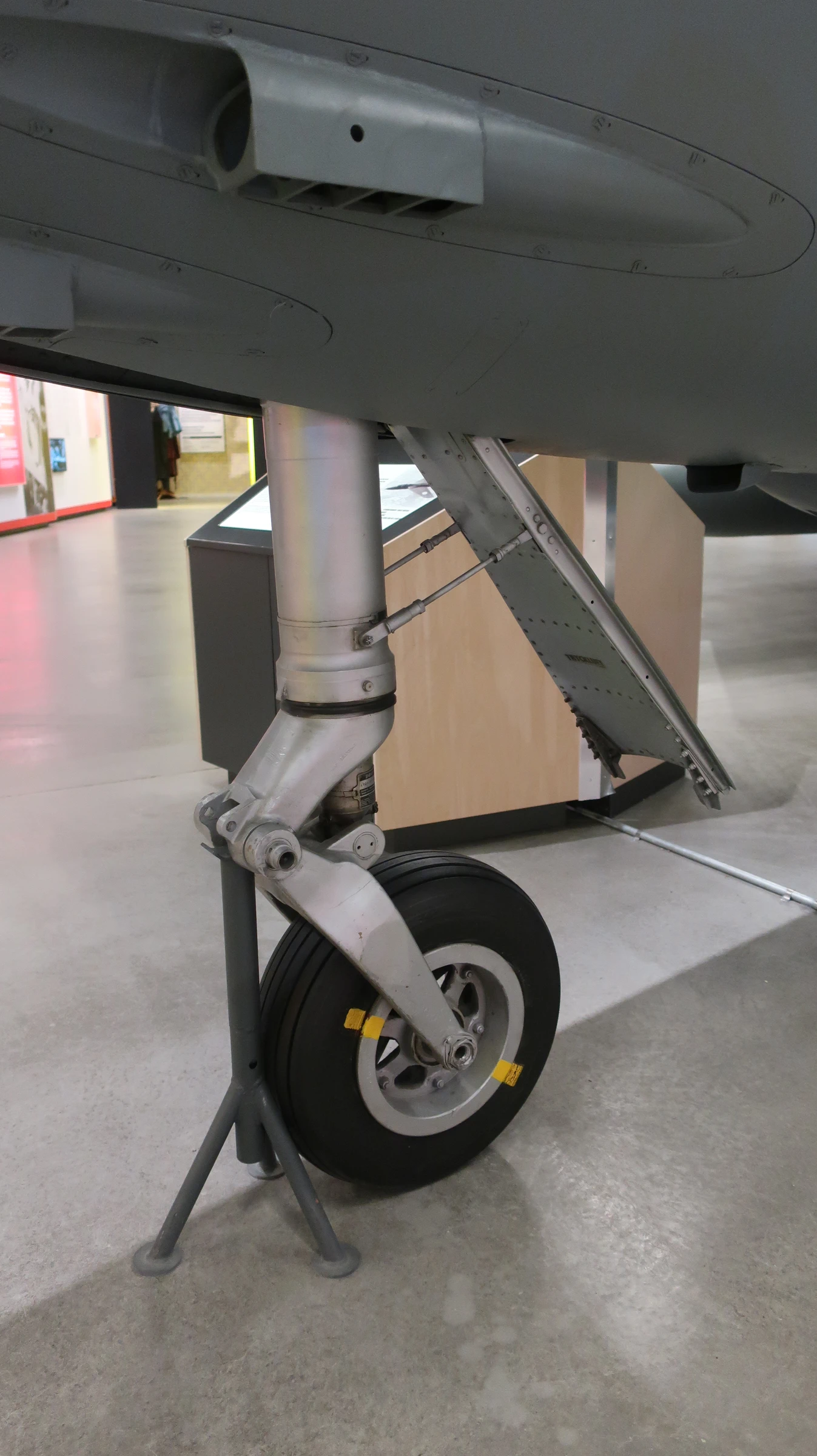
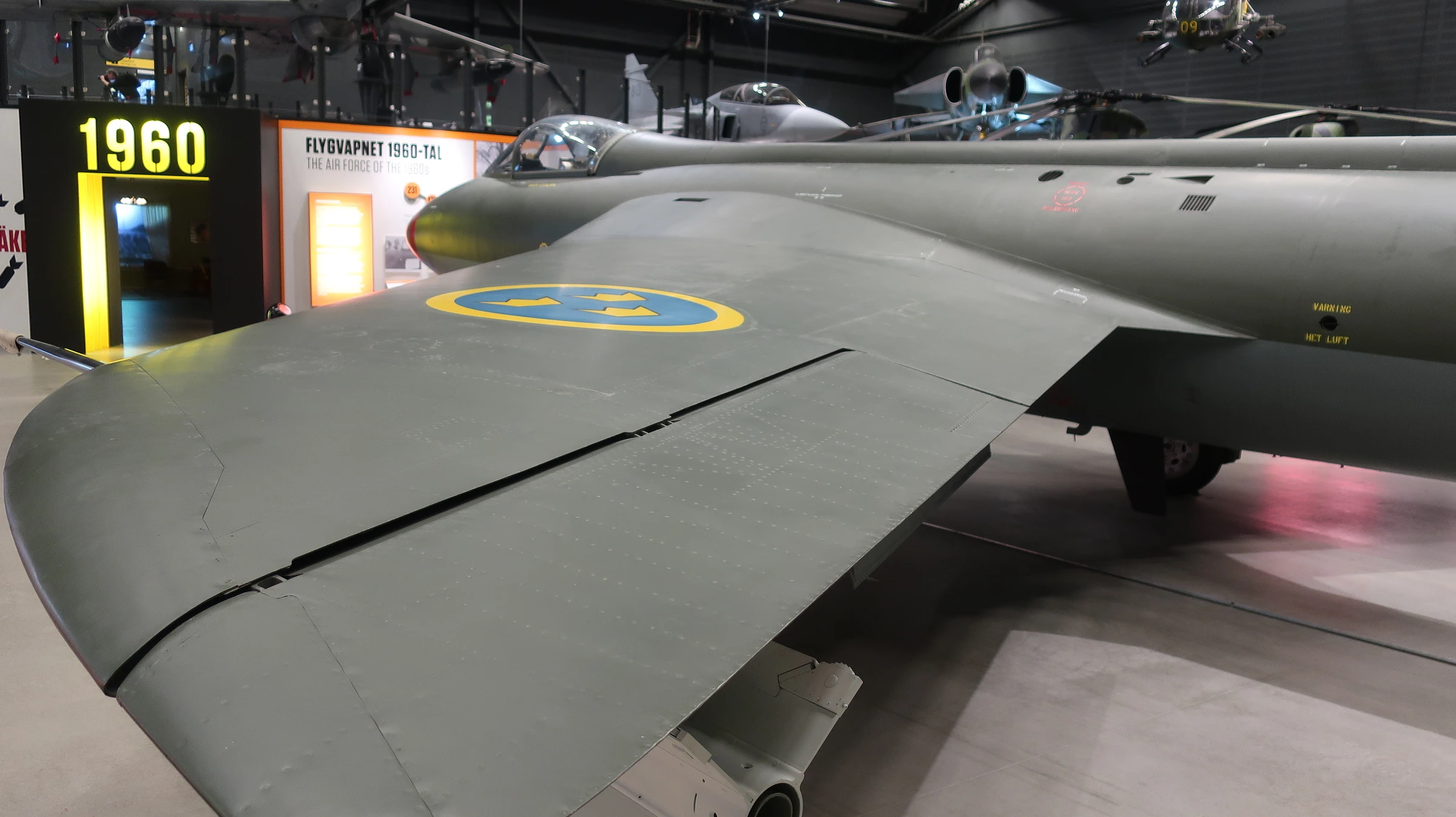
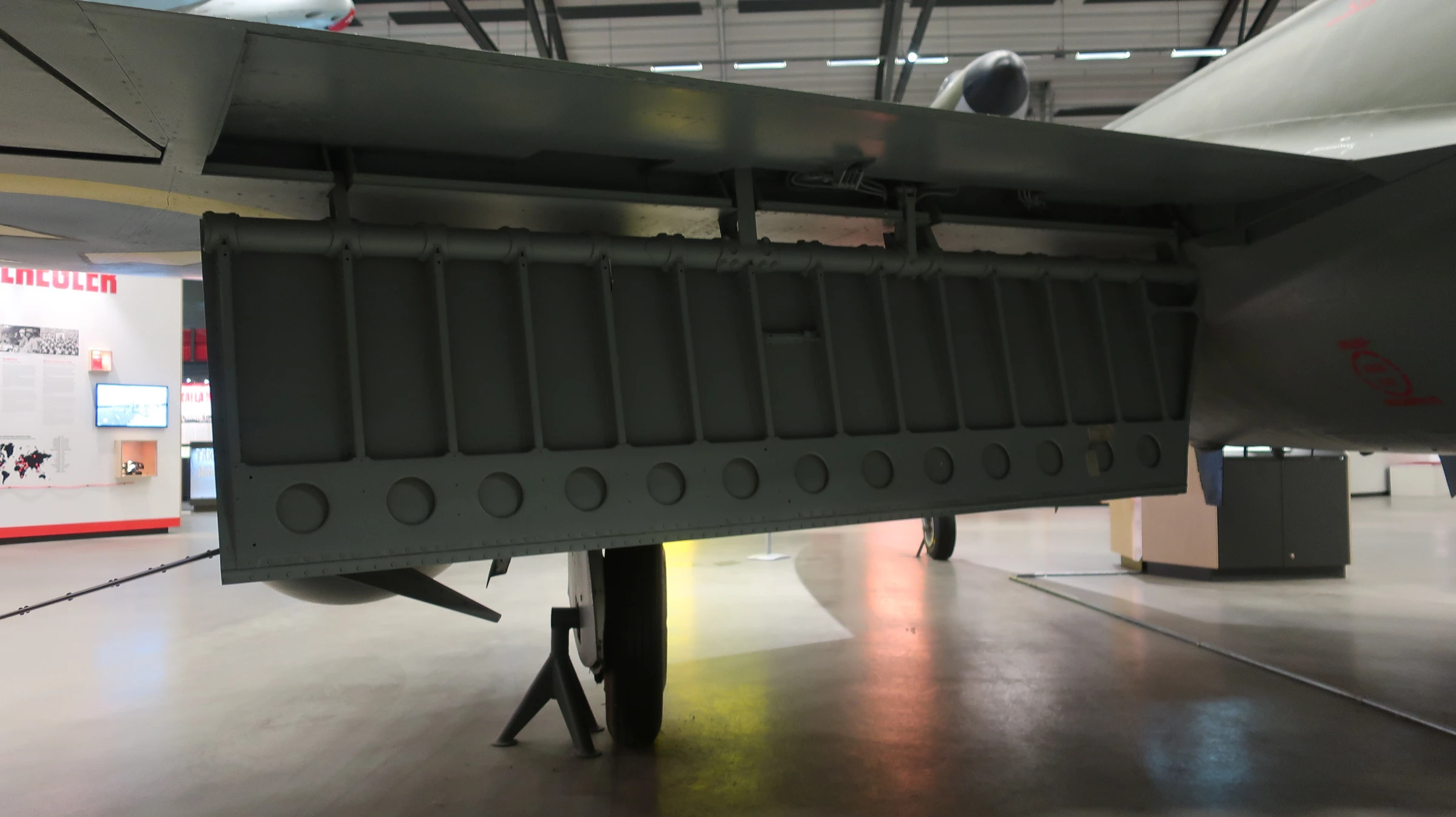
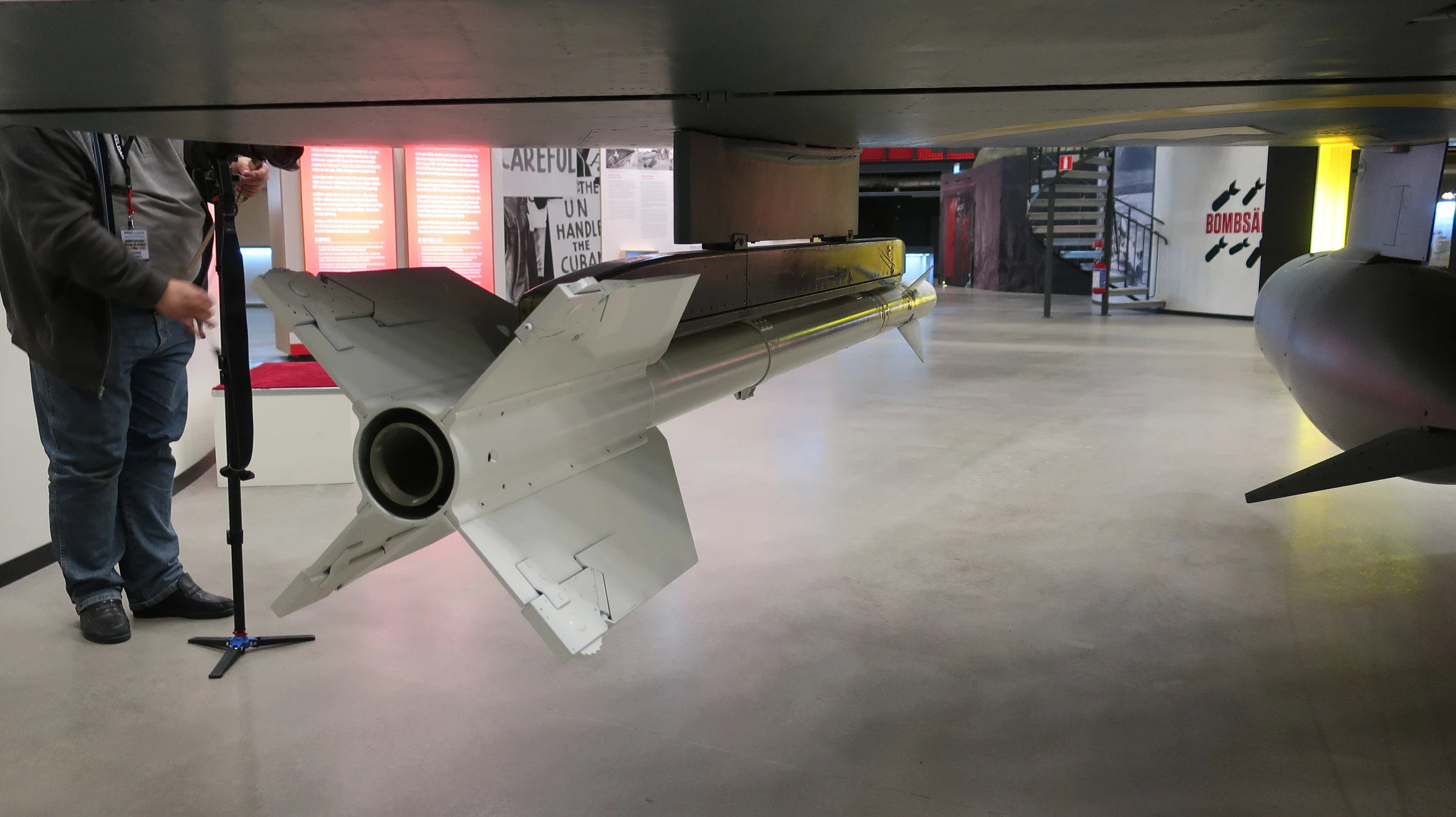
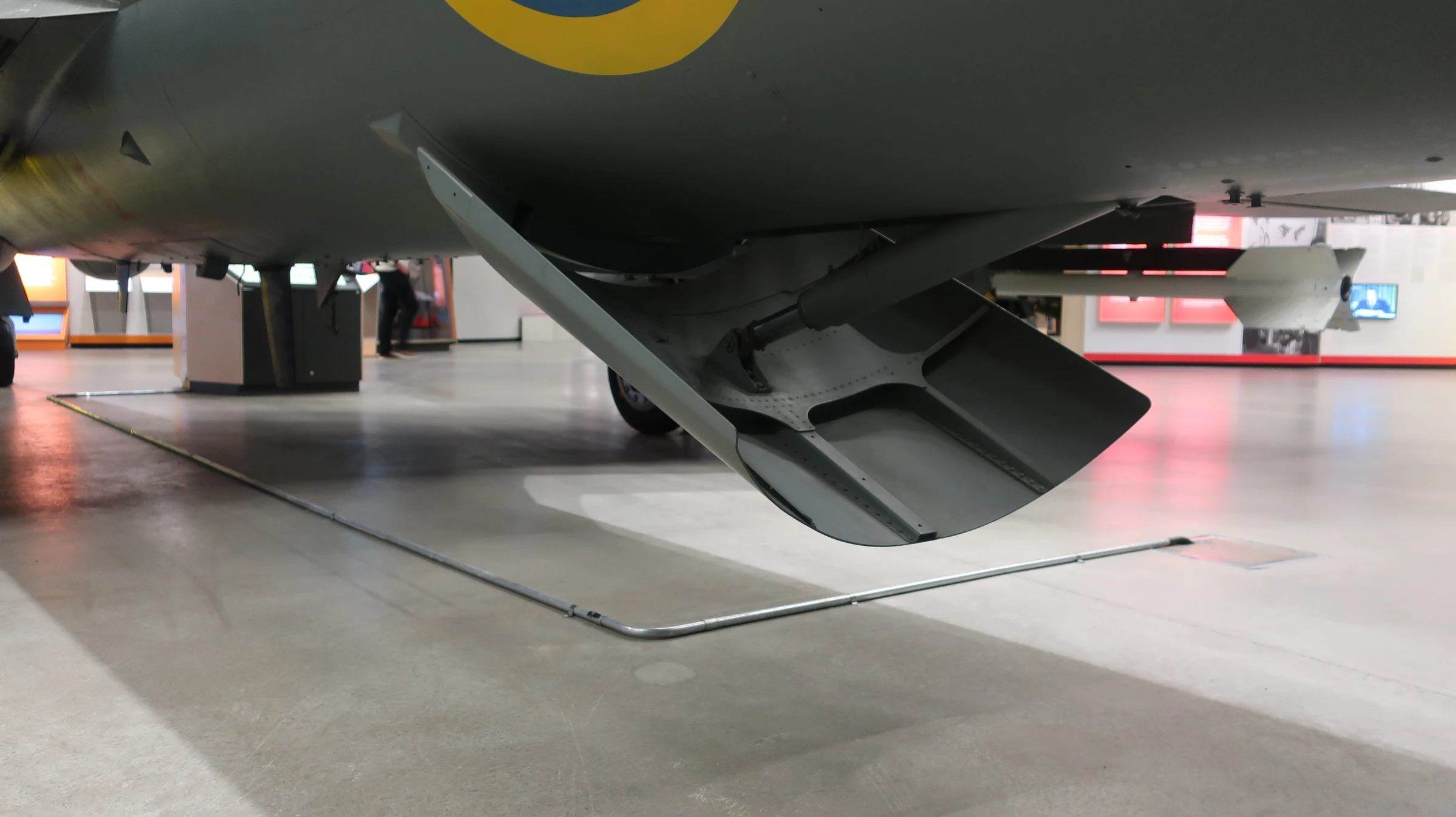
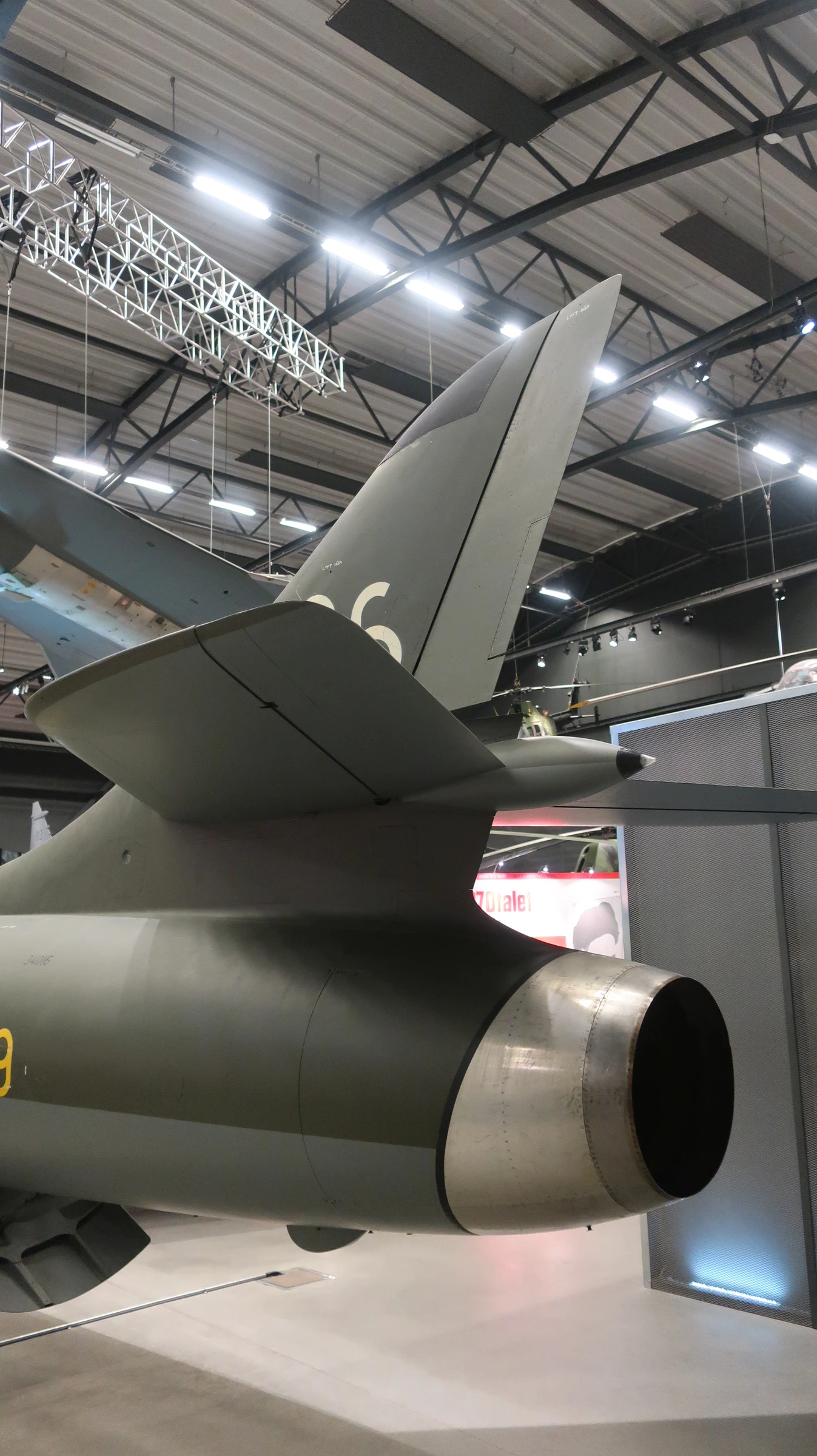
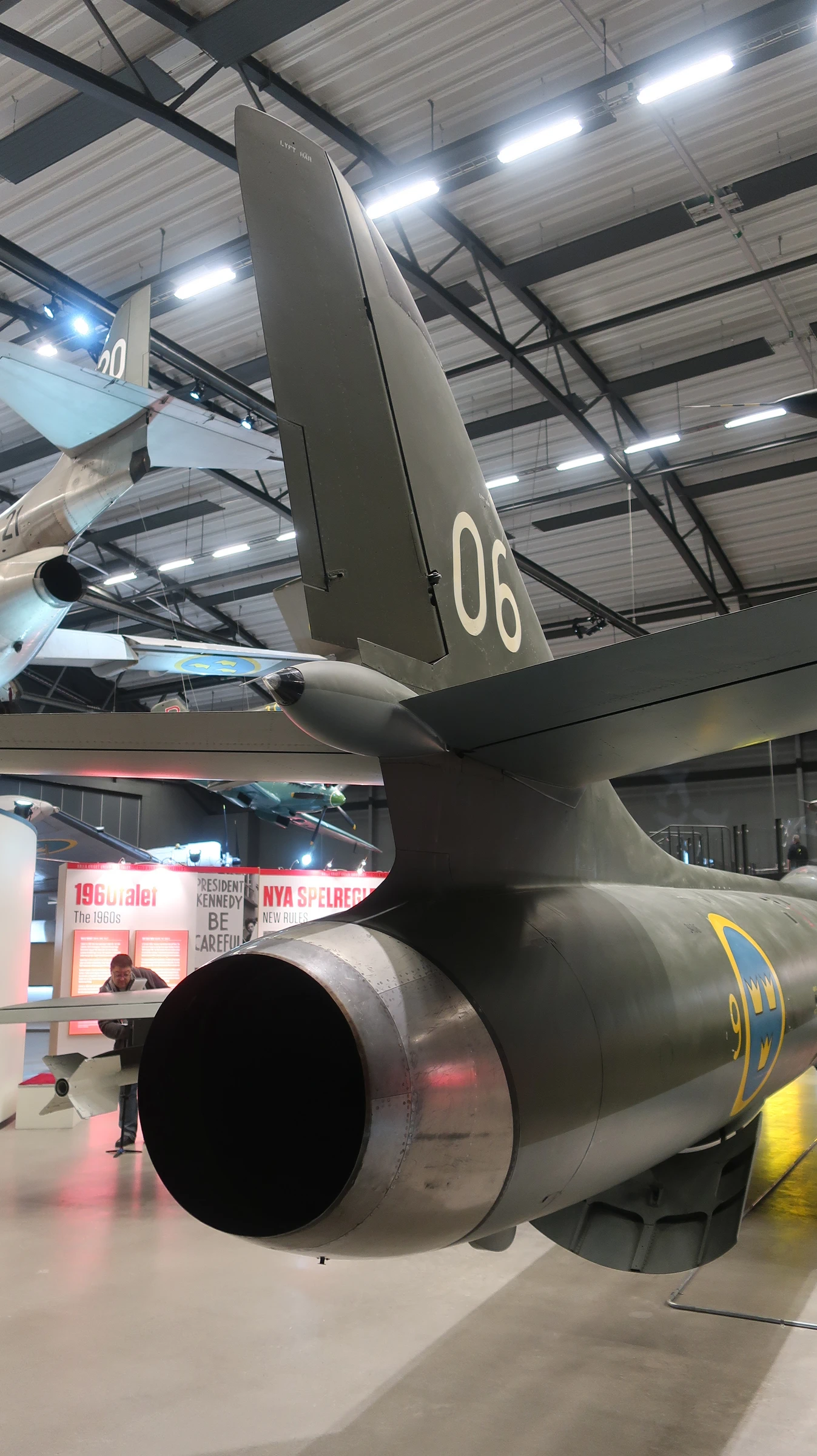
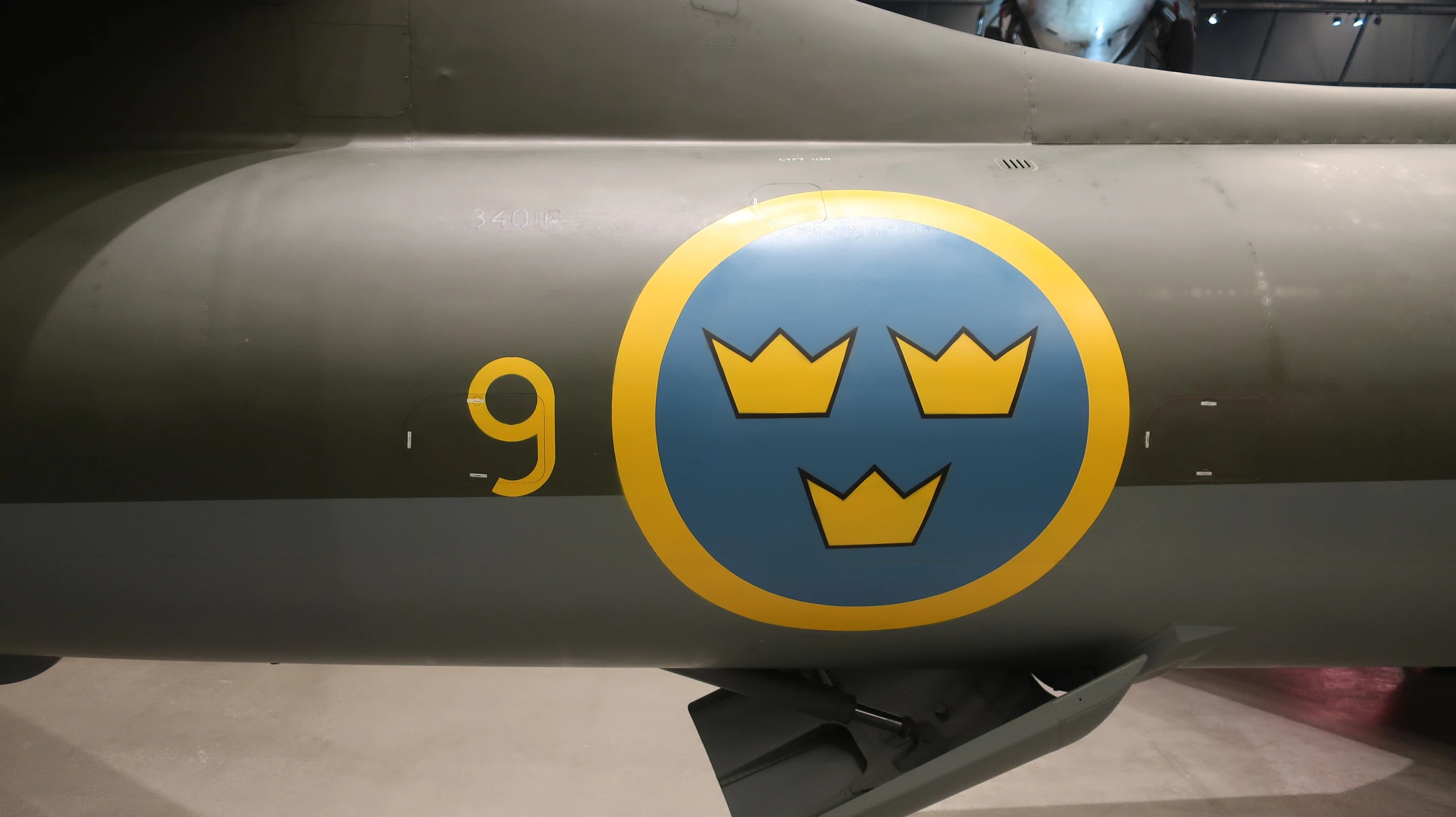
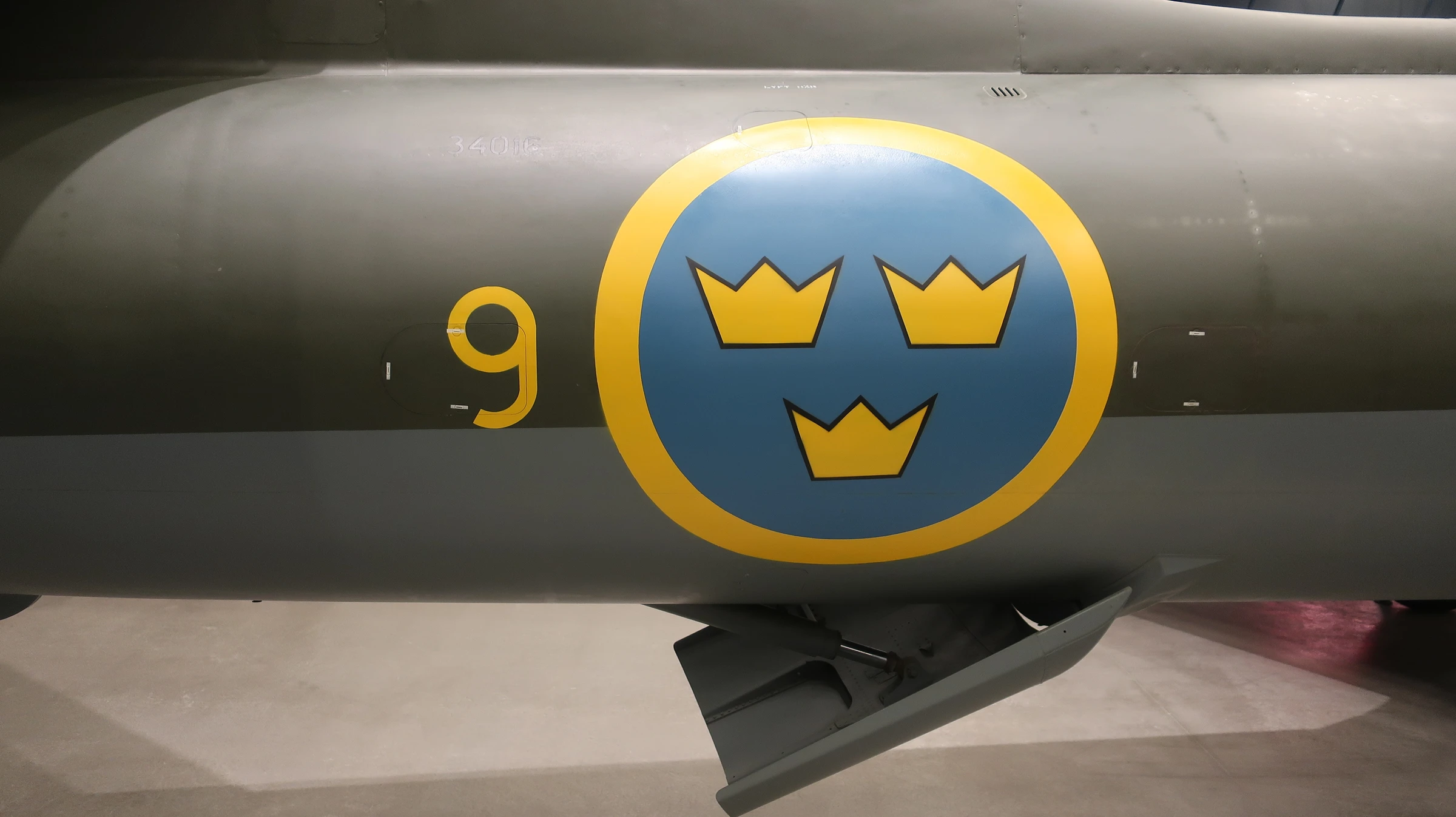
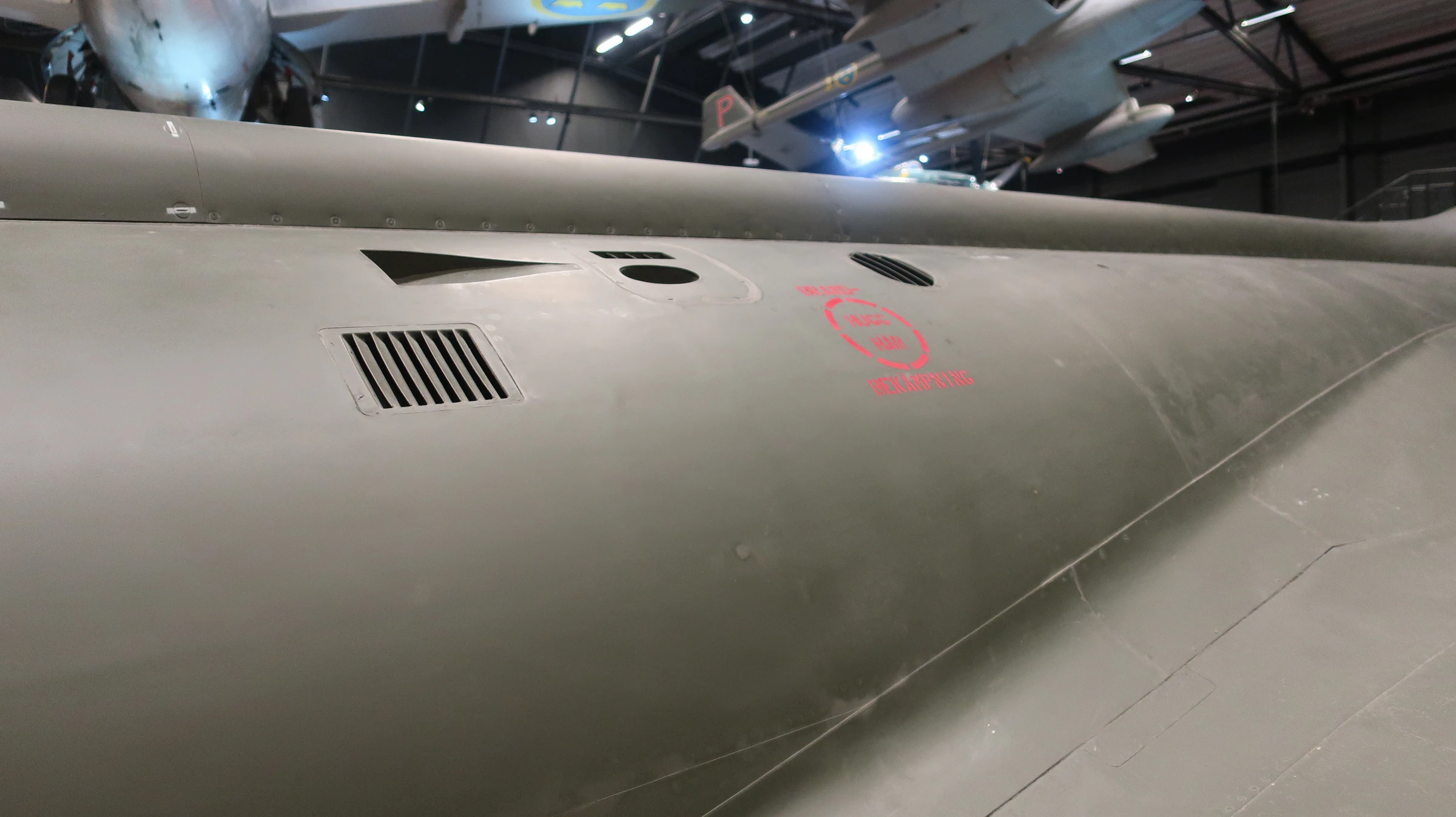
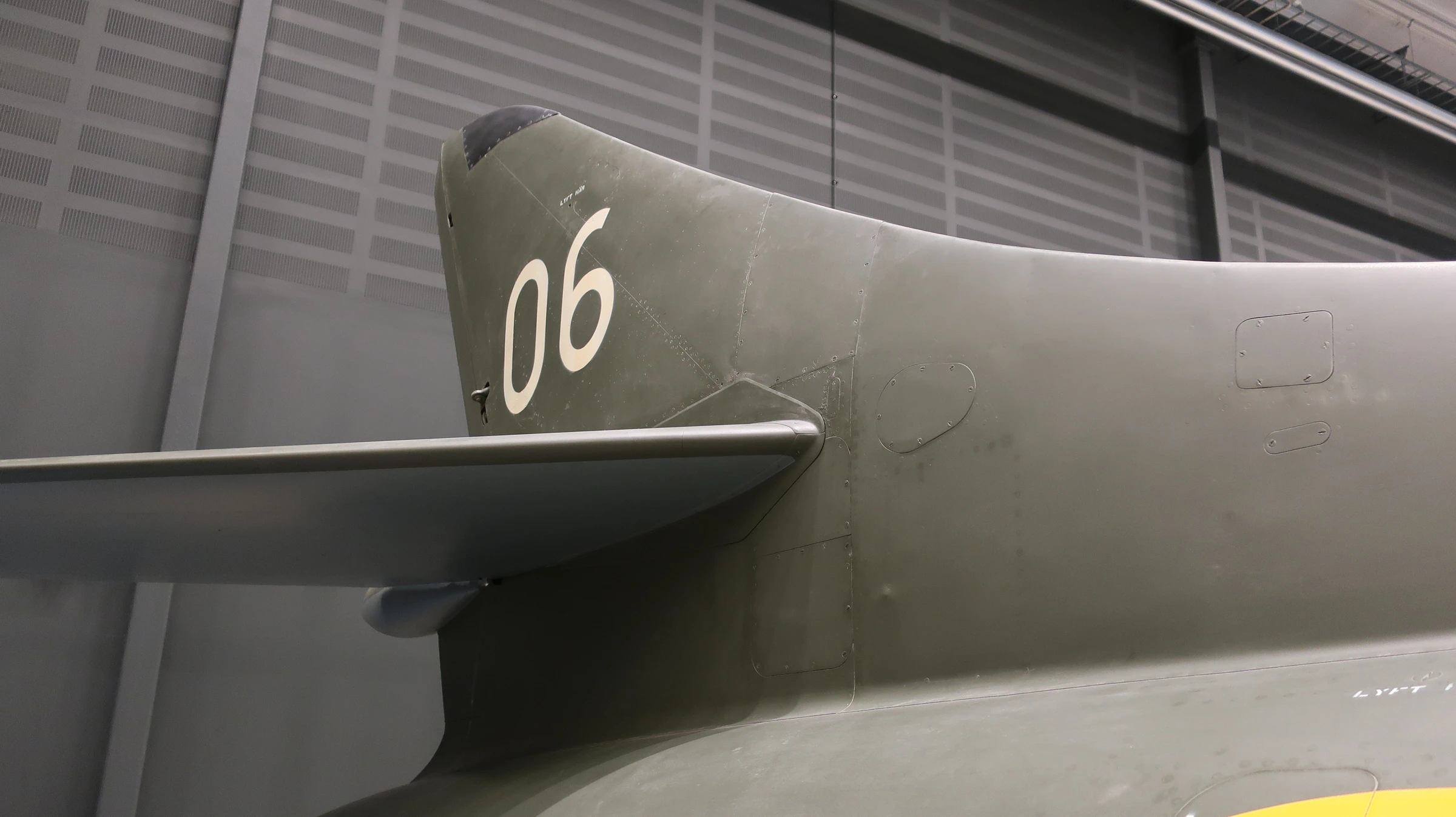
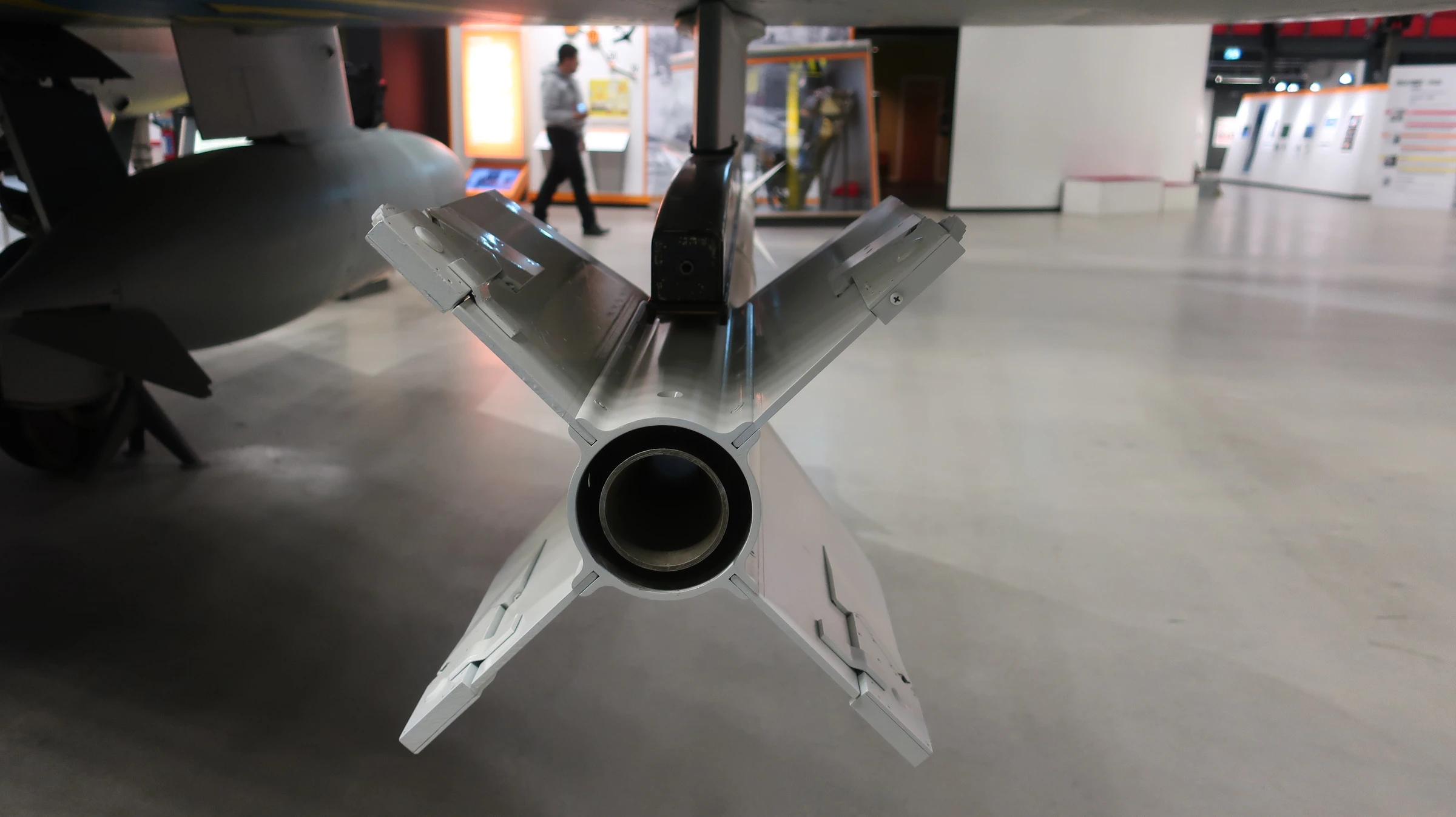
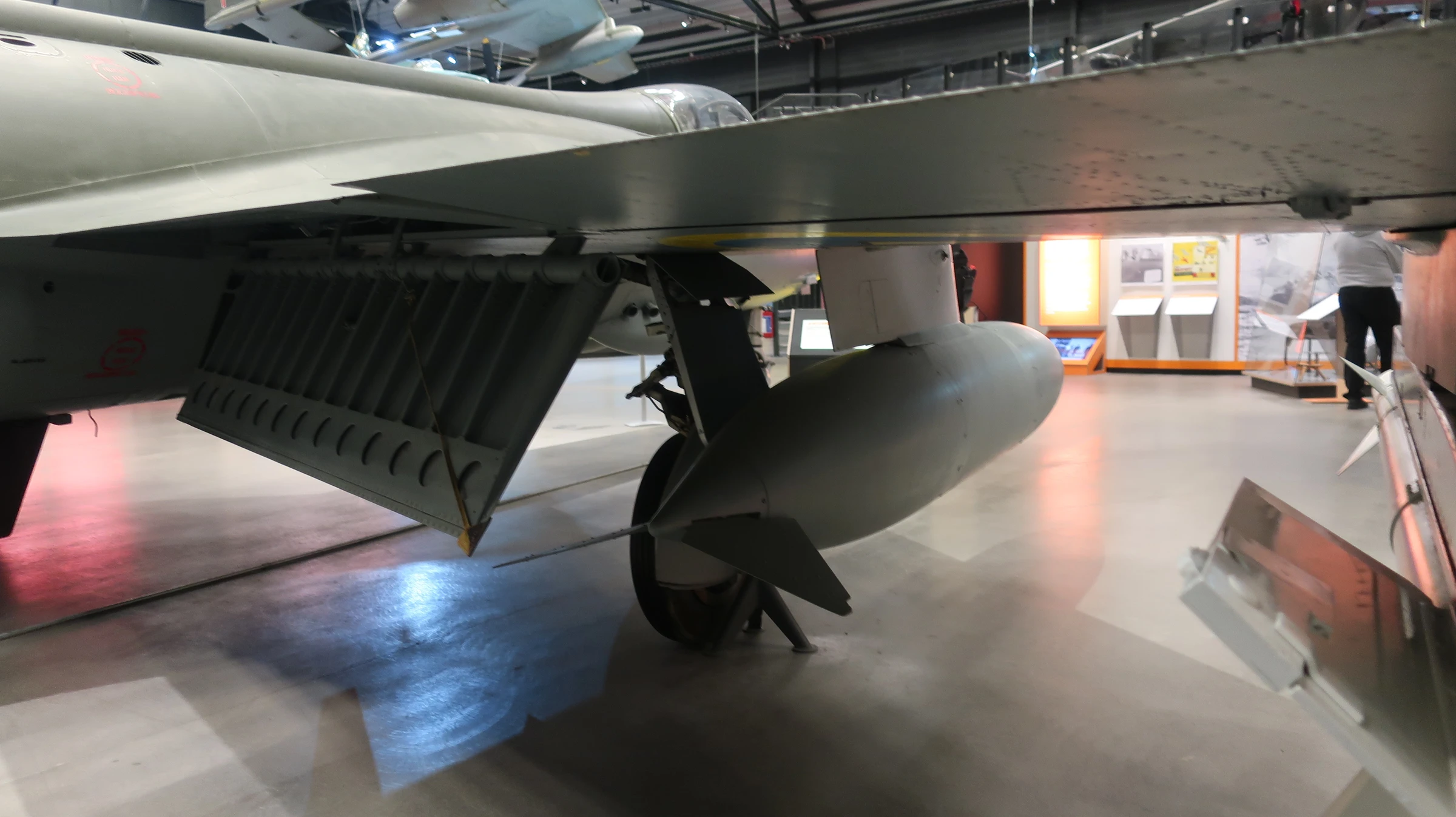
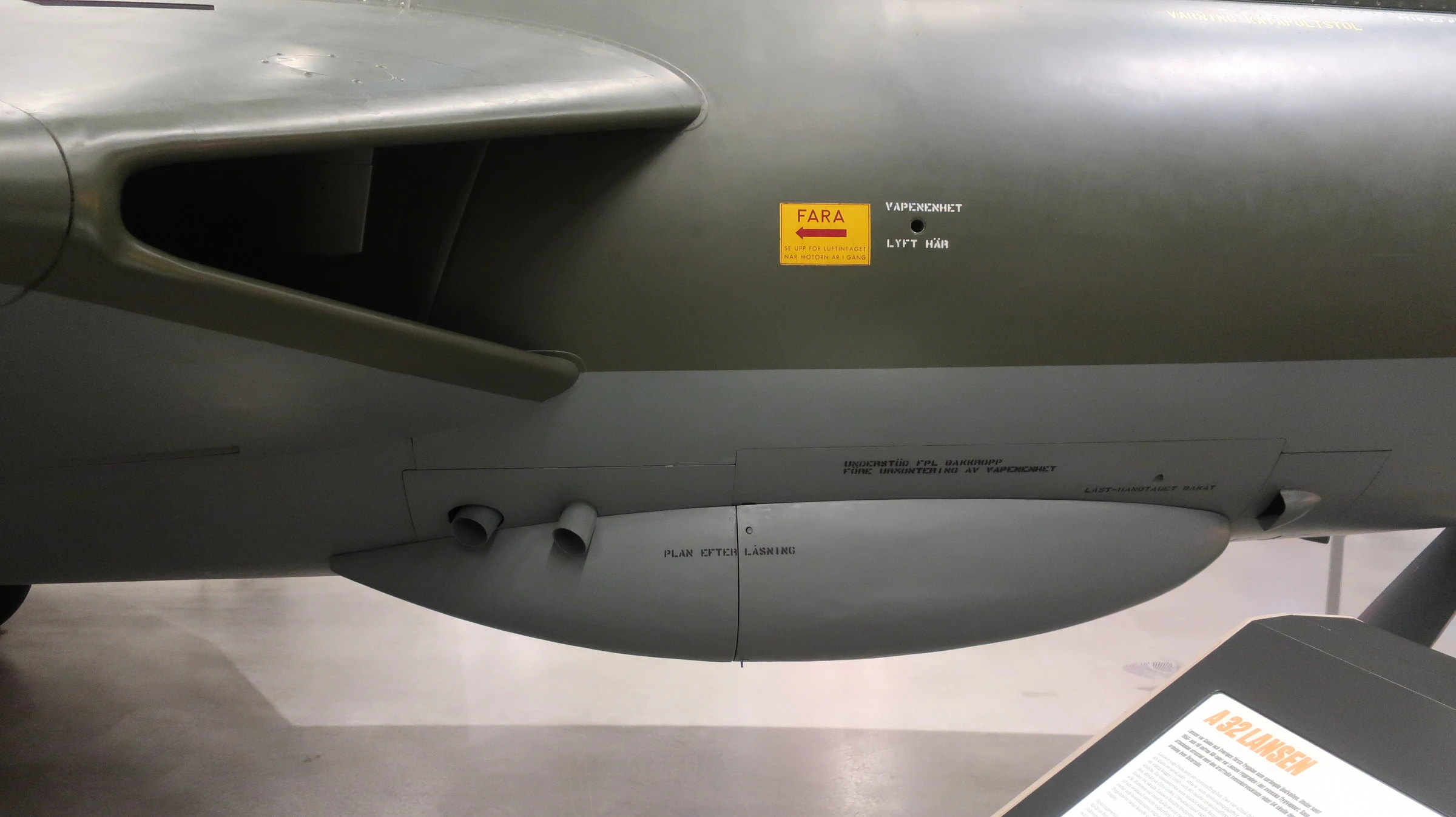
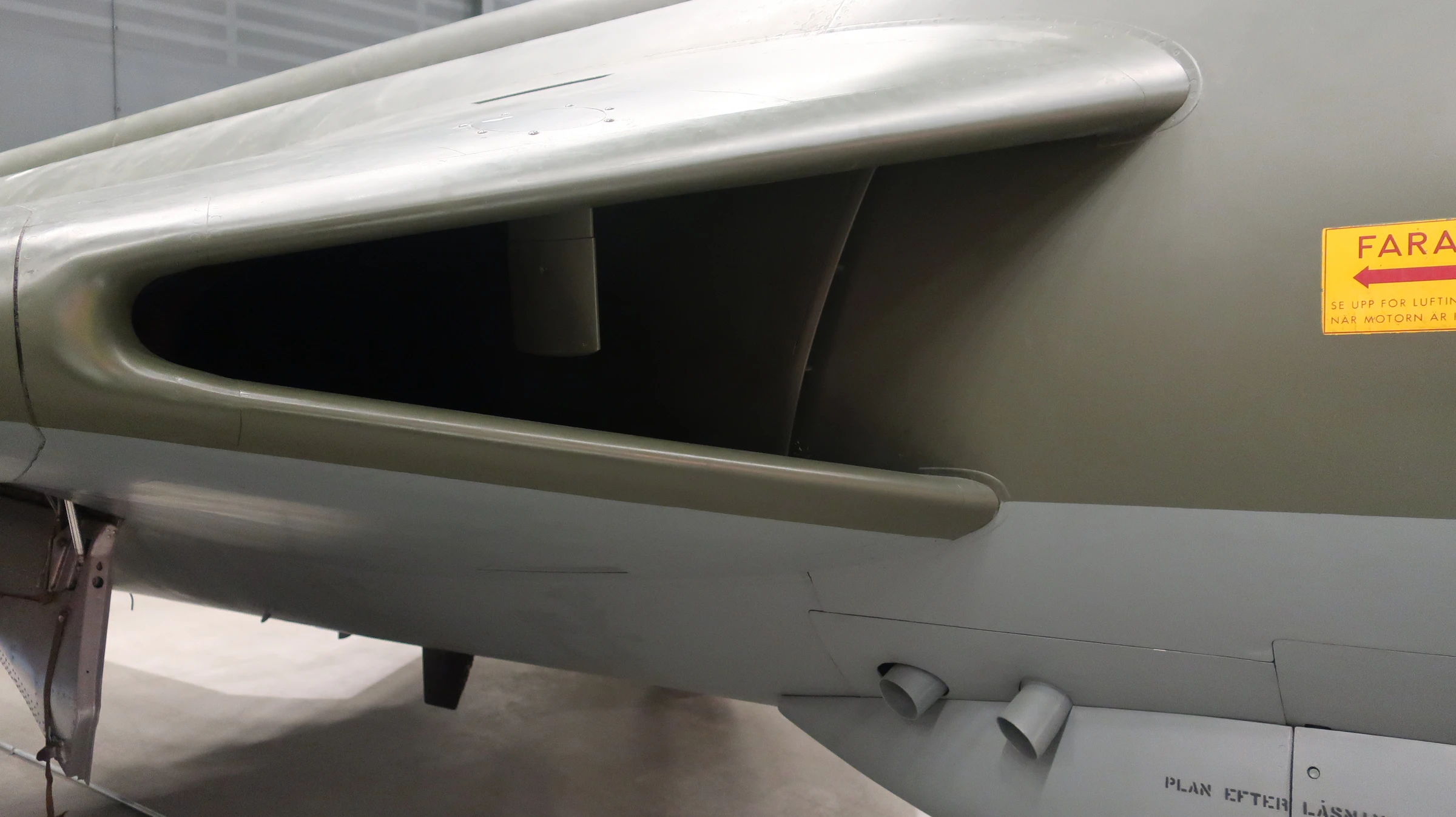
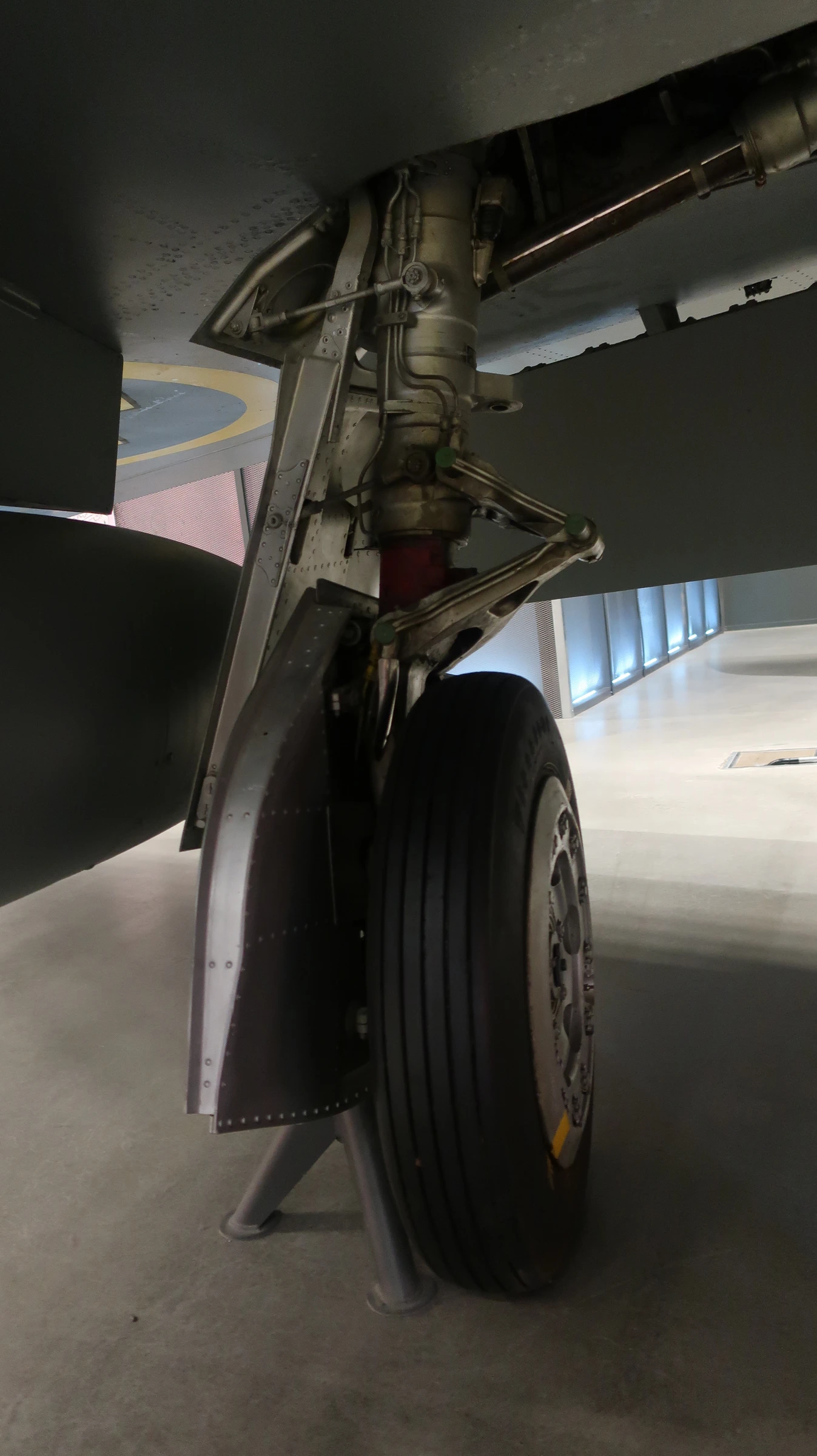
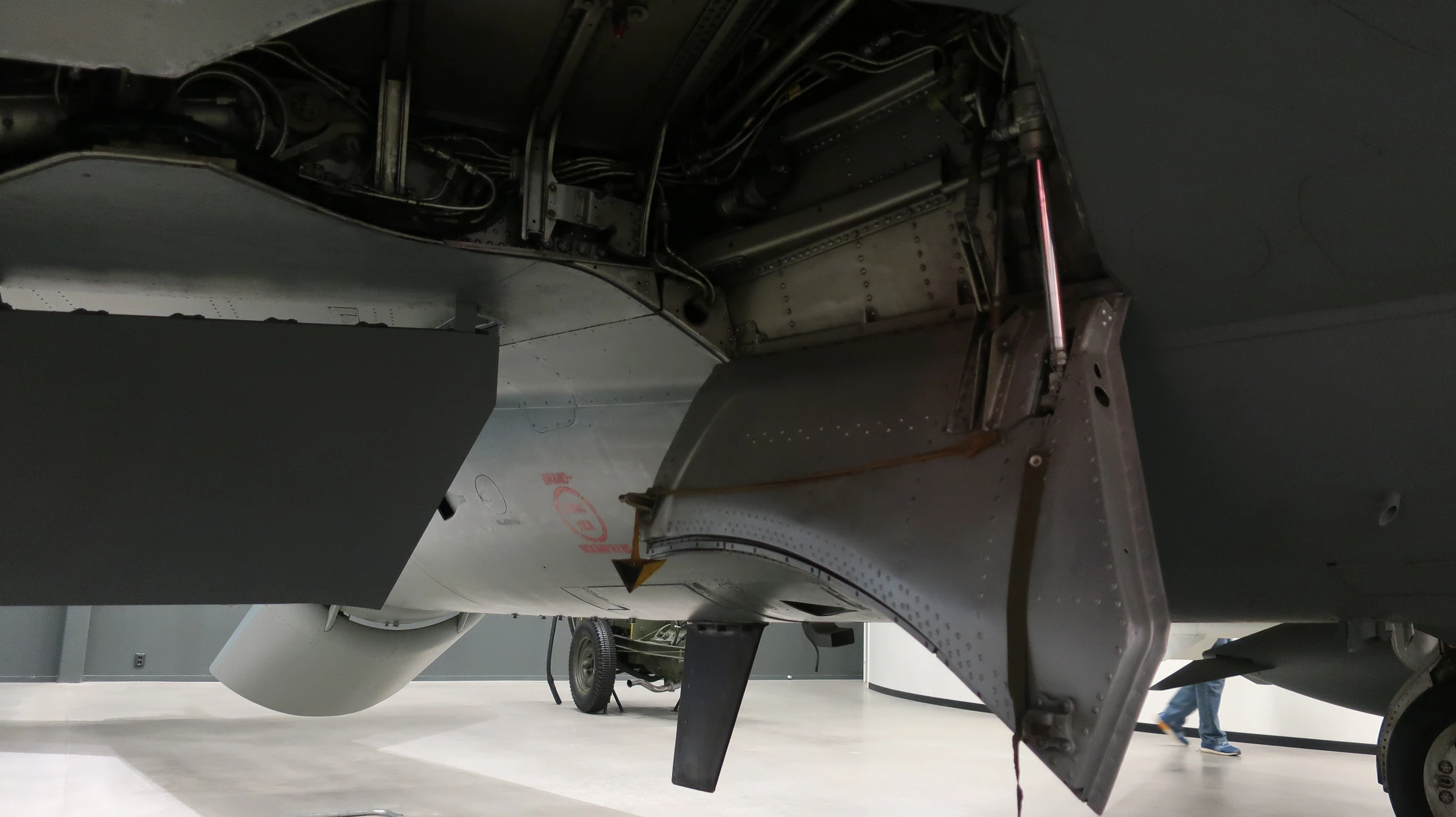
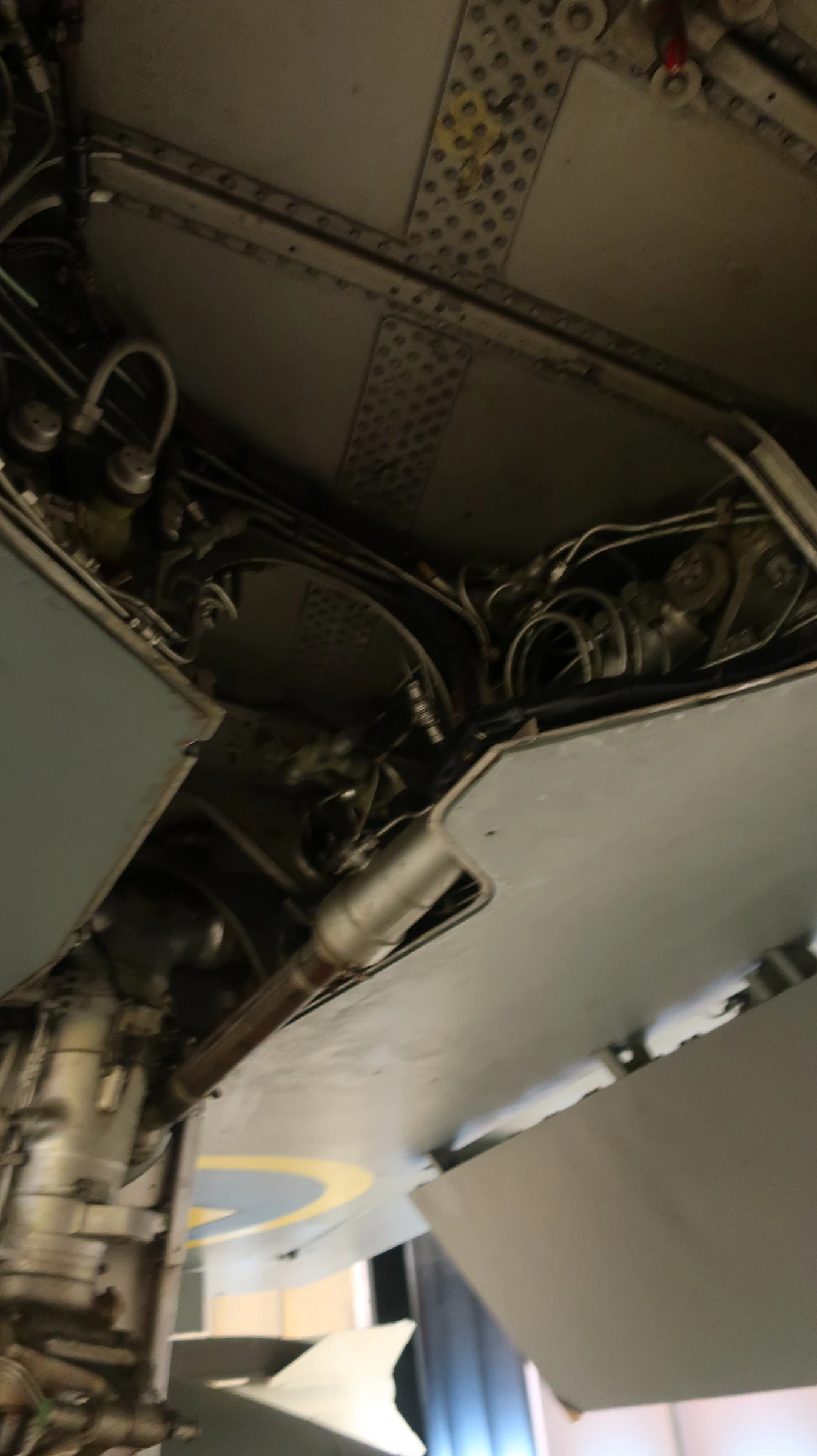
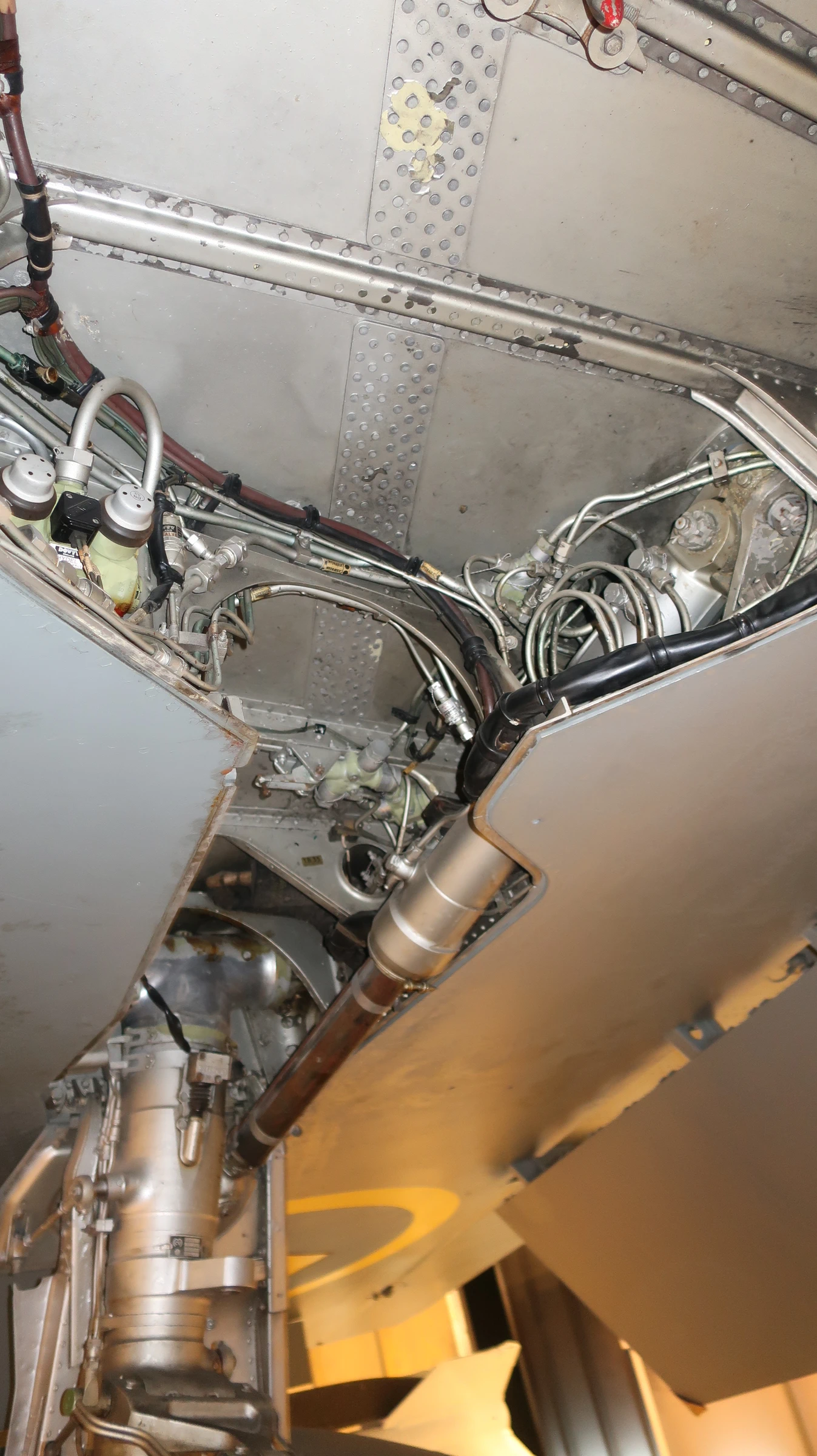
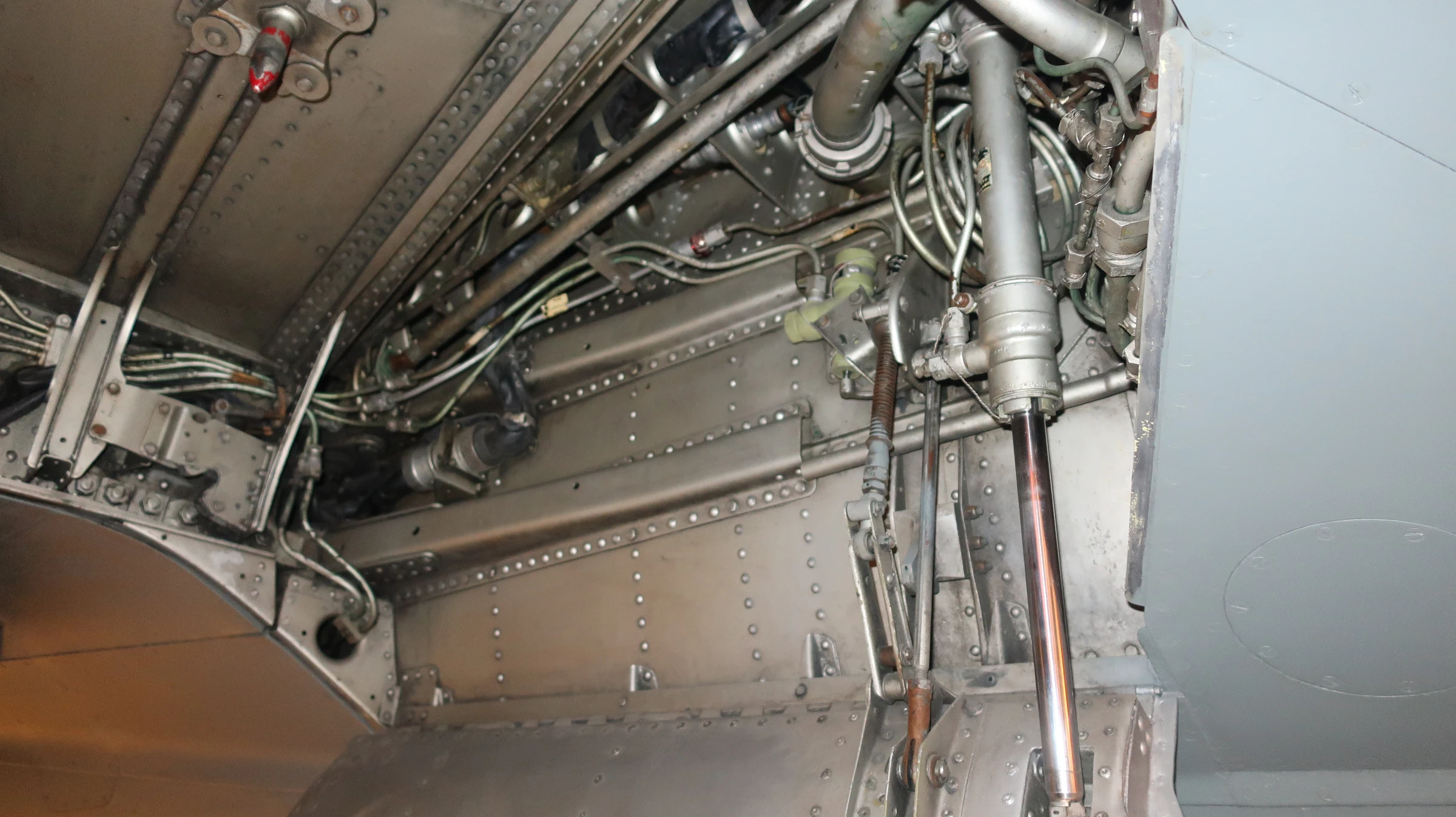
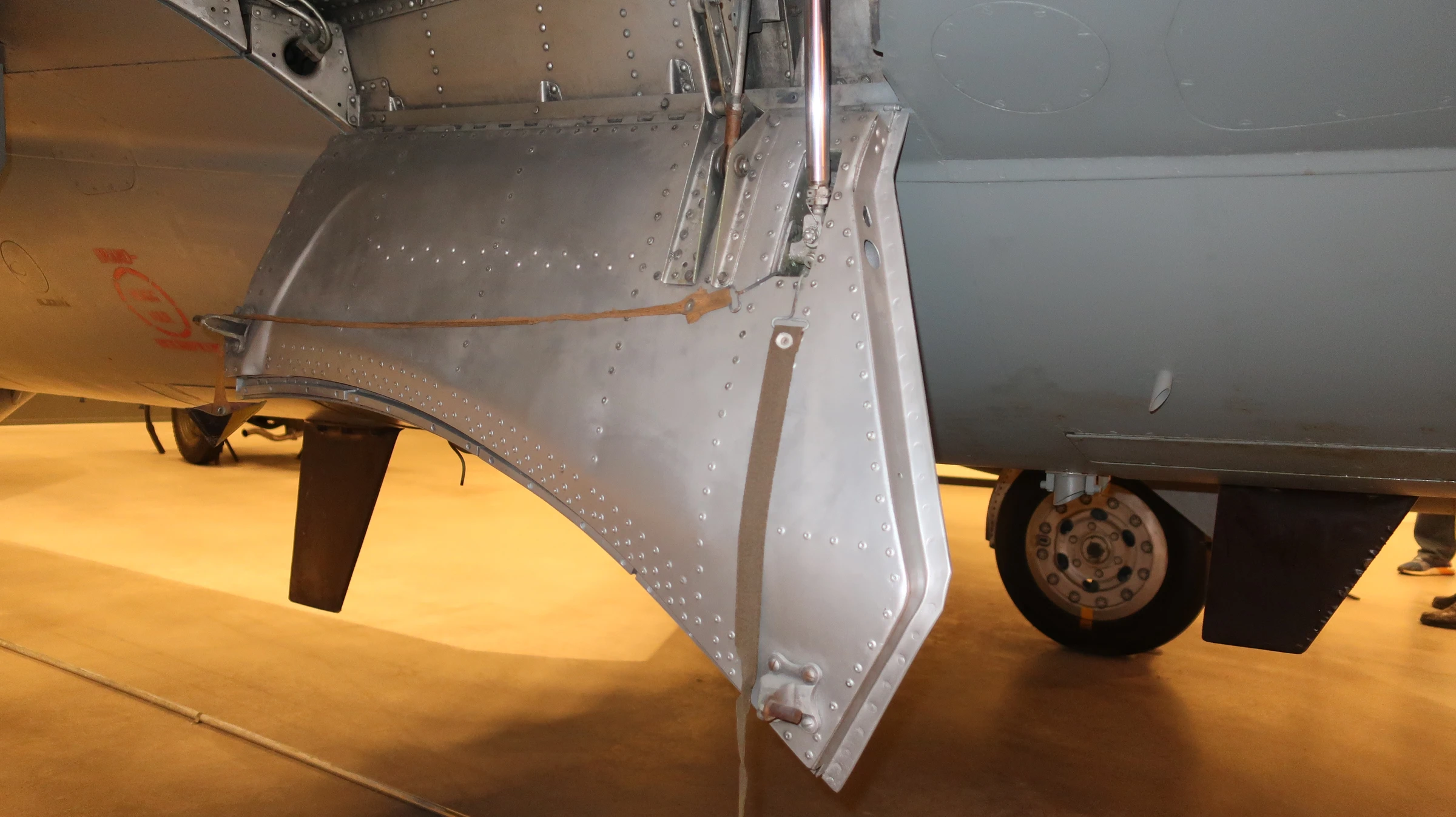
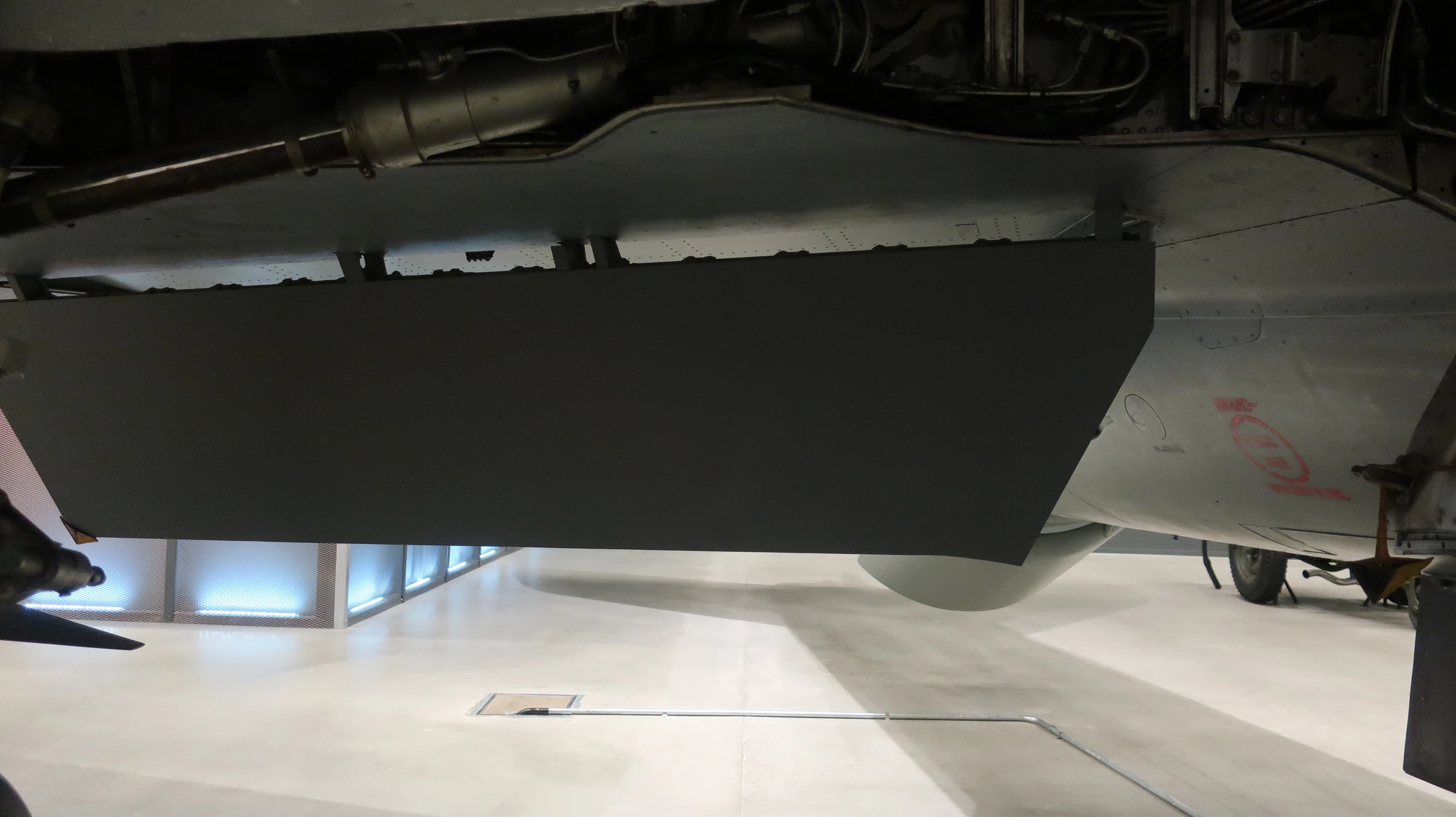
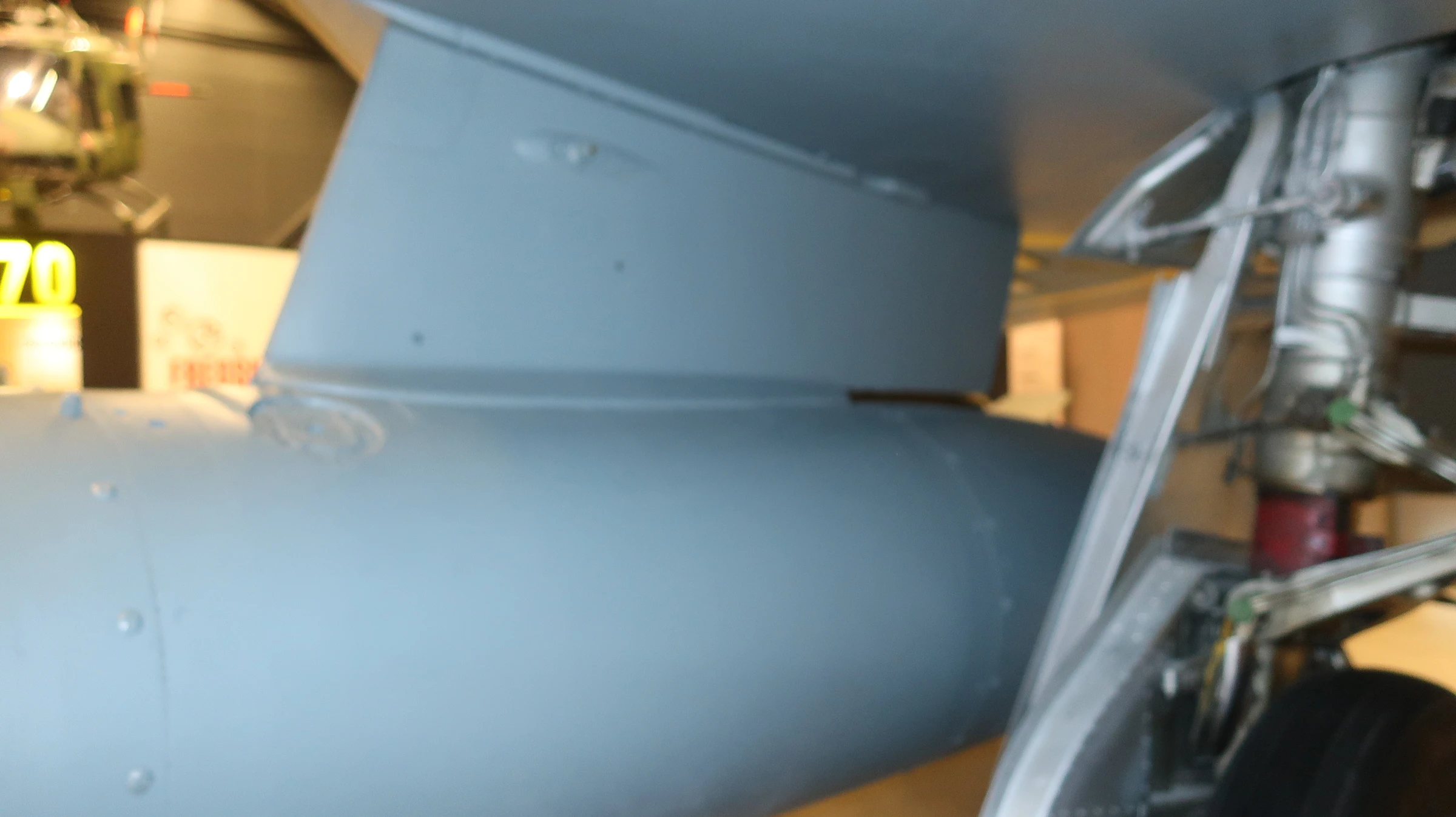
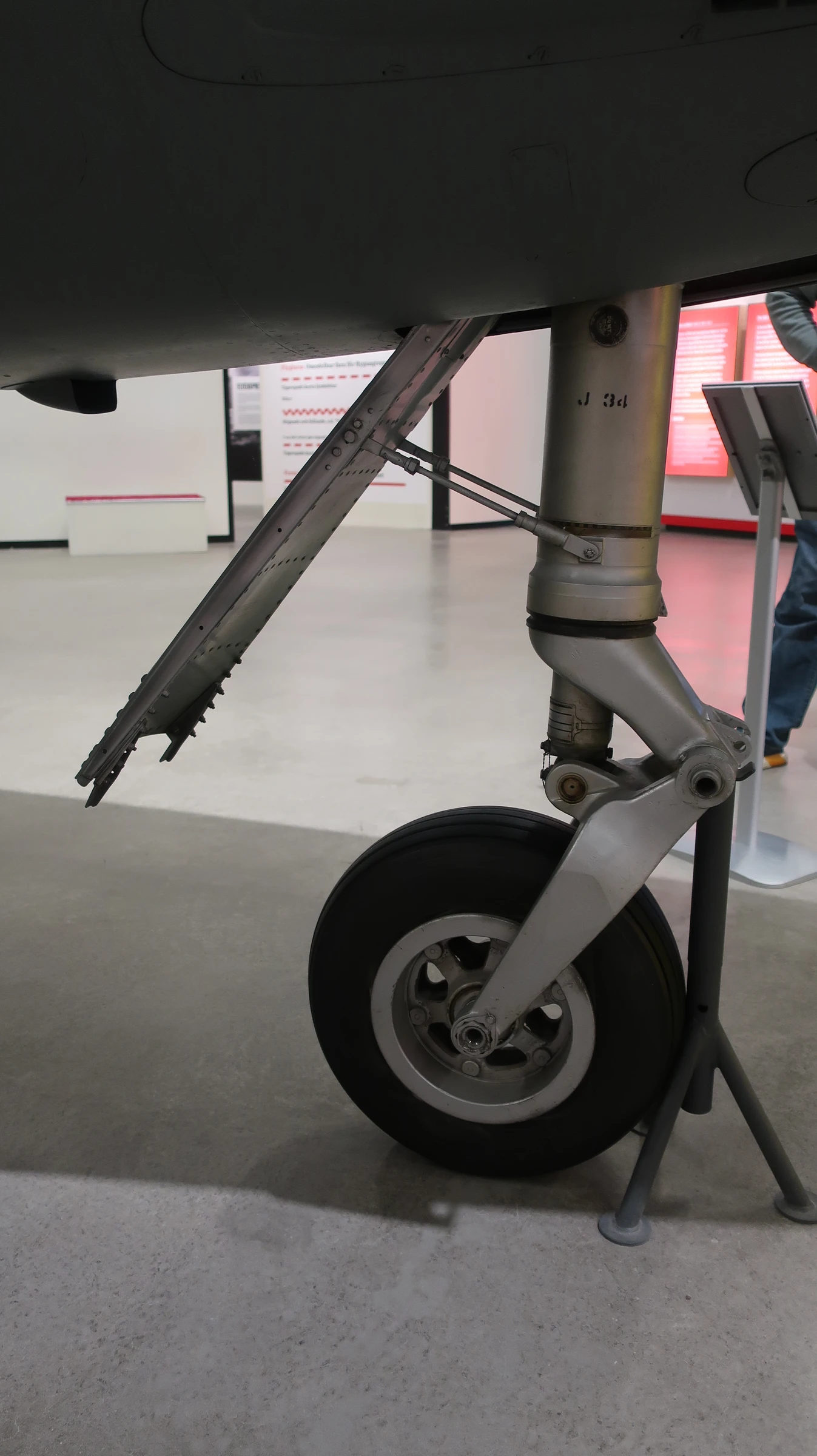
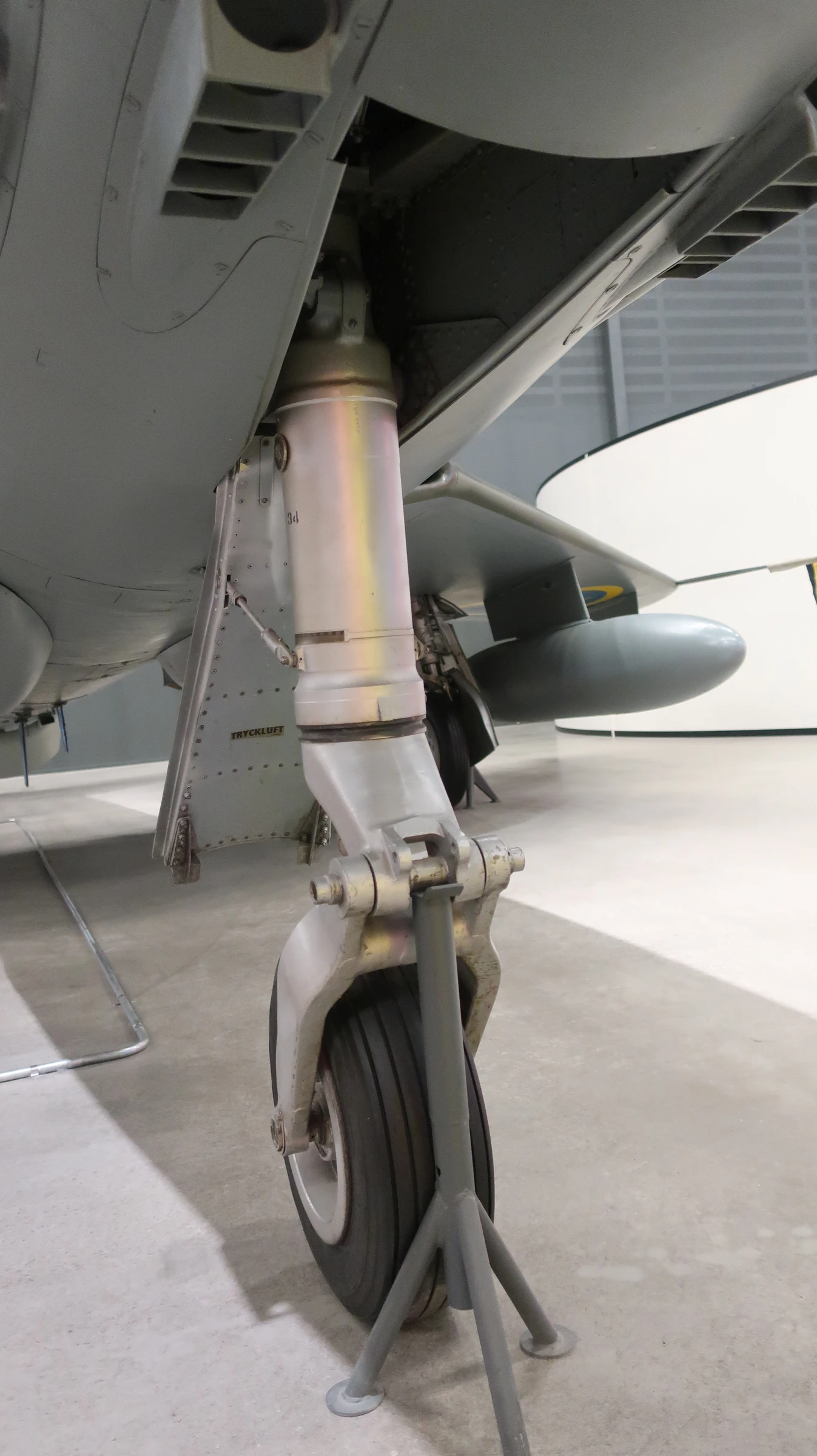
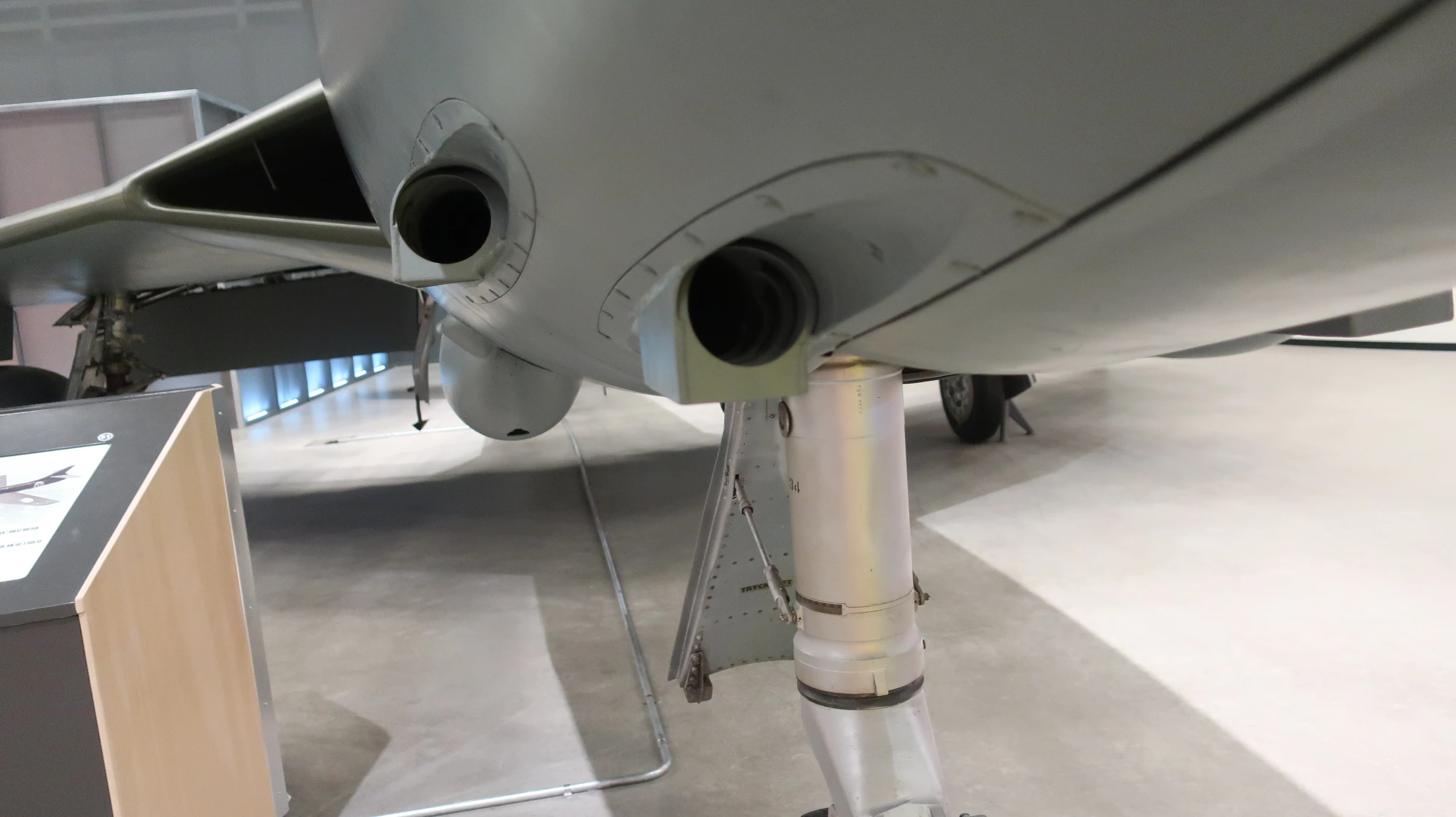
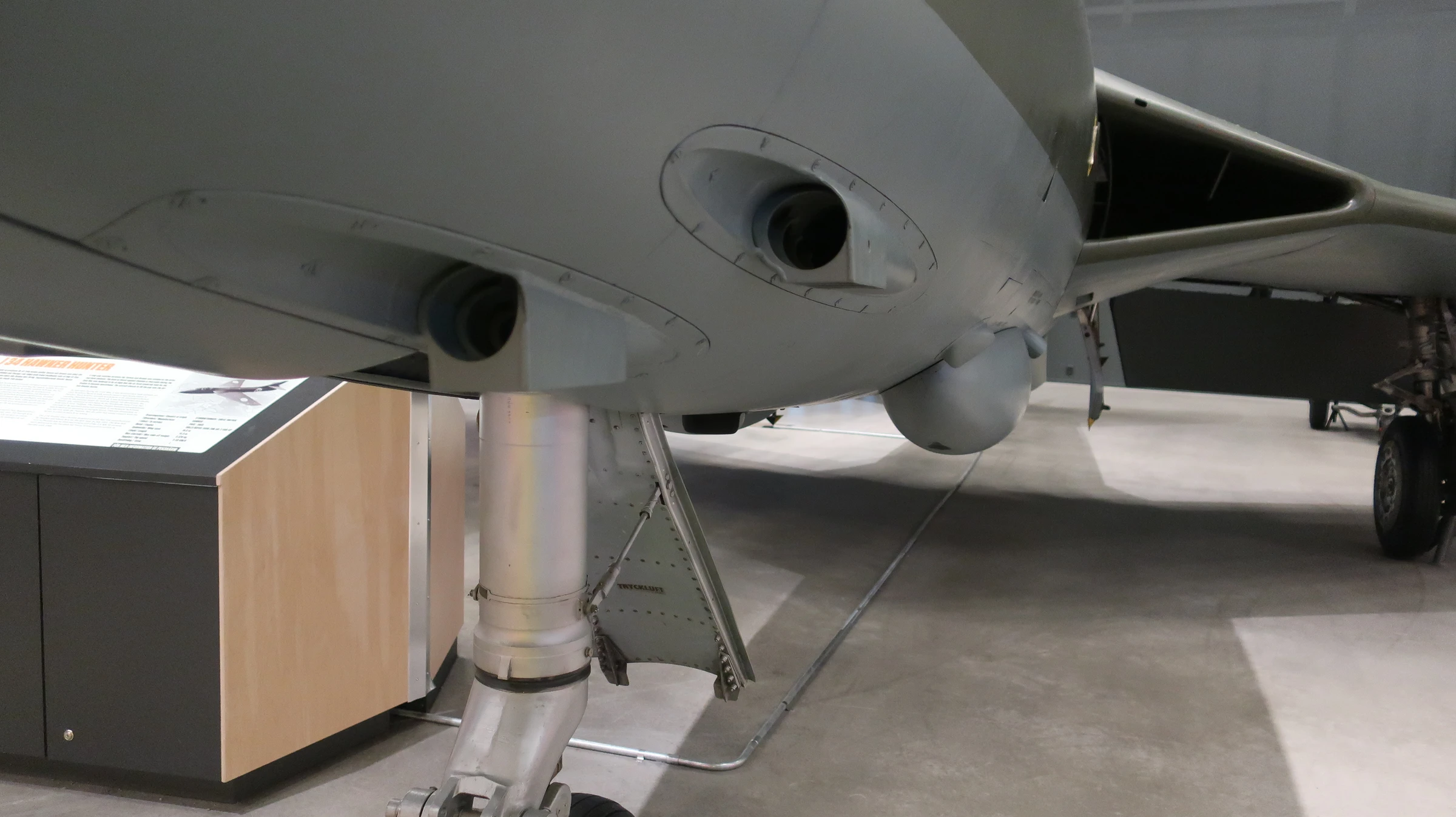
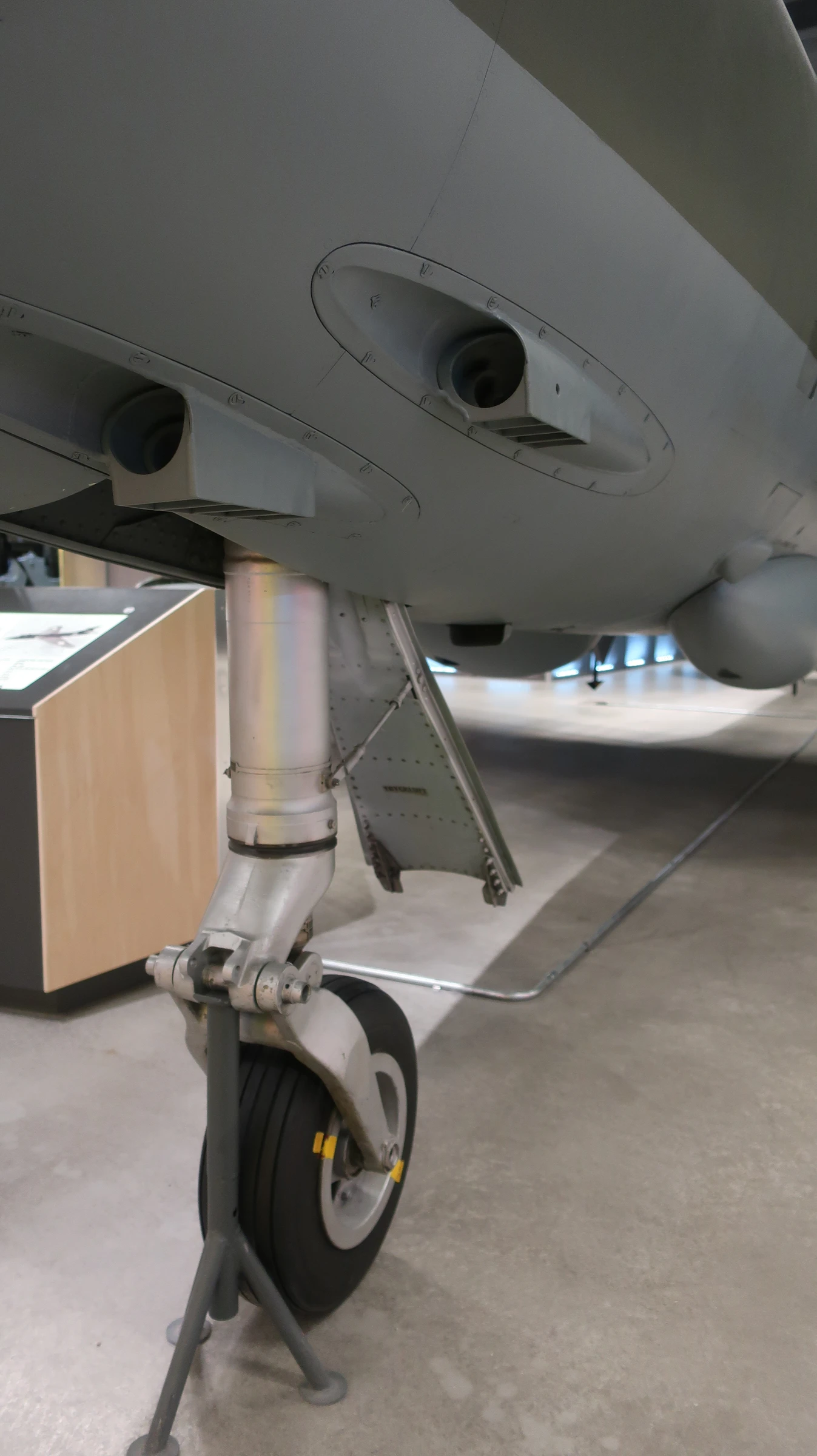
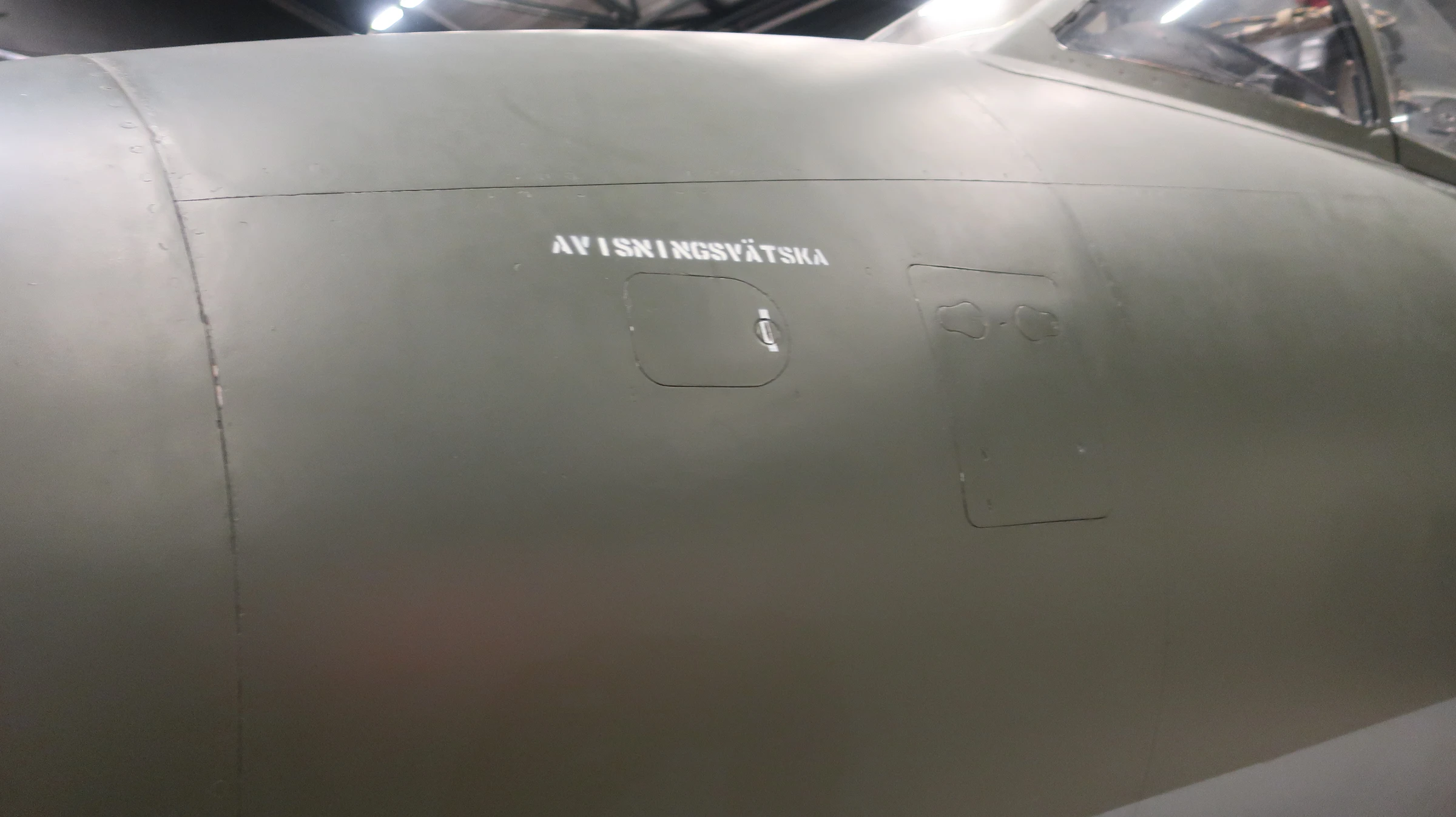
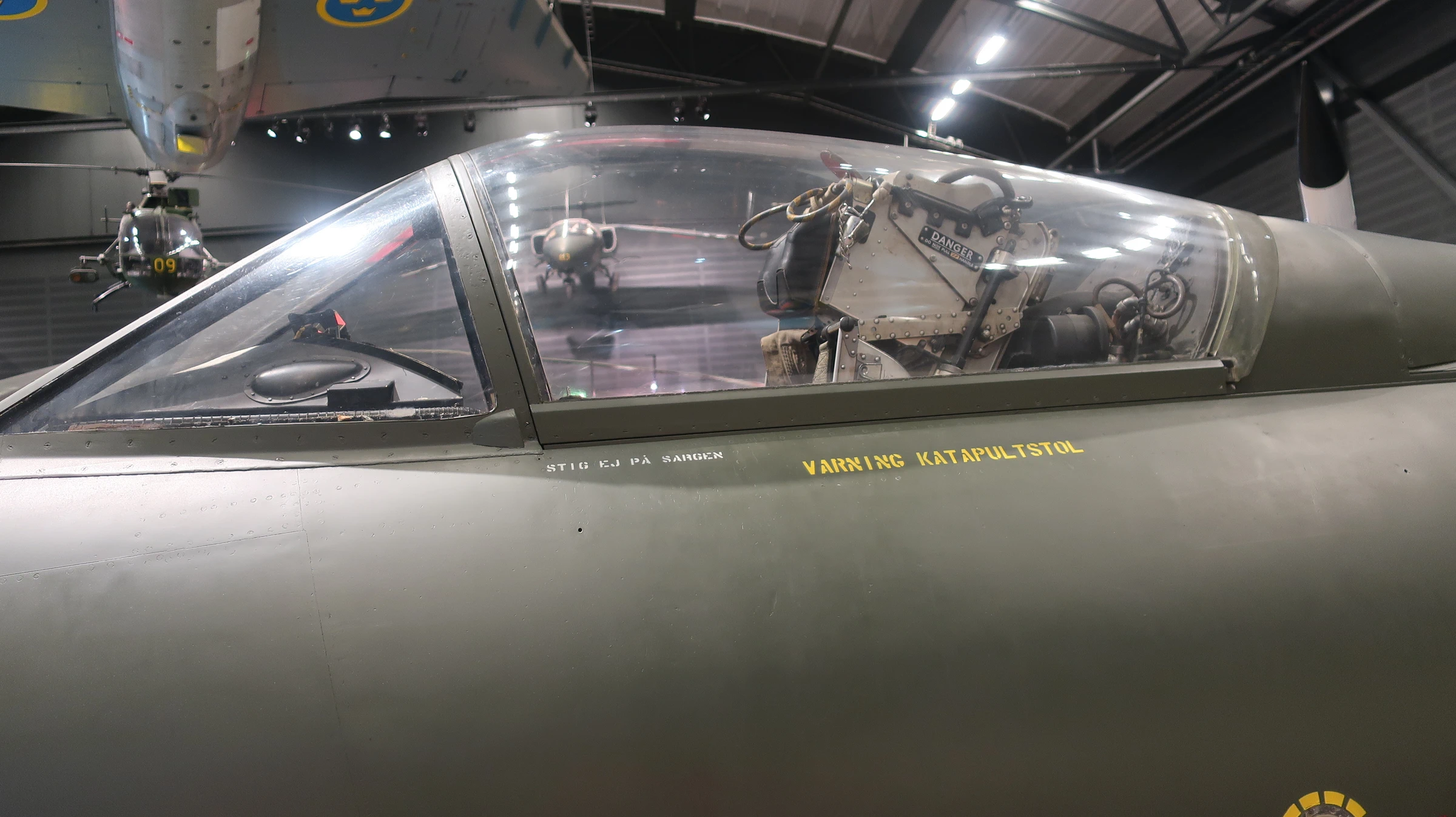
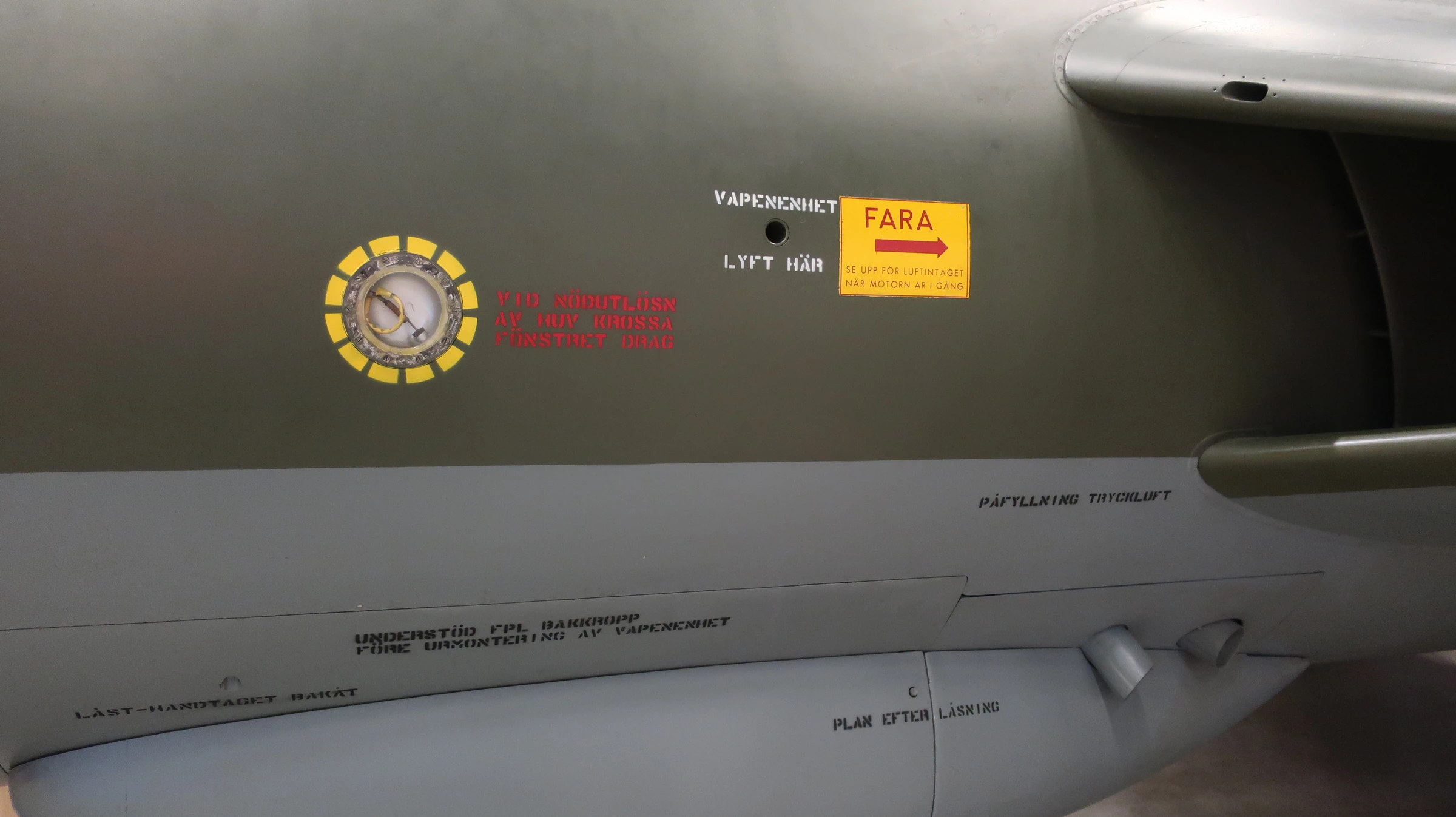
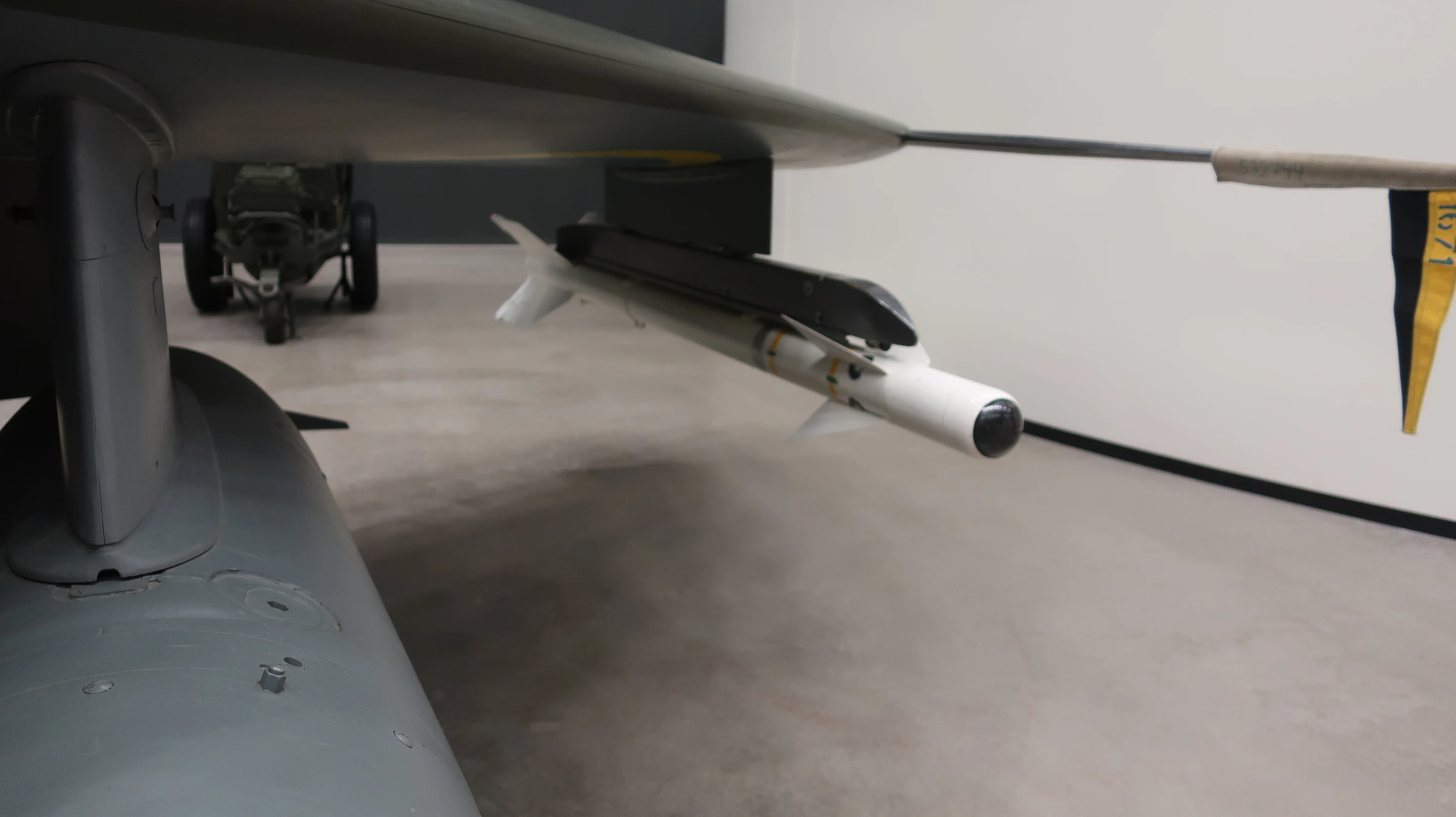
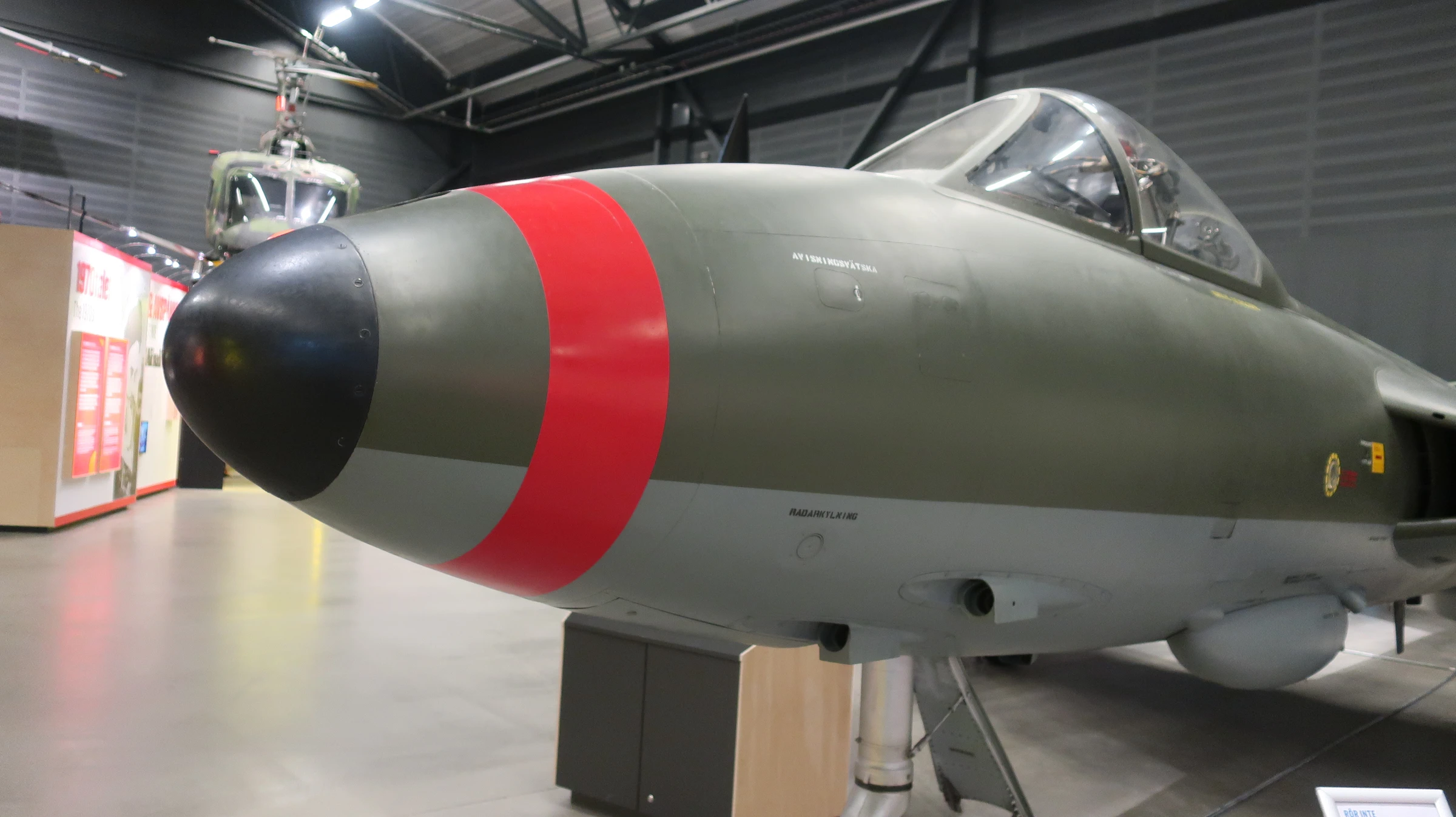
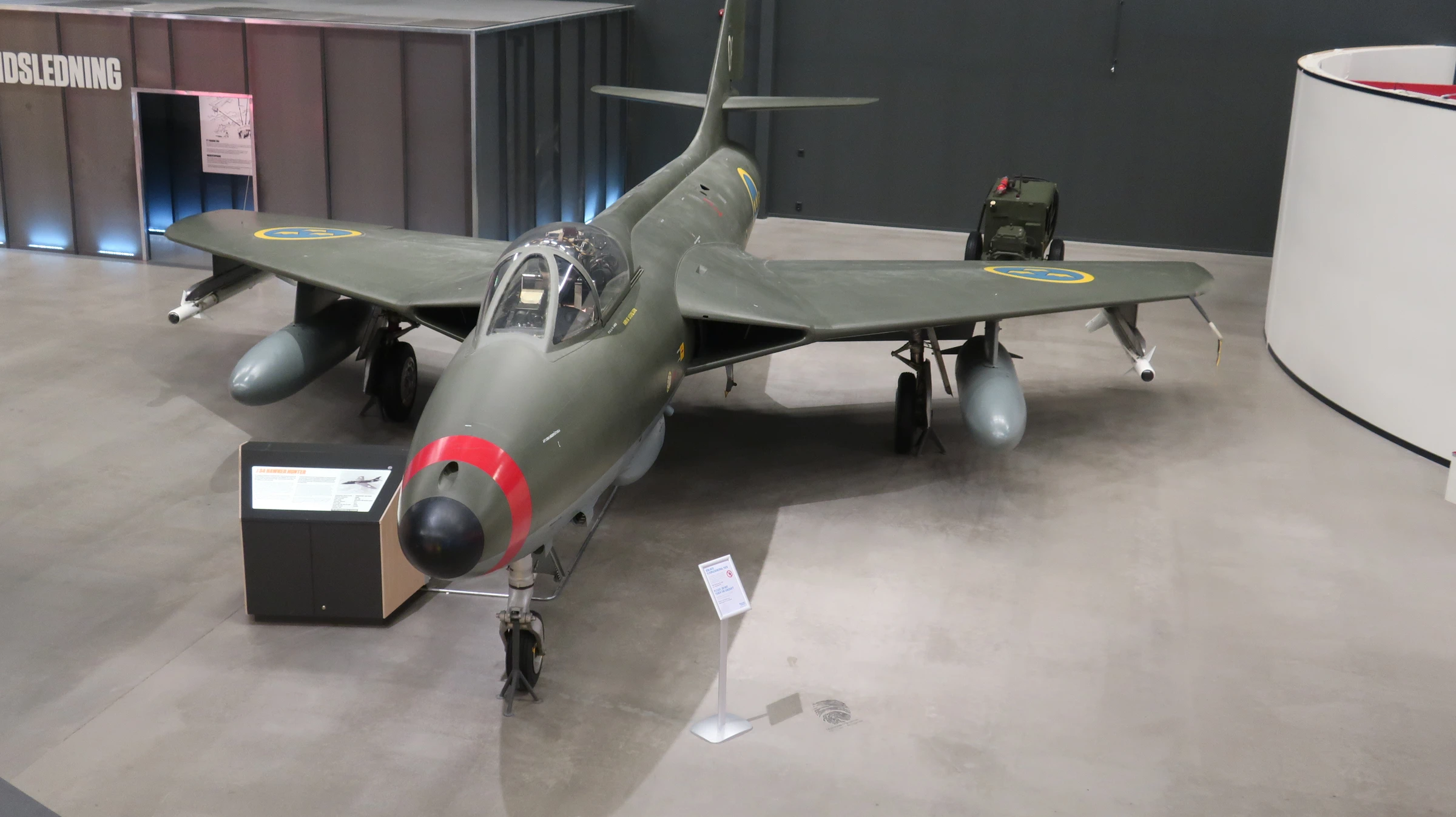
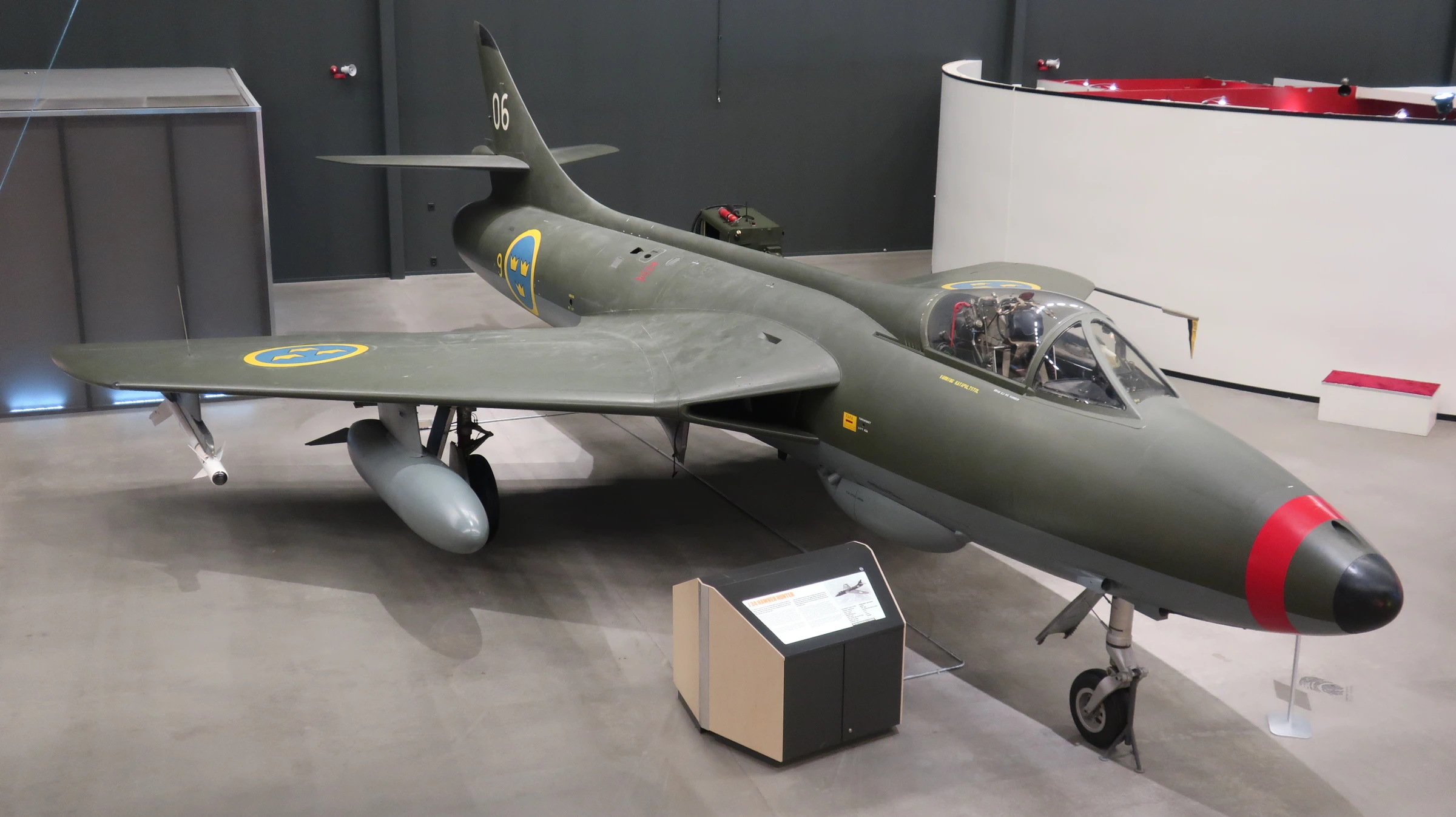
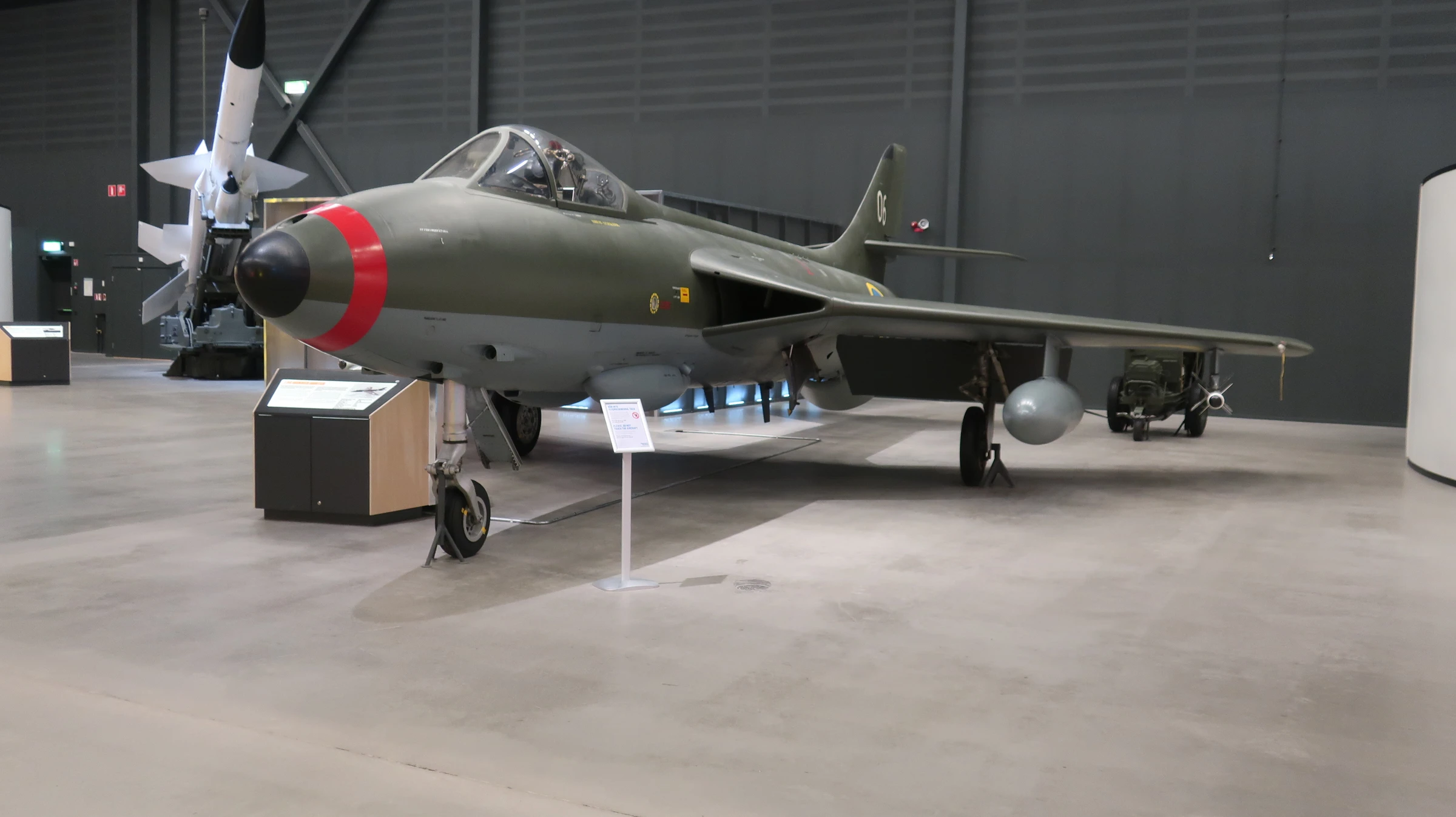
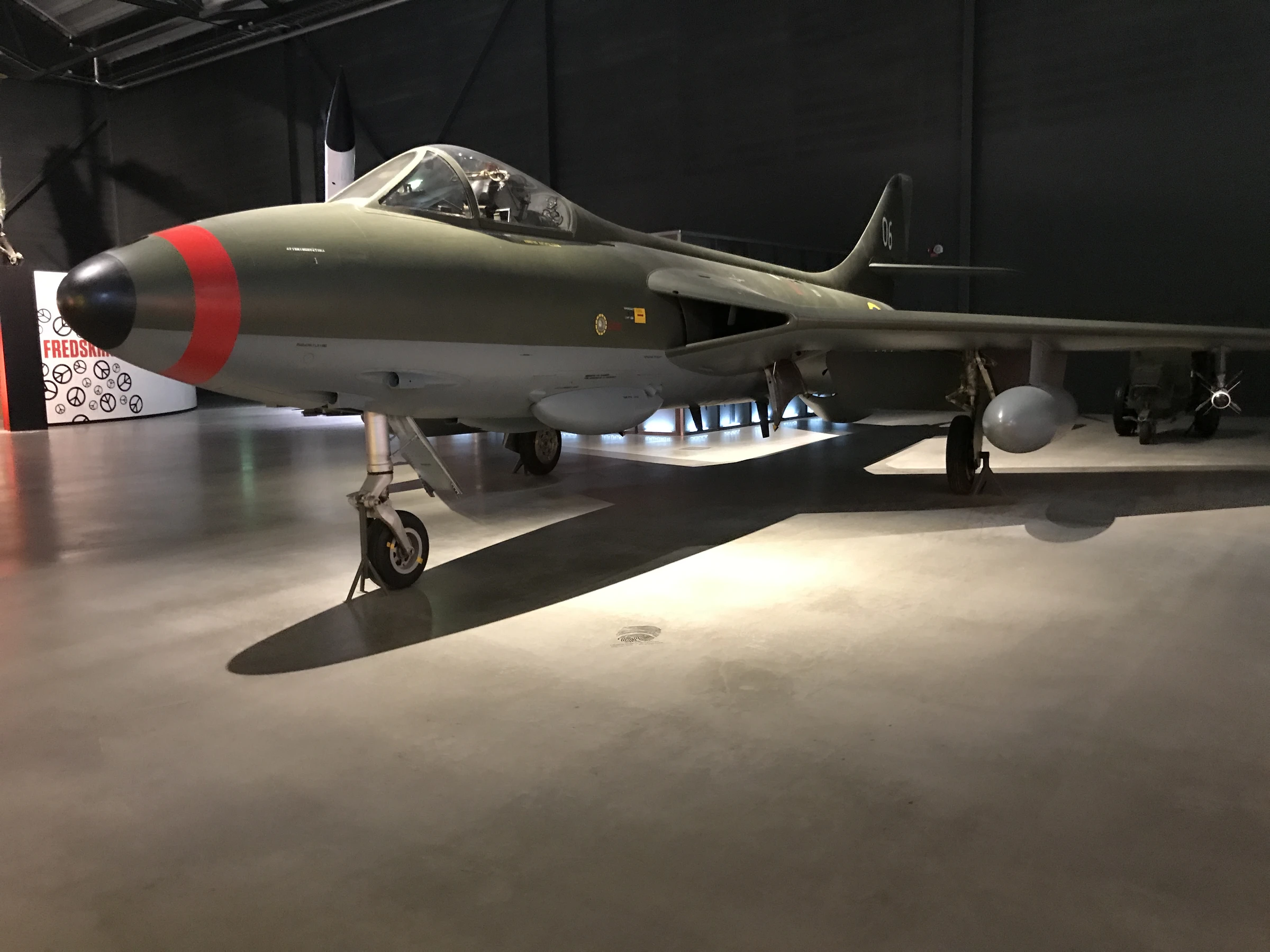
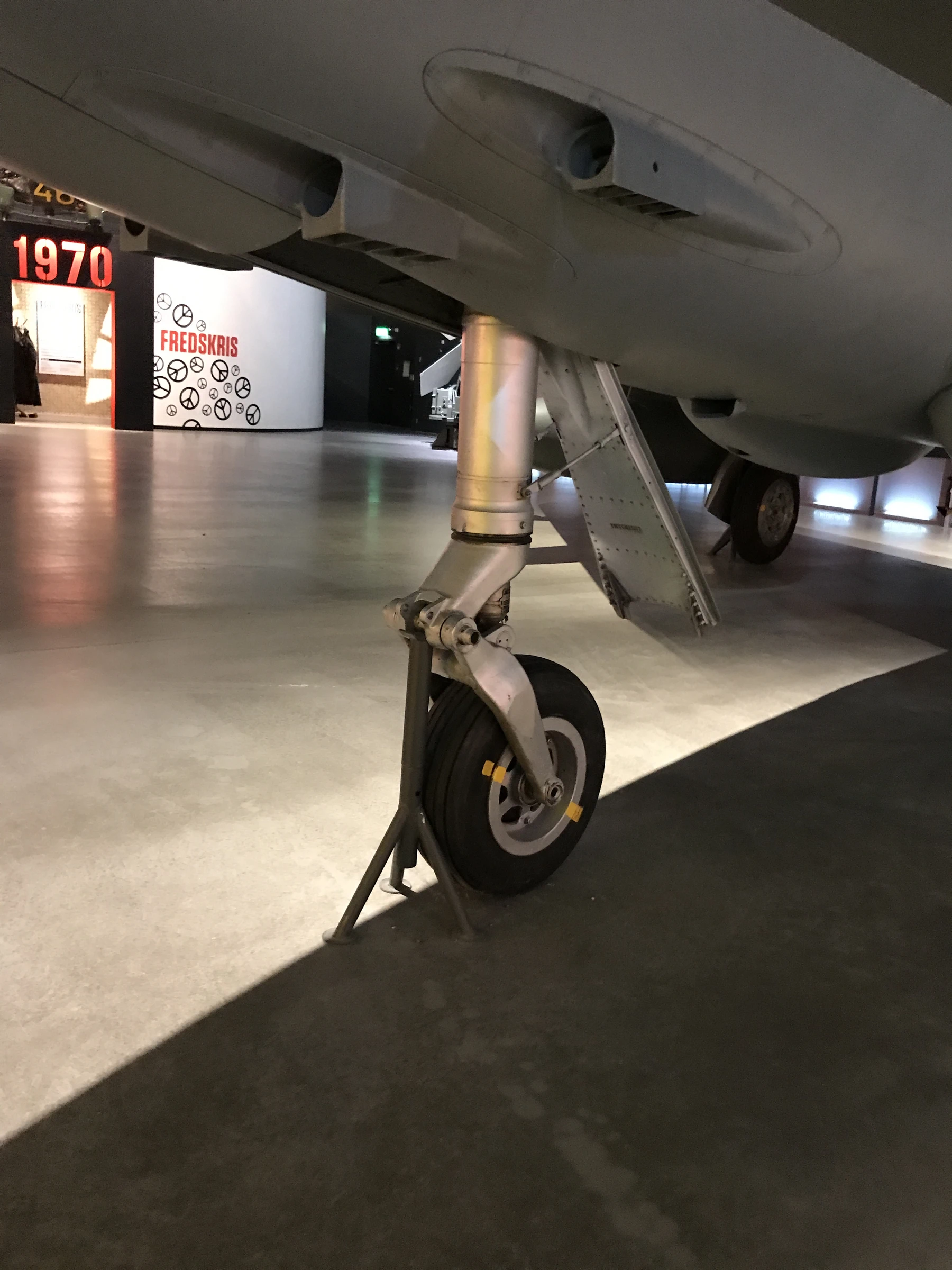
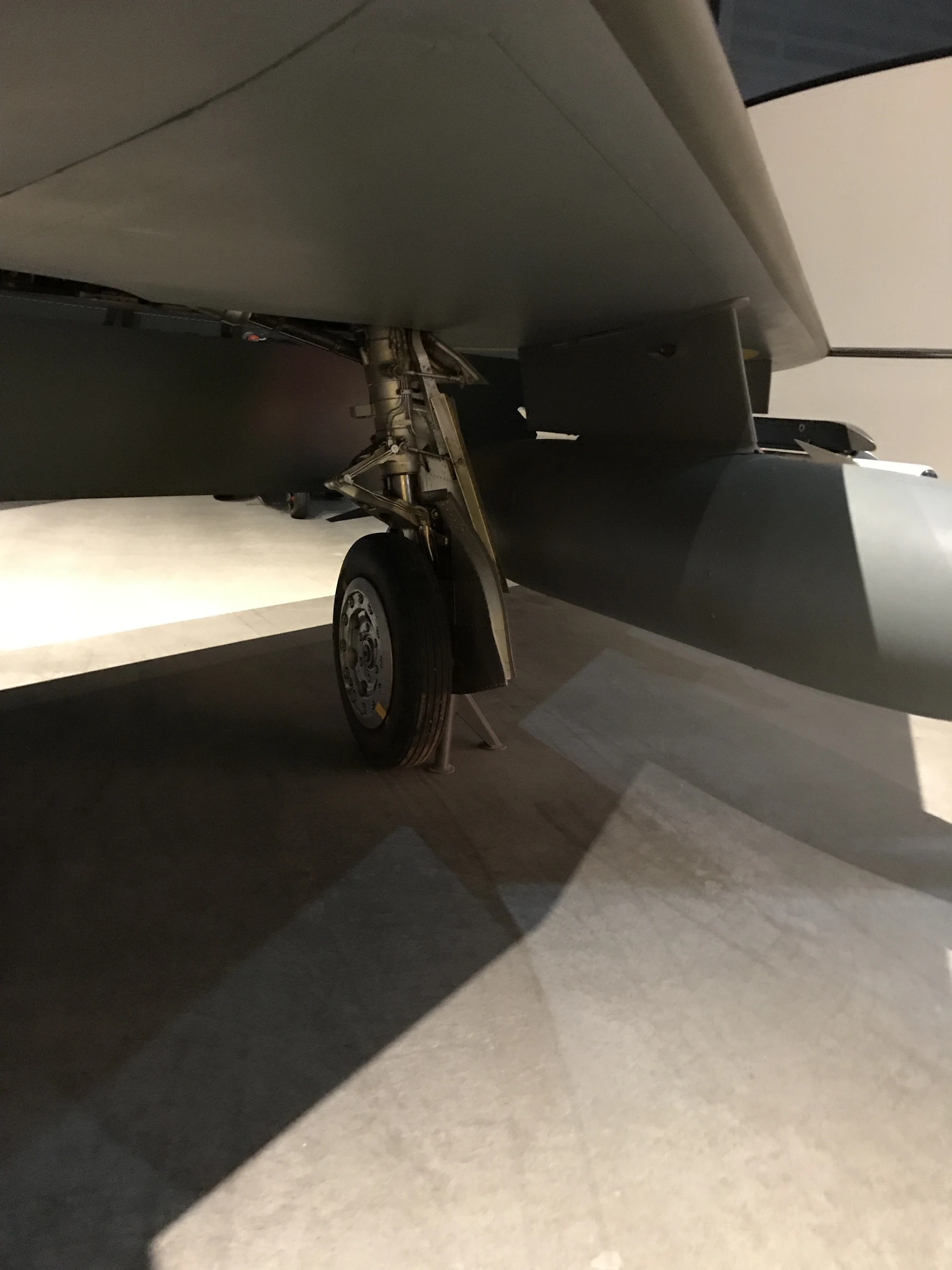
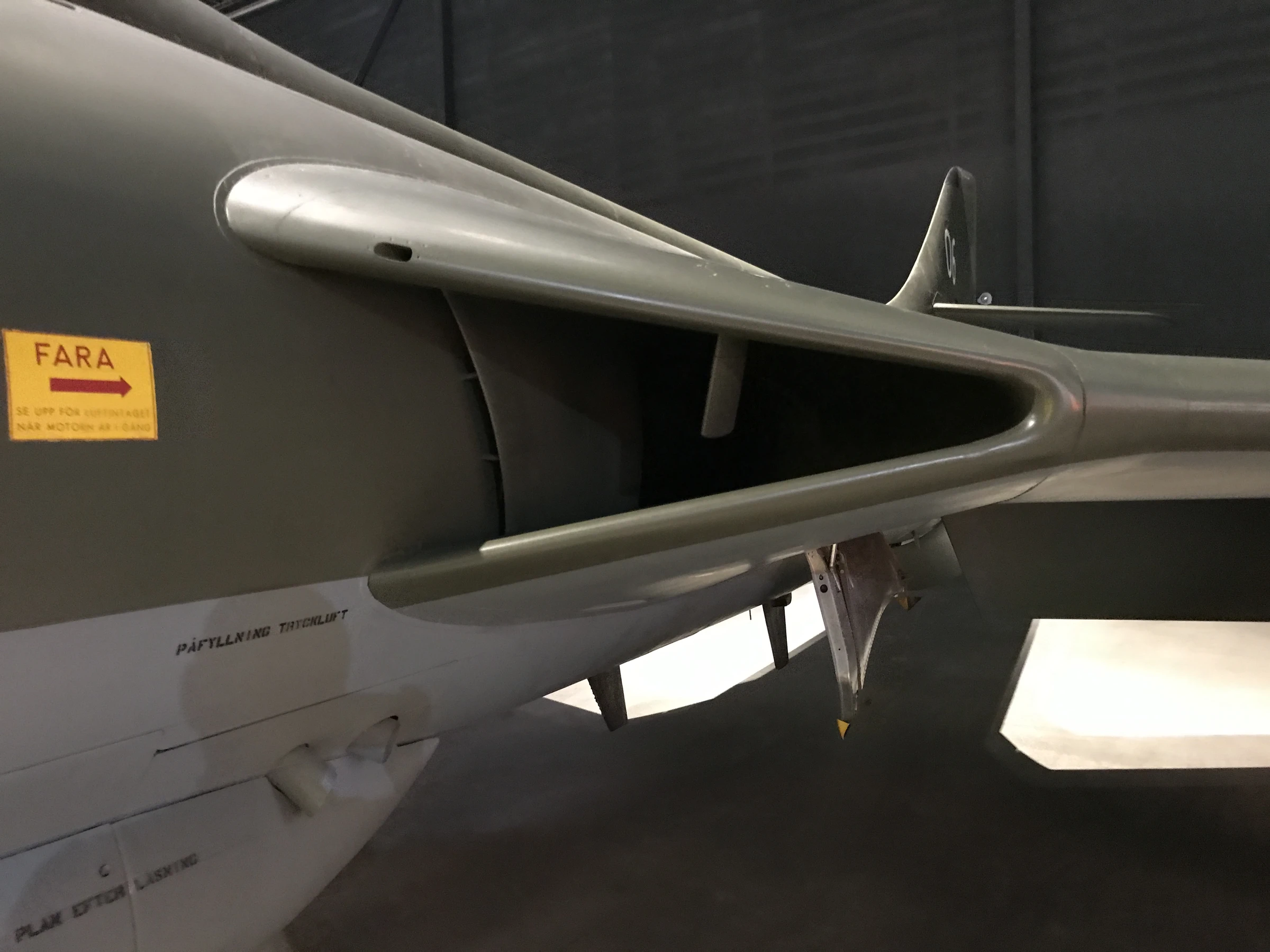
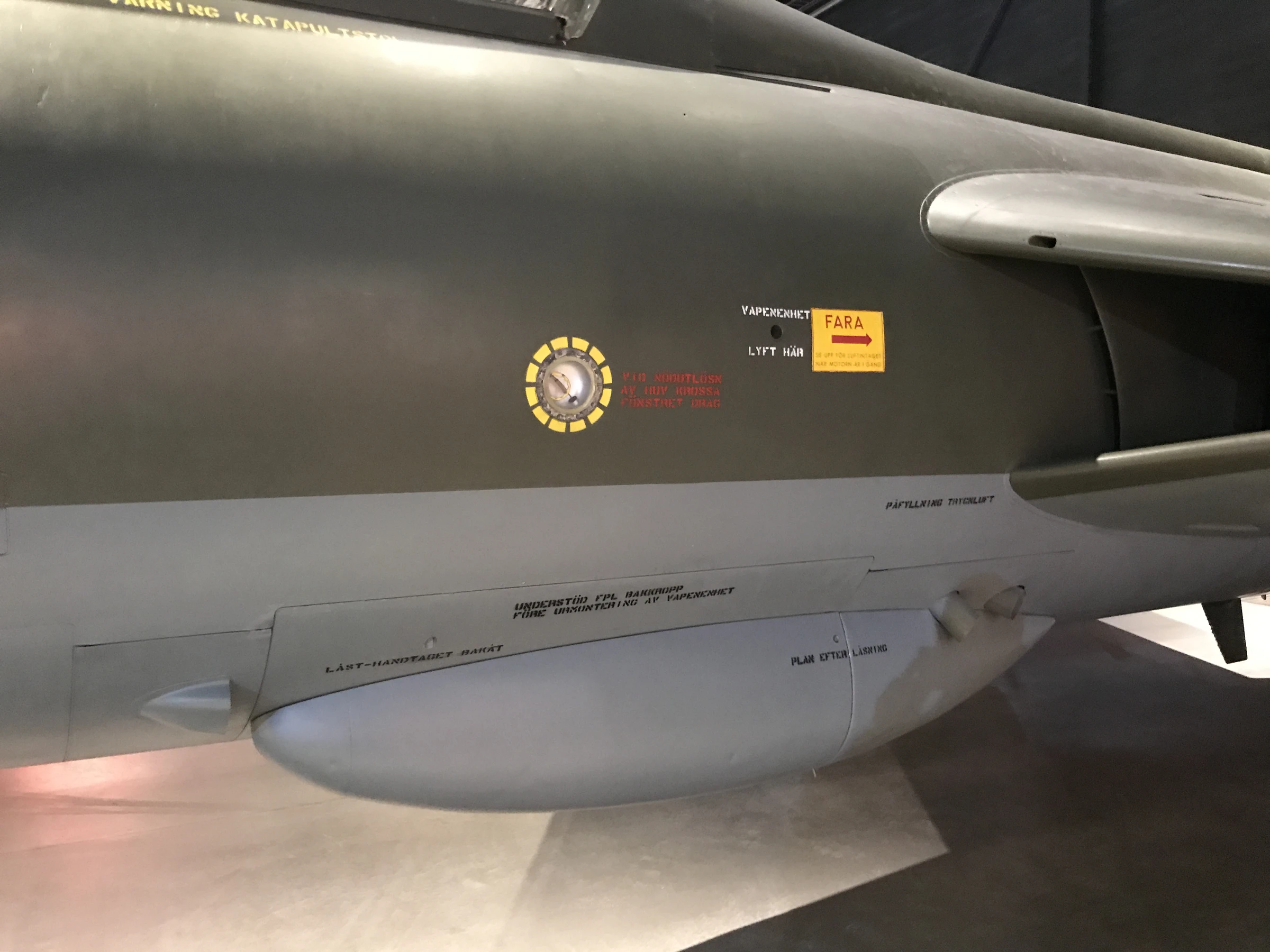
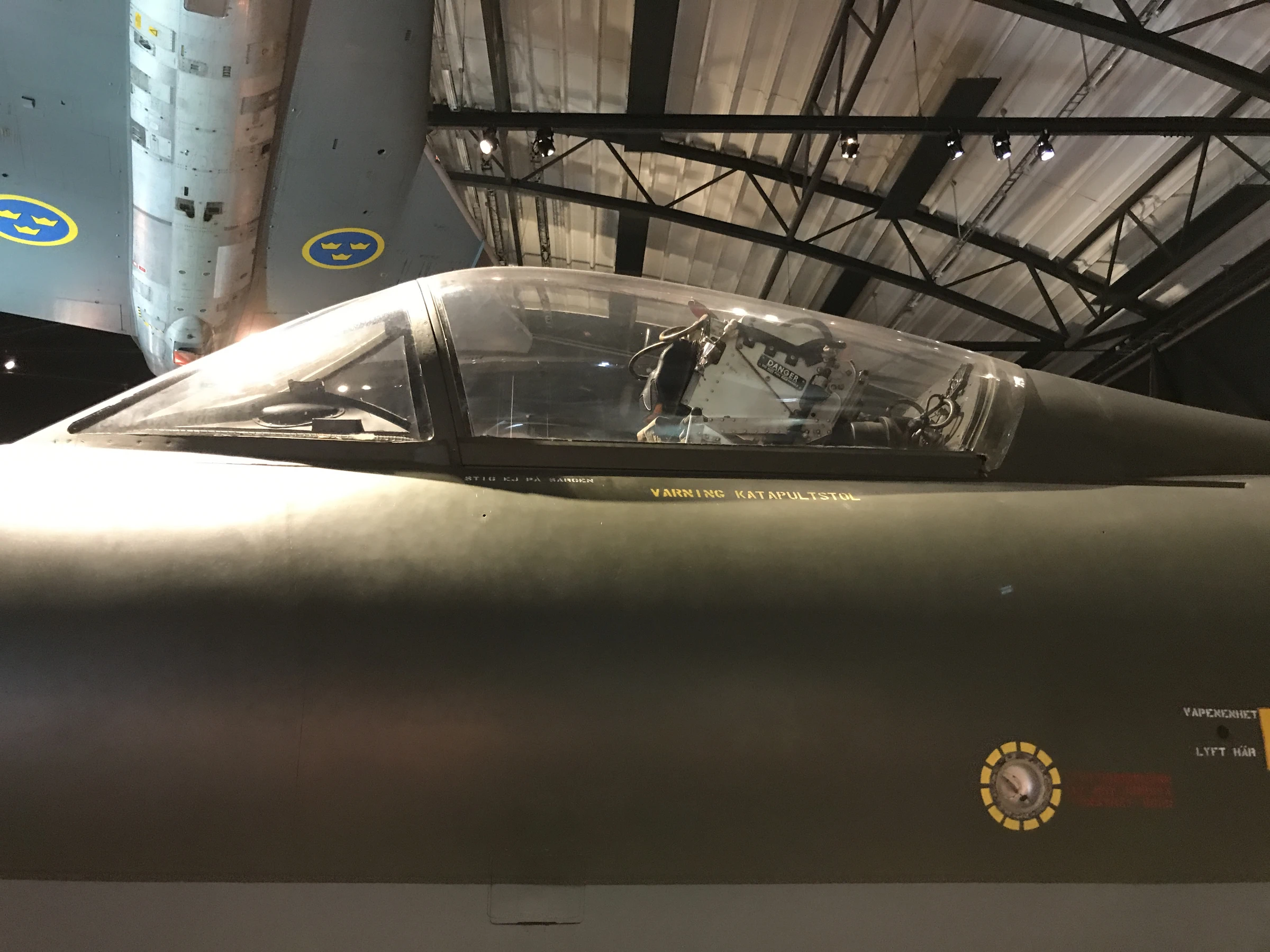
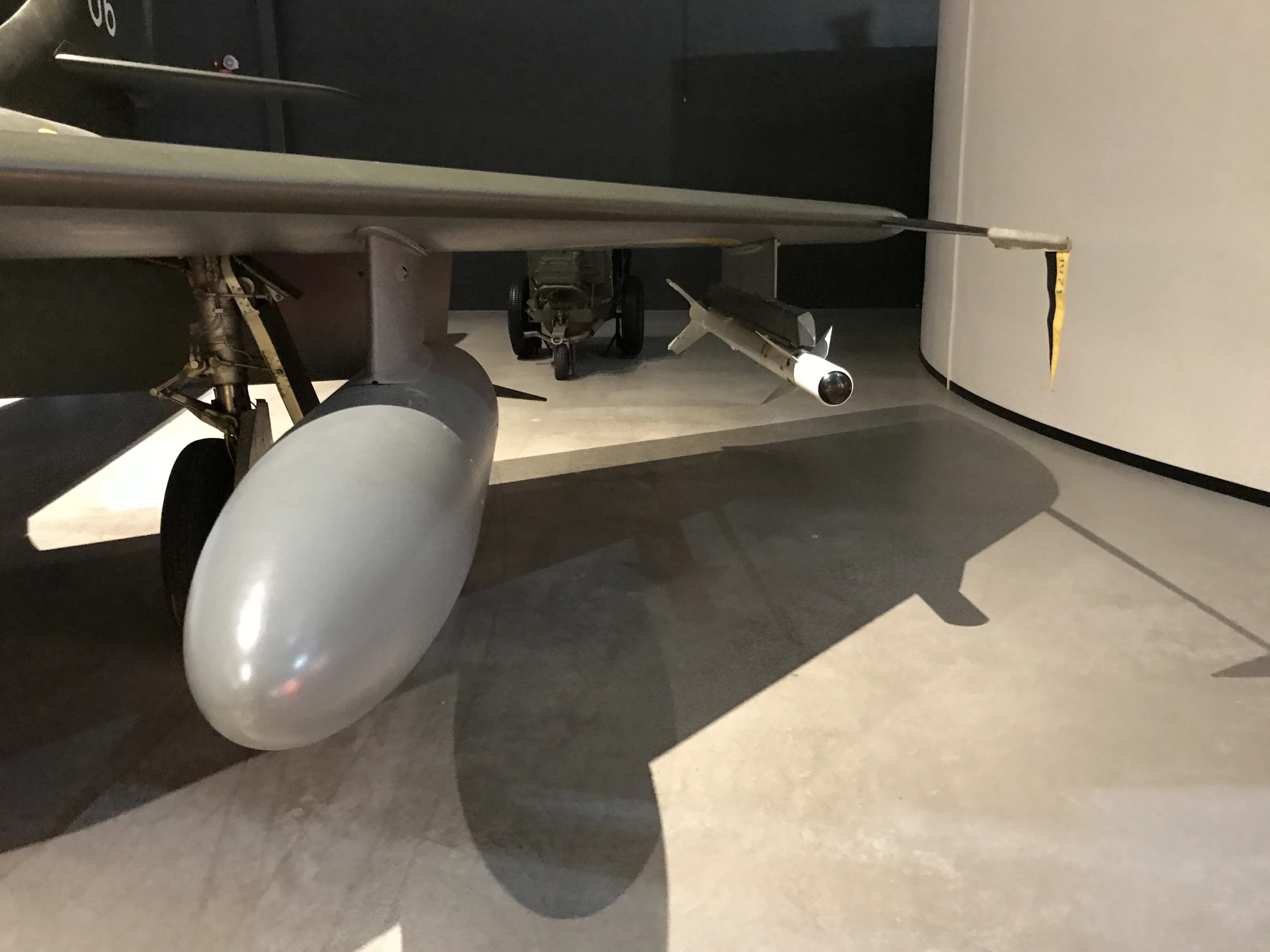
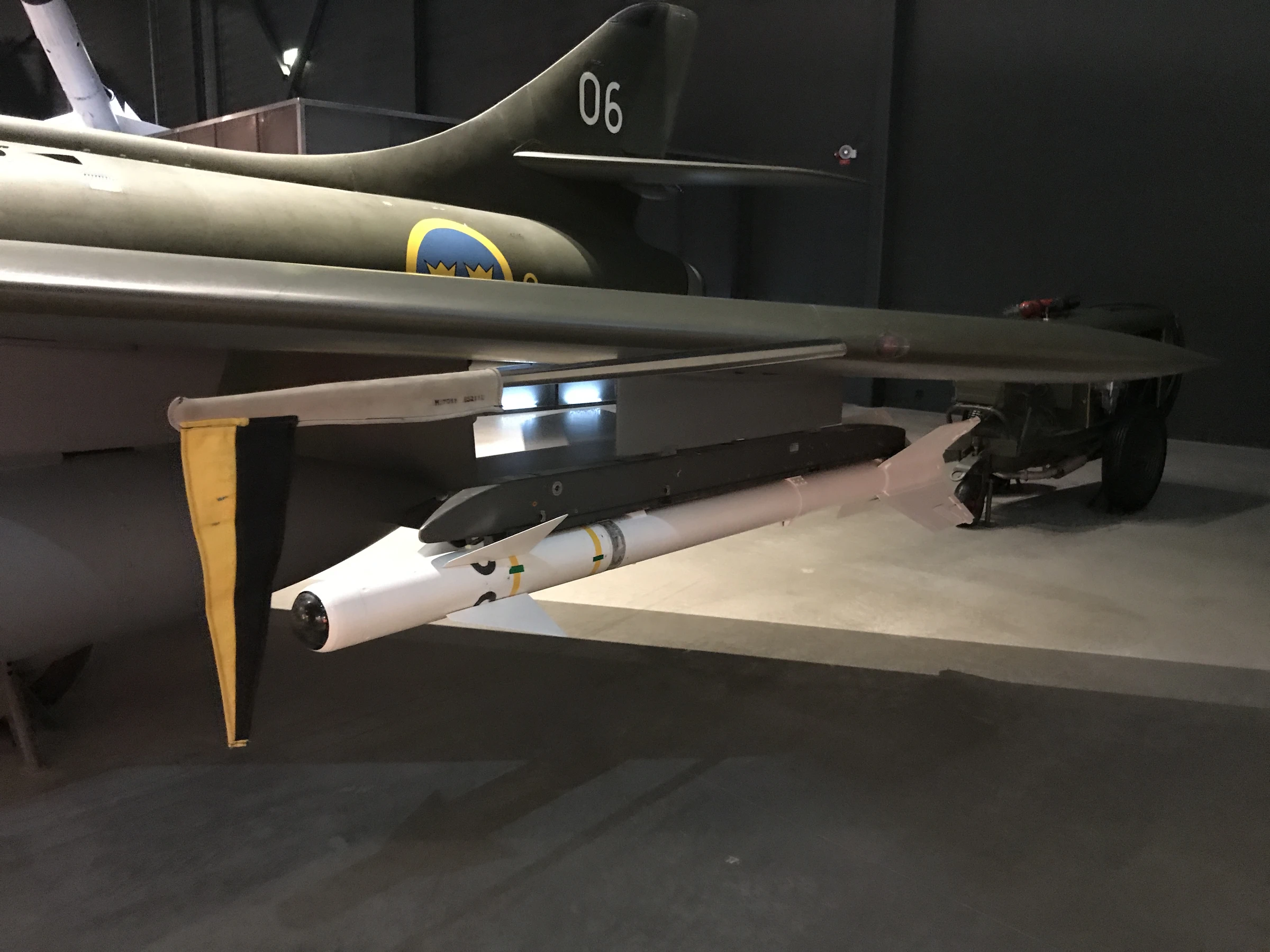
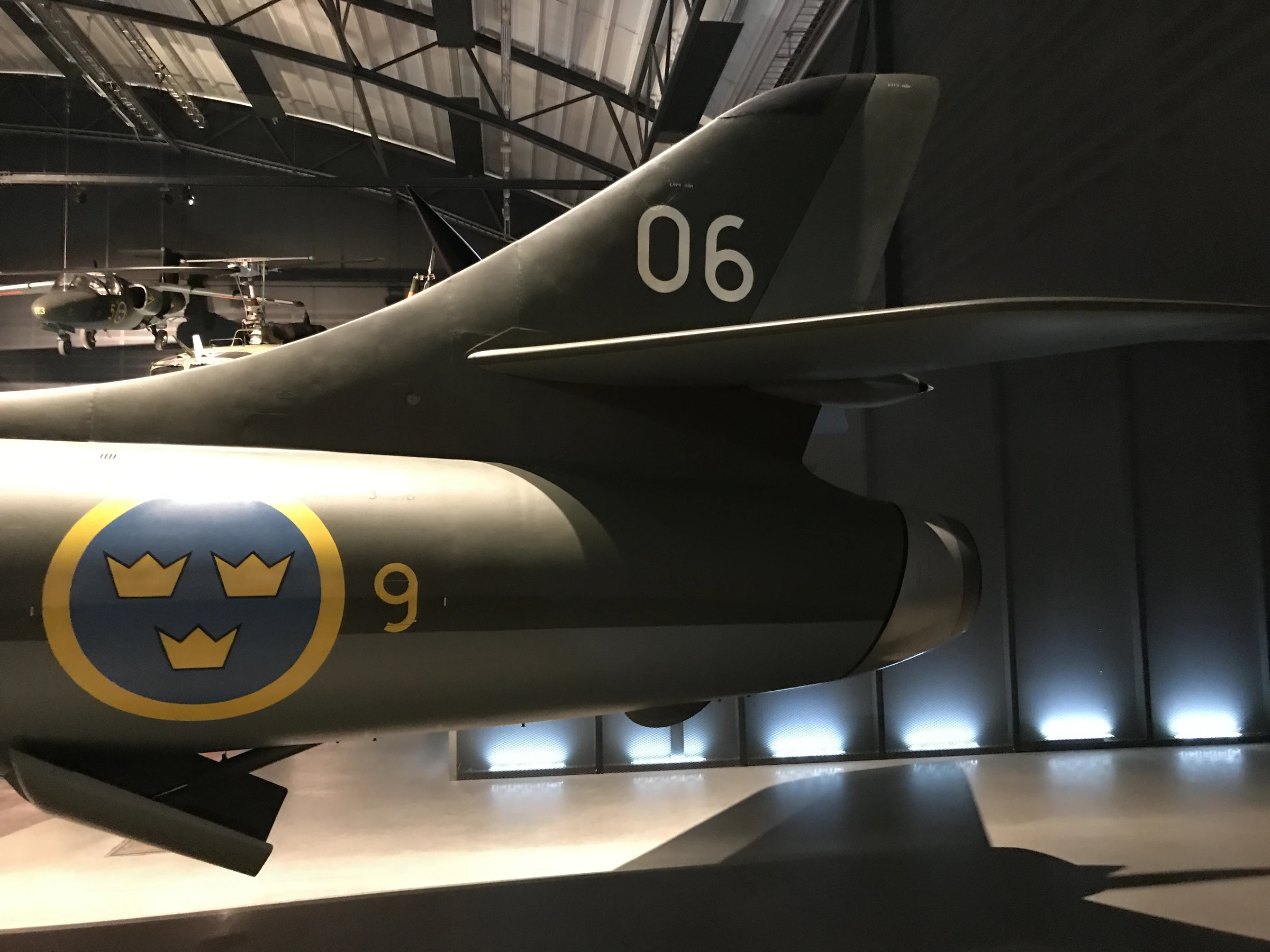
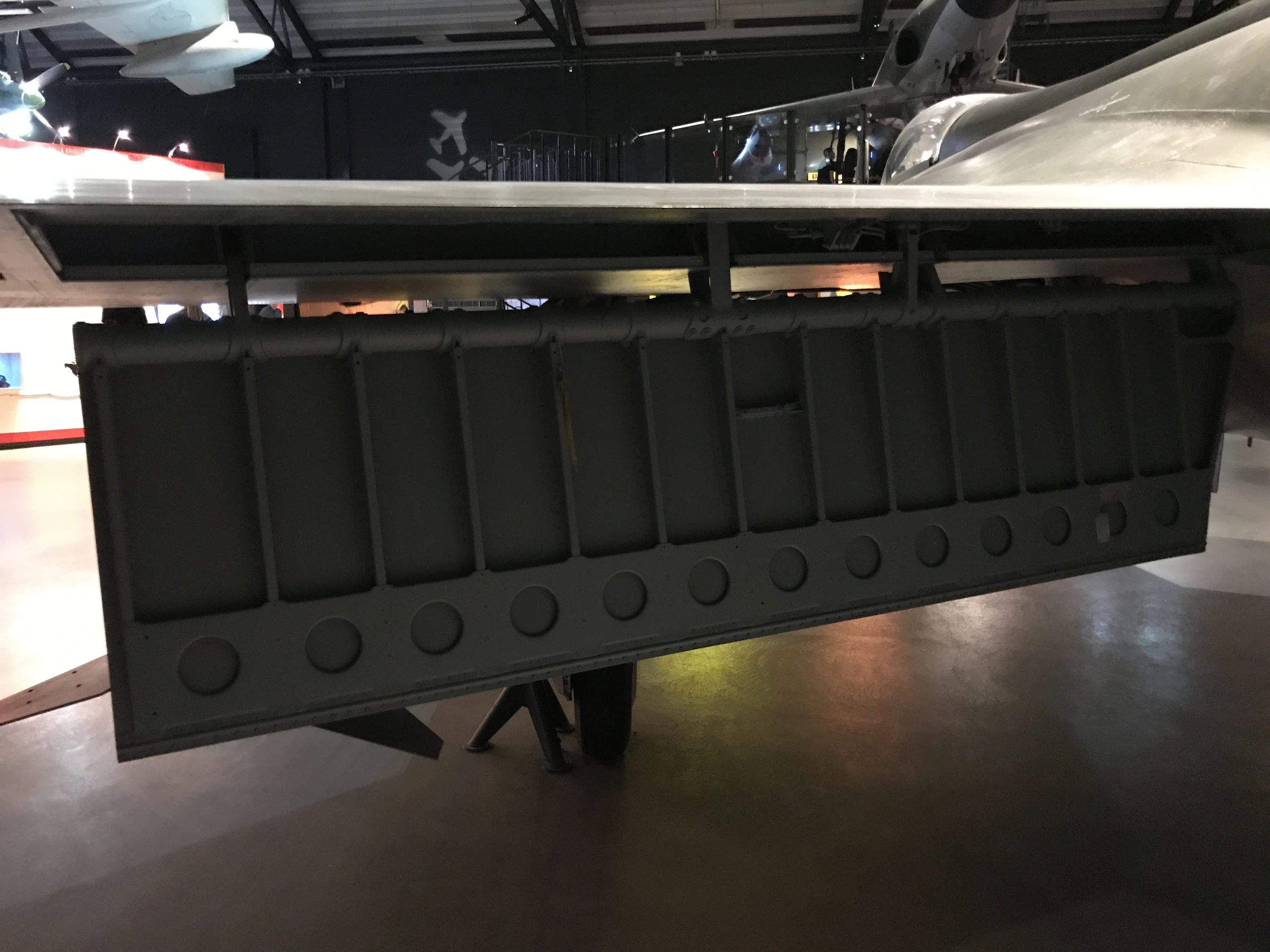
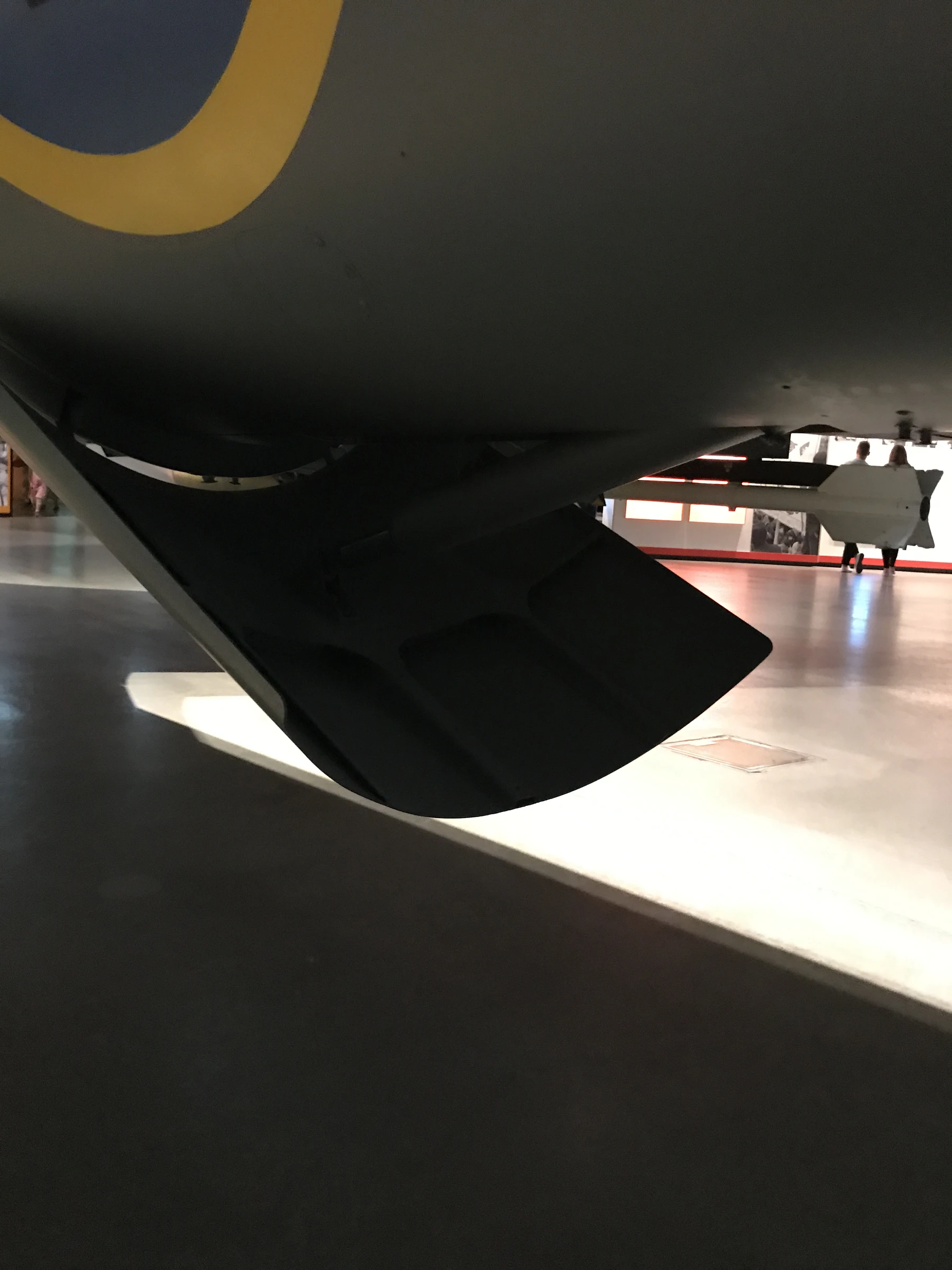
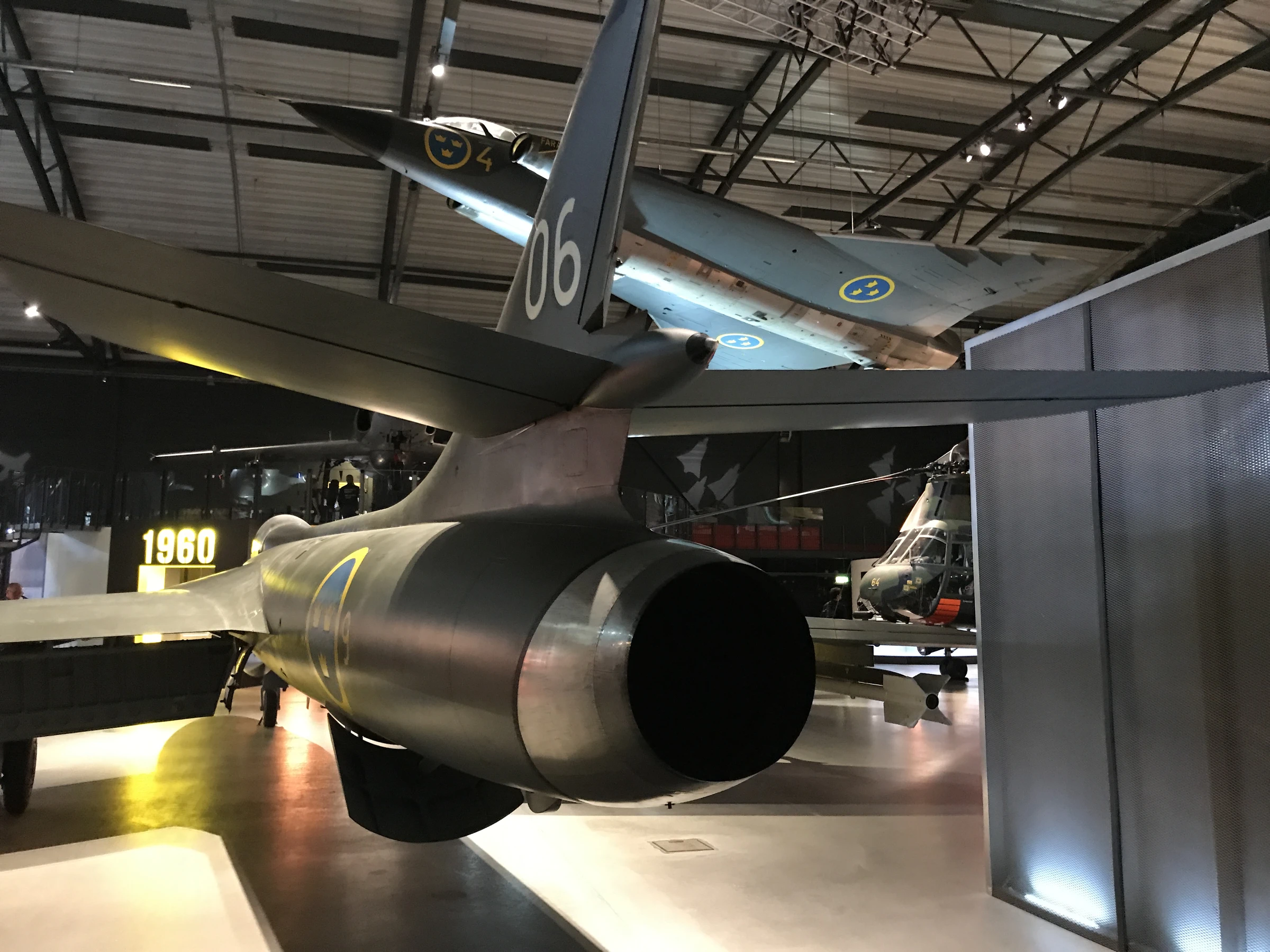
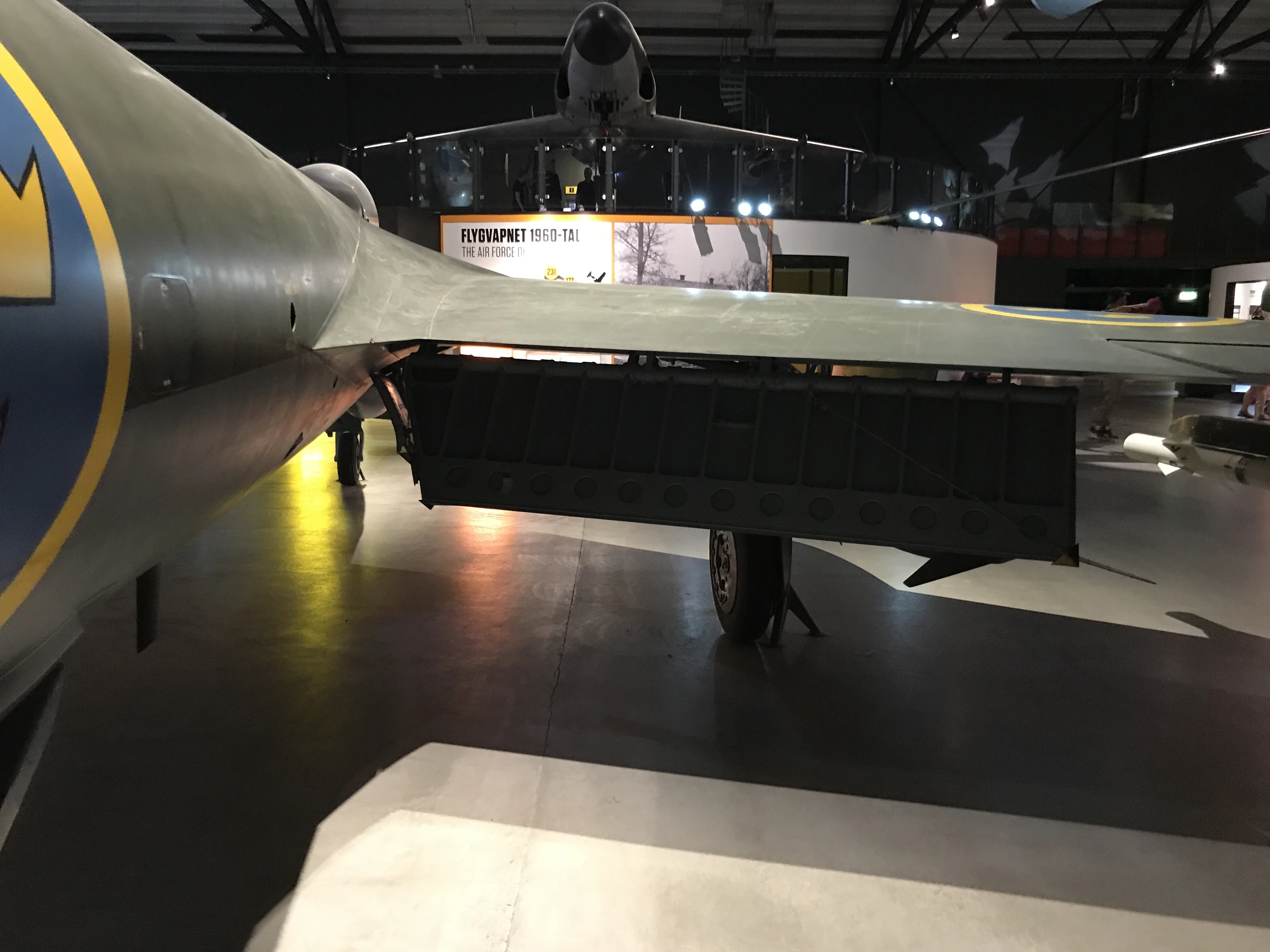
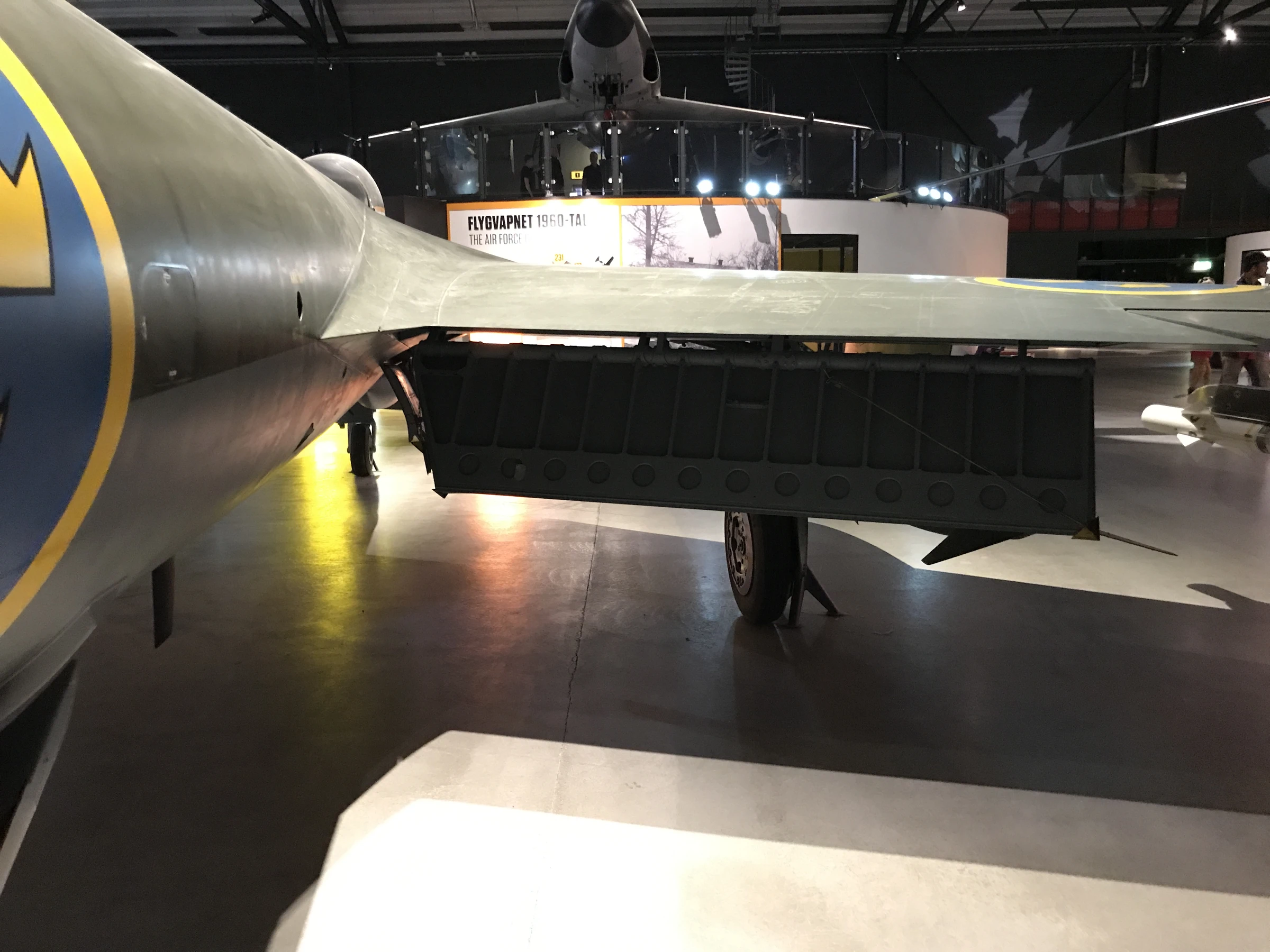
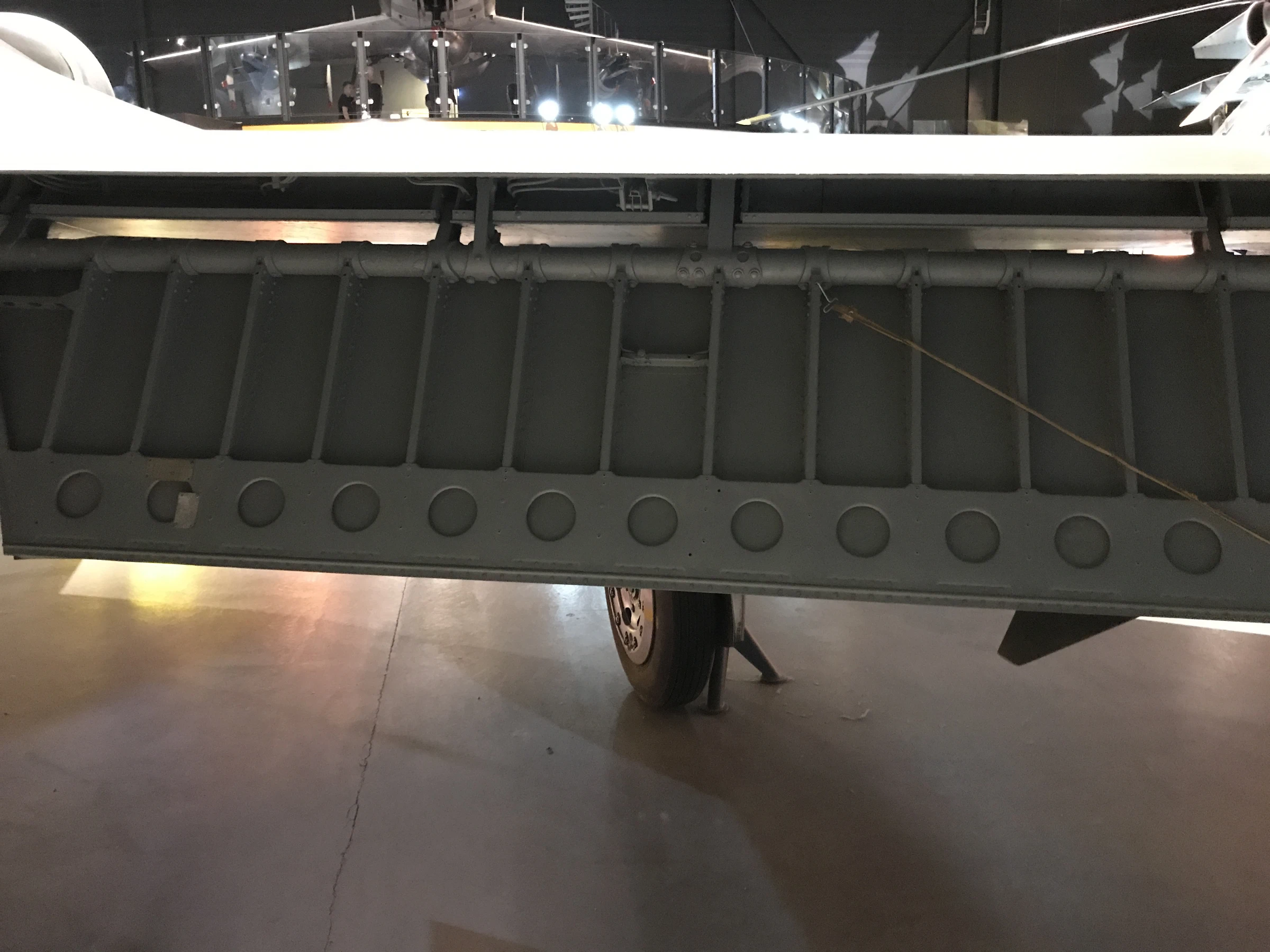
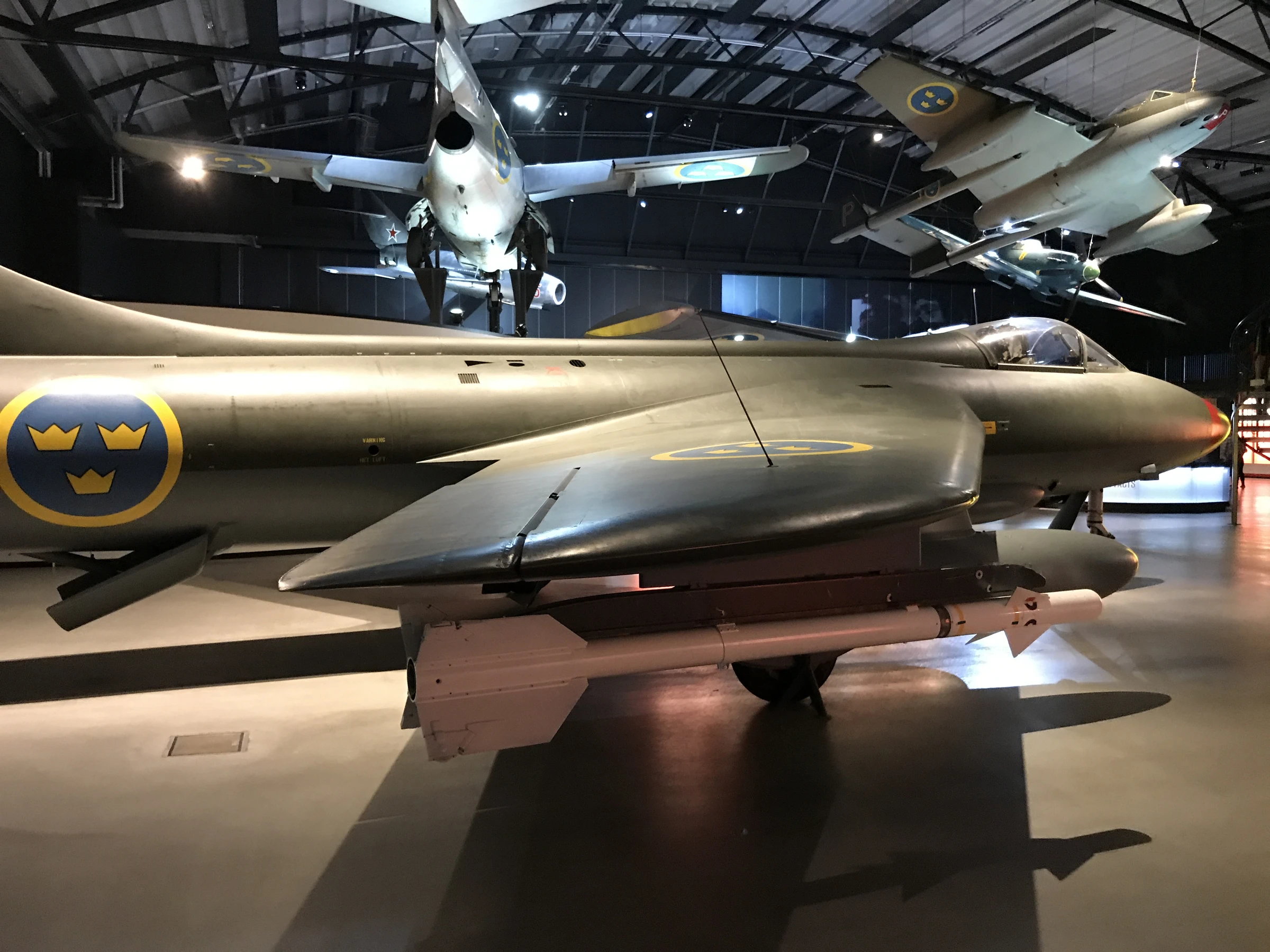
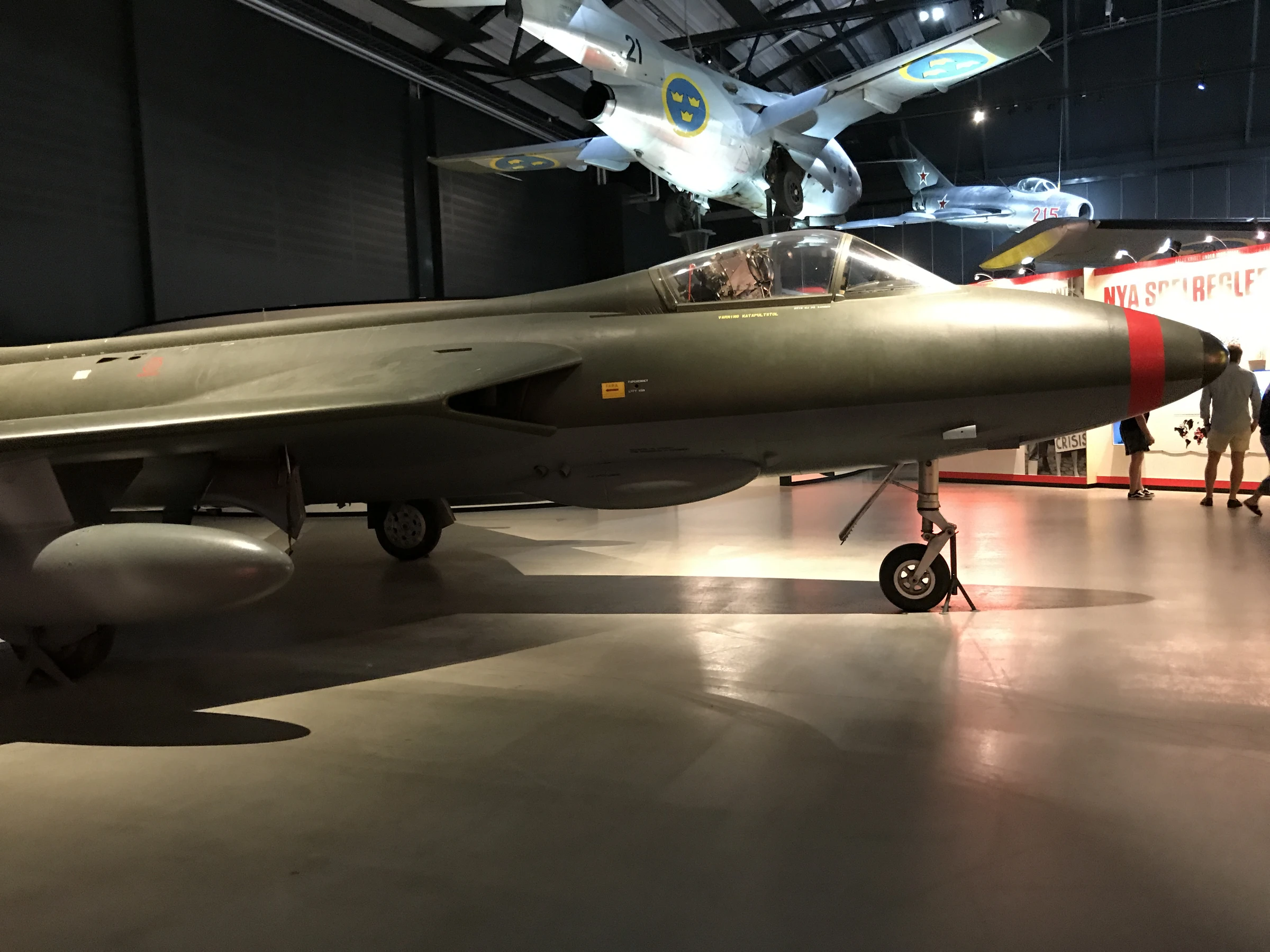
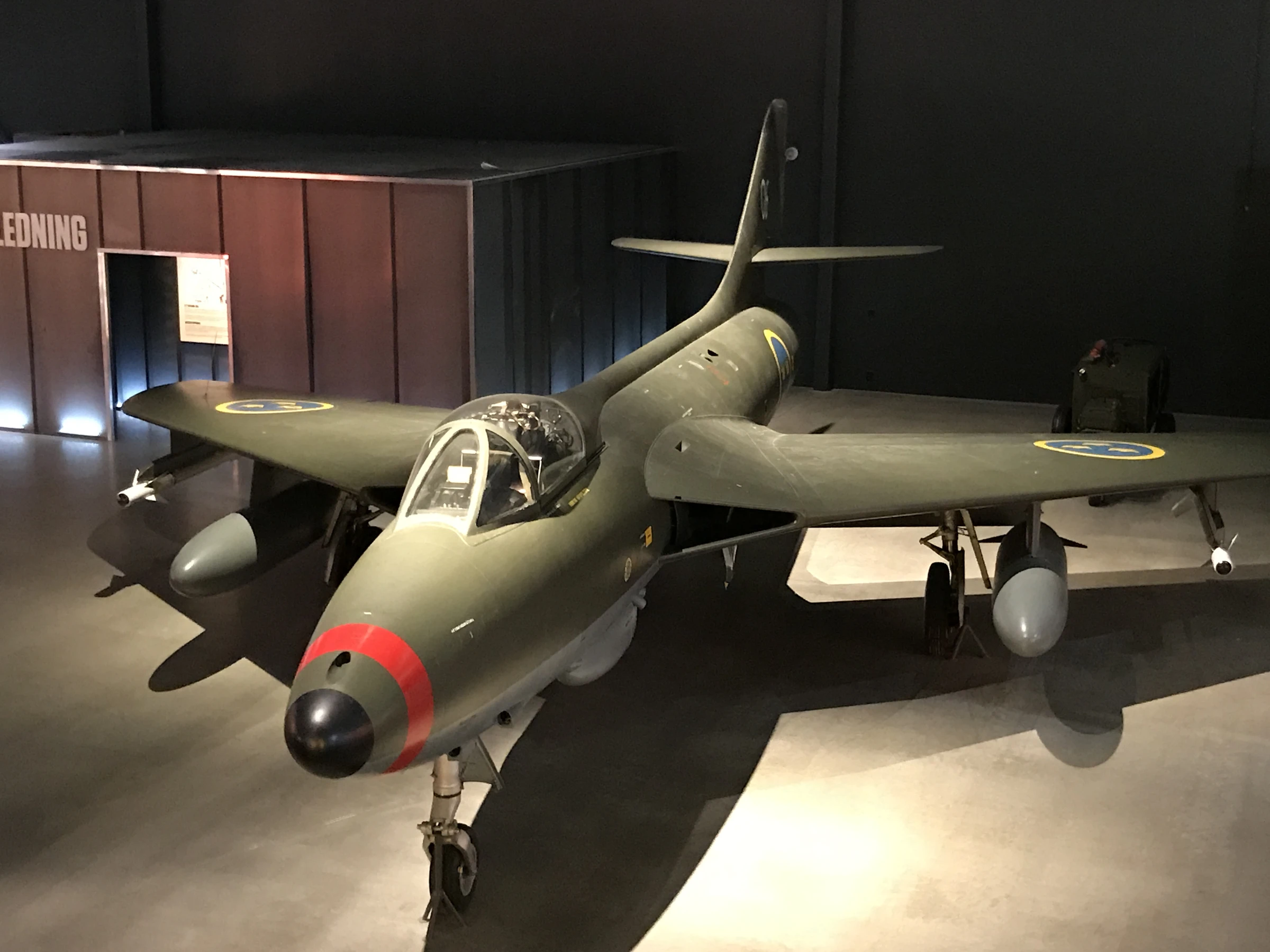
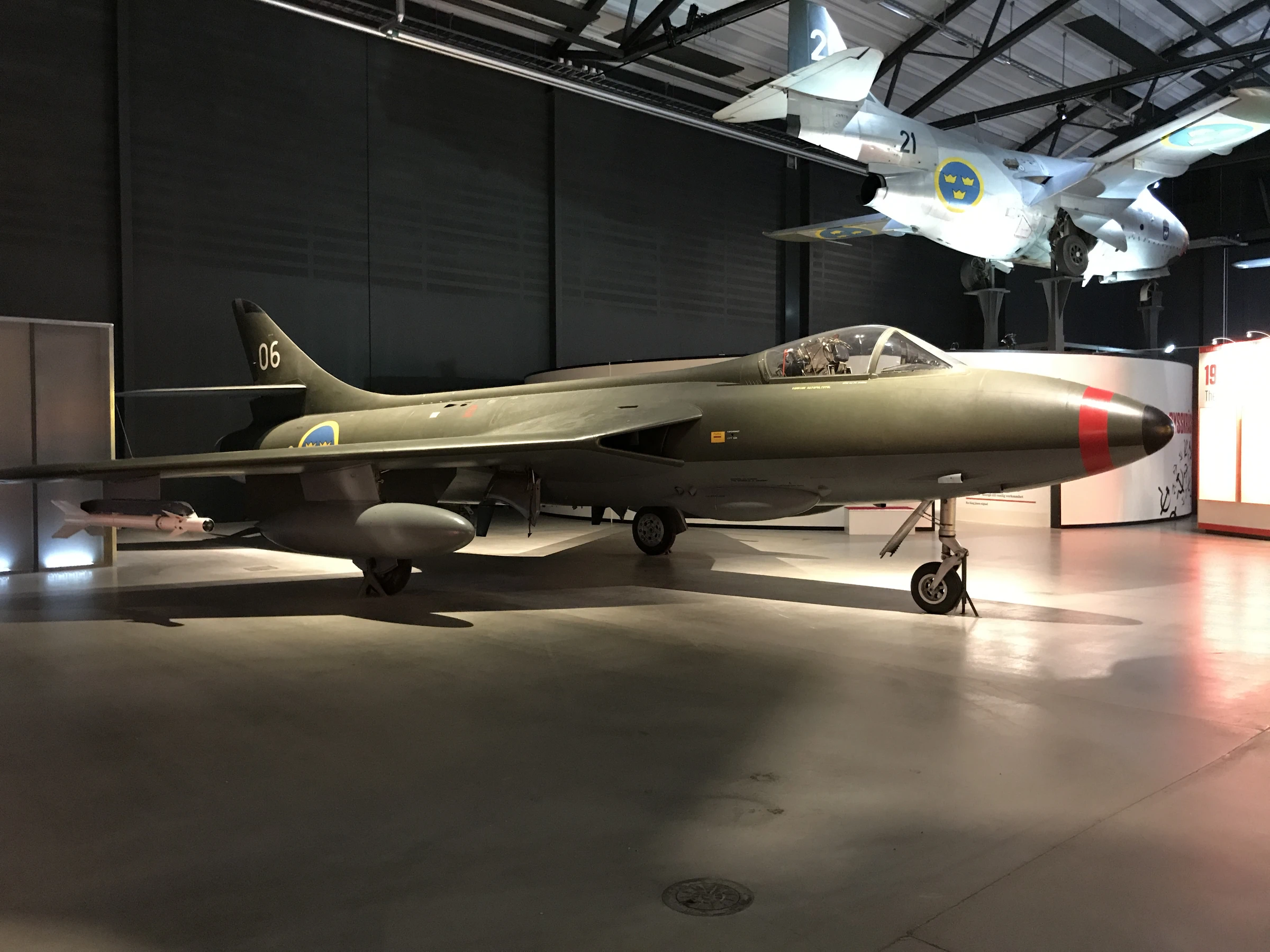
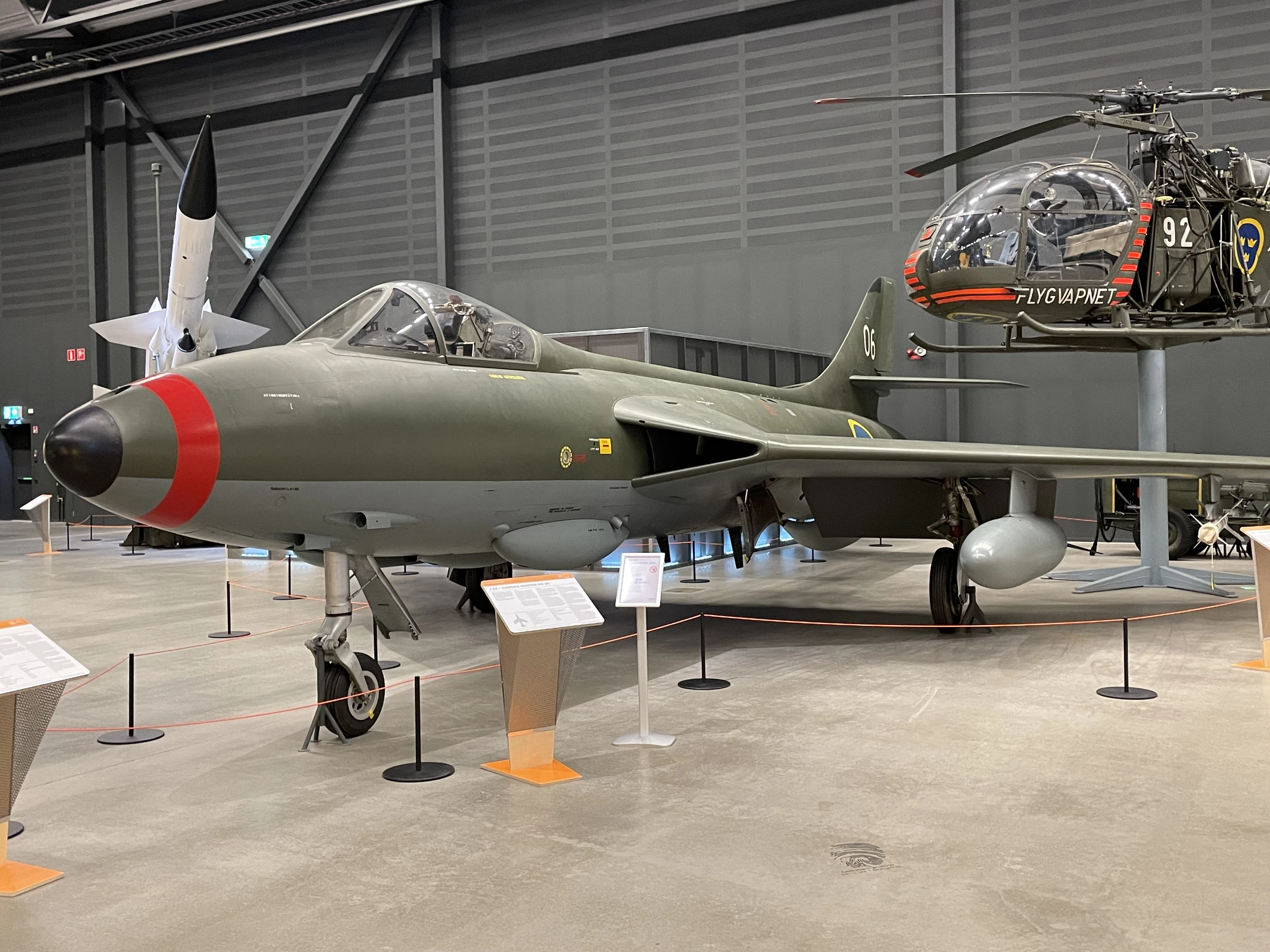
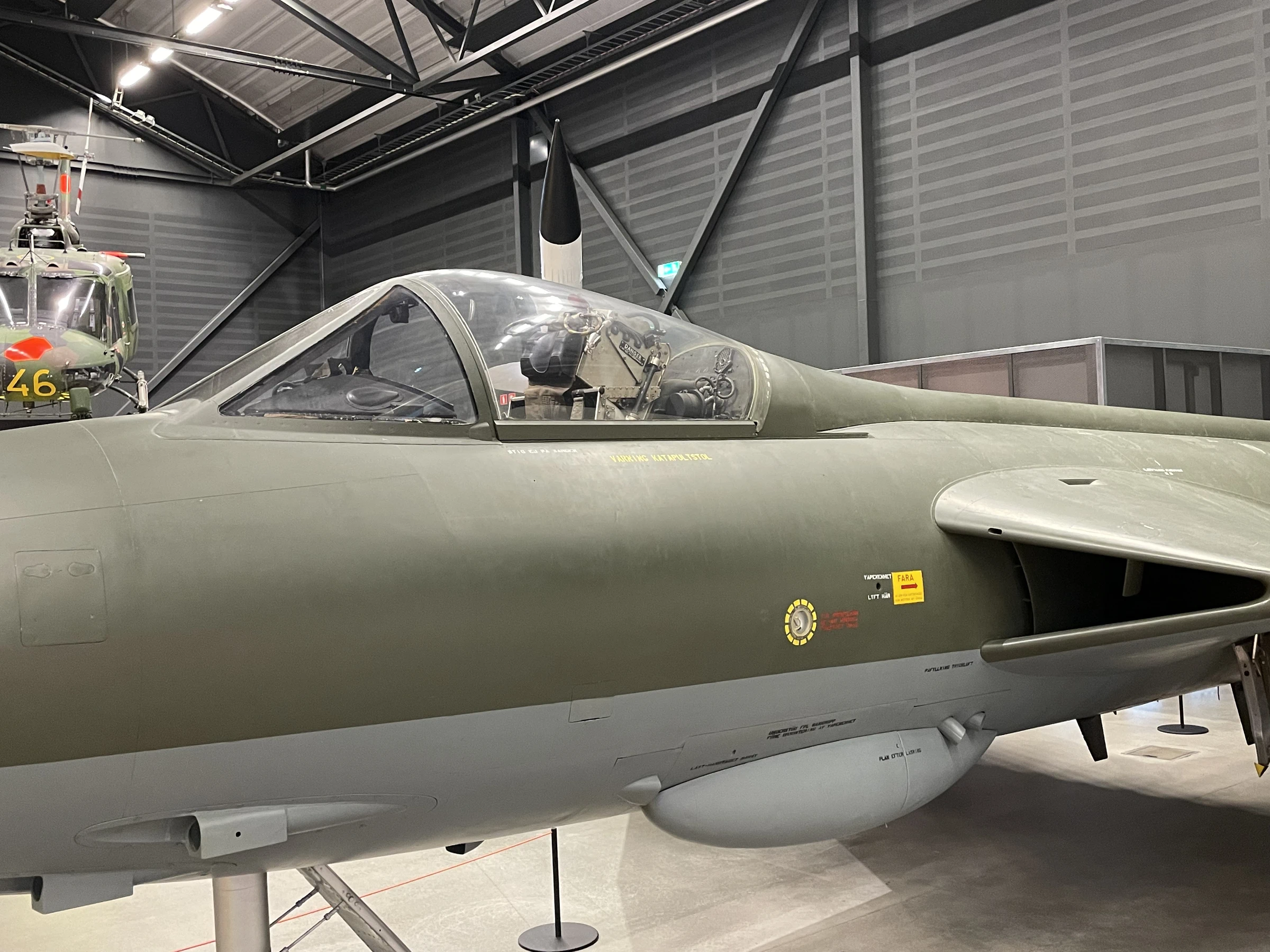
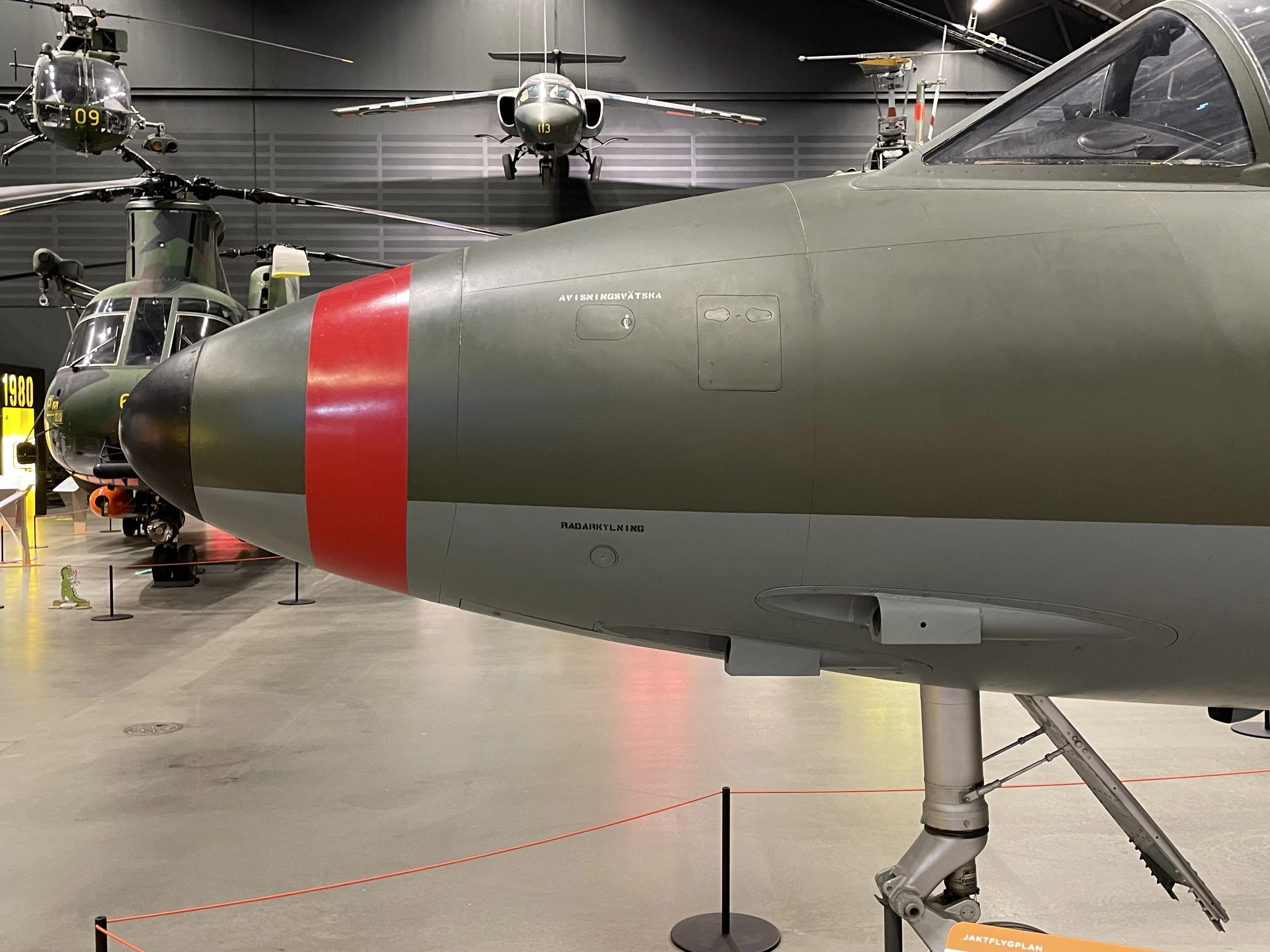
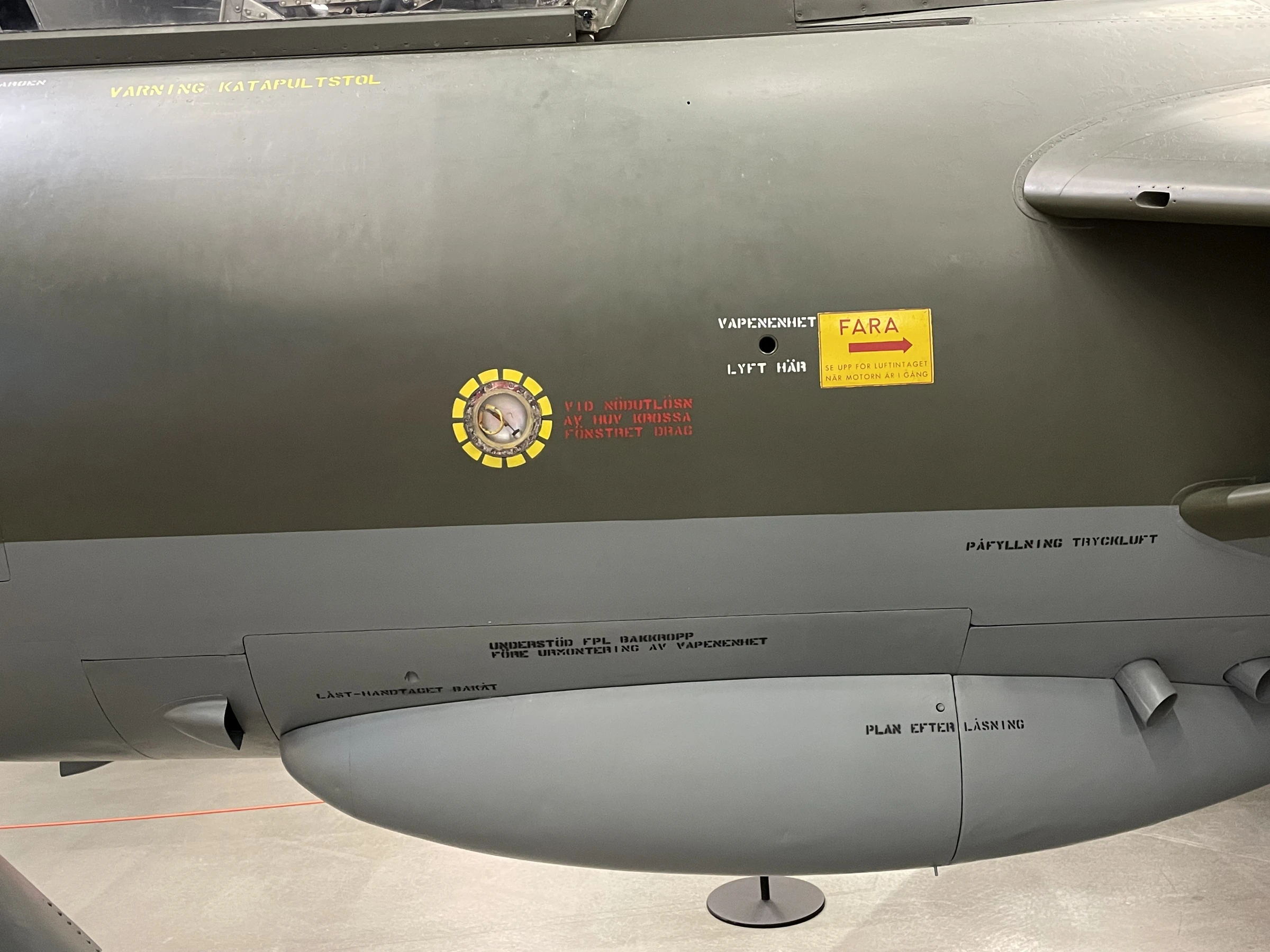
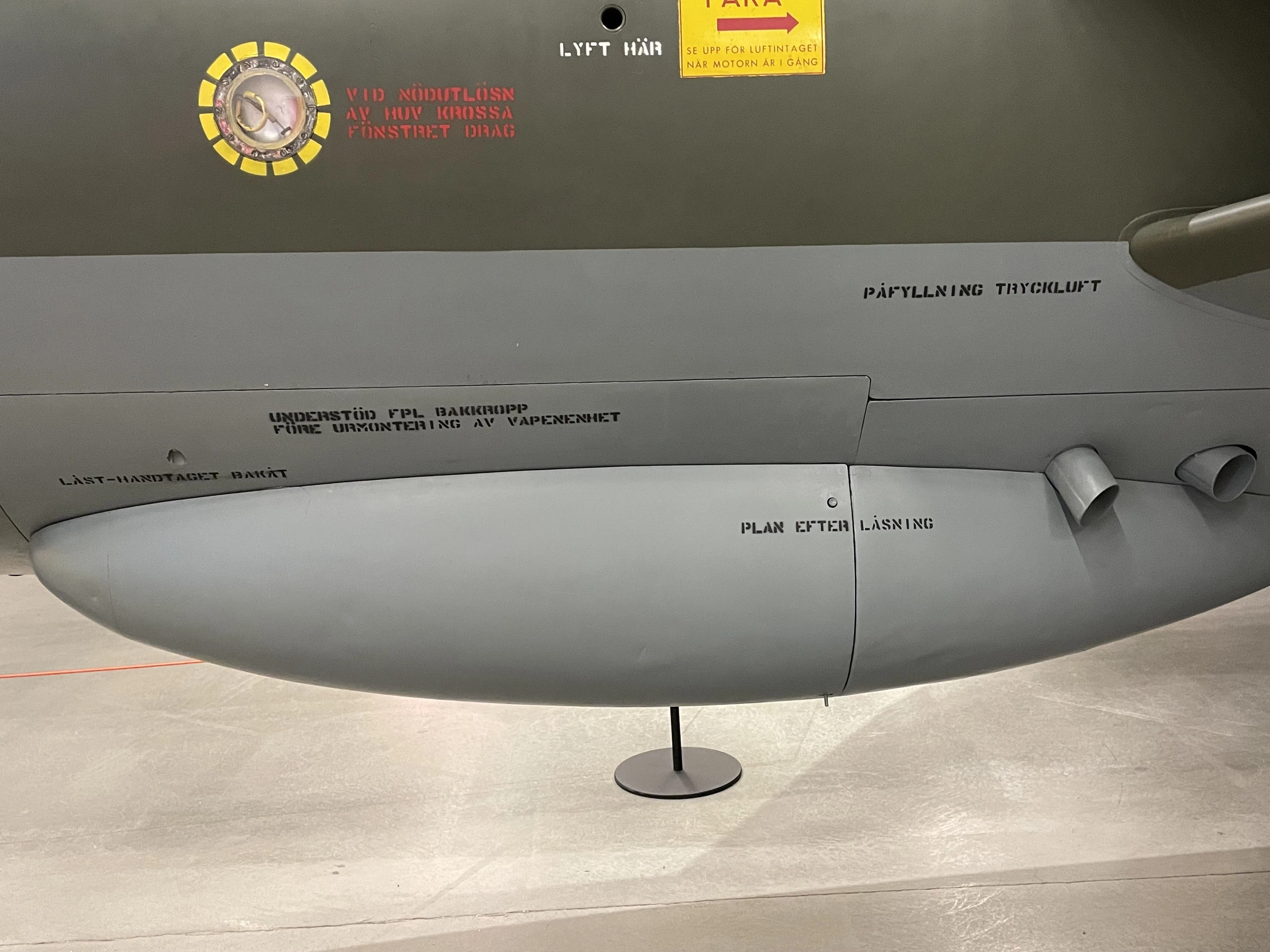
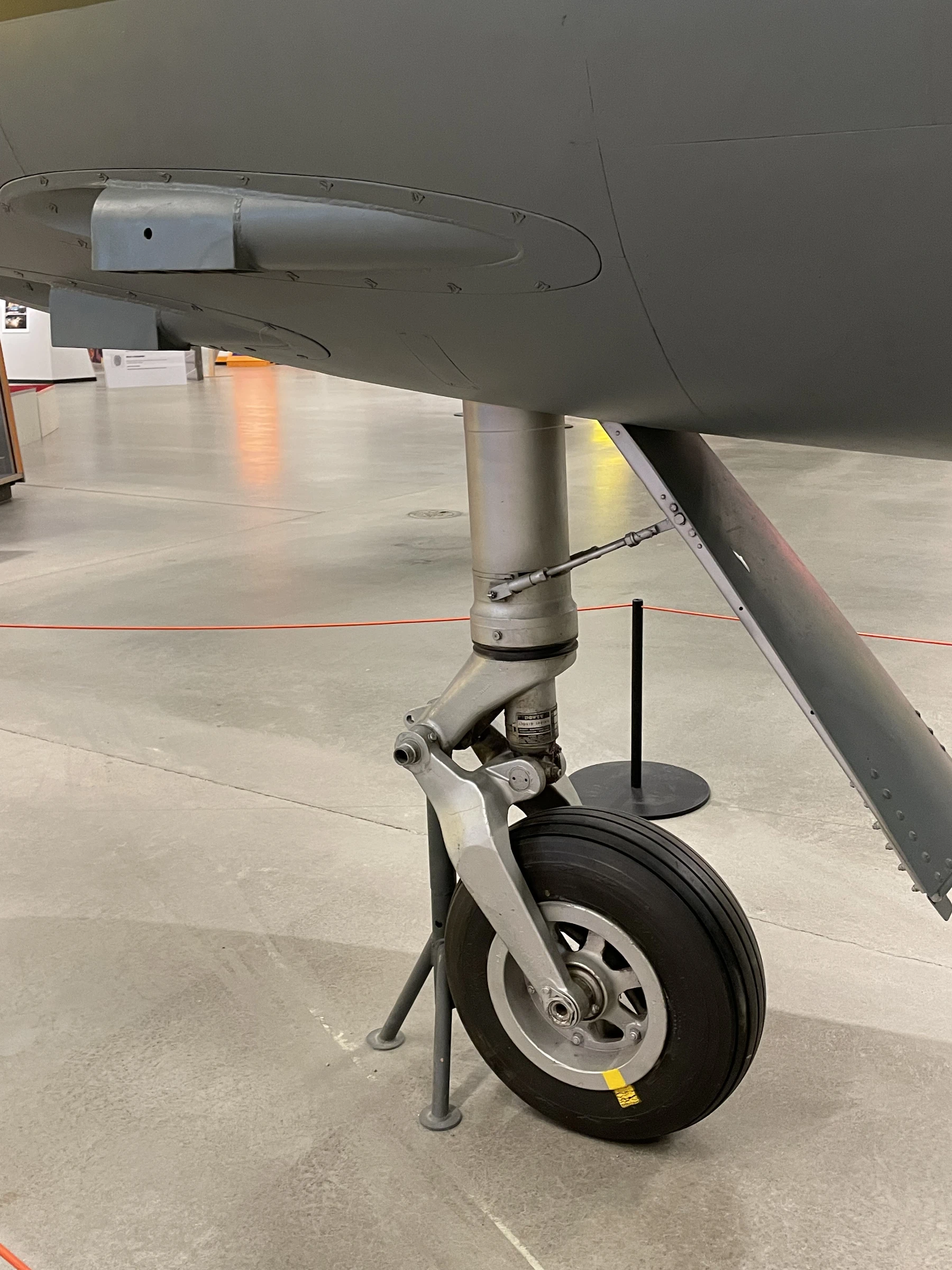
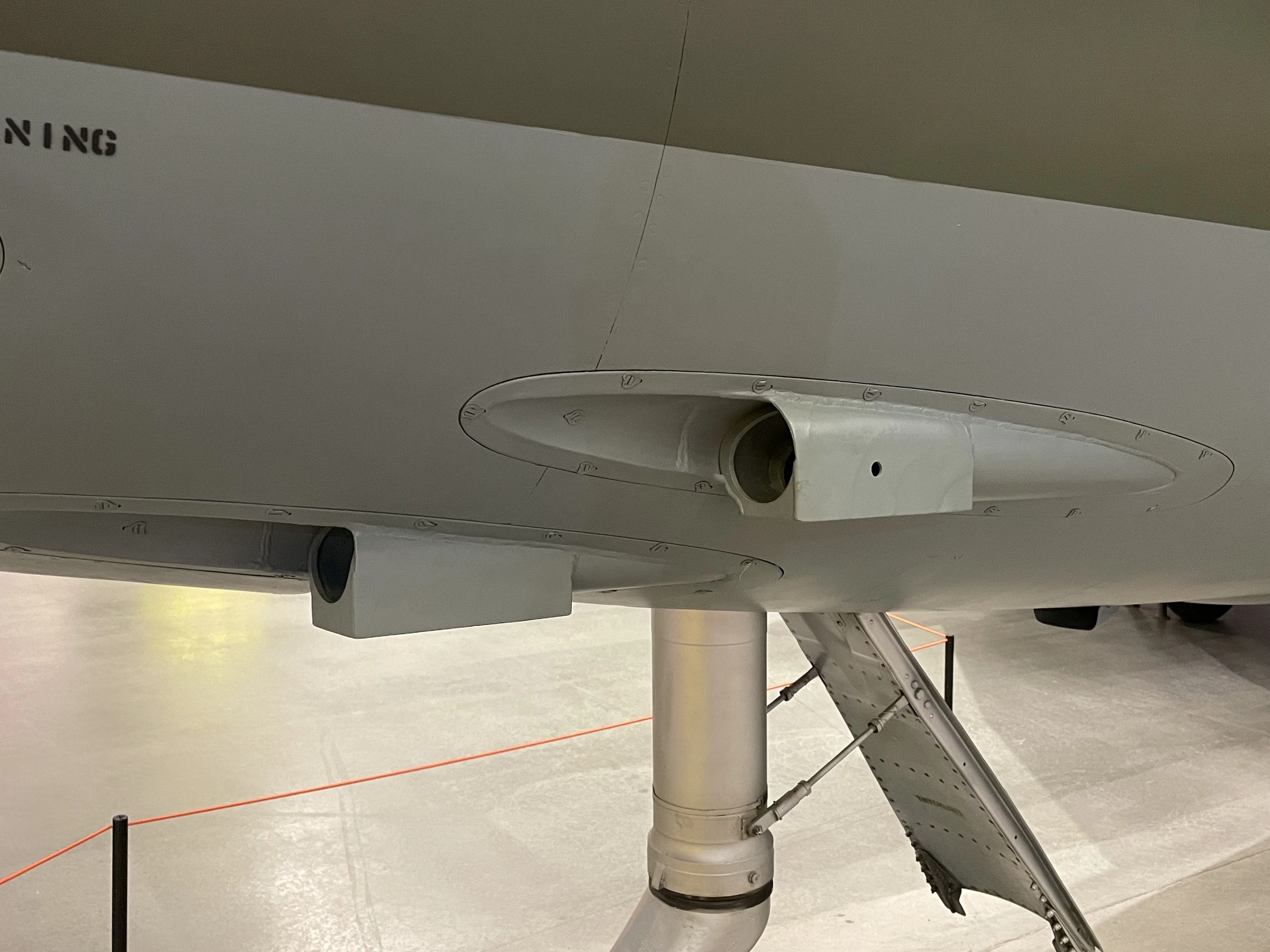
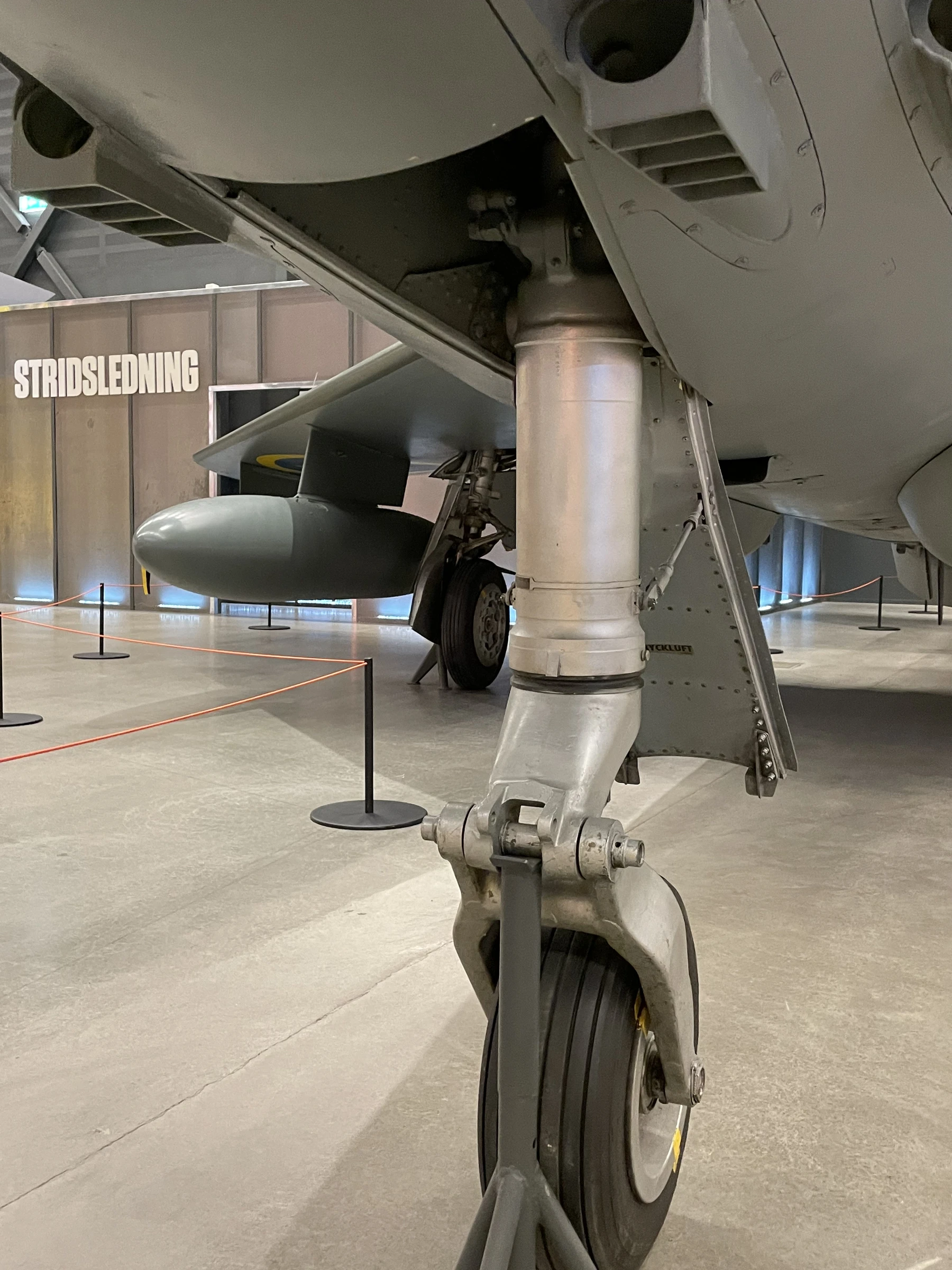
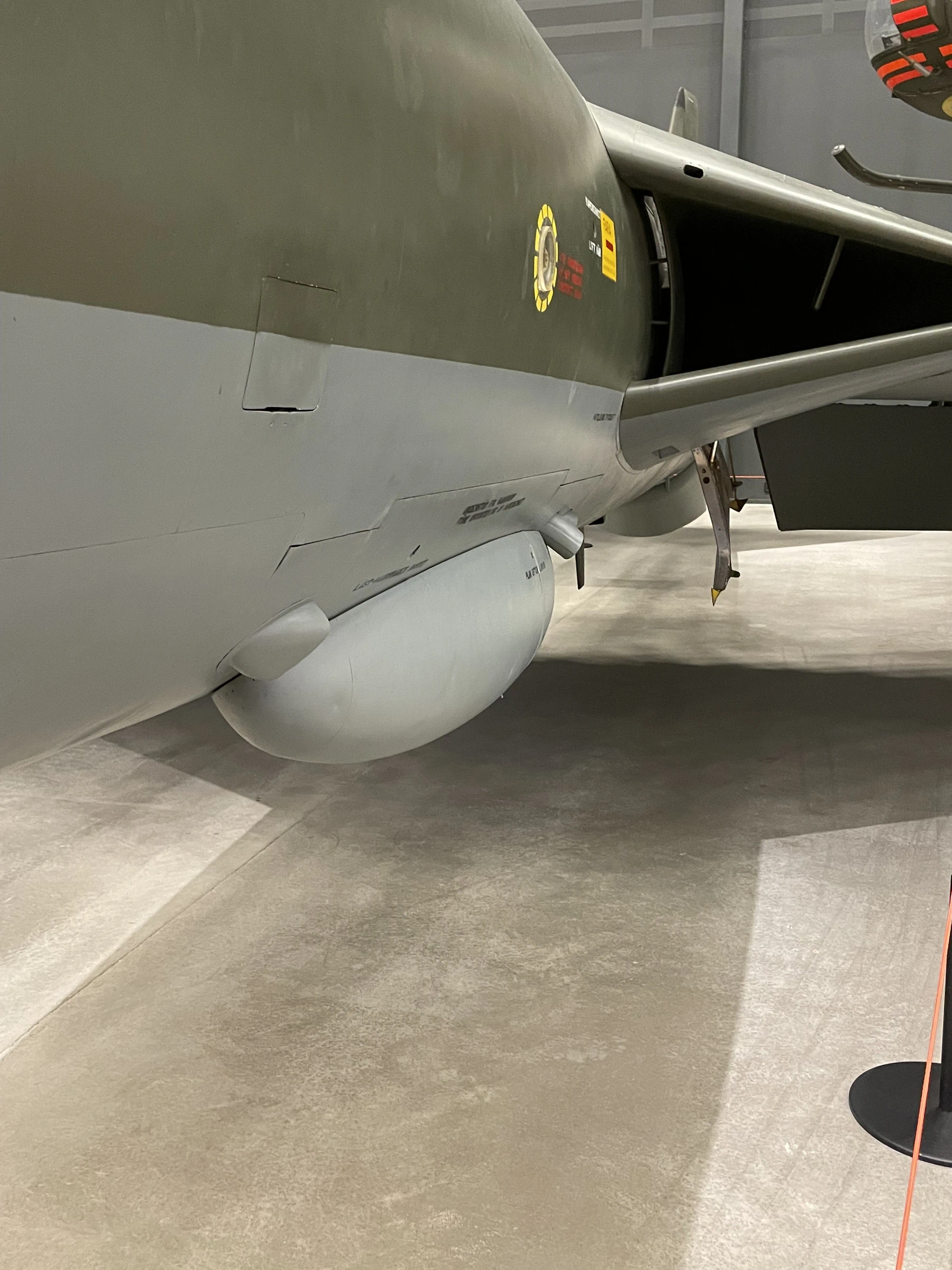
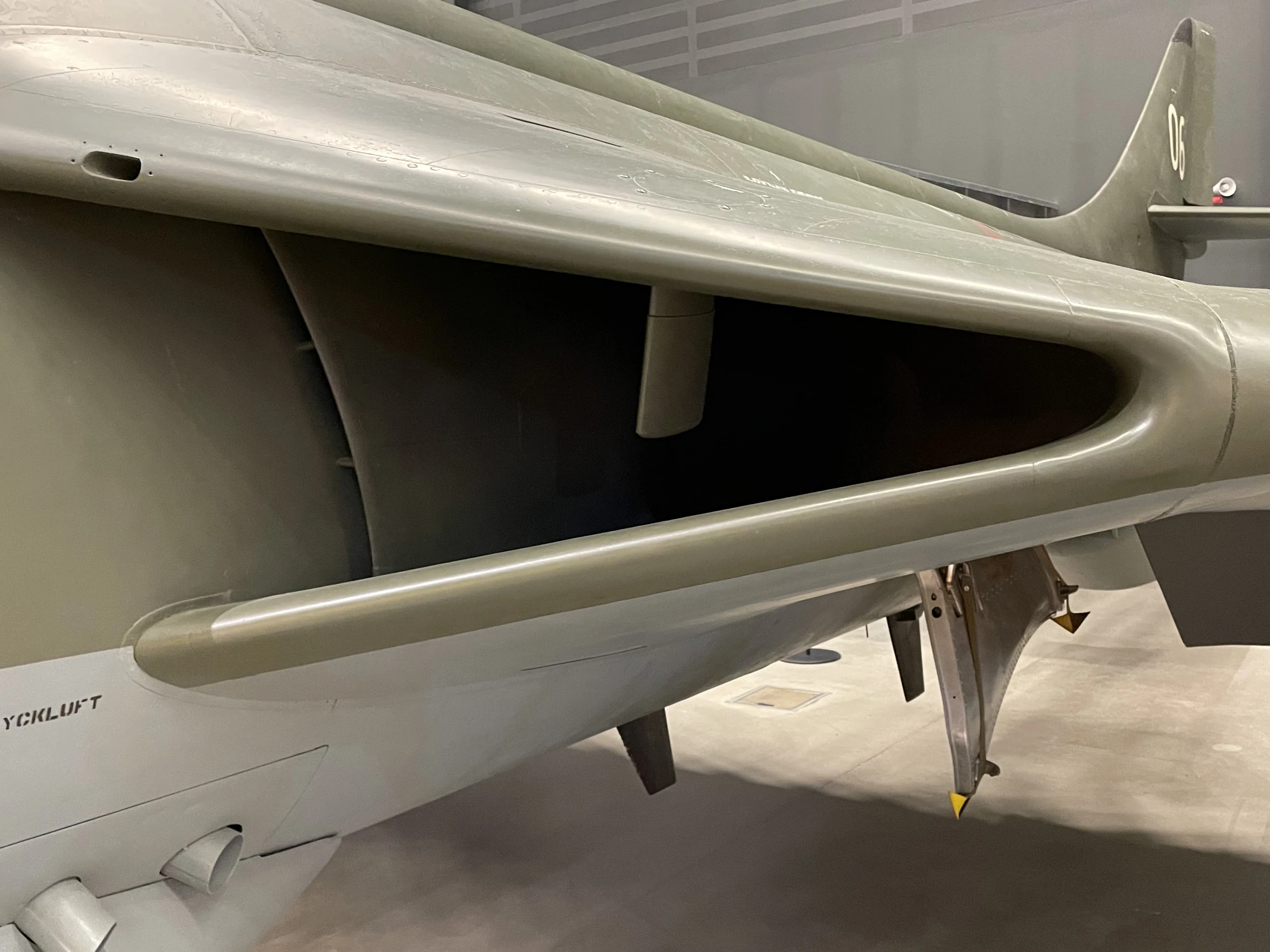
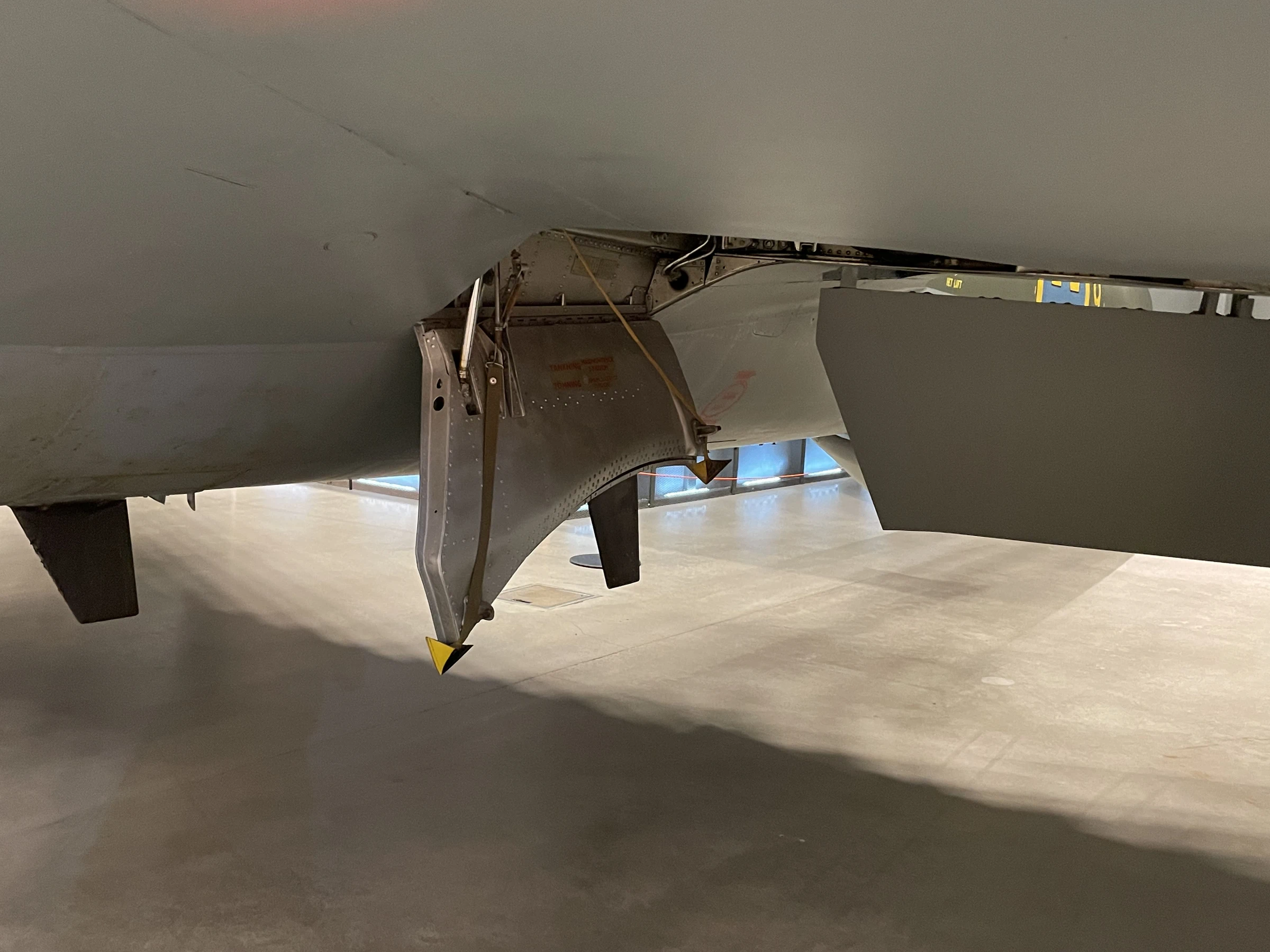
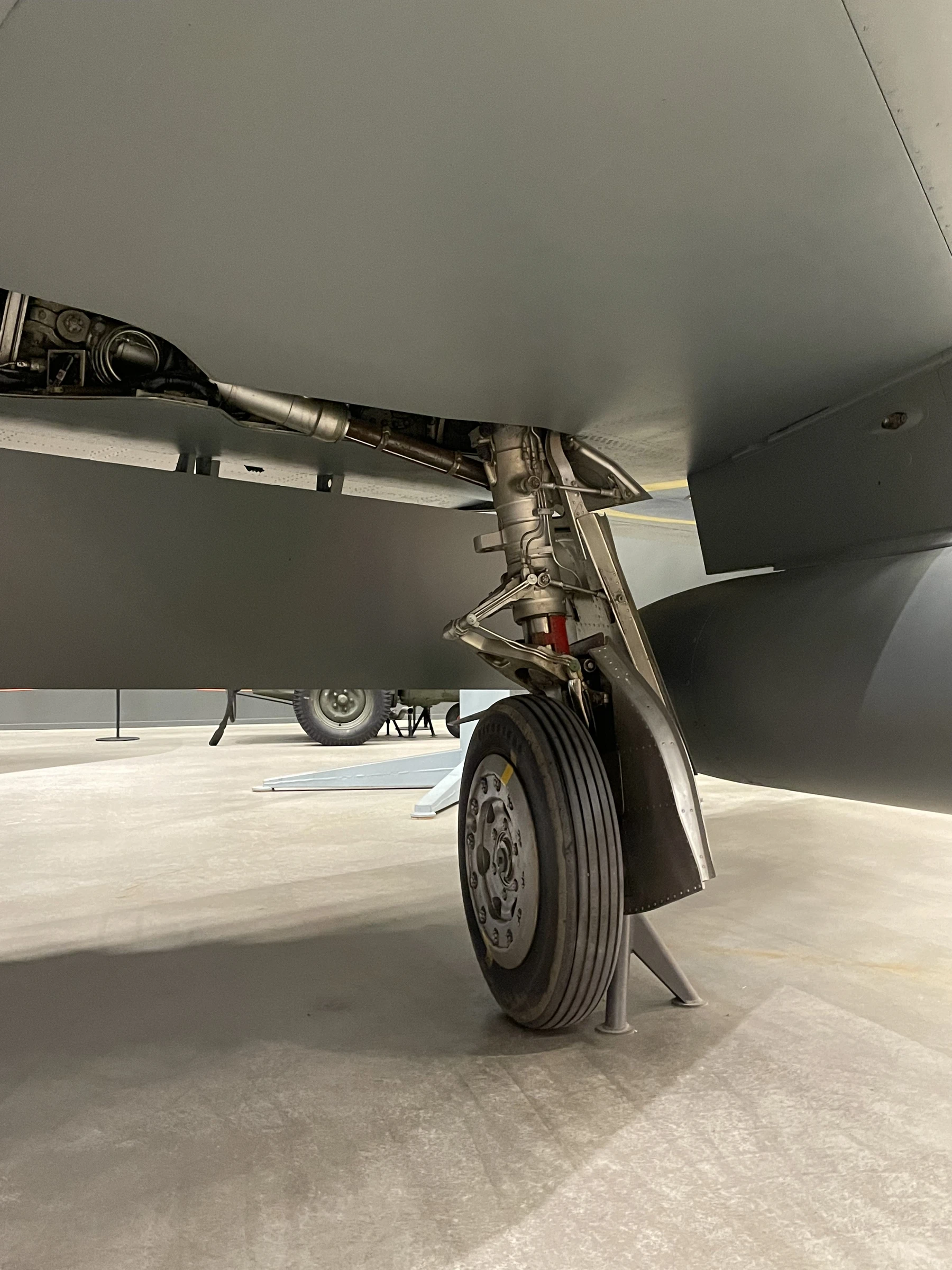
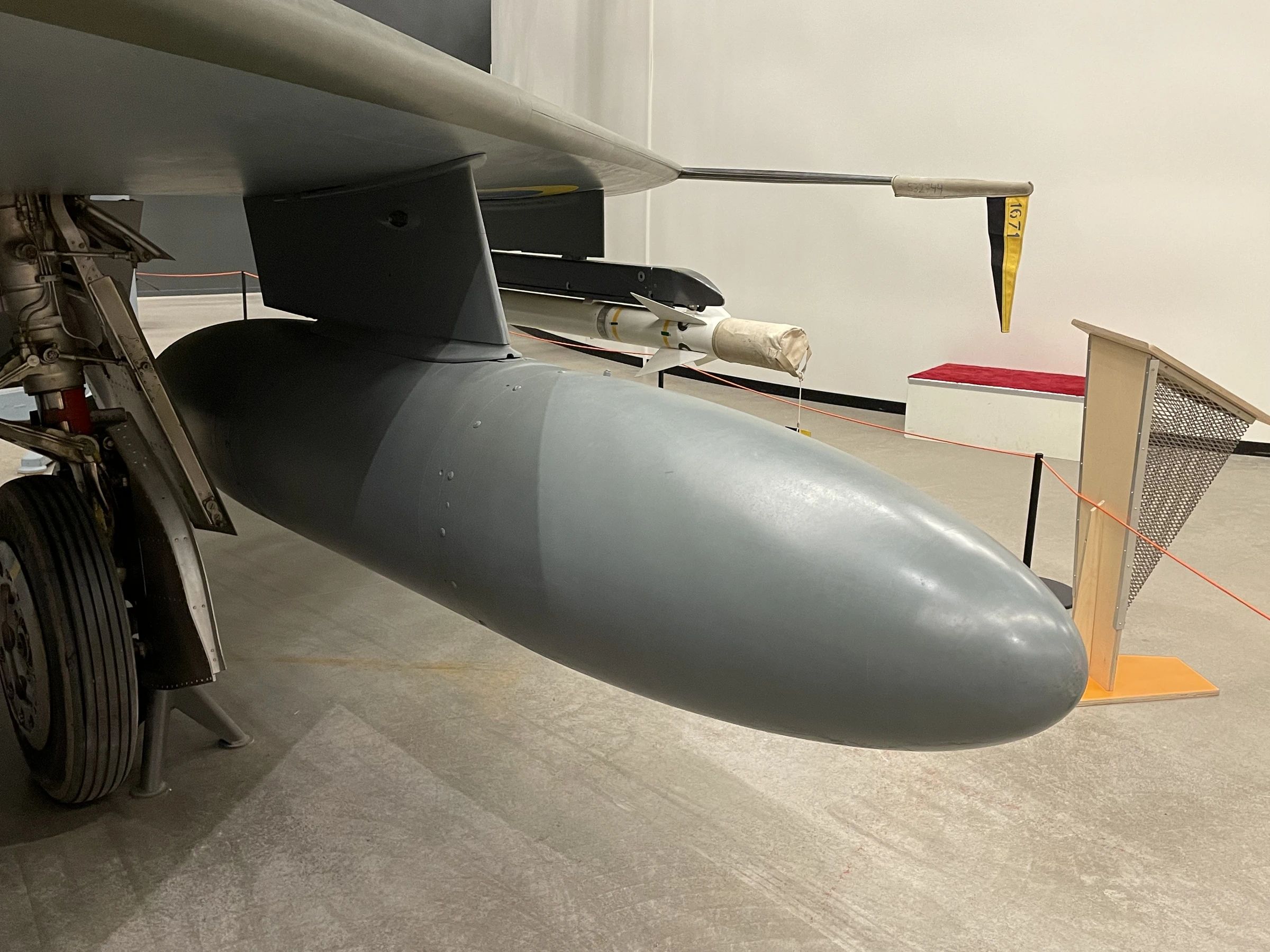
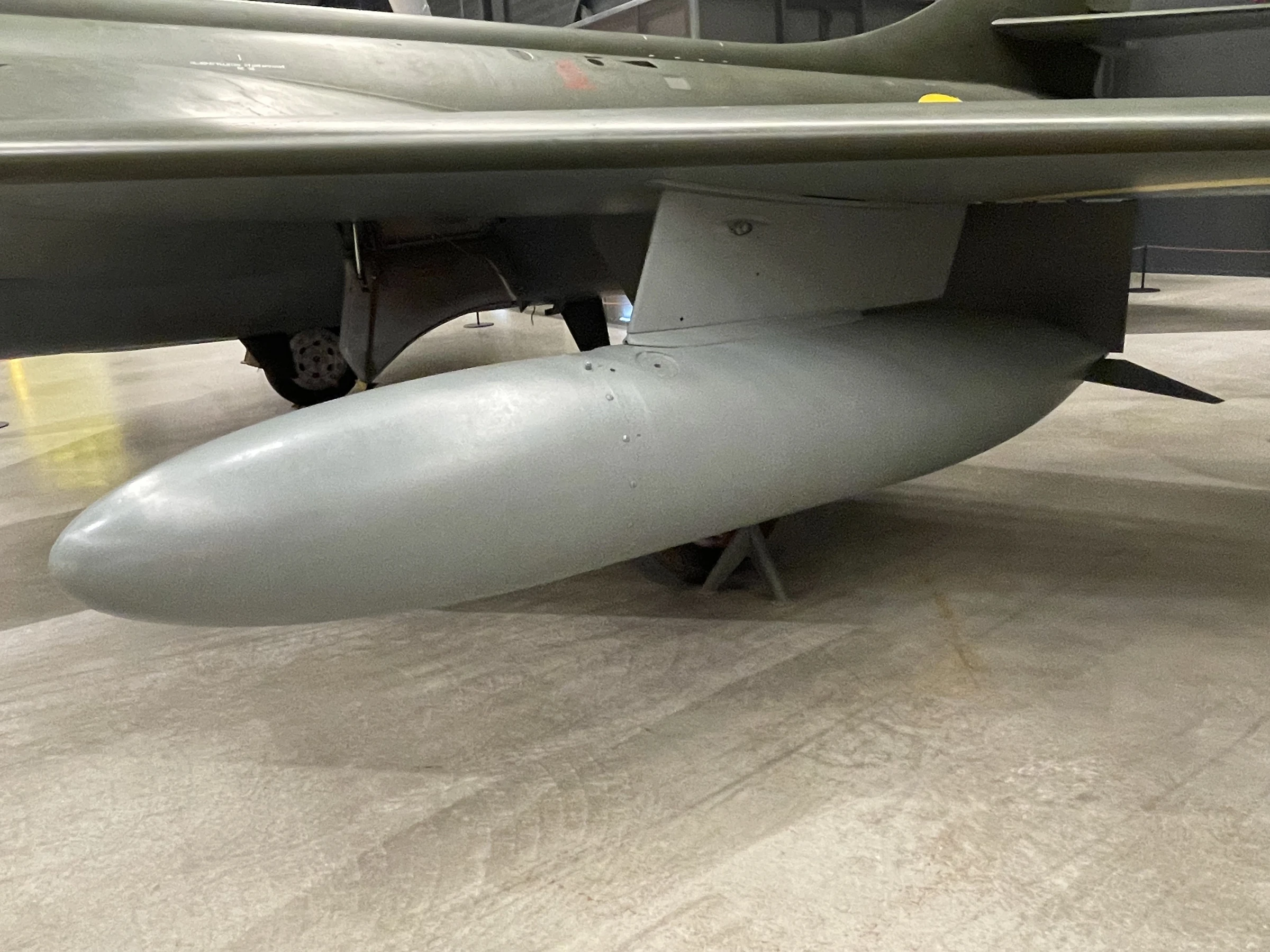
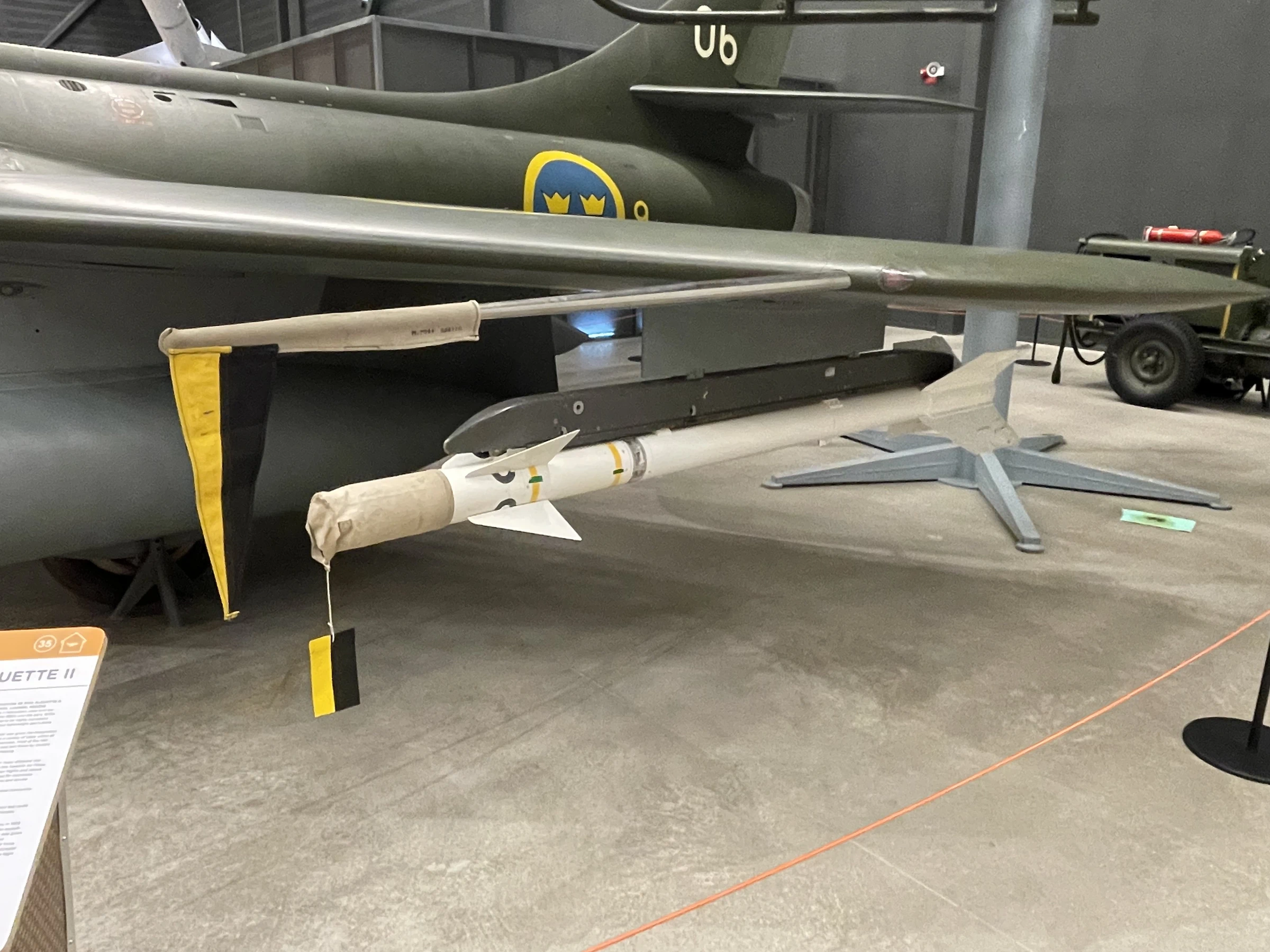
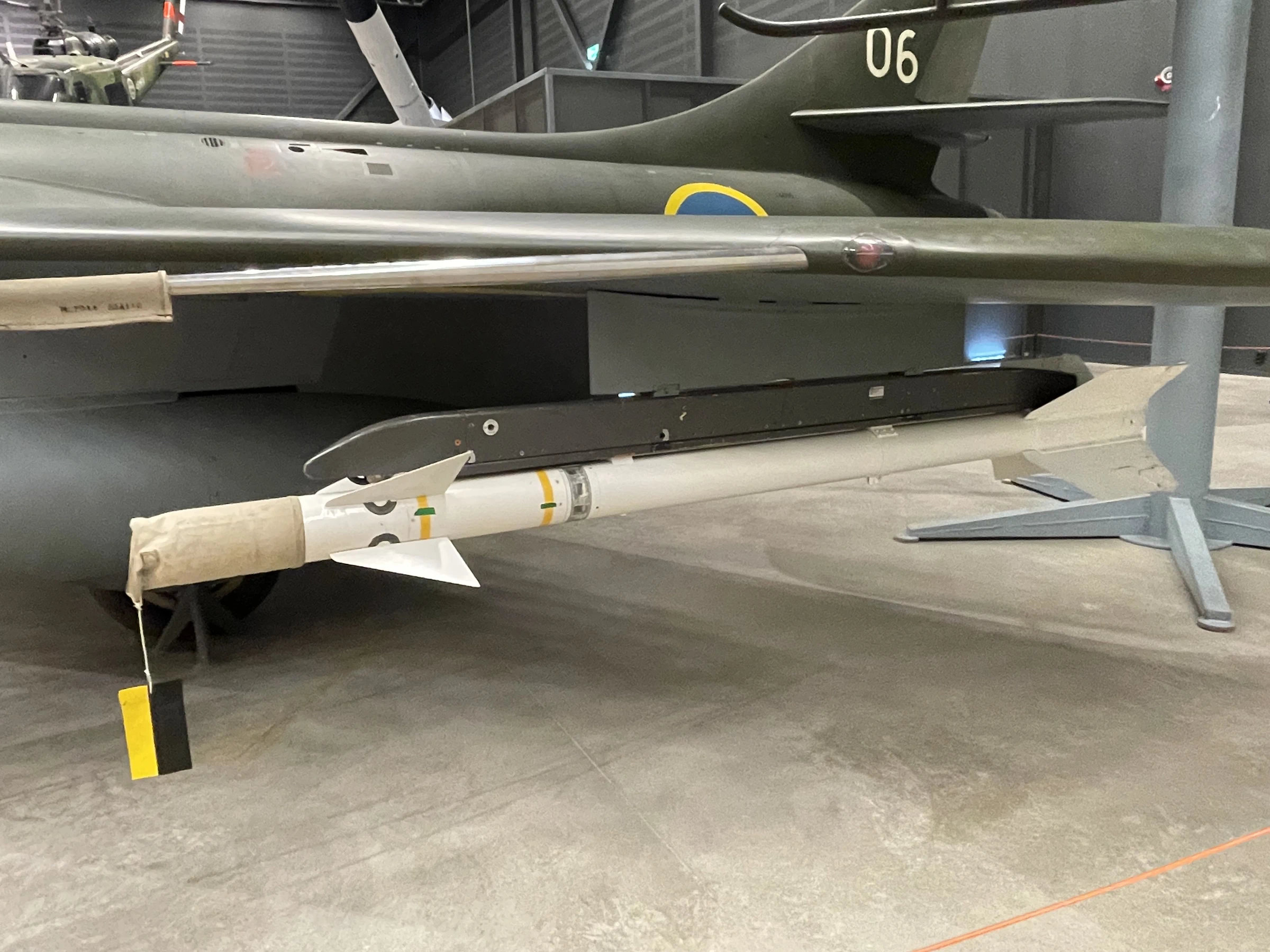
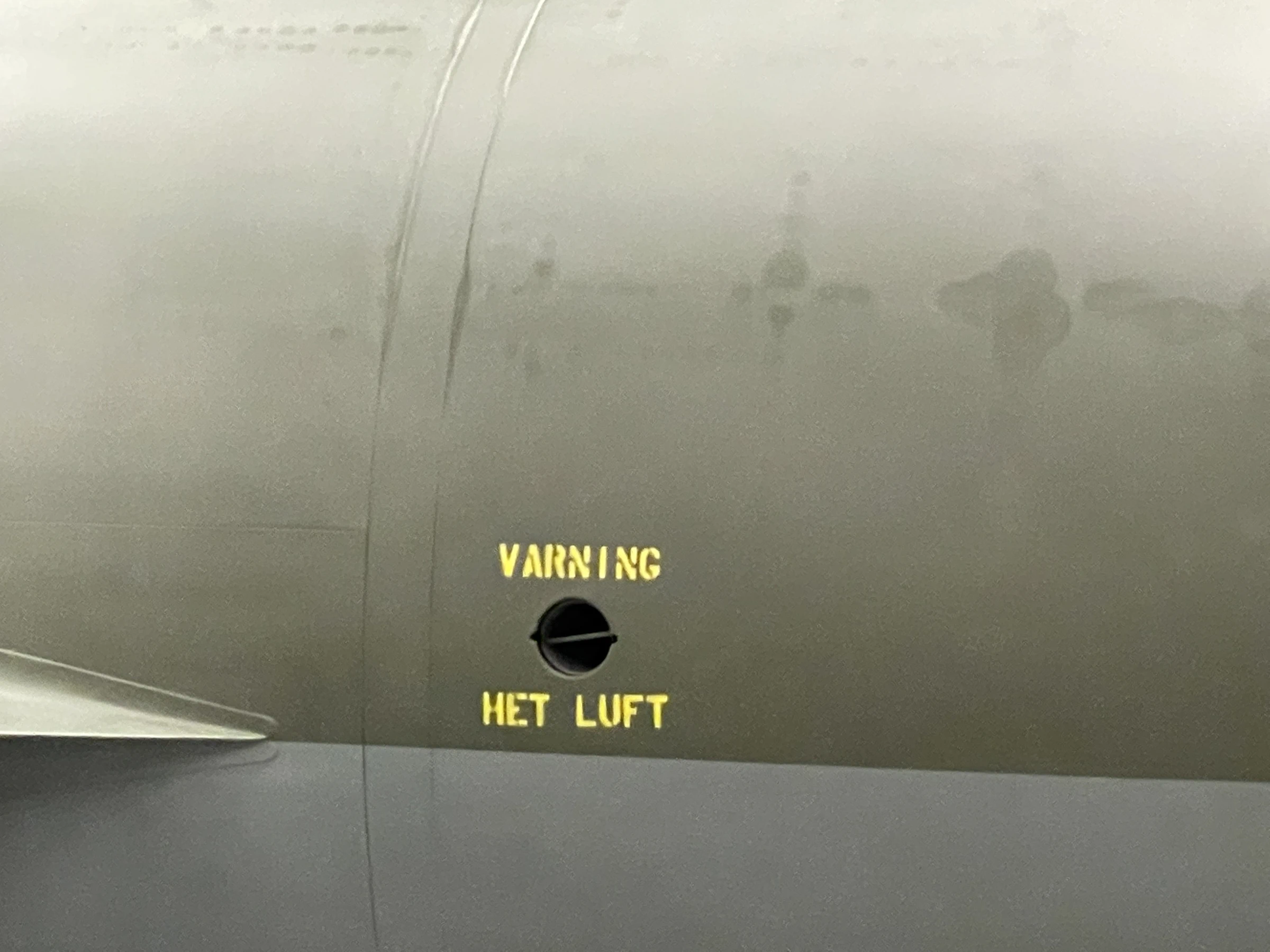
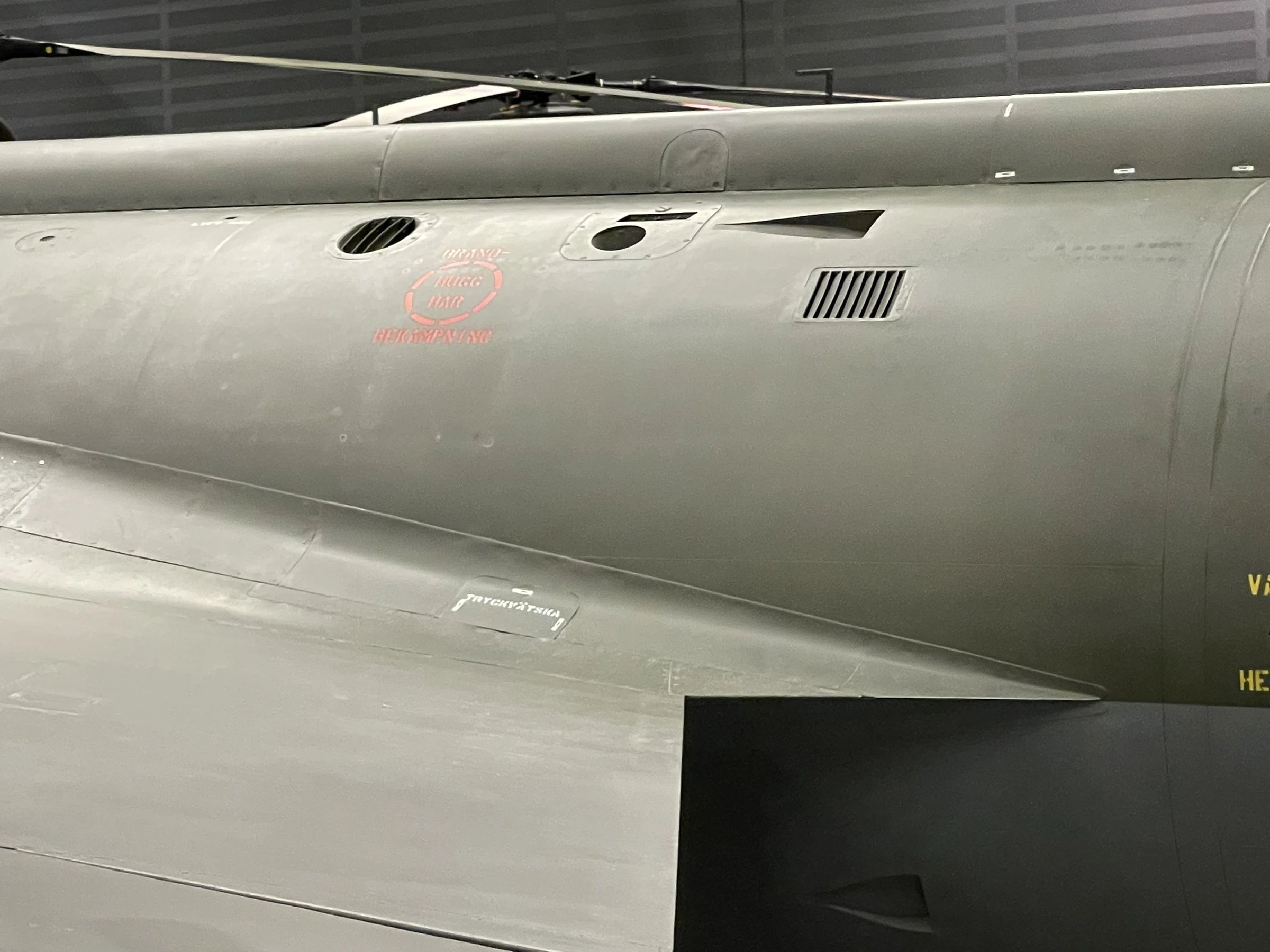
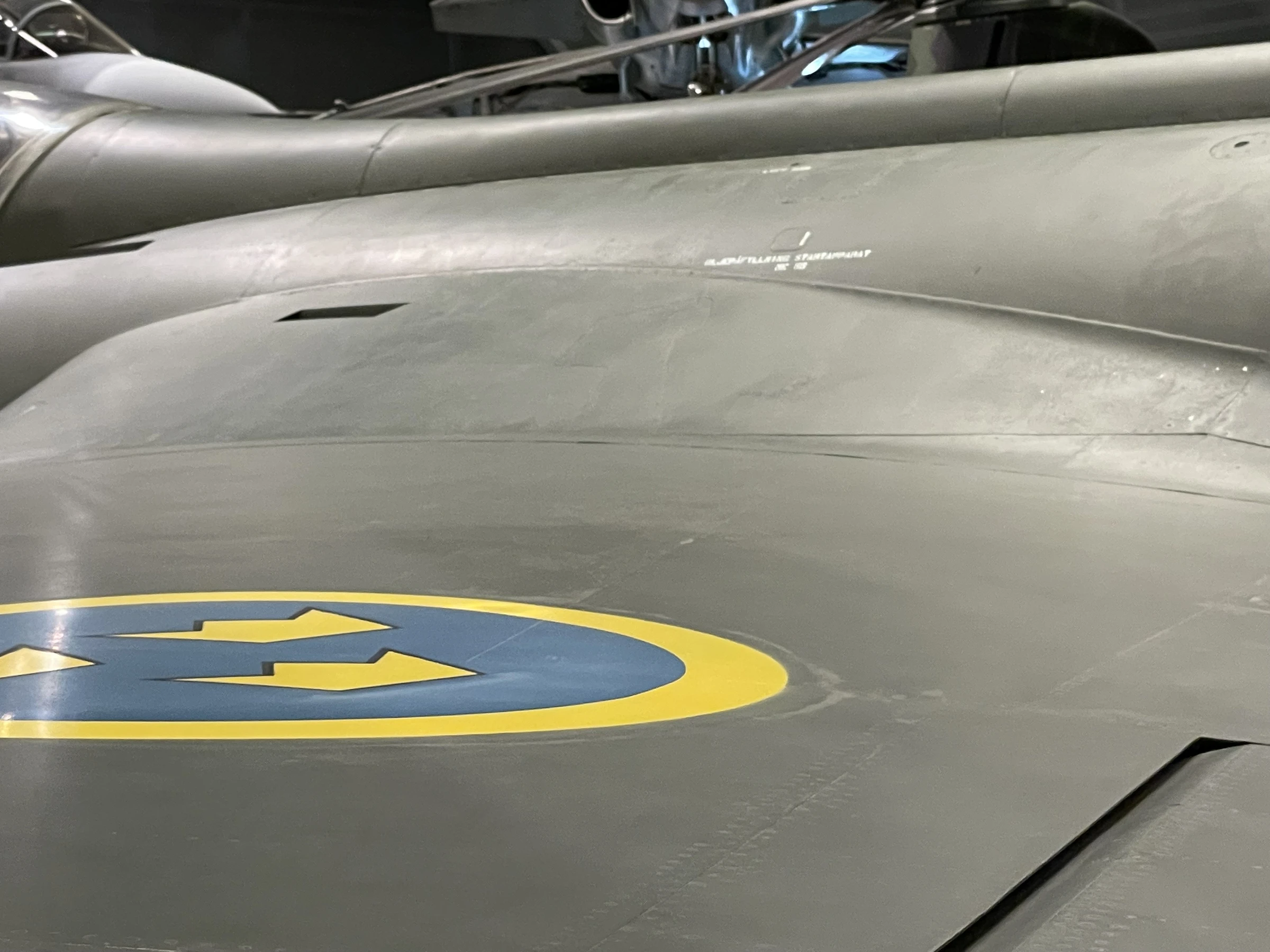
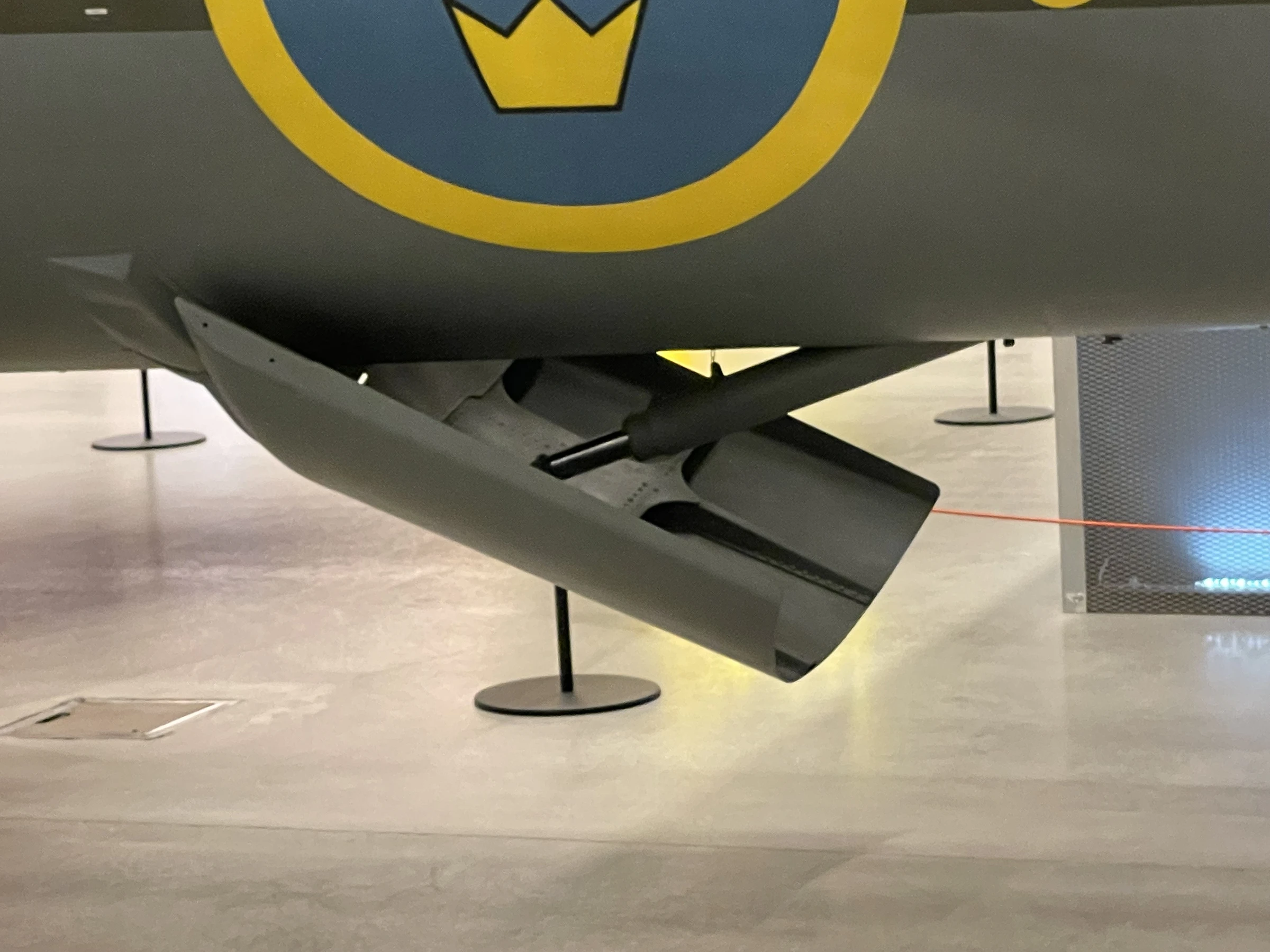
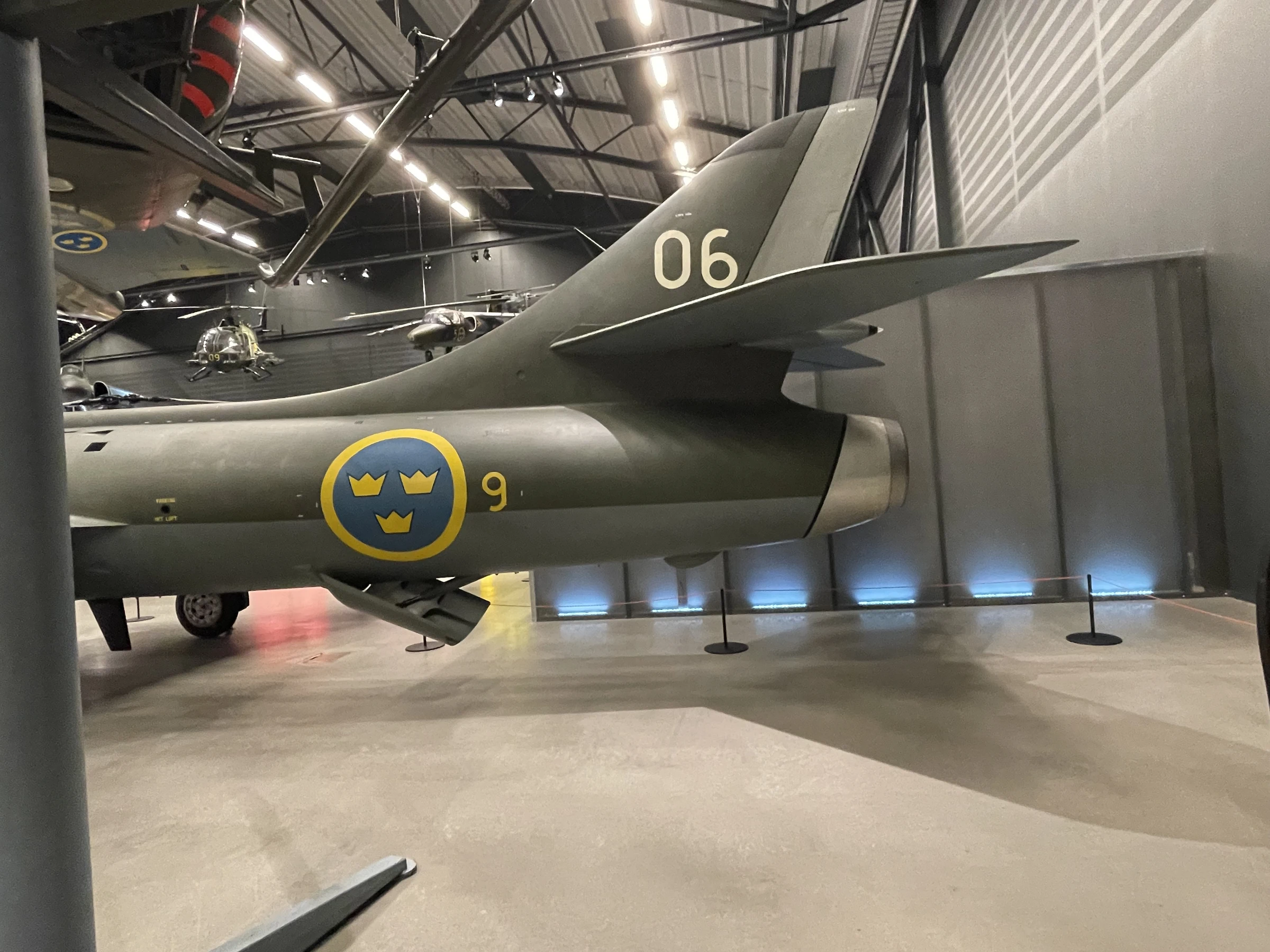
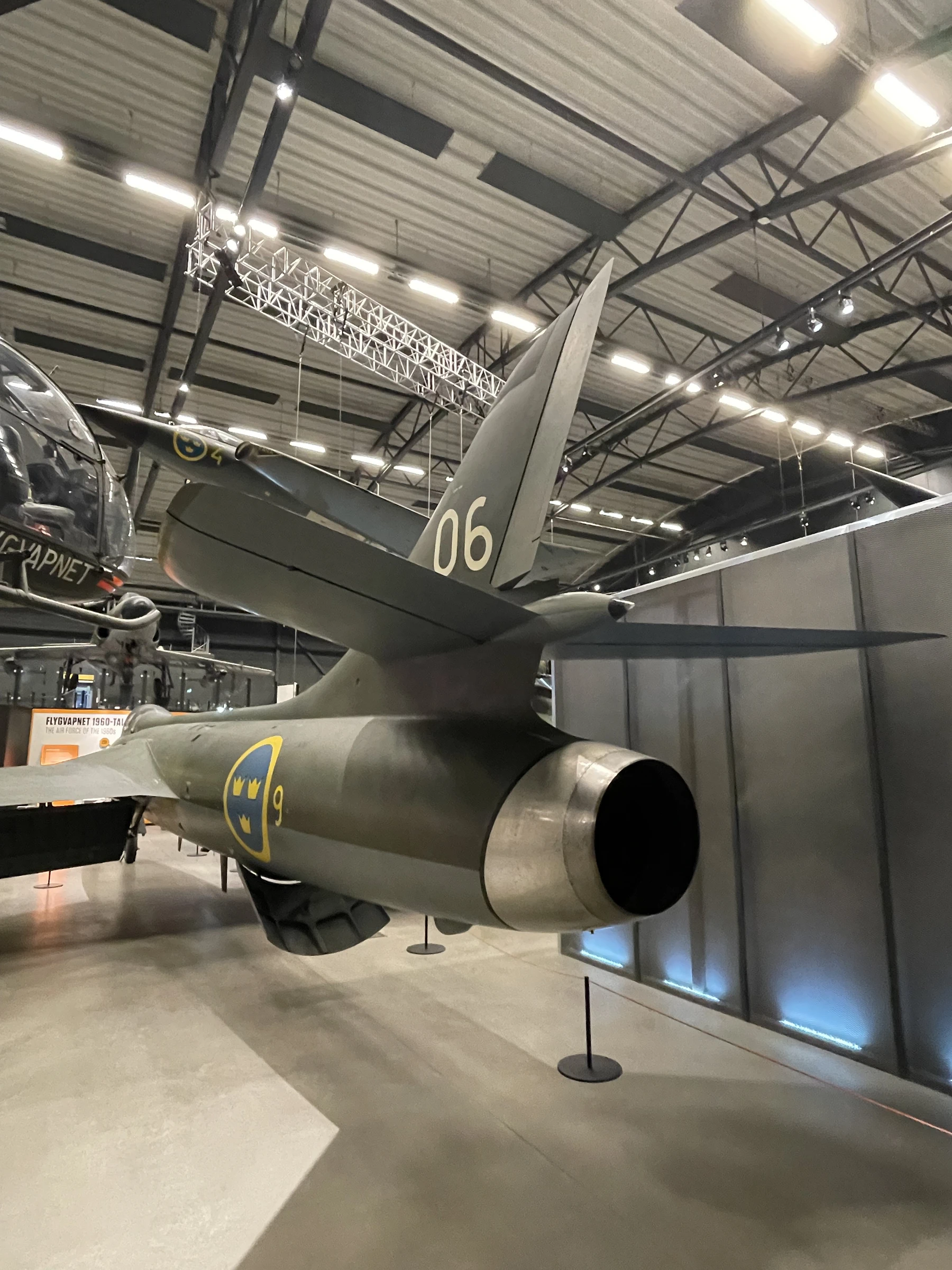
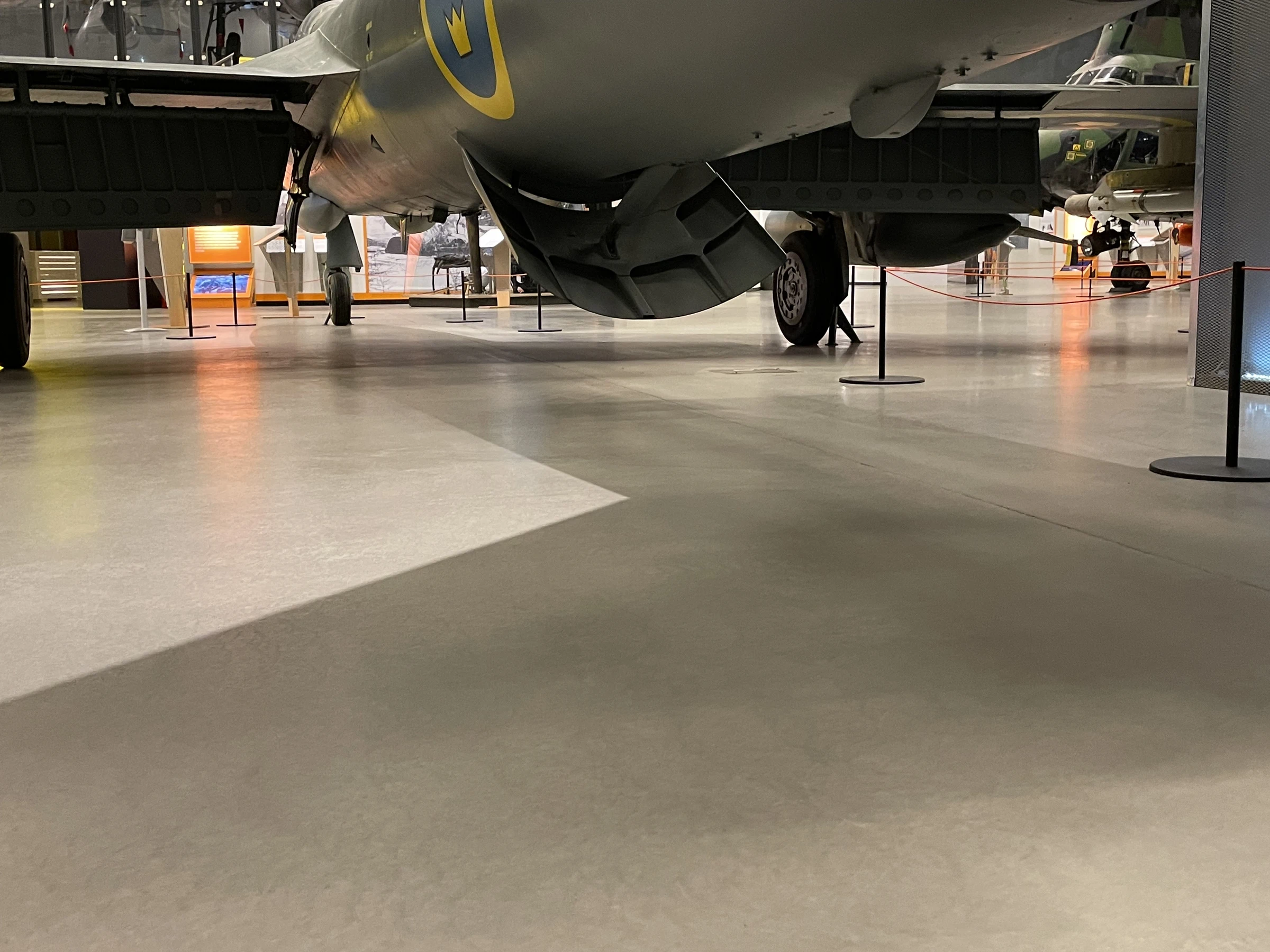
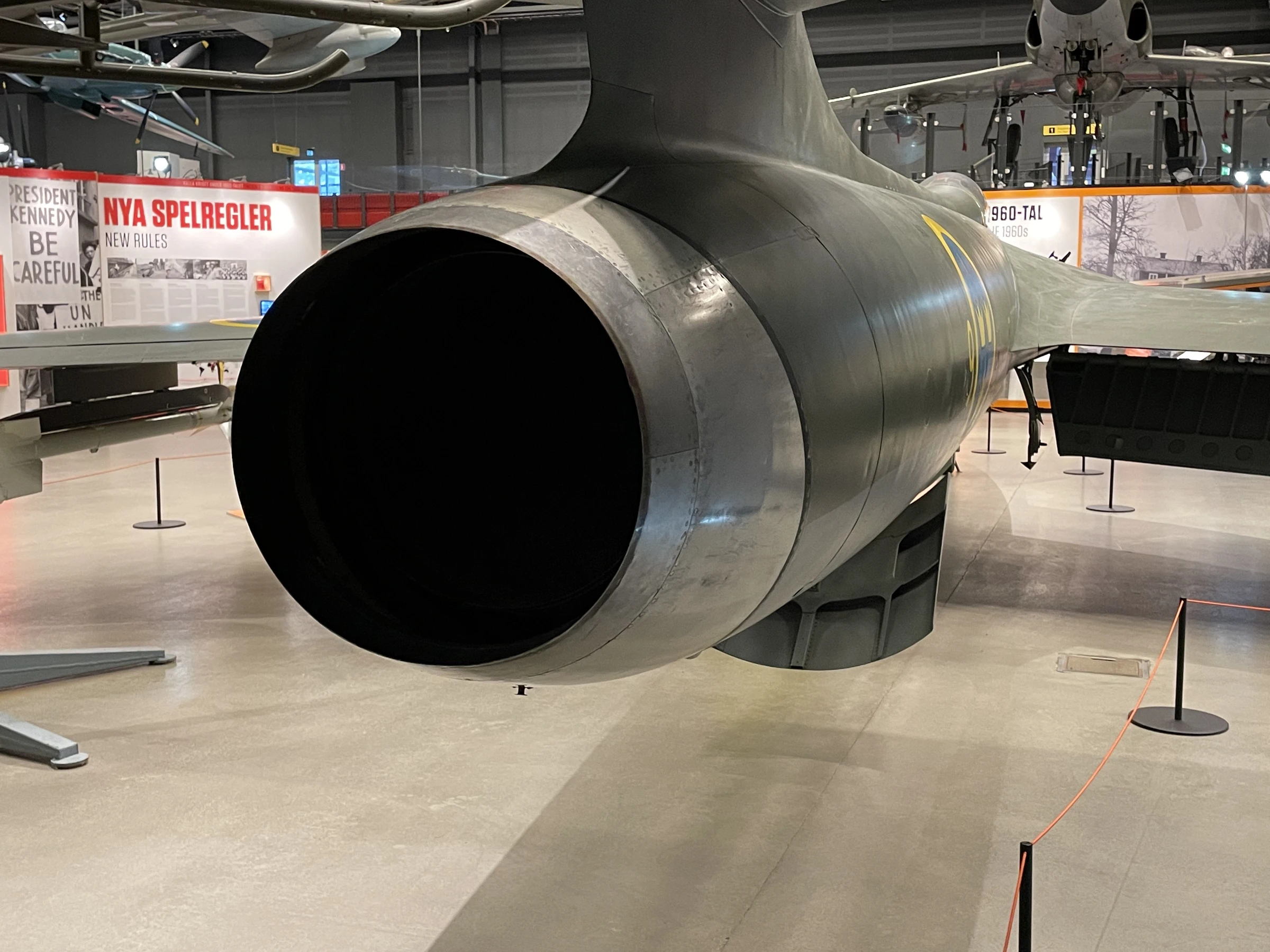
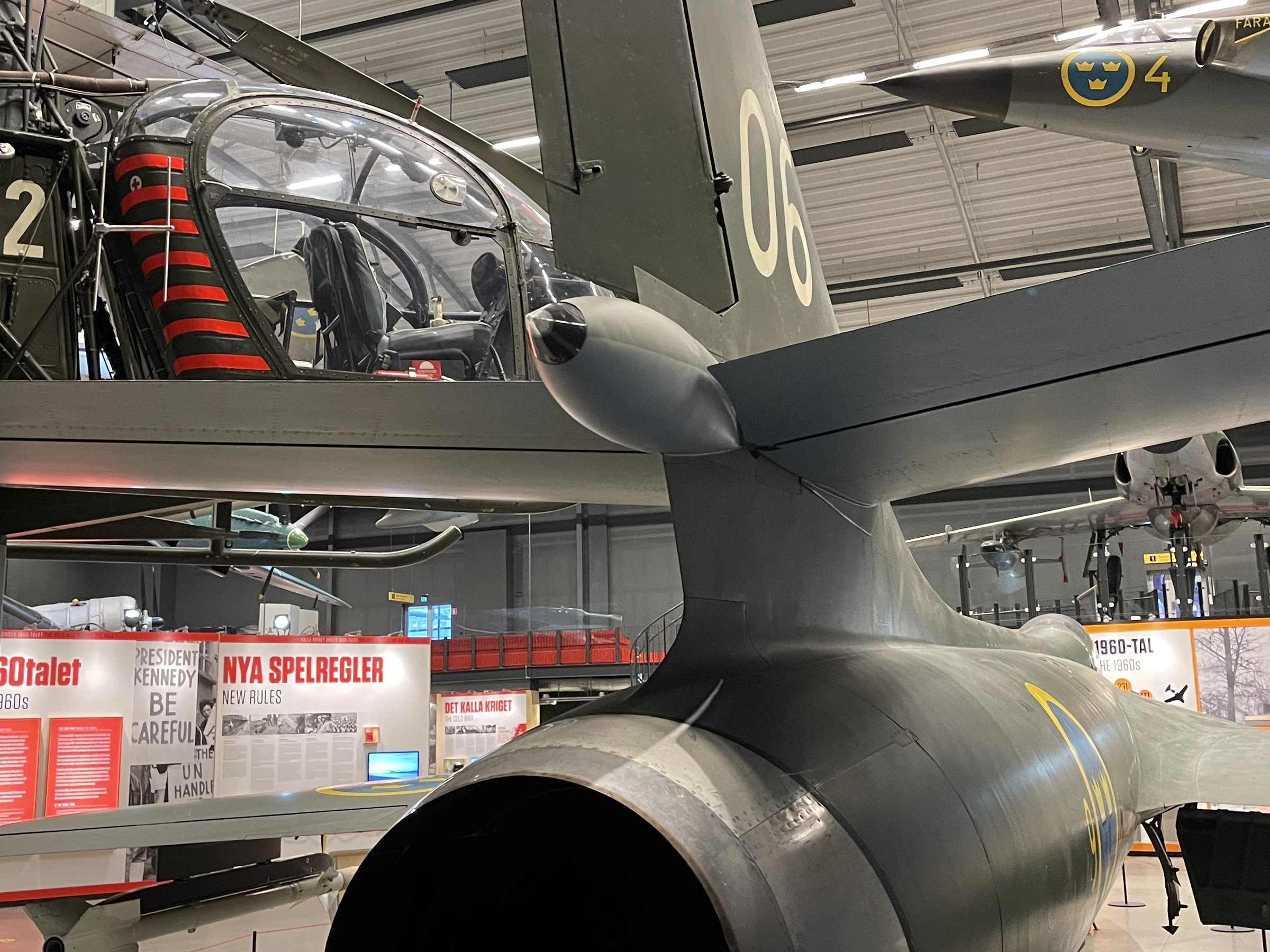
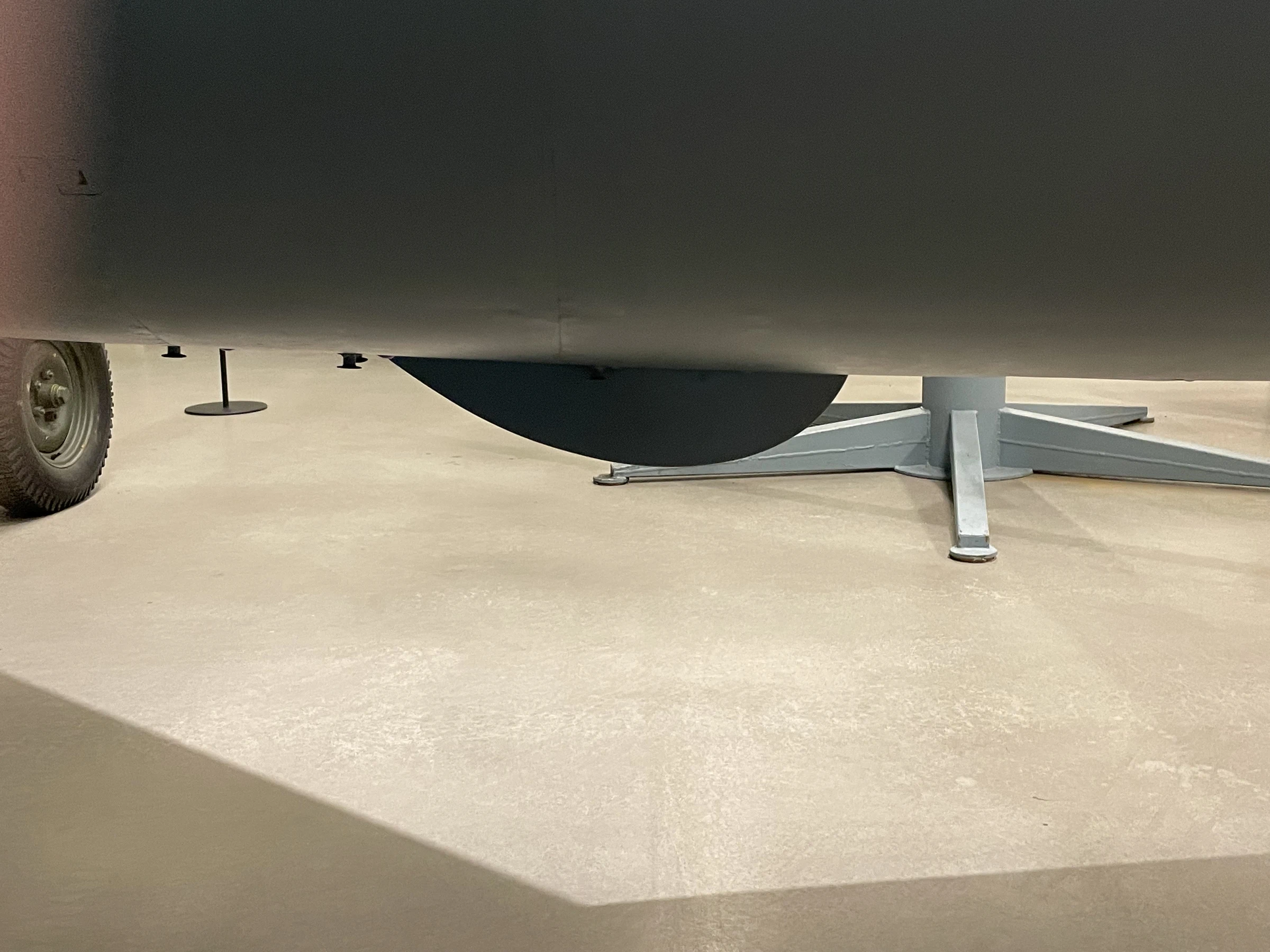
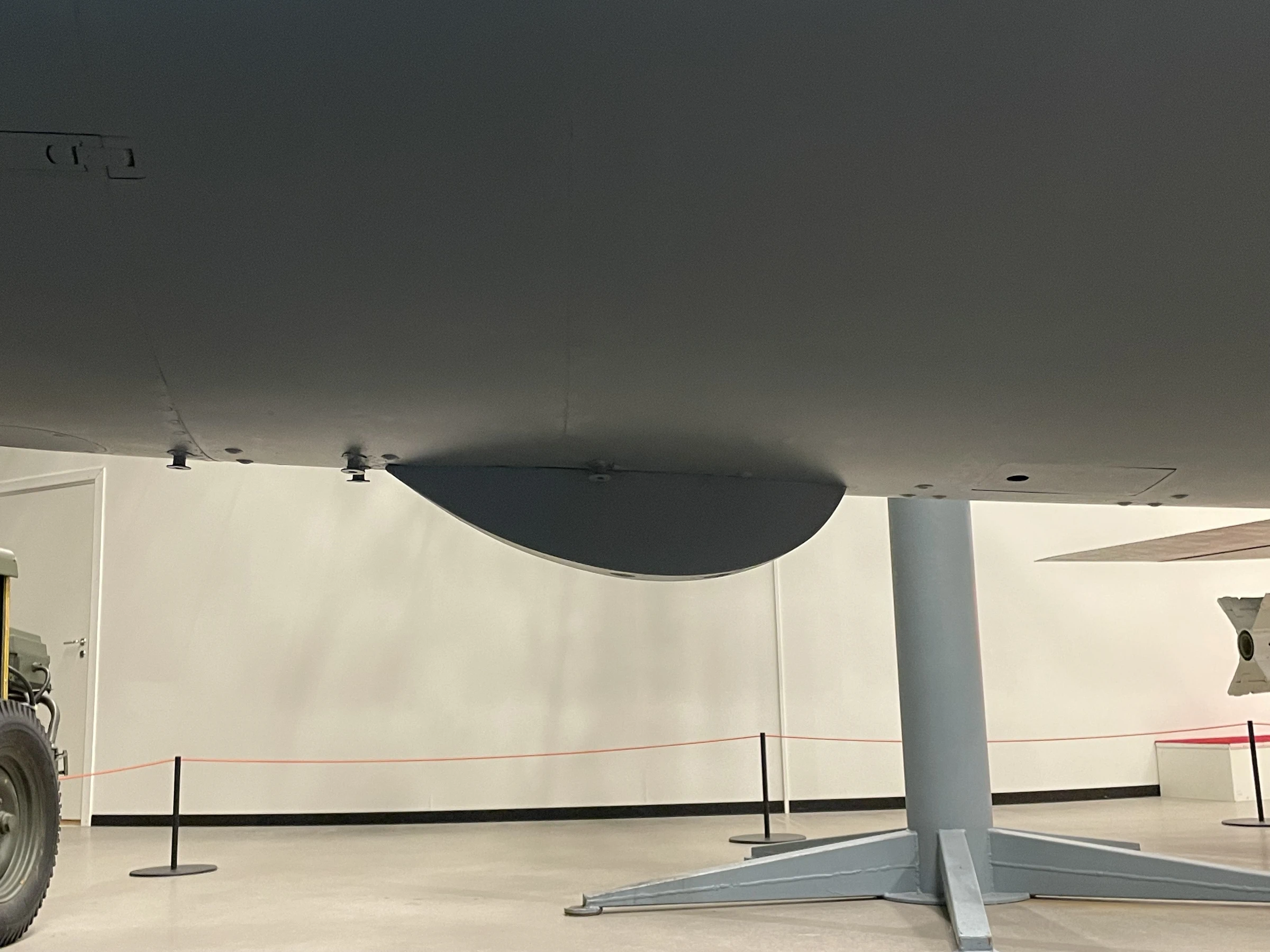
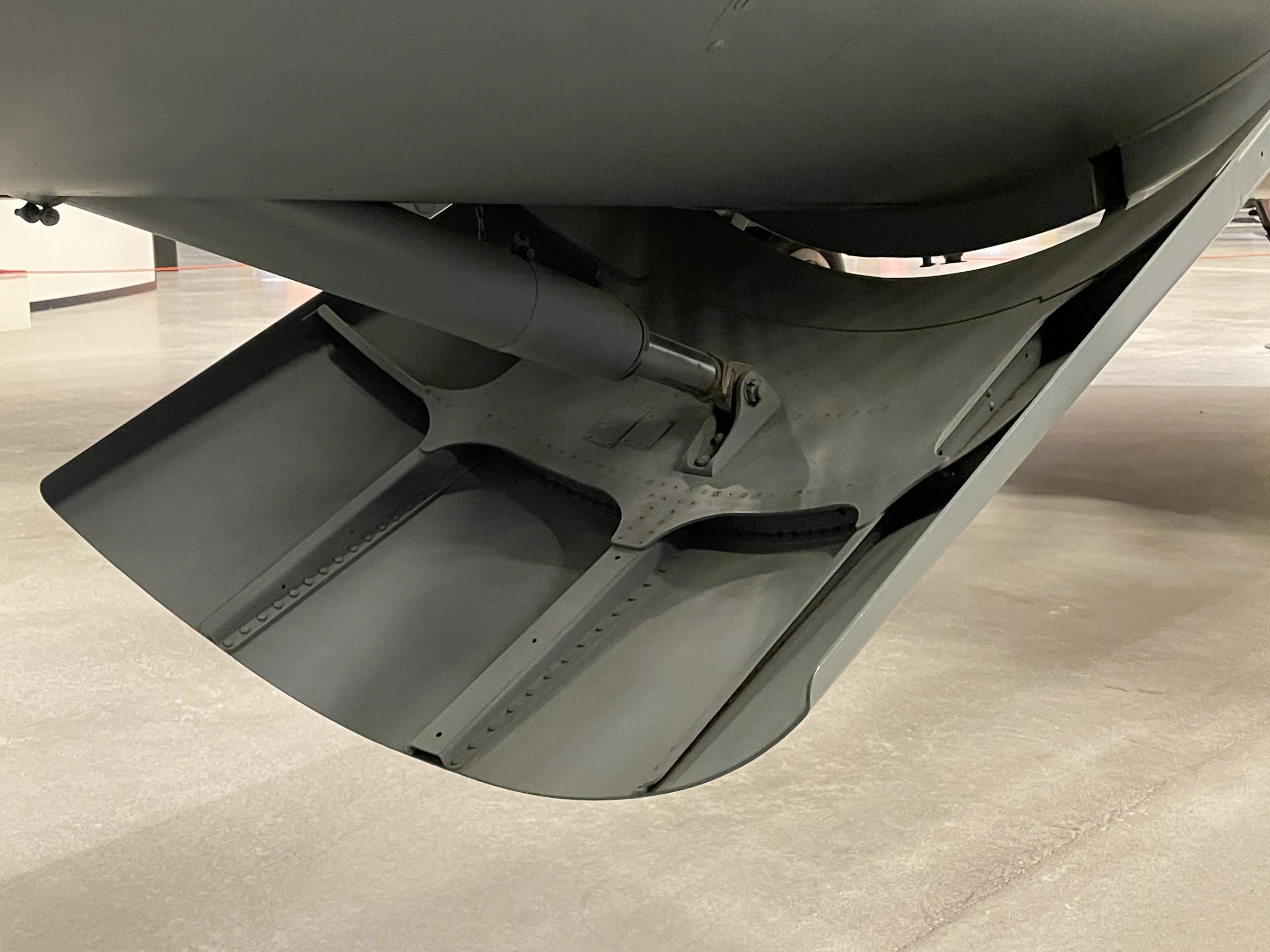
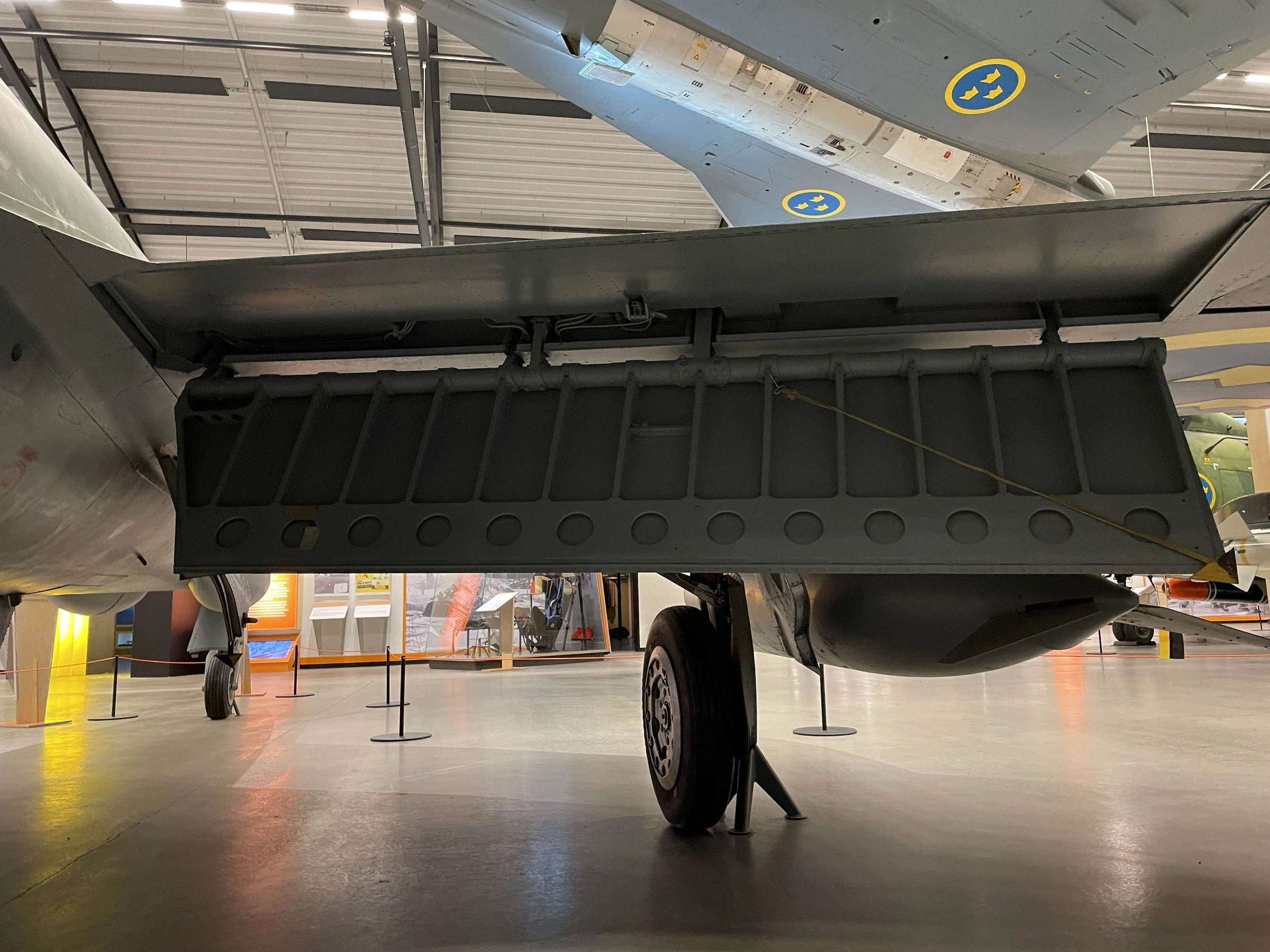
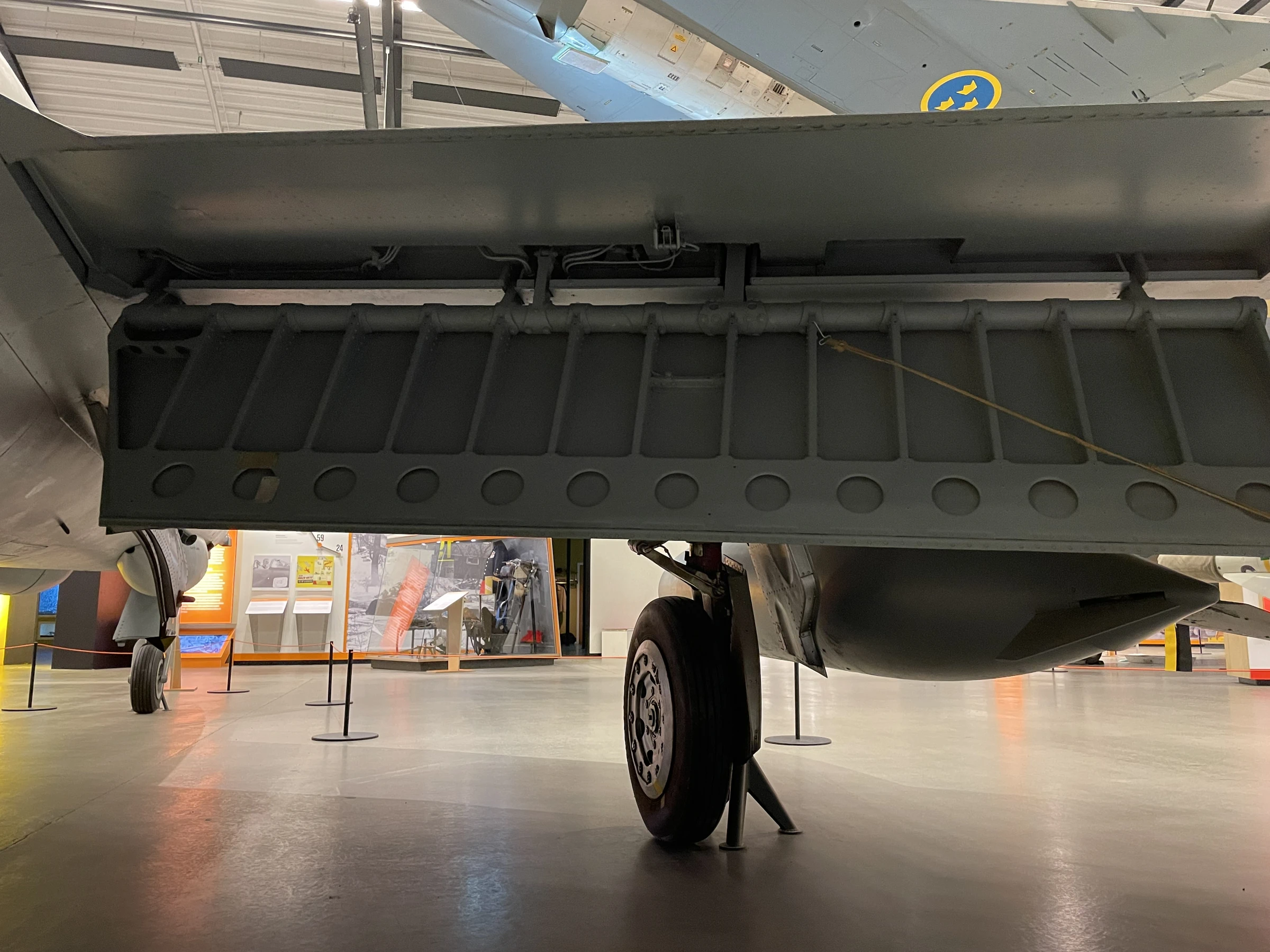
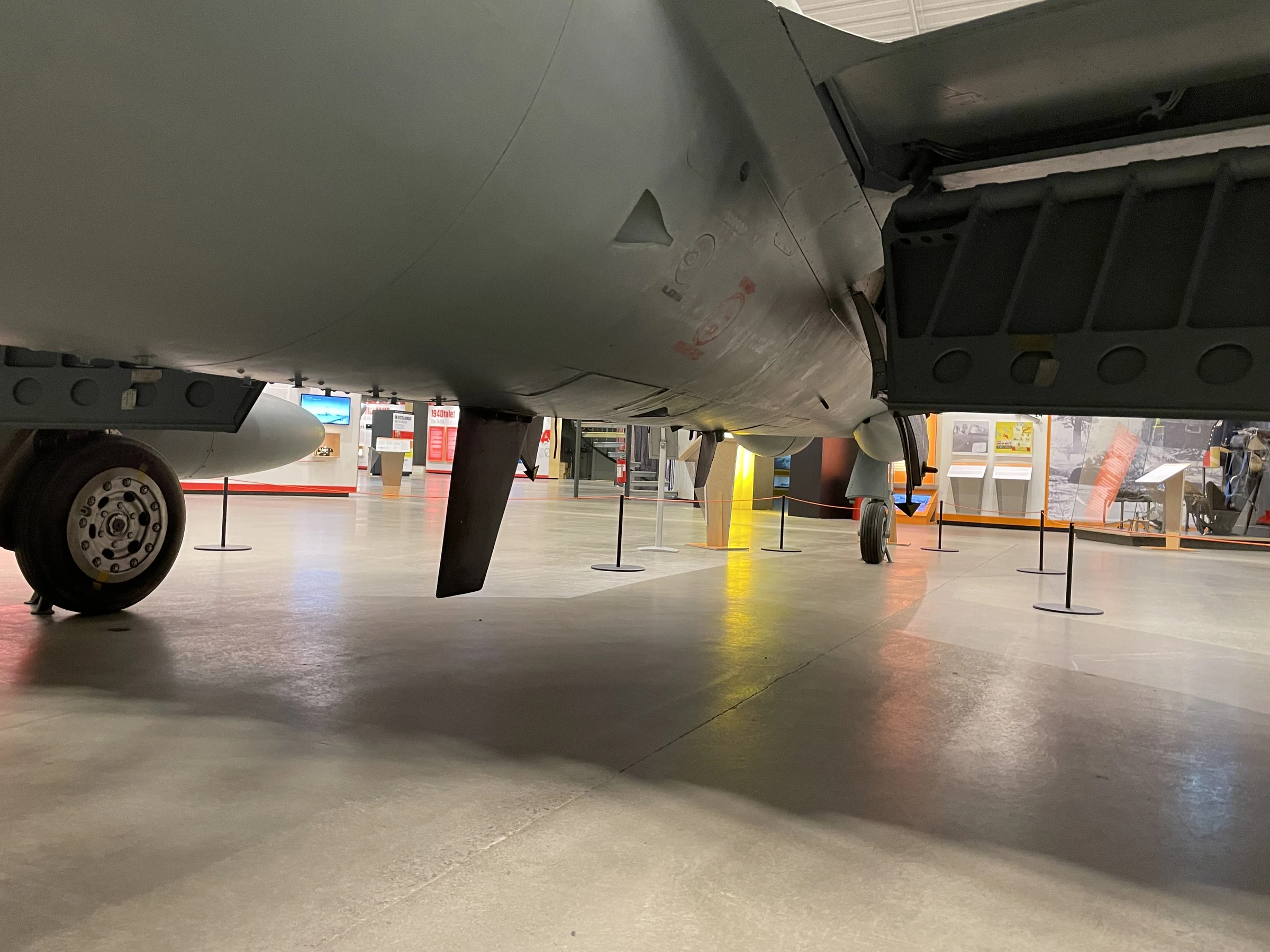
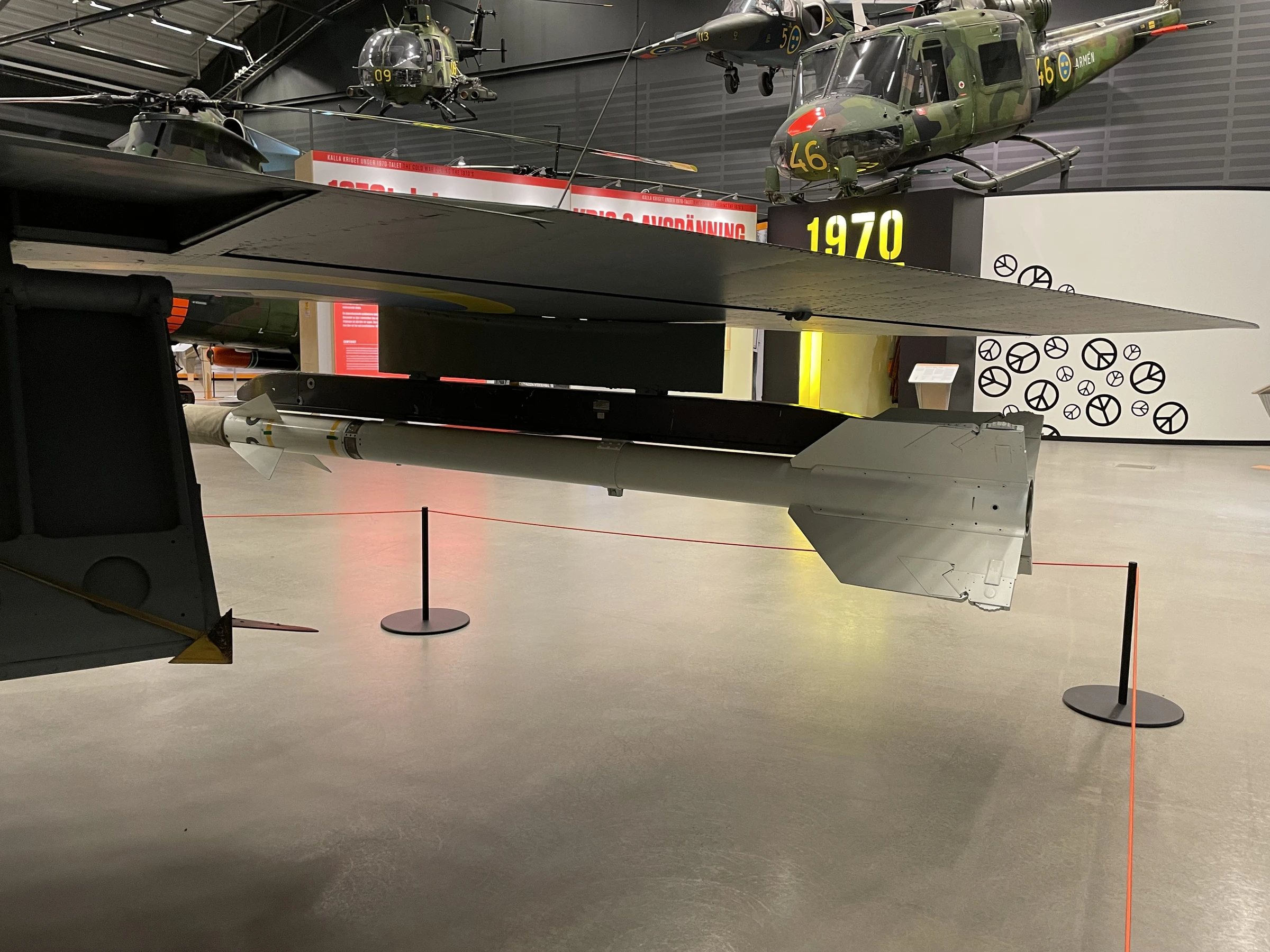
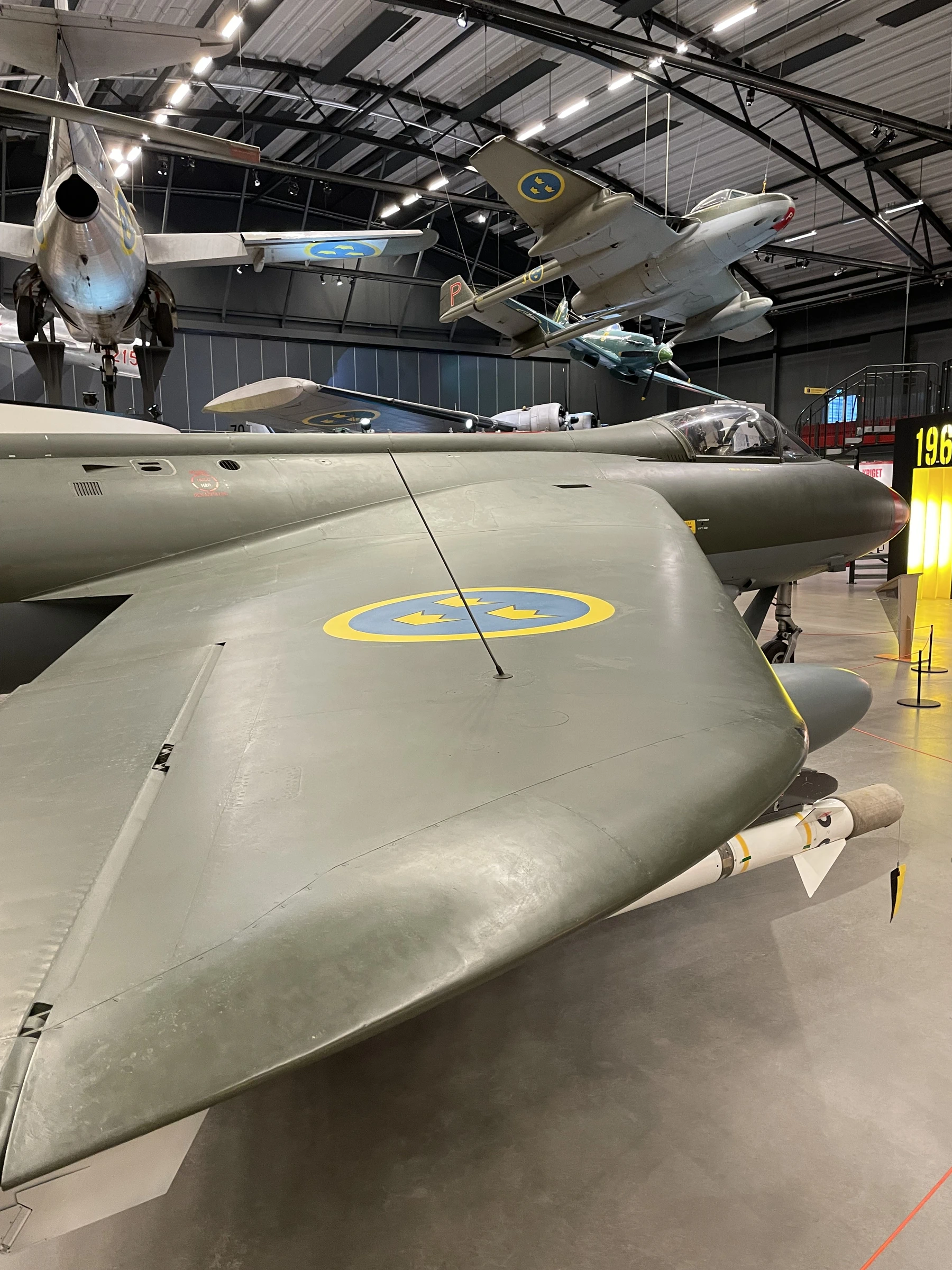
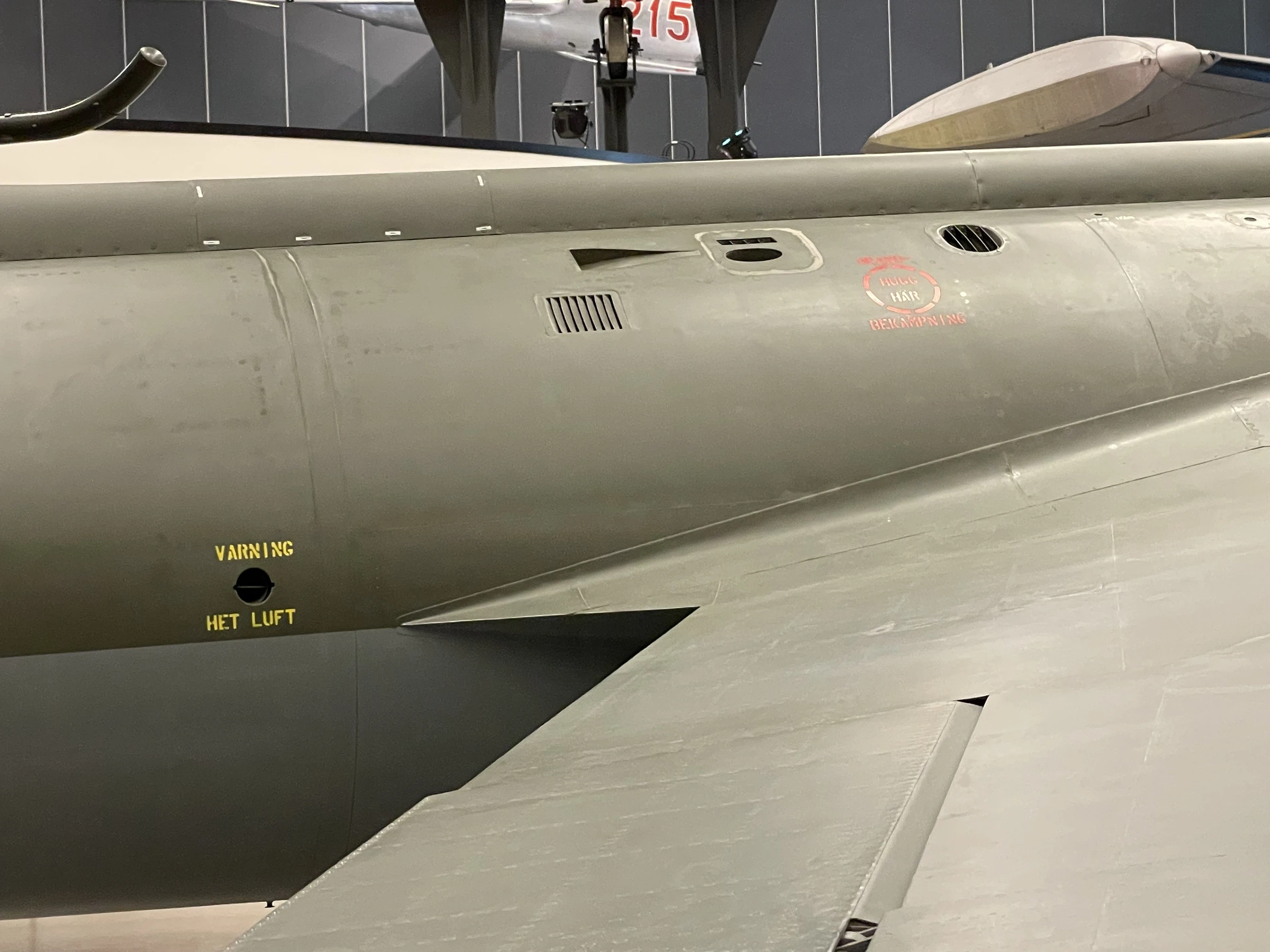
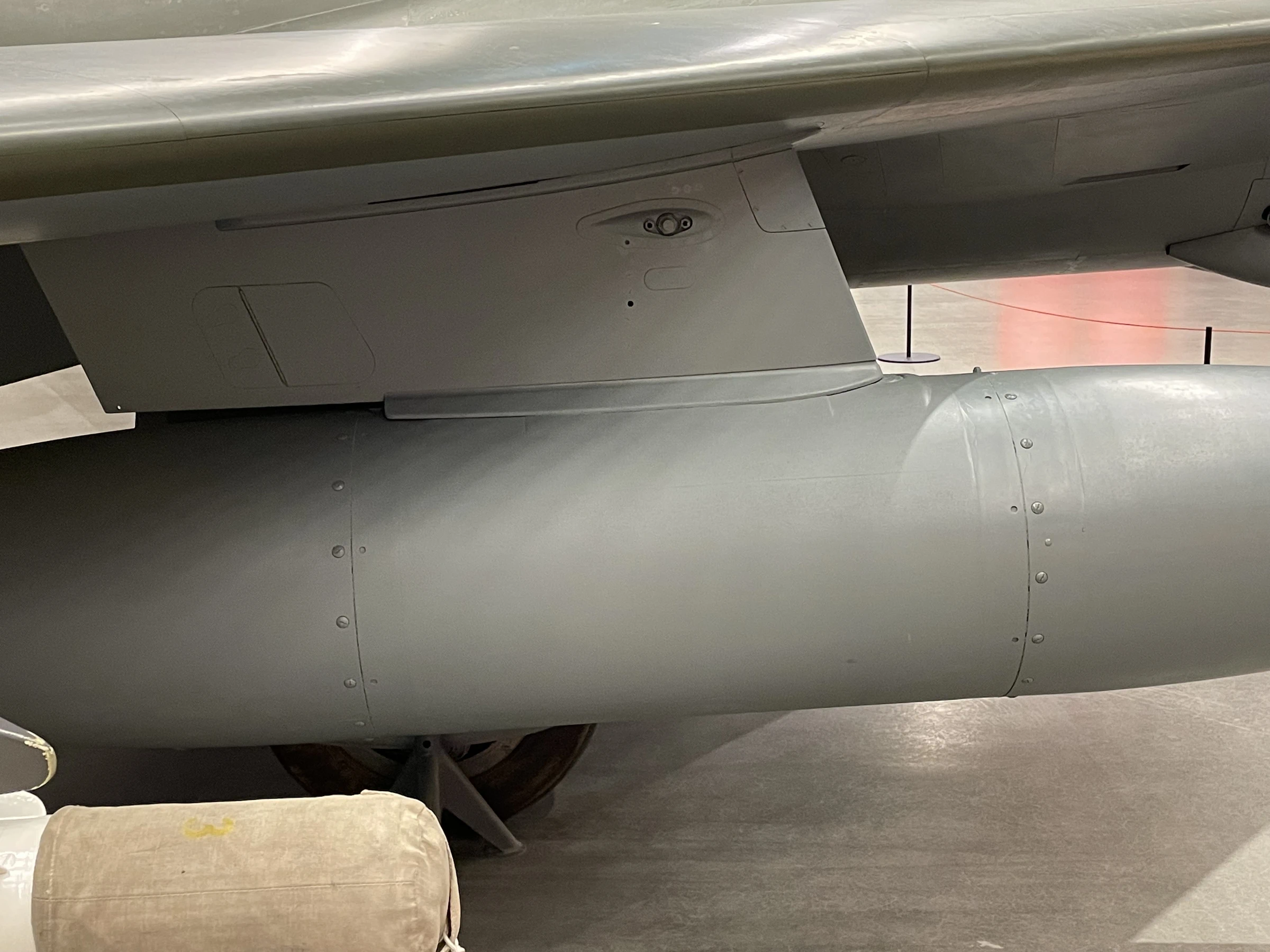
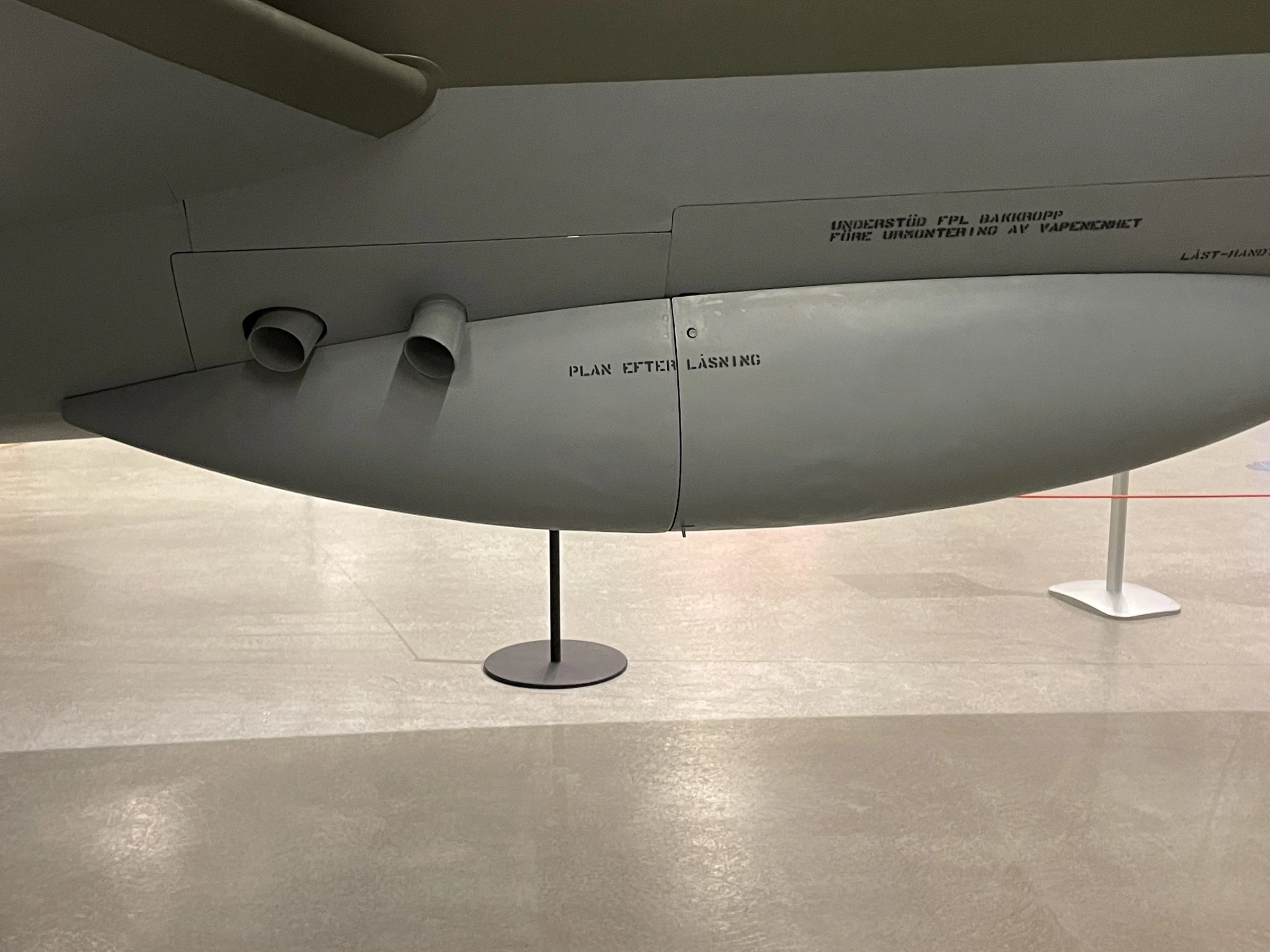
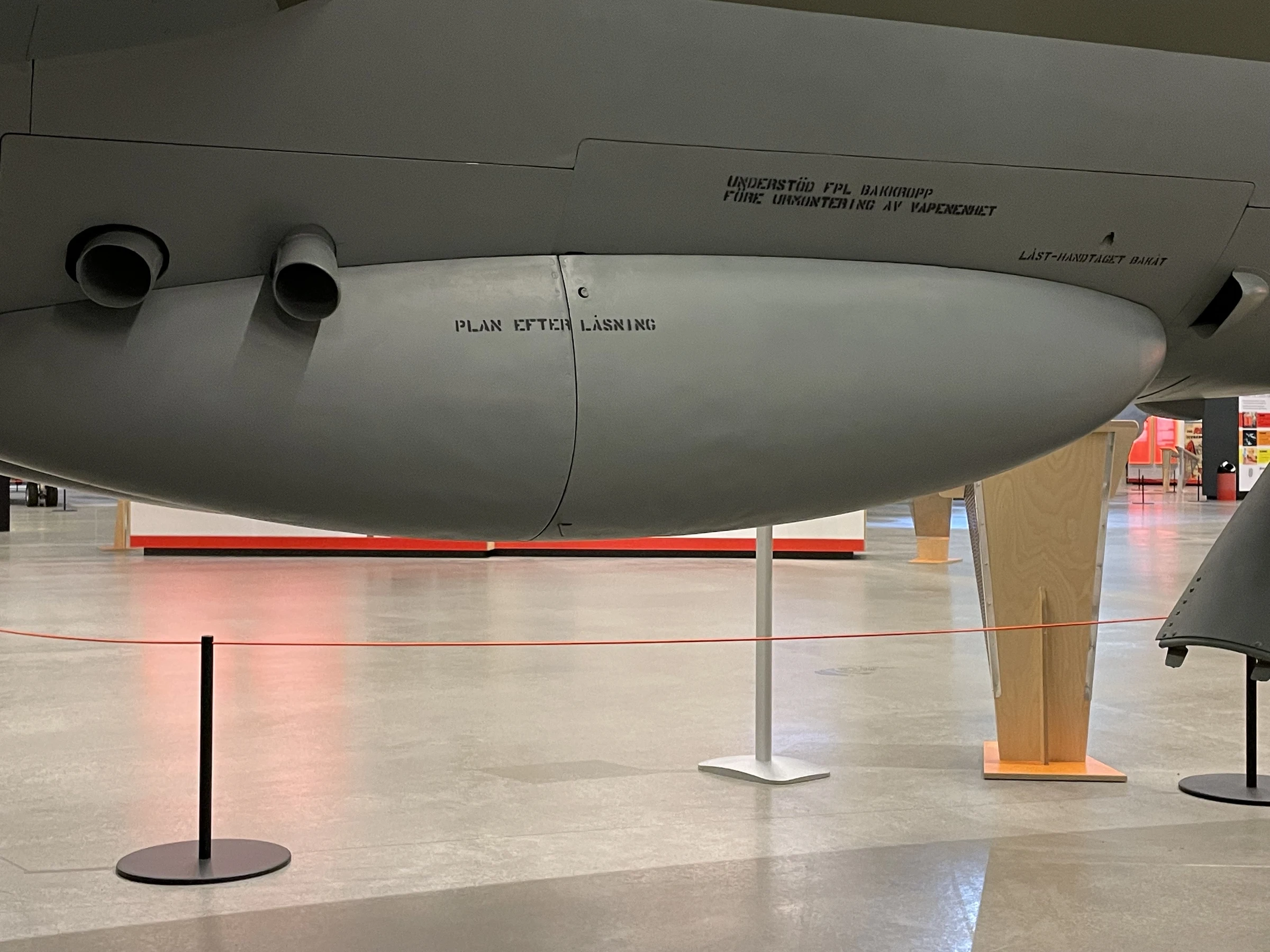
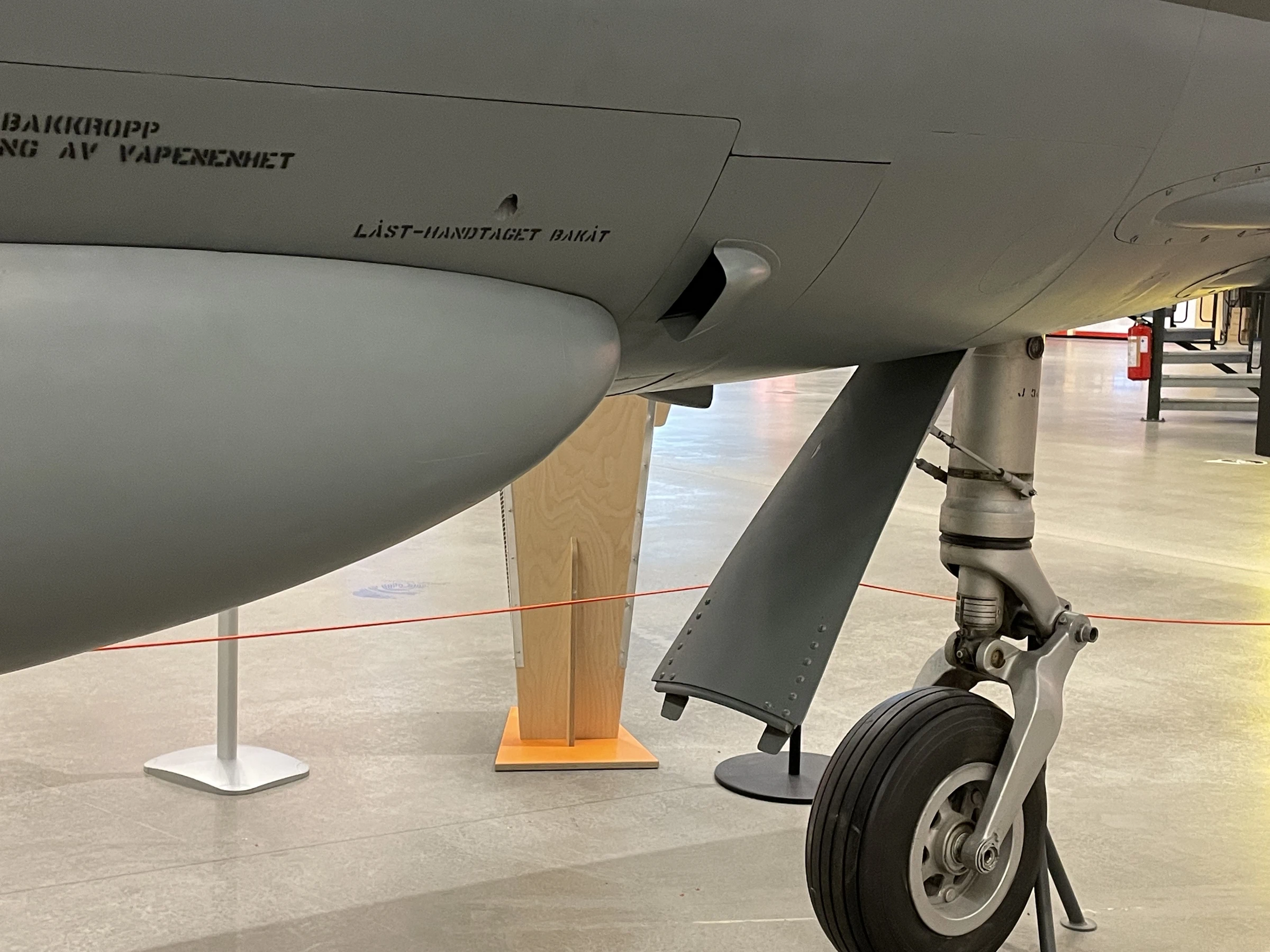
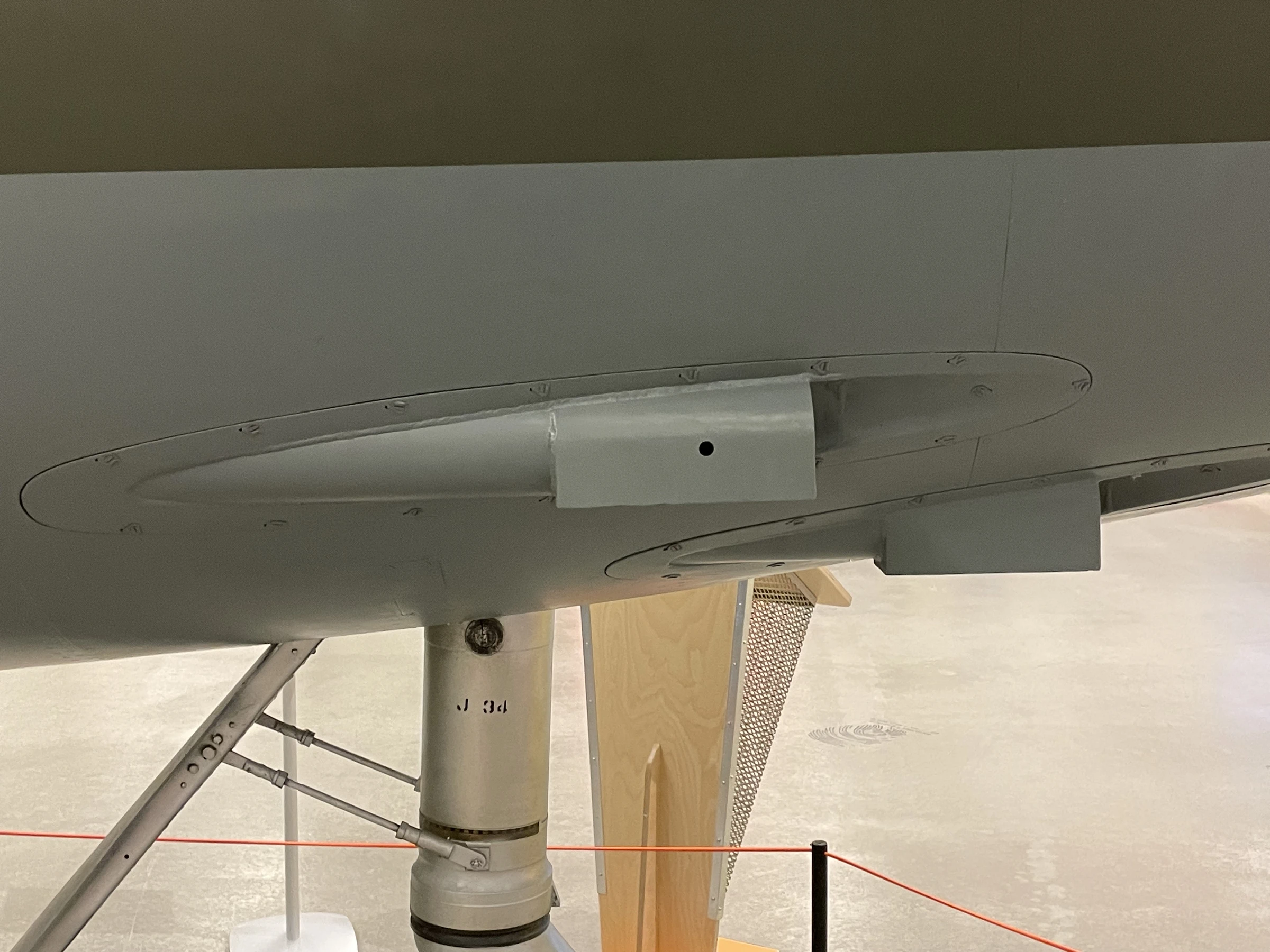
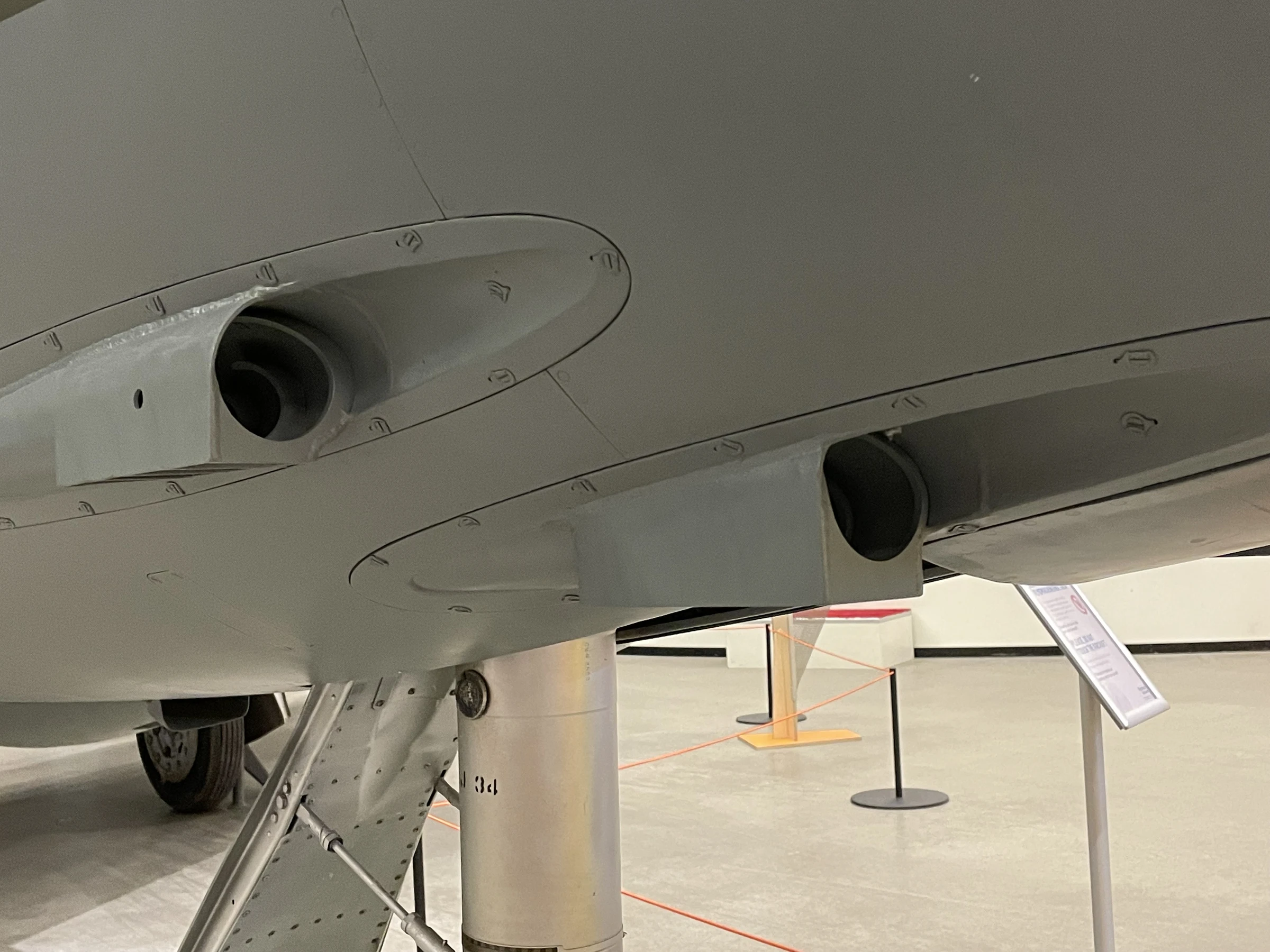
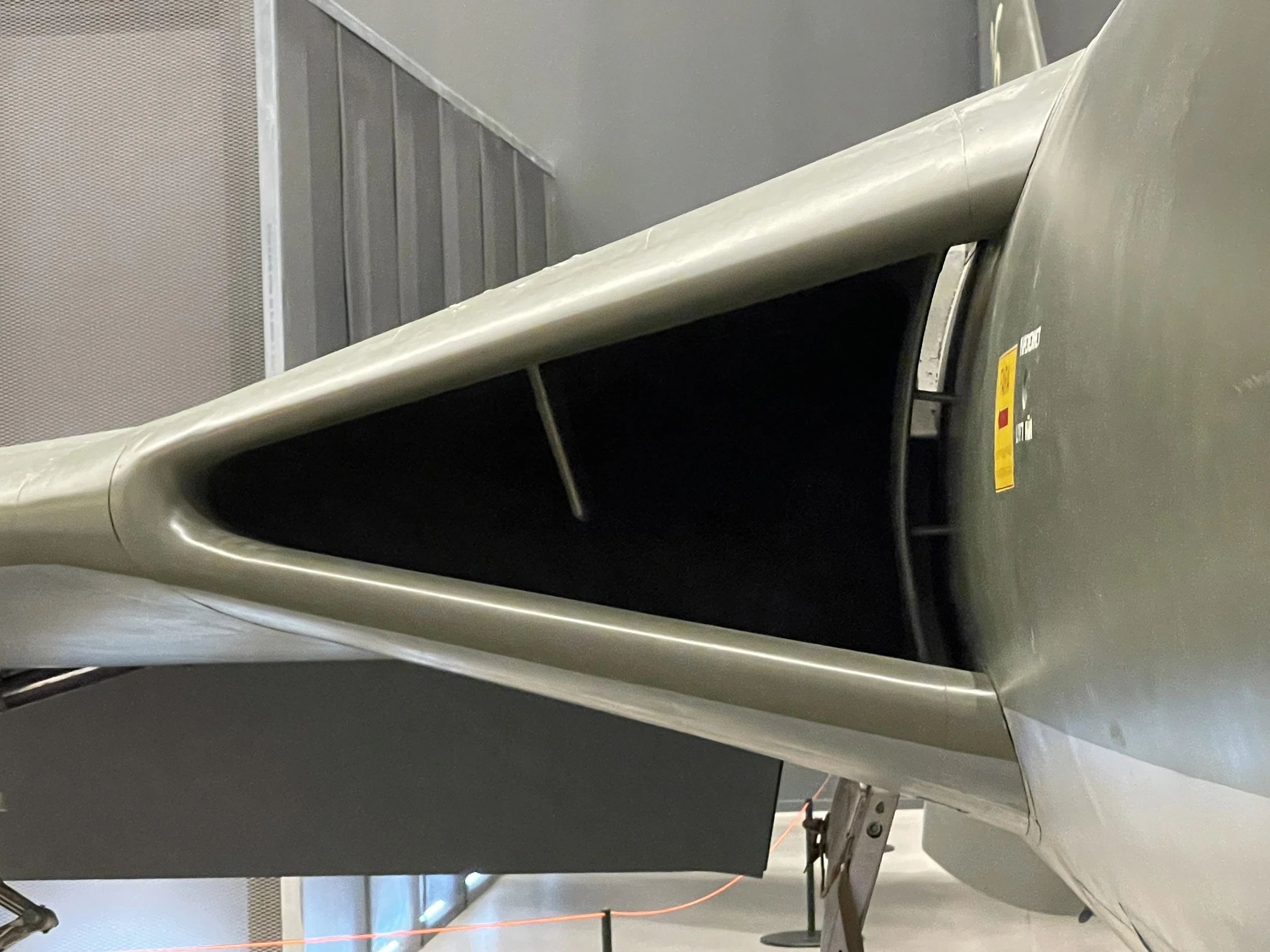
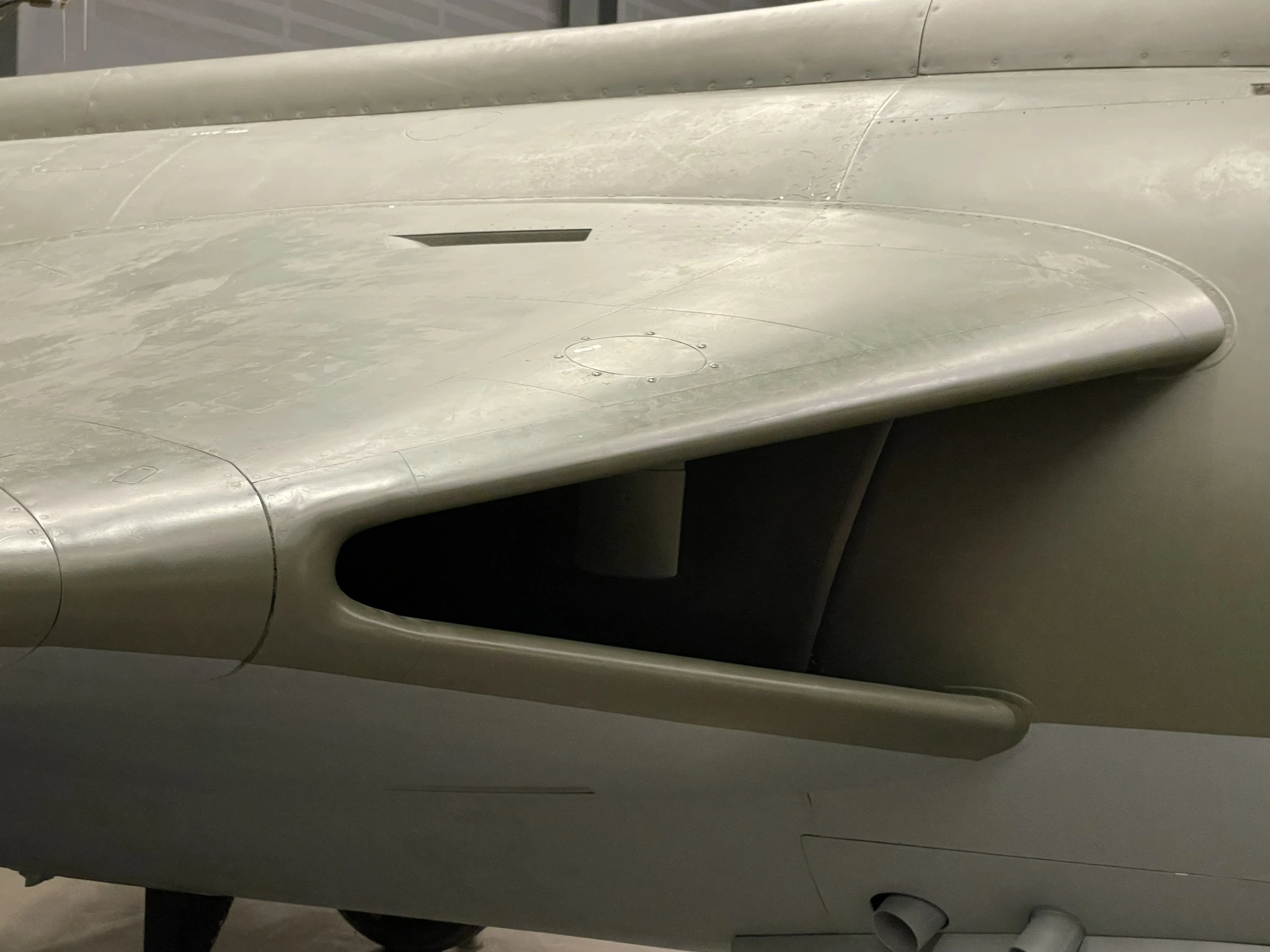
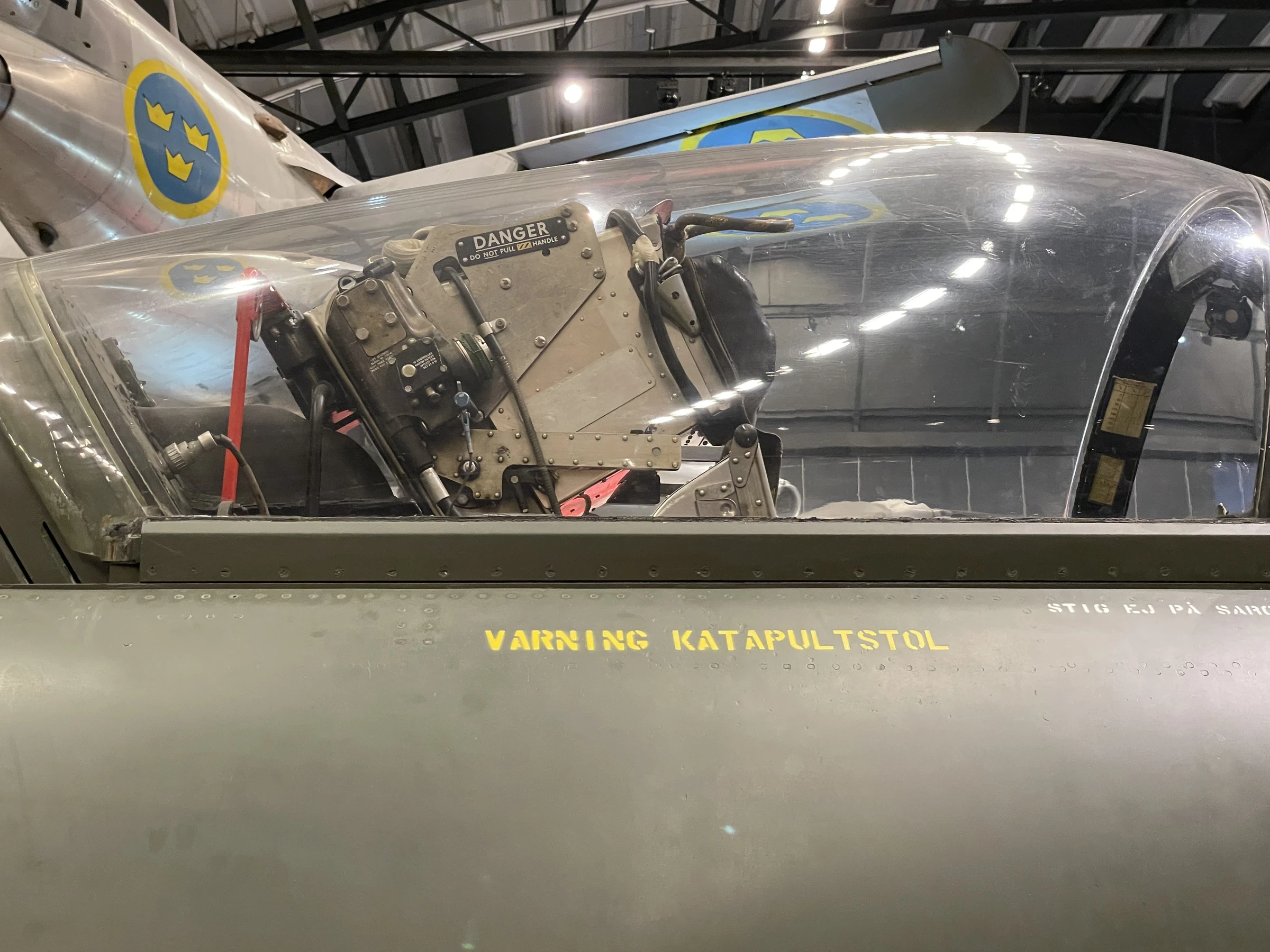
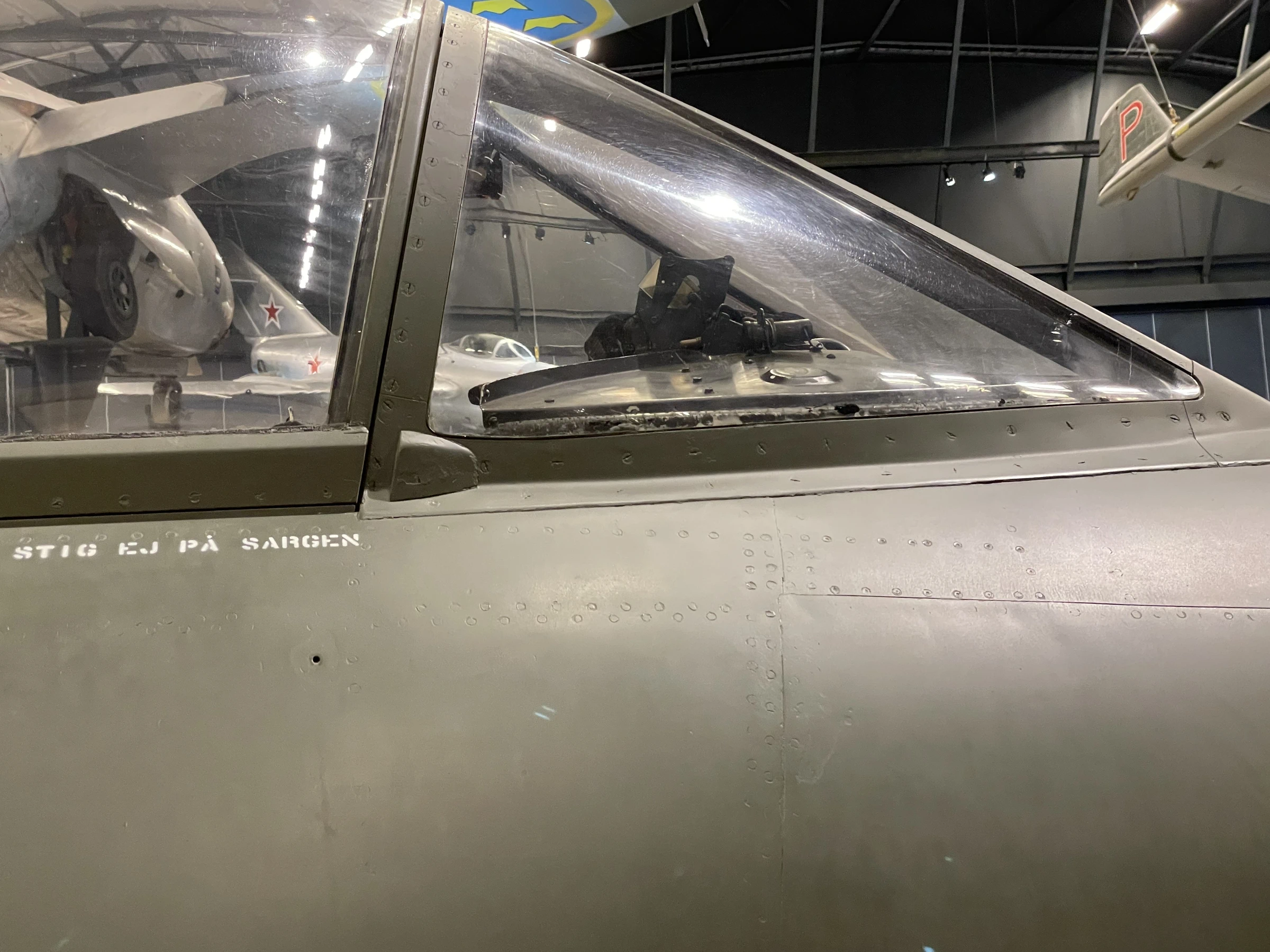
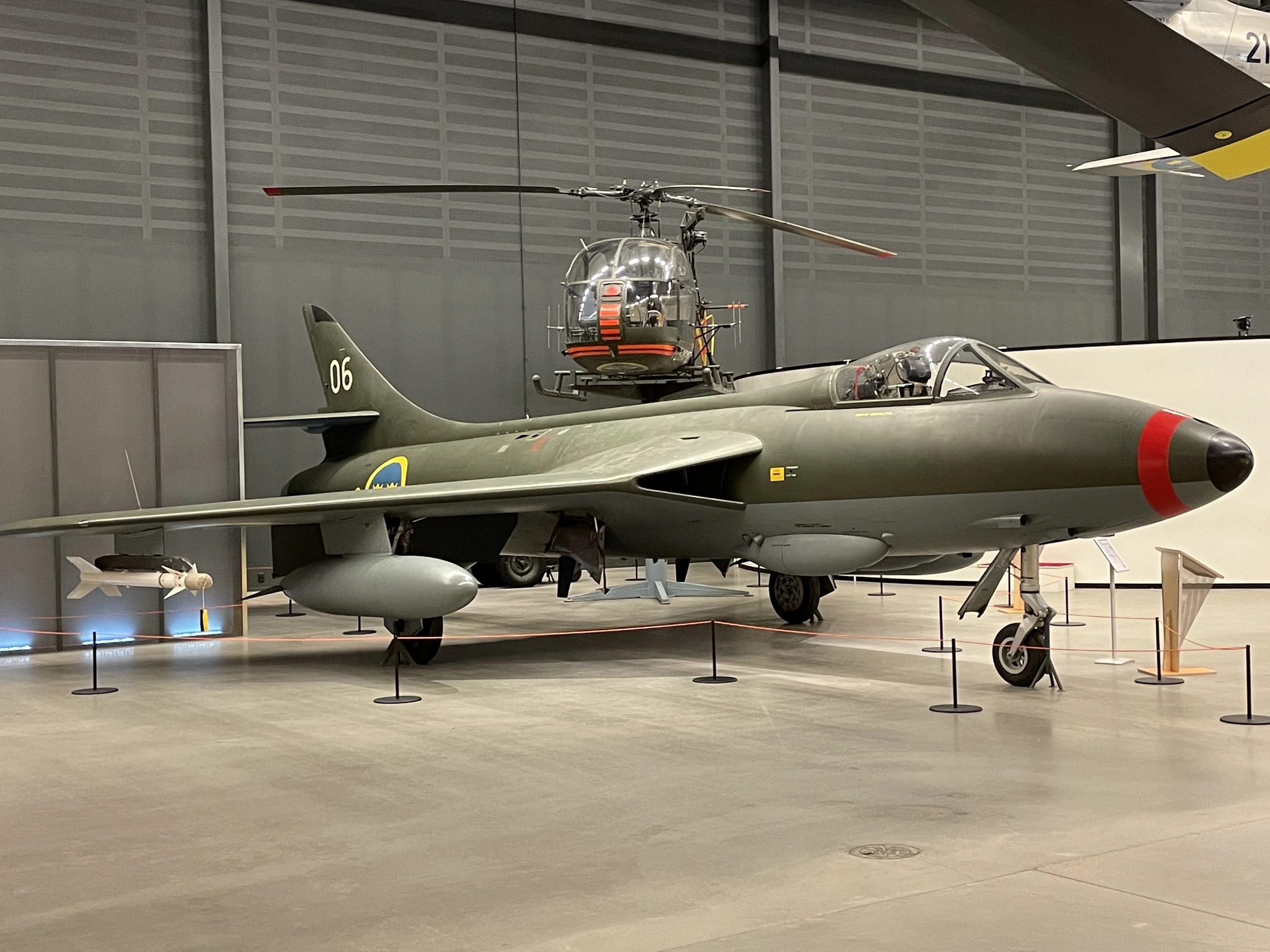
These walk-around photos were taken at Flygvapenmuseum at Malmen outside Linköping in 2017, 2019 and 2022. They show a Hawker Hunter F.4, known in Swedish service as the Hunter Mk 50 and designated J 34 — one of the finest fighter aircraft of the 1950s and the result of Hawker's first purpose-built jet fighter design. The Hunter was everything the Meteor and Vampire were not: a beautifully proportioned swept-wing aircraft capable of transonic speed, armed with four 30 mm Aden cannon clustered in the nose, and praised universally by the pilots who flew it for its handling, responsiveness and sheer elegance. On 7 September 1953 a Hunter prototype set a new world air speed record of 1,172 km/h — albeit briefly, before the Supermarine Swift broke it three weeks later.
Sweden ordered 120 Hunter Mk 50s in June 1954, with deliveries beginning in August 1955. The purchase was driven by a specific operational gap: the Air Force needed an interceptor capable of reaching enemy bombers at higher altitudes than the J 29 Tunnan could manage, and the supersonic J 35 Draken was still several years away. The J 34 was assigned primarily to F 8 and F 18 defending Stockholm, where it also equipped the Air Force's aerobatic team Acro Hunters in the late 1950s. As the Draken entered service the Hunters were progressively transferred to F 9 in Gothenburg and F 10 in Ängelholm. Individual 34016 was accepted on 10 April 1956 and served until 1968, when it was retired and brought to Malmen for preservation. It is displayed in F 9 colours with the code 9-06.