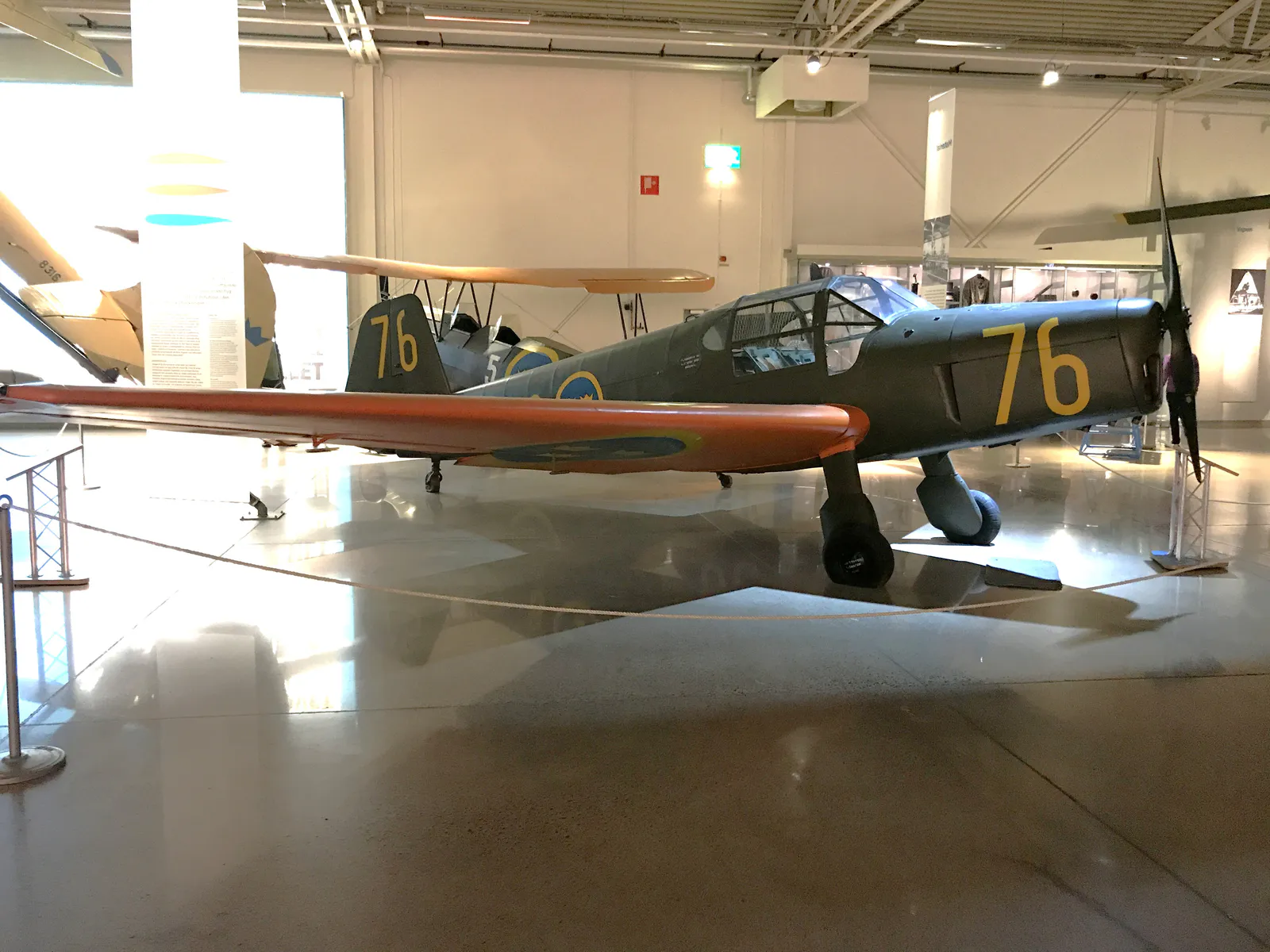
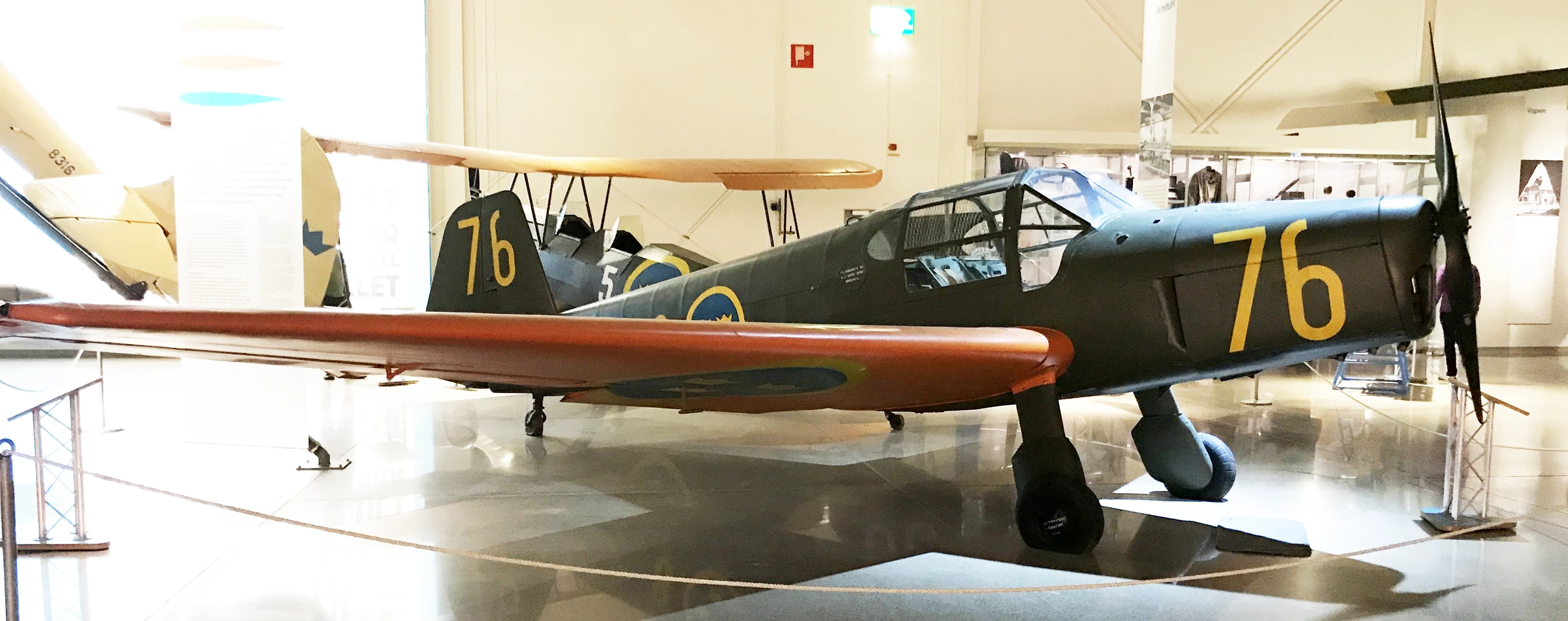
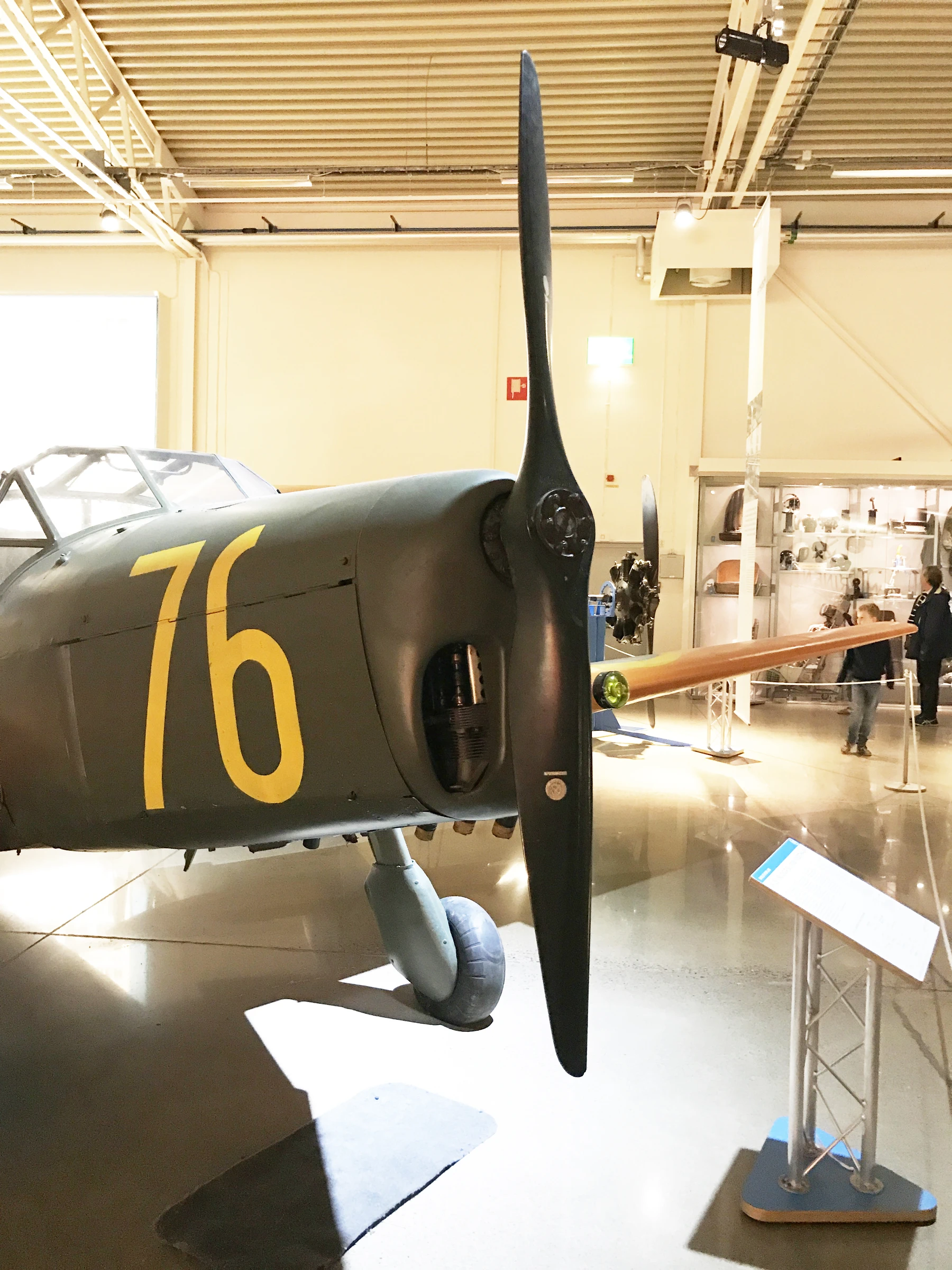
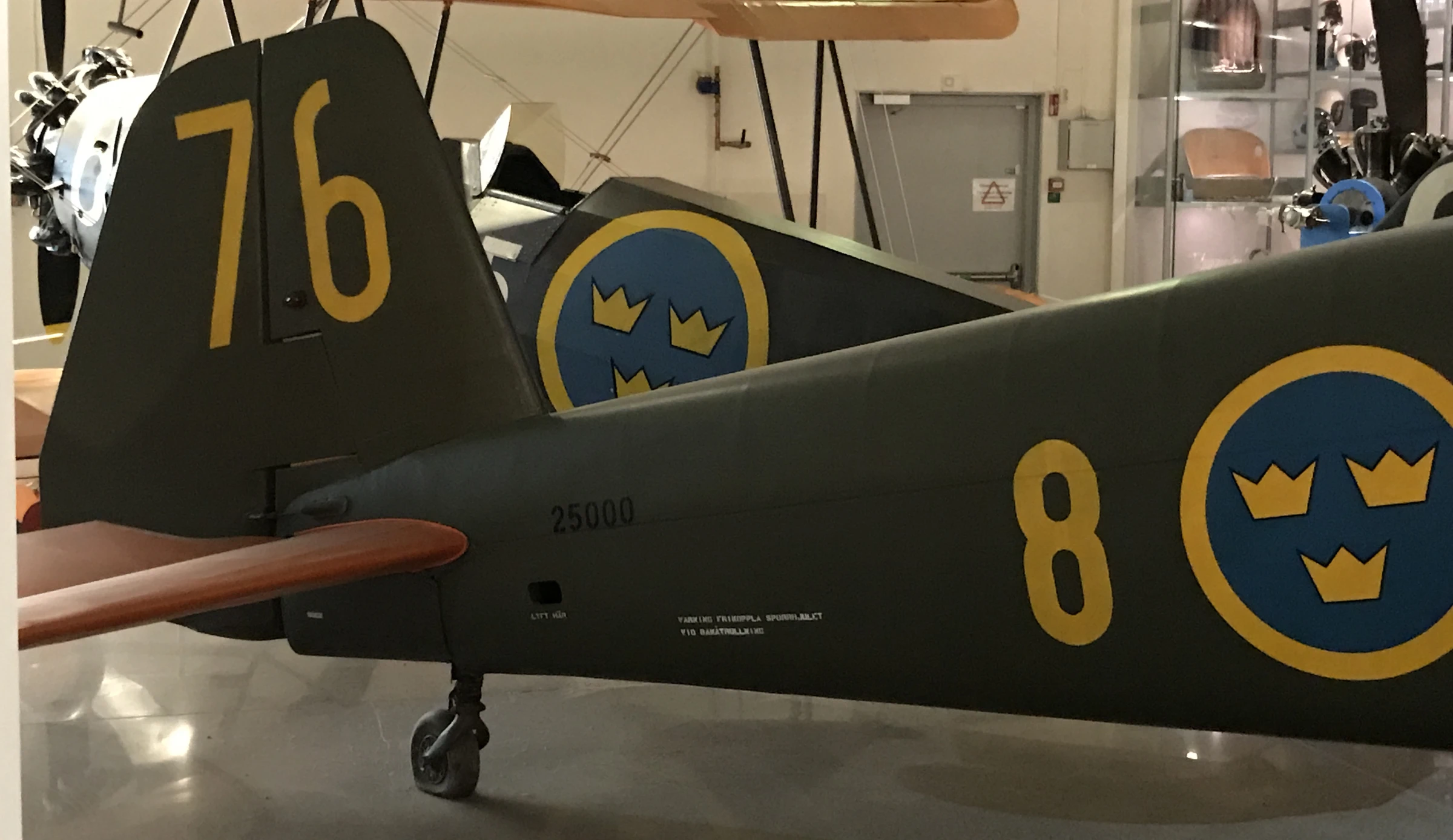
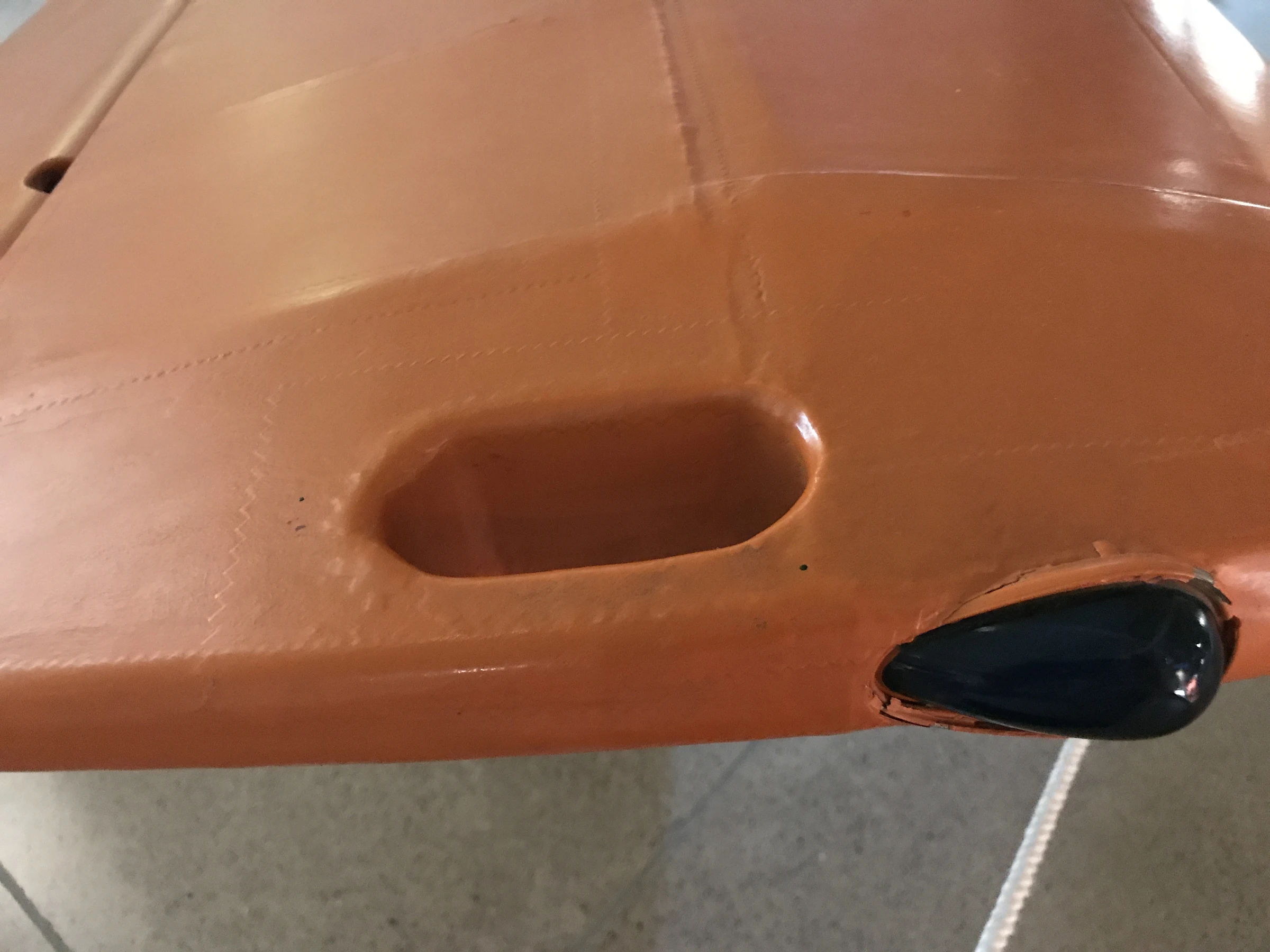
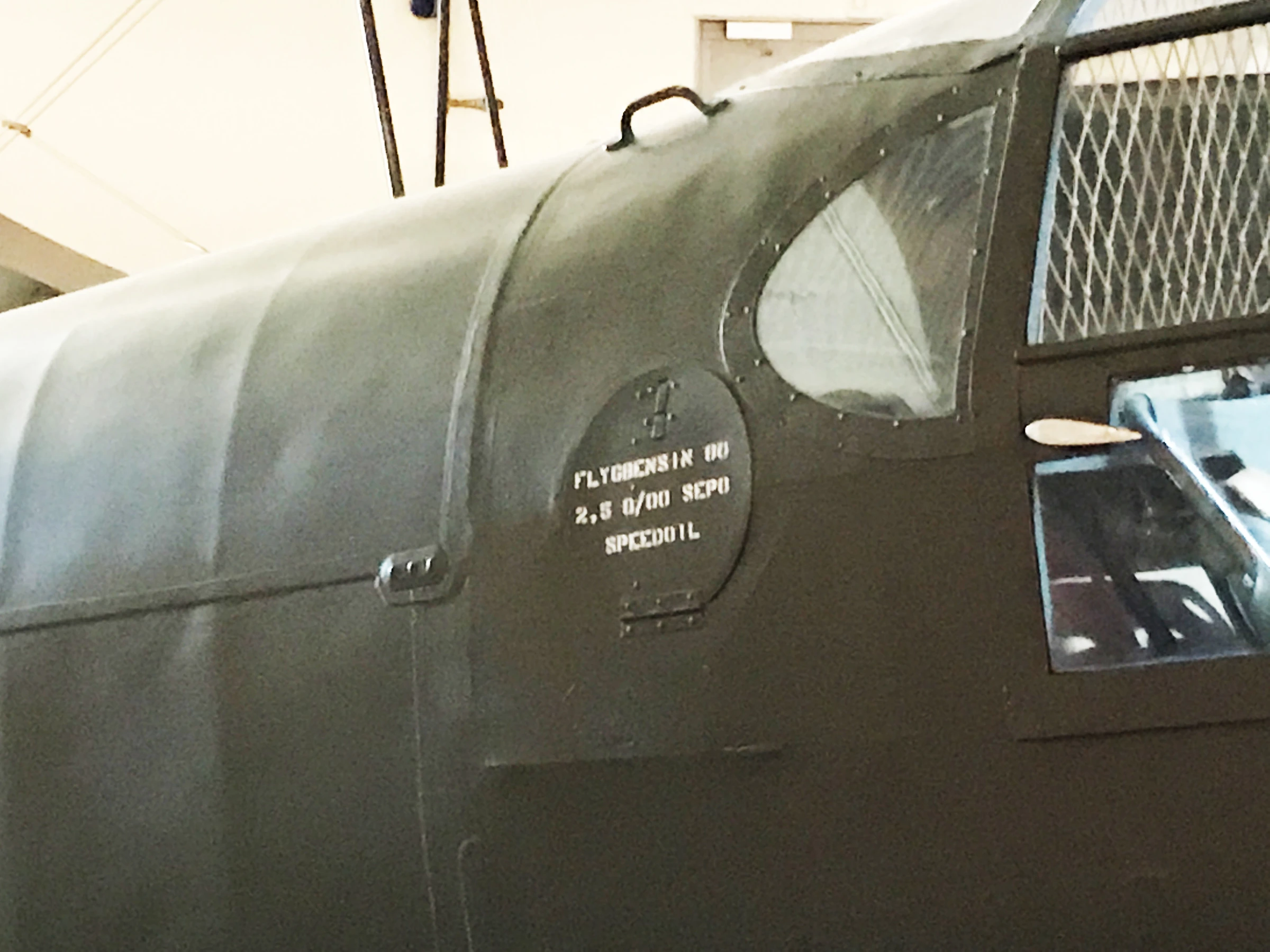
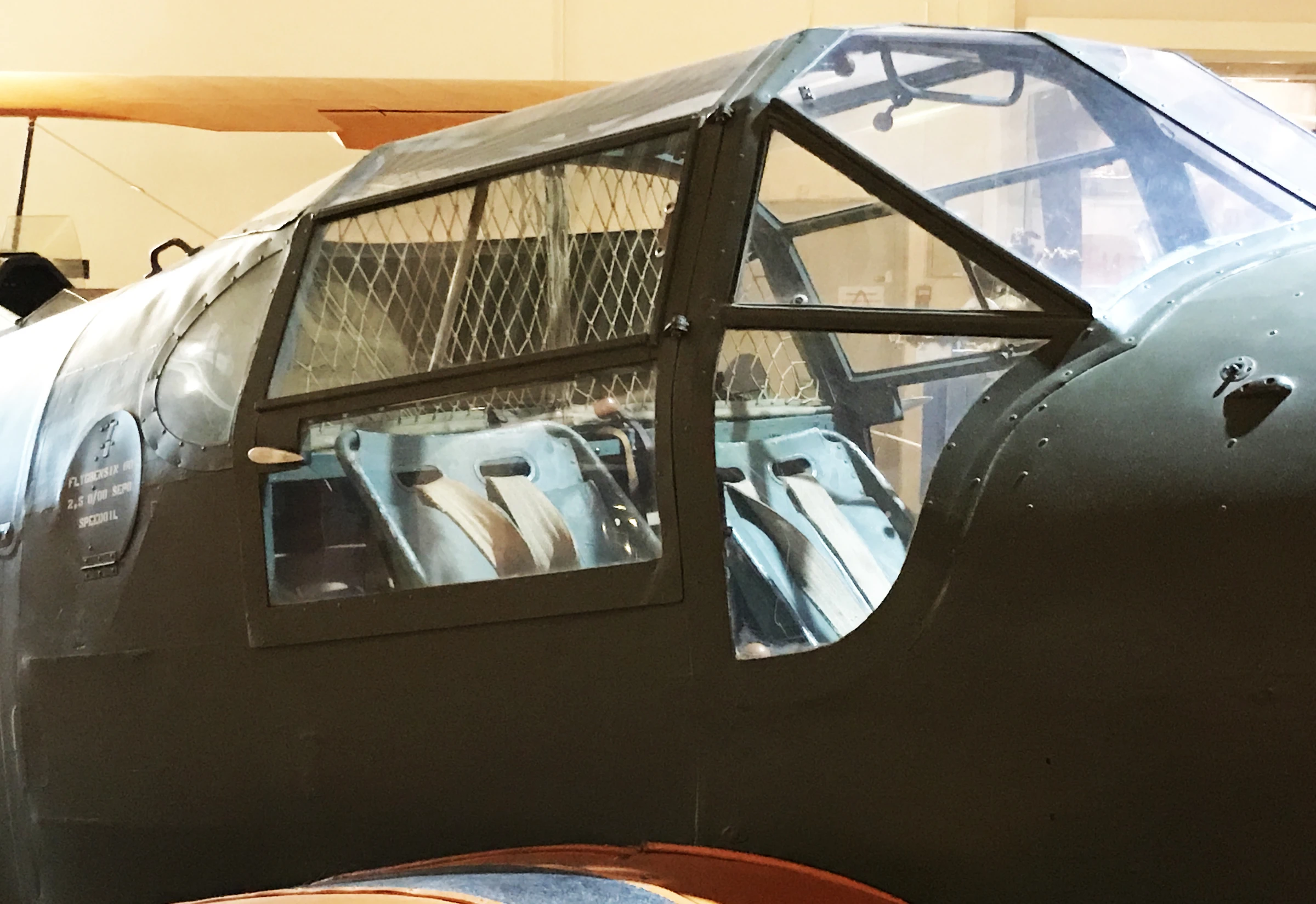
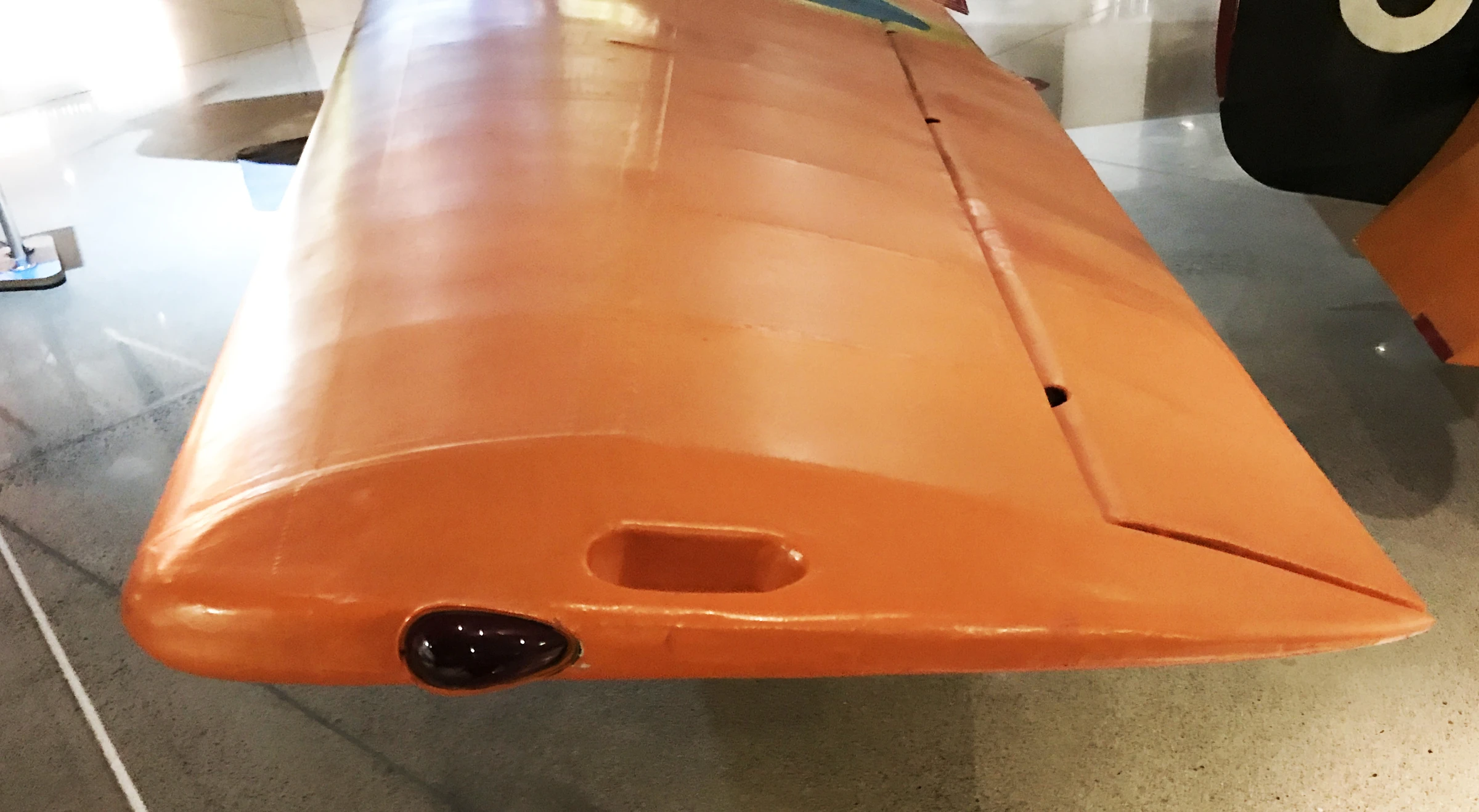
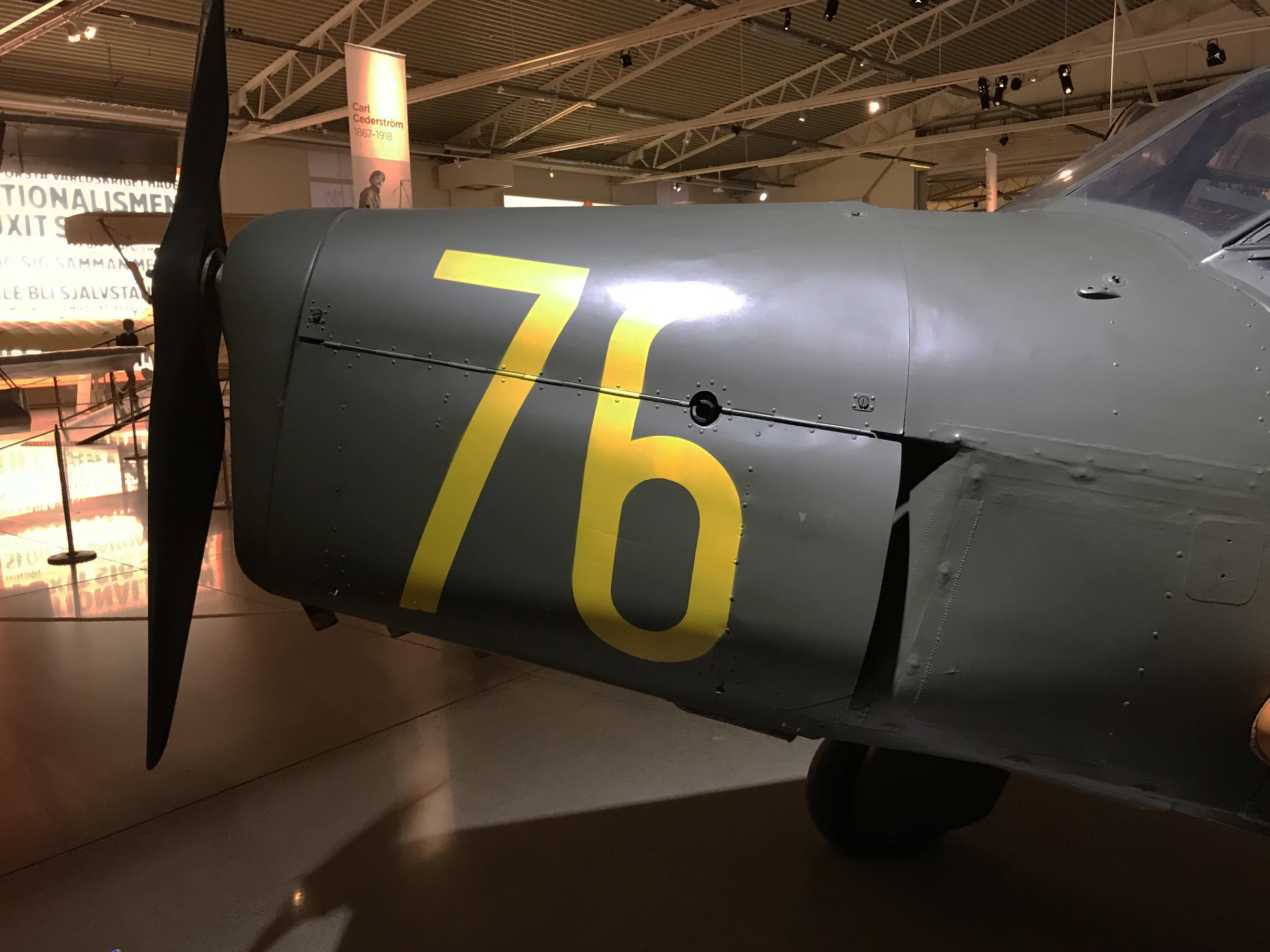
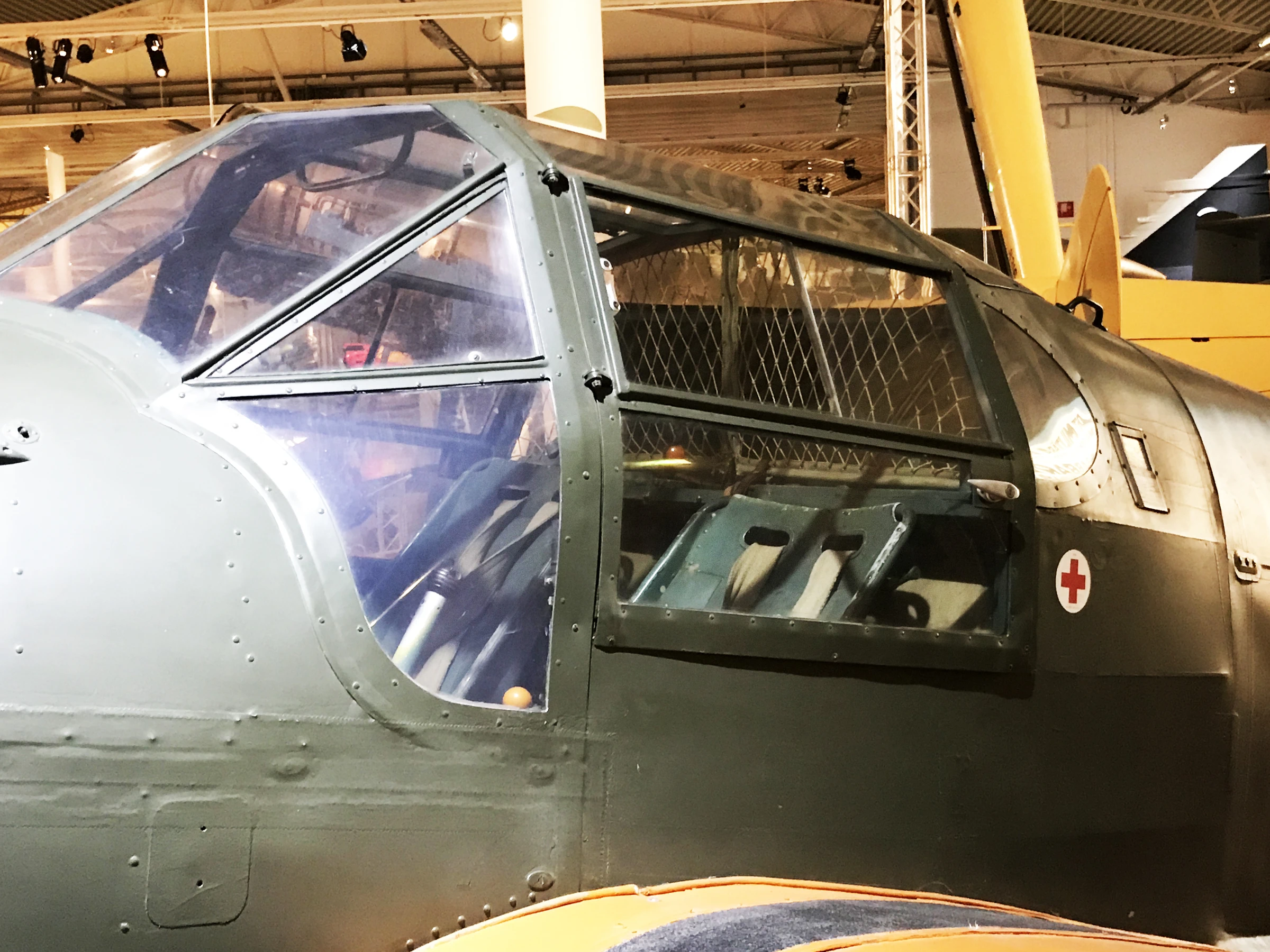
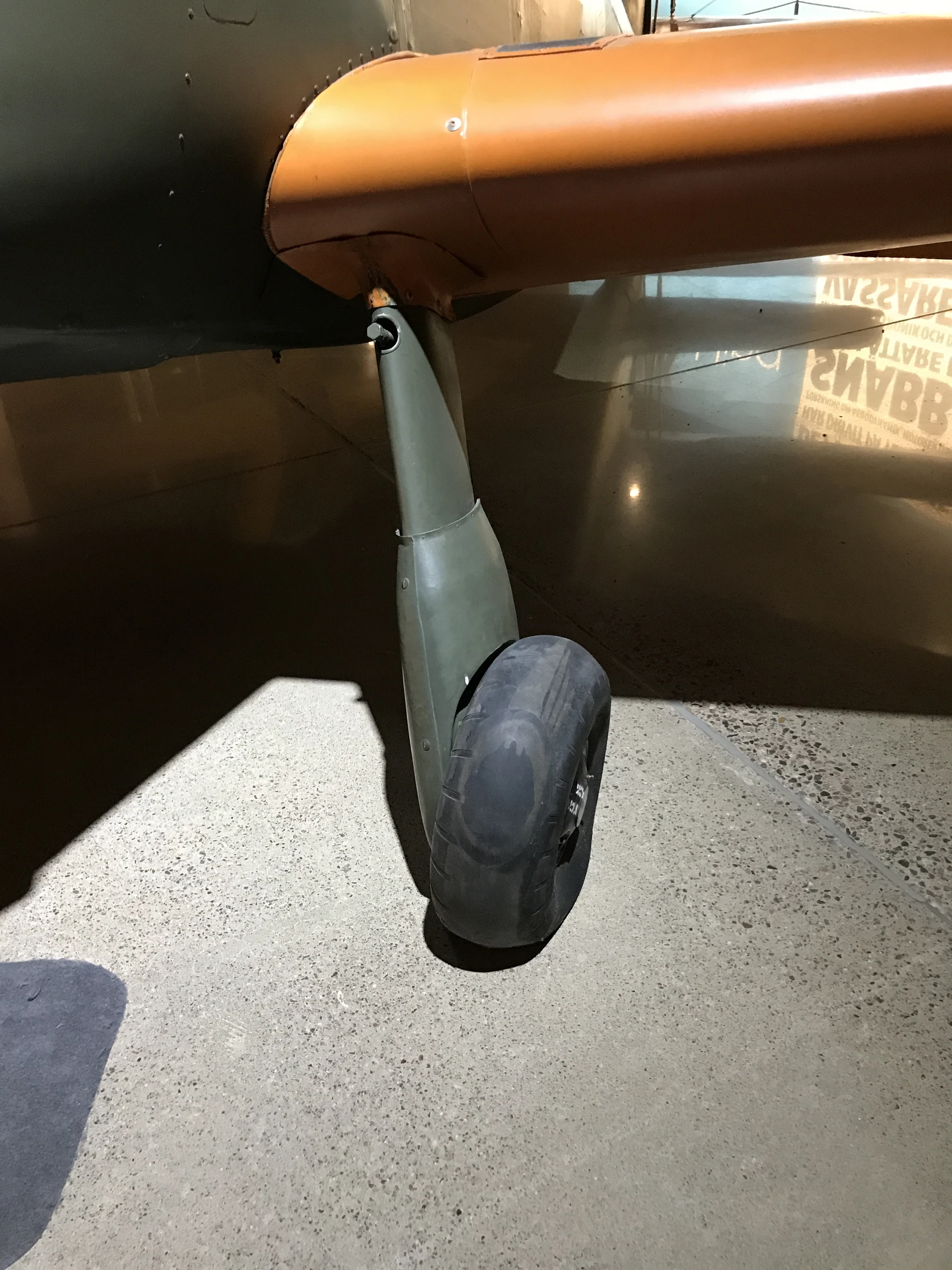
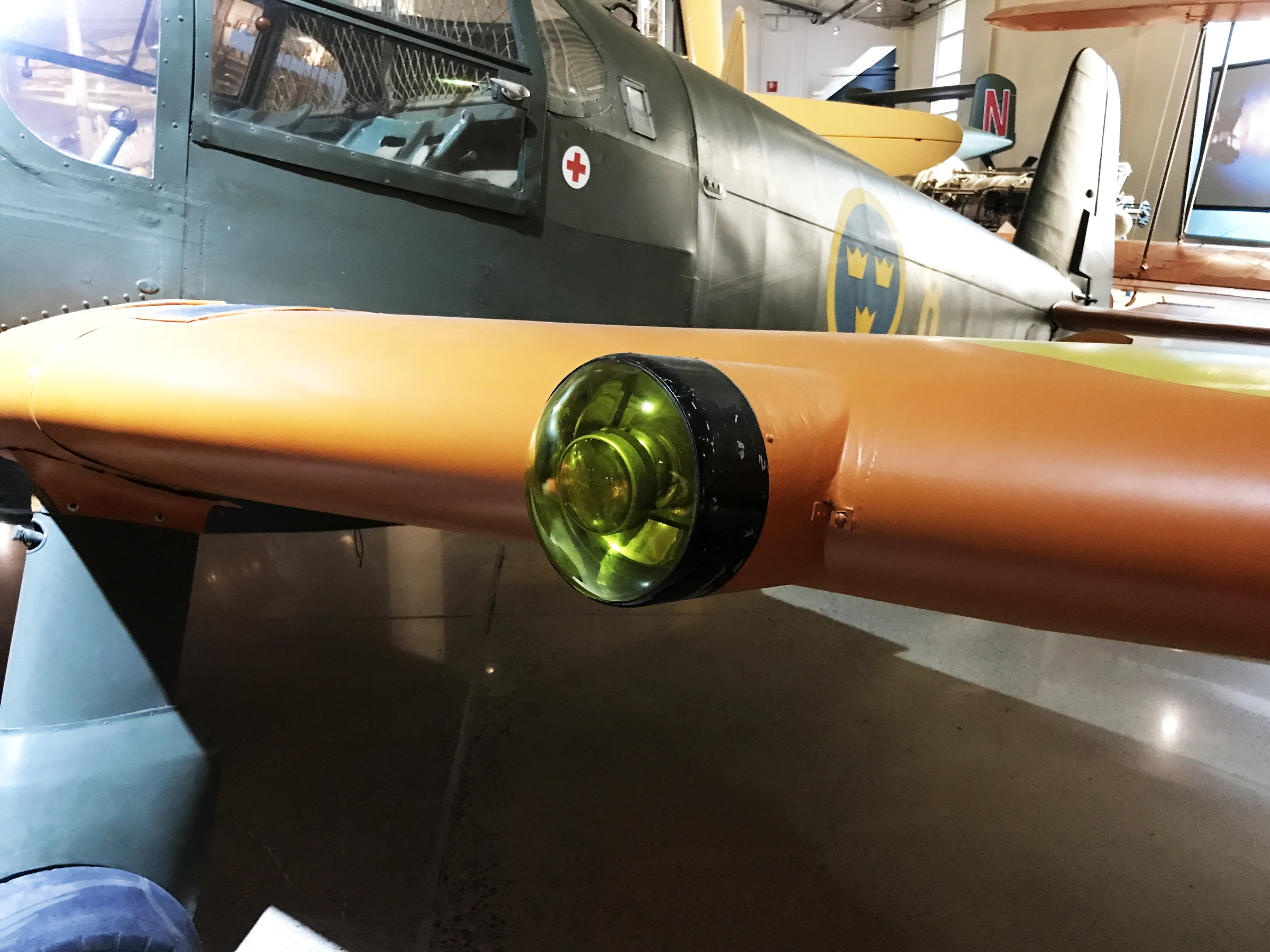
These walk-around photos were taken at Flygvapenmuseum at Malmen outside Linköping in 2017. They show a Bücker Bü 181B-1 Bestmann, designated Sk 25 in Swedish service — a light two-seat trainer with an interesting Swedish connection: it was designed by Swede Anders Johan Andersson, who at the time was working as chief designer for Bücker Flugzeugbau in Berlin. After the war Andersson returned to Sweden and went to work for SAAB, where his influence can clearly be seen in the resemblance between the Bestmann and the later SAAB Safir.
The Bestmann first flew in February 1939 and quickly became the Luftwaffe's standard primary trainer, notable for its side-by-side seating that allowed instructor and student to see each other's control inputs directly — a significant advance over the tandem trainers that preceded it. When the Swedish Air Force sought a replacement for its older biplanes in the early 1940s, the Bestmann was an obvious candidate. A single German-built example was purchased in 1942 for evaluation, while Bücker — who had old grievances with SAAB — refused to grant them the licence, and awarded it instead to Hägglund & Söner in Örnsköldsvik, who built 120 aircraft designated Sk 25, delivered between 1943 and 1946. The aircraft on display, 25000 coded 76, is that original German-built evaluation example, making it the only German-manufactured Bestmann in the Swedish collection.